.


Credits
- Homebrew by: /u/SubjectiveSloth
- Art used:
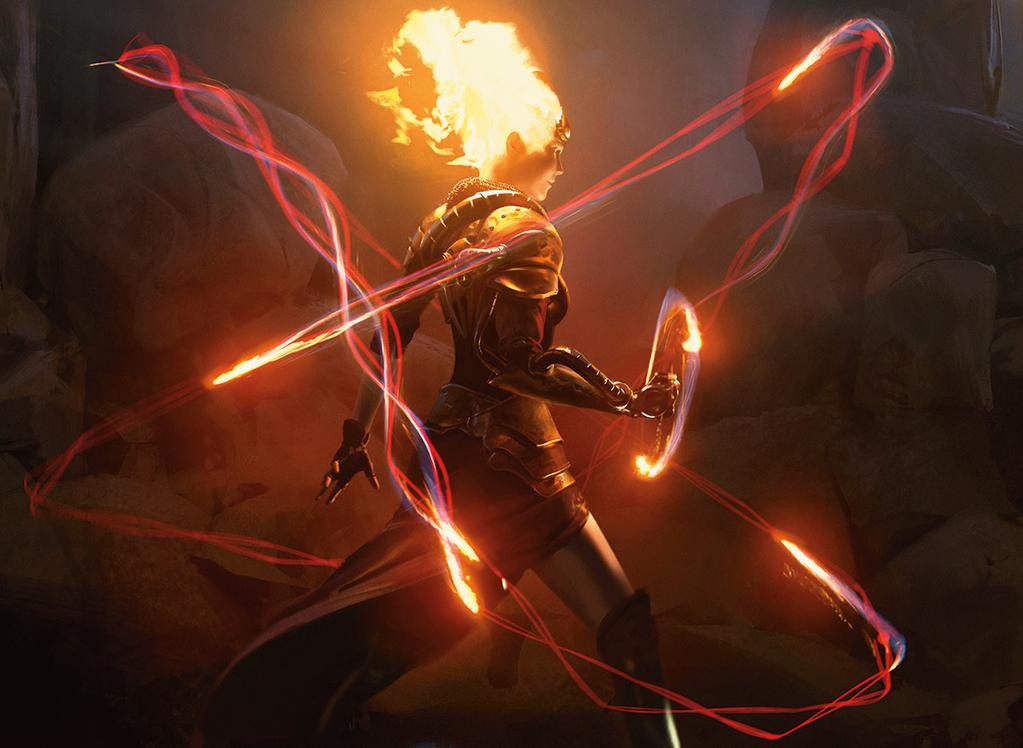
- Exquisite Firecraft (MtG, Art by Chase Stone)
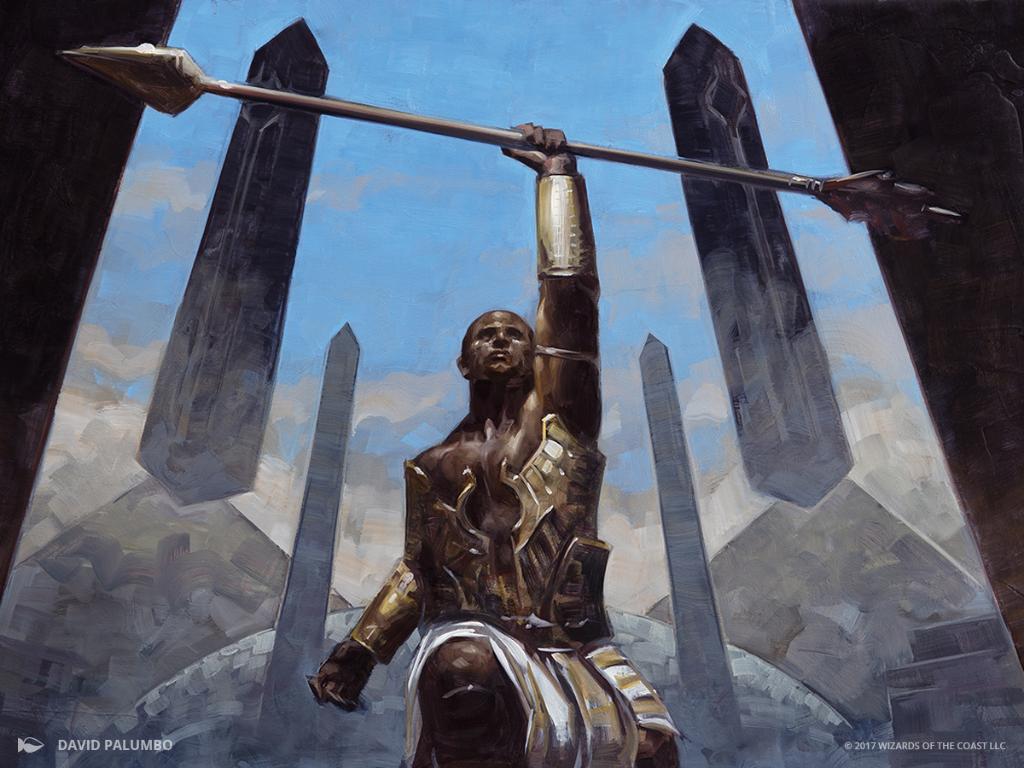
- Glory-Bound Initiate (MtG, Art by David Palumbo)
- All others courtesy of DMsGuild Creator Resources
Special thanks to /r/UneathedArcana and The Discord of Many Things for their help in reviewing this work.
About This Homebrew
The planes are a powerful force in the many multiverses of Dungeons and Dragons. These are not simply locations outside the material plane, but ideas brought to their logical extremes via immense cosmic forces, or manifestations of the primary elements that supply the material plane with their energy. There is much to be gained from the study or influence of the planes, and just as much to be lost.
Part 1 of this homebrew provides players with a variety of options influenced and empowered by the planes of the multiverse. Part 2 details a variety of other options, such as spells, feats, and backgrounds, that characters can use when exploring the planes. Finally, part 3 presents some creatures and foes your characters might encounter while adventuring outside the material plane.
Table of Contents
Click an item on the table to go directly to it's page
-
4 Part 1: Player Options
-
5 Nomad Class
-
12 Class Archetypes
- 12 Barbarian: Path of Flame
- 13 Bard College: College of Doors
- 14 Monastic Tradition: Way of Balance
- 15 Ranger Conclave: Warp Sniper
- 16 Roguish Archetype: Fringe Seeker
- 17 Sorcerous Origin: Fey-Touched
-
20 Part 2: Additional Options
-
21 Spells
-
22 Part 3: Creatures
- 23 Diamond Dragon
- 24 Rift Stalker
On the Cover
Several Astral Scyphozoa float peacefully through a gaseous portion of the Astral Plane. They are illuminated by heavenly light from the nearby gate to the plane of Bytopia
PART 1
Player Options


Nomad
A young girl leaps forward through the flames, her shining silver hair contrasting her ochre skin under the light of the fire. She throws her dagger quickly toward the cultist before her, but it vanishes in a flash of light just after leaving her hand. The foe advances on her before letting out a ghastly moan and falling to the floor. A small dagger sticks out of the center of his back.
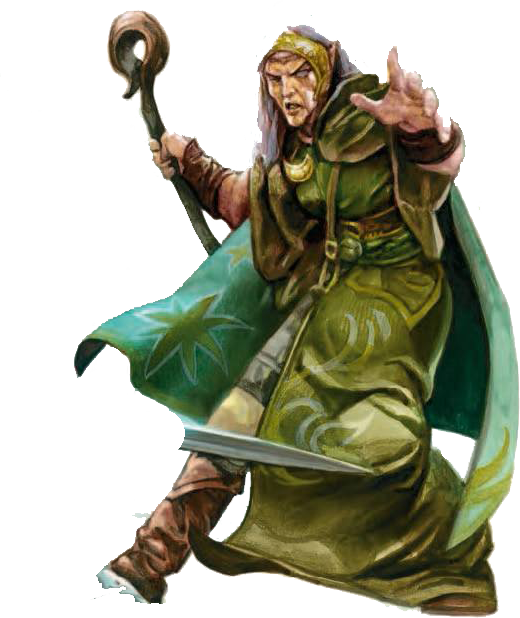
An old elven man stands at the precipice of an enormously tall cliff, his cracked spectacles sitting low on his withered nose. He stares out into the distance, a bright and beautiful wilderness of verdant green mountains and valleys, accented by two massive floating islands of stone. He chuckles to himself, only slightly, before his view is obstructed by a flash of light and a disk of swirling colors opens up before him.
Nomads are planar travelers, hunters, trackers, vagabonds, and explorers. They are experts in the traversal of the planes whose wanderlust is never satisfied and whose Journey is unending.
An Unending Journey
The life of a nomad is one of discovery and adventure, chasing a concept known as The Journey. This is the final goal of most nomads, a goal of experiencing every facet of existence. Nomads travel in pursuit of all of the things that will occur to them along the way, absorbing and enjoying all life's experiences.
Some choose to organize and take up large parties, traversing the planes together in search of interpersonal experiences. Others enjoy the solitude of a personal Journey, opting to explore the infinite possibilities of the cosmos alone.
Nomads generally have a hard time settling down in any one place for too long, even when their years have nearly finished. Ending The Journey before they pass on simply never occurs to most, such is the ambition of the nomad.
A Peculiar Attraction
Those who travel the planes find themselves drawn to certain aspects of one plane or another. With time and distance this attraction, or link, grows stronger, drawing the nomad's mind back to it for reasons they may not understand. This link draws on certain aspects deep inside a person's soul and binds it to the plane, a permanent manifestation of the planes and their otherworldly power fixed in the mind of the traveler.
Those who research the planes have theorized that a force similar to tectonic shifts in the earth occurs between the planes, generating powerful magic. This magic has something similar to a grand sentience, and can "see" the creatures it affects. From these theories arose a kind of worship among some nomads, where they view themselves as minor patrons of the eldritch existence that is The Great Wheel itself, though not all believe this story.
The link a nomad forms may be a tangible choice that they expect or feel immediately, or it may be that a plane one only passed through briefly left a subtle impression upon their mind.


The Nomad
| Level | Proficiency Bonus | Features |
|---|---|---|
| 1st | +2 | Far Strike, Traveler's Sense |
| 2nd | +2 | Portal Arts, Weapon Art |
| 3rd | +2 | Planar Link |
| 4th | +2 | Ability Score Improvement |
| 5th | +3 | Extra Attack |
| 6th | +3 | Portal Art: Blink Strike |
| 7th | +3 | Planar Link Feature |
| 8th | +3 | Ability Score Improvement |
| 9th | +4 | Planar Travel |
| 10th | +4 | Planar Link Feature |
| 11th | +4 | Far Strike Improvement, Split Strike |
| 12th | +4 | Ability Score Improvement |
| 13th | +5 | Portal Art: Falling Dodge |
| 14th | +5 | Planar Link Feature |
| 15th | +5 | Planar Rejuvination |
| 16th | +5 | Ability Score Improvement |
| 17th | +6 | Nomadic Jaunt |
| 18th | +6 | Far Strike Improvement |
| 19th | +6 | Ability Score Improvement |
| 20th | +6 | Interplanar Gateway |
Creating a Nomad
In the creation of your nomad character, consider what made them take up The Journey in the first place, and why they continue in their quest. Did your father or mother bring you along on their travels? Did you hear of some fantastical tale of planes far away? Or did you simply become bored with the mundane triviality of the material?
What have you done on your Journey? Was there a perilous dash through Pandemonium and the Nine Hells? A calm stroll through Bytopia that made you rethink your motivations? Could there even have been a whirlwind romp through the most renowned taverns of the outer planes?
How has your planar link affected you? Maybe you found yourself linked to a hideous plane of evil despite your cloistered youth, and it has drawn out dark thoughts that you had once forgotten? Or did you truly connect with your plane and have often fought yourself on whether to remain there, only to leave it behind?
The great variety of planes and nomads means that they can fall into any alignment or planar link, though most who have seen the extremes of good, evil, law, and chaos prefer to remain neutral.
Quick Build
You can make a nomad quickly by following these suggestions. First, Strength or Dexterity should be your highest ability score, followed by Wisdom. Second, choose the outlander background.
Class Features
As a nomad, you gain the following class features
Hit Points
- Hit Dice: 1d8 per nomad level
- Hit Points at 1st Level: 8 + your Constitution modifier
- Hit Points at Higher Levels: 1d8 (or 5) + your Constitution modifier per nomad level after 1st
Proficiencies
- Armor: Light armor, medium armor
- Weapons: Simple weapons, martial weapons
- Tools: Cartographer's tools
- Saving Throws: Strength, Wisdom
- Skills: Choose two skills from acrobatics, arcana, history, nature, perception, and survival.
Equipment
You start with the following equipment, in addition to the equipment granted by your background:
- (a) scalemail or (b) leather armor
- (a) a rapier or (b) longsword
- (a) 2 daggers or (b) any simple or martial weapon
- (a) an explorer's pack or (b) dungeoneer's pack
Far Strike
As a nomad, you are a master of minor portals, and can use them to enhance your combat abilities. At 1st level, When you take the Attack action on your turn with a melee weapon that lacks the reach property, the reach of your weapon becomes 10 feet until the end of your turn as you conjure a short-range portal through which your weapon passes mid-swing. Attacks made in this way don't ignore cover and require the target to be visible. This technique requires one of your hands to be free to create the portal.
Your Far Strike Range increases to 20 feet when you reach 11th level, and 30 feet when you reach 18th level.
Traveler's Sense
Regardless of the plane, you are still an experienced traveler. At 1st level, you gain the following benefits:
- You always know which way is north
- Even when you are engaged in another activity while traveling (such as foraging, navigating, or tracking), you remain alert to danger.
- You can accurately judge the distance between yourself and any other point that you can see without the need for a map or scale.
- You have advantage on Constitution saving throws made to resist exhaustion when traveling.
Portal Arts
At 2nd level, you learn to utilize your portals in thoughtful and unique ways. You begin with one simple Portal Art: Portal, and gain additional Portal Arts options as you gain levels in this class.
You choose what effect you create when you use your Portal Arts. You have a number of uses of these arts equal to your Wisdom modifier. All expended uses are restored when you finish a short or long rest.
Your Portal Arts are dependent upon your Wisdom, your knowledge of the planes from which you draw these effects.
Some Portal Arts require a saving throw. When you use such an effect from this class, the DC is calculated as follows:
Portal Art save DC = 8 + your proficiency bonus + your Wisdom modifier
Portal Art: Portal
As an action on your turn, you expend a use of your Portal Arts to create linked teleportation portals that remain open for up to 1 minute, until 4 creatures or objects have passed through them, or until you choose to close them as a bonus action. Choose two unoccupied spaces on the ground that you can see, one within 5 feet of you and the other within 30 feet of you. A portal opens over each point. The portals are glowing, oblong, spheroids hovering inches from the ground and perpendicular to it. The mist that fills each portal is opaque and blocks vision through it.
Any Medium or smaller creature or object entering the space the portal occupies exits from the other portal as if the two were the same space. For example, if an arrow enters the portal from the east, it will emerge from the west as if it had passed through any other empty space. A creature forced into the portal's space can make a Dexterity saving throw to resist moving through it, emerging in the nearest unoccupied space adjacent to the portal on a successful save.
The range of the second portal increases to 60 feet at 11th level and 120 feet at 17th level
Weapon Art
At 2nd level, you have trained and traveled with a specific style of weapon for vast amounts of time, developing your skills around its use. Choose one of the following options:
Wormhole Sniping
You have learned to utilize your portals with the fast-moving projectiles of bows and crossbows, allowing you to make Far Strike attacks with them. Far Strike attacks made with ranged weapons ignore half cover and treat 3/4 cover as half cover as long as the target is within the normal range of the weapon. This does not change the range of the weapon.
Planar Piercing
When you are wielding a melee weapon in one hand and no other weapons, you can use your free hand to steady your portal and more carefully aim your attack. You gain a +2 bonus to damage rolls for Far Strike attacks with a melee weapon in one hand and no other weapons.
Two-Hand Warping
You have developed a technique for creating portals with both of your hands on a weapon. You can wield weapons with the two-handed property while using your Far Strike ability.
Port Retrieving
You have trained yourself to utilize portals while throwing weapons accurately, allowing thrown weapons to make Far Strike attacks. The range of your thrown weapon attacks increases by your far strike range. Additionally, when you make an unsuccessful thrown weapon attack, your weapon returns to your hand immediately through a second portal.
Planar Link
Nomads are travelers, and often they traverse all manner of planes and demiplanes in their lives. Much like travelers of the material, though, they always hold within their hearts some link to a certain plane. At 3rd level, you have matured in your travels enough to have established a magical and personal link. There are obviously a great many planes and regions in the multiverse. Some common Planar Links that are presented at the end of this class description are The Elemental Planes, The Far Realm and The Astral Plane.
Your Planar Link grants you features at 3rd level, and again at 7th, 10th, and 14th level.
Ability Score Improvement
When you reach 4th level, and again at 8th, 12th, 16th, and 19th level, you can increase one ability score of your choice by 2, or you can increase two ability scores by 1. As normal, you can't increase an ability score above 20 using this feature.
Extra Attack
Beginning at 5th level, you can attack twice, instead of once, whenever you take the Attack action on your turn.
Portal Art: Blink Strike
At 6th level, you reflexes develop, allowing you to jump through the portals you create with Far Strike. When you hit a creature with a melee Far Strike attack, you can expend a use of your Portal Arts to jump through the portal created around your weapon, emerging in an unoccupied space within 5 feet of the target. If the attack is made with a ranged weapon, you can choose to move up to your Far Strike range in any direction after the attack.
Planar Travel
At 9th level, you no longer have to search for planar portals. As an action on your turn, you establish an interplanar link. You open a portal to a location on a plane that you have been to before and remember in an unoccupied space within 5 feet of you. The portal's destination must be on a plane you are not currently on, and it is visible through the portal.


.
The portal is large enough for Medium or smaller creatures to pass through easily. A creature that is forced into the portal can make a Dexterity saving throw to avoid going through. On a successful save, the creature appears in an unoccupied space adjacent to the portal. Otherwise, they are sent through the portal and to its destination. The portal remains open for 1 minute or until you close it as a bonus action on your turn.
Once you use this feature, you can’t use it again until you finish a short or long rest.
Split Strike
By 11th level, you have learned to create special portals with multiple exits. Once on your turn, you can target two separate creatures with one of your Far Strike attacks when you take the attack action. One attack roll is made against both targets of the attack.
Portal Art: Falling Dodge
When you reach 13th level, you learn to slip away from danger through a quick portal under your feet. As a reaction, when you are targeted by an attack or effect that allows you to make a Dexterity saving throw, you can expend a use of your Portal Arts to to teleport to an unoccupied space you can see within 15 feet of you. If you teleport outside the range of the effect, you are no longer targeted by it.
Planar Rejuvination
By 15th level, the limits of your planar power are extended whenever danger appears. When you roll initiative and have no uses of your Portal Arts remaining, you regain one use.
Nomadic Jaunt
By 17th level, you scarcely ever need to walk. Once on your turn you can expend up to half of your walking speed in order to teleport the same distance instead, appearing in an unoccupied space that you can see.
Interplanar Gateway
At 20th level, your skill for creating portals becomes unsurpassed, allowing you to create portals stable enough to withstand the test of time. With 4 hours of work and 400 gp in materials you can create a permanent planar gateway large enough for Medium or smaller creatures, or double the time and cost for Large or smaller creatures. You must create two gateways to be able to travel between them.
Gateways created by this feature are round frames of wood, metal, or other materials that house a portal and keep it stable in the absence of its creator. If the frame is made incomplete in any way, such as by it being burned, crushed, or toppled, the portal closes immediately.
You can maintain a maximum of 6 gateways at one time. Each gateway can only be linked to one other one, creating a two-way portal. Any creature that can fit within a portal travels through it when they come into contact with it. A gateway's portal can be deactivated with a 1-minute ritual, allowing them to be linked with a different gateway, or simply switched off for a time.
Practice care in the use of gateways. If discovered by unwanted cosmic guests, they may endanger entire planes.
Planar Links
Scattered as they may be, even nomads share certain sensibilities through their tendencies. A nomad seeks to see and experience as much of the multiverse as they can, but most would agree that they have a special connection to one place in particular. The multiverse has a way of making that connection tangible, especially to those who regularly travel the planes.
The Elemental Planes
You have become linked to one or more of the elemental planes, the four sources of elemental power in the multiverse. Maybe their simple purity of form calls out to a longing for simplicity within you, or maybe your fiery spirit or fluid worldview finds itself most at home among these planes. Regardless, you have amassed a great knowledge of these planes and their most powerful locations, and can draw upon them with your portals.
Portal Art: Elemental Strikes
At 3rd level when you choose this link, you begin to use your portals to bring forth the powers of the Elemental Planes. When you hit a creature with a Far Strike attack, you can expend a use of your Portal Arts to send your weapon or missile through one of the elemental planes before it reaches your target. This attack deals an additional 3d6 cold, fire, lightning, or poison damage.
This damage increases to 3d8 at 11th level, and 3d10 at 17th level.
Touch of The Elements
At 3rd level when you choose this link, you learn to slip elemental power into your combat abilities. When you hit a creature with a Far Strike attack on your turn, you can use your bonus action to channel elemental force through the portal as well, causing the attack to deal additional poison, fire, cold, or lightning damage (your choice) equal to your Wisdom modifier.
Elemental Affinity
Your time on the elemental planes has allowed you to adapt your body to their harsh environments. At 7th level, you choose a plane you have adapted to and gain its feature.
- Air. You gain resistance to lightning damage. You also gain the ability to flow lightly on the breeze. When you are falling you can choose to fall at a decelerated rate of 60 feet per round (no action required). When you land at this speed, you take no falling damage and can land on your feet.
- Earth. You gain resistance to poison damage. Additionally, gain a climbing speed of 30 feet, and moving through nonmagical difficult terrain caused by jagged or unstable earth costs you no extra movement.
- Fire. You gain resistance to fire damage. Additionally, as a reaction when you take fire damage, you can attempt to shrug it off entirely. You can expend hit dice and roll them to reduce the remaining fire damage by the amount rolled.
- Water. You gain resistance to cold damage. Additionally, gain a swimming speed of 30 feet, and you can hold your breath underwater for up to 20 minutes.
Portal Art: Elemental Allies
When you reach 10th level, you have gained enough rapport within the Elemental Planes to request the aid of mephits, small imp-like elementals who represent the paired combinations of the elements. As an action on your turn, you can expend a use of your Portal Arts to summon up to two mephits into unoccupied spaces within 15 feet of you. You can only ever have two mephits summoned in this way.
The mephits are indifferent to your companions, but regard you as one to be obeyed. Roll initiative for them as a group, which has its own turns. They understand and obey any verbal commands that you issue to them (no action required by you). If you don't issue any commands to them, they defend themselves from hostile creatures, but otherwise take no actions. The DM has the mephits' statistics.
The mephits remain for up to 1 hour before returning to the Elemental Planes, and you can dismiss one or both as an action on your turn.
Planar Collision
By 14th level your powers of planar manipulation reach new heights, allowing you to summon massive manifestations of the elemental powerhouses you have aligned with. You can create one of the following effects as an action on your turn. The DC for saving throws made to resist these effects is equal to your Portal Arts save DC. Once you use any of these abilities, you cannot use this feature again until you finish a long rest.
- Air. A large portal opens directly in front of you, through which powerful winds flow and thunderous booming can be heard. A supernaturally massive bolt of lightning cracks outward in a 15-foot-wide line directly in front of you for up to 600 feet. Creatures within this line must make a Dexterity saving throw, taking 4d8 lightning damage and becoming stunned until the end of their next turn on a failed save, or half as much and not being stunned on a successful one. This ability creates a deafening crack that can be heard up to 1,000 feet away.
- Earth. You call forth a massive, jagged boulder from an equally large portal, launching it at a point you can see within 90 feet of you. Creatures within a 20-foot sphere centered on that point must make on a Dexterity saving throw, taking 8d10 bludgeoning damage on a failed save, or half as much on a successful one.
- Fire. You open a large portal above you through which the burning sky of the Elemental Plane of Fire shows clearly. Six meteors come forth from the portal. Each meteor targets a creature of your choice that you can see within 60 feet of you That creature must make a Dexterity saving throw for each meteor targeting it, taking 4d6 fire damage on a failed save, or half as much on a successful one. You can direct the meteors to hit one creature or several.
- Water. Five large columns of ice rise out of portals at five visible locations you choose within 60 feet of you. The pillars are up to 15 feet tall and 10 feet in diameter at their base. Creatures in the path of these pillars when they are created must succeed on a Dexterity saving throw, taking 3d8 cold damage on a failed save, or half as much on a successful one, before moving to the closest unoccupied space adjacent to the pillar. The pillars each have 50 hit points, and an AC of 10. You can destroy up to 5 pillars as a bonus action on your turn. The pillars remain until they are destroyed.
The Far Realm
The dark expanse outside the Astral Plane is a place even nomads seldom venture. Countless unknowable horrors lurk in The Far Realm, things no mortal should discover. The air is thick as liquid iron, and it tastes of eternity. Time flows in zig-zags and the colors are all wrong. You have ventured outside, seen those who dwarf gods, and others who dwarf those. The vastness of the endless black realm draws your mind back into its horrible depths and, for better or worse, it has chosen you.
Portal Art: Black Hole
The Far Realm itself is an endless hunger. At 3rd level, when you choose this link, you can use that hunger to assist you in combat. As an action on your turn, you expend one use of your Portal Arts to open a solid, spherical portal in an unoccupied space you can see within 60 feet of you. All Large or smaller creatures other than you that begin their turns within 20 feet of the portal must succeed on a Strength saving throw or be pulled up to 10 feet directly toward the portal. Creatures who begin their turn within 5 feet of the portal and fail their Strength saving throw instead have their speed halved until the end of their current turn.
The portal remains in this space for up to 1 minute, and can be dismissed as a bonus action. You can only have one black hole active at any given time.
Deep Lash
At 3rd level when you choose this link, you have some knowledge of deep and terrible things that dwell in the Far Realm. When you hit a Medium or smaller creature with a Far Strike attack on your turn, you can use your bonus action to summon a sickly, pitch black appendage from your portal to attempt to move your target. The creature must make a Strength saving throw versus your Portal Arts save DC. On a failed save, the target is pulled up to 5 feet in any direction.
Portal Art: Madness of The Infinite Void
At 7th level, you rediscover memories of some particularly horrible sight from the Far Realm. As an action on your turn, you expend a use of your Portal Arts to open a narrow portal before you, opaque on the side facing you. On the outward face, you display some incomprehensible horror of the Far Realm that could turn any mortal mad.
Hostile creatures in a 60-foot cone in front of you that can see the portal must make a Wisdom saving throw. On a failed save, a creature takes 4d6 psychic damage and becomes frightened of you for up to 1 minute, or takes half as much damage and is not frightened on a successful one. Frightened creatures can repeat their saving throw at the end of each of their turns, ending the effect on a success.
Insatiable Hunger
At 10th level, you learn of a more fearsome place in the Far Realm to use as a source of your Portal Arts. When you use the Black Hole Portal Art as an action on your turn, shadowy, tentacle-like appendages reach outward from it, writhing with some eldritch sentience toward nearby creatures.
Creatures who begin their turn within 5 feet of the portal and fail their Strength saving throw are restrained by the tentacles. At the beginning of each of the restained creature's turns, the tentacles' icy grasp causes the creature to take cold damage equal to your proficiency bonus. After taking this damage, the creature can repeat its save, ending the effect on a success.
Eldritch Truth
The Far Realm's eldritch lands hold all forms of knowledge, relating to a great many things. You remember certain things as if they were still present in front of you, and others not at all, as if they were sequestered away in the far reaches of your consciousness. When you reach 14th level, you can attempt to summon this knowledge to the forefront of your mind.
You can perform a 4-hour ritual to attempt to recall details from the Far Realm. At the end of this ritual roll a d20. On a roll of 3 or lower, you suffer 3d10 psychic damage as your mind floods with indecipherable eldritch knowledge. On a roll between 3 to 16, the ritual concludes and nothing is learned. On a roll of 16 or above, you recall the answers to two questions you ask within your mind. These questions can relate to the nature of the multiverse, the gods, higher powers, and major mortal interactions with any of these concepts or beings.
For example, you could learn of the existence of a deal between an archdevil and a prominent mortal, the whereabouts of an important portal upon the material plane, or the nature of how a demigod gained its power.
Your experience with the knowledge of The Far Realm is not infinite, however. The answer to your question may be unknown or even unknowable, depending on its subject matter.
Once you conduct the ritual you cannot attempt it again until you finsh a long rest.


The Astral Plane
The Astral Plane cradles the entire multiverse in its enormity, holding together the balance and allowing for travel between planes. All portals must move through the Astral, and Nomads linked to it are some of the most well-traveled of all. These nomads use their knowledge of the Astral plane to build their portal-casting prowess beyond that of any other.
Portal Art: Shift
At 3rd level when you choose this link, you have honed your portal-forming abilities to be able to move creatures quickly and with little warning. As a bonus action on your turn, you can force a Large or smaller creature you can see within 30 feet of you to make a Dexterity saving throw. On a failed save, that creature is teleported to an unoccupied space you choose within 30 feet of you. A creature can choose to fail this saving throw if it wants to be teleported. The destination of this teleport is not required to be on the ground.
Alternatively, you can use this ability to teleport an ally up to half the maximum distance of this portal art as a reaction on that allied creature's turn.
The maximum range of this Portal Art increases to 60 feet at 11th level, and 90 feet when you reach 17th level.
Surprising Strike
At 3rd level, when you choose this link, you have developed the portals you use to attack, allowing them to appear unexpectedly. As a bonus action, you can cause your next far strike attack on this turn to strike from your foe's blind spot. If the target of this attack is within melee range of another creature that is hostile towards it, the attack has advantage.
Distant Grip
The stability of your portals is strong enough that they can withstand a struggle within them. When you reach 7th level, you can attempt to grapple creatures from afar.
As an action on your turn, you can create a particularly stable portal within your Far Strike range and thrust your arm through it, attempting to grapple the target on the other end as if you were adjacent to it. If you successfully grapple the target, you can continue to hold it for up to one minute, or until you move within 5 feet of the target. You can only have one creature grappled in this way at any time.
If the target is forced to move more than 5 feet in any direction, the target is no longer grappled.
Portal Art: Redirection Shield
At 10th level, you develop a unique method for using your enemies' attacks against them.
As a bonus action, you expend one use of your Portal Arts to create a portal that hovers near you and follows your movements. The portal persists for up to 1 minute.
When you are targeted by an unsuccessful melee weapon attack, you can use your reaction to redirect the attack through this portal. Choose a creature within 30 feet of you, including your attacker. That creature must make a Dexterity saving throw, being hit by the attack on a failed save.
Master of Portals
When you reach 14th level, you can sustain many more portals than any other Nomad. You have a number of uses of your portal arts equal to your Wisdom modifier + 2.

Class Archetypes
The planes hold a great deal of power, and even those who remain upon the Material Plane can draw on that power from time to time. These options are to intended to supplement the standard classes of Dungeons and Dragons with planar-powered archetypes fit for otherworldly travelers of all kinds.
Barbarian: Path of Flame
Your rage is a violent inferno of infinite flames, brought forth directly from the only source of such power that could sate you: The Elemental Plane of Fire. You may have gained this power from time spent upon the plane, or from your heritage as a fire genasi, or even from being burned and absorbing the flame into yourself by sheer force of will. Whatever the case, your rage manifests as a vulgar and unstoppable force of nature, to be feared and respected by allies and enemies alike.
Fiery Rage
At 3rd level, when you choose this path, your rage appears as a visible, fiery aura around you. While you are raging, you have resistance to fire damage and you can add double your proficiency bonus to Charisma (Intimidation) checks made against creatures that can see you.
Burning Blade
Even when left naked and unprepared, you have the power of your fiery spirit as your weapon.
When you choose this path at 3rd level, you can summon forth a single fiery weapon in your free hand as a bonus action. The weapon can take the shape of any melee weapon you designate, and has the same properties of that weapon. If you let go of the weapon, it disappears, but you can bring forth the blade again as a bonus action.
The weapon deals fire damage, instead of its normal damage type, and sheds light in a 10-foot radius and dim light for an additional 10 feet.
Scorch the Soul
At 3rd level, you can embed your fire in the soul of your enemies. When you hit a creature with a melee weapon attack using your burning blade while raging, you can cause fire to engulf that creature's soul for up to 1 minute. As a bonus action on your turn, you can cause the affected creature to take fire damage equal to half your barbarian level (rounded down).
Only one creature can be affected by this ability at one time, and the effect ends on a creature when it is applied to another. An affected creature can attempt to quell the flame as a bonus action on its turn by making a Wisdom saving throw whose DC is equal to 8 + your proficiency bonus + your Strength modifier. On a success, the effect ends on the target.
.
Protective Flame
By 6th level, your wounds can cauterize and close themselves by the sheer force of your fiery will. While you are raging, you can use a bonus action to regain hit points equal to 1d8 + your rage damage bonus, as shown in the Rage Damage column of the Barbarian table. You can use this ability only once per rage.
Additionally, when you take fire damage while raging, you gain temporary hit points equal to half your barbarian level. These hit points disappear when your rage ends.
Elemental Immolation
When you reach 10th level, your rage grows hotter and more violent, empowering your abilities. When you inflict fire damage with your Scorch The Soul feature, that damage ignores resistance.
Additionally, you gain a +2 bonus to attack and damage rolls made using your burning blades.
Soul Explosion
By 14th level, You can channel your rage's fire into a single point in your body before releasing it in a powerful explosion. As an action on your turn, all creatures within 20 feet of you must make a Dexterity saving throw whose DC is equal to 8 + your proficiency bonus + your Strength modifier. A creature takes 8d8 fire damage on a failed save, or half as much on a successful one. You can use this ability only once per rage.

Bard College: College of Doors
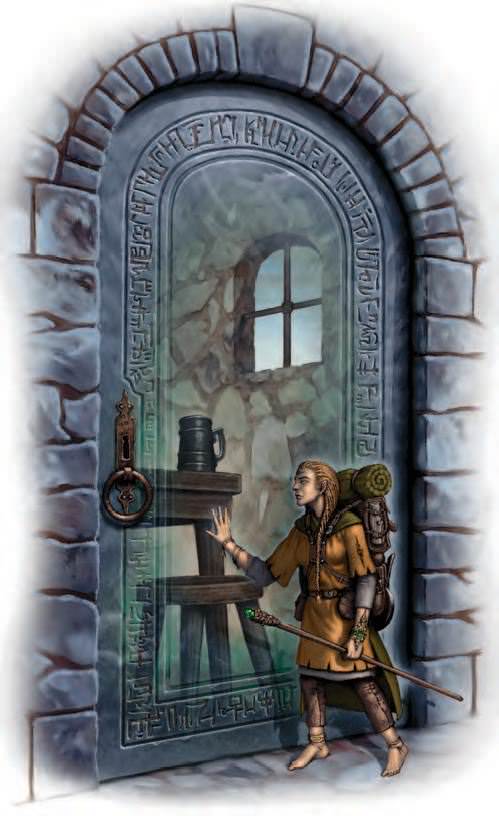
Bards of the College of Doors are roamers of the planes who tell tales of their travels and the fantastical places they've seen. The College of Doors believes that the infinite vastness of the planes, outer, inner, upper, and lower, is where the truest sense of wonder originates. From the plains of the Beastlands, to the great gears of Mechanus, to the chaotic islands of Limbo there are new things to experience and see, and those things are worth writing poems and songs and performances about.
Not many people ever leave their home plane, but it is the purpose of the College of Doors to spread the distant wonders of the planes to those who cannot see it for themselves.
Bonus Proficiencies
When you join the College of Doors at 3rd level, you gain proficiency in the arcana skill and in the use of cartographer's tools, a set of compasses and scales commonly used for plotting distances between Magic Doors.
Portal Lore
At 3rd level when you choose this college, you gain a substantial knowledge of portals and portal lore. You have advantage on investigation and arcana checks made to detect, investigate, or understand portals.
Inspired Movement
At 3rd level when you choose this college, you gain the ability to use lesser portals. As a bonus action on your turn, you can expend one use of your bardic inspiration to move a willing medium or smaller creature you can see to an unoccupied space within 30 feet of its starting space. This movement cannot place the creature more than 5 feet above or below its inital position.
An unwilling creature can make a Charisma saving throw, resisting this movement on a successful save.
Magic Door
A staple of the College of Doors is its namesake, the Magic Door. At 3rd level when you choose this college, you begin to learn to use this technique to your advantage. You can perform a 1-hour ritual, involving at least 200 gp worth of materials, upon any mundane door to turn it into a special portal. The door retains its mundane appearance and does not create a portal unless a special phrase is uttered, or a certain knock performed, which is dictated by you when you perform the ritual. You can maintain up to 3 of these Magic Doors at any given time, disenchanting one when you create a fourth. A door that is destroyed, or made impossible to open normally has its portal deactivated.
When you activate the portal, you link the door to any other door you've performed the ritual on that is within 1 mile of it and on the same plane of existence. A door can only be activated and used as an entrance once on each day, and continues to be active for 1 minute after activation, allowing any number of creatures to pass through in that time.
The maximum distance between doors and the number of doors you can have created increase with your level. The maximum distance between doors increases to 10 miles at 6th level, and 100 miles at 10th level, while the maximum number of doors increases to 6 at 6th level, and 10 at 14th level.
Portal Strike
Doors are not the only form of teleportation that a bard can achieve. When you reach 6th level, you learn to perform quick strikes from afar. As an action on your turn you can expend one use of your Bardic Inspiration in order to vanish and reappear behind a hostile creature up to 15 feet away and make a melee weapon attack against it with advantage. On a hit the attack deals extra damage equal to your Bardic Inspiration die. After the attack, whether it is successful or not, you can teleport an additional 15 feet in any direction as a bonus action.
Planar Door
At 14th level your Magic Door feature matures to allow for planar travel. If you have two or more Magic Doors on separate planes of existence, you can travel between those doors as if they were on the same plane. Additionally, you can now travel between any two Magic Doors regardless of their distance.

Monk: Way of Balance
The planes are many things: new frontiers, unique communities, and powerful challenges await travelers to these separate dimensions. However, beyond simply presenting the multiverse with different worlds, the planes represent ideologies that govern the multiverse as a whole. The planes balance the forces of Law and Chaos in the multiverse, keeping any one from becoming too powerful and dominating all of existence.
Monks of the Way of Balance have attuned their ki specifically to the forces of this balance, and trained in the techniques that allow their very actions to balance the scales at their most minute levels.
Balanced Spirit
At 3rd level when you choose this tradition, you learn to balance your spirit and steel yourself against attacks that would seek to sway you. You have advantage on saving throws made to resist charm effects.
Ki Imbalance
At 3rd level when you choose this tradition, you dedicate even your smallest actions to the balance of law and chaos, rectifying every imbalance in the shortest possible instant. Your unarmed strikes carry with them the powers of law and chaos, and when a creature is struck with one, its ki can become imbalanced.
At the end of your turn, if you made at least one successful unarmed strike on that turn, you can choose to spend 1 ki point to trigger an imbalance in the ki of one of the targets you struck. The effect of this imbalance is dependent upon how many successful unarmed strikes you made, and if that number was even or odd:
- Even. Even numbers are considered lawful because each number balances with another in perfect orderly harmony. A lawful imbalance in a target causes it to make a Charisma saving throw. On a failed save the target cannot take bonus actions or reactions until the beginning of your next turn.
- Odd. Odd numbers are considered chaotic as they are always imbalanced. A chaotic imbalance in a target causes it to make a Charisma saving throw. On a failed save, the target is compelled on its next turn to move up to its speed in a random direction. To determine the direction, roll a d8 and assign a direction to each die face. The effect ends at the beginning of your next turn.
Balanced Body
By 6th level, you have honed your physical balance to superhuman levels. You can never be knocked prone as the result of a nonmagical effect. Additionally you have advantage on acrobatics and athletics checks made to hold your balance.
Balanced Mind
Starting at 11th level, you learn to balance others near you, resetting their dispositions. As an action on your turn, you can spend 1 ki point to cause a creature you are touching to experience both of the effects of the calm emotions spell as if you had cast it at 2nd level. The DC to resist this effect is equal to your Ki save DC.
Ki Rearrangement
At 17th level, you learn that a creature's ki can be rearranged entirely, changing their worldview and alignment. When you would normally trigger a ki imbalance in a target, you can choose to rearrange its ki instead without spending Ki points. The creature immediately takes 5d6 psychic damage and must make a Charisma saving throw against your Ki save DC. On a failed save, the creature has its alignment shifted one step in the direction of law or chaos, which you choose. For example, a Lawful evil creature could only be shifted to be neutral evil, while a true neutral character could be shifted to lawful neutral or chaotic neutral.
The creature does not lose any memories during this change, but they may be re-contextualized thanks to its new alignment. This could lead to the creature becoming friendly, hostile, or indifferent to you depending on the changes made.
At the end of every 30 days the creature can repeat its saving throw against this effect. If the creature succeeds on this saving throw, the effect ends and the creature reverts to its original alignment.
If a creature is affected by this ability, you cannot use it again until that creature succeeds on its saving throw and ends the effect. Once you use this feature, you cannot use it again until you finish a short or long rest.
Warp Sniper
Some rangers seek to challenge themselves to make impossible shots from immeasurable distances. Warp Snipers use magical tricks to push the limits of their range and bombard their targets from as far away as possible.
Warp Sniper Magic
Starting at 3rd level, you learn an additional spell when you reach certain levels in this class, as shown in the Warp Sniper Spells table. The spell counts as a ranger spell for you, but it doesn't count against the number of ranger spells you know.
Warp Sniper Spells
| Ranger Level | Spells |
|---|---|
| 3rd | faerie fire |
| 5th | misty step |
| 9th | elemental weapon |
| 13th | dimension door |
| 17th | teleportation circle |
Inescapable Mark
Starting at 3rd level, when you cast hunter's mark, a small portal manifests and orbits near that target, depositing your missiles at close range when you fire them. You gain the following additional bonuses to this spell:
- The range of the spell is increased to 200 feet.
- You can add your Wisdom modifier to attack rolls made against marked targets.
- Attacks you make against marked targets ignore half and 3/4 cover
Long Shot
At 3rd level, when you choose this conclave, you begin to learn how to deliver damaging ammunition over farther distances using portals and teleportation magic. When you are using a ranged weapon, your weapon's ranges each increase by 100 feet. This bonus increases to 200 feet at 7th level, and 400 feet at 15th level.
Extra Attack (Revised Ranger)
Beginning at 5th level, you can attack twice, instead of once, whenever you take the Attack action on your turn.
Warp Arrow
Starting at 7th level, you can loose a deadly bolt of pure force that pierces one's astral self. As an action on your turn while you are wielding a ranged weapon, you can expend a Ranger spell slot to force all creatures within a 5-foot wide by 90-foot long line in front of you to make a Wisdom saving throw again your spell save DC. A creature takes 2d8 force damage, plus another 1d8 per level of the spell slot on a failed save, or half as much in a successful one.
.
Final Flight
By 11th level, you have developed a magical technique for accelerating your missiles dramatically over a long distance. As an action on your turn, you can make a single ranged weapon attack. If the attack hits, it deals 1 additional points of piercing damage for every 10 feet between you and the target of your attack. For example, if the target is 100 feet away, this attack would deal 10 additional points of damage.
Once you use this feature, you can't use it again until you finish a long rest.
Sniper's Defense
At 15th level, your skills prevent your enemies from ever gaining the upper hand in combat. As long as you are not incapacitated, attack rolls made against you are never made with advantage.
Additionally, if a creature within your weapon's range attempts to make an attack roll with advantage, you can use your reaction to negate that advantage, causing the roll to be made normally.


Rogue: Fringe Seeker
Rogues can often pride themselves on their ability to hide from view, concealing themselves in crowds, or in shadows. A fringe Seeker is one who takes the pursuit of obscurity to new heights, using the fringes between planes to their advantage. These rogues have some inherent talent for magical abilities, but normally do not cast spells. Instead, they opt to use the planar magic of their surroundings to transfer in and out of the material plane, concealing themselves behind the fabric of reality.
As they use planar boundaries in their craft, fringe Seekers often travel to many planes, searching for new targets, treasures, or simply experiences. Slipping in and out of every reality makes them expert thieves, elusive spies, and excellent adventurers.
Fringe
At 3rd level when you choose this archetype, you gain some knowledge of planar fringes, extradimensional spaces between planes of existence.
As an action on your turn, you can open a small tear in your current plane and move into a planar fringe for about 12 seconds, or until the end of your next turn. fringes appear as an endless black space, whose air feels dense and heavy like water, but remains breathable. While within a fringe, you can see the creatures, structures, and land of the plane you just left within 20 feet of you, represented as blurry, indistinguishable glowing figures. Beyond this distance you can perceive the general form of things, but they appear substantially more blurry and difficult to focus on. You can't interact with things upon the plane, and simply pass through them, allowing you to move through otherwise solid surfaces. You can move freely within a fringe on your turn, though the thick atmosphere causes it to be difficult terrain. You can exit a fringe prematurely as a bonus action. When you would emerge from a fringe within an occupied space, you instead simply emerge in the nearest unoccupied space.
While you are within a fringe, creatures on the plane you left can't see or hear you, and you are not affected by anything upon that plane.
You gain one use of this feature at 3rd level, and again at 9th, 13th, and 17th levels. All expended uses are replenished when you finish a long rest
Emerging Swipe
At 3rd level when you choose this archetype, you learn to strike at your enemies when exiting a planar fringe. If you exit a fringe as a bonus action on your turn, your first melee attack on this turn is considered a sneak attack and deals additional force damage equal to your Wisdom modifier.
Ether Strike
At 9th level, you begin to learn techniques for interacting with corporeal beings from within a fringe.
While you are within a fringe, you can use a bonus action to make a single unarmed strike targeting one of the glowing figures of a creature. On a hit the target takes psychic damage equal to 1d4 + your Wisdom modifier, and must succeed on a Wisdom saving throw whose DC equals 8 + your proficiency Bonus + your Wisdom modifier. On a failed save, the target is stunned until the beginning of your next turn, as its mind and self are assaulted from beyond. This unarmed strike can't benefit from your sneak attack feature.
Ethereal Escape
When you reach 13th level, you learn learn to retreat into a fringe extremely quickly when in danger. After you make a successful Dexterity saving throw as a result of being targeted by a damaging effect, you can use your reaction to expend a use of your fringe feature and retreat into a fringe until the end of your next turn.
Fringe Endurance
By 17th level, you are a master of fringe navigation. You can remain within a fringe for up to 1 minute each time you enter one.

Sorcerer: Fey-Touched
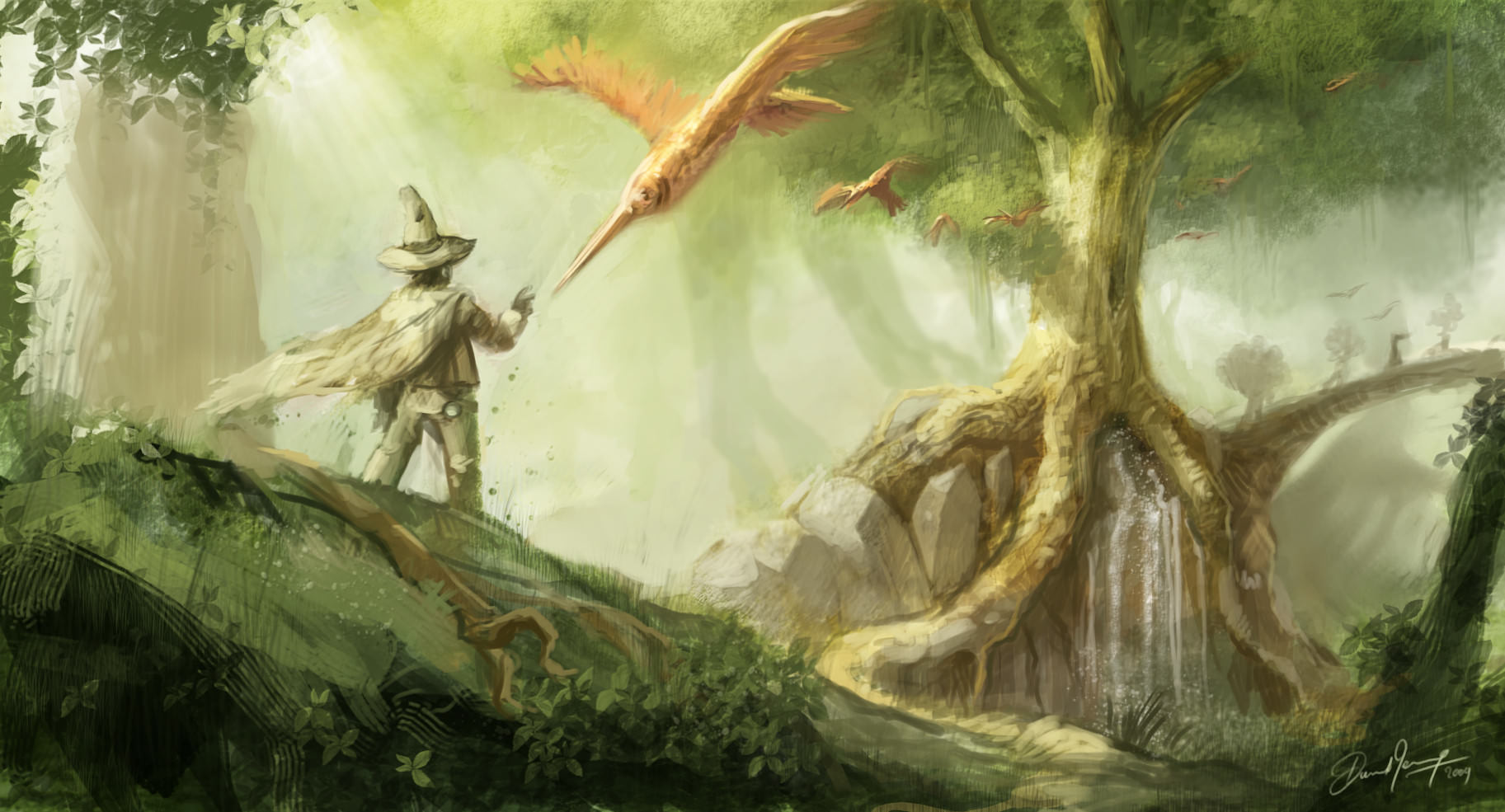
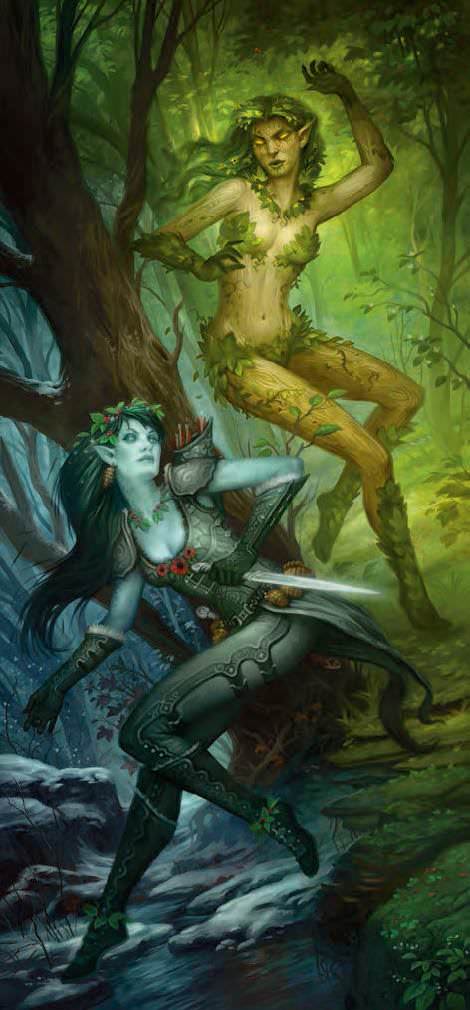
The innate magic you possess comes from some mingling of Feywild magic into your bloodline. Your ancestors may have bargained with powerful fey, or spent too long living in the Feywild. A trickster fey may even have taken you as a child and placed a spell upon you. Whatever the case, you have been given a variety of faerie magic to wield as your own.
Faerie Court
Your magical abilities originate with one of the Feywild's faerie courts: Summer, Spring, Autumn, or Winter, each representing different personalities, philosophies, and appearances based on the state of the world during their respective seasons. At 1st level, you gain proficiency in the nature skill and you choose which court you are aligned with, gaining one of the following proficiencies depending upon your court:
| Court | Proficiency |
|---|---|
| Summer | Intimidation |
| Spring | Performance |
| Autumn | Persuasion |
| Winter | Deception |
Regardless of your court, you also gain the ability to speak, read, and write Sylvan.
Court Magic
Your magic originates from your court, granting you knowledge of certain spells. At 1st level, you learn the minor illusion cantrip. This does not count against your total number of cantrips known. You also gain access to a number of special spells linked to that court, detailed in the tables on this page. These spells are added to your sorcerer spell list for you.
Illusory Movement
At 6th level, your innate talent for illusion magic begins to blossom. If you cast a spell of 2nd level or higher on your turn, you can use your bonus action to become invisible until the beginning of your next turn.
Once you use this feature, you can't use it again until you finish a short or long rest.
Summer Court Spell List
| Spell Level | Spells |
|---|---|
| 1st | hellish rebuke, searing smite |
| 2nd | flame blade, pyrotechnics |
| 3rd | beacon of hope, crusader's mantle |
| 4th | fire shield, freedom of movement |
| 5th | dawn, flame strike |
Spring Court Spell List
| Spell Level | Spells |
|---|---|
| 1st | cause fear, faerie fire |
| 2nd | calm emotions, enthrall |
| 3rd | conjure animals, phantom steed |
| 4th | compulsion, hallucinatory terrain |
| 5th | modify memory, mislead |
Autumn Court Spell List
| Spell Level | Spells |
|---|---|
| 1st | goodberry, purify food and drink |
| 2nd | healing spirit, lesser restoration |
| 3rd | create food and water, spirit guardians |
| 4th | aura of life, aura of purity |
| 5th | awaken, circle of power |
Winter Court Spell List
| Spell Level | Spells |
|---|---|
| 1st | dissonant whispers, hex |
| 2nd | moonbeam, ray of enfeeblement |
| 3rd | bestow curse, hunger of hadar |
| 4th | elemental bane, mordenkainen's faithful hound |
| 5th | destructive wave, negative energy flood |

.
.
Knowledge of the Courts
At 14th level, you undergo significant growth within your court, gaining knowledge of your own innate magic. You gain one of the following abilities depending upon your court.
- Summer's Warmth. You harbor a fierce spirit within you, and you can embolden it when the need arises. As a bonus action on your turn you can grant yourself the following benefits for up to 1 hour. Once you use this feature, you can’t use it again until you finish a long rest
-
- You gain resistance to fire damage.
-
- Your speed increases by 10 feet.
-
- You shed bright light from your body in all directions for 30 feet and dim light for an additional 30 feet.
-
- Allied creatures visible to you within 30 feet are immune to the effects of extreme cold and gain advantage on saving throws made to resist charm effects.
- Spring's Love. When you charm a creature, you can choose to spend 3 sorcery points to empower that charm. A creature under an empowered charm follows your telepathic commands perfectly as long as it is within 120 feet of you. It believes it is taking all of its actions of its own free will. When an empowered charm ends, you can choose whether the target knows that it was charmed or not. An empowered charm does not change the duration or saving throws of the charm effect. Once you use this feature, you can’t use it again until you finish a long rest.
- Autumn's Bounty. You can conjure a small feast of food and drink as an action on your turn. The magical feast appears as normal food and is enough for up to four small or medium creatures. When a creature that is not hostile to you consumes any of the food or drink, they must succeed on a Wisdom saving throw or become charmed by you for up to 1 hour. This effect ends if the creature is attacked by you or your allies. Once you use this feature, you can’t use it again until you finish a long rest.
- Winter's Grasp. As an action on your turn you can spend 3 sorcery points to chill a creature you can see within 90 feet until the beginning of your next turn. A chilled creature has disadvantage on Dexterity saving throws and must succeed on a Constitution saving throw against your spell save DC or be forced to use all of its movement to seek warmth on its turn. If the creature is immersed in water or soaking wet as if they had recently been immersed in water, it instead becomes frozen on a failed save and is paralyzed until the beginning of your next turn. Once you use this feature, you can’t use it again until you finish a long rest.

Bridge to the Feywild
By 18th level, your fey magic has manifested fully, and your powerful magic allows you to create bridges between the material plane and the Feywild.
Minor Bridge
As an action on your turn you can call fey creatures to your aid, summoning 1d4 pixies, 1d4 sprites, or 1d2 quicklings from a small planar portal within 15 feet of you. They understand Sylvan and will obey your first command to the best of their abilities. Any commands after the first will require a successful DC 14 Charisma (persuasion) check. On a failed check the fey will act of their own accord, returning to the Feywild, causing havoc on the material, or continuing to listen to you as they see fit. The fey will inevitably get bored and begin to defy you after 10 minutes and will attempt to escape your company, even after they have been given a command.
Once you use this feature you must finish a long rest before you can use it again.
Major Bridge
You can choose to use this interplanar magic along with a powerful ritual to cover a larger area. If you are within a forest, you can spend 4 hours conducting a ritual to bridge that forest to the Feywild. All forested area within 1 mile of the ritual are linked to the Feywild for 24 hours. You can repeat this ritual once each day for three months in the same place to make effect last permanently, or until it is dispelled by a 9th level dispel magic, or wish spell.
The appearance of the forest changes to suit your court. A Winter Court Sorcerer could create a forest that reflects the Feywild's dark and cold corners, while one of the Autumn would be colorful and filled with a bounty of fruit and plants.
The magic of this forest flows freely, making it hard to navigate. All creatures other than you who attempt to travel through this forest must succeed on a Wisdom saving throw against your spell save DC or become magically lost. If you are within the forest, you know the location of any foreign creatures within it. If a creature fails its saving throw and becomes magically lost, you can choose to alter illusory paths and guide it to any location within the forest as long as it continues to travel. You can do this from anywhere within the forest.
Additionally, all spells of the enchantment and illusion schools cast while within this forest are empowered; saves made to resist their effects are always made at disadvantage.
Fey creatures flock to this new and different location, assisting you at your call. Once each day as an action, you can summon 1d12 sprites, 1d12 pixies, or 1d10 quicklings, each of which will obey your every command for 24 hours. These fey can leave the forest, but will always return after 24 hours.
You can only have one forest affected in this way at any given time.
The Faerie Courts
Each of the Faerie Courts represent different traits and flaws, and each court can appear different to reflect this. Sorcerers touched by one of the courts may take on certain attributes based on their court heritage.
The Fey of the Autumn Court are patient, reflective, and wise, using their magic to help others. A Sorcerer of this court may appear older than they are, act gently towards others, or exude an air of calm when they are near.
The Fey of the Winter Court are aloof, harsh and unforgiving, and its members can debilitate others with their magic. A Sorcerer of this court may have grey-blue skin, act coldly towards others, or naturally chill the air around them.
The Fey of the Spring Court are cheerful, optimistic and witty, often employing illusions and trickery for fun as well as combat. A Sorcerer of this court may have a young, glowing complexion, be overly enthusiastic, or spread joy simply through their presence.
The Fey of the Summer Court are fierce, bold and passionate, employing powerful offensive and defensive magic. A Sorcerer of this court may appear to glow a soft crimson, suffer from bouts of fierce anger, or feel warm to the touch.
PART 2
Additional Options

Spells
Elemental Air
1st-level conjuration
- Casting Time: 1 action
- Range: Self (15-foot cone)
- Components: S
- Duration: Instantaneous
With a series of hand gestures you open a small, one-way portal to the Elemental Plane of Air, calling forth powerful winds. Each creature in a 15-foot cone must make a Strength saving throw. A creature is harmlessly pushed up to 30 feet away from you on a failed save, or half as far on a successful one. creatures pushed by this spell are carried upon the air and do not begin to fall until they reach the end of their forced movement.
Freely moving objects weighing less than 5 pounds are also pushed back as if they had failed their saving throw.
At Higher Levels. When you cast this spell using a spell slot of 2nd level or higher, the maximum distance of this push increases by 20 feet for each slot level above 1st
Personal Portals
conjuration cantrip
- Casting Time: 1 bonus action
- Range: self
- Components: S
- Duration: Instantaneous
You teleport a small item from one location on your person to another, such as moving a dagger from its sheath to your hand, or a coin pouch from your hand to your pockets using small, localized portals.
The item moved cannot weigh more than 5 pounds or be larger than a 1-foot cube, and must be movable without a great amount of force.
Shift
2nd-level conjuration
- Casting Time: 1 action
- Range: 60 feet
- Components: V, S
- Duration: Instantaneous
Choose one creature you can see within range. The target must succeed on a Wisdom saving throw, or be teleported to any other unoccupied space within range.
The destination of this teleportation can only be up to 10 feet above or below the target's starting position.
At Higher Levels. When you cast this spell using a spell slot of 3rd level or higher, the height difference increases by 10 feet for each slot level above 2nd.
Shimmering Shield
1st-level conjuration
- Casting Time: 1 reaction, which you take in response to being targeted by a melee weapon attack made by a large or smaller creature that you can see, but before the attack is rolled.
- Range: self
- Components: S
- Duration: Instantaneous
You open a small localized portal between you and your attacker, connected to another within 15 feet of you. The second portal must be placed within 5 feet of a creature other than the attacker. The attacking creature must make a Dexterity saving throw to avoid striking the portal. On a failed save, the creature designated by the other portal becomes the target of the attack. On a successful save, the attack is made normally.
Planar Pocket
conjuration cantrip
- Casting Time: 1 action
- Range: self
- Components: S
- Duration: Instantaneous
You create a small portal to a tiny pocket plane where you can store and retrieve objects. To store or retrieve an object, you must use an action to open the portal. Additionally, the item must be nonmagical and may not weigh more than 5 pounds or be larger than a 1-foot cube.
You can store up to three items in this way at any given time. Attempting to store more will result in the portal repelling the item.
Touch from Afar
2nd-level conjuration
- Casting Time: 1 bonus action
- Range: 90 feet
- Components: V
- Duration: 1 round
You open a small portal close to your body that connects to another within range. The portal is fit to your body and is just wide enough to allow your arm to pass through up to your shoulder. The portal is only open to you and is invisible to other creatures, who will pass through it as if it was a light mist.
When you make a melee attack, cast a cantrip, or make any other action using your hands this turn, you may do so as if you were standing at the location of your portal.
PART 3
Creatures

Diamond Dragon
The Diamond dragon is an exceedingly rare form of metallic dragon that soars through the skies of the Elemental Plane of Earth. Unlike other dragons, they form as crystals within mountainous regions, emerging after centuries of slow growth and fracturing the peaks that act as their natural eggs.
Rare Beauties The process of forming a new diamond dragon is one that only begins in the most particular of circumstances. They form exclusively within the mountainous homes of evil dragons living upon the Elemental Plane of Earth, and only when those mountains have a suitable geological makeup fit for the formation of their particular crystal structure. When all of these conditions are met, the crystals begin to form in the walls of the mountain, overtaking each layer of stone and soil for centuries until emerging in one cohesive form. The preternatural draconic influence upon the terrain, combined with the powerful earthly forces of the plane give shape and substance to the diamond dragons.
Lair-Breakers The formation of diamond dragons has a tendency to decimate the mountainous lairs they form within. Even when they do not fully destroy them, the emergence of a dragon of good in the lair of a dragon of evil almost always sparks a conflict that destroys the mountain.
Glistening Guardians The diamond dragon is often seen as a symbol of hope against evil forces, which was derived from their tendency for overthrowing powerful evil dragons when they emerge. Some have speculated that they are a cosmic force that counters the influence of evil, but in truth they are simply a coincidence of nature and magic.
Diamond Dragon
Huge dragon, chaotic good
- Armor Class 18 (natural armor)
- Hit Points 229 (17d12+119)
- Speed 40ft., climb 40ft., fly 80ft.
STR DEX CON INT WIS CHA 21 (+5) 14 (+2) 25 (+7) 14 (+2) 13 (+1) 19 (+4)
- Saving Throws Str +10, Con +12, Wis +6, Cha +9
- Skills Arcana +7, Perception +6
- Damage Resistances bludgeoning, piercing and slashing from nonmagical attacks
- Damage Immunities poison
- Condition Immunities poisoned
- Senses darkvision 120 ft., passive Perception 21
- Languages Common, Draconic
- Challenge 17 (18,000 XP)
Refraction. The dragon's body is made of refractive, semi-transparent crystal that feeds upon, and amplifies light. As long as the dragon is at least partially within an area of dim light, it emanates bright light in all directions for 10 feet, and dim light for an additional 60 feet. If it is within an area of bright light, it instead sheds bright light in all directions for 60 feet and dim light for an additional 60 feet.
Aversion to Darkness. As long the dragon is not within an area of bright or dim light, it does not have resistance to bludgeoning, piercing and slashing from nonmagical attacks, gains vulnerability to bludgeoning damage, and cannot use its Prismatic Ray or Blinding Refraction abilities.
Blinding Refraction. When a creature enters an area of bright light given off by the dragon for the first time on a turn or starts its turn there, it must succeed on a DC 18 Constitution saving throw or be blinded. A creature can repeat the saving throw at the end of each of its turns, ending the effect on itself on a success. If the affected creature leaves the area of bright light emitted by the dragon, it makes this saving throw with advantage
Legendary Resistance (3/day). If the dragon fails a saving throw, it can choose to succeed instead.
Actions
Multiattack. The dragon makes three attacks: one with its bite and two with its claws.
Bite. Melee Weapon Attack:* +10 to hit, reach 10 ft., one target. Hit: 18 (2d10+7) piercing damage.
Claw. Melee Weapon Attack:* +10 to hit, reach 5 ft., one target. Hit: 14 (2d6+7) slashing damage.
Spiked Tail. Melee Weapon Attack:* +10 to hit, reach 15 ft., one target. Hit: 16 (2d8+7) piercing damage.
Prismatic Ray. The dragon releases a beam of focused light in a 90-foot line that is 5 feet wide. Each creature in that line must make a DC 19 Dexterity saving throw, taking 55 (10d10) force damage on a failed save, or half as much damage on a successful one. If the dragon is within an area of bright light, this attack deals an additional 4d10 force damage.


Rift Stalker
All portals pass through the Astral Plane, warping its landscape to allow for interplanar travel. Rift Stalkers have evolved upon the Astral to sense and siphon power from active portals, eventually sapping them entirely and causing them to close. They are the decaying force that governs the art of creating portals, and keeps the Astral Plane from becoming a wasteland of forgotten gates.
Formless Masses These creatures appear as formless clouds with ferocious eyes and fang-like features protruding beneath them. The colors of these clouds can often appear black, but are truly the deep and endless color of the vastness of the Astral Plane. This has led some young nomads to claim that their portals had been "leaking" Astral essence when in fact they had seen their first Rift Stalker.
Astral Antibodies The Rift Stalkers do not have a well-defined life-cycle or origin. They exist as a part of the Astral, and hunt without thought, simply drifting between the portals that feed their existence, occasinially hunting travelers whose destination is the Astral itself. They exist almost solely to protect the Astral Plane, and to say that Rift Stalkers are the Astral Plane made manifest would not be far from the truth.
Preventable Adversaries. Certain measures can prevent Rift Stalkers from feeding on portals from the Astral Plane, such as charmed and enchanted frames around the rift. In these cases most Rift Stalkers will simply ignore the gateway and move on to easier prey. In cases where such a portal is very well-traveled, however, Rift Stalkers will group to it and exit the Astral Plane to destroy the gate at its surface. This is also one of the most reliable ways of luring a Rift Stalker out of the Astral.


.
Rift Stalker
Large aberration, unaligned
- Armor Class 14
- Hit Points 110 (13d10 + 39)
- Speed 0 ft., fly 60 ft. (hover)
STR DEX CON INT WIS CHA 8 (-1) 19 (+4) 16 (+3) 4 (-3) 21 (+5) 3 (-4)
- Saving Throws Dex + 7, Wis + 8
- Skills Perception + 8
- Damage Immunities poison, psychic; bludgeoning, piercing, and slashing from nonmagical weapons
- Condition Immunities charmed, exhaustion, grappled, petrified, poisoned, prone, restrained, unconscious
- Senses truesight 120 ft., passive Perception 18
- Languages —
- Challenge 7 (2,900 XP)
Portal Sense. While on the Astral Plane, the stalker always knows the location of any portal within 10 miles of it. While on any other plane, it knows the location of any portal within 1 mile of it.
Formless. The stalker can enter a hostile creature's space and stop there. It can move through a space as narrow as 1 inch wide without squeezing.
Actions
Siphoning Touch. Melee Weapon Attack: +7 to hit, reach 5 ft., one target. Hit: 17 (3d8 + 4) necrotic damage. The stalker gains temporary hit points equal to half the damage taken. If the target of this attack is a portal, the portal becomes occluded and cannot be used for 1d6 days. If a portal is attacked twice more while it is occluded, it is closed entirely for one month.
Planar Tether. The stalker vanishes and reappears at a point of its choosing on the Astral Plane.
Astral Abduction. "The stalker forces a creature whose space it is within to make a DC 17 Charisma saving throw. On a failed save, the creature is transported to a hostile demiplane within the stalker that appears similar to the Astral Plane. At the start of each of the target's turns, it can repeat this saving throw, emerging in an unoccupied space within 5 feet of the stalker on a successful save, or taking 3d8 necrotic damage on a failed one. If a creature falls to 0 hit points within this demiplane, it emerges as if it had made a successful save.
.
The Power to Reach New Realities
There are many planes of existence in the world of Dungeons & Dragons, and each one contains infinite possibilities!
Encounter angels, devils, faeries, and outsiders! Become Nomads, half-fey, portal-crafters, and elementals! There is no limit to your potential in the unending multiverse of the planes.
For use with the fifth edition Player's Handbook, Monster Manual, and Dungeon Master's Guide