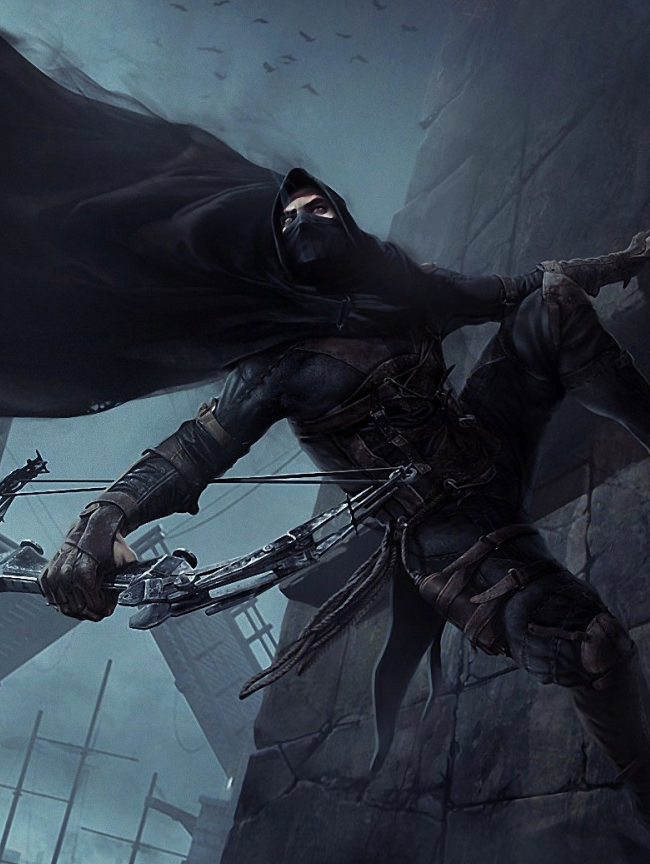
The Rogue
Rogues rely on skill, stealth, and their foes’ vulnerabilities to get the upper hand in any situation. They have a knack for finding the solution to just about any problem, demonstrating a resourcefulness and versatility that is the cornerstone of any successful adventuring party.
Class Name
| Level | Proficiency Bonus | Features | Knacks | Precision |
|---|---|---|---|---|
| 1st | +2 | Expertise, Knacks, Precision | 2 | 1d6 |
| 2nd | +2 | Cunning Action | 2 | 1d6 |
| 3rd | +2 | Roguish Archetype | 2 | 1d6 |
| 4th | +2 | Ability Score Increase | 3 | 2d6 |
| 5th | +3 | Archetype Tricks | 3 | 2d6 |
| 6th | +3 | Uncanny Dodge | 3 | 2d6 |
| 7th | +3 | Roguish Archetype | 3 | 2d6 |
| 8th | +3 | Ability Score Increase | 4 | 3d6 |
| 9th | +4 | Reliable Talent | 4 | 3d6 |
| 10th | +4 | Greater Archetype Tricks | 4 | 3d6 |
| 11th | +4 | Stroke of Luck | 4 | 3d6 |
| 12th | +4 | Ability Score Increase | 5 | 4d6 |
| 13th | +5 | Roguish Archetype | 5 | 4d6 |
| 14th | +5 | Ability Score Increase | 5 | 4d6 |
| 15th | +5 | Superior Archetype Tricks | 5 | 4d6 |
| 16th | +5 | Ability Score Increase | 6 | 5d6 |
| 17th | +6 | Greater Stroke of Luck | 6 | 5d6 |
| 18th | +6 | Roguish Archetype | 6 | 5d6 |
| 19th | +6 | Ability Score Increase | 6 | 5d6 |
| 20th | +6 | Master Archetype Trick | 7 | 6d6 |
Hit Points
Hit Dice: 1d8 per rogue level
Hit Points at 1st Level: 8 + your Constitution modifier
Hit Points at Higher Levels: 1d8 (or 5) + your Constitution modifier per rogue level after 1st
Proficiencies
- Armor: Light armor
- Weapons: Simple weapons, hand crossbows, longswords, rapiers, shortswords
- Tools: Thieves’ tools
- Saving Throws: Dexterity, Intelligence
- Skills: Choose four from Acrobatics, Athletics, Deception, Insight, Intimidation, Investigation, Perception, Performance, Persuasion, Sleight of Hand, and Stealth
Expertise
At 1st level you choose one of your Expertise or Tool proficiencies. Your proficiency bonus is doubled for any ability check you make that the chosen proficiencies.
Knacks
At 1st level you gain 2 unique rogue abilities, known as Knacks. At 4th, 8th, 12th, 16th, and 20th level you gain an additional Knack.
Precision
Once per turn, when you hit a creature with an attack during an attack action or an opportunity attack, you may add additional damage equal to your Precision. You may not add this bonus damage if you had disadvantage on the attack roll.
Cunning Action
At 2nd level your quick thinking and agility allow you to move and act swiftly. You can take a Bonus Action on each of your turns in combat. This action can be used only to take the Dash, Disengage, or Hide action.
Archetype Tricks
At 5th level you gain several tricks specific to your Rogue archetype. Each round you gain a single Roguish Action in addition to your normal actions, which you can use to use your Archetype Tricks. This action can be taken at any point before the start of your next turn.
At 10th, 15th, and 20th level you gain additional tricks specific to your Rogue archetype.
At 6th level you can evade attacks with ease. Once per round, as a reaction, you may halve the damage an attack deals to you. At 9th level you have refined your chosen skills until they approach perfection. Whenever you make an ability check that lets you add your full proficiency bonus, you can treat a d20 roll of 9 or lower as a 10. At 11th level you have a knack for turning failures into successes. You can turn a miss on an attack roll into a hit, or treat a failed skill check as if you had rolled a 20. You regain the use of this ability after you take a Long or Short rest. At 17th level you gain an additional use of this ability each rest.
Uncanny Dodge
Reliable Talent
Stroke of Luck
Knacks
Here are some sample knacks.
Agile Acrobatics
You gain proficiency in Acrobatics. If you are already proficient in Acrobatics, you gain Expertise in that skill instead.
Additionally, you gain a fly speed equal to your land speed, but cannot fly for more than 15 feet at a time without touching an object, creature, or non-overhanging surface. If you move at least 10 feet on solid ground before this movement, your first flight distance can be up to 25 feet. You must end your turn with a means to support yourself or you immediately begin to fall.
You learn the vicious mockery cantrip. The save DC is 8 + your proficiency modifier + your Charisma modifier. It works identically to the spell, save that it does not count as a magical effect. You may use vicious mockery in place of an attack as part of your attack action or as an opportunity attack, but you cannot cast the spell more than once per round . Additionally, if you engage in non-combat conversation with a creature or creatures, you may choose to impose disadvantage on Perception checks it makes to notice things other than yourself. Attacks against opponents so engrossed are made at advantage, but once the surprise round is over the effect ends.
You can create alternate identities for yourself. By taking one minute to adjust your appearance, you can fully masquerade as the chosen identity. Other creatures believe you to be this individual until given reason not to. You can create a new identity by spending seven days in research and planning, and you may have a number of identities equal to your proficiency modifier at any one time. Additionally, by spending an hour in a creature’s company, you can the ability to unerringly disguise yourself as that individual, provided your physical form is close enough to avoid suspicion. Your ruse is indiscernible to the casual observer. If a wary creature suspects something is amiss, you have advantage on any Charisma (Deception) check you make to avoid detection.
You gain proficiency in the Perception skill. If you are already proficient in the skill, you gain Expertise in Perception. You have advantage on Perception checks to hear things (for checks that involve hearing but are not exclusively hearing related or checks that would have disadvantage, use the first die--or lower, for disadvantage--for the check, and the higher of the two for any auditory information). Additionally, you can accurately discern the environment around you out to 180 feet, as well as the presence, size, number, and exact location of creatures that would normally be within your line of sight. You cannot discern precise details or information that requires purely visual input (such as color or writing). Attack rolls against targets you cannot see are still made at disadvantage. You lose this benefit if you are deafened.
You gain a knack point, which you can expend to add 1d4 to any ability check. You may expend this point after you find out if the result succeeds or fails. At 10th level this increases to 1d6. As an action you can recover your knack.
You can take the Help action as a bonus action or as a reaction, but no more than once per round. Additionally, when you use the Help action to aid an ally in attacking a creature, you may assist any ally within 30 feet who can see and hear you. If you have the Scholar knack, you cannot gain the benefit of Scholar’s bonus unless you spend your action to provide help.
You treat a roll of a natural 2 as if it were a natural 20. The roll still rounds as a 2 for determining the highest or lowest result when rolling with advantage or disadvantage. You add half your proficiency bonus to any skill you are not proficient in. You gain proficiency in your choice of Nature, Arcana, History, or Religion. If you are already proficient in the skill you choose, you gain Expertise in the skill. Additionally, when you take the Help action to aid another creature’s ability check, you can make a DC 15 Intelligence (History) check. On a success, that creature's check gains a bonus equal to your proficiency bonus, as you share pertinent advice based on your studies, be it historical evidence, scientific knowledge, or something else entirely. To receive this bonus, the creature must be able to understand what you're saying.
If you have the Cunning Tactician knack, you cannot gain the benefit of Scholar’s bonus unless you spend your action to provide help.
Distracting Oratory
Master Imposter
Keen Ears
Uncanny Knack
Cunning Tactician
Fortunate Fool
Jack of all Trades
Scholar
The Arcane Trickster
Some rogues enhance their fine-honed skills of stealth and agility with magic, learning tricks of enchantment and illusion. These rogues include pickpockets and burglars, but also pranksters, mischief-makers, and adventurers.
Arcane Trickster Spellcasting
| Level | Spells Known | 1st | 2nd | 3rd | 4th |
|---|---|---|---|---|---|
| 3rd | 3 | 2 | — | — | — |
| 4th | 4 | 3 | — | — | — |
| 5th | 4 | 3 | — | — | — |
| 6th | 4 | 3 | — | — | — |
| 7th | 5 | 4 | 2 | — | — |
| 8th | 6 | 4 | 2 | — | — |
| 9th | 6 | 4 | 2 | — | — |
| 10th | 7 | 4 | 3 | — | — |
| 11th | 8 | 4 | 3 | — | — |
| 12th | 8 | 4 | 3 | — | — |
| 13th | 9 | 4 | 3 | 2 | — |
| 14th | 10 | 4 | 3 | 2 | — |
| 15th | 10 | 4 | 3 | 2 | — |
| 16th | 10 | 4 | 3 | 3 | — |
| 17th | 11 | 4 | 3 | 3 | — |
| 18th | 11 | 4 | 3 | 3 | — |
| 19th | 12 | 4 | 3 | 3 | 2 |
| 20th | 13 | 4 | 3 | 3 | 2 |
Tricks of the Trade (Level 3)
Arcane Tricksters gain the ability to cast Wizard spells to enhance their abilities, trick their foes, and defend themselves more effectively.
Cantrips: You learn four cantrips: mage hand, prestidigitation, and two other cantrips of your choice from the wizard spell list.
Spell Slots: The Arcane Trickster Spellcasting table shows how many spell slots you have to cast your spells of 1st level and higher. To cast one of these spells, you must expend a slot of the spell’s level or higher. You regain all expended spell slots when you finish a long rest.
You start with two 1st-level spell slots at Rogue level 3, and gain more as you gain more Rogue levels.
Spells Known: You know three 1st-level wizard spells of your choice, two of which you must choose from the enchantment and illusion spells on the wizard spell list. The third can be from any school of magic.
The Spells Known column of the Arcane Trickster Spellcasting table shows when you learn more wizard spells of 1st level or higher. Each of these spells must be an enchantment or illusion spell of your choice, and must be of a level for which you have spell slots. For instance, when you reach 7th level in this class, you can learn one new spell of 1st or 2nd level.
The spells you learn at 8th, 14th, and 20th level can come from any school of magic.
Whenever you gain a level in this class, you can replace one of the wizard spells you know with another spell of your choice from the wizard spell list. The new spell must be of a level for which you have spell slots, and it must be an enchantment or illusion spell, unless you’re replacing the spell you gained at 8th, 14th, or 20th level.
Spellcasting Ability: Intelligence is your spellcasting ability for your wizard spells since you learn your spells through dedicated study and memorization. You use your Intelligence whenever a spell refers to your spellcasting ability. In addition, you use your Intelligence modifier when setting the saving throw DC for a wizard spell you cast and when making an attack roll with one.
Spell save DC = 8 + your proficiency bonus + your Intelligence modifier
Spell attack modifier = your proficiency bonus + your Intelligence modifier
You gain the following enhancements to your mage hand cantrip. You can perform one of these tasks without being noticed by a creature if you succeed on an Dexterity (Sleight of Hand) check contested by the creature's Wisdom (Perception) check.
Finally, you can use the bonus action granted by your Cunning Action to control the hand.
Mage Hand Legerdemain (Level 3)
Arcane Tricks (Level 5)
At 5th level may use your Rogue action to perform any of the following:
- Cast prestidigitation, even if you have already cast a spell this round.
- Sustain your mage hand for an additional round past its normal duration.
- Dismiss your mage hand.
At 10th level, you gain the ability to maintain two mage hand spells simultaneously, and gain the following additional tricks:
- Command a mage hand that has not taken an action this turn to take an action.
- Cast mage hand, even if you have already cast a spell this turn.
At 15th level you gain the following additional tricks:
- Grant yourself vision as if you were at the location of your mage hand.
- Enable your mage hand and anything it holds to pass through up to five feet of solid matter as part of its movement this turn.
- Make an item held by your mage hand invisible until it is dropped.
At 20th level you gain the following additional tricks:
- Cast a spell as if you were standing where any of your mage hands are, even if you had already cast a spell this round. Once you use this ability, you must complete a Short Rest before you can use it again.
- Count yourself as being at the location of one of your mage hands for the purposes of calculating your next attack action.
Magical Ambush
At 7th level, when you are hidden from a creature and you cast a spell on it, the creature has disadvantage on any saving throw it makes against that spell this turn.
Archmage's Hand
At 13th level your mage hands become extensions of your own body. You gain advantage on any Strength (Athletics) checks involving hands while at least one mage hand is adjacent to you, and can use objects carried by adjacent hands as if you were carrying them yourself (although you are still limited by your normal action limit). Additionally, your mage hands can now each interact with objects weighing up to 30 pounds, although they still cannot make attacks or interact with objects held by unwilling creatures.
Montebank
At 18th level you excel at trickery. When you use your Uncanny Dodge feature you may choose to either take half damage or take full damage and teleport to a location you can see within 30 feet.
The Thug [Under Construction, Please Ignore
At 3rd level you're a master of tavern brawls.
- You gain proficiency in improvised weapons.
- Your unarmed strike damage increases to 1d4.
- You may make precise attacks with light improvised weapons, light bludgeoning weapons, and unarmed strikes.
- Once per round, as a bonus action, you may reroll damage with an improvised weapon. If you do you may use the higher value, but the weapon immediately breaks.
Brute Tricks
You may use your Rogue action to perform any of the following:
- Make a Shove attack.
- Make a Grapple attack.
- Make an unarmed strike or improvised weapon attack against a prone or grappled creature.
Knock 'em Down
At 7th level, when you shove a creature you are grappling, you can choose to push the target up to 15 feet away from you and knock it prone. Each creature within 5 feet of the shoved creature must make a Dexterity saving throw or be knocked prone. The DC for the saving throw is 8 + your proficiency modifier + your Strength modifier.
Major Brute Tricks
Human Shield
At 13th level you have resistance to bludgeoning, piercing, and slashing damage as long as you are grappling a creature.
Superior Brute Tricks
Hit 'em While They're Down
At 18th level you gain advantage on attack rolls against prone or grappled creatures.
Master Brute Tricks
You may use your Rogue action to perform any of the following:
- Once per long rest, as a Rogue Action,
- test