
Runeshaper
Decked in his glowing bronze armour, a dwarf stands in the middle of the battlefield with his hammer raised. He brings it smashing down onto the ground, and a wave of force erupts from him to knock over his foes. An elf sits at her worktable, delicately engraving tiny runes onto a piece of jewellery. She hums as she weaves enchantments into the necklace that will protect its wearer.
A half-orc stands over his bound victim, jagged scar marring his powerful frame. With a final shout he drives his bone dagger through the sacrifice's heart, and the blood evaporates before it hits the ground.
A treasured tradition both among primitive tribes and civilized people, Runeshapers have perfected ways to trap the weave of magic into rigorous geometric shapes. Their magic is closer to a science than an art and requires almost mathematical precision to use
Precision and Dedication
Above all else, Runeshapers are perfectionists. Some are tasked with keeping the sacred histories of their tribes etched in massive monoliths, while others are craftsmen and researchers attempting to push the limits of what can be crafted with runes.
In either case, they train and study for years in order to understand the science behind their magic and acquire the accumulated knowledge of their forebears before they are adept enough to experiment with their own devices, if they so choose.
Knowledge and Tradition
Runeshapers are often bound by old traditions regarding their art, and many never leave their homelands. Some, however, decide to adventure in order to discover traditions different than their own or to experiment with a wider range of runes than what is known to their native lands.
A Runeshaper might be curious or highly traditional, but in either case they highly value the acquisition and dissemination of knowledge.
Creating a Runeshaper
Creating a Runeshaper character demands a backstory steeped in learning and exploration, and determined by one extraordinary event that led the character on the path of adventure.
Where did you first learn to craft runes? Was it at the hands of your tribal shaman, who taught you how to preserve the history and souls of your people by inscribing them into stone? Or was it at a formal dwarven or elven academy where long-bearded professors taught you the mathematical theorems behind the runes?
What drew you forth from your life of study? Did some calamity befall your tribe and cast you adrift into the world, carrying their remaining memories? Did you graduate with honours and decide to explore what other schools can offer? Or did you decide to put your skills to use with a mercenary warband to support their warriors?
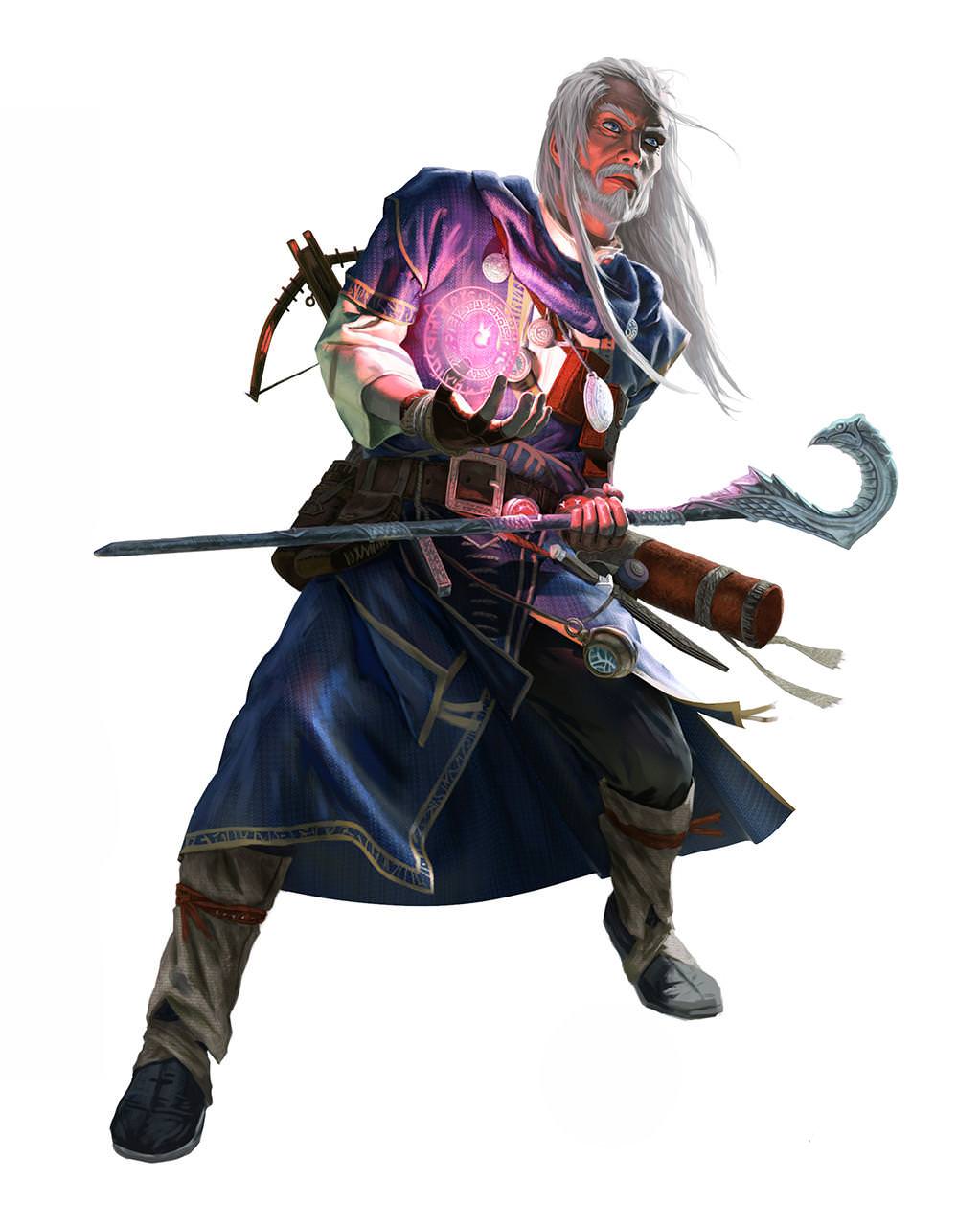
Quick Build
You can make a Runeshaper quickly by following these suggestions. First, Intelligence should be your highest ability score, followed by Strength or Dexterity. Second, choose the Sage or Outlander backgrounds.
Class Features
As an runeshaper, you gain the following class features.
Hit Points
Hit Dice: 1d8 per runeshaper level
Hit Points at 1st Level: 8 + your Constitution modifier
Hit Points at Higher Levels: 1d8 (or 5) + your Constitution modifier per runeshaper level after 1st
Proficiencies
Armour: Light armour, medium armour, shields
Weapons: Simple weapons
Tools: One set of Artisan's tools
Saving Throws: Intelligence, Wisdom
Skills: Choose three from Arcana, History, Insight, Investigation, Persuasion, and Religion

The Runeshaper
| Level | Proficiency Bonus | Runes Known | Rune Slots | Features | Cantrips Known | Spells Known | 1st | 2nd | 3rd | 4th | 5th |
|---|---|---|---|---|---|---|---|---|---|---|---|
| 1st | +2 | 2 | 1 | Runelore, Runic League | — | — | — | — | — | — | — |
| 2nd | +2 | 2 | 2 | Spellcasting, Runic Symbols | 2 | 2 | 2 | — | — | — | — |
| 3rd | +2 | 3 | 2 | Expertise, Runic League Feature | 2 | 3 | 3 | — | — | — | — |
| 4th | +2 | 3 | 2 | Ability Score Improvement | 3 | 4 | 3 | — | — | — | — |
| 5th | +3 | 4 | 3 | Runic Discharge | 3 | 5 | 4 | 2 | — | — | — |
| 6th | +3 | 4 | 3 | Runic League Feature | 3 | 6 | 4 | 2 | — | — | — |
| 7th | +3 | 5 | 3 | Runelore | 3 | 7 | 4 | 3 | — | — | — |
| 8th | +3 | 5 | 4 | Ability Score Improvement | 3 | 8 | 4 | 3 | — | — | — |
| 9th | +4 | 6 | 4 | Arcane Ingenuity | 3 | 9 | 4 | 3 | 2 | — | — |
| 10th | +4 | 6 | 5 | Runic League Feature | 4 | 9 | 4 | 3 | 2 | — | — |
| 11th | +4 | 7 | 5 | Expertise | 4 | 10 | 4 | 3 | 2 | — | — |
| 12th | +4 | 7 | 5 | Ability Score Improvement | 4 | 10 | 4 | 3 | 3 | — | — |
| 13th | +5 | 8 | 6 | Reliable Talent | 4 | 11 | 4 | 3 | 3 | 1 | — |
| 14th | +5 | 8 | 6 | Runic League Feature | 4 | 11 | 4 | 3 | 3 | 1 | — |
| 15th | +5 | 9 | 6 | Runelore | 4 | 12 | 4 | 3 | 3 | 2 | — |
| 16th | +5 | 9 | 7 | Ability Score Improvement | 4 | 12 | 4 | 3 | 3 | 2 | — |
| 17th | +6 | 10 | 7 | Mathematical Precision | 4 | 13 | 4 | 3 | 3 | 2 | 1 |
| 18th | +6 | 10 | 7 | Runic League Feature | 4 | 13 | 4 | 3 | 3 | 2 | 1 |
| 19th | +6 | 11 | 8 | Ability Score Improvement | 4 | 14 | 4 | 3 | 3 | 2 | 2 |
| 20th | +6 | 11 | 8 | Master Runeshaper | 4 | 14 | 4 | 3 | 3 | 2 | 2 |
Equipment
You start with the following equipment, in addition to the equipment granted by your background:
- (a) a simple weapon and a shield, (b) one martial weapon and a shield (if proficient), or (c) a light crossbow and 20 bolts
- (a) an scholar’s pack, or (b) a explorer’s pack
- (a) leather armour, (b) hide armour, or (c) chainmail (if proficient)
- a set of tools that you are proficient with and an arcane focus
Alternatively, you can purchase your starting equipment with a starting wealth of 4d4 x 10gp.
Runelore
Beginning at 1st level, your understanding of runes allows you to make minor improvements to a piece of equipment. At the end of a long rest, you can etch a number of runes with magic. The magic will last for 24 hours before it is depleted, and you must reapply the rune for the magic to take effect again.
You cannot have two runes of the same type active at once.
Learning Runes of Runic Tiers
Runes come in three tiers; each one stronger than the last: marks, glyphs, and regalia.
You learn one mark level rune that you can etch onto a piece of equipment from the list of runes at the end of the class description. When you gain certain runeshaper levels, you can master new runes of your choice, as shown in the Runes Known column of the runeshaper table. Additionally, when you gain a level in this class, you can choose one of the runes you know and replace it with another for which you meet the requirements.
When you reach 7th level, you can learn glyph level runes, and when you reach 15th level, you can learn regalia runes.
Rune Slots
Starting at 1st level, you have 1 rune slot. These increase at levels shown in the Rune Slots column of the runeshaper table.
Each tier of rune costs rune slots: marks cost 1, glyphs cost 2, and regalia cost 3. When you etch runes, the total slot expenditure must be equal to, or less than your total number of rune slots.
For example, a 7th level runeshaper has 3 rune slots, so they could etch one glyph, and one mark, or just three marks if they so wished.
Runic League
Also at 1st level, you embrace a runeshaping tradition that you try to live up to. Choose one of the options detailed at the end of the class description. The tradition you choose grants you features at 1st level, and again at 3rd, 6th, 10th, 14th, and 18th level.
League Spells
Each league has a list of associated spells. You gain access to these spells at the levels specified in the league description. League spells don’t count against the number of spells you know.
If you gain an League spell that doesn’t appear on the runeshaper spell list, the spell is nonetheless a runeshaper spell for you.
Spellcasting
By the time you reach 2nd level, you have learned to shape magical energies without the use of runes, much as a wizard does.
Cantrips
At 2nd level, you know two cantrips of your choice from the Runeshaper spell list. You learn additional Runeshaper cantrip of your choice at higher levels, as shown in the Cantrips Known column of the Runeshaper table.
Spell Slots
The runeshaper table shows how many spell slots you have to cast your spells of 1st level and higher. To cast one of these spells, you must expend a slot of the spell’s level or higher. You regain all expended spell slots when you finish a long rest. For example, if you know the 1st-level spell catapult and have a 1st-level and a 2nd-level spell slot available, you can cast catapult using either slot.

Spells Known of 1st Level and Higher
You know three 1st-level spells of your choice from the runeshaper spell list. The Spells Known column of the Runeshaper table shows when you learn more runeshaper spells of your choice. Each of these spells must be of a level for which you have spell slots. For instance, when you reach 5th level in this class, you can learn one new spell of 1st or 2nd level.
Additionally, when you gain a level in this class, you can choose one of the runeshaper spells you know and replace it with another spell from the runeshaper spell list, which also must be of a level for which you have spell slots.
Spellcasting Ability
Intelligence is your spellcasting ability for your runeshaper spells, since you learn your spells through dedicated study and memorization. You use your Intelligence whenever a spell refers to your spellcasting ability. In addition, you use your Intelligence modifier when setting the saving throw DC for a runeshaper spell you cast and when making an attack roll with one.
- Spell save DC = 8 + your proficiency bonus + your Intelligence modifier
- Spell attack modifier = your proficiency bonus + your Intelligence modifier
Ritual Casting
You can cast a runeshaper spell as a ritual if that spell has the ritual tag and you have the spell in your spellbook. You don't need to have the spell prepared.
Spellcasting Focus
You can use an arcane focus (found in chapter 5) as a spellcasting focus for your runeshaper spells. You can also use one of the tools you use to inscribe or etch your runes.
Runic Symbols
Starting at 2nd level, you learn how to store your spells using simplified runes. You can expend a spell slot and spend a minute inscribing a symbol on a small piece of material such as a sheet of paper, a hand-sized pottery shard or a palm sized stone. The symbol now stores a spell of 1st level or higher of your choosing from your known spells, at the same level as the expended spell slot.
As an action, any creature holding the symbol can cast the spell as long as its Intelligence score is higher than 6. You can choose to prevent a hostile creature from casting that spell. The spell cast uses your spellcasting ability modifier, and your spell save DC.
The symbol stores the spell for up to 24 hours, and you cannot regain your spell slot until you use the symbol or the symbol is destroyed with being used or expires naturally.
Expertise
At 3rd level, choose two of your skill proficiencies, or one of your skill proficiencies and your proficiency with a type of artisan’s tool. Your proficiency bonus is doubled for any ability check you make that uses either of the chosen proficiencies.
At 11th level, you can choose two more of your proficiencies (in skills or with artisan’s tools) to gain this benefit.
Ability Score Improvement
When you reach 4th level, and again at 8th, 12th, 16th, and 19th level, you can increase one ability score of your choice by 2, or you can increasetwo ability scores of your choice by 1. As normal, you can’t increase an ability score above 20 using this feature.
Runic Discharge
Starting at 5th level, you can release the energy of an etched rune to bolster its power for a limited time.
You gain the ability to discharge a rune, losing the runes power until it is refreshed during a long rest. The rune then grants a far more powerful bonus for a short duration.
Arcane Ingenuity
Starting at 9th level, you develop novel ways to imbue your runes. During a short rest, you can change the effect imbued in any number of your etched runes to any of the other effects available to you. Each rune changed takes 10 minutes.
The new effect takes place immediately, but this does not refresh expended runes.
Arcane Regeneration
Starting at 13th level, you can spend a bonus action to expend an active rune, and to regain a number of spell slots with a combined level based on the table below, alongside the tier of the rune expended.
| Rune Tier | Total Spell Slot Levels Regained |
|---|---|
| Mark | 1 |
| Glyph | 2 |
| Regalia | 3 |
Once you use this feature, you cannot use it again until you finish a Long Rest.
Mathematical Precision
Starting 17th level, your keen intellect allows you to calculate the effects of a spell more precisely. Whenever you roll multiple dice as part of a spell, you can reroll a number of these dice up to your Intelligence modifier. You cannot reroll attack rolls, ability checks, or saving throws using this feature.
You can use this feature a number of times up to your Intelligence modifier. You regain expended uses on a long rest.
Master Runeshaper
At 20th level you have reached the pinnacle of your art. You can create or refresh your runes during a short or long rest.
Additionally, you know the symbol spell, which you can cast without expending spell slot components and does not count against your number of spells known. Once you have cast symbol in this way, you cannot cast it again until you complete a long rest.
Runic League
Runic tradition can vary greatly from one teacher or region to another, with different leagues possessing vastly differing approaches to runeshaping.
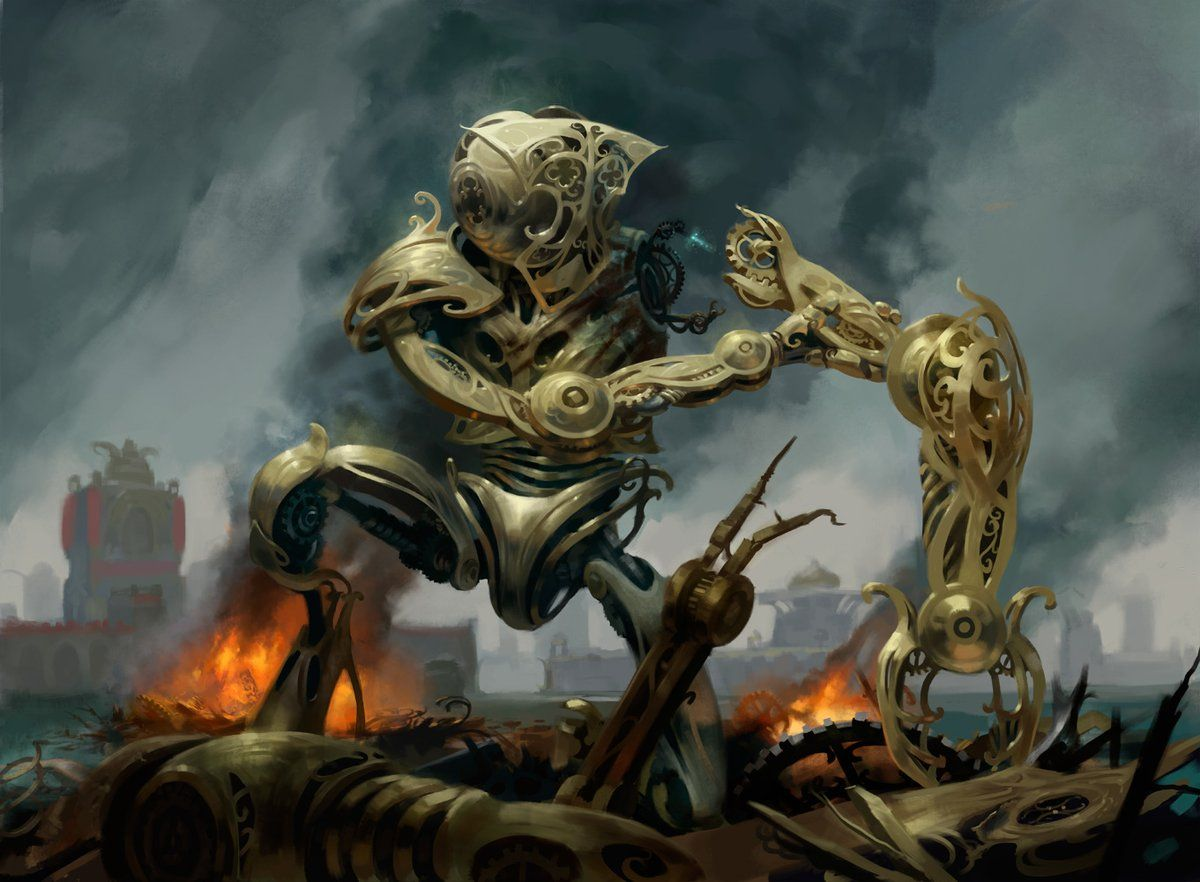
Artificer
You have expanded your learning to the more mundane, mechanical sciences - discovering how to combine your expertise in imbuing arcane power with the piston and pully. Your newfound knowledge has led to you developing faster methods of crafting magical artifacts.
League Spells
You gain league spells at the runeshaper levels listed.
Artificer Spells
| Runeshaper Level |
Spells |
|---|---|
| 2nd | expeditious retreat, identify |
| 5th | archor/buoy, repair damage |
| 9th | dispel magic, replica |
| 13th | fabricate, Leomund's secret chest |
| 17th | animate objects, creation |
Bonus Cantrip
Starting when you choose this runic league at 1st level, you learn the mending cantrip, which does not count against your number of cantrips known.
Additionally, when you cast mending, you may choose to change its casting time to 1 action. You may cast mending in this way a number of times equal to your Intelligence modifier, regaining any expended uses when you complete a long rest.
Magical Tinkering
Also at 1st level, you learn how to invest a spark of magic in objects that would otherwise be mundane. To use this ability, you must have your arcane focus on hand. You then touch a Tiny nonmagical object as an action and give it one of the following magical properties of your choice:
- The object sheds bright light in a 5-foot radius and dim light for an additional 5 feet.
- Whenever tapped by a creature, the object emits a recorded message that can be heard up to 10 feet away. You utter the message when you bestow this property on the object, and the recording can be no more than 6 seconds long.
- The object continuously emits your choice of an odour or a nonverbal sound (wind, waves, chirping, or the like). The chosen phenomenon is perceivable up to 10 feet away.
- A static visual effect appears on one of the object’s surfaces. This effect can be a picture, up to 25 words of text, lines and shapes, or a mixture of these elements, as you like.
The chosen property lasts indefinitely. As an action, you can touch the object and end the property early.
You can give the magic of this feature to multiple objects, touching one object each time you use the feature, and a single object can bear only one of the properties at a time. The maximum number of objects you can affect with the feature at one time is equal to your Intelligence modifier (minimum of one object). If you try to exceed your maximum, the oldest property immediately ends, and then the new property applies.
Crafting Savant
When you reach 3rd level, your continued practice has resulted in superior efficiency and speed while crafting. The raw materials or gold and time required to craft magical items or items is halved.
Your crafting speed increases again at later levels. At 10th level, you can craft at five times the speed of others without this feature, and at 18th level, you can craft at ten times the speed. Refer to page 128 of the Dungeon Master's Guide for crafting requirements for magical items.
Mechanical Servant
When you reach 6th level, your research and mastery of your craft has allowed you to produce a mechanical servant. The servant takes on a form that you choose: aerial servant, humanoid servant, or quadrupedal servant, the statistics of which are shown at the end of the league description.
Your servant follows your spoken commands and acts on its own turn in initiative, using one of the statistics shown below, as chosen by you upon creation.
You can use your bonus action to command your servant. You can use simple actions such as ‘Protect us,’ ‘Kill them,’ or more complex commands such as ‘Attack that kobold then the animated armour next to it,’ once a mechanical servant has completed its command, it will stop and await further instruction.
When your mechanical servant is reduced to 0 hit points, it falls unconscious, making death saving throws exactly as you would. When your servant takes a long rest, it goes into an inactive state for the duration, regaining all missing hit points at the end of its rest. Additionally, during a short rest, you may spend 20 minutes repairing your servant, during which you may expend any number of hit dice, adding your Intelligence modifier to each result. If you do, your servant regains hit points equal to the total result.
If your mechanical servant dies, it can be revived using any spell that would bring a living creature back from the dead, but without requiring any material components for those spells. Otherwise, you may spend 56 hours of work over seven days, expending 500 gp, after which your mechanical servant is returned to life with all of its hit points. When you return your servant to life, you may choose a new body for it, as well as all new augmentations.
Your mechanical servant can be etched with any rune as if it were wearing/wielding the necessary equipment.
Additionally, when you cast the mending spell on your mechanical servant, it gains temporary hit points equal to your Intelligence modifier + your runeshaper level, which last for 1 hour.
Arcane Augmentations
Also at 6th level, you have learned to imbue your mechanical servant with a variety of tweaks to its design, called Augmentations. Your mechanical servant starts with two augmentations, all of which are shown below. As you gain runeshaper levels, you gain access to more augmentations, gaining one new augmentation at 8th, 10th, 12th, 14th, 16th and 18th level. You cannot choose the same augmentation more than once and must fill any prerequisites required to choose an augmentation. To install an augmentation after gaining access to it, you must spend 4 hours of work over up to 3 days to successfully install it.
Arcane Repeater
Prerequisites: Humanoid or quadrupedal servant
Your servant gains a new action, as shown below:
Arcane Bolt. Ranged Weapon Attack: +5 to hit, range 60/120 ft., one target you can see. Hit: 6 (1d6 + 3) force damage.
Automated Reactionary Timing
Prerequisites: Humanoid or quadrupedal servant, 14th level
Your servant has no limit on the number of reactions it can take.
Automaton Attunement
Prerequisites: Humanoid servant, 10th level
Your servant can attune to a single magic item.
Auxiliary Appendages
Prerequisites: Humanoid or quadrupedal servant
Your servant gains four small grasping appendages, granting it a climbing speed equal to its base walking speed, and advantage on checks made to grapple a creature.
Energy Expulsion
Prerequisites: Aerial or quadrupedal servant
Choose one of the following damage types: acid, cold, fire, lightning, poison. Your servant gains a new action, as shown below, the damage changing to the chosen type.
Energy Breath (Recharges after a Short or Long Rest). The servant unleashes a blast of elemental energy in a 15-foot cone in front of it. Each creature caught in the area must make a DC 13 Constitution saving throw. On a failure, a creature suffers 3d6 damage, or half as much on a success. The number of d6 rolled as a part of this damage increases as per the servant’s Might of the Master feature.
Enhanced Strike Servos
Prerequisites: 10th level
When your servant takes the Attack action, it can make two Strike attacks instead of one.
Enlightened Mind
Prerequisites: Humanoid servant, 18th level
Your servant’s Intelligence and Charisma scores increase to 10, it can speak all languages available to you, and, if your DM allows it, can take a single level in a class of your choice.
Evasive Programming
Prerequisites: Aerial servant, 10th level
Your servant gains the following feature:
Flyby. The servant does not provoke an opportunity attack when it flies out of an enemy's reach.
Deployable Shield
Prerequisites: Humanoid servant
As a bonus action, the servant creates a magical barrier in one of its hands, which lasts until dismissed as a bonus action on subsequent turns. The shield grants the servant a +2 bonus to its AC and to its Dexterity saving throws.
Guardian’s Vigilance
Prerequisites: Quadrupedal servant, 10th level
A creature moving into your servant’s reach can provoke it to make an opportunity attack, it provokes an opportunity attack.
Mechanical Assault
Prerequisites: Quadrupedal servant, 18th level
Your servant gains the following feature:
Mechanical Assault. Whenever the servant misses a creature with an attack roll, it can reroll its attack, using the new result.
Piston Installation
Prerequisites: Humanoid or quadrupedal servant
The base walking speed of your servant increases by 10 feet.
Additionally, your servant halves all falling damage it suffers, and gains advantage on ability checks or saving throws made to resist being moved against its will or knocked prone.
Reinforced Bodywork
Your servant’s Constitution score increases by 2, its armour class increases by 1, and its hit point maximum increases by an amount equal to your runeshaper level.
Repair Protocol
Your servant gains a new action, as shown below.
Repair (Recharges after a Long rest). The magical mechanisms inside the servant allow it restore 10 (3d6) hit points. The servant may take this action even whilst it is unconscious. The number of d6 rolled as a part of this damage increases as per the servant’s Might of the Master feature.
Speech Module
Prerequisites: Humanoid servant, 10th level
Choose one language you know. Your servant can speak that language.
Upscaling
Prerequisites: Aerial or quadrupedal servant, 14th level
Your servant’s size becomes Large, and its hit point maximum increases by 10.
This augmentation takes 24 hours of work over 3 days to implement.
Warpdrive
Prerequisite: Aerial servant, 18th level
Your servant gains the following feature:
Warpdrive (Recharge 5-6). As a bonus action, the servant teleports up to 120 feet to an unoccupied space that it can see, along with everything it is wearing or carrying.
Superior Attunement
At 10th level, your superior understanding of magic items allows you to master their use. The number of magic items that you can attune to at a time, usually three, increases to four.
When you reach 18th level, you can instead attune to up to five magic items.
Upgraded Mechanical Servant
Starting at 14th level, you’ve spent significant time working on your mechanical servant, improving its capabilities. You gain the benefits of any rune currently etched onto your mechanical servant, and your mechanical servant can use its own actions to discharge any runes etched onto it.
Additionally, the gold cost to repair your deceased mechanical servant is halved.
Masterful Creations
By the time you reach 18th level, that which you create is so brilliant that it defies convention. When you use your runic tinkering feature, you may apply both tinkered effects to the chosen rune, or you may choose two runes to grant one tinkered effect to. You may also spend 8 hours and 100 gp of materials rebuilding your mechanical servant. In this time, you may choose a new base body, aerial, humanoid, or quadrupedal, and may choose all new augmentations for it.
Additionally, you have constructed a second mechanical servant, following the rules and regulations for the first, except, treat your runeshaper level as half when calculating the statistics of this new servant.
Aerial Servant
Medium construct, unaligned
- Armor Class 15 (natural armour)
- Hit Points equal to the servant’s Constitution modifier + your Intelligence modifier + five times your runeshaper level
- Speed 10 ft., 60 ft.
STR DEX CON INT WIS CHA 10 (+0) 14 (+2) 14 (+2) 5 (-3) 12 (+1) 6 (-2)
- Saving Throws Dex +5, Con +5
- Skills Acrobatics +4, Perception +4
- Damage Immunities poison, psychic
- Condition Immunities charmed, exhaustion, frightened, poisoned
- Senses darkvision 60ft., passive Perception 14
- Languages understands the languages you do, but cannot speak
Immutable Form. The servant is immune to any spell or effect that would alter its form.
Keen Sight. The servant has advantage on Wisdom (Perception) checks that rely on sight.
Magical Weapons. The servant’s weapon attacks are magical.
Might of the Master. The following numbers increase by 1 when your proficiency bonus increases by 1: the servant’s skill and saving throw bonuses, its armour class, and the bonuses it has to its attack and damage rolls.
Actions
Strike. Melee Weapon Attack: +5 to hit, reach 5 ft., one target you can see. Hit: 8 (2d4 + 3) slashing damage.
Humanoid Servant
Medium construct, unaligned
- Armor Class 15 (natural armour)
- Hit Points equal to the servant’s Constitution modifier + your Intelligence modifier + five times your runeshaper level
- Speed 10 ft., 60 ft.
STR DEX CON INT WIS CHA 14 (+2) 13 (+1) 14 (+2) 6 (-2) 12 (+1) 6 (-2)
- Saving Throws Con +5, Wis +4
- Skills Athletics +5, Perception +4
- Damage Immunities poison, psychic
- Condition Immunities charmed, exhaustion, frightened, poisoned
- Senses darkvision 60ft., passive Perception 14
- Languages understands the languages you do, but cannot speak
Automaton Communication. The servant can communicate simple ideas and thoughts through gestures.
Immutable Form. The servant is immune to any spell or effect that would alter its form.
Magical Weapons. The servant’s weapon attacks are magical.
Might of the Master. The following numbers increase by 1 when your proficiency bonus increases by 1: the servant’s skill and saving throw bonuses, its armour class, and the bonuses it has to its attack and damage rolls.
Actions
Strike. Melee Weapon Attack: +5 to hit, reach 5 ft., one target you can see. Hit: 7 (1d8 + 3) slashing damage.
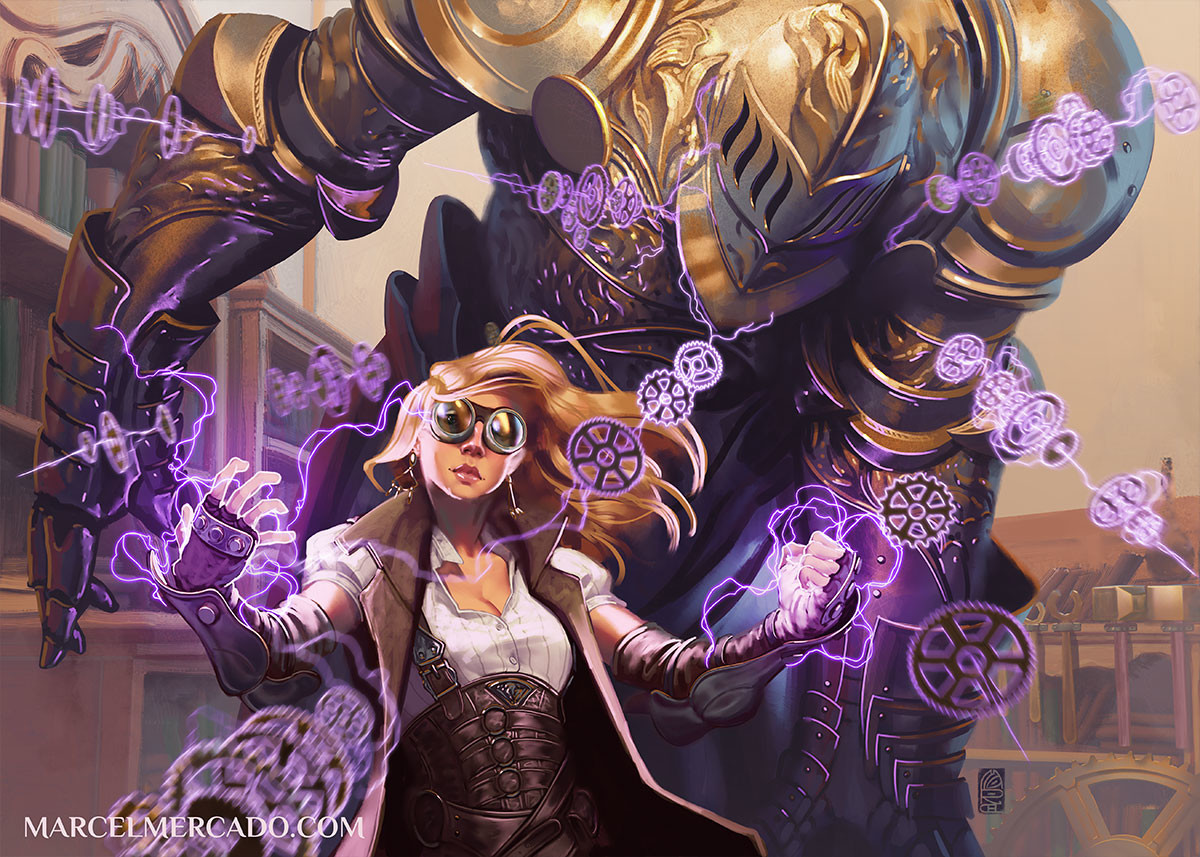

Quadrupedal Servant
Medium construct, unaligned
- Armor Class 15 (natural armour)
- Hit Points equal to the servant’s Constitution modifier + your Intelligence modifier + five times your runeshaper level
- Speed 10 ft., 60 ft.
STR DEX CON INT WIS CHA 14 (+2) 13 (+1) 14 (+2) 5 (-3) 12 (+1) 6 (-2)
- Saving Throws Dex +4, Con +5
- Skills Athletics +5, Perception +4
- Damage Immunities poison, psychic
- Condition Immunities charmed, exhaustion, frightened, poisoned
- Senses darkvision 60ft., passive Perception 14
- Languages understands the languages you do, but cannot speak
Beastial Strikes. A creature that takes the Disengage action still provokes opportunity attacks from the servant. Additionally, when the servant hits a creature with an opportunity attack, it can choose to deal half damage. If it does so, the target creature has its speed reduced by 10 feet until the end of the current turn.
Immutable Form. The servant is immune to any spell or effect that would alter its form.
Magical Weapons. The servant’s weapon attacks are magical.
Might of the Master. The following numbers increase by 1 when your proficiency bonus increases by 1: the servant’s skill and saving throw bonuses, its armour class, and the bonuses it has to its attack and damage rolls.
Actions
Strike. Melee Weapon Attack: +5 to hit, reach 5 ft., one target you can see. Hit: 8 (1d10 + 3) slashing damage.
Blood Carver
Blood Carvers are often looked down upon as primitives and savages by other runeshapers, but they are secure in the weight of their traditions and the proven uses of their powers. Blood Carver prefer to etch runes onto living material rather than inanimate object, and believe that these practices both show their dedication to their art and strengthen the power of their runes.
League Spells
You gain league spells at the runeshaper levels listed.
Blood Carver Spells
| Runeshaper Level |
Spells |
|---|---|
| 2nd | false life, inflict wounds |
| 5th | blindness/deafness, suffer |
| 9th | bestow curse, maim |
| 13th | death ward, sigil of agony |
| 17th | antilife shell, enervation |
Scarification
When you embrace this tradition at 1st level, your total hit points increases by a number equal to your character level. You gain one additional hit point at every level.
While you are not wearing any armour your Armor Class equals 13 + your Constitution modifier. You can use a shield and still gain this benefit.
Blood Carving
Additionally at 1st level, you have learned to empower your magic using your own life force. You can etch armour or jewellery runes into your own flesh, or that of a willing creature.
Arcane Sacrifice
Starting at 3rd level, you can choose to sacrifice your own life force to cast a spell at a higher spell slot level. Whenever you cast a spell of 1st level or higher, you can cast this spell as if it was cast using a spell slot of one level higher.
Once you have cast the spell, roll a number of d8 dice equal to the spell's new level; then reduce your maximum hit points by that amount. Maximum hit points reduced by this feature return after a long rest.
If this feature reduces your maximum hit points to 0, you can still cast the spell, but afterwards you die instantly.
You cannot raise a spell higher than 5th level using this feature.
Blood Strike
Starting at 6th level, you can attack twice, instead of once, whenever you take the Attack action on your turn. You only gain the benefit of this feature if you are using a weapon into which you have etched a rune.
Ritual Markings
Starting at 10th level, your fierce appearance serves you well. You gain proficiency in the Intimidation skill. If you are already proficient in this skill, your proficiency bonus for it is doubled.
Additionally, when you cast a ritual spell, it takes half the normal duration.
Sacrificial Power
Starting at 14th level, you can perform a 10 minute ritual to sacrifice a restrained, incapacitated, or willing living creature of intelligence 6 or above. This creature dies automatically and cannot be raised for the next 30 days except by a Wish spell. When the creature dies you regain a number of spell slots. The combined spell slot level cannot be greater than half your Runeshaper level. You cannot use this feature again until you complete a long rest.
Blood Slave
Starting at 18th level, you have learned to exert your power over other creatures. You can inscribe a symbol onto another creature's flesh over the course of a 10 minute ritual if that creature is restrained or incapacitated. At the end of the ritual, the creature makes a Charisma saving throw or be charmed by you until a remove curse spell is cast on it, the charmed condition is removed from it, or you release it from your control.
You can communicate telepathically with the charmed creature as long as the two of you are on the same plane of existence.
You can mark a number of creatures up to your Intelligence modifier. You cannot mark more creatures until you release a previously marked creatures. Previously marked creatures will automatically turn hostile to you once you the charm effect is broken, unless they willingly choose not to be.
Demonologist
Whilst bloodcarvers are feared for their savage ways, the demonologist is feared for his potential to bring great suffering. Harnessing forbidden runes born of fiendish power, the demonologist can use said runes to conjure fiendish entities, and perform dark rituals.
League Spells
You gain league spells at the runeshaper levels listed.
Demonologist Spells
| Runeshaper Level |
Spells |
|---|---|
| 2nd | arms of Hadar, rebuke evil and good |
| 5th | frostfire, wyrd reconstruction |
| 9th | conjure lesser demons, hunger of Hadar |
| 13th | conjure shadow demon, crimson cloak |
| 17th | binding contract, infernal calling |
Bonus Cantrip
When you join this league at 1st level, you learn the chill touch cantrip, and add your Intelligence modifier to the damage roll of the spell.
Demonology
Also at 1st level, you gain an innate knowledge of all manner of fiendish creatures, as well as the magical lore surrounding them. When you make an Intelligence (Arcana or History) check to gain information about fiends, you double your proficiency bonus.
Additionally, you have learned the ancient fiendish art of sacrificing other's life force for power. You can create additional rune slots called Dark Rune Slots. When you use a Dark Slot to etch, or partly etch a rune onto a creature, that creature's hit point maximum is reduced by an amount equal to your runeshaper level until the rune is dispelled. You can have a maximum number of Dark Slots equal to your Intelligence modifier.
Vile Emblem
Beginning when you reach 3rd level, you can utilise your Dark Rune Slots to briefly conjure fiendish runes from the lower planes. You can expend a Dark Slot as an action, taking damage equal to your runeshaper level to conjure a one of the following Vile Emblems:
Edaoh (Steal). The rune appears on a creature that you can see within 30 feet. The target creature must succeed on a Charisma saving throw or take 2d8 necrotic damage and have part of their soul stolen from them. You can choose one of the following effects for the soul fragment to have:
- Your regain hit points equal to half the damage dealt
- The next time the target takes damage from a spell, they take half of the damage as additional damage.
The damage of this rune increases to 3d8 at 6th level, and 4d8 at 14th level. At 10th level, you add your Intelligence modifier to the damage dealt, and at 18th level, you can gain the benefits of both of this emblem's effects when you conjure it.
Maon (Fear). The emblem is conjured above your head, forcing all creatures that you choose that can see the rune within 30 feet of you to make a Wisdom saving throw or become frightened of you for 1 minute. A creature frightened by this emblem can repeat it saving throw at the start of each of its turns, ending the effect on a success.
Xunr (Burn). The emblem is conjured in an unoccupied space that you can see within 30 feet of you. A 10-foot radius sphere surrounding the emblem becomes afire with fiendish energy for 1 minute. Pick a damage type from the following: acid, fire, necrotic; any creature that starts its turn in the area, or enters it for the first time must succeed on a Constitution saving throw or take 1d6 damage of the chosen type, taking half on a success. As an action on subsequent turns, you can move the emblem up to 15 feet.
The damage of the emblem increases to 2d6 at 6th level, and 3d6 at 14th level. At 10th level, it ignores resistance to the chosen damage type, and at 18th, it ignores immunity to the chosen damage type.
Yunza (Curse). The emblem appears on a creature that you can see within 30 feet of you. The target must make a Charisma saving throw. On a failed save, once per turn, until the end of your next turn, whenever the target creature takes damage, it takes an additional 1d8 necrotic damage.
This damage increases to 2d8 at 10th level, and 3d8 at 18th level.
Dark Slots expended in this way regain their use after you complete a long rest, upon which they can be used to either etch runes, or conjure Vile Emblems.
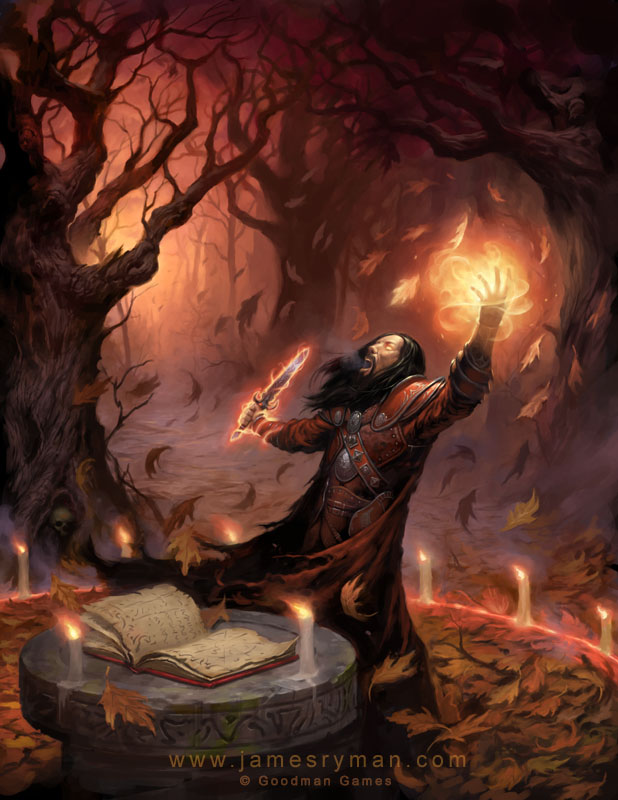
Demon Skull
When you reach 10th level, you have imbued the skull of a fiend with runic echos that allow it to come to life as a servant of yours. The demon skull acts as thought it were a familiar created by the find familiar spell, and its statistics are shown below. Unlike other creatures created by the find familiar spell, your demon skull can take the attack action.
Should you demon skull die, it can be resummoned after completing a 10 minute ritual in which you sacrifice 10 gp worth of gold dust, upon which, you Demon Skull returns to you.
Dark Summons
Once you reach 14th level, you ability to summon dark creatures has grown considerably in power, allowing you to bend the very rules of summoning. When you cast a conjuration spell that summons one or more creatures, you can choose to gain one of the following effects:
- The material cost of any components in the spell is halved
- If the creature must make saving throws or ability checks to try and break free of your control, it does so with disadvantage.
- If the creature would normally act on its own accord upon being summoned, it instead follows your spoken orders until it completes a successful Charisma saving throw against your spell save DC. Upon which it returns to its normal behaviour
- If you are capable of drawing a circle that prevents the escape of the creature, the radius of that circle can be up to twice as large for no additional material cost (if there is one).

Demon Skull
Tiny fiend, the opposite alignment of its creator
- Armor Class 13
- Hit Points 45 (10d4 + 20)
- Speed 0 ft. fly 40 ft. (hover)
STR DEX CON INT WIS CHA 1 (-5) 17 (+3) 14 (+2) 16 (+3) 10 (+0) 11 (+0)
- Skills Perception +2
- Damage Resistances fire, lightning, necrotic, piercing
- Damage Immunities poison
- Condition Immunities charmed, frightened, paralyzed, poisoned, prone
- Senses darkvision 60 ft., passive Perception 12
- Languages Understands and can speak the languages of its creator
- Challenge 1 (200 XP)
Dark Ward. Whilst within 30 feet of its creator, its creator gains resistance to necrotic damage, and immunity to curses.
Devil Sight. Magical darkness doesn't impede the demon skull's darkvision.
Magic Resistance. The demon skull has advantage on saving throws against spells and other magical effects.
Actions
Bite. Melee Weapon Attack: +5 to hit, reach 5 ft., one target. Hit: 5 (1d6 + 2) piercing damage, and the target must succeed on a Charisma saving throw of a DC equal to the demon skull's creator's spell save DC. On a failed save the creature takes an additional 2d6 necrotic damage, half on a success.
Fiendish Sacrifice
When you reach 18th level, you can cause your demon skull to undergo a dark transformation as an action by expending at least one Dark Slot. You take damage equal to your runeshaper level per Dark Slot expended, then your demon skull transforms into a fiend of CR equal to or lower than half your runeshaper level. This fiend obeys your spoken commands for a number of minutes equal to the number of Dark Slots you expended to use this feature, after which it becomes hostile to all creatures before returning to its home plain after a number of rounds equal to 10 - your Intelligence modfier - the number of Dark Slots expended.
You can choose to conjure this fiend as a 10 minute ritual, spending 25 gp worth of materials drawing a 30-foot radius circle out of silver dust and red chalk. You can use your Dark Summons feature to influence this ritual how you choose.
Once you have used this feature, you cannot do so again until you complete a long rest.
Rune Warrior
Runic Warriors are part of a proud tradition of runeshapers who take up arms to defend their tribes, homes, or academies. Runic Warriors are adept at imbuing their weapons and armor with enchantments and unleashing their mystic power on the battlefield.
League Spells
You gain league spells at the runeshaper levels listed.
Rune Warrior Spells
| Runeshaper Level |
Spells |
|---|---|
| 2nd | ablative armour, thunderous smite |
| 5th | heat metal, magic weapon |
| 9th | counterspell, haste |
| 13th | energy ward, staggering smite |
| 17th | banishing smite, forceful blast |
Bonus Proficiency
When you embrace this tradition at 1st level, you gain proficiency in heavy armour and martial weapons.
Fighting Style
At 3rd level, you adopt a particular style of fighting as your specialty. Choose one of the following options. You can’t take a Fighting Style option more than once, even if you later get to choose again.
Defence
While you are wearing armour, you gain a +1 bonus to AC.
Duelling
When you are wielding a weapon in one hand, and no other weapons, you gain a +2 bonus to damage rolls with that weapon.
Great Weapon Fighting
When you roll a 1 or 2 on a damage die for an attack you make with a melee weapon that you are wielding with two hands, you can reroll the die and must use the new roll, even if the new roll is a 1 or a 2. The weapon must have the two-handed or versatile property for you to gain this benefit.
Protection
When a creature you can see attacks a target other than you that is within 5 feet of you, you can use your reaction to impose disadvantage on the attack roll. You must be wielding a shield.
Runic Retribution
Starting at 3rd level, you gain the ability to imbue your weapons and armour with devastating magic. When you etch a rune onto a suit of armour or weapon, you can expend a spell slot to store a damage dealing spell of the same level as the spell slot in that rune as well.
When a creature targets you with a melee attack you can use your reaction to cast this spell against your attacker. You are immune to the effects of this spell. Once you cast the spell in this manner you cannot cast it again until you refresh your rune.
Runic Assault
Starting at 6th level, you can attack twice, instead of once, whenever you take the Attack action on your turn. You only gain the benefit of this feature if you are using a weapon into which you have etched a rune.
Arcane Resistance
Starting at 10th level, whilst you wear armour in which you have etched a rune, you have advantage on saving throws against spells and other magical effects.
Runic Bulwark
Starting at 14th level, the power of your magic sustains you against physical assaults. Whenever you fail a saving throw, you can activate a rune to automatically reroll this saving throw. You must take the second result, and you lose the effects of the rune until you can refresh it.
Runic Aegis
Starting at 18th, you have become a fortress unto yourself. While you are wearing a suit of armour into which you have etched a rune, you can use a bonus action to grant yourself resistance against one type of damage. This resistance lasts for a number of rounds equal to your Intelligence modifier.
Scrivener
Writers and scribes who have mastered the runic arts, Scriveners record and memorise the very nature of runic study. Inscribing greater runic power and committing far more to memory than most find possible, Scriveners are formidable minds to be reckoned with.
Scrivener Spells
| Runeshaper Level |
Spells |
|---|---|
| 2nd | comprehend languages, illusory script |
| 5th | magic mouth, tale |
| 9th | replica, writ of passage |
| 13th | arcane eye, glyph of warding |
| 17th | modify memory, scrying |
Bonus Proficiency
Starting when you choose this league at 1st level, your power over script and calligraphy has made you an expert writer. You gain proficiency in calligrapher's supplies.
Ghost Writer
Additionally at 1st level, your power allows you to imbue your talents into even the most mundane item. As an action on your turn, you can touch a tiny sized ink pen, pencil, or other writing implement, animating it as a floating ghost writer. The ghost writer writes anything you tell it to, which can include any words spoken clearly within 15 feet of the ghost writer.
The ghost writer requires writing supplies, such as ink or quills and pens, as well as parchment, vellum or paper to write on. As a part of your action to animate the implement, or as a bonus action on subsequent turns, you can animate an inkwell, or an object to write on, such as a tome or a sheet of vellum, which hover in place along with the ghost writer.
The ghost writer cannot copy down languages that you do not understand.
The ghost writer stays in your space at all times, even if you would move from that space through magical means. The ghost writer also has an AC equal to your runeshaper spell save DC, as well as hit points equal to your runeshaper level. If it is reduced to 0 hit points it and the implement it was animated from are destroyed.
Runescribe
When you reach 3rd level, you have gained a heightened ability to inscribe, allowing you to maintain the power of more at once. You gain one additional rune slot; which you can use to etch any rune you know. You gain additional bonus rune slots as you gain runeshaper levels, increasing by 1 additional slot at 10th and 18th level.
Symbology
Once you have reached 6th level, your magical potential is enhanced when you pre-prepare your spells. When you cast a spell inscribed on one of your runic symbols, you may cast that spell at one level higher than the spell slot used to inscribe it.
Expanded Mind
At 10th level, your mind encompasses all runic forces, allowing you possess the knowledge of many more runes. You are considered to know every rune of Glyph and Mark rank that you meet the prerequisites for.
When you reach 18th level, you are considered to know every regalia level rune that you meet the prerequisites for.
Enhanced Arcane Regeneration
At 14th level, your runic ability has allowed you to regenerate arcane power even from the latent energy given off from your discharged runes. When you discharge a rune, you may use your Arcane Regeneration feature.
In addition, you may use your Arcane Regeneration feature twice instead of once before you must complete a long rest.
Runic Overcharge
Once you have reached 18th level, your connection with the runic forces has allowed you to empower your spellcasting beyond that which would normally be possible. Choose two 6th level spells from the wizard spell list, these are your Overcharge spells. When you complete a long rest, you can inscribe one of your overcharge spells onto a runic symbol at no spell slot cost. Once you have selected your overcharge spells, they cannot be changed.
Wardsculptor
Invested in the defensive powers that runes possess, the wardsculptors form powerful protective barriers to put an arcane suit of armour around that which they seek to defend. Other wardsculptors simply tinker and toy, seeking to create the perfect ward, impassable, indestructible and impenetrable.
League Spells
You gain league spells at the runeshaper levels listed.
Wardsculptor Spells
| Runeshaper Level |
Spells |
|---|---|
| 2nd | ablative armour, shield |
| 5th | project barrier, warding bond |
| 9th | counterspell, hardening |
| 13th | energy ward, Otiluke's resilient sphere |
| 17th | antilife shell, wall of force |
Bonus Proficiency
When you join this league at 1st level, you gain proficiency in heavy armour.
Barrier Arcane
Also at 1st level, you can conjure up wards of protective energy that defend allies from harm. As a bonus action on your turn, you can choose an unoccupied point that you can see within 30 feet of you. A 5-foot long, 5-foot tall, 1-inch thick barrier of arcane energy forms, centered on the chosen point, orientated as you choose. The barrier takes any form that you choose, but is translucent.
The barrier provides total cover from all attacks that would pass through it as if it were a standard solid surface, but creatures, along with everything they're wearing and carrying can pass through it as if it wasn't even there.
The barrier has AC and hit points as if it were a medium glass resilient object, but with a bonus to its hit points equal to your runeshaper level. When reduced to 0 hit points, the barrier shatters into harmless dust and shards. Additionally, you can choose to destroy any barrier you created within 30 feet of you as a bonus action on your turn.
You can have a maximum of three barriers active at once, and creating a fourth causes the first to be reduced to 0 hit points immediately.
You can use this feature a number of times equal to your Intelligence modifier. You regain all expended uses when you complete a long rest.
Enhanced Protections
When you reach 3rd level, your mastery of protecting your allies further increases, allowing you to guard them further. When a creature would gain a bonus to its AC from a spell or rune that you cast, or an ally casts through your Runic Symbols feature, you can choose for the target creature to gain an additional bonus to its AC equal to your Intelligence modifier until the end of its next turn.
Once you have used this feature, you must complete a short or long rest before you may use it again.
Tangible Ward
When you reach 6th level, your barriers grow in power and strength. Barriers you create gain the following benefits:
- They gain hit points equal to twice your runeshaper level instead of just your runeshaper level.
- They count as fully solid objects that cannot be passed through by living creatures, unless you choose otherwise. When created in this way barriers extend into the etheral plane.
- You can choose for the barrier to change its appearance as a free action on your turn, and when you create barriers, you can choose for them to be opaque.
Additionally, when you create a barrier, you can expend an additional use of your Barrier Arcane feature to double the size of your barrier in all directions, making it a large resilient object, and affecting its hit points accordingly.
Unbreakable Protection
Once you have reached 10th level, the mere act of donning armour empowers it at its very core. Whilst you are wearing medium or heavy armour, you reduce all incoming bludgeoning, piercing and slashing damage by 1d4.
Swift Sculptor
When you reach 14th level, you have mastered the art of swift wardsculpting, allowing you to craft walls faster and more efficiently. You can use your Barrier Arcane feature as a reaction when you or an ally within 30 feet of you would suffer damage. When you use your Barrier Arcane feature in this way, you must expend an additional use of the feature to create the barrier.
Additionally, when you complete a short rest, you can regain a number of expended uses of your Barrier Arcane feature up to half your Intelligence modifier.
Unbreakable Discharge
When you reach 18th level, even the runes you etch are nigh indestructible. When you discharge a rune, you can expend a use of your Barrier Arcane feature to instantly cause the rune to re-etch itself.
Runes
If a rune has a runeshaper league listed, you must be of that league to learn it. You can learn the rune at the same time that you meet its prerequisites.
Marks are available from 1st level, glyphs cannot be learned until 7th level, and regalia cannot be learned until 15th level.
Mark of Blood Letting
Blood Carver Weapon Rune
Once per turn, the etched weapon deals an additional 1d4 damage. You can apply this damage after the attack roll has been determined as a hit. Undead and constructs, along with any other creature that has no blood is unaffected by this extra damage.
Discharge. When the etched weapon’s wielder hits with a weapon attack, you can use your reaction to discharge the rune and cause the weapon attack to deal an additional 2d6 damage.
Mark of Bolstering
Jewellery Rune
The etched item's wearer gains temporary hit point equal to your Intelligence modifier when they cast a spell.
Discharge. When the etche weapon's wielder casts a spell that deals damage, you can use your reaction to discharge the rune and allow the user to roll an additional die of damage.
Mark of Charming
Jewellery Rune
While worn, the etched item’s wearer gains a +3 bonus to Charisma skill checks.
Discharge. When the etched item’s wearer rolls a Charisma skill check, you can discharge the rune to grant that creature advantage on the roll.
Mark of the Compass
Jewellery Rune
You always know the exact direction and distance of the etched item relative to your current position.
Discharge. You can discharge the rune as an action to learn the exact current direction and distance of one to the following locations from the etched item: a settlement, a road or pathway, a small cave mouth, a source of drinkable water, or a source of food.
Mark of Comprehension
Scrivener Jewellery Rune
The wearer of the etched jewellery can understand any language it hears.
Discharge. As an action on your turn, the target creature gains telepathy out to a range of 30 feet of 10 minutes.
Mark of Damning
Demonologist Armour Rune
Creatures who take damage whilst wearing armour etched with this rune take only half damage. Taking the other half of the damage at the start of their next turn.
Discharge. When the etched armour's wearer is about to take the other half of damage they mitigated earlier in the round, you can use your reaction to detonate the rune instead. All creatures within 10 feet of the wearer (including the wearer), must succeed on a Constitution saving throw or take the damage stored in the etched armour as necrotic damage, or half on a success.
Mark of Defence
Artificer Armour Rune
As a bonus action on each of their turns, the wearer of the etched armour gains half-cover from all angles until the start of their next turn, or until they move.
Discharge. When the wearer of the etched armour is targeted by one or more ranged attacks, you can discharge this rune as a reaction, creating a sphere of protective energy around the target. Until the end of your next turn, the target creature is treated as if it has full cover from ranged attacks and other projectiles, including the triggered attack.
Mark of Distraction
Weapon Rune
Creatures hit with an attack by the weapon etched with this rune cannot take reactions until the start of the wielder's next turn.
Discharge. When the etched weapon’s wielder hits with a weapon attack, you can use your reaction to discharge the rune, causing the target to become incapacitated until the end of their next turn.
Mark of the Feather
Armour Rune
The armour weighs 5 pounds. Heavy armour etched with this rune does not impose disadvantage on stealth checks.
Discharge. As an action, you can discharge the rune and cast the spell feather fall on the wearer of the etched armour.
Mark of Force
Weapon Rune
Once per turn, the etched weapon deals an additional 1d4 force damage. You can apply this damage after the attack roll has been determined as a hit.
Discharge. When the etched weapon’s wielder hits with a weapon attack, you can use your reaction to discharge the rune and cause the weapon attack to deal an additional 2d4 damage and knock the target prone. A target who is of Huge size or larger, or a target that succeeds a Strength saving throw is not knocked prone.
Mark of Illumination
Jewellery Rune
As a bonus action, the etched item’s wearer can cause it to emit bright light in a 10-foot radius, and dim light in a 10-foot radius beyond that.
Discharge. As an action, you can discharge the rune to cause the etched item to emit bright light in a 30-foot radius, and dim light in a 30-foot radius beyond that for 1 minute.
Mark of Palisade
Wardsculptor Jewellery Rune
As an action on its turn, the wearer of the etched object can create a barrier as if created by your Barrier Arcane feature, destroying it as a bonus action on their turn. Barriers created in this way do not expend uses of your Barrier Arcane feature, nor do they gain bonus hit points from your runeshaper level.
Discharge. You can discharge the rune as a reaction when an ally would be suffer an attack roll, or be forced to make a Dexterity saving throw. When you do so, a box of barriers form around the target, completely encasing it, granting it full cover from the triggered effect before immediately disappearing.
Mark of Protection
Armour Rune
The armour grants an additional +1 bonus to armour class.
Discharge. You can discharge the rune as a reaction to cast the spell shield on the wearer of the etched armour.
Mark of Shifting
Weapon Rune
At the wielder's choosing, a successful attack with the etched weapon forces the target to be pushed back 5 feet.
Discharge. When the wielder of the etched weapon damages a creature, you can use your reaction to discharge the rune and push the creature 10 feet back and knock it prone.
Mark of Speed
Armour Rune
The wearer of the armour gains an additional 10 feet of movement.
Discharge. As a bonus action, you can discharge the rune to double the wearer of the etched armour’s movement until the end of their next turn.
Mark of Withstanding
Rune Warrior Armour Rune
Once per turn, the etched armour allows the wearer to, after taking damage on their turn, use a reaction, gaining temporary hit points equal to your Intelligence modifier.
Discharge. As a bonus action, you can discharge the rune to grant the wearer of the etched armour resistance to bludgeoning, piercing and slashing damage until the end of their next turn.
Glyph of Abjuration
Artificer Armour Rune
The etched armour's wearer can use their reaction when hit with an attack that deals bludgeoning, piercing or slashing damage to reduce the damage taken they receive by 2d4.
Discharge. As a bonus action, you can discharge the rune to grant the wearer of the armour temporary hit points equal to Runeshaper level + Intelligence modifier. These temporary hit points last until the end of your next turn.
Glyph of Arcana
Jewellery Rune
The etched item’s wearer gains +1 to spell attack rolls.
Discharge. When the etched item’s wearer casts a spell that requires a spell attack roll, you can use your reaction to discharge the rune and grant that spell an additional bonus to hit equal to your Intelligence modifier.
Glyph of Communion
Jewellery Rune
The etched item’s wearer and you can communicate telepathically with you as long as you are both within 1 mile radius of each other.
Discharge. You can discharge the rune as an action to cast the spell sending centred on the wearer of the etched item.
Glyph of Enchantment
Weapon Rune
The etched weapon gains a +1 bonus to attack and damage rolls. If the weapon already has a similar enchantment, the bonus increases by 1.
Discharge. As a bonus action, you can discharge the rune and grant a +3 bonus to the etched weapon until the end of the wielder’s next turn. If you are the wielder, it lasts until the end of your current turn.
Glyph of Precision
Weapon Rune
The etched weapon allows the wielder to reroll one attack roll per turn.
Discharge. When the wielder of the etched weapon scores a critical hit, you can discharge the rune as a reaction to allow the wielder to roll an additional die of damage to the damage roll on the etched weapon.
Glyph of Pronunciation
Scrivener Jewellery Rune
The wearer can ignore verbal components of spells they cast.
Discharge. As a reaction when the wearer would be prevented from casting a spell, such as through a counterspell or antimagic field spell, you can use your reaction grant them immunity to all spells that prevent spellcasting until the start of their next turn.
Glyph of Resistance
Armour Rune
The etched armour’s grants resistance to acid, cold, fire, lightning or thunder damage. You choose the type of damage when you etch the rune.
Discharge. When the wearer of the etched armour takes damage, you can discharge the rune to grant the wearer resistance to acid, cold, fire, lightning and thunder damage until the end of their next turn.
Glyph of Rooting
Armour Rune
The etched armour’s wearer has advantage on saves made to avoid being pushed, knocked prone, or moved against their will.
Discharge. When the wearer fails a saving throw that would cause them to be pushed, knocked prone, or moved against their will, you can use your reaction to discharge the rune and have them automatically succeed the save instead.
Glyph of the Runeblade
Rune Warrior Weapon Rune
The etched weapon gains a +1 bonus to attack and damage rolls. If the weapon already has a similar enchantment, the bonus increases by 1. This rune cannot stack with the Glyph of Enchantment.
Discharge. When the wielder of the etched weapon deals damage with the etched weapon, you can discharge the rune as a reaction to cause the creature struck to take an additional 2d8 force damage.
Glyph of Spellbinding
Jewellery Rune
If the etched item’s wearer gains a bonus to rolls for damage or healing originating from it's spells equal to half your Intelligence modifier. If the wearer casts a spell that has more than one instance of rolling damage or healing as a part of that spell (such as scorching ray, holy missile, or starfire), the wearer chooses where the bonus applies.
Discharge. As an action, you can discharge the rune and allow the wearer to regain one expended spell slot of 2nd-level or lower.
Glyph of the Spellward
Wardsculptor Armour Rune
The etched armours wearer gains a ward that protects them from spells. This ward has hit points equal to twice your runeshaper level, plus your Intelligence modifier. When the etched wearer suffers damage from a spell or magical effect, they can choose for the ward to take damage before them. When the ward is reduced to 0 hit points, any remaining damage is carried across to the etched armours wearer.
Discharge. As a bonus action on your turn, you can discharge the rune to increase the ward's hit points to an amount equal to five times your runeshaper level until the end of your next turn, after which the ward disappears.
Glyph of Silencing
Jewellery Rune
If the etched item’s wearer causes a creature to have to make a concentration check to maintain a spell, that creature has disadvantage.
Discharge. As an action, you can discharge the rune and cast the spell silence, with the range originating from whoever holds the etched item.
Glyph of Syphoning
Demonologist Weapon Rune
When the etched weapon damages a creature, it deals an addtional 1d6 necrotic damage on a hit. The runeshaper that etched the rune then regains hit points equal to half the necrotic damage dealt.
Discharge. When the etched weapon hits a creature, you can use your reaction to discharge the rune, causing each creature within 20 feet of the etched weapon (including the wielder), to make a Constitution saving throw. On a failed save, each creature takes 2d6 necrotic damage, taking half on a success, and the runeshaper regains hit points equal to half the necrotic damage dealt.
Glyph of Thirsting
Blood Carver Weapon Rune
When the etched weapon damages a creature, the wielder regains hit points equal to one quarter the bludgeoning, piercing or slashing damage dealt.
Discharge. When the wielder of the etched weapon is healed, you can discharge the rune as a reaction to allow the creature to be healed for the maximum amount possible.
Regalia of Attunement
Artificer Jewellery Rune
The etched jewellery’s wearer can attune to an additional magic item. When the rune's effects fade, the additional item it was attuned to immediately becomes unattuned.
Discharge. As a bonus action, you can discharge the rune to restore charges to each magic item the etched item's wearer is currently attuned to as if the wearer had taken a long rest.
Regalia of Charisma
Jewellery Rune
The etched item’s wearer can grant themselves advantage to all Charisma skill checks and saving throws for 1 minute. After the minute is up, the rune loses its power until it is refreshed during a long rest.
Discharge. When the etched item’s wearer rolls a Charisma saving throw, you can discharge the rune to allow that creature to automatically succeed the saving throw.
Regalia of Death
Demonologist Jewellery Rune
Whenever a creature dies within 30 feet of the etched piece of jewellery, part of its soul is drawn into the jewel as a number of hit points equal to twice the challenge rating of the creature, with the jewellery's capacity being equal to twice your runeshaper level. As a bonus action on your turn, you can cause a number of hit points from the jewel to fly to a creature within 30 feet of the wearer, restoring their hit points by that amount. You cannot choose the wearer. Whenever you do this, the wearer of the etched jewellery takes damage equal to half your runeshaper level.
Discharge. Whenever the wearer of the etched jewellery takes damage that would reduce them to 0 hit points, you can use your reaction to draw all of the energy from the jewel into them, restoring them by a number of hit points equal to the amount stored in the jewel. When you do this, the wearer automatically fails a death saving throw, even though they are conscious.
Regalia of the Elements
Weapon Rune
The etched weapon deals an additional 1d10 acid, cold, fire, lightning or thunder damage. You choose the type of damage when you etch the rune.
Discharge. When the etched weapon’s wielder hits with a weapon attack, you can use your reaction to discharge the rune, causing the attack to deal an additional 4d10 damage of the type chosen when the rune was etched.
Regalia of the Gate
Jewellery Rune
As an action, you can teleport yourself to an unoccupied space within 10 feet of the item's location. If the item is being worn, its wearer can instead choose to teleport themselves to an unoccupied space within 10 feet of your location. Either use depletes the rune. Both you and the bearer of this item must be on the same plane as each other, and within a 10-mile radius of each other.
Discharge. If you aren’t the wearer of the etched item, you can spend 10 minutes to discharge the rune and teleport the wearer of the item to an unoccupied space within 10 feet of your location. Both you and the bearer of this item must be on the same plane as each other, and within a 10-mile radius of each other.
Regalia of Haste
Armour Rune
The etched armour’s wearer gains an additional 10 feet of movement, and can dash as a bonus action.
Discharge. As an action, you can discharge the rune to cast the spell haste on the wearer of the etched armour.
Regalia of Health
Blood Carver Jewellery Rune
At the start of the etched item’s wearer’s turn, they regain hit points equal to their proficiency bonus.
Discharge. When the wearer of the etched item drops to 0 hit points and would fall unconscious, you can use your reaction to discharge the rune and cause the creature to only drop to 1 hit points instead.
Regalia of Resilience
Armour Rune
The etched item’s wearer has advantage on Constitution saving throws.
Discharge. When the wearer of the etched armour is forced to make a Constitution saving throw, you can discharge the rune as a reaction to allow that creature to automatically succeed the save. If succeeding the save would half incoming damage, the creature affected by this runic discharge takes no damage instead.
Regalia of Scripture
Scrivener Armour Rune
The wearer of the etched armour can use their reaction when forced to make a saving throw against a spell to gain advantage on that saving throw.
Discharge. The wearer of the armour can use an action on their turn to discharge the rune, touching a creature that they can see within 5 feet of them. The target creature is affected as if you had cast a dispel magic spell on it at 5th level.
Regalia of Shielding
Rune Warrior Armour Rune
When the etched armour’s wielder takes damage, they gain +1 AC until the start of their next turn, to a maximum of +3.
Discharge. As a reaction, you can discharge the rune to grant the wearer of the etched armour the benefits of the shield spell until the start of their next turn.
Regalia of Spelldraining
Armour Rune
When you take damage from a spell, the etched armour allows the wearer can use their reaction to half the damage dealt against them. The wearer then gains temporary hit points equal to the spells level + their proficiency bonus. After this feature has been used, the rune loses its power until it is refreshed during a long rest.
Discharge. You can discharge the rune as a reaction to cast the spell counterspell at 5th level, requiring no spell slot components.
Regalia of Tenacity
Armour Rune
The etched armour's wearer ignores difficult terrain and gains an additional 5 feet of movement.
Discharge. As a reaction you can discharge the rune, allowing all creatures that are grappled or restrained within 30 feet of the wielder to remake their saving throws with advantage.
Regalia of Warding
Wardsculptor Armour Rune
When the etched armour's wearer suffers a critical hit, it can choose for that attack to instead be a normal hit. When done so, any effects triggered by a critical hit are canceled.
Discharge. As an action on your turn, you can discharge the rune, granting the etched wearer to gain the effects of the invulnerability spell until the start of your next turn.
Multiclassing
Ability Score Minimum. Intelligence 13
Proficiencies Gained. Light armour, simple weapons, one set of artisan’s tools
Jack Weighill's
Homebrew
Compendium
Hello players and GM Binder devs! You've found the back page of a class from my class compendium. Not all of this work is mine, in fact, most of it isn't! It is simply here for ease of access for the players, and isn't shared elsewhere.
This particular class originates from a reddit post by one /u/eliechallita featuring the class in an alpha stage. I loved the concept but felt that the original rune system was very lacking, and not overly interesting, so I completely revamped it with similar abilities, and thus, the Runeshaper was born in full!