Introduction
RUINS OF WRATH was originally started as a way for a few people to get together and take turns running epic adventures in a world that we could share and grow together. It blossomed into so much more. Thanks to the amazing efforts and heartfelt support of the people we've brought in throughout our time, we've run thousands of hours of games together, seen iconic characters born and die, and inspired each other to begin telling our own stories in DUNGEONS & DRAGONS. Now, over a year later, CIRCLES OF SOROS is our next foray into fantasy storytelling and collaborative gaming. We hope you love building this world together with us. --- The DM Team
Using This Guide
This document, penned by both the collaborative efforts of our worldbuilding team and the efforts of other homebrew authors out in the world, serves to offer a primer of both our lore, and our mechanics. In it, you'll find everything you'll need to make informed choices when it comes to not only building a character, but some of the things you'll be able to do with them once you finish.
The Player's Guide is separated into four parts.
- Part 1 is about the races and classes of our world. It includes information about any race changes to the PLAYER'S HANDBOOK or other source books, as well as any new classes or subclasses that might be found in our world. It also touches on how some of the less common races might be found in our setting.
- Part 2 is our feats, skills, backgrounds, equipment, and the rules regarding custom systems such as guilds and crafting, beyond the basics described elsewhere. It also addresses things like common variant rules, and if we use them.
- Part 3 is all about our world. It covers the nature of magic, the nations and key players, and common information that every character should probably be aware of in order to make the most out of the setting. Note: This section is currently being developed.
- Part 4 is our spells.
Reference
This document is designed not only for the purposes of helping you create your first character in the game, but will be kept up to date so that you can reference it during play. Make sure to keep on top of using the latest version, which will always be posted on the Campaign Discord.
Major Acknowledgement: This setting would not be possible without the combined worldbuilding efforts of literally hundreds of people since pre-2010. "Circles of Soros" is based off material from the Neverwinter Nights 2 community, of which some of the creators of this campaign were part of.

PART 1
Race & Class
Chapter 1: Races
Humans
In the reckonings of most worlds, humans are the youngest of the common races, late to arrive on the world scene and short-lived in comparison to dwarves, elves, and dragons. This only seems to fuel the fire of industry within them, though - humans push themselves to the limit to achieve and build what they can in the years given to them. They are largely responsible for building the mightiest empires on the foundations of conquest and trade, and Haldun was no exception. Whatever drives them, humans are the innovators, the achievers, and the pioneers of the world.
A Broad Spectrum
With their penchant for migration and conquest, humans are more physically diverse than other common races. There is no typical human. An individual can stand from 5 feet to a little over 6 feet tall and weigh from 125 to 250 pounds. Human skin shades rage from nearly black to very pale, and hair colors from black to blond (curly, kinky, or straight); males might sport facial hair that is sparse or thick. A lot of humans have a dash of nonhuman blood, revealing hints of elf, orc, or other lineages. Humans reach adulthood in their late teens and rarely live even a single century.
Variety in all Things
Humans are the most adaptable and ambitious people among the common races. They have widely varying tastes, morals, and customs in the many different lands where they have settled. When they settle, though, they stay: they build cities to last for the ages, and great kingdoms that can persist for long centuries. An individual human might have a relatively short life span, but a human nation or culture preserves traditions with origins far beyond the reach of any single humans memory. They live fully in the present - making them well suited to the adventuring life - but also plan for the future, striving to leave a lasting legacy. Individually and as a group, humans are adaptable opportunists, and they stay alert to changing political and social dynamics.
Human Traits
The following options allows you to create a human based on their environment, making him less generic than the human race of the Player's Handbook.
Ability Score Increase. Increase two different ability scores of your choice by 1. You cannot increase the same ability score given by the subrace you choose.
Age. Humans reach adulthood in their late teens and live less than a century.
Alignment. Humans do not tend towards any particular alignment as a group. The interplay of their ambition and empathy sees all alignments represented among them.
Size. Humans vary wildly in size and shape from under five feet to well over six feet tall. Your size is Medium.
Speed. Your base walking speed is 30 ft.
Languages. You can speak, read and write Common and one other language of your choice.
Subrace. Humans are divided primarily by the environments and continents where they hail from: Multar, Forestborn, Shaodan, Sorosian, Haldar, and Nordar.
Multar
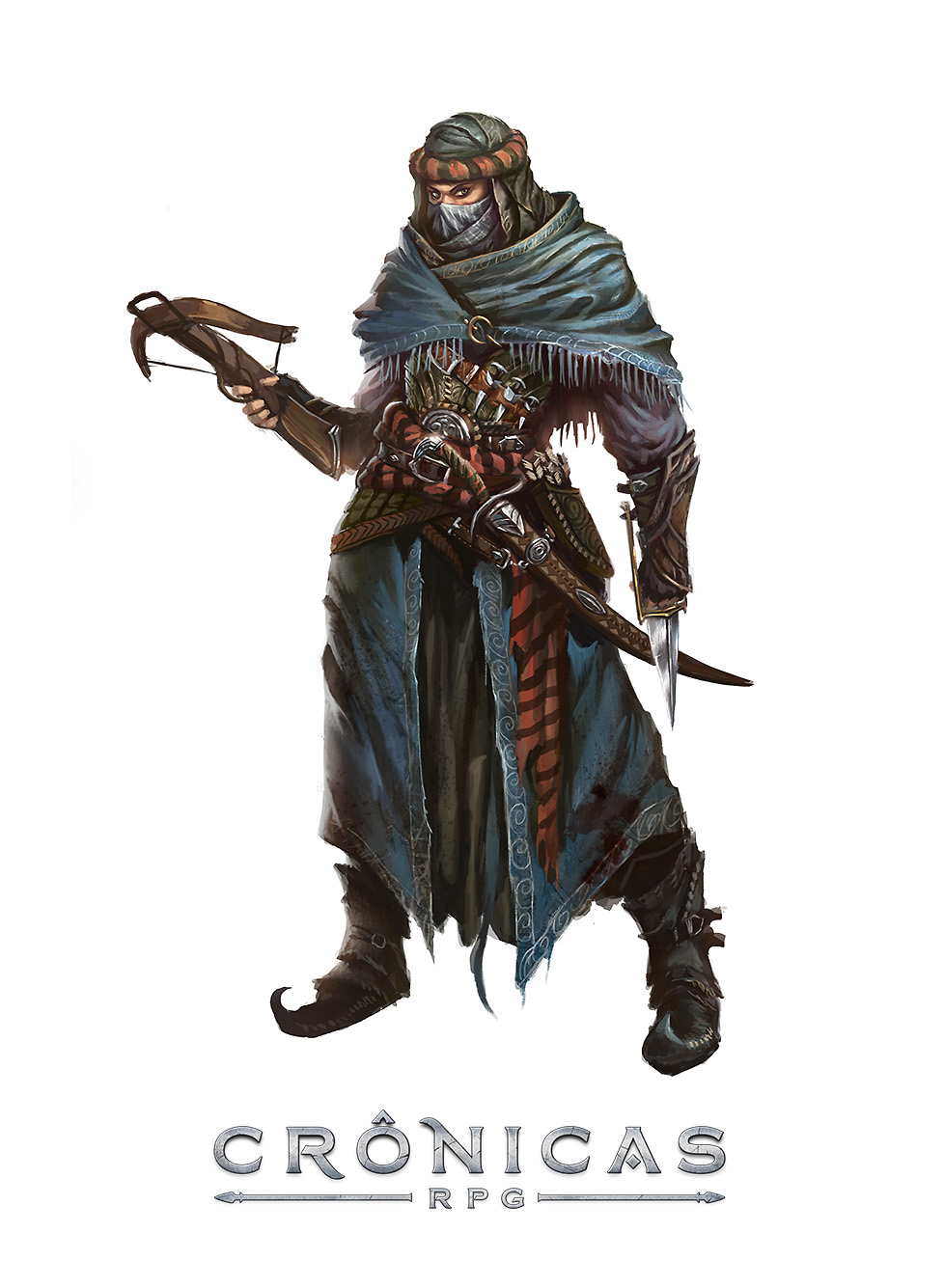
The Multese come from a martial culture of nomadic warriors. Most of the desertborn tribes travel for days through the desert with light equipment to be fast and agile while moving, scouting and fighting. Their skin can range from light brown to black and they are known for making dangerous expeditions across the inhospitable sands.
Ability Score Increase. Your Dexterity score increases by 2.
Agile and Strong. You have proficiency in the Athletics and Survival skills.
Desertborne. You have advantage on saving throws against extreme heat. In addition, once per long rest when you would normally gain a level of exhaustion from any effect, you can choose to not gain a level of exhaustion. You can read more about extreme heat in the chapter 5 of the Dungeon Master's Guide.
Dune Warrior. You have proficiency with light armor, scimitars, whips and shortbows. When you score a critical hit with any of these weapons, you can roll one of the weapon's damage dice one additional time and add it to the extra damage of the critical hit.
Multese Names. (Male) Askari, Bakad, Caamir, Mahdi, Rushdi, Saabiq, Taqi; (female) Atifa, Iltani, Kema, Maisah, Nameera, Qadira, Zahra; (surnames) Attali, Benzadi, Khadra, Madjer, Rahal, Safar, Tarik
Forestborn
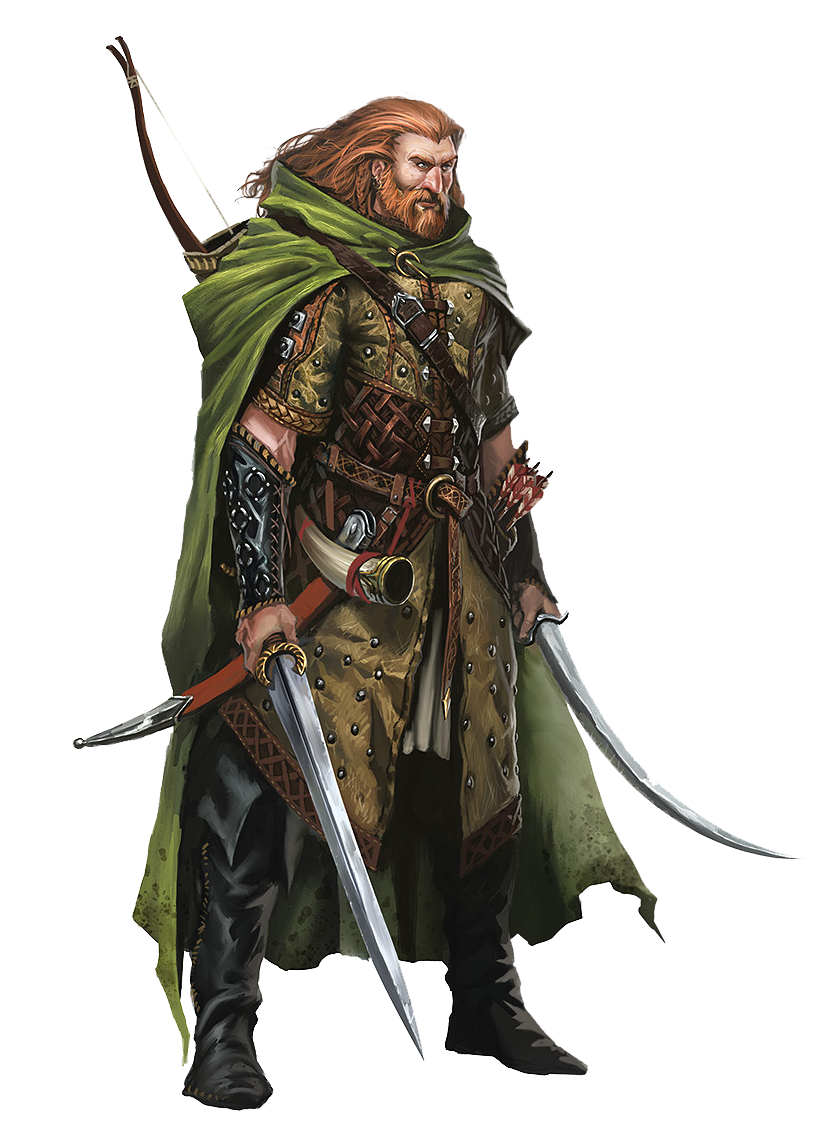
As a Forestborn, you come from a wild but wise culture. Forestborn lives in small communities among the trees, hunting and gathering food that nearby forests provides. Most of them are tanned by living in the outdoor, with brown or black hair.
Ability Score Increase. Your Wisdom score increases by 2.
Children of the Wild. You have proficiency in the Nature skill and you gain proficiency with the herbalism kit.
Fleet of Foot. Your base walking speed increases to 35 feet.
Natural Resistances. You have advantage on saving throws against poisons and diseases.
Watchers of the Forests. Whenever you make a Wisdom (Perception) checks while in a forest, you are considered proficient in the Perception skill and add double your proficiency bonus to the check, instead your normal proficiency bonus.
Forestborn Names. (Male) Agnar, Eadwin, Guthred, Oslac, Thordar, Turold, Volund; (female) Aedwen, Anne, Cerys, Efa, Elise, Idina, Rowena; (surnames) Buggir, Gaster, Hrilk, Resvonn, Thall, Troth, Varhig
Shaodan
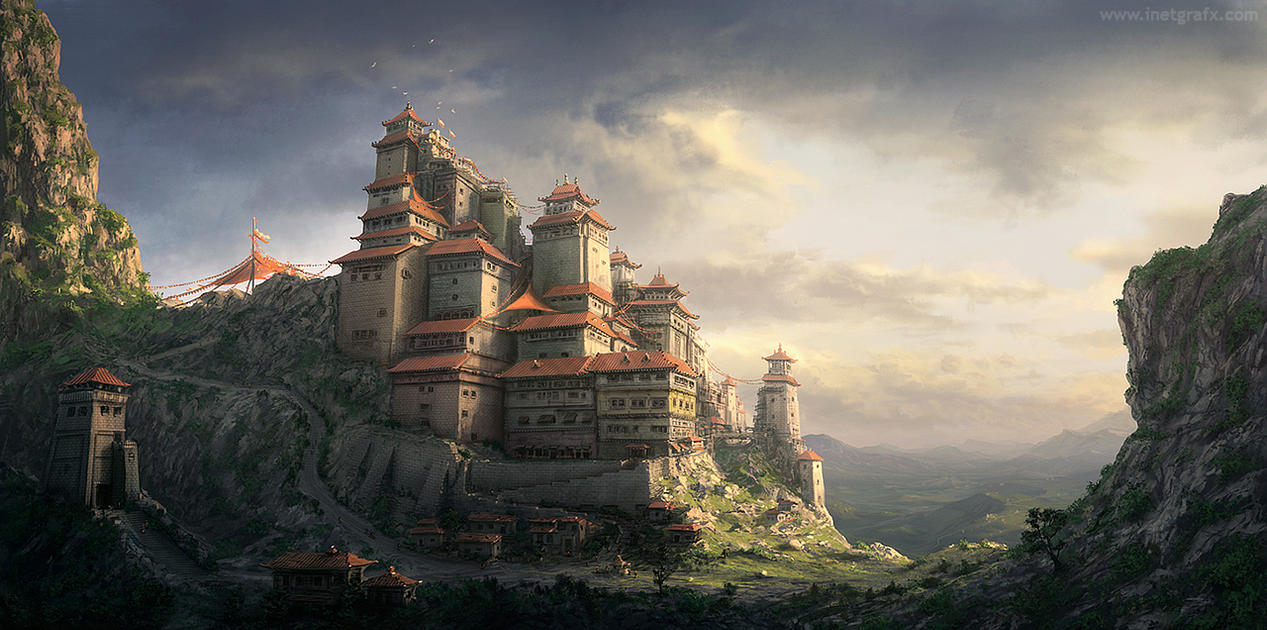
As a human of Shaodan descent, you come from a culture of artisans and disciplined warriors. Most of the mountainborn villages of Shaodao live their lives in rugged terrain, building as close as possible to a mountain. Thanks to this, Shaodan have excellent relations with dwarves, and they are often given honorary dwarven surnames. They are smaller than the average human, but very fit from a life of constant physical labor, with a hair tone that almost entirely stays black.
Ability Score Increase. Your Strength score increases by 2 .
Mountain Builders. You gain proficiency with the artisan's tools of your choice: smith's tools, carpenter's tools, or mason's tools. You have proficiency with the light hammer and warhammer.
Mountaineer. You ignore difficult terrain when moving through rocky terrain. Whenever you make a Strength (Athletics) check to climb rocks, you are considered proficient in the Athletics skill and add double your proficiency bonus to the check, instead of your normal proficiency bonus.
Powerful Build. You count as one size larger when determining your carrying capacity and the weight you can push, drag, or lift.
Strong as a Rock. Your hit point maximum increases by 1, and it increases by 1 every time you gain a level.
Shaodan Names. (Male) Atsushi, Feng, Kenta, Jian, Satoshi, Quan, Yukio; (female) Akiko, Chou, Kyoko, Meiling, Mizuki, Saki, Ying
Sorosian
As a Sorosian, you come from a rigid culture talented craftsmen, inventors, and arcanists. Most of the Sorans are cloistered within their island capital, and benefit from a massive variety of specializations. Soros is a fairly new civilization, and racially are in fact very diverse - but a strong artificial selection process for the magically inclined and highly intelligent means you'd be hard pressed to find one that didn't share these traits. They are slender with a myriad of skin tones (though most are pale), with a hair tone that goes from fair to black. Most Sorosian lines are Aether-sensitive, a trait that propels their work above common man.
Ability Score Increase. Your Intelligence score increases by 2.
Versatile Culture. You gain proficiency in two skills of your choice.
Crafting Expert. You gain proficiency in one artisan's tools of your choice.
Aether Sensitive Sorosians are sensitive to the chaotic energies of the Aether around them. Once per day, they can detect the presence of Aether within 30ft. of them, as per the Detect Magic spell.
Sorosian Names. (Male) Nikolai, Carel, Jerrit, Kain, Landen, Pyotr, Stenvel; (female) Anastasia, Caitlin, Cherine, Ita, Kazakova, Loriana, Marisa;
(surnames) Antonovich, Romanov,
Flamestave, Kern, Pernick, Reinsel
.
Haldar
As a Haldar, you come from a mercantile culture. The Haldar live on the coast near the seas, are excellent sailors, and are known for their skills as excellent shipbuilders and tradesmen. They are lightly built, with dark hair and naturally light in skin tone. Although not physically very different from most humans (especially since Haldun conquered many lands and kingdoms in its history), their seafaring traits have been carried down through strong cultural ties.
Ability Score Increase. Your Charisma score increases by 2.
Appraiser. You have advantage on checks to determine the value and handicraft of items.
Masters of the Seas. You gain proficiency with vehicles (water). You have a swimming speed of 30 feet.
Natural Trader. You have proficiency in the Deception and Persuasion skills. Additionally, you have advantage on Charisma (Persuasion) checks when negotiating prices and trades with others that aren't hostile toward you.
Seaborn Names. (Male) Audrey, Buckley, Derwin, Knoll, Norwell, Orson, Radford; (female) Addison, Atha, Eleanora, Janie, Joyce, Lindsay, Zetta; (surnames) Antone, Brent, Drace, Gresham, Hale, Reid, Wadhley
Nordar
As a Nordar, you come from a culture steeped in honor, strength, and tradition. The winterborn Nordar are light skinned and fair or red haired, taller and more muscular than other humans thanks to generations having endured the harsh, cold climates.
Ability Score Increase. Your Constitution score increases by 2.
Courageous. You have advantage on saving throws against being frightened.
Glory over Death. When you are reduced to 0 hit points but not killed outright, you can drop to 1 hit point instead. You can't use this feature again until you finish a long rest.
Survivor. You have proficiency in the Survival skill. You have proficiency with battleaxes, great axes, longswords and greatswords.
Winter Fortitude. You have advantage on saving throws against extreme cold. You can read more about extreme cold in the chapter 5 of the Dungeon Master's Guide.
Winterborn Names. (Male) Arnvid, Brusi, Folkmar, Gorell, Hrogvar, Norryn, Styrolf; (female) Agala, Astrid, Bera, Regima, Sibbe, Svadis, Yri; (surnames) Askel-, Bodvar-, Kar-, Mak-, Orn-, Torsten-, Ulfar- (-sson for males, -dottir for females)

Elves
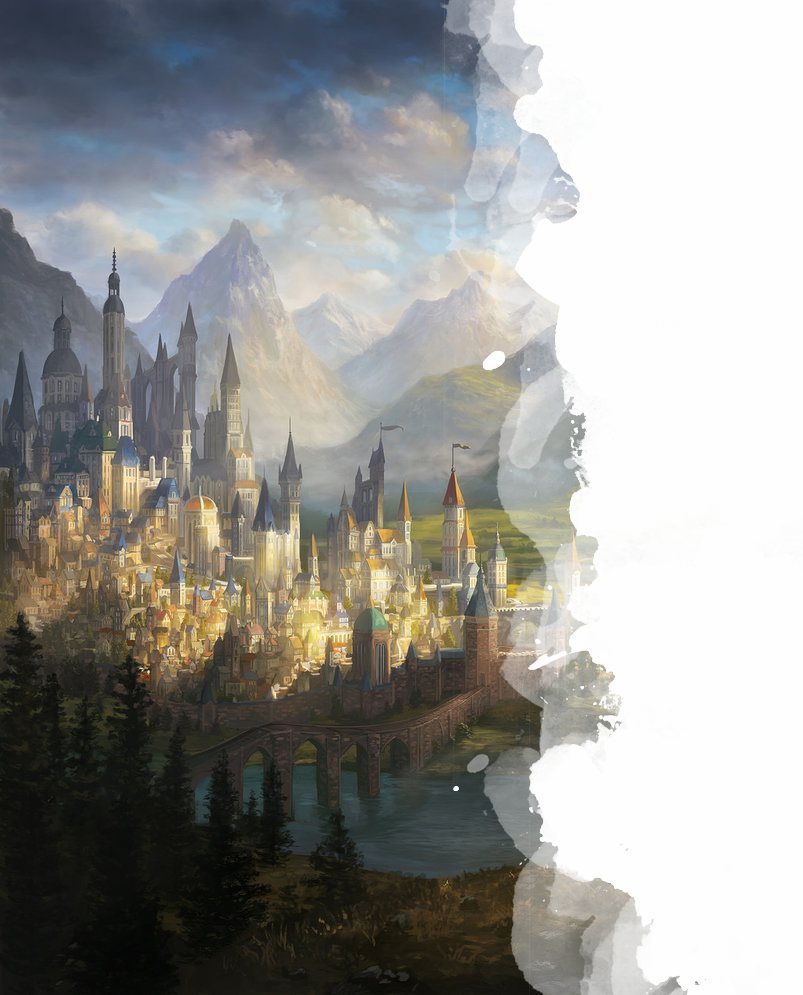
NEVER HAS SUCH BEAUTY EXISTED IN the realms of the world as when the elves ruled over the seas and lands. The kingdoms that these ancient people once populated are now distant, however - both in space and in time past.
Elves are a magical race in the world. In the ages long past, Elves were the only ones sensitive enough to the land to detect and mold Aether --- that wondrous and terrible force --- into use. It ran through their veins and gave them safety and long life. The elven tribes of Kalinor were the first to cross the seas centuries ago to what's now known as Berkatan, and harness this wild energy into awesome crafts and leaping advances in technology.
Elfkind have lived peacefully among their neighboring races for about as long as anyone cares to remember, and if some of the older family lines are to be believed, they once ruled almost all of the known lands. While two distinct castes of elves do exist --- The Aredhel, forest elves; and the Almardhel, city elves --- these subcultures are distinguished only by others; they consider themselves part of the same race, and meetings between the two are always warm and friendly occasions. The third, the Kalinor, were wiped out in the Great Sacrifice.
Aredhel
Before the war, in the Old Kingdom era, the Aredhel were benevolent and humble people who prefered their rural way of life. As content forest dwellers, they existed peacefully alongside other races for most of recorded history. Three great cities were spread across the forests of the elven islands; Lithonael, Naertaal, and Riadwen. Elven traders would frequently travel beyond their borders to barter with neighbors, and it was not uncommon for other races to reside within the elven cities.
After the war of Four Nations, only Naertaal managed
to evacuate any of its people to Berkatan, although this number was a staggeringly low count. The wild and rampant Aether causing chaotic tidal storms near their islands was the primary reason for their destruction.
The Aredhel today are a race in decline, and are a minority not only in Haldun, but the world at large. The surviving elders of Naertaal wander Berkatan like nomads, not content with settling with the others in New Haldun, looking for a new home.
Almardhel
Elves have always been comfortable traders and travelers. Just over a thousand years ago the elven nations decided to further improve relations with the Old Kingdom of Haldun, moving some of its people within their cities with the blessing of the monarch. While it was an overwhelming change for many at first, the elves slowly adjusted to human ways of life. Many turned to the arts --- bowyers and fletchers found their work in high demand, and the Aredhel soon gave their kin the name Almardhel --- "wealthy kin."
Within Haldun, the Alardhel have created thier own district within the city, which attracts many a visitor looking to acquire elven craft --- something the Alardhel are more than happy to provide, giving life to their dwindling culture.



Kalinor
Many centuries ago, magic was virtually non-existant --- indeed, Aether had only begun to leak into the surface world from the core of the planet. In the time of titans and dragons, the elves began to sense and harness this power. They were not so different from men once, or so their histories say, but their natural ability to influence the world around them with the trace amounts of Aether in the world gave them their angular appearance, long life, and magical heritage.
Aether Sensitive
The Kalinor were a faction that sought to not only understand Aether, but temper it. Their journey took them across the sea, away from the elven islands to the young continent of Berkatan.
There, they developed their civilizations rapidly --- making great leaps in advancements, fuelled by the greater understanding of the world that the rich Aether offered them.
When the mountains exploded into fire (as the ancient elven tales say), and Aether began to flow in tremendous amounts, polluting the land, Kalinor civilization was thrown into chaos.
The Great Sacrifice --- the voluntary loss of all civilization, histories, technology and power --- was the only thing that stymied the maelstrom of pure magic that began to swallow the continent, and eventually the world. Historians disagree on how the Great Sacrifice came about and if any single Kalinor orchestrated it, but it's effects were immediate. This singular event marked the beginning of the decline of the age of Elves.
Eladrin
Although all that was Kalinor was lost, the blood from which they were borne carried on. Some of the ancient Kalinor that survived were inexorably changed by their time so close to the font of their power; their skin tone and demeanor changes with the seasons, and their innate control over the Aether manifested itself in different ways respectively. While wonderful and mysterious these gifts are, both Aredhel and Almardhel consider the descendants of the Kalinor as cursed --- a relic of a dark time in their history, and not one they want to repeat --- and are given the name Eladrin (cursed blood).
Eladrin Subrace
Eladrin are an available elf subrace to play in our campaign. You can find the subrace information on p.61 of Mordenkainen's Tome of Foes with the following mandatory changes:
Eladrin can not change their season. Instead, their magical bond with the world means their season matches that of Berkatan, and changes only with the natural flow of time.
Hey, where's the Drow?
While you can play every other subrace available in the Player's Handbook, drow are not available. Sorry!
Bladesingers
Some of the ancient methods of controlling the Aether (or fey, as the Kalinor referred to it in their time) involve sorcerous song that resonates with the energy of the world. Only the Eladrin have the ability to harness this power, their elven cousins shying from the practice generations ago.
You can find information on the Bladesinger subclass for Wizards in the Sword Coast Adventurer's Guide.


Dwarves
LEGEND AMONG THE DWARVES TELLS
of a great battle of titans and dragons in which the mountains themselves had been made to bleed. And from that blood, the dwarves were born. With histories that date back to the Elder Years, when the world was young and filled with dwarf, elf, dragon and giant, they are a people who have been through countless wars and seen the younger races come and go within the span of their history.
Three major clans of dwarves still in the world at large today - along with a salting of lesser clans between them.
Clan Stoutaxe
Warriors through and through, Clan Stoutaxe believes they were the first dwarves to be borne of the mountain. Stoutaxe boasts the best, and the bravest, of the dwarven warriors that serve under the Haldar king. They boast good ale, good story, and an even better fight. Any incident that involves at least two of these things makes for a good day, by their reckoning.
Stoutaxe are the stuff of legend --- a well reasoned head just as sharp as their stony fists. They may seem unruly at first to outside inspection, a pack of brutes and barbarians --- but are anything but. Their remarkable tactical skills and honorable, familial morals have made them a valuable addition to Haldun's allies. Although they don't actively look for conflict, you'll rarely see a Stoutaxe shy from one offered.
Before ale, before stories, before honor, there is one thing that comes first to Clan Stoutaxe --- family. Dwarves of the Stoutaxe care for and defend one another with ferocious determination, and success and survival is a group, not individual, effort.
Warriors of this clan are often found in mercenary groups, adventuring groups, and there are even some honored Stoutaxe as bannermen to the King himself, and don't possess any one particular strong focus in skill or trade.
Clan Deeptunnel
Shipbuilders and blacksmiths, this clan rose to prominence in the Old Kingdom centuries ago when the ore in the original dwarven mines began to wane in supply. As the other clans began searching for new regions to open mines, Deeptunnel turned to another source of income --- wood.
In a radical move, the patron of the clan stuck a deal with House Jadyn of Haldun, and a similar house across the sea in far-away Paltin, in which the wood of the dwarven hills would be used in the construction of ships, using a specially crafted sealant developed by their clan.
Deeptunnel, while certainly respecting their family name and continuing their tradition of digging ever-expansive tunnels in mines, began to rapidly trade lumber. The quality of the wood, and the sealant they sold with it, was better than anything Jadyn or the Paltin houses could match --- and with that, the clan became shipwrights.
In Haldun, Deeptunnel runs its own shipyard, while continuing to trade a portion of treated wood to House Jadyn.
Variant Racial
As this campaign uses variant rules for encumbrance, the Dwarven speed trait that allows it to move freely in heavy armor has been modified to: Heavy armor only weighs 1/4 it's base weight when worn by a dwarf.


Clan Irongrinder
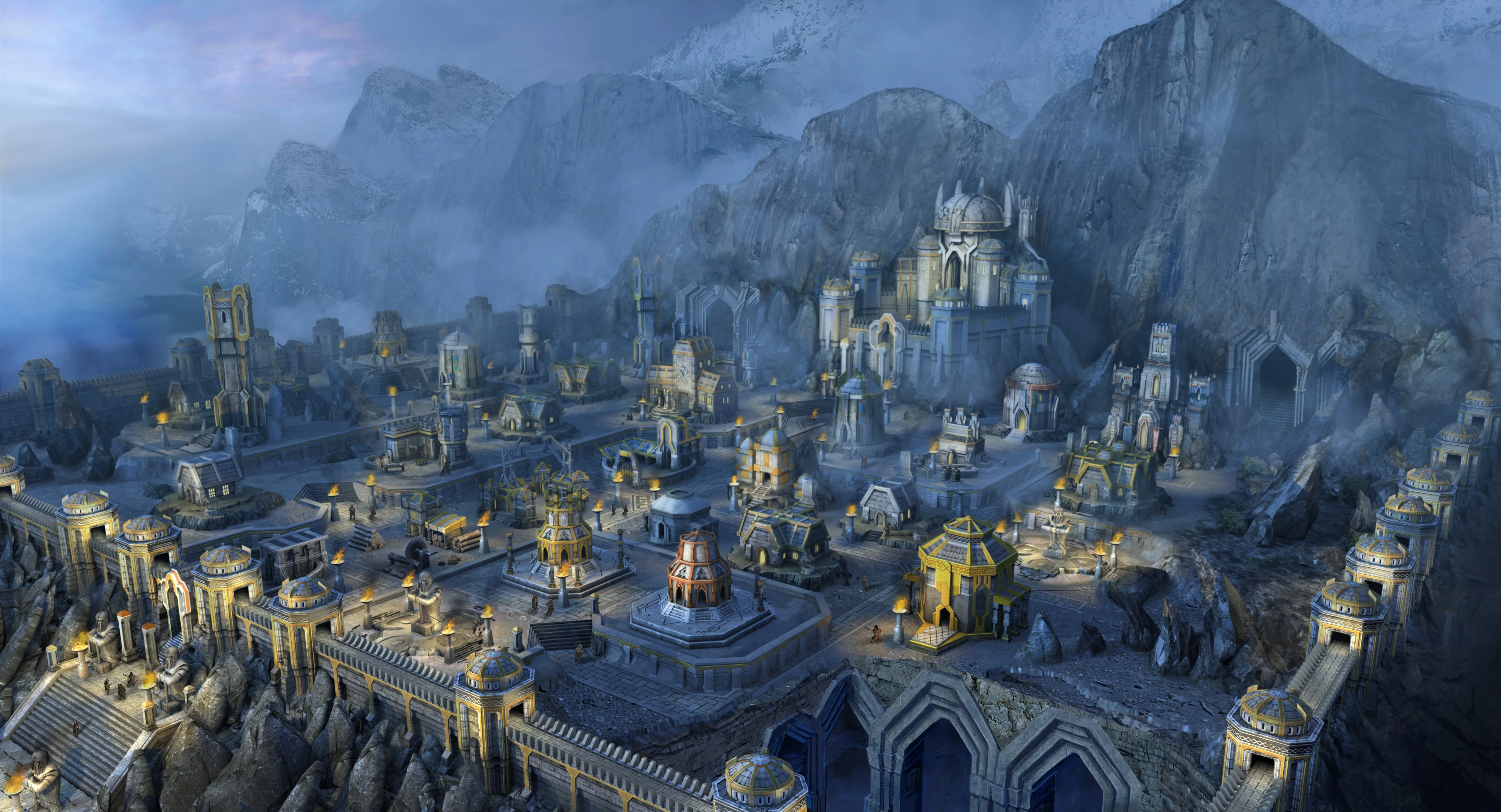
Clan Irongrinder is made of dwarves still dedicated to the old ways of stone working and mining, led by Kardik Irongrinder. Kardik’s and his kin have joined with House Delriso in Haldun. As a part of House Delriso, they began a mining operation after they found a vein of precious metal in the rock quarry they had started. The Irongrinder clan is split into two groups. One works the mines, extracting the precious metals. The other works the rock quarry gathering the stones needed for the development work Delriso needs.
Tough as any dwarven miners, the Irongrinders also have a noble's appreciation for the finer things in life. Song, ale, and good clothes. Their main focus is on their work in the mines and quarry, but when pressed, they have the inner fire found in dwarves throughout history. A fire they have had to bare to the world more than once during attempts to take over their mine. In the end though, as with Clan Deeptunnel Clan Irongrinder seeks glory in its craft not with its blades.
Minor Clans
While dwarves from Stoutaxe are the most common major clan, they have do have smaller, lesser known families in their social circle. If none fits the bill, make one and add to their histories!
Half Elves
Half elves are a very common within Haldun. While the Aredhel elves do not approve particularly much of the crossing between elf and human, the Almardhel elves and the humans of Haldun pay no particular special attention or heed to half elves. Cross-breeding happens and it is nothing worth of note, and any cultural divides between elf and human is often trivial to bridge.


.
Halflings
Halfling history has always been tied with the Haldar, but are equally found in Shaodao, living among and about the humans as far as known history is concerned --- and rarely as a footnote. Small communities could be found among the Shaodan valleys, or found among Old Haldun's territories, the occasional hero rising up to make a name for himself among the greats. There are two major subcultures of halfling, though where these Nitari and Otere branched, exactly, is often debated.
Otere
A simple people who have long held to farming and hunting as a way of life, they can be commonly found serving in the fields of house Balaney, or in their small self-made community of Eastbrook. A determined and disciplined set of laborers, they're often the first to volunteer when workers are needed. They have strong ties with the community, and have remarkably wide social circles. Well-grounded, the matters of day to day survival and the passing of the seasons go by stress-free, and Otere take the day's joys and troubles with the same lighthearted spirit that gives halflings their cheery reputation. Harking back to their days in the Old Kingdom, Otere make excellent hunters and scouts, and can be found in surprising numbers among the Norvandan Rangers as well.
Otere use a brand as a mark of marriage, trade, familial brotherhood, and other more obscure reasons. Should a marriage ever sour, it's common practice for Otere to disfigure or carve the brand into obscurity --- it's not unusual to find some older Otere with scars marking failed marriages. Since the crossing, the Otere have begun to slowly adopt the practice of tattoos, but most cling to tradition.
Nitari
Nitari are halflings who have taken to life in the city --- both in Old Haldun and the New, since the crossing. They thrive on a fast paced hustle and bustle, and are content with the distractions city living has to offer. Though it would be unfair to say that Nitari are all thieves and spires, their skills and history speak for themselves. Sharing the lighthearted nature of their Otere cousins, but lacking any great communal spirit, most Nitari believe keenly in the concept of survival of the fittest. Living and working in New Haldun, Nitari have a curiosity which sees them into and out of trouble about as often as it can find them.
Nitari have rites of passage --- some adopted from the Haldar, or other races, and some of their own making. The most common is a test of ability upon reaching the age of twenty-five. Mostly a celebration, it involves all the festivities one might come to expect from the halflings, except it also involves a fight with a wild boar --- or so the rumors say.


Gnomes
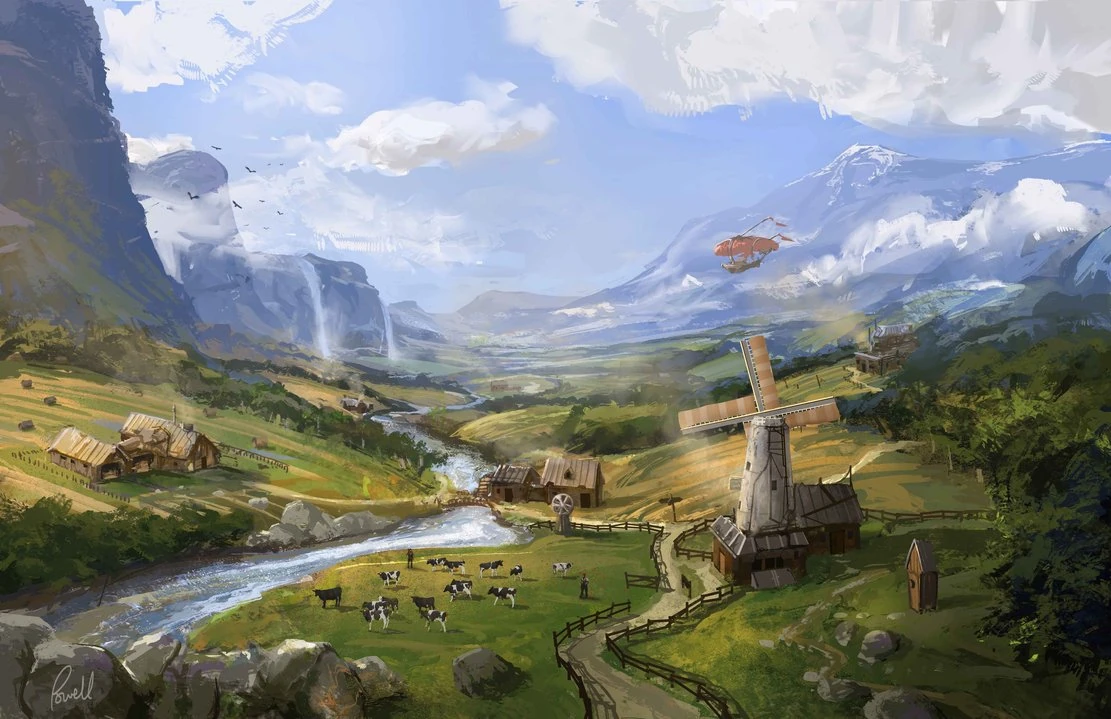
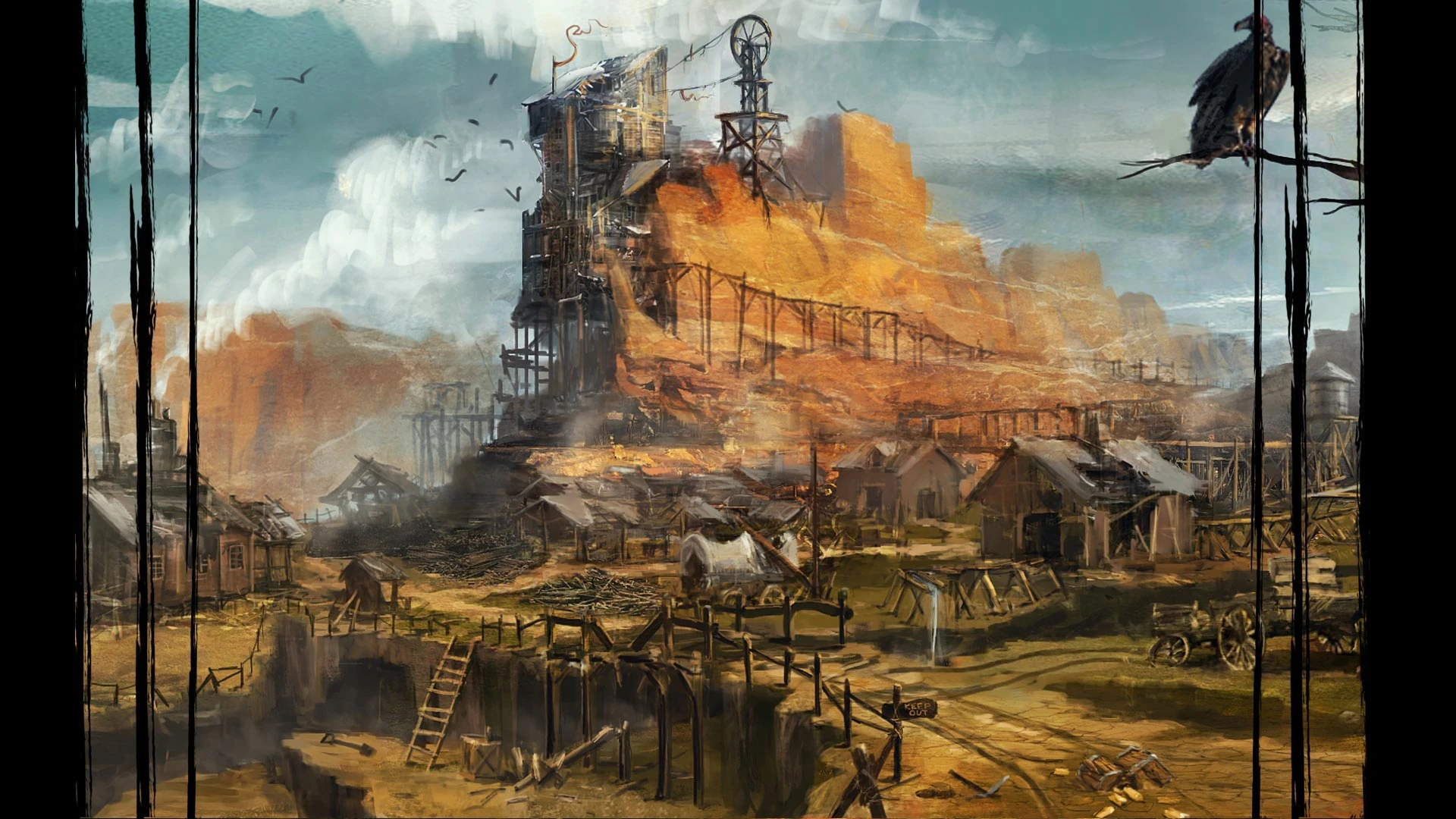
"To see the influence of Gnomes, one need only flip a coin." Gnomes have always possessed a hunger and love of gold, much like the folk with whom they share the glittering metal. They are the central pillar upon which Haldun's economy sits, and without which House Borianas would not and could not exist. The finest metallurgists ever known, jewel crafters and goldsmiths all come from Gnomish stock. From the small mining town of the Golden Gulch where the more enterprising Gnomes reside, to the bankers and merchants of House Borianas, the race has a stake in every minted gold piece that changes hands.
Well aware of their own greed, they frequently use what minor sorcerous blood that runs through their veins for Aethercraft --- employing illusory magics on their vaults and mines to prevent unwanted guests from getting what is rightfully theirs. To break into a gnomish vault is to step into a dream world, labyrinthian and dizzying, and all too easy to never wake from.
Golden Gulch
The gnomes of the Golden Gulch are, much like the original explorers who settled it, far more adventurous and physically adept than their city-bound cousins. They tend to be callous, foolhardy, and are not afraid to leap before they look. Jovial risktakers, they have a unique sense of humor, and enjoy puns, tricks, games of wits and gambling.
Shewd businessmen, they take full advantage of the raw materials provided by the Gulch. Having rooted themselves deep into one of the Haldar houses, it's often said that to rob a gnome is to invite your grave --- Borianas always collects. Though the rumors of their involvement with less lawful methods of debt collection cast a bit of gloom over their people, it's only bolstered the confidence of their investors.
Although many gnomes are content with sitting
back in the safety of their work, a significant number
take the initiative to go and seek new ventures to
sink their teeth into. Gnomes traditionally
make excellent mages and rogues.
A Life of Work
Gnomes live simple lives in the harsh
and remote settlement of the Gulch,
and more bustling lives in Haldun.
But regardless of where they settle, the majority of a gnome's life is spent working --- and with a strong desire for a healthy legacy for their name. Both male and female gnomes share in various aspects of the workforce, which is mostly dominated by mining, goldsmithing, gemcutting, and even clockwork crafts.
Their prominent noses have also turned them into very accomplished alchemists and herbalists --- many of whom live in Soros to study with their many years ahead of them. Gnomes are also exceptional perfume brewers, and control a surprising fraction of the fragrance market.

Tabaxi
"WHISPERS FOR COIN M'LORD?" CAME THE CALL from the familiar sight in the streets. Bead of Jade rolled up his rain-soaked sleeves and extended his broken-clawed paws up for payment. He always knew the latest word on the street, but was at least clever enough not to lend it out for free. "We has seen plenty for the young master tonight!"
Haldun's Lower Class
Tabaxi are a race of rich culture in far off lands, especially in Multar - and their obsession with trade in artifacts and trinkets has led them to the shores of Haldun. Unfortunately, due to rampant discrimination within the Trade Houses, combined with the familial need for tabaxi to support their overwhelmingly large families, they've fallen on hard times. The sight of tabaxi seated in the streets and loitering under awnings is a common scene. A hardy people, their homelessness has done little to stymie their resolve and optimistic nature.
Natural Performers
It wouldn't be unusual to find Tabaxi performers and bards in the Gilded Lily - they make natural entertainers - and many have found a means to an end by trading in information in the Haldar underworld. They are often underestimated and seen as invisible, overhearing crucial information they can turn a profit with, or leverage against their rivals.
Tabaxi Traits
Tabaxi are a race available in Volo's Guide to Monsters. You can find the racial traits there and use them to make a character for this campaign.
Goliath
THERE WERE STORIES OF A PEOPLE WHO HAD A
bond with the land that gave it life. Of families and tribes that huddled in leather-skin huts against the winter winds, and prayed to ancient idols for deliverance, worshipping the game they hunted.
In truth, I'd never given much thought to these barbarian tribes before the war - they were just in the way. But if I had to pick one singular error the King made, it would have been the decision to wage war against these nomads. They worshipped the very death we sought to give them.
----- Archivist Theobald, "A History of the Wars"
Mountain Tribes
The goliath people, called Wolfmen by the Haldar, are a race that's survived extreme trials. The mountain ranges upon which their tribes sit are frigid, and food, water, and shelter are rare luxuries. Every member of these tribes contributes to the whole in a useful way - or they're cast out. As a result, one would be hard pressed to find a goliath who isn't a skilled survivalist or martial combatant.
A People Defeated
The goliath weren't always mountain people - in fairly recent history, only a few generations past, they occupied the rolling plains below the Shaodan mountains, and had sprawling populations that nearly reached the southern seas. Tribes would ceremonially bury their leaders in the mountains, the long journeys and hardships involved being part of the funerary ritual. Many tribes existed then, usually named after an animal the goliath people worshipped or revered. Hidden Wolf, Clay Bison, Silver Storm, and White Eagle were the largest, and often contested each others borders.
When the Haldar began their expansive conquest east with the eventual goal of conquering the Shaodan valleys, it was the goliath tribes that beared the brunt of the humans' spears - and ill-equipped to match these soldiers in open conflict, they were beaten back to the Shaodan mountains in a period of two short years. This rapid defeat was only made moreso when the White Eagle tribe negotiated terms with the Haldar King, and joined the royal army.
A People United
With the Haldar advance temporarily halting for winter in the Shaodan mountains, Thane Tyrfing of the Hidden Wolf tribe absorbed the remaining minor tribes under his banner, and declared the mountains, which had the burial cairnstones of Thanes interred, as sacred ground - there would be no more retreat.
With the tribes united under one banner, and under threat of damnation from their ancestors, the goliath people adapted to mountain life extremely quickly. Five more years of bloody battles went by, but the Haldar made no progress, and with no way to breach the Shao'jian mountain pass, the eastern war front grinded to a halt, and the Haldar were forced into a stalemate. With the Shaodao warriors eventually joining the Hidden Wolf in the mountain pass, Haldun's expansion east was stopped.
Tyrfing's Wolfmen
When the Haldar eventually sued for peace, Tyrfing was not in the best position to refuse. Rather than subject his people to more years of war, the border was established at the base of the Shaodan mountain range, and the goliath people were allowed to come and go from Haldar lands as they pleased. Goliath find the humans' way of life as soft, but when the opportunity to cross the Merchant Sea and make a name for their family came, many would board the ships to help. Although numbering few, their influence is noticed - Tyrfing's "Wolfmen" are a fierce trailblazing force in the new land, even if some resent the notion of having to live with their ancient enemies, often to the point of open distrust.
Goliath Traits
Goliath are a race available in Elemental Evil Player's Companion. You can find the racial traits at the link above and use them to make a character for this campaign.
Gearforged
NIKOLAI YVELA AWOKE IN THE CRIMSON-LIT ROOM
of Discerner Kendrin's estate. His first thought was that the experimental ritual failed - but such musings were quickly silenced when he looked down and saw his body was no longer flesh, but a decidedly artistic mix of brass, steel, and adamantine.
"The binding was a success, Arch-Symmetrist Yvela. It will take some time to get used to your new... facilities, but we expect you'll be able to continue your work within the week."
---- A Recounting of the First Gearforged by Praetor Kendrin
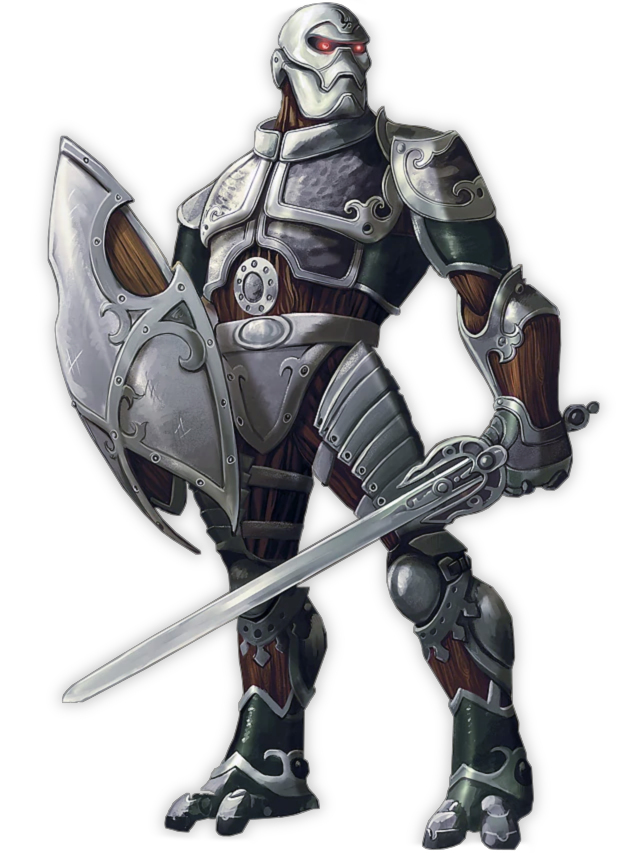
Originally created as a means for Sorosians to carry on their work for decades beyond their mortal years, gearforged are the result of research on the cutting edge of Soran technology. Many who undergo the ritual do so near the end of their life, but many wealthy or important figures in Soran society also undergo the ritual when their body fails them - either through sickness, or through grievous injury that's rendered them paralyzed, or even killed.
Form and Function
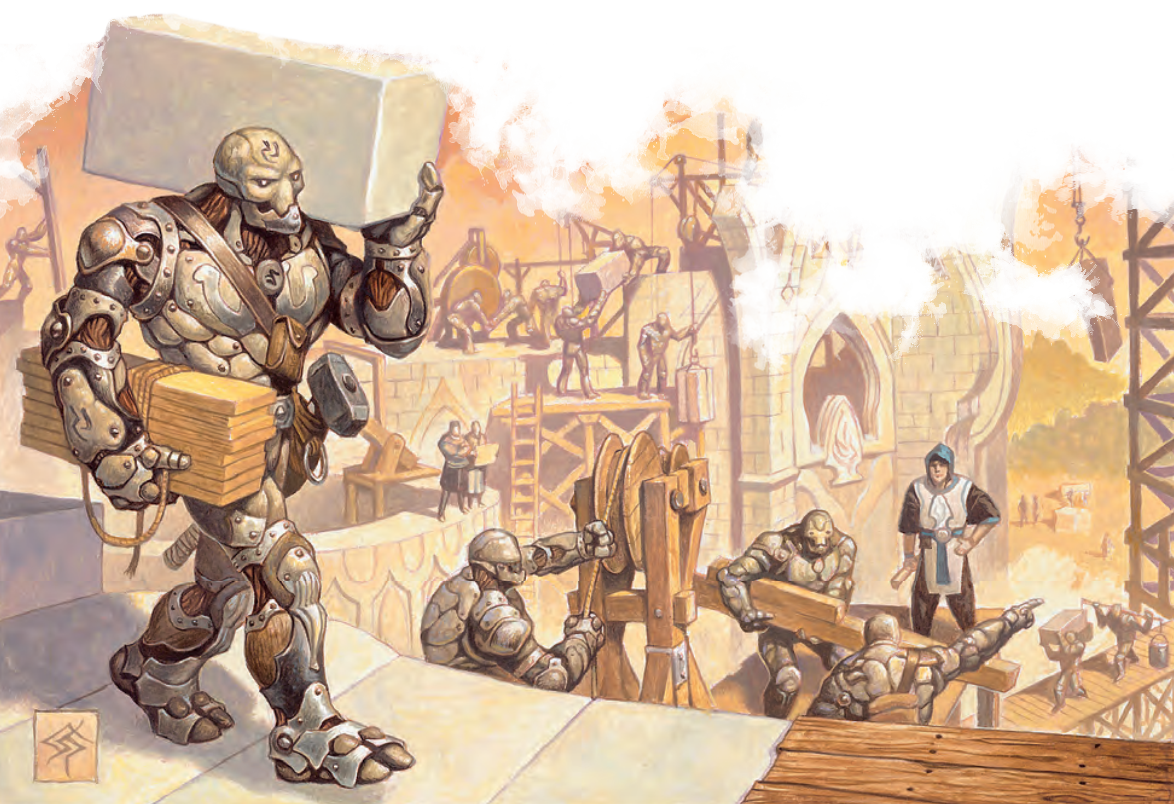
All gearforged were once other creatures - human or otherwise - with flesh-and-blood bodies, but their conscious minds were transplanted into artificial bodies of iron, steel, brass, and wood, driven by pistons and springs. Each is as distinctive in appearance and form as their original people were. Some Sorosians spend a fortune on these new bodies, while others scrape together anything that will work, or take what the Circle of Production has available - especially if the ritual needs to be performed quickly due to sickness or recent death.
Service Beyond Death
All gearforged are made in humanoid shape, but are built to unique specifications by their owners. It's often the preference of those who become bound to one of these wondrous machines that the end product resemble their likeness in life, and each construct is as much a work of art as it is a technological marvel.
In years past, there was great debate whether the research into binding a soul to a construct was legal in Soros (as the Eldritch Council forbids the research and publication of any methods of attaining immortality; reserved for them exclusively), but under the careful watch of Councilor Phineas Chubb, CoDEx was allowed to continue in large part due to the realization that the soul gems infused into these constructs were not immune to the wear of time.
Now, Gearforged are mostly found in the Circle of Sanctuary and largely act as soldiers and lawkeepers, but can be found in any of the twelve circles.
Gearforged Components
The range of gearforged anatomy in all its variants is nothing if not remarkable, but all gearforged share some common parts between them.
Everwound Springs. These magical springs provide energy over long periods, effectively acting as power sources for many of the gearforged's individual moving parts. A broken everwound spring results in the loss of function in that digit, limb, or body part.
Soul Gem. The mind of a gearforged individual is as sharp as that of any flesh-and-blood soul, but it is more portable, and far more material. The animating, vital princible of a gearforged --- its will, its personality, its mind --- are all retained in the soul gem. Its destruction means the permanent death of the gearforged.
Memory Gears. These delicate constructions are scroll-like ribbons pierced with thousands of pin holes and wound about with tiny enchantments of great complexity. The memory of a gearforged for all the days after its creation lives in these memory gears. Older gearforged have many such gears, and the material component for the magic to create them requires one new gear for every 10 years of life. Installing one requires one day's work, and 1,000 gp.
Other gearforged can read memory gears salvaged from dead gearforged, but it's a complex, time-consuming process. It's also viewed with alarm and scrutiny by not only other gearforged, but by Soros as a whole, since it is akin to peering into the most private details of a creature's life. Installing a used memory gear into a new or
existing gearforged requires a
new soulforging ritual,
and at least one week
before the recipient can
make sense of and
interpret the chaotic
injection of new memories.



.
The Ritual of Soulforging
The ultimate act in creating a gearforged is casting the soulforging ritual. The spell is available to wizards. Soulforging can't be added to a wizard's spellbook as one of the two spells learned for gaining a level - it must be found in written form and copied into the spellbook.
Soulforging
5th-level necromancy (ritual)
- Casting Time: 1 hour (see below)
- Range: Touch
- Components: V, S, M (a complete mechanical body worth 3,000 gp)
- Duration: Instantaneous
You and a willing humanoid subject (or a soul that has been dead no longer than 30 days) must chant an incantation in unison during the entire casting time. At the end of this period the subject's soul and consciousness leave its body. The target must make a DC 14 Charisma saving throw. If the willing subject is already dead and cannot take part in the ritual, you make the saving throw instead. If the subject already has a soul gem, no save is required. If it fails, you take 11 (2d10) psychic damage and 11 (2d10) radiant damage from waves of uncontrolled Aether ripping out from the disembodied spirit in the attempt to concentrate it into a soul gem. You can maintain the spell, allowing the subject to repeat the saving throw at the end of each of your turns, with the same consequence for failure.
If the save succeeds, the target's soul is condensed into a soul gem, and immediately animates the constructed body. The target is now gearforged. It loses all racial traits (with the exception of Ability Score bonuses, languages, and proficiencies) and gains gearforged traits. The subject's original body dies and cannot be returned to life by any means unless its soul is freed from the soul gem.
If the spellcaster dies during a soulforging, the target also dies (if they were alive), and their soul is violently transformed into a wraith.
Up to four spellcasters can assist you in casting soulforging. Each assistant reduces the DC of the subject's Charisma saving throw by 2. In the event of a failed saving throw, the spellcaster and each assistant take damage. An assistant who is forced to drop out of the ritual cannot rejoin for this casting of the ritual.

Gearforged Traits
The following options allows you to create a gearforged based on the race they were before the ritual. Any racial traits not specifically mentioned here do not carry over from your base race or subrace that you were before undergoing gearforging.
Ability Score Increase. These are the same as the base race and subrace your character had before they underwent gearforging. Note: When creating a gearforged, please list their base race afterwards, i.e. "Gearforged (Wood Elf)"
Age. A soul inhabiting a gearforged can be any age. However, souls near the end of their natural life are only extended a few decades. Other souls last roughly as long as their natural life would normally allow.
Alignment. No single alignment typifies gearforged.
Size. Gearforged can be created as short as dwarves or slightly taller than humans, but they weigh between 250 and 300 pounds. Your size is Medium.
Speed. Your base walking speed is 30 ft.
Languages. You can speak, read and write the languages you had before undergoing gearforging (based on your base race, subrace, and any gained knowledge before the ritual).
Type. You are of the humanoid (gearforged) type. Spells and abilities that specifically target or exclude the construct type do not affect you as if you were a construct.
Retained Knowledge. You retain any proficiencies that you had in life, and memories you had before soulforging are permanently stored in the soul gem. New memories after soulforging are inscribed on memory gears.
Flesh of Steel. You are immune to disease, poison damage, and the poisoned condition.
Enhanced Optics. Thanks to advanced researched from CoDEx, you have superior vision in dark and dim conditions. You can see in dim light within 120 feet of you as if it were bright light, and in darkness as if it were dim light. You can't discern color in darkness, only shades of green.
Solid Construction. If you are killed but your soul gem and memory gears are still intact, you can be restored to life if your body is repaired and soulforging is cast upon it again. Because the body already exists, the only cost involved is repairing the body (DM's discretion, but typically 1d4 x 150 gp). If your body is destroyed, a new one will have to be constructed as a material component for soulforging. If your soul gem is destroyed, you are permanently killed, and the only other magic capable of restoring you is a wish spell, which restores you fully.
Integrated Weaponry As part of the construction of your gearforged body, a single weapon can be integrated into the design. You gain proficiency with this weapon type if you did not already have it from your race or subrace. This weapon can still be broken off or disarmed temporarily, and switching to and from the weapon is not any faster than if you were holding it.
Constructed Body
Your consciousness and soul reside within a soul gem to animate your mechanical body. As such, you are a living creature with some of the benefits and drawbacks of a construct:
- You cannot eat, drink, or breathe. You cannot drink potions, or gain the benefits that come from drinking, eating, or inhaling vapors.
- You do not naturally need sleep, but can appear to.
- During a rest, you must perform maintenance on your gears, springs, and joints, following the normal rules governing resting activities. While performing this maintenance, you are aware of your surroundings, but have disadvantage on Wisdom (Perception) checks. If you go longer than 24 hours without performing maintenance (you don't take a long rest), you gain one level of exhaustion. All exhaustion gained this way disappears after your next long rest where you are able to perform maintenance.
- You can't be stabilized when dying with a Wisdom (Medicine) check or spare the dying. Instead, a successful DC 10 Intelligence check (with proficiency if proficient with tinker's tools) or a mending cantrip is needed.
- You regain only one-half the usual number of hit points from spells or magical effects with the words cure, heal, or healing in their titles.
Half-Orcs
ORCS, LIKE HUMANS, ARE A RELATIVELY
new race to the world --- and equally prone to conflict and war. Clans of Orcs have been raiding villages for as long as anyone can remember --- knights and warriors mustered to drive them away. Some say that the Aether spawned the orcs as demons, others say they were borne from sin. Although the history between mankind and orc was never a friendly one, a full blown war had never happened until the War of Four Nations, when the Orcs invaded Haldun territories as the humans were distracted with their own notions of expansion and conquest.
Although histories will say that valiant knight and paladins defended their home territories from these oppressive invaders, the truth was never so clean. After years of back-and-forth conflicts, half-orc children were an inevitable byproduct. The Orcs refused to keep them, naming them Goraz; literally half-orc, a term meant to demean, humiliate, and dishonor them from birth.
Desperate for more soldiers against the Sorans, the King decreed that any child born of half man, half orc, would be given asylum, shelter, and honest pay for service in the royal army. And so it came to be that the Goraz have been with Haldun ever since.
Goraz
Finding no true home among neither men nor orc, the Goraz are caught between two cultures that don't see a proper place for them. With no army left to service for generations, the Goraz have fallen into positions of guards for the Houses, common servants, farmers, and mercenaries. A significant faction of the misfit Goraz left Haldun entirely to help found Haven along the coast, outside of Haldun's borders.
There were always the individuals who were able to look past their differences and transgressions between each other as well; those who were willing to put a bit more faith in the world. And although it would be rare to find a Goraz in a position of real power, especially in politics, there are some exceptions.
Half-Orcs face pressure on both sides --- too Orc to be Human and too Human to be Orc. Within the crossfire of both of these civilizations, they have to work twice as hard to find a place at the table.
Tribal Shamans
Many orcs have split into a caste of shamans and druids, known as the Mok'Tar. They've defused their orcish aggression, and instead focus their energy in shamanistic rituals, healing circles, and great ceremonies of worship. Although they appear to have mastered a sense of grace, they are still viewed with distrust and kept at a careful distance.

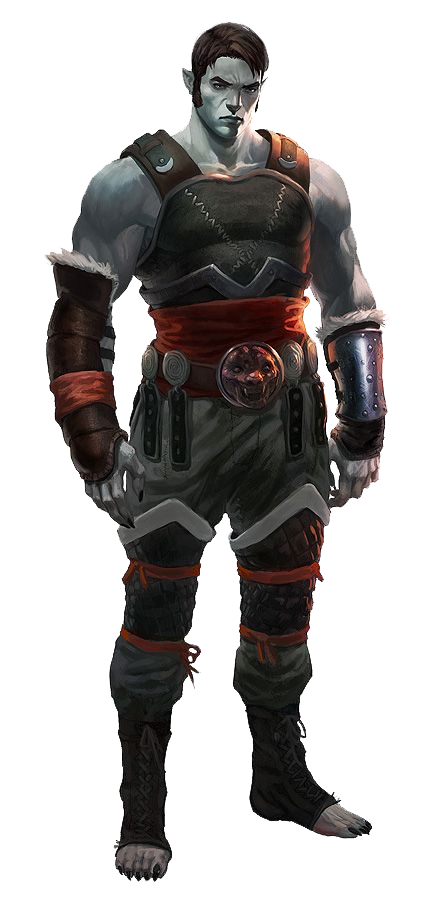
Half-Orc Traits
The following options allows you to create a half-orc in our campaign, replacing those found in the Player's Handbook.
Ability Score Increase. Your Strength score increases by 2.
Age. Goraz mature a little faster than humans, reaching adulthood around age 14, they age noticeably faster and rarely live longer than 75 years.
Alignment. Goraz inherit a tendency toward chaos from their orc parents and are not strongly inclined toward good. Goraz raised among orcs and willing to live out their lives among them are usually evil, but those who've lived for their entire lives or several generations in the human civilizations can easily tend towards good.
Size. Half-orcs are somewhat larger and bulkier than humans, and they range from 5 to well over 6 feet tall. Your size is medium.
Speed. Your base walking speed is 30 feet.
Darkvision. Thanks to your orc blood, you have superior vision in dark and dim conditions You can see in dim light within 60 feet of you as if it were bright light, and in darkness as if it were dim light. You can't discern color in darkness, only shades of grey.
Relentless Endurance. When you are reduced to 0 hit points but not killed outright, you can drop to 1 hit point instead. You can't use this feature again until you finish a long rest.
Languages. You can speak, read, and write common, and Orc.
Subrace. Two subraces of goraz are found among the people in the world: Mountain Goraz, and Mok'tar.
Mountain Goraz
As a mountain Goraz, your orc blood burns fierce in your veins. Although you cannot avoid the influence that the early tribes of orc shamans had on your bloodline, you can choose to embrace it, or fight it. Swift to anger and quick to laugh, mountain Goraz enjoy a wide range of festivities --- whether it's feasting, fighting, or drinking. Some manage to live a life disciplined enough to make decent guards or mercenaries, and the most accomplished among them are those who can direct their rage where it matters.
By far the most common variety of Goraz, they can be found wherever civilization plants its roots.
Ability Score Increase. Your Constitution score increases by 1.
Savage Attacks. When you score a critical hit with a melee weapon, you can roll one of the weapon's damage dice one additional time and add it to the extra damage of the critical hit.
Menacing. You gain proficiency in the intimidation skill.
Mok'Tar
As a Mok'Tar, you're a halfbreed mongrel of Goraz and other humanoid races that existed from across the sea - or descended from those. Dwelling in small community circles of other Mok'Tar, they're a reclusive split --- friendly and calm with the outside races, having calmed their raging orc heritage long ago. It didn't take long for the druid circles and rangers to notice the Mok'Tar's immense respect for and connection with the land --- and as a result, Mok'Tar can usually be found around the Isle of Santiri in the company of the Wardens.
Ability Score Increase. Your Wisdom and Dexterity scores increase by 1.
Keen Senses. You are proficiency in the Perception skill.
Orc Weapon Training. You gain proficiency with Greatclubs, Battleaxes, and Greataxes.

Dragonborn
“So widespread was their value of honor and honesty that it was actually commonly believed that dragonborn could not break their word.” --- Treatise of the Races by Jae Lynx
Lead by their strength and great Pride, the Dragonborn of this land broke the chains of bondage that held them to the Dragons of old and have branched out on their own. Originally from lands far to the north, frozen and desolate, the Dragonborn are not a new race in the world --- but rather a fairly recent population to involve themselves in the affairs of the common races. The largest clan amongst them arriving in Soros some time ago, offering ancient knowledge of Dragons, and their unique affinity for all things magical. This served as an effective entry into the Circles of Soros and led to their ultimate acceptance. Known for being extremely honorable and trustworthy, a broken oath
amongst their people is known to carry a harsh
punishment. Even though the truth is more
complicated, the Dragonborn of Soros
(and the world at large) now consider
themselves in one of two factions,
The Chosen and The Broken.
Although both part of the same whole,
they are separated not by birth or blood,
but by a strange societal observance known
as Haurach --- a dishonor that marks an
individual for failing to uphold their word given
to another dragonborn.
The Chosen
Living amongst the Sorosians has been an easier transition for some more than others. Those who have a great aptitude for the Magical arts or a willingness to adapt have found great success in Soros. Becoming members of the twelve circles these members and their families have flourished and live a life of great comfort. The word of a Chosen is seen as bond as shown by Sorosian natives rarely requiring contract for the services they provide. When the call to join New Haldun was issued, the Chosen eagerly came to earn the promise of true citizenship.
The Broken
Cast aside by their "betters", the Broken commonly find themselves living among the undesirables of Soros. They have tried carving a life for themselves but faced with non acceptance by the Natives and Shunning by their own race, the Broken have had a hard life for many years. Those dragonborn who have been caught breaking an oath, however small it was given, are almost always relegated to this level of society. In truth, however, many of the Broken keep their word but did not adjust well enough to the humanlike form of society, or simply lacked the skills the needed to survive in Soran society. All the same, they slip through the cracks of society everyday. With the prospect of ridding themselves of these miscreants (and admittedly a more lenient view on underhanded practice than the dragonborn's own social circles), the Sorosian government has granted free passage away from their lands and the Broken are all the more happy for the chance to make a place for themselves in this world, and a shot at redemption for what they perceive as a grave sin against their people.



Tieflings
One cannot understand the tiefling race without understanding Aetherspawn (or aetherborn by some accounts) --- the terrible, shadowy creatures that haunt the night of our world. Because these people are nearly one and the same. The power the Kalinor sought to master nearly claimed their race, and now our children are forever cursed by the stigma. A gift, some say? No, they're a living reminder that nature is one thing mankind has no power over.
--- Jen H. Kyllia, Curations of the Royal Archives
Stares and whispers are common shadows for tieflings. People are either afraid of them, wary of them, or openly hurtful towards them. It's rare in a tiefling's life that they encounter true kindness --- as their blood was cursed from birth. Generations ago, their ancestors, the elven Kalinor, sought to master the primal forces of the Aether deep within the well of the Earth; and for that, they unleashed their precious magic in such a vast quantity that it threw the world into a dark age, and ended with their departure from the world at large.
Cursed Bloodline
Tieflings are technically derived from elven bloodlines, but in the generations that followed the Great Sacrifice, communities of pure tieflings had died out.
But the blood of men and elves was forever affected by the taint of Aether, and every so often, an expectant pair of elven or human mothers gives birth to one of these malformed, horned children dubbed tiefling. Very few survive, especially in cultures like the Shaodao who strongly believe in casting away deformed or cursed children at birth.
Touched by Aetherspawn
When the Kalinor had first inadvertently released Aether into the world, the sheer concentration of it spawned powerful monsters, devils, and demons. Although the details of each were lost to history, the mortal races were afflicted by different individual archdemons, each curse individuating and manifesting itself slightly differently in the flow of Aether that surrounded the world.
Misfits and Hellions
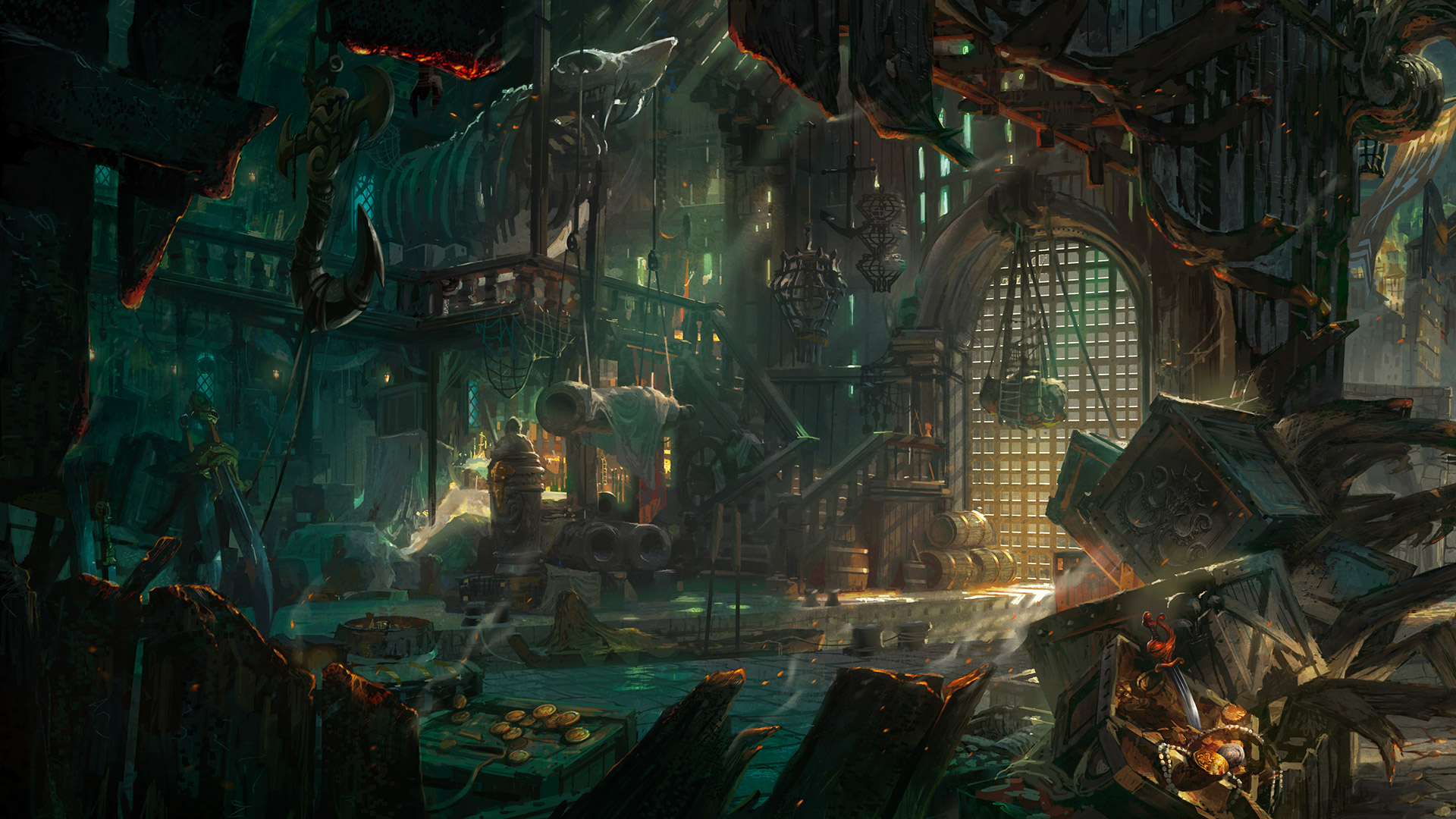
Most tieflings are rejected outright by society, and those that do make it very often have to rely on less lawful means to make ends meet. It's not unusual to see shopkeepers turn a blind eye to tiefling customers, people on the street outright ignore them, and basic services mysteriously denied to select individuals.
Tiefling Subraces
The individuation of the curse that the archdemons in an age long past means that no two tiefling are guaranteed to be the same. There are variations in tail size and length, skin tone, and horn shape and size. In addition, if you wish, you may choose one of the Tiefling Subraces from page 21-23 of Mordenkainen's Tome of Foes.

Chapter 2: Classes
HEROES COME IN MANY FLAVORS.
The heroes of the world, compelled to adventure and further their goals, are defined by the unique sets of skills that set them apart from the common men and women of society. Our campaign makes use of all of our beloved twelve base classes, with some modifications for balance, setting fit, and player enjoyment.
This section will detail any new classes, subclasses, and changes to those that may be found in the Player's Handbook or elsewhere. Unless otherwise stated, officially published classes and subclasses are all fine (SCAG, XGTE, etc).
Bladesinger
The racial restriction on this subclass found in Sword Coast Adventurer's Guide has changed from elves to Eladrin.
Cleric Domain: Clockwork
The origins of clockwork magic are nebulous at best, and is one of the newest of the obscure worships that have sprung up in the last century. Those of a religious bent say it's derived from the creation of the Gearforged, inspired in it's creation by Damihra or Anavah. Others, usually those of a less religious claim, say that clockwork magic is simply the result of an understanding of ancient Kalinor technology --- that an ancient artificer, while experimenting with gears, discovered a holy truth in animation, and it's our divine duty to rediscover that technology and not repeat the sins of the past. Whatever it's origin, clockwork magic involves minor time manipulation, constructs, and mechanical devices of all kinds.
Typical followers of this domain follow Anavah and Damihra in equal numbers: Damihrans believe she has blessed her followers who seek to create and animate a new form of life on their own, while Anavahns worship the perfect order and mechany of the machines. The emergence of clockwork creations in society, and the more recent discovery of ancient clockwork machinations from the Kalinor empire, represent both a shift in magic and in thought --- and that shift seeks dedicated, unrelenting followers. They are guardians of order, progress, and industry. Some, the followers who believe that Eradus is in fact the machinist behind this magic, believe it's their duty to seek to grind everything under the ceaseless cogs of might and entropy. Others believe that instead, we should shape society under the belief that all will benefit if we find a harmony with machines, and all work together.
Bonus Proficiencies. At 1st level, you gain proficiency in clockmaker’s tools and heavy armor.
Blessing of the Gears. At 1st level, your divine insight grants you advantage on attacks made against clockwork creatures and other constructs (including gearforged).
Clockwork Domain Spells
The following spells are available to you, in addition to the standard cleric's spell list. These spells are detailed later in the player's guide under spells.
Domain Spells
- 1st: analyze device, pendulum
- 3rd: repair metal, winding key
- 5th: overclock, soul of the machine
- 7th: read memory, steam blast
- 9th: mechanical union, mass repair metal
Channel Divinity:
Construct Mastery
Starting at 2nd level, you can use your Channel Divinity to bring constructs under your control. As an action, you can compel one construct you can see within 30 feet of you to make a Wisdom saving throw against your cleric spell save DC. If the saving throw fails, the construct becomes friendly to you and obeys your commands for 1 minute or until it takes damage from you or one of your allies. If the saving throw fails by 5 or more, the duration is extended to 1 hour, until you use this ability again, or until the construct takes damage from you or one of your allies. When the effect ends, the construct is aware it was magically controlled by you. This feature does not work on gearforged.
Improved Mending
At 6th level, spells you use that heal or repair damage to clockwork creatures, objects, or constructs restore the maximum possible hit points.
Channel Magic
Beginning at 8th level, you can designate one construct that you control to serve as a channel for your divine magic. You can cast spells on that creature that normally only target yourself. Also, you can deliver touch spells through your designated construct. These abilities work only if the construct is within 60 feet of you.
Clockwork Apotheosis
Beginning at 17th level, you can use your action to merge with a construct you control for 1 minute. Doing so restores your hit points, but not other class features, as if you had a long rest. For the duration you gain all of the immunities and qualities of the construct, and you can cast spells, use class features, and communicate normally even if the construct would not be able to do so. You cannot use this feature again until you have completed a long rest.

Alchemist
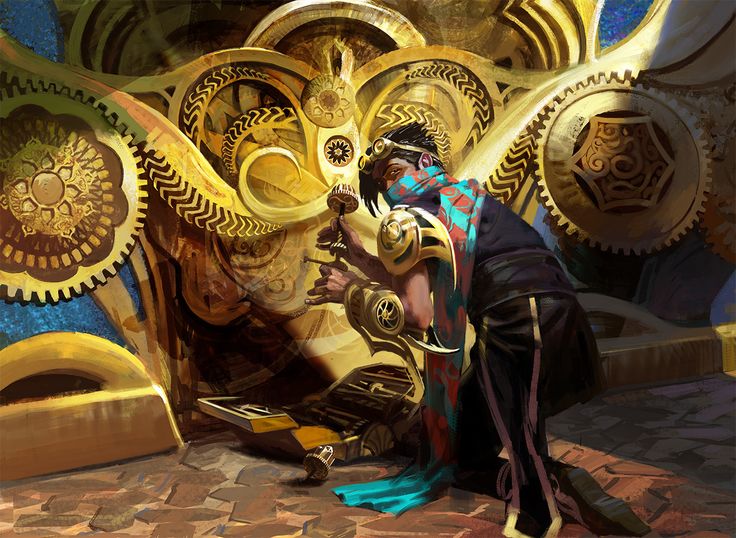
From our previous campaign, we're bringing back the homebrew Alchemist class. The class functions as a support caster that can specialize in either deadly explosives, supporting the group with unguents and potions as an apothecary and healer, or submitting themselves to dangerous levels of potion toxicity to temporarily transform their body with fearsome alchemical experiments to give them an advantage over their foes.
Alchemist PDF
You can click the link below to access information on the Alchemist class: Alchemist 1.12
If the link doesn't function, the PDF will also be posted in the Campaign Discord.
Changes
Since our crafting system relies very little on workweek crafting speeds, Alchemist has a few minor changes to it to improve the gameplay experience.
- The level 1 feature "Profesional Alchemy" has been removed. Instead, they recieve "Alter Solute", detailed below.
Alter Solute
Starting at 1st level, you can make a DC 12 Intelligence (Alchemist's supplies) roll in order to change the type of one alchemical reagent in your possession. The new reagent type is determined by rolling a d6 as follows:
| d6 | Reagent |
|---|---|
| 1 | 💧 |
| 2 | 🔥 |
| 3 | ⛰️ |
| d6 | Reagent |
|---|---|
| 4 | 🌫️ |
| 5 | 🍃 |
| 6 | 🌑 |
Once you use this feature, you must finish a long rest before you can use it again.
Alternatively, you can use your Crafting downtime action to pick the new type a single reagent turns into, rather than rolling on it.


Monk: Way of the Elements
The Way of the Elements is a monastic tradition that teaches a monk to harness Aether, drawing on the power of the world. When a monk is able to clear their mind and meditate, their energy can touch and connect with the natural world. Through physical and mental training, and practiced forms, they can use their ki to enhance their abilities with the very nature of the land they connect with. Over time, a monk of this tradition learns a number of forms --- each representing a different element, and augmenting their fighting style in unique ways.
Monks of this tradition are often fiercely competitive, always seeking to deepen their connection with their chosen element, and hoping to prove that their path to enlightenment is greater than another. Competitive tournaments are often held at far-away monasteries about as often as friendly matches between villages. all to see who has a greater mastery and understanding of the fickle powers of nature.
Replacement Tradition
This monk tradition replaces the Way of the Four Elements tradition found in the Player's Handbook.
Disciple of the Elements
When you choose this tradition at 3rd level, you learn magical stances that harness the power of various elements.
Each stance provides you with abilities and benefits that enhance existing monk class features, and may even provide you with new ones. Starting at 3rd level, when you choose this tradition, you choose one of the elemental stances detailed in the Elemental Stances section below. You learn one addition stance at 6th, 11th, and 17th level.
As a bonus action on your turn, you can enter an elemental stance you have learned. Entering a stance costs 2 ki points, and you remain in that stance for 1 minute. Your stance ends immediately if you are knocked unconscious, or at the end of your turn if you run out of ki points. You can only ever be in one stance at one time.
All stances allow you to end your stance early by spending your action to perform a dazzling display of martial and elemental mastery.
Elemental Attunement
At 3rd level, as an action, you can briefly control elemental forces nearby, causing one of the following effects of your choice:
- Create a harmless, instantaneous sensory effect related to air, earth, fire, or water, such as a shower of sparks, a puff of the wind, a spray of light mist, or a gentle rumbling of stone.
- Instantaneously light or snuff out a candle, a torch, or a small campfire.
- Chill or warm up to 1 pound of nonliving material for up to 1 hour.
- Cause earth, fire, water, or mist that can fit within a 1-foot cube to shape itself into a crude form you designate for 1 minute.
Elemental Stances
Air Stance. Air represents grace, mobility, and the fickle nature of the wind. Whilst you are in air stance, you gain the following benefits:
- When you use the Step of the Wind class feature to take the Dash action, you gain a flying speed equal to your current move speed until the end of your turn.
- You are unaffected by difficult terrain.
- If a creature misses you with a melee attack whilst you are using the Patient Defense class feature, you may use your reaction to: swap places with that creature, or move up to 15 feet without provoking attacks of opportunity.
As an action on your turn, you may end your air stance and move up to your Unarmored Movement speed as if you were flying. You do not provoke attacks of opportunity from creatures during this movement.
You can make one unarmed attack against each creature you pass for every ki point you choose to spend. You cannot spend more ki points than half your monk level (rounded down) in this way.
You cannot use this
feature again until you
have completed a
short or long rest.


Fire Stance. Fire represents courage, aggression, and the destructive nature of fire. Whilst you are in the fire stance, you gain the following benefits:
- Whenever you hit a creature with one of the two attacks granted by the Flurry of Blows class feature, you deal additional fire damage equal to your Wisdom modifier, and score critical hits on a natural roll of 19 or 20.
- When you are struck with a melee attack, you can use your reaction to force your attacker to roll a Dexterity saving throw vs your Ki save DC. If they fail, they take fire damage equal to your Wisdom modifier.
As an action on your turn, you may end your fire stance and engulf your enemies in a blast of fire.
Choose either: all creatures within a 15 foot cone originating from you, or all creatures in a 5 foot radius around you.
All creatures within this space must make a Dexterity saving throw against your Ki save DC. On a failed save, creatures take 3d8 fire damage, plus an additional 1d8 fire damage for every two ki points you choose to spend. You cannot spend more ki points than half your monk level (rounded down) in this way.
You cannot use this feature again until you have completed a short or long rest.
Water Stance. Water represents grace with power --- the constant push and pulls of the tide, and fluid nature of the waves. Whilst you are in water stance, you gain the following benefits:
- Once per round, in place of one of your attacks, you can conjure a whip made of water to make an unarmed melee attack against a creature within 30 feet of you. If the attack hits, you deal damage as though you had hit them with an unarmed strike, and the creature must make a Strength saving throw. On a failed save, you can either push or pull the creature up to 10 feet away from you, or towards you. On a successful save, you do not push or pull them.
- If you are grappled whilst in this stance, you can use your reaction to break free of the grapple.
- When you use your Step of the Wind class feature, you may move through a hostile creature's space without penalty, regardless of size.
- You gain a swim speed equal to your move speed.
As an action on your turn, you may end this stance early to conjure a 10 foot cube of freezing water originating from you. Any creatures in the affected area must make a Dexterity saving throw using your Ki save DC, or be restrained until the end of their next turn. You may increase the area of effect by 5 feet for every two ki points you choose to spend. You cannot spend more ki than half your monk level (rounded down) in this way.
You cannot use this feature again until you have completed a short or long rest.

Earth Stance. Earth represents vitality, stability, and the enduring nature of the land. Whilst you are in earth stance, you gain the following benefits:
- You are resistant to nonmagical bludgeoning, slashing, and piercing damage, but you lose the benefits of your Unarmored Movement and Evasion class features.
- You have advantage on Strength saving throws against any effects that push you, pull you, or knock you prone.
- You gain temorsense out to 15 feet, and can detect and pinpoint the origin of vibrations within that radius, provided that you and the source are in contact with the same surface or substance.
As an action on your turn, you may end this stance to channel the durability of the earth into your body. You gain temporary hit points equal to half your monk level plus your Wisdom modifier. You may gain additional temporary hit points equal to your Wisdom modifier for every ki point you choose to spend. You cannot spend more than half your monk level in ki (rounded down) in this way.
You cannot use this feature again until you have completed a short or long rest.
Light Stance (Requires 6th level). Light represents leadership, hope, and life. Whilst you are in Light stance, you gain the following benefits:
- When you roll a 1 or 2 on a damage die for an attack you made with a monk weapon, you can reroll that damage die but must use the new result.
- You have advantage on saving throws against being charmed, paralyzed, or frightened.
- When you use the Patient Defense monk feature, you may use your reaction to counterattack a creature within 5 feet of you that attacks you. If this attack hits, they must make a Constitution save using your Ki save DC or become blinded until the end of their next turn.
As an action on your turn, you may end this stance to bend light to give pause to your enemies or hope to your allies. Choose a creature that is within 60 feet that can see you. Until the end of their next turn, that creature gains advantage or disadvantage (your choice) on their first weapon attack. You may choose an additional creature for each ki point you choose to spend. You cannot spend more than half your monk level in ki (rounded down) in this way.
You cannot use this feature again until you have completed a short or long rest.
Storm Stance (Requires 11th level). Storm represents the unpredictability of the raging sea. Speed, spirit, and the deadly power nature can unleash. Whilst you are in Storm stance, you gain the following benefits:
- When you use the Step of the Wind class feature, you may choose to teleport up to 30 feet to any unoccupied space you can see, instead of taking the Dash or Disengage actions. When you appear in the chosen space, a loud thunderclap erupts and can be heard up to 300 feet away.
- When you hit a creature with a melee attack, you deal bonus thunder damage equal to your Wisdom modifier. A creature can only suffer this bonus damage once each round.
- When you take lightning or thunder damage from a spell or attack, you may use your reaction to reduce the damage as though you were using the Deflect Missiles class feature. You may reduce the damage by 1d10 + your Dexterity modifier + your monk level. If you reduce the damage to 0 and have one hand free, you may spend 2 ki points to bend and redirect the attack as part of the same reaction. If the attack requires a saving throw, the new target must make a save against your Ki save DC. If the attack was a ranged attack, you make a ranged spell attack back, which are you proficient in and uses your Dexterity modifier for the attack roll.
As an action on your turn, you may end this stance to enshroud yourself in swirling storm energy. Until the end of your next turn, you gain resistance to lighting and thunder damage, and any creature that starts its turn within 5 feet of you takes half your monk level in lightning damage.
You may increase the duration of this effect by one round for every two ki points you choose to spend, up to a maximum of half your monk level (rounded down).
You cannot use this feature again until you have completed a short or long rest.
Void Stance (Requires 11th level). Void represents inner peace, serenity, and complete sensory observance of the material. The mystical nature of the universe becomes a black dot on a blank canvas. Whilst you are in Void stance, you gain the following benefits:
- You gain resistance to force damage.
- You gain Truesight to a range of 120ft and cannot be surprised.
- You have advantage on Dexterity saving throws.
- Your unarmed strikes deal force damage instead of their usual type, and attacks against objects are automatically critical hits.
As an action on your turn, you can channel the mystical energy of the planet into your Ki as one, and deliver a spiraling blast of aetheric force towards your enemies. Each creature in a 5 foot wide, 100 foot long line must make a Dexterity saving throw against your Ki save DC. On a failed save, affected creatures take 5d8 force damage, or half as much on a successful save. You may deal an additional 1d8 damage for every two ki points you choose to spend, up to a maximum of half your monk level (rounded down).
The Final Hour
Five years before the foundation of New Haldun, the people of Haldun and Soros were anything but allied. Through political manipulation, Soros had turned the war against the Haldar, fearing their wide expanse into eastern Daegerad. The first clash came at the Battle of the Bridge, when Haldun sent a force of four thousand soldiers north to meet a force of invading mercenaries from the ruined lands of Multar. The mercenaries happened to be the hired blades of Soros, though numbered only only 1500. Haldun's forces expected swift victory.
The two forces meet at the bridge of Stalis, which spans the river of the same name. The first wave of mercenaries were met with fierce resistance from the Haldar, but Soran arcansits appeared and assisted in the second attack. Shrouded in magical protections, they rained spellfire down on Haldun's vanguard. The injured turn to the priests of Amaros, who were unable to call upon their divine magic. Panic soon spread amongst Haldun's forces as their enemies continue the vicious assault. Soon, the lines break, and Haldun's soldiers are completely overwhelmed. Those not claimed by spell and sword are taken by the fast currents of the river. Soros exchanges the lives of six-hundred mercenaries for four-thousand of Haldun's soldiers, and lost not a single mage.
The addition of Soros's mages to the war changed everything. Within the year, Soros and Paltin pushed to the gates of Haldun itself, and killed the king who fought in defense of the city.
Paladin Oath:
Oath of the Apocalypse
Haldar tales tell of the heroic exploits of the Bannermen --- priests and warriors that won through in battle during the war, maintaining superhuman strength and powers through their faith and dedication in the face of abandonment from the Gods. These aged heroes were collectively known as The Final Hour. Stranded on their defeated home of Daegerad, without purpose or an enemy to fight in the name of the King, they disbanded and went their separate ways. Their hunger for war, however, led many to adopt pupils --- some of whom may have since reached Berkatan.
Paladins of the Oath of the Apocalypse have a distaste for Sorans that burns deep in their seeded history, and have trained long and hard to learn the ways of the Aether-casters to better know their enemy. They are not the usual champions in a shining armor --- and their coming is not echoed by cries of joy. War veterans, or children raised on tales of hatred and vengeance, the followers of the Final Hour are harbingers of a war that they believe never ended.
Paladins with an Apocalyptic oath often are loners. Trained on war tales of hatred against their numerous enemies, they often find little love in the world, consumed with the desire to restore their country to glory. They detest their enemies deeply, but understand a need to work with them in the short term. Paladins of this oath are patient in their destruction.
These black-cloaked guards of the "true" nation of Haldun bring death and destruction in their wake, but are nevertheless powerful allies when a hard battle must be fought. These bleak knights will not hesitate to raise a sword for their cause, according to the whims of their god, or what they believe will most easily bring about the eventual apocalyptic end of their nation's old enemies.
Tenets of Apocalypse
Although the vows, as well as the precise objectived of the Oath of Apocalypse may vary, paladins of this oath usually share these tenets.
Crush, Kill, Destroy. You are not a protector nor a defender, you are an agent of the doom of your enemies -- and doom comes for us all. You don't create, you don't protect, you deal in destruction and vengeance.
Burn to the Ground. Mercy was not given to your people in history, and it should not be allowed to your enemies. The deepest respect you can give them is complete annihilation.
Hone your Hate. You are not a mindless killer. You are an agent of death not because you enjoy reckless destruction, but because this is yours sworn duty against those who've been judged. Harbor no harsh feelings for those you kill, lest it cloud your judgement.
Oath Spells
You gain oath spells at the paladin levels listed.
Oath of the Apocalypse Spells
| Paladin Level | Spell |
|---|---|
| 3rd | bane, inflict wounds |
| 5th | cloud of daggers, spiritual weapon |
| 9th | counterspell, enervation |
| 13th | blight, phantasmal killer |
| 17th | flame strike, destructive wave |
Blackguards
Paladins of the Apocalypse Oath fit the blackguard class fantasy. Although they believe their cause just, very few if any fit the definition of a Good aligned character.
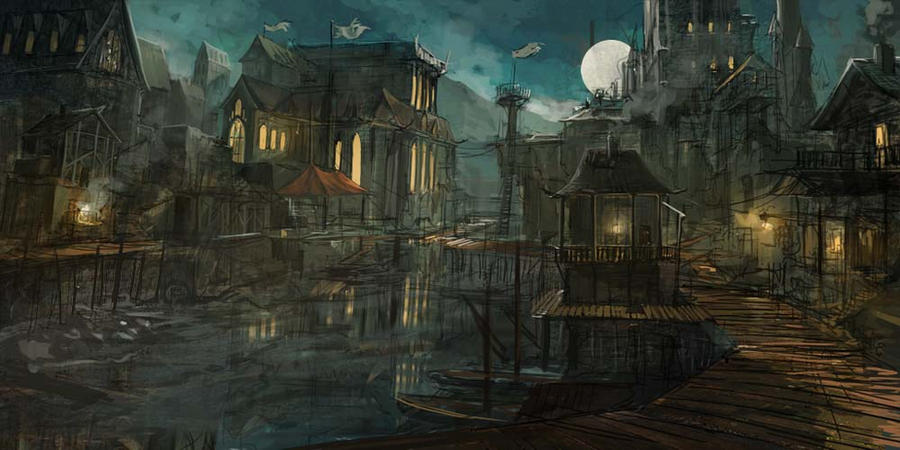
Channel Divnity
When you this oath at 3rd level, you gain the following Channel Divinity options:
Instrument of Death. As an action, you can imbue one weapon that you are holding with the power of entropy, using your Channel Divinity. For 1 minute, you add your Charisma modifier to attack rolls made with that weapon (with a minimum of +1). The weapon also sheds a quivering red radiance, and emits bright light in a 20-foot radius and dim light 20 feet beyond that. If the weapons is not already magical, it becomes magical for the duration.
You can end this effect on your turn as a part of any other action. If you are no longer holding or carrying this weapon, or if you fall unconscious, this effect ends.
I Spell Doom. As an action, you channel the essence of doom, death and destruction to compel your enemies to fight on. Each creature of your choice that you can see within 30 feet of you must make a Wisdom saving throw. On a failed save, the target can't willingly move more than 30 feet away from you. This effect ends on the creature if you are incapacitated or die, if you move more than 30 feet away from the creature, or if the creature is moved more than 30 feet away from you.
Aura of Destruction
Starting at 7th level, you and every creature within 10 feet of you, friend or foe, gain a bonus to melee weapon damage rolls equal to your Charisma modifier (minimum of +1). A creature can benefit from this feature from only one paladin at a time.
At 18th level, the range of this aura increases to 30 feet.
Unyielding Duty
Starting at 15th level, when you are reduced to 0 hit points and are not killed outright, you can choose to drop to 1 hit point instead. Once you use this ability, you can't use it again until you finish a long rest.
Additionally, you suffer none of the drawbacks of old age, and if you are resurrected through magic you suffer none of the penalties associated with raise dead, resurrection and similar spells.
The Final Hour
At 20th level, you gain the ability to act as a true beacon of doom, the catalyst of the ultimate battle that will consume your enemies, an unstoppable machine of destruction that leads the harbingers of vengeance. You can use your action to gain the following benefits for 1 hour:
- You have resistance to bludgeoning, piercing, and slashing damage from nonmagical weapons.
- Your allies have advantage on death saving throws while within 30 feet of you.
- You have advantage on Constitution saving throws, as do your allies within 30 feet of you. This effect ends if you are incapacitated or die. Once you use this feature, you can't use it again until you finish a long rest.

Warlock: The Great Machine
The world seems chaotic, but not all worlds are. There are infinite planes of precisely moving parts, gears whose movement is counted in the lifetime of suns in the material world. There are beings of pure rational law. Your patron is such a being of cold precision, to a degree beyond mortal measure. Logical and deliberate but utterly incomprehensible, it might be a denizen of a plane of prue logic or it might have arisen out of the clockwork magic of the material plane. Where you fit in this great device is unclear to any but the being itself, and perhaps its rivals. Its knowledge is vast and inversely proportional to its tolerance for variation from its plans. It may call on you to enforce the order of your land, to hunt down oath breakers, to purge those who sin, or to make adjustments of the cosmic order in ways unfathomable to mortals.
Great Machine Expanded Spell List
The Great Machine lets you choose from an expanded list of spells when you learn a warlock spell. The following spells are added to the warlock spell list for you.
Patron Spells
- 1st: pendulum, tireless
- 2nd: armored heart, lock armor
- 3rd: protection from energy, thousand darts
- 4th: fabricate, steam blast
- 5th: animate objects, mechanical union
Clock's Unwinding
At 1st level, your patron grants you a tiny fraction of its ability to measure and control time. At the beginning of another creature’s turn (friend or enemy), before that creature moves or takes any action, you can shift your position in the initiative order to immediately before that creature. If you haven’t yet taken your turn this round, you do so immediately. If you have already acted this round, you can either move or take one action immediately, but not both. In either case, your spot in the initiative order shifts to this new position.
You must complete a short or long rest before using this feature again.
Machinelike Precision
At 6th level, you can call on your patron to grant you uncanny precision. When you miss with an attack in combat, you can choose to reroll the attack with advantage.
Once you use this feature, you must complete a short or long rest before using it again.
Mind of Gears
At 10th level, your thoughts become mechanical and ordered like that of your patron, even if your actions do not. You are immune to psychic damage and your thoughts cannot be read unless you choose to allow it.
Crushing Gears
The mortal mind is not meant to understand the vast complexity of machine intelligences. Starting at 14th level, you can, as an action, designate a creature you can see within 60 feet of you. It must make a Charisma saving throw against your warlock spell save DC. If it fails, it experiences a taste of your patron’s mind and its place in the great plan of the multiverse. The creature takes 10d10 psychic damage and must make another Charisma saving throw; if the second saving throw fails, the creature is also stunned for 1 minute as it reels from the experience.
After using this feature, you must complete a short or long rest before using it again.
The Great Machine and your Pact Boons
Pact of the Chain: The Great Machine grants a
clockwork familiar instead of a familiar of the
normal kind. See the Clockwork Mage for more
information.
Pact of the Blade: The blade of the Great Machine is
a thing of clockwork and gears, changing shape as it
unfolds for combat.
Pact of the Tome: The Great Machine grants
no simple book, but instead a pocket-
size device filled with cogs covered in
arcane script. The warlock knows how to
manipulate the small buttons and levers
on the device to cast each of the cantrips. If
spells are added to it via the Book of Ancient
Secrets invocation, the Warlock can add new
gears instead of pages by the process described.


Clockwork Familiars
Summoning a clockwork familiar uses the spell find familiar and is the same except as follows.
Find Familiar
Components: 10 gp worth of clockwork gears, springs, and other components melted in a crucible and molded into a charm shaped like the familiar
As with other familiars, the creature only seems to be made of clockwork elements, and it is a spirit given the seeming of matter by magic. Unlike other familiars, it is not celestial, fey, or fiend; instead, it has the construct type. If the familiar is destroyed its material form dissipates, though the same spirit can be summoned again by casting the spell and substituting the charm in place of the clockworks. The newly molded charm can have any of the listed forms and need not be the same as the destroyed familiar.
Eldritch Invocations
The following invocations are available to Great Machine warlocks.
Cloud of Cogs
Prerequisite: 3rd level, Great Machine patron
You can cast gear barrage once using a warlock spell slot. You must finish a long rest before doing so again.
Heat of the Furnace
Prerequisite: 3rd level, Great Machine patron
You summon up the fires from within. As long as you maintain concentration, your melee attacks do an additional 1d6 fire damage. Attackers within 5 feet of you who hit you in melee take 1d6 fire damage. This heat does not affect any of your gear.
Voice of the Machine
Prerequisite: Great Machine patron
Spells you cast that charm or frighten creatures overcome the immunity of constructs to being charmed or frightened. Saving throws apply normally.
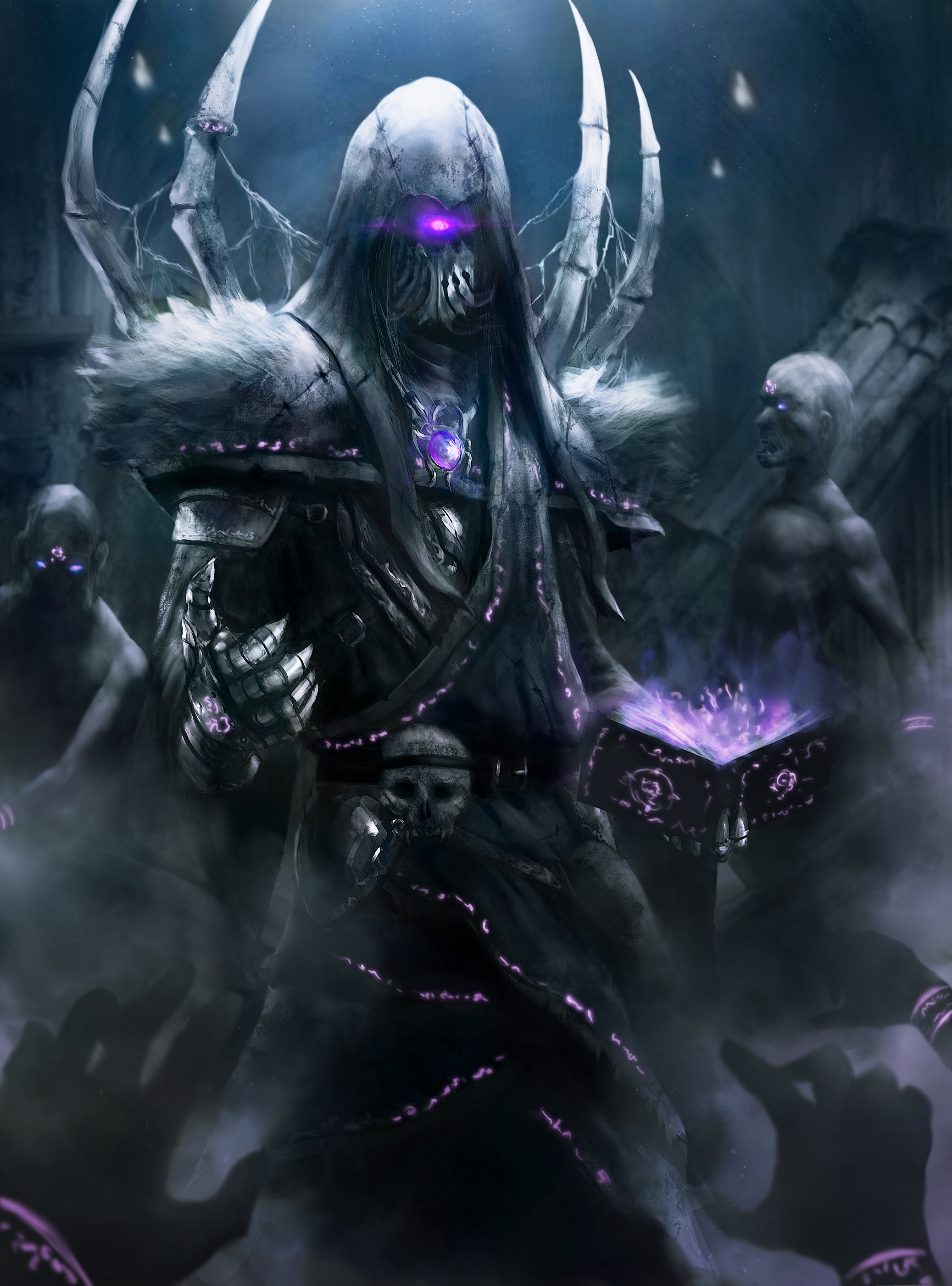
Wizard: Clockwork Mage
The school of clockwork magic is a blending of technology and magic not often seen. While some Sorans would argue that all spells of this so-called school are simply applications of the more traditionally acknowledged branches of arcane magic, the clockwork mages understand that there is qualitative difference in thought between casting, say, a clockwork(evocation) spell and an ordinary evocation. The school thrives alongside industry, using a small number of spells, compared to the older schools, to create a wide range of styles. Fool is he who fails to notice arcane glyphs and wands and mistakes a clockwork mage for a common gear grinder or tinkerer.
Clockwork mages who use the spell find familiar (or others who gain access to the spell and choose to use it) substitute the material components for a small clockwork device in the form of an animal similar to those listed in the text of the spell. When the ritual is completed, magical animating force gives life to the device. The delicacy of the clockwork makes up for any superior durability of the materials. It has the statistics of the chosen form but is a construct instead of a beast. Unlike a normal familiar, the devices’ form cannot be changed without investing in the material components to rebuild it. The familiar is never counted when determining the number of constructs a mage can control.
The Circle of Discernment and Experimentation in Hierasolis (CoDEx) employs a staggering number of mages with exhaustive study experience in Clockwork magic, and are largely responsible for the invention and production of the Gearforged.
School of Clockwork
The following class abilities are available to wizards of the clockwork school.
Clockwork Savant
Beginning when you choose this school at 2nd level, the gold and time it takes to copy a clockwork spell into your spell book is halved.
Clockworker’s Charm
Beginning at 2nd level, whenever you cast an animate construct spell, increase the duration by a number of minutes equal to your proficiency bonus. At 20th level, you can make the spell permanent until dispelled but cannot have more than one made permanent at a time.
Metal Shape
When you reach 6th level, you gain the ability to reshape metal with a touch. When you grasp a piece of metal of Small size or smaller, you can alter its form into any shape that suits your purpose. The item must be in your hands and under your control; you can’t, for example, reshape a piece of armor or a weapon that’s being worn or wielded by someone else. To create a specific object, such as a key or mechanical component, you must be completely familiar with it. Thus you could replicate a key that you had in your possession for an extended period of time, but you could not create a working key based on seeing the lock alone. Objects you create can have up to two hinges and a latch, but finer mechanical detail is not possible. This effect can be used to repair metal as per the spell.
You may use this feature once before completing a long or short rest.
Golem Form
Beginning at 10th level, you can transform yourself as an action into a living construct for up to 1 minute per level. You retain your Intelligence, Wisdom, and Charisma and the ability to speak and cast spells. You can transform into a golem or a clockwork creature whose CR is less than or equal to your current level in this class. Otherwise, this ability functions as the druid’s Wild Shape ability.
Clockwork Mastery
Starting at 14th level, you can use magic to bring constructs under your control. As an action, you can compel one construct you can see within 60 feet of you to make an Intelligence saving throw against your wizard spell save DC. This is a magical effect. If the saving throw fails, the construct becomes friendly to you and obeys your commands for 1 hour, until you use this ability again, or until it takes damage from you or one of your allies. If the saving throw fails by 5 or more, the duration is extended to 6 hours or until one of the other conditions is fulfilled. When the effect ends, the construct is aware it was controlled by you.

PART 2
Character Options

Chapter 3: Character Creation
Ability Scores
In Ruins of Wrath, we use a point buy system to assign stats to a character sheet when it's first made. You have a budget of 27 points to assign to your character, before racial bonuses are applied. If you're not familiar with the point buy method, you can find information about it in the Player's Handbook.
Point Calculator
You might find it easiest to use a point calculator. If using one of our custom races, such as a human subrace, you can select "Custom Race" on our recommend calculator site Chicken Dinner for your character.
Level
At the start of the campaign, players will start at Level 1 (exceptions to this noted below). If your character dies and you have to remake a new character, the new character starts at the beginning of your current level. You can never suffer level loss from death.
Average Campaign Level
If you're joining the campaign after it's started, or you haven't played in a while, your character may be eligible for automatic level increases. Your character can never be lower than 1 level below the current active player average.
This means that if you come back from a hiatus and see that the vast majority of people are level 4, then your character levels up to 3 before they adventure, and any new players will start at 3 as well.
In addition, players cannot progress further than 1 level above the average campaign level either. Average campaign level will be updated on the Campaign Discord every week.
Level Floor
A character cannot be more than 1 level below the Average Campaign Level (ACL). If you are, your character levels up to the beginning of the first eligible level.
Level Ceiling
A character cannot be more than 1 level above the Average Campaign Level (ACL). If you are, about to you do not level up, and stop gaining experience.
Starting Equipment
You start with your background equipment as outlined in whatever background you choose for your character. In addition, you can pick one of the following options:
- Your starting class gear, usually a set of three choices to choose from.
- Roll for starting gold as outlined on p.143 of the Player's Handbook. This roll must be made in the Roll20 game.
Backgrounds
Any backgrounds from officialy published material is fine.
Variant Rules
Some common variant rules are in effect, and some are not.
Multiclassing
Multiclassing is legal if you meet the Ability Score requirements outlined in the Player's Handbook. You must have a lore/story reason for the multiclass.
Feats
Feats are legal and are detailed in Chapter 4: Feats & Skills. Some feats are removed from the campaign.
Encumbrance
We use the Variant encumbrance rule outlined in the Player's Handbook. This means you need to track the weight of many of the things you carry, and ask the Dungeon Master for a weight value on new discoveries. With this, you become encumbered when the weight you carry exceeds 5 times your Strength score, and harsher penalties apply at 10x, 15, and 30x. We use the following change to the variant encumbrance rules:
- When you wear armor, the weight only counts as 1/2 the base value, as the weight is more evenly distributed and easier to carry.
Unused Variants
We don't use these variant rules which may commonly be found in other games:
- Disarming Attack (fighters can still perform it as a subclass action)
- Flanking
- Variant rest rules
Death & Resurrection
In Circles of Soros, there are a few different ways to get raised from the dead, but none may be available early on, or they may be cost-prohibitive. The resources needed to bring someone back are extremely rare, and people won't be easily swayed to use them on adventurers that haven't made a name for themselves. Even if you yourself are able to cast spells that can raise others from the dead, you will need to procure the necessary material components to do so.
There are also different guilds that each have their own method of "resurrection".
Chapter 4: Feats & Skills
FEATS ARE LEGAL TO USE WITH OUR
campaign. They're a great way to add flavor to your character concept, and you're allowed to use any feats published in any of the official books, with a few exceptions. In addition, we have a few custom feats to add to the game as well --- check here for updates.
Disallowed Feats
The following feats are disallowed from being taken, or must be taken with the modifications listed.
- Great Weapon Master has been removed from the game.
- Sharpshooter has been removed from the game.
- Lucky cannot be used to choose any of three dice on a Disadvantage roll; instead, you must choose to roll against the lowest of the first two dice.
New Feats
We have a few new feats to offer players that highlight a few areas of the campaign that may be worthy of a bit more focus than is otherwise afforded:
Herbalist
You are an expert at harvesting the useful properties of herbs and other plants, and using them to create medicinal salves, remedies, and unguents. You gain the following benefits:
- Increase your Intelligence or Wisdom score by 1, to a maximum of 20.
- You gain proficiency with the herbalism kit. If you are already proficient with it, add double your proficiency bonus to checks you make with it.
- As an action, you can inspect a plant within 5 feet of you and determine whether it is edible or poisonous, provided that you can see and smell it.
- You can apply herbal remedies to help yourself or your allies recover from maladies. Over the course of a short rest, you can expend one reagent to remove one poison or disease from either yourself or a friendly creature within reach. You must have access to an herbalism kit to use this benefit.
Alchemist
You have studied the secrets of alchemy and are an expert in its practice, gaining the following benefits:
- Increase your Intelligence score by 1, to a maximum of 20.
- You can proficienccy with alchemist's supplies. If you are already proficient with them, you add double your proficiency bonus to checks you make with them.
- As an action, you can identify one potion within 5 feet of you, as if you had tasted it. You must see the liquid for this benefit to work.
- Over the course of a short rest, you can temporarily improve the potency of one potion of healing of any variety. To use this benefit, you must have alchemist's supplies with you, and the potion must be within reach. If the potion is drunk no more than 1 hour after the short rest ends, the creature drinking the potion can forgo the potion's die roll and regains the maximum number of hit points that the potion can possibly restore.
Crafting Expert
You pride yourself in your craft and your close study of its discipline. You gain the following benefits:
- Increase any Ability Score by 1, to a maximum of 20.
- You gain proficiency in one artisan's tool of your choice. If you're already proficient with this tool, you add double your proficiency bonus to checks you make with them.
Reagents
Reagents are a special type of resource that comes from herbs you find out in the wilderness. Find more information about reagents in the next section on Fieldcraft.

Chapter 5: Gathering
Gathering Flora
Throughout the natural world exist myriad forms of plant life, fungi, and other organic material that a skilled practitioner can use in the alchemical and homeopathic creation of potions, salves, oils and powders. While traversing Berkatan, you may with to gather such local flora.
This is one facet of the practicing herbalist --- whose talents extend to creating remedies using the extracts of these flora. The alchemist possessed knowledge for the use of such specimens in a range of alchemical creations.
Gathering Requirements
- A character attempting to gather local flora must be in possession of an herbalism kit.
- Proficiency with an herbalism kit is not required to gather flora, but allows you to make a check at Advantage.
The Gathering Process
Make an Intelligence (Nature) check to locate, identify, and harvest local flora during your adventures. Only one person in an adventuring party makes this check. You make this check with Advantage if you also are proficient in, and in possession of, an herbalism kit. Like most skill checks, another group member can assist with this check to give you Advantage if they are also proficient in Nature.
The DC depends on the method of search, as shown in the Foraging Ingredients table. You spend 1 hour in a foraging attempt, and can only make a single attempt per day. Availability of ingredients, and the DC, may be adjusted by the DM.
Foraging Ingredients
| Method of Search | DC |
|---|---|
| Dedicated search without traveling | 12 |
| Traveling at a slow pace | 15 |
| Traveling at a normal pace | 18 |
| Traveling at a fast pace | 21 |
On a success, you collect one ingredient, determined by the DM. This is usually randomly determined, based on the ecosystem of the type of terrain you're in. On a critical success (success by 10 or more), you instead recover 1d4 ingredients.
Gathered flora are immediately harvested and converted to alchemical reagents (discussed in the following section), which can be stored indefinitely using the containers that are assumed to already be in your herbalism kit or alchemist's supplies.
Inventory Tip
Make sure to mark down the reagent type of each plant as well in your inventory, e.g. 1 Fairy Bell (air)
Spell-assisted Gathering
The locate animals or plants spell, or a similar effect, conveys information on the types of flora in the surrounding area, and the direction to which they are located. If you gather with this spell cast, the DM will provide you with information about these nearby flora. On a subsequent successful foraging attempt, you can choose from the revealed flora, rather than having random ones given to you.
Downtime Gathering
As one of the options available to you at the start of an adventure, you can choose to have been gathering herbs between adventures. If you wish to do so, you'll be able to make a foraging attempt for free before setting out with your party.
Harvesting Creatures
Creature parts are mostly used as alchemical materials, and for creating special armor and weapons. Others simply with to take some creature parts as trophies and decorations for their armor or homes.
When characters hunt down or find a dead creature, they can attempt to harvest some parts for crafting and surviving. Since creatures and monsters vary wildly in type and rarity, the character attempting to harvest must make a specific ability check. The Extracting Creature Parts table below shows which ability check a character will usually be asked to make in order to extract useful parts from a creature. The DC for this check is listed below as well. Harvesting creature parts takes an hour or more to complete. The DM determines how many checks the party can make for each part they want to harvest. The DM also decides the amount of units a character gets.
Extracting Creature Parts
| Skill Used | Creature Type |
|---|---|
| Nature | Beast, Dragon, Monstrosity, Plant |
| Survival | Giant, Humanoid |
| Religion | Celestial, Fey, Fiend, Undead |
| Arcana | Abberation, Construct, Elemental, Ooze |
Harvesting a Carcass
| Challenge Rating | DC |
|---|---|
| < 5 | 12 |
| 6-10 | 15 |
| 11-15 | 18 |
| > 16 | 21 |
Chapter 6: Modular Crafting
WHILE CHARACTERS CAN CRAFT A
specific item in certain circumstances, they can also craft their own gear depending on what they want. To create an object with special materials, a character needs an amount of material units for crafting it.
As general rule, a character needs 3 units of the same material for crafting a medium-sized creature armor or clothing, and 2 units of the same material for weapons, shields, or 10 units of ammunition. You'll need proficiency with an appropriate artisan tool, and access to facilities appropriate for crafting as well.
Magic items in Berkatan are extremely rare --- and the opportunity to make any are afforded to few, and magic items are outside of the scope of this document. That being said, people have used parts from the monsters in the wild to make their own powerful gear.
Materials
In the following section you can find a few basic example materials, their unit value, and properties. Some materials might have other special features. For example, an armor made with dragon bones could grant you resistance to the dragon's breath weapon damage type. Crafted gear is considered non-magical.
Creatures
There are a lot of different creatures in Ruins of Wrath, and because of that, there are a wide variety of creature parts that can be used for crafting. To provide an example, we're listing a few common ones --- but there are many more to discover and exploit.
For non-magical armor and weapons you make with creature parts, you can gain an extra benefit depending on the creature Challenge Rating, as shown in the following table.
Non-Magical Armor and Weapons Bonus
| Creature CR | Armor Class | Weapons (attack and damage) |
|---|---|---|
| 6 or less | none | none |
| 7-12 | none | +1 |
| 13-18 | +1 | +2 |
| 19-24 | +2 | +3 |
| 25+ | +3 | +4 |
For example, a scale mail created with scales from an adult blue dragon (CR 16) will grant a +1 bonus to the armor class, for a total of 15 + dex modifier (max. +2), and a longsword made with bones harvested from an ice devil (CR 14) will grant a +2 bonus to attack and damage rolls made with that weapon.
Bone
A series of bones joined together, mostly used by shamans and wildlings.
Unit value: Determined by the creature's CR.
Armor: Replaces the metal. A non-magical armor made with bones grants you a +3 bonus to Charisma (Intimidation) checks you make.
Weapon: Replaces the metal and wood.
Chitin
These flexible shells of chitinous creatures such as giant crabs or remorhaz are used to craft armors, known to be lighter than metallic armors. A favorite of those who want to stay agile.
Unit value: Determined by the creature's CR.
Armor: Replaces the metal. While wearing a medium armor (non hide) made with chitin, the armor's max dexterity bonus increases by 1.
Heavy armors made with chitin reduce the weight by half.
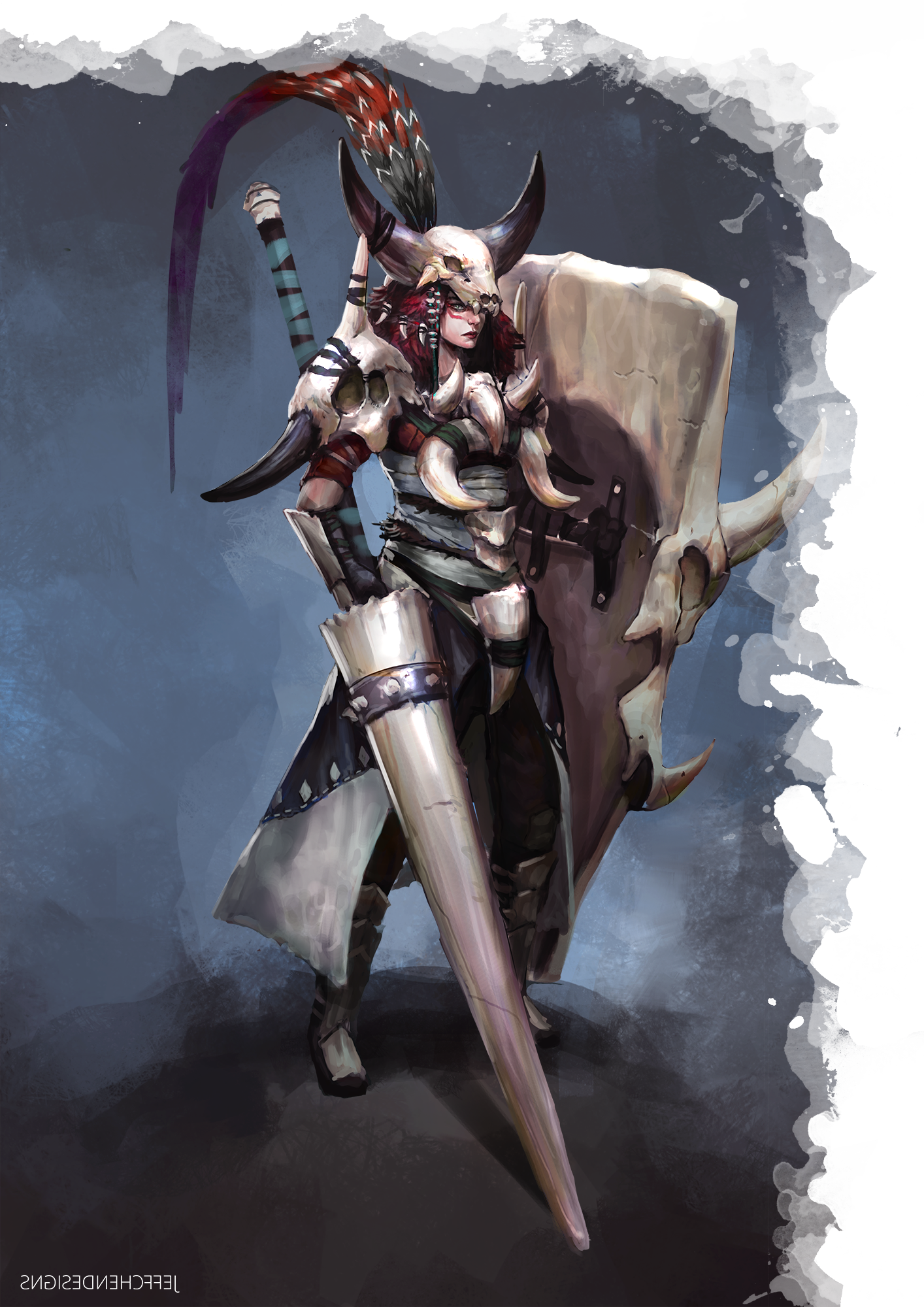
Crafting Items
A character who has the time, the money, and the needed tools can use their downtime action to craft weapons, armor, or potions (potion crafting is explained in the next chapter).
Mundane Objects
Creating mundane items, such as iron rivets or steel daggers, are considered as part and parcel of the Work downtime option. You flavor the gold earned from Working as having sold or made mundane items that you reasonably have proficiency in making. For example, if you decide to take the Work downtime option and earn 53 gold, you can use your blacksmithing proficiency to say you crafted a Chain (10 feet, valued at 5gp in the PHB) for 5 gold as part of the same downtime action, and have 48 gold left over. You don't craft at half value, because selling items you create is assumed within the abstract roleplay behind the Work action in the first place.
Crafting Special Equipment
For non-mundane equipment, such as the bone or chitin armor/weapons exemplified on the last page, we follow a different set of rules, as this gear is highly unusual, specialized, and carries a lot of benefits that mundane equipment might not otherwise.
Crafting Requirements
For crafting special equipment, in addition to the appropriate tools for the item to be crafted, a character needs raw materials, such as bone or chitin from a creature.
A character needs to be proficient with the tools needed to craft an item, and access to the appropriate equipment. Crafting stations can be found in certain guilds, or you can add one to a structure you build yourself. If you don't have access to facilities, try asking another player if you can use theirs!
Here's some examples of proficiencies needed for different types of equipment:
| Proficiency | Items |
|---|---|
| Herbalism kit | Antitoxin, potion of healing |
| Alchemist's supplies | Alchemist's fire |
| Leatherworker tools | Leather/Hide armor, boots |
| Smith's tools | Metal armor, weapons |
| Weaver's tools | Cloaks, robes |
For special equipment, as explained earlier,
a general rule is that a character needs
3 units of the same material for
crafting a set of armor or
clothing, and 2 units of the
same material for weapons,
shields, or 10 pieces of
ammunition. You must also
pay for half of the base cost of
the item (ie 750g for full plate).
Crafting Process
Each individual special piece of equipment you wish to craft costs a Crafting downtime action. (more on downtime actions in a later section). The variable time between adventures is considered enough to warrant the focus and dedication necessary to create one piece of equipment, or ten pieces of ammunition.
Assuming you have the proper proficiencies and access to the facilities needed to make equipment, you then make an ability check using the Special Equipment Crafting table below. The DC of the craft is determined by the CR bracket in which the parts were gathered. All of the parts used in the crafting process must be high enough to make the item you wish. You can downgrade materials to the lowest common material if you wish, but you cannot upgrade For example, 1 unit of blue dragon scales from a CR 6 dragon mixed with 2 units of blue dragon scales from a CR 14 dragon will result in a CR 6 item --- you would need a third set of scales from another blue dragon CR 13+ to qualify for an item in that bracket.
In addition, there is a cost for creating items that covers miscellaneous parts, labor for assistants, or general overhead. This is in addition to the 50% base item cost you need to pay.
| Creature CR (of parts) | Crafting DC | Cost |
|---|---|---|
| 6 or less | 10 | 50 gp |
| 7-12 | 15 | 200 gp |
| 13-18 | 19 | 2,000 gp |
| 19-24 | 22 | 20,000 gp |
| 25+ | 25 | 100,000 gp |
If you fail by 5 or more, the parts are lost in the creation process. If you fail by 4 or less, the craft simply didn't finish yet, and you can attempt it again with your next Crafting downtime action. If you succeed, then the parts are consumed, the gold cost is consumed, and the item is created.
Example Weaponcraft
Rak's party has acquired some bones of various enemies they've slain throughout their adventures -- in particular, 1 unit of bones from a Storm Giant, and 1 unit of bones from a Mummy Lord. Their party smith, Oris, offers to make Rak a hardened bone rapier using these parts.
He spends his downtime action between adventures to Craft. Oris is a veteran member of the Crafter's Guild, and has access to the facilities needed for a complicated craft like this. He spends 2,000 gp in materials and makes a crafting check, and rolls a 21, resulting in a success! Oris gets a new nonmagical bone rapier that has a +2 to attack and damage, and gives it to Rak, who very generously tips Oris for the work.
Chapter 7: Potioncraft
ALCHEMY IS INTERPRETED AS A WAY
to harness and extract the magical essence of ingredients you find out in the world, and use it to your own advantage to create powerful elixirs, oils, and enchantments.
Crafting Requirements
- A player attempting to craft potions must be in possession of either an herbalism kit, or alchemist's supplies, depending on the individual requirements of the recipe in question.
- Proficiency with the relevant tool is required, representing the base competency needed to handle the equipment and follow instruction precisely.
Crafting in the Field
Alchemical items of common or uncommon rarity can be crafted in the field --- all you need are the necessary ingredients and access to the correct tool. More potent creations leave little room for distraction and require special equipment, and require a safe workshop environment such as an alchemist's lab at a guild, or one built in a private residence. A character can attempt to craft items in the field, but makes checks at disadvantage.
The Crafting Process
Crafting must be performed over an uninterrupted two hour session. When an attempt at potioncraft is initiated, all ingredients are immediately considered to be consumed. Interruptions to the process results in automatic failure and loss of all materials.
At the end of the session, make one of the following checks, depending on the recipe's requirements:
Herbalism Kit modifier
Alchemist's Supplies modifier
The DC depends on the item rarity, as shown in the Potion Crafting table below. Certain recipes may have an additional modifier added to the DC at the DM's discretion.
Potion Crafting
| Rarity | DC |
|---|---|
| Common | 10 |
| Uncommon | 15 |
| Rare | 19 |
| Rarity | DC |
|---|---|
| Very Rare | 22 |
| Legendary | 25 |
The Alchemical Base
All alchemical concoctions require an alchemical base, a foundation on which the formulations are created. Generally, the more powerful the effect, the more refined and costly the requisite base. The following list describes the most common categorizations of bases:
Alcohol. Made from naturally occurring ethanol fermented over time, distilled to varying degrees of purity. Alcohol is required to create potions, as well as substances that ignite and burn readily.
Black Powder. Consists of a mixture of sulfur, charcoal, and saltpeter. Black powder is used in the creation of explosive.
Grease. More common types of grease are made by combining plant oils with lime soap. Grease is required to make alchemical oils.
Phosphorus. Phosphorus can be processed into a weak acid, or powdered and used to create a thick, white smoke.
Sulfur. Refined sulfur is created by burning volcanic sulfur deposits in brick kilns built on sloping hillsides. Can either be dissolved to form sulfuric acid, or burned to create thick, noxious smoke.
Other bases include common ingredients such as distilled water or salt --- all standard within a set of alchemist's supplies.
Acquisition
Alchemical bases must be purchased from an apothecary or other dealer in alchemical goods --- the prices of which are subject to supply and demand. A general trader may be able to supply common ingredients, while the rarest ones will only be available by specialists in rare circumstances, or restricted to members in a guild of a certain rank, as shown as an example below.
Alchemical Bases
| Base | Rarity | Cost (approx.) | Availability |
|---|---|---|---|
| Alcohol | Common | 10 gp | General Public |
| Calcium Grease | Common | 10 gp | General Public |
| Phosphorus | Common | 10 gp | General Public |
| Black Powder | Uncommon | 25-30 gp | Specialist / ? |

Method 1: Herbal Alchemy
Herbal alchemy involves the use of extracted essence of harvested flora. The following additional ingredients are required in addition to the correct alchemical base when creating potions using this method:
Reagents
Reagents are the extracted purified essence of alchemical flora which form the basis of herbal alchemy. Alchemical symbols are used to denote the six categories of reagent as follows:
| Reagent | Symbol |
|---|---|
| Water | 💧 |
| Fire | 🔥 |
| Earth | ⛰️ |
| Reagent | Symbol |
|---|---|
| Air | 🌫️ |
| Life | 🍃 |
| Shadow | 🌑 |
All varieties of alchemical flora are associated with only one reagent. A summarized list of commonly known alchemical creations, including information on the type and number of reagents require for crafting each, will be shown later.
The relative availability of each reagent type varies according to the generally prevailing weather conditions and climate of the surrounding area (e.g: fire-type flora are more rare).
Information on the different flora available in each climate region can be catalogued and recorded by gatherers, and will need to be shared with each other to have a more complete understanding of the alchemical and herbal concoctions available. You may also learn how to synthesize new potions in the field, or from guild trainers.
Special Requirements
Certain recipes require a supplementary requirement to the alchemical base and reagents necessary for a preparation. For example, potions that mimic the effect of a spell often require casting that spell as part of the crafting process, thereby imbuing the potion with its magic.
Method 2: Tissue Transmutation
Studying the unique properties of creatures found throughout Berkatan form part of an alchemist's pursuit, and has resulted in the development of potions using special tissues harvested from specific creatures. This method requires only a unique ingredient from a certain creature in addition to the correct alchemical base. Due to the arcane nature of potion-making using creature organs and viscera, the vast majority of such concoctions are created using alchemist's supplies.
Creature Parts
A few commonly known potions that use creature parts in tissue transmutation will be presented further down. Instances that list multiple parts for a single concoction indicates a range of potential ingredients, not a requirement to be in possession of each.
Downtime Crafting
Much like gathering flora, brewing alchemical concoctions can be done as part of your downtime between sessions as well. You are allowed ten concoction attempts between adventures.
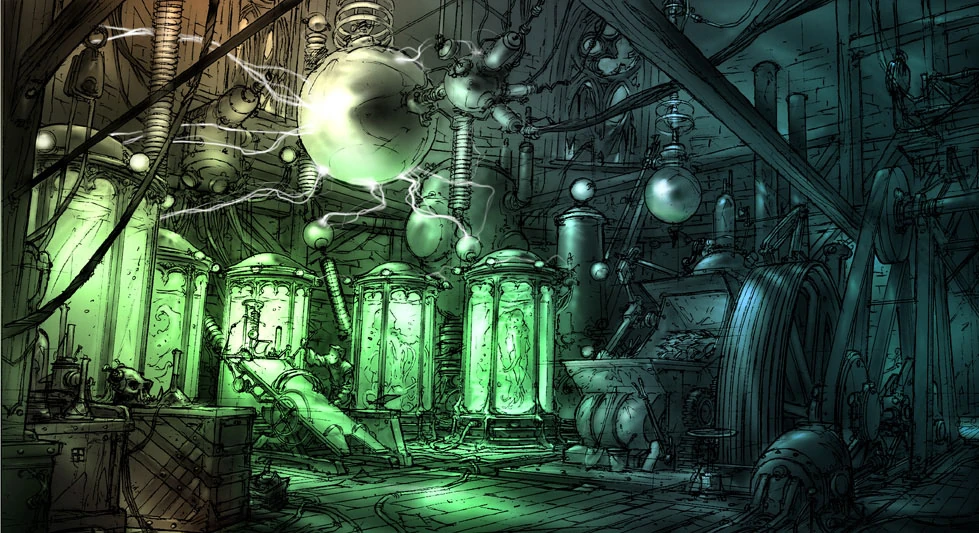

Potion Descriptions
These are a few commonly known potions, presented in alphabetical order. There are many more recipes out there in the world waiting to be discovered or taught. A potion's description gives its name, category, rarity, magical properties, as well as reagents and items needed to create it using the rules presented earlier in this document. Potions are separated into two categories that represent the two major disciplines of crafting unguents: alchemist recipes, and herbalist recipes. An alchemist recipe is crafted using alchemist's tools and the associated proficiency, and an herbalist recipe is created using an herbalist kit and it's proficiency. They are not interchangeable unless otherwise stated.
Alchemist's Fire
Improvised weapon, common, alchemist
- Alchemical Base: Alcohol
- Herbal Alchemy: 🔥
- Tissue Transmutation: N/A
This sticky, adhesive fluid ignites when exposed to air. As an action, you can throw this flask up to 20 feet, shattering it on impact. Make a ranged attack against a creature or object, treasing the alchemist's fire as an improvised weapon. ON a hit, the target takes 1d4 fire damage at the start of each of its turns. A creature can end this damage by using its action to make a DC 10 Dexterity check to extinguish the flames.
Antitoxin
Potion, common, herbalist
- Alchemical Base: Alcohol
- Herbal Alchemy: 🍃
- Tissue Transmutation: N/A
A creature that drinks this vial of liquid gains advantage on saving throws against poison for 1 hour. It confers no benefit to undead, constructs, or gearforged.
Cat's Eye
Potion, common, alchemist
- Alchemical Base: Alcohol
- Herbal Alchemy: 🌑
- Tissue Transmutation: N/A
Drinking this inky-black potion causes your eyes to take on a cat-like appearance, allowing you to see in dim light within 60 feet of you as if it were bright light for 8 hours.
Potion Miscibility and Toxicity
Magical potions are inherently toxic to a user's system, and they cannot sustain the benefit from multiple concoctions. As a result, only one potion's ongoing effects can ever be active at any one time. Consuming another potion will overwrite the earlier potion(s) effects.
Potion of Healing
Potion, rarity varies, herbalist
- Alchemical Base: Alcohol / distilled alcohol / pure alcohol
- Herbal Alchemy: 🌫️/ 🌫️+ any / 🌫️+ any / 🌫️x2 + any
- Tissue Transmutation: Centaur hoof, ki-rin hoof, rhino horn, or unicorn hoof
You regain hit points when you drink this potion. The number of hit points depends on the potions rarity, as shown in the Potions of Healing table. Whatever its potency, the potion's red liquid glimmers when agitated.
Potions of Healing
| Potion of... | Rarity | HP Regained |
|---|---|---|
| Healing | Common | 2d4 + 2 |
| Greater Healing | Uncommon | 4d4 + 4 |
| Superior Healing | Rare | 8d4 + 8 |
| Supreme Healing | Very rare | 10d4 + 20 |
Potion of Springing
Potion, common, herbalist
- Alchemical Base: Alcohol
- Herbal Alchemy: 🔥
- Tissue Transmutation: N/A
When you drink this potion, your jump distance is tripled for 1 hour.


Chapter 8: Guilds
Entering a guild
In Haldun and the surrounding lands, there are plenty of factions that you can live in service to, and ally yourself with, to gain benefits. Our system uses a reputation system which determines your rank on the guild. In most of the cases, the adventurers must gain a number of reputation points by completing contracts given by the guild to be considered as members of the guild. You advance in the guild by participating in contracts and jobs they have for you in the world. Your DM may assign more reputation based on other factors. Reputation is kept track of exclusively by the DMs.
When a character gets the recognition required for the first rank, they are offered the opportunity to join the guild.
Other Requirements
Some guilds might have additional requisites to enter, such as being able to cast spells, paying an entry fee, or complete a special task to determine if you are able to enter the guild.
Reputation Points
Every guild rank is determined by recognition. This is earned primarily by finishing contracts and bounties, but can also be gained in other ways. Gaining recognition allows you to increase your rank in the guild and get some rewards, which are described later on this guide.
Contracts
Most of the guild works are contracts that involve some quests or missions, which includes a location, some basic information of the quest and obviously, a reward. The rewards earned by finishing a contract are determined by the DM.
Bounties
Bounties, also known as "hunt orders" are special guild missions that allow guild members to further themselve in their organization for killing certain creatures. Bounties have 3 parts: the creature for the hunt, the amount of time the bounty will be active, and the reward: usually coin. The more difficult the bounty you take on, the more recognition and reputation you'll gain.
Example Bounty: Ankheg Bounty
The number of ankhegs wandering near the town has greatly increased, making the farms outside the town a dangerous place, and the local adventurers’ guild created a hunt order to reduce their number. The bounty will be active for only 1 week, and they must bring the ankheg mandibles to the guildhall to prove they killed them. For each ankheg mandible the adventurers bring, they will be rewarded with 4 gp.
Rank Benefits
Gaining ranks on a guild gives the players benefits, such as better paid and challenging contracts, information and equipment. In the table below you can find some examples of rank rewards. The rank names provided are examples as well, and may change for each guild.
| Benefit | Rank Needed |
|---|---|
| Contracts, basic | Apprentice |
| Healing and care | Apprentice |
| Information, basic | Apprentice |
| Lodging and food (modest) | Apprentice |
| Messaging, basic | Apprentice |
| Training | Apprentice |
| Crafting Workshop | Journeyman |
| Equipment, basic | Journeyman |
| Contracts, advanced | Adept |
| Equipment, advanced | Adept |
| Information, advanced | Adept |
| Lodging and food (comfortable) | Adept |
| Equipment, magical | Expert |
| Information, exclusive | Expert |
| Local Guildhall | Master/Mistress |
| Lodging and food (wealthy) | Master/Mistress |
| Own the guild | Grandmaster/Grandmistress |
Contracts, basic. These contracts includes simple tasks.
Contracts, advanced. This contracts can include more long-term and challenging quests. These contracts should have a better pay or give more reputation than basic contracts.
Crafting Workshop. You are able to use the workshops in the guildhalls, where you can find one or more artisan's tools at your disposal for crafting. The number and type of artisan's tools are determined by the DM and guild.
Equipment, basic. This includes simple weapons, light armors and basic equipment (like rations and torches). You can also ask for horses for temporary use.
Equipment, advanced. This includes martial weapons, medium and heavy armors, probably some artisan tools and specialized adventuring kits. This also includes other services, such using one of the guild coach cabs or ship passage.
Equipment, magical. This includes some potions, a few spell scrolls, and a few guild-owned magical items. It can include some spellcasting services. Since magical items and services are rare, it's up to the guild and DM to determine if the you must pay for using the magical items or for each time they want to use some of the guild spellcasting services.
Spellcasting Costs
If you decide you must pay for the spellcasting services you can find in your guild, here's a formula to determine how much it will usually cost each spell.
Square of the spell level multiplied by 10 gp plus double of the consumed material cost plus 10% of nonconsumed material cost.
For example, after finishing a contract, a group of adventurers have found an unknown magical item, and since they don't have the spells to identify their properties, they decide to use their guild rank and ask to a guild wizard to cast the Identify spell on the object. Since it's a 1st level spell and it requires a pearl worth at least 100 gp, the total cost would be 20 gp (10 gp + 10 gp for the pearl)
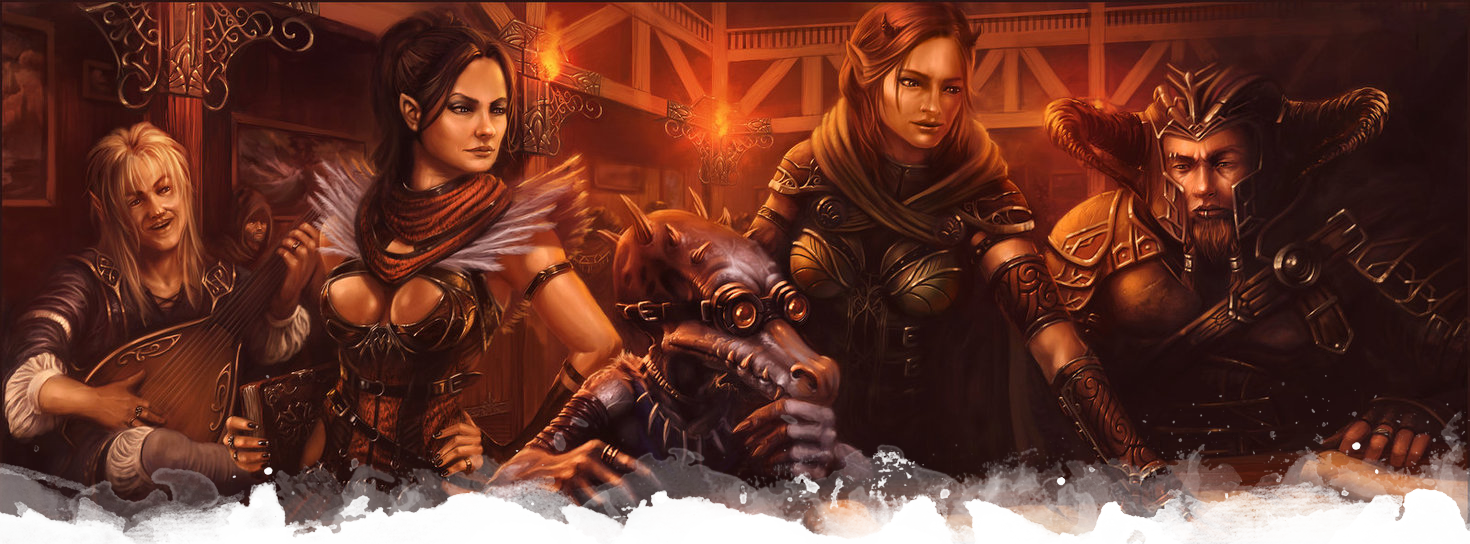
Healing and care. You can be healed in the guildhalls owned by your guild between adventures. Additional specialized care may be possible.
Information, basic. You get one piece of useful lore about the contract or bounty you're doing. You can also gain basic specific information the guild maybe privy to.
Information, advanced. You get two pieces of useful lore about the contract or quest you're doing. You can also gain advanced specific information the guild maybe privy to.
Information, exclusive. You get three pieces of useful lore about anything you're looking for. The DM determines the type of information you get from the guild. You can also gain exclusive specific information the guild maybe privy to.
Pieces of Useful Lore
Each piece of useful lore is the equivalent of one true statement about a person, place, or thing. Examples include knowledge of a creature’s resistances, the password needed to enter a sealed dungeon level, the spells commonly prepared by an order of wizards, who the local mayor is sleeping with, and so on.
For a monster or an NPC, you can reveal elements of stats or personality. For a place, you can reveal secrets about it, such as a hidden entrance, the answer to a riddle, or the nature of a creature that guards the place.
Local guildhall. You are rewarded with owning and leading a local guildhall or outpost in a city or town.
Lodging and food. If you want, you can live in a local guildhall (your lifestyle expenses are covered by your membership).
Messaging. You can use some of the guild messengers to deliver cards and small objects to another city or town.
Training. You can learn a new language or train in a set of tools with the guild. The type depends on the guild.
Gaining Promotions
It's up to the DM to determine if there are extra conditions to achieve each rank, such as a special quest or a minimum of finished advanced contracts.
Additionally, as a general rule, the Master/Mistress and Grandmaster/Grandmistress ranks are only obtainable under very specific circumstances (such as when the guild gets a new guildhall and they need a new Master/Mistress to lead it or when the current Grandmaster dies), or may not be available at all for certain guilds.
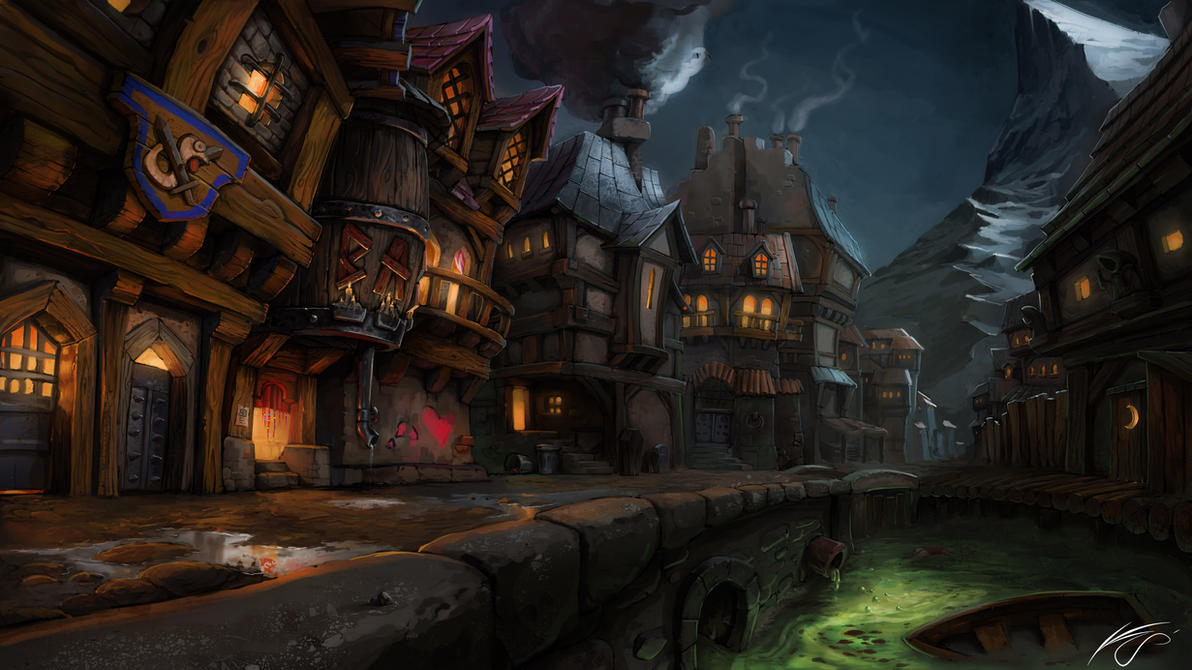

Guilds
In this section you can read more about each of the different guilds that are available for you to join, what they do, and what they usually have to offer. It will also show one of the public officials.
Hiring Union of Berkatan
With a massive influx of employment opportunities in New Haldun and the surrounding lands, the Trade Houses designated a committee to sort through the different organizations and direct people to where they may be most useful. Not a guild itself, The Hub consists of not much more than a small office that houses the records of past and present guild contracts and a moderately sized billboard where new contracts are posted from these different organizations. Any individual interested in joining a guild is always directed to visit the Hub and inquire about entry level work to get your foot in the door, and eventually acquire a recommendation to a registered guild. The Hub is run by Keram Pfeiffer.
Jaren Quill

This clever guy has droopy eyes the color of varnished wood. His thick, wavy, brick-red hair is worn in a style that reminds you of a whirlwind. He's grown a beard to try and take attention away from his boyish build. His skin is white. He has an downturned nose. His wardrobe is strange and impractical, with a lot of brown and black. Jaren functions as Senior Liaison Keram Pfeiffers lacky, performing many of the mundane tasks required of union.
The guilds available are as follows:
The Bastion
The Bastion is patronized expressly by those who battle monsters, hunt treasure, and explore unknown lands. Their members bravely scout around the outskirts of New Haldun and keep the horrors they find at bay. The guild also collects and distributes monster parts and rare herbs and plants they find to the Artisans Collective. They are seeking new members willing to go scout, slay, and report in the unexplored lands beyond New Haldun's immediate borders. The Bastion is run by Allyster Journeyman.
Bastion Contracts
Contracts in the Bastion usually revolve around exploring new lands, hunting dangerous creatures, and raiding monstrous lairs. Rarely, they may assign work outside of this scope.
Willana Hawk

Willana is seen as a rising star in The Bastion. Her charismatic quality fits perfectly with her new role as The Bastions head of recruitment. Her exploits in killing a dire wolf with a single swing of her huge flail has earned her respect amongst The Bastion and the New Haldun citizenry, and she uses these stories to her advantage. She is always ready with a quick handshake and a kind word, but beware, if she finds you wanting, your entry to The Bastion will be a tough endeavor indeed.
Soros (Embassy)
The Embassy consists primarily of arcane spellcasters, but occasionally boast noncasting members, such as experts who practice alchemy. Working under the remote and often inscrutable direction of their capital Heirasolis and its Eldritch Council, the Embassy gives direction to all citizens of Soros in the interest of magical advancement, and the further development of their great nation. They provide a much needed expertise on all things to do with magic (not only to other citizens, but to the Haldar as well), and although their way of life is a testament to disciplined regimen, one can’t argue with the results. They're currently open to accept new Citizens into their society, the only method by which one can gain access to their libraries and facilities. Although there is no one single highest-ranking Mage inside the Embassy, Administrator Swan is the most visible.
Embassy Contracts
Contracts issued by the Embassy usually revolve around exploring new lands, finding and recovering artifacts, and gathering rare and unusual resources. Rarely, they may assign work outside of this scope.
Predictor Dunen

A member of The Circle of Prediction, A'ocabe Dunen is a powerful diviner. Although he exhibits a few traits common among Predictors that can make him a little difficult to socialize with, Soros chose to send A'ocabe away from the motherland to New Haldun because of his talent for sussing out potential new purveyors of the Aetheric Arts. It's no secret that he finds the new land lonely, and devoid of the fineries and luxury Heirasolis once provided.
The Artisans Collective
The Collective is comprised of a multitude of artisans and craftsmen, each typically devoted to a single craft or profession, or at most a small group of closely related trades. From smiths to cobblers, cooks and bakers, glassblowers and gemcutters, the Artisans Collective welcomes all who value hard labors with skillful hands. Although they work closely with the Trade Houses to provide New Haldun with all the goods needed for society to function, Prince Thomas, the Order, and his bannermen have their own facilities for smithing weapons and armor. Not everyone in the Collective is a crafter --- indeed, they have a great number of mercenaries and adventurers who they hire to simply protect their interests and expand their horizons. Some view the Collective as a way to get their foot in the door with one of the Six Trade Houses. The Collective is organized and headed by Bertran Delriso himself.
Artisan Contracts
Contracts issued by the Collective usually revolve around exploring new lands, protecting merchants and their agents, and gathering rare and unusual resources. Rarely, they may assign work outside of this scope.
Fairiston Hartley
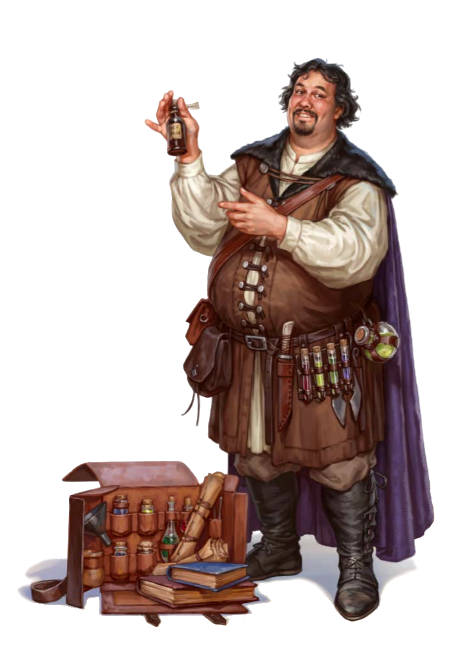
Fairiston Hartley used to run a small booth "Fairiston's Fixes" selling tonics and poultices to cure or alleviate minor ailments. He is a jovial man, quickwitted and always happy to lend an ear. Currently his son Erik runs his old shop while Fairiston spends most of his days assisting Delriso in the day to day running of The Collective.
The Silverfish
The Silverfish is a secretive organization. Publicly, they're a street gang of working class dock workers all under the gainful employment of the merchant houses. Able to be found at port without throwing a stone too far, one would be hard pressed to live in Haldun and not know about them. Behind closed doors, however, they're responsible for far more sinister work - collecting protection money, “discouraging” competition for their masters, and as many suspect, ending those who cross the wrong people. While nobody knows anything about them, the talk is that the Silverfish is headed by a master thief known as The Kingfish.
Silverfish Contracts
Contracts issued by the Silverfish usually revolve around exploring new lands, finding and stealing artifacts, and hunting specific creatures, or even people in marked assassinations. Rarely, they may assign work outside of this scope.
Barno the Beggar
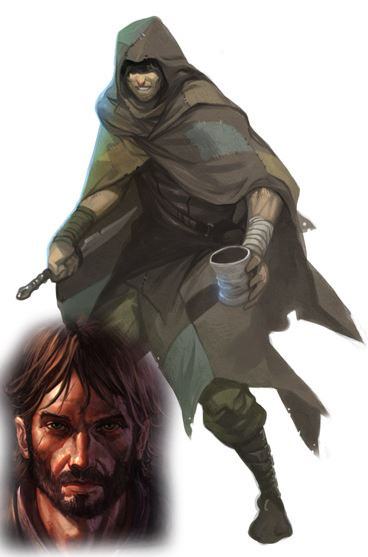
If you go seeking Barno the Beggar odds are he already knows you're looking for him. He is a master of the Disguise Kit, using it to great effect daily. Barno rarely if ever appears looking the way you saw him last. If you set out to find him, eyes in the back of your head may be the best way.
The Order
The Order is comprised of followers of faith. A religious guild at heart, though this is not the same thing as a sect or cult; they are an alliance of believers banded together for the betterment of all. Because there are some different faiths that comprise the whole, the order is sometimes referred to as the Order of the Reconciled. This organization has strong ties to the Haldun King and his bannermen. This organization has history that dates back to the War of Four Nations when Haldun and Soros weren't even allied, and the Order formed as a united front against them. The Order, while technically not disallowing citizens of Soros from joining their ranks, requires a pledge to uphold the basic Haldar tenets of religious respect and humility --- and the two are often found incompatable. The Order is currently headed by Caladin Trell, and occasionally members who join are selected to join the Royal Bannermen of the King, if they swear allegiance to Haldun.
Order Contracts
Contracts issued by the Order usually revolve around hunting monsters or people, protecting citizens and their agents, and finding artifacts or people. Rarely, they may assign work outside of this scope.
Orith Turmin

Orith is a younger man just beyond his youth. Very stern of face and a serious demeanor, Orith has worked very hard to gain the respect of his much older fellows. As a follower of Damihra, Orith values life and the protection of the weak above all else. Do not be surprised if he quizzes you on the tenets of Damihra or Amaros.
Society for Scholarly Exposition
The Society is dedicated to studying particular topics to further the knowledge and education of its members. The Society is comprised primarily of those interested in tinkering on experiments, history, cartography, and unwinding the clockwork of mystery surrounding the world around them. The Society is run by Archivist Aiduin Qisto.
Scholarly Contracts
Contracts issued by the Society usually revolve around exploring new lands, finding specific people or artifacts, and gathering resources for study and archiving. Rarely, they may assign work outside of this scope.
Mikel Lorain

Mikel can always be found in or near The Society's building with book and quill in hand. His desire for knowledge and understanding can become all consuming at times and sometimes makes Mikel look spaced out or uninterested. The usual response to a question posed at him is "Huh, please repeat that." While he is not a mean or callous person he has zero time for time wasters and fools.
The Gilded Lily
The Gilded Lily, a medium sized theatre and the guild’s namesake, houses New Haldun's premier company of performers, singers and songwriters. The talented bards and showpeople of the Lily provide the much needed entertainment New Haldun craves on a nightly basis. From large stage performances in their beautifully furnished theatre to gigs in small taverns and street shows the members of the Lily always dazzle with illusion and grandeur. Given they socialize with the Haldar high life (and occasionally the foreign emissary), the Gilded Lily has a surprising amount of information that they "overhear". The Gilded Lily is run by Carillon Corwin.
Gilded Lily Contracts
Contracts issued by the Gilded Lily usually revolve around exploring new lands, protecting people and their agents, and hunting specific creatures and artifacts for embellished stories. Rarely, they may assign work outside of this scope.
Chords in Harmony
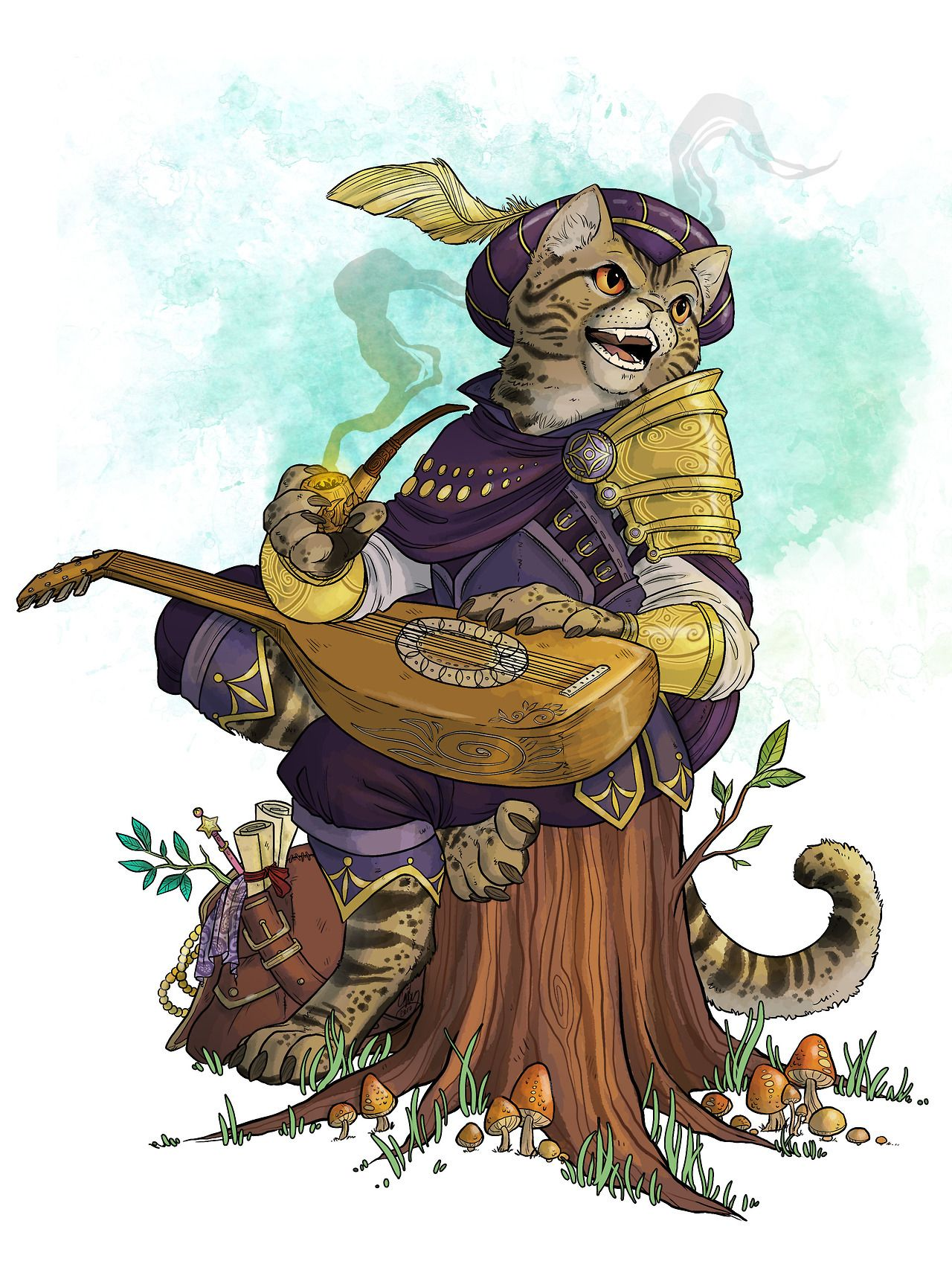
Chords in Harmony has beaten the odds and he knows it. Coming from very poor beginnings he now enjoys all the finer things in life and doesn't mind throwing a little coin around. People come from all over New Haldun to hear his legendary lute playing. Cadence is not quick to impress so you should be creative when he asks you to show your stuff.
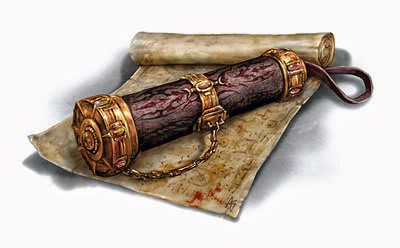
.
The Wardens
Also known as the Augurs, the Rangers of Herathos Vale and Druids off the island of nearby Santiri have a long-standing history of co-operation of overseeing all things wild and natural. The Rangers acting as guides, pioneers and guardians, whilst the Druids have a position of advisors. Although they operate differently, the Wardens are still all part of the same collective. The wisdom of these groups is sought often by those who farm, enter the wilderness or merely seeking to learn more about the lands and its inhabitants. They've taken in a number of Mok'Tar half-orcs into their order, who seek to calm the Aether of Berkatan through a harmony with nature, rather than with spellfire and sword. The Wardens are currently headed by Jarvis Whitcaller and Shandrel Arasseth.
Warden Contracts
Contracts issued by the Wardens usually revolve around protecting people and nature, finding specific artifacts or creatures, and occasionally hunting those who disrupt the natural order. Rarely, they may assign work outside of this scope.
Corfin Sylastra

More at home in the forest than behind tall walls, Corfin can be occasionally found in New Haldun, but more often out on the island of Santiri. His current goal is to find and educate the lovers of the land in the ways of peace and balance and help them find their new home back amongst his own. He bids all druids and rangers come visit but warns that disrespect will be harshly punished.

Guild Training & Facilities
Each of these different guilds can train you in a set of tools that they use once you reach a certain rank.
The Bastion
You can use leatherworker's tools, smith's tools, and woodcaver's tools available for members, and train for proficiency with them.
Embassy of Soros
You can use alchemist's supplies and herbalism kits available for members, and train for proficiency with them.
The Artisan's Collective
The collective has a wide range of contacts in the Trade Houses that can train you in proficiency for tools for brewers, calligraphers, carpenters, cartographers, cobblers, cooks, glassblowers, jewelers, leatherworkers, masons, painters, potters, smiths, tinkers, weavers, and woodcutters.
The Silverfish
You can use forgery kits, gaming/gambling kits, or poisoner's kits available for members, and train for proficiency with them.
The Order
You can use smith's tools or jeweler's tools, and train for proficiency with them.
The Society of Scholars
You can use calligrapher's tools and tinker's tools available for members. You can also train for proficiency with them, or train in a new language.
The Gilded Lily
You can use forgery kits, disguise kits, and musical instruments for members, as well as train for proficiency with them.
The Wardens
You can use navigator's tools, and herbalism kits for the members, as well as train for proficiency with them.


Chapter 9: Downtime
THE SPACE BETWEEN ADVENTURES
affords heroes a brief respite, and a chance to develop. In Ruins of Wrath, the amorphous time spent between a character's previous exploits and ones they're about to embark on call for an explanation of what they might have been doing in that time.
Between Adventures
At the start of each session, players are given a choice between several different options. These give your character benefits that can be used during your adventure. Choose one of these options at the start of each session, when the DM goes around the group and asks you what you did with your downtime.
Working
Whether it's working the lumberyards, clearing aetherspawn outside of Haldun, or crafting material to sell to the populace at large, this option is a way for you to flavor your character simply making ends meet in order to further their financial status.
Working Roll
When you choose the Work downtime option, you gain gold equal to: 4d4 x [Character Level].
Crafting
If you have the opportunity to make special equipment, such as a hardened bone sword, chitin armor out of monster parts you've acquired, or want to brew some potions from herbs the community has collected, you can take the Crafting downtime option.
If you have access to facilities that enable you to do special crafting (such as a guild's crafting hall, or a structure you own that has a room for a relevant artisan trade) then you make a roll appropriate to what you're trying to make and determine the result.
Crafting Roll
The DC and tool you roll for crafting depends on what you're trying to make.
With Crafting downtime, you're able to attempt crafting one special peice of equipment, or ten potions. Refer to Chapter 6 and 7 of this document for information on the crafting process, and the DCs involved.
Training
Downtime spent training in the fields below represents preparing yourself for the trials ahead. Anticipating the need for a small advantage out in the field, these activities can mean the difference between life and death --- or time that in hindsight, may have been better spent elsewhere.
Martial Training
By training your body in combat technique, you leave yourself more prepared for your next adventure. Martial Training downtime can be flavored however you like, provided it falls within the reasonable bounds of training your body physically.
Martial Training Benefit
You gain the ability to invoke a one-time advantage on a Strength or Dexterity ability check or saving throw.
You lose this benefit at the end of the session if it hasn't been used.
Studying
Knowing your enemy and the world around you is important to you. Maybe you've just been keeping sharp, or searching for weaknesses in old legends and fairy tells. Study training can be flavored however you like, provided it falls within the reasonable bounds of keeping your mental acuity sharp.
Studying Benefit
You gain the ability to invoke a one-time advantage on a Intelligence or Wisdom ability check or saving throw.
You lose this benefit at the end of the session if it hasn't been used.
Carousing
While others may spend their time bettering their sword arm, or slaving over ancient tomes, you've been spending your times socializing. The subtleties of social interaction are your domain, whether it be in the company of cantankerous locals, celebrating a hero's exploits, or the hushed deals struck between the city's high life. Carousing can be flavored however you like, provided it falls within the reasonable bounds of social interaction with the public.
Carousing Benefit
You gain the ability to invoke a one-time advantage on a Charisma or Constitution ability check or saving throw.
You lose this benefit at the end of the session if it hasn't been used.
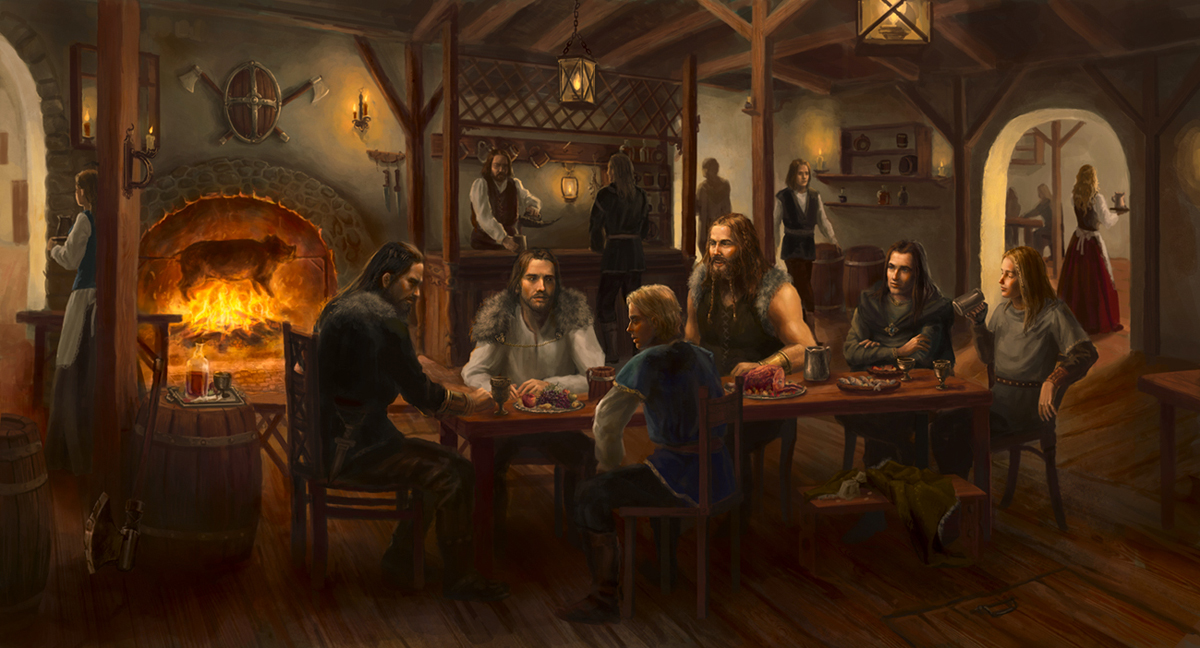

Chapter 10: Structures and Strongholds
WHETHER IT'S A CASTLE UPON A
windswept cliff, a merchant's trading post, your very own tavern, or maybe just a place to rest your head --- we recognize that intrinsic need to leave your mark on the world. Since Ruins of Wrath has always been about players helping shape the setting, we're excited to offer a simple way for players to build a structure or settlement that fits their imagination --- without a ton of overhead to worry about along the way.
As storied as these locations may be, they were all founded at one point by historical figures. Bold, noteworthy folk of many walks of life, who invested hard earned coin and manpower into building landmarks for purposes often inscrutable, either lost to the passage of time or handed down in song and story. Immortality is at your fingertips, provided you have sufficient coin and the wish to build.
Building Your Home
A character can spend time between adventures building a structure. Before work can begin, the character must acquire a plot of land. If the estate is to lie within Haldun's borders, you'll need either a royal charter (a legal document from the crown granting permission to oversee the estate in the name of the King), a land grant from the Trade Houses (a legal document bequeathing custody of the land to the character for as long as he or she remains within the good graces of the Trade Houses), or a deed (a legal document that serves as proof of ownership). If the land is outside of any claimed borders, you will need to instead invest money in clearing the land and securing it.
Royal charters and land grants are usually given by the crown as a reward for faithful service. Deeds can be bought or inherited. A small estate might sell for as little as 100 gp, or as much as 1,000 gp. A large estate might cost 5,000 gp or more, if it can be bought at all. Depending on what you want to build, where you want to build it, and in who's good or bad graces your character is, the price will vary.
Building Space (BS)
When buying a plot of land, you will be assigned a maximum building space allocation, based on the size of the plot you bought or cleared. You need to make sure its large enough to fit all the rooms and components you want to build, but since structures aren't always the same, the building spaces is the way to estimate how much the structure frame itself will cost. Each building space is equivalent to a 20-foot-by-20-foot room with a 10-foot-high ceiling. One building space cost 100 gp. This cost is on top of the cost of the land.
Structure Components
After determining the size of your building, you can use all the building spaces you have purchased to add rooms and other areas to your structure. Each component uses one or more building spaces, and you cannot exceed the building spaces the plot of land can support.
Each structure assumes you're constructing a building with no more than two stories and no more than a single underground level. If you want to add more, you need to pay an extra 1,000 gp for each additional floor you want to add to your structure.
Building Time
Building a structure takes time! Every BS (building space) takes 1 workweek to complete. You can purchase structure components and rooms for these building spaces at the same time that the building space is being completed, but furnishing takes 1 workweek per BS to complete as well.
Building Example
Rak's made a bit of a fortune for herself and needs a room big enough to store her ego (roughly 1,500 cubic feet). She can't secure a land grant or a royal charter, so she buys a deed from the Trade Houses. She doesn't need a big plot of land, so she asks for a deed for 2 building spaces (you know, just for a bit of room to expand later). She also makes it known she doesn't care if it's in the slums, so it comes pretty cheap, and she pays 150 gold and receives a deed with 2 building spaces of allocated space. She then invests the money into building one of those building spaces over the week for 100 gold, leaving her second slot empty for the time being. At the same time as that building space is being constructed, she purchases the furnishings for a Basic Storage room, 250 gp, which requires 1 building space.
At the end of the week, she's spent 500 gold and now has a building with a storage room for her 1,500 cubic foot ego, and room to spare! Now that's a happy camper.
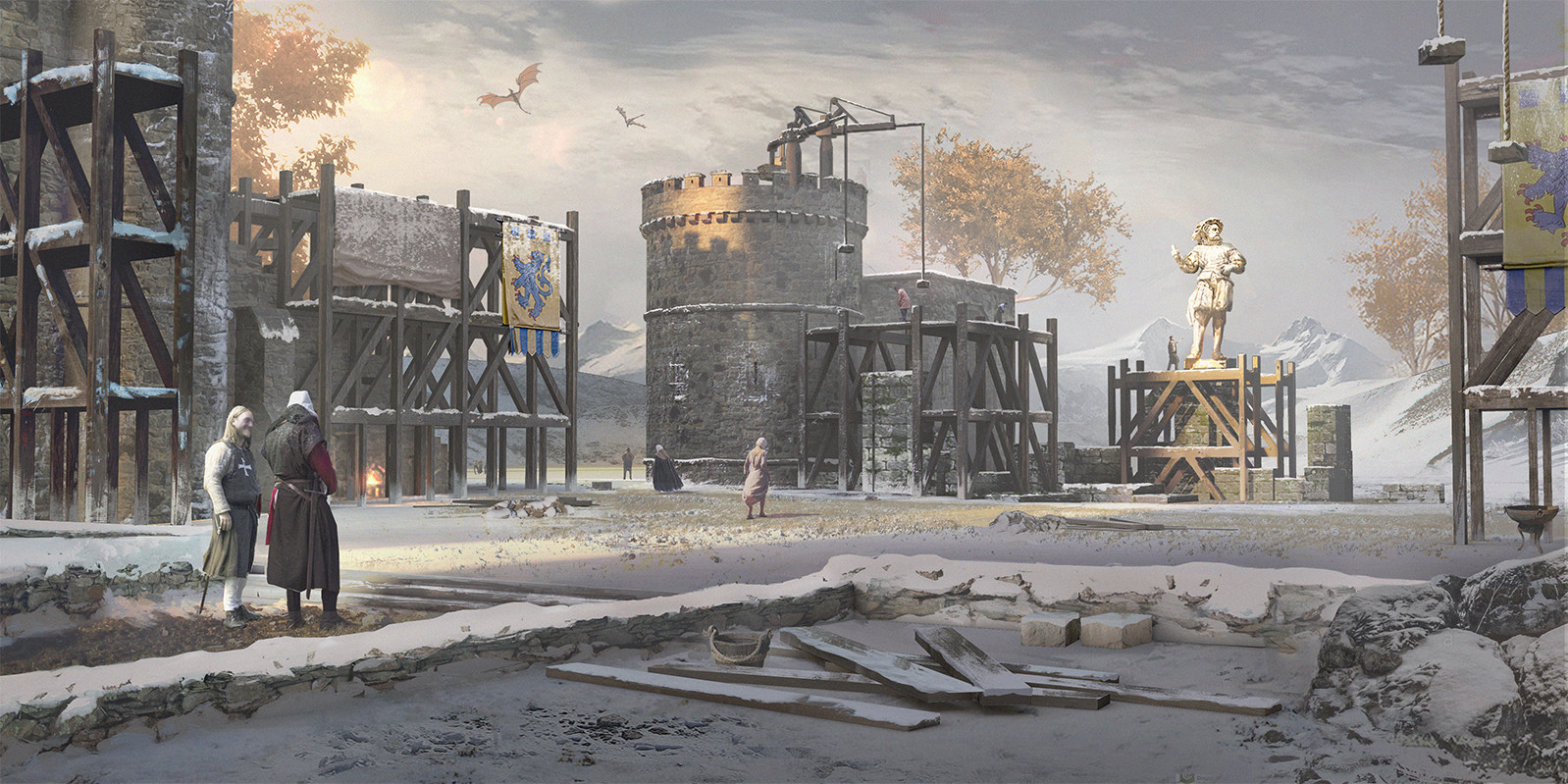
Components List
The following section you can find an alphabetical list of all the rooms and other components you can add to a structure.
Alchemist's Lab, Basic
The room is filled with vials, flasks, burners, and other alchemical equipment. A small fireplace stands in one wall to heat the room and for providing the necessary fire for alchemical recipes created here. The floor is rough wood or stone, stained with chemicals, and there are shelves lined in the walls stocked with various alchemical reagents.
Size: 1 bs
Cost: 700 gp
Prerequisites: None
Benefit: An alchemist's supplies is always considered to be present in this room. Additionally, if a character is proficient with this tool, it can double its proficiency bonus when making a check with it.
Alchemist's Lab, Fancy
An alchemist has every tool he or she might need. This includes everything from the basic alchemist's lab, plus more ingredients and a larger number of tools. The walls are covered with blackboards where all sorts of notes can be scrawled, and the floor is made of rough tile.
Size: 1 bs
Cost: 3,000 gp
Prerequisites: One alchemist
Benefit: A total of four alchemist's supplies are always considered to be present in this room. A single character using this laboratory and having its resources all to himself can roll with advantage when making a check using the alchemist's supplies. Alternatively, up to four characters can share this space at the same time, and each one of them can double its proficiency bonus when making a check with an alchemist's supplies.
Armory, Basic
Racks of armor and weapons fill the room, ready for being used when its time to defend against an attack.
Size: 1 bs
Cost: 500 gp
Prerequisites: None
Benefit: This room has enough space to hold equipment for 25 soldiers, though the price doesn't include such gear.
If you need a greater capacity, you can purchase this component multiple times.
Armory, Fancy
Similar to the basic armory, this room provides armor and weapons to the defenders of the place, but it also have various murals and other artwork depicting the glories of war cover the walls of this armory.
Size: 1 bs
Cost: 2,000 gp
Prerequisites: None
Benefits:. As with the basic version, this area has sufficient armor and weapon racks to equip 25 soldiers, though the price doesn't include any such gear.
If you need a greater capacity, you can purchase this component multiple times.
Auditorium, Fancy
While any great hall can be used for performances, the auditorium is a space designed with acoustics and artistic appreciation in mind.
Size: 1 bs
Cost: 2,000 gp
Prerequisites: None
Benefit: A character that is proficient with the Charisma (Performance) skill adds twice its proficiency bonus when making a check with that skill in this room.
Up to 30 people can fit in here for a service. If you need a greater capacity, purchase this component multiple times.
Auditorium, Luxury
A luxury auditorium offers plush and cushioned seating for the audience, and a stage that can be moved or adjusted as necessary for performance of theater, orchestra, or choir.
Size: 1 bs
Cost: 10,000 gp
Prerequisites: None
Benefit: A character that is proficient with the Charisma (Performance) skill gains advantage when making a check with that skill in this room. Alternatively, up to four characters can share this space at the same time, and each one of them can double its proficiency bonus when making a Charisma (Performance) check.
Up to 30 people can fit in here for a service. If you need a greater capacity, purchase this component multiple times.
Barbican
This room sits atop a gate or gatehouse, usually in an exterior wall. It features murder holes/arrow slits (included in the price) in the floor. The barbican requires two guards on duty at all times.
Size: 1 bs
Cost: 1,000 gp
Prerequisites: Two guards per shift
Benefits: Guards can attack through the murder holes/arrow slits to the area below to defend the door or portcullis to enter the site.
Barracks
This room contains up to ten simple wooden beds with straw mattresses. A footlocker sits at the end of each bed for personal belongings.
Size: 1 bs
Cost: 400 gp
Prerequisites: None
Benefit: A barracks can hold ten people (usually guards or soldiers). If you need a greater capacity, you can purchase this component multiple times.
If you want a higher class of quarters for officers, purchase bedroom components instead.
Bath, Basic
This standard, sparsely furnished room contains a simple wooden or metal tub and a chamber pot or two, along with some rough wooden benches for seating.
Size: 0,5 bs
Cost: 400 gp
Prerequisites: None
Benefit: This room has space for one character. When the character takes a short rest, the amount of hit points are doubled when it spend a hit dice to regain hit points.
Bath, Fancy
This bathroom comes complete with a large tub, a chamber pot under a chair, and a means of disposing of the contents of the chamber pot easily. This can take the form of a chute to an underground disposal area, an open window over a gutter, or whatever you like. A fireplace allows you to heat water for baths, a cabinet holds plenty of towels, and a dressing screen separates part of the room.
Size: 1 bs
Cost: 2,000 gp
Prerequisites: None
Benefit: This room has space for one character. When the character takes a short rest, the amount of hit points are doubled when it spend a hit dice to regain hit points. Additionally, that character gains 1d4 temporary hit points, which last until they're lost or when the character finishes a long rest.
Bath, Luxury
This room features a tub large enough for three people to bathe in, plus a large fireplace for heating both the room and the water necessary for a warm bath. Two chamber pots with padded and upholstered leather chairs are here. Servants empty these on a regular basis. A carved cabinet holds a variety of thick towels, and a wardrobe full of fine dressing gowns stands nearby. Fine stuffed chairs are scattered about the place.
The dressing table features three gilt-framed mirrors and the finest in grooming products, including aromatic perfumes, gilt-handled brushes, and so on. The walls are adorned with fine art.
Size: 2 bs
Cost: 10,000 gp
Prerequisites: One servant to keep the luxury bath clean and one valet to assist the bathers
Benefit: This room has space for three characters. When the characters takes a short rest, the amount of hit points are doubled when it spend a hit dice to regain hit points. Additionally, each character gains 1d6 temporary hit points, which last until they're lost or when the character finishes a long rest.
Bedroom Suite, Basic
This master bedroom includes a walk-in closet and privy. The furnishings are rough, but they include a straw bed on a low frame, two chests of drawers and a mirror hanging on one wall. The bedclothes are made of rough cotton, wool, or even burlap, and the blanket is often a patchwork quilt made of whatever was available. A couple of rough benches form a sitting area next to a small table.
Size: 1 bs
Cost: 800 gp
Prerequisites: None
Benefit: This room has space for up to two characters. Characters that live here can keep a comfortable lifestyle without expending extra coin.
Bedroom Suite, Fancy
This master bedroom comes complete with a well appointed walk-in closet filled with fine clothing and a tastefully adorned privy. The bed rests on a handsome frame and includes a mattress made of cotton batting. The sheets are of fine cotton, and the blankets are wool. Two finely carved bureaus are here, in which are kept stylish clothes. A bell rests on each bed stand so that the occupants can easily call for the servants. The bedroom suite also includes a pair of upholstered benches and a small writing desk.
Size: 1 bs
Cost: 5,000 gp
Prerequisites: None
Benefit: This room has space for up to two characters. Characters that live here can keep a wealthy lifestyle without expending extra coin. In addition, when a character finishes a long rest while in this room, you can reduce the character's exhaustion level by 2, provided that the character has also ingested some food and drink.
Bedroom Suite, Luxury
The walk-in closet features rows of shelves for boots and shoes, plus handmade hangers for the finest in clothing. The walk-in garderobe allows two individuals to see to their privy needs in privacy and comfort. In the main room, there are two marble-topped bureaus filled with clothes. The four-poster bed is made of the finest wood hung with the wispiest of linens, and the mattress and the blankets are stuffed with feathers. The sheets are silk. A pair of stuffed chairs sits in one corner. In another, a finely polished and fully stocked writing desk waits to be used.
Size: 2 bs
Cost: 25,000 gp
Prerequisites: One valet
Benefit: This room has space for up to two characters. Characters that live here can keep an aristocratic lifestyle without expending extra coin. In addition, when a character finishes a long rest while in this room, you can reduce the character's exhaustion level by 3, provided that the character has also ingested some food and drink.
Bedrooms, Basic
This area contains two smaller bedrooms, possibly with a connecting door. The furnishings in each room are rough, including a straw bed on a low frame, a single chest of drawers, and a mirror hanging on one wall. The bedclothes are made of rough cotton, wool, or even burlap, and the blanket is often a patchwork quilt made of whatever was available.
Each room also has a rough bench sitting in front of a small table. This component includes a privy, though it need not be attached or adjacent to the bedroom component itself.
Size: 1 bs
Cost: 700 gp
Prerequisites: None
Benefit: This area have space for to two characters in separate rooms. Characters that live here can keep an modest lifestyle without expending extra coin.
Bedrooms, Fancy
This area contains two smaller bedrooms with a connecting door. Each room has a bed that rests on a handsome frame and includes a mattress made of cotton batting. The sheets are of fine cotton, and the blankets are wool.
Each room has a finely carved bureau and a handsome wardrobe. A bell rests on a bed stand next to each bed so that the occupants can easily call for the servants. In addition, there’s an upholstered bench and a small writing desk. This component includes a privy, though it need not be attached or adjacent to the bedroom component itself.
Size: 1 bs
Cost: 4,000 gp
Prerequisites: None
Benefit: This area have space for up to to four characters in two separate rooms. Characters that live here can keep an comfortable lifestyle without expending extra coin.
Bedrooms, Luxury
This area contains two smaller bedrooms with a connecting door. Each room features a marble topped bureau and a gorgeous wardrobe. The fourposter bed is made of the finest wood hung with the wispiest of linens, and the mattress and the blankets are stuffed with feathers. The sheets are silk.
A stuffed chair sits in one corner. In another, a finely polished and fully stocked writing desk waits to be used. The walls are adorned with fine art, often of people in positions of repose. Sometimes they feature dreamy scenes filled with pleasant nymphs or other fantastic or heavenly scenes. This component includes a privy, though it need not be attached or adjacent to the bedroom component itself.
The luxuriousness of the room requires a single valet, who can be called with any of the bells positioned around the rooms.
Size: 2 bs
Cost: 20,000 gp
Prerequisites: one valet
Benefit: This area have space for up to to four characters in two separate rooms. Characters that live here can keep an wealthy lifestyle without expending extra coin.
Chapel, Basic
This space is dedicated to the worship of the higher power of your choice. It includes a simple altar, some rough pews for the worshipers, and an icon of the power in question. There’s also a closet for keeping religious supplies and garb in. While you don't necessarily need a cleric around so that you can visit the place and pray in it, official services can only be run here by a person ordained by the higher power your character has chosen.
Size: 1 bs
Cost: 1,000 gp
Prerequisites: None
Benefit: If a character takes a short rest praying within this room, it can cast the divination spell for free, even if the character can't cast that spell, provided that the character is under the deity's favor. The spell can be used once per day.
Up to forty people can fit in here for a service. If you need a greater capacity, purchase this component multiple times.
Chapel, Fancy
This larger chapel features a polished stone altar, handsomely finished pews, and stained glass in the windows. There’s also a small dressing room for the cleric to prepare for services in, and in here there’s a wardrobe for keeping religious garb and supplies in. This place requires at least one acolyte to run properly
Size: 2 bs
Cost: 6,000 gp
Prerequisites: One acolyte
Benefit: This room is under the permanent effects of the hallow spell (the extra effect is chosen at the moment of building this room). If a character takes a short rest praying within this room, it can cast the divination spell for free, even if the character can't cast that spell, provided that the character is under the deity's favor. The spell can be used once per day.
Up to 60 people can fit in here for a service. If you need a greater capacity, purchase this component multiple times.
Chapel, Luxury
This enormous chapel features an altar set with gems and chased with precious metals, gilt-edged pews, and large stained-glass windows. Fine candelabra rest in separate prayer alcoves, and an elegant room with a wardrobe and large desk allows the presiding cleric to prepare for services in comfort. A supply closet holds extra prayer texts, altar cloths, candles, and other religious paraphernalia. This place requires at least two acolytes to run properly.
Size: 3 bs
Cost: 25,000 gp
Prerequisites: Two acolytes
Benefit: This room is under the permanent effects of the hallow spell (the extra effect is chosen at the moment of building this room). If a character takes a short rest praying within this room, it can cast the divination or the commune spell for free, even if the character can't cast that spell, provided that the character is under the deity's favor. Each spell can be used once per day.
Up to 60 people can fit in here for a service. If you need a greater capacity, purchase this component multiple times.
Common Area, Basic
This plain room features bare floors with a few benches and walls with uninspiring artwork or tapestries. It might serve as a waiting room, a general meeting area, or an all-purpose room. Purchase this component multiple times if you want a larger common area.
Size: 1 bs
Cost: 500 gp
Prerequisites: None
Common Area, Fancy
This room features polished stone or wood floors with comfortable benches. The walls bear impressive murals and sound-dampening curtains. It might serve as a waiting room, a general meeting area, or an all-purpose room. Purchase this component multiple times if you want a larger common area.
Size: 1 bs
Cost: 3,000 gp
Prerequisites: None
Courtyard, Basic
Sometimes called a bailey, this large open space is surfaced either with gravel or patches of grass. It has no roof. Some flowers might appear around the edges of the area. Paths are worn through the center by people walking around the place. A rough bench or two sits here too. Purchase this component multiple times if you want a larger courtyard.
Size: 1 bs
Cost: 1,000 gp
Prerequisites: None
Courtyard, Fancy
This courtyard features some grass, but the paths are paved with cobblestones or bricks. Wrought-iron benches are placed strategically throughout the place, and a simple fountain sits in the center of the area, surrounded by paving stones as well. A bust or two stand on pedestals in strategic locations. Purchase this component multiple times if you want a larger courtyard.
Size: 1 bs
Cost: 6,000 gp
Prerequisites: None
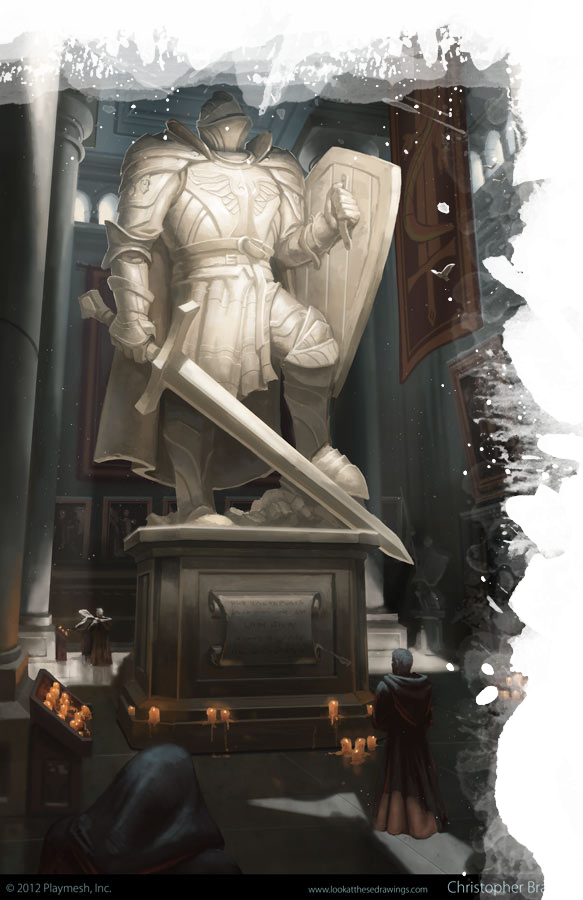
Courtyard, Luxury
This well-appointed courtyard is paved entirely with smoothly cut flagstones. A massive fountain forms the centerpiece, in which water pours endlessly from a masterfully carved statue dedicated to the higher power of the builder’s choice. Statuary is placed tastefully throughout the area, and cushioned benches (usually of iron or fine wood trimmed with gold) are scattered about the place. Purchase this component multiple times if you want a larger courtyard.
Size: 1 bs
Cost: 30,000 gp
Prerequisites: One servant for handling the gardening and other upkeep
Dining Hall, Basic
Long, rough, rectangular tables and benches line this main hall, both at the edges and in the middle. A fireplace sits at one end of the place, providing warmth for all. The walls of such a place are often decorated with hanging weapons, animal heads, and the like. The floor is usually either made of worn wood or rough stone.
Size: 2 bs
Cost: 2,000 gp
Prerequisites: Kitchen
Benefit: This seats 30 people comfortably. Purchase this component multiple times if you want a larger dining hall.
Dining Hall, Fancy
This upscale version of the standard dining hall includes finely made tables surrounded with chairs instead of benches. The fireplace usually dominates the center of the room, the smoke drawn into a stony hood that goes into the ceiling. This provides a more even distribution of heat (and more equitable comfort level) in the room. The mural-covered walls depict local legends or the pantheon of deities respected by the owner. The floor is made of fine flagstones or polished wood.
Size: 2 bs
Cost: 12,000 gp
Prerequisites: Kitchen, one servant to bring food and removes empty dishes
Benefit: This seats 30 people comfortably. Purchase this component multiple times if you want a larger dining hall.
Dining Hall, Luxury
This well-appointed room is dedicated specifically for hosting large meals. In some cases, it features a long, polished wooden or marble-topped table stretching from one end of the place to another. An exquisitely carved chair at the head of the table traditionally faces the main entrance to the room, allowing the head of the household full view of the room.
Alternatively, you can furnish the hall with several smaller tables, either round or square, all of comparable quality to a larger one. The tables are covered with the finest linens, and the guests use the most treasured silverware to eat off the rarest china. Fine artwork lines the walls, and a beautiful chandelier provides plenty of light. Busts of prominent heroes throughout history sit near the serving tables that line the walls. The marble or parquet flooring provides additional beauty.
Size: 2 bs
Cost: 50,000 gp
Prerequisites: Luxury Kitchen, two servants to bring food and remove empty dishes.
Benefit: This seats 16 people at a long table or 30 if smaller tables are used. Purchase this component multiple times if you want a larger hall.
Dock, Air
An air dock allows airships to load or unload people or cargo from or to the building. There are several elevators and cranes to rise or lower the cargo and a stairway connected to the central tower to allow passengers to move to the airship or to the building.
Size: 2 bs
Cost: 20,000 gp
Prerequisites: Six Laborers
Benefit: This component can support up to three airships. Purchase this component multiple times to allow additional airships to moor at the structure's docks. Additionally, you repair 2 hit points of damage on each day and it cost 10 gp for materials and labor.
Dock, Basic
A dock allows ships to load or unload people or cargo from or to the building. It's common for storage spaces, shops, and taverns to be placed near the docks for the convenience of travelers and sailors. This structure is only appropriate for buildings that overlook a river, sea, or other body of water.
Size: 1 bs
Cost: 500 gp
Prerequisites: Two Laborers
Benefit: This component can support up to two keelboats, longships, rowboats, or sailing ships, but not warships or galleys. Purchase this component multiple times to allow additional ships to moor at the structure's docks.
Dock, Extended
Similar to the basic dock, this larger and more complete structure can accommodate up to two of the largest of vessels.
Size: 2 bs
Cost: 3,000 gp
Prerequisites: Four Laborers
Benefit: This component can support up to two galleys and warships, or four smaller craft. Purchase this component multiple times to allow additional ships to moor at the structure's docks.
Dock, Extended Dry
An extended dock fitted with a series of pulleys, lifts, and rigging, this extended dock not only allows for hasty unloading of cargo, but also for the lifting of vessels into the air to effect complete repairs, overhauls, or even construct new hulls.
Size: 2 bs
Cost: 15,000 gp
Prerequisites: Six Laborers
Benefit: This component can support up to two galleys and warships, or four smaller craft. Additionally, you repair 2 hit points of damage on each day and it cost 10 gp for materials and labor. Purchase this component multiple times to allow additional ships to moor at the structure's docks.
Gatehouse
This space usually serves as a primary entrance into the stronghold (or one of many entrances). As its name suggests, the gatehouse includes a gate (and a drawbridge, if stationed adjacent to a moat). Most gatehouses are fortified with a barbican (see above), guard post (see below), or both.
Size: 0,5 bs
Cost: 1,000 gp
Prerequisites: None
Guard Post
Commonly built on top of towers to keep watch upon the surrounding environs and near gatehouses to guard the structure entrance. If part of the exterior wall, it includes free arrow slits instead of a window.
Size: 0,5 bs
Cost: 300 gp
Prerequisites: One guard per shift (minimum; many use two per shift)
Benefit: This component allows guards to keep watch upon the surrounding environs. It may include an alarm bell or horn to inform of an invasion or attack by enemy forces.
Kitchen, Basic
This rudimentary stone- or wood-floored kitchen centers around a fireplace or stove. It includes a pantry, in which basic foodstuffs are stacked on shelves or hung from the ceiling. The kitchen includes pots and pans made of tin. A scullery provides storage for brooms and rags, along with a basin for washing dishes and laundry.
Size: 1 bs
Cost: 2,000 gp
Prerequisites: One cook
Benefit: You can prepare meals for up to fifteen people in this space. In a pinch, you can avoid hiring a cook by preparing the meals yourself.
A cook's utensils is always considered to be present in this room. Additionally, if a character is proficient with this tool, it can double its proficiency bonus when making a check with it.
Kitchen, Fancy
This well-appointed kitchen features an iron stove, complete with cooking griddle on top and oven beneath, and cast-iron cookware. The scullery keeps cleaning solutions in addition to other supplies. The flooring is often of polished wood or rough tile. Good food fills the well-stocked pantry.
Size: 1 bs
Cost: 12,000 gp
Prerequisites: Two cooks
Benefit: Meals for up to 30 can be made in this place, but it requires a staff of at least two to run properly.
A total of two cook's utensils are always considered to be present in this room. A single character using this kitchen and having its resources all to himself can roll with advantage when making a check using the cook's utensils. Alternatively, up to four characters can share this space at the same time, and each one of them can double its proficiency bonus when making a check with a cook's utensils.
Kitchen, Luxury
This massive kitchen includes two full-sized stoves, each with a griddle, stovetop, and large oven. An open fireplace allows the roasting of foods of any kind, up to and including a full pig. The scullery has two marble basins. The flooring is of polished marble or tile. The pots and pans are made of hammered copper.
Size: 2 bs
Cost: 50,000 gp
Prerequisites: Six cooks
Benefit: This place can handle meals for up to 100 people. It requires a staff of six to be run properly. If you need a greater capacity, purchase this kitchen multiple times.
A total of six cook's utensils are always considered to be present in this room. Two characters using this kitchen and having its resources all to themselves can roll with advantage when making a check using the cook's utensils. Alternatively, up to six characters can share this space at the same time, and each one of them can double its proficiency bonus when making a check with a cook's utensils.
Labyrinth
Generally found only in dungeon strongholds, labyrinth components serve to confuse and bewilder foes, and perhaps trap them forever.
Size: 1 bs
Cost: 500 gp
Prerequisites: None
Benefit: You must decide the shape of the labyrinth when you build it. It can include some connecting rooms and you can add traps to this room to make it deadlier (or even some creatures or monsters). For a larger maze, purchase this component multiple times.
Library, Basic
Plain wooden shelves of books fill this room, arranged in any manner you desire. One or two small tables allow people to read the books, and a single lectern allows you to read a book while standing.
Size: 1 bs
Cost: 500 gp
Prerequisites: None
Benefit: This library can hold up to two different lots of books on specific subjects. For example, it could contain books on religion and arcana. If you need a greater capacity, purchase this component multiple times.
Book Lots
The library component isn't very useful unless books line the shelves. In general, a book lot gives information on specific subjects, such as arcana, religion or medicine.
Each book lot cost 1,000 gp and gives advantage on checks related to the lot subject.
Alternatively, a character can purchase a general book lot which costs 3,000 gp and provides a +2 bonus on checks related to investigation and research.
Bonuses from multiple book lots do not stack.
Library, Fancy
Fine polished shelves extend from this chamber’s tile or wooden floor to the ceiling above. Several ladders allow access to upper shelves. Several small tables scattered throughout the place allow researchers space to work.
Size: 1 bs
Cost: 3,000 gp
Prerequisites: None
Benefit: This library can hold up to three different lots of books on specific subjects. For example, it could contain books on religion, general knowledge, and nature.
Additionally, when doing the research downtime activity, the gold spent is reduced to half. If you need a greater capacity, purchase this component multiple times.
Library, Luxury
Floor-to-ceiling glass-fronted cabinets with top-hinged doors keep the books here in pristine condition. The ladders slide along on wheels and rails for both safety and convenience. The marble floor has symbols inlaid that denote the section of the library in which you stand.
The library includes two private study carrels and a number of smaller tables. A single large table allows a researcher more space to spread out texts or large maps. A full-time librarian working near the entrance maintains a card catalog that indexes the entire library.
Size: 2 bs
Cost: 15,000 gp
Prerequisites: One librarian
Benefit: This library can hold up to six different lots of books on specific subjects. For example, it could contain books on religion, general knowledge, nature, arcana, survival, and history.
Additionally, when doing the research downtime activity, the gold and time spent is reduced to half. If you need a greater capacity, purchase this component multiple times.
Magic Laboratory, Basic
This simple wood- or stone-floored laboratory contains a small mystical library, a writing desk, and a lab table for various magical experiments. The crude furnishings are made of rough wood. A basin sits in one corner, next to an open barrel of water. A fireplace squats against another wall, ready to provide heat as well as any fire that may be necessary.
Size: 1 bs
Cost: 500 gp
Prerequisites: None
Benefit: A character using this laboratory can craft a magic item. To complete a magic item, a character needs whatever tool proficiency is appropriate or proficiency in the Arcana skill.
Additionally, if a character is proficient with the Arcana skill, it can double its proficiency bonus when making a check within this room.
Magic Laboratory, Fancy
Similar but superior to the basic magic laboratory, this room has every tool the aspiring meddler in magic might need at his ready disposal. The walls of this place are covered with blackboards upon which all sorts of arcane or obscure notes can be scrawled. The rough tile floor allows easy cleaning while also preventing slips and falls. Four basins are in the place, each of which has a barrel of water suspended over it, complete with a tap to permit easy access. An emergency barrel mounted on a hinged platform can be tilted to pour water over a person in case of an emergency.
Size: 1 bs
Cost: 3,000 gp
Prerequisites: One apprentice
Benefit: A character using this laboratory can craft a magic item, and the time spent on crafting the item is reduced to half. To complete a magic item, a character needs whatever tool proficiency is appropriate or proficiency in the Arcana skill.
Additionally, a single character using this laboratory and having its resources all to himself can roll with advantage when making an Arcana check within this room. Alternatively, up to four characters can share this space at the same time, and each one of them can double its proficiency bonus when making an Arcana check within this room.
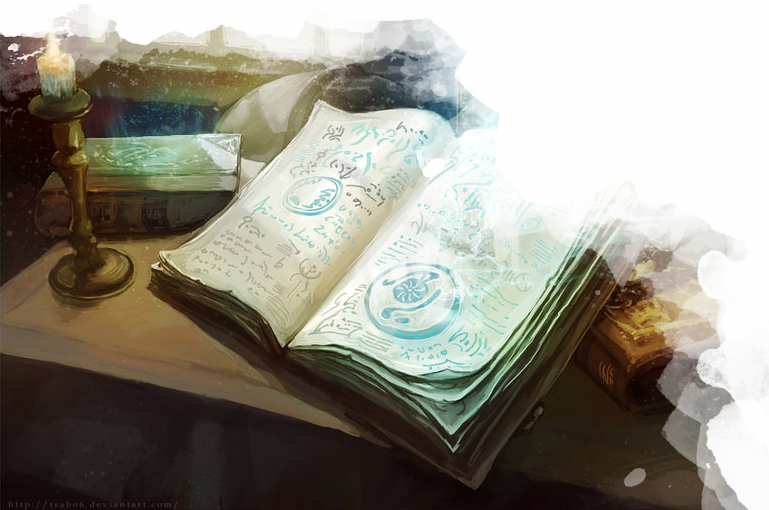
Prison Cell
This cell includes iron shackles on the walls and hay mattresses strewn about. The standard prison cell comes with six sets of manacles capable of binding a Medium-size creature.
Size: 0,5 bs
Cost: 500 gp
Prerequisites: One guard per shift
Benefit: You can shackle up to six Medium-size prisoners in a communal cell. Alternatively, you can replace the communal cell with independent jail cells. In this arrangement, each prison cell component includes two to four small cells each capable of holding one or two Medium-size creatures. If you need a greater capacity, purchase this component multiple times. You can get by with a single guard per two adjoining prison cell components.
A Small creature takes up half the space in a prison cell as a Medium-size creature, Tiny and smaller creatures take up one-fourth the space, a Large creature takes up twice the space of a Medium-size creature, and a Huge creature four times the space. Generally, you can’t keep Gargantuan or larger creatures in a simple prison cell, though by buying enough components you could get a large enough space. They require specially made manacles, which cost 2,000 gp.
Servants' Quarters
These are basic, no-nonsense living quarters. Six slots exist in each such component, separated by thin walls that give the occupants some small semblance of privacy. Each slot has enough room for a bed, a chest of drawers with a small mirror atop it, a small table, and a chair. The furnishing and flooring are all rough but serviceable. Personal decorations hang from the walls. This component includes a privy, though it need not be attached or adjacent to the servants’ quarters.
Size: 1 bs
Cost: 400 gp
Prerequisites: None
Benefit: This area have space for up to six servants in four separated rooms or in one big room. If you need a greater capacity, purchase this component multiple times. For especially important servants such as a butler, it’s appropriate to put them in a basic bedroom or even a basic bedroom suite.
Shop, Basic
This small, cheap storefront comes complete with wooden sign hanging from a pole out front. The main area includes rough shelves and a sales counter, and a back room offers a small amount of storage space. This area allows the structure owners to sell or buy nonmagical items without need to spend time looking for a buyer or seller. This is specially helpful for buying materials or items that are hard to find in the region or when characters goes to an adventure for several days.
Size: 1 bs
Cost: 400 gp
Prerequisites: One clerk
Benefit: The clerk can buy and sell a total of 6 items at the same time, and it takes 1 workweek to sell an item at half of its original price, or buy an item at its full price. Alternatively, the clerk can take 2 workweeks to sell an item at its original price or buy an item at it half of its original price.
Shop, Fancy
This shop has a large picture window in the front to draw the eyes of potential customers. The interior features polished wood floors, handsome shelves, and glass cases. The back room offers a small amount of storage. The shop requires two clean and well-dressed clerks. This room allows the structure owners to sell or buy nonmagical and magical items without need to spend time looking for a buyer or seller. This is specially helpful for buying materials or items that are hard to find in the region or when characters goes to an adventure for a long time.
Size: 1 bs
Cost: 4,000 gp
Prerequisites: Two clerks
Benefit: The clerks can buy and sell a total of 12 items at the same time, and it takes 1 workweek to sell an item at half of its original price, or buy an item at its full price. Alternatively, the clerks can take 2 workweeks to sell an item at its original price or buy an item at it half of its original price.
For buying and selling magic items, follow the downtime rules found in the Xanathar's Guide to Everything for each magic item. The clerks of this room have a +2 bonus to the Charisma (Persuasion) checks it must make to buy or sell an item.
Shop, Luxury
This marble-floored shop speaks of wealth, both from your side of the counter and that of your customers. A large display window shows off special items, and inside, custom-built locked cases display your wares. Customers can sip from fine wines you offer them while shopping, or rest in stuffed leather chairs when they tire. You sell only the finest merchandise here, and your prices are as high as your stellar quality.
The shop requires a staff of four to operate, including two clerks and two full-time guards. The clerks wait on customers hand and foot—customer satisfaction remains their only reason for getting up in the morning.
Size: 1 bs
Cost: 16,000 gp
Prerequisites: Two clerks, two guards per shift
Benefit: The clerks can buy and sell a total of 12 items at the same time, and it takes 1 workweek to sell an item at half of its original price, or buy an item at its full price. Alternatively, the clerks can take 2 workweeks to sell an item at its original price or buy an item at it half of its original price.
For buying and selling magic items, follow the downtime rules found in the Xanathar's Guide to Everything for each magic item. The clerks of this room have a +5 bonus to the Charisma (Persuasion) checks it must make to buy or sell an item.
Though the shop includes some storage, you may choose to abut this space with a larger storage area.
Alternatively, you can combine this component with a storage component to create a bank or moneychangers. Usually, these storage spaces are secured with fortified walls, locks, or traps.
Smithy, Basic
This basic smithy features a forge, an anvil, and a full set of metalworking tools. It has a barrel of water in which hot metal can be cooled. The stone walls and dirt or stone floors guard against accidental fires. This area requires the services of a smith.
Size: 1 bs
Cost: 500 gp
Prerequisites: One smith
Benefit: A smith's tools are always considered to be present in this room. Additionally, if a character is proficient with this tool, it can double its proficiency bonus when making a check with it.
Smithy, Fancy
Similar to the basic smithy, this area features a polished stone floor and marble-encased forge of the highest quality. This area requires the services of a smith.
Size: 1 bs
Cost: 2,000 gp
Prerequisites: One smith
Benefit: A total of four smith's tools are always considered to be present in this room. A single character using this smithy and having its resources all to himself can roll with advantage when making a check using the smith's tools. Alternatively, up to four characters can share this space at the same time, and each one of them can double its proficiency bonus when making a check with an smith's tools.
Stable, Basic
This rough, wooden structure features stalls for up to six Large mounts, a wooden water trough, and hay covering the unfinished floor. Tack and saddles hang over the dividing walls between stalls. Because of the smell, you'll want to place the stable far from the main part of the stronghold. A stable requires the employment of a groom.
Size: 1 bs
Cost: 500 gp
Prerequisites: One groom
Benefit: This area have space for up to six Large common mounts, such as horses, camels, or any other creature with the beast type. If you need a greater capacity, you can purchase this component multiple times
Stable, Fancy
This stable has hay on the floor, but the ground is either wood or stone. The stables are lined with fresh hay, and each horse has access to its own water supply. The troughs are all made of stone, and there’s even a small fireplace in here to keep things warm in the winter. A stable requires the employment of a groom.
Size: 1 bs
Cost: 3,000 gp
Prerequisites: One groom
Benefit: This place can hold up to six Large steeds at a time, each in their own stall. This stable is equipped to house uncommon mounts, such as griffins, pegasus, or any other creature with the monstrosity type. If you need a greater capacity, you can purchase this component multiple times.
Stable, Luxury
This stable has polished floors, intricately carved and inlaid woodwork, and walls of finished wood or the finest plaster. Fresh hay fills the six stalls, which the grooms clean on an hourly basis. Each tack and saddle has its own custom-carved pedestal upon which to rest. The entire place is as clean as most people’s kitchens. Running this stable requires two grooms to keep it pristine.
Size: 1 bs
Cost: 9,000 gp
Prerequisites: Two grooms
Benefit: This place can hold up to six Large steeds at a time, each in their own stall. This stable is equipped to house rare mounts, such as dragons, nightmares, or any other creature that can be mounted. If you need a greater capacity, you can purchase this component multiple times.
Storage, Basic
This empty room has rough walls and an unfinished (possibly dirt) floor, and is used to keep crates, barrels and other items protected against the weather.
Size: 1 bs
Cost: 250 gp
Prerequisites: None
Benefit: A typical storage component offers about 2,000 cubic feet of usable storage space. If you need a greater capacity, you can purchase this component multiple times.
You can turn a storage space into a vault with the addition of safeguards such as watchmen, strong walls, traps, and locks.
Storage, Fancy
This room includes shelves of every variety and a finished floor. The superior organization allows more efficient use of space than a basic storage component.
Size: 1 bs
Cost: 1,000 gp
Prerequisites: None
Benefit: This space has about 3,000 cubic feet of usable storage space. If you need a greater capacity, you can purchase this component multiple times.
You can turn a storage space into a vault with the addition of safeguards such as watchmen, strong walls, traps, and locks.
Storage, Luxury
This marble-floored room includes well-built shelves and fine-quality cabinets. An overstuffed chair in the center allows you to sit in comfort while the clerk or other servants retrieve desired goods. The clerk here serves as a quartermaster and inventory manager.
Size: 1 bs
Cost: 3,000 gp
Prerequisites: One clerk
Benefit: The area has about 4,000 cubic feet of usable storage space. If you need a greater capacity, you can purchase this component multiple times.
You can turn a storage space into a vault with the addition of safeguards such as watchmen, strong walls, traps, and locks.
Study/Office, Basic
This space, also sometimes called a solar, comes complete with a desk, some shelves for books, a chair, and a closet for storage of things that should be close at hand, like paper, ink, and so on. The floor and furnishings are rough, but sturdy.
Size: 0,5 bs
Cost: 200 gp
Prerequisites: None
Benefit: This study have one of the following tools: a calligrapher's supplies, a cartographer's tools, or a forgery kit. The chosen tool is always considered to be present in this room. Additionally, if a character is proficient with this tool, it can double its proficiency bonus when making a check with it.
Study/Office, Fancy
Much like the basic office/study, this room comes with furnishings of a higher quality. The floor is usually polished wood or smooth stone. The polished wood or stone-floored room includes a few upholstered chairs for visitors.
Size: 1 bs
Cost: 2,500 gp
Prerequisites: None
Benefit: This study have two of the following tools: a calligrapher's supplies, a cartographer's tools, or a forgery kit. The chosen tools are always considered to be present in this room. Additionally, if a character is proficient with one of the tools, it can double its proficiency bonus when making a check with it.
A single character using this room and having its resources all to himself can roll with advantage when making a check using one of the artisan tools. Alternatively, up to two characters can share this space at the same time, and each one of them can double its proficiency bonus when making a check with each artisan tool.
Study/Office, Luxury
This room represents the ultimate in office luxury. A well-appointed waiting room features an exquisite couch and a polished wooden desk, behind which sits a full-time clerk versed in making life as easy for the owner as possible.
The main office features another stuffed couch and a set of comfortable chairs arrayed around a marble topped desk. The walls are covered with fine art, including a portrait of the owner of the building and any family he might have.
Size: 1,5 bs
Cost: 15,000 gp
Prerequisites: One clerk
Benefit: This study have a calligrapher's supplies, a cartographer's tools, and a forgery kit. These tools are always considered to be present in this room. Additionally, if a character is proficient with one of the tools, it can double its proficiency bonus when making a check with it.
A single character using this room and having its resources all to himself can roll with advantage when making a check using one of the artisan tools. Alternatively, up to three characters can share this space at the same time, and each one of them can double its proficiency bonus when making a check with each artisan tool.
Tavern, Basic
This a rough place serves rough drinks to rough people. A fireplace sits in one wall, and a bar stands opposite it. Benches and tables fill the remainder of the place. Two servants run the bar and serve meals. The cost of this component does not include any food or drink.
Size: 1 bs
Cost: 900 gp
Prerequisites: Two servants
Benefit: This tavern can seat up to 20 people. Every week, the tavern generates an income of 1d10 gp and 1d4 gallons of ale. If you need a greater capacity, you can purchase this component multiple times. The tavern owners can drink and eat a modest meal for free.
A brewer's supplies is always considered to be present in this room. Additionally, if a character is proficient with this tool, it can double its proficiency bonus when making a check with it.
Tavern, Fancy
This place serves wine as well as liquor and beer from its polished, marble-topped bar. It can call on the building’s kitchen for food; alternatively, you can attach an extra kitchen assigned purely to this component. The tables are round, with solid chairs, and there are a few booths lining the walls. Three servants run the bar and serve meals. The cost of this component does not include any food or drink.
Size: 1 bs
Cost: 4,000 gp
Prerequisites: Three servants
Benefit: This tavern can seat up to 20 people. Every week, the tavern generates an income of 1d10 gp and 2d4 gallons of ale. If you need a greater capacity, you can purchase this component multiple times. The tavern owners can drink and eat a comfortable meal for free.
A total of two brewer's supplies and two gaming sets are always considered to be present in this room. A single character using any of these tools and having its resources all to himself can roll with advantage when making a check using the tools. Alternatively, up to four characters can share this space at the same time, and each one of them can double its proficiency bonus when making a check with any of the tools.
Tavern, Luxury
This breathtaking library of libations features the finest drinks of all sorts, and it even offers gourmet meals by way of the building’s kitchen—or one of its own if you care to attach it. It has a marble-topped bar, upholstered chairs, and tables covered with the finest linens and the best place settings. Gorgeous decorations festoon the walls, including art from the best known painters in the land. Three servants run the bar and serve meals. The cost of this component does not include any food or drink.
Size: 1 bs
Cost: 20,000 gp
Prerequisites: Four servants
Benefit: This tavern can seat up to 20 people, and every week, the tavern generates an income of 1d10 gp, 2d4 gallons of ale and 1 bottle of wine. If you need a greater capacity, you can purchase this component multiple times. The tavern owners can drink and eat a wealthy meal for free.
A total of three brewer's supplies and three gaming sets are always considered to be present in this room. A single character using any of these tools and having its resources all to himself can roll with advantage when making a check using the tools. Alternatively, up to four characters can share this space at the same time, and each one of them can double its proficiency bonus when making a check with any of the tools.
Throne Room, Basic
This plain but respectable chamber serves as the throne room or receiving room for a local lord, merchant prince, baron, or a even monarch on hard times. Colorful tapestries cover the walls, brightening the chamber. The padded throne itself sits on a raised wooden platform. Beside and below the throne, several chairs offer a place for advisers or noble-blooded relatives to sit in places of honor. A long carpet or collection of animal skins shows the path for petitioners seeking to beseech the throne’s good grace.
Size: 1 bs
Cost: 2,000 gp
Prerequisites: Two servants
Benefit: When a character that owns the structure makes a Charisma (Persuasion) check, that character is considered proficient in the Persuasion skill and add double its proficiency bonus to the check, instead of its normal proficiency bonus.
This room holds up to twenty guests in addition to the throne’s occupant. Purchase this space multiple times for a larger area.
Throne Room, Fancy
This ornate hall serves as the seat of authority for a powerful duke, crime lord, or respectable king or queen. Lovely and ornate murals cover the walls and ceiling, embracing artistic styles both modern and classical. Stone steps lead the way the polished throne of stone or iron, and a discreet distance provides the royal seat with greater authority. A long carpet dyed in rich red or purple leads to the throne’s magnificent seat.
Size: 1 bs
Cost: 12,000 gp
Prerequisites: Four servants
Benefit: When a character that owns the structure makes a Charisma (Persuasion) check, that character is considered proficient in the Persuasion skill and gains advantage when making the check.
This room holds up to twenty guests in addition to the throne’s occupant. Purchase this space multiple times for a larger area.
Throne Room, Luxury
Affordable only to the most puissant of emperors, queens, and absolute monarchs, this, the finest of assembly rooms, displays the ruler’s wealth, power, and dispensation for the sweet comforts in life. This chamber spares no expense in impressing the visitor, whether visiting ambassador, merchant with goods for sale, or the simplest commoner. The walls display a splash of colors that depict complementary themes of blue skies, splashing white-tipped and wave-filled oceans, white birds awing, and fish jumping into the air. Sparkling gems and precious metals adorn the enormous throne. Raised up on a dozen pink marble steps, the throne and its occupant gaze out on the chamber like an omnipotent ruler.
Size: 2 bs
Cost: 80,000 gp
Prerequisites: Six servants
Benefit: When a character that owns the structure makes a Charisma (Persuasion) check, that character is considered proficient in the Persuasion skill, it gains advantage when making the check, and it adds double its proficiency bonus to the check, instead of its normal proficiency bonus.
Torture Chamber
All sorts of pain-inducing devices fill this dark chamber, including an iron maiden, a rack, thumbscrews, vises, and so on. Wall-mounted shackles allow the torturer to dangle victims from chains, and a lockable cage in the center can hold a single Medium-size prisoner between sessions. A fireplace allows heating of brands, while a barrel of water stands nearby for extinguishing flames. This place requires at least one torturer and one guard to run properly.
Size: 1 bs
Cost: 3,000 gp
Prerequisites: One torturer, one guard per shift
Benefit: A character that is proficient with the Charisma (Intimidation) skill adds twice its proficiency bonus when making a check with that skill in this room. Unlike most verbal threats and bluffs, use of a torture chamber allows retries on Intimidate checks every hour against restrained and helpless opponents.
Training Area, Combat
This open area allows guards and soldiers to train in the art of war. It has a rack of wooden weapons and padded armor, archery targets, and practice dummies.
Size: 1 bs
Cost: 1,000 gp
Prerequisites: None
Benefit: A character that spend at least one hour training in this area gains advantage on initiative checks it makes until it finishes a short or long rest.
Up to eight people can train in such a place at once. If you need a greater capacity, you can purchase this component multiple times.
Training Area, Language or Tool
This room allows characters and others to learn a particular language or for using a specific tool. It includes various shelves and tables for placing all the tools and implements needed.
Size: 1 bs
Cost: 1,000 gp
Prerequisites: None
Benefit: A character can take the training downtime activity to learn one language or for gaining proficiency with a tool at half the cost needed per workweek. For training in a tool, the character must have the specific tool and use it every day of training.
Trophy Hall, Basic
This glorified storage space allows you to display trophies won in your expeditions and adventures. Most trophies hang from the walls, while others line tables scattered throughout the room.
Size: 1 bs
Cost: 1,000 gp
Prerequisites: None
Benefit: This room have 10 slots for displaying trophies. Each Medium or smaller trophy uses 1 slot and each Large trophy uses 4 slots.
If you need a greater capacity, you can purchase this component multiple times.
Trophy Hall, Fancy (Museum)
More like a museum than a storage area, this polished wood- or stone-floored chamber holds its trophies in glass cases. Engravings detail each piece and its history. A guard stands watch over the valuables here at all times.
Size: 1 bs
Cost: 6,000 gp
Prerequisites: One guard per shift
Benefit: This room have 20 slots for displaying trophies. Each Medium or smaller trophy uses 1 slot, each Large trophy uses 4 slots and each Huge trophy uses 9 slots.
If you need a greater capacity, you can purchase this component multiple times.
Workplace, Basic
Each workplace contains tools and equipment dedicated to a singular purpose, usually the application of a specific tool or profession.
Size: 1 bs
Cost: 500 gp
Prerequisites: None
Benefit: This room have one of the following tools: a carpenter's tools, a cobbler's tools, a disguise kit, a glassblower's tools, a jeweler's tools, a leatherworker's tools, a mason's tools, a painter's supplies, a poisoner's kit, a potter's tools, a tinker's tools, a weaver's tools, or a woodcarver's tools. The chosen tool is always considered to be present in this room. Additionally, if a character is proficient with this tool, it can double its proficiency bonus when making a check with it.
Workplace, Fancy
This area resembles the basic workplace, but it has finer tools and equipment.
Size: 1 bs
Cost: 2,000 gp
Prerequisites: None
Benefit: This room have two of the following tools: a carpenter's tools, a cobbler's tools, a disguise kit, a glassblower's tools, a jeweler's tools, a leatherworker's tools, a mason's tools, a painter's supplies, a poisoner's kit, a potter's tools, a tinker's tools, a weaver's tools, or a woodcarver's tools. Both tools must be the same, and the chosen tools are always considered to be present in this room. Additionally, if a character is proficient with this tool, it can double its proficiency bonus when making a check with it.
A single character using this room and having its resources all to himself can roll with advantage when making a check using one of the artisan tools. Alternatively, up to two characters can share this space at the same time, and each one of them can double its proficiency bonus when making a check with each artisan tool.
Hirelings
Several components requires one or more hirelings to maintain the room up and running, and each of these hirelings must be paid to retain their service.
| Hireling | Pay per Day | Stats |
|---|---|---|
| Acolyte | 2 gp | Acolyte (MM P.342) |
| Alchemist | 2 gp | Alchemist (CaW P.86) |
| Apprentice | 2 gp | Apprentice Wizard (VGtM P.209) |
| Bartender | 2 gp | Commoner (MM P.345) |
| Cook | 2 gp | Commoner (MM P.345) |
| Clerk | 2 gp | Commoner (MM P.345) |
| Groom | 2 sp | Commoner (MM P.345) |
| Guard | 2 gp | Guard (MM P.347) |
| Laborer | 2 sp | Commoner (MM P.345) |
| Librarian | 2 gp | Commoner (MM P.345) |
| Servant | 2 sp | Commoner (MM P.345) |
| Smith | 2 gp | Commoner (MM P.345) |
| Torturer | 2 sp | Guard (MM P.347) |
| Valet | 2 sp | Commoner (MM P.345) |
Walls
Sometimes, builders construct walls after the structure is already in place, whether to guard against unwanted visitors or simply to add privacy. The wall sections are assumed to be 10 feet tall and 20 feet wide each. For towers, you can place a guard post above the walls and add a siege equipment, such as a ballista or a trebuchet.
The cost for walls will depend on the material you use, and each material have its own statistics regarding hit points, AC and damage threshold, as shown in the table below. When a wall section reaches 0 hit points, it is destroyed. You can read more about siege equipment, materials and damage threshold in the Chapter 8 of the Dungeon Master's Guide.
| Material | AC | Hit Points | Damage Threshold | Cost per Section |
|---|---|---|---|---|
| Adamantine | 23 | 50 | 20 | 10,000 gp |
| Iron | 19 | 30 | 10 | 4,000 gp |
| Mithral | 21 | 40 | 15 | 6,000 gp |
| Stone | 17 | 20 | 8 | 2,500 gp |
| Wood, bone | 15 | 15 | 5 | 1,000 gp |
To calculate the amount of gold pieces it will cost to enclosure the whole structure, multiply the structure size in building spaces by the material cost per section, considering only the building spaces that are in the same level as the wall.
For example, a group wants to build a wall around their mansion. The structure have 8 building spaces in the first floor and 4 building spaces in the second floor. In this case, the characters decide to build a stone wall, so they need to spend a total of 20,000 gold pieces to enclosure the mansion (8 x 2,500 gp).
Siege Equipment Cost
There is a list of siege weapons and its statistics in the page 255 of the Dungeon Master's Guide. Here are the estimated prices and building time for each siege weapon for building and adding them to the walls and towers of your structure.
| Item | Cost | Building Time |
|---|---|---|
| Ballista | 1,000 gp | 2 workweeks |
| Ballista bolt | 10 gp | 1 day |
| Cannon | 2,000 gp | 3 workweeks |
| Cannon ball | 20 gp | 1 day |
| Cauldron, suspended | 1,000 gp | 2 workweeks |
| Cauldron oil | 10 gp | 1 day |
| Mangonel | 1,500 gp | 2 workweeks |
| Mangonel stone | 15 gp | 1 day |
| Ram | 1,000 gp | 2 workweeks |
| Siege Tower | 3,000 gp | 4 workweeks |
| Trebuchet | 3,000 gp | 4 workweeks |
| Trebuchet stone | 30 gp | 1 day |

PART 3
The World

Chapter 11: Gods
THE GODS OF THE KNOWN WORLD ARE
known collectively as The Five. They're recognized as the equal lords of the pantheon, and the masters of all life in the known world. While individuals may devote their prayers to one of The Five, almost all of Haldun's people recognize the importance of the other gods and their associated role.
During the exodus: In the year of 7 BF, (Before Foundation, by Haldar reckoning) the War of Four Nations started to go badly for Haldun, resulting in their "defeat" and eventual exodus from Old Haldun on the continent of Deagerad to Berkatan, where modern day Haldun is built.
It was in this time that the various priests of The Five stopped hearing the Gods; prayers would have unpredictable results, or sometimes not work at all. The great clerics and paladins that served under the King during the war were beginning to wane. The people of Haldun were angered at this, believing the gods to have abandoned them in their time of need. Infighting between the various churches and sects caused a great divide between the churches. Many a priest suffered at the hands of angry mobs venting their frustrations on the Gods' mortal servants.
The Gods Today
In the fifty or so years that have passed since foundation, Haldun's people have made a life for themselves without the Gods. Many are of the opinion that they do not need The Five. Some however, cling to the old ways, firm in their belief that The Five have not truly abandoned them, and that man is not meant to understand their ways, or the realm where the gods reside.
Lately rumours have surfaced of some priests managing to find power from the heavens once more, though public opinion still claims this is untrue, and that the gods are distant, uncaring and unnecessary. Soros scoffs at the idea that the great "paladins" of old (really just misguided and delusioned Sorcerers by their reckoning) are returning. But despite everything, hope is beginning to sprout once again.
Haldun lacks churches of any size, though small shrines exist. The only temple is a singular wing of Castle Hart, where the Order of the Reconciled seeks to restore the beacon of light and hope that the church once did on Deagerad.



Damihra
Damihra, The Mother, is a kind and patient goddess striving for growth and happiness among her people. She is worshipped by many as the giver of life and the mother of creation itself. Damihra is a goddess of compassion and healing, but not of weakness or pity. Her followers are expected to live, to truly be alive and know themselves as well as others and appreciate the gift they have been given.
Clergy of Damihra
The clergy of Damihra seek to keep life sacred, and fresh. They serve as protectors of the weak, but only so far as that they will then expect the weak to grow, encouraging people to enjoy their vitality. The Church reveres the natural order of things and the life cycle. They are opposed to needless suffering or harm to any living creature, and will defend their cause with a righteous fury.
Damihra
Alignment: Good
Gender: Female
Domains: Earth, Good, Healing, Plant, Water
Other Names: The Mother, Bringer of Harvests
Typical Followers: Midwives, healers, farmers
The Tenets of Damihra
Life is a gift; it is to be celebrated, honored, and enjoyed.
Life is a journey; be prepared for the trials in our path.
Nurture the needs of the people of the needs of a few.
Do not let fear stay your hand when your heart says strike.
Sew your seeds, grow life where all is barren.
Damihra
Anavah
Anavah
Anavah is the goddess of structure and trade rewarding her followers and faithful with knowledge and understanding. The light of Anavah always seeks the truth, and chases away fear and doubt. Anavah's followers are taught to value knowledge and diplomacy, and trust that the goddess will grant them order.
Anavah is to some of her followers known as a goddess of passion. Not passion to other people but passion to studies of knowledge, trade and arts.
Clergy of Anavah
Anavah's clergy serve the people of Haldun as wise and well-educated priests. All of Anavah's clergy are able to read and write, as they consider it their sacred duty to record and study history. Followers clashs most often with followers of Joreal, who they often view as misguided and without purpose.


Joreal
Among the Five, Joreal serves as the questioner and the bringer of fresh wisdom. He is the god of asking 'why' and seeking out truth beyond the obvious. Joreal expects no fixed behavior from his followers, hence they are a loose and varied lot. A deity of chaos, finding strict scripture and tradition within the circles of followers Joreal has is impossible.
Clergy of Joreal
There is no formal Church of the Harlequin, and most people are just happy with that --- instead, typical followers worship in their own private ways, and attribute their gains and losses to the Jester's will.
Joreal
Alignment: Neutral
Gender: Male
Domains: Trickery, Travel, Knowledge, Chaos, Luck
Other names: The Harlequin, King of Masks, The Jester, The Nomad
Typical Followers: Bards, thieves, wanderers, vagrants, and liars
The Tenets of Joreal
A truth is no less true for being harsh; speak it all the same.
Pride is a barrier against progress; do not let it hinder you.
Wisdom comes in many forms; let your eyes be open to the unfamiliar.
Tradition has its place, but do not let it cloud your judgment.
The realm is vast; do not become tangled within one part of it.
Amaros
Amaros, as the Lord of War, is perceived as all that is included in battle and strife. The blood spilt in war moistens the dry earth in Amaros' name, whether one wants it or not. Amaros is the God of the strength in battle. The desire to be mighty is not enough; one must be strong.
Clergy of Amaros
The clergy of Amaros seek to promote that which is strong and honourable. Life is war, and as thus every aspect of life must be approached as would one approach war. One must not be merciful for the sake of mercy, but only for the sake of honor. One does not strike against the weak for there is no glory in defeating the weak. One does not strike at the unarmed, for there is no honor in defeating the unarmed.
It is a saying of the worshipers of Amaros that "when in peace, one must prepare for war, and when in war one must prepare for peace".
Amaros
Alignment: Neutral
Gender: Male
Domains: Evil, Protection, Strength, Fury, War
Other names: The Lord of War
Typical Followers: Soldiers and warriors
The Tenets of Amaros
Respect your enemy, be they worthy or not; respect him enough to be relentless, and enough to cease if he is unarmed.
Strengthen yourself, so that you might become worthy of His attention.
Conquer yourself first, so that every act might be deliberate and firm.
Let your sword be your honor, so that every stroke will make Him greater.
Stand against those waging needless war by showing them the meaning of honorable combat.


Joreal & Amaros
.
Eradus
Eradus is the great unmaker, the Lord of Iyegos who collects the souls of the dead, returning us to The Five and eternal peace within Nisourel. The Lord of Sleep protects us, his Children from the horrors of undeath by hearing our prayers and burial rites which honour him.
As Eradus is the embodiment of entropy and the death of things, he seeks to be the antithesis of Damihra's creation - ending everything exactly and completely.
Clergy of Eradus
The Church of Eradus carry out the Sleeping Lord's will throughout the land. They serve as the performers of burial rites, sending the souls of the departed on their way to be reunited with The Five.
The Church considers destroying undead to be their divine duty, and will not tolerate necromancy of any kind.
Eradus
Alignment: Evil
Gender: Male
Domains: Earth, Evil, Death, Destruction, Cold, Darkness
Other names: The Lord of Sleep, The Unmaker
Typical Followers: Any
The Tenets of Eradus
The Sleeping Lord is patient, as are we.
The Sleeping Lord is unforgiving, as are we.
The Sleeping Lord is dutiful, as are we.
The Sleeping Lord is quiet, as are we.
The Sleeping Lord is eternal, as are we.



Eradus
Chapter 12: Aether
AETHER IS AN ENERGY SOURCE BOTH
generated by and permeating the planet. It exists everywhere in varying degrees and strengths, and it governs much of how the conscious races of the planet interact with each other. Although Aether's presence in the world was so minute and inconsequential (comparable to a completely mundane existence such as our Earth's) as to not even be recorded for millenia, that all changed when the Kalinor elves discovered aether radiating from a volcano on the young continent of Berkatan, thousands of years before the present date.
Ancient Magic
As their understanding of this mysterious force grew, their civilization rapidly advanced, both in technological and magical wonderment. Highly protective of their ways against outsiders, they sealed themselves from the world at large and began to transform, the aether they Worked changing their very physiology, and elongating their lives. That all changed when they caused a cataclysmic event that would see a massive wave of aether spill from the deep places of the world, and change how the planet interacted with the conscious races for all time.
The exact details of what caused this event are unknown, as the Kalinor conducted a Great Sacrifice of all their culture, technology and history in a final bid to stymie the power they had unleashed upon the world. It worked, and the planet began to settle, but was forever changed. Now, thousands of years later, the conscious races of the world struggle with this new force, and the study of magical Workings begins to spring up, particularly in the younger nation of Soros.
There are four major varieties of aether with their own characteristics and variability of accessibility: Earth, Dark, Solar, and Tidal.
Prey of Conscious Thought
Like most natural forces, aether follows particular behaviors that can be measured (earth aether following the contours of the planet's surface, or solar aether radiating out from the sun).
Aether responds to both conscious and unconscious thought, those of all living beings in the world in a way that's both harmonious and somewhat predictable. The strength of that response is directly proportional not only to the strength of aether in the area, but the strength of the thought itself (or thoughts if a common idea is envisioned by multiple people). This can work both ways --- a conscious fear of wolves finding you in the woods might summon some to do exactly that, where a commonly held belief might be so powerful to change entire civilizations or the face of the world itself, as what happened in the Great Sacrifice of the Kalinor.
This property of equal opposition led to the Sorosians referring to Aether as the Mirror.
Working
Aether can be bound to physical objects to perform specific functions, resulting in magically charged items. Such items are known as "Worked" objects. There are only a few people in the world that can sense and see aether unaided - sorcerers, or "Adepts" as they're often called, can do it naturally, drawing upon its power for their Works of magic. Sorosians, through long years of detection studies, can all do so with varying degrees of success as well.
Others, through practice and incredible mental acuity, are able to use aether's malleable and mystical properties to produce stunning effects, such as missiles of force or fireballs. These spells are often referred to as Works.

Aether Types
Aether interacts in four major categorizations, popularized in magical textbooks on the nature of its existence.
Earth Aether
A type of aether that appears to be produced through the inter-activity of the planet's crust (earthquakes, volcanoes). It is the most common aether used in magical Workings, and flows downward, following contour lines from regions of tectonic or volcanic activity that begin to resemble ley lines. The strength of earth eather weakens the further from the surface of the world you get, either above or below.
Dark Aether
The most fragile of the four major aether types (moonlight weakens it), and also with the strongest power potential, dark aether forms in the absence of light. In the night, or the deep places of the world, it can be found in alarming abundance. It's the most sensitive of all aether to conscious thought, and by far the most responsive. It's unclear how it's actually generated, but appears to occur naturally. Light will negate dark aether. Aetherspawn (barely-intelligent lesser "demons" who's physical manifestation in the world is semi-permanent) are formed from negative emotions by dark aether, but cannot maintain any real form for very long outside of it. No man or woman is able to directly Work dark aether, and the only human to ever do so was Lazarus von Garroway. Monstrous creatures can tap the dark aether from which they are spawned for power, but only under certain conditions.
Day and Night
The night-day schedule of the planet is much different and less regular than Earth's, given the strange schedules of the heavenly bodies. Daylight is provided by the star of the planet's system, a much dimmer entity than Earth's sun, as well as the slightly less luminous Core, a cluster of stars in the middle of the galaxy that are visible to all. The night is dominated by three moons, of differing sizes; the erratic lunar schedule created makes mapping the tides of the world almost impossible. The planet's peculiar placement in the galaxy also provides for an infrequent and mysterious phenomena: every few months, the sun and the Core, as well as the three moons and every visible star manage to set and disappear, enveloping the world in total blackness. This creates a particular mysterious and powerful phenomenon where dark aether runs unchecked, known as True Night.
Solar Aether
Appearing to be generated from the interaction of the sun's energy upon the planet's atmosphere, solar aether is the polar opposite of its dark cousin. It is by far the most tame of the four, but ephemeral in that it is inaccessible for the purposes of Working. Like other types of aether, it can be bound to physical objects, though this rarely if ever has actually happened, as there are no known ways to reliably use it for spellcasting except by fervent prayer and belief --- something the learned and skeptical Sorosians have been scratching their heads about for centuries. Solar aether is particularly devastating to dark aether, being it's direct opposite. The gods themselves seem to be in control of this domain, as the only known users of solar aether is the church, the Order of Reconciled.
Tidal Aether
Tidal aether is often a footnote in arcane ledgers concerning the forces of the world, given its fickle nature. It appears to be generated through the gravitational forces generated between the planet, her moons, the sun, and to a much lesser extent, other planets out in the solar system. Traditional arcane Workings of tidal aether is impossible, but a deep connection and understanding of the natural world can produce tangible effects. Tribal societies have been able to eke out some level of connection with tidal aether, although more recently powerful shamans, druids and rangers have learned to harness and access its power in more recognizable fashion.

PART 4
Spells

Clockwork Spell List
Bard
1st Level
- Analyze Device
- Armored Heart
- Find the Flaw
- Machine Speech
- Pendulum
- Tireless
2nd Level
- Heartstop
- Winding Key
3rd Level
- Overclock
- Soul of the Machine
4th Level
- Read Memory
- Write Memory
7th Level
- Timeless Engine
8th Level
- Time Jump
9th Level
- Time in a Bottle
Cleric
Cantrips
- Fist of Iron
1st Level
- Machine's Load
- Machine Speech
- Pendulum
2nd Level
- Heartstop
- Repair Metal
- Winding Key
3rd Level
- Overclock
- Soul of the Machine
4th Level
- Read Memory
- Write Memory
5th Level
- Chains of the God(dess)
- Imbue Spell
- Mass Repair Metal
6th Level
- Sphere of Order
7th Level
- Hellforging
- Molech's Blessing
- Timeless Engine
8th Level
- Call the Hunter
- Move the Cosmic Wheel
- Power Word Restore
9th Level
- Time in a Bottle
Paladin
1st Level
- Machine's Load
- Pendulum
2nd Level
- Repair Metal
- Winding Key
3rd Level
- Soul of the Machine
Sorcerer
Cantrips
- Fist of Iron
- Tick Stop
1st Level
- Armored Shell
- Find the Flaw
- Gear Shield
- Machine's Load
- Machine Speed
- Pendulum
- Tireless
2nd Level
- Armored Heart
- Heartstop
- Lock Armor
- Spin
3rd Level
- Gear Barrage
- Thousand Darts
4th Level
- Gremlins
- Grinding Gears
- Steam Blast
5th Level
- Mechanical Union
6th Level
- Trebuchet
- Robe of Shards
7th Level
- Timeless Engine
8th Level
- Machine Sacrifice
- Power Word Restore
- Steam Whistle
- Time Jump
9th Level
- Time in a Bottle
Warlock
Cantrips
- Fist of Iron
1st Level
- Armored Shell
- Find the Flaw
- Gear Shield
- Machine's Load
2nd Level
- Armored Heart
- Gear Barrage
- Heartstop
- Lock Armor
- Spin
3rd Level
- Thousand Darts
4th Level
- Gremlins
- Grinding Gears
- Steam Blast
6th Level
- Trebuchet
- Robe of Shards
8th Level
- Steam Whistle
Wizard
Cantrips
- Fist of Iron
- Tick Stop
1st Level
- Analyze Device
- Animate Construct
- Armored Shell
- Find the Flaw
- Gear Shield
- Machine’s Load
- Machine Speech
- Pendulum
- Tireless
2nd Level
- Armored Heart
- Gear Barrage
- Heartstop
- Lock Armor
- Repair Metal
- Spin
- Winding Key
3rd Level
- Overclock
- Thousand Darts
4th Level
- Absolute Command
- Gremlins
- Grinding Gears
- Read Memory
- Steam Blast
- Write Memory
5th Level
- Imbue Spell
- Mass Repair Metal
- Mechanical Union
6th Level
- Robe of Shards
- Trebuchet
7th Level
- Hellforging
- Timeless Engine
8th Level
- Machine Sacrifice
- Move the Cosmic Wheel
- Power Word Restore
- Steam Whistle
- Time Jump
9th Level
- Time in a Bottle
New and Updated Spells
ABSOLUTE COMMAND
4th-level clockwork (transmutation)
- Casting Time: 1 action
- Range: Touch
- Components: V, S, M (a pair of small gloves fitted with a conduit and worth 100 gp)
- Duration: Concentration, up to 10 minutes
You can control a construct you have built with a challenge rating of 6 or less. You can manipulate objects with your construct as precisely as its construction allows, and you perceive its surroundings through its sensory inputs as if you inhabited its body.
The construct uses the caster’s Proficiency bonus (modified by the construct’s Strength and Dexterity scores). You can use the manipulators of the construct to perform any number of skill-based tasks, using the construct’s Strength and Dexterity modifiers when using skills based on those particular abilities.
Your body remains immobile, as if paralyzed, for the duration of the spell. The construct must remain within 100 feet of you. If it moves beyond this distance, the spell immediately ends and the caster’s mind returns to his or her body.
At Higher Levels: When you cast this spell using higher-level spell slots, you may control a construct with a challenge rating 2 higher for each slot level you use above 4th. The construct’s range also increases by 10 feet for each slot level.
ANALYZE DEVICE
1st-level clockwork (divination)
- Casting Time: 1 hour
- Range: Touch
- Components: V, S, F (a complete set of clockworker’s tools)
- Duration: Instantaneous
You discover all mechanical properties, mechanisms, and functions of a single construct or clockwork device, including how to activate or deactivate those functions, if appropriate.
ANIMATE CONSTRUCT
1st-level clockwork (transmutation)
- Casting Time: 1 action
- Range: 30 feet
- Components: V, S, M (a construct body of appropriate size)
- Duration: Concentration, up to 10 minutes
This spell animates a carefully prepared construct of Tiny size. The object acts immediately, on your turn, and can attack your opponents to the best of its ability. You can direct it not to attack, to attack particular enemies, or to perform other actions. You choose the object to animate, and you can change that choice each time you cast the spell. The cost of the body to be animated is 10 gp x its hit points. The body can be reused any number of times, provided it isn’t severely damaged or destroyed.
If no prepared construct body is available, you can animate a mass of loose metal or stone instead. Before casting, the loose objects must be arranged in a suitable shape (taking up to a minute), and the construct’s hit points are halved.
An animated construct has a Constitution of 10, Intelligence and Wisdom 3, and Charisma 1. Other characteristics are determined by the construct’s size as follows.
At Higher Levels: Casting this spell using higher level spell slots allows you to increase the size of the construct animated, as shown on the table.
Animated Construct Statistics
| Size | HP | AC | (Attack, Damage) | STR | DEX | Spell Slot |
|---|---|---|---|---|---|---|
| Tiny | 15 | 12 | (+3, 1d4+4) | 4 | 16 | 1st |
| Small | 25 | 13 | (+4, 1d8+2) | 6 | 14 | 2nd |
| Medium | 40 | 14 | (+5, 2d6+1) | 10 | 12 | 3rd |
| Large | 50 | 15 | (+6, 2d10+2) | 14 | 10 | 4th |
| Huge | 80 | 16 | (+8, 2d12+4) | 18 | 8 | 5th |
| Gargantuan | 100 | 17 | (+10, 4d8+6) | 20 | 6 | 6th |
ARMORED HEART
1st-level clockwork (conjuration)
- Casting Time: Bonus action
- Range: Touch
- Components: V,S,M (5 gp worth of mithral dust sprinkled on the target’s skin)
- Duration: 1 round
The targeted creature gains resistance to bludgeoning, slashing, and piercing damage. This resistance can be overcome with adamantine or magical weapons.
ARMORED SHELL
1st-level clockwork (conjuration)
- Casting Time: Action
- Range: Self
- Components: V,S,M (a rivet)
- Duration: Concentration, up to 1 hour.
This spell creates a suit of magical studded leather armor (AC 12). It does not grant you proficiency in its use. Casters without the appropriate armor proficiency suffer disadvantage on any ability check, saving throw, or attack roll that involves Strength or Dexterity and cannot cast spells.
At Higher Levels: Casting armored shell using a higher-level spell slot creates stronger armor: a chain shirt (AC 13) at level 2, scale mail (AC 14) at level 3, chain mail (AC 16) at level 4, and plate armor (AC 18) at level 5.
CALL THE HUNTER
8th-level clockwork (conjuration)
- Casting Time: 1 minute
- Range: 90 feet
- Components: V, S
- Duration: Concentration, up to 10 minutes
You detach a portion of your soul to become the embodiment of justice in the form of a clockwork outsider known as a Zelekhut who will serve at your commands for the duration, so long as those commands are consistent with its desire to punish wrongdoers. You may give the creature commands as a bonus action; it acts either immediately before or after you.
Summoned Zelekhut
Medium construct, lawful good
- Armor Class 19 (natural armor)
- Hit Points 82 (11d8 + 33)
- Speed fly 40 ft.
STR DEX CON INT WIS CHA 21 (+5) 11 (+0) 16 (+3) 10 (+0) 17 (+3) 15 (+2)
- Damage Immunities poison; bludgeoning, piercing, and slashing from nonmagical weapons
- Condition Immunities charmed, exhausted, frightened, paralyzed, petrified, poisoned
- Senses passive Perception 13
- Languages Celestial, Common
- Challenge 7 (2,900 XP)
Magic Resistance. The zelekhut has advantage on saving throws against spells and other magical effects.
Actions
Multiattack. The zelekhut makes two spiked chain attacks.
Spiked Chain. Melee Weapon Attack:+8 to hit, reach 10 ft., one target. Hit: 14 (2d8 + 5) slashing damage plus 7 (2d6) lightning damage.
TREBUCHET
6th-level clockwork (transmutation)
- Casting Time: 1 action
- Range: 400 feet
- Components: V, S, M (a small platinum lever and fulcrum worth 400 gp)
- Duration: Instantaneous
You magically hurl an object or creature weighing 500 lb. or less 60 feet through the air in a direction of your choosing (including straight up). An unwilling creature targeted by this spell makes a Strength saving throw. Objects hurled at specific targets instead require a spell attack roll to hit, dealing 6d10 damage on a hit. A thrown creature takes 6d10 bludgeoning damage (half on a success) from the force of being ripped from the earth and thrown, plus any appropriate falling damage, and lands prone. If the target succeeds the Strength saving throw, it's not moved. If the target of the spell is thrown against another creature, the total damage is divided evenly between them and both creatures are knocked prone.
At Higher Levels: When you cast this spell using a higher level spell slot, each additional level increases the damage by 1d10, the distance thrown by 10 feet, and the weight thrown by 100 lb.
CHAINS OF THE GODDESS
5th-level clockwork (enchantment)
- Casting Time: 1 action
- Range: 90 feet
- Components: V, S, M (1 foot of iron chain)
- Duration: Concentration, up to 1 minute.
Choose a creature you can see within 90 feet. The target must make a successful Wisdom saving throw or be restrained by chains of psychic force and take 6d8 bludgeoning damage. A restrained creature repeats the saving throw at the end of its turns, ending the effect on itself with a successful save. While restrained this way, the creature also takes 6d8 bludgeoning damage at the start of each of your turns.
CONTAGION
Rust is added to the lsit of possible contagions for this spell.
FIND THE FLAW
1st-level clockwork (divination)
- Casting Time: 1 action
- Range: Touch
- Components: V, S, M (a broken gear)
- Duration: Instantaneous
You touch one creature. The next attack roll that creature makes against a clockwork or metal construct, or any machine, including gearforged, is a critical hit.

FIST OF IRON
Clockwork (transmutation) cantrip
- Casting Time: 1 bonus action
- Range: Self
- Components: V, S
- Duration: Concentration, up to 1 minute.
You transform your naked hand to iron. Your unarmed attacks do 1d6 points of bludgeoning damage and are considered magical.
GEAR BARRAGE
3rd-level clockwork (conjuration)
- Casting Time: 1 action
- Range: Self (60-foot cone)
- Components: V, S, M (a handful of gears and sprockets worth 5gp)
- Duration: Instantaneous
You create a burst of magically-propelled gears. Each creature within a 60-foot cone takes 3d8 slashing damage, or half damage with a successful Dexterity saving throw. Constructs have disadvantage on the saving throw.
GEAR SHIELD
1st-level clockwork (abjuration)
- Casting Time: 1 action
- Range: 60 feet
- Components: V, S, M (a handful of gears and sprockets worth 5gp)
- Duration: 10 minutes
You cause a handful of gears to orbit the target’s body. The target's AC becomes 15 + its Dexterity modifier, without hindering the subject’s movement, vision, or outgoing attacks. If the target's AC was already higher, the spell has no effect.
GREMLINS
4th-level clockwork (conjuration)
- Casting Time: 1 action
- Range: 60 feet
- Components: V, S, M (a single gear)
- Duration: Concentration, up to 1 minute
You target a construct and summon a plague of invisible spirits to harass it. The target resists the spell and negates its effect with a successful Wisdom saving throw. While the spell remains in effect, the construct has disadvantage on attack rolls, ability checks, and saving throws, and it takes 3d8 force damage at the start of each of its turns as it is magically disassembled by the spirits.
At Higher Levels: When you cast this spell using a spell slot of 5th or higher, the damage increases by 1d8 for each slot above 4th.
GRINDING GEARS
4th-level clockwork (evocation)
- Casting Time: 1 action
- Range: 120 feet
- Components: V, S, M (a single gear)
- Duration: Concentration, up to 1 minute
You designate a spot within range, and massive gears emerge from the ground at that spot, creating difficult terrain in a 20-foot radius. Creatures that move in the area must make successful Dexterity saving throws after every 10 feet of movement or when they stand up. Failure indicates that the creature falls prone and takes 1d8 points of bludgeoning damage.
Rust (Disease)
Rust is a disease that affects metal constructs and flesh-and-blood creatures alike. The clockwork sects of Damihra believe that rust is divine punishment on those who take the goddess’s gifts without worshiping her in return. Others say its origins are diabolic. The devout of Eramus believe that Rust is the beginning of the end of all life - and that one day the machines of the Kalinor will be the harbingers of the next age.
When a creature takes damage from an infected construct, the damaged creature must succeed on a DC 13 Constitution saving throw or become infected. Symptoms appear in 1d4 days, beginning with an itchy rash around the site of the injury. Twenty-four hours later, the rash-covered skin peels off, revealing rusted metal. All effects that restore hit points are halved for the infected creature, including long rests; it recovers only half of its missing hit points from a long rest, but it still regains expended hit dice at the usual rate. At that point, the infected creature must make a DC 10 Constitution saving throw. If it succeeds, the disease stops spreading but the healing penalty remains in effect. If the saving throw fails, the patch of rust spreads, the healing penalty remains, the creature loses 1 point of Dexterity, and it must repeat the saving throw after another 24 hours. The disease can be cured by lesser restoration or comparable magic. Lost Dexterity can be restored by greater restoration, or it returns naturally at the rate of 1 point after each long rest, once the disease is cured.
A construct that is damaged by an infected construct or that is successfully targeted by a spell cast by an infected arcanist must succeed on a DC 15 saving throw or become infected. Signs of infection appear immediately, with rust spreading across the creature’s body. An infected construct has disadvantage on all saving throws, but it takes no other damage or penalty. It is simply a carrier until the disease is ended with greater restoration or comparable magic.
HEARTSTOP
2nd-level clockwork (necromancy)
- Casting Time: 1 action
- Range: Touch
- Components: V, S
- Duration: Concentration, up to 10 minutes.
You slow the beating of a willing target’s heart to the rate of one beat per minute. The creature’s breathing almost stops. To a casual or brief observer, the subject appears dead. At the end of the spell, the creature returns to normal with no ill effects.
HELLFORGING
7th-level clockwork (necromancy, ritual)
- Casting Time: 1 hour (see below)
- Range: Touch
- Components: V, S, M (a complete mechanical body worth 10,000 gp inscribed with demonic runes and containing a ready soul gem)
- Duration: Instantaneous
You spend an hour calling forth a disembodied evil spirit. At the end of that time, the summoned spirit must make a Charisma saving throw. If the saving throw succeeds, you take 2d10 psychic damage plus 2d10 necrotic damage from waves of uncontrolled energy rippling out from the disembodied spirit. You can maintain the spell, forcing the subject to repeat the saving throw at the end of each of your turns, with the same consequence to you for each failure. If you choose not to maintain the spell or are unable to do so, the evil spirit returns to its place of torment and cannot be recalled.
If the saving throw fails, the summoned spirit is transferred into the waiting soul gem and immediately animates the constructed body. The subject is now a hellforged; it loses all of its previous racial traits and gains gearforged traits except as follows:
Vulnerability: Hellforged are vulnerable to radiant damage.
Evil Mind: Hellforged have disadvantage on saving throws against spells and abilities of evil fiends or aberrations that effect the mind or behavior.
Past Life: The hellforged retains only a vague sense of who it was in its former existence, but these memories are enough for it to gain proficiency in one skill.
Languages: Hellforged speak Common, Machine Speech, and Infernal or Abyssal
Up to four other spellcasters of at least 5th level can assist you in the ritual. Each assistant increases the DC of the Charisma saving throw by 1. In the event of a failed saving throw, the spellcaster and each assistant take damage. An assistant who drops out of the casting can’t rejoin.
Hellforged
Gearforged are very heroic individuals --- they give up their flesh for a metal body (even if it is preferable to death) so they can commit themselves to the defense of their land. The hellforged are to gearforged as the tiefling is to the human; they have dark secrets. While the disembodied spirit summoned by the ritual likely wants out of whatever place it was in, it certainly doesn't want this new prison. The ritual simply reaches out and snares a suitable candidate, willing or otherwise, by whatever means necessary.
IMBUE SPELL
5th-level clockwork (transmutation, ritual)
- Casting Time: 1 hour
- Range: Touch
- Components: V, S, M( a specially designed gear worth 100 gp per spell level—see below)
- Duration: Instantaneous
This ritual allows you to imbue a spell of 1st through 3rd level that has a casting time of 1 action or less onto a gear worth 100 gp per level of spell you are imbuing. At the end of the ritual, the gear is placed into a piece of clockwork that includes a timer or trigger mechanism. When the timer or trigger goes off, the spell is cast. If the range of the spell was Touch, it effects only a target touching the device. If the spell had a range in feet, the spell is cast on the closest viable target within range, based on the nature of the spell. Spells with a range of Self or Sight can’t be imbued. If the gear is placed with a timer, it activates when the time elapses regardless of whether a legitimate target is available.
At Higher Levels: You can perform this ritual as a 7th level spell to imbue a spell of 4th or 5th level.

LOCK ARMOR
2nd-level clockwork (transmutation)
- Casting Time: 1 action
- Range: 60 feet
- Components: V, S, M (a pinch of rust and metal shavings)
- Duration: Concentration, up to 1 minute.
You target a piece of metal equipment or a metal construct. If the target is a creature wearing metal armor or is a construct, it makes a Wisdom saving throw to negate the effect. If the saving throw fails, the spell makes metal cling to metal, making it impossible to move pieces against each other. This effectively paralyzes a creature that is made of metal or that is wearing metal armor with moving pieces; for example, scale mail would lock up because the scales must slide across each other, but a breastplate would be unaffected. Limited movement might still be possible, depending on how extensive the armor is, and speech is usually not affected. Metal constructs are completely paralyzed. An affected creature or construct repeats the saving throw at the end of each of its turns, ending the effect on itself with a success, though constructs make this saving throw with disadvantage. A grease spell dispels lock armor on everything in its area of effect.
At Higher Levels: When casting this spell using a 3rd level slot or higher, you may target 1 additional creature or item per level.
MACHINE SACRIFICE
8th-level clockwork (necromancy)
- Casting Time: 1 action
- Range: Touch
- Components: V, S, M (a construct with at least 3 HD, which is consumed in the casting)
- Duration: Concentration, up to 1 minute.
You sacrifice a willing construct you can see to imbue a willing target with construct traits. The target gains resistance to all nonmagical damage and gains immunity to the blinded, charmed, deafened, frightened, petrified, and poisoned conditions.
MACHINE'S LOAD
1st-level clockwork (transmutation)
- Casting Time: 1 action
- Range: Touch
- Components: V, S, M (a 1-lb weight)
- Duration: Concentration, up to 1 minute.
You touch a creature and give it the capacity to carry, lift, push, or drag weight as if it were one size category larger. If you’re using the encumbrance rules, the target is not subject to penalties for weight. Furthermore, the subject can carry loads that would normally be unwieldy.
At Higher Levels: When you cast this spell using a spell slot higher than 1st, you can touch one additional creature for each spell level.
MACHINE SPEECH
1st-level clockwork (transmutation)
- Casting Time: Bonus action
- Range: Self
- Components: V, S
- Duration: 1 round
Your voice, and to a lesser extent your mind, changes to communicate only in the whirring clicks of machine speech. Until the end of your next turn, all clockwork spells you cast have advantage on their attack rolls or the targets have disadvantage on their saving throws.
MASS REPAIR METAL
5th-level clockwork (transmutation)
- Casting Time: Action
- Range: Self (60-foot radius)
- Components: V, S
- Duration: Instantaneous
As repair metal, but you can affect all metal within range. You repair 1d8 + 5 damage to a metal object or construct by sealing up rents and bending metal back into place.
At Higher Levels: Casting mass repair metal as a 6th-level spell repairs 2d8 + 10 damage.
MECHANICAL UNION
5th-level clockwork (transmutation)
- Casting Time: Action
- Range: 60 feet
- Components: V, S, M (a tiny hammer and adamantine spike worth 100 gp)
- Duration: Concentration, up to 1 hour.
You can take control of a construct by voice or mental commands. The construct makes a Wisdom saving throw to resist the spell, and it gets advantage on the saving throw if its CR equals or exceeds your level in the class used to cast this spell. Once a command is given, the construct does everything it can to complete the command. Giving a new command takes an action. Constructs will risk harm, even go into combat, on your orders but will not self-destruct; giving such an order ends the spell.
Each time the target takes damage, it makes a new Wisdom saving throw against the spell. If the saving throw succeeds, the spell ends.
MOLECH'S BLESSING
7th-level clockwork (transmutation, ritual)
- Casting Time: 1 Hour
- Range: Touch
- Components: V, S, M (a sentient being and a branding iron with Molech’s symbol)
- Duration: Instantaneous
You call upon the dark blessings of the furnace god Molech. In an hour-long ritual begun at midnight, you dedicate a living being to Molech by branding the deity’s symbol onto the victim’s forehead. If the ritual is completed and the victim fails to make a successful Wisdom saving throw (or the victim chooses not to make one), the being is transformed into an avatar of Molech under your control.
The avatar is 8 feet tall and appears to be made of black iron wreathed in flames. Its eyes, mouth, and a portion of its torso are cut away to show the churning fire inside that crackles with wailing voices. The avatar has all the statistics and abilities of an earth elemental, with the following differences:
- Alignment is Neutral Evil;
- Speed is 50 feet and it cannot burrow or use earth glide;
- It gains the fire form ability of a fire elemental, but it cannot squeeze through small spaces;
- Its Slam does an additional 1d10 fire damage.
This transformation lasts for 24 hours. At the end of that time, the subject returns to its normal state and takes 77 (14d10) fire damage, or half damage with a successful DC 15 Constitution saving throw.
MOVE THE COSMIC WHEEL
8th-level clockwork (conjuration)
- Casting Time: Action
- Range: 120 feet
- Components: V, S, M (a music box worth at least 250 gp attuned to a particular plane of existence)
- Duration: 24 hours
You wind your music box and call forth a piece of another plane of existence with which you are familiar, either through personal experience or intense study. The magic creates a bubble of space with a 30-foot radius within range of you and at a spot you designate. The portion of your plane that’s inside the bubble swaps places with a corresponding portion of the plane your music box is attuned with.
There is a 10% chance that the portion of the plane you summon arrives with native creatures on it. Inanimate objects and non-ambulatory life (like trees) are cut off at the edge of the bubble, while living creatures that don't fit inside the bubble are shunted outside of it before the swap occurs. Otherwise, creatures from both planes that are caught inside the bubble are sent along with their chunk of reality to the other plane for the duration of the spell unless they make a successful Charisma saving throw when the spell is cast; with a successful save, a creature can choose whether to shift planes with the bubble or leap outside of it a moment before the shift occurs.
Any natural reaction between the two planes occurs normally (fire spreads, water flows, etc.) while energy (such as necrotic energy) leaks slowly across the edge of the sphere (no more than a foot or two per hour). Otherwise, creatures and effects can move freely across the boundary of the sphere; for the duration of the spell, it becomes a part of its new location to the fullest extent possible, given the natures of the two planes. The two displaced bubbles shift back to their original places automatically after 24 hours.
Note that the amount of preparation involved (acquiring and attuning the music box) precludes this spell from being cast on the spur of the moment.
OVERCLOCK
3rd-level clockwork (transmutation)
- Casting Time: 1 action
- Range: 30 feet
- Components: V, S, M (a clock key)
- Duration: Concentration, up to 1 minute
You cause a targeted piece of clockwork to speed up past the point of control for the duration of the spell. The targeted clockwork can’t cast spells with verbal components or even communicate effectively (all its utterances sound like grinding gears). At the start of each of its turns, the target must make a Wisdom saving throw. If the saving throw fails, the clockwork moves at three times its normal speed in a random direction and then its turn ends; it can’t perform any other actions. If the saving throw succeeds, then until the end of its turn, the clockwork’s speed is doubled and it gains an additional action, which must be Attack (one weapon attack only), Dash, Disengage, Hide, or Use an Object. When the spell ends, the clockwork takes 2d8 force damage.
PENDULUM
1st-level clockwork (enchantment)
- Casting Time: 1 action
- Range: Touch
- Components: V, S, M (small pendulum or metronome made of brass and rosewood worth 10 gp)
- Duration: Concentration, up to 1 minute
You give the target creature a degree of regularity in its motions and fortunes. If the target fails a Wisdom saving throw, roll a die. On an odd result, the target's next attack, ability check, or saving throw is made at advantage. On an even result, it's made at disadvantage. Beginning with the result of the die roll, for every attack, ability check, or saving throw made by the target thereafter, the spell forces them to follow a predictable alternation of advantage and disadvantage.
POWER WORD RESTORE
8th-level clockwork (evocation)
- Casting Time: 1 action
- Range: Touch
- Components: V
- Duration: Instantaneous
You speak a word of power, and energy washes over a single construct you touch. The construct regains all of its lost hit points, all negative conditions on the construct end, and it can use a reaction to stand up, if it was prone. This spell functions on gearforged.
READ MEMORY
4th-level clockwork (divination)
- Casting Time: 10 minutes
- Range: Self
- Components: V, S, M (a memory gear from a gearforged)
- Duration: Instantaneous
You copy the memories of one memory gear into your own mind. You recall these memories as if you had experienced them but without any emotional attachment or context.
REPAIR METAL
2nd-level clockwork (transmutation)
- Casting Time: 1 action
- Range: Touch
- Components: V, S
- Duration: Instantaneous
A damaged construct or metal object regains 1d8 + 5 hit points when this spell is cast on it.
At Higher Levels: The spell restores 2d8 + 10 hit points at 4th level, 3d8 + 15 at 6th level, and 4d8 + 20 at 8th level.
ROBE OF SHARDS
6th-level clockwork (abjuration)
- Casting Time: 1 action
- Range: Self
- Components: V, S, M (a metal shard)
- Duration: 1 minute
You create a robe of metal shards, gears, and cogs that provides a base AC of 14 + your Dexterity modifier. As a bonus action while protected by a robe of shards, you can command bits of metal from a fallen foe to be absorbed by your robe; each infusion of metal increases your AC by 1, to a maximum of 18 + Dexterity modifier. You can also use a bonus action to dispel the robe, causing it to explode into a shower of flying metal that does 8d6 slashing damage, +1d6 per point of basic (non-Dexterity) AC above 14, to all creatures within 30 feet of you.
SOUL OF THE MACHINE
3rd-level clockwork (abjuration)
- Casting Time: 1 action
- Range: Self
- Components: V, S
- Duration: Concentration, up to 1 hour
One willing creature you touch becomes immune to mind-altering effects and psychic damage for the spell’s duration.
SPIN
2nd-level clockwork (enchantment)
- Casting Time: 1 action
- Range: 60 feet
- Components: V, S
- Duration: 1 minute
You target a creature within 60 feet and tell it to spin. The creature can resist this command with a successful Wisdom saving throw. If the saving throw fails, the creature spins in place for the duration of the spell. A spinning creature repeats the Wisdom saving throw at the end of each of its turns, ending the effect with a success. A creature that has spun for 1 round or more becomes dizzy and has disadvantage on attack rolls and ability checks until one round after it stops spinning.
STEAM BLAST
4th-level clockwork (evocation)
- Casting Time: 1 action
- Range: Self (15-foot radius)
- Components: V, S, F (a tiny copper kettle or boiler)
- Duration: Instantaneous
You unleash a burst of superheated steam in a 15-foot radius centered on you. All other creatures in that area take 5d8 fire damage, or half damage with a successful Dexterity saving throw. Nonmagical fires smaller than a bonfire are extinguished and everything becomes wet.
At Higher Levels: When you cast this spell using a spell slot of 5th level or higher, add 1d8 damage per spell level.
STEAM WHISTLE
8th-level clockwork (evocation)
- Casting Time: 1 action
- Range: Self (30-foot radius)
- Components: V, S, M (a small brass whistle)
- Duration: Instantaneous
You open your mouth and unleash a shattering scream. All other creatures in a 30-foot radius take 10d10 thunder damage and are deafened for 1d8 hours. A successful Constitution saving throw halves the damage and reduces deafness to 1d8 rounds. If the saving throw is failed by five or more, the creature suffers from permanent irritating tinnitus.
SPHERE OF ORDER
6th-level clockwork (evocation)
- Casting Time: 1 action
- Range: Self (30-foot radius)
- Components: V, S
- Duration: 1 round
You surround yourself with the perfect order of clockwork. Chaotic creatures that start their turn in the area or enter it on their turn take 5d8 psychic damage. The damage is 8d8 for Chaotic aberrations, celestials, elementals, and fiends. A successful Wisdom saving throw halves the damage, but Chaotic creatures (the only ones affected by the spell) make the saving throw with disadvantage.

THOUSAND DARTS
3rd-level clockwork (evocation)
- Casting Time: 1 action
- Range: Self (120-foot radius)
- Components: V, S, M (mithral dart worth 25 gp)
- Duration: Instantaneous
You launch thousands of needlelike darts in a 5-foot- wide line at a target. Creatures in the line take 6d6 piercing damage, or half damage with a successful Dexterity saving throw. The primary target of the needles makes the saving throw with disadvantage.
At Higher Levels: When you cast this spell using a spell slot of 4th level or higher, add 1d6 to the damage per spell level.
TICK STOP
Clockwork (transmutation) cantrip
- Casting Time: 1 action
- Range: 30 feet
- Components: V
- Duration: 1 round
You speak a word and the target construct can take one action or bonus action on its next turn, but not both. The construct is immune to further tick stops from the same caster for 24 hours.
TIME IN A BOTTLE
9th-level clockwork (transmutation)
- Casting Time: 1 action
- Range: Sight
- Components: V
- Duration: Concentration, up to 1 minute
You designate a spot within your sight. Time comes under your control in a 20-foot radius centered on that spot. You can freeze it, reverse it, or move it forward by as much as 1 minute as long as you maintain concentration. Nothing and no one, yourself included, can enter the field or affect what happens inside it. You can choose to end the effect at any moment on your turn, and events progress naturally from there.
TIME JUMP
8th-level clockwork (transmutation)
- Casting Time: 1 action
- Range: Touch
- Components: V, S
- Duration: Instantaneous
You throw a construct forward in time, if it fails a Constitution saving throw. The construct disappears for 1d4 + 1 rounds, during which time it cannot act or be acted upon in any way. When the construct returns, it is unaware that any time has passed.
TIMELESS ENGINE
7th-level clockwork (transmutation)
- Casting Time: 1 action
- Range: Touch
- Components: V, S
- Duration: Until dispelled
You halt the normal processes of degradation and wear in a nonmagical clockwork device, making normal maintenance unnecessary and slowing fuel consumption to 1/10th of normal. For magical devices and constructs, the spell greatly reduces wear. A magical clockwork device, machine, or creature that normally needs daily maintenance only needs care once a year; if it previously needed monthly maintenance, it now requires attention only once a decade.
TIRELESS
1st-level clockwork (transmutation)
- Casting Time: 1 action
- Range: Touch
- Components: S, M (ever-wound spring worth 50 gp)
- Duration: 24 hours
You grant machinelike stamina to the target. The target requires no food or drink or rest. It can travel at three times its normal speed overland (but maintains it's move speed) and perform three times the usual amount of labor or read at three times the normal rate. Creatures under the effect of the spell are immune to nonmagical exhaustion and suffer no consequences for not sleeping or for overexertion. This spell does not reduce or prevent magical fatigue or magical exhaustion.
WINDING KEY
2nd-level clockwork (transmutation)
- Casting Time: 1 action
- Range: 60 feet
- Components: V, M (an ornately carved silver key worth 50 gp)
- Duration: Concentration, up to 1 minute
You target a construct, giving it an extra action on each of its turns.
WRITE MEMORY
4th-level clockwork (transmutation)
- Casting Time: 1 hour
- Range: Touch
- Components: V, S, M (one empty memory gear)
- Duration: Instantaneous
You copy your memories, or those learned from the spell read memory, onto an empty memory gear.