Written and Illustrated by Thomas Tan
Version History
- 2019 JAN 27, v0.5: Added Appendix I: Maps
- 2018 DEC 15, v0.4: Added Ulra Grubworm, Ulra Siren, Wasteland NPCs, Drone artwork
- 2018 NOV 21, v0.3: Added random encounter table, weapons, armor, and vehicles; statblock formatting and text adjustments
- 2018 NOV 12, v0.2: Survivor Commodities, Corbessian and Ulra statblocks and descriptions
- 2018 SEPT 02, v0.1: World History, Human Settlement Overview, Corbessian Background, Ulra Background
Special thanks to everyone who helped in the reviewing and revising process.
Earth: Abandoned
World History
In 2099, Earth was contacted by an extraterrestrial civilization. They called themselves the Corbessians, an extremely advanced society with incredible technological prowess. They warned of an imminent threat: an invasion by another alien species headed towards humanity bent on our complete destruction. They called these creatures the Ulra, a race of monstrous creatures, a terrible swarm that devoured everything in their path. The Corbessians offered to share their advanced robotics and weaponry with us to help protect human civilization from the Ulra and certain extinction. The leaders of the world gratefully accepted the Corbessians’ offer and the construction of powerful new weapons, tools, and fortifications began.
But the Corbessians lied. The Ulra indeed arrived soon after to consume and destroy, but the Corbessians were not there to help. They were sent to subjugate, to use humanity as another pawn in their endless war with the swarm. Between the oppressive rule of the Corbessians and the terrifying hunger of the Ulra, humanity suffered and broke, and the civilizations of the world were stamped out seemingly overnight. But pockets of resistance organized and began to fight back against both alien invaders. Using guerilla tactics and stolen Corbessian weapons, humanity sabotaged and assassinated and poisoned their way to freedom in every way they could. Finally, after nearly thirty years of fighting, both the Corbessians and the Ulra decided the little blue planet was no longer worth the trouble.
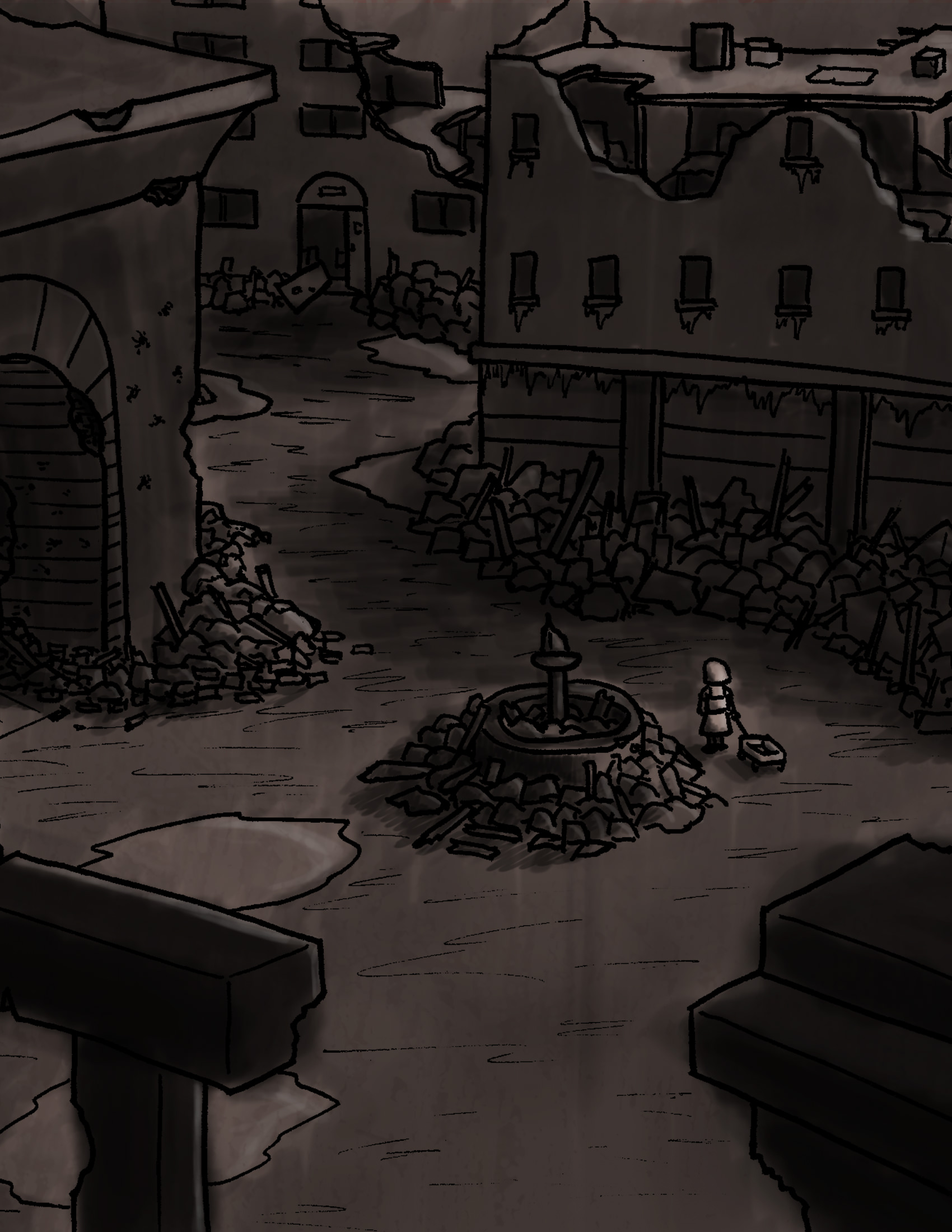
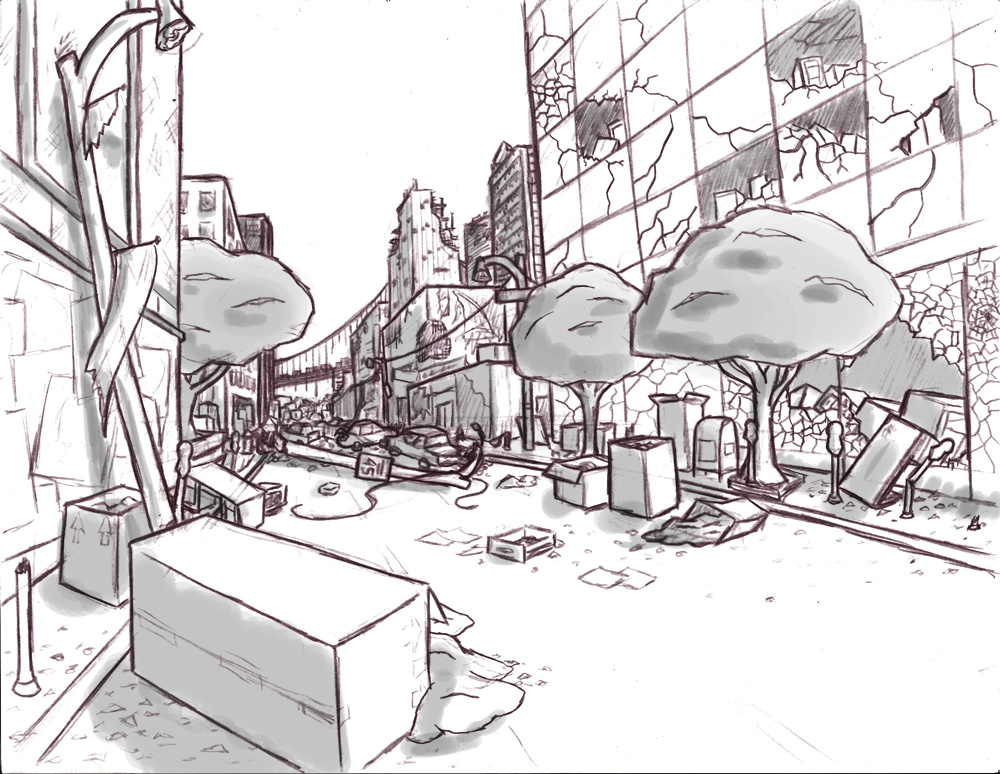
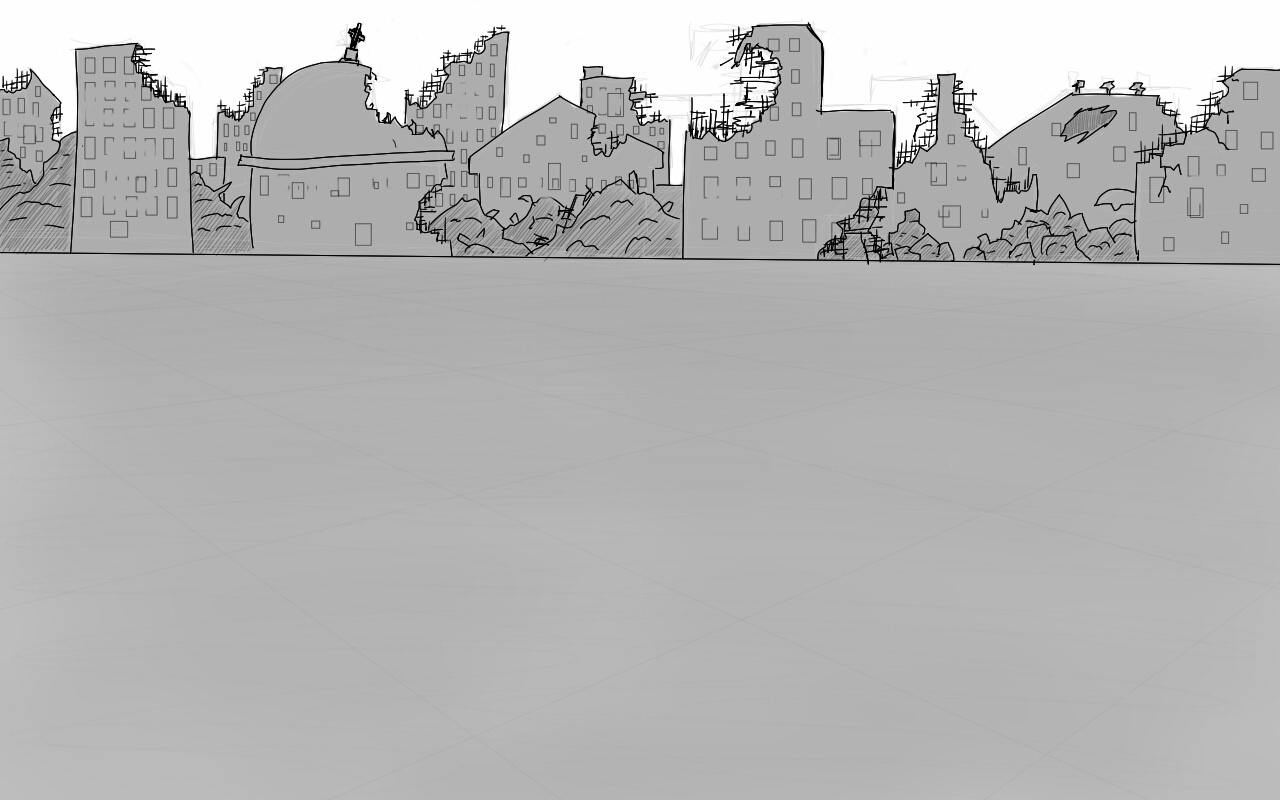
But even after they left, the damage had been done. Our infrastructure had been irreparably destroyed across the globe, and what was left of human societies lacked the means to replace it. Legions of Ulra soldier units were left behind on the planet, now cut off from the swarm and forced to fend for themselves. Abandoned Corbessian factories began to crumble, leaking out toxic waste that choked the air and fouled the water. Decades of war with immeasurably destructive weapons accelerated global warming, leaving the polar ice caps just a memory and devastating coastal regions. Humans have banded together in communities where they can, but there is a pervasive feeling that it is only a matter of time before we go extinct forever.
Table of Contents
| World History, Table of Contents, Version History | 3 |
| Features of a Typical Human Commune | 4 |
| Dangers of the Wilds | 6 |
| The Corbessians | 10 |
| The Ulra | 15 |
| Random Encounters | 22 |
| New Tools for Survival | 23 |
| Appendix I: Maps | 28 |
What is Earth: Abandoned?
Earth: Abandoned is a post-apocalyptic science-fiction campaign setting designed for Dungeons & Dragons 5th edition (although it should work fine as flavor for other systems as well). It combines futuristic technology with a resource scarce society, advanced robotics with alien monsters.
For setting native player characters, I recommend u/Capn_Charlie's Fifth Age or u/Altavus's d20 Modern 5e Conversion. On the other hand, a group of universe-hopping fantasy adventurers like TAZ:Balance or Planescape also sounds like a great time. As a warning, while the amount of access to space-age technology is completely up to the GM, be aware of power creep as characters build up their personal arsenals.
Features of a Typical Human Commune
Most human communes tend to organize into three main groups: foragers who scavenge the surrounding areas for resources, hunters who go on long expeditions to find big game, and a homebase team that maintains the upkeep of the settlement and protects their resources.
Foragers
As their name implies, foraging teams scour the surrounding areas near a commune, picking up anything and everything with even the slightest possible value. They rarely travel more than a half day’s journey away from the settlement, taking care to stay in contact with the homebase by whatever means they have access to. They pick herbs and edible plants, set and check traps for small game, and dig for any traces of scrap technology that could be utilized when they return. Most younger children start their journey to adulthood here, learning about the dangers of the world and how to best protect themselves and the rest of their extended family.
Settlement and Commune Sizes
Depending on their location and the resources available to them, human settlements might range anywhere between a couple dozen members to over a thousand people. There are also many smaller groups and families that choose to live on their own private homesteads, growing and gathering just enough to take care of themselves and avoiding interactions with other survivors.
Hunters
These teams go out on extended excursions, often for days or weeks at a time, in pursuit of larger and more dangerous prizes than can be found close to home. This can mean literally hunting larger game like wild pigs of course, but it could also mean following up on signs or rumors of crucial technological components in a fallen city or production facility. Hunting teams also liaise with other settlements if there are any in the area, building relationships and supporting each other if needed. While traditional trading caravans and commercial routes are far too dangerous to attempt, hunters fill this role to a limited extent, bringing what supplies can be spared to a neighbor in need, often with the expectation that such a gift will be reciprocated at a later time.
Homebase
While there are some groups of survivors that have returned to a wholly nomadic lifestyle, most of humanity has built up homesteads and settlements. Often near a source of relatively clean water, the homebase team grows what they can and maintains upkeep on the settlement. The harsh weather of the world means that buildings and structures are in constant need of repair, relying on the Forager and Hunter teams to bring back key materials and parts to keep the base in good shape. Some communes have access to technological conveniences like radios, solar panels, or even advanced Corbessian weaponry. These devices can make or break a settlement during rough times, and are often closely guarded secret to outsiders that might seek to take them for themselves.
Commodities of the World
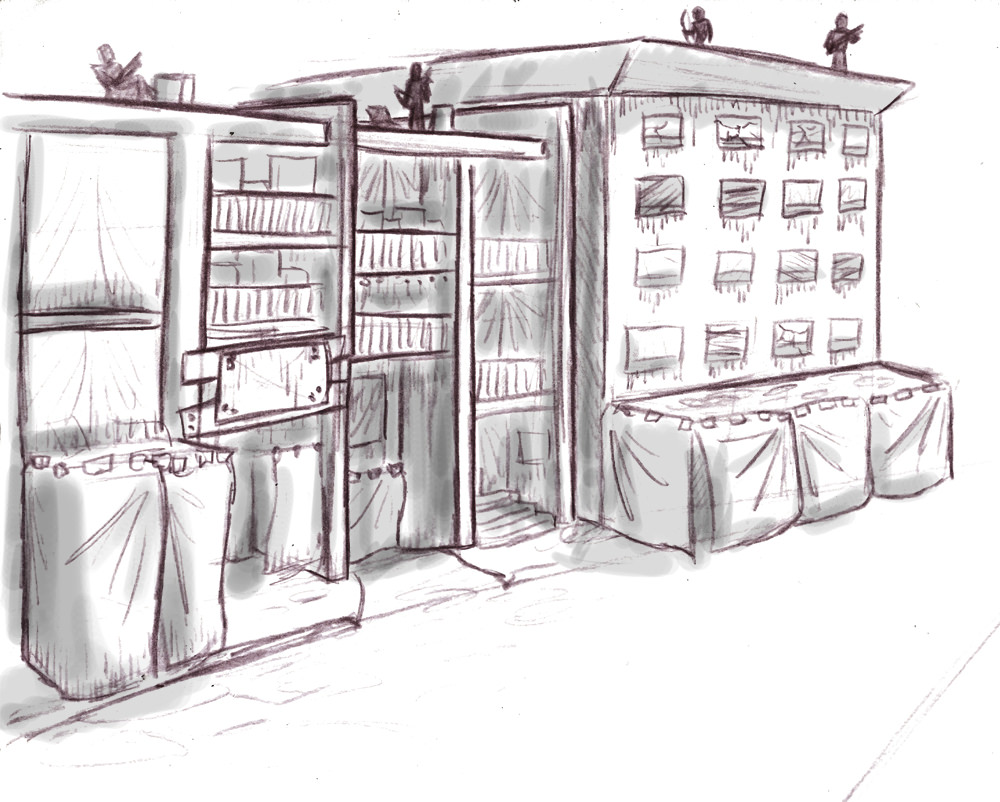
With international governments toppled across the globe, forms of paper and digital currency have become all but useless. Even once precious luxury items like gold or diamonds are now only as valuable as their material utility in survival. However, a few communes do still interact and have developed rudimentary trade routes, and even within communes having the right materials can grease the wheels both literally and figuratively.
Clean Food and Water
In the decades since the war ended, food production has slowed dramatically. Unpredictable weather patterns have made outdoor growing almost impossible, and greenhouses require significant upkeep to maintain operation. Settlements have been forced to become masters of efficiency, drawing out every last bit of caloric value from resources brought in by foragers and hunters. Somehow, a few communities manage to produce more food than they need to consume, and are able to offer what little surplus they have in exchange for necessary tools and components from wandering traders.
Plastic Scrap
Once hailed as the material of the future, plastics are found in abundance around the remains of cities and abandoned suburban streets. Constant exposure to sun and acid rain weakens it, so it is rarely suitable for outdoor use, but its ability to be easily heated and reshaped makes it invaluable for crafting simple tools and interior fixtures. Some groups with access to advanced tools can make short work of almost any scraps brought in, grinding them down to small pieces for easy melting and molding into more complex parts and components.
Metal Scrap
Metal has existed as the backbone of human civilization for thousands of years, and continues to this day as an essential part of survival. Reforging anything beyond simple tools and fasteners is difficult without specialized knowledge and significant infrastructure, but thankfully much of the metal from before the war is still very usable. Scraps and odd pieces are able to be cut and welded to create rudimentary supports and shelter, and can withstand most of the weathering and corrosion seen today.
Ammunition
It is a dangerous world, possibly more dangerous than it has ever been. The firearms of the 21st century are still some of the most common and reliable weapons in existence, but the ability to create ammunition for them is rare and fading fast. There are some few isolated groups dedicated to crafting simple shells and slugs, often for use with older rifles and cobbled together "scrapguns," but the quality and performance of such rounds are inconsistent. As such, finding even a few factory-made bullets is quite the boon to anyone, as they are quite valuable to the right trader.
Electronics Components
Many larger settlements and hunting parties owe much of their success to the upkeep and repair of pre-war technology. Things like solar chargers, water pumps and filtration systems, and even electric lighting ease the strain on community resources immensely. These tools all require specialized parts to stay operational, none of which are possible to manufacture today. Finding broken down technology from the past is a great source of these components, and with the right set of skills they can be removed and installed where they are needed.
Technological Devices
The only thing more valuable than non-functional pre-war technology has to be functional pre-war technology. Fully operational electronics, power tools, or weapons can help turn a struggling group of survivors into a thriving community. As such, these items are often highly sought after, both by traders and thieves. Precautions against theft and robbery has become second nature to many, often taking the form of constant vigilance, secure locks, and even makeshift traps. Take care of your tools, and they will take care of you.
Handling Resource Management
Playing in a world with scarce food and water often comes with a great deal of bookkeeping, which may not always be every table's idea of a fun game night. Discuss with the rest of the table how much people want to keep track of things like rations, ammunition, and energy sources, then adjust as the game progresses. Below are some suggestions for streamlining the management process, if your table thinks they want to give it a shot.
- Break down food and water by day. The average person needs two pounds of food and eight pounds of water per day. To simplify the numbers, have the GM and players keep track of them on a per day basis instead of a per pound basis. It's much easier to say you have enough water for twelve days than figuring out how long you can use 100 pounds.
- Use ammo on a per battle or day basis. If the thought of keeping track of every spent arrow and bullet seems tedious to you, see if your table is interested in limiting them on a per encounter or per day system. Every player character would have a set amount of ammunition available to them for that amount of time, and they would be replenished after the danger has passed. It can be assumed that the characters have scavenged new ammo along the way, in the hopes that a little suspension of disbelief promotes a more enjoyable game.
Dangers of the Wilds
Inclement Weather
The damage done to the planet during the war was far beyond anything even the most cynical of scientists could have imagined. The advanced weaponry of the Corbessians left many scars, but the process of their manufacture was far worse. They had no interest in sustainable production or safeguarding the environmental health of our home, burning through fuels and chemical agents at a breakneck pace to meet quotas and deadlines. The resulting ecological disasters made the sites of their factories uninhabitable for hundreds of miles, and even beyond that the remnants of humanity still feel their effects across the globe. Acidic rains are almost as common as not, and many sources of freshwater have been completely tainted by chemical runoff. The four original seasons have faded to just two major ones: a torrential rainy season and a choking dry season. The acid rain is dangerous enough to stand in for too long a time, but the constant damage to structures and settlements puts enormous strain on any commune’s already scarce resources. The dust storms during the dry season make gathering supplies and food harder still, and the salty sand that whips through the air corrodes everything it comes in contact with. Between the sweltering heat waves of the summers and the constant downpour of the winters, both the young and old are at constant risk just by trying to survive this harsh new world.
Thieves and Raiders
As long as humans have existed, there have been those determined to take what they want by force. While humanity may have united for a time against common enemies, it did not take long after their departure for ambitious warlords to form their own private armies in a bid for power. And when those armies eventually fell to in-fighting or outside conquest, their ranks often split off in hopes of creating their own dominions and carving their own kingdoms out of humanity’s ashes. Gangs range in size from handfuls of brigands to sizable battalions, complete with their own hierarchies and chains of command. They survive as all bandits do, by stealing from those too weak to protect themselves, preying upon anyone they think won’t put up too much of a fight.
Wild Animals
The true impact that the war had on the delicate balance of Earth’s ecosystems is unknowable, but her animal species have adapted in whatever ways needed to ensure their survival. Dogs, once man’s best friend, now roam the ruins of cities hunting anything big enough to be a meal, just as their ancestors did thousands of years ago. Rodents of all kinds have exploded in population size and reach, infesting every nook and crevice they can hide and crawl into. Feral pigs have found themselves unusually well suited to compete in the wastelands of the modern world, breeding quickly and traveling in massive droves to fend off predators. It is assumed that most larger species of fauna like deer, wolves, and bears have been driven to extinction, but rumors of sightings still spread among hunting parties. Still, where humans were once unequivocally the top of the food chain before the war, now they must contend for resources alongside all manner of beasts we once thought far below us.
Ulra Leftovers
After the decision to leave the planet was disseminated through their ranks, the Corbessians made every effort to gather up as much of their technology and assets as feasibly possible before leaving Earth in very short order. The Ulra, however, did not so much leave Earth as they simply stopped reinforcing it. The periodic impacts of their egg-laden meteors gradually lessened until they stopped altogether. Unfortunately, the Ulra already on the planet did not seem to notice or care, continuing to spread and devour anything and everything in their path. It should be obvious that they are incredibly dangerous to see in the wilds, and every conceivable precaution should be taken to avoid detection by them. Having even just one follow a foraging party back to the commune could lead to absolute devastation.




Desperado
Medium humanoid (any race), any chaotic alignment
- Armor Class 14 (scrap armor)
- Hit Points 56 (7d10 + 14)
- Speed 30 ft.
STR DEX CON INT WIS CHA 12 (+1) 16 (+3) 14 (+2) 10 (+0) 8 (-1) 14 (+2)
- Saving Throws Str +3, Con +4
- Skills Acrobatics +5, Athletics +3, Stealth +5
- Senses passive Perception 9
- Languages Common
- Challenge 3 (700 XP)
Gunslinger. Being within 5 ft of a hostile creature doesn't impose disadvantage on ranged attack rolls with firearms. The desperado can make opportunity attacks using firearms against creatures within 5 feet.
Sentinel. When the desperado hits with an opportunity attack, the creature's speed becomes 0 for the rest of the turn. Creatures provoke opportunity attacks even if they Disengage. When a creature within 5 feet of the desperado makes an attack against a target other than it, it can use its reaction to make an attack against the attacking creature.
Actions
Multiattack. The desperado makes two revolver attacks.
Revolver. Ranged Weapon Attack: +5 to hit, range 40/120 ft., one target. Hit: 11 (2d8 + 3) piercing damage.
Knife. Melee Weapon Attack: +5 to hit, reach 5 ft., one target. Hit: 5 (1d4 + 3) slashing damage.
Desperados and other outlaws roam the wastelands in search of easy targets like struggling hunting parties and traders laden with goods. For more variety, bandits and thugs can be given revolvers or rifles instead of crossbows, and other NPCs like scouts and guards can even be dropped into the world as they are.
Wastelander Sniper
Medium humanoid (any race), any non-good alignment
- Armor Class 13 (scrap armor)
- Hit Points 16 (3d8 + 3)
- Speed 30 ft.
STR DEX CON INT WIS CHA 11 (+0) 14 (+2) 12 (+1) 11 (+0) 13 (+1) 11 (+0)
- Saving Throws Dex +4
- Skills Perception +3, Stealth +4, Survival +3
- Senses passive Perception 13
- Languages Common
- Challenge 1/2 (100 XP)
Aim. If the wastelander doesn't move on its turn, it can aim as a bonus action. If it does so, it has advantage on its next attack that turn.
Keen Hearing and Sight. The wastelander has advantage on Wisdom (Perception) checks that rely on hearing or sight.
Ruin Dweller. The wastelander has advantage on Dexterity (Stealth) checks made to hide in ruins, and its speed is not reduced in difficult terrain composed of rubble.
Sharpshooter. Attacking at long range doesn't impose disadvantage on the wastelander's ranged weapon attack rolls. The wastelander's attacks also ignore half cover and three-quarters cover.
Actions
Multiattack. The wastelander makes two melee attacks.
Machete. Melee Weapon Attack: +4 to hit, reach 5 ft., one target. Hit: 5 (1d6 + 2) piercing damage.
Hunting Rifle. Ranged Weapon Attack: +4 to hit, range 240 ft., one target. Hit: 12 (2d10 + 2) piercing damage.
Wastelander Bully
Medium humanoid (any race), any non-good alignment
- Armor Class 12 (scrap armor)
- Hit Points 32 (5d8 + 10)
- Speed 30 ft.
STR DEX CON INT WIS CHA 15 (+2) 12 (+1) 14 (+2) 10 (+0) 10 (+0) 11 (+0)
- Skills Intimidation +2, Stealth +3
- Senses passive Perception 10
- Languages Common
- Challenge 1/2 (100 XP)
Aggressive. As a bonus action, the wastelander can move up to its speed toward a hostile creature that it can see.
Charge. If the wastelander moves at least 20 feet straight toward a target and then hits it with a melee attack on the same turn, the target takes an extra 3 (1d6) slashing damage. If the target is a creature, it must succeed on a DC 12 Strength saving throw or be knocked prone.
Pack Tactics. The wastelander has advantage on an attack roll against a creature if at least one of the wastelander's allies is within 5 feet of the creature and the ally isn't incapacitated.
Ruin Dweller. The wastelander has advantage on Dexterity (Stealth) checks made to hide in ruins, and its speed is not reduced in difficult terrain composed of rubble.
Actions
Multiattack. The wastelander makes two melee attacks.
Spiked Bat. Melee Weapon Attack: +4 to hit, reach 5 ft., one creature. Hit: 5 (1d6 + 2) bludgeoning damage and 3 (1d6) piercing damage.
Pipe Gun. Ranged Weapon Attack: +3 to hit, range 20/60 ft., one target. Hit: 9 (2d8 + 1) piercing damage.
Settlements often rely on the protection of sheriffs against raiders and thieves, as well as to keep the peace within the town itself. In addition to being a symbol of law and order, sheriffs also are usually responsible for leading and organizing a town's defensive measures like fencing and walls, maintaining surveillance equipment, and scheduling other members of the homebase team on security patrols. They come from a variety of backgrounds, including from the ranks of police officers, soldiers, or other civil servants from before the war.
Settlement Sheriff
Medium humanoid (any race), any lawful alignment
- Armor Class 18 (tactical vest, shield)
- Hit Points 75 (15d8 + 15)
- Speed 30 ft.
STR DEX CON INT WIS CHA 14 (+2) 14 (+2) 12 (+1) 12 (+1) 14 (+2) 10 (+0)
- Saving Throws Str +5, Dex +5
- Skills Insight +5, Investigation +4, Perception +5
- Damage Resistances piercing damage from bullets
- Senses passive Perception 15
- Languages Common
- Challenge 5 (1,800 XP)
Tactical Vest. The sheriff has resistance to piercing damage from bullets.
Actions
Multiattack. The sheriff makes two melee attacks or two ranged attacks.
Baton. Melee Weapon Attack: +5 to hit, reach 5 ft., one target. Hit: 4 (1d4 + 2) bludgeoning damage.
Shield Bash. Melee Weapon Attack: +5 to hit, reach 5 ft., one target. Hit: 4 (1d4 + 2) bludgeoning damage. If the target is a Medium or smaller creature, it must succeed on a DC 13 Strength saving throw or be knocked prone.
Automatic Pistol. Ranged Weapon Attack: +5 to hit, range 50/150 ft., one target. Hit: 8 (2d6 + 2) piercing damage.
Reactions
Parry. The sheriff adds 3 to its AC against one melee attack that would hit it. To do so, the sheriff must see the attacker and be wielding a melee weapon or shield.
The Corbessians
Corbessians are a proud and stoic species; millenia of war against the Ulra have left them cold and ruthless. Most members of their society, their leadership circles in particular, are shrewd and cautious, meticulously planning and plotting out multiple contingencies in case initial tactics fail. In an effort to conceal their presence from the Ulra, they deliberately hide their presence on their colonies, masking any trace of their technological footprints. Combining their advanced engineering skills with their imposing physical stature, it is little surprise that they conquered much of the Milky Way galaxy before arriving on Earth.
Physically, the Corbessians are vaguely humanoid: standing on average about 8 to 9 feet tall, they have very wide muscular torsos and thick arms that they use to support themselves for climbing and walking. Their legs are short and stocky, spread wide and resting on cylindrical feet, similar to an elephant or rhinoceros. From their midsection they also have two smaller forelimbs used for more dexterous tasks, such as working with tools or operating their computer terminals. Their heads sit somewhat nestled between their major shoulder muscles, well protected from most threats that their ancestors must have faced.
Corbessian Soldier
Large giant, lawful neutral
- Armor Class 13 (18 against ranged attacks with shield drone)
- Hit Points 117 (13d10 + 39)
- Speed 30 ft., climb 30 ft.
STR DEX CON INT WIS CHA 24 (+7) 16 (+3) 16 (+3) 14 (+2) 12 (+1) 12 (+1)
- Saving Throws Str +10, Dex +6, Con +6
- Skills Athletics +10, Insight +4, Perception +4
- Senses darkvision 60 ft., passive Perception 14
- Languages Common, Corbessian
- Challenge 7 (2,900 XP)
Shield Drone. The Corbessian is equipped with a Shield Drone, granting it 3/4 cover against ranged attacks.
Infrared Visor. The Corbessian is equipped with an Infrared Visor, granting it darkvision up to 60 feet.
Actions
Multiattack. The Corbessian makes two attacks, either with its slam or its weapon.
Slam. Melee Weapon Attack: +10 to hit, reach 5 ft., one target. Hit: 8 (1d8 + 4) bludgeoning damage.
Plasma Rifle. Ranged Weapon Attack: +6 to hit, range 100/300 ft., one target. Hit: 15 (3d8 + 3) radiant damage.
Corbessian Combat Drones
When the Corbessians first made contact with Earth, all of their technology seemed advanced, but none so much as their skill with robotics and automation programming. The interfaces for operating their ships, weapons, and drones are elegant and intuitive, being both easy to master quickly and yet capable of remarkable depth and nuance. Many of their drones in particular seem just short of being classed as truly sentient Artificial Intelligence entities, something the Corbessians were quick to point out was completely under control. It was necessary to create programming that offered just enough of a base for self-operation, but had no ability to progress further towards self-awareness.
Today, finding operational Corbessian robotics is an incredible asset to any team of survivors. Many drones were captured and altered for human operation during the war, and the process is relatively simple to perform. These tools offer powerful advantages to any that wield them, but it should be noted that their value also makes them quite the target to others seeking that same edge on the competition.
Targeting Drone
A robotic drone that mounts to a shoulder pauldron, accompanied by a head-mounted eyepiece. Corbessian physiology doesn't allow them to aim down a gun's sights like humans do, so historically they relied on closer ranged weapons that fired in a spread. With the development of automated targetting systems, however, their weapons technology advanced significantly in very short order.
This drone has 3 charges per energy cell. As a bonus action, you can spend 1 charge to activate the drone for up to 1 minute. As long as the drone is active, when you attack a target that is within 100 feet and in the drone’s line of sight, you may roll 1d4 and add the result to the roll.
Targeting Drone
Tiny construct, unaligned
- Armor Class 13
- Hit Points 10 (3d4 + 3)
- Speed 20 ft., (hover)
STR DEX CON INT WIS CHA 4 (-3) 16 (+3) 12 (+1) 6 (-2) 10 (+0) 6 (-2)
- Damage Vulnerabilities lightning
- Damage Immunities poison, psychic
- Condition Immunities charmed, exhaustion, frightened, poisoned
- Senses passive Perception 10
- Languages --
- Challenge 0 (10 XP)
Shield Drone
Tiny construct, unaligned
- Armor Class 15 (energy shield)
- Hit Points 10 (3d4 + 3)
- Speed 30 ft., (hover)
STR DEX CON INT WIS CHA 4 (-3) 11 (+0) 12 (+1) 6 (-2) 10 (+0) 6 (-2)
- Damage Vulnerabilities lightning
- Damage Immunities poison, psychic
- Condition Immunities charmed, exhaustion, frightened, poisoned
- Senses passive Perception 10
- Languages --
- Challenge 0 (10 XP)
Shield Drone
A robotic drone that mounts to a shoulder pauldron. The large size of Corbessian soldiers was originally thought to be a liability before the full extent of their technology was known. Energy shielding, once thought to be the stuff of fiction, granted even the largest of targets significant defensive boons. While still limited in both scale and duration, automated drones are able to apply this shielding in the most efficient manner.
This drone has 3 charges per energy cell. As a bonus action, you can spend 1 charge to activate the drone for up to 1 minute. While active, the drone grants you 3/4 cover against ranged attacks.
Security Drone
Tiny construct, unaligned
- Armor Class 13
- Hit Points 10 (3d4 + 3)
- Speed 20 ft., (hover)
STR DEX CON INT WIS CHA 4 (-3) 16 (+3) 12 (+1) 6 (-2) 20 (+5) 6 (-2)
- Skills Perception +7
- Damage Vulnerabilities lightning
- Damage Immunities poison, psychic
- Condition Immunities charmed, exhaustion, frightened, poisoned
- Senses truesight 30 ft., passive Perception 17
- Languages --
- Challenge 0 (10 XP)
Security Drone
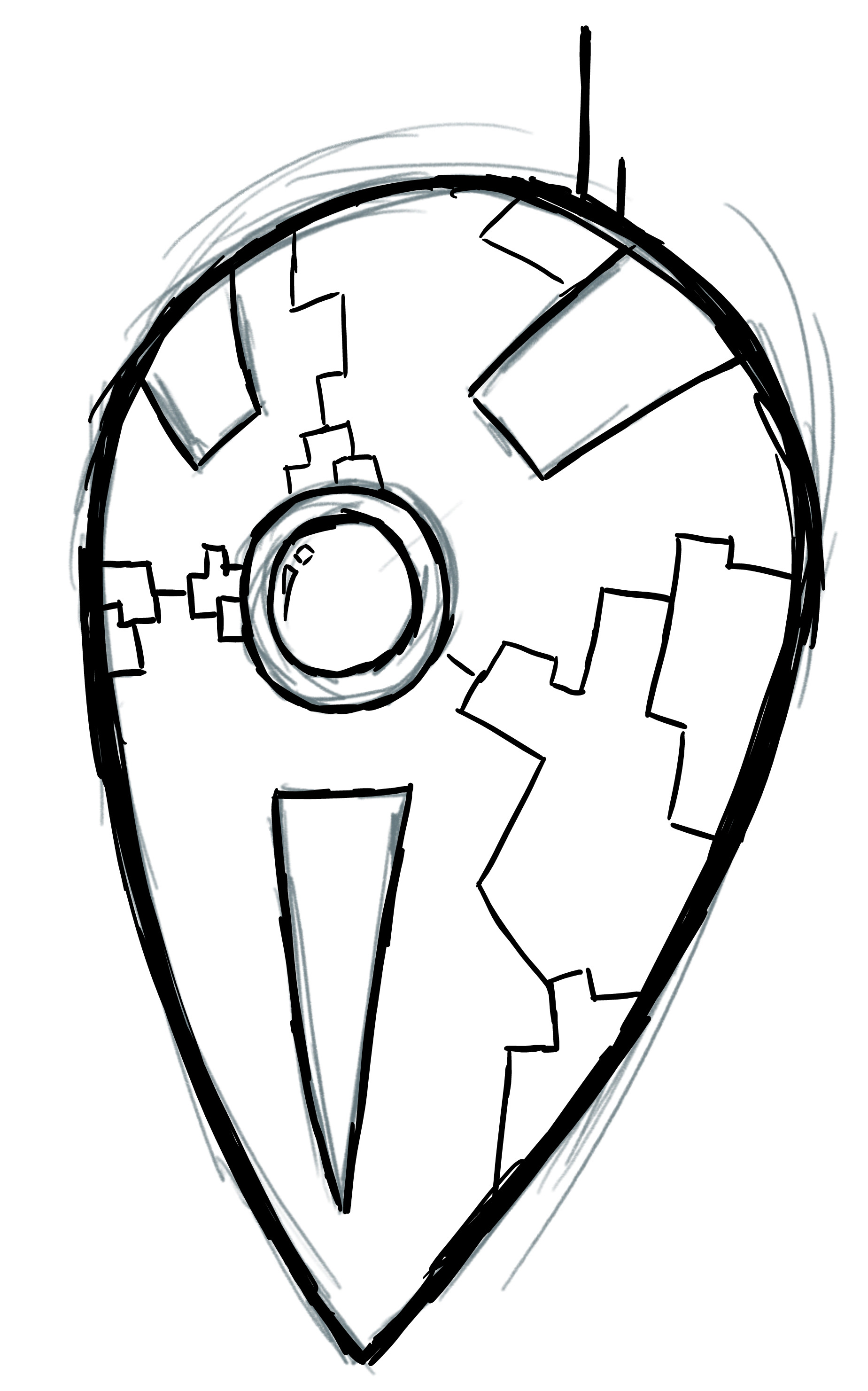
A robotic drone that mounts to a portable console. Even when they first arrived, the Corbessians were very guarded about the vast majority of their technological research and development. Their first production facilities were heavily patrolled and surveilled thanks to automated systems using these drones.
This drone has 1 charge per energy cell. As an action, you can spend 1 charge to activate the drone for up to 10 hours. While active, the drone can patrol an area of up to four 10 foot cubes. If it detects a lifeform or construct other than the ones you designate within 60 ft, it will sound an alarm audible up to 300 ft away. Optionally, it can also be programmed to work in tandem with a larger security system, such as within a building.
Recon Drone
Tiny construct, unaligned
- Armor Class 15
- Hit Points 10 (3d4 + 3)
- Speed 30 ft., (hover), climb 20 ft.
STR DEX CON INT WIS CHA 4 (-3) 20 (+5) 12 (+1) 6 (-2) 16 (+3) 6 (-2)
- Saving Throws Dex +7
- Skills Perception +5, Stealth +7
- Damage Vulnerabilities lightning
- Damage Immunities poison, psychic
- Condition Immunities charmed, exhaustion, frightened, poisoned
- Senses darkvision 60 ft., passive Perception 15
- Languages --
- Challenge 0 (10 XP)
Recon Drone
A robotic drone that mounts to a portable console, accompanied by a control helmet. Scouting both Corbessian emcampments and Ulra nests was an absolute necessity during the war, and adapting captured security drones to accomplish such a task was one of humanity's first breakthroughs.
This drone has 1 charge per energy cell. As a bonus action, you can spend 1 charge to activate the drone for up to 1 hour. While active, you can control the drone using the console and control helmet, perceiving sight and sound through its instruments. You are blinded and deafened while wearing the helmet and the drone is active.
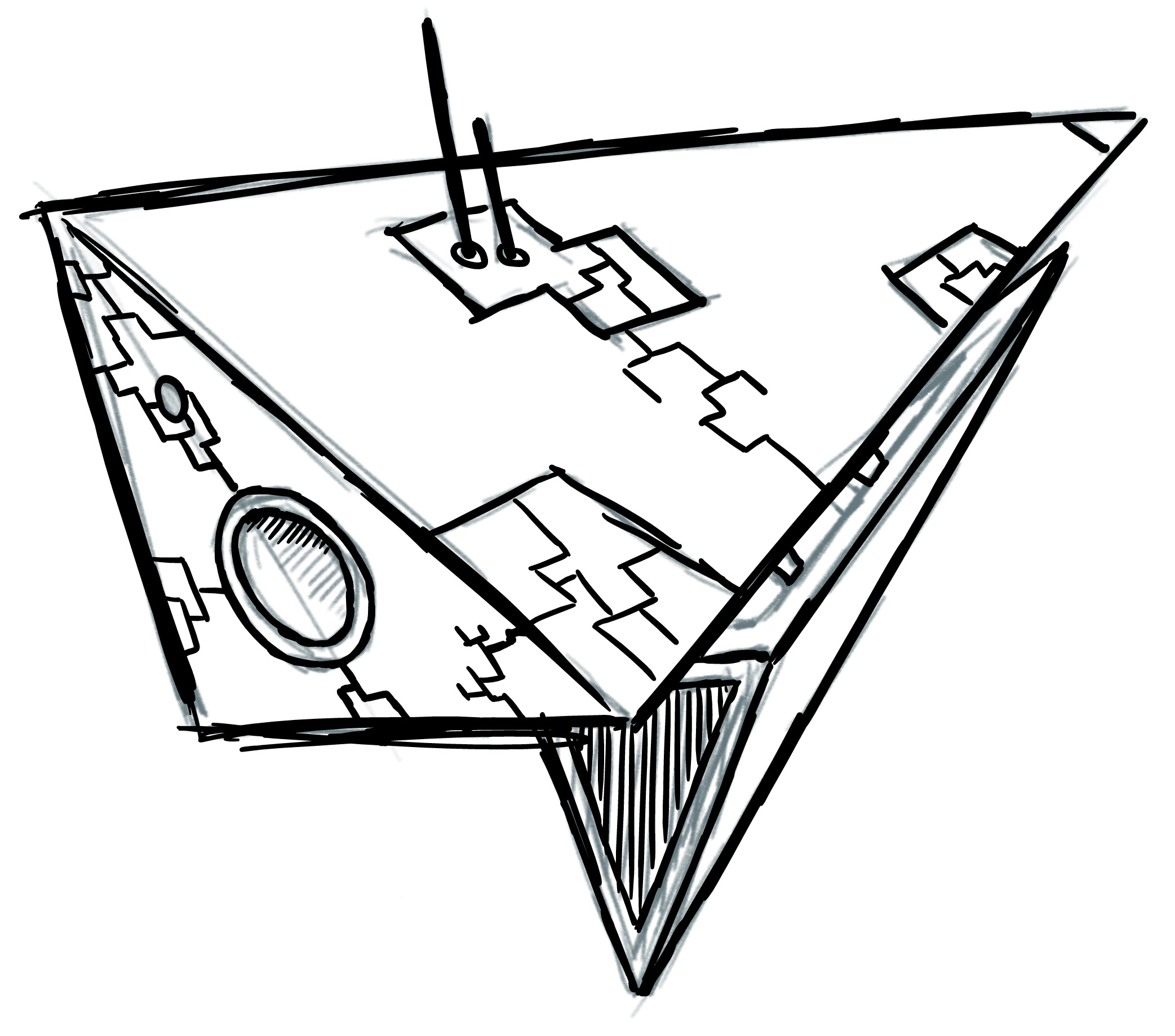
Plasma Drones
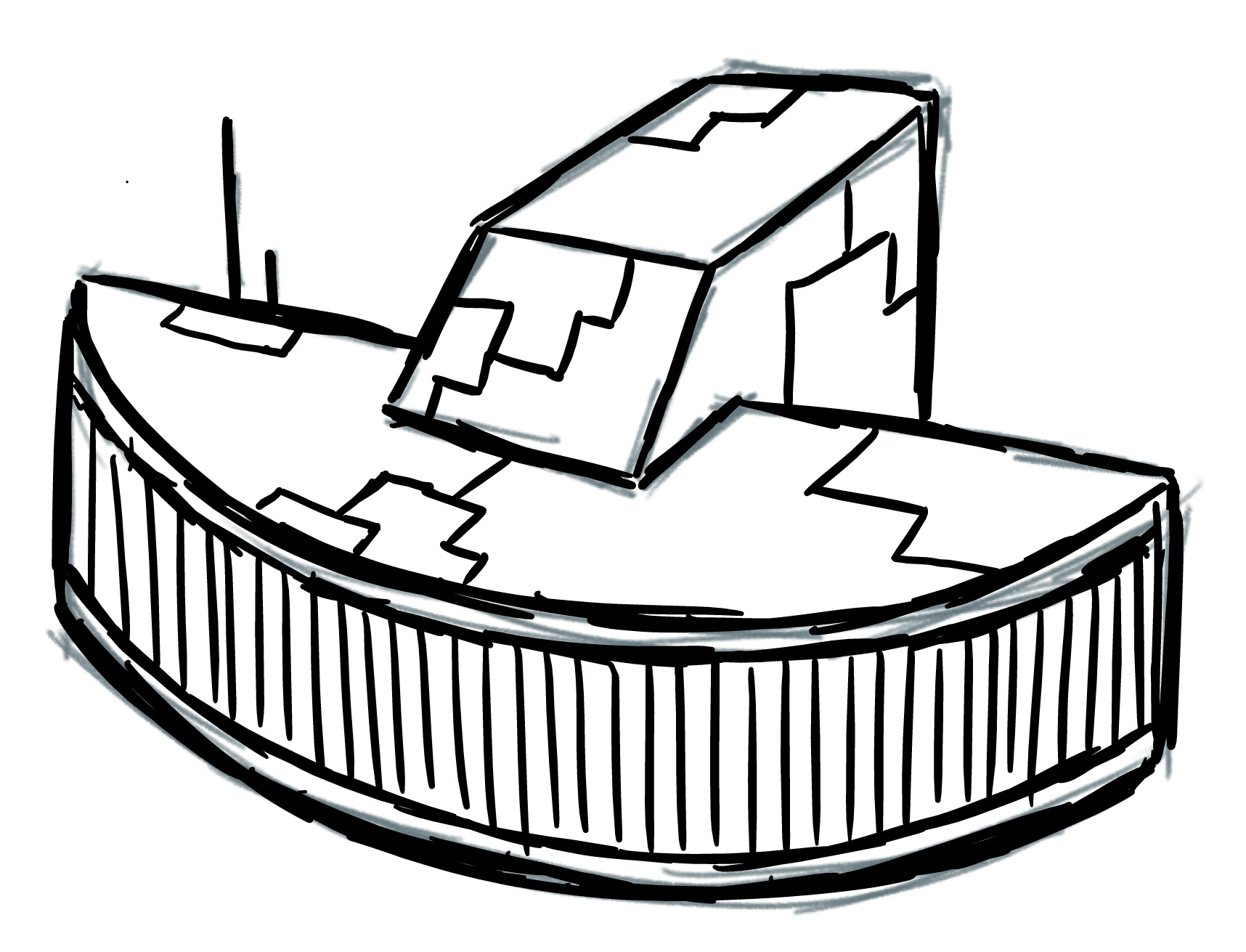
A robotic drone that mounts to a shoulder pauldron, accompanied by a head-mounted eye-piece. While never meant to be the majority of Corbessian military deployments, plasma drones served in crucial support roles during their occupation. They could be deployed in high risk areas to rout out enemies at very little cost, or combined with security drones as a rapid response force to intruders in secure locations. Capturing as many of these drones as possible was a high priority for humanity throughout the war.
This drone has 3 charges per energy cell. As a bonus action, you can spend 1 charge to activate the drone for up to 1 minute. While active, the drone is under your control and takes its turn in initiative right after yours.
Plasma Drone
Tiny construct, unaligned
- Armor Class 13
- Hit Points 10 (3d4 + 3)
- Speed 20 ft., (hover)
STR DEX CON INT WIS CHA 4 (-3) 16 (+3) 12 (+1) 10 (+0) 14 (+2) 6 (-2)
- Saving Throws Dex +5
- Skills Investigation +2, Perception +4
- Damage Vulnerabilities lightning
- Damage Immunities poison, psychic
- Condition Immunities charmed, exhaustion, frightened, poisoned
- Senses passive Perception 14
- Languages --
- Challenge 1/2 (100 XP)
Actions
Plasma Beam. Ranged Weapon Attack: +5 to hit, reach 60 ft., one target. Hit 9 (2d6 + 3) radiant damage.
Swarm of Plasma Drones
Large swarm of tiny constructs, unaligned
- Armor Class 12
- Hit Points 33 (5d10 + 5)
- Speed 20 ft., (hover)
STR DEX CON INT WIS CHA 11 (+0) 15 (+2) 12 (+1) 12 (+1) 14 (+2) 9 (-1)
- Saving Throws Dex +4
- Damage Vulnerabilities lightning
- Damage Immunities poison, psychic
- Condition Immunities charmed, exhaustion, frightened, grappled, paralyzed, petrified, poisoned, prone, restrained, stunned
- Senses passive Perception 12
- Languages --
- Challenge 3 (700 XP)
Swarm. The swarm can occupy another creature’s space and vice versa, and the swarm can move through any opening large enough for a Tiny drone. The swarm can’t regain hit points or gain temporary hit points.
Actions
Multiattack. The swarm makes up to three coordinated plasma beam attacks
Coordinated Plasma Beams. Ranged Weapon Attack: +8 to hit, reach 60 ft., one creature. Hit: 14 (4d6+2) radiant damage, or 8 (2d6+2) radiant damage if the swarm has half of its hit points or fewer.
Suppressive Fire (Recharge 5-6). The swarm targets a 20 foot square it can see within 60 ft. Each creature in that area not behind cover must succeed on a DC 14 Dexterity saving throw, taking 24 (8d6) radiant damage on a failed save, or half as much damage on a successful one.
Servitors
Corbessians designed these to be general purpose laborers, capable of only the bare minimum of independent processing and direction. Before the war, they often supplemented human workforces, assisting in tasks that required automation, precision, or close proximity to hazardous working conditions. Once the occupation began in earnest, however, the Corbessians found themselves building more and more of these drones to replace human workers that increasingly either fled or became informants and saboteurs.
Corbessian Servitor
Medium construct, unaligned
- Armor Class 16 (natural armor)
- Hit Points 33 (6d8 + 6)
- Speed 25 ft.
STR DEX CON INT WIS CHA 14 (+2) 11 (+0) 13 (+1) 6 (-2) 4 (-3) 6 (-2)
- Damage Vulnerabilities lightning
- Damage Immunities poison, psychic
- Condition Immunities charmed, exhaustion, frightened, poisoned
- Senses passive Perception 7
- Languages --
- Challenge 1/2 (100 XP)
Actions
Slam. Melee Weapon Attack: +4 to hit, reach 5 ft., one target. Hit 5 (1d6 + 2) bludgeoning damage.
The Ulra
Not much is known about the Ulra beyond the taxonomy of the various types of soldiers documented during the war. They are an essentially insectoid species, with a hard exoskeleton and articulated joints, leading many to use monikers for them like “termites,” “wasps,” or simply “bugs.” However, there was always some debate about how insect-like they truly were, or if all the creatures documented were indeed even part of the same species. While the vast majority of their recorded genetics were indeed identical, the sheer variety of body types and functions is staggering. What is known is that they adapt to various biomes extremely quickly and efficiently, spreading out from their initial landing sites with great speed and numbers. They lay their egg clutches by the thousands and are seemingly able to spawn in any environment, making the task of tracking down their nests both difficult and highly dangerous.
Typical Ulra Soldiers
Wardogs and hornets made up the bulk of the Ulra's invasion on Earth. Fast and deadly, both functioned as shock troops, clearing and defending an area before a nest was fully established and self-sufficient. While neither are intelligent in the conventional sense, it was well documented that even without a nest or matron nearby, they would adapt quickly to tactics employed against them, sometimes even seeming to develop ambushes and counter-tactics to combat them directly.
Ulra Wardog
Medium beast, unaligned
- Armor Class 13
- Hit Points 33 (6d8 + 5)
- Speed 50 ft., climb 50 ft., burrow 10 ft.
STR DEX CON INT WIS CHA 13 (+1) 16 (+3) 13 (+1) 4 (-3) 13 (+1) 6 (-2)
- Skills Perception +3, Stealth +5
- Senses darkvision 60 ft, tremorsense 30 ft, passive Perception 13
- Languages --
- Challenge 1/2 (100 XP)
Ambusher. The Ulra has advantage on attack rolls against any creature it has surprised.
Pack Tactics. The Ulra has advantage on an attack roll against a creature if at least one of the Ulra's allies is within 5 feet of the creature and the ally isn't incapacitated.
Spider Climb. The Ulra can climb difficult surfaces, including upside down on ceilings, without needing to make an ability check.
Web Sense. While in contact with a web, the Ulra knows the exact location of any other creature in contact with the same web.
Web Walker. The Ulra ignores movement restrictions caused by webbing.
Actions
Multiattack. The Ulra makes two claw attacks.
Claw. Melee Weapon Attack: +5 to hit, reach 5 ft., one target. Hit: 5 (1d4 + 3) slashing damage.
Ulra Hornet
Medium beast, unaligned
- Armor Class 12
- Hit Points 13 (3d8)
- Speed 10 ft., fly 50 ft., climb 10 ft.
STR DEX CON INT WIS CHA 10 (+0) 14 (+2) 10 (+0) 6 (-2) 10 (+0) 3 (-4)
- Skills Perception +3, Stealth +5
- Senses darkvision 60 ft, tremorsense 30 ft, passive Perception 13
- Languages --
- Challenge 1/2 (100 XP)
Pack Tactics. The Ulra has advantage on an attack roll against a creature if at least one of the Ulra's allies is within 5 feet of the creature and the ally isn't incapacitated.
Spider Climb. The Ulra can climb difficult surfaces, including upside down on ceilings, without needing to make an ability check.
Web Sense. While in contact with a web, the Ulra knows the exact location of any other creature in contact with the same web.
Web Walker. The Ulra ignores movement restrictions caused by webbing.
Actions
Sting. Melee Weapon Attack: +4 to hit, reach 5 ft., one creature. Hit: 5 (1d6 + 2) piercing damage, and the target must make a DC 11 Constitution saving throw, taking 10 (3d6) poison damage on a failed save, or half as much damage on a successful one. If the poison damage reduces the target to 0 hit points, the target is stable but poisoned for 1 hour, even after regaining hit points, and is paralyzed while poisoned in this way.
Ulra Nest Sites
When the Corbessians first warned of the Ulra's imminent invasion of Earth, no one was quite sure what to expect. Humanity's political leaders were told the steps to take behind closed doors, likely both to keep the public from creating a panic as well as for the Corbessians to best roll out the infrastructure necessary to build their war industry on our planet. When the Ulra spawning meteors finally made impact, it was sudden and in very large numbers. At no less than 500 sites worldwide, these craters would be the first of many Ulra nests on Earth's surface. Investigating the first hives revealed that each already had dozens of their drones in full operation, and more soon spread from each site. These "nesters," as they came to be called, were laborer, guardian, and caretaker all in one, each able to change roles at a moment's notice when required. While perhaps not as outwardly dangerous as a wardog or a hornet, underestimate them at your own peril.
Ulra Grubworm
Small beast, unaligned
- Armor Class 12
- Hit Points 4 (1d6 + 1)
- Speed 30 ft., climb 30 ft.
STR DEX CON INT WIS CHA 5 (-3) 14 (+2) 12 (+1) 1 (-5) 7 (-2) 3 (-4)
- Senses blindsight 30 ft., passive Perception 8
- Languages --
- Challenge 1/4 (50 XP)
Spider Climb. The Ulra can climb difficult surfaces, including upside down on ceilings, without needing to make an ability check.
Web Walker. The Ulra ignores movement restrictions caused by webbing.
Actions
Bite. Melee Weapon Attack: +4 to hit, reach 5 ft., one creature. Hit: 4 (1d4 + 2) piercing damage, and the target must succeed on a DC 11 Constitution saving throw or take 6 (1d12) poison damage. If the poison damage reduces the target to 0 hit points, the target is stable but poisoned for 1 hour, even after regaining hit points, and is paralyzed while poisoned in this way.
Acid Spray (Recharge 5–6). The Ulra sprays acid one target within 30 feet, or two targets within 5 feet of each other in that range. Each target must make a DC 11 Dexterity saving throw, taking 6 (2d6) acid damage on a failed save, or half as much damage on a successful one.
Ulra Nester
Medium beast, unaligned
- Armor Class 13
- Hit Points 19 (3d8 + 6)
- Speed 30 ft., climb 30 ft., burrow 20 ft.
STR DEX CON INT WIS CHA 10 (+0) 16 (+3) 12 (+1) 8 (-1) 16 (+3) 4 (-3)
- Skills Investigation +1, Perception +5
- Senses blindsight 10 ft., darkvision 60 ft., passive Perception 10
- Languages --
- Challenge 1 (200 XP)
Spider Climb. The Ulra can climb difficult surfaces, including upside down on ceilings, without needing to make an ability check.
Web Sense. While in contact with a web, the Ulra knows the exact location of any other creature in contact with the same web.
Web Walker. The Ulra ignores movement restrictions caused by webbing.
Actions
Bite. Melee Weapon Attack: +5 to hit, reach 5 ft., one creature. Hit: 7 (1d8 + 3) piercing damage, and the target must make a DC 11 Constitution saving throw, taking 9 (2d8) poison damage on a failed save, or half as much damage on a successful one. If the poison damage reduces the target to 0 hit points, the target is stable but poisoned for 1 hour, even after regaining hit points, and is paralyzed while poisoned in this way.
Web (Recharge 5–6). Ranged Weapon Attack: +5 to hit, range 30/60 ft., one creature. Hit: The target is restrained by webbing. As an action, the restrained target can make a DC 12 Strength check, bursting the webbing on a success. The webbing can also be attacked and destroyed (AC 10; hp 5; vulnerability to fire damage; immunity to bludgeoning, poison, and psychic damage).
Acid Spray (Recharge 5–6). The Ulra sprays acid in a line 30 ft long and 5 ft wide. Each creature in that line must make a DC 12 Dexterity saving throw, taking 10 (3d6) acid damage on a failed save, or half as much damage on a successful one.
Ulra Matrons
While matrons do lay eggs, it would be inaccurate to call them queens like bees and ants have on Earth. Many Ulra seem to operate without a hive or nest, and hives seem to continue functioning even after the matrons have been killed. Research has never been conclusive on just how integral matrons are to the survival of an Ulra colony. What is well known, however, is that matrons are more than capable of defending their nests, and will do so fiercely until their death.
A Matron's Lair
Ulra nests are often labyrinths of tunnels, covered in thick webbing and a resin-like building material. Matrons rarely leave the spawning chamber, where they lay large clutches of eggs that are quickly carried off by nesters for tending.
An Ulra Matron encountered in its lair has a challenge rating of 11 (7,200 XP).
Lair Actions
On initiative count 20 (losing initiative ties), the Ulra Matron takes a lair action to cause one of the following effects; the Ulra Matron can’t use the same effect two rounds in a row:
- The matron calls for aid, and 2d4 Ulra Nesters crawl into the spawning chamber.
- The matron sprays acid to dissolve parts of the ceiling. Creatures in a 10 foot square the matron can see within 60 feet must make a DC 18 Dexterity saving throw, taking 2d6 bludgeoning damage on a failed save, or half as much on a successful one.
- The matron sprays webbing onto parts of the ground. Creatures within a 10 foot square the matron can see within 60 feet must succeed on a DC 18 Dexterity saving throw or become restrained. The ground in that area becomes difficult terrain.
Ulra Matron
Large beast, unaligned
- Armor Class 16 (natural armor)
- Hit Points 133 (14d10 + 56)
- Speed 20 ft.
STR DEX CON INT WIS CHA 16 (+3) 8 (-1) 18 (+4) 16 (+3) 19 (+4) 6 (-2)
- Saving Throws Str +7, Wis +8
- Skills Perception +3, Stealth +5
- Damage Resistances acid, poison, psychic
- Condition Immunities charmed, frightened
- Senses blindsight 10 ft, darkvision 60 ft, passive Perception 18
- Languages --
- Challenge 9 (5,000 XP)
Web Sense. While in contact with a web, the Ulra knows the exact location of any other creature in contact with the same web.
Web Walker. The Ulra ignores movement restrictions caused by webbing.
Actions
Multiattack. The Ulra makes two claw attacks.
Claw. Melee Weapon Attack: +7 to hit, reach 5 ft., one target. Hit: 8 (2d4 + 3) slashing damage.
Web. Ranged Weapon Attack: +8 to hit, range 30/60 ft., one creature. Hit: The target is restrained by webbing. As an action, the restrained target can make a DC 18 Strength check, bursting the webbing on a success. The webbing can also be attacked and destroyed (AC 10; hp 5; vulnerability to fire damage; immunity to bludgeoning, poison, and psychic damage).
Spawn Hatchlings. 1d4 Ulra Grubworms spawn within 5 ft of the Ulra Matron. They take their initiative order right after the Ulra Matron.
Acid Spray (Recharge 5–6). The Ulra sprays acid in 30 ft cone. Each creature in that area must make a DC 18 Dexterity saving throw, taking 21(6d6) acid damage on a failed save, or half as much damage on a successful one.
Legendary Actions
The Ulra Matron can take 3 legendary actions, choosing from the options below. Only one legendary action can be used at a time and only at the end of another creature's turn. The Ulra Matron regains spent legendary actions at the start of its turn.
Detect. The Ulra Matron makes a Wisdom (Perception) check.
Web. The Ulra Matron makes a Web attack.
Spawn Hatchlings (Costs 2 Actions). The Ulra Matron takes a Spawn Hatchlings action.
Rare Ulra Sightings
Beyond the typical morphology commonly seen throughout the war, there are numerous reports and transcripts describing more unique and specialized units deployed in far reaches around the globe. It was theorized that once the Ulra secured enough of a foothold on a planet to sustain themselves, they could begin adapting their physiology to better match the environment of their current biome, making adjustments from their nests until specimens were hatched that were best suited to the area.
Razorflies
Razorflies are winged terrors in the Ulra swarm. Documents from the war list them as favoring mountainous and rocky terrain, possibly areas that make burrowing for wardogs and nesters difficult. With blinding speed and powerful claws, they have been recorded shearing through steel plating like wheat in a field. Under no circumstances should they be engaged without significant numbers and firepower.
Ulra Razorfly
Medium beast, unaligned
- Armor Class 14
- Hit Points 110 (17d8 + 34)
- Speed 40 ft., climb 40 ft., fly 60 ft.
STR DEX CON INT WIS CHA 15 (+2) 19 (+4) 14 (+2) 6 (-2) 13 (+1) 6 (-2)
- Saving Throws Str +5, Dex +7
- Skills Perception +4, Stealth +7
- Senses darkvision 60 ft, passive Perception 14
- Languages --
- Challenge 5 (1,800 XP)
Charge. If the Ulra moves at least 20 ft. straight toward a creature and then hits it with a Slam attack on the same turn, that target must succeed on a DC 13 Strength saving throw or be knocked prone. If the target is prone, the Ulra can make one Claw attack against it as a bonus action.
Rending Claws. The Ulra adds one extra die of damage to each consecutive Claw attack that it hits with, dealing up to a maximum of 28 (6d6 + 4) slashing damage. All extra damage dice are lost when the Ulra misses an attack.
Spider Climb. The Ulra can climb difficult surfaces, including upside down on ceilings, without needing to make an ability check.
Web Sense. While in contact with a web, the Ulra knows the exact location of any other creature in contact with the same web.
Web Walker. The Ulra ignores movement restrictions caused by webbing.
Actions
Multiattack. The Ulra makes two claw attacks.
Claw. Melee Weapon Attack: +7 to hit, reach 5 ft., one target. Hit: 10 (1d6 + 4) slashing damage.
Slam. Melee Weapon Attack: +7 to hit, reach 5 ft., one target. Hit: 9 (1d4 + 4) bludgeoning damage.
Adrenaline Dump (1/day). As a bonus action, the Ulra performs a series of aggressive slashes and swipes to increase its adrenaline. For 1 minute, the Ulra can give itself advantage on one melee weapon attack it makes on each of its turns.
Behemoths
Very little is known about the Ulra called behemoths. No one has seen any trace of them since the war, so most of what is known only comes from small pieces of archival footage and written reports from that time. They appear massive and are plated in a thick carapace, with large scything talons in place of their primary forelimbs. It was reported that they lived almost exclusively below water, ambushing naval ships from the continental shelf. One clip of surviving video footage shows what could be a behemoth on land, attacking some sort of waterfront building, but unfortunately the footage is short and at a great distance from the creature.
Ulra Behemoth
Gargantuan beast, unaligned
- Armor Class 20 (natural armor)
- Hit Points 341 (22d20 + 110)
- Speed 80 ft., swim 80 ft.
STR DEX CON INT WIS CHA 28 (+9) 10 (+0) 20 (+5) 6 (-2) 12 (+1) 4 (-3)
- Saving Throws Str +15, Dex +6, Con +11
- Senses darkvision 120 ft., passive Perception 11
- Languages --
- Challenge 17 (18,000 XP)
Amphibious. The Ulra can breathe air and water.
Charge. If the Ulra moves at least 40 feet straight toward a target and then hits it with a claw attack on the same turn, the target takes an extra 9 (2d8) slashing damage. If the target is a creature, it must succeed on a DC 23 Strength saving throw or be knocked prone.
Actions
Multiattack. The Ulra makes three attacks: one with its bite and two with its claws. It can make one tail attack in place of its two claw attacks.
Bite. Melee Weapon Attack: +15 to hit, reach 10 ft., one target. Hit: 26 (3d12 + 7) piercing damage.
Claw. Melee Weapon Attack: +15 to hit, reach 20 ft., one target. Hit: 16 (2d8 + 7) slashing damage.
Tail. Melee Weapon Attack: +15 to hit, reach 20 ft., one target. Hit: 26 (3d12 + 7) bludgeoning damage. If the target is a creature, it must succeed on a DC 20 Strength saving throw or be pushed up to 10 feet away from the Ulra and knocked prone.
Acid Spray (Recharge 5-6). The Ulra sprays acid in 60 ft cone. Each creature in that area must make a DC 23 Dexterity saving throw, taking 21(6d6) acid damage on a failed save, or half as much damage on a successful one.
Ulra Siren
Huge beast, unaligned
- Armor Class 16 (natural armor)
- Hit Points 120 (12d10 + 60)
- Speed 20 ft.
STR DEX CON INT WIS CHA 20 (+5) 8 (-1) 20 (+5) 12 (+1) 16 (+3) 6 (-2)
- Saving Throws Str +8, Con +8
- Damage Resistances psychic
- Condition Immunities charmed, frightened
- Senses darkvision 60 ft, passive Perception 17
- Languages --
- Challenge 7 (2,900 XP)
Web Sense. While in contact with a web, the Ulra knows the exact location of any other creature in contact with the same web.
Web Walker. The Ulra ignores movement restrictions caused by webbing.
Actions
Multiattack. The Ulra makes one attack with its claws, and one attack for every tentacle not grappling a target.
Claws. Melee Weapon Attack: +8 to hit, reach 5 ft., one target. Hit: 9 (2d4 + 5) slashing damage.
Tentacle. Melee Weapon Attack: +8 to hit, reach 20 ft., one target. Hit: 11 (2d6 + 5) bludgeoning damage. If the target is Large or smaller, it is grappled (escape DC 16) and restrained until the grapple ends. The Ulra has six tentacles, each of which can grapple one target.
Luring Scent. The Ulra releases potent pheromones into the air. Every humanoid and giant within 100 feet of the Ulra that breathes the air must make a DC 16 Wisdom saving throw. A target automatically succeeds on this saving throw if it can't be charmed. On a failed save, a target is incapacitated and drawn towards the Ulra for one minute.
If the target is more than 5 feet away from the Ulra, it must move on its turn toward the Ulra by the most direct route, trying to get within 5 feet. It doesn't avoid opportunity attacks, but before moving into damaging terrain, such as fire or a pit, and whenever it takes damage from a source other than the Ulra, the target can repeat the saving throw. An incapacitated target can also repeat the saving throw at the end of each of its turns. If the saving throw is successful, the effect ends on it.
A target that successfully saves is immune to the Ulra's pheromones for the next 24 hours.
Sirens
Rumors spread about strange Ulra creatures that capture lone travelers and small groups alive, using toxic airborne chemicals seemingly tailored for human and Corbessian physiology. There isn't much direct evidence to support these stories, but caution should be exercised nonetheless.
Random Encounters in the Wilds
| d100 | Encounter |
|---|---|
| 1 | A pilgrimage of flagellants making their way across the countryside. |
| 2 | An unnamed gravemarker sits at the base of a tree. |
| 3 | Multiple unnamed gravemarkers dot a small clearing. |
| 4 | A stretch of land littered with rotting war machines, bones, and banners of forgotten armies. |
| 5 | A hot wind that carries the stench of rot. |
| 6 | An old road of paved stones, partly reclaimed by wilderness, that travels for several miles in either direction before ending. |
| 7 | A giant hole 50 feet across that descends nearly 500 feet before opening into an empty cave. |
| 8 | A valley where all the grass has died and the ground is littered with stumps and fallen tree trunks. |
| 9 | An empty cave littered with bones. |
| 10 | A human corpse, scavenged. |
| 11 | The scorched remains of a dozen human bodies, littering a hillside. |
| 12 | A small religious shrine, crudely made. |
| 13 | A small religious shrine, made with care and impressive craft. |
| 14 | A sparkling stream of clean water spilling from a crevice. |
| 15 | A half dozen shelters partially sunken in murky water. |
| 16 | A pile of bones wrapped in rotting cloth. |
| 17 | A circle of empty tents. |
| 18 | An old signpost with illegible writing. |
| 19 - 20 | A hunting party at camp swapping stories. |
| 21 - 22 | A hunting party traveling at steady speed. |
| 23 - 24 | A hunting party in the middle of excavating or hunting eyes you warily as you approach. |
| 25 - 30 | A group of travelers being attacked by bandits |
| 31 - 32 | A gang of bandits at camp showing off scars. |
| 33 - 34 | A small trading party at camp singing songs. |
| 35 - 36 | A trading party laden with many goods. |
| 37 - 38 | A trading party with only a few goods remaining. |
| d100 | Encounter |
|---|---|
| 39 - 40 | Private homesteaders who are generous to travelers. |
| 41 | Private homesteaders who turn out to be cannibals, drugging and killing and eating those that stop to rest with them. |
| 42 - 50 | A private homestead that has long been abandoned and scavenged. |
| 51 - 52 | A private homestead that was abandoned, but still undiscovered by looters. |
| 53 - 60 | An abandoned vehicle that has been mostly scavenged. |
| 61 - 62 | An abandoned vehicle still undiscovered. |
| 63 - 65 | A pack of wild dogs resting by a crumbling wall. |
| 66 - 70 | A pack of wild dogs foraging or hunting in the area. |
| 71 - 75 | A sounder of wild boars resting by a large tree. |
| 76 - 80 | A sounder of wild boars foraging in the dirt. |
| 81 - 82 | A busy nest of Ulra leftovers. |
| 83 - 84 | A group of Ulra leftovers hunting through the area. |
| 85 - 86 | An Ulra nest seemingly empty and abandoned. |
| 87 - 88 | A sudden rainstorm opens up above, raining just water. |
| 89 - 90 | A sudden rainstorm appears dropping acid rain. |
| 91 - 92 | A sudden salty duststorm whirls through the area. |
| 93 - 94 | A distant storm gathers on the horizon. |
| 95 - 96 | A shrub of medicinal plants grows at the base of a fallen tree. |
| 97 - 99 | A bunch of wild edible plants grows up from the soil. |
| 100 | A hidden cache of weapons and advanced technology. |
New Tools for Survival
The arrival of the Corbessians brought about great leaps forward for human technology in many fields. They seemed more than happy to help solve energy crises, food shortages, and public health issues all over the world. It wasn't clear until the war started in earnest that they were making humanity reliant on them and their technology. Since their retreat, finding trained engineers and craftsmen able to repair or modify Corbessian technology is often just as difficult as finding the technology itself. Still, it cannot be denied these devices provide a great deal of utility to settlements that might not otherwise survive.
Energy Cell. A universal power source for almost all devices. Many pre-war electrical systems can be modified to use energy cells, with the right tools and knowledge.
Energy Cell Solar Charger. Charges up to 12 energy cells at once over the course of a short rest in direct sunlight.
Manual Energy Cell Charger. Charges 1 energy cell over the course of a short rest with constant light activity (such as a hand crank or foot pedal).
Stimpack, Basic. As a bonus action, gain 2d4+2 temporary hit points.
Stimpack, Greater. As a bonus action, gain 2d8+4 temporary hit points.
Stimpack, Experimental. As a bonus action, gain 2d12+6 temporary hit points. After 1 hour, you lose those temporary hit points and gain 1 level of exhaustion.
Wake-Up Juice. As a bonus action, you may reduce your exhaustion level by 1. You cannot benefit from a long rest for the next 24 hours.
First-Aid Kit. At the end of a short rest, with a DC 10 Medicine check you can use this item to regain 1d8 hit points plus your Constitution modifier.
Auto-medkit. This kit has 1 charge per energy cell. At the end of a short rest, you can spend 1 charge to regain 1d10 hit points plus your Constitution modifier.
Neutralizing Alkaline Spray. As an action, this can be used to neutralize an acid.
Homing Nodes and Tracking Monitor. A homing node will display its relative position to the tracking monitor to a range of 5 miles. A tracking monitor can be paired with up to 3 homing nodes at one time.
Wide-band Spectrometer Visor. Wearing this visor grants truesight out to 30 ft.
Low-Atmo Jetpack. This jetpack has 1 charge per energy cell and has a 3 cell capacity. When activated, you expend a charge to gain a fly speed of 20 ft for 1 minute.
Nanofiber Powerbockers. While wearing these boots, your jump distance is tripled. In addition, reduce all falling damage by 3d6.
Technical Axe. This climbing pickaxe grants a +2 to Strength (Athletics) checks made to climb terrain and objects, and allows the user to climb sheer rock faces.
Options for Healing and Recovery
In the original rules for D&D 5e, short rests can be used to spend Hit Dice to recover health, and all hit points are restored after a long rest. This works very well for a heroic fantasy epic, but you may feel it reduces the sense of danger in a struggling wasteland like Earth: Abandoned. Below are some options to either extend recovery time for player characters or to reduce healing options altogether.
- Extend the time needed for rests. By establishing a short rest as 8 hours and a long rest as a full day of light activity (or even a week!), you drastically extend the time it takes for player characters to recover from their wounds. This might make them much more careful in their planning for violent encounters, or less likely to engage in them at all. Just be aware of what class abilities the players use for short and long rests, as this will have a large impact on them.
- Reduce healing gained from rests. A similar option to extending rests is to reduce healing gained without changing the labels. For example, only allowing Hit Dice to be used over a long rest, or removing Hit Dice completely, will make the value of healing items and abilities much greater than normal. If you want the option for natural recovery to still exist, try establishing a fixed hit point recovery over a long rest, such as a player character's level added to their Constitution modifier.
- Tie healing and recovery to food and water. If you don't mind the inventory management, this presents an option that will keep players cautious not only about their personal safety, but their food stores as well. Only allowing Hit Dice or healing when the player characters are fully fed and watered might make for difficult choices when rations run low. Combining this with one of the above options might make hunting and foraging much more crucial activities than they might otherwise would be.
- Use lasting injuries and wounds. The Dungeon Master's Guide presents options for lingering injuries in Chapter 9's Combat Options, including when they might occur and how an injury could affect a player character. In a world with no magical healing, these injuries can greatly affect the game moving forward, especially without technological options to cope with such scars. As with all these options, discussing the game with the whole group beforehand will make sure everyone is onboard with however the table wants to proceed.
Weapons
Improvised Weapons
| Name | Damage | Weight | Properties |
|---|---|---|---|
| Pipe Gun | 2d8 piercing | 1 lb. | Ammunition (range 20/60), loading |
| Scrap Flamethrower | 6d10 fire | 30 lb. | Area shot (30 ft line, DC 13 Dex save), heavy, reload (12 shots), special, two-handed |
| Stunner | 1d6 lightning | 1 lb. | Energy cell (12 attacks), finesse, special |
| Portable Plasma Torch | 2d6 radiant | 1 lb. | Energy cell (12 attacks), finesse |
| Personal Railgun | 4d12 piercing | 20 lb. | Ammunition (range 300/500), energy cell (1 shot), loading, heavy, two-handed |
Conventional Firearms
| Name | Damage | Weight | Properties |
|---|---|---|---|
| Pistol, automatic | 2d6 piercing | 3 lb. | Ammunition (range 50/150), reload (15 shots) |
| Revolver | 2d8 piercing | 3 lb. | Ammunition (range 40/120), reload (6 shots) |
| Rifle, hunting | 2d10 piercing | 8 lb. | Ammunition (range 80/240), reload (5 shots), two-handed |
| Rifle, automatic | 2d8 piercing | 8 lb. | Ammunition (range 80/240), burst fire, reload (30 shots), two-handed |
| Shotgun | 2d8 piercing | 7 lb. | Ammunition (range 30/90), reload (2 shots), two-handed |
| EC Converted Grenade Launcher | 1d12 bludgeoning | 8 lb. | Ammunition (range 60/120), loading, energy cell (6 shots), special, two-handed |
Corbessian Weapons
| Name | Damage | Weight | Properties |
|---|---|---|---|
| Pistol, plasma | 3d6 radiant | 2 lb. | Ammunition (range 40/120), energy cell (50 shots) |
| Rifle, plasma | 3d8 piercing | 3 lb. | Ammunition (range 100/300), energy cell (30 shots), two-handed |
| Arc Emitter | 2d6 lightning | 7 lb. | Area shot (15 ft cone, DC 15 Con save), energy cell (6 shots), two-handed |
| Sonic Emitter | 1d10 thunder | 12 lb. | Area shot (15 ft square, DC 15 Str save), energy cell (6 shots), heavy, special, two-handed |
| Electro-Net Thrower | 1d6 lightning | 8 lb. | Ammunition (range 20/60), loading, energy cell (12 shots), special, two-handed |
| Anti-Personnel Missile Array | 2d6 thunder | 20 lb. | Area shot (up to six 10 ft squares within 120 ft, DC 15 Dex save), energy cell (1 shot), heavy, loading, two-handed |
Weapon Properies
Many weapons have special properties related to their use, as shown in the Weapons table.
Ammunition. You can use a weapon that has the ammunition property to make a ranged attack only if you have ammunition to fire from the weapon. Each time you attack with the weapon, you expend one piece of ammunition.
Area shot. Instead of making an attack roll with this weapon, all targets in the area described next to you must succeed on the saving throw listed, taking normal damage from the weapon on a failed save, or half as much damage on a successful one. There may be additional effects for failing a saving throw listed under "Special Weapon Properties."
Burst Fire. A weapon that has the burst fire property can make a normal single-target attack, or it can spray a 10-foot-cube area within normal range with shots. Each creature in the area must succeed on a DC 15 Dexterity saving throw or take the weapon’s normal damage. This action uses ten pieces of ammunition.
Energy cell. You can use a weapon that has the energy cell property to attack only if it has a charged energy cell. The number of attacks or shots made on a fully charged energy cell is listed for each weapon.
Finesse. When making a melee attack with a finesse weapon, you use your choice of your Strength or Dexterity modifier for the attack and damage rolls. You must use the same modifier for both rolls.
Heavy. Small creatures have disadvantage on attack rolls with heavy weapons. A heavy weapon's size and bulk make it too large for a Small creature to use effectively.
Loading. Because of the time required to load this weapon, you can fire only one piece of ammunition from it when you use an action, bonus action, or reaction to fire it, regardless of the number of attacks you can normally make.
Range. A weapon that can be used to make a ranged attack has a range in parentheses after the ammunition or thrown property. The range lists two numbers. The first is the weapon's normal range in feet, and the second indicates the weapon's long range. When attacking a target beyond normal range, you have disadvantage on the attack roll. You can't attack a target beyond the weapon's long range.
Reload. A limited number of shots can be made with a weapon that has the reload property. A character must then reload it using an action or a bonus action (the character’s choice).
Special. A weapon with the special property has unusual rules governing its use, explained in the weapon's description (see "Special Weapon Properties" later in this section).
Two-Handed. This weapon requires two hands when you attack with it. This property is relevant only when you attack with the weapon, not when you simply hold it.
Special Weapon Properties
Weapons with special properties are described here.
Scrap Flamethrower. If the user takes a critical hit, the fuel tank explodes in a 30 foot radius sphere. Each creature in that area must make a DC 13 Dexterity saving throw, taking 1d10 fire damage for each shot left in the tank on a failed save, or half as much on a successful one. The user makes this save at disadvantage.
Stunner. After a successful attack with this weapon, the target must succeed on a DC 12 Constitution saving throw or be stunned until the end of your next turn.
Grenade Launcher. Using this weapon, you can propel grenades up to 120 feet away. You may also choose to attack a target within range, dealing 1d12 bludgeoning damage in addition to the effect of the grenade.
Sonic Emitter. Instead of making an attack roll with this weapon, all targets in a 10 foot square adjacent to you must succeed on a DC 15 Strength saving throw, taking 1d10 thunder damage on a failed save and being pushed 10 ft away from you and knocked prone, or half as much damage and not being pushed or knocked prone on a successful one.
Electro-Net Thrower. Targets successfully hit by attacks with this weapon become restrained and are knocked prone. A target can use its action to free itself with a successful DC 15 Athletics or Acrobatics check, taking 1d6 lightning damage on a failed check.
Explosives and Grenades
As an action, a character can throw a grenade at a point up to 60 feet away. With a grenade launcher, the character can propel the grenade up to 120 feet away.
Improvised Bomb. Each creature within 10 feet of an exploding bomb must succeed on a DC 12 Dexterity saving throw or take 3d6 fire damage.
Frag Grenade. Each creature within 20 feet of an exploding fragmentation grenade must make a DC 15 Dexterity saving throw, taking 5d6 piercing damage on a failed save, or half as much damage on a successful one.
Smoke Grenade. One round after a smoke grenade lands, it emits a cloud of smoke that creates a heavily obscured area in a 20-foot radius. A moderate wind (at least 10 miles per hour) disperses the smoke in 4 rounds; a strong wind (20 or more miles per hour) disperses it in 1 round.
Short-Range Energy Cell Disruptor. This grenade requires a fully charged energy cell to function. When this grenade impacts, all targets within 20 feet of the impact not behind total cover must succeed on a DC 12 Constitution saving throw, taking 2d6 lightning damage on a failed save, or half as much damage on a successful one. On impact, energy cells within 20 feet of the impact lose all power.
Archaic and Melee Weapons
The options presented here are by no means an exhaustive list of weapons used by the people living in the wastelands. Simple clubs, spears, and bows are easily found or fashioned by those in need of defending themselves, and many other weapons presented in the Player's Handbook can be reskinned to match the setting. Even antique weapons like a medieval longsword might have been scavenged from a collector or museum, and the possibility of a dedicated crafter building their own crossbows is more than feasible. Like all the material in this book, the ideas presented here are just a starting point for creating your own world to explore with your group.
Armor
| Name | Armor Class | Weight | Properties |
|---|---|---|---|
| Scrap Armor | 11 + Dex | 8 lb. | -- |
| Sports Padding | 12 + Dex | 15 lb. | Stealth disadvantage |
| Tactical Vest | 14 + Dex (max 2) | 10 lb. | Stealth disadvantage, special |
| Basic Nanofiber Combat Suit | 13 + Dex (activated) | 10 lb. | Energy cell (10 hours), special |
| Experimental Nanofiber Combat Suit | 10 + Dex + Dex | 12 lb. | Energy cell (1 hour), special |
| Optical Camouflage Body Glove | 11 + Dex | 5 lb. | Energy cell (1 hour), special |
Special Armor Properties
Armor with special properties are described here.
Tactical Vest. While wearing this armor, you have resistance to piercing damage from bullets.
Basic Nanofiber Combat Suit. While wearing this armor, you may activate it as a bonus action. While this armor is activated, your Armor Class is 13 plus your Dexterity modifier, and you gain +2 to Strength, Dexterity, and Constitution saving throws. When you hit with an unarmed strike, you may have it deal an additional 1d6 lightning damage to the target.
Experimental Nanofiber Combat Suit. While wearing this armor, you may activate it as a bonus action. While this armor is activated, your Armor Class is 10 plus twice your Dexterity modifier, and you gain a bonus to Strength, Dexterity, and Constitution saving throws equal to your proficiency modifier (even if you already have proficiency in those saving throws). When you hit with an unarmed strike, you may have it deal an additional 1d12 lightning damage to the target. After removing this armor or when the armor becomes deactivated, you gain 2 levels of exhaustion.
Optical Camouflage Body Glove. While wearing this armor, you may activate it as a bonus action. While this armor is activated, you become invisible for the duration, but not any items you are carrying. The armor deactivates if it loses energy or if you take lightning damage.
Vehicles
| Name | Speed | Weight | Properties |
|---|---|---|---|
| Energy Cell Converted Motorcycle | 120 ft. | 300 lb. | Energy cell (4 hours), multi-cell capacity (6 energy cells) |
| Energy Cell Converted Automobile | 150 ft. | 2500 lb. | Energy cell (1 hours), multi-cell capacity (6 energy cells) |
| Multi-purpose Hover Bed | 40 ft. | 1500 lb. | Energy cell (4 hours), multi-cell capacity (6 energy cells), special |
| Heavy Loader Exo-rig | 25 ft. | 6000 lb. | 2 Energy cells (1 hours), multi-cell capacity (12 energy cells), special |
| Combat Support Exo-rig | 30 ft. | 18000 lb. | 2 Energy cells (1 hours), multi-cell capacity (12 energy cells), special |
New Vehicles
Vehicles with special properties are described here.
Multi-purpose Hover Bed. A 10 ft diameter circular platform with attached piloting controls. It hovers 3 ft above the ground and can carry up to 1000 lbs. It can be tethered to other hover beds for a caravan.
Heavy Loader Exo-Rig. When the Corbessians began putting humans to work in their production facilities and weapons factories, the difference in sizes was apparently something they either had not accounted for, or didn't bother to address. Most of their production management and systems engineering was handled by their own software and algorithms, but they still needed quite a bit of physical labor and component transport. To best utilize the human body for these tasks, the Heavy Loaders were developed, an exoskeleton vehicle that matched the proportions of a Corbessian, if not their strength. Many loaders were commandeered during the war and became crucial tools in humanity's fight for survival.
While piloting this Exo-Rig, you use its Strength, Dexterity, and Constitution ability scores, skills, and saving throws. You still use your own Intelligence, Wisdom, and Charisma abilities. When it takes damage, you take half of that damage, rounded down. When it would take damage of a type that it is immune to, you take all of that damage.
Heavy Loader Exo-Rig
Large construct, unaligned
- Armor Class 16 (natural armor)
- Hit Points 105 (10d10 + 50)
- Speed 25 ft.
STR DEX CON INT WIS CHA 22 (+6) 9 (-1) 20 (+5) -- (--) -- (--) -- (--)
- Saving Throws Str +8, Con +7
- Damage Immunities poison, psychic
- Condition Immunities charmed, exhaustion, frightened, petrified, poisoned
- Languages --
- Challenge 4 (1,100 XP)
Actions
Slam. Melee Weapon Attack: +8 to hit, reach 5 ft., one target. Hit: 19 (3d8 + 6) bludgeoning damage.
Combat Support Exo-Rig. Combat rigs are modified loaders, welding on armor plating and basic plasma weaponry onto the chassis. While hardly the sleek armored cavalry fielded by Corbessians during the war, combat rigs utilized human resourcefulness to create a solid support for the asymmetric warfare used against both alien species.
While piloting this Exo-Rig, you use its Strength, Dexterity, and Constitution ability scores, skills, and saving throws. You still use your own Intelligence, Wisdom, and Charisma abilities. When it takes damage, you take half of that damage, rounded down. When it would take damage of a type that it is immune to, you take all of that damage.
Combat Support Rig
Large construct, unaligned
- Armor Class 16 (natural armor)
- Hit Points 105 (10d10 + 50)
- Speed 30 ft.
STR DEX CON INT WIS CHA 22 (+6) 9 (-1) 20 (+5) -- (--) -- (--) -- (--)
- Saving Throws Str +10, Con +9
- Damage Resistances bludgeoning, piercing, and slashing from nonmagical attacks
- Damage Immunities poison, psychic
- Condition Immunities charmed, exhaustion, frightened, petrified, poisoned
- Languages --
- Challenge 9 (5,000 XP)
Actions
Multiattack. The Exo-Rig makes three plasma beam array attacks.
Plasma Beam Array. Ranged Weapon Attack: +3 to hit, reach 60 ft., one target. Hit: 23 (6d6 + 2) radiant damage.
Slam. Melee Weapon Attack: +10 to hit, reach 5 ft., one target. Hit: 19 (3d8 + 6) bludgeoning damage.
Tactical Missile Array. Choose a point within 120 ft. All targets within 10 ft of that point not behind total cover must succeed on a DC 15 Dexterity saving throw, taking 14 (4d6) thunder damage on a failed save, or half as much damage on a successful one.
Appendix I: Sample Maps
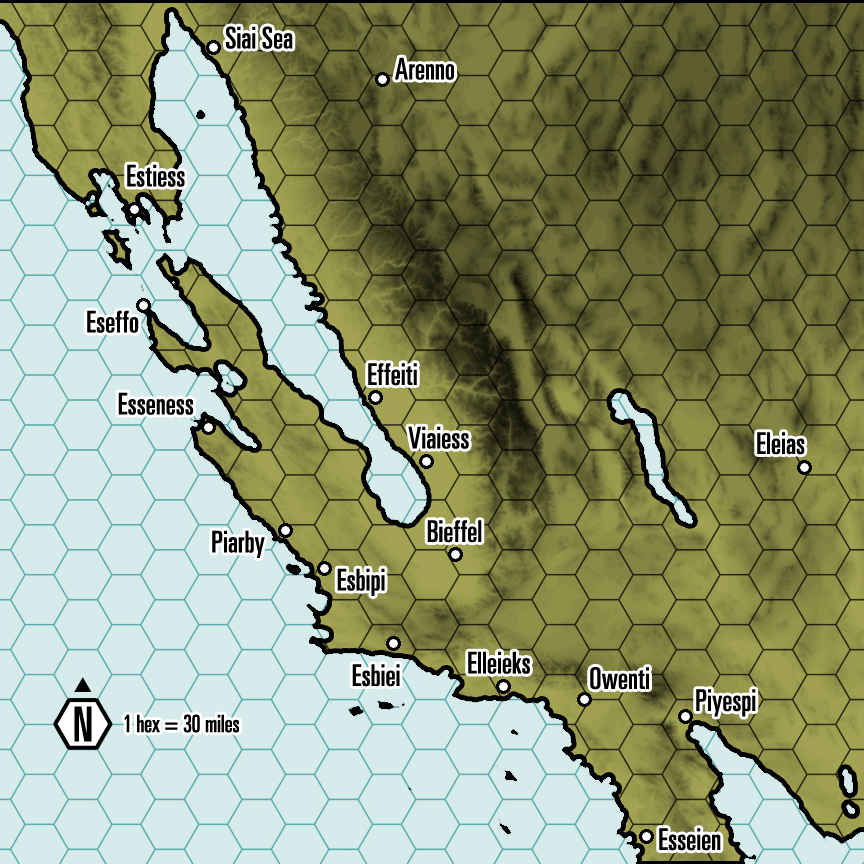
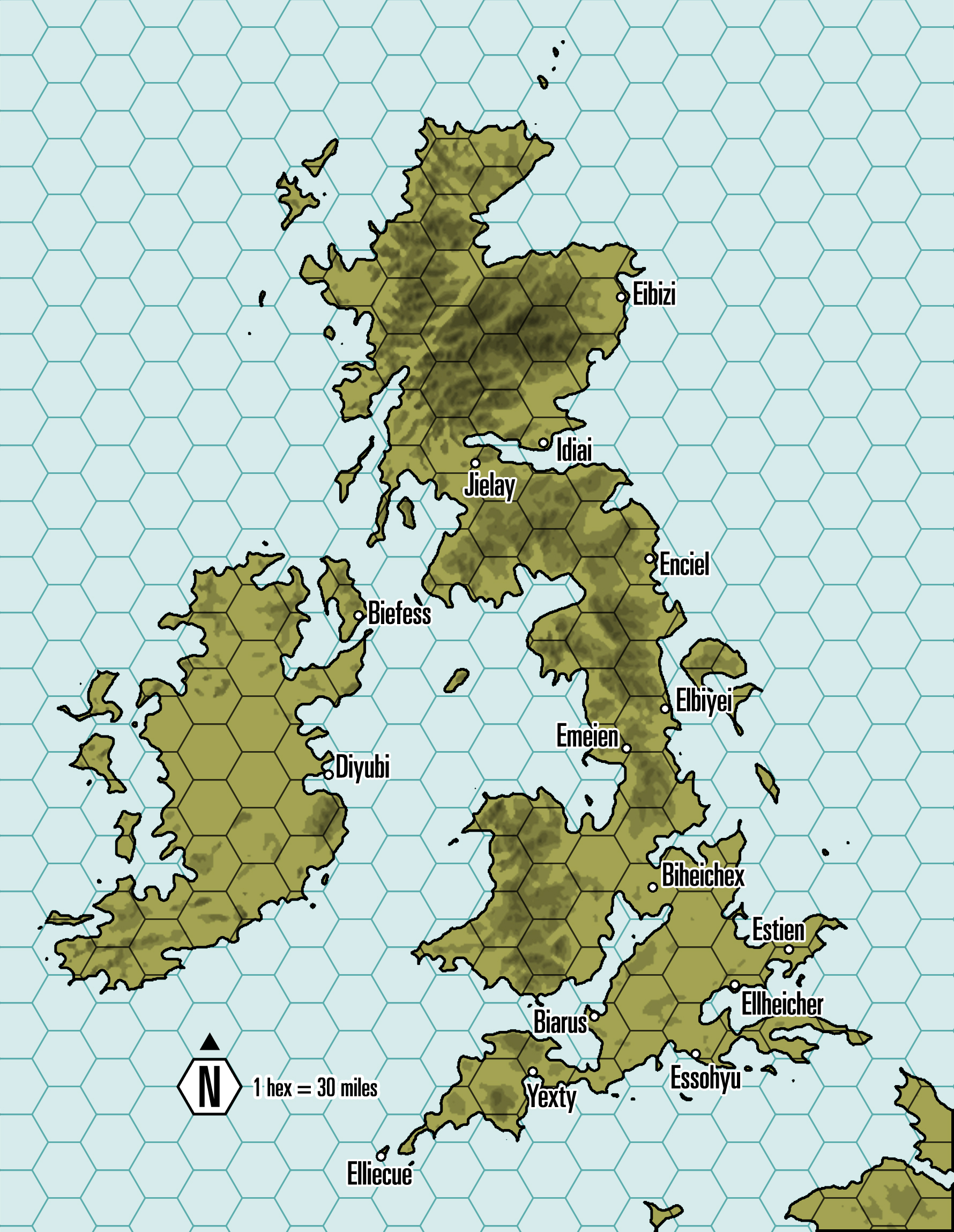
In this section you will find a variety of maps showing regions of a world where the polar ice-caps have melted, dramatically altering the appearance of the world we're familiar with. In addition to the new borders and coastlines, the generations that arise from after the war will also slowly begin to develop their own cultures, languages, and names. Feel free to use the names provided here, or develop your own as you build out your own version of Earth:Abandoned.
For Reference
The global sea level rise of a catastrophe like this would be about 70 meters, or about 230 feet. With this in mind, these maps were made with the help of the Contours Project by Axis Maps: https://contours.axismaps.com