


Arcane Traditions
Wizards gain the Arcane Tradition feature at 2nd level, and the Inheritant, School of Composition, and School of Divinity are new options for that feature.
Inheritant
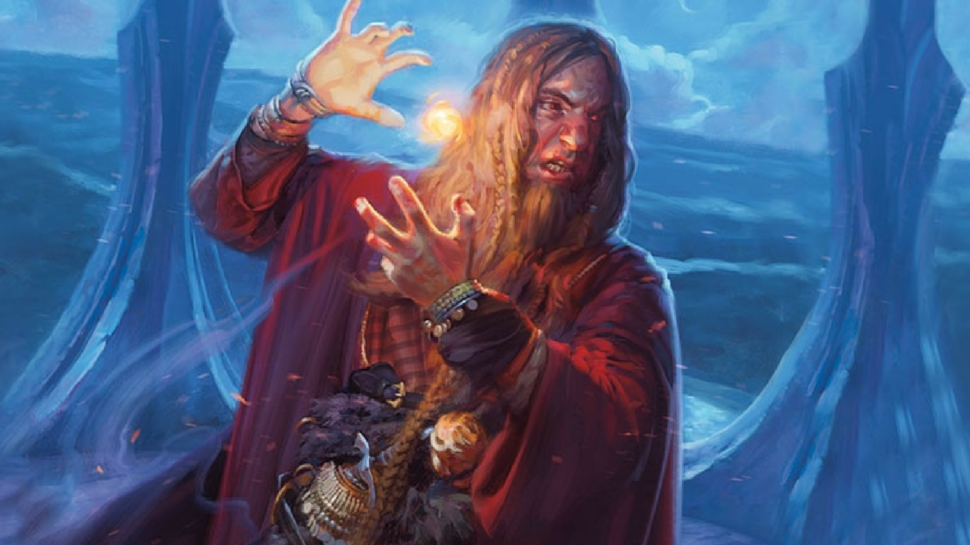
Unlike wizard schools, mages that claim the arcane tradition of Inheritants do not choose their path, but instead are chosen by it. Whether by heritage, boon, or an accident of inscrutable fate, such wizards are suffused with magic in every part of their beings and do not learn to cast spells so much as they learn to control the way spells pour out of themselves. Being so close to the source of their arcana, these spellcasters are well-known for the unusual way they contort the magic inside them to unique effect.
Magic Inherent
By 2nd level, you have fully awakened to the true power of the magic inside you. You no longer need to provide material components for your wizard spells, unless they have a cost, such as the specially marked sticks, bones, or similar tokens worth at least 25 gold pieces for the augury spell.
Additionally, you no longer need a spellbook, instead drawing on magic from within. You can instead commit the current contents of your spellbook and any other spells you learn by gaining wizard levels to memory. When you find a wizard spell of 1st level or higher, you can commit it to memory by taking time to decipher and rehearse it. For each level of the spell, the process takes 2 hours and costs 50 gp. The cost represents research materials you purchase to guide your experimentation. Once you have spent this time and money, you can prepare the spell just like your others.
Wellspring of Magic
Also at 2nd level, you have learned to tap into your personal wellspring of magic represented by inherency points, which you can spend to alter your magic and create unique effects. You have a number of inherency points equal to your Intelligence modifier (minimum of 1), and you regain all expended inherency points when you finish a long rest.
You gain two of the following options of your choice. You can use only one option on a spell when you cast it, unless otherwise noted.
Distant. When you cast a spell that has a range of 5 feet or greater, you can spend 1 inherency point to double the range of the spell, and when you cast a spell that has a range of touch, you can spend 1 inherency point to make the range of the spell 30 feet.
Empowered. When you roll damage for a spell, you can spend 1 inherency point to reroll a number of the damage dice up to your Intelligence modifier (minimum of one). You must use the new rolls.
Extended. When you cast a spell that has a duration of 1 minute or longer, you can spend 1 inherency point to double its duration, to a maximum duration of 24 hours.
Subtle. When you cast a spell, you can spend 1 inherency point to cast it without any somatic or verbal components.
Elemental Elasticity
At 6th level, when you cast a spell that deals acid, cold, fire, lightning, or thunder damage, you can substitute that damage type for another one from that list. When you do so, you can add an additional effect to the spell, depending on the damage type you choose.
Acid. A creature affected by this spell is poisoned until the beginning of its next turn.
Cold. The speed of a creature affected by this spell is reduced by 10 feet until the end of its next turn.
Fire. Each creature affected by the spell has disadvantage on Wisdom (Perception) checks that rely on sight until the end of its next turn.
Lightning. A creature affected by the spell can't take reactions until the end of its next turn.
Thunder. A creature affected by the spell is deafened until the end of its next turn.
Adaptive Magic
At 10th level, you have mastered a single superior adaptive technique. You gain one of the options listed below of your choice. When you use your Adaptive Magic, it can't affect a spell cast using a slot higher than 5th-level, and you can't use it with a spell already affected by your Wellspring of Magic feature. After you use this feature, you must finish a long rest before you can do so again.
Heightened. When you cast a spell that forces a creature to make a saving throw to resist its effects, you can give one target of the spell disadvantage on its first saving throw made against the spell.
Quickened. When you cast a spell that has a casting time of 1 action, you can change the casting time to 1 bonus action for this casting.
Twinned. When you cast a spell that targets only one creature and doesn’t have a range of self, you can target a second creature in range with the same spell. To be eligible, it must be incapable of targeting more than one creature at the spell’s current level. For example, magic missile and scorching ray aren’t eligible, but ray of frost and chromatic orb are.


Inherent Restoration
Starting at 14th level, you can choose to regain all your expended inherency points when you finish a short rest. Once you have used this feature, you must finish a long rest before you can do so again.
School of Composition
Music can soothe the savage beast and move the wounded soul. In many realms of the multiverse, it also possesses immense magical potency. Wizards of the School of Composition learn to write lyrics and compose music that draw upon the power of song and harmony. Known for their inspirational attitude and proclivity for breadth over depth, these mystical minstrels can always be spotted in battle as they treat all the world as a stage.
Musician
At 2nd level, you gain proficiency in one musical instrument of your choice. You can use a musical instrument as a spellcasting focus for your wizard spells.
Inspiration
Also beginning when you choose this arcane tradition at 2nd level, You can inspire others through stirring words or music. To do so, you use a bonus action on your turn to choose one creature other than yourself within 60 feet of you who can hear you. That creature gains one Inspiration die, which is
a d4.
Once within the next 10 minutes, the creature can roll the die and add the number rolled to one ability check, attack roll, or saving throw it makes. The creature can wait until after it rolls the d20 before deciding to use the Inspiration die, but must decide before the GM says whether the roll succeeds or fails. Once the Inspiration die is rolled, it is lost. A creature can have only one such die at a time.
You can use this feature a number of times equal to your Intelligence modifier (a minimum of once). You regain any expended uses when you finish a long rest.
Jack of All Trades
Starting at 6th level, you can add half your proficiency bonus, rounded down, to any ability check you make that doesn’t already include your proficiency bonus.
Countercharm
At 10th level, you gain the ability to use musical notes or words of power to disrupt mind-influencing effects. As an action, you can start a performance that lasts until the end of your next turn. During that time, you and any friendly creatures within 30 feet of you have advantage on saving throws against being frightened or charmed. A creature must be able to hear you to gain this benefit. The performance ends early if you are incapacitated or silenced or if you voluntarily end it (no action required).
Font of Inspiration
When you reach 10th level, you regain all expended uses of your Inspiration when you finish a short or long rest.
Magical Secrets
By 14th level, you have plundered magical knowledge from a broad spectrum of disciplines. Choose two spells from any classes, including this one. A spell you choose must be of a level you can cast, as shown on the Wizard table, or a cantrip, and it must not cause a creature to regain hit points. The chosen spells count as wizard spells for you and are added to your spellbook.
School of Divinity
Students of the School of Divinity mix their magical studies with divine theory and religious doctrine. Many wizards who pursue such learning go on to be preachers or fill other spiritual roles in their society. By learning to call on the divine power of the gods themselves, these ministerial magicians are able to channel positive energy, censure blasphemy, and sometimes even perform miracles.
Spells of Divinity
Your sacred connection to divine power allows you to cast certain spells. You gain access to these special spells at the levels listed on the Spells of Divinity table. When you gain access to them they're always prepared, and they don’t count against the number of spells you can prepare each day. If you gain access to a spell that doesn’t appear on the wizard spell list, the spell is nonetheless a wizard spell for you.
Spells of Divinity
| Wizard Level | Spells |
|---|---|
| 3rd | aid, augury |
| 5th | beacon of hope, daylight |
| 7th | death ward, guardian of faith |
| 9th | commune, greater restoration |

Touch of Healing
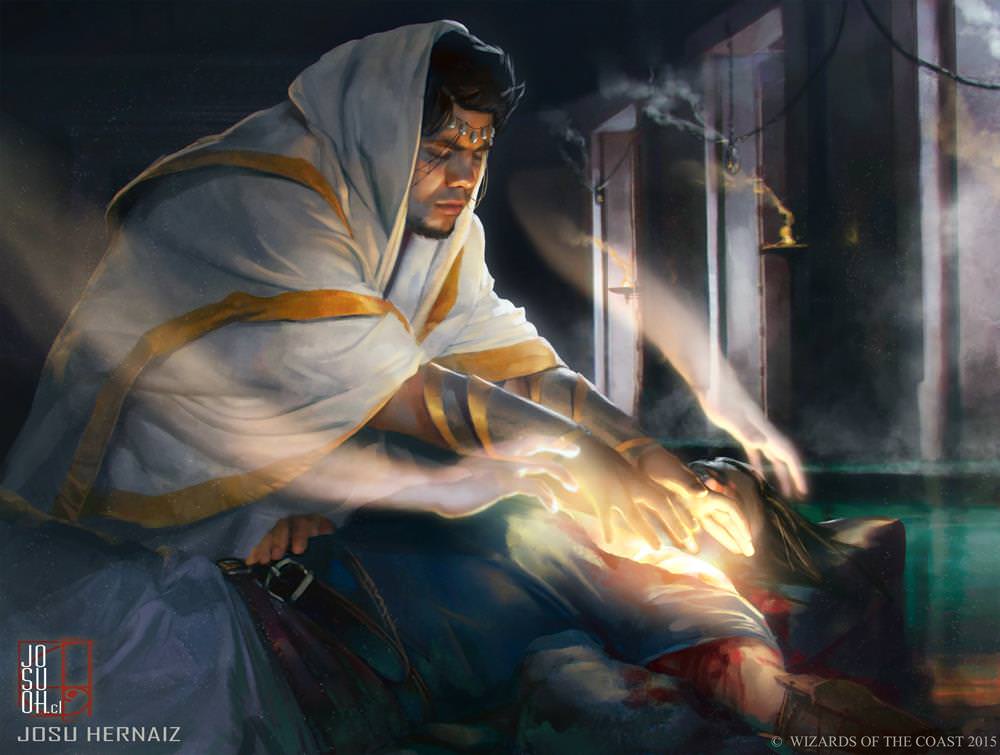
When you choose this arcane tradition at 2nd level, you learn to channel your magic into pure positive energy. As an action, you can touch a willing creature and expend one spell slot to heal the creature. The creature regains hit points equal to 2 x your Intelligence modifier (minimum of 2) for a 1st-level spell slot, plus your Intelligence modifier (minimum of +1) for each spell level higher than 1st.
Priest
Also at 2nd level, you can use a holy symbol as a spellcasting focus for your wizard spells.
Turn the Profane
Beginning at 6th level, you learn a special prayer that is painful to creatures of blasphemy. As an action, you present your holy symbol and speak an incantation that rebukes the profane. Each aberration, fey, fiend, and undead that can see or hear you within 30 feet of you must make a Wisdom saving throw against your wizard spell save DC. If the creature fails, it is turned for 1 minute or until it takes any damage.
A turned creature must spend its turns trying to move as far away from you as it can, and it can't willingly move to a space within 30 feet of you. It also can't take reactions. For its action, it can use only the Dash action or try to escape from an effect that prevents it from moving. If there's nowhere to move, the creature can use the Dodge action.
Once you use this action, you must finish a short or long rest before you can do so again.
Potent Spellcasting
Starting at 10th level, you add your Intelligence modifier to the damage you deal with any wizard cantrip.
Special Providence
By 14th level, your deity has entrusted you with miraculous power in recognition of your piety and devotion. Choose one of the following options of your choice. Each choice provides access to a spell, which is always prepared, counts as a wizard spell for you, and doesn't count against the number of wizard spells you know.
Forty and Six Years In Building. You learn the temple of the gods spell. Your wizard spells inflict double damage to objects and structures.
Life After Death. You learn the resurrection spell. You also learn spare the dying. It counts as a wizard cantrip for you and doesn't count against the number of cantrips you know.
Miraculous Healing. You learn the heal spell. Whenever you make a death saving throw, you can treat a d20 roll of 9 or less as a 10.
The Word. You learn the divine word spell. When you speak, any creature that can understand at least one language can understand your meaning.
Credits
Created by BunnygeonMaster using GM Binder.
Thanks to members of the Discord of Many Things for feedback and design help, including but not limited to Caim.
First art by someone who did great work on the Player's Handbook, Siren Song Lyre by James Paick, Healing Hands by Josu Hernaiz (all ©Wizards of the Coast).