Huntsman
Rough and wild looking, a human stalks alone through the shadows of trees, hunting the orcs he knows are planning a raid on a nearby farm. Clutching a shortsword in each hand, he becomes a whirlwind of steel, cutting down one enemy after another.
After tumbling away from a cone of freezing air, an elf finds her feet and draws back her bow to loose an arrow at the white dragon. Shrugging off the wave of fear that emanates from the dragon like the cold of its breath, she sends one arrow after another to find the gaps between the dragon’s thick scales.
Holding his hand high, a half-elf whistles to the hawk that circles high above him, calling the bird back to his side. Whispering instructions in Elvish, he points to the owlbear he’s been tracking and sends the hawk to distract the creature while he readies his bow.
Far from the bustle of cities and towns, past the hedges that shelter the most distant farms from the terrors of the wild, amid the dense-packed trees of trackless forests and across wide and empty plains, huntsmen keep their unending watch.
Deadly Hunters
Warriors of the wilderness, huntsmen specialize in hunting the monsters that threaten the edges of civilization—humanoid raiders, rampaging beasts and monstrosities, terrible giants, and deadly dragons. They learn to track their quarry as a predator does, moving stealthily through the wilds and hiding themselves in brush and rubble. Huntsmen focus their com bat training on techniques that are particularly useful against their specific favored foes. Thanks to their familiarity with the wilds, huntsmen acquire the ability to cast spells that harness nature’s power, much as a druid does. Their spells, like their combat abilities, emphasize speed, stealth, and the hunt. A huntsman’s talents and abilities are honed with deadly focus on the grim task of protecting the borderlands.
Independent Adventurers
Though a huntsman might make a living as a hunter, a guide, or a tracker, a huntsman’s true calling is to defend the outskirts of civilization from the ravages of monsters and humanoid hordes that press in from the wild. In some places, huntsmen gather in secretive orders or join forces with druidic circles. Many huntsmen, though, are independent almost to a fault, knowing that, when a dragon or a band of orcs attacks, a huntsman might be the
first—and possibly the last—line of
defense for those that need it.
This fierce independence makes hunts-
-man well suited to adventuring, since they
are accustomed to life far from the com forts
of a dry bed and a hot bath. Faced with city-bred
adventurers who grouse and whine about the
hardships of the wild, huntsmen respond with
some mixture of amusement, frust-
-ration, and compassion.


Revised-Revised Ranger
This is my personal take on the Ranger class. I used the original ranger, the spell-less ranger, and the revised ranger all as references when designing this, but in the end, went mostly off of my own ideas. There was a good bit of thought put into a lot of the abilities and changes. The biggest, being my removal of spellcasting from the class. I don't believe that rangers should be able to cast, I think it both removes from their power budget and waters down the strength of the theme that the class is meant to be.
I also added a combat mechanic. Every other martial class has a martial ability that makes them special. Divine Smite, Rage, Ki, Sneak Attack. Ranger has none of that. I created the Hunters Stance ability to add to the rangers idea that they are specified in their combat, instead of the more broad combat skills of a fighter.


The Huntsman
| Level | Proficiency Bonus |
Features | Hunter's Bonus |
Stance Uses |
Stances Known |
Survivalists Movement |
|---|---|---|---|---|---|---|
| 1st | +2 | Favored Prey, Favored Terrain | +2 | - | - | |
| 2nd | +2 | Hunting Stance, Survivalists Movement | +2 | 1 | 2 | +10/5 ft. |
| 3rd | +2 | Huntsman Archetype | +2 | 2 | 2 | +10/5 ft. |
| 4th | +2 | Ability Score Improvement | +2 | 2 | 2 | +10/5 ft. |
| 5th | +3 | Extra Attack | +3 | 2 | 3 | +10/5 ft. |
| 6th | +3 | Favored Prey and Favored Terrain improvement | +3 | 2 | 3 | +15/5 ft. |
| 7th | +3 | Huntsman Archetype feature | +3 | 3 | 3 | +15/5 ft. |
| 8th | +3 | Ability Score Improvement | +3 | 3 | 3 | +15/5 ft. |
| 9th | +4 | Trained Perseverance | +4 | 3 | 4 | +15/5 ft. |
| 10th | +4 | Favored Terrain improvement | +4 | 3 | 4 | +20/10 ft. |
| 11th | +4 | Huntsman Archetype feature | +4 | 3 | 4 | +20/10 ft. |
| 12th | +4 | Ability Score Improvement | +4 | 4 | 4 | +20/10 ft. |
| 13th | +5 | Extra Attack (2), Ranger's Intuition | +5 | 4 | 5 | +20/10 ft. |
| 14th | +5 | Favored Prey improvement | +5 | 4 | 5 | +25/10 ft. |
| 15th | +5 | Huntsman Archetype feature | +5 | 4 | 5 | +25/10 ft. |
| 16th | +5 | Ability Score Improvement | +5 | 4 | 5 | +25/10 ft. |
| 17th | +6 | Primal Flurry | +6 | 5 | 5 | +25/10 ft. |
| 18th | +6 | Feral Senses | +6 | 5 | 5 | +30/15 ft. |
| 19th | +6 | Ability Score Improvement | +6 | 5 | 5 | +30/15 ft. |
| 20th | +6 | Huntsman Archetype feature | +6 | 5 | 5 | +30/15 ft. |
Class Features
As a Huntsman, you gain the following class features
Hit Points
- Hit Dice: 1d10 per huntsman level
- Hit Points at 1st Level: 10 + your Constitution modifier
- Hit Points at Higher Levels: 1d10 (or 6) + your Constitution modifier per huntsman level after 1st
Proficiencies
- Armor: light armor, medium armor, shields
- Weapons: simple weapons, martial weapons
- Tools: choose one from carpenter's tools, cartographer's tools, herbalism kit, leatherworker's tools, weaver's tools, or woodcarver's tools
- Saving Throws: Strength, Dexterity
- Skills: Choose three from Animal Handling, Athletics, Insight, Investigation, Nature, Perception, Stealth, and Survival
Equipment
You start with the following equipment, in addition to the equipment granted by your background:
- (a) scale mail or (b) leather armor
- (a) two shortswords or (b) two simple melee weapons
- (a) a dungeoneer's pack or (b) an explorer's pack
- A longbow and a quiver of 20 arrows
- Any one tool kit that you are proficient in
Favored Prey
Beginning at 1st level, you have begun to master the tracking, pursuing, killing, and even sometimes taming or communicating with your favored prey. Choose a type of favored prey: Aberrations, Beasts, Celestials, Constructs, Dragons, Elementals, Fey, Fiends, Giants, Monstrosities, Oozes, Plants, or Undead. Alternatively, you can select two races of humanoid (such as Gnolls, Elves, and Orcs) as favored enemies.
You have advantage on all Wisdom or Intelligence checks related to your favored prey. Tracking, recalling information, trying to discern intention, etc.
This feature will refer to something called a Hunter's Bonus. Refer to the Huntsman class table for what this bonus is.
When you gain this feature, you also learn one language of your choice that is spoken by your favored prey, if they speak one at all. If they do not learn a language, instead gain proficiency in the Animal Handling skill.
With your in depth knowledge of how your favored prey fights, you gain the ability to quickly pick up any knowledge you may need to properly take down your favored prey. After one minute of interacting with a creature that is considered to be your favored prey, you gain the following information:
- If it has any form of Natural Armor, and if it has one, what it's Armor Class is.
- If it has any special movement speeds.
- If it has any resistances, immunities, or vulnerabilities, and what they are to/against.
- If it has any special senses, and if so, what they are. (darkvision, blindsight, tremorsense etc.)
- If it has any natural weapons, and if so, what kind.
In addition to the ability to infer knowledge about your prey, when fighting your favored prey you gain the following list of benefits.
- You may add your hunter's bonus to attack rolls against your favored prey.
- When you deal damage to your favored prey, any damage dice that roll lower than your hunter's bonus, are instantly raised to match it.
- When defending against attacks made by your favored prey, your armor class is increased by your proficiency bonus.
- You may add your hunter's bonus to your saving throws against innate effects created by your favored prey if you are proficient, or if you simply add your proficiency bonus if you were not previously proficient. Effects like innate spellcasting, or dragons breath, but not effects like a thrown bomb or regular spellcasting.
You choose one additional favored prey at 6th and 14th level. Each time you gain a favored prey in this way, you may learn any one language. These languages should be related to your favored prey but do not have to be. As you gain levels, your choices should reflect the types of monsters you have encountered on your adventures.
Favored Terrain
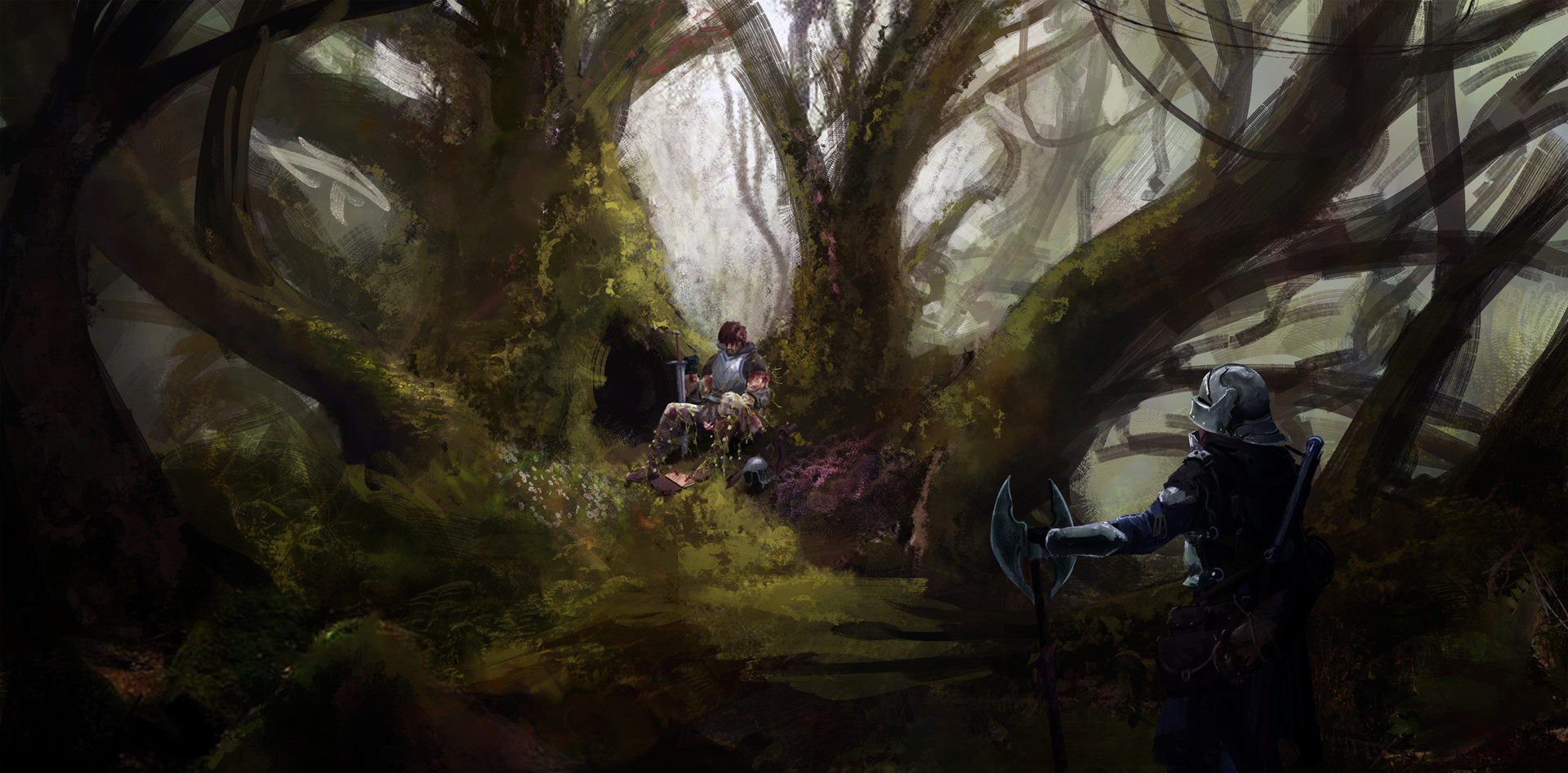
You are particularly familiar with one type of natural Environment and are adept at traveling and surviving in such regions. Choose one type of favored terrain: arctic, coast, desert, forest, grassland, mountain, swamp, or the underdark.
When you make an Intelligence or Wisdom check related to your favored terrain, your proficiency bonus is doubled if you are using a skill that you're proficient in.
While traveling for an hour or more in your favored terrain, you gain the following benefits:
- Difficult terrain doesn't slow your group's travel.
- Your group can't become lost except by magical means.
- Even when you are engaged in another activity while traveling (such as foraging, navigating, or tracking), you remain alert to danger.
- If you are traveling alone, you can move stealthily at a normal pace.
- When you forage, you find twice as much food as you normally would.
- While tracking other creatures, you also learn their exact number, their sizes, and how long ago they passed through the area.
Additionally, when simply within your favored terrain, you gain the following benefits:
- You have advantage on initiative rolls.
- You are able to take advantage of cover more than the average person. Half cover instead grants the benefits of three quarters cover, and three quarters cover grants the benefits of full cover.
- You are immune to the negative effects of non-magical difficult terrain.
- You have advantage on all Dexterity (Stealth) checks.
- All plant creatures native to your favored terrain are considered to be favored prey.
You choose an additional favored terrain type at 6th level, and another at 10th level.

Hunting Stance
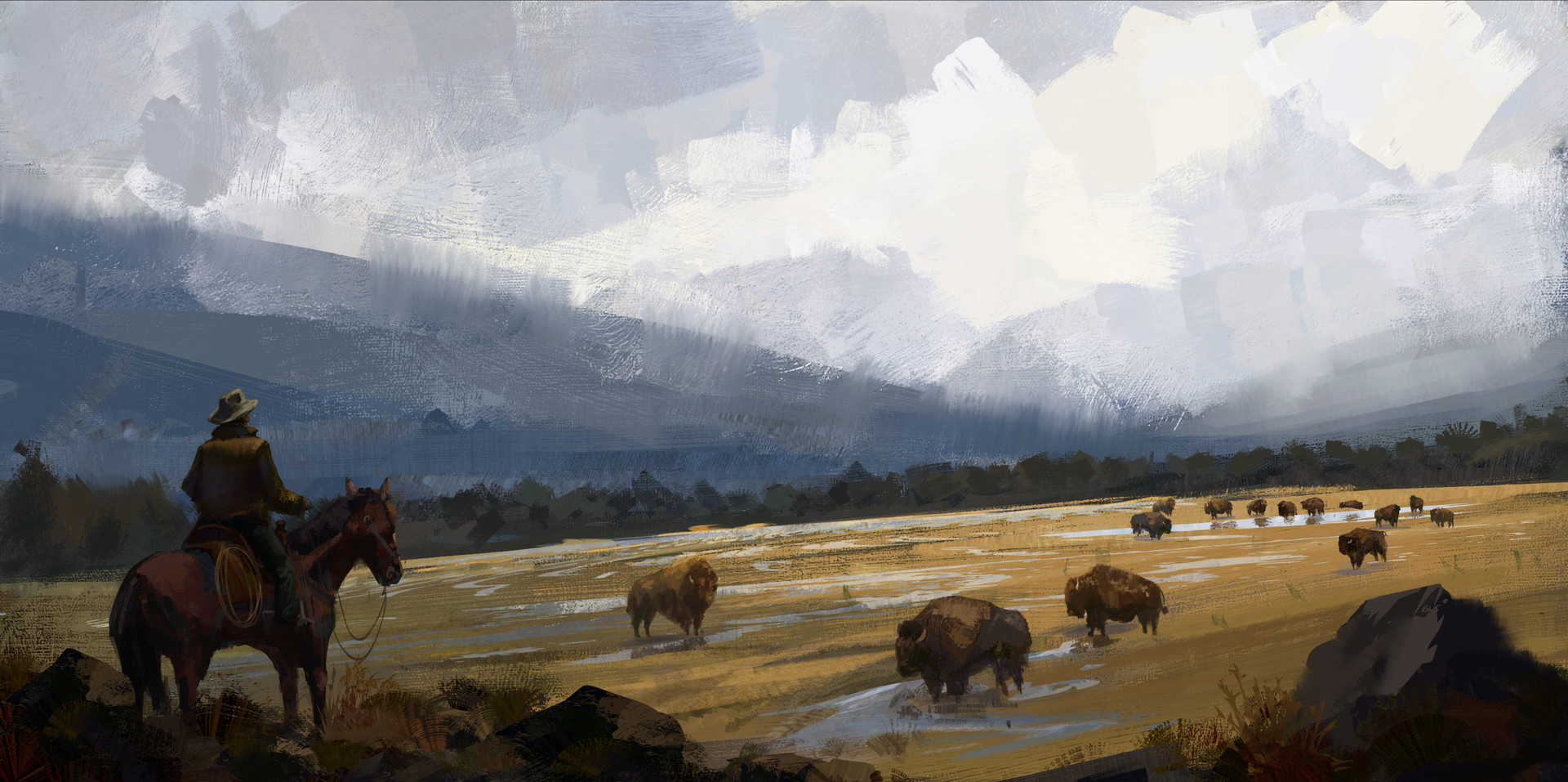
At 2nd level, you gain the ability to take on styles of fighting known as hunting stances. You may enter a hunting stance as a bonus action, and it lasts until you enter a second one, or until you begin a turn and have not attacked since the beginning of your last. Choose two of the following hunting stances to learn. You learn an additional hunting stance at 5th level, at 9th level, and at 13th level. Once you have entered a stance the maximum number of times for your huntsman level, you must finish a short or long rest before you can enter a stance again. You may use this feature one time at 2nd, two times at 3rd level, three at 7th, four at 12th, and five at 17th.
Aggressor's Stance
You enter a hostile stance. One you know will infuriate your enemies and draw them too you. Whilst in this stance you gain the following effects:
- When you make an attack against creatrure that is not immune to fear, whether or not you hit, you may use your bonus action to make a Strength or Charisma (Intimidation) check against the creature and any other members of your favored prey that are not immune to fear within 60 feet of you. They must all make a wisdom saving throw against your roll. If they fail, they have disadvantage attacking creatures other than you for the next minute. A creature that succeeds against this saving throw is immune to this abilities effects for one hour.
- When you deal damage to a creature taunted in this way, you may roll your damage rolls twice, and keep the higher of the two.
Alpha's Stance
You enter an assertive stance. Your eyes scan with the precision of a tactician, as you begin to take control of the battlefield. Whilst in this stance you gain the following effects:
- When an ally that you can see within 30 feet of you makes an attack roll against a member of your favored prey, the attack roll is made at advantage. If this happens but the creature is not a member of your favored prey, you may instead use your reaction to give them advantage on their attack roll.
- When a member of your favored prey attacks an ally that you can see within 30 feet, your allies AC is increased by half of your hunter's bonus, rounded up, for the duration of the attack.
Warden's Stance
You enter a defensive stance. You hold yourself strong, and keep strong against the toll you most certainly can take. Whilst in this stance you gain the following effects:
- Your stance does not end if you do not attack. Instead, it ends if you go a turn without using your action to prepare your defenses.
- You may use your action to prepare you defenses. When you do this, your AC increases by an amount equal to your hunter's bonus until the beginning of your next turn. When being attacked by members of your favored prey whilst defending this way, their attacks are made at disadvantage.
Poacher's Stance
You enter an aggressive stance. You aim for the shins, you fight dirty. You shoot to wound, not to kill. Whilst in this stance you gain the following effects:
- When attacking with nets and similar weapons, the range of the weapon is doubled.
- When attacking with nets and similar weapons, the DC creatures need to roll against to avoid being restrained is increased by your an amount equal to your dexterity modifier. If the creature is a member of your favored prey the DC also increases by your hunter's bonus.
- When you hit a member of your favored prey with a ranged weapon attack, the creature must make a constitution saving throw against a DC of 10 or half of the damage you dealt, whichever is higher, or have their movement speed reduced by a stacking 5 feet until they receive magical healing. A creature with a medicine kit can attempt to tend to these wounds. Doing so requires a medicine check over the course of a short rest against a DC of 5 + the total reduced movement. On a successful check, all lost movement speed is regained.
Pursuer's Stance
You enter a hunters stance. You trail your enemies, and move with apex's purpose. Whilst in this stance you gain the following effects:
- When you move more than 20 feet in a straight line right before hitting with a weapon attack, the creature hit by the attack must make a Strength saving throw against a DC of 10 or half of the damage you dealt, whichever is higher, or have their movement speed halved until the beginning of your next turn.
- When you make an opportunity attack against a member of your favored prey, you may instead make as many attacks as you would with the attack action instead of being limited to one attack, as if it was your turn.

Scout's Stance
You enter a sprinters stance. With each step you propel yourself further as you attempt to make distance, and position tactically. Whilst in this stance you gain the following effects:
- Your stance does not end if you do not attack. Instead, it ends if you go a turn without taking the Dash action.
- Members of your favored prey are unable to make opportunity attacks against you. Other creatures instead have disadvantage on opportunity attacks they make againsts you.
- You may move through your enemy spaces occupied by members of your favored prey freely if they are a size category or more larger than you.
Stalker's Stance
You enter a killers stance. You move silently, and in this movement prepare yourself to pounce with all the precision you need to end your foes swiftly and effectively. Whilst in this stance you gain the following effects:
- When you hit a creature that you were hidden from with a weapon attack, they must make a Constitution saving throw against a DC of 10 or half of the damage you dealt, whichever is higher, or fall prone.
- When you hit a prone or restrained member of your favored prey with a weapon attack, the attack becomes a critical hit.
Survivalists Movement
Starting at 2nd level, your speed increases by 10 feet while you are not wearing heavy armor if you are within your favored terrain. You instead gain half of the this bonus to your movement (rounded down to the nearest multiple of 5) when you are not within your favored terrain. This bonus increases when you reach certain Huntsman levels, as shown in the Huntsman table.
Huntsman Archetype
At 3rd level, you choose an archetype that you strive to emulate, such as the Beast Master. Your choice grants features at 3rd level, and again at 7th, 11th, 15th, and 20th level.
Ability Score Improvement
When you reach 4th level, and again at 8th, 12th, 16th, and 19th level, you can increase one ability score of your choice by 2, or you can increase two ability scores of your choice by 1. As normal, you can’t increase an ability score above 20 using this feature.
Extra Attack
Beginning at 5th level, you can attack twice, instead of once, whenever you take the Attack action on your turn.
The number of attacks increases to three when you reach the 13th level in this class.
Trained Perseverance
Beginning at 7th level, you can nimbly dodge out of the way of, or physically withstand the force of certain area effects caused by members of your favored prey, such as a red dragon's fiery breath or an demiliches life drain. When you are subjected to an effect by a member of your favored prey, that allows you to make a saving throw to take only half damage, you instead take no damage if you succeed on the saving throw, and only half damage if you fail.
Ranger's Intuition
When you gain this feature at 13th level, you gain the ability to tell immediately if a creature is a member of your favored prey. A creature disguised in any way, magically or non-magically, cannot avoid this detection. You simply become immediately aware of the creature type of any creature that you can see if they are a member of your favored prey.
Additionally, when traveling through your favored terrain for more than an hour, you know if any members of your favored prey have passed through here within the past day. If you become aware of any creatures in this way, you know what size they are, how many, and which direction they were heading.
Hunters Flurry
Beginning at 17th level, you may expend one of your uses of Hunters Stance, to make a quick flurry of strikes. When you do this, as a bonus action you may make two attacks.
Feral Senses
At 18th level, you gain preternatural senses that help you fight creatures you can't see. When you attack a creature you can't see, your inability to see it doesn't impose disadvantage on your attack rolls against it. You are also aware of the location of any invisible creature within 30 feet of you, provided that the creature isn't hidden from you and you aren't blinded or deafened.



Huntsman Archetypes
Beast Master
The Beast Master archetype embodies a friendship between the civilized races and the beasts of the world. United in focus, beast and ranger work as one to fight the monstrous foes that threaten civilization and the wilderness alike.
Tame Companion
At 3rd level, you learn to use your trained abilities to create a powerful bond with a creature of the kind which you stalk.
You gain the ability to attempt to tame your favored prey and make them loyal. Depending on the kind of creature, this may be in different ways. If your favored prey is a humanoid or similar, than you can consider this archetype more of a slaver than a beast master.
If you successfully befriend, capture, or detain a member of your favored prey that is a CR of 1/5th your level or lower, you may spend your days taming and training it to become a loyal servant of yours. Whether this be friendly or not, it is effective. For each day that you spend with a creature in this way, you may attempt either a Charisma (Persuasion) or Charisma (Intimidation) check if you share a language with it, or a Wisdom (Animal Handling) check if you do not. The DC you must meet is equal to 12 + twice the creatures CR. If the creature had a life, family, or reason to not follow you, and has an intelligence of 6 or higher, you are unable to tame them with persuasion or animal handling.
After a successful check, the creature becomes your companion, and gains all the benefits of your Companion's Bond ability. You can have only one companion at a time. You may dismiss a companion over the course of 10 minutes alone with it. Creatures dismissed in this way that were tamed with intimidation must be re-tamed from scratch if you ever wish to have them as a companion again. Ones tamed with animal handling or persuasion can be re-tamed simply as an action.
If your companion is ever slain, you must either tame a new one, or resurrect it as you would anything else. A resurrected companion is still considered to be tamed by you.
Companion's Bond
Upon reaching 3rd level, your time taming your companion has brought you guys closer, and gifted you both as a duo a new level of synergy. Your companion gains a number of benefits while it is tamed by you, detailed below.
If your companion had the multiattack feature, it becomes unable to use it unless another ability specifically allows it to. Otherwise, it keeps the statistics it had otherwise before taming it, with the exception that it uses your proficiency bonus instead of it's own.
The companion obeys your commands as best it can. It rolls for initiative like any other creature. If it's Intelligence is lower than 6, you determine its actions, decisions, attitudes, and so on. Otherwise, your Dungeon Master does so. If you are incapacitated or absent, your companion acts on its own, focusing on protecting you and itself.
Upon taming a companion, you may teach it two skills that you are proficient in that it then also becomes proficient in.
Your companion benefits from both your Favored Prey and Favored Terrain features as if they had them.
Like any creature, the beast can spend hit dice during a short rest, heal on long rests, and do anything else a normal creature would do.
Mirrored Style
Upon reaching 7th level in this class, Your companion pays attention to your every moves, and begins to fight just like you do. Your companion gains any benefits that you gain whilst in a stance as per the Hunting Stance feature.
Companion's Fury
Upon reaching 11th level, When your companion takes the Attack action, the creature can attack twice, or take the Multiattack action if it had that action.
Uncanny Coordination
Beginning at 15th level, when an attacker that you can see hits your companion with an attack, you can call out a warning. If your companion can hear you, it can use its reaction to halve the attack's damage against it. In addition to this, it can do the same for you. If you are hit with an attack, it can call out a similar warning, allowing you to use your reaction to halve the attack's damage just as it would.
Eternal Companion
Upon reaching 20th level, you have gained the ability to designate your companion to be your eternal companion. If you have been bonded to the same companion for more than a months, you can use this feature on them. Over the course of a long rest, you can perform a small ceremony with your companion to mark them as forever. You mark them in some way, whether with a tattoo, scar, or even a ring, scarf, or distinguishable piece of clothing. Whilst bonded to you in this way, your companion gains a number of additional benefits.

An eternal companion gains the ability to, when it makes the attack action, make three attacks instead, or if it had the multiattack action, it can make an additional attack alongside the attacks gained by the multiattack.
Your eternal companion becomes proficient in any skill you are proficient in. If it was already proficient in those skills beforehand, it instead doubles the proficiency bonus it adds to that skill.
Your eternal companion has access to all of your Hunting Styles, and can instead of mirroring yours with the Mirrored Style feature, it can instead use it's bonus action as you would to enter it's own. It can do this only on rounds where you also use your bonus action to enter a stance.
You are unable to dismiss an companion bonded to you in this way, unless the companion dies.
Hunter
Emulating the Hunter archetype means accepting your place as a bulwark between civilization and the terrors of the wilderness. As you walk the Hunter's path, you learn specialized techniques for fighting the threats you face, from rampaging ogres and hordes of orcs to towering giants and terrifying dragons.
Hunter's Prey
At 3rd level, you gain one of the following features of your choice: Colossus Slayer, Giant Killer, or Horde Breaker.
- Colossus Slayer. Your tenacity can wear down the most potent foes. When you hit a creature with a weapon attack, the creature takes an extra 1d8 damage if it's below its hit point maximum. You can deal this extra damage only once per turn.
- Giant Killer. When a Large or larger creature within 5 feet of you hits or misses you with an attack, you can use your reaction to attack that creature immediately after its attack, provided that you can see the creature.
- Horde Breaker. Once on each of your turns when you make a weapon attack, you can make another attack with the same weapon against a different creature that is within 5 feet of the original target and within range of your weapon.
Defensive Tactics
At 7th level, you gain one of the following features of your choice: Escape the Horde, Multiattack Defense, or Steel Will.
- Escape the Horde. Opportunity attacks against you are made with disadvantage.
- Multiattack Defense. When a creature hits you with an attack, you gain a +4 bonus to AC against all subsequent attacks made by that creature for the rest of the turn.
- Steel Will. You have advantage on saving throws against being frightened.
Multiattack
At 11th level, you gain one of the following features of your choice: Volley or Whirlwind Attack.
- Volley. You can use your action to make a ranged attack against any number of creatures within 10 feet of a point you can see within your weapon's range. You must have ammunition for each target, as normal, and you make a separate attack roll for each target.
- Whirlwind Attack. You can use your action to make a melee attack against any number of creatures within 5 feet of you, with a separate attack roll for each target.
Superior Hunter's Defense
At 15th level, you gain one of the following features of your choice: Evasion, Stand Against the Tide, or Uncanny Dodge.
- Evasion. When you are subjected to an effect, such as a red dragon's fiery breath or a lightning bolt spell, that allows you to make a Dexterity saving throw to take only half damage, you instead take no damage if you succeed on a saving throw, and only half damage if you fail
- Stand Against the Tide. When a hostile creature misses you with a melee attack, you can use your reaction to force that creature to repeat the same attack against another creature (other than itself) of your choice.
- Uncanny Dodge. When an attacker that you can see hits you with an attack, you can use your reaction to halve the attack's damage against you.
Improved Hunter's Prey
At 20th level, you gain one of the following features dependent on what you took at level 3 for your Hunter's Prey.
- Colossus Slayer. You have mastered your previous style of fighting. When you hit a creature with a weapon attack, the creature takes an extra 1d8 if the creature is below it's hit point maximum. This damage is not limited pre turn in any way, and stacks with the original colossus slayer damage.
- Giant Killer. You have mastered your previous style of fighting. When you use your reaction after a large or larger creature attacks to attack them, you instead make your entire attack action as apposed to a single attack, as if it was your turn.
- Horde Breaker. You have mastered your previous style of fighting. When you use Horde Breaker to attack a second target, you may make three attacks instead of one. These three attacks must all target creatures that you have not targeted with attacks yet this turn, and, each creature that is targeted with attacks in this way must be within 5 feet of the last creature you attacked that turn.
Gloom Stalker
Gloom Stalkers are at home in the darkest places: deep under the earth, in gloomy alleyways, in primeval forests, and wherever else the light dims. Most folk enter such places with trepidation, but a Gloom Stalker ventures boldly into the darkness, seeking to ambush threats before they can reach the broader world. Such huntsmen are often found in the Underdark, but they will go any place where evil lurks in the shadows.
Dread Ambusher
At 3rd level, you master the art of the ambush. You can give yourself a bonus to your initiative rolls equal to your Wisdom modifier.
At the start of your first turn of each combat, your walking speed increases by 10 feet, which lasts until the end of that turn. If you take the Attack action on that turn, you can make one additional weapon attack as part of that action. If that attack hits, the target takes an extra 1d8 damage of the weapon's damage type.
Umbral Sight
At 3rd level, you gain darkvision out to a range of 60 feet. If you already have darkvision from your race, its range increases by 30 feet.
You are also adept at evading creatures that rely on darkvision. While in darkness, you are invisible to any creature that relies on darkvision to see you in that darkness.
Iron Mind
By 7th level, you have honed your ability to resist the mind-altering powers of your prey. You gain proficiency in Wisdom saving throws. If you already have this proficiency, you instead gain proficiency in Intelligence or Charisma saving throws (your choice).
Stalker's Flurry
At 11th level, you learn to attack with such unexpected speed that you can turn a miss into another strike. Once on each of your turns when you miss with a weapon attack, you can make another weapon attack as part of the same action.
Shadowy Dodge
Starting at 15th level, you can dodge in unforeseen ways, with wisps of supernatural shadow around you. Whenever a creature makes an attack roll against you and doesn't have advantage on the roll, you can use your reaction to impose disadvantage on it. You must use this feature before you know the outcome of the attack roll.
Stalker's Reflexes
When you reach 20th level, you have become adept at laying ambushes and quickly escaping danger. You can take two turns during the first round of any combat. You take your first turn at your normal initiative and your second turn at your initiative minus 10. You can't use this feature when you are surprised. You may use Dread Ambusher on each of these turns, as if each was your first turn in the combat.
Ranger
Ranger's are like Huntsman, but worse. They instead of learning how to hunt well, and fight better, waste their time learning magic. This subclass is for people who really want to use the mechanics of the old ranger, but don't want the class itself to cripple the playability of their character.
Spellcasting
When you reach 3rd level, you augment your martial prowess with the ability to cast spells. See chapter 10 for the general rules of spellcasting and chapter 11 for the druid spell list.
Spell Slots. The Ranger Spellcasting table shows how many spell slots you have to cast your spells of 1st level and higher. To cast one of these spells, you must expend a slot of the spell's level or higher. You regain all expended spell slots when you finish a long rest. For example, if you know the 1st-level spell shield and have a 1st-level and a 2nd-level spell slot available, you can cast shield using either slot.
Spells Known of 1st-Level and Higher. You know three 1st-level druid spells of your choice, two of which you must choose from the conjuration and evocation spells on the druid spell list.
The Spells Known column of the Ranger Spellcasting table shows when you learn more druid spells of 1st level or higher. Each of these spells must be an conjuration or evocation spell of your choice, and must be of a level for which you have spell slots. For instance, when you reach 7th level in this class, you can learn one new spell of 1st or 2nd level.
The spells you learn at 8th, 14th, and 20th level can come from any school of magic.
Whenever you gain a level in this class, you can replace one of the druid spells you know with another spell of your choice from the druid spell list. The new spell must be of a level for which you have spell slots, and it must be an abjuration or evocation spell, unless you're replacing the spell you gained at 3rd, 8th, 14th, or 20th level from any school of magic.
Spellcasting Ability. Wisdom is your spellcasting ability for your druid spells, since you learn your spells through your bond with nature. You use your Wisdom whenever a spell refers to your spellcasting ability. In addition, you use your Wisdom modifier when setting the saving throw DC for a druid spell you cast and when making an attack roll with one.
Spell Save DC
Spell attack modifier
Ranger Spellcasting
| Huntsman Level |
Cantrips Known |
Spells Known |
1st | 2nd | 3rd | 4th |
|---|---|---|---|---|---|---|
| 3rd | 2 | 3 | 2 | — | — | — |
| 4th | 2 | 4 | 3 | — | — | — |
| 5th | 2 | 4 | 3 | — | — | — |
| 6th | 2 | 4 | 3 | — | — | — |
| 7th | 2 | 5 | 4 | 2 | — | — |
| 8th | 2 | 6 | 4 | 2 | — | — |
| 9th | 2 | 6 | 4 | 2 | — | — |
| 10th | 3 | 7 | 4 | 3 | — | — |
| 11th | 3 | 8 | 4 | 3 | — | — |
| 12th | 3 | 8 | 4 | 3 | — | — |
| 13th | 3 | 9 | 4 | 3 | 2 | — |
| 14th | 3 | 10 | 4 | 3 | 2 | — |
| 15th | 3 | 10 | 4 | 3 | 2 | — |
| 16th | 3 | 11 | 4 | 3 | 3 | — |
| 17th | 3 | 11 | 4 | 3 | 3 | — |
| 18th | 3 | 11 | 4 | 3 | 3 | — |
| 19th | 3 | 12 | 4 | 3 | 3 | 1 |
| 20th | 3 | 13 | 4 | 3 | 3 | 1 |
Hunter's Mark
When you take this archetype at 3rd level, you gain the ability to plant a magical mark on your enemies. Casting this mark takes a bonus action, and expends a 1st level spell slot. Target a creature within 90 feet of you, and until the effect ends, you deal an extra 1d6 damage to a creature you can see whenever you hit it with a weapon attack, and you have advantage on Perception and Survival checks to find it. If the target drops to 0 hit points before this effect ends, you can use a bonus action on a subsequent turn to mark a new creature. This ability lasts one hour, and you must concentrate on it like you would a spell.
You may use this ability using a spell slot higher than first. Doing so at 2nd or 3rd level, allows you to concentrate on the ability for up to 8 hours. If you use a slot of 4th level or higher, you can concentrate for up to 24 hours.
Primeval Awareness
Beginning at 7th level, you can use your action and expend a spell slot to focus your awareness on the region around you. By spending 1 uninterrupted minute in concentration (as if you were concentrating on a spell), you can sense whether any of your favored enemies are present within 1 mile of you (6 miles if you are within your favored terrain). This feature reveals which of your favored enemies are present, their numbers, and the creatures' general direction and distance (in miles) from you.
If there are multiple groups of your favored enemies within range, you learn this information for each group.
Cordon of Arrows
Upon reaching 7th level, you have learned a special technique to allow you to protect the lands you claim. As an action you plant up to four pieces of nonmagical ammunition (arrows or crossbow bolts) in the ground within 5 feet of you and expend a 1st level spell slot and lay magic upon them to protect an area. For the next 8 hours, whenever a creature other than you comes within 30 feet of the ammunition for the first time on a turn or ends its turn there, one piece of ammunition flies up to strike it. The creature must succeed on a Dexterity saving throw against your ranger spell save DC or take 1d6 piercing damage. The piece of ammunition is then destroyed. The effect ends when no ammunition remains.
When you use this ability, you can designate any creatures you choose, and this ability ignores them. You may use this ability using a spell slot higher than first. If you do the amount of ammunition that can be affected increases by four for each slot level above 1st.
Conjure Barrage
Upon reaching level 11, Your magical combat skills have allowed you to weave together your ranged fighting, and your casting. As an action, you can expend a 2nd level or higher spell slot, and throw a nonmagical weapon or fire a piece of nonmagical ammunition into the air to create a cone of identical weapons that shoot forward and then disappear. Each creature in a 60-foot cone starting from you must succeed on a Dexterity saving throw against your ranger spell save DC. A creature takes 3d8 damage on a failed save, or half as much damage on a successful one. The damage type is the same as that of the weapon or ammunition used as a component.
Conjure Volley
Starting at 15th level, You have began to hone your magical manipulation of ammunition to an art. You may as an action expend a 3rd level or higher spell slot to fire a piece of nonmagical ammunition from a ranged weapon or throw a nonmagical weapon into the air and choose a point within 150 feet of you. Hundreds of duplicates of the ammunition or weapon fall in a volley from above and then disappear. Each creature in a 40-foot-radius. 20-foot-high cylinder centered on that point must make a Dexterity saving throw against your ranger spell save DC. A creature takes 8d8 damage on a failed save, or half as much damage on a successful one. The damage type is the same as that of the ammunition or weapon.
Swift Quiver
Upon reaching 20th level, you have learned an extremely powerful magical ability that allows you to enchant your quiver with incredible arcane properties. As a bonus action, you may expend a 4th level spell slot to transmute your quiver so it produces an endless supply of nonmagical ammunition, which seems to leap into your hand when you reach for it.
On each of your turns until the effect ends, you can use a bonus action to make two attacks with a weapon that uses ammunition from the quiver. Each time you make such a ranged attack, your quiver magically replaces the piece of ammunition you used with a similar piece of nonmagical ammunition. Any pieces of ammunition created by this spell disintegrate when the spell ends. If the quiver leaves your possession, the spell ends. This effect lasts for up to one minute, and you must concentrate on it like you would a spell.
Written By Desmon Arnold
Honestly, I absolutely adore the flavor of a nature or hunter based martial class, and the ranger really botched what I wanted from it in fifth edition. This is my personal take on what I think it should be, enjoy. I would love to see other people adapt this class and make subclasses for it from other ranger subclasses. (Basically just minor tweaks, and adding capstones.)
Art Credits
Huntsman Blurb: "Lycan-Gunslinger"
https://www.artstation.com/ajaxlove
Huntsman Backdrop: "Natural Bridge"
https://www.artstation.com/alexvanderlinde
Favored Terrain: "Fallen Hunter"
https://www.artstation.com/jackwdowell
Hunters Stances: "Bison Herd"
https://www.artstation.com/jackwdowell
Ranger's Intuition: "Adventure Time/Bloodborne"
https://www.artstation.com/kolpakov
Beast Master: "Morning Walk"
https://www.artstation.com/astappaerts
Ranger: "Necroship"
https://www.artstation.com/weihaoart