Polymorphism
The question of life and its mysteries baffle those of science. Although, those of the arcane have dabbled shaping it. Transmutation wizards who take things one step too far find themselves creating monstrosities that they often cannot control. What mad creations lurk in the depths of imagination.
Embalming Tools
This set of instruments and fluids, worth 50 gp, are used to sanitize, present, and preserve remains of a corpse keeping it from the clutches of decay. Proficiency in embalming tools allows you to add your proficiency bonus to any ability checks you make to present or preserve a body or parts of one.
Organic Shaping
Starting at 2nd level when you choose this tradition, you can temporarily alter the physical form of a creature with parts of the dead. You gain profiency with and a set of Embalming Tools to extract components from the dead. It takes ten minutes per component to properly embalm. The process of embalming tells you much about the creatures' biology. When you successfully extract components from a slain creature, you learn the creature's game statistics. Your DM has the statblock available for you.
Over the course of ten minutes, you can prepare a ritual to augment a willing creature. You touch the creature and expend an embalmed component from an aberration, beast, or monstrosity to grant it one of the following effects for the next hour. The component's creature of origin must have a Challenge Rating less than or equal to your wizard level. The target can only gain an effect if the creature of origin had corresponding traits. Once you use this feature, you can't use it again until you finish a short or long rest.
- The natural armor class of the creature. Natural armor is a creature's AC without their Dex modifier
- One of the embalmed creature's hit die + its Constitution modifier as temporary hit points
- +1 modifier to a chosen ability score if the embalmed creature's ability score is higher than the willing target's ability score
- One of the creature's senses (darkvision, blindsight...)
- One of the creature's natural weapons using augmented creature's stats to hit and deal damage
- One special trait that does not contain spellcasting, damage, healing, gaze effects, magic resistance, planar traveling, swarm, legendary resistances, pack tactics, or making attacks magical
Lastly, you learn the primal savageryXGTE p.163 cantrip, which counts as a wizard cantrip for you, and does not count against your number of cantrips known.
Polymorphism Savant
Beginning when you select this tradition at 2nd level, the gold you must spend to copy a transmutation spell into your spellbook is halved.
You can use an embalmed component in place of the material components specified for your transmutation spells. If you do, the component is consumed when you cast the spell.
Experimental Form
Starting at 6th level, you have decided to take your experimentation one step further by merging aspects of one creature with another. You add the find familiar spell to your spellbook if it is not there already. You can use an embalmed component in place of the material components needed for your find familiar spell.
Over the course of ten minutes, you can perform a ritual to transform your familiar into something more. As apart of this ritual you must expend a number of embalmed components up to your Intelligence modifier (minimum 1). The component's creature of origin must have a Challenge Rating less than or equal to your wizard level. For each component spent, you add one of the effects from the Organic Shaping feature or one of the following effects:
- One of the creature's speeds
- One resistance the creature was resistant or immune to
- One of the creature's actions using your familiar's proficiency bonus (+2), ability modifiers, and your spell save DC. Any action that isn't a weapon attack can only be used once per long rest. Your familiar can't use any actions that include spellcasting, attacks with weapons, breath weapons, healing, eye rays, gazes, or legendary actions.
When you create your monstrous familiar using this feature, it has the following traits:
- The transformed familiar can't cast spells, but can still have spells cast through them. The familiar may still talk, if it had the capability beforehand, but it is creepy and unnatural. Any action that requires hands is limited to attacks and holding items.
- While the familiar is transformed, it counts as a monstrosity instead of the creature type it was before.
- The transformed familiar is still considered a familiar and retains all of the traits and effects it and you have through the find familiar spell.
Your familiar is transformed this way until it is reduced to 0 hit points, or if you perform this ritual again. If you perform this ritual again while your familiar is transformed, your familiar loses all effects gained through this feature and gains the new ones.
You can cast primal savagery as an action through your familiar while they are transformed this way. When you do, it uses your spell attack modifier to hit.
Once you use this feature to transform your familiar, you can't use it again until you finish a long rest.
Embalmed Components
Embalmed components include, but are not limited to, eyes, claws, teeth, tentacles, bones, fins, whiskers, feathers, scales, horns, organs, and other various body parts. Embalmed components are not entire bodies or even whole limbs. Each component weighs up to 1 pound.
Extracting components requires an Embalming Tools check. The DC for this check is equal to 8 + half the creature's Challenge Rating (CR), rounded up. It takes ten minutes to harvest and embalm each component.
Special Traits
A monster's special traits are listed after the section that includes Senses, Languages, and Challenge Rating and before the Actions section.
DM Sidenote
The restrictions on traits and actions have been carefully cultivated as to not break the game. However, take a moment before you introduce an aberration, beast, or monstrosity of CR 0-20 to check if you are willing for your Polymorphist Wizard to have those traits or actions.
Complexity Warning: This subclass is not on the rated Simple in terms of D&D 5E. This subclass is somewhat complex and requires thinking. There is a bit of DM and player fiat when it comes to sharing statblocks. The DM essentially powers this subclass with the monsters they choose to throw at the players. If you are playing in, or running, a setting with less than average appearances of aberrations, beasts, or monstrosities then this subclass may not be suitable for that game.
Player Sidenote. To not bog down the game, be prepared with the components and effects you have gathered. You can make note cards with each component with reference pages to the monsters and their beneficial effects to make things quicker.
Monstrous Metamorphosis
When you reach 10th level, all of your research on combining beasts leads you to prepare further testing, pushing it to the limit. Your Experimental Form feature can now retain one component effect from a previous ritual to add to your next transformation ritual. You choose which component effect to keep, if any. If you do, it doesn't count towards the maximum components for the transformation ritual. If you don't, then you lose all previous component effects like normal when you choose to transform your familiar again.
Additionally, the familiar's maximum hit points are increased by twice your wizard level for the duration of the transformation. Also, your transformed familiar's size category increases during the ritual. Your transformed familiar becomes Medium. At 14th level, it becomes Large, and then Huge at 17th level.
Lastly, your familiar gains expertise in the Charisma (Intimidation) skill, which means it doubles its proficiency bonus when it makes an intimidation check.
Credits
Arcane Tradition: Polymorphism (v2.1) by /u/Eiti3
Special thanks to /u/LettersBrew and anyone else with the patience for this subclass.
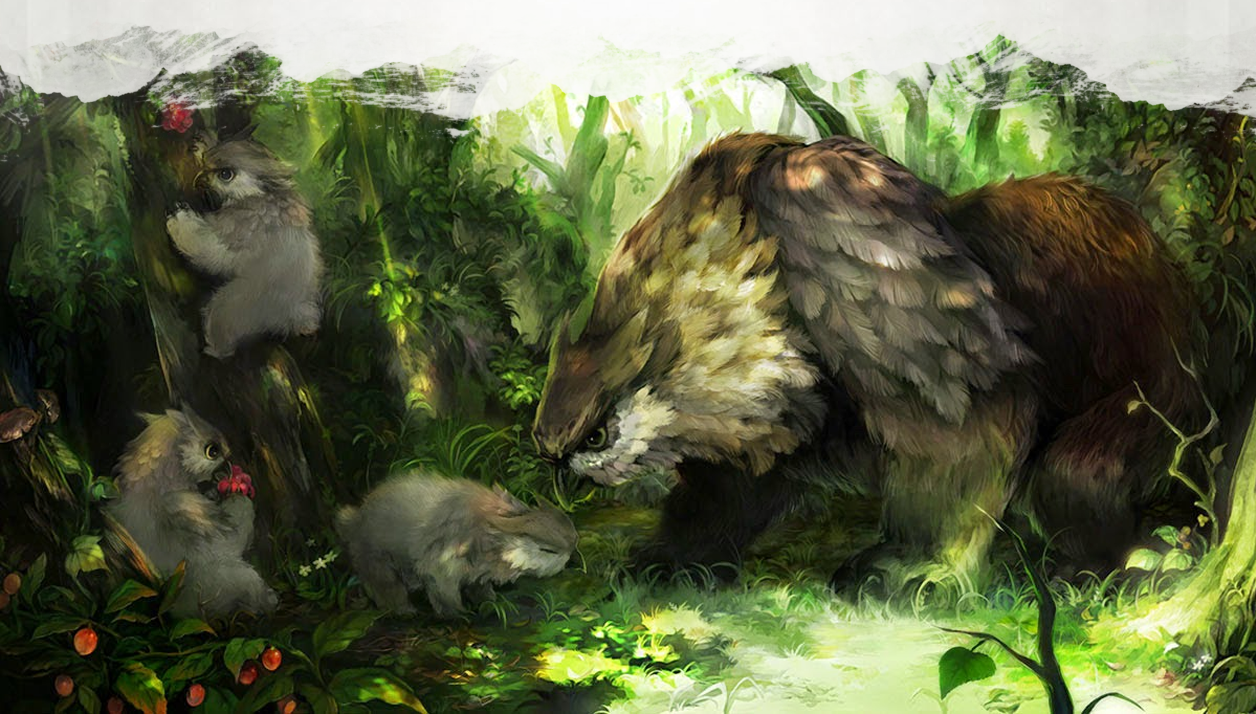
Art Credit: Owlbear Parent and Cub by Yukiko Hirai
Fleshwright
By 14th level, you've grown tired of playing with dead flesh, and you cross the line. When you cast polymorph or true polymorph, you can choose to expend two embalmed components as part of the casting, transforming your target into a horrific amalgamation of two creatures. Choose one embalmed component to be the primary component, and one to be the secondary. Both components must be originate from a creature with a CR less than or equal to half your wizard level, rounded down. Each component influences different aspects of the transformation:
The primary component decides the target's new form. The target is polymorphed into this component's creature of origin, even if that form would normally be outside of the spell's capabilities.
The secondary component infuses the target's form with new abilities. You can grant the target a number of effects up to your Intelligence modifier (minimum 1 effect) from your Organic Shaping and Experimental Form features, based on this component's creature of origin.
At the start of the polymorphed creature's turns, it must make a Wisdom saving throw against your spell save DC, or spend the next hour attacking the nearest creature near it, or any object or structure in its path that would lead to a creature. It repeats this saving throw at the start of every hour until the spell ends, unless it is taking a long rest. If the creature saves, it takes any action it can normally take as normal, although it must make another saving throw at the beginning of the next hour with advantage.
Additionally, the polymorphed creature gains the Siege Monster trait, which allows the creature to deal double damage to objects and structures.