Roguish Archetypes
At 3rd level, a rogue gains the Roguish Archetype feature. The following option is available to a rogue, in addition to those offered in the Player's Handbook.
Scoundrel
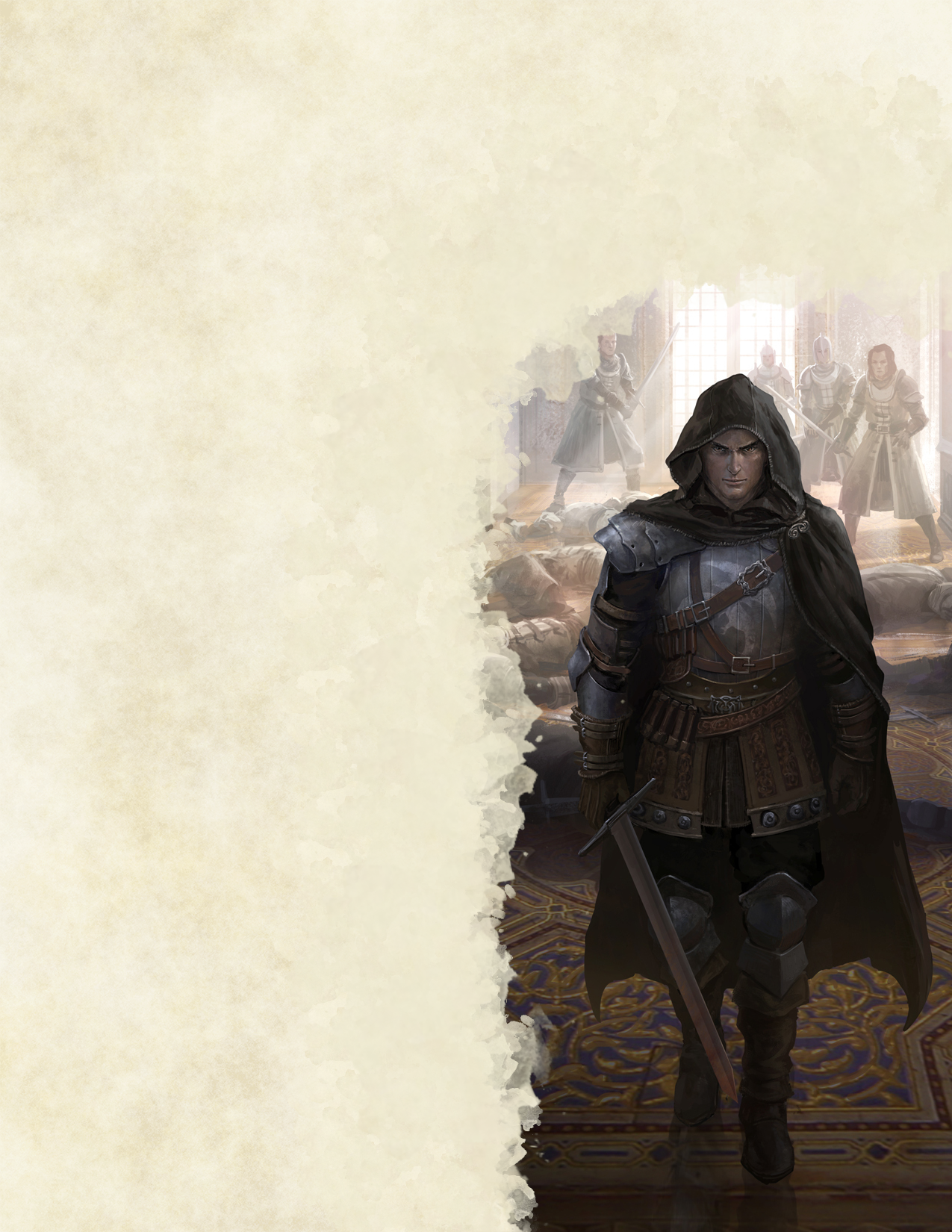
Scoundrels are prepared to do whatever it takes to end a fight quickly, and that often means fighting dirty. While Scoundrels may employ a variety of tactics and weapons, this principle is what defines them. Gang enforcers, back-alley brawlers, or any other combatants that lack formal training or scruples are likely Scoundrels.
Expanded Arsenal
When you choose this archetype at 3rd level, you become a more ruthless combatant:
- You gain proficiency with medium armor and improvised weapons.
- You may use your Strength modifier instead of your Dexterity modifier when determining the AC of medium armor.
- You can use Dexterity instead of Strength for the attack and damage rolls of your unarmed strikes and improvised weapon attacks.
- Your unarmed strikes, attacks made with improvised weapons, and attacks made with melee weapons wielded with one hand can benefit from Sneak Attack.
Underhanded Tactics
Starting at 3rd level, you learn how to leverage your guile to win by any means necessary.
Cunning Strike. When you take the attack action, you can make an attack with an unarmed strike or improvised weapon as a bonus action.
Guile. You have four guile points. These points can be spent on various ploys, and are replenished after a short or long rest.
You gain two more guile points at 9th level and two more at 17th level.
Ploys. You learn four ploys of your choice, which are detailed below. You can only use one ploy per attack, and cannot use similar features from other classes, such as a Battle Master's maneuver, on the same attack as a ploy.
You learn an additional ploy of your choice at 9th, 13th, and 17th level. Each time you learn a new ploy, you can also replace one ploy you know with a different one.
Saving Throws. Some of your ploys require your target to make a saving throw to resist the ploy's effects. The saving throw DC is calculated as follows:
- Ploy save DC = 8 + your proficiency bonus + your Strength or Dexterity modifier (your choice).
Art by: Shen Fei
The Best Defense
Starting at 9th level, your armor becomes a more versatile tool.
- You roll 1d6 in place of the normal damage of your unarmed strikes while wearing medium or heavy armor.
- While wearing magical armor, your unarmed strikes count as magical for the purpose of overcoming resistance and immunity to nonmagical attacks and damage.
Sadistic
Starting at 13 level, whenever you reduce a hostile creature to 0 hit points, you can regain 1 expended guile point or gain temporary hit points equal to your rogue level. You can use this feature twice. You regain expended uses when you finish a short or long rest.
Merciless Attacks
Starting at 17th level, you become a master of identifying and exploiting weakness.
- You can attack twice, instead of once, whenever you take the Attack action on your turn.
- Whenever you hit a creature with a melee attack that has more than one source granting advantage, the attack may benefit from your Sneak Attack feature even if you have already used it this turn. You may only use this feature once per turn.
Ploys
Dirty Trick
As a bonus action, you can spend 1 guile point to throw or kick something into an adversary's eyes in an attempt to blind them. A creature of your choice within 5 feet must make a Dexterity saving throw. On a failed save, that creature is blinded until the beginning of your next turn.
Topple
When you hit a creature with an unarmed strike or improvised weapon, you can spend 1 guile point to attempt to knock the target down. If the target is Large or smaller, it must make a Strength saving throw. On a failed save, you knock the target prone.
Ring the Bell
When you hit a creature with an unarmed strike or improvised weapon, you can spend 1 guile point to attempt to hit a creature's head. The target must make a Constitution saving throw. On a failed save, it is deafened until the beginning of its next turn. Concentration checks caused by this attack have disadvantage.
Sucker Punch
When a creature hits you with a melee attack, you can use your reaction and spend 2 guile points to make an unarmed strike against the creature. This attack has advantage.
Rude Gesture
As an action, you may spend 1 guile point to provoke a creature that you can see. If the creature can hear or see you and knows a language, it must make a Wisdom saving throw. On a failed save, it has disadvantage on attacks made against targets other than you until the end of your next turn, and if available, must use its reaction to move as far as its speed allows towards you. The creature doesn't move into obviously dangerous ground or in a way that would trigger an opportunity attack.
Running Tackle
When you use your action to Dash and move up to 20 feet in a straight line, you can use your bonus action and spend 1 guile to attempt to tackle a creature to the ground. If the target is Large or smaller, it must make a Strength or Dexterity saving throw (the target chooses the ability to use). If it fails, the target is grappled, and both you and the target are knocked prone.
Terrorize
You can spend 1 guile point to gain advantage on an Intimidation skill check.
Forced Entry
As an action, you may spend 2 guile points to unlock a door or container within 5 feet that is held shut by a mundane lock. You must be wielding a weapon to use this ploy, and the noise caused by it will be audible from as far as 300 feet away.
Smother
If you are grappling a creature, you can use your action and spend 1 guile point to attempt to cover the creature's airways with your other hand. To do so, you attempt another grapple check. If you succeed, the target cannot breathe or speak until the grapple ends or until you use one of your hands to do something else.
Gang Up
While grappling a creature, you can use your bonus action and spend 1 guile point to hold them steady for an ally's attack. When you do so, choose a friendly creature who can see or hear you. That creature can use their reaction to make an attack against the creature you are grappling. This attack has advantage.
Sawbones
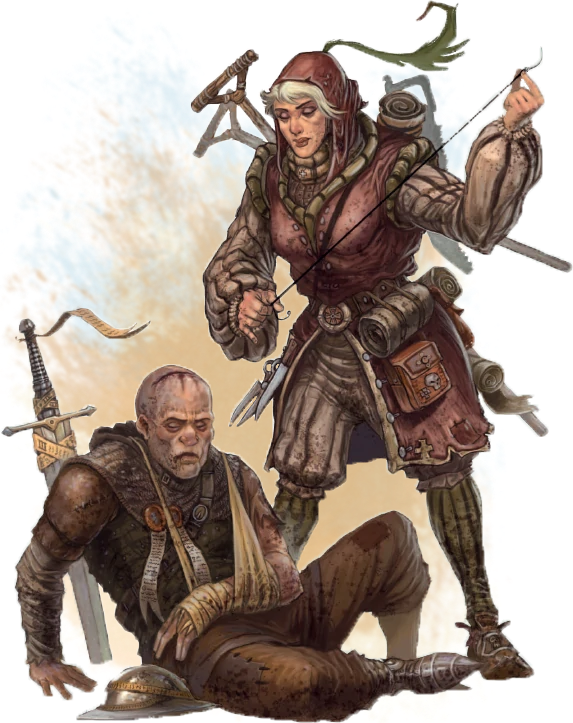
Sawbones are unorthodox practitioners of the healing arts. Caked in mud and gore on a battlefield or running a shady alleyway clinic, Sawbones do their best work in less than ideal circumstances. Whether they are performing a life saving operation or delivering a killing blow with surgical precision, Sawbones employ their knowledge of anatomy to great effect.
Medical Expertise
Starting at 3rd level, you gain proficiency in the Medicine skill if you do not already have it. Your proficiency bonus is doubled for any ability check you make that uses this skill. Additionally, you use your Intelligence bonus in place of your Wisdom bonus when making ability checks with this skill.
Battlefield Medicine
At 3rd level, you may use an action to restore hit points to a friendly creature within 5 feet if there are no hostile creatures within 5 feet of you or the target. The amount restored is equal to a roll your Sneak Attack dice + your Intelligence modifier.
You may use this feature a number of times equal to your proficiency bonus, and regain all uses after a short or long rest.
Cunning Rescue
When you choose this archetype at 3rd level, you may use your bonus action to grapple a willing target within 5 feet, and then move 5 feet in any direction. This movement doesn't provoke opportunity attacks.
Swift Aid
Starting at 9th level, you are able to administer potions to willing creatures as a bonus action.
Miraculous Cure
Beginning at 13th level, you may spend 10 minutes to cure a willing creature of any disease.
Adrenal Resuscitation
At 17th level, you are able to pull a very recently deceased creature from the clutches of death. As an action, a creature within 5 feet of you that has died within the last minute is restored to life with 1 hit point, and gains the benefits of the haste spell (it is not considered a spell in this instance). You must have 300gp worth of rare herbs or medicines, which are consumed on use of this feature.
Knife Juggler
Flavor text pending.
Deadly Performance
3rd-level Knife Juggler feature
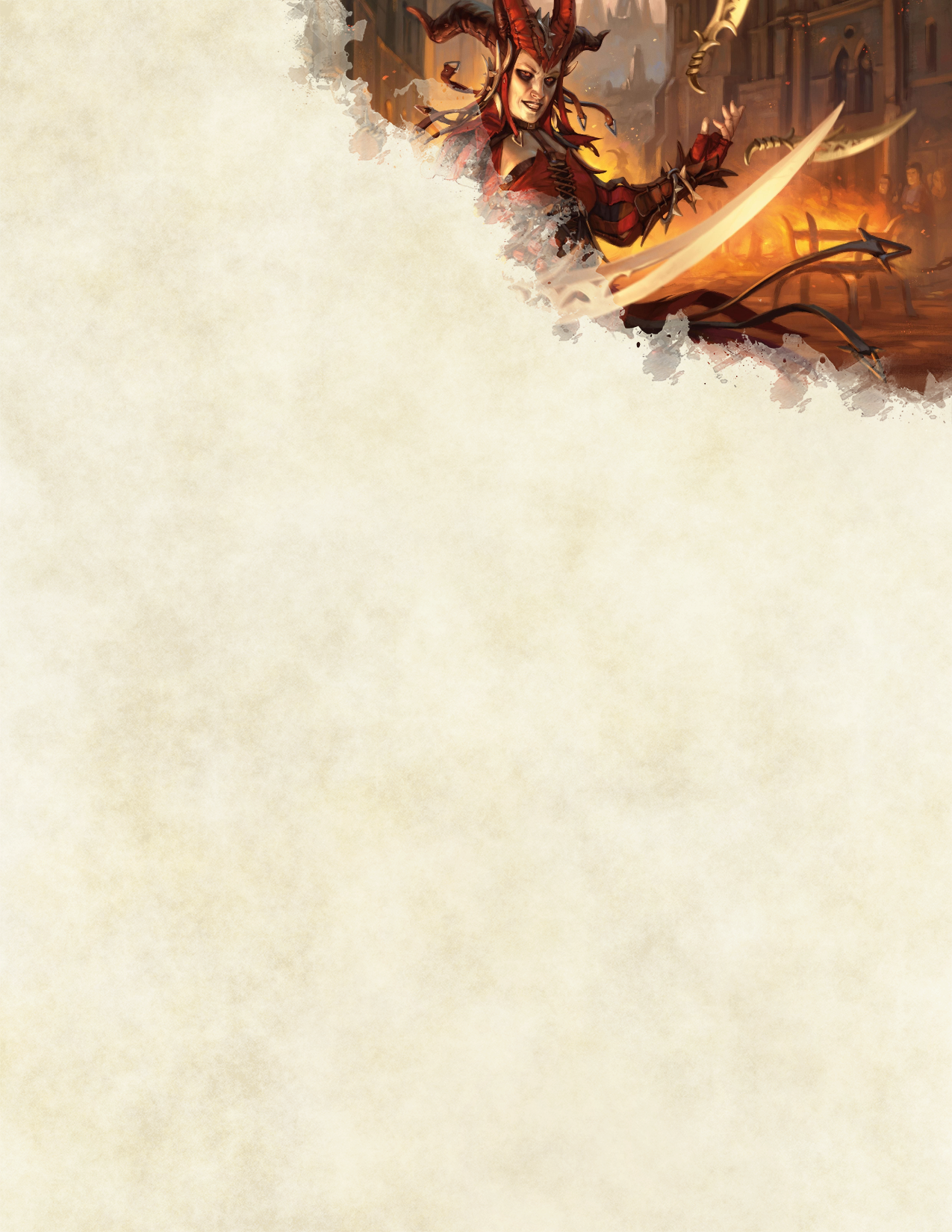
If you are wielding at least one dagger, you can use a bonus action to draw an additional dagger and begin juggling them. This performance lasts for 1 minute. It ends if you are incapacitated, if you attempt to wield anything other than a dagger, or if you are not wielding anything. While juggling, you gain the following benefits:
- You may wield a number of daggers equal to your Dexterity ability modifier (minimum of 3).
- Whenever you use an action or bonus action to make a ranged attack with a dagger, you may make an additional ranged attack with another dagger.
- Your ranged weapon attacks made with daggers score a critical hit on a roll of 19 or 20.
Whenever you take damage while juggling, you must make a Dexterity saving throw. The DC equals 10 or half the damage you take, whichever number is higher. If you fail, you drop all of the daggers you were wielding. If you roll a 1, you drop all of the daggers you were wielding in a catastrophic fashion, taking 1d4 piercing damage for each dagger dropped.
You can use this feature a number of times equal to your proficiency bonus, and you regain all expended uses of it when you finish a long rest.
Elusive Blade
9th-level Knife Juggler feature
Whenever you use the Disengage action or the Evasion feature, you may make a ranged weapon attack with a dagger that you are juggling as a free action.
Morbid Momentum
13th-level Knife Juggler feature
Whenever you reduce a hostile creature to 0 hit points, you may either draw an additional dagger or make a ranged weapon attack with a dagger that you are juggling as a free action.
Unpredictable Flourish
17th-level Knife Juggler feature
Whenever you make a ranged weapon attack with a dagger that you are juggling that isn't at disadvantage, you may make it at disadvantage instead. If it hits, it may benefit from your Sneak Attack feature, even if it has already been used this turn.