

Occultist
After neurotically scribbling perfectly symetrical runes in a circle on the floor with chalk, the gray-bearded halfling beckons his friends to step inside, and to not talk to not attract the dozens of demons hidden in the dungeon.
Eyes glazed like mirrors, the elven woman runs her fair hands across the polished crystal orb silently. After some time, she blinks, eyes returning to normal, and smiles wildly as she informs her friends that their journey should be without much effort.
Sneaking silently through the woods, shadows clinging to him like a cloak, the dwarf approaches the tall troll from behind and tosses a dagger that pierces its neck, causing its very mind to throb with painful injury.
Occultists see their minds as vessels to be filled and emptied with secrets, being able to bear the weight of insights that most mortals cannot dream of understanding without their minds breaking. Hidden and feared, occultists are spellcasters that borrow lost secrets like books from a library, to be used as weapons against the more strange monsters that haunt the lands.
Unknowable Magic
While other practitioners of magic might see it as a science, something to be broken down, experimented on, and analyzed, occultists learn to appreciate the side of magic that is not so easily studied. Oxymoronically, occultism is the study of things that cannot be studied.
Occult magic relies on opening the mind up to the powerful and strange magic that radiates the background of the multiverse, and releasing this magic from their minds once it has found its use. This allows an occultist to make use of more eldritch spells than wizards use, magic that others can make use of only by being granted it through otherworldly sources.
Enemies of the Alien
While an occultist is known for dabbling in eldritch powers, they are more often than not fierce enemies of otherworldly foes. Equipped with a variety of wards and spells to be used against creatures of extraplanar origin, an occultist might see oneself as a custodian of the multiverse.
That is not to say all occultists fight extraplanar threats. Many evil occultists side with ancient and alien powers in their campaign to consume worlds, either because they were promised great power, or that they bizarrely agree the motives of these entities.
Strange Persuasions
Occultism could be described as a belief system, and might seem similar to religion or cultism at the surface, but it can be no different. Occultists usually disregard the idea of praying or serving any extraplanar entity. They see the multiverse as a bubbling mess of ebbing and flowing secrets, and things such as "gods" are nothing more than clever creatures that managed to play the system well enough to earn the worship of worlds. That isn't to say extraplanar entities aren't useful to an occultist, but they deserve no more respect than the amount of use that can be squeezed out of them.
Creating an Occultist
By far, the most important thing to consider when creating an occultist character is how they were introduced to the occult. Was your character the child of a long line of occultists, handed the secrets of generations past? Did you develop the Sight spontaneously, and let the secrets of reality flow through you without meeting another of your kind? Did you stumble into a secret society meeting, where the only choices you had were to become a member or have your mind wiped?
Many occultists are lone adventurers, so it is important to ask what drew you to travel with companions. Perhaps a run in with a demon too powerful for you made you realize how fragile you are? Or maybe you need to be around people, for fear of the things you might do if you let your mind wander alone.
Quick Build
You can make an occultist quickly by following these suggestions. First, make Intelligence your highest ability score, followed by Dexterity. Second, chose the Hermit background. Third, choose the eldritch blast, mage hand, and minor illusion cantrips.
Class Features
As an occultist, you gain the following class features.
Hit Points
- Hit Dice: 1d6 per occultist level
- Hit Points at 1st Level: 6 + your Constitution modifier
- Hit Points at Higher Levels: 1d6 (or 4) + your Constitution modifier per occultist level after 1st
Proficiencies
- Armor: Light armor
- Weapons: Simple weapons
- Tools: None
- Saving Throws: Intelligence, Wisdom
- Skills: Choose two from Arcana, History, Insight, Investigation, Perception, and Religion
Equipment
You start with the following equipment, in addition to the equipment granted by your background:
- (a) a light crossbow and 20 bolts or (b) any simple weapon
- (a) a component pouch or (b) an arcane focus
- (a) a monster hunter's pack (see sidebar) or (b) a scholar's pack
- Leather armor, any simple weapon, and two daggers
Monster Hunter's Pack
You can buy a monster hunter's pack for 33 gp, which is cheaper than buying the items in it individually. It includes a chest, a crowbar, a hammer, three wooden stakes, a holy symbol, a flask of holy water, a set of manacles, a steel mirror, a flask of oil, a tinderbox, and 3 torches.
Spellcasting
As a seer of the hidden workings of magic, you can cast occultist spells. See chapter 10 of the Player's Handbook for the general rules of spellcasting and the end of this document for the occultist spell list.
Cantrips
At 1st level, you know three cantrips of your choice from the occultist spell list. You learn additional occultist cantrips of your choice at higher levels, as shown in the Cantrips Known column of the occultist table.
Preparing and Casting Spells
The Occultist table shows how many spell slots you have to cast your spells of 1st level and higher. To cast one of these spells, you must expend a slot of the spell’s level or higher. You regain all expended spell slots when you finish a long rest.
You prepare the list of occultist spells that are available for you to cast, choosing from the occultist spell list. When you do so, choose a number of occultist spells equal to your Intelligence modifier + your occultist level (minimum of one spell). The spells must be of a level for which you have spell slots.
For example, if you are a 3rd-level occultist, you have four 1st-level and two 2nd-level spell slots. With a Intelligence of 16, your list of prepared spells can include six spells of 1st or 2nd level, in any combination. If you prepare the 1st-level spell inflict wounds, you can cast it using a 1st-level or 2nd-level slot. Casting the spell doesn’t remove it from your list of prepared spells.
You can change your list of prepared spells when you finish a long rest. Preparing a new list of occultist spells requires time spent in meditation: at least 1 minute per spell level for each spell on your list.
Spellcasting Ability
Intelligence is your spellcasting ability for your occultist spells. The power of your spells come from your ability to comprehend the hidden workings of reality. You use your Intelligence whenever an occultist spell refers to your spellcasting ability.
In addition, you use your Intelligence modifier when setting the saving throw DC for an occultist spell you cast and when making an attack roll with one.
Spell Save DC
Spell attack modifier
Ritual Casting
You can cast an occultist spell as a ritual if that spell has the ritual tag and you have the spell prepared.
Spellcasting Focus
You can use an arcane focus (found in chapter 5 of the Player's Handbook) as a spellcasting focus for your occultist spells.


The Occultist
| Level | Proficiency Bonus | Features | Released Spell Level Maximum | Cantrips Known | 1st | 2nd | 3rd | 4th | 5th | 6th | 7th | 8th | 9th |
|---|---|---|---|---|---|---|---|---|---|---|---|---|---|
| 1st | +2 | Spellcasting, Awakened Sight, Tongue of Beyond | – | 3 | 2 | – | – | – | – | – | – | – | – |
| 2nd | +2 | Released Spell, Occult Secrets | 1 | 3 | 3 | – | – | – | – | – | – | – | – |
| 3rd | +2 | Secret Society | 1 | 3 | 4 | 2 | – | – | – | – | – | – | – |
| 4th | +2 | Ability Score Improvement | 1 | 4 | 4 | 3 | – | – | – | – | – | – | – |
| 5th | +3 | – | 2 | 4 | 4 | 3 | 2 | – | – | – | – | – | – |
| 6th | +3 | Secret Society Feature | 2 | 4 | 4 | 3 | 3 | – | – | – | – | – | – |
| 7th | +3 | Tongue of Beyond | 2 | 4 | 4 | 3 | 3 | 1 | – | – | – | – | – |
| 8th | +3 | Ability Score Improvement | 3 | 4 | 4 | 3 | 3 | 2 | – | – | – | – | – |
| 9th | +4 | – | 3 | 4 | 4 | 3 | 3 | 3 | 1 | – | – | – | – |
| 10th | +4 | Secret Society Feature, Improved Awakened Sight | 3 | 5 | 4 | 3 | 3 | 3 | 2 | – | – | – | – |
| 11th | +4 | – | 4 | 5 | 4 | 3 | 3 | 3 | 2 | 1 | – | – | – |
| 12th | +4 | Ability Score Improvement | 4 | 5 | 4 | 3 | 3 | 3 | 2 | 1 | – | – | – |
| 13th | +5 | Tongue of Beyond | 4 | 5 | 4 | 3 | 3 | 3 | 2 | 1 | 1 | – | – |
| 14th | +5 | Secret Society Feature | 5 | 5 | 4 | 3 | 3 | 3 | 2 | 1 | 1 | – | – |
| 15th | +5 | – | 5 | 5 | 4 | 3 | 3 | 3 | 2 | 1 | 1 | 1 | – |
| 16th | +5 | Ability Score Improvement | 5 | 5 | 4 | 3 | 3 | 3 | 2 | 1 | 1 | 1 | – |
| 17th | +6 | Tongue of Beyond | 5 | 5 | 4 | 3 | 3 | 3 | 2 | 1 | 1 | 1 | 1 |
| 18th | +6 | Greater Sight | 6 | 5 | 4 | 3 | 3 | 3 | 3 | 1 | 1 | 1 | 1 |
| 19th | +6 | Ability Score Improvement | 6 | 5 | 4 | 3 | 3 | 3 | 3 | 2 | 1 | 1 | 1 |
| 20th | +6 | Mastered Mind | 6 | 5 | 4 | 3 | 3 | 3 | 3 | 2 | 2 | 1 | 1 |
Awakened Sight
At 1st level, you have gained the ability to peer into the weave of magic. As an action, you can open your inner eye. Until the end of your next turn, you know if any creature or object you can see within 30 feet of you is magical in nature, is casting or concentrating on a spell, or is affected by a spell, curse, or other magical effect. You also learn the school of that magical effect, if any.
At 10th level, the range of your Awakened Sight increases to 60 feet.
Tongue of Beyond
Also at 1st level, your dealings with extraplanar forces allows you to be fluent in their strange languages. You learn two exotic languages of your choice. (Player's Handbook, page 123)
You learn one additional exotic language at 7th, 13th, and 17th level.
Released Spell
At 2nd, you have learned to expunge the secrets of a spell from your mind as you cast it, allowing yourself to be open to more magical energy to flow through you. When you cast an occultist spell that you have prepared of 1st level or higher and isn't higher level than shown in the "Released Spell Level Maximum" column of the occultist class table, you can choose to release it. When you release a spell, the spell is removed from your list of prepared spells, and you regain the spell slot that you used to cast it. You cannot release a spell that is considered always prepared for you.
Once you release a spell cast at a certain spell slot level, you cannot release another spell with the same spell slot level until you finish a long rest.


Occult Secrets
Also at 2nd, you gain the ability to magically peer into hidden knowledge. Immediately after you make an Intelligence ability check to recall lore, you can attempt to make the check again with advantage, even after you learn the results of the initial check. Once you use this feature you can't use it again until you finish a short or long rest.
Secret Societies
At 3rd level, you learn the skills needed to follow in the footsteps of one of the many occult secret societies: Society of the Seeing, Society of Stalking, Society of Mesmerizing, or Society of Binding, all detailed at the end of the class description.
Your choice grants you features at 3rd level and again at 6th, 10th, and 14th level.
Society Spells
Each secret society has a list of spells — its society spells — that you gain at the occultist levels noted in the society description. Once you gain a society spell, you always have it prepared, and it doesn’t count against the number of spells you can prepare each day.
If you have a society spell that doesn’t appear on the occultist spell list, the spell is nonetheless a occultist spell for you.
Greater Sight
At 18th level, you learn to see things as they truly are. Your Awakened Sight can now also detect the presence of invisible creatures and objects, shapechangers, creatures and objects transformed by magic, and other visual illusions. While your inner eye is open, you can perceive the original form of these creatures or objects. You can also automatically detect any visual illusions within range, and succeed on saving throws against them.
In addition, you can see into the Ethereal Plane.
Mastered Mind
At 20th level, you have learned to have complete control over your mind as a floodgate of the magic of the multiverse. You can concentrate on up two different spells at the same time. When forced to make a Constitution saving throw to maintain concentration, you make one saving throw for each of the spells you are currently concentrating on.
Secret Societies
When one lets their mind be open to learn the unknowable secrets of the multiverse, it is inevitable that they will develop a certain level of (justifiable) paranoia. Most often, the deeper one delves into the occult, the more aware of powerful and uncontrollable threats they become. A consequence of this is that groups of occultists might join forces in case of some sort of hypothetical war against one of these unfathomable threats.
These secret societies that occultists form often only let those that firmly trust in the occult join, and they are often very skeptical of letting other magic-users, such as wizards or clerics, join them. They are kept secret for a reason: the only ones they can trust are themselves.
Society of Seeing
As a member of the society of seeing, called a seer, you allow your mind to be an open channel of the hidden insights of reality, channeling secrets and power that most mortals cannot dream to understand. Many many seers learn insights of the future through communicating with intelligent and unseen spirits, others can see visions of the future through no outside help.
Members of this society who meet often discuss secrets that they have learned, in an attempt to paint an accurate picture of the world and its future, but quite often the realities that they uncover are contradictory. Puzzlingly, the predictions seers make often only make any sense after the events had already past, allowing their foresight to function much better as hindsight.
Fortunes of Fate
| d20 | Effect |
|---|---|
| 1 | The Magician. You have advantage on Intelligence ability checks. |
| 2 | The High Priestess. Whenever you regain HP, you gain an additional 2d6 HP |
| 3 | The Empress. You have advantage on Charisma (Persuasion) checks. |
| 4 | The Emperor. You have advantage on Charisma (Intimidation) checks. |
| 5 | The Hierophant. When you take the Help action to grant advantage on an ability check or attack roll, the ally can reroll one of the dice from the benefited die roll once. |
| 6 | The Lovers. Chose one willing humanoid other than yourself that is on the same plane of existence as you. You and the target both have +2 to AC. If you do not target a willing humanoid, this has no effect. |
| 7 | The Chariot. Your speed increases by 5 feet. |
| 8 | Strength. You have advantage on Strength ability checks. |
| 9 | The Hermit. You have advantage on Wisdom ability checks. |
| 10 | Wheel of Fortune. You gain 1 luck point. Player's Handbook, page 167 |
| 11 | Justice. You have advantage on attacks against enemies that have dealt damage to you since the end of your last turn. |
| d20 | Effect |
|---|---|
| 12 | The Hanged Man. When you take damage, as a reaction you can take 1d12 extra damage, and grant one ally that you can see advantage on one ability check, attack roll, or saving throw that they make until the start of your next turn. |
| 13 | Death. You have disadvantage on death saving throws. |
| 14 | Temperance. Creatures have disadvantage on attacks against you if you have not attacked any creature, cast a spell on any non-willing creature, or dealt damage to any creature since the start of your last turn. |
| 15 | The Devil. You have advantage on Charisma ability checks, and you have disadvantage on Wisdom ability checks. |
| 16 | The Tower. You gain the effects of casting Divination. |
| 17 | The Star. Up to 3 times, you can grant yourself advantage on any attack roll, ability check, or saving throw. |
| 18 | The Moon. You have advantage on Charisma (Deception) checks. |
| 19 | The Sun. Choose one skill that you are proficient in. You have advantage on ability checks with that skill. |
| 20 | Judgement. You have advantage on attacks against creatures that dealt damage to or cast a spell on you since the end of your last turn, and creatures that you have dealt damage to or cast a spell on since the end of your last turn have advantage on attacks against you. |
Society of Seeing Spells
| Occultist Level | Spell |
|---|---|
| 3rd | augury, see invisibility |
| 5th | clairvoyance, counterspell |
| 7th | divination, locate creature |
| 9th | contact other plane, scrying |
Fortunes of Fate
Starting at 3rd level, you can divine the near future of yourself or willing minds. By understanding the course of one's near future, one can direct their actions to the advantages that fate set for them.
Once per long rest, you can conduct a 1 minute ritual either for yourself or for one willing creature that is within 5 feet of you for the entire ritual. At the end of the ritual, the targeted creature gains an effect determined by rolling on the Fortunes of Fate table, which lasts for 24 hours or until you use this feature again.
Near Foresight
Also at 3rd level, you gain the ability to quickly glance at the near feature as an instinctual response to protect yourself from harm and retaliate.
When a creature makes an attack against you or when you are forced to make a Dexterity saving throw, you can as a reaction glance into the future. When you do so, you gain +5 to your AC or to the Dexterity saving throw. If the attack misses, or if you succeed your saving through, you can immediately cast a spell with a casting time of 1 action or bonus action as part of the same reaction.
Once you use this feature, you cannot use it again until you finish a short or long rest.
Borrowed Knowledge
Beginning at 6th level, you can let hidden bits of information flow through you at times of need. When you finish a short or long rest you can make yourself proficient in one skill or tool of your choice. Your proficiency bonus is doubled for any ability check made with the chosen skill.
This benefit lasts until you use this feature again.
Improved Near Foresight
At 10th level, you become more skilled at divining the immediate future. You can use Near Foresight a total of 3 times, regaining any expended uses when you finish a short or long rest.
Heightened Reading
At 14th level, you learn to glean more knowledge about the fortunes of individuals. When you use Fortunes of Fate, you can choose to roll any number up to 3 times (rerolling duplicate results) on the Fortunes of Fate table, with all effects taking place on the targeted creature.

Society of Stalking
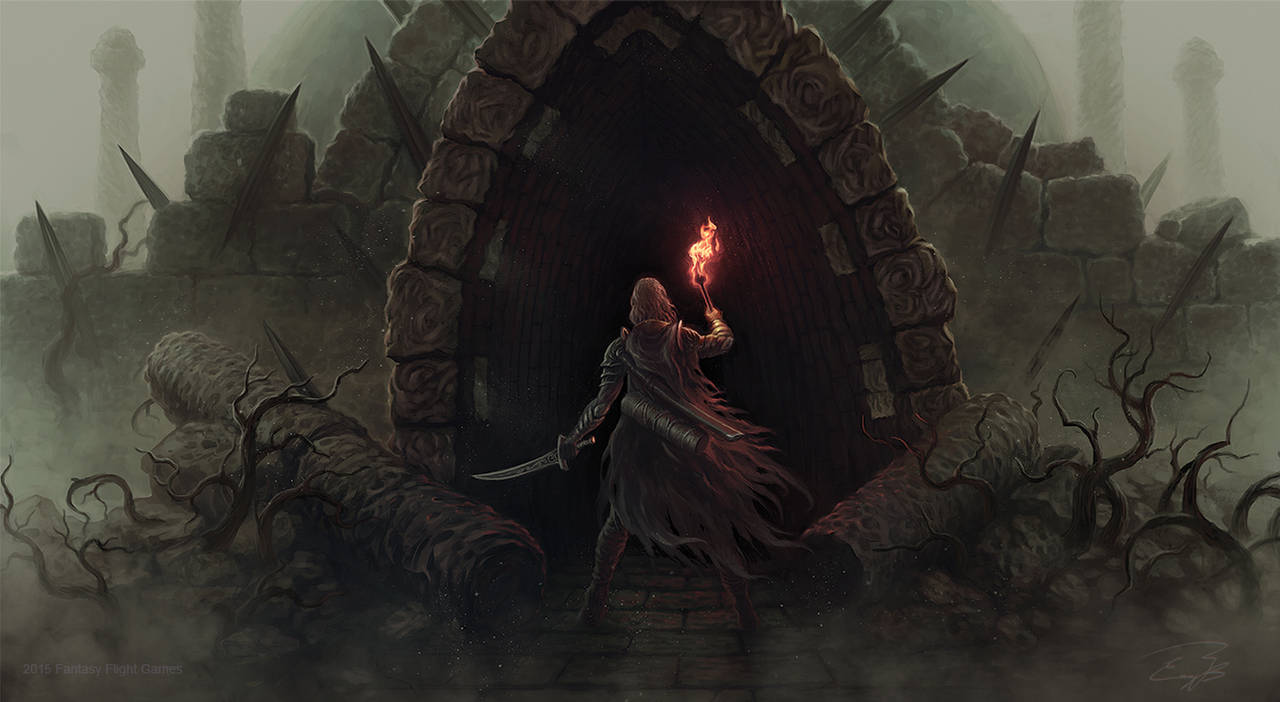
As a stalker, you use you occult talent as an aid in striking down foes, monsters and people alike. Stalkers often meet in basements where adventurers gather, as their main job is to hunt the things that most cannot dream of hunting. Stalkers see their role in the world as a grim destiny, aware that they alone have the power to strike down foes of the most eldritch of nature. When a society of stalkers mobilize, it is almost always to take down to most dire and horrific of foes.
Society of Stalking Spells
| Occultist Level | Spell |
|---|---|
| 3rd | pass without trace, soul sheath‡ |
| 5th | haste, nondetection |
| 7th | freedom of movement, locate creature |
| 9th | hold monster, passwall |
‡ Appears at the end of this document
Bonus Proficiencies
When you join this secret society at 3rd level, you gain proficiency with medium armor, shields, and martial weapons.
Psychic Wounds
At 3rd level, your studies in the occult allows you to strike at the minds of the opponents that you injure with your weapons. When you hit a creature with a weapon attack, you can deal extra damage equal to 1d8 + your Intelligence modifier. If a creature takes this damage, its speed is reduced by 10 feet and it cannot take reactions until the start of your next turn.
You can use this feature a number of times equal to your Intelligence modifier (a minimum of once). You regain any expended uses when you finish a short or long rest.
The psychic damage increases when you reach certain levels of this class, increasing to 2d8 at 5th level, 3d8 at 10th level, and 4d8 at 15th level.
Extra Attack
Starting a 6th level, you can attack twice, instead of once, whenever you take the Attack action on your turn.
Secrets of Combat
At 10th level, you can channel the ancient secrets of fighting through your mind as you attack. You add your Intelligence modifier (minimum of +1) to weapon damage rolls.
Strange Rebuke
At 14th level, the magical energies flowing through your mind can injure those who seek to harm you. When a creature within 5 feet of you hits you with an attack., it takes psychic damage equal to your Intelligence modifier (minimum of 1 damage).
Society of Mesmerizing
As a member of the Society of Mesmerizing, called a mesmer, you are an expert at using your strange magic to influence the minds of others. Societies of mesmerizing might use their talent to play intricate games of political intrigue to keep villains out of power, while others might run vast conspiracies to sway the common folk under their control
Members of this secret society are usually the most paranoid of others learning about them, as most common folk would seek to destroy a hidden network of mind-controllers, no matter how justified their cause might be.
Society of Mesmerizing Spells
| Occultist Level | Spell |
|---|---|
| 3rd | enthrall, suggestion |
| 5th | fear, hypnotic pattern |
| 7th | compulsion, confusion |
| 9th | dominate person, geas |
Bonus Proficiencies
When you join this secret society at 3rd level, you gain proficiency in Deception and Persuasion.
Mesmerizing Savant
At 3rd level, you learn to make quick use of your beguiling magic. When you cast a spell from the school of enchantment that does not deal damage and has a casting time of 1 action, you can choose to cast it using your bonus action instead. You can use this feature a number of times equal to your Intelligence modifier (minimum once) and you regain all expended uses when you finish a long rest.
Quick Wit
At 6th level, you can use your own superior intelligence to enhance your wordplay. Whenever you make a Charisma (Persuasion) check or a Charisma (Deception) check, you gain a bonus equal to the check equal to your Intelligence modifier.
Sensory Dissonance
At 10th level, you learn to cause creatures to forget your presence. As an action, you can cause yourself to become invisible to any creature of your choice. If one of the creatures you chose can see you when you use this feature, they must make an Intelligence saving throw. On a failed save, the creature forgets that you were in its presence, no matter any previous interactions you had with it.
You become visible again after 1 minute, or until you attack a creature that had forgotten your presence or cast a spell that affects them. When you become visible, all affected creatures regain their memories of you.
Once you use this feature, you cannot use it again until you finish a long rest.
Glib Tongue
At 14th level, you learn to weave occult magic around every word you speak. When you make a Charisma ability you can replace the number you roll with a 10. Additionally, no matter what you say, magic that would determine if you are telling the truth indicates that you are being truthful.
This feature has no effect while you are in an antimagic field, and dispel magic cast on you suppresses this effect for 10 minutes.
Mesmerizing Master
Finally at 14th level, if a creature were to have advantage on a saving throw against a spell that you cast from the school of enchantment that does not deal damage, it instead makes the saving throw without advantage.
Society of Binding
As a binder, you are an expert in asserting your will over that of extraplanar creatures. Binders are equipped with the tools necessary to summon and bind otherworldly creatures, and are often prepared to defend against them when their binding fails.
Binders make some of the fiercest extraplanar enemies, as no otherworldly creature enjoys the prospect of being enslaved, even temporarily, through a mortal's magic. Secret societies of binding might be regularly attacked by devils or other such creatures in an attempt to wipe out the knowledge of their techniques from the world.
Society of Binding Spells
| Occultist Level | Spell |
|---|---|
| 3rd | hold person, lesser restoration |
| 5th | magic circle, summon lesser demons✝ |
| 7th | banishment, conjure spirits‡ |
| 9th | conjure ghost‡, planar binding |
‡Appears at the end of this document.
✝Appears in Xanathar's Guide to Everything. If that resource is not available, replace summon lesser demons with remove curse.
Binder's Curse
When you join the society at 3rd level, you learn how to bind your enemies with a curse. As a bonus action, choose one creature within 30 feet of you. The target is cursed for 1 hour, The curse ends early if the target dies, you die, you are incapacitated, or you decide to end the curse (no action required). Until the curse ends, you gain the following benefits:
- The cursed creature's speed reduces by 5 feet.
- When the cursed creature makes a saving throw against an effect caused by one of your spells, you can invoke disadvantage on the saving throw. You can use this benefit once per use of Binder's Curse.
- Whenever the target attempts to move more than 60 feet away from you while it is at most 60 feet away from you, it must first make a Charisma saving throw against your spell save DC. On a failed save, the target is unable to move more than 60 feet away from until the start of its next turn.
- If the cursed creature attempts to teleport or travel to another plane of existence, it must first succeed on a Charisma saving throw against your spell save DC.
Once you use this feature, you cannot use it again until you finish a short or long rest.
Bound Specter
Starting at 6th level, you can temporarily bind the soul of a humanoid you slay to your service. When you slay a humanoid, you can cause its spirit to rise from its corpse as a specter, the statistics for which are in the Monster Manual. When the specter appears, it gains temporary hit points equal to half your occultist level. Roll initiative for the specter, which has its own turns. It obeys your verbal commands, and it gains a special bonus to its attack rolls equal to your Intelligence modifier (minimum of +0).
The specter remains in your service until the end of your next long rest, at which point it vanishes to the afterlife.
Once you bind a specter with this feature, you can't use the feature again until you finish a long rest.
Master of Wards and Prisons
Also at 6th level, your occult knowledge allows you more easily make use of the magic circle spell. You do not need the material components to cast magic circle, rather you only need any implement that can be used to draw or make markings (such as chalk or paint), and it is considered a ritual spell for you.
Expert Summoner and Binder
At 10th level, you learn to have more control over your summoned creatures, granting you the following benefits:
-
You add your Intelligence modifier to Constitution saving throws made to maintain concentration on a spell that creates or summons one or more creatures.
-
When a creature that you can see and is created or summoned by a spell that you cast makes an attack roll, ability check, or saving throw, you may choose to either add or subtract your Intelligence modifier to the roll.
-
The material component for planar binding can be worth at least 500 gp, rather than 1,000 gp, when you cast it.
-
You can target undead that have the incorporeal movement trait with planar binding
Master of Binding
At 14th level, you to quickly and effortlessly assert control over otherworldly creatures. Planar binding requires no material components for you, and has a casting time of 10 minutes.
Optional Rule: Multiclassing
If your group uses the optional rule on multiclassing in the Player’s Handbook (p. 163), here’s what you need to know if you choose occultist as one of your classes.
Ability Score Minimum. As a multiclass character, you must have at least an Intelligence score of 13 to take a level in this class.
Proficiencies Gained. None.
Spell Slots. Add your levels in the occultist class to the appropriate levels from other classes to determine your available spell slots.
Magic Item Attunement
Many magic items in the Dunegonmaster's Guide have restrictions over what characters of a specific class are allowed to attune to them. Because of the Occultist's relationship with the arcane, DMs might allow an occultist character to be able to attune to any item that allows attunement by wizards.


Occultist Spells
Spells marked ✝ appear in Xanathar's Guide to Everything. Spells marked ‡ appear at the end of this document.
Cantrips (0 Level)
- Blade Ward
- Chill Touch
- Eldritch Blast
- Friends
- Frostbite✝
- Mage Hands
- Message
- Minor Illusion
- Shocking Grasp
- Thaumaturgy
- True Strike
- Toll the Dead✝
- Vicious Mockery
1st Level
- Armor of Agathys
- Arms of Hadar
- Bane
- Cause Fear✝
- Charm Person
- Chromatic Orb
- Command
- Comprehend Languages
- Dissonant Whispers
- Detect Evil and Good
- False Life
- Find Familiar
- Hex
- Ice Knife✝
- Identify
- Illusory Script
- Inflict Wounds
- Mage Armor
- Protection from Evil and Good
- Soul Punch‡
- Tasha's Hideous Laughter
- Witch Bolt
2nd Level
- Blindness/Deafness
- Blur
- Calm Emotions
- Crown of Madness
- Darkness
- Darkvision
- Detect Thoughts
- Hold Person
- Invisibility
- Levitate
- Locate Object
- Mind Spike✝
- Mirror Image
- Phantasmal Force
- Ray of Enfeeblement
- Seance‡
- See Invisibility
- Shadow Blade✝
- Soul Sheath‡
- Spider Climb
- Suggestion
- Zone of Truth
3rd Level
- Bestow Curse
- Blink
- Catnap✝
- Clairvoyance
- Dispel Magic
- Enemies Abound✝
- Fear
- Glyph of Warding
- Hypnotic Pattern
- Magic Circle
- Major Image
- Nondetection
- Protection from Energy
- Remove Curse
- Sending
- Slow
- Soul Jolt‡
- Summon Lesser Demons✝
- Tongues
- Vampiric Touch
4th Level
- Arcane Eye
- Banishment
- Charm Monster✝
- Confusion
- Conjure Minor Elementals
- Conjure Spirits‡
- Dimension Door
- Greater Invisibility
- Hallucinatory Terrain
- Locate Creature
- Phantasmal Killer
- Summon Greater Demon✝
5th Level
- Conjure Ghost‡
- Contact Other Plane
- Antilife Shell
- Dispel Evil and Good
- Dominate Person
- Dream
- Far Step✝
- Geas
- Hold Monster
- Infernal Calling✝
- Legend Lore
- Modify Memory
- Planar Binding
- Scrying
- Synaptic Static✝
- Teleportation Circle
6th Level
- Arcane Gate
- Circle of Death
- Conjure Elemental
- Conjure Fey
- Find the Path
- Forbiddance
- Harm
- Magic Jar
- Mass Suggestion
- Mental Prison✝
- Otto's Irresistible Dance
- Planar Ally
- Programmed Illusion
- Scatter✝
- Soul Cage✝
- True Seeing
7th Level
- Crown of Stars✝
- Etherealness
- Mirage Arcane
- Plane Shift
- Power Word Pain✝
- Project Image
- Reverse Gravity
- Sequester
- Soul Transplant‡
- Symbol
- Teleport
8th Level
- Antimagic Field
- Antipathy/Sympathy
- Demiplane
- Dominate Monster
- Feeblemind
- Maddening Darkness✝
- Mind Blank
- Power Word Stun
- Soul Ejection‡
- Telepathy
9th Level
- Astral Projection
- Foresight
- Gate
- Imprisonment
- Power Word Kill
- Psychic Scream✝
- Soul Devour‡
- Time Stop
- Weird


New Spells
The following describes the unique spells that appear on the occultist spell list, listed in alphabetical order.
Conjure Ghost
5th-level conjuration
- Casting Time: 1 minute
- Range: 10 feet
- Components: V, S, M (a scented candle)
- Duration: Concentration, up to 1 hour
A ghost appears in an unoccupied space within range, determined by the DM.
The ghost is friendly to you and your companions for the duration. Roll initiative for the ghost, which has its own turns. It obeys any verbal commands that you issue to it (no action required by you). If you don't issue any commands to the ghost, it defends itself from hostile creatures but otherwise takes no actions.
If your concentration is broken, the ghost doesn't disappear. Instead, you lose control of the ghost, it becomes hostile to you and your companions, and it might attack. An uncontrolled ghost can't be dismissed by you, and it disappears 1 hour after you summon it.
The DM has the ghost's statistics.
Conjure Spirits
4th-level conjuration
- Casting Time: 1 action
- Range: Range 60 feet
- Components: V, S, M (a scented candle)
- Duration: Concentration, up to 1 hour
You summon spirits that appear in unoccupied spaces you can see within range. Choose one of the following options for what appears:
- One poltergeist
- One will-o'-wisp
- Two specters
A summoned creature disappears when it drops to 0 hit points or when the spell ends.
The summoned creatures are friendly to you and your companions. Roll initiative for the summoned creatures as a group, which has their own turns. They obey your verbal commands that you issue to them (no action required by you). If you don't issue any commands to them, they defend themselves from hostile creatures, but otherwise take no actions.
The DM has the creature's statistics.
At Higher Levels. When you cast this spell using certain higher-level spell slots, you choose one of the summoning options above, and more creatures appear: twice as many with a 6th-level slot and three times as many with a an 8th-level slot.
Seance
2nd-level divination (ritual)
- Casting Time: 1 minute
- Range: Range
- Components: V, S, M (burning incense worth at least 10 gp, which the spell consumes)
- Duration: Concentration, up to 10 minutes.
To cast this spell, you and at least two, up to four, other willing creatures must link fingertips throughout the casting and the duration of the spell. This spell can only be cast on the Material Plane.
What has a soul?
The DM should use their best judgement to decide if any given creature has a soul or not. These spells break the precedent for 5E for similar abilities that affect souls (such as the soul-eating sentient magic item Blackrazor), as those give a loose definition of affecting all creatures that are not undead or constructs. These spells give a more nuanced definition that includes incorporeal undead (such as ghosts) as they are literally souls that do not have bodies.
The decision of what creatures have souls is one that should be made with the lore of the DM's world in mind. For example, classical vampire lore states that they are soulless monsters, however in the DM's setting they might in fact be undead that still retain their souls.
Name one dead humanoid to be the target of the spell. If the target's soul is free, but need not be willing, you draw it from whatever plane it resides in to become invisibly in your presence. You can ask the target soul up to 5 questions, which the soul can answer through communicating yes or no to you, or by causing harmless sensory effects in the area you have cast the spell in, as per the thamaturgy spell. The soul is under no compulsion to answer, or give truthful replies.
To properly end the spell, each willing creature involved in the casting of the spell must make a Charisma (Persuasion) check. The participant makes this check with advantage if they knew the target creature in life. If the combined total of these checks is 30 or higher, the spell ends, and the target soul returns to whatever location in the multiverse it was in before the casting of the spell.
If the spell is not properly ended (by failing to meet the necessary combined Persuasion check total, losing concentration, any participant breaking the linked fingertips, or by you choosing the end the spell without properly doing so), the soul might not immediately return to where it came. If the target was of good alignment in life, it almost certainly would choose to return to where it came. If the soul was neutral or evil, it might choose to abandon its afterlife to stay on the Material Plane, manifesting as a ghost under the DM's control. If the soul had been summoned from a Lower Plane, the ghost it manifests as might be a fiend, rather than undead.
The ghost might attack you and your allies, flee, or bide time to patiently haunt either you and your allies, or some other living creature it might have enmity for. Once the ghost chooses to stay on the Martial Plane, it stays there permanently unless it is destroyed, or successfully targeted by dispel evil and good, banishment, or similar magic.
Soul Devour
9th-level necromancy
- Casting Time: 1 action
- Range: 5 feet
- Components: V, S
- Duration: Instantaneous
You attempt to consume a creature’s soul to empower yourself. Target creature within range must succeed on a Charisma saving throw or take 100 necrotic damage, taking half as much on a success. If this damage reduces the target’s hit points to 0 and the creature failed the saving throw, you consume the target’s soul, and the target instantly dies. If you consume the creature's soul in this way, you gain temporary hit points equal half the target creature's hit point maximum. While you have these temporary hit points, you have advantage on attack rolls, ability checks, and saving throws.
A creature whose soul has been consumed in this way cannot be restored to life by any means short of a wish spell.
Creatures that do not have souls, (such as most constructs and zombies) and creatures whose souls are in another location than their body (such as liches) are immune to this spell. Undead that have the Incorporeal Movement trait have disadvantage on the Charisma saving throw.
Soul Ejection
8th-level necromancy
- Casting Time: 1 action
- Range: 30 feet
- Components: V, S
- Duration: Concentration, up to 1 minute
You attempt to thrust a creature's soul out from its body. Target creature within range must make a Charisma saving throw. On a failed save, the creature takes 5d12 force damage, and its soul is ejected from its body, causing it to immediately fall unconscious as its soul is stuck in the border ethereal plane for the duration. On a successful save, the creature takes half as much damage, and the spell ends.
At the end of each of its turns, the target can make another Charisma saving throw. On a success, the spell ends on the target.
When the spell ends, the creature's soul safely returns to its body, unless the body has died during the spell’s duration.
Creatures that do not have souls (such as most constructs and zombies), creatures whose souls are in another location than their body (such as liches), and creatures that have souls but not corporeal bodies (such as ghosts) are immune to this spell.
Soul Jolt
3rd-level necromancy
- Casting Time: 1 action
- Range: 5 feet
- Components: V, S
- Duration: Instantaneous
You send a jolt of ethereal energy into a creature, attempting to disrupt their soul and its connection to the current plane of existence. Target creature within range makes a Charisma saving throw. On a failed save, the creature takes 4d12 force damage and is stunned until the end of your next turn. On a successful save the creature takes half as much damage and isn't stunned.
Creatures that do not have souls, (such as most constructs and zombies) and creatures whose souls are in another location than their body (such as liches) are immune to this spell. Undead that have the Incorporeal Movement trait have disadvantage on the Charisma saving throw.
At Higher Levels. When you cast this spell using a spell slot of 4th level or higher, the damage increases by 1d12 for each slot level above 3rd.
Soul Punch
1st-level necromancy
- Casting Time: 1 action
- Range: 30 feet
- Components: V, S
- Duration: Instantaneous
You send a blast of ethereal energy into a creature, punching its soul. Target creature within range must succeed on a Charisma saving throw or take 3d8 force damage, taking half as much on a successful save.
Creatures that do not have souls, (such as most constructs and zombies) and creatures whose souls are in another location than their body (such as liches) are immune to this spell. Undead that have the Incorporeal Movement trait have disadvantage on the Charisma saving throw.
At Higher Levels. When you cast this spell using a spell slot of 2nd level or higher, the damage increases by 1d8 for each slot level above 1st.
Soul Sheath
2nd-level necromancy
- Casting Time: 1 bonus action
- Range: Touch
- Components: V
- Duration: Concentration, up to 1 hour
You fragment a bit of your soul off into a melee weapon that you are holding, sheathing it with ethereal energy. When you cast this spell, you take 2d4 necrotic damage, and your hit point maximum is reduced by the amount of damage you took (this damage cannot break your concentration for the spell). For the duration, the weapon you cast the spell onto deals an additional 1d10 force damage. If the weapon leaves your grasp the spell ends.
When the spell ends, the reduction to your hit point maximum caused by the spell ends.
At Higher Levels. When you cast this spell using a spell slot of 4th or 5th level the necrotic damage you take increases to 4d4, and the force damage the weapon deals increases to 2d10. When you cast the spell using a spell slot of 6th or higher, the necrotic damage you take increases to 6d4, and the force damage the weapon deals increases to 3d10.
Soul Transplant
7th-level necromancy
- Casting Time: 1 hour
- Range: 30 feet
- Components: V, S, M (a black diamond worth at least 1,000 gp, which the spell consumes)
- Duration: Instantaneous
You speak the name of a humanoid that has been dead for no more than a century, attempting to call it forth to inhabit a humanoid corpse which has been dead for no more than 10 days that you touch when casting the spell. If the target that you named is free and willing, it returns to life, possessing the body used in the spell. If the target’s soul isn't free or willing to do so, the spell fails.
The transplanted creature recalls its former life and experiences. It retains the capabilities it had in its original form, except it exchanges its physical ability scores with those the corpse had before death, and it exchanges its original race for the race of the corpse, changing its racial traits accordingly.
This spell also neutralizes any poison and cures nonmagical diseases that affected the corpse at the time it died. This spell doesn't, however, remove magical diseases, curses, or similar effects, if these aren't first removed prior to casting the spell, they take effect when the creature returns to life.
This spell closes all mortal wounds, but it doesn't restore missing body parts. If the corpse is lacking body parts or organs integral for its survival - its head, for instance - the spell automatically fails.
Art Credits
All art is credited in order of appearance.