Spell Rarities for Worldbuilding
Spell rarities serve to contextualize spellcasting in your world, generate interesting connections between players and their spells, and provide an internally consistent method for limiting NPC and players' magical abilities to reasonable levels for your setting. This is intended as a tool for players and DMs, and will require additional effort from all at the table to utilize.
The level of a spell dictates its power, but not its difficulty or prevalence. Some spells are known only to the few who need them for their work or those who invented them, while other spells are all but erased from history with only minor references and snippets scribbled in the margins of the most ancient tomes. Some spells that could change the world are so difficult to master that only the most skilled ever bother to try, while some are simple displays of pure force that any of sufficient magical power may wield.
There are four levels of rarity in this system, detailed below:
- Common: Almost every trained spellcaster, and even some untrained ones, use it or know of it and have seen it used. Common spells are usually easy to master for spellcasters powerful enough to wield them.
- Uncommon: Only some spellcasters know of and use this spell, either due to its difficulty, obscurity, or niche application. Many spellcasters will have at least some vague knowledge of this spell.
- Rare: Few spellcasters know of or use this spell. This may be the personal spell of the wizard who created it, a spell granted to few by a god, or it may have been forbidden long ago and now only exists in the mind of an old wizard.
- Legendary: Almost no living person in the known world still uses this spell, but there may be some remaining record of it, whether in the far memory of some considerably ancient warlock (or their patron), the pages of a legendary lost tome, or a part of an ancient parabole.
Gaining New Spells
Within this system, the ways players acquire new spells is altered in order to hold them to the standards of the setting and create the desired effect of immersion and consistency.
When a player gains a level they also often gain a number of spells, or can switch out their known spells for others. The rarities in this system require players to consider a spell's rarity during this process. Common rarity spells can be chosen as usual, as most people know of them and can learn them rather easily, but spells of higher rarities should have a reason for being available to them.
For uncommon spells, players should think about and provide reasons why they would have gained or known of these spells. For example, any wizard who has spent time in a court of nobility probably knows or has heard of the Comprehend Languages spell used in dealings between nations to translate, but a lowborn sorcerer might not have ever known such a spell existed. Context like this helps establish a background for the character and grants the spell itself a role in the storytelling.
Rare and legendary spells cannot normally be chosen from a list when gaining a level. Instead, rare spells must be learned from someone or something that has knowledge of the spell, or otherwise be received or unlocked through some sort of ordeal that has occurred through gameplay. Take for example Snilloc's Snowball Swarm, Depending on their fame, Snilloc may be the only mage who knows how to cast this spell, and as such a player learning it at random while adventuring makes little sense. If the players were to meet Snilloc and learn the spell first-hand, however, it would leave an interesting and lasting impression on players who chose to use that spell in the future. When a player learns to cast a spell, from any source, it becomes available to them. If necessary, they can choose to replace one of their current spells with it when it is learned.
Distributing Rarities, and Their Consequences
Through these rules, one can more carefully control the prevalence of certain magics, contributing to the creation of your own unique and believable setting. On the following pages I have included the distribution of rarities for all of the currently available spells in 5e for my "medium" magic campaign setting. If you wish to use GMBinder to create your own list for this, as I did, you can click "Source</>" on top of this page to copy my format.
The rarity distribution you creation can have major implications on the setting of a world that should be considered. Taking inspiration from this WebDM episode, if spells such as Revivify were commonplace, how often would anyone ever die in combat? What would the worth and significance of diamonds be in such setting? By contrast, marking a spell as uncommon or rare can do well in leaving it open to players, but reducing its impact upon your setting. If Revivify is supremely difficult to cast, then it may only be in use by an elite few with significant skill or favor, and perhaps only for exorbitant amounts of gold, making its use much more rare and consequences much less universal. These impacts are things to consider when creating ranks spells by rarity, and can serve as inspiration for innovative cultures or economies in your setting.

Musings on Gaining Additional Spells
While many have considered the nature of magic itself, often in terms of arcane, divine, and primal magics, for spell rarity it's helpful instead to group spellcasters into categories based on the origin of their abilities. This section provides thoughts and examples for players and DMs of how one might acquire new spells in a world with spell rarity. As there are a wide variety of ways in which one may gain access to spellcasting, I suggest you consider the following distinct categories of spellcasters: Manipulators, Mediums, and Innate casters.
Spellcasters: Manipulators
Manipulators rely on their personal ability to control ambient magical power. These casters are intimately aware of the specific processes through which they shape and form magic for their own purposes. Generally, this knowledge comes through long study and experience of magic and its elements, though one may also be a savant or inspired.
The most classic example of a manipulator is the scholarly wizard, learning the secrets of arcane arts. Those who gain their power from their own understanding and usage of other forces, such as the elements or planes, may also be manipulators and can include others who are specialists, such as Druids or Bards who might learn to bend nature to their will or evoke magical forces through rhythm.
Manipulators can teach others their spells, but it is a significantly more difficult, if not impossible, task if they do not have the necessary background knowledge. Even then, there is a level of personal skill necessary for this form of spellcasting, and not all spells will be within the reach of even a powerful manipulator.
Typical Manipulators: Wizards, Bards, Druids, Rangers, Artificers, Eldritch Knights, Arcane Tricksters
Spellcasters: Mediums
Mediums conduct magical power that originates from a powerful being such a deity, spirit, or ancient abyssal power. Without their relationship to these sources of power, mediums would lose their magical abilities. These abilities are also often colored or defined by the domains of the source of their magical abilities, such that a priest of a fire god is more likely to have a range of fire-based spells.
The most classic example of a Medium is the devote Cleric, praying to their god to either see fit to grant their magical requests or to imbue them with a magical gift for a time. However, the Barbarian that reveres his ancestors or the Druid that prays to woodland spirits are also both Mediums.
The origination of magical ability for a Medium comes from their relationship to their patron. As such, Mediums may teach rituals and practices to each other, but what works for one Medium may not work for another, so their spells cannot always be meaningfully passed on to another. More often, the patron of a Medium imparts the knowledge of new ways to utilize their power through divine inspiration, or the Medium petitions for and receives additional magical power more directly.
Typical Mediums: Clerics, Warlocks, Druids, Rangers, Paladins, Barbarians
Spellcasters: Innate
Innate spellcasters have power that comes from within themselves. Whether this power grows within them over time, or they learn to unlock or better harness their existing power, Innate spellcasters rely on no one else for their magical power.
The most classic example of an Innate spellcaster is the prodigal Sorcerer, born from a powerful lineage with magic flowing in their veins. Other Innate spellcasters might include someone that has a particular talent that they have learned to utilize with skill, whether that skill itself was innate or practiced, such as a Bard, or the Monk who masters themselves and in so masters the forms that empower themselves..
For Innate spellcasters it is not enough to say the words and make the gestures; they must make an inward journey to find new ways to utilize their inner power and cast new spells. This journey could be through experimentation and exploration of their abilities, through inspiration, or perhaps even personal trauma. As such, one could aid an Innate spellcaster in their journey, but that is still an internal process and spells cannot be taught directly.
Typical Innate Casters: Sorcerers, Monks, Paladins, Bards
Alternate Spell Names
When using this system to enhance spellcasting in your setting, you may find it beneficial to rename certain spells to use the names of characters, gods, or locations that are consistent within your own setting. For example, Arms of Hadar can be made into a small tidbit of worldbuilding verisimilitude if named after an appropriate old god in your setting.


Spells by Rarity and Level (PHB)
The following list of spells is intended for use in a "medium" magic setting, where incredible feats of magic, such as animating the dead, are not unheard of, but by no means a common affair. You are encouraged to take this framework and alter it to suit your setting.
Common Spells
- (c) Acid Splash
- (c) Blade Ward
- (c) Chill Touch
- (c) Control Flames
- (c) Create Bonfire
- (c) Dancing Lights
- (c) Druidcraft
- (c) Fire Bolt
- (c) Frostbite
- (c) Guidance
- (c) Gust
- (c) Light
- (c) Magic Stone
- (c) Mending
- (c) Message
- (c) Minor Illusion
- (c) Mold Earth
- (c) Poison Spray
- (c) Prestidigitation
- (c) Produce Flame
- (c) Ray of Frost
- (c) Resistance
- (c) Sacred Flame
- (c) Shape Water
- (c) Shillelagh
- (c) Shocking Grasp
- (c) Spare the Dying
- (c) Thaumaturgy
- (c) Thunderclap
- (c) Vicious Mockery
- (1) Absorb Elements
- (1) Alarm
- (1) Animal Friendship
- (1) Bane
- (1) Bless
- (1) Burning Hands
- (1) Catapult
- (1) Color Spray
- (1) Compelled Duel
- (1) Cure Wounds
- (1) Detect Magic
- (1) Detect Poison and Disease
- (1) Dissonant Whispers
- (1) Divine Favor
- (1) Earth Tremor
- (1) Ensnaring Strike
- (1) Entangle
- (1) Expeditious Retreat
- (1) Faerie Fire
- (1) Feather Fall
- (1) Fog Cloud
- (1) Heroism
- (1) Hunter's Mark
- (1) Ice Knife
- (1) Inflict Wounds
- (1) Jump
- (1) Longstrider
- (1) Mage Armor
- (1) Magic Missile
- (1) Purify Food and Drink
- (1) Ray of Sickness
- (1) Sanctuary
- (1) Searing Smite
- (1) Shield
- (1) Shield of Faith
- (1) Silent Image
- (1) Speak with Animals
- (1) Tasha's Hideous Laughter
- (1) Thunderous Smite
- (1) Thunderwave
- (1) Wrathful Smite
- (2) Aid
- (2) Animal Messenger
- (2) Augury
- (2) Barkskin
- (2) Beast Sense
- (2) Blindness/Deafness
- (2) Blur
- (2) Branding Smite
- (2) Cloud of Daggers
- (2) Continual Flame
- (2) Darkness
- (2) Darkvision
- (2) Dust Devil
- (2) Earthbind
- (2) Enhance Ability
- (2) Flame Blade
- (2) Gentle Repose
- (2) Gust of Wind
- (2) Heat Metal
- (2) Locate Animals or Plants
- (2) Magic Weapon
- (2) Moonbeam
- (2) Prayer of Healing
- (2) Pyrotechnics
- (2) Ray of Enfeeblement
- (2) Rope Trick
- (2) Scorching Ray
- (2) Shatter
- (2) Silence
- (2) Spider Climb
- (2) Spike Growth
- (2) Spiritual Weapon
- (2) Warding Wind
- (2) Web
- (3) Beacon of Hope
- (3) Blinding Smite
- (3) Blink
- (3) Conjure Animals
- (3) Conjure Barrage
- (3) Counterspell
- (3) Crusader's Mantle
- (3) Daylight
- (3) Dispel Magic
- (3) Elemental Weapon
- (3) Erupting Earth
- (3) Fear
- (3) Fireball
- (3) Flame Arrows
- (3) Glyph of Warding
- (3) Lightning Arrow
- (3) Lightning Bolt
- (3) Major Image
- (3) Nondetection
- (3) Protection from Energy
- (3) Sending
- (3) Slow
- (3) Stinking Cloud
- (3) Tidal Wave
- (3) Tongues
- (3) Water Breathing
- (3) Water Walk
- (4) Aura of Purity
- (4) Blight
- (4) Compulsion
- (4) Conjure Minor Elementals
- (4) Control Water
- (4) Death Ward
- (4) Elemental Bane
- (4) Freedom of Movement
- (4) Grasping Vine
- (4) Guardian of Faith
- (4) Hallucinatory Terrain
- (4) Ice Storm
- (4) Polymorph
- (4) Staggering Smite
- (4) Stone Shape
- (4) Stoneskin
- (5) Antilife Shell
- (5) Awaken
- (5) Banishing Smite
- (5) Circle of Power
- (5) Cloudkill
- (5) Commune
- (5) Commune with Nature
- (5) Cone of Cold
- (5) Conjure Volley
- (5) Control Winds
- (5) Destructive Wave
- (5) Dispel Evil and Good
- (5) Flame Strike
- (5) Hallow
- (5) Hold Monster
- (5) Immolation
- (5) Passwall
- (5) Planar Binding
- (5) Seeming
- (5) Swift Quiver
- (5) Telekinesis
- (6) Arcane Gate
- (6) Bones of the Earth
- (6) Chain Lightning
- (6) Circle of Death
- (6) Contingency
- (6) Find the Path
- (6) Forbiddance
- (6) Globe of Invulnerability
- (6) Guards and Wards
- (6) Heal
- (6) Investiture of Flame
- (6) Investiture of Ice
- (6) Investiture of Stone
- (6) Investiture of Wind
- (6) Mass Suggestion
- (6) Move Earth
- (6) Planar Ally
- (6) Primordial Ward
- (6) Programmed Illusion
- (6) Sunbeam
- (6) True Seeing
- (6) Word of Recall
- (7) Delayed Blast Fireball
- (7) Divine Word
Common, Cont.
- (7) Etherealness
- (7) Fire Storm
- (7) Forcecage
- (7) Mirage Arcane
- (7) Plane Shift
- (7) Sequester
- (7) Symbol
- (7) Teleport
- (8) Antipathy/Sympathy
- (8) Demiplane
- (8) Dominate Monster
- (8) Glibness
- (8) Incendiary Cloud
- (8) Maze
- (8) Mind Blank
- (8) Power Word Stun
- (8) Sunburst
- (8) Telepathy
- (9) Gate
- (9) Imprisonment
- (9) Mass Heal
- (9) Meteor Swarm
- (9) Prismatic Wall
- (9) Shapechange
Uncommon Spells
- (c) Eldritch Blast
- (c) Friends
- (c) Mage Hand
- (c) Thorn Whip
- (1) Armor of Agathys
- (1) Arms of Hadar
- (1) Beast Bond
- (1) Charm Person
- (1) Chromatic Orb
- (1) Command
- (1) Comprehend Languages
- (1) Detect Evil and Good
- (1) Disguise Self
- (1) False Life
- (1) Find Familiar
- (1) Goodberry
- (1) Grease
- (1) Guiding Bolt
- (1) Hail of Thorns
- (1) Hellish Rebuke
- (1) Hex
- (1) Identify
- (1) Illusory Script
- (1) Inflict Wounds
- (1) Protection from Evil and Good
- (1) Sleep
- (1) Unseen Servant
- (1) Witch Bolt
- (2) Alter Self
- (2) Animate Dead
- (2) Arcane Lock
- (2) Calm Emotions
- (2) Cordon Of Arrows
- (2) Crown of Madness
- (2) Detect Thoughts
- (2) Enlarge/Reduce
- (2) Enthrall
- (2) Find Steed
- (2) Find Traps
- (2) Flaming Sphere
- (2) Hold Person
- (2) Invisibility
- (2) Knock
- (2) Lesser Restoration
- (2) Levitate
- (2) Locate Object
- (2) Magic Mouth
- (2) Mirror Image
- (2) Misty Step
- (2) Pass Without Trace
- (2) Phantasmal Force
- (2) Protection from Poison
- (2) See Invisibility
- (2) Skywrite
- (2) Suggestion
- (2) Warding Bond
- (2) Zone of Truth
- (3) Aura Of Vitality
- (3) Bestow Curse
- (3) Call Lightning
- (3) Clairvoyance
- (3) Feign Death
- (3) Gaseous Form
- (3) Haste
- (3) Hunger of Hadar
- (3) Hypnotic Pattern
- (3) Magic Circle
- (3) Mass Healing Word
- (3) Meld Into Stone
- (3) Phantom Steed
- (3) Plant Growth
- (3) Remove Curse
- (3) Sleet Storm
- (3) Speak with Dead
- (3) Speak with Plants
- (3) Spirit Guardians
- (3) Vampiric Touch
- (3) Wall of Sand
- (3) Wall of Water
- (3) Wind Wall
- (4) Arcane Eye
- (4) Aura of Life
- (4) Banishment
- (4) Confusion
- (4) Conjure Woodland Beings
- (4) Dimension Door
- (4) Dominate Beast
- (4) Fabricate
- (4) Fire Shield
- (4) Giant Insect
- (4) Greater Invisibility
- (4) Locate Creature
- (4) Phantasmal Killer
- (4) Storm Sphere
- (4) Vitriolic Sphere
- (4) Wall of Fire
- (4) Watery Sphere
- (5) Animate Objects
- (5) Conjure Elemental
- (5) Contact Other Plane
- (5) Contagion
- (5) Creation
- (5) Dominate Person
- (5) Dream
- (5) Greater Restoration
- (5) Insect Plague
- (5) Maelstrom
- (5) Mass Cure Wounds
- (5) Mislead
- (5) Modify Memory
- (5) Scrying
- (5) Teleportation Circle
- (5) Transmute Rock
- (5) Tree Stride
- (5) Wall of Force
- (5) Wall of Stone
- (6) Blade Barrier
- (6) Create Undead
- (6) Disintegrate
- (6) Eyebite
- (6) Flesh to Stone
- (6) Harm
- (6) Heroes' Feast
- (6) Transport via Plants
- (6) Wall of Ice
- (6) Wall of Thorns
- (6) Wind Walk
- (7) Conjure Celestial
- (7) Finger of Death
- (7) Project Image
- (7) Regenerate
- (7) Reverse Gravity
- (7) Whirlwind
- (8) Animal Shapes
- (8) Antimagic Field
- (8) Control Weather
- (8) Earthquake
- (8) Holy Aura
- (8) Tsunami
- (9) Astral Projection
- (9) True Polymorph
- (9) Weird
Rare Spells
- (c) True Strike
- (1) Create or Destroy Water
- (1) Healing Word
- (1) Tenser's Floating Disk
- (2) Aganazzar's Scorcher
- (2) Maximilian's Earthen Grasp
- (2) Melf's Acid Arrow
- (2) Nystul's Magic Aura
- (2) Snilloc's Snowball Swarm
- (3) Create Food and Water
- (3) Fly
- (3) Revivify
- (3) Leomund's Tiny Hut
- (3) Melf's Minute Meteors
- (4) Divination
- (4) Evard's Black Tentacles
- (4) Leomund's Secret Chest
- (4) Mordenkainen's Faithful Hound
- (4) Mordenkainen's Private Sanctum
- (4) Otiluke's Resilient Sphere
- (5) Bigby's Hand
- (5) Geas
- (5) Raise Dead
- (5) Rary's Telepathic Bond
- (6) Conjure Fey
- (6) Drawmij's Instant Summons
- (6) Magic Jar
- (6) Otiluke's Freezing Sphere
- (6) Otto's Irresistible Dance
- (7) Mordenkainen's Magnificent Mansion
- (7) Mordenkainen's Sword
- (7) Prismatic Spray
- (7) Simulacrum
- (7) Resurrection
- (8) Abi Dalzim's Horrid Wilting
- (8) Feeblemind
- (9) Foresight
- (9) Power Word Heal
- (9) Power Word Kill
- (9) Storm of Vengeance
Legendary Spells
- (5) Legend Lore
- (5) Reincarnate
- (8) Clone
- (9) Time Stop
- (9) True Resurrection
- (9) Wish
Spells by Rarity and Level (XGtE and SCAG)
Common
- (c) Infestation
- (c) Primal Savagery
- (c) Toll the Dead
- (c) Sword Burst
- (c) Word of Radiance
- (1) Ceremony (Ritual)
- (1) Snare
- (1) Zephyr Strike
- (1) Cause Fear
- (3) Catnap
- (3) Enemies abound
- (4) Charm Monster
- (4) Find Greater Steed
- (5) Dawn
- (5) Far Step
- (5) Skill Empowerment
- (6) Druid Grove
- (6) Mental Prison
- (6) Primordial Ward
- (6) Scatter
- (7) Power Word Pain
- (7) Temple of the Gods
- (8) Mighty Fortress
- (9) Mass Polymorph
Uncommon
- (c) Booming Blade
- (c) Green-Flame Blade
- (c) Lightning Lure
- (1) Chaos Bolt
- (2) Healing Spirit
- (2) Mind Spike
- (2) Shadow Blade
- (3) Life Transference
- (3) Summon Lesser Demons
- (3) Thunder Step
- (3) Tiny Servant
- (4) Guardian of Nature
- (4) Shadow of Moil
- (4) Sickening Radiance
- (4) Summon Greater Demon
- (5) Danse Macabre
- (5) Enervation
- (5) Infernal Calling
- (5) Negative Energy Flood
- (5) Wall of Light
- (5) Wrath of Nature
- (5) Steel Wind Strike
- (5) Synaptic Static
- (6) Create Homunculus
- (7) Crown of Stars
- (8) Maddening Darkness
- (8) Illusory Dragon
- (9) Psychic Scream
Rare
- (5) Holy Weapon
- (6) Soul Cage
- (6) Tenser’s Transformation
Legendary
- (9) Invulnerability
Spells of the Masters
There are a number of spells included in 5e which are named after their creators, and similarly to the spell names mentioned above, these spells could also benefit from a bit of alteration or creative worldbuilding to fit your setting. Think about who these characters are and what they do based on what they've created, and what position that lends them in your world.
Alternatively, you might consider dropping the proper names and dropping each of these down in rarity as more common spells.
Spells of Named Spellcasters
- Abi Dalzim (Abi Dalzim's Horrid Wilting)
- Aganazzar (Aganazzar's Scorcher)
- Bigby (Bigby's Hand)
- Drawmij (Drawmij's Instant Summons)
- Evard (Evard's Black Tentacles)
- Leomund (Leomund's Tiny Hut, Leomund's Secret Chest)
- Maximilian (Maximilian's Earthen Grasp)
- Melf (Melf's Acid Arrow, Melf's Minute Meteors)
- Mordenkainen (Mordenkainen's Faithful Hound, Mordenkainen's Private Sanctum, Mordenkainen's Magnificent Mansion, Mordenkainen's Sword)
- Otiluke (Otiluke's Resilient Sphere, Otiluke's Freezing Sphere)
- Otto (Otto's Irresistible Dance)
- Rary (Rary's Telepathic Bond)
- Snilloc (Snilloc's Snowball Swarm)
- Tenser (Tenser's Floating Disk, Tenser's Transformation)

Written by Solaries
Credits:
- This work is based on u/SubjectiveSloth's "Spell Rarity System v0.5"
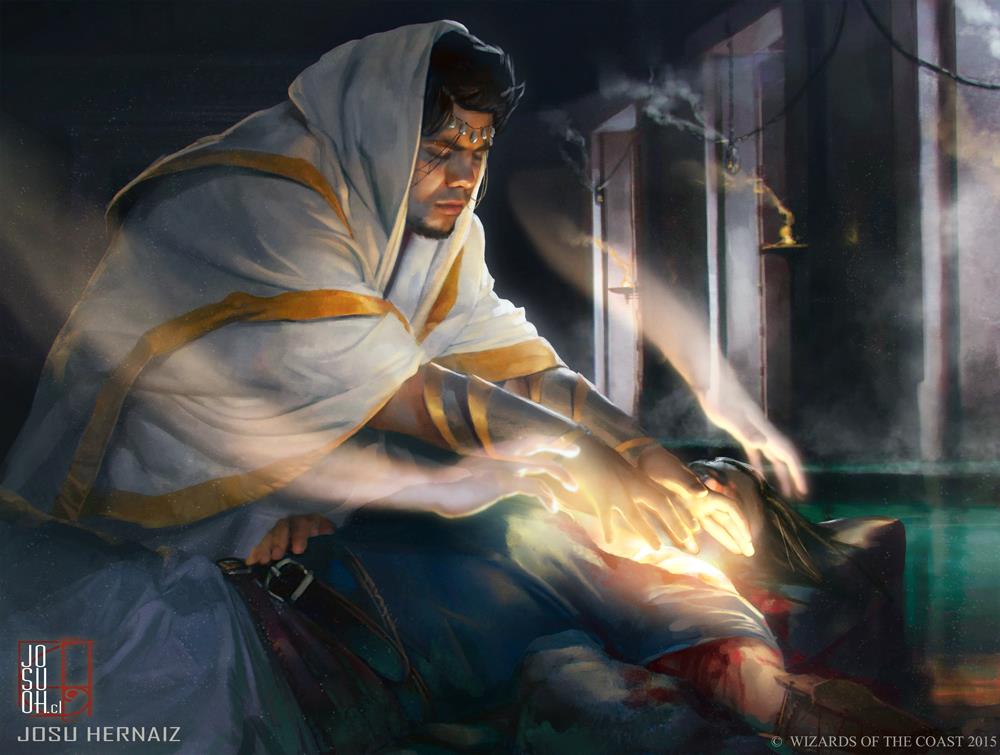
- Artist, Josu Hernaiz - Healing Hands
- Artist, Aaron Lee - Magic Academy
- Artist, Anna Podedworna - Xarthisius