
The Field Historian
A homebrew Class
An intrepid explorer with a thirst for knowledge and a toolkit equipped to acquire it
This is a homebrew class designed around flexibility and choice. The Field Historians are different from the every day archaeologist through their training, received at the prestigious and very selective Academy, which allows them to reach and investigate places otherwise outside the reach of common diggers. Their background in History and Arcana helps them make important discoveries in the field, advancing the knowledge on ancient and extinct cultures and, particularly, their use of magic.
The Field Historians never forget to record their most important discoveries into their own Tome of Discoveries, which they always carry with them. The tome is infused with the Academy's own brand of magic, so the recorded discoveries are magically transcribed into the Annals of the Academy, to which all other Historians of the Academy have access to. The Academy rewards the discoverer, and the more important discoveries the Historians record in their tomes, the more benefits they gain.
In the field, the Historians are a practical bunch. They are excellent fighters in close quarters, able to use the terrain to their advantage. There are two Disciplines that a Field Historian can specialize in: Ancient History and Arcane History, which focuses further on close quarter combat or teaches the Historian useful conjured
All of the art in this document comes from deviantart.com. All of the rights are retained by the artists. cover art: Desert Tomb by InterstellarDeej on Deviantart
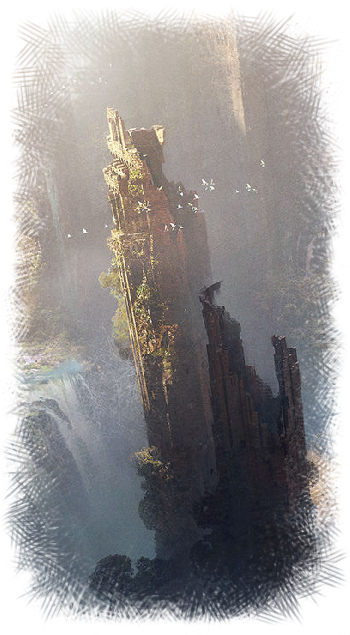
bottom right page 2: Ruins by IvanLaliashvili on Deviantart
bottom right page 4: dreams calendar by AlexanderKorolev on Deviantart
bottom left page 6: Keep the tomb in the village of priest by exes9yui on Deviantart
bottom page 7: Tomb of Horrors by KlausPillon on Deviantart
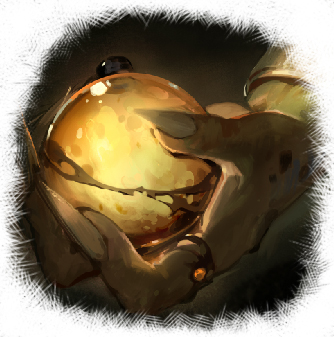
bottom right page 9: Commission: Orb by 3four on Deviantart
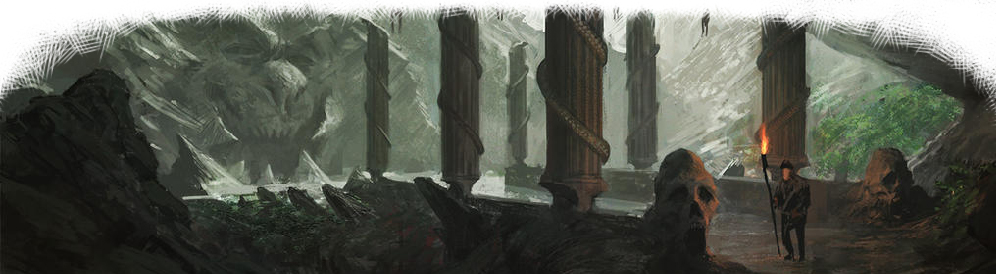
background art page 10: Monument in the Cave by satoruwada on Deviantart
background art page 11: Old Monument to a Dead Deity by Czepeku on Deviantart
Tome of Discoveries
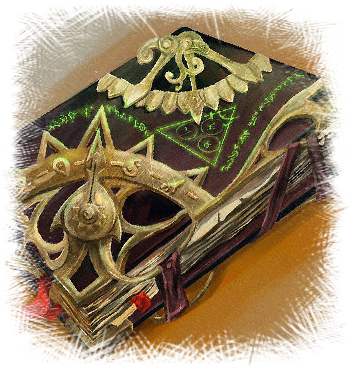
A Historian always carries his Academy sanctioned Tome of Discoveries, a magically infused Tome in which the Historian records his latest discoveries. As an incentive provided by the Academy, each set number of discoveries recorded in the Tome will bestow the discoverer with bonuses to different aspects of their kit.
Recording the discovery in the Tome, will also magically transcribe it into the Academy's Annals, to which all other Historians have access, bringing prestige and renown amongst the peers, along with the Academy's own rewards.
Recording a Discovery in the Tome
In order to be recorded in the Tome, the discovery needs to be of a certain significance.
The discovery can be of an abstract or tangible nature. The finding of an important relic, for example, or the answer to what has been up until now a historical mystery. Helping translate a difficult ancient language, or successfully creating or learning a new spell from an ancient scroll. Finding and mapping the ruins of forgotten cities and sunken temples.
The GM designates important discoveries that the Arcane Historian can make throught the campaign. Several discoveries can be scattered throughout the world map, or hidden inside the same dungeon. Any physical objects deemed important discovery, once recorded into the Tome, will disappear from the Historian's inventory as they are magically transported into one of the Academy's collections
Tome of Discoveries Rewards
At level 1, the Field Historian can record up to 4 discoveries. For each 3rd discovery recorded, the Tome will unlock a Reward. The numbers of rewards at any level is capped at the Tier number of the Tome Tier. You can find below a list of Rewards for each Tier.
Arcane Stance
The Field Historian is a nothing if not flexible in mind and body. By studying ancient scroll recorded in the Annals of the Academy, the Historian can make use of different stances which bring bonuses to various aspects of combat. A list of the available stances can be found below.
Archetypes
At level 3, the Field Historian can choose between 2 disciplines: Ancient History and Arcane History.
Ancient History
The Ancient Historian receives an Academy issued Servitorb which can perform a number of useful tasks in and out of combat. The Servitorb is a mechanical orb infused with arcane magic from an era past that can change shapes to suit its needs. It hovers above the shoulders of the Historian when not given any command. The Ancient Historian also becomes adept at close quarters combat, practiced in cramped tombs and hollows. They are expert in using the environment to their advantage and gain bonuses when fighting near walls, columns, and furniture.
Arcane History
The Arcane Historian who chooses this discipline, is granted access to a series of timeworn tomes written in an almost impossible language. The tomes describe long forgotten rituals of binding various valorous spirits of the past to the Historian. As the Historian progresses in its class, he or she learns to summon more spirits and to control them better. Whilst not as well defended as the Ancient Historian, the Arcane Historian benefits from being able to use range and numbers in order to overcome any dangers.
Class Features
As a Field Historian, you gain the following class features:
Hit Points
- Hit Dice: 1d8 per Historian level
- Hit Points at 1st Level: 8 + your Constitution modifier
- Hit Points at Higher Levels: 1d8 (or 5) + your Constitution modifier per Historian level after 1st level
Proficiencies
- Armor: Light Armor, restricted to Padded and Leather.
- Weapons: Simple Weapons, Whip
- Tools: Artisan's tools (Cartographer's tools)
- Saving Throws: Intelligence, Dexerity
- Skills: Choose one from Insight, Perception, Acrobatics, Investigation, Religion and Survival. You are already proficient in History and Arcana.
Equipment
You start with the following equipment, in addition to the equipment granted by your background:
- light padded armor
- (a) a light hammer or (b) a handaxe
- (a) a Scholar's Pack or (b) an Explorer's Pack
- your personal Tome of Discoveries
The Field Historian
| Level | Proficiency Bonus | Features | Cantrips Known | Spells 1st | Spells 2nd | Spells 3rd | Spells 4th | Spells 5th | Spell Slots |
|---|---|---|---|---|---|---|---|---|---|
| 1st | +2 | Tome of Discoveries Tier 1, Avid Reader, Gems Stipend | 2 | — | — | — | — | — | — |
| 2nd | +2 | Spellcasting, Arcane Stances | 2 | 1 | — | — | — | — | 2 |
| 3rd | +2 | Field Historian Archetype Tier 1 | 2 | 1 | — | — | — | — | 2 |
| 4th | +2 | Ability Score Improvement | 2 | 1 | — | — | — | — | 2 |
| 5th | +3 | Phantoms of the Past, Tome of Discoveries Tier 2 | 2 | 2 | 1 | — | — | — | 3 |
| 6th | +3 | Folklorist, Know Thy Craft | 2 | 2 | 1 | — | — | — | 3 |
| 7th | +3 | Field Historian Archetype Tier 2 | 2 | 2 | 1 | — | — | — | 3 |
| 8th | +3 | Ability Score Improvement | 2 | 2 | 1 | — | — | — | 4 |
| 9th | +4 | Tome of Discoveries Tier 3 | 2 | 2 | 1 | 1 | — | — | 4 |
| 10th | +4 | Increased Rewards, Ancient Tips & Tricks | 3 | 2 | 1 | 1 | — | — | 4 |
| 11th | +4 | Avid Study | 3 | 3 | 1 | 1 | — | — | 5 |
| 12th | +4 | Ability Score Improvement | 3 | 3 | 1 | 1 | 1 | — | 5 |
| 13th | +5 | Field Historian Archetype Tier 3 | 3 | 3 | 2 | 1 | 1 | — | 5 |
| 14th | +5 | Increased Rewards, Gems Stipend | 3 | 3 | 2 | 1 | 1 | — | 6 |
| 15th | +5 | Tome of Discoveries Tier 4 | 4 | 4 | 2 | 2 | 1 | — | 6 |
| 16th | +5 | Ability Score Improvement | 4 | 4 | 2 | 2 | 1 | 1 | 6 |
| 17th | +6 | Reconsider Reward | 4 | 4 | 2 | 2 | 2 | 1 | 7 |
| 18th | +6 | Field Historian Archetype Tier 4 | 5 | 5 | 3 | 2 | 2 | 1 | 7 |
| 19th | +6 | Ability Score Improvement, Tome of Discoveries Tier 5 | 5 | 5 | 4 | 3 | 2 | 2 | 8 |
| 20th | +6 | The Judgement of the Ghostly Council of Times Past | 5 | 5 | 4 | 3 | 2 | 2 | 8 |
Important Discoveries
If the important discovery is a physical object, once described in the Tome of Discoveries, it is magically teleported from your inventory into one of the Grand Collections inside the Academy grounds, where it is safely displayed for all other Historians, along with your name and a description of the circumstances of the discovery.
Gems Stipend.
Each week, you receive a small stipend from the Academy in the form of a small Purse of Gems.These gems are inscribed with the Academy's trade mark and cannot be sold.
At the start of each week, roll 2d10. The higher score is the number of gems you receive. The lower score will reveal the number of gems received that are Pristine, while the rest of them are considered Lesser. If both scores are equal, all of the gems are Pristine. During a short or long rest you can combine three Lesser gems into a Pristine one. Pristine gems are used for various features and rewards in the Historian's toolkit.
Rewards Tier 1
At level 1, once 3 important discoveries have been recorded, you can choose from one of the Rewards listed below. The choice is permanent.
-
Sense Spirits. You receive a +3 bonus to any Perception related checks when searching for goblinoid, undead, construct or elemental creatures. On a successful roll, you know their number, but not their location. In combat, any creature of the specified type, previously Sensed by you, has disadvantage on their first attack roll made against you.
-
Come prepared. You gain a bonus to AC equal to half of your DEX modifier rounded down, whenever fighting against any goblinoid, undead, construct or elemental creatures.
-
Back to the Wall. Since you spend so much of your time in tight, cramped spaces, the Academy has shared a treaty on fighting in confined spaces. Whenever you are indoors and near a piece of furniture, column or wall, you gain +1 to your attack rolls and DEX saving throws.
Rewards Tier 2
At level 5, once 6 important discoveries have been recorded in total, you can choose one of the Rewards listed below. The choice is permanent.
-
Know thy enemy. In combat, every time a goblinoid, undead, construct or elemental type of creature successfully hits you, as a reaction, you can roll a d20 and add your INT modifier. On a score of 20 or more, you negate all incoming damage. You can use this reaction until you have successfully negated two attacks. You regain the use of the reaction at the start of your next fight.
-
Prepared Potions. During a long rest, you can spend a Pristine Gem to enchant one healing potion or a poison vial to double its effect. This action can be taken once every time you rest. You can use up to 3 Prepared Potions per fight as you would use any other potion.
-
Follow me, I know a shortcut. If you are exploring any ruins of an extinct culture which you are already familiar with, you can use your History skill instead for any Perception or Investigation checks when searching for treasure, traps, or investigating objects or rooms with special significance. The History's proficiency bonus is doubled in this case.
Rewards Tier 3
At level 9, once 9 important discoveries have been recorded in total, you can choose one of the Rewards listed below. The choice is permanent.
-
Empower. During combat, as a bonus action, you can choose to crush a Pristine Gem against your weapon to give it +10 to hit to its next attack. You can use this feature once per turn, for as long as you have Pristine Gems.
-
Gemshine. In combat, as an action, you can throw a Pristine Gem anywhere up to a 30ft away. When it explodes, any creature caught inside its 15ft radius is automatically affected accordingly. If the creature is an enemy, it takes 1d6 + your DEX modifier and is blinded for 1 turn if it fails a DEX save throw against a DC of 8 + your DEX modifier + your proficiency bonus. If the creature is friendly, it receives a radiant shield which grants them 1d6 + their Dex modifier temporary hit points. The shield dissipates after 1 turn or if it took enough damage.
-
Tapdaggers. During a short or a long break by expending 2 Pristine Gems, you can modify one health potion you carry. The modified health potion acts like a weapon which also heals you when you hit with it. As an action, you can attack one enemy in melee range. The Tapdagger has +5 to hit. On a successful hit, you deal damage equal to half of the hit points gained as if you were to drink it, rounded down, and it shatters. It is not destroyed on a miss. You can use 1 Tapdagger per fight.
Rewards Tier 4
At level 15, once 12 important discoveries have been recorded in total, you can choose one of the Rewards listed below:
-
Waste Not, Want Not. Every time you use an ability that requires and destroys a Pristine Gem in combat, you have a chance to retain the gem. After you have used the ability, you can roll a d20. If the score is 10 or above, you can keep the gem.
-
Step Lightly Whenever you step onto a pressure plate (either previously discovered or otherwise), that would damage the location in which you stand, you get a free reaction which you can use to jump to the nearest safe location, up to 10ft away, chosen by you. You can add your DEX modifier + WIS modifier to your saving throw.
- Arcane tendrils In combat, as an action, you can point at a creature which is either goblinoid, undead, construct or elemental, up to 30ft away from you and which you have clear sight of. Misty tendrils shoot out of the tip of your finger to envelop the creature. On its turn, if the creature attacks, it suffers a reduction to its hit score equal to your WIS modifier. If the creature misses, the tendrils dissipate, otherwise they stay in place until the creature misses.
Rewards Tier 5
At level 19, once 15 important discoveries have been recorded in total, you receive both of the Rewards listed below:
-
Ancient Spirit. You can now summon an Ancient Spirit. It reveals itself as an old man or woman of a random humanoid race. When asked, the spirit reveals to you the answer to questions pertaining to ancient history matters. Whenever you are required to roll for an ability check requiring the History skill, you gain a bonus equal to your half of current level rounded down, on top of every other bonus applicable. In combat, as an action, you can summon the Ancient Spirit who plants a ward at your feet and then disappears. The ward deflects the next oncoming spell and redirects it at the nearest enemy creature. Once used, this feature cannot be used again and no other spirits can be summoned until the next dawn, and you have finished at least 1 long rest.
-
Arcane Spirit You can now summon an Arcane Spirit. It reveals itself in various luminous shapes. When asked, it reveals to you answers to questions pertaining to ancient arcane practices. Whenever you are required to roll for an ability check requiring the Arcana skill, you gain a bonus equal to your current level rounded down, on top of every other bonus applicable. In combat, as an action, you can summon the Ancient Spirit who infuses your next spell with +10 to hit and doubles the number of dice used to calculate its damage. Once used, this feature cannot be used again and no other spirits can be summoned until the next dawn, and you have finished at least 1 long rest.
Increased Rewards
At level 10, you gain Increased Rewards, which lets you choose one of the Rewards from Tier 1 and 2, already in your kit, and increase its effect according to the list below.
- Back to the wall. Your now receive +2 bonus to your attack and DEX saving throws rolls.
- Sense Spirits. You have advantage for your first attack on any Sensed creature. At level 20, for the first round, no Sensed creature can attack you unless you attack it first and you have advantage to your first attack roll.
- Come Prepared. The bonus to your AC is now equal to your full DEX modifier.
- Know thy enemy. In addition to negating all damage on 19-20 score, you now also only receive half of the damage on a 17-18 score, from the attacks of the chosen type of enemy. You can half the damage received any number of times, however successfully negating all damage, you cannot use this bonus again until your next fight.
- Prepared potions. You can now prepare 2 potions per rest, however, you need to spend an additional Pristine Gem. In combat, you can use as many Prepared Potions as you have available, provided you use one per turn.
- Follow me, I know a shortcut. You can also now tell the general layout where the treasure is usually kept and what type of traps one might expect, based on what you already know about the respective culture.
At level 14, your chosen Tier 3 Reward has its effects increased accordingly:
- Concentration. The bonus to hit is increased to +2.
- Gemshine. The DC for the DEX save throw against blindness is increased to 17. Additionally, the radiant shield now grants 1d6 + DEX to allied creatures caught inside the radius of the blast.
- Tapdaggers. You can now use 2 Tapdaggers per fight and you can also roll with advantage whenever you use one.
Avid Reader
Starting at 1st level, you have read all you could find at the Academy about a specific culture. Choose a humanoid culture (extinct or still in existence). You can double your proficiency bonus of any History or Arcana skill checks when trying to obtain information about that particular culture or object belonging to that culture. At level 20, your rolls will automatically succeed.
Spellcasting
At level 2, you gain the Spellcasting ability. The spells you learn are limited in number but versatile enough in options. Every spell can be cast a certain number of times equal to the number of spell slots available per level. You can use an additional spell slot to cast a spell at a higher level, and each subsequent level requires an extra spell slot. A level 1 spell, for example, can be cast as a level 3 spell by expending 2 additional spell slots.
You regain all expended spell slots when you finish a long rest. The number of spells known at each level is shown in the Field Historian table.
During a long rest, you can swap up to 1d4 of the spell known for others of the same level from the list at the end of the document.
Spellcasting Ability
Use your Intelligence modifier whenever a spell refers to your spellcasting ability. In addition, you use your Intelligence modifier when setting the saving throw DC for a spell you cast and when making an attack roll with one.
Spell Save DC
Spell attack modifier
Cantrips
At 2nd level, you know two cantrips of your choice from spell list below. You learn additional cantrips of your choice at higher levels, as shown in the Cantrips column of the table.
Arcane Stance
Starting at 2nd level, at the start combat, you can take the Action Arcane Stance for free. Choose from one of the three Stances available. The effects of the stance remain in place for the duration of the combat. Whenever your hit points are reduced to 0, or whenever you leave combat, the Stance dissipates. You cannot change the Stance during combat.
- Stance of Sharrdon. When you adopt this Stance, you are acutely aware of any movements around you. You gain a bonus to your AC equal to your half of your DEX modifier, rounded down.
- Stance of Ullias. Any magical damage suffered by you is shared equally between the Historian and any summoned constructs or creature otherwise under their direct control.
- Stance of Palla. This Stance allows you to heal +1 hp per turn. If you stay at full health for more than 3 consecutive turns, you receive a minor bauble shield which absorbs the next 1d12 + your level points of damage. Once hit, regardless whether the damage absorbed is lesser or greater than the shield's total hit points, the shield dissipates and will require another three consecutive turns at full health for it to spawn again. If the incoming damage is greater than the shield's total number of hit points, whatever is not absorbed, is applied to you as normal.
Arcane Historian Archetype
At level 3, you can choose from one of the 2 Arcane Historian disciplines: Ancient History and Arcane History. The discipline receives a few features immediately after the choice and you gain more at level 7, 14 and 18.
Ability Score Improvement
When you reach 4th level, and again at 8th, 12th, 16th and 19th level, you can increase one ability score of your choice by 2, or you can increase two ability scores of your choice by 1. As normal, you can't increase an ability score above 20 using this feature.
Phantoms the Past
When you reach 5th level, whenever you attack a creature with a melee weapon, on its turn, before it can take any action, phantoms appear swirling around it, bringing the past back to life, and you can attack the creature again, using the same attack type as the one used during your previous turn. If you have previously missed your attack, you can still roll for attack, but the damage done to the creature is halved, rounded down.
Folklorist
At level 6, you have become an accomplished folklorist. You know that all local legends and tales contain just as much history as any tomes written by stuffy old men with white, long beards and a discerning mind can pick the truth from the fable. You now know all the legends, stories and gossip of your race. Additionally, whenever you spend a week in a new area, which does not belong to your race, you learn the local legends, stories, customs and rumors and gossip about local historical personalities, regardless of the age they live or lived in.
Know Thy Craft
At level 6, you know have a bonus equal to your INT + DEX modifiers to both your Passive and Active ability checks when attempting to spot traps indoors. On a short rest, you can construct an Ice Trap by expending 2 Pristine Gems. In combat, as an action, you can place or throw the Ice Trap on the ground. It sticks to it and becomes invisible. Any creature that touches it, unless they win a DEX saving throw against the Ice Trap's DC equal to 8 + your proficiency bonus + your INT modifier, is frozen in place for 1 turn and becomes paralyzed and stunned. It also takes 2d10 cold damage. You can also add +5 to the DC of your placed caltrops and ball bearings or any other trap, which small enough to carry around.
Ancient Tips & Tricks
At level 10, you are familiar with the various types of armor employed by guardians of ruins and ancient dungeons and know how to best bypass their defenses. Whenever fighting a creature which is goblinoid, undead, construct or elemental in nature, and is found inside a ruin belonging to an extinct race or culture, your physical attacks can critically hit on a 19-20 score.
Avid Study
At level 11, after spending endless hours studying the nature of the Arcana in the halls of some mage guild or another, you are now able to cast a spell at maximum level available at your current level without expending any spell slots, once per a long rest.
Gems Stipend
When your reach level 14, your dice used to create the gems increase to 2d20.
Reconsider Reward
When you reach level 17, you can swap your Tier 1, Tier 2, and Tier 3 Rewards with any other from their own respective Tiers. The replaced Rewards have their effects increased according to the Increased Rewards tables at levels 10 and 14.
The Judgement of the Ghostly Council of Times Past
At level 20, you have learned how to call on the Council of Judges, the wardens of the god(s) of History. In combat, as an action, you can call forth the council. Three ghostly figures appear in any empty space around you. These are The Ruler, The Warrior, and The Wizard. You point to one of them and ask it to bring down their Judgement on your foes. The Judgement is different, depending on which Judge you point to. See below for the list of possible Judgements:
The Ruler. The ghostly visage of The Ruler, wearing a crown, represents good governance, authority, leadership, and law, safeguarding those who uphold these principles. Every time you summon the Council, The Ruler's image is that of a king or queen from ages past. When you point at this Judge, it raises it scepter into the air. A ghostly crowd's cheer echoes across the battlefied, affecting allies and enemies alike. All enemy creatures are automatically deafened, freigtened and restrained for 2 turns. Additionally, all enemy creatures smaller than Gargantuan size, are also thrown prone for 1 turn. All allied creatures receive a bonus to their AC and are healed by a number equal to the Historian's INT modifier. The AC bonus lasts 2 turns.
The Warrior. The hazy image of The Warrior, holding a shield in his left hand and a weapon in his right, represents the great deeds of battle, the ones that win them, that make conquerors of generals, victors of defenders, sound strategy, good tactics and unflinching courage. Every time you summon the Council, The Warrior's image is that of a different legendary warrior or general, wielding a different weapon each time. When you point at this Judge, it raises its weapon in the air, letting out the bellow of war. A ghostly army of ages past descends upon the battlefied, crying their victory chants, charging at your enemies. All enemy creatures have their AC lowered by a number equal to your DEX modifier for 2 turns. They, then, take damage equal to a xd10 + DEX modifier + INT modifier, where x is your DEX modifier. Any enemy creatures still alive are also knocked back 30 feet if they are Medium or smaller in size, 20 feet if they are Large or smaller in size, and 10 feet if they are Huge or smaller in size.
The Wizard. The apparition of The Wizard, reading from an ancient tome, represents the Arcane forces that shaped history just as much as the deeds of men. Every time you summon the Council, The Wizard's image is that of a different great wizard of legends long forgotten and holds either a tome, a globe, a scepter, a staff, or a flames of a random type of element surge out of its hands. It raises its hands while the echoes of a great spell cracks across the battlefield bounding everyone to its effects by gleaming, ghostly coils. For the next 2 turns, whenever an enemy creature casts a spell, it takes damage equal to damage of the spell if the spell hits. All allied creatures receive a spell shield for 2 turns, nullifying the effects of the first damaging spell that hits them. The first damaging spell cast by any allied creature for the next 2 turns is cast with advantage and the number of dice used to calculate its damage is doubled.
Once summoned, the Council cannot be called again for another full week.
Ancient History Discipline
Beginning at level 3, you can choose to follow the Ancient History discipline. Many of its features revolve around the use of your Servitorb, which you receive upon taking this path.
Upon taking the Ancient History path, you can add half of your INT modifier, rounded down, to your AC score.
You are also proficient at wearing Medium Armor, restricted to Hide and Chain Shirt.
When you take up this discipline, choose an extinct race or culture. You are now proficient in the use of their language and can read and write in all dialects of that extinct race or culture.
In combat, if you are next to a wall or a piece of masonry or furniture which is at least the size of a dinner table, whenever an enemy creature in melee range has missed its attack, as a reaction, you can attempt to bash the creature into the wall or piece of furniture. Roll a d20. If your score is higher than the creature's own attack roll which missed, you can use the creature's own momentum to guide it into a wall or piece of furniture and dealing 1d8 + INT modifier points of damage to it as bludgeoning damage.
As a passive feature, you also gain a bonus to any Acrobatics related ability checks equal to your DEX modifier.
The Servitorb is a ball of copper, intricately patterned with swirly designs etched on its surface. Light seems to flow in the grooves of the etched patterns. It is infused with the Academy's own brand of magic, and can receive certain commands. When commanded, the Servitorb can accomplish a number of tasks, in and outside of combat.
Immediately after receiving your Servitorb, you are granted the features described below. You gain additional ones when you reach level 7, 14 and 18 in the Field Historian class.
In combat, on your turn, as a free action, the Servitorb can shoot a radiant beam which deals 1d4 + your DEX modifier as radiant damage to a target of your choice up to 30ft away from the Servitorb, and up to 60ft away from you, and which the Servitorb has clear line of sight.
As a bonus action, you can command the Servitorb to a unoccupied space up to 60ft away from you. You can also recall the Servitorb to your side using a bonus action.
Note that you cannot use two bonus actions to command and recall the Servitorb on the same turn, unless you use one as a full action.
ENTRANCE
In comabat, you can order the Servitorb to a spot up to 60ft away from you and attempt to lure up to 5 nearest creatures around it to its location. The creatures must roll for an INT saving throw against your Spell Save DC or be entranced by the strange patterns of smoke and lights that the Servitorb emanates. The entranced creature ignores the terrain it walks on and approaches the Servitorb, forfeiting any other action. On every turn, the creature can roll again to try to break free from its charms. Creatures immune to charm effects, are also immune to this action. The effect ends when you recall the Servitorb.
Outside combat, the effect lasts until you recall the Servitorb to your side. On a successful saving throw, the enemy creature breaks free from the charm and becomes hostile, seeking the owner of the Servitorb.
Servitorb Activation
Beginning at 3rd level, at the start of combat, you can take a free action to activate your Servitorb with. The Servitorb then rises and slowly levitates around you, at shoulder level. As long as the it stays by your side, you gain a bonus to your hit score for all of your attacks with a melee weapon, equal to your proficiency level.
Ghostly Shot
At level 7, once per fight, as an action, you can command the Servitorb to a location up to 60ft away from you to which you have line of sight. The Servitorb flies to the location in a straight line and passes through all enemy creatures in its path. All affected creature each take 1d10 + your DEX modifier points of damage as radiant damage. As a bonus action you can call the Servitorb back to your side, and again it flies in a straight path back to you, damaging any enemy creature in its path for the same amount of damage, if the creature has not been damaged by it this turn. If you have not moved yet, you can do so in between commanding the Servitorb to the location and recalling it. You can still use its free action to shoot its radiant ray. Additionally, the radiant ray gains an extra damage die, to a total of 2 dice.
Suppress
At level 14, as an action, if the Servitorb is at your side, you can command it to suppress all enemy creatures attacking you. For one full round, any enemy creature attacking you in melee range, is forced to subtract a number equal to your proficiency level from their attack rolls. Once used, this feature cannot be used again until the next fight. If you crush a Pristine Gem against the Servitorb, you can use Suppress again, however, you must then spend a short rest before you can use it again. You can still use its free action to shoot its radiant ray. Additionally, the radiant ray gains an extra damage die, to a total of 3 dice.
Detonate
At level 18, as a bonus action, you can command the Servitorb to detonate its radiant energies in a 15ft radius. All enemy creatures caught in the blast radius take xd20 points of damage as radiant damage, where x is equal to the number of creatures caught in the blast radius + your DEX modifier. The resulting damage is divided equally amongst all enemy creatures. Once used, Detonate cannot be used again until you finished a short rest.
Arcane History Discipline
Beginning at level 3, you can choose to follow the Arcane History discipline. Many of its features revolve around summoning Guardians of the Past. These Guardians can be damaged or destroyed and they can interact with the physical world, however a successful Dispel Magic against your Spell Saving DC can dismiss them.
Upon taking the Arcane History path, you can add half of your DEX, rounded down to the damage of any spells you cast.
When you take up this discipline, choose an extinct race or culture. You are now proficient in the use of their language and can read and write in all dialects of that extinct race or culture.
You are also granted 2 uses of every magical scroll before the inscribed spell fades and you can also add your INT modifier when using a wand which requires you to roll for its effect.
Summoning Guardians
Beginning at level 3, you can summon a Guardian Spirit as an action, once per turn. You can only have 1 Guardian active at one time. Each of the Guardian has its own stat block as described below and summoning it requires a Pristine Gem. Each Guardian lasts until the end of the current fight. If the Guardian has been destroyed or dispelled, as an action. you may expend another Pristine Gem to summon it again. You can dispel a Guardian early by taking a bonus action on your turn. You may take an action to summon a different Guardian in its place, which may better suit your current needs.
The Guardian's turn follows right after yours. If it can move, it moves up to its speed and can take one action.
At level 7, 14, and 18, the Guardians gain additional features as described below.
Revenant
At level 7, your Guardians gain the Revenant feature. Whenever a Guardian's hit points have dropped to 0, before disappearing, they take one free reaction as described below:
- The Ancient Guardian can use Multiattack against its attacker, before disappearing.
- The Onyx Obelix silently detonates into smoke and all enemy creatures caught in a 15ft radius take xd6 points of radiant damage, where x is equal to your INT modifier, and they are blinded for 1 turn.
- The Warden of the Imperios can attempt to resurrect itself. Roll a d20 and add your INT modifier to the score. If the result is higher than 17, the warden regains the hit points lost during the previous attack suffered.
Charges
At level 14, whenever you summon a Guardian, you gain a charge. You can store and expend up to 3 charges at one time, on your turn, as a bonus action. You can choose the effect these charges give, for each one in part, your you can enhance a particular effect by expending more charges on it, as described below. The charges are kept in between combat encounters, but must be expended within 24 hours.
- As a bonus action, expending a charge, heals you for 1d6 + your INT modifier. For every additional charge spent on the same effect, you can add another 1d6 die to the heal amount. You can also choose to expend these charges on an allied creature.
- As a bonus action, expending a charge can infuse your next spell with 1d6 + your INT modifier points of the spell's type of damage. For every additional charge spent on the same effect, you can add another 1d6 die to the bonus damage of the spell. You can also spend the charges on an allied creature.
- As a bonus action, expending a charge adds 1d6 + your DEX bonus to your attack roll for your next spell cast. For every additional charge spent, you can add another 1d6 die to the bonus added to your attack roll for your next spell. You can also spend the charges on an allied creature.
Transference
At level 18, whenever you, an ally, or one of your Guardians receives damage, you can use Transference as a reaction. Roll a d20 and add your History and Arcana proficiency scores. If the result is equal or greater than 24, you can transfer the damage from the intended target to another Guardian of your choice. When used, Transference cannot be used again until you have finished a long rest.
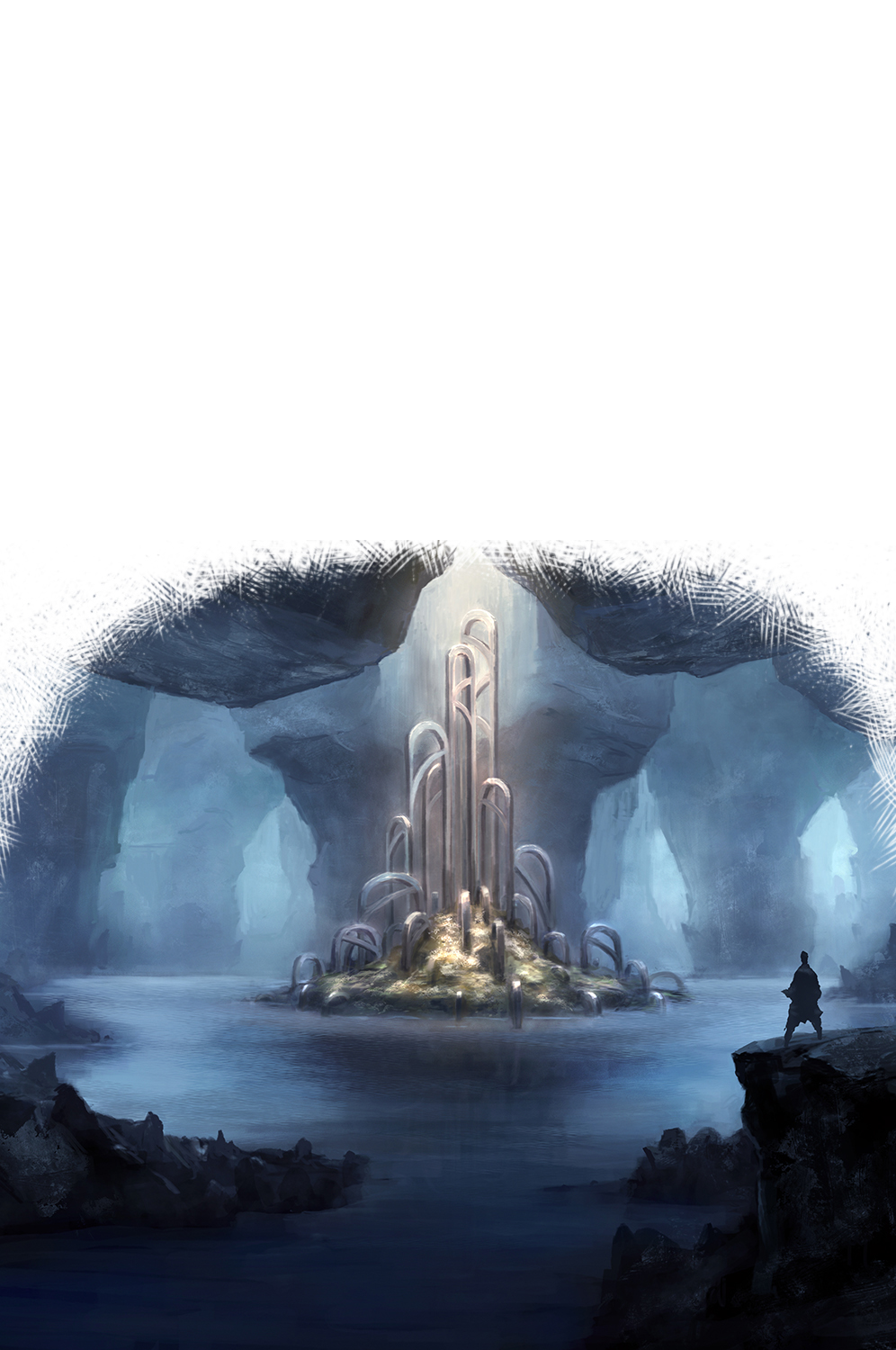
Ancient Guardian
The study of dusty tomes at the Academy has taught you how to summon the spirit of bravery in the form of an ancient warrior
- Armor Class 14
- Hit Points 16 (+1d6 per Historian level after level 3)
- Speed 30
- Bonus to Hit +4
- Vulnerabilities Dispel Magic
- Damage Immunities poison
- Condition Immunities charmed, sleep, any movement restricting conditions
- Language proficiencies any 2 languages from an extinct culture or race, chosen with the help of the GM.
Actions in combat
The spirit heeds your call and comes forth, embodying a great warrior who once lived and fought many ages ago. It carries a spear in one hand, which seems to glow in the light, and shield in his other, inscribed with sacred texts in a language unspoken for millenia.
Multiattack
The Guardian can take its action to attack a target up to 15ft away with its spear. dealing 1d8 + your INT modifier as piercing damage. It then bashes its target with its shield, dealing 1d6 + your INT modifier as bludgeoning damage and the target must roll a CON saving throw against DC 14 to avoid being forced prone.At levels 7, 14 and 18, the damage rolls gain an extra 1d8 die for the spear attack and an extra 1d6 die for the shield attack.
Shadows from the past
On your turn, you can command the Guardian to raise the Shadows from the past. The Ancient Guardian disappears and shadows raise from the ground next to each of the allied creatures, including yourself. They take the shape of the creature they rose next to. On the allied creature's turn, the shadow next to it replicates the creature's following actions: moving, attacking, casting a spell which deals direct damage. casting a protective spell. The shadows target the same creature or object or location that the allied creatures target. If an enemy creature has died following the allied creature's attack or spell, its shadow doesn't act. If an allied creature has healed another allied creature to its full hit points, its shadow doesn't heal that target. Once a shadow has acted, it disappears. When all the shadows disappear, the Ancient Guardian reappears at its place. Shadows of the past cannot be used again until the end of a full rest.
Actions outside combat
Once per short rest, when not in combat, you can summon the Ancient Guardian which follows you around for up to 6 hours. You do not need to expend a Pristine Gem to do this and can dispel it at wish. Every time your summon the Guardian, it has a different personality, as it inhabits a different warrior from the past. You can choose the era which the warrior is drawn from but not a specific person. You can ask the Guardian to:
- Read and translate for you any script in a language or dialect it knows.
- Retell ancient battles of its era, as well as other militaristic events.
- Communicate with other spirits of the past on your behalf, if they belong to the culture or race that the Guardian has been summoned from. The spirit must be already present, as the Guardian cannot call on them.
//image
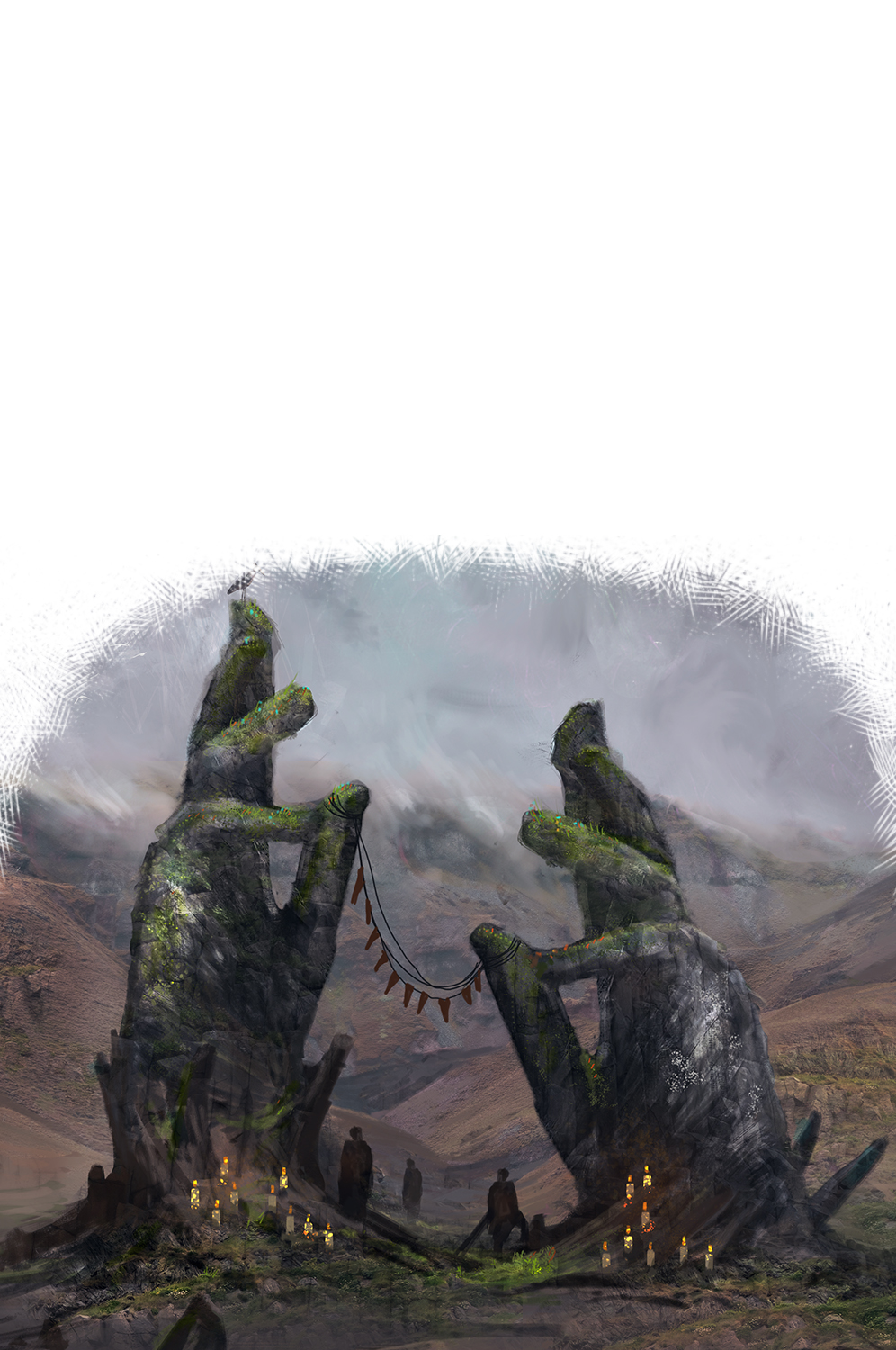
Silent Obelix
An Onyx mage, who's name has long since been forgotten, laid out in an unsigned article a technique to call forth a Silent Obelix
- Armor Class 17
- Hit Points 28 (+1d8 per Historian level after level 3)
- Speed 0
- Vulnerabilities Dispel Magic
- Damage Immunities poison
- Damage Resistances physical, cold, fire, necrotic
- Condition Immunities all conditions that immobilize or charm
Actions in combat
A Silent Obelix appears at the designated location. It is made up of shiny black stone, up to 10ft tall and 4ft thick, in the rough shapes of a mythical being, or a sacred monster or spirit, or god, with silver like veins running all across its surface. It cannot move, but can take one action. On your turn, you can use a bonus action to relocate the Silent Obelix, which disappears and reappears at the new designated spot.
Taunt
The Obelix emanates an invisible agitation in the magical field. Any enemy creature caught inside its radius of 15ft must make a WIS saving throw against your spell DC + your INT modifier or become enraged and target the Obelix. The Taunt lasts until the Obelix takes another action or is destroyed. On the affected enemy creature's turn, they must roll again to try to free themselves from the charm. If the roll fails, the enemy creature must either attack the Obelix or move towards it. All creatures in melee range of the Obelix have their AC lowered by 1 point incrementally for every turn they are still in melee range of the it.Silent Ruin
On your turn, you can command the Guardian to bring about Ruin to your foes. The Silent Obelix disappears and a great mist sets on all enemy creatures. Their armor rust and their weapons crack as time seems to pass very quickly inside the mist. All enemy creatures have their AC lowered by 5 points and -5 to hit to their next attack roll. Additionally, their hit points are temporarily reduced by 1d6, which is rolled at the start of each enemy creature's turn. If the hit points reduction take the creature at or below 0 points, it instead is reduced to 1 hit point. Once a full round has been completed, the mist dissipates and the Obelix reappears in its location. The AC, hit rolls and temporary hit points are restored, if the creature has not been killed in the meantime. Any enemy creatures which have not been attacked the previous round, retain their temporary reductions until they are attacked. Silent Ruin cannot be used again until you have finished a long rest.
Actions outside combat
Once per short rest, when not in combat, you can summon the Silent Obelix at the designated location for up to 6 hours. You do not need to expend a Pristine Gem to do this and can dispel it at wish. Every time your summon the Obelix, it appears as a different statue. You can command the Obelix to:
- Point the way towards the nearest treasure.
- Illuminate the surroundings by shining bright light in a 30ft radius and dim light for a further 15ft
- Muffle all sounds in a radius of 15ft centered on itself. Sound behaves normally inside the radius, and speech and spell casting work as normal, but anyone outside the radius cannot hear any sounds coming from within.
//image
Warden of the Imperios
A rare scroll discovered by an Ancient Historian some centuries ago teaches a difficult but powerful summon which calls forth one of the wardens who guarded the borders of the Imperios against dark magic, a long time ago.
- Armor Class 14
- Hit Points 12 (+1d6 per Historian level after level 3)
- Speed 30
- Vulnerabilities Dispel Magic
- Damage Immunities poison
- Damage Resistances all types of damage
- Condition Immunities all conditions
Actions in combat
Whenever you summon one, the spirit of the warden inhabits its own body which is drawn from the ages of the Imperios. The warden is drawn from any of the extinct or still present races which existed during the reign of the High-Emperors. On its turn, the warden can move up to its speed and take one action.
Bauble
On its turn, the warden casts a barely visible bauble around a friendly creature. Every turn, while the bauble is active, the creature gains resistance to elemental, radiant, force and physical damage. The warden can use its consecutive turns to keep the bauble up. The effect ends early when the warden has been given a different command, or has been destroyed.The High-Emperor's Protection
When commanded, the Warden of the Imperios can instate The High-Emperor's Protection. The warden disappears and a white, iridescent globe appears amidst all allied creatures, 3ft in radius. From it, white, flashy tendrils of pure magic spark towards all allied creatures, wrapping them in beneficial magical energies. All allied creatures gain resistance to the next physical or magical attack they suffer. Once a round has been completed, the sphere disappears. Any allied creatures which have not been attacked on their turn, retain their resistances until they are attacked. The High-Emperor's Protection cannot be used again until you have finished a long rest.
Actions outside combat
Once per short rest, when not in combat, you can summon the Warden of the Imperios which follows you around for up to 6 hours. You do not need to expend a Pristine Gem to do this and can dispel it at wish. Every time your summon the warden, it appears as an extinct race from the times of the Imperios which you can specify. You can ask it to:
- Guard the camp or a spot during a short rest or while exploring, sounding the alarm when danger is coming, but otherwise taking no other actions.
- Describe the lay of the land if you find yourself on the lands which once belonged to the Imperios. This is established with the help of the GM.
- Identity and describe ancient magic items, scrolls and spells.
Spell List
Cantrips (0 Level)
- Acid Splash
- Dancing Lights
- Fire Bolt
- Resistance
- Vicious Mockery
- Message
- Minor Illusion
- Produce Flame
- Ray of Frost
- Shocking Grasp
- Thorn Whip
1st Level
- Alarm
- Detect Evil and Good
- Detect Magic
- Comprehend Languages
- Fog Cloud
- Identify
- Magic Missile
- Protection of Evil and Good
- Inflict Wounds
- Guiding Bolt
2nd Level
- Acid Arrow
- Arcane Lock
- Find Traps
- Locate Object
- Ray of Enfeeblement
- Scorching Ray
3rd Level
- Blink
- Counterspell
- Fear
- Fireball
- Lightning Bolt
- Stinking Cloud
- Tongues
4th Level
- Arcane Eye
- Confusion
- Freedom of Movement
- Stone Shape
- Stoneskin
5th Level
- Arcane Hand
- Cone of Cold
- Dispel Evil and Good
- Legend Lore
- Passwall
Edition notes
This is the first release of the Field Historian homebrew class. Variables or entire features are bound to change partially of completely in future editions.
The Rewards system is designed to help the GMs reward their Historians for going off the beaten track. I have also left some descriptions of features and summons somewhat vague, as to be easier to integrate the class into a specific setting. The GM will designate extinct races and cultures at the start of a campaign, and also will set the number and locations of the Important Discoveries which helps also set the pace.
Any feedback is greatly appreciated.