
.
Three Thoughts on Conjuration
Conjuration magics are varied and diverse – and the wizards who practice them are equally so. Many of them choose to specialize in one particular aspect of the school. The three main divisions in the study of conjuration are the School of Creation, the School of Orientation, and the School of Summoning. Although each school focuses on a specific disciple, they all study the basics of the parent school of conjuration, and gain some skill in conjuration magic in general.
School of Creation
As a conjurer, you condense arcane energies to conjure objects simply out the magic you wield and your sheer focus and will. Those who study under the School of Creation favor spells that produce objects and effects out of thin air, from billowing clouds of killing fog to focused and destructive physical manifestations of elemental forces. As you begin your study, your conjurations may be fleeting, but as your powers grow, you learn to make your creations linger even when detached from your magic.
Students of this school are seen as practical wizards, always ready to conjure up a tool for any situation. Much like the School of Illusion, the art of conjuration is often only limited by the wizard’s own imagination, though conjurers would contend that their magic has a bit more substance.
Conjuration Savant
Beginning when you select this school at 2nd level, the gold and time you must spend to copy a conjuration spell into your spellbook is halved.
Minor Creation
Starting at 2nd level when you select this school, you can use your action to conjure up an inanimate object in your hand or on the ground in an unoccupied space that you can see within 10 feet of you. This object can be no larger than 3 feet on a side and weigh no more than 10 pounds, and its form must be that of a nonmagical object that you have seen. The object is visibly magical, radiating dim light out to 5 feet.
The object disappears after 1 hour, when you use this feature again, if it takes any damage, or if it deals any damage.
Greater Creation
At 6th level, your control over the fabric of reality deepens. Your Minor Creation feature gains the following improvements:
- The object you conjure can be Medium or smaller.
- The object's weight is no longer limited (though it still cannot be impossibly or magically heavy, such as an apple that weights 1 ton).
- The object no longer disappears when it takes or deals damage.
- The object disappears after 24 hours, instead of after one hour.
- You can choose to not have the object be visibly magical, though it still appears magical to spells and effects such as detect magic.
Focused Conjuration
Beginning at 10th level, while you are concentrating on a conjuration spell, your concentration can't be broken as a result of taking damage.
True Creation
Starting at 14th level, you add the creation spell to your spellbook, if it is not there already.
Also, you can cast the creation spell at 7th-level with this feature once without expending a spell slot. When you do so, you can only conjure nonmagical objects made from vegetable matter, stone, crystal, or metal. Additionally, the spell’s duration is instantaneous, and the object you create is not an illusion and is completely real – it does not disappear over time, it cannot be dispelled, and it does not cause spells to fail when used as a material component.
You regain the use of this feature when you finish a long rest.
School of Orientation
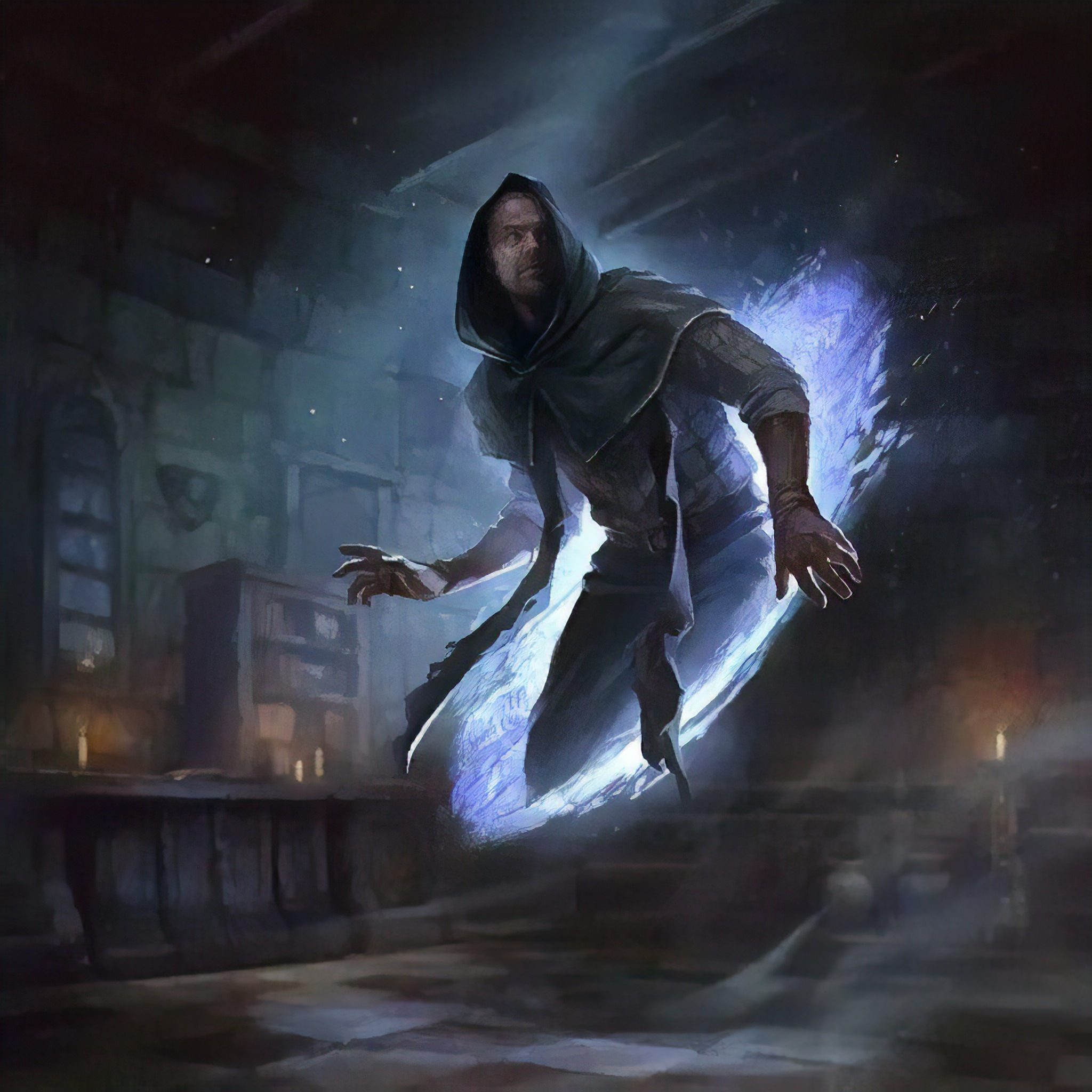
Students of the School of Orientation focus on the aspect of conjuration that deals with teleportation. You favor spells that transport creatures or objects across vast distances, even to other planes of existence, in an instant. As a member of this school, you can use your mastery of spatial magic to teleport distances and shift places with your allies instantaneously.
Practitioners of the School of Orientation often traverse the world – or even the multiverse – in search for further knowledge, aided by their talent for swift and immediate travel.
Conjuration Savant
Beginning when you select this school at 2nd level, the gold and time you must spend to copy a conjuration spell into your spellbook is halved.
Benign Transposition
At 2nd level, you can use an action to choose a Large or smaller creature within 30 feet of you. If that creature is willing, you both teleport, swapping places. You can use this feature twice, and you regain expended uses when you finish a short or long rest.
Charged Teleportation
Starting at 6th level, you can use an action to teleport up to 60 feet to an unoccupied space that you can see. Once you use this feature, you can't use it again until you finish a long rest or you use a spell slot to cast a conjuration spell of 1st level or higher.
Greater Transposition
Starting at 10th level, your Benign Transposition feature gains the following improvements:
- You can use the feature as a bonus action rather than an action.
- The range of the feature increases to 90 feet.
- You can alternatively choose two willing creatures to swap with each other, instead of choosing one creature to swap with you. If you do, both creatures must be within 90 feet of you and each other.
Defensive Rematerialization
Starting at 14th level, whenever you teleport using a spell or feature, until the start of your next turn, attacks against you have disadvantage and you make Strength and Dexterity saving throws with advantage.

School of Summoning
Summoners are arcanists that beckon creatures from other planes or places to their side for aid. As a student of this school, you strive to master magic that calls upon otherworldly allies, and the powers you possess can be shaped to strengthen the creatures you conjure.
Most summoners employ the service of a familiar – an extraplanar entity that shares a magical bond with their summoner. Many summoners conjure fey in the form of beasts, some prefer elemental forces that have taken living form, and others still choose to deal with unpredictable and dangerous fiends. Some summoners can gain the ability to call for a specific being each time they summon a creature if the mage manages to form a bond with an entity, or learn an outsider's true name.
Conjuration Savant
Beginning when you select this school at 2nd level, the gold and time you must spend to copy a conjuration spell into your spellbook is halved.
Summoner’s Familiar
Starting at 2nd level when you select this school, you add the find familiar spell to your spellbook if it is not there already. You ignore the spell’s material components. You can communicate telepathically with your familiar and perceive through your familiar's senses as long as you are on the same plane of existence.
When you cast the spell, you can choose one of the normal forms for your familiar or one of the following special forms: flying snake, gazer, imp, pseudodragon, quasit, sprite, or tressym.
Arcane Summoner
Starting at 6th level, you add the summon beast and the conjure animals spells to your spellbook, and they are considered wizard spells for you. Damage from creatures you conjure count as magical for the purpose of overcoming resistance and immunity to nonmagical attacks and damage. When you cast a conjuration spell that summons creatures with a casting time longer than one action, you can cast it as an action instead.
Focused Conjuration
Beginning at 10th level, while you are concentrating on a conjuration spell, your concentration can't be broken as a result of taking damage.
Durable Summons
Starting at 14th level, any creature that you summon or create with a conjuration spell has 30 temporary hit points.