
Custom Mechanics
Introduction
I have always been a big fan of giant robots since childhood and when I first got into D&D, I immediately wanted to play in a campaign world with gundams as a core mechanic. I tried several approaches, from making an entire custom rulebook, to some light reflavoring of existing material, to even buying other game systems. Unfortunately, those efforts didn't pan out. A custom rulebook requires a lot of game design expertise I didn't have, light reflavoring had many holes in the logic, and other game systems just didn't scratch that mechanical itch for me. This document is a culmination of running 5th Edition games since 2015, getting a good grasp of its many nuances, and finding a good middle ground between making something from scratch and using what's already available.
The world of Gundam is a high-technology world with very minimal supernatural elements. This setting involves battles between giant humanoid mobile weapons called mobile suits, with sometimes even bigger vehicles called mobile weapons. The custom mechanics and setting guidelines in this document are intended for most high-tech settings that include mobile suits.
This document is meant to help players and dungeon masters adapt 5th Edition's magic-heavy system and keep the rules in line with the internal logic of a high-tech setting that features mobile suits or other similar giant robots. There are new mechanics introduced, such as new conditions and new combat mechanics for warships, if only to ensure that the setting plays according to the world's logic.
It is assumed that you have a good grasp of the rules of 5th Edition D&D, as this document references the Player's Handbook several times.
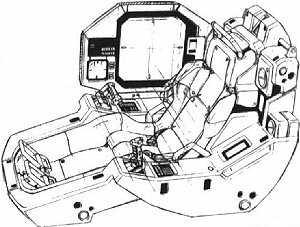


Creature Types
Collectively called mobile weapons, the many kinds of giant mecha are given classifications to provide an equivalent type to the ones provided in the Monster Manual. The human pilots, on the other hand, retain their creature identification and classification as humanoid.
Creature Types Table
| Creature Type | Equivalent |
|---|---|
| Aberration | Extraterrestrial |
| Beast | Mobile armor |
| Celestial | Spiritual presence |
| Construct | Vessel |
| Dragon | Modular platform |
| Elemental | Unique generator |
| Fey | AI-assisted |
| Fiend | Forbidden |
| Giant | Massive mobile armor |
| Humanoid | Mobile suit |
| Monstrosity | Amalgam |
| Ooze | Nanomachines |
| Plant | Mechaflora |
| Undead | Unmanned AI |
AI-assisted are any kind of manned mobile weapon whose operating systems are assisted by a sapient artificial intelligence that may or may not have the pilot's well-being in mind.
Amalgams are large mobile weapons whose pilots are part of its internal mechanisms.
Extraterrestrial mobile weapons are beings of unknown origin, either outside of the Earth's sphere or beyond.
Forbidden are mobile weapons whose construction grossly violate laws that are meant to prevent collateral damage.
Massive mobile armor are gigantic manned machines used for assault missions meant for entire battalions of mobile weapons. While their designs and purpose are as varied as their regular mobile armor counterparts, they are always colossal in size.
Mechaflora are local flora that have mutated and assimilated mechanical parts in order to capture prey.
Mobile armor are antiquated vehicles of war, often taking the form of jets, tanks, or submersibles. More recent innovations, however, have elevated its category to include special animalistic functions with special capabilities that surpass the conventional mobile suit.
Mobile suits are general-purpose and human-shaped giant mecha. These serve as the standard in modern warfare.
Modular platforms are external weapons platforms resembling jets, tanks, or even mobile suits the size of a massive mobile armor, with the pilot's actual mobile suit integrated within.
Nanomachines are collective masses of tiny machines that constantly shift its formation to assume different forms and functions.
Spiritual presences are rare phenomena where the soul of a human merges with an onboard AI, creating a unique unmanned mobile weapon with a living consciousness.
Unmanned AI use rudimentary computer intelligence to operate unmanned mobile weapons using simple instructions or standing orders.
Unique generators are special prototypes that utilize experimental reactors that generate unconventional, and often volatile, particles.
Vessels are any large vehicles or fortresses that are used to carry smaller vessels, mobile weapons, and doubles as living spaces for its staff and crew. This classification extends to its parts and weapons.
Size
A mobile weapon's size relative to other mobile weapon uses similar terms to that of a creature's, but indicates different spaces due to the differences in scale.
For the purposes of this guide, a creature refers to any creature relative to a humanoid's size (assuming a humanoid is Medium with a height of 4 to 8 feet), while a mobile weapon refers to any giant mecha relative to a mobile suit (assuming a mobile suit is Medium with a height of 40 to 80 feet).
Mobile Weapon Size Categories
| Size | Space | Height or Length |
|---|---|---|
| Tiny | 25 by 25 ft. | 10 to 20 ft. |
| Small | 50 by 50 ft. | 20 to 40 ft. |
| Medium | 50 by 50 ft. | 40 to 80 ft. |
| Large | 100 by 100 ft. | 80 to 160 ft. |
| Huge | 150 by 150 ft. | 160 to 320 ft. |
| Gargantuan | 200 by 200 ft. or larger | 320 ft. or larger |
Classes
The character classes dictate majority of what a character can do. Given the nature of the setting, player characters are called ace pilots and it is assumed that they have a mobile suit of their own.
| PHB Class | Short Description |
|---|---|
| Artificer | Herald of the future. |
| Barbarian | Overclocking berserker. |
| Bard | Tactical forecaster. |
| Blood Hunter | (No equivalent) |
| Cleric | Paragon of a design paradigm. |
| Druid | (No equivalent) |
| Fighter | Quintessential soldier. |
| Monk | Old ways in the new world. |
| Mystic | (No equivalent) |
| Paladin | Paradigm protector. |
| Ranger | Urban survivalists. |
| Rogue | A bit of everything. |
| Sorcerer | Technologically twisted. |
| Warlock | Man-machine interface. |
| Wizard | Expert programmer. |
Artificer. Artificers are pilots who thrive in a creative environment. They use their deep understanding of technology to create the next technological wonder, often testing them out on their own to prove their worth.
Barbarian. Barbarians rely on ferocity more than technique. They push themselves and the mobile weapon they pilot to the absolute limit, often at a personal cost.
Bard. Bards are tactical experts that focus on tech-assisted battlefield assessments, taking on programs that improve the combat abilities of fellow combatants and debilitating enemy ranks.
Cleric. Clerics are practitioners of design paradigm applications, offering a diverse set of capabilities achieved through technology.
Fighter. Fighters are highly-trained soldiers that focus on weapon-based warfare.
Monk. Monks are keepers of the old arts, often applying minimal technology to aid in combat.
Paladin. Paladins dip into the training of fighters and the application of design paradigms to provide high support and defense without sacrificing offense.
Ranger. Rangers are experts in urban survival, providing a wide range of tech-assisted exploration and scouting capabilities.
Rogue. Rogues dip into various disciplines, gaining a wide range of skills to adapt to a given situation.
Sorcerer. Sorcerers are the products of technological mishaps, and often have physiological aspects of themselves that are more synthetic rather than organic.
Warlock. Warlocks are a special kind in that they have come into contact with a unique entity called a machine interface. Such beings can be an AI, the spirit of a once great pilot, or a mix of the two.
Wizard. Wizards specialize in the deepest recesses of programming knowledge, often focusing on a singular programming language as the focus of their study.
Skills
The following skills are appropriate to a high-technology setting, showing the PHB equivalent of each one. If a race, background, or class feature grants proficiency in any of the PHB equivalent skills, you instead gain the skill appropriate to the setting.
| Skill | PHB Equivalent |
|---|---|
| Technology | Arcana |
| Machinery | Animal Handling |
| Astrophysics | Religion |
Astrophysics. Your Intelligence (Astrophysics) check measures your ability to recall information on outer space phenomenon.
Machinery. Your Wisdom (Machinery) check measures your ability to get a sense of the build quality and efficiency of physical machinery.
Technology. Your Intelligence (Technology) check measures your ability to recall information on devices and programs, computer languages, design paradigms, and prototypes.
Magic as Technology
In a high-tech setting, magic is virtually non-existent, with technology taking its place in the world. This section outlines how magic would be treated in a technologically advanced setting.
Reflavoring Magic
For the purposes of in-game consistency with the setting, the following terms will be used.
| Magic Term | High-Tech Equivalent |
|---|---|
| Antimagic | Electromagnetic Pulse (EMP) |
| Attunement | Installation |
| Cast a spell | Execute a program |
| Curse | Corruption |
| Dispel | Terminate |
| Illusion | Hologram |
| Magic | Technology |
| Magical effect | Technological phenomena |
| Magic item | Prototype |
| Magical damage | Particle-accelerated damage |
| Ritual casting | Manual compilation |
| Spell | Program |
| Spell concentration | Execution maintenance |
| Spellcaster | Executor |
| Spellcasting | Execution |
| Spellcasting ability | Programming ability |
| Spellcasting focus | Device |
Corruption. Corruption is a kind of technological phenomenon that damages data of devices, programs, prototypes, and other similar items.
Device. A technological focus that stores programs and enables their execution.
Electromagnetic Pulse (EMP). An EMP field suppresses the functions of all technology, rendering them unusable. Any actual magical effects, however, remain unhindered (such as newtype abilities).
Execute A Program. The act of activating a program and going through its steps to produce its intended effect.
Execution Maintenance. The act of maintaining a loop of a program's commands in order to keep the program activated.
Executor. The individual that activated the program.
Manual Compilation. Certain programs have a special tag: ritual. Such a program can be executed following the normal rules for execution, or the program can be manually compiled. The manual compilation version of a program takes 10 minutes longer to execute than normal. It also doesn't expend a program slot, which means the manual compilation version of a program can't be executed at a higher level.
Hologram. A technological effect that uses light imaging technology to display realistic images in the air.
Installation. Prototype items may require installation and registration of user parameters in order to be used properly.
Particle-Accelerated Damage. Particle-accelerated damage is a special kind of bludgeoning, piercing, or slashing damage done by prototype weapons. It can break through certain armors that resist normal physical weaponry.
Program. A set of mechanical steps and procedures meant to produce a certain effect through technological means.
Prototype. A prototype is a special item, be it a device, a weapon, or an armor that has unique integrated components, such as a micro-particle engine or nano-machine implementation that can produce unique effects or grant special abilities.
Terminate. Any action that removes the ongoing effects of a program.
Technological Phenomena. Any effect produced by technology that alters its surroundings in some way.
Technology. Any piece of man-made equipment that produces certain effects for a specific purpose.
Spell slots: Program slots
Program slots will be treated as renewable forms of technology, such as special ammunition that needs to be crafted, self-replicating materials, or similar, expendable items used by programs to produce certain effects. This could take the form of a handheld generator with 3D-printing materials or small drones that create small objects on the fly.
Cantrips
Cantrips are programs integrated into a special piece of equipment. For example, a firebolt program might be installed on a special gun, or the guidance program can be small bone-conduction earpieces that generate a tone to increase mental acuity.
Spellcasting Focus: Device
A device is a personal handheld piece of technology that allows its user to execute programs. These interface with the program slots and material components of a program in order to produce certain technological phenomena.
Device Required
Due to the nature of the setting, a character that can execute programs must always have a device on his or her person in order to execute a program, regardless of whether or not the program requires material components.
For a mobile weapon, it is assumed to have its own device integrated within its construction, with program slots as part of its manufacturing components. Alternatively, any ranged weapon with the beam or missile property, regardless of proficiency, serves as a program execution device and can be used with features or abilities that apply to an arcane focus.
Devices
Any of the following devices can serve as a focus, regardless of whether your features allow for an arcane focus, druidic focus, or a holy symbol.
Arm-mounted Interface. This small computer is mounted on a forearm, complete wit h a screen interface and a small keypad.
Handheld Media Device. A small notebook-sized device that has all the capabilities of a computer.
Interface Goggles. Goggles that project a user interface directly into the retina, taking input via eye-tracking and button presses at the sides of the device.
Gesture Glove. A motion-sensing glove that takes user input via hand gestures. This device can be programmed by connecting to a computer terminal.
Spell Components: Program Components
A program's components are the physical requirements that need to be met in order to execute it.
Verbal (V). Most programs involve voice activation in order to execute. A character who is unable to speak or is in a soundless area can't execute a program with a verbal component.
Somatic (S). Program execution requires the selection of commands and setting up the program's parameters. If a program requires a somatic component, the executor must have a free hand to perform these gestures. Similarly, a mobile weapon must use its program execution device, such as a ranged weapon with the beam property, with a free hand in order to perform a program's somatic component.
Material (M). Instead of physical objects, material components come in the form of files that are loaded into a program as part of its execution. These files contain special algorithms, targeting solutions, or chemical computations that need to be stored in external data storage devices due to their data size or processing load.
Files can sometimes be volatile in nature, usually from data corruption through counter-hacking protocols or destruction of the data storage device due to the processing load. If a program states that a material component is consumed by the program, the executor must provide this component for each execution of the program.
Material components that are not consumed and have no monetary cost are assumed to be pre-installed in the device.
An executor must have a hand free to access a program's material components—or to hold a device—but it can be the same hand that he or she uses to perform somatic components.
Creating Your Own Files
While most files can be purchased in any technology-enabled shop, the more expensive ones need to be sought out or created. You can create your own files at a workbench (tool).
Preparing Spells: Installing Programs
Installing programs involve saving a character's programs on his or her personal device. Given the complex nature of the programs and the limited memory of a device, only a few programs can be installed at a time.
Schools of Magic: Programming Languages
A programming language is looking at how a program is created and executed in order to produce specific effects.
Abjuration. Programs that are protective in nature, though some have aggressive uses. They create magnetic or electrical barriers, negate harmful effects, or harm trespassers.
Conjuration. Programs that involve the transportation of objects and mobile weapons from one location to another. Some programs manufacture mechanical mobile weapons or objects to the executor's side, whereas others allow the executor to move to another location at high speed.
Divination. Programs that reveal information, whether in the form of deep database dives of forgotten data, AI-driven forecasting, tracking and location of hidden objects, disrupting holograms, or satellite linking to see across vast distances.
Enchantment. Programs that affect the minds of others such as hacking a mobile weapon or through using certain chemicals against other pilots, influencing or controlling their behavior.
Evocation. Programs that manipulate particles, special grenades, or custom ammunition to produce a desired effect. Some call up blasts of fire or lightning. Others infuse the body with special chemicals to accelerate the healing process.
Illusion. Programs that deceive the senses or minds of others through holographic technology or hacking the imaging sensors of machinery. They cause people to see things that are not there, to miss things that are there, or to hear phantom noises.
Necromancy. Programs that interface with the body's natural healing capabilities or engage a mobile weapon's self-repair systems. Such programs can grant an extra reserve of stamina, or perform an ad hoc transfusion.
Transmutation. Programs that change the properties of a mobile weapon, object, or environment. They bolster the strength of an ally or make an object move at the executor's command.
Other Wizard Schools: Programming Speciality
A programming specialty utilizes existing programming languages that serve specific roles or functions.
Bladesinging. Programs that focus on enhancing the capabilities of an executor that chooses to engage in melee combat.
Lore Mastery. Programs that alter the code of other programs, changing its internal structure to optimize its use in the moment of its execution. In a way, lore mastery is a programming language about programming languages.
Theurgy. Programs that delve into design paradigms, mixing the aspects of the micro and macro perspectives of both studies of technology.
War Technology. Programs that are best served in a combat scenario, able to utilize programs to serve combatant needs and turning other executors' technological phenomena against them.
Divine Domains: Design Paradigms
A design paradigm is a specific area of interest for technological studies. It is a way of thinking when looking at mechanical designs from mobile weapons to programs in terms of how these elements synergize with each other and how to best operate them in live conditions. Compared to a programming language that looks at the micro level of each specific program, a design paradigm is a more holistic view of technological interaction.
Arcana. The arcana paradigm focuses on the effects of technological phenomena, delving into the intricacies of technological interaction with the natural world.
Death. The paradigm of death focuses on reusing discarded technology or tech that has "died" in order to find renewed purpose after obsolescence.
Forge. The forge paradigm focuses on the creative power of technology, producing technological phenomena that augments existing items or creates a new item from other materials.
Grave. The grave paradigm focuses on pre and post-mortem designs and serves as an in-between to the death and life paradigms.
Knowledge. The paradigm of knowledge focuses on the power of data and how it can be best gathered, processed, and utilized.
Life. The paradigm of life focuses on preservation, as opposed to the post-mortem viewpoint of the death paradigm.
Light. The paradigm of light focuses on the research and application of particle radiation technology used to survive the cold darkness of outer space.
Nature. The paradigm of nature focuses on the chemical application of technology to the natural world, protecting and preparing it from harmful effects of change.
Order. The paradigm of order focuses on the harmony of societal structure, employing programs and other technologies to optimize oration effects and obedience from others.
Tempest. The tempest paradigm focuses on the research and application of the raw meteorological and geothermal power of nature.
Trickery. The paradigm of trickery focuses on technology that enhances subterfuge operations.
War. The war paradigm is optimized for combat operations, employing technology that enhances the offensive capabilities of allied combatants.
Bard Colleges: Tactical Schools
The tactical schools are areas of specialization that implement technology to assist in making sound tactical forecasts in either combat or subterfuge.
Glamour. The school of glamour focuses on misdirection through focused attention, ensuring that enemy combatants are enthralled or distracted while keeping allies inspired.
Lore. The school of lore focuses on the historical knowledge of previous excursions, pulling from a wealth of programs from different programming languages or design paradigms to ensure a successful mission.
Swords. The school of swords is focused on independent combat operations, favoring personal enhancements over team cohesion.
Valor. The school of valor is the opposite of the school of swords, providing tactical forecasts to maximize the combat prowess of a team.
Whispers. The school of whispers is much like the school of satire, but employs more lethal methods while keeping up a social facade.
Sorcerous Origins: Techno-Organism
The techno-organism is an individual with aspects of special or unique pieces of technology melded into their body either by choice or by accident, mutating them into a hybrid form of human and machine.
Divine Soul. A divine soul techno-organism is infused with particle or radiation technology. This individual exhibits light-based capabilities, exuding dimly glowing skin or radiant circuitry coursing through their body.
Draconic. A draconic techno-organism is melded with shielding technologies, such as heat-resistant metals or the like. A draconic's body has patches of metallic pieces along their skin.
Giant Soul. A giant soul techno-organism is implanted with different chemical-infused particles such as electricity or ice mixed with ultralight compression technology. Parts of their skin have an exterior reminiscent of the particles they have in their body.
Phoenix. A phoenix techno-organism is bathed in the byproducts of high frequency particles that cause intense heating in most materials.
Sea. A sea techno-organism has components that allow greater aquatic adaptation.
Shadow. A shadow techno-organism is one who has been revived by experimental nano-machines a few moments after clinical death.
Stone. A stone techno-organism has magnetic shielding components within their body.
Storm. A storm techno-organism is infused with experimental flight technologies.
Wild. A wild techno-organism is so heavily mutated by different particles and radiation frequencies that random technological effects happen within their vicinity.
Warlock Pacts: Machine Interface
The machine interface is a sentient entity of technological or supernatural origin that has decided to form a symbiotic attachment with an individual.
Archfey. An archfey interface is a rogue terraforming AI, often granting several programs that utilize chemical effects to alter the mind.
Celestial. A celestial interface is an experimental social AI that focused on dispensing justice. In order to enforce its programming, it utilizes light particle technology to burn the guilty or heal the innocent.
Fiend. A fiend interface is a virtual assistant that has been possessed by the malevolent spirit of a once great ace pilot. This rogue consciousness utilizes technology for destructive means to feed its violent impulses.
Great Old One. A great old one interface is an ancient satellite program that has been sent to the deep recesses of outer space, but has somehow returned with a heightened sense of awareness. It uses inaudible sound frequencies and magnetic fields to alter the minds of those around it.
Hexblade. A hexblade interface is a targeting AI attached to a weapon that has gained a level of awareness. It has the one-track purpose of empowering its user, or evolving itself through weapon usage.
Raven Queen. A raven queen interface is the more benevolent, or at least more just, counterpart to the fiend. A gentler spirit that has taken on the form of a scout drone, sharing its senses with its host through a psychic connection.
Undying. An undying interface is the spirit of another ace pilot that has attempted to possess its host at the time of their near-death, only to be shunted to their mental recesses upon the individual's resuscitation.
Future Releases
For future releases, whether unearthed arcana or official content, tweak its description based on the existing classes or subclasses to better fit the setting.
Spell Restrictions
The following kinds of spells do not exist in a high-tech setting by virtue of them being tonally inconsistent or technologically impossible.
- Spells that teleport vast distances, such as the circle of teleportation or teleport spells. Shorter distances such as misty step or thunder step, however, are generally allowed.
- Spells that transport creatures to a different plane of existence such as the plane shift spell.
- Spells that banish creatures to another plane of existence such as the banishment spell.
- Spells that conjure pocket dimensions such as mordenkainen's magnificent mansion or the demi-plane spells.
- Spells that create entire locations or structures such as the temple of the gods or mighty fortress spells.
- Spells that possess another creature such as the magic jar spell.
- Spells that tamper with a creature's soul such as the soul cage spell.
- Spells that raise the dead after a lengthy period of time such as the raise dead spell.
- Spells that drastically alter the body such as the polymorph spell or the enlarge/reduce spell, however the latter can be reflavored as holographic imaging coupled with strength-boosting chemicals.
- Spells that alter reality such as the wish or time stop spells.
- Spells that create undead such as the animate undead spell cannot be used by pilots, however, it can be reflavored as a mobile weapon ability to hack into a downed mobile weapon.
While these are general guidelines, it shouldn't be a hard stop from using such spells. Leeway should be given, provided a satisfactory justification.
Programs and Spells
In general, pilots or mobile weapons execute programs. Special cases, however, such as the newtype race, can cast actual spells. In situations where both are in play, the rule of thumb is that programs cannot affect spells or vice versa. For example, a dispel magic program can only dispel other programs and not spells. Likewise, a dispel magic spell can only dispel spells and not programs.
Damage Types
The damage types outlined in page 196 of the Player's Handbook are retained as is, with the exception of force, radiant, and necrotic damage, which are all variations of particle energy.
Force Damage
Force is particle energy stripped of any heating or absorption properties.
Necrotic Damage
Necrotic is anti-particle energy that absorbs regular particles. When a mobile weapon takes necrotic damage, its energy points are reduced by amount equal to half the necrotic damage taken. Energy points are expounded further in this document.
Radiant Damage
Radiant is regular particle energy produced by conventional generators that, when weaponized, can distribute heat over a small and concentrated surface area and disrupts particle-based technology. Weapons with the beam property deal radiant damage.
Currency
Trade is still facilitated by monetary means, with a universally accepted currency called credits (cr).
| Coinage | Credits |
|---|---|
| 1 pp | 1000 cr |
| 1 gp | 100 cr |
| 1 sp | 10 cr |
| 1 cp | 1 cr |
Scrap
Scrap is a precious resource that can be used to repair mobile weapons or warships. It can also be traded for 1000 credits per ton.
Gaining Scrap
When you reduce a mobile weapon or warship part to 0 hit points, it becomes scrap. The number of tons of useful scrap you can salvage is calculated as follows:
Salvaged scrap = target's Constitution score x target's CR or level x target's size modifier
To determine the target's size modifier, consult the size modifier table.
Size Modifier Table
| Size | Size Modifier |
|---|---|
| Tiny | 1 |
| Small | 1 |
| Medium | 2 |
| Large | 3 |
| Huge | 5 |
| Gargantuan | 8 per 320 feet in length or height, whichever is longer |
You can also turn a weapon with the mobile weapon property into scrap, gaining an amount of scrap in tons equal to its weight. If a mobile weapon that you own is docked in a hangar, you can turn it into scrap as well.
Mobile Weapons
Mobile weapon is the collective term used for giant vehicular weapons such as a mobile suit or mobile weapon. The following rules are for using a mobile weapon.
Physical Ability Scores
The following physical ability scores describe how a pilot's Strength, Dexterity, and Constitution correlate with their ability to control their mobile weapon.
Strength
Strength measures the pilot's bodily power and athletic training, which translates as their ability to exert physical force on the cockpit controls in order to brace for recoil or to correctly leverage on the mobile weapon's mechanical power.
Dexterity
Dexterity measures the pilot's agility, reflexes, and balance, which translates as their ability to react quickly and have their mobile weapon move accordingly.
Constitution
Constitution measures the pilot's health, stamina, and vital force, which translates as their ability to maintain a prolonged period of intense activity and their natural ability to control their mobile weapon's energy consumption.
Mental Ability Scores
While a pilot's Intelligence, Wisdom, and Charisma scores do not directly correlate to their piloting ability (barring special abilities and program execution), these scores instead describe their non-physical capabilities while inside their mobile weapon, such as performing calculations (Intelligence), sensing their surroundings (Wisdom), or communicating with other pilots (Charisma).
Piloting a Mobile Weapon
Mobile weapon warfare is a standard in any Gundam-style setting. The following section details the additional rules involved with using a mobile weapon in combat.
Boarding and Disembarking
If you are within 5 feet of an unoccupied mobile weapon, you can use half your movement speed to board it. You use the same movement cost for disembarking from a mobile weapon, landing in the nearest unoccupied space within 5 feet of it.
Ejecting from your Mobile Suit
As an action or as a reaction from taking damage, you can eject from your mobile weapon and land in a space within 150 feet of your mobile weapon. If you eject in a space more than 10 feet from a surface, your rate of descent slows to 60 feet per round.
You can eject from a mobile weapon once, and must repair it using scrap over the course of a long rest in order to do so again.
Startup
You can use the Use an Object action to activate an unoccupied mobile weapon. If the mobile weapon is not owned by your allies, you must make an Intelligence (Technology) check against its MS DC to attempt to bypass the machine’s anti-tampering security. A mobile weapon that is activated stands (if it wasn’t standing prior) and is no longer inactive. You can close the cockpit as part of the same action if you choose to do so.
MS DC = 10 + half the level of the mobile weapon's pilot or half the CR of the mobile weapon
Cockpit Doors
During your turn, you can use a bonus action or an action to open or close the Mobile Suit’s cockpit. This action can be done even if the Mobile Suit is inactive. While the cockpit is open, you can be targeted even while inside a mobile weapon.
Shutdown
You can use the Use an Object action to power down a mobile weapon. The mobile weapon becomes inactive.
Self-Destruct
As an action, you can activate the self-destruct sequence of your mobile weapon. At the end of your next turn, if you have at least 1 hit point remaining, your mobile weapon is completely destroyed as its reactor overloads, exploding in a 300-foot radius around you.
Creatures within this radius are killed instantly, while any mobile weapon must make a Dexterity saving throw against your MS DC. A mobile weapon that failed its save takes damage equal to your total hit dice, with half of that damage being fire and the other half being radiant, or half as much on a successful one.
This sequence can be aborted as an action.
Energy Points
All mobile weapons have a resource called energy points or EP. This is used for a variety of functions, typically beam weapons. The EP of a mobile weapon is equivalent to its Constitution score and it regains a number of expended EP equal to its Constitution modifier at the start of each of its turns.
Expended EP can also be regained as an action or bonus action. Roll 1d10 if an action is used or 1d6 if a bonus action is used, regaining EP equal to the number rolled plus your Constitution modifier.
Movement
Mobile weapons often come equipped with boosters to propel them forward in order to compensate for their weight.
Grid-Based Movement
When combat on a grid involves battles between mobile weapons, treat each tile as a 50-foot-by-50-foot area.
Fly Speed
A mobile weapon can remain in the air for a limited number of turns equal to the mobile weapon's Constitution modifier. This is called flight time. You reduce it by 1 whenever you start your turn in mid-air, or you can expend EP in its place to stay aloft. A mobile weapon begins to fall if it ends its turn in mid-air with 0 flight time or if knocked prone. All expended flight time is regained if the mobile weapon ends its turn on a flat surface.
If a mobile weapon has a mobile armor mode that changes its fly speed (such as a jet or eagle form), it regains its flight time while in mobile armor mode if it uses its fly speed during its turn.
Underwater Combat
The rules for underwater combat is identical to the rules outlined in page 198 of the Player's Handbook. An addition to the rules is with regards to radiant damage, as this damage type represents beam energy. Any weapon, program, or effect that deals radiant damage instead deals no damage when either the target or source is underwater.
Communication
A mobile weapon comes equipped with standard communication devices. You can speak with another mobile weapon that has a communication device or if it is inside another mobile weapon, warship, or similar vehicle within 1000 feet of you.
When you do so, you can choose whether to share video feed of your mobile weapon's cockpit. You can also choose to have a private communique with another mobile weapon, provided you know its frequency. An open channel broadcasts audio or video to all communication devices within range.
Targeting
Mobile weapons can target each other normally. A creature cannot be targeted while inside a mobile weapon and its cockpit doors are closed. Conversely, a mobile weapon is considered a gargantuan construct for creatures outside of a mobile weapon.
When targeting a creature that is Huge or smaller with an attack or single-target effect, you instead target a 50-foot square centered around your chosen target. This attack has disadvantage. On a hit, the creature takes damage as normal (see damage section below), while on a miss, it takes half as much damage. On a hit or miss, each creature within 50 feet of the target takes half as much damage as the target creature.
Damage
Mobile suits and mobile armors deal damage normally against each other.
When a Huge or smaller creature deals damage to a mobile weapon, the damage is divided by 10 (minimum of 0). Conversely, when a mobile weapon deals damage to a Huge or smaller creature, the damage is multiplied by 10.
Hit Points and Mobile Weapons
In mobile weapon combat, hit points represent the combined efforts of the pilot and the mobile weapon's capabilities for self-preservation. Your hit points are tracked as a single value even if you change mobile weapon, as the mounting fatigue and strain from piloting lowers the survivability of any mobile weapon you pilot.
Dropping to 0 Hit Points
When you drop to 0 hit points while piloting a mobile weapon, you either die outright or fall unconscious.
Instant Destruction (Explosion)
When you take damage while piloting a mobile weapon and you are reduced to 0 hit points with damage remaining, it instantly explodes, destroying the mobile weapon and killing you in the process, if the remaining damage equals or exceeds your hit point maximum.
Falling Unconscious
If damage reduces you to 0 hit points and fails to kill you, you are instead knocked unconscious while inside your mobile weapon. Meanwhile, your mobile weapon is downed and is on the verge of instant destruction, as the damage has made its reactor volatile.
Death Saving Throws
The rules for death saving throws are identical to the rules outlined in page 197 of the Player's Handbook. When you are stabilized, the reactor stabilizes and averts instant destruction.
Stabilizing a Mobile Weapon
You can use your action to stabilize the reactor of a downed mobile weapon by succeeding on a DC 10 Wisdom (Machinery) check. A stable mobile weapon means the pilot doesn't make saving throws, but they do remain unconscious. The mobile weapon stops being stable, and must start making death saving throws again, if it takes any damage. A stable mobile weapon that isn't repaired remains perpetually downed.
Poison and Psychic Damage
Poison and psychic damage affects the pilot directly even while it is inside a mobile weapon. This damage, however, is not multiplied by 10.
Restoring Hit Points
You restore hit points normally, as described in page 197 of the Player's Handbook. However, if at any point you took damage while piloting a mobile weapon, you must also spend 1 ton of scrap for every 10 hit points you regain while not in combat (even if you use programs such as cure wounds). If the mobile weapon is missing a limb, you can repair it by using 10 tons of scrap for each missing limb.
Rebuilding a Destroyed Mobile weapon
It's possible to rebuild a destroyed mobile weapon, provided you have its data or you know of its design. While at a hangar, you can spend tons of scrap equal to your maximum hit points to begin the reconstruction process.
This takes a number of weeks equal to your proficiency bonus, as its complexity takes more time to reconstruct.
You gain access to your mobile weapon at the end of this process.
New Conditions
The following conditions apply to mobile weapons.
New Condition: Overheating
Some special abilities and environmental hazards can increase the temperature of a mobile weapon to damaging levels, leading to a special condition called overheating. Overheating is measured in six levels. An effect can give a mobile weapon one or more levels of overheat, as specified in the effect's description.
A mobile weapon suffers one level of overheating when it takes fire damage that equals or exceeds its Constitution score in a single turn. If the fire damage comes from an effect that requires a saving throw, only half of the fire damage the mobile weapon took is used for determining whether it suffers one level of overheating.
A mobile weapon cannot suffer more than one level of overheating more than once per turn.
| Level | Effect |
|---|---|
| 1 | Disadvantage on ability checks and any EP regained is reduced by 1 |
| 2 | Cannot regain any EP and speed is halved |
| 3 | Disadvantage on attack rolls and saving throws |
| 4 | EP is reduced by 1 at the end of each of its turns and cannot regain flight time |
| 5 | Take the maximum possible damage from beam weapon attacks |
| 6 | Mobile weapon explodes when its EP is reduced to 0 |
If an already overheating mobile weapon suffers another effect that causes overheating or takes enough damage to cause overheating, its current level of overheating increases by 1.
A mobile weapon suffers the effect of its current level of overheating as well as all lower levels.
A mobile weapon removes one level of overheating if it ends its turn without taking any fire damage since the end of its last turn. It can also remove one level of overheating if it ends its turn with at least half of its body submerged in non-boiling water or if it is in a vacuum. On its turn, it can use an action to roll 1d6 and purge the excess heat, removing a number of overheating levels equal to the number rolled, starting from the highest level.
Programs such as lesser restoration removes two levels of overheating, while stronger programs like greater restoration removes all levels of overheating.
New Condition: Inactive
The mobile weapon is powered down. It is incapacitated, attacks against it have advantage, and it automatically fails Strength and Dexterity saving throws. Any attack that hits the mobile weapon is a critical hit if the attacker is within 50 feet of it.
New Condition: Downed
The mobile weapon has taken enough damage to be reduced to 0 hit points. It drops whatever it's holding and falls prone, and becomes inactive. A downed mobile weapon explodes when it fails three death saving throws.
Features and Abilities
You can use any of your class features with any mobile weapon you pilot, provided that you are familiar with the mobile weapon. However, if you pilot a mobile weapon that you are not familiar with (such as hijacking it from a hangar), you must configure and customize the mobile weapon's systems by spending a number of hours up to your level. This activity can be performed in one hour sessions and you gain access to any class feature or ability available at a level equal to the total number of hours spent, in the order that they appear as you level up.
For example, if you're a 9th-level artificer, and you've spent a total of 3 hours configuring an unfamiliar mobile weapon, you pilot it as if you were a 3rd-level artificer (including program slots and the maximum program level you can execute), but you retain your ability scores, hit points, proficiencies, and proficiency bonuses.
If you pilot a mobile weapon you are completely unfamiliar with, you can only use its traits, actions and equipment indicated in its statblock, but uses your hit ability scores, hit points, proficiencies, and proficiency bonuses.
Your racial abilities are unique to you, and you can use those abilities regardless of your familiarity with the mobile weapon. Conversely, a mobile weapon's special traits, prototypes, and other equipment are unique to it, and cannot be used if the mobile weapon you're piloting does not have it.
Resources
Resources such as program slots, class features, and any other ability with limited uses are shared between pilot and mobile weapon. If the mobile weapon you're piloting is unfamiliar to you, or you've yet to complete its configuration, you cannot spend more resources than what your mobile weapon has access to while piloting it.
For example, if you're a 9th-level artificer, and you've spent a total of 3 hours configuring an unfamiliar mobile weapon (up to 3rd level artificer features), you can only expend up to 3 1st-level program slots even though you have 4 1st-level slots and other higher level slots at your current level.
Equipment
Equipment in a high-tech setting is vastly different from standard medieval fantasy.
The following section shows the different weapons and their properties, along with the equivalent proficiency to align with the PHB class proficiencies.
Mobile Weapon Standard Parts
A mobile weapon has standard built-in parts that can provide certain features.
Backpack. A mobile weapon has a portable backpack that is 20 feet at the opening, 20 feet wide, and 30 feet deep.
Grapple Wire. A thick metal-braided wire that is 500 feet in length. It can be deployed from your mobile weapon as an action.
Headlights. Mounted on the eyes of a mobile weapon, you can use a bonus action to shed a bright light in a 600-foot cone of bright light in front of you and dim light for an additional 300 feet.
Hover Boosters. These boosters grant a fly (hover) speed equal to your mobile weapon's walking speed.
Mobile Weapon Equipment Weight Limit
A mobile weapon can only carry so many weapons at any given time, and carrying more than its physical limit will significantly slow it down.
Equipment Weight Limit
The equipment weight limit of a mobile weapon is equal to its Strength score x proficiency bonus (in tons).
Total Equipment Weight
The total equipment weight that a mobile weapon is carrying at any given time is equal to the sum total of: the weight of its armor material and shield (if any), the combined weight of all weapons it is carrying, and any other special equipment that puts a significant stress on its frame.
Overweight
A mobile weapon's movement speed is reduced by 50 feet for every 5 tons it exceeds its equipment weight limit. If its total equipment weight is at least twice its equipment weight limit, the mobile weapon becomes restrained until its weight is reduced to below that amount.
Armor
The armors available in a high-tech setting is matched against its PHB counterparts, with one table for mobile weapons and another for infantry (pilots).
Armor Tables
The Armor Tables are mostly identical with the PHB's armor table, with the exception of the proficiency column, where the indicated proficiency is equivalent to an armor proficiency found in the PHB.
Donning and Doffing for Mobile Weapons
With the exception of shields, donning and doffing armor for mobile weapons cannot be done unless it is docked in a warship or hangar. The process takes 30 minutes to doff the armor material of a Medium mobile weapon and an hour to don a new armor material. The process increases by 30 minutes for each size category above Medium.
Shields
While you have a shield donned, you can use your reaction to halve any bludgeoning, piercing, or slashing damage you take from weapon attacks. You can do so a number of times equal to the AC bonus granted by the shield, and you regain the ability to do so after finishing a short or long rest, provided you spend one hour and 1 ton of scrap during that time.
Alternatively, you can do so one more time after expending all uses, after which the shield no longer grants any bonus to AC due to it being damaged. The shield can be repaired over the course of a long rest by expending tons of scrap equal to the AC bonus it grants.
If you are under the effect of a program that grants an AC bonus or change your AC, such as the mage armor program, shield program, or the shield of faith program, you can use your reaction to halve any bludgeoning, piercing, or slashing damage you take from weapon attacks once, and you regain the ability to do so at the start of your next turn, provided you are still under the effects of the program.
Mobile Weapon Armor Material Table
| Mobile Weapon Armor Material | PHB Equivalent | Amor Class (AC) | Strength | Stealth | Weight | Cost |
|---|---|---|---|---|---|---|
| Unarmored | ||||||
| Treated steel protector | Unarmored | 10 + Dex modifier | ||||
| Light Armor | ||||||
| Reinforced steel | Padded | 11 + Dex modifier | Disadvantage | 8 t | 500 cr | |
| Light luna titanium | Leather | 11 + Dex modifier | 10 t | 1000 cr | ||
| Light e-carbon | Studded Leather | 12 + Dex modifier | 13 t | 4500 cr | ||
| Medium Armor | ||||||
| Reinforced titanium | Chain shirt | 13 + Dex modifier (max 2) | 12 t | 1000 cr | ||
| Luna titanium | Scale mail | 14 + Dex modifier (max 2) | Disadvantage | 18 t | 5000 cr | |
| E-Carbon | Breastplate | 14 + Dex modifier (max 2) | 15 t | 40000 cr | ||
| Gundarium | Half plate | 15 + Dex modifier (max 2) | Disadvantage | 25 t | 75000 cr | |
| Heavy Armor | ||||||
| Reinforced luna titanium | Chain mail | 16 | Str 13 | Disadvantage | 30 t | 7500 cr |
| Reinforced e-carbon | Splint | 17 | Str 15 | Disadvantage | 25 t | 20000 cr |
| Reinforced gundarium | Plate | 18 | Str 15 | Disadvantage | 40 t | 150000 cr |
| Shield | ||||||
| Shield | Shield | +2 | 6 t | 10000 cr | ||
| Buckler | Shield | +1 | 3 t | 15000 cr |
Buckler. This small shield grants a smaller AC bonus, but doesn't prevent you from using both hands.
Infantry Armor Table
| Infantry Armor | Proficiency | Amor Class (AC) | Strength | Stealth | Weight | Cost |
|---|---|---|---|---|---|---|
| Light Armor | ||||||
| Heavy coat | Padded | 11 + Dex modifier | Disadvantage | 8 lb. | 50 cr | |
| Leather jacket | Leather | 11 + Dex modifier | 10 lb. | 100 cr | ||
| Synthetic weave | Studded Leather | 12 + Dex modifier | 13 lb. | 450 cr | ||
| Medium Armor | ||||||
| Force body vest | Hide | 12 + Dex modifier (max 2) | 12 lb. | 100 cr | ||
| Para-aramid vest | Chain shirt | 13 + Dex modifier (max 2) | 20 lb. | 500 cr | ||
| Para-aramid suit | Scale mail | 14 + Dex modifier (max 2) | Disadvantage | 45 lb. | 500 cr | |
| Aramid suit | Breastplate | 14 + Dex modifier (max 2) | 20 lb. | 4000 cr | ||
| Combat suit | Half plate | 15 + Dex modifier (max 2) | Disadvantage | 40 lb. | 7500 cr | |
| Heavy Armor | ||||||
| Flak longcoat | Ring mail | 14 | Disadvantage | 40 lb. | 300 cr | |
| Carbide armor | Chain mail | 16 | Str 13 | Disadvantage | 55 lb. | 750 cr |
| Tactical body armor | Splint | 17 | Str 15 | Disadvantage | 20 lb. | 2000 cr |
| Forced entry unit | Plate | 18 | Str 15 | Disadvantage | 60 lb. | 15000 cr |
| Shield | ||||||
| Riot shield | Shield | +2 | 6 lb. | 100 cr |
Weapons
Your class determines which of the new weapons you are proficient in.
There are four categories of weapons that appear in the PHB: simple melee weapons, simple ranged weapons, martial melee weapons, and martial ranged weapons.
If you are proficient in at least one weapon in a category, you become proficient in any of the weapons from the New Weapons table under the same category.
Two-Weapon Fighting
You can use ranged weapons for two-weapon fighting, provided both weapons in each hand have the light property or if you have the dual wielding feat or some other similar ability.
Versatile
The versatile property can be applied to ranged attacks if the ranged weapon used has the versatile property.
New Weapon Properties
The new weapons from the New Weapons table possess properties that are specific to a high-tech setting.
Built-In. A weapon with the built-in property is built into a mobile weapon rather than held and doesn't count against the total equipment weight.
Heat. A weapon with this property deals half of the weapon's damage and the other half deals fire damage (with the weapon's damage winning remainder). Using ammunition that specify heat adds this property to that weapon.
Heavy. For a mobile weapon, a weapon with the heavy property reduces its walking and flying speed by 50 feet while held. Making a ranged weapon attack with a weapon with the heavy property while prone grants advantage to the attack.
Hip Fire. A weapon with the hip fire property can be fired within 5 feet of a hostile creature (or within 50 feet of a hostile mobile weapon) without disadvantage.
Missile. A weapon with the missile property uses missiles for its ammunition. On a hit, the missile explodes and each mobile weapon within 50 feet of the target takes half as much of the weapon's damage on a hit.
Mobile Weapon. A weapon with the mobile weapon property can only be wielded by a mobile weapon.
Prone. Using a ranged weapon with the prone property grants advantage to the attack roll if attacking while prone.
Reload. A limited number of shots can be made with a weapon that has the reload property. A character must then expend a clip for the weapon to reload it using an action or a bonus action (the character's choice).
Shoulder. A weapon with this property can be fired by a mobile weapon without being held, as it is attached to the mobile weapon's shoulder. A mobile weapon can only have one weapon with this property equipped to each shoulder.
Stabilize. A weapon with this property relies on stability from high recoil instead of just aiming. If a ranged weapon has the stabilize property, you can use your Strength for its attack and damage rolls, provided you are stabilized. If you use half of your movement speed on your turn, you are stabilized until the start of your next turn.
Kinetic Ranged Weapon Properties
A ranged weapon with the kinetic property are large-scale armaments (like pistols or rifles) that can hit multiple targets per ammunition expended. It comes in two kinds: spread or penetrate.
Spread. A ranged weapon with the kinetic spread property can hit additional targets. The spread lists two numbers. The first indicates the spread range, which is a number of feet around your target, while the second indicates additional targets that you can choose within that spread range.
When you attack a target, you can choose up to the indicated number of additional targets within the spread range. The additional targets must also be within your weapon's range and must not be behind total cover. The same attack roll is used for each additional target. If the attack would have advantage or disadvantage against an additional target, the attack roll for that target has gains a +5 bonus or -5 penalty respectively, provided the original attack roll didn't have advantage or disadvantage.
Each additional target that is hit takes half the weapon's damage divided by the number of additional targets.
Penetrate. A ranged weapon with the kinetic penetrate property can hit additional targets in a straight line past first target. The penetrate property lists one number, which indicates the number of additional targets you can target after the first.
When you attack a target, you can choose a number of additional targets indicated by the weapon's penetrate property. Each additional target must be directly behind one another in a straight line within your weapon's range and must not be behind total cover. The same attack roll is used for each additional target. If the attack would have advantage or disadvantage against an additional target, the attack roll for that target has gains a +5 bonus or -5 penalty respectively, provided the original attack roll didn't have advantage or disadvantage.
The first additional target that is hit takes half the weapon's damage, while each succeeding additional target takes half of the damage taken by the previous target.
Beam Weapon Properties
Weapons that fire condensed beams of particle energy are generally called beam weapons. The following properties are exclusive to beam weaponry.
Beam. A weapon with the beam property draws power from the mobile weapon that attacked with it, expending a number of EP equal to the number indicated by the weapon. If the weapon is a ranged weapon, the EP is expended for each attack, while a melee weapon expends EP only for the first time it is used in a turn. Because weapons with the energy property don't use ammunition, the range of the weapon is instead indicated after the EP requirement.
Objects and Structures. A beam weapon concentrates damage on singular points via condensed beams of particle energy. A weapon with this property deals double damage to objects and structures.
Beam Weapon Effects. When a mobile weapon is hit with an attack from a weapon with the beam property for the first time in a turn and reduces its hit points by any amount, add the damage dice together and refer to the beam effect table (ranged or melee depending on your weapon) to determine any additional effects. The result is halved if the target is resistant to the damage.
Alternatively, the attacker can choose any other effect that requires a lower result than what was rolled.
For example, if you hit a target with a beam rifle and roll a 2 and a 3 on the damage dice, add them together to get a 5. Then look at the ranged beam effect table, with 5 being a direct hit. The 2 (the lower of the two rolls) is changed to 4, and is then added to the initial 3. You deal 7 + your ability score modifier in radiant damage against the target.
Ranged Beam Effect Table
| Roll | Effect |
|---|---|
| 1-2 | Near-miss. Roll on the ranged beam effect table the next time you hit the target using a weapon with the beam property on the current turn. |
| 3-4 | Grazing hit. Reroll the lowest die, taking the higher of the two results. |
| 5-7 | Direct hit. Change the lowest damage die to the highest value. |
| 8-11 | Explosive hit. The mobile weapon and one additional target of your choice within 50 feet of it takes the same amount of the weapon's damage. |
| 12 or higher | Overcharged. An explosive hit and the target suffers one level of overheating. |
Melee Beam Effect Table
| Roll | Effect |
|---|---|
| 1-2 | Grazing hit. Reroll the lowest die, taking the higher of the two results. |
| 3-5 | Direct hit. Change the lowest damage die to the highest value. |
| 6-8 | Damage leg. The target's speed is reduced by half until the end of the target's next turn. |
| 9-10 | Damage shield. The target's shield becomes damaged and removes any of its bonuses to AC. This lasts until the shield is repaired or replaced. If the target is affected by a program that alters or increases its AC, its effects are suppressed until the end of the target's next turn. |
| 11 | Damage arm. Attacks the target makes with the arm has disadvantage until the end of the target's next turn. |
| 12 or higher | Damage head. The target's main camera is damaged, becoming blinded beyond 50 feet and unable to make opportunity attacks. This lasts until the end of the target's next turn. |
A target can't be subjected to the damage leg or the damage head effect more than once until the end of its next turn. Conversely, a target can be affected by the damage arm effect as many times as the target has arms.
Dismemberment. Under special conditions, a target's part (leg, head, or any individual arm) can be dismembered. If a target is hit with a critical hit and the attacker rolls to damage a part that is already damaged, that part is immediately dismembered. Alternatively, a target's part can be dismembered if the target is subjected to the same damage effect (damage leg, damage arm, or damage head) an additional number of times equal to its Constitution modifier before the end of its next turn.
A dismembered part can be restored over the course of a short or long rest (see Restoring Hit Points above).
Multiple Mobile Weapons. A target consisting of more than one mobile weapon can only be affected by a near-miss, grazing hit, or direct hit.
Sustain. A weapon with this property can be used to fire a sustained beam from the weapon in a straight line as one of your attacks when you take the Attack action. Doing so expends 3 additional EP on top of the weapon's EP cost.
Each mobile weapon within the line must make a Dexterity saving throw against the weapon's sustain DC, which is 8 + your proficiency modifier + your ability score modifier used for the weapon, taking the weapon's damage plus your ability score modifier on a failed save, or half as much on a successful one.
This property has a range shown in parentheses after the sustain property. This range lists two numbers. The first indicates the line's length in feet, and the second indicates the line's width in feet.
Programs as Beam Weapons
You can replicate the effect of a beam weapon when you execute a program that requires an attack roll and deals damage. As part of executing the program, you can expend a number of EP equal to twice the level of the program slot expended. If the program is a cantrip, refer to the cantrips EP cost table to determine the EP cost.
Doing so grants that program with the beam property, as if attacking with a beam weapon, although its damage type does not change. When referring to the beam effect table, the number is halved.
For example, if you hit a target with the fire bolt cantrip and you roll a 5 and a 6 on the 2d10 damage dice, add them together to get an 11 and halve the result, getting a 5. Then look at the ranged beam effect table, with 5 being a direct hit, allowing you to change the 5 (the lower of the two rolls) into a 10. Add that to the initial 6, and you deal a total of 16 fire damage against the target.
Cantrips EP Cost Table
| Character Level | EP Cost |
|---|---|
| 1st | 3 EP |
| 5th | 6 EP |
| 11th | 9 EP |
| 17th | 12 EP |
Weapon Variants for Mobile Weapons
Beam and heat variants of all melee weapons from the PHB can be used and purchased. Each of those variants have either the heat or beam property, as well as the mobile weapon property. Heat or beam variants of these weapons have an additional 10 gold prior to converting to credits, while the weight is in tons instead of pounds.
For ranged weapons, beam and kinetic variants are available, gaining the beam or kinetic property, as well as the mobile weapon property. For cost and weight, it uses similar cr cost conversion and weight usage as the melee weapon variants. Refer to the melee beam weapon EP table for EP cost.
Refer to the ranged weapon variants table to see which ranged weapons can be used for mobile weapons, along with EP cost for beam variants and kinetic type for kinetic variants. The blowgun and sling are not available.
Melee Beam Weapon EP
| Melee Weapon Damage Dice | EP Cost |
|---|---|
| 1d4 | 1 EP |
| 1d6 | 2 EP |
| 1d8 | 3 EP |
| 1d10 | 4 EP |
| 1d12 | 5 EP |
| 2d6 | 6 EP |
| 2d4 | 4 EP |
| 3d4 | 7 EP |
Ranged Weapon Variants Table
| Weapon | Beam EP Cost | Kinetic Type |
|---|---|---|
| Crossbow, hand | 3 EP | Kinetic (penetrate 2) |
| Crossbow, heavy | 6 EP | Kinetic (penetrate 3) |
| Crossbow, light | 4 EP | Kinetic (penetrate 1) |
| Dart | 1 EP | Kinetic (penetrate 1) |
| Longbow | 4 EP | Kinetic (penetrate 3) |
| Net | No beam variant | No kinetic property |
| Shortbow | 3 EP | Kinetic (penetrate 2) |
Ammunition
The ammunition tables below shows the needed ammunition for their associated weapons.
| Mobile Weapon Ammunition | Cost | Weight |
|---|---|---|
| Gatling gun drum | 1300 cr | 3 t |
| Gatling gun drum, heat | 6300 cr | 3 t |
| MW arrows (20) | 1000 cr | 3 t |
| MW arrows, heat (10) | 4000 cr | 3 t |
| MW bazooka rocket (1) | 1800 cr | 8 t |
| MW bazooka rocket, heat (1) | 3800 cr | 8 t |
| MW bolts (20) | 1500 cr | 5 t |
| MW bolts, heat (10) | 3500 cr | 5 t |
| MW cannon shells (3) | 2000 cr | 5 t |
| MW cannon shells, heat (3) | 5000 cr | 5 t |
| MW machine gun clip | 1000 cr | 1 t |
| MW machine gun clip, heat | 4000 cr | 1 t |
| MW micro missiles (1) | 1400 cr | 2 t |
| MW micro missiles, heat (1) | 3400 cr | 2 t |
| MW pistol clip | 1000 cr | 1 t |
| MW pistol clip, heat | 3000 cr | 1 t |
| MW rifle clip | 1000 cr | 1 t |
| MW rifle clip, heat | 5000 cr | 1 t |
| MW shotgun shells (4) | 1500 cr | 1 t |
| MW shotgun shells, heat (4) | 6500 cr | 1 t |
| MW sniper rifle clip | 1600 cr | 2 t |
| MW sniper rifle clip, heat | 6600 cr | 2 t |
| Infantry Ammunition | Cost | Weight |
|---|---|---|
| Bazooka rocket (1) | 200 cr | 10 lb. |
| Heavy machine gun clip | 250 cr | 5 lb. |
| Hunting rifle clip | 150 cr | 1 lb. |
| Pistol clip | 100 cr | 1 lb. |
| Shotgun shells (4) | 250 cr | 1 lb. |
| Sniper rifle clip | 300 cr | 2 lb. |
| Sub-machine gun clip | 200 cr | 1 lb. |
Weapon Tables
The weapon tables show the new weapons available in a high-tech setting. It is divided into two tables, one for mobile weapons and one for infantry.
New Weapons Table (Mobile Weapon)
| Name | Cost | Damage | Weight | Properties |
|---|---|---|---|---|
| Simple Ranged Weapons | ||||
| Beam pistol | 2000 cr | 1d6 radiant | 3 t | Beam (2 EP; range 500/1500), light, mobile weapon |
| Beam spray gun | 2500 cr | 1d6 radiant | 4 t | Beam (3 EP; range 300/1200), mobile weapon |
| Head vulcan | 1000 cr | 1d4 piercing | 2 t | Ammunition (range 100/400), built-in, hip fire, kinetic (penetrate 1) mobile weapon, reload (10 shots) |
| Machine gun | 5000 cr | 2d4 piercing | 8 t | Ammunition (range 800/3200), mobile weapon, kinetic (spread 50/1), reload (8 shots), stabilize |
| Machine gun, shoulder | 8000 cr | 2d4 piercing | 10 t | Ammunition (range 600/2400), mobile weapon, kinetic (spread 50/1), reload (6 shots), shoulder |
| Pistol | 2000 cr | 1d6 piercing | 8 t | Ammunition (range 500/1500), kinetic (penetrate 1), mobile weapon, reload (15 shots) |
| Rifle | 6000 cr | 1d8 piercing | 8 t | Ammunition (range 1000/4000), heavy, kinetic (penetrate 1), mobile weapon, pone, reload (8 shots), versatile (1d10) |
| Martial Melee Weapons | ||||
| Beam saber | 3000 cr | 1d8 radiant | 1 t | Beam (3 EP or 4 EP), mobile weapon, versatile (1d10) |
| Heat knuckle | 2000 cr | 1d10 bludgeoning | 3 t | Heat, heavy, mobile weapon |
| Martial Ranged Weapons | ||||
| Bazooka | 8000 cr | 1d10 fire | 15 t | Ammunition (range 3200), heavy, missile, mobile weapon, pone, reload (2 shots), stabilize, two-handed |
| Bazooka, shoulder | 11000 cr | 1d10 fire | 18 t | Ammunition (range 2400), heavy, missile, mobile weapon, pone, reload (1 shot), stabilize |
| Cannon | 7000 cr | 2d6 piercing | 20 t | Ammunition (range 600/2400), heavy, kinetic (penetrate 2), pone, reload (3 shots), stabilize |
| Cannon, shoulder | 10000 cr | 2d6 piercing | 23 t | Ammunition (range 400/1200), heavy, kinetic (penetrate 2), reload (2 shots), pone, shoulder, stabilize |
| Beam cannon | 8000 cr | 2d6 radiant | 14 t | Beam (7 EP; range 800/3200), heavy, mobile weapon, pone, stabilize, sustain (range 500/100), two-handed |
| Beam cannon, shoulder | 15000 cr | 2d6 radiant | 16 t | Beam (10 EP; range 600/2400), heavy, mobile weapon, pone, shoulder, stabilize, sustain (range 500/50) |
| Beam magnum | 12000 cr | 2d8 radiant | 7 t | Beam (8 EP, range 1000/4000), heavy, mobile weapon, pone, stabilize, sustain (range 1000/50), two-handed |
| Beam rifle | 6500 cr | 1d8 radiant | 9 t | Beam (5 EP; range 1000/4000), mobile weapon, versatile (1d10) |
| Beam sniper rifle | 8500 cr | 3d6 radiant | 12 t | Beam (9 EP; range 8000/32000), heavy, mobile weapon, two-handed |
| Gatling gun | 8000 cr | 3d4 piercing | 15 t | Ammunition (range 300/1200), heavy, kinetic (spread 100/2), mobile weapon, reload (3 shots), two-handed |
| Gatling gun, shoulder | 11000 cr | 3d4 piercing | 18 t | Ammunition (range 250/1000), heavy, kinetic (spread 50/1), mobile weapon, reload (2 shots), shoulder |
| Missile pod | 9000 cr | 2d4 fire | 10 t | Ammunition (range 2500), missile, mobile weapon, reload (2 shots), shoulder |
| Shotgun | 6500 cr | 1d12 piercing | 10 t | Ammunition (range 200/800), hip fire, kinetic (spread 50/3), mobile weapon, reload (4 shots), stabilize, two-handed |
| Sniper rifle | 7000 cr | 3d6 piercing | 12 t | Ammunition (range 8000/32000), heavy, kinetic (penetrate 3), mobile weapon, pone, reload (3 shots), two-handed |
New Weapons Table (Infantry)
| Name | Cost | Damage | Weight | Properties |
|---|---|---|---|---|
| Simple Ranged Weapons | ||||
| Pistol, light | 550 cr | 1d6 piercing | 3 lb. | Ammunition (range 50/150), light, reload (15 shots) |
| Hunting rifle | 800 cr | 1d8 piercing | 15 lb. | Ammunition (range 80/320), heavy, reload (4 shots), stabilize, two-handed |
| Sub-machine gun | 600 cr | 2d4 piercing | 5 lb. | Ammunition (range 60/300), hip fire, reload (6 shots), stabilize, two-handed |
| Martial Ranged Weapons | ||||
| Bazooka | 1800 cr | 2d6 fire | 30 lb. | Ammunition (range 320), heavy, missile, reload (2 shots), stabilize |
| Heavy machine gun | 1700 cr | 1d10 piercing | 20 lb. | Ammunition (range 60/240), heavy, reload (6 shots), stabilize, two-handed |
| Shotgun | 1000 cr | 3d4 piercing | 10 lb. | Ammunition (range 20/80), heavy, hip fire, reload (4 shots), stabilize, two-handed |
| Sniper rifle | 1400 cr | 1d12 piercing | 15 lb. | Ammunition (range 800/3200), heavy, reload (5 shots), two-handed |
Adventuring Gear
This section describes items that have special rules or require further explanation. The items in the Adventuring Gear table is in addition to the existing adventuring gear in the PHB.
Adventuring Gear
| Item | Cost | Weight |
|---|---|---|
| Battery | 30 cr | - |
| Beacon rod | 50 cr | 5 lb. |
| Binoculars | 800 cr | 2 lb. |
| Collection rods | 200 cr | 500 lb. |
| Data storage device | 500 cr | 1 lb. |
| Device | ||
| Arm-mounted interface | 200 cr | - |
| Handheld media device | 300 cr | - |
| Interface goggles | 300 cr | - |
| Gesture glove | 150 cr | - |
| E-Pack | 800 cr | 1 t |
| First-aid spray | 5000 cr | 1 lb. |
| Flashlight | 100 cr | 1 lb. |
| Scrap repair | 5000 cr | 3 t |
| Short-range communicator | 500 cr | 1 lb. |
Battery. A small cell that stores electrical energy. Can be used to power various technological items.
Beacon Rod. A telescoping steel rod that is used by pilots in order to mark locations. It can pierce or be driven into a surface as an action, sending a location signal that can be picked up by scanners within a mile-wide radius. You can choose to make the signal open to all channels or to specific frequencies only.
Binoculars. Objects viewed through binoculars are magnified to 10 times their size.
Collection Rods. A pair of telescoping steel rods carried by mobile weapons. When extended and held parallel to each other, it can be activated as an action to shoot several thick strips of specially-treated rubber that connect the two rods together, creating a bag-like structure that is 40 feet in diameter at the mouth and 40 feet deep. The rods can be magnetically clasped shut while activated and can be attached to the back of a mobile weapon.
Data Storage Device. A device made of resilient materials that can be used to store digital information.
Device. A device used to execute programs.
E-Pack. A battery charged with condensed particles. When a mobile weapon regains EP as an action or bonus action on its turn, one E-pack can be expended to regain an additional 8 EP as part of the same action.
First-Aid Spray. A cannister containing chemicals that can quickly mend bodily harm. Spraying this on a creature as an action restores 2d4+2 hit points.
Flashlight. A flashlight casts bright light in a 60-foot cone and dim light for an additional 60 feet. Lights up for 100 hours on a single battery.
Scrap Repair. A cannister containing particle-coated scrap pieces that expand when heated, capable of patching breaches or reconnecting severed cabling. The cannister can be deployed by a mobile weapon as an action to restore 2d4+2 hit points to a mobile weapon.
Short-Range Communicator. A small walkie-talkie that can transmit to other communicators. You need to know the frequency of the recipient in order to establish communications. It can stay on for 1 week on a single battery.
Tools
Only one new tool is available for the new setting, with the rest of the other tools, artisan's tools, gaming sets, and musical instruments from the PHB available for use.
Tools
| Item | Cost | Weight |
|---|---|---|
| Hackers' Tools | 2500 cr | - |
Hackers' Tools
This set of tools is a digital suite of executables within a portable media device such as a laptop that can physically or wirelessly connect with an electronic device that uses software. Proficiency with these tools lets you add your proficiency bonus to any ability checks you make to hack into encrypted digital spaces.
Hackers' tools is a relatively uncommon tool used by people in a technologically advanced world. While most people can use any computer, hackers are the true masters of its many intricacies. Proficiency with the tools also grants you general knowledge of encryption techniques and digital interfaces.
Components. Hackers' tools include a small media device such as a laptop or mobile phone containing a suite of executable software.
Machinery. You can determine whether a mechanical object is sophisticated enough to utilize complex software that can be hacked.
Reconstruct. You are able to reconstruct corrupted or encrypted files.
Technology. Knowledge of hackers' tools helps you identify certain programming techniques, specifically for identifying software security practices.
Viruses. You can identify destructive software and create your own viruses.
Hackers' Tools
| Activity | DC |
|---|---|
| Hack into an encrypted device | Varies |
| Extract encrypted information | Varies |
| Plant a virus into a device | Varies |
Mechanics' Hangar
The mechanics' hangar is not a conventional tool that can be carried on one's person. Instead, this is the set of heavy equipment that can be found in a hangar such as forklifts, armatures, power loaders, and the like.
The mechanics' hangar allows you to perform maintenance on mobile weapons or docked ships. Anyone with proficiency in the Wisdom (Machinery) skill automatically has proficiency in using the mechanics' hangar.
Components. The mechanics' hangar includes vehicles that can ferry tons of equipment, armatures that can carry and attach heavy parts, and massive soldering tools for heat-based adhesion and electrical work.
Assemble Mobile Weapon. Using the parts you have access to, you can assemble a complete mobile weapon or switch out its parts over the course of an hour. Succeeding on the check allows you to do so in half the time.
Investigation and Machinery. You can identify sources of damage on docked mobile weapons or ships.
Perform Repairs. If you have damaged mobile weapons, you can make repairs using half the scrap over the course of an hour.
Technology. You can identify the make and model of parts you lay out in the hangar.
Mechanics' Hangar
| Activity | DC |
|---|---|
| Assemble Mobile Weapon | 10 |
| Perform Repairs | 15 |
Workbench
The workbench is a small facility that has enough tools to create small parts and equipment. Proficiency in Intelligence (Technology) or Wisdom (Machinery) grants you proficiency in this tool.
Components. The workbench has handheld tools plugged into electrical sources such as solders, power drills, and computers.
Create Device. You can create a device at half the cost over the course of 8 hours.
Create a File. You can create a file necessary to execute a particular program. Expend an unused data storage device and make a workbench tools check using your program ability. The DC is equal to 10 + the level of the program the file is intended for, gaining the file for use on a successful check. On a success or fail, the attempt takes a number of hours equal to the program level.
Technology. At a workbench, you can analyze, small parts and equipment, study its contents and identify its construction.
| Activity | DC |
|---|---|
| Create Device | 13 |
| Create a File | Varies |
Warships
Warships are the cornerstones of prolonged battles.
Warship Statistics
A ship has different parts along its body that determines AC and hit points. The loss of one part renders it unusable until it is repaired.
Size and Hit Die
A ship's hit dice is determined by its size classification.
| Ship Size | Size Category | Hit Die |
|---|---|---|
| Gunboat | Large | 1d10 |
| Cruiser | Huge | 1d12 |
| Warship | Gargantuan | 1d20 |
| Carrier | Gargantuan | 2d12 |
| Dreadnought | Gargantuan | 2d20 |
Space
A ship doesn't have a square space unless its stat block specifies otherwise. For example, a ship that is 200 feet long and 100 feet wide occupies a 200-by-100-foot space.
Travel Pace
A ship can travel vast distances and is measured in hours instead of days. This is because a ship's helmsman can steer the ship for about 8 hours per day at fast or slower speeds (not counting a forced march). While the helmsman is resting or on-site repairs are being performed, the ship continues to move at a slow pace, meaning distanced traveled on a daily basis varies throughout the day.
Travel Pace
| Speed | Distance Traveled per Minute | Distance Traveled per Hour |
|---|---|---|
| Fast | 3 miles | 160 miles |
| Normal | 2 miles | 120 miles |
| Slow | 1 mile | 80 miles |
Damage and Conditions
Each of a ship's part or weapon is immune to being blinded, charmed, deafened, exhaustion, frightened, grappled, paralyzed, petrified, poisoned, restrained, stunned, or unconscious. In addition, each of the ship's part or weapon is immune to poison or psychic damage.
Warship Parts
Warships have the following parts, each serving a particular function. Each part has its own armor class and hit points and each part is considered a construct. When a part reaches 0 hit points, it ceases to function and becomes unusable until it regains hit points over the course of a short or long rest.
Bridge
The bridge houses the main crew that commandeers the ship. When the bridge is reduced to 0 hit points, the entire ship ceases to function. In general, the bridge's AC is the hull's AC + the helmsman's proficiency bonus, with its hit points equal to half of the hull's hit points.
Enhanced Avoidance. If the bridge is subjected to an effect that allows it to make a saving throw to take only half damage, it instead takes no damage if it succeeds on the saving throw, and only half damage if it fails. In addition, it treats any critical hit as a normal hit.
Hull Protection. Whenever the bridge takes damage, it instead takes half damage and the hull takes the same amount of damage if it is equal to or greater than its damage threshold.
Engines
The ship's engines are often located at the back of the ship. When an engine's hit points is reduced to 0, the ship's speed becomes 0, attacks against other parts have advantage, and the ship automatically fails Dexterity saving throws. In general, the engines' AC is the hull's AC with its hit points equal to three-quarters of the hull's hit points.
Ability Scores. The engines determine the ship's Strength and Dexterity scores.
Hull Protection. Whenever the engines take damage, it instead takes half damage and the hull takes the same amount of damage if it is equal to or greater than its damage threshold.
Hull
The ship's hull determines its overall integrity, housing all the other parts and weapons along its frame. Any beneficial effect applied to the hull extends to all of its parts and weapons.
If the ship's hull is reduced to 0, it is on the verge of destruction. During this time, crewmen can still use other parts. The captain can then make death saving throws to attempt to stabilize its core, stabilizing on three successful death saving throws. The mechanic can also make can make a DC 15 Wisdom (Machinery) check on its turn, stabilizing the ship on a success, but fails one death saving throw on a failed check.
A stable warship ceases all functions. If it fails three death saving throws, the ship is destroyed, causing an explosion in a 400-foot radius from the center of the ship. Each mobile weapon in the cube must make a DC 15 Dexterity saving throw, taking 1d12 fire damage for each of its maximum hit dice on a failed save or half as much on a successful one. Any creature inside the ship or not inside a mobile weapon is instantly killed.
Ability Score. The hull determines the ship's Constitution score.
Damage Threshold. It has immunity to all damage unless it takes an amount of damage that equals or exceeds its threshold, in which case it takes damage as normal. The threshold is equal to the ship's Constitution modifier + the chief mechanic's proficiency bonus. Damage that fails to bypass the threshold is considered superficial and doesn't reduce the part's hit points.
Weapons
A ship's weapons are located along its hull. In general, a weapon's AC is equal to 20 - half the weapon's weight or the ship's Constitution modifier + the mechanic's proficiency bonus, whichever is higher. Meanwhile, its hit points is equal to its weight x half of the ship's Constitution modifier (rounded up).
Unlike mobile weapons, the maximum number of weapons it can carry is a pool equal to the hull's hit points. Each weapon loaded takes a number from that pool equal to the weapon's hit points.
For special weapons, such as a positron particle cannon, its weight corresponds to its damage. A good rule of thumb is to start at 0 tons, increasing it by 2 for every 1d4 damage, 3 for 1d6, 4 for 1d8, 6 for 1d10, and 9 for 1d12.
Each weapon's attack bonus, damage bonus, or DC is determined by the gunnery chief's ability score used for the weapon.
Warship Defense Zone
A warship has automatic weapon systems called the defense zone. This serves as a screen of ordinance automatically fired around the ship in order to discourage smaller attackers.
Defense Zone Radius and Defense Zone Damage
A warship's defense zone is a ship's automated defenses that protect it from approaching mobile weapons. This zone is any space occupied by the ship plus an addtional 50 feet around it for each type of weapon with at least 1 hit point.
The defense zone damage, which is the damage dealt to any hostile mobile weapon within the defense zone, is comprised of the minimum amount of damage each weapon is capable of dealing, provided the weapon has at least 1 hit point.
Any weapon that does not make an attack does not contribute to the defense zone's radius or damage.
For example, the White Base has two anti-air machine guns each of which deals 1d4+2 piercing damage and two missile launchers that deal 3d4+2 fire damage each. Its defense zone range is 100 feet (2 weapon types in total) and its defense zone damage deals 6 piercing damage and 10 fire damage.
Inside a Warship's Defense Zone
When a hostile mobile weapon or ship enters a warship's defense zone radius the first time in a turn or starts its turn there, it must make a Dexterity saving throw against the artillery save DC.
Artillery save DC = 8 + gunnery chief's proficiency modifier + gunnery chief's Strength, Dexterity, or executor ability modifier (for programs)
On a failed save, the attacker takes damage equal to the warship's defense zone damage, or half as much on a successful one.
The entire area within a warship's defense zone is considered difficult terrain to any mobile weapon hostile to it.
Repairing a Warship
Ships do not regain hit points during short or long rests. Instead, its mechanics must take a number of hours during the day to perform repairs. These repairs roll the ship's hit die, but it does not expend hit dice. Instead, tons of scrap is expended. The ship travels at slow speed during this time.
Regaining Hit Points
A ship's mechanic can repair one part or weapon that has at least 1 hit point. Expend at least 1 ton of scrap, up to the mechanic's proficiency bonus. After performing repairs for one hour, roll a number of the ship's hit dice equal to the number of scrap expended, adding its Constitution modifier for each roll. The part or weapon regains hit points equal to the total result.
Repairing Destroyed Parts and Weapons
A mechanic can repair one part or weapon that has 0 hit points. For any ship part, the process takes one hour and 1 ton of scrap for every 10 hit points of its hit point maximum, while any weapon will take a number of hours and tons of scrap equal to its Weight Class. After taking the requisite number of hours for repairs, the part or weapon is restored with half of its hit points and its hit point maximum and armor class are halved. This is halved further each time the part or weapon is restored in this way.
Restoring Parts and Weapons
A part or weapon with halved hit point maximum and armor class can be restored to its original state while docked in a hangar or a shipyard. The restoration process takes 8 hours for each part or weapon.
Crew
The crew of a warship commands the entire vessel and are the ones who are capable of controlling the ship's many different systems. Some ships may have access to special actions for specific crew.
Crew Actions. On the ship's turn, they can also use an action to use a warship feature available to their role.
Crew Race and Class Features. Crewmen can use any class features, racial traits, and program execution, provided their role allows them to do so.
Crew Responsibilities
The following table summarizes the responsibilities of the crew aboard a ship.
Saving Throws. Refers to which saving throw the crew member can make if the ship is forced to make a saving throw. For any Intelligence, Wisdom, or Charisma checks, the crew member's ability score is used. Otherwise, the ship's ability score is used.
Skills. Refers to which skills the crew member can make if the ship needs to make an ability check. For any Intelligence, Wisdom, or Charisma checks, the crew member's ability score is used. Otherwise, the ship's ability score is used.
Responsibilities. Refers to the general area of responsibility the crew member handles.
Applicable Features. Refers to a sample list of features or abilities the crew member can use while operating the ship. Note that the indicated applicable features only serve as an example and is in no way an exhaustive list.
| Crew | Saving Throws | Skills | Responsibilities | Applicable Features |
|---|---|---|---|---|
| Captain | Intelligence, Wisdom | Any Intelligence, Wisdom, or Charisma skills | Strategy, tactics, support | Augury program, bardic inspiration, bless program, commander's strike |
| Gunnery Chief | - | Any Intelligence or Wisdom skills, and Sleight of Hand | Attacking, dealing damage, other negative effects, EP management | Extra attack, divine smite, heightened spell |
| Helmsman | Strength, Dexterity | Acrobatics, Athletics, and Stealth | Movement and dodging | Unarmored movement, uncanny dodge, evasion |
| Communications | Charisma | Any Intelligence, Wisdom, or Charisma skills | Communications, information, and tracking | Awakened mind, bardic inspiration, divine sense, primeval awareness, locate creature program |
| Mechanic | Constitution | Any Intelligence or Wisdom skills | Hit points, healing, resistances, and armor class | Second wind, lay on hands, rage |
Captain
The captain is responsible for tactical commands and ensuring the safety of the crew. The captain can do the following actions:
Command. You direct one of the crew on to take one action that they can do. The crewman immediately uses its reaction to do so.
Execute a Program. You can execute a program using your own program slots.
Tactical Forecast. You can use the Help action on a number of mobile weapons up to your Intelligence modifier (minimum of 1) that you can see within 300 feet of the bridge.
Gunnery Chief
The gunnery chief is responsible for managing the ship's weapon systems and management of EP. If you are proficient in at least one martial weapon, you are proficient in all martial warship armaments. Otherwise, you are only proficient in simple warship armaments. The gunnery chief can do the following actions:
Weapon Attack. You can make an attack using any of the ship's weapons.
Execute a Program. You can execute a program using your own program slots and channel it through the weapon systems. The program must deal damage or cause a harmful effect.
Helmsman
The helmsman steers the ship and manages its engines. Some actions require your target to make a saving throw to resist its effects. The saving throw DC is calculated as follows:
Helmsman save DC = 8 + your proficiency modifier + your Strength or Dexterity modifier (your choice)
The helmsman can do the following actions:
Execute a Program. You can execute a program using your own program slots. The program must have an effect that alters or restores the ship's movement speed or affects Strength or Dexterity checks and saving throws.
Move. You can move the ship up to its movement speed.
Ramming Speed. Move forward up to your movement speed in a straight line. Whenever you occupy the space of another mobile weapon that is Large or smaller, it must make a Dexterity saving throw, taking 1d12 bludgeoning damage for every 50 feet of distance traveled on a failed save, or half as much on a successful save. On a success or fail, the mobile weapon is pushed to the nearest unoccupied space away from your path. If you occupy the space of another ship that is Huge or larger, your speed is reduced to 0 until the end of the current turn.
Whenever you deal damage with this action, your ship's hull takes damage equal to the same damage dice, but at the maximum value. This damage is doubled if you deal damage to another ship that is at least one size smaller than yours.
Evasive Maneuvers. You can take the Dodge acton and extend its effects to each part, weapon, and mobile weapon on the ship. Due to the quick and sudden movements, all attacks of the warship or attacks made while on the warship have disadvantage until the start of the ship's next turn. You can also move up to half your movement speed as part of the same action.
Communications
The communications officer is responsible for relaying orders and monitoring the ship's status.
Execute a Program. You can execute a program using your own program slots. The program must produce an effect that facilitates communication, such as the message program, or improves another mobile weapon's abilities.
Establish Communications. You can establish direct communications between any number of willing mobile weapon or warships within 1000 feet of the warship regardless of any area of silence or some other communications obstructions.
Reposition. Choose a number of willing mobile weapon up to your Charisma modifier that you can see within 600 feet of the warship. Each chosen mobile weapon can use its reaction and use half of its movement speed to move to an unoccupied space of your choice that you can see within 600 feet of the warship.
Signal Retreat. Recall any mobile suit or mobile armor that you can see within 900 feet of the ship. Each chosen target can use its reaction to move towards your ship without triggering opportunity attacks. You can use this feature once, and must finish a short or long rest in order to do so again.
Mechanic
The ship's mechanic is responsible for ensuring the integrity of the warship and any mobile weapon under its care. This role serves as the chief mechanic.
Execute a Program. You can execute a program using your own program slots. The program must produce an effect that restores hit points, grants temporary hit points, affects Constitution saving throws, or affects AC.
Onsite Repairs. You can repair damaged parts of the ship or damaged mobile weapon docked in the ship's hangar. You have a pool of d12s that you spend to facilitate this repair. The number of dice in the pool equals 1 + your Wisdom (Machinery) bonus. You regain expended dice by expending 1 ton of scrap for each die at the end of a long rest.
Choose one of the docked mobile weapons in the ship's hangar, one of the ship's parts other than the hull that has at least 1 hit point, or one of the ship's weapons (even with 0 hit points) spending repair dice from your pool. The maximum number of dice you can spend at once equals your Wisdom modifier. Roll the dice you spend, add them together, and restore a number of hit points equal to the total. If there are other mechanics on the ship whose Wisdom (Machinery) bonus is equal to or greater than yours, you add their Wisdom modifier to the roll.
Warships in Combat
The following rules are for warships that enter combat.
Initiative
When initiative is rolled, the Captain rolls for initiative.
Warship Turn
On a warship's turn, each crewman can take one action in any order.
Warship Reaction
A warship has one reaction, but can be taken by any of its crew.
Ship Movement
A ship moves in forward normally. Turning on its axis to change its heading uses movement and it costs twice the amount of movement speed when moving in reverse.
If a ship is prone, it takes an action by the helmsman to right the ship.
Boarding and Leaving a Warship
It takes half your movement to enter and dock into a warship, provided the captain is willing. Similarly, launching also takes half your movement.
Gundam Deep Dive
D&D
The mechanics in this document were inspired by the incredible stories of the Mobile Suit Gundam metaseries.
I dedicate this to my life partner who continues to indulge in my many flights of fantasy. I love you.
Gundam Deep Dive D&D is a set of homebrew mechanics made for 5th Edition Dungeons and Dragons.
Mechanics created by Leron9999
Gundam franchise is owned by Bandai Namco Holdings, Sotsu, and Sunrise