The Death Knight
A Half-Pact Casting Knight

Death Knight
An elf in half-plate strides toward an orc warchief. His spear lashes out and keeps the orc distracted while his mount, a great wyrm of lightless scales, flies down to take the orc from behind.
A brass dragonborn sits in meditation as she focuses upon inscribing a new rune upon her warhammer, which will grant her the edge in her upcoming battle.
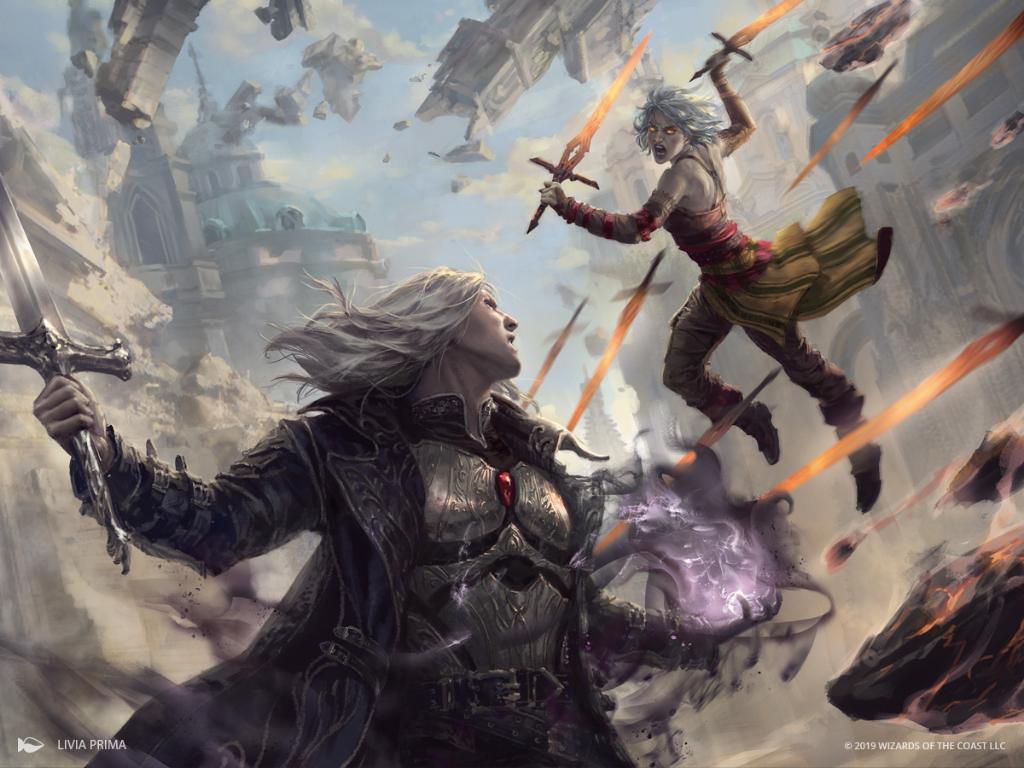
Two heavily armored knights face off: one a half-orc bound by a Solar, the other an aasimar assassin of Asmodeus. Their weapons glow with runes of green flames and which flare with flashes of energy as they clash, each intent on their opponents doom.
Death knights are attuned to death in an intimate manner. Each death knight has died, then brought back to life by their patron. Sometimes these resurrections were part of a bargain struck, sometimes an act of necessity, sometimes as spite, and on rare occasions the long deceased are brought back to serve a new purpose. The ritual used to create death knights is taxing upon the patron, but each one is a powerful avatar, whether they are willing or not.
Returned from Death
The experience of being brought back to life is often a difficult one. Some suffered in their final moments, and the thought of reliving it can break some, resulting in an insane weapon for their patron to wield. Others have been returned from another era, and they must learn of the new world that has passed them by as they lay in the ground. Whatever the cause of their death, one thing remains certain: a death knight is changed from their first life.
Warriors of their Patron
Death knights are created when an entity needs a hitman. Whether they are bargained for it or were forced into it, death knights serve as the hand of their patron. When there is a threat, they strike out. When there is an insult, a blade of necrotic magics corrects the slight.
Death knights are rare and meeting another is rarer still, but often when two meet it is with weapons drawn and spells ready. This is due to the wide range of patrons who create death knights. Often times the purposes of one is counter to the other, so it is rare for both parties to walk away unscathed from even a casual meeting.
Disciplined and Patient
As ones who have experienced death and usher others into its embrace, death knights learn that being at peace with one’s lot is important. The purest expression of this attribute is their rune-scribing. The focus and time needed to properly write a single rune is both soothing and demanding. The trance they enter to attune their emerald focus and use it to imbue their inks with the energy needed to inscribe a rune of power brings a tranquility that lets them cope with their nearness to death.
Creating a Death Knight
As you design a death knight, contemplate how they became a servant of their patron. Was it a mutual agreement? Was it for revenge? Or was it a deception? Consider how they act on their patron’s behalf. Do they act as a proper knight, or are they a scoundrel, doing as they wish until their next target?
Quick Build
You can make a death knight quickly by following these suggestions, First, Strength should be your highest ability score, followed by Charisma. Second, choose the soldier background
Patron
Each death knight has a patron, and they determine the goals and targets for their death knight.
Patrons Table
| d6 | Patron |
|---|---|
| 1 | Fiend |
| 2 | Fey |
| 3 | Celestial |
| 4 | Great Old One |
| 5 | Deity |
| 6 | Dragon |
Manner of Death, Circumstances of Resurrection
The variety of ways beings can die is staggering. Each one unique in time and circumstance, and it can cause their return to life to be complicated. This can be as simple as getting used to a new era, or dealing with the consequences of your previous lifetime.
Manner of Death, Circumstances of Resurrection Table
| d6 | Manner of Death, Circumstances of Resurrection |
|---|---|
| 1 | You were executed as a traitor to your country, and you were returned to life to save it, though they could very well kill you again. |
| 2 | Once a war hero who died in battle, you have returned after more than a century and feel out of place. |
| 3 | You made a bargain to become a death knight and chose to drift into servitude with a cup of nightshade tea. You awaken moments later filled with new power. |
| 4 | You were murdered by a corrupt lord, and your patron granted you the ability to seek justice. |
| 5 | You were a paladin in life, but were returned to serve your archnemesis. You cannot refuse, but you seek to take them down. |
| 6 | You were a criminal brought to the noose. Now, you are a criminal with powers from beyond the grave. You shall have your vengeance. |
The Death Knight
| Level | Proficiency Bonus | Features | Spells Known | Spell Slots | Slot Level | Inscribed Runes |
|---|---|---|---|---|---|---|
| 1st | +2 | Rune Weapon, Knightly Order | — | — | — | — |
| 2nd | +2 | Fighting Style, Pact Magic, Necrostrike | 2 | 1 | 1st | — |
| 3rd | +2 | Rune Scribe | 3 | 2 | 1st | 1 |
| 4th | +2 | Ability Score Improvement | 3 | 2 | 1st | 1 |
| 5th | +3 | Extra Attack | 4 | 2 | 2nd | 1 |
| 6th | +3 | Order Feature | 4 | 2 | 2nd | 2 |
| 7th | +3 | Knightly Discernment | 5 | 2 | 2nd | 2 |
| 8th | +3 | Ability Score Improvement | 5 | 2 | 2nd | 2 |
| 9th | +4 | — | 6 | 2 | 3rd | 2 |
| 10th | +4 | Order Feature | 6 | 2 | 3rd | 2 |
| 11th | +4 | Runic Recovery | 7 | 2 | 3rd | 3 |
| 12th | +4 | Ability Score Improvement | 7 | 2 | 3rd | 3 |
| 13th | +5 | — | 8 | 2 | 4th | 3 |
| 14th | +5 | Disciplined Mind and Body | 8 | 2 | 4th | 3 |
| 15th | +5 | Order Feature | 9 | 2 | 4th | 3 |
| 16th | +5 | Ability Score Improvement | 9 | 2 | 4th | 4 |
| 17th | +6 | — | 10 | 2 | 5th | 4 |
| 18th | +6 | Order Feature | 10 | 2 | 5th | 4 |
| 19th | +6 | Ability Score Improvement | 11 | 2 | 5th | 4 |
| 20th | +6 | Avatar of Death | 11 | 2 | 5th | 4 |
Rival
Death knights rarely live long without creating enemies. It is part of the job, but some become more than an enemy. They may be a thorn in your side or perhaps a tool to measure your own growth.
Rivals Table
| d6 | Rival |
|---|---|
| 1 | A paladin who feels they must constantly try to thwart you. |
| 2 | A fellow death knight serves your patron's arch nemesis. You will never have peace as long as they draw breath. |
| 3 | A noble escaped you and is constantly sending assassins to kill you while they hide. |
| 4 | A warrior of unmatched skill bested you. You now seek to surpass him, not to kill, but to prove to them and yourself that you are the better fighter. |
| d6 | Rival |
|---|---|
| 5 | A mage who aided in your demise, so your patron could have you and reminds you of their power at every opportunity. |
| 6 | An assassin who intentionally tries to kill your targets before you, and they do this just to get on your nerves. |
Class Features
As a death knight, you gain the following class features
Hit Points
- Hit Dice: 1d10 per death knight level
- Hit Points at 1st Level: 10 + your Constitution modifier
- Hit Points at Higher Levels: 1d10 (or 6) + your Constitution modifier per death knight level after 1st
Proficiencies
- Armor: All armor, shields
- Weapons: Simple and Martial weapons
- Tools: Calligrapher's supplies
- Saving Throws: Constitution, Charisma
- Skills: Choose two from Arcana, Athletics, Animal Handling, Deception, Intimidation, Persuasion, Survival
Equipment
You start with the following equipment, in addition to the equipment granted by your background:
- (a) A martial weapon and a shield, or (b) two martial weapons
- (a) leather armor, or (b) scale mail, or (c) chain mail
- (a) Dungeoneer's pack, or (b) Explorer's pack
- Calligrapher's supplies and 4 javelins
Multiclassing
Prerequisites. To multiclass into or out of the death knight class, you must meet these prerequisites: Strength 13 and Charisma 13
Proficiencies. When you multiclass into the death knight class, you gain the following proficiencies: light
and medium armor, shields, all simple and
martial weapons, and calligrapher's supplies.
Pact Magic. If you multiclass into or out of Warlock,
you calculate your spell slots using the method below:
Your Pact Magic is not split, instead you add your
levels of warlock and half of your levels of death knight
(rounded down), the total combined level is then used to determine spell slots as written on the warlock class table.
Rune Weapon
As a death knight, your weapon is your calling card.
No matter its form, you can imbue it with a measure of your power, which in turn empowers yourself. Over the course of a short rest, you can inscribe runes of necrotic energy upon up to two weapons. The runes glow with a green-white fire and mark it as your own.
While wielding a rune weapon, you cannot be disarmed unless you are incapacitated, and as long as you have at least one rune weapon, you age at the rate of 1 year for every 10 years that passes. Additionally, if the weapon is on the same plane of existence, you can summon it to your hand as a bonus action.
You can have up to two rune weapons at once. If you imbue a third rune weapon, you must choose one of the other two to lose its power.
Knightly Order
Upon becoming a Death Knight, you join an order of knights that shape your methodology for handling situations in and out of combat. You may choose the order that best fits your philosophy on matters of conflicts. Each order has an extraplanar place to train in the art of being a death knight. Your order grants features at 1st level, and again at 6th, 10th, 15th, and 18th level.




- Order of Cavaliers
- Order of Ebon Blades
- Order of Magi
- Order of Fallen Paladins (see appendix B)
Fighting Style
Starting at 2nd level, you adopt a particular fighting style as your specialty. Choose one of the following options. You can't take a Fighting Style more than once, even if you later get to choose again.
Defense
While you are wearing armor, you gain a +1 bonus to AC.
Dueling
When you are wielding a melee weapon in one hand and no other weapons, you gain a +2 bonus to damage rolls with that weapon.
Great Weapon Fighting
When you roll a 1 or 2 on a damage die for an Attack you make with a melee weapon that you are wielding with two hands, you can reroll the die and must use the new roll, even if the new roll is a 1 or a 2. The weapon must have the Two-Handed or Versatile property for you to gain this benefit.
Two-Weapon Fighting
When you engage in two-weapon fighting, you can add your ability modifier to the damage of the second Attack.
Pact Magic
By 2nd level, you gain pact magic and can cast death knight spells.
Spell Slots
The death knight leveling table shows how many spell slots you have. The table also shows what the level of those slots is; all of your spell slots are the same level. To cast one of your death knight spells of 1st level or higher, you must expend a spell slot. You regain all expended spell slots when you finish a short or long rest.
Spells Known of 1st Level and Higher
At 1st level, you know two 1st level spells of your choice from death knight spell list. The Spells Known column of the death knight table shows when you learn more death knight spells of your choice of 1st level and higher. A spell you choose must be of a level no higher than what's shown in the table's Slot Level column for your level.
Additionally, when you take a long rest you can choose to sacrifice hit dice that you would regain in order to remove a spell you know and replace it with another spell from the death knight spell list, which also must be of a level for which you have spell slots. Spells cost 1 hit die per level to replace.
Spellcasting Ability
Charisma is your spellcasting ability for your death knight spells. You use your Charisma whenever a spell refers to your spellcasting ability. In addition, you use your Charisma modifier when setting the saving throw DC for a death knight spell you cast and when making an attack roll with one.
Spell Save DC = 8 + your proficiency bonus +
Spell attack modifier = your proficiency bonus +
Spellcasting Focus
You use your rune weapon as a spellcasting focus for your spells.
Necrostrike
At 2nd level, you can wreath your weapon with deadly power drawn from your runes. when you hit a creature with a melee weapon attack using a rune weapon, you can cause green-white fire to erupt dealing an additional 1d10 necrotic damage. The number of uses and damage dealt is determined by your death knight level. The damage dealt increases to 2d10 at 5th level, 3d10 at 11th level, and 4d10 at 17th level
At 2nd level, you can use this feature 3 times per long rest. You gain 1 additional use at 5th, 10th, and 15th level.
Rune Scribe
Starting at 3rd level, you learn to ritualistically imbue your weapons and armor with runes of power. These special runes add unique features allowing death knights to be more adaptable. The ritual takes two hours per rune inscribed, and you can change a previously inscribed rune to a different one over the course of one hour. Once a rune has been inscribed, you must complete a long rest in order for the magic to take effect, and only you can benefit from inscribed runes.
The ritual requires an emerald valued at 100 gp or more to use as a focus. The emerald is not consumed by the ritual.
You can only have a number of inscribed runes equal to the amount shown on the Inscribed Runes column of the death knight table. A list of runes is provided at the end of this document.
By 6th level, your rune scribed weapons are infused with enough magic to act as a magical weapon. If you break your connection with a rune scribed weapon, the runes fade, and, if it was a non-magical weapon, it ceases to act as one.
Ability Score Improvement
When you reach 4th level, and again at 8th, 12th, 16th, and 19th level, you can increase one ability score of your choice by 2, or you can increase two ability scores of your choice by 1. As normal, you can't increase an ability score above 20 using this feature.
Extra Attack
Beginning at 5th level, you can attack twice, instead of once, whenever you take the Attack action on your turn.
Knightly Discernment
At 7th level, the magics granted by your raw personality can be focused to give you clarity. When you make a Wisdom (insight) or Wisdom (perception) check. You can add your Charisma modifier to the total.


Greater Necrostrike
At 11th level, you are capable of drawing out more power from your rune weapon. The damage dealt by necrostrike ignores resistance to Necrotic damage and treats immunity as resistance by drawing energy off of such beings rather than directly damaging them.
Additionally, when you roll initiative and have no uses of Necrostrike, you regain 1 use.
Disciplined Mind and Body
At 14th level, you have transcended the need for extensive sleep. You only need to sleep for half the time to benefit from a long rest and may spend the rest of the time doing light activity such as reading, keeping watch, or rune scribing.
Avatar of Death
At 20th level, once per long rest, as an action, you can become an Avatar of Death for one minute. While in this form, you gain resistance to all damage types, and you cannot be charmed or frightened. Your base move speed is doubled, and you are unaffected by both magical and non-magical difficult terrain.
Knightly Orders
Order of Cavaliers
In Ysgard, the cavaliers train to become warriors of honor and valor. The Mithril Citadel, the sprawling castle of the cavaliers, is the center of their training. Here they learn to bond with the beasts they can summon and are trained in the best tactics to employ with their loyal ally.
Bound Mount
When you become a cavalier, as a 1 hour ritual, you can summon a mount. The creature's form is initially only that of a riding horse, but as you gain levels in this class you can change its form. While you ride your mount, you can take the dash action as a bonus action. If you are not riding your mount in combat, it acts on your turn, and you can spend a bonus action to command it to move and attack. At 5th level you can alter it's form to that of any creature from the spell Find Steed. At 13th level it can take the form of a creature from the Find Greater Steed spell.
Knightly Demeanor
At 1st level, your training as a cavalier imparts a refined air to your countenance.
You can give yourself advantage on Charisma (intimidation) checks a number of times equal to your Charisma modifier per long rest. You regain all uses of this feature at the end of a long rest.
Skilled Rider
At 6th level, you become a dangerous foe to face while mounted. While you are mounted and are not incapacitated, you gain the following benefits:
- While mounted, you have immunity to the surprised condition.
- You gain proficiency with Animal Handling, or if you are already proficient, you can choose a skill from the death knight skill list and gain proficiency with it.
- You have advantage on checks to stay mounted against non-magical and magical effects.
Skilled Rider Variant
If your campaign does not allow feats, you can choose to gain the following benefits instead:
- You have advantage on melee attack rolls against any unmounted creature that is smaller than your mount.
- You can force an attack targeted at your mount to target you instead.
- If your mount is subjected to an effect that allows it to make a Dexterity saving throw to take only half damage, it instead takes no damage if it succeeds on the saving throw, and only half damage if it fails.






Courtly Aptitude
At 10th level, your extensive experience has made you a superior diplomat. When you make a Charisma (persuasion) check or an Intelligence (history) check, your proficiency bonus is doubled.
Combat Instincts
Upon reaching 15th level, your summoned mount has become just as much of a force on the battlefield as you have. Any mount you summon gains instincts honed to the point that you have advantage on initiative rolls atop your mount.
Additionally, your can now telepathically direct your mounts to take actions and move (no action required).
Dragonkin Mount
At 18th level, when you use your bound mount feature, you can now summon a Shadow Wyrm Mount (stats at the end of the list of runes).
Order of Ebon Blades
The ebon blades have the entrance to their headquarters in the first layer of the plane Acheron, Avalas. Through a rift accessible only to death knights and their patrons, lies the Adamant Bastion where ebon blades undergo their transformation from swordsman to swordmaster and from fearsome to terrifying.
Evoke Fear
Your training as an ebon blade has imparted the ability to cause even the most stalwart to cower before you. You can give yourself advantage on Charisma (intimidation) checks a number of times equal to your Charisma modifier per long rest and regain all uses of this feature at the end of a long rest.
Ebon Armaments
At 1st level, you learn to use weapons with skill beyond the grasp of others. Choose up to two melee weapons to become ebon armaments, you can use Dexterity for attack and damage rolls using them, even if it does not have the finesse property.
At 10th and 15th level, you can select an additional weapon to become an ebon armament.
Weapon Arts
At 6th level, you gain an additional way to use your ebon armaments. You learn the following weapon arts, and can use them when you wield the appropriate weapon. You can use weapon arts a number of times equal to your Charisma modifier per long rest.
- Blade Swarm. When you make an attack with an ebon armament in your off-hand and miss, you can make a second attack as part of the same bonus action.
- Reaping Swipe. Before you make an attack with a two-handed ebon armament, you can choose to make it a cleaving attack. Make a single attack roll against a target creature, if the total is greater than or equal to the AC of a second creature within your melee attack range, the second creature takes damage equal to half the damage dealt the first creature.
- Overwhelm. When you hit with an attack while wielding an ebon armament in one hand and no other weapons, you can attempt to batter an enemy to the ground. The target creature must make a Strength saving throw DC = 8 + your Strength or Dexterity modifier (your choice) + your proficiency bonus or be knocked prone.
Superior Awareness
At 10th level you have learned to apply your force of personality into a state of pure focus, ensuring you do not get surprised. You can add your Charisma modifier to your passive perception and passive investigation scores.
Improved Weapon Arts
At 15th level, you have improved upon your skills with weapons.
- Improved Blade Swarm. When you use this feature to make a second attack, you gain advantage on the second strike.
- Improved Reaping Swipe. When you use this feature, you can target a third creature.
- Improved Overwhelm. When you use this feature, when the target is one size larger than you or smaller, they are knocked prone and cannot make a save against it.
Undying Swordsman
Starting at 18th level, if you take damage that would reduce you to 0 hit points but does not kill you outright, you can move up to your walking speed and make a single weapon attack. If you hit, you regain hit points equal to the damage dealt.
Order of Magi
The Umbra Spire, headquarters of the magi located in the Shadowfel, is a place of arcane learning and deadly intrigue. The location within the Shadowfel is ever shifting, and part of one's initiation is to find it before the natives find you, and of those who do only those of great wit can survive the machinations of the masters and students of the spire.
Keeper of Secrets
At 1st level, as a result of your training, hiding the truth has become second nature. You can give yourself advantage on Charisma (deception) checks a number of times equal to your Charisma modifier per long rest. You regain all uses of this feature at the end of a long rest.
Expanded Spell list
You learn additional spells when you reach certain levels in this class, as shown in the Magi Spells table. The spell counts as a death knight spell for you, but it doesn't count against the number of death knight spells you know.
Magi Spells
| Death Level | Spells |
|---|---|
| 2nd | False Life, Ray of Sickness |
| 5th | Blindness/Deafness, Ray of Enfeeblement |
| 9th | Life Transference, Vampiric Touch |
| 13th | Blight, Shadow of Moil |
| 17th | Danse Macabre, Negative Energy Flood |
Mage Adept
When you choose this order at 1st level, you can learn cantrips from the Magi Spell list. At 1st level, you choose two cantrips. At 10th level you can learn one additional cantrip.
Additionally, you can cast the spell find familiar as a ritual, but you can only use it to create a crawling claw. This spell does not count toward your spells known.
Initiate Necromancer
At 6th level, once per long rest, you can cast the spell Animate Dead at 3rd level without expending a spell slot.
Forbidden Lore
At 10th level, you have unlocked many secrets of the multiverse. When you make an Intelligence (arcana) check or an Intelligence (religion) check, your proficiency bonus is doubled.
Adept Necromancer
At 15th level, undead you create gain the following benefits:
- Your undead minions are created with temporary hit points equal to half your death knight level
- Your undead minions weapon attacks score a critical hit on a roll of 19 or 20.
- Your undead minions weapon attacks deal additional necrotic damage equal to your proficiency bonus.
Master Necromancer
At 18th level, once per long rest, you can cast Create Undead at 6th level without expending a spell slot.
List of Runes
Some runes require a prerequisite to be met before they can be inscribed. Any rune that lists a level requirement refers specifically to death knight levels.
Rune of the Arcanist
Prerequisite: Order of Magi
You can add your Charisma modifier to the damage you deal with any magi cantrip, and you can learn one additional magi cantrip.
Rune of the Crusader
You can use the necrotic energy of your runes to heal yourself. When you hit with a rune weapon while Necrostrike is active, you can roll a number of hit dice equal to your Charisma modifier and heal for the total rolled.
You can only use this rune once per short or long rest.
Rune of the Death Ward
Prerequisite: 13th level
When you take damage that would reduce you to 0 hit points, you instead drop to 1 hit point.
This rune can only be activated once per long rest.
Rune of Defense
Prerequisite: 13th level
Whenever you must make a saving throw, you gain a bonus to the saving throw equal to your Charisma modifier (with a minimum bonus of +1).
Rune of the Frozen Grasp
Once on each of your turns, when you hit a creature with a melee weapon attack, you can reduce that creature's speed by 10 feet until the end of your next turn.
Rune of the Gargoyle
Prerequisite: Order of Ebon Blades
When you take damage, you can use your reaction to roll a d12. Add your Constitution modifier to the number rolled, and reduce the damage by that total.
You can use this rune once per short or long rest
Rune of Hellfire
Prerequisite: 17th level
This rune allows you to hurl a magical ball of fire fueled with energies derived from your rune weapon.
As an action, you choose a point you can see within 120 feet. Each creature in a 20-foot-radius sphere centered on that point must make Dexterity saving throw. The sphere spreads around corners. A creature takes 6d6 fire damage and 6d6 necrotic damage on a failed save, or half as much damage on a successful one.
You can use this rune once per long rest
Rune of Lethality
Prerequisite: 17th level
This rune lets you cause your enemies to whither under the effects of necrotic energy. You can use your reaction to cause a target creature to become vulnerable to a single instance of necrotic damage.
This rune can only be used once per short or long rest.
Rune of the Lightning Mount
Prerequisite: Order of Cavaliers; 9th level
While mounted, you can use your action to cast haste on yourself without expending a spell slot.
You can use this rune once per long rest.
Rune of Necrostrike Mastery
When you use Necrostrike, and you roll a 1 or 2 for necrotic damage, you can reroll the dice once and take the second roll.
Rune of Retribution
While this rune is inscribe, when you take damage from a creature within 60 feet of you, you can use your reaction to deal 3d10 necrotic damage to the creature that damaged you.
You can use this rune a number of times equal to a third of your death knight level (rounded down) per long rest.
Rune of the Owl
You gain darkvision and can see in dim light within 60 feet of you as if it were bright light, and in darkness as if it were dim light. You can't discern color in darkness, only shades of gray. If you already have darkvision, then your darkvision intervals increase to 120 feet.
You also have advantage on stealth checks while in darkness.
Rune of the Legendary Mount
Prerequisite: Order of Cavaliers; 13th level
This rune grants your any creature created using your bound mount feature resistance to all damage, and when it deals damage, you can add your proficiency bonus to the damage dealt.
The additional damage is of the same type as the mount's attack, if the attack deals more than one type of damage, the damage bonus is applied to only one type. You choose which type.
Rune of Skill
You can use this rune to add your proficiency bonus to a skill you do not have proficiency in. This feature can be used before or after the roll, but it must be used before the result.
This rune can only be used a number of times equal to your Charisma modifier per long rest.
Rune of the Slayer
Prerequisite: Order of Ebon Blades; 13th level
This rune lets you channel the death of an opponent into a surge of adrenaline. Once per turn, when you reduce an enemy creature to 0 hit points, you can make an additional attack as part of that attack action.
Rune of Spellbinding
Prerequisite: Order of Magi; 13th level
This rune channels additional magical energy that can be used to fuel your powers. You gain 1 additional spell slot equal to the level of your other death knight spell slots.
Rune of Spellbreaking
Prerequisite: 9th level
You can use this rune to attempt to disrupt a spell. As a reaction to a creature within 30 feet of you casting a spell, you make an ability check using your spellcasting ability. The DC equals 10 + the spell’s level. On a success, the creature’s spell fails and has no effect.
You can use this rune a number of times equal to a quarter of your death knight level (rounded down) per long rest.
Rune of Spellstriking
Prerequisite: Order of Magi; 9th level
When you cast a spell, you can use a bonus action to make a spell attack with advantage, or you can impose disadvantage on the saving throw of a single creature affected by your spell.
You can use this rune a number of times equal to a quarter of your death knight level (rounded down) per long rest.
Rune of the Summoner
Prerequisite: Order of Cavaliers
When you cast Find Steed, you can do so without expending a spell slot. At 15th level, you can use this rune to cast Find Greater Steed.
You can use this rune once per long rest.
Rune of the Weapon Master
Prerequisite: Order of Ebon Blades; 9th level
You regain all uses your of weapon arts on a short or long rest.
Shadow Wyrm Mount
Large dragon, unaligned
- Armor Class 17 (natural armor)
- Hit Points 58 (5d10 + 15)
- Speed 30 ft., fly 60 ft.
STR DEX CON INT WIS CHA 19 (+4) 14 (+2) 17 (+3) 6 (-2) 12 (+1) 6 (-2)
- Damage Immunities Necrotic
- Senses Blindsight 10 ft., Darkvision 120 ft., Passive Perception 17
- Saving Throws Str +7, Dex +5, Con +6
- Skills Perception +7, Stealth +8
- Languages Can understand any language spoken by its master
- Challenge 3 (700 XP)
One with Shadow. When in dim light or darkness, this creature has advantage on stealth checks Shadow Stealth. While in dim light or darkness, the dragon can take the Hide action as a bonus action.
Actions
Multiattack. The dragon makes two attacks: one with its bite and one with its claws.
Bite. Melee Weapon Attack: +7 to hit, reach 5 ft., one target. Hit: 9 (1d10 + 4) piercing damage and 2 (1d4) necrotic damage.
Claw. Melee Weapon Attack: +7 to hit, reach 5ft., one target. Hit 7 (1d6 + 4)
Shadow Breath (1/long rest). The dragon exhales shadowy fire in a 20-foot cone. Each creature in that area must make a DC 16 Dexterity saving throw, taking 33 (6d10) necrotic damage on a failed save, or half as much damage on a successful one.
Death Knight Spell List
1st level
- Armor of Agathys
- Arms of Hadar
- Bane
- Cause Fear
- Command
- Compelled Duel
- Detect Evil and Good
- Dissonant Whispers
- False Life
- Heroism
- LifewardDeath Knight
- Ray of Sickness
- Searing Smite
- Thunderous Smite
- Wrathful Smite
2nd level
- Crown of Madness
- Darkness
- Enthrall
- Gentle Repose
- Hold Person
- Magic Weapon
- Mind Spike
- Phantasmal Force
- Protection from Poison
- Ray of Enfeeblement
- Shatter
3rd level
- Bestow Curse
- Elemental Weapon
- Enemies Abound
- Fear
- Feign Death
- Hunger of Hadar
- Life Transference
- Remove Curse
- Revivify
- Speak with Dead
- Virulent SicknessDeath Knight
- Water Walk
4th level
- Blight
- Confusion
- Death Ward
- Freedom of Movement
- Hoarfrost ChainsDeath Knight
- Shadow of Moil
- Sickening Radiance
- Staggering Smite
5th level
- Banishing Smite
- Contagion
- Crypt FangsDeath Knight
- Geas
- Hold Monster
- Insect Plague
- Negative Energy Flood
- Raise Dead
- Steel Wind Strike
Order of Magi Spell List
cantrips
- Booming Blade
- Chill Touch
- Dancing Lights
- Grave HammerDeath Knight
- Green Flame Blade
- Lightning Lure
- NecroblastDeath Knight
- Poison Spray
- Sword Burst
- Spare the Dying
- Thaumaturgy
- Toll the Dead
Custom Spells
Appendix A: Unique Death Knight Spells
Crypt Fangs
5th-level conjuration
- Casting time: 1 Action
- Range: self (40 foot radius)
- Components: V, S
- Duration: Instantaneous
You reach down and place your palm against the ground, causing spires of shadow to pierce the ground. Creatures you choose within 40 feet of you must succeed on a Dexterity saving throw, or they take 4d10 necrotic damage and become frightened until the end of your next turn. On a successful save they only take half damage, and they are not frightened.
At higher levels. When you cast this spell using a spell slot of 6th level or higher, the damage reduction increases by 1d10 for each slot level above 5th.
Grave Hammer
Evocation Cantrip
- Level:: Cantrip
- Casting time: 1 Action
- Range: 5 feet
- Components: V, M (a weapon)
- Duration: Instantaneous
As part of the action used to cast this spell, you must make a melee attack with a weapon against one creature within the spell's range, otherwise the spell fails. On a hit, the target suffers the attack's normal effects, and they cannot use their reaction until the end of your current turn.
At higher levels. At 5th level, the melee attack deals extra necrotic damage equal to 1d8. The damage increases by 1d8 at 11th level (2d8) and 17th level (3d8).
Hoarfrost Chains
4th-level conjuration
- Casting time: 1 Action
- Range: 30 feet
- Components: V, S, M (four iron chain links)
- Duration: Concentration, up to 1 minute
You conjure a writhing mass of chains made of ice. When you cast this spell, you can direct the chains to wrap around any number of creatures within 30 feet of you that you can see. That creature must succeed on a Strength saving throw or you and the targeted are unable to move further than 30 feet from you. A creature bound in this way can repeat the saving throw at the end of each of their turns. Additionally, creatures chained in this way make Dexterity saving throws at disadvantage.
If your movement would cause a creature to be further than 30 feet from you, you can either release them (no action required), or you can move at a cost of an additional 1 foot of movement per creature per 1 foot moved. Creatures you leave chained while you move in this way causes them to move with you. You may also use a bonus action on your turn to attempt to chain an additional creature that is within 30 feet.
Life Ward
1st-level abjuration
- Casting Time: 1 Reaction
- Range: Self
- Components: V,S,M (a miniature shield pendant)
- Duration: Instantaneous
You can protect a creature within 30 feet or yourself from harm. When a creature or yourself would take damage from any source that can be reduced, you can use your reaction to reduce the damage by 1d8.
At higher levels. When you cast this spell using a spell slot of 2nd level or higher, the damage reduction increases by 1d8 for each slot level above 1st.
Necroblast
Evocation cantrip
- Casting Time: 1 action
- Range: 120 feet
- Components: V, S
- Duration: Instantaneous
You launch a sphere of sickly green-black fire at a creature or object within range. Make a ranged spell attack against the target. On a hit, the target takes 1d4 fire damage and 1d4 necrotic damage. A flammable object hit by this spell ignites if it isn’t being worn or carried.
At higher levels. This spell’s fire and necrotic damage each increase by 1d4 when you reach 5th level (2d4 and 2d4), 11th level (3d4 and 3d4), and 17th level (4d4 and 4d4).
Virulent Sickness
3rd-level necromancy
- Casting time: 1 Action
- Range: 60 feet
- Components: V, S
- Duration: 1 minute
After a rapid incantation, you cause a sickness to infect a target creature. The creature must succeed on a Constitution saving throw, or they are affected by one of the diseases you choose from the list below. If a creature is immune to disease, they automatically succeed.
- Rot: the affected creature cannot gain temporary hit points and only heals for half of the amount (rounded down).
- Agony: the affected creature takes 1d6 psychic damage at the beginning of each turn for the spell's duration.
- Leg Palsy: the affected creature's movement speed is halved, and they cannot take the dash or disengage action.
- Erratic Nerves: the affected creature must roll a d6 before each weapon or spell attack roll. On a 1 or 2, they take 2d6 lightning and the attack roll is made with disadvantage.
At higher levels. When you cast this spell using a spell slot of 4th or higher, the number of targets you can affect increases. For each spell slot higher than 3rd level, you can target one additional creature in range.
Appendix B: Fallen Paladin
Order of Fallen Paladins
The order of the fallen paladins is unique among the knightly orders. It is the only one whose members have no patron, and it cannot be chosen, rather one dies into it. Oath Breakers that have committed atrocities of the highest order resurrect as one of these. Only upon finding atonement and redemption can they find rest.
Restriction: Evil Alignment only
This subclass is designed to be a template for antagonists, similar to the Oathbreaker (DMG page 97). As such, it is imbalanced for player characters, and it will need tweaked for that purpose. Speak with your DM about this before making a character using this subclass.
Withering Touch
As a fallen paladin, you are unable to heal, instead your hands take life. You have a pool of necrotic energy that replenishes when you take a long rest. With that pool, you can deal necrotic damage to a target creature's equal to your paladin level × 5.
As an action, you can make a melee weapon attack. On a hit you can deal, necrotic damage to that creature, up to the maximum amount remaining in your pool.
If you kill a creature with this feature, you gain temporary hit points equal to either half of the damage dealt (rounded down, minimum of 1) or half of the creature's maximum hit points (rounded down, minimum of 1), whichever is less.
Aura of Desolation
At 6th level, death oozes from your very being, drawing life from those around you. Creatures you choose that enter for the first time or start their turn within 10 feet of you, lose a number of hit points equal to your Charisma modifier.
Aura of Terror
At 10th level, your presence insights fear in your foes. Creatures you choose that enter or start their turn within 10 feet of you must make a Wisdom saving throw against your death knight spell save, or they become frightened of you for 1 minute.
The creature can repeat this save at the end of each of their turns. Once a creature succeeds, it becomes immune to this effect for 24 hours.
Schadenfreude
At 15th level, you learn to transfer the effects of spells from your self to another. As an action you can end one spell on yourself. You can then use a reaction to cause another creature within 30 feet to be affected by the spell instead.
The creature can make a Wisdom saving throw, or the effect is transferred to them. A creature can choose to not make the save and automatically receive the effects of the spell.
Greater Auras
At 18th level, instead of expanding the effects of your auras, you concentrate them into the same area for greater effect:
- Greater Aura of Desolation. The amount of hit points lost is now equal to twice your Charisma modifier.
- Greater Aura of Terror. Your aura is so suffocating that it causes even the most stalwart beings to feel fear. Creatures that are immune to the frightened condition can be frightened by your aura, but they make the saving throw with advantage. Creatures not immune to being frightened have disadvantage on the initial saving throw; if they are frightened, the subsequent saves are made without disadvantage.
Fallen Paladin
Restricted Runes
Rune of Lingering Protection
While this rune is active, you have immunity to disease, the frightened condition, and you have advantage against charm effects.
Rune of Necrotic Smite
When you hit with a melee weapon attack using a rune weapon, you can expend one spell slot to channel necrotic energy into your rune weapon and deal additional necrotic damage to the target, in addition to the weapon's damage. The extra damage is 2d8 for a 1st-level spell slot, plus 1d8 for each spell level higher than 1st, to a maximum of 5d8.
Rune of the Retained Divine
You can learn additional spells from the paladin spell list. The number of spells you can learn are equal to to a third of your death knight level (rounded down). These spells do not count against your total spells known.
Credits
“The Death Knight is unofficial Fan Content permitted under the Fan Content Policy. Not approved/endorsed by Wizards. Portions of the materials used are property of Wizards of the Coast. ©Wizards of the Coast LLC.”
Artwork (in order of appearance)
- Single Combat MtG Art by Livia Prima
- Sorin, Solemn Visitor MtG Art by Cynthia Sheppard
- Ghostly Touch MtG Art by Jason Felix
- Rune Circle by FadedShadow589
- Midnight Reaper MtG Art by Sidharth Chaturvedi
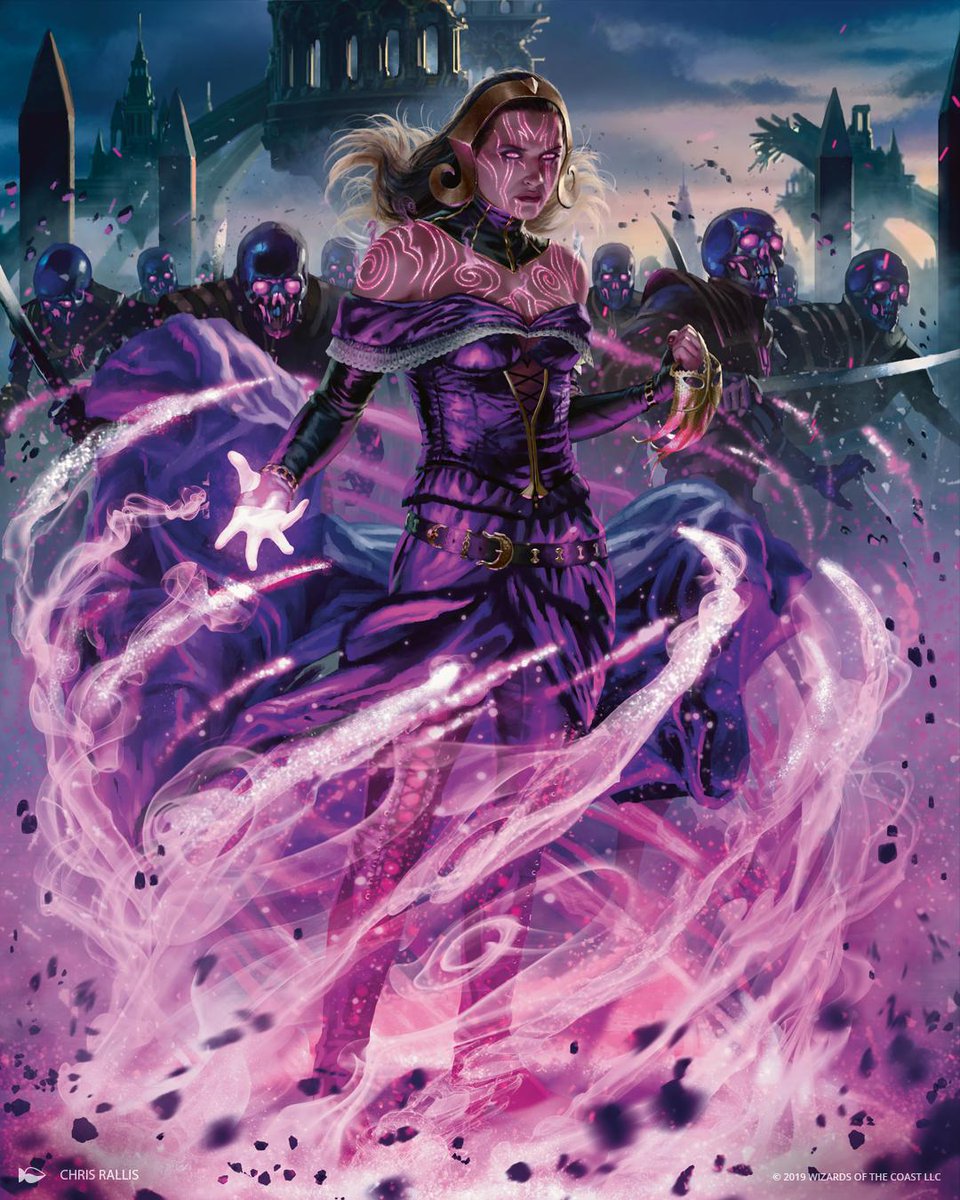
- Liliana, Dreadhorde General MtG Art by Chris Rallis
- Nahiri, the Harbinger MtG Art by Aleksi Briclot