


Chapter One—Sacred Oaths
I HAVE COME IN A WORLD OF IRON TO MAKE A
world of gold.
—Dale Wasserman, Man of La Mancha
The year 2025 marks 50 years of paladins in Dungeons & Dragons, if we start our count from the 1975 publication of the Greyhawk supplement which introduced the paladin as a subclass of the fighting man. That makes the paladin as old as some spells that were introduced in Greyhawk, and also as old as the game’s actual combat mechanics, which were also published in Greyhawk! Myself, I started playing with the Fifth Edition of the game, so I’ve been around only briefly. But in that time, the paladin has been my favorite class from the very start. Perhaps fitting the occasion, you hold in your digital hands sixteen homebrew Sacred Oaths that run a wide gamut of themes, tropes, and ideals.
Now, why a compendium? Why not just hand you a folder of PDFs, which let’s be honest is easier for access and organization anyway? Well… I don’t really have a good reason, to be honest. I hope that it’s fun this way. Sometimes having a gigantic, unwieldy document is oddly thrilling. Hopefully to make it more worth your time, I’ve included rollable traits tables or similar ideas with some of the Sacred Oaths, as well as a new chapter of homebrew spells.
I’d like to give a big thanks to the many members of the Dungeons & Dragons homebrew community who've contributed to making this compendium what it is, including the Unearthed Arcana subreddit. The Discord of Many Things server has been instrumental in providing design feedback, balance advice, and generally just making everything 20% cooler. Shoutouts to ACOG_Muffin, Alice the Alhoon, Ashley, AtinVexien, CaelReader, Caim, Genuine Believer, Gray, Haydizzle, ItsMaybelline, Jaek, Janawhamme, Jay, Marceline, NotTheSmoooze, Novronian, Sgt Briar, SwordMeow, wick, Wufflykins, and Yorviing. Thanks to
all of y’all!
—Bunnygeon Master
Table of Contents
| Sacred Oaths | |
|---|---|
| Oath of Benevolence | 3 |
| Oath of Betrothal | 4 |
| Oath of Detachment | 6 |
| Oath of Enlightenment | 8 |
| Oath of Enthusiasm | 10 |
| Oath of Freshness | 11 |
| Oath of Healing | 12 |
| Oath of Liberty | 13 |
| Oath of Power | 15 |
| Oath of Self | 16 |
| Oath of Sensation | 17 |
| Oath of Society | 19 |
| Oath of Strangers | 21 |
| Oath of the Directive | 22 |
| Oath of the Revenant | 24 |
| Oath of Tomorrow | 25 |
| Spells | 27 |
| Credits | 33 |



Sacred Oath
At 3rd level, a paladin gains the Sacred Oath feature.
The following options are available to a paladin, in
addition to those offered in the Player’s Handbook:
the Oath of Benevolence, the Oath of Betrothal, the
Oath of Detachment, the Oath of Enlightenment, the
Oath of Enthusiasm, the Oath of Freshness, the Oath
of Healing, the Oath of Liberty, the Oath of Power, the
Oath of Self, the Oath of Sensation, the Oath of Society,
the Oath of Strangers, the Oath of the Directive, the
Oath of the Revenant, and the Oath of Tomorrow.
Oath of Benevolence
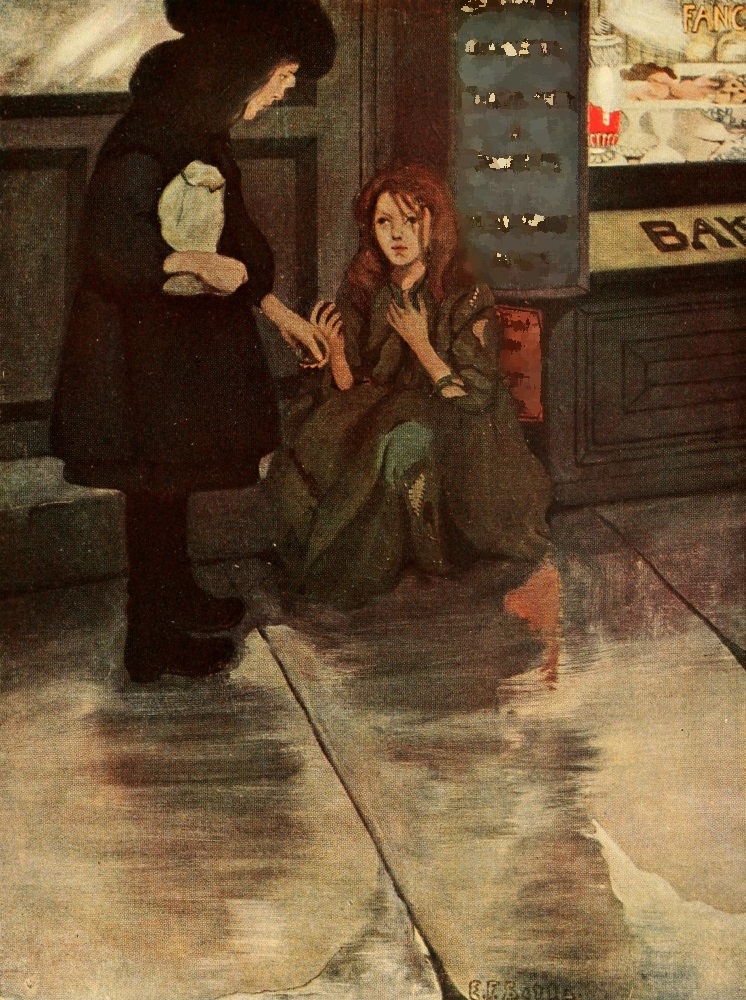
IF I AM A PRINCESS IN RAGS AND TATTERS, I CAN BE
a princess inside. It would be easy to be a princess if I were dressed in cloth of gold, but it is a great deal more of a triumph to be one all the time when no one knows it.
—Frances Hodgson Burnett, A Little Princess
A true Oath of Benevolence is rare in the world, for it is both the humblest and noblest of sacred vows. Sworn only by those at their lowest—whether from birth or through reversal of fortune—it is a determination by the paladin to give to others that goodness which has been refused to them. These paladins may starve nigh to death, yet give their last piece of bread to the beggar; may weep from vulgar treatment, yet give polite word and kind remark; may long for all that is lost from their life, yet give everything to soothe another in pain.
Called lightbearers and dreamknights, bearers of the Oath of Benevolence find comfort in hope and purpose in love, acting as friends to all living things: outcast, royal, beast, and mortal alike. Many are storytellers, using fairytale and make-believe as a way to escape sorrowful reality, if but for a moment. For these, choosing to take up arms often comes after seeing the painful aftermath of wicked brutality, moving them to become champions of the underserved and forgotten. Whether they struggle to live or simply once did, all such paladins move among the downtrodden as one among equals and friends, an ally to soothe the pains they know so well.
Tenets of Benevolence
To swear the Oath of Benevolence, a paladin consciously chooses to follow its tenets in spite of—or even because of—those hardships they have experienced.
Kindness. Everyone deserves a good turn and tender regard. Keep a prayer in your heart even for the wicked.
Grace. Be stronger than the pain that surrounds you. A soft answer may not turn away wrath, but it is strength to you and inspiration to friends. You can’t be torn or broken.
Worth. Love of others includes respect for self. Maintain your dignity, and be assured of your value as a person.
Hope. The worst never really comes. Even if it does, believe and persevere. This shall pass, and you shall live.
Oath Spells
You gain oath spells at the paladin levels listed.
Oath of Benevolence Spells
| Paladin Level | Spells |
|---|---|
| 3rd | sanctuary, shield of faith |
| 5th | enhance ability, lesser restoration |
| 9th | phantom parlor,* protection from energy |
| 13th | dusk,* stoneskin |
| 17th | dawn,XGE greater restoration |
*These spells can be found in Chapter Two.
Channel Divinity
Beginning when you choose this oath at 3rd level, you gain the following two Channel Divinity options.
A Moment’s Rest. You can use your Channel Divinity over the course of 1 minute to provide comfort and respite to those around you through kind ministration and uplifting words or stories. Each conscious creature of your choice within 30 feet of you can regain hit points by spending one hit die, and a creature that does so gains temporary hit points equal to your Charisma modifier (minimum 1).
Silent Reproof. As an action, you can use your Channel Divinity to touch a willing creature and bless it with a composure that stoically rebukes cruelty. For 1 minute, the creature sheds dim light for 5 feet, and no effect can force it to speak. When a hostile creature damages the affected creature during this time, the hostile creature takes radiant damage equal to your Charisma modifier (minimum 1). The creature can choose to end this effect on its turn (no action required), and the effect ends early if it falls unconscious.
Aura of Dignity
Starting at 7th level, you emanate a gravitas that will not be daunted. You and friendly creatures within 10 feet of you cannot be forcibly moved by hostile creatures, whether magically or nonmagically, while you are conscious.
At 18th level, the range of this aura increases to 30 feet.
Tireless Spirit
By 15th level, you can persevere beyond mortal limits. You’re immune to the effects of exhaustion, except death. Magic can’t force you to sleep or reduce your movement speed.
Inner Majesty
Starting at 20th level, you can use an action to manifest visibly the regal spirit you’ve always borne within, adopting a mantle of benevolence and brilliant radiance. You gain the following benefits for 1 minute:
- You shed bright light for 15 feet and dim light 15 feet beyond that. This light is sunlight.
- When you use your Divine Smite feature, you deal an extra 1d8 radiant damage to the target.
- You emanate an aura of majesty in a 30-foot radius. When a hostile creature starts its turn in the aura or enters it for the first time on a turn, it must succeed on a Wisdom saving throw against your paladin spell save DC or be charmed by you until the start of its next turn or until you do anything harmful to it.
Alternatively, you can cast the heroes’ feast spell once without requiring a spell slot or any material components.
Once you use this feature, you can’t use it again until you finish a long rest.
Benevolent Origins
The power of the Oath of Benevolence comes from the sacred irony of those who make it. In order to swear it, your paladin must have in life experienced some kind of terrible
destitution and from there nevertheless vow themselves to selflessness and gracious living. How did your paladin conduct themselves prior to taking on the oath? Maybe there was one or a few special experiences by which they crystallized their rightoues resolve. The following table includes some ideas, and you can also create your own.
| Roll | Benevolent Origin |
|---|---|
| 1 | It was a rain-soaked day on which you had barely managed to beg yourself a few buns of bread. And yet you couldn’t help but give almost all of them to another hungry child you saw that day. |
| 2 | When the other scullery maid in your home was unjustly scolded and derided, you would always creep into her room to try and offer her comfort. |
| 3 | Even though the wintry air was just as cold on your skin, you chose to give your sweater to a stranger you saw freezing outside. |
| 4 | Wicked men robbed you of all your fortune. Yet that gave you all the more reason to return the lost coin purse you found to its rightful owner. |
| 5 | No matter how much people taunted you, no matter how much willpower it took, you’ve always tried to speak to everyone with respect and kindness. |
| 6 | A small rat that shared your attic home became a dear friend when you chose to spare a few morsels of food for him and his squeaking family. |
Oath of Betrothal
“LADY TAIGA, YOU REALLY MUST BE MORE CAREFUL,”
Eryck the Diviner said with a deep frown. “Why do you always put yourself in such danger just for my sake? You don’t go nearly so far for our other comrades.”
Caught in the middle of cleaning her own blood off a set of battered battle armor, Lady Taiga spluttered momentarily before answering. “I-it’s not like I LIKE you or anything!” she said. “It’s just that—what if we find a magic sword, and you’re too unconscious to identify it? How will I enjoy my Holy Avenger then?!”
As they argued, the rest of the party only rolled their eyes. The blush on Taiga’s face made the truth far too obvious.
—Adventurers who are unwittingly trapped in a RomCom
Though many paladins swear to gods and fellowships, not every oath is so cosmic in nature. Some paladins receive their power from humbler vows: promises made between one mortal and another. Paladins who have sworn the Oath of Betrothal draw their magics from the divine force inherent in their love for another. Whether this oath is made as part of a formal matrimony or engagement or instead is the private declaration of commitment between youth is less important for the oath than the purity of the oathmaker’s love.
Called rose knights, devotees, or even lovebirds by the more disparaging, these paladins find comfort and motivation in the powerful love they feel, whether they be passionately smitten at first sight or formally sworn to the love of their life.


Tenets of Betrothal
As the private vows between partners, the tenets of Betrothal lack consistent phrasings. Nevertheless, the pure love common to every Oath of Betrothal includes these themes:
Affection. Your promise is not simple infatuation, nor is it carnal lust. It is love—pure, deep, and abiding.
Fidelity. Remember your oath, no matter how near or far your beloved may be; be true in deed, word, and thought.
Commitment. Yours is no passing fancy, but an everlasting bond that can only grow ever deeper and forever stronger.
Partnership. Love is unselfish. A true relationship is between two partners equal in value and united in heart.
Oath Spells
You gain oath spells at the paladin levels listed.
Oath of Betrothal Spells
| Paladin Level | Spells |
|---|---|
| 3rd | ceremony,XGE empathic bond* |
| 5th | enhance ability, warding bond |
| 9th | haste, sending |
| 13th | aura of purity, private sanctum |
| 17th | greater restoration, telepathic bond |
*These spells can be found in Chapter Two
Channel Divinity
When you take this oath at 3rd level, you gain the following two Channel Divinity options.
Confess Love. Your loving declaration thunders with power from the depths of your heart. You can use your Channel Divinity as an action to invoke the name of your beloved, which is audible out to 100 feet. You gain temporary hit points equal to your paladin level, and one creature within 30 feet of you that can hear you of your choice must make a Strength saving throw. On a failed save, it is knocked prone and takes thunder damage equal to 1d6 + your paladin level. On a successful save, the creature takes half as much damage and isn’t knocked prone.
To Be True. When you or a creature within 30 feet of you fails a saving throw against an enchantment spell or against being charmed, you can use your reaction to speak a prayer of virtue, using your Channel Divinity. The affected creature rerolls the saving throw with advantage, possibly changing the failure to a success.
Aura of Care
At 7th level, your heartfelt spirit manifests as an aura of succor and sacrifice. At the start of each of your turns while you aren’t incapacitated, you can choose to lose hit points up to your paladin level, converting your vitality into healing energy that can restore a number of hit points equal to those you lost. Choose any conscious creatures within 10 feet of you, and divide those hit points among them. You can’t use this feature on undead or constructs.
At 18th level, the range of this feature increases to 30 feet.
Constancy of Heart
Starting at 15th level, the integrity of your love is unmarred. You can’t be affected by any enchantment spell unless you choose to be.
Hopeful Romantic
At 20th level, you can use your action to draw upon your love to aid you in battle, placing you in danger before others. Your heart visibly glows with burning light, and for 1 minute, you gain the following benefits:
- You shed bright light in a 15-foot radius and dim light for an additional 15 feet.
- Hostile creatures within 30 feet of you have disadvantage on all attack rolls made against any creature besides you.
- When you roll a 2 or less on a damage die, you may reroll the die.
- When a friendly creature you can see takes damage, you can move up to your speed toward it as a reaction.
- You are immune to being charmed.
Once you use this feature, you can't use it again until you finish a long rest.
Your Beloved
Every Paladin of Betrothal has a beloved to whom their heart belongs, and it is to this person they direct and swear their oath. Consider with your DM who your beloved is and how they relate to the campaign. Does the person you love live in your hometown, waiting for you to safely return someday? Do you quest in order to rescue them from an evil that has taken them captive? Do you actively travel with the one with whom you are besotted? It can also be useful to think about what your beloved thinks of your choice to adventure. Do they approve of such heroics? Condemn you for risking your life? By fleshing out your beloved, you can enjoy a vibrant, living character instead of a one-dimensional love interest that exists only for you and contributes little else to the campaign.
Additionally, you may wish to determine the nature of your relationship with your beloved. The Oath of Betrothal can be sworn in many circumstances, from literal marriage to private pining. The following table includes a few ideas for describing that relationship. You can choose to roll on the table, select an idea, or come up with your own.
| d6 | Relationship With Your Beloved |
|---|---|
| 1 | You and your beloved are ecstatic newlyweds. Together, you shall build the rest of your lives. |
| 2 | Your beloved is presently your espoused; in time, you will be joined forever in matrimony. That special day can’t come soon enough! |
| 3 | In the many years since you were wed, the fires of love and devotion have only burned more brightly. This life you’ve had together is all you could’ve asked for. |
| 4 | New love is filled with anxious thoughts and bubbly feelings, and you and your beloved are familiar with both. But could what you have become even more? |
| 5 | The love bug has bitten you hard, and you’re head over heels for a beloved who barely knows you. You hope that this love can be requited! |
| 6 | You have since settled down with your beloved, but there are many happy years yet in the future. And you treasure the family you now rear together beyond gold. |
Oath of Detachment
WHAT IS TRUE FOR YOU, IS TRUE FOR YOU, AND
what is true for me, is true for me.
—Protagoras, Ideas of the Great Philosophers
The grand, cosmic struggles of good, evil, law, and chaos engulf many worlds in the multiverse. Those who take on
the Oath of Detachment are paladins who step back from
this conflict, believing alliance with any extreme only blinds one to the truths of the universe. Instead, these warriors seek the objectivity of what they call “ultimate truth,” believing it to lie within a perfect balance of all possible beliefs, factions, and practices. Bearers of the oath are further distinguished by the way they blend divine mysticism with arcane method, as the Oath of Detachment reverences arcana as a neutral power that has no regard for passion or belief. Paladins such as these are most often called impartialists, knight-arcanists, or paramanders.
Being merely mortal, such warriors cannot do literal
battle with the very forces of cosmic ethics. However, it
is common for such to target monsters they see as the physical incarnations of extremity. Dragons and giants especially earn their ire for how their disproportionate strength and violent tendencies can unduly impact the surrounding world.
Tenets of Detachment
The Oath of Detachment may be sworn by servants of arcane gods, pantheons of knowledge, or secret worldly fellowships.
Uphold the Balance. Distance yourself from all extremes and the strife inherent to such division. The world is what it is, and each player has their part.
Moderate Your Passion. Intense emotion is the birthplace of the conflicts you seek to quell. As in all things, be sober and employ your mind over your heart.
Seek After Truth. Of all things that are, truth is greatest of all. Treasure pure knowledge in all its forms.
Guide the Lost. Though you conquer imbalance, you sow only sectarianism if you forget to aid to those without your insight. Respect those who do not understand the virtues of balance. Your companionship will turn them to your cause.
Oath Spells
You gain oath spells at the paladin levels listed.
Oath of Detachment Spells
| Paladin Level | Spells |
|---|---|
| 3rd | detect magic, identify |
| 5th | blur, calm emotions |
| 9th | clairvoyance, magic circle |
| 13th | banishment, elemental baneXGE |
| 17th | contact other plane, legend lore |

Channel Divinity
When you take this oath at 3rd level, you gain
the following two Channel Divinity options.
Consecrated Casting. You can use your
Channel Divinity to tap into a well of arcane
power. Choose a spell of 1st-level or higher
from the wizard spell list. You cast the spell,
expending an appropriate spell slot. The spell
you choose must be of a level you are capable
of casting, and it must be cast using an action
or bonus action.
Turn the Extreme. As an action, you use your
Channel Divinity to speak an ancient word of power
rebuking cosmic imbalance. Each celestial, dragon,
fiend, or giant within 30 feet of you that can hear you
must make a Wisdom saving throw. A creature that
fails the saving throw is turned for 1 minute or until
it takes damage.
A turned creature must spend its turns trying to move
as far away from you as it can, and it can’t willingly move
to a space within 30 feet of you. It also can’t take reactions. For its action, it can use only the Dash action or try to escape from an effect that prevents it from moving. If there isn’t anywhere to move, the creature can use the Dodge action.
Aura of Temperance
By 7th level, you emanate moderation and balance. Critical hits inflicted against friendly creatures within 10 feet of you are resolved as normal hits while you are conscious.
At 18th level, the range of this aura increases to 30 feet.
Without Opinion
At 15th level, your mind becomes further removed from the world and its quarrels, and your ambivalence is inscrutable. You are immune to any effect that would sense your emotions or read your thoughts, and you can’t be targeted by divination magic by which you don’t choose to be affected. Wisdom (Insight) checks to ascertain your intentions or sincerity are made at disadvantage.
You also gain proficiency in Intelligence saving throws, and your alignment can’t be changed by magic unless you allow it.
Impose Compromise
At 20th level, you can use an action to enforce your will for dispassionate balance upon the rest of the world. For 1 minute, you gain the following benefits:
- Whenever a creature damages you, you can use a reaction to take half as much damage and cause the creature to lose the same number of hit points.
- When you miss with an attack, you still inflict half as much damage as you would’ve had you hit.
- If you would make an ability check, attack roll, or saving throw at disadvantage, you instead make the roll normally.
- If a creature would make an ability check, attack roll, or saving throw against you at advantage, it instead makes the roll normally.
- You gain the benefits of the true seeing spell.
You can use this feature once and regain its use after finishing a long rest.
Neutrality Versus Everything Else
Inspired by the Paramander class introduced in Dragon no. 106 (February 1986), the Oath of Detachment is sworn by paladins dedicated to supporting pure neutrality against everything else. Such paladins may thus prefer to be aloof from the clashes between evil, good, chaos, and law. This is reflected in the class’s original features, including detection of and bonus damage against creatures that aren’t neutral.
For players and DMs interested in similar and other mechanics to further the themes of this Sacred Oath, the following optional features can be included as part of the Oath of Detachment when it’s taken or as part of the paladin’s progression starting from 1st level:
Arcanist
You can use an arcane focus (see the Adventuring Gear section of the Player’s Handbook) as a spellcasting focus for your paladin spells.
Detect Imbalance
When you use your Divine Sense, you detect the presence of celestials, dragons, fiends, and giants, instead of celestials, fiends, and undead.
Smite the Radical
The bite of your blows is focused not on the unholy, but on the extreme. When you use your Divine Smite, you inflict an extra 1d8 radiant damage against dragons and giants instead of fiends and undead.
Quirks of Detachment
As part of their aloof committment to cosmic balance, some paladins of Detachment practice distinctive habits as an outward means of reminding themselves of their oath. Others manifest traits—whether behavioral or physical—more reflexively, their minds and bodies using such quirks to cope with the mental and emotional rigor of total detachment.
| Roll | Trait |
|---|---|
| 1 | When faced with a moral quandary, you universally prefer dissembling over discussion. |
| 2 | Your most prized possession is a spellbook you swear was signed by Mordenkainen himself. |
| 3 | Your favorite meals are both sweet and sour. |
| 4 | Your eyes are each a different, opposing color, such as blue and orange or green and red. |
| 5 | You watch people argue with each other as a pastime. |
| 6 | You struggle to commit yourself to almost anything. |
| 7 | You’ve dyed your hair an unnatural shade, and you rotate its hue through the color wheel like clockwork. |
| 8 | You are perfectly ambidextrous. |
| 9 | Being either the tallest or the shortest person in the room makes you feel nervous. |
| 10 | Seeing arcane magic mesmerizes you so completely that it is somewhat embarrassing for you or others. |
Oath of Enlightenment
HOW MANY PEOPLE HERE HAVE TELEKINETIC
powers? Raise my hand.
—Emo Philips
The Oath of Enlightenment is a sacred vow of self-development sworn by servants of psychic gods and orders of mystic practitioners. Called mindswords, these paladins blend their divine magics with rigorous self-discipline to hone psionic power. Through strict adherence to ascetic living and ponderous meditation, mindswords unlock the hidden powers of the mind, bolstering the strength of their will and the might of their flesh.
Tenets of Enlightenment
The Oath of Enlightenment rejects the rest of the world, preferring to find might and right in personal development.
Discipline. The mind is stronger than the body. Tame all your appetites, for they can only debase you.
Dispassion. The psyche is wiser than the heart. Temper all your passions, for they can only mislead you.
Detachment. The will is mightier than the world. Refrain from deep personal connections, for they can only limit you.
Oath Spells
You gain oath spells at the paladin levels listed.
Variant Oathbreaker: Paremandyrs
The distant manner of impartialists and paramanders can occasionally disquiet allies and acquaintances, as such total aloofness is at least somewhat unusual to many humanoid cultures. Still, in preferring moderation over extremity, these paladins usually find ways to get along with their peers well enough, even those that exceed them for emotion, passion, or zeal.
However, there are cases in which warriors of this oath experience a paradox of thought blending commitment to cosmic balance with drastic overzealousness. Having shifted from simply detached to completely unhinged, these rogue paladins—called Paremandyrs—try to “fix” the world by destroying anything and anyone that fails to totally conform to their conception of neutrality.
DMs can create a Paremandyr as a villainous or otherwise adversarial NPC using the Oath of Detachment, as Paremandyrs have the same features and abilities. As a simpler alternative, the Blackguard (Volo’s Guide to Monsters, p.211) can be used with the following changes: it can also cast blur, calm emotions, clairvoyance, and detect magic; it can be chaotic neutral instead of an evil alignment, and Dreadful Aspect is replaced with Consecrated Casting.
Oath of Enlightenment Spells
| Paladin Level | Spells |
|---|---|
| 3rd | command, comprehend languages |
| 5th | detect thoughts, enhance ability |
| 9th | dispel magic, sending |
| 13th | confusion, locate creature |
| 17th | modify memory, telekinesis |
Channel Divinity
When you take this oath at 3rd level, you gain the following two Channel Divinity options.
Mind Over Matter. You can augment your body with the might of your mind. When you would fail a saving throw to maintain concentration on a paladin spell, you can use your Channel Divinity as a reaction to succeed instead.
Phantom Smite. You can use your Channel Divinity as a bonus action to begin channeling psionic energy to transcend physical limitations. For 1 minute, your reach with any melee weapon you hold increases by 5 feet, and when you damage a creature with a weapon attack or with your Divine Smite or Improved Divine Smite features, you can choose to inflict psychic damage instead of the normal damage type. Also, when you make a melee weapon attack while under this effect, you ignore half cover and three-quarters cover.
You can end this effect on your turn (no action required), and it ends early if you are unconscious.


Oath Spells
You gain oath spells at the paladin levels listed.
Oath of Enlightenment Spells
| Paladin Level | Spells |
|---|---|
| 3rd | command, comprehend languages |
| 5th | detect thoughts, enhance ability |
| 9th | dispel magic, sending |
| 13th | confusion, locate creature |
| 17th | modify memory, telekinesis |
Channel Divinity
When you take this oath at 3rd level, you gain the following two Channel Divinity options.
Mind Over Matter. You can augment your body with the might of your mind. When you would fail a saving throw to maintain concentration on a paladin spell, you can use your Channel Divinity as a reaction to succeed instead.
Phantom Smite. You can use your Channel Divinity as a bonus action to begin channeling psionic energy to transcend physical limitations. For 1 minute, your reach with any melee weapon you hold increases by 5 feet, and when you damage a creature with a weapon attack or with your Divine Smite or Improved Divine Smite features, you can choose to inflict psychic damage instead of the normal damage type. Also, when you make a melee weapon attack while under this effect, you ignore half cover and three-quarters cover.
You can end this effect on your turn (no action required), and it ends early if you are unconscious.
Aura of Clairvoyance
Starting at 7th level, you can envision those around you by sensing their errant thoughts, recreating your surroundings within your own mind. While you are conscious, you are aware of the exact location of any creature within 10 feet of you that has an Intelligence score of 4 or higher, as if you could directly see it.
At 18th level, the range of this aura increases to 30 feet.
Alien Endurance
Beginning at 15th level, you can stimulate your physical resilience through pure willpower when threatened. When you take damage, you can use your reaction to gain resistance to that instance of damage.
Once you use this feature, you can’t use it again until you finish a short or long rest.
Paranormal Ascendancy
At 20th level, you can use your mastery of psionics to unlock the most potent capacity of your mind as an action. You gain the following benefits for 1 minute:
- You are immune to psychic damage and can’t be charmed.
- You gain a flying (hover) speed of 30 feet.
- You can cast your paladin spells without any components, as long as they don’t have a listed cost.
- You have advantage on saving throws to maintain concentration on a paladin spell you cast.
- You can cast the spell psychic screamXGE once without requiring a spell slot or any components.
After using this feature, you must finish a long rest before you can use it again.
Enlightening Meditations
Mental discipline is paramount to a mindsword’s power, and for most that is best cultivated through careful, deliberate meditation. Your paladin’s meditative technique may be a reflection of their personal tastes or of the inherited teachings of a mystic order in which they take part. Consider some of the ideas from the following table, or make up your own meditative technique for your paladin.
| Roll | Meditative Technique |
|---|---|
| 1 | You’ve mastered a technique to meditate while balanced upon only your head. |
| 2 | Waterfalls. You always want to sit under waterfalls. |
| 3 | Rather than meditate by sitting, you like to foster contemplation and self-control through all-day fasts. |
| 4 | You plug your ears and blindfold yourself while meditating. Isolation helps you focus. |
| 5 | When you meditate, you do not breathe, relying on careful mental control of your body’s functions to survive without air for minutes, even hours. |
| 6 | You carefully shave your head as part of a daily meditative ritual. |

Oath of Enthusiasm
STAY CURIOUS, STAY WEIRD, STAY KIND, AND
don’t let anyone ever tell you you aren’t smart or brave
or worthy enough.
—Alex Hirsch, Gravity Falls: Journal 3
For paladins bearing the Oath of Enthusiasm, fun is more than a pastime: it’s a way of life! These knight-errants are sworn to happiness and, more importantly, the happiness of others. Most see it as their calling to fight in defense of the ordinary (or not so ordinary) joys of life. Known as dazzlers and hambones, these paladins are sure to brighten any day.
Tenets of Enthusiasm
The tenets of Enthusiasm constitute less a ruleset and more a motto for life.
Love Life. Live to the fullest, and enjoy it! Do meaningful things that improve yourself, better the world, and are fun.
Love You. But you can’t enjoy life if you don’t enjoy you! Become your best friend and advocate, because then you can be the same for everyone else.
Love Love. Life is meant to be lived together, so go find some people with whom to live it, whether friends, family, strangers, or more.
Sparkles! Absolutely crucial to all of this.
Oath Spells
You gain oath spells at the paladin levels listed.
Oath of Enthusiasm Spells
| Paladin Level | Spells |
|---|---|
| 3rd | color spray, Tasha’s hideous laughter |
| 5th | enthrall, moonbeam |
| 9th | beacon of hope, daylight |
| 13th | confusion, conjure woodland beings |
| 17th | creation, wall of lightXGE |
Channel Divinity
Beginning when you choose this oath at 3rd level, you gain the following two Channel Divinity options.
Bedazzle. As an action using your Channel Divinity, you can lay your glowing spirit bare for all to see. Creatures of your choice within 15 feet of you that are not blinded, behind total cover, or obscured by magical darkness must succeed on a Charisma saving throw or be blinded until the beginning of your next turn.
Best Medicine. As a reaction to being damaged by a creature, you can use your Channel Divinity to laugh it off. You gain a number of temporary hit points equal to your paladin level, and the damaging creature must succeed on a Constitution saving throw or take the same amount as thunder damage.
Aura of Luster
Starting at 7th level, you radiate an effulgent aura, piercing through shadows and gloom. While you are conscious, no light within 10 feet of you can be extinguished against your will, and any magical darkness of your choice within that range is dispelled.
At 18th level, the range of this aura increases to 30 feet.
Shooting Star
Beginning at 15th level, you can propel yourself through the power of light. When you Dash as an action, you gain a flying speed of 30 feet until the end of the turn, and you can make a single melee weapon attack as a bonus action.
In addition, once per turn when you hit with a melee weapon attack after moving at least 15 feet in a straight line toward the target, you deal an extra 1d8 radiant damage.
Irrepressible Zeal
By 20th level, your vivacious verve can’t be contained. As an action, you can transform into an incarnation of laughter and light for 10 minutes, and you gain the following benefits:
- You emanate bright light for 15 feet and dim light 15 feet beyond that. This light is sunlight, and it’s a fun hazard.
- Also, the first time any hostile creature enters the lit space or starts its turn there, it must succeed on a Constitution saving throw against your paladin spell save DC or be blinded for 1 minute or until it takes any damage.
- Your Shooting Star deals an extra 3d8 radiant damage, instead of 1d8, bedazzling your enemies.
Once you use this feature, you must finish a long rest before you can do so again.
Enthusiastic Activities
As part of fulfilling their vows to make the most of life, paladins who swear the Oath of Enthusiasm often take up avocational activities as personal, recreational passions inspired by their oath but not necessarily related to its sacred powers. The following table lists a few possible activities suitable for a paladin of Enthusiasm. In developing your paladin character, you might roll on the table, choose one of the options, or use it as inspiration for your own ideas.
| Roll | Enthusiastic Activity |
|---|---|
| 1 | You’re pretty terrible at singing, but the real point of music night is singing terribly together. |
| 2 | You love to knit during your rests and can reliably create a new sweater by the end of a dungeon. |
| 3 | You keep a record of your travels in a scrapbook full of drawings. |
| 4 | Dressing up and dancing the night away is your idea of a good time. |
Oath of Freshness
“REDOING MY MAKEUP AFTER A BATTLE IS SUCH
a hassle.” “You wear makeup? I woke up like this.”
—Nintendo, Splatoon
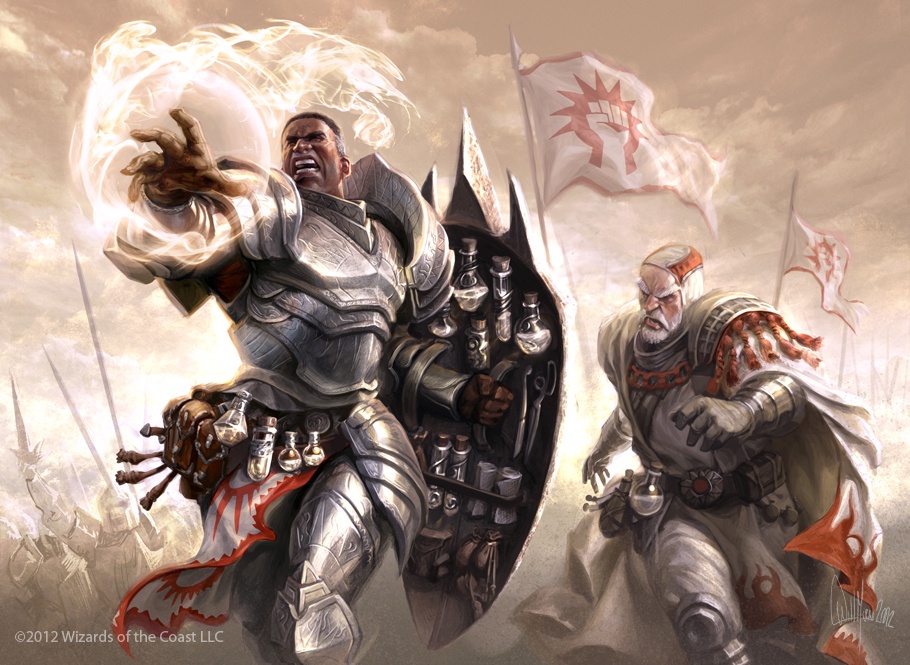
Being in style isn’t just a fashion statement—it’s a way of life! By taking on the Oath of Freshness, you have vowed to not only look your best, but to moreover always be your best. By so doing, you become a paragon of fun and laughter, the star of every show. With color and music as your primary tools and a good weapon to keep your rhythm, you’re sure to light up the world around you and make it look as good as you feel inside. Smile for the crowd, superstar! The spotlight’s on you!
Tenets of Freshness
Some paladins of Freshness swear before the altars of deities of music and light, while others make their vows to audiences and performance partners.
Optional Variant: Dancing Defense
Some paladins that swear the Oath of Freshness might decide to eschew traditional armor, instead relying on pure charm and agile performance for protection. Interested DMs and players can choose to include the following optional feature as part of the Oath of Freshness when it’s taken or as part of the paladin’s progression starting from 1st level:
Shield of Stardom
While you are wearing no armor, your AC equals 12 + your Charisma modifier. You can use a shield and still gain this benefit.
Stay Fresh. A good look is a good feeling, so always stay on top of what’s new, what’s cool, and make sure you are too.
Be Fresh. But a good look is nothing without a good heart, so live to the fullest! Be happy and make others happy too.
No Worries. There's more to life than troubles and cares. Remember to take time to relax and focus on what’s fun.
No Regrets. Sometimes people mess up. Sometimes that’s you! But mistakes are of the past, and you live for the future. Leave flaws and fights behind to make the most of now.
Oath Spells
You gain oath spells at the paladin levels listed.
Oath of Freshness Spells
| Paladin Level | Spells |
|---|---|
| 3rd | color spray, dissonant whispers |
| 5th | alter self, shatter |
| 9th | beacon of hope, thunder stepXGE |
| 13th | charm monster, instant amphitheater* |
| 17th | beseech muse,* dream |
*These spells can be found in Chapter Two
Channel Divinity
When you take on this oath at 3rd level, you gain the following two Channel Divinity options.
Showstopper. If you perform for at least 1 minute, you can use your Channel Divinity to attempt to inspire wonder in your audience by dance, recitation, or song. At the end of the performance, choose a number of humanoids or aquatic beasts within 60 feet of you who watched and listened to all of it, up to a number equal to your Charisma modifier (minimum 1). Each target must succeed on a Wisdom saving throw or be charmed by you. While charmed in this way, the target idolizes you, and it speaks glowingly of you to anyone who talks to it. This effect ends on a target after 1 hour, if it takes any damage, if you attack it, or if it witnesses you attacking or damaging any of its allies. A target has no hint that you tried to charm it.
Splat! When you hit a creature with an attack, you can create an explosion of color as a bonus action, using your Channel Divinity. Each hostile creature within 5 feet of the target must succeed on a Dexterity saving throw or be blinded until the end of its next turn. Also, surfaces within 5 feet of the original target are splattered with ink and become difficult terrain for hostile creatures. The ink lasts for 1 minute, after which it dries and loses its effect.
Aura of Freshness
By 7th level, your ability to boogie can’t be beat. Opportunity attacks against you and friendly creatures within 10 feet of you are made at disadvantage while you are conscious.
At 18th level, the range of this aura increases to 30 feet.
Sick Beats
By 15th level, you’re practically made of music. You are immune to the deafened condition and have resistance against thunder damage. You also have advantage on ability checks to notice, listen to, and identify all music.
Calamari Incantation
At 20th level, you can use an action to begin singing a truly heavenly song, reaching the hearts of all who hear. You gain the following benefits for 1 minute:
- A hostile creature that can hear you and starts its turn within 30 feet of you or moves to a point within 30 feet of you for the first time on a turn must immediately expend all of its remaining movement to dance without leaving its space. An affected creature can make a Wisdom saving throw against your paladin spell save DC at the end of each of its turns. If it fails the saving throw by five or more, it also has disadvantage on attack rolls until the end of its next turn. On a success, it becomes immune to this effect for 24 hours.
- No effect can make you inaudible to any creature you can see unless you allow it.
- You and friendly creatures within 30 feet of you are immune to the charmed condition.
Once you take this action, you must finish a long rest before you can do so again.
Fresh Looks
Being fresh inside and out takes a lot of effort! As a paladin bearing the Oath of Freshness, you’ve likely put in considerable time to cultivate a maximally fresh look that will keep you in style all season long. The following table includes some suggestions for what clothing or stylings that look might entail, and you can also use it as inspiration to create your own fresh look.
| Roll | Fresh Look |
|---|---|
| 1 | White hats with big black bows are so in this year. |
| 2 | Yellow is a warm, inviting color, so you’ve adorned all your armor and clothing with ribbons and flowers. |
| 3 | Big, black, funky boots. You’ll wear them through the Nine Hells and through high water. |
| 4 | If makeup didn’t exist in this world before, you’ve invented it. |
| 5 | A polished, white crown is perfect for projecting your sense of royal confidence. |
| 6 | You’ve dyed your hair a vibrant black and keep it nice and long—all the better to style and restyle daily! |
Oath of Healing
I WILL USE TREATMENT TO HELP THE SICK
according to my ability and judgment…[never] will I admin-
ister a poison to anybody when asked to do so, nor will I suggest such a course… Into whatsoever houses I enter, I will enter to help the sick… Now if I carry out this oath, and break it not, may I gain forever reputation among all men for my life and for my art; but if I break it and forswear myself, may the opposite befall me.
—The Hippocratic Oath
The Oath of Healing holds a paladin to a path of remedy and purity, sworn to rid the world of disease and other ills. In joining martial technique with medicine and remedy, these paladins are battlefield doctors and miracle workers alike. Whether called upon suddenly to quell an epidemic or in perpetual service in the endless war against disease, they are often as grim in manner as the inevitable death they choose to fight. Called plague knights and hospitaliers, such paladins can be counted on to heal ills and smite impurity, healing the world one patient—or disease—at a time.
Tenets of Healing
Often sworn as the paladin stands before a cleansing fire, it is traditional for one to write the tenets of the Oath of Healing upon parchment and then hold it out to burn in the flame.
Treat the Afflicted. Disease is no respector of persons, and in your role as healer, neither are you. Make your remedies and ministrations free to all who are in need.
Cleanse Impurity. You understand vectors and illness, so it is your charge to stop disease at the source.
Mourn in Tragedy. When a patient’s war on death is finally at an end, join in sorrow with the others that are left behind.
Oath Spells
You gain oath spells at the paladin levels listed.
Oath of Healing Spells
| Paladin Level | Spells |
|---|---|
| 3rd | false life, sleep |
| 5th | lesser restoration, protection from poison |
| 9th | feign death, revivify |
| 13th | aura of life, fire shield |
| 17th | greater restoration, mass cure wounds |
Channel Divinity
When you choose this oath at 3rd level, you gain the following two Channel Divinity options.
Panacea. Over the course of 10 minutes and using an herbalism kit, you can use your Channel Divinity to synthesize one bottle of a miraculous healing draught called a panacea. A creature that drinks the panacea as an action regains a number of hit points equal to your paladin level + your Charisma modifier, and it is healed of one effect of its choice causing it to be blinded, deafened, diseased, paralyzed, or poisoned. Any panacea you have created loses its potency when you make another one or when you finish a long rest.
Sterilize. As a reaction when a creature other than you that you can see within 60 feet of you is damaged, you can use your Channel Divinity to purify the wound with radiant fire. The damage is reduced by 1d10 + your Charisma modifier (minimum 1), and the creature has advantage on saving throws against disease and poison until the start of its next turn. Each hostile creature within 5 feet of it must make a Dexterity saving throw, taking radiant damage equal to the damage prevented, or half as much on a successful save.
Aura of Healing
Beginning at 7th level, you overflow with purifying energy. You and friendly creatures within 10 feet of you gain resistance to poison damage and can’t be poisoned or contract disease while you are conscious.
At 18th level, the range of this ability increases to 30 feet.
A Pound of Cure
At 15th level, your treatments improve. When a creature regains hit points through a paladin spell you cast or one of your paladin class features, it also gains temporary hit points equal to the hit points regained, up to a maximum equal to your paladin level. These temporary hit points last until the start of your next turn.
Also, when you cast a spell that would restore a creature to life (but not undeath), you can use a material component valued at half the normal cost.
Miracle Worker
At 20th level, you can use an action to physically manifest your will for health, transforming into a being of searing sanitation. All diseases and poisons within 30 feet of you are nullified, and you gain the following benefits for 1 minute:
- At the end of each of your turns, you and friendly creatures within 30 feet of you regain 10 hit points.
- You are immune to poison damage and have resistance to nonmagical bludgeoning, piercing, and slashing damage.
- Using your Sterilize feature doesn’t expend a use of your Channel Divinity.
After taking this action, you must finish a long rest before you can do so again.
Healer’s Arts
Medicine is a tradition as old as mortals, and the variety of manners and practices of the healing arts is innumerable. Consider what kind of healer your hospitalier is. Does your paladin focus on faith-healing, using divine magic to
formulate a panacea? Do they rely on medical science, wielding serious research or education? The following table has a few ideas, and feel free to come up with your own.
| Roll | Healer’s Art |
|---|---|
| 1 | Your traditional herbal medicine is looked down upon by some of your contemporaries, but you find it more reliable than “modern” leeching. |
| 2 | You were educated in a cosmopolitan medical college and find yourself constantly teaching those around you about modern discoveries in health. |
| 3 | Lacking education and with zeal as your only tool, your panaceas and treatments are pure miracles. |
| 4 | You hold that comfort and emotional healing are as important as any surgery. Medicine is your work, but bedside manner is our passion. |
Oath of Liberty
“I’M HERE TO FIGHT FOR TRUTH AND JUSTICE AND
the American way.” “You’re gonna end up fighting every elected official in this country!”
—Superman and Lois Lane, Superman (1978)
The Oath of Liberty is a noble vow by a paladin to uphold and defend democracy as the truest and most just form of government. For these warriors, tyranny and totalitarianism are the greatest enemies and enfranchisement and referendum their highest ideals. Such paladins—called eagle knights and freedom fighters—are the first to raise a shield in defense of the rights of common people, as well as the foremost to lift a weapon to smite the oppressor.
Tenets of Liberty
Traditionally, the tenets of the Oath of Liberty are determined by the vote of a summit of its bearers, and the following themes are commonly agreed upon.
Of the People. A society’s people have the solemn right to rule themselves. Therefore, leaders and representatives must be of the populace.
By the People. The power of governance should come from the people. Decisions are made by their vote and voice.
For the People. Government is meant to serve those by whom it is empowered. An oppressive rule is no rightful rule.
Oath Spells
You gain oath spells at the paladin levels listed.
Oath of Liberty Spells
| Paladin Level | Spells |
|---|---|
| 3rd | comprehend languages, sanctuary |
| 5th | calm emotions, zone of truth |
| 9th | haste, sending |
| 13th | freedom of movement, stoneskin |
| 17th | hallow, telepathic bond |

Channel Divinity
Starting at 3rd level, you gain the following two Channel Divinity options.
Power to the People. You can use your Channel Divinity as a bonus action to inspire others with hope to rise against their oppressors. Any friendly creature other than yourself that is within 30 feet of you and can hear you can use its reaction to stand if it is prone or to attempt to escape a grapple if it is grappled.
Voice of the People. As an action, you use your Channel Divinity to call on the strengths and rights of the people surrounding you. Any friendly creature within 30 feet of you that can hear you and can speak can use its reaction to join your cry. Any hostile creature within 30 feet of a creature that participates in the cry must make a Charisma saving throw. On a failed save, it is charmed by you and each creature that joined the cry until the end of your next turn as it is overcome by the virtue of your cause.
Aura of Liberty
Starting at 7th level, no tyrant or oppressor can make you kneel. You and friendly creatures within 10 feet of you can’t be forced prone by hostile creatures while you are conscious.
At 18th level, the range of this aura increases to 30 feet.
Universal Suffrage
Beginning at 15th level, your conviction that all have an equal right to life and liberty pulls down those who would claim unjust advantage. You can attempt to grapple or shove a creature regardless of its size.
Beacon of Freedom
At 20th level, you become a light of liberty to all nations and peoples. As an action, you can undergo a transformation, gaining stone-like skin and a burning radiance. You gain the following benefits for 1 minute:
- Bright light shines from you in a 30-foot radius, and dim light shines 30 feet beyond that.
- The ranges of your Aura of Protection, Aura of Courage, and Aura of Liberty features increase to 60 feet.
- Attacks made by you and friendly creatures within 60 feet of you inflict extra fire damage equal to the number of friendly creatures within 60 feet of you, up to a maximum of 10 fire damage.
- You gain resistance against bludgeoning, piercing, and slashing damage and immunity to poison damage and the poisoned condition.
Once you use this feature, you can’t use it again until you finish a long rest.
Emblems of Liberty
Freedom fighters often unify themselves with each other and with others who rally for the cause of liberty by using emblems to represent their democratic ideals. What represents your yearning for freedom? It could be a creature, a tool, or even a shape. Consider some of the following suggestions, or create an emblem of your own.
| Roll | Emblem of Liberty |
|---|---|
| 1 | The sword represents the hard-fought battles and the good blood shed in the name of obtaining liberty. |
| 2 | The eagle and its flight represent the freedom you and your cohorts seek to obtain. |
| 3 | The hoe is a symbol of the common people, the laborers, who form the true heart of a people. |
| 4 | The unicorn is a symbol of purity, emblematic of the virtuous cause of democracy. |
| 5 | The circle conveys unity, as its unbroken shape represents the interconnectedness of all people. |
| 6 | The shield is a symbol of protection without oppression, and of government for the people. |
Oath of Power
MOST HEROES SHOW SIGNS OF GREATNESS EVEN
as children. Many of them claim that their bodies simply moved before they could think!
—Kōhei Horikoshi, My Hero Academia
For many mortals, power is a means of control and a resource for rule. You, however, have been granted power for the purpose of providing it to others again. Your strength is a gift you use to become a living symbol of hope that brings peace to others’ hearts and power into their lives. Lead the way, and rise up against those evil forces that would threaten the realm or oppress the commoner. You have the power!
Tenets of Power
Whether you received your gift from a precursor people, god, magical artifact, or the mystic locus of a people in need, this oath obligates you to honorable living and heroic deeds.
Righteous Cause. Your power is a privilege, not a right. It should be wielded to safeguard, save, and serve.
Brave Conduct. Fear is the enemy that will make you hold back. Be brave; step forward. You are the hero people need!
Living Inspiration. More than a rescuer, a hero is an ideal. Be an example and inspiration to those who need one most.
Oath Spells
You gain oath spells at the paladin levels listed.
Oath of Power Spells
| Paladin Level | Spells |
|---|---|
| 3rd | heroism, jump |
| 5th | calm emotions, magic weapon |
| 9th | beacon of hope, call lightning |
| 13th | find greater steed,XGE freedom of movement |
| 17th | awaken, commune |
Channel Divinity
When you take this oath at 3rd level, you gain the following two Channel Divinity options.
For the Honor. Using your Channel Divinity as an action, you draw a weapon and transform into a heroic icon, unleashing fabulous secret powers. You grow until you are eight feet tall, and your equipment grows with you; your size becomes Medium, unless you were larger. Dim light is shed from you in a 30-foot radius.
While transformed in this way, you automatically succeed on Charisma checks made to conceal your identity, and you add your Charisma modifier to Strength ability checks and to the damage rolls of weapon attacks you make using Strength (minimum +1). If the weapon you drew is not already magical, it becomes magical for the duration of your transformation.
This transformation lasts for 1 minute or until you end it as a bonus action or fall unconscious.
The Power Returns. You can quell the fabulous secret powers you hold and adopt more unassuming mannerisms as an action, using your Channel Divinity. For 1 hour, you add your Charisma modifier to your Dexterity (Stealth) checks (minimum +1).
Aura of Hope
Beginning at 7th level, your invigorating presence propels your cause forward. While you are conscious, you and friendly creatures within 10 feet of you add your Charisma modifier to initiative checks (minimum +1).
At 18th level, the range of this aura increses to 30 feet.
Hero of Light
Starting at 15th level, your unconquerable spirit dispels all shadows and despair. When you succeed on a saving throw while under the effects of For the Honor, friendly creatures within the light you shed gain temporary hit points equal to your Charisma modifier, and hostile creatures within the light take lightning or radiant damage (your choice) equal to your Charisma modifier (minimum 1).
Master of the Universe
At 20th level, you can use your action to become the most powerful mortal in the universe. For 1 minute, you gain the effects of For the Honor, along with the following benefits:
- You grow until you are ten feet tall, and your equipment grows with you; your size becomes Large, unless you were larger. Your reach and walking speed double.
- You shed bright light in a 15-foot radius and dim light 15 feet beyond that.
- Each of your ability scores becomes 24, unless it was already higher.
After taking this action, you must finish a long rest before you can do so again.
Persona of Power
With your heroic transformation as a paladin bearing the Oath of Power comes the opportunity to cultivate a persona of power to idealize and encapsulate your heroic cause. Some of the greatest heroes live forever because what they represent lives beyond their physical deeds. A few ideas for such personas are presented in the following table, and you might also use these as inspiration to create your own.
| Roll | Persona of Power |
|---|---|
| 1 | You fashion your persona after a mundane animal, such as owls or praying mantises. |
| 2 | You call yourself the Icon of Amity, dedicated to making the world safer for everyone. |
| 3 | While your persona is brash and confident, as yourself you tend to be shy and bumbling. |
| 4 | Although your persona used to be a secret to everyone, you recently chose to reveal to the world your true identity. |
| 5 | You’ve somehow gotten away with the audacious claim that your heroic persona is an identical twin. |
| 6 | Instead of maintaining a singular persona, you invent a new heroic identity every time you transform. |


Oath of Self
I SWEAR—BY MY LIFE AND MY LOVE OF IT—THAT I
will never live for the sake of another man, nor ask another man to live for mine.
—Ayn Rand, Atlas Shrugged
You have taken on the Oath of Self, a mystic vow that upholds ego as ethical and self-interest as righteous. You care for yourself first and for yourself only, and you would never ask anyone else to do otherwise for themselves. In the man-eat-man world to which you aspire, everyone will find prosperity through relentless self-actualization and unflinching unscrupulousness. Paladins like you often call themselves arrikhans, fountain knights, or objectists. Many are found in the world as independent mercenaries, agents of yugoloths, or warrior-magnates who merge business clout with martial strength. Some measure their success by money, others by power, and others by pure indulgence. Ultimately, swearing this oath is a commitment to the highest possible ideal: you.
Tenets of Self
Some paladins of self swear the tenets to a mentor. Many others have only themselves to bear witness.
Egoism. Your gain and your happiness come before everything. Man is not meant to sacrifice for the world’s sake.
Rationalism. You are self-interested because self is the only rational motive in life. Do nothing that has no reason.
Realism. Charity cannot save you from death, and kindness will not help you survive. Reject these sins in vritue's clothing.
Absolutism. Your beliefs are unassailable, and your values are unalterable. These tenets are as true for the universe as they are for you.
Oath Spells
You gain oath spells at the paladin levels listed.
Oath of Self Spells
| Paladin Level | Spells |
|---|---|
| 3rd | Atlas’s shrug,* expeditious retreat |
| 5th | enthrall, see invisibility |
| 9th | slow, vampiric touch |
| 13th | fire shield, personal paradise* |
| 17th | antilife shell, destructive wave |
*These spells can be found in Chapter Two.
Channel Divinity
When you choose this oath at 3rd level, you gain the following two Channel Divinity options.
Self-interest. As a bonus action, you can use your Channel Divinity to take what is rightfully yours. Choose one creature that can hear you. The creature is forced to use its reaction to Help you, and it can do so even if it isn’t friendly to you.
Self-actualize. Using your Channel Divinity as a bonus action, you can envision your perfect self and temporarily achieve that impervious ideal. Until the end of your next turn, you have resistance against all damage. During this time, you can’t take the Help action.
Aura of Self
By 7th level, you understand the moral importance of your own gain. You constantly emanate a draining aura while you’re not incapacitated. The aura extends 10 feet from you in all directions, but not through total cover.
When a creature within the aura would regain hit points, you can choose for the creature to instead regain no hit points and for you to gain a number of temporary hit points equal to the number of hit points which the creature would have recovered, up to a maximum equal to your paladin level. Temporary hit points gained this way last until the end of your next turn.
At 18th level, the range of this aura increases to 30 feet.
Physician, Heal Thyself
Starting at 15th level, when you use your Lay on Hands feature on yourself, you gain temporary hit points equal to the number of hit points you expend from your pool of healing, up to a maximum equal to your paladin level.
Also, when you target yourself with Cleansing Touch, you gain temporary hit points equal to your Charisma modifier (minimum 1).
Object of Worship
At 20th level, you discover that the one thing worthy of your worship is you. You can deify yourself as an action, and this generates the following effects for 1 minute:
- You gain resistance to all damage.
- You are immune to being charmed, paralyzed, or petrified.
- Your weapon attacks score a critical hit on a roll of 18–20.
- Creatures within 30 feet of you can’t use or benefit from the Help action unless you allow it.
- You can use Self-interest without expending a use of your Channel Divinity.
After using this feature, you must finish a long rest before you can do so again.
Self-expression
Paladins who make the Oath of Self consider their tenets’ truthfulness self-evident. Nevertheless, rationally apprehending the world obliges them to recognize that their values are not universal, the unfortunate result of, from their perspective, widespread misunderstanding and apathy. In explaining their singular beliefs to the uncomprehending, many such paladins coin precepts and phrases, the better for communicating your ideas concisely—or at least for feeling like they are. The following table lists a few possible such expressions, and you can also create your own.
| Roll | Self-expression |
|---|---|
| 1 | “A is A.” Existence must be what it seems. Anything else is deceit or delusion. |
| 2 | “Ask nothing. Expect nothing. Depend on nothing.” That is the path to true freedom. |
| 3 | “The man who does not value himself cannot value anything.” A rational being prioritizes the self first. |
| 4 | “The middle is always evil.” Never equivocate or compromise. Right and wrong are absolutes. |
| 5 | “Love is the expression of one’s values.” Rational affection must have a moral valence. |
| 6 | “There is no such thing as duty.” What is right should be what you will. Obligation is for motivating beasts. |
Oath of Sensation
EXPLORE, DISCOVER, INVENT, SOLVE PROBLEMS,
crack jokes, make music—all with love. In other words, create a magic world.
—Valerie Solanas, SCUM Manifesto
Paladins bearing this oath swear themselves to sensation in all its forms as their ideal. Heady abstractions or coded conduct are seen as mere distractions from the realities of what one feels. Meaning, therefore, is only found in the delights and anguishes of both body and mind, the more potent the better. Since the ache of good labor can give way to satisfaction with work well done, and the joy of love can yield to pain at separation, these paladins—called pain knights and ecstasists—simply extrapolate these ideas to their furthest extremes. If pain and pleasure are two sides of the same coin, why not revel in both?
Tenets of Sensation
To ecstasists, the tenets of Sensation are like a mantra, more chanted than recited.
Pain Is Pleasure, and so Love Pain. Discomfort is its own delight, so indulge in both without reservation.
Pain Is Life, so Death Is Vain. Only the living know how to feel. Avoid unwisely risking your life or those of others.
Share Sensation so All May Gain. By example and invitation, entice others to experience the heights and depths of their own capacities to feel.
Oath Spells
You gain oath spells at the paladin levels listed.
Oath of Sensation Spells
| Paladin Level | Spells |
|---|---|
| 3rd | cause fatigue,* hypnotic strike* |
| 5th | crown of madness, enthrall |
| 9th | life transferenceXGE, mesmerize* |
| 13th | charm monsterXGE, death ward |
| 17th | dominate person, enervationXGE |
*These spells can be found in Chapter Two.
Channel Divinity
When you choose this oath at 3rd level, you gain the following two Channel Divinity options.
Beguiling Agony. As an action, you can use your Channel Divinity to overwhelm the senses of creatures around you, leaving them bewitched by your presence. Each creature of your choice within 30 feet of you must succeed on a Wisdom saving throw or be charmed by you for 1 minute. A creature charmed in this way can repeat the saving throw at the end of each of its turns, ending the effect on a success.
Touch of Pain. When you hit a creature with a weapon attack, you can use your Channel Divinity to force it to make a Charisma saving throw. On a failed save, the target takes 1d8 + your paladin level psychic damage and gains 1 level of exhaustion. A creature that is charmed by you makes this saving throw at disadvantage. On a successful save, the target takes half as much damage and suffers no other effect.

Aura of Sensation
Starting at 7th level, you constantly emanate a harrowing aura while you aren’t incapacitated. The aura extends 10 feet in every direction, but not through total cover.
When a creature that is charmed by you is within the aura, it experiences the effects of 1 more level of exhaustion than it currently has, except for death.
At 18th level, the range of this aura increases to 30 feet.
Arduous Revelry
Starting at 15th level, you enjoy pain so thoroughly that you can better endure it. As a reaction to taking damage, you can choose to increase your level of exhaustion by 1, up to a maximum of 6, and you gain a number of temporary hit points equal to the damage.
Also, when you finish a long rest, you remove all your levels of exhaustion, instead of reducing your exhaustion by 1 level, provided you have also ingested some food and drink.
Excrutiating Euphoria
At 20th level, as an action you can transform into an icon of the most exquisite heights of delectation and distress. This transformation lasts for 1 minute, and you gain the following benefits for the duration.
- You radiate pain. When a creature that is charmed by you is within your Aura of Sensation, it experiences the effects of 2 more levels of exhaustion than it currently has, except for death, instead of 1 more.
- You radiate pleasure. You can use your Beguiling Agony feature as a bonus action and without expending a use of your Channel Divinity.
Optional Variant
For interested players and Dungeon Masters, the following optional feature can be included as part of the Oath of Sensation when it’s taken or as part of the paladin’s progression starting from 1st level:
Malign Smite
Rather than call upon holy light, you amplify your weapon attacks by magically heightening the pain your target experiences. Your Divine Smite and Improved Divine Smite features inflict psychic damage instead of radiant.
- You indulge in pain. You have resistance against bludgeoning, piercing, and slashing damage, and you are immune to the effects of exhaustion, including death.
- You indulge in pleasure. Being charmed by a creature doesn’t prevent you from harming it, and you gain advantage on attack rolls targeting it.
Once you use this feature, you must finish a long rest before you can do so again.
Sensitive Succors
Pain knights are notorious for indulging in heady mixtures of discomfort and delight, aesthetically, gustatorily, sensually, and more. What the uninitiated often do not realize, however, is that just as important to an ecstasist as the moment of pleasing pain itself is the cooldown that follows. Many paladins who swear the Oath of Sensation have aftercare practices that they use to recenter and wind down, whether after a night of activity or a day of battle. Consider choosing from or rolling on the table below to pick a soothing practice for your character, or use it as inspiration to create your own.
| Roll | Sensitive Succor |
|---|---|
| 1 | A light coffee in the evening helps cut through sour tastes and bodily weariness. |
| 2 | Bathing in warm (or cool) water resets the tactile senses and calms the excited mind. |
| 3 | Embracing one another and huddling together may seem saccharine, but to you it is the perfect capstone to a night of revelry. |
| 4 | You coccoon yourself (and willing companions) in soft, warm, comfortable blankets. |
Oath of Society
SOCIETY… OUGHT NOT TO BE CONSIDERED AS
nothing better than a partnership agreement in a trade of pepper and coffee, calico, or tobacco, or some other such low concern, to be taken up for a little temporary interest, and to be dissolved by the fancy of the parties. It is to be looked on with other reverence.
—Edmund Burke, Reflections on the Revolution in France
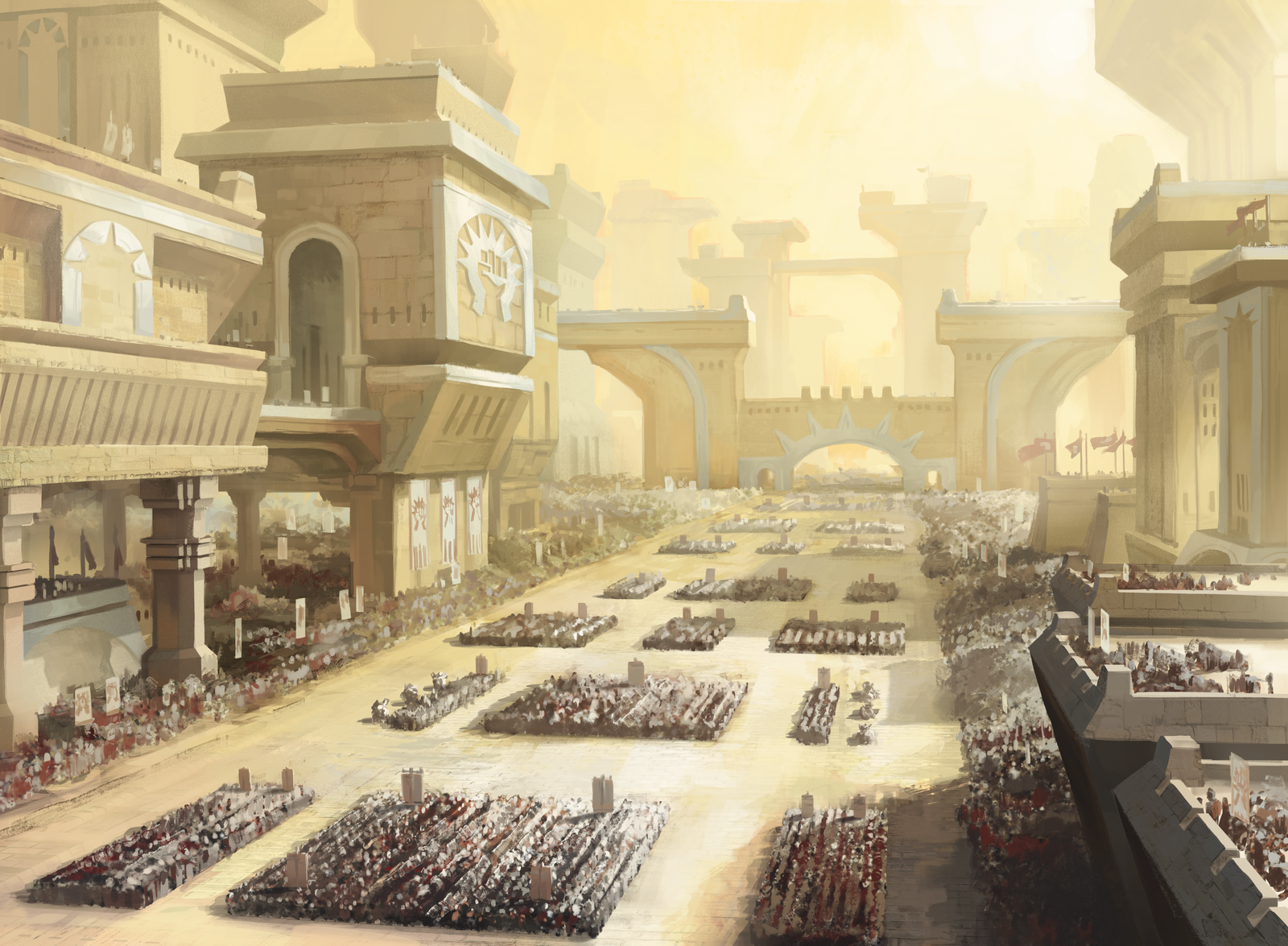
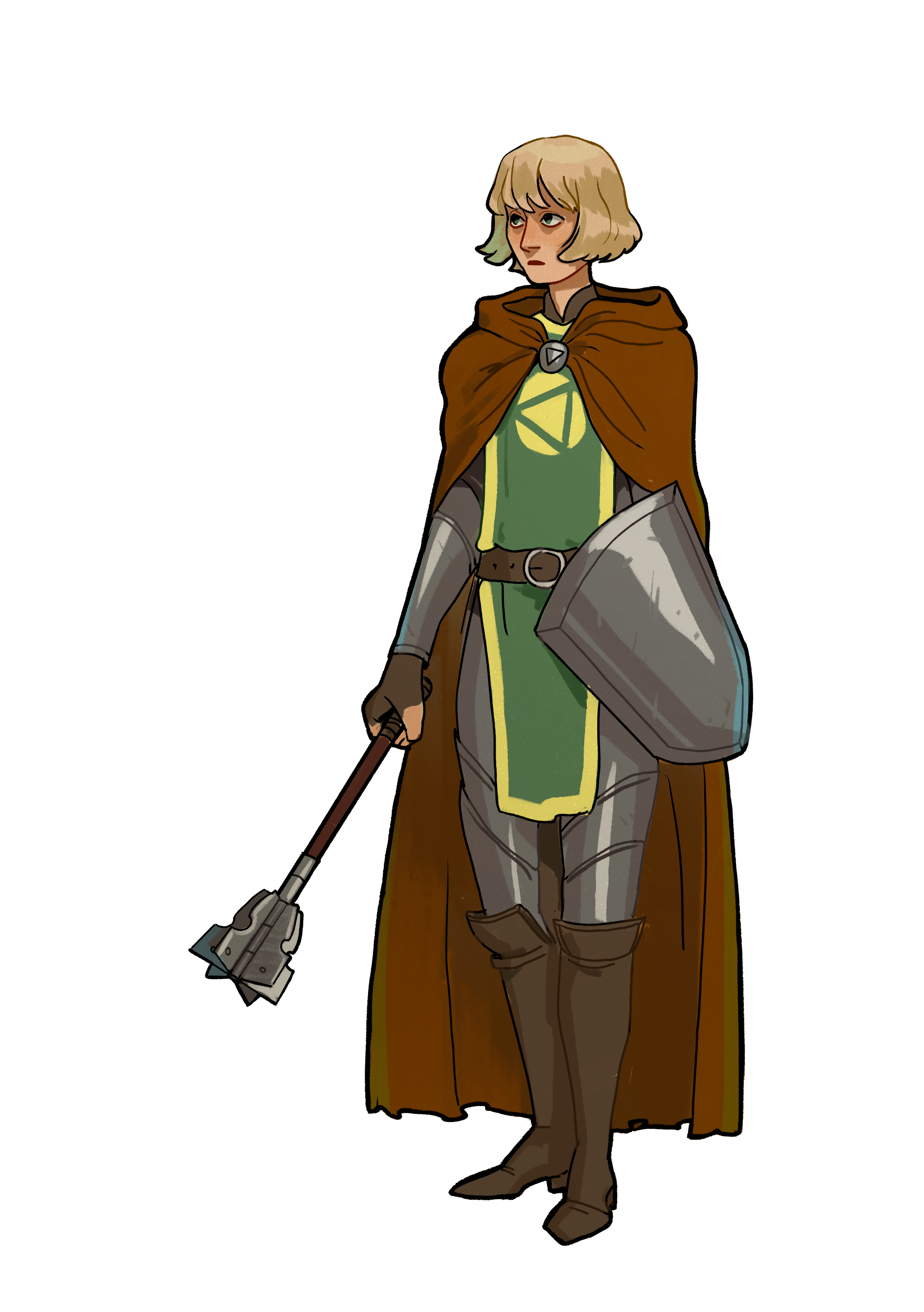
Paladins who swear the Oath of Society believe order to be the correct state of all things: without rules, society crumbles, and all life becomes nasty, brutish, and short; without community, existence is uncomfortable and stagnates. Thus, chaos is more than distasteful: it is an existential threat. Distinguished for reverencing civilization as an embodiment of law and order, many who bear the Oath of Society labor in the ranks of pioneers taming the wilderness or regulators enforcing the law, perceiving disorder in wild animals and robber barons alike.
Called lyans, lawgivers, and knight-pioneers, paladins who swear this oath are loyal and duteous, with an unyielding focus on their worship and to smiting chaos. As such, they tend to be severe, even taciturn, in disposition. Nevertheless, they are no less unfailing in their dedication to hunting and striking down the forces of chaos everywhere.
Tenets of Society
No matter where or when the Oath of Society is sworn, its tenets are universal.
Order. Be true to the ideals of law, and yield to legitimate authority. Strike down chaos where it stands. Act with consistency, and be disciplined in your conduct.
Decorum. Be courteous yet professional in your manner. Defer to superiors and respect subordinates as appropriate to your respective stations. Do not be over-friendly or fond.
Civilization. Respect and honor the town, the schoolhouse, the courtroom, the union. Institutions form the foundation of and are the hope for all meaningful life.
Responsibility. Do not be disorderly in your own conduct. Perform your duties to the highest letter of the law, and abide by the code of your oath and obligations.
Oath Spells
You gain oath spells at the paladin levels listed.
Oath of Society Spells
| Paladin Level | Spells |
|---|---|
| 3rd | guiding bolt, sanctuary |
| 5th | fair weather,* hold person |
| 9th | beacon of hope, protection from energy |
| 13th | compulsion, Otiluke's resilient sphere |
| 17th | hallow, mass shield of faith* |
*These spells can be found in Chapter Two
Channel Divinity
When you take this oath at 3rd level, you gain the following two Channel Divinity options.
Blessed Settlement. With your Channel Divinity, you sanctify a space against the wilderness’ chaos and encroachment. As an action, you speak an incantation to bless a circular area within a 15-foot radius centered on a point you touch, the edge of which is visibly marked by a faintly glowing silver-colored line. While within the blessed space, you and friendly creatures can add extra radiant damage equal to your Charisma modifier to the damage of an attack once per turn (minimum of 1). The area is also difficult terrain for hostile creatures. This effect lasts for 1 minute.
Additionally, you are magically made aware if any hostile creature is within the radius or enters the radius. You do not automatically know where they are or how many there are. If you are sleeping at the time, you are magically awoken and may use a reaction to stand. This effect lasts for 8 hours or until you leave the blessed space.
Turn the Unlawful. As an action, you can utter a prayer that is painful to creatures of chaos. You display your holy symbol and speak your condemnatory prayer, using your Channel Divinity. Each aberration, demon, or fey that can see or hear you within 30 feet of you must make a Wisdom saving throw. If the creature fails its saving throw, it is turned for 1 minute or until it takes damage.
A turned creature must spend its turns trying to move as far away from you as it can, and it can’t willingly move to a space within 30 feet of you. It also can’t take reactions. For its action, it can use only the Dash action or try to escape from an effect that prevents it from moving. If there’s nowhere to move, the creature can use the Dodge action.
Aura of Clarity
By 7th level, your presence dispels confusion and disarray. While you are conscious, you and friendly creatures within 10 feet of you are immune to being blinded, deafened, or affected by the confusion spell or effects similar to it.
At 18th level, the range of this aura increases to 30 feet.
Common Cause
Beginning at 15th level, your steadfastness spreads to your comrades. When you cast a paladin spell on a friendly creature (including yourself), that creature gains temporary hit points equal to your Charisma modifier plus the level of the spell (minimum of 1).
Additionally, you have advantage on Charisma (Persuasion) checks made to interact with people involved in government and law, such as bureaucrats, constabulary, judges, or royalty.
Pillar of Society
At 20th level, you can use an action to become an inspiring avatar of cosmic law whose steps claim the earth for civilization. For 1 minute, your body looks as if it burns with a holy fire, and you gain the following benefits:
- You radiate bright light for 15 feet and dim light 15 feet beyond that. This light illuminates even magical darkness.
- Whenever you or a friendly creature within 30 feet of you hits with an attack, it inflicts an extra 1d6 radiant damage.
- Each hostile creature within 30 feet of you must subtract 1d6 from any ability check or attack roll it makes.
- You have advantage on saving throws against spells cast by aberrations and fey.
Alternatively, you can cast the spell mighty fortressXGE
once without requiring a spell slot or material components.
When you cast mighty fortress in this way, the fortress you conjure bears the effects of your Blessed Settlement feature for as long as it lasts.
Once you use your Pillar of Society feature, you can’t use it again until you finish a long rest.
Edificial Hierarchy
The Oath of Society is inspired by the Lyan class presented in Dragon no. 106 (February 1986), in which it is described as the clergy of the Edificial Churches, a faith dedicated to a deity known only as the Arbiter. As appropriate to the campaign, setting, Dungeon Master, and players, you might consider incorporating this into the lore of the Oath of Society, considering their order to be the Edificial clergy. For ideas on how to structure this clergy, consider the following table as one example of how to arrange an Edificial Clergy.
| Office | Description |
|---|---|
| Grand Hierophant | The grand hierophant is chief of the knightly order and presides over all the clergy from the central See of the faith. |
| Hierophant | A hierophant oversees the activities of prelates and their Sees and represents the Grand Hierophant. |
| Prelate | A prelate presides over a See, a collection of a few or several parishes of the faith. |
| Pastor | A deacon that advances in their training may be made a pastor, given responsibility over a chapel and parish. |
| Deacon | A knighted member who is authorized to minister on behalf of the faith. |
| Squire | An apprentice training to become a knight and swear the Oath of Society. |
Law Versus Chaos
Inspired by the Lyan class introduced in Dragon no. 106 (February 1986), a paladin that takes the Oath of Society struggles in behalf of law against chaos, and thus thematically may often be unconcerned, even flippant, about the conflicts of good and evil.
For players and DMs interested in more fully reflecting the oath's theme within its mechanics, the following optional features can be included as part of Sacred Oath when it’s taken or as part of the paladin’s progression starting from 1st level:
Detect Chaos
When you use your Divine Sense, you detect the presence of aberrations, celestials, and fey instead of celestials, fiends, and undead.
Scourge the Chaotic
The bite of your blows is focused not on the unholy, but on the lawless. When you use your Divine Smite, you inflict an extra 1d8 radiant damage against aberrations and fey instead of fiends and undead.
Oath of Strangers
I BELIEVE THAT TO HAVE A FRIEND, A MAN MUST BE
one. That all men are created equal and that everyone has within himself the power to make this a better world. That God put the firewood there but that every man must gather and light it himself. In being prepared physically, mentally, and morally to fight when necessary for that which is right. That a man should make the most of what equipment he has.
—Fran Striker, The Lone Ranger Creed
While most think of paladins as knightly and iconic, even unhidden or obvious, the chivalrous mavericks who swear the Oath of Strangers are a different sort. At home on the road and masterful with their black powder artillery, these warriors favor a life of modesty, if not anonymity, and uphold the common man’s honesty and the loyal friend’s sidearm as their ideals. In yearning to uphold righteousness and justice in their lawless frontier homes, few hesitate to step in when needed to rescue the helpless or thwart the wicked. Called musketeers, pistoleros, and white hats, these paladins wield firearms as a champion’s sword and listen to pounding gunfire as their victory hymn.
Tenets of Strangers
Traditionally, the tenets of the Oath of Strangers are only written down on the hearts of those who mind them.
Brotherly. Your friend eats and lives before you do. Watch over your own, and be true to them at all times.
Candid. Save your breath for breathing. Keep your prom-ises, and make every word out of your mouth an honest one.
Modest. You’re all guts and no gurgle. Save stories for when folks ask. Share your experiences, not tall tales.
Moral. Walking the hard path is virtue. Don’t yield to what’s wrong for anything. You don’t fight because it’s easy or fun.
Pleasant. It doesn’t matter if it’s the best or worst day of your life. Retain tact and keep cheer. Only quitters complain.
Oath Spells
You gain oath spells at the paladin levels listed.
Oath of Strangers Spells
| Paladin Level | Spells |
|---|---|
| 3rd | cause fear,XGE guiding bolt |
| 5th | Nystul’s magic aura, silence |
| 9th | catnap,XGE conjure barrage |
| 13th | charm monster,XGE freedom of movement |
| 17th | conjure volley, swift quiver |
Channel Divinity
When you choose this oath at 3rd level, you gain the following two Channel Divinity options.
Divine Snipe. Your righteous fervor burns hotter than even black powder. As an action, you use your Channel Divinity to conjure into your free hands a number of magical bullets equal to 2 x your Charisma modifier (minimum of 2) and a
sacred weapon which takes the form of either a musket or a pistol with which you are proficient (your choice), as described on page 268 of the Dungeon Master’s Guide. As an action, you can make a special ranged weapon attack made using a firearm with one of these bullets. On a hit, the attack inflicts extra radiant damage equal to the weapon’s damage die, and it can benefit from your Divine Smite and Improved Divine Smite features. The bullet then dissipates in a flash of holy light.
When you no longer have any of this ammunition, use this Channel Divinity option again, or finish a short or long rest, the sacred weapon and bullets vanish.
Trickshot. When you hit with a ranged attack made using a weapon that has the loading property, you can use your Channel Divinity to perform an exceptional maneuver. The target experiences one of the following effects of your choice:
- Disarming Shot. The target must succeed on a Strength saving throw or drop 1 item it is holding of your choice.
- Gutshot. The target must succeed on a Constitution saving throw or be poisoned until the end of its next turn.
- Frightful Shot. The target must succeed on a Wisdom saving throw or use its reaction to move as far as its movement speed allows directly away from you.
- Tripshot. The target must succeed on a Dexterity saving throw or be knocked prone.
- Scoot Unattended Object. If the target is a tiny object that is not being worn or carried, it moves up to 20 feet in any direction of your choice. Otherwise, the trickshot fails.
Grit
Starting at 7th level, your quiet charm and serendipitous daring put you in the perfect position to make a comeback. When you have no uses left of your Channel Divinity feature, you regain 1 use of it when you score a critical hit or reduce a creature to 0 hit points.
You can use this feature twice, and you regain all expended uses whenever you finish a short or long rest.
Quickdraw
By 15th level, no one moves faster than your quick reflexes. You can’t be surprised while you’re conscious, and you add your Charisma modifier to initiative checks (minimum +1).
The Mysterious Stranger
At 20th level, you can become an anonymous avatar of frontier justice, sworn to bring order to chaos and evil to heel. As an action, you gain the following benefits for 1 minute:
- You ignore the loading property of a sacred weapon conjured using your Divine Snipe, and you can make the special ranged weapon attack using it as an attack instead of as an action.
- You can use Divine Snipe as a bonus action, and using Divine Snipe or Trickshot doesn’t expend a use of your Channel Divinity.
- You are invisible to any hostile creature until you attack it, cast a spell on it, or otherwise harm it, at which point you become visible to that creature.
You must finish a long rest before you can do this again.
Strange Quirks
The unique path of the Oath of Strangers can leave a mark on those who walk it. Consider choosing from or rolling on the following table to pick a unique quirk for your character, or use it as inspiration to create your own.
| Roll | Trait |
|---|---|
| 1 | You have trouble sleeping without a weapon in hand. |
| 2 | You’re usually the last person to fall asleep at night, as well as the first one to wake up in the morning. |
| 3 | You have a knack for wearing a hat just right so that it casts a shadow across only your eyes. |
| 4 | You’ll die before you tell a lie, and you’ll kill before you listen to one. |
| 5 | The sacred weapon you conjure looks different each time you summon it (or it looks the same). |
| 6 | You speak with a charming accent none of your companions have ever heard before. |
| 7 | You’re frugal almost to the point of ascetism. |
| 8 | You can count the number of people who know your real name on one hand. You try to keep it that way. |
| 9 | Your hat goes wherever you go—no exceptions. |
| 10 | You learned your combat skills from the wrong crowd. You hope no “old friends” ever recognize you. |
| 11 | Whenever you get either antsy or cocky, you have a habit of whirling a weapon around in your hand. |
| 12 | For you, nothing makes a meal richer or a drink sweeter than hearing or sharing a true story. |
Oath of the Directive
IF YOU WERE TO INSIST I WAS A ROBOT, YOU MIGHT
not consider me capable of love in some mystic human sense, but you would not be able to distinguish my reactions from that which you would call love—so what difference would
it make?
—Isaac Asimov, Foundation’s Edge
At the center of the Oath of the Directive is this principle: heroes are made, not born. Paladins that bear this oath are called mechaknights and android masters, and they live up to the name. Some are visibly mechanical marvels, pistons primed and forged together. Others are more akin to miracles, wrought in perfect similitude to life itself excepting a clockwork heart or a brain of gears and parchment code. They are built for a variety of purposes, but all are unified by both their make and manner: artificial life dedicated to fulfilling the righteous directives assigned by their creators.
Tenets of the Directive
The tenets of the Directive, also known as the Automaton Principles, are central to the code of every android master.
The tenets are listed in descending order of importance, demonstrating which are prioritized if ever they conflict.
True to the Maker. I will be loyal to they who created me and heed their instruction. In their absence, I act in accordance with my understanding of what they would want.
Fair to the Stranger. I will avoid undue harm to other sentient lifeforms inasmuch as I am able to do so while still meaningfully pursuing my directive.
One With My Purpose. I will preserve my own existence according to my ability, unless my loss is necessary to the directive’s success. Otherwise, I would doom it to failure.
Thought to All Conduct. I will be rational and logical in all my conduct. Mistakes are acceptable—for no craft can be perfect—but willful misdeeds are not.
Oath Spells
You gain oath spells at the paladin levels listed.
Oath of the Directive Spells
| Paladin Level | Spells |
|---|---|
| 3rd | shield of faith, thunderwave |
| 5th | scorching ray, see invisibility |
| 9th | feign death, protection from energy |
| 13th | arcane eye, divination |
| 17th | antilife shell, wall of force |
Channel Divinity
Beginning when you choose this oath at 3rd level, you gain the following two Channel Divinity options.
Firewall. When you fail a Wisdom, Intelligence, or Charisma saving throw, you can use your Channel Divinity to reroll the save, possibly changing the failure to a success.
Overclock. You can use your Channel Divinity as a bonus action to accelerate your processing ability beyond your normal limits. For 1 minute, or until you are unconscious, your movement speed increases by a number of feet equal to 5 x your Charisma modifier (minimum of 5 feet), and opportunity attacks targeting you are made at disadvantage. When you use this Channel Divinity option and at the start of each of your turns while under its effect, you gain temporary hit points equal to your Charisma modifier (minimum 1).
Aura of Direction
By 7th level, nothing can keep you and your allies from fulfilling your directive. While you are conscious, the movement speeds of you and friendly creatures within
10 feet of you can’t be reduced by magic.
At 18th level, the range of this aura increases to 30 feet.
Machine Learning
Beginning at 15th level, when you miss a creature with a weapon attack, you gain advantage on the next weapon attack you make targeting it within 1 minute.
Also, you only need to train for half as long as normal to learn a new language or gain a new tool proficiency.

Artificial Ascension
At 20th level, you have perfected all your processes as the archetypal automaton. You can enter an overdrive state as an action, gaining the following benefits for 1 minute:
- Your initiative becomes 20, unless it was higher.
- Your walking speed increases by 30 feet, and you can’t be targeted with opportunity attacks.
- No effect can knock you prone or move you, unless you allow it.
- You are immune to being charmed or stunned.
- When you take the Attack action, you can make one additional attack as part of the action.
After using this feature, you must finish a long rest before you can do so again.
Directive Corollaries
It is common for paladins of the Oath of the Directive to bear unique traits of form or personality incident to their artificial origins. Whether these are features or bugs may well be a personal question. Consider choosing from or rolling on the following table to pick a unique quirk for your character, or use it as inspiration to create your own.
| Roll | Directive Corollary |
|---|---|
| 1 | Few things are more sacred to you than statistics. |
| 2 | You insist to others that you don’t sleep. You “enter low power mode.” |
| 3 | The only thing you remember about your creator is the directive they gave to you. The second-greatest longing of your heart is to someday meet them. |
| 4 | Statement: You preface your verbal communications with relevant descriptions of their genre. |
| 5 | The Automaton Principles require that you avoid unnecessary harm to meatbags, but they say nothing about what you should call them. |
| 6 | You’re convinced no one can tell that you’re an automaton or notice your bionic limbs, oil blood, and static hair. |
| 7 | Jokes tend to be lost on you. |
| 8 | In secret, you fantasize about violating your directive. |
| 9 | You consider generalizations of the Automaton Principles obscene (or enlightened). |
| 10 | You were built to replace someone your creator lost. |
| 11 | You live for technicalities. |
| 12 | It was only recently that you learned you weren’t fully mortal, and it’s still difficult to accept. |
Oath of the Revenant
HE WAS MORE DECREPIT ALIVE THAN SOME OF
the legitimately dead.
—Tamsyn Muir, Gideon the Ninth
Some sacred vows last beyond even death. The Oath of the Revenant is one such vow: a promise so powerful that it restores the bearer from death to life—or at least to unlife. The objects of such oaths can vary, but what unites them is the unflinching and tireless dedication that drives their bearers onward. Called knight-macabre, dead-knight-walking, or more simply revenant, such a paladin walks without fear, for having overcome death, of what else is there to be afraid?
Tenets of the Revenant
Sworn on the borders of mortality, the tenets of the Revenant must be powerful enough to propel a paladin out of the very jaws of death. In consideration of the variety of reasons that may motivate paladins to swear an Oath of the Revenant, you might create with your Dungeon Master a unique third tenet to describe your paladin’s motivation, or you may choose from or roll on the Revenant Vow table that follows.
Tenacity. There is no longer any obstacle that can halt your quest or stay your hand.
Life. Robbed of the gift of life once before, you know better than ever to reverence it and preserve it where possible.
Revenant Vow
| d4 | Unique Tenet |
|---|---|
| 1 | Revenge. In your passing, debts would've been left unpaid. Whether on your killers or on some other enemy, you have sworn to wreak cold vengeance. |
| 2 | Romance. Yours was a love for the ages. You have vowed to reunite with your beloved in mutual joy. |
| 3 | Zeal. It was a just cause for which you fought! Whether it was a revolution against the king or a sacred quest for your god, you refused to allow death to stop you. |
| 4 | Guardianship. It was your charge to protect someone or something, perhaps kin to you, or a royal heir, or a site of pilgrimage. It would be vulnerable in your death, so you could not die. |
Oath Spells
You gain oath spells at the paladin levels listed.
Oath of the Revenant Spells
| Paladin Level | Spells |
|---|---|
| 3rd | false life, inflict wounds |
| 5th | darkvision, enhance ability |
| 9th | feign death, speak with dead |
| 13th | death ward, freedom of movement |
| 17th | antilife shell, danse macabreXGE |
Channel Divinity
When you take this oath at 3rd level, you gain the following two Channel Divinity options.
Defy Death. When you would make a death saving throw, you can use your Channel Divinity to instead regain a number of hit points equal to your paladin level. If you are prone, you can also stand up.
Pallor of Death. You can use your Channel Divinity as a bonus action to reveal or otherwise emphasize your undead visage. One creature within 10 feet of you that can see you must succeed on a Wisdom saving throw. On a failed save, it is frightened of you for 10 minutes or until you or one of your allies does anything to harm it or it witnesses you or an ally of yours do anything to harm a creature it considers a friend or ally. While it is frightened in this way, you have advantage on Charisma (Intimidation) and Wisdom (Insight) checks you make against it.
Aura of the Revenant
Beginning at 7th level, your very presence overcomes death. While you or at least one friendly creature within 10 feet of you is conscious, you and friendly creatures within 10 feet of you can’t die from failing death saving throws.
At 18th level, the range of this aura increses to 30 feet.
Lifeless
Starting at 15th level, you’re immune to exhaustion, effects that would force you to sleep, and spells that can only target humanoids. You also can survive without air, food, drink, or sleep. To take a long rest, you can read, converse, keep watch, or otherwise relax or perform light activity for 8 hours.
Unkillable
At 20th level, you gain the ability to transform into a truly deathless revenant as an action. For 10 minutes, you can’t die. At the beginning of each of your turns, you regain all of your lost hit points.
You can use this feature once, and you can’t use it again until you finish a long rest.
Revenant Forms
Revenant paladins experience death and unlife, but unlike monsters such as zombies or skeletons, they do not necessarily rot or decay, neither—at least before 15th level—can they live without food and sleep like a lich. Unless your revenants acquire such traits or features from a different source (such as their species), you may find they seem altogether lively. This is, first of all, mechanically practical—but it also can be thematically interesting. Revenants can feel or even be capable of socializing with the living, but their unlife haunts them, whether obviously or invisibly. You might, with your Dungeon Master, consider how your paladin’s unlife manifests aesthetically and socially. The table below provides suggestions for the form your revenant takes, and you can roll on the table, pick from the list, or come up with your own ideas. While your paladin’s revenant form may not have formal mechanical ramifications, they can still influence how you choose to play the character and how other characters respond to them.
| Roll | Revenant Form |
|---|---|
| 1 | To even a keen eye, you look as hale and ruddy as anyone. But your flesh is icily cold to the touch. |
| 2 | An odor like rotting meat seems to always follow you. Washing only masks it without eliminating it. |
| 3 | Even when you still need to eat, you can’t taste a bite. |
| 4 | Your breathing rubs people the wrong way. Something about the way you do it looks unnatural. |
| 5 | You’ve discovered that you no longer need to blink. |
| 6 | Your blood runs warm, and your breath comes out hot—but your pallor is so ghastly that most figure out on sight that you’re experiencing unlife. |
| 7 | When you’re on hallowed ground, you get a feeling like pins and needles. |
| 8 | Concentrations of life, like crowds and parties, make you feel nervous. You’re more comfortable when surrounded by corpses. |
Oath of Tomorrow
THE PRESENT IS THEIRS. THE FUTURE, FOR WHICH
I really worked, is mine.
—Nikola Tesla
To some, the age of a world is marked by its changes: the advancements and progress made in thought, machinery, and life. The club gives way to the spear, then the sword; crude sorceries and pacts give way to wizardly arcana; and the wandering tribe becomes a village, then a city, then an

empire. Society itself grows, shaking off yesterday’s norms and tinkering with new ways of existence. Those who swear the oath of tomorrow, known as tomorrowbringers, believe in the virtue of this progress and strive to push the world forward. Be they pure machinists or fiery advocates for social rearrangement, these paladins wield powers from their personal vision of the future as they quest to put an end to the most recent chapter of history.
Tenets of Tomorrow
The tenets of tomorrow are a newly crafted vow, often mutating to better fit the rapidly progressing world after which tomorrowbringers seek.
Effect Change. Stagnation is death. Always propel experimentation, new ways of thinking, and cultural progress.
Pure Reason. Mortals should be rational beings. The power of your reason will unlock secrets to greater futures.
Mortals are Limitless. Defy the irrational chains placed upon what mortal civilization can and cannot accomplish. There is a future grandeur just waiting to be achieved.
Kill the Past. The society of the past did not know what you do now. It is a scar reminding mortals of what they thought they couldn’t do. Let history die in its cobwebs.
Channel Divinity
At 3rd level, you gain two Channel Divinity options.
Empower Invention. As a bonus action, you can infuse one melee weapon you hold with electric power, using your Channel Divinity. For 1 minute, the weapon inflicts lightning damage, instead of its normal damage type, and it emits dim light in a 5-foot radius. A creature hit by this weapon can’t take reactions until the start of its next turn.
You can end this effect on your turn (no action required). If you are no longer holding or carrying this weapon, or if you fall unconscious, this effect ends.
Stroke of Genius. You can use your Channel Divinity as an action to enter a frenzy of miraculous ingenuity. For 10 minutes, if your total for any Intelligence check you make is less than your Charisma score, you use your Charisma score in place of the total.
Aura of Progress
Beginning at 7th level, you radiate divine advancement, shielding creatures against stupor and stagnation. You and friendly creatures within 10 feet of you are immune to being paralyzed while you are conscious.
At 18th level, the range of this aura increases to 30 feet.
Electric Feedback
Starting at 15th level, when a creature hits you with a melee attack, it takes lightning damage equal to your Charisma modifier (minimum 1), if you're not incapacitated.
Avant Guardian
By 20th level, your advocacy for progress manifests in your own visage, fusing flesh, magic, and steel. As an action, you can adopt the following traits:
- You grow to a Large size, and your equipment grows with you, doubling your reach and quadrupling your weight.
- You are immune to poison, psychic, and lightning damage.
- You are immune to being charmed, exhausted, petrified, or poisoned, and magic can't put you to sleep.
- You are resistant to nonmagical bludgeoning, piercing, and slashing damage inflicted by weapons that are not made of adamantine.
- Your melee weapon attacks inflict an additional die of damage and count as magical if they do not already.
This effect lasts for 1 minute. After using this feature, you must finish a long rest before you can use it again.
Wondrous Inventions
Not all tomorrowbringers are crafters and inventors, but some are. Perhaps your paladin has devised a wondrous, if peculiar, invention, taking the form of a tiny trinket. You may find such a trinket you like on the following table, or you can work with your Dungeon Master to create one of your own.
| Roll | Wondrous Invention |
|---|---|
| 1 | A setup with a metal ramp and ball that loops around itself. Once the ball is set rolling, it doesn’t stop. |
| 2 | A bottle of aromatic spray that instantly polishes metal on contact. |
| 3 | A set of eyeglasses with built-in magnifiers. |
| 4 | A metal rod that can propped against the ground at any angle and yet remain balanced and standing. |
| 5 | A clockwork sparrow that chirps if the air is poisonous to humanoids. |
| 6 | A canteen that can insulate and preserve the temperature of its contents for at least a week. |
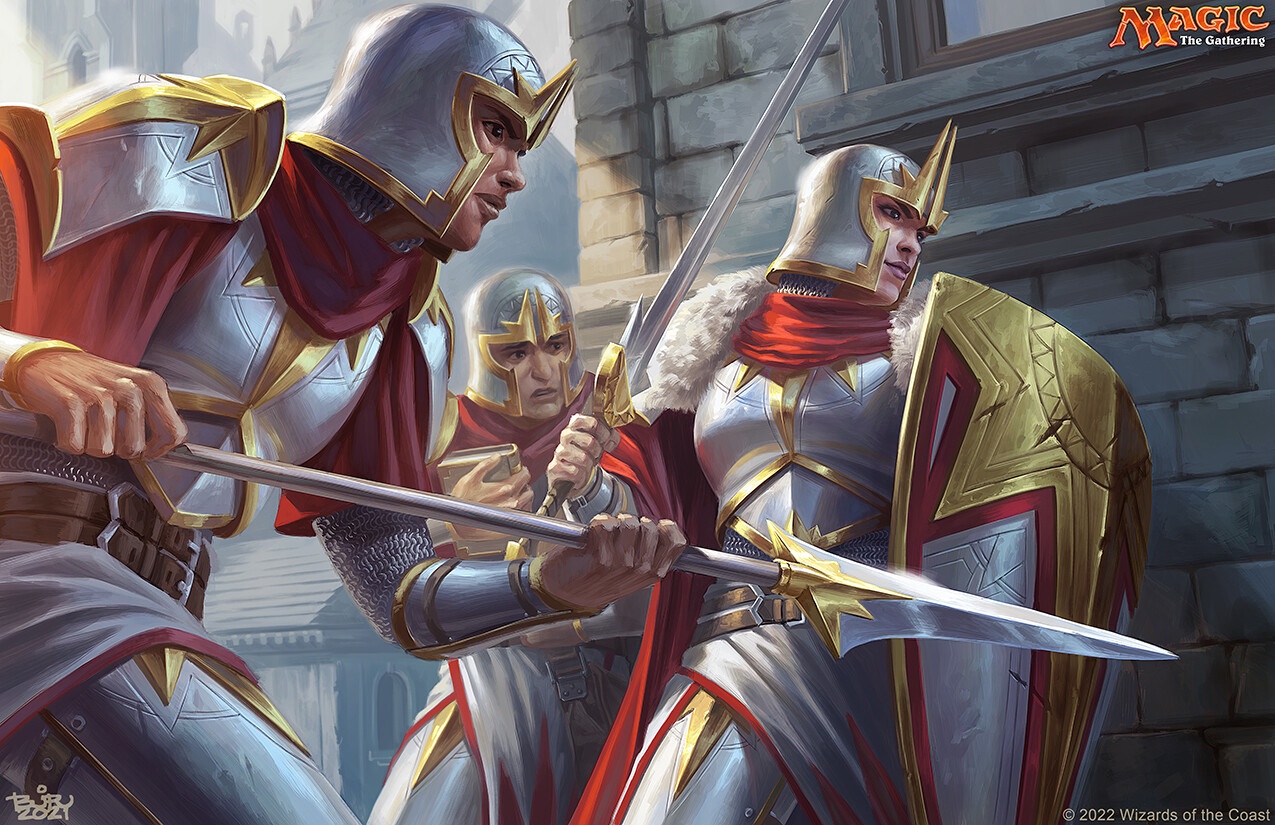
Chapter Two—Spells
Included in this chapter are new spells. Some are found on the spell lists of a few of the Sacred Oaths found in the preceding chapter; others are present as additional content. The spell descriptions following the spell lists are presented in alphabetical order.
Bard
1st Level
- Empathic bond (divination)
- Hypnotic strike (enchantment)
- Lesser wish (conjuration)
2nd Level
- Gabriel’s horn (enchantment)
3rd Level
- Mesmerize (enchantment)
- Phantom parlor (illusion, ritual)
4th Level
- Empathy link (divination)
- Instant amphitheater (conjuration)
- Overwhelm (enchantment)
5th Level
- Beseech muse (divination)
- Marrow of life (necromancy)
Cleric
2nd Level
- Gabriel’s horn (enchantment)
4th Level
- Dusk (evocation)
- Overwhelm (enchantment)
5th Level
- Mass shield of faith (abjuration)
9th Level
- Destroy evil and good (abjuration)
- Dispossess authority (enchantment, ritual)
Druid
2nd Level
- Fair weather (abjuration)
4th Level
- Dusk (evocation)
- Empathy Link (divination)
- Scorching updraft (transmutation)
5th Level
- Marrow of life (necromancy)
Paladin
1st level
- Sunder (transmutation)
- Zealous accusation (enchantment)
2nd Level
- Arresting smite (abjuration)
- Gabriel’s horn (enchantment)
4th Level
- Aura of burning (evocation)
- Overwhelm (enchantment)
5th Level
- Immobilizing smite (evocation)
Ranger
2nd Level
- Fair weather (abjuration)
- Gabriel’s horn (enchantment)
Sorcerer
1st Level
- Atlas’s shrug (enchantment)
- Cause fatigue (enchantment)
- Empathic bond (divination)
- Lesser wish (conjuration)
3rd level
- Mesmerize (enchantment)
4th Level
- Empathy link (divination)
- Overwhelm (enchantment)
- Scorching updraft (transmutation)
Warlock
1st Level
- Cause fatigue (enchantment)
- Lesser wish (conjuration)
Wizard
1st Level
- Atlas’s shrug (enchantment)
- Empathic bond (divination)
- Lesser wish (conjuration)
2nd Level
- Gabriel’s horn (enchantment)
3rd Level
- Mesmerize (enchantment)
- Phantom parlor (illusion, ritual)
4th Level
- Empathy link (divination)
- Instant amphitheater (conjuration)
- Overwhelm (enchantment)
- Personal paradise (conjuration)
5th Level
- Marrow of life (necromancy)
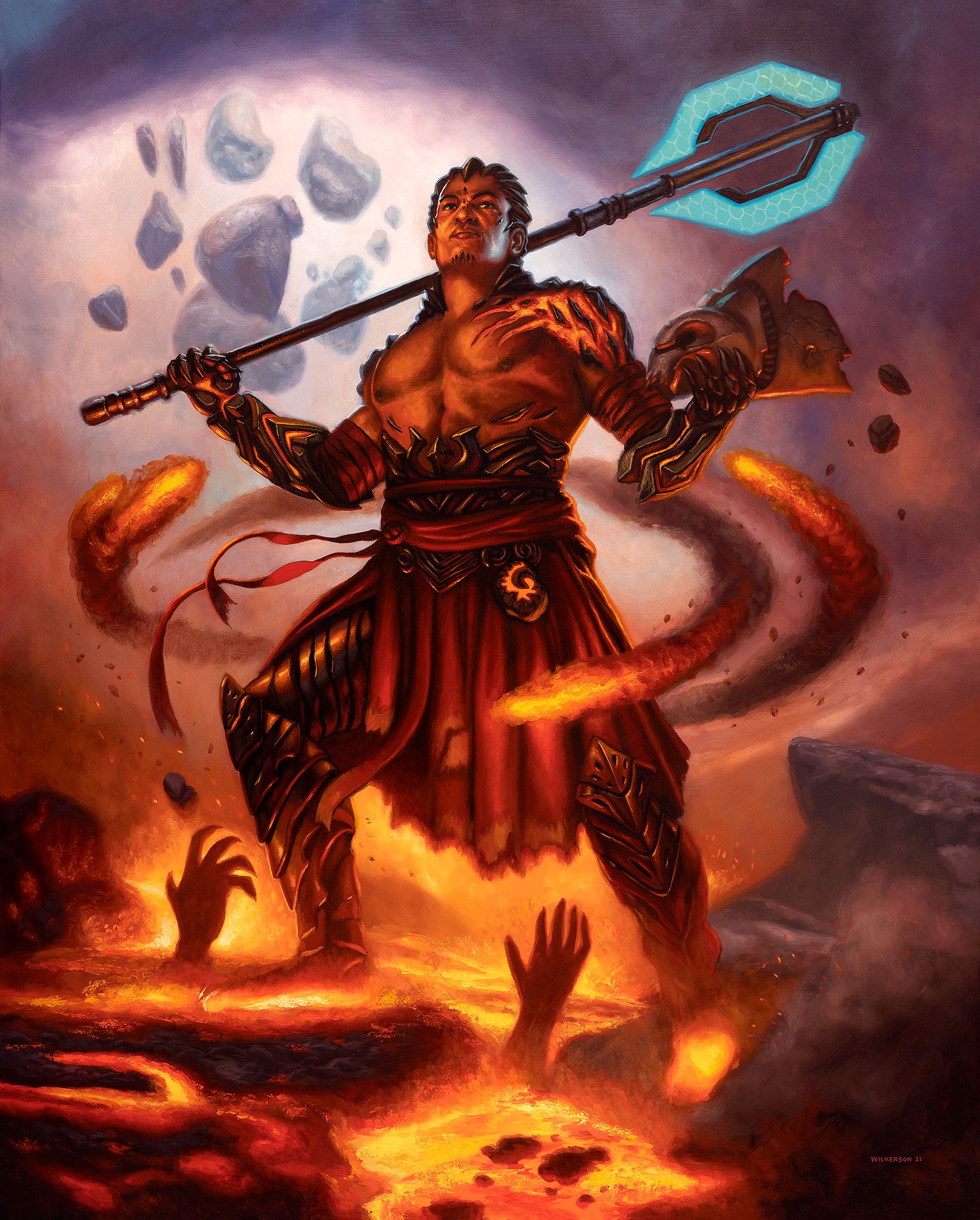
Arresting Smite
2nd-level abjuration
- Casting Time: 1 bonus action
- Range: Self
- Components: V
- Duration: Concentration, up to 1 minute
- Classes: Paladin
The next time you hit a creature with a weapon attack before the spell ends, the attack inflicts an additional 1d6 force damage. If the creature attempts to use its movement, it must make a Charisma saving throw. If it fails, its speed becomes 0 until the end of the turn. If it succeeds, the spell ends. A creature can attempt this saving throw once per turn.
Atlas’s Shrug
1st-level enchantment
- Casting Time: 1 action
- Range: Self (30 ft. radius)
- Components: S
- Duration: Instantaneous
- Classes: Sorcerer, wizard
By bearing the earth upon your shoulders, your shrug can shake another’s world. Each creature within range must make a Charisma saving throw. If it fails, it falls prone.
Aura of Burning
4th-level evocation
- Casting Time: 1 action
- Range: Self (30 feet)
- Components: V
- Duration: Concentration, up to 1 minute
- Classes: Paladin
Ravenous fire emanates from you in a 30-foot radius, delivering judgment upon your enemies. Until the spell ends, the aura moves with you, centered on you. Space within it is hazy and lightly obscured to hostile creatures. Whenever a hostile creature enters the aura for the first time on a turn or starts its turn there, it must make a Dexterity saving throw. A creature takes 3d10 fire damage on a failed save and half as much on a success.
At Higher Levels. When you cast this spell using a spell slot of 5th level or higher, the damage increases by 1d10.
Beseech Muse
5th-level divination
- Casting Time: 10 minutes
- Range: Self
- Components: V, S, M (a personal work of art)
- Duration: 1 hour
- Classes: Bard
You seek after the inspiration of a great figure of art and creation, such as a celestial patron of music or an ancient craftsman of legend. Contacting this being requires all the creative energy you possess and carries the risk of damaging your will. When you cast this spell, make a DC 15 Charisma saving throw. If you fail, you lose the ability to cast spells, and you automatically fail attack rolls, ability checks, and saving throws, and this effect lasts until you finish a long rest. A greater restoration spell also ends this effect.
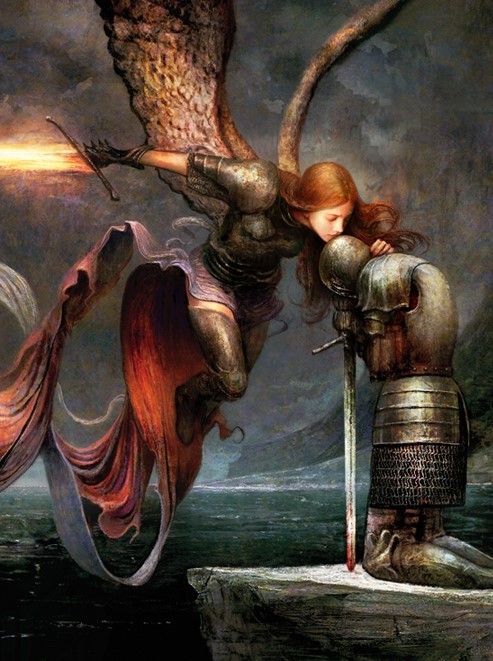
On a successful save, you can ask the being up to five questions. You must ask your questions before the spell ends. The DM answers each question with one word, such as “yes,” “no,” “maybe,” “never,” “unimportant,” or “unknown” (if the entity doesn't know the answer to the question). If a one-word answer would be misleading, the DM might instead offer a short phrase as an answer.
Cause Fatigue
1st-level enchantment
- Casting Time: 1 action
- Range: 60 feet
- Components: V
- Duration: Instantaneous
- Classes: Sorcerer, Warlock
You stoke a sense of weariness in one creature you can see within range. The creature must make a Charisma saving throw. If it fails, its current level of exhaustion becomes 1, unless it was higher.
At Higher Levels. When you cast this spell using a spell slot of 2nd level or higher, you can target one additional creature for every slot level above 1st. The creatures must be within 30 feet of each other when you target them.
Destroy Evil and Good
9th-level abjuration
- Casting Time: 1 action
- Range: Touch
- Components: V, S, M (holy water or powdered silver and iron)
- Duration: Instantaneous
- Classes: Cleric
You wield shimmering energy, the power of which is devastating to fey, undead, and creatures originating from beyond the Material Plane. Make a melee spell spell attack against a celestial, elemental, fey, fiend, or undead you can reach. On a hit, if its Challenge Rating is less than your level, it is instantly destroyed. Creatures destroyed this way can't reform on another plane of existence.
If the target's Challenge Rating isn't less than your level, it takes 12d12 + 40 force damage.
Empathic Bond
1st-level divination
- Casting Time: 1 minute
- Range: Touch
- Components: S
- Duration: 8 hours
- Classes: Bard, sorcerer, wizard
You join your mind with that of a willing creature within range. You are both charmed by each other for the duration. You are aware of each other’s emotional state and if one of you takes any damage, regardless of distance, though you must be on the same plane of existence.
Empathy Link
4th-level divination
- Casting Time: 1 action
- Range: 60 feet
- Components: V, S, M (three crumbs of bread)
- Duration: 10 minutes
- Classes: Bard, druid, sorcerer, wizard
You create an empathic connection between two creatures within range, shifting the pain of one to the experience of the other. When one of the targets takes damage during the duration, you can use your reaction to end the spell and force the other to make an Intelligence saving throw. On a failure, the damage the first creature takes is reduced by up to 20, and the other takes psychic damage equal to the amount of damage that was reduced. On a success, the damage is instead reduced by up to half as much, with the same effect.
At Higher Levels. When you cast this spell using a spell slot of 5th level or higher, the damage reduction increases by 10 for each slot level above 4th.
Fair Weather
2nd-level evocation
- Casting Time: 1 action
- Range: Self (30 feet)
- Components: V
- Duration: Concentration, up to 1 hour
- Classes: Druid, ranger
Fresh winds emanate from you in a 30-foot radius, temporarily dispelling severe weather. Until the spell ends, the effect moves with you, centered on you. Space within it is protected against any extreme weather conditions, such as extreme heat, extreme cold, strong winds, and heavy precipitation, as described in Chapter 5 of the Dungeon Master's Guide.
At Higher Levels. When you cast this spell using a spell slot of 3rd level or higher, the duration increases by 1 hour for each slot level above 2nd.
Gabriel’s Horn
2nd-level enchantment
- Casting Time: 1 minute
- Range: 120 feet
- Duration: 8 hours
- Components: S, M (a horn or bugle worth at least 3 gp)
- Classes: Bard, cleric, paladin, ranger, wizard
As part of casting the spell, you perform a mystical tune on the brass bugle, preparing the minds of creatures that hear it for either labor or leave. The spell has different effects depending on when during the day you cast it:
Reveille: If you cast the spell in the morning, you play an energizing tune, filling creatures with vim and vigor. Creatures within range wake up. For the duration they are immune to effects that would force them to sleep, and they can move through nonmagical difficult terrain without expending any extra movement.
Retreat: If you cast the spell in the evening, you play a solemn melody, relaxing weary hearts that hear it. For the duration, each creature within range can sleep or otherwise rests without nightmares, is immune to the dream spell, and experiences no negative effects from resting while wearing medium or heavy armor.
If you cast the spell at any other time of day, it fails.
Immobilizing Smite
5th-level evocation
- Casting Time: 1 bonus action
- Range: Self
- Components: V
- Duration: Concentration, up to 1 minute
- Classes: Paladin
The next time you hit a creature with a weapon attack before the spell ends, your weapon flashes with a paralytic shock. The attack deals an extra 3d10 lightning damage, and the target must make a Constitution saving throw. If it fails, it it paralyzed until the end of its next turn.
Instant Amphitheater
4th-level conjuration
- Casting Time: 1 hour
- Range: 360 feet
- Components: V, S, M (a conductor’s baton and sawdust)
- Duration: 24 hours
- Classes: Bard, wizard
You manifest a circular amphitheater with a 50-foot radius centered on a point within range. The space it takes up must not have any structures or other buildings in it, and the amphitheater remains until the spell ends.
The amphitheater is built of wood, but you otherwise decide all other aspects of its appearance. The interior is enclosed by walls, a floor, and a roof. One set of double doors allows entry, and there are as many windows as you like. Only you and any other creatures you invite into the amphitheater can open the doors, and nothing can physically pass through the walls.
The interior has seating for up to 80 Medium or smaller creatures in a round, surrounding a three-tiered stage in the center. The atmosphere is clean and comfortably cool. Lanterns hang at regular intervals along the outer wall and from the roof.
You and any creatures of your choice have advantage on Charisma checks made while on the stage, and other creatures have disadvantage on Wisdom (Insight) checks they make while inside the amphitheater.
Casting this spell on the same spot everyday for a year makes this effect permanent.

Lesser Wish
1st-level conjuration
- Casting Time: 1 action
- Range: Self
- Components: V
- Duration: Instantaneous
- Classes: Bard, sorcerer, warlock, wizard
Wish is the mightiest spell a mortal creature can cast. By simply speaking aloud, you can alter the very foundations of reality in accord with your desires.
This is not that spell.
The only use of this spell is to duplicate any cantrip. You don’t need to meet any requirements in that cantrip, including costly components. The cantrip simply takes effect.
Marrow of Life
5th-level necromancy
- Casting Time: 1 action
- Range: 60 feet
- Components: V, S, M (ash from a cremation)
- Duration: 1 minute
- Classes: Bard, druid, wizard
You infuse the bones of the living with the strength of
the dead. One creature of your choice gains 2d8 + your spellcasting ability modifier temporary hit points, and it
gains those temporary hit points again at the start of each
of its turns.
Mass Shield of Faith
5th-level evocation
- Casting Time: 1 bonus action
- Range: 60 feet
- Components: V, S, M (a scroll or book of holy text)
- Duration: Concentration, up to 10 minutes
- Classes: Cleric
A shimmering field appears and surrounds up to five creatures of your choice within range, granting each a +2 bonus to AC for the duration.
Overwhelm
4th-level enchantment
- Casting Time: 1 action
- Range: 60 feet
- Components: V, S, M (an hand crafted from iron)
- Duration: Concentration, up to 1 minute
- Classes: Bard, cleric, paladin, sorcerer, wizard
You make yourself seem mighty and awe-inspiring to certain creatures, filling them with reverential terror. Each creature in a 10-foot cube within range must make a Charisma saving throw. A target automatically succeeds on this saving throw if it can’t see you. On a failed save, a target must kneel, becoming prone, and it can’t stand for the duration. A creature affected by this spell can repeat the saving throw at the end of each of its turns, ending the effect on a success.
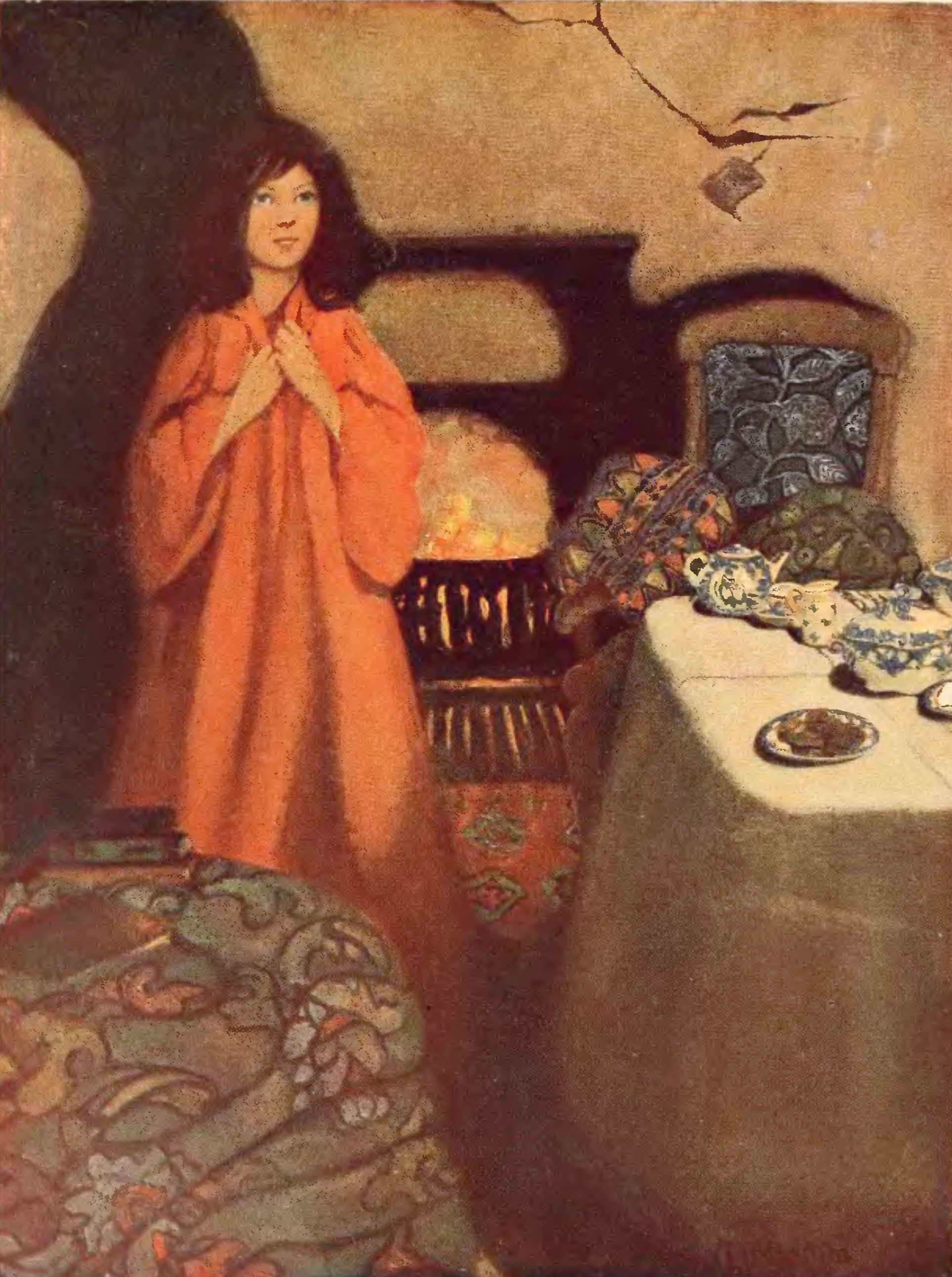

Phantom Parlor
3rd-level illusion (ritual)
- Casting Time: 1 minute
- Range: 5 feet
- Components: V, S, M (a red scarf)
- Duration: 8 hours
- Classes: Bard, wizard
You make actual an imaginary array of splendor, manifesting a quasi-real parlor of your design that fills a cube up to 20-feet wide. The space includes blankets and seating for up to 10 Medium creatures, provided by a combination of sofas, armchairs, lounges, or other furnishings of your choice. A hot fire blazes from a hearth on one side, and the illusory space is comfortably protected against outside weather conditions.
Real food eaten within the space is also affected by the illusion and is made especially rich in flavor. The taste and appearance of the food can change, though that doesn’t alter its nutritional value.
The illusion can only affect and be seen by willing creatures of your choice, though real creatures and objects within it are visible as normal. Any element of the illusion that is removed from the space immediately vanishes.
By taking its long rests in this space, a creature affected by the illusion can gain the benefits of a comfortable lifestyle at the price of a poor lifestyle.
Scorching Updraft
4th-level transmutation
- Casting Time: 1 action
- Range: 120 feet
- Components: V, S
- Duration: Instantaneous
- Classes: Druid, sorcerer
You force an imbalance of heat and cold in the air, generating a searingly hot thermal updraft. Each creature within a 20-foot cube within range must make a Constitution saving throw. A target takes 4d6 fire damage on a failed save and is pushed 20 feet straight upward. On a successful save, it takes half as much damage and experiences no other effect. Any unattended objects within the affected area are also pushed 20 feet straight upward.
Sunder
1st-level transmutation
- Casting Time: 1 action
- Range: 5 feet
- Components: M (a melee weapon worth at least 1 sp)
- Duration: Instantaneous
- Classes: Paladin
Using the weapon, you attack with supernatural strength, disregarding armor and shields. A creature within range of your choice must make a Dexterity saving throw. If it succeeds, it takes damage equal to one roll of the weapon’s damage dice. If it fails, it takes damage equal to the maximum roll of the weapon’s damage dice + your ability modifier for the weapon, and you can affect the target as if you had hit it with a melee weapon attack.
At Higher Levels. When you cast this spell using a spell slot of 2nd level or higher, the damage increases by 1 of the weapon’s damage dice for every slot level above 1st.
Zealous Accusation
1st-level enchantment
- Casting Time: 1 action
- Range: 60 feet
- Components: V, S
- Duration: Concentration, up to 1 minute
- Classes: Paladin
You point at one humanoid within range and condemn its actions, ordering it to yield. It must succeed on a Wisdom saving throw or be forced to stand at attention for the duration. An affected creature’s movement speed becomes 0, and it can’t make weapon attacks for the duration. At the end of each of its turns, the target can make another Wisdom saving throw. On a success, the spell ends on the target.
Play Nothing But Paladins
Compendium made by Bunnygeon Master. See more content at my blog, BunnyBrew.
NotTheSmoooze: “You have an addiction. I love it, but you need help.”
Thanks to /u/AeronDrake for the formatting guide and watercolor stains.
Thanks to members of the Discord of Many Things and the UA subreddit for feedback and design assistance throughout this process.
A special thanks to the inimitable Nimademe for feedback on these Sacred Oaths.
Disclaimer: No bunnies can be held responsible for the consequences of having a crush on the barbarian, turning your pixie, warforged, or elf allies; trying to single-handedly start the industrial revolution, or making oaths that you can’t keep. That last one especially. It’s not the bunny’s fault if your all-paladin party has become an all-oathbreaker one instead.
CREATED USING
Art Credits
Listed in order of appearance.
- Ephemerate by Rovina Cai (© Wizards of
the Coast) - Knight of Grace by Sidharth Chaturvedi
(© Wizards of the Coast) - Art by Ethel Franklin Betts (Public Domain)
- Besotted Knight by Andrea Ugrai (© Wizards of the Coast)
- Knight of Obligation by Ryan Barger
(© Wizards of the Coast) - Jace, the Living Guildpact by Chase Stone
(© Wizards of the Coast) - Intrepid Rabbit by Artur Treffner (© Wizards of the Coast)
- Frontline Medic by Willian Murai (©Wizards of the Coast).
- Sylvia Brightspear by Carmen Sinek
(© Wizards of the Coast) - Ill-Gotten Inheritance by Winona Nelson (©Wizards of the Coast)
- Judith the Scourge Diva by Wesley Burt.(©Wizards of the Coast)
- Plains by Yeong-Hao Han (© Wizards of
the Coast) - Lyan paladin by AlNorton7 (commissioned)
- Bridge-medieval-fantasy-city by David Revoy (CC BY 3.0)
- Solemn Simulacrum by Daarken (© Wizards of the Coast)
- Corrupted Grafstone by Bastien L. Deharme (© Wizards of the Coast)
- Glint-Sleeve Artisan by Ryan Pancoast
(© Wizards of the Coast) - Task Force by Brian Valeza (© Wizards of the Coast)
- Koth, Fire of Resistance by Eric Wilkerson
(© Wizards of the Coast) - Answered Prayers by Seb McKinnon
(© Wizards of the Coast) - Ingenious Prodigy by Brian Valeza (© Wizards of the Coast)
- Art by Ethel Franklin Betts (Public Domain)
- Rabbit by Edward Lear (Public Domain)