Table of Contents
-
Chapter 1: The Major Arcana
- 3Tarot of Many Things description
-
- 400: The Fool
- 501: The Magician
- 502: The High Priestess
- 503: The Empress
- 504: The Emperor
- 505: The Hierophant
- 606: The Lovers
- 607: The Chariot
- 608: Strength
- 609: The Hermit
- 710: The Wheel of Fortune
- 711: Justice
- 712: The Hanged Man
- 813: Death
- 814: Temperance
- 815: The Devil
- 916: The Tower
- 917: The Star
- 1018: The Moon
- 1019: The Sun
- 1020: Judgment
- 1021: The World
-
Chapter 2: The Minor Arcana
-
The Minor Arcana (Continued)
- 19Swords
- 23Pentacles
- 2364: Ace of Pentacles
- 2365: Two of Pentacles
- 2366: Three of Pentacles
- 2367: Four of Pentacles
- 2368: Five of Pentacles
- 2369: Six of Pentacles
- 2470: Seven of Pentacles
- 2471: Eight of Pentacles
- 2472: Nine of Pentacles
- 2473: Ten of Pentacles
- 2474: Page of Pentacles
- 2575: Knight of Pentacles
- 2576: Queen of Pentacles
- 2677: King of Pentacles
-
26Appendix: Credits & Bibliography
Tarot of Many Things Prop
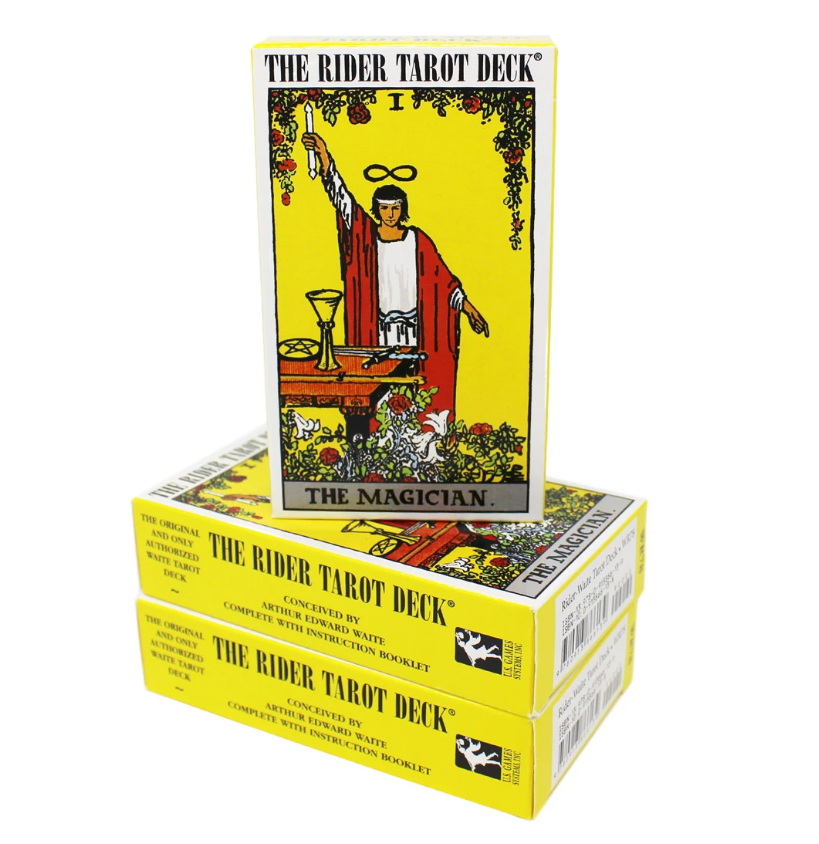
This supplement is based on utilizing The Rider Deck, also known as The Waite Deck (pictured).
PART I
The Major Arcana
Tarot of Many Things
Much like the real-world counterpart, the tarot of many things in Seronia has little hard evidence oconcerning its origins. Scholars cite a poem in Elvish lore that speaks of Tyalphayā, a game played with the soul by an elvish warrior from their destroyed homeland Ilubar, as the first possible reference.
The tarot of many things is one of, if not the most powerful magic item in Seronia. An adventurer that can find the deck and recognizes it could sell it to any kingdom of their choosing for a minimum of a king's ransom (the standard being a chest of gold worth 5,000 gold pieces)- that is, if they can avoid the card's curse and not simply be killed by the kingdom or another seeker of the artifact.
Tarot of Many Things
adventuring gear (artifact)
- Category: Items
- Item Rarity: Legendary; unique
- Aura: all magic (overwhelming)
The tarot of many things is a series of plaques, fashioned of precious and rare substances: ivory, gold, vellum made from dragon skin, carved demonic scales, painted with costly pigments, gilded, or even jeweled. They are wrapped in a silk black as the void, placed within an elaborate box or coffer worth at least 500 gold pieces.
Before you draw a card, you must declare your intention of drawing one, two, three, or four cards then draw them randomly (you can use a Rider Deck or roll a percentile die, using the numbers in the table of Contents as a guide, then rolling the 50% chance for upright or reversed). Any cards drawn in excess of this number have no effect. Otherwise, as soon as you draw a card from the deck, its magic takes effect. You must draw each card no more than 1 hour after the previous draw. If you fail to draw the chosen number, the remaining number of cards fly from the deck on their own and take effect all at once. Additionally, if anyone interacts with a tarot of many things in any fashion more invasive than simply looking upon the backs of the cards, they will be compelled to draw from it (no saving throw except for saints, supernals, and other god-like entities).
Once a card is drawn, it fades from existence. No card can be drawn more than once by the same drawer. If the effects of a card would raise or reduce an attribute score to a level outside racial or class limitations, the change will affect another characteristic if possible within those same limits, in this order: Constitution, Charisma, Wisdom, Dexterity, Intelligence, and Strength.
Clearing The Mindbar
The "Mindbar" is the colloquial name for a standard set by some GMs for players to justify their character's conceivable motivation. Succinctly, it's used to gauge for when a player is approaching an adventure, monster, or item with metagame knowledge.
Whenever a player declares that their character is performing an action whose only possible initial reasoning to the GM is metagame exploitation, you should consider asking for further explanation. If it becomes clear that the player has information which the characters have no way of knowing about, the GM might wish to exercise their right (and duty) to veto character actions based on illicit player knowledge. In the specific case of the tarot of many things, bear in mind that this is an artifact of storied legend, not the tool of a chaotic game for suicidal characters.
As always, tricks, traps, and the countless variations thereof specifically designed to deceive players who remember things there character shouldn't "know" needs tp be a part of every GM's arsenal.

The Major Arcana
The Fool
- Description. The Fool is a quirky and variable character; he may be clad in the fool's cap and motley of a jester (or joker), or in gorgeous, elaborate, and costly (though not cumbersome) vestments. A staff and pouch over his shoulder, a little dog behind him, he strides blithely into the World. The Fool is often seen dancing at the brink of the precipice, for his is the folly (and the wisdom) of childhood, the untrammeled innocence of the babe and the mischief of a child. Upright, Reversed,
- Upright: he signifies unformed potential, the need to make choices and the necessity of making the right choice, the wisdom of fools and follies of the wise. Drawer gains one more draw, but the new draw will not count unless and until the card drawn is one with an effect that is mostly good for the drawer.
- Reversed: he signifies thoughtless action, folly; choices must be made, but may well be faulty. Effect as above, but the subsequent card must be mostly bad in effect.
The Magician
- Description. The Magician stands by or over a table on which are various articles: swords, wands, pentacles, cups, dice, balls, bells, or others. One hand holds a double-ended wand toward the heavens, the other points to the earth; over his head is a lemniscate curve, the symbol of eternity/infinity. The table, which resembles an altar, is surrounded by growing things. Represented here is the rational mind, confident in its power and right to use the forces of the infinite to reshape the world of matter.
- Upright: The Magician signifies will, mastery, the ability to manipulate the universe through rational thought, selfconfidence, ability to manipulate others. Drawer gains 1 point of intelligence, 2 points to their spellcasting attribute if a magic-user.
- Reversed: he signifies ineptitude, failure of will, indecision; abuse of power; disquiet; mental illness. Drawer loses 1 point of intelligence, 2 points from their spellcasting attribute if a magic-user.
The High Priestess
- Description. The High Priestess sits enthroned in her temple, dressed in flowing robes that obscure the scroll or book of secret laws and wisdom she holds securely. She is the mother of wisdom, sometimes identified with Isis or Diana; the queen-protector of hidden knowledge and occult mysteries.
- Upright: she signifies serene knowledge, sagacity, intuition, foresight, inspiration; the power of the inner mind to heal, create, enlighten, and inform. Drawer gains 1 point of wisdom, 2 points if a cantor, physician, or has the Druid feat (Seronia, pg. 123).
- Reversed: she signifies superficiality, conceit, shallowness, a lack of depth, of perception, or of understanding; an acceptance of external and superficial knowledge, of trivialities. Drawer loses 1 point of wisdom, 2 points if a cantor, physician, or has the Druid feat; in the latter case, the drawer will receive proficiency in one gaming set of their choice.
The Empress
- Description. Royal and matronly, the Empress sits enthroned among rich fields, clad in rich garments, and crowned with a starry open crown. Befitting her position, she bears a sceptre, for hers is the realm of universal fecundity and wealth.
- Upright: she signifies material wealth, productivity for farmers and creative workers, profitability for merchants; practical application of knowledge. The next time treasures are divided, the drawer will receive some item which will turn out to be worth an extra 3d6 thousand gold pieces; but even the drawer will not notice until at least three days later.
- Reversed: she signifies poverty, sterility, inability to produce; waste or dissipation or resources. The next time treasures are divided, the drawer will receive an item which will prove to be worthless (a seemingly magical mace which actually has Nystul's magic aura on it, a ruby which is actually cut glass, etc.) as the largest part of his treasure share, but will not notice for at least three days.
The Emperor
- Description. Regal and fatherly, the Emperor sits upon his throne, with open space surrounding him for a domain. He wears kingly robes, and in his hands bears a sceptre and/or orb of rulership. His crown is simple but majestic. He is the active principle, the ruler of the visible, material world through law.
- Upright: he signifies leadership, strength of mind, dominance, law, control of natural drives, stability, power, conviction, protection, and the like. A lawful drawer gains 2 points of charisma; a chaotic drawer must make a successful Wisdom save of 20 or suffer confusion for 2d4 months (as per the spell, but cannot be dispelled or resisted); a neutral drawer is unaffected.
- Reversed: he signifies immaturity, confusion or loss of control, ineffectiveness, lack of self-control, irrationality, attempts to destroy one's authority or rights. Unless the drawer saves vs. death magic at disadvantage for lawful and neutral characters (no penalty for chaotics), over the course of four days he will gradually develop an Indefinite Madness in one of the following ways: manic-depressive, schizoid, dementia praecox, or hebephrenic.
The Hierophant
- Description. Established in state within his temple, the Hierophant is the embodiment of the church in the world, the external pomp and circumstance of organized religion; his elaborate crown, ornate robes, and sceptre of power establish him as a hierarch and potentate. He is the link between deity and worshiper, his is the role of mediator and medium. As the High Priestess is mistress of the hidden mysteries, The Hierophant is the master of external, manifest religion, law, and morality, usually depicted ministering to or being attended by, two lesser clerics, upon whom he bestows a blessing
- Upright: he signifies the outer form of religion; social relations with the world, ritualism; conformity, traditionalism, and orthodoxy; retention of outmoded ideas and attitudes; orderly hierarchies; mercy and forgiveness. Drawer gains 1 point of charisma (2 points if a lawful summist, cantor, or maledictor); Illuminated Mountain maledictors also gain 1 point of intelligence. If drawer belongs to any body of a hierarchical nature, religious or secular, which does not base rank solely on levels of ability, he will be promoted therein soon (5-25 days) after returning from this adventure/expedition. The Hierophant also serves as a remove curse spell for a drawer who is in need of one at a deific caster level.
- Reversed: he signifies overkindness, weakness; unconventionality, openness to novelty, unorthodoxy. Drawer has permanent disadvantage on saving throws against charm, suggestion, psychic and other mental attack forms involving will force; he will also gain proficiency with the Persuasion skill (or Expertise if they are already proficient). If drawer is a member of any hierarchic body (as described above), within 5-25 days of returning from the current adventure he will be demoted for ineffectuality and lack of authority. If drawer is an apostate Cantor, they will gain 1 point of wisdom.
The Lovers
- Description. A winged supernatural being hovers over a man and a woman, behind each of whom flourishes a different tree. The man looks at the woman, but she, though open to him, looks up at the supernatural messenger. The Lovers are emblematic of the necessity for the conscious mind (intelligence) to approach the supernatural and transcendent through the unconscious (wisdom), for a harmonious and loving life depends on the cooperation of both ports of the mind. (Writer's note: In older decks the Lovers are often shown as a young man standing between two women; some different divinatory meanings relate to this older symbolism.)
- Upright: they signify attraction, amativeness, love; difficulties overcome, tests and trials passed. The drawer's charisma increases by 1 point for every 6 points of wisdom or intelligence (whichever is lower), rounding up; in addition, the drawer has advantage on all Charisma (Persuasion) checks toward all persons (now known or encountered later) to whom they might be romantically inclined.
- Reversed: they signify tests failed; fickleness, unreliability, infidelity; a need to stabilize and harmonize the self, the possibility of a wrong choice. The drawer's charisma is reduced by 1 point for every 6 points by which his wisdom or intelligence (whichever is lower) falls short of 18, rounding losses up; in addition, the drawer has disadvantage on all Charisma (Persuasion) checks toward all persons (now known or encountered later) to whom they might be romantically inclined. Additionally, If the drawer already has a loved companion or spouse, their attitude moves to Indifferent.
The Chariot
- Description. A youthful and triumphant figure (a conqueror rather than a hereditary ruler) stands in a chariot, covered over by a starry canopy and drawn by two steeds (horses or sphinxes) of opposing colors and pulling in somewhat opposing directions. The charioteer bears a sceptre of dominion, but no reins; the Chariot must be controlled through dominion of mind. Here is represented the conqueror of the outer world, victorious yet not truly in control of the fullness of reality.
- Upright: it signifies triumph, success, conquest over the physical plane (including illness and one's own weaknesses) by the rational mind, intelligence rather than wisdom; also travel in comfort, state visits. Drawer is cured of all diseases, lycanthropy, deafness, blindness, curses, charms, etc., of which he is a victim, and will have advantage on all saving throws to avoid contracting them hereafter. Also, the drawer can Concentrate to increase their movement speed by 10 feet (as if they were Concentrating on a spell).
- Reversed: it signifies decadence, ill health, restlessness, victory through foul means, disputes, failure. Drawer, over the next seven days, will begin to manifest a severe and chronic disease, which can only be cured by a potion made from the brains of both an Androsphinx and Gynosphinx (MM, pg. 281-282). The disease will prove fatal in d100+40 days.
Strength
- Description. A calm and self-contained, yet clearly quite human, woman controls the jaws of a lion with her bare hands. Strength is both hers and the lion's. They are not struggling, for she has already subdued the beast, and they are now in a harmony of opposites: Hers is the Strength of the mind at one with itself; his is the Strength of passion and the carnal needs, which is unable to withstand a consciousness aware of its link with the infinite, and must submit to its control.
- Upright: the card signifies spiritual power overcoming material power, the fortitude of the self-aware mind; courage and magnanimity; the triumph of love over hate. The drawer gains advantage on saving throws against fear, charm, suggestion, illusion, psychic and other mental attack forms involving will force.
- Reversed: it signifies the dominance of the material and physical, lack of faith and moral force, failure of self-control, giving in to temptation, failure of will. Drawer suffers disadvantage to saving throws against the attack forms listed above.
The Hermit
- Description. A robed figure, the archetypal Old Wise Man, the Hermit stands alone. He leans on a pilgrim's staff and holds up the lantern of wisdom, offering light to those who are humble enough to seek it. He illuminates the path to wisdom for those who want to emerge from darkness
- Upright: he signifies prudent counsel, receiving wisdom or instruction from one more knowledgeable, guidance on the path to one's goal; circumspection and caution; a solitary nature. Within nine days of returning home from this adventure or expedition, drawer will meet a wanderer of his own faith, of a level higher than his own, who will offer instruction to the drawer, for the improvement of the mind, with a warning that the instruction will not be quick. After one month of study (if the drawer accepts the offer; this should be a decision of the player), the drawer will emerge with a 2-point increase in wisdom, but a 1-point loss in charisma. The wanderer will then give the drawer a hint to the location of a magic item, and depart for places unknown.
- Reversed: he signifies immaturity, folly, refusal to accept aging and growth. Drawer loses one third of his accumulated age, gains 1 point of charisma and loses 2 points of wisdom. When the drawer next seeks to gain a level in their current class, the process will require three times as much experience.
The Wheel of Fortune
- Description. The Wheel of Fortune rotates eternally, bringing the great to naught and the humble to power, for a time. Descending (on the left) is an evil creature (often identified with Typhon or Set); ascending is a canine-headed being (often identified with Anubis, or Hermes Trismegistus); yet with another turn of the Wheel, the ascendant will descend and the descendant will ascend. Resting atop the Wheel (yet undisturbed by its rotations) is a sphinx casually holding a weapon, emblematic of the equilibrium which the enlightened mind manifests even in the midst of fortune's everchanging rounds. The sphinx, like the four winged beings of the apocalypse which occupy the corners of the field, is also a denial of the apparent randomness of the universe, and of the fatalism such false beliefs induce.
- Upright: it signifies success, fortune, felicity, an unexpected bit of luck, a change for the better. Drawer suffers disadvantage on all saving throws; in addition, one magic item Drawer possess becomes an Evolving Magic Item, gaining an immediate Very Rare property (CAO, pg. 79) ; finally, the next treasure discovered by the party will include a magic item of not less than 800 gold pieces nor more than 8,000 gold pieces in value, on which the arms, image, and/or name of the drawer are ineradicably engraved or otherwise incorporated in such a way as to mark it as predestined only for that person. If the drawer sells the item, both the card and the materials used to purchase it will disintegrate, and the drawer's disadvantage to saving throws will be negated.
- Reversed: it signifies unexpected bad fate, ill luck, setbacks or interruptions in plans, unwanted change. Drawer suffers disadvantage on all saving throws; in addition, one magic item (at random) belonging to the drawer will disintegrate (if he owns no magic, this will not apply).
Justice
- Description. Like the High Priestess and the Hierophant, Justice sits crowned and enthroned between pillars. In their right hand they bear a two-edged sword, its point toward the heavens; in their left hangs a set of balances. Firm and resolute, theirs is the power of moral strength and integrity, of righteousness (good) rather than rectitude (law).
- Upright: they signify justice, virtue, right judgments, the triumph of the good, just rewards, purity. Drawer of good alignment gain 8,000 experience points; drawer of evil alignment loses 8,000 experience points or three fourths of all experience points, whichever is greater; neutral drawer will be unaffected. The DM may reduce these gains or losses by up to 50% if the drawer has not been entirely consistent in following his alignment.
- Reversed: they signify bias, injustice, excessive severity; legal complications. Unless drawer has been acting in very strict conformance with their alignment (the DM should be very rigid in this evaluation), they are stripped of all property, effects, wealth, allegiance or loyalties of hirelings and trained animals, except for non-magical clothing being worn; and all but one eighth of their experience points. Drawer will also forget all spells received or memorized.
The Hanged Man
- Description. From a gibbet or tau-cross of living wood a youth is suspended by one leg; his arms form a triangle behind his back, and his free leg is placed behind his first one to form a cross (if viewed upside down, he seems to be dancing a jig). He represents Everyman, suspended by his own consent as a pause and decision point in the creation of an enlightened self. He is clearly in a contemplative state, not one of suffering, suspended between the old life and the new; he must create his new self knowingly and willingly.
- Upright: he signifies a pause, or suspension of ordinary activities; transcendence of material temptation; surrender to the purification of the self; spiritual wisdom, prophetic power; regeneration. Drawer goes into a contemplative state for 24 days, in which they are open-eyed, can walk at a Slowed pace, sustain themselves on an amount of food for a Tiny creature, but will not fight or otherwise interact with the mundane world; during this period he will also regenerate as if wearing a ring of regeneration. At the end of this period, the drawer will lose 1 point of strength, but will gain 2 points of wisdom. For a year and a day thereafter, they will refuse all wealth, whether earned or offered, except that necessary for their modest needs and those of their adventuring party, hirelings and trained animals.
- Reversed: he signifies absorption in the ego and material matters, unwillingness to sacrifice; false prophecies. Drawer goes into a trance as described above, but will snap out of it after 5d5 rounds, having lost 2 points of wisdom, but gained 1 point of charisma. He will seem to show a new ability to prophesy the contents of rooms, intentions of strangers, etc., but after five such detailed, correct visions, the supposed new ability will go horrifically and tragically awry (and will completely vanish after being discredited).

Death
- Description. Death, represented as a skeleton, regards a desolate plain strewn with his victims, who are of all ages and conditions, for Death has no favorites. He is sometimes shown wielding a scythe, sometimes terrible with banners.
- Upright: he symbolizes transit to the next stage of being, transformation; abrupt and unexpected change of the old self (not usually physical death), the end of security and old situations and the beginning of a new kind of life. Drawer dies. Body and effects burst into flame (which will do l0dl0 irreducible points of damage if a character is foolish enough to go into it); after 1d8 rounds the flames will die down and from the ashes the Drawer will step, reborn according to the Death Reincarnation table below (roll d100).
- Reversed: he signifies stagnation, mere existence, inertia or immobility, lethargy, sleep, petrification. Drawer falls under a permanent slow spell and will receive no experience points for this adventure. While slowed, drawer will age at half the normal rate.
Death Reincarnation
| d100 | New Race |
|---|---|
| 1-2 | changeling |
| 3-8 | dwarf |
| 9-14 | elf |
| 15-16 | gnoll |
| 17-22 | gnome |
| 23-24 | troglodyte |
| 25-30 | gobling |
| d100 | New Race |
|---|---|
| 31-36 | half-race✴ |
| 37-42 | orc |
| 43-44 | ungrwa |
| 45-94 | non-biracial human |
| 95-96 | cambion |
| 97-98 | dhampir |
| 99-00 | same w/ new gender |
✴ half-elf, half-orc, and half-gobling only
Reincarnation Clarification
How do I determine which of the variants I become when I am reincarnated?
If possible, use a die that matches the amount of available variants, or otherwise use a random number generator online.
What if I reincarnate into a race whose stats cause me to not qualify for my class anymore?
If the new player-character race no longer qualifies for their class, the character must be generated as a new character; the new form may be a member of any class for which they are eligible, except the old character's former class (unless that is the only possible choice). The character will be the same level, with the minimum experience points possible for that level.
Do I retain my memories and personality when reincarnated? Alignment?
Not exactly. Reincarnation is not a chrysalis- it is an entirely new creature that feels the pangs of a life past in dreams and deja vu, but might have an unknown drive pushing them towards the philosophical alignment of their former self.
Temperance
- Description. A solemn angelic figure, a flower or sun emblem on its forehead, pours a fluid from one of a pair of different-colored chalices to the other; behind the figure are growing plants, and distant hills. The card represents the inner self, enabling one to balance the forces of the mind, to illuminate intelligence by wisdom and to clarify wisdom with intelligence.
- Upright: it signifies control of self, adaptation, tempering of extremes; harmonious and fruitful combinations, wise management of resources; cooperation. Drawer will gain 2 points of intelligence or wisdom (whichever of the two is presently the lowest) but will lose 1 point in whichever of the two is higher. If the two scores are equal, he will gain 1 point in whichever of his other characteristics is the lowest, with ties settled by player preference. Finally, the drawer becomes immune to effects that would cause them to attack or injure an ally such as crown of madness, dominate person, confusion, as well as features that cause redirection of attacks.
- Reversed: it signifies discord, hostility, failure to communicate, conflicts of interests, unfortunate combinations. Drawer gains 1 point in whatever characteristic is most useful for his class; but loses 2 points from whichever of his characteristics is the lowest. If there is a tie for lowest, the loss will be from the one of the lowest characteristics which the DM judges to be most generally useful for the drawer's class. In addition, the drawer has disadvantage on all Charisma (Persuasion) checks.
The Devil
- Description. Bat-winged, horned, donkey-eared, with hairy legs and eagle's feet, the Devil stands or squats upon a blocky pedestal (which sometimes resembles an altar, sometimes an anvil). Their right hand gives a cryptic salute; in his left is a weapon held in a bizarrely useless manner (a sword held by the blade, a torch which is upside down or burnt out). Connected by ropes to the altar are two figures (usually a cambion man and a woman); they are much smaller than the Devil, and appear strangely serene about their bondage.
- Upright: the card signifies the bondage of human nature to its own lowest needs and impulses, desires of greed and domination, sensation without understanding; fatality, disaster, violence; weird and destructive experiences; evil influences. Drawer is attacked by the Devil of the Tarot (see pg. 9). When either the drawer or the devil is slain, the devil will disappear with all of its effects, but the drawer will receive 18,000 experience points. If the drawer is killed in this combat, the experience-point gain is applied to the character's total if he is raised from the dead.
- Reversed: it signifies release from bondage to the material; conquest of pride and greed; the first steps toward spiritual enlightenment; freedom. Drawer gains 1 point of wisdom and is freed of all charms, suggestions, possessions, and other spells subjecting him to the will of another; he will give away all nonessential possessions at the end of this expedition (clothing and jewelry items of less than 500 bp value may be given to player characters or NPCs; all else will go to religion and charity).
Devil of the Tarot
Huge fiend (devil), lawful evil
The Tarot Devil appears as shown on the deck being used except that it has the face and gender of the drawer.
- Armor Class 19 (natural armor)
- Hit Points 310 (23d12+161)
- Speed 40 ft., fly 80 ft.
STR DEX CON INT WIS CHA 25 (+7) 11 (0) 15 (+2) 6 (-2) 13 (+1) 14 (+2)
- Saving Throws Str +13, Dex +6, Con +13, Wis +7
- Skills Perception +7
- Damage Resistances cold, fire, lightning, bludgeoning, piercing, and slashing from nonmagical weapons
- Damage Immunities poison
- Condition Immunities poisoned
- Senses Darkvision 120 ft., passive Perception 13
- Languages Infernal
- Challenge 17 (18,000 XP)
Charge. If the devil of the Tarot moves at least 15 feet straight toward a target and then hits it with a gore attack on the same turn, the target takes an extra 38 (7d10) piercing damage. If the target is a creature, it must succeed on a DC 21 Strength saving throw or be pushed up to 20 feet away and knocked prone.
Magic Resistance. The devil of the Tarot has advantage on saving throws against spells and other magical effects.
Shocking Appearance. When the devil of the Tarot appears, the drawer and each creature that can see it must make a DC 18 Wisdom saving throw, being treated as Surprised on a failed save.
Actions
Multiattack. The devil of the Tarot makes three attacks: two with its fists and one with its talons.
Fist. Melee Weapon Attack: +13 to hit, reach 10 ft., one target. Hit: 20 (3d8 + 7) bludgeoning damage.
Talons. Melee Weapon Attack: +13 to hit, reach 10 ft., one target. Hit: 20 (3d8 + 7) slashing damage.
Gore. Melee Weapon Attack: +13 to hit, reach 10 ft., one target. Hit: 45 (7d10 + 7) piercing damage.
The Tower
- Description. A tall square Tower topped with a crown is being struck by lightning, which topples the crown but leaves the tower standing. Hurtling (from its windows; it has no doors) earthward are two persons (presumably a man and a woman) in rich garments, along with showers of sparks and debris; they are stunned to see their Tower of isolation and pride broken open by a stroke of fire from the heavens.
- Upright: it signifies the overthrow of existing notions, the fall of pride; sudden and unlooked-for change; a perceived catastrophe which may bring enlightenment in its wake; the destruction of false concepts and ideas. Drawer loses one level (from the most advanced if a multi-classed character of uneven levels, choose randomly if equal; first-level drawers have experience points reduced to zero), all magic items, and all wealth, but drawer gains proficiency to one saving throw of their choice.
- Reversed: it signifies the same to a lesser degree; but also oppression, false imprisonment or accusations; living in a rut, inability to effect worthwhile change, being stuck in an unhappy situation. Drawer loses one level (as above); also, for a year and a day he will not be able to gain a new level in that class, regardless of experience points accumulated.
The Star
- Description. A vast, flamboyant Star of eight points is surrounded by seven similar stars. In the foreground, a young woman rests one foot on land and one upon the waters, as from two identical jugs she pours the Water of Life both upon the land and into the larger body of water. Behind her is rising ground and a tree with a bird in it; in the distance are mountains.
- Upright: it represents inspiration freely flowing, the gifts of the spirit, the fruits of meditation, understanding, hope; good health and pleasure; granting of wishes. The next time the drawer, after having earned enough experience points to advance to the next level, spends an hour or more under a clear and starlit sky, he will feel inspiration pour down upon himself from the very stars, gaining a Feat of their choice that they currently qualify for. Drawer also has advantage on saving throws vs. madness.
- Reversed: it signifies pessimism, doubt; chance of illness; arrogance, haughtiness, stubbornness; lack of perception. Drawer becomes so smug, arrogant, and skeptical a pupil, he will require twice the usual amount of Downtime Training before acquiring a language, skill, or feat as part of a reward (PHB, pg. 187 and DMG, pg. 237). This change is permanent.
The Moon
- Description. The crescent Moon radiates its deceptive brightness upon a dim and foreboding landscape. In the pool which fills the foreground lurks a crayfish (or other creature from the abyss); beyond this two dogs (or a dog and a wolf) bark and howl at the Moon, which sheds a cryptic dew upon them. In the background are two towers, and a path leads from the pool to the goal beyond these towers.
- Upright: it signifies the dark night of the soul: trickery, deception, secret foes; unforeseen perils; bad luck for a loved one; danger, darkness, terror, occult forces; danger of falling into a trap or being misled, great danger of making an error. Drawer must make a DC 20 Wisdom saving throw or gain an appropriate incurable Indefinite Madness that manifests during every full moon. If the save is made, drawer must then make a DC 20 Constitution saving throw or succumb to lycanthropy (as a werewolf) during every full moon. If both saves are made, a hireling or appropriate NPC (at random) will become disloyal within the next hour, treating them as Hostile.
- Reversed: it signifies peace gained at a cost; instability; lesser degrees of deception or betrayal, trifling errors. The best magic item in the possession of the drawer is permanently drained of all magical properties; if drawer has no magic items, they will lose one level of their most recent class instead.
The Sun
- Description. The Sun in its splendor shines benevolently down, either upon a pair of children playing blithely and simply together, or upon a single child riding a white horse and waving a scarlet banner. The innocent children (pair or single) are playing in front of a walled-in garden which they have left behind.
- Upright: it signifies happiness, success, contentment (particularly in marriage); achievements and studies completed, liberation to enjoy the simple pleasures; devotion, friendship. Drawer immediately gains 10,000 XP and gains proficiency in Charisma (Persuasion) checks. If they are already proficient, they gain Expertise instead.
- Reversed: it signifies unhappiness, loneliness; plans and triumphs delayed; broken friendships or engagements; possible loss of a job or home. Drawer will lose all hirelings and spouses after returning from this expedition (they will leave town, take another leader, or otherwise leave for personal reasons; they will not become hostile). If drawer is a henchman or vassal of another, they will be dismissed, or stripped of their offices unless they make a DC 20 Charisma saving throw. Also, drawer is stripped of enough experience points to reduce him to the bottom of present level, but not more than 10,000 XP in any case.
Judgment
- Description. An angel sounds forth the call to Judgment from a trumpet to which is attached a banner bearing a cross; the clouds from which it emerges radiate power. Below, a figure rises from a tomb while on each side a man and woman also rise; all these figures are as one in the wonder, adoration, and ecstatic awe which their whole bodies express as they answer the summons.
- Upright: it signifies rebirth, renewal, awakening; rejuvenation, change of personal consciousness; a life well lived and a work well done; atonement, judgment, the need to forgive and to seek forgiveness, sincere self-appraisal. Drawer becomes a young adult over the course of the next hour (if not one already) but without any changes in characteristics. To determine exact age, select a young-adult age randomly, then add half the difference between that age and maximum young-adult age, rounding down. If drawer is already a young adult, he will become 90% of the minimum young-adult age. If the drawer's behavior is judged by the DM to have been strictly consistent with his alignment and religion (observance of taboos, sacrifices, donations, etc.) he will also have their hit points raised up to the maximum possible number for that character.
- Reversed: it signifies weakness; stupidity; a sentencing; disillusionment, disappointment; indecision leading to procrastination and delay. Drawer permanently deals only half damage with weapon attacks that use Strength; the drawer is also henceforth subject to disadvantage on initiative rolls due to his inability to choose between alternatives.
The World
- Description. Surrounding by an elliptical wreath of living foliage is a female figure dancing joyously, a short wand in each hand. In the four corners of the card are the heads of the four beings of apocalypse, hovering protectively outside the wreath. Her legs form a cross, as do those of the Hanged Man, but she stands upright, supported by the ether, the very fabric of the World; her dance is of the sensitive life, of joy attained in the body, of the soul's intoxication in the World- turned-paradise.
- Upright: it signifies completion, success, triumph in all things, perfection, fulfillment; the path of liberation and enlightenment; the admiration of others. Drawer gains 1 point to each of his ability scores which is naturally 16 or lower.
- Reversed: it signifies imperfection, failure, lack of vision, failure to complete task; fear of change or travel, fixity, permanence, stagnation. After 1-4 days, drawer will begin to develop an increasing distrust of strange places (treat as Indefinite Madness): other cities or countries, dungeons, wildernesses, new taverns, etc. Within an additional 2d4 days this will become full-blown paranoia, with drawer believing that everyone and everything outside his home (eventually, his chambers) is out to get him, and that any so-called friend, or loved one, who tries to get the drawer to come out into the world is clearly part of the conspiracy. The character is permanently imprisoned by their own incurable madness in their chambers.
PART II
The Minor Arcana
Wands
Wands generally represent enterprise and growth, progress, advancement, animation, inventiveness, intelligence, and energy. This is the suit of the magic-user, and of the laborer.
Ace of Wands
- Description. A hand issuing from clouds grasps a still-verdant branch in the shape of a wand. In the background may be a city or castle on a hill.
- Upright: it signifies creation, beginning (of an adventure, a journey, or an endeavor), invention, enterprise. Drawer and party members must make a DC 20 Intelligence saving throw at disadvantage or are freed from all existing geas spells and charms, and will be placed under a compulsion (equivalent to a geas with no saving throw and cannot be dispelled except by a godlike creature ) to kill a single monster of CR 13 (or a group of monsters of 30,000 xp value) or more. Fulfillment of the task will gain each participant double the normal amount of treasure typical for the monster(s).
- Reversed: it signifies false starts, clouded joy, ruin, decadence, cancellation of projects, failure, retreat. Effects as above, but the compulsion will be to cancel the expedition and return to base as quickly as practical. While returning to home or headquarters, the party will have a +2 to armor class and +2 to saving throws, but will receive no experience points for actions performed during this retreat.
Two of Wands
- Description. A majestic figure wearing crown-like headgear regards the broad world from a height. He holds one wand, and regards a globe; another wand is nearby.
- Upright: it signifies boldness, courage, rule over others; and also the anguish and sorrow that may accompany power. Drawer gains 1 point of charisma; drawer also has a 50% chance to be afflicted by Indefinite Insanity in the form of melancholia.
- Reversed: Reversed, it signifies trouble, fear, sadness, surprise. Drawer's saving throws against fear and hopelessness are at disadvantage.
Three of Wands
- Description. A calm personage, his back turned, leans lightly upon one of three wands planted in the ground, and looks out upon a sea, beyond which are mountains.
- Upright: it signifies established strength, wealth, enterprise, discovery, partnership in undertakings. When the drawer next seeks to go on an expedition or adventure, an NPC Merchant 1-3 levels higher will offer to come along to loan equipment and supplies. This should be an established NPC already friendly to the drawer. If the drawer is a Merchant, they instead increase their Charisma by 1.
- Reversed: it signifies cessation of adversity, an end to or suspension of difficulties; assistance with an ulterior motive. Effects as above, but the NPC will be planning to trick or betray the drawer. This could be by stealing a magic item from him, robbing him and stranding him on an island, or whatever; generally (80%), the betrayal is not meant to be fatal to the drawer. If the drawer is a Merchant, they instead decrease their Charisma by 1.
Four of Wands
- Description. Four great wands are garlanded with chains of flowers, two women bear flowers, and behind them is a bridge over a moat, leading to a castle or manor.
- Upright: it signifies repose, peace, rural refuge, country domesticity and felicity. When drawer begins Downtime Activities, they will feel a strong desire to take the Relaxation option; for every four weeks of Relaxation thereafter up to sixteen weeks, the drawer will (unknowingly) receive 1,250 xp. The desire may be resisted (DC 20 Wisdom saving throw at disadvantage, not more than once a week), but can continue beyond the four-month period until the 16 weeks are fulfilled.
- Reversed: the meaning is the same but less intense. Effects as above, but only 625 xp is given per four weeks, and saving throws to resist the desire are not at disadvantage.
Five of Wands
- Description. Five youths are apparently battling with huge wands, yet there is no sign of actual bodily injury.
- Upright: it signifies competition, strife, differences of opinion, non-fatal struggle. The effects of Discord (as per the symbol spell) will befall the drawer's party the next time they enter combat after 4d2 turns. This repeats itself every combat unless at least one party member makes a DC 20 Wisdom save at the end of a successful combat when Discord was active form this effect.
- Reversed: it signifies victory after surmounting obstacles, contradiction or trickery. All characters involved in the party's next victorious combat will receive double experience points for the action; rogues in the party will have advantage on Dexterity (Sleight of Hand) checks until the end of this expedition or adventure.
Six of Wands
- Description. A laurel-crowned rider bears a wand adorned with a laurel wreath, and is accompanied by five staff-bearing figures on foot.
- Upright: it signifies victory, triumph, good tidings, the successful completion of a struggle. Drawer deals critical damage with all successful attacks against his next foe; magic-users spells will be of three times normal duration, and saving throws against such spells will be at disadvantage.
- Reversed: it signifies indefinite delay, disloyalty, the success of an enemy, fear. Drawer will learn upon returning from this adventure/expedition that his most hated and feared opponent(s) have had a great success and are said to be intent upon attacking the drawer soon. (The opponent(s) can be anyone from a professional rival to an entire tribe of orcs, anyone the drawer has defeated, attacked, injured, or merely outshone. Even a first-level character will have had a rival fellow apprentice, a traditional family or clan enemy, or something of the sort.)
Seven of Wands
- Description. A youth brandishes a staff from the top of a hill, and is confronted by six more wands in opposition from below.
- Upright: it symbolizes a stand against unfavorable odds from an advantageous or superior position, the need to hold an unpopular stand or defy seemingly unbeatable opposition. In the next combat where drawer and party are outnumbered 2:1 or worse, the drawer's party will treat their initiative as 5 higher; they will also have a bonus of +1 on saving throws and AC.
- Reversed: it signifies indecision, ignorance, perplexity, anxiety, embarrassment, doubt, hesitancy. Drawer becomes indecisive; treat all initiative rolls for drawer and their adventuring party as 2 lower.
Eight of Wands
- Description. Eight wands fly through open space, but near the end of their flight; they will clearly fall to ground soon.
- Upright: Upright, it signifies swiftness, haste; that which is moving; approach to goals; travel by air; too-rapid advancement. When next attacked, drawer will be hasted for 2d4 turns, rest of party for 8 rounds; at the end of combat, the party must make a DC 20 Constitution saving throw or be aged five years (the drawer's throw will be at disadvantage).
- Reversed: it signifies delay, stagnation; quarrels and disputes. When next attacked, the entire party will be slowed for 8+1d8 rounds; afterward, those who do not make a DC 20 Wisdom saving throw will suffer discord (as per symbol), but they will not attack with lethal weapons.
Nine of Wands
- Description. A sturdy muscular figure, with a minor wound (already bandaged) grasps or leans on one staff and expectantly regards the surroundings. Behind are eight other wands, arranged as for a palisade or other sturdy boundary.
- Upright: it signifies a pause in struggle, strength to meet opposition, power in reserve, discipline, preparation for an encounter, delay or suspension. One time before the end of this adventure/expedition, drawer and party will be able to return to a designated sanctuary, stronghold, or guildhall (see CAO), as per the spell word of recall for a short rest. They may not pick up or drop anything, or communicate with anyone; at the end of the duration, they will reappear at the time and place they left from, in the same positions and carrying the same equipment.
- Reversed: it signifies obstacles, adversity, opposition, weakness, ill health, even calamity. Drawer's Strength and Constitution will be reduced to 8 during their next combat of Hard difficulty or higher, and will remain reduced for 8 turns.
Ten of Wands
- Description. A weary figure stumbles toward a city or castle, oppressed by the weight of ten wands he is trying to carry.
- Upright: it signifies oppression, testing by work and pain; also force, energy, or power misused and applied to selfish ends, the burden of ill-controlled power. An employer, liege, ruler, supervisor, or other person with power over the drawer, will soon (2d10 days) begin to overwork and overburden the drawer. If the drawer bears up under the oppression (which will not be unendurable, merely irksome in the extreme) for 1d10 weeks, he will be relieved of the oppression, and will receive a reward of 1,000 xp per week of suffering.
- Reversed: it signifies loss, separation, immigration; intrigue. Drawer is teleported a distance of 1d4 levels in a dungeon-type setting, or 2d10 miles in a city or wilderness setting, to a place he is not familiar with at all. At least one party member must urge that the rest of the party consider the drawer deceased, and that his possessions (if any) being carried by party members be considered extra treasure for the survivors.
The Court Cards
The Court Cards of each suit (King, Queen, Knight, and Page) signify a being who will aid or attack the drawer, depending on whether the card is drawn upright or reversed. Each of these beings is a material form of that which is symbolized by the card (their appearance will be exactly that of the person depicted on the card) rather than a natural being (human or otherwise); thus, they may possess combinations of classes or other attributes which might be forbidden to player characters or NPCs. They will materialize the next time the drawer is attacked by another creature or character, and will engage in combat until the combat is resolved by the defeat of one side or the other, or by the successful evasion of one party by the other, or until the cardbeing is slain. Upon this resolution or slaying, the being will dematerialize along with all its effects. Stated armor classes, damage figures, and the like, take account of the magics with which these beings are equipped, including magic items. Feel free to describe their various creature effects as any combination of innate and itemized power.
Page of Wands
- Description. The Page is a fair youth with blond hair and light eyes, who stands boldly upholding a wand as if ready to deliver a message or proclamation (the Page is often a bearer of tidings, good or ill).
Page of Wands
Medium construct (unique), neutral
- Armor Class 13 (chain shirt)
- Hit Points 82 (15d8 + 15)
- Speed 30 ft.
STR DEX CON INT WIS CHA 10 (+0) 10 (+0) 12 (+1) 13 (+1) 16 (+3) 15 (+2)
- Skills Medicine +7, Persuasion +4, Religion +3
- Senses passive Perception 13
- Languages any two languages
- Challenge 4 (1,100 XP)
Divine Eminence. As a bonus action, the page can expend a spell slot to cause its melee weapon attacks to magically deal an extra 10 (3d6) radiant damage to a target on a hit. This benefit lasts until the end of the turn. If the page expends a spell slot of 2nd or higher, the extra damage increases by 1d6 for each level above 1st.
Spellcasting. The page is a 5th-level spellcaster. Its spellcasting ability is Wisdom (spell save DC 13, +5 to hit with spell attacks). The page has the following cleric spells prepared:
Cantrips (at will): light, sacred flame, thaumaturgy
1st level (4 slots): burning hands, cure wounds, faerie fire
2nd level (3 slots): flaming sphere, scorching ray
3rd level (2 slots): daylight, fireballActions
Mace. Melee Weapon Attack: +2 to hit, reach 5 ft., one target. Hit: 3 (1d6) bludgeoning damage.
Radiance of the Dawn (Recharge 5-6). Each creature within 30 feet of the page that can see it must make a DC 13 Constitution saving throw, taking 14 (2d10 + 3) radiant damage on a failed save, or half as much damage on a successful one.
Knight of Wands
- Description. A handsome young man in plate armor, the Knight, wand in hand, rides across the plains in haste. His hair is blond, his eyes pale, and he is fair of complexion.
-
Knight of Wands
Medium construct (unique), neutral
- Armor Class 18 (plate)
- Hit Points 135 (18d8 + 54)
- Speed 30 ft.
STR DEX CON INT WIS CHA 22 (+6) 10 (+0) 16 (+3) 12 (+1) 10 (+0) 10 (+0)
- Skills Athletics +9, History +4, Painter's Tools +4
- Senses passive Perception 10
- Languages any three languages
- Challenge 8 (3,900 XP)
Action Surge (Recharges After a Short or Long Rest). After taking an action on its turn, the knight can take one additional action.
Maneuvers (1/Turn). When the knight hits with a melee weapon attack, it can choose to apply a maneuver to that attack. The attack deals an additional 5 (1d10) damage, and the knight chooses one of the following effects.
- Disarming Attack. The target must succeed on a DC 15 Strength saving throw or drop an object it is holding of the knight's choice. The object lands at its feet.
- Distracting Strike. The next attack roll against the target by an attacker other than the knight has advantage if that attack is made before the start of the knkight's next turn.
- Trip Attack. If the target is Large or smaller, it must succeed on a DC 15 Strength saving throw or fall prone.
Actions
Multiattack. The knight makes three melee weapon attacks.
Longsword of Unnatural Strength. Melee Weapon Attack: +9 to hit, reach 5 ft., one target. Hit: 10 (1d8 + 6) slashing damage, or 11 (1d10 + 6) slashing damage if used with two hands to make a melee attack.
Queen of Wands
- Description. The crowned Queen sits on her throne, a wand in her hand, a black cat (her
familiar) at her feet. She is a fair blonde with pale eyes.
Queen of Wands
Medium construct (unique), neutral
- Armor Class 17 (natural armor)
- Hit Points 105 (14d8 + 45)
- Speed 30 ft.
STR DEX CON INT WIS CHA 15 (+2) 17 (+3) 16 (+3) 13 (+1) 15 (+2) 18 (+4)
- Saving Throws Wis +5, Cha +7
- Skills Nature +4, Perception +5, Religion +4
- Senses passive Perception 15
- Languages Common plus any two languages
- Challenge 7 (2,900 XP)
Aura of Warding. The queen and friendly creatures within 30 feet of them have resistance to damage from spells.
Innate Spellcasting. The queen's innate spellcasting ability is Charisma (spell save DC 15, +7 to hit with spell attacks). It can cast the following spells innately.
At will: speak with animals
3/day each: moonbeam, misty step
1/day each: haste, protection from energy, dominate personSacred Weapons. The queen's weapon attacks are magical. When the queen hits with its wand, the weapon deals an extra 18 (4d8) radiant damage (included in the attack).
Actions
Multiattack. The queen uses its Queen's Wrath, if it can. It then makes two attacks with its wand.
Wand. Melee Weapon Attack: +6 to hit, reach 5 ft., one target. Hit: 5 (1d4 + 3) bludgeoning damage plus 18 (4d8) radiant damage.
Queen's Wrath (Recharge 5-6). The queen targets a creature it can see within 30 feet of it. The creature must succeed on a DC 14 Strength saving throw or be restrained by phantasmal guards for 1 minute. The target can repeat this saving throw at the end of each of its turns, ending the effect on a success.
King of Wands
- Description. The King sits in royal robes upon his throne, a crown and cap of maintenance upon his head. A staff is in his right hand; a little alchemical salamander is at his feet (it is a wonderous figure that makes the King immune to fire), which looks like a small black lizard. He is a mature man, blond and fair with pale eyes
King of Wands
Medium construct (unique), neutral
- Armor Class 20 (plate, shield)
- Hit Points 135 (18d8 + 54)
- Speed 30 ft.
STR DEX CON INT WIS CHA 20 (+5) 10 (+0) 16 (+3) 12 (+1) 13 (+1) 15 (+2)
- Skills Animal Handling +4, Athletics +8, History +4, Persuasion +8
- Damage Immunities fire
- Senses passive Perception 11
- Languages any one language
- Challenge 7 (2,900 XP)
Inspiring Surge (Recharges After a Short or Long Rest). After taking an action on its turn, the king can take one additional action. When it does so, it can also choose up to two friendly creatures within 60 feet of it that can see and hear the king. A target can immediately use its reaction to make one melee or ranged weapon attack.
Actions
Multiattack. The king makes two melee weapon attacks.
Longsword. Melee Weapon Attack: +8 to hit, reach 5 ft., one target. Hit: 9 (1d8 + 5) slashing damage, or 10 (1d10 + 5) slashing damage if used with two hands to make a melee attack.
Rallying Cry (Recharge 5-6). The king and up to three creatures within 60 feet of it that can hear it gain 10 temporary hit points.
Cups
Cups generally represent love, happiness, deep feelings, gaiety, joy, and wisdom. They hold water or wine, symbols of pleasure and happiness. This is the suit of the cantor and the minstrels.
Ace of Cups
- Description. A large and ornate cup, usually shown accompanied by flowers and other living creatures. The incidental aspects of the card vary from deck to deck. The Waite deck shows the cup supported by a hand issuant from a cloud; pouring from the cup are five streams flowing into a body of water on which floats water-lilies; a white dove drops a communion wafer into the cup.
- Upright: it signifies joy, nourishment, content; opulence, fulfillment, abundance; joys of faith, my cup runneth over; fertility, productiveness. This draw serves as atonement, cure wounds, remove disease, dispel evil and good, dispel magic, or remove curse (any two of the above needed by the drawer within the next 21 weeks) at 16th level.
- Reversed: it signifies change, alteration, instability, bad faith, false love, erosion, inconsistency. The next two spells from the list above cast upon the drawer will be ineffective.
Two of Cups
- Description. A young man and young woman share cups, perhaps in pledge; above them is a caduceus, surmounted by a winged lion's-head.
- Upright: it signifies love or friendship beginning or renewed; union; understanding, cooperation, and partnership. Drawer will secretly fall in love with the member of the party they have the strongest friendship with (based on preexisting roleplay first, preferences by player second) over the next 24 hours; when the drawer is adjacent to their love, they grant each other half cover and can take the Help action as a reaction for each other. This love does not need to be romantic, but represents a deepening of the relationship between the two characters.
- Reversed: it signifies change, alteration, instability, bad faith, false love, erosion, inconsistency. The next two spells from the list above cast upon the drawer will be ineffective.
Three of Cups
- Description. Three cups are lifted up, in a setting of flowers and other growing things.
- Upright: it signifies victorious and happy conclusions, success, abundance, pleasure and hospitality, solace, fulfillment, and healing. Before the drawer appear three large cups or chalices (which are of wood, but resemble those on the card), on which are carved the drawer's name. In each of these the drawer can create food and water, one cubic foot of either, 7 times, after which they become simple cups worth 2 gold pieces each. If the drawer is a cantor, each cup will work 21 times. These items cannot be sold for more than the 2 gp, since the spell will only work for the drawer, and only if all three are together. They do not require attunement.
- Reversed: it signifies achievement; ending; overindulgence in drink and then pleasures of the senses; excess. Drawer has permanent disadvantage on saves against poison and intoxication from drugs, including alcohol.
Four of Cups
- Description. A youth sits contemplatively on the grass beneath a tree. A hand from a mysterious cloud offers a cup; but the youth seemingly ignores both it and the three other cups upon the ground nearby.
- Upright: it signifies weariness, surfeit, disgust with earthly pleasures and things of this world, boredom and discontent, a re-evaluation of lifestyle. Drawer will decline any nourishment but water for the next seven days (to clear the mind and system); at the end of this expedition, drawer will give 10% of his total wealth to the poor, and give half of his gains from this adventure to his faith or academic institution (100% if a cantor, maledictor, physician or summist). These donations will go to public institutions, not to any player character or NPC. The drawer will then withdraw from the active world for 4 weeks + 4d4 days, emerging only for religious services or academic studies which cannot be carried out at home.
- Reversed: it signifies novelty; reawakening to new goals, new relationships, or new ambitions; refreshment. Drawer breaks free of any charm, insanity, beguilement, or the like by which he is afflicted. Drawer's movement speeds will increase by 10 feet for 4d4 weeks, and will gain a bonus of 25% on all downtime days earned for the rest of this adventure.
Five of Cups
- Description. A gloomy, cloaked figure in a hilly setting looks sideways at three spilled and fallen cups; two full ones stand behind. In the background is a body of water.
- Upright: it symbolizes partial loss, failure to come up to expectations, disappointment or disillusionment, dissolution of a friendship or marriage. Drawer will lose the affections of a current lover or, if none, those of a hireling to whom drawer might be attracted (they will not become hostile, merely indifferent) over the next five days; drawer has disadvantage on morale checks (DMG, pg. 273) for 5d4 weeks.
- Reversed: it signifies return of pleasure, of an old friend or loved one, new partnership or alliance. Drawer will gain or regain an old lover, friend, or hireling to whom drawer might be attracted, within five days of returning from this adventure or expedition; drawer has advantage on morale checks (DMG, pg. 273) for 5d4 weeks.
Six of Cups
- Description. Two young children stand in a garden or village green, playing with one of six cups filled with flowers; the ambiance is bucolic and nostalgic.
- Upright: it signifies remembrance of things past, the joys and happiness of days gone by. Drawer sees a clear vision of a beloved friend and companion of days gone by (one who is still alive). During the drawer's next Downtime Activity, they will receive a parcel from this friend, passed on by an obliging merchant or other appropriate courier. In addition to a letter of reminiscences, the parcel will include either a gem of 4,000 gp value or less (49%), an item of jewelry of 4,000 gp value or less (40%), or a minor magic item usable by the drawer (value of 4,000 bp or less; 11%).
- Reversed: it signifies renewal, thoughts of the future, that which is to come. Drawer has a clear vision of the next being or group of beings the party is to encounter after they have finished with the Tarot (although they will not know the meaning of this vision, of course).
Seven of Cups
- Description. A startled figure is confronted by seven cups overflowing with fantastic visions: castles, dragons, jewels, and other sights more bizarre.
- Upright: it signifies daydreaming, dissipation, wishful thinking, ephemeral or illusory success. Drawer has disadvantage on saving throws vs. illusionary magic permanently.
- Reversed: it signifies resolution, determination, strength of will, intelligent choice. Drawer has advantage on saving throws vs. illusions permanently; summists will gain one level instead.
Eight of Cups
- Description. A dejected figure with a pilgrim's staff leaves eight neatly stacked cups behind, and trudges up a barren moonlit mountain into the distance.
- Upright: it signifies abandonment of success, disappointment in material gains, the discarding of what has been achieved for a higher goal; journeying from place to place. Over the remainder of this expedition, drawer will feel an increasing discontent and an increase in religious interests concerning the Anima Mundi. Within 1d8 days of returning home from this adventure, they will sell all nonportable properties, abdicate (or at least take leave from) all official positions, and enter a religious retreat in the wilderness for at least 8 + 4d8 weeks (after donating half of all their worldly goods to the faith). If drawer is eligible, they may gain the Druid feat (Seronia, pg. 123). Cantors of appropriate faiths, ovate summists, Order of The Servus Dei maledictors, and hunters may choose to stay in religious retreat for a year and a day, emerging with 5,000 additional experience points. Those who do not or cannot will emerge from retreat with renewed spiritual connection to the world and 1,000 additional experience points.
- Reversed: it signifies feasting, joy, striving for material success, gaiety, a less spiritual outlook. After this current adventure, they will be feel increasingly restive and frivolous permanently. They can only take the Carousing downtime activity, stopping only after money starts running low or succeeding on a weekly DC 20 Wisdom saving throw. Depending on alignment, deity, and profession, this debauchery may require atonement by the drawer.
Nine of Cups
- Description. A prosperous figure, having feasted happily, rests before a counter on which nine cups, plenteously filled, have been neatly arranged.
- Upright: it signifies success, satisfaction, all the good things of life, well being, the granting of wishes. Drawer gains one immediate wish, which can only be used for the base effects listed.
- Reversed: it signifies misplaced confidence, false assurance, material loss, imperfections, mistakes, disputes, failure to fulfill a wish. Effects as above, but the wish will have a mistake or flaw built into it that may be disastrous, but should not be fatal (at least instantaneously).
Ten of Cups
- Description. Ten cups in a rainbow appear as in a vision; beneath it a couple raise their arms in joy and ecstasy and two children dance together blithely; a home stands in the background.
- Upright: it signifies contentment, repose of the heart, perfection of love and friendship, peace. The cost of hirelings for the drawer and friends is permanently reduced by +20% and they gain a Keep (CAO, pg. 29).
- Reversed: it signifies betrayal, loss of friendship, waste, criminal behavior, strife, hatred, resentment. The cost of hirelings for the drawer and friends is permanently increased by +20% and up to 12 building spaces currently owned by the party is ruined.
Page of Cups
- Description. A fancily dressed youth of medium coloration, the Page stands lightly, contemplating the fish or other curious image(s) emerging from the Cup being carried.
Page of Cups
Medium construct (unique), neutral
- Armor Class 13 (leather armor)
- Hit Points 44 (8d8 + 8)
- Speed 30 ft.
STR DEX CON INT WIS CHA 11 (+0) 14 (+2) 12 (+1) 14 (+2) 7 (-2) 14 (+2)
- Saving Throws Wis +1, Cha +5
- Skills Performance +8
- Senses passive Perception 8
- Languages any four languages
- Challenge 5 (1,800 XP)
Innate Spellcasting. The page's innate spellcasting ability is Charisma (spell save DC 13). It can cast the following spells innately:
At will: command, enthrall
Majesty. The first time a creature attacks the page on a turn, the attacker must make a DC 13 Charisma saving throw. On a failed save, it can't attack the page on this turn, and it must choose a new target for the attack or the attack is wasted.
Spellcasting. The page is a 5th-level spellcaster. Its spellcasting ability is Charisma (spell save DC 13). It has the following bard spells prepared:
Cantrips (at will): friends, vicious mockery
1st level (4 slots): charm person, comprehend languages, disguise self, illusory script, silent image
2nd level (3 slots): invisibility, phantasmal force, suggestion, knock
3rd level (2 slots): hypnotic pattern, major imageActions
Rapier. Melee Weapon Attack: +5 to hit, reach 5 ft., one target. Hit: 6 (1d8 + 2) piercing damage.
Knight of Cups
- Description. Stately but not martial, the Knight carries his Cup firmly as he approaches a stream. He wears mail and plate armor, with a winged helmet; he is a young man, of medium coloring.
Knight of Cups
Medium construct (unique), neutral
- Armor Class 16 (mail and plate)
- Hit Points 90 (12d8 + 36)
- Speed 30 ft.
STR DEX CON INT WIS CHA 17 (+3) 10 (+0) 17 (+3) 10 (+0) 13 (+1) 18 (+4)
- Skills Persuasion +10
- Senses passive Perception 11
- Languages Celestial plus any one language
- Challenge 8 (3,900 XP)
Cloak of Perfect Displacement. Attacks rolls against the knight have disadvantage.
Spellcasting. The knight is a 3rd-level spellcaster. Its spellcasting ability is Charisma (spell save DC 15). It has the following spells prepared:1st level (4 slots): compelled duel, cure wounds, protection from evil and good, sanctuary, sleep
2nd level (2 slots): calm emotions, hold person, lesser restorationActions
Multiattack. The knight makes two attacks with its cup.
Cup. Melee Weapon Attack: +6 to hit, reach 5 ft., one target. Hit: 6 (1d6 + 3) bludgeoning damage plus 9 (2d8) radiant damage.
Reactions
Protect the Innocent. When a creature within 30 feet of the knight takes damage, it can use its reaction to magically take that damage instead. The knight doesn't transfer any other effects that might accompany the damage, and this damage can't be reduced in any way.
Rebuke the Violent. When the knight sees an attacker within 30 feet of it deal damage with an attack against a creature other than the knight, it can use its reaction to force the attacker to make a DC 15 Charisma saving throw. On a failed save, the attacker takes radiant damage equal to the damage it just dealt. On a successful save, it takes half as much damage.
Queen of Cups
- Description. Beautiful and dreamy, the Queen contemplates an extremely elaborate cup by the shore; she is quite capable of turning those dreams into actions. She is of medium coloring.
Queen of Cups
Medium construct (unique), neutral
- Armor Class 15 (natural armor)
- Hit Points 117 (18d8 + 36)
- Speed 30 ft., fly 30 ft.
STR DEX CON INT WIS CHA 10 (+0) 14 (+2) 15 (+2) 10 (+0) 10 (+0) 18 (+4)
- Skills Arcana +3, Persuasion +7
- Damage Immunities lightning
- Senses passive Perception 10
- Languages Common plus any one language
- Challenge 7 (2,900 XP)
Spellcasting. The queen is a 7th-level spellcaster. Its spellcasting ability is Charisma (spell save DC 15, +7 to hit with spell attacks). It can cast the following sorcerer spells.
Cantrips (at will): gust, minor illusion, mold earth, shocking grasp
1st level (4 slots): *absorb elements, create or destroy water, silent image, witch bolt
2nd level (3 slots): dust devil, earthbind, gust of wind, mirror image
3rd level (3 slots): lightning bolt, tidal wave, wall of water
4th level (2 slots): blight, watery sphereActions
Dagger. Melee or Ranged Weapon Attack: +5 to hit, range 20/60 ft., one target. Hit: 4 (1d4 + 2) piercing damage.
King of Cups
- Description. Solemn, level-headed, and responsible, the King sets the great Cup upon his right knee, Of medium coloring, he is a fair and lively-minded man.
King of Cups
Medium construct (unique), neutral
- Armor Class 18 (plate)
- Hit Points 153 (18d8 + 72)
- Speed 30 ft.
STR DEX CON INT WIS CHA 18 (+4) 11 (+0) 18 (+4) 11 (+0) 14 (+2) 15 (+2)
- Saving Throws. Wis +5, Cha +5
- Skills Athletics +7, Intimidation +5, Persuasion +5
- Senses passive Perception 12
- Languages any one language
- Challenge 8 (3,900 XP)
Cup Runneth Over. The king's cup functions as a decanter of endless water.
Spellcasting. The king is a 10th-level spellcaster. Its spellcasting ability is Charisma (spell save DC 13, +5 to hit with spell attacks). It has the following spells prepared:
1st level (4 slots): command, protection from evil and good, thunderous smite
2nd level (3 slots): branding smite, find steed
3rd level (2 slots): blinding smite, dispel magicActions
Multiattack. The king makes three attacks with its cup.
Cup. Melee Weapon Attack: +7 to hit, reach 5 ft., one target. Hit: 9 (1d10 + 4) bludgeoning damage.
Bow Before Your King (Recharges after a Short or Long Rest). The king exudes their authority. Each enemy within 30 feet of the king must succeed on a DC 13 Wisdom saving throw or be frightened for 1 minute. If a frightened target ends its turn more than 30 feet away from the king, the target can repeat the saving throw, ending the effect on itself on success
Swords
Swords generally represent courage, boldness, violence, force, strength, authority, aggression, ambition, activity, accomplishment of goals (for good or ill); sometimes misfortune and disaster. This is the suit of fighters, fusiliers, and of the gentry.
Ace of Swords
- Description. Issuing from a cloud, a hand grasps an upright sword, topped by a crown from which hang branches of olive and laurel.
- Upright: it signifies conquest, the triumph of brute force, championship, excessive use of power. Drawer will hit his next opponent with Strength-based weapons on every attempt (unless they roll a natural 1); but he cannot strike to subdue that opponent.
- Reversed: it signifies debacle, disaster, lack of productivity, Pyrrhic victory. The next time drawer hits an opponent with a Strength-based weapon in combat, his weapon will do an additional 2d4 points of damage but will then shatter irreparably. If the blow is with a body part, said part will suffer a catastrophic break, requiring amputation (no magic except from supernal sources can heal this injury). This applies even if the drawer was attempting to strike to subdue.
Two of Swords
- Description. A blindfolded female figure balances two swords upon her shoulders beneath a new moon; behind her is a turbulent or rocky sea.
- Upright: it signifies balance of forces, expedience, conformity, alliance of arms, indecision or tension in relationships, stalemate, harmony, concord, affection. Loyalty and disposition of friends, hirelings, and trained animals will change to become indifferent over the next two turns.
- Reversed: it signifies treachery, disloyalty, duplicity, release, movement of affairs in the wrong direction. Loyalty and and disposition of friends, hirelings, and trained animals will change to become hostile over the next two turns.
Three of Swords
- Description. Against a turbulent background, a heart is pierced by three swords.
- Upright: it signifies division, quarreling, separation, upheaval, civil war or political struggle, arguments. Those members of the party who do not make a DC 20 Wisdom saving at disadvantage will start a violent fight within the party in the next 1d4 turns; the drawer does not get a saving throw. The basis of the fight may be philosophical, racial, political or religious. Those quarreling cannot be stopped (except forcefully, by those who made the saving throw) until at least one party member is dead
- Reversed: it has much the same meaning but to a lesser degree. Effects as above, but saving throws will be made with advantage and those party members with a Wisdom of more than 10 will be use non-lethal combat methods. (Note: In both these cases the effects of the card will wear off in 4d2 hours, but the animosities created or revealed may linger.)
Four of Swords
- Description. The image of a warrior lies upon a tomb or altar; alongside it is one sword, and three more hang in the background.
- Upright: it symbolizes repose, release, hermit's retreat, solitude, exile, replenishment (not death). After this adventure is completed, drawer will refrain from adventure and take 4 weeks of Relaxation downtime activity, regardless of inducements offered. The period of repose will be spent in solitary study and meditation, at the end of which the drawer will roll 4d4; if the resulting number is less than the drawer's wisdom, he will permanently gain 1 hit point per level, 2 in the case of fighters, fusiliers, gentries, and hunters.
- Reversed: it signifies circumspection, precautions, a need for careful administration, economy, prudent action. Drawer gains a permanent 10% increase in the chance of success of divination spells (such as divination, commune and the like); but the drawer has disadvantage on Wisdom (Perception) checks to avoid ambushes and being surprised.
Five of Swords
- Description. A scornful youth watches as two dejected figures slouch away; two swords lie on the ground, two more are slung over the youth's shoulder, and he holds the fifth confidently, pointed toward the ground. The sky is clouded and stormy.
- Upright: it signifies defeat, dishonor, loss, degradation, infamy, destruction, conquest, cruelty, failure. In their next conflict with beings not evil in alignment, drawer and party will be defeated and will surrender rather than be slain. They will be stripped of all weapons, valuables, and supplies, but no lives will be lost.
- Reversed: it signifies more or less the same, plus sorrow, weakness, funerals, loss of a friend. Effects as above, but the drawer will suffer some form of humiliation or injury, possibly including the slaying of a trained animal, hireling, or loved one.
Six of Swords
- Description. A ferrykeeper conveys solemn passengers to a further shore across calm waters. Six swords stand hilt-up along the edge of the boat.
- Upright: it signifies a departure, breaking away, travel, success after anxiety, voluntary separation, water journey. The drawer gains a swim speed of 30 feet and can take the Disengage action as a bonus action while in water.
- Reversed: it signifies outcry, lack of immediate solution, staying in place. When the drawer takes the Disengage action, creatures can still attack them at disadvantage. Drawer also has disadvantage on saving throws against spells that deal thunder damage.
Seven of Swords
- Description. A scurrying figure rushes away with five swords, while two other swords are left behind.
- Upright: it signifies partial success, a plan that may fail, plots and schemes, tricky endeavors. The next encounter in which the drawer takes part will be a partial success, with only half the normal treasure and XP being rewarded.
- Reversed: it signifies wishes soon to be fulfilled, chance of unexpected success; sound counsel, instruction. The next ability check by the drawer which has a Nearly Impossible DC (30) will be an automatic success.
Eight of Swords
- Description. A female figure, her eyes covered, stands alone, surrounded by the swords of the card.
- Upright: it signifies restriction, bondage, betrayal, imprisonment; chagrin; calumny or censure; temporary sickness. Drawer will be taken captive (and stripped of gear, weapons, etc.) by the next opposing group the party meets of greater power than their own.
- Reversed: it signifies prior treachery, disquiet, unforeseen mishap, fatality. Drawer will encounter wandering monsters at twice the normal chance until the end of this adventure, at which point their Downtime will be plagued by double the amount of Complications. This last until the start of their next adventure.
Nine of Swords
- Description. A woman, racked with despair, is surrounded by the swords of the card; she is blanketed with roses, but feels only their thorns.
- Upright: it signifies utter desolation, despair, misery, death, failure, disappointment, miscarriage or delay, deception, doubt, illness, loss. Drawer falls prey to melancholia (as per Indefinite Madness in the DMG) after 9 turns; if they makes a DC 20 Wisdom saving throw , the melancholia will last for ld10+2 months; if not, it will be permanent. During this period, they will have disadvantage on saves against disease and resisting Open Wounds.
- Reversed: it signifies doubt, suspicion, shame, patient suffering, time heals all wounds, timidity, reasonable fear. Drawer will lose immunity to fear-based effects and have disadvantage on saving throw against them for 2d4+1 weeks; additionally, if they receive or cause any healing during this time, reduce that healing by 50%.
Ten of Swords
- Description. A body, pierced by ten swords, lies upon a desolate plain beneath a blackened sky.
- Upright: it signifies defeat, darkness, disaster, woe, loss, and desolation (but not death). Drawer loses the affection of all lovers, hirelings, and trained animals (they can only be made Indifferent), with the rest of the drawer's party feeling uneasy around them and wishing to get rid of the drawer as soon as they can do so without endangering the party. Any home, guildhall, or stronghold the drawer owns will be destroyed or taken from them, as will 80+ld20% of their material wealth.
- Reversed: it signifies benefit, profit, success, favor, etc., but of a passing and impermanent sort. Drawer increases their maximum hit points by 10 and has two additional hit die for the next ten days.
Page of Swords
- Description. An alert, lithe, and energetic youth of dark coloring, the Page holds the Sword ready for action while walking briskly over rough ground.
Page of Swords
Medium construct (unique), neutral
- Armor Class 14 ()
- Hit Points 82 (11d8 + 22)
- Speed 30 ft.
STR DEX CON INT WIS CHA 16 (+3) 16 (+3) 14 (+2) 14 (+2) 16 (+3) 8 (-1)
- Skills Investigation +4, Nature +4, Perception +5
- Senses passive Perception 15
- Languages any two languages
- Challenge 3 (700 XP)
Page's Senses. As a bonus action, the page can discern whether a creature it can see has any damage immunities, resistances, or vulnerabilities and what they are. If the creature is hidden from divination magic, it senses that it has no damage immunities, resistances, or vulnerabilities.
Challenge. As a bonus action, the page challenges one creature it can see within 60 feet of it. The first time on the page's turn that it hits its challenged target with a weapon attack, the target takes an extra 7 (2d6) damage from the weapon.
Actions
Multiattack. The monster hunter makes two longsword attacks.
Longsword. Melee Weapon Attack: +5 to hit, reach 5 ft., one target. Hit: 7 (1d8 + 3) slashing damage, or 8 (1d10 + 3) slashing damage if wielded with two hands to make a melee attack.
Heavy Crossbow. Ranged Weapon Attack: +5 to hit, range 100/400 ft., one target. Hit: 8 (1d10 + 3) piercing damage.
Reactions
Disrupting Counter. When the page's challenged target forces it to make a saving throw, the page can use its reaction to immediately make one weapon attack against the prey, which it makes before the saving throw. If the attack hits, the page automatically succeeds on the saving throw against the target's effect.
Knight of Swords
- Description. A dashing and chivalric young man of dark coloring, the Knight rides full tilt across open storm-swept country. Brave and proud, he brandishes his Sword at unseen foes, or from sheer spirit
Knight of Swords
Medium construct (unique), neutral
- Armor Class 18 (plate)
- Hit Points 47 (5d8 + 25)
- Speed 30 ft.
STR DEX CON INT WIS CHA 18 (+4) 10 (+1) 20 (+5) 13 (+1) 15 (+2) 10 (+0)
- Skills Animal Handling +6
- Senses passive Perception 12
- Languages any one language
- Challenge 4 (1,100 XP)
Warhorse. The knight's mount is a Warhorse (MM pg. 340), and arrives during the first round of combat already charging (see Charger below).
Charger. If the knight moves at least 20 feet in a straight line towards a creature and then hits it with a melee attack, the creature takes an additional 6 (1d12) slashing damage and must succeed on a DC 14 Strength saving throw or be knocked prone.
Saddle Master. The knight has advantage on saving throws made to avoid falling off its mount. If the knight falls off its mount and descends no more than 10 feet, it can land on its feet, and it isn't incapacitated. Dismounting a creature only takes 5 feet of movement for the knight.
Actions
Multiattack. If the cavalier is mounted, it can make two longsword attacks. These attacks cannot be made against the same target.
Longsword. Melee Weapon Attack: +6 to hit, reach 5 ft., one target. Hit: 8 (1d8 + 4) slashing damage.
Reactions
Warding Maneuvers. When a creature the knight can see targets the knight or its mount with an attack, the knight adds 2 to the AC of both itself and its mount against attacks from that creature until the start of the knight's next turn.
Queen of Swords
- Description. Dark and grim, the Queen sits on her throne beneath a clouded sky and brandishes her Sword as if to say Approach who dares!
Queen of Swords
Medium construct (unique), neutral
- Armor Class 18 (plate)
- Hit Points 135 (18d8 + 54)
- Speed 30 ft.
STR DEX CON INT WIS CHA 20 (+5) 10 (+0) 16 (+3) 12 (+1) 13 (+1) 15 (+2)
- Skills Animal Handling +4, Athletics +8, History +4, Persuasion +8
- Senses passive Perception 11
- Languages any one language
- Challenge 7 (2,900 XP)
Inspiring Surge (Recharges After a Short or Long Rest). After taking an action on its turn, the queen can take one additional action. When it does so, it can also choose up to two friendly creatures within 60 feet of it that can see and hear the queen. A target can immediately use its reaction to make one melee or ranged weapon attack.
Actions
Multiattack. The queen makes two melee weapon attacks.
Longsword. Melee Weapon Attack: +8 to hit, reach 5 ft., one target. Hit: 9 (1d8 + 5) slashing damage, or 10 (1d10 + 5) slashing damage if used with two hands to make a melee attack.
Rallying Cry (Recharge 5-6). The queen and up to three creatures within 60 feet of it that can hear it gain 10 temporary hit points.
King of Swords
- Description. The crowned King, dark and sternlooking, sits on a throne of judgment beneath stormy skies; his Sword is held in a manner which makes it menacingly clear that he is familiar with its use, for good or evil.
King of Swords
Medium construct (unique), neutral
- Armor Class 18 (plate)
- Hit Points 126 (18d8 + 36)
- Speed 30 ft.
STR DEX CON INT WIS CHA 16 (+3) 16 (+3) 15 (+2) 15 (+2) 15 (+2) 15 (+2)
- Saving Throws Str +6, Wis +5, Int +5
- Skills History +5, Persuasion +7
- Senses passive Perception 12
- Languages any three languages
- Challenge 7 (2,900 XP)
Fighting Spirit (3/Day). As a bonus action, the king gains 10 temporary hit points, plus advantage on melee weapon attacks until the end of its turn.
Master of the Blade (1/Turn). When the king makes a melee weapon attack against a creature on its turn, it can add one of the following effects to its attack:
Disarming Attack. The king chooses an item its target is holding. On a hit, the target takes an additional 5 (1d10) slashing damage and must succeed on a DC 14 Strength saving throw or drop the object. The object lands at its feet.
Lunging Attack. The king's reach for the attack is increased by 5 feet. On a hit, the target takes an additional 5 (1d10) slashing damage.
Pushing Attack. On a hit, the target takes an additional 5 (1d10) slashing damage, and if the target is Large or smaller, it must succeed on a DC 14 Strength saving throw or be pushed up to 15 feet away from the king.
Actions
Multiattack. The king makes three attacks with The Sword.
The Sword. Melee Weapon Attack: +9 to hit, reach 5 ft., one target. Hit: 11 (1d10 + 6) slashing damage, or 13 (2d6 + 6) slashing damage if wielded with two hands to make a melee attack.
Reactions
Parry. The king adds 3 to its AC against one melee attack that would hit it. To do so, the king must see the attacker and be wielding a melee weapon.
Pentacles
Pentacles represent material and financial matters, money, occupation, material gain, business development, and involvement in the world. This is the suit of the rogue, and of the merchant.
Ace of Pentacles
- Description. A single pentacle takes the form of a large coin or other piece of precious metal or jewelry; it is usually held by a hand or hands. In the background are flowers, butterflies, and the like.
- Upright: it signifies gold, content prosperity, the happiness and pleasure that wealth can bring. Concealed in or on some item acquired during this expedition, drawer will discover an easily portable item worth at least 1,000 gold pieces.
- Reversed: it signifies greed, miserliness, that prosperity which gives no happiness, misused or corrupted wealth. Effects as above, but drawer must spend all weeks of downtime on Gambling at disadvantage for 2d4 months.
Two of Pentacles
- Description. A youth in frivolous costume dances and juggles two pentacles; in the background ships are tossed on the high sea
- Upright: it signifies gaiety, lightheartedness, grace under pressure; but also difficulty in launching new ventures or adapting to additional burdens; variability of moods. Drawer gains 1 point of dexterity, but will receive only half the experience points actually earned until he has enough experience points for the next level. At this point, drawer will permanently take twice the usual time for training and study during Downtime Activities.
- Reversed: it signifies enforced or simulated gaiety and enjoyment. The next time the drawer is under attack, he will suffer the effects of irresistible dance for 1d4 + 3 rounds.
Three of Pentacles
- Description. A master artist or mason carving pentacles in stonework is regarded approvingly by two robed figures (probably clerics), one of whom holds a set of plans from which the crafter has been working.
- Upright: it signifies skill, craftsmanship, glory or renown (particularly in a commercial matter), mastery, rank and power in one's profession; it also is used to signify matters relating to secret societies, guilds and the like. Drawer will receive a 30% bonus on all earned experience points until the next level is attained; rogues will also gain permanent advantage on Dexterity (Stealth) and dexterity checks involved with disabling traps. In addition, if drawer is a member of a society, guild, or the like, whose ranks are not based on character class levels, he will soon (3d12 days) be promoted therein.
- Reversed: it signifies mediocrity and lack of skill, ineptitude, sloppiness, mercenary attitude, lack of distinction. Drawer will roll checks with their base class skills without proficiency bonuses, until the next level is attained. In addition, if he is a member of such a group as is mentioned above, drawer will not be promoted therein for 3 months after the customary time, having failed to distinguish himself.
Four of Pentacles
- Description. A hunched-over figure, crowned with one pentacle, grasps another fervently with hands and arms, and stands firmly upon two more; he clings avidly to what is already held.
- Upright: it signifies making sure of material gains; worldly gain leading to nothing beyond it; sometimes (not always) miserliness and a lack of generosity, but always a monetary, mercenary concern and point of view. Drawer will receive no any material gains made during this expedition, except rogues and merchants, who suffer only a 10% penalty.
- Reversed: it signifies material setbacks, opposition, delay, hindrance, chance of material losses. From 4d4% of the drawer's total wealth will disappear or be stolen in the next four days, never to be recovered.
Five of Pentacles
- Description. Two ragged figures (one on crutches), a man and a woman, pass beneath a lighted window in a snowstorm. They are clearly in distress.
- Upright: it signifies loss of home, destitution, joblessness; affinities discovered through mutual suffering; generally, troubles in the material-financial realm. Within 5 weeks of returning from this adventure/expedition, drawer will lose all homes, savings, jewelry, magic items and other valuables, and job (including henchman status), if any; for 5d10 weeks after drawing this card, drawer will have disadvantage on saves vs. disease and parasites. If drawer has a lover or spouse, even a former one, they will come back into their life in a positive fashion (even if only temporarily). The drawer gains proficiency in the Charisma (Persuasion) skill or Expertise if they already were proficient.
- Reversed: it signifies enforced or simulated gaiety and enjoyment. The next time the drawer is under attack, he will suffer the effects of irresistible dance for 1d4 + 3 rounds.
Six of Pentacles
- Description. A master artist or mason carving pentacles in stonework is regarded approvingly by two robed figures (probably clerics), one of whom holds a set of plans from which the crafter has been working.
- Upright: it signifies skill, craftsmanship, glory or renown (particularly in a commercial matter), mastery, rank and power in one's profession; it also is used to signify matters relating to secret societies, guilds and the like. Drawer will receive a 30% bonus on all earned experience points until the next level is attained; rogues will also gain permanent advantage on Dexterity (Stealth) and dexterity checks involved with disabling traps. In addition, if drawer is a member of a society, guild, or the like, whose ranks are not based on character class levels, he will soon (3d12 days) be promoted therein.
- Reversed: it signifies mediocrity and lack of skill, ineptitude, sloppiness, mercenary attitude, lack of distinction. Drawer will roll checks with their base class skills without proficiency bonuses, until the next level is attained. In addition, if he is a member of such a group as is mentioned above, drawer will not be promoted therein for 3 months after the customary time, having failed to distinguish himself.
Seven of Pentacles
- Description. An intense young man leaning upon his staff hovers protectively near seven pentacles attached to the greenery of the garden-like space he is tending.
- Upright: it signifies speculative pauses, fretting, anxiety, success not yet attained, disappointment. During the Downtime Activity the drawer is engaged in which takes a long time (training for a new skill, enchanting an item, etc.; anything requiring 10 downtime days or more for completion), he must make a DC 20 Wisdom save once each week. Failure means that the drawer has ruined the process through overanxiousness, and must begin anew or pay whatever penalty is imposed for such interruption. Such interruptions because of this card will not exceed seven in number; and on each saving throw after the first, the drawer will have a cumulative +1 on the roll (thus, the second roll will be at +1, third at +2, etc.).
- Reversed: it signifies impatience, apprehension, suspicion, especially in money matters. Drawer will have a permanent disadvantage on Charisma (Persuasion) checks with strangers and casual acquaintances when asking for favors or acting in any way suspicious; the target also has advantage on opposed checks when asking for loans, bartering, or other financial favors.
Eight of Pentacles
- Description. An artist sits happily carving out a pentacle; other completed examples are racked neatly nearby.
- Upright: it signifies work, craftsmanship, skills (perhaps still at an apprentice level); job or commission to come. Drawer gains proficiency in all artisan's tools.
- Reversed: it signifies vanity, thwarted ambition, greed, usury, skill in cunning and intrigue, sharp practices. In 8d8 days, Drawer will be shortchanged or hoodwinked in a major transaction, losing at least 800 but not more than 8,000 gold pieces. If drawer is a rogue, he will gain proficiency in Wisdom (Insight); if a merchant, they will also gain Expertise with Wisdom (Insight).
Nine of Pentacles
- Description. A stately woman stands in a flourishing vineyard, presumably part of her manorial domain. On her wrist is a tame hawk; she is otherwise alone, and seems serene in her isolation.
- Upright: it signifies security, prudence, wealth, self-sufficiency, love of gardens and home, comfort in material matters. For the rest of this expedition or adventure, any Dexterity (Sleight of Hand) attempts upon the drawer will fail (although the thief will not be caught); and until the drawer returns, his home, guildhall, and stronghold will be safe from robbery, burglary, and banditry. Drawer also gains proficiency with the herbalism kit. If they are a magic-user with no familiar, the next time the drawer is in an outdoors setting a hawk will come to him tamely to serve (as per find familiar). The familiar can be resummoned as per the ritual.
- Reversed: it signifies robbery, loss of things treasured, roguery, danger from thieves. Caution is advised. There will be a burglary, robbery, or bandit raid on the drawer's home, guildhall, or stronghold during their present absence; much but not all (60-90%) of the drawer's property therein will be stolen, including at least one item precious to the drawer, but not necessarily intrinsically valuable.
Ten of Swords
- Description. A man and a woman stand in the entryway of a house; a child and an elderly man each pet a dog contentedly.
- Upright: the card symbolizes gain, security, riches, family, home, stability. In 5d10 days, drawer will gain a Large house (CAO, pg.29), free of encumbrance; this may be gift of a ruler or patron, an inheritance or dowry, or whatever is natural for the campaign.
- Reversed: it signifies loss, robbery, family misfortunes; elderly people may become a burden. In 5d10 days, drawer will become obligated for the care of his parents, clan/ guild/village elders, feudal dependents, or other aged persons to whom drawer is obligated (whether he knew of the obligation or not).
Page of Pentacles
- Description. A Pentacle rests lightly in, or hovers over, the hands of the Page, a very dark youth who moves slowly through a flourishing field, his gaze seemingly fixed upon the lone symbol in studious reverie
Page of Pentacles
Medium construct (unique), neutral
- Armor Class 15 (jack of plate)
- Hit Points 60 (9d8 + 9)
- Speed 40 ft., climb 40 ft., swim 40 ft.
STR DEX CON INT WIS CHA 12 (+1) 16 (+3) 12 (+1) 10 (+0) 13 (+1) 15 (+2)
- Skills Acrobatics +5, Athletics +3, Survival +3, Vehicles (Water) +3
- Senses passive Perception 11
- Languages any two languages
- Challenge 3 (700 XP)
Cunning Action. The page can take the Dash, Disengage, or Hide actions as a bonus action on its turn.
Fancy Footwork. During the page's turn, if it makes a melee attack against a creature, that creature cannot make opportunity attacks against it until the end of the privateer's turn.
Sneak Attack (1/Turn). The page deals an extra 7 (2d6) damage when it hits a target with a weapon attack and has advantage on the attack roll, or when the target is within 5 feet of the page and the page doesn't have disadvantage on the attack roll.
Actions
Multiattack. The page makes two attacks.
Short sword. Melee Weapon Attack: +5 to hit, reach 5 ft., one target. Hit: 6 (1d6 + 3) slashing damage.
Knight of Pentacles
- Description. Sturdy, laborious, and patient, the Knight rides placidly through a freshly plowed field. A thorough-going materialist, he looks upon but not within the Pentacle of his suit. He is very dark and earthy in coloring.
Knight of Pentacles
Medium construct (unique), neutral
- Armor Class 15 (jack of plate)
- Hit Points 78 (12d8+24)
- Speed 30 ft.
STR DEX CON INT WIS CHA 11 (+0) 16 (+3) 14 (+2) 13 (+1) 11 (+0) 10 (+0)
- Saving Throws Dex +6, Int +4
- Skills Acrobatics +6, Deception +3, Perception +3, Stealth +9
- Damage Resistance Poison
- Senses passive Perception 13
- Languages any two languages
- Challenge 7 (2,900 XP)
Opening Maneuver. During its first turn, the knight has advantage on attack rolls against any creature that hasn't taken a turn. Any hit the knight scores against a surprised creature is a critical hit.
Studied Strike (1/Turn). The knight deals an extra 13 (4d6) damage when it hits a target with a weapon attack and has advantage on the attack roll, or when the target is within 5 ft. of an ally of the knight that isn't incapacitated and the knight doesn't have disadvantage on the attack roll.
Ring of Invisibility. The knight has a ring of invisibility to utilize.
Actions
Multiattack. The knight makes two longsword attacks.
Longsword. Melee Weapon Attack: +6 to hit, reach 5 ft., one target. Hit: 7 (1d8 + 3) slashing damage plus 21 (7d6) poison damage. The target must make a DC 15 Constitution saving throw, taking the poison damage on a failed save, or half as much damage on a successful one.
Queen of Pentacles
- Description. Very dark of coloring and meditative of expression, the Queen contemplates her Pentacle on a throne in a fertile bower; her serious, even, melancholy mien suggests that she sees curious things indeed within that symbol.
Queen of Pentacles
Medium construct (unique), neutral
- Armor Class 20 (plate, ring of protection +2)
- Hit Points 135 (18d8 + 54)
- Speed 30 ft.
STR DEX CON INT WIS CHA 18 (+4) 10 (+0) 16 (+3) 12 (+1) 10 (+0) 12 (+1)
- Skills Athletics +7, History +4, Sculptor's Tools +4
- Senses passive Perception 10
- Languages any three languages
- Challenge 6 (2,300 XP)
Rally. As a bonus action, the queen chooses a friendly creature within 30 feet of it that can see and hear it. The target gains 5 (1d8 + 1) temporary hit points.
Actions
Multiattack. The queen makes two melee weapon attacks, or it makes one melee weapon attack and uses Queen's Command.
Warhammer +1. Melee Weapon Attack: +8 to hit, reach 5 ft., one target. Hit: 8 (1d8 + 5) bludgeoning damage, or 10 (1d10 + 5) bludgeoning damage if used with two hands to make a melee attack.
Queen's Command. The queen chooses one friendly creature that can see and hear it. That creature can immediately use its reaction to make one weapon attack, adding 4 (1d8) to the attack's damage roll.
Reactions
Protect Your Queen. When the queen is attacked while it has a friendly target other than itself within 5 feet, it can impose disadvantage on that attack roll.
King of Pentacles
- Description. A dark and courageous, yet somewhat lethargic figure, the King sits stolidly upon his throne within a flourishing garden, and placidly the Pentacle he holds upon his knee; a short rod or wand is his sceptre.
King of Pentacles
Medium construct (unique), neutral
- Armor Class 18 (plate)
- Hit Points 117 (18d8 + 36)
- Speed 20 ft.
STR DEX CON INT WIS CHA 20 (+5) 15 (+2) 14 (+2) 10 (+0) 14 (+2) 12 (+1)
- Skills Acrobatics +9, Intimidation +5, Perception +8
- Senses passive Perception 16
- Languages any two languages
- Challenge 8 (3,900 XP)
Indomitable (2/day). The king rerolls a failed saving throw.
Actions
Multiattack. The king makes three attacks with its maul, or uses the magic missile feature of it.
Maul. Melee Weapon Attack: +9 to hit, reach 5 ft., one target. Hit: 12 (2d6 + 5) bludgeoning damage, plus 7 (2d6) bludgeoning damage if the king has more than half of its total hit points remaining.
Maul of Magic Missile. Ranged Magical Attack: automatic hit, range 120 ft., up to ten targets. Hit: 3 (1d4 + 1) force damage per missile, up to ten missiles.
Appendix: Credits & Bibliography
Art by Dragon Age: Inquisition concept team, led by art director Matthew Goldman.
Balin, Peter, The Flight of the Feathered Serpent, Wisdom Garden Books, Venice, Calif., 1978.
Butler, Bill, Dictionary of Tarot, Schocken Books, New York City, 1975.
Cavendish, Richard, The Tarot, Harper & Row, New York City, 1975.
Crowley, Aleister, The Book of Thoth: a Short Essay on the Tarot of the Egyptians, Level Press, San Francisco, 1974.
Douglas, Alfred, The Tarot: the Origins, Meaning, and Uses of the Cards, Taplinger Books, New York City, 1972.
Grey, Eden, A Complete Guide to the Tarot, Crown Publishers, New York City, 1970.
Grey, Eden, Tarot Revealed, Signet (N.A.L.), New York City, 1971.
Kaplan, Stuart R., Tarot Classic, Grosset & Dunlap, New York City, 1973.
Papus, The Tarot of the Bohemians, Arcanum Books, New York City, 1958.
Waite, Arthur Edward, The Pictorial Key to the Tarot, University Books, New York City, 1959.
Converted from the September 1983 issue of Dragon Magazine (#77) article, "Tarot of Many Things" by Michael J. Lowrey