
Odongh
OUR NATURE IS TWOFOLD. WE'RE PART EARTH, PART
flesh. That is why we possess properties of the Earth, shчч dee. What is no threat to Earth, is no threat to us.
—Kindred, Pathologic 2
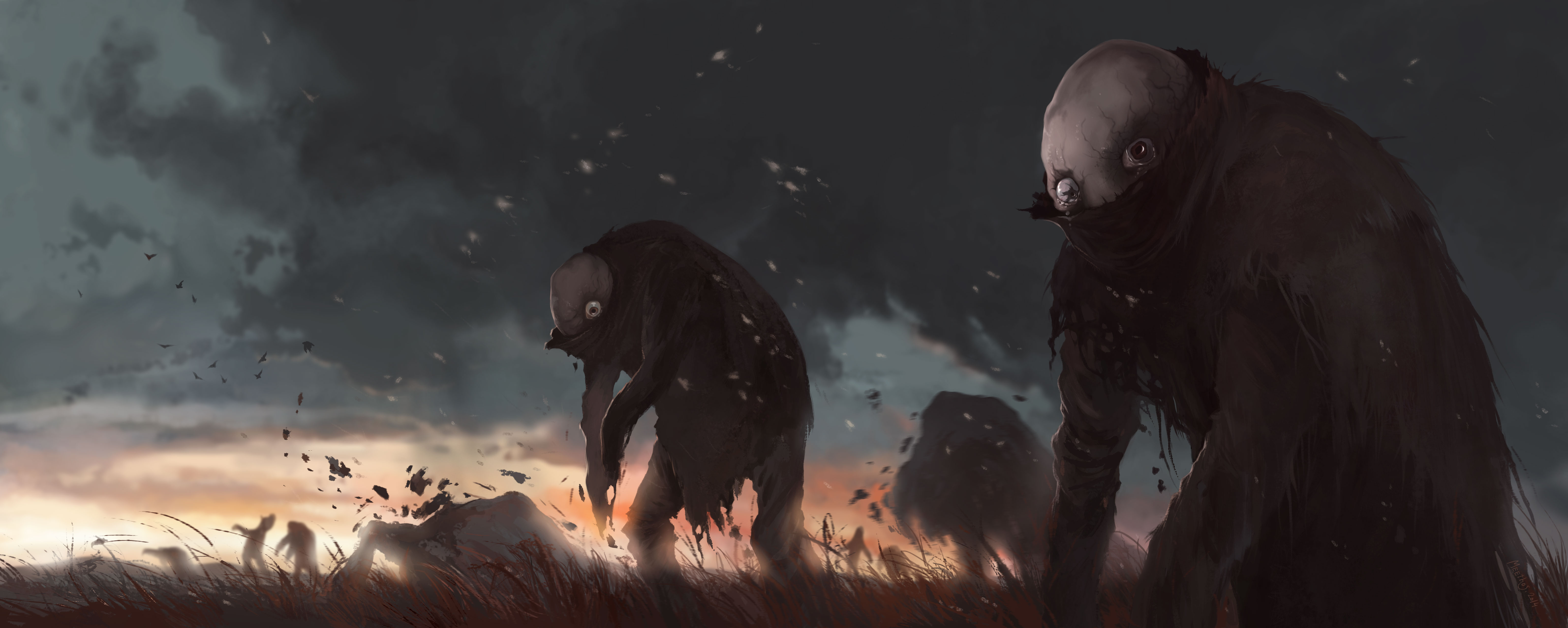
Alien, barely-formed creatures of the land, legend has it that Mother Boddho made the odonghs out of the mud left over following humanity's creation. Inhuman and yet unearthly as well, odonghs dwell among the human Kin and their cattle, crossing the boundary between them as if it weren't there.
Short and Stout
Odonghs have few distinguishing features, and they prefer to keep themselves largely shrouded in thick robes and cloth, revealing only their bare heads and outsize eyes. Though they usually are only a little taller than 5 feet, they are powerfully built and can weigh up to 300 pounds.
Down to Earth
Odonghs are native to the steppes surrounding the River Gorkhon and lived a nomadic lifestyle alongside the Kin, herding and slaughtering and worshipping cattle. They feel a powerful connection to the land and with the Kin call it "Mother Boddho," the Bull-That-Is-The-World.
One of their most notable customs is a prohibition on cutting flesh and digging into the earth, a tradition they share with the human Kin. Only a menkhu—a leadership role in Kin society that blends the attributes of butcher, doctor, surgeon, and priest—is authorized to cut flesh, whether to slaughter cattle or to perform surgery on people. And it is taboo for anyone except a gravekeeper to dig into the earth, as it is seen as tantamount to cutting the flesh of Mother Boddho.
We, Ourselves, and Us
As much as they feel a connection to the land, odonghs also feel connected to each other. It is typical for odonghs to refer to themselves collectively, rather than singly, often saying
"we" instead of "me." It isn't that odonghs never employ the first-person singular, but it is uncommon.
This approach to community is sometimes called udurgh by the odonghs and Kin, a word meaning a thing that is more than the sum of its parts: in other words, a people made up of more than the collection of their individual selves. To an odongh, the group is more important than the individual is. One cow must give up its life to feed the people, after all. Why should people be any different?
Odongh Names
Odonghs do not generally go by individual names. Those who do are likely to be called by the title of their work or to have been given a nickname by humans they interact with.
Odongh Names. Blood-Kin, Boater, Damdin, Khatanger, Olkh-o, Shaazgai, Shar Shuvu, Yabakha
Odongh Traits
Your odongh character has a number of traits, the result of both your earthy flesh and naturalistic upbringing.
Ability Score Increase. Your Constitution score, Strength score, and Wisdom score each increase by 1.
Age. Odongh lifespans are ambiguous. Some live and die with the grass of the field; others may outlive humans.
Alignment. In eschewing industrial civilization and offering allegiance to the wilderness, most odonghs would be considered Chaotic Neutral.
Size. Odonghs are shorter but heavier than humans. Your size is Medium.
Speed. Your base walking speed is 30 feet.
Bull Brother. Whenever you make a Wisdom (Animal Handling) check to interact with any cattle, you are considered proficient in the Animal Handling skill and add double your proficiency bonus to the check, instead of your normal proficiency bonus.
Earthblood. Being one with the soil, you can't be threatened by its poisons. You have advantage on saving throws against poison and disease, and you are immune to Sand Plague.
Herb Bride
Overpowering. Your entire body is a natural weapon, which you can use to make unarmed strikes. Your unarmed strike deals 1d6 bludgeoning damage. Additionally, you can attempt to grapple or shove a creature that is up to two sizes larger than you.
Powerful Build. You count as one size larger when determining your carrying capacity and the weight you can push, drag, or lift.
Strength of Suok. When you take damage, you can use your reaction to reduce the damage you take by an amount equal to 1d12 + your level. Once you use this trait, you must finish a long rest before you can do so again.
Dimorphism
In the source material, odonghs are presented with extreme sexual dimorphism, and this has been reflected in the odongh and herb bride each having separate mechanics. However, if you'd rather have the opportunity to be a female worm odongh or a male herb bride, whether because you want to explore something in a way that's comfortable for you or simply because you like some of the aesthetics of one or the other, you and your Dungeon Master can choose to adjust the odongh lore to accommodate those interests.
In your setting, it may be the case that your character is a unique female worm-type odongh, or maybe odonghs and herbfolk are cohabitant species instead of different sexes. When handling a player character option that touches upon these kinds of themes in such a specific and intentionally unusual way, it's important to communicate with one another.
OUR WORDS ARE ERASED, KHATANGER… WE TAKE
old words, big words, and apply them to small things. But the connection to the source is still there. The Lines remember.
—Herb Bride, Pathologic 2
Strangely beautiful and hauntingly familiar, and as alien as they appear to not be. Herb brides are part of the enigma that haunts the steppes around the Gorkhon.
Steppe Girls
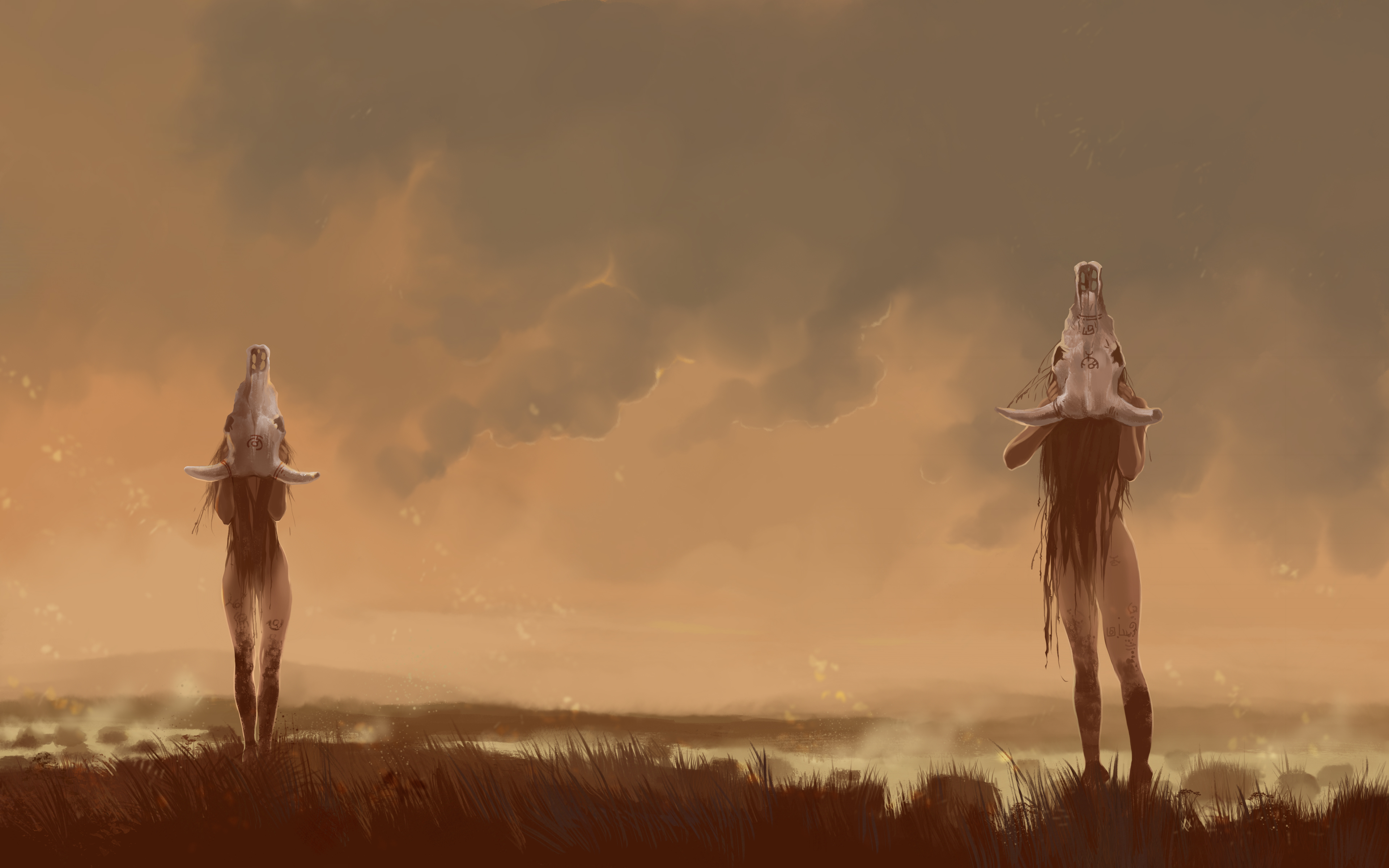
Strictly speaking, herb brides are part of the same species as the odonghs, which display extreme sexual dimorphism. The males, sometimes called worms to distinguish them further, are the strong-armed, smooth-headed creatures. The females of the odonghs are the herb brides, seeming doppelgängers for human women, distinctive by their garb and tattoos. Herb brides are sometimes called "steppe girls," though in truth they are no more human than the male odonghs are.
Twyre Dancers
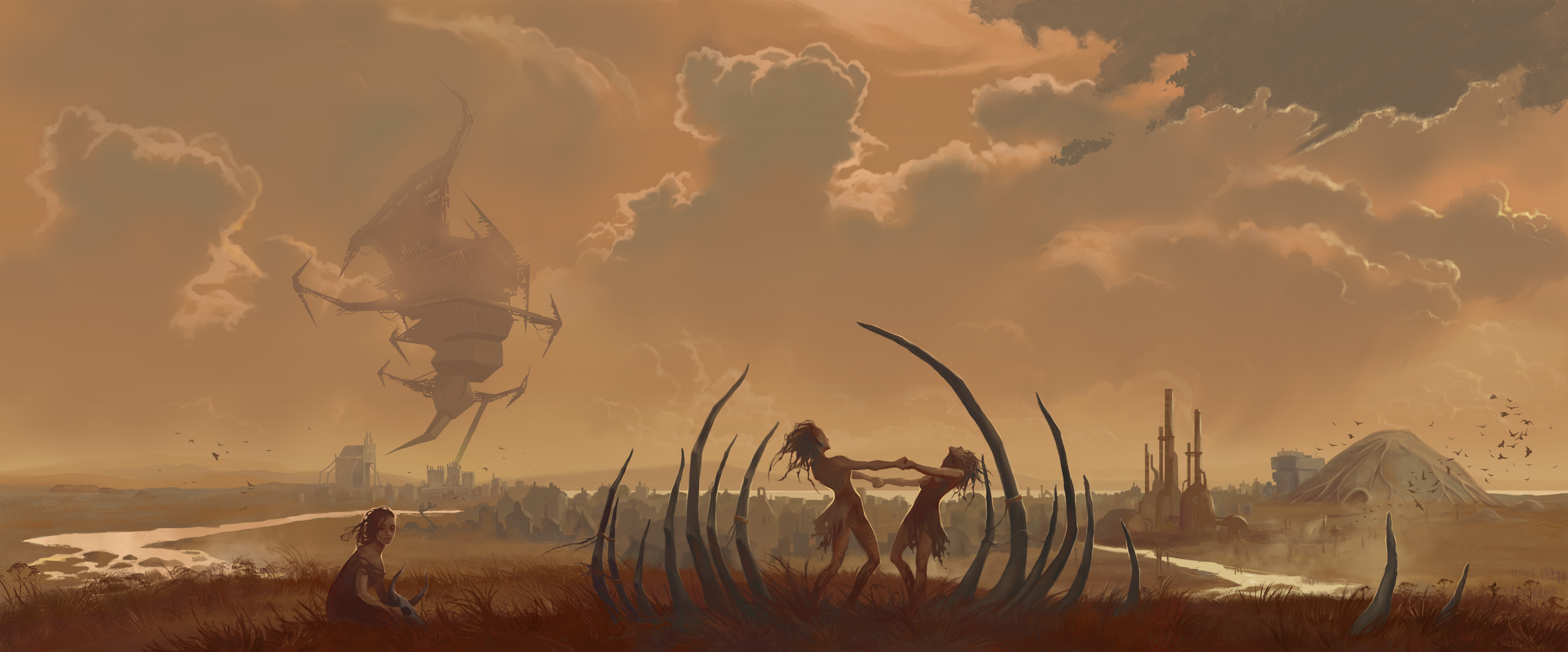
While the male odongh have greater kinship with bulls and cattle, the herb brides are notable for their close communion with the plants of the land. By performing ritual dances together, they bless the land and cause twyre, swevery, and other steppe plants to grow and thrive. These dances are performed alongside ancient songs only the herb brides know. Often, they seem to have special kinship with Mother Boddho, treating the pain of the land—and therefore of Mother Boddho—as their own.



Blood Drinkers, Flesh Eaters
As odonghs, herb brides' diet emphasizes the cattle they raise, herd, and slaughter. For herb brides, blood is as nourishing as meat is, and not only for themselves. Herb brides also use blood as a means to water and fertilize soil, holding that the blood of the living feeds and nurtures rare strains of herb and twyre.
Sometimes herb brides have been accused of eating people—not distinguishing humans from other animals—though this is often considered to be only the result of superstitious fear of steppe legends about the shabnak-adyr, a bone-legged demon grown out of the steppe's soil.
Herb Bride Names
As odonghs, herb brides do not have personal names except in very rare circumstances. Some might take on a name for its ritual significance, and others might be given a nickname by humans they interact with.
Herb Bride Names. Balkhan, Nabtar, Nara, Solongo
Herb Bride Traits
Your herb bride character has the following traits, developed as inherent characteristics and cultural practices.
Ability Score Increase. Your Constitution score, Charisma score, and Wisdom score each increase by 1.
Age. An herb bride generally has a lifespan similar to a human, unless it experiences a mystic birth and death parallel to the grass, akin to some odonghs.
Alignment. Herb brides are generally prone to prefer the nomadic, nature-oriented lifestyle of their heritage over the structures of industrial society. Most herb brides are therefore Chaotic Neutral.
Size. Herb brides have the same proportions as humans. Your size is Medium.
Speed. Your base walking speed is 30 feet.
Earthblood. Being one with the soil, you can't be threatened by its poisons. You have advantage on saving throws against poison and disease, and you are immune to Sand Plague.
Herbdance. You know the druidcraft cantrip. When you reach 3rd level, you can cast the goodberry spell as a 2nd-level spell once with this trait and regain the ability to do so when you finish a long rest. When you reach 5th level, you can cast the spike growth spell once with this trait and regain the ability to do so when you finish a long rest. Wisdom is your spellcasting ability for these spells, and you can cast these spells using only somatic components.
Twyre Sister. You can sing to plants within 20 feet of you, imbuing them with limited sentience and giving them the ability to understand you and communicate with you telepathically for 10 minutes. You can question plants about events in the area within the past day, gaining information about creatures that have passed, weather, and other circumstances. Once you use this trait, you can't do so again until you finish a long rest.
Stat Blocks
Blood-Kin
Medium humanoid (odongh), chaotic neutral
- Armor Class 11
- Hit Points 19 (3d8 + 6)
- Speed 30 ft.
STR DEX CON INT WIS CHA 17 (+3) 12 (+1) 15 (+2) 11 (+0) 12 (+1) 8 (-1)
- Skills Animal Handling +5, Athletics +5
- Languages Russian, Steppe Language
- Challenge 1/2 (100 XP)
Earthblood. The odongh has advantage on saving throws against poison and disease and is immune to Sand Plague.
Powerful Build. The odongh counts as one size larger when determining its carrying capacity and the weight it can push, drag, or lift.
Actions
Multiattack. The odongh makes two melee attacks.
Slam. Melee Weapon Attack: +5 to hit, Reach 5 ft., one target. Hit: 6 (1d6 + 3) bludgeoning damage.
Reactions
Strength of Suok (1/day). When the odongh takes damage, it can reduce that damage by 9 (1d12 + 3).


Herb Dancer
Medium humanoid (herb bride), chaotic neutral
- Armor Class 12
- Hit Points 32 (5d8 + 10)
- Speed 30 ft.
STR DEX CON INT WIS CHA 10 (+0) 14 (+2) 15 (+2) 12 (+1) 16 (+3) 13 (+1)
- Saving Throws Cha +3, Wis +5
- Skills Animal Handling +5, Performance +3
- Languages Russian, Steppe Language
- Challenge 1 (200 XP)
Earthblood. The herb bride has advantage on saving throws against poison and disease and is immune to Sand Plague.
Innate Spellcasting. The herb bride’s spellcasting ability is Wisdom (spell save DC 13). It can innately cast the following spells, requiring only somatic components:
At will: druidcraft, thorn whip
1/day: goodberry, spike growth, speak with plants
Actions
Dagger. Melee Weapon Attack: +4 to hit, Reach 5 ft., one target. Hit: 4 (1d4 + 2) piercing damage.
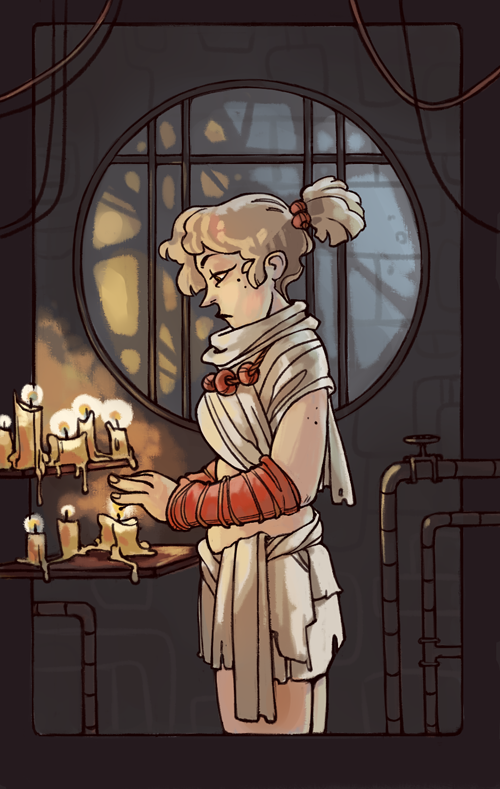
Eva Yan
Eva Yan is the proprietor of the Stillwater, an abandoned observatory-turned-hostel. She moved to the Town from elsewhere and is fascinated by the culture of the Kin and by the odonghs and herb brides especially. Out of curiosity and an inscrutable desire to become an herb bride herself, she imitates their dress and dances. How successful these attempts can be is ambiguous at best, but nothing seems to hold back her determination.
Eva Yan
Medium humanoid (human), neutral good
- Armor Class 10
- Hit Points 3 (1d8 - 1)
- Speed 25 ft.
STR DEX CON INT WIS CHA 7 (-2) 11 (+0) 8 (-1) 15 (+2) 15 (+2) 12 (+1)
- Skills Deception +3, Medicine +4, Performance +3
- Languages Russian
- Challenge 0 (0 XP)
Falseblood. Eva has disadvantage on saving throws against poison and disease.
Sincere Flattery. When Eva makes an ability check to perform an action that she has seen someone else do successfully within the last hour, she can do so with advantage.
Soul Astray. If she dies, Eva can't be restored to life by any magic, even a wish spell.
Actions
Derringer. Ranged Weapon Attack: +0 to hit, Range 15/30 ft., one target. Hit 3 (1d6) piercing damage.
Credits
Created by Bunnygeon Master using GM Binder as a Christmas present for my friends and players in the Plagues & Pathologies campaign. Merry Christmas, y'all! Thanks for being the best players I've ever had, in Fifth Edition and any other tabletop roleplaying game.
The Bachelor
A Bachelor of Medicine from the Capital, Daniil Dankvosky is a man driven by the destiny he imagines for himself: curing the illness of death itself. Having arrived in the Town on his own business and facing off with the Sand Plague almost by accident, Dankovsky brings his own agenda, his own ideals, and his own methods.
Daniil Dankovsky
Medium humanoid (human), neutral
- Armor Class 12 (snakeskin coat)
- Hit Points 36 (8d8)
- Speed 30 ft.
STR DEX CON INT WIS CHA 10 (+0) 12 (+1) 10 (+0) 17 (+3) 8 (-1) 14 (+2)
- Saving Throws Int +5
- Skills Deception +4, Investigation +5, Medicine +3, Persuasion +4
- Languages Latin, Russian
- Challenge 1/2 (100 XP)
Ideologue. Dankovsky has advantage on saving throws against being charmed or frightened.
Private Practice. Over the course of a short rest, Dankovsky can provide medical care to up to 5 creatures within range. At the end of the rest, each creature that spends any hit dice regains additional hit points equal to one roll of its hit die.
Sneak Attack. Once per turn, Dankovsky deals an extra 7 (2d6) damage when it hits a target with a weapon attack and has advantage on the attack roll, or when the target is within 5 feet of an ally of his that isn't incapacitated and he doesn't have disadvantage on the attack roll.
Actions
Scalpel. Melee Weapon Attack: +3 to hit, Reach 5 ft., one target. Hit: 3 (1d4 + 1) slashing damage.
Pistol. Ranged Weapon Attack: +3 to hit, Range 30/90 ft., one target. Hit: 4 (1d6 + 1) piercing damage.
The Haruspex
Artemy Burakh is the son of the late Isidor Burakh, and so has inherited his father's role as Town doctor and menkhu to the Kin, a role that combines the responsibilities of butcher, doctor, surgeon, and priest. A rough and coarse man in some ways, even dubbed "Ripper" by his detractors, Artemy is nonetheless fundamentally softhearted, prone to feeling sympathy for the less fortunate and hesitant to shed blood.
Artemy Burakh
Medium humanoid (human), lawful good
- Armor Class 10
- Hit Points 45 (10d8)
- Speed 30 ft.
STR DEX CON INT WIS CHA 15 (+2) 9 (-1) 11 (+0) 13 (+1) 17 (+3) 8 (-1)
- Saving Throws Wis +5
- Skills Athletics +4, Medicine +5, Perception +5
- Languages Russian, Steppe Language
- Challenge 1 (200 XP)
Menkhu Ascendant. Artemy has advantage on ability checks made to socially interact with Kin, odonghs, and herb brides.
Surgical Training. Artemy can never have disadvantage on Medicine checks to perform surgeries or autopsies on any creature or corpse.
Steppe Alchemy. When Artemy makes an ability check to brew a tincture using blood or any kind of Twyrine, he adds double his proficiency bonus to the check.
Stubborn. Artemy has advantage on saving throws against being charmed and against madness.
Actions
Multiattack. Artemy makes two melee attacks.
Knife. Melee Weapon Attack: +4 to hit, Reach 5 ft., one target. Hit: 5 (1d6 + 2) slashing damage.
Battlefield Medicine (3/day). By expending one use of a healer's kit, Artemy can quickly patch up another creature within 5 feet of him that he can touch. The creature regains 6 (1d6 + 3) hit points.
The Changeling
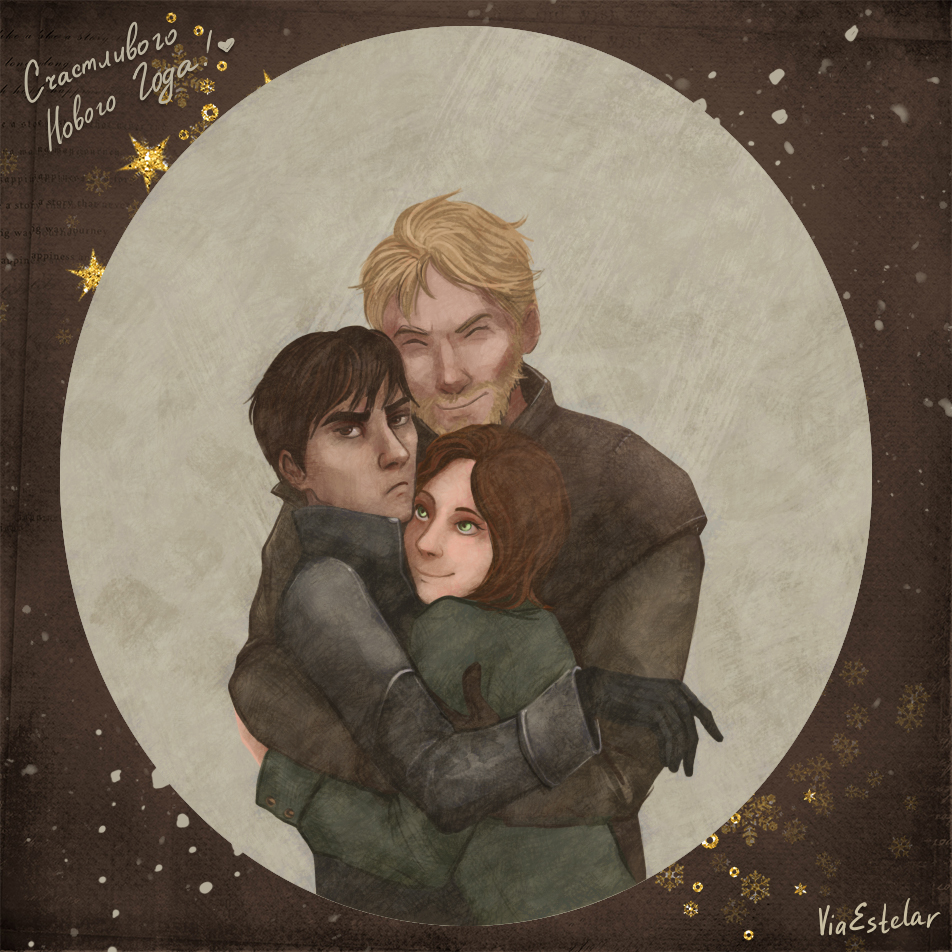
A mysterious girl who arrives in Town shortly before the Sand Plague does, the young Clara is a divisive figure. Heralded by some as an angel and by others as a destroyer, she is capable of either healing or harming other people with a single touch. Some have seen her thieving and stealing, though she claims to be innocent of such crimes, blaming a doppelgänger. Whether even she knows what she really is as murky as her past, present, and future.
Clara
Medium humanoid (human), chaotic good
- Armor Class 12
- Hit Points 24 (7d8 - 7)
- Speed 30 ft.
STR DEX CON INT WIS CHA 7 (-2) 14 (+2) 9 (-1) 12 (+1) 14 (+2) 18 (+4)
- Saving Throws Cha +6
- Skills Deception +6, Persuasion +6, Sleight of Hand +6, Stealth +4
- Languages Russian
- Challenge 2 (450 XP)
Artful Dodge. Clara can use a bonus action to Disengage or Hide.
Innate Spellcasting. Clara's spellcasting ability is Charisma (spell save DC 14). She can innately cast the following spells, requiring only somatic components:
At will: friends, inflict wounds, spare the dying
1/day: detect thoughts, mislead
Inner Monster. As a bonus action, Clara can change her creature type from humanoid to aberration and vice versa.
Magic Resistance. Clara has advantage on saving throws against spells and other magical effects.
One of the Kids. Clara never has disadvantage on ability checks to socially interact with children.
Seeing Double. Ability checks made to notice or recognize Clara are made at disadvantage.
Actions
Derringer. Ranged Weapon Attack: +4 to hit, Range 15/30 ft., one target. Hit 4 (1d6 + 2) piercing damage.
Divine Touch. Clara touches a creature within 5 feet of her besides herself. If it has the Sand Plague, it's cured.