The Bard
| Level | Proficiency Bonus | Features | Spells Known | 1st | 2nd | 3rd | 4th | 5th |
|---|---|---|---|---|---|---|---|---|
| 1st | +2 | Composer, Bardic Inspiration | - | - | - | - | - | - |
| 2nd | +2 | Fighting Style, Spellcasting | 2 | 2 | - | - | - | - |
| 3rd | +2 | Magnum Opus, Straight Shot | 3 | 3 | - | - | - | - |
| 4th | +2 | Ability Score Improvement | 4 | 3 | - | - | - | - |
| 5th | +3 | Extra Attack | 5 | 4 | 2 | - | - | - |
| 6th | +3 | Swiftsong | 6 | 4 | 2 | - | - | - |
| 7th | +3 | Magnum Opus Feature | 7 | 4 | 3 | - | - | - |
| 8th | +3 | Ability Score Improvement | 8 | 4 | 3 | - | - | - |
| 9th | +4 | - | 9 | 4 | 3 | 2 | - | - |
| 10th | +4 | Foe Requiem | 10 | 4 | 3 | 2 | - | - |
| 11th | +4 | Magnum Opus Feature | 11 | 4 | 3 | 3 | - | - |
| 12th | +4 | Ability Score Improvement | 11 | 4 | 3 | 3 | - | - |
| 13th | +5 | - | 12 | 4 | 3 | 3 | 1 | - |
| 14th | +5 | Harmony | 12 | 4 | 3 | 3 | 1 | - |
| 15th | +5 | Magnum Opus Feature | 13 | 4 | 3 | 3 | 2 | - |
| 16th | +5 | Ability Score Improvement | 13 | 4 | 3 | 3 | 2 | - |
| 17th | +6 | - | 14 | 4 | 3 | 3 | 3 | 1 |
| 18th | +6 | Refulgent Arrow | 14 | 4 | 3 | 3 | 3 | 1 |
| 19th | +6 | Ability Score Improvement | 15 | 4 | 3 | 3 | 3 | 2 |
| 20th | +6 | Battle Voice | 15 | 4 | 3 | 3 | 3 | 2 |
Hit Points
- Hit Dice: 1d8 per bard level
- Hit Points at 1st Level: 8 + your Constitution modifier
- Hit Points at Higher Levels: 1d8 (or 5) + your Constitution modifier per bard level
Proficiencies
- Armor: Light and medium armor
- Weapons: Simple weapons, Hand Crossbows, Heavy Crossbows, Longbows, Shortbows
- Tools: Three instruments
- Saving Throws: Dexterity, Intelligence
- Skills: Choose two skills from Animal Handling, Arcana, Acrobatics, Athletics, History, Investigation, Nature, Religion, and Survival
Composer
Those who follow the bardic path learn to pluck bowstring and harpstring with equal talent. You gain proficiency in the Performance skill if you don't have it already. As your songs seek to teach and commemorate, you may treat Performance checks involving singing or playing an instrument as a Wisdom check.
Bardic Inspiration
You can inspire others through stirring words or music. To do so, you use a bonus action on your turn to choose one creature other than yourself within 60 feet of you who can hear you. That creature gains one Bardic Inspiration die, a d6.
Once within the next 10 minutes, the creature can roll the die and add the number rolled to one ability check, Attack roll, or saving throw it makes. The creature can wait until after it rolls The D20 before deciding to use the Bardic Inspiration die, but must decide before the DM says whether the roll succeeds or fails. Once the Bardic Inspiration die is rolled, it is lost. A creature can have only one Bardic Inspiration die at a time.
You can use this feature a number of times equal to your Wisdom modifier (a minimum of once). You regain any expended uses when you finish a Short Rest.
Your Bardic Inspiration die changes when you reach certain levels in this class. The die becomes a d8 at 5th Level, a d10 at 10th level, and a d12 at 15th level.
Fighting Style
At 2nd level, you adopt a particular style of fighting as your specialty. Choose one of the following options. You can't take a Fighting Style option more than once, even if you later get to choose again.
- Archery: You gain a +2 bonus to attack rolls you make with ranged weapons.
- Defense: While you are wearing armor, you gain a +1 bonus to AC.
- Enchanted Warrior: You learn two cantrips of your choice from the White Mage spell list. They count as Bard spells for you, and Wisdom is your spellcasting ability for them.
- Fleet Foot: Your movement speed increases by 5ft.
Spellcasting
You have learned to untangle and reshape the fabric of reality in harmony with your wishes and music. Your spells are part of your vast repertoire, magic that you can tune to different situations.
Spell Slots
The Bard table shows how many spell slots you have to cast your spells of 1st level and higher. To cast one of these spells, you must expend a slot of the spell's level or higher. You regain all expended spell slots when you finish a long rest.
For example, if you know the 1st-level spell Animal Friendship and have a 1st-level and a 2nd-level spell slot available, you can cast Animal Friendship using either slot.
Spells Known of 1st Level and Higher
You know two 1st-level spells of your choice from the Bard spell list. The Spells Known column of the Bard table shows when you learn more Bard spells of your choice. Each of these spells must be of a level for which you have spell slots. For instance, when you reach 5th level in this class, you can learn one new spell of 1st or 2nd level.
Additionally, when you gain a level in this class, you can choose one of the bard spells you know and replace it with another spell from the Bard spell list, which also must be of a level for which you have spell slots.
Spellcasting Ability
Wisdom is your spellcasting ability for your Bard spells; your understanding of the sorrows and joys of the world allows you to wield these spells with superior skill. You use your Wisdom whenever a Bard spell refers to your spellcasting ability. In addition, you use your Wisdom modifier when setting the saving throw DC for a Bard spell you cast and when making an attack roll with one.
Spell save DC = 8 + your proficiency bonus + your Wisdom modifier
Spell attack modifier = your proficiency bonus + your Wisdom modifier
Spellcasting Focus
You can use a musical instrument (found in chapter 5) as a spellcasting focus for your Bard spells.
Magnum Opus
All Bards learn of a select few songs composed through history of particular musical value- songs that will inspire them and shape the work they will in turn form. Choose one of these songs- the Army's Paeon, the Mage's Ballad, or the Wanderer's Minuet. Your choice grants you features at 3rd, 7th, 11th, and 15th levels.
Straight Shot
At 3rd level you find the rhythm in your attacks just as easily as you do in music. If you score a critical hit against a creature with a ranged weapon attack, you an use an action before the end of your next round to make an attack at advantage. This attack inflicts double damage if you do not
also have disadvantage on the attack roll.
Extra Attack
Starting at 5th level, you can attack twice, instead of once, whenever you take the Attack action on your turn.
Swiftsong
At 6th level, you can sing a song inspires your allies to push themselves to their physical limits. As an action, expend a spell slot and choose a number of creatures equal to double the level of the expended slot. For 1 minute or until you lose your concentration on the song (as if you were concentrating on a spell), the speed of the chosen creatures increases by 10 if they can hear you.
Foe Requiem
At 10th level, you can sing a song that tells of ruin for those that oppose you. As an action, expend a spell slot and choose a number of creatures equal to the level of the expended slot. For 1 minute or until you lose your concentration on the song (as if you were concentrating on a spell), all allies that can hear you deal additional damage equal to your Wisdom modifier to creatures affected by Foe Requiem.
Harmony
At 14th level, you weave your magic through your very voice. Allies that can hear you and are affected by a Bard spell you are concentrating on receive the effect of your Swiftsong and enemies that can hear you and are affected by a Bard spell you are concentrating on are affected by your Foe Requiem. You do not need to maintain concentration on the song if taking effect through this feature, but the song ends if your concentration on the spell is lost.
Refulgent Arrow
At 18th level you have reached heights of archery rarely seen before, conjuring arrows of raw aether. You can use the action granted by your Straight Shot feature to instead make a number of ranged weapon attacks equal to your Wisdom modifier (minimum of one). Each attack inflicts Radiant or Thunder damage (your choice) and does not consume ammunition.
Battle Voice
At 20th level, you can make your voice ring out with impossible power as an action. For 1 minute, while you are conscious all allies within 60 feet are affected by your Swiftsong and all enemies within 60 feet are affected by your Foe Requiem. Additionally, the effects of both songs are doubled, including those granted by your Magnum Opus. You do not need to maintain concentration on either song when using this feature and silencing effects cannot prevent them. Once you use this feature, you can't do so again until you complete a long rest.
Army's Paeon
The Army's Paeon is a song of camaraderie and teamwork in the face of adversity. Those that compose its style favor grand symphonies and seek to spread unification.
Combat Inspiration
When you choose the Army's Paeon as your Magnum Opus, your music can bring out the best in its listeners. A creature that has a Bardic Inspiration die from you can roll that die and add the number rolled to a weapon damage roll it just made. Alternatively, when an attack roll is made against the creature, it can use its reaction to roll the Bardic Inspiration die and add the number rolled to its AC against that attack, after seeing the roll but before knowing whether it hits or misses.
Duet
At 7th level, you learn from your own supportive teachings. You can use the Help action as a bonus action. Additionally, when you use the Help action to aid an ally in attacking a creature, the target of that attack can be within 30 feet of you, rather than 5 feet of you, if the ally can see or hear you.
Warden's Paean
Starting at 11th levels, your songs encourage your allies and remind them of their strength. Allies affected by your Swiftsong gain a bonus equal to your Wisdom modifier (minimum of 1) to saving throws against spells and effects that cause disease or cause them to be Blinded, Charmed, Deafened, Frightened, Paralyzed, Petrified, or Poisoned.
Valor Madrigal
At 15th level, your songs tell of the supremacy of your comrades and intimidate your foes. Enemies affected by your Foe Requiem take a -2 penalty to AC.
Mage's Ballad
The Mage's Ballad is a song of the wonders of the world and the possibilities of the universe. Those that emulate it seek to dazzle and thrill, often incorporating magic into their acts.
Gift of the Elements
The bardic arts originated within Gridania, and many composers of the Ballad find inspiration there. When you choose the Mage's Ballad as your Magnum Opus, you learn two cantrips of your choice from the White Mage spell list. They are Bard spells for you. You learn an additional cantrip of your choice at 11th and 15th levels.
Battle Magic
At 7th level, you can weave spellcasting and weapon use into a single harmonious act. When you use your action to cast a Bard cantrip, you can make one weapon attack as a bonus action.
Nature's Minne
Starting at 11th level your songs invoke the will to live. Whenever hit points are restored to an ally affected by your Swiftsong they gain additional hit points equal to your Wisdom Modifier
Grand Threnody
By 15th level, your spells tell of the power of magic and warn of the devastation it can bear. Enemies affected by your Foe Requiem take a -2 penalty to saving throws against spells.
Wanderer's Minuet
The Wanderer's Minuet is a song of loneliness and self-reliance. It's performers favor the solo act and tend to hone their personal fighting skills, whether for protection or to let them explore new horizons.
Lone Wolf
You find strength within yourself rather than those around you. When you choose the Wanderer's Minuet as your Magnum Opus, your attacks score a critical on a roll of 19 or 20 and you can move up to half your speed as a reaction when an enemy ends its turn within 5 feet of you. This movement doesn’t provoke opportunity attacks.
Snapshot
At 7th level, your will to live drives you to impressive speed in dire situations. Once on each of your turns when you miss with a weapon attack, you can can use a bonus action to make another weapon attack.
Elemental Carol
At 11th level, your songs instill self-confidence and tenacity in its listeners. If an ally is affected by your Swiftsong, acid, cold, fire, lightning, poison, or thunder damage they take is reduced by an amount equal to your Wisdom modifier.
Carnage Elegy
At 15th level, subtle magic woven into your voice dissuades your enemies. Enemies affected by your Foe Requiem take a -2 penalty to attack rolls.
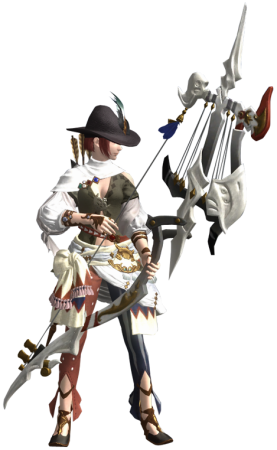
Bard Spells
1st Level
- Animal Friendship
- Bane
- Bless
- Charm Person
- Cure Wounds
- Detect Magic
- Faerie Fire
- Hail of Thorns
- Healing Word
- Heroism
- Longstrider
- Sleep
- Speak with Animals
- Thunderwave
2nd Level
- Animal Messenger
- Blindness/Deafness
- Calm Emotions
- Cordon of Arows
- Enhance Ability
- Enthrall
- Hold Person
- Lesser Restoration
- Locate Animals or Plants
- Shatter
- Silence
- Suggestion
- Warding Wind
3rd Level
- Bestow Curse
- Conjure Barrage
- Dispel Magic
- Fear
- Flame Arrows
- Lightning Arrow
- Plant Growth
- Sending
- Speak with Plants
- Tongues
4th Level
- Compulsion
- Confusion
- Freedom of Movement
- Guardian of Nature
- Hallucinatory Terrain
- Locate Creature
5th Level
- Conjure Volley
- Destructive Wave
- Dominate Person
- Geas
- Greater Restoration
- Hold Monster
- Legend Lore
- Mass Cure Wounds
- Mislead
- Modify Memory
- Scrying
- Seeming
- Skill Empowerment
- Tree Stride