
Credits
Lead Design: u/GoblinScientist
References: Player's Handbook, Dungeon Master's Guide, Monster Manual, Xanathar's Guide to Everything, Eberron, Rising from the Last War and r/UnearthedArcana guides.
Art: All illustrations belong to Wizards of the Coast.
Graphic resources by r/UnearthedArcana, r/gmbinder,
FallenWyvern and QalarValar.
Special Thanks: the Discord of Many Things and r/UnearthedArcana for all their feedback and ideas. Also, to all of my friends who gave ideas and helped playtest it.
This document was created with GM Binder.
Cover art by Svetlin Velinov.
Disclaimer: To take the most out of elemental magic, don't let druids catch you practicing on the wilds, and disregard those who say most things you can do with fire are a bad idea. Stay still when meditating, and keep your mind empty. It's not like there was anything in there to begin with.
Table of Contents
-
3Chapter 1: Character Options
-
- 4 Alchemist
-
-
- 5 Class Features
-
-
- 7 Academic Fields
-
-
- 8 Breakthroughs
-
-
- 10 Magichemist Components
-
-
- 12 Mutationist Components
-
-
- 14 Biomancer Components
-
- 17 Elementalist
-
-
- 18 Class Features
-
-
- 22 Elementalist Archetypes
-
- 24 Gunslinger
-
-
- 25 Class Features
-
-
- 27 Military Trainings
-
- 30 Warlock
-
-
- 30 Otherworldly Patrons
-
-
- 31 Bewitched Familiars
-
-
- 32 Eldritch Invocations
-
- 33 Customization Options
-
- 30 Firearms
-
36 Chapter 2: Spells
-
- 36 Spell Lists
-
- 38 Spell Descriptions
-
43 Chapter 3: Creature Statistics
-
- 43 Energy Spirit
-
- 43 Elemental Bomb
-
- 43 Frost Elemental
-
- 45 Ice Elemental
-
- 45 Lava Elemental
-
- 46 Lightning Elemental
-
- 46 Magnetic Elemental
-
- 46 Small Fire Elemental
-
- 48 Small Frost Elemental
-
- 48 Small Lightning Elemental
-
- 48 Wisp
On the cover:
Painted by Svetlin Velinov, these ruins are called Watery Grave. An old, flooded and abandoned section of a great city called Ravnica, this place is now used by a guild of spies who deal in information and knowledge.

The Roots of Progress is unofficial Fan Content permitted under the Fan Content Policy. Not approved/endorsed by Wizards. Portions of the materials used are property of Wizards of the Coast. ©Wizards of the Coast LLC.
Ch. 1 ─ Character Options


Chapter 1: Character Options
Presented here are new options for players to make characters. We have the alchemist and the gunslinger on the front of progress, and the elementalist and shaman on the front of the old. The alchemist, gunslinger and elementalist are full fledged classes, while the shaman is a warlock subclass. Along with the shaman, is a new option for the pact of the chain familiars and more eldritch invocations.
The alchemist is an intelligence class with no spellcasting. They have their own mechanic called alchemy that could be described as making custom spells in the moment. The gunslinger comes with a new weapon type, with more details on the next chapter. The elementalist is a gish-type class, with spellcasting similar to pact magic, but they focus on either fire, lightning or frost magic.
Classes
Class
Description
Hit
Die
Primary
Ability
Saving Throw
Proficiencies
Armor and Weapon
Proficiencies
Alchemist
Scientists who wield knowledge as
a weapon in service of the future
d6
Intelligence
Intelligence &
Wisdom
Light armor, simple weapons
Elementalist
Spellcasters that draw magic from the
elements that each of us have within
d8
Charisma
Constitution &
Charisma
Light armor, simple weapons
Gunslinger
Warriors that wield the latest technology
in weaponry: firearms
d8
Dexterity &
Intelligence
Dexterity &
Intelligence
Light armor, firearms, simple weapons,
hand crossbow, heavy crossbow, scimitar,
shortsword, longsword, rapier
Warlock
(Spirits Patron)
Shamans who wield the ancient magics
that gave rise to all modern spellcasters
d8
Charisma
Wisdom &
Charisma
Light armor, simple weapons
Ch. 1 ─ Character Options




Alchemist
"Are you serious? Again?" yelled the furious human slamming his fists against the table. "He walked into the building, went inside my personal quarters undetected, silently blew a hole in the 10-inches thick steel safe wall, took the diamonds and just left?", he said astonished. "... Yes.", shyly replied the guard. Meanwhile, on the city's aqueduct, a goblin was transmuting diamonds into other materials to sell.
A gnome was treating the wounds of her tall orcish friend at the entrance of a cave. "So, can you see anything?", he said with anxiety in his tone. "Shhhh. I'm trying to listen". Two minutes later, she shrieked. "What? Is it really a dragon?" he asked. "No. It's a portal to the plane of fire. Let me prepare some ice tricks while Maddy returns", she said as she finished the bandages. Everything was a success, she thought to herself. Her homunculus got all the info they needed, now it's time to finish the job.
Alchemists possess a wide knowledge of the world around us. Practitioners of simple transmutation magic, they can reproduce incredible effects without any powerful spell. To an alchemist, trasmutation and alchemy is just a means to the real power: our minds.
Science and Magic
Spells are rites that pluck into the fabric of the weave to twist reality, creating something that wasn't there. Most of the times, they are just a very simple change, letting the laws of nature do the rest. For example, a lightning bolt spell recreates in your hand the conditions the clouds are in when they let out lightning.
This means that we can naturally reproduce some of these effects by physically recreating the necessary conditions. That's what alchemists call a solution. Their wide knowledge combined with cunning and creativity allows them to improvise effects never seen before by smartly combining the conditions on which matter and energy react. They basically invent spells on the go.
The conclusion is that they specialize in versatility by shaping up their solutions to the current situation. Combined with their sheer intellect, they can learn many other topics as well. An alchemist can fill almost all possible roles in a party, but they have daily resources to do so, and they can't switch roles, instead, offering the possibility of being built as a tank, skill monkey, damage dealer, healer, scout, battlefield controller... Up to two or three of these possible roles. If your party needs an exotic combination of roles to be filled by one character, a smartly built alchemist might get the job done.
Academic Education
Alchemists are scientists in essence. Years of research were necessary to make the first true alchemist possible. As wizards explored the secrets of magic, it was a matter of time until engineers and artificers started applying magic into technology. Alchemy is the child of that union between the mundane and the arcane.
As more universities started to pop up, true alchemists started to become more common. Though many don't become adventurers and instead favor the life of a researcher working for a university, attempting to make alchemy and technology better, some do go out as adventurers. The utilities of alchemy make those brave enough to face danger incredibly useful in an adventuring party.
Crave for Adventure
Scholars tend to stick to academia, where they can perform experiments to advance our knowledge and make a name for themselves. They usually write documents detailing their findings, others write books with compilations of the latest findings and others engage in education, teaching the new generation, managing the university or writing educational books.
However, some leave in search of adventure. It is known that we don't know everything about the world. The only way to find new species, new materials and meet new knowledge is by going out. The world is not in a book, it's out there after all. Adventure is, and probably will always be, the best source of new discoveries.
Ch. 1 ─ Character Options
The Alchemist
Level
Proficiency
Bonus
Features
Solution
Level
Solution
Slots
1st
+2
Alchemy, Academic Field
3
3
2nd
+2
Breakthrough, Transmute Materials
3
3
3rd
+2
Field feature, Improved Solution, Field Expertise
3
4
4th
+2
Ability Score Improvement
3
4
5th
+3
─
4
5
6th
+3
Breakthrough
4
5
7th
+3
Field feature, Improved Solution (2)
4
6
8th
+3
Ability Score Improvement
4
6
9th
+4
─
5
7
10th
+4
Breakthrough
5
7
11th
+4
Expert Alchemist, Improved Solution (3)
5
8
12th
+4
Ability Score Improvement
5
8
13th
+5
─
6
9
14th
+5
Breakthrough
6
9
15th
+5
Field feature, Improved Solution (4)
6
10
16th
+5
Ability Score Improvement
6
10
17th
+6
─
7
11
18th
+6
Breakthrough
7
11
19th
+6
Ability Score Improvement, Greater Solution
7
12
20th
+6
Endless Mind
7
12
Creating an Alchemist
As with most wizards, alchemy also has it's own fields of study. Plan ahead what will be your character's specialization. Your academic field must reflect your character's interests and personality. Why is your character interested in that field? Is he trying to answer a specific question? Is he trying to accomplish some specific goal?
Secondly, high education is kept for a small elite in the world. How did your character got access to such education? Are they a noble? Born from rich merchants? Think ahead on how your character learned it. Did they went to a university? Did they had a master? And why did they leave?
Quick Build
You can make an alchemist quickly by following these suggestions. First, put your highest ability score in Intelligence, followed by Dexterity or Constitution. Second, choose the sage background.
Optional Rule: Multiclassing
If your group uses the optional rule on multiclassing in the Player’s Handbook (p. 163), here’s what you need to know if you want to choose alchemist as one of your classes.
Ability Score Minimum. As a multiclass character, you must have at least an Intelligence score of 13 to take a level in this class, or to take a level in another class if you are already an alchemist.
Proficiencies Gained. If alchemist isn't your initial class, you gain proficiency with the alchemist's supplies when you take your first level in this class.
Extra Attack. The Mutations feature doesn't give you an additional attack if you also have the Extra Attack feature.
Class Features
As an alchemist, you gain the following class features.
Hit Points
- Hit Dice: 1d6 per alchemist level
- Hit Points at 1st Level: 6 + your Constitution modifier
- Hit Points at Higher Levels: 1d6 (or 4) + your Constitution modifier per alchemist level after 1st
Proficiencies
- Armor: Light armor
- Weapons: Simple weapons
- Tools: Alchemist's supplies
- Saving Throws: Intelligence, Wisdom
- Skills: Choose two from Arcana, History, Insight, Investigation, Medicine, Nature, and Religion
Equipment
You start with the following equipment, in addition to the equipment granted by your background:
- (a) a handaxe, or (b) a quarterstaff
- (a) a light crossbow and 20 bolts, or (b) two daggers
- (a) a scholar's pack or (b) an explorer's pack
- A leather armor, and an alchemist's supplies
If you forgo your starting equipment, as well as the items offered by your background, you start with 5d4 × 10 gp to buy your own equipment instead.
Ch. 1 ─ Character Options
Alchemy
As an alchemist, you are trained in the practice of transmutations and versed in sciences. You can make Transmuting Pouches and, with it in hands, you can make special alchemical solutions capable of doing a wide variety of things.
Transmuting Pouches
At 1st level, you have created an Transmuting Pouches. It weights 5 lb. and is comprised of belts filled with belt pouches and bags containing reagents, catalysts and containers you use to make solutions. The bags and pouches are magical, possessing some extradimensional space for storage, and they allow you to pull out the exact materials you are thinking of when you reach for them. Until they are full, they'll keep automaitcally transmuting air, dust and other environmental matter around them into ingredients, so they never run out.
If you lose it, you can make another one with 3 days of 8 hours of work, spending 100 gp in leather, metals, cloth and magic gems for enchantments.
Solutions
With an action, you can pull out of your Transmuting Pouches some materials and containers to combine them and transmute them, forming a solution. You need both hands free to do so. After making a solution, you can use the solution with your bonus action. If you don't use it, it becomes unusable at the end of the turn you made it.
Solutions are made out of components. Components dictate what effects your solutions will produce when used. They are separated into classes, and a solution can be made of a single component of each class, with a few exceptions detailed later on. Each academic field has its own components, with their rules laid out on the last section. Each component has a cost in Formula Points associated, and each solution can have up to its Solution Level in formula points spent on it.
The Solution Level column shows the level of your solutions at each given level.
Also, you need to expend a Solution Slot to make a solution, akin to how a spellcaster expends spell slots to cast spells. After finishing a short rest, you regain one expended solution slot, and after finishing a long rest, you regain all expended solution slots. The Solution Slots column shows how many solution slots you have at each level. Some solutions require their targets to make a saving throw to resist their effects. The saving throw DC is calculated as follows:
Solution save DC = 8 + your proficiency bonus +
your Intelligence modifier
Alchemical Crafting
On top of solutions, your knowledge also allows you to craft items with your alchemist's supplies more efficiently. As a part of a short or long rest, you can make a one mundane alchemical item such as acid, oil, soap and ink, or one common consumable magic item linked to alchemy, such as a potion of healing or a bead of nourishment, at your DM's discretion. You have to provide half of the item's market price in materials for a mundane item, or half as much the usual gold for magic items.
In addition, when you craft an uncommon consumable magic items linked to alchemy, such as oil of slipperiness, dust of disappearance or a potion of growth, it takes a quarter of the normal time, and it costs you half as much of the usual gold.
Academic Field
As you begin your research in science, you have to focus your interests in a specific field. Choose between Magichemist, Biomancer or Mutationist. Your choice will grant you features at 1st, 3rd, 5th, 11th, and 17th levels, all detailed on the next section.
Transmute Materials
At 2nd level, your transmutation skills become more efficient and you can transmute all materials anything else, provided you have the time. You can change most simple, non magical materials into others of the same market value. When you do this, the resulting material will always be in a brute state, like the way it is found on nature.
Metals and stones are the easiest materials to transmute. You can turn coins and valuable stones into other things such as material components or ingredients for an alchemical item instantly. Anything else takes 1 day of dedicated work (8 hours) per 100 gp in its market price. Remember to keep the base market value the same after the transmutation. Bartering, inflation and other price fluctuations don't interfere on transmutations.
Breakthrough
Through field research and experiments, you make a great finding in alchemy. At 2nd level, you gain a feature of your choice on the Breakthroughs section. You must meet its prerequisites. You get another at 6th level, 10th level, 14th level and 18th level. You can't take the same breakthrough more than once.
Field Expertise
At 3rd level, your academic formation made you a great expert in your field of research. Choose two of your skill proficiencies on the alchemist's skill list. Your proficiency bonus is doubled for any ability check you make that uses either of the chosen proficiencies. In addition, ability checks that use your proficiency with the alchemist's supplies also get double your proficiency bonus.
Lastly, if you are proficient in Medicine, you can roll it with Intelligence instead of Wisdom.
Improved Solution
At 3rd level, you can force your transmutation abilities to make an even better solution. Whenever you make a solution, you can rise its solution level by one. If you do so, you can only do it again after finishing a long rest.
At 7th level, you can do it twice before finishing a long rest. At 11th level, you can do it thrice, and at 15th level, you can do it four times before finishing a long rest. You can't spend more than one use on the same solution.
Ability Score Improvement
When you reach 4th level, and again at 8th, 12th, 16th and 19th level, you can increase one ability score of your choice by 2, or you can increase two ability scores of your choice by 1. As normal, you can't increase an ability score above 20 using this feature.
Expert Alchemist
After reaching 11th level, you can create consumable magic items of alchemical nature with even greater efficiency. You can make uncommon ones during a short or long rest, and when you craft rare, very rare or legendary items, such as sovereign glue or a potion of invisibility, it takes a quarter of the normal time, and it costs you half as much of the usual gold.
Greater Solution
At 19th level, your transmutations ability are unparalleled. Whenever you make a solution, you can rise its solution level by two. You can't use this feature to increase the solution level of a solution with its level increased by the improved solution feature. After doing so, you can only do it again after finishing a long rest.
Ch. 1 ─ Character Options
Endless Mind
When you reach 20th level, your Intelligence score increases
by 2 and your maximum for that score also increases by 2.
In addition, you have immunity to psychic damage and the
frightened and charmed conditions, your mind can't be
controlled or fooled by enchantment and illusion magic, and your thoughts can only be read if you allow it.
Academic Fields
Alchemists usually go to a university or learn from another more experienced alchemist. On all cases, they will be presented with the knowledge that their masters passed on them. That's how the academic fields came to be. Science itself has many different branches, and a field has researchers trying to answer a specific set of questions, studying different branches of science.
Magichemist
Modern alchemy came to be with magichemists. They wanted to understand the fundamental laws of nature, how the forces and energies of the world interact with matter and the planes. They were the first of the modern scientist alchemists, who later gave birth to the other academic fields.
The magichemist focuses on releasing high amounts of energy. They are capable of dealing damage from afar or in an area, disrupting opponents and protecting their allies. If you like shaping up your attacks to fit the situation, the magichemist is for you.
Samples
With an action, you can make and use minor solutions without expending solution slots. Make a ranged attack roll with your Intelligence modifier against a target within 40 feet of you, dealing your Intelligence modifier + 1d10 acid, cold, fire, lightning or thunder damage on a hit, your choice. You need both hands free, and access to your Transmuting Pouches to make them.
This damage increases by 1d10 when you reach 5th level (2d10), 11th level (3d10), and 17th level (4d10).
Chemist
At 3rd level, your intricate knowledge of matter allows you to transmute it better. You can use your Transmute Materials feature with twice the speed.
Creator
At 7th level, you can force your transmutations into finer, more complex shapes. You can cast fabricate once, regaining the ability to cast it again after finishing a short or long rest.
Doctor Chemist
At 15th level, you learn how to circumvent the most basic laws of transmutation. When using your Transmute Materials feature, you can increase the amount of the produced material by one fifth. For example, instead of making 100 gp of gold from 100 gp of iron, you make 120 gp of gold. When doing that, you work at normal speed instead of double speed due to your Chemist feature.


Mutationist
As magichemists studied organic matter, they found out that it is wildly different from non organic matter. Soon, biochemistry and biology became fields of their own, and alchemists had to focus on them instead of the usual physics, chemistry and cosmology.
The usual adventuring mutationist is a self augmented super being that can transform their bodies into whatever fits the situation. If you want to be tough instead of frail, and go on the front lines and beat your enemies to a pulp, the mutationist might be what you're looking for.
Mutations
While under the effects of a solution, you are considered a monstrosity as well as a humanoid. In addition, with or without armor, your AC can't be less than 10 + your Dexterity modifier + your Intelligence modifier while under the effects of a solution. If you are proficient with shields and is using one, the shield's bonus to AC goes on top of this one.
Also, at 5th level, whenever you take the Attack action, you can attack twice instead of once, and the unarmed strikes you get from your solutions count as magical for the purposes of overcoming resistance. At 11th level, your unarmed strikes deal an additional +2 damage, and at 17th level, this bonus increases to +4.
Engineered Body
You modified your body to survive the perils of adventuring. You are proficient with unarmed strikes, and you can use your Intelligence modifier instead of Strength or Dexterity on attack and damage rolls of weapons you are proficient with. In addition, your hit point maximum increases by 1, and increases by 1 again whenever you gain a level in this class.
Engineered Senses
At 3rd level, you carefully construct your senses. You have darkvision out to a range of 60 feet. If you already have darkvision, increase its range by 30 feet. In addition, you have advantage on all Wisdom (Perception) checks made to hear and smell and on Wisdom (Survival) checks made to track.
Engineered Metabolism
At 7th level, you build your body carefully to make it adapted to all types of environments. You no longer need to breathe, you are adapted to extreme cold, extreme heat, high altitudes, and frigid water, as described in the Dungeon Master's Guide.
Final Form
At 15th level, your whole body is a marvel of your own making. You are now considered a monstrosity all the time, and you gain proficiency in Constitution saving throws. In addition, you don't need to eat, drink or sleep, getting a long rest with light activity instead of sleep.
Ch. 1 ─ Character Options
Biomancer
Biomancers specialize in creating living organisms, most of the times, never seen before ones. As science evolved, it was only natural that scientists would study souls. They didn't had much success, but they made many discoveries about the nature of life, how to reproduce it, and how to create their own living specimens. That's what they do.
On the battlefield, a biomancer releases carnivorous plants, hungry oozes, dangerous mutants and even frightful aberrations born of their own madness. If you like supporting your teammates with summons and controlling the battlefield with hazards, you might be in for a treat with the biomancer.
Bio Weapon
As an biomancer, you can create and alter living beings. Choose either ooze, plant of fungus. You have created a creature of the chosen type to defend you, called a bio weapon. You carry it around your body, usually wrapped on your arm, on your shoulders or your back, under your clothes. The creature's relation to you is almost symbiotic, as it feeds on you and dies if it stays out of your body for more than 10 minutes. With an action, you can make it attack an enemy within 40 feet of you. Make a ranged attack using your Intelligence modifier. On a hit, it deals damage equal to 1d8 + your Intelligence modifier, of a type depending on its type: acid for ooze, poison for plant, and necrotic for fungus. You can create another one of those creatures during a short or a long rest, but you can only carry one at a time with you.
When you reach 5th level, you can have up to two creations out at the same time instead of just one (refer to the biomancer's creation components), and your bio weapon's damage increases by 1d8 (2d8). At 11th level, you can have up to three creations out, and your bio weapon's damage increases by 1d8 (3d8). And finally, at 17th level, you can have up to four creations, and your bio weapon's damage increases by 1d8 (4d8).
Geneticist
At 3rd level, you learn how to breed your own creatures out of genetic samples you've gathered around on your adventures. You built a Terrarium to keep them. It weights 5 lb. and, like the Transmuting Pouches, you can rebuild it if you lose it by working 8 hours for 3 days and spending 100 gp in glass, leather, metal and magic components for enchantments.
The Terrarium allows you to store a single lifeform. They can't last much time outside it. If you remove a lifeform from the Terrarium, it dies after 1 hour. They also have short lifespans even inside it, dying by the time you finish a long rest.
Creating and growing a lifeform is done as a part of long or short rests with both your Terrarium and your Transmuting Pouches. Some lifeforms may require others to make saving throws to resist some effects. Their DC is your solution save DC. You have the following lifeform options:
Brown Jelly. Small corrosive ooze. With an action, you can drop it into any non-magical object made of metal. Within 30 minutes, it corrodes through a 5-foot cube of metal.
Elastic Ooze. Incredibly sticky and elastic ooze. With an action, you can fling a part of it at something within 30 feet of you, leaving a string of tensioned elastic slime between you two. Unattended small objects are brought to you instantly. On walls, it allows you to walk up to the point it's anchored to. On ceilings, it allows you to climb the ooze up to it's anchored point with a Strength (Athletics) check made with advantage. You can anchor it to other creatures to stop them from going more than 30 feet away from you, though they can unstick it from them with an action on their turn, and must be hit with a ranged or melee attack roll (you are proficient with it) if they're unwilling.
Honeycaps. Edible sweet fungus, filled with nutrients on it's caps. It is enough food to feed a number of creatures equal to your Intelligence modifier. After feeding that many creatures, your Terrarium is emptied and you can make another lifeform.
Magic Truffle. Mushroom known to produce an euphoria inducing spore. With an action, you can harvest spores from it. If a creature ingest its spores within 1 hour, it makes a Charisma saving throw. On a fail, others have advantage on Charisma (Persuasion) or Wisdom (Animal Handling) checks against it for 1 hour. On a success, it is immune to the spores for the next 24 hours.
Bio Keeper
When you reach 7th level, you can keep up to two lifeforms on the same Terrarium.
Doctor Geneticist
At 15th level, your knowledge of lifeforms is unmatched by none. You gain the new following lifeform options:
Building Jelly. Huge intelligent ooze, capable of solidifying and becoming rock hard. Can communicate with you via telepathy to take the shape you are thinking of in 1 minute and hardens in another minute. It can take the shape of any huge object. Can harden different parts of its body while the rest is soft. The hardened parts can be considered wood for all purposes, except it isn't flammable. Lasts for 8 hours outside the Terrarium.
Psilocybin. Mushroom with a powerful brain stimulant. With an action, you can harvest one cap. If a creature ingests it within 1 hour, it has advantage on all Wisdom (Perception) checks for the next hour. After that time, the creature is immune to this fungus until it finishes a long rest.
Breakthroughs
If a breakthrough has prerequisites, you must meet them to learn it. You can learn a breakthrough at the same time that you meet its prerequisites. You can't take the same feature more than once.
Arcanist
Prerequisites: Proficiency in the Arcana skill
You learn three wizard cantrips of your choice. Intelligence is your spellcasting ability for them. In addition, you are able to inscribe wizard spells with the ritual tag into spellbooks by spending the same time and resources as them. If you have a spellbook with ritual spells on them inscribed by you, you can cast them as rituals, and you must refer to the spellbook while casting.
You can only inscribe and cast ritual spells of level equal to half your level in this class, rounded up.
Cosmetics Production
Working 1 minute with your Transmuting Pouches, you can make and apply a special oil on a creature, giving it the effects of a disguise self spell with your Intelligence as its spellcasting ability modifier.
Engineer
You have proficiency with the thieves' tools, vehicles and all ability checks related to mechanical devices such as traps, vehicles, siege engines and edifications, such as castles, dungeons and common houses. You can use your thieves' tools with Intelligence instead of Dexterity, and your proficiency bonus is doubled for ability checks you make with it.
Lastly, you are always on the lookout for secret passages and traps, being able to notice them without actively searching. When you do actively search, you have advantage on your Intelligence (Investigation) or Wisdom (Perception) check.
Ch. 1 ─ Character Options
Expertise
Prerequisites: 10th level
Choose two of your skill proficiencies. Your proficiency bonus is doubled for any ability check you make that uses either of the chosen proficiencies.
False Matter Creation
Prerequisites: 10th level
You can cast creation without providing material components. You can only cast it again after finishing a long rest.
Field Researcher
You gain proficiency in medium armor, shields and martial weapons. You also gain proficiency in the Survival skill.
Golem Assembly
Prerequisites: 10th level
You can create golems as if you had a manual of golems. You can make all types of golems as many times as you want, provided you have the time and resources. See the Dungeon Master's Guide, chapter 7, Treasure, Manual of Golems for the rules pertaining their creations. See the Monster Manual for the golems' game statistics.
Homunculus Assembly
Prerequisites: 6th level
You created an homunculus to serve you. You are its master, and its telepathic bond ability is shared with you. If it takes damage or dies, you can fix it by working with its body and your Transmuting Pouches for 1 hour, after which it regains all its lost hit points, given it's not completely destroyed.
If you lose its remains, you can build another one by spending 500 gp in materials and working 8 hours for 3 days. See the Monster Manual for the homunculus' game statistics.
Homunculus Assembly, Improved
Prerequisites: Homunculus Assembly breakthrough
Your homunculus can speak all languages you know, its maximum hit points is equal to half your maximum hit points, its flying speed doubles, all its ability scores are increased by 5, and it has proficiency in the Acrobatics, Perception, Stealth and Sleight of Hand skills.
Medic
Prerequisites: Proficiency in the Medicine skill
You can brew a healing elixir in 1 minute working with your Transmuting Pouches. It stays active until the end of your next long rest, and a creature can drink it with an action, regaining hit points equal to 1d8 + your Intelligence modifier. After drinking an elixir, it can only be affected by another one after finishing a long rest.
The amount of hit points a creature regains by drinking your elixirs increases by 1d8 when you reach 6th level (2d8), 10th level (3d8), 14th level (4d8) and 18th level (5d8).
In addition, you can treat creatures to help cure a disease or poison. Working with your Transmuting Pouches for 10 minutes, you can give that creature advantage on its saving throws to resist one disease or poison till this creature finishes a long rest, including any saving throw it makes at the end of the long rest. A creature must finish a long rest before it can be affected by one of these treatments again.
Medic, Improved
Prerequisites: Medic breakthrough
With your Transmuting Pouches in hands, you can treat a creature for 10 minutes and either cure any one disease or poison affecting it, or decrease that creature's exhaustion level by one if it was not caused by hunger, or remove any reduction to one of the creature's ability scores or hit point maximum. A creature must finish a long rest before it can be affected by one of these treatments again.
In addition, a creature can be affected by one of your healing elixirs again after finishing a short rest as well.
Psychologist
You gain proficiency in the Insight and Persuasion skills, and whenever you are required to roll for those skill, you can roll them with Intelligence instead of Wisdom or Charisma.
Reliable Knowledge
Prerequisite: 10th level
Whenever you make an Intelligence ability check that lets you add your proficiency bonus, treat a d20 roll of 9 or lower as a 10.
Transmute Body
Prerequisite: 6th level
You can cast lesser restoration and revivify by expending a solution slot. Your spellcasting ability for these spells is Intelligence.
Transmute Soul
Prerequisite: Transmute Body breakthrough
You can cast raise dead by expending a solution slot. Once you do so, you can only do it again after finishing a long rest. At 14th alchemist level, you can cast regenerate on the same way, without providing the material components. Your spellcasting ability for these spells is Intelligence.
Transmute Space
Prerequisite: Transmute Time breakthrough
You can cast teleportation circle by expending a solution slot. Once you do so, you can only do it again after finishing a long rest. At 14th alchemist level, you can cast teleport on the same way. Your spellcasting ability for these spells is Intelligence.
Transmute Time
Prerequisite: 6th level
You can cast haste and slow by expending a solution slot. You don't need to provide material components for the spells. Your spellcasting ability for these spells is Intelligence.
Undead Assembly
Prerequisite: 6th level
You can cast animate dead using your Transmuting Pouches as a spellcasting focus. It takes 1 hour to cast it to animate new corpses as you stitch and inject them with special substances, and it takes the normal time to cast it to reassert control over created undead.
You can use this feature a number of times equal to your Intelligence modifier (minimum of once), regaining expended uses after finishing a long rest.
Ch. 1 ─ Character Options
Magichemist Components
Magichemist solutions have form components, infusion components, essence components and additive components. Each solution can have a single component of each class, with the exception of additives, that can be added as many additives as you want to the same solution. Also, each solution must have one form component. Components might refer to targets, which can be either an object or a creature.
For example, a 5th level magichemist can make a solution spending 2 formula points in the Bomb form and 2 points with the Destructive Energy infusion, dealing 4d6 fire damage in a 10-foot-radius sphere within 60 feet. Or they can spend 3 formula points on the Neurotoxin essence, 1 point with the Biologic Catalyst infusion and 0 points with the Bomb infusion, so they can attempt to incapacitate a wizard with a Constitution saving throw instead of a Wisdom one, which they are proficient with.
Form Components
These components tell you how your solution is supposed to be used. Some are thrown, some are poured, others are sprayed out. It is obligatory to have a single form component in a solution.
Bomb
Costs 0 formula points
The solution is a propelled jar, flask or plain stone that you use by directing it to a target. It has a range of 60 feet.
By spending 2 formula points, the solution will affect all targets in a 10-foot-radius instead. By spending 1 additional point, it can either be a 20-foot-radius, a 30-foot cube, a 15 ft. by 60 ft. 30-foot high parallelepiped or a 10-foot-radius 60-foot high cylinder. For every formula point onward you spend, you can make all measures of one of these forms become as big as two times the previous size.
Double
Costs 0 formula points, 5th level required
Your solution is actually two solutions, each one contained in a flask that you throw into two different targets within 40 feet of you. The two solutions' formula points must add up to the total solution level.
Oil
Costs 2 formula points, 5th level required
The solution is a flask with wax or oil inside. You use it by pouring it into a weapon or 10 pieces of ammunition. The coating lasts for 1 minute. Whenever a target is hit with the coated weapon, it saves or gets affected by the solution. It can only affect a target once each turn.
Spray
Costs 0 formula points
The solution is a container with fumes and vapors under high pressure inside. You use it by opening it and letting it's contents spill forth in a target adjacent to you.
By spending 2 formula points, the solution will affect all targets in your choice of either a 30-foot cone, a 5-foot wide and 100-foot long line, or a 15-foot wide and 80-foot long line in front of you. You can spend additional formula points to double one of these form's all measurements for each formula point spent. You can opt not to double one of the lines' side and double the other.
Infusion Components
These components are the energetic part of the solution. They focus on damage and on improving the essence's effects.
Biologic Catalyst
Costs 1 formula point, 5th level required
Must include an essence in the solution that requires a Constitution or Wisdom saving throw. Change the essence's required saving throws from Constitution to Wisdom or from Wisdom to Constitution.
Destructive Energy
Costs 1 formula point
Affected creatures make a Dexterity saving throw, taking 2d6 acid, cold, fire, lightning or thunder damage on a failed save, your choice. On a successful one, they take half as much damage. You can spend 1 additional formula point to increase the damage by 2d6.
You can spend more formula points to increase this damage by an another 2d6 when you reach 5th level (6d6 for 3 points), 9th level (8d6 for 4 points), 13th level (10d6 for 5 points), and 17th level (12d6 for 6 points).
Electricity
Costs 2 formula points
Affected creature makes a Constitution saving throw or drops everything it's holding and its speed is halved until the end of its next turn.
Reaction Catalyst
Costs 1 formula point, 5th level required
Must include an essence in the solution that has a duration. Double the duration of the essence's effect.
Ward
Costs 2 formula points, 5th level required
Choose a damage type between acid, cold, fire, lightning or thunder. Affected target gets resistance to the chosen damage type for 1 minute or until it wishes the effect to end. You can spend 2 additional points to grant resistance to all of those damage types instead.
Essence Components
These components are the material part of the solution. They focus on support, and some improve the infusion's power.
Amplifying Gel
Costs 1 formula point, 5th level required
Must include Destructive Energy. The solution deals 10 bonus damage. This damage increases by 10 when you reach certain alchemist levels: 9th level (20), 13th level (30), and 17th level (40).
Invisibility Fluid
Costs 4 formula points, 5th level required
Grants affected creature invisibility for 1 hour, or until it casts a spell, attacks or wishes the effect to end.
Ch. 1 ─ Character Options

Neurotoxin
Costs 3 formula points
Affected creature makes a Wisdom saving throw or is either incapacitated or it's speed is reduced to 0 and it can't benefit from any bonus to its speed, your choice. At 9th level, you can spend 5 formula points instead to make the creature paralyzed instead.
It lasts for 1 minute, and at the end of each turn it gets to make a Wisdom saving throw again to end the effect.
Poison
Costs 1 formula point
Affected creature makes a Constitution saving throw or is poisoned and takes 1d6 poison damage at the start of each of their turns. Lasts for 1 minute, and they get to make a Constitution saving at the end of each turn to stop the effects. You can spend 1 additional formula point to increase the damage by 1d6.
You can spend more formula points to increase this damage by an another 1d6 when you reach 5th level (3d6 for 3 points), 9th level (4d6 for 4 points), 13th level (5d6 for 5 points), and 17th level (6d6 for 6 points). Creatures immune to poison automatically succeed their saving throw.
Steel Skincoating
Costs 5 formula points, 9th level required
Affected creature has resistance to bludgeoning, piercing and slashing damage for 1 minute or until it wishes for the effect to end early.
Tanglefoot
Costs 4 formula points, 5th level required
Affected target makes a Dexterity saving throw or is restrained for 1 minute. They can use their actions on their turn to make a Strength saving throw to break free.
At 13th level, you can spend 6 formula points instead to also make them incapacitated, unable to breath, and fail all Strength and Dexterity saving throws, except the Strength saving throw they make at the end of each of their turns to break free.
Thunderstone
Costs 1 formula point
Targets make a Constitution saving throw or are pushed 10 feet away from the point of origin (or you if it's not an area effect) and falls prone.
At 5th level, you can spend 4 formula points instead to also have them stunned until the end of your next turn.
At 13th level, you can spend 6 formula points instead to also make them unconscious for 1 minute, letting them make a Constitution saving throw at the end of each turn to wake up.
Time-Twisting Dust
Costs 4 formula points, 5th level required
Affected creature has its speed doubled, +2 bonus to its AC, advantage on Dexterity saving throws, and an additional action on each of their turns to only take the Attack (one weapon attack only), Dash, Disengage, Hide or Use an Object actions.
Lasts for 1 minute or until affected creature wishes it to end.
Universal Solvent
Costs 1 formula point
Deals 30 damage to any non-magical stone or metal objects or structures. Can spend additional formula points for 10 extra damage per point. Items being held or worn take half damage, and their user is allowed a Dexterity saving to negate all the damage to their equipment.
Additive Components
These components improve the solution in some way. There can be more than one additive in the same solution.
Ch. 1 ─ Character Options
Homing
Costs 1 formula point
Must be used on a Bomb or Double solution. Describe the bomb's trajectory. Its length can't be greater than the bomb's range. It is able to ignore all types of cover, and it detonates after its length ends and when it collides with something.
Intensifier
Costs 2 formula points, 5th level required
Targets affected by the solution have disadvantage on their saving throws to resist it.
Improved Propeller
Costs 1 formula point
Must be used on a Bomb or Double solution. Increases range to 200 feet. With an additional point, the range is increased to 500 feet.
Mutationist Components
They use head shape components, upper limbs shape components, lower limbs shape components and adaptation components. All of these transform the user's body. You can only be under the effect of a single head shape, upper limbs shape and lower limbs shape.
If you use a solution with one of those components while under the effects of other such components, the first one will end so that the last one used takes effect. When under the effect of a shape component, any equipment worn on the body part it is changing will either merge on your body or be worn if possible, depending on your choice and your DM's discretion on its shape. Merged equipment can only be used or take effects if it is magical.
However, you can be under the effect of as many adaptations as you want, and a single solution can have more than one adaptation component.
All of these effects lasts for 10 minutes, and they all share the same duration. Everytime you use a solution, the duration for all previous effects reset back to 10 minutes.
Adaptation Components
These will change more general aspects of your body, such as your skin, internal organs, nervous system and other things.
Anabolic Rush
Costs 1 formula point
You gain 1d8 + your Intelligence modifier temporary hit points. They go away after the duration expires. You can spend 1 additional formula point to gain an additional 1d8 temporary hit points.
You can spend more formula points to increase the amount of temporary hit points by 1d8 when you reach 5th level (3d8 for 3 points), 9th level (4d8 for 4 points), 13th level (5d8 for 5 points), and 17th level (6d8 for 6 points).
Augment Senses
Costs 1 formula point
You have advantage in Perception checks. At 5th level, you can spend 4 formula points instead to also have a blindsense out to 60 feet. At 13th level you can spend 6 formula points instead to have truesight out to 120 feet instead of blindsight.
Augment Speed
Costs 1 formula point
Your speed increases by 20 feet. At 5th level, you can spend 3 formula points instead to double your speed instead.
Camouflage
Costs 4 formula points, 5th level required
Your skin blends in with the environment. All creatures that rely on sight have disadvantage on their attack rolls against you and on Wisdom (Perception) checks to detect you.
At 13th level, you can spend 6 formula points instead to become invisible for the duration.
Change Mass
Costs 4 formula points, 5th level required
You grow one size category larger or smaller, as if you were affected by the enlarge/reduce spell, getting all the bonuses this spell grants.
Corrosive Spit
Cost 2 formula points
In your mouth, you grow glans that can spit acid. With an action on your turn, a creature within 60 feet of your choice must make make a Dexterity saving throw, taking 2d10 acid damage on a failed save, or half as much on a successful one.
At 9th level, you can spend 5 formula points instead to affect all creatures in a 5 feet wide 60 feet long line in front of you or a 20-foot cone in front of you.
The damage of this ability increases by 1d10 when you reach certain alchemist levels: 5th level (3d10), 9th level (4d10), 13th level (5d10), and 17th level (6d10).
Scales
Costs 2 formula points, 5th level required
Your skin grows powerful, tough scales. Choose a damage type between acid, cold, fire, lightning or thunder. You have resistance to the chosen damage type. At 9th level, you can spend 5 formula points instead to have resistance to bludgeoning, piercing and slashing damage instead. At 13th level, you can spend 6 formula points instead to have resistance to all damage except psychic damage.
Shell
Costs 1 formula point
You grow a hard, protective shell, giving you a +2 bonus to AC. At 9th level, you can spend 2 formula points instead to increase that AC bonus to +3, and at 17th level, you can spend 3 formula points instead to increase that AC bonus to +4.
Wings
Costs 4 formula points, 5th level required
You grow leathery, feathery or insect-like wings on your back. They grant your choice of either a 60 feet flying speed or 40 feet flying speed with the hover ability. At 13th level, you can spend 6 formula points instead to either have 90 feet flying speed or 60 feet flying speed with the hover ability.
Ch. 1 ─ Character Options


Head Shape Components
These will transform your whole head or some of its features into something else, giving you new abilities for the duration.
Fangs
Costs 1 formula points
You grow strong maws and fangs, which you can use use to make unarmed strikes with. They deal 1d6 + your Strength modifier piercing damage. When you hit with them, you can automatically grapple the creature. They must beat your solution save DC to escape, and you can't bite other creatures while grappling.
The damage of your bite increases when you reach certain alchemist levels. It goes to 1d8 at 9th level, 1d10 at 13th level and 1d12 at 17th level.
Frog Tongue
Costs 3 formula points, 5th level required
Your mouth changes and grows an elastic, supersonic tongue. You can launch it to any creature within 30 feet of you with your action. It makes a Dexterity saving throw or gets restrained and, if it is large or smaller, it is pulled 10 feet towards you. They'll be pulled again at the end of each of their turns if they are still grabbed. Caught creatures can spend their action to make a Strength saving throw to break free. While restraining a creature with your tongue, you can't use your head abilities. You can let go of a creature any time, no action required.
Horns
Costs 1 formula points
You grow strong horns on your forehead, which you can use use to make unarmed strikes with. They deal 1d6 + your Strength modifier piercing damage. If you move at least 20 ft. straight toward a creature and then hit it with your horns on the same turn, it makes a Strength saving throw or falls prone.
The damage of your horns increase when you reach certain alchemist levels. It goes to 1d8 at 9th level, 1d10 at 13th level and 1d12 at 17th level.
Proboscis
Costs 4 formula points, 5th level required
Your mouth becomes a thin, pointy proboscis, which you can use use to make unarmed strikes with. They deal 1d4 + your Strength modifier piercing damage. When you hit with it, you get to suck their blood, making them take 1d4 necrotic damage while you regain hit points equal to that amount.
The damage of this last ability increases as you reach certain alchemist levels. It goes to 1d6 at 9th level, 1d8 at 13th level, and 1d10 at 17th level.
Upper Limbs Shape Components
These will transform your arms into something else, giving you new abilities for the duration.
Claws
Costs 1 formula points
You grow claws which you can use to make unarmed strikes with. They deal 1d4 + your Strength modifier slashing damage. After taking an Attack action with unarmed strikes, you can attack once with your claws as a bonus action.
The damage of your claws increases when you reach certain alchemist levels. It goes to 1d6 at 9th level, 1d8 at 13th level and 1d10 at 17th level.
Crab Claws
Costs 2 formula points, 5th level required
Your arms become chitin crab claws, which you can use to make unarmed strikes with. They deal 1d4 + your Strength modifier bludgeoning damage. They also grant you the benefits of a shield, giving you a +2 bonus to your AC if you don't already have this bonus from another shield.
The damage of your claws increases when you reach certain alchemist levels. It goes to 1d6 at 9th level, 1d8 at 13th level and 1d10 at 17th level.
Tentacles
Costs 2 formula points, 5th level required
You grow four long and flexible tentacles in the place of each arm, which you can use to make unarmed strikes with. They deal 1d4 + your Strength modifier bludgeoning damage and they have a reach of 10 feet. When you hit with them, you can make the creature save or get shoved or grappled, escaping the grapple by beating your solution save DC.
The damage of your tentacles increases when you reach certain alchemist levels. It goes to 1d6 at 9th level, 1d8 at 13th level and 1d10 at 17th level.
Lower Limbs Shape Components
These will transform your lower body into something else, giving you new abilities for the duration.
Hooves
Costs 1 formula points
You grow heavy hooves on your legs, which you can use use to make unarmed strikes with. They deal 1d6 + your Strength modifier bludgeoning damage. You can make one single attack with your hooves against a prone enemy with a bonus action.
Ch. 1 ─ Character Options
The damage of your hooves increases when you reach certain alchemist levels. It goes to 1d8 at 9th level, 1d10 at 13th level and 1d12 at 17th level.
Snake Tail
Costs 2 formula points, 5th level required
Your legs unite into a giant snake tail, which you can use to make unarmed strikes with. It deals 1d4 + your Strength modifier bludgeoning damage. When you hit with it, you can make the creature save or fall prone. You also have a swim speed equal to two times your walking speed.
In addition, with a bonus action on your turn, you can constrict a prone creature with your snake lower body, forcing the creature to save or be restrained. At the start of each of its turns, it takes your tail's unarmed strike's damage. It can spend an action to save and escape too. You can move or use your tail while restraining a creature in this manner.
The damage of your tail increases when you reach certain alchemist levels. It goes to 1d6 at 9th level, 1d8 at 13th level and 1d10 at 17th level.
Spider Legs
Costs 2 formula points, 5th level required
Your whole lower body becomes that of a giant spider. Your walking speed increases by 20 feet, and you have climb speed equal to your walking speed. You can also walk on ceilings and move normally through thin spaces such as ropes, tops of walls, nets, webs and other things at your DM's discretion.
At 9th level, you can spend 2 additional formula points to also grow web producing glans. You can shoot web at a creature within 60 feet of you with an action. That creature makes a Dexterity saving throw or is restrained for 1 minute. It can spend its action to make a Strength saving throw to break free.
Biomancer Components
Biomancers have creation components, mutation components and stimulant components. You can only have a mutation component in a solution if it also has a creation component, and you can have as many mutation and stimulant components as you want.
Creation Components
These are the creatures that the solution will release. There can be only one per solution. We call these creatures creations. They are divided into five types: aberration, fungus, monstrosity, plant, and ooze.
Similar to a conjure animals spell, your creation component calls for monsters at your service. They have an AC of 10 + your Intelligence modifier, and maximum hit points equal to your alchemist level times 1 + your Intelligence modifier, to a minimum of your alchemist level times two, and their monster type is the same as their creation type, except that fungi are plant-type monsters. Some might take turns, and they do so right after you.
Their ability scores are all equal to your Intelligence score, they use your proficiency bonus, and their only proficiencies are with their attacks. This means that their attack bonus is equal to your Intelligence modifier + your proficiency bonus, and their saving throws and ability checks are equal to your Intelligence modifier.
Also, you can only have one creation out at a given time. If you let out a second creation, the first one dies immediately. You can also use a bonus action to have a creation cease all its vital functions, killing it instantly. When a creation dies, it turns into harmless sludge and disappears minutes later, leaving no vestiges.
Abomination
Cost 6 formula points, 13th level required
Aberration type creation. An offense to nature, a monstrous, nightmarish creature. It is large, occupying a 10-foot cube empty space, having a 5 feet reach, moving with a 30 ft. walking speed. It takes turns just to move, and lasts for 1 minute. Its attack deals 1d10 + your Intelligence modifier bludgeoning damage to everyone adjacent to it, increasing to 1d12 at 17th level.
Each creature within 20 feet of the abomination that can perceive it must succeed on a Wisdom saving throw or become frightened for 1 minute. A creature can repeat the saving throw
at the end of each of its turns, ending the effect on itself on a success. If a creature's saving throw is successful or the effect ends for it, the creature is immune to this effect.
Has double the maximum hit points.
Amalgam
Cost 6 formula points, 13th level required
Aberration type creation. Horrible abomination, born of the attempt of uniting all biological abilities you could muster. It occupies a 15-foot-radius, turning the space inside into difficult terrain. It takes turns only to move, with a 15 ft. fly speed with hover, and lasts for 1 minute. You have 2 extra formula points to spend on mutations on it.
Has double the maximum hit points.
Armored Frog
Costs 4 formula points, 5th level required
Monstrosity type creation. Giant crustacean-amphibian hybrid, with a chitin shell and claws and the head and limbs of a frog. Large sized, occupying a 10-foot cube empty space, it moves with a 30 ft. walking speed. Possessing a 5 feet reach, his claws deal 1d6 + your Intelligence modifier bludgeoning damage, increasing to 1d8 at 9th level, 1d10 at 13th level and 1d12 at 17th level.
Whenever it hits a creature with its claws, that creature is grappled. It has to beat your solution save DC to escape the grapple. Also, with an action on its turn, it can shoot its tongue on a creature within 30 feet of it. The creature must save or get pulled to an empty space adjacent to the creation. Has a +2 bonus to AC.
Creeping Tar
Costs 4 formula points, 5th level required
Ooze type creation. Black sticky ooze that occupies a 15-foot square and stands about 2 feet tall, lasting for 1 minute. It moves at a 15 ft. walking speed and climbing speed.
It moves by trying to occupy its victim's space. When it moves into a creature's space, that creature can make a Dexterity saving throw to move back or to the side, landing on an empty space adjacent to this creation. Creatures on its space have to spend 4 feet of movement to walk 1 feet. They also take 1d6 + your Intelligence modifier acid damage, increasing to 1d8 at 9th level, 1d10 at 13th level and 1d12 at 17th level.
Has double maximum hit points and immunity to acid and psychic damage.
Drosera
Costs 3 formula points
Plant type creation. Medium carnivorous plant occupying a 5-foot cube empty space that lasts for 1 minute and can't move. Has a 10 feet reach and attacks for 1d6 + your Intelligence modifier piercing damage, increasing to 1d8 at 5th level, 1d10 at 9th level, 2d6 at 13th level, and 2d8 at 17th level. It has infinite reactions to make attacks of opportunity with. Has vulnerability to fire damage and immunity to psychic damage.
Ch. 1 ─ Character Options


Liquid Ooze
Costs 2 formula points
Ooze type creation. You cover a 10-foot-radius on the ground with a thin ooze that lasts for 1 minute, spreading into corners and turning the area into difficult terrain for the duration. For the purpose of mutations, affected creatures are those that start their turns inside the affected area instead of those that get hit by an attack.
Every creature that finishes his turn on the covered area takes 1d4 acid damage, increasing to 2d4 at 5th level, 3d4 at 9th level, 4d4 at 13th level, and 5d4 at 17th level.
Doesn't move and take turns, has immunity to acid and psychic damage.
Mycelium
Costs 1 formula points
Fungus type creation. Covers a 10-foot-radius on the ground with a fungal colony, taking root firmly on the ground or on the walls. It lasts for 1 minute. For the purpose of mutations, affected creatures are those that start their turns inside the affected area instead of those that get hit by an attack.
You can spend 1 additional formula point to increase the area to a 20-foot-radius instead.
Doesn't move and take turns, has immunity to psychic damage.
Mycotroll
Costs 4 formula points, 5th level required
Fungus type creation. A large walking mushroom, occupying a 10-foot cube empty space that lasts for 1 minute. It has a 20 ft. walking speed, 5-feet reach and attacks for 2d6 + your Intelligence modifier bludgeoning damage, increasing to 2d8 at 9th level, 2d10 at 13th level and 2d12 at 17th level.
It can use its action to slam the ground. Each creature adjacent to it makes a Constitution saving throw or is stunned until the end of the mycotroll's next turn. This ability has a 5-6 Recharge timer.
Has double the maximum hit points.
Sky Manta Ray
Costs 5 formula points, 9th level required
Monstrosity type creation. Giant manta ray like creature capable of flight. It is large, occupying a 10-foot cube empty space. It lasts for 2 hours, and has a 20 ft. walking speed and 60 ft. fly speed. It has a reach of 5 feet, attacking for 1d6 + your Intelligence piercing damage. Can carry one medium or smaller creature or object on its back.
Wall of Roots
Costs 5 formula points, 9th level required
Uncountable branches of roots take to the ground and to the air, entangling in a 5-feet thick, 60-feet long and 20-feet tall wall on a continuous path of your choice. If the path goes through the space of a creature, that creature is pushed to one side of the wall of your choice. If its path encircles a creature, that creature can make a Dexterity saving throw to move up to its speed and try to escape. Choose one of the sides of the wall. The wall has a 5 feet reach at this side for the purpose of mutations and adaptations, affecting creatures at the start of their turns instead of by hitting an attack. It lasts for 10 minutes.
Doesn't move, has double the maximum hit points, immunity to psychic damage and resistance to all damage types except fire.
Ch. 1 ─ Character Options

Mutation Components
These change your creation in some form, giving them new abilities and properties. As such, you can't have a mutation component in a solution without a creation component. It also means you can't release a creation and give it a mutation later. Each mutation can only go on specific types of creations, as written on the mutation's description.
Arcane Biology
Costs 2 formula points
Can go onto all creations. All damage is dealt as force damage, and it can affect incorporeal creatures. At 13th level, the creation also gains truesight out to 60 feet.
Dense Matter
Costs 1 formula point
Can go onto fungi, oozes and aberrations. Whenever a creature hits the creation with a melee attack, it makes a Strength saving throw. If it fails, the weapon is stuck on the creation and can only be taken out with a successful Strength saving throw using their actions. If its a natural weapon or unarmed strike, they can't use the weapon, its speed becomes 0, and it cant benefit from any bonus to its speed until it until it use its action to successfully save.
Myotoxin
Costs 1 formula point
Can go onto fungi, monstrosities and aberrations. Creatures that get hit must make a Constitution saving throw or become either incapacitated or unable to move until the start of their next turn. Creatures immune to poison automatically succeed on their saving throw.
Prehensile Appendages
Costs 1 formula point
Can go onto plants, oozes and aberrations. The creation gets many tentacle-like limbs, such as vines or pseudopods. Creatures that start their turns on its reach or standing in its space must make a Strength saving throw or they won't be able to move until the start of their next turn.
At 5th level, you can spend 2 formula points instead to make creatures that fail their saving throws restrained while the creation lasts, making them having to use their action to make a Strength or Dexterity saving throw to escape.
At 9th level, you can spend 3 formula points instead to, on top of restraining creatures, they take 3d6 bludgeoning damage at the start of each of their turns.
Spikes
Costs 1 formula point
Can go onto plants, monstrosities and aberrations. Creatures that enter the creations space for the first time of the turn, or that start their turn on the creation's space must save. On a failed save, they take 1d6 piercing damage, and half as much on a successful one. Also, the creation's melee attacks deal an extra 1d6 piercing damage, and those who try to attack them in melee will also take 1d6 piercing damage. You can spend additional formula points to increase this damage by 1d6 per additional formula point spent.
Also, the whole space occupied by the creation will be harder to move in. If the area is not considered difficult terrain, it becomes difficult terrain. If it is difficult terrain, it costs 4 feet of movement per feet.
Venom
Costs 1 formula point
Can go onto plants, fungi, monstrosities and aberrations. Creatures that get hit must make a Constitution saving throw or they are poisoned until the start of their next turn, when they also take 1d6 poison damage. Creatures immune to poison automatically succeed on their saving throw.
You can spend additional formula points to have the affected creatures take an additional 1d6 poison damage at the start of their next turn per additional points spent.
Stimulant Components
There can be as many stimulant components in a solution as you want. Also, a solution without a creation component, having only stimulant components, can be done. They're used by being thrown into an existing creation made by you, within 40 feet. The creation will get all the benefits of the stimulants you used.
Enhance Reactions
Cost 2 formula points
The creation becomes proficient in all saving throws.
Improved Metabolism
Costs 1 formula point
Set the creation's remaining turns to two times the initial duration.
Regenerate
Cost 3 formula points
The creation regains all its lost hit points.
Suppress Fatigue
Costs 4 formula points, 5th level required
Double the creation's speed.
Suppress Pain
Costs 5 formula points, 9th level required
The creation has resistance to bludgeoning, piercing and slashing damage.
Ch. 1 ─ Character Options


Elementalist
An elvish woman waves her arms in precise movements, as she concentrates her magic to move the frozen surface of the sea to allow her boat to move. An adventuring party moves through a violent blizzard in a mountain safely, with no problem whatsoever, for one of them has woven his magic to around them to keep everyone warm.
A man sits at the border of a rocky cliff, the sea crashing its
waves at the bottom. Hard at meditation, the man is focused,
trying his best to increase the electric charges of the clouds
above and cause a lightning storm. This is his last test to
prove himself before his master and his tribe. He won't
leave without a storm.
As the intersection of the elemental planes, the
material plane is composed of the matter present
in the elemental planes and infused with its
magic. Everything that exists within it is
composed of that matter, different ratios
of elements form different materials of
which things are made. That's where the
magic of most things come from. One of
the oldest forms of magic that mortals
practiced, elementalism is the art of
tapping into a single element from one's
own core for magic.
The Element Inside
Unlike elementals, mortals have a
balance of each element on them, a
symmetry that makes them different
from elementals. To draw magic from
one side of that spectrum, that symmetry
must be broken first. This is usually done
by elemental infusion on their being,
strengthening the element they want to
tap onto to the point of allowing them to do
so. This process is called awakening, as they
are "awaking the element within", as most
cultures that practice elementalism say.
Most elementalists awakened their elements
with the help of a teacher, usually another elementalist,
though some cases it was done by a powerful elemental being.
It is possible to awaken it on one's own, but it is much harder. Some individuals are born with a natural tendency for one element, but a push is always necessary.
Abstinence and Control
Of course, breaking that symmetry in one's self isn't free of consequences. Your element wants to be wielded, and you risk losing control of your magic if you don't. This form of magic is very old, and was very common on the ancient times. Today, it is mostly frowned upon for being dangerous. However, that doesn't scare passionate — or reckless — individuals from pursuing it, for as dangerous as it might be, it is powerful.
Elementalists suffer from uncommon and unique symptoms when they don't practice their magic for more than three or four days, after which their magic starts forcing itself out. Some start having symptoms of a common flu, except they sneeze and cough elemental matter. Others just have their bodies leak its energies out, becoming electrically charged or randomly catching fire, without hurting them selves somehow, although they might damage the furniture around them.
The Primordial Chaos
The oldest tribes that created elementalism used to call the elements chaos, as they are untamable and uncontrolable, yet, they are seductive. The flames are warm and bright, dancing hypnotic moves. The lightning roars and illuminates, short lived but forever leaving its mark. Both scare away the weak, and fascinate the fools. This is their lesson.
Those that get lured by the chaos' light are burnt by it, like moths flocking to a flame. On the other hand, those too scared to light a fire freeze to death come winter. The elementalist should see its chaos on the same manner. You have to focus on control, not power. Wield it proudly, but never forget: always fear the chaos.
You must touch it, bend it, twist it and sculpt it into your own design. But never embrace it. Never hold more than you can fit in your hand, lest you be devoured. Like a fool drowning in the lake while trying to quench its thirst.
Ch. 1 ─ Character Options
The Elementalist
Level
Proficiency
Bonus
Features
Spell
Slots
Slot
Level
Power
Die
1st
+2
Elemental Magic, Elementalist Archetype, Power Die
1
1st
d4
2nd
+2
Manipulation
2
1st
d4
3rd
+2
Extraplanar Channeling
2
2nd
d4
4th
+2
Ability Score Improvement
2
2nd
d4
5th
+3
Elemental Defense, Extra Attack
2
3rd
d6
6th
+3
Archetype feature
2
3rd
d6
7th
+3
─
2
4th
d6
8th
+3
Ability Score Improvement
2
4th
d6
9th
+4
─
2
5th
d8
10th
+4
Archetype feature
2
5th
d8
11th
+4
Chaos Within (6th level)
3
5th
d8
12th
+4
Ability Score Improvement
3
5th
d8
13th
+5
Chaos Within (7th level)
3
5th
d10
14th
+5
Archetype feature
3
5th
d10
15th
+5
Chaos Within (8th level)
3
5th
d10
16th
+5
Ability Score Improvement
3
5th
d10
17th
+6
Chaos Within (9th level)
4
5th
d12
18th
+6
Master
4
5th
d12
19th
+6
Ability Score Improvement
4
5th
d12
20th
+6
Supreme
4
5th
d12
Creating an Elementalist
When creating an elementalist character, think about their origins. Did they live in a tribe, far from civilization? Did they learned it for the survival of his people, such as those who live in tundras or in high mountain peaks? Or did they left civilization to pursue it with some hermit master? And most importantly, how is your character seen by the others? How do they feel about their dangerous way of harnessing magic?
Quick Build
You can quickly create an elementalist by following these suggestions. First, Charisma should be your highest ability score, followed by Dexterity or Constitution. Second, choose the hermit background.
Optional Rule: Multiclassing
If your group uses the optional rule on multiclassing in the Player’s Handbook (p. 163), here’s what you need to know if you want to choose elementalist as one of your classes.
Ability Score Minimum. As a multiclass character, you must have at least a Charisma score of 13 to take a level in this class, or to take a level in another class if you are already an elementalist.
Proficiencies Gained. If elementalist isn't your initial class, here are the proficiencies you gain when you take your first level as an elementalist: light armor, simple weapons.
Spellcasting. You can use your Elemental Magic spell slots to cast spells learned from other classes, and you can cast your elementalist spells using spell slots from the Spellcasting feature of other classes as well.
Class Features
As an elementalist, you gain the following class features.
Hit Points
- Hit Dice: 1d8 per elementalist level
- Hit Points at 1st Level: 8 + your Constitution modifier
- Hit Points at Higher Levels: 1d8 (or 5) + your Constitution modifier per elementalist level after 1st
Proficiencies
- Armor: Light armor
- Weapons: Simple weapons
- Tools: None
- Saving Throws: Constitution, Charisma
- Skills: Choose two from Arcana, Insight, Intimidation, Nature, Perception, Persuasion, Survival
Equipment
You start with the following equipment, in addition to the equipment granted by your background:
- (a) a quarterstaff, or (b) a spear
- (a) a shortbow and 20 arrows, or (b) any simple weapon
- (a) an explorer's pack or (b) a dungeoneer's pack
- A leather armor and two daggers
If you forgo your starting equipment, as well as the items offered by your background, you start with 3d4 × 10 gp to buy your own equipment instead.
Ch. 1 ─ Character Options
Elemental Magic
As a practitioner of elemental magic, you can cast spells originated from within your very essence. See chapter 10 in the Player's Handbook for the general rules of spellcasting and the end of this document for your element's spell list.
Elementalism Style
When you get this feature, you have to choose between the three styles of elemental magic: pyromancy, cryomancy and electromancy. This choice will define your spell list, referred to as your style's spell list, and an associated damage type, referred to as your style's damage type. The damage type is fire for pyromancy, cold for cryomancy and lightning for electromancy.
Cantrips
You know all the cantrips listed on your element's spell list. These cantrips are always available for you to cast.
Preparing and Casting Spells
The Elementalist table shows how many spell slots you have. The table also shows what the level of those slots is; all of your spell slots are the same level. To cast one of your elementalist spells of 1st level or higher, you must expend a spell slot. You regain all expended spell slots when you finish a short or long rest.
You prepare the list of elementalist spells that are available for you to cast, choosing from your style's spell list. When you do so, choose a number of elementalist spells equal to your Charisma modifier + your elementalist level (minimum of one spell).
For example, when you are 5th level, you have two 3rd-level spell slots. With a Charisma of 16, your list of prepared spells can include eight spells of 1st, 2nd or 3rd level, in any combination, chosen from your style's spell list. If you prepare the 1st-level spell burning hands, you must spend one of those slots, and you cast it as a 3rd-level spell. Casting the spell doesn't remove it from your list of prepared spells.
Spellcasting Ability
Charisma is your spellcasting ability for your spells, since you tap into the magic within your awakened element. You use your Charisma whenever a spell refers to your spellcasting ability. In addition, you use your Charisma modifier when setting the saving throw DC for an elementalist spell you cast and when making an attack roll with one.
Spell save DC = 8 + your proficiency bonus +
your Charisma modifier
Spell attack modifier = your proficiency bonus +
your Charisma modifier
Pyromancy
Pyromancy is the magic of producing and manipulating fire. Fire is present not only in flames, but in everything. It is easier to call it on flames and other things that derive from it, such as smoke, ashes, lava, rocks and fine stone particles such as sand and dust.
Fire is also the main component of the energy that gives things life. Few people know, but most restorative spells are basically fire spells, since the essence of life is primarily fire.
Spellcasting Focus
You can use an arcane focus or your own body as a spellcasting focus for your elementalist spells. You still need a free hand to perform somatic components when using your body as a spellcasting focus.
Elementalist Spell List
Here's the list of spells you consult to prepare your elementalist spells. There are three lists; one for each elementalism style. Each list is organized by spell level, not character level. If a spell can be cast as a ritual, the ritual tag appears after the spell's name.
These spells are from the Player's Handbook. If a spell's name is followed by an asterisk, the spell is instead from Xanathar's Guide to Everything, and if it is followed by two asterisks, it is detailed at the next section of this document.
Lastly, if a spell has the special tag appearing after its name, it means that either the spell's damage type changes to your style's damage type, or that the spell requires you to choose a damage type from a list, of which you must choose your style's damage type
Pyromancy Spell List
Cantrips (0 Level)
- control flames*
- create bonfire*
- fire bolt
- produce flame
1st Level
- absorb elements* (special)
- burning hands
- chromatic orb (special)
- cure wounds
- flame sense** (ritual)
- fog cloud
- healing word
- hellish rebuke
- protection from heat and cold** (ritual)
2nd Level
- Agnazzar's scorcher*
- continual flame
- dragon's breath* (special)
- flame blade
- flaming sphere
- lesser restoration
- pyrotechnics*
- scorching ray
3rd Level
- aura of vitality
- elemental weapon (special)
- erupting earth*
- fireball
- flame arrows*
- Melf's minute meteors*
- protection from energy (special)
- revivify
- stinking cloud
4th Level
- aura of life
- elemental bane* (special)
- fire shield (special)
- firespout**
- hungry flames**
- stone shape
- wall of fire
5th Level
- cloudkill
- greater restoration
- immolation*
- mass cure wounds
- raise dead
- wall of stone
6th Level
- bones of the earth*
- flames of wrath**
- heal
- investiture of flame*
- investiture of stone*
7th Level
- delayed blast fireball
- fire storm
- regenerate
- resurrection
8th Level
- earthquake
- incendiary cloud
- tsunami (special)
9th Level
- meteor swarm
- mass heal
- one with the flames**
Ch. 1 ─ Character Options
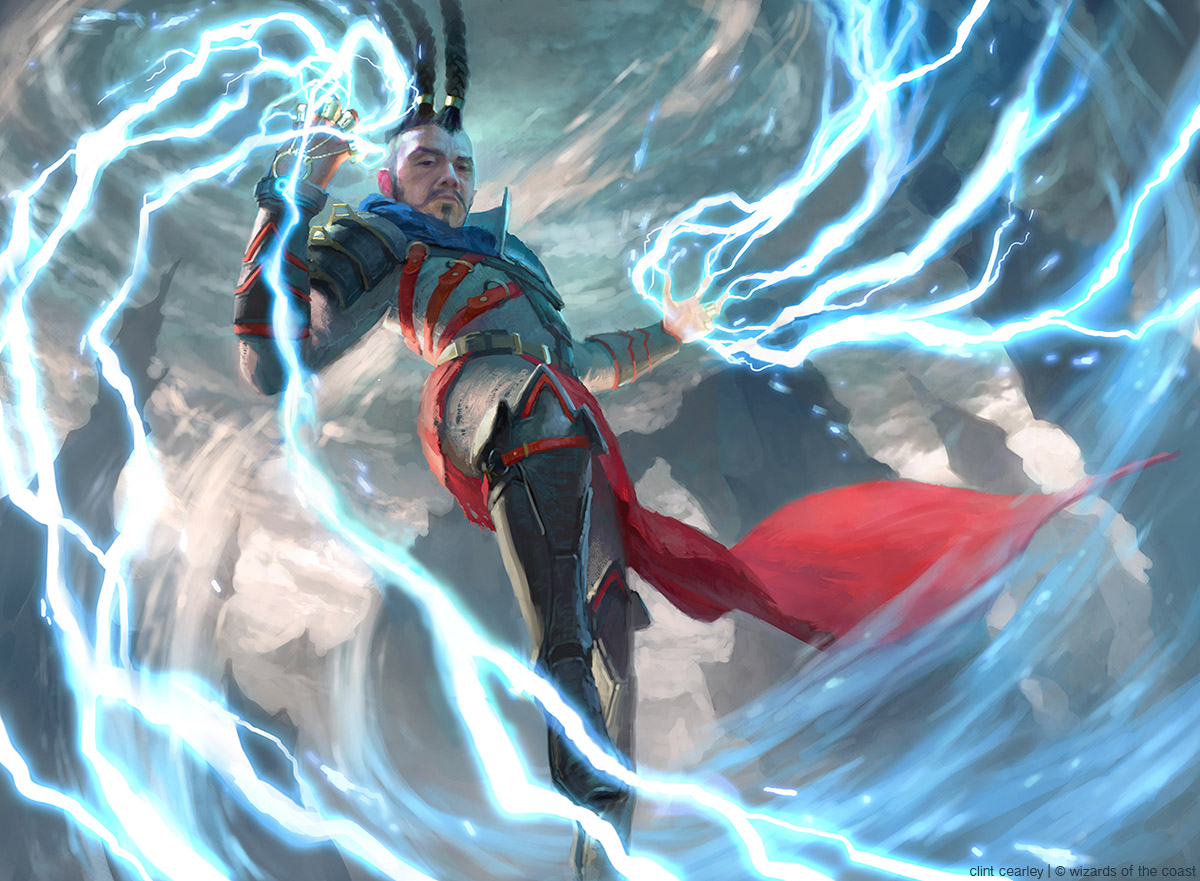

Cryomancy
Cryomancers produce and control frost, the energy that manifests as fog and freezes everything it comes into contact with. As its importance in the universe, it is mostly known to cause the physical transformations on matter, such as condensation, solidification and their converses.
It is heavily present in water and air, which gives cryomancers control over waters, wind, clouds and even the weather, for its causes are the physical changes in the air.
Cryomancy Spell List
Cantrips (0 Level)
- frostbite*
- gust*
- ray of frost
- shape water*
1st Level
- absorb elements* (special)
- armor of Agathys
- burning hands (special)
- chromatic orb (special)
- create or destroy water
- fog cloud
- ice knife*
- protection from heat and cold** (ritual)
- shield
2nd Level
- dragon's breath* (special)
- dust devil*
- flame blade (special)
- flaming sphere (special)
- gust of wind*
- Melf's acid arrow (special)
- Snilloc's snowball swarm*
- warding wind*
3rd Level
- elemental weapon (special)
- freeze**
- gaseous form
- ice pillar**
- protection from energy (special)
- sleet storm
- slow
- water walk (ritual)
- wind wall
4th Level
- blight
- elemental bane* (special)
- fire shield (special)
- ice storm
- snow sense**
- stoneskin
- watery sphere*
5th Level
- Bigby's hand (special)
- cone of cold
- control ice**
- control winds*
- create ice**
- maelstrom*
6th Level
- investiture of ice*
- investiture of water**
- investiture of wind*
- Otiluke's freezing sphere*
- wall of ice
- wind walk
7th Level
- delayed blast fireball (special)
- fire storm (special)
- whirlwind*
8th Level
- Abi-Dalzim's horrid wilting*
- control weather
- incendiary cloud (special)
9th Level
- icy death**
- invulnerability*
- stop time
Electromancy
Electromancy is the magic that creates and manipulates electricity. Electricity is what causes phenomena like lightning, thunder, magnetism and light. It is also heavily present in all conductive materials, such as metals and water.
Turns out that lightning, as the element we know it, is actually pure energy, and thus, present in all forces such as gravity, movement, waves like sound, tremors and light, and even forces of impact.
Electromancy Spell List
Cantrips (0 Level)
- jolt**
- light
- shocking grasp
- thunderclap*
1st Level
- absorb elements* (special)
- burning hands (special)
- catapult*
- chromatic orb (special)
- expeditious retreat
- shield of faith
- thunderwave
- witch bolt
- zephyr strike*
2nd Level
- Agnazzar's scorcher* (special)
- detect metal** (ritual)
- dragon's breath* (special)
- heat metal
- levitate
- misty step
- shatter*
- soldering hands** (ritual)
3rd Level
- call lightning
- daylight
- elemental weapon (special)
- haste
- lightning arrow
- lightning bolt
- protection from energy (special)
- revivify
- thunder step*
4th Level
- blight (special)
- control water*
- dimension door
- electrocute**
- elemental bane* (special)
- lightning leash**
- storm sphere*
5th Level
- lightning storm**
- overload**
- steel wind strike* (special)
- telekinesis
- wall of force
- wall of light*
6th Level
- chain lightning
- disintegrate (special)
- investiture of electricity**
- investiture of stone*
- sunbeam
7th Level
- crown of stars*
- flash away**
- reverse gravity
- ride the storm**
8th Level
- control weather
- earthquake
- sunburst
9th Level
- foresight
- gate
- speed of lightning**
Ch. 1 ─ Character Options
Elementalist Archetype
At 1st level you choose an archetype that defines your combat training and casting technique. Choose Elemental Knight, Chaos Bender or Channeler, all detailed at the next session. The archetype you choose will grant you features at 1st level, and again at 6th, 10th and 14th level.
Power Die
You have a Power die, a d4, that you roll whenever one of your features call for it. This die changes as you gain levels in this class, as shown in the Elementalist table.
Manipulation
When you reach 2nd level, you start to tame the chaos within you, allowing you to bend and sculpt your spells. Whenever you cast a spell on your style's spell list, you can apply one of the following manipulation options on their base version to it.
In addition, you can choose to apply two base manipulations or one improved manipulation instead. After doing that, you can only do so again after finishing a long rest.
Bend
Must be applied to a spell that requires you to make an attack roll.
Base. You ignore half cover, three-quarters cover and gain a +1 bonus to the attack rolls for this spell.
Improved. Instead of getting a +1 bonus to attack rolls, roll your Power die and add the number rolled to it.
Concentrate
Must be applied to a spell that forces other creatures to make saving throws.
Base. Increase the DC of the first saving throw for one target of the spell by the highest number you can roll on your Power die divided by four, rounded down.
Improved. The chosen target also has disadvantage on this saving throw.
Elongate
Must be applied to a spell that has a duration of 1 minute or longer.
Base. Roll your Power die. Increase the spell's duration by a total equal to the number rolled times one tenth of the spell's duration (1 round for 1 minute spells, 1 minute for 10 minute spells, 6 minutes for 1 hour spells, and so on), up to a maximum of 24 hours.
Improved. Instead of rolling, that roll is equal to the highest possible number you can roll on your Power die.
Intensify
Must be applied to a spell that deals damage or restores hit points.
Base. Roll your Power die and add the rolled number to one damage roll of the spell or to one roll that restores hit points.
Improved. Add your Charisma modifier (minimum of +1) to the number rolled on your Power die.
Reshape
Must be applied to a spell that targets an area.
Base. Before choosing the affected area of your spell, roll your Power die. You can remove a number of squares from the area's borders equal to the rolled number or less. For each removed square, you can add another one, but it must be adjacent to the area's borders.
Improved. Add the highest number you can roll on your Power die to the number rolled.
Stabilize
Must be applied to a spell that requires concentration.
Base. Add your Power die to Constitution saving throws you make to keep your concentration.
Improved. You have advantage on those saving throws.
Extraplanar Channeling
At 3rd level, you learn how to channel the elements from the Shadowfell or the Feywild, changing all damage of your style's damage type dealt by spells in your style's spell list to another damage type, as shown in the Extraplanar Channeling table.
To attune, you have to use your bonus action or your action. You can also attune at the same time you cast a spell with a bonus action, before or after casting it. The attunement lasts until the beginning of you next turn. If you cast a concentration spell while attuned to a different element, the attunement lasts until the spell ends, and you can't attune to a different element while it lasts.
Extraplanar Channeling
Style
Feywild
Damage Type
Shadowfell
Damage Type
Pyromancy
Acid
Necrotic
Cryomancy
Necrotic
Radiant
Electromancy
Radiant
Acid
Ability Score Improvement
When you reach 4th level, and again at 8th, 12th, 16th and 19th level, you can increase one ability score of your choice by 2, or you can increase two ability scores of your choice by 1. As normal, you can't increase an ability score above 20 using this feature.
Elemental Defense
At 5th level, you can defend from your element really well. You can cast absorb elements at will at 1st-level, and protection from energy doesn't require your concentration and lasts for 8 hours.
Extra Attack
Beginning at 5th level, you can attack twice, instead of once, whenever you take the Attack action on your turn.
Chaos Within
At 11th level, the elemental imbalance within you unlocks the greater powers possessed by elemental creatures. You gain a 6th-level spell slot, allowing you to prepare and cast 6th-level spells. You regain it only after finishing a long rest.
At higher levels, you gain higher level spell slots: one 7th-level spell slot at 13th level, one 8th-level spell slot at 15th level and one 9th-level spell slot at 17th level. You regain each one after finishing a long rest.
Master
After reaching 18th level, no sage or scholar in the world can explain your abilities. You are always considered to have all spells prepared, and don't need to prepare spells anymore.
Supreme
When you reach 20th level, all the primordials of the elemental planes respect your power. Whenever you roll initiative, you regain an expended 5th-level spell slot.
Ch. 1 ─ Character Options
The Extraplanar Elements
On the Feywild, the elements manifest in a more vivid way, as more intense versions of their normal selves, named Chaos Fire, Chaos Frost and Chaos Lightning. Chaos fire is called by some cultures as living fire, wild fire or green flame. It is green, finickier and brighter. It disintegrates matter, producing no ashes or smoke. Chaos frost is called deep frost, permafrost or pure frost. It is purple and bluish, with its mists more agitated and quicker, consuming matter. Chaos lightning is called bright lightning, star lightning or sun lightning, as it is brighter and orange or yellowish, like a piece of the sun. It sears and burns like the sun as well.
On the Shadowfell, the elements are opposite versions of their chaos counterparts. They are called Anti Fire, Anti Frost and Anti Lightning. Anti fire is called dark fire, black flame, dead flame or cold fire. It has a deep black color, with a bright silvery core. Weirdly cold instead of hot, it saps the energy out of matter it touches. Anti frost is called night frost, shadow frost, or true cold by different cultures. It has a smoky color, with light and dark shades of gray. It dissipates matter, as opposed to its nature on the material plane. Known as void lightning, death lightning or end lightning, anti lightning is pitch black and produces little light instead of the bright flashes we are used to. It disintegrates matter, leaving only a trail of void behind.
Elementalist Archetypes
Elementalism is a versatile form of magic. Each elementalist chose this path for different purposes, so it is only natural that each one adapts elementalism to suit their needs. The elementalist archetype you choose reflects your character's motivations and needs for elementalism.
Elemental Knight
Warriors who choose to improve their fighting abilities with elementalism follow this path. By commanding the elements, they can protect themselves in the battlefield and disrupt their enemies without sacrificing martial prowess. They are fierce combatants who fight on the front lines wielding sword and spell, often bathed in elemental energies.
Expanded Spell List
The spiritual weapon spell is an elementalist spell in your style's spell list for you, except it deals your style's damage type instead of force damage. You always have it prepared, and it doesn't count against your number of prepared spells.
Battle Magus
At 1st level, your training has made you ready for war. You gain proficiency with medium armor, shields and martial weapons.
In addition, you can coat a melee weapon in elemental energies for 1 minute with your bonus action. While coated, add your Power die to its damage rolls as your style's damage type. The weapon must remain in your hand to maintain the magic. If it is sheathed or away from your hand for more than one turn, it loses the bonus damage. While the magic lasts, It also sheds dim light in a 10 foot radius and becomes magical if it wasn't already.
You can only have one weapon coated at a time, and you can only use this feature a number of times equal to your Charisma modifier (a minimum of once). You regain all expended uses after finishing a long rest. Finally, when you get the Extraplanar Channeling feature, that damage changes to the damage type you are currently channeling, and you can channel as a part of the bonus action you use to coat a weapon.



Roil of Chaos
After reaching 6th level, you can summon a small storm of elemental masses swirling violently around you for 1 minute with your action. The maelstrom is a 5-foot radius centered on you that moves with you. While it lasts, you gain a +2 bonus to your AC and creatures that start their turn in the area or that enter it for the first time in the turn take damage of your style's damage type equal to your Power die. Also, this ability is affected by your Extraplanar Channeling feature.
After using this feature, you can't use it again until you finish a short or long rest.
Improved Battle Magic
When you reach 10th level, you can enchant your weapons with your Battle Magus feature at will without spending a bonus action, and your Roil of Chaos feature deals an additional Power die of damage, and it only damages the creatures you want to.
Elemental Charge
At 14th level, you can cast the thunder step spell as a bonus action without expending a spell slot, except it deals damage of your style's damage type instead of thunder damage. It is cast as a 3rd-level spell, and you can't add your manipulations to it.
Once you use this feature, you can only use it again after finishing a short or long rest.
Ch. 1 ─ Character Options
Chaos Bender
Elementalists who focus purely on perfecting their magic follow this path. They want to achieve total control over their element, to the point of sculpting elemental matter and moving it like in a beautiful dance. To these casters, elementalism is an art form, a philosophy, and a way of life.
Expanded Spell List
The conjure animals and conjure elemental spells are elementalist spells in your style's spell list for you, except conjure animals summons elementals instead of beasts, and you can only summon elementals linked to your elementalism style with both spells, with your DM's discretion. The counterspell and dispel magic are also elementalist spells in your style's spell list for you, except you can only cast them on other spells of your style's spell list, and you add your Power die to ability checks these spells might require you to make. You always have those spells prepared when you reach the appropriate level to cast them, and they don't count against your number of prepared spells.
In addition, the shillelagh cantrip becomes an elementalist spell in your style's spell list for you and you learn it, except it also changes the enchanted weapon's damage type to your style's damage type. Finally, the following cantrips also become elementalist cantrips on your style's spell list for you, depending on your elementalism style:
Pyromancy. You learn the spare the dying cantrip, except it has a range of 30 feet, and you can cast it as a bonus action.
Cryomancy. You learn the resistance cantrip, except the target rolls your Power die instead of a d4.
Electromancy. You learn the mage hand cantrip, except you conjure two hands, which are magnetic fields instead of hands, which means they are invisible.
Ritual Caster
At 1st level, you can cast an elementalist spell in your style's spell list as a ritual if that spell has the ritual tag. You don't need to have the spell prepared. In addition, your deeper sense of the elemental influences on objects allows you to cast detect magic and identify as rituals.
Improved Manipulation
Beginning at 6th level, whenever you would roll your Power die for a manipulation, roll it twice and take the better result.
Sense the Elements
After reaching 10th level, your ability to sense the elements on things allows you to know what each thing is just by seeing its composition. You can cast commune with nature as a ritual, and locate person becomes an elementalist spell on your style's spell list for you.
Grasp the Elements
When you reach 14th level, you can apply two base manipulations or one improved manipulation on all spells on your style's spell list that you cast expending a spell slot, with no daily uses limit.
Summoning Elementals
At the end of this document, there are stat blocks for extra elementals to be summoned, the frost and ice elementals for cryomancers, lightning and magnetic elementals for electromancers, and lava elementals for pyromancers.
There are also smaller versions of fire, frost and lightning elementals.
Channeler
These elementalists focus on producing and releasing raw elemental energies from their own bodies. These are the oldest of the elementalists, and definetely the most dangerous. They hurl elemental masses through their hands while exhaling energies through their whole skin. Mass destruction follows them.
Expanded Spell List
The magic missile spell is an elementalist spell on your style's spell list for you, except each bolt deals 1 + your Power die damage of your style's damage type instead of 1 + 1d4 force damage. You always have it prepared, and it doesn't count against your number of prepared spells.
Chaos Wielder
At 1st level, you learn how to release elemental energies from your hands. At any time you could draw a weapon, you can instead coat one or both hands in elemental matter that you can use as a weapon with which you are proficient. You can use them to make ranged attacks with 30 feet range or melee attacks, and they use your Charisma modifier instead for attack and damage rolls instead of Strength or Dexterity.
Its damage die is your Power die, and it deals damage of your style's damage type. Also, they occupy your hands but don't prevent you from performing somatic components with them, as well as using them as a spellcasting focus. You can stop releasing elemental energies at any time you want.
If you are wielding it on both hands, you can make a single attack as a bonus action after taking the Attack action with them, or as part of the Attack action if you spent your bonus action using the Extraplanar Channeling feature. Lastly, this weapon's damage type is affected by your Extraplanar Channeling feature.
Chaos Blast
When you reach 6th level, you can use your action to call forth a high amount of elemental energy. Choose either a 20-foot cone originating from you or a 10-foot radius within 40 feet of you, roll your Power die five times and add the result. Each creature in the area makes a Dexterity saving throw against your spell save DC, taking that amount of damage of your style's damage type on a failed save or half as much on a failed one.
You can use this feature a number of times equal to your Charisma modifier, regaining all expended uses after you finish a long rest. Also, this ability is affected by your Extraplanar Channeling feature.
Chaos Flight
Beginning at 10th level, you can produce energies from your body in a high enough amount to propel you into the air. You can cast fly on yourself without expending a spell slot. You can do so a number of times equal to your Charisma modifier, regaining all expended uses after you finish a long rest.
Embrace the Chaos
When you reach 14th level, you can channel enough elemental matter to cover your whole self up into elemental matter for 1 minute as an action. During that time, you have a fly speed equal to your walking speed and resistance to your style's damage type. Your Chaos Wielder weapons deal an additional Power die of damage and all creatures that start their turns in a space adjacent to you take your Power die of damage of your style's damage type.
After doing that, you can only do so again after you finish a long rest, and that feature is also affected by your Extraplanar Channeling feature, also changing the resistance it grants.
Ch. 1 ─ Character Options


Gunslinger
BOOM! Klok Klok! BOOM! And two zombie heads exploded. "Hurry up!" Yelled the man furiously as he reloaded his noisy weapon. "I ain't got all day! Move y'er butts!" BOOM! Klok Klok. "Just one more second... Ah ha! Did it!" said the little halfling as he finally unlocked the tomb's chest. "Whoah!" said the astonished halfling. He's never seen such a large thing made of pure gold. Almost blinded his eyes. "Take it and let's get the hell out of here!" yelled the angry man. "I'm not waiting until the owner wakes up!"
"Are you sure you can do it?", asked the elf, worried for her
sister. "Yes, I can. Just let me catch my breath." replied
the other elf as she cleaned her spotter. "It's too dark,
can you really do it?", asked the first one anxiously.
"Oh come on, it's full moon! We both can see him
perfectly well.", she said, and with reason. Their
target, the general of the rebel army. She couldn't
miss it. She laid down on the grass, armed her
rifle. Her sister stopped breathing. BANG!!!
And birds flew out in the dark sky. The first elf
quickly looked through a spyglass she took out of
her backpack. "You did it!" she said as she took a
breath of relief. "Of course I did, honey. Let's go.".
Gunslingers are warriors that harness the power
of firearms, a new technology on the rise. While many
see them as unreliable, gunslingers see that with study
and research, they can be superior to all current weapons.
Time and again, history taught us that technology always
wins.
Students of the Craft
Gunslingers are not only warriors, but also students
and researchers. In order to use firearms properly, one
must know how to properly upkeep one and make their
own explosives and bullets. Gunslingers are not only
warriors, but gunsmiths. That's what differentiate them
from those who give firearms a try and then give up.
Guns are unreliable to use. Mishandle the explosives
and they might not fire, or even worse, explode in you.
How do you travel around with a bunch of explosives
as a weapon? Even worse, how do you go to war with
these? Also, they're slower than the much more
prominent crossbow. So why bother with firearms?
To gunslingers, that's easy to answer. It's not about
the current models, it's about the theory behind them.
They know that with study and research, they can create better,
faster, more reliable guns. That's what they set out for.
Knowledge Keepers
Although the technology to make good guns exists, very few select people have access to it. Even the unreliable guns are weapons that most people have never laid eyes on, only heard stories about. That means that gunsmiths are very rare, and finding supplies to firearms is a tough call. This means that the traveling gunner must adapt and make his own supplies, clean and do maintenance on his own guns. Advanced guns, however, are something that do exist. Now, most gunners only heard about their existence, and non gunners never heard about them. Whoever is capable of making them probably doesn't want more people to make them, or is probably dead.
Wanderers, Seekers
Discovery is no stranger to adventure. Scholars say they walk hand in hand, and that adventurers are progress' real vanguards. That's why most gunners you will find are adventurers. The common soldier rarely employs firearms, as there aren't nearly enough gunsmiths to provide a kingdom for an army, and even if there were, it would be too expensive to employ gunners to the battlefield when crossbowmen are just as effective and much cheaper. Of course, that can easily change if someone were to make gunsmithing knowledge widespread, but while it doesn't happen, gunslingers are travelers, field researchers.
Ch. 1 ─ Character Options
The Gunslinger
Level
Proficiency
Bonus
Features
1st
+2
Improved Gunsmithing
2nd
+2
Gunplay Technique
3rd
+2
Military Training
4th
+2
Ability Score Improvement
5th
+3
Advanced Gunsmithing, Extra Attack
6th
+3
Military Training feature
7th
+3
Gunplay Technique
8th
+3
Ability Score Improvement
9th
+4
Military Training feature
10th
+4
Gunplay Mastery
11th
+4
Ultimate Gunsmithing, Unload (1)
12th
+4
Ability Score Improvement
13th
+5
Military Training feature
14th
+5
Gunplay Mastery
15th
+5
Unload (2)
16th
+5
Ability Score Improvement
17th
+6
Military Training feature
18th
+6
Unload (3)
19th
+6
Ability Score Improvement
20th
+6
Fire and Steel Artist
Creating a Gunslinger
Firearms are very rare weapons already. Even less accessible than guns is gunsmithing knowledge. How did your character got access to that information? Work with your DM about where guns are produced, and how your character could have got access to this knowledge. Did your character grew up in a family of gunsmiths? Were they trained in an army of a kingdom to be a gunner?
Lastly, think about your military training. Although mechanically it only comes to mind at 3rd level, work around it early because it impacts your character's backstory. Why does your character favors this style over others? Did they had a mentor? Do they still have? Did they left? Why?
Quick Build
You can make a gunslinger quickly by following these suggestions. First, make Dexterity your highest ability score, and Intelligence your second highest. Second, choose the Soldier background.
Optional Rule: Multiclassing
If your DM allows you to multiclass, here is what you need to know if you want to choose gunslinger as one of your classes.
Ability Score Minimum. As a multiclass character, you must have at least a Dexterity score and an Intelligence score of 13 to take a level in this class, or to take a level in another class if you are already a gunslinger.
Proficiencies Gained. If gunslinger isn't your initial class, here are the proficiencies you gain when you take your first level as a gunslinger: firearms, light armor, gunsmith's tools.
Class Features
As a gunslinger, you have the following class features.
Hit Points
- Hit Dice: 1d8 per gunslinger level
- Hit Points at 1st Level: 8 + your Constitution modifier
- Hit Points at Higher Levels: 1d8 (or 5) + your Constitution modifier per gunslinger level after 1st
Proficiencies
- Armor: Light armor
- Weapons: Firearms, simple weapons, hand crossbow, heavy crossbow, scimitar, shortsword, longsword, rapier
- Tools: Gunsmith's tools
- Saving Throws: Dexterity, Intelligence
- Skills: Choose two from Acrobatics, Athletics, Insight, Investigation, Medicine, Perception, and Stealth
Equipment
You start with the following equipment, in addition to the equipment granted by your background:
- (a) a rapier or (b) scimitar
- (a) a light crossbow and 20 bolts or (b) two daggers
- (a) a dungeoneer's pack or (b) an explorer's pack
- A leather armor, and a gunsmith's tools
If you forgo your starting equipment, as well as the items offered by your background, you start with 5d4 × 10 gp to buy your own equipment instead.
Improved Gunsmithing
You have a deeper knowledge about gunsmithing than other gunsmiths. You have built your choice of either a pistol, a musket or a blunderbuss, and 20 pieces of bullet cartridges or pellet shells.
The time it takes for you to make a gun is lowered to 3 work days, and it takes 1 day to modify one. You can also fix firearms and craft cartridges as a part of a short rest, and the batches of ammunition you make come with an additional amount of ammunition equal to your Intelligence modifier times two.
Finally, you can craft a single hand bomb as a part of a short or long rest instead of one whole day.
Gunplay Technique
At 2nd level, you get your choice of the following features. At 7th level, you can choose another one. You can't choose the same feature more than once.
Bayonet Master. Bayonets you wield have the finesse weapon property, and foes within 5 feet of you don't impose disadvantage on your ranged attack rolls. After taking the Attack action with a combined or bayonet-equipped firearm, you can use your bonus action to make a single melee attack with its melee part.
Bull's Eye. Making ranged attack rolls against prone creatures or at long range doesn't impose disadvantage on your ranged attack roll. You also ignore half cover and three-quarters cover.
Dodge Roll. After taking the Attack action with a firearm, you can take a bonus action to take the Dash or Disengage actions.
Grenadier. The saving throw DC of hand bombs and grenades you use is equal to 8 + your proficiency bonus + your Dexterity modifier, to a minimum of their set DC. In addition, they deal an additional 1d6 damage.
Ch. 1 ─ Character Options
Handgun Shooting. After taking the Attack action with a handgun, you can make a single attack with it with your bonus action.
Head Shot. Your firearm ranged attacks score a critical hit on a roll of 19 or 20.
Long Gun Shooting. When you roll a 1 or 2 on a damage die for an attack you make with a long gun, you can reroll the die and you must use the new roll, even if it is a 1 or 2.
Point-Blank Shooter. Foes within 5 feet of you don't impose disadvantage on your ranged attack rolls, and when making ranged attacks against foes within 10 feet of you, you gain a +2 bonus to your ranged attack roll and, if that foe is prone, you have advantage instead of disadvantage on your ranged attack roll.
Prodigious Gunsmith. When crafting firearms, instead of dedicating a full work day, you can work only during long rests. You can also craft hand bombs in batches equal to your Intelligence modifier as well.
Scattershot Master. When firing scattershots at targets beyond the first half of your short range, you can forgo the advantage to attack two adjacent creatures instead. Make a single attack roll and compare it to each creature's AC value. You spend only one shell of ammunition when attacking in this manner.
Snapshot. You can make attacks of opportunity with handguns, threatening a space of 10 feet around you.
Trickshot. When you are hit by a ranged weapon attack and have a firearm in hands, you can shoot the projectile off with your reaction. When you do so, roll the firearm's damage roll and reduce the damage you take by that amount.
Military Training
At 3rd level, you choose a training you undergo that specializes your role. Choose between the Marine, Agent, Sniper or Spellslinger, all detailed on the next section. Your choice grants you features at 3rd level and again at 6th, 9th, 13th and 17th levels.
Ability Score Improvement
When you reach 4th level, and again at 8th, 12th, 16th and 19th level, you can increase one ability score of your choice by 2, or you can increase two ability scores of your choice by 1. As normal, you can't increase an ability score above 20 using this feature.
Extra Attack
Beginning at 5th level, you can attack twice, instead of once, whenever you take the Attack action on your turn.
Advanced Gunsmithing
At 5th level, your insights and tests finally paid off. You learn how to craft and modify firearms of second technology level, and ammunition as well. It costs 500 gp to craft a second technology level firearm, and you can't modify a first technology level firearm into a second technology level one. In addition, you can now craft a grenade in the same manner of a hand bomb, spending the same time and resources.
Finally, you get your choice of either a rifled pistol, a rifle or a shotgun that you have been working on all this time.
Gunplay Mastery
At 10th level, you are so experienced with firearm usage that you start improving on known techniques, creating your own signature techniques. You get your choice of the following features. If it has a gunplay technique requirement, you must have the gunplay technique in order to choose it. You can also choose a feature from the gunplay technique instead if you want.
At 14th level, you get to choose from either list again. You can't choose the same feature more than once.
Alchemist. You can craft special napalm grenades that deal cold or acid damage, and fragmentation and explosive grenades that affect a 10-foot radius, and flashbangs and smoke bombs that affect a 30-foot radius. Lastly, add your Intelligence modifier to their damage rolls.
Buttstroke. With your action, you can strike a creature in the head (if it has one) with your weapon's grip or stock to stagger it. Make a melee attack roll against it. On a hit, the creature takes 1d6 + your Dexterity modifier and makes a Constitution saving throw (DC 8 + your Dexterity modifier + your proficiency bonus), getting stunned until the end of their next turn if they fail.
Gunblade Lord (Bayonet Master Required). When wielding a combined or bayonet-equipped firearm, you have a +1 bonus to your AC. And when you would make a melee attack with the bayonet or combined weapon with your bonus action, you can add your Strength or Dexterity modifier to the damage roll, whichever one you currently don't add.
Head Seeker (Head Shot Required). Your firearm ranged attacks score a critical hit on a roll of 18—20.
Mass Production. The amount of ammunition, hand bombs and grenades you can make is doubled. Also, you can make firearms in just one workday.
Quick on the Draw. Whenever you would roll for initiative and isn't surprised, you can use your reaction to draw a handgun and do a single attack with it against a foe within 30 feet of you.
Tactical Roll (Dodge Roll Required). Your speed increases by 10 feet. Also, after using your bonus action to take the Dash or Disengage action, you can take the Hide action and reload your gun if you could hide.
Trickshot Master (Trickshot Required). You can use your trickshot ability to protect any creature within 30 feet of you.
Ultimate Gunsmithing
When you reach 11th level, you achieve a grasp of gunsmithing so deep that other gunsmiths can't even comprehend you when you talk about firearms. You learn how to craft and modify firearms of third technology level. It costs 1,000 gp to craft a third technology level firearm, and you can't modify a second or first technology level firearm into a third level one. In addition, the amount of ammunition you can craft when making a batch is doubled.
Lastly, you get your choice of either a revolver, an assault rifle or a tactical shotgun that marked your mastery of the art.
Unload
At 11th level, you gain the ability to fire all bullets in your weapon in an instant. Choose a creature within range of your firearm. It makes a Dexterity saving throw (DC 8 + your Dexterity modifier + your proficiency bonus), taking piercing damage equal to 1d10 per piece of ammunition fired (or per 5 pieces of ammunition from an automatic weapon) + your Dexterity modifier on a failed save, or half as much damage on a successful one. You need both hands to use this feature.
Once you use this feature, you can only use it again after finishing a long rest. At 15th level, you can use this feature two times before finishing a long rest, and at 18th level you use it three times.
Fire and Steel Artist
At 20th level, you reach perfect mastery of your craft, capable of doing things you once thought to be impossible. With an action, you can enter a state of focus in which you can double your Dexterity modifier in all your attack rolls and damage rolls with firearms. This state lasts for 1 minute, and after it is over, you can only do it again after finishing a long rest.

Military Trainings
Each gunslinger learned his ways under a certain context to fill a specific role. Some were trained in a lord's army to be foot soldiers, others to handle artillery while others were trained to be assassins. Some might have been trained by a retired soldier to handle a gun and adapted what he learned for adventuring or whatever means they wanted.
In any way, your choice of training will decide your preferred style to approach problems. They won't indicate your profession or your role, just how you learned to do your thing.
Marine
A fighter at heart, you were trained to survive on the battlefield. You know how to handle not only the gun, but also melee weapons, sturdier armor and even first aid and strategy. As an adventurer, you are the type that goes on the front lines providing support for your melee combatants and protection for your squishy rear, ready to fight against all sorts of enemies and hazards.
If you like kicking doors and running in guns blazing, this archetype is for you.
Bonus Proficiencies
When you take this training at 3rd level, you gain proficiency in martial weapons, medium armor, shields, and the Survival skill.
Field Medic
When you take this training, you become prepared to provide health support for your wounded allies with a healer's kit. With your action and an use of a healer's kit, you can make you or an adjacent creature regain hit points equal to 1d8 + your Intelligence modifier + your gunslinger level. Once you use this feature, you must finish a short or long rest before you can use it again.
Trench Fighter
Beginning at 6th level, you become adept at fighting under harsh conditions. You gain the following benefits:
- Traversing any type of non-magical difficult terrain costs you no extra movement.
- Fighting under various conditions that would normally give characters disadvantage on their attack rolls will not affect you.
- You have advantage in saving throws against environmental hazards such as cold, heat and altitude.
- You have advantage on saving throws to resist diseases.
Evasion
At 9th level, your experience in being on the crossfire makes you nimbly dodge away of certain area effects, such as a hand bomb or a fireball spell. When you are subjected to an effect that allows you to make a Dexterity saving throw to take only half damage, you instead take no damage if you succeed on the saving throw, and only half damage if you fail.
Veteran Scars
Surviving all those dangers made you very tough. At 13th level, you gain proficiency in Constitution saving throws.
Extra Attack
Beginning at 17th level, you can attack a third time instead of twice, whenever you take the Attack action on your turn.
Ch. 1 ─ Character Options
Sniper
Snipers are trained in the art of precision shooting. Utilizing distance, stealth and concentration as their main weapons, they can hit things from incredible distances. They use their skills for surgical shots causing devastating damage to single targets.
In an adventuring party, they shine the most in the safety of the rear, where they can concentrate and bring death from afar. If you like dishing out high damage and eliminating targets one at a time, the sniper is for you.
Bonus Proficiencies
When you take this training at 3rd level, you gain proficiency in the Stealth skill.
Camper
At 3rd level, you learn that patience never fails. If you haven't moved since the beginning of your last turn, you can add your Intelligence modifier to attack rolls you make with firearms. You lose this benefit you if you moved against your will.
Spotter
At 6th level, you can hit your mark no matter where it is. Firearms you use have double their range. In addition, you can track creatures with an Intelligence (Investigation) check instead of a Wisdom (Survival) check. You are considered proficient in the Investigation skill when using it to track.
Flawless Eyesight
When you reach 13th level, your training has made your eyes borderline inhuman. You have advantage on all Wisdom (Perception) checks you make that rely on sight.
Legendary Precision
At 17th level, even you can't explain your aiming skills. You deal half damage on a miss.

Agent
Agents are spies, assassins and investigators. They are trained and equipped to deal not only with the gun, but also to deal with people, secrets, infiltration and other important matters outside of combat. Equipped with technology, quick wits and intuition, they can uncover truths buried deeper than anything you can think of.
If you like stealth, social interactions and the game of information mixed with fire and lead, the agent is for you.
Bonus Proficiencies
When you take this training at 3rd level, you gain proficiency with the disguise kit, forgery kit, thieves' tools and any one skill of your choice.
Calculated Moves
At 3rd level, you can take an instant to study an opponent and come up with a plan. With a bonus action in your turn, choose a creature you can see. For 1 minute, they are considered studied by you, granting you the following benefits:
- Your firearm ranged attacks deal an extra damage equal to your Intelligence modifier against the studied creature.
- You gain a +2 bonus to AC against attacks made by the studied creature.
You can't study more than one creature at the same time, and studying a second creature will cancel the last one's studied status. You can use this feature a number of times equal to your Intelligence modifier. You regain one expended use of this feature after finishing a short rest, or all expended uses after finishing a long rest.
You gain additional uses of this feature when you reach 6th level (1), 9th level (2), 13th level (3), and 17th level (4) in this class.
Expertise
When you reach 6th level, choose two of your skill proficiencies. Your proficiency bonus is doubled for any ability check you make that uses either of the chosen proficiencies.
Five Steps Ahead
At 9th level, you can bait and exploit an opponent's opening. Whenever you hit a creature with a ranged firearm attack, you can expend one use of your Calculated Moves feature to make them do a Constitution saving throw (DC 8 + your Dexterity modifier + your proficiency bonus). If they fail, they either have their speed reduced to zero and can't benefit to any increase to their speeds or are disabled, your choice. At the end of each of their turns, they repeat the saving throw to end the condition on a success.
In addition to this, you can study a creature with no action any time you hit them with a firearm or they miss you with an attack roll. You can study creatures between attacks in this manner.
Brilliant Deduction
At 13th level, you gain the ability to focus your mind and delve into the depths of what you know, the possibilities, logic and even pure intuition to come up with an answer to a certain question. Make a question that can be answered with yes or no. You will be given an answer after 1 minute of thinking, in the same manner of the commune spell. After using this feature, you can't use it again until you finish a long rest.
So Predictable
At 17th level, studied creatures are no match for you. You have advantage on attack rolls against them, and they have disadvantage on attack rolls against you. You also have advantage on all saving throws against effects caused by them.
Ch. 1 ─ Character Options
Spellslinger
Spellslingers use arcane magic to augment their gunplay. For a curious students of certain fields, seeking knowledge in other areas to improve their field is not uncommon. Spellslingers study evocation magic to learn and produce energies, and transmutation magic to augment their chemicals and metal. They can shoot their spells off of their guns and augment them in ways not even wizards are capable of.
If you want to use guns but can't help but play a caster, you will love the spellslinger.
Spellcasting
When you reach 3rd level, you learn how to cast spells. See the Player's Handbook, chapter 10 for the general rules of spellcasting and chapter 11 for the wizard spell list.
Cantrips. You learn two cantrips of your choice from the wizard spell list. You learn an additional wizard cantrip of your choice at 10th level.
Spell Slots. The Spellslinger Spellcasting table shows how many spell slots you have to cast your spells of 1st level and higher. To cast one of these spells, you must expend a slot of the spell's level or higher. You regain all expended spell slots when you finish a long rest. For example, if you know the 1st-level spell shield and have a 1st-level and a 2nd-level spell slot available, you can cast shield using either slot.
Spells Known of 1st-Level of Higher. You know three 1st-level wizard spells of your choice, two of which you must choose from the evocation and transmutation spells on the wizard spell list.
The Spells Known column of the Spellslinger Spellcasting table shows when you learn more wizard spells of 1st level or higher. Each of these spells must be an evocation or transmutation spell of your choice, and must be of a level for which you have spell slots. For instance, when you reach 7th level in this class, you can learn one new spell of 1st or 2nd level.
The spells you learn at 8th, 14th, and 20th level can come from any school of magic.
Whenever you gain a level in this class, you can replace one of the wizard spells you know with another spell of your choice from the wizard spell list. The new spell must be of a level for which you have spell slots, and it must be an evocation or transmutation spell, unless you're replacing the spell you gained at 3rd, 8th, 14th, or 20th level from any school of magic.
Spellcasting Ability. Intelligence is your spellcasting ability for your wizard spells, since you learn your
spells through rigorous study and memorization. You use your Intelligence whenever a spell refers to your spellcasting ability. In addition, you use your Intelligence modifier when setting the saving throw DC for a wizard spell you cast and when making an attack roll with one.
Spell save DC = 8 + your proficiency bonus +
your Intelligence modifier
Spell attack modififer = your proficiency bonus +
your Intelligence modifier
Spellcasting Focus. You can use an arcane focus (found on the Player's Handbook, chapter 5) as a spellcasting focus for your wizard spells.
Bonus Proficiencies
When you take this training at 3rd level, you gain proficiency in the Arcana skill.
Spellslinger Spellcasting
Gunslinger
Level
Cantrips
Known
Spells
Known
1st
2nd
3rd
4th —Spell Slots per Spell Level—
3rd
2
3
2
—
—
—
4th
2
4
3
—
—
—
5th
2
4
3
—
—
—
6th
2
4
3
—
—
—
7th
2
5
4
2
—
—
8th
2
6
4
2
—
—
9th
2
6
4
2
—
—
10th
3
7
4
3
—
—
11th
3
8
4
3
—
—
12th
3
8
4
3
—
—
13th
3
9
4
3
2
—
14th
3
10
4
3
2
—
15th
3
10
4
3
2
—
16th
3
11
4
3
3
—
17th
3
11
4
3
3
—
18th
3
11
4
3
3
—
19th
3
12
4
3
3
1
20th
3
13
4
3
3
1
Spell Shooting
At 3rd level, you can aim your spells with a firearm, using it as a spellcasting focus and shooting it instead of performing the spell's somatic components. Whenever you do so, the spell's range increases to the used firearm's range if it is greater, and you can add your Dexterity modifier to damage rolls of the spell. This works even if the spell has a range of touch.
Amateur Wizard
When you reach 6th level, you can cast any wizard spell you don't know as a ritual if it has the ritual tag. The spell must be of a level of which you can cast, and you must have the spell in a document of which you must refer to during the casting, such as a parchment or a scroll. It must be written by you.
You make such documents in the same way a wizard adds a spell to its spellbook. See the Player's Handbook, page 114 for the rules.
Lightning Rod Bullet
Starting at 9th level, you can use your bullets as lightning rods for your spells. After hitting a target with a firearm attack, until the end of your next turn, that creature has disadvantage on the next saving throw it makes against spells you cast, or you have advantage on your next spell attack against it instead, whichever happens first.
Spell Parry and Riposte
When you reach 13th level, you learn the counterspell spell. It doesn't count towards your known spells. Whenever you cast it with a firearm and successfully end a spell, you can make a single weapon attack with the firearm used against the caster as a part of the reaction you used to cast counterspell.
Arcane Infusion
At 17th level, every shot you make carries a bit of your magic. All weapon attacks you make with firearms deal an additional 1d8 damage of your choice between acid, cold, fire, lightning or thunder damage.
Ch. 1 ─ Character Options


Warlock
Eldritch blast is the bread and butter of the class. The warlock is
focused on cantrips and at-will spells, so giving them the
best cantrip makes sense. The thing is: eldritch blast on its
own is as good as any other cantrip, it's the agonizing
blast invocation that makes it the best. We are so used
to seeing them together that we don't even conceive
them apart. Agonizing blast feels more like a mandatory
feature than an optional one, which completely defeats
the purpose of eldritch invocations. What reason
does anyone have to don't take it? Even melee
warlocks want it! To solve this problem, we are
presenting here invocations to improve other
cantrips and try to give them other options, so that
agonizing blast feels like an option again.
Other than that, we are presenting other options
to make less combat oriented warlocks possible, with
slight improvements on versatility and support
options. As is, the warlock feels more like a martial
class instead of a full caster, and one of the patrons
and invocations offered are trying to address this
problem as well.
Otherworldly Patrons
At 1st level, a Warlock gains the Otherworldly Patron
feature. The following option is also available to a warlock,
in addition to those offered in the Player's Handbook:
the Spirits.
The Spirits
They were one of the first spellcasters known to us. Most
commonly known as shamans, these warlocks were taught their
magic by a wide variety of beings from other planes, such as
fey, elementals, the spirits of the dead, fiends and celestials
instead of a single powerful being. It only makes
sense that magic was taught to us by entities
much more attuned to the weave and its
powers. Those early cultures used to call those
entities the "spirits", and the shamans were called
upon to deal with any problems their people had with
them. Few of them choose to walk this path. Dealing
with otherworldly creatures and magic isn't easy, and
most cultures revered warriors more than shamans.
Those that did chose to become shamans were usually
sensitive people since childhood, and were taught
how to deal with the spirits by their tribe's shaman.
As time passed, shamans and druids gave rise to
all magic practiced today, such as those on temples
and by wizards. Although their magic is primitive, it is considered potent. You don't have to look around very hard to find an adventuring shaman in a tavern or talking to authorities.
When not adventuring, they are often seen on their tribes. Sometimes as a religious leader, sometimes as an advisor to the tribe's chief, and most times as healers. They are often sought for advice from most people of their tribes too, as they are seen as wise and respected. On times of war, they help with their magic to spy, heal and trick their enemies. Some even march to war as a soldier on the frontlines too, as their spellcasting training seldom prevents them from taking martial training as well.
Spirits Features
Warlock
Level
Features
1st
Expanded Spell List, Bonus Cantrips,
Channel the Spirits
6th
Primal Magic
10th
Wisdom of the Spirits
14th
Secrets of the World
Ch. 1 ─ Character Options
Expanded Spell List
The Spirits lets you choose from an expanded list of spells when you learn a warlock spell. The following spells are added to the warlock spell list for you.
Spirits Expanded Spells
Spell Level
Spells
1st
cure wounds, healing word
2nd
augury, lesser restoration
3rd
revivify, speak with dead
4th
locate creature, polymorph
5th
greater restoration, raise dead
Bonus Cantrips
At 1st level, you learn the druidcraft and thaumaturgy cantrips. They count as warlock cantrips for you, but they don't count against your number of cantrips known.
Channel the Spirits
You can perform a ritual for 10 minutes to change one of your known spells. It will return to your original known spell after you finish a long rest. You can only perform this ritual again after finishing a short or long rest, and you can have only one known spell changed by that feature. Doing that before returning your last changed known spell will return it to normal.
Primal Magic
At 6th level, the many different entities you deal with give you more arcane stamina. You have a bonus spell slot and learn a new invocation of your choice.
Wisdom of the Spirits
At 10th level, you can cast commune without expending a spell slot and any materials. Once you do so, you can't do it again until you finish a short or long rest.
Secrets of the World
At 14th level, your knowledge of the planes and entities let you in more arcanum secrets. Choose one 6th-level spell and one 7th-level spell from the warlock spell list. You can cast them with your uses of Mystic Arcanum.
In addition, choose two spells of 5th-level or lower from any class, including this one. You learn the chosen spells and can cast them with your warlock spell slots. They count as warlock spells for you, but they don't count against your known spells, and you can't change them with your Channel the Spirits feature.

Bewitched Familiars
At 3rd level, warlocks gain the Pact Boon feature. On the Player's Handbook, they have three possible available pact boons, one of them being the Pact of the Chain, which lets them choose between a quasit, a fiend, a sprite or a pseudodragon as other possible familiars. This document presents a new option to this pact: the bewitched familiar. These are boosted versions of the familiars that find familiar can summon, magically enhanced by your patron to better assist you. On top of their normal statistics, they have the following bonuses:
- All of their attack rolls have +5 to hit total;
- An Intelligence score of 11;
- A Charisma score of 13;
- Speech. They know all languages you know;
- If they can't fly, they gain a 40 ft. flight with hover. If they can, they gain hover.
- With an action, they can turn invisible until they attack or cast a spell, or until its concentration ends (as if concentrating on a spell). Anything they are wearing or carrying vanishes with them.
Depending on your patron, they can be either an aberration, celestial, fey, fiend, elemental or undead instead of a beast. Work with your DM to decide which one they are, in case you plan on getting an improved familiar. Their type gives them the following abilities:
- Aberration: They gain telepathy of up to 60 feet, and a bonus 1d6 psychic damage to their damage rolls. If they hit a creature, that creature makes a DC 10 Wisdom saving throw or become frightened of them for 1 minute, repeating the saving throw to end the condition at the end of each of their turns.
- Celestial: They can shed bright light in a 20-foot radius and dim light for an additional 20 feet around them, and they add a bonus 1d8 radiant damage to their damage rolls, or 2d8 against fiends and undead.
- Fey: They have advantage on saving throws against spells and other magical effects.
- Fiend: Whenever they hit a creature with an attack, it makes a DC 10 Constitution saving throw or become poisoned for 1 minute, repeating the saving throw to end the condition at the end of each of their turns. They also add an additional 1d8+2 necrotic damage to all of their damage rolls.
- Elemental: They have a ranged attack that deals 2d8 damage of a type decided by your DM, depending on their plane of origin, with a range of 60 feet. They can also move through their element without suffering any penalty or taking damage.
- Undead: They have incorporeal movement, being able to move through objects and creatures as if they were difficult terrain, and take 1d10 force damage if they end their turn inside an object. They also have resistance to bludgeoning, piercing and slashing damage, and all of their attacks deal 3d4 necrotic damage instead of their normal damage.
The looks of a bewitched familiar will depend on your patron. They always have small quirks that make them different from other animals of their species. For example, a fey familiars can have horns and unusual fur colors, while fiend ones might have sharper teeth and forked tongues, and undead ones are transparent and ghostly. They can pass off as normal animals from afar or from at a glance, but you don't need to look very close or for too long to realize that they're not normal. Some can stand upright, have multiple tails, runes etched on their fur or scales...
You can invent little characteristics and tweak your bewitched familiar to your liking. Work with your DM, make a drawing or anything you would like. Be creative!
Ch. 1 ─ Character Options
Eldritch Invocations
At 2nd level, a warlock gains the Eldritch Invocations feature. Here are new options for that feature, in addition to the official material.
Arsenal from Beyond
Prerequisite: Pact of the Blade feature
You can create and dismiss two pact weapons instead of one, and you can bond with as many weapons as you want. In addition, if you engage in two-weapon fighting with two pact weapons, you can add your ability modifier to the damage of the second attack and use either weapon as a spellcasting focus for your warlock spells.
Call of the Summoner
Prerequisite: Pact of the Chain feature
Whenever you cast a spell that summons one or more creatures to your service, you don't need concentration to maintain control of the spell. You can't cast such spells again until the last one ends, and you can end these spells at any time (no action required).
Control Magic
Prerequisite: Dancing lights, druidcraft, mage hand, prestidigitation or thaumaturgy cantrips
These, and other similar cantrips with your DM's discretion, don't require spell components and actions to cast or control, unless you are concentrating on difficult tasks, such as a mage hand legerdemain.
Dark Knowledge
Prerequisite: Pact of the Tome feature
Whenever you roll for Arcana, History, Investigation, Nature, Religion or Medicine, roll it with Charisma instead of Intelligence or Wisdom. In addition, you gain proficiency in one of those skills of your choice.
Deadly Toxins
Prerequisite: any cantrip that deals acid or poison damage
Creatures that get hit or fail to resist your acid or poison damage dealing cantrips are poisoned, and take your Charisma modifier in poison or acid damage at the start of their turns, the same damage type that the cantrip dealt. After taking damage, they make a Constitution saving throw against your spell save DC to stop the effects.
Eldritch Curse
You can use your patron's power to disrupt a creature. With an action, a creature within 60 feet of you must make a Wisdom saving throw against your spell save DC. On a failed save, until the start of your next turn, that creature has disadvantage on its ability checks and attack rolls, and attackers have advantage on their attack rolls against it.
You have to keep concentrating on this effect until the start of your next turn, like a spell that requires concentration.
Eldritch Healing
Prerequisite: 7th level, cure wounds spell or a warlock feature that restores hit points
You can cast cure wounds on a creature without expending a spell slot. It's level is equal to your warlock spell slot level. You must finish a long rest before using that feature on the same creature again.
Essence Manipulation
Prerequisite: any cantrip that deals necrotic damage
Whenever you deal damage with one of these cantrips, you can give a creature within 30 feet of you a number of temporary hit points equal to half of the damage dealt with the cantrip. The temporary hit points last for 1 minute. You can also add your Charisma modifier to their damage rolls.
Forked Lightning
Prerequisite: any cantrip that deals lightning damage
After casting a lightning damage dealing cantrip on your turn, you can use your bonus action to cast it again. Each target can only be affected once. You can also add your Charisma modifier to their damage rolls.
Freezing Death
Prerequisite: any cantrip that deals cold damage
Creatures that fail to resist your cold damage dealing cantrips have their speed halved, can't make more than one melee or ranged attack during their turns and can't take reactions.
If the cantrip doesn't require a saving throw to resist its damage, the creatures make a Constitution saving throw, suffering those same effects on a failed save.
Mindmoil
Prerequisite: any cantrip that deals psychic damage
Creatures that fail to resist your psychic damage dealing cantrips are more susceptible to mental assaults until the end of your next turn. For the duration, they have disadvantage on their next Intelligence, Wisdom or Charisma saving throw.
If the cantrip doesn't require a saving throw to resist its damage, the creatures make a Wisdom saving throw, suffering those same effects on a failed save.
Power over Power
Prerequisite: counterspell or dispel magic spells
Whenever you cast counterpell or dispel magic and is required to make an ability check, you can add your proficiency bonus to that ability check. The first time you cast either spell after finishing a short or long rest, you don't spend a spell slot, casting it at your spell slots' level. In addition, you can cast those spells in place of the ones you chose with your mystic arcanum feature, as spells of the same level of the spell you are replacing.
Radiance
Prerequisite: any cantrip that deals radiant damage
Creatures that get hit or fail to resist your radiant damage dealing cantrips shed bright light in a 15-foot radius and dim light in an additional 15 feet until the start of your next turn. While it lasts, they can't benefit from invisibility and other creatures can't have disadvantage on attack rolls against them. You can also add your Charisma modifier to their damage rolls.
Surging Flames
Prerequisite: any cantrip that deals fire damage
When a creature is hit or fails to resist a fire damage dealing cantrip you cast, each creature adjacent to them must make a Dexterity saving throw against your spell save DC, taking the cantrip's damage on a failed save. You can also add your Charisma modifier to their damage rolls.
Ch. 1 ─ Character Options
Customization Options
Presented here are some options to customize your characters, if your DM allows. The problem with gunslinger classes is that they usually come with class restricted firearms, which is a problem on its own. These options are here as a possible fix for this.
Of course, the obvious solution is to just give them proficiency with firearms. That wouldn't be a problem if your setting is full of gunsmiths that can sell you ammunition, but that's probably not the case. You need proficiency with the gunsmith's tools to make ammunition, and without it, you just can't use firearms.
These options allows for players to get both firearms and gunsmith's tools proficiencies and nothing beyond that. Gunslingers still get improved gunsmithing at 1st level and one gunplay technique at 2nd level, so these options do not outclass a two levels dip in gunslinger, especially for caster classes that don't get extra attack and want to be a little better at fighting at a safe distance from melee.
Fighting Style
Consider giving this fighting style option for classes that get fighting style choices at some level. We recommend it for fighters and rangers.
Gunfighter
You gain proficiency with firearms and with the gunsmith's tools.
Feats
The feats optional rule is great for this sort of customization. Consider the following feat options:
Gunslinger Apprentice
You have trained and studied firearms, gaining the following benefits:
- Increase your Dexterity score by 1, to a maximum of 20.
- You gain proficiency with firearms.
- You gain proficiency with the gunsmith's tools.
Advanced Gunsmith
Prerequisites: 5th level, proficiency with the gunsmith's tools
You can craft and modify firearms of second technology level, and ammunition as well. It costs 500 gp to craft one, and each batch of ammunition costs 2 gp. You can't modify a first technology level firearm into one of second technology level.
Artificer Proficiencies
As an optional rule on Eberron, Rising from the Last War where the artificer came officially to D&D 5e, there are optional rules for giving them firearms proficiencies if your campaign is using the firearms rules found in the Dungeon Master's Guide. This rule should extend to the firearms presented on this document as well.
Firearms
The Dungeon Master's Guide does feature special firearm rules at pages 267 to 268. The problem with those is there are too few of them, with no distinction between gun types. Here, we expand their ideas, to make each gunner feel different.
Basic Rules
There are two types of firearms: handguns and long guns. Handguns are usually one handed and have the light property, while long guns are two-handed. Of course, all of them have the ammunition property.
Technology Levels
Firearms are classified according to their technology level in three classes: first technology level, second technology level and third technology level. Ammunition also have a technology level, although you can use ammunition of any technology levels on all firearms, regardless of the firearm's technology level. More details on the rest of the document.
Booming Sound
Firearms make loud noises, a flash of light and a faint smell of burnt explosives when used. A shot can be heard from as far as 200 feet away from the shooter.
Rarity
Firearms are to be treated like magic items in regards to getting them. First of all, only first technology firearms are to be found, and only in very specific places, such as a gunsmith in a very large city, with no other competitors. Maybe there could be a dwarvish or gnomish character who learned the trade from an old gunsmith, and now they are the only known source of firearm related products the players know about. Maybe one or two nations are investing in the technology, and thus are known to be the only place where gunslingers and gunsmiths can be found.
In any case, treat first technology firearms related equipment as uncommon magic items, costing from 100 gp to 200 gp. Second technology level firearms should be treated as rare magic items, and third technology level firearms should be treated as very rare magic items.
Gunsmith's Tools
A gunsmith's tools enables a character to craft, modify, fix and maintain firearms, as well as craft ammunition. It weights 10 lb. and costs 50 gp, and are hard to find.
Components. Gunsmith's tools include a ball-peen hammer, sets of screwdrivers, pin punches, files and pliers, safety goggles with amplifying lens, rulers and squares, cleaning rods, grease and oil bottles, a powder horn, a small mortar and pestle and, lastly, spare screws, springs and cloth pieces.
Crafting Firearms. If a character is proficient with the gunsmith's tools, they can craft any first technology level firearm in one workweek (5 days of 8 hours of work), spending 50 gp in materials.
Fixing Firearms. As a part of a long rest, a proficient character can fix a broken first technology level firearm.
Modifying Firearms. With two workdays, a proficient character can turn first technology level firearms into any other first technology level firearm.
Crafting Ammunition. If you are proficient with the gunsmith's tools, as a part of a long rest, you can make paper cartridges or shells in batches of 6 + two times your proficiency bonus. You need to spend 1 gp in materials per batch you make. You can buy these materials from from any alchemy or magic shop, and they weight 1 pound for every 50 gp in materials. You can also forage for these components, getting 1 gp in materials on a successful forage.
Crafting Explosives. You can also make a single hand bomb or dynamite stick as a part of a long rest. You need 25 gp in materials (collected with the crafting ammunition rules above). You can also make a red barrel in one workday, spending 125 gp in materials.
Ch. 1 ─ Character Options


Explosives
These items are special items that can be used to demolish or as weapons as well. Can be sold at gunsmiths by the price in the table, and can be crafted with a gunsmith's tools.
Hand Bomb. As an action, a character can throw a hand bomb at a point within 60 feet, causing all creatures in a 15-foot cube to make a DC 10 Dexterity saving throw or take 3d6 thunder damage, or half as much on a successful save.
Dynamite Stick. A character can light the fuse and put it anywhere. After 1 minute, it explodes for 4d6 thunder damage in a 10-foot-radius centered on it, and creatures in the blast area must make a DC 12 Dexterity saving throw for half damage. A character can also bind sticks together to strengthen the explosion. Each additional stick increases the damage by 1d6 and the radius by 5 feet, to a maximum of 10d6 thunder damage in a 30-foot-radius. Also, a creature or object can only be struck by one explosion at the same time. If more than one dynamite batch explode at the same time affecting the same area, everything only takes the damage of the highest explosion.
Red Barrel. A barrel filled with explosive substances. Very dangerous. If it takes any amount of damage, it explodes for 10d6 thunder damage in a 30-foot-radius. Creatures in the blast area must make a DC 12 Dexterity saving throw to take half damage. Can be used to make ammunition and other explosives, considered as 250 gp of materials for such, speeding up the production to a mere 1 hour of work per batch of ammunition or hand grenade or dynamite stick. Lastly, as with dynamite sticks, a creature or object can only be affected by one explosion at a time.
Explosives
Item
Cost
Weight
Hand Bomb
50 gp
1 lb.
Dynamite Stick
50 gp
1 lb.
Red Barrel
250 gp
20 lb.
Grenades
Those are better forms of hand bombs, made with more advanced knowledge. They are akin to higher technology level weapons and as such, can't be created with normal knowledge. This means that players can't create them with gunsmith's tools proficiency, but rather have to find them. They don't list prices, but you can treat them as rare magic consumable items.
Explosive/Fragmentation/Napalm Grenade. As an action, a character can throw one at a 15-foot cube within 60 feet of them, causing all creatures in the area to make a DC 13 Dexterity saving throw, taking the listed damage on a failed save or half as much damage on a successful one.
Flashbang. As an action, a character can throw a flashbang at a point within 60 feet. All creatures on a 10-foot radius within that point must make a DC 13 Constitution saving throw, becoming blinded and deafened until the end of their next turn on a failed save.
Smoke Bomb. As an action, a character can throw a smoke bomb at a point within 60 feet. It quickly emits a thick black smoke, creating a heavily obscured area in a 20-foot radius that lasts for 1 minute. A moderate wind (at least 10 miles per hour) disperses the smoke in 4 rounds; a strong wind (20 or more miles per hour) disperses the smoke in 1 round.
Grenades
Item
Damage
Weight
Explosive Grenade
5d6 thunder
1 lb.
Fragmentation Grenade
5d6 slashing
1 lb.
Napalm Grenade
5d6 fire
1 lb.
Flashbang
—
2 lb.
Smoke Bomb
—
2 lb.
Firearm Properties
These are the firearm's special properties. These include properties from the Dungeon Master's Guide rules for firearms, including the reload property and variations of the ammunition and burst fire properties.
Ammunition. Firearms use bullet cartridges or pellet shells as ammunition, and they are always destroyed upon use.
Automatic. Whenever you would attack, you can spend 5 bullets to burst down a target or a 15-foot cube area. If you focus on a target, add the weapon's damage die twice to the damage roll. If you focus in an area, make one attack roll and compare it to all targets' AC values in the area to determine if it hits each one separately. Critical hits don't do extra damage when bursting.
Bayonet-lug. You can attach a light melee weapon at the tip of its barrel, allowing you to make melee attacks with it, dealing damage equal to the attached weapon's damage die. None of the attached weapon's properties transfer to the firearm.
Breech-loading. The weapon has the reload (1 shot) property, except you can reload it once at any time during an Attack action.
Combined. This firearm is a combination of a firearm and the melee weapon in parenthesis. Can be used as both the melee weapon — if you are proficient in it — and as firearm.
Reload. A limited number of shots can be made with a weapon that has the reload property. A character must then reload it using an action or a bonus action (the character's choice).
Scattershot. You can fire pellet shells that fire a volley of shots rather than a single one, making it easier to hit far away targets with at least one pellet. Targets within the first half of your short range take one extra damage dice, and you have advantage on targets beyond it, up to its long range, which doesn't incur you disadvantage. The weapon's damage dice changes to the indicated value in parenthesis when doing so, and you can't do sneak attack damage with it.
Special. Grenade launchers are used to launch grenades up to 120 feet away, and flamethrowers consume napalm grenades to deal their damage in a 30-foot cone in front of you.
Suppressor. The weapon makes no sound and light when used, and thus, it ignores the booming sound rule.
Ch. 1 ─ Character Options
Firearms
First Technology Level Weapons
Name
Damage
Weight
Properties
Handguns
Dragon
1d8 piercing
2 lb.
Ammunition (range 20/30), reload (1 shot), light, scattershot (1d4)
Pepperbox
1d6 piercing
3 lb.
Ammunition (range 20/80), reload (3 shots), light
Pistol
1d6 piercing
2 lb.
Ammunition (range 30/120), reload (1 shot), light
Pistol, silent
1d6 piercing
2 lb.
Ammunition (range 20/80), reload (1 shot), light, suppressor
Pistol, axe
1d6 piercing
3 lb.
Ammunition (range 20/80), reload (1 shot), light, combined (handaxe)
Long Guns
Blunderbuss
2d6 piercing
5 lb.
Ammunition (range 30/45), reload (1 shot), two-handed, scattershot (1d8)
Musket
1d10 piercing
6 lb.
Ammunition (range 60/240), reload (1 shot), two-handed, bayonet-lug
Musket, double
1d10 piercing
7 lb.
Ammunition (range 60/240), reload (2 shots), two-handed, bayonet-lug
Musket, axe
1d10 piercing
10 lb.
Ammunition (range 50/200), reload (1 shot), two-handed, combined (battleaxe)
Musket, sword
1d8 piercing
10 lb.
Ammunition (range 30/120), reload (2 shots), two-handed, combined (longsword)
Ammunition
Bullet paper cartridge
—
—
—
Pellets paper shell
—
—
—
Second Technology Level Weapons
Name
Damage
Weight
Properties
Handguns
Pistol shotgun
1d10 piercing
2 lb.
Ammunition (range 40/60), breech-loading, light, scattershot (1d6)
Rifled pistol
1d8 piercing
2 lb.
Ammunition (range 80/320), breech-loading, light
Rifled pistol, silent
1d8 piercing
2 lb.
Ammunition (range 60/240), breech-loading, light, suppressor
Long Guns
Rifle, needle
2d6 piercing
7 lb.
Ammunition (range 150/600), breech-loading, two-handed, bayonet-lug
Rifle, poleblade
2d6 piercing
11 lb.
Ammunition (range 120/480), breech-loading, two-handed, combined (glaive)
Rifle, sword
2d6 piercing
9 lb.
Ammunition (range 120/480), breech-loading, two-handed, combined (longsword)
Shotgun
2d8 piercing
5 lb.
Ammunition (range 60/90), breech-loading, two-handed, scattershot (1d10), bayonet-lug
Ammunition
Bullet metal cartridge
—
—
Is considered magic
Pellets metal shell
—
—
Is considered magic
Third Technology Level Weapons
Name
Damage
Weight
Properties
Handguns
Pocket shotgun
2d6 piercing
2 lb.
Ammunition (range 50/75), reload (6 shots), light, scattershot (1d8)
Revolver
1d10 piercing
2 lb.
Ammunition (range 100/400), reload (6 shots), light
Revolver, silent
1d10 piercing
2 lb.
Ammunition (range 80/320), reload (6 shots), light, suppressor
Submachinegun
1d4 piercing
3 lb.
Ammunition (range 100/400), reload (30 shots), light, automatic
Long Guns
Flamethrower
—
9 lb.
Special
Grenade launcher
—
7 lb.
Special
Gun blade
2d6 piercing
12 lb.
Ammunition (range 120/480), reload (6 shots), two-handed, combined (greatsword)
Gun hammer
2d8 piercing
15 lb.
Ammunition (range 60/90), reload (6 shots), two-handed, scattershot (1d10), combined (maul)
Gun lance
2d6 piercing
12 lb.
Ammunition (range 120/480), reload (6 shots), two-handed, combined (glaive)
Rifle, assault
1d8 piercing
8 lb.
Ammunition (range 150/600), reload (40 shots), two-handed, automatic, bayonet-lug
Rifle, silent assault
1d8 piercing
8 lb.
Ammunition (range 120/480), reload (40 shots), two-handed, automatic, suppressor
Rifle, sniper
2d8 piercing
8 lb.
Ammunition (range 200/800), reload (8 shots), two-handed, bayonet-lug
Shotgun, tactical
2d10 piercing
6 lb.
Ammunition (range 80/120), reload (8 shots), two-handed, scattershot (1d12), bayonet-lug
Shotgun, sawed-off
2d10 piercing
5 lb.
Ammunition (range 60/90), reload (8 shots), two-handed, scattershot (1d12), bayonet-lug
Ch. 1 ─ Character Options


Chapter 2: Spells
This chapter offers new spells for many of the classes in the official material and the new classes and subclasses on this compendium. Most of the spells are based on the elements, nature and the other planes, with very few exceptions.
Your DM determines whether these spells are available from character creation or if you find them on an ancient document or is taught them by an old sage that adores the old gods and the old ways, passing on his knowledge to the young.
Spell Lists
The following spell lists show which of the new spells are for a class. A spell’s school of magic is noted in parentheses after its name. If a spell can be cast as a ritual, the ritual tag also appears within the parentheses.
Artificer
Cantrips (0 Level)
- jolt (evocation)
1st Level
- detect metal (divination, ritual)
- soldering hands (transmutation, ritual)
4th Level
- electrocute (evocation)
- lightning leash (conjuration)
Bard
1st Level
- protection from heat and cold (abjuration, ritual)
2nd Level
- detect metal (divination, ritual)
Cleric
1st Level
- protection from heat and cold (abjuration, ritual)
2nd Level
- summon evil servant (conjuration)
4th Level
- call spirit (necromancy)
- divine blessing (transmutation)
- hungry flames (conjuration)
5th Level
- demonfire (evocation)
Druid
1st Level
- flame sense (divination, ritual)
- protection from heat and cold (abjuration, ritual)
2nd Level
- conjure ooze (conjuration)
3rd Level
- ice pillar (evocation)
4th Level
- snow sense (divination)
5th Level
- control ice (transmutation)
- lightning storm (evocation)
- overload (conjuration)
6th Level
- investiture of electricity (transmutation)
- investiture of water (transmutation)
8th Level
- ride the storm (conjuration)
Elementalist
Cantrips (0 Level)
- jolt (evocation)
1st Level
- flame sense (divination, ritual)
- protection from heat and cold (abjuration, ritual)
2nd Level
- detect metal (divination, ritual)
- soldering hands (transmutation, ritual)
3rd Level
- freeze (evocation)
- ice pillar (evocation)
4th Level
- electrocute (evocation)
- firespout (evocation)
- hungry flames (conjuration)
- lightning leash (conjuration)
- snow sense (divination)
5th Level
- control ice (transmutation)
- lightning storm (evocation)
- overload (conjuration)
6th Level
- flames of wrath (conjuration)
- investiture of electricity (transmutation)
- investiture of water (transmutation)
7th Level
- flash away (conjuration)
8th Level
- ride the storm (conjuration)
9th Level
- icy death (evocation)
- one with the flames (transmutation)
- speed of lightning (transmutation)
Ch. 2 ─ Spells

Paladin
4th Level
- call spirit (conjuration)
- divine blessing (transmutation)
Ranger
1st Level
- flame sense (divination, ritual)
- protection from heat and cold (abjuration, ritual)
4th Level
- snow sense (divination)
5th Level
- control ice (transmutation)
- overload (conjuration)
Sorcerer
Cantrips (0 Level)
- jolt (evocation)
2nd Level
- detect metal (divination, ritual)
3rd Level
- freeze (evocation)
- ice pillar (evocation)
4th Level
- electrocute (evocation)
- firespout (evocation)
- hungry flames (conjuration)
- lightning leash (conjuration)
- snow sense (divination)
5th Level
- control ice (transmutation)
- lightning storm (evocation)
- overload (conjuration)
6th Level
- flames of wrath (conjuration)
- investiture of electricity (transmutation)
- investiture of water (transmutation)
7th Level
- flash away (conjuration)
9th Level
- icy death (evocation)
- one with the flames (transmutation)
- speed of lightning (transmutation)
Warlock
Cantrips (0 Level)
- jolt (evocation)
2nd Level
- conjure ooze (conjuration)
- summon evil servant (conjuration)
4th Level
- divine blessing (transmutation)
- firespout (evocation)
- hungry flames (conjuration)
- lightning leash (conjuration)
5th Level
- demonfire (evocation)
- overload (conjuration)
6th Level
- flames of wrath (conjuration)
- investiture of electricity (transmutation)
- investiture of water (transmutation)
9th Level
- one with the flames (transmutation)
Wizard
Cantrips (0 Level)
- jolt (evocation)
2nd Level
- detect metal (divination, ritual)
- soldering hands (transmutation, ritual)
3rd Level
- freeze (evocation)
- ice pillar (evocation)
4th Level
- call spirit (necromancy)
- electrocute (evocation)
- firespout (evocation)
- hungry flames (conjuration)
- lightning leash (conjuration)
- snow sense (divination)
5th Level
- control ice (transmutation)
- demonfire (evocation)
- lightning storm (evocation)
6th Level
- flames of wrath (conjuration)
- investiture of electricty (transmutation)
- investiture of water (transmutation)
7th Level
- flash away (conjuration)
8th Level
- ride the storm (conjuration)
9th Level
- icy death (evocation)
- speed of lightning (transmutation)
Ch. 2 ─ Spells
Spell Descriptions
The spells are presented in alphabetical order.
Conjure Ooze
2nd-level conjuration
- Classes: Druid, Warlock
- Casting Time: 1 action
- Range: 60 feet
- Components: V, S
- Duration: Concentration, up to 1 hour
You summon a fiend spirit that takes the form of a gray ooze that appears in an unoccupied space that you can see within range.
The gray ooze is also considered a fiend, and it disappears when it drops to 0 hit points or when the spell ends.
The ooze is friendly to you and your companions. Roll initiative for it. It obeys any verbal commands that you issue to it (no action required by you). If you don't issue any commands, it defends itself from hostile creatures, but otherwise take no actions. The DM has the creature's statistics.
Control Ice
5th-level transmutation
- Classes: Druid, Elementalist, Ranger, Sorcerer, Wizard
- Casting Time: 1 action
- Range: 150 feet
- Components: V, S
- Duration: Concentration, up to 1 hour
You take hold of a mass of ice within range that you can see and lift it in the air. It can be of huge size or smaller. When you cast this spell, or by using your action while the spell lasts, you can move the body up to 60 feet in any direction, even into the air.
You can only target non-magical — and inanimate too, which means you can't target creatures made of ice — bodies of ice. Anything on or in the body of ice is dragged along with it, as long as it is at least one size category smaller than the body of ice. Any creature unwilling to be dragged along can move out normally, as if it wasn't being magically moving around.
If it collides with a target, the target makes a Dexterity saving throw, taking damage based on the ice body's size or half as much damage on a failed save. If the body is tiny, it deals 1d6 cold damage and 1d6 bludgeoning damage. It deals an additional 1d6 cold and bludgeoning damage per size category above tiny. Depending on the body's shape and size, it can affects more than one creature. Its area of effect will always be equal to the space it occupies.
At Higher Levels. When you cast this spell using a spell slot of 6th or 7th level, its duration increases to 8 hours. When you use a spell slot of 8th or 9th level, the duration increases to 24 hours.
Flame Sense
1st-level divination (ritual)
- Classes: Druid, Elementalist, Ranger
- Casting Time: 1 action
- Range: 1 mile
- Components: V, S, M (a small piece of pine wood)
- Duration: Concentration, up to 1 minute
While the spell lasts, you know if there is any fire within range. You know the direction and the distance of each fire from you, and you also know its shape and intensity. You don't know what caused it or what it's burning, but you can try to guess from its size whether it's a candle, a campfire or a wildfire.
Demonfire
5th-level evocation
- Classes: Cleric, Warlock, Wizard
- Casting Time: 1 action
- Range: Self (20-foot cone)
- Components: V, S, M (the petrified heart of a fiend, worth exactly 666 gp)
- Duration: Instantaneous
An evil magic shoots forth from your hands. Each creature in a 20-foot cone in front of you must make a Dexterity saving throw, taking 8d8 necrotic damage on a failed save or half as much damage on a successful one. Creatures with resistance or immunity to necrotic damage still take full damage.
If a creature is reduced to 0 hit points by this spell, it dies and its soul is sent directly to the abyss, to be tortured forever by some demonic entity. It can't be brought back to life while the soul is under this entity's possession.
At Higher Levels. When you cast this spell using a spell slot of 6th level or higher, the damage increases by 1d8 for each slot level above 5th.
Detect Metal
2nd-level divination (ritual)
- Classes: Artificer, Bard, Elementalist, Sorcerer, Wizard
- Casting Time: 1 action
- Range: 90 feet
- Components: V, S
- Duration: Concentration, up to 10 minutes
For the duration, you can sense the presence of metallic materials within range of this spell. You know the direction, but not the exact position. Each signal also has a strength, reflecting a combination of its mass and proximity. You don't know what metal composes each body signaling you.
This spell can penetrate earth, sand, dirt and other loose things with no impediments, and it can penetrate up to 5 feet of solid stone and 10 feet of solid wood, fabric, leather or other materials of organic origin.
Divine Blessing
4th-level transmutation
- Classes: Cleric, Paladin, Warlock
- Casting Time: 1 bonus action
- Range: Self
- Components: V, S, M (a feather plucked personally by you, from the wing of a deva or more powerful angel, worth at least 300 gp)
- Duration: Concentration, up to 10 minutes
Until the spell ends, you assume the glorious form of an angel. Great angelical wings form on your back, granting you 60 feet flying speed. A luminous halo shines above your head, generating bright light within 30 feet of you and dim light for 30 feet beyond that. Finally, your attacks carry the divine magic of angels, dealing an extra 1d8 radiant damage.
Electrocute
4th-level evocation
- Classes: Artificer, Elementalist, Sorcerer, Wizard
- Casting Time: 1 action
- Range: Touch
- Components: V, S
- Duration: Concentration, up to 1 minute
Make a melee spell attack against a target. If you hit, you send extremely high amounts of energy through an electric current, dealing 4d8 lightning damage to the target. It then must make a Constitution saving throw. If it fails, it is paralyzed until the end of its next turn, when it makes another Constitution saving throw to end the spell.
Ch. 2 ─ Spells

While the spell persists, you must spend your action to maintain it, dealing 2d8 lightning damage to the target or the spell ends. You also must keep your hand on the target; if you lose contact with your hand on the target, the spell immediately ends.
At Higher Levels. When you cast this spell using a spell slot of 5th level or higher, the first damage roll increases by 1d8 for each slot level above 4th.
Firespout
4th-level evocation
- Classes: Elementalist, Sorcerer, Warlock, Wizard
- Casting Time: 1 action
- Range: 150 feet
- Components: V, S, M (a pinch of phosphorus)
- Duration: Concentration, up to 1 minute
You create a large amount of flames, swirling around in a 10-foot-radius, 30-foot-high cylinder centered in a point within range. Until the spell ends, you can use your action to move it up to 20 feet in any direction along the ground.
The flames whirl around like a tornado, disturbing the air all around it, creating a strong wind (as described in chapter 5 of the Dungeon Master's Guide) inside it and in an additional 10 feet around it, turning the whole area affected by the winds into difficult terrain. The area inside the cyclone is also heavily obscured.
Creatures inside the fire cyclone when it appears or that enter its area for the first time on the turn (or when it enters their area) must make a Strength or Dexterity saving throw, taking 3d8 fire damage as well as falling prone if they fail their saving throw. On a success, they take half as much damage and don't fall prone. Tiny creatures have disadvantage on their saving throws against it.
The spell damages objects in the area and ignites flammable objects that aren't being worn or carried.
Flames of Wrath
6th-level conjuration
- Classes: Elementalist, Sorcerer, Warlock, Wizard
- Casting Time: 1 action
- Range: 90 feet
- Components: V, S, M (a rare stone of pure volcanic obsidian, worth at least 1,000 gp)
- Duration: Concentration, up to 1 hour
You summon a massive blast of flames directly from the plane of fire on a 20-feet radius sphere within range. All creatures on the area must make a Dexterity saving throw or take 6d6 fire damage, taking half as much on a successful save.
At the center of the explosion, a fire elemental appears, angry for being brought here against its will. Roll initiative for the elemental, which has its own turns. You have no control over it, and it attacks all creatures it sees, usually the closest one. The DM has control of it. It disappears if its hit points drop to 0 or once the spell ends.
The DM has the elemental's statistics, and the spell damages objects in the area and ignites flammable objects that aren't being worn or carried.
At Higher Levels. When you cast this spell using a spell slot of 6th level or higher, the damage increases by 1d6 for each slot level above 5th.
Ch. 2 ─ Spells
Flash Away
7th-level conjuration
- Classes: Elementalist, Sorcerer, Wizard
- Casting Time: 1 action
- Range: 120 feet
- Components: V
- Duration: Instantaneous
You teleport you and up to eight willing creatures or objects you can see within 30 feet of you to an unoccupied space within range. The other creatures and objects appear in unoccupied spaces adjacent to the one you chose to appear, and if there are not enough adjacent spaces for everyone, only you is teleported.
You and the chosen creatures disintegrate into electricity and fall on the targeted area in a bolt of lightning. Creatures within 30 feet of you when you reappear (except the ones you brought with you) make a Dexterity saving throw, taking 8d6 lightning damage on a failed save, or half as much on a successful one.
Hungry Flames
4th-level conjuration
- Classes: Cleric, Elementalist, Warlock, Sorcerer, Wizard
- Casting Time: 1 action
- Range: 90 feet
- Components: V, S, M (a chunk of petrified fat)
- Duration: Concentration, up to 1 minute
You spew flaming, sticky oil into a target you can see within range. It is lit on magical fires that can't be doused. The target makes a Dexterity saving throw, getting covered in the burning oil on a failed save.
At the beginning of each of the affected creature's turns, they take 3d6 fire damage and must spend their turns trying to douse the flames or remove the oil. At the end of their turns, they make a Dexterity saving throw to see if they effectively removed the flames. On a success, the spell ends.
At Higher Levels. When you cast this spell using a spell slot of 5th level or higher, you can target an additional creature for each slot level above 4th. The creatures must be within 30 feet of each other when you target them.
Freeze
3rd-level evocation
- Classes: Elementalist, Sorcerer, Wizard
- Casting Time: 1 action
- Range: 60 feet
- Components: V, S
- Duration: Concentration, up to 1 minute
You cast a dense mist, filled with freezing crystals of ice and snow from your hand. Choose a target within range. It must succeed on a Constitution saving throw or take 1d6 cold damage and be restrained for the duration. At the end of each of its turns, the target makes another Constitution saving throw, ending the spell on a success or taking another 1d6 cold damage on a fail.
At Higher Levels. When you cast this spell using a spell slot of 4th level or higher, you can target one additional creature for each slot level above 3rd. The creatures must be within 30 feet of each other when you target them.
Ice Pillar
3rd-level evocation
- Classes: Druid, Elementalist, Sorcerer, Wizard
- Casting Time: 1 action
- Range: 150 feet
- Components: V, S, M (a small quartz stone)
- Duration: Concentration, up to 10 minutes
A large, freezing cold ice chunk springs forth from the ground in a point within range you can see, occupying a 5-foot radius, 20-foot high cylinder centered on that point.
Each creature in the area that the pillar occupies must make a Dexterity saving throw, taking 6d6 cold damage on a failed save, or half as much on a successful one. They must then fall to an unoccupied space of their choice, adjacent to the one they were in.
The ice is a solid object, with 30 hit points and 12 AC, with vulnerability to fire damage. Creatures that touch it or end their turns adjacent to it take 1d6 cold damage.
At Higher Levels. When you cast this spell using a spell slot of 4th level or higher, the initial damage increases by 1d6 for each slot level above 3rd.
Icy Death
9th-level evocation
- Classes: Elementalist, Sorcerer, Wizard
- Casting Time: 1 action
- Range: 60 feet
- Components: V, S
- Duration: Instantaneous
You bring the temperature in a 20-foot radius lower than any temperature possible in any plane of existence. Each creature in the area makes a Constitution saving throw, taking 10d10 cold damage and becoming paralyzed indefinitely on a failed save.
On a successful save, they take half as much damage and are affected by a slow spell until the end of their next turn.
Creatures paralyzed by this spell make a Constitution saving throw at the end of each of their turns, ending the condition on a successful save.
Investiture of Electricity
6th-level transmutation
- Classes: Druid, Elementalist, Sorcerer, Warlock, Wizard
- Casting Time: 1 action
- Range: Self
- Components: V, S
- Duration: Concentration, up to 10 minutes
Until the spell ends, your body crackles with electric energy, and you gain the following benefits:
- You have immunity to lightning damage. If you would take lightning damage, you become charged instead, adding 1d8 to the next damage roll you would make that deals lightning damage while the spell lasts.
- Whenever a creature ends its turn within 10 feet of you, it takes 1d10 lightning damage.
- Whenever you take the Dash action, you become a bolt of lightning, gaining a flying speed equal to your walking speed until your turn ends. You can move through other creatures and through their spaces freely and without provoking attacks of opportunity while in this form. If you pass through a creature in this manner, it makes a Dexterity saving throw, taking 3d8 lightning damage on a failed save, or half as much on a successful one. A creature can't take damage on this manner more than once on the same turn.
Ch. 2 ─ Spells

Investiture of Water
6th-level transmutation
- Classes: Druid, Elementalist, Sorcerer,
Warlock, Wizard
- Casting Time: 1 action
- Range: Self
- Components: V, S
- Duration: Concentration, up to 10 minutes
Until the spell ends, you are enveloped by a large body of water, and you gain the following benefits:
- Melee weapon attacks against you have disadvantage on the attack roll.
- Your speed increases by 20 feet and you ignore any dificult terrain created by obstacles in the ground, as the water carries you over it. You also gain a swimming speed equal to your walking speed, and you don't need to breathe.
- You can use your action to send forth a strong jet of water in a 15 feet long and 5 feet wide line in front of you. Each creature in the area must make a Strength saving throw, taking 4d6 bludgeoning damage on a failed save, and half as much damage on a successful one. Large or smaller creatures that fail their saving throw are also pushed 10 feet away from you and are knocked prone.
Jolt
Evocation cantrip
- Classes: Artificer, Elementalist, Sorcerer, Warlock, Wizard
- Casting Time: 1 action
- Range: 60 feet
- Components: S
- Duration: Instantaneous
You generate a high electric charge on your hand and discharge onto a target. Make a ranged spell attack, with a +2 bonus on the attack roll if the target is wearing metal armor or is made of metal. If you hit, the target takes 1d8 lightning damage.
This spell's damage increases by 1d8 when you reach 5th level (2d8), 11th level (3d8), and 17th level (4d8).
Lightning Leash
4th-level conjuration
- Classes: Artificer, Elementalist, Sorcerer, Warlock, Wizard
- Casting Time: 1 action
- Range: 40 feet
- Components: V, S, M (a metal chain or wire)
- Duration: Concentration, up to 1 minute
You conjure up a bolt of solid lightning and launch it at a target. Make a ranged spell attack against a target within range, dealing 4d6 lightning damage on a hit.
Also, if you hit it, it sticks to the target, dealing 1d6 lightning damage at the start of each of its turns. While the spell lasts, the target can't move away from you farther than the spell's range. With an action, you can shorten the spell's range — or increase it, up to 40 feet — by 5 or 10 feet, forcing the creature to do a Strength saving throw or be dragged along if it would be too far from you. If you want to move away from the creature farther than that spell would allow, you must use your action to force the creature to make a Strength saving throw or be dragged along with you. You can only move at half speed when dragging the creature with you. Lastly, the affected creature can use its action to try and pull away the leash by making a successful Strength saving throw.
Lightning Storm
5th-level evocation
- Classes: Druid, Elementalist, Wizard
- Casting Time: 1 action
- Range: 120 feet
- Components: V, S
- Duration: Concentration, up to 1 minute
A 20-foot radius, 60-foot high cylinder area you choose within range is bombarded with bolts of lightning from above. When a creature enters the spell's area for the first time on a turn or starts its turn there, that creature makes a Dexterity saving throw or takes 4d8 lightning damage on a failed save, or half as much on a successful one.
During each of your turns, you can use your action to move the storm up to 30 feet in any direction across the ground while the spell lasts.
At Higher Levels. When you cast this spell using a spell slot of 6th level or higher, the damage increases by 1d8 for each slot level above 5th.
One with the Flames
9th-level transmutation
- Classes: Elementalist, Sorcerer, Warlock
- Casting Time: 10 minutes
- Range: Self
- Components: S
- Duration: 24 hours
You perform a ritual that fuses your very being into those of the flames. For the duration, all lit flames within 1 mile are a part of you. You sense each flame within that range, and you can see from all of them at the same time, as if you were there. You can as hear, smell or use any one of your senses from them as well. With an action, you can teleport to any one of those flames, making your body fade into smoke and have the flame you went to shape into your body and possessions, putting that flame out.
In addition to this, you become immune to fire damage and as long as there is a flame to go to, you are unable to die, automatically teleporting to one of those flames of your choice instead, regaining you 1 hit point. You can do this whenever you drop to 0 hit points if you want to as well.
Ch. 2 ─ Spells
Overload
5th-level conjuration
- Classes: Druid, Elementalist, Ranger, Sorcerer
- Casting Time: 1 bonus action
- Range: Self
- Components: V, S
- Duration: Concentration, up to 1 minute
You call forth a bolt of lightning from above to strengthen you. As it falls on you, you absorb its immense energy. While the spell lasts, your speed is doubled, you have advantage on attack rolls and Dexterity saving throws, all attackers have disadvantage on attack rolls against you, and whenever you take the Attack action on your turn, you can attack one additional time. You can also spend a bonus action to take the Dash and Disengage actions as well.
When the spell ends, you can't move or take actions until your next turn, as your body falters from the intensity it was working on.
Protection from Heat and Cold
1st-level abjuration (ritual)
- Classes: Bard, Druid, Cleric, Elementalist, Ranger
- Casting Time: 1 action
- Range: 30 feet
- Components: V, S
- Duration: 24 hours
You protect any number of creatures within range that you can see from your choice of harsh cold or heat. For the duration, they will automatically succeed all of their saving throws to survive extreme cold or heat, as described in the chapter 5 of the Dungeon Master's Guide.
Ride the Storm
8th-level conjuration
- Classes: Druid, Elementalist, Wizard
- Casting Time: 1 minute
- Range: Self
- Components: V, S
- Duration: Instantaneous
You and any willing creature within 30 feet of you that you want to be taken as well are disintegrated into electricity and rise up to the sky in a bolt of lightning, then, somewhere else that you choose, you reappear into the ground from another bolt of lightning.
This spell only works if you are outdoors, and you must choose another location outdoors as well to be transported to, and it must be in the same place of existence that you are at the time you cast this spell. You must have seen the destination before to be transported into it, otherwise the spell fails.
If there are no clouds on the sky above you when you cast that spell, a cloud forms to take you. And if there are no clouds on the sky in the destination, a cloud forms to drop you too.
You can't drop into creatures, and the lightning doesn't damages objects, as its whole energy is converted back into you and whatever and/or whoever you took with you. Everything drops in the closest unoccupied space that fits everything together from the point of destination.
Snow Sense
4th-level divination
- Classes: Druid, Elementalist, Ranger, Sorcerer, Wizard
- Casting Time: 1 action
- Range: Touch
- Components: V, S
- Duration: Concentration, up to 1 minute
You touch a body of ice or snow. For the duration, you'll know all the body's shape within 1 mile of you, and everything that's touching it and where. You will not know what is touching it, or what is it made of or any other properties, but you know something is touching it and where is it touching. While the spell lasts, you can sense everything and any change in the touched body of ice. After the spell is over, you'll have to commit to memory.
Soldering Hands
2nd-level transmutation (ritual)
- Classes: Artificer, Elementalist, Wizard
- Casting Time: 1 action
- Range: Touch
- Components: V, S
- Duration: Concentration, up to 8 hours
You can generate intense electric currents in your hands, enough to melt iron, aluminum, copper, bronze and most natural metallic materials at the points where you touch. You can cut thin plates and wires, stick metal pieces together, and write or draw on them, but you can't melt and cast metallic objects. You always leave marks that the metal was melted at the places you touched.
Your ability to reshape and assemble objects depends on your craftsmanship, not your ability with this spell. What you can do with it is up to your creativity and your DM's discretion.
Speed of Lightning
9th-level transmutation
- Classes: Elementalist, Sorcerer, Wizard
- Casting Time: 1 bonus action
- Range: Self
- Components: V
- Duration: Instantaneous
For a brief period of time, you become faster than the eye can follow. You take two extra turns in a row after this one, and no one is allowed a reaction until you finish these turns. Time passes as if only one turn has passed.
Summon Evil Servant
2nd-level conjuration
- Classes: Cleric, Warlock
- Casting Time: 1 minute
- Range: 5 feet
- Components: V, S, M (candles, incense and inks worth at least 100 gp)
- Duration: Concentration, up to 1 hour
In an unoccupied space in front of you on the ground, you draw a circle with a pentagram inside, with candles on each point. Chanting an ancient evil spell, a fiend from the lower planes of challenge rating 1 or lower appears inside the circle, bound to your service. You choose the fiend type, such as an Imp or a Quasit. The fiend disappears when it drops to 0 hit points or when the spell ends.
The fiend is forced to obey you, and can't harm you or your companions. Roll initiative for the fiend, which has its own turns. On each of your turns, you can issue a verbal command to the fiend (no action required by you). The fiend follows your orders to the best of its ability, and after doing so, it returns to you to report having done so. If you issue no commands, it follows you for the duration of the spell, awaiting your command.
The DM has the fiend's statistics.
Ch. 3 ─ Creature Statistics
Chapter 3: Creature Statistics
Presented here are the statblocks of more elementals. We recommend that pyromancers should summon fire, lava and stone elementals, cryomancers should summon air, frost, ice and water elementals, and electromancers should summon lightning, magnetic and stone elementals.
Other than that, there are smaller elementals to be summoned and used as foes. They make for good low level encounters and villain minions, such as powerful wizards or elementalists
Energy Spirit
- Type small elemental
- Armor Class 10
- Hit Points 18 (4d6 + 4)
- Speed 0 ft., fly 20 ft. (hover)
STR
DEX
CON
INT
WIS
CHA
16 (+3)
10 (+0)
13 (+1)
8 (-1)
10 (+0)
7 (-2)
- Damage Resistances bludgeoning, piercing and slashing from nonmagical weapons
- Damage Immunities poison
- Condition Immunities exhaustion, grappled, paralyzed, petrified, poisoned, prone, restrained, unconscious
- Senses Darkvision 60 ft., passive Perception 10
- Languages ─
- Challenge 1/2 (100 XP)
Elemental Body. The energy spirit is made of either fire, frost or lightning energies. It has immunity to either fire, cold or lightning damage, according to what it's made of, and deals the same damage type with its touch attack and elemental blast.
Actions
Touch. Melee Weapon Attack: +5 to hit, reach 5 ft., one creature. Hit: 7 (1d8 + 3) of its element damage type.
Elemental Blast (Recharge 6). The spirit produces a 15-foot cone of energy. Each creature in that area must make a DC 11 Dexterity saving throw, taking 7 (2d6) damage of its element damage type on a failed save, or half as much damage on a successful one.
Variant: Illuminating Spirits and Bombs
It makes sense for fire and lightning elementals to shed some light. You can have your fire spirits and fire bombs shed bright light in a 10-foot radius, and dim light in an additional 10 feet, and lightning spirits and lightning bombs shed bright light up in a 10-foot radius, and dim light in an additional 10 feet.
Elemental Bomb
- Type small elemental
- Armor Class 10
- Hit Points 32 (8d6 + 4)
- Speed 20 ft., fly 20 ft. (hover)
STR
DEX
CON
INT
WIS
CHA
16 (+3)
10 (+0)
13 (+1)
9 (-1)
10 (+0)
7 (-2)
- Damage Resistances bludgeoning, piercing and slashing from nonmagical weapons
- Damage Immunities poison
- Condition Immunities exhaustion, grappled, paralyzed, petrified, poisoned, prone, restrained, unconscious
- Senses Darkvision 60 ft., passive Perception 10
- Languages ─
- Challenge 1 (200 XP)
Death Burst. When the elemental bomb dies, it explodes in elemental matter. Each creature within 5 ft. of it must succeed on a DC 13 Dexterity saving throw or take 14 (4d6) damage of its element's damage type, or half as much on a successful one.
Elemental Body. The elemental bomb is made of either fire, frost or lightning energies. It has immunity to either fire, cold or lightning damage, according to what it's made of, and deals the same damage type with its burst and death burst.
Actions
Burst. The elemental bomb releases elemental matter all around it. Each creature within 5 ft. of it must succeed on a DC 12 Dexterity saving throw or take 7 (2d6) damage of its element's damage type.
Frost Elemental
- Type large elemental
- Armor Class 13
- Hit Points 102 (12d10 + 36)
- Speed 0 ft., fly 30 ft. (hover)
STR
DEX
CON
INT
WIS
CHA
10 (+0)
16 (+3)
17 (+3)
7 (-2)
10 (+0)
6 (-2)
- Damage Resistances bludgeoning, piercing and slashing from nonmagical weapons
- Damage Immunities cold, poison
- Condition Immunities exhaustion, grappled, paralyzed, petrified, poisoned, prone, restrained, unconscious
- Senses Darkvision 60 ft., passive Perception 10
- Languages Aquan
- Challenge 5 (1,800 XP)

Ch. 3 ─ Creature Statistics
Frost Form. The elemental can move through a space as narrow as 1 inch wide without squeezing. A creature that touches the elemental or hits it with a melee attack while within 5 feet of it takes 5 (1d10) cold damage. In addition, the elemental can enter a hostile creature's space and stop there. The first time it enters a creature's space on a turn, that creature takes 5 (1d10) cold damage and must make a DC 15 Constitution saving throw or its speed is halved. At the end of its turns, the creature repeats the saving throw to stop the effect.
Ice Glide. The elemental can burrow through non magical, unworked ice and snow, at a 30 feet speed. While doing so, the elemental doesn't disturb the material it moves through.
Water Susceptibility. If the elemental moves in water or a gallon of water is splashed on it, the water freezes and sticks to it, making it heavier. Its speed is reduced by 10 feet until the end of its next turn.
Actions
Multiattack. The elemental makes two touch attacks.
Touch. Melee Weapon Attack: +6 to hit, reach 5 ft., one target. Hit: 10 (2d6 + 3) cold damage. If the target is a creature it must make a DC 15 Constitution saving throw or its speed is halved. At the end of its turns, the creature repeats the saving throw to stop the effect.
Ice Elemental
- Type large elemental
- Armor Class 15 (natural armor)
- Hit Points 138 (12d10 + 72)
- Speed 30 ft.
STR
DEX
CON
INT
WIS
CHA
20 (+5)
8 (-1)
22 (+6)
6 (-2)
10 (+0)
4 (-3)
- Damage Vulnerabilities fire
- Damage Resistances bludgeoning, piercing and slashing from nonmagical weapons
- Damage Immunities cold, poison
- Condition Immunities exhaustion, paralyzed, petrified, poisoned, unconscious
- Senses Darkvision 60 ft., passive Perception 10
- Languages Aquan
- Challenge 5 (1,800 XP)
Ice Glide. The elemental can burrow through non magical, unworked ice and snow, at a 30 feet speed. While doing so, the elemental doesn't disturb the material it moves through.
Actions
Multiattack. The elemental makes two slam attacks.
Slam. Melee Weapon Attack: +8 to hit, reach 10ft., one target. Hit: 9 (1d8 + 5) bludgeoning damage plus 5 (1d8) cold damage.
Lava Elemental
- Type large elemental
- Armor Class 15 (natural armor)
- Hit Points 126 (12d10 + 60)
- Speed 20 ft.
STR
DEX
CON
INT
WIS
CHA
16 (+3)
10 (+0)
20 (+5)
6 (-2)
10 (+0)
5 (-3)
- Damage Vulnerabilities cold
- Damage Resistances bludgeoning, piercing and slashing from nonmagical weapons
- Damage Immunities fire, poison
- Condition Immunities exhaustion, grappled, paralyzed, poisoned, prone, restrained, unconscious
- Senses Darkvision 60 ft., passive Perception 10
- Languages Ignan
- Challenge 5 (1,800 XP)
Lava Form. The elemental can move through a space as narrow as 1 inch wide without squeezing. A creature that touches the elemental or hits it with a melee attack within 5 feet of it takes 5 (1d10) fire damage. It can also swim in lava at double its walking speed. In addition, the elemental can enter a hostile creature's space and stop there. The first time it enters a creature's space on a turn, that creature takes 5 (1d10) fire damage and catches fire; until someone takes an action to douse the fire, the creature takes 5 (1d10) fire damage at the start of each of its turns
Overwhelming Heat. A creature that starts its turn within 10 feet of the elemental takes 5 (1d10) fire damage.
Illumination. The elemental sheds bright light in a 20-foot radius and dim light in an additional 20 feet.
Water Susceptibility. If the elemental moves in water or a gallon of water is splashed on it, some of the lava cools down and hardens. Its AC is increased by 2 until the end of its next turn, when it melts again.
Actions
Slam. Melee Weapon Attack: +6 to hit, reach 5 ft., one target. Hit: 8 (1d8 + 3) fire damage. If the target is a creature or a flammable object, it ignites. Until a creature takes an action to douse the fire, the target takes 5 (1d10) fire damage at the start of each of its turns.
Whelm (Recharge 4-6). Each creature in the elemental's space must make a DC 14 Dexterity saving throw. On a failure, a target takes 12 (2d8 + 3) fire damage. If it is Large or smaller, it is also grappled (escape DC 13). Until this grapple ends, the target is restrained and unable to breathe, and once it escapes, it ignites. If the saving throw is successful, the target is pushed out of the elemental's.
The elemental can grapple one Large creature or up to two Medium or smaller creatures at one time. At the start of each of the elemental's turns, each target grappled by it takes 12 (2d8 + 3) fire damage. A creature within 5 feet of the elemental can pull a creature or object out of it by taking an action to make a DC 15 Strength and succeeding, taking 5 (1d10) fire damage and igniting in the process.
Until a creature takes an action to douse the fire, an ignited target takes 5 (1d10) fire damage at the start of each of its turns. Getting grappled by the elemental also douses the fire.
Ch. 3 ─ Creature Statistics
Lightning Elemental
Large elemental, neutral
- Type large elemental
- Armor Class 14
- Hit Points 90 (12d10 + 24)
- Speed 0 ft., fly 40 ft. (hover), swim 80 ft.
STR
DEX
CON
INT
WIS
CHA
10 (+0)
18 (+4)
15 (+2)
7 (-2)
10 (+0)
6 (-2)
- Damage Resistances bludgeoning, piercing and slashing from nonmagical weapons
- Damage Immunities lightning, poison
- Condition Immunities exhaustion, grappled, paralyzed, petrified, poisoned, prone, restrained, unconscious
- Senses Darkvision 60 ft., passive Perception 10
- Languages Terran
- Challenge 5 (1,800 XP)
Lightning Form. The elemental can move through a space as narrow as 1 inch wide without squeezing, and it can move through objects made of metal or any conductive solid material at an 80 feet speed. A creature that touches the elemental or hits it with a melee attack while within 5 feet of it takes 5 (1d10) lightning damage. In addition, the elemental can enter a hostile creature's space and stop there. The first time it enters a creature's space on a turn, that creature takes 5 (1d10) lightning damage and can't take reactions until its next turn.
Illumination. The elemental sheds bright light in a 10-foot radius and dim light in an additional 10 feet.
Underwater Reach. If the elemental is underwater, the reach of its touch attacks and Lightning Form increase to 15 feet against other creatures in the water.
Actions
Multiattack. The elemental makes two touch attacks.
Touch. Melee Weapon Attack: +7 to hit, reach 5 ft., one target. Hit: 11 (2d6 + 4) lightning damage. If the target is a creature, it can't take reactions until its next turn.
Magnetic Elemental
- Type large elemental
- Armor Class 12
- Hit Points 102 (12d10 + 24)
- Speed 40 ft., fly 40 ft. (hover), burrow 20 ft.
STR
DEX
CON
INT
WIS
CHA
17 (+3)
14 (+2)
16 (+3)
7 (-2)
10 (+0)
8 (-1)
- Damage Resistances bludgeoning, piercing and slashing from nonmagical weapons
- Damage Immunities lightning, poison
- Condition Immunities exhaustion, grappled, paralyzed, petrified, poisoned, prone, restrained, unconscious
- Senses Darkvision 60 ft., passive Perception 10
- Languages Terran
- Challenge 5 (1,800 XP)
Energy Form. The elemental can enter a hostile creature's space and stop there. It can move through a space as narrow as 1 inch wide without squeezing.
Rubble Form. With an action, the elemental can gather rubble on the ground to make up its body, becoming a mass of floating and orbiting rubble. It loses its Energy Form and its flying speed, but gains a +3 bonus to its AC.
Magnetic Pull. Creatures wearing metal or made of metal within 10 feet of the elemental must make a Strength check if they want to move more than half of their speed. In addition, attacks against it made with metal weapons are made at disadvantage.
Actions
Multiattack. The elemental makes two rock attacks.
Rock (Rubble Form). Ranged Weapon Attack: +6 to hit, range 40/160 ft., one target. Hit: 10 (2d6 + 3) bludgeoning damage.
Rubble Blast (Rubble Form). The elemental launches all the rubble composing its body in all directions. Each creature within 20 feet of makes a DC 14 Dexterity saving throw, taking 14 (3d8) bludgeoning damage on a failed save, or half as much damage on a successfull one. After doing that, the elemental loses its rubble body and goes to its energy form.
Pull (Energy Form). The elemental uses all its force to move a target within 15 feet of it. The target makes a DC 14 Strength saving throw, with disadvantage if it's wearing metal armor or is made of metal. If it fails, it is moved 15 feet in any direction the elemental wants. If it is Large or smaller and is moved to the elemental's space, it is grappled (escape DC 13). Until the grapple ends, the target is restrained and moves with the elemental.
The elemental can grapple one Large creature or up to two Medium creatures or smaller ones at one time. At the start of each of the elemental's turns, each grappled creature takes 10 (2d6 + 3) bludgeoning damage. A creature within 5 feet of the elemental can pull a creature or object out of it by taking an action to make a DC 13 Strength and succeeding. Lastly, the elemental can't gather rubble and switch forms while grappling a creature.
Small Fire Elemental
- Type medium elemental
- Armor Class 13
- Hit Points 33 (6d8 + 6)
- Speed 40 ft.
STR
DEX
CON
INT
WIS
CHA
8 (-1)
17 (+3)
13 (+1)
6 (-2)
10 (+0)
7 (-2)
- Damage Resistances bludgeoning, piercing and slashing from nonmagical weapons
- Damage Immunities fire, poison
- Condition Immunities exhaustion, grappled, paralyzed, petrified, poisoned, prone, restrained, unconscious
- Senses Darkvision 60 ft., passive Perception 10
- Languages Ignan
- Challenge 2 (450 XP)
Fire Form. The elemental can move through a space as narrow as 1 inch wide without squeezing. A creature that touches the elemental or hits it with a melee attack while within 5 ft. of it takes 4 (1d8) fire damage.

Ch. 3 ─ Creature Statistics
Illumination. The spirit sheds bright light in a 20-foot radius and dim light in an additional 20 feet.
Water Susceptibility. For every 5 ft. the elemental moves in water, or for every gallon of water splashed on it, it takes 1 cold damage.
Actions
Multiattack. The elemental makes two touch attacks.
Touch. Melee Weapon Attack: +5 to hit, reach 5 ft., one creature. Hit: 7 (1d8 + 3) fire damage.
Small Frost Elemental
- Type medium elemental
- Armor Class 13
- Hit Points 33 (6d8 + 6)
- Speed 0 ft., fly 30 ft. (hover)
STR
DEX
CON
INT
WIS
CHA
8 (-1)
17 (+3)
13 (+1)
6 (-2)
10 (+0)
7 (-2)
- Damage Resistances bludgeoning, piercing and slashing from nonmagical weapons
- Damage Immunities cold, poison
- Condition Immunities exhaustion, grappled, paralyzed, petrified, poisoned, prone, restrained, unconscious
- Senses Darkvision 60 ft., passive Perception 10
- Languages Aquan
- Challenge 2 (450 XP)
Frost Form. The elemental can move through a space as narrow as 1 inch wide without squeezing. A creature that touches the elemental or hits it with a melee attack while within 5 ft. of it takes 4 (1d8) cold damage.
Ice Glide. The elemental can burrow through non magical, unworked ice and snow, at a 20 feet speed. While doing so, the elemental doesn't disturb the material it moves through.
Water Susceptibility. If the elemental moves in water or a gallon of water is splashed on it, the water freezes and sticks to it, making it heavier. Its speed is reduced by 10 feet until the end of its next turn.
Actions
Multiattack. The elemental makes two touch attacks.
Touch. Melee Weapon Attack: +5 to hit, reach 5 ft., one creature. Hit: 7 (1d8 + 3) cold damage.
Sm. Lightning Elemental
- Type medium elemental
- Armor Class 13
- Hit Points 33 (6d8 + 6)
- Speed 0 ft., fly 30 ft. (hover), swim 60 ft.
STR
DEX
CON
INT
WIS
CHA
8 (-1)
17 (+3)
13 (+1)
6 (-2)
10 (+0)
7 (-2)
- Damage Resistances bludgeoning, piercing and slashing from nonmagical weapons
- Damage Immunities lightning, poison
- Condition Immunities exhaustion, grappled, paralyzed, petrified, poisoned, prone, restrained, unconscious
- Senses Darkvision 60 ft., passive Perception 10
- Languages Terran
- Challenge 2 (450 XP)
Lightning Form. The elemental can move through a space as narrow as 1 inch wide without squeezing. A creature that touches the elemental or hits it with a melee attack while within 5 ft. of it takes 4 (1d8) lightning damage.
Illumination. The elemental sheds bright light in a 10-foot radius and dim light in an additional 10 feet.
Underwater Reach. If the elemental is underwater, the reach of its touch attacks and Lightning Form increase to 15 feet against other creatures in the water.
Actions
Multiattack. The elemental makes two touch attacks.
Touch. Melee Weapon Attack: +5 to hit, reach 5 ft., one creature. Hit: 7 (1d8 + 3) lightning damage.
Wisp
- Type tiny elemental
- Armor Class 12
- Hit Points 7 (2d4 + 2)
- Speed 0 ft., fly 40 ft. (hover)
STR
DEX
CON
INT
WIS
CHA
2 (-4)
15 (+2)
14 (+2)
5 (-3)
10 (+0)
8 (-1)
- Damage Resistances bludgeoning, piercing and slashing from nonmagical weapons
- Damage Immunities poison
- Condition Immunities exhaustion, grappled, paralyzed, petrified, poisoned, prone, restrained, unconscious
- Senses Darkvision 60 ft., passive Perception 10
- Languages ─
- Challenge 1/4 (50 XP)
Elemental Body. The wisp is made of either fire, frost or lightning energies. It has immunity to either fire, cold or lightning damage, according to what it's made of, and deals the same damage type with its touch attack.
Ephemeral. The wisp can't wear or carry anything.
Illumination. The wisp sheds bright light in a 5-foot radius and dim light in an additional 5 feet.
Actions
Touch. Melee Weapon Attack: +4 to hit, reach 0 ft., one creature in the wisp's space. Hit: 5 (1d6 + 2) of its element damage type.
48
Lead Design: u/GoblinScientist
References: Player's Handbook, Dungeon Master's Guide, Monster Manual, Xanathar's Guide to Everything, Eberron, Rising from the Last War and r/UnearthedArcana guides.
Art: All illustrations belong to Wizards of the Coast.
Graphic resources by r/UnearthedArcana, r/gmbinder, FallenWyvern and QalarValar.
Special Thanks: the Discord of Many Things and r/UnearthedArcana for all their feedback and ideas. Also, to all of my friends who gave ideas and helped playtest it.
This document was created with GM Binder.
Cover art by Svetlin Velinov.
Disclaimer: To take the most out of elemental magic, don't let druids catch you practicing on the wilds, and disregard those who say most things you can do with fire are a bad idea. Stay still when meditating, and keep your mind empty. It's not like there was anything in there to begin with.
Table of Contents
-
3Chapter 1: Character Options
-
- 4 Alchemist
-
-
- 5 Class Features
-
-
- 7 Academic Fields
-
-
- 8 Breakthroughs
-
-
- 10 Magichemist Components
-
-
- 12 Mutationist Components
-
-
- 14 Biomancer Components
-
- 17 Elementalist
-
-
- 18 Class Features
-
-
- 22 Elementalist Archetypes
-
- 24 Gunslinger
-
-
- 25 Class Features
-
-
- 27 Military Trainings
-
- 30 Warlock
-
-
- 30 Otherworldly Patrons
-
-
- 31 Bewitched Familiars
-
-
- 32 Eldritch Invocations
-
- 33 Customization Options
-
- 30 Firearms
-
36 Chapter 2: Spells
-
- 36 Spell Lists
-
- 38 Spell Descriptions
-
43 Chapter 3: Creature Statistics
-
- 43 Energy Spirit
-
- 43 Elemental Bomb
-
- 43 Frost Elemental
-
- 45 Ice Elemental
-
- 45 Lava Elemental
-
- 46 Lightning Elemental
-
- 46 Magnetic Elemental
-
- 46 Small Fire Elemental
-
- 48 Small Frost Elemental
-
- 48 Small Lightning Elemental
-
- 48 Wisp
On the cover:
Painted by Svetlin Velinov, these ruins are called Watery Grave. An old, flooded and abandoned section of a great city called Ravnica, this place is now used by a guild of spies who deal in information and knowledge.
The Roots of Progress is unofficial Fan Content permitted under the Fan Content Policy. Not approved/endorsed by Wizards. Portions of the materials used are property of Wizards of the Coast. ©Wizards of the Coast LLC.
Ch. 1 ─ Character Options
Chapter 1: Character Options
Presented here are new options for players to make characters. We have the alchemist and the gunslinger on the front of progress, and the elementalist and shaman on the front of the old. The alchemist, gunslinger and elementalist are full fledged classes, while the shaman is a warlock subclass. Along with the shaman, is a new option for the pact of the chain familiars and more eldritch invocations.
The alchemist is an intelligence class with no spellcasting. They have their own mechanic called alchemy that could be described as making custom spells in the moment. The gunslinger comes with a new weapon type, with more details on the next chapter. The elementalist is a gish-type class, with spellcasting similar to pact magic, but they focus on either fire, lightning or frost magic.
Classes
Class
Description
Hit
Die
Primary
Ability
Saving Throw
Proficiencies
Armor and Weapon
Proficiencies
Alchemist
Scientists who wield knowledge as
a weapon in service of the future
d6
Intelligence
Intelligence &
Wisdom
Light armor, simple weapons
Elementalist
Spellcasters that draw magic from the
elements that each of us have within
d8
Charisma
Constitution &
Charisma
Light armor, simple weapons
Gunslinger
Warriors that wield the latest technology
in weaponry: firearms
d8
Dexterity &
Intelligence
Dexterity &
Intelligence
Light armor, firearms, simple weapons,
hand crossbow, heavy crossbow, scimitar,
shortsword, longsword, rapier
Warlock
(Spirits Patron)
Shamans who wield the ancient magics
that gave rise to all modern spellcasters
d8
Charisma
Wisdom &
Charisma
Light armor, simple weapons
Ch. 1 ─ Character Options
Alchemist
"Are you serious? Again?" yelled the furious human slamming his fists against the table. "He walked into the building, went inside my personal quarters undetected, silently blew a hole in the 10-inches thick steel safe wall, took the diamonds and just left?", he said astonished. "... Yes.", shyly replied the guard. Meanwhile, on the city's aqueduct, a goblin was transmuting diamonds into other materials to sell.
A gnome was treating the wounds of her tall orcish friend at the entrance of a cave. "So, can you see anything?", he said with anxiety in his tone. "Shhhh. I'm trying to listen". Two minutes later, she shrieked. "What? Is it really a dragon?" he asked. "No. It's a portal to the plane of fire. Let me prepare some ice tricks while Maddy returns", she said as she finished the bandages. Everything was a success, she thought to herself. Her homunculus got all the info they needed, now it's time to finish the job.
Alchemists possess a wide knowledge of the world around us. Practitioners of simple transmutation magic, they can reproduce incredible effects without any powerful spell. To an alchemist, trasmutation and alchemy is just a means to the real power: our minds.
Science and Magic
Spells are rites that pluck into the fabric of the weave to twist reality, creating something that wasn't there. Most of the times, they are just a very simple change, letting the laws of nature do the rest. For example, a lightning bolt spell recreates in your hand the conditions the clouds are in when they let out lightning.
This means that we can naturally reproduce some of these effects by physically recreating the necessary conditions. That's what alchemists call a solution. Their wide knowledge combined with cunning and creativity allows them to improvise effects never seen before by smartly combining the conditions on which matter and energy react. They basically invent spells on the go.
The conclusion is that they specialize in versatility by shaping up their solutions to the current situation. Combined with their sheer intellect, they can learn many other topics as well. An alchemist can fill almost all possible roles in a party, but they have daily resources to do so, and they can't switch roles, instead, offering the possibility of being built as a tank, skill monkey, damage dealer, healer, scout, battlefield controller... Up to two or three of these possible roles. If your party needs an exotic combination of roles to be filled by one character, a smartly built alchemist might get the job done.
Academic Education
Alchemists are scientists in essence. Years of research were necessary to make the first true alchemist possible. As wizards explored the secrets of magic, it was a matter of time until engineers and artificers started applying magic into technology. Alchemy is the child of that union between the mundane and the arcane.
As more universities started to pop up, true alchemists started to become more common. Though many don't become adventurers and instead favor the life of a researcher working for a university, attempting to make alchemy and technology better, some do go out as adventurers. The utilities of alchemy make those brave enough to face danger incredibly useful in an adventuring party.
Crave for Adventure
Scholars tend to stick to academia, where they can perform experiments to advance our knowledge and make a name for themselves. They usually write documents detailing their findings, others write books with compilations of the latest findings and others engage in education, teaching the new generation, managing the university or writing educational books.
However, some leave in search of adventure. It is known that we don't know everything about the world. The only way to find new species, new materials and meet new knowledge is by going out. The world is not in a book, it's out there after all. Adventure is, and probably will always be, the best source of new discoveries.
Ch. 1 ─ Character Options
The Alchemist
Level
Proficiency
Bonus
Features
Solution
Level
Solution
Slots
1st
+2
Alchemy, Academic Field
3
3
2nd
+2
Breakthrough, Transmute Materials
3
3
3rd
+2
Field feature, Improved Solution, Field Expertise
3
4
4th
+2
Ability Score Improvement
3
4
5th
+3
─
4
5
6th
+3
Breakthrough
4
5
7th
+3
Field feature, Improved Solution (2)
4
6
8th
+3
Ability Score Improvement
4
6
9th
+4
─
5
7
10th
+4
Breakthrough
5
7
11th
+4
Expert Alchemist, Improved Solution (3)
5
8
12th
+4
Ability Score Improvement
5
8
13th
+5
─
6
9
14th
+5
Breakthrough
6
9
15th
+5
Field feature, Improved Solution (4)
6
10
16th
+5
Ability Score Improvement
6
10
17th
+6
─
7
11
18th
+6
Breakthrough
7
11
19th
+6
Ability Score Improvement, Greater Solution
7
12
20th
+6
Endless Mind
7
12
Creating an Alchemist
As with most wizards, alchemy also has it's own fields of study. Plan ahead what will be your character's specialization. Your academic field must reflect your character's interests and personality. Why is your character interested in that field? Is he trying to answer a specific question? Is he trying to accomplish some specific goal?
Secondly, high education is kept for a small elite in the world. How did your character got access to such education? Are they a noble? Born from rich merchants? Think ahead on how your character learned it. Did they went to a university? Did they had a master? And why did they leave?
Quick Build
You can make an alchemist quickly by following these suggestions. First, put your highest ability score in Intelligence, followed by Dexterity or Constitution. Second, choose the sage background.
Optional Rule: Multiclassing
If your group uses the optional rule on multiclassing in the Player’s Handbook (p. 163), here’s what you need to know if you want to choose alchemist as one of your classes.
Ability Score Minimum. As a multiclass character, you must have at least an Intelligence score of 13 to take a level in this class, or to take a level in another class if you are already an alchemist.
Proficiencies Gained. If alchemist isn't your initial class, you gain proficiency with the alchemist's supplies when you take your first level in this class.
Extra Attack. The Mutations feature doesn't give you an additional attack if you also have the Extra Attack feature.
Class Features
As an alchemist, you gain the following class features.
Hit Points
- Hit Dice: 1d6 per alchemist level
- Hit Points at 1st Level: 6 + your Constitution modifier
- Hit Points at Higher Levels: 1d6 (or 4) + your Constitution modifier per alchemist level after 1st
Proficiencies
- Armor: Light armor
- Weapons: Simple weapons
- Tools: Alchemist's supplies
- Saving Throws: Intelligence, Wisdom
- Skills: Choose two from Arcana, History, Insight, Investigation, Medicine, Nature, and Religion
Equipment
You start with the following equipment, in addition to the equipment granted by your background:
- (a) a handaxe, or (b) a quarterstaff
- (a) a light crossbow and 20 bolts, or (b) two daggers
- (a) a scholar's pack or (b) an explorer's pack
- A leather armor, and an alchemist's supplies
If you forgo your starting equipment, as well as the items offered by your background, you start with 5d4 × 10 gp to buy your own equipment instead.
Ch. 1 ─ Character Options
Alchemy
As an alchemist, you are trained in the practice of transmutations and versed in sciences. You can make Transmuting Pouches and, with it in hands, you can make special alchemical solutions capable of doing a wide variety of things.
Transmuting Pouches
At 1st level, you have created an Transmuting Pouches. It weights 5 lb. and is comprised of belts filled with belt pouches and bags containing reagents, catalysts and containers you use to make solutions. The bags and pouches are magical, possessing some extradimensional space for storage, and they allow you to pull out the exact materials you are thinking of when you reach for them. Until they are full, they'll keep automaitcally transmuting air, dust and other environmental matter around them into ingredients, so they never run out.
If you lose it, you can make another one with 3 days of 8 hours of work, spending 100 gp in leather, metals, cloth and magic gems for enchantments.
Solutions
With an action, you can pull out of your Transmuting Pouches some materials and containers to combine them and transmute them, forming a solution. You need both hands free to do so. After making a solution, you can use the solution with your bonus action. If you don't use it, it becomes unusable at the end of the turn you made it.
Solutions are made out of components. Components dictate what effects your solutions will produce when used. They are separated into classes, and a solution can be made of a single component of each class, with a few exceptions detailed later on. Each academic field has its own components, with their rules laid out on the last section. Each component has a cost in Formula Points associated, and each solution can have up to its Solution Level in formula points spent on it.
The Solution Level column shows the level of your solutions at each given level.
Also, you need to expend a Solution Slot to make a solution, akin to how a spellcaster expends spell slots to cast spells. After finishing a short rest, you regain one expended solution slot, and after finishing a long rest, you regain all expended solution slots. The Solution Slots column shows how many solution slots you have at each level. Some solutions require their targets to make a saving throw to resist their effects. The saving throw DC is calculated as follows:
Solution save DC = 8 + your proficiency bonus +
your Intelligence modifier
Alchemical Crafting
On top of solutions, your knowledge also allows you to craft items with your alchemist's supplies more efficiently. As a part of a short or long rest, you can make a one mundane alchemical item such as acid, oil, soap and ink, or one common consumable magic item linked to alchemy, such as a potion of healing or a bead of nourishment, at your DM's discretion. You have to provide half of the item's market price in materials for a mundane item, or half as much the usual gold for magic items.
In addition, when you craft an uncommon consumable magic items linked to alchemy, such as oil of slipperiness, dust of disappearance or a potion of growth, it takes a quarter of the normal time, and it costs you half as much of the usual gold.
Academic Field
As you begin your research in science, you have to focus your interests in a specific field. Choose between Magichemist, Biomancer or Mutationist. Your choice will grant you features at 1st, 3rd, 5th, 11th, and 17th levels, all detailed on the next section.
Transmute Materials
At 2nd level, your transmutation skills become more efficient and you can transmute all materials anything else, provided you have the time. You can change most simple, non magical materials into others of the same market value. When you do this, the resulting material will always be in a brute state, like the way it is found on nature.
Metals and stones are the easiest materials to transmute. You can turn coins and valuable stones into other things such as material components or ingredients for an alchemical item instantly. Anything else takes 1 day of dedicated work (8 hours) per 100 gp in its market price. Remember to keep the base market value the same after the transmutation. Bartering, inflation and other price fluctuations don't interfere on transmutations.
Breakthrough
Through field research and experiments, you make a great finding in alchemy. At 2nd level, you gain a feature of your choice on the Breakthroughs section. You must meet its prerequisites. You get another at 6th level, 10th level, 14th level and 18th level. You can't take the same breakthrough more than once.
Field Expertise
At 3rd level, your academic formation made you a great expert in your field of research. Choose two of your skill proficiencies on the alchemist's skill list. Your proficiency bonus is doubled for any ability check you make that uses either of the chosen proficiencies. In addition, ability checks that use your proficiency with the alchemist's supplies also get double your proficiency bonus.
Lastly, if you are proficient in Medicine, you can roll it with Intelligence instead of Wisdom.
Improved Solution
At 3rd level, you can force your transmutation abilities to make an even better solution. Whenever you make a solution, you can rise its solution level by one. If you do so, you can only do it again after finishing a long rest.
At 7th level, you can do it twice before finishing a long rest. At 11th level, you can do it thrice, and at 15th level, you can do it four times before finishing a long rest. You can't spend more than one use on the same solution.
Ability Score Improvement
When you reach 4th level, and again at 8th, 12th, 16th and 19th level, you can increase one ability score of your choice by 2, or you can increase two ability scores of your choice by 1. As normal, you can't increase an ability score above 20 using this feature.
Expert Alchemist
After reaching 11th level, you can create consumable magic items of alchemical nature with even greater efficiency. You can make uncommon ones during a short or long rest, and when you craft rare, very rare or legendary items, such as sovereign glue or a potion of invisibility, it takes a quarter of the normal time, and it costs you half as much of the usual gold.
Greater Solution
At 19th level, your transmutations ability are unparalleled. Whenever you make a solution, you can rise its solution level by two. You can't use this feature to increase the solution level of a solution with its level increased by the improved solution feature. After doing so, you can only do it again after finishing a long rest.
Ch. 1 ─ Character Options
Endless Mind
When you reach 20th level, your Intelligence score increases
by 2 and your maximum for that score also increases by 2.
In addition, you have immunity to psychic damage and the
frightened and charmed conditions, your mind can't be
controlled or fooled by enchantment and illusion magic, and your thoughts can only be read if you allow it.
Academic Fields
Alchemists usually go to a university or learn from another more experienced alchemist. On all cases, they will be presented with the knowledge that their masters passed on them. That's how the academic fields came to be. Science itself has many different branches, and a field has researchers trying to answer a specific set of questions, studying different branches of science.
Magichemist
Modern alchemy came to be with magichemists. They wanted to understand the fundamental laws of nature, how the forces and energies of the world interact with matter and the planes. They were the first of the modern scientist alchemists, who later gave birth to the other academic fields.
The magichemist focuses on releasing high amounts of energy. They are capable of dealing damage from afar or in an area, disrupting opponents and protecting their allies. If you like shaping up your attacks to fit the situation, the magichemist is for you.
Samples
With an action, you can make and use minor solutions without expending solution slots. Make a ranged attack roll with your Intelligence modifier against a target within 40 feet of you, dealing your Intelligence modifier + 1d10 acid, cold, fire, lightning or thunder damage on a hit, your choice. You need both hands free, and access to your Transmuting Pouches to make them.
This damage increases by 1d10 when you reach 5th level (2d10), 11th level (3d10), and 17th level (4d10).
Chemist
At 3rd level, your intricate knowledge of matter allows you to transmute it better. You can use your Transmute Materials feature with twice the speed.
Creator
At 7th level, you can force your transmutations into finer, more complex shapes. You can cast fabricate once, regaining the ability to cast it again after finishing a short or long rest.
Doctor Chemist
At 15th level, you learn how to circumvent the most basic laws of transmutation. When using your Transmute Materials feature, you can increase the amount of the produced material by one fifth. For example, instead of making 100 gp of gold from 100 gp of iron, you make 120 gp of gold. When doing that, you work at normal speed instead of double speed due to your Chemist feature.
Mutationist
As magichemists studied organic matter, they found out that it is wildly different from non organic matter. Soon, biochemistry and biology became fields of their own, and alchemists had to focus on them instead of the usual physics, chemistry and cosmology.
The usual adventuring mutationist is a self augmented super being that can transform their bodies into whatever fits the situation. If you want to be tough instead of frail, and go on the front lines and beat your enemies to a pulp, the mutationist might be what you're looking for.
Mutations
While under the effects of a solution, you are considered a monstrosity as well as a humanoid. In addition, with or without armor, your AC can't be less than 10 + your Dexterity modifier + your Intelligence modifier while under the effects of a solution. If you are proficient with shields and is using one, the shield's bonus to AC goes on top of this one.
Also, at 5th level, whenever you take the Attack action, you can attack twice instead of once, and the unarmed strikes you get from your solutions count as magical for the purposes of overcoming resistance. At 11th level, your unarmed strikes deal an additional +2 damage, and at 17th level, this bonus increases to +4.
Engineered Body
You modified your body to survive the perils of adventuring. You are proficient with unarmed strikes, and you can use your Intelligence modifier instead of Strength or Dexterity on attack and damage rolls of weapons you are proficient with. In addition, your hit point maximum increases by 1, and increases by 1 again whenever you gain a level in this class.
Engineered Senses
At 3rd level, you carefully construct your senses. You have darkvision out to a range of 60 feet. If you already have darkvision, increase its range by 30 feet. In addition, you have advantage on all Wisdom (Perception) checks made to hear and smell and on Wisdom (Survival) checks made to track.
Engineered Metabolism
At 7th level, you build your body carefully to make it adapted to all types of environments. You no longer need to breathe, you are adapted to extreme cold, extreme heat, high altitudes, and frigid water, as described in the Dungeon Master's Guide.
Final Form
At 15th level, your whole body is a marvel of your own making. You are now considered a monstrosity all the time, and you gain proficiency in Constitution saving throws. In addition, you don't need to eat, drink or sleep, getting a long rest with light activity instead of sleep.
Ch. 1 ─ Character Options
Biomancer
Biomancers specialize in creating living organisms, most of the times, never seen before ones. As science evolved, it was only natural that scientists would study souls. They didn't had much success, but they made many discoveries about the nature of life, how to reproduce it, and how to create their own living specimens. That's what they do.
On the battlefield, a biomancer releases carnivorous plants, hungry oozes, dangerous mutants and even frightful aberrations born of their own madness. If you like supporting your teammates with summons and controlling the battlefield with hazards, you might be in for a treat with the biomancer.
Bio Weapon
As an biomancer, you can create and alter living beings. Choose either ooze, plant of fungus. You have created a creature of the chosen type to defend you, called a bio weapon. You carry it around your body, usually wrapped on your arm, on your shoulders or your back, under your clothes. The creature's relation to you is almost symbiotic, as it feeds on you and dies if it stays out of your body for more than 10 minutes. With an action, you can make it attack an enemy within 40 feet of you. Make a ranged attack using your Intelligence modifier. On a hit, it deals damage equal to 1d8 + your Intelligence modifier, of a type depending on its type: acid for ooze, poison for plant, and necrotic for fungus. You can create another one of those creatures during a short or a long rest, but you can only carry one at a time with you.
When you reach 5th level, you can have up to two creations out at the same time instead of just one (refer to the biomancer's creation components), and your bio weapon's damage increases by 1d8 (2d8). At 11th level, you can have up to three creations out, and your bio weapon's damage increases by 1d8 (3d8). And finally, at 17th level, you can have up to four creations, and your bio weapon's damage increases by 1d8 (4d8).
Geneticist
At 3rd level, you learn how to breed your own creatures out of genetic samples you've gathered around on your adventures. You built a Terrarium to keep them. It weights 5 lb. and, like the Transmuting Pouches, you can rebuild it if you lose it by working 8 hours for 3 days and spending 100 gp in glass, leather, metal and magic components for enchantments.
The Terrarium allows you to store a single lifeform. They can't last much time outside it. If you remove a lifeform from the Terrarium, it dies after 1 hour. They also have short lifespans even inside it, dying by the time you finish a long rest.
Creating and growing a lifeform is done as a part of long or short rests with both your Terrarium and your Transmuting Pouches. Some lifeforms may require others to make saving throws to resist some effects. Their DC is your solution save DC. You have the following lifeform options:
Brown Jelly. Small corrosive ooze. With an action, you can drop it into any non-magical object made of metal. Within 30 minutes, it corrodes through a 5-foot cube of metal.
Elastic Ooze. Incredibly sticky and elastic ooze. With an action, you can fling a part of it at something within 30 feet of you, leaving a string of tensioned elastic slime between you two. Unattended small objects are brought to you instantly. On walls, it allows you to walk up to the point it's anchored to. On ceilings, it allows you to climb the ooze up to it's anchored point with a Strength (Athletics) check made with advantage. You can anchor it to other creatures to stop them from going more than 30 feet away from you, though they can unstick it from them with an action on their turn, and must be hit with a ranged or melee attack roll (you are proficient with it) if they're unwilling.
Honeycaps. Edible sweet fungus, filled with nutrients on it's caps. It is enough food to feed a number of creatures equal to your Intelligence modifier. After feeding that many creatures, your Terrarium is emptied and you can make another lifeform.
Magic Truffle. Mushroom known to produce an euphoria inducing spore. With an action, you can harvest spores from it. If a creature ingest its spores within 1 hour, it makes a Charisma saving throw. On a fail, others have advantage on Charisma (Persuasion) or Wisdom (Animal Handling) checks against it for 1 hour. On a success, it is immune to the spores for the next 24 hours.
Bio Keeper
When you reach 7th level, you can keep up to two lifeforms on the same Terrarium.
Doctor Geneticist
At 15th level, your knowledge of lifeforms is unmatched by none. You gain the new following lifeform options:
Building Jelly. Huge intelligent ooze, capable of solidifying and becoming rock hard. Can communicate with you via telepathy to take the shape you are thinking of in 1 minute and hardens in another minute. It can take the shape of any huge object. Can harden different parts of its body while the rest is soft. The hardened parts can be considered wood for all purposes, except it isn't flammable. Lasts for 8 hours outside the Terrarium.
Psilocybin. Mushroom with a powerful brain stimulant. With an action, you can harvest one cap. If a creature ingests it within 1 hour, it has advantage on all Wisdom (Perception) checks for the next hour. After that time, the creature is immune to this fungus until it finishes a long rest.
Breakthroughs
If a breakthrough has prerequisites, you must meet them to learn it. You can learn a breakthrough at the same time that you meet its prerequisites. You can't take the same feature more than once.
Arcanist
Prerequisites: Proficiency in the Arcana skill
You learn three wizard cantrips of your choice. Intelligence is your spellcasting ability for them. In addition, you are able to inscribe wizard spells with the ritual tag into spellbooks by spending the same time and resources as them. If you have a spellbook with ritual spells on them inscribed by you, you can cast them as rituals, and you must refer to the spellbook while casting.
You can only inscribe and cast ritual spells of level equal to half your level in this class, rounded up.
Cosmetics Production
Working 1 minute with your Transmuting Pouches, you can make and apply a special oil on a creature, giving it the effects of a disguise self spell with your Intelligence as its spellcasting ability modifier.
Engineer
You have proficiency with the thieves' tools, vehicles and all ability checks related to mechanical devices such as traps, vehicles, siege engines and edifications, such as castles, dungeons and common houses. You can use your thieves' tools with Intelligence instead of Dexterity, and your proficiency bonus is doubled for ability checks you make with it.
Lastly, you are always on the lookout for secret passages and traps, being able to notice them without actively searching. When you do actively search, you have advantage on your Intelligence (Investigation) or Wisdom (Perception) check.
Ch. 1 ─ Character Options
Expertise
Prerequisites: 10th level
Choose two of your skill proficiencies. Your proficiency bonus is doubled for any ability check you make that uses either of the chosen proficiencies.
False Matter Creation
Prerequisites: 10th level
You can cast creation without providing material components. You can only cast it again after finishing a long rest.
Field Researcher
You gain proficiency in medium armor, shields and martial weapons. You also gain proficiency in the Survival skill.
Golem Assembly
Prerequisites: 10th level
You can create golems as if you had a manual of golems. You can make all types of golems as many times as you want, provided you have the time and resources. See the Dungeon Master's Guide, chapter 7, Treasure, Manual of Golems for the rules pertaining their creations. See the Monster Manual for the golems' game statistics.
Homunculus Assembly
Prerequisites: 6th level
You created an homunculus to serve you. You are its master, and its telepathic bond ability is shared with you. If it takes damage or dies, you can fix it by working with its body and your Transmuting Pouches for 1 hour, after which it regains all its lost hit points, given it's not completely destroyed.
If you lose its remains, you can build another one by spending 500 gp in materials and working 8 hours for 3 days. See the Monster Manual for the homunculus' game statistics.
Homunculus Assembly, Improved
Prerequisites: Homunculus Assembly breakthrough
Your homunculus can speak all languages you know, its maximum hit points is equal to half your maximum hit points, its flying speed doubles, all its ability scores are increased by 5, and it has proficiency in the Acrobatics, Perception, Stealth and Sleight of Hand skills.
Medic
Prerequisites: Proficiency in the Medicine skill
You can brew a healing elixir in 1 minute working with your Transmuting Pouches. It stays active until the end of your next long rest, and a creature can drink it with an action, regaining hit points equal to 1d8 + your Intelligence modifier. After drinking an elixir, it can only be affected by another one after finishing a long rest.
The amount of hit points a creature regains by drinking your elixirs increases by 1d8 when you reach 6th level (2d8), 10th level (3d8), 14th level (4d8) and 18th level (5d8).
In addition, you can treat creatures to help cure a disease or poison. Working with your Transmuting Pouches for 10 minutes, you can give that creature advantage on its saving throws to resist one disease or poison till this creature finishes a long rest, including any saving throw it makes at the end of the long rest. A creature must finish a long rest before it can be affected by one of these treatments again.
Medic, Improved
Prerequisites: Medic breakthrough
With your Transmuting Pouches in hands, you can treat a creature for 10 minutes and either cure any one disease or poison affecting it, or decrease that creature's exhaustion level by one if it was not caused by hunger, or remove any reduction to one of the creature's ability scores or hit point maximum. A creature must finish a long rest before it can be affected by one of these treatments again.
In addition, a creature can be affected by one of your healing elixirs again after finishing a short rest as well.
Psychologist
You gain proficiency in the Insight and Persuasion skills, and whenever you are required to roll for those skill, you can roll them with Intelligence instead of Wisdom or Charisma.
Reliable Knowledge
Prerequisite: 10th level
Whenever you make an Intelligence ability check that lets you add your proficiency bonus, treat a d20 roll of 9 or lower as a 10.
Transmute Body
Prerequisite: 6th level
You can cast lesser restoration and revivify by expending a solution slot. Your spellcasting ability for these spells is Intelligence.
Transmute Soul
Prerequisite: Transmute Body breakthrough
You can cast raise dead by expending a solution slot. Once you do so, you can only do it again after finishing a long rest. At 14th alchemist level, you can cast regenerate on the same way, without providing the material components. Your spellcasting ability for these spells is Intelligence.
Transmute Space
Prerequisite: Transmute Time breakthrough
You can cast teleportation circle by expending a solution slot. Once you do so, you can only do it again after finishing a long rest. At 14th alchemist level, you can cast teleport on the same way. Your spellcasting ability for these spells is Intelligence.
Transmute Time
Prerequisite: 6th level
You can cast haste and slow by expending a solution slot. You don't need to provide material components for the spells. Your spellcasting ability for these spells is Intelligence.
Undead Assembly
Prerequisite: 6th level
You can cast animate dead using your Transmuting Pouches as a spellcasting focus. It takes 1 hour to cast it to animate new corpses as you stitch and inject them with special substances, and it takes the normal time to cast it to reassert control over created undead.
You can use this feature a number of times equal to your Intelligence modifier (minimum of once), regaining expended uses after finishing a long rest.
Ch. 1 ─ Character Options
Magichemist Components
Magichemist solutions have form components, infusion components, essence components and additive components. Each solution can have a single component of each class, with the exception of additives, that can be added as many additives as you want to the same solution. Also, each solution must have one form component. Components might refer to targets, which can be either an object or a creature.
For example, a 5th level magichemist can make a solution spending 2 formula points in the Bomb form and 2 points with the Destructive Energy infusion, dealing 4d6 fire damage in a 10-foot-radius sphere within 60 feet. Or they can spend 3 formula points on the Neurotoxin essence, 1 point with the Biologic Catalyst infusion and 0 points with the Bomb infusion, so they can attempt to incapacitate a wizard with a Constitution saving throw instead of a Wisdom one, which they are proficient with.
Form Components
These components tell you how your solution is supposed to be used. Some are thrown, some are poured, others are sprayed out. It is obligatory to have a single form component in a solution.
Bomb
Costs 0 formula points
The solution is a propelled jar, flask or plain stone that you use by directing it to a target. It has a range of 60 feet.
By spending 2 formula points, the solution will affect all targets in a 10-foot-radius instead. By spending 1 additional point, it can either be a 20-foot-radius, a 30-foot cube, a 15 ft. by 60 ft. 30-foot high parallelepiped or a 10-foot-radius 60-foot high cylinder. For every formula point onward you spend, you can make all measures of one of these forms become as big as two times the previous size.
Double
Costs 0 formula points, 5th level required
Your solution is actually two solutions, each one contained in a flask that you throw into two different targets within 40 feet of you. The two solutions' formula points must add up to the total solution level.
Oil
Costs 2 formula points, 5th level required
The solution is a flask with wax or oil inside. You use it by pouring it into a weapon or 10 pieces of ammunition. The coating lasts for 1 minute. Whenever a target is hit with the coated weapon, it saves or gets affected by the solution. It can only affect a target once each turn.
Spray
Costs 0 formula points
The solution is a container with fumes and vapors under high pressure inside. You use it by opening it and letting it's contents spill forth in a target adjacent to you.
By spending 2 formula points, the solution will affect all targets in your choice of either a 30-foot cone, a 5-foot wide and 100-foot long line, or a 15-foot wide and 80-foot long line in front of you. You can spend additional formula points to double one of these form's all measurements for each formula point spent. You can opt not to double one of the lines' side and double the other.
Infusion Components
These components are the energetic part of the solution. They focus on damage and on improving the essence's effects.
Biologic Catalyst
Costs 1 formula point, 5th level required
Must include an essence in the solution that requires a Constitution or Wisdom saving throw. Change the essence's required saving throws from Constitution to Wisdom or from Wisdom to Constitution.
Destructive Energy
Costs 1 formula point
Affected creatures make a Dexterity saving throw, taking 2d6 acid, cold, fire, lightning or thunder damage on a failed save, your choice. On a successful one, they take half as much damage. You can spend 1 additional formula point to increase the damage by 2d6.
You can spend more formula points to increase this damage by an another 2d6 when you reach 5th level (6d6 for 3 points), 9th level (8d6 for 4 points), 13th level (10d6 for 5 points), and 17th level (12d6 for 6 points).
Electricity
Costs 2 formula points
Affected creature makes a Constitution saving throw or drops everything it's holding and its speed is halved until the end of its next turn.
Reaction Catalyst
Costs 1 formula point, 5th level required
Must include an essence in the solution that has a duration. Double the duration of the essence's effect.
Ward
Costs 2 formula points, 5th level required
Choose a damage type between acid, cold, fire, lightning or thunder. Affected target gets resistance to the chosen damage type for 1 minute or until it wishes the effect to end. You can spend 2 additional points to grant resistance to all of those damage types instead.
Essence Components
These components are the material part of the solution. They focus on support, and some improve the infusion's power.
Amplifying Gel
Costs 1 formula point, 5th level required
Must include Destructive Energy. The solution deals 10 bonus damage. This damage increases by 10 when you reach certain alchemist levels: 9th level (20), 13th level (30), and 17th level (40).
Invisibility Fluid
Costs 4 formula points, 5th level required
Grants affected creature invisibility for 1 hour, or until it casts a spell, attacks or wishes the effect to end.
Ch. 1 ─ Character Options
Neurotoxin
Costs 3 formula points
Affected creature makes a Wisdom saving throw or is either incapacitated or it's speed is reduced to 0 and it can't benefit from any bonus to its speed, your choice. At 9th level, you can spend 5 formula points instead to make the creature paralyzed instead.
It lasts for 1 minute, and at the end of each turn it gets to make a Wisdom saving throw again to end the effect.
Poison
Costs 1 formula point
Affected creature makes a Constitution saving throw or is poisoned and takes 1d6 poison damage at the start of each of their turns. Lasts for 1 minute, and they get to make a Constitution saving at the end of each turn to stop the effects. You can spend 1 additional formula point to increase the damage by 1d6.
You can spend more formula points to increase this damage by an another 1d6 when you reach 5th level (3d6 for 3 points), 9th level (4d6 for 4 points), 13th level (5d6 for 5 points), and 17th level (6d6 for 6 points). Creatures immune to poison automatically succeed their saving throw.
Steel Skincoating
Costs 5 formula points, 9th level required
Affected creature has resistance to bludgeoning, piercing and slashing damage for 1 minute or until it wishes for the effect to end early.
Tanglefoot
Costs 4 formula points, 5th level required
Affected target makes a Dexterity saving throw or is restrained for 1 minute. They can use their actions on their turn to make a Strength saving throw to break free.
At 13th level, you can spend 6 formula points instead to also make them incapacitated, unable to breath, and fail all Strength and Dexterity saving throws, except the Strength saving throw they make at the end of each of their turns to break free.
Thunderstone
Costs 1 formula point
Targets make a Constitution saving throw or are pushed 10 feet away from the point of origin (or you if it's not an area effect) and falls prone.
At 5th level, you can spend 4 formula points instead to also have them stunned until the end of your next turn.
At 13th level, you can spend 6 formula points instead to also make them unconscious for 1 minute, letting them make a Constitution saving throw at the end of each turn to wake up.
Time-Twisting Dust
Costs 4 formula points, 5th level required
Affected creature has its speed doubled, +2 bonus to its AC, advantage on Dexterity saving throws, and an additional action on each of their turns to only take the Attack (one weapon attack only), Dash, Disengage, Hide or Use an Object actions.
Lasts for 1 minute or until affected creature wishes it to end.
Universal Solvent
Costs 1 formula point
Deals 30 damage to any non-magical stone or metal objects or structures. Can spend additional formula points for 10 extra damage per point. Items being held or worn take half damage, and their user is allowed a Dexterity saving to negate all the damage to their equipment.
Additive Components
These components improve the solution in some way. There can be more than one additive in the same solution.
Ch. 1 ─ Character Options
Homing
Costs 1 formula point
Must be used on a Bomb or Double solution. Describe the bomb's trajectory. Its length can't be greater than the bomb's range. It is able to ignore all types of cover, and it detonates after its length ends and when it collides with something.
Intensifier
Costs 2 formula points, 5th level required
Targets affected by the solution have disadvantage on their saving throws to resist it.
Improved Propeller
Costs 1 formula point
Must be used on a Bomb or Double solution. Increases range to 200 feet. With an additional point, the range is increased to 500 feet.
Mutationist Components
They use head shape components, upper limbs shape components, lower limbs shape components and adaptation components. All of these transform the user's body. You can only be under the effect of a single head shape, upper limbs shape and lower limbs shape.
If you use a solution with one of those components while under the effects of other such components, the first one will end so that the last one used takes effect. When under the effect of a shape component, any equipment worn on the body part it is changing will either merge on your body or be worn if possible, depending on your choice and your DM's discretion on its shape. Merged equipment can only be used or take effects if it is magical.
However, you can be under the effect of as many adaptations as you want, and a single solution can have more than one adaptation component.
All of these effects lasts for 10 minutes, and they all share the same duration. Everytime you use a solution, the duration for all previous effects reset back to 10 minutes.
Adaptation Components
These will change more general aspects of your body, such as your skin, internal organs, nervous system and other things.
Anabolic Rush
Costs 1 formula point
You gain 1d8 + your Intelligence modifier temporary hit points. They go away after the duration expires. You can spend 1 additional formula point to gain an additional 1d8 temporary hit points.
You can spend more formula points to increase the amount of temporary hit points by 1d8 when you reach 5th level (3d8 for 3 points), 9th level (4d8 for 4 points), 13th level (5d8 for 5 points), and 17th level (6d8 for 6 points).
Augment Senses
Costs 1 formula point
You have advantage in Perception checks. At 5th level, you can spend 4 formula points instead to also have a blindsense out to 60 feet. At 13th level you can spend 6 formula points instead to have truesight out to 120 feet instead of blindsight.
Augment Speed
Costs 1 formula point
Your speed increases by 20 feet. At 5th level, you can spend 3 formula points instead to double your speed instead.
Camouflage
Costs 4 formula points, 5th level required
Your skin blends in with the environment. All creatures that rely on sight have disadvantage on their attack rolls against you and on Wisdom (Perception) checks to detect you.
At 13th level, you can spend 6 formula points instead to become invisible for the duration.
Change Mass
Costs 4 formula points, 5th level required
You grow one size category larger or smaller, as if you were affected by the enlarge/reduce spell, getting all the bonuses this spell grants.
Corrosive Spit
Cost 2 formula points
In your mouth, you grow glans that can spit acid. With an action on your turn, a creature within 60 feet of your choice must make make a Dexterity saving throw, taking 2d10 acid damage on a failed save, or half as much on a successful one.
At 9th level, you can spend 5 formula points instead to affect all creatures in a 5 feet wide 60 feet long line in front of you or a 20-foot cone in front of you.
The damage of this ability increases by 1d10 when you reach certain alchemist levels: 5th level (3d10), 9th level (4d10), 13th level (5d10), and 17th level (6d10).
Scales
Costs 2 formula points, 5th level required
Your skin grows powerful, tough scales. Choose a damage type between acid, cold, fire, lightning or thunder. You have resistance to the chosen damage type. At 9th level, you can spend 5 formula points instead to have resistance to bludgeoning, piercing and slashing damage instead. At 13th level, you can spend 6 formula points instead to have resistance to all damage except psychic damage.
Shell
Costs 1 formula point
You grow a hard, protective shell, giving you a +2 bonus to AC. At 9th level, you can spend 2 formula points instead to increase that AC bonus to +3, and at 17th level, you can spend 3 formula points instead to increase that AC bonus to +4.
Wings
Costs 4 formula points, 5th level required
You grow leathery, feathery or insect-like wings on your back. They grant your choice of either a 60 feet flying speed or 40 feet flying speed with the hover ability. At 13th level, you can spend 6 formula points instead to either have 90 feet flying speed or 60 feet flying speed with the hover ability.
Ch. 1 ─ Character Options
Head Shape Components
These will transform your whole head or some of its features into something else, giving you new abilities for the duration.
Fangs
Costs 1 formula points
You grow strong maws and fangs, which you can use use to make unarmed strikes with. They deal 1d6 + your Strength modifier piercing damage. When you hit with them, you can automatically grapple the creature. They must beat your solution save DC to escape, and you can't bite other creatures while grappling.
The damage of your bite increases when you reach certain alchemist levels. It goes to 1d8 at 9th level, 1d10 at 13th level and 1d12 at 17th level.
Frog Tongue
Costs 3 formula points, 5th level required
Your mouth changes and grows an elastic, supersonic tongue. You can launch it to any creature within 30 feet of you with your action. It makes a Dexterity saving throw or gets restrained and, if it is large or smaller, it is pulled 10 feet towards you. They'll be pulled again at the end of each of their turns if they are still grabbed. Caught creatures can spend their action to make a Strength saving throw to break free. While restraining a creature with your tongue, you can't use your head abilities. You can let go of a creature any time, no action required.
Horns
Costs 1 formula points
You grow strong horns on your forehead, which you can use use to make unarmed strikes with. They deal 1d6 + your Strength modifier piercing damage. If you move at least 20 ft. straight toward a creature and then hit it with your horns on the same turn, it makes a Strength saving throw or falls prone.
The damage of your horns increase when you reach certain alchemist levels. It goes to 1d8 at 9th level, 1d10 at 13th level and 1d12 at 17th level.
Proboscis
Costs 4 formula points, 5th level required
Your mouth becomes a thin, pointy proboscis, which you can use use to make unarmed strikes with. They deal 1d4 + your Strength modifier piercing damage. When you hit with it, you get to suck their blood, making them take 1d4 necrotic damage while you regain hit points equal to that amount.
The damage of this last ability increases as you reach certain alchemist levels. It goes to 1d6 at 9th level, 1d8 at 13th level, and 1d10 at 17th level.
Upper Limbs Shape Components
These will transform your arms into something else, giving you new abilities for the duration.
Claws
Costs 1 formula points
You grow claws which you can use to make unarmed strikes with. They deal 1d4 + your Strength modifier slashing damage. After taking an Attack action with unarmed strikes, you can attack once with your claws as a bonus action.
The damage of your claws increases when you reach certain alchemist levels. It goes to 1d6 at 9th level, 1d8 at 13th level and 1d10 at 17th level.
Crab Claws
Costs 2 formula points, 5th level required
Your arms become chitin crab claws, which you can use to make unarmed strikes with. They deal 1d4 + your Strength modifier bludgeoning damage. They also grant you the benefits of a shield, giving you a +2 bonus to your AC if you don't already have this bonus from another shield.
The damage of your claws increases when you reach certain alchemist levels. It goes to 1d6 at 9th level, 1d8 at 13th level and 1d10 at 17th level.
Tentacles
Costs 2 formula points, 5th level required
You grow four long and flexible tentacles in the place of each arm, which you can use to make unarmed strikes with. They deal 1d4 + your Strength modifier bludgeoning damage and they have a reach of 10 feet. When you hit with them, you can make the creature save or get shoved or grappled, escaping the grapple by beating your solution save DC.
The damage of your tentacles increases when you reach certain alchemist levels. It goes to 1d6 at 9th level, 1d8 at 13th level and 1d10 at 17th level.
Lower Limbs Shape Components
These will transform your lower body into something else, giving you new abilities for the duration.
Hooves
Costs 1 formula points
You grow heavy hooves on your legs, which you can use use to make unarmed strikes with. They deal 1d6 + your Strength modifier bludgeoning damage. You can make one single attack with your hooves against a prone enemy with a bonus action.
Ch. 1 ─ Character Options
The damage of your hooves increases when you reach certain alchemist levels. It goes to 1d8 at 9th level, 1d10 at 13th level and 1d12 at 17th level.
Snake Tail
Costs 2 formula points, 5th level required
Your legs unite into a giant snake tail, which you can use to make unarmed strikes with. It deals 1d4 + your Strength modifier bludgeoning damage. When you hit with it, you can make the creature save or fall prone. You also have a swim speed equal to two times your walking speed.
In addition, with a bonus action on your turn, you can constrict a prone creature with your snake lower body, forcing the creature to save or be restrained. At the start of each of its turns, it takes your tail's unarmed strike's damage. It can spend an action to save and escape too. You can move or use your tail while restraining a creature in this manner.
The damage of your tail increases when you reach certain alchemist levels. It goes to 1d6 at 9th level, 1d8 at 13th level and 1d10 at 17th level.
Spider Legs
Costs 2 formula points, 5th level required
Your whole lower body becomes that of a giant spider. Your walking speed increases by 20 feet, and you have climb speed equal to your walking speed. You can also walk on ceilings and move normally through thin spaces such as ropes, tops of walls, nets, webs and other things at your DM's discretion.
At 9th level, you can spend 2 additional formula points to also grow web producing glans. You can shoot web at a creature within 60 feet of you with an action. That creature makes a Dexterity saving throw or is restrained for 1 minute. It can spend its action to make a Strength saving throw to break free.
Biomancer Components
Biomancers have creation components, mutation components and stimulant components. You can only have a mutation component in a solution if it also has a creation component, and you can have as many mutation and stimulant components as you want.
Creation Components
These are the creatures that the solution will release. There can be only one per solution. We call these creatures creations. They are divided into five types: aberration, fungus, monstrosity, plant, and ooze.
Similar to a conjure animals spell, your creation component calls for monsters at your service. They have an AC of 10 + your Intelligence modifier, and maximum hit points equal to your alchemist level times 1 + your Intelligence modifier, to a minimum of your alchemist level times two, and their monster type is the same as their creation type, except that fungi are plant-type monsters. Some might take turns, and they do so right after you.
Their ability scores are all equal to your Intelligence score, they use your proficiency bonus, and their only proficiencies are with their attacks. This means that their attack bonus is equal to your Intelligence modifier + your proficiency bonus, and their saving throws and ability checks are equal to your Intelligence modifier.
Also, you can only have one creation out at a given time. If you let out a second creation, the first one dies immediately. You can also use a bonus action to have a creation cease all its vital functions, killing it instantly. When a creation dies, it turns into harmless sludge and disappears minutes later, leaving no vestiges.
Abomination
Cost 6 formula points, 13th level required
Aberration type creation. An offense to nature, a monstrous, nightmarish creature. It is large, occupying a 10-foot cube empty space, having a 5 feet reach, moving with a 30 ft. walking speed. It takes turns just to move, and lasts for 1 minute. Its attack deals 1d10 + your Intelligence modifier bludgeoning damage to everyone adjacent to it, increasing to 1d12 at 17th level.
Each creature within 20 feet of the abomination that can perceive it must succeed on a Wisdom saving throw or become frightened for 1 minute. A creature can repeat the saving throw
at the end of each of its turns, ending the effect on itself on a success. If a creature's saving throw is successful or the effect ends for it, the creature is immune to this effect.
Has double the maximum hit points.
Amalgam
Cost 6 formula points, 13th level required
Aberration type creation. Horrible abomination, born of the attempt of uniting all biological abilities you could muster. It occupies a 15-foot-radius, turning the space inside into difficult terrain. It takes turns only to move, with a 15 ft. fly speed with hover, and lasts for 1 minute. You have 2 extra formula points to spend on mutations on it.
Has double the maximum hit points.
Armored Frog
Costs 4 formula points, 5th level required
Monstrosity type creation. Giant crustacean-amphibian hybrid, with a chitin shell and claws and the head and limbs of a frog. Large sized, occupying a 10-foot cube empty space, it moves with a 30 ft. walking speed. Possessing a 5 feet reach, his claws deal 1d6 + your Intelligence modifier bludgeoning damage, increasing to 1d8 at 9th level, 1d10 at 13th level and 1d12 at 17th level.
Whenever it hits a creature with its claws, that creature is grappled. It has to beat your solution save DC to escape the grapple. Also, with an action on its turn, it can shoot its tongue on a creature within 30 feet of it. The creature must save or get pulled to an empty space adjacent to the creation. Has a +2 bonus to AC.
Creeping Tar
Costs 4 formula points, 5th level required
Ooze type creation. Black sticky ooze that occupies a 15-foot square and stands about 2 feet tall, lasting for 1 minute. It moves at a 15 ft. walking speed and climbing speed.
It moves by trying to occupy its victim's space. When it moves into a creature's space, that creature can make a Dexterity saving throw to move back or to the side, landing on an empty space adjacent to this creation. Creatures on its space have to spend 4 feet of movement to walk 1 feet. They also take 1d6 + your Intelligence modifier acid damage, increasing to 1d8 at 9th level, 1d10 at 13th level and 1d12 at 17th level.
Has double maximum hit points and immunity to acid and psychic damage.
Drosera
Costs 3 formula points
Plant type creation. Medium carnivorous plant occupying a 5-foot cube empty space that lasts for 1 minute and can't move. Has a 10 feet reach and attacks for 1d6 + your Intelligence modifier piercing damage, increasing to 1d8 at 5th level, 1d10 at 9th level, 2d6 at 13th level, and 2d8 at 17th level. It has infinite reactions to make attacks of opportunity with. Has vulnerability to fire damage and immunity to psychic damage.
Ch. 1 ─ Character Options
Liquid Ooze
Costs 2 formula points
Ooze type creation. You cover a 10-foot-radius on the ground with a thin ooze that lasts for 1 minute, spreading into corners and turning the area into difficult terrain for the duration. For the purpose of mutations, affected creatures are those that start their turns inside the affected area instead of those that get hit by an attack.
Every creature that finishes his turn on the covered area takes 1d4 acid damage, increasing to 2d4 at 5th level, 3d4 at 9th level, 4d4 at 13th level, and 5d4 at 17th level.
Doesn't move and take turns, has immunity to acid and psychic damage.
Mycelium
Costs 1 formula points
Fungus type creation. Covers a 10-foot-radius on the ground with a fungal colony, taking root firmly on the ground or on the walls. It lasts for 1 minute. For the purpose of mutations, affected creatures are those that start their turns inside the affected area instead of those that get hit by an attack.
You can spend 1 additional formula point to increase the area to a 20-foot-radius instead.
Doesn't move and take turns, has immunity to psychic damage.
Mycotroll
Costs 4 formula points, 5th level required
Fungus type creation. A large walking mushroom, occupying a 10-foot cube empty space that lasts for 1 minute. It has a 20 ft. walking speed, 5-feet reach and attacks for 2d6 + your Intelligence modifier bludgeoning damage, increasing to 2d8 at 9th level, 2d10 at 13th level and 2d12 at 17th level.
It can use its action to slam the ground. Each creature adjacent to it makes a Constitution saving throw or is stunned until the end of the mycotroll's next turn. This ability has a 5-6 Recharge timer.
Has double the maximum hit points.
Sky Manta Ray
Costs 5 formula points, 9th level required
Monstrosity type creation. Giant manta ray like creature capable of flight. It is large, occupying a 10-foot cube empty space. It lasts for 2 hours, and has a 20 ft. walking speed and 60 ft. fly speed. It has a reach of 5 feet, attacking for 1d6 + your Intelligence piercing damage. Can carry one medium or smaller creature or object on its back.
Wall of Roots
Costs 5 formula points, 9th level required
Uncountable branches of roots take to the ground and to the air, entangling in a 5-feet thick, 60-feet long and 20-feet tall wall on a continuous path of your choice. If the path goes through the space of a creature, that creature is pushed to one side of the wall of your choice. If its path encircles a creature, that creature can make a Dexterity saving throw to move up to its speed and try to escape. Choose one of the sides of the wall. The wall has a 5 feet reach at this side for the purpose of mutations and adaptations, affecting creatures at the start of their turns instead of by hitting an attack. It lasts for 10 minutes.
Doesn't move, has double the maximum hit points, immunity to psychic damage and resistance to all damage types except fire.
Ch. 1 ─ Character Options
Mutation Components
These change your creation in some form, giving them new abilities and properties. As such, you can't have a mutation component in a solution without a creation component. It also means you can't release a creation and give it a mutation later. Each mutation can only go on specific types of creations, as written on the mutation's description.
Arcane Biology
Costs 2 formula points
Can go onto all creations. All damage is dealt as force damage, and it can affect incorporeal creatures. At 13th level, the creation also gains truesight out to 60 feet.
Dense Matter
Costs 1 formula point
Can go onto fungi, oozes and aberrations. Whenever a creature hits the creation with a melee attack, it makes a Strength saving throw. If it fails, the weapon is stuck on the creation and can only be taken out with a successful Strength saving throw using their actions. If its a natural weapon or unarmed strike, they can't use the weapon, its speed becomes 0, and it cant benefit from any bonus to its speed until it until it use its action to successfully save.
Myotoxin
Costs 1 formula point
Can go onto fungi, monstrosities and aberrations. Creatures that get hit must make a Constitution saving throw or become either incapacitated or unable to move until the start of their next turn. Creatures immune to poison automatically succeed on their saving throw.
Prehensile Appendages
Costs 1 formula point
Can go onto plants, oozes and aberrations. The creation gets many tentacle-like limbs, such as vines or pseudopods. Creatures that start their turns on its reach or standing in its space must make a Strength saving throw or they won't be able to move until the start of their next turn.
At 5th level, you can spend 2 formula points instead to make creatures that fail their saving throws restrained while the creation lasts, making them having to use their action to make a Strength or Dexterity saving throw to escape.
At 9th level, you can spend 3 formula points instead to, on top of restraining creatures, they take 3d6 bludgeoning damage at the start of each of their turns.
Spikes
Costs 1 formula point
Can go onto plants, monstrosities and aberrations. Creatures that enter the creations space for the first time of the turn, or that start their turn on the creation's space must save. On a failed save, they take 1d6 piercing damage, and half as much on a successful one. Also, the creation's melee attacks deal an extra 1d6 piercing damage, and those who try to attack them in melee will also take 1d6 piercing damage. You can spend additional formula points to increase this damage by 1d6 per additional formula point spent.
Also, the whole space occupied by the creation will be harder to move in. If the area is not considered difficult terrain, it becomes difficult terrain. If it is difficult terrain, it costs 4 feet of movement per feet.
Venom
Costs 1 formula point
Can go onto plants, fungi, monstrosities and aberrations. Creatures that get hit must make a Constitution saving throw or they are poisoned until the start of their next turn, when they also take 1d6 poison damage. Creatures immune to poison automatically succeed on their saving throw.
You can spend additional formula points to have the affected creatures take an additional 1d6 poison damage at the start of their next turn per additional points spent.
Stimulant Components
There can be as many stimulant components in a solution as you want. Also, a solution without a creation component, having only stimulant components, can be done. They're used by being thrown into an existing creation made by you, within 40 feet. The creation will get all the benefits of the stimulants you used.
Enhance Reactions
Cost 2 formula points
The creation becomes proficient in all saving throws.
Improved Metabolism
Costs 1 formula point
Set the creation's remaining turns to two times the initial duration.
Regenerate
Cost 3 formula points
The creation regains all its lost hit points.
Suppress Fatigue
Costs 4 formula points, 5th level required
Double the creation's speed.
Suppress Pain
Costs 5 formula points, 9th level required
The creation has resistance to bludgeoning, piercing and slashing damage.
Ch. 1 ─ Character Options
Elementalist
An elvish woman waves her arms in precise movements, as she concentrates her magic to move the frozen surface of the sea to allow her boat to move. An adventuring party moves through a violent blizzard in a mountain safely, with no problem whatsoever, for one of them has woven his magic to around them to keep everyone warm.
A man sits at the border of a rocky cliff, the sea crashing its
waves at the bottom. Hard at meditation, the man is focused,
trying his best to increase the electric charges of the clouds
above and cause a lightning storm. This is his last test to
prove himself before his master and his tribe. He won't
leave without a storm.
As the intersection of the elemental planes, the
material plane is composed of the matter present
in the elemental planes and infused with its
magic. Everything that exists within it is
composed of that matter, different ratios
of elements form different materials of
which things are made. That's where the
magic of most things come from. One of
the oldest forms of magic that mortals
practiced, elementalism is the art of
tapping into a single element from one's
own core for magic.
The Element Inside
Unlike elementals, mortals have a
balance of each element on them, a
symmetry that makes them different
from elementals. To draw magic from
one side of that spectrum, that symmetry
must be broken first. This is usually done
by elemental infusion on their being,
strengthening the element they want to
tap onto to the point of allowing them to do
so. This process is called awakening, as they
are "awaking the element within", as most
cultures that practice elementalism say.
Most elementalists awakened their elements
with the help of a teacher, usually another elementalist,
though some cases it was done by a powerful elemental being.
It is possible to awaken it on one's own, but it is much harder. Some individuals are born with a natural tendency for one element, but a push is always necessary.
Abstinence and Control
Of course, breaking that symmetry in one's self isn't free of consequences. Your element wants to be wielded, and you risk losing control of your magic if you don't. This form of magic is very old, and was very common on the ancient times. Today, it is mostly frowned upon for being dangerous. However, that doesn't scare passionate — or reckless — individuals from pursuing it, for as dangerous as it might be, it is powerful.
Elementalists suffer from uncommon and unique symptoms when they don't practice their magic for more than three or four days, after which their magic starts forcing itself out. Some start having symptoms of a common flu, except they sneeze and cough elemental matter. Others just have their bodies leak its energies out, becoming electrically charged or randomly catching fire, without hurting them selves somehow, although they might damage the furniture around them.
The Primordial Chaos
The oldest tribes that created elementalism used to call the elements chaos, as they are untamable and uncontrolable, yet, they are seductive. The flames are warm and bright, dancing hypnotic moves. The lightning roars and illuminates, short lived but forever leaving its mark. Both scare away the weak, and fascinate the fools. This is their lesson.
Those that get lured by the chaos' light are burnt by it, like moths flocking to a flame. On the other hand, those too scared to light a fire freeze to death come winter. The elementalist should see its chaos on the same manner. You have to focus on control, not power. Wield it proudly, but never forget: always fear the chaos.
You must touch it, bend it, twist it and sculpt it into your own design. But never embrace it. Never hold more than you can fit in your hand, lest you be devoured. Like a fool drowning in the lake while trying to quench its thirst.
Ch. 1 ─ Character Options
The Elementalist
Level
Proficiency
Bonus
Features
Spell
Slots
Slot
Level
Power
Die
1st
+2
Elemental Magic, Elementalist Archetype, Power Die
1
1st
d4
2nd
+2
Manipulation
2
1st
d4
3rd
+2
Extraplanar Channeling
2
2nd
d4
4th
+2
Ability Score Improvement
2
2nd
d4
5th
+3
Elemental Defense, Extra Attack
2
3rd
d6
6th
+3
Archetype feature
2
3rd
d6
7th
+3
─
2
4th
d6
8th
+3
Ability Score Improvement
2
4th
d6
9th
+4
─
2
5th
d8
10th
+4
Archetype feature
2
5th
d8
11th
+4
Chaos Within (6th level)
3
5th
d8
12th
+4
Ability Score Improvement
3
5th
d8
13th
+5
Chaos Within (7th level)
3
5th
d10
14th
+5
Archetype feature
3
5th
d10
15th
+5
Chaos Within (8th level)
3
5th
d10
16th
+5
Ability Score Improvement
3
5th
d10
17th
+6
Chaos Within (9th level)
4
5th
d12
18th
+6
Master
4
5th
d12
19th
+6
Ability Score Improvement
4
5th
d12
20th
+6
Supreme
4
5th
d12
Creating an Elementalist
When creating an elementalist character, think about their origins. Did they live in a tribe, far from civilization? Did they learned it for the survival of his people, such as those who live in tundras or in high mountain peaks? Or did they left civilization to pursue it with some hermit master? And most importantly, how is your character seen by the others? How do they feel about their dangerous way of harnessing magic?
Quick Build
You can quickly create an elementalist by following these suggestions. First, Charisma should be your highest ability score, followed by Dexterity or Constitution. Second, choose the hermit background.
Optional Rule: Multiclassing
If your group uses the optional rule on multiclassing in the Player’s Handbook (p. 163), here’s what you need to know if you want to choose elementalist as one of your classes.
Ability Score Minimum. As a multiclass character, you must have at least a Charisma score of 13 to take a level in this class, or to take a level in another class if you are already an elementalist.
Proficiencies Gained. If elementalist isn't your initial class, here are the proficiencies you gain when you take your first level as an elementalist: light armor, simple weapons.
Spellcasting. You can use your Elemental Magic spell slots to cast spells learned from other classes, and you can cast your elementalist spells using spell slots from the Spellcasting feature of other classes as well.
Class Features
As an elementalist, you gain the following class features.
Hit Points
- Hit Dice: 1d8 per elementalist level
- Hit Points at 1st Level: 8 + your Constitution modifier
- Hit Points at Higher Levels: 1d8 (or 5) + your Constitution modifier per elementalist level after 1st
Proficiencies
- Armor: Light armor
- Weapons: Simple weapons
- Tools: None
- Saving Throws: Constitution, Charisma
- Skills: Choose two from Arcana, Insight, Intimidation, Nature, Perception, Persuasion, Survival
Equipment
You start with the following equipment, in addition to the equipment granted by your background:
- (a) a quarterstaff, or (b) a spear
- (a) a shortbow and 20 arrows, or (b) any simple weapon
- (a) an explorer's pack or (b) a dungeoneer's pack
- A leather armor and two daggers
If you forgo your starting equipment, as well as the items offered by your background, you start with 3d4 × 10 gp to buy your own equipment instead.
Ch. 1 ─ Character Options
Elemental Magic
As a practitioner of elemental magic, you can cast spells originated from within your very essence. See chapter 10 in the Player's Handbook for the general rules of spellcasting and the end of this document for your element's spell list.
Elementalism Style
When you get this feature, you have to choose between the three styles of elemental magic: pyromancy, cryomancy and electromancy. This choice will define your spell list, referred to as your style's spell list, and an associated damage type, referred to as your style's damage type. The damage type is fire for pyromancy, cold for cryomancy and lightning for electromancy.
Cantrips
You know all the cantrips listed on your element's spell list. These cantrips are always available for you to cast.
Preparing and Casting Spells
The Elementalist table shows how many spell slots you have. The table also shows what the level of those slots is; all of your spell slots are the same level. To cast one of your elementalist spells of 1st level or higher, you must expend a spell slot. You regain all expended spell slots when you finish a short or long rest.
You prepare the list of elementalist spells that are available for you to cast, choosing from your style's spell list. When you do so, choose a number of elementalist spells equal to your Charisma modifier + your elementalist level (minimum of one spell).
For example, when you are 5th level, you have two 3rd-level spell slots. With a Charisma of 16, your list of prepared spells can include eight spells of 1st, 2nd or 3rd level, in any combination, chosen from your style's spell list. If you prepare the 1st-level spell burning hands, you must spend one of those slots, and you cast it as a 3rd-level spell. Casting the spell doesn't remove it from your list of prepared spells.
Spellcasting Ability
Charisma is your spellcasting ability for your spells, since you tap into the magic within your awakened element. You use your Charisma whenever a spell refers to your spellcasting ability. In addition, you use your Charisma modifier when setting the saving throw DC for an elementalist spell you cast and when making an attack roll with one.
Spell save DC = 8 + your proficiency bonus +
your Charisma modifier
Spell attack modifier = your proficiency bonus +
your Charisma modifier
Pyromancy
Pyromancy is the magic of producing and manipulating fire. Fire is present not only in flames, but in everything. It is easier to call it on flames and other things that derive from it, such as smoke, ashes, lava, rocks and fine stone particles such as sand and dust.
Fire is also the main component of the energy that gives things life. Few people know, but most restorative spells are basically fire spells, since the essence of life is primarily fire.
Spellcasting Focus
You can use an arcane focus or your own body as a spellcasting focus for your elementalist spells. You still need a free hand to perform somatic components when using your body as a spellcasting focus.
Elementalist Spell List
Here's the list of spells you consult to prepare your elementalist spells. There are three lists; one for each elementalism style. Each list is organized by spell level, not character level. If a spell can be cast as a ritual, the ritual tag appears after the spell's name.
These spells are from the Player's Handbook. If a spell's name is followed by an asterisk, the spell is instead from Xanathar's Guide to Everything, and if it is followed by two asterisks, it is detailed at the next section of this document.
Lastly, if a spell has the special tag appearing after its name, it means that either the spell's damage type changes to your style's damage type, or that the spell requires you to choose a damage type from a list, of which you must choose your style's damage type
Pyromancy Spell List
Cantrips (0 Level)
- control flames*
- create bonfire*
- fire bolt
- produce flame
1st Level
- absorb elements* (special)
- burning hands
- chromatic orb (special)
- cure wounds
- flame sense** (ritual)
- fog cloud
- healing word
- hellish rebuke
- protection from heat and cold** (ritual)
2nd Level
- Agnazzar's scorcher*
- continual flame
- dragon's breath* (special)
- flame blade
- flaming sphere
- lesser restoration
- pyrotechnics*
- scorching ray
3rd Level
- aura of vitality
- elemental weapon (special)
- erupting earth*
- fireball
- flame arrows*
- Melf's minute meteors*
- protection from energy (special)
- revivify
- stinking cloud
4th Level
- aura of life
- elemental bane* (special)
- fire shield (special)
- firespout**
- hungry flames**
- stone shape
- wall of fire
5th Level
- cloudkill
- greater restoration
- immolation*
- mass cure wounds
- raise dead
- wall of stone
6th Level
- bones of the earth*
- flames of wrath**
- heal
- investiture of flame*
- investiture of stone*
7th Level
- delayed blast fireball
- fire storm
- regenerate
- resurrection
8th Level
- earthquake
- incendiary cloud
- tsunami (special)
9th Level
- meteor swarm
- mass heal
- one with the flames**
Ch. 1 ─ Character Options
Cryomancy
Cryomancers produce and control frost, the energy that manifests as fog and freezes everything it comes into contact with. As its importance in the universe, it is mostly known to cause the physical transformations on matter, such as condensation, solidification and their converses.
It is heavily present in water and air, which gives cryomancers control over waters, wind, clouds and even the weather, for its causes are the physical changes in the air.
Cryomancy Spell List
Cantrips (0 Level)
- frostbite*
- gust*
- ray of frost
- shape water*
1st Level
- absorb elements* (special)
- armor of Agathys
- burning hands (special)
- chromatic orb (special)
- create or destroy water
- fog cloud
- ice knife*
- protection from heat and cold** (ritual)
- shield
2nd Level
- dragon's breath* (special)
- dust devil*
- flame blade (special)
- flaming sphere (special)
- gust of wind*
- Melf's acid arrow (special)
- Snilloc's snowball swarm*
- warding wind*
3rd Level
- elemental weapon (special)
- freeze**
- gaseous form
- ice pillar**
- protection from energy (special)
- sleet storm
- slow
- water walk (ritual)
- wind wall
4th Level
- blight
- elemental bane* (special)
- fire shield (special)
- ice storm
- snow sense**
- stoneskin
- watery sphere*
5th Level
- Bigby's hand (special)
- cone of cold
- control ice**
- control winds*
- create ice**
- maelstrom*
6th Level
- investiture of ice*
- investiture of water**
- investiture of wind*
- Otiluke's freezing sphere*
- wall of ice
- wind walk
7th Level
- delayed blast fireball (special)
- fire storm (special)
- whirlwind*
8th Level
- Abi-Dalzim's horrid wilting*
- control weather
- incendiary cloud (special)
9th Level
- icy death**
- invulnerability*
- stop time
Electromancy
Electromancy is the magic that creates and manipulates electricity. Electricity is what causes phenomena like lightning, thunder, magnetism and light. It is also heavily present in all conductive materials, such as metals and water.
Turns out that lightning, as the element we know it, is actually pure energy, and thus, present in all forces such as gravity, movement, waves like sound, tremors and light, and even forces of impact.
Electromancy Spell List
Cantrips (0 Level)
- jolt**
- light
- shocking grasp
- thunderclap*
1st Level
- absorb elements* (special)
- burning hands (special)
- catapult*
- chromatic orb (special)
- expeditious retreat
- shield of faith
- thunderwave
- witch bolt
- zephyr strike*
2nd Level
- Agnazzar's scorcher* (special)
- detect metal** (ritual)
- dragon's breath* (special)
- heat metal
- levitate
- misty step
- shatter*
- soldering hands** (ritual)
3rd Level
- call lightning
- daylight
- elemental weapon (special)
- haste
- lightning arrow
- lightning bolt
- protection from energy (special)
- revivify
- thunder step*
4th Level
- blight (special)
- control water*
- dimension door
- electrocute**
- elemental bane* (special)
- lightning leash**
- storm sphere*
5th Level
- lightning storm**
- overload**
- steel wind strike* (special)
- telekinesis
- wall of force
- wall of light*
6th Level
- chain lightning
- disintegrate (special)
- investiture of electricity**
- investiture of stone*
- sunbeam
7th Level
- crown of stars*
- flash away**
- reverse gravity
- ride the storm**
8th Level
- control weather
- earthquake
- sunburst
9th Level
- foresight
- gate
- speed of lightning**
Ch. 1 ─ Character Options
Elementalist Archetype
At 1st level you choose an archetype that defines your combat training and casting technique. Choose Elemental Knight, Chaos Bender or Channeler, all detailed at the next session. The archetype you choose will grant you features at 1st level, and again at 6th, 10th and 14th level.
Power Die
You have a Power die, a d4, that you roll whenever one of your features call for it. This die changes as you gain levels in this class, as shown in the Elementalist table.
Manipulation
When you reach 2nd level, you start to tame the chaos within you, allowing you to bend and sculpt your spells. Whenever you cast a spell on your style's spell list, you can apply one of the following manipulation options on their base version to it.
In addition, you can choose to apply two base manipulations or one improved manipulation instead. After doing that, you can only do so again after finishing a long rest.
Bend
Must be applied to a spell that requires you to make an attack roll.
Base. You ignore half cover, three-quarters cover and gain a +1 bonus to the attack rolls for this spell.
Improved. Instead of getting a +1 bonus to attack rolls, roll your Power die and add the number rolled to it.
Concentrate
Must be applied to a spell that forces other creatures to make saving throws.
Base. Increase the DC of the first saving throw for one target of the spell by the highest number you can roll on your Power die divided by four, rounded down.
Improved. The chosen target also has disadvantage on this saving throw.
Elongate
Must be applied to a spell that has a duration of 1 minute or longer.
Base. Roll your Power die. Increase the spell's duration by a total equal to the number rolled times one tenth of the spell's duration (1 round for 1 minute spells, 1 minute for 10 minute spells, 6 minutes for 1 hour spells, and so on), up to a maximum of 24 hours.
Improved. Instead of rolling, that roll is equal to the highest possible number you can roll on your Power die.
Intensify
Must be applied to a spell that deals damage or restores hit points.
Base. Roll your Power die and add the rolled number to one damage roll of the spell or to one roll that restores hit points.
Improved. Add your Charisma modifier (minimum of +1) to the number rolled on your Power die.
Reshape
Must be applied to a spell that targets an area.
Base. Before choosing the affected area of your spell, roll your Power die. You can remove a number of squares from the area's borders equal to the rolled number or less. For each removed square, you can add another one, but it must be adjacent to the area's borders.
Improved. Add the highest number you can roll on your Power die to the number rolled.
Stabilize
Must be applied to a spell that requires concentration.
Base. Add your Power die to Constitution saving throws you make to keep your concentration.
Improved. You have advantage on those saving throws.
Extraplanar Channeling
At 3rd level, you learn how to channel the elements from the Shadowfell or the Feywild, changing all damage of your style's damage type dealt by spells in your style's spell list to another damage type, as shown in the Extraplanar Channeling table.
To attune, you have to use your bonus action or your action. You can also attune at the same time you cast a spell with a bonus action, before or after casting it. The attunement lasts until the beginning of you next turn. If you cast a concentration spell while attuned to a different element, the attunement lasts until the spell ends, and you can't attune to a different element while it lasts.
Extraplanar Channeling
Style
Feywild
Damage Type
Shadowfell
Damage Type
Pyromancy
Acid
Necrotic
Cryomancy
Necrotic
Radiant
Electromancy
Radiant
Acid
Ability Score Improvement
When you reach 4th level, and again at 8th, 12th, 16th and 19th level, you can increase one ability score of your choice by 2, or you can increase two ability scores of your choice by 1. As normal, you can't increase an ability score above 20 using this feature.
Elemental Defense
At 5th level, you can defend from your element really well. You can cast absorb elements at will at 1st-level, and protection from energy doesn't require your concentration and lasts for 8 hours.
Extra Attack
Beginning at 5th level, you can attack twice, instead of once, whenever you take the Attack action on your turn.
Chaos Within
At 11th level, the elemental imbalance within you unlocks the greater powers possessed by elemental creatures. You gain a 6th-level spell slot, allowing you to prepare and cast 6th-level spells. You regain it only after finishing a long rest.
At higher levels, you gain higher level spell slots: one 7th-level spell slot at 13th level, one 8th-level spell slot at 15th level and one 9th-level spell slot at 17th level. You regain each one after finishing a long rest.
Master
After reaching 18th level, no sage or scholar in the world can explain your abilities. You are always considered to have all spells prepared, and don't need to prepare spells anymore.
Supreme
When you reach 20th level, all the primordials of the elemental planes respect your power. Whenever you roll initiative, you regain an expended 5th-level spell slot.
Ch. 1 ─ Character Options
The Extraplanar Elements
On the Feywild, the elements manifest in a more vivid way, as more intense versions of their normal selves, named Chaos Fire, Chaos Frost and Chaos Lightning. Chaos fire is called by some cultures as living fire, wild fire or green flame. It is green, finickier and brighter. It disintegrates matter, producing no ashes or smoke. Chaos frost is called deep frost, permafrost or pure frost. It is purple and bluish, with its mists more agitated and quicker, consuming matter. Chaos lightning is called bright lightning, star lightning or sun lightning, as it is brighter and orange or yellowish, like a piece of the sun. It sears and burns like the sun as well.
On the Shadowfell, the elements are opposite versions of their chaos counterparts. They are called Anti Fire, Anti Frost and Anti Lightning. Anti fire is called dark fire, black flame, dead flame or cold fire. It has a deep black color, with a bright silvery core. Weirdly cold instead of hot, it saps the energy out of matter it touches. Anti frost is called night frost, shadow frost, or true cold by different cultures. It has a smoky color, with light and dark shades of gray. It dissipates matter, as opposed to its nature on the material plane. Known as void lightning, death lightning or end lightning, anti lightning is pitch black and produces little light instead of the bright flashes we are used to. It disintegrates matter, leaving only a trail of void behind.
Elementalist Archetypes
Elementalism is a versatile form of magic. Each elementalist chose this path for different purposes, so it is only natural that each one adapts elementalism to suit their needs. The elementalist archetype you choose reflects your character's motivations and needs for elementalism.
Elemental Knight
Warriors who choose to improve their fighting abilities with elementalism follow this path. By commanding the elements, they can protect themselves in the battlefield and disrupt their enemies without sacrificing martial prowess. They are fierce combatants who fight on the front lines wielding sword and spell, often bathed in elemental energies.
Expanded Spell List
The spiritual weapon spell is an elementalist spell in your style's spell list for you, except it deals your style's damage type instead of force damage. You always have it prepared, and it doesn't count against your number of prepared spells.
Battle Magus
At 1st level, your training has made you ready for war. You gain proficiency with medium armor, shields and martial weapons.
In addition, you can coat a melee weapon in elemental energies for 1 minute with your bonus action. While coated, add your Power die to its damage rolls as your style's damage type. The weapon must remain in your hand to maintain the magic. If it is sheathed or away from your hand for more than one turn, it loses the bonus damage. While the magic lasts, It also sheds dim light in a 10 foot radius and becomes magical if it wasn't already.
You can only have one weapon coated at a time, and you can only use this feature a number of times equal to your Charisma modifier (a minimum of once). You regain all expended uses after finishing a long rest. Finally, when you get the Extraplanar Channeling feature, that damage changes to the damage type you are currently channeling, and you can channel as a part of the bonus action you use to coat a weapon.
Roil of Chaos
After reaching 6th level, you can summon a small storm of elemental masses swirling violently around you for 1 minute with your action. The maelstrom is a 5-foot radius centered on you that moves with you. While it lasts, you gain a +2 bonus to your AC and creatures that start their turn in the area or that enter it for the first time in the turn take damage of your style's damage type equal to your Power die. Also, this ability is affected by your Extraplanar Channeling feature.
After using this feature, you can't use it again until you finish a short or long rest.
Improved Battle Magic
When you reach 10th level, you can enchant your weapons with your Battle Magus feature at will without spending a bonus action, and your Roil of Chaos feature deals an additional Power die of damage, and it only damages the creatures you want to.
Elemental Charge
At 14th level, you can cast the thunder step spell as a bonus action without expending a spell slot, except it deals damage of your style's damage type instead of thunder damage. It is cast as a 3rd-level spell, and you can't add your manipulations to it.
Once you use this feature, you can only use it again after finishing a short or long rest.
Ch. 1 ─ Character Options
Chaos Bender
Elementalists who focus purely on perfecting their magic follow this path. They want to achieve total control over their element, to the point of sculpting elemental matter and moving it like in a beautiful dance. To these casters, elementalism is an art form, a philosophy, and a way of life.
Expanded Spell List
The conjure animals and conjure elemental spells are elementalist spells in your style's spell list for you, except conjure animals summons elementals instead of beasts, and you can only summon elementals linked to your elementalism style with both spells, with your DM's discretion. The counterspell and dispel magic are also elementalist spells in your style's spell list for you, except you can only cast them on other spells of your style's spell list, and you add your Power die to ability checks these spells might require you to make. You always have those spells prepared when you reach the appropriate level to cast them, and they don't count against your number of prepared spells.
In addition, the shillelagh cantrip becomes an elementalist spell in your style's spell list for you and you learn it, except it also changes the enchanted weapon's damage type to your style's damage type. Finally, the following cantrips also become elementalist cantrips on your style's spell list for you, depending on your elementalism style:
Pyromancy. You learn the spare the dying cantrip, except it has a range of 30 feet, and you can cast it as a bonus action.
Cryomancy. You learn the resistance cantrip, except the target rolls your Power die instead of a d4.
Electromancy. You learn the mage hand cantrip, except you conjure two hands, which are magnetic fields instead of hands, which means they are invisible.
Ritual Caster
At 1st level, you can cast an elementalist spell in your style's spell list as a ritual if that spell has the ritual tag. You don't need to have the spell prepared. In addition, your deeper sense of the elemental influences on objects allows you to cast detect magic and identify as rituals.
Improved Manipulation
Beginning at 6th level, whenever you would roll your Power die for a manipulation, roll it twice and take the better result.
Sense the Elements
After reaching 10th level, your ability to sense the elements on things allows you to know what each thing is just by seeing its composition. You can cast commune with nature as a ritual, and locate person becomes an elementalist spell on your style's spell list for you.
Grasp the Elements
When you reach 14th level, you can apply two base manipulations or one improved manipulation on all spells on your style's spell list that you cast expending a spell slot, with no daily uses limit.
Summoning Elementals
At the end of this document, there are stat blocks for extra elementals to be summoned, the frost and ice elementals for cryomancers, lightning and magnetic elementals for electromancers, and lava elementals for pyromancers.
There are also smaller versions of fire, frost and lightning elementals.
Channeler
These elementalists focus on producing and releasing raw elemental energies from their own bodies. These are the oldest of the elementalists, and definetely the most dangerous. They hurl elemental masses through their hands while exhaling energies through their whole skin. Mass destruction follows them.
Expanded Spell List
The magic missile spell is an elementalist spell on your style's spell list for you, except each bolt deals 1 + your Power die damage of your style's damage type instead of 1 + 1d4 force damage. You always have it prepared, and it doesn't count against your number of prepared spells.
Chaos Wielder
At 1st level, you learn how to release elemental energies from your hands. At any time you could draw a weapon, you can instead coat one or both hands in elemental matter that you can use as a weapon with which you are proficient. You can use them to make ranged attacks with 30 feet range or melee attacks, and they use your Charisma modifier instead for attack and damage rolls instead of Strength or Dexterity.
Its damage die is your Power die, and it deals damage of your style's damage type. Also, they occupy your hands but don't prevent you from performing somatic components with them, as well as using them as a spellcasting focus. You can stop releasing elemental energies at any time you want.
If you are wielding it on both hands, you can make a single attack as a bonus action after taking the Attack action with them, or as part of the Attack action if you spent your bonus action using the Extraplanar Channeling feature. Lastly, this weapon's damage type is affected by your Extraplanar Channeling feature.
Chaos Blast
When you reach 6th level, you can use your action to call forth a high amount of elemental energy. Choose either a 20-foot cone originating from you or a 10-foot radius within 40 feet of you, roll your Power die five times and add the result. Each creature in the area makes a Dexterity saving throw against your spell save DC, taking that amount of damage of your style's damage type on a failed save or half as much on a failed one.
You can use this feature a number of times equal to your Charisma modifier, regaining all expended uses after you finish a long rest. Also, this ability is affected by your Extraplanar Channeling feature.
Chaos Flight
Beginning at 10th level, you can produce energies from your body in a high enough amount to propel you into the air. You can cast fly on yourself without expending a spell slot. You can do so a number of times equal to your Charisma modifier, regaining all expended uses after you finish a long rest.
Embrace the Chaos
When you reach 14th level, you can channel enough elemental matter to cover your whole self up into elemental matter for 1 minute as an action. During that time, you have a fly speed equal to your walking speed and resistance to your style's damage type. Your Chaos Wielder weapons deal an additional Power die of damage and all creatures that start their turns in a space adjacent to you take your Power die of damage of your style's damage type.
After doing that, you can only do so again after you finish a long rest, and that feature is also affected by your Extraplanar Channeling feature, also changing the resistance it grants.
Ch. 1 ─ Character Options
Gunslinger
BOOM! Klok Klok! BOOM! And two zombie heads exploded. "Hurry up!" Yelled the man furiously as he reloaded his noisy weapon. "I ain't got all day! Move y'er butts!" BOOM! Klok Klok. "Just one more second... Ah ha! Did it!" said the little halfling as he finally unlocked the tomb's chest. "Whoah!" said the astonished halfling. He's never seen such a large thing made of pure gold. Almost blinded his eyes. "Take it and let's get the hell out of here!" yelled the angry man. "I'm not waiting until the owner wakes up!"
"Are you sure you can do it?", asked the elf, worried for her
sister. "Yes, I can. Just let me catch my breath." replied
the other elf as she cleaned her spotter. "It's too dark,
can you really do it?", asked the first one anxiously.
"Oh come on, it's full moon! We both can see him
perfectly well.", she said, and with reason. Their
target, the general of the rebel army. She couldn't
miss it. She laid down on the grass, armed her
rifle. Her sister stopped breathing. BANG!!!
And birds flew out in the dark sky. The first elf
quickly looked through a spyglass she took out of
her backpack. "You did it!" she said as she took a
breath of relief. "Of course I did, honey. Let's go.".
Gunslingers are warriors that harness the power
of firearms, a new technology on the rise. While many
see them as unreliable, gunslingers see that with study
and research, they can be superior to all current weapons.
Time and again, history taught us that technology always
wins.
Students of the Craft
Gunslingers are not only warriors, but also students
and researchers. In order to use firearms properly, one
must know how to properly upkeep one and make their
own explosives and bullets. Gunslingers are not only
warriors, but gunsmiths. That's what differentiate them
from those who give firearms a try and then give up.
Guns are unreliable to use. Mishandle the explosives
and they might not fire, or even worse, explode in you.
How do you travel around with a bunch of explosives
as a weapon? Even worse, how do you go to war with
these? Also, they're slower than the much more
prominent crossbow. So why bother with firearms?
To gunslingers, that's easy to answer. It's not about
the current models, it's about the theory behind them.
They know that with study and research, they can create better,
faster, more reliable guns. That's what they set out for.
Knowledge Keepers
Although the technology to make good guns exists, very few select people have access to it. Even the unreliable guns are weapons that most people have never laid eyes on, only heard stories about. That means that gunsmiths are very rare, and finding supplies to firearms is a tough call. This means that the traveling gunner must adapt and make his own supplies, clean and do maintenance on his own guns. Advanced guns, however, are something that do exist. Now, most gunners only heard about their existence, and non gunners never heard about them. Whoever is capable of making them probably doesn't want more people to make them, or is probably dead.
Wanderers, Seekers
Discovery is no stranger to adventure. Scholars say they walk hand in hand, and that adventurers are progress' real vanguards. That's why most gunners you will find are adventurers. The common soldier rarely employs firearms, as there aren't nearly enough gunsmiths to provide a kingdom for an army, and even if there were, it would be too expensive to employ gunners to the battlefield when crossbowmen are just as effective and much cheaper. Of course, that can easily change if someone were to make gunsmithing knowledge widespread, but while it doesn't happen, gunslingers are travelers, field researchers.
Ch. 1 ─ Character Options
The Gunslinger
Level
Proficiency
Bonus
Features
1st
+2
Improved Gunsmithing
2nd
+2
Gunplay Technique
3rd
+2
Military Training
4th
+2
Ability Score Improvement
5th
+3
Advanced Gunsmithing, Extra Attack
6th
+3
Military Training feature
7th
+3
Gunplay Technique
8th
+3
Ability Score Improvement
9th
+4
Military Training feature
10th
+4
Gunplay Mastery
11th
+4
Ultimate Gunsmithing, Unload (1)
12th
+4
Ability Score Improvement
13th
+5
Military Training feature
14th
+5
Gunplay Mastery
15th
+5
Unload (2)
16th
+5
Ability Score Improvement
17th
+6
Military Training feature
18th
+6
Unload (3)
19th
+6
Ability Score Improvement
20th
+6
Fire and Steel Artist
Creating a Gunslinger
Firearms are very rare weapons already. Even less accessible than guns is gunsmithing knowledge. How did your character got access to that information? Work with your DM about where guns are produced, and how your character could have got access to this knowledge. Did your character grew up in a family of gunsmiths? Were they trained in an army of a kingdom to be a gunner?
Lastly, think about your military training. Although mechanically it only comes to mind at 3rd level, work around it early because it impacts your character's backstory. Why does your character favors this style over others? Did they had a mentor? Do they still have? Did they left? Why?
Quick Build
You can make a gunslinger quickly by following these suggestions. First, make Dexterity your highest ability score, and Intelligence your second highest. Second, choose the Soldier background.
Optional Rule: Multiclassing
If your DM allows you to multiclass, here is what you need to know if you want to choose gunslinger as one of your classes.
Ability Score Minimum. As a multiclass character, you must have at least a Dexterity score and an Intelligence score of 13 to take a level in this class, or to take a level in another class if you are already a gunslinger.
Proficiencies Gained. If gunslinger isn't your initial class, here are the proficiencies you gain when you take your first level as a gunslinger: firearms, light armor, gunsmith's tools.
Class Features
As a gunslinger, you have the following class features.
Hit Points
- Hit Dice: 1d8 per gunslinger level
- Hit Points at 1st Level: 8 + your Constitution modifier
- Hit Points at Higher Levels: 1d8 (or 5) + your Constitution modifier per gunslinger level after 1st
Proficiencies
- Armor: Light armor
- Weapons: Firearms, simple weapons, hand crossbow, heavy crossbow, scimitar, shortsword, longsword, rapier
- Tools: Gunsmith's tools
- Saving Throws: Dexterity, Intelligence
- Skills: Choose two from Acrobatics, Athletics, Insight, Investigation, Medicine, Perception, and Stealth
Equipment
You start with the following equipment, in addition to the equipment granted by your background:
- (a) a rapier or (b) scimitar
- (a) a light crossbow and 20 bolts or (b) two daggers
- (a) a dungeoneer's pack or (b) an explorer's pack
- A leather armor, and a gunsmith's tools
If you forgo your starting equipment, as well as the items offered by your background, you start with 5d4 × 10 gp to buy your own equipment instead.
Improved Gunsmithing
You have a deeper knowledge about gunsmithing than other gunsmiths. You have built your choice of either a pistol, a musket or a blunderbuss, and 20 pieces of bullet cartridges or pellet shells.
The time it takes for you to make a gun is lowered to 3 work days, and it takes 1 day to modify one. You can also fix firearms and craft cartridges as a part of a short rest, and the batches of ammunition you make come with an additional amount of ammunition equal to your Intelligence modifier times two.
Finally, you can craft a single hand bomb as a part of a short or long rest instead of one whole day.
Gunplay Technique
At 2nd level, you get your choice of the following features. At 7th level, you can choose another one. You can't choose the same feature more than once.
Bayonet Master. Bayonets you wield have the finesse weapon property, and foes within 5 feet of you don't impose disadvantage on your ranged attack rolls. After taking the Attack action with a combined or bayonet-equipped firearm, you can use your bonus action to make a single melee attack with its melee part.
Bull's Eye. Making ranged attack rolls against prone creatures or at long range doesn't impose disadvantage on your ranged attack roll. You also ignore half cover and three-quarters cover.
Dodge Roll. After taking the Attack action with a firearm, you can take a bonus action to take the Dash or Disengage actions.
Grenadier. The saving throw DC of hand bombs and grenades you use is equal to 8 + your proficiency bonus + your Dexterity modifier, to a minimum of their set DC. In addition, they deal an additional 1d6 damage.
Ch. 1 ─ Character Options
Handgun Shooting. After taking the Attack action with a handgun, you can make a single attack with it with your bonus action.
Head Shot. Your firearm ranged attacks score a critical hit on a roll of 19 or 20.
Long Gun Shooting. When you roll a 1 or 2 on a damage die for an attack you make with a long gun, you can reroll the die and you must use the new roll, even if it is a 1 or 2.
Point-Blank Shooter. Foes within 5 feet of you don't impose disadvantage on your ranged attack rolls, and when making ranged attacks against foes within 10 feet of you, you gain a +2 bonus to your ranged attack roll and, if that foe is prone, you have advantage instead of disadvantage on your ranged attack roll.
Prodigious Gunsmith. When crafting firearms, instead of dedicating a full work day, you can work only during long rests. You can also craft hand bombs in batches equal to your Intelligence modifier as well.
Scattershot Master. When firing scattershots at targets beyond the first half of your short range, you can forgo the advantage to attack two adjacent creatures instead. Make a single attack roll and compare it to each creature's AC value. You spend only one shell of ammunition when attacking in this manner.
Snapshot. You can make attacks of opportunity with handguns, threatening a space of 10 feet around you.
Trickshot. When you are hit by a ranged weapon attack and have a firearm in hands, you can shoot the projectile off with your reaction. When you do so, roll the firearm's damage roll and reduce the damage you take by that amount.
Military Training
At 3rd level, you choose a training you undergo that specializes your role. Choose between the Marine, Agent, Sniper or Spellslinger, all detailed on the next section. Your choice grants you features at 3rd level and again at 6th, 9th, 13th and 17th levels.
Ability Score Improvement
When you reach 4th level, and again at 8th, 12th, 16th and 19th level, you can increase one ability score of your choice by 2, or you can increase two ability scores of your choice by 1. As normal, you can't increase an ability score above 20 using this feature.
Extra Attack
Beginning at 5th level, you can attack twice, instead of once, whenever you take the Attack action on your turn.
Advanced Gunsmithing
At 5th level, your insights and tests finally paid off. You learn how to craft and modify firearms of second technology level, and ammunition as well. It costs 500 gp to craft a second technology level firearm, and you can't modify a first technology level firearm into a second technology level one. In addition, you can now craft a grenade in the same manner of a hand bomb, spending the same time and resources.
Finally, you get your choice of either a rifled pistol, a rifle or a shotgun that you have been working on all this time.
Gunplay Mastery
At 10th level, you are so experienced with firearm usage that you start improving on known techniques, creating your own signature techniques. You get your choice of the following features. If it has a gunplay technique requirement, you must have the gunplay technique in order to choose it. You can also choose a feature from the gunplay technique instead if you want.
At 14th level, you get to choose from either list again. You can't choose the same feature more than once.
Alchemist. You can craft special napalm grenades that deal cold or acid damage, and fragmentation and explosive grenades that affect a 10-foot radius, and flashbangs and smoke bombs that affect a 30-foot radius. Lastly, add your Intelligence modifier to their damage rolls.
Buttstroke. With your action, you can strike a creature in the head (if it has one) with your weapon's grip or stock to stagger it. Make a melee attack roll against it. On a hit, the creature takes 1d6 + your Dexterity modifier and makes a Constitution saving throw (DC 8 + your Dexterity modifier + your proficiency bonus), getting stunned until the end of their next turn if they fail.
Gunblade Lord (Bayonet Master Required). When wielding a combined or bayonet-equipped firearm, you have a +1 bonus to your AC. And when you would make a melee attack with the bayonet or combined weapon with your bonus action, you can add your Strength or Dexterity modifier to the damage roll, whichever one you currently don't add.
Head Seeker (Head Shot Required). Your firearm ranged attacks score a critical hit on a roll of 18—20.
Mass Production. The amount of ammunition, hand bombs and grenades you can make is doubled. Also, you can make firearms in just one workday.
Quick on the Draw. Whenever you would roll for initiative and isn't surprised, you can use your reaction to draw a handgun and do a single attack with it against a foe within 30 feet of you.
Tactical Roll (Dodge Roll Required). Your speed increases by 10 feet. Also, after using your bonus action to take the Dash or Disengage action, you can take the Hide action and reload your gun if you could hide.
Trickshot Master (Trickshot Required). You can use your trickshot ability to protect any creature within 30 feet of you.
Ultimate Gunsmithing
When you reach 11th level, you achieve a grasp of gunsmithing so deep that other gunsmiths can't even comprehend you when you talk about firearms. You learn how to craft and modify firearms of third technology level. It costs 1,000 gp to craft a third technology level firearm, and you can't modify a second or first technology level firearm into a third level one. In addition, the amount of ammunition you can craft when making a batch is doubled.
Lastly, you get your choice of either a revolver, an assault rifle or a tactical shotgun that marked your mastery of the art.
Unload
At 11th level, you gain the ability to fire all bullets in your weapon in an instant. Choose a creature within range of your firearm. It makes a Dexterity saving throw (DC 8 + your Dexterity modifier + your proficiency bonus), taking piercing damage equal to 1d10 per piece of ammunition fired (or per 5 pieces of ammunition from an automatic weapon) + your Dexterity modifier on a failed save, or half as much damage on a successful one. You need both hands to use this feature.
Once you use this feature, you can only use it again after finishing a long rest. At 15th level, you can use this feature two times before finishing a long rest, and at 18th level you use it three times.
Fire and Steel Artist
At 20th level, you reach perfect mastery of your craft, capable of doing things you once thought to be impossible. With an action, you can enter a state of focus in which you can double your Dexterity modifier in all your attack rolls and damage rolls with firearms. This state lasts for 1 minute, and after it is over, you can only do it again after finishing a long rest.
Military Trainings
Each gunslinger learned his ways under a certain context to fill a specific role. Some were trained in a lord's army to be foot soldiers, others to handle artillery while others were trained to be assassins. Some might have been trained by a retired soldier to handle a gun and adapted what he learned for adventuring or whatever means they wanted.
In any way, your choice of training will decide your preferred style to approach problems. They won't indicate your profession or your role, just how you learned to do your thing.
Marine
A fighter at heart, you were trained to survive on the battlefield. You know how to handle not only the gun, but also melee weapons, sturdier armor and even first aid and strategy. As an adventurer, you are the type that goes on the front lines providing support for your melee combatants and protection for your squishy rear, ready to fight against all sorts of enemies and hazards.
If you like kicking doors and running in guns blazing, this archetype is for you.
Bonus Proficiencies
When you take this training at 3rd level, you gain proficiency in martial weapons, medium armor, shields, and the Survival skill.
Field Medic
When you take this training, you become prepared to provide health support for your wounded allies with a healer's kit. With your action and an use of a healer's kit, you can make you or an adjacent creature regain hit points equal to 1d8 + your Intelligence modifier + your gunslinger level. Once you use this feature, you must finish a short or long rest before you can use it again.
Trench Fighter
Beginning at 6th level, you become adept at fighting under harsh conditions. You gain the following benefits:
- Traversing any type of non-magical difficult terrain costs you no extra movement.
- Fighting under various conditions that would normally give characters disadvantage on their attack rolls will not affect you.
- You have advantage in saving throws against environmental hazards such as cold, heat and altitude.
- You have advantage on saving throws to resist diseases.
Evasion
At 9th level, your experience in being on the crossfire makes you nimbly dodge away of certain area effects, such as a hand bomb or a fireball spell. When you are subjected to an effect that allows you to make a Dexterity saving throw to take only half damage, you instead take no damage if you succeed on the saving throw, and only half damage if you fail.
Veteran Scars
Surviving all those dangers made you very tough. At 13th level, you gain proficiency in Constitution saving throws.
Extra Attack
Beginning at 17th level, you can attack a third time instead of twice, whenever you take the Attack action on your turn.
Ch. 1 ─ Character Options
Sniper
Snipers are trained in the art of precision shooting. Utilizing distance, stealth and concentration as their main weapons, they can hit things from incredible distances. They use their skills for surgical shots causing devastating damage to single targets.
In an adventuring party, they shine the most in the safety of the rear, where they can concentrate and bring death from afar. If you like dishing out high damage and eliminating targets one at a time, the sniper is for you.
Bonus Proficiencies
When you take this training at 3rd level, you gain proficiency in the Stealth skill.
Camper
At 3rd level, you learn that patience never fails. If you haven't moved since the beginning of your last turn, you can add your Intelligence modifier to attack rolls you make with firearms. You lose this benefit you if you moved against your will.
Spotter
At 6th level, you can hit your mark no matter where it is. Firearms you use have double their range. In addition, you can track creatures with an Intelligence (Investigation) check instead of a Wisdom (Survival) check. You are considered proficient in the Investigation skill when using it to track.
Flawless Eyesight
When you reach 13th level, your training has made your eyes borderline inhuman. You have advantage on all Wisdom (Perception) checks you make that rely on sight.
Legendary Precision
At 17th level, even you can't explain your aiming skills. You deal half damage on a miss.
Agent
Agents are spies, assassins and investigators. They are trained and equipped to deal not only with the gun, but also to deal with people, secrets, infiltration and other important matters outside of combat. Equipped with technology, quick wits and intuition, they can uncover truths buried deeper than anything you can think of.
If you like stealth, social interactions and the game of information mixed with fire and lead, the agent is for you.
Bonus Proficiencies
When you take this training at 3rd level, you gain proficiency with the disguise kit, forgery kit, thieves' tools and any one skill of your choice.
Calculated Moves
At 3rd level, you can take an instant to study an opponent and come up with a plan. With a bonus action in your turn, choose a creature you can see. For 1 minute, they are considered studied by you, granting you the following benefits:
- Your firearm ranged attacks deal an extra damage equal to your Intelligence modifier against the studied creature.
- You gain a +2 bonus to AC against attacks made by the studied creature.
You can't study more than one creature at the same time, and studying a second creature will cancel the last one's studied status. You can use this feature a number of times equal to your Intelligence modifier. You regain one expended use of this feature after finishing a short rest, or all expended uses after finishing a long rest.
You gain additional uses of this feature when you reach 6th level (1), 9th level (2), 13th level (3), and 17th level (4) in this class.
Expertise
When you reach 6th level, choose two of your skill proficiencies. Your proficiency bonus is doubled for any ability check you make that uses either of the chosen proficiencies.
Five Steps Ahead
At 9th level, you can bait and exploit an opponent's opening. Whenever you hit a creature with a ranged firearm attack, you can expend one use of your Calculated Moves feature to make them do a Constitution saving throw (DC 8 + your Dexterity modifier + your proficiency bonus). If they fail, they either have their speed reduced to zero and can't benefit to any increase to their speeds or are disabled, your choice. At the end of each of their turns, they repeat the saving throw to end the condition on a success.
In addition to this, you can study a creature with no action any time you hit them with a firearm or they miss you with an attack roll. You can study creatures between attacks in this manner.
Brilliant Deduction
At 13th level, you gain the ability to focus your mind and delve into the depths of what you know, the possibilities, logic and even pure intuition to come up with an answer to a certain question. Make a question that can be answered with yes or no. You will be given an answer after 1 minute of thinking, in the same manner of the commune spell. After using this feature, you can't use it again until you finish a long rest.
So Predictable
At 17th level, studied creatures are no match for you. You have advantage on attack rolls against them, and they have disadvantage on attack rolls against you. You also have advantage on all saving throws against effects caused by them.
Ch. 1 ─ Character Options
Spellslinger
Spellslingers use arcane magic to augment their gunplay. For a curious students of certain fields, seeking knowledge in other areas to improve their field is not uncommon. Spellslingers study evocation magic to learn and produce energies, and transmutation magic to augment their chemicals and metal. They can shoot their spells off of their guns and augment them in ways not even wizards are capable of.
If you want to use guns but can't help but play a caster, you will love the spellslinger.
Spellcasting
When you reach 3rd level, you learn how to cast spells. See the Player's Handbook, chapter 10 for the general rules of spellcasting and chapter 11 for the wizard spell list.
Cantrips. You learn two cantrips of your choice from the wizard spell list. You learn an additional wizard cantrip of your choice at 10th level.
Spell Slots. The Spellslinger Spellcasting table shows how many spell slots you have to cast your spells of 1st level and higher. To cast one of these spells, you must expend a slot of the spell's level or higher. You regain all expended spell slots when you finish a long rest. For example, if you know the 1st-level spell shield and have a 1st-level and a 2nd-level spell slot available, you can cast shield using either slot.
Spells Known of 1st-Level of Higher. You know three 1st-level wizard spells of your choice, two of which you must choose from the evocation and transmutation spells on the wizard spell list.
The Spells Known column of the Spellslinger Spellcasting table shows when you learn more wizard spells of 1st level or higher. Each of these spells must be an evocation or transmutation spell of your choice, and must be of a level for which you have spell slots. For instance, when you reach 7th level in this class, you can learn one new spell of 1st or 2nd level.
The spells you learn at 8th, 14th, and 20th level can come from any school of magic.
Whenever you gain a level in this class, you can replace one of the wizard spells you know with another spell of your choice from the wizard spell list. The new spell must be of a level for which you have spell slots, and it must be an evocation or transmutation spell, unless you're replacing the spell you gained at 3rd, 8th, 14th, or 20th level from any school of magic.
Spellcasting Ability. Intelligence is your spellcasting ability for your wizard spells, since you learn your
spells through rigorous study and memorization. You use your Intelligence whenever a spell refers to your spellcasting ability. In addition, you use your Intelligence modifier when setting the saving throw DC for a wizard spell you cast and when making an attack roll with one.
Spell save DC = 8 + your proficiency bonus +
your Intelligence modifier
Spell attack modififer = your proficiency bonus +
your Intelligence modifier
Spellcasting Focus. You can use an arcane focus (found on the Player's Handbook, chapter 5) as a spellcasting focus for your wizard spells.
Bonus Proficiencies
When you take this training at 3rd level, you gain proficiency in the Arcana skill.
Spellslinger Spellcasting
Gunslinger
Level
Cantrips
Known
Spells
Known
1st
2nd
3rd
4th —Spell Slots per Spell Level—
3rd
2
3
2
—
—
—
4th
2
4
3
—
—
—
5th
2
4
3
—
—
—
6th
2
4
3
—
—
—
7th
2
5
4
2
—
—
8th
2
6
4
2
—
—
9th
2
6
4
2
—
—
10th
3
7
4
3
—
—
11th
3
8
4
3
—
—
12th
3
8
4
3
—
—
13th
3
9
4
3
2
—
14th
3
10
4
3
2
—
15th
3
10
4
3
2
—
16th
3
11
4
3
3
—
17th
3
11
4
3
3
—
18th
3
11
4
3
3
—
19th
3
12
4
3
3
1
20th
3
13
4
3
3
1
Spell Shooting
At 3rd level, you can aim your spells with a firearm, using it as a spellcasting focus and shooting it instead of performing the spell's somatic components. Whenever you do so, the spell's range increases to the used firearm's range if it is greater, and you can add your Dexterity modifier to damage rolls of the spell. This works even if the spell has a range of touch.
Amateur Wizard
When you reach 6th level, you can cast any wizard spell you don't know as a ritual if it has the ritual tag. The spell must be of a level of which you can cast, and you must have the spell in a document of which you must refer to during the casting, such as a parchment or a scroll. It must be written by you.
You make such documents in the same way a wizard adds a spell to its spellbook. See the Player's Handbook, page 114 for the rules.
Lightning Rod Bullet
Starting at 9th level, you can use your bullets as lightning rods for your spells. After hitting a target with a firearm attack, until the end of your next turn, that creature has disadvantage on the next saving throw it makes against spells you cast, or you have advantage on your next spell attack against it instead, whichever happens first.
Spell Parry and Riposte
When you reach 13th level, you learn the counterspell spell. It doesn't count towards your known spells. Whenever you cast it with a firearm and successfully end a spell, you can make a single weapon attack with the firearm used against the caster as a part of the reaction you used to cast counterspell.
Arcane Infusion
At 17th level, every shot you make carries a bit of your magic. All weapon attacks you make with firearms deal an additional 1d8 damage of your choice between acid, cold, fire, lightning or thunder damage.
Ch. 1 ─ Character Options
Warlock
Eldritch blast is the bread and butter of the class. The warlock is
focused on cantrips and at-will spells, so giving them the
best cantrip makes sense. The thing is: eldritch blast on its
own is as good as any other cantrip, it's the agonizing
blast invocation that makes it the best. We are so used
to seeing them together that we don't even conceive
them apart. Agonizing blast feels more like a mandatory
feature than an optional one, which completely defeats
the purpose of eldritch invocations. What reason
does anyone have to don't take it? Even melee
warlocks want it! To solve this problem, we are
presenting here invocations to improve other
cantrips and try to give them other options, so that
agonizing blast feels like an option again.
Other than that, we are presenting other options
to make less combat oriented warlocks possible, with
slight improvements on versatility and support
options. As is, the warlock feels more like a martial
class instead of a full caster, and one of the patrons
and invocations offered are trying to address this
problem as well.
Otherworldly Patrons
At 1st level, a Warlock gains the Otherworldly Patron
feature. The following option is also available to a warlock,
in addition to those offered in the Player's Handbook:
the Spirits.
The Spirits
They were one of the first spellcasters known to us. Most
commonly known as shamans, these warlocks were taught their
magic by a wide variety of beings from other planes, such as
fey, elementals, the spirits of the dead, fiends and celestials
instead of a single powerful being. It only makes
sense that magic was taught to us by entities
much more attuned to the weave and its
powers. Those early cultures used to call those
entities the "spirits", and the shamans were called
upon to deal with any problems their people had with
them. Few of them choose to walk this path. Dealing
with otherworldly creatures and magic isn't easy, and
most cultures revered warriors more than shamans.
Those that did chose to become shamans were usually
sensitive people since childhood, and were taught
how to deal with the spirits by their tribe's shaman.
As time passed, shamans and druids gave rise to
all magic practiced today, such as those on temples
and by wizards. Although their magic is primitive, it is considered potent. You don't have to look around very hard to find an adventuring shaman in a tavern or talking to authorities.
When not adventuring, they are often seen on their tribes. Sometimes as a religious leader, sometimes as an advisor to the tribe's chief, and most times as healers. They are often sought for advice from most people of their tribes too, as they are seen as wise and respected. On times of war, they help with their magic to spy, heal and trick their enemies. Some even march to war as a soldier on the frontlines too, as their spellcasting training seldom prevents them from taking martial training as well.
Spirits Features
Warlock
Level
Features
1st
Expanded Spell List, Bonus Cantrips,
Channel the Spirits
6th
Primal Magic
10th
Wisdom of the Spirits
14th
Secrets of the World
Ch. 1 ─ Character Options
Expanded Spell List
The Spirits lets you choose from an expanded list of spells when you learn a warlock spell. The following spells are added to the warlock spell list for you.
Spirits Expanded Spells
Spell Level
Spells
1st
cure wounds, healing word
2nd
augury, lesser restoration
3rd
revivify, speak with dead
4th
locate creature, polymorph
5th
greater restoration, raise dead
Bonus Cantrips
At 1st level, you learn the druidcraft and thaumaturgy cantrips. They count as warlock cantrips for you, but they don't count against your number of cantrips known.
Channel the Spirits
You can perform a ritual for 10 minutes to change one of your known spells. It will return to your original known spell after you finish a long rest. You can only perform this ritual again after finishing a short or long rest, and you can have only one known spell changed by that feature. Doing that before returning your last changed known spell will return it to normal.
Primal Magic
At 6th level, the many different entities you deal with give you more arcane stamina. You have a bonus spell slot and learn a new invocation of your choice.
Wisdom of the Spirits
At 10th level, you can cast commune without expending a spell slot and any materials. Once you do so, you can't do it again until you finish a short or long rest.
Secrets of the World
At 14th level, your knowledge of the planes and entities let you in more arcanum secrets. Choose one 6th-level spell and one 7th-level spell from the warlock spell list. You can cast them with your uses of Mystic Arcanum.
In addition, choose two spells of 5th-level or lower from any class, including this one. You learn the chosen spells and can cast them with your warlock spell slots. They count as warlock spells for you, but they don't count against your known spells, and you can't change them with your Channel the Spirits feature.
Bewitched Familiars
At 3rd level, warlocks gain the Pact Boon feature. On the Player's Handbook, they have three possible available pact boons, one of them being the Pact of the Chain, which lets them choose between a quasit, a fiend, a sprite or a pseudodragon as other possible familiars. This document presents a new option to this pact: the bewitched familiar. These are boosted versions of the familiars that find familiar can summon, magically enhanced by your patron to better assist you. On top of their normal statistics, they have the following bonuses:
- All of their attack rolls have +5 to hit total;
- An Intelligence score of 11;
- A Charisma score of 13;
- Speech. They know all languages you know;
- If they can't fly, they gain a 40 ft. flight with hover. If they can, they gain hover.
- With an action, they can turn invisible until they attack or cast a spell, or until its concentration ends (as if concentrating on a spell). Anything they are wearing or carrying vanishes with them.
Depending on your patron, they can be either an aberration, celestial, fey, fiend, elemental or undead instead of a beast. Work with your DM to decide which one they are, in case you plan on getting an improved familiar. Their type gives them the following abilities:
- Aberration: They gain telepathy of up to 60 feet, and a bonus 1d6 psychic damage to their damage rolls. If they hit a creature, that creature makes a DC 10 Wisdom saving throw or become frightened of them for 1 minute, repeating the saving throw to end the condition at the end of each of their turns.
- Celestial: They can shed bright light in a 20-foot radius and dim light for an additional 20 feet around them, and they add a bonus 1d8 radiant damage to their damage rolls, or 2d8 against fiends and undead.
- Fey: They have advantage on saving throws against spells and other magical effects.
- Fiend: Whenever they hit a creature with an attack, it makes a DC 10 Constitution saving throw or become poisoned for 1 minute, repeating the saving throw to end the condition at the end of each of their turns. They also add an additional 1d8+2 necrotic damage to all of their damage rolls.
- Elemental: They have a ranged attack that deals 2d8 damage of a type decided by your DM, depending on their plane of origin, with a range of 60 feet. They can also move through their element without suffering any penalty or taking damage.
- Undead: They have incorporeal movement, being able to move through objects and creatures as if they were difficult terrain, and take 1d10 force damage if they end their turn inside an object. They also have resistance to bludgeoning, piercing and slashing damage, and all of their attacks deal 3d4 necrotic damage instead of their normal damage.
The looks of a bewitched familiar will depend on your patron. They always have small quirks that make them different from other animals of their species. For example, a fey familiars can have horns and unusual fur colors, while fiend ones might have sharper teeth and forked tongues, and undead ones are transparent and ghostly. They can pass off as normal animals from afar or from at a glance, but you don't need to look very close or for too long to realize that they're not normal. Some can stand upright, have multiple tails, runes etched on their fur or scales...
You can invent little characteristics and tweak your bewitched familiar to your liking. Work with your DM, make a drawing or anything you would like. Be creative!
Ch. 1 ─ Character Options
Eldritch Invocations
At 2nd level, a warlock gains the Eldritch Invocations feature. Here are new options for that feature, in addition to the official material.
Arsenal from Beyond
Prerequisite: Pact of the Blade feature
You can create and dismiss two pact weapons instead of one, and you can bond with as many weapons as you want. In addition, if you engage in two-weapon fighting with two pact weapons, you can add your ability modifier to the damage of the second attack and use either weapon as a spellcasting focus for your warlock spells.
Call of the Summoner
Prerequisite: Pact of the Chain feature
Whenever you cast a spell that summons one or more creatures to your service, you don't need concentration to maintain control of the spell. You can't cast such spells again until the last one ends, and you can end these spells at any time (no action required).
Control Magic
Prerequisite: Dancing lights, druidcraft, mage hand, prestidigitation or thaumaturgy cantrips
These, and other similar cantrips with your DM's discretion, don't require spell components and actions to cast or control, unless you are concentrating on difficult tasks, such as a mage hand legerdemain.
Dark Knowledge
Prerequisite: Pact of the Tome feature
Whenever you roll for Arcana, History, Investigation, Nature, Religion or Medicine, roll it with Charisma instead of Intelligence or Wisdom. In addition, you gain proficiency in one of those skills of your choice.
Deadly Toxins
Prerequisite: any cantrip that deals acid or poison damage
Creatures that get hit or fail to resist your acid or poison damage dealing cantrips are poisoned, and take your Charisma modifier in poison or acid damage at the start of their turns, the same damage type that the cantrip dealt. After taking damage, they make a Constitution saving throw against your spell save DC to stop the effects.
Eldritch Curse
You can use your patron's power to disrupt a creature. With an action, a creature within 60 feet of you must make a Wisdom saving throw against your spell save DC. On a failed save, until the start of your next turn, that creature has disadvantage on its ability checks and attack rolls, and attackers have advantage on their attack rolls against it.
You have to keep concentrating on this effect until the start of your next turn, like a spell that requires concentration.
Eldritch Healing
Prerequisite: 7th level, cure wounds spell or a warlock feature that restores hit points
You can cast cure wounds on a creature without expending a spell slot. It's level is equal to your warlock spell slot level. You must finish a long rest before using that feature on the same creature again.
Essence Manipulation
Prerequisite: any cantrip that deals necrotic damage
Whenever you deal damage with one of these cantrips, you can give a creature within 30 feet of you a number of temporary hit points equal to half of the damage dealt with the cantrip. The temporary hit points last for 1 minute. You can also add your Charisma modifier to their damage rolls.
Forked Lightning
Prerequisite: any cantrip that deals lightning damage
After casting a lightning damage dealing cantrip on your turn, you can use your bonus action to cast it again. Each target can only be affected once. You can also add your Charisma modifier to their damage rolls.
Freezing Death
Prerequisite: any cantrip that deals cold damage
Creatures that fail to resist your cold damage dealing cantrips have their speed halved, can't make more than one melee or ranged attack during their turns and can't take reactions.
If the cantrip doesn't require a saving throw to resist its damage, the creatures make a Constitution saving throw, suffering those same effects on a failed save.
Mindmoil
Prerequisite: any cantrip that deals psychic damage
Creatures that fail to resist your psychic damage dealing cantrips are more susceptible to mental assaults until the end of your next turn. For the duration, they have disadvantage on their next Intelligence, Wisdom or Charisma saving throw.
If the cantrip doesn't require a saving throw to resist its damage, the creatures make a Wisdom saving throw, suffering those same effects on a failed save.
Power over Power
Prerequisite: counterspell or dispel magic spells
Whenever you cast counterpell or dispel magic and is required to make an ability check, you can add your proficiency bonus to that ability check. The first time you cast either spell after finishing a short or long rest, you don't spend a spell slot, casting it at your spell slots' level. In addition, you can cast those spells in place of the ones you chose with your mystic arcanum feature, as spells of the same level of the spell you are replacing.
Radiance
Prerequisite: any cantrip that deals radiant damage
Creatures that get hit or fail to resist your radiant damage dealing cantrips shed bright light in a 15-foot radius and dim light in an additional 15 feet until the start of your next turn. While it lasts, they can't benefit from invisibility and other creatures can't have disadvantage on attack rolls against them. You can also add your Charisma modifier to their damage rolls.
Surging Flames
Prerequisite: any cantrip that deals fire damage
When a creature is hit or fails to resist a fire damage dealing cantrip you cast, each creature adjacent to them must make a Dexterity saving throw against your spell save DC, taking the cantrip's damage on a failed save. You can also add your Charisma modifier to their damage rolls.
Ch. 1 ─ Character Options
Customization Options
Presented here are some options to customize your characters, if your DM allows. The problem with gunslinger classes is that they usually come with class restricted firearms, which is a problem on its own. These options are here as a possible fix for this.
Of course, the obvious solution is to just give them proficiency with firearms. That wouldn't be a problem if your setting is full of gunsmiths that can sell you ammunition, but that's probably not the case. You need proficiency with the gunsmith's tools to make ammunition, and without it, you just can't use firearms.
These options allows for players to get both firearms and gunsmith's tools proficiencies and nothing beyond that. Gunslingers still get improved gunsmithing at 1st level and one gunplay technique at 2nd level, so these options do not outclass a two levels dip in gunslinger, especially for caster classes that don't get extra attack and want to be a little better at fighting at a safe distance from melee.
Fighting Style
Consider giving this fighting style option for classes that get fighting style choices at some level. We recommend it for fighters and rangers.
Gunfighter
You gain proficiency with firearms and with the gunsmith's tools.
Feats
The feats optional rule is great for this sort of customization. Consider the following feat options:
Gunslinger Apprentice
You have trained and studied firearms, gaining the following benefits:
- Increase your Dexterity score by 1, to a maximum of 20.
- You gain proficiency with firearms.
- You gain proficiency with the gunsmith's tools.
Advanced Gunsmith
Prerequisites: 5th level, proficiency with the gunsmith's tools
You can craft and modify firearms of second technology level, and ammunition as well. It costs 500 gp to craft one, and each batch of ammunition costs 2 gp. You can't modify a first technology level firearm into one of second technology level.
Artificer Proficiencies
As an optional rule on Eberron, Rising from the Last War where the artificer came officially to D&D 5e, there are optional rules for giving them firearms proficiencies if your campaign is using the firearms rules found in the Dungeon Master's Guide. This rule should extend to the firearms presented on this document as well.
Firearms
The Dungeon Master's Guide does feature special firearm rules at pages 267 to 268. The problem with those is there are too few of them, with no distinction between gun types. Here, we expand their ideas, to make each gunner feel different.
Basic Rules
There are two types of firearms: handguns and long guns. Handguns are usually one handed and have the light property, while long guns are two-handed. Of course, all of them have the ammunition property.
Technology Levels
Firearms are classified according to their technology level in three classes: first technology level, second technology level and third technology level. Ammunition also have a technology level, although you can use ammunition of any technology levels on all firearms, regardless of the firearm's technology level. More details on the rest of the document.
Booming Sound
Firearms make loud noises, a flash of light and a faint smell of burnt explosives when used. A shot can be heard from as far as 200 feet away from the shooter.
Rarity
Firearms are to be treated like magic items in regards to getting them. First of all, only first technology firearms are to be found, and only in very specific places, such as a gunsmith in a very large city, with no other competitors. Maybe there could be a dwarvish or gnomish character who learned the trade from an old gunsmith, and now they are the only known source of firearm related products the players know about. Maybe one or two nations are investing in the technology, and thus are known to be the only place where gunslingers and gunsmiths can be found.
In any case, treat first technology firearms related equipment as uncommon magic items, costing from 100 gp to 200 gp. Second technology level firearms should be treated as rare magic items, and third technology level firearms should be treated as very rare magic items.
Gunsmith's Tools
A gunsmith's tools enables a character to craft, modify, fix and maintain firearms, as well as craft ammunition. It weights 10 lb. and costs 50 gp, and are hard to find.
Components. Gunsmith's tools include a ball-peen hammer, sets of screwdrivers, pin punches, files and pliers, safety goggles with amplifying lens, rulers and squares, cleaning rods, grease and oil bottles, a powder horn, a small mortar and pestle and, lastly, spare screws, springs and cloth pieces.
Crafting Firearms. If a character is proficient with the gunsmith's tools, they can craft any first technology level firearm in one workweek (5 days of 8 hours of work), spending 50 gp in materials.
Fixing Firearms. As a part of a long rest, a proficient character can fix a broken first technology level firearm.
Modifying Firearms. With two workdays, a proficient character can turn first technology level firearms into any other first technology level firearm.
Crafting Ammunition. If you are proficient with the gunsmith's tools, as a part of a long rest, you can make paper cartridges or shells in batches of 6 + two times your proficiency bonus. You need to spend 1 gp in materials per batch you make. You can buy these materials from from any alchemy or magic shop, and they weight 1 pound for every 50 gp in materials. You can also forage for these components, getting 1 gp in materials on a successful forage.
Crafting Explosives. You can also make a single hand bomb or dynamite stick as a part of a long rest. You need 25 gp in materials (collected with the crafting ammunition rules above). You can also make a red barrel in one workday, spending 125 gp in materials.
Ch. 1 ─ Character Options
Explosives
These items are special items that can be used to demolish or as weapons as well. Can be sold at gunsmiths by the price in the table, and can be crafted with a gunsmith's tools.
Hand Bomb. As an action, a character can throw a hand bomb at a point within 60 feet, causing all creatures in a 15-foot cube to make a DC 10 Dexterity saving throw or take 3d6 thunder damage, or half as much on a successful save.
Dynamite Stick. A character can light the fuse and put it anywhere. After 1 minute, it explodes for 4d6 thunder damage in a 10-foot-radius centered on it, and creatures in the blast area must make a DC 12 Dexterity saving throw for half damage. A character can also bind sticks together to strengthen the explosion. Each additional stick increases the damage by 1d6 and the radius by 5 feet, to a maximum of 10d6 thunder damage in a 30-foot-radius. Also, a creature or object can only be struck by one explosion at the same time. If more than one dynamite batch explode at the same time affecting the same area, everything only takes the damage of the highest explosion.
Red Barrel. A barrel filled with explosive substances. Very dangerous. If it takes any amount of damage, it explodes for 10d6 thunder damage in a 30-foot-radius. Creatures in the blast area must make a DC 12 Dexterity saving throw to take half damage. Can be used to make ammunition and other explosives, considered as 250 gp of materials for such, speeding up the production to a mere 1 hour of work per batch of ammunition or hand grenade or dynamite stick. Lastly, as with dynamite sticks, a creature or object can only be affected by one explosion at a time.
Explosives
Item
Cost
Weight
Hand Bomb
50 gp
1 lb.
Dynamite Stick
50 gp
1 lb.
Red Barrel
250 gp
20 lb.
Grenades
Those are better forms of hand bombs, made with more advanced knowledge. They are akin to higher technology level weapons and as such, can't be created with normal knowledge. This means that players can't create them with gunsmith's tools proficiency, but rather have to find them. They don't list prices, but you can treat them as rare magic consumable items.
Explosive/Fragmentation/Napalm Grenade. As an action, a character can throw one at a 15-foot cube within 60 feet of them, causing all creatures in the area to make a DC 13 Dexterity saving throw, taking the listed damage on a failed save or half as much damage on a successful one.
Flashbang. As an action, a character can throw a flashbang at a point within 60 feet. All creatures on a 10-foot radius within that point must make a DC 13 Constitution saving throw, becoming blinded and deafened until the end of their next turn on a failed save.
Smoke Bomb. As an action, a character can throw a smoke bomb at a point within 60 feet. It quickly emits a thick black smoke, creating a heavily obscured area in a 20-foot radius that lasts for 1 minute. A moderate wind (at least 10 miles per hour) disperses the smoke in 4 rounds; a strong wind (20 or more miles per hour) disperses the smoke in 1 round.
Grenades
Item
Damage
Weight
Explosive Grenade
5d6 thunder
1 lb.
Fragmentation Grenade
5d6 slashing
1 lb.
Napalm Grenade
5d6 fire
1 lb.
Flashbang
—
2 lb.
Smoke Bomb
—
2 lb.
Firearm Properties
These are the firearm's special properties. These include properties from the Dungeon Master's Guide rules for firearms, including the reload property and variations of the ammunition and burst fire properties.
Ammunition. Firearms use bullet cartridges or pellet shells as ammunition, and they are always destroyed upon use.
Automatic. Whenever you would attack, you can spend 5 bullets to burst down a target or a 15-foot cube area. If you focus on a target, add the weapon's damage die twice to the damage roll. If you focus in an area, make one attack roll and compare it to all targets' AC values in the area to determine if it hits each one separately. Critical hits don't do extra damage when bursting.
Bayonet-lug. You can attach a light melee weapon at the tip of its barrel, allowing you to make melee attacks with it, dealing damage equal to the attached weapon's damage die. None of the attached weapon's properties transfer to the firearm.
Breech-loading. The weapon has the reload (1 shot) property, except you can reload it once at any time during an Attack action.
Combined. This firearm is a combination of a firearm and the melee weapon in parenthesis. Can be used as both the melee weapon — if you are proficient in it — and as firearm.
Reload. A limited number of shots can be made with a weapon that has the reload property. A character must then reload it using an action or a bonus action (the character's choice).
Scattershot. You can fire pellet shells that fire a volley of shots rather than a single one, making it easier to hit far away targets with at least one pellet. Targets within the first half of your short range take one extra damage dice, and you have advantage on targets beyond it, up to its long range, which doesn't incur you disadvantage. The weapon's damage dice changes to the indicated value in parenthesis when doing so, and you can't do sneak attack damage with it.
Special. Grenade launchers are used to launch grenades up to 120 feet away, and flamethrowers consume napalm grenades to deal their damage in a 30-foot cone in front of you.
Suppressor. The weapon makes no sound and light when used, and thus, it ignores the booming sound rule.
Ch. 1 ─ Character Options
Firearms
First Technology Level Weapons
Name
Damage
Weight
Properties
Handguns
Dragon
1d8 piercing
2 lb.
Ammunition (range 20/30), reload (1 shot), light, scattershot (1d4)
Pepperbox
1d6 piercing
3 lb.
Ammunition (range 20/80), reload (3 shots), light
Pistol
1d6 piercing
2 lb.
Ammunition (range 30/120), reload (1 shot), light
Pistol, silent
1d6 piercing
2 lb.
Ammunition (range 20/80), reload (1 shot), light, suppressor
Pistol, axe
1d6 piercing
3 lb.
Ammunition (range 20/80), reload (1 shot), light, combined (handaxe)
Long Guns
Blunderbuss
2d6 piercing
5 lb.
Ammunition (range 30/45), reload (1 shot), two-handed, scattershot (1d8)
Musket
1d10 piercing
6 lb.
Ammunition (range 60/240), reload (1 shot), two-handed, bayonet-lug
Musket, double
1d10 piercing
7 lb.
Ammunition (range 60/240), reload (2 shots), two-handed, bayonet-lug
Musket, axe
1d10 piercing
10 lb.
Ammunition (range 50/200), reload (1 shot), two-handed, combined (battleaxe)
Musket, sword
1d8 piercing
10 lb.
Ammunition (range 30/120), reload (2 shots), two-handed, combined (longsword)
Ammunition
Bullet paper cartridge
—
—
—
Pellets paper shell
—
—
—
Second Technology Level Weapons
Name
Damage
Weight
Properties
Handguns
Pistol shotgun
1d10 piercing
2 lb.
Ammunition (range 40/60), breech-loading, light, scattershot (1d6)
Rifled pistol
1d8 piercing
2 lb.
Ammunition (range 80/320), breech-loading, light
Rifled pistol, silent
1d8 piercing
2 lb.
Ammunition (range 60/240), breech-loading, light, suppressor
Long Guns
Rifle, needle
2d6 piercing
7 lb.
Ammunition (range 150/600), breech-loading, two-handed, bayonet-lug
Rifle, poleblade
2d6 piercing
11 lb.
Ammunition (range 120/480), breech-loading, two-handed, combined (glaive)
Rifle, sword
2d6 piercing
9 lb.
Ammunition (range 120/480), breech-loading, two-handed, combined (longsword)
Shotgun
2d8 piercing
5 lb.
Ammunition (range 60/90), breech-loading, two-handed, scattershot (1d10), bayonet-lug
Ammunition
Bullet metal cartridge
—
—
Is considered magic
Pellets metal shell
—
—
Is considered magic
Third Technology Level Weapons
Name
Damage
Weight
Properties
Handguns
Pocket shotgun
2d6 piercing
2 lb.
Ammunition (range 50/75), reload (6 shots), light, scattershot (1d8)
Revolver
1d10 piercing
2 lb.
Ammunition (range 100/400), reload (6 shots), light
Revolver, silent
1d10 piercing
2 lb.
Ammunition (range 80/320), reload (6 shots), light, suppressor
Submachinegun
1d4 piercing
3 lb.
Ammunition (range 100/400), reload (30 shots), light, automatic
Long Guns
Flamethrower
—
9 lb.
Special
Grenade launcher
—
7 lb.
Special
Gun blade
2d6 piercing
12 lb.
Ammunition (range 120/480), reload (6 shots), two-handed, combined (greatsword)
Gun hammer
2d8 piercing
15 lb.
Ammunition (range 60/90), reload (6 shots), two-handed, scattershot (1d10), combined (maul)
Gun lance
2d6 piercing
12 lb.
Ammunition (range 120/480), reload (6 shots), two-handed, combined (glaive)
Rifle, assault
1d8 piercing
8 lb.
Ammunition (range 150/600), reload (40 shots), two-handed, automatic, bayonet-lug
Rifle, silent assault
1d8 piercing
8 lb.
Ammunition (range 120/480), reload (40 shots), two-handed, automatic, suppressor
Rifle, sniper
2d8 piercing
8 lb.
Ammunition (range 200/800), reload (8 shots), two-handed, bayonet-lug
Shotgun, tactical
2d10 piercing
6 lb.
Ammunition (range 80/120), reload (8 shots), two-handed, scattershot (1d12), bayonet-lug
Shotgun, sawed-off
2d10 piercing
5 lb.
Ammunition (range 60/90), reload (8 shots), two-handed, scattershot (1d12), bayonet-lug
Ch. 1 ─ Character Options
Chapter 2: Spells
This chapter offers new spells for many of the classes in the official material and the new classes and subclasses on this compendium. Most of the spells are based on the elements, nature and the other planes, with very few exceptions.
Your DM determines whether these spells are available from character creation or if you find them on an ancient document or is taught them by an old sage that adores the old gods and the old ways, passing on his knowledge to the young.
Spell Lists
The following spell lists show which of the new spells are for a class. A spell’s school of magic is noted in parentheses after its name. If a spell can be cast as a ritual, the ritual tag also appears within the parentheses.
Artificer
Cantrips (0 Level)
- jolt (evocation)
1st Level
- detect metal (divination, ritual)
- soldering hands (transmutation, ritual)
4th Level
- electrocute (evocation)
- lightning leash (conjuration)
Bard
1st Level
- protection from heat and cold (abjuration, ritual)
2nd Level
- detect metal (divination, ritual)
Cleric
1st Level
- protection from heat and cold (abjuration, ritual)
2nd Level
- summon evil servant (conjuration)
4th Level
- call spirit (necromancy)
- divine blessing (transmutation)
- hungry flames (conjuration)
5th Level
- demonfire (evocation)
Druid
1st Level
- flame sense (divination, ritual)
- protection from heat and cold (abjuration, ritual)
2nd Level
- conjure ooze (conjuration)
3rd Level
- ice pillar (evocation)
4th Level
- snow sense (divination)
5th Level
- control ice (transmutation)
- lightning storm (evocation)
- overload (conjuration)
6th Level
- investiture of electricity (transmutation)
- investiture of water (transmutation)
8th Level
- ride the storm (conjuration)
Elementalist
Cantrips (0 Level)
- jolt (evocation)
1st Level
- flame sense (divination, ritual)
- protection from heat and cold (abjuration, ritual)
2nd Level
- detect metal (divination, ritual)
- soldering hands (transmutation, ritual)
3rd Level
- freeze (evocation)
- ice pillar (evocation)
4th Level
- electrocute (evocation)
- firespout (evocation)
- hungry flames (conjuration)
- lightning leash (conjuration)
- snow sense (divination)
5th Level
- control ice (transmutation)
- lightning storm (evocation)
- overload (conjuration)
6th Level
- flames of wrath (conjuration)
- investiture of electricity (transmutation)
- investiture of water (transmutation)
7th Level
- flash away (conjuration)
8th Level
- ride the storm (conjuration)
9th Level
- icy death (evocation)
- one with the flames (transmutation)
- speed of lightning (transmutation)
Ch. 2 ─ Spells
Paladin
4th Level
- call spirit (conjuration)
- divine blessing (transmutation)
Ranger
1st Level
- flame sense (divination, ritual)
- protection from heat and cold (abjuration, ritual)
4th Level
- snow sense (divination)
5th Level
- control ice (transmutation)
- overload (conjuration)
Sorcerer
Cantrips (0 Level)
- jolt (evocation)
2nd Level
- detect metal (divination, ritual)
3rd Level
- freeze (evocation)
- ice pillar (evocation)
4th Level
- electrocute (evocation)
- firespout (evocation)
- hungry flames (conjuration)
- lightning leash (conjuration)
- snow sense (divination)
5th Level
- control ice (transmutation)
- lightning storm (evocation)
- overload (conjuration)
6th Level
- flames of wrath (conjuration)
- investiture of electricity (transmutation)
- investiture of water (transmutation)
7th Level
- flash away (conjuration)
9th Level
- icy death (evocation)
- one with the flames (transmutation)
- speed of lightning (transmutation)
Warlock
Cantrips (0 Level)
- jolt (evocation)
2nd Level
- conjure ooze (conjuration)
- summon evil servant (conjuration)
4th Level
- divine blessing (transmutation)
- firespout (evocation)
- hungry flames (conjuration)
- lightning leash (conjuration)
5th Level
- demonfire (evocation)
- overload (conjuration)
6th Level
- flames of wrath (conjuration)
- investiture of electricity (transmutation)
- investiture of water (transmutation)
9th Level
- one with the flames (transmutation)
Wizard
Cantrips (0 Level)
- jolt (evocation)
2nd Level
- detect metal (divination, ritual)
- soldering hands (transmutation, ritual)
3rd Level
- freeze (evocation)
- ice pillar (evocation)
4th Level
- call spirit (necromancy)
- electrocute (evocation)
- firespout (evocation)
- hungry flames (conjuration)
- lightning leash (conjuration)
- snow sense (divination)
5th Level
- control ice (transmutation)
- demonfire (evocation)
- lightning storm (evocation)
6th Level
- flames of wrath (conjuration)
- investiture of electricty (transmutation)
- investiture of water (transmutation)
7th Level
- flash away (conjuration)
8th Level
- ride the storm (conjuration)
9th Level
- icy death (evocation)
- speed of lightning (transmutation)
Ch. 2 ─ Spells
Spell Descriptions
The spells are presented in alphabetical order.
Conjure Ooze
2nd-level conjuration
- Classes: Druid, Warlock
- Casting Time: 1 action
- Range: 60 feet
- Components: V, S
- Duration: Concentration, up to 1 hour
You summon a fiend spirit that takes the form of a gray ooze that appears in an unoccupied space that you can see within range.
The gray ooze is also considered a fiend, and it disappears when it drops to 0 hit points or when the spell ends.
The ooze is friendly to you and your companions. Roll initiative for it. It obeys any verbal commands that you issue to it (no action required by you). If you don't issue any commands, it defends itself from hostile creatures, but otherwise take no actions. The DM has the creature's statistics.
Control Ice
5th-level transmutation
- Classes: Druid, Elementalist, Ranger, Sorcerer, Wizard
- Casting Time: 1 action
- Range: 150 feet
- Components: V, S
- Duration: Concentration, up to 1 hour
You take hold of a mass of ice within range that you can see and lift it in the air. It can be of huge size or smaller. When you cast this spell, or by using your action while the spell lasts, you can move the body up to 60 feet in any direction, even into the air.
You can only target non-magical — and inanimate too, which means you can't target creatures made of ice — bodies of ice. Anything on or in the body of ice is dragged along with it, as long as it is at least one size category smaller than the body of ice. Any creature unwilling to be dragged along can move out normally, as if it wasn't being magically moving around.
If it collides with a target, the target makes a Dexterity saving throw, taking damage based on the ice body's size or half as much damage on a failed save. If the body is tiny, it deals 1d6 cold damage and 1d6 bludgeoning damage. It deals an additional 1d6 cold and bludgeoning damage per size category above tiny. Depending on the body's shape and size, it can affects more than one creature. Its area of effect will always be equal to the space it occupies.
At Higher Levels. When you cast this spell using a spell slot of 6th or 7th level, its duration increases to 8 hours. When you use a spell slot of 8th or 9th level, the duration increases to 24 hours.
Flame Sense
1st-level divination (ritual)
- Classes: Druid, Elementalist, Ranger
- Casting Time: 1 action
- Range: 1 mile
- Components: V, S, M (a small piece of pine wood)
- Duration: Concentration, up to 1 minute
While the spell lasts, you know if there is any fire within range. You know the direction and the distance of each fire from you, and you also know its shape and intensity. You don't know what caused it or what it's burning, but you can try to guess from its size whether it's a candle, a campfire or a wildfire.
Demonfire
5th-level evocation
- Classes: Cleric, Warlock, Wizard
- Casting Time: 1 action
- Range: Self (20-foot cone)
- Components: V, S, M (the petrified heart of a fiend, worth exactly 666 gp)
- Duration: Instantaneous
An evil magic shoots forth from your hands. Each creature in a 20-foot cone in front of you must make a Dexterity saving throw, taking 8d8 necrotic damage on a failed save or half as much damage on a successful one. Creatures with resistance or immunity to necrotic damage still take full damage.
If a creature is reduced to 0 hit points by this spell, it dies and its soul is sent directly to the abyss, to be tortured forever by some demonic entity. It can't be brought back to life while the soul is under this entity's possession.
At Higher Levels. When you cast this spell using a spell slot of 6th level or higher, the damage increases by 1d8 for each slot level above 5th.
Detect Metal
2nd-level divination (ritual)
- Classes: Artificer, Bard, Elementalist, Sorcerer, Wizard
- Casting Time: 1 action
- Range: 90 feet
- Components: V, S
- Duration: Concentration, up to 10 minutes
For the duration, you can sense the presence of metallic materials within range of this spell. You know the direction, but not the exact position. Each signal also has a strength, reflecting a combination of its mass and proximity. You don't know what metal composes each body signaling you.
This spell can penetrate earth, sand, dirt and other loose things with no impediments, and it can penetrate up to 5 feet of solid stone and 10 feet of solid wood, fabric, leather or other materials of organic origin.
Divine Blessing
4th-level transmutation
- Classes: Cleric, Paladin, Warlock
- Casting Time: 1 bonus action
- Range: Self
- Components: V, S, M (a feather plucked personally by you, from the wing of a deva or more powerful angel, worth at least 300 gp)
- Duration: Concentration, up to 10 minutes
Until the spell ends, you assume the glorious form of an angel. Great angelical wings form on your back, granting you 60 feet flying speed. A luminous halo shines above your head, generating bright light within 30 feet of you and dim light for 30 feet beyond that. Finally, your attacks carry the divine magic of angels, dealing an extra 1d8 radiant damage.
Electrocute
4th-level evocation
- Classes: Artificer, Elementalist, Sorcerer, Wizard
- Casting Time: 1 action
- Range: Touch
- Components: V, S
- Duration: Concentration, up to 1 minute
Make a melee spell attack against a target. If you hit, you send extremely high amounts of energy through an electric current, dealing 4d8 lightning damage to the target. It then must make a Constitution saving throw. If it fails, it is paralyzed until the end of its next turn, when it makes another Constitution saving throw to end the spell.
Ch. 2 ─ Spells
While the spell persists, you must spend your action to maintain it, dealing 2d8 lightning damage to the target or the spell ends. You also must keep your hand on the target; if you lose contact with your hand on the target, the spell immediately ends.
At Higher Levels. When you cast this spell using a spell slot of 5th level or higher, the first damage roll increases by 1d8 for each slot level above 4th.
Firespout
4th-level evocation
- Classes: Elementalist, Sorcerer, Warlock, Wizard
- Casting Time: 1 action
- Range: 150 feet
- Components: V, S, M (a pinch of phosphorus)
- Duration: Concentration, up to 1 minute
You create a large amount of flames, swirling around in a 10-foot-radius, 30-foot-high cylinder centered in a point within range. Until the spell ends, you can use your action to move it up to 20 feet in any direction along the ground.
The flames whirl around like a tornado, disturbing the air all around it, creating a strong wind (as described in chapter 5 of the Dungeon Master's Guide) inside it and in an additional 10 feet around it, turning the whole area affected by the winds into difficult terrain. The area inside the cyclone is also heavily obscured.
Creatures inside the fire cyclone when it appears or that enter its area for the first time on the turn (or when it enters their area) must make a Strength or Dexterity saving throw, taking 3d8 fire damage as well as falling prone if they fail their saving throw. On a success, they take half as much damage and don't fall prone. Tiny creatures have disadvantage on their saving throws against it.
The spell damages objects in the area and ignites flammable objects that aren't being worn or carried.
Flames of Wrath
6th-level conjuration
- Classes: Elementalist, Sorcerer, Warlock, Wizard
- Casting Time: 1 action
- Range: 90 feet
- Components: V, S, M (a rare stone of pure volcanic obsidian, worth at least 1,000 gp)
- Duration: Concentration, up to 1 hour
You summon a massive blast of flames directly from the plane of fire on a 20-feet radius sphere within range. All creatures on the area must make a Dexterity saving throw or take 6d6 fire damage, taking half as much on a successful save.
At the center of the explosion, a fire elemental appears, angry for being brought here against its will. Roll initiative for the elemental, which has its own turns. You have no control over it, and it attacks all creatures it sees, usually the closest one. The DM has control of it. It disappears if its hit points drop to 0 or once the spell ends.
The DM has the elemental's statistics, and the spell damages objects in the area and ignites flammable objects that aren't being worn or carried.
At Higher Levels. When you cast this spell using a spell slot of 6th level or higher, the damage increases by 1d6 for each slot level above 5th.
Ch. 2 ─ Spells
Flash Away
7th-level conjuration
- Classes: Elementalist, Sorcerer, Wizard
- Casting Time: 1 action
- Range: 120 feet
- Components: V
- Duration: Instantaneous
You teleport you and up to eight willing creatures or objects you can see within 30 feet of you to an unoccupied space within range. The other creatures and objects appear in unoccupied spaces adjacent to the one you chose to appear, and if there are not enough adjacent spaces for everyone, only you is teleported.
You and the chosen creatures disintegrate into electricity and fall on the targeted area in a bolt of lightning. Creatures within 30 feet of you when you reappear (except the ones you brought with you) make a Dexterity saving throw, taking 8d6 lightning damage on a failed save, or half as much on a successful one.
Hungry Flames
4th-level conjuration
- Classes: Cleric, Elementalist, Warlock, Sorcerer, Wizard
- Casting Time: 1 action
- Range: 90 feet
- Components: V, S, M (a chunk of petrified fat)
- Duration: Concentration, up to 1 minute
You spew flaming, sticky oil into a target you can see within range. It is lit on magical fires that can't be doused. The target makes a Dexterity saving throw, getting covered in the burning oil on a failed save.
At the beginning of each of the affected creature's turns, they take 3d6 fire damage and must spend their turns trying to douse the flames or remove the oil. At the end of their turns, they make a Dexterity saving throw to see if they effectively removed the flames. On a success, the spell ends.
At Higher Levels. When you cast this spell using a spell slot of 5th level or higher, you can target an additional creature for each slot level above 4th. The creatures must be within 30 feet of each other when you target them.
Freeze
3rd-level evocation
- Classes: Elementalist, Sorcerer, Wizard
- Casting Time: 1 action
- Range: 60 feet
- Components: V, S
- Duration: Concentration, up to 1 minute
You cast a dense mist, filled with freezing crystals of ice and snow from your hand. Choose a target within range. It must succeed on a Constitution saving throw or take 1d6 cold damage and be restrained for the duration. At the end of each of its turns, the target makes another Constitution saving throw, ending the spell on a success or taking another 1d6 cold damage on a fail.
At Higher Levels. When you cast this spell using a spell slot of 4th level or higher, you can target one additional creature for each slot level above 3rd. The creatures must be within 30 feet of each other when you target them.
Ice Pillar
3rd-level evocation
- Classes: Druid, Elementalist, Sorcerer, Wizard
- Casting Time: 1 action
- Range: 150 feet
- Components: V, S, M (a small quartz stone)
- Duration: Concentration, up to 10 minutes
A large, freezing cold ice chunk springs forth from the ground in a point within range you can see, occupying a 5-foot radius, 20-foot high cylinder centered on that point.
Each creature in the area that the pillar occupies must make a Dexterity saving throw, taking 6d6 cold damage on a failed save, or half as much on a successful one. They must then fall to an unoccupied space of their choice, adjacent to the one they were in.
The ice is a solid object, with 30 hit points and 12 AC, with vulnerability to fire damage. Creatures that touch it or end their turns adjacent to it take 1d6 cold damage.
At Higher Levels. When you cast this spell using a spell slot of 4th level or higher, the initial damage increases by 1d6 for each slot level above 3rd.
Icy Death
9th-level evocation
- Classes: Elementalist, Sorcerer, Wizard
- Casting Time: 1 action
- Range: 60 feet
- Components: V, S
- Duration: Instantaneous
You bring the temperature in a 20-foot radius lower than any temperature possible in any plane of existence. Each creature in the area makes a Constitution saving throw, taking 10d10 cold damage and becoming paralyzed indefinitely on a failed save.
On a successful save, they take half as much damage and are affected by a slow spell until the end of their next turn.
Creatures paralyzed by this spell make a Constitution saving throw at the end of each of their turns, ending the condition on a successful save.
Investiture of Electricity
6th-level transmutation
- Classes: Druid, Elementalist, Sorcerer, Warlock, Wizard
- Casting Time: 1 action
- Range: Self
- Components: V, S
- Duration: Concentration, up to 10 minutes
Until the spell ends, your body crackles with electric energy, and you gain the following benefits:
- You have immunity to lightning damage. If you would take lightning damage, you become charged instead, adding 1d8 to the next damage roll you would make that deals lightning damage while the spell lasts.
- Whenever a creature ends its turn within 10 feet of you, it takes 1d10 lightning damage.
- Whenever you take the Dash action, you become a bolt of lightning, gaining a flying speed equal to your walking speed until your turn ends. You can move through other creatures and through their spaces freely and without provoking attacks of opportunity while in this form. If you pass through a creature in this manner, it makes a Dexterity saving throw, taking 3d8 lightning damage on a failed save, or half as much on a successful one. A creature can't take damage on this manner more than once on the same turn.
Ch. 2 ─ Spells
Investiture of Water
6th-level transmutation
- Classes: Druid, Elementalist, Sorcerer,
Warlock, Wizard
- Casting Time: 1 action
- Range: Self
- Components: V, S
- Duration: Concentration, up to 10 minutes
Until the spell ends, you are enveloped by a large body of water, and you gain the following benefits:
- Melee weapon attacks against you have disadvantage on the attack roll.
- Your speed increases by 20 feet and you ignore any dificult terrain created by obstacles in the ground, as the water carries you over it. You also gain a swimming speed equal to your walking speed, and you don't need to breathe.
- You can use your action to send forth a strong jet of water in a 15 feet long and 5 feet wide line in front of you. Each creature in the area must make a Strength saving throw, taking 4d6 bludgeoning damage on a failed save, and half as much damage on a successful one. Large or smaller creatures that fail their saving throw are also pushed 10 feet away from you and are knocked prone.
Jolt
Evocation cantrip
- Classes: Artificer, Elementalist, Sorcerer, Warlock, Wizard
- Casting Time: 1 action
- Range: 60 feet
- Components: S
- Duration: Instantaneous
You generate a high electric charge on your hand and discharge onto a target. Make a ranged spell attack, with a +2 bonus on the attack roll if the target is wearing metal armor or is made of metal. If you hit, the target takes 1d8 lightning damage.
This spell's damage increases by 1d8 when you reach 5th level (2d8), 11th level (3d8), and 17th level (4d8).
Lightning Leash
4th-level conjuration
- Classes: Artificer, Elementalist, Sorcerer, Warlock, Wizard
- Casting Time: 1 action
- Range: 40 feet
- Components: V, S, M (a metal chain or wire)
- Duration: Concentration, up to 1 minute
You conjure up a bolt of solid lightning and launch it at a target. Make a ranged spell attack against a target within range, dealing 4d6 lightning damage on a hit.
Also, if you hit it, it sticks to the target, dealing 1d6 lightning damage at the start of each of its turns. While the spell lasts, the target can't move away from you farther than the spell's range. With an action, you can shorten the spell's range — or increase it, up to 40 feet — by 5 or 10 feet, forcing the creature to do a Strength saving throw or be dragged along if it would be too far from you. If you want to move away from the creature farther than that spell would allow, you must use your action to force the creature to make a Strength saving throw or be dragged along with you. You can only move at half speed when dragging the creature with you. Lastly, the affected creature can use its action to try and pull away the leash by making a successful Strength saving throw.
Lightning Storm
5th-level evocation
- Classes: Druid, Elementalist, Wizard
- Casting Time: 1 action
- Range: 120 feet
- Components: V, S
- Duration: Concentration, up to 1 minute
A 20-foot radius, 60-foot high cylinder area you choose within range is bombarded with bolts of lightning from above. When a creature enters the spell's area for the first time on a turn or starts its turn there, that creature makes a Dexterity saving throw or takes 4d8 lightning damage on a failed save, or half as much on a successful one.
During each of your turns, you can use your action to move the storm up to 30 feet in any direction across the ground while the spell lasts.
At Higher Levels. When you cast this spell using a spell slot of 6th level or higher, the damage increases by 1d8 for each slot level above 5th.
One with the Flames
9th-level transmutation
- Classes: Elementalist, Sorcerer, Warlock
- Casting Time: 10 minutes
- Range: Self
- Components: S
- Duration: 24 hours
You perform a ritual that fuses your very being into those of the flames. For the duration, all lit flames within 1 mile are a part of you. You sense each flame within that range, and you can see from all of them at the same time, as if you were there. You can as hear, smell or use any one of your senses from them as well. With an action, you can teleport to any one of those flames, making your body fade into smoke and have the flame you went to shape into your body and possessions, putting that flame out.
In addition to this, you become immune to fire damage and as long as there is a flame to go to, you are unable to die, automatically teleporting to one of those flames of your choice instead, regaining you 1 hit point. You can do this whenever you drop to 0 hit points if you want to as well.
Ch. 2 ─ Spells
Overload
5th-level conjuration
- Classes: Druid, Elementalist, Ranger, Sorcerer
- Casting Time: 1 bonus action
- Range: Self
- Components: V, S
- Duration: Concentration, up to 1 minute
You call forth a bolt of lightning from above to strengthen you. As it falls on you, you absorb its immense energy. While the spell lasts, your speed is doubled, you have advantage on attack rolls and Dexterity saving throws, all attackers have disadvantage on attack rolls against you, and whenever you take the Attack action on your turn, you can attack one additional time. You can also spend a bonus action to take the Dash and Disengage actions as well.
When the spell ends, you can't move or take actions until your next turn, as your body falters from the intensity it was working on.
Protection from Heat and Cold
1st-level abjuration (ritual)
- Classes: Bard, Druid, Cleric, Elementalist, Ranger
- Casting Time: 1 action
- Range: 30 feet
- Components: V, S
- Duration: 24 hours
You protect any number of creatures within range that you can see from your choice of harsh cold or heat. For the duration, they will automatically succeed all of their saving throws to survive extreme cold or heat, as described in the chapter 5 of the Dungeon Master's Guide.
Ride the Storm
8th-level conjuration
- Classes: Druid, Elementalist, Wizard
- Casting Time: 1 minute
- Range: Self
- Components: V, S
- Duration: Instantaneous
You and any willing creature within 30 feet of you that you want to be taken as well are disintegrated into electricity and rise up to the sky in a bolt of lightning, then, somewhere else that you choose, you reappear into the ground from another bolt of lightning.
This spell only works if you are outdoors, and you must choose another location outdoors as well to be transported to, and it must be in the same place of existence that you are at the time you cast this spell. You must have seen the destination before to be transported into it, otherwise the spell fails.
If there are no clouds on the sky above you when you cast that spell, a cloud forms to take you. And if there are no clouds on the sky in the destination, a cloud forms to drop you too.
You can't drop into creatures, and the lightning doesn't damages objects, as its whole energy is converted back into you and whatever and/or whoever you took with you. Everything drops in the closest unoccupied space that fits everything together from the point of destination.
Snow Sense
4th-level divination
- Classes: Druid, Elementalist, Ranger, Sorcerer, Wizard
- Casting Time: 1 action
- Range: Touch
- Components: V, S
- Duration: Concentration, up to 1 minute
You touch a body of ice or snow. For the duration, you'll know all the body's shape within 1 mile of you, and everything that's touching it and where. You will not know what is touching it, or what is it made of or any other properties, but you know something is touching it and where is it touching. While the spell lasts, you can sense everything and any change in the touched body of ice. After the spell is over, you'll have to commit to memory.
Soldering Hands
2nd-level transmutation (ritual)
- Classes: Artificer, Elementalist, Wizard
- Casting Time: 1 action
- Range: Touch
- Components: V, S
- Duration: Concentration, up to 8 hours
You can generate intense electric currents in your hands, enough to melt iron, aluminum, copper, bronze and most natural metallic materials at the points where you touch. You can cut thin plates and wires, stick metal pieces together, and write or draw on them, but you can't melt and cast metallic objects. You always leave marks that the metal was melted at the places you touched.
Your ability to reshape and assemble objects depends on your craftsmanship, not your ability with this spell. What you can do with it is up to your creativity and your DM's discretion.
Speed of Lightning
9th-level transmutation
- Classes: Elementalist, Sorcerer, Wizard
- Casting Time: 1 bonus action
- Range: Self
- Components: V
- Duration: Instantaneous
For a brief period of time, you become faster than the eye can follow. You take two extra turns in a row after this one, and no one is allowed a reaction until you finish these turns. Time passes as if only one turn has passed.
Summon Evil Servant
2nd-level conjuration
- Classes: Cleric, Warlock
- Casting Time: 1 minute
- Range: 5 feet
- Components: V, S, M (candles, incense and inks worth at least 100 gp)
- Duration: Concentration, up to 1 hour
In an unoccupied space in front of you on the ground, you draw a circle with a pentagram inside, with candles on each point. Chanting an ancient evil spell, a fiend from the lower planes of challenge rating 1 or lower appears inside the circle, bound to your service. You choose the fiend type, such as an Imp or a Quasit. The fiend disappears when it drops to 0 hit points or when the spell ends.
The fiend is forced to obey you, and can't harm you or your companions. Roll initiative for the fiend, which has its own turns. On each of your turns, you can issue a verbal command to the fiend (no action required by you). The fiend follows your orders to the best of its ability, and after doing so, it returns to you to report having done so. If you issue no commands, it follows you for the duration of the spell, awaiting your command.
The DM has the fiend's statistics.
Ch. 3 ─ Creature Statistics
Chapter 3: Creature Statistics
Presented here are the statblocks of more elementals. We recommend that pyromancers should summon fire, lava and stone elementals, cryomancers should summon air, frost, ice and water elementals, and electromancers should summon lightning, magnetic and stone elementals.
Other than that, there are smaller elementals to be summoned and used as foes. They make for good low level encounters and villain minions, such as powerful wizards or elementalists
Energy Spirit
- Type small elemental
- Armor Class 10
- Hit Points 18 (4d6 + 4)
- Speed 0 ft., fly 20 ft. (hover)
STR
DEX
CON
INT
WIS
CHA
16 (+3)
10 (+0)
13 (+1)
8 (-1)
10 (+0)
7 (-2)
- Damage Resistances bludgeoning, piercing and slashing from nonmagical weapons
- Damage Immunities poison
- Condition Immunities exhaustion, grappled, paralyzed, petrified, poisoned, prone, restrained, unconscious
- Senses Darkvision 60 ft., passive Perception 10
- Languages ─
- Challenge 1/2 (100 XP)
Elemental Body. The energy spirit is made of either fire, frost or lightning energies. It has immunity to either fire, cold or lightning damage, according to what it's made of, and deals the same damage type with its touch attack and elemental blast.
Actions
Touch. Melee Weapon Attack: +5 to hit, reach 5 ft., one creature. Hit: 7 (1d8 + 3) of its element damage type.
Elemental Blast (Recharge 6). The spirit produces a 15-foot cone of energy. Each creature in that area must make a DC 11 Dexterity saving throw, taking 7 (2d6) damage of its element damage type on a failed save, or half as much damage on a successful one.
Variant: Illuminating Spirits and Bombs
It makes sense for fire and lightning elementals to shed some light. You can have your fire spirits and fire bombs shed bright light in a 10-foot radius, and dim light in an additional 10 feet, and lightning spirits and lightning bombs shed bright light up in a 10-foot radius, and dim light in an additional 10 feet.
Elemental Bomb
- Type small elemental
- Armor Class 10
- Hit Points 32 (8d6 + 4)
- Speed 20 ft., fly 20 ft. (hover)
STR
DEX
CON
INT
WIS
CHA
16 (+3)
10 (+0)
13 (+1)
9 (-1)
10 (+0)
7 (-2)
- Damage Resistances bludgeoning, piercing and slashing from nonmagical weapons
- Damage Immunities poison
- Condition Immunities exhaustion, grappled, paralyzed, petrified, poisoned, prone, restrained, unconscious
- Senses Darkvision 60 ft., passive Perception 10
- Languages ─
- Challenge 1 (200 XP)
Death Burst. When the elemental bomb dies, it explodes in elemental matter. Each creature within 5 ft. of it must succeed on a DC 13 Dexterity saving throw or take 14 (4d6) damage of its element's damage type, or half as much on a successful one.
Elemental Body. The elemental bomb is made of either fire, frost or lightning energies. It has immunity to either fire, cold or lightning damage, according to what it's made of, and deals the same damage type with its burst and death burst.
Actions
Burst. The elemental bomb releases elemental matter all around it. Each creature within 5 ft. of it must succeed on a DC 12 Dexterity saving throw or take 7 (2d6) damage of its element's damage type.
Frost Elemental
- Type large elemental
- Armor Class 13
- Hit Points 102 (12d10 + 36)
- Speed 0 ft., fly 30 ft. (hover)
STR
DEX
CON
INT
WIS
CHA
10 (+0)
16 (+3)
17 (+3)
7 (-2)
10 (+0)
6 (-2)
- Damage Resistances bludgeoning, piercing and slashing from nonmagical weapons
- Damage Immunities cold, poison
- Condition Immunities exhaustion, grappled, paralyzed, petrified, poisoned, prone, restrained, unconscious
- Senses Darkvision 60 ft., passive Perception 10
- Languages Aquan
- Challenge 5 (1,800 XP)
Ch. 3 ─ Creature Statistics
Frost Form. The elemental can move through a space as narrow as 1 inch wide without squeezing. A creature that touches the elemental or hits it with a melee attack while within 5 feet of it takes 5 (1d10) cold damage. In addition, the elemental can enter a hostile creature's space and stop there. The first time it enters a creature's space on a turn, that creature takes 5 (1d10) cold damage and must make a DC 15 Constitution saving throw or its speed is halved. At the end of its turns, the creature repeats the saving throw to stop the effect.
Ice Glide. The elemental can burrow through non magical, unworked ice and snow, at a 30 feet speed. While doing so, the elemental doesn't disturb the material it moves through.
Water Susceptibility. If the elemental moves in water or a gallon of water is splashed on it, the water freezes and sticks to it, making it heavier. Its speed is reduced by 10 feet until the end of its next turn.
Actions
Multiattack. The elemental makes two touch attacks.
Touch. Melee Weapon Attack: +6 to hit, reach 5 ft., one target. Hit: 10 (2d6 + 3) cold damage. If the target is a creature it must make a DC 15 Constitution saving throw or its speed is halved. At the end of its turns, the creature repeats the saving throw to stop the effect.
Ice Elemental
- Type large elemental
- Armor Class 15 (natural armor)
- Hit Points 138 (12d10 + 72)
- Speed 30 ft.
STR
DEX
CON
INT
WIS
CHA
20 (+5)
8 (-1)
22 (+6)
6 (-2)
10 (+0)
4 (-3)
- Damage Vulnerabilities fire
- Damage Resistances bludgeoning, piercing and slashing from nonmagical weapons
- Damage Immunities cold, poison
- Condition Immunities exhaustion, paralyzed, petrified, poisoned, unconscious
- Senses Darkvision 60 ft., passive Perception 10
- Languages Aquan
- Challenge 5 (1,800 XP)
Ice Glide. The elemental can burrow through non magical, unworked ice and snow, at a 30 feet speed. While doing so, the elemental doesn't disturb the material it moves through.
Actions
Multiattack. The elemental makes two slam attacks.
Slam. Melee Weapon Attack: +8 to hit, reach 10ft., one target. Hit: 9 (1d8 + 5) bludgeoning damage plus 5 (1d8) cold damage.
Lava Elemental
- Type large elemental
- Armor Class 15 (natural armor)
- Hit Points 126 (12d10 + 60)
- Speed 20 ft.
STR
DEX
CON
INT
WIS
CHA
16 (+3)
10 (+0)
20 (+5)
6 (-2)
10 (+0)
5 (-3)
- Damage Vulnerabilities cold
- Damage Resistances bludgeoning, piercing and slashing from nonmagical weapons
- Damage Immunities fire, poison
- Condition Immunities exhaustion, grappled, paralyzed, poisoned, prone, restrained, unconscious
- Senses Darkvision 60 ft., passive Perception 10
- Languages Ignan
- Challenge 5 (1,800 XP)
Lava Form. The elemental can move through a space as narrow as 1 inch wide without squeezing. A creature that touches the elemental or hits it with a melee attack within 5 feet of it takes 5 (1d10) fire damage. It can also swim in lava at double its walking speed. In addition, the elemental can enter a hostile creature's space and stop there. The first time it enters a creature's space on a turn, that creature takes 5 (1d10) fire damage and catches fire; until someone takes an action to douse the fire, the creature takes 5 (1d10) fire damage at the start of each of its turns
Overwhelming Heat. A creature that starts its turn within 10 feet of the elemental takes 5 (1d10) fire damage.
Illumination. The elemental sheds bright light in a 20-foot radius and dim light in an additional 20 feet.
Water Susceptibility. If the elemental moves in water or a gallon of water is splashed on it, some of the lava cools down and hardens. Its AC is increased by 2 until the end of its next turn, when it melts again.
Actions
Slam. Melee Weapon Attack: +6 to hit, reach 5 ft., one target. Hit: 8 (1d8 + 3) fire damage. If the target is a creature or a flammable object, it ignites. Until a creature takes an action to douse the fire, the target takes 5 (1d10) fire damage at the start of each of its turns.
Whelm (Recharge 4-6). Each creature in the elemental's space must make a DC 14 Dexterity saving throw. On a failure, a target takes 12 (2d8 + 3) fire damage. If it is Large or smaller, it is also grappled (escape DC 13). Until this grapple ends, the target is restrained and unable to breathe, and once it escapes, it ignites. If the saving throw is successful, the target is pushed out of the elemental's.
The elemental can grapple one Large creature or up to two Medium or smaller creatures at one time. At the start of each of the elemental's turns, each target grappled by it takes 12 (2d8 + 3) fire damage. A creature within 5 feet of the elemental can pull a creature or object out of it by taking an action to make a DC 15 Strength and succeeding, taking 5 (1d10) fire damage and igniting in the process.
Until a creature takes an action to douse the fire, an ignited target takes 5 (1d10) fire damage at the start of each of its turns. Getting grappled by the elemental also douses the fire.
Ch. 3 ─ Creature Statistics
Lightning Elemental
Large elemental, neutral
- Type large elemental
- Armor Class 14
- Hit Points 90 (12d10 + 24)
- Speed 0 ft., fly 40 ft. (hover), swim 80 ft.
STR
DEX
CON
INT
WIS
CHA
10 (+0)
18 (+4)
15 (+2)
7 (-2)
10 (+0)
6 (-2)
- Damage Resistances bludgeoning, piercing and slashing from nonmagical weapons
- Damage Immunities lightning, poison
- Condition Immunities exhaustion, grappled, paralyzed, petrified, poisoned, prone, restrained, unconscious
- Senses Darkvision 60 ft., passive Perception 10
- Languages Terran
- Challenge 5 (1,800 XP)
Lightning Form. The elemental can move through a space as narrow as 1 inch wide without squeezing, and it can move through objects made of metal or any conductive solid material at an 80 feet speed. A creature that touches the elemental or hits it with a melee attack while within 5 feet of it takes 5 (1d10) lightning damage. In addition, the elemental can enter a hostile creature's space and stop there. The first time it enters a creature's space on a turn, that creature takes 5 (1d10) lightning damage and can't take reactions until its next turn.
Illumination. The elemental sheds bright light in a 10-foot radius and dim light in an additional 10 feet.
Underwater Reach. If the elemental is underwater, the reach of its touch attacks and Lightning Form increase to 15 feet against other creatures in the water.
Actions
Multiattack. The elemental makes two touch attacks.
Touch. Melee Weapon Attack: +7 to hit, reach 5 ft., one target. Hit: 11 (2d6 + 4) lightning damage. If the target is a creature, it can't take reactions until its next turn.
Magnetic Elemental
- Type large elemental
- Armor Class 12
- Hit Points 102 (12d10 + 24)
- Speed 40 ft., fly 40 ft. (hover), burrow 20 ft.
STR
DEX
CON
INT
WIS
CHA
17 (+3)
14 (+2)
16 (+3)
7 (-2)
10 (+0)
8 (-1)
- Damage Resistances bludgeoning, piercing and slashing from nonmagical weapons
- Damage Immunities lightning, poison
- Condition Immunities exhaustion, grappled, paralyzed, petrified, poisoned, prone, restrained, unconscious
- Senses Darkvision 60 ft., passive Perception 10
- Languages Terran
- Challenge 5 (1,800 XP)
Energy Form. The elemental can enter a hostile creature's space and stop there. It can move through a space as narrow as 1 inch wide without squeezing.
Rubble Form. With an action, the elemental can gather rubble on the ground to make up its body, becoming a mass of floating and orbiting rubble. It loses its Energy Form and its flying speed, but gains a +3 bonus to its AC.
Magnetic Pull. Creatures wearing metal or made of metal within 10 feet of the elemental must make a Strength check if they want to move more than half of their speed. In addition, attacks against it made with metal weapons are made at disadvantage.
Actions
Multiattack. The elemental makes two rock attacks.
Rock (Rubble Form). Ranged Weapon Attack: +6 to hit, range 40/160 ft., one target. Hit: 10 (2d6 + 3) bludgeoning damage.
Rubble Blast (Rubble Form). The elemental launches all the rubble composing its body in all directions. Each creature within 20 feet of makes a DC 14 Dexterity saving throw, taking 14 (3d8) bludgeoning damage on a failed save, or half as much damage on a successfull one. After doing that, the elemental loses its rubble body and goes to its energy form.
Pull (Energy Form). The elemental uses all its force to move a target within 15 feet of it. The target makes a DC 14 Strength saving throw, with disadvantage if it's wearing metal armor or is made of metal. If it fails, it is moved 15 feet in any direction the elemental wants. If it is Large or smaller and is moved to the elemental's space, it is grappled (escape DC 13). Until the grapple ends, the target is restrained and moves with the elemental.
The elemental can grapple one Large creature or up to two Medium creatures or smaller ones at one time. At the start of each of the elemental's turns, each grappled creature takes 10 (2d6 + 3) bludgeoning damage. A creature within 5 feet of the elemental can pull a creature or object out of it by taking an action to make a DC 13 Strength and succeeding. Lastly, the elemental can't gather rubble and switch forms while grappling a creature.
Small Fire Elemental
- Type medium elemental
- Armor Class 13
- Hit Points 33 (6d8 + 6)
- Speed 40 ft.
STR
DEX
CON
INT
WIS
CHA
8 (-1)
17 (+3)
13 (+1)
6 (-2)
10 (+0)
7 (-2)
- Damage Resistances bludgeoning, piercing and slashing from nonmagical weapons
- Damage Immunities fire, poison
- Condition Immunities exhaustion, grappled, paralyzed, petrified, poisoned, prone, restrained, unconscious
- Senses Darkvision 60 ft., passive Perception 10
- Languages Ignan
- Challenge 2 (450 XP)
Fire Form. The elemental can move through a space as narrow as 1 inch wide without squeezing. A creature that touches the elemental or hits it with a melee attack while within 5 ft. of it takes 4 (1d8) fire damage.
Ch. 3 ─ Creature Statistics
Illumination. The spirit sheds bright light in a 20-foot radius and dim light in an additional 20 feet.
Water Susceptibility. For every 5 ft. the elemental moves in water, or for every gallon of water splashed on it, it takes 1 cold damage.
Actions
Multiattack. The elemental makes two touch attacks.
Touch. Melee Weapon Attack: +5 to hit, reach 5 ft., one creature. Hit: 7 (1d8 + 3) fire damage.
Small Frost Elemental
- Type medium elemental
- Armor Class 13
- Hit Points 33 (6d8 + 6)
- Speed 0 ft., fly 30 ft. (hover)
STR
DEX
CON
INT
WIS
CHA
8 (-1)
17 (+3)
13 (+1)
6 (-2)
10 (+0)
7 (-2)
- Damage Resistances bludgeoning, piercing and slashing from nonmagical weapons
- Damage Immunities cold, poison
- Condition Immunities exhaustion, grappled, paralyzed, petrified, poisoned, prone, restrained, unconscious
- Senses Darkvision 60 ft., passive Perception 10
- Languages Aquan
- Challenge 2 (450 XP)
Frost Form. The elemental can move through a space as narrow as 1 inch wide without squeezing. A creature that touches the elemental or hits it with a melee attack while within 5 ft. of it takes 4 (1d8) cold damage.
Ice Glide. The elemental can burrow through non magical, unworked ice and snow, at a 20 feet speed. While doing so, the elemental doesn't disturb the material it moves through.
Water Susceptibility. If the elemental moves in water or a gallon of water is splashed on it, the water freezes and sticks to it, making it heavier. Its speed is reduced by 10 feet until the end of its next turn.
Actions
Multiattack. The elemental makes two touch attacks.
Touch. Melee Weapon Attack: +5 to hit, reach 5 ft., one creature. Hit: 7 (1d8 + 3) cold damage.
Sm. Lightning Elemental
- Type medium elemental
- Armor Class 13
- Hit Points 33 (6d8 + 6)
- Speed 0 ft., fly 30 ft. (hover), swim 60 ft.
STR
DEX
CON
INT
WIS
CHA
8 (-1)
17 (+3)
13 (+1)
6 (-2)
10 (+0)
7 (-2)
- Damage Resistances bludgeoning, piercing and slashing from nonmagical weapons
- Damage Immunities lightning, poison
- Condition Immunities exhaustion, grappled, paralyzed, petrified, poisoned, prone, restrained, unconscious
- Senses Darkvision 60 ft., passive Perception 10
- Languages Terran
- Challenge 2 (450 XP)
Lightning Form. The elemental can move through a space as narrow as 1 inch wide without squeezing. A creature that touches the elemental or hits it with a melee attack while within 5 ft. of it takes 4 (1d8) lightning damage.
Illumination. The elemental sheds bright light in a 10-foot radius and dim light in an additional 10 feet.
Underwater Reach. If the elemental is underwater, the reach of its touch attacks and Lightning Form increase to 15 feet against other creatures in the water.
Actions
Multiattack. The elemental makes two touch attacks.
Touch. Melee Weapon Attack: +5 to hit, reach 5 ft., one creature. Hit: 7 (1d8 + 3) lightning damage.
Wisp
- Type tiny elemental
- Armor Class 12
- Hit Points 7 (2d4 + 2)
- Speed 0 ft., fly 40 ft. (hover)
STR
DEX
CON
INT
WIS
CHA
2 (-4)
15 (+2)
14 (+2)
5 (-3)
10 (+0)
8 (-1)
- Damage Resistances bludgeoning, piercing and slashing from nonmagical weapons
- Damage Immunities poison
- Condition Immunities exhaustion, grappled, paralyzed, petrified, poisoned, prone, restrained, unconscious
- Senses Darkvision 60 ft., passive Perception 10
- Languages ─
- Challenge 1/4 (50 XP)
Elemental Body. The wisp is made of either fire, frost or lightning energies. It has immunity to either fire, cold or lightning damage, according to what it's made of, and deals the same damage type with its touch attack.
Ephemeral. The wisp can't wear or carry anything.
Illumination. The wisp sheds bright light in a 5-foot radius and dim light in an additional 5 feet.
Actions
Touch. Melee Weapon Attack: +4 to hit, reach 0 ft., one creature in the wisp's space. Hit: 5 (1d6 + 2) of its element damage type.
48
-
3Chapter 1: Character Options
-
- 4 Alchemist
-
-
- 5 Class Features
-
-
-
- 7 Academic Fields
-
-
-
- 8 Breakthroughs
-
-
-
- 10 Magichemist Components
-
-
-
- 12 Mutationist Components
-
-
-
- 14 Biomancer Components
-
-
- 17 Elementalist
-
-
- 18 Class Features
-
-
-
- 22 Elementalist Archetypes
-
-
- 24 Gunslinger
-
-
- 25 Class Features
-
-
-
- 27 Military Trainings
-
-
- 30 Warlock
-
-
- 30 Otherworldly Patrons
-
-
-
- 31 Bewitched Familiars
-
-
-
- 32 Eldritch Invocations
-
-
- 33 Customization Options
-
- 30 Firearms
-
36 Chapter 2: Spells
-
- 36 Spell Lists
-
- 38 Spell Descriptions
-
43 Chapter 3: Creature Statistics
-
- 43 Energy Spirit
-
- 43 Elemental Bomb
-
- 43 Frost Elemental
-
- 45 Ice Elemental
-
- 45 Lava Elemental
-
- 46 Lightning Elemental
-
- 46 Magnetic Elemental
-
- 46 Small Fire Elemental
-
- 48 Small Frost Elemental
-
- 48 Small Lightning Elemental
-
- 48 Wisp
On the cover:
Painted by Svetlin Velinov, these ruins are called Watery Grave. An old, flooded and abandoned section of a great city called Ravnica, this place is now used by a guild of spies who deal in information and knowledge.
The Roots of Progress is unofficial Fan Content permitted under the Fan Content Policy. Not approved/endorsed by Wizards. Portions of the materials used are property of Wizards of the Coast. ©Wizards of the Coast LLC.
Chapter 1: Character Options
Presented here are new options for players to make characters. We have the alchemist and the gunslinger on the front of progress, and the elementalist and shaman on the front of the old. The alchemist, gunslinger and elementalist are full fledged classes, while the shaman is a warlock subclass. Along with the shaman, is a new option for the pact of the chain familiars and more eldritch invocations.
The alchemist is an intelligence class with no spellcasting. They have their own mechanic called alchemy that could be described as making custom spells in the moment. The gunslinger comes with a new weapon type, with more details on the next chapter. The elementalist is a gish-type class, with spellcasting similar to pact magic, but they focus on either fire, lightning or frost magic.
Classes
| Class | Description | Hit Die |
Primary Ability |
Saving Throw Proficiencies |
Armor and Weapon Proficiencies |
|
|---|---|---|---|---|---|---|
| Alchemist | Scientists who wield knowledge as a weapon in service of the future |
d6 | Intelligence | Intelligence & Wisdom |
Light armor, simple weapons | |
| Elementalist | Spellcasters that draw magic from the elements that each of us have within |
d8 | Charisma | Constitution & Charisma |
Light armor, simple weapons | |
| Gunslinger | Warriors that wield the latest technology in weaponry: firearms |
d8 | Dexterity & Intelligence |
Dexterity & Intelligence |
Light armor, firearms, simple weapons, hand crossbow, heavy crossbow, scimitar, shortsword, longsword, rapier |
|
| Warlock (Spirits Patron) |
Shamans who wield the ancient magics that gave rise to all modern spellcasters |
d8 | Charisma | Wisdom & Charisma |
Light armor, simple weapons |
Alchemist
"Are you serious? Again?" yelled the furious human slamming his fists against the table. "He walked into the building, went inside my personal quarters undetected, silently blew a hole in the 10-inches thick steel safe wall, took the diamonds and just left?", he said astonished. "... Yes.", shyly replied the guard. Meanwhile, on the city's aqueduct, a goblin was transmuting diamonds into other materials to sell.
A gnome was treating the wounds of her tall orcish friend at the entrance of a cave. "So, can you see anything?", he said with anxiety in his tone. "Shhhh. I'm trying to listen". Two minutes later, she shrieked. "What? Is it really a dragon?" he asked. "No. It's a portal to the plane of fire. Let me prepare some ice tricks while Maddy returns", she said as she finished the bandages. Everything was a success, she thought to herself. Her homunculus got all the info they needed, now it's time to finish the job.
Alchemists possess a wide knowledge of the world around us. Practitioners of simple transmutation magic, they can reproduce incredible effects without any powerful spell. To an alchemist, trasmutation and alchemy is just a means to the real power: our minds.
Science and Magic
Spells are rites that pluck into the fabric of the weave to twist reality, creating something that wasn't there. Most of the times, they are just a very simple change, letting the laws of nature do the rest. For example, a lightning bolt spell recreates in your hand the conditions the clouds are in when they let out lightning.
This means that we can naturally reproduce some of these effects by physically recreating the necessary conditions. That's what alchemists call a solution. Their wide knowledge combined with cunning and creativity allows them to improvise effects never seen before by smartly combining the conditions on which matter and energy react. They basically invent spells on the go.
The conclusion is that they specialize in versatility by shaping up their solutions to the current situation. Combined with their sheer intellect, they can learn many other topics as well. An alchemist can fill almost all possible roles in a party, but they have daily resources to do so, and they can't switch roles, instead, offering the possibility of being built as a tank, skill monkey, damage dealer, healer, scout, battlefield controller... Up to two or three of these possible roles. If your party needs an exotic combination of roles to be filled by one character, a smartly built alchemist might get the job done.
Academic Education
Alchemists are scientists in essence. Years of research were necessary to make the first true alchemist possible. As wizards explored the secrets of magic, it was a matter of time until engineers and artificers started applying magic into technology. Alchemy is the child of that union between the mundane and the arcane.
As more universities started to pop up, true alchemists started to become more common. Though many don't become adventurers and instead favor the life of a researcher working for a university, attempting to make alchemy and technology better, some do go out as adventurers. The utilities of alchemy make those brave enough to face danger incredibly useful in an adventuring party.
Crave for Adventure
Scholars tend to stick to academia, where they can perform experiments to advance our knowledge and make a name for themselves. They usually write documents detailing their findings, others write books with compilations of the latest findings and others engage in education, teaching the new generation, managing the university or writing educational books.
However, some leave in search of adventure. It is known that we don't know everything about the world. The only way to find new species, new materials and meet new knowledge is by going out. The world is not in a book, it's out there after all. Adventure is, and probably will always be, the best source of new discoveries.
The Alchemist
| Level | Proficiency Bonus |
Features | Solution Level |
Solution Slots |
|---|---|---|---|---|
| 1st | +2 | Alchemy, Academic Field | 3 | 3 |
| 2nd | +2 | Breakthrough, Transmute Materials | 3 | 3 |
| 3rd | +2 | Field feature, Improved Solution, Field Expertise | 3 | 4 |
| 4th | +2 | Ability Score Improvement | 3 | 4 |
| 5th | +3 | ─ | 4 | 5 |
| 6th | +3 | Breakthrough | 4 | 5 |
| 7th | +3 | Field feature, Improved Solution (2) | 4 | 6 |
| 8th | +3 | Ability Score Improvement | 4 | 6 |
| 9th | +4 | ─ | 5 | 7 |
| 10th | +4 | Breakthrough | 5 | 7 |
| 11th | +4 | Expert Alchemist, Improved Solution (3) | 5 | 8 |
| 12th | +4 | Ability Score Improvement | 5 | 8 |
| 13th | +5 | ─ | 6 | 9 |
| 14th | +5 | Breakthrough | 6 | 9 |
| 15th | +5 | Field feature, Improved Solution (4) | 6 | 10 |
| 16th | +5 | Ability Score Improvement | 6 | 10 |
| 17th | +6 | ─ | 7 | 11 |
| 18th | +6 | Breakthrough | 7 | 11 |
| 19th | +6 | Ability Score Improvement, Greater Solution | 7 | 12 |
| 20th | +6 | Endless Mind | 7 | 12 |
Creating an Alchemist
As with most wizards, alchemy also has it's own fields of study. Plan ahead what will be your character's specialization. Your academic field must reflect your character's interests and personality. Why is your character interested in that field? Is he trying to answer a specific question? Is he trying to accomplish some specific goal?
Secondly, high education is kept for a small elite in the world. How did your character got access to such education? Are they a noble? Born from rich merchants? Think ahead on how your character learned it. Did they went to a university? Did they had a master? And why did they leave?
Quick Build
You can make an alchemist quickly by following these suggestions. First, put your highest ability score in Intelligence, followed by Dexterity or Constitution. Second, choose the sage background.
Optional Rule: Multiclassing
If your group uses the optional rule on multiclassing in the Player’s Handbook (p. 163), here’s what you need to know if you want to choose alchemist as one of your classes.
Ability Score Minimum. As a multiclass character, you must have at least an Intelligence score of 13 to take a level in this class, or to take a level in another class if you are already an alchemist.
Proficiencies Gained. If alchemist isn't your initial class, you gain proficiency with the alchemist's supplies when you take your first level in this class.
Extra Attack. The Mutations feature doesn't give you an additional attack if you also have the Extra Attack feature.
Class Features
As an alchemist, you gain the following class features.
Hit Points
- Hit Dice: 1d6 per alchemist level
- Hit Points at 1st Level: 6 + your Constitution modifier
- Hit Points at Higher Levels: 1d6 (or 4) + your Constitution modifier per alchemist level after 1st
Proficiencies
- Armor: Light armor
- Weapons: Simple weapons
- Tools: Alchemist's supplies
- Saving Throws: Intelligence, Wisdom
- Skills: Choose two from Arcana, History, Insight, Investigation, Medicine, Nature, and Religion
Equipment
You start with the following equipment, in addition to the equipment granted by your background:
- (a) a handaxe, or (b) a quarterstaff
- (a) a light crossbow and 20 bolts, or (b) two daggers
- (a) a scholar's pack or (b) an explorer's pack
- A leather armor, and an alchemist's supplies
If you forgo your starting equipment, as well as the items offered by your background, you start with 5d4 × 10 gp to buy your own equipment instead.
Alchemy
As an alchemist, you are trained in the practice of transmutations and versed in sciences. You can make Transmuting Pouches and, with it in hands, you can make special alchemical solutions capable of doing a wide variety of things.
Transmuting Pouches
At 1st level, you have created an Transmuting Pouches. It weights 5 lb. and is comprised of belts filled with belt pouches and bags containing reagents, catalysts and containers you use to make solutions. The bags and pouches are magical, possessing some extradimensional space for storage, and they allow you to pull out the exact materials you are thinking of when you reach for them. Until they are full, they'll keep automaitcally transmuting air, dust and other environmental matter around them into ingredients, so they never run out.
If you lose it, you can make another one with 3 days of 8 hours of work, spending 100 gp in leather, metals, cloth and magic gems for enchantments.
Solutions
With an action, you can pull out of your Transmuting Pouches some materials and containers to combine them and transmute them, forming a solution. You need both hands free to do so. After making a solution, you can use the solution with your bonus action. If you don't use it, it becomes unusable at the end of the turn you made it.
Solutions are made out of components. Components dictate what effects your solutions will produce when used. They are separated into classes, and a solution can be made of a single component of each class, with a few exceptions detailed later on. Each academic field has its own components, with their rules laid out on the last section. Each component has a cost in Formula Points associated, and each solution can have up to its Solution Level in formula points spent on it.
The Solution Level column shows the level of your solutions at each given level. Also, you need to expend a Solution Slot to make a solution, akin to how a spellcaster expends spell slots to cast spells. After finishing a short rest, you regain one expended solution slot, and after finishing a long rest, you regain all expended solution slots. The Solution Slots column shows how many solution slots you have at each level. Some solutions require their targets to make a saving throw to resist their effects. The saving throw DC is calculated as follows:
Solution save DC = 8 + your proficiency bonus +
your Intelligence modifier
Alchemical Crafting
On top of solutions, your knowledge also allows you to craft items with your alchemist's supplies more efficiently. As a part of a short or long rest, you can make a one mundane alchemical item such as acid, oil, soap and ink, or one common consumable magic item linked to alchemy, such as a potion of healing or a bead of nourishment, at your DM's discretion. You have to provide half of the item's market price in materials for a mundane item, or half as much the usual gold for magic items.
In addition, when you craft an uncommon consumable magic items linked to alchemy, such as oil of slipperiness, dust of disappearance or a potion of growth, it takes a quarter of the normal time, and it costs you half as much of the usual gold.
Academic Field
As you begin your research in science, you have to focus your interests in a specific field. Choose between Magichemist, Biomancer or Mutationist. Your choice will grant you features at 1st, 3rd, 5th, 11th, and 17th levels, all detailed on the next section.
Transmute Materials
At 2nd level, your transmutation skills become more efficient and you can transmute all materials anything else, provided you have the time. You can change most simple, non magical materials into others of the same market value. When you do this, the resulting material will always be in a brute state, like the way it is found on nature.
Metals and stones are the easiest materials to transmute. You can turn coins and valuable stones into other things such as material components or ingredients for an alchemical item instantly. Anything else takes 1 day of dedicated work (8 hours) per 100 gp in its market price. Remember to keep the base market value the same after the transmutation. Bartering, inflation and other price fluctuations don't interfere on transmutations.
Breakthrough
Through field research and experiments, you make a great finding in alchemy. At 2nd level, you gain a feature of your choice on the Breakthroughs section. You must meet its prerequisites. You get another at 6th level, 10th level, 14th level and 18th level. You can't take the same breakthrough more than once.
Field Expertise
At 3rd level, your academic formation made you a great expert in your field of research. Choose two of your skill proficiencies on the alchemist's skill list. Your proficiency bonus is doubled for any ability check you make that uses either of the chosen proficiencies. In addition, ability checks that use your proficiency with the alchemist's supplies also get double your proficiency bonus.
Lastly, if you are proficient in Medicine, you can roll it with Intelligence instead of Wisdom.
Improved Solution
At 3rd level, you can force your transmutation abilities to make an even better solution. Whenever you make a solution, you can rise its solution level by one. If you do so, you can only do it again after finishing a long rest.
At 7th level, you can do it twice before finishing a long rest. At 11th level, you can do it thrice, and at 15th level, you can do it four times before finishing a long rest. You can't spend more than one use on the same solution.
Ability Score Improvement
When you reach 4th level, and again at 8th, 12th, 16th and 19th level, you can increase one ability score of your choice by 2, or you can increase two ability scores of your choice by 1. As normal, you can't increase an ability score above 20 using this feature.
Expert Alchemist
After reaching 11th level, you can create consumable magic items of alchemical nature with even greater efficiency. You can make uncommon ones during a short or long rest, and when you craft rare, very rare or legendary items, such as sovereign glue or a potion of invisibility, it takes a quarter of the normal time, and it costs you half as much of the usual gold.
Greater Solution
At 19th level, your transmutations ability are unparalleled. Whenever you make a solution, you can rise its solution level by two. You can't use this feature to increase the solution level of a solution with its level increased by the improved solution feature. After doing so, you can only do it again after finishing a long rest.
Endless Mind
When you reach 20th level, your Intelligence score increases
by 2 and your maximum for that score also increases by 2.
In addition, you have immunity to psychic damage and the
frightened and charmed conditions, your mind can't be
controlled or fooled by enchantment and illusion magic, and your thoughts can only be read if you allow it.
Academic Fields
Alchemists usually go to a university or learn from another more experienced alchemist. On all cases, they will be presented with the knowledge that their masters passed on them. That's how the academic fields came to be. Science itself has many different branches, and a field has researchers trying to answer a specific set of questions, studying different branches of science.
Magichemist
Modern alchemy came to be with magichemists. They wanted to understand the fundamental laws of nature, how the forces and energies of the world interact with matter and the planes. They were the first of the modern scientist alchemists, who later gave birth to the other academic fields.
The magichemist focuses on releasing high amounts of energy. They are capable of dealing damage from afar or in an area, disrupting opponents and protecting their allies. If you like shaping up your attacks to fit the situation, the magichemist is for you.
Samples
With an action, you can make and use minor solutions without expending solution slots. Make a ranged attack roll with your Intelligence modifier against a target within 40 feet of you, dealing your Intelligence modifier + 1d10 acid, cold, fire, lightning or thunder damage on a hit, your choice. You need both hands free, and access to your Transmuting Pouches to make them.
This damage increases by 1d10 when you reach 5th level (2d10), 11th level (3d10), and 17th level (4d10).
Chemist
At 3rd level, your intricate knowledge of matter allows you to transmute it better. You can use your Transmute Materials feature with twice the speed.
Creator
At 7th level, you can force your transmutations into finer, more complex shapes. You can cast fabricate once, regaining the ability to cast it again after finishing a short or long rest.
Doctor Chemist
At 15th level, you learn how to circumvent the most basic laws of transmutation. When using your Transmute Materials feature, you can increase the amount of the produced material by one fifth. For example, instead of making 100 gp of gold from 100 gp of iron, you make 120 gp of gold. When doing that, you work at normal speed instead of double speed due to your Chemist feature.
Mutationist
As magichemists studied organic matter, they found out that it is wildly different from non organic matter. Soon, biochemistry and biology became fields of their own, and alchemists had to focus on them instead of the usual physics, chemistry and cosmology.
The usual adventuring mutationist is a self augmented super being that can transform their bodies into whatever fits the situation. If you want to be tough instead of frail, and go on the front lines and beat your enemies to a pulp, the mutationist might be what you're looking for.
Mutations
While under the effects of a solution, you are considered a monstrosity as well as a humanoid. In addition, with or without armor, your AC can't be less than 10 + your Dexterity modifier + your Intelligence modifier while under the effects of a solution. If you are proficient with shields and is using one, the shield's bonus to AC goes on top of this one.
Also, at 5th level, whenever you take the Attack action, you can attack twice instead of once, and the unarmed strikes you get from your solutions count as magical for the purposes of overcoming resistance. At 11th level, your unarmed strikes deal an additional +2 damage, and at 17th level, this bonus increases to +4.
Engineered Body
You modified your body to survive the perils of adventuring. You are proficient with unarmed strikes, and you can use your Intelligence modifier instead of Strength or Dexterity on attack and damage rolls of weapons you are proficient with. In addition, your hit point maximum increases by 1, and increases by 1 again whenever you gain a level in this class.
Engineered Senses
At 3rd level, you carefully construct your senses. You have darkvision out to a range of 60 feet. If you already have darkvision, increase its range by 30 feet. In addition, you have advantage on all Wisdom (Perception) checks made to hear and smell and on Wisdom (Survival) checks made to track.
Engineered Metabolism
At 7th level, you build your body carefully to make it adapted to all types of environments. You no longer need to breathe, you are adapted to extreme cold, extreme heat, high altitudes, and frigid water, as described in the Dungeon Master's Guide.
Final Form
At 15th level, your whole body is a marvel of your own making. You are now considered a monstrosity all the time, and you gain proficiency in Constitution saving throws. In addition, you don't need to eat, drink or sleep, getting a long rest with light activity instead of sleep.
Biomancer
Biomancers specialize in creating living organisms, most of the times, never seen before ones. As science evolved, it was only natural that scientists would study souls. They didn't had much success, but they made many discoveries about the nature of life, how to reproduce it, and how to create their own living specimens. That's what they do.
On the battlefield, a biomancer releases carnivorous plants, hungry oozes, dangerous mutants and even frightful aberrations born of their own madness. If you like supporting your teammates with summons and controlling the battlefield with hazards, you might be in for a treat with the biomancer.
Bio Weapon
As an biomancer, you can create and alter living beings. Choose either ooze, plant of fungus. You have created a creature of the chosen type to defend you, called a bio weapon. You carry it around your body, usually wrapped on your arm, on your shoulders or your back, under your clothes. The creature's relation to you is almost symbiotic, as it feeds on you and dies if it stays out of your body for more than 10 minutes. With an action, you can make it attack an enemy within 40 feet of you. Make a ranged attack using your Intelligence modifier. On a hit, it deals damage equal to 1d8 + your Intelligence modifier, of a type depending on its type: acid for ooze, poison for plant, and necrotic for fungus. You can create another one of those creatures during a short or a long rest, but you can only carry one at a time with you.
When you reach 5th level, you can have up to two creations out at the same time instead of just one (refer to the biomancer's creation components), and your bio weapon's damage increases by 1d8 (2d8). At 11th level, you can have up to three creations out, and your bio weapon's damage increases by 1d8 (3d8). And finally, at 17th level, you can have up to four creations, and your bio weapon's damage increases by 1d8 (4d8).
Geneticist
At 3rd level, you learn how to breed your own creatures out of genetic samples you've gathered around on your adventures. You built a Terrarium to keep them. It weights 5 lb. and, like the Transmuting Pouches, you can rebuild it if you lose it by working 8 hours for 3 days and spending 100 gp in glass, leather, metal and magic components for enchantments.
The Terrarium allows you to store a single lifeform. They can't last much time outside it. If you remove a lifeform from the Terrarium, it dies after 1 hour. They also have short lifespans even inside it, dying by the time you finish a long rest.
Creating and growing a lifeform is done as a part of long or short rests with both your Terrarium and your Transmuting Pouches. Some lifeforms may require others to make saving throws to resist some effects. Their DC is your solution save DC. You have the following lifeform options:
Brown Jelly. Small corrosive ooze. With an action, you can drop it into any non-magical object made of metal. Within 30 minutes, it corrodes through a 5-foot cube of metal.
Elastic Ooze. Incredibly sticky and elastic ooze. With an action, you can fling a part of it at something within 30 feet of you, leaving a string of tensioned elastic slime between you two. Unattended small objects are brought to you instantly. On walls, it allows you to walk up to the point it's anchored to. On ceilings, it allows you to climb the ooze up to it's anchored point with a Strength (Athletics) check made with advantage. You can anchor it to other creatures to stop them from going more than 30 feet away from you, though they can unstick it from them with an action on their turn, and must be hit with a ranged or melee attack roll (you are proficient with it) if they're unwilling.
Honeycaps. Edible sweet fungus, filled with nutrients on it's caps. It is enough food to feed a number of creatures equal to your Intelligence modifier. After feeding that many creatures, your Terrarium is emptied and you can make another lifeform.
Magic Truffle. Mushroom known to produce an euphoria inducing spore. With an action, you can harvest spores from it. If a creature ingest its spores within 1 hour, it makes a Charisma saving throw. On a fail, others have advantage on Charisma (Persuasion) or Wisdom (Animal Handling) checks against it for 1 hour. On a success, it is immune to the spores for the next 24 hours.
Bio Keeper
When you reach 7th level, you can keep up to two lifeforms on the same Terrarium.
Doctor Geneticist
At 15th level, your knowledge of lifeforms is unmatched by none. You gain the new following lifeform options:
Building Jelly. Huge intelligent ooze, capable of solidifying and becoming rock hard. Can communicate with you via telepathy to take the shape you are thinking of in 1 minute and hardens in another minute. It can take the shape of any huge object. Can harden different parts of its body while the rest is soft. The hardened parts can be considered wood for all purposes, except it isn't flammable. Lasts for 8 hours outside the Terrarium.
Psilocybin. Mushroom with a powerful brain stimulant. With an action, you can harvest one cap. If a creature ingests it within 1 hour, it has advantage on all Wisdom (Perception) checks for the next hour. After that time, the creature is immune to this fungus until it finishes a long rest.
Breakthroughs
If a breakthrough has prerequisites, you must meet them to learn it. You can learn a breakthrough at the same time that you meet its prerequisites. You can't take the same feature more than once.
Arcanist
Prerequisites: Proficiency in the Arcana skill
You learn three wizard cantrips of your choice. Intelligence is your spellcasting ability for them. In addition, you are able to inscribe wizard spells with the ritual tag into spellbooks by spending the same time and resources as them. If you have a spellbook with ritual spells on them inscribed by you, you can cast them as rituals, and you must refer to the spellbook while casting.
You can only inscribe and cast ritual spells of level equal to half your level in this class, rounded up.
Cosmetics Production
Working 1 minute with your Transmuting Pouches, you can make and apply a special oil on a creature, giving it the effects of a disguise self spell with your Intelligence as its spellcasting ability modifier.
Engineer
You have proficiency with the thieves' tools, vehicles and all ability checks related to mechanical devices such as traps, vehicles, siege engines and edifications, such as castles, dungeons and common houses. You can use your thieves' tools with Intelligence instead of Dexterity, and your proficiency bonus is doubled for ability checks you make with it.
Lastly, you are always on the lookout for secret passages and traps, being able to notice them without actively searching. When you do actively search, you have advantage on your Intelligence (Investigation) or Wisdom (Perception) check.
Expertise
Prerequisites: 10th level
Choose two of your skill proficiencies. Your proficiency bonus is doubled for any ability check you make that uses either of the chosen proficiencies.
False Matter Creation
Prerequisites: 10th level
You can cast creation without providing material components. You can only cast it again after finishing a long rest.
Field Researcher
You gain proficiency in medium armor, shields and martial weapons. You also gain proficiency in the Survival skill.
Golem Assembly
Prerequisites: 10th level
You can create golems as if you had a manual of golems. You can make all types of golems as many times as you want, provided you have the time and resources. See the Dungeon Master's Guide, chapter 7, Treasure, Manual of Golems for the rules pertaining their creations. See the Monster Manual for the golems' game statistics.
Homunculus Assembly
Prerequisites: 6th level
You created an homunculus to serve you. You are its master, and its telepathic bond ability is shared with you. If it takes damage or dies, you can fix it by working with its body and your Transmuting Pouches for 1 hour, after which it regains all its lost hit points, given it's not completely destroyed.
If you lose its remains, you can build another one by spending 500 gp in materials and working 8 hours for 3 days. See the Monster Manual for the homunculus' game statistics.
Homunculus Assembly, Improved
Prerequisites: Homunculus Assembly breakthrough
Your homunculus can speak all languages you know, its maximum hit points is equal to half your maximum hit points, its flying speed doubles, all its ability scores are increased by 5, and it has proficiency in the Acrobatics, Perception, Stealth and Sleight of Hand skills.
Medic
Prerequisites: Proficiency in the Medicine skill
You can brew a healing elixir in 1 minute working with your Transmuting Pouches. It stays active until the end of your next long rest, and a creature can drink it with an action, regaining hit points equal to 1d8 + your Intelligence modifier. After drinking an elixir, it can only be affected by another one after finishing a long rest.
The amount of hit points a creature regains by drinking your elixirs increases by 1d8 when you reach 6th level (2d8), 10th level (3d8), 14th level (4d8) and 18th level (5d8).
In addition, you can treat creatures to help cure a disease or poison. Working with your Transmuting Pouches for 10 minutes, you can give that creature advantage on its saving throws to resist one disease or poison till this creature finishes a long rest, including any saving throw it makes at the end of the long rest. A creature must finish a long rest before it can be affected by one of these treatments again.
Medic, Improved
Prerequisites: Medic breakthrough
With your Transmuting Pouches in hands, you can treat a creature for 10 minutes and either cure any one disease or poison affecting it, or decrease that creature's exhaustion level by one if it was not caused by hunger, or remove any reduction to one of the creature's ability scores or hit point maximum. A creature must finish a long rest before it can be affected by one of these treatments again.
In addition, a creature can be affected by one of your healing elixirs again after finishing a short rest as well.
Psychologist
You gain proficiency in the Insight and Persuasion skills, and whenever you are required to roll for those skill, you can roll them with Intelligence instead of Wisdom or Charisma.
Reliable Knowledge
Prerequisite: 10th level
Whenever you make an Intelligence ability check that lets you add your proficiency bonus, treat a d20 roll of 9 or lower as a 10.
Transmute Body
Prerequisite: 6th level
You can cast lesser restoration and revivify by expending a solution slot. Your spellcasting ability for these spells is Intelligence.
Transmute Soul
Prerequisite: Transmute Body breakthrough
You can cast raise dead by expending a solution slot. Once you do so, you can only do it again after finishing a long rest. At 14th alchemist level, you can cast regenerate on the same way, without providing the material components. Your spellcasting ability for these spells is Intelligence.
Transmute Space
Prerequisite: Transmute Time breakthrough
You can cast teleportation circle by expending a solution slot. Once you do so, you can only do it again after finishing a long rest. At 14th alchemist level, you can cast teleport on the same way. Your spellcasting ability for these spells is Intelligence.
Transmute Time
Prerequisite: 6th level
You can cast haste and slow by expending a solution slot. You don't need to provide material components for the spells. Your spellcasting ability for these spells is Intelligence.
Undead Assembly
Prerequisite: 6th level
You can cast animate dead using your Transmuting Pouches as a spellcasting focus. It takes 1 hour to cast it to animate new corpses as you stitch and inject them with special substances, and it takes the normal time to cast it to reassert control over created undead.
You can use this feature a number of times equal to your Intelligence modifier (minimum of once), regaining expended uses after finishing a long rest.
Magichemist Components
Magichemist solutions have form components, infusion components, essence components and additive components. Each solution can have a single component of each class, with the exception of additives, that can be added as many additives as you want to the same solution. Also, each solution must have one form component. Components might refer to targets, which can be either an object or a creature.
For example, a 5th level magichemist can make a solution spending 2 formula points in the Bomb form and 2 points with the Destructive Energy infusion, dealing 4d6 fire damage in a 10-foot-radius sphere within 60 feet. Or they can spend 3 formula points on the Neurotoxin essence, 1 point with the Biologic Catalyst infusion and 0 points with the Bomb infusion, so they can attempt to incapacitate a wizard with a Constitution saving throw instead of a Wisdom one, which they are proficient with.
Form Components
These components tell you how your solution is supposed to be used. Some are thrown, some are poured, others are sprayed out. It is obligatory to have a single form component in a solution.
Bomb
Costs 0 formula points
The solution is a propelled jar, flask or plain stone that you use by directing it to a target. It has a range of 60 feet.
By spending 2 formula points, the solution will affect all targets in a 10-foot-radius instead. By spending 1 additional point, it can either be a 20-foot-radius, a 30-foot cube, a 15 ft. by 60 ft. 30-foot high parallelepiped or a 10-foot-radius 60-foot high cylinder. For every formula point onward you spend, you can make all measures of one of these forms become as big as two times the previous size.
Double
Costs 0 formula points, 5th level required
Your solution is actually two solutions, each one contained in a flask that you throw into two different targets within 40 feet of you. The two solutions' formula points must add up to the total solution level.
Oil
Costs 2 formula points, 5th level required
The solution is a flask with wax or oil inside. You use it by pouring it into a weapon or 10 pieces of ammunition. The coating lasts for 1 minute. Whenever a target is hit with the coated weapon, it saves or gets affected by the solution. It can only affect a target once each turn.
Spray
Costs 0 formula points
The solution is a container with fumes and vapors under high pressure inside. You use it by opening it and letting it's contents spill forth in a target adjacent to you.
By spending 2 formula points, the solution will affect all targets in your choice of either a 30-foot cone, a 5-foot wide and 100-foot long line, or a 15-foot wide and 80-foot long line in front of you. You can spend additional formula points to double one of these form's all measurements for each formula point spent. You can opt not to double one of the lines' side and double the other.
Infusion Components
These components are the energetic part of the solution. They focus on damage and on improving the essence's effects.
Biologic Catalyst
Costs 1 formula point, 5th level required
Must include an essence in the solution that requires a Constitution or Wisdom saving throw. Change the essence's required saving throws from Constitution to Wisdom or from Wisdom to Constitution.
Destructive Energy
Costs 1 formula point
Affected creatures make a Dexterity saving throw, taking 2d6 acid, cold, fire, lightning or thunder damage on a failed save, your choice. On a successful one, they take half as much damage. You can spend 1 additional formula point to increase the damage by 2d6.
You can spend more formula points to increase this damage by an another 2d6 when you reach 5th level (6d6 for 3 points), 9th level (8d6 for 4 points), 13th level (10d6 for 5 points), and 17th level (12d6 for 6 points).
Electricity
Costs 2 formula points
Affected creature makes a Constitution saving throw or drops everything it's holding and its speed is halved until the end of its next turn.
Reaction Catalyst
Costs 1 formula point, 5th level required
Must include an essence in the solution that has a duration. Double the duration of the essence's effect.
Ward
Costs 2 formula points, 5th level required
Choose a damage type between acid, cold, fire, lightning or thunder. Affected target gets resistance to the chosen damage type for 1 minute or until it wishes the effect to end. You can spend 2 additional points to grant resistance to all of those damage types instead.
Essence Components
These components are the material part of the solution. They focus on support, and some improve the infusion's power.
Amplifying Gel
Costs 1 formula point, 5th level required
Must include Destructive Energy. The solution deals 10 bonus damage. This damage increases by 10 when you reach certain alchemist levels: 9th level (20), 13th level (30), and 17th level (40).
Invisibility Fluid
Costs 4 formula points, 5th level required
Grants affected creature invisibility for 1 hour, or until it casts a spell, attacks or wishes the effect to end.
Neurotoxin
Costs 3 formula points
Affected creature makes a Wisdom saving throw or is either incapacitated or it's speed is reduced to 0 and it can't benefit from any bonus to its speed, your choice. At 9th level, you can spend 5 formula points instead to make the creature paralyzed instead.
It lasts for 1 minute, and at the end of each turn it gets to make a Wisdom saving throw again to end the effect.
Poison
Costs 1 formula point
Affected creature makes a Constitution saving throw or is poisoned and takes 1d6 poison damage at the start of each of their turns. Lasts for 1 minute, and they get to make a Constitution saving at the end of each turn to stop the effects. You can spend 1 additional formula point to increase the damage by 1d6.
You can spend more formula points to increase this damage by an another 1d6 when you reach 5th level (3d6 for 3 points), 9th level (4d6 for 4 points), 13th level (5d6 for 5 points), and 17th level (6d6 for 6 points). Creatures immune to poison automatically succeed their saving throw.
Steel Skincoating
Costs 5 formula points, 9th level required
Affected creature has resistance to bludgeoning, piercing and slashing damage for 1 minute or until it wishes for the effect to end early.
Tanglefoot
Costs 4 formula points, 5th level required
Affected target makes a Dexterity saving throw or is restrained for 1 minute. They can use their actions on their turn to make a Strength saving throw to break free.
At 13th level, you can spend 6 formula points instead to also make them incapacitated, unable to breath, and fail all Strength and Dexterity saving throws, except the Strength saving throw they make at the end of each of their turns to break free.
Thunderstone
Costs 1 formula point
Targets make a Constitution saving throw or are pushed 10 feet away from the point of origin (or you if it's not an area effect) and falls prone.
At 5th level, you can spend 4 formula points instead to also have them stunned until the end of your next turn.
At 13th level, you can spend 6 formula points instead to also make them unconscious for 1 minute, letting them make a Constitution saving throw at the end of each turn to wake up.
Time-Twisting Dust
Costs 4 formula points, 5th level required
Affected creature has its speed doubled, +2 bonus to its AC, advantage on Dexterity saving throws, and an additional action on each of their turns to only take the Attack (one weapon attack only), Dash, Disengage, Hide or Use an Object actions.
Lasts for 1 minute or until affected creature wishes it to end.
Universal Solvent
Costs 1 formula point
Deals 30 damage to any non-magical stone or metal objects or structures. Can spend additional formula points for 10 extra damage per point. Items being held or worn take half damage, and their user is allowed a Dexterity saving to negate all the damage to their equipment.
Additive Components
These components improve the solution in some way. There can be more than one additive in the same solution.
Homing
Costs 1 formula point
Must be used on a Bomb or Double solution. Describe the bomb's trajectory. Its length can't be greater than the bomb's range. It is able to ignore all types of cover, and it detonates after its length ends and when it collides with something.
Intensifier
Costs 2 formula points, 5th level required
Targets affected by the solution have disadvantage on their saving throws to resist it.
Improved Propeller
Costs 1 formula point
Must be used on a Bomb or Double solution. Increases range to 200 feet. With an additional point, the range is increased to 500 feet.
Mutationist Components
They use head shape components, upper limbs shape components, lower limbs shape components and adaptation components. All of these transform the user's body. You can only be under the effect of a single head shape, upper limbs shape and lower limbs shape.
If you use a solution with one of those components while under the effects of other such components, the first one will end so that the last one used takes effect. When under the effect of a shape component, any equipment worn on the body part it is changing will either merge on your body or be worn if possible, depending on your choice and your DM's discretion on its shape. Merged equipment can only be used or take effects if it is magical.
However, you can be under the effect of as many adaptations as you want, and a single solution can have more than one adaptation component.
All of these effects lasts for 10 minutes, and they all share the same duration. Everytime you use a solution, the duration for all previous effects reset back to 10 minutes.
Adaptation Components
These will change more general aspects of your body, such as your skin, internal organs, nervous system and other things.
Anabolic Rush
Costs 1 formula point
You gain 1d8 + your Intelligence modifier temporary hit points. They go away after the duration expires. You can spend 1 additional formula point to gain an additional 1d8 temporary hit points.
You can spend more formula points to increase the amount of temporary hit points by 1d8 when you reach 5th level (3d8 for 3 points), 9th level (4d8 for 4 points), 13th level (5d8 for 5 points), and 17th level (6d8 for 6 points).
Augment Senses
Costs 1 formula point
You have advantage in Perception checks. At 5th level, you can spend 4 formula points instead to also have a blindsense out to 60 feet. At 13th level you can spend 6 formula points instead to have truesight out to 120 feet instead of blindsight.
Augment Speed
Costs 1 formula point
Your speed increases by 20 feet. At 5th level, you can spend 3 formula points instead to double your speed instead.
Camouflage
Costs 4 formula points, 5th level required
Your skin blends in with the environment. All creatures that rely on sight have disadvantage on their attack rolls against you and on Wisdom (Perception) checks to detect you.
At 13th level, you can spend 6 formula points instead to become invisible for the duration.
Change Mass
Costs 4 formula points, 5th level required
You grow one size category larger or smaller, as if you were affected by the enlarge/reduce spell, getting all the bonuses this spell grants.
Corrosive Spit
Cost 2 formula points
In your mouth, you grow glans that can spit acid. With an action on your turn, a creature within 60 feet of your choice must make make a Dexterity saving throw, taking 2d10 acid damage on a failed save, or half as much on a successful one.
At 9th level, you can spend 5 formula points instead to affect all creatures in a 5 feet wide 60 feet long line in front of you or a 20-foot cone in front of you.
The damage of this ability increases by 1d10 when you reach certain alchemist levels: 5th level (3d10), 9th level (4d10), 13th level (5d10), and 17th level (6d10).
Scales
Costs 2 formula points, 5th level required
Your skin grows powerful, tough scales. Choose a damage type between acid, cold, fire, lightning or thunder. You have resistance to the chosen damage type. At 9th level, you can spend 5 formula points instead to have resistance to bludgeoning, piercing and slashing damage instead. At 13th level, you can spend 6 formula points instead to have resistance to all damage except psychic damage.
Shell
Costs 1 formula point
You grow a hard, protective shell, giving you a +2 bonus to AC. At 9th level, you can spend 2 formula points instead to increase that AC bonus to +3, and at 17th level, you can spend 3 formula points instead to increase that AC bonus to +4.
Wings
Costs 4 formula points, 5th level required
You grow leathery, feathery or insect-like wings on your back. They grant your choice of either a 60 feet flying speed or 40 feet flying speed with the hover ability. At 13th level, you can spend 6 formula points instead to either have 90 feet flying speed or 60 feet flying speed with the hover ability.
Head Shape Components
These will transform your whole head or some of its features into something else, giving you new abilities for the duration.
Fangs
Costs 1 formula points
You grow strong maws and fangs, which you can use use to make unarmed strikes with. They deal 1d6 + your Strength modifier piercing damage. When you hit with them, you can automatically grapple the creature. They must beat your solution save DC to escape, and you can't bite other creatures while grappling.
The damage of your bite increases when you reach certain alchemist levels. It goes to 1d8 at 9th level, 1d10 at 13th level and 1d12 at 17th level.
Frog Tongue
Costs 3 formula points, 5th level required
Your mouth changes and grows an elastic, supersonic tongue. You can launch it to any creature within 30 feet of you with your action. It makes a Dexterity saving throw or gets restrained and, if it is large or smaller, it is pulled 10 feet towards you. They'll be pulled again at the end of each of their turns if they are still grabbed. Caught creatures can spend their action to make a Strength saving throw to break free. While restraining a creature with your tongue, you can't use your head abilities. You can let go of a creature any time, no action required.
Horns
Costs 1 formula points
You grow strong horns on your forehead, which you can use use to make unarmed strikes with. They deal 1d6 + your Strength modifier piercing damage. If you move at least 20 ft. straight toward a creature and then hit it with your horns on the same turn, it makes a Strength saving throw or falls prone.
The damage of your horns increase when you reach certain alchemist levels. It goes to 1d8 at 9th level, 1d10 at 13th level and 1d12 at 17th level.
Proboscis
Costs 4 formula points, 5th level required
Your mouth becomes a thin, pointy proboscis, which you can use use to make unarmed strikes with. They deal 1d4 + your Strength modifier piercing damage. When you hit with it, you get to suck their blood, making them take 1d4 necrotic damage while you regain hit points equal to that amount.
The damage of this last ability increases as you reach certain alchemist levels. It goes to 1d6 at 9th level, 1d8 at 13th level, and 1d10 at 17th level.
Upper Limbs Shape Components
These will transform your arms into something else, giving you new abilities for the duration.
Claws
Costs 1 formula points
You grow claws which you can use to make unarmed strikes with. They deal 1d4 + your Strength modifier slashing damage. After taking an Attack action with unarmed strikes, you can attack once with your claws as a bonus action.
The damage of your claws increases when you reach certain alchemist levels. It goes to 1d6 at 9th level, 1d8 at 13th level and 1d10 at 17th level.
Crab Claws
Costs 2 formula points, 5th level required
Your arms become chitin crab claws, which you can use to make unarmed strikes with. They deal 1d4 + your Strength modifier bludgeoning damage. They also grant you the benefits of a shield, giving you a +2 bonus to your AC if you don't already have this bonus from another shield.
The damage of your claws increases when you reach certain alchemist levels. It goes to 1d6 at 9th level, 1d8 at 13th level and 1d10 at 17th level.
Tentacles
Costs 2 formula points, 5th level required
You grow four long and flexible tentacles in the place of each arm, which you can use to make unarmed strikes with. They deal 1d4 + your Strength modifier bludgeoning damage and they have a reach of 10 feet. When you hit with them, you can make the creature save or get shoved or grappled, escaping the grapple by beating your solution save DC.
The damage of your tentacles increases when you reach certain alchemist levels. It goes to 1d6 at 9th level, 1d8 at 13th level and 1d10 at 17th level.
Lower Limbs Shape Components
These will transform your lower body into something else, giving you new abilities for the duration.
Hooves
Costs 1 formula points
You grow heavy hooves on your legs, which you can use use to make unarmed strikes with. They deal 1d6 + your Strength modifier bludgeoning damage. You can make one single attack with your hooves against a prone enemy with a bonus action.
The damage of your hooves increases when you reach certain alchemist levels. It goes to 1d8 at 9th level, 1d10 at 13th level and 1d12 at 17th level.
Snake Tail
Costs 2 formula points, 5th level required
Your legs unite into a giant snake tail, which you can use to make unarmed strikes with. It deals 1d4 + your Strength modifier bludgeoning damage. When you hit with it, you can make the creature save or fall prone. You also have a swim speed equal to two times your walking speed.
In addition, with a bonus action on your turn, you can constrict a prone creature with your snake lower body, forcing the creature to save or be restrained. At the start of each of its turns, it takes your tail's unarmed strike's damage. It can spend an action to save and escape too. You can move or use your tail while restraining a creature in this manner.
The damage of your tail increases when you reach certain alchemist levels. It goes to 1d6 at 9th level, 1d8 at 13th level and 1d10 at 17th level.
Spider Legs
Costs 2 formula points, 5th level required
Your whole lower body becomes that of a giant spider. Your walking speed increases by 20 feet, and you have climb speed equal to your walking speed. You can also walk on ceilings and move normally through thin spaces such as ropes, tops of walls, nets, webs and other things at your DM's discretion.
At 9th level, you can spend 2 additional formula points to also grow web producing glans. You can shoot web at a creature within 60 feet of you with an action. That creature makes a Dexterity saving throw or is restrained for 1 minute. It can spend its action to make a Strength saving throw to break free.
Biomancer Components
Biomancers have creation components, mutation components and stimulant components. You can only have a mutation component in a solution if it also has a creation component, and you can have as many mutation and stimulant components as you want.
Creation Components
These are the creatures that the solution will release. There can be only one per solution. We call these creatures creations. They are divided into five types: aberration, fungus, monstrosity, plant, and ooze.
Similar to a conjure animals spell, your creation component calls for monsters at your service. They have an AC of 10 + your Intelligence modifier, and maximum hit points equal to your alchemist level times 1 + your Intelligence modifier, to a minimum of your alchemist level times two, and their monster type is the same as their creation type, except that fungi are plant-type monsters. Some might take turns, and they do so right after you.
Their ability scores are all equal to your Intelligence score, they use your proficiency bonus, and their only proficiencies are with their attacks. This means that their attack bonus is equal to your Intelligence modifier + your proficiency bonus, and their saving throws and ability checks are equal to your Intelligence modifier.
Also, you can only have one creation out at a given time. If you let out a second creation, the first one dies immediately. You can also use a bonus action to have a creation cease all its vital functions, killing it instantly. When a creation dies, it turns into harmless sludge and disappears minutes later, leaving no vestiges.
Abomination
Cost 6 formula points, 13th level required
Aberration type creation. An offense to nature, a monstrous, nightmarish creature. It is large, occupying a 10-foot cube empty space, having a 5 feet reach, moving with a 30 ft. walking speed. It takes turns just to move, and lasts for 1 minute. Its attack deals 1d10 + your Intelligence modifier bludgeoning damage to everyone adjacent to it, increasing to 1d12 at 17th level.
Each creature within 20 feet of the abomination that can perceive it must succeed on a Wisdom saving throw or become frightened for 1 minute. A creature can repeat the saving throw
at the end of each of its turns, ending the effect on itself on a success. If a creature's saving throw is successful or the effect ends for it, the creature is immune to this effect.
Has double the maximum hit points.
Amalgam
Cost 6 formula points, 13th level required
Aberration type creation. Horrible abomination, born of the attempt of uniting all biological abilities you could muster. It occupies a 15-foot-radius, turning the space inside into difficult terrain. It takes turns only to move, with a 15 ft. fly speed with hover, and lasts for 1 minute. You have 2 extra formula points to spend on mutations on it.
Has double the maximum hit points.
Armored Frog
Costs 4 formula points, 5th level required
Monstrosity type creation. Giant crustacean-amphibian hybrid, with a chitin shell and claws and the head and limbs of a frog. Large sized, occupying a 10-foot cube empty space, it moves with a 30 ft. walking speed. Possessing a 5 feet reach, his claws deal 1d6 + your Intelligence modifier bludgeoning damage, increasing to 1d8 at 9th level, 1d10 at 13th level and 1d12 at 17th level.
Whenever it hits a creature with its claws, that creature is grappled. It has to beat your solution save DC to escape the grapple. Also, with an action on its turn, it can shoot its tongue on a creature within 30 feet of it. The creature must save or get pulled to an empty space adjacent to the creation. Has a +2 bonus to AC.
Creeping Tar
Costs 4 formula points, 5th level required
Ooze type creation. Black sticky ooze that occupies a 15-foot square and stands about 2 feet tall, lasting for 1 minute. It moves at a 15 ft. walking speed and climbing speed.
It moves by trying to occupy its victim's space. When it moves into a creature's space, that creature can make a Dexterity saving throw to move back or to the side, landing on an empty space adjacent to this creation. Creatures on its space have to spend 4 feet of movement to walk 1 feet. They also take 1d6 + your Intelligence modifier acid damage, increasing to 1d8 at 9th level, 1d10 at 13th level and 1d12 at 17th level.
Has double maximum hit points and immunity to acid and psychic damage.
Drosera
Costs 3 formula points
Plant type creation. Medium carnivorous plant occupying a 5-foot cube empty space that lasts for 1 minute and can't move. Has a 10 feet reach and attacks for 1d6 + your Intelligence modifier piercing damage, increasing to 1d8 at 5th level, 1d10 at 9th level, 2d6 at 13th level, and 2d8 at 17th level. It has infinite reactions to make attacks of opportunity with. Has vulnerability to fire damage and immunity to psychic damage.
Liquid Ooze
Costs 2 formula points
Ooze type creation. You cover a 10-foot-radius on the ground with a thin ooze that lasts for 1 minute, spreading into corners and turning the area into difficult terrain for the duration. For the purpose of mutations, affected creatures are those that start their turns inside the affected area instead of those that get hit by an attack.
Every creature that finishes his turn on the covered area takes 1d4 acid damage, increasing to 2d4 at 5th level, 3d4 at 9th level, 4d4 at 13th level, and 5d4 at 17th level.
Doesn't move and take turns, has immunity to acid and psychic damage.
Mycelium
Costs 1 formula points
Fungus type creation. Covers a 10-foot-radius on the ground with a fungal colony, taking root firmly on the ground or on the walls. It lasts for 1 minute. For the purpose of mutations, affected creatures are those that start their turns inside the affected area instead of those that get hit by an attack.
You can spend 1 additional formula point to increase the area to a 20-foot-radius instead.
Doesn't move and take turns, has immunity to psychic damage.
Mycotroll
Costs 4 formula points, 5th level required
Fungus type creation. A large walking mushroom, occupying a 10-foot cube empty space that lasts for 1 minute. It has a 20 ft. walking speed, 5-feet reach and attacks for 2d6 + your Intelligence modifier bludgeoning damage, increasing to 2d8 at 9th level, 2d10 at 13th level and 2d12 at 17th level.
It can use its action to slam the ground. Each creature adjacent to it makes a Constitution saving throw or is stunned until the end of the mycotroll's next turn. This ability has a 5-6 Recharge timer.
Has double the maximum hit points.
Sky Manta Ray
Costs 5 formula points, 9th level required
Monstrosity type creation. Giant manta ray like creature capable of flight. It is large, occupying a 10-foot cube empty space. It lasts for 2 hours, and has a 20 ft. walking speed and 60 ft. fly speed. It has a reach of 5 feet, attacking for 1d6 + your Intelligence piercing damage. Can carry one medium or smaller creature or object on its back.
Wall of Roots
Costs 5 formula points, 9th level required
Uncountable branches of roots take to the ground and to the air, entangling in a 5-feet thick, 60-feet long and 20-feet tall wall on a continuous path of your choice. If the path goes through the space of a creature, that creature is pushed to one side of the wall of your choice. If its path encircles a creature, that creature can make a Dexterity saving throw to move up to its speed and try to escape. Choose one of the sides of the wall. The wall has a 5 feet reach at this side for the purpose of mutations and adaptations, affecting creatures at the start of their turns instead of by hitting an attack. It lasts for 10 minutes.
Doesn't move, has double the maximum hit points, immunity to psychic damage and resistance to all damage types except fire.
Mutation Components
These change your creation in some form, giving them new abilities and properties. As such, you can't have a mutation component in a solution without a creation component. It also means you can't release a creation and give it a mutation later. Each mutation can only go on specific types of creations, as written on the mutation's description.
Arcane Biology
Costs 2 formula points
Can go onto all creations. All damage is dealt as force damage, and it can affect incorporeal creatures. At 13th level, the creation also gains truesight out to 60 feet.
Dense Matter
Costs 1 formula point
Can go onto fungi, oozes and aberrations. Whenever a creature hits the creation with a melee attack, it makes a Strength saving throw. If it fails, the weapon is stuck on the creation and can only be taken out with a successful Strength saving throw using their actions. If its a natural weapon or unarmed strike, they can't use the weapon, its speed becomes 0, and it cant benefit from any bonus to its speed until it until it use its action to successfully save.
Myotoxin
Costs 1 formula point
Can go onto fungi, monstrosities and aberrations. Creatures that get hit must make a Constitution saving throw or become either incapacitated or unable to move until the start of their next turn. Creatures immune to poison automatically succeed on their saving throw.
Prehensile Appendages
Costs 1 formula point
Can go onto plants, oozes and aberrations. The creation gets many tentacle-like limbs, such as vines or pseudopods. Creatures that start their turns on its reach or standing in its space must make a Strength saving throw or they won't be able to move until the start of their next turn.
At 5th level, you can spend 2 formula points instead to make creatures that fail their saving throws restrained while the creation lasts, making them having to use their action to make a Strength or Dexterity saving throw to escape.
At 9th level, you can spend 3 formula points instead to, on top of restraining creatures, they take 3d6 bludgeoning damage at the start of each of their turns.
Spikes
Costs 1 formula point
Can go onto plants, monstrosities and aberrations. Creatures that enter the creations space for the first time of the turn, or that start their turn on the creation's space must save. On a failed save, they take 1d6 piercing damage, and half as much on a successful one. Also, the creation's melee attacks deal an extra 1d6 piercing damage, and those who try to attack them in melee will also take 1d6 piercing damage. You can spend additional formula points to increase this damage by 1d6 per additional formula point spent.
Also, the whole space occupied by the creation will be harder to move in. If the area is not considered difficult terrain, it becomes difficult terrain. If it is difficult terrain, it costs 4 feet of movement per feet.
Venom
Costs 1 formula point
Can go onto plants, fungi, monstrosities and aberrations. Creatures that get hit must make a Constitution saving throw or they are poisoned until the start of their next turn, when they also take 1d6 poison damage. Creatures immune to poison automatically succeed on their saving throw.
You can spend additional formula points to have the affected creatures take an additional 1d6 poison damage at the start of their next turn per additional points spent.
Stimulant Components
There can be as many stimulant components in a solution as you want. Also, a solution without a creation component, having only stimulant components, can be done. They're used by being thrown into an existing creation made by you, within 40 feet. The creation will get all the benefits of the stimulants you used.
Enhance Reactions
Cost 2 formula points
The creation becomes proficient in all saving throws.
Improved Metabolism
Costs 1 formula point
Set the creation's remaining turns to two times the initial duration.
Regenerate
Cost 3 formula points
The creation regains all its lost hit points.
Suppress Fatigue
Costs 4 formula points, 5th level required
Double the creation's speed.
Suppress Pain
Costs 5 formula points, 9th level required
The creation has resistance to bludgeoning, piercing and slashing damage.
Elementalist
An elvish woman waves her arms in precise movements, as she concentrates her magic to move the frozen surface of the sea to allow her boat to move. An adventuring party moves through a violent blizzard in a mountain safely, with no problem whatsoever, for one of them has woven his magic to around them to keep everyone warm.
A man sits at the border of a rocky cliff, the sea crashing its
waves at the bottom. Hard at meditation, the man is focused,
trying his best to increase the electric charges of the clouds
above and cause a lightning storm. This is his last test to
prove himself before his master and his tribe. He won't
leave without a storm.
As the intersection of the elemental planes, the
material plane is composed of the matter present
in the elemental planes and infused with its
magic. Everything that exists within it is
composed of that matter, different ratios
of elements form different materials of
which things are made. That's where the
magic of most things come from. One of
the oldest forms of magic that mortals
practiced, elementalism is the art of
tapping into a single element from one's
own core for magic.
The Element Inside
Unlike elementals, mortals have a
balance of each element on them, a
symmetry that makes them different
from elementals. To draw magic from
one side of that spectrum, that symmetry
must be broken first. This is usually done
by elemental infusion on their being,
strengthening the element they want to
tap onto to the point of allowing them to do
so. This process is called awakening, as they
are "awaking the element within", as most
cultures that practice elementalism say.
Most elementalists awakened their elements
with the help of a teacher, usually another elementalist,
though some cases it was done by a powerful elemental being.
It is possible to awaken it on one's own, but it is much harder. Some individuals are born with a natural tendency for one element, but a push is always necessary.
Abstinence and Control
Of course, breaking that symmetry in one's self isn't free of consequences. Your element wants to be wielded, and you risk losing control of your magic if you don't. This form of magic is very old, and was very common on the ancient times. Today, it is mostly frowned upon for being dangerous. However, that doesn't scare passionate — or reckless — individuals from pursuing it, for as dangerous as it might be, it is powerful.
Elementalists suffer from uncommon and unique symptoms when they don't practice their magic for more than three or four days, after which their magic starts forcing itself out. Some start having symptoms of a common flu, except they sneeze and cough elemental matter. Others just have their bodies leak its energies out, becoming electrically charged or randomly catching fire, without hurting them selves somehow, although they might damage the furniture around them.
The Primordial Chaos
The oldest tribes that created elementalism used to call the elements chaos, as they are untamable and uncontrolable, yet, they are seductive. The flames are warm and bright, dancing hypnotic moves. The lightning roars and illuminates, short lived but forever leaving its mark. Both scare away the weak, and fascinate the fools. This is their lesson.
Those that get lured by the chaos' light are burnt by it, like moths flocking to a flame. On the other hand, those too scared to light a fire freeze to death come winter. The elementalist should see its chaos on the same manner. You have to focus on control, not power. Wield it proudly, but never forget: always fear the chaos.
You must touch it, bend it, twist it and sculpt it into your own design. But never embrace it. Never hold more than you can fit in your hand, lest you be devoured. Like a fool drowning in the lake while trying to quench its thirst.
The Elementalist
| Level | Proficiency Bonus |
Features | Spell Slots |
Slot Level |
Power Die |
|---|---|---|---|---|---|
| 1st | +2 | Elemental Magic, Elementalist Archetype, Power Die | 1 | 1st | d4 |
| 2nd | +2 | Manipulation | 2 | 1st | d4 |
| 3rd | +2 | Extraplanar Channeling | 2 | 2nd | d4 |
| 4th | +2 | Ability Score Improvement | 2 | 2nd | d4 |
| 5th | +3 | Elemental Defense, Extra Attack | 2 | 3rd | d6 |
| 6th | +3 | Archetype feature | 2 | 3rd | d6 |
| 7th | +3 | ─ | 2 | 4th | d6 |
| 8th | +3 | Ability Score Improvement | 2 | 4th | d6 |
| 9th | +4 | ─ | 2 | 5th | d8 |
| 10th | +4 | Archetype feature | 2 | 5th | d8 |
| 11th | +4 | Chaos Within (6th level) | 3 | 5th | d8 |
| 12th | +4 | Ability Score Improvement | 3 | 5th | d8 |
| 13th | +5 | Chaos Within (7th level) | 3 | 5th | d10 |
| 14th | +5 | Archetype feature | 3 | 5th | d10 |
| 15th | +5 | Chaos Within (8th level) | 3 | 5th | d10 |
| 16th | +5 | Ability Score Improvement | 3 | 5th | d10 |
| 17th | +6 | Chaos Within (9th level) | 4 | 5th | d12 |
| 18th | +6 | Master | 4 | 5th | d12 |
| 19th | +6 | Ability Score Improvement | 4 | 5th | d12 |
| 20th | +6 | Supreme | 4 | 5th | d12 |
Creating an Elementalist
When creating an elementalist character, think about their origins. Did they live in a tribe, far from civilization? Did they learned it for the survival of his people, such as those who live in tundras or in high mountain peaks? Or did they left civilization to pursue it with some hermit master? And most importantly, how is your character seen by the others? How do they feel about their dangerous way of harnessing magic?
Quick Build
You can quickly create an elementalist by following these suggestions. First, Charisma should be your highest ability score, followed by Dexterity or Constitution. Second, choose the hermit background.
Optional Rule: Multiclassing
If your group uses the optional rule on multiclassing in the Player’s Handbook (p. 163), here’s what you need to know if you want to choose elementalist as one of your classes.
Ability Score Minimum. As a multiclass character, you must have at least a Charisma score of 13 to take a level in this class, or to take a level in another class if you are already an elementalist.
Proficiencies Gained. If elementalist isn't your initial class, here are the proficiencies you gain when you take your first level as an elementalist: light armor, simple weapons.
Spellcasting. You can use your Elemental Magic spell slots to cast spells learned from other classes, and you can cast your elementalist spells using spell slots from the Spellcasting feature of other classes as well.
Class Features
As an elementalist, you gain the following class features.
Hit Points
- Hit Dice: 1d8 per elementalist level
- Hit Points at 1st Level: 8 + your Constitution modifier
- Hit Points at Higher Levels: 1d8 (or 5) + your Constitution modifier per elementalist level after 1st
Proficiencies
- Armor: Light armor
- Weapons: Simple weapons
- Tools: None
- Saving Throws: Constitution, Charisma
- Skills: Choose two from Arcana, Insight, Intimidation, Nature, Perception, Persuasion, Survival
Equipment
You start with the following equipment, in addition to the equipment granted by your background:
- (a) a quarterstaff, or (b) a spear
- (a) a shortbow and 20 arrows, or (b) any simple weapon
- (a) an explorer's pack or (b) a dungeoneer's pack
- A leather armor and two daggers
If you forgo your starting equipment, as well as the items offered by your background, you start with 3d4 × 10 gp to buy your own equipment instead.
Elemental Magic
As a practitioner of elemental magic, you can cast spells originated from within your very essence. See chapter 10 in the Player's Handbook for the general rules of spellcasting and the end of this document for your element's spell list.
Elementalism Style
When you get this feature, you have to choose between the three styles of elemental magic: pyromancy, cryomancy and electromancy. This choice will define your spell list, referred to as your style's spell list, and an associated damage type, referred to as your style's damage type. The damage type is fire for pyromancy, cold for cryomancy and lightning for electromancy.
Cantrips
You know all the cantrips listed on your element's spell list. These cantrips are always available for you to cast.
Preparing and Casting Spells
The Elementalist table shows how many spell slots you have. The table also shows what the level of those slots is; all of your spell slots are the same level. To cast one of your elementalist spells of 1st level or higher, you must expend a spell slot. You regain all expended spell slots when you finish a short or long rest.
You prepare the list of elementalist spells that are available for you to cast, choosing from your style's spell list. When you do so, choose a number of elementalist spells equal to your Charisma modifier + your elementalist level (minimum of one spell).
For example, when you are 5th level, you have two 3rd-level spell slots. With a Charisma of 16, your list of prepared spells can include eight spells of 1st, 2nd or 3rd level, in any combination, chosen from your style's spell list. If you prepare the 1st-level spell burning hands, you must spend one of those slots, and you cast it as a 3rd-level spell. Casting the spell doesn't remove it from your list of prepared spells.
Spellcasting Ability
Charisma is your spellcasting ability for your spells, since you tap into the magic within your awakened element. You use your Charisma whenever a spell refers to your spellcasting ability. In addition, you use your Charisma modifier when setting the saving throw DC for an elementalist spell you cast and when making an attack roll with one.
Spell save DC = 8 + your proficiency bonus +
your Charisma modifier
Spell attack modifier = your proficiency bonus +
your Charisma modifier
Pyromancy
Pyromancy is the magic of producing and manipulating fire. Fire is present not only in flames, but in everything. It is easier to call it on flames and other things that derive from it, such as smoke, ashes, lava, rocks and fine stone particles such as sand and dust.
Fire is also the main component of the energy that gives things life. Few people know, but most restorative spells are basically fire spells, since the essence of life is primarily fire.
Spellcasting Focus
You can use an arcane focus or your own body as a spellcasting focus for your elementalist spells. You still need a free hand to perform somatic components when using your body as a spellcasting focus.
Elementalist Spell List
Here's the list of spells you consult to prepare your elementalist spells. There are three lists; one for each elementalism style. Each list is organized by spell level, not character level. If a spell can be cast as a ritual, the ritual tag appears after the spell's name.
These spells are from the Player's Handbook. If a spell's name is followed by an asterisk, the spell is instead from Xanathar's Guide to Everything, and if it is followed by two asterisks, it is detailed at the next section of this document.
Lastly, if a spell has the special tag appearing after its name, it means that either the spell's damage type changes to your style's damage type, or that the spell requires you to choose a damage type from a list, of which you must choose your style's damage type
Pyromancy Spell List
Cantrips (0 Level)
- control flames*
- create bonfire*
- fire bolt
- produce flame
1st Level
- absorb elements* (special)
- burning hands
- chromatic orb (special)
- cure wounds
- flame sense** (ritual)
- fog cloud
- healing word
- hellish rebuke
- protection from heat and cold** (ritual)
2nd Level
- Agnazzar's scorcher*
- continual flame
- dragon's breath* (special)
- flame blade
- flaming sphere
- lesser restoration
- pyrotechnics*
- scorching ray
3rd Level
- aura of vitality
- elemental weapon (special)
- erupting earth*
- fireball
- flame arrows*
- Melf's minute meteors*
- protection from energy (special)
- revivify
- stinking cloud
4th Level
- aura of life
- elemental bane* (special)
- fire shield (special)
- firespout**
- hungry flames**
- stone shape
- wall of fire
5th Level
- cloudkill
- greater restoration
- immolation*
- mass cure wounds
- raise dead
- wall of stone
6th Level
- bones of the earth*
- flames of wrath**
- heal
- investiture of flame*
- investiture of stone*
7th Level
- delayed blast fireball
- fire storm
- regenerate
- resurrection
8th Level
- earthquake
- incendiary cloud
- tsunami (special)
9th Level
- meteor swarm
- mass heal
- one with the flames**
Cryomancy
Cryomancers produce and control frost, the energy that manifests as fog and freezes everything it comes into contact with. As its importance in the universe, it is mostly known to cause the physical transformations on matter, such as condensation, solidification and their converses.
It is heavily present in water and air, which gives cryomancers control over waters, wind, clouds and even the weather, for its causes are the physical changes in the air.
Cryomancy Spell List
Cantrips (0 Level)
- frostbite*
- gust*
- ray of frost
- shape water*
1st Level
- absorb elements* (special)
- armor of Agathys
- burning hands (special)
- chromatic orb (special)
- create or destroy water
- fog cloud
- ice knife*
- protection from heat and cold** (ritual)
- shield
2nd Level
- dragon's breath* (special)
- dust devil*
- flame blade (special)
- flaming sphere (special)
- gust of wind*
- Melf's acid arrow (special)
- Snilloc's snowball swarm*
- warding wind*
3rd Level
- elemental weapon (special)
- freeze**
- gaseous form
- ice pillar**
- protection from energy (special)
- sleet storm
- slow
- water walk (ritual)
- wind wall
4th Level
- blight
- elemental bane* (special)
- fire shield (special)
- ice storm
- snow sense**
- stoneskin
- watery sphere*
5th Level
- Bigby's hand (special)
- cone of cold
- control ice**
- control winds*
- create ice**
- maelstrom*
6th Level
- investiture of ice*
- investiture of water**
- investiture of wind*
- Otiluke's freezing sphere*
- wall of ice
- wind walk
7th Level
- delayed blast fireball (special)
- fire storm (special)
- whirlwind*
8th Level
- Abi-Dalzim's horrid wilting*
- control weather
- incendiary cloud (special)
9th Level
- icy death**
- invulnerability*
- stop time
Electromancy
Electromancy is the magic that creates and manipulates electricity. Electricity is what causes phenomena like lightning, thunder, magnetism and light. It is also heavily present in all conductive materials, such as metals and water.
Turns out that lightning, as the element we know it, is actually pure energy, and thus, present in all forces such as gravity, movement, waves like sound, tremors and light, and even forces of impact.
Electromancy Spell List
Cantrips (0 Level)
- jolt**
- light
- shocking grasp
- thunderclap*
1st Level
- absorb elements* (special)
- burning hands (special)
- catapult*
- chromatic orb (special)
- expeditious retreat
- shield of faith
- thunderwave
- witch bolt
- zephyr strike*
2nd Level
- Agnazzar's scorcher* (special)
- detect metal** (ritual)
- dragon's breath* (special)
- heat metal
- levitate
- misty step
- shatter*
- soldering hands** (ritual)
3rd Level
- call lightning
- daylight
- elemental weapon (special)
- haste
- lightning arrow
- lightning bolt
- protection from energy (special)
- revivify
- thunder step*
4th Level
- blight (special)
- control water*
- dimension door
- electrocute**
- elemental bane* (special)
- lightning leash**
- storm sphere*
5th Level
- lightning storm**
- overload**
- steel wind strike* (special)
- telekinesis
- wall of force
- wall of light*
6th Level
- chain lightning
- disintegrate (special)
- investiture of electricity**
- investiture of stone*
- sunbeam
7th Level
- crown of stars*
- flash away**
- reverse gravity
- ride the storm**
8th Level
- control weather
- earthquake
- sunburst
9th Level
- foresight
- gate
- speed of lightning**
Elementalist Archetype
At 1st level you choose an archetype that defines your combat training and casting technique. Choose Elemental Knight, Chaos Bender or Channeler, all detailed at the next session. The archetype you choose will grant you features at 1st level, and again at 6th, 10th and 14th level.
Power Die
You have a Power die, a d4, that you roll whenever one of your features call for it. This die changes as you gain levels in this class, as shown in the Elementalist table.
Manipulation
When you reach 2nd level, you start to tame the chaos within you, allowing you to bend and sculpt your spells. Whenever you cast a spell on your style's spell list, you can apply one of the following manipulation options on their base version to it.
In addition, you can choose to apply two base manipulations or one improved manipulation instead. After doing that, you can only do so again after finishing a long rest.
Bend
Must be applied to a spell that requires you to make an attack roll.
Base. You ignore half cover, three-quarters cover and gain a +1 bonus to the attack rolls for this spell.
Improved. Instead of getting a +1 bonus to attack rolls, roll your Power die and add the number rolled to it.
Concentrate
Must be applied to a spell that forces other creatures to make saving throws.
Base. Increase the DC of the first saving throw for one target of the spell by the highest number you can roll on your Power die divided by four, rounded down.
Improved. The chosen target also has disadvantage on this saving throw.
Elongate
Must be applied to a spell that has a duration of 1 minute or longer.
Base. Roll your Power die. Increase the spell's duration by a total equal to the number rolled times one tenth of the spell's duration (1 round for 1 minute spells, 1 minute for 10 minute spells, 6 minutes for 1 hour spells, and so on), up to a maximum of 24 hours.
Improved. Instead of rolling, that roll is equal to the highest possible number you can roll on your Power die.
Intensify
Must be applied to a spell that deals damage or restores hit points.
Base. Roll your Power die and add the rolled number to one damage roll of the spell or to one roll that restores hit points.
Improved. Add your Charisma modifier (minimum of +1) to the number rolled on your Power die.
Reshape
Must be applied to a spell that targets an area.
Base. Before choosing the affected area of your spell, roll your Power die. You can remove a number of squares from the area's borders equal to the rolled number or less. For each removed square, you can add another one, but it must be adjacent to the area's borders.
Improved. Add the highest number you can roll on your Power die to the number rolled.
Stabilize
Must be applied to a spell that requires concentration.
Base. Add your Power die to Constitution saving throws you make to keep your concentration.
Improved. You have advantage on those saving throws.
Extraplanar Channeling
At 3rd level, you learn how to channel the elements from the Shadowfell or the Feywild, changing all damage of your style's damage type dealt by spells in your style's spell list to another damage type, as shown in the Extraplanar Channeling table.
To attune, you have to use your bonus action or your action. You can also attune at the same time you cast a spell with a bonus action, before or after casting it. The attunement lasts until the beginning of you next turn. If you cast a concentration spell while attuned to a different element, the attunement lasts until the spell ends, and you can't attune to a different element while it lasts.
Extraplanar Channeling
| Style | Feywild Damage Type |
Shadowfell Damage Type |
|---|---|---|
| Pyromancy | Acid | Necrotic |
| Cryomancy | Necrotic | Radiant |
| Electromancy | Radiant | Acid |
Ability Score Improvement
When you reach 4th level, and again at 8th, 12th, 16th and 19th level, you can increase one ability score of your choice by 2, or you can increase two ability scores of your choice by 1. As normal, you can't increase an ability score above 20 using this feature.
Elemental Defense
At 5th level, you can defend from your element really well. You can cast absorb elements at will at 1st-level, and protection from energy doesn't require your concentration and lasts for 8 hours.
Extra Attack
Beginning at 5th level, you can attack twice, instead of once, whenever you take the Attack action on your turn.
Chaos Within
At 11th level, the elemental imbalance within you unlocks the greater powers possessed by elemental creatures. You gain a 6th-level spell slot, allowing you to prepare and cast 6th-level spells. You regain it only after finishing a long rest.
At higher levels, you gain higher level spell slots: one 7th-level spell slot at 13th level, one 8th-level spell slot at 15th level and one 9th-level spell slot at 17th level. You regain each one after finishing a long rest.
Master
After reaching 18th level, no sage or scholar in the world can explain your abilities. You are always considered to have all spells prepared, and don't need to prepare spells anymore.
Supreme
When you reach 20th level, all the primordials of the elemental planes respect your power. Whenever you roll initiative, you regain an expended 5th-level spell slot.
The Extraplanar Elements
On the Feywild, the elements manifest in a more vivid way, as more intense versions of their normal selves, named Chaos Fire, Chaos Frost and Chaos Lightning. Chaos fire is called by some cultures as living fire, wild fire or green flame. It is green, finickier and brighter. It disintegrates matter, producing no ashes or smoke. Chaos frost is called deep frost, permafrost or pure frost. It is purple and bluish, with its mists more agitated and quicker, consuming matter. Chaos lightning is called bright lightning, star lightning or sun lightning, as it is brighter and orange or yellowish, like a piece of the sun. It sears and burns like the sun as well.
On the Shadowfell, the elements are opposite versions of their chaos counterparts. They are called Anti Fire, Anti Frost and Anti Lightning. Anti fire is called dark fire, black flame, dead flame or cold fire. It has a deep black color, with a bright silvery core. Weirdly cold instead of hot, it saps the energy out of matter it touches. Anti frost is called night frost, shadow frost, or true cold by different cultures. It has a smoky color, with light and dark shades of gray. It dissipates matter, as opposed to its nature on the material plane. Known as void lightning, death lightning or end lightning, anti lightning is pitch black and produces little light instead of the bright flashes we are used to. It disintegrates matter, leaving only a trail of void behind.
Elementalist Archetypes
Elementalism is a versatile form of magic. Each elementalist chose this path for different purposes, so it is only natural that each one adapts elementalism to suit their needs. The elementalist archetype you choose reflects your character's motivations and needs for elementalism.
Elemental Knight
Warriors who choose to improve their fighting abilities with elementalism follow this path. By commanding the elements, they can protect themselves in the battlefield and disrupt their enemies without sacrificing martial prowess. They are fierce combatants who fight on the front lines wielding sword and spell, often bathed in elemental energies.
Expanded Spell List
The spiritual weapon spell is an elementalist spell in your style's spell list for you, except it deals your style's damage type instead of force damage. You always have it prepared, and it doesn't count against your number of prepared spells.
Battle Magus
At 1st level, your training has made you ready for war. You gain proficiency with medium armor, shields and martial weapons.
In addition, you can coat a melee weapon in elemental energies for 1 minute with your bonus action. While coated, add your Power die to its damage rolls as your style's damage type. The weapon must remain in your hand to maintain the magic. If it is sheathed or away from your hand for more than one turn, it loses the bonus damage. While the magic lasts, It also sheds dim light in a 10 foot radius and becomes magical if it wasn't already.
You can only have one weapon coated at a time, and you can only use this feature a number of times equal to your Charisma modifier (a minimum of once). You regain all expended uses after finishing a long rest. Finally, when you get the Extraplanar Channeling feature, that damage changes to the damage type you are currently channeling, and you can channel as a part of the bonus action you use to coat a weapon.
Roil of Chaos
After reaching 6th level, you can summon a small storm of elemental masses swirling violently around you for 1 minute with your action. The maelstrom is a 5-foot radius centered on you that moves with you. While it lasts, you gain a +2 bonus to your AC and creatures that start their turn in the area or that enter it for the first time in the turn take damage of your style's damage type equal to your Power die. Also, this ability is affected by your Extraplanar Channeling feature.
After using this feature, you can't use it again until you finish a short or long rest.
Improved Battle Magic
When you reach 10th level, you can enchant your weapons with your Battle Magus feature at will without spending a bonus action, and your Roil of Chaos feature deals an additional Power die of damage, and it only damages the creatures you want to.
Elemental Charge
At 14th level, you can cast the thunder step spell as a bonus action without expending a spell slot, except it deals damage of your style's damage type instead of thunder damage. It is cast as a 3rd-level spell, and you can't add your manipulations to it.
Once you use this feature, you can only use it again after finishing a short or long rest.
Chaos Bender
Elementalists who focus purely on perfecting their magic follow this path. They want to achieve total control over their element, to the point of sculpting elemental matter and moving it like in a beautiful dance. To these casters, elementalism is an art form, a philosophy, and a way of life.
Expanded Spell List
The conjure animals and conjure elemental spells are elementalist spells in your style's spell list for you, except conjure animals summons elementals instead of beasts, and you can only summon elementals linked to your elementalism style with both spells, with your DM's discretion. The counterspell and dispel magic are also elementalist spells in your style's spell list for you, except you can only cast them on other spells of your style's spell list, and you add your Power die to ability checks these spells might require you to make. You always have those spells prepared when you reach the appropriate level to cast them, and they don't count against your number of prepared spells.
In addition, the shillelagh cantrip becomes an elementalist spell in your style's spell list for you and you learn it, except it also changes the enchanted weapon's damage type to your style's damage type. Finally, the following cantrips also become elementalist cantrips on your style's spell list for you, depending on your elementalism style:
Pyromancy. You learn the spare the dying cantrip, except it has a range of 30 feet, and you can cast it as a bonus action.
Cryomancy. You learn the resistance cantrip, except the target rolls your Power die instead of a d4.
Electromancy. You learn the mage hand cantrip, except you conjure two hands, which are magnetic fields instead of hands, which means they are invisible.
Ritual Caster
At 1st level, you can cast an elementalist spell in your style's spell list as a ritual if that spell has the ritual tag. You don't need to have the spell prepared. In addition, your deeper sense of the elemental influences on objects allows you to cast detect magic and identify as rituals.
Improved Manipulation
Beginning at 6th level, whenever you would roll your Power die for a manipulation, roll it twice and take the better result.
Sense the Elements
After reaching 10th level, your ability to sense the elements on things allows you to know what each thing is just by seeing its composition. You can cast commune with nature as a ritual, and locate person becomes an elementalist spell on your style's spell list for you.
Grasp the Elements
When you reach 14th level, you can apply two base manipulations or one improved manipulation on all spells on your style's spell list that you cast expending a spell slot, with no daily uses limit.
Summoning Elementals
At the end of this document, there are stat blocks for extra elementals to be summoned, the frost and ice elementals for cryomancers, lightning and magnetic elementals for electromancers, and lava elementals for pyromancers.
There are also smaller versions of fire, frost and lightning elementals.
Channeler
These elementalists focus on producing and releasing raw elemental energies from their own bodies. These are the oldest of the elementalists, and definetely the most dangerous. They hurl elemental masses through their hands while exhaling energies through their whole skin. Mass destruction follows them.
Expanded Spell List
The magic missile spell is an elementalist spell on your style's spell list for you, except each bolt deals 1 + your Power die damage of your style's damage type instead of 1 + 1d4 force damage. You always have it prepared, and it doesn't count against your number of prepared spells.
Chaos Wielder
At 1st level, you learn how to release elemental energies from your hands. At any time you could draw a weapon, you can instead coat one or both hands in elemental matter that you can use as a weapon with which you are proficient. You can use them to make ranged attacks with 30 feet range or melee attacks, and they use your Charisma modifier instead for attack and damage rolls instead of Strength or Dexterity.
Its damage die is your Power die, and it deals damage of your style's damage type. Also, they occupy your hands but don't prevent you from performing somatic components with them, as well as using them as a spellcasting focus. You can stop releasing elemental energies at any time you want.
If you are wielding it on both hands, you can make a single attack as a bonus action after taking the Attack action with them, or as part of the Attack action if you spent your bonus action using the Extraplanar Channeling feature. Lastly, this weapon's damage type is affected by your Extraplanar Channeling feature.
Chaos Blast
When you reach 6th level, you can use your action to call forth a high amount of elemental energy. Choose either a 20-foot cone originating from you or a 10-foot radius within 40 feet of you, roll your Power die five times and add the result. Each creature in the area makes a Dexterity saving throw against your spell save DC, taking that amount of damage of your style's damage type on a failed save or half as much on a failed one.
You can use this feature a number of times equal to your Charisma modifier, regaining all expended uses after you finish a long rest. Also, this ability is affected by your Extraplanar Channeling feature.
Chaos Flight
Beginning at 10th level, you can produce energies from your body in a high enough amount to propel you into the air. You can cast fly on yourself without expending a spell slot. You can do so a number of times equal to your Charisma modifier, regaining all expended uses after you finish a long rest.
Embrace the Chaos
When you reach 14th level, you can channel enough elemental matter to cover your whole self up into elemental matter for 1 minute as an action. During that time, you have a fly speed equal to your walking speed and resistance to your style's damage type. Your Chaos Wielder weapons deal an additional Power die of damage and all creatures that start their turns in a space adjacent to you take your Power die of damage of your style's damage type.
After doing that, you can only do so again after you finish a long rest, and that feature is also affected by your Extraplanar Channeling feature, also changing the resistance it grants.
Gunslinger
BOOM! Klok Klok! BOOM! And two zombie heads exploded. "Hurry up!" Yelled the man furiously as he reloaded his noisy weapon. "I ain't got all day! Move y'er butts!" BOOM! Klok Klok. "Just one more second... Ah ha! Did it!" said the little halfling as he finally unlocked the tomb's chest. "Whoah!" said the astonished halfling. He's never seen such a large thing made of pure gold. Almost blinded his eyes. "Take it and let's get the hell out of here!" yelled the angry man. "I'm not waiting until the owner wakes up!"
"Are you sure you can do it?", asked the elf, worried for her
sister. "Yes, I can. Just let me catch my breath." replied
the other elf as she cleaned her spotter. "It's too dark,
can you really do it?", asked the first one anxiously.
"Oh come on, it's full moon! We both can see him
perfectly well.", she said, and with reason. Their
target, the general of the rebel army. She couldn't
miss it. She laid down on the grass, armed her
rifle. Her sister stopped breathing. BANG!!!
And birds flew out in the dark sky. The first elf
quickly looked through a spyglass she took out of
her backpack. "You did it!" she said as she took a
breath of relief. "Of course I did, honey. Let's go.".
Gunslingers are warriors that harness the power
of firearms, a new technology on the rise. While many
see them as unreliable, gunslingers see that with study
and research, they can be superior to all current weapons.
Time and again, history taught us that technology always
wins.
Students of the Craft
Gunslingers are not only warriors, but also students
and researchers. In order to use firearms properly, one
must know how to properly upkeep one and make their
own explosives and bullets. Gunslingers are not only
warriors, but gunsmiths. That's what differentiate them
from those who give firearms a try and then give up.
Guns are unreliable to use. Mishandle the explosives
and they might not fire, or even worse, explode in you.
How do you travel around with a bunch of explosives
as a weapon? Even worse, how do you go to war with
these? Also, they're slower than the much more
prominent crossbow. So why bother with firearms?
To gunslingers, that's easy to answer. It's not about
the current models, it's about the theory behind them.
They know that with study and research, they can create better,
faster, more reliable guns. That's what they set out for.
Knowledge Keepers
Although the technology to make good guns exists, very few select people have access to it. Even the unreliable guns are weapons that most people have never laid eyes on, only heard stories about. That means that gunsmiths are very rare, and finding supplies to firearms is a tough call. This means that the traveling gunner must adapt and make his own supplies, clean and do maintenance on his own guns. Advanced guns, however, are something that do exist. Now, most gunners only heard about their existence, and non gunners never heard about them. Whoever is capable of making them probably doesn't want more people to make them, or is probably dead.
Wanderers, Seekers
Discovery is no stranger to adventure. Scholars say they walk hand in hand, and that adventurers are progress' real vanguards. That's why most gunners you will find are adventurers. The common soldier rarely employs firearms, as there aren't nearly enough gunsmiths to provide a kingdom for an army, and even if there were, it would be too expensive to employ gunners to the battlefield when crossbowmen are just as effective and much cheaper. Of course, that can easily change if someone were to make gunsmithing knowledge widespread, but while it doesn't happen, gunslingers are travelers, field researchers.
The Gunslinger
| Level | Proficiency Bonus |
Features |
|---|---|---|
| 1st | +2 | Improved Gunsmithing |
| 2nd | +2 | Gunplay Technique |
| 3rd | +2 | Military Training |
| 4th | +2 | Ability Score Improvement |
| 5th | +3 | Advanced Gunsmithing, Extra Attack |
| 6th | +3 | Military Training feature |
| 7th | +3 | Gunplay Technique |
| 8th | +3 | Ability Score Improvement |
| 9th | +4 | Military Training feature |
| 10th | +4 | Gunplay Mastery |
| 11th | +4 | Ultimate Gunsmithing, Unload (1) |
| 12th | +4 | Ability Score Improvement |
| 13th | +5 | Military Training feature |
| 14th | +5 | Gunplay Mastery |
| 15th | +5 | Unload (2) |
| 16th | +5 | Ability Score Improvement |
| 17th | +6 | Military Training feature |
| 18th | +6 | Unload (3) |
| 19th | +6 | Ability Score Improvement |
| 20th | +6 | Fire and Steel Artist |
Creating a Gunslinger
Firearms are very rare weapons already. Even less accessible than guns is gunsmithing knowledge. How did your character got access to that information? Work with your DM about where guns are produced, and how your character could have got access to this knowledge. Did your character grew up in a family of gunsmiths? Were they trained in an army of a kingdom to be a gunner?
Lastly, think about your military training. Although mechanically it only comes to mind at 3rd level, work around it early because it impacts your character's backstory. Why does your character favors this style over others? Did they had a mentor? Do they still have? Did they left? Why?
Quick Build
You can make a gunslinger quickly by following these suggestions. First, make Dexterity your highest ability score, and Intelligence your second highest. Second, choose the Soldier background.
Optional Rule: Multiclassing
If your DM allows you to multiclass, here is what you need to know if you want to choose gunslinger as one of your classes.
Ability Score Minimum. As a multiclass character, you must have at least a Dexterity score and an Intelligence score of 13 to take a level in this class, or to take a level in another class if you are already a gunslinger.
Proficiencies Gained. If gunslinger isn't your initial class, here are the proficiencies you gain when you take your first level as a gunslinger: firearms, light armor, gunsmith's tools.
Class Features
As a gunslinger, you have the following class features.
Hit Points
- Hit Dice: 1d8 per gunslinger level
- Hit Points at 1st Level: 8 + your Constitution modifier
- Hit Points at Higher Levels: 1d8 (or 5) + your Constitution modifier per gunslinger level after 1st
Proficiencies
- Armor: Light armor
- Weapons: Firearms, simple weapons, hand crossbow, heavy crossbow, scimitar, shortsword, longsword, rapier
- Tools: Gunsmith's tools
- Saving Throws: Dexterity, Intelligence
- Skills: Choose two from Acrobatics, Athletics, Insight, Investigation, Medicine, Perception, and Stealth
Equipment
You start with the following equipment, in addition to the equipment granted by your background:
- (a) a rapier or (b) scimitar
- (a) a light crossbow and 20 bolts or (b) two daggers
- (a) a dungeoneer's pack or (b) an explorer's pack
- A leather armor, and a gunsmith's tools
If you forgo your starting equipment, as well as the items offered by your background, you start with 5d4 × 10 gp to buy your own equipment instead.
Improved Gunsmithing
You have a deeper knowledge about gunsmithing than other gunsmiths. You have built your choice of either a pistol, a musket or a blunderbuss, and 20 pieces of bullet cartridges or pellet shells.
The time it takes for you to make a gun is lowered to 3 work days, and it takes 1 day to modify one. You can also fix firearms and craft cartridges as a part of a short rest, and the batches of ammunition you make come with an additional amount of ammunition equal to your Intelligence modifier times two.
Finally, you can craft a single hand bomb as a part of a short or long rest instead of one whole day.
Gunplay Technique
At 2nd level, you get your choice of the following features. At 7th level, you can choose another one. You can't choose the same feature more than once.
Bayonet Master. Bayonets you wield have the finesse weapon property, and foes within 5 feet of you don't impose disadvantage on your ranged attack rolls. After taking the Attack action with a combined or bayonet-equipped firearm, you can use your bonus action to make a single melee attack with its melee part.
Bull's Eye. Making ranged attack rolls against prone creatures or at long range doesn't impose disadvantage on your ranged attack roll. You also ignore half cover and three-quarters cover.
Dodge Roll. After taking the Attack action with a firearm, you can take a bonus action to take the Dash or Disengage actions.
Grenadier. The saving throw DC of hand bombs and grenades you use is equal to 8 + your proficiency bonus + your Dexterity modifier, to a minimum of their set DC. In addition, they deal an additional 1d6 damage.
Handgun Shooting. After taking the Attack action with a handgun, you can make a single attack with it with your bonus action.
Head Shot. Your firearm ranged attacks score a critical hit on a roll of 19 or 20.
Long Gun Shooting. When you roll a 1 or 2 on a damage die for an attack you make with a long gun, you can reroll the die and you must use the new roll, even if it is a 1 or 2.
Point-Blank Shooter. Foes within 5 feet of you don't impose disadvantage on your ranged attack rolls, and when making ranged attacks against foes within 10 feet of you, you gain a +2 bonus to your ranged attack roll and, if that foe is prone, you have advantage instead of disadvantage on your ranged attack roll.
Prodigious Gunsmith. When crafting firearms, instead of dedicating a full work day, you can work only during long rests. You can also craft hand bombs in batches equal to your Intelligence modifier as well.
Scattershot Master. When firing scattershots at targets beyond the first half of your short range, you can forgo the advantage to attack two adjacent creatures instead. Make a single attack roll and compare it to each creature's AC value. You spend only one shell of ammunition when attacking in this manner.
Snapshot. You can make attacks of opportunity with handguns, threatening a space of 10 feet around you.
Trickshot. When you are hit by a ranged weapon attack and have a firearm in hands, you can shoot the projectile off with your reaction. When you do so, roll the firearm's damage roll and reduce the damage you take by that amount.
Military Training
At 3rd level, you choose a training you undergo that specializes your role. Choose between the Marine, Agent, Sniper or Spellslinger, all detailed on the next section. Your choice grants you features at 3rd level and again at 6th, 9th, 13th and 17th levels.
Ability Score Improvement
When you reach 4th level, and again at 8th, 12th, 16th and 19th level, you can increase one ability score of your choice by 2, or you can increase two ability scores of your choice by 1. As normal, you can't increase an ability score above 20 using this feature.
Extra Attack
Beginning at 5th level, you can attack twice, instead of once, whenever you take the Attack action on your turn.
Advanced Gunsmithing
At 5th level, your insights and tests finally paid off. You learn how to craft and modify firearms of second technology level, and ammunition as well. It costs 500 gp to craft a second technology level firearm, and you can't modify a first technology level firearm into a second technology level one. In addition, you can now craft a grenade in the same manner of a hand bomb, spending the same time and resources.
Finally, you get your choice of either a rifled pistol, a rifle or a shotgun that you have been working on all this time.
Gunplay Mastery
At 10th level, you are so experienced with firearm usage that you start improving on known techniques, creating your own signature techniques. You get your choice of the following features. If it has a gunplay technique requirement, you must have the gunplay technique in order to choose it. You can also choose a feature from the gunplay technique instead if you want.
At 14th level, you get to choose from either list again. You can't choose the same feature more than once.
Alchemist. You can craft special napalm grenades that deal cold or acid damage, and fragmentation and explosive grenades that affect a 10-foot radius, and flashbangs and smoke bombs that affect a 30-foot radius. Lastly, add your Intelligence modifier to their damage rolls.
Buttstroke. With your action, you can strike a creature in the head (if it has one) with your weapon's grip or stock to stagger it. Make a melee attack roll against it. On a hit, the creature takes 1d6 + your Dexterity modifier and makes a Constitution saving throw (DC 8 + your Dexterity modifier + your proficiency bonus), getting stunned until the end of their next turn if they fail.
Gunblade Lord (Bayonet Master Required). When wielding a combined or bayonet-equipped firearm, you have a +1 bonus to your AC. And when you would make a melee attack with the bayonet or combined weapon with your bonus action, you can add your Strength or Dexterity modifier to the damage roll, whichever one you currently don't add.
Head Seeker (Head Shot Required). Your firearm ranged attacks score a critical hit on a roll of 18—20.
Mass Production. The amount of ammunition, hand bombs and grenades you can make is doubled. Also, you can make firearms in just one workday.
Quick on the Draw. Whenever you would roll for initiative and isn't surprised, you can use your reaction to draw a handgun and do a single attack with it against a foe within 30 feet of you.
Tactical Roll (Dodge Roll Required). Your speed increases by 10 feet. Also, after using your bonus action to take the Dash or Disengage action, you can take the Hide action and reload your gun if you could hide.
Trickshot Master (Trickshot Required). You can use your trickshot ability to protect any creature within 30 feet of you.
Ultimate Gunsmithing
When you reach 11th level, you achieve a grasp of gunsmithing so deep that other gunsmiths can't even comprehend you when you talk about firearms. You learn how to craft and modify firearms of third technology level. It costs 1,000 gp to craft a third technology level firearm, and you can't modify a second or first technology level firearm into a third level one. In addition, the amount of ammunition you can craft when making a batch is doubled.
Lastly, you get your choice of either a revolver, an assault rifle or a tactical shotgun that marked your mastery of the art.
Unload
At 11th level, you gain the ability to fire all bullets in your weapon in an instant. Choose a creature within range of your firearm. It makes a Dexterity saving throw (DC 8 + your Dexterity modifier + your proficiency bonus), taking piercing damage equal to 1d10 per piece of ammunition fired (or per 5 pieces of ammunition from an automatic weapon) + your Dexterity modifier on a failed save, or half as much damage on a successful one. You need both hands to use this feature.
Once you use this feature, you can only use it again after finishing a long rest. At 15th level, you can use this feature two times before finishing a long rest, and at 18th level you use it three times.
Fire and Steel Artist
At 20th level, you reach perfect mastery of your craft, capable of doing things you once thought to be impossible. With an action, you can enter a state of focus in which you can double your Dexterity modifier in all your attack rolls and damage rolls with firearms. This state lasts for 1 minute, and after it is over, you can only do it again after finishing a long rest.
Military Trainings
Each gunslinger learned his ways under a certain context to fill a specific role. Some were trained in a lord's army to be foot soldiers, others to handle artillery while others were trained to be assassins. Some might have been trained by a retired soldier to handle a gun and adapted what he learned for adventuring or whatever means they wanted.
In any way, your choice of training will decide your preferred style to approach problems. They won't indicate your profession or your role, just how you learned to do your thing.
Marine
A fighter at heart, you were trained to survive on the battlefield. You know how to handle not only the gun, but also melee weapons, sturdier armor and even first aid and strategy. As an adventurer, you are the type that goes on the front lines providing support for your melee combatants and protection for your squishy rear, ready to fight against all sorts of enemies and hazards.
If you like kicking doors and running in guns blazing, this archetype is for you.
Bonus Proficiencies
When you take this training at 3rd level, you gain proficiency in martial weapons, medium armor, shields, and the Survival skill.
Field Medic
When you take this training, you become prepared to provide health support for your wounded allies with a healer's kit. With your action and an use of a healer's kit, you can make you or an adjacent creature regain hit points equal to 1d8 + your Intelligence modifier + your gunslinger level. Once you use this feature, you must finish a short or long rest before you can use it again.
Trench Fighter
Beginning at 6th level, you become adept at fighting under harsh conditions. You gain the following benefits:
- Traversing any type of non-magical difficult terrain costs you no extra movement.
- Fighting under various conditions that would normally give characters disadvantage on their attack rolls will not affect you.
- You have advantage in saving throws against environmental hazards such as cold, heat and altitude.
- You have advantage on saving throws to resist diseases.
Evasion
At 9th level, your experience in being on the crossfire makes you nimbly dodge away of certain area effects, such as a hand bomb or a fireball spell. When you are subjected to an effect that allows you to make a Dexterity saving throw to take only half damage, you instead take no damage if you succeed on the saving throw, and only half damage if you fail.
Veteran Scars
Surviving all those dangers made you very tough. At 13th level, you gain proficiency in Constitution saving throws.
Extra Attack
Beginning at 17th level, you can attack a third time instead of twice, whenever you take the Attack action on your turn.
Sniper
Snipers are trained in the art of precision shooting. Utilizing distance, stealth and concentration as their main weapons, they can hit things from incredible distances. They use their skills for surgical shots causing devastating damage to single targets.
In an adventuring party, they shine the most in the safety of the rear, where they can concentrate and bring death from afar. If you like dishing out high damage and eliminating targets one at a time, the sniper is for you.
Bonus Proficiencies
When you take this training at 3rd level, you gain proficiency in the Stealth skill.
Camper
At 3rd level, you learn that patience never fails. If you haven't moved since the beginning of your last turn, you can add your Intelligence modifier to attack rolls you make with firearms. You lose this benefit you if you moved against your will.
Spotter
At 6th level, you can hit your mark no matter where it is. Firearms you use have double their range. In addition, you can track creatures with an Intelligence (Investigation) check instead of a Wisdom (Survival) check. You are considered proficient in the Investigation skill when using it to track.
Flawless Eyesight
When you reach 13th level, your training has made your eyes borderline inhuman. You have advantage on all Wisdom (Perception) checks you make that rely on sight.
Legendary Precision
At 17th level, even you can't explain your aiming skills. You deal half damage on a miss.
Agent
Agents are spies, assassins and investigators. They are trained and equipped to deal not only with the gun, but also to deal with people, secrets, infiltration and other important matters outside of combat. Equipped with technology, quick wits and intuition, they can uncover truths buried deeper than anything you can think of.
If you like stealth, social interactions and the game of information mixed with fire and lead, the agent is for you.
Bonus Proficiencies
When you take this training at 3rd level, you gain proficiency with the disguise kit, forgery kit, thieves' tools and any one skill of your choice.
Calculated Moves
At 3rd level, you can take an instant to study an opponent and come up with a plan. With a bonus action in your turn, choose a creature you can see. For 1 minute, they are considered studied by you, granting you the following benefits:
- Your firearm ranged attacks deal an extra damage equal to your Intelligence modifier against the studied creature.
- You gain a +2 bonus to AC against attacks made by the studied creature.
You can't study more than one creature at the same time, and studying a second creature will cancel the last one's studied status. You can use this feature a number of times equal to your Intelligence modifier. You regain one expended use of this feature after finishing a short rest, or all expended uses after finishing a long rest.
You gain additional uses of this feature when you reach 6th level (1), 9th level (2), 13th level (3), and 17th level (4) in this class.
Expertise
When you reach 6th level, choose two of your skill proficiencies. Your proficiency bonus is doubled for any ability check you make that uses either of the chosen proficiencies.
Five Steps Ahead
At 9th level, you can bait and exploit an opponent's opening. Whenever you hit a creature with a ranged firearm attack, you can expend one use of your Calculated Moves feature to make them do a Constitution saving throw (DC 8 + your Dexterity modifier + your proficiency bonus). If they fail, they either have their speed reduced to zero and can't benefit to any increase to their speeds or are disabled, your choice. At the end of each of their turns, they repeat the saving throw to end the condition on a success.
In addition to this, you can study a creature with no action any time you hit them with a firearm or they miss you with an attack roll. You can study creatures between attacks in this manner.
Brilliant Deduction
At 13th level, you gain the ability to focus your mind and delve into the depths of what you know, the possibilities, logic and even pure intuition to come up with an answer to a certain question. Make a question that can be answered with yes or no. You will be given an answer after 1 minute of thinking, in the same manner of the commune spell. After using this feature, you can't use it again until you finish a long rest.
So Predictable
At 17th level, studied creatures are no match for you. You have advantage on attack rolls against them, and they have disadvantage on attack rolls against you. You also have advantage on all saving throws against effects caused by them.
Spellslinger
Spellslingers use arcane magic to augment their gunplay. For a curious students of certain fields, seeking knowledge in other areas to improve their field is not uncommon. Spellslingers study evocation magic to learn and produce energies, and transmutation magic to augment their chemicals and metal. They can shoot their spells off of their guns and augment them in ways not even wizards are capable of.
If you want to use guns but can't help but play a caster, you will love the spellslinger.
Spellcasting
When you reach 3rd level, you learn how to cast spells. See the Player's Handbook, chapter 10 for the general rules of spellcasting and chapter 11 for the wizard spell list.
Cantrips. You learn two cantrips of your choice from the wizard spell list. You learn an additional wizard cantrip of your choice at 10th level.
Spell Slots. The Spellslinger Spellcasting table shows how many spell slots you have to cast your spells of 1st level and higher. To cast one of these spells, you must expend a slot of the spell's level or higher. You regain all expended spell slots when you finish a long rest. For example, if you know the 1st-level spell shield and have a 1st-level and a 2nd-level spell slot available, you can cast shield using either slot.
Spells Known of 1st-Level of Higher. You know three 1st-level wizard spells of your choice, two of which you must choose from the evocation and transmutation spells on the wizard spell list.
The Spells Known column of the Spellslinger Spellcasting table shows when you learn more wizard spells of 1st level or higher. Each of these spells must be an evocation or transmutation spell of your choice, and must be of a level for which you have spell slots. For instance, when you reach 7th level in this class, you can learn one new spell of 1st or 2nd level.
The spells you learn at 8th, 14th, and 20th level can come from any school of magic.
Whenever you gain a level in this class, you can replace one of the wizard spells you know with another spell of your choice from the wizard spell list. The new spell must be of a level for which you have spell slots, and it must be an evocation or transmutation spell, unless you're replacing the spell you gained at 3rd, 8th, 14th, or 20th level from any school of magic.
Spellcasting Ability. Intelligence is your spellcasting ability for your wizard spells, since you learn your spells through rigorous study and memorization. You use your Intelligence whenever a spell refers to your spellcasting ability. In addition, you use your Intelligence modifier when setting the saving throw DC for a wizard spell you cast and when making an attack roll with one.
Spell save DC = 8 + your proficiency bonus +
your Intelligence modifier
Spell attack modififer = your proficiency bonus +
your Intelligence modifier
Spellcasting Focus. You can use an arcane focus (found on the Player's Handbook, chapter 5) as a spellcasting focus for your wizard spells.
Bonus Proficiencies
When you take this training at 3rd level, you gain proficiency in the Arcana skill.
Spellslinger Spellcasting
| Gunslinger Level |
Cantrips Known |
Spells Known |
1st | 2nd | 3rd | 4th —Spell Slots per Spell Level— |
|---|---|---|---|---|---|---|
| 3rd | 2 | 3 | 2 | — | — | — |
| 4th | 2 | 4 | 3 | — | — | — |
| 5th | 2 | 4 | 3 | — | — | — |
| 6th | 2 | 4 | 3 | — | — | — |
| 7th | 2 | 5 | 4 | 2 | — | — |
| 8th | 2 | 6 | 4 | 2 | — | — |
| 9th | 2 | 6 | 4 | 2 | — | — |
| 10th | 3 | 7 | 4 | 3 | — | — |
| 11th | 3 | 8 | 4 | 3 | — | — |
| 12th | 3 | 8 | 4 | 3 | — | — |
| 13th | 3 | 9 | 4 | 3 | 2 | — |
| 14th | 3 | 10 | 4 | 3 | 2 | — |
| 15th | 3 | 10 | 4 | 3 | 2 | — |
| 16th | 3 | 11 | 4 | 3 | 3 | — |
| 17th | 3 | 11 | 4 | 3 | 3 | — |
| 18th | 3 | 11 | 4 | 3 | 3 | — |
| 19th | 3 | 12 | 4 | 3 | 3 | 1 |
| 20th | 3 | 13 | 4 | 3 | 3 | 1 |
Spell Shooting
At 3rd level, you can aim your spells with a firearm, using it as a spellcasting focus and shooting it instead of performing the spell's somatic components. Whenever you do so, the spell's range increases to the used firearm's range if it is greater, and you can add your Dexterity modifier to damage rolls of the spell. This works even if the spell has a range of touch.
Amateur Wizard
When you reach 6th level, you can cast any wizard spell you don't know as a ritual if it has the ritual tag. The spell must be of a level of which you can cast, and you must have the spell in a document of which you must refer to during the casting, such as a parchment or a scroll. It must be written by you.
You make such documents in the same way a wizard adds a spell to its spellbook. See the Player's Handbook, page 114 for the rules.
Lightning Rod Bullet
Starting at 9th level, you can use your bullets as lightning rods for your spells. After hitting a target with a firearm attack, until the end of your next turn, that creature has disadvantage on the next saving throw it makes against spells you cast, or you have advantage on your next spell attack against it instead, whichever happens first.
Spell Parry and Riposte
When you reach 13th level, you learn the counterspell spell. It doesn't count towards your known spells. Whenever you cast it with a firearm and successfully end a spell, you can make a single weapon attack with the firearm used against the caster as a part of the reaction you used to cast counterspell.
Arcane Infusion
At 17th level, every shot you make carries a bit of your magic. All weapon attacks you make with firearms deal an additional 1d8 damage of your choice between acid, cold, fire, lightning or thunder damage.
Warlock
Eldritch blast is the bread and butter of the class. The warlock is
focused on cantrips and at-will spells, so giving them the
best cantrip makes sense. The thing is: eldritch blast on its
own is as good as any other cantrip, it's the agonizing
blast invocation that makes it the best. We are so used
to seeing them together that we don't even conceive
them apart. Agonizing blast feels more like a mandatory
feature than an optional one, which completely defeats
the purpose of eldritch invocations. What reason
does anyone have to don't take it? Even melee
warlocks want it! To solve this problem, we are
presenting here invocations to improve other
cantrips and try to give them other options, so that
agonizing blast feels like an option again.
Other than that, we are presenting other options
to make less combat oriented warlocks possible, with
slight improvements on versatility and support
options. As is, the warlock feels more like a martial
class instead of a full caster, and one of the patrons
and invocations offered are trying to address this
problem as well.
Otherworldly Patrons
At 1st level, a Warlock gains the Otherworldly Patron
feature. The following option is also available to a warlock,
in addition to those offered in the Player's Handbook:
the Spirits.
The Spirits
They were one of the first spellcasters known to us. Most
commonly known as shamans, these warlocks were taught their
magic by a wide variety of beings from other planes, such as
fey, elementals, the spirits of the dead, fiends and celestials
instead of a single powerful being. It only makes
sense that magic was taught to us by entities
much more attuned to the weave and its
powers. Those early cultures used to call those
entities the "spirits", and the shamans were called
upon to deal with any problems their people had with
them. Few of them choose to walk this path. Dealing
with otherworldly creatures and magic isn't easy, and
most cultures revered warriors more than shamans.
Those that did chose to become shamans were usually
sensitive people since childhood, and were taught
how to deal with the spirits by their tribe's shaman.
As time passed, shamans and druids gave rise to
all magic practiced today, such as those on temples
and by wizards. Although their magic is primitive, it is considered potent. You don't have to look around very hard to find an adventuring shaman in a tavern or talking to authorities.
When not adventuring, they are often seen on their tribes. Sometimes as a religious leader, sometimes as an advisor to the tribe's chief, and most times as healers. They are often sought for advice from most people of their tribes too, as they are seen as wise and respected. On times of war, they help with their magic to spy, heal and trick their enemies. Some even march to war as a soldier on the frontlines too, as their spellcasting training seldom prevents them from taking martial training as well.
Spirits Features
| Warlock Level |
Features |
|---|---|
| 1st | Expanded Spell List, Bonus Cantrips, Channel the Spirits |
| 6th | Primal Magic |
| 10th | Wisdom of the Spirits |
| 14th | Secrets of the World |
Expanded Spell List
The Spirits lets you choose from an expanded list of spells when you learn a warlock spell. The following spells are added to the warlock spell list for you.
Spirits Expanded Spells
| Spell Level | Spells |
|---|---|
| 1st | cure wounds, healing word |
| 2nd | augury, lesser restoration |
| 3rd | revivify, speak with dead |
| 4th | locate creature, polymorph |
| 5th | greater restoration, raise dead |
Bonus Cantrips
At 1st level, you learn the druidcraft and thaumaturgy cantrips. They count as warlock cantrips for you, but they don't count against your number of cantrips known.
Channel the Spirits
You can perform a ritual for 10 minutes to change one of your known spells. It will return to your original known spell after you finish a long rest. You can only perform this ritual again after finishing a short or long rest, and you can have only one known spell changed by that feature. Doing that before returning your last changed known spell will return it to normal.
Primal Magic
At 6th level, the many different entities you deal with give you more arcane stamina. You have a bonus spell slot and learn a new invocation of your choice.
Wisdom of the Spirits
At 10th level, you can cast commune without expending a spell slot and any materials. Once you do so, you can't do it again until you finish a short or long rest.
Secrets of the World
At 14th level, your knowledge of the planes and entities let you in more arcanum secrets. Choose one 6th-level spell and one 7th-level spell from the warlock spell list. You can cast them with your uses of Mystic Arcanum.
In addition, choose two spells of 5th-level or lower from any class, including this one. You learn the chosen spells and can cast them with your warlock spell slots. They count as warlock spells for you, but they don't count against your known spells, and you can't change them with your Channel the Spirits feature.
Bewitched Familiars
At 3rd level, warlocks gain the Pact Boon feature. On the Player's Handbook, they have three possible available pact boons, one of them being the Pact of the Chain, which lets them choose between a quasit, a fiend, a sprite or a pseudodragon as other possible familiars. This document presents a new option to this pact: the bewitched familiar. These are boosted versions of the familiars that find familiar can summon, magically enhanced by your patron to better assist you. On top of their normal statistics, they have the following bonuses:
- All of their attack rolls have +5 to hit total;
- An Intelligence score of 11;
- A Charisma score of 13;
- Speech. They know all languages you know;
- If they can't fly, they gain a 40 ft. flight with hover. If they can, they gain hover.
- With an action, they can turn invisible until they attack or cast a spell, or until its concentration ends (as if concentrating on a spell). Anything they are wearing or carrying vanishes with them.
Depending on your patron, they can be either an aberration, celestial, fey, fiend, elemental or undead instead of a beast. Work with your DM to decide which one they are, in case you plan on getting an improved familiar. Their type gives them the following abilities:
- Aberration: They gain telepathy of up to 60 feet, and a bonus 1d6 psychic damage to their damage rolls. If they hit a creature, that creature makes a DC 10 Wisdom saving throw or become frightened of them for 1 minute, repeating the saving throw to end the condition at the end of each of their turns.
- Celestial: They can shed bright light in a 20-foot radius and dim light for an additional 20 feet around them, and they add a bonus 1d8 radiant damage to their damage rolls, or 2d8 against fiends and undead.
- Fey: They have advantage on saving throws against spells and other magical effects.
- Fiend: Whenever they hit a creature with an attack, it makes a DC 10 Constitution saving throw or become poisoned for 1 minute, repeating the saving throw to end the condition at the end of each of their turns. They also add an additional 1d8+2 necrotic damage to all of their damage rolls.
- Elemental: They have a ranged attack that deals 2d8 damage of a type decided by your DM, depending on their plane of origin, with a range of 60 feet. They can also move through their element without suffering any penalty or taking damage.
- Undead: They have incorporeal movement, being able to move through objects and creatures as if they were difficult terrain, and take 1d10 force damage if they end their turn inside an object. They also have resistance to bludgeoning, piercing and slashing damage, and all of their attacks deal 3d4 necrotic damage instead of their normal damage.
The looks of a bewitched familiar will depend on your patron. They always have small quirks that make them different from other animals of their species. For example, a fey familiars can have horns and unusual fur colors, while fiend ones might have sharper teeth and forked tongues, and undead ones are transparent and ghostly. They can pass off as normal animals from afar or from at a glance, but you don't need to look very close or for too long to realize that they're not normal. Some can stand upright, have multiple tails, runes etched on their fur or scales...
You can invent little characteristics and tweak your bewitched familiar to your liking. Work with your DM, make a drawing or anything you would like. Be creative!
Eldritch Invocations
At 2nd level, a warlock gains the Eldritch Invocations feature. Here are new options for that feature, in addition to the official material.
Arsenal from Beyond
Prerequisite: Pact of the Blade feature
You can create and dismiss two pact weapons instead of one, and you can bond with as many weapons as you want. In addition, if you engage in two-weapon fighting with two pact weapons, you can add your ability modifier to the damage of the second attack and use either weapon as a spellcasting focus for your warlock spells.
Call of the Summoner
Prerequisite: Pact of the Chain feature
Whenever you cast a spell that summons one or more creatures to your service, you don't need concentration to maintain control of the spell. You can't cast such spells again until the last one ends, and you can end these spells at any time (no action required).
Control Magic
Prerequisite: Dancing lights, druidcraft, mage hand, prestidigitation or thaumaturgy cantrips
These, and other similar cantrips with your DM's discretion, don't require spell components and actions to cast or control, unless you are concentrating on difficult tasks, such as a mage hand legerdemain.
Dark Knowledge
Prerequisite: Pact of the Tome feature
Whenever you roll for Arcana, History, Investigation, Nature, Religion or Medicine, roll it with Charisma instead of Intelligence or Wisdom. In addition, you gain proficiency in one of those skills of your choice.
Deadly Toxins
Prerequisite: any cantrip that deals acid or poison damage
Creatures that get hit or fail to resist your acid or poison damage dealing cantrips are poisoned, and take your Charisma modifier in poison or acid damage at the start of their turns, the same damage type that the cantrip dealt. After taking damage, they make a Constitution saving throw against your spell save DC to stop the effects.
Eldritch Curse
You can use your patron's power to disrupt a creature. With an action, a creature within 60 feet of you must make a Wisdom saving throw against your spell save DC. On a failed save, until the start of your next turn, that creature has disadvantage on its ability checks and attack rolls, and attackers have advantage on their attack rolls against it.
You have to keep concentrating on this effect until the start of your next turn, like a spell that requires concentration.
Eldritch Healing
Prerequisite: 7th level, cure wounds spell or a warlock feature that restores hit points
You can cast cure wounds on a creature without expending a spell slot. It's level is equal to your warlock spell slot level. You must finish a long rest before using that feature on the same creature again.
Essence Manipulation
Prerequisite: any cantrip that deals necrotic damage
Whenever you deal damage with one of these cantrips, you can give a creature within 30 feet of you a number of temporary hit points equal to half of the damage dealt with the cantrip. The temporary hit points last for 1 minute. You can also add your Charisma modifier to their damage rolls.
Forked Lightning
Prerequisite: any cantrip that deals lightning damage
After casting a lightning damage dealing cantrip on your turn, you can use your bonus action to cast it again. Each target can only be affected once. You can also add your Charisma modifier to their damage rolls.
Freezing Death
Prerequisite: any cantrip that deals cold damage
Creatures that fail to resist your cold damage dealing cantrips have their speed halved, can't make more than one melee or ranged attack during their turns and can't take reactions.
If the cantrip doesn't require a saving throw to resist its damage, the creatures make a Constitution saving throw, suffering those same effects on a failed save.
Mindmoil
Prerequisite: any cantrip that deals psychic damage
Creatures that fail to resist your psychic damage dealing cantrips are more susceptible to mental assaults until the end of your next turn. For the duration, they have disadvantage on their next Intelligence, Wisdom or Charisma saving throw.
If the cantrip doesn't require a saving throw to resist its damage, the creatures make a Wisdom saving throw, suffering those same effects on a failed save.
Power over Power
Prerequisite: counterspell or dispel magic spells
Whenever you cast counterpell or dispel magic and is required to make an ability check, you can add your proficiency bonus to that ability check. The first time you cast either spell after finishing a short or long rest, you don't spend a spell slot, casting it at your spell slots' level. In addition, you can cast those spells in place of the ones you chose with your mystic arcanum feature, as spells of the same level of the spell you are replacing.
Radiance
Prerequisite: any cantrip that deals radiant damage
Creatures that get hit or fail to resist your radiant damage dealing cantrips shed bright light in a 15-foot radius and dim light in an additional 15 feet until the start of your next turn. While it lasts, they can't benefit from invisibility and other creatures can't have disadvantage on attack rolls against them. You can also add your Charisma modifier to their damage rolls.
Surging Flames
Prerequisite: any cantrip that deals fire damage
When a creature is hit or fails to resist a fire damage dealing cantrip you cast, each creature adjacent to them must make a Dexterity saving throw against your spell save DC, taking the cantrip's damage on a failed save. You can also add your Charisma modifier to their damage rolls.
Customization Options
Presented here are some options to customize your characters, if your DM allows. The problem with gunslinger classes is that they usually come with class restricted firearms, which is a problem on its own. These options are here as a possible fix for this.
Of course, the obvious solution is to just give them proficiency with firearms. That wouldn't be a problem if your setting is full of gunsmiths that can sell you ammunition, but that's probably not the case. You need proficiency with the gunsmith's tools to make ammunition, and without it, you just can't use firearms.
These options allows for players to get both firearms and gunsmith's tools proficiencies and nothing beyond that. Gunslingers still get improved gunsmithing at 1st level and one gunplay technique at 2nd level, so these options do not outclass a two levels dip in gunslinger, especially for caster classes that don't get extra attack and want to be a little better at fighting at a safe distance from melee.
Fighting Style
Consider giving this fighting style option for classes that get fighting style choices at some level. We recommend it for fighters and rangers.
Gunfighter
You gain proficiency with firearms and with the gunsmith's tools.
Feats
The feats optional rule is great for this sort of customization. Consider the following feat options:
Gunslinger Apprentice
You have trained and studied firearms, gaining the following benefits:
- Increase your Dexterity score by 1, to a maximum of 20.
- You gain proficiency with firearms.
- You gain proficiency with the gunsmith's tools.
Advanced Gunsmith
Prerequisites: 5th level, proficiency with the gunsmith's tools
You can craft and modify firearms of second technology level, and ammunition as well. It costs 500 gp to craft one, and each batch of ammunition costs 2 gp. You can't modify a first technology level firearm into one of second technology level.
Artificer Proficiencies
As an optional rule on Eberron, Rising from the Last War where the artificer came officially to D&D 5e, there are optional rules for giving them firearms proficiencies if your campaign is using the firearms rules found in the Dungeon Master's Guide. This rule should extend to the firearms presented on this document as well.
Firearms
The Dungeon Master's Guide does feature special firearm rules at pages 267 to 268. The problem with those is there are too few of them, with no distinction between gun types. Here, we expand their ideas, to make each gunner feel different.
Basic Rules
There are two types of firearms: handguns and long guns. Handguns are usually one handed and have the light property, while long guns are two-handed. Of course, all of them have the ammunition property.
Technology Levels
Firearms are classified according to their technology level in three classes: first technology level, second technology level and third technology level. Ammunition also have a technology level, although you can use ammunition of any technology levels on all firearms, regardless of the firearm's technology level. More details on the rest of the document.
Booming Sound
Firearms make loud noises, a flash of light and a faint smell of burnt explosives when used. A shot can be heard from as far as 200 feet away from the shooter.
Rarity
Firearms are to be treated like magic items in regards to getting them. First of all, only first technology firearms are to be found, and only in very specific places, such as a gunsmith in a very large city, with no other competitors. Maybe there could be a dwarvish or gnomish character who learned the trade from an old gunsmith, and now they are the only known source of firearm related products the players know about. Maybe one or two nations are investing in the technology, and thus are known to be the only place where gunslingers and gunsmiths can be found.
In any case, treat first technology firearms related equipment as uncommon magic items, costing from 100 gp to 200 gp. Second technology level firearms should be treated as rare magic items, and third technology level firearms should be treated as very rare magic items.
Gunsmith's Tools
A gunsmith's tools enables a character to craft, modify, fix and maintain firearms, as well as craft ammunition. It weights 10 lb. and costs 50 gp, and are hard to find.
Components. Gunsmith's tools include a ball-peen hammer, sets of screwdrivers, pin punches, files and pliers, safety goggles with amplifying lens, rulers and squares, cleaning rods, grease and oil bottles, a powder horn, a small mortar and pestle and, lastly, spare screws, springs and cloth pieces.
Crafting Firearms. If a character is proficient with the gunsmith's tools, they can craft any first technology level firearm in one workweek (5 days of 8 hours of work), spending 50 gp in materials.
Fixing Firearms. As a part of a long rest, a proficient character can fix a broken first technology level firearm.
Modifying Firearms. With two workdays, a proficient character can turn first technology level firearms into any other first technology level firearm.
Crafting Ammunition. If you are proficient with the gunsmith's tools, as a part of a long rest, you can make paper cartridges or shells in batches of 6 + two times your proficiency bonus. You need to spend 1 gp in materials per batch you make. You can buy these materials from from any alchemy or magic shop, and they weight 1 pound for every 50 gp in materials. You can also forage for these components, getting 1 gp in materials on a successful forage.
Crafting Explosives. You can also make a single hand bomb or dynamite stick as a part of a long rest. You need 25 gp in materials (collected with the crafting ammunition rules above). You can also make a red barrel in one workday, spending 125 gp in materials.
Explosives
These items are special items that can be used to demolish or as weapons as well. Can be sold at gunsmiths by the price in the table, and can be crafted with a gunsmith's tools.
Hand Bomb. As an action, a character can throw a hand bomb at a point within 60 feet, causing all creatures in a 15-foot cube to make a DC 10 Dexterity saving throw or take 3d6 thunder damage, or half as much on a successful save.
Dynamite Stick. A character can light the fuse and put it anywhere. After 1 minute, it explodes for 4d6 thunder damage in a 10-foot-radius centered on it, and creatures in the blast area must make a DC 12 Dexterity saving throw for half damage. A character can also bind sticks together to strengthen the explosion. Each additional stick increases the damage by 1d6 and the radius by 5 feet, to a maximum of 10d6 thunder damage in a 30-foot-radius. Also, a creature or object can only be struck by one explosion at the same time. If more than one dynamite batch explode at the same time affecting the same area, everything only takes the damage of the highest explosion.
Red Barrel. A barrel filled with explosive substances. Very dangerous. If it takes any amount of damage, it explodes for 10d6 thunder damage in a 30-foot-radius. Creatures in the blast area must make a DC 12 Dexterity saving throw to take half damage. Can be used to make ammunition and other explosives, considered as 250 gp of materials for such, speeding up the production to a mere 1 hour of work per batch of ammunition or hand grenade or dynamite stick. Lastly, as with dynamite sticks, a creature or object can only be affected by one explosion at a time.
Explosives
| Item | Cost | Weight | |
|---|---|---|---|
| Hand Bomb | 50 gp | 1 lb. | |
| Dynamite Stick | 50 gp | 1 lb. | |
| Red Barrel | 250 gp | 20 lb. |
Grenades
Those are better forms of hand bombs, made with more advanced knowledge. They are akin to higher technology level weapons and as such, can't be created with normal knowledge. This means that players can't create them with gunsmith's tools proficiency, but rather have to find them. They don't list prices, but you can treat them as rare magic consumable items.
Explosive/Fragmentation/Napalm Grenade. As an action, a character can throw one at a 15-foot cube within 60 feet of them, causing all creatures in the area to make a DC 13 Dexterity saving throw, taking the listed damage on a failed save or half as much damage on a successful one.
Flashbang. As an action, a character can throw a flashbang at a point within 60 feet. All creatures on a 10-foot radius within that point must make a DC 13 Constitution saving throw, becoming blinded and deafened until the end of their next turn on a failed save.
Smoke Bomb. As an action, a character can throw a smoke bomb at a point within 60 feet. It quickly emits a thick black smoke, creating a heavily obscured area in a 20-foot radius that lasts for 1 minute. A moderate wind (at least 10 miles per hour) disperses the smoke in 4 rounds; a strong wind (20 or more miles per hour) disperses the smoke in 1 round.
Grenades
| Item | Damage | Weight | |
|---|---|---|---|
| Explosive Grenade | 5d6 thunder | 1 lb. | |
| Fragmentation Grenade | 5d6 slashing | 1 lb. | |
| Napalm Grenade | 5d6 fire | 1 lb. | |
| Flashbang | — | 2 lb. | |
| Smoke Bomb | — | 2 lb. |
Firearm Properties
These are the firearm's special properties. These include properties from the Dungeon Master's Guide rules for firearms, including the reload property and variations of the ammunition and burst fire properties.
Ammunition. Firearms use bullet cartridges or pellet shells as ammunition, and they are always destroyed upon use.
Automatic. Whenever you would attack, you can spend 5 bullets to burst down a target or a 15-foot cube area. If you focus on a target, add the weapon's damage die twice to the damage roll. If you focus in an area, make one attack roll and compare it to all targets' AC values in the area to determine if it hits each one separately. Critical hits don't do extra damage when bursting.
Bayonet-lug. You can attach a light melee weapon at the tip of its barrel, allowing you to make melee attacks with it, dealing damage equal to the attached weapon's damage die. None of the attached weapon's properties transfer to the firearm.
Breech-loading. The weapon has the reload (1 shot) property, except you can reload it once at any time during an Attack action.
Combined. This firearm is a combination of a firearm and the melee weapon in parenthesis. Can be used as both the melee weapon — if you are proficient in it — and as firearm.
Reload. A limited number of shots can be made with a weapon that has the reload property. A character must then reload it using an action or a bonus action (the character's choice).
Scattershot. You can fire pellet shells that fire a volley of shots rather than a single one, making it easier to hit far away targets with at least one pellet. Targets within the first half of your short range take one extra damage dice, and you have advantage on targets beyond it, up to its long range, which doesn't incur you disadvantage. The weapon's damage dice changes to the indicated value in parenthesis when doing so, and you can't do sneak attack damage with it.
Special. Grenade launchers are used to launch grenades up to 120 feet away, and flamethrowers consume napalm grenades to deal their damage in a 30-foot cone in front of you.
Suppressor. The weapon makes no sound and light when used, and thus, it ignores the booming sound rule.
Firearms
First Technology Level Weapons
| Name | Damage | Weight | Properties | ||
|---|---|---|---|---|---|
| Handguns | |||||
| Dragon | 1d8 piercing | 2 lb. | Ammunition (range 20/30), reload (1 shot), light, scattershot (1d4) | ||
| Pepperbox | 1d6 piercing | 3 lb. | Ammunition (range 20/80), reload (3 shots), light | ||
| Pistol | 1d6 piercing | 2 lb. | Ammunition (range 30/120), reload (1 shot), light | ||
| Pistol, silent | 1d6 piercing | 2 lb. | Ammunition (range 20/80), reload (1 shot), light, suppressor | ||
| Pistol, axe | 1d6 piercing | 3 lb. | Ammunition (range 20/80), reload (1 shot), light, combined (handaxe) | ||
| Long Guns | |||||
| Blunderbuss | 2d6 piercing | 5 lb. | Ammunition (range 30/45), reload (1 shot), two-handed, scattershot (1d8) | ||
| Musket | 1d10 piercing | 6 lb. | Ammunition (range 60/240), reload (1 shot), two-handed, bayonet-lug | ||
| Musket, double | 1d10 piercing | 7 lb. | Ammunition (range 60/240), reload (2 shots), two-handed, bayonet-lug | ||
| Musket, axe | 1d10 piercing | 10 lb. | Ammunition (range 50/200), reload (1 shot), two-handed, combined (battleaxe) | ||
| Musket, sword | 1d8 piercing | 10 lb. | Ammunition (range 30/120), reload (2 shots), two-handed, combined (longsword) | ||
| Ammunition | |||||
| Bullet paper cartridge | — | — | — | ||
| Pellets paper shell | — | — | — |
Second Technology Level Weapons
| Name | Damage | Weight | Properties | ||
|---|---|---|---|---|---|
| Handguns | |||||
| Pistol shotgun | 1d10 piercing | 2 lb. | Ammunition (range 40/60), breech-loading, light, scattershot (1d6) | ||
| Rifled pistol | 1d8 piercing | 2 lb. | Ammunition (range 80/320), breech-loading, light | ||
| Rifled pistol, silent | 1d8 piercing | 2 lb. | Ammunition (range 60/240), breech-loading, light, suppressor | ||
| Long Guns | |||||
| Rifle, needle | 2d6 piercing | 7 lb. | Ammunition (range 150/600), breech-loading, two-handed, bayonet-lug | ||
| Rifle, poleblade | 2d6 piercing | 11 lb. | Ammunition (range 120/480), breech-loading, two-handed, combined (glaive) | ||
| Rifle, sword | 2d6 piercing | 9 lb. | Ammunition (range 120/480), breech-loading, two-handed, combined (longsword) | ||
| Shotgun | 2d8 piercing | 5 lb. | Ammunition (range 60/90), breech-loading, two-handed, scattershot (1d10), bayonet-lug | ||
| Ammunition | |||||
| Bullet metal cartridge | — | — | Is considered magic | ||
| Pellets metal shell | — | — | Is considered magic |
Third Technology Level Weapons
| Name | Damage | Weight | Properties | ||
|---|---|---|---|---|---|
| Handguns | |||||
| Pocket shotgun | 2d6 piercing | 2 lb. | Ammunition (range 50/75), reload (6 shots), light, scattershot (1d8) | ||
| Revolver | 1d10 piercing | 2 lb. | Ammunition (range 100/400), reload (6 shots), light | ||
| Revolver, silent | 1d10 piercing | 2 lb. | Ammunition (range 80/320), reload (6 shots), light, suppressor | ||
| Submachinegun | 1d4 piercing | 3 lb. | Ammunition (range 100/400), reload (30 shots), light, automatic | ||
| Long Guns | |||||
| Flamethrower | — | 9 lb. | Special | ||
| Grenade launcher | — | 7 lb. | Special | ||
| Gun blade | 2d6 piercing | 12 lb. | Ammunition (range 120/480), reload (6 shots), two-handed, combined (greatsword) | ||
| Gun hammer | 2d8 piercing | 15 lb. | Ammunition (range 60/90), reload (6 shots), two-handed, scattershot (1d10), combined (maul) | ||
| Gun lance | 2d6 piercing | 12 lb. | Ammunition (range 120/480), reload (6 shots), two-handed, combined (glaive) | ||
| Rifle, assault | 1d8 piercing | 8 lb. | Ammunition (range 150/600), reload (40 shots), two-handed, automatic, bayonet-lug | ||
| Rifle, silent assault | 1d8 piercing | 8 lb. | Ammunition (range 120/480), reload (40 shots), two-handed, automatic, suppressor | ||
| Rifle, sniper | 2d8 piercing | 8 lb. | Ammunition (range 200/800), reload (8 shots), two-handed, bayonet-lug | ||
| Shotgun, tactical | 2d10 piercing | 6 lb. | Ammunition (range 80/120), reload (8 shots), two-handed, scattershot (1d12), bayonet-lug | ||
| Shotgun, sawed-off | 2d10 piercing | 5 lb. | Ammunition (range 60/90), reload (8 shots), two-handed, scattershot (1d12), bayonet-lug |
Chapter 2: Spells
This chapter offers new spells for many of the classes in the official material and the new classes and subclasses on this compendium. Most of the spells are based on the elements, nature and the other planes, with very few exceptions.
Your DM determines whether these spells are available from character creation or if you find them on an ancient document or is taught them by an old sage that adores the old gods and the old ways, passing on his knowledge to the young.
Spell Lists
The following spell lists show which of the new spells are for a class. A spell’s school of magic is noted in parentheses after its name. If a spell can be cast as a ritual, the ritual tag also appears within the parentheses.
Artificer
Cantrips (0 Level)
- jolt (evocation)
1st Level
- detect metal (divination, ritual)
- soldering hands (transmutation, ritual)
4th Level
- electrocute (evocation)
- lightning leash (conjuration)
Bard
1st Level
- protection from heat and cold (abjuration, ritual)
2nd Level
- detect metal (divination, ritual)
Cleric
1st Level
- protection from heat and cold (abjuration, ritual)
2nd Level
- summon evil servant (conjuration)
4th Level
- call spirit (necromancy)
- divine blessing (transmutation)
- hungry flames (conjuration)
5th Level
- demonfire (evocation)
Druid
1st Level
- flame sense (divination, ritual)
- protection from heat and cold (abjuration, ritual)
2nd Level
- conjure ooze (conjuration)
3rd Level
- ice pillar (evocation)
4th Level
- snow sense (divination)
5th Level
- control ice (transmutation)
- lightning storm (evocation)
- overload (conjuration)
6th Level
- investiture of electricity (transmutation)
- investiture of water (transmutation)
8th Level
- ride the storm (conjuration)
Elementalist
Cantrips (0 Level)
- jolt (evocation)
1st Level
- flame sense (divination, ritual)
- protection from heat and cold (abjuration, ritual)
2nd Level
- detect metal (divination, ritual)
- soldering hands (transmutation, ritual)
3rd Level
- freeze (evocation)
- ice pillar (evocation)
4th Level
- electrocute (evocation)
- firespout (evocation)
- hungry flames (conjuration)
- lightning leash (conjuration)
- snow sense (divination)
5th Level
- control ice (transmutation)
- lightning storm (evocation)
- overload (conjuration)
6th Level
- flames of wrath (conjuration)
- investiture of electricity (transmutation)
- investiture of water (transmutation)
7th Level
- flash away (conjuration)
8th Level
- ride the storm (conjuration)
9th Level
- icy death (evocation)
- one with the flames (transmutation)
- speed of lightning (transmutation)
Paladin
4th Level
- call spirit (conjuration)
- divine blessing (transmutation)
Ranger
1st Level
- flame sense (divination, ritual)
- protection from heat and cold (abjuration, ritual)
4th Level
- snow sense (divination)
5th Level
- control ice (transmutation)
- overload (conjuration)
Sorcerer
Cantrips (0 Level)
- jolt (evocation)
2nd Level
- detect metal (divination, ritual)
3rd Level
- freeze (evocation)
- ice pillar (evocation)
4th Level
- electrocute (evocation)
- firespout (evocation)
- hungry flames (conjuration)
- lightning leash (conjuration)
- snow sense (divination)
5th Level
- control ice (transmutation)
- lightning storm (evocation)
- overload (conjuration)
6th Level
- flames of wrath (conjuration)
- investiture of electricity (transmutation)
- investiture of water (transmutation)
7th Level
- flash away (conjuration)
9th Level
- icy death (evocation)
- one with the flames (transmutation)
- speed of lightning (transmutation)
Warlock
Cantrips (0 Level)
- jolt (evocation)
2nd Level
- conjure ooze (conjuration)
- summon evil servant (conjuration)
4th Level
- divine blessing (transmutation)
- firespout (evocation)
- hungry flames (conjuration)
- lightning leash (conjuration)
5th Level
- demonfire (evocation)
- overload (conjuration)
6th Level
- flames of wrath (conjuration)
- investiture of electricity (transmutation)
- investiture of water (transmutation)
9th Level
- one with the flames (transmutation)
Wizard
Cantrips (0 Level)
- jolt (evocation)
2nd Level
- detect metal (divination, ritual)
- soldering hands (transmutation, ritual)
3rd Level
- freeze (evocation)
- ice pillar (evocation)
4th Level
- call spirit (necromancy)
- electrocute (evocation)
- firespout (evocation)
- hungry flames (conjuration)
- lightning leash (conjuration)
- snow sense (divination)
5th Level
- control ice (transmutation)
- demonfire (evocation)
- lightning storm (evocation)
6th Level
- flames of wrath (conjuration)
- investiture of electricty (transmutation)
- investiture of water (transmutation)
7th Level
- flash away (conjuration)
8th Level
- ride the storm (conjuration)
9th Level
- icy death (evocation)
- speed of lightning (transmutation)
Spell Descriptions
The spells are presented in alphabetical order.
Conjure Ooze
2nd-level conjuration
- Classes: Druid, Warlock
- Casting Time: 1 action
- Range: 60 feet
- Components: V, S
- Duration: Concentration, up to 1 hour
You summon a fiend spirit that takes the form of a gray ooze that appears in an unoccupied space that you can see within range.
The gray ooze is also considered a fiend, and it disappears when it drops to 0 hit points or when the spell ends.
The ooze is friendly to you and your companions. Roll initiative for it. It obeys any verbal commands that you issue to it (no action required by you). If you don't issue any commands, it defends itself from hostile creatures, but otherwise take no actions. The DM has the creature's statistics.
Control Ice
5th-level transmutation
- Classes: Druid, Elementalist, Ranger, Sorcerer, Wizard
- Casting Time: 1 action
- Range: 150 feet
- Components: V, S
- Duration: Concentration, up to 1 hour
You take hold of a mass of ice within range that you can see and lift it in the air. It can be of huge size or smaller. When you cast this spell, or by using your action while the spell lasts, you can move the body up to 60 feet in any direction, even into the air.
You can only target non-magical — and inanimate too, which means you can't target creatures made of ice — bodies of ice. Anything on or in the body of ice is dragged along with it, as long as it is at least one size category smaller than the body of ice. Any creature unwilling to be dragged along can move out normally, as if it wasn't being magically moving around.
If it collides with a target, the target makes a Dexterity saving throw, taking damage based on the ice body's size or half as much damage on a failed save. If the body is tiny, it deals 1d6 cold damage and 1d6 bludgeoning damage. It deals an additional 1d6 cold and bludgeoning damage per size category above tiny. Depending on the body's shape and size, it can affects more than one creature. Its area of effect will always be equal to the space it occupies.
At Higher Levels. When you cast this spell using a spell slot of 6th or 7th level, its duration increases to 8 hours. When you use a spell slot of 8th or 9th level, the duration increases to 24 hours.
Flame Sense
1st-level divination (ritual)
- Classes: Druid, Elementalist, Ranger
- Casting Time: 1 action
- Range: 1 mile
- Components: V, S, M (a small piece of pine wood)
- Duration: Concentration, up to 1 minute
While the spell lasts, you know if there is any fire within range. You know the direction and the distance of each fire from you, and you also know its shape and intensity. You don't know what caused it or what it's burning, but you can try to guess from its size whether it's a candle, a campfire or a wildfire.
Demonfire
5th-level evocation
- Classes: Cleric, Warlock, Wizard
- Casting Time: 1 action
- Range: Self (20-foot cone)
- Components: V, S, M (the petrified heart of a fiend, worth exactly 666 gp)
- Duration: Instantaneous
An evil magic shoots forth from your hands. Each creature in a 20-foot cone in front of you must make a Dexterity saving throw, taking 8d8 necrotic damage on a failed save or half as much damage on a successful one. Creatures with resistance or immunity to necrotic damage still take full damage.
If a creature is reduced to 0 hit points by this spell, it dies and its soul is sent directly to the abyss, to be tortured forever by some demonic entity. It can't be brought back to life while the soul is under this entity's possession.
At Higher Levels. When you cast this spell using a spell slot of 6th level or higher, the damage increases by 1d8 for each slot level above 5th.
Detect Metal
2nd-level divination (ritual)
- Classes: Artificer, Bard, Elementalist, Sorcerer, Wizard
- Casting Time: 1 action
- Range: 90 feet
- Components: V, S
- Duration: Concentration, up to 10 minutes
For the duration, you can sense the presence of metallic materials within range of this spell. You know the direction, but not the exact position. Each signal also has a strength, reflecting a combination of its mass and proximity. You don't know what metal composes each body signaling you.
This spell can penetrate earth, sand, dirt and other loose things with no impediments, and it can penetrate up to 5 feet of solid stone and 10 feet of solid wood, fabric, leather or other materials of organic origin.
Divine Blessing
4th-level transmutation
- Classes: Cleric, Paladin, Warlock
- Casting Time: 1 bonus action
- Range: Self
- Components: V, S, M (a feather plucked personally by you, from the wing of a deva or more powerful angel, worth at least 300 gp)
- Duration: Concentration, up to 10 minutes
Until the spell ends, you assume the glorious form of an angel. Great angelical wings form on your back, granting you 60 feet flying speed. A luminous halo shines above your head, generating bright light within 30 feet of you and dim light for 30 feet beyond that. Finally, your attacks carry the divine magic of angels, dealing an extra 1d8 radiant damage.
Electrocute
4th-level evocation
- Classes: Artificer, Elementalist, Sorcerer, Wizard
- Casting Time: 1 action
- Range: Touch
- Components: V, S
- Duration: Concentration, up to 1 minute
Make a melee spell attack against a target. If you hit, you send extremely high amounts of energy through an electric current, dealing 4d8 lightning damage to the target. It then must make a Constitution saving throw. If it fails, it is paralyzed until the end of its next turn, when it makes another Constitution saving throw to end the spell.
While the spell persists, you must spend your action to maintain it, dealing 2d8 lightning damage to the target or the spell ends. You also must keep your hand on the target; if you lose contact with your hand on the target, the spell immediately ends.
At Higher Levels. When you cast this spell using a spell slot of 5th level or higher, the first damage roll increases by 1d8 for each slot level above 4th.
Firespout
4th-level evocation
- Classes: Elementalist, Sorcerer, Warlock, Wizard
- Casting Time: 1 action
- Range: 150 feet
- Components: V, S, M (a pinch of phosphorus)
- Duration: Concentration, up to 1 minute
You create a large amount of flames, swirling around in a 10-foot-radius, 30-foot-high cylinder centered in a point within range. Until the spell ends, you can use your action to move it up to 20 feet in any direction along the ground.
The flames whirl around like a tornado, disturbing the air all around it, creating a strong wind (as described in chapter 5 of the Dungeon Master's Guide) inside it and in an additional 10 feet around it, turning the whole area affected by the winds into difficult terrain. The area inside the cyclone is also heavily obscured.
Creatures inside the fire cyclone when it appears or that enter its area for the first time on the turn (or when it enters their area) must make a Strength or Dexterity saving throw, taking 3d8 fire damage as well as falling prone if they fail their saving throw. On a success, they take half as much damage and don't fall prone. Tiny creatures have disadvantage on their saving throws against it.
The spell damages objects in the area and ignites flammable objects that aren't being worn or carried.
Flames of Wrath
6th-level conjuration
- Classes: Elementalist, Sorcerer, Warlock, Wizard
- Casting Time: 1 action
- Range: 90 feet
- Components: V, S, M (a rare stone of pure volcanic obsidian, worth at least 1,000 gp)
- Duration: Concentration, up to 1 hour
You summon a massive blast of flames directly from the plane of fire on a 20-feet radius sphere within range. All creatures on the area must make a Dexterity saving throw or take 6d6 fire damage, taking half as much on a successful save.
At the center of the explosion, a fire elemental appears, angry for being brought here against its will. Roll initiative for the elemental, which has its own turns. You have no control over it, and it attacks all creatures it sees, usually the closest one. The DM has control of it. It disappears if its hit points drop to 0 or once the spell ends.
The DM has the elemental's statistics, and the spell damages objects in the area and ignites flammable objects that aren't being worn or carried.
At Higher Levels. When you cast this spell using a spell slot of 6th level or higher, the damage increases by 1d6 for each slot level above 5th.
Flash Away
7th-level conjuration
- Classes: Elementalist, Sorcerer, Wizard
- Casting Time: 1 action
- Range: 120 feet
- Components: V
- Duration: Instantaneous
You teleport you and up to eight willing creatures or objects you can see within 30 feet of you to an unoccupied space within range. The other creatures and objects appear in unoccupied spaces adjacent to the one you chose to appear, and if there are not enough adjacent spaces for everyone, only you is teleported.
You and the chosen creatures disintegrate into electricity and fall on the targeted area in a bolt of lightning. Creatures within 30 feet of you when you reappear (except the ones you brought with you) make a Dexterity saving throw, taking 8d6 lightning damage on a failed save, or half as much on a successful one.
Hungry Flames
4th-level conjuration
- Classes: Cleric, Elementalist, Warlock, Sorcerer, Wizard
- Casting Time: 1 action
- Range: 90 feet
- Components: V, S, M (a chunk of petrified fat)
- Duration: Concentration, up to 1 minute
You spew flaming, sticky oil into a target you can see within range. It is lit on magical fires that can't be doused. The target makes a Dexterity saving throw, getting covered in the burning oil on a failed save.
At the beginning of each of the affected creature's turns, they take 3d6 fire damage and must spend their turns trying to douse the flames or remove the oil. At the end of their turns, they make a Dexterity saving throw to see if they effectively removed the flames. On a success, the spell ends.
At Higher Levels. When you cast this spell using a spell slot of 5th level or higher, you can target an additional creature for each slot level above 4th. The creatures must be within 30 feet of each other when you target them.
Freeze
3rd-level evocation
- Classes: Elementalist, Sorcerer, Wizard
- Casting Time: 1 action
- Range: 60 feet
- Components: V, S
- Duration: Concentration, up to 1 minute
You cast a dense mist, filled with freezing crystals of ice and snow from your hand. Choose a target within range. It must succeed on a Constitution saving throw or take 1d6 cold damage and be restrained for the duration. At the end of each of its turns, the target makes another Constitution saving throw, ending the spell on a success or taking another 1d6 cold damage on a fail.
At Higher Levels. When you cast this spell using a spell slot of 4th level or higher, you can target one additional creature for each slot level above 3rd. The creatures must be within 30 feet of each other when you target them.
Ice Pillar
3rd-level evocation
- Classes: Druid, Elementalist, Sorcerer, Wizard
- Casting Time: 1 action
- Range: 150 feet
- Components: V, S, M (a small quartz stone)
- Duration: Concentration, up to 10 minutes
A large, freezing cold ice chunk springs forth from the ground in a point within range you can see, occupying a 5-foot radius, 20-foot high cylinder centered on that point.
Each creature in the area that the pillar occupies must make a Dexterity saving throw, taking 6d6 cold damage on a failed save, or half as much on a successful one. They must then fall to an unoccupied space of their choice, adjacent to the one they were in.
The ice is a solid object, with 30 hit points and 12 AC, with vulnerability to fire damage. Creatures that touch it or end their turns adjacent to it take 1d6 cold damage.
At Higher Levels. When you cast this spell using a spell slot of 4th level or higher, the initial damage increases by 1d6 for each slot level above 3rd.
Icy Death
9th-level evocation
- Classes: Elementalist, Sorcerer, Wizard
- Casting Time: 1 action
- Range: 60 feet
- Components: V, S
- Duration: Instantaneous
You bring the temperature in a 20-foot radius lower than any temperature possible in any plane of existence. Each creature in the area makes a Constitution saving throw, taking 10d10 cold damage and becoming paralyzed indefinitely on a failed save.
On a successful save, they take half as much damage and are affected by a slow spell until the end of their next turn.
Creatures paralyzed by this spell make a Constitution saving throw at the end of each of their turns, ending the condition on a successful save.
Investiture of Electricity
6th-level transmutation
- Classes: Druid, Elementalist, Sorcerer, Warlock, Wizard
- Casting Time: 1 action
- Range: Self
- Components: V, S
- Duration: Concentration, up to 10 minutes
Until the spell ends, your body crackles with electric energy, and you gain the following benefits:
- You have immunity to lightning damage. If you would take lightning damage, you become charged instead, adding 1d8 to the next damage roll you would make that deals lightning damage while the spell lasts.
- Whenever a creature ends its turn within 10 feet of you, it takes 1d10 lightning damage.
- Whenever you take the Dash action, you become a bolt of lightning, gaining a flying speed equal to your walking speed until your turn ends. You can move through other creatures and through their spaces freely and without provoking attacks of opportunity while in this form. If you pass through a creature in this manner, it makes a Dexterity saving throw, taking 3d8 lightning damage on a failed save, or half as much on a successful one. A creature can't take damage on this manner more than once on the same turn.
Investiture of Water
6th-level transmutation
- Classes: Druid, Elementalist, Sorcerer,
Warlock, Wizard - Casting Time: 1 action
- Range: Self
- Components: V, S
- Duration: Concentration, up to 10 minutes
Until the spell ends, you are enveloped by a large body of water, and you gain the following benefits:
- Melee weapon attacks against you have disadvantage on the attack roll.
- Your speed increases by 20 feet and you ignore any dificult terrain created by obstacles in the ground, as the water carries you over it. You also gain a swimming speed equal to your walking speed, and you don't need to breathe.
- You can use your action to send forth a strong jet of water in a 15 feet long and 5 feet wide line in front of you. Each creature in the area must make a Strength saving throw, taking 4d6 bludgeoning damage on a failed save, and half as much damage on a successful one. Large or smaller creatures that fail their saving throw are also pushed 10 feet away from you and are knocked prone.
Jolt
Evocation cantrip
- Classes: Artificer, Elementalist, Sorcerer, Warlock, Wizard
- Casting Time: 1 action
- Range: 60 feet
- Components: S
- Duration: Instantaneous
You generate a high electric charge on your hand and discharge onto a target. Make a ranged spell attack, with a +2 bonus on the attack roll if the target is wearing metal armor or is made of metal. If you hit, the target takes 1d8 lightning damage.
This spell's damage increases by 1d8 when you reach 5th level (2d8), 11th level (3d8), and 17th level (4d8).
Lightning Leash
4th-level conjuration
- Classes: Artificer, Elementalist, Sorcerer, Warlock, Wizard
- Casting Time: 1 action
- Range: 40 feet
- Components: V, S, M (a metal chain or wire)
- Duration: Concentration, up to 1 minute
You conjure up a bolt of solid lightning and launch it at a target. Make a ranged spell attack against a target within range, dealing 4d6 lightning damage on a hit.
Also, if you hit it, it sticks to the target, dealing 1d6 lightning damage at the start of each of its turns. While the spell lasts, the target can't move away from you farther than the spell's range. With an action, you can shorten the spell's range — or increase it, up to 40 feet — by 5 or 10 feet, forcing the creature to do a Strength saving throw or be dragged along if it would be too far from you. If you want to move away from the creature farther than that spell would allow, you must use your action to force the creature to make a Strength saving throw or be dragged along with you. You can only move at half speed when dragging the creature with you. Lastly, the affected creature can use its action to try and pull away the leash by making a successful Strength saving throw.
Lightning Storm
5th-level evocation
- Classes: Druid, Elementalist, Wizard
- Casting Time: 1 action
- Range: 120 feet
- Components: V, S
- Duration: Concentration, up to 1 minute
A 20-foot radius, 60-foot high cylinder area you choose within range is bombarded with bolts of lightning from above. When a creature enters the spell's area for the first time on a turn or starts its turn there, that creature makes a Dexterity saving throw or takes 4d8 lightning damage on a failed save, or half as much on a successful one.
During each of your turns, you can use your action to move the storm up to 30 feet in any direction across the ground while the spell lasts.
At Higher Levels. When you cast this spell using a spell slot of 6th level or higher, the damage increases by 1d8 for each slot level above 5th.
One with the Flames
9th-level transmutation
- Classes: Elementalist, Sorcerer, Warlock
- Casting Time: 10 minutes
- Range: Self
- Components: S
- Duration: 24 hours
You perform a ritual that fuses your very being into those of the flames. For the duration, all lit flames within 1 mile are a part of you. You sense each flame within that range, and you can see from all of them at the same time, as if you were there. You can as hear, smell or use any one of your senses from them as well. With an action, you can teleport to any one of those flames, making your body fade into smoke and have the flame you went to shape into your body and possessions, putting that flame out.
In addition to this, you become immune to fire damage and as long as there is a flame to go to, you are unable to die, automatically teleporting to one of those flames of your choice instead, regaining you 1 hit point. You can do this whenever you drop to 0 hit points if you want to as well.
Overload
5th-level conjuration
- Classes: Druid, Elementalist, Ranger, Sorcerer
- Casting Time: 1 bonus action
- Range: Self
- Components: V, S
- Duration: Concentration, up to 1 minute
You call forth a bolt of lightning from above to strengthen you. As it falls on you, you absorb its immense energy. While the spell lasts, your speed is doubled, you have advantage on attack rolls and Dexterity saving throws, all attackers have disadvantage on attack rolls against you, and whenever you take the Attack action on your turn, you can attack one additional time. You can also spend a bonus action to take the Dash and Disengage actions as well.
When the spell ends, you can't move or take actions until your next turn, as your body falters from the intensity it was working on.
Protection from Heat and Cold
1st-level abjuration (ritual)
- Classes: Bard, Druid, Cleric, Elementalist, Ranger
- Casting Time: 1 action
- Range: 30 feet
- Components: V, S
- Duration: 24 hours
You protect any number of creatures within range that you can see from your choice of harsh cold or heat. For the duration, they will automatically succeed all of their saving throws to survive extreme cold or heat, as described in the chapter 5 of the Dungeon Master's Guide.
Ride the Storm
8th-level conjuration
- Classes: Druid, Elementalist, Wizard
- Casting Time: 1 minute
- Range: Self
- Components: V, S
- Duration: Instantaneous
You and any willing creature within 30 feet of you that you want to be taken as well are disintegrated into electricity and rise up to the sky in a bolt of lightning, then, somewhere else that you choose, you reappear into the ground from another bolt of lightning.
This spell only works if you are outdoors, and you must choose another location outdoors as well to be transported to, and it must be in the same place of existence that you are at the time you cast this spell. You must have seen the destination before to be transported into it, otherwise the spell fails.
If there are no clouds on the sky above you when you cast that spell, a cloud forms to take you. And if there are no clouds on the sky in the destination, a cloud forms to drop you too.
You can't drop into creatures, and the lightning doesn't damages objects, as its whole energy is converted back into you and whatever and/or whoever you took with you. Everything drops in the closest unoccupied space that fits everything together from the point of destination.
Snow Sense
4th-level divination
- Classes: Druid, Elementalist, Ranger, Sorcerer, Wizard
- Casting Time: 1 action
- Range: Touch
- Components: V, S
- Duration: Concentration, up to 1 minute
You touch a body of ice or snow. For the duration, you'll know all the body's shape within 1 mile of you, and everything that's touching it and where. You will not know what is touching it, or what is it made of or any other properties, but you know something is touching it and where is it touching. While the spell lasts, you can sense everything and any change in the touched body of ice. After the spell is over, you'll have to commit to memory.
Soldering Hands
2nd-level transmutation (ritual)
- Classes: Artificer, Elementalist, Wizard
- Casting Time: 1 action
- Range: Touch
- Components: V, S
- Duration: Concentration, up to 8 hours
You can generate intense electric currents in your hands, enough to melt iron, aluminum, copper, bronze and most natural metallic materials at the points where you touch. You can cut thin plates and wires, stick metal pieces together, and write or draw on them, but you can't melt and cast metallic objects. You always leave marks that the metal was melted at the places you touched.
Your ability to reshape and assemble objects depends on your craftsmanship, not your ability with this spell. What you can do with it is up to your creativity and your DM's discretion.
Speed of Lightning
9th-level transmutation
- Classes: Elementalist, Sorcerer, Wizard
- Casting Time: 1 bonus action
- Range: Self
- Components: V
- Duration: Instantaneous
For a brief period of time, you become faster than the eye can follow. You take two extra turns in a row after this one, and no one is allowed a reaction until you finish these turns. Time passes as if only one turn has passed.
Summon Evil Servant
2nd-level conjuration
- Classes: Cleric, Warlock
- Casting Time: 1 minute
- Range: 5 feet
- Components: V, S, M (candles, incense and inks worth at least 100 gp)
- Duration: Concentration, up to 1 hour
In an unoccupied space in front of you on the ground, you draw a circle with a pentagram inside, with candles on each point. Chanting an ancient evil spell, a fiend from the lower planes of challenge rating 1 or lower appears inside the circle, bound to your service. You choose the fiend type, such as an Imp or a Quasit. The fiend disappears when it drops to 0 hit points or when the spell ends.
The fiend is forced to obey you, and can't harm you or your companions. Roll initiative for the fiend, which has its own turns. On each of your turns, you can issue a verbal command to the fiend (no action required by you). The fiend follows your orders to the best of its ability, and after doing so, it returns to you to report having done so. If you issue no commands, it follows you for the duration of the spell, awaiting your command.
The DM has the fiend's statistics.
Chapter 3: Creature Statistics
Presented here are the statblocks of more elementals. We recommend that pyromancers should summon fire, lava and stone elementals, cryomancers should summon air, frost, ice and water elementals, and electromancers should summon lightning, magnetic and stone elementals.
Other than that, there are smaller elementals to be summoned and used as foes. They make for good low level encounters and villain minions, such as powerful wizards or elementalists
Energy Spirit
- Type small elemental
- Armor Class 10
- Hit Points 18 (4d6 + 4)
- Speed 0 ft., fly 20 ft. (hover)
STR DEX CON INT WIS CHA 16 (+3) 10 (+0) 13 (+1) 8 (-1) 10 (+0) 7 (-2)
- Damage Resistances bludgeoning, piercing and slashing from nonmagical weapons
- Damage Immunities poison
- Condition Immunities exhaustion, grappled, paralyzed, petrified, poisoned, prone, restrained, unconscious
- Senses Darkvision 60 ft., passive Perception 10
- Languages ─
- Challenge 1/2 (100 XP)
Elemental Body. The energy spirit is made of either fire, frost or lightning energies. It has immunity to either fire, cold or lightning damage, according to what it's made of, and deals the same damage type with its touch attack and elemental blast.
Actions
Touch. Melee Weapon Attack: +5 to hit, reach 5 ft., one creature. Hit: 7 (1d8 + 3) of its element damage type.
Elemental Blast (Recharge 6). The spirit produces a 15-foot cone of energy. Each creature in that area must make a DC 11 Dexterity saving throw, taking 7 (2d6) damage of its element damage type on a failed save, or half as much damage on a successful one.
Variant: Illuminating Spirits and Bombs
It makes sense for fire and lightning elementals to shed some light. You can have your fire spirits and fire bombs shed bright light in a 10-foot radius, and dim light in an additional 10 feet, and lightning spirits and lightning bombs shed bright light up in a 10-foot radius, and dim light in an additional 10 feet.
Elemental Bomb
- Type small elemental
- Armor Class 10
- Hit Points 32 (8d6 + 4)
- Speed 20 ft., fly 20 ft. (hover)
STR DEX CON INT WIS CHA 16 (+3) 10 (+0) 13 (+1) 9 (-1) 10 (+0) 7 (-2)
- Damage Resistances bludgeoning, piercing and slashing from nonmagical weapons
- Damage Immunities poison
- Condition Immunities exhaustion, grappled, paralyzed, petrified, poisoned, prone, restrained, unconscious
- Senses Darkvision 60 ft., passive Perception 10
- Languages ─
- Challenge 1 (200 XP)
Death Burst. When the elemental bomb dies, it explodes in elemental matter. Each creature within 5 ft. of it must succeed on a DC 13 Dexterity saving throw or take 14 (4d6) damage of its element's damage type, or half as much on a successful one.
Elemental Body. The elemental bomb is made of either fire, frost or lightning energies. It has immunity to either fire, cold or lightning damage, according to what it's made of, and deals the same damage type with its burst and death burst.
Actions
Burst. The elemental bomb releases elemental matter all around it. Each creature within 5 ft. of it must succeed on a DC 12 Dexterity saving throw or take 7 (2d6) damage of its element's damage type.
Frost Elemental
- Type large elemental
- Armor Class 13
- Hit Points 102 (12d10 + 36)
- Speed 0 ft., fly 30 ft. (hover)
STR DEX CON INT WIS CHA 10 (+0) 16 (+3) 17 (+3) 7 (-2) 10 (+0) 6 (-2)
- Damage Resistances bludgeoning, piercing and slashing from nonmagical weapons
- Damage Immunities cold, poison
- Condition Immunities exhaustion, grappled, paralyzed, petrified, poisoned, prone, restrained, unconscious
- Senses Darkvision 60 ft., passive Perception 10
- Languages Aquan
- Challenge 5 (1,800 XP)
Frost Form. The elemental can move through a space as narrow as 1 inch wide without squeezing. A creature that touches the elemental or hits it with a melee attack while within 5 feet of it takes 5 (1d10) cold damage. In addition, the elemental can enter a hostile creature's space and stop there. The first time it enters a creature's space on a turn, that creature takes 5 (1d10) cold damage and must make a DC 15 Constitution saving throw or its speed is halved. At the end of its turns, the creature repeats the saving throw to stop the effect.
Ice Glide. The elemental can burrow through non magical, unworked ice and snow, at a 30 feet speed. While doing so, the elemental doesn't disturb the material it moves through.
Water Susceptibility. If the elemental moves in water or a gallon of water is splashed on it, the water freezes and sticks to it, making it heavier. Its speed is reduced by 10 feet until the end of its next turn.
Actions
Multiattack. The elemental makes two touch attacks.
Touch. Melee Weapon Attack: +6 to hit, reach 5 ft., one target. Hit: 10 (2d6 + 3) cold damage. If the target is a creature it must make a DC 15 Constitution saving throw or its speed is halved. At the end of its turns, the creature repeats the saving throw to stop the effect.
Ice Elemental
- Type large elemental
- Armor Class 15 (natural armor)
- Hit Points 138 (12d10 + 72)
- Speed 30 ft.
STR DEX CON INT WIS CHA 20 (+5) 8 (-1) 22 (+6) 6 (-2) 10 (+0) 4 (-3)
- Damage Vulnerabilities fire
- Damage Resistances bludgeoning, piercing and slashing from nonmagical weapons
- Damage Immunities cold, poison
- Condition Immunities exhaustion, paralyzed, petrified, poisoned, unconscious
- Senses Darkvision 60 ft., passive Perception 10
- Languages Aquan
- Challenge 5 (1,800 XP)
Ice Glide. The elemental can burrow through non magical, unworked ice and snow, at a 30 feet speed. While doing so, the elemental doesn't disturb the material it moves through.
Actions
Multiattack. The elemental makes two slam attacks.
Slam. Melee Weapon Attack: +8 to hit, reach 10ft., one target. Hit: 9 (1d8 + 5) bludgeoning damage plus 5 (1d8) cold damage.
Lava Elemental
- Type large elemental
- Armor Class 15 (natural armor)
- Hit Points 126 (12d10 + 60)
- Speed 20 ft.
STR DEX CON INT WIS CHA 16 (+3) 10 (+0) 20 (+5) 6 (-2) 10 (+0) 5 (-3)
- Damage Vulnerabilities cold
- Damage Resistances bludgeoning, piercing and slashing from nonmagical weapons
- Damage Immunities fire, poison
- Condition Immunities exhaustion, grappled, paralyzed, poisoned, prone, restrained, unconscious
- Senses Darkvision 60 ft., passive Perception 10
- Languages Ignan
- Challenge 5 (1,800 XP)
Lava Form. The elemental can move through a space as narrow as 1 inch wide without squeezing. A creature that touches the elemental or hits it with a melee attack within 5 feet of it takes 5 (1d10) fire damage. It can also swim in lava at double its walking speed. In addition, the elemental can enter a hostile creature's space and stop there. The first time it enters a creature's space on a turn, that creature takes 5 (1d10) fire damage and catches fire; until someone takes an action to douse the fire, the creature takes 5 (1d10) fire damage at the start of each of its turns
Overwhelming Heat. A creature that starts its turn within 10 feet of the elemental takes 5 (1d10) fire damage.
Illumination. The elemental sheds bright light in a 20-foot radius and dim light in an additional 20 feet.
Water Susceptibility. If the elemental moves in water or a gallon of water is splashed on it, some of the lava cools down and hardens. Its AC is increased by 2 until the end of its next turn, when it melts again.
Actions
Slam. Melee Weapon Attack: +6 to hit, reach 5 ft., one target. Hit: 8 (1d8 + 3) fire damage. If the target is a creature or a flammable object, it ignites. Until a creature takes an action to douse the fire, the target takes 5 (1d10) fire damage at the start of each of its turns.
Whelm (Recharge 4-6). Each creature in the elemental's space must make a DC 14 Dexterity saving throw. On a failure, a target takes 12 (2d8 + 3) fire damage. If it is Large or smaller, it is also grappled (escape DC 13). Until this grapple ends, the target is restrained and unable to breathe, and once it escapes, it ignites. If the saving throw is successful, the target is pushed out of the elemental's.
The elemental can grapple one Large creature or up to two Medium or smaller creatures at one time. At the start of each of the elemental's turns, each target grappled by it takes 12 (2d8 + 3) fire damage. A creature within 5 feet of the elemental can pull a creature or object out of it by taking an action to make a DC 15 Strength and succeeding, taking 5 (1d10) fire damage and igniting in the process.
Until a creature takes an action to douse the fire, an ignited target takes 5 (1d10) fire damage at the start of each of its turns. Getting grappled by the elemental also douses the fire.
Lightning Elemental
Large elemental, neutral
- Type large elemental
- Armor Class 14
- Hit Points 90 (12d10 + 24)
- Speed 0 ft., fly 40 ft. (hover), swim 80 ft.
STR DEX CON INT WIS CHA 10 (+0) 18 (+4) 15 (+2) 7 (-2) 10 (+0) 6 (-2)
- Damage Resistances bludgeoning, piercing and slashing from nonmagical weapons
- Damage Immunities lightning, poison
- Condition Immunities exhaustion, grappled, paralyzed, petrified, poisoned, prone, restrained, unconscious
- Senses Darkvision 60 ft., passive Perception 10
- Languages Terran
- Challenge 5 (1,800 XP)
Lightning Form. The elemental can move through a space as narrow as 1 inch wide without squeezing, and it can move through objects made of metal or any conductive solid material at an 80 feet speed. A creature that touches the elemental or hits it with a melee attack while within 5 feet of it takes 5 (1d10) lightning damage. In addition, the elemental can enter a hostile creature's space and stop there. The first time it enters a creature's space on a turn, that creature takes 5 (1d10) lightning damage and can't take reactions until its next turn.
Illumination. The elemental sheds bright light in a 10-foot radius and dim light in an additional 10 feet.
Underwater Reach. If the elemental is underwater, the reach of its touch attacks and Lightning Form increase to 15 feet against other creatures in the water.
Actions
Multiattack. The elemental makes two touch attacks.
Touch. Melee Weapon Attack: +7 to hit, reach 5 ft., one target. Hit: 11 (2d6 + 4) lightning damage. If the target is a creature, it can't take reactions until its next turn.
Magnetic Elemental
- Type large elemental
- Armor Class 12
- Hit Points 102 (12d10 + 24)
- Speed 40 ft., fly 40 ft. (hover), burrow 20 ft.
STR DEX CON INT WIS CHA 17 (+3) 14 (+2) 16 (+3) 7 (-2) 10 (+0) 8 (-1)
- Damage Resistances bludgeoning, piercing and slashing from nonmagical weapons
- Damage Immunities lightning, poison
- Condition Immunities exhaustion, grappled, paralyzed, petrified, poisoned, prone, restrained, unconscious
- Senses Darkvision 60 ft., passive Perception 10
- Languages Terran
- Challenge 5 (1,800 XP)
Energy Form. The elemental can enter a hostile creature's space and stop there. It can move through a space as narrow as 1 inch wide without squeezing.
Rubble Form. With an action, the elemental can gather rubble on the ground to make up its body, becoming a mass of floating and orbiting rubble. It loses its Energy Form and its flying speed, but gains a +3 bonus to its AC.
Magnetic Pull. Creatures wearing metal or made of metal within 10 feet of the elemental must make a Strength check if they want to move more than half of their speed. In addition, attacks against it made with metal weapons are made at disadvantage.
Actions
Multiattack. The elemental makes two rock attacks.
Rock (Rubble Form). Ranged Weapon Attack: +6 to hit, range 40/160 ft., one target. Hit: 10 (2d6 + 3) bludgeoning damage.
Rubble Blast (Rubble Form). The elemental launches all the rubble composing its body in all directions. Each creature within 20 feet of makes a DC 14 Dexterity saving throw, taking 14 (3d8) bludgeoning damage on a failed save, or half as much damage on a successfull one. After doing that, the elemental loses its rubble body and goes to its energy form.
Pull (Energy Form). The elemental uses all its force to move a target within 15 feet of it. The target makes a DC 14 Strength saving throw, with disadvantage if it's wearing metal armor or is made of metal. If it fails, it is moved 15 feet in any direction the elemental wants. If it is Large or smaller and is moved to the elemental's space, it is grappled (escape DC 13). Until the grapple ends, the target is restrained and moves with the elemental.
The elemental can grapple one Large creature or up to two Medium creatures or smaller ones at one time. At the start of each of the elemental's turns, each grappled creature takes 10 (2d6 + 3) bludgeoning damage. A creature within 5 feet of the elemental can pull a creature or object out of it by taking an action to make a DC 13 Strength and succeeding. Lastly, the elemental can't gather rubble and switch forms while grappling a creature.
Small Fire Elemental
- Type medium elemental
- Armor Class 13
- Hit Points 33 (6d8 + 6)
- Speed 40 ft.
STR DEX CON INT WIS CHA 8 (-1) 17 (+3) 13 (+1) 6 (-2) 10 (+0) 7 (-2)
- Damage Resistances bludgeoning, piercing and slashing from nonmagical weapons
- Damage Immunities fire, poison
- Condition Immunities exhaustion, grappled, paralyzed, petrified, poisoned, prone, restrained, unconscious
- Senses Darkvision 60 ft., passive Perception 10
- Languages Ignan
- Challenge 2 (450 XP)
Fire Form. The elemental can move through a space as narrow as 1 inch wide without squeezing. A creature that touches the elemental or hits it with a melee attack while within 5 ft. of it takes 4 (1d8) fire damage.
Illumination. The spirit sheds bright light in a 20-foot radius and dim light in an additional 20 feet.
Water Susceptibility. For every 5 ft. the elemental moves in water, or for every gallon of water splashed on it, it takes 1 cold damage.
Actions
Multiattack. The elemental makes two touch attacks.
Touch. Melee Weapon Attack: +5 to hit, reach 5 ft., one creature. Hit: 7 (1d8 + 3) fire damage.
Small Frost Elemental
- Type medium elemental
- Armor Class 13
- Hit Points 33 (6d8 + 6)
- Speed 0 ft., fly 30 ft. (hover)
STR DEX CON INT WIS CHA 8 (-1) 17 (+3) 13 (+1) 6 (-2) 10 (+0) 7 (-2)
- Damage Resistances bludgeoning, piercing and slashing from nonmagical weapons
- Damage Immunities cold, poison
- Condition Immunities exhaustion, grappled, paralyzed, petrified, poisoned, prone, restrained, unconscious
- Senses Darkvision 60 ft., passive Perception 10
- Languages Aquan
- Challenge 2 (450 XP)
Frost Form. The elemental can move through a space as narrow as 1 inch wide without squeezing. A creature that touches the elemental or hits it with a melee attack while within 5 ft. of it takes 4 (1d8) cold damage.
Ice Glide. The elemental can burrow through non magical, unworked ice and snow, at a 20 feet speed. While doing so, the elemental doesn't disturb the material it moves through.
Water Susceptibility. If the elemental moves in water or a gallon of water is splashed on it, the water freezes and sticks to it, making it heavier. Its speed is reduced by 10 feet until the end of its next turn.
Actions
Multiattack. The elemental makes two touch attacks.
Touch. Melee Weapon Attack: +5 to hit, reach 5 ft., one creature. Hit: 7 (1d8 + 3) cold damage.
Sm. Lightning Elemental
- Type medium elemental
- Armor Class 13
- Hit Points 33 (6d8 + 6)
- Speed 0 ft., fly 30 ft. (hover), swim 60 ft.
STR DEX CON INT WIS CHA 8 (-1) 17 (+3) 13 (+1) 6 (-2) 10 (+0) 7 (-2)
- Damage Resistances bludgeoning, piercing and slashing from nonmagical weapons
- Damage Immunities lightning, poison
- Condition Immunities exhaustion, grappled, paralyzed, petrified, poisoned, prone, restrained, unconscious
- Senses Darkvision 60 ft., passive Perception 10
- Languages Terran
- Challenge 2 (450 XP)
Lightning Form. The elemental can move through a space as narrow as 1 inch wide without squeezing. A creature that touches the elemental or hits it with a melee attack while within 5 ft. of it takes 4 (1d8) lightning damage.
Illumination. The elemental sheds bright light in a 10-foot radius and dim light in an additional 10 feet.
Underwater Reach. If the elemental is underwater, the reach of its touch attacks and Lightning Form increase to 15 feet against other creatures in the water.
Actions
Multiattack. The elemental makes two touch attacks.
Touch. Melee Weapon Attack: +5 to hit, reach 5 ft., one creature. Hit: 7 (1d8 + 3) lightning damage.
Wisp
- Type tiny elemental
- Armor Class 12
- Hit Points 7 (2d4 + 2)
- Speed 0 ft., fly 40 ft. (hover)
STR DEX CON INT WIS CHA 2 (-4) 15 (+2) 14 (+2) 5 (-3) 10 (+0) 8 (-1)
- Damage Resistances bludgeoning, piercing and slashing from nonmagical weapons
- Damage Immunities poison
- Condition Immunities exhaustion, grappled, paralyzed, petrified, poisoned, prone, restrained, unconscious
- Senses Darkvision 60 ft., passive Perception 10
- Languages ─
- Challenge 1/4 (50 XP)
Elemental Body. The wisp is made of either fire, frost or lightning energies. It has immunity to either fire, cold or lightning damage, according to what it's made of, and deals the same damage type with its touch attack.
Ephemeral. The wisp can't wear or carry anything.
Illumination. The wisp sheds bright light in a 5-foot radius and dim light in an additional 5 feet.
Actions
Touch. Melee Weapon Attack: +4 to hit, reach 0 ft., one creature in the wisp's space. Hit: 5 (1d6 + 2) of its element damage type.