
Introduction
Dungeons & Dragons should be a game that is accessible to everyone. However, many new players might be put off by the fact that even the Basic Rules are more than 170 pages long due to very specific descriptions, complicated mechanics and a strive for realism that many groups already ignore. This version of D&D aims to bring the mechanics to their most simple format, while retaining the fun and creativity of the game. This way, it is quick and easy to teach and play with children, older people or simply people that want to try roleplaying games without too much hassle about learning rules.
The Game
The Dungeons & Dragons roleplaying game is about storytelling in worlds of swords and sorcery. It shares elements with childhood games of make-believe. Like those games, D&D is driven by imagination. It’s about picturing the towering castle beneath the stormy night sky and imagining how a fantasy adventurer might react to the challenges that scene presents.
Dungeon Master (DM): As you enter the gloomy cave, you spot a single goblin snoring on a pile of treasure. You can smell its stench from across the cave. What would you like to do?
Phillip (playing Gareth): I might be able to take it on in a fight, but I want to try to sneak over and steal some of the treasure.
Unlike a game of make-believe, D&D gives structure to the stories, a way of determining the consequences of the adventurers’ action. Players roll dice to resolve whether their attacks hit or miss or whether their adventurers can scale a cliff, roll away from the strike of a magical lightning bolt, or pull off some other dangerous task. Anything is possible, but the dice make some outcomes more probable than others.
DM: You try to sneak close to the hoard. Make a Dexterity check.
Phillip (rolling a d20): Ugh. Seven.
DM: The goblin is roused by your noisy approach. It suddenly jumps up and screams: “Intruders!”
In the Dungeons & Dragons game, each player creates an adventurer (also called a character) and teams up with other adventurers, played by friends. Characters are distinct due to their class, race and personality, each having their own strengths and weaknesses. Working together, the group might explore a dark dungeon, a haunted castle or a lost temple deep in a jungle. The adventurers can solve puzzles, talk with other characters, battle fantastic monsters, and discover fabulous magic items and other treasure.
One player, however, takes on the role of the Dungeon Master (DM), the game’s lead storyteller and referee. The DM creates adventures for the characters, who navigate its hazards and decide which paths to explore. The DM might describe the goblin and its treasure, but the players decide what to do about it. Do they sneak over, attack it or try to charm it with a spell? Then the DM determines the results of the adventurers’ actions and narrates what they experience, including playing all the other characters they encounter along the way. Because the DM can improvise to react to anything the players attempt, D&D is infinitely flexible.
The game has no real end; when one story or quest wraps up, another one can begin, creating an ongoing story called a campaign. A campaign might be created by the DM or purchased off the shelf. In either case, an adventure usually features a fantastic setting. Many people who play the game keep their campaigns going for months or years, meeting with their friends every week or so to pick up the story where they left off. The adventurers grow in might as the campaign continues. There’s no winning and losing in the Dungeons & Dragons game. The group might fail to complete a task successfully, but if everyone had a good time and created a memorable story, they all win.
Often the action of an adventure takes place in the imagination of the players and DM, relying on the DM’s verbal descriptions to set the scene. Some DMs like to use music, art, or recorded sound effects to help set the mood, and many players and DMs alike adopt different voices for the various adventurers, monsters, and other characters they play in the game. Sometimes, a DM might lay out a map and use tokens or miniature figures to represent each creature involved in a scene to help the players keep track of where everyone is.


How to Play
The play of the Dungeons & Dragons game unfolds according to this basic pattern.
1. The DM describes the environment. The DM tells the players where their adventurers are and what’s around them (how many doors lead out of a room, what’s on a table, who’s in the tavern, and so on).
2. The players describe what they want to do. The players don’t need to take turns, but the DM listens to every player and decides how to resolve those actions. Sometimes, resolving a task is easy. If an adventurer wants to open a door, the DM might just say that the door opens and describe what lies beyond. But in cases where there is a challenge, such as the door being locked or the floor hiding a deadly trap, the DM relies on the roll of a die to determine the results of an action.
3. The DM narrates the results of the adventurers’ actions. Describing the results often leads to another decision point, which brings the flow of the game right back to step 1.
In certain situations, particularly combat, the action is more structured and the players (and DM) do take turns choosing and resolving actions.
Pillars of Adventure
Adventurers can try to do anything their players can imagine, but it can be helpful to talk about their activities in three broad categories: exploration, social interaction, and combat.
Exploration includes both the adventurers’ movement through the world and their interaction with objects and situations that require their attention. Players describe what they want their characters to do, and the DM tells the players what happens as a result. On a large scale, that might involve the characters spending a day crossing a rolling plain or an hour making their way through caverns underground. On the smallest scale, it could mean one character pulling a lever in a dungeon room to see what happens. See Chapter 6 for more information.
Social interaction features the adventurers talking to someone else. It might mean demanding that a captured scout reveal the secret entrance to the goblin lair, getting information from a rescued prisoner, pleading for mercy from an orc chieftain, or persuading a talkative magic mirror to show a distant location to the adventurers. See Chapter 6 for more information.
Combat involves characters and other creatures swinging weapons, casting spells, maneuvering for position, and so on — all in an effort to defeat their opponents, whether that means killing every enemy, taking captives, or forcing a rout. Combat is the most structured element of a D&D session, with creatures taking turns to make sure that everyone gets a chance to act. Even in the context of a pitched battle, there’s still plenty of opportunity for adventurers to attempt wacky stunts like surfing down a flight of stairs on a shield and to interact with other creatures. See Chapter 7 for more information.
Game Dice
The game uses polyhedral dice with different numbers of sides. You can find dice like these in game stores and in many bookstores. In these rules, the different dice are referred to by the letter d followed by the number of sides: d4, d6, d8, d10, d12, and d20. For instance, a d6 is a six-sided die (the typical cube that many games use).
When you need to roll dice, the rules tell you how many dice to roll of a certain type, as well as what modifiers to add. For example, “3d8 + 5” means you roll three eight-sided dice, add them together, and add 5 to the total.

Chapter 1: Playing the game
Is a character muscle-bound and insightful? Brilliant and charming? Nimble and hardy? Ability scores define these qualities—a creature’s assets as well as weaknesses. These are the six abilities:
Strength: athletics, bodily power, using heavy weapons
Dexterity: agility, reflexes, sneaking, using light weapons
Constitution: health, stamina, vitality
Intelligence: memory, analytical skill
Wisdom: awareness, insight
Charisma: social skills, leadership, lying, performance
A score of 0 or 1 is the normal human average, however most adventurers are a cut above the rest in most abilities.
Ability Checks
An ability check tests a character’s or monster’s innate talent and training in an effort to overcome a challenge. The DM calls for an ability check when a character or monster attempts an action (other than an attack) that has a chance of failure. When the outcome is uncertain, the dice determine the results.
For every ability check, the DM decides which of the six abilities is relevant to the task at hand and the difficulty of the task, represented by a Difficulty Class (DC). The more difficult a task, the higher its DC. The table below shows the most common DCs.
| Difficulty | DC |
|---|---|
| Easy | 8 |
| Medium | 13 |
| Hard | 18 |
To make an ability check, roll a d20 and add the relevant ability score. If the total equals or exceeds the DC, the ability check is a success—the character overcomes the challenge at hand. Otherwise, it’s a failure, which means the character makes no progress toward the objective or makes progress combined with a setback determined by the DM.
Sometimes, two creatures are in opposition to complete a task, such as snatching a ring from the floor. In this case, both make an ability check and the highest total succeeds. If they are the same, there is no change in the situation – in this case, neither gets the ring.
Here are some examples of ability checks for each ability. Often they are referred to without the word ‘ability’ , for example as a ‘Dexterity check’.
Strength
• climbing a difficult surface
• jumping a long distance
• forcing open a door
• breaking free of bonds
• lifting heavy objects
Dexterity
• balancing on a rope or on ice
• attempting an acrobatic stunt
• pickpocketing someone
• trying to move stealthily
• crafting a small object
• tying up a prisoner
Constitution
• holding your breath
• marching for hours without rest
• going without sleep, food or water
• drink an entire mug of ale in one go
Intelligence
• remembering something
• looking around for clues
• searching for a hidden object
• winning a game of chess
• communicate without words or in a foreign language
Wisdom
• calming down or handling an animal
• determining whether someone is lying
• stabilising an unconscious companion
• spotting something that is obscured
• listening to a conversation through a door
• following tracks
• surviving in the wilderness
Charisma
• lying convincingly
• intimidating someone
• performing music, dance, acting, etc.
• persuading or convincing someone
• finding out the rumours in an area


Rolls in Combat
In combat (see Chapter 7), when a character attacks with a weapon or casts a spell, they must make an accuracy roll to see if they hit their target. They roll a d20 and add the relevant score, which is either Strength or Dexterity for weapons (see Chapter 8) or a mental ability stated in your class description for spells (see Chapter 9).
Armor Class (AC) represents how well a character avoids being wounded in battle. Things that contribute to AC include the armor you wear, the shield you carry, and your Dexterity score. If an accuracy roll is higher than or equal to the target’s AC, the attack is a hit. If you roll a 20, you automatically hit and you deal double damage.
When you hit with an attack, you must roll the damage dice for the attack (stated in the weapon or spell description). If it is a weapon attack, you can add a damage bonus, which uses the same ability score as your accuracy roll. Damage rolls are deducted from hit points. A character’s hit points define how tough your character is in combat and other dangerous situations. As they decrease, your character becomes increasingly wounded.
Certain features can modify accuracy and damage bonuses, so record these separately next to the relevant weapon.
Advantage and Disadvantage
Sometimes a special ability or spell tells you that you have advantage or disadvantage on an ability check or an accuracy roll. When that happens, you roll a second d20 when you make the roll. Use the higher of the two rolls if you have advantage and use the lower roll if you have disadvantage. For example, if you have disadvantage and roll a 17 and a 5, you use the 5. If you instead have advantage and roll those numbers, you use the 17.
If you have more than one instance of advantage or disadvantage, your still only roll two d20s. If you have both advantage and disadvantage, you make a normal roll.
Proficiency
Some tasks, such as recalling the history of a crumbling ruin, forging a helmet from a piece of metal, speaking a language or wielding a battleaxe in battle, require special training in order to be able to attempt. This is called proficiency. A character can gain proficiency from their background, race or class. Most proficiencies relate to a particular job, knowledge, language or piece of equipment.
How proficiency applies is up to the DM and depends on the situation. A character without proficiency may or may not be able to complete a task that requires it. A character without proficiency in disguising themselves might be able to make an Intelligence check to put together a simple disguise, but it would be impossible for a character without proficiency in arcane lore to figure out what a mysterious ritual is for. Likewise, a character with proficiency might still need to make an ability check. Knowing the symbols of the local pantheon is simple for someone with proficiency in religious knowledge, however knowing how to play a card game does not guarantee winning.
Conditions
Some features and abilities inflict conditions. These are indicated by italics and are defined in Chapter 12.


Chapter 2: Building a Character
Your character serves as your representative in the game, your avatar in the Dungeons & Dragons world.
If this is your first time playing the game, it might be easier if you use one of the premade characters included at the end of this book. This way, you won't have to worry about making good choices or missing something. If this is the case, feel free to skip this chapter.
Otherwise, before you dive into step 1 below, think about the kind of adventurer you want to play. You might be a courageous fighter, a skulking rogue, a fervent cleric, or a flamboyant wizard. If you don’t know where to begin, take inspiration from characters in a book or movie you enjoy.
Once you have a character in mind, follow these steps in order, making decisions that reflect the character you want. Your conception of your character might evolve with each choice you make. What’s important is that you come to the table with a character you’re excited to play.
To help you keep track of your character, you can record information on a character sheet. A simple template is included at the end of this book. However, feel free to use an empty piece of paper to record information in a way suited to you or even design your own character sheet.
Building Bruenor
Each step of character creation includes an example of that step, with a player named Bob building his dwarf character, Bruenor.
1. Choose a Class
Every adventurer has a set of skills and talents that can be broadly placed under one of the five main classes. Your character receives a number of benefits from your choice of class. Many of these benefits are class features - capabilities (including spellcasting) that set your character apart from members of other classes. There are options for classes in Chapter 3.
Adventurers start from level 1. These characters are inexperienced but might have been in a few dangerous situations before. As you achieve milestones, your DM can allow you to level up. This unlocks additional features that can be seen in your class description. This usually happens once every few sessions.
Note down the features you receive from your class at 1st level on your character sheet.
Building Bruenor, step 1
Bob imagines Bruenor as a fearsome warrior, charging into battle with a huge battleaxe. Therefore, he makes Bruenor a fighter and notes down its features.
2. Choose a Race
Every character belongs to a race, one of the many species in the D&D world. The most common player character races are dwarves, elves, halflings, and humans. The race you choose contributes to your character’s identity in an important way, by establishing a general appearance and the natural talents gained from culture and ancestry. There are options for races in Chapter 4. In addition, all characters are proficient in the Common language.
Note down the features you receive from your race on your character sheet.
Building Bruenor, step 2
Bob wants Bruenor to be a dwarf with a horned helmet. He notes down the features of the dwarf race on his character sheet.
3. Determine Ability Scores
Much of what your character does in the game depends on his or her six abilities: Strength, Dexterity, Constitution, Intelligence, Wisdom and Charisma. Each ability has a score, which is a number you record on your character sheet. You have 9 points to spend on your scores, up to a maximum of 3 per score. Allocate all of your points and note the results on your character sheet.
Building Bruenor, step 3
Bob wants Bruenor to be a strong and tough fighter, so he spends 3 points each for strength and constitution. However, Bob also wants Bruenor to be a wise, old dwarf. Therefore, he puts 2 points in Wisdom. Finally, Bob puts his last point in Dexterity, as Bruenor is still somewhat agile despite his age. He puts no points in Charisma or Intelligence: Bruenor is occasionally rude and did not have the best education.
4. Describe your Character
All characters have a distinct personality. To help you with roleplaying, choose:
- a name
- a value (positive characteristic)
- a flaw (negative characteristic)
- a background, which includes a proficiency that is not a weapon or armor proficiency
- a quirk, which is an interesting or funny detail about your character
You can get inspiration from the tables in Chapter 5 or roll dice to get some at random. If you wish to elaborate on your character’s backstory or appearance, feel free to write it down.
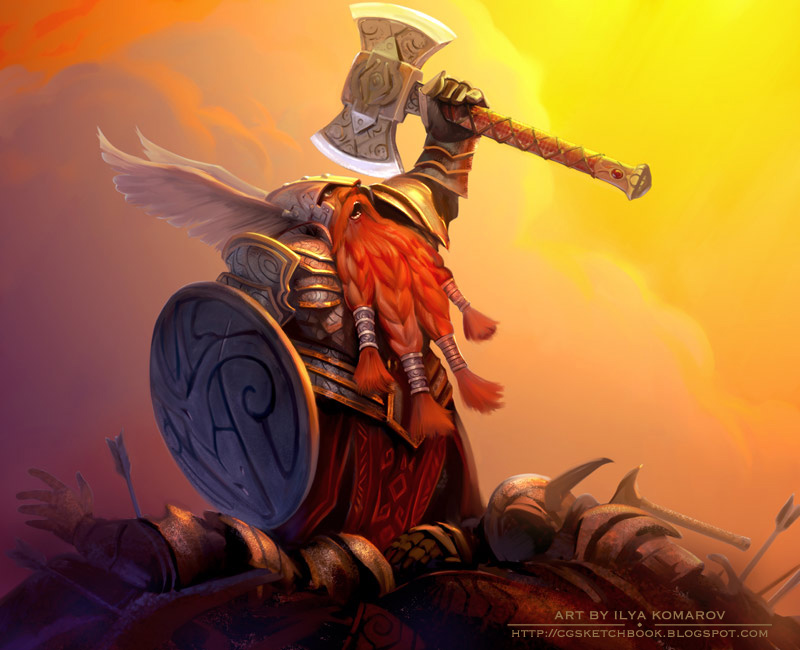

Building Bruenor, step 4
Bob chooses two positive characteristics for Bruenor: ‘courageous’ and ‘kind’. He also chooses a negative characteristic. Since Bruenor has a low Charisma, he chooses ‘impolite’. Bruenor’s background is clear to Bob. He was once a rich dwarven noble that was exiled, which gave him proficiency with jeweller’s tools. His quirk is that he always drinks too much beer when he has the opportunity.
5. Fill in Detail
Hit points. At 1st level, you have a number of hit points equal to the base number in your class description plus your Constitution score. When you level up, you gain extra hit points equal to half that base number plus your Constitution score.
Armor Class. If you are not wearing armor, your AC equals 10 + your Dexterity score. If you are proficient with armor, see Chapter 8.
Speed. All characters’ base walking speed is 6 metres per turn.
Gold. Your character starts with 50 gold pieces.
Equipment. All characters receive some starting equipment, which is included in your class details. Note down the accuracy and damage bonus for each weapon (see Chapter 8).
Building Bruenor, step 5
Bob notes down Bruenor’s hit points: he gains 10 from the fighter class, 3 from his Constitution score and an extra 1 because he is a dwarf. His AC does not use the basic calculation as he is proficient with light and heavy armor. He also chooses some equipment: heavy armor, a hammer, a shield, handaxes and an adventurer’s pack. Bob notes down Bruenor’s accuracy and damage roll bonus for his hammer and handaxes, which are all +3.
Chapter 3: Classes
Four basic classes are found in almost every D&D world and define most typical adventurers. They are listed below.
Cleric
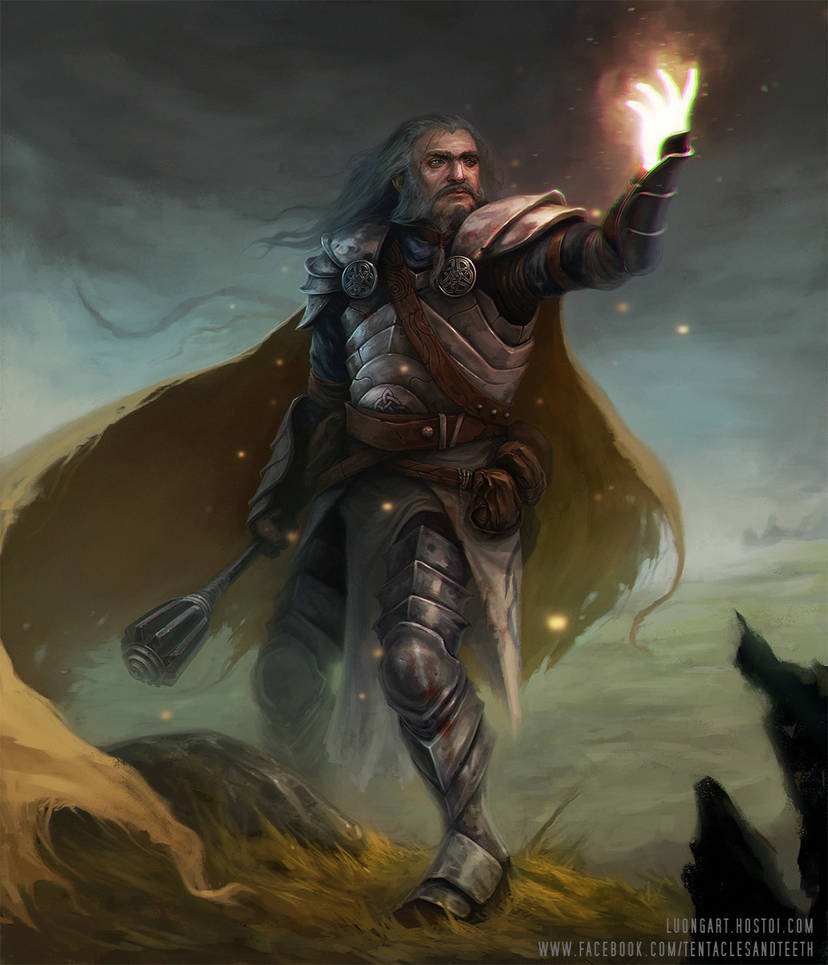
Arms and eyes upraised toward the sun and a prayer on his lips, a dwarf begins to glow with an inner light that spills out to heal his battle-worn companions.
Clerics are priestly champions who wield divine magic in service of a higher power.
- Base Hit Points: 8 + Constitution score
- Extra Hit Points on Level Up: 4 + Constitution score
Proficiencies:
- light armor
- heavy armor
- shields
- weak weapons
- religious lore
Equipment:
- any melee weapon
- any armor
- a shield
- an adventurer’s pack
- a holy symbol
Level 1
Spellcasting
You know 3 cantrips of your choice from the cleric spell list (see Chapter 9). These simple spells can be cast at will.
You have a mana total of 2. To cast a proper spell, you must expend a number of mana equal to the spell’s level. When you cast a basic damage spell, your accuracy bonus is your Wisdom score. You regain all expended mana when you finish a long rest. When you cast a spell, you must choose from your known spells. You know 3 spells, which must be 1st level spells that you must choose from the cleric spell list. You can change your known spells at the end of a long rest.
When you level up, your mana total increases by 2 and you can learn 1 extra spell.
Level 2
Disciple of Life
You are adept at restoring life to others. When you cast a healing spell, you can add your Wisdom score to the healing.
Undead Bane
Your deity’s power smites the unholy. You deal double damage to undead targets.
Level 3
Level 2 Spells
You can learn and cast level 2 spells.
Blessed Healer
You are blessed when you help others. When you cast a healing spell, you are also healed for 2d4 hit points.
Level 4
Ability Score Increase
Increase any of your ability scores by 1, up to a maximum of 5.
Level 5
Level 3 Spells
You can learn and cast level 3 spells.
Radiant Strike
Your attacks are infused with divine radiance. The damage rolls of your cantrips and weapon attacks increase by 1d8.



Fighter
A human in clanging plate armor holds her shield before her as she runs toward the massed goblins. An elf behind her, clad in studded leather armor, peppers the goblins with arrows loosed from his exquisite bow.
Fighters are masters of martial combat, skilled with a variety of weapons and armor.
- Base Hit Points: 10 + Constitution score
- Extra Hit Points on Level Up: 5 + Constitution score
Proficiencies:
- all weapons
- light armor
- heavy armor
- shields
Equipment:
- any 2 melee weapons
- any ranged weapon
- any armor
- a shield
- an adventurer’s pack
Level 1
Fighting Style
You adopt a particular style of fighting. You gain a +2 bonus to damage rolls with a particular type of weapon: ranged, two-handed or no properties. Alternatively, you gain a +1 bonus to your AC.
Second Wind
You have a limited well of stamina you can draw on to protect yourself from harm. Once per short rest, you can use a free action to heal 3d4 hit points.
Level 2
Action Surge
You can push yourself beyond your normal limits for a moment. Once per short rest, you can take an additional action on top of your regular action and possible free actions.
Level 3
Combat Superiority
You have learned to implement complex maneuvers into your fighting. You have five superiority charges. You can expend one of these charges when you hit an enemy to do one of the following:
- you deal +5 damage
- you knock the target prone
- the target is weak for its next attack
- the target is vulnerable to the next attack against it
- you deal 5 damage to all other enemies within 1 metre of the target
Level 4
Ability Score Increase
Increase any of your ability scores by 1, up to a maximum of 5.
Level 5
Extra Attack
Your attacks are relentless. When you take the Attack action on your turn, you can attack twice instead of once.
Rogue
When the slaver comes to investigate the sound from the shadows, the halfling assassin’s blade cuts his throat before he can make a sound.
Rogues are scoundrels who use stealth and trickery to overcome obstacles and enemies.
- Base Hit Points: 8 + Constitution score
- Extra Hit Points on Level Up: 4 + Constitution score
Proficiencies:
- light armor
- all weak weapons
- rapiers
- lockpicking
Equipment:
- any melee weapon
- any ranged weapon
- light armor
- an adventurer’s pack
- lockpicks
Level 1
Sneak Attack
You know how to strike at weak points. You deal 1d6 extra damage with your weapon attacks.
Agile
You have advantage on ability checks using your Dexterity score.
Level 2
Skulker
Your attacks seem to come out of nowhere. If enemies cannot directly see you, such as when you are behind a crate, you are accurate.
Blur
Your movement speed increases to 9 metres.
Level 3
Improved Sneak Attack
Your Sneak Attack damage increases to 2d6.
Assassinate
You are lethal when you get the drop on your enemies. When you hit an enemy that hasn’t had a turn yet, you deal double damage.
Level 4
Ability Score Increase
Increase any of your ability scores by 1, up to a maximum of 5.
Level 5
Improved Sneak Attack
Your Sneak Attack damage increases to 3d6.
Elusive
You are extremely hard to pin down. After each of your turns, you are protected against the first attack that targets you.


Wizard
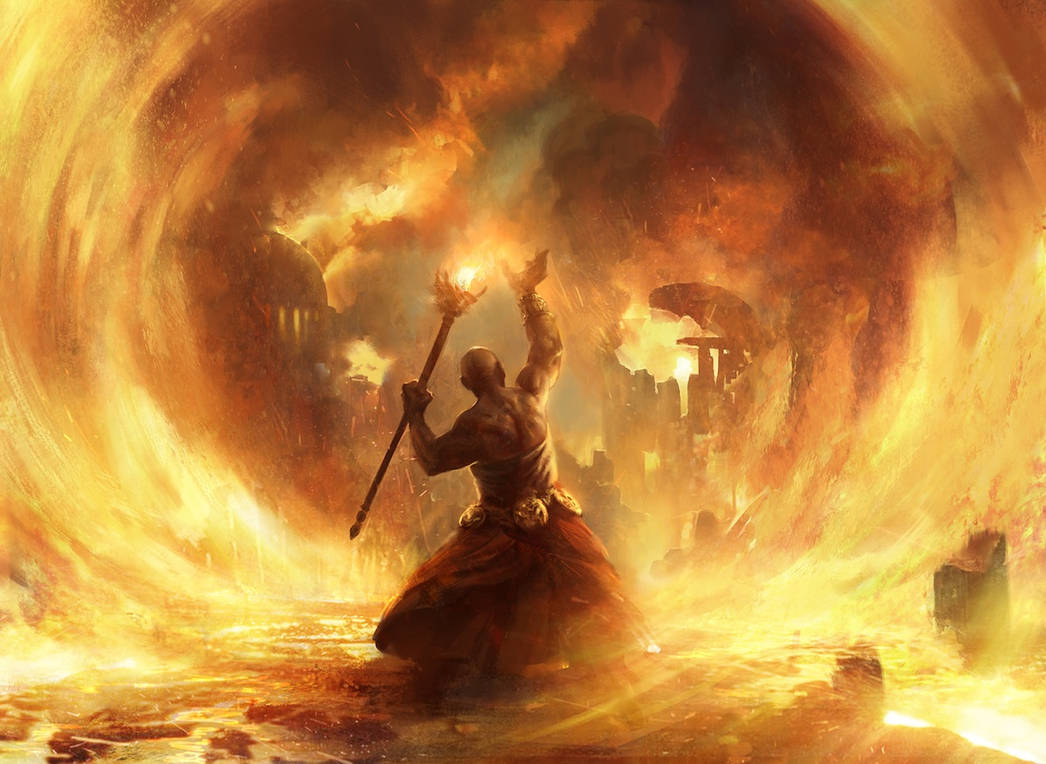
Fingers weaving in front of her, an elf completes her spell and launches a tiny bead of fire toward the enemy ranks, where it erupts into a conflagration that engulfs the soldiers.
Wizards are scholarly magic-users capable of manipulating the structures of reality.
- Base Hit Points: 6 + Constitution score
- Extra Hit Points on Level Up: 3 + Constitution score
Proficiencies:
- all weak weapons
- arcane lore
Equipment:
- any melee weapon
- an adventurer’s pack
- a wand, a staff or a gem
Level 1
Spellcasting
You know 3 cantrips of your choice from the wizard spell list (see Chapter 9). These simple spells can be cast at will.
You have a mana total of 2. To cast a proper spell, you must expend a number of mana equal to the spell’s level. When you cast a basic damage spell, your accuracy bonus is your Intelligence score. You regain all expended mana when you finish a long rest. When you cast a spell, you must choose from your known spells. You know 5 spells, which must be 1st level spells that you must choose from the wizard spell list.
When you level up, your mana total increases by 2 and you can learn 1 extra spell. You can also change your known spells.
Level 2
Arcane Recovery
You can deftly recover magical energy. Once per long rest, you can regain a number of mana equal to your level during a short rest.
Level 3
Level 2 Spells
You can learn and cast level 2 spells.
Savant
Your practice allows you to cast a certain spell without taxing yourself. Choose a 1st level spell from the wizard spell list that does not deal damage. You can cast it without expending mana.
Level 4
Ability Score Increase
Increase any of your ability scores by 1, up to a maximum of 5.
Level 5
Level 3 Spells
You can learn and cast level 3 spells.
Empowered Casting
You can channel more power into well-known spells. Your cantrips deal double damage.
Chapter 4: Races
The four most common races, found in almost every D&D world, are listed below.
Dwarf
Dwarves are short, stout humanoids that often have a long beard. They live in age-old clans surrounded with riches and grandeur, operating deep mines and blazing forges. Most dwarves are wary of outsiders and do not trust them easily.
Example names: (male) Baern, Bruenor, Eberk, Fargrim, Gardain, Harbek, Orsik, Oskar, Rangrim, Taklinn, Thorin, Tordek, Ulfgar, (female) Amber, Audhild, Eldeth, Falkrunn, Finellen, Gunnloda, Gurdis, Helja, Kathra, Kristryd, llde
Tough. You gain 1 extra hit point per level.
Darkvision. You can see in nonmagical darkness.
Tool Expert. You gain proficiency with working as a blacksmith, brewing and masonry.
Languages. You are proficient in Dwarvish.


Elf
Elves are tall, slender humanoids with pointed ears and long hair. They prefer to keep to themselves, living in ancient forests and beautiful structures, enjoying the wonders of nature. Elves love and excel in magic, art and music.
Example names: (male) Aelar, Erdan, Erevan, Galinndan, Hadarai, Laucian, Paelias, Quarion, Tharivol, Theren, Varis, (female) Althaea, Caelynn, Enna, Ielenia, Keyleth, Lia, Meriele, Naivara, Quelenna, Thia, Vadania, Xanaphia
Vigil. You do not need to sleep. Instead, you must spend rests doing light activity such as reading.
Cantrip. You know one cantrip from the wizard spell list that does not deal damage.
Keen Senses. You have advantage on ability checks that relate to perceiving something.
Languages. You are proficient in Elvish.
Halfling
Halflings are very short humanoids with rough features. Most halfling find happiness in simple pleasures: a blazing fire, a generous meal, fine drink and fine conversation, far away from monsters.
Example names: (male) Alton, Ander, Corrin, Eldon, Errich, Finnan, Garret, Lindal, Merric, Milo, Perrin, Reed, (female) Andry, Bree, Callie, Cora, Euphemia, Jillian, Lidda, Merla, Nedda, Paela, Shaena, Vani, Verna
Lucky. When you roll a 1 on a d20, you can reroll.
Light-footed. You have advantage on ability checks that relate to stealth.
Nimble. You can climb 3 metres up any reasonable surface without needing to make an ability check.
Languages. You are proficient in Halfling.
Human
Humans in the worlds of D&D look just like the ones in our world. This race is the most common and the most varied, with many different personalities and goals. Humans are the ones that bring about change in the world.
Example names: any real-world names, or a name from the above races
Versatile. You can spend an extra point when determining your ability scores.
Determined. Once per long rest, you can reroll any dice roll.
Skilful. You gain proficiency with any job or tool.
Chapter 5: Personality
Below are tables your can take inspiration from for the four aspects of your character’s personality: value, flaw, background, and quirk. Alternatively, you can roll a d12 to get one at random.
| d12 | Value |
|---|---|
| 1 | careful |
| 2 | compassionate |
| 3 | confident |
| 4 | courageous |
| 5 | curious |
| 6 | determined |
| 7 | enthusiastic |
| 8 | logical |
| 9 | merciful |
| 10 | orderly |
| 11 | righteous |
| 12 | trustworthy |
| d12 | Flaw |
|---|---|
| 1 | aggressive |
| 2 | annoying |
| 3 | big-headed |
| 4 | bossy |
| 5 | clumsy |
| 6 | greedy |
| 7 | gullible |
| 8 | indecisive |
| 9 | know-it-all |
| 10 | lazy |
| 11 | panicky |
| 12 | rude |
Variant: Inspiration
The DM can choose to reward players that do something creative or roleplay their character exceptionally with inspiration. When a character has an inspiration point, they can spend it to gain a +5 bonus to an accuracy roll or ability check after they rolled. A character can have any number of inspiration points, but ideally should not hold onto them for long periods of time.
| d12 | Background | Proficiency |
|---|---|---|
| 1 | Acolyte | religious lore |
| 2 | Artisan | pottery or other craft |
| 3 | Charlatan | gambling games |
| 4 | Criminal | lockpicking or forgery |
| 5 | Commoner | farming or other simple profession |
| 6 | Entertainer | instrument or other act |
| 7 | Hermit | herbalism |
| 8 | Noble | history and customs |
| 9 | Outlander | wayfinding |
| 10 | Sage | astronomy or other subject |
| 11 | Sailor | sailing |
| 12 | Soldier | working as blacksmith |
| d12 | Quirk |
|---|---|
| 1 | You’re obsessed with personal hygiene. |
| 2 | There is a specific mundane item that you are deathly afraid of. |
| 3 | You fall in and out of love easily and are always pursuing someone. |
| 4 | You always make unfunny jokes, even in unfit moments. |
| 5 | You like drinking or gambling a bit too much. |
| 6 | You cannot resist stealing anything you set your eyes on. |
| 7 | You use long words in an attempt to sound smart. |
| 8 | You quote (made up) stories or proverbs in every situation. |
| 9 | You are oblivious to specific social norms or customs. |
| 10 | You cannot resist finding out everything that people don’t tell you about. |
| 11 | You know all the laws of the land to the finest detail and insist on following them. |
| 12 | You are extremely suspicious of even the most mundane things. |
Chapter 6: Adventuring
Delving into the ancient Tomb of Horrors, slipping through the back alleys of Waterdeep, hacking a fresh trail through the thick jungles on the Isle of Dread — these are the things that Dungeons & Dragons adventures are made of.
This chapter covers the basics of the adventuring life, from the mechanics of movement to the complexities of social interaction. The rules for resting are also in this chapter, along with a discussion of the activities your character might pursue between adventures. These areas are less rule-heavy than combat, as many people prefer to keep it simple and skip over uninteresting details.
Exploration
Movement
The DM can summarize the adventurers’ movement without calculating exact distances or travel times: “You travel through the forest and find the dungeon entrance late in the evening of the third day.” Sometimes, however, it is necessary to keep track of time during travel. If so, use the table below.
A creature can push themselves to travel one and a half times the maximum hours. However, they must succeed on a DC 10 Constitution check or become exhausted. They cannot travel any further while exhausted.
If the terrain requires slow movement, such as with ankle-deep water, dense foliage or ice-covered ground, movement speed is halved.
While moving, characters should establish a marching order so that the DM knows who would be the one to first fall into a trap or be ambushed from behind. They should also make a Wisdom check when they begin to decide what things they will notice along the way.
Jumping
Characters can jump horizontally a number of metres equal to their Strength or Dexterity score. They can also jump 1 metre vertically.
Falling
When a character falls from a height, they take 1d8 damage for every 5 metres they fall.
Food and Water
Characters can survive with little to no food or water for a number of days equal to their Constitution score before they automatically become exhausted. After a further same number of days, they fall unconscious.
Being Underwater
Characters can hold their breath for a number of minutes equal to their Constitution score. After that, they automatically become unconscious. Ability checks and accuracy rolls have disadvantage underwater, unless the creature has a swimming feature.
Visibility
Lightly obscured areas include patchy fog, moderate foliage or areas under a bright moon. Creatures have disadvantage on abilty checks made to perceive something in dim light.
Heavily obscured areas include unlit dungeons, opaque fog, or magical darkness. Creatures in these areas are weak, and vulnerable to attacks by creatures that can see in darkness.
Characters can see in dark areas if they have a light source such as a torch or a spell that emits light. Particularly large areas, such as vast caverns or outdoor spaces at night, might need a more powerful source of light to see into the distance.
There are too main approaches people have to roleplaying:
Descriptive
You describe your character’s words and actions, including the emotions they show.
Chris: “Tordek spits on the floor angrily, growls an insult at the bard, and stomps over to the bar.”
Active
You speak with your character’s voice and might even show some body language, though you still might have to describe some things.
Chris: “(gruff voice) ‘I was wondering why it smelled so awful here’ (normal voice) Tordek gets up and walks to the bar.”
Sometimes, in crucial moments, the DM might ask you to roll a Charisma check to determine how an NPC reacts to your interaction.
Resting
Heroic though they might be, adventurers can’t spend every hour of the day in the thick of exploration, social interaction, and combat. They need rest — time to sleep and eat, tend their wounds, refresh their minds and spirits for spellcasting, and brace themselves for further adventure.
Short rest
A short rest is a period of downtime, at least 1 hour long, during which a character does nothing more strenuous than eating, drinking, reading, and tending to wounds. You heal a third of your total hit points (rounded up) and some abilities recharge during a short rest (see your class description).
Long rest
A long rest is a period of extended downtime, at least 8 hours long, during which a character sleeps for at least 6 hours and performs no more than 2 hours of light activity, such as reading, talking, eating, or standing watch. You heal all hit points and all abilities recharge during a long rest.
Between Adventures
When an adventure is over, your party can spend one or more months without seeing any action. In one month of downtime, you can:
- gain any proficiency
- earn 100 x your level gp
- learn a cantrip or spell from your spell list if you are a spellcaster
- (variant) increase any ability score by 1, up to a maximum of 5

Chapter 7: Combat
The clatter of a sword striking against a shield. The terrible rending sound as monstrous claws tear through armor. A brilliant flash of light as a ball of flame blossoms from a wizard’s spell. Roars of fury, shouts of triumph, cries of pain. Combat in D&D can be chaotic, deadly, and thrilling.
Order of Combat
Initiative
Combat consists of rounds, which are 6 seconds in real time. Everyone has one turn every round.
Initiative determines the order of turns during combat. This is decided before the adventure. Player characters are ordered from highest Dexterity score to lowest Dexterity score. If two scores are the same, players choose who goes first. The DM can choose where to place monsters in initiative, but the recommended for regular enemies is between Dexterity scores of 2 and scores of 1.
Surprise
The DM determines if one party is able to be stealthy enough to surprise another. This usually happens by comparing a party’s Dexterity check to another party’s Wisdom check. If a party is surprised, they do not get to act on the first round of combat.
Your turn
On your turn, you can move a distance up to your speed and take one action. Actions that everyone can take are described in this chapter, and some class features provide other possible actions. You can also take any number of free actions if you have a feature that allows you to do so. You can do these things in any order you like, and you can split up your movement any way in between them.
Movement
Combat is played using a square grid and miniatures or other tokens. A square on the grid represents 1 metre squared. A player character fits on one square. Larger creatures might occupy more squares. You use 1 metre of movement to move from one square to another, even if you move diagonally.
If there is difficult terrain such as low furniture, rubble and undergrowth or you are underwater, it takes 2 metres of movement to move into it. The space of another creature is considered difficult terrain and you cannot end your move there.
Actions
Attack
You make one attack with a weapon. This includes an accuracy roll and a damage roll. See Chapter 1 and 8 for details.


Cast a Spell
All spells take one action to cast. Most basic damage spells require an accuracy roll, after which the damage dice can be rolled without any modifiers. See Chapter 9 for details.
Dash
Your movement speed doubles until the end of your turn.
Other
You can improvise any action. The DM determines what rolls you must make or what effects they have.
Hit Points
0 Hit Points
Damage is deducted from hit points. If you are reduced to 0 hit points, you fall unconscious and damage no longer affects you. A character next to you can make a DC 10 Wisdom check to heal you for 1 hit point. If you are healed at 0 hit points in this way or in any other way, you are brought back to consciousness.
When you reduce a monster to 0 hit points, you can choose to kill it instantly or have it fall unconscious. The DM might rule that major villains automatically only fall unconscious.
Variant: Player Death
If you want to make the game more tense, consider adding this rule. When a player is unconscious at 0 hit points and take damage three separate times, they die.
Chapter 8: Equipment
Coinage
Gold pieces (gp) are the most common currency in the world of D&D. One gold piece is roughly equivalent to one dollar, euro or pound. With one gold piece you can buy a drink at a bar or a flask of oil. A weak weapon or a night at an inn usually costs around 10 gold pieces.
Armor and Shields
Adventurers can be found wearing a variety of different types armor, from leather to heavy plate mail. Your armor determines your armor class or AC, which is how difficult it is for enemies to hit you. However, since it is difficult to do anything while wearing armor you are inexperienced with, you need proficiency with the type of armor to gain its benefit. Here are the general types of armor available.
| Type | AC |
|---|---|
| Unarmored | 10 + Dexterity score |
| Light Armor | 13 + Dexterity score |
| Heavy Armor | 13 + Strength score |
Some adventurers also carry shields. If you are using a shield and are proficient with it, your AC increases by 2.
Weapons
Weapons can be the difference between life and death when adventuring. Your class gives you proficiency with certain weapons or weapon types. You can only use weapons you are proficient with properly, any other weapons count as improvised weapons for you.
The tables below shows the most common types of weapons, though all of these have many different forms. For example, a rapier functions the same as a katana. Listed next to the weapons is the damage they deal and any special properties they have.
Weapons are sorted into Dexterity-based and Strength-based. Dexterity-based weapons use your Dexterity score to determine the accuracy and damage bonus, while Strength-based ones use your Strength score. In addition, they are sorted into weak and strong weapons.
The base range for weapons is 1 metre.
Weak
Strength-based
| Greatclub, Quarterstaff | 1d8 | two-handed |
| Mace, Spear | 1d6 | |
| Unarmed strike | 1 | |
| Javelin, Handaxe | 1d6 | ranged |
Dexterity-based
| Shortsword | 1d6 | |
| Sling | 1d4 | ranged |
| Light crossbow, shortbow | 1d8 | ranged, two-handed |
Strong
Strength-based
| Greataxe, Greatsword | 1d12 | two-handed |
| Longsword | 1d8 |
Dexterity-based
| Rapier | 1d8 | |
| Hand crossbow | 1d6 | ranged |
| Heavy crossbow, longbow | 1d10 | ranged, two-handed |
Some weapons have special properties related to their use.
Two-handed. You must use both hands when wielding this weapon. Therefore, you cannot benefit from a shield.
Ranged. You can attack with this weapon from a range of maximum 20 metres. If you attack a target 1 metre away with a ranged weapon, you have disadvantage on the accuracy roll. Weapons are assumed to have enough ammunition or copies to last a battle, after which they can be collected.
Improvised weapons
Sometimes characters don't have their weapons and have to attack with whatever is at hand. An improvised weapon includes any object you can wield in one or two hands, such as broken glass, a table leg, a frying pan, a wagon wheel, or a dead goblin.
When you attack with an improvised weapon, it deals 1d4 damage and optionally has the ranged property. The DM determines whether it is Dexterity-based or Strength-based.
Adventuring Gear
There is no comprehensive list included with all the items that could be purchased in a shop. When a character wishes to purchase something, the DM decides whether it would be available and puts a price on it, usually no more than 100 gp. Here are the descriptions of the few noteworthy items:
Adventurer's pack (50 gp). Includes a backpack, a bedroll, a mess kit, a tinderbox, torches, rations, a waterskin and 20 metres of rope.
Potion of Healing (100 gp). You can use an action to drink or administer this potion to heal 8 hit points.


Chapter 9: Spells
Certain creatures can use the thread of magic to create spells, ranging from simple effects to bending reality.
Cantrips are simple spells that casters know very well and can cast without expending mana. Spells other than cantrips have a level from 1 to 3. These levels do not correlate with player level. To cast them, casters need to expend mana equal to the spell’s level. Casters also need to know a spell to cast it. The mechanics for learning and changing known spells differ between classes.
Spells are divided between basic damage spells and other spells. To cast a basic damage spell, you must make an accuracy roll using the ability described in your class description as the accuracy bonus. On a hit, you roll the damage dice without any modifiers and the target suffers from any conditions described in the spell. If you roll a 20, the spell deals double damage. These spells target a certain number of creatures or an area, which is noted in the description – make a separate accuracy roll for each target. Other spells have other effects than damage and optionally have a duration.
All spells can be cast as an action and have a range of 20 metres.
There are two special notations that are appear in some spells.
Half damage (H). If you miss with a spell that has this notation, it deals half the total damage rolled. However, the target does not suffer from any additional effects.
Concentration (C). You cannot have two spells that require concentration active at the same time.
Cleric Spell List
Basic Damage Spells
| Name | Damage | Other effects | Target |
|---|---|---|---|
| Cantrips | |||
| Sacred Flame | 1d8 | - | 1 target |
| Radiant Blast | 1d6 | - | 2x2 metre area |
| 1st level | |||
| Inflict Wounds | 3d8 | - | 1 target |
| Guiding Bolt | 4d6 | vulnerable to next attack | 1 target |
| 3rd level | |||
| Curse | 0 | weak for 1 minute | 1 target |
Other Spells
| Name | Effects | Duration |
|---|---|---|
| Cantrips | ||
| Guidance | A creature can add 1d4 to their next ability check. | 1 hour |
| Light | An object shines with light as bright as a torch. | 1 hour |
| Spare the Dying | A creature with 0 hit points is healed for 1 hit point. | - |
| Thaumaturgy | You create a harmless sensory effect e.g. your eyes glow, flames flicker, a loud voice. | 1 minute |
| 1st level | ||
| Cure Wounds | A creature is healed for 3d4 hit points. | - |
| Bless (C) | 3 creatures can add a +2 bonus to their accuracy rolls. | 1 minute |
| Shield of Faith (C) | A creature gets a +2 bonus to their AC. | 1 minute |
| Locate Object | You discover the location of any specific item within 100 metres. | - |
| 2nd level | ||
| Spiritual Weapon (C) | A spectral weapon appears. You can deal 1d10 damage to 1 target as a free action once per turn. | 1 minute |
| Aid | The maximum hit points of 3 creatures increases by 5. | Until next long rest |
| Enhance Ability (C) | A creature gets a +2 bonus to one of their ability scores. | 1 minute |
| Truth | A creature cannot speak a direct, deliberate lie. | 10 minutes. |
| 3rd level | ||
| Mass Healing | 6 creatures are healed for 2d4 hit points. | |
| Beacon of Hope (C) | Allies within 20 metres receive the maximum possible healing from any dice rolls. | 1 minute |
| Create Nutrition | You create decent food and water that feeds up to 15 people. | - |
| Revive | A creature that died within the last hour is returned to life within 1 hit point. | - |
Wizard Spell List
Basic Damage Spells
| Name | Damage | Other effects | Target |
|---|---|---|---|
| Cantrips | |||
| Fire Bolt | 1d10 | - | 1 target |
| Double Zap | 1d6 | - | 2 targets |
| Ray of Frost | 1d6 | weak for next attack | 1 target |
| 1st level | |||
| Burning Hands (H) | 3d6 | - | 2x3 metre area |
| Chromatic Orb | 3d8 | - | 1 target |
| 2nd level | |||
| Scorching Ray (H) | 6d6 | - | 1 target |
| Earth Grasp | 0 | vulnerable and incapacitated until start of your next turn | 1 target |
| Shattering Sound (H) | 3d8 | - | 4x4 metre area |
| 3rd level | |||
| Fireball (H) | 6d6 | - | 4x4 metre area |
| Lightning Bolt (H) | 5d10 | - | 1 target |
Other Spells
| Name | Effects | Duration |
|---|---|---|
| Cantrips | ||
| Mage Hand (C) | A floating hand appears that you control. It must remain within 20 metres and it cannot attack. | 1 minute |
| Illusion (C) | A static visual illusion appears with a size of up to 1 metre cubed. Physical objects pass through the illusion. | 1 hour |
| Prestidigitation | You create a harmless sensory effect, e.g. a shower of sparks, a horrid smell, a faint tune. | 1 minute |
| 1st level | ||
| Magic Missile | 3 bolts that each deal 1d6 damage automatically hit a target (can be the same target). | - |
| Mage Armor | Light armor appears and you are considered proficient with it. | Until next long rest |
| Identify | You learn all information about an item you are holding (unless it has powerful magic). | - |
| Disguise Self (C) | You alter your visual appearance in any way, but cannot change your shape. | 1 hour |
| Charm (C) | A creature you choose regards you as a casual friend if you are not hostile. | 1 hour |
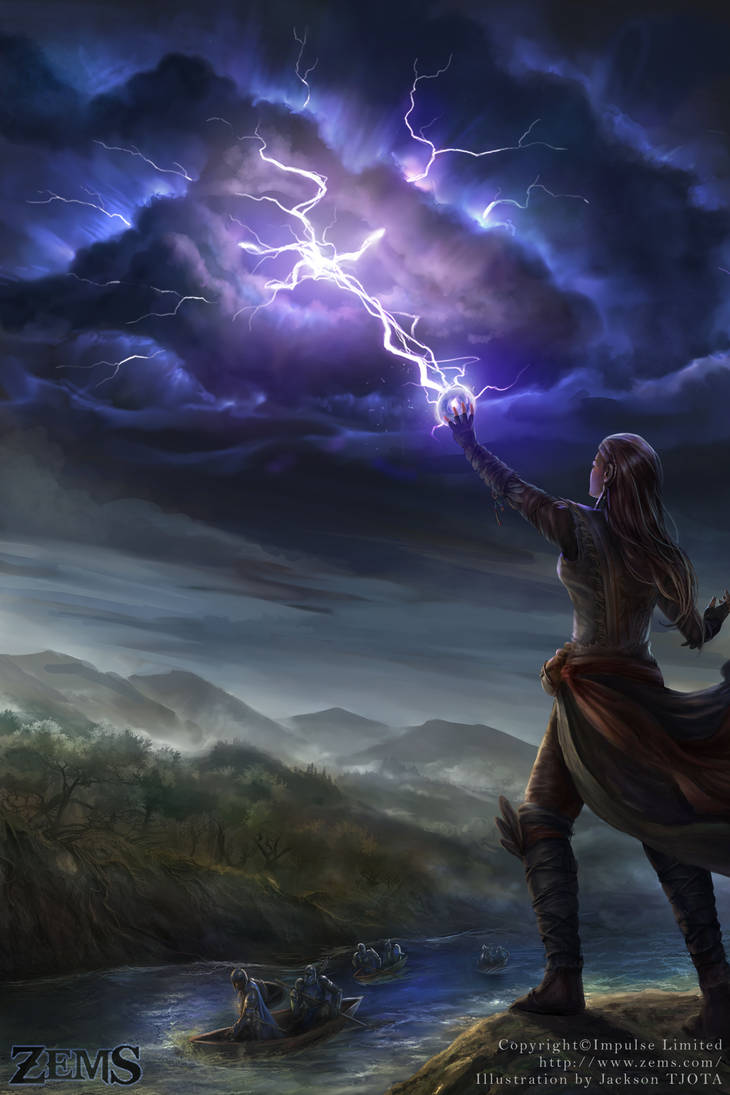
| Name | Effects | Duration |
|---|---|---|
| 2nd level | ||
| Darkness (C) | A 5x5 metre area is filled with darkness that nonmagical light or darkvision cannot penetrate. | 10 minutes |
| Invisibility (C) | A creature becomes invisible until they attack. In combat, this means they are protected and accurate. | 1 hour |
| Teleport | You instantly teleport to any location within 20 metres. | - |
| 3rd level | ||
| Fly | A creature gains the ability to fly 10 metres per turn. | 10 minutes. |
| Counterspell | You end a magical effect already in place, as long as it is of 3rd level or lower. | - |
| Tower | You create a stone tower that is at most 25 metres cubed. | 24 hours |
| Haste (C) | A creature has its speed doubled and can take an additional action on their turn (cannot be used to cast spells except cantrips). | 3 turns |


Chapter 10: Monsters
Along their travels, adventurers will encounter snarling wolves, bloodthirsty orcs and mighty dragons. While most monsters are designed as enemies for players, all creatures that can be interacted with, such as inn keepers or horses, are monsters by definition.
Statistics
A monster’s statistics, sometimes referred to as its stat block, provide the essential information that you need to run the monster. Here is a list of all the things that must be included:
Size. Medium and smaller creatures fit in a 1x1 metre square. Large creatures fit in a 2x2 square. Huge creatures must have a specified size.
Challenge Rating. The difficulty of defeating the monster.
Armor Class (AC). The minimum you must roll to hit the monster with an attack.
Hit points. How much damage you need to deal in order to kill or render the monster unconscious.
Traits. Passive abilities some monsters have, such as having advantage on certain attacks or being able to move through walls.
Actions & Free Actions. The actions and free actions a monster can take in combat, such as weapon attacks, spells or special attacks like a dragon’s breath. Some can only be used a few times per encounter, noted in brackets (X) after the name of the action.
Importing
Monsters can be directly imported from the Monster Manual by the DM, with a single change: their AC must be reduced by 2. Many of their statistics can also be simplified, such as through several omissions:
- alignment
- damage types and resistances
- ability scores (choose a number between 1 and 5 if absolutely necessary)
- speed (assume it is 6 metres and include other speeds in its traits)
- skills
- senses (set an appropriate DC for any stealth checks and assume monsters have darkvision)
- languages
- spellcasting (add the most important spells to its Actions)
If a trait does not fit the simplified rules or is too complicated, it can easily be modified. Saving throws can still exist as simple ability checks, though the DC should be lowered by 1 or 2 to account for a lack of proficiencies. However, players usually find it simpler if they are told whether they are subject to an effect or not. Some abilities can also be separated if necessary.
Below is an example of a simplified monster stat block.
Wolf
Medium
- Armor Class 11
- Hit Points 11
- Challenge 1/4
Traits
Pack Tactics. The wolf has advantage on accuracy rolls if an ally is within 1 metre of the target.
Actions
Bite. +4 accuracy, 2d4 + 2 damage, 1 target
Free Actions
Pounce (1). +4 accuracy, prone, 1 target

Encounters
When creating a combat encounter, decide on which monsters you would like to use first. You can use two methods: directly importing from the Monster Manual or using the same monsters with custom statistics.
Import
To easily build a reasonably challenging encounter for players, use this chart to determine the CR of the monsters in regard to their number and the player’s level. It is assumed that there are 5 players, so tweak encounters as necessary for a different number.


| Party Level | Monster CR | ||
|---|---|---|---|
| 1 monster | 2 monsters | 4-5 monsters | |
| 1 | 1 | 1/2 | 1/8 |
| 2 | 2 | 1 | 1/4 |
| 3 | 3 | 1 | 1/2 |
| 4 | 5 | 2 | 1 |
| 5 | 6 | 4 | 2 |
Remember, these are just guidelines and some numbers might be on the edge of too hard or too easy due to the limitations of CR. It is always better to be safe than sorry, as newer players might still be learning the rules of the game.
You can tweak encounters by reducing the number of monsters or reducing their damage output. For solo battles, it is especially recommended to reduce the damage output and increase the health in compensation, as some higher CR monsters could potentially knock down a player in one hit.
Custom Statistics
Alternatively, you can use this table to create your own monsters. Divide the total hit points and damage over any number of monsters, keeping the AC and accuracy bonus the same over all of them. If an attack would deal too much damage, split it up into several weaker attacks. Then, you can add some traits and special attacks.
| Party Level | Armor Class | Accuracy bonus | Total Hit points | Total Damage |
|---|---|---|---|---|
| 1 | 10 | +3 | 60 | 8 |
| 2 | 11 | +3 | 80 | 12 |
| 3 | 11 | +3 | 100 | 16 |
| 4 | 12 | +4 | 120 | 20 |
| 5 | 12 | +4 | 200 | 28 |
Fun Encounters
Let your imagination run wild and build something your players will enjoy. Combat encounters will be much more fun for players if the environment is interesting, such as with pools of lava, barrels of oil or moving elements. Another way to make a combat encounter interesting is to change the goal from ‘kill all enemies’ to something more unique, such as ‘destroy that item’ or ‘separate enemies from a source of power’.
Chapter 11: Magic Items
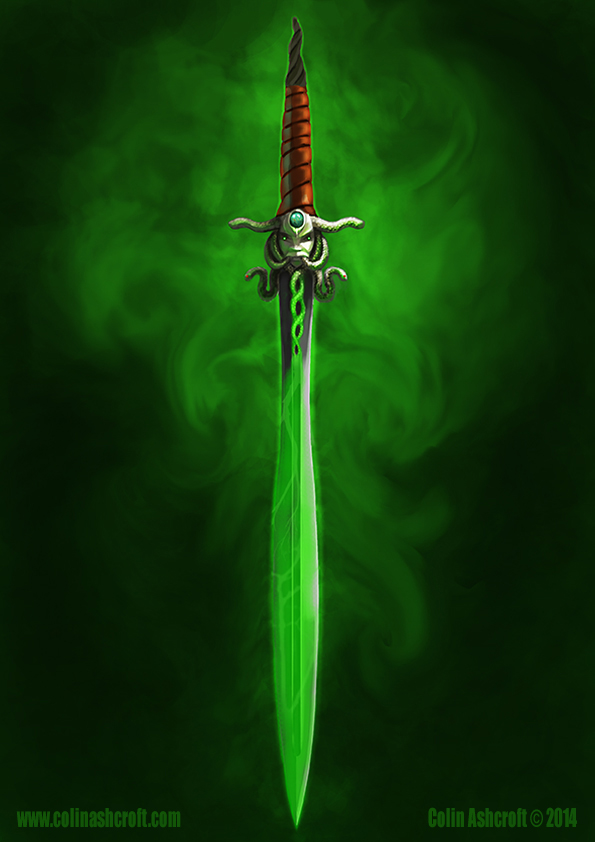
A longsword glowing with moonlight, a ruby necklace that is always cold to the touch, a ticking device that suddenly unfolds into a mechanical bird – magic items are the greatest reward for players at the end of a hoard of enemies.
As a DM, you have complete control over what magic items you give your players, or if you give them any at all. However, in a regular campaign with magic items, it is recommended to give out around 2 magic items per player over the course of five levels.
When a creature touches a magic item, they immediately know its properties (except curses) if it is not a very powerful, mysterious item. They can then immediately use the item with all of its properties.
Example Items
The Dungeon Master’s Guide has a plethora of magic items to take inspiration from or convert. Here are a few of the most basic magic items, which are not to be underestimated as they can go a long way with a little interesting description. Some have a variety of options – choose something that looks cool and fits your players.
Armor +1
This is [any armor]. You have a +1 bonus to AC while wearing this armor.
Weapon +1
This is [any weapon]. You have a +1 bonus to accuracy and damage rolls with this weapon.
Wand +1
You have a +1 bonus to spell accuracy rolls with this wand.
Item of Spell Storing
This item has [X] charges. While holding it, you can expend 1 charge as an action to cast [any spell] from it. The item regains all charges during a long rest.
Item of Ability
Your [any ability] score increases by 1, up to a maximum of 5.
Item of Skill
You gain advantage on ability checks related to [any specific activity].
Spell Scroll
A spell scroll has the words of a single spell. You can use an action to cast the spell on the scroll (with an accuracy bonus of +3, if necessary), after which the scroll crumbles to dust.
Bag of Holding
This bag has an interior considerably larger than its exterior. It can hold up to 200kg of things, including creatures, that fit into it. It weights next to nothing.
Curses
Some magic items are cursed. If a creature attempts to use a magic item that is cursed, they become inflicted with its curse. The Dungeon Master’s Guide has several magic items that are cursed. Here are a few curses that can be applied to many items.
Longing. You have disadvantage on accuracy rolls with weapons other than this one.
Thirst. If you hit an enemy with this weapon, you can only attack that enemy until it dies or 1 minute passes.
Pain. You take [1dX] damage each time you use or attack with this item.
Lethargy. Your speed is halved while you are carrying this item.
Horror. Your face becomes covered in dark tendrils.
The DM determines how you must break a curse. Frequently, it is not as simple as discarding the item, as most cursed items have magic that prevents them from being removed from their owner. Some curses might require a 1-hour ritual, usually needing materials that cost a certain amount, to be lifted. Others might require you to complete a short quest relating to the item.
Chapter 12: Conditions
Conditions alter a creature's capabilities in a variety of ways and can arise as a result of a spell, a class feature, a monster's attack, or other effect. Most conditions, such as weak, are impairments, but a few, such as protected, can be advantageous.
A condition lasts either until it is countered (the prone condition is countered by standing up, for example) or for a duration specified by the effect that imposed the condition. Here are the definitions for the most common conditions.
Accurate
This creature’s attacks are made with advantage.
Exhausted
The creature is weak and has their speed halved. This condition is removed after a long rest.
Incapacitated
The creature cannot take actions or free actions.
Prone
The creature moves at half speed and is weak. It is vulnerable to melee attacks and protected from ranged attacks. It can use 3 metres of movement to stand up.
Protected
Attacks made against this creature have disadvantage.
Restrained
This creature cannot move willingly.
Unconscious
The creature is incapacitated, prone and cannot perceive their surroundings.
Vulnerable
Attacks made against this creature have advantage.
Weak
This creature’s attacks are made with disadvantage.


Quick Reference
Abilities
- Strength: athletics, bodily power, using heavy weapons
- Dexterity: agility, reflexes, sneaking, using light weapons
- Constitution: health, stamina, vitality
- Intelligence: memory, analytical skill
- Wisdom: awareness, insight
- Charisma: social skills, leadership, lying, performance
Advantage & Disadvantage
Advantage: roll two d20s and take higher result
Disadvantage: roll two d20s and take lower result
Cannot roll more than two d20s. If both would apply, roll only one d20.
Normal Pace Travel
| Method | Speed | Max Time | Max Distance |
|---|---|---|---|
| On foot / cart | 5 km/h | 8 hours | 40 km |
| On horseback | 10 km/h | 8 hours | 80 km |
Jumping
- Horizontally: Strength or Dexterity score metres
- Vertically: 1 metre
Falling
1d8 damage per 5 metres
Vision
Lightly obscured: disadvantage on ability checks related to perception
Heavily obscured: weak, and vulnerable to creatures that can see in darkness
Rests
| Type | Duration | Healing | Ability Recharge |
|---|---|---|---|
| Short | 1 hour | 1/3 | some |
| Long | 8 hours | all | all |
Your turn
- move up to your speed
- 1 action
- any number of free actions
Common actions
- Attack: make 1 weapon attack
- Cast a Spell: cast any spell
- Dash: double your speed
Falling unconscious
If you are reduced to 0 hit points, you fall unconscious and damage no longer affects you. A character next to you can make a DC 10 Wisdom check to heal you for 1 hit point. If you are not at 0 hit points anymore, you are brought back to consciousness.
Armor types
| Type | AC |
|---|---|
| Unarmored | 10 + Dexterity score |
| Light Armor | 13 + Dexterity score |
| Heavy Armor | 13 + Strength score |
| Shield | +2 |
Weapons
All weapons have a range of 1 metre unless otherwise noted.
Two-handed. You must use both hands when wielding this weapon.
Ranged. You can attack with this weapon from a range of maximum 20 metres. If you attack a target 1 metre away with a ranged weapon, you have disadvantage on the accuracy roll.
| Improvised weapons | 1d4 | (ranged) | Strength or Dexterity-based |
| Unarmed strike | 1 | Strength based |
Attacking
- Roll d20 + accuracy bonus.
- Is it higher than or equal to target’s AC? (20 = 2x damage)
- Roll damage dice of weapon + damage bonus.
- Deduct from target’s hit points.
Spells
All spells can be cast as an action and have a range of 20 metres unless otherwise noted.
Half damage (H). If you miss with a spell that has this notation, it deals half the total damage rolled. However, the target does not suffer from any additional effects.
Concentration (C). You cannot have two spells that require concentration active at the same time.
Spellcasting
- Roll d20 + accuracy bonus.
- Is it higher than or equal to target’s AC? (20 = 2x damage)
- Roll damage dice of spell.
- Deduct from target’s hit points.
Conditions
- Accurate: This creature’s attacks are made with advantage.
- Exhausted: The creature is weak and has their speed halved. This condition is removed after a long rest.
- Incapacitated: The creature cannot take actions or free actions.
- Prone: The creature moves at half speed and is weak. It is vulnerable to melee attacks and protected from ranged attacks. It can use 3 metres of movement to stand up.
- Protected: Attacks made against this creature have disadvantage.
- Unconscious: The creature is incapacitated, prone and cannot perceive their surroundings.
- Vulnerable: Attacks made against this creature have advantage.
- Weak: This creature’s attacks are made with disadvantage.

Simple.
Short.
Still D&D.
Dungeons & Dragons should be a game that is accessible to everyone. However, many new players might be put off by the fact that even the Basic Rules are more than 170 pages long due to very specific descriptions, complicated mechanics and a strive for realism that many groups already ignore.
This version of D&D aims to bring the mechanics to their most simple format, while retaining the fun and creativity of the game. This way, it is quick and easy to teach and play with children, older people or simply people that want to try roleplaying games without too much hassle about learning rules.
Made by GoddessArtemis
What comes next?
If you can find a group of friends that are willing to try out this version of Dungeons & Dragons with you, that is great – even better if one of them has experience playing the game before.
If you don’t know any DMs, try taking on that role yourself. Any official or unofficial D&D adventure book is a good way to run a campaign without the trouble of having to come up with everything yourself.
Alternatively, there are many places on the internet to find players for any roleplaying game, both online and offline: the LFG subreddit is a good place to start.
Once you feel like you want to explore more options and build characters that are even more interesting, buy the Player’s Handbook to experience the real Dungeons & Dragons.
Credits
Baptism of Fire by 88grzes
Dungeons and Dragons 5th Ed by CarmenSinek
Clip Art - RPG Dice by ya-webdesign.com
Cluster of Blossoms Shining by przemek-duda
Ardent Vigorous Offensive by kerembeyit
Dwarven Clan Lord by Ilya Komarov
Dwarf Cleric* by TentaclesandTeeth
Eyes in the Back by kerembeyit
Burglar by AlekseyBayura
Fated Conflagration by AdamPaquette
Picking Through the Horde by kieranyanner
Traveling Party by kieranyanner
Dragon of Icespire by 88grzes
Voidwielder MTG by chasestone
Zems - Lightning Storm by tjota
Dispel by chasestone
Seeking for enemy by Alaiaorax
Goblin Battle by kieranyanner
Fantasy Sword by Colin-Ashcroft
Suppression Bonds by ChrisRallis
Full page stains by Jared Ondricek
Encounter balancing inspired by GiffyGlyph