
Preface
Mount Yari is a huge mountain on an already huge mountain range. Yari translates to “Spear” for the way the mountain peaks spear through the clouds. On that mountain lies the fabled Sukaikingudamu, or the Skye Kingdom. It is said the city itself was founded by the God of Wind Fūjin himself; he blew across the lands to shape the mountains as they are. Shaped the mountains to peak above the clouds and carved a Holy Temple in its highest peak. So it is told that here Amaterasu, the Goddess of the Sun, was born.
For centuries, this temple was the goal for many Monks who came to honor Fujin and Amaterasu. The temple was held by a conclave of Sorcerers and Druids called Taiyonoban’nin, also known as the Keepers of The Sun. Over time there grew a village around the temple, that village grew to be a city and that city grew to shape the rest of Mount Yari.
A massive city below, in and above the clouds. On clear days, if you could fly over the mountain peaks you would see terraces on different levels of the mountain, elaborate temples hewn out of and into the mountain face, waterfalls pouring out and creating lakes and rivers, which in turn are shaped into canals, squares and gardens bordered by markets, houses and farmlands. You’d see the highest peak being seemingly free of man-made structures except for the ancient temple, below that the most elaborate and decorated buildings where the city’s counsel is seated.
From there the city spreads out over the mountain, countless rope-bridges connecting platforms and peaks. Some buildings seemingly alone on a peak, other mountain faces crammed full with residential buildings.
For all its size, the Skye Kingdom is recluse and remote, but it is home to a noble folk. People living in this Kingdom have all earned it some way or another. People of spiritual
prowess, political power, unique talents or just through sheer will; everyone in Skye is proud to be a citizen of this beautiful, magic place. Because of this, culture is abundant on Mount Yari.
There is always life and light on the sides of this mountain, always trade to be done and wares to be had. There is music, theater and schools of all sorts. Skye People are well versed in their history. But the light recedes in places deep in the mountain caverns, and although a walk through the beautiful center gardens would tell you, there is darkness there too.
The city is home to three major factions, one as the founders and keepers of the Peak, one as the governing party and one who holds the hearts and minds of most citizens. These three facets aren't always in a perfect balance and there is a constant shifting of importance and influence.

PART 1
Climbing Mt. Yari
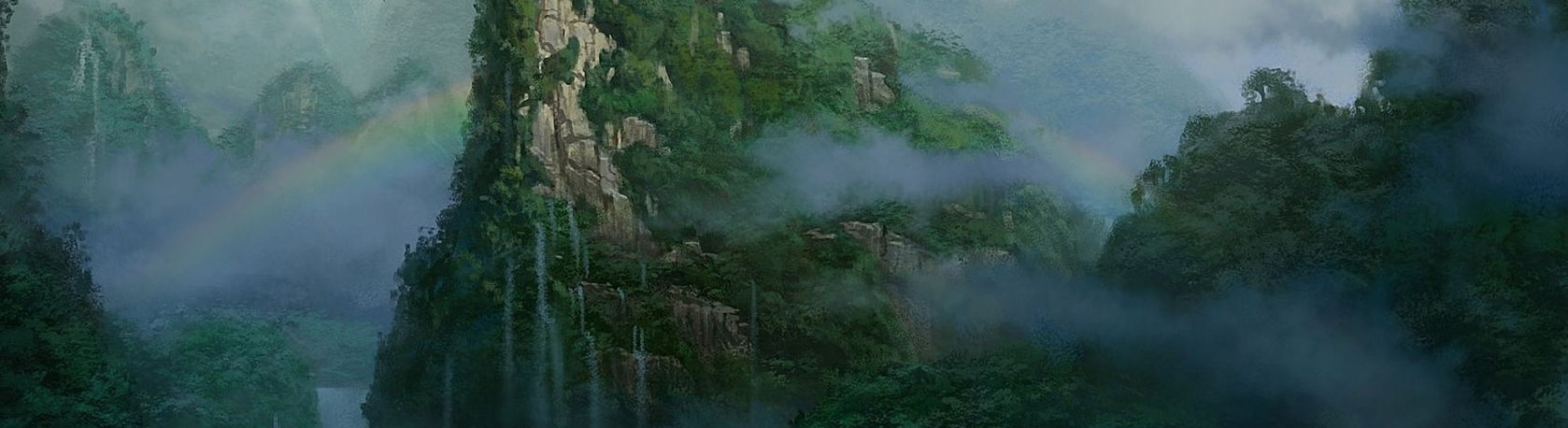
Climbing Mount Yari
This part talks about the geology and creation myths of the mountain and the construction and layout of the city.
A tropical destination
Mount Yari lies in the southern parts of Apuarnostrovicug. Deep in a tropical rainforest surrounded by swamps and all manner of tropical critters lies the mountain range on which Yari is perched. If you would want to find it, you’d be hard pressed to do so for there are no cities closeby. You’d have to know where to look because most people who live on Mount Yari have very little reason to leave. The society in the Skye Kingdom is pretty much self-sufficient and there aren’t any main roads leading to the mountain base.
If you look around the base of the mountain, you will find signs etched in the mountain face guiding something of a path. It’s a rough climb for newcomers if you follow these signs, because the easier paths are hidden away well only to be used by people familiar with the Skye Kingdom. There is even talk about magical teleportation devices which could serve as elevators, but a random traveller first should have to find it, then figure out how it works and then be ready to explain themselves as these devices probably land in the Bengoshi district, high up in the city where the Counsel is situated.
But say you are brave, ready, prepared and well educated on where to go. Would you find your way up there, you’ll have stories to tell before you arrive at the lower cities gates. It would be a couple of days journey across tropical forest, steep rock formations and eventually the temperature would drop and drop lower as you get closer to the clouds.
Along the way you’d see many magical creatures, mostly Fey critters, in all shapes and sizes. So beware, when you make camp along the way, if you want to burn a few leaves to stoke a fire, you might set alight a Fey creature and they won’t take it in kind.
These Fey creatures however, won’t do much harm. Their bigger friends though, you do not want to cross. The mountain range is also home to various types of bears, goats, lions and many birds of prey.
Next to these perils, it is also a beautiful journey. Because the Magic of the Peak allows unnatural climates atop the mountain and having a dense jungle below, it is a sight to behold to find a giant waterfall hidden between cliffs and trees, and there are many beautiful campsites to be found near natural springs and waterfalls. Whenever the sun hits the right way and rainbows appear, it seems that the Fey critters around appear even more majestic
Would you eventually make it towards the clouds, you’d notice time diluting, or maybe it’s your perception of time. Maybe it’s your body? When doubts like these rise in your mind, know that you are close to the magic of the Taiyonoban’nin. For a wide range around the cities outer limits a dome of magic is ever present to keep in what must be kept in, and keep out which is not meant to come in. Beings coming up to the city from below the mountain are magically slowed and disoriented. Not to cause harm, but to prevent surprise attacks from below as well as to give the City Guardians time enough to notice it, inspect it and determine its business.
After weeks of ploughing through the jungle, I finally stumbled upon a mighty mountain and started my ascend. Along the way I took care to be kind to the Fey critters, and it seems like they guided me along the way when I did. Though I can’t be sure, I feel they even turned the massive brown bear away from me for save passage. Though it might have been it had just fed on the pile of bones I came across earlier..
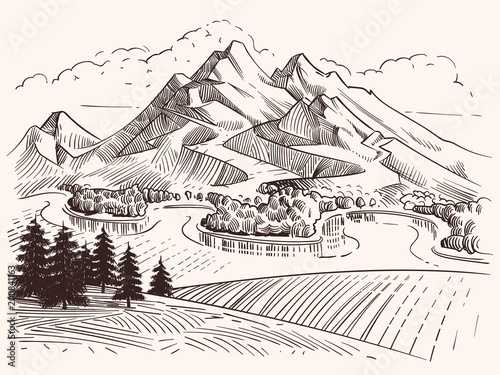
Fūjin and the Birth of the Sun
Anyone who made it to the city would confirm that this is no ordinary mountain. The tales being told support this claim. It is told that before the time of Light only darkness existed. There was land, there was water, but there was no sunlight. No plants could grow, few beings could live.
The Wild Mother, being the Goddess of all nature searched for light across the lands, finding none. Everywhere she looked she upturned the earth, leaving caverns and hills in her wake. But no light was to be found. In a final frenzy she dug and dug, creating whole mountain ranges. But no light. Therefore the Wild Mother was sad, small and weak, and she prayed to her brother the Wind to help.
Fūjin, God of the Winds saw her anguish and tasked himself to warm the Earth. He blew and blew furiously against the mountain range, icy waters sweeping across the cliffs. He blew and trembled, tore earth apart and he blew the mountains closer together, perching them upwards and upwards, until they formed a peak above the clouds.
Here the wind became still, and after a few days it raged in a whirlwind on the peak of the mountain, and from the peak Amaterasu rose in the shape of a giant white wolf. Golden light emanating from the peak, shining warmth and light across the lands. Trees and plants grew, birds hatched from the eggs and the sheer power emanating from the peak made water fall from all mountains.
Amaterasu leapt up into the sky in a ball of fire and goes round the earth every day to appease the Wild Mother. She follows Mena, the Moon in a friendly game of catch as a never ending cycle.
As a thanks to Fūjin, the Wild Mother made Yari the most breathtaking mountain of them all. Dressing it in lively nature, blessing it with vibrant life and beautiful waters. Fujin was so impressed with the Wild Mothers art, he made his home atop this mountain.
And so it is said that every wind that blows comes from Yari, and once per year Amaterasu comes home, as the Sun lines up in perfect unison with the peak, marking the beginning of Spring, a season of new life, a celebration of nature and the Wild Mother. This is celebrated in the Kasuga Matsuri, or the Spring Sun Festival. And whether or not you as a traveler would believe these creation myths, the fact is undeniable that Yari is a majestic mountain filled with magical views and creatures. A fact no one who ever climbed can deny.
The Plains and Peaks of Skye
Skye Kingdom is a unique city most notably because it sits atop a mountain. This means that there is no traditional city-center or predictable growth and expansion of the city. In matter of fact, Skye Kingdom has a highly regarded and dedicated construction crew called Kensetsu, a club consisting of various brutes, tacticians and druids who get trained by the Taiyonoban’nin on how to construct on this holy mountain with regards to the Gods they say inhabit it.
Over the decades the Kensetsu terraformed the mountain to create countless platforms, plateaus and connecting peaks. Most public functions are set outside the mountain on these plateaus, most living areas are inside the mountain caverns and alongside the cliffs.
The most notable thing is traversing this city. To reach a shop on the market from, say, a home in the caverns might mean that you would have to walk a long way around to traverse up the mountain via plateaus and slopes, maybe you have to cross a big ropebridge over a chasm. Or you could take the shorter route which might mean climbing long, steep stairs or even a steep mountainside. There are also more efficient, magical ways to get around, but those are only accessible to a certain class of people.
Due to the magic around the peak of the mountain the climate is very nice and not as harsh as a normal mountain peak would be. This means there is also an abundance of trees and pieces of sprawling nature around waterfalls. Waterfalls of which there are plenty. Most of them that are located in the city get used for farming irrigation and made into canals and water gardens around temples.
That said, Skye is a huge city with close to 14.000 inhabitants so there is a lot to see and do.
City layout
Skye Kingdom can be divided into five major parts; Tenpurupiki, where the Taiyonoban'nin reside in the Holy Temple at the highest peak. Below that is Miorosu District where the Council operates from and looks out over the Chusin District, the city centre. The centre itself has multiple subdistricts we'll get into later. Below the centre is the Noson Distric where most people have their homes and below that is the Nogyo District where all farming is done and resources are kept.
Around and below the Nogyo District lies a dense forest, where the magic of the peak has been cultivating for decades, making the forest almost a life force of its own.
Districts and society
In the next part we'll discuss the districts and their points of interest. After that, we'll dive into the society, culture and history.
PART 2
Home of the Wind
Tenpurupiki
At the highest peak of the mountain, "The Temple Peak", stands the Taiyo no Shinden, the Temple of the Sun. This temple is considered the first settlement on Mt. Yari and the first place the Taiyonoban'nin took shape as an organisation.
Amidst huge, jagged rocks and cliffs goes a small hewn pathway, circling across steep mountain top towards the peak. This path leads up to two temple buildings, connected by a small bridge in between. This gap between the temples is where all wind is said to originate from. It also servers as a tool of judgement; those pure of heart and good intent can climb the stairs without fail. Those of malicious intent will get torn and thrown around by fierce winds. Fūjin himself guards this pass.
How the temple was constructed is as big of a mystery as what it contains, for few mortals are granted access to it. The general consensus among the regular folk is that the temple must indeed be holy, because you'd need the help of the Gods themselves to built such eleborate structures up that high.
With Kasuga Matsuri, the Spring Sun Festival, the sun lines up perfectly between the two temple buildings, casting a shadow of the temples and direct rays of sunlight between the gap onto the city centre on Hiroba Square. This exact time of day on this exact time of year is considered the most holy of moments in the city. When this happens, the old oracle Kyu Orakuru appears in the city centre. She speaks for the Gods, directly to the people.
As the sun turns around the peak and the beams of sunlight and shadows move across the city, so does the oracle. She follows the golden rays bringing hope and blessings to the people of Sukaikingudamu.
Taiyo no Shinden (Temple of the Sun)
The two connected buildings at the top are the only man made structures visible on the peak.
This is the Holy Temple of the Sun, dedicated to the Goddess Amaterasu. This temple was the first built structure on this mountain and to this day, the most mysterious. The temple was already there before the little hamlet that grew into a town, into a city, into Sukaikingudamu. So no resident still alive has witnessed the construction of it, and it being closed off to the public it is the subject of many folklore and spoken myths.
It is said that the temple continues deep into the mountain down below, where the Taiyonoban'nin live themselves, and conduct ancient ritual magics.

Miorosu District
This is the government district where the direct rulers and lawmakers of the Hyogi-Kai reside. The Miorosu is also called 'The Overlook' for it's main feature; a giant open balcony across the whole width of the city centre down below, from where officials can see down over the mountain and it's inhabitants.
Zaseki
Above the balcony stand dozens of fancy homes, small castles and elaborate gardens. The Zaseki is where the government officials have their homes. Off limits to regular citizens, much like the temple above.
The balcony itself is accessible to the people of Suikaikingudamu by appointment or occasion such as trials.
Chusin District
Bathed in the warm golden sunlight lie vibrant districts buzzing with life. Suikaikingudamu is home to many organizations and folk from all races, ages and beliefs and so it's no wonder the city has as many faces as it has districts. The Chusin District for the most part stretches over an open plateau on the side of Mt. Yari, but it also reaches into the mountainous caves.
The city centre is commonly separated into four parts; the Dokutsu Caves (North), Chusin-Azuma (East), Chusin-Bu (South) and Chusin-Nishi (West). Each part of the city is home to the many factions and organisations. So you might enter the Dokutsu Caves on the west side of the centre and be overwhelmed by the roaring fires from inside the mountain where skilled craftsmen of the Tinkeratento mend metal and stone into weapons and housing, or cross past the mysterious Maho no Sento pegoda, where the Mages of the Izado Conclave do work their literal magic in a part of the city where your senses seem to trick you at every turn. Head towards the south east for the Okiya District where Geisha culture flourishes with lavish tea houses, theatres and upperclass bars.
This is where courts are held and citizens conduct their business with the government.
The balcony stretches across the whole width of the mountain and contains dozens of identical doors behind which all forms of function are hidden; there are courtrooms, guestrooms, offices, auditoriums and the like. On festive occasions the balcony is also used as a giant shadow-puppeteers stage and sometimes the centre of a fireworks spectacle.
Below the balcony the wild nature of the mountain shows itself with jagged rocks, thick with plants and bushes and in the middle a majestic waterfall, pouring down to the city into the centre lake, from where canals run through the city, helping it grow.
Here you can find the most refined culture, converse about art, history and magic whilst being surrounded by beautiful gardens with statues and architecture cladded with art.
Or you might dive into a exciting night into the sounds, smells and sights of the Neko no Ichiba where a whole community of furry Tabaxi adventures hold a giant market filled with stories, secrets, artifacts and treasure. There you can drink and wander the night through, gazing upon the crazy stories to hear and things to see.
If you are up for something more calm, head east to the giant temple complex of the Kazenoban'nin to find peace of mind and an unwavering appreciation for the nature and spirits of this mountain. Between rocky fields of tropical nature stands temples scattered; some on high rocks reachable only by a firm climb, others seated next to a natural spring, all of it covered in beautiful gardens with colourful flowers and sculptures.
This all is to say that the Skye Kingdom has many to offer, and listed here is only a part of it. The only way to really get a feel of the city is to show up to your gaming table every week.

Hiroba Square
Situated right below the balcony of the Miorosu District is Hiroba Square, the intended central meeting grounds in the middle of the city. A large open space with smooth stone flooring, it's edges carved in delicate detailed patterns. This square serves as a flexible meeting grounds where markets or hearings could be held, were festivals are given and rituals can be performed.
It sits next to the waterfall pouring down from below the Zaseki, forming a just as large body of water with at its top, beneath the waterfall, a giant statue of Amaterasu, the Goddess of the Sun in her wolf shape. Her head held up high before a giant jade disk representing the sun.

Neko no Ichiba
Above we spoke of the 'intented meeting grounds' because the Hyogi-Kai and Kensetsu didn't expect those few wandering Tabaxi travellers to stick around that long. Their carts filled with foreign objects and their stories with unbelievable but fascinating tales. But they did stick around. They stuck to the Yorishiro like cat's to catnip. The mystique of the mountain call was heard by the Tabaxi and soon the couple of carts and tents blossomed into a giant market of mostly tents and carts, but gradually more and more clay housing and structures were pulled from the earth and the market became it's own district.
The Neko no Ichiba is centered around the base of the giant Yorishiro tree, bathing the whole district in a soft pink golden glow when the sun shines through it's enormous branches of pink blossoms. It has gotten to the point where the market is so crowded, it has started to climb against the base of the tree and even spread out under it. Though between and beneath the roots of the market and it's central tree the more shady side of things live in the Undermarket. Reacing from the tree all the way to the Dokutsu caves inside the mountain, here the stories are grimier, the artifacts sold maybe weren't always intended and you can go a long way without spotting those colourful city guards.
The Yorishiro
A giant cherry blossom tree, it's trunk formed in a almost perfect twist as if Fūjin shaped it by hand. The diameter of this tree trunk is about 10 meters wide and it giant branches seem to reach for 100 meters into the skies. The roots go equally as deep into the mountain and as far as history accounts, no one has ever found the end of these roots.
The tree is decorated in thick, twisted pieces of rope and cloth, known as shimenawa to attract and appease kind spirits who inhabit the tree, believed to make it a source of good fortune, and coincidentally pleasant herbs that Tabaxi are quite drawn to.
Kaze no Shinden
To the east lies a great open temple complex spanning the whole east side of the mountain face; the Kaze no Shinden, or Temple of the Wind. It is the most natural part of the Chusin District you'll see; here the ground is far from level and the surfaces of small cliffs and rocks are connected by countless little steps, stairs and bridges. Here, the Kazenoban'nin welcome all of Suikaikingudamu to come and take part in prayer, meditation, peace and quiet.
This whole complex is set up as a giant natural rock garden, with lush trees and bushes scattered between colourful fields of flowers and in between countless temples and structures. Monks, all dressed in the same simple grey and blue robes, tend to these gardens and take care of the temples.
Kaze no Bochi
Kaze no Bochi, or Ash Peak, is a lonely peak on Kaze no Shinden with an open plateau. It has railing on two sides and there are two connecting bridges running towards it.
Along the sides are various shrines lined up and at the eastern end of the platform stands a huge statue of Fūjin. The statue can be seen holding a big sack of wind to it's side, and before that is a little raised platform on which the ashes would be placed, to be given to the Wind.
Curiously, the wind only blows on this peak at times of active prayer on it.
Okiya District
In almost the absolute middle of the city you'll find that the streets are more manicured, the buildings seem more detailed, more refined. This is because you're in the Okiya District, the hotspot for high class (and) culture enjoyment. In this district there are many tea houses, theaters and meetingplaces, all seemingly kept to a higher standard then in any other district. The most notable of all structures are the many okiya's strewn about; the houses where Geisha live and are trained. These houses are all beautiful structures to stand out of the rest, having weird shapes, sizes and colours. They stand out as much as their occupants do, with white painted faces, elaborate big dresses and hairpieces.

The Geisha culture represents the highest art of living, being cultured and educated in almost all walks of life, the Okiya district is where you can dive into the finer details of any walk of life.
Maho no Sento
Exiting the Okiya district to the west, you'll see that the refinement of the streets doesn't fade, but it get's stranger. It is harder to get a feeling of size and distance whenever you see the modest but breathtakingly detailed pagode of the Maho no Sento, the tower in which the Izado Conclave hold it's quarters.
While this tower is not explicably closed to public, few can enter without question. Mages are private folk, and as you enter the tower you can see what this means; there is arguably no one who knows the exact layout of this tower, or how big it really can be. Stairs and entrances seemingly show up and disappear at the flick of a wrist, and you could get lost in here for a long time. Some wizards have seen entering and not leaving for decades, for instance..


Tinkeratento
To get a firm grip on reality, you'd only have to head north towards the Dokutsu caves where you'll quickly spot all kinds of business being conducted; there are clothingmakers, jewelers, handcraftsman and even blacksmiths at the Tinkeratento, where the makers guild of the same name hold their headquarters.
Just outside the cave is where light and small industry happens; fine clothing and Geisha kimono's are crafted by master tailors, jewelers cut, polish and grind the finest of rubies into statues and bracelets. Further in to the cave the sounds and smells of heavy industry can hit you; boiling lava pits in the back where rugged blacksmith mend metal, stone and glass to their will. Rough noises coming from expert carpenters building shrines, structures and furniture.
If you need something made, this is where you go.
Kemono Inn
In the north east part of the city center, inside the caves, are heavy natural rock formations and between them, tucked away a discreet wooden door, with a sign saying "Kemono Inn". What's inside you wonder? Well, you'll have to find out!
Dokutsu Caves
Officially the Dokutsu Caves is referring to the part of the city centre inside the caves, where the Kemono Inn and Tinkeratento are found. But when you hear anyone talking about the Dokutsu they'll probably mean the giant network of tunnels and caves inside the mountain. This part of the city centre is part of it, but theoretically you can get to almost any underground part of the city from this network. You could go from the Neko no Ichiba, dive into the seedy underbelly of the Undermarket, follow the right tunnels and you might reach the Chorugon Keimusho, or the cheaper livingspaces of those less fortunate who make their home underground. The extend of these caves have never been fully mapped due to lava and water flow in some parts, gated or collapsed parts in others.
Noson District
Travelling down the centre to the south you'll find the main road leading down the mountain into the Noson District. This is where the majority of the citizens live. Coming down directly from the centre you'll see the biggest houses with some fancy gardens around. Going down further sees those gardens getting smaller and smaller until it is but a sliver of colourful plants and flowers adorning the sides of modest homes. Bamboo panels and wood slats, painted and cut decoratively by hand, alongside a cobblestone road make up most of the narrow, winding streets of the Noson District. Behind every door a family, a life.
The Noson District is argubly the densest lived in part of Suikaikingudamu. It hold's a lot of people and though there are lavish homes here, most of the housing is sober and practical. Due to space and due to the general culture and lifestyle here. A person's home is more a place to lay your head to rest and store your belongings, because life happens on the streets, in public spaces and the city centre. The further down the mountain you go the denser the living seems to be, resulting in technically highrise construction with multiple levels, but hewn into the side of the mountain face, connected by stairs and bridges.
Among the housing are shrines and small temples about, several parks and open communal spaces, as well as two of the more important locations.
Chorugon Keimusho
Walking along the streets of the Noson District one of the few time a space opens up between homes and shows the mountainside, you'll see dark pillars of hewn stone spanning 15 meters long, 5 meters high. A solid, demanding wall of dark marble with in the center a large, studden door with intricate detail carved in the edges of this structure also known as Chorh-Gom Prison. While it looks imposing and it is a prison, it is just as much a headquarters for stationed Kujaku Guards as it is a police station for citizens to go when in need.
When the doors open and you step inside you'll be greeted by a dark, smooth stone hewn entry passage which ascends into a huge dark cave with steps leading down deeper into the mountain, lit by the occasional torch eventually reaching to the limbs of the Dokutsu Caves. To this entry passage are several rooms for interrogation and private conversations, as well as public services such as restrooms and a couple of holding cells for those drunken loudmouths of the Kemono Inn.
Hitobito Headquarters
The biggest open park in the Noson District is that of Hitobito Headquarters. Situated next to a waterfall, coming from the Neko no Ichiba above, sits a more elaborate, bigger, multi-level mansion. Here the Hitobito organisation hold their headquarters and this place servers as a go-to for citizens with questions and concerns and the organisation functions as the spokesperson for the citizens, and the direct contact to the Hyogi Kai.
Nogyo District
Further down past the Noson District you'll fine several small stairs and slopes leading down into sprawling ricefields, dotted by plumes of trees, bamboo and bushes, scattered shelters, sheds and farms about. This is the farm distict on Mount Yari.
People and creatures living here live a more secluded life and aren't seen in the city as much. They rather spend their time close to nature, nourishing it and reaping what they sow.
It is not uncommon to sense, see and/or hear magic happening on these fields, for most of the lands are being kept by Yakfolk and Firbolg who are as apt with physical tools for farming as they are with magical means to seed and grow.
Yosei no Su
On the edges of these ricefields and farmlands starts a thick mystical forest filled with creatures and critters. This forest hasn't been kept by the Kensetsu and somewhere in the forest the edges of the magical protection around the peak are found. Here the nature has been free to grow in all directions, forms and sizes and one of the latest developments for Suikaikingudamu is a sense that this nature, too, wants part in the city culture.
These early talks are had on the edge of the Nogyo District, a bit into the forest where a clearing shows intricate, almost alien structures seemingly growing out of the ground and trees around it; an almost Elven like appeal with a marble altar at the end, equally covered in vines and plants. At times, strange Fey creatures can be seen gathering here.

PART 3
Proud & Noble Folk
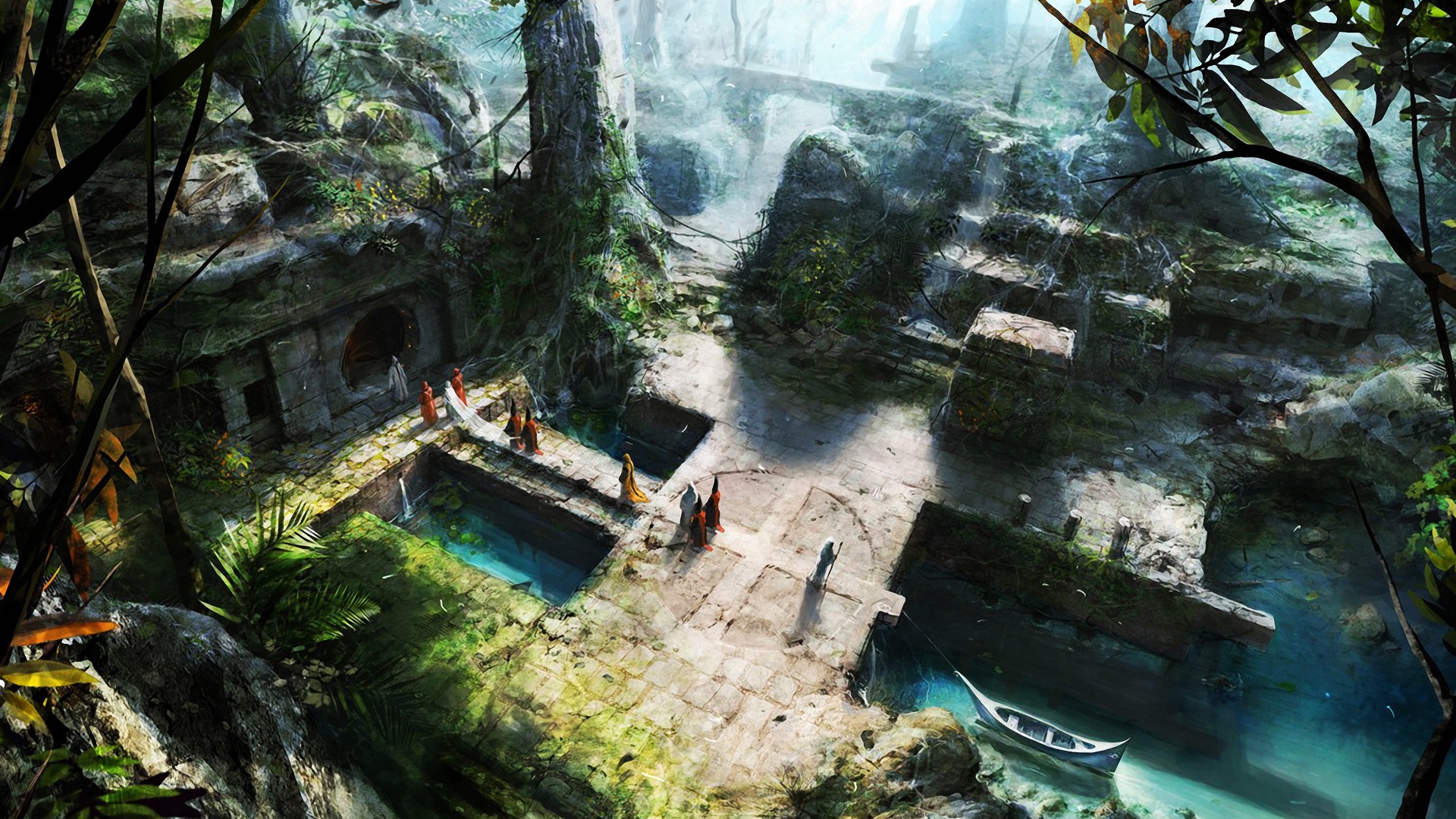
This part tells of the city, it's culture, factions and powers at play.
A brief history
Skye Kingdom is not a literal kingdom, for it has no king. Its name came from the creation myths, as this mountain is home to the Wind, it is his kingdom. Some residents will argue that it should be called God's Kingdom, but that would be too monotheistic for most in the city.
There is no exact known date on which the city was founded, but the Taiyo no Shinden at the peak holds signs going back at least a thousand years. The Taiyonoban'nin were the first to settle on the mountain, inhabiting and building out the temple. When the temple inadvertedly drew more and more attention from travelers and settlers, a village came to be around the temple. This village was protected by the magic of the Peak and the Taiyonoban'nin and eventually grew to a town.
When that happened, the Taiyonoban'nin and the first settlers decided on the first Council to manage the town. The Council did so succesfully, managing to lure a lot of trade and wealth into the town that slowly became a city. Still, the city could exist in a fine climate because of the magic of the Peak, but The Council thinks itself responsible for the wealth and wellbeing. Over the years, the bond between the Council and the Taiyonoban'nin began to fade. One focusing on the magic and the mystique, the other focusing on the wealth and welfare, they grew apart but kept dependent on each other.
When the town was no longer a town but a fully fledged city, most of it's original inhabitants had already passed away, leaving tales and myths for coming generations. This aspired the Kazenoban'nin to take it's place as the leading spiritual faction for the commonfolk of the city.
A Magical and Political Balance
The Skye Kingdom knows three major factions. The original founders of the city, the Taiyonoban'nin, are the keepers of the Peak and are in direct contact with the magic this mountain holds. The Hyogi-Kai is the city council which was founded to keep order to the growing city and functions mostly as an oligarchy. The Kazenoban'nin are the major spiritual influence amongst the people and hold most of the temples in the city.
Taiyonoban’nin - Keepers of the Sun
These are a conclave of Wizards and Druids and the first settlers on this mountain. They maintain the Taiyo no Shinden and are very protective of it and what they see as their legacy. They consider themselves the elite, above the other factions and they mostly keep to themselves at the peak. The Taiyonoban’nin do have contact with the Council where they act as advice organs for governing the city.
It is rare for citizens to see a Taiyonoban’nin out in public. The only exception to this is Kyū Orakuru, the old oracle, which comes down to the city to speak to the citizens.
The Taiyonoban’nin are also the ones who instruct, train and oversee the Kensetsu; the construction crew. This essentially means the Taiyonoban’nin keep control over the expansion of the city, as little to nothing can be built without their approval.
This faction consists mostly of Druids and Wizards which are dressed in blue-grey gowns and cloaks with a continuous flowing golden pattern over them.
Hyogi-Kai
They are an oligarchy of lawmakers with strong agenda’s that manages the city directly. The Council is self-sufficient in terms that they appoint their own members and are sure to keep the power close to themselves. They are responsible for keeping the peace and structure throughout the city. They do so by employing Kajuku Samurai that patrol the city and keep guard.
Councilman and woman are recognised by their formal haori in subtle grey and white colors.
Kazenoban’nin - Keepers of the Wind
These are a faction of monks which controls and makes up for most of the city’s accessibility to spiritual endeavors. As the Taiyonoban’nin retreat themselves and keep their mystics much to their own, the Kazenoban’nin were created to allow citizens to worship and share in the power of the Sun. They hold multiple temples and shrines across all levels of the city.
This faction consists mostly of Monks which are dressed in bright orange and red gowns and cloaks with a continuous flowing golden pattern over them.