Art by Roberto Akeiron at https://www.artstation.com/artwork/Jk0Pd
Six miniature classes...
The Ghost, Lich, Lycanthrope, Revenant, Stitcher, and Vampire which are are intended to be used with the multiclassing rules.
Players may start at level 1 with these classes (with the DM's permission), or they may multiclass into them if they meet the prerequisites.
Ghost (Page 2)
A restless spirit who takes possession of the bodies of others.
Lich (Page 4)
A spellcaster who pursues the secrets of eternal undeath.
Lycanthrope (Page 6)
A living mortal cursed to endure bestial transformations.
Revenant (Page 8)
A vengeful spirit inhabiting a reanimated corpse.
Stitcher (Page 10)
A mad scientist who experiments on their own body.
Vampire (Page 12)
An undead who thirsts for blood.
Multiclass Prerequisites
- Ghost: To become a ghost, you must be dead and your original body must have been destroyed
- Lich: To become a lich, you must have acquired a Tome of Shadows containing the secrets to immortality
- Lycanthrope: To become a lycanthrope, you must have been cursed with lycanthropy
- Revenant: To become a revenant, you must be dead and your original body must have been destroyed
- Stitcher: To become a stitcher, you must have Intelligence 13 or greater and proficiency in Medicine
- Vampire: To become a vampire, you must have been reduced to 0 Hit Points by the bite of a vampire or vampire spawn
Multiclass Proficiencies
- Ghost: Simple Weapons
- Lich: Arcana or Religion
- Lycanthrope Light Armor, Simple Weapons
- Revenant Light Armor, Shields, Simple Weapons
- Stitcher: Leatherworker's Tools
- Vampire Scimitars, Shortswords, Rapiers, and Whips
Spellcasting
You count your full Lich level when determining your number of spell slots using the multiclassing rules.
You count half your Stitcher level when determining your number of spell slots, but only if you have the Illithid Cerebral Fluid modification.
Ghost
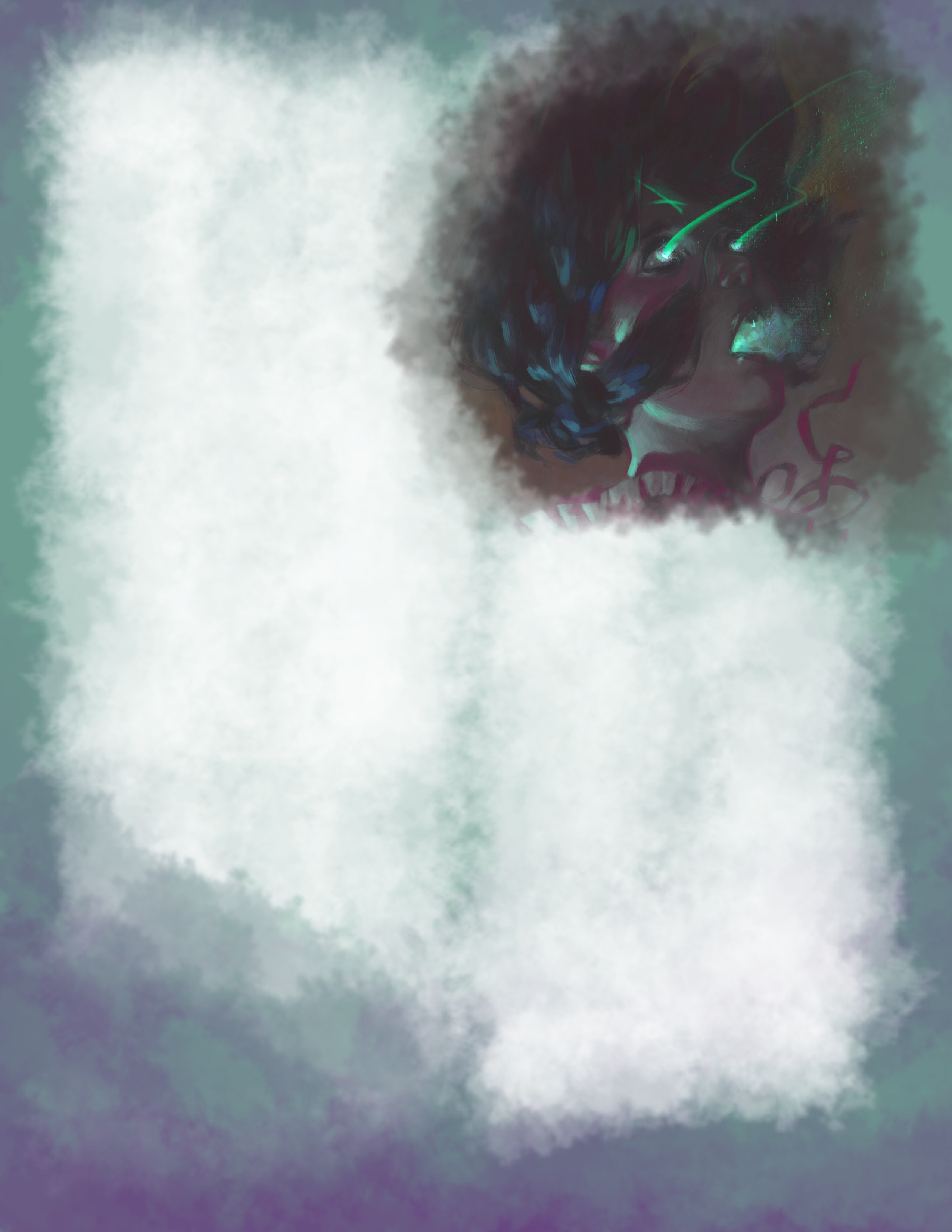
Ghosts are the unquiet spirits of the dead, who remain in the realm of the living to complete their unfinished business. Among undead, ghosts are particularly known for their terrifying appearance and their ability to possess the living.
To take the first level in this class, you must be dead and your original body must have been destroyed. You may lose a level in a different class to gain the first level in this class.
Class Features
As a Ghost, you gain the following class features
Hit Points
- Hit Dice: 1d8 per Ghost level
- Hit Points at 1st Level: 8+ your Constitution modifier
- Hit Points at Higher Levels: 1d8 (or 5) + your Constitution modifier per Ghost level after 1st
Proficiencies
- Armor: Light Armor, Medium Armor, Shields
- Weapons: Simple Weapons
- Tools: none
- Saving Throws: Wisdom, Charisma
- Skills: pick two from Arcana, History, Intimidation, Insight, Stealth, and Religion
Starting Equipment
You start with the following equipment, in addition to the equipment granted by your background:
- (a) two Daggers (b) a Shortsword and a Shield
- (a) Leather Armor (b) Hide armor
- (a) A Diplomat's Pack (b) an Explorer's Pack
- A Shortbow, and 20 arrows
- A broken trinket which reminds you of your past life
Ghost
| Level | Proficiency Bonus | Features | Cantrips Known |
|---|---|---|---|
| 1st | +2 | A New Body, Ghost Tricks | 3 |
| 2nd | +2 | Frightening Visage | 3 |
| 3rd | +2 | Ethereal Jaunt | 4 |
| 4th | +2 | Ability Score Increase, Possession | 4 |
| 5th | +3 | Ghost Blade | 5 |
Art by Bruner at https://www.artstation.com/artwork/VdVdxN
A New Body
At 1st level, your spirit permanently possesses the nearest body most similar to your original. By tying your fate to this body you gain a stable connection to the physical world.
You decide whether your spirit is inhabiting a living body or a reanimated a corpse. Your choice grants you certain benefits as you gain levels in this class.
Host
You bound your soul to the living body of another person, who has grown to accept your presence. You are in control, but they are conscious of your actions and can wordlessly communicate with you. With effort, you can share control with them. If your host's body is killed, your soul is banished to the Fugue Plane until your host can be magically revived.
1st level: Shared Experiences. Choose a second background. You gain all the proficiencies and languages of that background.
2nd level: Second Opinion. When you fail an ability check or saving throw where you added your Proficiency bonus, you may reroll. If you do, you must take the new result. You can use this ability twice, regaining all uses when you finish a long rest.
3rd level: Two Heads Are Better Than One. Your Intelligence, Wisdom, and Charisma scores increase by 1 each, to a maximum of 20.
4th level: Back To Back. You can take two Reactions per round. You cannot use both on the same turn.
5th level: Mental Tyrant. When a creature succeeds on its saving throw against your Possession, you may deal d4 psychic damage to it per level you have.
Corpse
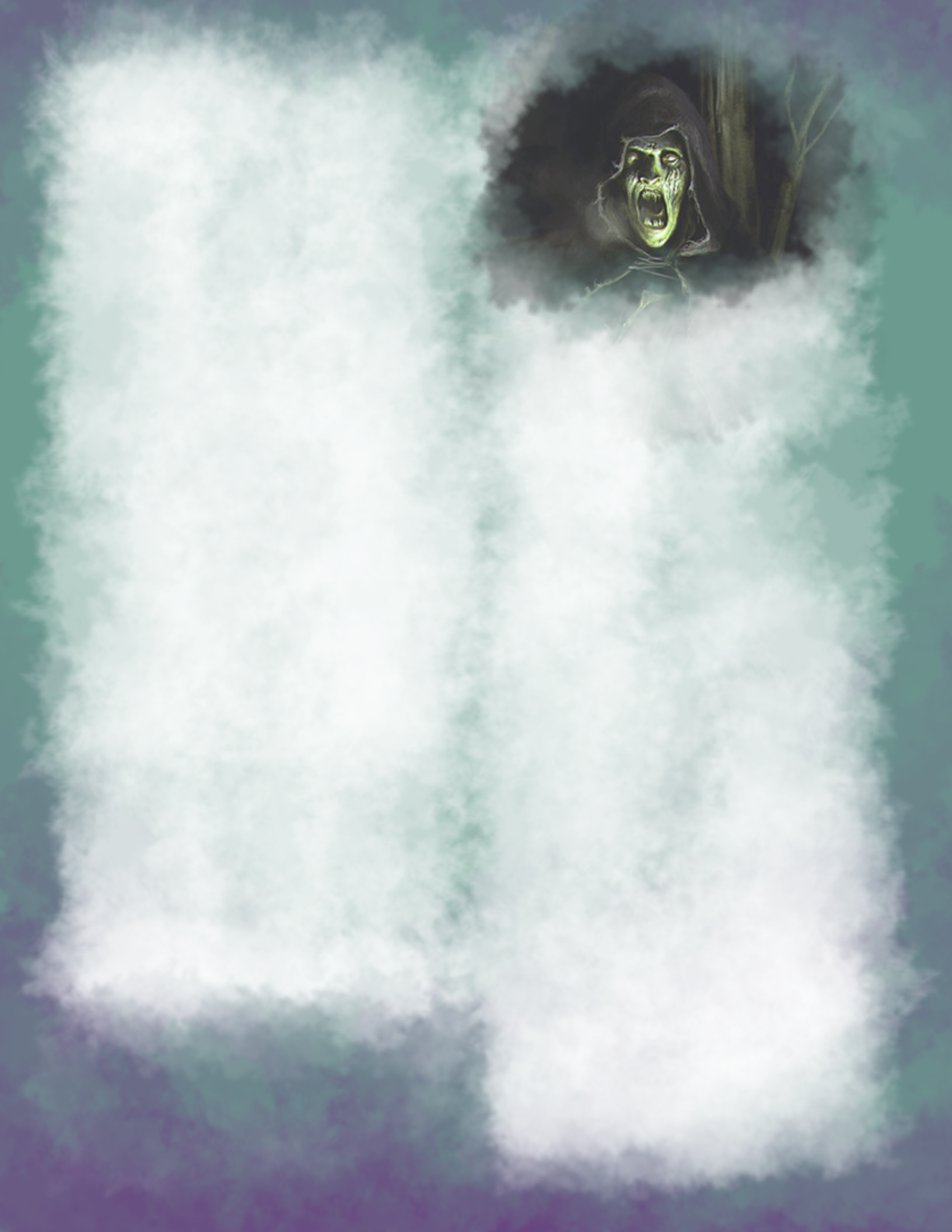
Similar to a Revenant, you inhabit a corpse which you have returned a semblance of life to. While sustained by your spirit, it appears to be a living body (though noticeably pallid and cold to the touch). You gain the Return From Death feature described on page 14.
1st level: Medically Dead. You cannot be critically hit. Treat critical hits against you as if they were regular hits. Additionally. you gain resistance to poison damage, and you are immune to disease and the poisoned condition.
2nd level: No Metabolism. You do not require food or sleep, and you cannot be made to sleep through magical means. You gain the benefits of sleeping by spending 4 hours staring silently at other living creatures, contemplating the afterlife.
3rd level: Unliving Fortitude. Your Constitution score increases by 2, to a maximum of 20.
4th level: Face Off. When a creature approaches within 5 feet of you, you may spend your reaction to use your Frightening Visage against them.
5th level: Disgusting Visage. When you use your Frightening Visage against a creature, they catch a glimpse of your true rotting form. While they are frightened of you, they are also nauseated: their speed is halved and they gag silently when they attempt to speak. If they cast a spell with a verbal component it has a 50% chance to fail.
Ghost Tricks
At 1st level you gain the Green Flame Blade cantrip, plus two more from the following list. You gain another cantrip from the same list at 3rd and 5th levels.
Control Flames, Mage Hand, Message, Minor Illusion, Mold Earth, Shape Water, Thaumaturgy
You can cast these cantrips without verbal, somatic, or material components (except for Green Flame Blade, which still requires its material component).
Charisma is your spellcasting ability for your Ghost spells.
The DC for your Ghost spells and class abilities is equal to 8 + your proficiency bonus + your Charisma modifier.
Frightening Visage
At 2nd level, you learn to scare your enemies to death. As an action on your turn you can reveal your ghostly form to a creature within 30 feet that can see you. They take 2d10 psychic damage and become frightened of you for one minute. At the end of each of their turns they may attempt a Wisdom saving throw against your Ghost DC to end this effect early. If a creature's saving throw is successful or the effect ends for it, the creature is immune to your Frightening Visage for the next 24 hours.
You may use this feature a number of times per day equal to your levels in this class.
Ethereal Jaunt
Starting from 3rd level, as a Bonus Action you can cast your body into the Ethereal Plane.
While on the Ethereal Plane you can percieve the plane you originated from out to 30 feet, though it appears gray and dimly lit. Beyond 30 feet sound is totally muffled and a thick gray haze blocks all sight. During your jaunt, you can only affect and be affected by other creatures on the Ethereal Plane. Creatures that aren’t there can’t perceive you or interact with you, unless they have the ability to do so.
This ability lasts for up to 10 minutes, or until you spend an action to end it early. When it ends, you reappear on your plane of origin in the same place you began your jaunt.
You can use this ability once, regaining the ability to do so when you finish a short or long rest.
Possession
Starting from 4th level, if you enter the space of another creature during your Ethereal Jaunt then you temporarily possess their body. You control their movement and actions on their turn until they die or until your Ethereal Jaunt ends. A possessed creature's statistics do not change and they do not have access to any of your class features. While you possess a creature, you decide whether it is aware of its surroundings, and whether or not it remembers anything that transpires.
If the creature makes a successful Charisma saving throw as you enter its space then you fail to take control and your Ethereal Jaunt ends immediately. A possessed creature may repeat this saving throw each time they take damage.
For you to possess a creature, it must have a physical body and an intelligence score of at least 2.
Ghost Blade
At 5th level, you learn to phase your weapon through the ethereal plane to bypass your enemy's defenses. Once per turn, you may add a d6 to the attack and damage roll of a melee weapon attack you make. When you do so, all the damage dealt by your attack is radiant or necrotic (your choice).
Art by at Igor Krstic at https://www.artstation.com/artwork/oV1bJ
Lich
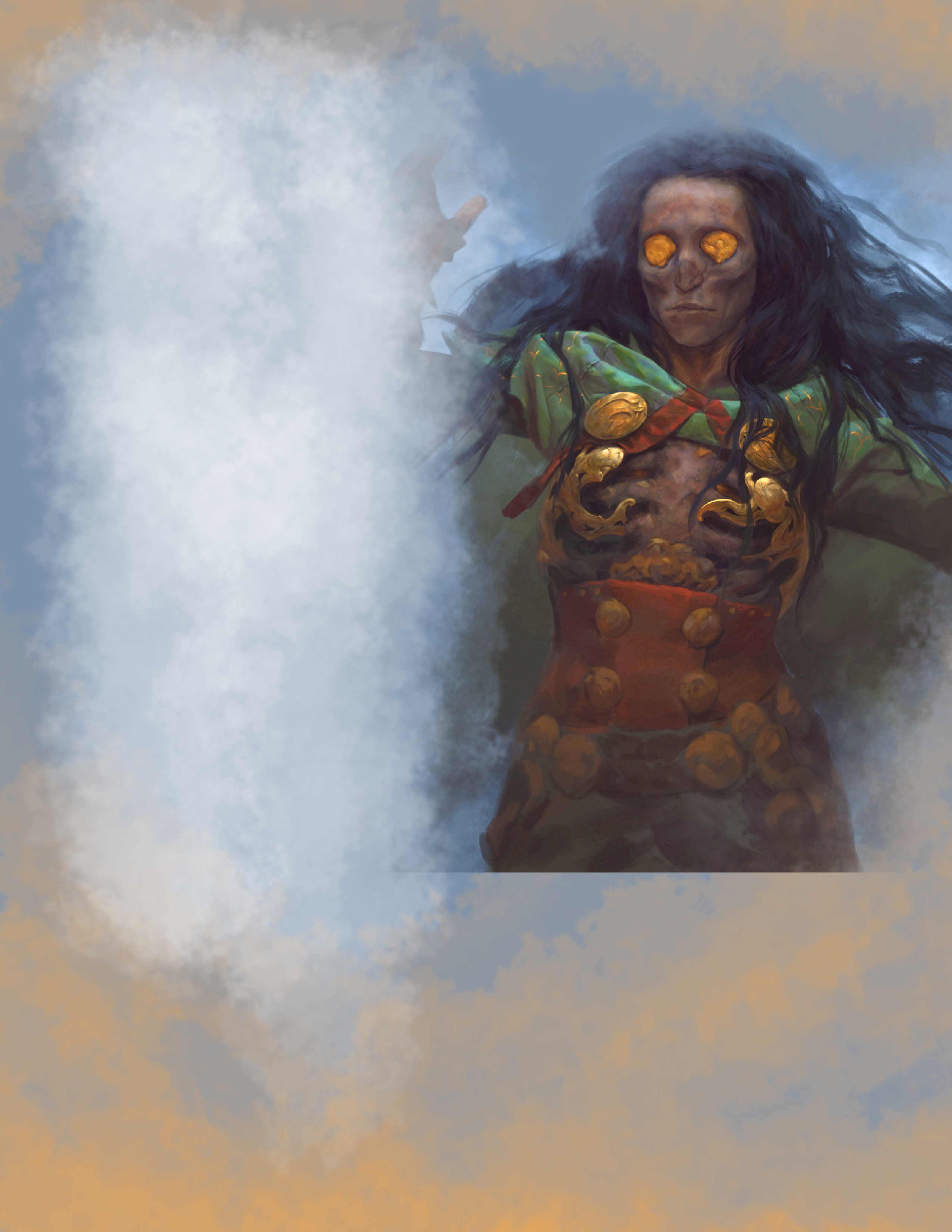
A Lich is a student of magic who extends their life beyond normal limits. Many aspiring liches turn to evil as they make dark bargains or engage in unholy research in their quest for eternal life, only to jealously guard the secrets they discover.
Sometimes, however, those secrets fall by chance or by fate into the hands of less corrupted souls. A rare few liches are even guided by the gods themselves. Neutral liches are rare, and good liches even rarer still, but both are possible.
In order to gain a level in this class you must have found or been given a Tome of Shadows containing the secrets of immortality. An aspirant who walks the path of a Lich without such knowledge is irrevocably transformed into a Nothic.
Class Features
As a Lich, you gain the following class features
Hit Points
- Hit Dice: 1d6 per Lich level
- Hit Points at 1st Level: 6+ your Constitution modifier
- Hit Points at Higher Levels: 1d6 (or 4) + your Constitution modifier per Lich level after 1st
Proficiencies
- Armor: Light Armor
- Weapons: Simple Weapons
- Tools: one set of tools of your choice
- Saving Throws: Intelligence, Constitution
- Skills: Arcana and Religion
Starting Equipment
You start with the following equipment, in addition to the equipment granted by your background:
- (a) a Staff or (b) a Dagger and a Sickle
- Leather armor
- a Scholar's Pack
- a set of tools you are proficient with.
- a Tome of Shadows
Class Name
| Level | Proficiency Bonus | Features | Cantrips Known | Spells Known | 1st | 2nd | 3rd |
|---|---|---|---|---|---|---|---|
| 1st | +2 | Spellcasting, Secrets of the Grave | 2 | 2 | 2 | - | - |
| 2nd | +2 | Phylactery | 3 | 3 | 3 | - | - |
| 3rd | +2 | Deathwave | 4 | 4 | 4 | 2 | - |
| 4th | +2 | Ability Score Increase, Immortality | 5 | 5 | 4 | 3 | - |
| 5th | +3 | Lord of the Dead | 6 | 6 | 4 | 3 | 2 |

Spellcasting
As a Lich, you cast spells deciphered from your Tome of Shadows.
Tome of Shadows
You possess a Tome of Shadows containing the secret of eternal life. It is permanently linked to you, and will one day become your phylactery. If it is lost, damaged, or destroyed, it reappears whole next to you when you finish a long rest.
Your Tome of Shadows contains unlimited knowledge, but you may only comprehend a small amount of it at a time. At 1st level you learn any 2 spells from the Cleric or Wizard spell list. When you gain a level in this class, you learn another spell from the same lists. The spells learned from your Tome of Shadows can be of any level (but you should focus on learning spells that you have spell slots for).
Over the course of a long rest, you may forget one spell learned from your tome and learn another instead.
Casting Spells
The Lich table shows how many spell slots you have to cast your spells of 1st level and higher. To cast a spell from your Tome of Shadows, you must expend a slot of the spell's level or higher. You regain all expended spell slots when you finish a long rest.
Cantrips
At 1st level you learn 2 cantrips from the cleric or wizard spell list. You learn another each time you gain a level in this class.
Spellcasting Ability
Intelligence is your Spellcasting Ability for your Lich spells. You use your Intelligence whenever a spell refers to your Spellcasting Ability. In addition, you use your Intelligence modifier when setting the saving throw DC for a Lich spell you cast and when making an attack roll with one.
Spell save DC = 8 + your Proficiency Bonus + your Intelligence modifier
Spell Attack modifier = your Proficiency Bonus + your Intelligence modifier
Spellcasting Focus
You may use an arcane or divine spellcasting focus while casting your Lich Spells.
Soul Siphon
At 1st level you learn to draw strength from the death of others. When you deal necrotic damage with a cantrip, you gain temporary hit points equal to half the damage taken by one creature affected by your cantrip. These temporary hit points last for up to one minute.
Deathwave
Starting at 2nd level, when you cast a Necromancy spell you may unleash a wave of necrotic energy, causing all enemies within 20 feet of your Tome of Shadows to take necrotic damage equal to 1d6 per level of the spell slot expended (1d6 for a cantrip). Once you use this feature, you cannot do so again until you complete a short or long rest.
Phylactery
At 3rd level you magically transform your Tome of Shadows into a phylactery, a personalized magical vessel that contains part of your soul. Choose the form that your phylactery takes:
- Familiar. Your phylactery is a magical beast of your choice whose CR is 1/8th of your level or less. It can speak your languages and has Intelligence, maximum hit points, and proficiency bonus equal to your own, but it cannot attack or carry you. Over a long rest, it can shift into the form of a different valid beast.
- Spellcasting Focus. Your phylactery is both an arcane and divine spellcasting focus. Once per day, while holding your phylactery, you may cast a known Lich spell as if from your highest level spell slot (up to 5th level) without expending a slot higher than usual.
- Trinket. Once per day, as an action, you may stare into your phylactery to forget one Lich spell you know, and learn a different one.
- Weapon. Your phylactery is a magic weapon of your choice which deals necrotic damage and has a bonus to attack and damage rolls equal to half your proficiency bonus. When you use your action to cast a spell of 1st level or higher, you may use a bonus action to make a single weapon attack with your phylactery.
Even in its new form, your Phylactery continues to function as your Tome of Shadows. If your Phylactery is lost, damaged, killed, or destroyed it reappears whole at your side after you complete a long rest.
Immortality
At 4th level you complete your transformation and become a fully fledged Lich. You gain the Immortal Regeneration feature detailed on page 14, which prevents you from dying as long as your Phylactery remains intact. Additionally:
- You no longer require sleep and cannot be forced to sleep by magical means. You gain the benefit of a long rest by spending 4 hours staring into your phylactery.
- You are immune to disease and the poisoned condition.
Lord of Death
Starting at 5th level, necrotic damage you deal ignores resistance and immunity.
You also learn the Summon Undead spell, and it doesn't count towards the number of Lich spells you know. Once per long rest you may cast Summon Undead from your highest level spell slot, without expending that slot. When you do so, it does not require concentration and it lasts until you complete your next long rest.
Lycanthrope

Lycanthropes are those afflicted by a bestial curse, which transforms them into a half-humanoid half-animal shape, during which they are overcome with feral instincts. A creature who is cursed with lycanthropy who chooses not to take levels in the Lycanthrope class experiences unpredictable transformations, during which they are not in control of their actions.
In order to take levels in this class, your character must have been cursed with lycanthropy.
Class Features
As a Lycanthrope, you gain the following class features
Hit Points
- Hit Dice: 1d10 per Lycanthrope level
- Hit Points at 1st Level: 10 + your Constitution modifier
- Hit Points at Higher Levels: 1d10 (or 6) + your Constitution modifier per Lycanthrope level after 1st
Proficiencies
- Armor: Light Armor, Medium Armor
- Weapons: Simple Weapons
- Tools: none
- Saving Throws: Strength, Constitution
- Skills: Choose two from Acrobatics, Animal Handling, Athletics, Stealth, Survival, Nature, and Perception
Starting Equipment
You start with the following equipment, in addition to the equipment granted by your background:
- (a) Hide Armor (b) Leather Armor
- (a) a Spear or (b) a Shortbow and a quiver of 20 arrows
- (a) an Explorer's Pack or (b) a Monster Hunter's Pack
- two Handaxes
Lycanthrope
| Level | Proficiency Bonus | Features |
|---|---|---|
| 1st | +2 | Feral Instinct, Bestial Attack |
| 2nd | +2 | Beast Kinship, Transformation (one use) |
| 3rd | +2 | Summon Kin |
| 4th | +2 | Ability Score Increase, Transformation (two uses) |
| 5th | +3 | Carnage |
Art by Kirill Khrol at https://www.artstation.com/artwork/ldL8G
Your Curse
Many of your lycanthrope features depend on the curse you carry. The 5 curses available here are Werebear, Wereboar, Weretiger, Wererat, and Werewolf. They are listed in more detail on the following page.
Feral Instinct
At 1st level you gain the benefits of your curse's Feral Instinct.
Bestial Attack
Starting from 1st level you can transform part of your body to make a single feral attack. As a bonus action on your turn you may use your Bestial Attack against an adjacent creature. You can do so twice, regaining both uses after completing a short or long rest.
Your Bestial Attack counts as a melee weapon attack, and is considered magical for the purpose of overcoming resistance or immunity to nonmagical attacks.
If your Bestial Attack requires a saving throw, the DC is equal to 8 + your Proficiency Bonus + your Strength or Dexterity modifier (your choice).

Beast Kinship
Starting at 2nd level you tap into a sense of kinship shared amongst those aligned with your curse. You have advantage on all rolls made to influence any creatures listed in your curse's Summon Kin feature. These creatures will automatically recognize your curse, unless you disguise your nature with magic. If they recognize your curse they will be friendly towards you unless you demonstrate hostile intent.
Transformation
Starting at 2nd level, as an action, you can fully transform into your curse's hybrid form. While in your hybrid form, you can use your Bestial Attack freely without expending a use of it. Additionally you gain resistance to bludgeoning, slashing, and piercing damage from weapons that aren't silvered, and you gain a transformation bonus determined by your curse.
While transformed, you cannot speak, cast spells, or concentrate.
Your transformation lasts up to 10 minutes or until you revert back with an action. Once you use this feature you cannot do so again until you finish a long rest. When you reach 4th level in this class you can use this feature twice between long rests.
Summon Kin
Starting at 3rd level you can use your action to summon creatures from the feywild, as shown in your curse's Summon Kin feature. These creatures appear in an empty space within 30 feet and remain for up to 10 minutes, after which they disappear. They act immediately after your turn and follow your commands to the best of their abilities. All damage they deal counts as magical for the purpose of overcoming resistance and immunity to nonmagical damage.
Once you use this feature you cannot do so again until you finish a long rest. At 5th, 11th, and 17th level you learn to summon more powerful beasts.
Carnage
Beginning at 5th Level, your Bestial Attack gains a bonus to damage rolls equal to your proficiency bonus, and an additional bonus to attack rolls equal to half that amount (rounded down).
Lycanthropic Curses
Werebear
- Feral Instinct you gain proficiency in Athletics as well as in Martial melee weapons.
- Bestial Attack Claws, 2d8 bludgeoning. On a hit your target must make a Strength or Dexterity saving throw (their choice) or be grappled by you.
- Transformation Bonus you gain a +2 bonus to your AC when not holding a shield, and you gain advantage on all saving throws.
- Summon Kin: 1 Black Bear. At 5th, 1 Black Bear and 1 Brown Bear. At 11th, 3 Brown Bears. At 17th, 4 Polar Bears
Wereboar
- Feral Instinct you gain proficiency in Intimidation and increase your maximum Hit Points by an amount equal to your total level.
- Bestial Attack Gore, 2d6 piercing. If you move 20 feet before hitting with a Gore, it deals 2d6 extra damage.
- Transformation Bonus (once per transformation) When you start your turn, you may instantly regain d6 hit points for each level you have in this class. If you started your turn with 0 hp, this healing is doubled.
- Summon Kin: 2 Boars. At 5th, 4 Boars. At 11th, 2 Boars and 2 Giant Boars. At 17th, 4 Giant Boars
Wererat
- Feral Instinct you gain proficiency in Deception, resistance to Poison damage, and immunity to the Poisoned condition.
- Bestial Attack Bite, 2d6 piercing, finesse. On a hit your target must make a Constitution saving throw or be Poisoned until the end of their next turn.
- Transformation Bonus you gain a climbing speed equal to your walking speed, and unlike other lycanthropes you retain the ability to speak, cast spells, and concentrate.
- Summon Kin: 3 Giant Rats. At 5th, 4 Swarms of Rats. At 11th, 2 Wererats. At 17th, 4 Wererats
Weretiger
- Feral Instinct you gain proficiency in Stealth and gain darkvision out to 120 feet.
- Bestial Attack Claws, 2d6 slashing, finesse. On a hit, your target takes an additional d6 damage if you had advantage on the attack roll.
- Transformation Bonus If your Bestial Attack hits, you can make a second Bestial Attack against the same target (once per turn).
- Summon Kin: 2 Panthers. At 5th, 1 Panther and 1 Tiger. At 11th, 2 Saber-Toothed Tigers. At 17th, 4 Saber-Toothed Tigers
Werewolf
- Feral Instinct you gain proficiency in Perception, and double your proficiency bonus when using Perception.
- Bestial Attack Bite, 2d6 piercing. On a hit your target must make a Strength saving throw or be knocked prone.
- Transformation Bonus your speed increases by 5 feet, and you have advantage on attack rolls if one of your allies is within 5 feet of your target.
- Summon Kin: 2 Wolves. At 5th, 1 Wolf and 1 Dire Wolf. At 11th, 1 Dire Wolf and 1 Winter Wolf. At 17th, 1 Dire Wolf and 2 Winter Wolves
Revenant
Revenants are the vengeful spirits of those who died unjustly, who possess corpses and seek retribution with an unwavering will and supernatural abilities. All revenants are marked by their permanently bloodshot eyes.
To take the first level in this class, you must be dead and your original body must have been destroyed. You may lose a level in a different class to gain the first level in this class.
Class Features
As a Revenant, you gain the following class features
Hit Points
- Hit Dice: 1d10 per Revenant level
- Hit Points at 1st Level: 10 + your Constitution modifier
- Hit Points at Higher Levels: 1d10 (or 6) + your Constitution modifier per Revenant level after 1st
Proficiencies
- Armor: Light Armor, Medium Armor, Shields
- Weapons: Simple Weapons, Martial Weapons
- Tools: none
- Saving Throws: Wisdom, Charisma
- Skills: Intimidation, plus one from Athletics, Insight, Investigation, Stealth, and Survival
Starting Equipment
You start with the following equipment, in addition to the equipment granted by your background:
- (a) a Longsword or (b) a Shortsword and Dagger
- (a) Scale Mail or (b) Leather Armor
- A Shield, a Heavy Crossbow with 20 bolts, a Monster Hunter's Pack, and a book of crossed off names
Revenant
| Level | Proficiency Bonus | Features | Death Glare Uses | Revenant Spells Known |
|---|---|---|---|---|
| 1st | +2 | Life Beyond Death, Stygian Magic | - | 2 |
| 2nd | +2 | Death Glare | 2 | 3 |
| 3rd | +2 | Hellish Smite (d8) | 3 | 4 |
| 4th | +2 | Ability Score Increase, Relentless | 4 | 5 |
| 5th | +3 | Execute, Expanded Stygian Magic, Hellish Smite (2d8) | 5 | 6 |
Art by Aaron Miller at https://www.artstation.com/artwork/vampire-knight-4
Life Beyond Death
At 1st level you reawaken as a living corpse, gaining the Return From Death feature described on page 14.
You do not require food or sleep, and cannot be forced to sleep via magic. You gain the benefits of a long rest by spending 4 hours silently and motionlessly plotting revenge against a creature you hate.

Stygian Magic
When you clawed your way back into the world of the living you learn to channel your malice into a form of magic.
Spells Known
At 1st level you learn two spells from the Revenant Spell list. When you gain a level in this class you learn one more spell.
When you complete a long rest, you may forget one Revenant spell to learn another available to you.
Casting a Spell
You may cast one Revenant spell that you know without expending a spell slot or needing material components. You cannot do so again until you complete a short or long rest.
Your Revenant spells grow in power based on your total level.
- at 5th level they are cast as if from a 2nd level spell slot
- at 9th level they are cast as if from a 3rd level spell slot
- at 13th level they are cast as if from a 4th level spell slot
- at 17th level they are cast as if from a 5th level spell slot
Spellcasting Ability
Charisma is your spellcasting ability for your Revenant spells.
The DC for your Revenant spells and class abilities is equal to 8 + your proficiency bonus + your Charisma modifier.
Spell Attack modifier = your Proficiency Bonus + your Charisma modifier
Death Glare
At 2nd level you learn to focus your hatred into a glare that turns a foe's blood to ice. You gain proficiency in Intimidation (if you didn't have it already) and you double your proficiency bonus for any ability checks you make with Intimidation, as long as the subject of your check can see you.
As an action you may glare at a foe within 30 feet that can see you, causing them to become frightened of you until the start of your next turn. While frightened of you, their speed is reduced to 0 and they are paralyzed. On a successful Wisdom saving throw throw they are not paralyzed. When the effect wears off, the creature becomes immune to your Death Glare for the next 24 hours.
You may use this feature a number of times equal to your levels in this class, regaining all uses when you complete a long rest.
Hellish Smite
Starting at 3rd level, your weapons burn with your need for vengeance. Once per turn, when you hit with a melee weapon attack, you can deal an extra d8 radiant or necrotic damage (your choice).
Your Hellish Smite damage increases to 2d8 when you reach 5th level in this class.
Relentless
At 4th level, you learn to brush off death. When you start your turn with 0 hit points, you may expend a use of Death Glare to regain d10 hit points.
Execute
Beginning at 5th level, when you use your Action to cast a Revenant spell or use Death Glare, you can use a bonus action to make a single weapon attack.
Expanded Stygian Magic
At 5th level your Revenant spell list is expanded to include more spells.
Revenant Spells
- Armor of Agathys
- Bane
- Cause Fear
- Command
- Compelled Duel
- Detect Evil and Good
- Dissonant Whispers
- Hellish Rebuke
- Hunter's Mark
- Protection from Evil and Good
- Snare
Expanded Stygian Magic
- Absorb Elements
- Branding Smite
- Detect Thoughts
- Earthbind
- Find Steed
- Knock
- Locate Object
- Magic Weapon
- Mind Spike
- Phantasmal Force
- See Invisibility
- Wrathful Smite
- Zone of Truth
Stitcher
Stitchers are surgeons and alchemists who beyond the healing arts and begin to experiment on their own body. To a stitcher, the natural form is only a starting point - a crude base to be improved upon at will. Why accept your limitations when you can rewrite them?
Class Features
As a Stitcher, you gain the following class features
Hit Points
- Hit Dice: 1d10 per Stitcher level
- Hit Points at 1st Level: 10+ your Constitution modifier
- Hit Points at Higher Levels: 1d10 (or 6) + your Constitution modifier per Stitcher level after 1st
Proficiencies
- Armor: none
- Weapons: Simple Weapons, Hand Crossbows
- Tools: Alchemist's supplies, Herbalism kit, Leatherworker's tools
- Saving Throws: Consitution, Intelligence
- Skills: Medicine, and pick one from Animal Handling, Arcana, Deception, Investigation, Nature, and Survival
Starting Equipment
You start with the following equipment, in addition to the equipment granted by your background:
- (a) A Spear and a Handaxe (b) two Daggers
- A Light Crossbow, Alchemist's supplies, an Herbalism kit, Leatherworker's tools, and a Scholar's Pack
- A collection of your original body parts, preserved in jars
Stitcher
| Level | Proficiency Bonus | Features | Mods |
|---|---|---|---|
| 1st | +2 | Mad Scientist, Surgery | 3 |
| 2nd | +2 | Healing Injections | 4 |
| 3rd | +2 | Extreme Modifications | 5 |
| 4th | +2 | Ability Score Increase, Anatomist | 6 |
| 5th | +3 | Medical Focus | 7 |
Mad Scientist
Starting at 1st level, you double your proficiency bonus when using Medicine. You may always roll Intelligence (Medicine) instead of Wisdom (Medicine).
Surgery
Starting at 1st level, you have learned to surgically modify yourself, replacing and upgrading your body parts as you see fit. You gain three modifications of your choice from the list of Stitcher modifications on the following page.
As you gain levels in this class you gain additional mods, as shown on the Stitcher class table.
When you gain a level in any class you can remove one of your modifications and replace it with another.
If your modifications requires a saving throw, the DC is equal to 8 + your Proficiency Bonus + your Intelligence modifier.
Healing Injections
Starting at 2nd level, you create 2 syringes of regenerative elixir when you finish a long rest. A creature can use a bonus action on their turn to inject a syringe into themselves or a creature within 5 feet, restoring d6 hit points per level you have in this class. These injections have no effect on undead or constructs. Unused injections break down into a pungent substance with no healing properties after 24 hours.
Extreme Modifications
Starting at 3rd level, you gain access to the extreme modifications listed on the following page.
Anatomist
Starting at 4th level, your attacks critically hit on a roll of 19 or 20.
Medical Focus
At 5th level, you choose a medical focus: that of the Patchwork or the Experimenter.
Patchwork
Patchwork Stitchers commit to modifying their own body as much as they can. As a Patchwork Stitcher you gain additional mods equal to your Constitution modifier (minimum of 1).
Experimenter
Experimenter Stitchers turn their attention to others, sharing their twisted gifts with the world. As an Experimenter Stitcher you gain additional mods equal to your Intelligence modifier (minimum of 1). These additional mods can only be applied to other willing creatures.
You may apply a mod to or remove a mod from a willing creature over the course of a long rest. Mods on other creatures cease to function after a week without your medical care. Mods which have ceased to function do not count towards your mod limit.
Stitcher Modifications
Mods with multiple ranks can be taken multiple times. For example, Skin Graft can be taken twice to gain its 2nd rank.
Adrenal Glands. When you roll for initiative you gain temporary hit points equal to 1 + your total level.
Arboreal Adaptation. You gain a climbing speed equal to your walking speed.
Armor Plating (rank 1). While you aren't wearing armor, your AC is 13 + your Dexterity modifier. (rank 2) Your AC is 18 when not wearing armor, with no bonus from Dexterity.
Aquatic Adaptation. You gain a swim speed equal to your walking speed and can hold your breath for 30 minutes.
Chameleon Skin (rank 1). You gain proficiency in Stealth, and double your proficiency bonus when using Stealth. (rank 2) You become invisible at the end of each turn if you did not move, attack, or cast a spell. Your invisibility lasts until you do any of those things.
Devilsblood Transfusion. (requires the Spellcasting feature) On your turn you may spend up to 5 hit dice to regain one of your expended spell slots. The level of the spell slot regained is equal to the number of hit dice spent.
Illithid Cerebral Fluid. (requires the Spellcasting feature) You count half your Stitcher level when determining your spell slots for multiclassing.
Mechanical Integration (rank 1) Over a short rest you can load a single nonmagical object that isn't a weapon into your body. If the object would normally require an action to use, you can use it as a bonus action on your turn. If it forces a saving throw, the DC becomes equal to your Stitcher DC. If the item is consumed, destroyed, or discarded after use (such as caltrops) and you are carrying extras, one of those extras is automatically loaded into place. (rank 2) You can also load and use common magic objects (such a scroll of Magic Missile or Potion of Healing). You can swap your loaded object with a different one as an Action.
Predator Senses (rank 1). You gain darkvision out to 60 feet, and proficiency in Perception. You have advantage on Wisdom (Perception) checks that rely on hearing. (rank 2) You gain blindsight within 10 feet and your darkvision extends to 120 feet.
Salamander Healing. When you complete a long rest you regain all of your spent hit dice (instead of half of your maximum) and you can regrow one body part that you lost in the last 24 hours.
Skin Graft (rank 1). You have replaced much of your skin with that of a different creature, granting you resistance to a single damage type of your choosing: Acid, Fire, Cold, or Lightning. (rank 2) You gain a different elemental resistance from the same list.
Unnatural Weapons (rank 1). You gain a natural melee weapon of your choice, which you may use to make unarmed strikes: Claws or Blades (d10 slashing, finesse), Club (d10 crushing, reach), Spines or Fangs (d12 piercing), or Stinger (d12 poison, finesse). If you are capable of attacking multiple times on your turn, your Unnatural Weapons can only be used once each. (rank 2) You gain a different weapon option. Both of your Unnatural Weapons count as magical, and have a bonus to attack and damage rolls equal to half your proficiency bonus.
Extreme Modifications
Acid Blood. When a creature within 5 feet of you damages you, they take acid damage equal to your Proficiency Bonus.
Breath Attack (rank 1). You gain one of the following breath attacks, which you can use as an action on your turn. Your breath attack deals d6 damage, plus another d6 for every 2 levels you have (to a maximum of 11d6 at 20th level). (rank 2) You gain a second breath attack and the damage dice for both become d8s instead of d6s.
Acid: 30 foot line, Dexterity save for half damage.
Cold: 15 foot cone, Constitution save for half damage.
Fire: 15 foot cone, Dexterity save for half damage.
Lightning: 30 foot line, Dexterity save for half damage.
Thunder: 15 foot cone, Constitution save for half damage.
Extra Appendage (rank 1). You have an extra limb, such an arm on your back or a prehensile tail. It can hold objects and perform somatic components for spells, but is too weak to attack or hold a shield. Due it its awkward placement, it cannot help hold a two-handed weapon. (rank 2) Your extra appendage strengthens, allowing it to attack or hold a shield. When you take the attack action on your turn you can make one additional attack with your extra appendage, provided it is holding a weapon or nothing. You do not add your attribute modifier to this additional attack.
Expanded Cranium. Your Intelligence and Wisdom scores increase by 1 each, to a maximum of 20.
Integrated Weapon (rank 1) You embed a light weapon you are proficient with into your body. You can hold, wield, and reload it (if necessary) without using your hands. If it is a thrown weapon, it returns to you at the end of your turn. As a bonus action on your turn, you may attack with your Integrated Weapon. (rank 2) Your Integrated weapon counts as magical, gaining a bonus to attack and damage rolls equal to half your Proficiency bonus (unless it already had a bonus).
Lithe Frame. Your Dexterity score increases by 1, to a maximum of 20. Your walking speed increases by 5.
Many Legs. You have extra limbs usable as legs. Your walking speed increases by 10. If you would be knocked prone, roll a d20. On a 10 or higher, you remain standing.
Pheromones. Your Charisma score increases by 1, to a maximum of 20. You gain the Friends cantrip, which you can cast without any somatic or material components.
Powerful Frame. Your Strength and Constitution scores increase by 1, to a maximum of 20.
Second Head. You gain a second head, which can do everything your original head can. When you would fail a Wisdom, Intelligence, or Charisma attribute check or saving throw, you can reroll. If you do, you must take the new result. You can use this feature to reroll once, regaining the ability to do so when you finish a short or long rest.
Sockets. After completing a long rest, you may remove any other mod, and replace it with a different mod.
Venom. Once per turn, when you hit with an unarmed attack or natural weapon, your victim must pass a Constitution saving throw against your Stitcher DC or be Poisoned until the start of your next turn.
Wing (rank 1). You gain a weak pair of wings which you can flap to extend the range of a jump by 20 feet. They grant you a +1 bonus to AC while you aren't holding a shield. (rank 2) Your wings strengthen, granting you a 20 foot flying speed. You lose your wing's bonus to AC while you are flying.
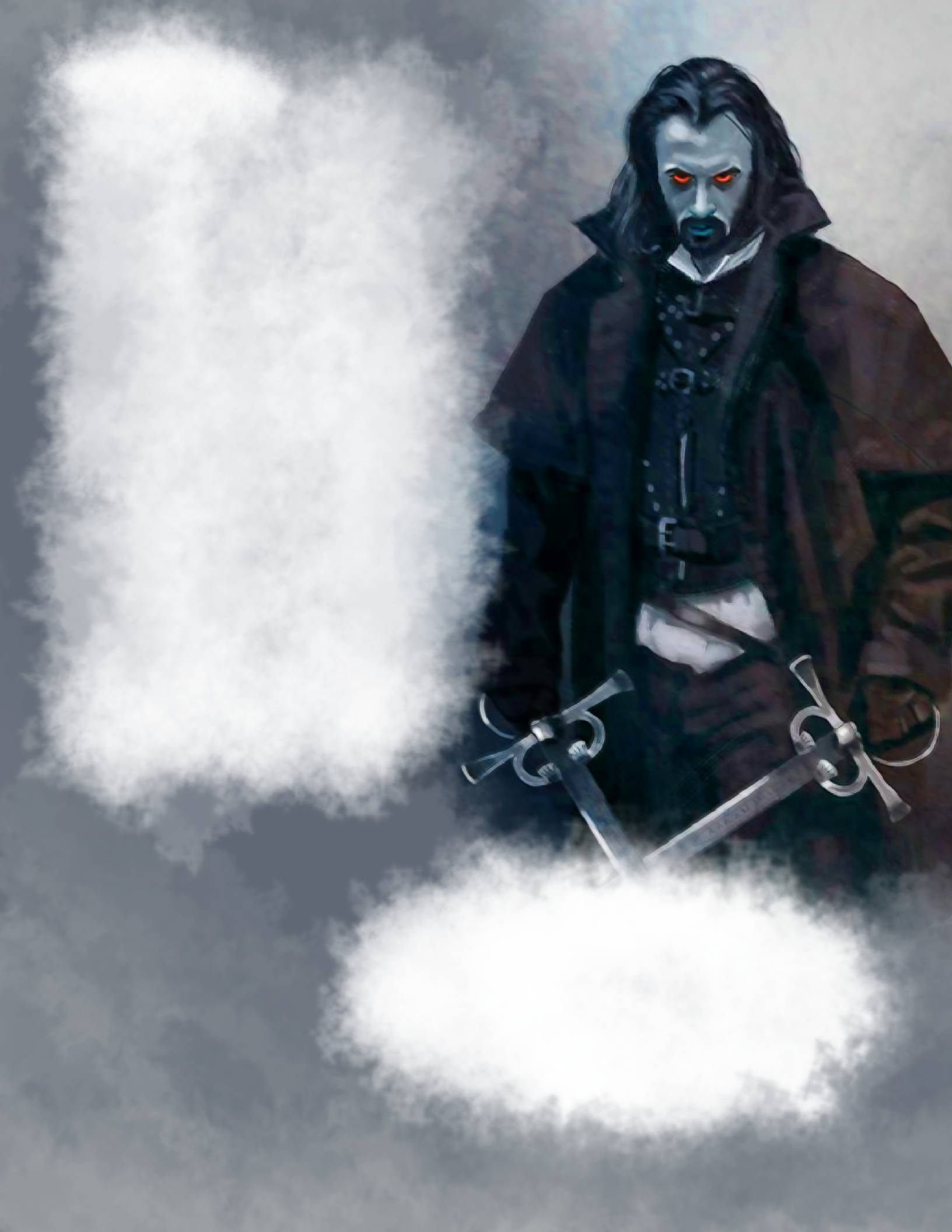
Vampire

Vampires are creatures cursed with a connection to undeath, and a thirst for blood.
In order to take levels in this class, your character must have been reduced to 0 Hit Points by the bite of a Vampire or a Vampire Spawn. A character who is reduced to 0 Hit Points in this way but who chooses not to take levels in the Vampire class experiences a lingering mental connection to the creature that bit them, until that creature is destroyed.
Class Features
As a Vampire, you gain the following class features
Hit Points
- Hit Dice: 1d8 per Vampire level
- Hit Points at 1st Level: 8 + your Constitution modifier
- Hit Points at Higher Levels: 1d8 (or 5) + your Constitution modifier per Vampire level after 1st
Proficiencies
- Armor: Light Armor
- Weapons: Simple Weapons, Scimitars, Shortswords, Rapiers, and Whips
- Tools: none
- Saving Throws: Dexterity, Charisma
- Skills: Choose two from Acrobatics, Athletics, Deception, History, Insight, Intimidation, Persuasion, and Stealth
Starting Equipment
You start with the following equipment, in addition to the equipment granted by your background:
- (a) a martial weapon you are proficient with or (b) two Daggers
- (a) a Diplomat's Pack or (b) a Monster Hunter's Pack
- a dark cloak which covers your whole body
- Leather Armor, and a Dagger
Vampire
| Level | Proficiency Bonus | Features | Vampire Spells Known |
|---|---|---|---|
| 1st | +2 | Sunlight Sensitivity, Bite, Bloodthirst | — |
| 2nd | +2 | Sanguine Magic, Vampiric Metabolism | 3 |
| 3rd | +2 | Undeath | 5 |
| 4th | +2 | Ability Score Increase, Beast Forms | 7 |
| 5th | +3 | Elder Blood, Vicious Bite | 9 |
Art by Anna Podedworna at https://www.artstation.com/artwork/nQO0D9
Sunlight Sensitivity
Once cursed with vampirism you become extremely sensitive to sunlight. When you start your turn with your skin exposed to direct sunlight you take take radiant damage equal to your levels in this class. A cloak which covers your whole body is sufficient to prevent this damage.
Conversely, your eyes better adapt to the night. You can see normally in dim light and darkness to a distance of 120 feet.
Bite
At 1st level you gain a special Bite, which counts as a melee finesse weapon. If you can make multiple attacks on your turn, only one of them can be a Bite. Your Bite deals 2d8 piercing damage and counts as magical for the purpose of overcoming resistance and immunity to nonmagical damage.

Bloodthirst
When you hit a living creature that has blood with your Bite, you may spend a number of hit dice up to your level in this class to drink your victim’s blood. Add your hit dice to the damage roll and you regain hit points equal to half the damage that the creature takes.
When you complete a long rest you regain all of your spent hit dice if you used Bloodthirst at least once in the past 24 hours. Otherwise you regain hit dice as normal.
Sanguine Magic
At 2nd level you unlock the hidden potential of blood.
Sanguis
When you use Bloodthirst you gain 1 Sanguis point for each hit die spent. Sanguis points are used to fuel your other Vampire abilities. When you complete a long rest you lose all Sanguis points.
Spellcasting and spells known
At 2nd level you learn three spells from the Vampire spell list, which you may cast without material components by spending a Sanguis point. When you gain a level in this class you learn two more spells. When you complete a long rest you may forget a Vampire spell you know to learn a different Vampire spell available to you.
From 3rd level you may choose from the Advanced Sanguine Magic spells, each of which costs 2 Sanguine points to cast.
From 5th level, you may choose from the Elder Sanguine Magic Spells, each of which costs 3 Sanguine points to cast.
Spellcasting Ability
Charisma is your Spellcasting Ability for your Vampire spells. You use your Charisma whenever a spell refers to your spellcasting Ability. In addition, you use your Charisma modifier when setting the saving throw DC for a Vampire spell you cast and when making an attack roll with one.
Spell save DC = 8 + your Proficiency Bonus + your Charisma modifier
Spell Attack modifier = your Proficiency Bonus + your Charisma modifier
Vampiric Metabolism
At 2nd level your metabolism alters to allow you to speed up and slow down at will. Your walking speed increases by 10 feet, and you appear convincingly dead while you remain still.
Undeath
At 3rd level you complete your transformation into a fully fledged Vampire. When you take bludgeoning, piercing, or slashing damage you may spend a Sanguis point to gain resistance to all the damage taken.
You also gain the Immortal Regeneration feature described on page 14, which prevents you from permanently dying unless a wooden stake is driven through your heart.
Beast Forms
Starting at 4th level you can cast Shapechange on yourself, without material components. You must choose from the forms of a Bat or a Rat. If you spend a Sanguis point while casting, you can additionally choose the forms of a Wolf, Giant Bat, Swarm of Bats or Swarm of Rats.
You can use this feature once, regaining the ability to do so when you complete a short or long rest.
Elder Blood
Starting at 5th Level you can spend additional Sanguis Points when casting a Vampire spell to cast as if from a spell slot whose level is equal to the number of Sanguine Points spent. When doing so, you cannot spend more Sanguine points than half your total level (rounded up).
Vicious Bite
Starting at 5th level, when you use your action to attack or cast a Vampire spell, you can use a bonus action to make a single attack with your Bite.
Vampire Spells
- Animal Friendship
- Armor of Agathys
- Beast Bond
- Cause Fear
- Charm Person
- Expeditious Retreat
- Find Familiar
- Fog Cloud
- Sleep
Advanced Sanguine Magic
Beast Sense
Darkness
Detect Thoughts
Enthrall
Hold Person
Misty Step
Shadow Blade
Suggestion
Elder Sanguine Magic
- Conjure Animals
- Fear
- Gaseous Form (self only)
- Phantom Steed
- Sending
- Speak with Dead
- Spirit Shroud
- Water Walk (self only)
Resurrection Magic
Immortal Regeneration
Vampire and Lich
You cannot be permanently killed unless certain conditions are met. When you die you enter a regenerative trance which lasts 24 hours. At the end of that period, you are returned to life with 1 hp. If you are missing critical body parts then they regenerate over the course of that period. If your body is totally destroyed, such as by the Disintegrate spell, then the regenerative trance lasts a week, during which you materialize a new body in a location that is safe and familiar to you.
While you have this feature you cannot be returned to life through any spell except for Wish and True Resurrection. If you are returned to life by True Resurrection, you lose all your levels in the class that granted this feature, and you gain equal levels in other classes of your choice.
Lich: You are permanently killed and your soul is obliterated if your phylactery is destroyed during your regenerative trance (or if it was already destroyed). During your trance, your phylactery gains immunity to non-magical attacks.
Vampire: You are permanently killed and your soul is obliterated if a wooden stake is driven through your heart during your regenerative trance. Your heart cannot be destroyed by any other means, and remains intact even if subjected to a spell such as Disintegrate.
Return From Death
Revenant and Corpse Ghost
If you die, you may bring yourself back to life over a 24 hour period, during which your soul severs its connection to your old body and possesses the nearest whole, fresh corpse most similar to your original. Your statistics and abilities do not change when you gain this new body, but any equipment remains with your old body.
However this process erodes your identity. To use this feature you must give up a level in a different class and replace it with a level in the class that granted this feature. If you cannot do so, then you cannot use this feature. A character that already has 5 levels in the class that granted this feature cannot do so without losing its mind entirely, becoming an NPC under control of the DM.
While you have this feature you cannot be returned to life through any spell except for Wish and True Resurrection. If you are returned to life by True Resurrection, you lose all your levels in the class that granted this feature, and you gain equal levels in other classes of your choice.