Veteran
The veteran has seen their share of combat and have picked up tactics, tips, and techniques from a variety of sources. They combine these into a practiced and deadly combination. They even pick up skills to help outside of combat.
Learned Experience
Starting at 3rd level you may pick two techniques to know. Chosen from the list of basic or utility techniques.
What to do, When to do it
At 7th level you may pick one technique from the utility category and one from the basic category.
Advanced Training
At 10th level you have trained hard and may now pick from the advanced techniques. You may pick one technique from the utility category and one advanced technique.
Practice Makes Perfect
Starting at 15th level, you may pick one technique from any category.
Master of Arms
Starting at 18th level, you may pick one technique from any category.
Additionally each time you take a long rest, you may swap one technique for one you currently don't know.
Basic Techniques
The techniques are presented in alphabetical order.
Charging strike. If you take the dash action you can make an attack as a bonus action, you have advantage and may add +5 to the damage of that attack you may only do this once per round.
Cleaving Blow. When you hit with a weapon attack, you use a bonus action to make another attack with the same weapon against a different creature that is within 5 feet of the original target and within range of your weapon.
Defensive Action. At the start of your turn, You may use a bonus action to fight defensively or disengage. If you choose to fight defensively all your attacks in the round are rolled with disadvantage, however all attacks against you are also made with disadvantage.
Follow-up. If you hit a creature with a weapon attack, you may use your bonus action to immediately strike again against the same target, you have advantage on this attack. You don't add your ability modifier to the damage of the bonus attack, unless that modifier is negative.
Multi-attack Defense. When a creature hits you with an attack, you can use your reaction to gain a +5 bonus to AC against all subsequent attacks made by that creature for the rest of the turn.
Warding Blades. When a creature hits you with an attack, you may use a reaction to add 1+ your proficiency bonus to your AC, this bonus to AC is for the triggering attack only.
Advanced Techniques
The techniques are presented in alphabetical order.
Crushing Counter. If a creature misses you with a melee attack you may use your reaction to make a melee weapon attack, you have advantage on this attack. You don't add your ability modifier to the damage of the bonus attack, unless that modifier is negative.
Ready for Anything. As a reaction you may choose to be proficient in a saving throw until the start of your next turn.
Self-Sustaining. If you are making death saving throws, you count anything higher than a 8 as a success.
Stunning Bash. You may substitute one of your regular attacks each round for a shield or shoulder bash. The damage for this attack is 1d4 + your strength modifier. If you are using a shield the damage is 1d6 + your strength modifier. A creature hit by this attack must succeed on a constitution saving throw or be stunned until the end of its next turn. The saving throw is calculated as follows:
Technique Save DC
Uncanny Dodge. When an attacker that you can see hits you with an attack. You may use your reaction to halve the damage of an attack.
Utility Techniques
The techniques are presented in alphabetical order.
Athlete. Roll a 1d6 and add its result to any Athletics check; you may also jump twice your distance and hold your breath twice as long.
Aggressive Diplomacy. You can roll a 1d6 and add its result to any Intimidation check.
Battle Field Knowledge. As an action on your turn. You may make an insight check vs the target's deception to determine if you know something about any creature you are in combat with. You may do this once per creature, and the DM can tell you two of the following:
- Resistances or Vulnerabilities
- Armor class
- Strength score
- Consitution score
- Dexterity score
- Most damaging attack.
Battle Field Medicine. When taking a short rest, you may expend a use of a healer's kit to add 1d4 to any hit dice used to regain hit points. You can target yourself or another with this ability. You may do this a number of times equal to half your fighter level per short rest.
Guard Duty. You may gain the benefits of a long rest after only 6 hours, and your passive wisdom score is increased by +2, Additionally you may roll a 1d6 and add it to any perception or investigation roll to find a hidden creature or an object being hidden on a creature.
Logistics. You can roll a 1d6 and add it to any land vehicles, or Animal Handling roll.
Playtest and Other Notes
This subclass is mainly an attempt to bring something akin to the hunter ranger to the fighter class. Letting the character Pick from among several options at each archetype level brings diversity to the class.
I also thought it was a great idea to use the action economy as much as possible, which helps brings built in balancing to the subclass. It also limits how often a technique can be used without giving the subclass any actual resources, something I think the fighter should not have at all.
The utility techniques bring much needed skill and outside combat abilities to a class which is normally lacking them.
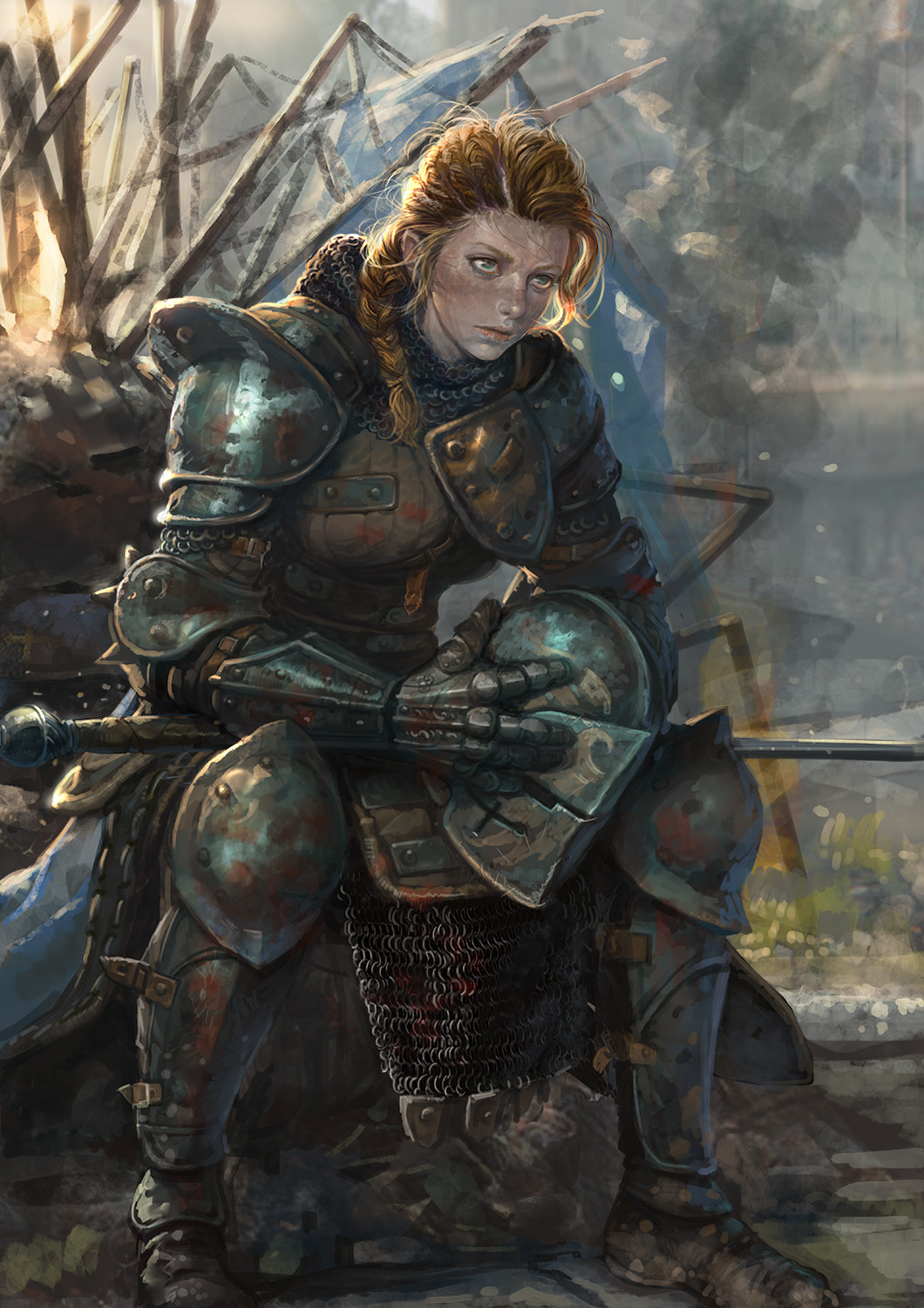
Inspiration for the subclass comes from, the warden in "For Honor", the man-at-arms in "Darkest Dungeon", 3.5 edition fighter and a few other sources.
I have playtested this subclass using NPCs. The results were promising and balanced. Those playtests were at lower level however, playtesting needs to be done with levels 10+.
Any feedback would be appreciated.