Manual of Draconic & Serpentine Races
This compendium provides five options for character races:
Pureblood Dragonborn, a mechanical fix for the PHB Dragonborn, carefully adjusting the breath weapon
Yuan-ti Abomination, an implementation of a serpentine race with a long past history in D&D
Blackspear Kobold, A tweak for the UA Kobold
Sofos Hydra, an unusual take on a multi-headed character
Guide Drake, a wingless draconic quadruped, written as a lighter alternative to the Demi-Dragon
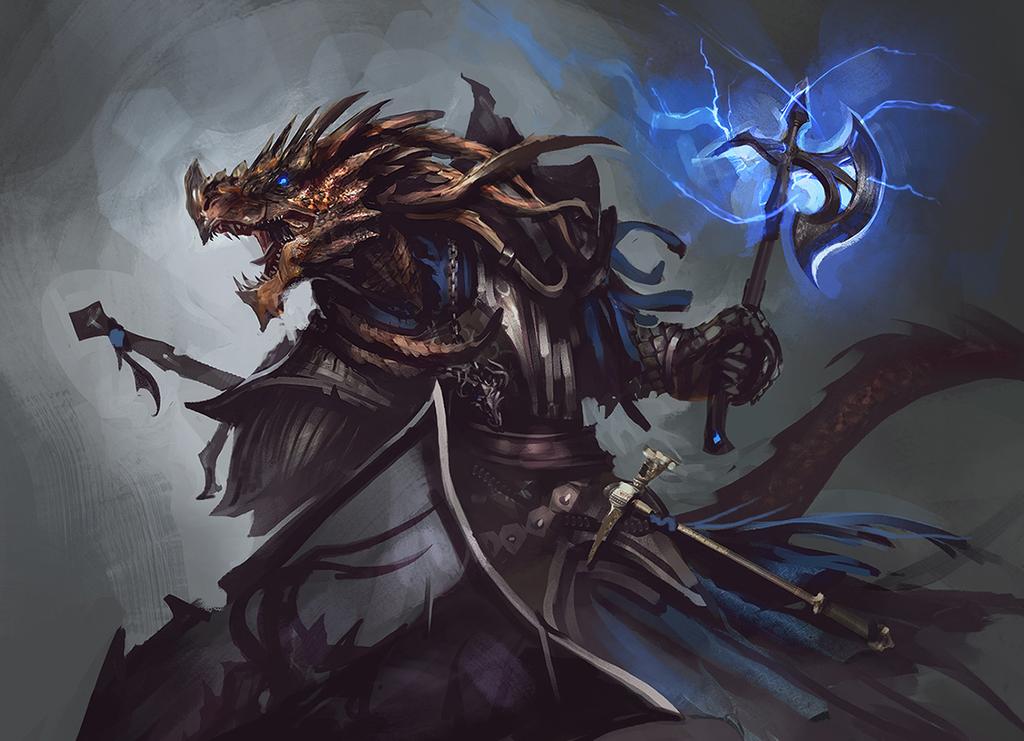
Pureblood Dragonborn
Among the dragonborn clans, there are those who venerate the purity of their bloodline and the strength of their heritage, disparaging the other clans as weak by squandering their birthright and diluting their dragon's blood among many ancestries. Though often viewed as extremist and isolationist by those they reject, these pureblood dragonborn clans, one for each of the ten ancestries, do wield greater powers than their impure brethren—a power, they say, that all dragonborn should always have possessed.
Pureblood Dragonborn Traits
Your draconic heritage manifests in a variety of traits.
Ability Score Increase. Your Strength score increases by 2, and a score determined by your draconic ancestry increases by 1.
Size. Dragonborn are taller and heavier than humans, standing well over 6 feet tall and averaging almost 250 pounds. Your size is Medium.
Speed. Your base walking speed is 30 feet.
Darkvision. You have superior vision in dark and dim conditions. You can see in dim light within 60 feet of you as if it were bright light, and in darkness as if it were dim light. You can't discern color in darkness, only shades of gray.
Draconic Ancestry. You have draconic ancestry. Choose one type of dragon from the Draconic Ancestry table. Your breath weapon, damage resistance, and ability score increase are determined by the dragon type, as shown in the table.
Breath Weapon. You can use your action to exhale destructive energy. Your draconic ancestry determines the size, shape, and damage type of the exhalation.
When you use your breath weapon, each creature in the area of the exhalation must make a saving throw, the type of which is determined by your draconic ancestry. The DC for this saving throw equals 8 + your Constitution modifier + your proficiency bonus. A creature takes 2d6 + your Proficiency bonus damage on a failed save, and half as much damage on a successful one. The damage increases to 3d6 at 5th level, 4d6 at 8th level, 5d6 at 11th level, and 6d6 at 17th level. After you use your breath weapon, you can't use it again until you complete a short or long rest.
Damage Resistance. You have resistance to the damage type associated with your draconic ancestry.
Imposing Presence. You have proficiency in one of the following skills of your choice: Intimidation or Persuasion.
Natural Armor. You have tough, scaly skin. When you aren't wearing armor, your AC is 13 + your Dexterity modifier. You can use your natural armor to determine your AC if the armor you wear would leave you with a lower AC. A shield's benefits apply as normal while you use your natural armor.
Languages. You can speak, read, and write Common and Draconic. Draconic is thought to be one of the oldest languages and is often used in the study of magic. The language sounds harsh to most other creatures and includes numerous hard consonants and sibilants.
| Dragon Type | Damage Type | Breath Weapon | Ability Score Increase |
|---|---|---|---|
| Black | Acid | 5 by 30 ft. line (Dex. Save) | +1 Dexterity |
| Blue | Lightning | 5 by 30 ft. line (Dex. Save) | +1 Charisma |
| Brass | Fire | 5 by 30 ft. line (Dex. Save) | +1 Charisma |
| Bronze | Lightning | 5 by 30 ft. line (Dex. Save) | +1 Wisdom |
| Copper | Acid | 5 by 30 ft. line (Dex. Save) | +1 Intelligence |
| Gold | Fire | 15 ft. cone (Dex. Save) | +1 Wisdom |
| Green | Poison | 15 ft. cone (Con. Save) | +1 Intelligence, +1 Constitution |
| Red | Fire | 15 ft. cone (Dex. Save) | +1 Constitution |
| Silver | Cold | 15 ft. cone (Con. Save) | +1 Constitution |
| White | Cold | 15 ft. cone (Con. Save) | +1 Constitution |


Yuan-ti Abomination
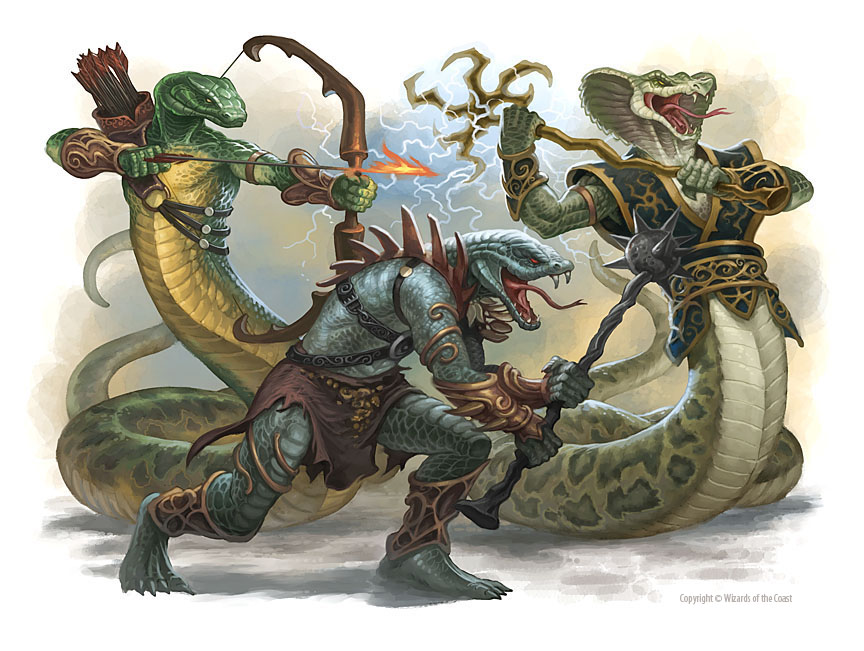
The serpent creatures known as yuan-ti are all that remain of an ancient human empire. Ages ago, their dark gods taught them profane rituals to mix their flesh with that of snakes, producing a caste-based society of hybrids in which the most snake-like are the leaders and the most humanlike are spies and agents in foreign lands. Out of these castes, yuan-ti abominations stand as the second highest, and are highly-regarded as leaders and warriors among their people.
Humans Transformed
The people who became yuan-ti were one of the original human civilizations. Their society built great temples of stone and forged metal into armor, tools, and weapons. In their ceremonies they paid homage to the snake as the embodiment of the qualities they most appreciated. They developed a philosophy of separating emotion from intellectual pursuits, allowing them to focus their energy on personal advancement and expanding their territory. They believed themselves to be the most enlightened mortals in the world, and in their hubris they sought to become ever greater.
The people tainted their souls by performing human sacrifices in the name of the gods, debased their flesh by cannibalizing their victims, and then performed a sorcerous ritual while writhing in pools filled with living snakes that enabled them to mix their flesh with that of serpents, becoming like the gods in body, thought, and emotion. Freed from the limitations of their human bodies, the yuan-ti used their new abilities to conquer new lands and expand their borders.
One Race, Many Forms
The bodies of all yuan-ti have a mix of humanlike and snakelike parts, but the proportion varies from individual to individual. After the initial metamorphosis of the humans, their society quickly coalesced into a caste system based on how complete a person's transformation was. The vast majority of yuan-ti fall into three categories
—abominations, malisons, and purebloods—
while the mutated broodguards and
exceedingly rare anathemas have their
place in the hierarchy as well.
As an abomination, you are among
the elite of your people, and have
likely spent a large portion of your life
practicing dark rituals of transformation
that have granted you the form you
now bear—as is expected and admired
by yuan-ti society. You command the
respect and attention of yuan-ti
malisons and purebloods, and lord
over broodguards and slaves.
Yuan-ti Abomination Traits
Your serpentine nature grants you a number of shared traits.
Ability Score Increase. Your Strength, Constitution, and Charisma scores each increase by 1.
Size. Yuan-ti abominations stand about 5 feet tall when upright, but the total length of their bodies, head to tail, ranges from 10 to as much as 20 feet. Your size is Medium.
Speed. Your base walking speed is 30 feet.
Darkvision. You have superior vision in dark and dim conditions. You can see in dim light within 60 feet of you as if it were bright light, and in darkness as if it were dim light. You can’t discern color in darkness, only shades of gray.
Innate Spellcasting. You can cast animal friendship at will, but you can target only snakes with it.
Natural Weapons. Your constricting serpentine body as well as your fanged maw are natural weapons, which you can use to make unarmed strikes. If you hit with your bite, you deal piercing damage equal to 1d6 + your Strength modifier.
If you hit with your constrict attack, you deal bludgeoning damage equal to 1d4 + your Strength modifier, and the target must succeed on a Strength saving throw with a DC equal to 8 + your proficiency bonus + your Strength modifier or become grappled. Until this grapple ends, your speed is 0 and you can’t constrict another target. At the start of your turn while you are constricting a target, you can use your bonus action to squeeze, dealing damage equal to your Strength modifier.
Poison Resistance. You have advantage on saving throws against poison, and you have resistance against poison damage.
Enchantment Resistance. You have advantage on all Intelligence, Wisdom, and Charisma saving throws against magic.
Serpentine. Your serpentine body lets you swiftly right yourself. When you are prone, standing up uses only 5 feet of your movement.
Languages. You can speak, read, and write Common, Abyssal, and Draconic.
Blackspear Kobold
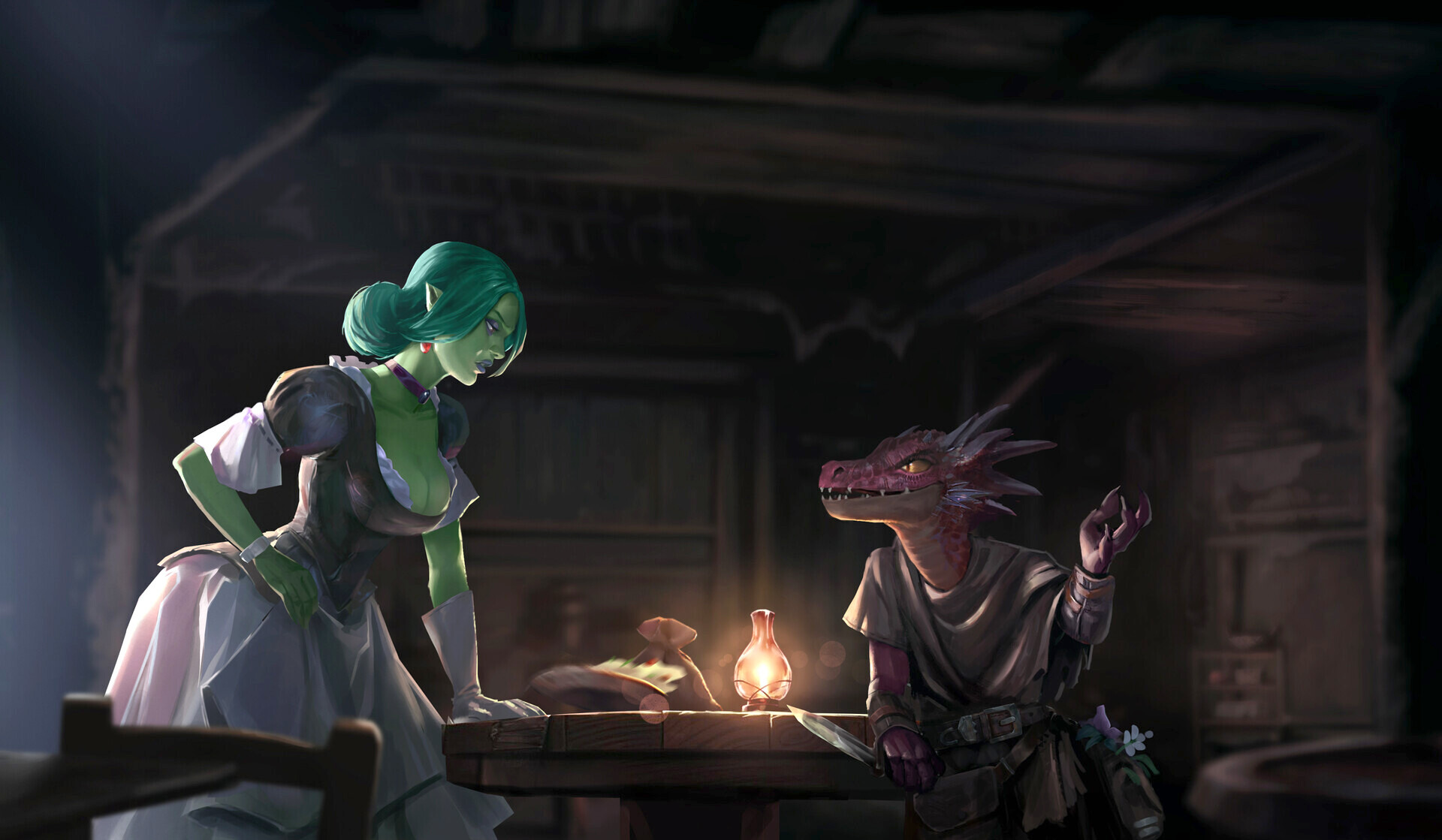
Kobolds are ubiquitous survivors living in the shadows of other, more powerful races. Kobolds are often labeled by outsiders as bothersome pests and vermin to be exterminated wherever they are found, but more often than not, those same kobolds merely wish to be left alone to toil on their own underground projects, finding simple satisfaction in hard work rendered in service to their tribe and a job well done.
Tribal Bond
Kobolds view their tribe as more important than the individuals that make up its whole, and each kobold would gladly die if it meant saving the tribe, believing that they will soon reincarnate with the next clutch of their tribe's eggs. In daily life, every member of the tribe works together to further the wellbeing of the whole, and kobolds find immense satisfaction in working to improve the lives of their tribe with their actions.
Mythical Legacy
Kobolds descend from the blood of dragons, but though each kobold is weak and physically frail, they take great pride in this tenuous bond that links them to the mightiest of creatures. It is common for kobold tribes to flock to dragons and do their bidding, merely for the chance to be close to what they view as a god in the flesh. Many a dragon has eagerly exploited such kobold tribes for their own gain. Some kobolds inherit a smidgen of dragon magic, often becoming highly-respected kobold scale sorcerers who lead their tribe in their religious practices.
New Goals
Not every tribe is alike. Some tribes reject the worship of dragons as well as that of Kurtulmak, tyrannical god of evil kobolds, and instead put their faith in their own capacity to make their way through an uncaring and dangerous world. Such tribes rely on brave individuals to step forward and lead them as saviors that will stop the cycle of violence that has long beset the kobold people, and instead establish better relationships with the more powerful intelligent races around them. Some ambitious kobold champions even dream of uniting distant tribes of kobolds behind a common goal, envisioning a world in which kobolds that are separated even by great distance work together to change the negative manner in which they are perceived, and improve the lives of kobolds everywhere.
Blackspear Kobold Traits
Your tenacious nature grants you the following shared traits.
Ability Score Increase. Your Dexterity score increases by 2, and your Charisma score increases by 1.
Size. Kobolds range in height from 2 to 3 feet tall. Your size is Small.
Speed. Your base walking speed is 30 feet.
Center of Attention. As a bonus action, you let out a war cry, invoke a distracting spray of magical sparkles, or otherwise draw the attention of each enemy within 10 feet of you. Until the end of your next turn, you and your allies have advantage on the next attack roll each of you make against any of those enemies who could hear and see you. You can use this trait a number of times equal to your proficiency bonus, and you regain all expended uses when you finish a long rest.
Darkvision. You can see in dim light within 60 feet of you as if it were bright light, and in darkness as if it were dim light. You can’t discern color in darkness, only shades of gray.
Devious Artisan. As part of a long rest, you can cobble together scraps of available material to create one of the following items: a bag of ball bearings, a bag of caltrops, a hunting trap, or a flask of oil. Items created in this way are visibly makeshift, and you can only maintain a number of items in this manner equal to your Proficiency bonus. Items created in excess of the limit fall apart, starting with the oldest.
Kobold Heritage. Kobold tribes foster a variety of traits in their individual members, which can manifest in multiple ways. Choose one of the following options when you select this race:
- Fearless Underdog. You have advantage on saving throws to avoid or end the frightened condition on yourself.
- Dragon Magic. You know one cantrip of your choice from the sorcerer spell list. Intelligence, Wisdom, or Charisma is your spellcasting ability for that cantrip (choose when you select this race).
- Scurrying Nimbleness. You can move through the space of any creature that is of a size larger than yours.
Languages. You can speak, read, and write Common and Draconic.
Sofos Hydra
Sofos hydras are the descendants of a magical experiment meant to create fierce soldiers that could both follow orders and regenerate from any wound. The experiment failed on both counts, and the prospective warlord who had been responsible was defeated when he never produced the perfect army he had planned for.
Superficially resembling other types of snakemen, sofos hydras have reptilian features and a long tail in place of legs, but they are distinctly recognizable by way of their three serpentine heads and long, elegant necks.
Outcasts in Solace
Monstrous in appearance, few in number, and strange in their mannerisms, sofos hydras are seldom openly welcome anywhere. Most congregate in remote fishing villages where they are happy to be left alone by the outside world, but some few travel the world with no-one for company, save the distinct personalities of their own three heads.
A Trio of One
Though each sofos hydra is one creature, each of their heads form distinct personalities, with opinions of their own and with their own unique dynamic between the three of them. The sofos consider each head to be a splinter persona, but think of all three combined as being the makeup of one individual—which can be jarring to outsiders, as each head is driven towards acting out an exaggerated role for the other heads to depend upon as as a vastly different perspective. While the dynamic between different heads is individual to each sofos hydra, it is common for each head to self-define themselves by taking on a specific purpose, such as by acting as the bold persona, or the skeptical or reliable one. Some get along with each other and work as a team with a variety of practical considerations, while others are in constant conflict with themselves—or anything in-between. With a lifetime of experience in dealing with their siblings, and each head striving to differentiate themselves as their own, the ceaseless interplay among them is often viewed as strange and alien by outsiders.
The Weight of Loss
In battle, many sofos hydras prefer to attack with their nimble heads alongside weapons wielded in their hands, posing an unusual threat to their foes but leaving their long necks as easy targets for counterattacks. While sofos hydras share some of the unique regenerative abilities of their bestial cousins and can repair a damaged head, or even rapidly regrow a lost head, they are far from fond of that process, viewing any momentary separation from their siblings with dread—even the most domineering of splinter personas loses their bluster and confidence when threatened and alone. Worse, heads that have been lost and regenerated sometimes return changed in personality after the experience, taking on new mannerisms and habits—and thus upsetting the dynamic balance between the three.
Sofos Hydra Traits
Your unusual nature grants you a number of unique benefits.
Ability Score Increase. Your Constitution score increases by 2, and your Strength score increases by 1.
Size. A sofos hydra stands about 7 feet tall when upright, of which 2 feet comprises the length of the neck, but the total length of their bodies, head to tail, ranges from 12 to as much as 18 feet. Your size is Medium.
Speed. Your base walking speed is 30 feet.
Swim Speed. You have a swimming speed of 30 feet.
Darkvision. You have superior vision in dark and dim conditions. You can see in dim light within 60 feet of you as if it were bright light, and in darkness as if it were dim light. You can’t discern color in darkness, only shades of gray.
Natural Weapons. Your constricting serpentine body as well as each of your fanged maws are natural weapons, which you can use to make unarmed strikes. If you hit with your bite, you deal piercing damage equal to 1d6 + your Strength modifier.
If you hit with your constrict attack, you deal bludgeoning damage equal to 1d4 + your Strength modifier, and the target must succeed on a Strength saving throw with a DC equal to 8 + your proficiency bonus + your Strength modifier or become grappled. Until this grapple ends, your speed is 0 and you can’t constrict another target. At the start of your turn while you are constricting a target, you can use your bonus action to squeeze, dealing damage equal to your Strength modifier.
Multiple Heads. You have three heads. While you have more than one head, you have advantage on perception checks and on saving throws against being blinded, charmed, deafened, and knocked unconscious.
Whenever you are struck by a critical hit one of your heads temporarily dies, up to two. Lost heads regenerate at the end of a short rest if you spend any hit dice, or at the end of any long rest.
Lunging Jaws. In battle, your flexible body allows you to lash out at your enemies. As a bonus action, you can make an attack with your bite. This attack has a reach of 10 feet. If the attack hits, it deals its normal damage. You can use this trait once, and must then finish a short or long rest to use it again.
Serpentine. Your serpentine body lets you swiftly right yourself. When you are prone, standing up uses only 5 feet of your movement.
Languages. You can speak, read, and write Common and Draconic.
Guide Drake
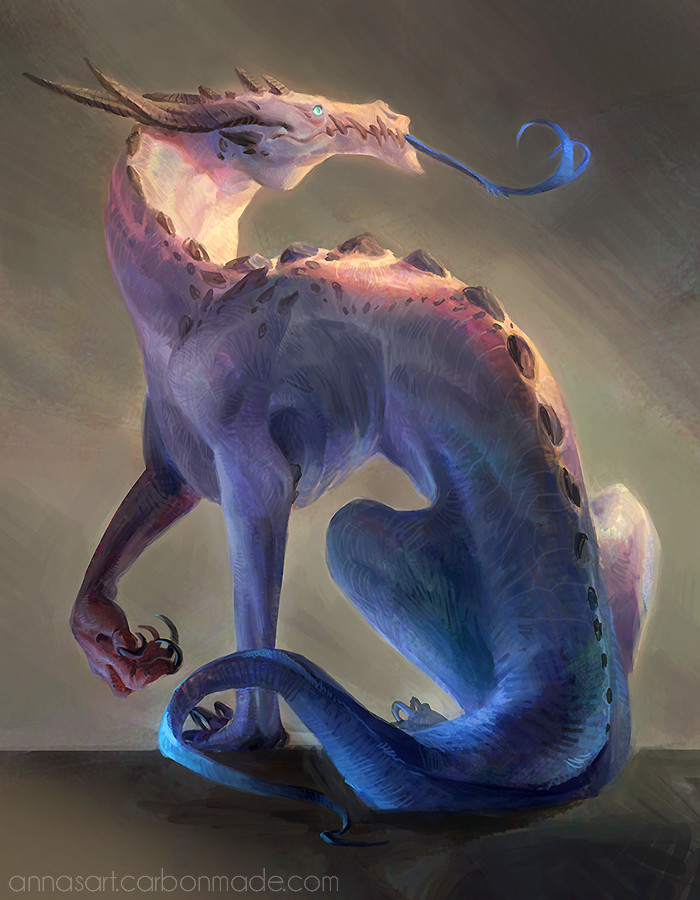
Guide drakes are intelligent cousins of guard drakes, but despite their wingless nature, they have more in common with true dragons. Guide drakes are known for their long memory and willingness to help others, which earned them their moniker. They often spend countless years as prized advisors to their chosen friends among the shorter-lived races.
Standing upon four legs, a guide drake's foreclaws can be used for grasping and manipulating objects, but are ultimately clumsy and better fit for walking than they are for handling tools and weapons.
Born of Scale and Sorcery
Like their bestial cousins the guard- and ambush drakes, guide drakes are created through a magical ritual involving innate draconic sorcery and several pounds of dragon scale. Common drakes are sometimes offered by a true dragon to their most loyal subjects, but guide drakes are the rarest of the lot, as the advanced ritual that creates them and grants them the capacity for intelligence takes a toll on the true dragon, requiring them to gift some of their own essence away. As only the fewest dragons would even contemplate such a sacrifice, guide drakes are exceedingly rare, and are usually bestowed upon only the most esteemed companions of a true dragon, or are required to act as the voice of their creator, representing them in matters that they don't wish to menially engage with.
Companions and Emissaries
Guide drakes tend to serve the wishes of their creator from afar, often acting on their own for centuries without further direction. To some metallic drakes, this means acting as a dedicated guide and companion to the descendants of a particular family, providing advice and reminding each generation of the deeds their ancestor accomplished alongside the dragon.
While guide drakes aren't compelled to follow the directions of their dragon creator, they often choose to willingly serve someone else, and are more commonly found acting as part of a local society than they are likely to be found living on their own in the wilds. As a result, they are often intimately familiar with local traditions and politics spanning back several centuries, and can sometimes be found advising rulers or acting as a formal emissary between a dragon and a larger city.
When an individual to which a guide drake has pledged themselves chooses to take up the life of an adventurer, it is common for the guide drake to tag along.
Guide Drake Traits
Your draconic nature manifests in a variety of shared traits.
Ability Score Increase. Your Strength score increases by 2, and a score determined by your draconic ancestry increases by 1.
Age. A guide drake can live for over a thousand years, but doesn't grow in size after reaching their prime.
Type. Your creature type is dragon, rather than humanoid.
Size. At most, a guide drake stands 4 feet tall from shoulder to the ground, and measures no longer than 16 feet from snout to tail tip, of which their body accounts for a maximum of 5 feet. Your size is Medium.
Speed. Your base walking speed is 30 feet.
Darkvision. You have superior vision in dark and dim conditions. You can see in dim light within 60 feet of you as if it were bright light, and in darkness as if it were dim light. You can’t discern color in darkness, only shades of gray.
Draconic Ancestry. You have draconic ancestry. Choose one type of dragon from the Draconic Ancestry table. Your breath weapon, damage resistance, and ability score increase are determined by the dragon type, as shown in the table.
| Dragon Type | Damage Type | Breath Weapon | Ability Score Increase |
|---|---|---|---|
| Black | Acid | 5 by 30 ft. line (Dex. Save) | +1 Dexterity |
| Blue | Lightning | 5 by 30 ft. line (Dex. Save) | +1 Charisma |
| Brass | Fire | 5 by 30 ft. line (Dex. Save) | +1 Charisma |
| Bronze | Lightning | 5 by 30 ft. line (Dex. Save) | +1 Wisdom |
| Copper | Acid | 5 by 30 ft. line (Dex. Save) | +1 Intelligence |
| Gold | Fire | 15 ft. cone (Dex. Save) | +1 Wisdom |
| Green | Poison | 15 ft. cone (Con. Save) | +1 Intelligence, +1 Constitution |
| Red | Fire | 15 ft. cone (Dex. Save) | +1 Constitution |
| Silver | Cold | 15 ft. cone (Con. Save) | +1 Constitution |
| White | Cold | 15 ft. cone (Con. Save) | +1 Constitution |



Breath Weapon. You can use your action to exhale destructive energy. Your draconic ancestry determines the size, shape, and damage type of the exhalation.
When you use your breath weapon, each creature in the area of the exhalation must make a saving throw, the type of which is determined by your draconic ancestry. The DC for this saving throw equals 8 + your Constitution modifier + your proficiency bonus. A creature takes 2d6 + your Proficiency bonus damage on a failed save, and half as much damage on a successful one. The damage increases to 3d6 at 5th level, 4d6 at 8th level, 5d6 at 11th level, and 6d6 at 17th level. After you use your breath weapon, you can't use it again until you complete a short or long rest.
Damage Resistance. You have resistance to the damage type associated with your draconic ancestry.
Mythic Build. You count as one size category larger when determining your carrying capacity and the weight you can push, drag, or lift.
Your claws have enough manual dexterity to manipulate objects as normal, but you have disadvantage on attack rolls made with weapons, and receive no benefit from wielding shields. In order to wear armor, you must have it specially constructed for you, costing three times the normal rate.
Natural Armor. You have tough, scaly skin. When you aren't wearing armor, your AC is 13 + your Dexterity modifier. You can use your natural armor to determine your AC if the armor you wear would leave you with a lower AC.
Natural Weapons. You have access to an arsenal of natural weapons. You can use these natural weapons, with which you are proficient, to make melee weapon attacks. Your fanged maw deals piercing damage equal to 1d10 + your Strength modifier on a hit. Your lashing tail has a reach of 10 feet and deals bludgeoning damage equal to 1d8 + your Strength modifier. Your rending claws deal slashing damage equal to 1d4 + your Strength modifier. When you take the Attack action and attack with your claw, you can use your bonus action to make an additional claw attack.
Languages. You can speak, read, and write Common and Draconic. Draconic is thought to be one of the oldest languages and is often used in the study of magic. The language sounds harsh to most other creatures and includes numerous hard consonants and sibilants.
Equipment
Bracelet of Leaping and Gliding
Wondrous item, uncommon (requires attunement)
When you attune to this shimmering jade bracelet, you grow a pair of muscular wings upon your back, which grant you the following traits. If you unattune from the bracelet, the wings turn to ash and scatter upon a phantom wind.
Aided Jump. Your maximum jump distance for high and long jumps is doubled, and is unaffected by whether or not you take a running start. This extra distance costs movement as normal.
Purpose of the Guide Drake
The guide drake is intended to be a lighter alternative to the Demi-Dragon. It suffers some of the same drawbacks and struggles to use conventional weapons and armor, but is easier to quickly adapt and implement.
Breath Weapon Damage Scaling
Racial breath weapon scaling has been a hotly-debated topic for ages, with many different opinions and solutions. The issue at hand is that the racial scaling must roughly match the capacity for damage that various classes are capable of putting out across multiple levels, else the breath will quickly become a waste of an action. I have examined this topic and multiple different takes on it in great detail, and compiled a variety of options into this document. The calculation used for the Pureblood Dragonborn and the Guide Drake is carefully calculated to be neither too high nor low, but if you find that it does not match the needs of your table, please make use of the document to determine a more fitting calculation.
Glide. As a reaction to falling while you aren't prone, you can spread your wings and glide, slowing your rate of descent to 20 feet per round. While gliding, you can move up to 40 feet in any horizontal direction, or dive straight down. When you land, you take no falling damage and can land on your feet. Alternatively, you can initiate gliding by expending at least 10 feet of movement as part of a high jump.
Credits
Created By: Aron
Made With: GM Binder
Artwork By:
Takeda11: Day 349/365
Wizards of the Coast: Yuan-ti
Anastassia Grigorieva: Brown horns and blue tounges
Sloth Being: Tavern
Playtesters:
SenorSnout
TheSunniestBro
The Manual of Draconic & Serpentine Races is unofficial Fan Content permitted under the Fan Content Policy. Not approved/endorsed by Wizards. Portions of the materials used are property of Wizards of the Coast. ©Wizards of the Coast LLC.