Classes
| Class Name | Description | Stamina Die | Primary Ability | Saving Throw Proficiencies | Armour and Weapon Proficiencies |
|---|---|---|---|---|---|
| Brigand | Ignoble survivors who know that battles aren't won by fighting fair | d6 | Dexterity | Dexterity & Intelligence | Light Armour, Simple Weapons, Longswords, Rapiers, Shortswords |
| Marshal | Leaders of men whose words, deeds, and in some cases mere presence, is enough to inspire victory | d6 | Charisma | Dexterity & Charisma | Light and Medium Armour, Shields, Simple Weapons, Longswords, Rapiers, Shortswords |
| Scholar | Educated folk that apply their scholarly knowledge in practical situations | d4 | Intelligence | Intelligence & Wisdom | Clubs, Daggers, Slings, Spears, Staffs |
| Slayer | Makers of war and ruin, revered and feared in equal measure by lesser fighters | d10 | Strength | Strength & Constitution | Light and Medium Armour, Shields, All Weapons |
| Wanderer | Experienced travellers that are most at home on the road or in the harsh wilderness | d8 | Wisdom | Strength & Dexterity | Light and Medium Armour, Shields, All Weapons |
| Warrior | Trained soldiers unrivalled in their skill in battle and combat experience | d8 | Strength or Dexterity | Strength and Constitution | All Armour, Shields, All Weapons |
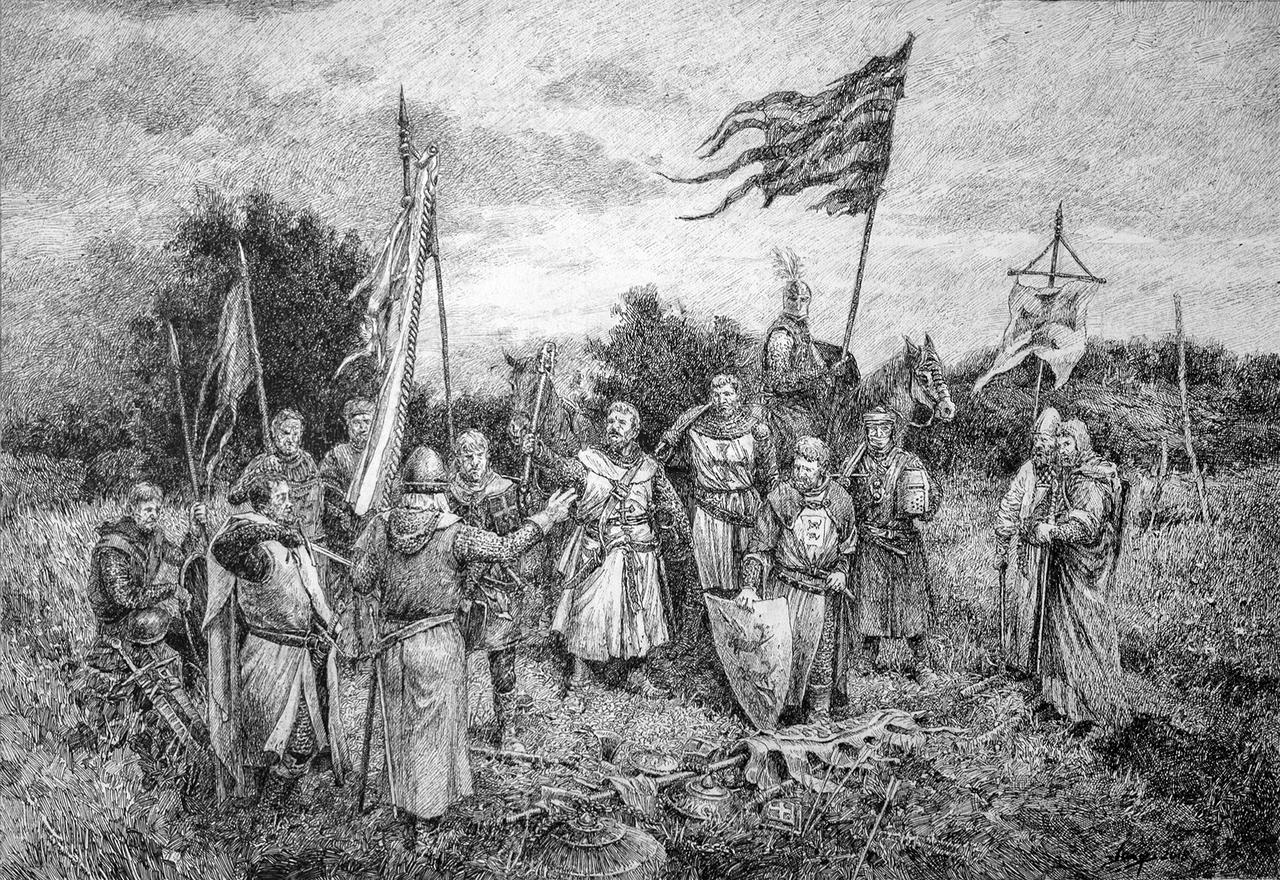
Brigand
“I don't know how I'm going to win, I just know that I'm not going to lose.”
—A survivor
Brigands are survivors who know that battles aren't won by fighting fair. They are more than your standard cur, scoundrel, villain, or wretch – they are crafty and cunning, using brutal skill and underhanded tactics to gain an advantage over their opponents.
Brigands rely on skill and their foes’ vulnerabilities to get the upper hand in any situation. They have a knack for finding the solution for any problem, demonstrating a resourcefulness needed to survive in this cruel world.
A Shady and Brutal Living
Brigands make their living by joining raiding parties and other unsavoury organisations for coin, though lone wolf Brigands are not uncommon. It is rare for a Brigand to be in an honest line of work, the closest being a mercenary sworn to a lord. Even then the role they play in their lords warband often deals with the dirty and distasteful affairs of politics and battle.
Brigands are far closer than most folk to the world of murder, theft, and violence that pervades the underbelly of civilization, and they have survived so far by disregarding the rules of society to get one step ahead. Though the price of survival often requires more than mere indifference to the rules of honourable men, which is sure to turn them into foes.
Better you than Me
Brigands devote as much effort to mastering the use of a variety of skills as they do to perfecting their dirty combat abilities, giving them a broad expertise that few others can match. Many focus on stealth and deception, befitting of those called Brigand, while others refine the skills that help them in combat. Precise footing and a keen eye for weakness can easily compete with raw strength.
When it comes to combat Brigands would rather make one precise strike, placing it exactly where the attack will hurt the most, then wear an opponent down with a barrage of attacks. The less time spent in a battle, the less likely you are to die yourself. This mentality gives Brigands a knack for avoiding danger derived from this calculating nature, or cowardness.
The Brigand
| Level | Proficiency Bonus | Features | Assault Potency |
|---|---|---|---|
| 1 | +2 | Underhanded Assault, Brigand Archetype | 1 |
| 2 | +2 | Cunning Action, Expertise | 1 |
| 3 | +2 | Brigand Archetype Feature | 1 |
| 4 | +3 | Character Improvement | 2 |
| 5 | +3 | Dirty Tricks | 2 |
| 6 | +3 | Brigand Archetype Feature | 2 |
| 7 | +4 | Unsavoury Tactics | 3 |
| 8 | +4 | Character Improvement | 3 |
| 9 | +4 | Brigand Archetype Feature | 3 |
| 10 | +5 | Bastard's Luck | 4 |

Class Features
As an Brigand, you gain the following features.
Stamina
- Stamina Dice: 1d6 per Brigand level
- Stamina at 1st Level: 6 + your Constitution modifier
- Stamina at Higher Levels: 1 + your Constitution modifier per Brigand level after 1st
Proficiencies
- Armour: Light
- Weapons: Simple Weapons, rapiers, shortswords
- Tools: Thieves Tools
- Saving Throws: Dexterity & Intelligence
- Skills: Choose three from: Acrobatics, Athletics, Deception, Insight, Intimidation, Investigation, Perception, Performance, Persuasion, Sleight of Hand, and Stealth
Equipment
You start with the following equipment, in addition to the equipment granted by your background:
- (a) a rapier or (b) a shortsword
- (a) a shortbow and quiver of 20 arrows or (b) a shortsword
- (a) a burglar’s pack, (b) a dungeoneer’s pack, or (c) an explorer’s pack
- Leather armor, two daggers, and thieves’ tools
Underhanded Assault
Beginning at 1st level, you know how to exploit a foe’s distraction and weakness, doing whatever necessary to win the fight. Once per turn whenever you hit with an attack made with a light, finesse, or ranged weapon, and you had advantage on the attack roll, you can choose to initiate an Underhanded Assault.
To do so, you use your reaction and expend any number of Underhanded Assault points, up to the amount shown in the Assault Potency column of the Brigand table for your level, on one or more Underhanded Tactics. Each point you send either activates an Underhanded Tactic or improves an already activated Underhanded Tactic.
The target of the attack is effected by the activated Underhanded Tactics after the damage of your attack has been dealt. You don’t need advantage on the attack roll to trigger your Underhanded Assault if another enemy of the target is within 5 feet of it, that enemy isn’t incapacitated, and you don’t have disadvantage on the attack roll.
Some Underhanded Assault options require your target to make a check or saving throw to resist their effects. The saving throw DC is calculated as follows:
Underhanded Assault save DC = 8 + your proficiency bonus + your Dexterity modifier
The Underhanded Tactics are listed below.
Close and Personal
You violently close the distance between you and the target. You attempt to grapple the target. On a success, the target is grappled by you and takes bludgeoning damage equal to 2 x the points spent. This tactic can only be used if the triggering attack was a melee attack.
Eye Thief
You attempt to gouge your fingers into the target's eyes, throw dirt in their face, or otherwise attempt to blind your foe. You make a contested Dexterity check against the target of the attack. Targets wearing helmets have advantage on the contest. On a success, the target is blinded for a number of turns equal to the number of points spent. The target can make a Constitution (Grit) check as a bonus action on their turn to end the effect early.
Shin Sweep
You lash out at the target’s shin or stomp on their toe. The target of the attack makes a Constitution (Grit) check with a penalty equal to the number of points spent. On a failure, the target falls prone.
Visceral Attack
You drive your attack into one of the target's vital points. You add an extra 1d6 per point spent to the damage of the attack.
Brigand Archetype
At 1st level, you choose an archetype that you emulate in the exercise of your roguish abilities. Choose either Agent, Cut-throat, Falcon, Murderer, Poacher, Shield Bearer, or Untamed, all detailed at the end of the class description.
This choice grants you features at 1st level and again at 3rd, 6th, and 9th level.
Cunning Action
Starting at 2nd level, your quick thinking and agility allow you to move and act swiftly. You can take a bonus action on each of your turns in combat. This action can be used only to take the Dash, Disengage or Hide actions.
Expertise
You don't survive in this world without being good at what you do. Also at 2nd level, choose two of your skill or tool proficiencies. Your proficiency bonus is doubled for any ability check you make that uses either of the chosen proficiencies.
Character Improvement
When you reach 4th level and again at 8th level, you can increase one ability score of your choice by 2, or you can increase two ability scores of your choice by 1. Alternatively you can take a Feat.
As normal, you cannot increase an ability score above 20 using this feature.
Dirty Tricks
Starting at 5th level, you have developed several new dirty tricks to use against your foes. You gain the following new Underhanded Tactics.
Nose Cracker
You thrust forward with the blunt end of your weapon or with your head, hitting the target in the nose. You must spend two or more points to trigger this tactic. The target of the attack must make a Constitution (Grit) check with a penalty equal to the number of points spent or become Staggered until the end of its next turn. This tactic can only be used if the triggering attack was a melee attack.
Uncanny Dodge
You ready yourself against your target's retaliation. The damage of the next attack the target hits you with is reduced by an amount equal to 1 + the number of points spent until the beginning of your next turn. This effect lasts until the beginning of your next turn.
Wind ‘em
You drive your attack into the targets weak point, winding them. You must spend two or more points to trigger this tactic. The target must make a Dexterity saving throw or become Winded for a number of turns equal to the number of points spent on a failure. The target can make a Constitution (Grit) check at the end of its turn to end the effect early.
Unsavoury Tactics
Starting at 7th level, you have further developed your dishonourable way of fighting to include increasingly unsavoury tactics. You gain the following new Underhanded Tactics.
Cruel Twist
You cruelly twist your attack as it drives into the target, causing painful bleeding. The target must make a Constitution saving throw or begin to take necrotic damage equal to the number of points pent at the end of each of their turns. Either the target or someone else can end this effect with a successful Wisdom (Medicine) check.
Low Blow
You strike out dishonorably against your target's groin. You must spend three or more points to trigger this tactic. You make an additional attack roll against the target. On a hit the target gains a level of exhaustion. This level of exhaustion can be removed if the target uses their action and all their movement to catch their breath. A creature cannot gain more then 4 levels of exhaustion from this source. This tactic can only be used if the triggering attack was a melee attack.
Bastard's Luck
At 10th level, you have an almost supernatural knack for succeeding when you need to. If your attack misses a target within range, you can turn the miss into a hit. Alternatively, if you fail an ability check, you can treat the d20 roll as a 20.
Once you use this feature, you can’t use it again until you finish a short or long rest.
Brigand Archetypes
Brigands have many features in common, including their emphasis on perfecting their skills, their dirty and deadly approach to combat, and their increasingly quick reflexes. But different Brigands steer those talents in varying directions, embodied by the Brigand archetypes.
Your choice of archetype is a reflection of your focus not necessarily an indication of your chosen profession, but a description of your preferred techniques.
Brigands are categorised into the following archetypes: Agent, Cut-throat, Falcon, Hellion, Murderer, Shield Bearer, and Untamed,
Agent
Making friends, trading favours, and knowing the secrets of those they surround themselves with. These are the speciality of the cunning Agent. With guile and honeyed words, they play the game of politics and social intrigue.
Well Connected
Starting at 1st level, if you spend at least 1 hour carousing a populated area, you can find one of the following:
- Lodgings equal to a Modest lifestyle for up to five creatures.
- Information regarding the location of persons of interest.
- Access to rare/illegal goods and services.
Discern Weakness
Also at 1st level, you gain the ability to decipher an opponent’s tactics and develop a counter to them. As an action, you make a Wisdom (Insight) check against a creature you can see that isn’t incapacitated, opposed by the target’s Charisma (Deception) check. If you succeed you may add your Intelligence, Wisdom, or Charisma modifier to the damage of your next Underhanded Assault against the targeted creature, as long as you maintain concentration. A creature that succeeds against you cannot be targeted again for 1 minute.
Additionally, your Underhanded Assault save DC can be calculated with either your Intelligence, Wisdom, or Charisma modifier (your choice).
Secrets Gleaned
You are adept at observing the plans and weapons of your enemies. Starting at 3rd level, if you spy on an enemy without being detected for at least 10 minutes, you may pick one of the following benefits:
- The GM gives you a clue about the enemy’s plans or destination.
- You spot a potential weakness in the enemy, giving you (or an ally you advise) advantage on the first attack you make against foes of that kind.
- You gain a +1 bonus to AC against attacks made by enemies of the kind you are observing. This benefit lasts until you next take a short rest.
- You gain advantage on Dexterity (Stealth) ability checks made against enemies of this kind. This benefit lasts until you next take a short rest.
- You closely observe the enemy and can describe their appearance, gear and tactics in sufficient detail that when you give your report, other player characters gain advantage on their next check to obtain more information about the enemy.
Honeyed Words
Starting at 6th level, you have mastered the art of gaining trust. When you spend at least 10 minutes persuading a creature of your good intentions, that creature must make a Wisdom saving throw against you Underhanded Assault save DC or become Charmed by you.
This charmed state lasts until you give the creature reason to doubt your sincerity or until a long rest. Another creature can attempt to break a Charmed creature from your influence but has disadvantage on their appropriate social interaction roll if you are present.
Expert Guile
Starting at 9th level, your ability to convince others borders on the preternatural. You may issue commands to any creature that you have charmed with your Honeyed Words feature and that creature must carry them out to the best of its ability.
If the command is something that the creature would have an aversion to, then it gets another Wisdom saving throw against the DC for your Honeyed Words feature.
If you are attempting to compel the creature to do something abhorrent to its nature, then it has advantage on its saving throw.
Cut-throat
Cut-throats are hired killers, seasoned bandits, or murderers who know their way around a blade and shield. Typically, the lifestyle of a Cut-throat involves a great deal of violence and physical exertion, which they are more than happy to partake in.
Equipped for War
Starting at 1st level, you gain proficiency in medium armour, shields, and four weapons of your choice.
Additionally, your stamina maximum increases by 1 and increases by 1 again whenever you gain a level in this class.
Brutal Blows
Also at 1st level, you can use an Underhanded Assault with any weapon you are proficient in, not just light, finesse or ranged weapons. The other requirements for Underhanded Assault still need to be met.
Additionally, your Underhanded Assault save DC can be calculated with either your Strength or Dexterity modifier (your choice).
Martial Skill
Starting at 3rd level, you learn one Martial Skill of your choice from the Warrior class feature of the same name. Your Martial Skill options are detailed at the end of the Warrior class description.
You learn one additional Martial Skill of your choice at 6th and 9th level. Each time you learn a new Martial Skill, you can also replace one Martial Skill you know with a different one.
Some of your Martial Skill may require your target to make a saving throw to resist the Martial Skill's effects. The saving throw DC is equal to your Underhanded Assault save DC.
Square Up
Starting at 6th level, you can use your bonus action granted by your Cunning Action to impose disadvantage on the next melee attack that targets you until the start of your next turn. When you do so, you also gain a number of temporary hit points equal to your Brigand level.
You can do this a number of times equal to your Strength or Dexterity modifier (minimum of once), and you regain all expended uses when you finish a long rest.
Brutal Killer
Starting at 9th level, you take advantage of your foe's weakness and strike to dispatch them as brutally as possible. Whenever you hit a creature with an Underhanded Assault or Martial Skill that is bloodied, broken or incapacitated, you deal an extra 5 damage. This damage ignores the Resistant properties of armour and shields.
Falcon
Like a bird of prey these fighters strike quickly and without mercy. Falcons fight swiftly with a weapon in each hand, killing their enemies before they have a chance to react.
Twin Talons
Starting at 1st level, the weapon in each of your hands are like the killing tools of a great predator. You gain the following benefits while two-weapon fighting:
- You can add your ability modifier to the damage of your off-hand attacks.
- If you take the Attack action and trigger an Underhanded Assault while engaged in two-weapon fighting, you may use your bonus action to make two attacks with your offhand weapon instead of one.
Guerrilla Fighter
Starting at 3rd level, you dart into the fray bringing death upon two blades. If you move 20 feet before attacking a creature with an off-hand attack, you can use an Underhanded Assault against that creature without meeting any of the other criteria of Underhanded Assault.
Additionally, your movement speed is increased by 5 feet, and increases by 5 feet again at 6th and 9th level.
Blade Wall
Starting at 6th level, you need no shield wall to guard yourself from harm. You gain the following benefits while two-weapon fighting:
- You gain a +1 bonus to your AC.
- Opportunity attacks against you are made at disadvantage.
Whirlwind
Starting at 9th level, while two-weapon fighting, you can use an action to make a single weapon attack against all creatures, friend or foe, within 5 feet of you. If you miss an attack, you can choose to make a single off-hand attack against the same creature at disadvantage. As a result all attack rolls against you have advantage until the start of your next turn.
Once you use this feature, you cannot use it again until you finish a long rest.
However, on your turn you may spend 2 Stamina die and all your movement for that turn as a bonus action to regain the use of Whirlwind. After doing so you gain 1 Stress.
Murderer
The sputtering of a person drowning in their own blood, the panicked look in their glassy eyes, and the white-knuckled grip they have on their weapon as they fade from this world. These things are what a Murderer lives for. None can hope to match their skill in the grim art of death.
Tools of the Craft
Starting at 1st level, you gain proficiency in martial weapons.
Killer’s Intent
You lash out at your foes with unrivaled deadliness. Also at 1st level, whenever you roll a 1 on one of your d6s when performing a Visceral Attack, you can reroll the die.
At 6th level you may reroll 2s as well.
Pig Sticker
Starting at 3rd level, you know how to come in low and skewer your foes on the end of your weapon. When you hit a creature with an Underhanded Assault and spend all available points on Visceral Attack, you also roll a d10. On a roll of 9 or 10 on this d10, you double the damage of Visceral Attack against that creature. On a roll of 8 or lower however, you gain 1 Stress.
Once you use this feature, you must complete a long rest before you can use it again. You can, however, regain the use of this feature if you reduce a humanoid creature to 0 health using damage from Visceral Attack while in combat.
Butcher
Starting at 6th level, you are at your deadliest when you get the drop on your enemies. You have advantage on attack rolls against any creature that hasn't taken a turn in the combat yet.
Killing Strike
Starting at 9th level, you become a master of instant death. When you attack and hit a creature that is surprised or stunned, it must make a Constitution saving throw against your Underhanded Assault save DC. On a failed save, the hit becomes a critical hit.
Poacher
The bow is considered a weapon for the green, old, weak and cowardly by those who claim that a true warrior holds their own in combat. But Poachers know that there is no quicker way to die than to fight face to face. So they have chosen to take up the bow and turn their foes into pincushions instead.
Marksmen
Starting at 1st level, you are a master of the inglorious killing tool. You gain proficiency with longbows, if you are not already proficient in them, and gain a +2 bonus to all ranged attack rolls.
Additionally, due to your ranged approach to combat, the Close and Personal Underhanded Tactic is replaced with the following new Underhanded Tactic:
- Pin: The shot hits your quarry's foot, knee, or hip, possibly stifling their movement. The target must succeed on a Strength (Athletics) check contested by your Wisdom (Perception) check or have their movement speed reduced by 10 x the number of points spent feet until the end of their next turn. Creatures who's movement speed is reduced to 0 in this way are considered Restrained by the projectile until they succeed on a Constitution (Grit) check to remove it as a bonus action. This tactic can only be used if the triggering attack was a ranged attack.
Eagle-Eye
Starting at 3rd level, your sharp eyes and steady fingers allow you to make shots others would deem impossible. While wielding a ranged weapon you can make a special attack if you did not move during your last turn. As an action, choose a creature within range of your weapon. That creature must make a Dexterity saving throw against your Underhanded Assault save DC. On a failure the creature takes your weapon's normal damage + your Brigand level, or half as much on a success. This damage ignores the Resistant property of armour and shields.
You can do this a number of times equal to your Dexterity modifier (minimum of once). You regain all spent uses after you complete a long rest.
Quickdraw
Starting at 6th level, you learn to shoot first and ask questions later. When initiative is being rolled and you have a ranged weapon in hand, you can make a single ranged weapon attack before combat starts. You can use this feature even if you are surprised.
This attack is considered to activate the Pin Underhanded Tactic as if 1 point were spent on it, regardless of if the attack could trigger an Underhanded Assault or not. If this attack does meet the prerequisites to trigger an Underhanded Assault, the aforementioned spent point does not effect the number of points you can spend on Underhanded Tactics.
Bullseye
Starting at 9th level, no matter what guards a target your arrows will find purchase. When you make a ranged weapon attack and would miss, you can choose to add a +10 bonus to the attack roll, potentially causing the attack to hit. You can do this before or after the roll is made, but before the outcome is determined. Once you do so, you must complete a short rest before you can do so again.
Additionally, you may spend Underhanded Assault points on either the Visceral Attack or Pin tactics when you use your Eagle-eye feature, even though it is not an attack that would trigger an Underhanded Assault.
Shield Bearer
The shield is a tool, and all tools have a place. Shield Bearers are separate from the masses of shield-wielding fighters, as they utilise the full potential of this tool. Shield Bearers are often a combatant focused on self-preservation through immaculate defence, a subordinate who carries a shield for their master, or a coward who would rather hide behind a shield then fight.
Defender
Starting at 1st level, while you are wielding a shield, whenever a creature you can see attacks a target other than you that is within 5 feet of you, you can use your reaction to impose disadvantage on the attack roll. If the attack still hits, the damage taken is reduced by an amount equal to your Dexterity modifier.
Bearer of the Shield
Also at 1st level, you gain proficiency in shields and gain a shield as a part of your starting equipment.
Aegis
As a Shield Bearer it is your job to ready the bulwark that guards you or your allies from harm. Starting at 3rd level, over the course of a short rest you can spend your time maintaining and reinforcing a shield, making it your Aegis. You spend any number of Underhanded Assault points on the shield to increase its protective ability. After doing so, whenever a creature wielding your Aegis takes bludgeoning, piercing, or slashing damage they can, as a reaction, roll a number of d6s equal to the spent Underhanded Assault points and reduce the damage taken by the total result of the roll.
This can be done a number of times equal to your proficiency bonus, after which your Aegis becomes a regular shield again. This cannot be used to reduce the damage of a critical hit, unless the creature wielding your Aegis uses the shields Splinter feature.
However, while you have a Aegis, your Assault Potency is decreased by the number of points spent on your Aegis until the Aegis runs out of uses.
You can only have one Aegis at a time. If you make another shield your Aegis, the previous shield loses all its bonuses.
Untiring Arm
Starting at 6th level, a shield does not burden you but aids you instead. When using a shield, its weight does not count towards your encumbrance.
Additionally, while wielding a shield you have advantage on checks and saving throws against being shoved.
Shield that Guards
Starting at 9th level, you do your best to protect yourself and those around you. Your Aegis gains a number of additional uses of Splinter equal to the number of Underhanded Assault points spent on the Aegis. Additionally, whenever you use your Defender ability against a critical hit, you can use your own shields Splinter ability to negate the Gritty Injury if the attack still hits.
Untamed
The Untamed are savage men who live in the wilds, surviving with little more than a pelt on their back and the weapons of beasts. They fight like a cornered animal with nothing to lose, lashing out with their fists as they use their body as a weapon.
Unarmed Savage
Starting at 1st level, you fight like a cornered animal. Your unarmed attacks are now considered light finesse weapons. Whenever you hit a creature with an unarmed strike and use an Underhanded Assault, you deal additional bludgeoning damage to that creature equal to your Dexterity modifier.
You add a d4 to this extra damage at 4th level and again at 8th level.
Animal Strength
Also at 1st level, whenever you hit a creature with an unarmed attack and attempt the Close and Personal or Shin Sweep Underhanded Assault you can treat your grapple check/change the DC of the Constitution (Grit) check to equal your Strength Score. You must do this before any rolls are made, after which you gain 1 Stress.
Finally, your Underhanded Assault save DC can be calculated with either your Strength or Dexterity modifier (your choice).
Filed Teeth and Sharpened Claws
Starting at 3rd level, you hone the weapons given to you at birth - your teeth and fists. You need nothing else. While you are unarmed, creatures have disadvantage on ability checks and saving throws against your Underhanded Assault features.
Pursuit Predator
You follow your prey for days, tiring it out, until finally it can flee no longer. Starting at 6th level, you can track other creatures and move stealthily while traveling at a fast pace. You also gain advantage on Dexterity (Stealth) and Wisdom (Survival) checks made in natural environments.
Additionally, the unarmed strikes you make on the first round of combat against a creature you have been pursuing/hunting for at least a day have advantage.
Go for the Throat
Like an animal you go for your prey's exposed throat to finish the kill, savoring the metallic taste of their blood. Starting at 9th level, when you score a critical hit against a creature you can choose to regain 2d6 stamina and cause your next successful unarmed attack against the same creature to deal an additional 2d6 damage.
Once you use this feature, you gain 2 Stress and cannot do so again until you complete a short rest.
Marshal
“If you are to die this day, then die on your feet!”
—A rallying cry
A name earned through fire and blood, Marshals are true commanders of men. Their words, deeds, and in some cases, mere presence is enough to inspire those under their command to victory.
Regardless of whether they lead from the front, from the back, or from within their holds, the word of a Marshal can sway the course of history to their side.
Leaders of Men
Maintaining control and dominance in dangerous situations is often what decides who lives and dies. In this regard, Marshals are masterful commanders. A Marshal often requires those they lead to share a common goal, moral code, a willingness to work together, or at least an unwavering ability to take orders. Regardless, a Marshal makes an exceptional and often much needed addition to any group pursuing a dangerous or glorious endeavour.
The ways in which a Marshal can command those under them vary greatly from person to person. However, all Marshals spend their time barking orders, issuing commands, and leading their followers with their inspiring presence. Through extensive preparation, meticulous training, and flawless coordination; a warband led by a skilled Marshal is capable of magnitudes more than a common fighting force and will be able to fell foes several times greater than themselves.
Force of Character
A Marshal often starts out as a soldier or some member of a larger group. However, they rise above the rest. Not by honing skill with weapons, but by their ability to draw greatness out of others, whether consciously or not. When an individual with such talents surfaces, they are often thrust into positions of leadership by those they are asked to lead.
However, not all Marshals are warriors. A village elder, longship captain, or even the head of a gang of outlaws make equally viable Marshals. The key similarity among them all is that they all possess a magnetic personality that makes men flock to them and a strong force of character that allows them to inspire great acts in others when others could not. Thus, those who a Marshal is leading are often supprised that they must find a way to accommodate such a strong-willed personality being added to their number.
The Marshal
| Level | Proficiency Bonus | Features | Orders | Command | Leader's Presence |
|---|---|---|---|---|---|
| 1 | +2 | Orders, Marshal's Warpath | 2 | - | - |
| 2 | +2 | Rallying Speech, Leader’s Presence | 3 | 1 | 1 |
| 3 | +2 | Warpath Feature | 4 | 1 | 1 |
| 4 | +3 | Character Improvement | 5 | 1 | 2 |
| 5 | +3 | Anticipate | 6 | 2 | 2 |
| 6 | +3 | Warpath Feature | 7 | 2 | 3 |
| 7 | +4 | Command the Troops | 8 | 2 | 3 |
| 8 | +4 | Character Improvement | 9 | 3 | 4 |
| 9 | +4 | Warpath Feature | 10 | 3 | 4 |
| 10 | +5 | Dauntless Leader | 11 | 3 | 5 |
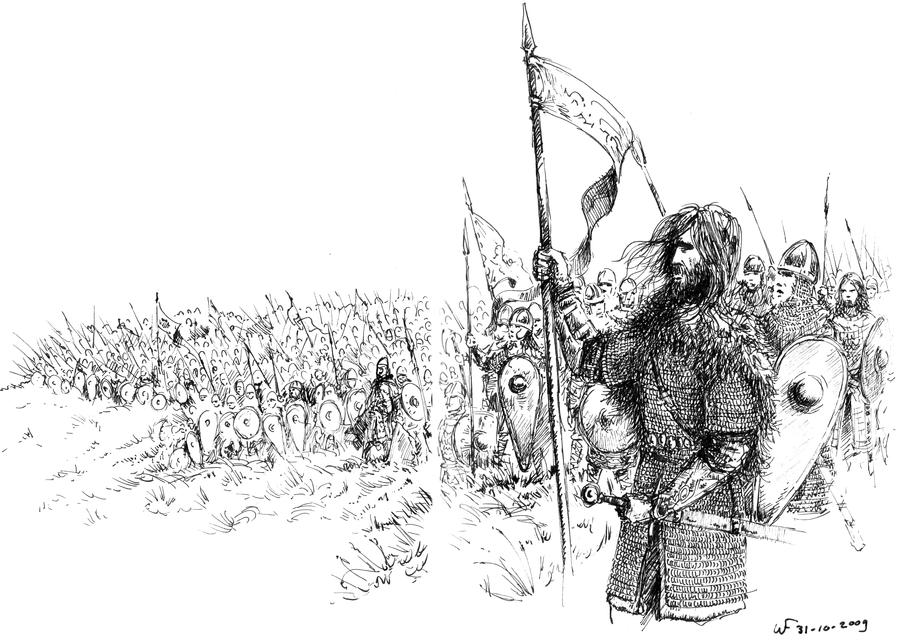
Class Features
As a Marshal, you gain the following features.
Stamina
- Stamina Dice: 1d6 per Marshal level
- Stamina at 1st Level: 6 + your Constitution modifier
- Stamina at Higher Levels: 2 + your Constitution modifier per Marshal level after 1st
Proficiencies
- Armour: Light and Medium, Shields
- Weapons: Simple Weapons, Longswords, Rapiers, Shortswords.
- Tools: None
- Saving Throws: Dexterity & Charisma
- Skills: Choose any three
Equipment
You start with the following equipment, in addition to the equipment granted by your background:
- (a) scale mail or (b) leather armour, a shortbow, and 20 arrows
- (a) a spear and a shield or (b) a longsword
- (a) a dipomat’s pack or (b) an explorer’s pack
- a simple weapon and a spangenhelm
Orders
What seperates a Marshal from others who command men is when admits the horrors of the battlefield, a Marshal's order cuts through the shouted curses of combatants and the death screams of the wounded to spur their allies to action. If war is the crusable where warriors are forged, then the orders of a Marshal are the hammer that shapes their mettle.
At 1st level you learn two Orders of your choice. You learn additional Orders as you gain levels in this class, as seen in the Orders column of the Marshal class table. Additionally, when you gain a level in this class you can choose one Order you know and replace it with another.
Choose from the list below:
Attack! As an action you can direct one of your allies to strike. When you do so, choose one ally who can see or hear you. That creature can immediately use its reaction to make one weapon attack with a bonus to damage equal to half your Marshal level (rounded up).
Disengage! As an action, you call your allies to withdraw from an enemy. Choose a hostile creature. A number of your allies equal to your Charisma modifier that are adjacent to the target may use their reaction to take the Disengage action and move 5 feet away from it.
Fight On! As an action, you inspire an ally. When you do so, choose a friendly creature who can see or hear you. For 1 minute, whenever the ally makes an attack roll or a saving throw, the ally can roll a d4 and add the number rolled to the roll. This effect requires the ally to maintain concentration. Only one ally can benefit from this Order at once. A creature can only benefit from this Order once per short rest.
Flank! As an action, you order a teammate to flank the enemy. When you do so, choose an ally who can see or hear you. That creature can use their reaction to move up to half their movement speed towards an enemy. If they end this movement adjacent to an enemy, all other allies gain a bonus on attack rolls against the enemy equal to your Charisma modifier until the start of your next turn.
Hold the Line! As an action you can direct one of your allies to hold the line. When you do so, choose a friendly creature who can see or hear you. That creature may use its reaction to take the Dodge action.
Improvise! As a bonus action, you call for your allies to think on their feet. When you do so, select a number of allies equal to your Charisma modifier. You and the chosen allies gain an additional reaction until the start of your next turn.
Move! As a bonus action, you choose an ally that can see or hear you. Until the end of their next turn, they gain a bonus to their movement speed equal to 5 x your Charisma modifier (minimum of 5 feet).
Push Forward! As an action you call your allies to advance. When you do so, choose a number of allies up to your Charisma modifier who can see or hear you. Those selected can immediately use their reaction to take the Shove action.
Rally! As an action, you administer aid to an ally, emboldening their resolve. Choose one creature within 15 feet of you that can hear you. That creature regains stamina equal to 1d4 + your Marshal level. A creature can only benefit from this Order once per short rest.
Ready Up! As a reaction to combat starting, you give one ally advantage on their initiative roll. Alternatively, if you are surprised you instead negate the effects of the surprise round for a number of allies equal to your Charisma modifier.
Regroup! As an action, you can order your allies to regroup. When you do so, choose a number of allies up to your Charisma modifier who can see or hear you and are at least 15 feet away from you. Those selected may use their reaction to move up to half their movement speed towards a point you choose. Each gain a +1 bonus to their AC for each conscious ally within 5 feet of them after they do so until the end of your next turn.
Reposition! As an action, you may to direct one of your allies towards a better position. When you do so, choose an ally that can see or hear you. That creature can immediately use its reaction to move up to its movement speed, adding your Charisma modifier to their AC for any opportunity attacks provoked by the movement.
Scatter! As a reaction to being targeted by an effect that requires a Dexterity saving throw, you can order your allies to scatter. A number of allies up to your Charisma modifier that are within 15 feet of you may use their reaction to move up to half their movement speed. If they end their turn more than 5 feet from all other allies, they gain advantage on Dexterity saving throws until the start of your next turn.
Shields Up! As an action, you enter a defensive stance and protect nearby allies from harm. Until the start of your next turn, allies within 5 feet of you wielding a shield gain a +2 bonus to their AC. You must be holding a shield to use and maintain this effect.
Snap Out of It! As a bonus action, you can inflict 1d4 + your Strength or Dexterity modifier (whichever is highest) damage on an adjacent ally who is charmed, frightened, or winded and remove the effect. You cannot remove a condition in this way that you yourself are suffering from.
Strike Again! As a reaction to an ally within 5 feet of you missing an attack, you can inflict 1d4 + your Strength or Dexterity modifier (whichever is highest) damage on that ally and have them re-roll with a bonus to their attack roll equal to your Charisma modifier.
Suppress the Enemy! As an action, you can command your allies to hinder the enemy. When you do so, choose a number of allies who have ranged or throwing weapons up to your Charisma modifier who can see or hear you. Those creatures may use their reaction to make a single weapon attack. Any enemies hit take damage equal to the attacker’s damage bonus and have their speed reduced to 10 feet until end of their next turn.
Vengeance! As a reaction to you or an ally that you can see suffering a critical hit, you can demand vengeance for the wounded. When you do so choose one ally that can see or hear you, that ally can use their reaction to make an attack against the creature that inflicted the critical hit with advantage.
Marshal's Warpath
The path that a Marshal walks shapes their ability to lead others. You must choose one that your Marshal walks. Choose either the Bannerman, Counsellor, Raidmaster, Tactician, or Warlord.
This choice grants you features at 1st level and again at 3rd, 6th, and 9th level.
Leader’s Presence
Beginning at 2nd level, your words and actions generate a presence that can motivate and embolden those you deem your allies, giving you unprecedented command over the battlefield. You gain a Leader's Presence of your choice. The Leader's Presences are detailed at the end of the class description. Each Leader's Presence has a range of 30 feet centered on you and is always active unless you are incapacitated. Additionally, you gain no benefit from your own Leader’s Presence.
At 4th, 6th, 8th and 10th level, you gain another Leader’s Presence. Additionally, when you gain a level in this class, you can choose one of your Leader's Presence and replace it with another.
Commands
Additionally, each Leader’s Presence also has two Commands listed in their description. You can use an action to give a Command on your turn. You can do this a number of times as seen in the Command column of the Marshal class table. You regain all spend uses after you complete a long rest. If you are out of uses but still wish to give a Command, you can spend a Stamina die and gain 1 Stress to regain a use.
Commands only effect creatures in range of your Leader's Presence.
Rallying Speech
Starting at 2nd level, you can help revitalise your wounded allies during a short rest. If you give words of encouragement to and bolster the resolve of your allies during a short rest, then you and any nearby friendly creatures listening to your rallying speech regain an additional 1d4 Stamina per Stamina Die spent.
The number of extra Stamina gained increases to 1d6 at 8th level.
Character Improvement
When you reach 4th level, and again at 8th level, you can increase one ability score of your choice by 2, or you can increase two ability scores of your choice by 1. Alternatively you can take a Feat.
As normal, you cannot increase an ability score above 20 using this feature.
Anticipate
At 5th level, your knowledge and experience in leadership and planning almost give you a sixth sense when it comes to anticipating things that might go wrong. Once per long rest, if you have spent at least an hour pondering a course of action, the GM gives you some insight on one or more likely problems with your contemplated course of action. This could be a particularly stubborn diplomat, an insufficient number of troops to accomplish a goal or even the lack of an ally's resolve to see a plan through.
This feature does not give you access to any information that you would not reasonably know.
Command the Troops
When you give a command, your men carry it out unwaveringly. Starting at 7th level, you have advantage on Constitution checks made to concentrate on Commands.
Dauntless Leader
You are the dominant presence in any conflict, your will manifest in the bloodshed. At 10th level, whenever an ally in range of your Leader's Presence makes an attack roll or a saving throw against a damaging effect (such as a rain of arrows), you can choose to change the d20 roll to a 10 should the ally roll a 9 or lower. This does not negate critical failures.
You can do this a number of times equal to your Charisma modifier per combat encounter.
Marshal's Warpath
Marshals walk one of these warpaths: Bannerman, Counsellor, Raidmaster, Tactician or Warlord.
These archetypes of the Marshal class are each different, but all involve leading and aiding others.
Counsellor
A Counsellors voice is their weapon. Counsellors fight the war of words and politics while their companions fight the war of steel and blood. They have the ear of heroes and lords and can accomplish more with a whispered word than with a drawn sword.
Open Ears
Starting at 1st level, you make a point of keeping up with the latest news both local and from afar, as well as making an effort to know the wise and the powerful. If you can freely travel about an area talking with locals and passing travellers for a few hours, you hear all the latest local news, including news of trouble, without raising suspicion. This may require a successful Dexterity (Stealth) check, with a DC set by the GM, if you are in enemy territory.
War of Words
If you can keep yourself aloof enough, one can begin to see that most wars are prompted by the words of one powerful person to another. An insult given, a declaration made, an oath sworn - people have killed for less. You know this, and know how to shape history by uttering the right words to the right people. Starting at 3rd level, you gain the ability to generate Counsel Points. Once gained, they are lost after a number of weeks equal to your Charisma Modifier have passed or you spend them.
You gain 1 Counsel Point if you carry out a difficult order given to you by a superior such as collecting taxes from a disloyal village, when you successfully shift the balance of political power in a settlement to your advantage, when you give useful advice to a superior that later ends up playing a big role in securing victory, or when you spend 2 periods of downtime every day for a week improving your relationship with a superior/high ranking official of the local settlement. All of these conditions may require one or more ability checks to complete, with DCs set by the GM.
You can spend Counsel Points to activate the following abilities, paying the stated number of points in order to do so:
- Favors Owed (1 Point). Choose one non-hostile NPC that you know. That NPC now owes you a favor. They will not risk injury to themselves of their allies while returning this favor.
- Gleaned Secrets (2 Points). Choose an NPC that you know. After spending 4 periods of downtime collecting information on them, you learn a secret about them that they would rather keep secret. The chosen NPC is aware that you know this secret if you fail a Charisma (Deception) check contested by their Wisdom (Insight) check made after you learn the secret.
- Plots Thwarted (3 Points). You spend 1 period of downtime each day for a week searching for plots against you or your superiors. Should one or more be present, you become aware of one of the GMs choosing. After doing so, you gain advantage on the first ability check you make to stop this plot.
- Friendships Forged (4 Points). You publicly offer friendship to a non-hostile faction, earning their trust even if just for some time. The next time you assist the chosen faction in a combat encounter, your allies and the chosen faction gain a +2 bonus to their AC until the end of combat and do not suffer Battle Fatigue.
- Enemies Made (5 Points). You publicly insult and defame an enemy faction, earning their ire. In the next combat encounter you participate in against the chosen enemy, your allies gain a bonus to their damage rolls and Intelligence Saving Throws equal to your Charisma modifier until the end of combat.
-
Knives Plunged (6 Points). You choose a NPC that you know of and begin to plot their downfall. You must spend 2 periods of downtime every day for a number of weeks equal to the targets modifier in the Charisma (Deception) skill gathering information and talking to allies. Gold will likely have to exchange hands during this time, subject to GM adjudication.
At the end of each week, you must make a contested Intelligence (Investigation) check against the target or someone the target has employed to discover schemes against them. Should you fail, you must continue your plot for an additional week. If you fail 3 times your plot is discovered and the target will become hostile to you and your allies until reparations are made.
However, should your plot remain undiscovered, after the final week the target gains disadvantage on checks, saving throws, and attack rolls against you and allies for 1 week.
Worthy Counsel
By 6th level, you are particularly good at giving advice. Whenever an ally makes a skill check that you are proficient in following your guidance, you can use your bonus action to take the Help action to assist them. Alternatively, you can give bad counsel, and give them disadvantage on the roll, but only if the creature already trusts you and accepts your advice at face value.
Embassy
At 9th level, you are widely respected. No matter how hostile an enemy, your summons will bring that enemy to the negotiating table to hear your pleas or proposals. This is done under a flag of truce and there will be no deception on the part of those whom you have summoned. During this period of negotiation (usually about an hour) you have advantage on any ability checks made against your enemy.
While this may not result in the enemy agreeing to your demands, you may have at least bought some time to get better prepared or learn more about your foe. Note that some forces may choose to spend the hour mocking you. However, you can still glean much between their threats and insults. You gain 1d4 Counsel Points.
You can only enforce an audience with an enemy once during any particular event or war, although the GM may waive this limitation for particularly complex plots or long wars.
Raidmaster
The Raidmaster is the head of any invasion force, inspiring the best of qualities that are possessed by hired killers. Brutality. Whether breaking down the down the doors of a castle or conquering foreign shores, a Raidmaster is there leading the charge from within the thick of the battle.
Tools of War
You gain proficiency in Heavy armour and 4 weapons of your choice.
Bring Forth the Slaughter
Starting at 1st level, when an ally that you can see scores a critical hit on a melee weapon attack, you can use your reaction to spit curses and inspire fear into your foes. All hostile creatures within 10 feet of the ally who scored the critical hit must make a DC 8 + your proficiency bonus + your Charisma modifier Charisma saving throw or become frightened of you and the ally until the end of their next turn.
Once you use this feature, you must complete a short rest before you can use it again. You gain an additional use between short rests at 6th level.
Leader of the Wolf Pack
Starting at 3rd level, you lead your pack of comrades with every strike. You gain the following features:
- If you hit a creature with a melee attack, the next attack made by one of your allies against the same creature gains advantage.
- If you hit a creature with a ranged or thrown weapon attack, that creature gains disadvantage on opportunity attacks until the start of your next turn.
- If an enemy deals damage to one of your allies, you can use your reaction to bellow insults at them. If you do, you deal 1d4 psychic damage to that creature.
Spit Back
Starting at 6th level, you have a way of taking the brass from the balls of those who challenge you. When a creature would cause you to become frightened, they must pass a Charisma (Intimidation) contest against you. If they succeed, you are frightened as normal, if they fail, they are instead frightened of you as per the effect.
Let Slip the Dogs of War
Starting at 9th level, your leadership methods have bred violence and bloodlust into your warband. These wolves need only your command to lose themselves in the slaughter. You can use your action to command your allies to send the weak to a shallow grave. Each ally within 60 feet of you can use their reaction to make a single attack with a bonus to its damage roll equal to your Charisma modifier.
Once you use this feature, you gain 2 Stress and cannot use it again until you finish a long rest.
Tactician
Tacticians use their supreme understanding of tactics to lead their allies to victory, emphasizing cautious consideration and strategical attack over brute force and raw martial maneuverers. Their orders are cunningly thought out and executed.
Learned Commander
A dull mind is far more detrimental to a warrior than a dull blade, though a sharp one is a far better weapon then any axe. Starting at 1st level, you may add your Intelligence modifier to your Initiative rolls in addition to your Dexterity modifier.
Additionally, when an Order, Command, or Leader's Presence states to use your Charisma modifier for an effect, you can use your Intelligence modifier instead.
Cunning Strategist
At 3rd level, your keen mind for the logistics of warfare allows you to best organize your allies and prepare plans for the battles ahead. You gain an additional Order.
Additionally, over the course of a long rest you can choose one Order you know and replace it with another.
Tactical Evaluation
Starting at 6th level, as a bonus action you can make an Intelligence (Investigation) check against a creature of your choice within 30 feet of you contested by a Charisma (Deception) check. On a success you and your allies may add your Intelligence modifier to damage rolls against that creature until the start of your next turn.
You can use this feature a number of times equal to your Intelligence modifier (minimum of once) per short rest.
Veteran Tactician
The carnage of battle is little more than a bloody chess board. The pieces move to your order as your grand strategy unfolds. Starting at 9th level, if an Order requires you to use an action to issue it, you can issue another Order as apart of the same action.
Warlord
Commanders and sworn men to lords and kings, a Warlord is a veteran of leadership. Most lords in the world are Warlord's, for only those with land and glory to share can gain such a mantle. Using their influence in land and oaths to rally the peasantry to arms, an Warlord swells their ranks and so their assets.
Inspiring Leader
Starting at 1st level, you bring your leadership talents to bear in every situation. Just as you look over the battlefield and give orders to your warriors, you survey your lands and tell the people how to work it. You gain proficiency in Charisma (Persuasion) if you did not already have it. You can add double your proficiency bonus to Charisma (Persuasion) checks when attempting to recruit allies or give orders.
Levys
You are a minor lord; a landowner and commander. Through this influence, you can sway the rabble to your side and call peasants to fight beside you. Starting at 3rd level, while in a settlement of village size or larger in which the populace is non-hostile towards you, you can attract a number of Levys equal to your proficiency bonus.
These freemen swear allegiance to you and will serve you loyally and even fight for you, at no cost besides basic lifestyle expenses and assurance of safety and comfort in your holdings and the holdings of your superiors. However, they might desert or even mutiny against you if they are treated poorly or exposed to moral breaking experiences.
In combat, the Levys share your initiative count, but take their turns immediately after yours. They can move and use their reactions on their own, but the only Action they take on their turn is the Dodge action unless you take a bonus action on your turn to command them to take one of the actions in their stat block or the Dash, Disengage, Help, Hide, or Search action. Unless commanded to otherwise, Levys will always remain within 5 feet of each other. Additionally, all Levies make saving throws as a single creature if multiple of them are targeted by an effect.
Over a Long rest, you must run your Levys through combat drills and other marital training to keep them in fighting shape. Doing so requires 5 periods of Downtime. If these drills are preformed, until your next long rest the Levys add your proficiency bonus to their AC, attack rolls, and damage rolls, and your Marshal level to their Stamina maximum.
Levy
Medium humanoid (human)
- Armor Class 12 (shield)
- Speed 30ft.
- Senses passive perception 10
Health 12 (11+1)
Stamina 6 (1d6+0)
Sanity 9 (8+1)
Resolve 1 (1+0)
Physical Condition H/S Bruised (S) 5-3 Battered (S) 2-0 Bloodied (H) 11-6 Broken (H) 5-0
Mental Condition Stress Distressed 1-4 Tormented 5-8 On the Brink 9
STR DEX CON INT WIS CHA 11 (+0) 10 (+0) 11 (+0) 8 (-1) 10 (+0) 10 (+0)
- Languages the most common language of their homeland
- Personal Affliction Fearful
Actions
Spear. Melee Weapon Attack: +2 to hit, reach 5ft., one target. Hit: 3 (1d6 +0) piercing damage
Taskmaster
Starting at 6th level, after successfully running your Levys through drills they gain one of the following features of your choice until you complete a long rest.
Protect your Lord! While one of your Levys is with 5 feet of you and is not incapacitated or frightened, they can use their reaction to you being damaged by an attack from a source the Levy can see to take the hit for you. When they do so they become the target of the attack. Should this attack damage their health, they gain 1 Stress.
Slay my Enemies! Your Levys can attack twice, instead of once, when they take the Attack action on their turn.
Lord of the Land
Starting at 9th level, the endless drills have payed off for your men now respond to your orders without hesitation. Whenever you issue an Order to one of your Levys all other Levys that can hear you are also affected by it, if they meet the prerequisites to use the Order.
Leader’s Presences
The list of Leader’s Presences is presented below, in alphabetical order.
Air of Dominance
You are a domineering force on the battlefield. Your battle brothers strike harder as to not earn your ire. All allies in range that can see and hear you can re-roll all 1s on their damage rolls.
No Quarter: You command your allies to cut deeper. For 1 minute, all allies in range that can see and hear you can re-roll all 2s and 3s on their damage rolls. This Command requires you to maintain Concentration.
Overwhelming Power: You command the attention of all in the shield-shake, causing foes to falter at your power. For 1 minute, all enemies in range that can see and hear you roll their damage die twice and take the lower result. This Command requires you to maintain Concentration.
Always Ready
You have a keen sense for spotting the fight before it begins. All allies in range that can hear you gain a bonus to their initiative rolls equal to your Charisma modifier.
Get Ready: You command your warriors to make a lasting first impression on your foes. All allies in range that can hear you gain a bonus to their first attack roll, ability check, and saving throw they make on the first round of combat equal to your Marshal level.
No Surprises: You command your allies to remain vigilant. For 10 minutes all allies in range cannot be surprised and creatures cannot gain advantage on attack rolls against them as a result of being hidden. This Command requires you to maintain Concentration.
By Example
You don't keep back and order from a distance. You lead from in the midst of the battlefield, inspiring your men to fight. While you are engaged with an enemy, all allies in range gain a bonus to Strength and Wisdom saving throws equal to your Charisma modifier.
Keep Fighting: You command those around you to fight on despite their wounds. For 1 minute, while you are engaged with an enemy, all allies in range gain advantage on Constitution (Grit) checks.
Shield Brothers: You command your battle brothers to keep their shields up as they fight beside you. For 1 minute, while you are engaged with an enemy, all allies in range gain a +1 bonus to their AC and damage rolls.
Cull the Weak
In your presence, wholesale slaughter is common. Enemies in range that receive a critical hit gain a penalty to their Gritty Injury roll equal to your Charisma modifier.
Feed the Worms: You command your allies to slaughter them all, down to the last. For 1 minute, whenever an ally in range that can see and hear you scores a critical hit against a creature, they add your Marshal level to the damage of the attack. This Command requires you to maintain Concentration.
Death: You command your men to end your foes. Until the beginning of your next turn all allies in range that can see you can make an additional attack when they take the Attack action on their turn.
Dirty Hands
War is a grim thing. As such you inspire your men to win the fight, by what ever means necessary. All allies that can see you in range gain a +2 bonus to damage rolls made against creatures they are flanking.
Kick 'em While They're Down: You command those around you to curb stomp fallen enemies. For 1 minute all allies that can see you in range add your Charisma modifier to damage rolls made against prone or incapacitated creatures. This Command requires you to maintain Concentration.
Impaling Insult: You command your foes to stick their weapons were the sun don't shine. Choose a number of humanoid enemies in range that can hear you equal to your Charisma modifier. The chosen targets must make a DC 8 + your proficiency bonus + your Charisma modifier Wisdom saving throw or take 1d6 + your proficiency bonus psychic damage and take a -2 penalty to their AC for 1 minute as they drop their guard in response to your scathing comment. Effected targets can reattempt the saving throw at the end of their turn, ending the effect on a success.
Marshal's Heart
You have an aura of unnatural charisma that make men flock to you and heed your order. All allies in range that can see and hear you add your Charisma modifier to saving throws against the charmed and frightened conditions.
Face of the Warband: You command such an aura of charisma that your orders never go unheard. For 1 minute, your Charisma score is considered to be increased by 2, as is your maximum for that score. This Command requires you to maintain Concentration.
Join or Die. You command a foe to join your forces or perish with their own. Choose one hostile creature within range that can see, hear, and understand you. It must succeed on a DC 8 + your proficiency bonus + your Charisma modifier Wisdom saving throw or be charmed by you for one minute. If you or creatures that are friendly to you are currently fighting it, it has advantage on the saving throw. While the target is charmed, you can issue commands to the creature while you are conscious as an action, which it does it's best to obey. The command must take no longer than an action to complete. If the creature doesn't receive further direction from you, it defends and preserves itself to the best of its ability. Each time the target takes damage, it makes a new Wisdom saving throw, ending the effect on a success. Creatures immune to the charmed or frightened condition are unaffected.
Morale Breaker
Enemies take one look at you and begin to rethink their approach. All intelligent enemies in range that can see you must spend 2 feet of movement for every 1 they move towards you.
Intimidation Tactics: You command your allies to hurl abuse at your foes, demoralising them. For 1 minute, all enemies in range that can see and hear you gain a penalty to their attack rolls and Wisdom saving throws equal to your Charisma modifier. This Command requires you to maintain Concentration.
Menacing Gaze: You command your foes to fear you. Select a number of enemies that can see you in range equal to your Charisma modifier. The chosen enemies must succeed on a DC 8 + your proficiency bonus + your Charisma modifier Wisdom saving throw or become frightened of you until the end of their next turn, at which point they can use a bonus action on their turn to attempt the saving throw again ending the effect on a success.
Reassuring Presence
Those you lead into battle are assured by your leadership. All allies in range that can see and hear you halve the amount of Stress they would gain (rounded up).
Sound Advice: You command your allies to not succumb to the horrors of the battlefield. For 10 minutes, all allies in range that can see and hear you gain a bonus to saving throws against Affliction, Traumas, or Insanity and their induced effects equal to you Charisma modifier.
Recoup: You command your allies to catch their breath before re-engaging. Choose a number of allies equal to your Charisma modifier that can see or hear you in range. The chosen allies can spend and roll a Stamina Die to regain an amount of Stamina equal to the number rolled + your Charisma modifier.
Shoulder to Shoulder
In the gore sink and blood letting of combat, your warriors stand united. All allies in range that stand within 5 feet of another ally who isn't incapacitated gain a +1 bonus to their AC.
Back to Back: You command your allies to cover each others backs. For 1 minute, all allies in range that stand within 5 feet of another ally do not provoke opportunity attacks.
Together We Stand: You command your men to gather around you. All allies that are within 10 feet of you at the end of your next turn gain temporary hit points equal to your Marshal level + your Charisma modifier, which last until combat ends.
Stand as One
As wounds mount, many will resign themselves to death. But as long as you stand, no one falls. All allies in range that can see and hear you reduce bludgeoning, piercing, and slashing damage inflicted on them by 2.
Ironclad: You command your allies to reinforce their armour while in the fray. For 1 minute, all allies in range that can see and hear you reduce bludgeoning, piercing, and slashing damage inflicted on them by 4, instead of 2. This Command requires you to maintain Concentration.
Get Up: You command your allies to press on despite grievous injury. Choose an ally in range that can hear you and has gained a Gritty Injury during the current encounter. That ally ignores any effects from the injury for a number of rounds equal to your Charisma modifier +1, after which they are subjected to the effect as per normal. This cannot negate the penalties of Bleeding Out or Useless Limbs.
Strategic Precision
You convey your plans even in the midst of battle, allowing your allies to take advantage of any situation that arises. All allies in range gain a +1 bonus to their attack rolls.
Take the Opportunity: You command your brothers in arms to seize any opportunity that comes their way. For 1 minute, all allies in range that can hear you can make two attacks whenever they make an opportunity attack against an enemy in range. This Command requires you to maintain Concentration.
Press the Advantage: You command your allies to take a mile when given an inch. For 1 minute, all allies in range that can hear you add your Charisma modifier to rolls they make with advantage.
Scholar
“The greatest commodity in battle, as in life, is a keen mind. For a cunning man with a quill will accomplish far more than a fool with an axe.”
—Wisdom of the Cunning Man
Scholars are learned folk skilled in many mundane arts. Utilizing the knowledge gained from years of study, Scholars assess situations they're in and quickly work to develop a solution.
Whatever intellectual pursuit they follow, a Scholar will have a plan for anything that comes their way.
Great Minds
Scholars are people who make their living primarily by preforming secretarial and administrative duties such as dictation and keeping business, judicial, and historical records for lords, ship captains and cities. They are among the few in the civilized world who can read and write, but are unique in their endless desire to learn. This coupled with an ability to apply their intelligence to nearly any task, Scholars use their vast reservoir of knowledge to resolve the various challenges that confront them.
While most Scholars have broad intellectual interests, all of them pursue a particular field of expertise to which they have likely dedicated their entire lives to study. As a result, no one undertakes the mantle of Scholar without some ambition in mind. While many scholarly types are happy simply contemplating the theoretical, Scholars will use their knowledge as a tool that has a tangible effect on the world around them. Beyond the obvious application of their craft, a Scholar often has a higher purpose they strive towards, a reason to scorn the violent ways of many of their companions in favour of the quill and inkwell.
Knowledge is Power
A Scholar's devotion is to the understanding of knowledge. Real intelligence that pushes beyond trivia, ranging from the what to the why and how. This distinction is a defining aspect of the curiosity that drives them to learn. The wisest among them realizes that while there may be no unsolvable mysteries, no single man can hope to solve them all. And so they know that learning is a lifelong pursuit.
The invention of paper has made recording and storing the wisdom of the past much easier, but much of what is known has yet to be written down and mass producing such works is near impossible with current technology. As a result, Scholars occupy a unique place within the world. They know things that many are not privy too, simply as a result of being able to read and correlate dissociated information gathered by themselves and other Scholars.
The Scholar
| Level | Proficiency Bonus | Features | Analysis Modifier | Known Lore |
|---|---|---|---|---|
| 1 | +2 | Academic Analysis, Literate, Scholar’s Study | +1 | - |
| 2 | +2 | Lore | +2 | 1 |
| 3 | +2 | Study Feature | +2 | 1 |
| 4 | +3 | Character Improvement | +3 | 2 |
| 5 | +3 | Deep Knowledge | +3 | 2 |
| 6 | +3 | Study Feature | +4 | 3 |
| 7 | +4 | Mightier Than The Sword | +4 | 3 |
| 8 | +4 | Character Improvement | +5 | 4 |
| 9 | +4 | Study Feature | +5 | 4 |
| 10 | +5 | Greatest Among Peers | +6 | 5 |

Class Features
As a Scholar, you gain the following features.
Stamina
- Stamina Dice: 1d4 per Scholar level
- Stamina at 1st Level: 4 + your Constitution modifier
- Stamina at Higher Levels: 1 + your Constitution modifier per Scholar level after 1st
Proficiencies
- Armour: None
- Weapons: Clubs, Daggers, Slings, Spears, Staffs
- Tools: An artisan’s tool of your choice
- Saving Throws: Intelligence & Wisdom
- Skills: Four of your choice from: History, Insight, Investigation, Medicine, Nature, Occultism, Religion, Sleight of Hand, or Survival.
Equipment
You start with the following equipment, in addition to the equipment granted by your background:
- (a) a staff or (b) a sling with 20 stone bullets
- (a) an artisan’s tool of your choice or (b) a dagger
- A scholar’s pack
- A book, quill, and a full inkwell
Academic Analysis
Scholars analyze their circumstances, hypothesize the best course of action, and advise their allies with carefully calculated plans. Starting at 1st level, when a creature within 60 feet of you who can hear and understand you makes an ability check, attack roll, or saving throw you can use your reaction to add your Analysis Modifier, found in the Scholars Class Table, to the result of that roll. You can wait until after the creature makes the roll but must decide to use this feature before the GM says whether the roll succeeds or fails.
You can use this feature a number of times equal to 1 + your Intelligence modifier (a minimum of once). You regain any expended uses when you complete a short rest.
Literate
You are a learned person, and that can be a great power all its own in the right circumstances. Also at 1st level, choose two Intelligence or Wisdom based skills. Your proficiency bonus is doubled for any ability checks that use either of these skills.
Additionally, unlike the unwashed masses, you can read and write in any language you know.
Scholar’s Study
Finally at 1st level, you choose a field of study that determines the focus of your knowledge and understanding. Choose either Healer, Loremaster, Military Advisor, Psychologist, or Wiseman.
This choice grants you features at 1st level and again at 3rd, 6th, and 9th level.
Lore
Your studies have granted you insight into a vast number of truths, but applying that knowledge to the real world requires an extra level of dedication.
Beginning at 2nd level, you obtain a Lore of your choice. Your Lore options are detailed at the end of the class description. When you gain certain Scholar levels, you obtain a new Lore of your choice, as shown in the Known Lore column of the Scholar table.
Additionally, when you gain a level in this class, you can choose one of the Lore you know and replace it with another for which you meet the requirements. You cannot replace a Lore that allows you to learn a language.
Character Improvement
When you reach 4th level, and again at 8th level, you can increase one ability score of your choice by 2, or you can increase two ability scores of your choice by 1. Alternatively you can take a Feat.
As normal, you cannot increase an ability score above 20 using this feature.
Deep Knowledge
Starting at 5th level, your accumulated knowledge over the years has given you bits and pieces about people, locations, objects and events that you are likely to encounter.
Much of this information is stored in your head, but even more is known by others whose counsel you can ask for.
When you first encounter a person, object, location or event, you may ask the GM one question about it, for which they will provide a truthful answer. The GM however, can choose how much detail their answer goes into. In addition to the things you learn, you have advantage on the first ability check you make directly regarding that person, object, location or event.
Due to the sometimes intense nature of recalling such information, you may not use this feature again until you have taken a long rest.
Mightier than the Sword
Starting at 7th level, a skilled Scholar is so valued that even the most bitter of enemies will hesitate to attack them. If you do not take the Attack action or otherwise damage or harass a hostile creature during combat, intelligent foes who could benefit from your skills will not attack you.
Greatest Among Peers
Starting at 10th level, your knowledge on one subject approaches absolute and other learned folk widely recognize you as the preeminent authority on matters pertaining to your chosen lore. Choose one Intelligence or Wisdom based skill. You automatically succeed at all ability checks using that skill.
Scholar’s Studies
Scholars choose their areas of focus well before choosing to join a lords court or any organization or endeavor, versing themselves in the research and theory relevant to their field. A drive to further this mastery, and add to the body of knowledge, is often the impetus for a Scholar to wander the world and/or join an expedition.
Scholars are categorized into the following archetypes: Healer, Loremaster, Military Advisor, Psychologist, or Wiseman.
Healer
Healers have studied anatomy, physiology and all manner of curative arts. They know how to use healing herbs and poultices, how to let blood to purge a wound and how to then bind it, and how to fight illnesses that assail the body. In this violent world, a trained Healer is a prized commodity worth a small fortune.
Hands of a Healer
Starting at 1st level, you know how to treat wounds, illness and poison. You have a pool of healing techniques that replenishes when you take a long rest. With this pool, you can restore a total number of health equal to your Analysis Modifier x 5.
As an action, you can touch a creature to begin binding their wounds and on your subsequent turn use another action to expend a use of a healer’s kit. After taking the initial action, you must concentrate and remain within 5 feet of the target until you take the next action. Additionally, during this time the target creature cannot take actions of any kind, or your concentration will be broken. Successfully doing so restores a number of health to that creature, up to the maximum amount remaining in your pool.
The DC to resist breaking concentration for this ability is 8 + number from the pool spent or the damage of the attack that triggered the saving throw, whichever is higher.
If instead you tend the creature for at least 1 hour, binding their wounds, treating them with herbs and poultices, then you may add your Intelligence modifier to the amount of health healed.
Healing Lore
Starting at 3rd level, you make a discovery in your quest to understand the inner workings of the human body. Choose one Lore that requires you to be a Healer. You gain the chosen Lore. This Lore does not count toward the total amount of Lore you can know.
Battlefield Surgeon
There is no better teacher than the blood-soaked battlefield, though you have learned different lessons than a warrior would from it. Starting at 6th level, you have advantage on Wisdom (Medicine) checks made to tend to open and festering wounds and other injuries or effects caused by a Gritty Injury.
Healer of Great Burdens
Starting at 9th level, such is your skill that those you tend too know that they'll never succumb to their wounds while in your care. When you use your Hands of a Healer feature on a creature currently suffering from a Gritty Injury, the healing it receives is doubled.
Loremaster
Loremasters are well versed in the oral history of the world and have spent many years transcribing the tales of many cultures, giving them an unmatched grasp on the history of the world. This comprehension of history makes Loremasters valued as advisors, for they always seem to know a great deal about anything and everyone.
Studied Sources
Your knowledge of history and culture makes you a reliable source of information. Starting at 1st level, when you make an Intelligence (History, Nature, Occultism, or Religion) skill check and may add your proficiency bonus to the check, you can choose to treat any roll of 9 or lower as if you had rolled a 10.
Ancient Lore
Starting at 3rd level, you make a discovery in your quest to understand the obscure workings of history. Choose one Lore that requires you to be a Loremaster. You gain the chosen Lore. This Lore does not count toward the total amount of Lore you can know.
News from Afar
Starting at 6th level, you know many things that are hidden from most and tidings of distant events tend to reach you with astonishing speed. The source of this knowledge is obscure and you need not explain how you know the things you do to others, it is enough that what you know is true.
At the end of a long rest, the GM informs you of one or two events of importance occurring somewhere in the region you are in.
Additionally, when you're in a situation with several powerful or influential figures, you always know at least one person there by reputation and at least one deed they're known for. When you meet a lord or famous knight, you can usually recall at least one fact about them.
Legendary Lore
Starting at 9th level, your ability to piece together dissociated knowledge allows you to uncover hidden truths and lore with uncanny accuracy. During a long rest, you may name or describe a person, place, or object. Your in depth study and knowledge of history will bring to your mind a brief summary of the significant lore about the thing you named. The lore might consist of current tales, forgotten stories, or even secret lore that has never been widely known.
If the thing you named isn't of great importance, you gain no information. The more information you already have about the thing, the more precise and detailed the information you receive is.
Military Advisor
Military Advisors have focused their minds on the art and skill of war. Not as a Warrior might, but as a master of a particular game might. By honing their knowledge of strategy and studying their enemies, Military Advisors become a formidable presence on any battlefield as they use this knowledge to best advise their allies on matters of warfare. They are an ever welcome addition to any lords inner circle.
Tactical Command
Starting at 1st level, you know how to apply your study of warfare to aid your allies in combat as you direct them to slaughter specific foes. Your Academic Analysis ability can be used to target a hostile creature within range. Doing so grants a number of allies equal to your Intelligence modifier that can hear and understand you a bonus to their fist attack and damage roll against the selected creature equal to your Analysis Modifier. This bonus lasts until the start of your next turn.
Combat Lore
Starting at 3rd level, you make a discovery in your quest to understand the gritty intricacies of battle. Choose one Lore that requires you to be a Military Advisor. You gain the chosen Lore. This Lore does not count toward the total amount of Lore you can know.
Battle Leader
Starting at 6th level, the ebb and flow of battle can seem like chaos to those unacquainted with its rhythm. You however are keen to it’s song of steel, and can use this knowledge to better give orders to your allies. You gain two Order dice, which are d6s.
As a bonus action you can give an Order die to any ally that is within 60 feet of you and can hear you. That ally can roll their Order die and add the number rolled to any ability check or attack roll on their next turn.
An Order die is expended when you use it. You regain all of your Order dice when you finish a short or long rest.
You gain an additional Order die at 9th level.
Written by the Victors
Those who heed your advice will always find themselves the victors. Starting at 9th level, whenever you roll initiative and have no uses of Academic Analysis remaining, you regain one use. This use however can only be used on your Tactical Command feature.
Additionally, on your turn you may spend 1 Stamina die as a bonus action to regain a use of Academic Analysis, to once again be used on your Tactical Command feature. After doing so you gain 1 Stress.
Psychologist
While many warriors will boast of their battle scars few, if any, will openly discuss the scars left upon their mind by the rigors of war. However, much like a torn tunic or an open wound, the traumas of the mind must be sewn shut; Lest the tunic or the wounded become broken beyond repair. Those called Psychologists are the foremost in this craft, those few devoted to the study of their fellow humans and how they think.
Words of Comfort
Starting at 1st level, you have studied how to sooth the mind and rid it of distress. As an action, you can target a willing creature within 15 feet of you and speak words of comfort to them, reducing their current Stress by an amount equal to your Intelligence modifier. This requires the creature to be able to hear and understand you.
You can use this feature a number of times equal to your proficiency bonus. You regain all spent uses after you complete a long rest.
Psychological Lore
Starting at 3rd level, you make a discovery in your quest to understand the maddening patterns of the human mind. Choose one Lore that requires you to be a Psychologist. You gain the chosen Lore. This Lore does not count toward the total amount of Lore you can know.
Mend the Broken
Starting at 6th level, you become dedicated to mending those broken by the stresses of the world. You are considered a trained professional in terms of curing creatures of any Traumas they are suffering from.
At 8th level you can cure Insanities as well.
Break the Mind
Starting at 9th level, as you have mastered how to cure and ease the burdens upon the mind, you have also learnt how to inflict such mental wounds. As an action you can force one creature of your choice that can hear and understand you to make an Intelligence saving throw. The DC for this saving throw = 8 + your proficiency bonus + your Intelligence modifier.
On a failure, that creature takes 4d6 + your Intelligence modifier psychic damage, or half as much on a success. When a creature takes this damage it gains an amount of Stress equal to half the damage taken.
Once you use this ability, you cannot use it again until you finish a long rest.
Wiseman
Whether through worldly experience, advanced age, or an innate gift, Wisemen are known as learned and insightful individuals. Their counsel is sought out by many, be it for mundane questions and ponderings or to aid a lord in important political matters.
Wise Counsel
Starting at 1st level, your experiences and wisdom can assist those who are willing to listen. When you take the Help action to assist an ally, you can do so at a range of 30 feet and that creature adds your Wisdom modifier to their d20 roll as long as it can hear and understand you.
Worldly Lore
Starting at 3rd level, you make a discovery in your quest to understand the world around you. Choose one Lore that requires you to be a Wiseman. You gain the chosen Lore. This Lore does not count toward the total amount of Lore you can know.
To Dwell and to Act
Starting at 6th level, you know well how to apply your wealth of knowledge to benefit you in most situations. You can spend 1 minute pondering a specific course of action you plan to undertake within the next day. After doing so, the GM provides you with one of the following predictions about the action:
- Weal. A good outcome.
- Woe. A bad outcome.
- Weal and Woe. Both a good and bad outcome.
- Nothing. The outcome is not specifically good or bad.
Your predictions do not account for any possible circumstances that might change after you ponder the action, like the gain or loss of an ally.
Every time you use this feature before completing a long rest, there is a cumulative 20 percent chance for each use after the first that you get an incorrect prediction. The GM makes this roll (a d100) in secret.
Inhuman Wisdom
Starting at 9th level, your dedication to developing your mind has honed you into a true genius. The sum total of your experiences lends you an incisiveness that is unmatched. Your Wisdom score increases by 4 and your maximum Wisdom increases to from 20 to 24.
Additionally, you can add your Wisdom modifier to Intelligence ability checks and saving throws you make and vice versa.
Lore
If a Lore has prerequisites, you must meet them to learn it. You can learn the Lore at the same time that you meet its prerequisites. A level prerequisite for a Lore refers to Scholar level, not character level.
Below are all the Lores listed in alphabetical order:
Agricultural Application
Prerequisite: None.
You have advantage on Wisdom (Animal Handling) and Intelligence (Nature) checks made in relation to farming. Additionally, the damage die for farming implements that you use as a weapon increases by one step (d4>d6 etc.).
Animal Husbandry
Prerequisite: None.
You gain a faithful dog, cat, or raven companion. Your companion has the same stats as the base animal, but it’s Intelligence score is 4 and can understand (but not speak) the basics of one language that you speak. Should your companion die, you can find a stray to replace them after one period of Downtime of searching in any town or city.
Astute Defence
Prerequisite: Military Advisor.
While you are not wearing any armor, your Armor Class equals 10 + your Dexterity modifier + your Intelligence modifier. You can use a shield and still gain this benefit.
Banes of the Mind
Prerequisite: Psychologist.
Instead of using Words of Comfort to reduce a creatures Stress, you can instead use one use to remove one condition affecting the target creature. The conditions you can remove using this feature are the Charmed, Frightened, or Winded conditions. You cannot remove any conditions in this way that you are currently suffering from.
Bear the Burden
Prerequisite: Psychologist.
When you use your Words of Comfort feature you can choose to reduce a creature's Stress by an additional amount equal to your Analysis Modifier. If you choose to do so however, you gain an equal amount of Stress.
Calculated Response
Prerequisite: Military Advisor, Level 4.
When you would make a Dexterity saving throw, you can instead make an Intelligence saving throw. You can use this Lore a number of times equal to your Analysis Modifier. You regain all expended uses of this lore when you complete a long rest.
Clean Living
Prerequisite: None.
Over the course of 10 minutes you can administer beneficial herbs to yourself and up to your Intelligence modifier in other creatures. When you do you and each creature you choose gains resistance to poison damage and has advantage on saving throws against poison, disease, festering wounds, and infection for the next 24 hours. You can’t use this again until you complete a long rest.
Combat Efficiency
Prerequisite: Military Advisor, Level 6.
You and allies within 30 feet of you have advantage on initiative rolls and on the first attack roll they make in an encounter.
Eidetic Memory
Prerequisite: Loremaster, Level 6.
You can accurately recall with perfect detail anything you have seen, heard, experienced, or pondered. Ever.
Emotional Conditioning
Prerequisite: Psychologist, Level 6.
You can use your bonus action to end one effect on yourself that is causing you to be charmed or frightened. You gain 1 Stress after doing so.
Ever the Student
Prerequisite: None.
When you finish a short or long rest, you can choose a combination of two skills, tools, or weapons you are not proficient in. You must spend at least 30 minutes training yourself with another character who is proficient with the chosen skills, tools, or weapons, who is willing to teach you. Until use this Lore again, whenever you make an ability check that involves the chosen skill or tool, or make an attack roll with the chosen weapon, you add your Analysis Modifier to the roll.
Experienced Assistance
Prerequisite: Wiseman.
You can use your bonus action to take the Help action if the action you are assisting in is a skill check that you are proficient in.
Field Research
Prerequisite: Level 4.
If you spend at least 1 minute observing or interacting with another creature outside of combat, you can learn information about its capabilities. Choose a reference creature of the same type that you have seen, and the GM tells you if the creature you are researching is equal, superior, or inferior to the reference creature in regard to two of the following characteristics of your choice:
- Strength score
- Dexterity score
- Constitution score
- Intelligence score
- Armor Class
- Maximum stamina
- Total class levels (if any)
Good Listener
Prerequisite: None.
By picking up the people’s subtle talk of rumors, lords, frequented locations and unusual places, you can quickly gather information about a location. If you’ve been in a town more than 1 hour you can find and identify shops, political power houses, bad sections of town, the prevalent families and their rivalries, and messenger services if any.
Great Historian
Prerequisite: Loremaster, Level 4.
When you take the Help action to aid another creature's ability check, you can make a DC 16 History check. On a success, that creature's check gains a bonus equal to your Analysis modifier, as you share pertinent advice and historical examples. To receive this bonus, the creature must be able to understand what you're saying.
Intuitive Purchases
Prerequisite: Level 6.
While you are in a location where equipment can be purchased, you can spend an hour gathering supplies in careful planning and preparation. At any time thereafter, if you find yourself in need of a particular item or supply, you can add such items to your equipment as if you had purchased them during your careful planning. The cost of such items is equal to their market price. Up to 3 items may be retroactively purchased in this manner, and the GM may choose to limit or exempt certain items according to availability. Once you produce one or more of any given item, you can't add that item to your equipment again until the next time you come to a location where that item can be purchased.
Keen Analysis
Prerequisite: Wiseman.
You can use your Wisdom modifier instead of your Intelligence to determine the amount of uses your Academic Analysis feature has.
Lessons from History
Prerequisite: Loremaster.
When you succeed on a Intelligence (History or Religion) check, you gain a bonus to your next roll relating to the subject of the previous check equal to your Analysis Modifier.
Maladies of the Body
Prerequisite: Healer.
Instead of using Hands of a Healer to heal health, you can instead spend 5 points from the pool to remove one condition affecting the target creature. The conditions you can remove using this feature are the Poisoned, Incapacitated or Unconscious conditions.
Mender
Prerequisite: Level 4.
You are considered a trained professional in order to repair damaged items. During a short or long rest, you can spend 2 hours in order to repair an item's damage condition by 1 at half the cost. To do so, you require the relevant artisan's tools.
Misleadeth
Prerequisite: None.
As a reaction to being targeted with a melee weapon attack you can shove a willing creature within 5 feet of you into the way of the attack, causing it to target them instead. If you attempt to use an unwilling creature as a meat shield, you must succeed on a contested Strength (Athletics) check with the creature in order to do so.
Mortician
Prerequisite: None.
You can spend 10 minutes examining a body that has died within the last 7 days and spend 5 gp on the appropriate tools to appraise the corpse. After doing so, you are able to accurately determine the cause and time of death.
Never Fooled Twice
Prerequisite: Wiseman, Level 6.
When you take damage, you can choose to gain one of the following benefits for 1 minute:
- You gain resistance to damage of that type. This does not apply to the triggering damage.
- If the damage was inflicted by an attack, the attacker has disadvantage on all future attack rolls against you.
- If the damage was caused by an effect that triggered a saving throw, you have advantage on future saving throws that target that ability.
Once you use this Lore, you cannot use it again until you finish a short rest.
On the Mend
Prerequisite: Healer.
Whenever you tend to an Open or Festering Wound by spending a use of a healer's kit, the effected creature does not reduce their health maximum as a result of the wound.
Painkillers
Prerequisite: Healer, Level 4.
Over the course of a long rest, you can spend two periods of Downtime gathering the resources to make painkillers. The cost of doing so is 30 gp. Painkillers are only potent for 1 week after they're created, before becoming useless. A creature can use an action to apply the painkillers to themselves or a creature within 5 feet of them. For 1 minute, the targeted creature ignores any penalties gained by a gritty injury excluding useless limbs or bleeding out, their Dexterity score is reduced by 2, and they gain resistance to weapon damage dealt to their Stamina for the duration. After the painkillers wear off, the target immediately suffers the cumulative penalty of any lingering injury they have, and gains 2 Stress.
Additionally, after a creature takes painkillers they must make a DC 12 Wisdom saving throw or become addicted to them. The addicted creature must make every effort to consume painkiller on a weekly basis, once a week at the least. Failure to do so inflicts 1d4 Stress per day until a painkiller is used. This addiction can be cured as if it were an Insanity.
Buying Painkillers
Painkillers can be found in most large city centres, where they are sold by a variety of individuals. Court healers, herbalists, and even drug dealers can supply characters with this valuable resource. Painkillers can be bought for 40 gp per dose plus any additional fees the seller may charge.
Poisoncraft
Prerequisite: None.
Over the course of a long rest, you can spend a period of Downtime gathering the resources to make a simple poison. The cost of doing so is 15 gp. This poison can be either ingested or applied to the blade of a weapon. The poison remains potent for 1 hour after being removed from its container, before becoming useless. When a creature either ingests the poison or takes health damage from a weapon covered in the poison, they must make a DC 10 + your Intelligence modifier Constitution saving throw or gain the poisoned condition for 1 minute. The target can make a saving throw at the end of each of their turns, ending the effect on a success.
Portent
Prerequisite: Wiseman, Level 4.
When you finish a long rest, roll two d20s and record the numbers rolled. You can replace any attack roll, saving throw, or ability check made by you or a creature that you can see with one of these portent rolls. You must choose to do so before the roll, and you can replace a roll in this way only once per turn. Each portent roll can be used only once. When you finish a long rest, you lose any unused portent rolls.
Psychological Profile
Prerequisite: Psychologist, Level 4.
If you spend at least one minute conversing with a creature or observing it in a social situation, you can analyze its speech and body language to determine how best to interact with it. The GM tells you whether Deception, Intimidation, Performance, or Persuasion is most likely to have a favorable impact on the creature's disposition toward you. For the next hour, you have advantage on checks in that skill directed at the creature. Once you use this lore, you can't use it again until you finish a short or long rest.
Quick Thinking
Prerequisite: Level 6.
Whenever you or a friendly creature within 30 feet of you must make a saving throw, the creature gains a bonus to the saving throw equal to Intelligence modifier. A creature must be able to see or hear you to gain this bonus.
Rapid Recovery
Prerequisite: Healer, Level 6.
When you finish a short rest, you regain a number of expended Hands of a Healer pool health equal to your Scholar level. You cannot benefit from this lore again until you spend all the pool health gained from this lore.
Steel Shaper
Prerequisite: None.
You gain proficiency in Smiths Tools. Additionally, your knowledge of weapons and armour allows you to see their weaknesses. As a bonus action you make an Intelligence (Smith's tools) check to learn about the construction of a metal item within 15 feet of you. The GM determines the DC. On a success, the next time you hit the item or the creature wielding the item with a melee weapon attack you can choose to deal no damage and instead decrease the items damage condition by 1. On a failure, you cannot use this lore against that item until you finish a long rest.
Subterfuge
Prerequisite: None.
When you take a long rest in a civilised area you can spend a period of Downtime gathering scandalous rumors about the local inhabitants. When you do so, you must make a DC 15 Charisma (Persuasion) or Charisma (Deception) check. On a success you learn one secret about a prominent person in the area. This secret is good enough to be used as blackmail, though not so scandalous that the person could suffer great loss if it should ever some to light nor so terrible that it reveals some unknown aspect of said person.
Tells
Prerequisite: Level 4.
You have advantage on Wisdom (Insight) checks against a person you have spent at least 1 minute talking to.
Tongues of Many Peoples
Prerequisite: Loremaster.
You know a little of many languages. You can hold a simple conversation in any language – enough to offer a greeting, shout a warning, or insult someone.
Tradecraft
Prerequisite: None.
Choose three artisan's tools. You gain proficiency with the chosen artisan’s tools. If you were already proficient with one or more of the chosen artisans tools, you instead have advantage on checks utilizing the chosen artisan’s tool.
Ways of the Traveler
Prerequisite: None.
When you travel along a road, your party's travel speed increases by a number of feet equal to 5 x your Analysis Modifier modifier. Additionally while traveling, your carrying capacity is doubled.
Weapon Cunning
Prerequisite: Level 6.
You score a critical hit on weapon attacks you are proficient with on a roll of 19 or 20.
Weapons of your Foes
Prerequisite: Military Advisor.
Choose one specific enemy faction you have faced before. During a short rest, you can lecture your allies on the battle tactics of the chosen enemy. After doing so, until you take a short rest, your allies can use their reaction to gain a bonus equal to your Analysis Modifier to either a damage roll they make against the chosen enemy or to their AC when being attacked by the chosen enemy. Your allies can use this bonus once per combat. During a long rest, you can change the enemy faction you know about and gain the above bonuses against them instead.
Words Most Helpful
Prerequisite: Level 6.
When you take the Help action, you may help a separate target within 30 feet of you that can hear you as a bonus action.
Slayer
“Leave them headless and gutless! Leave their widows in your bed and their children in chains! No weakness! No mercy! Charge! Death! Death!”
—Glorious words
The makers of war and ruin, who greet bloodshed as a bedfellow, Slayer are revered, as much as feared, by all who meet them. Weaker men are cast aside, bloodied and broken, with every blow of a Slayer's weapon.
Slayer dominate the battlefield with their unchallenged power, derived from a state of mind known as a Battle Trance. For every Slayer, this Battle Trance is a power that fuels not just their indomitable combat prowess but also uncanny reflexes, resilience, and feats of strength.
A Life of War
Slayers are warriors without peers. War is their life, for often a Slayer knows nothing else. They seek it like a starving mutt, whether consciously or not, for what else is a Slayer good for other than killing? Even if a Slayer began their life as a farmhand, fishermen, or even a craftsmen of some kind, all those skills have been long forgotten. Lost to the gore shower of battle. Many find comfort in the certainty of war. The strong live and the weak perish. And Slayers are strong, without compromise.
Often from a young age Slayers learn nothing other than how to swing a blade and fight in battle. This is different to the martial training granted to eager youths who wish to become warriors. A Slayer's training, if it could be called that, often consists of being thrust into danger against insurmountable odds with only one objective: Kill or die. This violent upbringing paves the way for a lifetime of bloody conflict.
Living Weapons
The mettle of a Slayer is forged through hardship and strife. They train their bodies endlessly, and thus are often well muscled and hard faced. However, the strength of their body pales in comparison to the strength of their mind. The Battle Trance, as it is known, is a window into the mind of a Slayer. Their Battle Trance enables a Slayer to make their dreadful will manifest in combat.
It can be a state of pure unbridled rage, a state of hyper focus, a numbing lucid experience, an adrenaline rush that brings ecstasy with every kill, or something else entirely. Regardless, Slayers make use of this ability to push their body to inhuman feats. A Slayer cannot draw upon their trance without consequence. A Battle Trance puts such a strain on body and mind that a lesser warrior who attempted similar feats to a entranced Slayer might be sent into madness or to the afterlife.
The Slayer
| Level | Proficiency Bonus | Features | War Boons |
|---|---|---|---|
| 1 | +2 | Battle Trance, Slayer Origin | - |
| 2 | +2 | War Boons | 2 |
| 3 | +2 | Origin Feature | 3 |
| 4 | +3 | Character Improvement | 4 |
| 5 | +3 | Extra Attack | 5 |
| 6 | +3 | Origin Feature | 6 |
| 7 | +4 | Onwards Onto Battle | 7 |
| 8 | +4 | Character Improvement | 8 |
| 9 | +4 | Origin Feature | 9 |
| 10 | +5 | Unyielding | 10 |
Class Features
As a Slayer, you gain the following features.
Stamina
- Stamina Dice: 1d10 per Slayer level
- Stamina at 1st Level: 10 + your Constitution modifier
- Stamina at Higher Levels: 3 + your Constitution modifier per Slayer level after 1st
Proficiencies
- Armour: Light and Medium, Shields
- Weapons: All Weapons
- Tools: None
- Saving Throws: Strength & Constitution
- Skills: Choose two from: Athletics, Grit, Intimidation, Perception, and Survival
Equipment
You start with the following equipment, in addition to the equipment granted by your background:
- (a) scale mail or (b) leather armour, four javelins
- (a) a greataxe or (b) any martial melee weapon
- two handaxes
- An explorer’s pack, any simple weapon, and a spangenhelm
Battle Trance
In battle you can enter a trance that greatly enhances your combat ability. Over the course of a 1 minute ritual you can whip yourself into a Battle Trance. This ritual varies from Slayer to Slayer, but it is always a deeply personal experience. Controlled breathing, singing grim songs, meditation, crazed war dances, drinking hallucinogenic broth, self mutilation, or a combination thereof are common pre-trance rituals for a Slayer to undertake.
While in a Battle Trance, you gain the following benefits, in addition to those granted by your Slayer Origin:
- You gain a number of temporary hit points equal to 2 x your Slayer level + your Constitution modifier. These last until your Battle Trance ends.
- You have advantage on saving throws made against the frightened condition.
Your Battle Trance ends if you are knocked unconscious or if your turn ends and you haven’t attacked a hostile creature for 1 minute or taken damage since then. Alternatively, you can also choose to end your Battle Trance early as a bonus action though doing so inflicts 1 Stress.
If you are in desperate need, you can activate your Battle Trance more quickly. To do so you expend a number of Stamina Die equal to half your Proficiency bonus, and spend a full turn doing nothing but whipping yourself into a trance. After doing so you enter your Battle Trance.
However, the side effects that a Battle Trance has on your body are great. After the trance fades, your breathing becomes labored, possible hallucinations get worse, and the pain of wounds suffered while you were entranced start to be felt as your body aches. After your Battle Trance ends, you immediately suffer the following effects and cannot enter a Battle Trance again until you take a short or long rest:
- You take a -2 penalty to your Armour Class due to sluggishness.
- You gain 1 Stress as your mind adjusts to the change in mental state.
- You have disadvantage on Wisdom (Perception) checks and Wisdom saving throws from disorientation.
You can enter a Battle Trance twice between rests at 7th level. If you enter a Battle Trance multiple times between rests, you do not suffer the above penalties while in a Battle Trance, though the AC penalty does stack for every additional Battle Trance after the first.
Slayer Origin
At 1st level, you choose the origin of your Battle Trance and how it is primarily expressed in your fighting style. Choose either Berserk, Champion, Hellion, Juggernaut, Savage, or Warhawk.
This choice grants you features at 1st level and again at 3rd, 6th, and 9th level.
War Boons
Through a lifetime in battle you have spilled enough blood and guts upon trampled battlefields to drown uncountable enemies. From these gore laden fields, from the sea of the slain, you reap what you sow: The boons of war. Starting at 2nd level, you gain access to War Boons.
A War Boon is an ability, tactic, or quality that has manifested itself in your Battle Trance in response to the rigors of war. As you grow stronger, these War Boons will give you the means to dominate the battlefield.
You gain a number of War Boons as shown in the War Boons column on the Slayer class table, chosen from the list below. When you first choose a particular War Boon, you gain the benefits of its 1st Rank. Each time you would gain a new War Boon you can instead choose to increase the Rank of a War Boon you already possess, provided you meet the level requirement of the Rank.
Additionally, War Boon's are only active while you are in a Battle Trance.
Barbaric Might
Large and well muscled, you bring inhuman strength to bare against your foes.
Rank 1: You have advantage on Strength (Athletics) checks and on Strength saving throws.
Rank 2: You gain a +2 bonus to damage on all Strength based damage rolls.
Rank 3 (Level 4): Your Strength score is considered to be increased by 2, as is your maximum for that score.
Rank 4 (Level 8): Your Strength score is considered to be increased by 4, instead of 2, as is your maximum for that score.
Bloodlust
Every strike is a futile attempt to slake your thirst for violence.
Rank 1: Whenever you hit a creature with a weapon attack the next damage roll you make gains a +1 bonus. This effect stacks up to a maximum of +3. If you miss an attack or do not attack a creature during your turn, the bonus is lost.
Rank 2: The maximum bonus can give is increased to +5, instead of +3.
Rank 3 (Level 4): When your bonus reaches +5 you can choose to reset your bonus to 0, in doing so turning the attack that maximizes the bonus into a critical hit. You can do this only once per Battle Trance.
Rank 4 (Level 8): There is no limit to the amount of times you can negate your bonus and turn the hit into a critical hit.
Boar's Charge
Vicious like a wild boar, you charge headlong into the fray.
Rank 1: If you move at least 15 feet in a straight line towards a creature and hit them with a melee attack, the creature takes an additional 1d6 bludgeoning damage.
Rank 2: After moving at least 30 feet towards a Medium or smaller creature and hitting them with a melee attack, the creature must succeed in a Strength (Athletics) contest against you or be pushed back 5 feet and knocked prone.
Rank 3 (Level 4): Your movement speed is doubled when you are moving towards a hostile creature.
Rank 4 (Level 8): If you move at least 15 feet in a straight line towards a creature and hit them with a melee attack, the creature takes an additional 2d6 bludgeoning damage, instead of 1d6.
Eye of the Storm
As the battle rages you stand in it's center, if not calm or focused, then composed.
Rank 1: When you first enter your Battle Trance you reduce your Stress by an amount equal to your Proficiency Bonus, potentially negating Afflictions and reducing the effects of certain Traumas and Insanities.
Rank 2: As a reaction to being forced to make either a Dexterity, Intelligence, or Wisdom saving throw, you can choose to add a +5 bonus to the roll. You can do this only once per Battle Trance.
Rank 3 (Level 4): You do not provoke opportunity attacks as a result of taking the Attack action while being flanked and not targeting one of the flanking creatures with an attack.
Rank 4 (Level 8): You can use your reaction to gain a +5 bonus to a Dexterity, Intelligence, or Wisdom saving throw twice per Battle Trance.
Fear Monger
A frightening figure to behold, you use the fear you instill as a weapon against the cowards that face you.
Rank 1: When you take the Attack action on your turn, you can replace one attack with an attempt to demoralize one humanoid you can see within 15 feet of you that can see and hear you. Make a Charisma (Intimidation) check contested by the target's Wisdom (Insight) check. If your check succeeds, the target is Frightened of you until the end of your next turn. Should the target succeed, you cannot frighten them in this way again until the end of your next turn.
Rank 2: When you hit a creature suffering from the Frightened condition with a melee attack, you gain a +2 bonus to the damage roll.
Rank 3 (Level 4): If you fail the contest to frighten a humanoid you can choose to reroll your check, potentially causing it to succeed. You can do this only once per Battle Trance.
Rank 4 (Level 8): When you hit a creature suffering from the Frightened condition with a melee attack, you gain a +4 bonus to the damage roll, instead of +2.
Heavy Hitter
Your blows are so mighty they send those struck to their knees.
Rank 1: When you successfully shove a creature when you're wielding a two handed weapon or a versatile weapon with two hands, they are hit with such force that they take 1d4 bludgeoning damage.
Rank 2: Whenever you hit a creature with a melee weapon attack while wielding a two handed weapon or a versatile weapon with two hands, you can use a bonus action to shove the creature.
Rank 3 (Level 4): The damage for successfully shoving a creature increases to 2d4, instead of 1d4.
Rank 4 (Level 8): Whenever you critically hit a creature with a melee weapon attack while wielding a two handed weapon or a versatile weapon with two hands you can force the creature to Splinter their shield without negating the gritty injury.
Iron Hide
Your scarred skin no longer feels the bite of lesser injuries.
Rank 1: You reduce all damage you take, except psychic damage, by 1.
Rank 2: As a reaction to taking any damage, except psychic damage, you can reduce the damage by 1d4 + your Slayer level. After doing so you gain 1 Stress. You can do this once per Battle Trance.
Rank 3 (Level 4): You reduce all damage you take, except psychic damage, by 2 instead of 1. Additionally, you can reduce damage twice per Battle Trance, instead of once.
Rank 4 (Level 8): You reduce all damage you take, except psychic damage, by 3 instead of 2. Additionally, you can reduce damage thrice per Battle Trance, instead of twice.
Quickening
You are fueled by slaughter.
Rank 1: Whenever you reduce a hostile creature to 0 health in combat you can trigger a Quickening and regain Stamina equal to the number of Stamina Die the creature had + your Constitution modifier. You can only trigger a Quickening once per Battle Trance. However, after your Battle Trance ends you gain 1 additional Stress.
Rank 2: Whenever you reduce a hostile creature to 0 health in combat you gain a +1 bonus to your attack rolls and AC until the end of your next turn. Additionally, you can now trigger a Quickening twice per Battle Trance.
Rank 3 (Level 4): Whenever you reduce a hostile creature to 0 health in combat you can use your bonus action to make one additional attack. Additionally, you can now trigger a Quickening thrice per Battle Trance.
Rank 4 (Level 8): You gain a +2 bonus to attack rolls and AC until the end of your next turn after reducing a creature to 0 health while in combat, instead of +1. Additionally, you can now trigger a Quickening four times per Battle Trance.
Reckless Attacker
You lash out at your foe with no regards to your own safety.
Rank 1: You gain a -1 penalty to your AC but a +2 bonus to attack rolls.
Rank 2: When you make your first attack on your turn, you can decide to attack recklessly. Doing so gives you advantage on melee weapon attack rolls during this turn, but attack rolls against you have advantage until the start of your next turn.
Rank 3 (Level 4): You gain a +3 bonus to attack rolls, instead of +2. When attacking recklessly, this bonus is also added to your damage rolls.
Rank 4 (Level 8): Once per turn, when you choose to attack recklessly on your turn and miss but the higher of the two rolls would have hit, you can choose to hit instead.
Resist Death
You will die one day, but not this day.
Rank 1: When you are reduced to 0 health but not killed outright, you can choose to instead be reduced to 1 health. After doing so you gain 1 Stress. You can do this only once per Battle Trance.
Rank 2: Whenever you would gain a Gritty Injury you can choose to reroll and gain a different injury. You can do this only once per Battle Trance.
Rank 3 (Level 4): When you choose to be reduced to 1 health instead of 0, you can also expend a Stamina Die and regain an amount of Stamina equal to the amount rolled + your Constitution modifier.
Rank 4 (Level 8): You have advantage on ability checks and saving throws against effects caused by a Gritty Injury.
Slain Chooser
Those marked as your foe are fated to die by your hand.
Rank 1: At the beginning of your turn you can select one hostile creature within 30 feet of you to be your Chosen. Once per turn, whenever you target your Chosen with an attack you choose to add a +1 bonus to either to your attack or damage roll. You cannot mark another creature this way until you or your Chosen is reduced to 0 health. If you choose to attack a creature other than your Chosen, you have disadvantage on the attack roll. However, after your Battle Trance ends you gain 1 additional Stress
Rank 2: The bonus increases to +2.
Rank 3 (Level 4): The bonus increases to +3.
Rank 4 (Level 8): The bonus increases to +4.
War Wise
The tactics of your enemies falter against your knowledge of the battlefield.
Rank 1: Whenever you are targeted by a creature you can see with a weapon attack you can, once per turn, use your reaction to add your Wisdom modifier to your AC against the attack, potentially causing it to miss.
Rank 2: You do not suffer disadvantage on attack rolls against creatures who have taken the Dodge action.
Rank 3 (Level 4): Creatures still provoke opportunity attacks from you even if they took the necessary actions to avoid opportunity attacks.
Rank 4 (Level 8): If you use your reaction to add your Wisdom modifier to your AC against a weapon attack, causing it to miss, you gain advantage on your next attack roll against the attacking creature.
Character Improvement
When you reach 4th level, and again at 8th level, you can increase one ability score of your choice by 2, or you can increase two ability scores of your choice by 1. Alternatively you can take a Feat.
As normal, you cannot increase an ability score above 20 using this feature.
Extra Attack
Beginning at 5th level, you can attack twice, instead of once, whenever you take the Attack action on your turn.
Onwards Onto Battle
You seek out war like a starving hound, eager for the beginning of combat. At 7th level, you gain the following benefits:
- You have advantage on initiative rolls.
- If you choose to spend Stamina Die to enter a Battle Trance on your first turn of combat, you can move towards an enemy and make a single attack with disadvantage on the same turn instead of doing nothing but whipping yourself into your trance.
Unyielding
You are a living weapon, an instrument of death of ruin. To the horror of both foe and friend alike, you cannot be felled easily. As you stuff your guts back into your broken body with one hand, you keep on killing with the other. Starting at 10th level, you can keep fighting despite grievous wounds. If you drop to 0 health while you are in a Battle Trance and don’t die outright, you can make a DC 10 Constitution saving throw. If you succeed, you drop to 1 health instead. Each time you use this feature after the first, the DC increases by 5. When you finish a long rest, the DC resets to 10.
Slayer Origins
War is the lot of a Slayer. Many know nothing else. Their Battle Trance reflects this dedication to a life spent in the crucible of war. As such, the origin of a Slayer's Battle Trance is not entirely a conscious choice; it is more an instinctive decision born from their experiences in battle.
Slayers are categorized into the following origins: Berserk, Champion, Hellion, Juggernaut, Savage, and Warhawk.
Berserk
A large and intimidating figure in battle, a Berserk mindlessly slaughters all who stand before them with brutal efficiency and furious intent. Their trance stems from a place of unbridled emotion, an internal reservoir where anger and pain are forged into a rage that surpasses the limitations of flesh and bone, the Berserkergang.
Berserkergang
Your rage is mindless, known by all as the Berserkergang. While walking the Berserkergang you know not of pain; only destruction. Starting at 1st level, while in a Battle Trance, you gain the following benefits:
- You gain a +1 bonus to Strength based damage rolls. This bonus increases to +2 at 4th level and +3 at 8th level.
- You have advantage on Constitution (Grit) checks.
Fury
Starting at 3rd level, your rage can push you to incredible feats in combat, should you give in to the fury. You gain a set of abilities that are fueled by a pool of special points called Fury.
You have a number of Fury equal to your Slayer level. You can spend Fury to fuel various abilities, which are detailed below.
Fury is expended when you use it. You regain all of your expended Fury when you finish a short or long rest.
You can use Fury to activate the following abilities.
- Bear Strength: Your rage struggles against the contrasting weakness of your body. You can spend Fury at the beginning on your turn as a bonus action to add a bonus to all Strength related d20 rolls until the end of your next turn equal to 2 x the amount of Fury spent.
- Cull the Weak: Rage consumes you as you cut down the weak. After hitting a creature with a melee attack, you can spend 2 Fury to add 1d8 to the damage of the attack.
- Push Through: You refuse to feel pain. As a reaction to being subjected to the Winded or Staggered condition you can spend Fury to ignore the effect for a number of rounds equal to the amount of Fury spent, after which you are subjected to the effect as per normal and gain 1 Stress.
- Revenge: None strike you without consequence, your rage will not allow it. As a reaction to being hit with a melee attack you can expend 1 Fury to retaliate. You deal your Strength modifier + half your Slayer level damage to the creature that attacked you. The damage type dealt is that of the weapon you're currently wielding.
Rekindled Rage
The Berserkergang is unending while your fury persists. Starting at 6th level, you can use an action to spend 5 Fury to regain a use of Battle Trance, which you immediately enter after doing so, either preforming the 1 minute ritual or spending a Stamina Die to enter the trance as an Action. Once this Battle Trance ends, you gain one level of exhaustion.
After using this ability, you must complete a long rest before you can use it again.
Undying Fury
Rage pulses through your body with every heartbeat like a war drum. While you walk the Berserkergang, the fury will never leave you. Starting at 9th level, whenever you enter a Battle Trance and don't have any Fury remaining, you regain 2 Fury.
Additionally, you are no longer required to spend Stamina die if you wish to enter a Battle Trance on your turn.
Champion
Trial by combat is a universal right. Two warriors enter, and only one leaves, their victory preordained by the Gods. At least thats the superstition. In actuality, it is weapon skill that wins these duels, and Champions are most skilled indeed. Champions are famed for their ability to read their foes and judge the best way to take advantage of opportunities, both of which are greatly enhanced by their Battle Trance. A Champion knows that in order to win a duel, they must become more than just a man with a weapon. Through reputation and appearance alone, Champions can win fights before they even begin.
Step into the Ring
The dueling arts are known to you, giving you an advantage over those who would face you one-on-one. Starting at 1st level, while in a Battle Trance, you gain the following benefits:
- When you are engaged with a humanoid target and there are no other creatures within 5 feet of you or the target, your attack rolls against them gain a +2 bonus.
- If you take the Dodge Action on your turn you can use your reaction to make a single melee weapon attack with disadvantage.
Expert Duelist
Starting at 3rd level, you excel at fighting one-on-one where you can best take advantage of your foes missteps. Creatures provoke opportunity attack from you if they target you with a melee weapon attack and miss, as long as they are the only creature within 5 feet of you.
Additionally, while in a Battle Trance you gain an additional reaction each round. This extra reaction can only be used to make an opportunity attack.
Renowned Fighter
Your talent as an exceptional combatant has given you a reputation that you can exploit for your benefit. Starting at 6th level, at the start of initiative you can select one humanoid target within 30 feet of you that can see, hear and understand you. That creature must succeed on a DC 8 + your proficiency bonus + your Charisma modifier Wisdom saving throw as you boast of your skill and past duels. On a failure, the target gains 2 Stress and has disadvantage on attack rolls until it uses an action to make the saving throw again and succeeds. It has advantage on this saving throw if it has hit you with an attack since the start of combat. If the target succeeds the initial saving throw however, you gain 2 Stress instead.
Additionally, your dueling prowess is apparent or known and most who would be willing to settle their disputes with you by duel will often be driven to compromise instead of violence.
Honour Duel
You have mastered fighting in duels. Many times have you faced down a foe, and many times have you walked away. Starting at 9th level, when you are engaged with a humanoid target and there are no other creatures within 5 feet of you or the target, you gain the following benefits:
- When you hit the target with an opportunity attack it takes an additional 1d4 damage.
- At the beginning of your turn you can spend 30 feet of movement to gain advantage on your next attack roll against your target.
Hellion
Darting across the battlefield, Hellions jump into the fray, killing their foes before sprinting away unharmed. While entranced, a Hellion sees the world as if all in it were wading through knee high water. Slow and clumsy. This allows them to move among the slowed enemies and end them with unmatched speed. There is a calm and focus to this trance, which is to root if its origin: a need for stillness in an otherwise turbulent world.
Steelwind
Your speed and nimble strides gift power to your attacks. Those you strike wonder if your blades glide upon the wind itself. Starting at 1st level, while in a Battle Trance and not wearing Heavy armour, you gain the following benefits:
- You have advantage on Dexterity saving throws.
- If you move at least 15 feet in your turn, your melee weapon attacks made with light or finesse weapons deal an additional 1d4 damage if made on the same turn. If you move at least 30 feet, the damage becomes 1d8.
Focus
You have learned how to combine swift movements with quick thinking, allowing you focus in combat in order to dart in and out of combat at incredible speeds in order to gain the upper hand. Starting at 3rd level, you gain the ability to generate Focus when in combat. You create 1 Focus whenever you successfully hit a creature with a light or finesse melee weapon attack, when you first enter your Battle Trance, or when you take the Dodge action. All Focus gained is lost when combat ends or you become incapacitated.
On your turn you can spend 1 Focus to take the Disengage action as a bonus action, or double your movement speed until the end of your turn.
Additionally, when you make a weapon attack, you can spend 2 Focus to grant yourself advantage on that attack; if you do so, that attack cannot generate Focus.
Rapid Strikes
Starting at 6th level, you learn to trade accuracy for swift strikes. If you have advantage on a weapon attack against a target on your turn, you can forgo that advantage to immediately make an additional weapon attack against the same target as a reaction. Neither of these attacks generate Focus.
You can do this a number of times equal to your Dexterity modifier (minimum of once) per short rest.
Deadly Momentum
Starting at 9th level, you become a blur in combat, your strikes dismembering your foes before they can react. While in a Battle Trance and not wearing a suit of Mail, you gain the following benefits:
- If you take the Dodge action you generate 2 Focus instead of 1.
- If you move at least 15 feet in your turn, your melee weapon attacks made with light or finesse weapons deal an additional 1d6 damage, instead of 1d4, if made on the same turn. If you move at least 30 feet, the damage becomes 1d10, instead of 1d8.
Juggernaut
Juggernauts are near unstoppable in battle. Clad in mail, bloodied and battered, Juggernauts shrug off blows that would kill others. Their Battle Trance comes form their desire to persevere through incredible pain and impossible odds, to be the wall upon which lesser warriors crash against like waves against immovable stone.
Indomitable Behemoth
When fully clad in the armaments of war, you are near unstoppable. Starting at 1st level, while in a Battle Trance and wearing Heavy armour, you gain the following benefits:
- You gain a +1 bonus to Strength, Dexterity, and Constitution saving throws made against damaging effects. At 7th level, this bonus increases to +2.
- You can activate the Scuff and Splinter properties of armour and shields without reducing the Item Condition of the armour or breaking the shield. This can only be done once per Battle Trance for each piece of equipment.
Armoured for War
Also at 1st level, you gain proficiency in Heavy armour, and gain a set of Ring Mail as apart of your starting equipment in place of either scale mail or leather armour and four javelins.
Iron Resolve
While your armour may be strong, your mettle is forged of things far stronger. Starting at 3rd level, you have a pool of delayed damage that allows you to forestall the effects of your injuries. When you take damage, this damage is added to your Delayed Damage Pool, instead of being subtracted from your health or stamina. At the end of your turn, you take damage equal to the total stored in your delayed damage pool, which then resets to 0.
At 3rd level, your delayed damage pool can hold up to 5 points of damage. Any damage beyond that comes off your health or stamina as normal. The maximum damage your pool holds increases by 5 at 6th (10 points) and 9th (15 points) level.
When your health or stamina is healed while you have damage in your delayed damage pool, you choose whether it reduces your damage pool, or restores your health or stamina normally, or both (you can split the amount of healing as you wish).
Additionally, when you have damage stored in your delayed damage pool, you can trigger one of the following two abilities: Return the Favour or Walk it Off. You can do so a number of times equal to your Constitution modifier per long rest.
Return the Favour
As a bonus action you gain a bonus to the damage of your next successful melee weapon attack equal to half your delayed damage pool. If you do not hit a creature before the beginning of your next turn, the bonus is lost.
Walk it Off
As a bonus action you reduce your delayed damage pool to zero without decreasing your current health or stamina. However, after you do so you gain an amount of Stress equal to the amount of damage negated divided by 5, rounded up.
Living Tank
Starting at 6th level, your endurance becomes phenominal. Once per turn when an attacker that you can see hits you with an Attack while you are wearing Heavy armour, you can reduce the attack's damage against you by an amount equal to your Constitution modifier.
Die Hard
Starting at 9th level, you have become exceptionally hard to kill. You cannot suffer instant death from taking damage exceeding your health and stamina maximum. In addition, instead of falling unconscious when you are reduced to 0 health, you are instead considered winded and staggered, and are unable to take the Dash action. Death and death saving throws otherwise function as normal.
Savage
A Savage is a wild man who venerates the power of beasts, choosing to live and fight like an animal. A Savage's trance is pure unfettered instinct. When a Savage enters their Battle Trance they can no longer be called human. They howl, roar and screech like an animal, tearing foes apart with their bare hands. A Savage's animalistic senses often cause them to hallucinate while in their Battle Trance, seeing only sheep to be slaughtered and rival beasts to be driven from their territory.
Animalistic Trance
Primal instinct is what fuels your trance. As such you have no use for the armaments of men. Starting at 1st level, while in a Battle Trance and not wearing Medium or Heavy armour, you gain the following benefits:
- You add both your Strength and Dexterity modifier to the damage of your unarmed strikes.
- While wearing an animal pelt cloak, you add you Constitution modifier to your AC.
Bone Breaker, Flesh Ripper
Also at 1st level, you unarmed strikes are considered light finesse weapons, and you may add your ability modifier to offhand attacks made with them. Additionally, you can choose to deal either bludgeoning or slashing damage when you hit with an unarmed strike.
Bestial Veneration
Starting at 3rd level, you focus your worship of beasts onto a specific animal in hopes of gaining their power. Choose one of the following animals: the Bear, Eagle, or Wolf. Over the course of a long rest, you can hunt down and make a cloak of the chosen animal if you do not already have one. While wearing this cloak and not wearing Medium or Heavy armour, you gain the benefits associated with the animal.
- Bear. While wearing a bear skin, you gain a +1 bonus to your AC.
- Eagle. While wearing a cloak of eagle feathers, you do not provoke opportunity attacks from spending movement and creatures that you can see have disadvantage on ranged attack rolls made against you.
- Wolf. While wearing a wolf pelt, you can attempt to knock a Medium or smaller creature prone as a reaction to damaging them with an unarmed strike, as per the shove action.
Bestial Embodiment
Starting at 6th level, you further seek to embody the beast that you draw your primal power from. You file your teeth, sharpen your nails, grow your hair out, and scarify animal symbols onto your flesh. While wearing your animal cloak in a Battle Trance while not wearing Medium or Heavy armour, you gain the benefits associated with your chosen animal.
- Bear. While wearing a bear skin, you double the number of temporary hit points you gain when you first enter the Battle Trance.
- Eagle. While wearing a cloak of eagle feathers, creatures cannot gain advantage on attack rolls against you as a result of flanking you or from being hidden from you.
- Wolf. While wearing a wolf pelt, you can make one additional unarmed strike when you use your bonus action to make an offhand attack with your unarmed strike.
Rip and Tear
Such is your savagery that you will not stop fighting until your prey lay in pieces at your feet. Starting at 9th level, you can decide to keep attacking until you run out of steam and your fists are stained red with blood. After you make your normal number of attacks, you can choose to attack again. If this attack hits, then you can attack again with a -1 penalty, and so on with a cumulative -1 penalty until you miss. Once you miss an attack, you become Winded until the end of your next turn and gain 3 Stress.
Once you use this feature, you must complete a long rest before you can use it again.
Warhawk
Warhawks differ from the vast majority of warriors in that they reject the shield in favour of the destructive potential of a two-handed weapon. A great axe or a two-handed sword hefted upon strong shoulders, they strike with the force of a tempest with their mighty weapon. Their merciless swings cleaving through men like a scythe through wheat. Warhawks are advocates of war in every sense, the origin of their trance stemming from an innate desire for bloodshed. They seek war for wars sake, their trance overtaking them with a lust for combat that overrides any desire for wealth, glory, or self preservation.
Warmonger's Trance
Your weapon's deadly swings are embowered as you seek out more enemies to slay. Starting at 1st level, while in a Battle Trance, you gain the following benefits:
- When you hit a creature with a melee weapon attack while wielding weapon that deals slashing damage in two hands, all creatures within 5 feet of the creature but still within your reach take slashing damage equal to your Strength modifier.
- While wielding a weapon in two hands your critical hit damage ignores the Resistant property of armour and shields.
Tempest
You have mastered the vicious swing of your weapon. Utilizing its size and weight you sweep your weapon around you, spinning to increase your weapons momentum, cleaving through multiple foes in a single attack. Starting at 3rd level, while wielding a melee weapon that deals slashing damage in two hands, you can use your action to perform a Tempest attack.
When you do so, you make an attack roll against two targets within 5 feet of you. There cannot be any form of cover between these targets, or you will attack the cover in place of one of your targets. On a hit, the targets take your normal weapons damage plus two times your Strength modifier.
Performing a Tempest attack leaves you open, giving enemies advantage on attack rolls against you until the start of your next turn.
You can target 3 targets with this feature at 5th level, 4 at 7th level, and 5 at 9th level.
Once you make a Tempest attack, you cannot do so again until you complete a short rest. However, once per Battle Trance you can expend a Stamina die and your full movement for your turn as a bonus action to regain the ability to make a Tempest attack.
Brutal Cleave
Starting at 6th level, your mighty strikes carve through your foes with sickening ease. While wielding a weapon in two hands you score a critical hit on a roll of 19 or 20.
Dreadful Storm
Your Tempest is fearsome like the storms that gave it it's name. Starting at 9th level, whenever you perform a Tempest attack, you can choose to force all creatures within 15 feet of you to make a DC 8 + your proficiency bonus + your Strength modifier Charisma saving throw, becoming frightened of you until the end of their next turn and gaining 3 Stress on a failure. A creature frightened in this way must use their turn to move away from you, and cannot willingly end their turn in a space within 15 feet of you. On a success a creature only gains 2 Stress and is not frightened.
Once this feature is used, it cannot be used again until you have finished a short rest.
Wanderer
“Not all who wander are lost.”
—Common Saying
As experienced travelers, those called Wanderer are at home on the road or in the harsh wilderness. In the wild, shelter and warmth are in short supply, if not completely absent. Wanderer are used to living in such conditions.
As a result, Wanderer have been able to see more of the world then most people ever will in their lives.
Land Walkers
The world is a cruel place. In order to survive, humanity must cling to its holdfasts lest they be devoured by the countless dangers of the wilderness. Roaming beasts, marauding reavers, outlaw gangs, and the wilderness itself can and will kill without remorse. Yet travel is a necessity of life. You cannot trade, forge alliances, or wage war without traversing the land. As such Wanderers fill the need for those who know how to best travel effectively and safely.
Wanderers have traveled far across the world and spent many years on the road and in the wilderness. Their experience in the ways of travel and their perseverance when undertaking journeys is unmatched. They know that traversing the unclaimed wilderness often requires a degree of luck to make it to their destination alive, for no plan truly survives contact with adversity.
Capable Vagabonds
To traverse this dangerous world and all its hazards is a great undertaking and it is unwise to do so without means to defend oneself. All Wanderers, no matter their reason for wandering, know how to fight in some capacity. This paired with their unmatched skill at journeying across the land makes a Wanderer a prized commodity among travelers. Nomadic tribes, merchant caravans, and standing armies all benefit from the wisdom of a Wanderer.
The safety afforded by the walls of a city cannot be understated, so to choose to live within the fickle confines of nature is to some a puzzling decision. Though there are many callings that require folk to do so however. All these callings require those who answer them to become more than the average vagabond, woodsmen, or fighter. A Wanderer must be able to survive whatever dangers the wilds throw at them.
The Wanderer
| Level | Proficiency Bonus | Features |
|---|---|---|
| 1 | +2 | Traveler, Wanderer's Calling |
| 2 | +2 | Ranging Talents, Wilderness Survivalist |
| 3 | +2 | Calling Feature |
| 4 | +3 | Character Improvement |
| 5 | +3 | Extra Attack |
| 6 | +3 | Calling Feature |
| 7 | +4 | Unflagging |
| 8 | +4 | Character Improvement |
| 9 | +4 | Calling Feature |
| 10 | +5 | Master of the Wilds |
Class Features
As a Wanderer, you gain the following features.
Stamina
- Stamina Dice: 1d8 per Wanderer level
- Stamina at 1st Level: 8 + your Constitution modifier
- Stamina at Higher Levels: 2 + your Constitution modifier per Wanderer level after 1st
Proficiencies
- Armour: Light and Medium, Shields
- Weapons: All Weapons
- Tools: Navigator's Tools
- Saving Throws: Strength & Dexterity
- Skills: Survival, plus choose two from; Animal Handling, Athletics, Grit, Insight, Investigation, Nature, Perception, and Stealth
Equipment
You start with the following equipment, in addition to the equipment granted by your background:
- (a) scale mail or (b) leather armor
- (a) two shortswords or (b) two simple melee weapons
- (a) a dungeoneer’s pack or (b) an explorer’s pack
- A skullcap
- A longbow and a quiver of 20 arrows
Traveler
Long years spent roaming the land have given you the experience that allows you to best to travel efficiently and safely. Starting at 1st level, you gain the following benefits.
- Climbing and swimming doesn't cost you extra movement.
- Moving through difficult terrain caused by natural phenomena costs you no extra movement.
- Even when you are engaged in another activity while traveling (such as foraging, navigating, or tracking), you remain alert to danger.
Wanderer's Calling
Those who wander do so for a reason. For the world is a dangerous place, and the call of the road does not beckon to those who could not survive the wilds. At 1st level you choose the Calling that has driven your character to the life of a Wanderer. Choose either Avenger, Hunter, Nomad, Outlaw, Scout, or Quartermaster all detailed at the end of the class description.
This choice grants you features at 1st level and again at 3rd, 6th, and 9th level.
Ranging Talents
Survival in the gruelling wilds of the world is far from a certainty. The time you have spent enduring the harsh wilderness has given you a deeper understanding of nature, and of how to exploit its workings to your advantage.
Starting at 2nd level, this knowledge grants you two Ranging Talents of your choice. You gain a new Ranging Talent of your choice at 4th, 6th, 8th, and 10th level.
Beast Trainer. You have advantage on Wisdom (Animal Handling) checks.
Cartographer. You can perfectly recall the topography of natural terrain. While traversing routes you have previously traveled, you have advantage on Intelligence (Investigation) and (Navigator's Tool) checks while you are the Navigator.
Exhaustion Warder. During a short rest you can spend 2 hours and expend a use of a healers kit to tend to a creature suffering from exhaustion. After doing so if that creature expends Stamina Die to remove a level of exhaustion, they can remove one additional level. A creature cannot benefit from this Talent again until they finish a long rest.
Forager. Whenever you are the Gatherer and succeed on either the Intelligence (Nature) or Wisdom (Survival) check to find Supply, you can roll a d10 in place of a d6.
Frost Thwarter. During a short rest you can spend 2 hours tending to a creature suffering from Frostbite. After doing so that creature can roll a DC 10 Constitution saving throw, removing one stage of Frostbite on a success. A creature cannot benefit from this Talent again until they finish a long rest.
Herbal Scavenger. You gain proficiency in the herbalist kit. Over the course of a short rest, you can spend 2 hours scavenging for medicinal herbs. After doing so you can make a DC 12 Wisdom (Medicine) check on a number of allies equal to your proficiency bonus. On a success the chosen ally regains an amount of Stamina equal to your Wisdom modifier.
Mariner. You can hold your breath for five times longer than normal. Additionally, you have advantage on Strength (Athletics) checks made to swim.
Stalker. While traveling in the wilderness you have advantage on Dexterity (Stealth) checks made to move silently and hide. Additionally, you may travel stealthily while traveling at a normal pace.
Stargazer. You gain Darkvision out to a range of 30 feet (or increase the range of pre-existing Darkvision by 30 feet). On nights where you can see the stars, you have advantage on ability checks made to navigate.
Strider. Your movement speed increases by 10 feet and you may move through a space an ally is occupying without expending extra movement.
Trapper. You add your proficiency bonus to the DC that creatures must beat in order to detect, avoid, and disarm traps you set. Additionally, you may add your Wanderer level to the damage of traps you set.
Wilderness Fighter. When in the wilderness, you have advantage on initiative checks.
Wilderness Survivalist
When traveling the cruel lands the world, it is not the gnashing teeth of wolves or the blades of men that will kill you. By far the most malevolent killers in this world are the bitter elements.
Starting at 2nd level, you gain advantage on checks and saving throws to made resist negative weather or environmental effects such as heatstroke or frigid water.
Additionally, while traveling in such conditions you can persevere when provisions are low, though at a cost. You can choose to reroll a result of 1 or 2 on a Provision Die. You must take the new roll. After doing so you gain 1 Stress.
Character Improvement
When you reach 4th level, and again at 8th level, you can increase one ability score of your choice by 2, or you can increase two ability scores of your choice by 1. Alternatively you can take a Feat.
As normal, you cannot increase an ability score above 20 using this feature.
Extra Attack
Beginning at 5th level, you can attack twice, instead of once, whenever you take the Attack action on your turn.
Unflagging
Starting at 7th level, your long journeys through the wild have toughened you against travels rigors. You don't suffer the effects of Exhaustion, Frostbite, or Heatstroke while you only have one or two levels of it. Exhaustion, Frostbite, or Heatstroke affects you normally while you have three or more levels.
Master of the Wilds
You are a paragon of wilderness survival and combat. Starting at 10th level, while in the wilderness you gain the following benefits.
- You have advantage on Wisdom (Survival) checks.
- You cannot be ambushed or surprised.
- Once per turn in combat you can add your Wisdom modifier to the attack or damage roll of an attack. You can choose to do so before or after the roll, but before any effects of the roll are applied.
Wanderer Callings
There are many events that call a Wanderer to take up a life on the roads and in the wilds. The situations and the resulting mindsets that they educe upon a wanderer are embodied by the Wanderer Callings.
Choose from the Calling of the: Avenger, Hunter, Nomad, Outlaw, Scout, or Quartermaster.
Avenger
Avengers travel the land to hunt a foe that has wronged them. In the case for such folk, often driven from their home and forced to live on the road or in the wilds, there is no respite and little hope of final victory. Yet they fight on regardless.
Sworn Enemy
You wander the world in search of those who have wronged you in order to enact vengeance upon them. Starting at 1st level, you choose your sworn enemy. This sworn enemy can be anything from a king, a mercenary company, or an entire tribe of marauders. Discuss with the GM the specifics of your enemy and how they will be integrated into the world and campaign.
You gain a +2 bonus to damage rolls with weapon attacks against your sworn enemy and agents who serve them, and you have advantage on Intelligence checks to recall information about them.
Additionally, you also learn one language spoken by your sworn enemy or creatures associated with it.
If your sworn enemy is defeated you may choose another. After doing so you gain all the above benefits, excluding the additional language, against your new sworn enemy. When choosing this new enemy think upon those who have wronged you on your past quest for vengeance and decide whether or not they deserve your ire.
Vendetta State
Starting at 3rd level, you can enter into a state during battle where your lust for revenge takes over completely as you personally act upon your vendettas. As an action you can enter a Vendetta State. While in this Vendetta State, you gain the following benefits:
- You gain an amount of temporary hit points equal to your Wanderer level.
- Whenever a creature hits you with an attack you gain a +1 bonus to your next damage roll against that creature. This effect stacks up to a maximum of +3. Once you hit that creature the damage bonus is lost.
- As a reaction to a creature targeting you with an attack, you can choose to gain advantage on attack rolls against the attacking creature until the end for your next turn at the cost of having disadvantage on attack rolls against all other creatures until the end of your next turn.
The Vendetta State lasts for 1 minute. It ends early if you are knocked unconscious or if your turn ends and you haven't attacked a hostile creature since your last turn or taken damage since then. You can also end this state on your turn as a bonus action. Once this Vendetta state ends you gain 1 Stress.
You can enter this Vendetta State a number of times equal to your Wisdom modifier (minimum once). You regain expended uses when you complete a long rest.
Sworn Destruction
Starting at 6th level, your bonus to damage rolls against all your sworn enemies increases to +4.
Additionally, you gain advantage on saving throws against abilities used by your sworn enemy.
Revenge
Starting at 9th level, none can wrong you without facing your retribution. Whenever you are hit with an attack you can use your reaction to make an opportunity attack against them. If you miss this opportunity attack while in your Vendetta state, you regain your reaction.
Hunter
Whether it be for survival or sport, Hunters travel into the wilds hunting and killing animals. They can be their villages hunter, or a lone wolf making their way in harsh lands. Regardless, when a Hunter's prey has been marked for death, no shield of nature or man make can snuff the thrill of the hunt.
Run to Ground
Hunters can track their quarry across many miles, and bring it down with a well-placed arrow or swift blow. Starting at 1st level, if you spend a day stalking a foe before attacking, that foe gains 1 level of exhaustion and you may make one additional attack when you take the Attack action against that creature on the first round of combat.
If you spend three days, the foe gains two levels of exhaustion and you may make one additional attack against that creature and gain a +1 bonus to attack and damage rolls when you take the Attack action against that creature on the first round of combat.
If you spend a week, the foe suffers three levels of exhaustion and you may make one additional attack against that creature and gain a +2 bonus to attack and damage rolls when you take the Attack action against that creature on the first round of combat.
Mark Prey
At 3rd level you learn to read your prey, allowing you to strike deeper and truer. As a bonus action on your turn, you can choose a creature you can see within 60 feet of you and mark it as your prey. You can maintain this mark for a number of hours equal to half your Wanderer level. You deal an extra 1d6 damage of the weapon's type to the marked target whenever you hit it with a weapon attack, and you have advantage on any Wisdom (Perception) or Intelligence (Investigation) check you make to find it.
This effect ends if you fall unconscious, use it on another creature, or dismiss it as a bonus action.
You can use this feature a number of times equal to your Wisdom modifier (a minimum of once). You regain all expended uses when you finish a short or long rest.
Deadly Mark
Starting at 6th level, weapon attacks you make against creatures marked by your Marked Prey feature are a critical hit on a roll of 19-20.
Hunter's Respite
Starting at 9th level, the thrill of the hunt comes to an end when the prey falls. When the thrill leaves, a calm takes it's place. When you bring down (kill or incapacitate) a creature you have marked with Mark Prey you can choose to regain any number of Stamina Die up to your Wisdom modifier (minimum of 1).
Once you've used this ability, you cannot do so again until you've finished a long rest.
Nomad
Nomads are people who have chosen to travel the world, wandering endlessly though never lost. Many Nomads travel with caravans, but some travel in much smaller groups or alone. There are many reasons for someone to become a Nomad, though all share an unshakable wanderlust.
Longstrider
Starting at 1st level, the many journeys you have undertaken have quickened your steps. Your movement speed increases by 5 feet and increases by 5 feet again at 3rd, 6th, and 9th level.
Mentor of the Road
Also at 1st level, you know that long travels are made shorter by sharing the knowledge of the land and how to best traverse it. Over the course of a short rest you can give a number of allies equal to your Wisdom modifier the benefits of your Wanderer class feature. The benefits last until you take a short or long rest.
Starting at 2nd level you can spend a long rest tutoring one of your allies in your more specialized talents. After doing so, choose one Ranging Talent that you know, the chosen ally gains that Ranging Talent until you take another long rest.
Momentum Transfer
Nomads know that when embarking upon a journey one should only stop for respite as necessary. For often the momentum of travel can carry one further if left unhindered. You know well that this knowledge can also be applied in combat. Starting at 3rd level, for each 10 feet you move on your turn, you gain a +1 bonus to either your attack or damage rolls (your choice per activation of this feature) until the start of your next turn.
Fast Travel
Starting at 6th level, you have traveled many paths and always know the best route to safe harbor. While you are the Navigator, if you are traveling to a place that you have previously spent at least a short rest in, you can reach this destination in half the usual time if the group you travel with consists of a number of creatures no greater than your Wanderer level + your proficiency bonus.
Home on the Road
For a Nomad, whose only home is the road, it is easy for them find respite despite the often grueling journeys they undertake. Starting at 9th level, if you travel for a week without entering combat you are considered to have taken a long rest and your allies a short rest.
Outlaw
There are few crimes that are punished by outcast, and fewer still that result in outlawry. Those branded Outlaw are marked for death. For any free man that comes across a Outlaw can and must kill them. So they wander aimlessly; their only purpose is survival. No refuge, no rights, only hardships and a probable violent death await them.
Rugged Survival
Used to living rough in the woods, you have become adept at sleeping with one eye open and with your gear on you. Starting at 1st level, while sleeping you remain aware of your surroundings and you do not suffer any penalties from resting in armour or going 24 hours without taking a short rest.
False Identity
Also at 1st level, you have managed to build a false identity that allows you to enter settlements and interact with other folk without fear of execution. You have advantage on Charisma (Deception) checks made to hide your true identity.
Paranoid Fugitive
Starting at 6th level, your violent lifestyle affects you in ways you haven't anticipated, causing you to constantly be on edge for potential threats. You gain the following traits:
- You can’t be surprised while you are conscious.
- Other creatures don’t gain advantage on attack rolls against you as a result of being hidden from you.
- Dim light doesn’t impose disadvantage on your Wisdom (Perception) checks relying on sight.
- You have advantage on all saving throws you make in the first round of combat.
- The first time you gain Stress after a long rest you gain 1 additional Stress.
Woodland Stalker
So long have you spent hiding that you can become near undetectable to those who would seek you out. Starting at 9th level, while in dim light or darkness, like the shade of a forested area, you can use your action to become undetectable to those trying to find you. You are considered invisible to any creature that tries to perceive you. This effect lasts for 1 minute or until you make an attack or move into bright light.
Scout
Swift explorers that trek through hostile territory, Scouts observe and gather information about the terrain, threats, fortifications and the movements of enemy forces. They have chosen the life in the wilderness as a profession. Many Scouts employ skirmishing and ambush tactics to harry enemy forces.
Keen Eye
Starting at 1st level, you gain proficiency in the Wisdom (Perception) skill. Your proficiency bonus is doubled for any ability check you make that uses the Wisdom (Perception) skill.
Skirmisher
Also at 1st level, you are difficult to pin down during a fight. You can move up to half your speed as a reaction when an enemy ends its turn within 5 feet of you. This movement doesn't provoke opportunity attacks.
Read the Earth
At 3rd level you have learned to read signs of recent events in the terrain. After you spend 1 minute studying an area you identify some of the following events that occurred here in the past 24 hours. Choose two questions to be answered by the GM:
- What the type and number of creatures that passed through here?
- What were the lowest and the highest exhaustion levels of all creatures that passed through here?
- What was the heaviest armor type worn by creatures that passed through here?
- In what directions did creatures travel after passing through here?
- What were the weather conditions?
After using this ability you cannot use it again until you complete a short or long rest.
Co-ordinate Ambush
Starting at 6th level, you excel at leading ambushes. If your foes are surprised, you grant each ally who can see you a +5 bonus to their initiative roll.
Your allies also gain a bonus to damage rolls against surprised creatures during the surprise round equal to your Wisdom modifier.
Pathfinder
Starting at 9th level, you have honed your skills of observation so sharply that you can read the terrain and form a rough map of its features in your mind. While aboveground, outdoors, and not in heavily obscured (or worse) conditions you may spend 1 minute observing the surrounding area from a vantage point. You gain a mental map of all aboveground pathways and water features within 1 mile that are not concealed. You may apply your passive Wisdom (Perception) as a check to discover hidden ways and secret doors within the same area as if you were standing near the hidden feature.
Once you use this ability you cannot use it again until you complete a short rest.
Additionally, you gain an extra use of your Read the Earth feature per short or long rest.
Quartermaster
Quartermasters are responsible for administering barracks, laying out the camp, and most importantly looking after supplies. They manage the stockpiles and equipment of merchant caravans, pirate crews, and warbands. While mostly found managing traveling conveys, many find work in towns plying their trade on a larger scale.
Equipment Maintenance
Starting at 1st level, you know the importance of maintaining equipment. Over the course of a short rest you can maintain one piece of armour or weapon. Preforming maintenance on a piece of armour gives it the Resistant (1) property or increases it the value of it's Resistant property by 1. Preforming maintenance on a weapon gives it a +1 bonus to damage rolls.
The chosen piece of armour or weapon maintains this bonus until you take short rest.
Efficient Packer
Also at 1st level, by distributing weight and using space efficiently, your carrying capacity is doubled. When you finish a long rest you can extend this benefit to a number of other creatures equal to your Proficiency bonus by packing their things for them.
Supply Manager
Quartermasters make note of every supply in their stockpile, meticulously maintaining and rationing out resources to their caravan or group. Starting at 3rd level, when your group makes a Supply Roll while traveling, you can choose to roll twice and take the higher result. You can only use this feature before any rolls are made.
Once you use this feature, you cannot use it again until you have completed the journey you are on and have taken a short or long rest. You gain an additional use per journey at 5th and 7th level.
Additionally, should you fail the Wisdom (Insight) check while you are the Stockpiler, you loose a d4 Supply instead of a d6.
Finally, you can always recognize when something has been added or removed from your person or a container you are carrying since the last time you've carried it.
Deep Pockets
Starting at 6th level, your pack always seems to contain exactly the tool you need for the task in front of you. By using your action to reach into your pack you can produce any entirely generic item (subject to GM approval). The item must be able to fit into your pack. Though it functions perfectly, the item is so battered by its time in the recesses of your pack that merchants and traders will consider it valueless.
This ability cannot recharge until the item produced has been entirely used, discarded, or returned to your backpack (where you cannot find it again without expending another use of Deep Pockets).
Once the item has been expended or returned you cannot produce another item using this feature until you finish a short rest.
Flawless Maintenance
Starting at 9th level, your ability to maintain equipment and supplies is unparalleled. The bonus from your Equipment Maintenance feature to the Resistant property of armour and to the attack rolls of weapons equals your Wisdom modifier (minimum of +1).
Warrior
“A Warrior is not one who always wins. A Warrior is one who always fights, no matter the odds against them.”
—An old Proverb
In many places it is law that a man carries a weapon with them, and it is common for peasants to have combat experience from defending their lands from bandits and wolf raids. All the while knights make a living as professional soldiers and the lords wage wars small and large. Though when the gore spilling starts, these combatants cannot compare to the martial might of a Warrior.
Trained in the axe, sword, spear and bow, Warriors are at home within the thick of battle.
Masters of Arms
Whether they are questing knights, conquering overlords, royal champions, elite foot soldiers, hardened mercenaries, or bandit kings, as Warriors they all share a thorough knowledge of the skills of combat and an unparalleled mastery with weapons and armor.
Every Warrior can swing an axe, wield a sword or spear, and use a bow with some skill. Likewise, a Warrior is adept with shields and every form of armour. Beyond this basic degree of familiarity, each Warrior specializes in a certain style of combat. This combination of broad general ability and extensive specialization makes Warrior dangerous combatants on the battlefield.
A Bloody Tradition
Over countless generations the grim art of war has been honed to a keen edge. This grand tradition of warfare and widow-making is carried and honoured by every Warrior in some capacity. Warriors are well acquainted with death, both meting it out and staring it defiantly in the face.
The skill of a Warrior can be attributed to a degree of natural talent, though even the most gifted of fighters will have been taught something from someone. The bloody lessons of battle often teach themselves, however the more deadly lessons can be learnt beforehand though a more experienced Warrior. Battle hardened commanders, old soldiers turned trainers, and long-gazed raiders from distant shores all have tales to tell of battles fought and lost. Each tale carries a warning of what can save a Warrior’s life and what can end it.
The Warrior
| Level | Proficiency Bonus | Features | Martial Skill |
|---|---|---|---|
| 1 | +2 | Second Wind, Warrior Archetype | - |
| 2 | +2 | Action Surge, Martial Skill | 1 |
| 3 | +2 | Warrior Archetype Feature | 2 |
| 4 | +3 | Character Improvement | 3 |
| 5 | +3 | Extra Attack | 4 |
| 6 | +3 | Warrior Archetype Feature | 5 |
| 7 | +4 | Indomitable | 6 |
| 8 | +4 | Character Improvement | 7 |
| 9 | +4 | Warrior Archetype Feature | 8 |
| 10 | +5 | Art of War | 9 |
Class Features
As a Warrior, you gain the following features.
Stamina
- Stamina Dice: 1d8 per Warrior level
- Stamina at 1st Level: 8 + your Constitution modifier
- Stamina at Higher Levels: 2 + your Constitution modifier per Warrior level after 1st
Proficiencies
- Armour: All armour, Shields
- Weapons: All weapons
- Tools: None
- Saving Throws: Strength & Constitution
- Skills: Choose any two from; Acrobatics, Animal Handling, Athletics, Grit, Insight, Intimidation, Perception, and Survival
Equipment
You start with the following equipment, in addition to the equipment granted by your background:
- (a) chain mail or (b) leather, longbow, and 20 arrows
- (a) a martial weapon and a shield or (b) two martial weapons
- (a) a light crossbow and 20 bolts or (b) two handaxes
- (a) a dungeoneer’s pack or (b) an explorer’s pack
- A bassinet
Second Wind
Hours of practice in formation, of wearing armour, of marching, and of fighting have taught you how to bring forth a well of strength when you need it most. Starting at 1st level, you can use a bonus action on your turn to gain an amount of temporary hit points equal to 1d8 + your Warrior level. These temporary hit points last until the end the current encounter.
Once you use this feature, you must finish a short or long rest before you can use it again.
Warrior Archetype
At 1st level, you choose an archetype that you strive to emulate in your combat styles and techniques. Choose either Battlelord, Bulwark, Reaver, Dog of War, Strongarm, or Weapon Master all detailed at the end of the class description.
This choice grants you features at 1st level and again at 3rd, 6th, and 9th level.
Action Surge
Starting at 2nd level, you can push yourself beyond your normal limits for a moment. On your turn, you can take one additional action on top of your regular action and a possible bonus action.
Once you use this feature, you must finish a short or long rest before you can use it again.
Starting at 10th level, you can use it twice before a rest, but only once on the same turn.
Martial Skill
What sets a Warrior apart from the masses of spear wielding farmers? Or from the knights of a lords army? The first is courage in the face of all adversity, be it within or without the battlefield. The second, without a doubt, is skill in battle.
At 2nd level you gain a Martial Skill, a unique maneuver, combat technique, or fighting style that marks you as an expert warrior. The Martial Skill you can choose from are detailed at the end of the class description. Many Martial Skill require you to fight under certain circumstances in order to gain their benefits, or reward you for taking control of a fight in order to create those circumstances.
You gain an additional Martial Skill for every level you take in the Warrior class after this one. Each time you learn a new Martial Skill, you can also replace one Martial Skill you know with a different one.
Some Martial Skill require your target to make a saving throw to resist their effects. The saving throw DC is calculated as follows:
Martial Skill save DC = 8 + your proficiency bonus + your Strength or Dexterity modifier (your choice)
Character Improvement
When you reach 4th level, and again at 8th level, you can increase one ability score of your choice by 2, or you can increase two ability scores of your choice by 1. Alternatively you can take a Feat.
As normal, you cannot increase an ability score above 20 using this feature.
Extra Attack
Beginning at 5th level, you can attack twice, instead of once, whenever you take the Attack action on your turn.
The number of attacks increases to three when you reach 10th level in this class.
Indomitable
A Warrior stands tall and fights on when other warriors would fall. Beginning at 7th level, you can choose to reroll a saving throw that you would have failed with advantage. You can choose to do so before or after the roll, but before any effects of the roll are applied.
Once you use this feature, you must finish a long rest before you can use it again.
Art of War
Starting at 10th level, once per turn whenever you make an attack roll that lets you add your proficiency bonus, you can treat a d20 roll of 9 or lower as a 10.
You can do this a number of times equal to your Strength or Dexterity modifier (your choice) per short rest.
Warrior Archetypes
Different Warrior choose different approaches to perfecting their fighting prowess. The Warrior Archetype you choose to emulate reflects your approach.
Warriors are categorised into the following archetypes: Battlelord, Bulwark, Dog of War, Reaver, Strongarm, and Weapon Master.
Battlelord
Battlelords have learnt well the lessons of combat. They wage war on their own terms, controlling the fight with well-practiced manoeuvres and combat techniques.
Student of War
Starting at 1st level, you know that pain is the greatest teacher. You are therefore quick to learn from your mistakes. Whenever you miss a creature with a weapon attack the next attack roll you make against that creature gains a +1 bonus. This effect stacks up to a maximum of +3. Once you hit that creature the bonus is lost. If you attack another creature the bonus is also lost.
Battle Ward
Also at 1st level, you leave no openings for your foes to take advantage of. You do not provoke opportunity attacks from creatures as a result of taking the Attack action while flanked and not targeting a creature that is currently flanking you.
Superior Martial Skill
Starting at 3rd level, your ability adapt your Martial Skill to match any fight exceededs that of most other Warriors. You gain an extra Martial Skill of your choice.
Additionally, over the course of a long rest you can choose one Martial Skill you know and replace it with another if you spend a period of Downtime each day training.
Know Your Enemy
Starting at 6th level, you know that only half a war is fought with steel. The other half is fought with the mind. If you use an action while observing or interacting with another creature, you can learn certain information about its capabilities compared to your own. The GM tells you if the creature is your equal, superior, or inferior in regard to a number of the following characteristics of your choice equal to your Intelligence modifier + 2 (minimum of 1):
- Strength score
- Dexterity score
- Constitution score
- Armor Class
- Current Health and Stamina
- Current Stress
- Total class levels (if any)
Once you use this feature against a creature, you cannot do so again until you finish a long rest.
Master of War
Starting at 9th level, the student has become the master. The bonus from Student of war now also applies to your damage rolls against the creature. Additionally, the bonus is no longer lost upon hitting the creature with an attack.
Bulwark
The backbone of any army, the Bulwark stands tall against all adversity. Where others retreat, the Bulwark stands. Where others fall, the Bulwark holds the line.
Pillar of the Wall
Starting at 1st level, you are the strong foundation upon which the warband is built. While you are wielding a shield, you give any ally within 5 feet of you that is also wielding a shield a +1 bonus to their AC.
Additionally, while wielding a shield you reduce all damage dealt to you, except psychic damage, by an amount equal to the number of allies within 5 feet of you that are also wielding a shield.
Iron Wall
Starting at 3rd level, you can brace yourself against incoming blows. As an action, you can enter a defensive stance that resists the damage of attackers. While in this stance you reduce any bludgeoning, piercing, or slashing damage you take by 3. However, while in this stance your attack and damage rolls do not add your Strength or Dexterity modifiers, your movement speed is reduced to 5 feet and you have disadvantage on Dexterity checks and saving throws.
You exit this stance if you are knocked prone, incapacitated, or you choose to exit the stance as a bonus action.
Builder and Breaker
One should be weary of the builder, for what they build they know how to break. Starting at 6th level, when you critically hit someone with a melee weapon attack you can force the target to either Splinter their shield or Scuff their armour. The target gains no benefit from doing so in this manner.
You can do this a number of times equal to your Constitution modifier (minimum of once). You regain all spent uses once you complete a long rest.
Steel Fortress
Starting at 9th level, when you hunker down you become unmovable. The damage reduced while using your Iron Wall feature increases to 5.
Dog of War
Where others would grimace at the carnage brought by war, a Dog of War rejoices. Dogs of War are the unwashed masses of fighters who join a warband for the sake of taking from those not strong enough to defend themselves or their property. They embolden themselves and their allies as the blood of their enemies makes mud from the upturned dirt of the battlefield.
Cry Havoc
Dogs of War are emboldened when the bloodshed starts. Starting at 1st level, whenever you or an ally rolls a critical hit against a hostile creature or reduces a hostile creature to 0 health you can use your reaction to give you and all allies within 30 feet of you that can hear you a +1 bonus to attack and damage rolls until the end of their next turn. If you use this feature again during the same combat encounter, the bonus increases by +1 each time.
You can use this trait a number of times equal to your Warrior level. You regain all spent uses after you finish a short or long rest.
Carrion Looter
Also at 1st level, you have a morbid knack for sniffing out valuables and useful resources from the dead and dying. You have advantage on checks made to loot corpses or find hidden material wealth.
Admits battle
Starting at 3rd level, you have become fully accustomed to the harrowing environment of the battlefield, able to trample over the half dead bodies of the freshly fallen and push through crowds of bloodcrazed warriors lost in blood lust to end your foe. While in combat you gain the following benefits:
- Your movement speed is not impacted by difficult terrain caused by battlefield conditions, such as the spilled guts of a fallen combatant.
- Whenever you successfully Overrun a creature you deal bludgeoning damage to that creature equal to your Strength modifier (minimum of 1) and do not provoke opportunity attacks from it as a result of moving out of its reach until the start of your next turn.
Sellsword's Brutality
You don't fight your foes - you butcher them. Starting at 6th level, when a melee attack you make reduces a creature's health or stamina to less than or equal to your proficiency bonus, it is instead reduced to 0 health or stamina respectively.
War Wolf
Starting at 9th level, you become lost in the bloodshed like a wolf on the hunt, your attacks fueled by murderous intent. Whenever you hit a creature with an attack while under the effects of Cry Havoc with a bonus of at least +3, you can choose to turn that hit into a critical hit. Creatures critically hit in this way add the current bonus of your Cry Havoc feature to their Gritty Injury roll. After doing so you gain 1 Stress.
You must complete a short rest before you can use this feature again.
Reaver
Reavers are found in the thick of combat. They are the first in the fight and the last to leave. Put a Reaver in front of an enemy and they won't stop swinging until everything in sight is lying in pieces and their tunic hangs heavy, soaked in blood.
Bloody Flail
Starting at 1st level, you strike rapidly with fury, your weapon flailing against the battered defences of your foe. While wielding a light melee weapon you can use an action to make three separate melee weapon attacks with the light weapon against a creature. On a hit you deal damage to the target equal to your weapons damage modifier (minimum of 1). After making all three attacks, the target's AC is reduced by 1 for each attack that hit until the start of their next turn.
You can do this a number of times equal to your Strength or Dexterity modifier (minimum of once) per short rest.
Guts and Glory
Starting at 3rd level, you charge headlong into the fray in spite of your safety, hacking and slashing as you do so. On the first round of combat, after initiative is rolled but before anyone acts, you can take your turn. Doing so gives you advantage on attack rolls until the end of your turn. Additionally, when you roll your weapons damage die you can choose to reroll the die but you must use this new roll, even if the new roll is lower than the first. You cannot use this feature if you are surprised or incapacitated.
After this round, intuitive returns to normal and all attacks against you have advantage until the start of your next turn.
Blood!
Starting at 6th level, your heart beats loudly like the hammering blows of your weapon as crimson life-blood coats your face. Whenever you deal health damage to a creature in combat you regain 1 stamina.
Bladestorm
Your favourite song is the bite of the blade and your chosen gown is gore drenched mail. Starting at 9th level, the number of attacks you make when you use your Bloody Flail feature increases to 5.
Strongarm
In the end, every plan relies on a strong arm and tempered steel. A Strongarm bares raw physical power honed to deadly perfection, using their sheer bulk and muscle to win fights.
Ferocious Athlete
Starting at 1st level, you count as one size larger when determining your carrying capacity and the weight you can push, drag, or lift.
Additionally, you can use your Strength modifier for Charisma (Intimidation) checks instead of your Charisma modifier.
Brute Force
You leverage your brutish strength to hit harder. Also at 1st level, you gain three Brute Die, which are d6s. a Brute Die is expended when you use it. You regain all spent Brute Die when you finish a long rest. Alternatively, you can spend a Stamina Die during a short rest to regain a Brute Die.
When you make a melee attack using Strength you can spend 1 Brute Die and roll it, adding the result to your damage total.
Feats of Strength
Starting at 3rd level, you can become an imposing and overbearing figure on the battlefield. Your especially brutal force put to grim use. You gain the following new ways to spend Brute Die.
- Big Bastard. At the start of your turn you can roll 1 Brute Die. You gain a number of temporary hit points equal to the result and 1 Stress. While you have these temporary hit points, you gain advantage on Strength (Intimidation) rolls and deal 1d4 extra damage to creatures who's Strength score is lower than yours.
- Stone Muscle. As a reaction to taking damage you can roll 1 Brute Die. Should the result of the roll be higher than the damage taken, you negate the damage you would have taken.
- Sundering Impact. Whenever you take the shove action you can roll 1 Brute Die. You add the result to your Strength (Athletics) check to Shove the target. Should the shove attempt be successful, you deal bludgeoning damage to the target equal to the result and the target is pushed back 5 feet and knocked prone.
Improved Brute Die
Starting at 6th level, your Brute Die become d8s. Additionally, you gain an extra Brute Die and another at 9th level.
Overwhelming Threat
Starting at 9th level, your size and strength allows you to enter any fray without worry. You may add your Strength modifier to the result of any Brute Die you roll.
Weapon Master
Weapon Masters bring such weapon-skill to bare that they are often described as a one man army. They rely on none but themselves, mastering the dreadful killing arts to a degree that other warriors could only dream of. A Weapon Master's skill make them perhaps one of the most dangerous foes one can face on the battlefield.
Master of Arms
Starting at 1st level, you know where to place your cuts, swings, and thrusts so that you foe is sent to the afterlife in pieces. When you make an attack roll with a weapon you score a critical hit on a roll of 19 or 20.
Wolf Among Dogs
Starting at 3rd level, your abilities surpass those of your peers. You gain one of the following features of your choice. You gain another at 6th and 9th level.
Advancing. You advance ever forward, your attacks swift and heedless. When you use your Action Surge feature, you gain advantage on any weapon attacks you make until the end of your turn. After doing so you gain 1 Stress.
Menacing. Your battle-shouts fill your foes with dread as you cut into them. When you first hit a creature with a weapon attack on the first round of combat, the target of the attack and must make a Wisdom Saving Throw against your Martial Skill save DC. On a failure they gain an amount of Stress equal to your Resolve, or 1 on a success.
Stalwart. You are as sturdy as you are brave. Your Physical Condition is always considered to be one higher to determine your Condition Modifier for Gritty Injuries, unless you are incapacitated. Additionally, your Resolve can be calculated by adding your Constitution modifier in place of your Intelligence, Wisdom, or Charisma modifier should it be higher.
Vigorous. No matter your wounds, you are always able to fight. When you use your Second Wind feature you can spend a Stamina Die and roll it, adding the number rolled to the amount of temporary hit points you gain.
Wounder. Your strikes inflict mortal wounds. When you roll a critical hit against an enemy you can choose to not roll damage against their Health and instead add a penalty to their Gritty Injury roll equal to your weapon's damage bonus.
One Against One Hundred
You can stand against a tide of a hundred warriors without fear. Starting at 6th level, when you start your turn adjacent to more than one enemy, you gain a +1 bonus to your AC for each enemy beyond the first up to a maximum equal to your Constitution modifier, as long as there are no conscious allies adjacent to you.
Unparalleled Skill
Starting at 9th level, your skill in battle has become unmatched. Few can hope to face you and live. Whenever you would roll a weapon's damage die, you can instead choose to automatically treat the roll as if you had rolled the maximum number on the weapons damage die.
You can do this a number of times equal to your Strength or Dexterity modifier (your choice) per combat encounter.
Martial Skill
The list of Martial Skills are organised into three categories: Armour, Technique, and Weapon.
Armour
| Name | Description |
|---|---|
| Blow-Turner | Reinforce your shields ability to absorb hits. |
| Bright Eyes Behind the Helm | Increase the protectiveness and utility of your helmet. |
| Defence | Become better defended while wearing armour. |
| Light on your Feet | Favor agility over heavier armours. |
| Pelt of Steel | Your Mail becomes like a second layer of skin. |
| Protection | Keep your allies safe with your shield. |
| Shield Bash | Turn a good defense into a good offense. |
| Tough as Nails | Divert attacks using strength in place of dodging or tanking attacks. |
Blow-Turner
While wielding a shield, you can use its Splinter property an additional time before the shield breaks.
This additional use of Splinter can be regained by spending 50% of the shields market price on materials to repair it over the course of a long rest. However, if you are proficient with Woodcarver’s tools, you can repair it over a short rest instead.
Bright Eyes Behind the Helm
Helmets you wear increase their Absorb property by 1. Additionally, you do not suffer the penalty to Wisdom (Perception) skill that wearing a helmet would usually incur.
Defence
While you are wearing armour, you gain a +1 bonus to AC.
Light on your Feet
While unarmoured or while you're wearing a Tunic, standing from prone costs only 5 feet of movement and opportunity attacks made against you take a penalty to their attack roll equal to your Dexterity modifier.
Pelt of Steel
While wearing a suit of Mail, your armour's Scuff property reduces the result of a gritty injury by 5, instead of 3. Additionally, Mail that you are wearing does not count towards your carry capacity.
Protection
When a creature you can see attacks a target other than you that is within 5 feet of you, you can use your reaction to impose disadvantage on the attack roll. You must be wielding a shield.
Shield Bash
While wielding a shield you can use your bonus action each turn to make an attack with the shield. You are considered proficient in this attack. On a hit you deal bludgeoning damage equal to 1d4 + your Strength modifier.
Tough as Nails
While wearing a Jacket you can use your Strength modifier, instead of your Dexterity modifier, when calculating your AC. Additionally, you can add 3 rather than 2 to your AC if your Strength modifier is 16 or higher.
Technique
| Name | Description |
|---|---|
| Disarm | Relive your foes of their weaponry. |
| Draw Attention | Pull the focus of an enemy away from an ally. |
| Fall upon the Enemy | Lunge forward towards the foe, punishing those who hunker down. |
| Halt Momentum | Prevent your enemies from advancing. |
| Leading Striker | Command an ally to attack in your place. |
| Parry | Deflect a foe's attack to reduce its damage. |
| Patient Wolf | Let your prey ware themselves out before you strike. |
| Provoke | Cause your enemy to flail about in anger. |
| Riposte | Make use of openings in an enemy's defenses. |
| Staggering Blows | Send your foe to their knees |
| Strike Fear | Instill fear into those who would stand against you. |
| Take Ground | Punish those who would seek to back stab you. |
| War Snake | You're hard to pin down in a fight. |
Disarm
When you take the Attack action on your turn, you can forgo one of your attacks to attempt to disarm a creature within range of a weapon you’re wielding, forcing it to drop one item of your choice that it’s holding. The target must make a Dexterity (Slight of Hand) check contested by your attack roll. If it looses this contest, it drops the object you choose. The object lands at its feet.
Draw Attention
When you take the Attack action on your turn, you can forgo one of your attacks to create an opening against a creature within range of a weapon you're wielding. You flourish, distract the target, or in some other way team up to make your ally's attack more effective. If an ally attacks the target before your next turn, their first attack roll is made with advantage.
Fall upon the Enemy
When you take the Attack action on your turn, you can forgo one of your attacks to make a lunging strike. You attack in a line 5 feet wide and as long as your reach. Any creature affected must make a Dexterity saving throw or suffer your normal weapon damage.
Halt Momentum
When a creature within the normal range of a weapon you're wielding moves, you can use a reaction to attempt to slow that creature's movement. It must make a Strength saving throw. On a failed save, it’s remaining movement speed is reduced by a number of feet equal to 5 x your Strength modifier (minimum of 5ft) until the end of its turn.
Leading Striker
When you take the Attack action on your turn, you can forgo one of your attacks and direct one of your companions to strike. When you do so, choose a friendly creature who can see or hear you. That creature can immediately use its reaction to make one weapon attack.
Parry
When a creature damages you with a weapon, you can use your reaction to reduce bludgeoning, piercing, and slashing damage dealt to you by an amount equal to 1 + your Dexterity modifier.
Patient Wolf
When you are engaged with a creature and do not take the Attack or Disengage action on your turn, your next attack roll against the creature you are engaged with has advantage.
Provoker
When you take the Attack action on your turn, you can forgo one of your attacks and attempt to goad a creature within range of a weapon you're wielding into attacking you. That creature must make a Wisdom saving throw. On a failed save, the target has disadvantage on all attack rolls against targets other than you until the end of your next turn.
Riposte
When a creature misses you with a melee attack, you can use your reaction to make a melee weapon attack against that creature with disadvantage.
Staggering Blows
When you hit a creature with a weapon attack, you can attempt to drive the target back. If the target is Large or smaller, you can push the target up to 5 feet away from you.
Strike Fear
When you hit a creature with a weapon attack, instead of dealing weapon damage you can attempt to frighten the target. The target must make a Wisdom saving throw. On a failed save, it is frightened of you until the end of your next turn. Should the target succeed, you cannot frighten them in this way again until the end of your next turn.
Take Ground
When you take the Give Ground reaction you also make an opportunity attack against the creature trying to flank you. Should this attack hit, the target gains disadvantage on their check to successfully flank you.
War Snake
As long as you are not wearing a suit of Mail or using a shield, your movement speed increases by 10 feet and you gain a +1 bonus to your AC.
Weapons
| Name | Description |
|---|---|
| Bone-Breaker | Cause crippling injuries with bludgeoning damage. |
| Bruiser | Inflict pain upon does you hit with blunt weapons |
| Change Grip | Take advantage of different weapon grips. |
| Dueler | Favor fighting with a single weapon. |
| Fell-Striker | Every attack you make is intended to kill. |
| Flashing Blades | Take advantage of lighter weapons to quickly strike your foes. |
| Fletching-Planter | Your arrows strike with deadly efficiency. |
| Foe-Sticker | Impale enemies on the end of your spear. |
| Footing-Foe | Use your spear to trip your foes. |
| Half-Swording | Use raw strength and dexterity to jam your blade into a foe. |
| Heavy Impact | Hit your enemies so hard their friends feel it. |
| Hew the Enemy | Damage multiple foes with a single attack. |
| Mail-Hacker | Tear your enemies defenses asunder with your Axe. |
| Over Many Heads | Become a master of thrown weapons. |
| Steady Aim | Increase your accuracy with ranged weapons. |
| The One-Two | Use two-weapon fighting more effectively. |
| Thirst-Slaker | Feed your bloodlust while using a sword. |
| Wall Spike | Become adept at using long spears while attacking from behind a shield wall. |
| Wound-Opener | Cause deeper wounds with slashing weapons. |
Bone-Breaker
When you score a critical hit with an attack that deals bludgeoning damage, you can choose to not add your Strength modifier to your damage roll to instead add it to the result of the gritty injury the target would gain.
Bruiser
Once per turn, when you have advantage on an attack roll and hit while wielding a weapon that deals bludgeoning damage, the target of the attack cannot add their Ability modifier to their attack rolls until the end of their next turn should the lower of the two rolls also have hit.
Change Grip
While wielding a Versatile weapon you gain a +1 bonus to your AC while wielding it with two hands, and a +1 bonus to your attack rolls while with one hand.
Dueler
When you are wielding a melee weapon in one hand and no other weapons, you gain a +2 bonus to damage rolls with that weapon.
Fell-Striker
When you roll a 1 or 2 on a damage die for an attack you make with a melee weapon that you are wielding with two hands, you can reroll the die and must use the new roll, even if the new roll is a 1 or a 2. The weapon must have the two-handed or versatile property for you to gain this benefit.
Flashing Blades
When you make an attack at disadvantage with a Light weapon and miss but the higher of the two rolls would have hit, the target takes damage equal to your Strength of Dexterity modifier (your choice). The damage type dealt is that of the weapon you're currently wielding
Fletching-Planter
Once per turn, when you have advantage on an attack roll and hit while wielding a ranged weapon, the target of the attack takes an additional 1d4 damage should the lower of the two rolls also have hit. This additional damage ignores the Resistant property of armour.
Foe-Sticker
When you score a critical hit with an attack that deals piercing damage, the target of the attack becomes grappled by your weapon. In order to end this grapple the target must move away from your weapon, or you from the target. However, unless you are no longer holding the grappling weapon, you can only make attacks with that weapon against the grappled target.
Footing-Foe
Once per turn, when you have advantage on an attack roll and hit while wielding a weapon that deals piercing damage in two hands, the target of the attack is knocked prone should the lower of the two rolls also have hit.
Mail-Hacker
Once per turn, when you have advantage on an attack roll and hit while wielding a weapon that deals slashing damage in two hands, the target's AC is reduced by 2 until the end of your next turn should the lower of the two rolls also have hit.
Over Many Heads
When you make a ranged weapon attack with a Thrown weapon, you ignore half and three-quarters cover and the AC bonus afforded by shields.
Steady Aim
You gain a +2 bonus to attack rolls you make with ranged weapons.
The One-Two
When you engage in two-weapon fighting, you can add your ability modifier to the damage of the second attack.
Thirst-Slaker
Once per turn, when you have advantage on an attack roll and hit while wielding weapon that deals slashing damage, you gain an amount of temporary hit point equal to your Constitution modifier that last until the end of your next turn should the lower of the two rolls also have hit.
Half-Swording
While wielding a Finesse weapon and have a free hand, you can use your bonus action before taking the Attack action to add both your Strength and Dexterity modifiers to your attack roll.
Heavy Impact
Once per turn, while wielding a Heavy weapon you may add your Strength modifier to your damage roll again should you roll maximum damage with that weapon.
Hew the Enemy
When you hit a creature with a Two-handed melee weapon attack you can attempt to damage another creature with the same attack. Choose another creature within 5 feet of the original target and within your reach. If the original attack roll would hit the second creature, it takes damage equal to your Strength modifier. The damage is of the same type dealt by the original attack.
Wall Spike
While wielding a weapon with Reach, should an ally be between you and a target within range you can ignore any cover bonus your ally is affording the target and gain an additional +2 bonus to your attack roll as you strike unexpectedly from behind your ally.
Wound-Opener
When you score a critical hit with an attack that deals slashing damage, the target takes an additional 1d4 necrotic damage. Should the attack reduce the target to 0 Stamina, the extra necrotic damage increases to 2d4.
Image Credits
- Classes Image: Crusade Knights by LotharZhou
- Brigand Image: by sorakara8
- Marshal Image: The Edain by woutart
- Scholar Image: The Companion by Wayne O Connor
- Slayer Image: Resist by Wayne O Connor
- Wanderer Image: Rogue Archer by ArtofTu
- Warrior Image: Knight by ArtOfPT