Monastic Tradition: Elemental Bending
There are nations in the world that are connected by their shared origins, traditions, and most importantly, a shared discipline involving the control of one of the four elements: water, earth, fire, or air. Individuals inherit this power from their bloodline and their talent is often celebrated by their people, honed by masters, with the goal of continuing their nation's traditions and history.
The Air Nomads
The smallest nation, their people were peaceful and spiritual. Though nomadic, they have homes in secluded air temples in certain corners of the world, often located at the summits of steep mountains.
Many travel the world as ambassadors of peace and balance, espousing the ideals of harmony between nations and people.
Although they prefer to avoid confrontation when possible, airbenders focus on evasion and defense in combat. They use their superior mobility to circle their opponents, moving without losing momentum, often staying behind their opponent's backs to outmaneuver them at any turn.
The Earth Kingdom
The origins of earthbending can be traced back to when the first earthbenders learned to control their powers through the badgermole, a large subterranian animal.
The earth kingdom has many great cities, their magnificent and expansive architecture possible through their control of earth.
Earthbending requires its practitioner to be centered and focused, and to be keenly aware of their opponent. Earth is the element of patience and fortitude, and its martial style involves the bender to wait for the exact moment to strike. Earthbenders stand their ground against their opponent's attacks and overwhelm them with sheer strength.
The Water Tribe
People first learned to bend water by observing the moon and how it pushes and pulls the tides. Even now, waterbenders are able to draw great strength from the moon. Those from the water tribe place great importance on community.
There are tribes of waterbenders in the north and south poles, training with the ice abundant in their surroundings. There are also secluded tribes in deep swamps, who use the water in plants to control them with their bending.
The waterbender's adaptable nature also benefits them in combat. The water tribe's martial arts often involve the control of energy, both their own and their opponents. Their movements are gentle, and easily flow from one form to another, but can be used to devastating effect, often using an enemy's strength against them.
The Fire Nation
The power to control fire was taught to benders by ancient dragons. Though some believe them extinct, their legacy remains, with the fire nation thriving to this day.
The fire nation is known for its advanced technology, utilizing steam and gas power, and steelworks to their benefit.
Their people are industrious and ambitious, and they have the strength and will to accomplish their goals.
Many firebenders rely on aggression, anger, or rage to fuel their power to great effect. Though fire is the element of passion, it is also the element of energy and life, and those who use this knowledge to fuel their bending achieve greater control and peace. The firebender's martial art focuses on sending their energy outward, directly into their opponent.
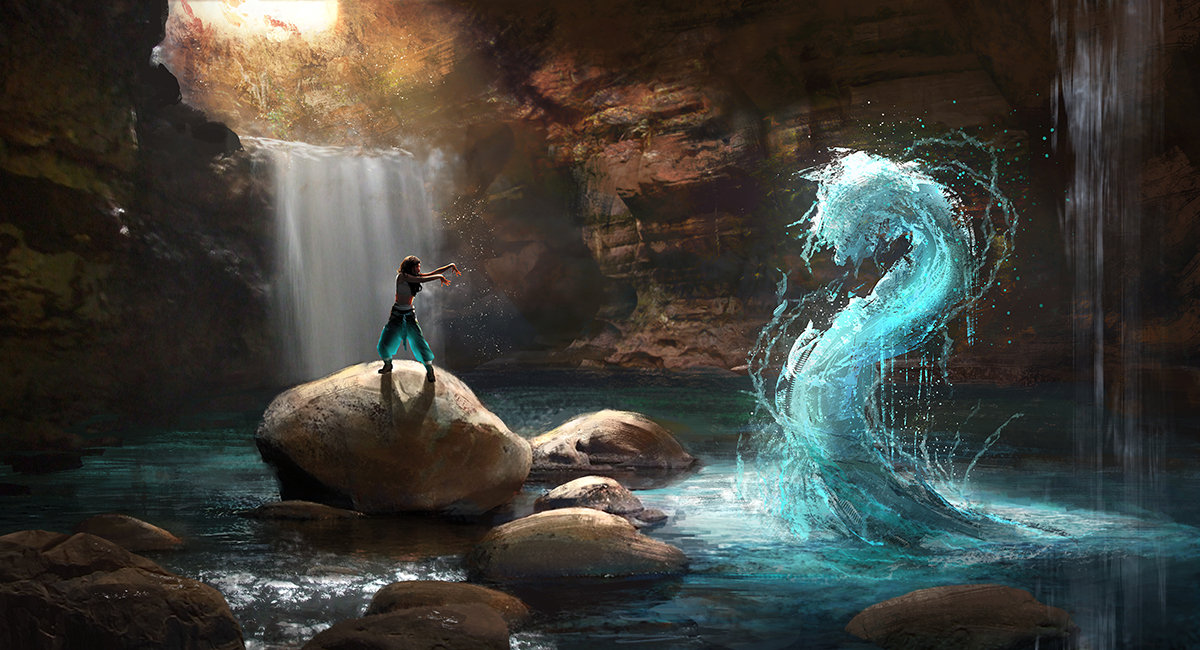

Way of the Water Tribe
The people of the Water Tribe are capable of adapting to many things. They have a deep sense of community and love that holds them together through anything.
Waterbending Techniques
At 3rd level, your ki can be shaped into the very elements of nature. You gain the ability to cast certain spells using your ki at certain monk levels as shown in the Water Techniques Table. To cast one of these spells, you use its casting time and other rules, but its spell components are replaced by only a somatic component. Your spellcasting ability modifier for these spells is Wisdom.
Once you reach 5th level in this class, you can spend additional ki points to increase the level of a spell that you cast, provided that the spell has an enhanced effect at a higher level. The spell's level increases by 1 for each additional ki point you spend. For example, if you are a 5th-level monk and cast ice knife, you can spend 3 ki points to cast it as a 2nd-level spell (the spell’s base cost of 2 ki point plus 1). You can spend up to a maximum of 3 ki points at 5th level, 4 ki points at 9th level, 5 ki points at 13th level, 6 ki points at 17th level, and 10 ki points at 20th level.
Waterbending Style
At 3rd level, the origin of your waterbending training grants you specific uses for your power. Choose a style: polar, swamp, or healing. You gain additional spells associated with your waterbending style in addition to your normal Waterbending Techniques spells, as seen in the Water Techniques Table.
Water Whip
At 3rd level, you can spend 1 ki point as an action to create a whip of water that lashes at creatures. Each creature in a line that is 20 feet long and 5 feet wide starting from a point within 30 feet of you and extending in any direction must make a Dexterity saving throw. On a failed save, the creature takes 2d8 bludgeoning damage, and you can either knock it prone or push it up to 20 feet away from you. On a successful save, the creature takes half as much damage, and you don't push it or knock it prone.
Starting at 5th level, you can spend more than 1 ki point when you use this feature. When you do, the damage increases by 1d8 for each additional ki point you spend. You can spend up to a maximum of 2 ki points at 5th level, 3 ki points at 9th level, 4 ki points at 13th level, and 5 ki points at 17th level.
One with the Water
At 6th level, swimming no longer costs you extra movement, and you can move across and stand on ice or any liquid surface — such as water, acid, mud, snow, quicksand, or lava — as if it were harmless solid ground (crossing molten lava or something similar can still cause damage from the extreme temperature).
Rush of the Rapids
At 11th level, you can augment your movements using your waterbending, creating ice to slide on. Whenever you take the Dash action, you can spend 2 ki points to walk or swim an additional 30 feet. At the end of the turn, trace a path made of 5-foot square segments on the ground starting from where you began your movement to where you ended it. Each segment must have at least one side adjacent to another. The area becomes covered in ice, making it difficult terrain. Each segment melts after 10 minutes or when it takes fire damage.
Octopus Stance
At 17th level, you can spend 6 ki points as a bonus action on your turn to shape water around you into the form of multiple water tentacles surrounding your body. This transformation lasts for 10 minutes and ends early when you become unconscious or die. While in this form, you gain the following benefits:
- Tentacle Deflection. You gain a +2 bonus to AC while you aren't incapacitated.
- Tentacle Whips. When you take the Attack action on your turn, you can choose to make melee attacks with your tentacles. When you take the Attack action on your turn and use a tentacle attack as part of it, you can make three more tentacle attacks as a bonus action. A tentacle attack uses your Wisdom instead of Strength or Dexterity, has a reach of 20 feet, and deals bludgeoning damage equal to 1d12 + your Wisdom modifier on a successful hit.
Water Techniques Table
| Monk Level | Spell Level | Ki Cost | Spell | Polar Style | Swamp Style | Healing Waters |
|---|---|---|---|---|---|---|
| 3rd | Cantrip | — | shape water | — | — | — |
| 3rd | 1 | 2 | create or destroy water, fog cloud | ice knife | entangle | cure wounds |
| 5th | 2 | 3 | — | Snilloc's snowball swarm | spike growth | lesser restoration |
| 9th | 3 | 4 | tidal wave, wall of water | sleet storm | plant growth | revivify |
| 13th | 4 | 5 | control water, watery sphere | — | grasping vine | — |
| 17th | 5 | 6 | maelstrom | cone of cold | — | greater restoration |
| 20th | 6 | 7 | — | investiture of ice, wall of ice | wall of thorns | heal |
| 20th | 8 | 9 | tsunami | — | — | — |
Way of the Earth Kingdom
Earth is the element of substance. The people of the Earth Kingdom are diverse and strong. They are persistent and enduring.
Earthbending Techniques
At 3rd level, your ki can be shaped into the very elements of nature. You gain the ability to cast certain spells using your ki at certain monk levels as shown in the Earth Techniques Table. To cast one of these spells, you use its casting time and other rules, but its spell components are replaced by only a somatic component. Unlike other elemental benders or spellcasters, you can provide the somatic components of your Earthbending Techniques spells using one of your feet instead of a free hand. Your spellcasting ability modifier for these spells is Wisdom.
Once you reach 5th level in this class, you can spend additional ki points to increase the level of a spell that you cast, provided that the spell has an enhanced effect at a higher level. The spell's level increases by 1 for each additional ki point you spend. For example, if you are a 5th-level monk and cast earth tremor, you can spend 3 ki points to cast it as a 2nd-level spell (the spell’s base cost of 2 ki point plus 1). You can spend up to a maximum of 3 ki points at 5th level, 4 ki points at 9th level, 5 ki points at 13th level, 6 ki points at 17th level, and 10 ki points at 20th level.
Earth Techniques Table
| Monk Level | Spell Level | Ki Cost | Spell |
|---|---|---|---|
| 3rd | Cantrip | — | mold earth |
| 3rd | 1 | 2 | earth tremor |
| 5th | 2 | 3 | Maximillian's earthen grasp |
| 9th | 3 | 4 | erupting earth, meld into stone |
| 13th | 4 | 4* | stone shape |
| 17th | 5 | 6 | transmute rock, wall of stone |
| 20th | 6 | 7 | bones of the earth, investiture of stone |
| 20th | 8 | 9 | earthquake |
Hurtling Earth
At 3rd level, you can exhume and propel pieces of stone towards your enemies. As an action, you can spend 1 ki point and choose a 5-foot cube area of earth or rock within 5 feet of you. No creature or other object must be on the area. You send that area of rock hurtling towards a target you can see within 30 feet of you. The area is exhumed, and the target makes a Dexterity saving throw. On a failed save, the target takes 2d12 bludgeoning damage and is knocked prone. On a successful save, the creature takes half as much damage and is not knocked prone.
Starting at 5th level, you can spend more than 1 ki point when you use this feature. When you do, the damage increases by 1d12 for each additional ki point you spend. You can spend up to a maximum of 2 ki points at 5th level, 3 ki points at 9th level, 4 ki points at 13th level, and 5 ki points at 17th level.
Enduring Mountain Stance
At 6th level, when you use the Dodge action while standing on a solid surface, you can’t be moved or knocked prone against your will until the start of your next turn.
Earthen Armor
At 11th level, you can encase yourself in compact earth to protect yourself from attacks. As an action, you can spend 5 ki points to gain a +1 bonus to AC and resistance to bludgeoning, piercing, and slashing damage for ten minutes. You don’t benefit from your Unarmored Movement feature during this time, as the weighty stone slows down your movements.
Tremorsense
At 17th level, you gain tremorsense out to a range of 60 feet. Using your tremorsense, you can detect and pinpoint the origin of vibrations within 60 feet, provided that you and the source of the vibrations are in contact with the same ground or substance. For example, your tremorsense can't be used to detect flying or incorporeal creatures.
*This is not a typo. Earthbenders cast stone shape for cheap.
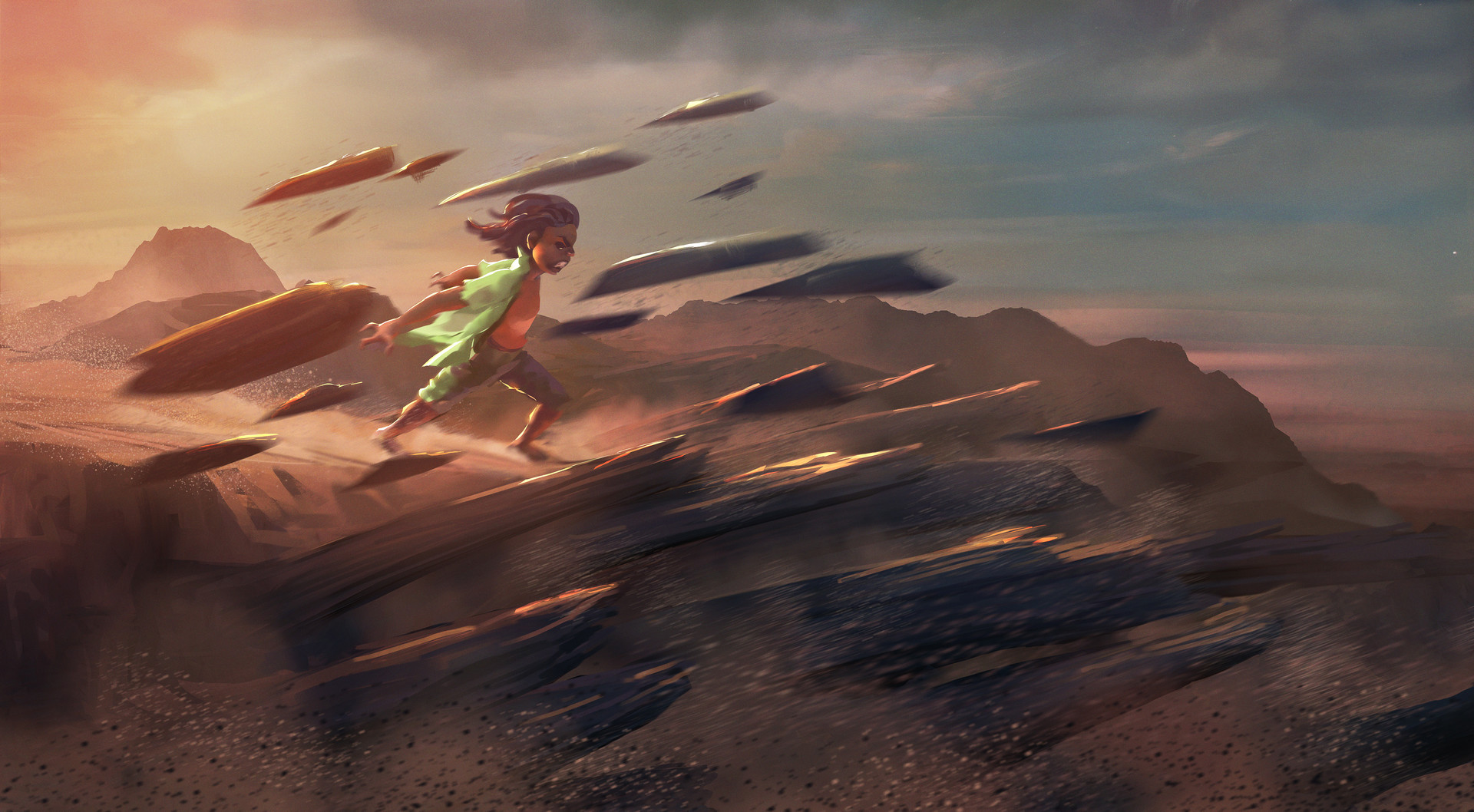

Way of the Fire Nation
Fire is the element of power. The people of the Fire Nation have desire and will and the energy and drive to achieve what they want.
Firebending Techniques
At 3rd level, your ki can be shaped into the very elements of nature. You gain the ability to cast certain spells using your ki at certain monk levels as shown in the Fire Techniques Table. To cast one of these spells, you use its casting time and other rules, but its spell components are replaced by only a somatic component. Your spellcasting ability modifier for these spells is Wisdom.
Once you reach 5th level in this class, you can spend additional ki points to increase the level of a spell that you cast, provided that the spell has an enhanced effect at a higher level. The spell's level increases by 1 for each additional ki point you spend. For example, if you are a 5th-level monk and cast burning hands, you can spend 3 ki points to cast it as a 2nd-level spell (the spell’s base cost of 2 ki point plus 1). You can spend up to a maximum of 3 ki points at 5th level, 4 ki points at 9th level, 5 ki points at 13th level, 6 ki points at 17th level, and 10 ki points at 20th level.
Fangs of the Fire Snake
At 3rd level, when you use the Attack action on your turn, you can spend 2 ki points to cause tendrils of flame to stretch out from your fists and feet. Your reach with your unarmed strikes increases by 10 feet until the end of your turn. A hit with such an attack deals fire damage instead of bludgeoning damage, and also deals extra fire damage equal to your martial arts die.
Energy Redirection
At 6th level, when you take fire or lightning damage, you can use your reaction to spend 1 ki point and reduce the damage to 0.
Fire Techniques Table
| Monk Level | Spell Level | Ki Cost | Spell |
|---|---|---|---|
| 3rd | Cantrip | — | control flames, fire bolt |
| 3rd | 1 | 2 | burning hands |
| 5th | 2 | 3 | scorching ray |
| 9th | 3 | 4 | fireball |
| 13th | 4 | 5 | wall of fire, fire shield (cold shield also deals fire damage) |
| 17th | 3 | 4 | lightning bolt |
| 17th | 5 | 6 | immolation |
| 20th | 6 | 7 | chain lightning, investiture of flame |
| 20th | 7 | 8 | fire storm |
Immolating Flames
At 11th level, fire and lightning damage from monk features you use ignores creatures’ damage resistances, and deals half damage – instead of no damage – to creatures with immunity to the damage type.
Lightning Bending
At 17th level, when you would deal fire damage using your monk features, you can choose to deal lightning damage instead. When you use your Energy Redirection feature to reduce lightning damage you would take to 0, you can choose a creature or object within 30 feet of you. That target must make a Dexterity saving throw or take the lightning damage instead.

Way of the Air Nomads
The Air Nomads detached themselves from worldly concerns and found peace and freedom.
Airbending Techniques
At 3rd level, your ki can be shaped into the very elements of nature. You gain the ability to cast certain spells using your ki at certain monk levels as shown in the Water Techniques Table. To cast one of these spells, you use its casting time and other rules, but its spell components are replaced by only a somatic component. Your spellcasting ability modifier for these spells is Wisdom.
Once you reach 5th level in this class, you can spend additional ki points to increase the level of a spell that you cast, provided that the spell has an enhanced effect at a higher level. The spell's level increases by 1 for each additional ki point you spend. For example, if you are a 5th-level monk and cast thunderwave, you can spend 3 ki points to cast it as a 2nd-level spell (the spell’s base cost of 2 ki point plus 1). You can spend up to a maximum of 3 ki points at 5th level, 4 ki points at 9th level, 5 ki points at 13th level, 6 ki points at 17th level, and 10 ki points at 20th level.
Air Techniques Table
| Monk Level | Spell Level | Ki Cost | Spell |
|---|---|---|---|
| 3rd | Cantrip | — | gust |
| 3rd | 1 | 2 | thunder wave, feather fall |
| 5th | 2 | 3 | warding wind |
| 9th | 3 | 4 | fly (targeting self only), wind wall |
| 13th | 4 | 5 | freedom of movement (targeting self only) |
| 17th | 5 | 6 | control winds |
| 20th | 6 | 7 | investiture of wind |
| 20th | 7 | 8 | whirlwind |
Fist of Unbroken Air
At 3rd level, you can create a blast of compressed air that strikes like a mighty fist. As an action, you can spend 1 ki point and choose a creature you can see within 30 feet of you. That creature must make a Strength saving throw. On a failed save, the creature takes 2d10 bludgeoning damage, and you can push the creature up to 20 feet away from you and knock it prone. On a successful save, the creature takes half as much damage, and you don't push it or knock it prone.
Starting at 5th level, you can spend more than 1 ki point when you use this feature. When you do, the damage increases by 1d10 for each additional ki point you spend. You can spend up to a maximum of 2 ki points at 5th level, 3 ki points at 9th level, 4 ki points at 13th level, and 5 ki points at 17th level.
Ride the Wind
At 6th level, you learn to enhance your movements with your control of the air. When you use your Step of the Wind feature, your walking speed is increased by 20 feet, and your jump distance is quadrupled instead of doubled.
Mist Stance
At 11th level, you can use your Patient Defense feature without spending ki points a number of times equal to your Wisdom modifier. You regain expended uses of this feature at the end of a long rest.
Gale Spirit’s Blessing
At 17th level, you gain a flying speed of 60 feet, and you no longer take falling damage as long as you are conscious.