Rules
Firearms Skill and Proficiency
Like martial and simple melee weapons, firearms are divided into skilled and unskilled, and is given per class in the same manner. However, someone who is unskilled with firearms can still equip and fire skilled firearms, albeit with limited effectiveness.
When firing a skilled firearm without proficiency, you may not add your proficiency modifier, and may only attack once, regardless of how many attacks you could otherwise make. You may also potentially induce malfunctions, which are explained later in the document.
Firearms also exists as a separate skill you can be proficient with, like acrobatics or perception. By default it uses your Wisdom modifier, and your DM may call upon the skill for checks such as clearing a potential malfunction, discussing firearms in a conversation, or understanding what a firearm is and how it functions. ALL classes have the firearms skill as an available proficiency.
Combat and Handling
Ability Mod
You may choose to use your strength OR dex modifier when making attacks with firearms. Melee weapons apply BOTH modifiers.
Firing and Moving
If a creature tries to move after firing, their remaining move distance is halved for the rest of that turn. Teleporting, or being moved by some other force, may not necessarily apply to this system.
Melee Adversaries
Attacking with a melee weapon against a creature who has only a ranged weapon drawn, and no shield or drawn melee weapon, grants advantage on the attack. Bayonets count as a drawn melee weapon.
Prone
If your player is skilled with firearms, you do not impose disadvantage on ranged attacks made with a firearm from prone.
Gun Butt
As a bonus action when you have a ranged weapon drawn, you may strike an enemy adjacent to you and halve their movespeed until the start of your next turn.
Low Light
Attacks made with ranged weapons in dim light are made with disadvantage. Attacks in full darkness are made with a -10 modifier, and with disadvantage. Darkvision distances are halved and no longer affects dim light. Full darkness is still treated as dim light.
Smite Spells
Smite spells can also be applied to ranged weapon attacks.
Damage and Glancing Blows
In this system enemies and players hit much harder than usual to emphasize the increased lethality of combat with firearms. Most enemies drop in just one solid hit, but do much more damage in return to compensate. Combat is fast, dangerous, and lethal. However, increased lethality across the board interacts poorly with DnD's all-or-nothing AC system, since a miss doing 0 damage becomes significantly more punishing.
To mitigate this issue (and truth be told a long standing issue I've had with DnD), a second value is introduced: DT, which is a value lower than AC that serves as a way to deal mitigated damage even when rolling poorly.
If an attack roll ties or beats a creature's DT value but NOT their AC, you may still roll damage; however, the damage dealt is halved, rounded down. Dealing damage in this manner is called a glancing blow. If your roll ties or beats the target's AC, damage is dealt as normal.
Enemies may also make glancing blows, but their damage is calculated in a separate manner to speed up combat.
Single-shot Weapons
Reloading ammo in a single-shot weapon, such as a bolt action rifle with no magazine or a single barrel breech-loading shotgun, requires 10ft. of movement in combat to execute; therefore, increasing your movespeed on a turn also increases your ability to reload your weapon, e.g. using the dash action.
Single Loading Repeaters
Weapons with repeat firepower, but no means to reload more than a single round at a time, fall under this category, such as revolvers with no speedloading clips available or tube-fed guns. Reloading a round costs 10ft. of movement in combat at a time, e.g. loading 3 rounds on a turn consumes 30ft. of movement.
Packet Loading Systems
Weapons with some means of reloading more than a single round at a time are considered packet loaders; detachable box magazines, stripper clips, or en bloc/mannlicher clips are all examples of packet loading. Reloading a packet of ammo into your weapon costs a bonus action, or if a gun's allows it, you may use a described amount of movement per round to reload.
Shotguns and Spread Munitions
Instead of standard range values, shotguns instead have a damage dropoff interval where for each specified increment of distance from the shooter, the gun rolls less damage dice. A shotgun with range intervals of -2d4/15ft loses 2d4 from its damage rolls every 15 feet of distance the target is from the shooter until it eventually rolls no damage dice, after which the enemy is considered out of range and may not be attacked.
Repeating Firearms
Firearms or other weapons that can cycle rapidly may sometimes attack more than once when you take the attack action. To understand how this system works, treat each extra attack you have from sources besides your weapon as a "burst." Each firearm will specify how many times it can fire per burst (ROF, or Rate Of Fire), and the penalties for multiple consecutive shots with it. ROF in this case is sort of a modifier on the maximum number of attacks when you take the attack action; consecutive shot penalties begin to be applied after firing more than once in a single burst, and reset when moving to the next burst.
For example, you are a 5th level fighter with 2 attacks per turn, and you have a gun with an ROF of 3 and a shot penalty of -2. For your first "burst" you may fire the gun once as normal, and fire a second time with a -2 penalty to hit, and fire a third time with a -4 penalty. This modifier then resets when you move into your second "burst" for that turn.
You may not add your ability modifier to the damage of additional attacks granted by ROF.
This system represents follow-up shots fired under recoil and the reset time in between them. For balance reasons, it exists to mitigate the power of a multiplier on your attacks per turn.
Taking Cover
To take cover, you must be adjacent to a valid piece of cover and state clearly that you are taking cover - your DM will determine what counts as effective cover. When a shot is intercepted by cover, add 2 to the target's AC. Cover has a default AC of 10, but can be another value assigned by the DM; if a shot misses the target but does not miss the cover, the cover is destroyed immediately. If a shot hits the target, the cover is unaffected.
You may also take cover using the corner of a wall; this has no affect on AC, because nothing is intercepting a projectile from an enemy that can actually see you. When attacking from corner cover, you may duck around the corner and draw line of sight from the edge instead.
Opportunity Attacks
When a creature moves while within your weapon's lower range value you may use your reaction to make an opportunity attack against it with disadvantage. Shotguns do not get disadvantage on opportunity attacks, and can only make one so long as their attack would still roll damage dice.
Melee opportunity attacks are also made with disadvantage, even if the target doesn't have a melee weapon drawn. Opportunity attacks cannot be made with ranged weapons while taking cover. A ranged opportunity attack cannot be made by a player or NPC until they take their first turn after rolling for initiative; this takes effect any time initiative is rolled.
Other Qualities and Changes
Extra Barrels
Some firearms have multiple barrels, and some can fire multiple barrels simultaneously. If a weapon has this capability, and more than one barrel is loaded, you may fire every loaded barrel on your weapon simultaneously, applying all damage as if it were a single attack. Unless you are skilled with firearms you impose disadvantage on the attack roll.
Bayonets
Sometimes a gun may have a blade affixed to the end of its barrel, or some other means of providing it a melee presence in combat. Weapons with the bayonet characteristic may replace an attack with a single melee attack once per turn, the stats of which will be defined on the weapon's card itself. Players who are proficient with martial weapons can use their normal amount of attack actions with their bayonet. The number of bayonet attacks you can make per attack action is unaffected by the gun's ROF stat.
Optical sights
Low-power optics
Optical sights with little or no magnification on them are the simplest to use, and are designed around faster target acquisition than iron sights, with a cleaner sight picture and typically a very simple targeting reticle. When you have a weapon with a low-power optic drawn, you may take the Aim bonus action.
Aim
You may consume your bonus action and the remaining movement on your turn to precisely aim your next shot, granting advantage on the next shot you fire with this weapon on your turn.
Precision optics
Players may only benefit from precision optics if they are skilled with firearms. Weapons with precision optics attack with advantage when firing from prone, and consume no movement when using the Aim bonus action.
Suppressors
If a gun is equipped with a suppressor, its gunshots are audible only to 15 feet away, although some guns may have different stats on their suppressor if it is flavored as damaged, or perhaps magically enhanced to absorb all sound of firing.
Stopping Power
Some firearms chamber particularly potent cartridges, making them pierce armor more easily and deal immense damage on impact. These weapons are given the stopping power trait, and apply a negative modifier to an enemy's AC values when making attack rolls.
Bipods
Weapon emplacements absorb recoil, allowing accurate rapid fire. As a bonus action, you may choose to mount your bipod on either the ground, or if your DM allows, other surfaces such as short walls and ledges. Mounting your bipod on the ground forces you to drop to prone, and unmounting your bipod costs an action.
While your bipod is mounted, you may take the Aim bonus action granted by optics even if your gun does not have optical sights. Firing from a bipod does not impose disadvantage when prone, and halves the weapon's shot penalty, rounded down, to a minimum of -1.
Rifle Grenades
Firing a rifle grenade replaces your attack action, and this grenade cannot benefit from advantage from the Aim bonus action. You cannot fire a rifle grenade if you are not skilled with firearms. Well, you can try, but your DM is free to impose whatever consequences and modifiers they wish on it - get creative. c:
Weapon Size and Drawing Weapons
Large weapons are difficult to maneuver in the heat of combat in tight spaces. Weapons marked as long have disadvantage attacking targets at 20ft. or closer.
Shorter weapons aren't concealable or comfortable within point blank range, but don't suffer inside small rooms or hallways like larger firearms do. Weapons marked as short have disadvantage attacking targets at 10ft. or closer.
Smaller weapons, such as pistols, are much more useful up close and in confined spaces - weapons like this are marked as compact, and do not suffer close range disadvantage.
Drawing a two handed weapon costs an action, and drawing a one handed weapon costs a bonus action.
Armor
Armor statistics are unchanged, but you can flavor your outfit as you like.
Weapon Malfunctions
After missing an attack while firing a skilled weapon while you are unskilled, or rolling a natural 1 on an attack with a firearm, you must make a firearms skill check:
Skill Save DC
If you fail the skill check, your gun malfunctions and you must attempt to fix it. Each turn when you take the attack action after your gun malfunctions, you must make the same skill check again before attacking. If you fail the check, you cannot attack with your firearm that turn, however your action is not consumed. You may spend your bonus action to roll the repair check with advantage.
After you succeed on the repair check, you may immediately attack with your firearm on that turn, and no longer have to make repair checks until your weapon malfunctions again.
Maneuvers
All subclasses that do not learn spells instead are able to perform maneuvers; each one starts with three maneuvers from a separate, smaller list of maneuvers than battlemasters. You start with a maximum of 2 superiority dice, which begin as D6s. At level 10, they upgrade to D8s and you gain an additional die, and at level 18 they upgrade to D10s.
Each time initiative is rolled, you are restored to your maximum amount superiority dice. A superiority die is restored after landing a crit in combat or making a successful opportunity attack; additional attacks made granted by a weapon's RoF stat cannot restore superiority dice. You may only restore a superiority die if you have not used one that turn, and you may only restore one superiority die per turn.
The Battlemaster subclass is changed in response to this system; these changes, and changes to maneuvers (and any new maneuvers), are found under the Battlemaster subclass's changes category.
Available Maneuvers
Charge (New)
Disarm (Disarming Attack)
Evasive Footwork
Feint (Feinting Attack)
Grapple (Restraining Strike)
Headshot (New)
Lunge (Lunging Attack)
Parry
Pierce (Precision Attack)
Riposte / Return Fire
Shove (Pushing Attack)
Slam (Trip Attack)
Sleight of Hand (New)
Snipe
Sprint (New)
Stagger (New)
Sunder (New)
Cleric
Death
Touch of Death
You may activate Touch of Death with a successful ranged weapon attack.
Destruction (Twitter class)
these classes are kinda busted anyway but they're kinda unique and cool too so i figured i'd tweak them just in case anybody does want to use them
Sundering Invocation
You may activate Sundering Invocation on a successful weapon attack.
Forge
Forge clerics gain proficiency with firearms in addition to other proficiencies granted by the subclass.
Blessing of the Forge
Blessing of the Forge may also be applied to a firearm.
Artisan's Blessing
You may also create an unskilled firearm that your character has held, operated before, or otherwise gathered sufficient knowledge upon to understand its mechanisms.
Tempest
Wrath of the Storm
The range of this ability is equal to 5ft x your Cleric level.
War
War clerics gain proficiency with firearms in addition to other proficiencies granted by the subclass.
Druid
Spores
Symbiotic Entity
You may also apply your Halo of Spores damage to your ranged weapon attacks while under the effects of Symbiotic Entity.
Fungal Infestation
A creature you kill with a ranged weapon attack may also be transformed into a zombie, but only immediately after you kill it.
Fighter
Fighting Styles
Chimaera (Two-Weapon Fighting)
On top of the base benefits from Two-Weapon Fighting, you gain additional benefits dependent on the weapons your character is dual wielding.
Two guns:
You may reload both weapons at the same time for the cost of reloading one.
One gun and one melee weapon:
Firing your gun no longer halves your movespeed for the rest of your turn.
Two melee weapons:
You gain a new maneuver that does not count against your total maneuvers known, called Follow-through:
Follow-through
After landing a successful attack while dual-wielding two melee weapons, you may spend a superiority die to instantly make another attack against the same target, adding the superiority die to the damage roll.
Dueling
When taking the Dueling fighting style, you may use the Dash action as a bonus action instead, so long as you have a single one-handed weapon drawn, in addition to the standard benefits of Dueling.
Arcane Archer
Basically, all its abilities where a bow, shortbow, etc is specified, now apply to all ranged weapons.
Echo Knight
Your echo can make ranged weapon attacks as well, but they may not benefit from the RoF of a gun. You and your echoes share the ammunition in your weapon, e.g. if you fire your weapon, your echoes also have that ammo consumed, and vice versa.
Battlemaster
Maneuver Changes
Brace
You may now make an attack with Brace within your drawn weapon's lesser range value.
Feint (Feinting Attack)
Feint may now be used within your drawn weapon's lesser range value.
Riposte / Return Fire
Riposte attacks may be made with any weapon you have drawn, and against any missed attack against you, so long as the enemy is within your drawn weapon's lesser range value.
New Maneuvers
Charge
When making an attack on your turn, you may expend a superiority die to move up to half your movespeed towards an enemy and make an attack, applying your superiority die to the attack's damage roll, and taking opportunity attacks as normal. Moving in this manner still reduces your firearm's range. You may only Charge once per turn.
Headshot
When making an attack on your turn, you may expend one of your superiority dice to attempt a perfect strike. Before making the roll to hit, you may roll a D8. If you roll an 8, the attack is automatically a critical hit. This roll is always made with a D8, regardless of the size of your superiority dice. The die is still expended if you do not succeed.
Sleight of Hand
Once per turn, you may expend a superiority die to reload your drawn firearm (or both, if dual wielding) to full capacity without costing any movements or actions.
Sprint
Once per turn, you may expend a superiority die to take the Dash action for free.
Stagger
When making an attack on your turn, you may expend one of your superiority dice to attempt to stagger your enemy. If your attack hits, you reduce their movespeed by half until the start of your next turn, and add the superiority die to the attack's damage roll. You may only stagger an enemy once per turn.
Sunder
When making an attack on your turn, you may expend one of your superiority dice to weaken an enemy's armor. If your attack hits, you reduce the enemy's AC by half the roll of your superiority die, rounded up, until the start of your next turn. You may only sunder one enemy per turn.
Relentless
Relentless is now gained upon choosing the Battlemaster subclass and always restores 3 superiority dice, up to your maximum, regardless of how many superiority dice you have when rolling initiative. Each time you gain an additional superiority die, Relentless also restores an additional die.
At level 18, you restore all your superiority dice when an attack critically strikes. This effect does not apply to additional attacks made granted by a weapon's RoF stat.
Monk
Monk Weapons
If you are proficient with firearms, you may choose a firearm (imposing the same restrictions as any other monk weapon) as a monk weapon as well, but its damage is unaltered. The heavy property does not exist in my system.
Flurry of Blows
Flurry of Blows is compatible with firearms, although it functions with different rules:
You may spend 1 ki point to activate Flurry of Blows, allowing you to make an additional attack with your firearm.
Stunning Strike
Stunning Strike may additionally be used as a reaction on an enemy who attempts to make a melee attack against you. First, they roll to hit as normal. Then, you roll an unarmed melee attack with proficiency; treat their roll as the AC for yours to beat. If your attack hits, they are stunned as normal and you take no damage, and your reaction and ki point are consumed. If you miss, their attack hits as normal; your ki point is not consumed, but your reaction is.
Kensei
Artist's Precision
(optionally replaces Kensei's Shot)
You may spend 1 ki point to precisely target your attacks, adding a roll of your martial arts die to each attack roll for that turn. Extra shots fired via a gun's rate of fire do not benefit from this ability.
Long Death
Touch of Death
Touch of Death is activated any time you reduce a creature to 0hp, regardless of distance from it.
Touch of the Long Death
You may apply Touch of the Long Death to a ranged attack if it hits. The creature must still roll a constitution save and take damage accordingly.
Mercy (UA: 2020 Subclasses)
Hands of Healing
You may also activate Hands of Healing with ranged attacks. You must still roll to hit, and you still consume ammo when firing to activate this ability. Instead of dealing damage, you heal as normal with Hands of Healing.
Yes, this is stupid, but it's cooler than it is stupid.
Hands of Harm
You may also activate Hands of Harm with ranged attacks.
Noxious Aura
Instead of creating an Aura, you may instead spend 1 ki point and apply its effects to a creature struck by a ranged attack you make for 18 seconds. The Aura, and all its standard effects, apply to the injured creature, and emanate from it as well. Creatures under the effect of the Aura in this manner have disadvantage on ranged attacks until it ends, and it may be dismissed by you under normal means.
Hand of Mercy
You may activate Hand of Mercy with a successful ranged attack on a creature. All other rules still apply.
Paladin
Smites
Smites may also be activated on successful ranged weapon attacks.
Ancients
Channel Divinity: Nature's Wrath
You may also use your Nature's Wrath on a creature that you've successfully injured with a ranged attack regardless of distance from it, up to 10 minutes after successfully dealing damage.
Elder Champion
The distance of which you impose disadvantages with this ability is 50 feet.
Conquest
Invincible Conqueror
All your weapon attacks crit on a 19 or 20 on the d20.
Oathbreaker
Aura of Hate
Your Aura of Hate applies to all weapon attacks by all normally affected creatures within range.
Dread Lord
You may use your bonus action to apply 3d10 + your Charisma modifier necrotic damage to a single successful ranged weapon attack on your turn.
Treachery (UA: Paladin)
Aura of Treachery
Cull the Herd: The benefits this ability applies to melee attacks are also applied to ranged weapon attacks.
Treacherous Strikes: The range of this ability is equal to 5ft x your Paladin level and may also be applied to ranged attacks made against you; you may make the target make a ranged attack within their weapon's range, provided they have ammunition for it.
Vengeance
Vow of Enmity
The range of this ability is limited to any creature you can see.
Additionally, from Soul of Vengeance, you may use your reaction to make any weapon attack against that creature.
Ranger (Revised)
On creation, all Rangers may take firearms proficiency for free if it suits the character; this is entirely a thematic choice considering a Ranger's place in the frontier.
Horizon Walker
Planar Warrior
You may also use Planar Warrior on a creature that you've successfully injured with a ranged attack regardless of distance from it, up to 10 minutes after successfully dealing damage.
Hunter
Hunter's Prey: Giant Killer
The range of your Giant Killer ability is equal to 10ft x your Ranger level.
Multiattack: Volley
You may only make a single attack against each creature within Volley's range, regardless of your weapon's RoF. Your Volley attack ends when you have to reload your weapon.
Rogue
On creation, all Rogues may take firearms proficiency for free if it suits the character.
Warlock
Pact of the Blade
If your character is in possession of a firearm when choosing this pact, you may select that firearm as your pact weapon instead. A dismissed firearm's capacity is unchanged when it is dismissed or summoned. You may change this to a different firearm on a long rest.
Hexblade (what a surprise)
Hex Warrior
Your "hexblade" can also be two-handed, and you may select a ranged weapon.
New Subclasses
Fighter: Sharpshooter
The Sharpshooter is a master of ranged combat. An excellent sniper and eagle-eyed scout, this fighter dedicates themselves to the impeccable placement of each attack, managing distance and keeping the upper hand to turn a situation to their advantage. When you choose this martial archetype, you gain proficiency with firearms if you do not already have it.
yes i know there's a UA of this, but it's trash, so i'm just overwriting it because nobody would ever use that anyway. it's seriously that bad.
Keen Eye
Your skill and precision allows you to take exceptional care in your attacks, and you possess a remarkable eye for detail.
At 3rd level, when you choose this archetype, you gain proficiency in the Perception skill, or expertise if you are already proficient. In addition, you gain the following ability:
Keen Aim
You may use your bonus action to add double your proficiency modifier to the next ranged attack roll you make on this turn, or triple it if you have advantage. If your weapon has the ability to use the Aim action, you may combine the two abilities when activating one of them.
Scrutiny
Patience, preparedness, and awareness are key to the perfect strike. At 7th level, you gain proficiency in the Investigation skill if you do not already have it, or expertise if you are already proficient. You also gain the following ability:
Careful Watch
You have a number of Careful Watch charges equal to your proficiency modifier. When making a ranged opportunity attack, you may spend a charge of Careful Watch to make your attack without disadvantage. Your charges of Careful Watch are replenished after a short rest.
Unerring Awareness
Your senses have become sharpened to a needletip, and your attention to your environment is unwavering.
Starting at 10th level, you can no longer have disadvantage on any Perception or Investigation checks, and you can no longer be surprised. Additionally, the range values of your ranged weapons are now doubled.
Snipe
At 15th level, you have mastered the ability to place a single, perfect shot. Once per short rest, you may choose one attack roll you make and make it an automatic critical hit.
Infallible Senses
At 18th level, you have become so attuned and alert to the world around you that you can subvert magical phenomena. You gain truesight out to 50ft.
Fighter: Quickdraw
A quickdraw fighter emphasizes speed and spectacular, if not supernatural, reflexes in combat; they move and act quickly, using their incredible speed to outpace their quarries. When you choose this martial archetype, you gain proficiency with firearms if you do not already have it.
Slick
Your natural agility begins to manifest, letting you move and perform administrative actions much faster.
From 3rd level and up, your movespeed increases by 15ft, and you only spend half your movespeed to stand up from being prone. You also gain a climbing speed equal to your movespeed. Additionally, you may draw and stow one-handed weapons at will without consuming an action, and you become proficient in Sleight of Hand, or expertise if you were already proficient. Finally, you gain advantage on Performance checks related to or involving weapons.
Snapshot
You've learned when you can sacrifice precision for speed and still come out on top.
Starting at 7th level, you no longer suffer disadvantage when attacking at close range with ranged weapons, and your first attack each turn does not incur a movement speed penalty. At 15th level, your second attack also does not incur movement penalties.
Slicker
You continue to get lighter on your feet as you grow more experienced. At 10th level, you gain an additional 15ft of movement.
Sleight of Hand
Weapon handling and rapid, clean motions have become second nature to you.
Beginning at 10th level, reloading single shot and single load weapons costs only 5ft of movement per round. Additionally, you may choose to reload a packet loading weapon as if it were a single load weapon, instead of using a bonus action.
Your quick fingers also have other, less scrupulous applications; you gain expertise with the dice and playing card gaming sets, and you have advantage on any skill checks made related to the physical use of these sets.
Adrenaline
Your wicked sharp reflexes allow you to make short bursts of immediate, reactionary movement.
From 15th level and up, when you're about to make a roll that applies your DEX modifier, you may choose to make this roll with advantage; you may not use Adrenaline after you have made your initial roll. You may use Adrenaline a number of times equal to your proficiency modifier per long rest.
Slickest
Your agility is unparalleled, bordering on supernatural. Beginning at 18th level, you are permanently under the effects of the Freedom of Movement spell.
Redo
Sometimes, going too fast can create mistakes you wouldn't otherwise have made; fortunately, your incredible speed lets you compensate for them.
Once per turn starting at 18th level, after you make a roll that applies your DEX modifier, you may choose to reroll it; this reroll has none of the negative modifiers (such as disadvantage or flat reductions) the roll originally had, and you must use the new result. Adrenaline can be activated on your new roll. You may use Redo a number of times equal to your proficiency modifier per long rest.
Rogue: Snubnose
Snubnose rogues fashion their name after compact revolvers of the same name; they rely on getting up against a foe, blasting them into pieces, and slinking away til they can surprise another target to overwhelm yet again.
When you choose this archetype, you gain proficiency with firearms if you didn't already have it.
Point Blank
Your approach to using firearms seeks to remove the possibility to ever miss in the first place, instead closing the gap and gunning them down in close quarters.
Starting at 3rd level, you can draw and stow a one-handed firearm as free action, and you may treat all one-handed weapons as compact. Instead, you are granted advantage on ranged weapon attacks made within 5 feet of the target. After making a successful point blank attack against that creature, it may not make opportunity attacks until the start of your next turn.
Barrel Stuffing
The immediate proximity to your target allows you to make even more intense, brutal attacks.
Starting at 9th level, you make increasingly effective point blank attacks. When you make a point blank attack, you gain advantage on the attack regardless of any other modifiers that would normally impose disadvantage on your attack, and you halve the shot penalty of your weapon for that action, rounded up.
Brandish
A weapon flashed at the right moment could be the perfect catalyst to change an adversary's mind, and you have mastered this art.
Additionally at 9th level, you gain advantage on Intimidation checks made using a weapon, and you gain the Brandish ability.
Brandish
As a bonus action in combat, you may attempt to intimidate a foe into submission. Choose one target within 30 feet that can see or hear you, and roll an Intimidation check against that creature. If you succeed, they become frightened of you and their movespeed is halved until the end of their next turn. After Brandish's effects wear off on a creature, it cannot be intimidated by Brandish again for 30 seconds.
Agility
Your agile nature lets you carry your momentum from attacking into quick bursts of movement.
Beginning at 13th level, immediately after making a successful attack (including attacks of opportunity), you gain 20ft. of movement which may be only used directly after the attack. After using movement from Agility, you may not use it again until the start of your next turn.
Flourish
The sudden flashes of blunt energy you employ have a calculated, precise edge to them. Starting at 17th level, when you make a Strength skill check, you may additionally apply your DEX modifier to the roll. You may do this a number of times equal to your DEX mod per short rest.
Jamesson and Co. Mfg. Revolver Model 1
| Damage | ROF | Shot Penalty | Capacity | Range | Weight | Ammo |
|---|---|---|---|---|---|---|
| 1d6 + MOD | 1 | - | 6 | 50/90 | 1.5lbs | .38 Long |
one handed, light, compact, single load: gate loading
Its single action gate loading design coupled with basic rounded features give it a distinct appearance without being too luxurious, but the swooping hammer and grip characteristic to all Jamesson guns helps it stand out from the myriad of competitively priced revolvers. Plain wooden grips and a pallid matte grey finish on the frame and barrel, with a strawed cylinder, give it a plain and deliberate appearance. A shallow rear notch on the hammer and a front sharkfin blade at the end of the barrel compose the sights.
Reloading is simple but tedious; opening the gate exposes the backs of the chambers, and a fold out spring loaded ejector rod located under the barrel is pulled to the side and used to push the cases out to be replaced one at a time.
Some single action revolvers can be fan fired, but the Model 1's rough, durable action and cheap manufacture prevents it from operating fast enough to do this effectively.
Compact: This weapon does not suffer close range disadvantage when fired by someone who's proficient with firearms.

Jamesson and Co. Mfg. Revolver Model 2 (+ large frame model)
| Damage | ROF | Shot Penalty | Capacity | Range | Weight | Ammo |
|---|---|---|---|---|---|---|
| 1d6 + MOD (1d10 + MOD) | 2 (1) | -5 | 6 | 60/100 (75/120) | 1.5lbs (2lbs) | .38 Long (.44 long) |
one handed, light, skilled, compact, packet or single load: swing out cylinder
The Jamesson Model 2 is a pricier, finer made successor to the extremely successful Jamesson Model 1 revolver. It is a double action revolver, with finer rounded features and a fluted cylinder, but the swooping hammer and grip characteristic to all Jamesson guns give it a distinct, curved look. The wooden grips have a rich auburn stain, and the metal is finished in a dull nickel with a strawed hammer and cylinder. A shallow rear notch on the hammer and a front sharkfin blade at the end of the barrel compose the sights.
Reloading is a simple process; the swing out cylinder is released by depressing a latch on the left of the cylinder arm, which lets it rotate out to the left for access. A quick snap on the ejector rod on the cylinder disposes of empty shells so they can be replaced a single round at a time, or all at once with a speedloading clip.
Compact: This weapon does not suffer close range disadvantage when fired by someone who's proficient with firearms.
Ritchett Caving Pistol
| Damage | ROF | Shot Penalty | Capacity | Range | Weight | Ammo |
|---|---|---|---|---|---|---|
| 1d6 + MOD | 1 | - | 5 | 50/70 | 1lbs | .32 Centerfire |
one handed, light, compact, packet or single load: swing out cylinder
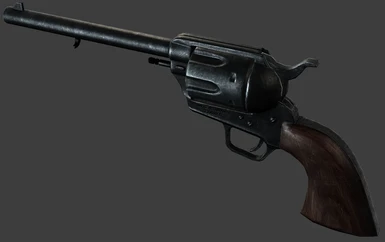
The compact, simple, and durable construction of this 2.5" single action revolver makes it a common sight among not just miners, but anybody with a need for a cheap, concealable weapon. The metal components have a cheap, thin blue and it has black vulcanized rubber grips emblazoned with the Ritchett co. logo and mild checkering on each side, screwed into a bluntly curved grip frame. The weapon features extremely simple trench sights along the top of the frame and a plain square post at the end of the barrel, with a square and plain hammer. The lower power cartridge relative to other pistols was chosen to prevent the sonic boom of the round, or its impact in a wall, causing a cave-in.
The cylinder swings out to the left by pushing an unfinished latch piece on the left side, which can be reloaded a single round at a time; there's no ejector rod so a good shake will drop the empty shells. If the wielder has speedloading clips, it can be reloaded with those instead, making the weapon function as a packet loader instead.
Some single action revolvers can be fan fired, but the caving pistol's rough action and cheap manufacture prevents it from operating fast enough to do this effectively.
Compact: This weapon does not suffer close range disadvantage when fired by someone who's proficient with firearms.
Riolle & Monteur Patrician's Boutique Pistol
| Damage | ROF | Shot Penalty | Capacity | Range | Weight | Ammo |
|---|---|---|---|---|---|---|
| 1d4 + MOD | 3 | -3 | 5 | 50/80 | 2lbs | .30 Riolle |
one handed, light, skilled, compact, packet load: clip feed
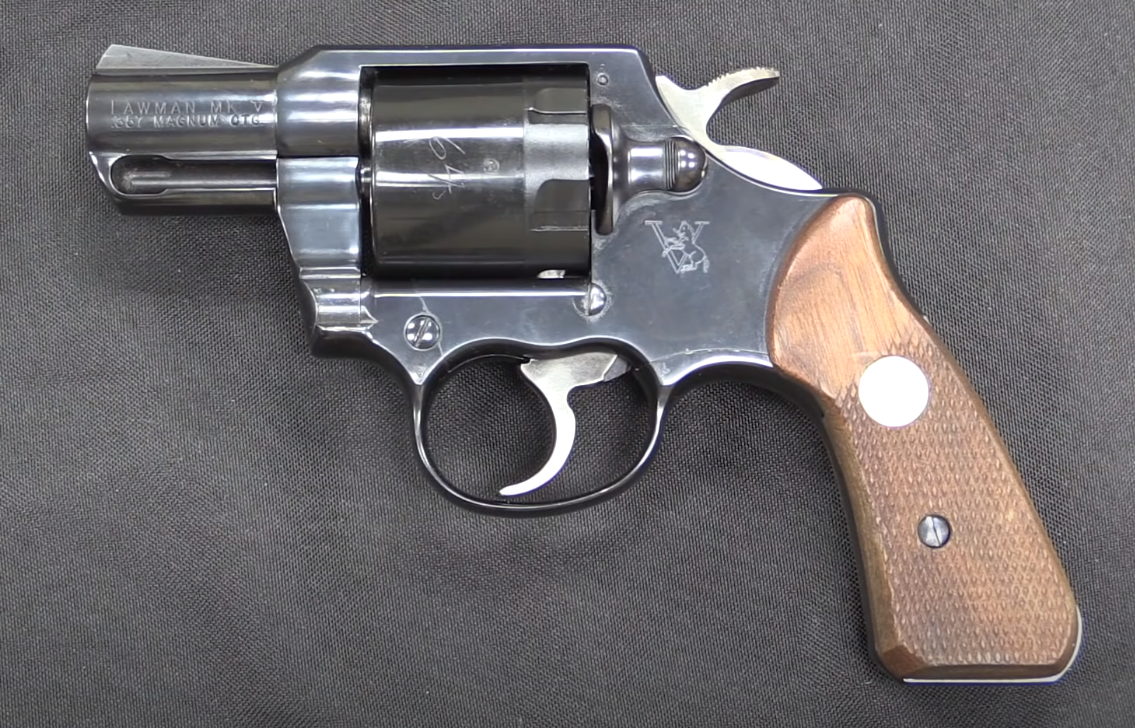
This early self loading clip-fed pistol is as exotic as it is innovative. With each seam between the components of the weapon and their assembly pins being obvious, contrasted with the rounded styling and lack of hard angles on the weapon, it carries a distinct air of mechanical craftsmanship to it. The pieces of its frame are a cool, soft black with a strawed trigger and hammer, and unfinished pins and screws visible from the exterior. The frame itself comes together into one large unit, with a large circular hole in the rear that houses the trigger, behind which the shape pulls down into a smoothly curved grip with black vulcanized rubber for comfort and style. A short 3-inch barrel extends from the large frame of the pistol, upon which is mounted a small post front sight, and the rear sight is a rear v-notch fixed onto the bolt and screwed in place.
The R&M Patrician's pistol is a straight blowback design, firing a diminutive proprietary .30 caliber cartridge designed by Riolle herself, created to be pleasant to shoot but safe for the experimental nature of the pistol and still potent enough to hurt a soft target. Its bolt is a large rectangular block with beveled, smoothed edges that occupies most of the space atop the frame, and reciprocates backwards upon firing, resetting the hammer, ejecting the spent round, and feeding a new one; the barrel itself is fixed in place. The bolt has two checkered knobs directly in front of the rear sight projecting from either side for the user to grab onto and cycle the pistol manually.
The clip compartment is just in front of the trigger housing and opens downward from the front, pivoting on a screw fixed below the front of the bolt, and features witness holes so the user can see approximately how many rounds are remaining in the clip without needing to open the compartment; the compartment is held closed by a spring lock at the rear. and is released by pressing a checkered button on either side of the pistol located at the bottom rear corners of the compartment cover. The clips are single stack and hold five rounds, and slide into the pistol on a rail inside the compartment, allowing the clip to be held firmly in place while firing. When the clip is empty, it is automatically disconnected from the rails and falls free when the clip compartment is opened.
Compact: This weapon does not suffer close range disadvantage when fired by someone who's proficient with firearms.

Velma "Chartreuse" Martial Rifle
| Damage | ROF | Shot Penalty | Capacity | Range | Weight | Ammo |
|---|---|---|---|---|---|---|
| 2d8 + MOD | 1 | - | 5 | 170/250 | 9lbs | 7x50mm Vlm |
two handed, long, stopping power, packet or single load: fixed internal magazine
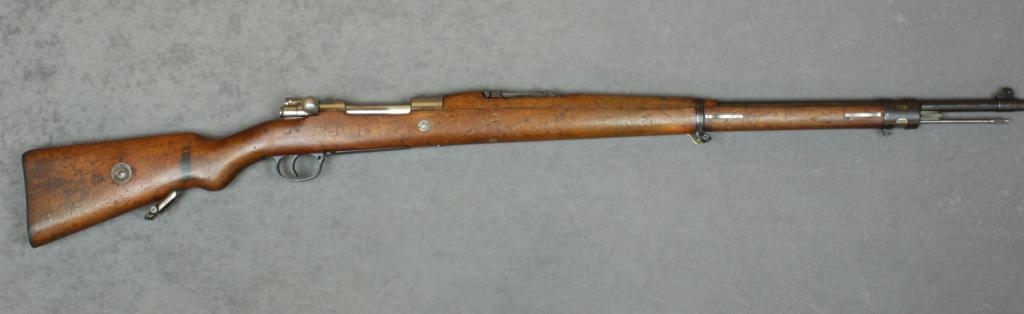
The Chartreuse is a sleek, rugged bolt action rifle of higher manufacture, outfitted in durable, dark wooden furniture. The standard martial model features a straight bolt handle with a 90 degree turn to unlock, and a flush 5 round magazine fed by a stripper clip when the bolt is opened. The cocking piece is visibly primed by being locked backwards after turning the bolt upward, and launches inward when the trigger is pulled. The grip is a simple straight rifle grip, from a standard shaped buttstock with a metal buttplate. The weapon has a half-length upper handguard with a cutout for a rear notch ladder sight, with exposed barrel out to the end of the lower handguard and extending an additional few inches past the end of the furniture, at the end of which is a plain front post. The metal across the gun is finished in a sharp, deep blue, and the barrel bands and sights are softly nickeled.
Reloading requires turning and opening the bolt and inserting cartridges into the magazine from the opening at the top of the action until the magazine is full. On the rear receiver bridge is a notch cut for stripper clips, allowing for much faster packet loading if the user has stripper clips for this rifle.
Long: This weapon attacks with disadvantage when fired at a target 20ft. away or closer.
Stopping Power: This weapon applies a -2 to the target's AC values when making attack rolls.
Velma "Chartreuse" Short Rifle
| Damage | ROF | Shot Penalty | Capacity | Range | Weight | Ammo |
|---|---|---|---|---|---|---|
| 2d8 + MOD | 1 | - | 5 | 130/200 | 8lbs | 7x50mm Vlm |
two handed, short, stopping power, skilled, packet or single load: fixed internal magazine
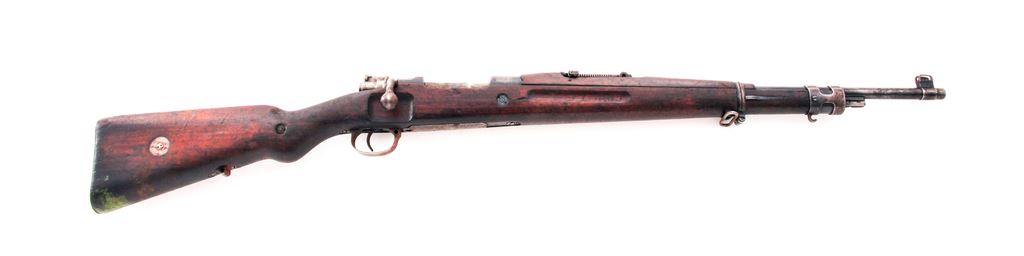
The Chartreuse is a sleek, rugged bolt action rifle of higher manufacture, outfitted in durable, dark wooden furniture. The short rifle model features a bent bolt handle with a 90 degree turn to unlock, and a flush 5 round magazine fed by a stripper clip when the bolt is opened. The cocking piece is visibly primed by being locked backwards after turning the bolt upward, and launches inward when the trigger is pulled. The grip is a simple straight rifle grip, from a standard shaped buttstock with a metal buttplate. The weapon has a half-length upper handguard with a cutout for a rear notch ladder sight, with exposed barrel out to the end of the lower handguard and extending an additional few inches past the end of the furniture, at the end of which is a plain front post. The metal across the gun is finished in a sharp, deep blue, and the barrel bands and sights are softly nickeled.
The barrel on the short rifle is significantly shorter than the full martial model, making it more comfortable to use in confined spaces, but its ranged performance suffers due to a shorter sight radius and lesser velocity, and it demands a more skilled shooter because of the lesser weight making the gun kick harder.
Reloading requires turning and opening the bolt and inserting cartridges into the magazine from the opening at the top of the action until the magazine is full. On the rear receiver bridge is a notch cut for stripper clips, allowing for much faster packet loading if the user has stripper clips for this rifle.
Short: This weapon attacks with disadvantage when fired at a target 10ft. away or closer.
Stopping Power: This weapon applies a -2 to the target's AC values when making attack rolls.
Coach Gun (+ sawed off)
| Damage | ROF | Shot Penalty | Capacity | Range | Weight | Ammo |
|---|---|---|---|---|---|---|
| 4d4 + MOD | 1 | - | 2 | 1d4/20ft (1d4/5ft) | 8lbs (6lbs) | 12 Gauge Shotshell |
two handed, short, single load: break action breech loading; two barrels, (skilled), (compact)
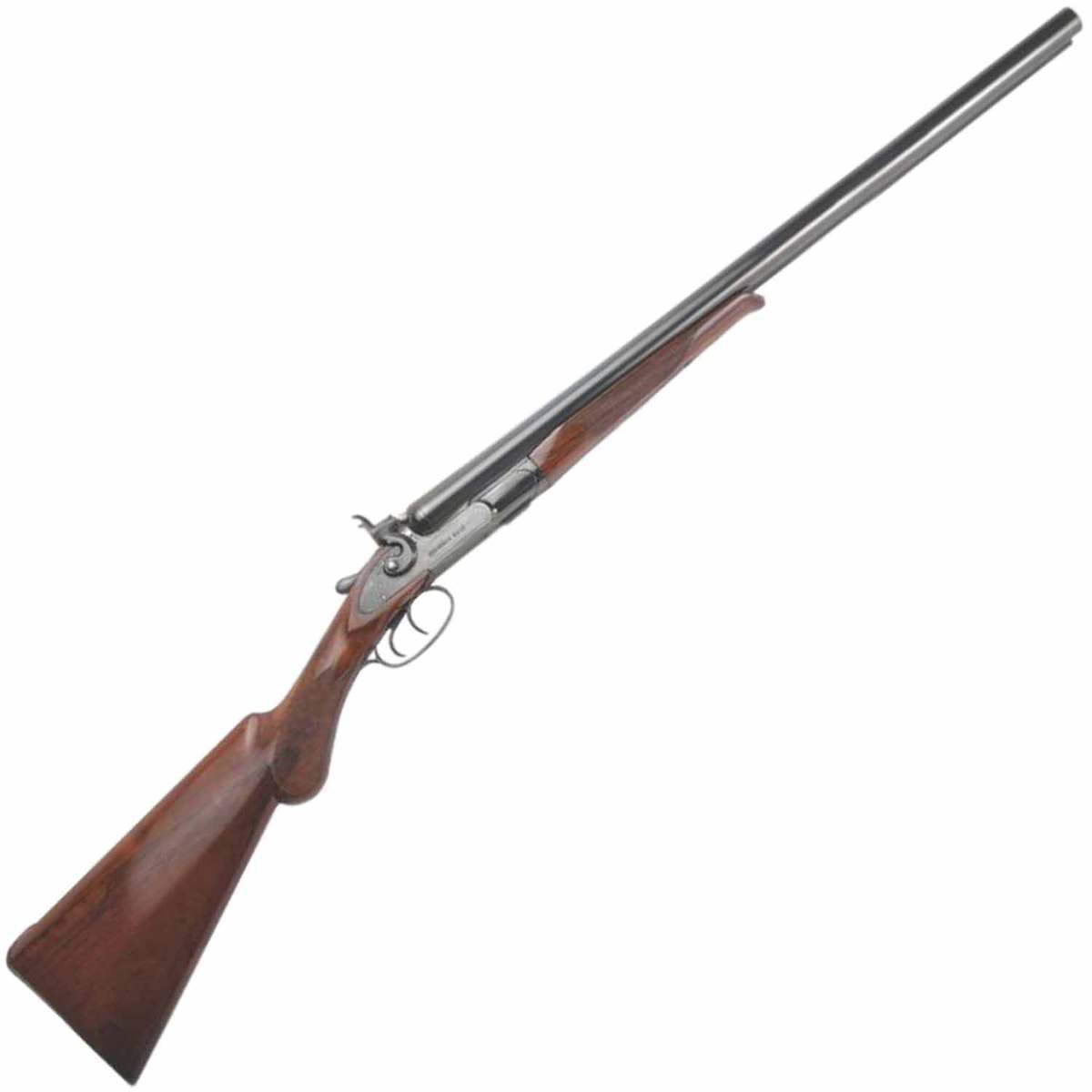
The coach gun is an extremely simple double barrel shotgun; a wooden stock with a rifle grip, a trigger for each barrel, a hammer for each barrel, and simple bead sights on the middle ridge to be lined up towards the target. A lever on the tang can be pivoted to the side to unlock the barrels, which eject spent shells when opened so the weapon can be reloaded. The ubiquity of these weapons mean they can be found with all sorts of forms of embellishment and quality, and their simple operation makes them accessible to almost any user.
Short: This weapon attacks with disadvantage when fired at a target 10ft. away or closer.
(Compact: This weapon does not suffer close range disadvantage when fired by someone who's proficient with firearms.)
Extra barrel: You may fire every loaded barrel on this weapon simultaneously, applying all damage as if it were a single attack. Unless you are skilled with firearms you impose disadvantage on the attack roll.

Riot Shotgun (+ bayonet)
| Damage | ROF | Shot Penalty | Capacity | Range | Weight | Ammo |
|---|---|---|---|---|---|---|
| 3d4 + MOD | 1 | - | 6 | 1d4/15ft | 10lbs | 12 Gauge Shotshell |
two handed, short, skilled, single load: tube fed, (bayonet)
Riot shotguns are short, tube fed pump action shotguns designed for police to "pacify" riots, similar in length to short rifles but much heavier and fatter. Their shaping is round but brutal, with dull blueing on the metal and plainly finished wood furniture. Ejecting out the side or top and feeding the tube from a latch in the bottom of the receiver, they're relatively simple weapons but brutally effective in their designated role. Some come with fixtures to mount bayonets at the end of their barrel, with a handguard over the barrel to make it easier to grab and poke with.
Short: This weapon attacks with disadvantage when fired at a target 10ft. away or closer.
(Bayonet: 1d8 + DEX | 5ft | Martial weapon)
Once per turn, this weapon may replace an attack with a single melee attack with the characteristics described above. Skilled players who are proficient with martial weapons may make their normal number of attacks with the bayonet. The number of bayonet attacks you can make per attack action is unaffected by the ROF stat.

Velma "Violetta" Shotgun (+ sawed off)
| Damage | ROF | Shot Penalty | Capacity | Range | Weight | Ammo |
|---|---|---|---|---|---|---|
| 3d4 + MOD | 1 | - | 4 | 1d4/20ft (2d4/15ft) | 8lbs (7lbs) | 12 Gauge Shotshell |
two handed, short, skilled, single load: tube fed, (compact)
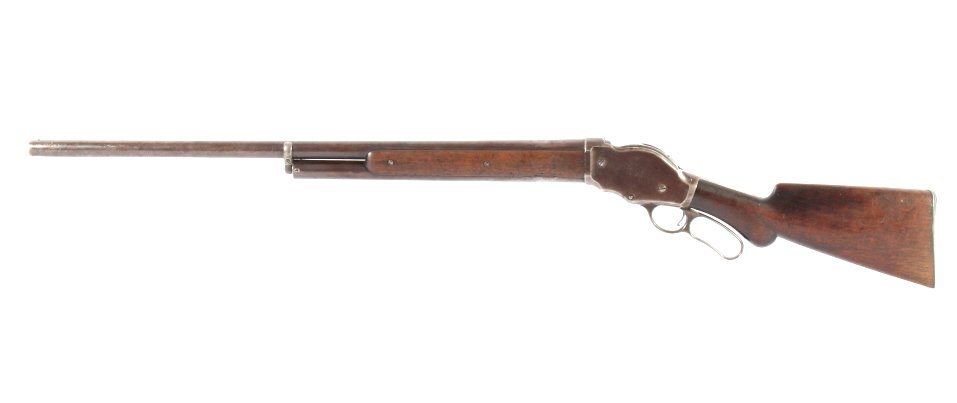
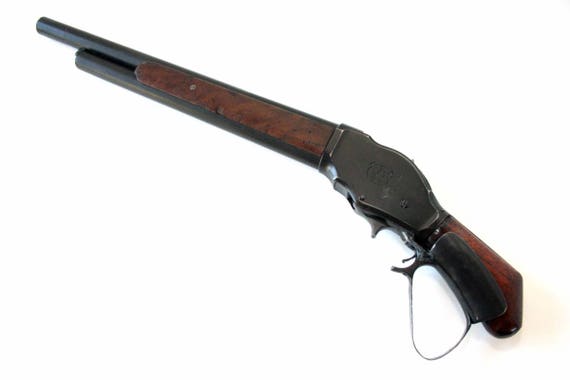
The Violetta shotgun is a lever action shotgun featuring a heavily modified locking and feed system taken from their titular Marlene carbine. The rounded, sleek lines and shaping of the Violetta in addition to its boxy foregrip give it a distinct look, although its stock is a simple rifle stock with a semi-pistol grip. The metal is a deep, rich blue and the wood has a warm brown with a stately matte finish. The receiver is much larger to be able to feed shotgun shells, but geometry of shotshells forced overall shape and loading procedure to be changed; the receiver has a rather odd oblong shape, and magazine access is available when the action is fully opened, where shells can be pushed into the magazine tube. It features simple bead sights like most other shotguns, which are lined up when aiming the weapon.
Short: This weapon attacks with disadvantage when fired at a target 10ft. away or closer.
(Compact: This weapon does not suffer close range disadvantage when fired by someone who's proficient with firearms.)