Variant rule for Persuasion
Remove Deception and Intimidation from the skill list. When rolling Persuasion, choose which attribute modifier to use depending on the form of your persuasion:
| Attribute | Examples |
|---|---|
| STR | Strong persuasion is any conversation that is augmented by brute force. Examples include: • pinning a guard against a wall to scare them; • throwing a child into the air to delight them; • flexing your muscles in front of the king to display your competence. |
| DEX | Dexterous persuasion is any conversation that is augmented by delicate movement. Examples include: • slowly trailing your finger across a noble’s cheek to fluster them; • expertly juggling daggers during an interrogation; • dipping a partner during a dance to impress them. |
| INT | Intelligent persuasion is when you rely on your knowledge or reasoning. Examples include: • debating a case in front of a jury; • explaining to a wizard the implications of their dangerous spell; • convincing a friend that they should see a doctor. |
| WIS | Wise persuasion is when you rely on your instinct or intuition. Examples include: • hinting to a smuggler that there are too many prying ears at your current location; • reminding a paladin of the tenets of their oath; • assuring a confused goblin that tomatoes are truly not poisonous. |
| CHA | Charismatic persuasion is where you give an emotional performance. Examples include: • pretending to be a clueless drunkard; • performing a sob story to the emotional nurse; • bargaining for a better deal. |
Not all forms of communication are equal for every encounter. Your DM might set a higher DC if you decide to use a STR Persuasion on a muscular guard, or a lower DC if you use an INT Persuasion on an impressionable assistant.
Reasoning for this variant rule: Conversations should not be hoarded by any one player, mechanically and narratively. The stoic, old shop keeper is likely not impressed by the charades of your outgoing charismatic bard, but may respond positively to a reserved, wise cleric. The rule for switching around attributes with skills is already listed in the PHB [most common example being Strength (Intimidation)], but tangible examples haven’t really been explored. If you find this makes Persuasion too good, split it into 5 skills, one for each attribute.
Design By: FrenchTech16
As always, feedback is appreciated!
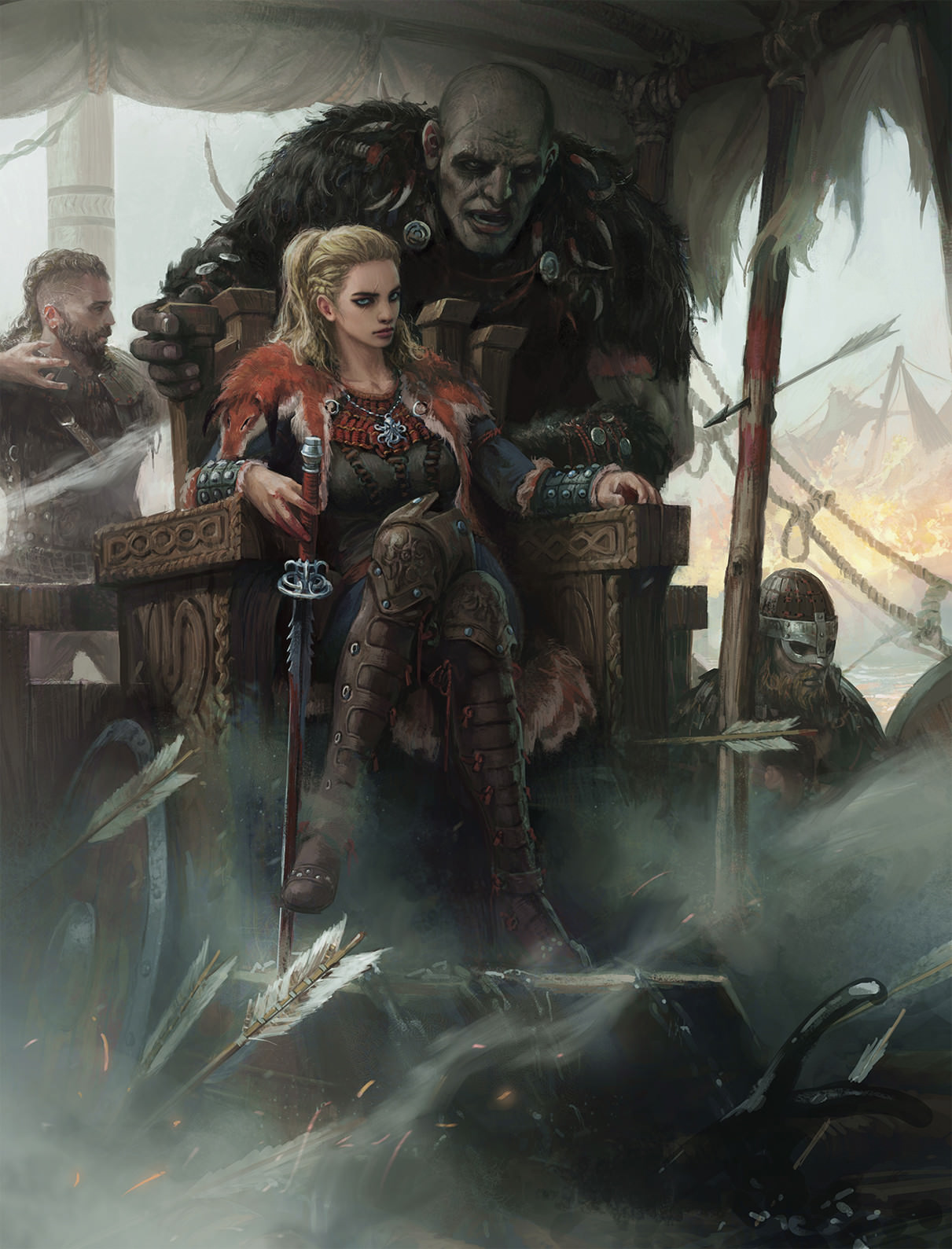
Credit for artwork: "Earl," Dongjin Lee.