Firearms
A number of subclasses listed in this document gain proficiency in various firearms. Below are the general rules for firearms as a reference.
Firearm Properties
Firearms are a new and volatile technology, and as such bring their own unique set of weapon properties. Some properties are followed by a number, and this number signifies an element of that property (outlined below). These properties replace the optional ones presented in the Dungeon Master’s Guide. Firearms are ranged weapons.
Reload. The weapon can be fired a number of times equal to its Reload score before you must spend 1 attack or 1 action to reload. You must have one free hand to reload a firearm.
Misfire. Whenever you make an attack roll with a firearm, and the dice roll is equal to or lower than the weapon’s Misfire score, the weapon misfires. The attack misses, and the weapon cannot be used again until you spend an action to try and repair it. To repair your firearm, you must make a successful Tinker’s Tools check (DC equal to 8 + misfire score). If your check fails, the weapon is broken and must be mended out of combat at a quarter of the cost of the firearm. Creatures who use a firearm without being proficient increase the weapon’s misfire score by 1.
Explosive. Upon a hit, everything within 5 ft of the target must make a Dexterity saving throw (DC equal to 8 + your proficiency bonus + your Dexterity modifier) or
suffer 1d8 fire damage. If the weapon misses, the ammunition fails to detonate, or bounces away harmlessly before doing so.
Fan the hammer. As an action, you may make a number of attacks up to the number of rounds left in firearm. You must declare the number of attacks and which creature each attack is directed at before taking this action, and each target must be in the weapon's normal range. You must have a free hand in order to take this action. Each attack is made with disadvantage and the weapon's damage is lowered by one die step (for instance 1d8 to 1d6 damage) and does not add your ability score modifier to the damage you deal.
Both Barrels. When Making an attack with a weapon with this property, you may spend two rounds of ammunition instead of one. When you do, use the damage value in parantheses that appears with the property.
Powerful draw. When Making an attack with a powerful draw weapon, you use your choice of your Strength or Dexterity modifier for the Attack and Damage Rolls. You must use the same modifier for both rolls. If you use Strength, you may use the damage value in parentheses that appears with the property.
Ammunition
All firearms require ammunition to make an attack and is often expensive. However, if materials are gathered, you can craft ammunition yourself using your Tinker’s Tools at half the cost. Each firearm uses its own unique ammunition and is generally sold or crafted in batches listed below next to the price.
Simple Firearms
| Name | Cost | Ammo | Damage | Weight | Range | Properties |
|---|---|---|---|---|---|---|
| Palm Pistol | 50g | 2g (20) | 1d8 piercing | 1 lb. | (40/160) | Light, reload 1, misfire 1 |
| Pistol | 150g | 4g (20) | 1d10 piercing | 3 lb. | (60/240) | Reload 4, misfire 1 |
| Musket | 300g | 5g (20) | 1d12 piercing | 10 lb. | (120/480) | Two-handed, reload 1, misfire 2 |
| Pepperbox | 250g | 4g (20) | 1d10 piercing | 5 lb. | (80/320) | Reload 6, misfire 2 |
| Blunderbuss | 300g | 5g (5) | 2d8 piercing | 10 lb. | (15/60) | Two-handed, Reload 1, misfire 2 |
Martial Firearms
| Name | Cost | Ammo | Damage | Weight | Range | Properties |
|---|---|---|---|---|---|---|
| Single Action Revolver | 300g | 4g (20) | 1d8 piercing | 3 lb. | (80/320) | Light, reload 6, misfire 1, fan the hammer |
| Double Action Revolver | 300g | 4g (20) | 1d10 piercing | 3 lb. | (80/320) | Light, reload 6, misfire 1 |
| Lever Action Rifle | 400g | 5g (20) | 1d10 piercing | 8 lb. | (150/600) | Two-handed, reload 10, misfire 1 |
| Coach Gun | 350g | 5g (5) | 2d6 piercing | 8 lb. | (20/80) | Two-handed, reload 2, misfire 1, both barrels (4d6) |
| Lever Action Shotgun | 400g | 5g (5) | 1d12 piercing | 9 lb. | (20/80) | Two-handed, reload 6, misfire 1 |
Special Firearms
| Name | Cost | Ammo | Damage | Weight | Range | Properties |
|---|---|---|---|---|---|---|
| Bad News | Crafted | 10g (5) | 2d12 piercing | 25 lb. | (200/800) | Two-handed, reload 1, misfire 3 |
| Hand Mortar | Crafted | 10g (5) | 2d8 fire | 10 lb. | (30/60) | Reload 1, misfire 3, explosive |
Martial Ranged Weapons
| Name | Cost | Damage | Weight | Range | Properties |
|---|---|---|---|---|---|
| Composite Bow | 75 gp | 1d8 piercing | 4 lb. | (150/600) | Ammunition, heavy, two-handed, powerful draw (1d10) |
Artificer Specialties
i'll... come back to this.
Barbarian Paths
Path of the Skinwalker
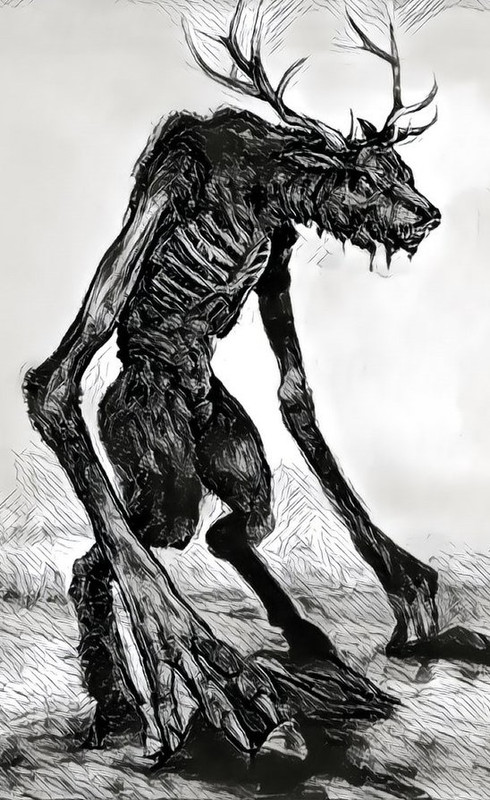
Barbarians who follow this path often have close ties to druids and the natural world. Able to harness some of the same magics that druids use, they are able to change their form, adapting it to whatever situation is currently at hand.
Druidic Proficiencies
At 3rd level, you learn druidic, the secret language of druids. You can speak the language and use it to leave hidden messages. You and others who know this language automatically spot such a message. Others spot the message's presence with a successful DC 15 wisdom (Perception) check but can't decipher it without magic.
Additionally, you learn the cantrips Druidcraft and Primal Savagery. Constitution is your spellcasting ability for these spells. You may cast these spells even while raging.
Skinwalker Shapechanging
Starting at 3rd level, you can use your action to magically assume the shape of a beast that you have seen before, You can use this feature a number of times equal to your Constitution modifier. You regain expended uses when you finish a long rest. Your barbarian level determines the beasts you can transform into, as shown in the Beast Shapes table. At 3rd level, for example, you can transform into any beast that has a challenge rating of 1/4 or lower that doesn't have a flying or swimming speed.
| Level | Max. CR | Limitations | Example |
|---|---|---|---|
| 3rd | 1/4 | No flying or swimming speed | Wolf |
| 6th | 1/2 | No flying speed | Crocodile |
| 10th | 1 | - | Giant Eagle |
| 14th | 2 | - | Polar Bear |
You can stay in a beast shape for a number of hours equal to one third of your barbarian level (rounded up). You then revert to your normal form unless you expend another use of this feature. You can revert to your normal form earlier by using a bonus action on your turn. You automatically revert if you fall unconscious, drop to 0 hit points, or die. While transformed you follow all rules that would apply to a druid's wild shape with the following exceptions:
- You always have access to all of your barbarian class features and as well as any abilities, senses, or features granted to you by your race, even if your beast form would not normally be able to use them (such as casting spells.)
- You may speak while in your beast shape.
- You are considered proficient in any attacks granted to you by your beast shape and may use your proficiency modifier in place of the beast's if yours is higher.
- When you use your bonus action to rage, you may also enter your beast shape as part of the same action.
- You may choose to instead assume a humanoid-beast hybrid form. While in this form, your equipment, other than any armor you are wearing, does not meld into your beast form. You count as both a beast and humanoid while in this form, but otherwise use the statistics of your beast form.

Improved Shapechanging
Also at 6th level, while in your beast form you gain a number of additional benefits:
- If your beast form lacks the multiattack action, you may make two attacks instead of one when you take the attack action.
- You may retain your Strength, Dexterity, and Constitution scores if any are higher than that of of those of the beast's shape. This may change statistics of the animal such as AC when calculated using features such as unarmored defense and bonuses to attack and damage, but not the beast's hit points total.
- Attacks made with natural weapons while in your beast form count as magical for the purpose of overcoming Resistance and immunity to nonmagical attacks and damage.
Skinwalker Magic
At 6th level, you have gained the ability to cast a greater array of shapeshifting magic. You learn three transmutation spells of 2nd level or lower, chosen from the druid or wizard spell lists. The spells must have a range of self or touch, require a creature to target, and may only be cast targeting yourself. You may also choose the spell enlarge/reduce but may still only cast it targeting yourself.
You gain a number of shapeshift points equal to your barbarian level. Each time you cast a spell, you pay an amount of points equal to the level of spell you cast. You regain all spent shapeshift points at the end of a long rest. When you cast these spells in this way, you require no components and Constitution is your spellcasting ability for spells granted to you from this class. You may cast and concentrate on these spells even while raging.

Greater Skinwalker Magic
At 10th level, you learn an additional two transmutation spells of 2nd level or lower from the druid or wizard spell lists. These must follow all of the same restrictions as in the Skinwalker Magic feature.
Master Skinwalker
At 14th level, when you cast a spell granted to you by this class, you may target creatures other than yourself and spells cast using shapeshift points no longer require concentration.
Bard Colleges
College of Grifting
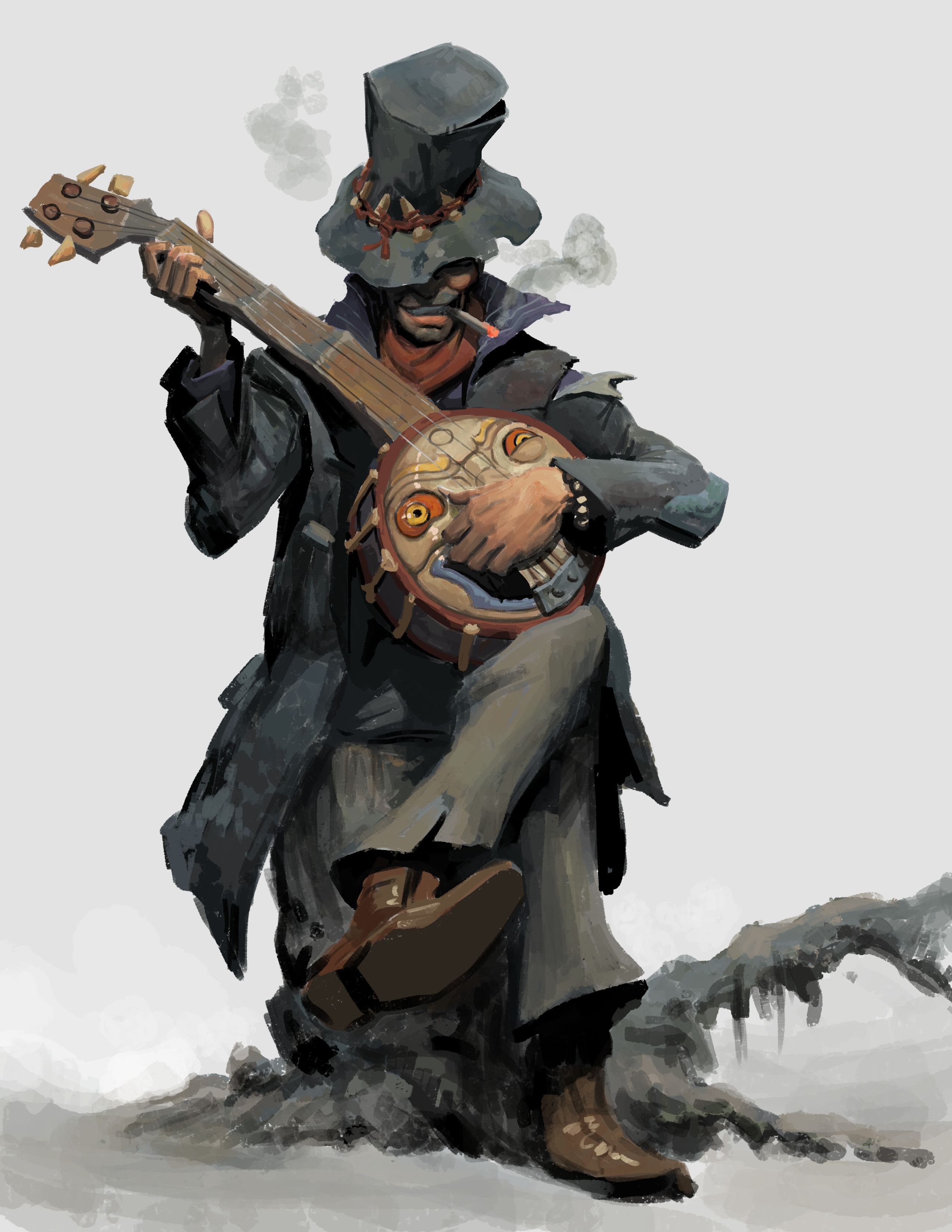
You've always had a thing for being a conman. But conning a bunch of backwater yokels out of their coin gets old. Swindling dark powers outside your reality? Now that's where the real game is. Grifters get their power similar to how a warlock does. They convince these dark forces to give them power in exchange for partaking in a vice. Surely such an easy deal is worth it, right?
While grifters imagine they're the ones running the con on their demons... who's really the one with the sweet deal? Did you just have to partake in your vice in exchange for power? Or does partaking in your personal demons empower the literal one you think you took for a ride?
Bonus Proficiencies
At 3rd level, you gain proficiency in simple and martial firearms as well as tinker's tools for the purpose of maintaining and repairing firearms.
Vices
At 3rd level, you must select a vice your character has. This is always your character's worst vice. Drinking, gambling, smoking, and any others that are acceptable at your table (make sure you talk to your DM and group about anything you're unsure of) are all good choices. Your character has learned that indulging in this vice is a fast way to gain power, but doing so comes with consequences. Grifters don't have to overindulge in their vices, or even gain satisfaction from them, but it's the actual act that enables them to tap into their powers. Vices are always addictive and self-destructive to their user in some way.
You must indulge in your vice at least once a day otherwise you do not regain any expended spell slots after you complete a long rest.
Indulgence
Also at 3rd level, you can use your vice to regain spent power faster than those who aren't in on the grift. During a short rest, if you indulge in your vice, you can recover some lost spellpower. Once per day, when you finish a short rest, you can choose expended spell slots to recover. The spell slots can have a combined level that is equal to or less than half your bard leveI (rounded up), and none of the slots can be 6th level or higher. For example, if you're a 4th-leveI bard, you can recover up to two levels worth of spell slots. You can recover either a 2nd-leveI spell slot or two 1st-levei spell slots.
Intoxicated Stupor
At 3rd level, whenever a creature you can see within 60 feet of you attempts to move, as a reaction, you may expend one use of your bardic inspiration die to hamper its movement. Its movement is reduced by an amount equal to the number rolled on the die times five until the end of this turn. An affected creature may use its action to dash and restore its speed to normal.
Binge
At 6th level, you gain the ability to binge on your vice for immediate, destructive potential. As an action, you may begin to overindulge in your vice and must continue to do so for the next minute if you are able. This may be drinking half a bottle of whiskey, chain smoking a pack of cigarettes, or another action that would be appropriate given your vice. When you do so, you may immediately cast a spell at the highest level you are capable of casting (maximum of 5th level) without expending a spell slot. The spell may be chosen from either the bard or wizard spell list and you do not need to know the spell or have the spell prepared. After casting the spell in this way, you are poisoned for the next hour, but cannot be cured of this condition until you are finished overindulging in your vice. You may still be poisoned by this action even if you would normally be immune to the poisoned condition, as the effects are turned towards your mental state by your actions, rather than your body.
You may cast a spell in this way once and regain the ability to do so after a long rest.


Gift of Famine
At 14th level, the powers you think you swindled that have been feeding off of your vice have finally come home to roost. Whatever it is you've been feeding this entire time has come back and given you new power. But you're still feeding it, and it's out there... somewhere.
As an action, you may target a creature within 60 feet of you that you can see. The creature must make a Constitution saving throw, and does so with disadvantage if you know what the creature's vice is (if it has one). On a successful save, nothing happens and the creature is immune to this effect for 24 hours. On a failed save, the creature becomes withered and weak. It suffers disadvantage on all attack rolls, ability checks, and saving throws, other than Constitution saving throws. Finally, if the target tries to cast a spell, it must first succeed on a Constitution saving throw, or the casting fails and the spell is wasted.
A target suffering from this condition may use an action to attempt to repeat the save if it is able to indulge in its vice. Otherwise, it may repeat the save at the end of each of its turns at disadvantage, ending the effect on a success.
You may use this action once, and regain the ability to do so after a long rest or if a creature succeeds on its initial save against the effect.
Divine Domains
Dust Domain
All life and all things eventually return to the world as dust as the sands of time erode everything that ever was and ever will be. Clerics of the dust domain believe in the cycle of creation and slow erosion and know that nothing is permanent. They take pleasures in the now, knowing that what they have is fleeting, and find beauty in the slow decay of everything around them.
Dust Domain Spells
| Cleric Level | Spells |
|---|---|
| 1st | Earth Tremor, Hail of Thorns |
| 3rd | Dust Devil, Maximilian’s Earthen Grasp |
| 5th | Erupting Earth, Wall of Sand |
| 7th | Hallucinatory Terrain, Stoneskin |
| 9th | Maelstrom (Water is replaced by sand), Wall of Stone |
Bonus Proficiency
When you choose this domain at 1st level, you gain proficiency in simple and martial firearms, martial weapons, as well as tinker's tools for the purpose of maintaining and repairing firearms.
Stone Bullets
Also at 1st level you learn the Magic Stone cantrip. It counts as a cleric spell for you and doesn't count against your cantrips known. When you cast this spell, you may choose to instead create ammunition for a ranged weapon you are proficient with. You may also convert ammunition currently loaded into a weapon instead of pebbles when cast this way. When you cast the spell in this way, only you may make use of the ammunition you create or modify. When fired from a weapon, use the weapon's range and damage values instead of the normal damage for Magic Stone, but you may still use your Wisdom modifier for attack and damage rolls. Ammunition fired this way deals bludgeoning damage instead of its normal damage type.
Accelerated Erosion
Also at 1st level, whenever you deal damage to a structure or object with a spell, you always deal maximum damage.
Channel Divinity: Heavy Bludgeoning
Starting at 2nd level, you can use your Channel Divinity to tear down and reduce objects and beings to dust.
When you roll bludgeoning damage, you can use your Channel Divinity to deal maximum damage instead of rolling.
Divine Ammunition
At 6th level, whenever you take the attack action to make an attack with a ranged weapon using ammunition created via Magic Stone you may make a second attack using the same weapon as part of the same action, provided you still have ammunition created via Magic Stone.
Additionally, whenever you cast Magic Stone you may create up to 4 pieces of ammunition instead of 3.
Divine Strike
At 8th level, you gain the ability to infuse your weapon strikes with divine energy. Once on each of your turns when you hit a creature with a weapon attack, you can cause the attack to deal an extra 1d8 radiant damage to the target. When you reach 14th level, the extra damage increases to 2d8.
Veil of Sand
At 17th level, as an action, you can coat yourself in a barrier of dust that hides you from you foes. For the next minute, or until you lose concentration as if concentrating on a spell, you are heavily obscured to other creatures except those of your choice.
You may do this once and regain the ability to do so after a long rest.
Ranger Conclaves
Castigator
Castigators are divine agents sent forward in the wilderness to purge the unclean and the heretical from the untamed wilds. These rangers are often in the service of gods and are compatriots to clerics and paladins, bringing forward their own divine fury on the foul creatures that would corrupt the world.
Bonus Proficiencies
You gain proficiency with firearms as well as tinker's tools for the purpose of maintaining and repairing firearms.
Castigator Magic
Starting at 3rd level, you learn an additional spell when you reach certain levels in this class, as shown in the Castigator Spells table. The spell counts as a ranger spell for you, but it doesn’t count against the number of ranger spells you know.
| Ranger Level | Spells |
|---|---|
| 3 | Wrathful Smite |
| 5 | Branding Smite |
| 9 | Blinding Smite |
| 13 | Staggering smite |
| 17 | Banishing Smite |
Divine Knowledge
At 3rd level, you gain proficiency in the religion skill and your proficiency bonus is doubled when making Intelligence (religion) checks. Additionally, when your Spellcasting feature lets you learn a ranger spell of 1st level or higher, you can choose the new spell from the cleric spell list or the ranger spell list. You must otherwise obey all the restrictions for selecting the spell, and it becomes a ranger spell for you.
Sanctifier
At 3rd level, you gain the ability to use and create holy water with greater efficiency. You learn a special ritual that you can use to create holy water. The ritual takes 1 hour to perform, uses 10 gp worth of powdered silver, and requires you to expend a 1st-level or higher spell slot.
Holy water counts as a ranged weapon that you are proficient with. As a bonus action, you may coat a weapon or 25 pieces of ammunition using the holy water from a flask. For the next minute, attacks with these weapons or arrows inflict an additional 1d6 radiant damage to fiends and undead creatures.
Purify the Outsider
At 3rd level, you grant additional benefits to your holy water flasks. Choose one of the following, you choose another from the list when you reach levels 7, 11, and 15:
- Cold Iron Additives: Your holy water deals damage to fey creatures
- Elemental Destabilizer: Your holy water deals damage to elementals
- Potent Curatives: Creatures may consume your holy water as a bonus action or administer to others as an action, restoring 1d4+1 hit points.
- Psychoactive Toxin: Your holy water deals damage to aberrations
- Underworld Reagents: Your holy water deals damage to celestials
Purity of Mind
At 7th level, your body and soul have become resistant to the most foul effects of the unclean. You have advantage on saving throws against being charmed and frightened.
Divine Penance
At 11th level, the impure shall never escape your wrath. Whenever a creature that would take additional damage from your Sanctifier feature moves out of your reach (even if it took the disengage action) you may make one weapon attack as a reaction.
Additionally, your Sanctifier feature deals an additional 1d6 radiant damage.
Shield Against the Wicked
At 15th level you are a beacon of light against the darkness of the scourge. Whenever a creature that would take additional damage from your Sanctifier feature attacks you, you may use your reaction to gain a +5 bonus to your AC until the start of your next turn. You may do this a number of times equal to your wisdom modifier and regain all expended uses after a long rest.


Warlock Patrons
The Black Train
Your patron is one of the many powerful shepherds of the dead to the afterlife, a being whose responsibility it is to guide the recently deceased after they leave their mortal coil. These beings are typically concerned with the natural order, seeking a hand in the living world to bring souls that have lived past their expiration date to the afterlife. Such being include: the grim reaper, Charon, powerful valkyries, Xolotl, and Anubis.
Expanded Spell List
The Black Train lets you choose from an expanded list of spells when you learn a warlock spell. The following spells are added to the warlock spell list for you.
Black Train Expanded Spells
| Spell Level | Spells |
|---|---|
| 1st | Ceremony, Sanctuary |
| 2nd | Find Steed, Silence |
| 3rd | Phantom Steed, Speak With Dead |
| 4th | Death Ward, Find Greater Steed |
| 5th | Commune, Dispel Evil and Good |
Ticket to Ride
At 1st level, you've gained access to the many black trains that transport souls to the afterlife. You learn a ritual that can be completed over the course of an hour. You must conduct this ritual at a location frequently traveled by vehicles, such as trains, carriages, or other methods of transport. After you conduct this ritual, a vehicle of an appropriate type appears to offer you and creatures of your choice transport. The vehicle is visible only to you and creatures of your choice and is driven by a conductor, a being whose responsibility it is to usher souls to the afterlife. The conductor can transport you on their vehicle to another destination of your choice that is similarly well traveled (for instance, they won't be able to take you to remote locations or locations not normally open to the public.) They can take you to other planes and locations you wouldn't normally be able to travel to, but free transport is not guaranteed.
For particularly long or difficult journeys, the conductor will frequently request payment. The forms of payment a conductor may ask for are not typically simple coin. Diamonds, rare materials, requests, and other, more personal or precious forms of payment such as memories or agreeing to swap places with the conductor for a time, may be requested.
The inside of the vehicle is an extradimensional space that is much larger than the outside would appear. The more powerful the conductor is, the larger the vehicle they typically arrive in. It is always comfortable and carries souls to the afterlife.

Black Train Proficiencies
Also at 1st level, you gain proficiency with simple firearms as well as tinker's tools for the purpose of maintaining and repairing firearms.
Improved Locomotion
At 1st level, you learn the spells longstrider and jump. These count as warlock spells for you, but don't count against the number of spells you can know. You may cast these spells without expending spell slots a combined total of times equal to your Charisma modifier, and regain the ability to do so after a long rest.
Hitchhiker
At 6th level, you are able to temporarily carry the spirits of the dead within you. As a bonus action, you become temporarily possessed for the next minute. While possessed, you are immune to the charmed and frightened conditions and gain proficiency in one skill of your choice for the duration.
Ride to Hell and Back
At 10th level, the black trains will do their best to keep you alive, transporting you out of harms way. Whenever you are reduced to 0 hit points, as a reaction, you may step into the black trains. You disappear and cannot be targeted, are immune to all damage, and cannot take any actions until the end of your next turn, after which you reappear in an empty space within 60 feet from where you disappeared from of your choice. When you reappear in this way, you regain hit points equal to twice your warlock level. You may do this once, and regain the ability to do so after a long rest.
Greater Locomotion
Also at 10th level, whenever you cast longstrider or jump, you may cast the other spell as part of the same action. Doing so only expends one use of the number of times you could cast these spells.
Soul Passenger
At 14th level, you can strike a deal with the conductors to return the dead to life. While riding a black train, you can bargain with the conductor to return a creature that has died within the last week to life. The first time you attempt to do this, the conductor will always agree in exchange for your service up to this point. Bringing a soul back to life functions the same as if the spell true resurrection were cast.
You may continue to bargain with the conductors to bring additional, recently departed souls back to life, but asking the conductors to break their vows doesn't come cheaply. They may make demands or requests of you in exchange for this service.
The Gambler
Your patron is known only as the gambler, appearing to those in their times of desperation and offering them a chance at something greater. You decided to take a chance and take the Gambler up on a bet. Did you win? Or did you lose? If you won, how? Did you cheat, or do you maybe feel that you were allowed to win. If you lost, what did you lose? It is unknown where the Gambler hails from or what they want. How did your bet further their goal?
Expanded Spell List
The Gambler lets you choose from an expanded list of spells when you learn a warlock spell. The following spells are added to the warlock spell list for you.
Gambler Expanded Spells
| Spell Level | Spells |
|---|---|
| 1st | Bane, Bless |
| 2nd | Blur, Detect Thoughts |
| 3rd | Blink, Clairvoyance |
| 4th | Confusion, Greater Invisibility |
| 5th | Mislead, Seeming |
Gambler Proficiencies
Also at 1st level, you gain proficiency with simple firearms as well as tinker's tools for the purpose of maintaining and repairing firearms. You also gain proficiency with two different gaming sets and your proficiency bonus is doubled when making use of these tools.
Reshuffle
https://cdna.artstation.com/p/assets/images/images/007/178/252/4k/brian-wells-170806.jpg?1504226412
https://images-wixmp-ed30a86b8c4ca887773594c2.wixmp.com/f/c8d9b2a0-ce2b-4bba-aab6-6fac64174dfd/d3bkvf1-757a1cda-640b-4eaf-b99d-15e9490bb981.jpg/v1/fill/w_900,h_605,q_75,strp/faith_and_a__44_by_chrisappel_d3bkvf1-fullview.jpg?token=eyJ0eXAiOiJKV1QiLCJhbGciOiJIUzI1NiJ9.eyJzdWIiOiJ1cm46YXBwOiIsImlzcyI6InVybjphcHA6Iiwib2JqIjpbW3siaGVpZ2h0IjoiPD02MDUiLCJwYXRoIjoiXC9mXC9jOGQ5YjJhMC1jZTJiLTRiYmEtYWFiNi02ZmFjNjQxNzRkZmRcL2QzYmt2ZjEtNzU3YTFjZGEtNjQwYi00ZWFmLWI5OWQtMTVlOTQ5MGJiOTgxLmpwZyIsIndpZHRoIjoiPD05MDAifV1dLCJhdWQiOlsidXJuOnNlcnZpY2U6aW1hZ2Uub3BlcmF0aW9ucyJdfQ.y2c5rUur0mVE58iOcT2qzrINU3dClf-CVfrRGaKdxV8 , https://www.deviantart.com/chrisappel/art/Faith-and-a-44-200848141
https://64.media.tumblr.com/tumblr_ll8njuaTfH1qhttpto1_r1_1280.jpg