hymer
Welcome
This document will teach you core information about smithing and discover how to implement Crafting in your world, as well as decide how much impact it has in your story. You can also use this to construct treasure for your party, giving depth to your world and expanding various aspects. Determining material availability, or even tying certain effects to nations and cultures.
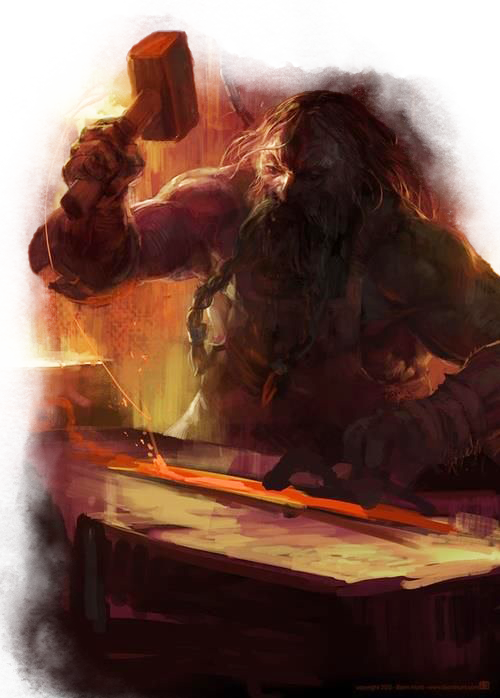
The Medieval Smiths
In medieval times smiths were commonplace, essentially nearly every village had at least one smith who would create various everyday tools, door knobs, nails, horseshoes, household objects, door hinges, gates and sometimes weapons. Few even made jewelry or torture devices. They produced items for common people as well as for clergy, nobles, and knights. Blacksmiths affected the local economy with their work and were often found in village and town councils. In cities and towns most belonged to a Guild through which they learned their craft as an apprentice and ranked up until they were ready.
Blacksmiths living in castles were in charge of producing weapons and armor for their knights and men at arms, and blacksmiths were an important part of the army for making new weapons, maintaining and repairing equipment, and creating new arrowheads.
Some monks in monasteries and abbeys were also blacksmiths.
While blacksmiths were usually not aware of exact chemical processes happening during smithing like in the modern age, they still recognized patterns and processes at a larger scale, and their understanding of metallurgy and smithing grew with time.
Skilled blacksmiths carried a prestige for the high quality items they produced, armorers were usually commissioned by the upper class that could afford armor as armor was measured and made precisely for the person wearing it.
During wartime it was common that all blacksmiths had to fulfill a quota of weapons and shields for their lord, some required armors made to fit a range of people - often that was chainmail. It is smith's direct exposure to war that advances equipment and innovation in an army as advantage in the battle can mean everything, so it is no wonder Lords value their blacksmiths.
Real Smithing
This supplement will summarize every step of the process, but depending on your player's investment you might want to look a bit deeper into real smithing. Videos will help a lot!
Expanding your World
This supplement lists out materials that can be renamed, modified, or expanded to fit your world. Depending on your world's technology level you can adjust their rarity, or even make crafting easier in some ways.
There are many other metals and their variations that are used in construction, jewelry, and elsewhere, but this supplement focuses only on equipment usage.
Guilds
Crafting Guilds and similar organizations are an important part of craftsmen life. Many joined one when young and became apprentices to a Master who was unlikely to be lenient as they were the ones taking financial risk. The guilds don't have to be strictly focused on smithing, or crafting alone. It wasn't surprising that guilds were formed for merchants, musicians, craftsmen, and people from other professions. On other extreme in some places there were guilds as narrow as solely for nailmakers, knifemakers, horseshoe makers, and many other niches. If not within guild, smithing was passed down within family.
The Master himself would have been raised through the Guild ranks in such manner, which was designed to forge quality blacksmiths as well as to regulate the number of workers to reduce competition and preserve the prestige of the business.
It is interesting to note the basic parallels between smiths at this stage and the same process of advancement for young knights seeking recognition. The industry itself, like many others, assumed legitimacy by creating a guild that was administered by the Masters which served the purpose of regulating the number of smith apprentices permitted and the materials allowed.
Ancient versus new?
One of main tropes of D&D is fallen advanced civilizations and recovering their powerful and technologically advanced relics. The trope is usually opposite of reality where technological advancement comes with age. With few exceptions. It is important to keep this in mind to decide if you are rediscovering old ways or discovering new ways. Being aware of this will help you distribute treasure, materials, schematics, theories, and such.
A fall of an Empire, the rough passage of time, or an apocalyptic event can cause knowledge to be lost, artifacts to be buried within the forgotten ruins, and experts to pass away.
Smithing
Crafting in pratice
Crafting Example
The Preparation Stage
Here we determine what the player character wants, what is available in the world, and any bonuses.
- Krodin is a level 6 fighter and wants to make a good Breastplate for himself with focus on Defense. He still has 1 Passion he did not spend.
- The party goes through the marketplace and private merchants to look for materials. The DM calls for a Persuasion or Investigation check to look for resources for sale.
- Materials vary and can be expensive, so from presented options Krodin picks Steel.
- Since he has family in the city and his brother is a smith, he will use the Workshop while the brother is away.
- For Breastplate he needs 6 Units of Steel, so he purchases them for a total of 300g, a standard price since there is no scarcity or abundance of it.
- The smithing will take ten days, and DC is +2 due to Breastplate being top tier of medium armor.
- Krodin is proficient with Smith's Tools, due to his level his proficiency bonus is +3. The proficiency bonus means his Smith level is 3.
- Base crafting DC is 14. He wants one effect which adds +3. Breastplate is +2. This sets DC to 19, which is not that easy.
- With his Constitution modifier of +4, he has a total of +7 bonus to the roll.
The Crafting Stage
We begin the crafting process, and days start to go by hammering away. The DM describes the process beautifully throughout and calls for a check halfway through.
- With everything ready, Krodin begins to craft the item and rolls d20+7 against DC19.
- On a success, Krodin makes the item! The DM can look over the Defense Effects and roll a d8 (ignoring non-applicable effects), or while describing the process can ask Krodin in which direction does he want to take the item, offering several suggestions. With one picked, the item is finished!
- On a failure Krodin could spend his singular Passion to beat the DC if he rolled close enough, reroll, or go into Event Stage.
- On a critical success (higher by 5) or by spending Passion to push it into a critical success, he goes into Event Stage for an opportunity to gain another Effect.
The Event Stage
This serves as a safety net or an opportunity, as well as making the process more fun and engaging. The core DCs and Smith levels balance the resulting item, the Event Stage helps the story be memorable.
- As you describe the smithing process you can ask Krodin how he approaches certain processes to get an idea which Event category will happen. Or have him roll a d6.
- From the event options within the category, the DM picks the one that seems most appropriate for the environment and the character.
- Give the extended prompt to the player character and let them think of solutions. You can see solution samples and event ideas listed out.
- Once they figure out the possible solution they have to beat the same crafting DC again. Let them roll with Smith's tools (any appropriate stat), or with whatever check is appropriate for their solution.
- On a success they either successfully complete their item, or if this was an opportunity they gain another Effect!
- If it is another Effect, you can think of what would be appropriate result given their applied solution, bring out a material Effect, or roll the category and pick one within.
- On a failure, the item does not gain the desired effect(s).
The Preparation
1. Pick the base equipment as template
The Effects will be placed upon this item, or if there are no effects this is what you will create.
2. What materials are you using and how many do you require?
Check which materials you have, and which ones can you obtain. Ensure that you have enough of it, and optionally grab extra in case you have to redo.
3. Pick the Effect Type Category.
Decide Effect Types you want on the item, and how many. This determines the DC. Alternatively pick which magic item you want to make.
4. Determine Workshop and crafting duration
Having access to an appropriate workshop is important, so make sure everything is ready. And finally check the crafting duration.
1. Base Templates
Units of material needed, crafting time, and any DC modifier.
Armor
| Armor | Units | Time | DC |
|---|---|---|---|
| Light armors, Shield | 2 | 3 days | |
| > Studded leather | 4 | 5 days | +2 |
| Medium Armors | 4 | 7 days | |
| > Breastplate, Half Plate | 6 | 10 days | +2 |
| Heavy Armors | 6 | 15 days | |
| > Plate Armor | 8 | 30 days | +2 |
Weapon
| Weapons | Units | Crafting |
|---|---|---|
| d4 , ammo x10 | 1 | 2 days |
| d6 | 2 | 4 days |
| d8, d10 | 3 | 5 days |
| d12 | 4 | 7 days |
2. Materials
Apart from the materials the characters find as treasure during their adventures, they can look for materials available in a location. Be it a large city, a single village, or a small region.
Availability and pricing
- Mining sources such as mining towns, outposts, and mining companies usually have the lowest prices if there are any sellable materials left, as most shipments and routes are already established. Depending on the location the ore might not even be extracted and refined yet, and would require such process. The price of materials in these areas is one step lower.
- Nearby towns that use the materials, and cities that have large shipments will have the standard listed prices. Closest city that heavily relies on the material will fluctuate between cheap and expensive.
- Cities far away and few towns out of the trade routes might have the materials available at one step higher price due to scarcity or high shipments costs. But often any place that doesn't actually need the special materials will not have it. Someone might actually have it, but require a favor in return instead of coin.
For the rare materials there might be certain individuals who can supply them, such as some important NPCs in your campaign, or they might know where to go about obtaining them. A small adventure of its own like a cross-planar city, buried mines, and even the Underdark.
Usually a single Investigation or Persuasion check will suffice in finding available materials, and you have the option to add complexity and layers.
Salvaging Materials
You can also obtain materials by salvaging them from their natural occurring nodes, from creatures, or by breaking down existing items. The GM can decide how many units of material are on the target by standard, as well as the time required for extraction.
Salvaging DC: 14 + 3 per Material rarity.
A low roll yields 1 unit less as it wastes a portion or grants poor quality materials, while a much higher roll yields 1 unit more.
Mining takes a long time and focuses on mining and following the ore vein, checking for cave-ins and weak stone/earth/sand pockets, gas issues, dealing with burrowing creatures or entombed forgotten ones. Afterwards the heavy ore is transported elsewhere for refining or manufacture. It can be a small adventure on its own, including requesting permission to mine in the location or dealing with the authorities afterwards, and making sure everyone involved is satisfied with their share.
Breaking down items removes all Smithing effects from them, and reduces 1 Enchanting effect.
Special flames
Some rare materials need special fire in order to be softened enough for shaping, often sung about in mythical tales, such as: Dragon's Fire, Fire Elemental, Hellfire, Magical fire.
Alternatively an ember or coal with unique properties will work as well, harvested from different planes, or even creatures. Example is a Salamander's Ember.
Refining ore
In case of heavy unrefined ore that has been mined, it needs to be purified after which the quality needs to be assessed. This takes 1d4 days, or 2d4 if there is high amount of Units. Some ore can be particularly difficult or take a very long time to process, which is noted in the material section.
Creating alloys
Some listed metals are alloys that must be created if they aren't purchased in such a state. A smith often experiments with different ratios or combinations to gain a better understanding of the material.
Creating alloys is Smith's Tools (Wis or Int) check.
Each alloy material shows the DC. On failure you either make a lower quality of that alloy, or lose 25% Units (min 1).
3. Effect Types & Smithing
The smith describes what Effects they want for the item and how many, the GM can let them know the core six categories. If the smith is very specific the effect is likely not going to be exact as described, but similar enough. The amount of Effects they can place is determined by their Crafting Level. As they craft with time they will learn about possible effects. You can have them discover effects slowly and keep crafting mysterious, or give them the full list. You know your group best.
Crafting Level
Your Crafting Level equals your Proficiency Bonus if you are proficient with Blacksmith's Tools. If you have half-proficiency it counts as half (rounded down).
Crafting level determines how many Effects can you place on an item you are crafting.
Crafting Level unlocks:
0: Basic maintenance
1: Simple items and small repairs
2: PHB items
3: Items with 1 effect, common magic items
4: Items with 2 effects, uncommon magic items
5: Items with 3 effects, rare magic items
6: Items with 4 effects, very rare magic items
Effect Categories
Item Quality
These are the general +1, +2, +3 boosts on an item. They cost multiple Effect.
Offense
Increasing the amount of damage the item does, and generally improving the character's offensive capabilities.
Defense
Reducing the amount of damage the character receives, and generally improving their defensive capabilities.
Versatility
Gaining new usage options with the item, ease of use.
Example
A high level smith wants a make a Longsword with Offense 2, Versatility 1.
But they have previously crafted 'Massive' (Offense) so they decide Massive will be one of the two Offense effects.
Passion
Every Smith gets a point of Passion every 5 levels.
The GM can also give Passion when a character really invests themselves into crafting for a long time, a large character development happens that they reflect in the moments of smithing, or even internal conflicts and emotional investments that they bring out during crafting.
You can spend a point of Passion to gain Advantage or +3 on your Crafting roll, or gain Advantage on a roll with an item you have crafted, before or after you have seen the results of the roll.
Optional adjustments
If you use Inspiration, you can merge Passion into it. If you want players to make their own items more often, set them to gain Passion every 4 levels instead.
Optional rule: Manuals
Manuals come in forms of schematics and ancient tomes that guide the crafter through creation of an item or enchantement. In your world they might be incredibly rare, or nearly commonplace.
X Manual: Your Crafting level is considered 1 higher for the purposes of crafting this item, and you gain +3 for crafting it. Manuals can be specific and require a certain Item Base with two specific effects, or can be a loose theory book of a particular Effect that will only grant the dice bonus.
4. Workshop
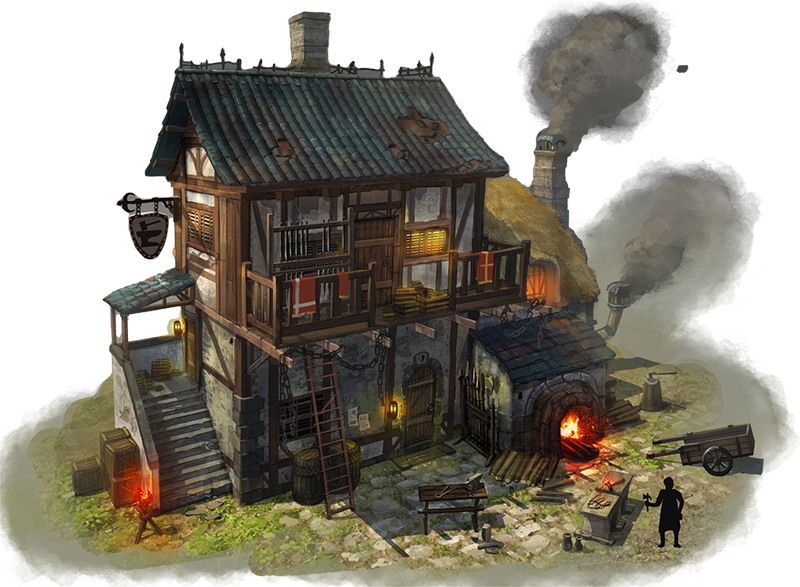
Smith's tools can be used for minor adjustments, repairs, and maintenance of weapons on the road, but for the majority of crafting a fully outfitted workshop is needed.
A character can try to rent one from a friendly guild, a merchant company, or see if there are any smiths who are not actively using it and could rent it out to you.
Eventually the smith might even have a Workshop of their own.
The Workshop Tools
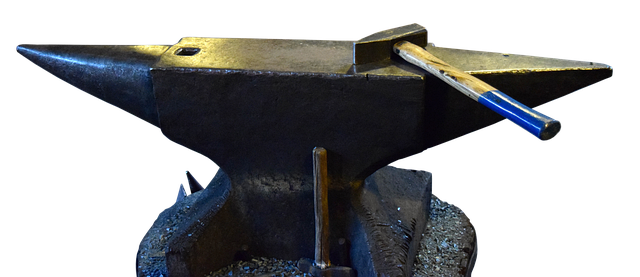
The smith's bread and butter is their furnace, anvil, hammers, tongs, punches. Other common tools are chisels, axes, swages, drifts, sledge hammers, nails, and molds for making popular everyday items.
Assistants
Your fellow party members and friendly NPCs can be your assistants during the crafting process, and so can be one of many craftsmen hirelings you can hire. An Assistant has to be there for at least half of the process to count.
Having 1 assistant: Reduces crafting time by 20%
Having 3+ assistants: Reduces crafting time by 33%
Apprentice Assistant: Equal or 1 lower Crafting Level, gain +1 to roll (applies once).
Master Assistant: Higher Crafting Level than you, gain +2 to roll (applies once).
Spells: Not many spells can be helpful to a Smith for extended periods of time, requiring constant re-casting and often distracting them. Enhance Ability comes to mind as a possible spell the party might use to help out. If someone focuses on casting constantly on the Smith, you can count them as an Apprentice Assistant as long as they help them around the workshop, even if they are not proficient.
Long-term employees
If you are keeping assistants hired for a long time, they can craft items for you and earn you gold. They use their own statistics for crafting rolls, with you granting them bonuses instead:
Head Smith: You grant your assistants a bonus to their crafting roll equal to the difference in your Crafting Level, as long as you spend 10% of the craft time with them during it. Instructing them during the planning or crafting phase. If you are available during the Event phase you can also give them the bonus then.
Apprentice Hireling costs
1gp per day for Crafting level 1, roll modifier +3 to +4.
3gp per day for Crafting level 2, roll modifier +4 to +5.
5gp+ per day for Crafting level 3, roll modifier +6 to +7.
Most master craftsmen go on and establish their own smithy once they are skilled enough to finish their apprenticeship, some go ahead and run their own stores, join guilds to rank up, or begin exclusively working for nobility. Hiring and even meeting them will be more difficult, as they already have the skill and enough business sense to charge far more, so tailor them towards your campaign.
Transfer of items
You can let your assistants send you an item once it is finished, or have them use a service to send it through them. Careful though as you risk losing it, depending on the security and quality of transport. Transport prioritizes the sea, the rivers, and then the land in that order. A single courier can however rapidly move through land if transporting something easily carriable that won't slow down the horses, often using government or faction horses through an established route, switching the horse when it tires in order to cross vast amount of land rapidly.
Crunching
"8 hours is too little, I want to work 10-12h every day!"
Roll Constitution check DC18 to work another 2h. On failure, you gain a level of Exhaustion. On critical failure you gain two instead.
If you have apprentices they roll as well.
Workshop qualities
You could have a Workshop+1 that gives a +1 bonus to roll. Alternatively if they are trying to smith without a workshop, you can grant them Disadvantage or a flat -5. They are still required to create a fire powerful enough to forge, which is at least 750°c / 1400°f.
Metal list
| 1 unit price | Description | |
|---|---|---|
| COMMON | ||
| Copper | 3 | Used as currency, candlesticks, belt buckles, candelabra, fountains, bells, weighing scales. |
| Silver | 30 | Used as currency, in jewelry and tableware items, figurines, decorative house items, and ornaments. |
| Gold | 300 | Currency, used in displays of wealth, power, and fashion. Crowns, altars, reliquaries. It is sought after for enchanting and spellcasting. |
| Iron | 10 | The most commonly found metal. |
| Bronze | 20 | An alloy of copper with several variants, can be found in naturally mixed ore. Brass also fits. |
| Steel | 50 | An alloy of iron that is difficult to make in large quantities. |
| UNCOMMON | ||
| Superior Steel | 400 | Steel of exceptional quality, often made by chance and not design. |
| Glassteel | 400 | Created by wizards, it is glass with properties of steel. Nobility uses it for securing windows. |
| Cynabryl Steel | 400 | Has a vermillion (deep red) cast, which can be shined to a blood red colour. |
| Tungsten | 400 | Its workability decreases with impurity, advanced metallurgy skills are needed to purify it. |
| Obsidian | 400 | A volcanic rock glass, very rarely found far from volcanoes. More often used by tribes. |
| RARE | ||
| Orichalcum | 600 | A rare ore often mistaken for another. Associated with sun worship. |
| Darksteel | 600 | A forgotten alloy of steel, the secret of it is lost with the Dwarven clan that created it. |
| Cold Iron | 600 | Iron that never touches fire, must be mined, refined, and forged without it. |
| Cobalt | 800 | A difficult material to work with, favored by mage hunters for it's absorbing properties. |
| Moonsilver | 800 | Silver blessed by the moon or night deity. Rituals exist to create it, somewhere. |
| Mithril | 800 | A very light material favored by the ancient Elven civilizations. |
| Dragonscale | 800 | Value varies per scale quality which is determined by dragon's age and scale condition. |
| Arandzur | 800 | Natural metal that must be tempered with the blood of an ancient creature. |
| Laen | 800 | XX Smoky steel. |
| Adamantite (Drow Steel) | 800 | Adamantium alloy mostly used by the Drow in the Underdark. Two variants exist. |
| VERY RARE | ||
| Infernal Iron | 1600 | Material similar to Iron found in Nine Hells. |
| Adamantine | 1600 | Adamantium alloy as crafted by the dwarves and kept a most guarded secret. |
| Shadowsteel | 1600 | A difficult alloy to make, found in Shadowfell. |
| Titanium | 2000 | A lustrous white metal, any remains and deposits of it are jealously guarded. |
| Starmetal (Meteorite) | 2000 | Believed to be essence of dead gods, a gift from gods, or a great omen. |
| Scarletite | 2000 | Cursed ore that is extremely difficult to mine or work with. |
| Zardazil | 3000 | XX Only one unit required. |
Adjusting Prices
The GM can change the base prices of listed items to fit in their world.
Smithing
With the materials prepared, workshop setup for the project, all tools in order, it is time to begin the crafting process.
Crafting roll
When you are trying to craft an item, roll to check if you are successful. Using your Smith's Tools (Con).
Crafting DC
On a success you successfully craft the item in the given timeframe.
If you roll 5 above the DC or fail then you go into the Event stage.
Example
A young adventurer is level 8, which means Crafting Level 4 due to proficiency.
If they want to make a Longsword with 2 Offense Effects, the DC is 20 (14 + 3 + 3).
If they wanted to make a Breastplate instead they would add +2 DC due to item template. If they were using Cobalt, they would also gain +2 DC but gain 'Spellcatcher' effect automatically due to material properties.
This represents how hard it is to make powerful items, keeps the balance in check by having a limit, and provides evident character growth over a long period of time.
Attunement
Attunement slot is required for an item that has a total of 3 Effects on it, including automatically gained Effects.
You can increase crafting DC by 2 for each Effect that goes over that limit in order to still not require Attunement.
Note: The DM can adjust the number to fit their campaign balance.
Reshaping Item
A smith can make a check to reshape an item into another base item of the same category as long as it requires same or less units of material, while keeping all of its effects and magical properties. This works great with DM granted magical treasure as it allows the smith to reshape it so someone else can use it.
DC: 14 + item rarity
3 - Uncommon, 6 - Rare, 9 - Very Rare, 12 - Legendary
Splitting it into two items adds a +3 DC.
On success you replace the base item template.
On failure go to Event Stage.
Decorating
You can add 1 unit of decorating material and extend crafting length by half, or 2 units while doubling the crafting length in order todecorating the item can make it more impressive or intimidating. The upper class and certain factions tend to like such items.
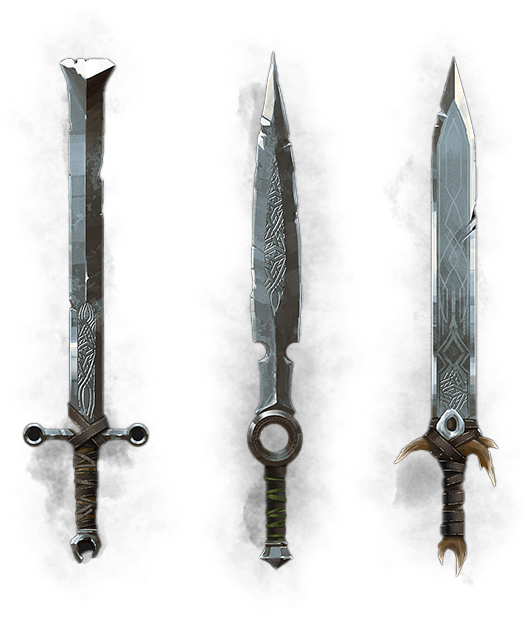
Metal can be folded to show off layers of it, specific chemical acids can be used to create interesting effects and beautiful transitions, engravings can be added, ornamental decorations can be made, and some metal can be poured and baked over another. Certain items can be completely made for an ornamental purpose rather than usability in actual combat, but they still take time to fulfill such complex high profile orders.
Optional: Repairing
This rule helps survival or realistic campaigns. Basic equipment maintenance takes care of most minor issues, but there is a chance a larger flaw occurs when fighting powerful foes. Those need to be carefully repaired with a check. The GM determines when an item is damaged, likely when a fitting dramatic situation calls for it, or when there are three bad critical hits before a short rest. Or to save a weapon that is near a breaking point.
The Repair check equals the item's original crafting dc, the smith gets Advantage if they are the one who made it in the first place.
On a success it is repaired, on failure go into the Event stage. On failure there, the item is completely broken or gets -1 quality.
Describing Real Smithing
Steps for making metal equipment parts:
- Heat metal until it obtains the correct forging color.
- Shape the metal by hammering on the anvil (forging), re-heat, repeat.
- Join two same or similar metals (welding) if necessary.
- Heat treat or quench to get specific hardness.
- Repeat 1-4 for different pieces if making armor.
- Combine the pieces (comfortable wood+leather handle, crossguard, the blade)
- Use grindstone for smoothness and edge.
- Extra decorating and polish.
Shaping metal
The fundamental processes of shaping the metal are:
- Drawing out, to lengthen the metal.
- Upsetting, to shorten the length.
- Bending, to give a turn to the shape.
- Slitting and punching, to make holes.
- Welding, to join two metals together.
Once the furnace is of high enough temperature, the metal is held with prongs within as the smith carefully judges the colors of the metal. Gaining a glowing yellow, red, or even white color as it heats up. Then the smith is ready to start shaping the metal, initially drawing it out and folding it back in. A process to draw out ore impurities and spread them out instead of creating one weakpoint that could crack a blade.
The Heat
Bellows are slowly replacing the old method of the apprentice blowing air into tubes into the base of the fire to enable the furnace to reach a high enough temperature. The heat in a furnance is enough to warm the entire house, and keeping everyone near it sweating. The shaping process is repeated and the heat must be maintained throughout it, with each metal having a different temperature point of becoming soft enough to be forged.
Quenching is rapid cooling of a hot workpiece, usually through submerging in water or oil. Water quenching is more violent due to the much faster cooling rate than oil. While quenching you usually want to move the piece up and down, as the intense heat can make a vapor bubble around it. Quenching is risky as it has a chance the metal will curve a certain way, something that needs to be addressed afterwards.
Differential hardening: A blade will usually be differentially hardened which means the the spine or the blunt side side will be coated with an insulating layer, like clay, while leaving the edge(s) exposed. When quenched the edge cools faster and becomes hard, while the coated side cools slower which keeps it softer. This keeps the spine of the blade more flexible, while hardening the edge.
Tempering is done to achieve greater toughness by decreasing the hardness of the alloy by controlled heating of the quenched work-piece to a temperature below its "lower critical temperature". Low tempering temperatures may only relieve the internal stresses, decreasing brittleness while maintaining a majority of the hardness. Higher tempering temperatures tend to produce a greater reduction in the hardness, sacrificing some yield strength and tensile strength for an increase in elasticity and plasticity.
Grindstone is used to sharpen or adjust the edge. Usually the smith can sit and spin it up with feet, or the apprentice can with their hands, becoming fast enough that they can adjust the edge.
A metal crossguard is also created, after which it is pushed in place beneath the blade, and a finished wooden handle is pushed onto the metal length that goes past the base of the blade, usually nails go through the handle to lock it in place, with holes places on the metal in advance. Leather is wrapped around the handle, with some handles having an opening at the bottom so a metal pommel can be screwed onto and secure the whole blade.
Optional: Rarity pricing
As every campaign distributes wealth differently you are encouraged to adjust the pricing of materials to fit your world. However there is an option to charge for materials based on rarity of the final item rather than the units, with players spending gold as they progress through the crafting process.
| Rarity | Weapon price | Armor price |
|---|---|---|
| Uncommon | 500 to 1,000gp | 1,000 to 2,000gp |
| Rare | 4,000gp to 6,000gp | 8,000gp to 10,000gp |
| Very rare | 20,000gp to 30,000gp | 50,000gp to 80,000gp |
Exceptions:
- Ammo bundles, d4 weapons, and weakest armors in their category should be on the bottom of the price range or even cheaper.
- d12 weapons and strongest armors in their category should be on top of the price range.
Item Effects
Keep smithing a mystery and don't show your players all the mechanical effects. Instead allow them to explain what they are trying to accomplish or get, to explore and enjoy the mystery of smithing and creating powerful items. Let them keep notes, and slowly explain some options as they grow in their mastery and find out information and tricks in character.
Explanation
Bolded text= New Effect option
↑= Spend 1 additional Effect to increase bonus to this.
( ) Base item requirement
Item Quality
- Weapon: +1/+2/+3 costs 2/4/6 effects.
- Armor: +1/+2/+3 costs 3/5/7 effects.
Offense
Weapon
- Balanced: Increase to hit by +1 (↑: +2).
- Dangerous/Razor Edge: Increase damage by +1 (↑: +2).
- Massive: Increase weapon die size by one (↑: two). Increase Str requirement by 1 (↑: 2).
- (Two-handed) Pommel strike: As a bonus action you can strike your opponent with pommel for 1d4 blunt damage.
- (Axe) Splintering: On critical hit destroy the target's shield, if no shield then reduce their AC by 1.
- (Blunt) Disorienting: On hit, reduce the target's speed by 5ft. (↑: On critical hit, DC15 Con save or fall prone)
- (Heavy) Powerful: As a bonus action you can Shove a Medium or smaller target you hit this turn. (↑: Large or smaller)
Armor
- Spiked: If an enemy rolls a total of 10 or less with their melee attack, they take 1d4 piercing damage.
- (Shield) Slamming: The shield counts as a Light weapon that can deal 1d4 bludgeoning damage.
Defense
Weapon
- Parrying: When enemy rolls a natural 1 on attacking you in melee range, as a Reaction you may perform an Attack of Opportunity
- (Has a shaft) Supportive: You ignore 5ft from any movement reduction effects.
- Hook & Bait: As a reaction you can move 5ft. If you provoke an Attack of Opportunity this way, you can perform Attack of Opportunity as part of this reaction.
Armor
- Smooth: Reduce slashing damage by 2 (↑: 3).
- Silver lining: Once per short rest you can give disadvantage to attack of a creature that is vulnerable to silver (↑: Twice).
- (Shield) Gauntlet: Reduce AC gained from this shield by 1. Unarmed attacks made while wearing it deal 1d4 bludgeoning damage plus strength modifier.
- (Shield) Towering: As a bonus action, increase your AC and Dex save by 1 until the start of your next turn.
- (Medium armor) Comfortable: You can sleep in the armor with ease.
- (Non-Light armor) Grounded: Increase the weight of armor by 10/20 if medium/heavy. Any effect that would move the bearer against their will is reduced in distance by 5 feet, but the armor gains Disadvantage on Stealth.
- Hardened: Reduce all physical damage taken by 1 (↑ 2).
Versatility
- Patterned: There are patterns of contrasting metal on the item.
- Scary: You gain +1 to Intimidation (↑: +3)
- (Weapon or Shield) Spell focus: The item can be used as a spell focus for purposes of casting spells, but decrease the weapon die size or AC by 1. (↑: Weapon die size doesn't change.)
Weapon
- Hook: Advantage on disarming shields with this weapon. (↑ Any held items)
- Elongating: As a reaction your weapon gains Reach until the start of your next turn. Once per short rest. (↑: Twice)
- Altered edge: Adjusted or unusual edge. Your weapon die is 2d4 instead or d8, 2d6 instead of d12. Or vice versa.
- (Reach) Danger zone: Your range becomes difficult terrain.
- Footwork: When an enemy moves into your melee range, you can move 5ft within their range.
Armor
- Light-weight: Lower the weight of armor by 5/10/15 if light/medium/heavy. Reduce strength requirement by 1. (↑: Remove Disadvantage on Stealth)
- Hidden pocket: Get +2 for hiding a small object on yourself (↑: +4).
- Blend in: Get +1 to Stealth checks, once per long rest you can reroll a Stealth check but must use the new roll. (↑: twice per long rest)
Event Stage
No creation is the same, and life of adventurers is full of hurdles. The event stage is where you introduce a dynamic event that will the affect creation of the item, if they fail the main crafting roll this allows you to give them an opportunity to complete their item successfully, or if they have rolled 5 above then they can struggle and push their skill past their limit to create something truly magnificent.
All Events are different from one another, so assign Smith's Tools to an attribute fitting for the situation, or even ask for different skill check depending on Event and their improvized solution.
Character decides which direction they are taking their item, and events often influence the final Effects they get.
- Think about which of the following six categories are most likely to affect the smith, taking in mind the current location and context. Or roll a d6 to decide.
- Within the category find which one is the most suitable for their situation, turn it into an event and let them find a solution.
- Once a fitting solution can be attempted, roll for Crafting again.
The DC is the same as the main Crafting roll. **If you failed before, your DC equals the crafting roll for amount of Effects you didn't reach.
For example, if you wanted 3 effects using Superior Steel for DC23 and you rolled 19, that means you covered one Effect (DC17) and Event DC is going to be DC20 (14+2 effects)
On a success the item creation is complete successfully, or the extra Effect is gained.
On a failure one Effect is lost, or no extra Effect is gained.
Environment
Think about the environment and what could affect to the item in question. A single check can suffice, an encounter, or even a short adventure.
- Region too cold/warm? Issues with heat, possible metal cracking or too high flexibility.
- Too much magic in the area? Find a way to shield against it. Strange effects might latch onto the item.
- Deity looking over the area, or cursed area? Stabilize against strange surges of energy, or odd sensations.
- Crafting area too crowded? Bad workplace? Minor work accident, or a longer crafting time.
- Distractions from others, sudden interest in something else? Finish what is taking their focus, and then continue. Get rid of people.
Material
There can rise issues through the crafting process related to the materials used.
- Combined materials have a unique interaction? Rebalance the design, or sprinkle in something else to balance the metal.
- Material suddenly needs a stronger fire, or a unique tool? Improvisation to quickly obtain it.
- Material is too hard to shape? Exhaustion, higher strength or fire needed.
Assistants
- Did someone make a mistake? Try to fix their mistake, or improvize around it.
- Did one of them do something weird but interesting? Go over the design again and ensure it won't break it.
- Did you or them get injured during the process? Lose an assistant temporarily, spend healing spells to get them up.
Crafting
- Did the metal crack? Improvize a filler, or redo some steps.
- Is the shape still wrong? Adjust the template, spend more time, or improvize better tools.
- Is there too much or too little material? Get more material, or remove excess.
- Did the item end up going completely in a different direction? Redesign and keep going or spend time reworking it.
- Not aware you're crafting during a special event? Strange things start happening, find an answer why.
- The schematic seems impossible to do, or contradicts itself? Improvise or discover correct information.
Magical
- The item requires intense emotion as a part of the crafting process? How do they channel it?
- Strange sprites or spirits appearing? Deal with them.
- The magic channel isn't stable? They have to find an anchor and focus.
- An otherworldly creature influences the item from afar? Talk with the creature or try to ignore it.
Other
- Unintentional symbolism? Bring it out or hammer it away.
- Driven by passion and unable to stop working? Check against exhaustion, hallucinations.
- Saboteur? Secure the area, get rid of intruder.
- Rumours circle that you're creating something dangerous? Withstand pressure or confront them.
- A local noble or wizard wants to watch you work? Can you keep calm while answering all their questions?
- A smith is convinced you stole their crafting secrets? Deal with it before it gets out of hand, or focus on crafting.
- A noble or king wants the item for themselves and demands it? Convince them you should keep it.
Quirk Examples
- Unusual color
- Looks more, or less valuable.
- Creates a different noise than it should when used.
- Reacts strangely when touched by a specific liquid.
- Vulnerable to one specific type of damage.
- Faintly glows.
- The pattern looks holy, or disturbingly alien.
Materials & Effects
Explanation
✓= Automatically gain this effect.
🔨 = Affects Crafting process.
↑ = Spend 1 additional Effect to increase bonus to this.
Bolded text = New Effect option
( ) Base item requirement
Iron
The most common metal with plenty of versatility. No special properties, sometimes steel is made from it with someone knowledgeable or by accident. Different alloys exist, such as Pig Iron, Wrought Iron, Cast Iron, Mallable Iron, White Iron, Gray Iron. Some are more brittle, more or less resistant to rust.
🔨 Limited: Every Effect adds +1 DC.
Steel
Used or made by smiths with more experience or knowledge who have at least a partial understanding of metallurgy. Versatile, with many variants, it is sought after and rarely can identical steel be found in two different locations.
🔨 Creation (Alloy): DC20 to create.
🔨 Semi-limited: After the 1st Effect, every next Effect adds +1 DC.
Optional rule: Make Steel the default material for your weapons and armor if the society is technologically advanced.
Bronze
An alloy between copper, small amounts of tin, and other metals in small amounts. The price of it varies depending on the quality of the alloy, but it has been used since ancient times. Supplying a large army with it can be difficult as it requires two different supply lines, and cutting off one can completely cease production and severely impact the army. It is also slightly heavier than iron. Brass is another alloy of copper as well.
🔨 Creation (Alloy): DC18 to create.
🔨 Limited: Every Effect adds +1 DC.
🔨 Enchanting DC -2
Extra detail.
Silver
Mainly used as currency, in jewelry and tableware items, figurines, decorative house items, and ornaments.
✓ Soft: Count as -2 Item Quality for attack and defense purposes.
✓ Bane: The weapon deals double damage against creatures that are vulnerable to Silver.
(Weapon) Silver coating: Removes the Soft property from Silver, Bane also deals 2d6 radiant damage to Shapeshifters.
Gold
Symbol of the rich and often the main currency, Gold is too soft to be anything more than on display, and is used in displays of wealth, power, and fashion. Crowns, altars, and reliquaries are made out of it. It is also sought after for enchanting and spellcasting.
🔨 Enchanting DC -4:
✓ Royal: Items crafted by Gold look royal, increasing the value of it.
✓ Soft: Count as -2 Item Quality for attack and defense purposes.
✓ Heavy (Armor): Reduces movement speed by 5ft.
Glassteel
Glassteel is expensive as only capable wizards can produce it. The small amounts available are generally used for a variety of laboratory equipment, windows in wealthy villas, or for an exotic-looking weapon or armour suit. The exceptionally rare winged elves prize glassteel, using it for much of their armoury and architecture (which suggests they have an alternative supply or means of manufacture).
🔨 In-between: Gain +1 DC for every Effect placed.
Weight reduction: Remove Heavy from weapon or Disadvantage on Stealth from armor.
(Shield) See-through: As a reaction give disadvantage to a single Attack of Opportunity against you.
(Armor) Blend in: In snowy environments, gain advantage on Stealth.
(Weapon) Hard to track: Increase your to hit by +1 for every attack after the first one, until the end of your turn. (↑: Until the beginning of your next turn.)
Cynabryl Steel (Red Steel)
Red steel behaves similar to normal steel, in addition it protects against harmful curses. Cinnabryl steel is hard to enchant due to its natural effects. Means of creating it are unknown to most.
🔨 Enchanting DC +2
🔨 Semi-limited: After 2nd Effect, every next Effect adds +2 Crafting DC.
✓ Curse resistance: Gain advantage on Saving throws against curses and hexes.
Blood-red: Gain +2 Intimidation.
Superior Steel
Steel of exceptional quality, often made by chance and not design.
🔨 Creation DC: To make this alloy, you need to roll DC24 with Smith's Tools (Int or Wis).
Tungsten
Found deep underground and difficult to extract due to its ore, Tungsten is used in small quantities for alloys with other metals to increase their toughness and heat resistance. With sufficient purity it is used to make equipment, however it is difficult to work with due to its hardness.
🔨 Smithing DC +2:
Obsidian
A brittle volcanic glass, usually only found in towns near a volcano which increases it's value elsewhere. But it is rarely used in battle due to its short life span, favored by tribes.
🔨 Hard to work on Every Effect adds +2 DC.
🔨 Enchanting DC -2
✓ Too Brittle: After obsidian armor gets hit by a critical attack, or obsidian weapon gets critical failure on an attack, reduce its item quality by 1 until short rest.
✓ Thorns: When you deal damage (weapon), take melee damage (armor), or are grappled, the target takes additional 1d4 piercing damage.
✓ Brittle: This item has 10 charges, every time you take a critical hit (armor) or deliver it (weapon), it loses 1 charge. When it reaches 0 charges it breaks. You can consume 1 charge to gain advantage on your damage die.
Cold Iron
A mystical metal, iron that must not be touched by flame and must be coldforged into the wanted shape. There are difficulties obtaining it as all ore is refined with fire, and verifying some iron was not refined by it is almost impossible. Instead of using the forge the smith must only use the anvil and hammer without any heat.
🔨 Coldforged: Creating this material from iron ore is a DC25 Smith Tools (Str or Con) check, crafting time is doubled.
✓ Fae Bane: This weapon deals bonus 2d6 necrotic damage against fae. On armor, Fae must succeed a Wisdom save DC15 or target someone else.
Fae Ender: On armor it gives Fae disadvantage to attacking you, on Weapon after hitting Fae target it gives them on their next attack or saving throw.
(Weapon) Fae Hunter: This weapon counts as +1 against Fae, and you can reroll damage dice that lands on 1 against them.
Darksteel
Darksteel behaves like steel but is lighter, and when coated in certain oils whose formula is known to few who found the last remains of it, and heated in even a small fire, it becomes molten, and can be poured into molds to be cast into a new shape. Remarkably, darksteel can be melted and recast without destroying or (usually) altering existing enchantments on the metal. It has the further property of absorbing all natural and magical lightning or electrical energy into itself, without conducting any of it to a wearer or being in contact with it.
✓ Item quality +1
(✓ Armor) Unconductive: Gain resistance to Lighting and Thunder damage (↑: Immunity.) but reduce your movement speed by 5ft.
Orichalcum
A dark golden color, this material is a good conduit of magic and surprisingly durable, unlike gold, it can be often found paired with it in sun symbolism. The material always feels warmer to the touch than it should be.
🔨 Enchanting DC -4
✓ Empowering: Gain +1 to Strength and Constitution saves.
(Weapon) Blaze: It deals an additional 1d4 fire damage when set on fire.
(Armor) Warmth: Gain resistance to Cold damage and weather. (↑: Immunity.)
Cobalt
This strong material has been favored by mage hunters for it's magical absorbing properties, however it requires an incredibly hot non-magical fire to be properly shaped, most often from lava.
🔨 Crafting DC increased by 2.
🔨 Enchanting DC increased by 4.
✓ Spellcatcher: As a reaction you can reduce spell damage taken by 1d6 + your proficiency bonus, once per short rest. (↑: You can halve the damage instead.)
(Armor) Nullify: Once per short rest as a reaction you gain advantage to a saving throw against a spell effect. (↑: Permanently)
(Weapon) Disruptor: After hitting the target they have disadvantage to their next concentration check.
Dragonscale
Obtained from dragons, the scales vary in quality depending on the age of the dragon and the state of the scale. It is not unusual for a small surge of the material to arrive to the market after a dragon is slain, however it is quickly picked away by those knowing its true value, and collectors with an expensive taste.
✓ Scale quality: If the scale is from Adult dragon, it gains Item Quality +1. If it is from an Ancient dragon, it gains +2 instead.
✓ Dragon warning: The item glows when a dragon matching the scale color is within 5 miles.
(Armor) Element immunity: Gain resistance to the element of dragon's color. (↑: Immunity.)
(Weapon) Draconic rage: Deal additional 1d6 (element) damage. The element corresponds to the dragonscale's color. (↑: 2d6)
Arandzur
Arandzur is a rare natural metal found in igneous rock, usually as streaks of blue-green ore amid vitreous glass. So that it does not become as brittle as the glass it is found in, it must be tempered with the blood of an ancient creature in its forging. The finished forged metal is silver-blue with a green reflective shine.
🔨 Enchanting DC -5.
(✓ Weapon or Shield) Spell focus: The item can be used as a spell focus, but decrease the weapon die size or AC by 1. (↑: No decrease.)
Empower: Increase Spell attack by 1. (↑: Also increase your Spell save DC by 1.)
(Weapon) Tremble: Deal 1d6 magic damage with every hit. (↑: 1d10 instead.)
(Armor) Ley Channels: Gain advantage on Concentration checks.
Spellslinger: When damaged by a physical spell, your next attack deals an additional 1d8 damage of the same type.
Adamantite (Drow Steel)
Drow in the Underdark have a bountiful amount of adamantium ore, and Adamantite is their most used alloy due to the effects it obtains from the magical radiation (Faerzress). The process of creating the alloy takes at least a month and can reach up to a year, after which two variants are revealed - a successfully radiated one and nonradiated one. This process is the reason so many of drow equipment loses its properties on the surface, the non-radiated variant is usually sold or used by the surface raiders.
(✓ Variant: Radiated): Item Quality +1. Enchanting DC -8. If exposed to sunlight for a week it loses all of its enchantments, and takes a month in the underdark to restore them.
(✓ Variant: Non-radiated): Item Quality +1.
Moonsilver
Silver purified through a ritual, often called Alchemical Silver or Goddesses Tears by some. Moonsilver is silver touched by Luna, and lends some of Luna's protean nature to the material. Helps Werewolves control themselves by wearing it, but cutting on it brings them memories of the betrayal.
🔨 Creating it requires a special ritual or process.
🔨 Enchanting DC -4.
✓ Moontouched: Deal additional 1d6 radiant damage as weapon, or increase all Saving throws by 1 as armor.
Sacred: When Cleric uses this item to cast Channel Divinity, the DC is increased by 1.
Mithril
A very light material favored by the ancient Elven civilizations, a quality grade armor is highly sought after by spellcasters due to its lack of interference with magic and ease of use, and its light properties by everyone else.
✓ Item quality +1
✓ Feathery: Remove Stealth disadvantage (on armor), and Heavy (on weapon).
(✓ Armor) Flexible: Increase Dex range by 1.
(Armor) Gentle wear: Reduce Armor Proficiency requirement by one step, down to none.
(Non-heavy one-handed) Flowing: Gain the Light (non-heavy, one handed weapon) or Finesse trait.
(Light one-handed) Cutting wind: Your Two-handed Fighting attack becomes a part of the Attack action and you don't spend a Bonus action on it.
Adamantine
A closely guarded secret by the dwarves, their most successful alloy of incredibly hard to find adamantium ore. It is not surprising to see them taking up arms over any known deposits of it, often found warring against the underdark creatures to guard it.
✓ Item quality +1
(✓ Armor) Enduring: All critical hits are turned into normal hits against you, gain resistance to non-magical fire and cold.
(✓ Weapon) Superior structure: Add an additional weapon damage die. (↑: On critical, deal an additional weapon die damage.)
(Armor) Stand strong: Once per short rest, halve physical damage taken from a single attack. (↑: Twice.)
(Weapon) Penetrating: Increases your critical hit range to 19.
Infernal Iron
Ore obtained from Nine Hells where it is often used for forging Soul coins, and Hellfire weapons.
🔨 Soul Enchanting DC -10
(✓ Alloy variant) Infernal Steel: You can turn Infernal Iron into Infernal Steel with DC 28. Gain +1 Item Quality.
(✓ Weapon) Soul-catcher: Anyone slain by it has their soul captured into the weapon and cannot be resurrected by anyone else until the next soul replaces it (↑: Can capture up to 100 souls.). If resurrecting someone through it, halve the cost for resurrection due to the target soul being nearby.
✓ Fiery: Deal an additional 1d4 fire damage (if weapon) or obtain fire resistance (if armor) (↑: 1d8 or Immunity).
Wrathful: Once per short rest, gain advantage on all attacks, but everyone else gets advantage against to attacking you.
Primal screams: Deals 1d4 psychic damage to all enemies within 5ft of the target when you hit them (if weapon), or around yourself when hit (if armor). (↑: 1d8 instead)
Shadowsteel
An alloy of strange ore from Shadowfell and iron, the forging portion of making it is incredibly frustrating due to its incorporeal properties it obtains when touching other non-living matter.
✓ Item Quality +1:
(✓ Weapon) Fade in: Critical hit on rolling natural 19.
(✓ Armor) Fade out: When opponents rolls a natural 17, they miss unless it is a natural weapon attack or an unarmed attack.
(Armor) Shade: Gain advantage on Stealth checks.
Titanium
Titanium is a lustrous white metal, most often mistaken with Mithril in ancient texts. Any ore nodes of it are jealously guarded for its incredible properties, being lighter than steel but several times stronger. It is almost the perfect metal to craft with.
(✓) Item Quality +2.
(✓ Armor) Non-corroding: Resistance to Acid damage. (↑: Immunity)
(✓ Armor) Heat resistant: Resistance to Fire damage. (↑: Immunity)
(Weapon) Deadly: Increase weapon die size by one.
(Light weapon) Momentum: If you have Extra Attack feature and use Bonus Action for an off-hand attack, you make two off-hand attacks instead of one.
Starmetal (Meteorite):
Also called Meteorite. Believed to be the essence of dead gods, a gift from gods, or a great (good or bad) omen. Starmetal shines with the nature of the divine and warps fate slightly as part of its basic nature. Can be found in meteors.
(✓) Item Quality +2.
(✓) Fated. Once per long rest, gain advantage to a single roll.
(✓ Armor) Non-corroding: Resistance to Acid damage. (↑: Immunity)
Bind. Deals an extra 1d8 damage to creatures not on their home plane.
Scarletite
As an ore it is very difficult to mine as portions of it can explode and splatter, killing and infesting the miners. Refining it is a complex poisonous process that stabilizes it enough to be shaped into the desired object, after which some of its properties are re-activated.
🔨 Refining it is a DC 28 check.
✓ Item Quality +1.
✓ Restoring: If the item is broken or damaged, it repairs itself if at least 10hp worth of blood is spilled on it.
(✓ Weapon) Acquired Taste: Deal an additional 1d8 necrotic damage to any creature you have damaged previously with it. (↑: Advantage on tracking it.)
(✓ Armor) Regenerate: You can spend up to 4 Hit Die to heal yourself with once per short rest.
(Armor) Blood-fueled: If you take damage, as a reaction you gain +2 AC until the beginning of your next turn.
(Weapon) Consume: You have advantage on Grapple checks with it.
Laen (Steelglass, Smokesteel)
This is another non-metal that is popular with planar smiths. Laen is a form of crystalline gem that is mined on the Quasi-Elemental Plane of Mineral, but which can be found rarely in small deposits in a number of planar mountains. In raw form, the gem is a dark grey colour; but when refined for weapon or armour use, it becomes translucent and smoky grey. Steelglass actively resists heat, dispersing it harmlessly (thus extreme cold must be used to work the material). Items of Laen weigh 20% less and cost 500x more than normal items.
Weapons gain +2 to hit and damage;
Armour gains a +2 bonus.
Laen items receive a +2 to all saves
Fire resistance
Zardazil
It is a very soft metal, and because of this is never used in pure form, but rather alloyed or used to sheath other metals. It can be added to other metals in perfect bondings, apparently vanishing into them in alloys that assuming all the properties of the other metal. the ability of any item partially or wholly composed of it to body phase with the first being whose blood it spills. When a zardazil blade wounds its first creature, it inexorably begins a spell-like internal alteration that takes a full turn (though it can be used normally during that time and does not look or feel any different). At the end of that turn, the zardazil weapon behaves as it has always done for and to all other beings in Faerun, but it cannot ever harm the being it first wounded again. Such woundings are often done deliberately to enable a being to carry a concealed weapon: The weapon is simply slid into the body and carried internally until needed, whereupon—without bloodshed or internal damage—it is plucked forth for use.
✓ Sinking: If placed inside body of the user, completely hidden.
✓ Armor: Halve falling damage.
Material list
| 1 unit price | Description | |
|---|---|---|
| COMMON | ||
| Cloth | 2 | Used as currency, candlesticks, belt buckles, candelabra, fountains, bells, weighing scales. |
| Standard Wood | 5 | Used as currency, in jewelry and tableware items, figurines, decorative house items, and ornaments.. |
| Quality Wood | 20 | Currency, used in displays of wealth, power, and fashion. Crowns, altars. reliquaries . It is sought after for enchanting and spellcasting. |
| Standard Leather | 5 | The most commonly found metal. |
| Scales | 3 | An alloy of copper with several variants, can be found in naturally mixed ore. Brass also fits. |
| Silk | 50 | A volcanic rock glass, very rarely found far from volcanoes. More often used by tribes. |
| UNCOMMON | ||
| Weirwood | 200 | Steel of exceptional quality, often made by chance and not design. |
| Guayacan Wood | 200 | Created by wizards, it is glass with properties of steel. Nobility uses it for securing windows. |
| Exotic Hide | 400 | Its workability decreases with impurity, advanced metallurgy skills are needed to purify it. |
| Crocodile Leather | 200 | A volcanic rock glass, very rarely found far from volcanoes. More often used by tribes. |
| Exuisite Chitin | 400 | A volcanic rock glass, very rarely found far from volcanoes. More often used by tribes. |
| Bluewood | 400 | Has a vermillion (deep red) cast, which can be shined to a blood red colour. |
| RARE | ||
| Dwarven Stonetile | 600 | A rare ore often mistaken for another. Associated with sun worship. |
| Demonhide | 600 | A forgotten alloy of steel, the secret of it is lost with the Dwarven clan that created it. |
| Ebonite | 600 | Iron that never touches fire, must be mined, refined, and forged without it. |
| Leafweave | 600 | A difficult material to work with, favored by mage hunters for it's absorbing properties. |
| Sussur Wood | 800 | Silver blessed by the moon or night deity. Rituals exist to create it, somewhere. |
| Eternal Ice | 800 | A very light material favored by the ancient Elven civilizations. |
| VERY RARE | ||
| Gulthias Wood | 1600 | Material similar to Iron found in Nine Hells. |
| Elderwood | 1600 | Adamantium alloy as crafted by the dwarves and kept a most guarded secret. |
Materials
✓= Automatically gain this effect.
🔨 = Affects Crafting process.
↑ = Spend 1 additional Effect to increase bonus to this.
Bolded text = New Effect option
( ) Base item requirement
Standard Wood
Depending on the region this includes Birch, Cedar, Elm, Larch, Pine, Spruce, Acacia. These woods are used and traded locally, usually only traded further away for locations that have particular need for a type, or lack forests to cut down.
🔨 Get +1 DC per Effect.
Quality Wood
Depending on the region this includes: Ebony, Fir, Maple, Oak, Ash, Yew, Hickory. These can be more rare to find, while also having wanted qualities that might draw artisans to using a particular type.
🔨 Get +1 DC per Effect after first one.
Guayacan Wood
Known as Lignum Vitae. hard and durable, and is also the densest wood traded, often used in important construction or items. Great resistance to catching fire. Has natural oils that make it self lubricating, while its is valuable for medical purposes. This makes it very sought after, and difficult to trade. doesnt float in water
Charging (Shafted): If you move 20ft in a straight line before attack, deal extra 1d6 (↑: 1d10).
✓ Unyielding (Ranged weapon): Strength requirement 17. Add Strength modifier to damage dealt. (↑: Also add Dex modifier)
Weirwood
Purple Heart wood, after cut down it gains purple streaks or grows completely purple. White bark with red/silver leaves. Great for making instruments, non-flammable construction. Often protected by dryads and treants.
✓ extended rnge
spell bonus
Sussur Wood
Found in deep caves and underdark, with roots spreading in air and all around. Tend to absorb magic in a large area around it tree, with leaves and flowers green or blue depending on temperatures and magic in the area. The flowers can be turned into poison against casters.
Gulthias Wood
Tend to grow from powerful corruption, and locations such as staked vampires, or horrible rituals. (is official, double check) Necrotic stuff. turn dmg into necrotic, enhance neceotic, kill zombies
Bluewood
aka Dusk wood. Has blue streaks across it, putting it on fire makes blue fire. Used for mood lighting, blue sparks and theatrical effect. fae influence adv on concentration engulf in flame, bypass resistnce
Elderwood
Also known as Wyrmwood. Ancient aged trees that are larger than life. Found to have healing properties and important for herbalism. quality +1 reroll 1s on healing
Leafwave:
Alchemically processed leaves hard as leather gives stealth advantage when in nature, can camouflage removws str req, stlth disadv can be coated soaked in silver, silverwd feathers
Standard Leather
Cowhide, pigskin, goatskin, sheepskin, buffalo hide, horsehide. Mostly used for clothing, shoes, saddles, water skins, bags, shields, seat fabric, even scrolls. It can be processed in order to make it suitable as a light armor.
Dc16 to process it
+1 dc per effekt
Scales
Rarely used outside of tribes, however they provide aesthetics appreciated by many and such tend to be incorporated into designs not used in battle
✓ Limit on Effects
Demonhide
Also known as Fiend Hide, or Infernal Leather. often dyed to hide the fact, or purposefully exposed
resistance to fire
Exotic Hide
Acquired from more rare creatures, can be of various types. Not standardized, so each piece varies. Usually CR3+ creatures.
low effect penalty
quality bns
Crocodile leather
Distinctive pattern, durability, softness. One of rare leathers actually used in armor.
✓ Effect DC penalty
✓ Enchanting bonus
Exuisite Chitin:
Dropped by most creatures with powerful chitins, can be used to create armors. hard to work with
add +1 to dex range of armor
Ellond hide:
usually from beasts cr7+
+Resistance vs fire or cold
deny d6 slashing
Cloth
Linen, wool, cotton, hemp are commonly found fabrics to make clothes with. Hemp is also used as sails and rope. Cerecloth (waxcloth) was infused with wax and waterproof, used for wagon canopies, bandages, and wrapping the dead. Fabrics can be layered and processed in order to make light armor, and are often used underneath or on top of metal armor. clothing only dc16 to process for light armor
Silk
Can be intervowen to create satin, velvet, samite. Usually reserved for the upper class due to expenses, however it can be fairly common in certain areas. Gathered from silkworms and large spiders
rich clothing, bns
reduce slash dmg by d6
can be part of other armor
Shade silk:
Made by driders and shadowfell spiders, intervowen similarly to silk in order to produce different fabrics. Due to it's rarity, not many have experimented with it. Itbis naturlly dark and slightly translucent.
gain stealth adv while not on sun
grant clothing 11ac
can be used in medium armor
dex range
quality bonus
Dwarven Stonetile
Carefully harvested from the depths, the stones are carefully picked with only the perfect ones selected. Afterwards they are processed, with Dwarves usually having the most knowledge and history due to their stoneworking and familiarity. They can be used for ceremonial or actual armor.
armor add 1AC,
increase str req by 2,
reduce speed by 10
Eternal Ice
Piece of ice thatis eternally cold and cannot melt. wep deals ice dmg and +1d4 ice dmg and reduce movement by 5,
resistance to fire on armor
pierrcing on grpple
Ignum
black semi-transculent stone with lava portions in,
resistance vs cold cuz heat, can make wepon or armor
10ft light and 1d4 fire dmg
difficult to work with
quality
deal dmg extra on crit
Ebonite
Vulcanized natural rubber, feels similar to hard rubber. people still arent certain how to process it, making it quite rare. can be used as short shaft or armor, uually paured with rather than completely out of it.
reduce slashing dmg
dc +3 craft
quality +1
Enchanting
Crafting System Extension
World & Enchanting
As enchanting requires some sensitivity or understanding of magic, it makes the profession much more difficult to get into. With knowledge often closely guarded, and sometimes the process not even fully understood, it raises the requirements for everyone wanting to participate in it.
The Ingredient Rush
The first enchanter in the area usually depletes certain materials required for their profession rapidly, drying up the source, and with some luck starts to draw in merchants and improving commerce if they are able to improve routes and supply. With time other enchanters might join the area, increasing competition and once again straining the market. It is possible that depending on the time of the year, the enchanters in a particular region are very low on resources and drive up their prices. Especially during winter, when trading is vastly slowed down.
Magic Item in Society
To many people magic items are priceless, passed down in family through generations, likely within upper class only. As lower class could get pressured into giving up such items if they are found out about by their lord, or forced through violence.
Enchanters however are able to create new magic items, either making ancient items more prestigious and valuable, or decaying them in value and drawing them to collectors.
Governments usually want to track sales of such powerful items, some will prevent certain types of items being made, or outlawing certain methods and magics.
Enchanters tend to form or join Guilds for support, similarly to Smiths for learning, but also some nations might require specific regulations and rules to be implemented. Lists of every magic item sale, blood vial of the buyer, full information, limiting it to a certain nationality. The Guilds could even require every buyer to become a member, with yearly membership in order to cover their costs and ensure good fortune should they run out of supplies or customers. Some nations might even limit creation and purchasing only to the nobility, preventing the items of falling into 'wrong hands' and tracking alliances more easily. Or force Enchanters to give the items to the government, after which they are usually returned to the maker after a period of time, likely to use it for military purposes. Taxes, fees, anything can be applied.
Perhaps Enchanters have to be a part of a noble family and can sell to kin only, with families poaching the skilled enchanters and turning them into servants forced into labor.
Once the government is comfortable the Enchanting business can take off legally. The merchants will likely offer magical items for gold at first, with additional barrier such as limiting purchases to a certain guild, faction, class, currency, or nationality is easily possible. Afterwards it is possible the purchasing shifts into favors, rare ingredients, exchanges of land, or even serfs.
Knowledge & Power
The abudance of magical items often greatly benefits the nation, helping everyday life and improving quality of it while pushing boundaries of what is possible. However many will keep their knowledge a secret, not sharing it with others and using it to advance through profession. Enchanters rarely have boring lives, often becoming reputable and wielding social power, ending up pulled into schemes by nobles or other crafters, to listening to outrageous requests and even being forced to complete them with their lives on the line.
Base Items
Most base items are obtained from merchants or other artisans, however Enchanters can create Focuses and Wands. It counts as if making an Enchantment without an Effect.
Enchantable Items
| Item | Units | Time per Effect | DC |
|---|---|---|---|
| Arcane Focus | 2 | 10 days | +2 |
| Druidic Focus | 2 | 10 days | +2 |
| Holy Symbol | 2 | 10 days | +2 |
| Instrument | Varies | 10 days | +2 |
| Wand | 2 | 7 days | |
| Ring, Amulet, Bracelet | 2 | 7 days | |
| Clothes | 2 | 7 days | |
| Other | Varies | 7 days | |
| Weapons, Shield | Varies | 7 days | |
| Armor | Varies | 10 days |
Other: Pipe, Orb, Pole, Rope, Scroll, Lock, Lantern, Horn, Candle, Wand, Hourglass, Manacles.
Smithing Overlaps
These features from Smithing are used in Enchanting as well: Passion, Manuals & Patterns, Attunement, Workshop, Assistants, Materials, Rarity Pricing (optional).
Replace Smithing Level with Enchanting Level.
Enchanting Methods
There are 3 different methods of placing magical effects onto an item. Classical Enchanting, Engraving, and Imbuing.
Classical Enchanting (Int)
Enchanting is the classically scientific method taught in prestigious Wizard academies of advanced civilizations, mathematical and focused on calculations of leylines and energy contained in magic as well as spell components. Through combining spell components that can retain magical properties with infusions of magic, a source of energy, and adjusting the items, the enchanting will provide results. Often items have established schematics or theories for creating them, and Enchanters can spend a lifetime experimenting - while earning a good wage for their rare and difficult craft.
This is often a difficult and time consuming process, with classical Enchanters prioritizing precise repetition and flow of exact energies. It is not uncommon for Enchants to work two half shifts per day in order to work every 12 hours to maintain the fragile buildup or arcana. Some even complete their processes every 8 or 6 hours to speed up production and stabilize difficult projects, at the cost of their sleep quality.
Classical Enchanting does not have sub-methods.
Expensive Components
Materials often have special enchanting properties, and enchanting requires expensive spell components that will last a lifetime - unlike casting spells which consumes small amount of materials with every single casting. When the effect is similar to a spell that can be cast, the ingredients for the enchanting tend to be extreme variants of the spell costs. In addition, frequently powdered gold, gems, and other ingredients that are coated over the item or set inside, infused until the item absorbs them.
Carving the Lines
The process includes extremely delicate rituals, using calculations and research to determine material interactions and positions, combined with a precise flow of the magic which need carving and adjusting of the item.
Magic in Smithing
Rare Enchanters and Smiths that dabble between professions or combine them know the source of fire and quenching can greatly affect the item being forged, and that infusing the item during its crafting period or even the ore can alter the result and provide different or stronger effects. Ancient civilizations or magocracies have a better understanding, where masters of Magical Smithing create wonders.
For example, Demon Fire could grant a dark fiery effect on the weapon, but if the demon absolutely hated the party it would carry a curse. Invisible fire can be extremely difficult to work with, but create unique effects with enough magic present.
Requires two of: Arcane, Woodcarver's Tools, Calligrapher's supplies.
Engraving
Originating in ancient times when literacy didn't exist, Engravings called for something far more primal in the world to create the desired effects. Usually found far from civilization where the old traditions persists, these remains of ancient knowledge are categorized as Engraving for their inscribing nature. Dwarves that live within mountains and underground tend to favor these methods, as they are far more natural and accessible to them, especially if through history or religion they favor runes.
Various oils and liquids are required as part of Engraving, some processed or fully created by alchemists, or mixed creature parts by herbalists.
Core requirement, one of: History, Giant Language.
Runes (Con)
Runecasters are often Runecrafters, mages that inked or carved runes of power into their skin or clothing. The runecrafters focus on studying and learning true meanings behind every rune, their own power influencing each rune they carve by their own hand as their runes and signatures contain power. Different runes exist as remains of history, ancient empires and symbols of power, resulting in a variety of effects for those who knows how to wield them properly.
Old tomes and ancient texts tend to be quite needed for research, with quality stone and scrolls used for practice, with powerful incenses and strange coals to bring almost a holy atmosphere to the art.
Requires Mason's Tools.
Spellwords (Cha)
Largely rare and forgotten, these can be prayers, bardic poems, songs of deities or ancient battles, and even contain True Names. Wordcrafter usually draw on their own performance and history, 'reminding' the item while writing with delicate tools onto it. The complex writings are usually found on the outer side, but also hidden inside between materials and components. They are activated by a spoken word or a certain action, usually the writing holds the granted power but it is not surprising that is summons power from elsewhere. Some Wordcrafters are said to manifest destiny of the items, telling them the future, few are fortune tellers themselves.
In addition to core ingredients, it also uses acids of various creatures, pieces of ancient items, and old creatures and trees.
Requires Performance.
Gemcraft (Wis)
Gems and jewels are luxurious decorations, with many citing magical properties that will protect them against evil spirits and misfortune. Those beliefs are based on some truth, with certain creatures having weaknesses, however Gemcraft is something that is largely seen as fraud craft. There are very few who understand true properties, and know how to exactly combine them in order to obtain the wanted effect. It is a delicate craft and methodology of creating effects purely through gems. Some Gemcrafters are sensitive to magical auras.
Mostly requires refined and unrefined gemstones, with some precious metals, and creature parts that resemble gems.
Requires Jeweler's Tools.
Imbuing
Imbuing the item with the will and emotion of the caster, commonly known to be used by Hags and witches when casting curses, there is a chance any artisan Imbues their items unknowingly, though this usually requires a grand will or extreme emotion in the situation. There are not many that practice this methodology, as it can be difficult to master and replicate.
Mainly uses a source of energy that is stable, and several that can be consumed in the process. Ritualistic ingredients tend to be plentiful, either personal or unique to the topic.
Core Requirement, one of: Persuasion, Intimidation.
Essence (Wis)
Imbuing with lifeforce of nature or creatures. While some druids practice it, it is often twisted due to the difficult attunement to the world around that it requires in order to not destroy nature. It takes a portion or consumes the source completely. Seen as evil due to the sacrifice it requires, similar steps are often used in ritualistic sacrifices, sometimes unknowngly. It is one of the few ways to gain a greater insight into this dangerous methodology, many cults appear that sacrifice people as fuel for this magic.
Those attuned can take some life out of living creatures and plants without killing it, while many sap it completely. Creature parts such as blood and heart are often used.
Requires: Nature, or life sacrifice.
Willcasting (Cha)
The standard practice of imbuing an item with will and emotion of the caster, with various preparations to enhance one's own emotions, and to cause the item to receive them more efficiently. Few of the practicioners are rumoured to be able to feel the emotions of objects, and even speak to them. With how difficult it is to replicate one for one, there are not many people who use this method, as every enchanter has to find their own path of learning it.
Ingredients tend to be tailored closely to the individual, representing personal value or something they respect and value highly, sacrificing or offering it. Often expensive ingredients of a particular topic the Willcaster is invested in.
Requires double proficiency in chosen Core Requirement, and Insight.
Divine (Cha)
Those who are faithful have discovered that they can appeal to their deity, channeling their faith and beliefs, in order to call for a divine touch. The 'trick' with it is finding what exactly with appeal to the divine, causing the local worshippers to hold religious events, and often on success create religious holidays that pay homage to the success, or try to keep the knowledge by repeating it through generations. Using this method is rare yet powerful, with all items created by it revered by the followers of the religion and seen as holy.
The ingredients align with the religion, from incenses and oils, to what they see as precious and valuable as an offering to the deity. Ancient texts and notes from clergy is often needed, replicating previous rituals in some ways.
Requires Religion, and spending 1 Channel Divinity or Divine Smite.
Special Events
A character can attempt to craft an item on the tallest mountain in the kingdom, during a solar eclipse, or due to some extraordinary event - in the water. These can be accidental, or intentional as they want to use particular opportunities or follow elements of some ancient rituals.
Special events offer acces to new unique effects that can only be obtained during the event. Some attempts might end up silly, like trying to run up to the Blue Dragon in order to quench your heated shortsword with its freezing breath, or smithing in pitch black for two days straight without a break. But if there is enough effort and investment on the player's part, there should be some effects.
The GM can use the effects in this supplement to create an item fitting the situation.
The Awakening
Primal Awakening
A mythical method that cannot be replicated or done on purpose as it requires special story and circumstance in order to happen, yet it can affect any item. Such items were originally born from ancient battles, of days when mortals were still discovering fire, or wielded by the mighty heroes of the past. For an Awakening to happen you need to have at least 1 Passion available (or Inspiration). Often this creates a brand new magical item, but it can also happen to existing magical items, if the party is under level 14 it is advised for them to be Very Rare and in the 'base' form, and later fully Awakened and becoming Legendary.
This helps with balance, and allowing their unique item to progress. The DM can also make Primal Awakening more often, allowing almost every magic item to grow once in power, allowing player characters to progress their story and grow with them.
Examples
The Beginning: A excellent longsword +1 that was used to slay a Dragon of every color. During the final battle with an Aspect of Tiamat it draws blood and awakens with primal power and becomes a legendary item - Dragon's Bane.
Dragon's Bane: The dragonslaying longsword +2 glows a faint color of the dragon that is within 5 miles of the sword, the wielder is immune to Fear by Dragon creatures. The first time it causes damage to a Dragon after initiative, it casts the Dragon's fear at them. The longsword deals additional 1d10 element damage opposite of the dragon's color it strikes. When wounding a dragon creature, the target's next attack is at a disadvantage.
Awakened Dragon's Bane: Becomes a +3, and the wielder can pick which extra element damage it causes, no longer restricted to dragons. Young Dragon's are automatically Feared at the start of combat, while it casts Fear against Adult and Ancient Dragons using their statblock.
The Heartbreak: Master blacksmith attempts to create the greatest masterpiece of their life, their legacy weapon. Spending a fortune on materials and crafting on top of an icy mountain against the whipping winds as days go by. Yet it is nowhere near as good as they hoped, unable to finish it or live up to their vision. Disappointed, they throw the sword off the cliffside of the mountain. The sword sinks into the snow far below, alone and betrayed by its creator, it begins gathering the blistering cold and sadness of the land into itself.
Frozen Dream: Wrapped up in leathers, this strange unfinished longsword +1 drains the warmth out of the wielder and keeps them comfortably cold, yet feeling freezing to touch to anyone else. Tapping the tip of the blade over a shadow can absorb it, and placing it against a lit area can release out the shadow on that location. As a reaction the wielder can become immune to cold damage until the start of their turn. When damaging a target, the target takes extra 1d8 psychic damage and feels emotional weight. The wielder has to succeed on Cha save DC18 after attuning to it, during the first long rest, and after a week. On failure they cannot regain hit points through rest.
Awakened Frozen Dream: The blade +3 is reflecting shadows instead of light, and is covered in frost no matter the temperature. Anyone damaged by it cannot heal until the end of their next turn, if the blade is left in a room with someone who isn't attuned to it, it leeches life and warmth out of them, dealing psychic damage after their long rest. After scoring a critical hit, the wielder can leave the blade inside the opponent. DC19 Strength check to remove it. The wielder can replace one melee attack and automatically damage the target with the weapon. Creatures slain by this sword and drained of their warmth instantly, leaving a horrifying frozen husk behind.
Enchanting
Checklist
- Obtain base item and all necessary enchanting ingredients.
- Explain your method and wanted Effects.
- Determine DC, and roll!
Enchanter Level
Your Enchanter Level equals your Proficiency Bonus if you fulfill the enchanting method requirements.
If you fulfill one requirement and have half-proficiency in the other it equals half your Proficiency Bonus (rounded down).
Enchanting level determines how many Effects can you place on an item you are enchanting.
Enchanting Level unlocks:
1: Recharge or Purify?
2: PHB common items
3: Items with 1 effect, common magic items
4: Items with 2 effects, uncommon magic items
5: Items with 3 effects, rare magic items
6: Items with 4 effects, very rare magic items
Crafting roll
When you are trying to craft an item, roll to check if you are successful. Using your Proficiency bonus plus Enchanting Attribute.
Crafting DC
If the item already has Effects, from Smithing, add +3 DC per Effect already on it.
On a success you successfully craft the item in the given timeframe.
On a failure or rolling 5 above the DC you go into the Event stage.
Example
Bonuses
If the Enchanter has double proficiency bonus in one of the requirement skills, they gain +2 to Enchanting roll.
Purifying Curses
Removing curses placed upon an item. Removing a singular Effect is done with disadvantage, and on failure destroys all the enchantments.
Requires one of the following spells to be used: Dispel Magic, Bestow Curse, Remove Curse, Magic Circle.
Effect Intensifying
When you have an item with an effect you can attempt to upgrade the Effect, as long as you are the one who Enchanted it in the first place or know exact details of its creation. If the item has been Enchanted by someone else, you have Disadvantage.
Overcharge
An enchanter knows how to work with magical items containing charges, to overclock charges, skip next gain but get some right now. Otherwise you destabilize it.
DC: 14 + item rarity
3 - Uncommon, 6 - Rare, 9 - Very Rare, 12 - Legendary
Note: Same numbers as Reshaping Item
Enchanting Ingredients
Gems of varying sizes, Potions of X, Scrolls of X, Essence of X, X Organ, Rare herbs, Creature parts. There is no list of them since they only serve as a cost sink, however each Effect category has suggestions that the GM can grant as a reward, and expand on as part of the world. Some ingredients are valuable to locals, certain cultures, or seen as bad omens and illegal. So the party has a higher chance of finding something from there.
You can generate amount of available enchantment ingredients in a region, as well as untapped components in terms of barriers. Such as requiring to do favors, trade item for item, slaying creatures, or delving through ancient ruins.
You can note 'Personal Enchanting Ingredient' and let players grow them wherever they go, with each valued at 100gp. Allowing them to grow and consume what they have, keep in mind each Enchantment type has its own supply, with some overlap.
In addition, every Enchantment Effect category can have its own types.
Enchanting does not require a workshop, it is easier but as long as ingredients are prepared properly it can be done anywhere given enough time, moving items mid-enchantment can be dangerous however.
| Enchanting | - Ingredients per type |
|---|---|
| Arcane | Monstrosity, oozes, beasts, giants. Arcane dust, gold dust, gem dust. |
| Engraving | Oils, liquids, alchemical liquids, processed monster parts. Old tomes, stones, incenses, coals, acids, gemstones. |
| Imbuing | Energy sources, unique personal ingredients, rare plants, creature blood and heart, religious ingredients. |
| Elemental | Elemental dust, elemental essence, dragon parts, giant's blood. |
| Planar | Herbs, fey ingredients, undead essence, abberation parts |
| Cosmic | Celestial and fiend ingredients. |
An Enchanter is always going to be using method between Arcane, Engraving, or Imbuing. The Enchantment Effect they apply will always be Arcane, Elemental, Planar, or Cosmic. This leads to overlap in Arcane, which can strain it as a trade good or encourage economy through constant supply.
When the DM gives out ingredients, the players can mark 'Arcane 3' if they are valued at 300gp, turning it into a type of currency. The DM has the opportunity to adjust the ratio depending on the location.
Event Stage
The Event stage is identical to Smithing, but in addition there are two more categories.
Pick or roll category (d6)
- Environment
- Material (replaced with Enchanting)
- Assistants
- Crafting
- Magical
- Other
Enchantment
Leyline imbalance? Too close or far from leyline?
Magical Effects
Limits:
Focus-only.
Armor-only
Weapon-only
Non-worn only
Standard DC is: 9+ your crafting attribute + proficiency bonus
Arcane
Tends to require spectral essence, arcane residue, monstrosity parts, oozes, beasts, giants
Heightened: Increase DC of this item by 1.
Precise: Increase To Hit of this item by 1.
Zephyr: bns movement
Attribute X:
Morale:
Detecting:
Elemental
Tends to require elementals parts such as essences, dust, dragon parts, elemental giants.
Half ingredients have to be Elemental.
Element (X):
Windcutter (2): The attack cuts through the air, additionally hitting 5ft behind the current target who is counted as in Cover (It has a 10ft long cone attack).
Damage type X:
Chilling
Flooding
Molten
Scorching
Thunderous
Spiritual / Planar (Who, Inner)
Half ingredients have to be Spiritual. Plants, hervs, fey, ghostly parts. as well as abberations, undead
Good or evil:
Ethereal:
Phantasmal:
Creature type X:
Fey: Advantage for detecting illusions.
Cosmic (What, Where)
Half ingredients have to be Cosmic.Celestial, fiends.
Void:
Order:
Chaotic:
Dimensional: l,
Banish
Shadow
Shifting:
Summoning:
Spellwoven (Classical)
Leyline Surge: Roll d20, on 10+ gain a charge, on 1 item is destroyed.
School of magic X:
Impulse:
Suspended:
Cantrips & Spells: 1 + Level of spell worth of Effect.
Price: 500, doubled for every level.
If spell requires gp worth of component that isn't consumed, add it to the price. If spell consumes gp worth of materials, multiply by 20 and add onto the price.
Divine
Divine fury: Deal 1d6 ()
Reflective:
Imbued
Emotion (will):
Curse:
Vital:
Natural Growth:
Thirsting: Blood lifesteal
Remembering/Memory:
Engraving
Fleeting:
Special Circumstances
Defy gravity: Change the direction of your gravity pull for 1 turn (1 minute, change direction as a bonus action).
Eclipse 1: Remove one source of light that touches the object.
Eclipse 2: Gain immunity to fire (Sunlight).
Eclipse 3: Divine effect from Moon deity, or bonus against Sun deity.
Blacklight: Light that is Dim for anyone with Darkvision.
Meteor shower: Projectiles become fiery, or reduce damage by them
Birth:
Death:
Thunderstorm: (Thunderstruck:)
Tornado: (Windblessed:)
Earthquake:
Aurora:
Moonbow:
Midnight sun:
Betrayal
Sacrifice
Innocent
Constalation allignment:
Epic battle:
Freezing heights:
Deep underground:
Blood moon:
Blizzard:
Volcanic:
Quirks
- Unusual color
- Looks more/less valuable.
- Makes strange noise when used.
- Reacts unnaturally when touched by some liquid.
- Draining the user (Cursed).
- Faintly flows.
- Never/Always clean.
- (Un)pleasant to some small creatures.
- Constant condensation
- Strange shadows
- Strange smell
- Strange reflections
- Shifting engravings
- Wielder grows tattoos
- Repairs itself
- Wielder's eye color changes
- Breaks at dusk, restores at dawn
- Shifts properties with strong emotions
- Adds animalistic features on wielder's face
- Doesn't function for anyone else
- Vibrates or sings when used
- Always slightly levitates from the ground
- Sometimes the item speaks to your mind
- Doesn't produce sound
Other Crafts
Tailoring
- Replace Smith's Tools with Weaver's Tools
- You may use Smithing Effects that could fit on clothing.
Tailoring Materials: Linen, wool, cotton, silk, gossamer, aether
Tailoring templates
| Item | Units | Time per Effect |
|---|---|---|
| Small piece | 1 | 3 days |
| Piece | 2 | 5 days |
| Dress, Robes | 3 | 10 days |
| Full Outfit, Gown | 4 | 15 days |
| Spinning Thread | X | 30 days |
| Weaving fabric | X | 30 days |
| Dyeing | X | 2 days |
| Other | Varies | Varies |
Tailoring Effects
AC 11
Hide a small item
Hide a medium item
Cast Friends
Bonus to skill
Mask, DC for Insight
Feather fall
Cultural look
National look
Bowyer
Bowyer Effects
- Quick loading: If you move 0ft this turn, you reload up to one ranged weapon freely.
- Sights: Once per long rest, gain advantage with your next ranged attack.
- (Crossbow) Leaning Stand: When you are in cover you can halve your movement speed to gain +1 to hit.
- Defensive: Your weapon also counts as a melee weapon dealing 1d4 slashing or bludgeoning damage, with Finesse.
Ammo
- Flaming: Deals an additional 1d4 fire damage and sets flammable target on fire.
- Barbed: Reduce target's maximum hp by damage dealt, requires DC14 Medicine check to remove successfully, on failure take 1d4 damage.
- Flowing: Increase range of weapon by 25%.
- Forked: Deal bonus 1d4 damage against Large creatures. (Big forked: 1d6 vs Huge.)
- Softheads: Counts as -1 ammo. Knocks a target unconscious instead of killing them, the target restores half of the damage they have been dealt by this ammo after a short rest.
Leatherworking
Leatherworking Effects
Quick Reference
- Pick template, obtain materials.
- Workshop and assistants?
- Any other modifiers?
- Roll DC14 + 3 per Effect
- On success you're done.
- On failure or 5 over DC, do event stage.
- Event prompt, figure out a solution and roll again.
- On success you're done, or you gained another Effect.
- On failure you lose an effect or fail completely.