
Yes, I’m aware of the official setting guide that’s coming out. See “Blue Rose Itself."
by u/LetteredViolet
v1.0, 11/21/2020
v2.0, 8/4/2021
Art Credits, in Order of Appearance
- Cover: God Speed! by Edmund Blair Leighton
Part 1: Romantic Fantasy
- Alain Chartier by Edmund Blair Leighton
- Stitching the Standard by Edmund Blair Leighton
- Blue Rose Map to Adventure by Green Ronin
Part 2: Character Options
- The King and the Beggar-maid by Edmund Blair Leighton
- My Fair Lady by Edmund Blair Leighton
- The Boyhood of Alfred the Great by Edmund Blair Leighton
- Call to Arms by Edmund Blair Leighton
- The Accolade by Edmund Blair Leighton
- The Shadow by Edmund Blair Leighton
- Abelard and His Pupil Heloise by Edmund Blair Leighton
Part 3: Setting
- The Dedication by Edmund Blair Leighton
- verso Torbole by Guido Borelli
- Farewell by Edmund Blair Leighton
- stradina a St Paul de Vence by Guido Borelli
- The Giant Mountains by Caspar David Friedrich
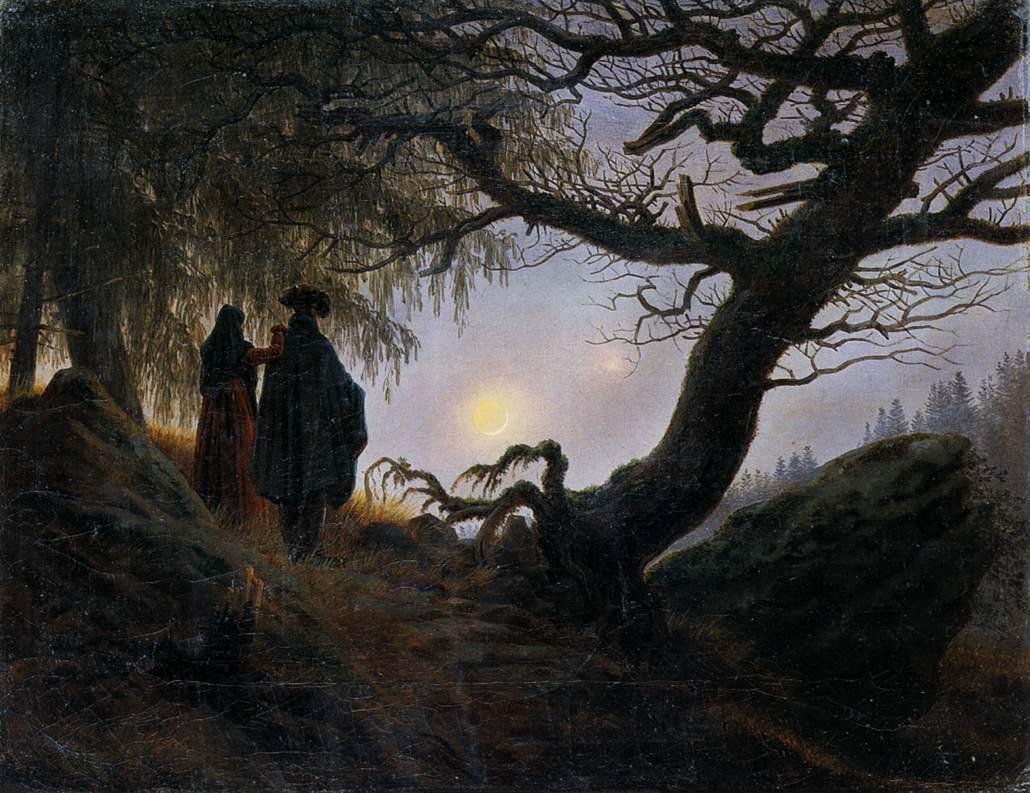
- Man and Woman Contemplating the Moon by Caspar David Friedrich
- Shipwreck on the Coast by Eugene Delacroix
- Heading to Hopi by Kathleen Spencer Johns
- Sunset over Yalta by Ivan Aivazovsky
- Ailsa Crag by William Bell Scott
Part 4: Mechanics
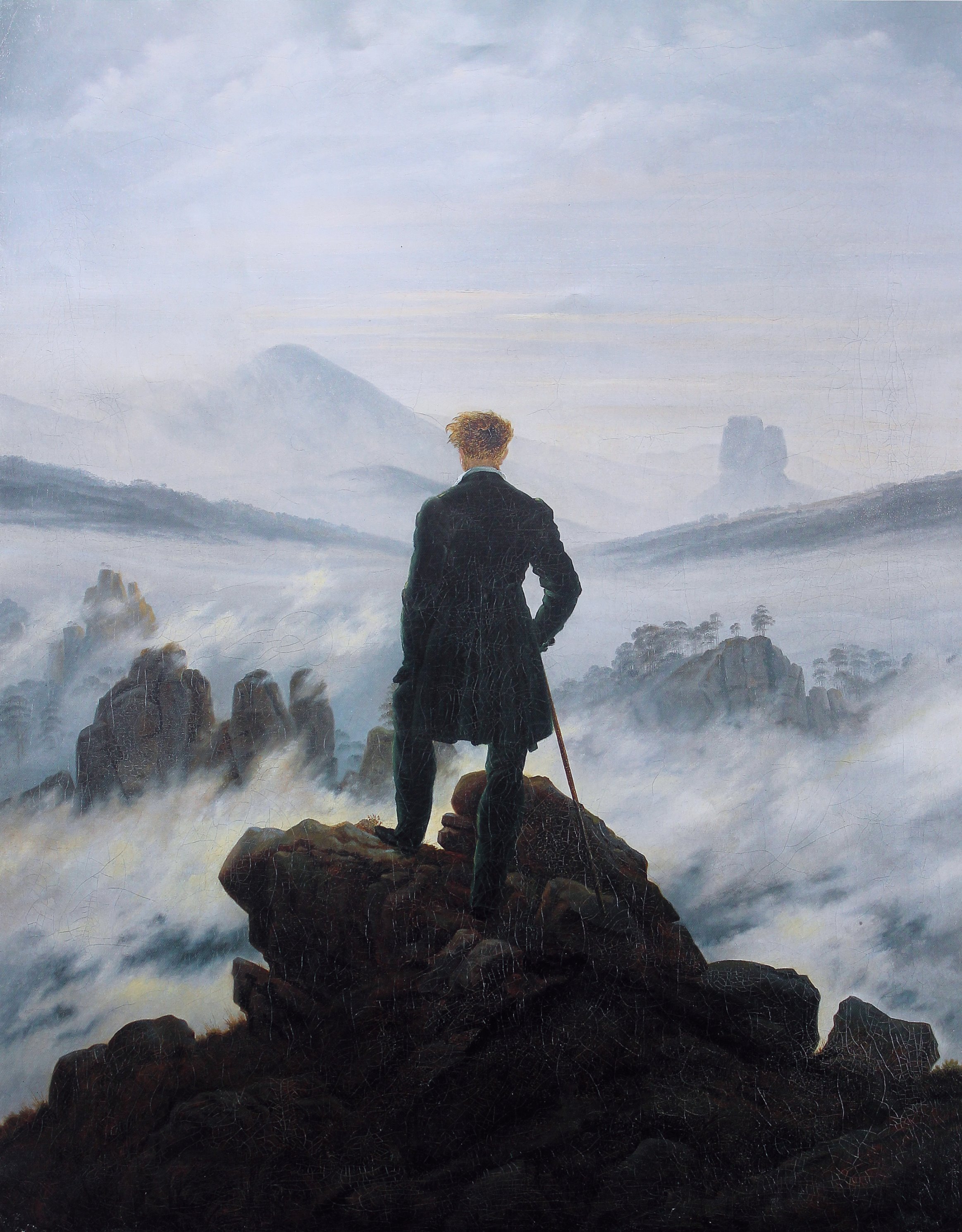
- Wanderer Above the Sea of Fog by Caspar David Friedrich
- Faded Laurels by Edmund Blair Leighton
Table of Contents
| Page | |
|---|---|
| Part 1: Romantic Fantasy | 3 |
| Part 2: Character Options | 7 |
| Part 3: Setting | 15 |
| Part 4: Mechanics | 25 |
| Part 5: Sources | 29 |
Part 1: Romantic Fantasy
Genre
A romantic fantasy is not your typical Tolkien-esque, swords-and-sorcery, high-fantasy story. While the two subgenres share many similarities–they’d have to, to both be called “fantasy”–they are distinct in a few ways. A romantic fantasy often aims for more of a fairytale-like tone.
To help you get the right tone, here are several pillars of romantic fantasy as the author sees it: Love
One of the big differences between swords-and-sorcery (as most D&D games are) and romantic fantasy is the “romantic” right there in the name. Romantic fantasy often focuses on and revolves around relationships of romantic, familial, political, and platonic natures.
Good and Evil
While nobody is denying the value of stories in which characters struggle with what is right and what is wrong, that’s not the only kind of story. Romantic fantasy tends to polarize beliefs–there will often be an ultimate bad guy and an ultimate good guy. People may switch sides and be confused, but it is always clear what is objectively right and wrong (as much as it is possible to.)
Beauty
The world in a romantic fantasy is often lovely. Even evil can have its moments, for the darkness is beautiful, too. While it’s definitely not a requirement for every character to be drop-dead gorgeous, there’s a prevailing sort of charm that permeates the world’s landscapes, architecture, people, and stories.
Quests, Loyalty, and Organizations
Not every romantic fantasy features a good organization which the characters can be loyal to, but many do. Often, they are bidden to embark on quests by those they are loyal to. Many characters are part of organizations who do good (think Robin Hood, knights, and even churches.)
Magic
The magic of the typical D&D game is very scholastic, bombastic, and unmistakable. In contrast, the magic of a romantic fantasy tends to be more subtle and more innate. Characters are more often born with powers that they discover later in life than they are students of that magic. Scholarship exists, but magic as a whole is more subtle and unknowable.

Blue Rose Itself
Blue Rose was first published in 2005 by Green Ronin Publishing with the True20 system, later published by itself without the setting. It won ENWorld’s Roleplaying Silver Medal for Best Rules in 2005 (“2005 ENnie Awards Archives”). In 2015, Green Ronin launched a Kickstarter for a new edition of Blue Rose (Pramas), which was published in 2017 with a different system–the Adventure Game Engine. It retained a heavy focus on setting over mechanics. That system is elegant in some ways and clunky in others.
D&D 5e is likely the most popular tabletop roleplaying game in existence at the time of writing. While it is certainly not the be-all-end-all of TTRPGs, comes with its own host of problems, and does not necessarily lend itself perfectly well to romantic fantasy RPing, it has the advantage of both being the most familiar system to many people and being supported by thousands of homebrew creations as well as the hundreds of officially-published options.
This guide aims to provide a taste of Blue Rose’s rich world of Aldea for those most familiar with the 5th edition of D&D. Everything touched upon within is expanded heavily in Blue Rose’s sourcebooks, both the True20 and the AGE editions. If the setting interests you, please take a look at them.
At the time of writing, Green Ronin Publishing is taking preorders for Blue Rose Adventurer’s Guide (“Blue Rose Adventurer’s Guide”), an official D&D 5th edition setting guide. This document is in no way affiliated with that and hopes to be a quick primer for players and DMs alike instead of a complete setting sourcebook.
Setting, Not System
Blue Rose has had two systems over the years. This document will briefly compare the differences between the 2017 AGE printing and D&D 5e in order to give readers a more thorough understanding of the setting and its roots.
Arcana
In the world of Aldea, the word “arcana” is used to refer to magic. A spell is an “arcanum.” For simplicity and with the assumption that most readers will be coming from D&D 5e and not Blue Rose, this guide uses the words “magic” and “spells” instead.
Sorcery
As mentioned above, good and evil are often very different and opposing forces in romantic fantasy. Blue Rose calls evil magic "Sorcery" and evil magic-users "Sorcerers". D&D sorcerers are not evil. For the purposes of this guide, evil magic will be referred to as corrupted magic instead.
Rhydan
A very unique part of the world of Blue Rose is the existence of Rhydan: sapient, non-humanoid animals. As this is not an in-depth exploration of D&D 5e mechanics, the author will point your attention to the existence of the many homebrews that allow PCs to be sapient animals for the mechanics side of things.
Additionally
The views held by members of different societies within this world are not the views held by the compiler of this document. The author is determined to present a true glimpse into the world of Aldea, with the knowledge that the groups who may use this document and dislike some elements will change them to better fit their style and their members.

What is Aldea?
Aldea is a fantasy world set a few generations after a massive war and rebellion. The world was ruled by evil mages and other powerful, corrupted people, but a mighty effort by the common folk overthrew the old system, some say supported by the divine.
Now, Aldea is comprised of several countries, all with differing beliefs, cultures, and aftershocks from the dark times. The most prominent is Aldis, or the Kingdom of the Blue Rose, a meritocracy kingdom with a climate similar to the real-world Mediterranean. Other significant places are Kern, the kingdom where the last lich king ruled until very recently, and Jarzon, a theocracy close to the devastation of the war.
Magic is alive and well in Aldea, though it can be unfortunately easy to become corrupted. There are artifacts leftover from the time before the evil kings, but they can be dangerous and aren’t always well understood. Humans, sea-folk, and sapient animals known as rhydan have always existed, along with the elf-like vata’an, but the evil kings used experiments and dark magic to create vata’sha and the night people.
Aldea is primarily a romantic, charming world. Different cultures have different beliefs, and magic is more or less prevalent in different places. It’s a hopeful world where most people do their best to be good, ethical, and kind. Good is good, and evil is evil. Love prevails and hate is never strong enough to beat it in the long run.

Part 2: Character Options
Races
The world of Blue Rose has far fewer humanoid races than the typical D&D setting. An interesting thing from the AGE system are the racial traits called benefits. When creating a character, a player rolls for two random benefits from a table in the race's entry. Mixed-race characters are often modeled by rolling for the first benefit on one race's table and the second on another.
If you desire to do something similar with the mechanics of D&D 5e, you can check out “Ancestry and Culture: An Alternative to Race in 5e” on DM’s Guild, which cleverly separates cultural and genetic racial traits.
Humans
Human, or Variant Human
Of course humans exist. They’re the most populous and varied race. The human and variant human D&D races are an obvious choice.
Vata
High or Dark Elf
In terms of origin, the vata of Blue Rose are most similar to the aasimars of D&D 5e. That is, they were originally the offspring of powerful and angelic beings known as vatazin and humans. After the extinction of the vatazin, the vata now show up in genetic lines, and sometimes unexpectedly in human families. They have a grace and otherworldliness similar to D&D's elves, though their ears are rounded.
Vata'an
The vata’an are also called true vata, as they are the literal descendants of the vatazin. They have silvery hair and light eyes. The high elf subrace, or perhaps an altered-flavor eladrin, would work well for them.
Vata'sha
During the reign of the evil Sorcerer Kings, several vata’an were captured and experimented on. The result was the vata’sha–similar in many ways to the vata’an, but with a sensitivity to sun and with dark, dark skin and red eyes. Some people think they have a proclivity to evil, though it isn’t true. Obviously, the dark elf subrace works best.
Sea-Folk
Sea Elf
The sea-folk are people who breathe water just as well as air, and love to tell stories. The sea elf subrace from Mordenkainen’s Tome of Foes works the best. Maybe a triton for simplicity.
Night People
Half-orc
The Night People are another result of the evil Sorcerer Kings’ experimentation. They were created to be useful, strong minions without much mind paid to their appearance. They look the same as the half-orcs of D&D, but they are a race that breeds true rather than being half of something else. People may still believe them to be brutish and unintelligent, though that stereotype is obviously untrue.
Rhydan
As mentioned earlier, the Rhydan are sapient animals. There are few official equivalents in D&D races, but there are many homebrews that would do the job just fine. Most Rhydan keep to themselves, and are found among nearly every species, but following is a list of the most common:
- Rhy-cats, though aloof, are the most common to see interacting with people in most places.
- Rhy-fen, dolphins, are extremely friendly and associate often with sea-folk and those who live near the ocean.
- Rhy-bears are hermits and dreamers.
- Rhy-horses often lead mundane packs of horses and ally themselves with Rezeans.
- Rhy-wolves are territorial and very loyal, and will run with packs of mundane and Rhy-wolves.
A unique phenomena among Rhydan is the Rhy-bond, when a Rhydan chooses to magically bond with a humanoid in a way similar to a D&D familiar, though both parties are separate characters. It's a rare thing, but both the Rhydan and the humanoid benefit greatly.
Using Other Races
Of course, being fantasy, the world of Aldea isn’t nearly limited to the races listed here. They are what is built into the world, but there’s no reason to not expand upon what exists. The entire world hasn’t been explored, after all. Here are some suggestions:
- Halflings could very easily have an ancestral home in Aldis, Jarzon, or even be Roamers.
- Half-elves could be vata with diluted blood.
- Genasi could be found in the extreme locations of the world.
- Tieflings could be those affected by corrupted magic, or the offspring of Darkfiends.
- Aasimar could be gifts from the gods of creation, or vata’an with very strong blood.
- Gnomes could be enthusiastic researchers in the heart of Aldis.
- Changelings could be spies from the Shadow Barrens, or Roamers.
Backgrounds
Backgrounds in the AGE Blue Rose system are actually mechanically very similar to backgrounds in D&D 5e. Instead of representing a previous vocation, however, the AGE backgrounds represent nationality.
This part of the guide presents some homebrew backgrounds that try to replicate the original AGE ones as closely as possible. A DM can choose for these backgrounds to be added to the list of existing ones, or replacing them entirely.
Aldin
“A meritocratic monarchy with a long and storied history, Aldis treasures freedom, education, and diversity. While far from free of strife or corruption, citizens are taught and socialized to be accepting and altruistic. Unfortunately, in rare cases this permissive environment can make it easier for harmful elements such as cults and [corrupted] sorcerers to hide within the nation’s borders. To be Aldin is to be learned, passionate, and accepting–but at some risk.” (Crawford, 41)
- History, Persuasion, a set of artisan’s tools or instrument, and a language
- Common clothes, artisan’s tools or instrument, 10 gp, and a book of some lore you’re interested in
Forest Folk
“Whether dwelling deep in the Pavin Weald or hailing from some distant forest or jungle, forest folk maintain a constant juggling act in order to balance and safeguard their lives within the forest. They must learn to use their surroundings to build, expand, and survive. However, they also risk death or loss from the beasts and dangers of their land more than most. A forest fire or wounded creature is a grave threat in ways a city-dweller or sailor can never understand. To be a forest folk is to live in harmony with nature, but also to be hardened by the reality of life with the wild always outside your front door.” (Crawford, 41)
- Survival, Perception, an herbalism kit, and a language
- Common clothes, herbalism kit, 5 gp, a memento from home
Jarzoni
“Known for theocratic strictness and religious-based integrity, Jarzoni culture can be hard for others to accept. Jarzonis take their faith and the stability of their nation very seriously, and most are raised to believe that the abuse of arcane powers can lead to great suffering. Jarzon tends to deal with nature, [magic], and other potentially useful yet dangerous concepts by fighting to dominate or resist them. This method keeps them safe, but makes them vulnerable to both stagnation and inflexible thinking. To be Jarzoni is to be strong and devoted, if sometimes uncompromising.” (Crawford, 41-42)
- History, Religion, gaming set, and one language
- Common clothes, gaming set, 10 gp, a book of religious lore

Kernish
“Living under the yoke of the Lich King and, later, his Regents, Kerns of all types are survivors. The poor must dodge work gangs, monsters, and the abusive upper classes just to stay alive. The wealthy and influential have it better, but they are nevertheless surrounded by rivals and inhuman creatures who seek their downfall. To be Kernish is to endure a land of death, treachery, darkness, and oppression by any means possible.” (Crawford, 42)
- Deception, Survival, disguise kit, and one language
- Common clothes, disguise kit, 5 gp, one fake identity’s papers that won’t hold up under official inspection
Lar’tyan
“Hailing from the caste-dominated matriarchy of the Lar’tya, Lar’tyans are used to everything having its own purpose and place. The castes work together to make their nation strong and safe, but mobility and freedom are hindered by this tradition–something that grates on the more independent and egalitarian among them. These individuals often travel beyond Lar’tya, but their habits and traditions often come with them whether they like it or not. To be a Lar’tyan is to take strength from stability and tradition, but also to occasionally struggle with equality.” (Crawford, 42)
- History, Insight, and two languages
- Common clothes, 20 gp, official documentation showing who you are
Mariner
“While most commonly representing the islanders of the Scatterstar Archipelago, this background can also be used for those who live on and by the sea, whether the port is in Jarzon, Aldis, or halfway around the world. Those raised to the life of a mariner develop their own subculture. Ships, taverns, and ports become more important than nations and land, with their own rules, customs, and laws. Mariners don’t worry much about politics, though trade is their lifeblood and matters dearly to them. To be a mariner means the freedom of the sea, but also to be somewhat rootless.” (Crawford, 42)
- Nature, Perception, navigator’s tools, water vehicles
- Common clothes, 10 gp, navigator’s tools, a small, worthless collection of items from places you’ve visited
Outcast
“Some do not fit in. Living outside of other nations or cultures, they survive as hermits, refugees, or pariahs. Most outcasts are mistrusted by, or isolated from, their neighbors. Some outcasts deserve their status, having dabbled in [corrupted magic] or committed some crime. Others were cast out by fear and intolerance. In both cases, outcasts need to learn to live without the aid or responsibilities of a larger community. To be an outcast is to be alone and unbeholden to others, for good or ill.” (Crawford, 42)
- Survival, Stealth, gaming set, and one language
- Common clothes, 10 gp, gaming set, a memento from your homeland or your family
Rezean
“From a land of riders, hunters, and nomads, Rezeans seek to live in harmony with the natural world as both individuals and clans of strength and independence. There are few things as important to a Rezean as their clan, and even those who have left their home take the lessons, memories, and history of their people with them. These bonds give them strength, but they sometimes make their dealings with others about clan interests over personal goals somewhat fraught. To be Rezean is to be bold and daring, but also pragmatic and, at times, mercenary.” (Crawford, 42)
- Animal Handling, Survival, navigator’s tools, and one language
- Common clothes, 10 gp, navigator’s tools, a small flag or banner or other symbol of your clan
Roamer
“A people lacking a homeland, the Roamers have made the roads of Aldea their homes. Nomads and wanderers, they live as merchants and entertainers. Roamers rarely stay in one place for long, instead preferring to travel from settlement to settlement in their wagons, only stopping to trade, rest, or out of necessity. To be a Roamer is to know a life of constant travel and adventure, but also to never have a solitary place to put down roots and call home.” (Crawford, 43)
- Insight, Performance, gaming set, and one language
- Common clothes, performer’s clothes, 5 gp, gaming set, a trinket from someone who means a lot to you
Classes
The AGE system of Blue Rose has exactly three classes: the Adept (magic-user), the Expert, and the Warrior. Players are meant to define their class and their character through upgradable feats called talents and specialization. As fun as that is, it has almost no relevance to 5e mechanics.
Instead, here I will briefly summarize how a class may fit into the world via examples and character concepts. Also listed are several of the official subclasses that fit the romantic fantasy genre especially well.
Artificer
Alchemist, Battle Smith
- A magical scholar fascinated with Shadowgates and determined to figure out how they work
- An alchemist training to become a physician of sorts in the Aldin court
- A seamstress from Lar’tya who weaves some magical know-how into their creations
- An engineer in charge of the country’s siege engines and transportation developments
Barbarian
Ancestral Guardian, Storm Herald, Totem Warrior
- A Rezean aided by the strength of their clan’s spiritual ancestors
- A priest-warrior from Jarzon overcome by righteous rage at the darkness of the world
- A sailor often called upon to weather the horrors of the deep and violent storms
- A blacksmith who fashions their own tools-turned-weapons for the purpose of getting revenge
Bard
Creation, Eloquence, Lore, Valor
- A storyteller from deep in the forest, whose stories of strange monsters and folk heroes may or may not be exaggerated
- A flamboyant Roamer whose fortune-telling will be a thing of legend
- A Kernish refugee who always knew their calling was to play music
- A dancer whose driving goal is to learn, teach, and then join the Eternal Dance
- An Aldin diplomat skilled in diffusing and inciting arguments as they please
- A tavern singer, traveling across the world and gathering information for a wider network of spies
Cleric
Arcana, Knowledge, Life, Light, Nature, Order, Peace, Twilight
- A priest from Jarzon intent on converting as many people as they can
- The nice man who runs the local food pantry and temple to Leonoth
- A scholar-in-training from a sailing family who venerates Gaelenir
- A worshipper of Aulora and the chief of the local policing force
Druid
Land, Shepherd, Stars
- A young person from Rezea who has bonded with their steed
- A Roamer in charge of guiding their caravan family through dangerous forests
- A miner used to trawling through the mountains of Kern, helping people escape
Fighter
Arcane Archer, Battle Master, Cavalier, Champion, Banneret, Samurai
- A member of the Knights of the Blue Rose, dabbling in the arcane to the confusion of their teammates
- An Aldin noble’s child, taught to protect themselves and now off on a journey
- The leader of a small band of Kernish vigilantes
- A talented archer who somehow remembers the wars in visions and in dreams
Monk
Four Elements, Mercy, Open Hand, Sun Soul
- Taught in the solemn temples of Lar’tya, a young idealist now seeks for experience to match their wisdom
- A wise old mentor seeking for a new forest to become a hermit in
- A Jarzoni hell-bent on destroying all Shadow with the power of the sun in their soul
Paladin
Ancients, Crown, Devotion, Glory, Redemption, Watchers
- A knight dedicated to the heroic ideals of the Kingdom of the Blue Rose
- An old pirate who only seeks for freedom
- A former gladiator attempting to regain some of their glory
- The watcher of a shrine to Felisar, where travelers stop to pray for blessings
 .
.
Ranger
Beast Master, Horizon Walker, Hunter, Monster Slayer
- A hunter of Shadow beasts, protecting the borderlands of Jarzon from the wastes
- A hired guard and guide for a group of Lar’tyan merchants
- A village child who always did love the chickens more than the people
- A traveler from lands far, far beyond
- One of the protectors of the Forests of Wyss, hunting the dark beings that make it past the lann trees
Rogue
Arcane Trickster, Inquisitive, Mastermind, Scout, Swashbuckler
- A Kernish spy in the midst of Aldin court
- A noble who has a strong taste and talent for sneaking out and getting to know the people
- The parent of kids who just keep trying to sneak out. They had to adapt.
- A reluctant member of a Shadow cult, just trying to be accepted into their community
Sorcerer
Divine Soul, Storm, Wild
- A Roamer whose magic is evident in their fortune-telling games
- A vata’sha terrified to find further evidence of Shadow taint in their blood
- A fisher’s only child, whose wish is to master the waves to bring their parents home
- A Rezean protector of their clan, blessed by the gods
Warlock
Celestial, Fathomless, Hexblade
- Visited at night by a being they believe is Aldis’s Golden Hart, a wheelwright shuns the craft in favor of pursuing an ancient artifact at the behest of their new patron
- A rebellious Jarzoni who ventured too deep into the Shadow Barrens and had to make a deal to get out
- A nervous merchant, somehow the chosen champion of the goddess Goia
- A sea-folk who drifted deep into the ocean
Wizard
Abjuration, Conjuration, Divination, Illusion, Scribes, Transmutation
- An eccentric scholar of the Shadowgates, insistent they can get them to work correctly, if only…
- A prodigy of the arcane arts who insists that their work on the Exarchs of Shadow are purely theoretical
- A young person who found magic books hidden in their cellar and began to teach themselves


Organizations
Characters in the romantic fantasy genre are often part of an organization and end up being loyal to a powerful person or group. What follows is not a complete list of such organizations in the world of Blue Rose, but they are starting points for an adventure in the country of Aldis in particular.
The Sovereign’s Finest
These people, trained and endorsed by the Sovereign are called envoys and assigned to work in small teams throughout the Kingdom. They are essentially professional adventurers, with the uniforms and badges to prove it. The Finest often travel to remote locations to help small villages fend off threats, to heal, and to generally enforce things in the far reaches. They often accompany traveling nobles.
Aldin Guard
These guards represent Aldis's standing army. They deal with raiders, bandits, natural disasters, fires, and all kinds of threats. The army isn’t large, and many regular citizens drill once a month with them and may be called upon in time of need.
Knights of the Blue Rose
The Rose Knights are the best and brightest among the full-time Aldin Guard. They lead the army and patrol the most dangerous areas. Each is given special training related to darkfiends and corrupted magic. Those with the skill are allowed to ride the griffons who help defend the Kingdom. Many become familiar with the court and retire into it. The Rose Knights tend to be dashing, flirtatious, and very, very dedicated.
“To a valiant heart, anything is possible. Service in courage, in steadiness, in love. Virtue through wisdom and compassion” (Crawford, 141).
The Quiet Knights
A few small bands of the Rose Knights bear the additional moniker the Quiet Knights. They are all either partially or completely blind or deaf, and trained specifically to fight monsters against which their disabilities grant them advantages. They are sent specifically to deal with harpies, gorgons, basilisks, sirens, and more. There aren’t many of them, and they are all exceptional.
The Court
Nobles aren’t necessarily chosen by lineage. They are trained, elected, chosen by the government, and endorsed by the Sovereign to administer the affairs of Aldis. Each must pass the one-time test of the Scepter of the Blue Rose during the annual Festival of Service, which will glow when touched if the person is truly aligned with good.
Nobles all begin their careers traveling to other parts of the Kingdom, often with a team of Sovereign’s Finest, and may progress to managing a town or a city. All of the nobles elect thirty-six of their number to serve on the Noble Council at court.
The Guild Council members aren’t chosen by the Scepter, but are instead elected and represent professions within the Kingdom.
Together, the Noble Council and the Guild Council, along with their advisors and assistants and servants, make up the Court. For two months every year, the Sovereign chooses a city or a town, and the entire Court moves to visit. The director of the Guild Council, the president of the Noble Council, and a single representative from the informal Rhydan Council pass policy with the Sovereign at their head.

Marriage and Gender
The country of Aldis is completely accepting of all expressions of gender and orientation. Other countries may have differing opinions. Here are some terms that people in the world of Aldea, and most especially Aldin, may use:
- Laevvel bran’maur - “Beyond the loom of Braniel and Maurenna.” Shortened to “laevvel,” and is used to refer to people who are neither male or female. They aren’t treated differently from non-laevvel, but may be considered an older or more stubborn spirit. According to stereotype, laevvel are more likely to be talented with magic and are more associated with the Gods of Twilight.
- Cepia luath - “keepers of the flame” after the god Leonoth. Calling someone this means they are primarily heterosexual.
- Caria daunen - “lovers of the dawn” after Hiathas and Braniel. People called this are primarily homosexual.
- Twilight - a reference to a romantic couple. Eclipses are symbols of couples becoming one, and it’s said that the practice of exchanging rings came from total solar eclipses.
- Star marriages, or Constellations - marriages involving more than two people.
- Cariad - a word to use instead of “spouse” or other gendered terms.
Part 3: Setting

History and the Gods
In the Beginning
In the beginning, there was the Eternal Dance.
Four beings looked beyond that and created the world from the Sea of Possibility. Each claimed an element and created elementals to help, and other souls emerged from the Eternal Dance to enjoy the creation, though those souls were still immortal.
Selene took air, created the moon, and stored many beautiful and terrible magical secrets in it. Braniel took water, added stars to the sky, and created plants. Maurenna took fire and cultivated the world, creating a place fit for life. Anwaren took earth, molded the land, and created valleys and mountains.
Unfortunately, Anwaren grew jealous and looked to the Shadow to find a way to elevate himself above his siblings. He fell into madness and created seven beings, the Exarchs, who attacked the immortal souls. At this, Maurenna and Braniel created the seven Gods of Light to fight. It was then that they also created mortal bodies for the souls to prevent them from falling into Shadow.
Selene created the Wheel of Rebirth to keep souls flowing in and out of bodies forever, but one of the Exarchs broke it, throwing life and death out of balance. The Gods of Light saved Anwaren from madness, and the four Primordials created the seasons.
The world of Aldea then flourished in technology and magic in an age known as the Old Kingdom. Unfortunately, the Old Kingdom fell under the rule of evil, in the age known as the Empire of Thorns. After hundreds of years in oppression to the Shadow, pockets of hopeful people staged a massive rebellion against the Sorcerer Kings, which gave way to the new world.
In this new world, remnants of both the Shadow Kingdoms and the Old Kingdom remain—dysfunctioning Shadowgates, new races of people, shas crystals, corrupted places, and more.
The Gods
The Four Primordials, Gods of Twilight
The Four Primordials are the creators of the world, though not many people actively worship them. They don’t seem to mind.
| Name | Element | Season | Relic | Domains |
|---|---|---|---|---|
| Selene | Air | winter | Blade of Wisdom | moon, secrets, death, arcana |
| Braniel | Water | Spring | Chalice of Bliss | stars, rain, music, animals, plants |
| Maurenna | Fire | Summer | Rod of Blooms | agriculture, community, civilization |
| Anwaren | Earth | Autumn | Pentacle of Plenty | mountains, strife, sovereignty, warriors |
The Seven Gods of Light
The Gods of Light are widely worshipped and associated with the seven virtues. They are the enemies of Shadow.
- Hiathas: God of sun, beauty, dance, hope. Dawn Prince, Lord of the Dance, Beloved of Braniel.
- Leonoth: God of hearth, family, faithfulness. Keeper of the Holy Flame, Consort of Maurenna.
- Felisar: God of travelers, those in danger, the poor, the sick, charity. Bringer of Miracles, Selene's Favorite.
- Aulora: Goddess of law, soldiers, justice. Shield Maiden, Wise Judge, Child of Maurenna.
- Goia: Goddess of artisans, commerce, prudence, builders. The Builder, Artisan, Child of Maurenna.
- Gaelenir: God of exploration, learning, ocean, fortitude. Great Sage, Sea Lord, Teacher.
- Athne: Goddess of good fortune, plenty, wine, temperance. Mother of Plenty, Lady of the Vine.
The Exarchs of Shadow
The Exarchs are associated with the seven sins and are constantly looking to undermine the world, through tempting mortals and sending darkfiends to threaten them.
- Gravicarius: Exarch of pride, misuse of magic. Frozen Star, Lord of the Tower, Uniter.
- Tyrexxus: Exarch of wrath, rage, beasts, murderers. Black Horn, Thundering Drum.
- Ulasta: Exarchess of envy, undead, covetousness, liches. Green Flame, Queen of Burning Eyes.
- In’nassi: Exarch of lust, desire. Sovereign of the Crimson Petals, It of Buried Seeds.
- Viasta: Exarch of sloth, shortcuts, thieves, dishonesty. The Broken Seal, the Unbalanced Scale.
- Yungo: Exarch of gluttony, excess, cannibalism. The Yawning Maw, the Bottomless Pit, Mountain of Flesh.
- Mytaxx: Exarch of greed, hoarding, useless wealth. Golden Miser, Old Iron Grip.
Aldis,
Kingdom of the Blue Rose
The valleys of Aldis were the least ravaged by the wars and rebellions, so people gathered there and founded Aldis, an idyllic kingdom founded on the principles of inclusion and diversity. The first queen of Aldis declared that any person who wanted to become a noble would have to touch the Scepter of the Blue Rose, which glowed if the person was dedicated to the Light. Since then, Aldis has grown in might, magic, and knowledge, a beacon of civilization in a ecovering world.
The King or Queen of Aldis is known as the Sovereign, and chosen by a legendary protector in the shape of a deer, known as the Golden Hart. The Hart was last seen helping Queen Jaellin, and a few people fear that it may not return to pick the next monarch.
Queen Jaellin
The current queen was shy and soft-spoken before being chosen, but slowly became confident during the next year. She is academic and less of a socialite than some think she should be, as she prefers staying inside and reading to attending social events.
Fifteen years into her reign, the Lich King of Kern launched an attack against Aldis. In a daring and unexpected move, the Queen herself, along with a small group, snuck into Kern and killed the Lich King Jarek.
She returned with and soon married Kelyran, the vata’sha leader of a group of Kernish rebels. Her people warmed up to her new husband quickly. Queen Jaellin is a well-loved monarch.
People
The people of the Blue Rose believe in education, and all children are taught to read, write, and do basic math. It’s free for children from anywhere, and lasts for six years. Those who want to study more go to the Royal College, attached to the Royal Library. Almost everything is taught there. Books are printed en masse, and people run newspapers. While not much usable technology exists, scholars are always trying to uncover the secrets and technology of the past.
Magic is held in high esteem and recognized for the danger it can pose. Using psychic powers without consent, save for things like empathy and seeing magic, is a serious crime. The most common magical items are shas crystals, which can help light cities and clean water. Many magic-users have familiars, which require special kinds of animals that can only be bred by those licensed to do so in a humane way.

Central Valleys
The heart of the Kingdom of the Blue Rose is lush, fertile, and warm. It boasts the city of Aldis, capital of the kingdom, as well as many wineries and fields of cotton, wheat, and flax. Most buildings are made from white marble and often painted with bright colors.
As a result of the prosperous agrarian society, there are many small villages dotting the valleys. They often get together for feast days. The biggest threats are the various shadow cults and selfish landowners, as the center of the kingdom is well-protected from the terrors of the borderlands.
Pavin Weald
The Pavin Weald is a thick forest to the north, difficult to traverse and difficult to live in. Unicorns and nature spirits are active in this forest, and protect it. Much of the forest is imbued with ancient, powerful magic, which kept it and the Rhydan who fled there safe during the Shadow Wars. More Rhydan can be found in the Pavin Weald than anywhere else in the world.
Many people live on the outskirts of the forest with permission from the unicorns, but there are very few villages in the forest itself. They may be mining villages, ones living among Rhydan, or others at peace with the wilds.
Despite the peace of the forest, it does face its fair share of problems. Monsters, corrupted mages, and bandits roam. Teams of Sovereign's Finest often ride around the forest to protect it and take care of other issues they find. Many who can stick it out in the forest end up staying there for years.
Veran Marsh
The Veran Marsh used to be a stronghold of one of the evil Sorcerer Kings, and is now a desolate place to the west of Aldis, separating it from Jarzon. Some Jarzoni refugees and rebels live there, as it’s not entirely dissimilar to Jarzon itself. It’s a dangerous place full of quicksand, mud, poisonous animals, and deep corrupted magic.
An old road known as the Great Westerly Road runs through the marshes, protected by ancient magic. Still, travel isn’t safe, and most people hold to a truce while in the area, whatever their loyalties. It’s the only reliable way between Jarzon and Aldis, and is often quite busy. On Aldis’s side, Lysana’s Crossing is built, a fortress and a small town that often accepts refugees and processes travelers. On Jarzoni’s side is the Fiery Defense, a smaller fortress and camp for soldiers and patrols.
Other routes through the Veran Marsh exist, but they are dangerous and used by criminals, dangerous corrupted mages, and people fleeing Jarzon. A tavern deep in the marsh known as Serpent’s Haven is frequented by murderers, smugglers, bandits, and all kinds of criminals. This is where people reliably find black market deals and illegal goods. A vata’sha crime lord known as Shan Serpentongue can provide guides and has plenty of spies roaming Aldis, Jarzon, and even further.
Scatterstar Archipelago
The southern coast of Aldis is lovely and replete with fishers and herders. People often join households into large hearths, similar to constellation marriages but less formal and more sprawling. As expected, the southern coast is populated mostly by humans and sea-folk.
The city of Garnet is a lovely, large port meant to prove Aldis’s wealth to its neighbors. It’s built from white marble and boasts a huge variety of people. Elsport is a more domestic port city, much smaller. Islanders come here to trade and buy things they need. It gets hit with heavy storms, keeping it small, and it takes about five days to sail from Elsport to the farthest island. Elsport was built on ruins of an ancient city, and residents still sometimes find basements and catacombs beneath its foundations.
The Archipelago itself features twenty-two islands full of almond, date, and pistachio farms. The people who live there value seamanship, and they make their livings from farms and fishing. Occasionally, corrupted artifacts or monsters find their way to an island and take it over subtly or overtly. Corrupted sea-folk ally with sharks and others provide sustenance for the monsters. Sovereign’s Finest teams are called in when the corruption is noticed, often too late.
Pirates also swarm the Archipelago, though they’re not welcome. They often make port in Jarzon under the agreement to only raid Aldin ships. The Azure Banner pirates hold two armed ships and perhaps six dozen pirates, and they are dedicated to wiping out (usually capturing and turning in for bounties) the threatening Jarzoni ships along the Aldin coast.

Kern
Kern is the most corrupt land in the known world. Until recently, it was ruled by the Lich King Jarek, one of the last holdovers of the Shadow Wars. He attempted to attack Aldis once, but was rebuffed. Aldis's new Queen Jaellin personally led a party and killed him just recently.
Now the Shadowed Seven, favored nobles of the old court, fight over the land and struggle to keep control. The Lich King had an entire court of spies and nobles, including a few he personally trained called Talons. Though the structure still exists, it’s beginning to fall apart.
South of Kern, separating them from Aldis, are the Ice-Binder Mountains. North are the Bitter-Fang Mountains, and these two ranges ring the country. Iskander’s Retreat is the only way in or out of Kern without flying during the five winter months. Jarek and his court populated the mountains and the caves to the north with corrupted monsters, keeping them from actually entering Kern with ward stones.
Between the mountains, the lowlands are actually habitable, but still harsh. A plateau in the center houses the capital city Sarn, and three rivers feed into the Blackwater Lake that the Lich King Jarek created with magic long ago. Farming is almost impossible, but good irrigation helps.
The capital of Kern, Sarn, was built thousands of years ago, but has since fallen into disrepair. Almost half the buildings are uninhabited and falling apart, and the work in the forges and smithies never stops. In the very center of Sarn is the Ebon Tower, a tall black structure, the top third destroyed from when Queen Jaellin defeated the Lich King. The intact shadowgate in the tower’s dungeons is even still guarded every hour of the day.
Humans that live in Kern are mostly oppressed and in poverty. The night people in favor act as overseers and supervisors and generally adopt condescending attitudes. Vata’sha are taken into the custody of the Crown and trained as spies and members of the court. Vata’an and rhydan are killed on sight. Other than making the inhabitants of Kern work, the government does not enforce any rules or laws, and both murder and goodwill are rampant.
Everyone—that is, the poor, unfavored working class—is expected to work in Kern. Those who cannot work are simply executed. Beginning at age thirteen, citizens are assigned a work gang and report every day alongside skeletons and zombies. Favored night people act as overseers of the humans and controllers of the undead, and many end up working to help meet the gangs’ quotas and avoid beatings and death themselves. Some important work gangs are instead overseen by darkfiends or even vampires.
Those born or traveling through with magical talent find sympathy with the people, since magic is very useful, but will be reported eventually. The only people permitted to use magic are those endorsed by the Shadow-Taken, favored mages in the government who envision becoming Sorcerer Kings once again.
The elite worship the Exarchs of Shadow, though most of the citizens worship the Gods of Light in secret. Kern is policed by the Crimson Guard, which often employs arcana to impersonate people and create paranoia. The Knights of the Skull ride wyverns and battle foreign spies and raiding forces in pairs. Several high-powered magical weapons are positioned around the capital and the lands beyond. Both the Knights of the Skull and the Crimson Guard inspire terror just from appearing.
 .
.
The Shadowed Seven
After the fall of the Lich King, the seven most powerful elites in the country battled briefly for dominance, only to find themselves locked in a stalemate. They agreed to a Regent Council until one of them rises above. They are known as the Shadowed Seven, and each holds certain powers and ambitions.Lady Talis, a long-lived, powerful vampire close to the Lich King, commands the Knights of the Skull and enjoys tormenting her victims. She has several well-trained assassins and magic-users at her disposal, as well as the authority of her past position.
Minister Kurgik is a corrupted apelike monster with incredible intelligence and sapience living in the Bitter-Fang Mountains. Many of the other monsters roaming the mountains are his creations, and though he has no desire to rule Kern himself, he wants free reign and priority to practice his art.
Workmaster Tharg is in charge of most of the work gangs in the country. Though he isn’t extremely smart, he is cruel and vindictive. He is a human who worked his way up to overseer through betrayal and abuse, and he doesn’t want to let go of the power.
Senira Rhal is a vata’sha priestess who worships the Exarchs of Shadow with fanaticism. She is a talented diviner and uses her visions as bait. She was never very loyal to the Lich King and wants Kern to become a theocracy with the sole purpose of bringing the Exarchs back.
Mistress Bellin, a rhy-cat kept alive for centuries through evil magic, commands Kern’s intelligence system. Her psychic abilities allow her to communicate with her network over vast distances. She hates Rhydan, commands four puppet attendants, and is rarely seen in public.
Lord General Atrix Vale used to be a night person, the greatest general in the armies of Kern, but is now a wraith tied to a body of his armor. He’s a brilliant tactician and remains in control of Kern’s armies. The others use sabotage and other means to keep his armies defending Kern but not taking over.
Dame Trecel spent a hundred years as the head of the secret police, transformed into a flesh-eating ghoul at her promotion. Rebels target her in particular, and she moves often with her entourage of lesser ghouls to stay safe. She enjoys luxury and employs a personal chef.

Jarzon
The Jarzoni people settled a land ravaged by the Shadow Kings. They primarily venerate Leonoth, the god of the hearth and family. Their country is a patriarchal theocracy led by the Hierophant. They survived by holding close to their faith, known as the Church of the Pure Light, and that can turn into a bit of xenophobia. The citizens who can use magic either become priests in the hierarchy or are exiles, though most are eager to become priests. Aldis and Jarzon are not on the best of terms, and the Veran Marsh keeps them separated.
Though the architecture of Jarzon is primarily focused on practicality and features little frivolity, the Jarzoni people are hospitable and merry. In the capital city of Leogarth, the Great Temple features statues of the Gods of Light at the very center. The Hierophant lives in a palace nearby.
Basketh Bay is Jarzon’s major port, though it’s close enough to the Veran Marsh to face threats in the form of monsters and aberrations. The Leviathan’s Teeth, a constellation of rocks and tiny islands at the mouth of the river, are navigable by barge but not so much by ships. Some artifacts show up there, but scavenging for and selling them is actually illegal.
Between the Bay and the Veran Marsh is a portion of land known as the Sanisan Plains, where farmers grow all kinds of crops. The priests here are a little more lenient than in other places, and most people in Jarzon live on the Plains.
Most people in Jarzon are humans, and regard anyone else with suspicion, save the vata’an. Vata’sha and Night People are usually considered corrupt and evil. Rhydan are odd and should be left alone. Sea-folk are suspicious and not allowed to join the priesthood but allowed to live in Jarzon.
Jarzonis consider their faith the only true one, and those who depart from it are punished with working in camps or being convinced otherwise through psychic magic. The Church of Pure Light has a strict hierarchy that one must work through, and only priests are allowed to interpret doctrine. Priests travel the country, solving disputes and administering the country’s affairs. Most deeply care about the people and do their best to do right by them.
Many magic users are medics, called Hospitalers, who accept women in their ranks. They occasionally travel outside Jarzon. In fact, healers are the only foreign magic users not actively shunned. Priests do their best to purify the tainted lands nearby, but can’t keep up with the constant influx of monsters and corrupted animals that pose threats to the people.

The Khanate of Rezea
The nomadic clans of Rezea primarily worship the Twilight Gods, and the Khana is their priestess. Rezea has wide open grasslands and prairies, and is mostly inhabited by humans and occasional vata. They do not like night people. In many ways, the people draw inspiration from real-world Indigenous Americans and Mongolians.
Rezeans have a strong oral tradition and consider their horses part of their families. Rhy-horses and their riders are especially respected as strong scouting, hunting, or warrior pairs. Rezean witches blessed by the goddess Selune perform rituals, look into the future, and work to heal the members of their clan.
Clan politics can be complicated, connected by strings of honor, feuds, and alliances. While Rezea is not united, the clans all follow the Khana in spiritual matters and tend to gather every winter for politics and survival. Loyalty is always given clan-first. Clans move in camps, chasing herds or remaining by seasonal rivers.
People occasionally gather at central hubs to trade, the most well-known of which is the Fallen River Trading Camp in the south. Former Rezean mercenaries and scouts volunteer as guards there, though they don't really do much beyond look tough and protect the horses and performers. The camp has an exaggerated reputation for danger.
Horses and people needing safety can find it at the Stormpoint Refuge, a magically-created stone fortress. It's currently run by a rhy-horse descendant of the original settlers and a deaf girl bonded to her. It is emptiest and most vulnerable in the summer.
The Stone Forest is artificial, dangerous, and a remnant of the days of the Sorcerer Kings. The forest is rumored to be sentient, and several darkfiends dwell there.
The City of the Cuyami is the ancient, haunted site of a massacre. One week a year, the tragedy is replayed, and unlucky souls from the present can find themselves interacting with the past in more ways than one. The ghosts there can only be freed during the visions, and they know it.
The Forest Kingdom of Wyss
South of the Shadow Barrens is a large rainforest filled with gigantic, awakened trees known as lann trees. The magic-users who settled the area put up strong barriers against undead and evil magic and awakened the first lann trees. Those that live in the forest are banned from cutting down trees or farming. All kinds of rhydan, vata, sea-folk, and humans make homes in and between the trees or in the river, and are usually very suspicious of outsiders.
At sixteen years old, and again if an individual takes a government position, everyone in the kingdom must complete a ritual. They contact the trees and are partially absorbed for one or two days. Anyone evil emerges with a horrible headache, but everyone else understands the forest better. Those who fail are banished, those who succeed are given a small, glowing tattoo unique to the kingdom.
Wyss people carve fallen wood, gather nuts and fruit, and use magic to pull crystals from the earth. They craft ink, dyes, medicine, silk, and carvings. The people are often entertainers, artisans, and scholars. They trade, in limited amounts, for rare iron and steel. The lann trees that people live in subtly influence the predators on the forest floor to avoid inhabited areas, and the people don’t hunt them. Forest wardens keep track of the state of the forest, help to guide travelers, and keep paths clear.
Five to fifty ministers sit on a settlement’s council, around a third of them retired wardens. One minister from each council sits on a Grand Council in the city Unity, from which a Sovereign is elected. Small embassies from Aldis and Jarzon exist in Leafport, and outsiders rarely venture farther in.
The wards outside Wyss weaken as the years pass, and while monsters are still barred, sentient evil beings can pass into the forest. If enough of the lann trees were killed, the rest could be turned to evil, corrupting the entire forest and creating a dark fortress.

The Matriarchy of Lar'tya
One of Aldis’s trading partners, Lar’tya is a collection of three large, prosperous islands whose people are separated into four castes and always ruled by a queen elected from the highest caste. The islands are very far away and only reachable by a several day journey by ship. Each island has a collection of active and dormant volcanoes, though Lar'tyan seers can warn people away before the mild eruptions.
While Aldis and the continent were ruled by Sorcerer Kings, Lar’tya established their government and trade with far-away lands. Now that Aldis is civilized once more, they and Lar’tya have a good diplomatic relationship.
Castes in Lar’tya stay strictly separate, and if anyone refuses to follow the rules, Aldis gladly takes them in. Generally, men are considered more emotional and less wise than women. The Lar caste is a large clan, from whence the Queen is drawn from. Nobles and warriors are the Hagin class, and primarily worship Aulora. The Bleyn caste is full of merchants, artists, and sailors, and the Nuit caste are laborers and farmers. It’s nigh-impossible to move from one caste to another, though it’s easy to join another profession in your caste. Sea-folk are considered part of their own caste, the Seyn, with the same permissions and professions as the Bleyn.
Members of different castes rarely speak to each other, except in private. Those in the highest often ignore those in the lower.
Like other places in this time, Lar’tya is on the cusp of change. With the contact between them and other countries, the upcoming generation is becoming disillusioned with strict castes. They have begun experimenting with and discussing many new ideas at scholarly parties, where members of different castes actually speak with each other, and might hear presenters from Aldis and occasionally Jarzon.
The Roamers
Before the Shadow Wars, a country known as Faenaria lived in prosperity and luxury in the south, making a parallel to real-world Ancient Egypt. They mixed freely and often with the vatazin kingdoms, in culture and marriages, and were masters of different varieties of fortune-telling. Some say the Faenari may have been a race unto themselves, as distinct as vatazin or the sea-folk.
A gifted seer saw their destruction and the Shadow Wars in a vision, but she was murdered by the king in an effort to keep down "false" reports and incite panic. In defiance, a group of citizens took to the road with a set of paintings known as the Royal Road, and watched from afar as an evil sorceress ruled, then destroyed Faenaria, turning it into the Shadow Barrens.
Now, the Roamers carry not just elements of the ancient Faenari culture, but pieces of many other places they’ve traveled, as well. They go everywhere in caravans of wagons, making a home for a night in the woods, or for the winter in a city. They speak a descendant of their original language, called Faento, and do their best to keep it secret. They sell knot-shaped good-luck trinkets, tinker services, and fortune-telling, only staying in the same place for a week or two. Some are thieves, but never steal from each other or vata, who they see as cousins.
To the Roamers, gods are more human-like than god-like, companions instead of masters. They all know the Royal Road (another name for the real-life tarot deck), and their High Seer is responsible for the original silver-plated copies. The High Seer and the spirit dancers known as Sel-Shanna devote themselves to destroying the Shadow.
A steadily growing cult known as The Broken Wheel considers themselves in service to the last sorceress of Faenaria. They have caravans of their own and infiltrate others, defaming the Roamers and worshipping the Exarch of Lust. Roamers prefer to not talk about them with outsiders and deal with the cult themselves.

The Shadow Barrens
The desert separating Jarzon and Wyss is a deeply corrupted land that spawns monsters and horrors. The evil influence of the Shadow manifests as a mist that leaves the land with only five hours of sunlight a day and shrouds night in a green kind of darkness. The mists coalesce into shadowstorms, winds of dense mist and screams that risk Corruption and psychic damage.
The Shadow Barrens used to be Faenaria, where the Roamers lived before they became the Roamers. A small, grim village known as the Northern Refuge provides a place for travelers to find rations, clean water, and hot springs. Roamers often visit to mount expeditions to find artifacts, and several Jarzoni priests live there to heal and comfort those who may be corrupted by the evil just outside its canyons.
A single road called the Dejek Trail runs from the Northern Refuge to Bastion in Wyss, a dangerous path but an option if one does not wish to sail on the sea fro Jarzon to Wyss and risk the pirates.
In the center of the desert, the ruins of the great city Austium bustles with shadowspawn and darkfiends. It's a horrific place that many who see it wish they'd never seen, but it keeps drawing adventurers who wish to look for artifacts, scrolls, or bones. A powerful fiend runs the place, and may or may not be amassing an army to find the two missing paintings from the Royal Road, which he believes can summon the Exarchs of Shadow into the world.
Pirate Isles
After the destruction of Faenaria, refugees flooded the islands west of the new Shadow Barrens, and plenty turned to piracy. The people who live there now are sea-folk, descendants of Faenarian nobles or merchants or sorcerers, captives from other lands, and plenty of pirates themselves. They are ruled by nothing more than the tides, and are generally a scourge on other nations.
The islands are relatively small, with little land for farming. Each pirate fleet has camps, fortresses, or even entire villages that support them.
The town of Mashae is a chaotic place with a growing College of Arcane Arts, which strives to rebuild past knowledge by combining new research with old information from the Shadow Barrens. People come during the day to deal in the fish market, the slave market, and the trade market, and leave before nightfall.
One island to the south is known as the Dark Isle, and is only home to a cult of evil magicians. Their corruption taints the waters around them.
To the west is an island known as Laren's Town, mostly inhabited by sea-folk and the original fishers of the island. They dislike the evil magic and slavery that has come to define the Isles, but are generally friendly to anyone that shares their views.
Part 4: Mechanics
This section of the document includes several optional systems that a group can choose to use in their game or disregard. They have been adapted from the AGE Blue Rose game for D&D 5e, and chosen from amidst all the other mechanics of the original system for their narrative function and relative ease of adaptation.
Destiny and Fate includes some roleplay guides that can help separate "good" from "evil," as romantic fantasy tends to do.
Corruption can use Destiny and Fate or it can ignore it. The Corruption mechanic can inhibit a character's ability to function if they perform evil acts and can further separate "good" from "evil" characters.
Finally, a few stat blocks included are setting-unique creatures that can be dropped into a campaign in Aldea or anywhere else.
Destiny and Fate
D&D 5e has character traits determined by background, called things like Bonds and Ideals. The AGE Blue Rose system has something similar. It calls these defining characteristics a Destiny and a Fate. It suggests drawing a card from the real-life tarot Minor Arcana to suggest traits. If this mechanic is chosen, it can replace the Bond/Ideal/etc system, or it can supplement it.
A Destiny and a Fate are two sides of a coin, two expressions of similar emotions that come easily to a character, or two opposites. They are mostly guides for roleplay, but instituting the additional mechanic of Corruption can make them more relevant.
A Destiny is your best trait, the way you help people and the way you wish to make an impact in the world. If you are remembered fondly, it is your legacy.
A Fate, on the other hand, is your worst trait, something you struggle with, and acting according to it may increase your risk of Corruption (see below.)
The AGE Blue Rose book contains a table that lists every Minor Arcana card, but here are a few suggestions based on the meanings of the cards:
| Minor Arcana Card | Destiny | Fate |
|---|---|---|
| Five of Swords | Humble | Cruel |
| Knight of Swords | Bold | Boastful |
| Eight of Cups | Daring | Stubborn |
| Knight of Cups | Charismatic | Manipulative |
| Queen of Wands | Curious | Jaded |
| Nine of Wands | Diplomatic | Domineering |
| Page of Pentacles | Inquisitive | Wasteful |
| Three of Pentacles | Meticulous | Sloppy |
Corruption
In the world of Blue Rose, good and evil are relatively more delineated than in many other worlds. As such, a character's path to evil can be traced and tracked. The AGE Blue Rose system provides a mechanic called Corruption to do so. People, places, and objects can all be corrupted, though people have a choice and a chance to resist.
Corrupted places are areas as small as a coffin and as large as a forest that have been exposed to great evil over long periods of time, such as lairs of cults. If a person dies in a corrupted place, they will rise as undead the next night unless measures are taken, and animals born in a corrupted place may become shadowspawn. A corrupted item affects people carrying it, and it may strengthen evil magic and weaken all other magic.
Risking Corruption
A character risks Corruption in three ways: if they use evil magic, specified in Blue Rose as Sorcery, magic that controls, hurts, or creates undead; if they act according to their Fate (see above) in a corrupted place or in contact with a corrupted item; or if the DM determines them to be at risk due to other factors.
When a character risks Corruption, as determined by the DM, they must make a Wisdom save or gain a level of Corruption. The DC for that save is determined by the DM, but is generally more difficult, the graver the sin. A good baseline would be a DC of 11 or 12 for lying or stealing while at risk, and a DC of 18 or higher for murder or betrayal while at risk.
As a character gains Corruption, they might suffer fatigue, weakness, and hunger. They might feel paranoia and anger, and find it more difficult to do selfless things. For each level of Corruption, they lose two additional points of Constitution and Wisdom. If their Constitution reaches 0, they die, and when their Wisdom reaches 0, they go mad, acting according to their Fate (see above.)
Ability score penalties are applied to the score, not the modifier. Effects are not cumulative. There is no maximum Corruption level.
| Corruption Level | Total Effect |
|---|---|
| 1 | -1 Constitution, -1 Wisdom |
| 2 | -2 Constitution, -2 Wisdom |
| 3 | -3 Constitution, -3 Wisdom |
| 4 | -4 Constitution, -4 Wisdom |
| x | -(x) Constitution, -(x) Wisdom |
Erasing Corruption
A character who has gained levels of Corruption may lose some of those levels, and gain back Constitution and Wisdom points (up to their original, uncorrupted score.) However, it is difficult to do so.
To lose levels of Corruption, a character must act in accordance with their Destiny (see above), or otherwise perform unequivocally good acts. For every 5 or so of these acts, determined by the DM, the character may reduce their Corruption level by 1.
Characters who have embraced their Corruption cannot lose Corruption levels by doing good acts, unless something truly world-shattering happens and they "un-embrace" their Corruption.
Embracing Corruption
Embracing Corruption is a conscious choice on the part of the character, it cannot be forced or tricked. Characters who embrace Corruption gain the following effects:
- They lose all above Corruption level ability score effects, though they still have Corruption levels.
- They gain one or more of the following, at the DM's discretion and approval, and as appropriate for the narrative:
- The equivalent of a +2 class enhancement ability from Tasha's Cauldron of Everything: Rhythm-Maker's Drum, Bloodwell Vial, Moonsickle, Arcane Grimoire, Amulet of the Devout, All-Purpose Tool, Rod of the Pact Keeper, etc
- A Dark Gift from Van Richten's Guide to Ravenloft
- A Boon or Blessing from the Dungeon Master's Guide
- Another powerful boon, usually dark in nature, that enhances the character's abilities in a way that makes embracing Corruption enticing
- They cannot regain HP from spells, unless that spell is cast by another who has embraced Corruption.
- They cannot gain Corruption levels from additional acts of evil, but it can increase by spending Ability Score Increases from leveling up and feats.
- Spells such as Resurrection and Reincarnation simply do not function when cast. However, three nights after the character's death, unless prevented, the character rises as a vampire.
Monsters
The most common enemies in the world of Aldea are undead, Shadowspawn, and Darkfiends. Many are leftovers of the Shadow Wars, though others are new and manifestations of continuing plots to reestablish corruption across the world.
In addition to these evil creatures, the world of Aldea also boasts all kinds of animals, nature spirits, fey, and magical creatures. Unicorns, satyrs, elementals, and basilisks are all inhabitants of Aldea, some of them benevolent and others decidedly not.
Undead
The undead and those who raise them are almost always evil, and everyone except Kern considers them abominations. Undead beasts, ghosts, ghouls, liches, shades, specters, vampires, and zombies all populate the world.
Shadowspawn
Shadowspawn are creatures made by Shadow, the evilest force in the world. They are born in corrupted places or twisted by corrupted people. They made up the bulk of the Sorcerer Kings' armies, though most were wiped out with the rebellion.
The beastfolk are the most common shadowspawn, animals with bestial humanoid forms. Ettercaps look like spiders and lay traps for travelers, mongrels take the form of bipedal hyenas, troglodytes are reptilian, harpies fly, and nagas prefer their magical abilities.
Other shadowspan include mock hounds that mimic human voices, ogres that live on the land or in the sea or in the cold mountains, wisps that lure travelers into dangerous areas, and wyverns that were created to battle griffins and their riders.
Darkfiends
Darkfiends are, in a sense, demons, the servants of the Exarchs of Shadow. They are intelligent (in most cases), and seek to throw the world into darkness. Each darkfiend serves a specific Exarch, and thus is themed after a specific deadly sin. They are further separated into four roles: Watchers look for opportunities to corrupt, Whisperers tempt and justify, Soldiers fight and are most easily summoned, and Servitors are the commanders over it all.
Occasionally, ordinary animals will give birth in a corrupted place, and that birth will result in a fiendish beast. They are not intelligent, but are cruel. Nightmare horses, dire rates, spying ravens, and savage sharks are the most common types.
Each darkfiend belongs to a certain Exarch and exemplifies their sin.
Envy darkfiends are good at disarming, and can sometimes pick locks just by touching them.
Gluttony fiends can track by taste and reduce other creatures' natural armor.
Greed can steal initiative and health, and like to bargain with others.
Lust darkfiends try to seduce, taunt, and distract their foes with a variety of methods.
Pride fiends attempt to intimidate often.
Wrath get combat prowess and often taunt, enraging their enemies and giving themselves the upper hand.
Sloth darkfiends can choose to go last in initiative, but gain bonuses to their combat.
Sample Stat Blocks
Ettercap
Medium Shadowspawn, CN
- Armor Class 14 (natural armor)
- Hit Points 30 (4d10 + 8)
- Speed 30 ft., climb 30 ft.
STR DEX CON INT WIS CHA 10 (+0) 18 (+4) 14 (+2) 12 (+1) 11 (+0) 8 (-1)
- Skills Stealth +8
- Senses bdarkvision 60 ft., passive Perception 10
- Languages Common
- Challenge 3 (700 XP)
- Proficiency Bonus +2
Spider Climb. The spider can climb difficult surfaces, including upside down on ceilings, without needing to make an ability check.
Web Sense. While in contact with a web, the spider knows the exact location of any other creature in contact with the same web.
Web Walker. The spider ignores movement restrictions caused by webbing.
Actions
Multiattack. The ettercap may make two claw attacks.
Claw. Melee Weapon Attack: +6 to hit, reach 5 ft., one creature. Hit: 10 (2d6 + 4) piercing damage
Bite. Melee Weapon Attack: +6 to hit, reach 5 ft., one creature. Hit: 12 (2d8 + 4) piercing damage, and the target must make a DC 11 Constitution saving throw, taking 16 (4d8) poison damage on a failed save, or half as much damage on a successful one. If the poison damage reduces the target to 0 hit points, the target is stable but poisoned for 1 hour, even after regaining hit points, and is paralyzed while poisoned in this way.
Web (Recharge 5–6). Ranged Weapon Attack: +6 to hit, range 30/60 ft., one creature. Hit: The target is restrained by webbing. As an action, the restrained target can make a DC 12 Strength check, bursting the webbing on a success. The webbing can also be attacked and destroyed (AC 10; hp 5; vulnerability to fire damage; immunity to bludgeoning, poison, and psychic damage).
Ettercaps are huge humanoid spiders, intelligent but cowardly. They like to lay traps in dark places like the marshes and deep forests, preferring to ensure their enemies die before even seeing them (Crawford, 345).
The best Knights of the Blue Rose ride intelligent griffons, defending Aldis from physical threats. Griffons are picky, but a few griffon and rider pairs have emerged from other places and made history. In tainted places like Kern, people might ride wyverns instead, which are less intelligent but even fiercer.
Riding Griffon
Large Rhydan, NG
- Armor Class 14
- Hit Points 85 (9d10 + 36)
- Speed 30 ft., fly 80 ft.
STR DEX CON INT WIS CHA 22 (+6) 19 (+4) 18 (+4) 12 (+1) 18 (+4) 10 (+0)
- Skills Perception +7
- Senses darkvision 60 ft., passive Perception 17
- Languages Common
- Challenge 5 (1,800 XP)
- Proficiency Bonus +3
Keen Sight. The griffon has advantage on Wisdom (Perception) checks that rely on sight.
Rhy-bond. When carrying the humanoid to which it is bonded, the griffon has advantage on Wisdom saves against charm effects. The bonded humanoid also gains this advantage.
Actions
Multiattack. The griffon makes two attacks: one with its beak and one with its claws.
Beak. Melee Weapon Attack: +9 to hit, reach 5 ft., one target. Hit: 15 (2d8 + 6) piercing damage.
Claws. Melee Weapon Attack: +9 to hit, reach 5 ft., one target. Hit: 20 (4d6 + 6) slashing damage.
Part 5: Sources

Crawford something something blue rose 2017
still working on this section sorry