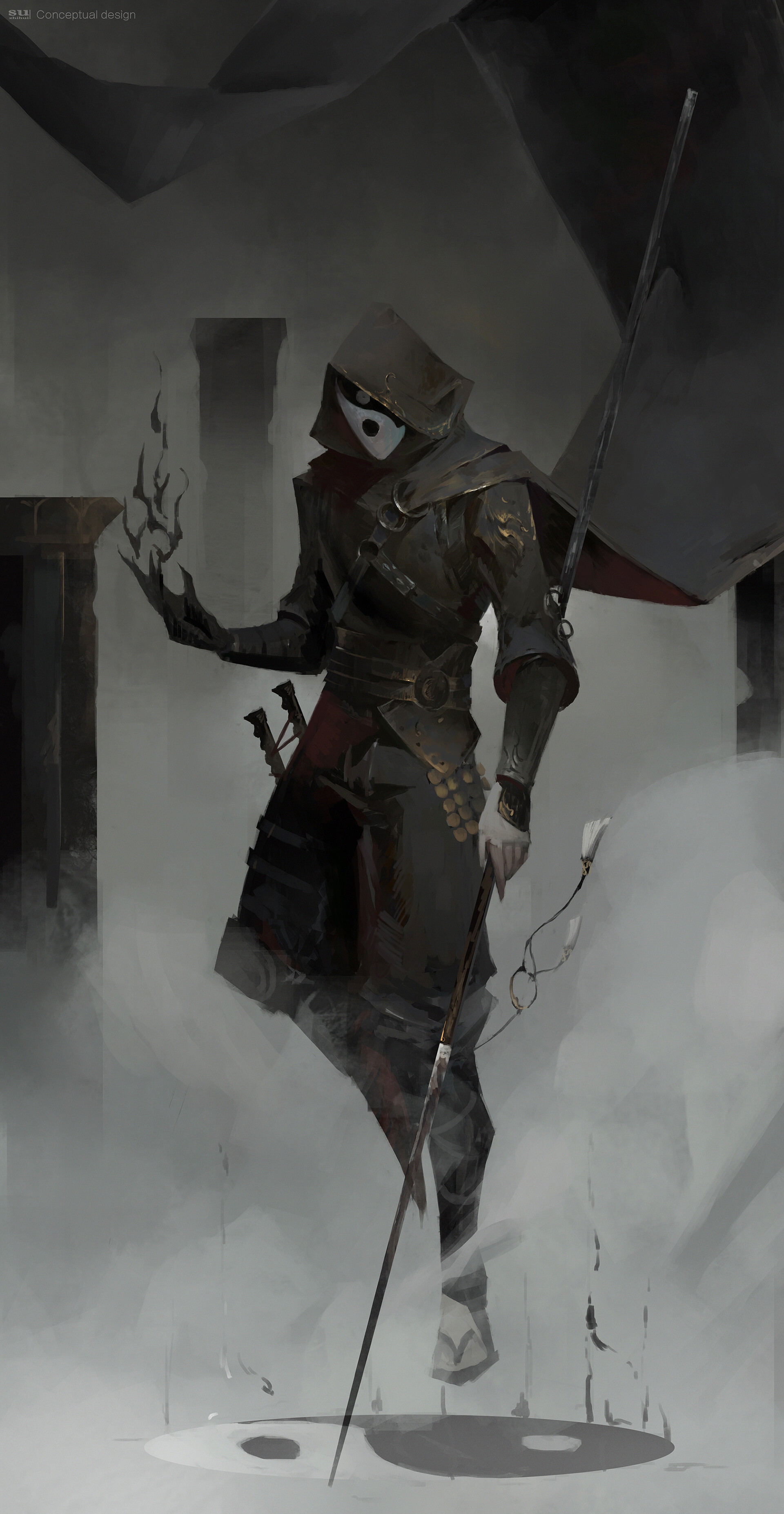
Cultivator
She sheathes her bloodstained weapon as she makes her way over to the waiting crowd of her next “challengers.”
“You sure you want to do this all at once?” she drawls. “It’ll be over much too quickly.”
The challengers all grip their weapons, faces menacing, bodies tensed. They startle as she drops her stance and places a hand on her blade.
With a smirk she unsheathes it once more, the movement a slow and deliberate show of carefully controlled grace.
The crowd blinks, their bodies rigid. The sight of her now shimmering blade gliding into its scabbard is the last thing they see as they fall to the ground in pieces, the metallic song of her weapon still ringing in their ears.
Ki: Energy Refined
A cultivator will learn early in their training that ki is created when they condense the arcane energies that make up the world around them. It can be absorbed into the body and refined in one's core, which normally resides just above the navel.
Breathing techniques are used to refine ki, and there are as many breathing techniques as actual techniques. Regardless of how it's gathered, ki is the driving force behind a cultivator's power. It is used to augment their bodies and the world around them much like magic. This energy has birthed a multitude of techniques that cultivators use to prove themselves.
However, a true cultivator is someone who not only uses ki, but becomes it. This is the true goal of all those who follow this path.
Masters of the Aura
Most cultivators begin their journey by manifesting an aura as this is central to a number of cultivator techniques. This aura is fueled by their ki and it's presence affects people and the immediate area around a cultivator.
A cultivator's aura is a force to be used in combat or outside of it. It is mentally and physically restrictive to their enemies, and a tool for diplomatic or coercive action to everyone else.
Devoted Bodies. Devoted Minds
A cultivator will spend their entire life, often resolved to die training or fighting, focusing on their abilities. They will dedicate themselves to a single technique, spending their time improving it and making it their own. They train by fighting and constantly looking for the moment inspiration hits, driving their techniques to new limits.
A cultivator must have a strong body to handle the stress that training and ki cycling puts on it. They must also have a mind just as strong to learn, improve, and apply what combat teaches.

Cultivator
| Level | Proficiency Bonus | Features | Ki Pool |
|---|---|---|---|
| 1st | +2 | Cultivator's Aura, Ki, Unarmored Defense | 1 |
| 2nd | +2 | Fighting Style | 2 |
| 3rd | +2 | Techniques, Technique Feature | 3 |
| 4th | +2 | Ability Score Increase | 4 |
| 5th | +3 | Extra Attack, Breakthrough | 5 |
| 6th | +3 | Aura Infusion | 6 |
| 7th | +3 | Technique Feature | 7 |
| 8th | +3 | Ability Score Increase | 8 |
| 9th | +4 | Of Sound Mind and Body | 9 |
| 10th | +4 | Auric Influence | 10 |
| 11th | +4 | Technique Feature | 11 |
| 12th | +4 | Ability Score Increase | 12 |
| 13th | +5 | Reforged Body | 13 |
| 14th | +5 | Aura Mastery | 14 |
| 15th | +5 | Technique Feature | 15 |
| 16th | +5 | Ability Score Increase | 16 |
| 17th | +6 | Cultivation Assault | 17 |
| 18th | +6 | Accelerated Infusion | 18 |
| 19th | +6 | Ability Score Increase | 19 |
| 20th | +6 | Ki Incarnate | 20 |
Creating a Cultivator
When creating a cultivator think about your characters background and their motivation. Becoming a cultivator is a path that takes dedication. Why is your character so dedicated to growing stronger? An unfortunate event? A role model? How did your character begin to learn their respective technique? Were they taught at a dojo with others, or under a master alone? It could even be as simple as a manuscript found in ruins.
What your cultivator is searching for, whether it be looming near or in the far future, can be important. Simple or not, something drives a cultivator to continue on their painful and arduous path.
Quick Build
You can make a cultivator quickly by following these suggestions. First, make Strength or Dexterity your highest ability score, depending on your choice of weapon, followed by Intelligence. Second, choose the Far Traveler Background.
Class Features
As a cultivator, you gain the following class features
Hit Points
- Hit Dice: 1d8 per cultivator level
- Hit Points at 1st Level: 8 + your Constitution modifier
- Hit Points at Higher Levels: 1d8 (or 5) + your Constitution modifier per cultivator level after 1st
Proficiencies
- Armor: Light armor, medium armor, shields
- Weapons: Simple weapons, martial weapons
- Tools: Calligrapher's Supplies
- Saving Throws: Intelligence, Constitution
- Skills: Choose three skills from Acrobatics, Athletics, Deception, History, Intimidation, Sleight of Hand, Stealth, Survival
Equipment
You start with the following equipment, in addition to the equipment granted by your background:
- (a) a martial weapon and a Shield or (b) two Martial Weapons
- (a) a Longbow and 20 arrows or (b) two handaxes
- (a) a scholar's pack or (b) an explorer’s pack
(DM Note) Why not Wisdom?
This question has two answers actually. First, this class being so close to monk I wanted to distance it a bit. B, anyone who's read a lot of cultivation fantasy is aware of how different cultivating is in each universe. While Wisdom would definitely fit in a lot of them I particularly enjoy the idea of knowledge based cultivation. That is not to say that you can't switch the Intelligence based stuff to Wisdom or even Strength. It's your world, have at it.
Cultivator's Aura
Your intense training and tempering of your body has left you with the ability to physically exude your skill and power, allowing you to coerce or even physically affect others. As long as you have at least 1 ki point remaining your aura is active with a range of 10 feet, and has the following abilities:
- You may make Charisma based skill checks using your Intelligence modifier.
- Enemies that make a saving throw while in your aura do so at a penalty equal to half your Intelligence modifier rounded down.
- Your movement speed increases by 5 feet.
You may dismiss and reactivate your aura as a bonus action, and it is automatically dismissed once you become unconscious.
Ki
Your cultivation has begun to afford you to access to the condensed form of pure energy. Your access to this energy is represented by your ki pool. Your cultivator level determines the amount of ki you have, as shown in the Ki Pool column of the cultivator table.
You can spend these points to fuel various techniques, stance abilities, and features. You start knowing three such features: Empowered Body, Relentless Pursuit, Spring Attack.
When you spend ki, that ki is unavailable until you finish a short or long rest, at the end of which you condense more ki, refilling your core.
Some of your technique and stance features require your target to make a saving throw to resist the feature’s effects. The saving throw DC is calculated as follows:
Cultivator Save DC
Empowered Body
You may spend a ki point to add your proficiency bonus to any Dexterity or Strength based skill check. If you are already proficient in the skill, then you instead double your proficiency bonus.
Relentless Pursuit
When an enemy adjacent to you would attempt to move, you may, as a reaction, spend a ki point to move up to your movement speed following that enemy.
Spring Attack
Whenever you take the dash action you may spend a ki point to make an attack as a bonus action.
Unarmored Defense
While you are not wearing any armor, your Armor Class equals 10 + your Dexterity modifier + your Intelligence modifier. You can use a Shield and still gain this benefit.
Fighting Style
At 2nd level, you adopt a particular style of fighting as your specialty. Choose a Fighting Style from the list of optional features. You can't take the same Fighting Style option more than once, even if you get to choose again.
Archery
You gain a +2 bonus to attack rolls you make with ranged weapons.
Close Quarters Shooter
When making a ranged attack while you are within 5 feet of a hostile creature, you do not have disadvantage on the attack roll. Your ranged attacks ignore half cover and three-quarters cover against targets within 30 feet of you. You have a +1 bonus to attack rolls on ranged attacks.
Defense
While you are wearing armor, you gain a +1 bonus to AC.
Dueling
When you are wielding a melee weapon in one hand and no other weapons, you gain a +2 bonus to damage rolls with that weapon.
Great Weapon Fighting
When you roll a 1 or 2 on a damage die for an attack you make with a melee weapon that you are wielding with two hands, you can reroll the die and must use the new roll, even if the new roll is a 1 or a 2. The weapon must have the two-handed or versatile property for you to gain this benefit.
Interception
When a creature you can see hits a target that is within 5 feet of you with an attack, you can use your reaction to reduce the damage the target takes by 1d10 + your proficiency bonus (to a minimum of 0 damage). You must be wielding a shield or a simple or martial weapon to use this reaction.
Thrown Weapon Fighting
You can draw a weapon that has the thrown property as part of the attack you make with the weapon. In addition, when you hit with a ranged attack using a thrown weapon, you gain a +1 bonus to the damage roll.
Two-Weapon Fighting
When you engage in two-weapon fighting, you can add your ability modifier to the damage of the second attack.
Unarmed Fighting
Your unarmed strikes can deal bludgeoning damage equal to 1d6 + your Strength modifier. If you strike with two free hands, the d6 becomes a d8. When you successfully start a grapple, you can deal 1d4 bludgeoning damage to the grappled creature. Until the grapple ends, you can also deal this damage to the creature whenever you hit it with a melee attack.
Techniques
You begin to devote your life to cultivating and perfecting one of many techniques. Choose a technique detailed at the end of the class description. Your choice grants you features at 3rd Level and again at 6th, 10th, and 14th levels.
Extra Attack
Beginning at 5th Level, you can Attack twice, instead of once, whenever you take the Attack action on Your Turn.
Breakthrough
At 5th level, you progress to the next step in your cultivation, strengthening certain aspects of your body. When you gain this feature you may choose one of two options:
- Your Speed increases by 5 feet.
- Your hit point maximum increases by 5.
You may choose either of these options again at 10th, 15th, and 20th level.
Aura Infusion
Upon reaching 6th level, you harness the beneficial aspects of your aura to accelerate your body's natural healing. As a bonus action you may spend 2 ki points to heal yourself for 2d4. You may instead use an action and 2 ki points to touch and heal another creature for 2d4.
This increases to 2d8 at 18th level.
Of Sound Mind and Body
At 9th level, your mastery over ki allows you to better safeguard yourself mentally and physically. When you are subjected to a spell or effect that allows you to make a Constitution or Intelligence saving throw to take only half damage, you may spend a ki point to instead take no damage if you succeed on the saving throw.
You do not gain the benefit of this ability when you are unconscious.
Auric Influence
Beginning at 10th level, your aura control has become subtle enough to continually influence those you would interact with. You may choose one additional Charisma based skill to gain proficiency in.
Additionally, whenever you make a Charisma based skill check, you can spend 1 ki point to reroll it and take the second result.


Reforged Body
When you reach 13th level, you begin to integrate materials into your cultivation to reforge your body, tempering it with the elements. You gain resistance to one damage type of your choice.
Aura Mastery
At 15th level, you become adept at manipulating your aura to gain a multitude of information from it, affect a larger area, or focus its effects on a single enemy. As an action you may extend the range of your aura to 30 feet until the end of your next turn. While the range is extended you are aware of any creatures, living or otherwise, within your aura. This ability does not tell you their location, only that they are within your aura.
You may choose to instead focus your aura on one creature to enhance its effect. You may choose only one target for your Culitvator's Aura ability within 30 feet and spend a ki point, the saving throw penalty increases by 1 and you have a bonus to your attacks to hit that creature equal to the total penalty. This ability lasts for a minute and can only be used once per long rest.
Cultivation Assault
Upon reaching 17th level, you learned to assail an enemy's core using your cultivation technique to damage and/or shatter it.
As long as you have at least 1 ki point, when you damage a creature with an attack, you can cause that attack to deal extra damage equal to half your Cultivator level. You may use this ability a number of times per long rest equal to your Intelligence modifier (minimum once).
Accelerated Infusion
At 18th level, the speed at which your aura heals you and others has increased. Your Aura Infusion healing increases to 2d8 and you may touch other creatures as a bonus action to heal them.
Ki Incarnate
Beginning at 20th level, you are ki made flesh. You may use ki features despite having no ki. Whenever you do so, take 1d4 unavoidable force damage per ki point you avoided spending.
Techniques
Iaijutsu
A master of the Iaijutsu spends their time standing or kneeling. Sitting is a past time for those asking to be killed. With bodies tensed like coiled springs, these cultivators are faster than lightning and just as deadly. Users of this technique have mastered the art of the sword draw to the point that most will never see the blade before their death. A speed born of talent, skill, or perseverance have made these cultivators some of the deadliest swordsman to hold a blade.
Flash Draw
While assuming either of your stances you may draw and sheathe one weapon as part of any and every attack you make. This weapon must deal slashing damage, and cannot have the heavy property. Enemies can also provoke opportunity attacks from you even if you haven't drawn this weapon.
Iai Dice
You gain a die called the Iai die that begins as a 1d4 but increases with your level as shown below. This die can only be used with weapons that fit the prerequisites of Flash Draw.
| Level | Die |
|---|---|
| 3 | 1d4 |
| 5 | 1d6 |
| 9 | 1d8 |
| 11 | 2d6 |
| 13 | 2d8 |
| 17 | 3d6 |
Stances
Starting at 3rd level, your technique allows you access to knowledge on how to use ki internally for defensive abilities and externally for offensive ones.
You can choose the external or internal stance before you roll for initiative, unless surprised. Entering or switching between stances is a bonus action. Unless otherwise noted, you can only use the abilities and benefits granted by each stance while you're in it. Most stances have static passives that are active while in that stance and activated abilities.
You are unable to use stances while you are incapacitated. If you are incapacitated while in a stance, you may regain either stance as a bonus action.
Internal Stance
-
If you have not moved since the beginning of your last turn, as your turn begins, you may spend a ki point to gain blindsight and reach equal to your aura range until you move or are moved.
-
You may take the dodge action as a bonus action as long as you have not moved and will not move this turn.
-
When you take the attack action, you may spend 1 ki point to gain a bonus to AC and saves equal to half your proficiency bonus rounded up, but you take an equal penalty to your attack rolls. This bonus and penalty lasts until the beginning of your next turn.
External Stance
-
You can spend 1 ki point to gain advantage on initiative when rolling initiative.
-
When in this stance, your AC is decreased by half your proficiency bonus, however, you deal additional damage equal to your Iai die.
-
If you would attack a creature that has not yet acted in combat you instead add your Iai die twice to the damage rolls.
Iai-goshi
Upon reaching 7th level, you master the first position of of this technique; using a single strike to fell an army. Once per short rest you may, as an action, make a single melee attack roll that affects every enemy within your reach.
Tachi-ai
When you reach 11th level, your practice has allowed you to master the next stance of this technique, capitalizing on your enemies mistakes. Enemies provoke opportunity attacks when they would leave any square in your reach.
Additionally, any attack rolls you make as a reaction deal an additional amount of weapon damage equal to your Iai die on a successful attack. While in external stance you would instead deal your Iai damage die twice.
Kennokabe
At 15th level, you have developed a skill that epitomizes the perfect defense and offense. You may spend 1 ki point to gain and take a reaction anytime one would be triggered. You may do this a number of times per long rest equal to your Intelligence modifier.
Additionally, when you are about to take damage from a spell, melee, or ranged attack roll, you may make a weapon attack as a reaction. This attack is always made at disadvantage if you are in external stance. If you roll higher than the attack roll you may roll your weapon damage adding your Iai dice, and subtract that from the damage you would take. If the damage is negated, you can redirect the attack back to its source, forcing your attacker to target itself with its attack using your attack roll.





Falling Phoenix
Cultivators learning the Falling Phoenix technique have a predilection for fire. Some particularly enjoy raining it from the heavens, and seize on any chance to do so.
Conjured Phoenix
Beginning at 3rd level, you are able to conjure a small, ever burning replica of this techniques namesake. You gain the cantrip Create Bonfire, and add your Intelligence modifier to the damage dealt by it. You add double your Intelligence modifier at level 5 and triple at level 11.
Stances
Starting at 3rd level, your technique allows you access to knowledge on how to use ki internally for defensive abilities and externally for offensive ones.
You can choose the external or internal stance before you roll for initiative, unless surprised. Entering or switching between stances is a bonus action. Unless otherwise noted, you can only use the abilities and benefits granted by each stance while you're in it. Most stances have static passives that are active while in that stance and activated abilities.
You are unable to use stances while you are incapacitated. If you are incapacitated while in a stance, you may regain either stance as a bonus action.
Internal Stance:
-
You gain resistance to fire damage as long as you are in this stance.
-
You may spend a ki point per creature as a reaction to give those creatures within your aura fire resistance as long as they remain within your aura and you remain in this stance.
External Stance:
-
You take unavoidable fire damage equal to your proficiency bonus every turn whenever you would enter this stance, or if you start or end your turn in this stance. You only take this damage once per turn.
-
When you would deal fire damage you double the number of those dice you roll. E.g. Create bonfire would deal 2d8 at 3rd level instead of 1d8.
Phoenix Fall
Starting at 7th level, you learn to rain a flock of phoenixes on a flock of foes. You may cast Burning Hands using 3 ki points.
Phoenix's Vestment
Upon reaching 11th level, you gain resistance to fire damage. Whenever you are in your internal stance you instead gain immunity to fire damage.
Additionally, your abilities ignore fire resistance, and treat fire immunity as fire resistance.
Winged Wildfire
At 11th level, your control over fire lends you potent and notable aspects of the phoenix. While in your external stance you gain fiery wings and a fly speed of 60 feet.
While in internal stance you may spend a ki point to cast Feather Fall a number of times per day equal to your Intelligence modifier.
Phoenix Arisen
Beginning at 15th level, you begin to personify every aspect of the powerful phoenix. When an attack would reduce you to 0 hit points, you may instead be reduced to 1 hit point and 0 ki remaining, and the attacker takes 2d8 + 1d8 fire damage per ki point you had left before you were reduced to 0. You also fall out of your current stance.
Once you use this feature, you cannot use it again until you take a long rest. The damage you deal increases to 2d10 +1d10 per ki point fire damage at level 17. This damage is not affected by the external stance.
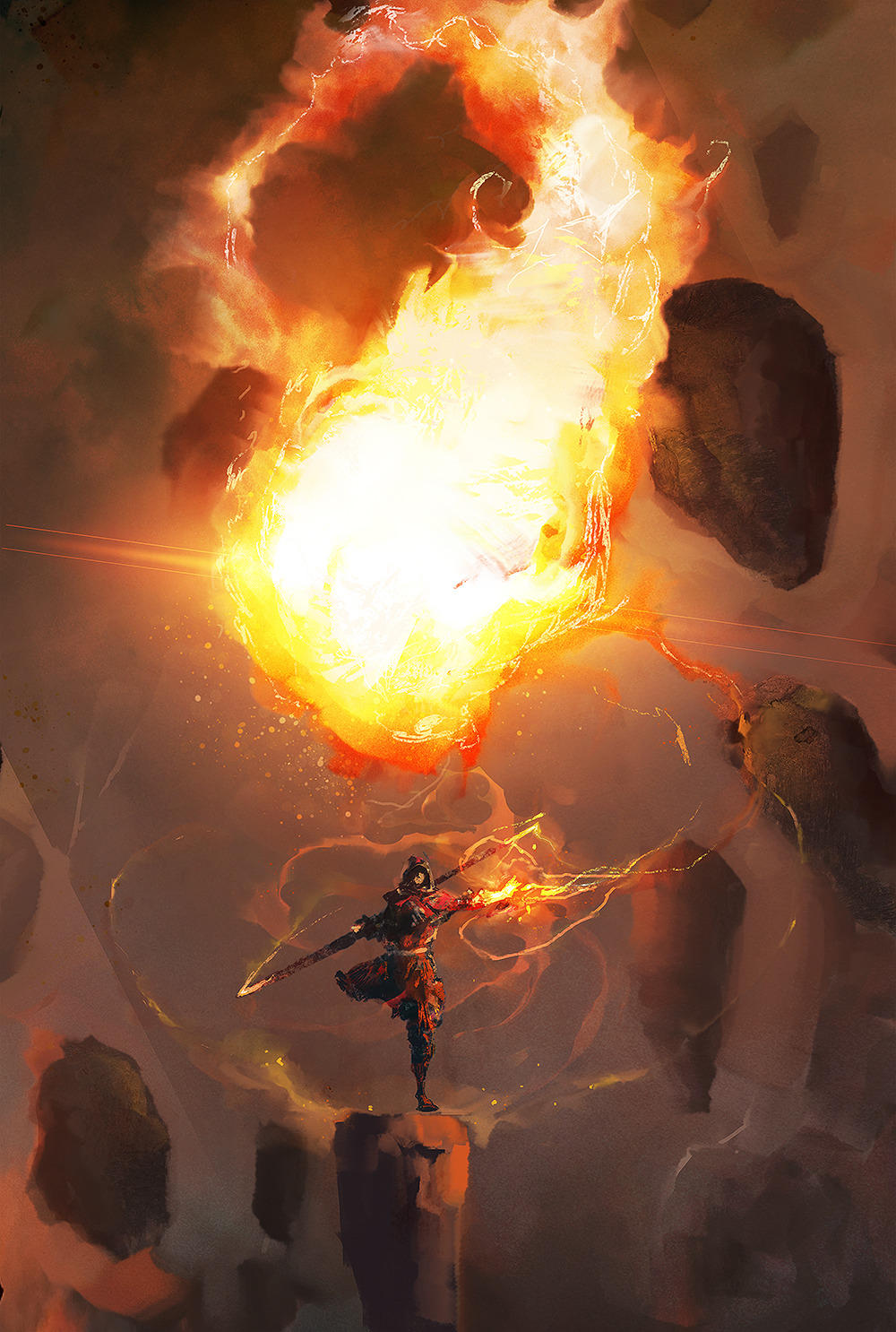
Flash Wind
Masters of this technique use the wind to devastating effect. Often seen as blurs moving across the battlefield, they are rarely stopping and constantly attacking. Users often augment themselves and the area around them using powerful winds generated or controlled by ki.
Windborne Fury
Starting at 3rd level, your mastery of air grants you a surprising celerity. When two weapon fighting, you may make your extra attack with the offhand weapon as part of the attack action instead of as a bonus action.
Stances
Starting at 3rd level, your technique allows you access to knowledge on how to use ki internally for defensive abilities and externally for offensive ones.
You can choose the external or internal stance before you roll for initiative, unless surprised. Entering or switching between stances is a bonus action. Unless otherwise noted, you can only use the abilities and benefits granted by each stance while you're in it. Most stances have static passives that are active while in that stance and activated abilities.
You are unable to use stances while you are incapacitated. If you are incapacitated while in a stance, you may regain either stance as a bonus action
Internal Stance:
-
Your movement and the movement speed of all allies within your aura is increased by 10 ft. This increases to 20ft at level 10. Allies moving through your aura gain half of this bonus upon leaving until the end of the turn.
-
You may use Acrobatics for high jumping and long jumping.
-
You may dash as a bonus action. When doing so, your movement does not provoke opportunity attacks.
External Stance:
You may spend a ki point to activate one of the listed effects as a bonus action:
-
Wind Ward All enemies within your aura range make a strength saving throw. On a failure, they take 1d6 bludgeoning damage and are pushed out of your aura, and they take half damage and are not pushed on a success. This damage is increased to 2d6 at level 10.
-
Airbind Choose an enemy within your aura. They must make a strength saving throw. They take 2d6 bludgeoning damage and their movement is reduced to 0 on a failure. On a success, they take half damage and take no reduction to their movement. This damage is increased to 4d6 at level 10.
-
Storm Pulse Choose an enemy within 30 ft. They must make a strength saving throw or be pushed 20 ft directly away from you.
Enemies not completely in your aura have advantage on saves against these effects.
Summer Storm
Beginning at 7th level, you become the wind itself. As a reaction, whenever an enemy ends their turn, you may take an extra turn. During this turn, your movement does not provoke attacks of opportunity, and your movement speed is doubled.
Additonally, a warding breeze guards you, blowing away any mist or gases such as Stinking Cloud or Fog Cloud. At the end of this turn, you take 1 level of exhaustion. Once you have used this feature, you may not do so again until you take a long rest.
Tailwind
At 11th level, you leverage the forces generated by your aura to propel yourself through the skies. You gain a fly and hover speed equal to your movement speed when in internal stance.
Release the Cyclone
Upon reaching 15th level, you may instantly call upon the destructive power of a storm. You may spend 5 ki points to cast Whirlwind. You may spend an additional 2 ki points to become immune to the effects of the spell. You may use this ability once per long rest.

Aura Master
Stances
Starting at 3rd level, your technique allows you access to knowledge on how to use ki internally for defensive abilities and externally for offensive ones.
You can choose the external or internal stance before you roll for initiative, unless surprised. Entering or switching between stances is a bonus action. Unless otherwise noted, you can only use the abilities and benefits granted by each stance while you're in it. Most stances have static passives that are active while in that stance and activated abilities.
You are unable to use stances while you are incapacitated. If you are incapacitated while in a stance, you may regain either stance as a bonus action
Internal Stance
- All attacks made by creatures other than you from within your aura do less damage equal to your proficiency bonus.
External Stance
- All attacks made by creatures other than you from within your aura do additional damage of the same type equal to your proficiency bonus.
Auric Finesse
Begginning at 3rd level, your aura usage has become fine tuned enough to last longer than normal. You may keep your aura going while at 0 ki points for a number of rounds equal to your proficiency bonus x 3. These rounds do not need to be consecutive, however, it takes a bonus action to dismiss your aura.
Magnetic Terrain
Also at 3rd level, you learn to crash your aura against your foes mental defenses, stopping them in their tracks. You may spend 1 ki point as a bonus action to alter your aura until the end of your next turn.
When in external stance, all creatures attempting to enter your aura must succeed on an Intelligence saving throw, or be unable to enter until the end of your next turn.
When in internal stance, all creatures attempting to exit your aura must succeed on an Intelligence saving throw, or be unable to exit until the end of your next turn.
Aura Shriek
At 7th level, you are able to send a discordant chorus of thought and emotion through yourself and out your aura. As an action, you may spend 2 ki points to cause your aura to attack all creatures inside it. You cast Tasha's Mind Whip on everyone in your aura, including yourself. You automatically pass this save.
Any creature concentrating on a spell makes their concentration check with disadvantage. On a successful save, creatures take half damage and gain no disadvantage. The damage of this spell increases to 4d6 at 12th level and 5d6 at 17th.
Finger on the Scales
Starting at 11th level, your control over your aura and anything in it begins to peak. Allies have advantage on Intelligence saving throws while in your aura.
While in internal stance, you may spend a ki point per ally in your aura, as a reaction, to give them advantage on a saving throw imposed by a spell.
While you are in external stance, attacks cannot be made at disadvantage within your aura.
Dominion
Upon reaching 15th level, you have gained complete control over the reality inside your aura. You take less damage from all sources equal to your proficiency bonus while you are not incapacitated. Furthermore, when you hit with a weapon attack, you do additional weapon damage equal to your proficiency bonus.
Additionally, you are no longer affected by your stance abilities and, as a bonus action, you may spend a ki point per ally to have them ignore your external or internal stance ability until the end of their next turn.

Ki Fortress
Ki Fortress adepts are taught that the best offense is the most perfect defense. They learn that the shield should be the first weapon you grab, not the sword. Disciples of the technique strive to become and impenetrable wall between those who would do harm.
Ki Shields
Upon reaching 3rd level, you begin to steer your cultivation towards the arts of shield usage and creation. Shields are now a d6 light versatile (d8) weapon for you. Magic shields that have bonuses to AC also apply the same bonuses to any attack and damage rolls you make with those shields.
Furthermore, you gain the ability to cast spells, using your shield as a magical foci. You now know the cantrips Blade Ward and True Strike, and you may target any number of creatures within your aura whenever you cast them.
Lastly, you may spend 1 ki point and cast the 1st level spells from the list below using Intelligence as your spellcasting modifier. You may cast 2nd level spells from the list below using 2 ki points at 9th level, 3rd level spells using 3 ki points at 13th level, and 4th level spells using 4 ki points at 19th level. You may cast any spell from the list below as a bonus action.
When you gain the ability to cast higher level spells, you may spend a ki point per spell level to cast lower level spells at your highest level.
| Spell Level | Spells |
|---|---|
| 1 | Shield, Shield of Faith, Tenser's Floating Disk |
| 2 | Immovable Object, Warding Bond, Warding Wind |
| 3 | Intellect Fortress, Spirit Guardian, Wall of Sand |
| 4 | Fire Shield, Stoneskin, Wall of Fire |
Shield Legerdemain
Beginning at 3rd level, you master the ability to harden sections of your aura, granting protection to yourself or those around you. You may cast Shield as a reaction when an ally within your aura is about to be hit by an attack. When you cast the spell in such a way, you may target the ally with the spell.
Force Shields
At 7th level, your mastery has extended to physical shields as well as metaphysical. You may make a thrown weapon attack with a shield, with a range of 30/90 using strength for attack and damage rolls. You do not benefit from the AC bonuses on the shield while it is not on your person, and the shield returns to your hand on a successful hit.
Additionally, you may apply the bonuses to AC granted by a single shield on your person to your saves.
Last Bastion
Upon reaching 11th level, saving your allies has become your prerogative. You may use a bonus action to brace yourself. Until the end of your next turn, your movement speed becomes 0, you act as three-quarters cover for a creature of medium size or smaller, and you gain a +2 to your AC and saving throws.
Destructive Shielding
Starting at 15th level, your shield usage has reached a deadly efficiency. When you hit an enemy with an attack using a shield, you may use up to 3 ki points to do an extra 1d10 damage, plus 1d10 per ki point used after the 1st. Additionally, when you land a critical hit on an enemy, you may do an extra attack as part of that attack action.

Taiji
Known as the technique that pursues the oneness of everything. The ultimate whole of every state. Taiji disciples practice balancing opposing forces to achieve perfect harmony with the universe. These disciples, while seemingly docile in their slow and inexorable practice of forms, use their mastery of these skills with extreme and deadly efficiency.
Stances
Starting at 3rd level, your technique allows you access to knowledge on how to use ki internally for defensive abilities and externally for offensive ones.
You can choose the external or internal stance before you roll for initiative, unless surprised. Entering or switching between stances is a bonus action. Unless otherwise noted, you can only use the abilities and benefits granted by each stance while you're in it. Most stances have static passives that are active while in that stance and activated abilities.
You are unable to use stances while you are incapacitated. If you are incapacitated while in a stance, you may regain either stance as a bonus action
Internal Stance
-
You gain the ability to cast absorb elements while in this stance. You may do so once per short rest. You gain a second use at level 10.
-
When you take fire or cold damage, you may, as a reaction, reduce this damage by 1d10 + Intelligence modifier. When you do so, you regain a number of ki points equal to half your proficiency modifier rounded down. If you reduce the elemental damage taken to 0, you regain 1 extra ki point.
-
All allies within your aura gain advantage on saves from spells dealing fire or cold damage.
External Stance
You lose 1 ki point whenever you begin or end a turn in this stance (max 1 per turn).
While in this stance:
-
You may use your Intelligence modifier for unarmed attack rolls.
-
You may add your Intelligence modifier as additional damage for unarmed attack rolls.
-
Your attacks within your aura ignore half and three-quarters cover.
-
The range of your attacks increase to the range of your aura.
-
Your attacks may use fire or cold damage instead of their original damage type.
At 6th level, all weapon attacks while in this stance do an extra 1d4 fire or cold damage. This increases to 1d6 at 12th level.
Duality
Upon reaching 7th level, you grow your knowledge of the whole of life's many aspects, allowing you to harness the world's numerous dualities. All stance abilities referring to fire and cold damage may now be changed to poison and acid, or lightning and thunder damage. At 10th level, all stance abilities referring to fire and cold damage may now also be changed to radiant and necrotic, or psychic and force damage.
You can only choose one set at a time and you may choose a different set after a short or long rest.
Elemental Hurricane
At 7th level, you may become one with the elements. Once per long rest, as a bonus action, you may benefit from the effects of both stances without losing ki points for one minute. However, you gain vulnerability to your chosen elements as well.
Balance in Nature
Beginning at 11th level, you are able to enact your will upon elemental forces around you. You can cast Absorb Elements when an ally would take elemental damage. When you cast the spell in this way, the effects of absorb elements apply to all creatures within your aura range.
Furthermore, you may make an extra unarmed attack as a bonus action, as long as you have spent a minimum of 1 ki point this turn.
Wuji
Starting at 15th level, you have reached the pinnacle of balance and control. While in external stance, your attacks ignore your chosen elements damage resistances, and you treat those same immunities as resistances.
While in internal stance, as a reaction, if a saving throw would have an ally take half damage on a pass, you may spend a ki point per ally in your aura to instead have them take no damage on a success. You may use this ability a number of times per day equal to your Intelligence modifier.







Ki Caster
Ki casting users are well known for their inexhaustible ammunition, ranged, and close quarters combat prowess. What they are most known for, however, is their Ki Construct techniques. Arrows made from their ambient auras that host a slew of devastating and destructive abilities. Sometimes hailed as walking ballistas, these cultivators make a name for themselves quickly on any and every battlefield.
Aura Cast
Starting at 3rd level, you learn to utilize your aura to create physical ammunition. As a part of each of your attacks, you may summon an arrow to attack with. This arrow is magical for the purposes of overcoming resistances, deals 2d4 force damage regardless of how you attack with it. This arrow requires a ranged 2-handed weapon to shoot. The arrow’s damage die increases to 2d6 at level 10. The arrow dematerialises upon hitting or missing a target, and making one when another exists causes the older one to disappear, unless stated otherwise.
Additionally, when you ready an attack, the arrow does an extra 1d10 damage. The arrow is lost if it is not shot by the end of your next turn, and the extra damage is wasted.
Constructs
Beginning at 3rd level, you are able to apply aura configurations to your arrows when you create them.
When you make a ranged attack roll against an enemy using your aura cast feature, you may infuse your attack with additional spiritual energy. You gain additional abilities called Constructs, which may be applied to ranged attacks.
Once a turn, when you make a ranged attack roll against an enemy, you may spend 1 ki point to infuse the attack with a construct. At 9th level, you may spend 2 ki points to apply 2 constructs to a single attack, and at 17th level you may spend 3 ki points to apply 3 constructs to a single attack.
You know 3 constructs at 3rd level from the list at the end of this subclass, and learn one more at 9th and 17th level.
Point-Blank Shot
At 7th level, you learn how to make arrows even more lethal in close quarters. Once per short rest, you may make an attack roll with a range of 5 feet. On a hit, the attack is considered a critical hit.
This feature does not double the damage from Constructs. At 17th level, you may add double your Intelligence modifier to the damage roll.
Sharp Shooting
Beginning at 11th level, your skill and talent at shooting lends you a deadly accuracy. You may use your Intelligence modifier for attack and damage rolls. If you do so while attacking without using a construct, you regain 1 ki point on a d20 roll of 15 or higher.
Additionally, while attacking with your Intelligence modifier, you may double that modifier for damage. You can use this a number of times equal per day equal to your proficiency bonus.
Suppressing Fire
Starting at 15th level, you've become a spellcaster's bane. As a reaction, when an enemy within your weapon's range casts a spell, you may make a ranged attack roll against them. This attack cannot be made at advantage. If the attack hits, you do no damage, but the enemy must make a concentration save as if it were concentrating on a spell with a DC equal to your cultivator save DC. On a fail, the spell fails, and the slot is wasted. You may do this twice per long rest.
Constructs
Echo Arrow
If you hit an enemy with this arrow then you may choose another enemy in range. If the chosen enemy or the original target takes damage before the end of your next turn, the other takes additional damage equal to your arrow damage die.
Fester Shot
When you damage an enemy with a ranged attack, you reduce that enemy’s max hit points by the same amount. This effect ends after a long rest. At 10th level, this attack deals an additional 1d4 unavoidable weapon damage at the beginning of the enemy's turn and reduces their max hit points by the same amount. The damage ends if the enemy has not been hit by one of your arrows for 1 round.
Brake Arrow
When an enemy is hit by this arrow their movement speed is reduced by 15 feet. This effect stacks with itself and goes away at the end of its next turn. At 10th level, if the target fails a Dexterity save, the affected enemy may not move using legendary actions.
Mesmer Arrow
If this arrow hits a creature then the target makes a Wisdom saving throw or is charmed by you until the start of your next turn. A creature who succeeds on this check is immune to this effect for 24 hours.
Cannon Cast
When this arrow strikes a creature or surface, the target and enemies within 10ft take an additional 1d6 force damage and are knocked prone. A successful Strength saving throw negates the prone condition. This arrow deals double damage to structures. At 10th level this damage increases to 2d6.
9th level Constructs
Drill Tip
This arrow can be shot through stone or wood no thicker than 5 feet. Additionally, when shot directly at a creature, this arrow can pierce a number of added targets equal to your Intelligence mod. Each additional target must be directly behind the first. When shot this way, each enemy hit takes an additional 1d6 damage.
Aura Burst
If an enemy hit by this arrow is in your aura they take an additional 3d6 weapon damage.
17th level Constructs
Aura Suspension
When you fire this shot you may instead have it hang within your aura. At the beginning of each of your turns this arrow will automatically fire at the closest enemy. Each shot takes the same amount of ki and has the same constructs as the first shot. You may end this ability as a bonus action.
Named Arrow
You may take a penalty to your attack roll to target specific body parts with this shot.
- Torso -2 penalty to push the target back 10 feet.
- Legs -3 penalty to reduce targets movement speed to 0 until the end of their next turn. A successful Dexterity save reduces this to half their movement speed.
- Arms -4 penalty to give the target disadvantage on all attacks for 1 minute. They make a Constitution save at the end of each turn to end this effect.
- Head -5 penalty and a Constitution save to stun the target for 2 turns. The target may make another Constitution save at the end of each turn to end this effect.

Multiclassing
Should you want to multiclass into Cultivator, the prerequisites and proficiencies are listed below:
* Prerequisite: 13 Intelligence and 13 Strength or Dexterity
- Proficiencies gained: Light armor, Medium armor, Shields, Simple weapons, Martial weapons
Artist Credits (in order of appearance)
- q by zhihui Su
- Samurai by Sketchjitsu
- Dagger Man by amanohana925
- Deadly Demon by Zarory
- Reigning Fire by Cobaltplasma
- Mu Yanling by Yongjae Choi
- Black Hole by Thomas Karlsson
- Teyo by Magali Villeneuve
- Yin/Yang by Sagong Ji Cheol
- Star by Jane Katsubo
- Arcane Archer by Rigrena Sanja Grbic
- Swordsman by Loiza.Chen