
Contents
-
70Fighter
-
88Monk
- 92Way of the Astral Self
- 93Way of the Boulder
- 94Way of the Cobalt Soul
- 95Way of the Drunken Master
- 96Way of the Eternal Spirit
- 97Way of the Flowing River
- 98Way of the Four Elements
- 101Way of the Hurricane
- 102Way of the Inner Eye
- 103Way of the Kensei
- 104Way of the Long Death
- 105Way of the Meridian
- 106Way of the Open Hand
- 106Way of the Shadow
- 107Way of the Soul Knife
- 108Way of the Sun Soul
- 109Way of the Wilds
-
110Paladin
Classes
Adventurers are extraordinary people, driven by a thirst for excitement into a life that others would never dare lead. They are heroes, compelled to explore the dark places of the world and take on the challenges that lesser women and men can’t stand against.
Class is the primary definition of what your character can do. It’s more than a profession; it’s your character’s calling. Class shapes the way you think about the world and interact with it and your relationship with other people and powers in the multiverse. A fighter, for example, might view the world in pragmatic terms of strategy and maneuvering, and see herself as just a pawn in a much larger game. A cleric, by contrast, might see himself as a willing servant in a god’s unfolding plan or a conflict brewing among various deities. While the fighter has contacts in a mercenary company or army, the cleric might know a number of priests, paladins, and devotees who share his faith.
Your class gives you a variety of special features, such as a fighter’s mastery of weapons and armor, and a wizard’s spells. At low levels, your class gives you only two or three features, but as you advance in level you gain more and your existing features often improve. Each class entry in this chapter includes a table summarizing the benefits you gain at every level, and a detailed explanation of each one.
Adventurers sometimes advance in more than one class. A rogue might switch direction in life and swear the oath of a paladin. A barbarian might discover latent magical ability and dabble in the sorcerer class while continuing to advance as a barbarian. Elves are known to combine martial mastery with magical training and advance as fighters and wizards simultaneously. Optional rules for combining classes in this way, called multiclassing, appear in chapter 6.
Thirteen classes — listed in the Classes table — are found in almost every D&D world and define the spectrum of typical adventurers.





Barbarian
A tall human tribesman strides through a
blizzard, draped in fur and hefting his axe.
He laughs as he charges toward the frost
giant who dared poach his people’s
elk herd.
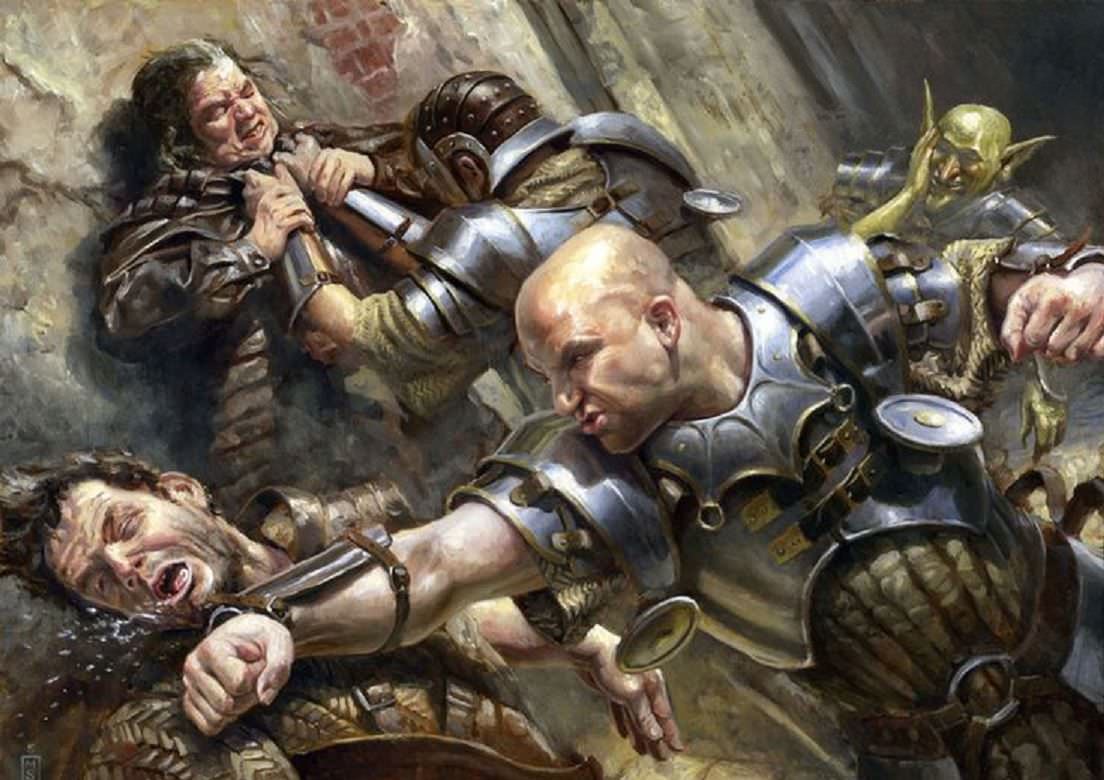
A half-orc snarls at the latest
challenger to her authority over their
savage tribe, ready to break his neck with her bare hands as she did to the last six rivals.
Frothing at the mouth, a dwarf slams his helmet into the face of his drow foe, then turns to drive his armored elbow into the gut of another.
These barbarians, different as they might be, are defined by their rage: unbridled, unquenchable, and unthinking fury. More than a mere emotion, their anger is the ferocity of a cornered predator, the unrelenting assault of a storm, the churning turmoil of the sea.
For some, their rage springs from a communion with fierce animal spirits. Others draw from a roiling reservoir of anger at a world full of pain. For every barbarian, rage is a power that fuels not just a battle frenzy but also uncanny reflexes, resilience, and feats of strength.
Primal Instinct
People of towns and cities take pride in how their civilized ways set them apart from animals, as if denying one’s own nature was a mark of superiority. To a barbarian, though, civilization is no virtue, but a sign of weakness. The strong embrace their animal nature — keen instincts, primal physicality, and ferocious rage. Barbarians are uncomfortable when hedged in by walls and crowds. They thrive in the wilds of their homelands: the tundra, jungle, or grasslands where their tribes live and hunt.
Barbarians come alive in the chaos of combat. They can enter a berserk state where rage takes over, giving them superhuman strength and resilience. A barbarian can draw on this reservoir of fury only a few times without resting, but those few rages are usually sufficient to defeat whatever threats arise.
A Life of Danger
Not every member of the tribes deemed “barbarians” by scions of civilized society has the barbarian class. A true barbarian among these people is as uncommon as a skilled fighter in a town, and he or she plays a similar role as a protector of the people and a leader in times of war. Life in the wild places of the world is fraught with peril: rival tribes, deadly weather, and terrifying monsters. Barbarians charge headlong into that danger so that their people don’t have to.
Their courage in the face of danger makes barbarians perfectly suited for adventuring. Wandering is often a way of life for their native tribes, and the rootless life of the adventurer is little hardship for a barbarian. Some barbarians miss the close-knit family structures of the tribe, but eventually find them replaced by the bonds formed among the members of their adventuring parties.
Creating a Barbarian
When creating a barbarian character, think about where your character comes from and his or her place in the world. Talk with your DM about an appropriate origin for your barbarian. Did you come from a distant land, making you a stranger in the area of the campaign? Or is the campaign set in a rough-and-tumble frontier where barbarians are common?
What led you to take up the adventuring life? Were you lured to settled lands by the promise of riches? Did you join forces with soldiers of those lands to face a shared threat? Did monsters or an invading horde drive you out of your homeland, making you a rootless refugee? Perhaps you were a prisoner of war, brought in chains to “civilized” lands and only now able to win your freedom. Or you might have been cast out from your people because of a crime you committed, a taboo you violated, or a coup that removed you from a position of authority.
The Barbarian
| Level | Proficiency Bonus | Features | Rages | Rage Damage |
|---|---|---|---|---|
| 1st | +2 | Rage, Unarmored Defense | 2 | d4 |
| 2nd | +2 | Reckless Attack, Danger Sense or Survival Instincts | 2 | d4 |
| 3rd | +2 | Primal Path | 3 | d4 |
| 4th | +2 | Ability Score Improvement | 3 | d4 |
| 5th | +3 | Extra Attack, Fast Movement or Instinctive Pounce | 3 | d6 |
| 6th | +3 | Path Feature | 4 | d6 |
| 7th | +3 | Feral Instinct | 4 | d6 |
| 8th | +3 | Ability Score Improvement | 4 | d6 |
| 9th | +4 | Brutal Critical (1 die) | 4 | d6 |
| 10th | +4 | Path Feature | 4 | d6 |
| 11th | +4 | Relentless Rage | 4 | d8 |
| 12th | +4 | Ability Score Improvement | 5 | d8 |
| 13th | +5 | Brutal Critical (2 dice) | 5 | d8 |
| 14th | +5 | Path Feature | 5 | d8 |
| 15th | +5 | Persistent Rage | 5 | d8 |
| 16th | +5 | Ability Score Improvement | 5 | d8 |
| 17th | +6 | Brutal Critical (3 dice) | 6 | d10 |
| 18th | +6 | Indomitable Might | 6 | d10 |
| 19th | +6 | Ability Score Improvement | 6 | d10 |
| 20th | +6 | Primal Champion | Unlimited | d10 |
Quick Build
You can make a barbarian quickly by following these suggestions. First, put your highest ability score in Strength, followed by Constitution. Second, choose the outlander background.
Class Features
As a barbarian, you gain the following class features.
Ability Score Improvement
At first level you can choose to increase your Strength or Constitution score by 1.
Hit Points
Hit Dice: 1d12 per barbarian level
Hit Points at 1st Level: 12 + your Constitution modifier + racial bonus
Hit Points at Higher Levels: 1d12 (or 6) + your Constitution modifier per barbarian level after 1st
Proficiencies
Armor: Light armor, medium armor, shields
Weapons: Simple weapons, martial weapons
Tools: None
Saving Throws: Strength, Constitution
Skills: Choose two from Animal Handling, Athletics, Intimidation, Nature, Perception, and Survival
Equipment
You start with the following equipment, in addition to the equipment granted by your background:
- (a) a greataxe or (b) any martial melee weapon
- (a) two handaxes or (b) any simple weapon
- An explorer’s pack and four javelins
Rage
In battle, you fight with primal ferocity. On your turn, you can enter a rage as a bonus action.
While raging, you gain the following benefits if you aren’t wearing heavy armor:
- You have advantage on Strength checks and Strength saving throws.
- When you make a melee weapon attack using Strength, you gain a bonus to the damage roll that increases as you gain levels as a barbarian, as shown in the Rage Damage column of the Barbarian table.
- You have resistance to bludgeoning, piercing, and slashing damage.
If you are able to cast spells, you can’t cast them or concentrate on them while raging.
Your rage lasts for 1 minute. It ends early if you are knocked unconscious or if your turn ends and you haven’t attacked a hostile creature since your last turn or taken damage since then. You can also end your rage on your turn as a bonus action.
Once you have raged the number of times shown for your barbarian level in the Rages column of the Barbarian table, you must finish a long rest before you can rage again.
Unarmored Defense
While you are not wearing any armor, your Armor Class equals 10 + your Strength modifier + your Constitution modifier. You can use a shield and still gain this benefit.
Reckless Attack
Starting at 2nd level, you can throw aside all concern for defense to attack with fierce desperation. When you make your first attack on your turn, you can decide to attack recklessly. Doing so gives you advantage on melee weapon attack rolls using Strength during this turn, but attack rolls against you have advantage until your next turn.
Danger Sense or Survival Instincts
At 2nd level,you have advantage on Dexterity saving throws against effects that you can see, such as traps and spells. To gain this benefit, you can’t be blinded, deafened, or incapacitated.
or
You become proficient in your choice of two of the following skills: Animal Handling, Medicine, Nature, Perception, or Survival.
Your proficiency bonus is doubled for any ability check you make that uses either of those skills
Primal Path
At 3rd level, you choose a path that shapes the nature of your rage. Choose the Path of the Berserker, the Path of the Totem Warrior, Path of the Battlerager, Path of the Ancestral Guardian, Path of the Storm Herald, or Path of the Zealot, all detailed at the end of the class description. Your choice grants you features at 3rd level and again at 6th, 10th, and 14th levels.
Ability Score Improvement
When you reach 4th level, and again at 8th, 12th, 16th, and 19th level, you can increase one ability score of your choice by 2, or you can increase two ability scores of your choice by 1. As normal, you can’t increase an ability score above 20 using this feature.
Extra Attack
Beginning at 5th level, you can attack twice, instead of once, whenever you take the Attack action on your turn.
Fast Movement or Instinctive Pounce
Starting at 5th level, your speed increases by 10 feet while you aren’t wearing heavy armor.
or
When a creature ends its turn within 15 feet of you, you can use your reaction to move up to half your speed to a space closer to the creature. This movement doesn’t provoke opportunity attacks.
Feral Instinct
By 7th level, your instincts are so honed that you have advantage on initiative rolls.
Additionally, if you are surprised at the beginning of combat and aren’t incapacitated, you can act normally on your first turn, but only if you enter your rage before doing anything else on that turn.
Brutal Critical
Beginning at 9th level, you can roll one additional weapon damage die when determining the extra damage for a critical hit with a melee attack.
This increases to two additional dice at 13th level and three additional dice at 17th level.
Relentless Rage
Starting at 11th level, your rage can keep you fighting despite grievous wounds. If you drop to 0 hit points while you’re raging and don’t die outright, you can make a DC 10 Constitution saving throw. If you succeed, you drop to 1 hit point instead.
Each time you use this feature after the first, the DC increases by 5. When you finish a short or long rest, the DC resets to 10.
Persistent Rage
Beginning at 15th level, your rage is so fierce that it ends early only if you fall unconscious or if you choose to end it.
Indomitable Might
Beginning at 18th level, if your total for a Strength check is less than your Strength score, you can use that score in place of the total.
Primal Champion
At 20th level, you embody the power of the wilds. Your Strength and Constitution scores increase by 4. Your maximum for those scores is now 24.
Primal Paths
Rage burns in every barbarian’s heart, a furnace that drives him or her toward greatness. Different barbarians attribute their rage to different sources, however. For some, it is an internal reservoir where pain, grief, and anger are forged into a fury hard as steel. Others see it as a spiritual blessing, a gift of a totem animal.
Path of the Ancestral Guardian
Some barbarians hail from cultures that revere their ancestors. These tribes teach that the warriors of the past linger in the world as mighty spirits, who can guide and protect the living. When a barbarian who follows this path rages, the barbarian contacts the spirit world and calls on these guardian spirits for aid.
Barbarians who draw on their ancestral guardians can better fight to protect their tribes and their allies. In order to cement ties to their ancestral guardians, barbarians who follow this path cover themselves in elaborate tattoos that celebrate their ancestors’ deeds. These tattoos tell sagas of victories against terrible monsters and other fearsome rivals.
Ancestral Protectors
Starting when you choose this path at 3rd level, spectral warriors appear when you enter your rage. While you’re raging, the first creature you hit with an attack on your turn becomes the target of the warriors, which hinder its attacks. Until the start of your next turn, that target has disadvantage on any attack roll that isn’t against you, and when the target hits a creature other than you with an attack, that creature has resistance to the damage dealt by the attack. The effect on the target ends early if your rage ends.
Spirit Shield
Beginning at 6th level, the guardian spirits that aid you can provide supernatural protection to those you defend. If you are raging and another creature you can see within 30 feet of you takes damage, you can use your reaction to reduce that damage by 2d6.
When you reach certain levels in this class, you can reduce the damage by more: by 3d6 at 10th level and by 4d6 at 14th level.
Consult the Spirits
At 10th level, you gain the ability to consult with your ancestral spirits. When you do so, you cast the augury or clairvoyance spell, without using a spell slot or material components. Rather than creating a spherical sensor, this use of clairvoyance invisibly summons one of your ancestral spirits to the chosen location. Wisdom is your spellcasting ability for these spells.
After you cast either spell in this way, you can’t use this feature again until you finish a short or long rest.
Vengeful Ancestors
At 14th level, your ancestral spirits grow powerful enough to retaliate. When you use your Spirit Shield to reduce the damage of an attack, the attacker takes an amount of force damage equal to the damage that your Spirit Shield prevents.
Path of the Battlerager
Known as Kuldjargh (literally “axe idiot”) in Dwarvish, battleragers are dwarf followers of the gods of war and take the Path of the Battlerager. They specialize in wearing bulky, spiked armor and throwing themselves into combat, striking with their body itself and giving themselves over to the fury of battle.
Restriction: Dwarves Only
Only dwarves and half-dwarves can follow the Path of the Battlerager. The battlerager fills a particular niche in dwarven society and culture.
Bonus Proficiencies
When you adopt the Path of the Battlerager at 3rd level, you gain proficiency with smith's tools and heavy armor. You can also rage while wearing heavy armor with no drawbacks.
Battlerager Armor
You have taken up a rare fighting style that incorporates your armor as a weapon. Starting at 3rd level, when you finish a long rest, you can use smith's tools to affix spikes to a set or armor that you touch, turning it into a set of Spiked Armor. For you, Spiked Armor is a martial melee weapon with a reach of 5 feet that deals 1d4 piercing damage on hit.
The damage of your Spiked Armor increases as you gain levels in this class, at 6th level (1d6) and 14th level (1d8).
While you are raging, you can use a bonus action on your turn to make an attack with your Spiked Armor. In addition, when you successfully initiate a grapple, the target takes the damage of your Spiked Armor attack.
Reckless Abandon
Beginning at 6th level, when you are below half health you gain advantage on your melee weapon attacks.
In addition, you can turn magical armor into Spiked Armor.
Battlerager Charge
You revel in the thrill of combat and are often the first to engage in battle. Beginning at 10th level, when you take the Dash action while you are raging your walking speed is increased by an additional 10 feet and you can make an attack on any creature you pass within 5 feet of with your Spiked Armor.
Spiked Retribution
Starting at 14th level, when a creature within 5 feet hits you with a melee attack while you are wearing your spiked armor, the attacker takes piercing damage equal to your Strength modifier. If you are conscious, you can use your reaction to replace this damage with the damage from a Spiked Armor attack.
Path of the Beast
Barbarians who walk the Path of the Beast draw their rage from a bestial spark burning within their souls. That beast bursts forth in the throes of rage, physically transforming the barbarian.
Such a barbarian might be inhabited by a primal spirit or be descended from shape-shifters. You can choose the origin of your feral might or determine it by rolling on the Origin of the Beast table.
Origin of the Beast
| d4 | Origin |
|---|---|
| 1 | One of your parents is a lycanthrope, and you've inherited some of their curse. |
| 2 | You are descended from an archdruid and inherited the ability to partially change shape. |
| 3 | A fey spirit gifted you with the ability to adopt different bestial aspects. |
| 4 | An ancient animal spirit dwells within you, allowing you to walk this path. |
Form of the Beast
By 3rd level when you enter your rage, you can transform, revealing the bestial power within you. Until the rage ends, you manifest a natural weapon. It counts as a simple melee weapon for you, and you add your Strength modifer to the attack and damage rolls when you attack with it, as normal
You choose the weapon's form each time you rage:
Bite. Your mouth transforms into a bestial muzzle or great mandibles (your choice). It deals 1d8 piercing damage on a hit. Once on each of your turns when you damage a creature with this bite, you regain a number of hit points equal to your proficiency bonus, provided you have less than half your hit points when you hit.
Claws. Each of your hands transforms into a claw, which you can use as a weapon if it's empty. It deals 1d6 slashing damage on a hit. Once on each of your turns when you attack with a claw using the Attack action, you can make one additional claw attack as part of the same action.

Tail. You grow a lashing, spiny tail, which deals 1d8 piercing damage on a hit and has the reach property. If a creature you can see within 10 feet of you hits you with an attack roll, you can use your reaction to swipe your tail and roll a d8, applying a bonus to your AC equal to the number rolled, potentially causing the attack to miss you.
Bestial Soul
When you reach 6th level the feral power within you increases, causing the natural weapons of your Form of the Beast to count as magical for the purpose of overcoming resistance and immunity to nonmagical attacks and damage.
You can also alter your form to help you adapt to you surroundings. When you finish a short or long rest, choose one of the following benefits, which lasts until you finish your next short or long rest:
- You gain a swimming speed equal to your walking speed, and you can breathe underwater.
- You gain a climbing speed equal to your walking speed, and you can climb difficult surfaces, including upside down on ceilings, without needing to make an ability check
- When you jump, you can make a Strength (Athletics) check and extend your jump by a number of feet equal to the check's total. You can make this special check only once per turn.
Infectious Fury
Starting at 10th level when you hit a creature with your natural weapons while you are raging, the beast within you can curse your target with rabid fury. The target must succeed on a Wisdom saving throw (DC equal to 8 + your Constitution modifier + your proficiency bonus) or suffer one of the following effects (your choice):
- The target must use its reaction to make a melee attack against another creature of your choice that you can see.
- The target takes 2d12 psychic damage.
You can use this feature a number of times equal to your proficiency bonus, and you regain all expended uses when you finish a long rest.
Call the Hunt
At 14th level the beast within you grows so powerful that you can spread its ferocity to others and gain resilience from them joining your hunt. When you enter your rage, you can choose a number of other willing creatures you can see within 30 feet of you equal to your Constitution modifier (minimum of one creature). You gain 5 temporary hit points for each creature that accepts this feature. Until the rage ends, the chosen creatures can each use the following benefit once on each of their turns: when the creature hits a target with an attack roll and deals damage to it, the creature can roll a d6 and gain a bonus to the damage equal to the number rolled.
You can use this feature a number of times equal to your proficiency bonus, and you regain all expended uses when you finish a long rest.
Path of the Berserker
For some barbarians, rage is a means to an end — that end being violence. The Path of the Berserker is a path of untrammeled fury, slick with blood. As you enter the berserker’s rage, you thrill in the chaos of battle, heedless of your own health or well-being.
Frenzied Rage
Starting when you choose this Primal Path at 3rd level, when you enter a rage, you can enter a Frenzied Rage. For the duration of that rage, each time you take the Attack action you can make one additional attack as part of that action. Additionally, while raging, you have resistance to psychic damage.
At the end of a Frenzied Rage, you must make a DC 10 Constitution saving throw. On a failed save, you suffer one level of exhaustion. Each additional time you choose to enter a Frenzied Rage before the end of your next long rest, the DC of this Constitution saving throw increases by 5.
Mindless Rage
You give yourself over completely to your rage. Beginning at 6th level, you can't be charmed or frightened while you are raging. If you are charmed or frightened when you enter your rage, the effect is suspended for the duration of the rage.
Tireless Rage
At 6th level, you ignore the effects of exhaustion while raging.
Intimidating Presence
Beginning at 10th level, you inspire fear. You gain proficiency in the Intimidation skill if you don't already have it. If you already have proficiency in this skill, your proficiency bonus is doubled for any ability check you make with that proficiency.
Additionally, when you enter a rage, you can choose a number of creatures you can see within 30 feet equal to your proficiency bonus and fore them to make a Wisdom saving throw (DC equal to 8 + your proficiency bonus + your Charisma modifier) or be frightened of you until the end of your next turn. On subsequent turns, you can use your action to extend the duration of this effect on the frightened creature until the end of your next turn. This effect ends if the creature ends its turn out of line of sight or more than 60 feet away from you.
If the creature succeeds on its saving throw, you can’t use this feature on that creature again for 24 hours.
Retaliation
Starting at 14th level, when you take damage from a creature that is within 5 feet of you, you can use your reaction to make a melee weapon attack against that creature.
In addition, when you finish a short rest, you can reduce your exhaustion level by 1. Once you use this ability you must finish a long rest before you can do so again.


Path of the Blazing Sun
There are many cultures, particularly in the harsh outlands that many barbarians call home, that revere the power of the sun. Barbarians who follow the Path of the Blazing Sun take the reverence a step further, and learn how to transform and harness this power. These barbarians transform their rage into a dazzling display of magic, where powerful flames leap from their weapons and their movement becomes impossible to track as they disappear in a flash of light only to reappear moments later, ready to strike down their foes with radiant energy.
Barbarians who draw on the power of the sun are versatile fighters, capable of clearing groups of enemies with ease. In a display of their reverence, these barbarians typically adorn themselves with tattoos and markings that represent the sun, and often adorn their clothing with these symbols as well.
Sunlit Fury
Starting when you choose this path at 3rd level, the burning rage in your heart manifests as white-hot fire and dazzling radiance. While you rage, you can enhance the first attack you make each turn with either fire or radiance. The weapon's damage type for the attack becomes fire or radiant, respectively, and it gains a secondary effect outlined below:
Fire. Upon hitting your primary target, you can choose up to two secondary targets that are also within your weapon's reach. If the attack roll you made against the primary target would also hit a secondary target, the arcing flames cuase that target to take fire damage. This fire damage equals 1d6 + half your Barbarian level (rounded down) if you chose a single secondary target, or 1d4 + a third of your Barbarian level (rounded down) if you chose two secondary targets.
Radiance. Your reach for this attack is increased by 15 feet. Immediately after you declare your attack's target, you teleport to an unoccupied space within 5 feet of the target in a flash of light, and complete the attack. If there is no space available within 5 feet of the target, you remain at your original location and the attack fails. In order to select this option, your speed can't be 0.


Aspect of the Sun
Beginning at 6th level, the warm touch of the sun can invigorate you. When you take a short rest and spend the entire rest in sunlight, you regain an additional 1d6 hit points if you spent at least one hit die during the rest, and you regain 1 additional hit point for every hit die you spend. Also, you are provided with enough nourishment to sustain yourself for one day.
Also, you gain both the control flames cantrip and the light cantrip if you don't already have them. Your spellcasting ability for these spells is Constitution.
Radiant Steed
At 10th level, you learn to form the radiance and fire of your soul into a separate entity - a mighty steed. You can cast the phantom steed spell-at-will, without expending a spell slot. For you, this spell summons a semi-transparent steed made from light and fire. The steed sheds bright light in a 10-foot radius, and dim light 10 feet beyond that.
Blazing Retribution
At 14th level, when a creature within your weapon's reach hits you with an attack while you're raging, you can use your reaction to cause magical energy to streak towards your attacker. Choose fire or radiance. The creature must make a Constitution saving throw with a DC of 8 + your proficiency bonus + your Constitution modifer. It then suffers one of the following effects:
Fire. THe creature takes 3d8 fire damage on a failed save, or half as much damage on a successful one.
Radiance. On a failed save, the creature is blinded until the start of its next turn.
Path of the Dragon
Barbarians tap into primal powers, and a Barbarian of this path taps into one of the most ancient and primeval of them all: the power of dragons.
As with most Barbarian, ones following this path tend toward Chaos, as they contain potent destructive power that paces at the edges of the cage, just waiting to be unleashed. Some, particularly those rare individuals that channel metallic colors, may be exceptions to this tendency.
Restriction: Dragonborn Only
Only dragonborn can follow the Path of the Dragon. The path taps into and grows the primal draconic nature that lies inside them.
Dragon Form
When you choose this path at 3rd level, when you enter a rage, you can choose to make your Rage bonus damage deal elemental damage matching your Draconic Ancestry. Additionally, you can you take on aspects of a draconic being, growing savage natural weapons as claws grow from your hands, fangs sprout from your maw, and a vicious lashing tail grows from your back. Your claws deal 1d4 slashing damage, your fangs deal 1d8 piercing damage, and your lashing tail deals 1d6 bludgeoning damage and has the reach property.
Whenever you attack with one of your natural weapons using the Attack action on your turn, if you are not carrying any weapon or shield, you can make a single unarmed strike with your claws as a bonus action.
When you enter a rage, if you choose to deal elemental damage with your rage, and choose not to transform, you can instead focus your powers into intensifying your elemental power, increasing your Rage bonus damage increases by 1.
Unleashed Savagery
Starting at 6th level, once during a rage, as an attack as part of the Attack action, you can unleash your Rage into pure energy, exhaling a blast of elemental power. Creatures within 15 foot cone must make a Dexterity saving throw. The DC of this saving throw is 8 + your proficiency modifier +
your strength modifier. A creature takes 6d6 damage
of the Elemental Type of your Draconic Ancestry on
a failed save.
The damage and range of this breath weapon
increases at 10th level (to 8d6 in a 30 foot cone),
and 14th level (to 10d6 in a 60 foot cone). Starting
at 18th level, you can use this breath weapon twice
per rage, but only once per turn.
Primal Weapons
Additionally at 6th level, the natural weapons you gain while raging now count as magical for the purpose of overcoming resistance and immunity to nonmagical attacks and damage.
Dragonhide
Starting at 10th level, the marks of your Draconic path no longer entirely fade when you are not raging, and heavy scales grant you resistance to bludgeoning, piercing, and slashing damage from nonmagical sources even when you are not raging. Additionally, you gain immunity to your Dragonic Ancestry Elemental Type when raging.
Tyrant of the Skies
By 14th level, when you enter a rage, you can massive dragon wings sprout from your back. If you are not wearing heavy armor, you gain a flying speed equal to your movement speed.
If you choose to manifest natural weapons and wings when you enter a rage, you can choose to entirely take on a draconic form while raging, becoming Large sized. When you take on a full draconic form, you choose whether your equipment falls to the ground in your space, merges into your new form, or is worn by it.

Path of the Lifeless
Not all that live in the wilds of nature find themselves in areas filled with life. Some might find themselves living in areas steeped in necrotic energies whether this is a forest beret of all life, a swamp filled with deadly miasma and rot, or something else where light and life is a rare treat.
Some warriors find themselves seeped with these necrotic energies and use it as tool in combat. Whether they gained access to this by just their people living in a region rich in necrotic energies for such a long time or some ancient hidden ritual that the elders perform on the most promising of warriors. In general those that find themselves using this boon begin to take on traits that the undead of their homeland exhibit.
Form of Dread
Beginning at 3rd level the necrotic energies that infuse you can be unleashed in a horrifying burst. When you rage you gain the following benefits:
- Once during each of your turns, when you hit a creature with an attack, you can force it to make a Wisdom saving throw (the DC equals 8 + your proficiency bonus + your Strength modifier), and if the saving throw fails, the target is frightened of you until the end of your next turn.
- You are immune to the frightened condition.
The appearance of your rage can reflect some of the undead native to your home. For example, your form could be of a shroud of shadows draped and dancing across your body, your skin going deathly pale and lifeless.

Grave Touched
At 6th level the undead energies that empower you have a profound effect on your body. You don't need to eat, drink, or breathe.
In addition, when you hit a creature with an attack and roll damage against the creature, you can replace the damage against the creature, you can replace the damage type with necrotic damage. While you are raging, you can roll one additional damage die when determining the necrotic damage the target takes.
Mortal Husk
When you reach level 10 your connection to undeath and necrotic energy now saturates your body. You have resistance to necrotic damage. If you are raging you instead become immune to necrotic damage.
In addition, when you are reduced to 0 hit points, you can cause your body to explode. Each creature within 30 feet of you takes necrotic damage equal to 2d10 + your barbarian level. You then revive with 1 hit point in your previous space, along with your gear, and you gain 1 level of exhaustion. Once you revive this way, you can't do so again until you finish 1d4 long rests.
Spirit Projection
Starting at 14th level your body is now simply a vessel for your spirit. As an action, you can project your spirit from your body. The body you leave behind is unconscious and in a state of suspended animation.
Your spirit can remain outside your body for up to 1 hour or until your concentration is broken (as if concentrating on a spell). When your projection ends, your spirit returns to your body or your body magically teleports to your spirit's place (your choice).
While projecting your spirit, you gain the following benefits:
- Your spirit and body gain resistance to bludgeoning, piercing, and slashing damage.
- You have a flying speed equal to your walking speed and can hover. You can move through creatures and objects as if they were difficult terrain, but you take 1d10 force damage if you end your turn inside a creature or an object.
- While you are raging, once during each of your turns when you deal necrotic damage to a creature, you regain hit points equal to half the amount of necrotic damage dealt.








Path of the Storm Herald
All barbarians harbor a fury within. Their rage grants them superior strength, durability, and speed. Barbarians who follow the Path of the Storm Herald learn to transform that rage into a mantle of primal magic, which swirls around them. When in a fury, a barbarian of this path taps into the forces of nature to create powerful magical effects.
Storm heralds are typically elite champions who train alongside druids, rangers, and others sworn to protect nature. Other storm heralds hone their craft in lodges in regions wracked by storms, in the frozen reaches at the world’s end, or deep in the hottest deserts.
Storm Aura
Starting at 3rd level, you emanate a stormy, magical aura while you rage. The aura extends 10 feet from you in every direction, but not through total cover.
Your aura has an effect that activates when you enter your rage, and you can activate the effect again on each of your turns as a bonus action. Choose desert, sea, or tundra. Your aura’s effect depends on that chosen environment, as detailed below. You can change your environment choice whenever you gain a level in this class.
If your aura’s effects require a saving throw, the DC equals 8 + your proficiency bonus + your Constitution modifier.
Desert. When this effect is activated, all other creatures in your aura take 3 fire damage each. The damage increases when you reach certain levels in this class, increasing to 4 at 5th level, 5 at 10th level, 6 at 15th level, and 7 at 20th level.
Sea. When this effect is activated, you can choose one other creature you can see in your aura. The target must make a Dexterity saving throw. The target takes 1d6 lightning damage on a failed save, or half as much damage on a successful one. The damage increases when you reach certain levels in this class, increasing to 2d6 at 10th level, 3d6 at 15th level, and 4d6 at 20th level.
Tundra. When this effect is activated, each creature of your choice in your aura gains 2 temporary hit points, as icy spirits inure it to suffering. The temporary hit points increase when you reach certain levels in this class, increasing to 3 at 5th level, 4 at 10th level, 5 at 15th level, and 6 at 20th level.
Storm Soul
At 6th level, the storm grants you benefits even when your aura isn’t active. The benefits are based on the environment you chose for your Storm Aura.
Desert. You gain resistance to fire damage, and you don’t suffer the effects of extreme heat, as described in the Dungeon Master’s Guide. Moreover, as an action, you can touch a flammable object that isn’t being worn or carried by anyone else and set it on fire.
Sea. You gain resistance to lightning damage, and you can breathe underwater. You also gain a swimming speed of 30 feet.
Tundra. You gain resistance to cold damage, and you don’t suffer the effects of extreme cold, as described in the Dungeon Master’s Guide. Moreover, as an action, you can touch water and turn a 5-foot cube of it into ice, which melts after 1 minute. This action fails if a creature is in the cube.
Shielding Storm
At 10th level, you learn to use your mastery of the storm to protect others. Each creature of your choice has the damage resistance you gained from the Storm Soul feature while the creature is in your Storm Aura.
Raging Storm
At 14th level, the power of the storm you channel grows mightier, lashing out at your foes. The effect is based on the environment you chose for your Storm Aura.
Desert. Immediately after a creature in your aura hits you with an attack, you can use your reaction to force that creature to make a Dexterity saving throw. On a failed save, the creature takes fire damage equal to half your barbarian level.
Sea. When you hit a creature in your aura with an attack, you can use your reaction to force that creature to make a Strength saving throw. On a failed save, the creature is knocked prone, as if struck by a wave.
Tundra. Whenever the effect of your Storm Aura is activated, you can choose one creature you can see in the aura. That creature must succeed on a Strength saving throw, or its speed is reduced to 0 until the start of your next turn, as magical frost covers it.
Path of the Titan
Some barbarians draw their rage from their ancestry. Those who walk the Path of the Titan are able to fuel their rage with the giant blood that flows in their veins. While some Titanic warriors are direct descendants of giants, some are unaware of their heritage until it manifests with their rage. Unusually tall or strong for their race, mortals with giant blood in their veins are fairly obvious once you know what to look for.
Gigantic Heritage
When you adopt this Primal Path at 3rd level, the power of your gigantic ancestors manifests when you rage. When you enter a rage, you can choose to grow by one size category; for example, from Medium to Large. Your physical size doubles in all dimensions, and your weight is multiplied by eight.
While raging, your weapon attacks deal bonus damage depending on your current size category; Medium (1d4), Large (1d6), Huge (1d12), and Gargantuan (2d12).
Titanic Vitality
Your rage draws out an increasing amount of resilience from your giant blood. Starting at 6th level, when you enter a rage, you gain temporary hit points equal to your barbarian level.
Giant-Blood
You manifest more specific traits depending on your specific ancestor. At 10th level, choose the type of giant that best reflects your heritage, and you gain the corresponding features. Once you make this choice it cannot be changed.
Lesser Giant. The blood of an ogre, troll, or another lesser giant flows in you. Your grotesque appearance gives you advantage on Charisma (Intimidation) checks, and while you are raging you gain a +1 bonus to your Armor Class.
Hill Giant. The blood of a stalwart hill giant flows in you. You have advantage on saving throws to resist being grappled or moved against your will. When you take damage while raging, you can use your reaction to reduce the damage by an amount equal to your Constitution modifier (minimum of 1).
Stone Giant. The blood of a thoughtful stone giant flows in you. You gain proficiency in the Insight skill and one type of artisan's tools of your choice. While you are raging, you can add your proficiency bonus to your Wisdom saving throws.
Frost Giant. The blood of a savage frost giant flows in you. You are resistant to cold damage. Once per turn while you are raging, when you hit a creature with a weapon attack, their speed is reduced by 10 feet until the start of your next turn.
Fire Giant. The blood of a cruel fire giant flows in your veins. You are resistant to fire damage. While raging, when a creature you can see hits you with a melee weapon attack, you can use your reaction to deal 1d6 fire damage to the attacker.
Cloud Giant. The blood of a whimsical cloud giant flows in you. You reduce any falling damage you take by an amount equal to your barbarian level, and while raging you can take the Dash or Disengage action as a bonus action on your turn.
Storm Giant. The blood of a regal storm giant flows in you. You gain a swimming speed equal to your movement speed, and you can breath both air and water. While raging, you are resistant to lightning and thunder damage.
Wrath of the Titan
Upon reaching 14th level, you strike with the ferocity of a full-blooded giant. When you take the Attack action while raging you can focus all of your power into one devastating strike. You only make one attack for this action, even if you have a class feature that lets you make more then one attack. If the attack hits, it becomes a critical hit, regardless of your attack roll.
You can use this ability a number of times equal to your Constitution modifier (minimum of once) and regain all expended uses when you finish a long rest.
Path of the Totem Warrior
The Path of the Totem Warrior is a spiritual journey, as the barbarian accepts a spirit animal as guide, protector, and inspiration. In battle, your totem spirit fills you with supernatural might, adding magical fuel to your barbarian rage.
Most barbarian tribes consider a totem animal to be kin to a particular clan. In such cases, it is unusual for an individual to have more than one totem animal spirit, though exceptions exist.
Spirit Seeker
Yours is a path that seeks attunement with the natural world, giving you a kinship with beasts. At 3rd level when you adopt this path, you gain the ability to cast the beast sense and speak with animals spells, but only as rituals.
Totem Spirit
At 3rd level, when you adopt this path, you choose a totem spirit and gain its feature. You must make or acquire a physical totem object — an amulet or similar adornment — that incorporates fur or feathers, claws, teeth, or bones of the totem animal. At your option, you also gain minor physical attributes that are reminiscent of your totem spirit. For example, if you have a bear totem spirit, you might be unusually hairy and thick-skinned, or if your totem is the eagle, your eyes turn bright yellow.
Your totem animal might be an animal related to those listed here but more appropriate to your homeland. For example, you could choose a hawk or vulture in place of an eagle.
Bear. While raging, you have resistance to all damage except psychic damage. The spirit of the bear makes you tough enough to stand up to any punishment.
Eagle. While you’re raging, other creatures have disadvantage on opportunity attack rolls against you, and you can use the Dash action as a bonus action on your turn. The spirit of the eagle makes you into a predator who can weave through the fray with ease.
Elk. While you are raging and aren't wearing heavy armor, your walking speed increases by 15 feet. The spirit of the elk makes you extraordinarily swift.
Tiger. While raging, you can add 10 feet to your long jump distance and 3 feet to your high jump distance. The spirit of the tiger empowers your leaps.
Wolf. While you’re raging, your friends have advantage on melee attack rolls against any creature within 5 feet of you that is hostile to you. The spirit of the wolf makes you a leader of hunters.
Aspect of the Beast
At 6th level, you gain a magical benefit based on the totem animal of your choice. You can choose the same animal you selected at 3rd level or a different one.
Bear. You gain the might of a bear. Your carrying capacity (including maximum load and maximum lift) is doubled, and you have advantage on Strength checks made to push, pull, lift, or break objects.
Eagle. You gain the eyesight of an eagle. You can see up to 1 mile away with no difficulty, able to discern even fine details as though looking at something no more than 100 feet away from you. Additionally, dim light doesn’t impose disadvantage on your Wisdom (Perception) checks.
Elk. Whether mounted or on foot, your travel pace is doubled, as is the travel pace of up to ten companions while they’re within 60 feet of you and you’re not incapacitated. The elk spirit helps you roam far and fast.
Tiger. You gain proficiency in two skills from the following list: Athletics, Acrobatics, Stealth, and Survival. The cat spirit hones your survival instincts.
Wolf. You gain the hunting sensibilities of a wolf. You can track other creatures while traveling at a fast pace, and you can move stealthily while traveling at a normal pace.
Spirit Walker
At 10th level, you can cast the commune with nature spell, but only as a ritual. When you do so, a spiritual version of one of the animals you chose for Totem Spirit or Aspect of the Beast appears to you to convey the information you seek.
Totemic Attunement
At 14th level, you gain a magical benefit based on a totem animal of your choice. You can choose the same animal you selected previously or a different one.
Bear. While you’re raging, any creature within 5 feet of you that’s hostile to you has disadvantage on attack rolls against targets other than you or another character with this feature. An enemy is immune to this effect if it can’t see or hear you or if it can’t be frightened.
Eagle. While raging, you have a flying speed equal to your current walking speed. This benefit works only in short bursts; you fall if you end your turn in the air and nothing else is holding you aloft.
Elk. While raging, you can use a bonus action during your move to pass through the space of a Large or smaller creature. That creature must succeed on a Strength saving throw (DC 8 + your Strength bonus + your proficiency bonus) or be knocked prone and take bludgeoning damage equal to 1d12 + your Strength modifier.
Tiger. While you’re raging, if you move at least 20 feet in a straight line toward a Large or smaller target right before making a melee weapon attack against it, you can use a bonus action to make an additional melee weapon attack against it.
Wolf. While you’re raging, you can use a bonus action on your turn to knock a Large or smaller creature prone when you hit it with melee weapon attack.

Path of Wild Magic
Many places in the multiverse abound with beauty, intense emotion, and rampant magic; the Feywild, the upper Planes, and other realms of supernatural power radiate with such forces and can profoundly influence people. As folk of deep feeling, barbarians are especially susceptible to these wild influences, with some barbarians being transformed by the magic. These magic-suffused barbarians walk the Path of Wild Magic, Elf, tiefling, aasimar, and genasi barbarians often seek this path, eager to manifest the otherworldly magic of their ancestors.
Magic Awareness
Starting at 3rd level as an action, you can open your awareness to the presence of concentrated magic. Until the end of your next turn, you know the location of any spell or magic item within 60 feet of you that isn't behind total cover. When you sense a spell, you learn which school of magic it belongs to.
You can use this feature a number of times equal to your proficiency bonus, and you regain all expended uses when you finish a long rest.
Wild Surge
Also at 3rd level the magical energy roiling inside you sometimes erupts from you. When you enter your rage, roll on the Wild Magic table to determine the magical effect produced.
If he effect requires a saving throw, the DC equals 8 + your proficiency bonus + your Constitution modifier.
Bolstering Magic
At 6th level you can harness your wild magic to bolster yourself or a companion. As an action, you can touch one creature (which can be yourself) and confer one of the following benefits of your choice to that creature:
- For 10 minutes, the creature can roll a d3 whenever making an attack roll or an ability check and add the number rolled to the d20 roll.
- Roll a d3. The creature regains one expended spell slot, the level of which equals the number rolled or lower (the creature's choice). Once a creature receives this benefit, that creature can't receive it again until after a long rest.
You can take this action a number of times equal to your proficiency bonus, and you regain all expended uses when you finish a long rest.
Unstable Backlash
When you are imperiled during your rage, the magic within you can lash out; immediately after you take damage or fail a saving throw while raging, you can use your reaction to roll on the Wild Magic table and immediately produce the effect rolled. This effect replaces your current Wild Magic effect.
Wild Magic
| d8 | Magical Effect |
|---|---|
| 1 | Shadowy tendrils lash around you. Each creature of your choice that you can see within 30 feet of you must succeed on a Constitution saving throw or take 1d12 necrotic damage. You als gain 1d12 temporary hit points. |
| 2 | You teleport up to 30 feet to an unoccupied space you can see. Until your rage ends, you can use this effect again on each of your turns as a bonus action. |
| 3 | An intangible spirit, which looks like a flumph or a pixie (your choice), appears within 5 feet of one creature of your choice that you can see within 30 feet of you. At the end of the current turn, the spirit explodes, and each creature within 5 feet of it must succeed on a Dexterity saving throw or take 1d6 force damage. Until your rage ends, you can use this effect again, summoning another spirit, on each of your turns as a bonus action. |
| 4 | Magic infuses one weapon of your choice that you are holding. Until your rage ends, the weapon's damage type changes to force, and it gains the light and thrown properties, with a normal range of 20 feet and a long range of 60 feet. If the weapon leaves your hand, the weapon reappears in your hand at the end of the current turn. |
| 5 | Whenever a creature hits you with an attack roll before your rage ends, that creature takes 1d6 force damage, as magic lashes out in retribution. |
| 6 | Until your rage ends, you are surrounded by multicolored, protective lights; you gain a +1 bonus to AC, and while within 10 feet of you, your allies gain the same bonus. |
| 7 | Flowers and vines temporarily grow around you; until your rage ends, the ground within 15 feet of you is difficult terrain for your enemies. |
| 8 | A bolt of light shoots from your chest. Another creature of your choice that you can see within 30 feet of you must succeed on a Constitution saving throw or take 1d6 radiant damage and be blinded until the start of your next turn. Until your rage ends, you can use this effect on each of your turns as a bonus action. |


Path of the Zealot
Some deities inspire their followers to pitch themselves into a ferocious battle fury. These barbarians are zealots — warriors who channel their rage into powerful displays of divine power.
A variety of gods across the worlds of D&D inspire their followers to embrace this path. Tempus from the Forgotten Realms and Hextor and Erythnul of Greyhawk are all prime examples. In general, the gods who inspire zealots are deities of combat, destruction, and violence. Not all are evil, but few are good.
Divine Fury
Starting when you choose this path at 3rd level, you can channel divine fury into your weapon strikes. While you’re raging, the first creature you hit on each of your turns with a weapon attack takes extra damage equal to 1d6 + half your barbarian level. The extra damage is necrotic or radiant; you choose the type of damage when you gain this feature.
Warrior of the Gods
At 3rd level, your soul is marked for endless battle. If a spell, such as raise dead, has the sole effect of restoring you to life (but not undeath), the caster doesn’t need material components to cast the spell on you, additionally the caster has advantage on the Rapid Resurrection check.
Fanatical Focus
Starting at 6th level, the divine power that fuels your rage can protect you. If you fail a saving throw while you’re raging, you can reroll it, and you must use the new roll. You can use this ability only once per rage.
Zealous Presence
At 10th level, you learn to channel divine power to inspire zealotry in others. As a bonus action, you unleash a battle cry infused with divine energy. Up to ten other creatures of your choice within 60 feet of you that can hear you gain advantage on attack rolls and saving throws until the start of your next turn.
Once you use this feature, you can’t use it again until you finish a long rest.
Rage beyond Death
Beginning at 14th level, the divine power that fuels your rage allows you to shrug off fatal blows.
While you’re raging, having 0 hit points doesn’t knock you unconscious. You still must make death saving throws, and you suffer the normal effects of taking damage while at 0 hit points. However, if you would die due to failing death saving throws, you don’t die until your rage ends, and you die then only if you still have 0 hit points.
Bard
Humming as she traces her fingers
over an ancient monument in a
long-forgotten ruin, a half-elf in rugged leathers finds knowledge springing into her mind, conjured forth by the magic of her song — knowledge of the people who constructed the monument and the mythic
saga it depicts.
A stern human warrior bangs his sword rhythmically against his scale mail, setting the tempo for his war chant and exhorting his companions to bravery and heroism. The magic of his song fortifies and emboldens them.
Laughing as she tunes her cittern, a gnome weaves her subtle magic over the assembled nobles, ensuring that her companions’ words will be well received.
Whether scholar, skald, or scoundrel, a bard weaves magic through words and music to inspire allies, demoralize foes, manipulate minds, create illusions, and even heal wounds.
Music and Magic
In the worlds of D&D, words and music are not just vibrations of air, but vocalizations with power all their own. The bard is a master of song, speech, and the magic they contain. Bards say that the multiverse was spoken into existence, that the words of the gods gave it shape, and that echoes of these primordial Words of Creation still resound throughout the cosmos. The music of bards is an attempt to snatch and harness those echoes, subtly woven into their spells and powers.
The greatest strength of bards is their sheer versatility. Many bards prefer to stick to the sidelines in combat, using their magic to inspire their allies and hinder their foes from a distance. But bards are capable of defending themselves in melee if necessary, using their magic to bolster their swords and armor. Their spells lean toward charms and illusions rather than blatantly destructive spells. They have a wide-ranging knowledge of many subjects and a natural aptitude that lets them do almost anything well. Bards become masters of the talents they set their minds to perfecting, from musical performance to esoteric knowledge.
Learning from Experience
True bards are not common in the world. Not every minstrel singing in a tavern or jester cavorting in a royal court is a bard. Discovering the magic hidden in music requires hard study and some measure of natural talent that most troubadours and jongleurs lack. It can be hard to spot the difference between these performers and true bards, though. A bard’s life is spent wandering across the land gathering lore, telling stories, and living on the gratitude of audiences, much like any other entertainer. But a depth of knowledge, a level of musical skill, and a touch of magic set bards apart from their fellows.
Only rarely do bards settle in one place for long, and their natural desire to travel — to find new tales to tell, new skills to learn, and new discoveries beyond the horizon — makes an adventuring career a natural calling. Every adventure is an opportunity to learn, practice a variety of skills, enter long-forgotten tombs, discover lost works of magic, decipher old tomes, travel to strange places, or encounter exotic creatures. Bards love to accompany heroes to witness their deeds firsthand. A bard who can tell an awe-inspiring story from personal experience earns renown among other bards. Indeed, after telling so many stories about heroes accomplishing mighty deeds, many bards take these themes to heart and assume heroic roles themselves.
Creating a Bard
Bards thrive on stories, whether those stories are true or not. Your character’s background and motivations are not as important as the stories that he or she tells about them. Perhaps you had a secure and mundane childhood. There’s no good story to be told about that, so you might paint yourself as an orphan raised by a hag in a dismal swamp. Or your childhood might be worthy of a story. Some bards acquire their magical music through extraordinary means, including the inspiration of fey or other supernatural creatures.
The Bard
| Level | Proficiency Bonus | Features | Cantrips Known | Spells Known | 1st | 2nd | 3rd | 4th | 5th | 6th | 7th | 8th | 9th |
|---|---|---|---|---|---|---|---|---|---|---|---|---|---|
| 1st | +2 | Spellcasting, Bardic Inspiration (d6) | 2 | 4 | 2 | — | — | — | — | — | — | — | — |
| 2nd | +2 | Jack of All Trades, Song of Rest (d6) | 2 | 5 | 3 | — | — | — | — | — | — | — | — |
| 3rd | +2 | Bard College, Expertise | 2 | 6 | 4 | 2 | — | — | — | — | — | — | — |
| 4th | +2 | Ability Score Improvement | 3 | 7 | 4 | 3 | — | — | — | — | — | — | — |
| 5th | +3 | Bardic Inspiration (d8), Font of Inspiration | 3 | 8 | 4 | 3 | 2 | — | — | — | — | — | — |
| 6th | +3 | Countercharm, Bard College feature | 3 | 9 | 4 | 3 | 3 | — | — | — | — | — | — |
| 7th | +3 | — | 3 | 10 | 4 | 3 | 3 | 1 | — | — | — | — | — |
| 8th | +3 | Ability Score Improvement | 3 | 11 | 4 | 3 | 3 | 2 | — | — | — | — | — |
| 9th | +4 | Song of Rest (d8) | 3 | 12 | 4 | 3 | 3 | 3 | 1 | — | — | — | — |
| 10th | +4 | Bardic Inspiration (d10), Expertise, Magical Secrets | 4 | 14 | 4 | 3 | 3 | 3 | 2 | — | — | — | — |
| 11th | +4 | — | 4 | 15 | 4 | 3 | 3 | 3 | 2 | 1 | — | — | — |
| 12th | +4 | Ability Score Improvement | 4 | 15 | 4 | 3 | 3 | 3 | 2 | 1 | — | — | — |
| 13th | +5 | Song of Rest (d10) | 4 | 16 | 4 | 3 | 3 | 3 | 2 | 1 | 1 | — | — |
| 14th | +5 | Magical Secrets, Bard College feature | 4 | 18 | 4 | 3 | 3 | 3 | 2 | 1 | 1 | — | — |
| 15th | +5 | Bardic Inspiration (d12) | 4 | 19 | 4 | 3 | 3 | 3 | 2 | 1 | 1 | 1 | — |
| 16th | +5 | Ability Score Improvement | 4 | 19 | 4 | 3 | 3 | 3 | 2 | 1 | 1 | 1 | — |
| 17th | +6 | Song of Rest (d12) | 4 | 20 | 4 | 3 | 3 | 3 | 2 | 1 | 1 | 1 | 1 |
| 18th | +6 | Magical Secrets | 4 | 22 | 4 | 3 | 3 | 3 | 3 | 1 | 1 | 1 | 1 |
| 19th | +6 | Ability Score Improvement | 4 | 22 | 4 | 3 | 3 | 3 | 3 | 2 | 1 | 1 | 1 |
| 20th | +6 | Superior Inspiration | 4 | 22 | 4 | 3 | 3 | 3 | 3 | 2 | 2 | 1 | 1 |
——Spell Slots by Spell Level——
Did you serve an apprenticeship, studying under a master, following the more experienced bard until you were ready to strike out on your own? Or did you attend a college where you studied bardic lore and practiced your musical magic? Perhaps you were a young runaway or orphan, befriended by a wandering bard who became your mentor. Or you might have been a spoiled noble child tutored by a master. Perhaps you stumbled into the clutches of a hag, making a bargain for a musical gift in addition to your life and freedom, but at what cost?
Quick Build
You can make a bard quickly by following these suggestions. First, Charisma should be your highest ability score, followed by Dexterity. Second, choose the entertainer background. Third, choose the dancing lights and vicious mockery cantrips, along with the following 1st-level spells: charm person, detect magic, healing word, and thunderwave.
Class Features
As a bard, you gain the following class features.
Ability Score Improvement
At first level you can choose to increase your Dexterity or Charisma score by 1.
Hit Points
Hit Dice: 1d8 per bard level
Hit Points at 1st Level: 8 + your Constitution modifier + racial bonus
Hit Points at Higher Levels: 1d8 (or 4) + your Constitution modifier per bard level after 1st
Proficiencies
Armor: Light armor
Weapons: Simple weapons, hand crossbows, longswords, rapiers, shortswords
Tools: Three musical instruments of your choice
Saving Throws: Dexterity, Charisma
Skills: Choose any three
Equipment
You start with the following equipment, in addition to the equipment granted by your background:
- (a) a rapier or (b) a longsword, or (c) any simple weapon
- (a) a diplomat's pack or (b) an entertainer's pack
- (a) a lute or (b) any other musical instrument
- Gambeson and a dagger
Spellcasting
You have learned to untangle and reshape the fabric of reality in harmony with your wishes and music. Your spells are part of your vast repertoire, magic that you can tune to different situations.
Cantrips
You know two cantrips of your choice from the bard spell list. You learn additional bard cantrips of your choice at higher levels, as shown in the Cantrips Known column of the
Bard table.
Spell Slots
The Bard table shows how many spell slots you have to cast your bard spells of 1st level and higher. To cast one of these spells, you must expend a slot of the spell’s level or higher. You regain all expended spell slots when you finish a long rest.
For example, if you know the 1st-level spell cure wounds and have a 1st-level and a 2nd-level spell slot available, you can cast cure wounds using either slot.
Spells Known of 1st Level and Higher
You know four 1st-level spells of your choice from the bard spell list.
The Spells Known column of the Bard table shows when you learn more bard spells of your choice. Each of these spells must be of a level for which you have spell slots, as shown on the table. For instance, when you reach 3rd level in this class, you can learn one new spell of 1st or 2nd level.
Additionally, when you gain a level in this class, you can choose one of the bard spells you know and replace it with another spell from the bard spell list, which also must be of a level for which you have spell slots.

Spellcasting Ability
Charisma is your spellcasting ability for your bard spells. Your magic comes from the heart and soul you pour into the performance of your music or oration. You use your Charisma whenever a spell refers to your spellcasting ability. In addition, you use your Charisma modifier when setting the saving throw DC for a bard spell you cast and when making an attack roll with one.
Spell Save DC
Spell attack modifier
Ritual Casting
You can cast any bard spell you know as a ritual if that spell has the ritual tag.
Spellcasting Focus
You can use a musical instrument as a spellcasting focus for your bard spells.
Bardic Inspiration
You can inspire others through stirring words or music. To do so, you use a bonus action on your turn to choose one creature other than yourself within 60 feet of you who can hear you. That creature gains one Bardic Inspiration die, a d6.
Once within the next 10 minutes, the creature can roll the die and add the number rolled to one ability check, attack roll, or saving throw it makes. The creature can wait until after it rolls the d20 before deciding to use the Bardic Inspiration die, but must decide before the DM says whether the roll succeeds or fails. Once the Bardic Inspiration die is rolled, it is lost. A creature can have only one Bardic Inspiration die at a time.
You can use this feature a number of times equal to your Charisma modifier (a minimum of once). You regain any expended uses when you finish a long rest.
Your Bardic Inspiration die changes when you reach certain levels in this class. The die becomes a d8 at 5th level, a d10 at 10th level, and a d12 at 15th level.
Jack of All Trades
Starting at 2nd level, you can add half your proficiency bonus, rounded down, to any ability check you make that doesn’t already include your proficiency bonus.
Song of Rest
Beginning at 2nd level, you can use soothing music or oration to help revitalize your wounded allies during a short rest. If you or any friendly creatures who can hear your performance regain hit points at the end of the short rest by spending one or more Hit Dice, each of those creatures regains an extra 1d6 hit points.
The extra hit points increase when you reach certain levels in this class: to 1d8 at 9th level, to 1d10 at 13th level, and to 1d12 at 17th level.
Bard College
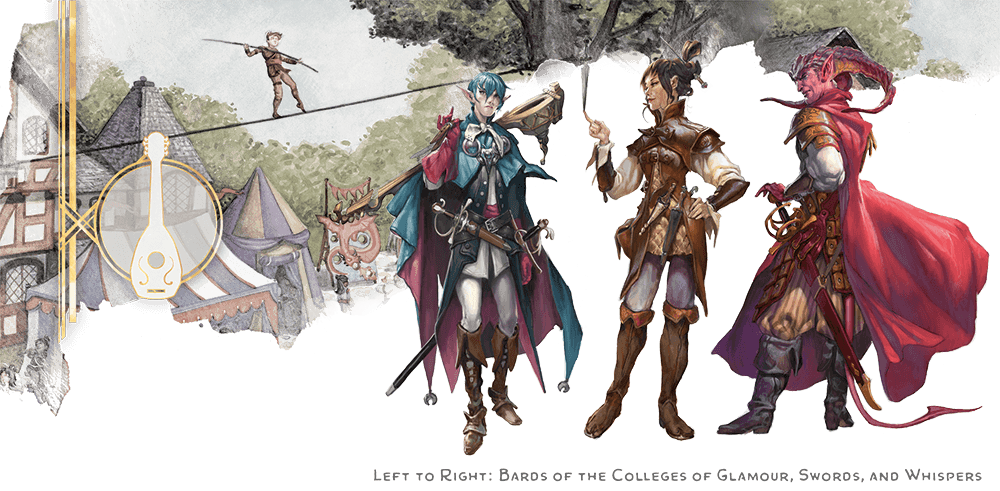
At 3rd level, you delve into the advanced techniques of a bard college of your choice: the College of Lore, the College of Valor, the College of Glamour, the College of Swords, the College of Whispers, or the College of Eloquence, detailed at the end of the class description. Your choice grants you features at 3rd level and again at 6th and 14th level.
Expertise
At 3rd level, choose two of your skill proficiencies. Your proficiency bonus is doubled for any ability check you make that uses either of the chosen proficiencies.
At 10th level, you can choose another two skill proficiencies to gain this benefit.
Ability Score Improvement
When you reach 4th level, and again at 8th, 12th, 16th, and 19th level, you can increase one ability score of your choice by 2, or you can increase two ability scores of your choice by 1. As normal, you can’t increase an ability score above 20 using this feature.
Font of Inspiration
Beginning when you reach 5th level, you regain all of your expended uses of Bardic Inspiration when you finish a short or long rest.
Countercharm
At 6th level, you gain the ability to use musical notes or words of power to disrupt mind-influencing effects. At the beginning of your turn, you can use your action to start a performance requiring your concentration that lasts up to 10 minutes. During that time, you and any friendly creatures within 30 feet of you have advantage on saving throws against being frightened or charmed. A creature must be able to hear you to gain this benefit. The performance ends early if you are incapacitated or silenced or if you lose concentration (as if concentrating on a spell).
Magical Secrets
By 10th level, you have plundered magical knowledge from a wide spectrum of disciplines. Choose two spells from the Bard, Cleric, Druid, Sorcerer, Warolock, or Wizard. A spell you choose must be of a level you can cast, as shown on the Bard table, or a cantrip.
The chosen spells count as bard spells for you and are included in the number in the Spells Known column of the Bard table.
You learn two additional spells from the above classes at 14th level and again at 18th level.
Superior Inspiration
At 20th level, when a creature uses one of your Bardic Inspiration dice it can add your Charisma modifier (minimum of 1) to the roll.
Additionally, you gain a Superior Bardic Inspiration die. This die works exactly like your Bardic Inspiration dice, but its a d20. Once you have granted a creature a Superior Inspiration die, you may not do so again until you finish a short or long rest.
Bard Colleges
The way of a bard is gregarious. Bards seek each other out to swap songs and stories, boast of their accomplishments, and share their knowledge. Bards form loose associations, which they call colleges, to facilitate their gatherings and preserve their traditions.
College of Creation
Bard believe the cosmos is a work of art — the creation of the first dragons and gods. That creative work included harmonies that continue to resound through existence today, a power known as the Song of Creation. The bards of the College of Creation draw on that primeval song through dance, music, and poetry, and their teachers share this lesson: "Before the sun and the moon, there was the Song, and its music awoke the first dawn. Its melodies so delighted the stones and trees that some of them gained a voice of their own. And now they sing too. Learn the Song, students and you too teach the mountains to sing and dance."
Dwarves and gnomes often encourage their bards to become students of the Song of Creation. And among dragonborn, the Song of Creation is revered, for legends portray Bahamut and Tiamat — the greatest of dragons — as two of the song's first singers.
Mote of Potential
When you join this college at 3rd level whenever you give a creature a Bardic Inspiration die, you can utter a note from the Song of Creation to create a Tiny mote of potential, which orbits within 5 feet of that creature. The mote is intangible and invulnerable, and it lasts until the Bardic Inspiration die is lost. The mote looks like a musical note, a star, a flower, or another symbol of art or life that you choose.
When the creature uses the Bardic Inspiration die, the mote provides an additional effect based on whether the die benefits an ability check, an attack roll, or a saving throw as detailed below:
Ability Check. When the creature rolls the Bardic Inspiration die to add it to an ability check, the creature can roll the Bardic Inspiration die again and choose which roll to use, as the mote pops and emits colorful, harmless sparks for a moment.
Attack Roll. Immediately after the creature rolls the Bardic Inspiration die to add it to an attack roll against a target, the mote thunderously shatters. The target and each creature of your choice that you can see within 5 feet of it must succeed on a Constitution saving throw against your spell save DC or take thunder damage equal to the number rolled on the Bardic Inspiration die.
Saving Throw. Immediately after the creature rolls the Bardic Inspiration die and adds it to a saving throw, the mote vanishes with the sound of soft music, causing the creature to gain temporary hit points equal to the number rolled the Bardic Inspiration die plus your Charisma modifier (minimum of 1 temporary hit point).

Performance of Creation
Also at 3rd level as an action, you can channel the magic of the Song of Creation to create one nonmagical item of your choice in an unoccupied space within 20 feet of you. The item must appear on a surface or in a liquid that can support it. The gp value of the item can't be more than 20 times your bard level, and the item must be Medium or smaller. The item glimmers softly, and a creature can faintly hear music when touching it. The created item disappears after a number of hours equal to your proficiency bonus. For examples you can see the equipment chapter.
Once you create an item with this feature, you can't do so again until you finish a long rest, unless you expend a spell slot of 2nd level or higher to use this feature again. You can have only one item created by this feature at a time; if you use this action and already have an item from this feature, the first one immediately vanishes.
The size of the item you can create with this feature increases by one size category when you reach 6th level (Large) and 14th level (Huge).
Animating Performance
At 6th level as an action you can target a Large or smaller nonmagical item you can see within 30 feet of you and animate it. The animate item uses the Dancing Item stat block, which uses your proficiency bonus (PB). The item is friendly to you and your companions and obeys your commands. It lives for 1 hour, until it is reduced to 0 hit points, or until you die.
In combat, the item shares your initiative count, but it takes its turn immediately after yours. It can move and use its reaction on its own, but the only action it takes on its turn is the Dodge action, unless you take a bonus action on your turn to command it to take another action. That action can be one in its stat block or some other action. If you are incapacitated, the item can take any action of its choice, not just Dodge.
When you use your Bardic Inspiration feature, you can command the item as part of the same bonus action you use for Bardic Inspiration.
Once you animate an item with this feature, you can't do so again until you finish a long rest, unless you expend a spell slot of 3rd level or higher to use this feature again. You can have only one item animated by this feature at a time; if you use this action and already have a dancing item from the feature, the first one immediately becomes inanimate.
Creative Crescendo
Starting at 14th level when you use your Performance of Creation feature, you can create more than one item at once. The number of items equals your Charisma modifier (minimum of two items). If you create an item that would exceed that number, you choose which of the previously created items disappears. Only one of these items can be of the maximum size you can create; the rest must be Small or Tiny.
You are no longer limited by the gp value when creating items with Performance of Creation.
Dancing Item
Large or smaller construct
- Armor Class 16 (natural armor)
- Hit Points 10 + five times your bard level
- Speed 30 ft., fly 30 ft. (hover)
STR DEX CON INT WIS CHA 18 (+4) 14 (+2) 16 (+3) 4 (-3) 10 (+0) 6 (-2)
- Damage Immunities poison, psychic
- Condition Immunities charmed, exhaustion, poisoned, frightened
- Senses darkvision 60 ft., passive Perception 10
- Languages understands the languages you speak
Immutable Form. The item is immune to any spell or effect that would alter its form.
Irrepressible Dance. When any creature starts its turn within 10 feet of the item, the item can increase or decrease (your choice) the walking speed of that creature by 10 feet until the end of the turn, provided the item isn't incapacitated.
Actions
Force-Empowered Slam. Melee Weapon Attack: + your spell attack modifier to hit, reach 5 ft., one target you can see. Hit: 1d10 + PB force damage
College of Diplomacy
Bards of the College of Diplomacy understand that
statecraft, like music or drama, is a complicated artform. Formally trained as couriers, aides, stewards, geishas, and ambassadors, these performers use civility and social protocol to open doors where others cannot. In mastering their craft, these individuals also learn to see the
connections between magical and social networks, and recognize how each can influence the other.
Foreign Relations
When you join the College of Diplomacy at 3rd-level, you learn the proper etiquette for handling those from other cultures. You learn three languages of your choice.
In Addition, whenever you interact socially with a
creature in a language other than Common, you have advantage on your Charisma (Deception), Charisma (Persuasion), and Wisdom (Insight) checks against it, but only if the creature can understand that language.
Magical Networking
Also at 3rd level, you can utilize your web of personal connections to extend your reach through the Weave.
By extending a use of your Bardic INspiration when you cast a bard spell, you can choose to cast the spell as if you were located in the space of a willing creature within 60 feet of you that can see or hear you.
When you cast a spell in this way, the willing creature also gains an amount of temporary hit points equal to the number rolled on the Bardic Inspiration die + your Charisma modifier (minimum of 1).
Secret Communiqué
From 6th level, your mastery of statecraft allows you to communicate with but a meaningful look.
The ranges of both your Countercharm and Bardic Inspiration features are doubled, and if an ally can see you, it doesn't need to hear you to be affected by either of those features.
In addition, using this feature, you can choose to activate your Countercharm feature silently, without moving, and by using a bonus action instead of an action. Until the end of your next turn, targets affected by this use of Countercharm have advantage on their Charisma, Intelligence, and Wisdom saving throws, and can also communicate telepathically with any other affected targets they can see, regardless of their language.
After you use your Countercharm in this way, you can't do so again until you finish a short or long rest.


Diplomatic Immunity
Starting at 14th level, you can magically compel even your enemies to act cordially towards you.
As an action, you can force up to 5 creatures of your choice within 60 feet of you that can see and hear you to make a Wisdom saving throw against your spell save DC. A target automatically succeeds if it can't understand your language, but if it shares more than one language with you, it makes this save with disadvantage.
If a target fails its save, it becomes charmed by your and all of your allies it can see within 60 feet of you. This effect lasts until the end of your next turn if you are fighting the target or if you begin to fight it, or for 1 hour otherwise. This effect ends on a target if it notices you or your allies harm it or a creature it is friendly towards.
While charmed in this way, each affected target is convinced you are representing an individual, group, or power offering them fealty, an alliance, or a trade deal in its best interests. They will treat you hospitably., rationalize any of your hostile behaviors as unusual quirks, and try to persuade their allies to welcome you and your 'entourage'.
Once you use this feature, you can't do so again until you finish a long rest.


The College of Drama
Long have the performing arts been a favorite pastime of nobles and peasants alike. Actors and thespians perform stories that while fictional, reveal great truths about life, death, and the struggles in between. The Muse, the ancient spirit of inspiration, moves the hearts of actors, great and small, to give their all while performing for others.
Channel the Muse
When you adopt the College of Drama at 3rd level, you can channel the Muse to magically manifest two different masks. One, a laughing mask of comedy, the other, a weeping mask of tragedy. At the end of a long rest, you choose which mask you wish to manifest, gaining abilities based on your choice.
Mask of Comedy. You use your talent for the dramatic to inspire your allies in combat. When a friendly creature that can see or hear you within 30 feet fails an ability check or saving throw, or misses with an attack roll, you can use your reaction to expend a use of Bardic Inspiration, roll it, and the result to the creature's roll, possibly turning its failure into a success.
Mask of Tragedy. Your flair for tragedy allows you to inflict sorrow upon your foes. When a hostile creature that can see or hear you within 30 feet succeeds on an ability check or saving throw, or hits with an attack roll, you can use your reaction to expend a use of Bardic Inspiration, roll it, and subtract the result from its roll, possibly turning its success into a failure.
Thespian's Craft
At 3rd level, the Muse has granted the skills of a master stage performer. You gain proficiency in Performance and with disguise kits, and whenever you make an ability check with either of these proficiencies you can treat a d20 roll of 7 or lower as an 8.
Soliloquy
Your ability to deliver impassioned performances empowers your Countercharm. Starting at 6th level, your Countercharm gains additional effects, based on the mask you are wearing:
Mask of Comedy. The sound of your music inspires great deeds. Creatures of your choice that can hear you within range of Countercharm gain temporary hit points equal to your Charisma modifier (minimum of 1) at the start of each of their turns.
Mask of Tragedy. Your bardic magic and song undermine the resolve of your enemies. Creatures of your choice that can hear you within range of Countercharm have disadvantage on saving throws to resist any spell that includes a verbal component.
Final Curtain
The Muse grants you the ability to enthrall death itself, if only for a short while. Upon reaching 14th level, your masks gain the following features while you are wearing them:
Mask of Comedy. You can bring allies back from the brink of death. When a creature you can see within 30 feet makes a death saving throw, you can use your reaction to expend a use of Bardic Inspiration and make a Charisma (Performance) check. The creature can choose to use the result of your check in place of making a normal death saving throw roll.
Mask of Tragedy. You can bargain with death itself for more time. When you are reduced to 0 hit points but not killed outright, you can expend a use of Bardic Inspiration die to immediately make a Charisma (Performance) check. If the result of your check is a 20 or greater, you fall to 1 hit point instead of 0.
College of Eloquence
Adherents of the College of Eloquence master the art of oratory. Persuasion is regarded as a high art, and a well-reasoned, well-spoken argument often proves more persuasive than facts. These bards wield a blend of logic and theatrical wordplay, winning over skeptics and detractors with logical arguments and plucking at heartstrings to appeal to the emotions of audiences.
Silver Tongue
At 3rd level you are a master at saying the right thing at the right time. When you make a Charisma (Persuasion) or Charisma (Deception) check, you can treat a d20 roll of 9 or lower as a 10.

Unsettling Words
At 3rd level, you can spin words laced with magic that unsettle a creature and cause it to doubt itself. As a bonus action, you can expend one use of your Bardic Inspiration and choose one creature you can see within 60 feet of you. Roll the Bardic Inspiration die. The creature must subtract the number rolled from the next saving throw it makes before the start of your next turn.
Unfailing Inspiration
Beginning at 6th level your inspiring words are so persuasive that others feel driven to succeed. When a creature adds one of your Bardic Inspiration dice to its ability check, attack roll, or saving throw and the roll fails, the creature can keep the Bardic Inspiration die.
Universal Speech
At 6th level you have gained the ability to make your speech intelligible to any creature. As an action, choose one or more creatures within 60 feet of you, up to a number equal to your Charisma modifier (minimum of one creature). The chosen creatures can magically understand you, regardless of the language you speak, for 1 hour.
Once you use this feature, you can’t use it again until you finish a long rest, unless you expend a spell slot to use it again.
Infectious Inspiration
At 14th level when you successfully inspire someone, the power of your eloquence can now spread to someone else. When a creature within 60 feet of you adds one of your Bardic Inspiration dice to its ability check, attack roll, or saving throw and the roll succeeds, you can use your reaction to encourage a different creature (other than yourself) that can hear you within 60 feet of you, giving it a Bardic Inspiration die without expending any of your Bardic Inspiration uses.
You can use this reaction a number of times equal to your Charisma modifier (minimum of once), and you regain all expended uses when you finish a long rest.
College of Glamour
The College of Glamour is the home of bards who mastered their craft in the vibrant realm of the Feywild or under the tutelage of someone who dwelled there. Tutored by satyrs, eladrin, and other fey, these bards learn to use their magic to delight and captivate others.
The bards of this college are regarded with a mixture of awe and fear. Their performances are the stuff of legend. These bards are so eloquent that a speech or song that one of them performs can cause captors to release the bard unharmed and can lull a furious dragon into complacency. The same magic that allows them to quell beasts can also bend minds. Villainous bards of this college can leech off a community for weeks, misusing their magic to turn their hosts into thralls. Heroic bards of this college instead use this power to gladden the downtrodden and undermine oppressors.
Mantle of Inspiration
When you join the College of Glamour at 3rd level, you gain the ability to weave a song of fey magic that imbues your allies with vigor and speed.
As a bonus action, you can expend one use of your Bardic Inspiration to grant yourself a wondrous appearance. When you do so, choose a number of creatures you can see and that can see you within 60 feet of you, up to a number equal to your Charisma modifier (minimum of one). Each of them gains 5 temporary hit points. When a creature gains these temporary hit points, it can immediately use its reaction to move up to its speed, without provoking opportunity attacks.
The number of temporary hit points increases when you reach certain levels in this class, increasing to 8 at 5th level, 11 at 10th level, and 14 at 15th level.
Enthralling Performance
Starting at 3rd level, you can charge your performance with seductive, fey magic.
If you perform for at least 1 minute, you can attempt to inspire wonder in your audience by singing, reciting a poem, or dancing. At the end of the performance, choose a number of humanoids within 60 feet of you who watched and listened to all of it, up to a number equal to your Charisma modifier (minimum of one). Each target must succeed on a Wisdom saving throw against your spell save DC or be charmed by you. While charmed in this way, the target idolizes you, it speaks glowingly of you to anyone who talks to it, and it hinders anyone who opposes you, although it avoids violence unless it was already inclined to fight on your behalf. This effect ends on a target after 1 hour, if it takes any damage, if you attack it, or if it witnesses you attacking or damaging any of its allies.
If a target succeeds on its saving throw, the target has no hint that you tried to charm it.
Once you use this feature, you can’t use it again until you finish a short or long rest.
Mantle of Majesty
At 6th level, you gain the ability to cloak yourself in a fey magic that makes others want to serve you. As a bonus action, you cast command, without expending a spell slot, and you take on an appearance of unearthly beauty for 1 minute or until your concentration ends (as if you were concentrating on a spell). During this time, you can cast command as a bonus action on each of your turns, without expending a spell slot.
Any creature charmed by you automatically fails its saving throw against the command you cast with this feature.
Once you use this feature, you can’t use it again until you finish a long rest.
Unbreakable Majesty
At 14th level, your appearance permanently gains an otherworldly aspect that makes you look more lovely and fierce.
In addition, as a bonus action, you can assume a magically majestic presence for 1 minute or until you are incapacitated. For the duration, whenever any creature tries to attack you for the first time on a turn, the attacker must make a Charisma saving throw against your spell save DC. On a failed save, it can’t attack you on this turn, and it must choose a new target for its attack or the attack is wasted. On a successful save, it can attack you on this turn, but it has disadvantage on any saving throw it makes against your spells on your next turn.
Once you assume this majestic presence, you can’t do so again until you finish a short or long rest.

College of Lore
Bards of the College of Lore know something about most things, collecting bits of knowledge from sources as diverse as scholarly tomes and peasant tales. Whether singing folk ballads in taverns or elaborate compositions in royal courts, these bards use their gifts to hold audiences spellbound. When the applause dies down, the audience members might find themselves questioning everything they held to be true, from their faith in the priesthood of the local temple to their loyalty to the king.
The loyalty of these bards lies in the pursuit of beauty and truth, not in fealty to a monarch or following the tenets of a deity. A noble who keeps such a bard as a herald or advisor knows that the bard would rather be honest than politic.
The college’s members gather in libraries and sometimes in actual colleges, complete with classrooms and dormitories, to share their lore with one another. They also meet at festivals or affairs of state, where they can expose corruption, unravel lies, and poke fun at self-important figures of authority.
Bonus Proficiencies
When you join the College of Lore at 3rd level, you gain proficiency with three skills of your choice.
Cutting Words
Also at 3rd level, you learn how to use your wit to distract, confuse, and otherwise sap the confidence and competence of others. When a creature that you can see within 60 feet of you makes an attack roll, an ability check, or a damage roll, you can use your reaction to expend one of your uses of Bardic Inspiration, rolling a Bardic Inspiration die and subtracting the number rolled from the creature’s roll. You can choose to use this feature after the creature makes its roll, but before the DM determines whether the attack roll or ability check succeeds or fails, or before the creature deals its damage. The creature is immune if it can’t hear you or if it’s immune to being charmed.
Additional Magical Secrets
At 6th level, you learn two spells of your choice from the Bard, Cleric, Druid, Sorcerer, Warolock, or Wizard. A spell you choose must be of a level you can cast, as shown on the Bard table, or a cantrip. The chosen spells count as bard spells for you but don’t count against the number of bard spells you know.
Peerless Skill
Starting at 14th level, when you make an ability check, you can expend one use of Bardic Inspiration. Roll a Bardic Inspiration die and add the number rolled to your ability check. You can choose to do so after you roll the die for the ability check, but before the DM tells you whether you succeed or fail.
College of Radiance
Worship takes on many forms across the multiverse; the quiet contemplation of the monastic hermit, the insightful guidance of the temple priest, the resolute dedication of the faith-filled zealot, and the impassioned preacher spreading the tenants of their faith across the land with word and song.
Bards of the College of Radiance are devout preachers of the divine, and all their performances sing the praise of their deity. These bards use the power of their voice to further the will of their god and inspire devotion in their followers.
Divine Revelation
Your deity has blessed you with a measure of their divine power in return for your service. At 3rd level choose a Divine Domain from those available to the Cleric that best fits the deity you serve. Whenever you learn a new Bard spell, you can choose from the Bard spell list, the Cleric spell list, or your list of Domain Spells, and the spell becomes a Bard spell for you. You must obey all other rules from learning a new spell.
You also gain proficiency in Religion, and you add double your proficiency bonus to Intelligence (Religion) checks.
Words of Healing
The god you serve empowers your healing magic. Also at 3rd level when you cast a Bard spell of 1st-level or higher that restores hit points to a creature, the target regains additional hit points equal to your Charisma modifier (minimum of 1).
Heavenly Chorus
When you reach 6th level your faith empowers your bardic song. When you use Countercharm, you can expend a use of Bardic Inspiration to empower it with one of the following celestial effects:
Guidance
Creatures of your choice within range add your Charisma modifier (minimum of +1) to the first ability check, attack roll, or saving throw they make before the start of your next turn.
Judgement
One creature of your choice within range that can hear you must succeed on a Wisdom saving throw or be frightened of you until the start of your next turn. Once a creature succeeds on this saving throw, or the effect ends for it, that creature is immune to this effect for the next 24 hours.
Protection
For the duration, creatures of your choice within range are resistant to necrotic and radiant damage, and their maximum hit points cannot be reduced.
Restoration
One creature of your choice within range that can hear you gains temporary hit points equal to your Bardic Inspiration.
Beatific Vision
At 14th level, you can allow the power of your deity to shine forth from you. When you cast a Bard spell that forces at least one creature to make a saving throw, you can expend Bardic Inspiration to impose disadvantage on one creature's saving throw for each Bardic Inspiration you expend as part of this spell.



College of Swords
Bards of the College of Swords are called blades, and they entertain through daring feats of weapon prowess. Blades perform stunts such as sword swallowing, knife throwing and juggling, and mock combats. Though they use their weapons to entertain, they are also highly trained and skilled warriors in their own right.
Their talent with weapons inspires many blades to lead double lives. One blade might use a circus troupe as cover for nefarious deeds such as assassination, robbery, and blackmail. Other blades strike at the wicked, bringing justice to bear against the cruel and powerful. Most troupes are happy to accept a blade’s talent for the excitement it adds to a performance, but few entertainers fully trust a blade in their ranks.
Blades who abandon their lives as entertainers have often run into trouble that makes maintaining their secret activities impossible. A blade caught stealing or engaging in vigilante justice is too great a liability for most troupes. With their weapon skills and magic, these blades either take up work as enforcers for thieves’ guilds or strike out on their own as adventurers.
Bonus Proficiencies
When you join the College of Swords at 3rd level, you gain proficiency with medium armor and the scimitar.
If you’re proficient with a simple or martial melee weapon, you can use it as a spellcasting focus for your bard spells.
Fighting Style
At 3rd level, you adopt a style of fighting as your specialty. Choose one of the following options. You can’t take a Fighting Style option more than once, even if something in the game lets you choose again.
Dual Wielding. When you take the Attack action while two-weapon fighting, you can make a single additional attack with your off-hand weapon as part of your action instead of your bonus action, adding your ability modifier to the damage of this attack.
Dueling. When you are wielding a melee weapon in one hand and no other weapons, you gain a +2 bonus to damage rolls with that weapon.
Blade Flourish
At 3rd level, you learn to perform impressive displays of martial prowess and speed.
Whenever you take the Attack action on your turn, your walking speed increases by 10 feet until the end of the turn, and if a weapon attack that you make as part of this action hits a creature, you can use one of the following Blade Flourish options of your choice. You can use only one Blade Flourish option per turn.
Defensive Flourish. You can expend one use of your Bardic Inspiration to cause the weapon to deal extra damage to the target you hit. The damage equals the number you roll on the Bardic Inspiration die. You also add the number rolled to your AC until the start of your next turn.
Slashing Flourish. You can expend one use of your Bardic Inspiration to cause the weapon to deal extra damage to the target you hit and to any other creature of your choice that you can see within 5 feet of you. The damage equals the number you roll on the Bardic Inspiration die.
Mobile Flourish. You can expend one use of your Bardic Inspiration to cause the weapon to deal extra damage to the target you hit. The damage equals the number you roll on the Bardic Inspiration die. You can also push the target up to 5 feet away from you, plus a number of feet equal to the number you roll on that die. You can then immediately use your reaction to move up to your walking speed to an unoccupied space within 5 feet of the target.
Extra Attack
Starting at 6th level, you can attack twice, instead of once, whenever you take the Attack action on your turn.
Master's Flourish
Starting at 14th level, whenever you use a Blade Flourish option, you can roll a d6 and use it instead of expending a Bardic Inspiration die.
College of Valor
Bards of the College of Valor are daring skalds whose tales keep alive the memory of the great heroes of the past, and thereby inspire a new generation of heroes. These bards gather in mead halls or around great bonfires to sing the deeds of the mighty, both past and present. They travel the land to witness great events firsthand and to ensure that the memory of those events doesn’t pass from the world. With their songs, they inspire others to reach the same heights of accomplishment as the heroes of old.
Bonus Proficiencies
When you join the College of Valor at 3rd level, you gain proficiency with medium armor, shields, and martial weapons. You also gain proficiency in either Athletics or History skill.
War Chant
Also at 3rd level, you learn to inspire others in battle. A creature that has a Bardic Inspiration die from you can roll that die and add the number rolled to a weapon damage roll it just made. When it does so, the target of the attack must make a Strength saving throw against your bard spell save DC, falling prone on a failure.
Alternatively, when an attack roll is made against the creature, it can use its reaction to roll the Bardic Inspiration die and add the number rolled to its AC against that attack, after seeing the roll but before knowing whether it hits or misses.
Extra Attack
Starting at 6th level, you can attack twice, instead of once, whenever you take the Attack action on your turn. Moreover, you can replace one weapon attack you make as part of the Attack action with a cantrip that has a casting time of 1 action.
Swan Song
Starting at 14th level, you can tap into a supernatural pool of vigor to perform one final glorious act before facing defeat. When you would be reduced to 0 hit points but not killed outright, you can drop to 1 hit point instead, and at the same time, grant your Bardic Inspiration to any number of allies within 30 feet of you without expending any uses of Bardic Inspiration. Once you save yourself from falling unconscious in this way, you must finish a long rest before you can do so again.
In addition, you gain immunity to the frightened condition.
College of Whispers
Most folk are happy to welcome a bard into their midst. Bards of the College of Whispers use this to their advantage. They appear to be like other bards, sharing news, singing songs, and telling tales to the audiences they gather. In truth, the College of Whispers teaches its students that they are wolves among sheep. These bards use their knowledge and magic to uncover secrets and turn them against others through extortion and threats.
Many other bards hate the College of Whispers, viewing it as a parasite that uses a bard’s reputation to acquire wealth and power. For this reason, members of this college rarely reveal their true nature. They typically claim to follow some other college, or they keep their actual calling secret in order to infiltrate and exploit royal courts and other settings of power.
Psychic Blades
When you join the College of Whispers at 3rd level, you gain the ability to make your weapon attacks magically toxic to a creature’s mind.
When you hit a creature with a weapon attack, you can expend one use of your Bardic Inspiration to deal an extra 2d6 psychic damage to that target. You can do so only once per round on your turn.
The psychic damage increases when you reach certain levels in this class, increasing to 3d6 at 5th level, 5d6 at 10th level, and 8d6 at 15th level.
Words of Terror
At 3rd level, you learn to infuse innocent-seeming words with an insidious magic that can inspire terror.
If you speak to a humanoid alone for at least 1 minute, you can attempt to seed paranoia in its mind. At the end of the conversation, the target must succeed on a Wisdom saving throw against your spell save DC or be frightened of you or another creature of your choice. The target is frightened in this way for 1 hour, until it is attacked or damaged, or until it witnesses its allies being attacked or damaged.
If the target succeeds on its saving throw, the target has no hint that you tried to frighten it.
Once you use this feature, you can’t use it again until you finish a short or long rest.
Mantle of Whispers
At 6th level, you gain the ability to adopt a humanoid’s persona. When a humanoid dies within 30 feet of you, you can magically capture its shadow using your reaction. You retain this shadow until you use it or you finish a long rest.
You can use the shadow as an action. When you do so, it vanishes, magically transforming into a disguise that appears on you. You now look like the dead person, but healthy and alive. This disguise lasts for 1 hour or until you end it as a bonus action.
While you’re in the disguise, you gain access to all information that the humanoid would freely share with a casual acquaintance. Such information includes general details on its background and personal life, but doesn’t include secrets. The information is enough that you can pass yourself off as the person by drawing on its memories.
Another creature can see through this disguise by succeeding on a Wisdom (Insight) check contested by your Charisma (Deception) check. You gain a +5 bonus to your check.
Once you capture a shadow with this feature, you can’t capture another one with it until you finish a short or long rest.
Shadow Lore
At 14th level, you gain the ability to weave dark magic into your words and tap into a creature’s deepest fears.
As an action, you magically whisper a phrase that only one creature of your choice within 30 feet of you can hear. The target must make a Wisdom saving throw against your spell save DC. It automatically succeeds if it doesn’t share a language with you or if it can’t hear you. On a successful saving throw, your whisper sounds like unintelligible mumbling and has no effect.
On a failed saving throw, the target is charmed by you for the next 8 hours or until you or your allies attack it, damage it, or force it to make a saving throw. It interprets the whispers as a description of its most mortifying secret. You gain no knowledge of this secret, but the target is convinced you know it.
The charmed creature obeys your commands for fear that you will reveal its secret. It won’t risk its life for you or fight for you, unless it was already inclined to do so. It grants you favors and gifts it would offer to a close friend.
When the effect ends, the creature has no understanding of why it held you in such fear.
Once you use this feature, you can’t use it again until you finish a long rest.

Cleric
Arms and eyes upraised toward the sun and a prayer on his lips, an elf begins to glow with an inner light that spills out to heal his battle-worn companions.
Chanting a song of glory, a dwarf swings his axe in wide swaths to cut through the ranks of orcs arrayed against him, shouting praise to the gods with every foe’s fall.
Calling down a curse upon the forces of undeath, a human lifts her holy symbol as light pours from it to drive back the zombies crowding in on her companions.
Clerics are intermediaries between the mortal world and the distant planes of the gods. As varied as the gods they serve, clerics strive to embody the handiwork of their deities. No ordinary priest, a cleric is imbued with divine magic.
Healers and Warriors
Divine magic, as the name suggests, is the power of the gods, flowing from them into the world. Clerics are conduits for that power, manifesting it as miraculous effects. The gods don’t grant this power to everyone who seeks it, but only to those chosen to fulfill a high calling.
Harnessing divine magic doesn’t rely on study or training. A cleric might learn formulaic prayers and ancient rites, but the ability to cast cleric spells relies on devotion and an intuitive sense of a deity’s wishes.
Clerics combine the helpful magic of healing and inspiring their allies with spells that harm and hinder foes. They can provoke awe and dread, lay curses of plague or poison, and even call down flames from heaven to consume their enemies. For those evildoers who will benefit most from a mace to the head, clerics depend on their combat training to let them wade into melee with the power of the gods on their side.
Divine Agents
Not every acolyte or officiant at a temple or shrine is a cleric. Some priests are called to a simple life of temple service, carrying out their gods’ will through prayer and sacrifice, not by magic and strength of arms. In some cities, priesthood amounts to a political office, viewed as a stepping stone to higher positions of authority and involving no communion with a god at all. True clerics are rare in most hierarchies.
When a cleric takes up an adventuring life, it is usually because his or her god demands it. Pursuing the goals of the gods often involves braving dangers beyond the walls of civilization, smiting evil or seeking holy relics in ancient tombs. Many clerics are also expected to protect their deities’ worshipers, which can mean fighting rampaging orcs, negotiating peace between warring nations, or sealing a portal that would allow a demon prince to enter the world.
Most adventuring clerics maintain some connection to established temples and orders of their faiths. A temple might ask for a cleric’s aid, or a high priest might be in a position to demand it.
Creating a Cleric
As you create a cleric, the most important question to consider is which deity to serve and what principles you want your character to embody. Check with your DM to learn which deities are in your campaign.
Once you’ve chosen a deity, consider your cleric’s relationship to that god. Did you enter this service willingly? Or did the god choose you, impelling you into service with no regard for your wishes? How do the temple priests of your faith regard you: as a champion or a troublemaker? What are your ultimate goals? Does your deity have a special task in mind for you? Or are you striving to prove yourself worthy of a great quest?
Quick Build
You can make a cleric quickly by following these suggestions. First, Wisdom should be your highest ability score, followed by Strength or Constitution. Second, choose the acolyte background.
The Cleric
| Level | Proficiency Bonus | Features | Cantrips Known | 1st | 2nd | 3rd | 4th | 5th | 6th | 7th | 8th | 9th |
|---|---|---|---|---|---|---|---|---|---|---|---|---|
| 1st | +2 | Spellcasting, Divine Domain | 3 | 2 | — | — | — | — | — | — | — | — |
| 2nd | +2 | Channel Divinity (1/rest), Divine Domain feature | 3 | 3 | — | — | — | — | — | — | — | — |
| 3rd | +2 | — | 3 | 4 | 2 | — | — | — | — | — | — | — |
| 4th | +2 | Ability Score Improvement | 4 | 4 | 3 | — | — | — | — | — | — | — |
| 5th | +3 | Destroy Undead (CR 1/2) | 4 | 4 | 3 | 2 | — | — | — | — | — | — |
| 6th | +3 | Channel Divinity (2/rest), Divine Domain feature | 4 | 4 | 3 | 3 | — | — | — | — | — | — |
| 7th | +3 | — | 4 | 4 | 3 | 3 | 1 | — | — | — | — | — |
| 8th | +3 | Ability Score Improvement, Destroy Undead (CR 1), Divine Domain feature | 4 | 4 | 3 | 3 | 2 | — | — | — | — | — |
| 9th | +4 | — | 4 | 4 | 3 | 3 | 3 | 1 | — | — | — | — |
| 10th | +4 | Divine Intervention | 5 | 4 | 3 | 3 | 3 | 2 | — | — | — | — |
| 11th | +4 | Destroy Undead (CR 2) | 5 | 4 | 3 | 3 | 3 | 2 | 1 | — | — | — |
| 12th | +4 | Ability Score Improvement | 5 | 4 | 3 | 3 | 3 | 2 | 1 | — | — | — |
| 13th | +5 | — | 5 | 4 | 3 | 3 | 3 | 2 | 1 | 1 | — | — |
| 14th | +5 | Destroy Undead (CR 3) | 5 | 4 | 3 | 3 | 3 | 2 | 1 | 1 | — | — |
| 15th | +5 | — | 5 | 4 | 3 | 3 | 3 | 2 | 1 | 1 | 1 | — |
| 16th | +5 | Ability Score Improvement | 5 | 4 | 3 | 3 | 3 | 2 | 1 | 1 | 1 | — |
| 17th | +6 | Destroy Undead (CR 4), Divine Domain feature | 5 | 4 | 3 | 3 | 3 | 2 | 1 | 1 | 1 | 1 |
| 18th | +6 | Channel Divinity (3/rest) | 5 | 4 | 3 | 3 | 3 | 3 | 1 | 1 | 1 | 1 |
| 19th | +6 | Ability Score Improvement | 5 | 4 | 3 | 3 | 3 | 3 | 2 | 1 | 1 | 1 |
| 20th | +6 | Divine Intervention Improvement | 5 | 4 | 3 | 3 | 3 | 3 | 2 | 2 | 1 | 1 |
——Spell Slots by Spell Level——
Class Features
As a cleric, you gain the following class features.
Ability Score Improvement
At first level you can choose to increase your Wisdom or Charisma score by 1.
Hit Points
Hit Dice: 1d8 per cleric level
Hit Points at 1st Level: 8 + your Constitution modifier + racial bonus
Hit Points at Higher Levels: 1d8 (or 4) + your Constitution modifier per cleric level after 1st
Proficiencies
Armor: Light armor, medium armor, shields
Weapons: Simple weapons
Tools: Scrollscriber's Supplies
Saving Throws: Wisdom, Charisma
Skills: Choose two from History, Insight, Medicine, Persuasion, and Religion
Equipment
You start with the following equipment, in addition to the equipment granted by your background:
- (a) a mace or (b) a warhammer (if proficient)
- (a) scale mail, or (b) gambeson, or (c) chain mail (if proficient)
- (a) a light crossbow and 20 bolts or (b) any simple weapon
- (a) a priest's pack or (b) an explorer's pack
- A shield and a holy symbol
Spellcasting
As a conduit for divine power, you can cast cleric spells.
Cantrips
At 1st level, you know three cantrips of your choice from the cleric spell list. You learn additional cleric cantrips of your choice at higher levels, as shown in the Cantrips Known column of the Cleric table.
Preparing and Casting Spells
The Cleric table shows how many spell slots you have to cast your cleric spells of 1st level and higher. To cast one of these spells, you must expend a slot of the spell’s level or higher. You regain all expended spell slots when you finish a long rest.
You prepare the list of cleric spells that are available for you to cast, choosing from the cleric spell list. When you do so, choose a number of cleric spells equal to your Wisdom modifier + your cleric level (minimum of one spell). The spells must be of a level for which you have spell slots.
For example, if you are a 3rd-level cleric, you have four 1st-level and two 2nd-level spell slots. With a Wisdom of 16, your list of prepared spells can include six spells of 1st or 2nd level, in any combination. If you prepare the 1st-level spell cure wounds, you can cast it using a 1st-level or 2nd-level slot. Casting the spell doesn’t remove it from your list of prepared spells.
You can change your list of prepared spells when you finish a long rest. Preparing a new list of cleric spells requires time spent in prayer and meditation: at least 1 minute per spell level for each spell on your list.
Spellcasting Ability
Wisdom is your spellcasting ability for your cleric spells. The power of your spells comes from your devotion to your deity. You use your Wisdom whenever a cleric spell refers to your spellcasting ability. In addition, you use your Wisdom modifier when setting the saving throw DC for a cleric spell you cast and when making an attack roll with one.
Spell Save DC
Spell attack modifier
Ritual Casting
You can cast a cleric spell as a ritual if that spell has the ritual tag and you have the spell prepared.
Spellcasting Focus
You can use a holy symbol as a spellcasting focus for your cleric spells.

Divine Domain
Choose one domain related to your deity: Knowledge, Life, Light, Nature, Tempest, Trickery, War, Arcana, Forge, Grave, or Order. Each domain is detailed at the end of the class description, and each one provides examples of gods associated with it. Your choice grants you domain spells and other features when you choose it at 1st level. It also grants you additional ways to use Channel Divinity when you gain that feature at 2nd level, and additional benefits at 6th, 8th, and 17th levels.
Domain Spells
Each domain has a list of spells — its domain spells — that you gain at the cleric levels noted in the domain description. Once you gain a domain spell, you always have it prepared, and it doesn’t count against the number of spells you can prepare each day.
If you have a domain spell that doesn’t appear on the cleric spell list, the spell is nonetheless a cleric spell for you.
Channel Divinity
At 2nd level, you gain the ability to channel divine energy directly from your deity, using that energy to fuel magical effects. You start with two such effects: Turn Undead and an effect determined by your domain. Some domains grant you additional effects as you advance in levels, as noted in the domain description.
When you use your Channel Divinity, you choose which effect to create. You must then finish a short or long rest to use your Channel Divinity again.
Some Channel Divinity effects require saving throws. When you use such an effect from this class, the DC equals your cleric spell save DC.
Beginning at 6th level, you can use your Channel Divinity twice between rests, and beginning at 18th level, you can use it three times between rests. When you finish a short or long rest, you regain your expended uses.
Channel Divinity: Turn Undead
As an action, you present your holy symbol and speak a prayer censuring the undead. Each undead that can see or hear you within 30 feet of you must make a Wisdom saving throw. If the creature fails its saving throw, it is turned for 1 minute or until it takes any damage.
A turned creature must spend its turns trying to move as far away from you as it can, and it can’t willingly move to a space within 30 feet of you. It also can’t take reactions. For its action, it can use only the Dash action or try to escape from an effect that prevents it from moving. If there’s nowhere to move, the creature can use the Dodge action.
Channel Divinity: Harness Divine Power
You can expend a use of your Channel Divinity to fuel your spells. As a bonus action, you touch your holy symbol, utter a prayer, and regain one expended spell slot, the level of which can be no higher than half your proficiency bonus (rounded up).
Ability Score Improvement
When you reach 4th level, and again at 8th, 12th, 16th, and 19th level, you can increase one ability score of your choice by 2, or you can increase two ability scores of your choice by 1. As normal, you can’t increase an ability score above 20 using this feature.
Destroy Undead
Starting at 5th level, when an undead fails its saving throw against your Turn Undead feature, the creature is instantly destroyed if its challenge rating is at or below a certain threshold, as shown in the Destroy Undead table.
Destroy Undead
| Cleric Level | Destroys Undead of CR ... |
|---|---|
| 5th | 1/2 or lower |
| 8th | 1 or lower |
| 11th | 2 or lower |
| 14th | 3 or lower |
| 17th | 4 or lower |


Divine Intervention
Beginning at 10th level, you can call on your deity to intervene on your behalf when your need is great.
Imploring your deity’s aid requires you to use your action. Describe the assistance you seek, and roll percentile dice. If you roll a number equal to or lower than your cleric level, your deity intervenes. The DM chooses the nature of the intervention; the effect of any cleric spell or cleric domain spell would be appropriate.
If your deity intervenes, you can’t use this feature again for 7 days. Otherwise, you can use it again after you finish a long rest.
At 20th level, your call for intervention succeeds automatically, no roll required.
Divine Domains
In a pantheon, every deity has influence over different aspects of mortal life and civilization, called a deity’s domain. All the domains over which a deity has influence are called the deity’s portfolio. For example, the portfolio of the Greek god Apollo includes the domains of Knowledge, Life, and Light. As a cleric, you choose one aspect of your deity’s portfolio to emphasize, and you are granted powers related to that domain.
Your choice might correspond to a particular sect dedicated to your deity. Apollo, for example, could be worshiped in one region as Phoebus (“radiant”) Apollo, emphasizing his influence over the Light domain, and in a different place as Apollo Acesius (“healing”), emphasizing his association with the Life domain. Alternatively, your choice of domain could simply be a matter of personal preference, the aspect of the deity that appeals to you most.
Arcana Domain
Magic is an energy that suffuses the multiverse and that fuels both destruction and creation. Gods of the Arcana domain know the secrets and potential of magic intimately. For some of these gods, magical knowledge is a great responsibility that comes with a special understanding of the nature of reality. Other gods of Arcana see magic as pure power, to be used as its wielder sees fit.
The gods of this domain are often associated with knowledge, as learning and arcane power tend to go hand-in-hand. In the Realms, deities of this domain include Azuth and Mystra, as well as Corellon Larethian of the elven pantheon. In other worlds, this domain includes Hecate, Math Mathonwy, and Isis; the triple moon gods of Solinari, Lunitari, and Nuitari of Krynn; and Boccob, Vecna, and Wee Jas of Greyhawk.
Arcana Domain Spells
| Cleric Level | Spells |
|---|---|
| 1st | detect magic, magic missle |
| 3rd | magic weapon, Nystul's magic aura |
| 5th | dispel magic, magic circle |
| 7th | arcane eye, Leomund's secret chest |
| 9th | planar binding, teleportation circle |
Arcane Initiate
When you choose this domain at 1st level, you gain proficiency in the Arcana skill, and you gain two cantrips of your choice from the wizard spell list. For you, these cantrips count as cleric cantrips.
Channel Divinity: Arcane Abjuration
Starting at 2nd level, you can use your Channel Divinity to abjure otherworldly creatures.
As an action, you present your holy symbol, and one celestial, elemental, fey, or fiend of your choice that is within 30 feet of you must make a Wisdom saving throw, provided that the creature can see or hear you. If the creature fails its saving throw, it is turned for 1 minute or until it takes any damage.
A turned creature must spend its turns trying to move as far away from you as it can, and it can’t willingly end its move in a space within 30 feet of you. It also can’t take reactions. For its action, it can only use the Dash action or try to escape from an effect that prevents it from moving. If there’s nowhere to move, the creature can use the Dodge action.
After you reach 5th level, when a creature fails its saving throw against your Arcane Abjuration feature, the creature is banished for 1 minute (as in the banishment spell, no concentration required) if it isn’t on its plane of origin and its challenge rating is at or below a certain threshold, as shown on the Arcane Banishment table.
Arcane Banishment
| Cleric Level | Banishes Creatures of CR ... |
|---|---|
| 1st | 1/2 or lower |
| 3rd | 1 or lower |
| 5th | 2 or lower |
| 7th | 3 or lower |
| 9th | 4 or lower |
Spell Breaker
Starting at 6th level, when you restore hit points to an ally with a spell of 1st level or higher, you can also end one spell of your choice on that creature. The level of the spell you end must be equal to or lower than the level of the spell slot you use to cast the healing spell.
Potent Spellcasting
Starting at 8th level, you add your Wisdom modifier to the damage you deal with any cleric cantrip.
Arcane Mastery
At 17th level, you choose four spells from the wizard spell list, one from each of the following levels: 6th, 7th, 8th, and 9th. You add them to your list of domain spells. Like your other domain spells, they are always prepared and count as cleric spells for you.
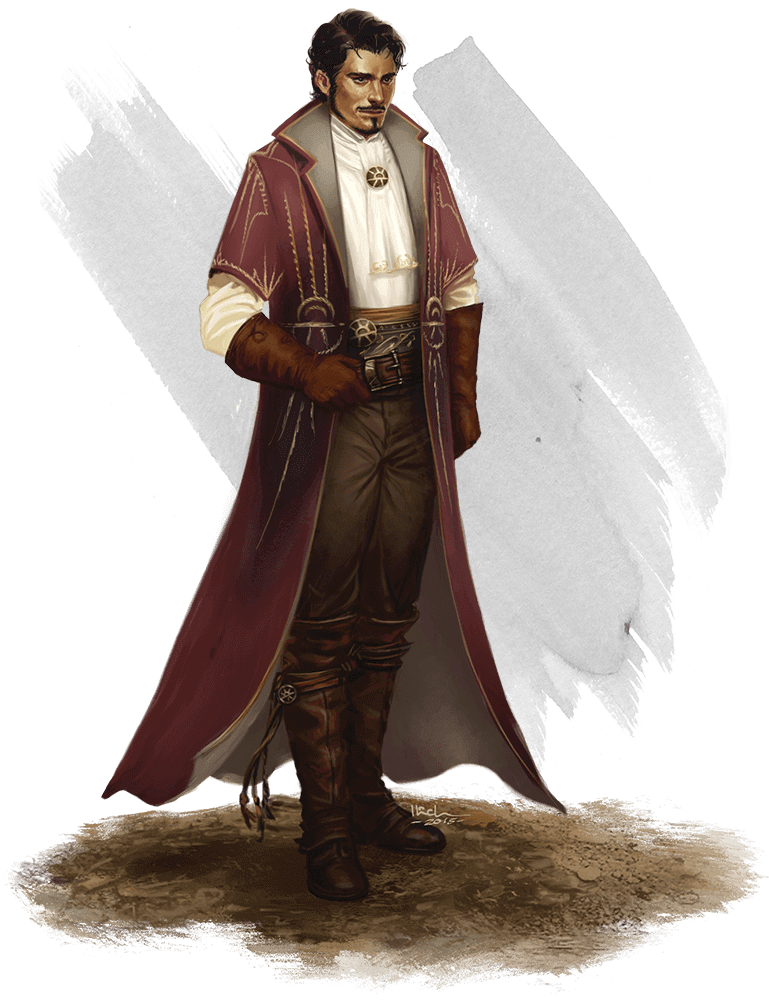
Forge Domain
The gods of the forge are patrons of artisans who work with metal, from a humble blacksmith who keeps a village in horseshoes and plow blades to the mighty elf artisan whose diamond-tipped arrows of mithral have felled demon lords. The gods of the forge teach that, with patience and hard work, even the most intractable metal can be transformed from a lump of ore to a beautifully wrought object. Clerics of these deities search for objects lost to the forces of darkness, liberate mines overrun by orcs, and uncover rare and wondrous materials necessary to create potent magic items. Followers of these gods take great pride in their work, and they are willing to craft and use heavy armor and powerful weapons to protect them. Deities of this domain include Gond, Reorx, Onatar, Moradin, Hephaestus, and Goibhniu.
Forge Domain Spells
| Cleric Level | Spells |
|---|---|
| 1st | identify, searing smite |
| 3rd | heat metal, magic weapon |
| 5th | elemental weapon, protection from energy |
| 7th | fabricate, wall of fire |
| 9th | animate objects, creation |
Bonus Proficiencies
When you choose this domain at 1st level, you gain proficiency with heavy armor and smith’s tools.
Blessing of the Forge
At 1st level, you gain the ability to imbue magic into a weapon or armor. At the end of a long rest, you can touch one nonmagical object that is a suit of armor or a simple or martial weapon. Until the end of your next long rest or until you die, the object becomes a magic item, granting a +1 bonus to AC if it’s armor or a +1 bonus to attack and damage rolls if it’s a weapon.
Once you use this feature, you can’t use it again until you finish a long rest.

Channel Divinity: Artisan's Blessing
Starting at 2nd level, you can use your Channel Divinity to create simple items.
You conduct an hour-long ritual that crafts a nonmagical item that must include some metal: a simple or martial weapon, a suit of armor, ten pieces of ammunition, a set of tools, or another metal object (see chapter 5, “Equipment,” in the Player’s Handbook for examples of these items). The creation is completed at the end of the hour, coalescing in an unoccupied space of your choice on a surface within 5 feet of you.
The thing you create can be something that is worth no more than 100 gp. As part of this ritual, you must lay out metal, which can include coins, with a value equal to the creation. The metal irretrievably coalesces and transforms into the creation at the ritual’s end, magically forming even nonmetal parts of the creation.
The ritual can create a duplicate of a nonmagical item that contains metal, such as a key, if you possess the original during the ritual.
Soul of the Forge
Starting at 6th level, your mastery of the forge grants you special abilities:
- You gain resistance to fire damage.
- While wearing heavy armor, you gain a +1 bonus to AC.
Divine Strike
At 8th level, you gain the ability to infuse your weapon strikes with the fiery power of the forge. Once on each of your turns when you hit a creature with a weapon attack, you can cause the attack to deal an extra 1d8 fire damage to the target. When you reach 14th level, the extra damage increases to 2d8.
Saint of Forge and Fire
At 17th level, your blessed affinity with fire and metal becomes more powerful:
- You gain immunity to fire damage.
- While wearing heavy armor, you have resistance to bludgeoning, piercing, and slashing damage from nonmagical attacks.
Grave Domain
Gods of the grave watch over the line between life and death. To these deities, death and the afterlife are a foundational part of the multiverse. To desecrate the peace of the dead is an abomination. Deities of the grave include Kelemvor, Wee Jas, the ancestral spirits of the Undying Court, Hades, Anubis, and Osiris. Followers of these deities seek to put wandering spirits to rest, destroy the undead, and ease the suffering of the dying. Their magic also allows them to stave off death for a time, particularly for a person who still has some great work to accomplish in the world. This is a delay of death, not a denial of it, for death will eventually get its due.
Grave Domain Spells
| Cleric Level | Spells |
|---|---|
| 1st | bane, false life |
| 3rd | gentle repose, ray of enfeeblement |
| 5th | revivify, vampiric touch |
| 7th | blight, death ward |
| 9th | antilife shell, raise dead |
Circle of Mortality
At 1st level, you gain the ability to manipulate the line between life and death. When you would normally roll one or more dice to restore hit points with a spell to a creature at 0 hit points, you instead use the highest number possible for each die.
In addition, you learn the spare the dying cantrip, which doesn’t count against the number of cleric cantrips you know. For you, it has a range of 30 feet, and you can cast it as a bonus action.
Eyes of the Grave
At 1st level, you gain the ability to occasionally sense the presence of the undead, whose existence is an insult to the natural cycle of life. As an action, you can open your awareness to magically detect undead. Until the end of your next turn, you know the location of any undead within 60 feet of you that isn’t behind total cover and that isn’t protected from divination magic. This sense doesn’t tell you anything about a creature’s capabilities or identity.
You can use this feature a number of times equal to your Wisdom modifier (minimum of once). You regain all expended uses when you finish a long rest.
Channel Divinity: Path to the Grave
Starting at 2nd level, you can use your Channel Divinity to mark another creature’s life force for termination.
As an action, you choose one creature you can see within 30 feet of you, cursing it until the end of your next turn. The next time you or an ally of yours hits the cursed creature with an attack, the creature has vulnerability to all of that attack’s damage, and then the curse ends.
Sentinel at Death's Door
At 6th level, you gain the ability to impede death’s progress. As a reaction when you or a creature you can see within 30 feet of you suffers a critical hit, you can turn that hit into a normal hit. Any effects triggered by a critical hit are canceled.
You can use this feature a number of times equal to your Wisdom modifier (minimum of once). You regain all expended uses when you finish a long rest.
Potent Spellcasting
Starting at 8th level, you add your Wisdom modifier to the damage you deal with any cleric cantrip.
Keeper of Souls
Starting at 17th level, you can seize a trace of vitality from a parting soul and use it to heal the living. When an enemy you can see dies within 60 feet of you, you or one creature of your choice that is within 60 feet of you regains hit points equal to the enemy’s number of Hit Dice. You can use this feature only if you aren’t incapacitated. Once you use it, you can’t do so again until the start of your next turn.

Hearth Domain
Gods of the Hearth are the patrons of all those who offer shelter to others. Followers of these gods are selfless individuals that put the comfort of their companions before all else. They seek to provide shelter to the weak, and bolster their allies. Clerics of the hearth see themselves as the first line of defense against those that seek to destroy the warm, safe places of the world. While very similar in their beliefs to clerics of the Twilight Domain, followers of this domain tend to protect their wards by standing in front of the danger than seek it out.
Hearth Domain Spells
| Cleric Level | Spells |
|---|---|
| 1st | goodberry, sanctuary |
| 3rd | healing spirit, warding bond |
| 5th | beacon of hope, plant growth |
| 7th | faithful hound, guardian of faith |
| 9th | greater restoration, hallow |
Bonus Proficiencies
A host has certain obligations to their guests. You should be able to provide warm food, rest, respite, and safety. When you select this Divine Domain at 1st level you gain proficiency with the Herbalism Kit, Cook's Utensils, and Heavy Armor.
Blessing of the Hearth
Starting at 1st level, your presence during respites allows your companions to rest without care. At the end of each short rest, you can choose a number creatures equal to your Wisdom modifier (minimum of 1). These creatures have their level of exhaustion, if any, reduced by 1, and they regain (additional) hit points equal to your cleric level.
In addition, you learn the create bonfire cantrip. It counts as a cleric cantrip for you, but it doesn't count against your total number of Cantrips Known.
Channel Divinity: Restful Sojourn
Starting at 2nd level, you gain this additional Channel Divinity option. As an action on your turn, you can touch your holy symbol to a willing creature, causing them to fall under the effects of the catnap spell. When you cast catnap using this Channel Divinity, the spell has its duration reduced to 1 minute.
Selfless Healer
Beginning at 6th level, when you cast a spell that restores hit points or stabilizes a creature, you are under the effects of the Dodge action until the start of your next turn.
Divine Strike
Starting at 8th level, you learn to channel the warmth of the hearth into your weapon's strikes. Once on each of your turns when you hit a creature with a weapon attack, you can cause the attack to do an extra 1d8 fire damage to the target. When you reach 14th level, the extra damage increases to 2d8.
Beacon of Hospitality
Starting at 17th level a number of friendly creatures that can include yourself, equal to your proficiency bonus, that complete a short or long rest with you gain the following benefits:
- They are cured of any poisons or non-magical disease.
- Their level of exhaustion is reduced by two.
- They regain maximum hit points from their hit die rolls.
- They gain temporary hit points equal to your cleric level.
Knowledge Domain
The gods of knowledge — including Oghma, Boccob, Gilean, Aureon, and Thoth — value learning and understanding above all. Some teach that knowledge is to be gathered and shared in libraries and universities, or promote the practical knowledge of craft and invention. Some deities hoard knowledge and keep its secrets to themselves. And some promise their followers that they will gain tremendous power if they unlock the secrets of the multiverse. Followers of these gods study esoteric lore, collect old tomes, delve into the secret places of the earth, and learn all they can. Some gods of knowledge promote the practical knowledge of craft and invention, including smith deities like Gond, Reorx, Onatar, Moradin, Hephaestus, and Goibhniu.
Knowledge Domain Spells
| Cleric Level | Spells |
|---|---|
| 1st | command, identify |
| 3rd | augury, suggestion |
| 5th | nondetection, speak with the dead |
| 7th | arcane eye, confusion |
| 9th | legend lore, scrying |
Blessings of Knowledge
At 1st level, you learn two languages of your choice. You also become proficient in your choice of two of the following skills: Arcana, History, Nature, or Religion.
Your proficiency bonus is doubled for any ability check you make that uses either of those skills.
Channel Divinity: Knowledge of the Ages
Starting at 2nd level, you can use your Channel Divinity to tap into a divine well of knowledge. As an action, you choose one skill or tool. For 10 minutes, you have proficiency with the chosen skill or tool.
Channel Divinity: Read Thoughts
At 6th level, you can use your Channel Divinity to read a creature’s thoughts. You can then use your access to the creature’s mind to command it.
As an action, choose one creature that you can see within 60 feet of you. That creature must make a Wisdom saving throw. If the creature succeeds on the saving throw, you can’t use this feature on it again until you finish a long rest.
If the creature fails its save, you can read its surface thoughts (those foremost in its mind, reflecting its current emotions and what it is actively thinking about) when it is within 60 feet of you. This effect lasts for 1 minute.
During that time, you can use your action to end this effect and cast the suggestion spell on the creature without expending a spell slot. The target automatically fails its saving throw against the spell.

Potent Spellcasting
Starting at 8th level, you add your Wisdom modifier to the damage you deal with any cleric cantrip.
Visions of the Past
Starting at 17th level, you can call up visions of the past that relate to an object you hold or your immediate surroundings. You spend at least 1 minute in meditation and prayer, then receive dreamlike, shadowy glimpses of recent events. You can meditate in this way for a number of minutes equal to your Wisdom score and must maintain concentration during that time, as if you were casting a spell.
Once you use this feature, you can’t use it again until you finish a short or long rest.
Object Reading. Holding an object as you meditate, you can see visions of the object’s previous owner. After meditating for 1 minute, you learn how the owner acquired and lost the object, as well as the most recent significant event involving the object and that owner. If the object was owned by another creature in the recent past (within a number of days equal to your Wisdom score), you can spend 1 additional minute for each owner to learn the same information about that creature.
Area Reading. As you meditate, you see visions of recent events in your immediate vicinity (a room, street, tunnel, clearing, or the like, up to a 50-foot cube), going back a number of days equal to your Wisdom score. For each minute you meditate, you learn about one significant event, beginning with the most recent. Significant events typically involve powerful emotions, such as battles and betrayals, marriages and murders, births and funerals. However, they might also include more mundane events that are nevertheless important in your current situation.

Life Domain
The Life domain focuses on the vibrant positive energy — one of the fundamental forces of the universe — that sustains all life. The gods of life promote vitality and health through healing the sick and wounded, caring for those in need, and driving away the forces of death and undeath. Almost any non-evil deity can claim influence over this domain, particularly agricultural deities (such as Chauntea, Arawai, and Demeter), sun gods (such as Lathander, Pelor, and Re-Horakhty), gods of healing or endurance (such as Ilmater, Mishakal, Apollo, and Diancecht), and gods of home and community (such as Hestia, Hathor, and Boldrei).
Life Domain Spells
| Cleric Level | Spells |
|---|---|
| 1st | bless, cure wounds |
| 3rd | lesser restoration, spiritual weapon |
| 5th | beacon of hope, revivify |
| 7th | death ward, guardian of faith |
| 9th | mass cure wounds, raise dead |
Bonus Proficiency
When you choose this domain at 1st level, you gain proficiency with heavy armor.
Disciple of Life
Also starting at 1st level, your healing spells are more effective. Whenever you use a spell of 1st level or higher to restore hit points to a creature, the creature regains additional hit points equal to 2 + the spell’s level.
Channel Divinity: Preserve Life
Starting at 2nd level, you can use your Channel Divinity to heal the badly injured.
As an action, you present your holy symbol and evoke healing energy that can restore a number of hit points equal to five times your cleric level. Choose any creatures within 30 feet of you, and divide those hit points among them. This feature can restore a creature to no more than half of its hit point maximum. You can’t use this feature on an undead or a construct.
Blessed Healer
Beginning at 6th level, the healing spells you cast on others heal you as well. When you cast a spell of 1st level or higher that restores hit points to a creature other than you, you regain hit points equal to 2 + the spell’s level.
Divine Strike
At 8th level, you gain the ability to infuse your weapon strikes with divine energy. Once on each of your turns when you hit a creature with a weapon attack, you can cause the attack to deal an extra 1d8 radiant damage to the target. When you reach 14th level, the extra damage increases to 2d8.
Supreme Healing
Starting at 17th level, when you would normally roll one or more dice to restore hit points with a spell, you instead use the highest number possible for each die. For example, instead of restoring 2d6 hit points to a creature, you restore 12.
Light Domain
Gods of light — including Helm, Lathander, Pholtus, Branchala, the Silver Flame, Belenus, Apollo, and Re-Horakhty — promote the ideals of rebirth and renewal, truth, vigilance, and beauty, often using the symbol of the sun. Some of these gods are portrayed as the sun itself or as a charioteer who guides the sun across the sky. Others are tireless sentinels whose eyes pierce every shadow and see through every deception. Some are deities of beauty and artistry, who teach that art is a vehicle for the soul’s improvement. Clerics of a god of light are enlightened souls infused with radiance and the power of their gods’ discerning vision, charged with chasing away lies and burning away darkness.
Light Domain Spells
| Cleric Level | Spells |
|---|---|
| 1st | burning hands, faeire fire |
| 3rd | flaming sphere, scorching ray |
| 5th | daylight, fireball |
| 7th | guardian of faith, wall of fire |
| 9th | flame strike, scrying |
Bonus Cantrip
When you choose this domain at 1st level, you gain the light cantrip if you don’t already know it
Warding Flare
Also at 1st level, you can interpose divine light between yourself and an attacking enemy. When you are attacked by a creature within 30 feet of you that you can see, you can use your reaction to impose disadvantage on the attack roll, causing light to flare before the attacker before it hits or misses. An attacker that can’t be blinded is immune to this feature.
You can use this feature a number of times equal to your Wisdom modifier (a minimum of once). You regain all expended uses when you finish a long rest.
Channel Divinity: Radiance of the Dawn
Starting at 2nd level, you can use your Channel Divinity to harness sunlight, banishing darkness and dealing radiant damage to your foes.
As an action, you present your holy symbol, and any magical darkness within 30 feet of you is dispelled. Additionally, each hostile creature within 30 feet of you must make a Constitution saving throw. A creature takes radiant damage equal to 2d10 + your cleric level on a failed saving throw, and half as much damage on a successful one. A creature that has total cover from you is not affected.
Improved Flare
Starting at 6th level, you can also use your Warding Flare feature when a creature that you can see within 30 feet of you attacks a creature other than you.
Potent Spellcasting
Starting at 8th level, you add your Wisdom modifier to the damage you deal with any cleric cantrip.
Corona of Light
Starting at 17th level, you can use your action to activate an aura of sunlight that lasts for 1 minute or until you dismiss it using another action. You emit bright light in a 60-foot radius and dim light 30 feet beyond that. Your enemies in the bright light have disadvantage on saving throws against any spell that deals fire or radiant damage.

Luck Domain
The gods of luck are patrons of those who embrace chance. All those who leave their lives in the hands of fate all garner favor from such gods. Clerics that belong to this domain barely resemble clerics at all, and their holy symbols are often pieces of gaming sets or lucky charms. When you embrace the ways of the luck domain, gambling with your life brings you great joy, and as a representative of the forces of chance you encourage rash decisions and actions everywhere you go.
Restriction: Halflings Only
Only halflings can choose this domain. It is not known which god created these stout happy people but a very rare select few reach out and try to find a connection with their unknown creator, and at times receive gifts for their faith in something that never responds to them.
Luck Domain Spells
| Cleric Level | Spells |
|---|---|
| 1st | bane, bless |
| 3rd | enhance ability, rope trick |
| 5th | bestow curse, remove curse |
| 7th | banishment, dimension door |
| 9th | reincarnate, skill empowerment |
Tip the Scales
When you choose this Domain at 1st level, your luck begins to rub off on those you touch. When you cast a spell of 1st-level or higher that targets a friendly creature, they have advantage on their next ability check, attack roll, or saving throw.
Bonus Proficiencies
In the game of life, sometimes you win, and sometimes you need to improvise. When you adopt the Luck Domain at 1st level, you gain proficiency in the Sleight of Hand skill, with improvised weapons, and with one gaming set of your choice.
In addition, if you spend at least 1 minute observing or playing a game you are not familiar with, you can add double your proficiency bonus to any ability check you make related to that game until the end of your next long rest. Only one game can benefit from this feature at a time.
Channel Divinity: Stroke of Luck
At 2nd level you gain this additional Channel Divinity option. When you or a creature within 60 feet that you can see, makes an ability check, attack roll, or saving throw, you can use your reaction to hold aloft your holy symbol and grant them advantage, or impose disadvantage, on the roll.
Lucky Streak
Beginning at 6th level, your god blesses your attacks with a strange luck. Your weapon attacks and spell attack rolls score a critical hit on a roll of 7 or 20, but rolls of 13 and 1 are both considered critical failures.
Potent Improvisation
Your way of life lands you in many a sticky situation, but you always seems to find a way out. Starting at 8th level, you may use your Wisdom modifier, in place of Strength or Dexterity ,for attack and damage rolls with improvised weapons, and your improvised weapon attacks count as magical for the sake of overcoming resistances and immunities.
In addition, once on each of your turns when you hit a creature with a weapon attack, you can cause the attack to deal an extra 1d8 radiant damage to the target. When you reach 14th level, this extra radiant damage becomes 2d8.
Divine Roulette
Beginning at 17th level, you can push your luck to its absolute limits in a divine game of chance. As an action on your turn, you can hold your holy symbol aloft and play Divine Roulette. Roll a d10, and the corresponding spell from the DivineRoulette table below immediately takes effect as if cast as a cleric spell by you. You can choose the target of the spell after you know the spell Divine Roulette will produce.
| d10 | Spell |
|---|---|
| 1 | no effect |
| 2 | imprisonment |
| 3 | invulnerability |
| 4 | mass heal |
| 5 | power word heal |
| d10 | Spell |
|---|---|
| 6 | power word kill |
| 7 | time stop |
| 8 | true polymorph |
| 9 | weird |
| 10 | wish |
Once you use this feature you must finish a long rest before you can use it again, unless you expand a 9th-level spell slot.
Nature Domain
Gods of nature are as varied as the natural world itself, from inscrutable gods of the deep forests (such as Silvanus, Obad-Hai, Chislev, Balinor, and Pan) to friendly deities associated with particular springs and groves (such as Eldath). Druids revere nature as a whole and might serve one of these deities, practicing mysterious rites and reciting all-but-forgotten prayers in their own secret tongue. But many of these gods have clerics as well, champions who take a more active role in advancing the interests of a particular nature god. These clerics might hunt the evil monstrosities that despoil the woodlands, bless the harvest of the faithful, or wither the crops of those who anger their gods.
Nature Domain Spells
| Cleric Level | Spells |
|---|---|
| 1st | animal friendship, speak with animals |
| 3rd | barkskin, spike growth |
| 5th | plant growth, windwall |
| 7th | dominate beast, grasping vine |
| 9th | insect plague, tree stride |
Acolyte of Nature
At 1st level, you learn one druid cantrip of your choice. You also gain proficiency in one of the following skills of your choice: Animal Handling, Nature, or Survival.
Bonus Proficiency
Also at 1st level, you gain proficiency with heavy armor.

Channel Divinity: Charm Animals and Plants
Starting at 2nd level, you can use your Channel Divinity to charm animals and plants.
As an action, you present your holy symbol and invoke the name of your deity. Each beast or plant creature that can see you within 30 feet of you must make a Wisdom saving throw. If the creature fails its saving throw, it is charmed by you for 1 minute or until it takes damage. While it is charmed by you, it is friendly to you and other creatures you designate.
Dampen Elements
Starting at 6th level, when you or a creature within 30 feet of you takes acid, cold, fire, lightning, or thunder damage, you can use your reaction to grant resistance to the creature against that instance of the damage.
Divine Strike
At 8th level, you gain the ability to infuse your weapon strikes with divine energy. Once on each of your turns when you hit a creature with a weapon attack, you can cause the attack to deal an extra 1d8 cold, fire, or lightning damage (your choice) to the target. When you reach 14th level, the extra damage increases to 2d8.
Master of Nature
At 17th level, you gain the ability to command animals and plant creatures. While creatures are charmed by your Charm Animals and Plants feature, you can take a bonus action on your turn to verbally command what each of those creatures will do on its next turn.
Order Domain
The Order Domain represents discipline, as well as devotion to a society or an institution and strict obedience to the laws governing it. On Ravnica, the domain is favored by clerics of the Azorius Senate, who use it to maintain and enforce the law, and of the Orzhov Syndicate, who exploit law and order for their personal gain. On other worlds, gods who grant access to this domain include Bane, Tyr, Majere, Erathis, Pholtus, Wee Jas, Aureon, Maglubiyet, Nuada, Athena, Anubis, Forseti, and Asmodeus.
The ideal of order is obedience to the law above all else, rather than to a specific individual or the passing influence of emotion or popular rule. Clerics of order are typically concerned with how things are done, rather than whether an action’s results are just. Following the law and obeying its edicts is critical, especially when it benefits these clerics and their guilds or deities.
Law establishes hierarchies. Those selected by the law to lead must be obeyed. Those who obey must do so to the best of their ability. In this manner, law creates an intricate web of obligations that allows society to forge order and security in a chaotic multiverse.
Order Domain Spells
| Cleric Level | Spells |
|---|---|
| 1st | command, heroism |
| 3rd | hold person, zone of truth |
| 5th | mass healing word, slow |
| 7th | compulsion, locate creature |
| 9th | commune, dominate person |

Bonus Proficiencies
When you choose this domain at 1st level, you gain proficiency with heavy armor. You also gain proficiency in the Intimidation or Persuasion skill (your choice).
Channel Divinity: Order's Demand
Starting at 2nd level, you can use your Channel Divinity to exert an intimidating presence over others.
As an action, you present your holy symbol, and each creature of your choice that can see or hear you within 30 feet of you must succeed on a Wisdom saving throw or be charmed by you until the end of your next turn or until the charmed creature takes any damage. You can also cause any of the charmed creatures to drop what they are holding when they fail the saving throw.
Embodiment of the Law
At 6th level, you become remarkably adept at channeling magical energy to compel others.
If you cast a spell of the enchantment school using a spell slot of 1st level or higher, you can change the spell’s casting time to 1 bonus action for this casting, provided the spell’s casting time is normally 1 action.
You can use this feature a number of times equal to your Wisdom modifier (minimum of once), and you regain all expended uses of it when you finish a long rest.
Divine Strike
At 8th level, you gain the ability to infuse your weapon strikes with divine energy. Once on each of your turns when you hit a creature with a weapon attack, you can cause the attack to deal an extra 1d8 psychic damage to the target. When you reach 14th level, the extra damage increases to 2d8.
Order's Wrath
Starting at 17th level, enemies you designate for destruction wilt under the combined efforts of you and your allies. If you deal your Divine Strike damage to a creature on your turn, you can curse that creature until the start of your next turn. The next time one of your allies hits the cursed creature with an attack, the target also takes 2d8 psychic damage, and the curse ends. You can curse a creature in this way only once per turn.
Peace Domain
The balm of peace thrives at the heart of healthy communities, between friendly nations, and in the souls of the kindhearted. The gods of peace inspire people of all sorts to resolve conflict and to stand up against those forces that try to prevent peace from flourishing.
Clerics of the Peace Domain preside over the signing of treaties, and they are often asked to arbitrate in disputes. These cleric's blessings draw people together and help them shoulder one another's burdens, and the clerics' magic aids those who are driven to fight for the way of peace
Peace Domain Spells
| Cleric Level | Spells |
|---|---|
| 1st | heroism, sanctuary |
| 3rd | aid, warding bond |
| 5th | beacon of hope, sending |
| 7th | aura of purity, Otiluke's resilient sphere |
| 9th | greater restoration, Rary's telepathic bond |
Implement of Peace
When you choose this domain at 1st level, you gain proficiency in the Insight, Performance, or Persuasion skill (your choice).
Emboldening Bond
Also at 1st level you can forge an empowering bond among people who are at peace with one another. As an action, you choose a number of willing creatures within 30 feet of you (this can include yourself) equal to your proficiency bonus. You create a magical bond among them for 10 minutes or until you use this feature gain. While any bonded creatures is within 30 feet of another, the creature can roll a d4 and add the number rolled to an attack roll, and ability check, or a saving throw it makes. Each creature can add the d4 no more than once per turn.
You can use this feature a number of times equal to your proficiency bonus, and you regain all expended uses when you finish a long rest.
Channel Divinity: Balm of Peace
Starting at 2nd level, you can use your Channel Divinity to make your very presence a soothing balm. As an action, you can move up to your speed, without provoking opportunity attacks, and when you move within 5 feet of any other creature during this action, you can restore a number of hit points to that creature equal to 2d6 + your Wisdom modifier (minimum of 1 hit point). A creature can receive this healing only once whenever you take this action.

Protective Bond
At 6th level, the bond you forge between people helps them protect each other. When a creature affected by your Emboldening Bond feature is about to take damage, a second bonded creature within 30 feet of the first can use its reaction to teleport to an unoccupied space within 5 feet of the first creature. The second creature then takes all the damage instead.
Potent Spellcasting
Starting at 8th level, you add your Wisdom modifier to the damage you deal with any cleric cantrip.
Expansive Bond
When you reach 17th level the benefits of your Emboldening Bond and Protective Bond features now work when the creatures are within 60 feet of each other. Moreover, when a creature uses Protective Bond to take someone else's damage, the creature has resistance to that damage.
Prosperity Domain
With enough gold, most mortal creatures can be motivated to do almost anything. Prosperity Clerics live their lives by this great truth, dedicating their lives to amassing great fortunes. In the service of gods of riches, greed, and trade, they enact divine will through the mercantile arts. Prosperity chooses its clerics from all walks of life; the wealthy aristocrat, the leader of a crime syndicate, the merchant, or the master artisan.
No matter their background, those who serve the gods of Prosperity value gold above all else, and view their economic success, or lack thereof, as a sign of divine favor, or disdain.
Bonus Proficiencies
At 1st level when you adopt the Prosperity Domain, you gain proficiency in the Insight skill. Whenever you make a Wisdom (Insight) check related to assessing the value of an item you can add double your proficiency bonus to the roll.
In addition, whenever you make a Charisma check related to negotiating a trade or exchange of goods you gain a bonus to the roll equal to your Wisdom modifier (minimum of +1).
Prosperity Domain Spells
| Cleric Level | Spells |
|---|---|
| 1st | alarm, identify |
| 3rd | arcane lock, heat metal |
| 5th | sending, tiny servant |
| 7th | resilient sphere, secret chest |
| 9th | animate objects, legend lore |
Gilded Strike
Your divinely inspired desire for material fortune is embued in each coin you touch. At 1st level you learn the magic stone cantrip. It counts as a cleric cantrip for you, but it doesn't count against your total number of Cantrips Known.
When you cast magic stone in this way, you touch coins in place of stones, increasing the damage based on the value of the coin; copper (1d6), silver (1d8), gold (1d10), platinum (2d6).
Channel Divinity: Distilled Fortune
At 2nd level, you gain the following Channel Divinity option. As an action, you can touch your holy symbol to one Large or smaller non-magical object, that is not being worn, carried, or part of a structure. It is transfigured into a tiny precious gemstone worth the exact monetary value of the item.
As an action, a creature can crush the gemstone, causing the object to reappear on an empty flat surface within 5 feet.
You can have a total number of objects transfigured in this way equal to your Wisdom modifier (minimum of 1). You can't transfigure an additional object while at your maximum.
Channel Divinity: Divine Vault
At 6th level, you gain this additional Channel Divinity option. When you cast a spell that requires a material component with a gold cost, you can use this Channel Divinity to draw upon the Divine Vault of your god, substituting the material component of the spell with an object from their vault.
This channel Divinity can be used to substitute material components worth up to 50 times your cleric level in gold.
Potent Spellcasting
Your god empowers your magic with their burning lust for material wealth. Starting at 8th level, you add your Wisdom modifier to the damage you deal with any cleric cantrip.
Gilded Guardian
Beginning at 17th level, you can summon one of the Gilded Guardians that protect the Divine Vault of your god. You learn the summon construct spell. It counts as a cleric spell for you and is always prepared but doesn't count against your spells prepared, however you can only cast the metal construct version of this spell. Once per long rest, when you cast summon construct, you can choose to cast it at 7th-level, without expending a spell slot. When cast in this way, the spell has the following changes:
- The Guardian is made from gold, gems, and valuables.
- The spell does not require your concentration.
- The duration of the spell becomes 8 hours.
- As an action, the Guardian can consume nearby treasure, regaining hit points equal to the gold value of the treasure.
You can only have one construct from summon construct conjured at a time, casting the spell again causes any other constructs, including a Guardian, to instantly disappear.


Tempest Domain
Gods whose portfolios include the Tempest domain — including Talos, Umberlee, Kord, Zeboim, the Devourer, Zeus, and Thor — govern storms, sea, and sky. They include gods of lightning and thunder, gods of earthquakes, some fire gods, and certain gods of violence, physical strength, and courage. In some pantheons, a god of this domain rules over other deities and is known for swift justice delivered by thunderbolts. In the pantheons of seafaring people, gods of this domain are ocean deities and the patrons of sailors. Tempest gods send their clerics to inspire fear in the common folk, either to keep those folk on the path of righteousness or to encourage them to offer sacrifices of propitiation to ward off divine wrath.
Tempest Domain Spells
| Cleric Level | Spells |
|---|---|
| 1st | fog cloud, thunderwave |
| 3rd | gust of wind, shatter |
| 5th | call lightning, sleet storm |
| 7th | control water, ice storm |
| 9th | destructive wave, insect plague |
Bonus Proficiencies
At 1st level, you gain proficiency with martial weapons and heavy armor.
Wrath of the Storm
Also at 1st level, you can thunderously rebuke attackers. When a creature within 5 feet of you that you can see hits you with an attack, you can use your reaction to cause the creature to make a Dexterity saving throw. The creature takes 2d8 lightning or thunder damage (your choice) on a failed saving throw, and half as much damage on a successful one.
You can use this feature a number of times equal to your Wisdom modifier (a minimum of once). You regain all expended uses when you finish a long rest.
Channel Divinity: Destructive Wrath
Starting at 2nd level, you can use your Channel Divinity to wield the power of the storm with unchecked ferocity.
When you roll lightning or thunder damage, you can use your Channel Divinity to deal maximum damage, instead of rolling.
Thunderbolt Strike
At 6th level, when you deal lightning damage to a Large or smaller creature, you can also push it up to 10 feet away from you.
Divine Strike
At 8th level, you gain the ability to infuse your weapon strikes with divine energy. Once on each of your turns when you hit a creature with a weapon attack, you can cause the attack to deal an extra 1d8 thunder damage to the target. When you reach 14th level, the extra damage increases to 2d8.
Stormborn
At 17th level, you have a flying speed equal to your current walking speed whenever you are not underground or indoors.
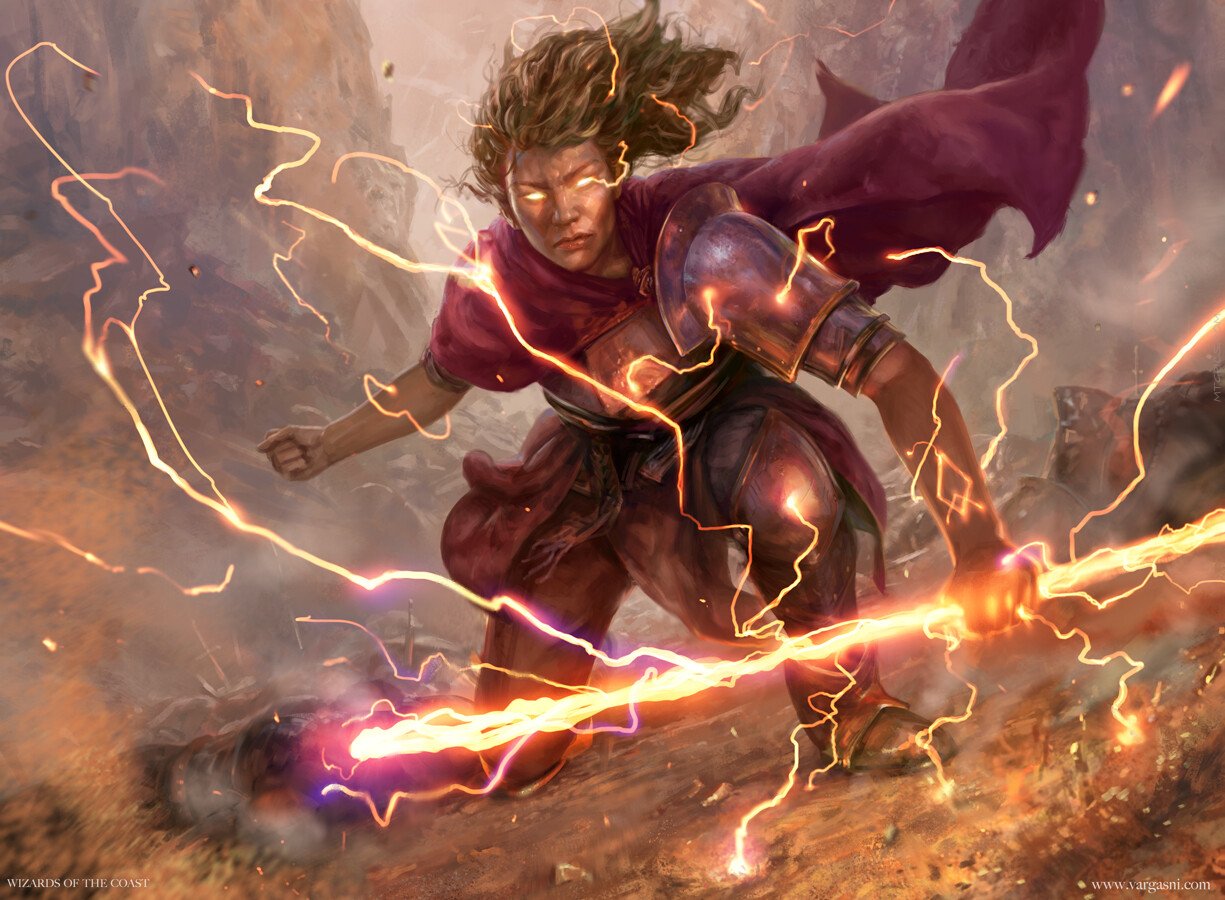










Trickery Domain
Gods of trickery — such as Tymora, Beshaba, Olidammara, the Traveler, Garl Glittergold, and Loki — are mischief-makers and instigators who stand as a constant challenge to the accepted order among both gods and mortals. They’re patrons of thieves, scoundrels, gamblers, rebels, and liberators. Their clerics are a disruptive force in the world, puncturing pride, mocking tyrants, stealing from the rich, freeing captives, and flouting hollow traditions. They prefer subterfuge, pranks, deception, and theft rather than direct confrontation.
Trickery Domain Spells
| Cleric Level | Spells |
|---|---|
| 1st | charm person, disguise self |
| 3rd | mirror image, pass without trace |
| 5th | blink, dispel magic |
| 7th | dimension door, polymorph |
| 9th | dominate person, modify memory |
Blessing of the Trickster
Starting when you choose this domain at 1st level, you can use your action to touch a willing creature other than yourself to give it advantage on Dexterity (Stealth) checks. This blessing lasts for 1 hour or until you use this feature again.
Channel Divinity: Invoke Duplicity
Starting at 2nd level, you can use your Channel Divinity to create an illusory duplicate of yourself.
As an action, you create a perfect illusion of yourself that lasts for 1 minute, or until you lose your concentration (as if you were concentrating on a spell). The illusion appears in an unoccupied space that you can see within 30 feet of you. As a bonus action on your turn, you can move the illusion up to 30 feet to a space you can see, but it must remain within 120 feet of you.
For the duration, you can cast spells as though you were in the illusion’s space, but you must use your own senses. Additionally, when both you and your illusion are within 5 feet of a creature that can see the illusion, you have advantage on attack rolls against that creature, given how distracting the illusion is to the target.
Chanel Divinity: Cloak of Shadows
Starting at 6th level, you can use your Channel Divinity to vanish.
As an action, you become invisible until the end of your next turn. You become visible if you attack or cast a spell.
Divine Strike
At 8th level, you gain the ability to infuse your weapon strikes with poison — a gift from your deity. Once on each of your turns when you hit a creature with a weapon attack, you can cause the attack to deal an extra 1d8 poison damage to the target. When you reach 14th level, the extra damage increases to 2d8.
Improved Duplicity
At 17th level, you can create up to four duplicates of yourself, instead of one, when you use Invoke Duplicity. As a bonus action on your turn, you can move any number of them up to 30 feet, to a maximum range of 120 feet.

Twilight Domain
The twilit transition from light into darkness often brings calm and even joy, as the day's labors end and the hours of rest begin. The darkness can also bring terrors, but the gods of twilight guard against the horrors of the night.
Clerics who serve these deities bring comfort to those who seek rest and protect them by venturing into the encroaching darkness to ensure that the dark is a comfort, not at terror, a more proactive act of faith compared the cleris of the Hearth Domain which tend to stay in the area to protect it.
Twilight Domain Spells
| Cleric Level | Spells |
|---|---|
| 1st | faerie fire, sleep |
| 3rd | moonbeam, see invisibility |
| 5th | aura of vitality, Lemonud's tiny hut |
| 7th | aura of live, greater invisibility |
| 9th | circle of power, mislead |
Bonus Proficiencies
When you choose this domain at 1st level you gain proficiency with martial weapons and heavy armor.
Eyes of Night
You can see through the deepest gloom. You have darkvision out to a range of 300 feet. In that radius you can see dim light as if it were bright light and in darkness as if it were dim light.
As an action, you can magically share the darkvision of the feature with willing creatures you can see within 10 feet of you, up to a number of creatures equal to your Wisdom modifier (minimum of one creature). The shared darkvision lasts for 1 hour. Once you share it, you can't do so again until you finish a long rest, unless you expend a spell slot of any level to share it again.
Vigilant Blessing
Also at 1st level, the night has taught you to be vigilant. As an action, you give one creature you touch (including possibly yourself) advantage on the next initiative roll the creature makes. This benefit ends immediately after the roll or if you use this feature again.
Channel Divinity: Twilight Sanctuary
At 2nd level you can use your Channel Divinity to refresh your allies with soothing light.
As an action, you present your holy symbol, and a sphere of twilight emanates from you. The sphere is centered on you, has a 30-foot radius, and is filled with dim light. The sphere moves with you, and it lasts for 1 minute or until you are incapacitated or die. Whenever a creature (including you) ends its turn in the sphere, you can grant that creature one of these benefits:
- You grant it temporary hit points equal to 1d6 plus your cleric level
- You end one effect on it causing it to be charmed or frightened.
Steps of the Night
When you reach 6th level you can draw on the mystical power of night to rise into the air. As a bonus action when you are in dim light or darkness, you can magically give yourself a flying speed equal to your walking speed for 1 minute. You can use this bonus action a number of times equal to your proficiency bonus, and you regain all expended uses when you finish a long rest.
Divine Strike
At 8th level you gain the ability to infuse your weapon strikes with divine energy. Once on each of your turns when you hit a creature with a weapon attack, you can cause the attack to deal an extra 1d8 radiant damage. When you reach 14th level, the extra damage increases to 2d8.
Twilight Shroud
Starting at 17th level the twilight that you summon offers a protective embrace: you and your allies have half cover while in the sphere created by your Twilight Sanctuary.
War Domain
War has many manifestations. It can make heroes of ordinary people. It can be desperate and horrific, with acts of cruelty and cowardice eclipsing instances of excellence and courage. In either case, the gods of war watch over warriors and reward them for their great deeds. The clerics of such gods excel in battle, inspiring others to fight the good fight or offering acts of violence as prayers. Gods of war include champions of honor and chivalry (such as Torm, Heironeous, and Kiri-Jolith) as well as gods of destruction and pillage (such as Erythnul, the Fury, Gruumsh, and Ares) and gods of conquest and domination (such as Bane, Hextor, and Maglubiyet). Other war gods (such as Tempus, Nike, and Nuada) take a more neutral stance, promoting war in all its manifestations and supporting warriors in any circumstance.
War Domain Spells
| Cleric Level | Spells |
|---|---|
| 1st | divine favor, shield of faith |
| 3rd | magic weapon, spiritual weapon |
| 5th | crusader's mantle, spirit guardians |
| 7th | freedom of movement, stoneskin |
| 9th | flame strike, hold monster |
Bonus Proficiencies
At 1st level, you gain proficiency with martial weapons and heavy armor.
War Priest
From 1st level, your god delivers bolts of inspiration to you while you are engaged in battle. When you use the Attack action , you can make one weapon attack as a bonus action.
You can use this feature a number of times equal to your Wisdom modifier (a minimum of once). You regain all expended uses when you finish a long rest.
Channel Divinity: Guided Strike
Starting at 2nd level, you can use your Channel Divinity to strike with supernatural accuracy. When you make an attack roll, you can use your Channel Divinity to gain a +10 bonus to the roll. You make this choice after you see the roll, but before the DM says whether the attack hits or misses.
Channel Divinity: War God's Blessing
At 6th level, when a creature within 30 feet of you makes an attack roll, you can use your reaction to grant that creature a +10 bonus to the roll, using your Channel Divinity. You make this choice after you see the roll, but before the DM says whether the attack hits or misses.
Divine Strike
At 8th level, you gain the ability to infuse your weapon strikes with divine energy. Once on each of your turns when you hit a creature with a weapon attack, you can cause the attack to deal an extra 1d8 damage of the same type dealt by the weapon to the target. When you reach 14th level, the extra damage increases to 2d8.
Avatar of Battle
At 17th level, you gain resistance to bludgeoning, piercing, and slashing damage from nonmagical weapons.



Druid
Holding high a gnarled staff wreathed with holly, an elf summons the fury of the storm and calls down explosive bolts of lightning to smite the torch-carrying orcs who threaten her forest.
Crouching out of sight on a high tree branch in the form of a leopard, a human peers out of the jungle at the strange construction of a temple of Evil Elemental Air, keeping a close eye on the cultists’ activities.
Swinging a blade formed of pure fire, a half-elf charges into a mass of skeletal soldiers, sundering the unnatural magic that gives the foul creatures the mocking semblance of life.
Whether calling on the elemental forces of nature or emulating the creatures of the animal world, druids are an embodiment of nature’s resilience, cunning, and fury. They claim no mastery over nature. Instead, they see themselves as extensions of nature’s indomitable will.
Power of Nature
Druids revere nature above all, gaining their spells and other magical powers either from the force of nature itself or from a nature deity. Many druids pursue a mystic spirituality of transcendent union with nature rather than devotion to a divine entity, while others serve gods of wild nature, animals, or elemental forces. The ancient druidic traditions are sometimes called the Old Faith, in contrast to the worship of gods in temples and shrines.
Druid spells are oriented toward nature and animals — the power of tooth and claw, of sun and moon, of fire and storm. Druids also gain the ability to take on animal forms, and some druids make a particular study of this practice, even to the point where they prefer animal form to their natural form.
Preserve the Balance
For druids, nature exists in a precarious balance. The four elements that make up a world — air, earth, fire, and water — must remain in equilibrium. If one element were to gain power over the others, the world could be destroyed, drawn into one of the elemental planes and broken apart into its component elements. Thus, druids oppose cults of Elemental Evil and others who promote one element to the exclusion of others.
Druids are also concerned with the delicate ecological balance that sustains plant and animal life, and the need for civilized folk to live in harmony with nature, not in opposition to it. Druids accept that which is cruel in nature, and they hate that which is unnatural, including aberrations (such as beholders and mind flayers) and undead (such as zombies and vampires). Druids sometimes lead raids against such creatures, especially when the monsters encroach on the druids’ territory.
Druids are often found guarding sacred sites or watching over regions of unspoiled nature. But when a significant danger arises, threatening nature’s balance or the lands they protect, druids take on a more active role in combating the threat, as adventurers.
Creating a Druid
When making a druid, consider why your character has such a close bond with nature. Perhaps your character lives in a society where the Old Faith still thrives, or was raised by a druid after being abandoned in the depths of a forest. Perhaps your character had a dramatic encounter with the spirits of nature, coming face to face with a giant eagle or dire wolf and surviving the experience. Maybe your character was born during an epic storm or a volcanic eruption, which was interpreted as a sign that becoming a druid was part of your character’s destiny.
Have you always been an adventurer as part of your druidic calling, or did you first spend time as a caretaker of a sacred grove or spring? Perhaps your homeland was befouled by evil, and you took up an adventuring life in hopes of finding a new home or purpose.
Quick Build
You can make a druid quickly by following these suggestions. First, Wisdom should be your highest ability score, followed by Constitution. Second, choose the hermit background.
Class Features
As a druid, you gain the following class features.
Ability Score Improvement
At first level you can choose to increase your Intelligence or Wisdom score by 1.
Hit Points
Hit Dice: 1d8 per druid level
Hit Points at 1st Level: 8 + your Constitution modifier + racial bonus
Hit Points at Higher Levels: 1d8 (or 4) + your Constitution modifier per druid level after 1st
The Druid
| Level | Proficiency Bonus | Features | Cantrips Known | 1st | 2nd | 3rd | 4th | 5th | 6th | 7th | 8th | 9th |
|---|---|---|---|---|---|---|---|---|---|---|---|---|
| 1st | +2 | Druidic, Spellcasting | 2 | 2 | — | — | — | — | — | — | — | — |
| 2nd | +2 | Wild Shape, Wild Companion, Druid Circle | 2 | 3 | — | — | — | — | — | — | — | — |
| 3rd | +2 | — | 2 | 4 | 2 | — | — | — | — | — | — | — |
| 4th | +2 | Wild Shape Improvement, Ability Score Improvement | 3 | 4 | 3 | — | — | — | — | — | — | — |
| 5th | +3 | — | 3 | 4 | 3 | 2 | — | — | — | — | — | — |
| 6th | +3 | Druid Circle Feature | 3 | 4 | 3 | 3 | — | — | — | — | — | — |
| 7th | +3 | — | 3 | 4 | 3 | 3 | 1 | — | — | — | — | — |
| 8th | +3 | Wild Shape Improvement, Ability Score Improvement | 3 | 4 | 3 | 3 | 2 | — | — | — | — | — |
| 9th | +4 | — | 3 | 4 | 3 | 3 | 3 | 1 | — | — | — | — |
| 10th | +4 | Druid Circle Feature | 4 | 4 | 3 | 3 | 3 | 2 | — | — | — | — |
| 11th | +4 | — | 4 | 4 | 3 | 3 | 3 | 2 | 1 | — | — | — |
| 12th | +4 | Ability Score Improvement | 4 | 4 | 3 | 3 | 3 | 2 | 1 | — | — | — |
| 13th | +5 | — | 4 | 4 | 3 | 3 | 3 | 2 | 1 | 1 | — | — |
| 14th | +5 | Druid Circle Feature | 4 | 4 | 3 | 3 | 3 | 2 | 1 | 1 | — | — |
| 15th | +5 | — | 4 | 4 | 3 | 3 | 3 | 2 | 1 | 1 | 1 | — |
| 16th | +5 | Ability Score Improvement | 4 | 4 | 3 | 3 | 3 | 2 | 1 | 1 | 1 | — |
| 17th | +6 | — | 4 | 4 | 3 | 3 | 3 | 2 | 1 | 1 | 1 | 1 |
| 18th | +6 | Timeless Body, Beast Spells | 4 | 4 | 3 | 3 | 3 | 3 | 1 | 1 | 1 | 1 |
| 19th | +6 | Ability Score Improvement | 4 | 4 | 3 | 3 | 3 | 3 | 2 | 1 | 1 | 1 |
| 20th | +6 | Archdruid | 4 | 4 | 3 | 3 | 3 | 3 | 2 | 2 | 1 | 1 |
——Spell Slots by Spell Level——
Proficiencies
Armor: Light armor, medium armor, shields (druids will not wear armor or use shields made of metal)
Weapons: Clubs, daggers, darts, javelins, maces, quarterstaffs, scimitars, sickles, slings, spears
Tools: Harvesting kit or Herbalism kit
Saving Throws: Intelligence, Wisdom
Skills: Choose two from Arcana, Animal Handling, Insight, Medicine, Nature, Perception, Religion, and Survival
Equipment
You start with the following equipment, in addition to the equipment granted by your background:
- (a) a wooden shield or (b) any simple weapon
- (a) a scimitar, or (b) any simple melee weapon
- Gambeson, an explorer's pack, and a druidic focus
Druidic
You know Druidic, the secret language of druids. You can speak the language and use it to leave hidden messages. You and others who know this language automatically spot such a message. Others spot the message’s presence with a successful DC 15 Wisdom (Perception) check but can’t decipher it without magic.
Spellcasting
Drawing on the divine essence of nature itself, you can cast spells to shape that essence to your will.
Cantrips
You know two cantrips of your choice from the druid spell list. You learn additional druid cantrips of your choice at higher levels, as shown in the Cantrips Known column of the Druid table.
Preparing and Casting Spells
The Druid table shows how many spell slots you have to cast your druid spells of 1st level and higher. To cast one of these spells, you must expend a slot of the spell’s level or higher. You regain all expended spell slots when you finish a long rest.
You prepare the list of druid spells that are available for you to cast, choosing from the druid spell list. When you do so, choose a number of druid spells equal to your Wisdom modifier + your druid level (minimum of one spell). The spells must be of a level for which you have spell slots.
For example, if you are a 3rd-level druid, you have four 1st-level and two 2nd-level spell slots. With a Wisdom of 16, your list of prepared spells can include six spells of 1st or 2nd level, in any combination. If you prepare the 1st-level spell cure wounds, you can cast it using a 1st-level or 2nd-level slot. Casting the spell doesn’t remove it from your list of prepared spells.
You can change your list of prepared spells when you finish a long rest. Preparing a new list of druid spells requires time spent in prayer and meditation: at least 1 minute per spell level for each spell on your list.
Spellcasting Ability
Wisdom is your spellcasting ability for your druid spells, since your magic draws upon your devotion and attunement to nature. You use your Wisdom whenever a spell refers to your spellcasting ability. In addition, you use your Wisdom modifier when setting the saving throw DC for a druid spell you cast and when making an attack roll with one.
Spell Save DC
Spell attack modifier
Ritual Casting
You can cast a druid spell as a ritual if that spell has the ritual tag and you have the spell prepared.
Spellcasting Focus
You can use a druidic focus as a spellcasting focus for your druid spells.
Wild Shape
Starting at 2nd level, you can use your action to magically assume the shape of a beast that you have seen before. You can use this feature twice. You regain expended uses when you finish a short or long rest.
Your druid level determines the beasts you can transform into, as shown in the Beast Shapes table. At 2nd level, for example, you can transform into any beast that has a challenge rating of 1/4 or lower that doesn’t have a flying or swimming speed.
Beast Shapes
| Level | Max. CR | Limitations | Example |
|---|---|---|---|
| 2nd | 1/4 | No flying or swimming speed | Wolf |
| 4th | 1/2 | No flying speed | Crocodile |
| 8th | 1 | — | Giant eagle |
Sacred Plants and Wood
A druid holds certain plants to be sacred, particularly alder, ash, birch, elder, hazel, holly, juniper, mistletoe, oak, rowan, willow, and yew. Druids often use such plants as part of a spellcasting focus, incorporating lengths of oak or yew or sprigs of mistletoe.
Similarly, a druid uses such woods to make other objects, such as weapons and shields. Yew is associated with death and rebirth, so weapon handles for scimitars or sickles might be fashioned from it. Ash is associated with life and oak with strength. These woods make excellent hafts or whole weapons, such as clubs or quarterstaffs, as well as shields. Alder is associated with air, and it might be used for thrown weapons, such as darts or javelins.
Druids from regions that lack the plants described here have chosen other plants to take on similar uses. For instance, a druid of a desert region might value the yucca tree and cactus plants.
You can stay in a beast shape for a number of hours equal to half your druid level (rounded down). You then revert to your normal form unless you expend another use of this feature. You can revert to your normal form earlier by using a bonus action on your turn. You automatically revert if you fall unconscious, drop to 0 hit points, or die.
While you are transformed, the following rules apply:
- Your game statistics are replaced by the statistics of the beast, but you retain your alignment, personality, and Intelligence, Wisdom, and Charisma scores. You also retain all of your skill and saving throw proficiencies, in addition to gaining those of the creature. If the creature has the same proficiency as you and the bonus in its stat block is higher than yours, use the creature’s bonus instead of yours. If the creature has any legendary or lair actions, you can’t use them.
- When you transform, you assume the beast’s hit points and Hit Dice. When you revert to your normal form, you return to the number of hit points you had before you transformed. However, if you revert as a result of dropping to 0 hit points, any excess damage carries over to your normal form. For example, if you take 10 damage in animal form and have only 1 hit point left, you revert and take 9 damage. As long as the excess damage doesn’t reduce your normal form to 0 hit points, you aren’t knocked unconscious.
- You can’t cast spells, and your ability to speak or take any action that requires hands is limited to the capabilities of your beast form. Transforming doesn’t break your concentration on a spell you’ve already cast, however, or prevent you from taking actions that are part of a spell, such as call lightning, that you’ve already cast.
- You retain the benefit of any features from your class, race, or other source and can use them if the new form is physically capable of doing so. However, you can’t use any of your special senses, such as darkvision, unless your new form also has that sense.
- You choose whether your equipment falls to the ground in your space, merges into your new form, or is worn by it. Worn equipment functions as normal, but the DM decides whether it is practical for the new form to wear a piece of equipment, based on the creature’s shape and size. Your equipment doesn’t change size or shape to match the new form, and any equipment that the new form can’t wear must either fall to the ground or merge with it. Equipment that merges with the form has no effect until you leave the form.
Wild Companion
Also at 2nd level, you gain the ability to summon a spirit that assumes an animal form: as an action, you can expend a use of your Wild Shape feature to cast the find familiar spell, without material components.
When you cast the spell in this way, the familiar is a fey instead of a beast, and the familiar disappears after a number of hours equal to half your druid level.
Druid Circle
At 2nd level, you choose to identify with a circle of druids: the Circle of the Land, the Circle of the Moon, the Circle of Dreams, the Circle of the Shepherd, or the Circle of Spores, each circle detailed at the end of the class description. Your choice grants you features at 2nd level and again at 6th, 10th, and 14th level.

Ability Score Improvement
When you reach 4th level, and again at 8th, 12th, 16th, and 19th level, you can increase one ability score of your choice by 2, or you can increase two ability scores of your choice by 1. As normal, you can’t increase an ability score above 20 using this feature.
Timeless Body
Starting at 18th level, the primal magic that you wield causes you to age more slowly. For every 10 years that pass, your body ages only 1 year.
Beast Spells
Beginning at 18th level, you can cast many of your druid spells in any shape you assume using Wild Shape. You can perform the somatic and verbal components of a druid spell while in a beast shape, but you aren’t able to provide material components.
Archdruid
At 20th level, you can use your Wild Shape an unlimited number of times.
Additionally, you can ignore the verbal and somatic components of your druid spells, as well as any material components that lack a cost and aren’t consumed by a spell. You gain this benefit in both your normal shape and your beast shape from Wild Shape.
Druid Circles
Though their organization is invisible to most outsiders, druids are part of a society that spans the land, ignoring political borders. All druids are nominally members of this druidic society, though some individuals are so isolated that they have never seen any high-ranking members of the society or participated in druidic gatherings. Druids recognize each other as brothers and sisters. Like creatures of the wilderness, however, druids sometimes compete with or even prey on each other.
At a local scale, druids are organized into circles that share certain perspectives on nature, balance, and the way of the druid.
Circle of Dreams
Druids who are members of the Circle of Dreams hail from regions that have strong ties to the Feywild and its dreamlike realms. The druids’ guardianship of the natural world makes for a natural alliance between them and good-aligned fey. These druids seek to fill the world with dreamy wonder. Their magic mends wounds and brings joy to downcast hearts, and the realms they protect are gleaming, fruitful places, where dream and reality blur together and where the weary can find rest.
Balm of the Summer Court
At 2nd level, you become imbued with the blessings of the Summer Court. You are a font of energy that offers respite from injuries. You have a pool of fey energy represented by a number of d6s equal to your druid level.
As a bonus action, you can choose one creature you can see within 120 feet of you and spend a number of those dice equal to half your druid level or less. Roll the spent dice and add them together. The target regains a number of hit points equal to the total. The target also gains 1 temporary hit point per die spent.
You regain all expended dice when you finish a long rest.
Hearth of Moonlight and Shadow
At 6th level, home can be wherever you are. During a short or long rest, you can invoke the shadowy power of the Gloaming Court to help guard your respite. At the start of the rest, you touch a point in space, and an invisible, 30-foot-radius sphere of magic appears, centered on that point. Total cover blocks the sphere.
While within the sphere, you and your allies gain a +5 bonus to Dexterity (Stealth) and Wisdom (Perception) checks, and any light from open flames in the sphere (a campfire, torches, or the like) isn’t visible outside it.
The sphere vanishes at the end of the rest or when you leave the sphere.
Walker in Dreams
At 14th level, the magic of the Feywild grants you the ability to travel mentally or physically through dreamlands.
When you finish a short rest, you can cast one of the following spells, without expending a spell slot or requiring material components: dream (with you as the messenger), scrying , or teleportation circle.
This use of teleportation circle is special. Rather than opening a portal to a permanent teleportation circle, it opens a portal to the last location where you finished a long rest on your current plane of existence. If you haven’t taken a long rest on your current plane, the spell fails but isn’t wasted.
Once you use this feature, you can’t use it again until you finish a long rest.
Druids and the Gods
Some druids venerate the forces of nature themselves, but most druids are devoted to one of the many nature deities worshiped in the multiverse. The worship of these deities is often considered a more ancient tradition than the faiths of clerics and urbanized peoples. In fact, in the world of Greyhawk, the druidic faith is called the Old Faith, and it claims many adherents among farmers, foresters, fishers, and others who live closely with nature. This tradition includes the worship of Nature as a primal force beyond personification, but also encompasses the worship of Beory, the Oerth Mother, as well as devotees of Obad-Hai, Ehlonna, and Ulaa.
In the worlds of Greyhawk and the Forgotten Realms, druidic circles are not usually connected to the faith of a single nature deity. Any given circle in the Forgotten Realms, for example, might include druids who revere Silvanus, Mielikki, Eldath, Chauntea, or even the harsh Gods of Fury: Talos, Malar, Auril, and Umberlee. These nature gods are often called the First Circle, the first among the druids, and most druids count them all (even the violent ones) as worthy of veneration.
The druids of Eberron hold animistic beliefs completely unconnected to the Sovereign Host, the Dark Six, or any of the other religions of the world. They believe that every living thing and every natural phenomenon — sun, moon, wind, fire, and the world itself — has a spirit. Their spells, then, are a means to communicate with and command these spirits. Different druidic sects, though, hold different philosophies about the proper relationship of these spirits to each other and to the forces of civilization. The Ashbound, for example, believe that arcane magic is an abomination against nature, the Children of Winter venerate the forces of death, and the Gatekeepers preserve ancient traditions meant to protect the world from the incursion of aberrations.
Circle of the Eclipse
Druids of the Circle of the Eclipse are stewards of the celestial balance, and draw their power from the luminous bond shared by sun and moon. They find their strength waxing and waning with the ebb and flow of these celestial bodies, but it is during the rare moments of eclipse, when the world is briefly cloaked in celestial union, that they feel truly connected to the natural world and the cosmos above. Masters of both the brilliance of daylight and the mystique of darkness, druids of this circle embody the harmony of cosmic forces, wielding their celestial magic to protect the natural world and preserve the delicate equilibrium of day and night.
Light and Dark Forms
When you choose this circle at 2nd level, your relationship to both sun and moon grants you power over light and darkness. You have tow forms at 2nd level: light and dark. You can use a bonus action to change into light form or dark form. You can return to your normal form at any time (no action required). Each form grants you a series of different effects, as described below, which persist even while you are transformed into a beast by Wild Shape.
Your appearance changes when in these forms. You can choose how you appear in either form or use the table below to determine your appearance.
Form Appearance
| d6 | Light Form Appearance | Dark Form Appearance |
|---|---|---|
| 1 | Your eyes glow white | Your eyes become wells of darkness |
| 2 | You emit a warm, soft glow, as if you were perpetually well lit. | You emit a faint aura of darkness, making your body appear darker than it should. |
| 3 | Your hair tuns white and golden | Your hair turns inky black, like a crow's feather |
| 4 | Golden, druidic tattoos appear across your body. | Your veins look dark and inky from beneath your skin. |
| 5 | Flowers turn to face you and stretch wide in your presence. | Flowers close when you're near them, as if it were night. |
| 6 | Flecks of golden pollen float around you, and the air feels several degrees warmer. | Moonlit specks of dust swirl around you, and the air feels several degrees cooler. |
Eclipse Dice
Also at 2nd level, the power of the sun and moon that flows through you manifests as a pool of energy, which is represented by a number of d8s equal to your druid level. Collectively, these dice are called your eclipse dice, although their specific names and effects are determined by your current form.
As a bonus action, you can choose one creature that you can see within 60 feet of you and spend any number of these dice up to your proficiency bonus. Roll the spend dice and add them together. The effect of the dice depends on which form you're in.
Sun Dice (Light Form). The target gains a number of temporary hit points equal to the total of the roll, plus the number of dice spent. If there are one or more other creatures within 5 feet of the target, you can instead divide the number of temporary hit points between them, up to the available total.
Moon Dice (Dark Form). The target must succeed on a Charisma saving throw against your druid spell save DC or take psychic damage equal to the total of the roll.
You regain all of your expended eclipse dice when you finish a long rest.
Form Spells
Lastly, at 2nd level, your connection grants you access to some spells when you reach certain levels in this class, as shown on the Circle of the Eclipse Form Spells table.
Once you gain access to a circle spell, you always have it prepared, and it doesn't count against the number of spells you can prepare each day. If you gain access to a spell that doesn't appear on the druid spell list, the spell is nonetheless a druid spell for you. You can only cast a spell on this list if you're in the form associated with it.
Circle of the Eclipse Spells
| Druid Level | Light Form Spells | Dark Form Spells |
|---|---|---|
| 2nd | bless | bane |
| 3rd | flaming sphere | darkness |
| 5th | mass healing word | hypnotic pattern |
| 7th | wall of fire | dimension door |
| 9th | flame strike | cone of cold |
Eclipse Form
Beginning at 6th level, you can bring your light and dark forms together into a special third form, called your eclipse form. To do so, you can use a bonus action to expend one use of your Wild Shape feature to transform into your eclipse form, instead of transforming into a beast. You can remain in this form for up to 1 minute; for the duration, your physical body becomes shrouded in total darkness, like a living silhouette, and you emit a fiery glow. While in your eclipse form, you gain the following benefits:
- Your Sun and Moon Dice become d12s, instead of d8s.
- You can use either Sun or Moon dice on your turns, which you can do as part of the bonus action to transform into this form.
- You can cast spells from either form's spell list on your turns.
Sight of the Lightless Moon
Start at 10th level, you can see normally in darkness, both magical and nonmagical, to a distance of 120 feet, even if you're transformed by Wild Shape.
In addition, you can use an action to magically detect the presence of any illusions or shapechangers within 30 feet of you. You know the number and type of any illusion or shapeshifter whose presence you sense, but not its identity, original form, or exact location. You can do this a number of times equal to your Wisdom modifier, and you regain all expended uses of it when you finish a long rest.
Radiance of the Blinding Sun
By the time you reach 14th level, you embody the essence of the sun and moon. Whenever you roll one or more eclipse dice, you add your Wisdom modifier to the total of the roll.
In addition, you emit an aura while in light, dark, or eclipse form. The aura extends from you in a 10-foot radius. Friendly creatures within the aura can perceive within its area as if they had blindsight, out to the aura's range. The area's appearance also changes depending on your current form, as do its additional properties.
Sun Aura (Light Form). The area within your aura is filled with bright light. You and friendly creatures within the aura have resistance to fire damage.
Moon Aura (Dark Form). The area within your aura is filled with cool, dim light. You and friendly creatures have resistance to cold damage.
Umbral Aura (Eclipse Form). The area within your aura is filled with darkness. You and friendly creatures within the aura have resistance to fire and cold damage. A hostile creature that enters the area for the first time on its turn or starts its turn there takes fire damage equal to your Wisdom modifier and must make a Constitution saving throw against your druid spell save DC. On a failed save, the creature is blinded until the start of its next turn. Hostile creatures with the Sunlight Sensitivity or Sunlight Hypersensitivity trait treat the area as if it were sunlight for the purposes of those traits.
You can suppress your aura at any time (no action required) or use a bonus action to start emitting it again, which can be done as part of the bonus action to use your eclipse dice.

Circle of Radiance
Before the gods rose to power and organized hierarchies of worship or set their creeds in stone, druids led mortals in worshiping the primeval forces of nature. The most important and primary focus of ancient druidic praise and worship was the the bringer of light, the source of growth, and the destroyer of darkness; the Sun.
For those that join the Circle of Radiance they seek to imitate that from which they draw their radiant power. To their allies, these radiant druids are givers of life and destroyers of darkness. But to their foes, they are pillars of radiant wrath that burn away all who stand in their way.
Radiance Spells
Your link with the radiant light of the Sun grants you access to certain spells. At 2nd level, you learn the light cantrip.
In addition, when you reach certain levels in this class, you gain access to the spells listed for that level in the Radiance Spells table. Once you gain access to one of these spells, you always have it prepared, and it doesn’t count against the number of spells you can prepare each day. If you gain access to a spell that doesn’t appear on the druid spell list, the spell is nonetheless a druid spell for you.
Radiance Spells
| Druid Level | Spells |
|---|---|
| 3rd | continual flame, heat metal |
| 5th | daylight, minute meteors |
| 7th | fire shield, guardian of faith |
| 9th | dawn, flame strike |
Radiant Form
When you adopt this Circle at 2nd level, you learn to take on the powerful and ancient form of a Sun Priest. As an action on your turn you can expend a use of your Wild Shape to allow the radiance of the Sun itself to shine through your body. While in this Radiant form you shed bright light in a 30-foot radius, and you are resistant fire and radiant damage.
As a bonus action while you are in your Radiant form you can release a targeted burst of sunlight at a creature within 30 feet. If the target can see, they must make a Constitution saving throw. On a failed save they are blinded for one minute. The creature can repeat the saving throw at the beginning of each of its turns, ending the effect on a success.
Your Radiant form lasts for one minute, until you fall unconscious, or you dismiss it as a bonus action.
Radiant Wrath
Starting at 6th level, your connection to the Sun empowers your radiant magic. When you cast a spell that deals fire or radiant damage you can add your Wisdom modifier (minimum of 1) to one damage roll of the spell. If the spell affects multiple creatures, one creature of your choice takes the bonus damage the first time it is damaged by the spell.
Solar Rebuke
Upon reaching 10th level your body has become infused with the radiant light of the Sun. While you are in your Radiant form when you are hit with a melee attack you can use your reaction to force the attacker to make a Dexterity saving throw. They take 2d10 radiant damage on a failed save and are blinded until the start of their next turn and half as much on a success and are not blinded.
All Consuming Flame
Upon reaching 14th level you can offer own life force to the Sun to channel its radiant power. When you cast a spell of first level or higher, you can expend your hit die in place of spell slots. The cost is two hit die for a 1st-level spell, and one additional hit die for each spell level above 1st. You can expend a number of hit dice for this feature equal to your proficiency bonus per long rest.
In addition, both the light you produce in your Radiant form, and the light from your Solar Rebuke count as sunlight.
Circle of Spores
Druids of the Circle of Spores find beauty in decay. They see within mold and other fungi the ability to transform lifeless material into abundant, albeit somewhat strange, life.
These druids believe that life and death are parts of a grand cycle, with one leading to the other and then back again. Death isn’t the end of life, but instead a change of state that sees life shift into a new form.
Druids of this circle have a complex relationship with the undead. Unlike most other druids, they see nothing inherently wrong with undeath, which they consider to be a companion to life and death. But these druids believe that the natural cycle is healthiest when each segment of it is vibrant and changing. Undead that seek to replace all life with undeath, or that try to avoid passing to a final rest, violate the cycle and must be thwarted.
Circle Spells
Your symbiotic link to fungus and your ability to tap into the cycle of life and death grants you access to certain spells. At 2nd level, you learn the chill touch cantrip. At 3rd, 5th, 7th, and 9th level you gain access to the spells listed for that level in the Circle of Spores Spells table.
Once you gain access to one of these spells, you always have it prepared, and it doesn’t count against the number of spells you can prepare each day. If you gain access to a spell that doesn’t appear on the druid spell list, the spell is nonetheless a druid spell for you.
| Druid Level | Spells |
|---|---|
| 3rd | blindness/deafness, gentle repose |
| 5th | animate dead, gaseous form |
| 7th | blight, confusion |
| 9th | cloudkill, contagion |
Halo of Spores
Starting at 2nd level, you are surrounded by invisible, necrotic spores that are harmless until you unleash them on a creature nearby. When a creature you can see moves into a space within 10 feet of you or starts its turn there, you can use your reaction to deal 1d4 necrotic damage to that creature unless it succeeds on a Constitution saving throw against your spell save DC. The necrotic damage increases to 1d6 at 6th level, 1d8 at 10th level, and 1d10 at 14th level.
Symbiotic Entity
At 2nd level, you gain the ability to channel magic into your spores. As an action, you can expend a use of your Wild Shape feature to awaken those spores, rather than transforming into a beast form, and you gain 4 temporary hit points for each level you have in this class. While this feature is active, you gain the following benefits:
- When you deal your Halo of Spores damage, roll the damage die a second time and add it to the total.
- Your melee weapon attacks deal an extra 1d6 necrotic damage to any target they hit.
These benefits last for 10 minutes, until you lose all these temporary hit points, or until you use your Wild Shape again.
Rule Tip: Temporary hit points don't stack
If you have temporary hit points and receive more of them, you don’t add them together, unless a rule says you can. Instead, you decide which temporary hit points to keep. For more information on temporary hit points, see Chapter 10 of the Player’s Handbook.
Fungal Infestation
At 6th level, your spores gain the ability to infest a corpse and animate it. If a beast or a humanoid that is Small or Medium dies within 10 feet of you, you can use your reaction to animate it, causing it to stand up immediately with 1 hit point. The creature uses the zombie stat block in the Monster Manual. It remains animate for 1 hour, after which time it collapses and dies.
In combat, the zombie’s turn comes immediately after yours. It obeys your mental commands, and the only action it can take is the Attack action, making one melee attack.
You can use this feature a number of times equal to your Wisdom modifier (minimum of once), and you regain all expended uses of it when you finish a long rest.
Spreading Spores
At 10th level, you gain the ability to seed an area with deadly spores. As a bonus action while your Symbiotic Entity feature is active, you can hurl spores up to 30 feet away, where they swirl in a 10-foot cube for 1 minute. The spores disappear early if you use this feature again, if you dismiss them as a bonus action, or if your Symbiotic Entity feature is no longer active.
Whenever a creature moves into the cube or starts its turn there, that creature takes your Halo of Spores damage, unless the creature succeeds on a Constitution saving throw against your spell save DC. A creature can take this damage no more than once per turn.
While the cube of spores persists, you can’t use your Halo of Spores reaction.
Fungal Body
At 14th level, the fungal spores in your body alter you: you can’t be blinded, deafened, frightened, or poisoned, and any critical hit against you counts as a normal hit instead, unless you’re incapacitated.
Circle of Stars
The circle of Stars allows druids to draw on the power of starlight. These druids have tracked heavenly patterns since time immemorial, discovering secrets hidden amid the constellations. By revealing and understanding these secrets, the Circe of the Stars seeks to harness the powers of the cosmos.
Many druids of this circle keep records of the constellations and the stars' effects on the world. Some groups document these observations at megalithic sites, which serve as enigmatic libraries of lore. These repositories might take the form of stone circles, pyramids, petroglyphs, and underground temples — any construction durable enough to protect the circle's sacred knowledge even against a great cataclysm.
Star Map
Starting at 2nd level, you've created a star chart as part of your heavenly studies. It is a Tiny object and can serve as a spellcasting focus for your druid spell.s You determine its form by rolling on the Star Map table or by choosing one.
While holding this map, you have these benefits:
- You know the guidance cantrip.
- You have the guiding bolt spell prepared. It counts as a druid spell for you, and it doesn't count against the number of spells you can have prepared.
- You can cast guiding bolt without expending a spell slot. You can do so a number of times equal to your proficiency bonus, and you regain all expended uses when you finish a long rest.
If you lose the map, you can perform a 1-hour ceremony to magically create a replacement. This ceremony can be performed during a short or long rest, and it destroys the previous map.
Star Map
| d6 | Map Form |
|---|---|
| 1 | A scroll covered with depictions of constellations |
| 2 | A stone tablet with fine holes drilled through it |
| 3 | A speckled owlbear hide, tooled with raised marks |
| 4 | A collection of maps bound in an ebony cover |
| 5 | A crystal that projects starry patterns when placed before a light |
| 6 | Glass disks that depict constellations |
Starry Form
Also at 2nd level as a bonus action, you can expend a use of your Wild Shape feature to take on a starry form, rather than transforming into a beast.
While in your starry form, you retain your game statistics, but your body becomes luminous; your joints glimmer like stars, and glowing lines connect them as on a star chart. This form sheds bright light in a 10-foot radius and dim light for an additional 10 feet. The form lasts for 10 minutes. It ends early if you dismiss it (no action required), are incapacitated, die, or use this feature again.
Whenever you assume your starry form, choose which of the following constellations glimmers on your body; your choice gives you certain benefits while in the form:
Archer. A constellation of an archer appears on you. When you activate this form, and as a bonus action on your subsequent turns while it lasts, you can make a ranged attack, hurling a luminous arrow that targets one creature within 60 feet of you. On a hit, the attack deals radiant damage equal to 1d8 + your Wisdom modifier.
Chalice. A constellation of a life-giving goblet appears on you. Whenever you cast a spell using a spell slot that restores hit points to a creature, you or another creature within 30 feet of you can regain hit points equal to 1d8 + your Wisdom modifier.
Dragon. A constellation of a wise dragon appears on you. When you make an Intelligence or a Wisdom check or a Constellation saving throw to maintain concentration on a spell, you can treat a roll of 9 or lower on the d20 as a 10.
Cosmic Omen
When you reach 6th level, whenever you finish a long rest, you can consult your Star Map for omens. When you do so, roll a die. Until you finish your next long rest, you gain access to a special reaction based on whether you rolled an even or and odd number on the die:
Weal (even). Whenever a creature you can see within 30 feet of you is about to make an attack roll, a saving throw, or an ability check, you can use your reaction to roll a d6 and add the number rolled to the total.
Woe (odd). Whenever a creature you can see within 30 feet of you is about to make an attack roll, a saving throw, or an ability check, you can use your reaction to roll a d6 and subtract the number rolled from the total.
You can use this reaction a number of times equal to your proficiency bonus, and you regain all expended uses when you finish a long rest.
Twinkling Constellations
At 10th level, the consteallations of your Starry Form improve. The 1d8 of the Archer and the Chalice becomes 2d8, and while the Dragon is active you have a flying speed of 20 feet and can hover.
Moreover, at the start of each of your turns while in your Starry Form, you can change the constellation glimmers on your body.
Full of Stars
Starting at 14th level while in your Starry Form, you become partially incorporeal, giving you resistane to bludgeoning, piercing, and slashing damage.

Circle of the Guardian
While all druids have a symbiotic relationship with nature, those who join the Circle of the Guardian dedicate their lives to protecting the natural world. Known as Guardians, these druids often master their druidic magic in ancient forests. These elder groves are places of great power, often with links to the Feywild or other planes of untamed natural growth.
Circle Spells
Your link with the primal forests grants you access to certain spells. At 2nd level, and when you reach certain levels in this class, you learn the spells listed in the Circle of the Guardian Spells table. Once you gain access to a spell, it counts as a druid spell for you, you always have it prepared, and it doesn’t count against the number of spells you prepare each day.
In addition, you learn the thorn whip cantrip and doesn't count against the number of cantrips known. If you already know thorn whip you can choose to learn another cantrip on the druid spell list.
Circle of the Guardian Spells
| Druid Level | Spells |
|---|---|
| 2nd | compelled duel, ensnaring strike |
| 3rd | earthbind, warding bond |
| 5th | erupting earth, plant growth |
| 7th | aura of life, grasping vine |
| 9th | tree stride, wrath of nature |
Elder Limbs
When you adopt this Circle at 2nd level, your limbs become tough and knotted like the eldest trees of the wood. When you hit a creature with an unarmed strike, they take bludgeoning damage equal to 1d8 + your Strength modifier.
Also, when you hit a creature with an unarmed strike, you can expend a spell slot as part of that attack to cast ensnaring strike on your target, in addition to the damage of the attack.
Guardian Form
The primordial forests that you protect lend you their power. Beginning at 2nd level, you can expend a use of your Wild Shape as an action to take the form of a druidic Guardian. When you assume your Guardian form, you retain your game statistics and you take on tree-like appearance. While in your Guardian form you gain the following benefits:
- Your skin becomes rough and bark-like in appearance, and your Armor Class cannot be lower then 16.
- As a bonus action, you can grant yourself temporary hit points equal to your Wisdom modifier (minimum of 1).
- The reach of your unarmed strikes increases by 5 feet.
- You can use your Wisdom, in place of Strength, for the attack and damage rolls for your unarmed strikes.
Your Guardian form lasts for 10 minutes, and ends early if you are reduced to 0 hit points, or you end it as an action.
Arboreal Strikes
At 6th level, the primordial grove you guard enhances your abilities. You can attack twice, instead of once, when you take the Attack action on your turn. Moreover, you can cast one of your druid cantrips in place of one of those attacks.
Also, your unarmed strikes count as magical for the sake of overcoming resistance and immunity to nonmagical attacks.
Grasp the Forest
Your very presence stimulates wild plant growth. Starting at 10th level, you can expend a use of your Wild Shape as an action to cast the plant growth spell. When cast in this way, you choose a number of creatures equal to your Wisdom modifier (minimum of 1) who can ignore the difficult terrain effects of the spell as the plants move aside to avoid hindering them.
Verdant Mastery
Your body is suffused with the magic of the ageless trees that you defend. Beginning at 14th level, during each long rest, you automatically cast the 8 hour version of plant growth, unless you choose not to. When cast in this way, the spell does not consume a spell slot or a use of Wild Shape.
In addition, while you are in your Guardian form you are resistant to all bludgeoning, piercing, and slashing damage.
Circle of the Land
The Circle of the Land is made up of mystics and sages who safeguard ancient knowledge and rites through a vast oral tradition. These druids meet within sacred circles of trees or standing stones to whisper primal secrets in Druidic. The circle’s wisest members preside as the chief priests of communities that hold to the Old Faith and serve as advisors to the rulers of those folk. As a member of this circle, your magic is influenced by the land where you were initiated into the circle’s mysterious rites.
Bonus Cantrip
When you choose this circle at 2nd level, you learn one additional druid cantrip of your choice. This cantrip doesn't count against your total number of Cantrips Known.
Environmental Attunement
Your connection to the natural world grants you increased druidic power. At 2nd level, you are infused with the ability to cast certain spells based on your environment. These spells are listed in the Environment Spells table below. When you finish a long rest, you can attune to the environment around you, choosing from the appropriate option below: arctic, cave, coast, desert, forest, grassland, mountain, or swamp.
While you are attuned to that environment you gain access to the spells in the corresponding column of the Environment Spells table below. They count as druid spells for you and you always have them prepared, but they don't count against the total number of druid spells you can prepare each day.
Natural Recovery
Starting at 2nd level, you can regain some of your magical energy by sitting in meditation and communing with nature. During a short rest, you choose expended spell slots to recover. The spell slots can have a combined level that is equal to or less than half your druid level (rounded up), and none of the slots can be 6th level or higher. You can’t use this feature again until you finish a long rest.
Land's Stride
Starting at 6th level, you move effortlessly through the native obstacles of your attuned environment. You ignore the effects of natural difficult terrain in your attuned environment.
In addition, you have advantage on saving throws to resist the harmful effects of your attuned environment. Examples include resisting extreme temperatures, magically created or manipulated plants, or other magical environmental effects.
Nature's Ward
You are able to adapt to the hostile effects of nearly any wild place. Beginning at 10th level, when you finish a short or long rest, choose one of the following damage types: acid, cold, fire, lightning, poison, or thunder. You gain resistance to that type of damage until the end of your next short or long rest.
Nature's Sanctuary
When you reach 14th level, creatures of the natural world sense your connection to nature and become hesitant to attack you. When a beast or plant attacks you, you can force the creature to make a Wisdom saving throw. On a failed save, the attack automatically misses. On a successful save, the creature is immune to this effect for 24 hours.
Beasts and plants with a Wisdom of 4 or higher are aware of this effect before they make their attacks against you.
Environment Spells
| Level | Arctic | Cave | Coast | Desert |
|---|---|---|---|---|
| 2nd | armor of agathys, ice knife | cause fear, faerie fire | cure wounds, fog cloud | silent image, sleep |
| 3rd | hold person, spike growth | darkvision, web | gust of wind, misty step | blur, dust devil |
| 5th | slow | fear | tidal wave | daylight |
| 7th | ice storm | giant insect | watery sphere | hallucinatory terrain |
| 9th | cone of cold | passwall | maelstrom | seeming |
| Level | Forest | Grassland | Mountain | Swamp |
|---|---|---|---|---|
| 2nd | entangle, goodberry | jump, longstrider | earth tremor, feather fall | Tasha's caustic brew, ray of sickness |
| 3rd | barkskin, spider climb | pass without trace, sleep | earthen grasp, spike growth | acid arrow, spider climb |
| 5th | plant growth | haste | call lightning | stinking cloud |
| 7th | guardian of nature | freedom of movement | stone shape | blight |
| 9th | tree stride | far step | wall of stone | insect plague |

Circle of the Moon
Druids of the Circle of the Moon are fierce guardians of the wilds. Their order gathers under the full moon to share news and trade warnings. They haunt the deepest parts of the wilderness, where they might go for weeks on end before crossing paths with another humanoid creature, let alone another druid.
Changeable as the moon, a druid of this circle might prowl as a great cat one night, soar over the treetops as an eagle the next day, and crash through the undergrowth in bear form to drive off a trespassing monster. The wild is in the druid’s blood.
Combat Wild Shape
When you choose this circle at 2nd level, you gain the ability to use Wild Shape on your turn as a bonus action, rather than as an action.
Additionally, while you are transformed by Wild Shape, you can use a bonus action to expend one spell slot to regain 1d8 hit points per level of the spell slot expended.
Circle Forms
The rites of your circle grant you the ability to transform into more dangerous animal forms. Starting at 2nd level, you can use your Wild Shape to transform into a beast with a challenge rating as high as 1 (you ignore the Max. CR column of the Beast Shapes table, but must abide by the other limitations there).
Starting at 6th level, you can transform into a beast with a challenge rating as high as your druid level divided by 3, rounded down.
Primal Strike
Starting at 6th level, your attacks in beast form count as magical for the purpose of overcoming resistance and immunity to nonmagical attacks and damage.
Elemental Wild Shape
At 10th level, you can expend two uses of Wild Shape at the same time to transform into an air elemental, an earth elemental, a fire elemental, or a water elemental.
Thousand Forms
By 14th level, you have learned to use magic to alter your physical form in more subtle ways. You can cast the alter self spell at will.
Circle of the Shepherd
Druids of the Circle of the Shepherd commune with the spirits of nature, especially the spirits of beasts and the fey, and call to those spirits for aid. These druids recognize that all living things play a role in the natural world, yet they focus on protecting animals and fey creatures that have difficulty defending themselves. Shepherds, as they are known, see such creatures as their charges. They ward off monsters that threaten them, rebuke hunters who kill more prey than necessary, and prevent civilization from encroaching on rare animal habitats and on sites sacred to the fey. Many of these druids are happiest far from cities and towns, content to spend their days in the company of animals and the fey creatures of the wilds.
Members of this circle become adventurers to oppose forces that threaten their charges or to seek knowledge and power that will help them safeguard their charges better. Wherever these druids go, the spirits of the wilderness are with them.
Speech of the Woods
At 2nd level, you gain the ability to converse with beasts and many fey.
You learn to speak, read, and write Sylvan. In addition, beasts can understand your speech, and you gain the ability to decipher their noises and motions. Most beasts lack the intelligence to convey or understand sophisticated concepts, but a friendly beast could relay what it has seen or heard in the recent past. This ability doesn’t grant you friendship with beasts, though you can combine this ability with gifts to curry favor with them as you would with any nonplayer character.
Spirit Totem
Starting at 2nd level, you can call forth nature spirits to influence the world around you. As a bonus action, you can magically summon an incorporeal spirit to a point you can see within 60 feet of you. The spirit creates an aura in a 30-foot radius around that point. It counts as neither a creature nor an object, though it has the spectral appearance of the creature it represents.
As a bonus action, you can move the spirit up to 60 feet to a point you can see.
The spirit persists for 1 minute or until you’re incapacitated. Once you use this feature, you can’t use it again until you finish a short or long rest.
The effect of the spirit’s aura depends on the type of spirit you summon from the options below.

Bear Spirit. The bear spirit grants you and your allies its might and endurance. Each creature of your choice in the aura when the spirit appears gains temporary hit points equal to 5 + your druid level. In addition, you and your allies gain advantage on Strength checks and Strength saving throws while in the aura.
Hawk Spirit. The hawk spirit is a consummate hunter, aiding you and your allies with its keen sight. When a creature makes an attack roll against a target in the spirit’s aura, you can use your reaction to grant advantage to that attack roll. In addition, you and your allies have advantage on Wisdom (Perception) checks while in the aura.
Unicorn Spirit. The unicorn spirit lends its protection to those nearby. You and your allies gain advantage on all ability checks made to detect creatures in the spirit’s aura. In addition, if you cast a spell using a spell slot that restores hit points to any creature inside or outside the aura, each creature of your choice in the aura also regains hit points equal to your druid level.
Mighty Summoner
Starting at 6th level, beasts and fey that you conjure are more resilient than normal. Any beast or fey summoned or created by a spell that you cast gains the following benefits:
- The creature appears with more hit points than normal: 2 extra hit points per Hit Die it has.
- The damage from its natural weapons is considered magical for the purpose of overcoming immunity and resistance to nonmagical attacks and damage.
Guardian Spirit
Beginning at 10th level, your Spirit Totem safeguards the beasts and fey that you call forth with your magic. When a beast or fey that you summoned or created with a spell ends its turn in your Spirit Totem aura, that creature regains a number of hit points equal to half your druid level.
Faithful Summons
Starting at 14th level, the nature spirits you commune with protect you when you are the most defenseless. If you are reduced to 0 hit points or are incapacitated against your will, you can immediately gain the benefits of conjure animals as if it were cast using a 9th-level spell slot. It summons four beasts of your choice that are challenge rating 2 or lower. The conjured beasts appear within 20 feet of you. If they receive no commands from you, they protect you from harm and attack your foes. The spell lasts for 1 hour, requiring no concentration, or until you dismiss it (no action required).
Once you use this feature, you can’t use it again until you finish a long rest.
Circle of the Sower
The Druidic Circle that is most revered by civilized peoples is that of the Sowers. Folktales tell of an ancient druidic sage that guided mortals to the discovery of agriculture. Drawing on their mystical knowledge of the natural world, this druid led ancient peoples to establish the first farms and towns.
Those who join the Circle of the Sower follow the example of that ancient sage. They wander the countryside and offer magical aid to farmers, gardners, and all who till the soil.
Circle Spells
Your understanding of the natural world grants you access to certain spells. At 2nd level, and again when you reach certain Druid levels, you gain access th the spells listed in the table below. These spells count as druid spells for you and you always have them prepared, but they don't count against the total number of druid spells you prepare each day.
| Druid Level | Spells |
|---|---|
| 2nd | entangle, goodberry |
| 3rd | lesser restoration, spike growth |
| 5th | create food and water, plant growth |
| 7th | aura of life, grasping vine |
| 9th | greater restoration, tree stride |
Mystic Fruit
When you join this Circle at 2nd level, you learn to use your druidic magic to produce wondrous fruits. As a bonus action, you can expend a use of Wild Shape to produce a mystical fruit from the list below in your empty hand. The fruit can be eaten as an action. Any uneaten fruit spoils after 1 minute.
Invigoratin Fruit. The creature regains hit points equal to your Wisdom modifier + your druid level. Any hit points over their hit point maximum become tempoary hit points.
Mystical Fruit. The creature regains one expended spell slot of a level equal to your proficiency bonus or lower.
Revitalizing Fruit. The creature is immediately cured of one of the following conditions: blinded, deafened, paralyzed, petrified, poisoned, a reduction to an ability score or their hit point maximum, or their exhaustion level is reduced by 1.
Wandering Sage
At 2nd level, you gain a mystical understanding of the natural cycles of life and growth. You gain proficiency in the Nature skill and whenever you make an Intelligence (Nature) check related to agriculture, animal husbandry, the weather, or the growing and harvesting of plants you gain a bonus to your roll equal to your Wisdom modifier (minimum of +1).


Wild Growth
Beginning at 6th level, you cause plants to blossom and grow wherever you set foot. When you take a short or long rest, the effects of the 8 hour casting of plant growth immediately take effect in the area around you, unless you withhold them.
Your connection with plant life also grants immunity to poison damage, the poisoned condition, and natural poisons.
Abundant Harvest
Starting at 10th level, you can use your Wild Shape to grow more potent produce. When you produce a Mystic Fruit you can choose from the following additional options:
Emboldening Fruit. If the d20 roll for the first attack roll, ability check, or saving throw the creature makes after eating this fruit is lower than you Wisdom score, the creature can choose to substitute their d20 roll with your Wisdom score.
Primal Fruit. The creature is resistant to all bludgeoning, piercing, and slashing damage for the next minute.
Verdant Grasp
Starting when you reach 14th level, you can cast grasping vine without expending a spell slot of a number of times equal to your Wisdom modifier (minimum of once), and you regain all expended uses when you finish a long rest.
When you cast grasping vine, you can conjure two vines at separate locations within range of the spell. you can direct both vines at once with the same bonus action
Circle of the Tides
Few natural forces exert as much influence over people as the ocean. Those that live on its shores understand both the raw crushing power of tidal waves, and the bountiful harvest that can be found beneath the surface. Druids that belong to the Circle of the Tides monitor the balance between civilization and the seas. They protect ships and settlements from the terrible power of storms, but they do not hesitate to rebuke those who abuse the life-giving waters of the sea.
Disciple of the Sea
Your dedication and service to the life giving primal waters has changed you. When you join this Circle at 2nd level you gain the ability to breathe both air and water, and you gain a swimming speed equal to your movement speed.
Tidal Spells
Your link with the oceans of the world grants you access to certain spells. At 2nd level, you learn the shape water cantrip.
When you reach certain Druid levels, you gain access to the spells in the table below. They count as druid spells for you and you always have them prepared, but they don't count against the total number of spells you prepare each day.
Tidal Spells
| Druid Level | Spells |
|---|---|
| 3rd | hold person, misty step |
| 5th | tidal wave, wall of water |
| 7th | control water, storm sphere |
| 9th | hold monster, maelstrom |
Tidal Aura
At 2nd level, you learn to channel the mystical power of the Tides, even when you are away from bodies of water. As a bonus action, you can expend a use of Wild Shape to exude a mystical watery force in a 15-foot radius. Creatures of your choice within your Tidal Aura treat it as difficult terrain. If a creature has a swimming speed it can ignore this effect.
Your Tidal Aura also enhances your healing powers. When you cast a spell of 1-st level or higher that restores hit points to a creature within your Tidal Aura, one target of the spell within your Tidal Aura regains additional hit points equal to your Wisdom modifier (minimum of 1 additional hit point).
Your Tidal Aura lasts for 1 minute. The effects end early if your end it as a bonus action, or if you are incapacitated.
Undertow
Your Tidal magic has grown in power. Starting at 6th level, when you cast a spell of 1st-level or higher that forces a creature in your Tidal Aura to make a Strength, Dexterity, or Constitution saving throw, you can choose to empower the spell. Any creature within your Tidal Aura makes their initial saving throw against the empowered spell at disadvantage.
You can empower a spell in this way a number of times equal to your Wisdom modifier (minimum of once), and you regain all expended uses when you finish a long rest.
Waters of Life
Upon reaching 10th level, you can wield the magic of primal water to rejuvenate your allies as you hinder your foes. When you activate your Tidal Aura you gain a pool of temporary hit points equal to your druid level + your Wisdom modifier. While that Tidal Aura is active, you can use a bonus action to distribute any amount of temporary hit points from that pool to any creature that is within your Tidal Aura, including you.
When your Tidal Aura ends, any unused temporary hit points from your pool immediately disappear.
Master of the Waves
Your bond with the mystical waters of the world has reached its apex. Starting at 14th level, you can cast control water at will, without expending a spell slot, so long as you can target a body of water of sufficient size for you to manipulate.
Also, the radius of your Tidal Aura increases to 30 feet, and creatures of your choice treat the area of your Tidal Aura as difficult terrain even if they have a swimming speed.

Circle of Wildfire
Druids who are members of the Circle of Wildfire understand the necessity of destruction, such as how a forest fire promotes growth. These druids bond with a primal spirit that harbors destructive tendencies, allowing the druids to use their power to create controlled flames that help flora and fauna reproduce and grow.
Circle Spells
You have formed a bond with a wildfire spirit, a primal being of creation and destruction. Your link with this spirit grants you access to some spells when you reach certain levels in this class, as show on the Circle of Wildfire Spells Table.
Once you gain access to one of these spells, you always have it prepared, and it doesn't count against the number of spells you can prepare each day. If you gain access to a spell that doesn't appear on the druid spell list, the spell is nonetheless a druid spell for you. You also learn the firebolt cantrip, it is considered a druid spell for you and doesn't count against your number of cantrips known.
Circle of Wildfire Spells
| Druid Level | Spells |
|---|---|
| 2nd | burning hands, cure wounds |
| 3rd | flaming sphere, scorching ray |
| 5th | plant growth, revivify |
| 7th | aura of life, fire shield |
| 9th | flame strike, mass cure wounds |
Summon Wildfire Spirit
When you join this circle at 2nd level you can summon the primal spirit bound to your soul. As an action, you can expand one use of your Wild Shape feature to summon your wildfire spirit, rather than assuming a beast form
The spirit appears in an unoccupied space of your choice that you can see within 30 feet of you. Each creature within 10 feet of the spirit (other than you) when it appears must succeed on a Dexterity saving throw against your spell save DC or take 2d6 fire damage.
The spirit is friendly to you and your companions and obeys your commands. See this creature's game statistics in the Wildfire Spirit stat block, which uses your proficiency bonus (PB) in several places. You determine the spirit's appearance. Some spirits take the form of a humanoid figure made of gnarled branches covered in flame, while other look like beasts wreathed in fire.
In combat, the spirit shares your initiative count, but takes its turn immediately after yours. The only action it takes on its turn is the Dodge action, unless you take a bonus action on your turn to command it to take another action. That action can be one in its stat block or some other action. If you are incapacitated, the spirit can take any action of its choice, not just Dodge.
The spirit manifests for 1 hour, until it is reduced to 0 hit points, until you use this feature to summon the spirit again, or until you die.
Enhanced Bond
Beginning at 6th level the bond with your wildfire spirit enhances your destructive and restorative spells. Whenever you cast a spell that deals fire damage or restores hit points while your wildfire spirit is summoned, roll a d8, and you gain a bonus equal to the number rolled to one damage or healing roll of the spell.
In addition, when you cast a spell with a range other than self, the spell can originate from you or your wildfire spirit.
Wildfire Spirit
Small elemental
- Armor Class 13 (natural armor)
- Hit Points 5 + five times your druid level
- Speed 30 ft., fly 30 ft. (hover)
STR DEX CON INT WIS CHA 10 (+0) 14 (+2) 14 (+2) 13 (+1) 15 (+2) 11 (+0)
- Damage Resistances cold
- Damage Immunities fire
- Condition Immunities charmed, frightened, grappled, prone, restrained
- Senses darkvision 60 ft., passive Perception 12
- Languages understands the languages you speak
Actions (Requires Your Bonus Action)
Multiattack. The Wildfire Spirit makes two flame slash attacks
Flame Slash. Melee Weapon Attack: your spell attack modifier to hit, melee 5 ft., one target you can see. Hit: 1d4 + Dexterity Modifier + PB fire damage.
Flame Seed. Ranged Weapon Attack: + your spell attack modifier to hit, range 60 ft., one target you can see. Hit: 1d6 + Wisdom Modifier + PB fire damage.
Fiery Teleportation (Recharges on a 4-6). The spirit and each willing creature of your choice within 5 feet of it, teleport up to 30 feet to unoccupied spaces you can see. Each creature within 10 feet of the space that the spirit left must succeed on a Dexterity saving throw against your spell save DC or take 1d6 + Wisdom Modifier + PB fire damage.
Flames of Life
Starting at 10th level you gain the ability to turn
death into magical flames that can heal or incinerate. When a Small or larger creature dies within 30 feet of you or your wildfire spirit, a harmless spectral flame springs forth in the dead creature's space and flickers there for 1 minute. When a creature you can see enters that space, you can use your reaction to extinguish the spectral flame there and either heal the creature or deal fire damage to it. The healing or damage equals 2d10 + your Wisdom modifier.
You can use this feature a number of times equal to your proficiency bonus, and you regain all expended uses when you finish a long rest
Blazing Endurance
At 14th level the bond with your wildfire spirit is exceptionally strong, even fatal blows only fuel your defiance. If the spirit is within 120 feet of you when you are reduced to 0 hit points and thereby fall unconscious, you can cause the spirit to drop to 0 hit points. You then regain half your hit points and immediately rise to your feet.
Once you use this feature, you can’t use it again until you finish a long rest.
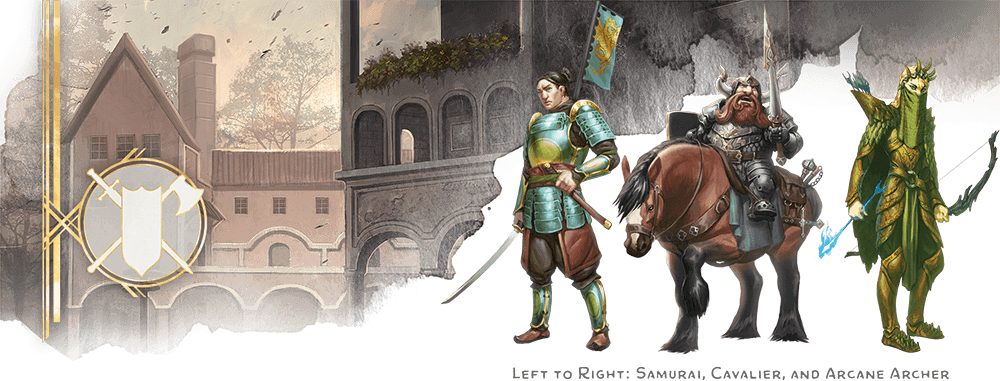
Fighter
A human in clanging plate armor holds her shield before her as she runs toward the massed goblins. An elf behind her, clad in studded leather armor, peppers the goblins with arrows loosed from his exquisite bow. The half-orc nearby shouts orders, helping the two combatants coordinate their assault to the best advantage.
A dwarf in chain mail interposes his shield between the ogre’s club and his companion, knocking the deadly blow aside. His companion, a half-elf in scale armor, swings two scimitars in a blinding whirl as she circles the ogre, looking for a blind spot in its defenses.
A gladiator fights for sport in an arena, a master with his trident and net, skilled at toppling foes and moving them around for the crowd’s delight — and his own tactical advantage. His opponent’s sword flares with blue light an instant before she sends lightning flashing forth to smite him.
All of these heroes are fighters, perhaps the most diverse class of characters in the worlds of Dungeons & Dragons. Questing knights, conquering overlords, royal champions, elite foot soldiers, hardened mercenaries, and bandit kings — as fighters, they all share an unparalleled mastery with weapons and armor, and a thorough knowledge of the skills of combat. And they are well acquainted with death, both meting it out and staring it defiantly in the face.
Well-Rounded Specialists
Fighters learn the basics of all combat styles. Every fighter can swing an axe, fence with a rapier, wield a longsword or a greatsword, use a bow, and even trap foes in a net with some degree of skill. Likewise, a fighter is adept with shields and every form of armor. Beyond that basic degree of familiarity, each fighter specializes in a certain style of combat. Some concentrate on archery, some on fighting with two weapons at once, and some on augmenting their martial skills with magic. This combination of broad general ability and extensive specialization makes fighters superior combatants on battlefields and in dungeons alike.
Trained for Danger
Not every member of the city watch, the village militia, or the queen’s army is a fighter. Most of these troops are relatively untrained soldiers with only the most basic combat knowledge. Veteran soldiers, military officers, trained bodyguards, dedicated knights, and similar figures are fighters.
Some fighters feel drawn to use their training as adventurers. The dungeon delving, monster slaying, and other dangerous work common among adventurers is second nature for a fighter, not all that different from the life he or she left behind. There are greater risks, perhaps, but also much greater rewards — few fighters in the city watch have the opportunity to discover a magic flame tongue sword, for example.
Creating a Fighter
As you build your fighter, think about two related elements of your character’s background: Where did you get your combat training, and what set you apart from the mundane warriors around you? Were you particularly ruthless? Did you get extra help from a mentor, perhaps because of your exceptional dedication? What drove you to this training in the first place? A threat to your homeland, a thirst for revenge, or a need to prove yourself might all have been factors.
You might have enjoyed formal training in a noble’s army or in a local militia. Perhaps you trained in a war academy, learning strategy, tactics, and military history. Or you might be self-taught — unpolished but well tested. Did you take up the sword as a way to escape the limits of life on a farm, or are you following a proud family tradition? Where did you acquire your weapons and armor? They might have been military issue or family heirlooms, or perhaps you scrimped and saved for years to buy them. Your armaments are now among your most important possessions — the only things that stand between you and death’s embrace.
Quick Build
You can make a fighter quickly by following these suggestions. First, make Strength or Dexterity your highest ability score, depending on whether you want to focus on melee weapons or on archery (or finesse weapons). Your next-highest score should be Constitution, or Intelligence if you plan to adopt the Eldritch Knight martial archetype. Second, choose the soldier background.
Class Features
As a fighter, you gain the following class features.
Ability Score Improvement
At first level you can choose to increase your Strength or Constitution score by 1.
Hit Points
Hit Dice: 1d10 per fighter level
Hit Points at 1st Level: 10 + your Constitution modifier + racial bonus
Hit Points at Higher Levels: 1d10 (or 5) + your Constitution modifier per fighter level after 1st
The Fighter
| Level | Proficiency Bonus | Features |
|---|---|---|
| 1st | +2 | Fighting Style, Second Wind |
| 2nd | +2 | Action Surge (one use) |
| 3rd | +2 | Martial Archetype |
| 4th | +2 | Marital Versatility, Ability Score Improvement |
| 5th | +3 | Extra Attack |
| 6th | +3 | Ability Score Improvement |
| 7th | +3 | Martial Archetype |
| 8th | +3 | Ability Score Improvement |
| 9th | +4 | Indomitable (one use) |
| 10th | +4 | Martial Archetype feature |
| 11th | +4 | Extra Attack (2) |
| 12th | +4 | Ability Score Improvement |
| 13th | +5 | Indomitable (two uses) |
| 14th | +5 | Ability Score Improvement |
| 15th | +5 | Martial Archetype feature |
| 16th | +5 | Ability Score Improvement |
| 17th | +6 | Action Surge (two uses), Extra Attack (3), Indomitable (three uses) |
| 18th | +6 | Martial Archetype feature |
| 19th | +6 | Ability Score Improvement |
| 20th | +6 | Unflinching |
Proficiencies
Armor: All armor, shields
Weapons: Simple weapons, martial weapons
Tools: None
Saving Throws: Strength, Constitution
Skills: Choose two skills from Acrobatics, Animal Handling, Athletics, History, Insight, Intimidation, Perception, and Survival
Equipment
You start with the following equipment, in addition to the equipment granted by your background:
- (a) chain mail or (b) gambeson, longbow, and 20 arrows
- (a) a martial weapon and a shield or (b) two martial weapons
- (a) a light crossbow and 20 bolts or (b) two handaxes
- (a) a dungeoneer's pack or (b) an explorer's pack
Fighting Style
You adopt a particular style of fighting as your specialty. Choose one of the following options. You can’t take a Fighting Style option more than once, even if you later get to choose again.
Whenever you gain a level, you can replace a fighting style you know with another style available to your class. This change represents a shift of focus in your martial training and practice, causing you to lose the benefits of one style and gain the benefits of another style
Archery
You gain a +2 bonus to attack rolls you make with ranged weapons.
Blind Fighting
You have blindsight with a range of 10 feet. Within that range, you can effectively see anything that isn't behind total cover, even if you're blinded or in darkness. Moreover, you can see an invisible creature within that range, unless the creature successfully hides from you.
Defense
While you are wearing armor, you gain a +1 bonus to AC.
Dual Wielding
When you take the Attack action while two-weapon fighting, you can make a single additional attack with your off-hand weapon as part of your action instead of your bonus action, adding your ability modifier to the damage of this attack.
Dueling
When you are wielding a melee weapon in one hand and no other weapons, you gain a +2 bonus to damage rolls with that weapon.
Great Weapon Fighting
When you roll a 1 or 2 on a damage die for an attack you make with a melee weapon that you are wielding with two hands, you can reroll the die and must use the new roll, even if the new roll is a 1 or a 2. The weapon must have the two-handed or versatile property for you to gain this benefit.
Interception
When a creature you can see hits a target that is within 5 feet of you with an attack, you can use your reaction to reduce the damage the target takes by 1d10 + your proficiency bonus (to a minimum of 0 damage). You must be wielding a shield or a simple or martial weapon to use this reaction.
Melee Marksman
Having a hostile creature within 5 feet of you doesn't impose disadvantage on your ranged weapon attacks, so long as you are attacking a creature within 5 feet.
When you make a ranged weapon attack against a creature within 5 feet, you can use your bonus action to make a melee attack against it with your ranged weapon. On hit, you deal bludgeoning damage equal to 1d4 + your Strength modifier.
Protection
When a creature you can see attacks a target other than you that is within 5 feet of you, you can use your reaction to impose disadvantage on the attack roll. You must be wielding a shield.
Superior Technique
You learn one maneuver of your choice from among those available to the Battle Master archetype. If a maneuver you use requires your target to make a saving throw to resist the maneuver’s effects, the saving throw DC equals 8 + your proficiency bonus + your Strength or Dexterity modifier (your choice).
You gain one superiority die, which is a d6 (this die is added to any superiority dice you have from another source). This die is used to fuel your maneuvers. A superiority die is expended when you use it. You regain your expended superiority dice when you finish a short or long rest.
Thrown Weapon Fighting
You can draw a weapon that has the thrown property as part of the attack you make with the weapon. In addition, when you hit with a ranged attack using a thrown weapon, you gain a +2 bonus to the damage roll.
Unarmed Fighting
Your unarmed strikes can deal bludgeoning damage equal to 1d6 + your Strength modifier. If you aren't wielding any weapons or a shield when you make the attack roll, the d6 becomes a d8.
At the start of each of your turns, you can deal 1d4 bludgeoning damage to one creature grappled by you.
Second Wind
You have a limited well of stamina that you can draw on to protect yourself from harm. On your turn, you can use a bonus action to regain hit points equal to 1d10 + your fighter level. Once you use this feature, you must finish a short or long rest before you can use it again.
Action Surge
Starting at 2nd level, you can push yourself beyond your normal limits for a moment. On your turn, you can take one additional action.
Once you use this feature, you must finish a short or long rest before you can use it again. Starting at 17th level, you can use it twice before a rest, but only once on the same turn.
Martial Archetype
At 3rd level, you choose an archetype that you strive to emulate in your combat styles and techniques. Choose Champion, Battle Master, Eldritch Knight, Banneret, Arcane Archer, Cavalier, or Samurai, all detailed at the end of the class description. The archetype you choose grants you features at 3rd level and again at 7th, 10th, 15th, and 18th level.
Marital Versatility
At 4th level, whenever you reach a level in this class that grants the Ability Score Improvement feature, you can do one of the following, as you shift the focus of your martial practice:
- Replace a fighting style you know with another fighting style available to fighters.
- If you know any maneuvers from the Battle Master archetype, you can replace one maneuver you know with a different maneuver.
Ability Score Improvement
When you reach 4th level, and again at 6th, 8th, 12th, 14th, 16th, and 19th level, you can increase one ability score of your choice by 2, or you can increase two ability scores of your choice by 1. As normal, you can’t increase an ability score above 20 using this feature.
Extra Attack
Beginning at 5th level, you can attack twice, instead of once, whenever you take the Attack action on your turn.
The number of attacks increases to three when you reach 11th level in this class and to four when you reach 17th level in this class.
Indomitable
Beginning at 9th level, you can reroll a saving throw that you fail. If you do so, you must use the new roll, and you can’t use this feature again until you finish a long rest.
You can use this feature twice between long rests starting at 13th level and three times between long rests starting at 17th level.
Unflinching
Once you've reached 20th level you become a pinnacle of unstoppable will and martial prowess. When you use your indomitable feature you automatically succeed on the saving throw.
Additionally you learn two more fighting styles of your choice.
Martial Archetypes
Different fighters choose different approaches to perfecting their fighting prowess. The martial archetype you choose to emulate reflects your approach.
Arcane Archer
An Arcane Archer studies a unique elven method of archery that weaves magic into attacks to produce supernatural effects. Arcane Archers are some of the most elite warriors among the elves. They stand watch over the fringes of elven domains, keeping a keen eye out for trespassers and using magic-infused arrows to defeat monsters and invaders before they can reach elven settlements. Over the centuries, the methods of these elf archers have been learned by members of other races who can also balance arcane aptitude with archery.
Arcane Archer Lore
At 3rd level, you learn magical theory or some of the secrets of nature — typical for practitioners of this elven martial tradition. You choose to gain proficiency in either the Arcana or the Nature skill, and you choose to learn either the prestidigitation or the druidcraft cantrip.
Arcane Shot
At 3rd level, you learn to unleash special magical effects with some of your shots. When you gain this feature, you learn two Arcane Shot options of your choice (see “Arcane Shot Options” below).
Once per turn when you fire an arrow from a shortbow or longbow as part of the Attack action, you can apply one of your Arcane Shot options to that arrow. You decide to use the option when the arrow hits a creature, unless the option doesn’t involve an attack roll. You have two uses of this ability, and you regain all expended uses of it when you finish a short or long rest. You gain and additional shot when you reach 10th level.
You gain an additional Arcane Shot option of your choice when you reach certain levels in this class: 7th, 10th, 15th, and 18th level. Each option also improves when you become a 10th- and 18th-level fighter.
Magic Arrow
At 7th level, you gain the ability to infuse arrows with magic. Whenever you fire a nonmagical arrow from a shortbow or longbow, you can make it magical for the purpose of overcoming resistance and immunity to nonmagical attacks and damage. The magic fades from the arrow immediately after it hits or misses its target.
Curving Shot
At 7th level, you learn how to direct an errant arrow toward a new target. When you make an attack roll with a magic arrow and miss, you can use a bonus action to reroll the attack roll against a different target within 60 feet of the original target.
Ever-Ready Shot
Starting at 15th level, your magical archery is available whenever battle starts. If you roll initiative and have no uses of Arcane Shot remaining, you regain one use of it.
Arcane Shot Options
The Arcane Shot feature lets you choose options for it at certain levels. The options are presented here in alphabetical order. They are all magical effects, and each one is associated with one of the schools of magic.
If an option requires a saving throw, your Arcane Shot save DC equals 8 + your proficiency bonus + your Intelligence modifier.
Banishing Arrow. You use abjuration magic to try to temporarily banish your target to a harmless location in the Feywild. The creature hit by the arrow must also succeed on a Charisma saving throw or be banished. While banished in this way, the target’s speed is 0, and it is incapacitated. At the end of its next turn, the target reappears in the space it vacated or in the nearest unoccupied space if that space is occupied.
After you reach 10th level in this class, a target also takes 1d6 force damage when the arrow hits it. At 18th level, the damage increases to 2d6.
Beguiling Arrow. Your enchantment magic causes this arrow to temporarily beguile its target. The creature hit by the arrow takes an extra 2d6 psychic damage, and choose one of your allies within 30 feet of the target. The target must succeed on a Wisdom saving throw, or it is charmed by the chosen ally until the start of your next turn. This effect ends early if the chosen ally attacks the charmed target, deals damage to it, or forces it to make a saving throw.
The psychic damage increases to 3d6 when you reach 10th level in this class. At 18th level, the damage increases to 4d6.
Bursting Arrow. You imbue your arrow with force energy drawn from the school of evocation. The energy detonates after your attack. Immediately after the arrow hits the creature, the target and all other creatures within 10 feet of it take 2d6 force damage each.
The force damage increases to 3d6 when you reach 10th level in this class. At 18th level, the damage increases to 4d6.
Enfeebling Arrow. You weave necromantic magic into your arrow. The creature hit by the arrow takes an extra 2d6 necrotic damage. The target must also succeed on a Constitution saving throw, or the damage dealt by its weapon attacks is halved until the start of your next turn.
The necrotic damage increases to 3d6 when you reach 10th level in this class. At 18th level, the damage increases to 4d6.
Grasping Arrow. When this arrow strikes its target, conjuration magic creates grasping, poisonous brambles, which wrap around the target. The creature hit by the arrow takes an extra 2d6 poison damage, its speed is reduced by 10 feet, and it takes 2d6 slashing damage the first time on each turn it moves 1 foot or more without teleporting. The target or any creature that can reach it can use its action to remove the brambles with a successful Strength (Athletics) check against your Arcane Shot save DC. Otherwise, the brambles last for 1 minute or until you use this option again.
The poison damage and slashing damage both increase to 3d6 when you reach 10th level in this class. At 18th level, they both increase to 4d6.
Piercing Arrow. You use transmutation magic to give your arrow an ethereal quality. When you use this option, you don’t make an attack roll for the attack. Instead, the arrow shoots forward in a line, which is 1 foot wide and 30 feet long, before disappearing. The arrow passes harmlessly through objects, ignoring cover. Each creature in that line must make a Dexterity saving throw. On a failed save, a creature takes damage as if it were hit by the arrow, plus an extra 1d6 piercing damage. On a successful save, a target takes half as much damage.
The piercing damage increases to 2d6 when you reach 10th level in this class. At 18th level, the damage increases to 3d6.
Seeking Arrow. Using divination magic, you grant your arrow the ability to seek out a target. When you use this option, you don’t make an attack roll for the attack. Instead, choose one creature you have seen in the past minute. The arrow flies toward that creature, moving around corners if necessary and ignoring three-quarters cover and half cover. If the target is within the weapon’s range and there is a path large enough for the arrow to travel to the target, the target must make a Dexterity saving throw. Otherwise, the arrow disappears after traveling as far as it can. On a failed save, the target takes damage as if it were hit by the arrow, plus an extra 1d6 force damage, and you learn the target’s current location. On a successful save, the target takes half as much damage, and you don’t learn its location.
The force damage increases to 2d6 when you reach 10th level in this class. At 18th level, the damage increases to 3d6.
Shadow Arrow. You weave illusion magic into your arrow, causing it to occlude your foe’s vision with shadows. The creature hit by the arrow takes an extra 2d6 psychic damage, and it must succeed on a Wisdom saving throw or be unable to see anything farther than 5 feet away until the start of your next turn.
The psychic damage increases to 3d6 when you reach 10th level in this class. At 18th level, the damage increases to 4d6.
Battle Master
hose who emulate the archetypal Battle Master employ martial techniques passed down through generations. To a Battle Master, combat is an academic field, sometimes including subjects beyond battle such as weaponsmithing and calligraphy. Not every fighter absorbs the lessons of history, theory, and artistry that are reflected in the Battle Master archetype, but those who do are well-rounded fighters of great skill and knowledge.
Combat Superiority
When you choose this archetype at 3rd level, you learn maneuvers that are fueled by special dice called superiority dice.
Maneuvers. You learn three maneuvers of your choice, which are detailed under “Maneuvers” below. Many maneuvers enhance an attack in some way. You can use only one maneuver per attack.
You learn two additional maneuvers of your choice at 7th, 10th, and 15th level. Each time you learn new maneuvers, you can also replace one maneuver you know with a different one.
Superiority Dice. You have four superiority dice, which are d8s. A superiority die is expended when you use it. You regain all of your expended superiority dice when you finish a short or long rest.
You gain another superiority die at 7th level and one more at 15th level.
Saving Throws. Some of your maneuvers require your target to make a saving throw to resist the maneuver’s effects. The saving throw DC is calculated as follows:
Maneuver save DC
Student of War
At 3rd level, you gain proficiency with one type of artisan’s tools of your choice.
Know Your Enemy
Starting at 7th level, if you spend at least 1 minute observing or interacting with another creature outside combat, you can learn certain information about its capabilities compared to your own. The DM tells you if the creature is your equal, superior, or inferior in regard to two of the following characteristics of your choice:
- Strength score
- Dexterity score
- Constitution score
- Armor Class
- Current hit points
- Total class levels (if any)
- Fighter class levels (if any)
Improved Combat Superiority
At 10th level, your superiority dice turn into d10s. At 18th level, they turn into d12s.
Relentless
Starting at 15th level, when you roll initiative and have no superiority dice remaining, you regain one superiority die.
Maneuvers
The maneuvers are presented in alphabetical order.
Ambush. When you make a Dexterity (Stealth) check or an initiative roll, you can expend one superiority die and add the die to the roll, provided you aren't incapacitated.
Bait and Switch. When you're within 5 feet of a creature on your turn, you can expend one superiority die and switch places with that creature, provided you spend at least 5 feet of movement and the creature is willing and isn't incapacitated. This movement doesn't provoke opportunity attacks.
Roll the superiority die. Until the start of your next turn, you or the other creature (your choice) gains a bonus to AC equal to the number rolled.
Brace. When an enemy you can see moves into the reach you have with the melee weapon you're wielding, you can use your reaction to expend one superiority die and make one weapon attack against that creature. If the attack hits, add the superiority die to the attack’s damage roll.
Commander’s Strike. When you take the Attack action on your turn, you can forgo one of your attacks and use a bonus action to direct one of your companions to strike. When you do so, choose a friendly creature who can see or hear you and expend one superiority die. That creature can immediately use its reaction to make one weapon attack, adding the superiority die to the attack’s damage roll.
Commanding Presence. When you make a Charisma (Intimidation), a Charisma (Performance), or a Charisma (Persuasion) check, you can expend one superiority die and add the superiority die to the ability check.
Disarming Attack. When you hit a creature with a weapon attack, you can expend one superiority die to attempt to disarm the target, forcing it to drop one item of your choice that it’s holding. You add the superiority die to the attack’s damage roll, and the target must make a Strength saving throw. On a failed save, it drops the object you choose. The object lands at its feet.
Distracting Strike. When you hit a creature with a weapon attack, you can expend one superiority die to distract the creature, giving your allies an opening. You add the superiority die to the attack’s damage roll. The next attack roll against the target by an attacker other than you has advantage if the attack is made before the start of your next turn.
Evasive Footwork. When you move, you can expend one superiority die, rolling the die and adding the number rolled to your AC until you stop moving.
Feinting Attack. You can expend one superiority die and use a bonus action on your turn to feint, choosing one creature within 5 feet of you as your target. You have advantage on your next attack roll against that creature this turn. If that attack hits, add the superiority die to the attack’s damage roll.
Goading Attack. When you hit a creature with a weapon attack, you can expend one superiority die to attempt to goad the target into attacking you. You add the superiority die to the attack’s damage roll, and the target must make a Wisdom saving throw. On a failed save, the target has disadvantage on all attack rolls against targets other than you until the end of your next turn.
Grappling Strike. Immediately after you hit a creature with a melee attack on your turn, you can expend one superiority die and then try to grapple the target as a bonus action. Add the superiority die to your Strength (Athletics) check.
Lunging Attack. When you make a melee weapon attack on your turn, you can expend one superiority die to increase your reach for that attack by 5 feet. If you hit, you add the superiority die to the attack’s damage roll.
Maneuvering Attack. When you hit a creature with a weapon attack, you can expend one superiority die to maneuver one of your comrades into a more advantageous position. You add the superiority die to the attack’s damage roll, and you choose a friendly creature who can see or hear you. That creature can use its reaction to move up to half its speed without provoking opportunity attacks from the target of your attack.
Menacing Attack. When you hit a creature with a weapon attack, you can expend one superiority die to attempt to frighten the target. You add the superiority die to the attack’s damage roll, and the target must make a Wisdom saving throw. On a failed save, it is frightened of you until the end of your next turn.
Parry. When another creature damages you with a melee attack, you can use your reaction and expend one superiority die to reduce the damage by the number you roll on your superiority die + your Dexterity modifier.
Precision Attack. When you make a weapon attack roll against a creature, you can expend one superiority die to add it to the roll. You can use this maneuver before or after making the attack roll, but before any effects of the attack are applied.
Pushing Attack. When you hit a creature with a weapon attack, you can expend one superiority die to attempt to drive the target back. You add the superiority die to the attack’s damage roll, and if the target is Large or smaller, it must make a Strength saving throw. On a failed save, you push the target up to 15 feet away from you.
Rally. On your turn, you can use a bonus action and expend one superiority die to bolster the resolve of one of your companions. When you do so, choose a friendly creature who can see or hear you. That creature gains temporary hit points equal to the superiority die roll + your Charisma modifier.
Restraining Strike. Immediately after you hit a creature with a melee weapon attack on your turn, you can expend one superiority die and use a bonus action to grapple the target. Add the superiority die to your Strength (Athletics) check. The target is also restrained while grappled in this way.
Riposte. When a creature misses you with a melee attack, you can use your reaction and expend one superiority die to make a melee weapon attack against the creature. If you hit, you add the superiority die to the attack’s damage roll.
Silver Tongue. When you make a Charisma (Deception) check or a Charisma (Persuasion) check, you can expend one superiority die, and add the superiority die to the ability check
Snipe. As a bonus action, you can expend one superiority die and make a ranged weapon attack. You can draw a thrown weapon as part of making this attack. If you hit, add the superiority die to the attack’s damage roll.
Studious Eye. When you make a Wisdom (Insight) check or an Intelligence (Investigation) check, you can expend one superiority die, and add the superiority die to the ability check.
Sweeping Attack. When you hit a creature with a melee weapon attack, you can expend one superiority die to attempt to damage another creature with the same attack. Choose another creature within 5 feet of the original target and within your reach. If the original attack roll would hit the second creature, it takes damage equal to the number you roll on your superiority die. The damage is of the same type dealt by the original attack.
Tactical Assessment. When you make an Intelligence (Investigation), an Intelligence (History), or a Wisdom (Insight) check, you can expend one superiority die and add the superiority die to the ability check.
Trip Attack. When you hit a creature with a weapon attack, you can expend one superiority die to attempt to knock the target down. You add the superiority die to the attack’s damage roll, and if the target is Large or smaller, it must make a Strength saving throw. On a failed save, you knock the target prone.
Quick Toss. As a bonus action, you can expend one superiority die and make a ranged attack with a weapon that has the thrown property. You can draw the weapon as part of making this attack. If you hit, add the superiority die to the weapon's damage roll.
Brute
Brutes are simple warriors who rely on mighty attacks and their own durability to overcome their enemies. Some brutes combine this physical might with tactical cunning. Others just hit things until those things stop hitting back
Restriction: Orcs Only
Only orcs and half-orcs can choose the brute martial archetype tapping in the inherent anger and strength that lies in their blood whether they acknowledge it or not.
Brute Force
Starting at 3rd level, you’re able to strike with your weapons with especially brutal force. Once per turn when you hit with a weapon that you’re proficient with and deal damage, the weapon’s damage increases by an amount based on your level in this class, as shown on the Brute Bonus Damage table.
Brute Bonus Damage
| Fighter Level | Damage Increase |
|---|---|
| 3rd | 1d4 |
| 10th | 1d6 |
| 16th | 1d8 |
| 20th | 1d10 |
Brutish Durability
Beginning at 7th level, your toughness allows you to shrug off assaults that would devastate others. Whenever you make a saving throw, roll 1d6 and add the die to your saving throw total.
You can use this feature a number of times equal to your Constitution modifier (a minimum of once). You regain all expended uses when you finish a long rest.
Additional Fighting Style
At 10th level, you can choose a second option from the Fighting Style feature.
Devastating Critical
Starting at 15th level, when you score a critical hit with a weapon attack, you gain a bonus to that weapon’s damage roll equal to your level in this class.
Brutish Bloodlust
Starting at 18th level whenever you reduce a creature to 0 hit points you can move up to half your movement speed to a creature you can see and make an attack against them. You can continue to do this until there are no targets in range or you fail to reduce a creature to 0 hit points.
You can't use this feature again until you finish a short or long rest.
Champion
The archetypal Champion focuses on the development of raw physical power honed to deadly perfection. Those who model themselves on this archetype combine rigorous training with physical excellence to deal devastating blows.
Reliable Strength
When you select this archetype, choose either Athletics or Acrobatics, gaining proficiency in the chosen skill if you don't have it already. Additionally, whenever you make an ability check using the chosen skill, you can treat a roll of 7 or lower on the d20 as an 8.
Improved Critical
Also at 3rd level, your weapon attacks score a critical hit on a roll of 19 or 20.
Remarkable Athlete
Starting at 7th level, you can add half your proficiency bonus (round up) to any Strength, Dexterity, or Constitution check you make that doesn’t already use your proficiency bonus.
In addition, when you make a running long jump, the distance you can cover increases by a number of feet equal to your Strength modifier.
Champion's Signature
You've developed ways to wield your weapons with particularly devastating skill. At tenth level once per turn when you hit a creature with a weapon attack, you can inflict an additional effect upon your target. The effect depends on whether you used your Strength or Dexterity for the damage roll:
- Strength: The target is knocked prone, and has disadvantage on Strength and Dexterity saving throws until the start of your next turn.
- Dexterity: Until the start of your next turn, the target is blinded and cannot take reactions.
Additional Fighting Style
At 10th level, you can choose a second option from the Fighting Style class feature.
Superior Critical
Starting at 15th level, your weapon attacks score a critical hit on a roll of 18–20.
Survivor
At 18th level, you are the pinnacle of resilience in battle. At the start of each of your turns, you regain hit points equal to 1d10 + your Constitution modifier if you have no more than half your hit points left. You don't gain this benefit if you have 0 hit points.
Cavalier
The archetypal Cavalier excels at mounted combat. Usually born among the nobility and raised at court, a Cavalier is equally at home leading a cavalry charge or exchanging repartee at a state dinner. Cavaliers also learn how to guard those in their charge from harm, often serving as the protectors of their superiors and of the weak. Compelled to right wrongs or earn prestige, many of these fighters leave their lives of comfort to embark on glorious adventure.
Bonus Proficiency
When you choose this archetype at 3rd level, you gain proficiency in one of the following skills of your choice: Animal Handling, History, Insight, Performance, or Persuasion. Alternatively, you learn one language of your choice.
Born to the Saddle
Starting at 3rd level, your mastery as a rider becomes apparent. You have advantage on saving throws made to avoid falling off your mount. If you fall off your mount and descend no more than 10 feet, you can land on your feet if you’re not incapacitated.
Finally, mounting or dismounting a creature costs you only 5 feet of movement, rather than half your speed.
Unwavering Mark
Starting at 3rd level, you can menace your foes, foiling their attacks and punishing them for harming others. When you hit a creature with a melee weapon attack, you can mark the creature until the end of your next turn. This effect ends early if you are incapacitated or you die, or if someone else marks the creature.
While it is within 5 feet of you, a creature marked by you has disadvantage on any attack roll that doesn’t target you.
In addition, if a creature marked by you deals damage to anyone other than you, you can make a special melee weapon attack against the marked creature as a bonus action on your next turn. You have advantage on the attack roll, and if it hits, the attack’s weapon deals extra damage to the target equal to half your fighter level.
Regardless of the number of creatures you mark, you can make this special attack a number of times equal to your Strength modifier (minimum of once), and you regain all expended uses of it when you finish a long rest.
Warding Maneuver
At 7th level, you learn to fend off strikes directed at you, your mount, or other creatures nearby. If you or a creature you can see within 5 feet of you is hit by an attack, you can roll 1d8 as a reaction if you’re wielding a melee weapon or a shield. Roll the die, and add the number rolled to the target’s AC against that attack. If the attack still hits, the target has resistance against the attack’s damage.
You can use this feature a number of times equal to your Constitution modifier (minimum of once), and you regain all expended uses of it when you finish a long rest.
Hold the Line
At 10th level, you become a master of locking down your enemies. Creatures provoke an opportunity attack from you when they move 5 feet or more while within your reach, and if you hit a creature with an opportunity attack, the target’s speed is reduced to 0 until the end of the current turn.
Ferocious Charger
Starting at 15th level, you can run down your foes, whether you’re mounted or not. If you move at least 10 feet in a straight line right before attacking a creature and you hit it with the attack, that target must succeed on a Strength saving throw (DC 8 + your proficiency bonus + your Strength modifier) or be knocked prone. You can use this feature only once on each of your turns.
Vigilant Defender
Starting at 18th level, you respond to danger with extraordinary vigilance. In combat, you get a special reaction that you can take once on every creature’s turn, except your turn. You can use this special reaction only to make an opportunity attack, and you can’t use it on the same turn that you take your normal reaction.
Devout
An archetypical Devout bears a distinct resemblance to paladins and clerics, particularly in the way they present themselves. While they lack the divine magic offered by these classes, their divine fervor is far from lacking. A Devout fights for their deity, commonly acting as crusaders, or less commonly, inquisitors of the faith. These fighters come from all walks of life, united by their zealotry and unbreakable faith. In their training, they become capable combatants, devouted friends, and learned scholars of their faith. A Devout's way of life is arduous — they are always fighting for something, whether it be for their god, their companions, or simply for a moral cause.

Bonus Proficiency
At 3rd level, you gain proficiency in the Religion skill. If you already have this proficiency, you instead gain proficiency in another skill of your choice.
Zealot's Devotion
At 3rd level, you can devote yourself to a cause. This devotion is represented by yoru zealotry die, which starts as a d6 and increases in size as you level. It becomes a d8 at 7th level, a d10 at 10th level, and a d12 at 15th level. Starting at 18th level, you roll your zealotry die twice and take the higher of the two rolls.
As a bonus action, you can devout yourself towards either defender of kin or slayer of foes, which are described below. Both choices use your zealotry die as part of their effects, and your choice lasts until you choose a different one or are incapacitated.
Defender of Kin. You devote yourself towards defending your allies. While this feature lasts, you can use your bonus action to rally a creature other than you that is within 5 feet of you. You roll your zealotry die, and the targeted creature gains temporary hit points equal to the number rolled. These temporary hit points last until the start of your next turn.
Slayer of Foes. You devote yourself towards slaying your enemies. If you hit a creature with an attack while this feature lasts, you can use your bonus action to empower that attack. You roll your zealotry die, and add it to the attack's damage roll.
Scholar of Evil and Good
The creatures of evil and good — aberrations, celestials, elementals, fey, fiends, and undead — are intricately connected with the dealings of the gods. By 7th level, you have learned much about these creatures, granting you advantage on any Charisma checks you make while interacting with them, and allowing you to add your proficiency bonus to and Wisdom, Charisma, or Intelligence save imposed by one of these creatures if you don't add your proficiency bonus to that save already
Surge of Faith
Starting at 10th level, using your Action surge also allows you to take an additional bonus action on your turn, and increases your speed by 15 feet until the end of the turn.
Endless Fervor
Beginning at 15th level, your Zealot's Devotion feature is improved. You gain a +1 bonus to your AC while defender of kin is active, and a +1 bonus to your weapon attack rolls while slayer of foes is active.
Deus Ex Machina
By 18th level, the gods have noticed your ceaseless devotion, and have taken interest in your fate. You have advantage on death saving throws, and you roll a d6 every time you finish a long rest. A roll of 6 means your deity visited you in your dreams and truthfully answered one yes or no question of your choice.
Eldritch Knight
The archetypal Eldritch Knight combines the martial mastery common to all fighters with a careful study of magic. Eldritch Knights use magical techniques similar to those practiced by wizards. They focus their study on two of the eight schools of magic: abjuration and evocation. Abjuration spells grant an Eldritch Knight additional protection in battle, and evocation spells deal damage to many foes at once, extending the fighter’s reach in combat. These knights learn a comparatively small number of spells, committing them to memory instead of keeping them in a spellbook.
Spellcasting
When you reach 3rd level, you augment your martial prowess with the ability to cast spells.
Cantrips. You learn two cantrips of your choice from the wizard spell list. You learn an additional wizard cantrip of your choice at 10th level.
Spell Slots. The Eldritch Knight Spellcasting table shows how many spell slots you have to cast your wizard spells of 1st level and higher. To cast one of these spells, you must expend a slot of the spell’s level or higher. You regain all expended spell slots when you finish a long rest.
For example, if you know the 1st-level spell shield and have a 1st-level and a 2nd-level spell slot available, you can cast shield using either slot.
Spells Known of 1st-Level and Higher. You know three 1st-level wizard spells of your choice, two of which you must choose from the abjuration and evocation spells on the wizard spell list.
The Spells Known column of the Eldritch Knight Spellcasting table shows when you learn more wizard spells of 1st level or higher. Each of these spells must be an abjuration or evocation spell of your choice, and must be of a level for which you have spell slots. For instance, when you reach 7th level in this class, you can learn one new spell of 1st or 2nd level.
The spells you learn at 8th, 14th, and 20th level can come from any school of magic.
Whenever you gain a level in this class, you can replace one of the wizard spells you know with another spell of your choice from the wizard spell list. The new spell must be of a level for which you have spell slots, and it must be an abjuration or evocation spell, unless you’re replacing the spell you gained at 3rd, 8th, 14th, or 20th level from any school of magic.
Spellcasting Ability. Intelligence is your spellcasting ability for your wizard spells, since you learn your spells through study and memorization. You use your Intelligence whenever a spell refers to your spellcasting ability. In addition, you use your Intelligence modifier when setting the saving throw DC for a wizard spell you cast and when making an attack roll with one.
Spell Save DC
Spell attack modifier
Eldritch Knight Spellcasting
| Fighter Level | Cantrips Known | Spells Known | 1st | 2nd | 3rd | 4th |
|---|---|---|---|---|---|---|
| 3rd | 2 | 3 | 2 | — | — | — |
| 4th | 2 | 4 | 3 | — | — | — |
| 5th | 2 | 4 | 3 | — | — | — |
| 6th | 2 | 4 | 3 | — | — | — |
| 7th | 2 | 5 | 4 | 2 | — | — |
| 8th | 2 | 6 | 4 | 2 | — | — |
| 9th | 2 | 6 | 4 | 2 | — | — |
| 10th | 3 | 7 | 4 | 3 | — | — |
| 11th | 3 | 8 | 4 | 3 | — | — |
| 12th | 3 | 8 | 4 | 3 | — | — |
| 13th | 3 | 9 | 4 | 3 | 2 | — |
| 14th | 3 | 10 | 4 | 3 | 2 | — |
| 15th | 3 | 10 | 4 | 3 | 2 | — |
| 16th | 3 | 11 | 4 | 3 | 3 | — |
| 17th | 3 | 11 | 4 | 3 | 3 | — |
| 18th | 3 | 11 | 4 | 3 | 3 | — |
| 19th | 3 | 12 | 4 | 3 | 3 | 1 |
| 20th | 3 | 13 | 4 | 3 | 3 | 1 |
Weapon Bond
At 3rd level, you learn a ritual that creates a magical bond between yourself and one weapon. You perform the ritual over the course of 1 hour, which can be done during a short rest. The weapon must be within your reach throughout the ritual, at the conclusion of which you touch the weapon and forge the bond.
Once you have bonded a weapon to yourself, you can’t be disarmed of that weapon unless you are incapacitated. If it is on the same plane of existence, you can summon that weapon as a bonus action on your turn, causing it to teleport instantly to your hand.
You can have up to two bonded weapons, but can summon only one at a time with your bonus action. If you attempt to bond with a third weapon, you must break the bond with one of the other two.
War Magic
Beginning at 7th level, when you use your action to cast a cantrip, you can make one weapon attack as a bonus action.
Eldritch Strike
At 10th level, you learn how to make your weapon strikes undercut a creature’s resistance to your spells. When you hit a creature with a weapon attack, that creature has disadvantage on the next saving throw it makes against a spell you cast before the end of your next turn.
Arcane Charge
At 15th level, you gain the ability to teleport up to 30 feet to an unoccupied space you can see when you use your Action Surge. You can teleport before or after the additional action.
Improved War Magic
Starting at 18th level, when you use your action to cast a spell, you can make one weapon attack as a bonus action.
Ember Knight
An ember knight employs martial techniques
combined with potent fire magic. While ember
knights are often mistaken for the more common
eldritch knights at first glance, the source of an ember knight's magic comes from within, rather than from the
study of magic. In this way they are comparable to sorcerers. While the potential to become an ember knight might be within someone from birth, this potential typically doesn't manifest until that person has a few battles under their belt. This event is generally referred to as an ember knight's "kindling", where they first begin to wield their fiery powers.
Once an ember knight "kindles", their skills become a desired commodity. Their presence can inspire fear in their opponents, and awe in their onlookers, as their fiery weapons and arrays of burning embers sow death and destruction. Many become mercenaries, or even leaders of mercenary groups, and their services are often highly sough after.
Flameborn
Starting at 3rd level, you can use a bonus action to imbue fire magic into a weapon you wield. Until the weapon leaves your possession or you end this feature using another bonus action, the weapon's damage type becomes fire damage and it sheds bright light in a 10-foot radius and dim light 10 feet beyond that.
Also, you gain dim light vision. If you already have dim light vision you instead gain darkvision, your darkvision is unusual: everything you see in darkness in in a shade or red.
Ember Magic
Also at 3rd level, you can use a bonus action to allow fiery power to swell within you. When you activate this feature, and at the start of each of your turns for the next minute, you roll a d8. This die increases to a d10 at 10th level, and a d12 at 18th level. You conjure a number of embers equal to the number rolled. These embers float around you until they are spent or until they vanish at the start of your next turn.
You have two uses of this feature, and you regain all expended uses of it when you finish a long rest. You gain an additional use at 7th level and one more at 15th level.
The embers conjured by this feature can be spent to fuel the following abilities:
Ember Strike. When you hit a creature with an attack, you can cause any number of your conjured embers to fly at the attack's target. The target takes 1 fire damage for each ember you spend.
Propelling Blasts. On your turn, you can spend any number of your conjured emebrs to prope yourself with blasts of fire (no action required). You can fly up to 5 feet for every ember spent.
Smoke Pillars. On your turn, you can spend any number of your conjured embers to create pillars of smoke (no action required). For each ember spent, you create a cloud of thick smoke that fills a 5-foot diameter, 10 foot high cylinder centered on a point you can see within 30 feet of you. The smoke heavily obscures its area, and lasts until the start of your next turn.
Swift Spark
At 7th level, the fire within you energizes your spirit.
Your speed increases by 10 feet, and you gain proficiency in Dexterity saving throws. If you already have this proficiency, you instead gain proficiency in another saving throw of your choice.
Improved Ember Magic
At 10th level, the three abilities associated with your Ember Magic feature improve as follows:
Ember Strike. You can cause another creature of your choice within 5 feet of the target to also take 1 fire damage for every ember spent.
Propelling Blasts. This flight doesn't provoke opportunity attacks.
Smoke Pillars. You can see through the smoke pillars as if they were only lightly obscured.
Fiery Surge
Starting at 15th level, your Action Surge becomes imbued with fire magic. When you use your Action Surge, your speed increases by 10 feet until the end of the turn. While this speed increase lasts, your movement doesn't provoke opportunity attacks, and you can choose to leave behind a trail of fire where you step. The trail is 5 feet wide, follows your movement, and lasts until the start of your next turn. A creature other than you that enters the trail for the first time on a turn or ends its turn there takes fire damage equal to your fighter level.
Pyromancer Adept
At 18th level, you gain resistance to fire damage, and the minimum number of embers you gain on a turn from your Ember Magic feature equals your Constitution modifier.
Psionic Warrior
A Psionic Warrior is a Fighter who is deadly in both mind and body, lethal in both thought and action. Gifted, blessed, cursed, burdened, or born with Psionic powers, when these powers manifest upon taking this archetype, the Fighter transitions into a terrifying foe, unbounded by any natural laws.
Psionic Powers
When you choose this archetype at 3rd level, your psionic powers manifest, allowing you warp and bend reality with your mind. These powers are fueled by psi points.
Powers You learn three powers of your choice, which are detailed under "Powers" below. Some powers enhance an attack in some way. You can only use one power per attack.
You learn two additional powers of your choice at 7th, 10th, and 15th level. Each time you learn powers, you can also replace one power you know with a different one.
Psi Points You have three psi points. A psi point is expanded when you use it. You regain all your expended psi points when you finish a short or long rest.
You gain another psi point at 7th level, and one more at 15th level.
Saving Throws Some of your powers require your target to make a saving throw to resist the power's effects. The saving throw DC is calculated as follows:
Psionic Power save DC = 8 + your proficiency bonus +
Telekinetic Manifestation
At 3rd level, you can manipulate small objects within 30 feet with your mind as if using your hand to interact with it. You can use this power to manipulate an object, open an unlocked door or container, stow or retrieve an item from an open container, or pour the contents out of a vial. You cannot Attack, activate magical items, or carry more than 10 pounds in this manner. You can move an item you are controlling in this way up to 30 feet during your turn.
Mental Awareness
Starting at 7th level, you can feel the presence of other minds, giving you edge on detecting them. You can add your Intelligence modifier to your Wisdom (Perception) check when looking for a creature.
Gather Mind
Starting at 10th level, when you use your Second Wind feature you regain an expended psi point.
Spatial Distortion
Starting at 18th level, when you move you can distort space, stepping through it. You can teleport up to your movement distance, and become wreathed in psionic energy. Your next weapon attack before the end of your turn deals an additional 3d8 psychic damage. Once you do this, you cannot do this again until you complete a short or long rest.
Psionic Powers
Adapt. As an action, you can expend a psi point adapting your system to acid, cold, fire, lightning, or thunder energy. For a number of rounds equal to your Constitution modifier, you can cast absorb elements when you would take damage from that element without expending a spell slot.
Befuddle Foe. As a reaction to being attacked by a creature you can see, you can expend a psi point and attempt to redirect it. It must succeed on a Wisdom saving throw or be befuddled. Choose 4 targets within the attacking foe's range, including yourself, and assign them numbers 1-4. Empty space can be a target. Roll a d4, the attack is redirected to a target corresponding to the number rolled.
Border Walk. When you move, you can expend one psi point to walk the border of the ethereal plane, partially phasing from existing. You can pass through creatures without expending additional movement until the end of your turn, and attacks of opportunity made against you with non magical weapons have disadvantage.
Enhancing Surge. As a bonus action, you can expend a psi point to gain 1d4 + your intelligence modifier temporary hit points, and cause your next weapon damage roll before the end of your turn to deal 1d4 additional damage.
Erase Presence. As bonus action, you can expend a psi point and attempt to remove knowledge of yourself from the minds of nearby creatures. Creatures of your choice within 30 feet must make an Intelligence saving throw. On failure, you are hidden from the creatures that failed until the start of your next turn, you make an attack against them or interact with them, or they make a Search check against your Psionic Power DC to find you.
Kinetic Barrier. As a reaction against a ranged attack roll, you can expend a psi point and attempt to deflect incoming ranged attacks. Until the start of your next turn, you can add your Intelligence modifier to your Armor Class against ranged attack rolls.
Mental Read. As a bonus action, you expend a psi point to reach out to probe the mind of a creature you can see within 60 feet. The target must make an Intelligence saving throw. On a failed save, you can see through its defenses and have advantage on attacks against that target until the end of your turn.
Mind Slam. As a bonus action, you can expend a psi point to reach out and slam a Large or smaller creature you can see within 30 feet with your psionic powers. The target must make a Strength saving throw. On a failed save, you push the target 10 feet away from you or knock it prone.
Mind Blank. As a reaction to making an Wisdom, Intelligence, or Charisma saving throw, you can expend a psi point to gain advantage on that roll.
Remote Strike. When you take the Attack action, you can expend one psi point to give the rest of your attacks that turn a range of 30 feet; you fling your weapons out, controlling them with your telekinetic powers to attack at range, and return them to your hands.
Telekinetic Leap. When you move, you can expend one psi point to leap your movement speed in a single bound touching the ground only at the starting and ending location.
Translocation Swap. As an action, you can expend a psi point to swap places with another willing target within 30 feet.
Rune Knight
Rune Knights enhance their martial prowess using the supernatrual powers of runes, an ancient practice that originated with giants. Rune cutters can be found among any family of giants, and several established runesmithing guilds, and you likely learned your methods first or second hand from such a mystical artisan. Whether you found a giant's work carved into a hill or cave, learned of the runes from a sage, or met a giant in person, you studied the giant's craft and learned how to apply magic runes to empower your equipment.
Bonus Proficiencies
At 3rd level you gain proficiency with smith's tools, runesmithing tools, and you learn to speak, read, and write Giant.
Rune Carver
Also at 3rd level you can use magic runes to enhance your gear. You learn two runes of your choice, from among the runes described below, and each time you gain a level in this class, you can replace one rune with you know with a different one from this feature. When you reach certain levels in this class, you learn additional runes, as shown in the Runes Known table.
Runesmithing and Rune Knight
While the modern practice of runesmithing is a controlled and regulated practice with several guilds and the backing of local laws in many regions the runes' used by the rune knight are a more archaic and limited version of runecrafting based on the original giants' runesmithing. This version of creating and utilizing runes has fallen out of practice and wouldn't be regulated as the runes you can craft with runesmithing tools and prevents or removes the risk of being punished as if you were moonlighing as a runesmith.
Runes Known
| Fighter Level | Number of Runes |
|---|---|
| 3rd | 2 |
| 7th | 3 |
| 10th | 4 |
| 15th | 5 |
Whenever you finish a long rest, you can touch a number of objects equal to the number of runes you know, and you inscribe a different rune onto each of the objects. To be eligible, an object must be a weapon, a suit of armor, a shield, a piece of jewelry, or something else you can wear or hold in a hand. Your rune remains on an object until you finish a long rest, and an object can bear only one of your runes at a time.
The following runes are available to you when you learn a rune. If a rune has a level requirement, you must be at least that level in this class to learn the rune. If a rune requires a saving throw, your Rune Magic save DC equals 8 + your proficiency bonus + your Constitution modifier.
Cloud Rune. This rune emulates the deceptive magic used by some cloud giants. While wearing or carrying an object inscribed with this rune, you have advantage on Dexterity (Sleight of Hand) checks and Charisma (Deception) checks.
In addition, when you or a creature you can see within 30 feet of you is hit by an attack roll, you can use your reaction to invoke the rune and choose a different creature within 30 feet of you, other than the attacker. The chosen creature becomes the target of the attack, using the same roll. This magic can transfer the attack's effects regardless of the attack's range. Once you invoke this rune, you can't do so again until you finish a short or long rest.
Fire Rune. This rune's magic channels the masterful craftsmanship of great smiths. While wearing or carrying an object inscribed with this rune, your proficiency bonus is doubled for any ability check you make that uses your proficiency with a tool.
In addition, when you hit a creature with an attack using a weapon, you can invoke the rune to summon fiery shackles: the target takes an extra 2d6 fire damage, and it must succeed on a Strength saving throw, or be restrained for 1 minute. While restrained by the shackles, the target takes 2d6 fire damage at the start of each of its turns. The target can repeat the saving throw at the end of each of its turns, banishing the shackles on a success. Once you invoke this rune, you can't do so again until you finish a short or long rest.
Frost Rune. This rune's magic evokes the might of those who survive in the wintry wilderness, such as frost giants. While wearing or carrying an object inscribed with this rune, you have advantage on Wisdom (Animal Handling) checks and Charisma (Intimidation) checks.
In addition, you can invoke the rune as a bonus action to increase your sturdiness. For 10 minutes, you gain a +2 bonus to all ability checks and saving throws that use Strength or Constitution. Once you invoke this rune, you can’t do so again until you finish a short or long rest.
Stone Rune. This rune’s magic channels the judiciousness associated with stone giants. While wearing or carrying an object inscribed with this rune, you have advantage on Wisdom (Insight) checks, and you have darkvision out to a range of 120 feet.
In addition, when a creature you can see ends its turn within 30 feet of you, you can use your reaction to invoke the rune and force the creature to make a Wisdom saving throw. Unless the save succeeds, the creature is charmed by you for 1 minute. While charmed in this way, the creature has a speed of 0 and is incapacitated, descending into a dreamy stupor. The creature repeats the saving throw at the end of each of its turns, ending the effect on a success. Once you invoke this rune, you can’t do so again until you finish a short or long rest.
Hill Rune (7th Level or Higher). This rune’s magic bestows a resilience reminiscent of a hill giant. While wearing or carrying an object that bears this rune, you have advantage on saving throws against being poisoned, and you have resistance against poison damage.
In addition, you can invoke the rune as a bonus action, gaining resistance to bludgeoning, piercing, and slashing damage for 1 minute. Once you invoke this rune, you can’t do so again until you finish a short or long rest.
Storm Rune (7th Level or Higher). Using this rune, you can glimpse the future like a storm giant seer. While wearing or carrying an object inscribed with this rune, you have advantage on Intelligence (Arcana) checks, and you can’t be surprised as long as you aren’t incapacitated.
In addition, you can invoke the rune as a bonus action to enter a prophetic state for 1 minute or until you’re incapacitated. Until the state ends, when you or another creature you can see within 60 feet of you makes an attack roll, a saving throw, or an ability check, you can use your reaction to cause the roll to have advantage or disadvantage. Once you invoke this rune, you can’t do so again until you finish a short or long rest.

Giant's Might
At 3rd level you have learned how to imbue yourself with the might of giants. As a bonus action, you magically gain the following benefits, which last for 1 minute:
- If you are smaller than Large, you become Large, along with anything you are wearing. If you lack the room to become Large, your size doesn't change.
- You have advantage on Strength checks and Strength saving throws.
- Once on each of your turns, one of your attacks with a weapon or an unarmed strike can deal an extra 1d6 damage to a target on a hit.
You can use this feature a number of times equal to your proficiency bonus, and you regain all expended uses of it when you finish a long rest.
Runic Shield
When you reach 7th level you learn to invoke your rune magic to protect your allies. When another creature you can see within 60 feet of you is hit by an attack roll, you can use your reaction to force the attacker to reroll the d20 and use the new roll.
You can use this feature a number of times equal to your proficiency bonus, and you regain all expended uses when you finish a long rest.
Great Stature
Starting at 10th level the magic of your runes permanently alters you. WHen you gain this feature, roll 3d4. You grow a number of inches in height equal to the roll.
Moreover, the extra damage you deal with your Giant's Might feature increases to 1d8.
Master of Runes
At 15th level you can invoke each rune you know from your Rune Carver feature twice, rather than once, and you regain all expended uses when you finish a short or long rest.
Runic Juggernaut
Beginning at 18th level you learn to amplify your rune-powered transformation. As a result, the extra damage you deal with the Giant's Might feature increases to 1d10. Moreover, when you use that feature, your size can increase to Huge, and while you are that size, your reach increases by 5 feet.
Samurai
The Samurai is a fighter who draws on an implacable fighting spirit to overcome enemies. A Samurai’s resolve is nearly unbreakable, and the enemies in a Samurai’s path have two choices: yield or die fighting.
Bonus Proficiency
When you choose this archetype at 3rd level, you gain proficiency in one of the following skills of your choice: History, Insight, Performance, or Persuasion. Alternatively, you learn one language of your choice.
Fighting Spirit
Starting at 3rd level, your intensity in battle can shield you and help you strike true. As a bonus action on your turn, you can give yourself advantage on weapon attack rolls until the end of the current turn. When you do so, you also gain 5 temporary hit points. The number of temporary hit points increases when you reach certain levels in this class, increasing to 10 at 10th level and 15 at 15th level.
You can use this feature three times, and you regain all expended uses of it when you finish a long rest.
Elegant Courtier
Starting at 7th level, your discipline and attention to detail allow you to excel in social situations. Whenever you make a Charisma (Persuasion) check, you gain a bonus to the check equal to your Wisdom modifier.
Your self-control also causes you to gain proficiency in Wisdom saving throws. If you already have this proficiency, you instead gain proficiency in Intelligence or Charisma saving throws (your choice).
Tireless Spirit
Starting at 10th level, when you roll initiative and have no uses of Fighting Spirit remaining, you regain one use.
Rapid Strike
Starting at 15th level, you learn to trade accuracy for swift strikes. If you take the Attack action on your turn and have advantage on an attack roll against one of the targets, you can forgo the advantage for that roll to make an additional weapon attack against that target, as part of the same action. You can do so no more than once per turn.
Strength before Death
Starting at 18th level, your fighting spirit can delay the grasp of death. If you take damage that reduces you to 0 hit points and doesn’t kill you outright, you can use your reaction to delay falling unconscious, and you can immediately take an extra turn, interrupting the current turn. While you have 0 hit points during that extra turn, taking damage causes death saving throw failures as normal, and three death saving throw failures can still kill you. When the extra turn ends, you fall unconscious if you still have 0 hit points.
Once you use this feature, you can’t use it again until you finish a long rest.
Steel Hawk
Powerful, nimble soldiers from the mountaintop cities, Steel Hawks use explosive bursts of speed to launch themselves great distances in order to reach faraway threats. Despite their often heavy armor, those who follow this archetype leap and strike with the agility of seasoned assassins, becoming every inch the fearsome birds of prey their name would suggest.
Launch
When you choose this archetype at 3rd level, you learn to magically launch yourself with a mighty leap. While standing on a solid surface, you can use a bonus action to leap horizontally, vertically, or a combination of both, up to a combined distance that totals no more than 15 feet. For example, you can choose to leap 10 feet horizontally and 5 feet vertically, potentially allowing you to avoid a dangerous trap or barricade blocking your path. When you reach 7th level in this class, the leap’s distance can total up to 30 feet instead.
You can’t use this feature if your speed is 0, and if you leap completely horizontally, you still leap 1 foot off the ground. Leaping in this way doesn’t provoke opportunity attacks, and if you fall immediately after using this feature, you can subtract up to 30 feet from the fall when calculating falling damage.
You can use this feature three times, and you regain all expended uses of it when you finish a short or long rest. Beginning at 7th level, you can use this feature four times between rests, and beginning at 15th level, you can use it five times between rests.
Leaping in this way can also strengthen your strikes by using the force of your momentum. If you make a melee weapon attack immediately after using Launch, you have advantage on the attack roll, and if the attack hits, the target takes an extra 1d8 damage of the weapon’s type. At 10th level, this extra damage becomes 1d10, and at 18th level, it becomes 1d12. The attack can be made immediately after you land at the end of the leap or during the leap’s movement.
Nimble Lancer
Starting at 3rd level, you are remarkably light on your feet and capable of counterbalancing even some of the most awkward of equipment. Lances have the versatile property for you while you’re not mounted, dealing 1d8 piercing damage on a hit when held with one hand and 1d12 piercing damage when wielded with two. When you use your Launch feature and immediately hit with a melee attack using a lance, it counts as if you’re wielding it with two hands.
If you hit a creature within 5 feet of you using a lance, you can immediately move up to 5 feet away from it, without provoking an opportunity attack from the target. You must be standing and have movement remaining in order to move in this way.
Bird Caller
Also at 3rd level, you learn to identify common birds by their calls, and you have advantage on Wisdom (Animal Handling) checks when interacting with any beast that has an innate flying speed. In addition, you gain the ability to cast the animal messenger spell, but only as a ritual and only targeting a beast that has an innate flying speed.
Steel Grace
Starting at 7th level, wearing armor doesn’t impose disadvantage on your Dexterity (Stealth) checks. In addition, whenever you make a Dexterity saving throw, you can use your Launch feature as a reaction. When you do so, you take no damage if you succeed on the saving throw, and only half damage if you fail.
Eagle Eye
Beginning at 10th level, your attack made immediately after or during your Launch scores a critical hit on a roll of 19 or 20. If you hit a flying creature with this attack, it must also make a Strength saving throw (DC equal to 8 + your proficiency bonus + your Strength modifier). On a failed save, its speed is reduced to 0 feet until the start of its next turn.
In addition, you gain proficiency in the Perception skill if you don’t already have it, and your proficiency bonus is doubled for any Wisdom (Perception) check you make that relies on sight.
Predatory Instinct
Starting at 15th level, you have advantage on initiative rolls, and when you roll initiative and have no uses of Launch remaining, you regain one use.
Improved Launch
Starting at 18th level, when you hit a creature with a melee weapon attack immediately after or during your Launch, it must also succeed on a Strength saving throw (save DC equal to 8 + your proficiency bonus + your Strength modifier) or be knocked prone.
In addition, you can push yourself beyond your normal limits when you use your Launch feature. When you do, your leap can total a maximum of 90 feet, instead of 30, and you don’t suffer any damage from falling until you land again. Once you use this feature, you shouldn’t do so again before you finish a short or long rest. Each time you do, you suffer one level of exhaustion. You can’t use this feature in this way if you’re suffering from two or more levels of exhaustion.


Swordsage
Swordsage, blade master, sword saint; expert warriors who dedicate their lives to the art of war have had many name throughout history. Only drawing their weapon when they are prepared to kill, a Swordsage will only strike down their foe when necessary. They are alway looking to improve their technique, mastering ever more impressive martial skills.
Student of the Blade
In your study of the sword you have mastered other skills adjacent to swordplay. At 3rd level, you gain proficiency in either Acrobatics, Insight, Intimidation, or Performance.
You also learn to utilize special Maneuvers to enhance your martial skill in battle. You gain the following features:
Maneuvers. You learn three Maneuvers of your choice from those available to the Battle Master. You can use only one Maneuver per attack. You learn another Maneuver of your choice at 7th, 10th, and 15th level in this class.
Superiority Dice. You have four Superiority Dice, which are d6s for you. To use one of the Maneuvers you know, you must expend a Superiority Die as part of your attack. You regain all expended Superiority Dice when you finish a short or long rest. You gain one additional Superiority Die at 10th level and another Superiority Die at 18th level (for a total of 6).
Saving Throws. Some Maneuvers require your target to make a saving throw to resist the Maneuver's effects. Your Maneuver saving throw DC is calculated as follows:
Maneuver save DC
Battle Trance
As a Swordsage, you can clear your mind of all distractions, focusing only on combat. When you adopt this Archetype at 3rd level, you learn to enter the Battle Trance of a Swordsage. It grants you improved abilities, provided you are not wearing heavy armor or wielding a shield or heavy weapon.
As a bonus action, you can expend a Superiority Die to enter a Battle Trance, granting you the following benefits:
- Your movement speed increases by 10 feet.
- You gain a bonus to your Armor Class equal to half your proficiency bonus (rounded down).
- You have advantage on Strength (Athletics) checks.
- Once per turn, when you roll a Superiority Die for a Maneuver you can roll twice and take the higher roll.
- As a reaction when you are forced to make a saving throw, you can expend a Superiority Die and add it to your roll.
Your battle Trance lasts for 1 minute. It ends early if you are incapacitated, if you don a shield, heavy armor, or a heavy weapon, or you choose to end it as a bonus action.
Heightened Reflexes
You have honed your reflexes in pursuit of martial perfection. At 7th level, you gain proficiency in Dexterity saving throws, and you can add your proficiency bonus to initiative rolls.
Improved Battle Trance
You have mastered the Battle Trance of the Swordsage. Starting at 10th level, when you roll initiative, you can enter your Battle Trance without expending a Superiority Die.
Technical Mastery
Starting at 15th level, you become a whirlwind of deadly steel while in your Battle Trance. Once per turn, while you are in your Battle Trance, you can use a Maneuver you know, rolling a d6 in place of expending one of your Superiority Dice.
Legendary Swordsage
Upon reaching 18th level, your Superiority Dice become d8s, and you can roll a d8 for your Technical Mastery ability.

Monk
Her fists a blur as they deflect an incoming hail of arrows, a half-elf springs over a barricade and throws herself into the massed ranks of hobgoblins on the other side. She whirls among them, knocking their blows aside and sending them reeling, until at last she stands alone.
Taking a deep breath, a human covered in tattoos settles into a battle stance. As the first charging orcs reach him, he exhales and a blast of fire roars from his mouth, engulfing his foes.
Moving with the silence of the night, a black-clad halfling steps into a shadow beneath an arch and emerges from another inky shadow on a balcony a stone’s throw away. She slides her blade free of its cloth-wrapped scabbard and peers through the open window at the tyrant prince, so vulnerable in the grip of sleep.
Whatever their discipline, monks are united in their ability to magically harness the energy that flows in their bodies. Whether channeled as a striking display of combat prowess or a subtler focus of defensive ability and speed, this energy infuses all that a monk does.
Magic of Ki
Monks make careful study of a magical energy that most monastic traditions call ki. This energy is an element of the magic that suffuses the multiverse — specifically, the element that flows through living bodies. Monks harness this power within themselves to create magical effects and exceed their bodies’ physical capabilities, and some of their special attacks can hinder the flow of ki in their opponents. Using this energy, monks channel uncanny speed and strength into their unarmed strikes. As they gain experience, their martial training and their mastery of ki gives them more power over their bodies and the bodies of their foes.
Training and Asceticism
Small walled cloisters dot the landscapes of the worlds of D&D, tiny refuges from the flow of ordinary life, where time seems to stand still. The monks who live there seek personal perfection through contemplation and rigorous training. Many entered the monastery as children, sent to live there when their parents died, when food couldn’t be found to support them, or in return for some kindness that the monks had performed for their families.
Some monks live entirely apart from the surrounding population, secluded from anything that might impede their spiritual progress. Others are sworn to isolation, emerging only to serve as spies or assassins at the command of their leader, a noble patron, or some other mortal or divine power.
The majority of monks don’t shun their neighbors, making frequent visits to nearby towns or villages and exchanging their service for food and other goods. As versatile warriors, monks often end up protecting their neighbors from monsters or tyrants.
For a monk, becoming an adventurer means leaving a structured, communal lifestyle to become a wanderer. This can be a harsh transition, and monks don’t undertake it lightly. Those who leave their cloisters take their work seriously, approaching their adventures as personal tests of their physical and spiritual growth. As a rule, monks care little for material wealth and are driven by a desire to accomplish a greater mission than merely slaying monsters and plundering their treasure.
Creating a Monk
As you make your monk character, think about your connection to the monastery where you learned your skills and spent your formative years. Were you an orphan or a child left on the monastery’s threshold? Did your parents promise you to the monastery in gratitude for a service performed by the monks? Did you enter this secluded life to hide from a crime you committed? Or did you choose the monastic life for yourself?
The Monk
| Level | Proficiency Bonus |
Martial Arts |
Ki Points |
Unarmored Movement |
Features |
|---|---|---|---|---|---|
| 1st | +2 | 1d4 | — | — | Unarmored Defense, Martial Arts |
| 2nd | +2 | 1d4 | +2 | +10 ft. | Ki, Unarmored Movement |
| 3rd | +2 | 1d4 | +3 | +10 ft. | Monastic Tradition, Deflect Missiles, Ki-Fueled Attack |
| 4th | +2 | 1d4 | +4 | +10 ft. | Ability Score Improvement, Slow Fall, Quickened Healing |
| 5th | +3 | 1d6 | +5 | +10 ft. | Extra Attack, Focused Aim, Stunning Strike |
| 6th | +3 | 1d6 | +6 | +15 ft. | Ki-Empowered Strikes, Monastic Tradition Feature |
| 7th | +3 | 1d6 | +7 | +15 ft. | Evasion, Stillness of Mind |
| 8th | +3 | 1d6 | +8 | +15 ft. | Ability Score Improvement |
| 9th | +4 | 1d6 | +9 | +15 ft. | Unarmored Movement Improvement |
| 10th | +4 | 1d6 | +10 | +20 ft. | Purity of Body |
| 11th | +4 | 1d8 | +11 | +20 ft. | Monastic Tradition Feature |
| 12th | +4 | 1d8 | +12 | +20 ft. | Ability Score Improvement |
| 13th | +5 | 1d8 | +13 | +20 ft. | Tongue of the Sun and Moon |
| 14th | +5 | 1d8 | +14 | +25 ft. | Diamond Soul |
| 15th | +5 | 1d8 | +15 | +25 ft. | Timeless Body |
| 16th | +5 | 1d8 | +16 | +25 ft. | Ability Score Improvement |
| 17th | +6 | 1d10 | +17 | +25 ft. | Monastic Tradition Feature |
| 18th | +6 | 1d10 | +18 | +30 ft. | Empty Body |
| 19th | +6 | 1d10 | +19 | +30 ft. | Ability Score Improvement |
| 20th | +6 | 1d10 | +20 | +30 ft. | Perfect Self |
Consider why you left. Did the head of your monastery choose you for a particularly important mission beyond the cloister? Perhaps you were cast out because of some violation of the community’s rules. Did you dread leaving, or were you happy to go? Is there something you hope to accomplish outside the monastery? Are you eager to return to your home?
As a result of the structured life of a monastic community and the discipline required to harness ki, monks are almost always lawful in alignment.
Quick Build
You can make a monk quickly by following these suggestions. First, make Dexterity your highest ability score, followed by Wisdom. Second, choose the hermit background.
Class Features
As a monk, you gain the following class features.
Ability Score Improvement
At first level you can choose to increase your Strength or Dexterity score by 1.
Hit Points
Hit Dice: 1d8 per monk level
Hit Points at 1st Level: 8 + your Constitution modifier + racial bonus
Hit Points at Higher Levels: 1d8 (or 4) + your Constitution modifier per monk level after 1st
Proficiencies
Armor: None
Weapons: Simple weapons, shortswords
Tools: Choose one type of artisan's tools or one musical instrument
Saving Throws: Strength, Dexterity
Skills: Choose two from Acrobatics, Athletics, History, Insight, Religion, and Stealth
Equipment
You start with the following equipment, in addition to the equipment granted by your background:
- (a) a shortsword or (b) any simple weapon
- (a) a dungeoneer's pack or (b) an explorer's pack
- 10 darts
Unarmored Defense
Beginning at 1st level, while you are wearing no armor and not wielding a shield, your AC equals 10 + your Dexterity modifier + your Wisdom modifier.
Martial Arts
At 1st level, your practice of martial arts gives you mastery of combat styles that use unarmed strikes and monk weapons, which are shortswords and any simple melee weapons that don’t have the two-handed or heavy property.
You gain the following benefits while you are unarmed or wielding only monk weapons and you aren’t wearing armor or wielding a shield:
- You can use Dexterity instead of Strength for the attack and damage rolls of your unarmed strikes and monk weapons.
- You can roll a d4 in place of the normal damage of your unarmed strike or monk weapon. This die changes as you gain monk levels, as shown in the Martial Arts column of the Monk table.
- When you use the Attack action with an unarmed strike or a monk weapon on your turn, you can make one unarmed strike as a bonus action. For example, if you take the Attack action and attack with a quarterstaff, you can also make an unarmed strike as a bonus action, assuming you haven’t already taken a bonus action this turn.
Certain monasteries use specialized forms of the monk weapons. For example, you might use a club that is two lengths of wood connected by a short chain (called a nunchaku) or a sickle with a shorter, straighter blade (called a kama).
Ki
Starting at 2nd level, your training allows you to harness the mystic energy of ki. Your access to this energy is represented by a number of ki points. Your Wisdom modifier and monk level determines the number of points you have, as shown in the Ki Points column of the Monk table.
You can spend these points to fuel various ki features. You start knowing three such features: Flurry of Blows, Patient Defense, and Step of the Wind. You learn more ki features as you gain levels in this class.
When you spend a ki point, it is unavailable until you finish a short or long rest, at the end of which you draw all of your expended ki back into yourself. You must spend at least 30 minutes of the rest meditating to regain your ki points.
Some of your ki features require your target to make a saving throw to resist the feature’s effects. The saving throw DC is calculated as follows:
Ki save DC
Flurry of Blows
Immediately after you take the Attack action on your turn, you can spend 1 ki point to make two unarmed strikes as a bonus action.
Patient Defense
You can spend 1 ki point to take the Dodge action as a bonus action on your turn.
Step of the Wind
You can spend 1 ki point to take the Disengage or Dash action as a bonus action on your turn, and your jump distance is doubled for the turn.
Unarmored Movement
Starting at 2nd level, your speed increases by 10 feet while you are not wearing armor or wielding a shield. This bonus increases when you reach certain monk levels, as shown in the Monk table.
At 9th level, you gain the ability to move along vertical surfaces and across liquids on your turn without falling during the move.
Monastic Tradition
When you reach 3rd level, you commit yourself to a monastic tradition: the Way of the Open Hand, the Way of Shadow, the Way of the Four Elements, the Way of the Long Death, the Way of the Sun Soul, the Way of the Drunken Master, or the Way of the Kensei, all detailed at the end of the class description. Your tradition grants you features at 3rd level and again at 6th, 11th, and 17th level.
Deflect Missiles
Starting at 3rd level, you can use your reaction to deflect or catch the missile when you are hit by a ranged weapon attack. When you do so, the damage you take from the attack is reduced by 1d10 + your Dexterity modifier + your monk level.
If you reduce the damage to 0, you can catch the missile if it is small enough for you to hold in one hand and you have at least one hand free. If you catch a missile in this way, you can spend 1 ki point to make a ranged attack with the weapon or piece of ammunition you just caught, as part of the same reaction. You make this attack with proficiency, regardless of your weapon proficiencies, and the missile counts as a monk weapon for the attack, which has a normal range of 20 feet and a long range of 60 feet.
Ki-Fueled Attack
If you spend 1 ki point or more as part of your action on your turn, you can make one attack with an unarmed strike or a monk weapon as a bonus action before the end of the turn.
Ability Score Improvement
When you reach 4th level, and again at 8th, 12th, 16th, and 19th level, you can increase one ability score of your choice by 2, or you can increase two ability scores of your choice by 1. As normal, you can’t increase an ability score above 20 using this feature.
Slow Fall
Beginning at 4th level, you can use your reaction when you fall to reduce any falling damage you take by an amount equal to five times your monk level.
Quickened Healing
Also at 4th level, as an action, you can spend 2 ki points and roll a Martial Arts die. You regain a number of hit points equal to the number rolled plus your proficiency bonus
Extra Attack
Beginning at 5th level, you can attack twice, instead of once, whenever you take the Attack action on your turn.
Stunning Strike
Starting at 5th level, you can interfere with the flow of ki in an opponent’s body. When you hit another creature with a melee weapon attack, you can spend 1 ki point to attempt a stunning strike. The target must succeed on a Constitution saving throw or be stunned until the end of your next turn.
Focused Aim
Also at 5th level, when you miss with an attack roll, you can spend 1 to 3 ki points to increase your attack roll by 2 for each of these ki points you spend, potentially turning the miss into a hit.
Ki-Empowered Strikes
Starting at 6th level, your unarmed strikes count as magical for the purpose of overcoming resistance and immunity to nonmagical attacks and damage.
Evasion
At 7th level, your instinctive agility lets you dodge out of the way of certain area effects, such as a blue dragon’s lightning breath or a fireball spell. When you are subjected to an effect that allows you to make a Dexterity saving throw to take only half damage, you instead take no damage if you succeed on the saving throw, and only half damage if you fail.
Stillness of Mind
Starting at 7th level, you can use your action to end one effect on yourself that is causing you to be charmed or frightened.
Purity of Body
At 10th level, your mastery of the ki flowing through you makes you immune to disease and poison.
Tongue of the Sun and Moon
Starting at 13th level, you learn to touch the ki of other minds so that you understand all spoken languages. Moreover, any creature that can understand a language can understand what you say.
Diamond Soul
Beginning at 14th level, your mastery of ki grants you proficiency in all saving throws.
Additionally, whenever you make a saving throw and fail, you can spend 1 ki point to reroll it and take the second result.
Timeless Body
At 15th level, your ki sustains you so that you suffer none of the frailty of old age, and you can’t be aged magically. You can still die of old age, however. In addition, you no longer need food or water.
Empty Body
Beginning at 18th level, you can use your action to spend 4 ki points to become invisible for 1 minute. During that time, you also have resistance to all damage but force damage.
Additionally, you can spend 8 ki points to cast the astral projection spell, without needing material components. When you do so, you can’t take any other creatures with you.
Perfect Self
At 20th level, when you start your turn with no ki points remaining, you immediately regain an expended ki point.
Monastic Traditions
Three traditions of monastic pursuit are common in the monasteries scattered across the multiverse. Most monasteries practice one tradition exclusively, but a few honor the three traditions and instruct each monk according to his or her aptitude and interest. All three traditions rely on the same basic techniques, diverging as the student grows more adept. Thus, a monk need choose a tradition only upon reaching 3rd level.
Way of the Astral Self
A monk who follows the Way of the Astral Self believes their body is an illusion. They see their ki as a representation of their true form, and astral self. This astral self has the capacity to be a force of order or disorder, with some monasteries training students to use their power to protect the weak and other instructing aspirants in how to manifest their true selves in service to the mighty.
Forms of your Astral Self
The astral self is a translucent embodiment of the monk’s soul. As a result, an astral self can reflect aspects of a monk’s background, ideals, flaws, and bonds, and an astral self doesn’t necessarily look anything like the monk. For example, the astral self of a lanky human might be reminiscent of a minotaur—the strength of which the monk feels within. Similarly, an orc monk might manifest gossamer arms and a delicate visage, representing the gentle beauty of the orc’s soul. Each astral self is unique, and some of the monks of this monastic tradition are known more for the appearance of their astral self than for their physical appearance.
When choosing this path, consider the quirks that define your monk. Are you obsessed with something? Are you driven by justice or a selfish desire? Any of these motivations could manifest in the form of your astral self.
Arms of the Astral Self
When you choose this tradition at 3rd level your mastery of your ki allows you to summon a portion of your astral self. As a bonus action, you can spend 1 ki point to summon the arms of your astral self. When you do so, each creature of your choice that you can see within 10 feet of you must succeed on a Dexterity saving throw or take force damage equal to two rolls of your Martial Arts die.
For 10 minutes, these spectral arms hover near your shoulders or surround your arms (your choice). You determine the arms’ appearance, and they vanish early if you are incapacitated or die.
While the spectral arms are present, you gain the following benefits:
- You can use your Wisdom modifier in place of your Strength modifier when making Strength checks and Strength saving throws.
- You can use the spectral arms to make unarmed strikes.
- When you make an unarmed strike with the arms on your turn, your reach for it is 5 feet greater than normal.
- The unarmed strikes you make with the arms can use your Wisdom modifier in place of your Strength or Dexterity modifier for the attack and damage rolls, and their damage type is force.
Visage of the Astral Self
At 6th level you can summon the visage of your astral self. As a bonus action, or as part of the bonus action you take to activate Arms of the Astral Self, you can spend 1 ki point to summon this visage for 10 minutes. It vanishes early if you are incapacitated or die.
The spectral visage covers your face like a helmet or mask. You determine its appearance.
While the spectral visage is present, you gain the following benefits.
Astral Sight. You can see normally in darkness, both magical and nonmagical, to a distance of 120 feet.
Wisdom of the Spirit. You have advantage on Wisdom (Insight) and Charisma (Intimidation) checks.
Word of the Spirit. When you speak, you can direct your words to a creature of your choice that you can see within 60 feet of you, making it so only that creature can hear you. Alternatively, you can amplify your voice so that all creatures within 600 feet can hear you.
Body of the Astral Self
Starting at 11th level, when you have both your astral arms and visage summoned, you can cause the body of your astral self to appear (no action required). This spectral body covers your physical form like a suit of armor, connecting with the arms and visage. You determine its appearance.
While the spectral body is present, you gain the following benefits.
Deflect Energy. When you take acid, cold, fire, force, lightning, or thunder damage, you can use your reaction to deflect it. When you do so, the damage you take is reduced by 1d10 + your Wisdom modifier (minimum reduction of 1).
Empowered Arms. Once on each of your turns when you hit a target with the Arms of the Astral Self, you can deal extra damage to the target equal to your Martial Arts die.
Awakened Astral Self
Beginning at 17th level, your connection to your astral self is complete, allowing you to unleash its full potential. As a bonus action, you can spend 5 ki points to summon the arms, visage, and body of your astral self and awaken it for 10 minutes. This awakening ends early if you are incapacitated or die.
While your astral self is awakened, you gain the following benefits.
Armor of the Spirit. You gain a +2 bonus to Armor Class.
Astral Barrage. Whenever you use the Extra Attack feature to attack twice, you can instead attack three times if all the attacks are made with your astral arms.
Way of the Boulder
The Way of the Boulder is a tradition as old as the mountains themselves. Dwelling in secluded monasteries on high mountain peaks and deep in subterranean caverns, monks of this tradition focus on becoming as large and immovable as the mountains that surround them. They grow in girth and size, and use their weight to land devastating blows.
As a practitioner of the Way of the Boulder, you seek to become solid like diamond, imposing like a treacherous mountain peak, unmoving like the bedrock of the earth, and fruitful like fertile soil. Boulder monks are often stubborn and inflexible in their thinking, and take a great deal of time to come to a decision. But once won over, a they will stand by your side no matter the danger.
Solid Body
When you adopt this Tradition at 3rd level, you can use your physical bulk to enhance your offense and defense. When not wearing armor or a shield, your Armor class is equal to 10 + your Constitution modifier + your Wisdom modifier.
You can also use your Constitution, in place of Strength or Dexterity, for your attack and damage rolls for your unarmred strikes and your melee monk weapon attacks.
Strength of the Montains
Also at 3rd level, you can use your ki to draw upon the earth below to reinforce your robust frame. As a reaction when you make a Strength ability check or Strength saving throw, you can grant yourself advantage on the roll.
You can use this reaction a number of times equal to your Constitution modifier (minimum of once), and you regain all expended uses when you finish a long rest. If you have no uses available, you can spend 1 ki point to use this reaction.
Rebounding Defense
Starting at 6th level, you can use your massive body to absorb and reflect all but the most powerful attacks. As a reaction when you are hit by a melee weapon attack, you can expend 1 ki point to reduce the damage by an amount equal to 1d12 + your Constitution modifier (minimum of 1) + your monk level.
If you reduce the damage of the triggering attack to 0, you can rebound the blow off your great girth back at the attacker, making a melee weapon attack against the attacker, as part of your reaction. You make this attack with proficiency, and the rebounded attack counts as a monk weapon for the purposes of this special reaction attack.
Ki-Infused Bulk
Beginning at 11th level, your dense, ki-infused, physical form allows you to resist both physical and elemental assaults. Each time you finish a short or long rest, choose one of the following damage types: bludgeoning, piercing, slashing, acid, cold, fire, lightning, or thunder. You are resistant to that type of damage until the end of your next short or long rest.
As a bonus action, you can spend 2 ki points to realign your ki and switch the damage resistance you gained from this ability to another damage resistance from the list above.


Mighty Form
Upon reaching 17th level, your body surpasses the normal mortal limits of density and mass. Both your Constitution score, and maximum Constitution score, increase by 2.
Earthshaker
Starting at 17th level, you can use your supernatural density to shake the earth. As an action, you can expend 3 ki points to crush the earth beneath you, forcing creatures of your choice within 15 feet to make a Strength saving throw. On a failure, creatures take 2d10 bludgeoning damage and fall prone. On a success, they take half damage and remain upright. The ground in this 15-foot radius becomes difficult terrain.
When you use this feature, you can expend additional ki points, increasing the damage of your stomp by 1d10 for each additional ki point you spend, to a maximum of 10d10.
Way of the Cobalt Soul
Driven by the pursuit of knowledge, the archives of the Cobalt Soul stand as some of the most well-respected and most heavily guarded repositories of tomes, history, and information. Here, young people seeking the clarity of truth and the strength of knowledge pledge to learn the arts of seeking enlightenment by understanding the world around them, and mastering the techniques to defend it. To become a Cobalt Soul is to give one’s self to the quest for unveiling life’s mysteries, bringing light to the secrets of the dark, and guarding the most powerful and dangerous of truths from those who would seek to perverse the sanctity of civilization.
The monks of the Cobalt Soul are the embodiment of the phrase “know your enemy”. Through research, they prepare themselves against the ever-coming tides of evil. Through careful training, they have learned to puncture and manipulate the spiritual flow of an opponent’s body. Through understanding the secrets of their foe, they can adapt and surmount them. Then, once the fight is done, they return to record their findings for future generations of monks to study from.
Mystical Erudition
Upon choosing this tradition at 3rd level, you’ve undergone extensive training with the Cobalt Soul, teaching you extensively in history or lore from the monastery’s collected volumes. You learn one language of your choice, and you gain proficiency with one of the following skills of your: Arcana, History, Nature, and Religion.
You gain an additional language and an additional skill proficiency from the above list at 11th and 17th level. If you already have proficiency in one of the listed skills at 11th or 17th level, you can instead choose to double your proficiency bonus for any ability check you make that uses the chosen proficiency.
Extract Aspects
Beginning at 3rd level when choosing this tradition, you can strike pressure points to extract crucial information about your foe. Whenever you hit a creature with one of the attacks granted by your Flurry of Blows, you can learn the following attributes about the target: Damage Vulnerabilities, Damage Resistances, Damage Immunities, and Condition Immunities.
Extort Truth
At 6th level, you can hit a series of hidden nerves on a creature with precision, temporarily causing them to be unable to mask their true thoughts and intent. If you manage to hit a single creature with two or more attacks in one round, you can spend 1 ki point to force them to make a Charisma saving throw. You can choose to have these attacks deal no damage. On a failed save, the creature is unable to speak a deliberate lie for 1 minute and all Charisma checks directed at the creature are made with advantage for the duration. You know if they succeeded or failed on their saving throw.
An affected creature is aware of the effect and can thus avoid answering questions to which it would normally respond with a lie. Such a creature can be evasive in its answers as long as the effect lasts.
Preternatural Counter
Beginning at 6th level, your quick mind and study of your foe allows you to use their failure to your advantage. If a creature misses you with an attack, you can immediately use your reaction to make an unarmed melee attack against that creature.
Mind of Mercury
Starting at 11th level, you’ve honed your awareness and reflexes through mental aptitude and pattern recognition. Once per turn, if you’ve already taken your reaction, you may spend 1 ki point to take an additional reaction. You can only use one reaction per trigger.
Debilitating Barrage
Upon reaching 17th level, you’ve gained the knowledge to temporarily lower a creature’s fortitude by striking a series of pressure points. Whenever you hit a creature with one of the attacks granted by your Flurry of Blows, you can spend 3 ki points to cause the creature to suffer a vulnerability to a damage type of your choice for 1 minute, or until they take damage of that type.



Way of the Drunken Master
The Way of the Drunken Master teaches its students to move with the jerky, unpredictable movements of a drunkard. A drunken master sways, tottering on unsteady feet, to present what seems like an incompetent combatant who proves frustrating to engage. The drunken master’s erratic stumbles conceal a carefully executed dance of blocks, parries, advances, attacks, and retreats.
A drunken master often enjoys playing the fool to bring gladness to the despondent or to demonstrate humility to the arrogant, but when battle is joined, the drunken master can be a maddening, masterful foe.
Bonus Proficiencies
When you choose this tradition at 3rd level, you gain proficiency in the Performance skill if you don’t already have it. Your martial arts technique mixes combat training with the precision of a dancer and the antics of a jester. You also gain proficiency with brewer’s supplies if you don’t already have it.
Drunken Technique
At 3rd level, you learn how to twist and turn quickly as part of your Flurry of Blows. Whenever you use Flurry of Blows, you gain the benefit of the Disengage action, and your walking speed increases by 10 feet until the end of the current turn.
Tipsy Sway
Starting at 6th level, you can move in sudden, swaying ways. You gain the following benefits.
Leap to Your Feet. When you’re prone, you can stand up by spending 5 feet of movement, rather than half your speed.
Redirect Attack. When a creature misses you with a melee attack roll, you can spend 1 ki point as a reaction to cause that attack to hit one creature of your choice, other than the attacker, that you can see within 5 feet of you.
Drunkard's Luck
Starting at 11th level, you always seem to get a lucky bounce at the right moment. When you make an ability check, an attack roll, or a saving throw and have disadvantage on the roll, you can spend 2 ki points to cancel the disadvantage for that roll.
Intoxicated Frenzy
At 17th level, you gain the ability to make an overwhelming number of attacks against a group of enemies. When you use your Flurry of Blows, you can make up to three additional attacks with it (up to a total of five Flurry of Blows attacks), provided that each Flurry of Blows attack targets a different creature this turn.
Way of the Eternal Spirit
Monks of the Way of the Eternal Spirit learn to channel the energy of the positive plane, using the powers that it grants to defend their allies and come to the aid of those that need it most. Unlike the monks of the most monastic traditions, monks of the Way of the Eternal spirit don't typically live in monasteries or cloisters. Monks that follow this tradition are wanderers that travel through the lands, and sometimes even across planes, as they train and lend their aid to those they encounter. It is common for these monks to travel in small groups, where a single master leads and teaches on to three students.
Monks of this tradition are often easily identifiable by the intricate, magical tattoos that they adorn their bodies with. These tattoos are thought to improve their connection to the positive plane, so that they can more easily channel its energy. When a monk of this tradition harnesses their ki, their tattoos can change color or even begin to glow.
Bonus Proficiencies
When you choose this tradition at 3rd level, you gain proficiency in the Medicine skill if you don't already have it. You also gain proficiency in the herbalism kit if you don't already have it.
Radiant Guardian
Also at 3rd level, you can manipulate your ki to come to the defense of your allies. You gain the following options:
- As a bonus action, you can cause a creature you can see within 30 feet of you to gain temporary hit points equal to a roll of your Martial Arts die. When you use this option, you can choose to spend up to 2 ki to increase the number of temporary hit points gained by one Martial Arts die per ki point spent. These temporary hit points last until the end of your next turn.
- When another creature within 30 feet of you takes damage, you can use your reaction and spend 1 ki point to disappear in a flash of light. You teleport to an unoccupied location within 5 feet of that creature, and grant it resistance to the triggering instance of damage. When you do so, you take damage equal to the damage that creature takes.
When you use this option, you can choose to spend 2 ki points, rather that 1. If you do so, you don't take damage equal to the damage the creature takes.
If you are within 5 feet of your target when you use this option, you can choose to not teleport. In that case, the total ki cost for this option decreases by 1, to a minimum of 0.
Restoring Spirit
Beginning at 6th level, tapping into the magic of ki mends your wounds. Whenever you spend ki, you regain hit points equal to the number of ki points you spend.
When you regain hit points this way, you can choose to regain additional hit points equal to half your monk level. Once you do so, you can't do so again until you finish a
long rest.
Enduring Body
At 11th level, the positive energy that runs through your body causes you to age more slowly. For every 10 years that pass, your body only ages 1 year.
You can also harness this energy to help you body brush off attacks. As a bonus action, you can spend up to 3 ki points to increase the effectiveness of your unarmored defense. For the next minute, your AC equals 10 + your Dexterity modifier + your Wisdom modifier + the number of ki points spent, as long as you are wearing no armor and not wielding a shield.
Spiritual Defender
At 17th level, you gain the ability to commune with those you meet, and come to their defense in their time of need. You can, for 1 minute, touch your palm to the chest of a willing creature that speaks at least one language to grant them your protection. As long as that creature is under your protection, you know the distance and direction to its location, and you can sense its current emotional state and whenever it takes any damage. You can have up to six creatures under your protection until you choose to end it (no action required), or until the creature is ever on a different plane of existence than you.
As an action, you can spend 10 ki points to teleport yourself and up to eight willing creatures of your choice within 10 feet of you to the location of one of the creatures under your protection. You and the creatures you transport with you appear in unoccupied locations within 60 feet of the targeted creature.
Once you teleport in this way, you can't teleport to a target more than 5 miles away from you until you finish a long rest.


Way of the Flowing River
Novices who adopt the Way of the Flowing River are taught a style of martial arts that emphasizes non-violence and only using force when necessary. Named for the masterful grace and fluidity that these warriors exhibit, practitioners of the Flowing River are often known as dancing monks.
Dancing Monk
When you adopt this Monastic Tradition you learn to move with a delicate grace rarely found among warriors. At 3rd level, you gain proficiency in Acrobatics and Performance. Whenever you make an Acrobatics or Performance check, you can treat a roll of 7 or lower on the d20 as an 8.
Monks of your Tradition are known for their graceful dancing. You can make Dexterity (Performance) checks.
Flowing River Stance
You have learned to utilize signature defensive stance of your Tradition. Starting at 3rd level, you can use an action to enter the Flowing River Stance, which lasts until the start of your next turn. While you are in this stance, you have a number of additional reactions equal to your proficiency bonus.
When a creature misses you with a melee attack while in your Flowing River Stance, you can use your reaction to force it to make a Dexterity saving throw. On a failure, it falls prone and its speed is reduced to 0 until the start of your next turn.
Graceful Step
You can move about the battlefield and skirt incoming blows with the gentle grace of a stream. Beginning at 6th level, you can use Step of the Wind without expending ki points.
Additionally, when you enter your Flowing River Stance, you can use Patient Defense without expending ki points.
Enchanting Flow
Starting at 11th level, you can expend 2 ki points when you enter your Flowing River Stance to allure the foes around you. For the duration of that Stance, any creature that starts its turn within 10 feet of you has disadvantage on attacks against creatures other than you until the end of their turn.
Wrath of the Flowing River
Sometimes even the gentle stream runs with the waters of a flood. At 17th level, when a creature misses you with a melee attack while in your Flowing River Stance, you can force it to make a Strength saving throw as a reaction. On a failure, it is knocked back a number of feet depending on its size:
| Tiny | 60 feet |
| Small | 40 feet |
| Medium | 30 feet |
| Large | 20 feet |
| Huge | 15 feet |
| Gargantuan | 10 feet |
Way of the Four Elements
You follow a monastic tradition that teaches you to harness the elements. When you focus your ki, you can align yourself with the forces of creation and bend the four elements to your will, using them as an extension of your body. Some members of this tradition dedicate themselves to a single element, but others weave the elements together.
Many monks of this tradition tattoo their bodies with representations of their ki powers, commonly imagined as coiling dragons, but also as phoenixes, fish, plants, mountains, and cresting waves.
Disciple of the Elements
At 3rd level, you learn magical disciplines that harness the power of the four elements. Some disciplines require you to spend ki points when you use them.
You learn the Elemental Initiate discipline and two disciplines of your choice, which are detailed in the sections below. You learn two additional disciplines of your choice at 6th, 11th, and 17th level.
Whenever you learn a new elemental discipline, you can also replace one elemental discipline that you already know with a different discipline.
Casting Elemental Spells. Some elemental disciplines allow you to cast spells. See Chapter 11 of the Player’s Handbook for the general rules of spellcasting. To cast one of these spells, you use its casting time and other rules, but you don’t need to provide material components for it. When you cast a spell with a discipline, it is cast at the spell’s lowest level unless otherwise specified.
Wisdom is your spellcasting ability for any spells cast with an elemental discipline. You use your Wisdom whenever a spell refers to your spellcasting ability. In addition, you use your Wisdom modifier when setting the saving throw DC for a spell you cast through an elemental discipline and when making an attack roll with one.
Spell Save DC
Spell attack modifier
Once you reach 5th level in this class, you can spend additional ki points to increase the level of an elemental discipline spell that you cast, provided that the spell has an enhanced effect at a higher level, as burning hands does. The spell’s level increases by 1 for each additional ki point you spend. For example, if you are a 5th-level monk and use Sweeping Cinder Strike to cast burning hands, you can spend 2 ki points to cast it as a 2nd-level spell (the discipline’s base cost of 1 ki point plus 1).
The maximum number of ki points (base ki point cost plus any additional points) that you can spend on any spell is 2, unless a discipline specifies otherwise. This maximum increases to 3 at 9th level, 4 at 13th level, and 5 at 17th level.
Disciplines of the Initiate
Starting at 3rd level, you can learn the following disciplines:
Become the Teapot. You roll with the incoming energy, attuning to element, becoming it. You can spend 1 ki point to cast absorb elements.
Effortless Step. The air around you works in unison with your movements, rising you up as you jump. Your jump height and distance are doubled (quadrupled with Step of the Wind) and you have advantage on Strength (Athletics) checks related to jumping.
Elemental Initiate. You learn two of the following cantrips: control flames, gust, mold earth, or shape water. You learn the remaining cantrips from this list at 6th level.
Enduring Mountain Stance. As your ki roots you to the ground, your body and mind become as rigid and unyielding as the ground below you. When you use the Dodge action, you cannot be moved, pushed, grappled, frightened, or knocked prone against your will, even if magically compelled to do so. This effect lasts until the beginning of your next turn. You must be standing on the ground to use this ability.
Fangs of the Fire Snake. When you use the Attack action on your turn, you can spend 1 ki point to cause tendrils of flame to stretch out from your fists and feet. Your reach with your unarmed strikes increases by 5 feet for that action, as well as the rest of the turn. A hit with such an attack deals fire damage instead of bludgeoning damage, and the first attack that hits on that turn deals an extra 1d10 fire damage. You can spend 1 ki point on any subsequent hit on that turn to also deal an extra 1d10 fire damage.
Fang of the Frost Wolf. You summon a shard of razor-sharp ice and fling it at your foe. You can spend 1 ki point to cast ice knife.
Fist of Four Thunders. You slam your fists together in front of you, causing a thunderous boom that blows away everything around you. You can spend 1 ki point to cast thunderwave.
Fist of Unbroken Air. You can create blasts of compressed air that strike like a mighty fist. When you use the Attack action on your turn, you can spend 1 ki point to increase your reach by 10 feet for that action, as well as the rest of the turn. Once on that turn when such an attack hits, you can force the target to make a Strength saving throw or be pushed back 10 feet and be knocked prone.
Golden Snake’s Icy Path. Whenever you take the Dash action, you can leave a trail of slippery ice for any movement you make along a surface during that turn. This ice counts as difficult terrain and lasts until the start of your next turn.
Rumbling Badger. You shake the ground, causing a tremor that knocks over your foes. You can spend 1 ki point to cast earth tremor.
Rush of the Gale Spirits. You send a blast of air outward with a thrust of your open palm. You can spend 2 ki points to cast gust of wind.
Shape the Raincloud. You can spend 1 ki point to cast create or destroy water.
Sweeping Cinder Strike. With a wide sweeping gesture, you summon forth a barrage of hot cinders. You can spend 1 ki point to cast burning hands.
Water Whip. You can spend 1 ki point as a bonus action to create a whip of water that shoves and pulls a creature to unbalance it. A creature that you can see that is within 30 feet of you must make a Dexterity saving throw. On a failed save, the creature takes bludgeoning damage equal to your Martial Arts die + your Wisdom modifier, and you can either knock it prone or pull it up to 25 feet closer to you. On a successful save, the creature takes half as much damage, and you don't pull it or knock it prone. You cannot use this discipline and cast a spell during the same turn.
Disciplines of the Adept
Starting at 6th level, you can learn the following disciplines:
A Leaf on the Wind. A powerful wind rises up to catch you as you fall. Your Slow Fall ability no longer requires a reaction to use as long as you are conscious and not incapacitated, and it negates all falling damage regardless of distance. You may also glide along the air to move 5 feet in any horizontal direction for every 5 feet that you fall.
Burning Ember Flourish. You reach out with your ki to snuff out a source of fire, causing it to go out with a bang or to sputter black smoke. You can spend 2 ki points to cast pyrotechnics.
Crushing Hand of the Mountain. You focus your strength into your outstretched fist, summoning a hand of earth from the ground. You can spend 2 ki points to cast Maximilian’s earthen grasp.
Curtain of Unyielding Wind. You let out a fierce howl as a mighty wind begins swirling around you. You can spend 2 ki points to cast warding wind.
Gong of the Summit. You strike the air as if it were a gong. You can spend 2 ki points to cast shatter.
Hatchling’s Flame. You focus your ki into a torrent of fire that streaks away from you. You can spend 2 ki points to cast Aganazzar’s scorcher.
Impenetrable Iron Tortoise Shell. You summon an earthen barrier to defend an ally. As a reaction, you may spend 2 ki points to use your Deflect Missiles ability against an attack you can see within 30 feet of you. Any damage not prevented by this ability is taken by the original target of the attack.
If you reduce the damage to 0, you can’t make an attack with it.
Mote of the Sun. Your ki manifests as a roaring orb of fire. You can spend 2 ki points to cast flaming sphere.
Patient Badger Listens. You reach out with your ki to the ground beneath you. You can spend 2 ki points as a bonus action to gain tremorsense with a range of 30 feet and a burrow speed equal to half of your walking speed for up to 1 minute. Your movement leaves behind a tunnel that remains for as long as this ability is active, and then collapses.
Red Dragon’s Claws. Rays of fire spring from your outstretched hand to sear your foes. You can spend 2 ki points to cast scorching ray.
Swarming Ice Rabbit. Your ki forms a flurry of snowballs erupting from a point you choose within range. You can spend 2 ki points to cast Snilloc’s snowball swarm.
Water Jet. You can spend 2 ki points as an action to unleash a jet of water in a line that is 30 feet long and 5 feet wide. Each creature in the line must make a Strength saving throw, taking bludgeoning damage equal to your Martial Arts die + your Wisdom modifier on a failed save, or half as much damage on a successful one. In addition, you can move each target that fails its saving throw to any unoccupied space adjacent to the line.
Disciplines of the Master
Starting at 11th level, you can learn the following disciplines:
Dance of Three Ways. You summon six spheres of earth from the ground, suspend them in the air around you and ignite them with your fiery ki. With a thought, you launch these blazing meteors at your foe. You can spend 3 ki points to cast Melf’s minute meteors.
Earth Reaches for Sky. Focusing your strength with a deep, rumbling shout, you swing your arms up high, causing an eruption of churned earth and stone that engulfs your foes. You can spend 3 ki points to cast erupting earth.
Eternal Mountain Defense. Your body hardens to stone, nearly impervious to weapons. You can spend 4 ki points to cast stoneskin, targeting yourself.
Flames of the Phoenix. With a hand motion, you conjure a tiny bead of burning energy. You spend 3 ki points to cast fireball.
Fist of the Elements. The elements swirl around your weapon. You can spend 3 ki points to cast elemental weapon (cold, fire, or thunder only). Your unarmed strikes count as a weapon for the purposes of this discipline.
Hua’s Water Prison. You conjure up a sphere of water that engulfs and imprisons foes that touch its surface. You can spend 4 ki points to cast watery sphere.
Mist Stance. A swirling mist envelopes your body and you merge with it, becoming a cloud. You can spend 3 ki points to cast gaseous form, targeting yourself.
One with the Tides. You reach out with your ki and become one with water. You spend 2 ki points as an action to gain underwater adaptations for 8 hours.
While this ability is active, you can breathe normally underwater, you gain a swim speed equal to your walking speed, and you gain blindsight with a radius of 60 feet while underwater.
Rain of the Frigid Glacier. You cool the air in the skies above you, condensing the water droplets into freezing rain and sleet. You can spend 3 ki points to cast sleet storm.
Raise the Troubled Earth. You stir the earth around you into action, summoning a wall of sand to serve as your barricade. You can spend 3 ki points to cast wall of sand*.
Raise the Still Waters. Though water can give way easily, it can just as easily offer great resistance. You can spend 3 ki points to cast wall of water.
Ride the Wind. You summon a mighty wind that envelopes your body, sweeping you to where you want to go. You can spend 3 ki points to cast fly, targeting yourself, with your fly speed being equal to your movement speed.
River of Hungry Flame. You sweep your hands upward, causing a wall of blazing hot fire to leap up from the ground. You can spend 4 ki points to cast wall of fire.
Sea’s Fury. You conjure up a mighty wave of water that crashes down on your foes. You can spend 3 ki points to cast tidal wave.
Shape the Flowing River. You touch the body of water with your ki, coaxing it to change its form. You can spend 4 ki points to cast control water.
Spellfist Stance. You effortlessly flow between martial and elemental assault. When you use your action to use an elemental discipline, you can make one unarmed strike as a bonus action, or you can use your Flurry of Blows.
Sweeping Crosswind. A wall of strong wind rises from the ground, batting away anything in its path. You can spend 3 ki points to cast wind wall.
Legendary Disciplines
Starting at 17th level, you can learn the following disciplines:
Avatar of the Elements. As an ultimate display of your mastery of the elements, you can spend 5 ki points as an action to have the elements of earth, fire, air, and water form a protective sphere around your body, gaining multiple benefits for 1 minute. While this ability is active, you have resistance to bludgeoning, piercing, slashing, cold, fire, lightning, and thunder damage. You also gain a burrow, fly, and swim speed equal to your movement speed. Lastly, you can use any of the following abilities as a bonus action:
- You create a small earthquake on the ground in a 15-foot radius around you. Each creature in that area must make a Dexterity saving throw. On a failed save, a creature takes 1d6 bludgeoning damage and is knocked prone.
- You create a line of fire 15 feet long and 5 feet wide extending from you in a direction you choose. Each creature in the line must make a Dexterity saving throw. A creature takes 3d6 fire damage on a failed save, or half as much damage on a successful one
- You create a 15-foot cube of swirling wind centered on a point you can see within 60 feet of you. Each creature in that area must make a Constitution saving throw. A creature takes 1d10 bludgeoning damage on a failed save, or half as much damage on a successful one. If a Large or smaller creature fails the save, that creature is also pushed up to 10 feet away from the center of the cube.
- You create a 15-foot cone of ice shards extending from your outstretched hand in a direction you choose. Each creature in the cone must make a Constitution saving throw. A creature takes 2d6 cold damage on a failed save, or half as much damage on a successful one. A creature that fails its save against this effect has its speed halved until the start of your next turn.
Breath of Winter. You inhale deeply and then exhale, blasting a cone of frigid air out in front of you that freezes everything in its path. You can spend 5 ki points to cast cone of cold.
Eyes of Fire. Your foes may try to hide in darkness, but their ki lights up like a torch to you. You may cast see invisibility at will without expending any ki points. In addition, while under the effects of see invisibility, you may spend 2 ki points as a bonus action to gain truesight until the end of your next turn.
Eye of the Hurricane. You stretch out your ki to embrace the winds. You can spend 5 ki points to cast control winds.
Mold the Mountain. You master the many forms that earth may take. You can spend 5 ki points to cast transmute rock.
Swirling Crab’s Revenge. Your ki manifests as a swirling pool of water, smashing and pulling your foes towards its center. You can spend 5 ki points to cast maelstrom.
Wave of Rolling Earth. The ground shakes and emits a low rumble as a wall of stone erupts up into being. You can spend 5 ki points to cast wall of stone.
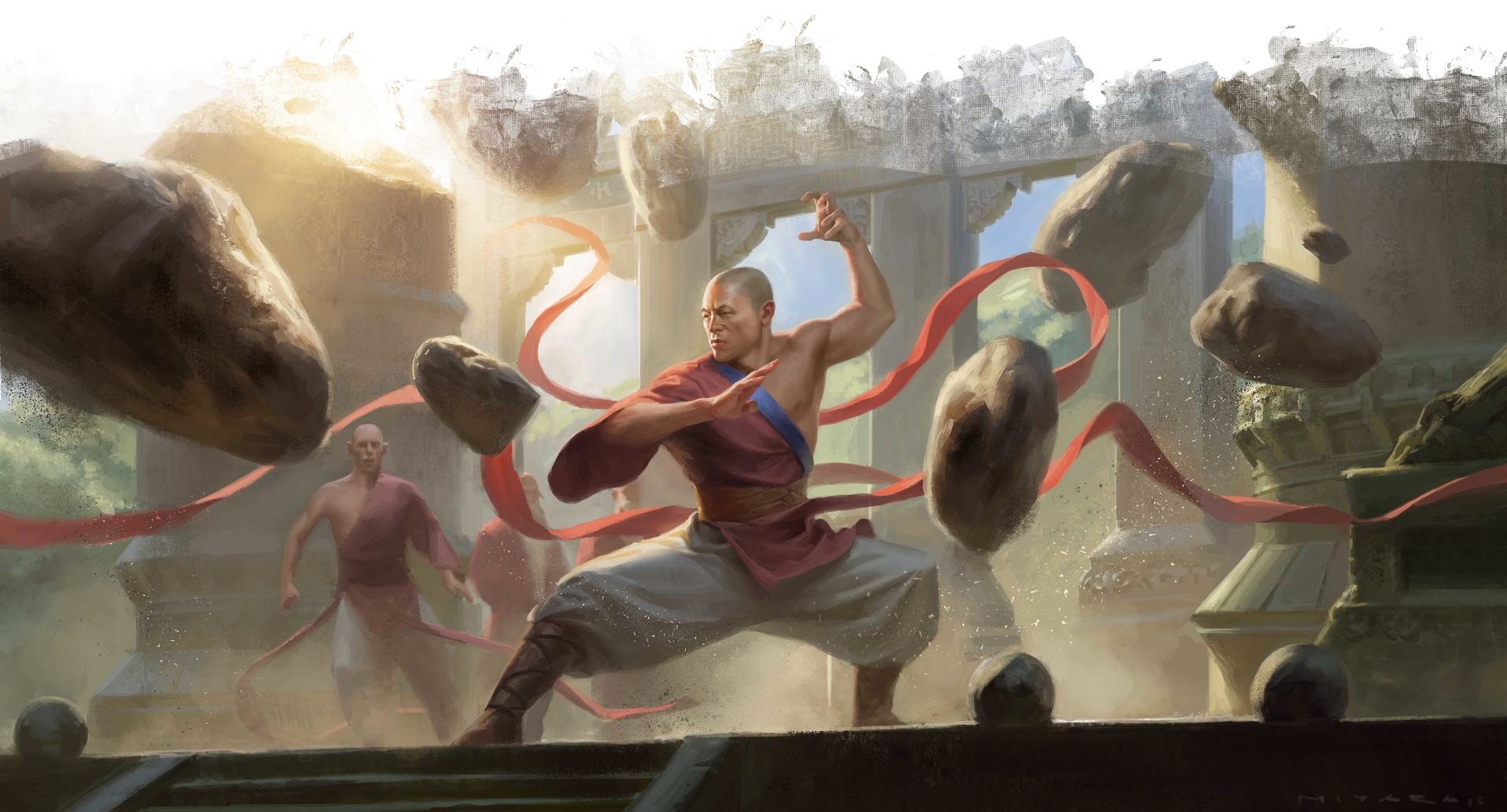

Way of the Hurricane
While most monks master styles of martial arts that focus on rapid strikes and elusive movement, those who embrace the Way of the Hurricane utilize mighty weapons alongside their martial arts. Using their signature technique, monks of this Tradition become walls of whirling steel, cutting down any who would dare to stand against them.
Heavy Warrior
You have trained to wield heavy weapons in conjunction with your martial arts. When you adopt this Tradition at 3rd level, you gain proficiency with all martial melee weapons with the heavy property, and they count as monk weapons for you.
In addition, while you are wielding a melee weapon with the heavy property, you have advantage on saving throws to resist being grappled or moved against your will.
Whirling Strike
At 3rd level, you learn to wield the heaviest weapons with the fury of a storm. As an action while you are wielding a heavy melee weapon, you can lash out, forcing creatures within 10 feet to make a Dexterity saving throw. On a failed save, they take 2d4 damage of the weapon's damage type.
As you gain levels in this class, this damage increases: at 5th level (2d6), 11th level (2d8), and 17th level (2d10).
Crushing Counter
At 6th level, you learn to use the weight of your weapon to rebuke your attackers. When you are hit by an attack while you are wielding a heavy melee weapon, you can use your heavy weapon to make an attack against the attacker as a reaction. On hit, the attacker's movement speed is reduced to 0 until the beginning of your next turn.
Buffeting Winds
You use the weight of your weapon to create gusts of wind which empower your strikes. Starting at 11th level, when you hit a creature with a heavy weapon, you can force it to make a Strength saving throw. On a failed save, the creature is either knocked prone, or it is knocked back a number of feet equal to five times your proficiency bonus (your choice).
You can use this feature a number of times equal to your Wisdom modifier (minimum of once), and you regain all expended uses when you finish a long rest. If you have no uses remaining, you can spend 1 ki point to use it again.
Improved Whirling Strike
Upon reaching 11th level, your Whirling Strike improves. When you use Whirling Strike, creatures take additional damage equal to your Dexterity modifier (minimum of 1).
Also, creatures take half damage when they succeed on their saving throw against your Whirling Strike.
Tempest of Steel
You wield your weapon as a blur of steel. Starting at 17th level, you can use an action to make a separate melee attack against up to six creatures you can see within 60 feet. You must be wielding a heavy melee weapon to use this feature.
Once you use this feature you must finish a short or long rest before you can use it again, unless you pend 5 ki points to use it again.

Way of the Inner Eye
Monks of the Way of the Inner Eye tradition dedicate themselves to the perfection of their mystic senses, called the inner eye. They do this by purposefully blinding themselves, usually merely by covering their eyes, although some go so far as to remove their eyes or blind themselves permanently in order to rely solely on their inner eye. Monks of this tradition also often recruit blind people to their order, to teach them to go beyond their limited sense and reach new heights of perception.
Heightened Awareness
When you choose this monastic tradition at 3rd level, your other senses are sharper and your awareness is heightened as long as you cannot see. As long as you are blinded, you gain the following benefits:
- You have a blindsight of 15 feet. This sense increases when you reach certain levels in this class, it increases to 30 ft at level 6, 60 ft at level 11, and 120 ft at level 17.
- You have advantage on all Wisdom (Perception) checks that you make that don't rely on sight (therefore, ones that rely solely on hearing, smell, taste, or touch).
- Attack rolls made against you do not gain advantage because of the blinded condition.
You cannot merely close your eyes to gain these benefits, as the temptation to open them would be too great. Instead, you must cover your eyes with a piece of cloth, a modified helmet or something similar, remove your eyes permanently, or be blinded from another source in order to do so. You can cover or uncover your eyes with a piece of cloth, a modified helmet or something similar as a bonus action.
Greater Reflexes
Also at 3rd level, your reflexes are also heightened when you cannot see. Whenever a creature misses you with an attack, if you are blinded you can immediately use your reaction to make an unarmed strike against that creature if it's within your reach. You may spend a ki point to make two unarmed strikes against the same target instead of one when you do so.
Untouchable
Starting at 6th level, you become even harder to hit. While you are blinded, you may use your patient defense feature without spending a ki point. You may do this a number of times equal to your Wisdom modifier (minimum of once), after which you cannot do so again until you finish a short or long rest.
Far Sight
At 11th level, you can sense things that are far away from your inner eye. You may cast the Arcane Eye spell without consuming a spell slot or material components, if you are blinded when you do so, your arcane eye has a blindsight equal to yours instead of its normal vision. Once you have done this, you may not use this feature again until you finish a long rest unless you spend 2 ki points to do so.
Wisdom is your spellcasting modifier for this spell.
Inner Eye
At 17th level, you have perfected the use of your inner eye. While you are blinded you gain the following benefits:
- You cannot be surprised while you are conscious.
- After you've made a reaction, you can make an additional reaction once before the beginning of your next turn. You can use only one reaction per triggering effect.
- You have a tremorsense of 60 feet.
Way of the Kensei
Monks of the Way of the Kensei train relentlessly with their weapons, to the point where the weapon becomes an extension of the body. Founded on a mastery of sword fighting, the tradition has expanded to include many different weapons.
A kensei sees a weapon in much the same way a calligrapher or painter regards a pen or brush. Whatever the weapon, the kensei views it as a tool used to express the beauty and precision of the martial arts. That such mastery makes a kensei a peerless warrior is but a side effect of intense devotion, practice, and study.
Path of the Kensei
When you choose this tradition at 3rd level, your special martial arts training leads you to master the use of certain weapons. This path also includes instruction in the deft strokes of calligraphy or painting. You gain the following benefits.
Kensei Weapons. Choose two types of weapons to be your kensei weapons: one melee weapon and one ranged weapon. Each of these weapons can be any simple or martial weapon that lacks the heavy and special properties. The longbow is also a valid choice. You gain proficiency with these weapons if you don’t already have it. Weapons of the chosen types are monk weapons for you. Many of this tradition’s features work only with your kensei weapons. When you reach 6th, 11th, and 17th level in this class, you can choose another type of weapon — either melee or ranged — to be a kensei weapon for you, following the criteria above.
Agile Parry. If you make an unarmed strike as part of the Attack action on your turn and are holding a kensei weapon, you can use it to defend yourself if it is a melee weapon. You gain a +2 bonus to AC until the start of your next turn, while the weapon is in your hand and you aren’t incapacitated.
Kensei's Shot You can use a bonus action on your turn to make your ranged attacks with a kensei weapon more deadly. When you do so, any target you hit with a ranged attack using a kensei weapon takes an extra 1d4 damage of the weapon’s type. The extra damage for the Kensei's Shot feature increases to 1d6 at 11th level and 1d8 at 17th level. You retain this benefit until the end of the current turn.
Way of the Brush. You gain proficiency with your choice of calligrapher’s supplies or painter’s supplies.
Distan Eye. When you make a ranged weapon attack, you can spend 1 ki point to prevent attacking at long range from imposing disadvantage on your attack rolls until the end of the current turn.
One with the Blade
At 6th level, you extend your ki into your kensei weapons, granting you the following benefits.
Magic Kensai Weapons. Your attacks with your kensei weapons count as magical for the purpose of overcoming resistance and immunity to nonmagical attacks and damage.
Deft Strike. When you hit a target with a kensei weapon, you can spend 1 ki point to cause the weapon to deal extra damage to the target equal to your Martial Arts die. You can use this feature only once on each of your turns.
Kensei Weapon
When you reach 6th level in this class, you can choose another type of weapon — either melee or ranged — to be a kensei weapon for you, following the criteria above.
Sharpen the Blade
At 11th level, you gain the ability to augment your weapons further with your ki. As a bonus action, you can expend up to 3 ki points to grant one kensei weapon you touch a bonus to attack and damage rolls when you attack with it. The bonus equals the number of ki points you spent. This bonus lasts for 1 minute or until you use this feature again. You can use this feature with a magic weapon that already has a bonus to its attack and damage rolls, to a combined maximum of +3.
Kensei Weapon
When you reach 11th level in this class, you can choose another type of weapon — either melee or ranged — to be a kensei weapon for you, following the criteria above.
Unerring Accuracy
At 17th level, your mastery of weapons grants you extraordinary accuracy. If you miss with an attack roll using a monk weapon on your turn, you can reroll it. You can use this feature only once on each of your turns.
Kensei Weapon
When you reach 17th level in this class, you can choose another type of weapon — either melee or ranged — to be a kensei weapon for you, following the criteria above.

Way of the Long Death
Monks of the Way of the Long Death are obsessed with the meaning and mechanics of dying. They capture creatures and prepare elaborate experiments to capture, record, and understand the moments of their demise. They then use this knowledge to guide their understanding of martial arts, yielding a deadly fighting style.
Touch of Death
Starting when you choose this tradition at 3rd level, your study of death allows you to extract vitality from another creature as it nears its demise. When you reduce a creature within 5 feet of you to 0 hit points, you gain temporary hit points equal to your Wisdom modifier + your monk level (minimum of 1 temporary hit point).
Hour of Reaping
At 6th level, you gain the ability to unsettle or terrify those around you as an action, for your soul has been touched by the shadow of death. When you take this action, each creature within 30 feet of you that can see you must succeed on a Wisdom saving throw or be frightened of you until the end of your next turn.
Mastery of Death
Beginning at 11th level, you use your familiarity with death to escape its grasp. When you are reduced to 0 hit points, you can expend 1 ki point (no action required) to have 1 hit point instead.
Touch of the Long Death
Starting at 17th level, your touch can channel the energy of death into a creature. As an action, you touch one creature within 5 feet of you, and you expend 1 to 10 ki points. The target must make a Constitution saving throw, and it takes 2d10 necrotic damage per ki point spent on a failed save, or half as much damage on a successful one.
Way of the Meridian
Monks of the Way of the Meridian are capable healers and acupuncturists that learn to activate the body's own restorative and self-destructive functions through careful application of pressure and piercing strikes. With precision and speed, they can enhance their allies or cripple their enemies using knowledge and techniques that have stood the test of time.
Pointed Strikes
When you choose this tradition at 3rd level, your special training has led you to master additional weapons as part of your craft. You gain proficiency with blowguns, which are considered monk weapons for you. Darts and blowgun needles are also considered monk weapons for you, which can be used either melee or thrown weapons with a normal rnage of 20 feet and a long range of 60 feet.
When you hit a creature with an unarmed strike or monk weapon that deals piercine damage, you can expend 1 ki point to impose one of the following effects on the target. You can use this feature twice on each of your turns.
Disable. You weaken the creature's motor skills and coordination. The next attack roll the creature makes before the end of your next turn is made with disadvantage.
Expose. You cause the creature's body to become sluggish and vulnerable. The next attack roll that you or another creature makes against the target before the end of your next turn is made with advantage.
Alternatively, you can apply one of these effects to the first target you hit as part of your Flurry of Blows, without spending the ki point for this feature.
Medicinal Knowledge
Also at 3rd level, your knowledge of the body and the energy that runs through it grants you proficiency in the Medicine skill. If you already have this proficiency, you instead gain proficiency in the Insight or Sleight of Hand skill (your choice). When you make a Wisdom (Medicine) check, you can choose to expend 1 ki point to reroll the d20. You must use the new roll. You can choose to do so after you roll the die, but before the outcome is determined.
In addition, you can use an action to touch a creature and expend 2 ki points to cast the enhance ability spell on it. Starting when you reach 6th level in this class, you can harmlessly launch a blowgun needle or dart at the target, instead of touching it, in order to deliver the spell. The target must be within the weapon's normal range.
Restoring Touch
By 6th level, you can cause a creature's body to rapidly heal itself. As an action, or in place of one of the attacks granted by your Flurry of Blows, you can touch a willing creature to cause it to supernaturally regain hit points as if it finished a short rest. Alternatively, you can harmlessly launch a blowgun needle or dart at the target to deliver the effect, instead of touching it. The target must be within the weapon's normal range.
The creature rolls a number of Hit Dice equal to your proficiency bonus, without expending them, and adds its Constitution modifier to the result of each die as normal. The creature regains a number of hit points equal to the total. Once a creature regains hit points in this way, it can't do so again until it finishes a short or long rest.
You can use this feature a number of times equal to your proficiency bonus. You regain all expended uses of it when you finish a long rest.
Improved Pointed Strikes
At 11th level, you've become a master of precision with your debilitating strikes. When you hit a creature and use either your Disable or Expose feature, you can apply both effects at the same time without spending another ki point.
If you attack a creature under the effect of your Expose feature and hit it, that creature also takes a penalty to any Constitution saving throw it makes as a result of or as part of the attack, such as from your Stunning Strike. The penalty is equal to your Wisdom modifier.
Total Restoration
At 17th level, you can restore the balance of energy and health to creatures under your care. You can use an action to touch a creature and expend 5 ki points to simultaneously cast the lesser restoration and greater restoration spells on it, requiring no material components, and cause the target to regain up to 5 expended Hit Dice. Alternatively, you can harmlessly launch a blowgun needle or dart at the target, instead of touching it, in order to deliver the spells. The target must be within the weapon's normal range.
Once a creature has benefited from this feature, it can't do so again until it finishes a long rest.


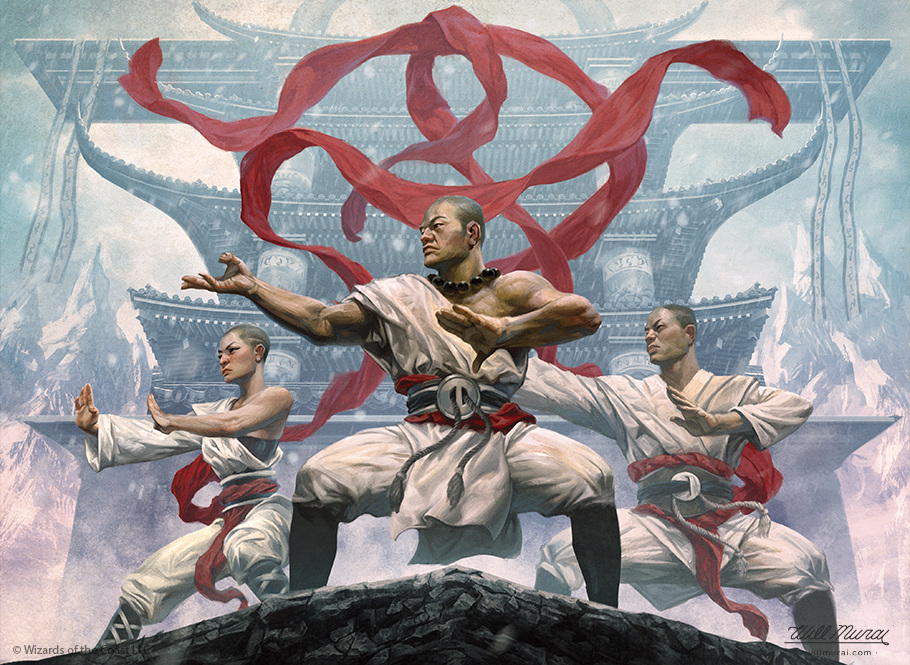
Way of the Open Hand
Monks of the Way of the Open Hand are the ultimate masters of martial arts combat, whether armed or unarmed. They learn techniques to push and trip their opponents, manipulate ki to heal damage to their bodies, and practice advanced meditation that can protect them from harm.
Open Hand Technique
Starting when you choose this tradition at 3rd level, you can manipulate your enemy’s ki when you harness your own. Whenever you hit a creature with one of the attacks granted by your Flurry of Blows, you can impose one of the following effects on that target:
- It must succeed on a Dexterity saving throw or be knocked prone.
- It must make a Strength saving throw. If it fails, you can push it up to 15 feet away from you.
- It can’t take reactions until the end of your next turn.
Wholeness of Body
At 6th level, you gain the ability to heal yourself. As an action, you can regain hit points equal to three times your monk level. You must finish a long rest before you can use this feature again.
Tranquility
Beginning at 11th level, you can enter a special meditation that surrounds you with an aura of peace. At the end of a long rest, you gain the effect of a sanctuary spell that lasts until the start of your next long rest (the spell can end early as normal). The saving throw DC for the spell equals 8 + your Wisdom modifier + your proficiency bonus.
Quivering Palm
At 17th level, you gain the ability to set up lethal vibrations in someone’s body. When you hit a creature with an unarmed strike, you can spend 3 ki points to start these imperceptible vibrations, which last for a number of days equal to your monk level. The vibrations are harmless unless you use your action to end them. To do so, you and the target must be on the same plane of existence. When you use this action, the creature must make a Constitution saving throw. If it fails, it is reduced to 0 hit points. If it succeeds, it takes 10d10 necrotic damage.
You can have only one creature under the effect of this feature at a time. You can choose to end the vibrations harmlessly without using an action.
Way of the Shadow
Monks of the Way of Shadow follow a tradition that values stealth and subterfuge. These monks might be called ninjas or shadowdancers, and they serve as spies and assassins. Sometimes the members of a ninja monastery are family members, forming a clan sworn to secrecy about their arts and missions. Other monasteries are more like thieves’ guilds, hiring out their services to nobles, rich merchants, or anyone else who can pay their fees. Regardless of their methods, the heads of these monasteries expect the unquestioning obedience of their students.
Shadow Arts
Starting when you choose this tradition at 3rd level, you can use your ki to duplicate the effects of certain spells. As an action, you can spend 2 ki points to cast darkness, darkvision, pass without trace, or silence, without providing material components. Additionally, you gain the minor illusion cantrip if you don’t already know it.
Shadow Step
At 6th level, you gain the ability to step from one shadow into another. When you are in dim light or darkness, as a bonus action you can teleport up to 60 feet to an unoccupied space you can see that is also in dim light or darkness. You then have advantage on the first melee attack you make before the end of the turn.
Cloak of Shadows
By 11th level, you have learned to become one with the shadows. When you are in an area of dim light or darkness, you can use your action to become invisible. You remain invisible until you make an attack, cast a spell, or are in an area of bright light.
Opportunist
At 17th level, you can exploit a creature’s momentary distraction when it is hit by an attack. Whenever a creature within 5 feet of you is hit by an attack made by a creature other than you, you can use your reaction to make a melee attack against that creature.
Way of the Soul Knife
Monks of the Way of the Soul Knife are monks who have learned to harnass and focus their ki, using their inner will and focus to control psionic powers - primarily into a blade of pure Psionic power: a Soul Knife.
Soul Knife
Starting when you choose this tradition at 3rd level, you've learned to focus your ki into a psionic blade. As a bonus action, you can create a blade of pure scintillating psionic energy. The blade you create this way most typically takes the form of a knife-like blade projecting from your fist, but you can shape it however you choose. You can choose to create multiple blades, but any blade you are not holding vanishes at the end of your turn and must be resummoned.
Regardless of the form it takes, the weapon is a monk weapon for you, deals 1d8 psychic damage, and has the light, finesse, and thrown(20/60) properties.
Psionic Ki
Additionally at 3rd level, you gain the Telekinetics Discipline; this can be found under the Disciplines list of the Psion class. You can use ki points as psi points, with a limit of 1 ki point. This limit increases to 2 ki points at level 5, 3 ki points at level 9, 4 ki points at level 14, and 5 ki points at level 17.
If you spend 1 ki or more on your Discipline abilities as part of your action on your turn, you can then immediately make one unarmed strike as a bonus action.
Art of the Soul Knife
Starting at 6th level, your expertise with the blade allows you to control it in unique and powerful ways.
Extended Knife
You can expend 1 ki point to give your weapon the Reach property until the end of your turn.
Psionic Flurry
When you make a Flurry of Blows, you can make the additional attacks with your Soul Knife.
Soul Strike
When you take the attack action, you can focus. Make a single attack using your action (forgoing any additional attacks gained from Extra Attack) to ignore all armor a creature has and treating its AC as 10 + its dexterity. On a hit, the creature takes additional damage equal to your wisdom modifier.
Power of the Mind
Starting at 11th level, your Psionic abilities manifest more completely, giving you greater control and power in your psionic abilities.
Ethereal Sweep
When you use Extended Knife, you can sweep or stab through multiple creatures with a single blow. Once per turn, when you make an attack with your Soul Knife, you can make a single additional weapon attack with your Soul Knife against another creature within range.
Consumptive Blade
Whenever you kill a creature with your Soul Knife that has an Intelligence of 6 or higher, you can can use your reaction draw in part of their Psionic essence. You regain 1d4 hit points and 1 expended ki point.
Empowered Discipline
When you use your Discipline, you can expend 1 ki point for free without exhausting the ki point on empowering the Psionic Power granted by the Discipline (this cannot be used on the spells granted by the Discipline).
Transcendent Knife
Starting at 17th level, your Soul Knife becomes an peerless weapon. You can add a +1 to its attack and damage rolls. You can choose for your knife to effect inanimate material, causing it to gain the Siege property and deal force damage to it when you choose. Reactions that parry or block to add Armor Class against an attack are ineffective against attacks made with the Soul Knife.
Additionally, critical strikes from your weapon rends soul of the target. If a creature would have less than 50 fifty hit points after taking damage from your critical strike, the creature must make a Charisma saving throw. On failure, its Charisma becomes zero and it dies.
Way of the Sun Soul
Monks of the Way of the Sun Soul learn to channel their life energy into searing bolts of light. They teach that meditation can unlock the ability to unleash the indomitable light shed by the soul of every living creature.
Radiant Sun Bolt
Starting when you choose this tradition at 3rd level, you can hurl searing bolts of magical radiance.
When you take the Attack action, you can choose to fire a radiant sun bolt instead of making a regular attack. This special attack is a ranged spell attack with a range of 60 feet. You are proficient with it, and you add your Wisdom modifier to its attack and damage rolls. Its damage is radiant, and its damage die is a d4. This die changes as you gain monk levels, as shown in the Martial Arts column of the Monk table.
When you take the Attack action on your turn, you can make one radiant sun bolt attack as a bonus action, or you can spend 1 ki point to make this special attack twice as a bonus action.
When you gain the Extra Attack feature, this special attack can be used for any of the attacks you make as part of the Attack action.

Searing Arc Strike
At 6th level, you gain the ability to channel your ki into searing waves of energy. Immediately after you take the Attack action on your turn, you can spend 2 ki points to cast the burning hands spell as a bonus action. Casting burning hands this way changes its damage type to radiant damage.
You can spend additional ki points to cast burning hands as a higher-level spell. Each additional ki point you spend increases the spell’s level by 1. The maximum number of ki points (2 plus any additional points) that you can spend on the spell equals half your monk level.
Searing Sunburst
At 11th level, you gain the ability to create an orb of light that erupts into a devastating explosion. As an action, you magically create an orb and hurl it at a point you choose within 150 feet, where it erupts into a sphere of radiant light for a brief but deadly instant.
Each creature in that 20-foot-radius sphere must succeed on a Constitution saving throw or take radiant damage equal to two rolls of your Martial Arts die, or half as much damage on a success. A creature doesn’t need to make the save if the creature is behind total cover that is opaque.
You can increase the sphere’s damage by spending ki points. Each point you spend increases the damage by two rolls of your Martial Arts die. The maximum number of ki points you can spend on this equals one half of your monk level, rounded down.
Sun Shield
At 17th level, your body becomes suffused with the power of the sun. You gain a flying speed equal to your walking speed, and become wreathed in a luminous, magical aura. You shed bright light in a 30-foot radius and dim light for an additional 30 feet. You can extinguish or restore the light as a bonus action.
If a creature hits you with a melee attack while this light shines, you can use your reaction to deal radiant damage to that creature equal to on roll of your Martial Arts die plus your Wisdom modifier. In addition, the creature must succeed on a Constitution saving throw or be blinded until the end of its next turn.
Way of the Wilds
Monks of all traditions strive for mastery over their physical form, honing their bodies into deadly weapons. Creatures born with natural weapons; vicious claws, imposing horns, or lashing tails, have a natural advantage over other monks in their quest to weaponize their bodies for combat.
Monks with these natural advantages often use their physical form to their advantage and adopt the Way of Wilds. Through the practice of this ancient and savage tradition they enhance their physiological features with secret techniques, and combine their mastery of ki with the primal ferocity that dwells within all creatures of wild heritage.
Restriction: Beast Races Only
The Way of the Feral Warrior is a tradition created to expand and utilize the natural abilities that some of the more beast like races possess. To take this Monastic Tradition your race must give you some kind of natural weapon.
Savage Strikes
Your body itself evolved to be a weapon. Whether it be claws, teeth, spines, or scales, your physical form has innate combat potential. Starting at 3rd level your Martial Arts damage die increases to a d6 for your unarmed strikes.
The size of your Martial Arts die for your unarmed strikes increases as you gain levels in this class; to a d8 at 5th level, a d10 at 11th level, and finally it becomes a d12 at 17th level
Natural Predator
Upon adopting this Tradition at 3rd level, you can enhance your natural ability with one of the disciplines below:
Bestial Rend. This discipline is most often adopted by creatures with natural claws. Your unarmed strikes now deal slashing damage, and inflict deep wounds in your target. Each time you hit a creature with an unarmed strike, its movement speed is reduced by a cumulative 5 feet until the start of your next turn. If you reduce a creature's speed to 0,they are restrained until the beginning of your next turn.
Natural Defense. This discipline is most often adopted by creatures with scales or shells. When you hit a creature with an unarmed strike, it has disadvantage on the first attack roll it makes against you before the start of your next turn.
Savage Charge. This discipline is most often adopted by creatures with hooves or horns. Once per turn, when you move at least 20 feet and hit a creature with an unarmed strike, you can force the creature to make a Strength saving throw. On a failed save, they are knocked prone in addition to the normal damage of your unarmed strike.
Primal Intuition
You have worked to hone your instinctive abilities along with your physical form. At 6th level, choose one skill proficiency you gained as a racial feature. You can add double your proficiency bonus to any check you make with that skill.
If you did not gain a skill proficiency from your racial features, you gain proficiency in either the Insight, Perception, or Survival skill. You can add double your proficiency bonus to any check you make with this skill.

Power of the Wilds
In your training you have learned to augment your physical strikes with the power of ki. Starting at 11th level, when you hit a creature with an unarmed strike you can expend 1 ki point to deal an additional 2d6 damage to the target.
Apex Predator
You have brought forth the true potential of your wild body. At 17th level, you learn one of the following disciplines:
Bestial Fury. You can whip yourself into a primal fury when hunting your foes. When you score a critical hit against a creature with an unarmed strike, its speed is reduced to 0,and you have advantage on any unarmed strikes you make against that creature until the start of your next turn.
Natural Resilience. You can harden your exterior to deflect incoming blows. As a reaction, when you are hit by an attack, you can expend ki to increase your Armor Class until the start of your next turn. For each ki point you expend your Armor Class increases by 2, up to a maximum of 5 ki points.
Savage Rush. You can draw upon primal speed to trample those in your path. As an action, you can expend 4 ki points and move up to your full movement speed in a straight line. Any creatures you pass through must make a Dexterity saving throw. Creatures take 8d6 bludgeoning damage and fall prone on a failed save, and half damage on a success

Paladin
Clad in plate armor that gleams in the sunlight despite the dust and grime of long travel, a human lays down her sword and shield and places her hands on a mortally wounded man. Divine radiance shines from her hands, the man’s wounds knit closed, and his eyes open wide with amazement.
A dwarf crouches behind an outcrop, his black cloak making him nearly invisible in the night, and watches an orc war band celebrating its recent victory. Silently, he stalks into their midst and whispers an oath, and two orcs are dead before they even realize he is there.
Silver hair shining in a shaft of light that seems to illuminate only him, an elf laughs with exultation. His spear flashes like his eyes as he jabs again and again at a twisted giant, until at last his light overcomes its hideous darkness.
Whatever their origin and their mission, paladins are united by their oaths to stand against the forces of evil. Whether sworn before a god’s altar and the witness of a priest, in a sacred glade before nature spirits and fey beings, or in a moment of desperation and grief with the dead as the only witness, a paladin’s oath is a powerful bond. It is a source of power that turns a devout warrior into a blessed champion.
The Cause of Righteousness
A paladin swears to uphold justice and righteousness, to stand with the good things of the world against the encroaching darkness, and to hunt the forces of evil wherever they lurk. Different paladins focus on various aspects of the cause of righteousness, but all are bound by the oaths that grant them power to do their sacred work. Although many paladins are devoted to gods of good, a paladin’s power comes as much from a commitment to justice itself as it does from a god.
Paladins train for years to learn the skills of combat, mastering a variety of weapons and armor. Even so, their martial skills are secondary to the magical power they wield: power to heal the sick and injured, to smite the wicked and the undead, and to protect the innocent and those who join them in the fight for justice.
Beyond the Mundane Life
Almost by definition, the life of a paladin is an adventuring life. Unless a lasting injury has taken him or her away from adventuring for a time, every paladin lives on the front lines of the cosmic struggle against evil. Fighters are rare enough among the ranks of the militias and armies of the world, but even fewer people can claim the true calling of a paladin. When they do receive the call, these warriors turn from their former occupations and take up arms to fight evil. Sometimes their oaths lead them into the service of the crown as leaders of elite groups of knights, but even then their loyalty is first to the cause of righteousness, not to crown and country.
Adventuring paladins take their work seriously. A delve into an ancient ruin or dusty crypt can be a quest driven by a higher purpose than the acquisition of treasure. Evil lurks in dungeons and primeval forests, and even the smallest victory against it can tilt the cosmic balance away from oblivion.
Creating a Paladin
The most important aspect of a paladin character is the nature of his or her holy quest. Although the class features related to your oath don’t appear until you reach 3rd level, plan ahead for that choice by reading the oath descriptions at the end of the class. Are you a devoted servant of good, loyal to the gods of justice and honor, a holy knight in shining armor venturing forth to smite evil? Are you a glorious champion of the light, cherishing everything beautiful that stands against the shadow, a knight whose oath descends from traditions older than many of the gods? Or are you an embittered loner sworn to take vengeance on those who have done great evil, sent as an angel of death by the gods or driven by your need for revenge?
How did you experience your call to serve as a paladin? Did you hear a whisper from an unseen god or angel while you were at prayer? Did another paladin sense the potential within you and decide to train you as a squire? Or did some terrible event — the destruction of your home, perhaps — drive you to your quests? Perhaps you stumbled into a sacred grove or a hidden elven enclave and found yourself called to protect all such refuges of goodness and beauty. Or you might have known from your earliest memories that the paladin’s life was your calling, almost as if you had been sent into the world with that purpose stamped on your soul.
As guardians against the forces of wickedness, paladins are rarely of any evil alignment. Most of them walk the paths of charity and justice. Consider how your alignment colors the way you pursue your holy quest and the manner in which you conduct yourself before gods and mortals. Your oath and alignment might be in harmony, or your oath might represent standards of behavior that you have not yet attained.
The Paladin
| Level | Proficiency Bonus |
Features | 1st | 2nd | 3rd | 4th | 5th |
|---|---|---|---|---|---|---|---|
| 1st | +2 | Divine Sense, Lay on Hands | — | — | — | — | — |
| 2nd | +2 | Fighting Style, Spellcasting, Divine Smite | 2 | — | — | — | — |
| 3rd | +2 | Divine Health, Harness Divine Power, Sacred Oath | 3 | — | — | — | — |
| 4th | +2 | Martial Versatility, Ability Score Improvement | 3 | — | — | — | — |
| 5th | +3 | Extra Attack | 4 | 2 | — | — | — |
| 6th | +3 | Aura of Protection | 4 | 2 | — | — | — |
| 7th | +3 | Sacred Oath Feature | 4 | 3 | — | — | — |
| 8th | +3 | Ability Score Improvement | 4 | 3 | — | — | — |
| 9th | +4 | — | 4 | 3 | 2 | — | — |
| 10th | +4 | Aura of Courage | 4 | 3 | 2 | — | — |
| 11th | +4 | Improved Divine Smite | 4 | 3 | 3 | — | — |
| 12th | +4 | Ability Score Improvement | 4 | 3 | 3 | — | — |
| 13th | +5 | — | 4 | 3 | 3 | 1 | — |
| 14th | +5 | Cleansing Touch | 4 | 3 | 3 | 1 | — |
| 15th | +5 | Sacred Oath Feature | 4 | 3 | 3 | 2 | — |
| 16th | +5 | Ability Score Improvement | 4 | 3 | 3 | 2 | — |
| 17th | +6 | — | 4 | 3 | 3 | 3 | 1 |
| 18th | +6 | Aura Improvements | 4 | 3 | 3 | 3 | 1 |
| 19th | +6 | Ability Score Improvement | 4 | 3 | 3 | 3 | 2 |
| 20th | +6 | Sacred Oath Feature | 4 | 3 | 3 | 3 | 2 |
Quick Build
You can make a paladin quickly by following these suggestions. First, Strength should be your highest ability score, followed by Charisma. Second, choose the noble background.
Class Features
As a paladin, you gain the following class features.
Ability Score Improvement
At first level you can choose to increase your Wisdom or Charisma score by 1.
Hit Points
Hit Dice: 1d10 per paladin level
Hit Points at 1st Level: 10 + your Constitution modifier + racial bonus
Hit Points at Higher Levels: 1d10 (or 5) + your Constitution modifier per paladin level after 1st
Proficiencies
Armor: All armor, shields
Weapons: Simple weapons, martial weapons
Tools: None
Saving Throws: Wisdom, Charisma
Skills: Choose two from Athletics, Insight, Intimidation, Medicine, Persuasion, and Religion
Equipment
You start with the following equipment, in addition to the equipment granted by your background:
- (a) a martial weapon and a shield or (b) two martial weapons
- (a) five javelins or (b) any simple melee weapon
- (a) a priest's pack or (b) an explorer's pack
- Chain mail and a holy symbol.
Divine Sense
The presence of strong evil registers on your senses like a noxious odor, and powerful good rings like heavenly music in your ears. As an action, you can open your awareness to detect such forces. Until the end of your next turn, you know the location of any celestial, fiend, or undead within 60 feet of you that is not behind total cover. You know the type (celestial, fiend, or undead) of any being whose presence you sense, but not its identity (the vampire Count Strahd von Zarovich, for instance). Within the same radius, you also detect the presence of any place or object that has been consecrated or desecrated, as with the hallow spell.
You can use this feature a number of times equal to 1 + your Charisma modifier. When you finish a long rest, you regain all expended uses.
Lay on Hands
Your blessed touch can heal wounds. You have a pool of healing power that replenishes when you take a long rest. With that pool, you can restore a total number of hit points equal to your paladin level × 5.
As an action, you can touch a creature and draw power from the pool to restore a number of hit points to that creature, up to the maximum amount remaining in your pool.
Alternatively, you can expend 5 hit points from your pool of healing to cure the target of one disease or neutralize one poison affecting it. You can cure multiple diseases and neutralize multiple poisons with a single use of Lay on Hands, expending hit points separately for each one.
This feature has no effect on undead and constructs.
Fighting Style
At 2nd level, you adopt a style of fighting as your specialty. Choose one of the following options. You can’t take a Fighting Style option more than once, even if you later get to choose again.
Blessed Warrior
You learn two cantrips of your choice from the cleric spell list. They count as paladin spells for you, and Charisma is your spellcasting ability for them. Whenever you gain a level in this class, you can replace one of these cantrips with another cantrip from the cleric spell list.
Blind Fighting
Being unable to see a creature doesn’t impose disadvantage on your attack rolls against it, provided the creature isn’t hidden from you.
Defense
While you are wearing armor, you gain a +1 bonus to AC.
Dueling
When you are wielding a melee weapon in one hand and no other weapons, you gain a +2 bonus to damage rolls with that weapon.
Great Weapon Fighting
When you roll a 1 or 2 on a damage die for an attack you make with a melee weapon that you are wielding with two hands, you can reroll the die and must use the new roll. The weapon must have the two-handed or versatile property for you to gain this benefit.
Interception
When a creature you can see hits a target that is within 5 feet of you with an attack, you can use your reaction to reduce the damage the target takes by 1d10 + your proficiency bonus (to a minimum of 0 damage). You must be wielding a shield or a simple or martial weapon to use this reaction.
Protection
When a creature you can see attacks a target other than you that is within 5 feet of you, you can use your reaction to impose disadvantage on the attack roll. You must be wielding a shield.
Spellcasting
By 2nd level, you have learned to draw on divine magic through meditation and prayer to cast spells as a cleric does. See Chapter 11 for the general rules of spellcasting and chapter 11 for the paladin spell list.
Preparing and Casting Spells
The Paladin table shows how many spell slots you have to cast your paladin spells. To cast one of your paladin spells of 1st level or higher, you must expend a slot of the spell’s level or higher. You regain all expended spell slots when you finish a long rest.
You prepare the list of paladin spells that are available for you to cast, choosing from the paladin spell list. When you do so, choose a number of paladin spells equal to your Charisma modifier + half your paladin level, rounded down (minimum of one spell). The spells must be of a level for which you have spell slots.
For example, if you are a 5th-level paladin, you have four 1st-level and two 2nd-level spell slots. With a Charisma of 14, your list of prepared spells can include four spells of 1st or 2nd level, in any combination. If you prepare the 1st-level spell cure wounds, you can cast it using a 1st-level or a 2nd-level slot. Casting the spell doesn’t remove it from your list of prepared spells.
You can change your list of prepared spells when you finish a long rest. Preparing a new list of paladin spells requires time spent in prayer and meditation: at least 1 minute per spell level for each spell on your list.
Spellcasting Focus
You can use a holy symbol as a spellcasting focus for your paladin spells.
Spellcasting Ability
Charisma is your spellcasting ability for your paladin spells, since their power derives from the strength of your convictions. You use your Charisma whenever a spell refers to your spellcasting ability. In addition, you use your Charisma modifier when setting the saving throw DC for a paladin spell you cast and when making an attack roll with one.
Spell Save DC
Spell attack modifier
Divine Smite
Starting at 2nd level, when you hit a creature with a melee weapon attack, you can expend one spell slot to deal radiant damage to the target, in addition to the weapon’s damage. The extra damage is 2d8 for a 1st-level spell slot, plus 1d8 for each spell level higher than 1st, to a maximum of 5d8. The damage increases by 1d8 if the target is an undead or a fiend, to a maximum of 6d8.
Divine Health
By 3rd level, the divine magic flowing through you makes you immune to disease.
Harness Divine Power
At 3rd level, you can expend a use of your Channel Divinity to fuel your spells. As a bonus action, you touch your holy symbol, utter a prayer, and regain one expended spell slot, the level of which can be no higher than half your proficiency bonus (rounded up). The number of times you can use this feature is based on the level you’ve reached in this class: 3rd level, once; 7th level, twice; and 15th level, thrice. You regain all expended uses when you finish a long rest.
Sacred Oath
When you reach 3rd level, you swear the oath that binds you as a paladin forever. Up to this time you have been in a preparatory stage, committed to the path but not yet sworn to it. Now you choose the Oath of Devotion, the Oath of the Ancients, the Oath of Vengeance, the Oath of the Crown, the Oath of Conquest, the Oath of Redemption, or the Oath of Glory, all detailed at the end of the class description.
Your choice grants you features at 3rd level and again at 7th, 15th, and 20th level. Those features include oath spells and the Channel Divinity feature.
Oath Spells
Each oath has a list of associated spells. You gain access to these spells at the levels specified in the oath description. Once you gain access to an oath spell, you always have it prepared. Oath spells don’t count against the number of spells you can prepare each day.
If you gain an oath spell that doesn’t appear on the paladin spell list, the spell is nonetheless a paladin spell for you.
Channel Divinity
Your oath allows you to channel divine energy to fuel magical effects. Each Channel Divinity option provided by your oath explains how to use it.
When you use your Channel Divinity, you choose which option to use. You must then finish a short or long rest to use your Channel Divinity again.
Some Channel Divinity effects require saving throws. When you use such an effect from this class, the DC equals your paladin spell save DC.
Martial Versatility
At 4th level, whenever you reach a level in this class that grants the Ability Score Improvement feature, you can replace a fighting style you know with another fighting style available to paladins. This replacement represents a shift of focus in your martial practice.
Ability Score Improvement
When you reach 4th level, and again at 8th, 12th, 16th, and 19th level, you can increase one ability score of your choice by 2, or you can increase two ability scores of your choice by 1. As normal, you can’t increase an ability score above 20 using this feature.
Extra Attack
Beginning at 5th level, you can attack twice, instead of once, whenever you take the Attack action on your turn.
Aura of Protection
Starting at 6th level, whenever you or a friendly creature within 10 feet of you must make a saving throw, the creature gains a bonus to the saving throw equal to your Charisma modifier (with a minimum bonus of +1). You must be conscious to grant this bonus.
At 18th level, the range of this aura increases to 30 feet.
Aura of Courage
Starting at 10th level, you and friendly creatures within 10 feet of you can’t be frightened while you are conscious.
At 18th level, the range of this aura increases to 30 feet.
Improved Divine Smite
By 11th level, you are so suffused with righteous might that all your melee weapon strikes carry divine power with them. Whenever you hit a creature with a melee weapon, the creature takes an extra 1d8 radiant damage.
Cleansing Touch
Beginning at 14th level, you can use your action to end one spell on yourself or on one willing creature that you touch.
You can use this feature a number of times equal to your Charisma modifier (a minimum of once). You regain expended uses when you finish a long rest.
Sacred Oaths
Becoming a paladin involves taking vows that commit the paladin to the cause of righteousness, an active path of fighting wickedness. The final oath, taken when he or she reaches 3rd level, is the culmination of all the paladin’s training. Some characters with this class don’t consider themselves true paladins until they have reached 3rd level and made this oath. For others, the actual swearing of the oath is a formality, an official stamp on what has always been true in the paladin’s heart.
Oath of Conquest
The Oath of Conquest calls to paladins who seek glory in battle and the subjugation of their enemies. It isn’t enough for these paladins to establish order. They must crush the forces of chaos. Sometimes called knight tyrants or iron mongers, those who swear this oath gather into grim orders that serve gods or philosophies of war and well-ordered might.
Some of these paladins go so far as to consort with the powers of the Nine Hells, valuing the rule of law over the balm of mercy. The archdevil Bel, warlord of Avernus, counts many of these paladins — called hell knights — as his most ardent supporters. Hell knights cover their armor with trophies taken from fallen enemies, a grim warning to any who dare oppose them and the decrees of their lords. These knights are often most fiercely resisted by other paladins of this oath, who believe that the hell knights have wandered too far into darkness.
Tenets of Conquest
A paladin who takes this oath has the tenets of conquest seared on the upper arm.
Douse the Flame of Hope. It is not enough to merely defeat an enemy in battle. Your victory must be so overwhelming that your enemies’ will to fight is shattered forever. A blade can end a life. Fear can end an empire.
Rule with an Iron Fist. Once you have conquered, tolerate no dissent. Your word is law. Those who obey it shall be favored. Those who defy it shall be punished as an example to all who might follow.
Strength Above All. You shall rule until a stronger one arises. Then you must grow mightier and meet the challenge, or fall to your own ruin.
Oath Spells
You gain oath spells at the paladin levels listed.
| Paladin Level | Spells |
|---|---|
| 1st | armor of Agathys, commmand |
| 5th | hold person, spiritual weapon |
| 9th | bestow curse, fear |
| 13th | dominate beast, stoneskin |
| 17th | cloudkill, dominate person |
Channel Divinity
When you take this oath at 3rd level, you gain the following two Channel Divinity options. See the Sacred Oath class feature for how Channel Divinity works.
Conquering Presence. You can use your Channel Divinity to exude a terrifying presence. As an action, you force each creature of your choice that you can see within 30 feet of you to make a Wisdom saving throw. On a failed save, a creature becomes frightened of you for 1 minute. The frightened creature can repeat this saving throw at the end of each of its turns, ending the effect on itself on a success.
Guided Strike. You can use your Channel Divinity to strike with supernatural accuracy. When you make an attack roll, you can use your Channel Divinity to gain a +10 bonus to the roll. You make this choice after you see the roll, but before the DM says whether the attack hits or misses.
Aura of Conquest
Starting at 7th level, you constantly emanate a menacing aura while you’re not incapacitated. The aura extends 10 feet from you in every direction, but not through total cover.
If a creature is frightened of you, its speed is reduced to 0 while in the aura, and that creature takes psychic damage equal to half your paladin level if it starts its turn there.
At 18th level, the range of this aura increases to 30 feet.
Scornful Rebuke
Starting at 15th level, those who dare to strike you are psychically punished for their audacity. Whenever a creature hits you with an attack, that creature takes psychic damage equal to your Charisma modifier (minimum of 1) if you’re not incapacitated.
Invincible Conqueror
At 20th level, you gain the ability to harness extraordinary martial prowess. As an action, you can magically become an avatar of conquest, gaining the following benefits for 1 minute:
- You have resistance to all damage.
- When you take the Attack action on your turn, you can make one additional attack as part of that action.
- Your melee weapon attacks score a critical hit on a roll of 19 or 20 on the d20.
Once you use this feature, you can’t use it again until you finish a long rest, unless you expend a 5th-level spell slot to use it again.
Oath of Devotion
The Oath of Devotion binds a paladin to the loftiest ideals of justice, virtue, and order. Sometimes called cavaliers, white knights, or holy warriors, these paladins meet the ideal of the knight in shining armor, acting with honor in pursuit of justice and the greater good. They hold themselves to the highest standards of conduct, and some, for better or worse, hold the rest of the world to the same standards. Many who swear this oath are devoted to gods of law and good and use their gods’ tenets as the measure of their devotion. They hold angels — the perfect servants of good — as their ideals, and incorporate images of angelic wings into their helmets or coats of arms.
Tenets of Devotion
Though the exact words and strictures of the Oath of Devotion vary, paladins of this oath share these tenets.
Honesty. Don’t lie or cheat. Let your word be your promise.
Courage. Never fear to act, though caution is wise.
Compassion. Aid others, protect the weak, and punish those who threaten them. Show mercy to your foes, but temper it with wisdom.
Honor. Treat others with fairness, and let your honorable deeds be an example to them. Do as much good as possible while causing the least amount of harm.
Duty. Be responsible for your actions and their consequences, protect those entrusted to your care, and obey those who have just authority over you.
Oath Spells
You gain oath spells at the paladin levels listed.
| Paladin Level | Spells |
|---|---|
| 1st | protection from evil and good, sanctuary |
| 5th | lesser restoration, zone of truth |
| 9th | beacon of hope, dispel magic |
| 13th | freedom of movement, guardian of faith |
| 17th | commune, flame strike |
Channel Divinity
When you take this oath at 3rd level, you gain the following two Channel Divinity options.
Sacred Weapon. As an action, you can imbue one weapon that you are holding with positive energy, using your Channel Divinity. For 1 minute, you add your Charisma modifier to attack rolls made with that weapon (with a minimum bonus of +1). The weapon also emits bright light in a 20-foot radius and dim light 20 feet beyond that. If the weapon is not already magical, it becomes magical for the duration.
You can end this effect on your turn as part of any other action. If you are no longer holding or carrying this weapon, or if you fall unconscious, this effect ends.
Turn the Unholy. As an action, you present your holy symbol and speak a prayer censuring fiends and undead, using your Channel Divinity. Each fiend or undead that can see or hear you within 30 feet of you must make a Wisdom saving throw. If the creature fails its saving throw, it is turned for 1 minute or until it takes damage.
A turned creature must spend its turns trying to move as far away from you as it can, and it can’t willingly move to a space within 30 feet of you. It also can’t take reactions. For its action, it can use only the Dash action or try to escape from an effect that prevents it from moving. If there’s nowhere to move, the creature can use the Dodge action.
Aura of Devotion
Starting at 7th level, you and friendly creatures within 10 feet of you can’t be charmed while you are conscious.
At 18th level, the range of this aura increases to 30 feet.
Purity of Spirit
Beginning at 15th level, you are always under the effects of a protection from evil and good spell.
Holy Nimbus
At 20th level, as an action, you can emanate an aura of sunlight. For 1 minute, bright light shines from you in a 30-foot radius, and dim light shines 30 feet beyond that.
Whenever an enemy creature starts its turn in the bright light, the creature takes 10 radiant damage.
In addition, for the duration, you have advantage on saving throws against spells cast by fiends or undead.
Once you use this feature, you can’t use it again until you finish a long rest, unless you expend a 5th-level spell slot to use it again.

Oath of Fervor
The Oath of Fervor calls to paladins that are driven by fiery ideals from which they would never back down. Sometimes called red knights, phoenix knights, or simply zealots, these paladins hold no one set of goals —their oath dictates the way that they strive towards their goals, rather than prescribing what those goals should be. As such, the paladins of this oath may be of any alignment, and could hold many opposing ideals. Their consistency is in their impulsiveness, which hurts them as often as it helps.
Tenets of Ferver
The tenets of the Oath of Fervor inspire a paladin to always take action and never back down.
Aggression. Hesitation is weakness. Act quickly and with purpose, for many opportunities last but a moment.
Passion. Do not give up on the things that you are passionate about, no matter what stands in your way.
Rebirth. Do not feat death, for fate is on your side. Trust that your companions will bring you back from the dead, and promise to do the same for them.
Oath Spells
At 3rd level, and when you reach certain levels in this class, you gain access to the spells listed for that level in the Oath of Fervor Spells table. You always have these spells prepared, they do not count against the number of spells you prepare each day, and they count as paladin spells for you.
Oath of Fervor Spells
| Paladin Level | Spells |
|---|---|
| 3rd | burning hands, heroism |
| 5th | flaming sphere, heat metal |
| 9th | crusader's mantle, revivify |
| 13th | aura of purity, fire shield |
| 17th | circle of power, reincarnate |
Channel Divinity
When you take this oath at 3rd level, you gain the following two Channel Divinity options
Cleansing Flames. As an action, you present your holy symbol and speak a prayer against fiends and undead, using your Channel Divinity. Each fiend or undead that can see or hear you within 30 feet of you must make a Constitution saving throw. A target takes fire damage equal to your paladin level on a failed save, or half as much damage on a successful one. This damage ignores fire resistance. Also on a failed save, a target becomes incapacitated by a burning pain for 1 minute. The incapacitated creature can repeat this saving throw at the end of each of its turns, ending the effect on itself on a success.
Fervent Blade. As a bonus action, you imbue a melee weapon you're holding with magical energy, using your Channel Divinity. For 1 minute, the weapon's damage type becomes fire, lightning, or radiant (your choice), and it emits bright light in a 10-foot radius and dim light 10 feet beyond that.
Whenever you hit a creature with this weapon, that creature suffers an effect based on the damage type you chose. If you chose fire, you can roll your damage roll twice and take the higher of th two rolls. If you chose lightning, the target can't take reactions until the start of your next turn. If you choose radiant, the target sheds dim light in a 5-foot radius and can't benefit from invisibility until the start of your next turn.
Aura of Rebirth
Starting at 7th level, you emanate an aura that helps others return from the brink of death. Friendly creatures within 10 feet of you gain advantage on death saving throws while you are conscious.
Additionally, corpse and other remains within 10 feet of you are protected from decay and can't become undead while you are conscious. This also effectively extends the time limit on raising creatures from the dead, since time spent within the aura doesn't count against the time limit of spells such as raise dead.
At 18th level, the range of this aura increases to 30 feet.
Inner Flame
At 15th level, the fiery spirit within you refuses to go out. You gain resistance to fire damage, advantage on death saving throws, and any spell that has the sole effect of restoring you to life (but not undeath) doesn't need material components to be cast on you.
Zealous Champion
Starting at 20th level, you can use your action to invigorate yourself, granting you the following benefits for 1 minute:
- Your speed is increased by 10 feet.
- You regain 5 hit points at the start of each of your turns
- When you use your Divine Smite, you can choose for it to deal fire or lightning damage, rather than radiant damage. If you choose fire, the damage dice of the smite become d12s, rather than d8s. If you choose lightning, a bolt jumps to another target you can see within 15 feet of the creature you smited. That creature must make a Dexterity saving throw, taking the full smite damage on a failed save, or half as much damage on a successful one. If you choose radiant, you gain 2d4 temporary hit points, plus 1d4 temporary hit points for each slot level of the smite above 1st.
Once you use this feature, you can't use it again until you finish a long rest, unless you expend a 5th-level spell slot to use it again.
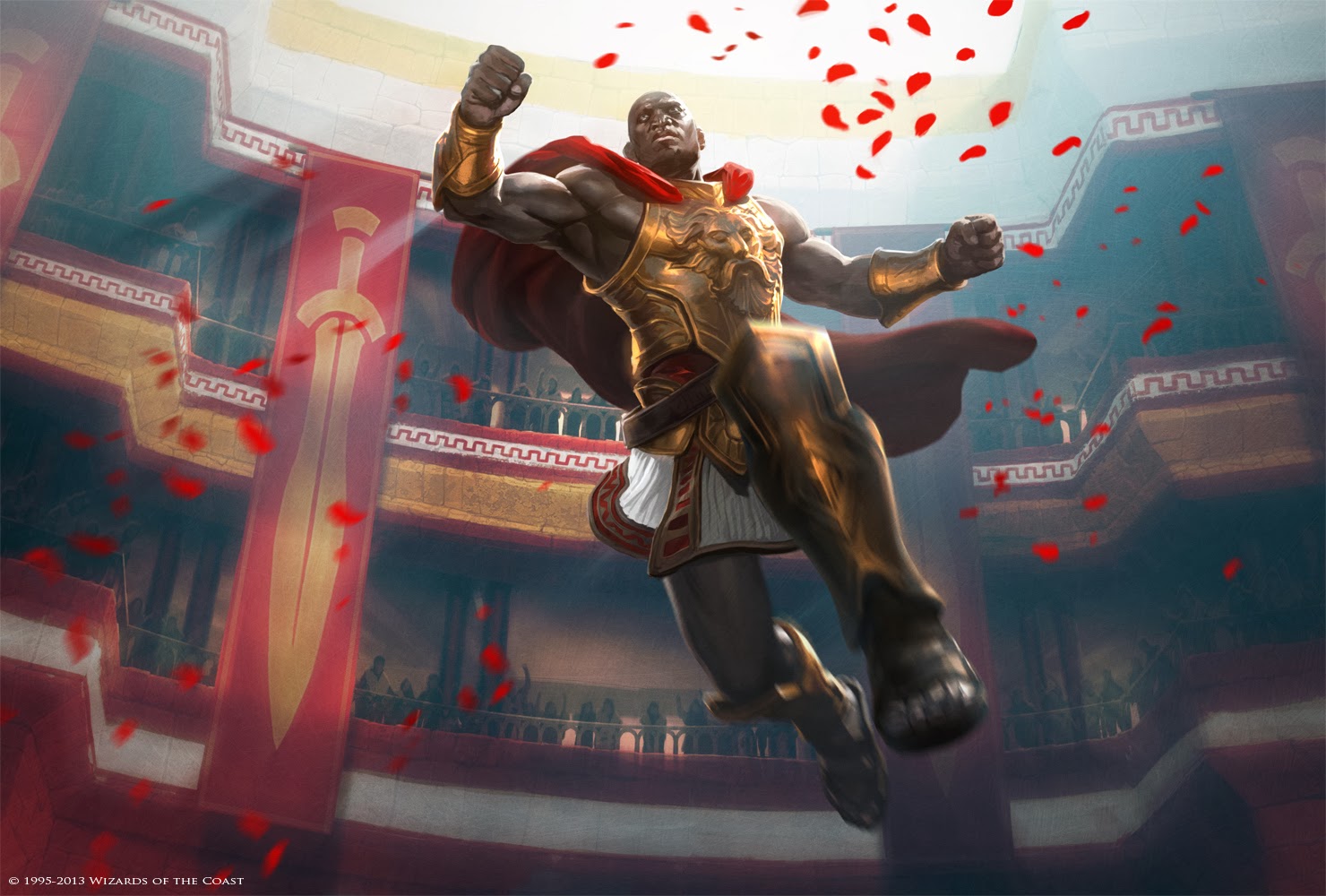
Oath of Glory
Paladins who take the Oath of Glory believe they and their companions are destined to achieve glory through deeds of heroism. They train diligently and encourage their companions so they’re all ready when destiny calls.
Tenets of Glory
The tenets of the Oath of Glory drive a paladin to attempt heroics that might one day shine in legend.
Actions over Words. Strive to be known by glorious deeds, not words.
Challenges Are but Tests. Face hardships with courage, and encourage your allies to face them with you.
Hone the Body. Like raw stone, your body must be worked so its potential can be realized.
Discipline the Soul. You must marshal the discipline to overcome failings within yourself that threaten to dim the glory of you and your friends.
Oath Spells
You gain oath spells at the paladin levels listed in the Oath of the Glory table.
Oath of Glory Spells
| Paladin Level | Spells |
|---|---|
| 3rd | guiding bolt, heroism |
| 5th | enhance ability, magic weapon |
| 9th | haste, protection from energy |
| 13th | compulsion, freedom of movement |
| 17th | commune, flame strike |
Channel Divinity
When you take this oath at 3rd level, you gain the following two Channel Divinity options.
Peerless Athlete. As a bonus action, you can use your Channel Divinity to augment your athleticism. For the next 10 minutes, you have advantage on Strength (Athletics) and Dexterity (Acrobatics) checks; you can carry, push, drag, and lift twice as much weight as normal; and the distance of your long and high jumps increases by 10 feet (this extra distance costs movement as normal).
Inspiring Smite. Immediately after you deal damage to a creature with your Divine Smite feature, you can use your Channel Divinity as a bonus action and distribute temporary hit points to creatures of your choice within 30 feet of you, which can include you. The total number of temporary hit points equals 2d8 + your level in this class, divided among the chosen creatures however you like.
Aura of Alacrity
Starting at 7th level, you emanate an aura that fills you and your companions with supernatural speed, allowing you to race across a battlefield in formation. Your walking speed increases by 10 feet. In addition, if you aren’t incapacitated, the walking speed of any ally who starts their turn within 10 feet of you increases by 10 feet until the end of that turn.
When you reach 18th level in this class, the range of the aura increases to 30 feet.
Glorious Defense
You can turn defense into a sudden strike. Beginning at 15th level when you or another creature you can see within 10 feet of you is hit by an attack roll, you can use your reaction to grant a bonus to the target’s AC against that attack, potentially causing it to miss. The bonus equals your Charisma modifier (minimum of +1). If the attack misses, you can make one weapon attack against the attacker as part of this reaction, provided the attacker is within your weapon’s range.
You can use this feature a number of times equal to your Charisma modifier (minimum of once), and you regain all expended uses when you finish a long rest.
Living Legend
At 20th level, you can empower yourself with the legends—whether true or exaggerated—of your great deeds. As a bonus action, you gain the following benefits for 1 minute:
- You are blessed with an otherworldly presence, gaining advantage on all Charisma checks.
- Once on each of your turns when you make a weapon attack and miss, you can cause that attack to hit instead.
- If you fail a saving throw, you can use your reaction to reroll it. You must use this new roll.
Once you use this feature, you can’t use it again until you finish a long rest, unless you expend a 5th-level spell slot to use it again.
Oath of Redemption
The Oath of Redemption sets a paladin on a difficult path, one that requires a holy warrior to use violence only as a last resort. Paladins who dedicate themselves to this oath believe that any person can be redeemed and that the path of benevolence and justice is one that anyone can walk. These paladins face evil creatures in the hope of turning their foes to the light, and they slay their enemies only when such a deed will clearly save other lives. Paladins who follow this path are known as redeemers.
While redeemers are idealists, they are no fools. Redeemers know that undead, demons, devils, and other supernatural threats can be inherently evil. Against such foes, paladins who swear this oath bring the full wrath of their weapons and spells to bear. Yet the redeemers still pray that, one day, even creatures of wickedness will invite their own redemption.
Tenets of Redemption
The tenets of the Oath of Redemption hold a paladin to a high standard of peace and justice.
Peace. Violence is a weapon of last resort. Diplomacy and understanding are the paths to long-lasting peace.
Innocence. All people begin life in an innocent state, and it is their environment or the influence of dark forces that drives them to evil. By setting the proper example, and working to heal the wounds of a deeply flawed world, you can set anyone on a righteous path.
Patience. Change takes time. Those who have walked the path of the wicked must be given reminders to keep them honest and true. Once you have planted the seed of righteousness in a creature, you must work day after day to allow that seed to survive and flourish.
Wisdom. Your heart and mind must stay clear, for eventually you will be forced to admit defeat. While every creature can be redeemed, some are so far along the path of evil that you have no choice but to end their lives for the greater good. Any such action must be carefully weighed and the consequences fully understood, but once you have made the decision, follow through with it knowing your path is just.
Oath Spells
You gain oath spells at the paladin levels listed.
| Paladin Level | Spells |
|---|---|
| 1st | sanctuary, sleep |
| 5th | calm emotions, hold person |
| 9th | counterspell, hypnotic pattern |
| 13th | Otiluke’s resilient sphere, stoneskin |
| 17th | hold monster, wall of force |
Channel Divinity
When you take this oath at 3rd level, you gain the following two Channel Divinity options.
Emissary of Peace. You can use your Channel Divinity to augment your presence with divine power. As a bonus action, you grant yourself a +5 bonus to Charisma (Persuasion) checks for the next 10 minutes.
Rebuke the Violent. You can use your Channel Divinity to rebuke those who use violence. Immediately after an attacker within 30 feet of you deals damage with an attack against a creature other than you, you can use your reaction to force the attacker to make a Wisdom saving throw. On a failed save, the attacker takes radiant damage equal to the damage it just dealt. On a successful save, it takes half as much damage.
Aura of the Guardian
Starting at 7th level, you can shield others from harm at the cost of your own health. When a creature within 10 feet of you takes damage, you can use your reaction to magically take that damage, instead of that creature taking it. This feature doesn’t transfer any other effects that might accompany the damage, and this damage can’t be reduced in any way.
At 18th level, the range of this aura increases to 30 feet.
Protective Spirit
Starting at 15th level, a holy presence mends your wounds in battle. You regain hit points equal to 1d6 + half your paladin level if you end your turn in combat with fewer than half of your hit points remaining and you aren’t incapacitated.
Emissary of Redemption
At 20th level, you become an avatar of peace, which gives you two benefits:
- You have resistance to all damage dealt by other creatures (their attacks, spells, and other effects).
- Whenever a creature hits you with an attack, it takes radiant damage equal to half the damage you take from the attack.
If you attack a creature, cast a spell on it, or deal damage to it by any means but this feature, neither benefit works against that creature until you finish a long rest.


Oath of Solidarity
The Oath of Solidarity calls paladins to use their power to stand with the oppressed against tyranny. It is not enough for them only to enact justice, but to see that justice is fairly applied to all. Despised by those who have seized power through unjust means, paladins who have taken this oath are seen as threats to the established order, and are often persecuted by the nobility.
Tenets of Solidarity
A paladin of solidarity often emblazons their oath upon their shield. They refuse to hide what they stand for.
Dignity. Every living being has intrinsic value that cannot be taken from them, or reduced in any way. Show respect to life in all it's forms, and punish those who do not respect it.
Equality. Birth, wealth, and status do not matter. Everyone is equal before your eyes, the mighty should be made low, and the lowly raised up. All people should have access to basic needs regardless of their wealth or family ties.
Justice. Station in life should not determine how you are treated before the law. Bring justice to those who are marginalized and to those who abuse their power.
Oath Spells
At 3rd level, and when you reach certain levels in this class, you gain access to the spells listed for that level in the Oath of Solidarity Spells table. You always have these spells prepared, they do not count against the number of spells you prepare each day, and they count as paladin spells for you.
Oath of Solidarity Spells
| Paladin Level | Spells |
|---|---|
| 3rd | heroism, shield of faith |
| 5th | prayer of healing, warding bond |
| 9th | life transferernce, revivify |
| 13th | aura of purity, freedom of movement |
| 17th | mass cure wounds, skill empowerment |
Channel Divinity
At 3rd level you gain the following Channel Divinity options:
Rebuke the Tyrannical. As a bonus action you can rebuke an enemy creature that attacked one of your allies. For the next minute, the enemy creature has disadvantage on all attack rolls against creatures other than you.
Shield the Meek. As a reaction, when a creature within 30 feet, that you can see, is hit with a melee attack, you grant them a bonus to their armor class equal to your Charisma modifier (minimum of 1) until the start of your next turn.
Aura of Solidarity
Starting at 7th level, when an allied creature within 10 feet of you takes damage, the damage they would take is reduced by an amount equal to your Charisma modifier (minimum of 1).
At 18th level the range of this ability increases to 30 feet.
Shelter the Innocent
Beginning at 15th level, your soul cries out to aid those around you. You can use the Help action as a bonus action as long as the target is within your Aura of Solidarity.
Heroic Sacrifice
You can enact the ultimate sacrifice, laying down your life for your allies. At 20th level, you can use an action to distribute your remaining hit points and spell slots among creatures within 60 feet of you, following the rules below:
- You can divide the hit points and spell slots in any increment, among any creatures of your choice within range.
- Any hit points you give to creatures that go over their hit point maximum become temporary hit points for them.
- For a creature to recieve one of your spell slots, they must have an expended spell slot of the same level or lower.
Immediately after you distribute your remaining hit points and spell slots you fall to zero hit points, and are unconscious but stabilized. Once you use this ability you must finish a long rest before you can use it again.
Oath of the Ancients
The Oath of the Ancients is as old as the race of elves and the rituals of the druids. Sometimes called fey knights, green knights, or horned knights, paladins who swear this oath cast their lot with the side of the light in the cosmic struggle against darkness because they love the beautiful and life-giving things of the world, not necessarily because they believe in principles of honor, courage, and justice. They adorn their armor and clothing with images of growing things — leaves, antlers, or flowers — to reflect their commitment to preserving life and light in the world.
Tenets of the Ancients
The tenets of the Oath of the Ancients have been preserved for uncounted centuries. This oath emphasizes the principles of good above any concerns of law or chaos. Its four central principles are simple.
Kindle the Light. Through your acts of mercy, kindness, and forgiveness, kindle the light of hope in the world, beating back despair.
Shelter the Light. Where there is good, beauty, love, and laughter in the world, stand against the wickedness that would swallow it. Where life flourishes, stand against the forces that would render it barren.
Preserve Your Own Light. Delight in song and laughter, in beauty and art. If you allow the light to die in your own heart, you can’t preserve it in the world.
Be the Light. Be a glorious beacon for all who live in despair. Let the light of your joy and courage shine forth in all your deeds.
Oath Spells
You gain oath spells at the paladin levels listed.
| Paladin Level | Spells |
|---|---|
| 1st | ensnaring strike, speak with animals |
| 5th | misty step, moonbeam |
| 9th | beacon of hope, dispel magic |
| 13th | freedom of movement, guardian of faith |
| 17th | commune, flame strike |
Channel Divinity
When you take this oath at 3rd level, you gain the following two Channel Divinity options.
Nature’s Wrath. You can use your Channel Divinity to invoke primeval forces to ensnare a foe. As an action, you can cause spectral vines to spring up and reach for a creature within 10 feet of you that you can see. The creature must succeed on a Strength or Dexterity saving throw (its choice) or be restrained. While restrained by the vines, the creature repeats the saving throw at the end of each of its turns. On a success, it frees itself and the vines vanish.
Turn the Faithless. You can use your Channel Divinity to utter ancient words that are painful for fey and fiends to hear. As an action, you present your holy symbol, and each fey or fiend within 30 feet of you that can hear you must make a Wisdom saving throw. On a failed save, the creature is turned for 1 minute or until it takes damage.
A turned creature must spend its turns trying to move as far away from you as it can, and it can’t willingly move to a space within 30 feet of you. It also can’t take reactions. For its action, it can use only the Dash action or try to escape from an effect that prevents it from moving. If there’s nowhere to move, the creature can use the Dodge action.
If the creature’s true form is concealed by an illusion, shapeshifting, or other effect, that form is revealed while it is turned.
Aura of Warding
Beginning at 7th level, ancient magic lies so heavily upon you that it forms an eldritch ward. You and friendly creatures within 10 feet of you have resistance to damage from spells.
At 18th level, the range of this aura increases to 30 feet.
Undying Sentinel
Starting at 15th level, when you are reduced to 0 hit points and are not killed outright, you can choose to drop to 1 hit point instead. Once you use this ability, you can’t use it again until you finish a long rest.
Additionally, you suffer none of the drawbacks of old age, and you can’t be aged magically.
Elder Champion
At 20th level, you can assume the form of an ancient force of nature, taking on an appearance you choose. For example, your skin might turn green or take on a bark-like texture, your hair might become leafy or moss-like, or you might sprout antlers or a lion-like mane.
Using your action, you undergo a transformation. For 1 minute, you gain the following benefits:
- At the start of each of your turns, you regain 10 hit points.
- Whenever you cast a paladin spell that has a casting time of 1 action, you can cast it using a bonus action instead.
- Enemy creatures within 10 feet of you have disadvantage on saving throws against your paladin spells and Channel Divinity options.
Once you use this feature, you can’t use it again until you finish a long rest, unless you expend a 5th-level spell slot to use it again.

Oath of the Crown
The Oath of the Crown is sworn to the ideals of civilization, be it the spirit of a nation, fealty to a sovereign, or service to a deity of law and rulership. The paladins who swear this oath dedicate themselves to serving society and, in particular, the just laws that hold society together. These paladins are the watchful guardians on the walls, standing against the chaotic tides of barbarism that threaten to tear down all that civilization has built, and are commonly known as guardians, exemplars, or sentinels. Often, paladins who swear this oath are members of an order of knighthood in service to a nation or a sovereign, and undergo their oath as part of their admission to the order’s ranks.
Tenets of the Crown
The tenets of the Oath of the Crown are often set by the sovereign to which their oath is sworn, but generally emphasize the following tenets.
Law. The law is paramount. It is the mortar that holds the stones of civilization together, and it must be respected.
Loyalty. Your word is your bond. Without loyalty, oaths and laws are meaningless.
Courage. You must be willing to do what needs to be done for the sake of order, even in the face of overwhelming odds. If you don’t act, then who will?
Responsibility. You must deal with the consequences of your actions, and you are responsible for fulfilling your duties and obligations.
Oath Spells
You gain oath spells at the paladin levels listed.
| Paladin Level | Spells |
|---|---|
| 1st | command, compelled duel |
| 5th | warding bond, zone of truth |
| 9th | aura of vitality, spirit guardians |
| 13th | banishment, guardian of faith |
| 17th | circle of power, geas |
Channel Divinity
When you take this oath at 3rd level, you gain the following Channel Divinity options.
Champion Challenge. As a bonus action, you issue a challenge that compels other creatures to do battle with you. Each creature of your choice that you can see within 30 feet of you must make a Wisdom saving throw. On a failed save, a creature can’t willingly move more than 30 feet away from you. This effect ends on the creature if you are incapacitated or die or if the creature is more than 30 feet away from you.
Turn the Tide. As a bonus action, you can bolster injured creatures with your Channel Divinity. Each creature of your choice that can hear you within 30 feet of you regains hit points equal to 1d6 + your Charisma modifier (minimum of 1) if it has no more than half of its hit points.
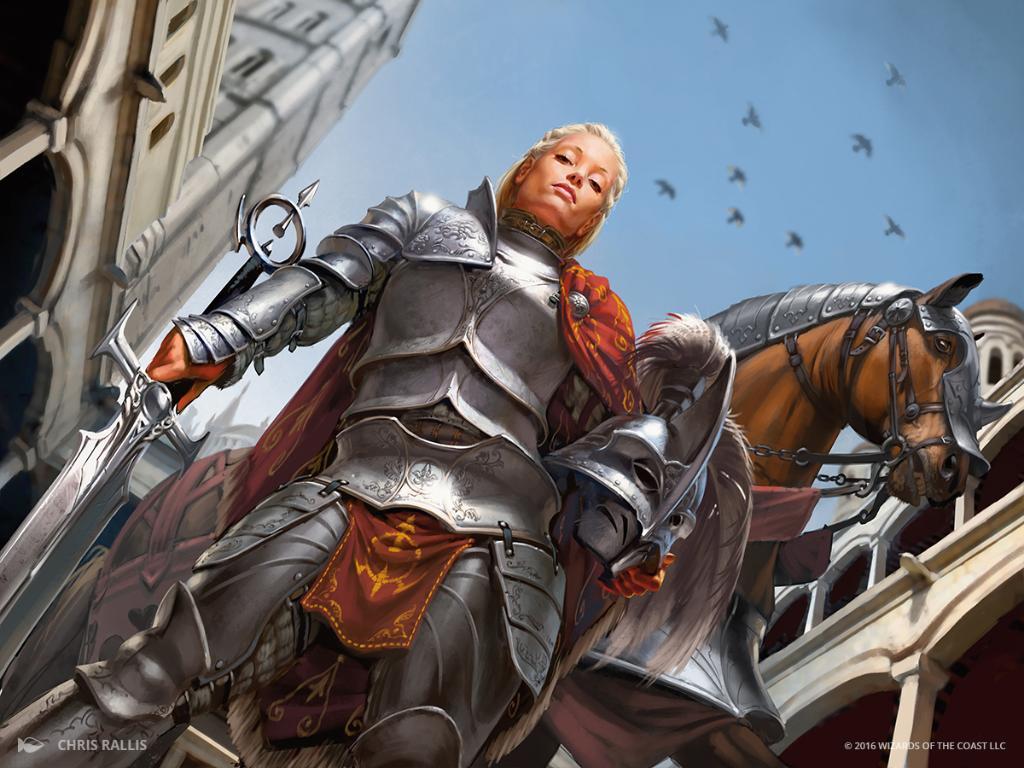
Divine Allegiance
Starting at 7th level, when a creature within 5 feet of you takes damage, you can use your reaction to magically substitute your own health for that of the target creature, causing that creature not to take the damage. Instead, you take the damage. This damage to you can’t be reduced or prevented in any way.
Aura of Crowns
Your law and righteousness improves the world and allies around you. When creatures of your choice within 10ft succeed on a saving throw against a condition. They may regain hit points equal to your Charisma modifier (minimum of 1), a creature may only benefit from this once per round. Additionally non-magical food and drink within your aura is rendered free of poisons and diseases.
When you reach 18th level in this class, the range of the aura increases to 30 feet.
Unyielding Spirit
Starting at 15th level, you have advantage on saving throws to avoid becoming paralyzed or stunned.
Exalted Champion
At 20th level, your presence on the field of battle is an inspiration to those dedicated to your cause. You can use your action to gain the following benefits for 1 hour:
- You have resistance to bludgeoning, piercing, and slashing damage from nonmagical weapons.
- Your allies have advantage on death saving throws while within 30 feet of you.
- You have advantage on Wisdom saving throws, as do your allies within 30 feet of you.
This effect ends early if you are incapacitated or die. Once you use this feature, you can’t use it again until you finish a long rest, unless you expend a 5th-level spell slot to use it again.
Oath of the Grave
The Oath of the Grave is seldom practised tradition, most commonly reserved for the followers of the Raven Queen. Sometimes called winter knights, black nights, or grave knights, these paladins serve as protectors of the sacred passings into the afterlife. They constantly struggle against the forces of undeath, as they see them as the most unholy abominations that blight this land. They adorn themselves with images of death and winter — skulls, ravens, the moon, or similar symbols of their patron gods.
Tenets of the Grave
The tenets of the Oath of the Grave have been passed down for generations. This oath emphasizes the passing between the warmth of life to the everlasting cold of death, and punishes those that defile this passing with the unholy raising of undead.
Annihilate the Unholy. The undead and those that foster them are unholy and wicked. Destroy them before they defile more than they have already.
Preserve the Righteous. Death should not come early to those who have led a blessed life. Preserve the righteous, so they may live on without fear.
Let Souls Pass On. Every soul deserves its place in the afterlife. When you see a creature forced into undeath, let its soul go free.
Accept Death. Death comes to all eventually. Accept it, and you will find a place in the afterlife.
Oath Spells
At 3rd level, and when you reach certain levels in this class, you gain access to the spells listed for that level in the Oath of the Grave Spells table. You always have these spells prepared, they do not count against the number of spells you prepare each day, and they count as paladin spells for you.
Oath of the Grave Spells
| Paladin Level | Spells |
|---|---|
| 3rd | inflict wounds, ice knife |
| 5th | gentle repose, Snilloc's snowball swarm |
| 9th | sleet storm, speak with dead |
| 13th | blight, ice storm |
| 17th | cone of cold, destructive wave |
Channel Divinity
When you take this oath at 3rd level, you gain the following two Channel Divinity options.
Icy Repose. As an action, you present your holy symbol and speak a prayer against undeath, using your Channel Divinity. Each undead that can see or hear you within 30 feet of you must make a Wisdom saving throw. If the creature fails its saving throw, it takes cold damage equal to your paladin level, and is frozen for 1 minute or until it takes damage again.
A frozen creature is affected by the petrified condition until the frozen effect ends, at which point the creature is freed and able to act normally.
Restbringer. As an action, you can imbue one weapon that you are holding with necrotic energy, using your Channel Divinity. For 1 minute, you add 1 + your Charisma modifier necrotic damage (minimum 1) to your damage rolls made with that weapon. Additionally, hitting a target with the weapon marks them until the end of your next turn. A marked target can't regain hit points, and if it dies while marked, it can't become undead.
You can end this effect on your turn as part of any other action. If you are no longer holding or carrying this weapon, or if you fall unconscious, this effect ends.
Aura of Preservation
Starting at 7th level, you and friendly creatures within 10 feet of you have resistance to necrotic damage, and cannot be charmed, frightened, or possessed by undead creatures.
At 18th level, the range of this aura increases to 30 feet.
Soul of Demise
By 15th level, your restbringer feature has become far more powerful. The duration of restbringer increases to 10 minutes, and any creature marked by the feature has their speed reduced by 10 feet. Additionally, if a marked creature dies, that creature can't be raised from the dead for the next 30 days, outside of using a wish spell.
Reaper of Winter
At 20th level, as an action, you can surround yourself with a deathly chill. For 1 minute, swirls of chilling wind surround you in a 30 foot radius granting you the following benefits:
- Whenever an enemy creatures starts its turn in the area, the creature takes 10 cold damage and their movement speed is reduced by 10 feet until the start of their next turn.
- In addition, whenever a creature dies within the area, you gain 20 temporary hit points.
Once you use this feature, you can't use it again until you finish a long rest, unless you expend a 5th-level spell slot to use it again.
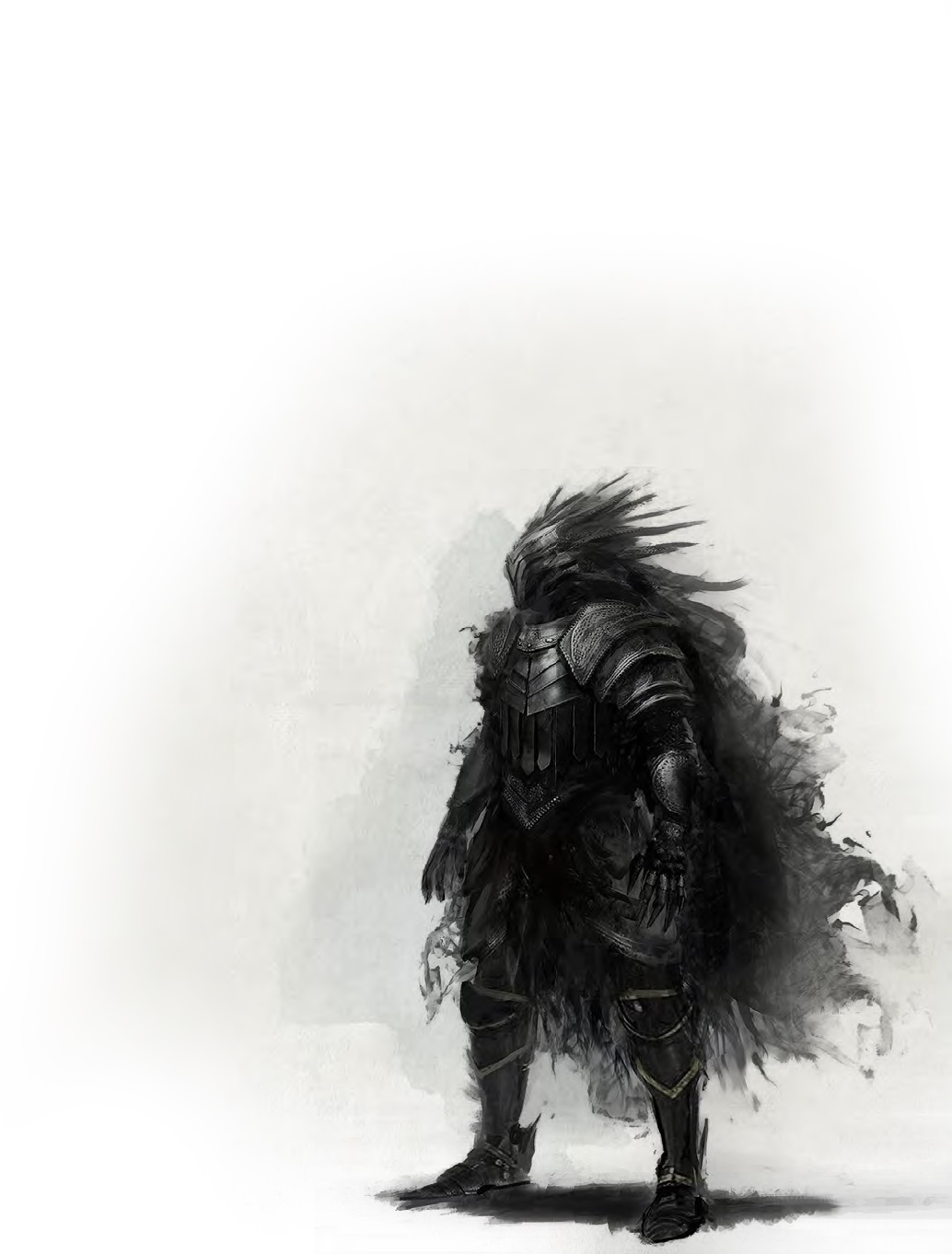
Oath of the Watchers
The Oath of the Watchers binds paladins to protect mortal realms from the predations of extraplanar creatures, many of which can lay waste to mortal soldiers. Thus, the Watchers hone their minds, spirits, and bodies to be the ultimate weapons against such threats.
Paladins who follow the Watchers’ oath are ever vigilant in spotting the influence of extraplanar forces, often establishing a network of spies and informants to gather information on suspected cults. To a Watcher, keeping a healthy suspicion and awareness about one’s surroundings is as natural as wearing armor in battle.
Tenets of the Watchers
A paladin who assumes the Oath of the Watchers swears to safeguard mortal realms from otherworldly threats.
Vigilance. The threats you face are cunning, powerful, and subversive. Be ever alert for their corruption.
Loyalty. Never accept gifts or favors from fiends or those who truck with them. Stay true to your order, your comrades, and your duty.
Discipline. You are the shield against the endless terrors that lie beyond the stars. Your blade must be forever sharp and your mind keen to survive what lies beyond.
Oath Spells
You gain oath spells at the paladin levels listed in the Oath of the Watchers table.
Oath of the Watchers Spells
| Paladin Level | Spells |
|---|---|
| 3rd | alarm, detect magic |
| 5th | moonbeam, see invisibility |
| 9th | counterspell, nondetection |
| 13th | aura of purity, banishment |
| 17th | hold monster, scrying |

Channel Divinity
When you take this oath at 3rd level you gain the following Channel Divinity options.
Watcher's Will. You can use your Channel Divinity to invest your presence with the warding power of your faith. As an action, you can choose a number of creatures you can see within 30 feet of you, up to a number equal to your Charisma modifier (minimum of one creature). For 1 minute, you and the chosen creatures have advantage on Intelligence, Wisdom, and Charisma saving throws.
Abjure the Extraplanar. You can use your Channel Divinity to castigate unworldly beings. As an action, you present your holy symbol and each aberration, celestial, elemental, fey, or fiend within 30 feet of you that can hear you must make a Wisdom saving throw. On a failed save, the creature is turned for 1 minute or until it takes damage.
A turned creature must spend its turns trying to move as far away from you as it can, and it can’t willingly end its move in a space within 30 feet of you. For its action, it can use only the Dash action or try to escape from an effect that prevents it from moving. If there’s nowhere to move, the creature can take the Dodge action.
Aura of the Sentinel
At 7th level you emit an aura of alertness while you aren't incapacitated. When you and any creatures of your choice within 10 feet of you roll initiative, you all gain a bonus to initiative equal to your proficiency bonus.
At 18th level, the range of this aura increases to 30 feet.
Vigilant Rebuke
Starting at 15th level you’ve learned how to chastise anyone who dares wield beguilements against you and your wards. Whenever you or a creature you can see within 30 feet of you succeeds on an Intelligence, a Wisdom, or a Charisma saving throw, you can use your reaction to deal 2d8 + your Charisma modifier force damage to the creature that forced the saving throw.
Mortal Bulwark
When you reach 20th level you manifest a spark of divine power in defense of the mortal realms. As a bonus action, you gain the following benefits for 1 minute:
- You gain truesight with a range of 120 feet.
- You have advantage on attack rolls against aberrations, celestials, elementals, fey, and fiends.
- When you hit a creature with an attack roll and deal damage to it, you can also force it to make a Charisma saving throw against your spell save DC. On a failed save, the creature is magically banished to its native plane of existence if it’s currently not there. On a successful save, the creature can’t be banished by this feature for 24 hours.
Once you use this bonus action, you can’t use it again until you finish a long rest, unless you expend a 5th-level spell slot to use it again.
Oath of Truth
The Oath of Truth is sworn to the ideals of knowledge, integrity, and sincerity. Sometimes called seekers, paladins who swear this oath are often scholars that devote themselves to the pursuit of knowledge. These paladins are not content with merely knowing the truth, however — they also devote themselves to upholding it. They refuse to utter lies or deceptions, and make it their duty to correct any falsehoods they come across.
Paladins that follow the Oath of Truth often adorn their armor and clothing with angelic images, including wings and halos, as they idealize the angelic ability to perfectly tell truth from lie. Images of eyes are also common, whether incorporated into their coat of arms or even tattooed upon their body.
Tenets of Truth
Those that take this oath do so for an array of reason, they generally all follow these core tenets:
Hone Your Knowledge. As an arbiter of truth, you must have enough information to tell truth from fiction.
Set Things Straight. When you hear a lie, it is your duty to correct it and let the truth be known.
Speak Only Truth. Never utter a lie, under any circumstance.
Oath Spells
At 3rd level, and when you reach certain levels in this class, you gain access to the spells listed for that level in the Oath of Truth Spells table. You always have these spells prepared, they do not count against the number of spells you prepare each day, and they count as paladin spells for you.
Oath of Truth Spells
| Paladin Level | Spells |
|---|---|
| 3rd | detect evil and good, detect magic |
| 5th | see invisibility, zone of truth |
| 9th | clairvoyance, daylight |
| 13th | arcane eye, divination |
| 17th | commune, legend lore |
Channel Divinity
When you take this oath at 3rd level, you gain the following two Channel Divinity options.
Divine Perception. You can use your Channel Divinity to augment your senses. As a bonus action, you grant yourself a +5 bonus to Wisdom (Insight) and Wisdom (Perception) checks for the next 10 minutes.
Truthseeker's Will. As a bonus action, you can use your Channel Divinity to seek out your foes. For 1 minute, your speed is increased by 10 feet, and you gain darkvision if you don't already have it. Also, each hostile creature within 60 feet of you must succeed on a Wisdom saving throw or become marked for the same duration. Fey, fiends, and undead have disadvantage on this saving throw.
If a marked creature is within the range of your darkvision, you gain the following benefits against it:
- You can see the marked creature, even if it is invisible or obscured in some way (such as being behind cover). If the creature is a shapechanger, you can see its true form.
- Against the creature, you melee weapon attacks have a 30-foot increased reach, and their damage type becomes psychic if the target is outside your normal reach. These attacks strike directly at the creature's mind without any projectile, and therefore ignore cover.
Aura of Insight
Starting at 7th level, a magical aura begins to lie upon you, divining information about surrounding creatures. If a creature is within 10 feet of you, you learn of any damage resistances and/or immunities that the creature possesses. Also, the DM tells you if the creature is equal, superior, or inferior in regard to the following characteristics:
- Armor Class
- Current hit points
- Total class levels (if any)
- Paladin class levels (if any)
At 18th level, the range of the aura increases to 30 feet.
All-Seeing
Beginning at 15th level, you are always under the effects of a see invisibility spell. Also, for you see invisibility now has a range of 30 feet, rather than self, allowing you to grant its effects to another creature within range when you cast it.
Angel of Truth
At 20th level, you can assume an angelic form, becoming an ultimate arbiter of truth. Using your action, you undergo a transformation. For 1 hour, you gain the following benefits:
- Feathered wings sprout from your back, granting you a flying speed of 60 feet.
- You know when you hear a lie. This ability allows you to know when something explicitly untruthful is said; it does not detect misleading yet literally true statements.
- As a bonus action, you can' point to a creature you can see within 30 feet of you and force it to make a Wisdom saving throw against your spell save DC. On a failed save, the creature becomes caged in white light until the end of your next turn or until it takes any damage. For the duration, the creature's speed is 0, it sheds dim light ina 10-foot radius, it can't benefit from being invisible, and attacks against it are made with advantage.
Once you use this feature, you can't use it again until you finish a long rest, unless you expend a 5th-level spell slot to use it again.
Oath of Vengeance
The Oath of Vengeance is a solemn commitment to punish those who have committed a grievous sin. When evil forces slaughter helpless villagers, when an entire people turns against the will of the gods, when a thieves’ guild grows too violent and powerful, when a dragon rampages through the countryside — at times like these, paladins arise and swear an Oath of Vengeance to set right that which has gone wrong. To these paladins — sometimes called avengers or dark knights — their own purity is not as important as delivering justice.
Tenets of Vengeance
The tenets of the Oath of Vengeance vary by paladin, but all the tenets revolve around punishing wrongdoers by any means necessary. Paladins who uphold these tenets are willing to sacrifice even their own righteousness to mete out justice upon those who do evil, so the paladins are often neutral or lawful neutral in alignment. The core principles of the tenets are brutally simple.
Fight the Greater Evil. Faced with a choice of fighting my sworn foes or combating a lesser evil, I choose the greater evil.
No Mercy for the Wicked. Ordinary foes might win my mercy, but my sworn enemies do not.
By Any Means Necessary. My qualms can’t get in the way of exterminating my foes.
Restitution. If my foes wreak ruin on the world, it is because I failed to stop them. I must help those harmed by their misdeeds.
Oath Spells
You gain oath spells at the paladin levels listed.
| Paladin Level | Spells |
|---|---|
| 1st | bane, hunter's mark |
| 5th | hold person, misty step |
| 9th | haste, protection from energy |
| 13th | banishment, dimension door |
| 17th | hold monster, scrying |
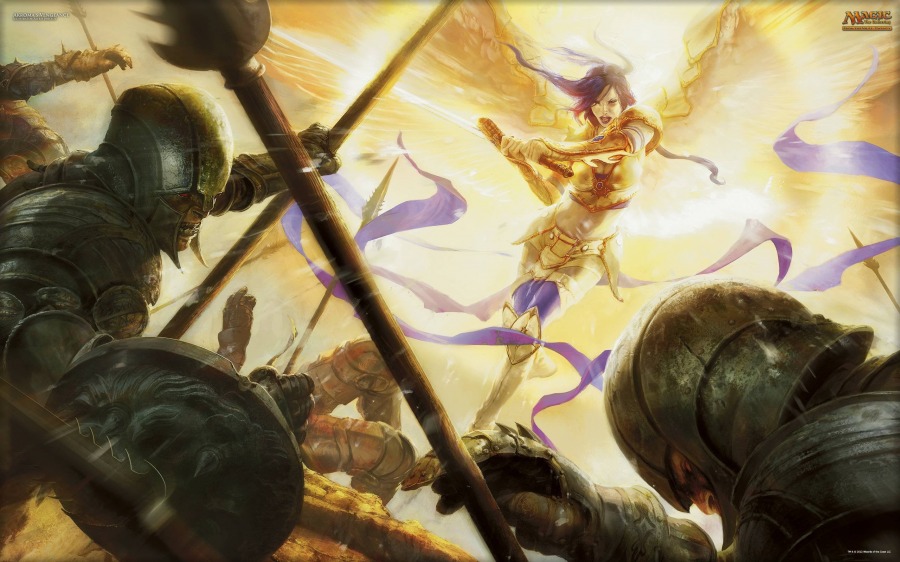

Channel Divinity
When you take this oath at 3rd level, you gain the following two Channel Divinity options.
Abjure Enemy. As an action, you present your holy symbol and speak a prayer of denunciation, using your Channel Divinity. Choose one creature within 60 feet of you that you can see. That creature must make a Wisdom saving throw, unless it is immune to being frightened. Fiends and undead have disadvantage on this saving throw.
On a failed save, the creature is frightened for 1 minute or until it takes any damage. While frightened, the creature’s speed is 0, and it can’t benefit from any bonus to its speed.
On a successful save, the creature’s speed is halved for 1 minute or until the creature takes any damage.
Vow of Enmity. As a bonus action, you can utter a vow of enmity against a creature you can see within 10 feet of you, using your Channel Divinity. You gain advantage on attack rolls against the creature for 1 minute or until it drops to 0 hit points or falls unconscious.
Relentless Avenger
By 7th level, your supernatural focus helps you close off a foe’s retreat. When you hit a creature with an opportunity attack, you can move up to half your speed immediately after the attack and as part of the same reaction. This movement doesn’t provoke opportunity attacks.
Soul of Vengeance
Starting at 15th level, the authority with which you speak your Vow of Enmity gives you greater power over your foe. When a creature under the effect of your Vow of Enmity makes an attack, you can use your reaction to make a melee weapon attack against that creature if it is within range.
Avenging Angel
At 20th level, you can assume the form of an angelic avenger. Using your action, you undergo a transformation. For 1 hour, you gain the following benefits:
- Wings sprout from your back and grant you a flying speed of 60 feet.
- You emanate an aura of menace in a 30-foot radius. The first time any enemy creature enters the aura or starts its turn there during a battle, the creature must succeed on a Wisdom saving throw or become frightened of you for 1 minute or until it takes any damage. Attack rolls against the frightened creature have advantage.
Once you use this feature, you can’t use it again until you finish a long rest, unless you expend a 5th-level spell slot to use it again.

Ranger
Rough and wild looking, a human stalks alone through the shadows of trees, hunting the orcs he knows are planning a raid on a nearby farm. Clutching a shortsword in each hand, he becomes a whirlwind of steel, cutting down one enemy after another.
After tumbling away from a cone of freezing air, an elf finds her feet and draws back her bow to loose an arrow at the white dragon. Shrugging off the wave of fear that emanates from the dragon like the cold of its breath, she sends one arrow after another to find the gaps between the dragon’s thick scales.
Holding his hand high, a half-elf whistles to the hawk that circles high above him, calling the bird back to his side. Whispering instructions in Elvish, he points to the owlbear he’s been tracking and sends the hawk to distract the creature while he readies his bow.
Far from the bustle of cities and towns, past the hedges that shelter the most distant farms from the terrors of the wild, amid the dense-packed trees of trackless forests and across wide and empty plains, rangers keep their unending watch.
Deadly Hunters
Warriors of the wilderness, rangers specialize in hunting the monsters that threaten the edges of civilization — humanoid raiders, rampaging beasts and monstrosities, terrible giants, and deadly dragons. They learn to track their quarry as a predator does, moving stealthily through the wilds and hiding themselves in brush and rubble. Rangers focus their combat training on techniques that are particularly useful against their specific favored foes.
Thanks to their familiarity with the wilds, rangers acquire the ability to cast spells that harness nature’s power, much as a druid does. Their spells, like their combat abilities, emphasize speed, stealth, and the hunt. A ranger’s talents and abilities are honed with deadly focus on the grim task of protecting the borderlands.
Independent Adventurers
Though a ranger might make a living as a hunter, a guide, or a tracker, a ranger’s true calling is to defend the outskirts of civilization from the ravages of monsters and humanoid hordes that press in from the wild. In some places, rangers gather in secretive orders or join forces with druidic circles. Many rangers, though, are independent almost to a fault, knowing that, when a dragon or a band of orcs attacks, a ranger might be the first — and possibly the last — line of defense.
This fierce independence makes rangers well suited to adventuring, since they are accustomed to life far from the comforts of a dry bed and a hot bath. Faced with city-bred adventurers who grouse and whine about the hardships of the wild, rangers respond with some mixture of amusement, frustration, and compassion. But they quickly learn that other adventurers who can carry their own weight in a fight against civilization’s foes are worth any extra burden. Coddled city folk might not know how to feed themselves or find fresh water in the wild, but they make up for it in other ways.
Creating a Ranger
As you create your ranger character, consider the nature of the training that gave you your particular capabilities. Did you train with a single mentor, wandering the wilds together until you mastered the ranger’s ways? Did you leave your apprenticeship, or was your mentor slain — perhaps by the same kind of monster that became your favored enemy? Or perhaps you learned your skills as part of a band of rangers affiliated with a druidic circle, trained in mystic paths as well as wilderness lore. You might be self-taught, a recluse who learned combat skills, tracking, and even a magical connection to nature through the necessity of surviving in the wilds.
The Ranger
| Level | Proficiency Bonus |
Features | Spells Known |
1st | 2nd | 3rd | 4th | 5th |
|---|---|---|---|---|---|---|---|---|
| 1st | +2 | Favored Enemy or Favored Foe, Natural Explorer or Deft Explorer | — | — | — | — | — | — |
| 2nd | +2 | Fighting Style, Spellcasting | 2 | 2 | — | — | — | — |
| 3rd | +2 | Ranger Archetype, Primeval Awareness or Primal Awareness | 3 | 3 | — | — | — | — |
| 4th | +2 | Martial Versatility, Ability Score Improvement | 3 | 3 | — | — | — | — |
| 5th | +3 | Extra Attack | 4 | 4 | 2 | — | — | — |
| 6th | +3 | Favored Enemy and Natural Explorer Improvements | 4 | 4 | 2 | — | — | — |
| 7th | +3 | Ranger Archetype Feature | 5 | 4 | 3 | — | — | — |
| 8th | +3 | Ability Score Improvement, Land's Stride | 5 | 4 | 3 | — | — | — |
| 9th | +4 | — | 6 | 4 | 3 | 2 | — | — |
| 10th | +4 | Natural Explorer Improvement, Hide in Plain Sight or Nature's Veil | 6 | 4 | 3 | 2 | — | — |
| 11th | +4 | Ranger Archetype Feature | 7 | 4 | 3 | 3 | — | — |
| 12th | +4 | Ability Score Improvement | 7 | 4 | 3 | 3 | — | — |
| 13th | +5 | — | 8 | 4 | 3 | 3 | 1 | — |
| 14th | +5 | Favored Enemy Improvement, Vanish | 8 | 4 | 3 | 3 | 1 | — |
| 15th | +5 | Ranger Archetype Feature | 9 | 4 | 3 | 3 | 2 | — |
| 16th | +5 | Ability Score Improvement | 9 | 4 | 3 | 3 | 2 | — |
| 17th | +6 | — | 10 | 4 | 3 | 3 | 3 | 1 |
| 18th | +6 | Feral Senses | 10 | 4 | 3 | 3 | 3 | 1 |
| 19th | +6 | Ability Score Improvement | 11 | 4 | 3 | 3 | 3 | 2 |
| 20th | +6 | Foe Slayer | 11 | 4 | 3 | 3 | 3 | 2 |
What’s the source of your particular hatred of a certain kind of enemy? Did a monster kill someone you loved or destroy your home village? Or did you see too much of the destruction these monsters cause and commit yourself to reining in their depredations? Is your adventuring career a continuation of your work in protecting the borderlands, or a significant change? What made you join up with a band of adventurers? Do you find it challenging to teach new allies the ways of the wild, or do you welcome the relief from solitude that they offer?
Quick Build
You can make a ranger quickly by following these suggestions. First, make Dexterity your highest ability score, followed by Wisdom. (Some rangers who focus on two-weapon fighting make Strength higher than Dexterity.) Second, choose the outlander background.
Class Features
As a ranger, you gain the following class features.
Ability Score Improvement
At first level you can choose to increase your Strength or Dexterity score by 1.
Hit Points
Hit Dice: 1d10 per ranger level
Hit Points at 1st Level: 10 + your Constitution modifier + racial bonus
Hit Points at Higher Levels: 1d10 (or 5) + your Constitution modifier per ranger level after 1st
Proficiencies
Armor: Light Armor, medium armor, shields
Weapons: Simple weapons, martial weapons
Tools: Harvesting Kit
Saving Throws: Strength, Dexterity
Skills: Choose three from Animal Handling, Athletics, Insight, Investigation, Nature, Perception, Stealth, and Survival
Equipment
You start with the following equipment, in addition to the equipment granted by your background:
- (a) a scale mail or (b) gambeson
- (a) two shortswords or (b) two simple melee weapons
- (a) a dungeoneer's pack or (b) an explorer's pack
- A longbow and a quiver of 20 arrows
Favored Enemy or Favored Foe
Beginning at 1st level, you have significant experience studying, tracking, hunting, and even talking to a certain type of enemy.
Choose a type of favored enemy: aberrations, beasts, celestials, constructs, dragons, elementals, fey, fiends, giants, monstrosities, oozes, plants, or undead. Alternatively, you can select two races of humanoid (such as gnolls and orcs) as favored enemies.
You have advantage on Wisdom (Survival) checks to track your favored enemies, as well as on Intelligence checks to recall information about them.
When you gain this feature, you also learn one language of your choice that is spoken by your favored enemies, if they speak one at all.
You choose one additional favored enemy, as well as an associated language, at 6th and 14th level. As you gain levels, your choices should reflect the types of monsters you have encountered on your adventures.
or
You can call on your bond with nature to mark a creature as your favored enemy for a time: you know the hunter's mark spell, and Wisdom is your spellcasting ability for it. You can use it a certain number of times without expending a spell slot and without requiring concentration — a number of times equal to your Wisdom modifier (a minimum of once). You regain all expended uses when you finish a long rest. When you gain the Spellcasting feature at 2nd level, hunter’s mark doesn’t count against the number of ranger spells you know.
Natural Explorer or Deft Explorer
You are particularly familiar with one type of natural environment and are adept at traveling and surviving in such regions. Choose one type of favored terrain: arctic, coast, desert, forest, grassland, mountain, swamp, or the Underdark. When you make an Intelligence or Wisdom check related to your favored terrain, your proficiency bonus is doubled if you are using a skill that you’re proficient in.
While traveling for an hour or more in your favored terrain, you gain the following benefits:
- Difficult terrain doesn’t slow your group’s travel.
- Your group can’t become lost except by magical means.
- Even when you are engaged in another activity while traveling (such as foraging, navigating, or tracking), you remain alert to danger.
- If you are traveling alone, you can move stealthily at a normal pace.
- When you forage, you find twice as much food as you normally would.
- While tracking other creatures, you also learn their exact number, their sizes, and how long ago they passed through the area.
You choose additional favored terrain types at 6th and 10th level. You can change one of your favored terrains to the current terrain you are in after studying and gaining familiarity to the local land after 7 - Wisdom modifier days (minimum of 1 day) surveying and patrolling the land which can be part of a long rest.
or
You are an unsurpassed explorer and survivor, both in the wilderness and in dealing with others on your travels. You gain the Canny benefit below, and you gain an additional benefit below when you reach 6th level and 10th level in this class.
Canny (1st Level)
Choose one of your skill proficiencies. Your proficiency bonus is doubled for any ability check you make that uses the chosen skill.
You can also speak, read, and write two additional languages of your choice.
Roving (6th Level)
Your walking speed increases by 5, and you gain a climbing speed and a swimming speed equal to your walking speed.
Tireless (10th Level)
As an action, you can give yourself a number of temporary hit points equal to 1d8 + your Wisdom modifier (minimum of 1 temporary hit point). You can use this action a number of times equal to your proficiency bonus, and you regain all expended uses when you finish a long rest.
In addition, whenever you finish a short rest, your exhaustion level, if any, is decreased by 1.
Fighting Style
At 2nd level, you adopt a particular style of fighting as your specialty. Choose one of the following options.
You can’t take a Fighting Style option more than once, even if you later get to choose again.
Archery
You gain a +2 bonus to attack rolls you make with ranged weapons.
Blind Fighting
Being unable to see a creature doesn’t impose disadvantage on your attack rolls against it, provided the creature isn’t hidden from you.
Defense
While you are wearing armor, you gain a +1 bonus to AC.
Druidic Warrior
You learn two cantrips of your choice from the druid spell list. They count as ranger spells for you, and Wisdom is your spellcasting ability for them. Whenever you gain a level in this class, you can replace one of these cantrips with another cantrip from the druid spell list.
Dual Wielding
When you take the Attack action while two-weapon fighting, you can make a single additional attack with your off-hand weapon as part of your action instead of your bonus action, adding your ability modifier to the damage of this attack.
Dueling
When you are wielding a melee weapon in one hand and no other weapons, you gain a +2 bonus to damage rolls with that weapon.
Melee Marksman
Having a hostile creature within 5 feet of you doesn't impose disadvantage on your ranged weapon attacks, so long as you are attacking a creature within 5 feet.
When you make a ranged weapon attack against a creature within 5 feet, you can use your bonus action to make a melee attack against it with your ranged weapon. On hit, you deal bludgeoning damage equal to 1d4 + your Strength modifier.
Thrown Weapon Fighting
You can draw a weapon that has the thrown property as part of the attack you make with the weapon. In addition, when you hit with a ranged attack using a thrown weapon, you gain a +1 bonus to the damage roll.
Spellcasting
By the time you reach 2nd level, you have learned to use the magical essence of nature to cast spells, much as a druid does.
Spell Slots
The Ranger table shows how many spell slots you have to cast your ranger spells of 1st level and higher. To cast one of these spells, you must expend a slot of the spell’s level or higher. You regain all expended spell slots when you finish a long rest.
For example, if you know the 1st-level spell animal friendship and have a 1st-level and a 2nd-level spell slot available, you can cast animal friendship using either slot.
Spells Known of 1st Level and Higher
You know two 1st-level spells of your choice from the ranger spell list.
The Spells Known column of the Ranger table shows when you learn more ranger spells of your choice. Each of these spells must be of a level for which you have spell slots. For instance, when you reach 5th level in this class, you can learn one new spell of 1st or 2nd level.
Additionally, when you gain a level in this class, you can choose one of the ranger spells you know and replace it with another spell from the ranger spell list, which also must be of a level for which you have spell slots.
Spellcasting Ability
Wisdom is your spellcasting ability for your ranger spells, since your magic draws on your attunement to nature. You use your Wisdom whenever a spell refers to your spellcasting ability. In addition, you use your Wisdom modifier when setting the saving throw DC for a ranger spell you cast and when making an attack roll with one.
Spell Save DC
Spell attack modifier
Ranger Archetype
At 3rd level, you choose an archetype that you strive to emulate: Beast Master, Hunter, Gloom Stalker, Horizon Walker, or Monster Slayer, each detailed at the end of the class description. Your choice grants you features at 3rd level and again at 7th, 11th, and 15th level.
Primeval Awareness or Primal Awareness
Beginning at 3rd level, you can use your action and expend one ranger spell slot to focus your awareness on the region around you. For 1 minute per level of the spell slot you expend, you can sense whether the following types of creatures are present within 1 mile of you (or within up to 6 miles if you are in your favored terrain): aberrations, celestials, dragons, elementals, fey, fiends, and undead. This feature doesn’t reveal the creatures’ location or number.
or
You can focus your awareness through the interconnections of nature: you learn additional spells when you reach certain levels in this class if you don’t already know them, as shown in the Primal Awareness Spells table. These spells don’t count against the number of ranger spells you know.
Primal Awareness Spells
| Ranger Level | Spell |
|---|---|
| 3rd | speak with animals |
| 5th | beast sense |
| 9th | speak with plants |
| 13th | locate creature |
| 17th | commune with nature |
You can cast each of these spells once without expending a spell slot. Once you cast a spell in this way, you can’t do so again until you finish a long rest.
Martial Versatility
Whenever you reach a level in this class that grants the Ability Score Improvement feature, you can replace a fighting style you know with another fighting style available to rangers. This replacement represents a shift of focus in your martial practice.
Ability Score Improvement
When you reach 4th level, and again at 8th, 12th, 16th, and 19th level, you can increase one ability score of your choice by 2, or you can increase two ability scores of your choice by 1. As normal, you can’t increase an ability score above 20 using this feature.
Using the optional feats rule, you can forgo taking this feature to take a feat of your choice instead.
Extra Attack
Beginning at 5th level, you can attack twice, instead of once, whenever you take the Attack action on your turn.
Favored Enemy
At 6th level, you have significant experience studying, tracking, hunting, and even talking to a certain type of enemy.
Choose an additional type of favored enemy: aberrations, beasts, celestials, constructs, dragons, elementals, fey, fiends, giants, monstrosities, oozes, plants, or undead. Alternatively, you can select two races of humanoid (such as gnolls and orcs) as favored enemies.
You have advantage on Wisdom (Survival) checks to track your favored enemies, as well as on Intelligence checks to recall information about them.
When you gain this feature, you also learn one language of your choice that is spoken by your favored enemies, if they speak one at all.
You choose one additional favored enemy, as well as an associated language, at 14th level. As you gain levels, your choices should reflect the types of monsters you have encountered on your adventures.
Land's Stride
Starting at 8th level, moving through nonmagical difficult terrain costs you no extra movement. You can also pass through nonmagical plants without being slowed by them and without taking damage from them if they have thorns, spines, or a similar hazard.
In addition, you have advantage on saving throws against plants that are magically created or manipulated to impede movement, such those created by the entangle spell.

Hide in Plain Sight or Nature's Veil
Starting at 10th level, you can spend 1 minute creating camouflage for yourself. You must have access to fresh mud, dirt, plants, soot, and other naturally occurring materials with which to create your camouflage.
Once you are camouflaged in this way, you can try to hide by pressing yourself up against a solid surface, such as a tree or wall, that is at least as tall and wide as you are. You gain a +10 bonus to Dexterity (Stealth) checks as long as you remain there without moving or taking actions. Once you move or take an action or a reaction, you must camouflage yourself again to gain this benefit.
or
You draw on the powers of nature to hide yourself from view briefly. As a bonus action, you can magically become invisible, along with any equipment you are wearing or carrying, until the start of your next turn.
You can use this feature a number of times equal to your proficiency bonus, and you regain all expended uses when you finish a long rest.
Vanish
Starting at 14th level, you can use the Hide action as a bonus action on your turn. Also, you can’t be tracked by nonmagical means, unless you choose to leave a trail.
Favored Enemy
At 14th level, you have significant experience studying, tracking, hunting, and even talking to a certain type of enemy.
Choose an additional type of favored enemy: aberrations, beasts, celestials, constructs, dragons, elementals, fey, fiends, giants, monstrosities, oozes, plants, or undead. Alternatively, you can select two races of humanoid (such as gnolls and orcs) as favored enemies.
You have advantage on Wisdom (Survival) checks to track your favored enemies, as well as on Intelligence checks to recall information about them.
When you gain this feature, you also learn one language of your choice that is spoken by your favored enemies, if they speak one at all.
Feral Senses
At 18th level, you gain preternatural senses that help you fight creatures you can’t see. When you attack a creature you can’t see, your inability to see it doesn’t impose disadvantage on your attack rolls against it.
You are also aware of the location of any invisible creature within 30 feet of you, provided that the creature isn’t hidden from you and you aren’t blinded or deafened.
Foe Slayer
At 20th level, you act decisively to take down your foes. When you attack a creature marked by your Hunter's Mark spell, you can make one additional weapon attack against it. Additionally you score a critical hit on a 19 or 20 against the target of your Hunter's Mark.
Ranger Archetypes
The ideal of the ranger has classic expressions. These are detailed below.
Beast Master
The Beast Master archetype embodies a friendship between the civilized races and the beasts of the wild. United in focus, beast and ranger fight the monsters that threaten civilization and the wilderness alike.
Ranger's Companion
When you choose this archetype at 3rd level you magically summon a primal beast, which draws strength from your bond with nature. The beast is friendly to you and your companions and obeys your commands. Choose its stat block—Beast of the Land, Beast of the Sea, or Beast of the Sky—which uses your proficiency bonus (PB) in several places. You also determine the kind of animal the beast is, choosing a kind appropriate for the stat block. Whatever kind you choose, the beast bears primal markings, indicating its mystical origin.
In combat, the beast acts during your turn. It can move and use its reaction on its own, but the only action it takes is the Dodge action, unless you take a bonus action on your turn to command it to take another action. That action can be one in its stat block or some other action. You can also sacrifice one of your attacks when you take the Attack action to command the beast to take the Attack action. If you are incapacitated, the beast can take any action of its choice, not just Dodge.
If the beast has died within the last hour, you can use your action to touch it and expend a spell slot of 1st level or higher. The beast returns to life after 1 minute with all its hit points restored.
When you finish a long rest, you can summon a different primal beast. The new beast appears in an unoccupied space within 5 feet of you, and you choose its stat block and appearance. If you already have a beast from this feature, it vanishes when the new beast appears. The beast also vanishes if you die.
Beast Master Magic
Also at 3rd level, you learn an additional spell when you reach certain levels in this class, as shown in the Beast Master Spells table. The spell counts as a ranger spell for you, but it doesn’t count against the number of ranger spells you know.
Beast Master Spells
| Ranger Level | Spell |
|---|---|
| 3rd | find familiar |
| 5th | animal messenger |
| 9th | phantom steed |
| 13th | find greater steed |
| 17th | awaken |
Exceptional Training
Beginning at 7th level, on any of your turns when your beast companion doesn’t attack, you can use a bonus action to command the beast to take the Dash, Disengage, or Help action on its turn.
In addition, the beast's attacks now count as magical for the purpose of overcoming resistance and immunity to nonmagical attacks and damage.
Bestial Fury
Starting at 11th level, when you command your beast companion to take the Attack action, the beast can make two attacks, or it can take the Multiattack action if it has that action.
Beast of the Sea
Medium beast
- Armor Class 13 + PB (natural armor)
- Hit Points 5 + five times your ranger level (the beast has a number of Hit Dice [d8s] equal to your ranger level)
- Speed 5 ft., swim 40 ft.
STR DEX CON INT WIS CHA 14 (+2) 14 (+2) 15 (+2) 8 (-1) 14 (+2) 11 (+0)
- Senses darkvision 60 ft., passive Perception 12
- Languages understands the languages you speak
Amphibious. The beast can breathe both air and water.
Primal Bond. You can add your proficiency bonus to any ability check or saving throw that the beast makes.
Actions
Binding Stike. Melee Weapon Attack: + your spell attack modifier to hit, reach 5 ft., one target. Hit: 1d6 + 2 + PB piercing or bludgeoning damage (your choice), and the target is grappled (escape DC equals your spell save DC). Until the grapple ends, the beast can't use this attack on another target.
Beast of the Sky
Small beast, neutral
- Armor Class 13 + PB (natural armor)
- Hit Points 4 + four times your ranger level (the beast has a number of Hit Dice [d6s] equal to your ranger level)
- Speed 10 ft., fly 60 ft.
STR DEX CON INT WIS CHA 6 (-2) 16 (+3) 13 (+1) 8 (-1) 14 (+2) 11 (+0)
- Senses darkvision 60 ft., passive Perception 14
- Languages understands the languages you speak
Flyby. The beast doesn't provoke opportunity attacks when it flies out of an enemy's reach.
Primal Bond. You can add your proficiency bonus to any ability check or saving throw that the beast makes.
Actions
Shred. Melee Weapon Attack: + your spell attack modifier to hit, reach 5 ft., one target. Hit: 1d4 + 3 + PB slashing damage.
Beast of the Cave
Medium beast, neutral
- Armor Class 13 + PB (natural armor)
- Hit Points 5 + five times your ranger level (the beast has a number of Hit Dice [d8s] equal to your ranger level)
- Speed 30 ft., burrow 10 ft.
STR DEX CON INT WIS CHA 14 (+2) 14 (+2) 13 (+1) 8 (-1) 14 (+2) 11 (+0)
- Senses darkvision 120 ft., passive Perception 12
- Languages understands the languages you speak
Tremorsense. The beast knows the location of anything in contact with the ground within 30 feet.
Primal Bond. You can add your proficiency bonus to any ability check or saving throw that the beast makes.
Actions
Claw. Melee Weapon Attack: + your spell attack modifier to hit, reach 5 ft., one target. Hit: 1d6 + 2 + PB piercing or slashing damage (your choice).

Dunestrider
While all rangers are adept at surviving the wilderness, those known as Dunestriders make survival their life's work. These rugged wanderers have adapted to live in the harshest lands imaginable; arid deserts, frozen tundras, alpine heights with little air to breathe, and dead lands blasted by arcane magic. Donning their signature Wastelander's Cloak and using their affinity for illusions, there is little that can kill a Dunestrider.
Dunestrider Magic
You learn certain spells at the ranger levels noted in the table below. These spells count as ranger spells for you, but they don't count against your total number of Spells Known.
Dunestrider Spells
| Ranger Level | Spell |
|---|---|
| 3rd | expeditious retreat |
| 5th | mirror image |
| 9th | wall of sand |
| 13th | hallucinatory terrain |
| 17th | mislead |
Wastelander's Cloak
You are able to survive the most inhospitable environments imaginable. When you adopt this Archetype at 3rd level, you gain proficiency with weaver's tools and the Survival skill.
At the end of a long rest, you can use your weaver's tools to create a Wastelander's Cloak, a hardy garment that protects your body from the harsh environments you call home. While a creature wears this Cloak they gain the following benefits:
- They gain a bonus to Dexterity (Stealth) checks to hid in wasteland environments (like a desert, tundra, or blasted lands) equal to your Wisdom modifier (minimum of +1).
- They have advantage on saving throws to resist the effects of harsh environments and subsequent exhaustion levels.
During each long rest, you must spend time maintaining your Wastelander's Cloaks or they fall into disrepair and lose their beneficial properties. You can maintain a total number of Wastelander's Cloacks equal to your proficiency bonus.
Rugged Resilience
You can shrug off the harsh effects of elemental assaults. Starting at 7th level, when you are subjected to an effect that deals cold, fire, poison, necrotic, or radiant damage, you can use your reaction to reduce the damage you would take by an amount equal to your ranger level + your Wisdom modifier.
You can use this reaction a number of times equal to your Wisdom modifier (minimum of once), and you regain all uses when you finish a long rest. If you have no uses left, you can spend a spell slot of 1st-level or higher to use this reaction.
Illusory Strikes
You can use potent illusion magic to enhance your combat abilities. Beginning at 11th level, when you take the Attack action on your turn, you can use a bonus action to create a temporary illusory duplicate of yourself in a space you can see within 30 feet of you. Your illusory duplicate then makes one weapon attack with an illusory duplicate of your weapon against a target of your choice. On hit, it deals force damage in place of your weapon's normal damage and disappears.
Illusory Transposition
Your skill with illusions has greatly increased. Beginning at 15th level, you can use a bonus action to create your illusory duplicate even when you do not take the Attack action on your turn. Your illusory duplicate must still make an attack.
Also, immediately after your illusory duplicate makes an attack, you can choose to teleport and instantly switch places with your duplicate, without provoking opportunity attacks.
Fey Wanderer
A fey mystique surrounds you, thanks to the boon of an archfey, the shining fruit you ate from a talking tree, the magic spring you swam in, or some other auspicious event. However you acquired your fey magic, you are now a Fey Wanderer, a ranger who represents both the mortal and the fey realms. As you wander the multiverse, your joyful laughter brightens the hearts of the downtrodden, and your martial prowess strikes terror in your foes, for great is the mirth of the fey and dreadful is their fury.
Dreadful Strikes
When you choose this archetype at 3rd level you can augment your weapon strikes with mind-scarring magic, drawn from the gloomy hollows of the Feywild. When you hit a creature with a weapon, you can deal an extra 1d4 psychic damage to the target, which can take this extra damage only once per turn.
The extra damage increases to 1d6 when you reach 11th level in this class.
Otherworldly Glamour
At 3rd level your fey qualities give you a supernatural charm. As a result, whenever you make a Charisma check, you gain a bonus to the check equal to your Wisdom modifier (minimum of +1).
In addition, you gain proficiency in one of the following skills of your choice: Deception, Performance, or Persuasion.
Fey Wanderer Magic
Also at 3rd level you learn an additional spell when you reach certain levels in this class, as shown in the Fey Wanderer Spells table. Each spell counts as a ranger spell for you, but it doesn’t count against the number of ranger spells you know.
Fey Wanderer Spells
| Ranger Level | Spells |
|---|---|
| 3rd | charm person |
| 5th | misty step |
| 9th | dispel magic |
| 13th | dimension door |
| 17th | mislead |
You also possess a preternatural blessing from a fey ally or a place of fey power. Choose your blessing from the Feywild Gifts table or determine it randomly.
Feywild Gifts
| d6 | Gift |
|---|---|
| 1 | Illusory butterflies flutter around you while you take a short or long rest |
| 2 | Fresh, seasonal flowers sprout from your hair each dawn. |
| 3 | You faintly smell of cinnamon, lavender, nutmeg, or another comforting herb or spice |
| 4 | Your shadow dances while no one is looking directly at it. |
| 5 | Horns or antlers sprout from your head. |
| 6 | Your skin and hair change color to match the season at each dawn. |
Beguiling Twist
Starting at 7th level the magic of the Feywild guards your mind. You have advantage on saving throws against being charmed or frightened.
In addition, whenever you or a creature you can see within 120 feet of you succeeds on a saving throw against being charmed or frightened, you can use your reaction to force a different creature you can see within 120 feet of you to make a Wisdom saving throw against your spell save DC. If the save fails, the target is charmed or frightened by you (your choice) for 1 minute. The target can repeat the saving throw at the end of each of its turns, ending the effect on itself on a successful save.
Fey Reinforcements
At 11th level the royal courts of the Feywild have blessed you with the assistance of fey beings: you know summon fey. It doesn’t count against the number of ranger spells you know, and you can cast it without a material component. You can also cast it once without a spell slot, and you regain the ability to do so when you finish a long rest.
Whenever you start casting the spell, you can modify it so that it doesn’t require concentration. If you do so, the spell’s duration becomes 1 minute for that casting.
Misty Wanderer
Beginning at 15th level you can slip in and out of the Feywild to move in a blink of an eye: you can cast misty step without expending a spell slot. You can do so a number of times equal to your Wisdom modifier (minimum of once), and you regain all expended uses when you finish a long rest.
In addition, whenever you cast misty step, you can bring along one willing creature you can see within 5 feet of you. That creature teleports to an unoccupied space of your choice within 5 feet of your destination space.
Gloom Stalker
Gloom Stalkers are at home in the darkest places: deep under the earth, in gloomy alleyways, in primeval forests, and wherever else the light dims. Most folk enter such places with trepidation, but a Gloom Stalker ventures boldly into the darkness, seeking to ambush threats before they can reach the broader world. Such rangers are often found in the Underdark, but they will go any place where evil lurks in the shadows.
Gloom Stalker Magic
Starting at 3rd level, you learn an additional spell when you reach certain levels in this class, as shown in the Gloom Stalker Spells table. The spell counts as a ranger spell for you, but it doesn’t count against the number of ranger spells you know.
Gloom Stalker Spells
| Ranger Level | Spell |
|---|---|
| 3rd | disguise self |
| 5th | rope trick |
| 9th | fear |
| 13th | greater invisibility |
| 17th | seeming |
Dread Ambusher
At 3rd level, you master the art of the ambush. You can give yourself a bonus to your initiative rolls equal to your Wisdom modifier.
At the start of your first turn of each combat, your walking speed increases by 10 feet, which lasts until the end of that turn. If you take the Attack action on that turn, you can make one additional weapon attack as part of that action. If that attack hits, the target takes an extra 1d8 damage of the weapon’s damage type.
Umbral Sight
At 3rd level, you gain darkvision out to a range of 60 feet. If you already have darkvision from your race, its range increases by 30 feet.
You are also adept at evading creatures that rely on darkvision. While in darkness, you are invisible to any creature that relies on darkvision to see you in that darkness.





Iron Mind
By 7th level, you have honed your ability to resist the mind-altering powers of your prey. You gain proficiency in Wisdom saving throws. If you already have this proficiency, you instead gain proficiency in Intelligence or Charisma saving throws (your choice).
Stalker's Flurry
At 11th level, you learn to attack with such unexpected speed that you can turn a miss into another strike. Once on each of your turns when you miss with a weapon attack, you can make another weapon attack as part of the same action.
Shadowy Dodge
Starting at 15th level, you can dodge in unforeseen ways, with wisps of supernatural shadow around you. Whenever a creature makes an attack roll against you and doesn’t have advantage on the roll, you can use your reaction to impose disadvantage on it. You must use this feature before you know the outcome of the attack roll.

Horizon Walker
Horizon Walkers guard the world against threats that originate from other planes or that seek to ravage the mortal realm with otherworldly magic. They seek out planar portals and keep watch over them, venturing to the Inner Planes and the Outer Planes as needed to pursue their foes. These rangers are also friends to any forces in the multiverse — especially benevolent dragons, fey, and elementals — that work to preserve life and the order of the planes.
Horizon Walker Magic
Starting at 3rd level, you learn an additional spell when you reach certain levels in this class, as shown in the Horizon Walker Spells table. The spell counts as a ranger spell for you, but it doesn’t count against the number of ranger spells you know.
Horizon Walker Spells
| Ranger Level | Spell |
|---|---|
| 3rd | protection from evil and good |
| 5th | misty step |
| 9th | haste |
| 13th | banishment |
| 17th | teleportation circle |
Detect Portal
At 3rd level, you gain the ability to magically sense the presence of a planar portal. As an action, you detect the distance and direction to the closest planar portal within 1 mile of you.
Once you use this feature, you can’t use it again until you finish a short or long rest.
Planar Warrior
At 3rd level, you learn to draw on the energy of the multiverse to augment your attacks.
As a bonus action, choose one creature you can see within 30 feet of you. The next time you hit that creature on this turn with a weapon attack, all damage dealt by the attack becomes force damage, and the creature takes an extra 1d8 force damage from the attack. When you reach 11th level in this class, the extra damage increases to 2d8.
Ethereal Step
At 7th level, you learn to step through the Ethereal Plane. As a bonus action, you can cast the etherealness spell with this feature, without expending a spell slot, but the spell ends at the end of the current turn.
Once you use this feature, you can’t use it again until you finish a short or long rest.
Distant Strike
At 11th level, you gain the ability to pass between the planes in the blink of an eye. When you take the Attack action, you can teleport up to 10 feet before each attack to an unoccupied space you can see.
If you attack at least two different creatures with the action, you can make one additional attack with it against a third creature.
Spectral Defense
At 15th level, your ability to move between planes enables you to slip through the planar boundaries to lessen the harm done to you during battle. When you take damage from an attack, you can use your reaction to give yourself resistance to all of that attack’s damage on this turn.

Hunter
Emulating the Hunter archetype means accepting your place as a bulwark between civilization and the terrors of the wilderness. As you walk the Hunter’s path, you learn specialized techniques for fighting the threats you face, from rampaging ogres and hordes of orcs to towering giants and terrifying dragons.
Hunter's Prey
At 3rd level, you gain one of the following features of your choice.
Colossus Slayer. Your tenacity can wear down the most potent foes. When you hit a creature with a weapon attack, the creature takes an extra 1d8 damage if it’s below its hit point maximum. You can deal this extra damage only once per turn.
Giant Killer. When a Large or larger creature within 5 feet of you hits or misses you with an attack, you can use your reaction to attack that creature immediately after its attack, provided that you can see the creature.
Horde Breaker. Once on each of your turns when you make a weapon attack, you can make another attack with the same weapon against a different creature that is within 5 feet of the original target and within range of your weapon.
Crippling Strike. Once per turn when you hit a creature with a weapon attack, you can force it to make a Constitution saving throw against your spell save DC. On a failed save, its speed is reduced to 0 until the start of your next turn.
Hunter Magic
Also at 3rd level, you learn an additional spell when you reach certain levels in this class, as shown in the Beast Master Spells table. The spell counts as a ranger spell for you, but it doesn’t count against the number of ranger spells you know.
Hunter Spells
| Ranger Level | Spell |
|---|---|
| 3rd | compelled duel |
| 5th | hold person |
| 9th | haste |
| 13th | shadowstrike |
| 17th | hold monster |
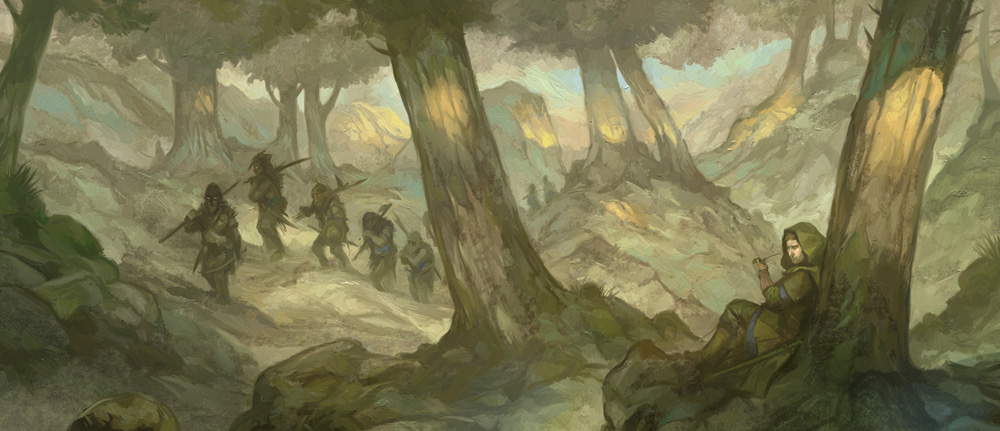

Defensive Tactics
At 7th level, you gain one of the following features of your choice.
Escape the Horde. Opportunity attacks against you are made with disadvantage.
Multiattack Defense. When a creature hits you with an attack, you gain a +4 bonus to AC against all subsequent attacks made by that creature for the rest of the turn.
Steel Will. You have advantage on Wisdom saving throws.
Stout Frame. As a reaction when you take bludgeoning, piercing, or slashing damage you reduce the damage by an amount equal to your Constitution modifier (minimum of 1).
Multiattack
At 11th level, you gain one of the following features of your choice.
Volley. You can use your action to make a ranged attack against any number of creatures within 10 feet of a point you can see within your weapon’s range. You must have ammunition for each target, as normal, and you make a separate attack roll for each target.
Whirlwind Attack. You can use your action to make a melee attack against any number of creatures within 5 feet of you, with a separate attack roll for each target.
Rapid Strike. If you take the Attack action on your turn and have advantage on an attack roll against against one of the targets, you can forgo the advantage for that roll to make one additional weapon attack against that target, as part of the same action. You can do so no more than once per turn.
Superior Hunter's Defense
At 15th level, you gain one of the following features of your choice.
Evasion. When you are subjected to an effect, such as a red dragon’s fiery breath or a lightning bolt spell, that allows you to make a Dexterity saving throw to take only half damage, you instead take no damage if you succeed on the saving throw, and only half damage if you fail.
Stand Against the Tide. When a hostile creature misses you with a melee attack, you can use your reaction to force that creature to repeat the same attack against another creature (other than itself) of your choice.
Uncanny Dodge. When an attacker that you can see hits you with an attack, you can use your reaction to halve the attack’s damage against you.
Marshwarden
Marshwardens take their cues from nature’s most challenging terrains and capable— amphibious—explorers. In doing so, these rangers become world-treading athletes with powerful magic toxins at their disposal. Marshwardens often seek to protect the world’s most endangered subjects and dive headfirst into new challenges, knowing full well that no matter what obstacle stands in their way, they almost certainly have the means to overcome it.
Marshwarden Magic
Starting at 3rd level, you learn an additional spell when you reach certain levels in this class, as shown in the Marshwarden Spells table. The spell counts as a ranger spell for you, but it doesn’t count against the number of ranger spells you know.
Marshwarden Spells
| Ranger Level | Spells |
|---|---|
| 3rd | grease |
| 5th | find stead (takes the form of a Large giant frog |
| 9th | stinking cloud |
| 13th | control water |
| 17th | cloudkill |
Amphibious Alacrity
When you choose this archetype at 3rd level, you gain a climbing speed and swimming speed equal to your walking speed, and you can hold your breath for a number of minutes equal to five times your ranger level.
Starting at 7th level, you can jump your full long jump and high jump distance, with or without a running start.
When you reach 11th level, you gain the ability to move across liquids on your turn without falling during the move.

Toxic Strikes
Beginning at 3rd level, you ignore the loading property of blowguns, and attacking with a blowgun at long range doesn’t impose disadvantage on your ranged weapon attack rolls with it. Further, when you’re hidden from a creature and miss it with a ranged attack using a blowgun, making the attack doesn’t reveal your position.
In addition, your strikes are magically toxic. Once per turn when you hit a creature with an attack, you can deal an extra 1d6 acid or poison damage to the target (your choice). This extra damage increases to 1d8 when you reach 11th level in this class. When you deal this extra damage with a blowgun or a dart, you can treat the dice for this acid or poison damage as having rolled their maximum value.
Poisonous Defense
Starting at 7th level, when a creature successfully physically grapples or restrains you, it takes acid or poison damage as if it was hit by your Toxic Strike. The creature takes this damage again at the end of each of its following turns that it continues to grapple or restrain you.
In addition, when an attacker that you can see hits you with a melee weapon attack, you can use your reaction to cause it to take your Toxic Strike damage, plus bonus acid or poison damage equal to half your ranger level (rounded up). You can use this feature a number of times equal to your proficiency bonus, and you regain all expended uses of it when you finish a long rest.
Crippling Toxins
At 11th level, whenever you deal damage from your Toxic Strike or Poisonous Defense feature, the target’s speed is reduced by 10 feet until the start of your next turn.
Unstoppable Marshal
By 15th level, you have immunity to poison damage, and you are immune to the poisoned condition. Additionally, you are always under the effects of the freedom of movement spell.
Monster Slayer
You have dedicated yourself to hunting down creatures of the night and wielders of grim magic. A Monster Slayer seeks out vampires, dragons, evil fey, fiends, and other magical threats. Trained in supernatural techniques to overcome such monsters, slayers are experts at unearthing and defeating mighty, mystical foes.
Monster Slayer Magic
Starting at 3rd level, you learn an additional spell when you reach certain levels in this class, as shown in the Monster Slayer Spells table. The spell counts as a ranger spell for you, but it doesn’t count against the number of ranger spells you know.
Monster Slayer Spells
| Ranger Level | Spell |
|---|---|
| 3rd | protection from evil and good |
| 5th | zone of truth |
| 9th | magic circle |
| 13th | banishment |
| 17th | hold monster |
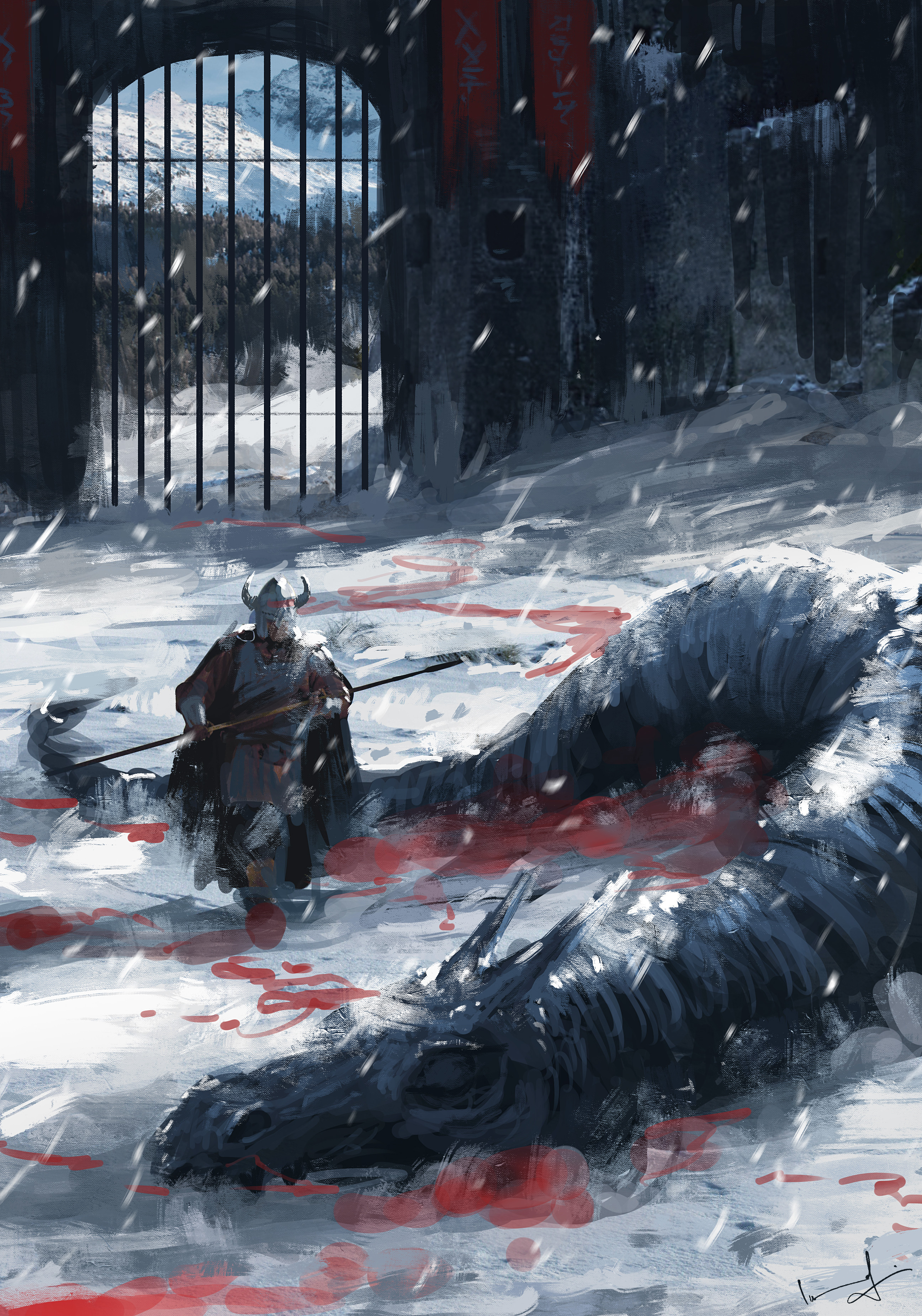
Hunter's Sense
At 3rd level, you gain the ability to peer at a creature and magically discern how best to hurt it. As an action, choose one creature you can see within 60 feet of you. You immediately learn whether the creature has any damage immunities, resistances, or vulnerabilities and what they are. If the creature is hidden from divination magic, you sense that it has no damage immunities, resistances, or vulnerabilities.
You can use this feature a number of times equal to your Wisdom modifier (minimum of once). You regain all expended uses of it when you finish a long rest.
Slayer's Prey
Starting at 3rd level, you can focus your ire on one foe, increasing the harm you inflict on it. As a bonus action, you designate one creature you can see within 60 feet of you as the target of this feature. The first time each turn that you hit that target with a weapon attack, it takes an extra 1d6 damage from the weapon.
This benefit lasts until you finish a short or long rest. It ends early if you designate a different creature.
Supernatural Defense
At 7th level, you gain extra resilience against your prey’s assaults on your mind and body. Whenever the target of your Slayer’s Prey forces you to make a saving throw and whenever you make an ability check to escape that target’s grapple, add 1d6 to your roll.
Magic-User's Nemesis
At 11th level, you gain the ability to thwart someone else’s magic. When you see a creature casting a spell or teleporting within 60 feet of you, you can use your reaction to try to magically foil it. The creature must succeed on a Wisdom saving throw against your spell save DC, or its spell or teleport fails and is wasted.
Once you use this feature, you can’t use it again until you finish a short or long rest.
Slayer's Counter
At 15th level, you gain the ability to counterattack when your prey tries to sabotage you. If the target of your Slayer’s Prey forces you to make a saving throw, you can use your reaction to make one weapon attack against the quarry. You make this attack immediately before making the saving throw. If your attack hits, your save automatically succeeds, in addition to the attack’s normal effects.
Swarmkeeper
Feeling a deep connection to the environment around them, some rangers reach out through their magical connection to the world and bond with a swarm of nature spirits. The swarm becomes a potent force in battle, as well as helpful company for the ranger. Some Swarmkeepers are outcasts or hermits, keeping to themselves and their attendant swarms rather than dealing with the discomfort of others. Other Swarmkeepers enjoy building vibrant communities that work for the mutual benefit of all those they consider part of their swarm.
Gathered Swarm
Starting at 3rd level a swarm of intangible nature spirits has bonded itself to you and can assist you in battle. Until you die, the swarm remains in your space, crawling on you or flying and skittering around you within your space. You determine its appearance, or you generate its appearance by rolling on the Swarm Appearance table.
It's Your Swarm
A Swarmkeeper’s swarm and spells are reflections of the character’s bond with nature spirits. Take the opportunity to describe the swarm and the ranger’s magic in play. For example, when your ranger casts gaseous form, they might appear to melt into the swarm, instead of a cloud of mist, or the arcane eye spell could create an extension of your swarm that spies for you. Such descriptions don’t change the effects of spells, but they are an exciting opportunity to explore your character’s narrative through their class abilities.
Also, remember that the swarm’s appearance is yours to customize, and don’t feel confined to a single appearance. Perhaps the spirits’ look changes with the ranger’s mood or with the seasons. You decide!
Swarm Appearance
| d4 | Appearance |
|---|---|
| 1 | Swarming insects |
| 2 | Miniature twig blights |
| 3 | Fluttering birds |
| 4 | Playful pixies |
Once on each of your turns, you can cause the swarm to assist you in one of the following ways, immediately after you hit a creature with an attack:
- The attack’s target takes 1d6 piercing damage from the swarm.
- The attack’s target must succeed on a Strength saving throw against your spell save DC or be moved by the swarm up to 15 feet horizontally in a direction of your choice.
- You are moved by the swarm 5 feet horizontally in a direction of your choice.
Swarmkeeper Magic
Also at 3rd level you learn the mage hand cantrip if you don’t already know it. When you cast it, the hand takes the form of your swarming nature spirits.
You also learn an additional spell of 1st level or higher when you reach certain levels in this class, as shown in the Swarmkeeper Spells table. Each spell counts as a ranger spell for you, but it doesn’t count against the number of ranger spells you know.
Swarmkeeper Spells
| Ranger Level | Spell |
|---|---|
| 3rd | faerie fire |
| 5th | web |
| 9th | gaseous form |
| 13th | arcane eye |
| 17th | insect plague |
Writhing Tide
At 7th level you can condense part of your swarm into a focused mass that lifts you up. As a bonus action, you gain a flying speed of 10 feet and can hover. This effect lasts for 1 minute or until you are incapacitated.
You can use this feature a number of times equal to your proficiency bonus, and you regain all expended uses when you finish a long rest.
Mighty Swarm
When you reach 11th level your Gathered Swarm grows mightier in the following ways:
- The damage of Gathered Swarm increases to 1d8.
- If a creature fails its saving throw against being moved by Gathered Swarm, you can also cause the swarm to knock the creature prone.
- When you are moved by Gathered Swarm, it gives you half cover until the start of your next turn.
Swarming Dispersal
Beginning at 15th level you can discorporate into your swarm, avoiding danger. When you take damage, you can use your reaction to give yourself resistance to that damage. You vanish into your swarm and then teleport to an unoccupied space that you can see within 30 feet of you, where you reappear with the swarm.
You can use this feature a number of times equal to your proficiency bonus, and you regain all expended uses when you finish a long rest.
Winter Trapper
Winter Trappers are masters of control and keep both their adversaries and quarries helpless and at bay. Originating from the cold lands in the north and the snow capped peaks of mountains, these trained hunters are experts at staying upright when others would surely fall, and have learned how to use magic and acrobatics to keep both themselves and their allies out of harm's reach.
Winter Trapper Magic
Starting at 3rd level, you learn an additional spell when you reach certain levels in this class, as shown in the Winter Trapper Spells table. The spell counts as a ranger spell for you, but it doesn't count against the number of ranger spells you know.
Winter Trapper Spells
| Ranger Level | Spell |
|---|---|
| 3rd | expiditions retreat |
| 5th | mirror image |
| 7th | sleet storm |
| 9th | hallcinatory terrain |
| 17th | mislead |
Pin Down
At 3rd level, you learn how to keep your prey exactly where you want them. Once on each of your turns when you make a weapon attack, you can attempt to pin down that target. You make this choice before rolling the attack. If it hits, the target takes an extra 1d8 damage of the weapon's type and its speed is reduced by 10 feet until the start of your next turn.
When you reach 11th level in this class, the extra damage increases to 2d8, and if the attack hits, the target can't take reactions until the start of your next turn.
Sure-Footed
By 7th level, you know how best to keep your footing. While you're not incapacitated, you can't be knocked prone.
In addition, you archetype's wintry history grants you additional benefits. You ignore difficult terrain created by ice or snow, and you have advantage on Dexterity (Stealth) checks while in icy or snowy terrain.
Helpless Prey
Also at 7th level, attacking a prone creature doesn't impose disadvantage on your ranged attack rolls.
Magic Snare
At 11th level, you've learned how to quickly set undetectable magical traps. You can imperceptibly create one of those magical snares in the ground at your feet as a bonus action on your turn. The first Large or smaller creature other than you that steps in that space within 1 minute must make a Dexterity saving throw against your spell save DC. On a failed save, a creature takes 2d8 piercing damage and has its speed reduced to 0 until the end of its current turn, as the ground opens up and clamps down on it. On a successful save, a creature takes half as much piercing damage, and its speed is unaffected.
When you create a snare, you can designate any creatures you choose, and the trap ignores them. A creature that can see invisible creatures and objects (such as one benefiting from see invisibilty or true sight) can see these traps. You can use this feature a number of times equal to your Wisdom modifier (minimum of once). You regain all expended uses when you finish a long rest.
Tripped Defenses
At 15h level, you have learned to use a creature's mistakes against them. When a Large or smaller creature within 5 feet of you that you can see misses you with an attack, you can use your reaction to knock that creature prone. When you do, you can make either one weapon attack against that creature or move up to half your speed immediately after its attack.

Rogue
Signaling for her companions to wait, a halfling creeps forward through the dungeon hall. She presses an ear to the door, then pulls out a set of tools and picks the lock in the blink of an eye. Then she disappears into the shadows as her fighter friend moves forward to kick the door open.
A human lurks in the shadows of an alley while his accomplice prepares for her part in the ambush. When their target — a notorious slaver — passes the alleyway, the accomplice cries out, the slaver comes to investigate, and the assassin’s blade cuts his throat before he can make a sound.
Suppressing a giggle, a gnome waggles her fingers and magically lifts the key ring from the guard’s belt. In a moment, the keys are in her hand, the cell door is open, and she and her companions are free to make their escape.
Rogues rely on skill, stealth, and their foes’ vulnerabilities to get the upper hand in any situation. They have a knack for finding the solution to just about any problem, demonstrating a resourcefulness and versatility that is the cornerstone of any successful adventuring party.
Skill and Precision
Rogues devote as much effort to mastering the use of a variety of skills as they do to perfecting their combat abilities, giving them a broad expertise that few other characters can match. Many rogues focus on stealth and deception, while others refine the skills that help them in a dungeon environment, such as climbing, finding and disarming traps, and opening locks.
When it comes to combat, rogues prioritize cunning over brute strength. A rogue would rather make one precise strike, placing it exactly where the attack will hurt the target most, than wear an opponent down with a barrage of attacks. Rogues have an almost supernatural knack for avoiding danger, and a few learn magical tricks to supplement their other abilities.
A Shady Living
Every town and city has its share of rogues. Most of them live up to the worst stereotypes of the class, making a living as burglars, assassins, cutpurses, and con artists. Often, these scoundrels are organized into thieves’ guilds or crime families. Plenty of rogues operate independently, but even they sometimes recruit apprentices to help them in their scams and heists. A few rogues make an honest living as locksmiths, investigators, or exterminators, which can be a dangerous job in a world where dire rats—and wererats—haunt the sewers.
As adventurers, rogues fall on both sides of the law. Some are hardened criminals who decide to seek their fortune in treasure hoards, while others take up a life of adventure to escape from the law. Some have learned and perfected their skills with the explicit purpose of infiltrating ancient ruins and hidden crypts in search of treasure.
Creating a Rogue
As you create your rogue character, consider the character’s relationship to the law. Do you have a criminal past—or present? Are you on the run from the law or from an angry thieves’ guild master? Or did you leave your guild in search of bigger risks and bigger rewards? Is it greed that drives you in your adventures, or some other desire or ideal?
What was the trigger that led you away from your previous life? Did a great con or heist gone terribly wrong cause you to reevaluate your career? Maybe you were lucky and a successful robbery gave you the coin you needed to escape the squalor of your life. Did wanderlust finally call you away from your home? Perhaps you suddenly found yourself cut off from your family or your mentor, and you had to find a new means of support. Or maybe you made a new friend—another member of your adventuring party—who showed you new possibilities for earning a living and employing your particular talents.
Quick Build
You can make a rogue quickly by following these suggestions. First, Dexterity should be your highest ability score. Make Intelligence your next-highest if you want to excel at Investigation or plan to take up the Arcane Trickster archetype. Choose Charisma instead if you plan to emphasize deception and social interaction. Second, choose the charlatan background.
The Rogue
| Level | Proficiency Bonus | Sneak Attack | Features |
|---|---|---|---|
| 1st | +2 | 1d6 | Expertise, Sneak Attack, Thieves' Cant |
| 2nd | +2 | 1d6 | Cunning Action |
| 3rd | +2 | 2d6 | Roguish Archetype, Steady Aim |
| 4th | +2 | 2d6 | Ability Score Improvement |
| 5th | +3 | 3d6 | Uncanny Dodge |
| 6th | +3 | 3d6 | Expertise |
| 7th | +3 | 4d6 | Evasion |
| 8th | +3 | 4d6 | Ability Score Improvement |
| 9th | +4 | 5d6 | Roguish Archetype feature |
| 10th | +4 | 5d6 | Ability Score Improvement |
| 11th | +4 | 6d6 | Reliable Talent |
| 12th | +4 | 6d6 | Ability Score Improvement |
| 13th | +5 | 7d6 | Roguish Archetype feature |
| 14th | +5 | 7d6 | Blindsense |
| 15th | +5 | 8d6 | Slippery Mind |
| 16th | +5 | 8d6 | Ability Score Improvement |
| 17th | +6 | 9d6 | Roguish Archetype feature |
| 18th | +6 | 9d6 | Elusive |
| 19th | +6 | 10d6 | Ability Score Improvement |
| 20th | +6 | 10d6 | Stroke of Luck |
Class Features
As a rogue, you gain the following class features.
Ability Score Increase
At first level you can choose to increase your Dexterity or Intelligence score by 1.
Hit Points
Hit Dice: 1d8 per rogue level
Hit Points at 1st Level: 8 + your Constitution modifier + racial bonus
Hit Points at Higher Levels: 1d8 (or 4) + your Constitution modifier per rogue level after 1st
Proficiencies
Armor: Light Armor
Weapons: Simple weapons, hand crossbows, longswords, rapiers, shortswords, whips
Tools: Thieve's tools
Saving Throws: Dexterity, Intelligence
Skills: Choose four from Acrobatics, Athletics, Deception, Insight, Intimidation, Investigation, Perception, Performance, Persuasion, Sleight of Hand, and Stealth
Equipment
You start with the following equipment, in addition to the equipment granted by your background:
- (a) a rapier or (b) a shortsword
- (a) a shortbow and quiver of 20 arrows or (b) a shortsword
- (a) a burglar's pack, (b) a dungeoneer's pack, or (c) an explorer's pack
- Gambeson, two daggers, and thieves' tools
Expertise
At 1st level, choose two of your skill proficiencies, or one of your skill proficiencies and your proficiency with thieves’ tools. Your proficiency bonus is doubled for any ability check you make that uses either of the chosen proficiencies.
At 6th level, you can choose two more of your proficiencies (in skills or with thieves’ tools) to gain this benefit.
Sneak Attack
Beginning at 1st level, you know how to strike subtly and exploit a foe’s distraction. Once per turn, you can deal an extra 1d6 damage to one creature you hit with an attack if you have advantage on the attack roll. The attack must use a finesse or a ranged weapon.
You don’t need advantage on the attack roll if another enemy of the target is within 5 feet of it, that enemy isn’t incapacitated, and you don’t have disadvantage on the attack roll.
The amount of the extra damage increases as you gain levels in this class, as shown in the Sneak Attack column of the Rogue table.
Thieves' Cant
During your rogue training you learned thieves’ cant, a secret mix of dialect, jargon, and code that allows you to hide messages in seemingly normal conversation. Only another creature that knows thieves’ cant understands such messages. It takes four times longer to convey such a message than it does to speak the same idea plainly.
In addition, you understand a set of secret signs and symbols used to convey short, simple messages, such as whether an area is dangerous or the territory of a thieves’ guild, whether loot is nearby, or whether the people in an area are easy marks or will provide a safe house for thieves on the run.
Cunning Action
Starting at 2nd level, your quick thinking and agility allow you to move and act quickly. You can take a bonus action on each of your turns in combat. This action can be used only to take the Dash, Disengage, or Hide action.
Roguish Archetype
At 3rd level, you choose an archetype that you emulate in the exercise of your rogue abilities: Thief, Assassin, Arcane Trickster, Inquisitive, Mastermind, Scout, or Swashbuckler, all detailed at the end of the class description. Your archetype choice grants you features at 3rd level and then again at 9th, 13th, and 17th level.
Steady Aim
Also at 3rd level, as a bonus action, you give yourself advantage on your next attack roll on the current turn. You can use this bonus action only if you haven’t moved during this turn, and after you use the bonus action, your speed is 0 until the end of the current turn.
Ability Score Improvement
When you reach 4th level, and again at 8th, 10th, 12th, 16th, and 19th level, you can increase one ability score of your choice by 2, or you can increase two ability scores of your choice by 1. As normal, you can’t increase an ability score above 20 using this feature.
Uncanny Dodge
Starting at 5th level, when an attacker that you can see hits you with an attack, you can use your reaction to halve the attack’s damage against you.
Evasion
Beginning at 7th level, you can nimbly dodge out of the way of certain area effects, such as a red dragon’s fiery breath or an ice storm spell. When you are subjected to an effect that allows you to make a Dexterity saving throw to take only half damage, you instead take no damage if you succeed on the saving throw, and only half damage if you fail.
Reliable Talent
By 11th level, you have refined your chosen skills until they approach perfection. Whenever you make an ability check that lets you add your proficiency bonus, you can treat a d20 roll of 9 or lower as a 10.
Blindsense
Starting at 14th level, if you are able to hear, you are aware of the location of any hidden or invisible creature within 10 feet of you.
Slippery Mind
By 15th level, you have acquired greater mental strength. You gain proficiency in Wisdom saving throws.
Elusive
Beginning at 18th level, you are so evasive that attackers rarely gain the upper hand against you. No attack roll has advantage against you while you aren’t incapacitated.
Stroke of Luck
At 20th level, you have an uncanny knack for succeeding when you need to. If your attack misses a target within range, you can turn the miss into a hit. Alternatively, if you fail an ability check, you can treat the d20 roll as a 20.
Once you use this feature, you can’t use it again until you finish a short or long rest.
Roguish Archetypes
Rogues have many features in common, including their emphasis on perfecting their skills, their precise and deadly approach to combat, and their increasingly quick reflexes. But different rogues steer those talents in varying directions, embodied by the rogue archetypes. Your choice of archetype is a reflection of your focus — not necessarily an indication of your chosen profession, but a description of your preferred techniques.

Accuser
Grim and determined inquisitors, an Accuser roots out the enemies of his faith, using trickery and guile when righteousness and purity is insufficient. Though Accusers have a fanatical devotion to their god, they often consider themselves above the standard conventions of the church.
Accusers are the assassins of the faith militant, opposing enemies without and corruption within the church. They tend to move from place to place, hunting heretics or investigating mysteries both sacred and profane. As a result, accusers often join up with adventurers to mask their true aims.
Not all gods have these followers, and it is not uncommon for an accuser to belong to a secret cult, or even be declared heretical by the main body of a deity's worshipers. A heretical accuser, or one of an evil god, might deal necrotic damage instead of radiant with its features below.
Judgement
At 3rd level, you gain the power to proclaim your deity's disfavor. As a bonus action, you impose one of the below sentences on a creature that you can see.
A sentence lasts for one hour, or until you impose Judgement on a different creature.
Excommunication
When the target attacks a creature other than you that is within 30 feet of you, you can use a reaction to impose disadvantage on the attack roll.
Execution
When you deal damage to the target with a cantrip, you can add your sneak attack dice to the damage roll if a weapon attack made under the same circumstances would fulfill the usual requirements for making a sneak attack.
Exorcism
Your sneak attack deals radiant damage to the creature instead of its usual damage type, plus and additional 1d6 damage if it is a fiend or undead.
Pact Magic
Also at 3rd level, you augment your inquisitorial prowess with magic granted by your deity, a pact made to further your divine mandate.
Cantrips
You know two cantrips of your choice from the cleric spell list. You lean an additional cleric cantrip of your choice at 9th and 15th level.
Spell Slots
The Accuser table shows how many spell slots you have. The table also shows what the level of those slots is; all your spell slots are the same level. To cast one of these spells, you must expend a spell slot. You regain all expended spell slots when you finish a short or long rest.
Spells Known of 1st Level or Higher
You know two 1st-level cleric spells of your choice, one of which you must choose from the Abjuration or Enchantment spells on the cleric spell list.
The Spells Known column of the Accuser table shows when you learn more cleric spells of 1st level or higher. Each of these spells must be an Abjuration or Enchantment spell, and must be no higher than what's shown in the table's Slot Level column for your level. The spells you learn at 8th, 14th, and 20th level can come from any school of magic.
Whenever you gain a level in this class, you can replace one of the cleric spells you know with another spell of your choice from the cleric spell list, which must be of a level for which you have spell slots, and must be an Abjuration or Enchantment spell, unless you're replacing a spell you gained at 3rd, 8th, 14th, or 20th level.
Spellcasting Ability
Wisdom is your spellcasting ability for your cleric spells. The power of your spells comes from your devotion to your deity. You use your Wisdom whenever a cleric spell refers to your spellcasting ability. In addition, you use your Wisdom modifier when setting the saving throw DC for a cleric spell you cast and when making an attack roll with one.
Spell Save DC
Spell attack modifier
Spellcasting Focus
You can use a holy symbol (see the Adventuring Gear section) as a spellcasting focus for your accuser spells.
Accuser Spellcasting
| Rogue Level | Cantrips Known | Spells Known | Spell Slots | Slot Level |
|---|---|---|---|---|
| 3rd | 2 | 2 | 1 | 1st |
| 4th | 2 | 3 | 2 | 1st |
| 5th | 2 | 3 | 2 | 1st |
| 6th | 2 | 3 | 2 | 1st |
| 7th | 2 | 4 | 2 | 2nd |
| 8th | 2 | 5 | 2 | 2nd |
| 9th | 3 | 5 | 2 | 2nd |
| 10th | 3 | 5 | 2 | 2nd |
| 11th | 3 | 6 | 2 | 2nd |
| 12th | 3 | 6 | 2 | 2nd |
| 13th | 3 | 7 | 2 | 3rd |
| 14th | 3 | 8 | 2 | 3rd |
| 15th | 4 | 8 | 2 | 3rd |
| 16th | 4 | 9 | 2 | 3rd |
| 17th | 4 | 9 | 2 | 3rd |
| 18th | 4 | 9 | 2 | 3rd |
| 19th | 4 | 10 | 2 | 4th |
| 20th | 4 | 11 | 2 | 4th |
Faithful Hunch
At 9th level, you can contemplate an ongoing investigation and potentially know whether your suspicions are valid. After collecting some form of relevant evidence, make a statement of fact to your DM and receive one of the following results:
- Correct. If the hunch is the exact truth, such as if a particular individual is responsible for a crime, or if a particular organization is behind a series of events.
- Incorrect. If the hunch is entirely off-base, such as if a suspect had nothing to do with a crime, or a suspected organization had no interest or hand in a series of events.
- Right track. If the hunch is partially correct, such as if a suspect participated in a in a conspiracy or had foreknowledge of the crime in question, or if a suspected organization directly profited from and knew about but did not entirely orchestrate a series of events.
After using this ability on a mystery, you cannot do so again until you have collected new, relevant evidence. Once you have used this ability, you cannot do so again until you have finished a long rest.
Our Chief Weapon
At 13th level, a surprised creature has disadvantage on saving throws against your spells.
In addition, when a creature succeeds on a saving throw against an enchantment or abjuration spell you cast, it must make a Charisma saving throw against your spell save DC or be frightened of you for one minute. A frightened creature can repeat the saving throw at the end of each of its turns, ending the effect on itself on a success.
Final Judgment
At 17th level, when you damage a creature on which you have invoked your Judgment, you can use a bonus action to call down divine wrath. This counts as a use of sneak attack.
The target must succeed on a Constitution saving throw against your spell save DC or take radiant damage equal to its current hit points. If the target is not native to the plane you are on (and you are), it has disadvantage on this saving throw. On a success, the target instead takes radiant damage equal to your sneak attack damage.
You can use this ability once, and regain all uses when you finish a long rest.
Arcane Trickster
Some rogues enhance their fine-honed skills of stealth and agility with magic, learning tricks of enchantment and illusion. These rogues include pickpockets and burglars, but also pranksters, mischief-makers, and a significant number of adventurers.
Spellcasting
When you reach 3rd level, you augment your martial prowess with the ability to cast spells.
Cantrips. You learn three cantrips: mage hand and two other cantrips of your choice from the wizard spell list. You learn another wizard cantrip of your choice at 10th level.
Spell Slots. The Arcane Trickster Spellcasting table shows how many spell slots you have to cast your wizard spells of 1st level and higher. To cast one of these spells, you must expend a slot of the spell’s level or higher. You regain all expended spell slots when you finish a long rest.
For example, if you know the 1st-level spell charm person and have a 1st-level and a 2nd-level spell slot available, you can cast charm person using either slot.
Spells Known of 1st-Level and Higher. You know three 1st-level wizard spells of your choice, two of which you must choose from the enchantment and illusion spells on the wizard spell list.
The Spells Known column of the Arcane Trickster Spellcasting table shows when you learn more wizard spells of 1st level or higher. Each of these spells must be an enchantment or illusion spell of your choice, and must be of a level for which you have spell slots. For instance, when you reach 7th level in this class, you can learn one new spell of 1st or 2nd level.
The spells you learn at 8th, 14th, and 20th level can come from any school of magic.
Whenever you gain a level in this class, you can replace one of the wizard spells you know with another spell of your choice from the wizard spell list. The new spell must be of a level for which you have spell slots, and it must be an enchantment or illusion spell, unless you’re replacing the spell you gained at 3rd, 8th, 14th, or 20th level from any school of magic.
Spellcasting Ability. Intelligence is your spellcasting ability for your wizard spells, since you learn your spells through dedicated study and memorization. You use your Intelligence whenever a spell refers to your spellcasting ability. In addition, you use your Intelligence modifier when setting the saving throw DC for a wizard spell you cast and when making an attack roll with one.
Spell Save DC
Spell attack modifier
Arcane Trickster Spellcasting
| Rogue Level | Cantrips Known | Spells Known | 1st | 2nd | 3rd | 4th |
|---|---|---|---|---|---|---|
| 3rd | 3 | 3 | 2 | — | — | — |
| 4th | 3 | 4 | 3 | — | — | — |
| 5th | 3 | 4 | 3 | — | — | — |
| 6th | 3 | 4 | 3 | — | — | — |
| 7th | 3 | 5 | 4 | 2 | — | — |
| 8th | 3 | 6 | 4 | 2 | — | — |
| 9th | 3 | 6 | 4 | 2 | — | — |
| 10th | 4 | 7 | 4 | 3 | — | — |
| 11th | 4 | 8 | 4 | 3 | — | — |
| 12th | 4 | 8 | 4 | 3 | — | — |
| 13th | 4 | 9 | 4 | 3 | 2 | — |
| 14th | 4 | 10 | 4 | 3 | 2 | — |
| 15th | 4 | 10 | 4 | 3 | 2 | — |
| 16th | 4 | 11 | 4 | 3 | 3 | — |
| 17th | 4 | 11 | 4 | 3 | 3 | — |
| 18th | 4 | 11 | 4 | 3 | 3 | — |
| 19th | 4 | 12 | 4 | 3 | 3 | 1 |
| 20th | 4 | 13 | 4 | 3 | 3 | 1 |
Mage Hand Legerdemain
Starting at 3rd level, when you cast mage hand, you can make the spectral hand invisible, and you can perform the following additional tasks with it:
- You can stow one object the hand is holding in a container worn or carried by another creature.
- You can retrieve an object in a container worn or carried by another creature.
- You can use thieves’ tools to pick locks and disarm traps at range.
You can perform one of these tasks without being noticed by a creature if you succeed on a Dexterity (Sleight of Hand) check contested by the creature’s Wisdom (Perception) check.
In addition, you can use the bonus action granted by your Cunning Action to control the hand.
Magical Ambush
Starting at 9th level, if you are hidden from a creature when you cast a spell on it, the creature has disadvantage on any saving throw it makes against the spell this turn.
Versatile Trickster
At 13th level, you gain the ability to distract targets with your mage hand. As a bonus action on your turn, you can designate a creature within 5 feet of the spectral hand created by the spell. Doing so gives you advantage on attack rolls against that creature until the end of the turn.
Spell Thief
At 17th level, you gain the ability to magically steal the knowledge of how to cast a spell from another spellcaster.
Immediately after a creature casts a spell that targets you or includes you in its area of effect, you can use your reaction to force the creature to make a saving throw with its spellcasting ability modifier. The DC equals your spell save DC. On a failed save, you negate the spell’s effect against you, and you steal the knowledge of the spell if it is at least 1st level and of a level you can cast (it doesn’t need to be a wizard spell). For the next 8 hours, you know the spell and can cast it using your spell slots. The creature can’t cast that spell until the 8 hours have passed.
Once you use this feature, you can’t use it again until you finish a long rest.
Assassin
You focus your training on the grim art of death. Those who adhere to this archetype are diverse: hired killers, spies, bounty hunters, and even specially anointed priests trained to exterminate the enemies of their deity. Stealth, poison, and disguise help you eliminate your foes with deadly efficiency.
Assassin's Strike
You are at your deadliest when your enemies don't see you coming. Starting at 3rd level, you gain the following benefits:
- You have advantage on any attack rolls you make against creatures that have not yet acted in combat.
- When you hit a creature that is surprised with an attack, your attack becomes an automatic critical hit.
- When you score a critical hit and roll a 1 on any of your damage dice for that attack, you can re-roll those dice. You must use the new roll, even if you roll another 1.
Infiltrator
You have the skills to infiltrate and sow death wherever your target dwells. When you adopt this Archetype at 3rd level, you gain proficiency with the disguise kit and the poisoner's kit.
Moreover, when you make a Charisma (Deception) check while wearing a disguise you created with your disguise kit, you can treat a roll of 7 or lower on the d20 as an 8.
Deadly Initiative
Starting at 9th level, when you roll initiative and an enemy creature you can see is surprised, you may take your first turn in combat at the highest initiative count.
Stolen Identity
You have mastered the dark art of stealing another creature's identity. Starting at 9th level, over the course of an hour, you can craft a perfect disguise of a humanoid creature you have slain, so long as you have the corpse of a creature the same size as you and a disguise kit. To see through the disguise, a creature must succeed on an Intelligence (Investigation) or a Wisdom (Insight) check, contested by your Charisma (Deception) check.
Also, over an 8 hour period, which can be during a long rest, you can use this disguise to completely assume the life of the slain humanoid. After which, other creatures believe you to be that person until given an obvious reason not to.
Impostor
The skill which you adopt another creature's identity is nearly supernatural. Beginning at 13th level, when you make a Charisma (Deception) check to thwart a creature trying to see through your disguise you have advantage on your roll.
Death Strike
Starting at 17th level, you become a master of instant death. When you attack and hit a creature that is surprised, it must make a Constitution saving throw (DC 8 + your Dexterity modifier + your proficiency bonus). On a failed save, double the damage of your attack against the creature.
Blade Spinner
Beauty and elegance, like steel wrapped in silk, the blade spinner delivers death to their foes as they move with equal parts poise and passion. The art of the blade spinner is that of a spinning whirlwind of brandished blades. Cuttying this way and that — sometimes the same target twice and sometimes dispatching a duo of foes simultaneously — the blade spinner dances through the battlefield. Rarely one to shy away from a fight, the blade spinner wades into a battle like a fisher might ford a stream to find the perfect fishing hole.
Calculated Risk
Beginning at 3rd level, you have learned to efficiently engage your enemies without committing everything to a single attack. When you hit an enemy and are able to add your sneak attack damage, you can choose to not use all of the sneak attack dice on your damage roll. If you choose to do so, if you hit an enemy later in the same turn you can use the unspent sneak attack dice.
Fighting Style
At 3rd level, you adopt a particular style of fighting as your specialty. Choose one of the following options. You can't take a Fighting Style option more than once, even if you later get to choose again.
Blind Fighting
You have blindsight with a range of 10 feet. Within that range, you can effectively see anything that isn't behind total cover, even if you're blinded or in darkness. Moreover, you can see an invisible creature within that range, unless the creature successfully hides from you.
Dual Wielding
When you take the Attack action while two-weapon fighting, you can make a single additional attack with your off-hand weapon as part of your action instead of your bonus action, adding your ability modifier to the damage of this attack.
Featherweight Fighting
While you are wielding only light weapons and nothing else, your speed increases by 10 feet and you gain a +1 bonus to damage rolls with your light weapons, so long as you are not wearing medium or heavy armor, or wielding a shield.
Thrown Weapon Fighting
You can draw a weapon that has the thrown property as part of the attack you make with the weapon. In addition, when you hit with a ranged attack using a thrown weapon, you gain a +2 bonus to the damage roll.
Blade Dancer
Also at 3rd level, your practice and experience with your fluid movement while fighting has given you the grace of a skilled dancer. When you make a Charisma (Performance) check to dance, you have advantage on the roll.
Whirling Death
At 9th level, the first time on your turn that you use Calculated Risk to reduce your sneak attack damage by at least 2d6, you add 1d6 damage to each damage roll that uses your sneak attack that turn.
Extra Attack
Beginning at 13th level, you can attack twice, instead of once, whenever you take the Attack action on your turn.
Improved Whirling Death
Beginning at 17th level, if you reduce your initial sneak attack dice by at least 4d6 when you use Calculated Risk, you add 2d6 damage to each damage roll that uses your sneak attack on your turn.
Cardsharp
While all rogues enjoy risky behavior, the life of a Cardsharp revolves around risk. They enjoy nothing more then high stakes situations where they can put everything on the line. Often found in taverns and casinos, these rogues cannot help but gamble away any wealth they acquire in their adventurers.
Pick a Card
You can weaponize your trusty deck of cards. Beginning at 3rd level, decks of cards count as improvised weapons for you. When used as a weapon, they have the thrown (30/60) and finesse properties, and on a hit, your playing cards deal slashing damage equal to 1d4 + your Dexterity modifier.
Once per turn, when you make a playing card attack the number rolled on the d4 grants your attack a bonus effect:
| Roll | Bonus Effect |
|---|---|
| 1 | The creature's movement speed is reduced by an amount of feet equal to five times your proficiency bonus. |
| 2 | You can apply your Sneak Attack bonus to this attack even if it doesn't meet the normal requirements for Sneak Attack. |
| 3 | You gain temporary hit points equal the damage dealt by this attack. |
| 4 | You can choose to switch places in the initiative order with the target, starting at the top of the next initiative round. |
Gambler's Know-How
In life's games, sometimes you win, and sometimes you need to improvise. When you adopt this Archetype at 3rd level, you gain proficiency with improvised weapons, playing cards, and one other gaming set of your choice. Whenever you make an ability check that uses a gaming set that you are proficient with, you add double your proficiency bonus to your roll.
Also, if you spend at least 1 minute observing or playing a game you aren't familiar with, you can add your proficiency bonus to any ability checks related to that game. Only one game or gaming set can benefit from this feature at a time.
Lucky Streak
Your attacks have been blessed with an entertaining, yet strange, luck. Starting at 9th level, your attack rolls score a critical hit on a roll of 7 or 20 on the d20, but rolls of 13 or 1 on the d20 are both considered critical failures. Good luck!
Quickdraw
Beginning at 13th level, you have advantage on your initiative rolls, and the first Pick a Card attack you make after rolling initiative gains a bonus effect of your choice.
Jackpot
Your good fortune is another's bad luck. Starting at 17th level, whenever you roll a 6 on a d6 for one of your Sneak Attack dice, you roll an additional d6 and add it to your damage roll.
Alternate Rule: Playing Cards
When you play a Gambler rogue, you can choose to use a standard deck of 52 poker cards (and jokers) to determine the bonus effect for your Pick a Card feature. When you hit with a playing card attack, draw a random card from your deck. The card's suit determines the bonus effect for Pick a Card:
Clubs (1), Diamonds (2), Hearts (3), Spades (4). If you draw a joker, you pick which effect happens.


Daredevil
Most people live their lives in safety, doing their best to avoid risky situations. Even most rogues use their skills in stealth and sleight of hand to avoid danger. However, there are some who seek this danger out, living for the adrenaline rush that comes with near death experiences. Daredevils are rogues who would rather leap across rooftops then walk the streets, and in turn, they develop a knack for avoiding certain death
Aerialist
When you leap through the air you appear to be flying to all but the most potent observers. Beginning at 3rd level, you have a climbing speed equal to your movement speed.
In addition, you use your reflexes and acrobatic skill to propel yourself through the air. When you make a running or standing long or high jump, you use your Dexterity score, in place of Strength, to calculate the distance of your jump.
Death From Above
When you adopt this Archetype at 3rd level, you learn to turn your airborne body into a projectile. If you move at least 10 feet through the air, then land within 5 feet of a creature one size larger than you or smaller, you can force it to make a Strength saving throw as an action. (Save DC is equal to 8 + your proficiency bonus + your Dexterity modifier). On a failure, it falls prone and takes 2d6 bludgeoning damage.
This special attack can apply your Sneak Attack damage, even if it doesn't meet the requirements for Sneak Attack.
Slow Fall
Beginning at 9th level, your experience with falling from great heights has made you an expert at landing without hurting yourself. Whenever you fall and are not incapacitated, you can reduce any falling damage you would take by an amount equal to five times your rogue level.
If you manage to land on something soft that breaks your fall, like a wagon full of hay, you take no damage from the fall.
Defy Death
Your affinity for risky behavior has been cause for many near death experiences, granting you a certain sad familiarity with death. Starting at 13th level, you add your proficiency bonus to your death saving throws. When you make a death saving throw and the result is a 20 or greater, it has the same effect as if you had rolled a 20 on the d20.
Airborne Strikes
You can maneuver yourself while airborne to strike at your enemies in unexpected ways. Starting at 17th level, you have advantage on attack rolls you make while airborne and at least 5 feet off the ground. Moreover, you have advantage on Dexterity ability checks you make while you are airborne.
Inquisitive
As an archetypal Inquisitive, you excel at rooting out secrets and unraveling mysteries. You rely on your sharp eye for detail, but also on your finely honed ability to read the words and deeds of other creatures to determine their true intent. You excel at defeating creatures that hide among and prey upon ordinary folk, and your mastery of lore and your keen deductions make you well equipped to expose and end hidden evils.
Ear for Deceit
When you choose this archetype at 3rd level, you develop a talent for picking out lies. Whenever you make a Wisdom (Insight) check to determine whether a creature is lying, treat a roll of 7 or lower on the d20 as an 8.
Eye for Detail
Starting at 3rd level, you can use a bonus action to make a Wisdom (Perception) check to spot a hidden creature or object or to make an Intelligence (Investigation) check to uncover or decipher clues.
Insightful Fighting
At 3rd level, you gain the ability to decipher an opponent’s tactics and develop a counter to them. As a bonus action, you can make a Wisdom (Insight) check against a creature you can see that isn’t incapacitated, contested by the target’s Charisma (Deception) check. If you succeed, you can use your Sneak Attack against that target even if you don’t have advantage on the attack roll, but not if you have disadvantage on it.
This benefit lasts for 1 minute or until you successfully use this feature against a different target.
Steady Eye
Starting at 9th level, you have advantage on any Wisdom (Perception) or Intelligence (Investigation) check if you move no more than half your speed on the same turn.
Unerring Eye
Beginning at 13th level, your senses are almost impossible to foil. As an action, you sense the presence of illusions, shapechangers not in their original form, and other magic designed to deceive the senses within 30 feet of you, provided you aren’t blinded or deafened. You sense that an effect is attempting to trick you, but you gain no insight into what is hidden or into its true nature.
You can use this feature a number of times equal to your Wisdom modifier (minimum of once), and you regain all expended uses of it when you finish a long rest.
Eye for Weakness
At 17th level, you learn to exploit a creature’s weaknesses by carefully studying its tactics and movement. While your Insightful Fighting feature applies to a creature, your Sneak Attack damage against that creature increases by 3d6.
Mastermind
Your focus is on people and on the influence and secrets they have. Many spies, courtiers, and schemers follow this archetype, leading lives of intrigue. Words are your weapons as often as knives or poison, and secrets and favors are some of your favorite treasures.
Master of Intrigue
When you choose this archetype at 3rd level, you gain proficiency with the disguise kit, the forgery kit, and one gaming set of your choice. You also learn two languages of your choice.
Additionally, you can unerringly mimic the speech patterns and accent of a creature that you hear speak for at least 1 minute, enabling you to pass yourself off as a native speaker of a particular land, provided that you know the language.
Master of Tactics
Starting at 3rd level, you can use the Help action as a bonus action. Additionally, when you use the Help action to aid an ally in attacking a creature, the target of that attack can be within 30 feet of you, rather than within 5 feet of you, if the target can see or hear you.
Insightful Manipulator
Starting at 9th level, if you spend at least 1 minute observing or interacting with another creature outside combat, you can learn certain information about its capabilities compared to your own. The DM tells you if the creature is your equal, superior, or inferior in regard to two of the following characteristics of your choice:
- Intelligence score
- Wisdom score
- Charisma score
- Class levels (if any)
At the DM’s option, you might also realize you know a piece of the creature’s history or one of its personality traits, if it has any.

Expose Weakness
Also starting at 9th level, your insight exposes more than one weakness when you take the Help action to aid attacking an enemy. If your ally attacks the target before your next turn, the first two attack rolls, rather than one, are made with advantage.
Misdirection
Beginning at 13th level, you can sometimes cause another creature to suffer an attack meant for you. When you are targeted by an attack while a creature within 5 feet of you is granting you cover against that attack, you can use your reaction to have the attack target that creature instead of you.
Soul of Deceit
Starting at 17th level, your thoughts can’t be read by telepathy or other means, unless you allow it. You can present false thoughts by succeeding on a Charisma (Deception) check contested by the mind reader’s Wisdom (Insight) check.
Additionally, no matter what you say, magic that would determine if you are telling the truth indicates you are being truthful if you so choose, and you can’t be compelled to tell the truth by magic.
Phantom
Many rogues walk a fine line between life and death, risking their own lives and taking the lives of others. While adventuring on that line, some rogues discover a mystical connection to death itself. These rogues take knowledge from the dead and become immersed in negative energy, eventually becoming like ghosts. Thieves’ guilds value them as highly effective information gatherers and spies.
Many shadar-kai of the Shadowfell are masters of these macabre techniques, and some are willing to teach this path. In places like Thay in the Forgotten Realms and Karrnath in Eberron, where many necromancers practice their craft, a Phantom can become a wizard’s confidant and right hand. In temples of gods of death, the Phantom might work as an agent to track down those who try to cheat death and to recover knowledge that might otherwise be lost to the grave.
How did you discover this grim power? Did you sleep in a graveyard and awaken to your new abilities? Or did you cultivate them in a temple or thieves’ guild dedicated to a deity of death?
Whispers of the Dead
When you choose this archetype at 3rd level echoes of those who have died cling to you. Whenever you finish a short or long rest, you can choose one skill or tool proficiency that you lack and gain it, as a ghostly presence shares its knowledge with you. You lose this proficiency when you use this feature to choose a different proficiency that you lack.
Wails from the Grave
Also at 3rd level, as you nudge someone closer to the grave, you can channel the power of death to harm someone else as well. Immediately after you deal your Sneak Attack damage to a creature on your turn, you can target a second creature that you can see within 30 feet of the first creature. Roll half the number of Sneak Attack dice for your level (round up), and the second creature takes necrotic damage equal to the roll’s total, as wails of the dead sound around them for a moment.
You can use this feature a number of times equal to your proficiency bonus, and you regain all expended uses when you finish a long rest.
Tokens of the Departed
Starting at 9th level when a life ends in your presence, you’re able to snatch a token from the departing soul, a sliver of its life essence that takes physical form: as a reaction when a creature you can see dies within 30 feet of you, you can open your free hand and cause a Tiny trinket to appear there, a soul trinket. The DM determines the trinket’s form or has you roll on the Trinkets table to generate it.
You can have a maximum number of soul trinkets equal to your proficiency bonus, and you can’t create one while at your maximum.
You can use soul trinkets in the following ways:
- While a soul trinket is on your person, you have advantage on death saving throws and Constitution saving throws, for your vitality is enhanced by the life essence within the object.
- When you deal Sneak Attack damage on your turn, you can destroy one of your soul trinkets that’s on your person and then immediately use Wails from the Grave, without expending a use of that feature.
- As an action, you can destroy one of your soul trinkets, no matter where it’s located. When you do so, you can ask the spirit associated with the trinket one question. The spirit appears to you and answers in a language it knew in life. It’s under no obligation to be truthful, and it answers as concisely as possible, eager to be free. The spirit knows only what it knew in life, as determined by the DM.
Ghost Walk
At 13th level you can phase partially into the realm of the dead, becoming like a ghost. As a bonus action, you assume a spectral form. While in this form, you have a flying speed of 10 feet, you can hover, and attack rolls have disadvantage against you. You can also move through creatures and objects as if they were difficult terrain, but you take 1d10 force damage if you end your turn inside a creature or an object.
You stay in this form for 10 minutes or until you end it as a bonus action. To use this feature again, you must finish a long rest or destroy one of your soul trinkets as part of the bonus action you use to activate Ghost Walk.
Death's Friend
Beginning at 17th level your association with death has become so close that you gain the following benefits:
- When you use your Wails from the Grave, you can deal the necrotic damage to both the first and the second creature.
- At the end of a long rest, a soul trinket appears in your hand if you don’t have any soul trinkets, as the spirits of the dead are drawn to you.
Scout
You are skilled in stealth and surviving far from the streets of a city, allowing you to scout ahead of your companions during expeditions. Rogues who embrace this archetype are at home in the wilderness and among barbarians and rangers, and many Scouts serve as the eyes and ears of war bands. Ambusher, spy, bounty hunter — these are just a few of the roles that Scouts assume as they range the world.
Skirmisher
Starting at 3rd level, you are difficult to pin down during a fight. You can move up to half your speed as a reaction when an enemy ends its turn within 5 feet of you. This movement doesn’t provoke opportunity attacks.
Survivalist
When you choose this archetype at 3rd level, you gain proficiency in the Nature and Survival skills if you don’t already have it. Your proficiency bonus is doubled for any ability check you make that uses either of those proficiencies.
Superior Mobility
At 9th level, your walking speed increases by 10 feet. If you have a climbing or swimming speed, this increase applies to that speed as well.
Ambush Master
Starting at 13th level, you excel at leading ambushes and acting first in a fight.
You have advantage on initiative rolls. In addition, the first creature you hit during the first round of a combat becomes easier for you and others to strike; attack rolls against that target have advantage until the start of your next turn.
Sudden Strike
Starting at 17th level, you can strike with deadly speed. If you take the Attack action on your turn, you can make one additional attack as a bonus action. This attack can benefit from your Sneak Attack even if you have already used it this turn, but you can’t use your Sneak Attack against the same target more than once in a turn.
Swashbuckler
You focus your training on the art of the blade, relying on speed, elegance, and charm in equal parts. While some warriors are brutes clad in heavy armor, your method of fighting looks almost like a performance. Duelists and pirates typically belong to this archetype.
A Swashbuckler excels in single combat, and can fight with two weapons while safely darting away from an opponent.
Fancy Footwork
When you choose this archetype at 3rd level, you learn how to land a strike and then slip away without reprisal. During your turn, if you make a melee attack against a creature, that creature can’t make opportunity attacks against you for the rest of your turn.
Rakish Audacity
Starting at 3rd level, your confidence propels you into battle. You can give yourself a bonus to your initiative rolls equal to your Charisma modifier.
You also gain an additional way to use your Sneak Attack; you don’t need advantage on the attack roll to use your Sneak Attack against a creature if you are within 5 feet of it, no other creatures are within 5 feet of you, and you don’t have disadvantage on the attack roll. All the other rules for Sneak Attack still apply to you.
Panache
At 9th level, your charm becomes extraordinarily beguiling. As an action, you can make a Charisma (Persuasion) check contested by a creature’s Wisdom (Insight) check. The creature must be able to hear you, and the two of you must share a language.
If you succeed on the check and the creature is hostile to you, it has disadvantage on attack rolls against targets other than you and can’t make opportunity attacks against targets other than you. This effect lasts for 1 minute, until one of your companions attacks the target or affects it with a spell, or until you and the target are more than 60 feet apart.
If you succeed on the check and the creature isn’t hostile to you, it is charmed by you for 1 minute. While charmed, it regards you as a friendly acquaintance. This effect ends immediately if you or your companions do anything harmful to it.
Elegant Maneuver
Starting at 13th level, you can use a bonus action on your turn to gain advantage on the next Dexterity (Acrobatics) or Strength (Athletics) check you make during the same turn.
Master Duelist
Beginning at 17th level, your mastery of the blade lets you turn failure into success in combat. If you miss with an attack roll, you can roll it again with advantage. Once you do so, you can’t use this feature again until you finish a short or long rest.
Thief
You hone your skills in the larcenous arts. Burglars, bandits, cutpurses, and other criminals typically follow this archetype, but so do rogues who prefer to think of themselves as professional treasure seekers, explorers, delvers, and investigators. In addition to improving your agility and stealth, you learn skills useful for delving into ancient ruins, reading unfamiliar languages, and using magic items you normally couldn’t employ.
Fast Hands
Starting at 3rd level, you can use the bonus action granted by your Cunning Action to make a Dexterity (Sleight of Hand) check, use your thieves’ tools to disarm a trap or open a lock, or take the Use an Object action.
Second-Story Work
When you choose this archetype at 3rd level, you gain the ability to climb faster than normal; climbing no longer costs you extra movement.
In addition, when you make a running jump, the distance you cover increases by a number of feet equal to your Dexterity modifier.
Supreme Sneak
Starting at 9th level, you have advantage on a Dexterity (Stealth) check if you move no more than half your speed on the same turn.
Use Magic Device
By 13th level, you have learned enough about the workings of magic that you can improvise the use of items even when they are not intended for you. You ignore all class, race, and level requirements on the use of magic items.
Thief's Reflexes
When you reach 17th level, you have become adept at laying ambushes and quickly escaping danger. You can take two turns during the first round of any combat. You take your first turn at your normal initiative and your second turn at your initiative minus 10. You can’t use this feature when you are surprised.

Sorcerer
Golden eyes flashing, a human stretches out her hand and unleashes the dragonfire that burns in her veins. As an inferno rages around her foes, leathery wings spread from her back and she takes to the air.
Long hair whipped by a conjured wind, a half-elf spreads his arms wide and throws his head back. Lifting him momentarily off the ground, a wave of magic surges up in him, through him, and out from him in a mighty blast of lightning.
Crouching behind a stalagmite, a halfling points a finger at a charging troglodyte. A blast of fire springs from her finger to strike the creature. She ducks back behind the rock formation with a grin, unaware that her wild magic has turned her skin bright blue.
Sorcerers carry a magical birthright conferred upon them by an exotic bloodline, some otherworldly influence, or exposure to unknown cosmic forces. One can’t study sorcery as one learns a language, any more than one can learn to live a legendary life. No one chooses sorcery; the power chooses the sorcerer.
Raw Magic
Magic is a part of every sorcerer, suffusing body, mind, and spirit with a latent power that waits to be tapped. Some sorcerers wield magic that springs from an ancient bloodline infused with the magic of dragons. Others carry a raw, uncontrolled magic within them, a chaotic storm that manifests in unexpected ways.
The appearance of sorcerous powers is wildly unpredictable. Some draconic bloodlines produce exactly one sorcerer in every generation, but in other lines of descent every individual is a sorcerer. Most of the time, the talents of sorcery appear as apparent flukes. Some sorcerers can’t name the origin of their power, while others trace it to strange events in their own lives. The touch of a demon, the blessing of a dryad at a baby’s birth, or a taste of the water from a mysterious spring might spark the gift of sorcery. So too might the gift of a deity of magic, exposure to the elemental forces of the Inner Planes or the maddening chaos of Limbo, or a glimpse into the inner workings of reality.
Sorcerers have no use for the spellbooks and ancient tomes of magic lore that wizards rely on, nor do they rely on a patron to grant their spells as warlocks do. By learning to harness and channel their own inborn magic, they can discover new and staggering ways to unleash that power.
Unexplained Powers
Sorcerers are rare in the world, and it’s unusual to find a sorcerer who is not involved in the adventuring life in some way. People with magical power seething in their veins soon discover that the power doesn’t like to stay quiet. A sorcerer’s magic wants to be wielded, and it has a tendency to spill out in unpredictable ways if it isn’t called on.
Sorcerers often have obscure or quixotic motivations driving them to adventure. Some seek a greater understanding of the magical force that infuses them, or the answer to the mystery of its origin. Others hope to find a way to get rid of it, or to unleash its full potential. Whatever their goals, sorcerers are every bit as useful to an adventuring party as wizards, making up for a comparative lack of breadth in their magical knowledge with enormous flexibility in using the spells they know.
Creating a Sorcerer
The most important question to consider when creating your sorcerer is the origin of your power. As a starting character, you’ll choose an origin that ties to a draconic bloodline or the influence of wild magic, but the exact source of your power is up to you to decide. Is it a family curse, passed down to you from distant ancestors? Or did some extraordinary event leave you blessed with inherent magic but perhaps scarred as well?
How do you feel about the magical power coursing through you? Do you embrace it, try to master it, or revel in its unpredictable nature? Is it a blessing or a curse? Did you seek it out, or did it find you? Did you have the option to refuse it, and do you wish you had? What do you intend to do with it? Perhaps you feel like you’ve been given this power for some lofty purpose. Or you might decide that the power gives you the right to do what you want, to take what you want from those who lack such power. Perhaps your power links you to a powerful individual in the world — the fey creature that blessed you at birth, the dragon who put a drop of its blood into your veins, the lich who created you as an experiment, or the deity who chose you to carry this power.
The Sorcerer
| Level | Proficiency Bonus | Sorcery Points | Features | Cantrips Known | Spells Known | Max Spell Level |
|---|---|---|---|---|---|---|
| 1st | +2 | 5 | Spellcasting, Sorcerous Origin | 4 | 2 | 1st |
| 2nd | +2 | 8 | — | 4 | 3 | 1st |
| 3rd | +2 | 17 | Metamagic | 4 | 4 | 2nd |
| 4th | +2 | 21 | Sorcerous Versatility, Ability Score Improvement | 5 | 5 | 2nd |
| 5th | +3 | 32 | Magical Guidance | 5 | 6 | 3rd |
| 6th | +3 | 38 | Sorcerous Origin Feature | 5 | 7 | 3rd |
| 7th | +3 | 45 | — | 5 | 8 | 4th |
| 8th | +3 | 52 | Ability Score Improvement | 5 | 9 | 4th |
| 9th | +4 | 66 | — | 5 | 10 | 5th |
| 10th | +4 | 74 | Metamagic | 6 | 11 | 5th |
| 11th | +4 | 84 | — | 6 | 12 | 6th |
| 12th | +4 | 85 | Ability Score Improvement | 6 | 12 | 6th |
| 13th | +5 | 96 | — | 6 | 13 | 7th |
| 14th | +5 | 97 | Sorcerous Origin Feature | 6 | 13 | 7th |
| 15th | +5 | 109 | — | 6 | 14 | 8th |
| 16th | +5 | 110 | Ability Score Improvement | 6 | 14 | 8th |
| 17th | +6 | 124 | Metamagic | 6 | 15 | 9th |
| 18th | +6 | 132 | Sorcerous Origin Feature | 6 | 15 | 9th |
| 19th | +6 | 142 | Ability Score Improvement | 6 | 15 | 9th |
| 20th | +6 | 153 | Arcane Transcendence | 6 | 15 | 9th |
Quick Build
You can make a sorcerer quickly by following these suggestions. First, Charisma should be your highest ability score, followed by Constitution. Second, choose the hermit background. Third, choose the light, prestidigitation, ray of frost, and shocking grasp cantrips, along with the 1st-level spells shield and magic missile.
Class Features
As a rogue, you gain the following class features.
Ability Score Increase
At first level you can choose to increase your Constitution or Charisma score by 1.
Hit Points
Hit Dice: 1d6 per sorcerer level
Hit Points at 1st Level: 6 + your Constitution modifier + racial bonus
Hit Points at Higher Levels: 1d6 (or 3) + your Constitution modifier per sorcerer level after 1st
Proficiencies
Armor: None
Weapons: Daggers, darts, slings, quarterstaffs, light crossbows
Tools: None
Saving Throws: Constitution, Charisma
Skills: Choose two from Arcana, Deception, Insight, Intimidation, Persuasion, and Religion
Equipment
You start with the following equipment, in addition to the equipment granted by your background:
- (a) a light crossbow and 20 bolts or (b) any simple weapon
- (a) a dungeoneer's pack or (b) an explorer's pack
- Two daggers
Spellcasting
An event in your past, or in the life of a parent or ancestor, left an indelible mark on you, infusing you with arcane magic. This font of magic, whatever its origin, fuels your spells.
Sorcery Points
The Sorcerer table shows how many Sorcery Points you have to cast your sorcerer spells of 1st level and higher. To cast one of these spells, you must expend sorcery points to create a spell slot of a given level, and then use that slot to cast a spell. You can’t reduce your spell point total to less than 0, and you regain all spent sorcery points when you finish a long rest.
Spells of 6th level and higher are particularly taxing to cast. You can use spell points to create one slot of each level of 6th or higher. You can’t create another slot of the same level until you finish a long rest.
The number of sorcery points you have to spend is based on your level as a spellcaster, as shown in the Sorcerer table. Your level also determines the maximum-level spell slot you can create. Even though you might have enough points to create a slot above this maximum, you can’t do so.
The Sorcery Point Cost table summarizes the cost in sorcery points of slots from 1st to 9th level. Cantrips don't require slots and therefore don't require spell points.
Spell Point Cost
| Spell Level | Point Cost |
|---|---|
| 1st | 2 |
| 2nd | 3 |
| 3rd | 5 |
| 4th | 6 |
| 5th | 8 |
| 6th | 10 |
| 7th | 11 |
| 8th | 12 |
| 9th | 14 |
Spells Known of 1st Level and Higher
You know two 1st-level spells of your choice from the sorcerer spell list.
The Spells Known column of the Sorcerer table shows when you learn more sorcerer spells of your choice. Each of these spells must be of a level for which you are allowed to cast. For instance, when you reach 3rd level in this class, you can learn one new spell of 1st or 2nd level.
Additionally, when you gain a level in this class, you can choose one of the sorcerer spells you know and replace it with another spell from the sorcerer spell list, which also must be of a level for which you have spell slots.
Spellcasting Ability
Charisma is your spellcasting ability for your sorcerer spells, since the power of your magic relies on your ability to project your will into the world. You use your Charisma whenever a spell refers to your spellcasting ability. In addition, you use your Charisma modifier when setting the saving throw DC for a sorcerer spell you cast and when making an attack roll with one.
Spell Save DC
Spell attack modifier
Spellcasting Focus
As a focus of the weave your body can take the place of the physical components needed for many spells. If the material component for a spell is not consumed or have an associated gold cost you can use your body as an arcane focus.
Sorcerous Origin
Choose a sorcerous origin, which describes the source of your innate magical power: Draconic Bloodline, Wild Magic, Divine Soul, Shadow Magic, or Storm Sorcery, each detailed at the end of the class description.
Your choice grants you features when you choose it at 1st level and again at 6th, 14th, and 18th level.
Metamagic
At 3rd level, you gain the ability to twist your spells to suit your needs. You gain two of the following Metamagic options of your choice. You gain another two at 10th and 17th level.
You can use only one Metamagic option on a spell when you cast it, unless otherwise noted.
Careful Spell
When you cast a spell that forces other creatures to make a saving throw, you can protect some of those creatures from the spell’s full force. To do so, you spend 1 sorcery point and choose a number of those creatures up to your Charisma modifier (minimum of one creature). A chosen creature automatically succeeds on its saving throw against the spell.
Distant Spell
When you cast a spell that has a range of 5 feet or greater, you can spend 1 sorcery point to double the range of the spell.
When you cast a spell that has a range of touch, you can spend 1 sorcery point to make the range of the spell 30 feet.
Empowered Spell
When you roll damage for a spell, you can spend 1 sorcery point to reroll a number of the damage dice up to your Charisma modifier (minimum of one). You must use the new rolls.
You can use Empowered Spell even if you have already used a different Metamagic option during the casting of the spell.
Extended Spell
When you cast a spell that has a duration of 1 minute or longer, you can spend 1 sorcery point to double its duration, to a maximum duration of 24 hours.
Heightened Spell
When you cast a spell that forces a creature to make a saving throw to resist its effects, you can spend 3 sorcery points to give one target of the spell disadvantage on its first saving throw made against the spell.
Quickened Spell
When you cast a spell that has a casting time of 1 action, you can spend 2 sorcery points to change the casting time to 1 bonus action for this casting.
Seeking Spell
If you make an attack roll for a spell and miss, you can spend 2 sorcery points to reroll the attack roll. You must use the result of the second roll.
You can use Unerring Spell even if you have already used a different Metamagic option during the casting of the spell.
Subtle Spell
When you cast a spell, you can spend 1 sorcery point to cast it without any somatic or verbal components.
Transmuted Spell
When you cast a spell that deals a type of damage from the following list, you can spend 1 sorcery point to change that damage type to one of the other listed types: acid, cold, fire, lightning, poison, thunder.
Twinned Spell
When you cast a spell that targets only one creature and doesn’t have a range of self, you can spend a number of sorcery points equal to the spell’s level to target a second creature in range with the same spell (1 sorcery point if the spell is a cantrip).
To be eligible, a spell must be incapable of targeting more than one creature at the spell’s current level. For example, magic missile and scorching ray aren’t eligible, but ray of frost and chromatic orb are.
Sorcerous Versatility
Whenever you reach a level in this class that grants the Ability Score Improvement feature, you can replace one of the options you chose for the Metamagic feature with a different Metamagic option available to you.
Ability Score Improvement
When you reach 4th level, and again at 8th, 12th, 16th, and 19th level, you can increase one ability score of your choice by 2, or you can increase two ability scores of your choice by 1. As normal, you can’t increase an ability score above 20 using this feature.
Magical Guidance
At 5th level you can tap into your inner wellspring of magic to try to conjure success from failure. When you make an ability check that fails, you can spend 1 sorcery point to reroll the d20, and you must use the new roll, potentially turning the failure into a success.
Arcane Transcendence
At 20th level, you are able to temporarily transcend your mortal body, becoming a being of pure magical energy.
As a bonus action, you can spend eight sorcery points to transform into a form of pure arcane will. While in this form you gain resistance to all damage except for force and psychic, using a metamagic option costs one sorcery point less (minimum of 1), and you gain a +1 bonus to your sorcerer spell save DC and spell attack modifier.
You remain in this form for 1 minute, or until you are subjected to the anti-magic field spell or similar effect.
You also learn all remaining Metamagic options.
Sorcerous Origins
Different sorcerers claim different origins for their innate magic. Although many variations exist, most of these origins fall into five categories: a draconic bloodline, wild magic, divine soul, shawos magic, or storm sorcery.

Aberrant Mind
An alien influence has wrapped its tendrils around your mind, giving you psionic power. You can now touch other minds with that power and alter the world around you by using it to control the magical energy of the multiverse. Will this power shine from you as a hopeful beacon to others? Or will you be a source of terror to those who feel the stab of your mind and witness the strange manifestations of your might?
As an Aberrant Mind sorcerer, you decide how you acquired your powers. Were you born with them? Or did an event later in life leave you shining with psionic awareness? Consult the Aberrant Origins table for a possible origin of your power.
Psionic Spells
At 1st level you learn additional spells when you reach certain levels in this class, as shown on the Psionic Spells table. Each of these spells counts as a sorcerer spell for you, but it doesn’t count against the number of sorcerer spells you know.
Whenever you gain a sorcerer level, you can replace one spell you gained from this feature with another spell of the same level. The new spell must be a divination or an enchantment spell from the sorcerer, warlock, or wizard spell list.
Psionic Spells
| Sorcerer Level | Spells |
|---|---|
| 1st | arms of Hadar, dissonant whispers, mind sliver |
| 3rd | calm emotions, detect thoughts |
| 5th | hunger of Hadar, sending |
| 7th | Evard's black tentacles, summon aberration |
| 9th | Rary's telepathic bond, telekinesis |
Telepathic Speech
Also at 1st level you can form a telepathic connection between your mind and the mind of another. As a bonus action, choose one creature you can see within 30 feet of you. You and the chosen creature can speak telepathically with each other while the two of you are within a number of miles of each other equal to your Charisma modifier (minimum of 1 mile). To understand each other, you each must speak mentally in a language the other knows.
The telepathic connection lasts for a number of minutes equal to your sorcerer level. It ends early if you are incapacitated or die or if you use this ability to form a connection with a different creature.
Psionic Sorcery
Starting at 6th level when you cast any spell of 1st level or higher from your Psionic Spells feature, you can cast it by expending a spell slot as normal or by spending a number of sorcery points equal to the spell’s level. If you cast the spell using sorcery points, it requires no verbal or somatic components, and it requires no material components, unless they are consumed by the spell.
Psychic Defenses
Also at 6th level you gain resistance to psychic damage, and you have advantage on saving throws against being charmed or frightened.
Revelation in Flesh
When you reach 14th level you can unleash the aberrant truth hidden within yourself. As a bonus action, you can spend 1 or more sorcery points to magically transform your body for 10 minutes. For each sorcery point you spend, you can gain one of the following benefits of your choice, the effects of which last until the transformation ends:
- You can see any invisible creature within 60 feet of you, provided it isn’t behind total cover. Your eyes also turn black or become writhing sensory tendrils.
- You gain a flying speed equal to your walking speed, and you can hover. As you fly, your skin glistens with mucus or shines with an otherworldly light.
- You gain a swimming speed equal to twice your walking speed, and you can breathe underwater. Moreover, gills grow from your neck or fan out from behind your ears, your fingers become webbed, or you grow writhing cilia that extend through your clothing.
- Your body, along with any equipment you are wearing or carrying, becomes slimy and pliable. You can move through any space as narrow as 1 inch without squeezing, and you can spend 5 feet of movement to escape from nonmagical restraints or being grappled.
Warping Implosion
At 18th level you can unleash your aberrant power as a space-warping anomaly. As an action, you can teleport to an unoccupied space you can see within 120 feet of you. Immediately after you disappear, each creature within 30 feet of the space you left must make a Strength saving throw. On a failed save, a creature takes 3d10 force damage and is pulled straight toward the space you left, ending in an unoccupied space as close to your former space as possible. On a successful save, the creature takes half as much damage and isn’t pulled.
Once you use this feature, you can’t do so again until you finish a long rest, unless you spend 5 sorcery points to use it again.
Clockwork Soul
The cosmic force of order has suffused you with magic. That power arises from Mechanus or a realm like it—a plane of existence shaped entirely by clockwork efficiency. You, or someone from your lineage, might have become entangled in the machinations of the modrons, the orderly beings who inhabit Mechanus. Perhaps your ancestor even took part in the Great Modron March. Whatever its origin within you, the power of order can seem strange to others, but for you, it is part of a vast and glorious system.
Clockwork Magic
You learn additional spells when you reach certain levels in this class, as shown on the Clockwork Spells table. Each of these spells counts as a sorcerer spell for you, but it doesn’t count against the number of sorcerer spells you know.
Whenever you gain a sorcerer level, you can replace one spell you gained from this feature with another spell of the same level. The new spell must be an abjuration or a transmutation spell from the sorcerer, warlock, or wizard spell list.
Clockwork Spells
| Sorcerer Level | Spells |
|---|---|
| 1st | alarm, protection from evil and good |
| 3rd | aid, lesser restoration |
| 5th | dispel magic, protection from energy |
| 7th | freedom of movement, summon construct |
| 9th | greater restoration, wall of force |
In addition, consult the Manifestations of Order table and choose or randomly determine a way your connection to order manifests while you are casting any of your sorcerer spells.
Manifestations of Order
| d6 | Manifestation |
|---|---|
| 1 | Spectral cogwheels hover behind you. |
| 2 | The hands of a clock spin in your eyes. |
| 3 | Your skin glows with a brassy sheen. |
| 4 | Floating equations and geometric objects overlay your body. |
| 5 | Your spellcasting focus temporarily takes the form of a Tiny clockwork mechanism. |
| 6 | The ticking of gears or ringing of a clock can be heard by you and those affected by your magic. |
Restore Balance
Also at 1st level your connection to the plane of absolute order allows you to equalize chaotic moments. When a creature you can see within 60 feet of you is about to roll a d20 with advantage or disadvantage, you can use your reaction to prevent the roll from being affected by advantage and disadvantage.
You can use this feature a number of times equal to your proficiency bonus, and you regain all expended uses when you finish a long rest.
Bastion of Law
When you reach 6th level you can tap into the grand equation of existence to imbue a creature with a shimmering shield of order. As an action, you can expend 1 to 5 sorcery points to create a magical ward around yourself or another creature you can see within 30 feet of you. The ward lasts until you finish a long rest or until you use this feature again.
The ward is represented by a number of d8s equal to the number of sorcery points spent to create it. When the warded creature takes damage, it can expend a number of those dice, roll them, and reduce the damage taken by the total rolled on those dice.
Trance of Order
At 14th level you gain the ability to align your consciousness to the endless calculations of Mechanus. As a bonus action, you can enter this state for 1 minute. For the duration, attack rolls against you can’t benefit from advantage, and whenever you make an attack roll, an ability check, or a saving throw, you can treat a roll of 9 or lower on the d20 as a 10.
Once you use this bonus action, you can’t use it again until you finish a long rest, unless you spend 5 sorcery points to use it again.
Clockwork Cavalcade
Starting at 18th level you summon spirits of order to expunge disorder around you. As an action, you summon the spirits in a 30-foot cube originating from you. The spirits look like modrons or other constructs of your choice. The spirits are intangible and invulnerable, and they create the following effects within the cube before vanishing:
- The spirits restore up to 100 hit points, divided as you choose among any number of creatures of your choice in the cube.
- Any damaged objects entirely in the cube are repaired instantly.
- Every spell of 6th level or lower ends on creatures and objects of your choice in the cube.
Once you use this action, you can’t use it again until you finish a long rest, unless you spend 7 sorcery points to use it again.
Divine Soul
Sometimes the spark of magic that fuels a sorcerer comes from a divine source that glimmers within the soul. Having such a blessed soul is a sign that your innate magic might come from a distant but powerful familial connection to a divine being. Perhaps your ancestor was an angel, transformed into a mortal and sent to fight in a god’s name. Or your birth might align with an ancient prophecy, marking you as a servant of the gods or a chosen vessel of divine magic.
A Divine Soul, with a natural magnetism, is seen as a threat by some religious hierarchies. As an outsider who commands sacred power, a Divine Soul can undermine an existing order by claiming a direct tie to the divine.
In some cultures, only those who can claim the power of a Divine Soul may command religious power. In these lands, ecclesiastical positions are dominated by a few bloodlines and preserved over generations.
Bonus Spells
You learn an additional spell when you reach certain levels in this class, as shown in the Divine Soul Spells table. The spell counts as a sorcerer spell for you, but it doesn't count against the number of sorcerer spells you know.
Divine Soul Spells
| Sorcerer Level | Spell |
|---|---|
| 1st | guiding bolt |
| 3rd | prayer of healing |
| 5th | revivify |
| 7th | guardian of faith |
| 9th | dawn |
Divine Magic
Your link to the divine allows you to learn spells from the cleric class. When your Spellcasting feature lets you learn or replace a sorcerer cantrip or a sorcerer spell of 1st level or higher, you can choose the new spell from the cleric spell list or the sorcerer spell list. You must otherwise obey all the restrictions for selecting the spell, and it becomes a sorcerer spell for you.
In addition, choose an affinity for the source of your divine power: good, evil, law, chaos, or neutrality. You learn an additional spell based on that affinity, as shown below. It is a sorcerer spell for you, but it doesn’t count against your number of sorcerer spells known. If you later replace this spell, you must replace it with a spell from the cleric spell list.
| Affinity | Spell |
|---|---|
| Good | cure wounds |
| Evil | inflict wounds |
| Law | bless |
| Chaos | bane |
| Neutrality | protection from evil and good |
Chaos. You learn the bane spell, but it doesn’t count against your number of sorcerer spells known. If you later replace this spell, you must replace it with a spell from the cleric spell list.
Evil. You learn the inflict wounds spell, but it doesn’t count against your number of sorcerer spells known. If you later replace this spell, you must replace it with a spell from the cleric spell list.
Good. You learn the cure wounds spell, but it doesn’t count against your number of sorcerer spells known. If you later replace this spell, you must replace it with a spell from the cleric spell list.
Law. You learn the bless spell, but it doesn’t count against your number of sorcerer spells known. If you later replace this spell, you must replace it with a spell from the cleric spell list.
Neutrality. You learn the protection from evil and good spell, but it doesn’t count against your number of sorcerer spells known. If you later replace this spell, you must replace it with a spell from the cleric spell list.
Favored by the Gods
Starting at 1st level, divine power guards your destiny. If you fail a saving throw or miss with an attack roll, you can roll 2d4 and add it to the total, possibly changing the outcome. Once you use this feature, you can’t use it again until you finish a short or long rest.
Empowered Healing
Starting at 6th level, the divine energy coursing through you can empower healing spells. Whenever you or an ally within 5 feet of you rolls dice to determine the number of hit points a spell restores, you can spend 1 sorcery point to reroll any number of those dice once, provided you aren’t incapacitated. You can use this feature only once per turn.
Otherworldly Wings
Starting at 14th level, you can use a bonus action to manifest a pair of spectral wings from your back. While the wings are present, you have a flying speed of 30 feet. The wings last until you’re incapacitated, you die, or you dismiss them as a bonus action.
The affinity you chose for your Divine Magic feature determines the appearance of the spectral wings: eagle wings for good or law, bat wings for evil or chaos, and dragonfly wings for neutrality.
Unearthly Recovery
At 18th level, you gain the ability to overcome grievous injuries. As a bonus action when you have fewer than half of your hit points remaining, you can regain a number of hit points equal to half your hit point maximum.
Once you use this feature, you can’t use it again until you finish a long rest.
Draconic Bloodline
Your innate magic comes from draconic magic that was mingled with your blood or that of your ancestors. Most often, sorcerers with this origin trace their descent back to a mighty sorcerer of ancient times who made a bargain with a dragon or who might even have claimed a dragon parent. Some of these bloodlines are well established in the world, but most are obscure. Any given sorcerer could be the first of a new bloodline, as a result of a pact or some other exceptional circumstance.
Draconic Magic
You learn additional spells when you reach certain levels in this class, as shown on the Draconic Spells table. Each of these spells counts as a sorcerer spell for you, but doesn't count against the number of sorcerer spells you know.
Whenever you gain a sorcerer level, you can replace one spell gained from this feature with another spell of the same level. The new spell must be an Enchantment or Evocation spell from the sorcerer, warlock, or wizard spell list.
Draconic Spells
| Sorcerer Level | Spell |
|---|---|
| 1st | chromatic orb, absorb elements |
| 3rd | dragon's breath*, enthrall |
| 5th | fear, fireball* |
| 7th | dominate beast, elemental bane |
| 9th | flame strike*, legend lore |
*The damage type is the same as your draconic ancestry
Dragon Ancestor
At 1st level, you choose one type of dragon as your ancestor. The damage type associated with each dragon is used by features you gain later.
Draconic Ancestry
| Dragon | Damage Type |
|---|---|
| Black | Acid |
| Blue | Lightning |
| Brass | Fire |
| Bronze | Lightning |
| Copper | Acid |
| Gold | Fire |
| Green | Poison |
| Red | Fire |
| Silver | Cold |
| White | Cold |
You can speak, read, and write Draconic. Additionally, whenever you make a Charisma check when interacting with dragons, your proficiency bonus is doubled if it applies to the check.
Draconic Resilience
Also at 1st live as magic flows through your body, it causes physical traits of your dragon ancestors to emerge. At 1st level, your hit point maximum increases by 1 and increases by 1 again whenever you gain a level in this class.
Additionally, parts of your skin are covered by a thin sheen of dragon-like scales. When you aren’t wearing armor, your AC equals 13 + your Dexterity modifier.
Elemental Affinity
Starting at 6th level, when you cast a spell that deals damage of the type associated with your draconic ancestry, you can add your Charisma modifier to one damage roll of that spell. At the same time, you can spend 1 sorcery point to gain resistance to that damage type for 1 hour.
Dragon Wings
At 14th level, you gain the ability to sprout a pair of dragon wings from your back, gaining a flying speed equal to your current speed. You can create these wings as a bonus action on your turn. They last until you dismiss them as a bonus action on your turn.
You can’t manifest your wings while wearing armor unless the armor is made to accommodate them, and clothing not made to accommodate your wings might be destroyed when you manifest them.
Draconic Presence
Beginning at 18th level, you can channel the dread presence of your dragon ancestor, causing those around you to become awestruck or frightened. As an action, you can spend 4 sorcery points to draw on this power and exude an aura of awe or fear (your choice) to a distance of 60 feet. For 1 minute or until you lose your concentration (as if you were casting a concentration spell), each hostile creature that starts its turn in this aura must succeed on a Wisdom saving throw or be charmed (if you chose awe) or frightened (if you chose fear) until the aura ends. A creature that succeeds on this saving throw is immune to your aura for 24 hours.

Emberheart
Whether you stole your power from a noble Efreeti lord, were gifted it by an ancient dragon, or were born near a rift to the elemental plane of fire, you now bear within you an ember of pure elemental flame. This mote of fire fuels your burning soul, allowing you to perform wondrous feats of fire magic.
How does the ember within effect your decision making? Are you passionate and rash, letting your emotions guide you? Or, do you resist, seeking calm mastery of your power?
Emberheart Magic
You learn certain spells at the sorcerer levels noted in the Emberheart Magic table. They count as sorcerer spells for you, but don't count against your number of Spells Known.
Whenever you gain a level, you can replace one spell from this feature with another conjuration or evocation spell of the same level from the druid, sorcerer, or wizard spell list.
Emberheart Magic
| Sorcerer Level | Spells |
|---|---|
| 1st | burning hands, hellish rebuke |
| 3rd | flaming sphere, scorching ray |
| 5th | fireball, melf's minute meteors |
| 7th | summon elemental (fire), wall of fire |
| 9th | flame strike, immolation |
Heart of Flame
The primordial fire in your soul emboldens you. Starting at 1st level, you are resistant to fire damage and have advantage on saving throws to resist being charmed or frightened.
Your power allows you to speak, read, and write Ignan, the language of the Elemental Plane of Fire. Knowing Ignan allows you to communicate with creatures that speak Primordial and it's dialects: Aquan, Auran, and Terran.
Wild Fire
Starting at 6th level, you can cause fire to erupt forth from the ruin of your foes. When you reduce a small or larger creature to 0 hit points with a spell that deals fire damage, you can use your reaction to force creatures of your choice within 10 feet of the slain creature to make a Dexterity saving throw. They take fire damage based on the size of the creature, as indicated in the table below, on a failure, and half as much on a success.
| Size | Damage |
|---|---|
| Tiny | 0 |
| Small | 1d6 |
| Medium | 2d6 |
| Size | Damage |
|---|---|
| Large | 3d6 |
| Huge | 4d6 |
| Gargantuan | 5d6 |
You can use this feature a number of times equal to your Charisma modifier (minimum of once), and you regain all expended uses when you finish a long rest.
Kindle the Flame
Your body is restored when you draw on the elemental flame. Beginning at 14th level, when you cast a fire spell of 1st level or higher, you can choose to gain temporary hit points equal to the level of the fire spell + your Charisma modifier.
Primordial Inferno
Your flaming soul has become an inferno, making you more elemental then mortal. Starting at 18th level, you don't need to eat, drink or sleep, and you are immune to fire damage.
When you take damage from a creature within 60 feet of you, you can use your reaction to force it to make a Dexterity saving throw. On a failure, they take fire damage equal to your sorcerer level.
Faeblood
Every so often, a mortal catches the attention of a lord or lady of the Fey. Often, the object of affection or offspring of this relationship is gifted wondrous arcane ability beyond that of other mortals. However, these mortal infatuations are usually brief, and the mortals are left to learn to use their power with little supervision or instruction. Whether you were chosen by a powerful Fey, or were the child of such a relationship you have been blessed with the whimsical power of the Feywild.
Fey Magic
Your link to the Feywild grants you an affinity with charms. When you learn a sorcerer spell, you can also choose from the bard spell list, and it becomes a sorcerer spell for you.
You learn certain spells at the sorcerer levels noted in the table below. They count as sorcerer spells for you, but they don't count against your number of Spells Known.
When you gain a sorcerer level, you can replace one spell from this feature with another bard spell of your choice.
Fey Magic
| Sorcerer Level | Spells |
|---|---|
| 1st | charm person, faerie fire |
| 3rd | enthrall, misty step |
| 5th | blink, hypnotic pattern |
| 7th | compulsion, dominate beast |
| 9th | dominate person, seeming |

Heartsight
At 1st level, your Fey magic grants you heightened empathic abilities. You gain proficiency in Insight, and you add double your proficiency bonus to any Insight checks you make.
As an action, you can touch a creature to read their heart. Make a Charisma (Insight) check, contested by the creature's Charisma (Deception) check. If you succeed, you learn its alignment. Celestials, fiends, and undead automatically fail. Creatures are unaware you attempted to read their heart.
Seasonal Attunement
Beginning at 6th level, you can align yourself with one of the seasons like a true Fey. At the end of each long rest, choose a season and gain the benefits listed below. Each season grants you a resistance and advantage on certain rolls.
| Season | Damage Type | Roll with Advantage |
|---|---|---|
| Spring | Lightning | Hit Die Rolls |
| Summer | Fire | Initiative Rolls |
| Autumn | Poison | Concentration Checks |
| Winter | Cold | Death Saving Throws |
Gateway Magic
Your magic allows you to slip between the Feywild and the material plane. Starting at 14th level, after you cast a spell of 1st level or higher, you can choose to teleport to an unoccupied space of your choice within 20 feet that you can see.
When you use this feature, you can spend Sorcerery Points to increase its range by 10 feet for each Sorcerery Point.
Intoxicating Presence
You exude the intoxicating presence of an Archfey. Starting at 18th level, creatures of your choice within 15 feet of you have disadvantage on saving throws to resist enchantment spells.
Imperial Bloodline
Once in a generation, a divinely chosen ruler is born amongst the people. Some cults and countries seek out these blessed rulers, trusting the gods to select their leader. However, the existence of these chosen sorcerers poses a significant threat to those who currently hold power. While some will willingly step aside to let the will of the gods rule, other less honorable leaders will hunt down these challengers to their power. And some never rise to take their place of authority.
Royal Magic
You learn certain spells at the sorcerer levels noted in the table below. They count as sorcerer spells for you, but they don't count against your number of Spells Known.
When you gain a sorcerer level, you can replace one spell from this feature with a conjuration or enchantment spell of the same level from the cleric, sorcerer, or wizard spell list.
Royal Magic
| Sorcerer Level | Spell |
|---|---|
| 1st | command, heroism |
| 3rd | find steed, zone of truth |
| 5th | conjure barrage, tiny servant |
| 7th | compulsion, find greater steed |
| 9th | dominate person, geas |

Divine Mark
At 1st level, a Divine Mark appears somewhere on your body signifying the type of ruler you are to become. Select one of the Divine Marks below. Once chosen, your Mark cannot be changed short of the wish spell or direct divine intervention.
Mark of Elegance. Your rule will be marked by diplomacy. You gain proficiency in Persuasion, and you add double your proficiency bonus to all Charisma (Persuasion) checks.
Mark of Guile. Your rule will be marked by cunning. You gain proficiency in Deception, and you add double your proficiency bonus to all Charisma (Deception) checks.
Mark of Might. Your rule will be marked by strength. You gain proficiency in Intimidation, and you add double your proficiency bonus to all Charisma (Intimidation) checks.
Words of Vigor
The power of your voice uplifts those who choose to follow you. Starting at 6th level, you can use a bonus action to spend a number of Sorcery Points, up to your Charisma modifier (minimum of 1) and grant a friendly creature within 30 feet that can hear you temporary hit points. The creature gains 1d8 temporary hit points for each Sorcery Point you spend.
The temporary hit points from this ability only last until the end of the creature's next short or long rest.
Regal Presence
Upon reaching 14th level, your presence inspires confidence in all who follow you. When a friendly creature within 60 feet that can see or hear you, is forced to make a saving throw, you can grant them advantage on their roll as a reaction.
Additionally, your presence cows those who stand before you. The range of your Words of Authority becomes 15 feet.
Divine Command
Upon reaching 18th level, you become a legendary figure of authority for your people, and your voice is blessed with increased divine power. You learn the divine word spell. It becomes a sorcerer spell for you, but it doesn't count against your total number of Spells Known. As an action, you can cast divine word without expending a spell slot. Once you do so, you must finish a long rest before you can cast divine word at not cost.
Infernal Bloodline
Your bloodline contains the magic given to your ancestors long ago for some unknown hellish deal. For most of your kind it shows up in minor ways that are little more than cheap parlor tricks. However for whatever reason your connection to your infernal blood is stronger and gives you more control of the power coursing in you.
Restriction: Tieflings Only
Only Tieflings can choose this Sorcerous Origin due to the unique history they carry in their blood.
Hellish Magic
You learn additional spells when you reach certain levels in this class, as shown on the Hellish Spells table. Each of these spells counts as a sorcerer spell for you, but it doesn't count against the number of sorcerer spells you know.
Whenever you gain a sorcerer level, you can replace one spell you gained from this feature with another spell of the same level. The new spell must be an conjuration or enchantment spell from the sorcerer, warlock, or wizard spell list.
Hellish Spells
| Sorcerer Level | Spells |
|---|---|
| 1st | command, hellish rebuke |
| 3rd | Aganazzar's scorcher, darkness |
| 5th | bestow curse, summon lesser demons |
| 7th | banishment, summon greater demon |
| 9th | flame strike, infernal calling |
Infernal Heritage
At 1st level your darkvision is extended by 30 feet and magical darkness no longer impedes your vision.
Heart of Anger
Also at 1st level, the fiendish blood spreads like fire through your veins whenever you make use of your gifts. While you are maintaining concentration on a spell, you have advantage on spell attack rolls.
Hellish Flames
At 6th level, you learn to use your innate raw magic to inflict further damage with your spells. When you cast a sorcerer spell, you can expend spell points to gain a 1d4 fire damage bonus per spell point to a single target. The fire damage dealt with these spell points ignores resistance.
At 18th level, your hellish harm die becomes a d6. The fire damage dealt with these spell points ignores immunities as well.
Wings of the Wicked
Starting at 14th level, you gain the ability to sprout a pair of fiendish wings from your back, gaining a flying speed equal to your current speed. You can create these wings as a bonus action on your turn. They last until you dismiss them as a bonus action on your turn.
You can't manifest your wings while wearing armor unless the armor is made to accommodate them, and clothing not made to accommodate your wings might be destroyed when you manifest them.
Infernal Contract
Also at 14th level you've bound a devil to a contract. You learn the Summon Fiend spell.
Soul Scorch
At 18th level, you learn to truely devastate those that oppose you. As a reaction upon being hit by an attack, before damage is rolled, you can unleash a fiendish force instilled in you to harm your assailant. You reach out to their soul and set it ablaze, causing flames to leak from the creature's eyes, ears, mouth, nose and wounds.
The creature takes 10d10 fire damage, ignoring resistance and immunity, and the creature must make a Constitution saving throw or suffer a level of Exhaustion. On a successful saving throw, it has disadvantage on the attack against you. Once you use this feature, you can't use it again until you finish a long rest.
Shadow Magic
You are a creature of shadow, for your innate magic comes from the Shadowfell itself. You might trace your lineage to an entity from that place, or perhaps you were exposed to its fell energy and transformed by it.
The power of shadow magic casts a strange pall over your physical presence. The spark of life that sustains you is muffled, as if it struggles to remain viable against the dark energy that imbues your soul. At your option, you can pick from or roll on the Shadow Sorcerer Quirks table to create a quirk for your character.
Shadow Sorcerer Quirks
| d6 | Quirk |
|---|---|
| 1 | You are always icy cold to the touch. |
| 2 | When you are asleep, you don’t appear to breathe (though you must still breathe to survive). |
| 3 | You barely bleed, even when badly injured. |
| 4 | Your heart beats once per minute. This event sometimes surprises you. |
| 5 | You have trouble remembering that living creatures and corpses should be treated differently. |
| 6 | You blinked. Once. Last week. |
Shadow Magic
You learn certain spells at the sorcerer levels noted in the table below. They count as sorcerer spells for you, but they don't count against your number of Spells Known.
When you gain a sorcerer level, you can replace one spell from this feature with an illusion or necromancy spell from the sorcerer, warlock, or wizard spell list of the same level.
Shadow Magic Spells
| Sorcerer Level | Spell |
|---|---|
| 1st | arms of Hadar, false life |
| 3rd | darkness, shadow blade |
| 5th | hunger of Hadar, summon shadowspawn |
| 7th | death ward, shadow of Moil |
| 9th | enervation, negative energy flood |
Eyes of the Dark
Starting at 1st level, you have darkvision with a range of 120 feet.
When you reach 3rd level in this class, you learn the darkness spell, which doesn’t count against your number of sorcerer spells known. In addition, you can cast it by spending 2 sorcery points or by expending a spell slot. If you cast it with sorcery points, you can see through the darkness created by the spell.
Strength of the Grave
Starting at 1st level, your existence in a twilight state between life and death makes you difficult to defeat. When damage reduces you to 0 hit points, you can make a Charisma saving throw (DC 5 + the damage taken). On a success, you instead drop to 1 hit point. You can’t use this feature if you are reduced to 0 hit points by radiant damage or by a critical hit.
After the saving throw succeeds, you can’t use this feature again until you finish a long rest.
Hound of Ill Omen
At 6th level, you gain the ability to call forth a howling creature of darkness to harass your foes. As a bonus action, you can spend 3 sorcery points to magically summon a hound of ill omen to target one creature you can see within 120 feet of you. The hound uses the dire wolf statistics (see the Monster Manual or appendix C in the Player’s Handbook), with the following changes:
- The hound is size Medium, not Large, and it counts as a monstrosity, not a beast.
- It appears with a number of temporary hit points equal to half your sorcerer level.
- It can move through other creatures and objects as if they were difficult terrain. The hound takes 5 force damage if it ends its turn inside an object.
- At the start of its turn, the hound automatically knows its target’s location. If the target was hidden, it is no longer hidden from the hound.
The hound appears in an unoccupied space of your choice within 30 feet of the target. Roll initiative for the hound. On its turn, it can move only toward its target by the most direct route, and it can use its action only to attack its target. The hound can make opportunity attacks, but only against its target. Additionally, while the hound is within 5 feet of the target, the target has disadvantage on saving throws against any spell you cast. The hound disappears if it is reduced to 0 hit points, if its target is reduced to 0 hit points, or after 5 minutes.
Shadow Walk
At 14th level, you gain the ability to step from one shadow into another. When you are in dim light or darkness, as a bonus action, you can magically teleport up to 120 feet to an unoccupied space you can see that is also in dim light or darkness.
Umbral Form
Starting at 18th level, you can spend 6 sorcery points as a bonus action to magically transform yourself into a shadowy form. In this form, you have resistance to all damage except force and radiant damage, and you can move through other creatures and objects as if they were difficult terrain. You take 5 force damage if you end your turn inside an object.
You remain in this form for 1 minute. It ends early if you are incapacitated, if you die, or if you dismiss it as a bonus action.
Stoneblood
You are a Stoneblood sorcerer, a mortal imbued with a shard of pure elemental earth who can access the powerful magics of rock and stone. Whether this power was given to you by a Dao, an elder earth elemental, or one of the ancient Dwarven fathers, you now wield the unyielding power of stone. Your magic makes you as unyielding as the mountains, and subtly drives you to hoard precious gems and metals.
Stoneblood Magic
You learn certain spells at the sorcerer levels noted in the Stoneblood Magic table. They count as sorcerer spells for you, but don't count against your number of Spells Known.
Whenever you gain a level in this class, you can replace one spell from this feature with another spell of the same level, that deals only bludgeoning damage, from any spell list.
Stoneblood Magic
| Sorcerer Level | Spells |
|---|---|
| 1st | earth tremor, sanctuary |
| 3rd | earthen grasp, spike growth |
| 5th | erupting earth, meld into stone |
| 7th | stone shape, summon elemental (earth) |
| 9th | steel wind strike, wall of stone |
Heart of Stone
Beginning at 1st level, you can use a bonus action to take on an earthen Elemental Form, encasing your body in elemental stone and granting you the following benefits for 1 minute:
- You gain temporary hit points equal to your sorcerer level.
- If you are not wearing armor or wielding a shield, your armor class is equal to 13 + your Constitution modifier.
- Your unarmed strikes deal 1d10 bludgeoning damage. If you strike with two free hands, the d10 becomes a d12.
- You use your Constitution modifier, in place of Strength, for the attack and damage rolls of your unarmed strikes.
You can transform in this way a number of times equal to your Charisma modifier (minimum of once), and you regain all of your expended uses when you finish a long rest.
You can also speak, read, and write Terran, the language of the Elemental Plane of Earth. By understanding Terran you can communicate with any creature that speaks Primordial, or one of its four dialects; Aquan, Auran, Ignan, and Terran.
Crushing Blow
Upon reaching 6th level, you can empower your strikes with crushing force. When you hit a target with an unarmed strike or melee weapon attack, you can expend a spell slot to deal extra magical bludgeoning damage to the target.
This damage is 2d6 for a 1st-level slot, plus 1d6 for each higher level of the slot you expend, up to a maximum of 6d6.
Extra Attack
Starting at 6th level, you can attack twice, instead of once, whenever you take the Attack action. Moreover, you can cast one of your sorcerer cantrips in place of one of those attacks.
Also, while you are in your earthen Elemental Form, your unarmed strikes count as magical for the sake of overcoming resistances and immunities to non-magical attacks.
Aegis of Stone
You can ward yourself and others with the magic of elemental earth. Starting at 14th level, you can use your bonus action to expend 2 Sorcery Points and ward a creature you touch, with an Aegis of Stone. The target gains resistance to non-magical bludgeoning, piercing, and slashing damage for 1 minute.
As a reaction when a creature, other then you, that is warded by your Aegis is hit by an attack, you can teleport to an unoccupied space within 5 feet of the attacker and make one melee attack against it. You can only teleport in this way if both you and the attacker are on the same surface.
Only one creature can be under the effect your Aegis, and warding another causes the previous Aegis to dispel.
Primordial Bulwark
Your stalwart soul has become unbreakable diamond, making you more elemental then mortal. Starting at 18th level, you no longer need to eat, drink, or sleep, and you gain resistance to all bludgeoning, piercing, and slashing damage.
In addition, you can have up to three creatures of your choice under the effects of your Aegis of Stone at one time.
Storm Sorcery
Your innate magic comes from the power of elemental air. Many with this power can trace their magic back to a near-death experience caused by the Great Rain, but perhaps you were born during a howling gale so powerful that folk still tell stories of it, or your lineage might include the influence of potent air creatures such as djinn. Whatever the case, the magic of the storm permeates your being.
Storm sorcerers are invaluable members of a ship’s crew. Their magic allows them to exert control over wind and weather in their immediate area. Their abilities also prove useful in repelling attacks by sahuagin, pirates, and other waterborne threats.
Storm Magic
You learn certain spells at the sorcerer levels noted in the table below. They count as sorcerer spells for you, but they don't count against your number of Spells Known.
When you gain a sorcerer level, you can replace one spell from this feature with another spell of the same level, that deals only lightning or thunder damage, from any spell list.
| Sorcerer Level | Spell |
|---|---|
| 1st | feather fall, thunderwave |
| 3rd | shatter, warding wind |
| 5th | call lightning, wind wall |
| 7th | storm sphere, summon elemental (air) |
| 9th | control winds, maelstrom |
Heart of Winds
Drawing upon the tempestuous magic within you allows you to take flight. Beginning at 1st level, when you cast a spell of 1st-level or higher, you gain a temporary flying speed equal to your remaining movement speed, which lasts until the end of your current turn. This tempestuous flight does not provoke opportunity attacks, but If you end your movement while you are midair you fall to the ground at the end of your turn.
You can also speak, read, and write Auran, the language of the Elemental Plane of Air. By understanding Auran you can communicate with any creature that speaks Primordial, or one of its four dialects; Aquan, Auran, Ignan, and Terran.
Heart of the Storm
The power of your inner storm has grown. At 6th level, you gain resistance to both lightning and thunder damage.
Also, whenever you cast a spell of 1st-level or higher that deals lightning or thunder damage, you can force creatures of your choice within 15 feet to make a Dexterity Saving throw. Creatures take 2d6 lighting or thunder damage (your choice) on a failed save, and half as much on a successful save.
When you use this feature, you can expend additional Sorcery Points to increase the damage dealt by 1d6 for each additional Sorcery Point, up to a maximum of 6d6 damage.
Storm Guide
At 6th level, you gain the ability to subtly control the weather around you.
If it is raining, you can use an action to cause the rain to stop falling in a 20-foot-radius sphere centered on you. You can end this effect as a bonus action.
As a bonus action, you can change the direction the wind is blowing within a 100-foot radius sphere centered on you. Changes to the wind last until the end of your next turn.
Windcaller
You bend the wind itself to your call. At 14th level, you gain a flying speed of 60 feet, and while flying in this way your lower half becomes a tempestuous gale of swirling winds.
You also learn the wind walk spell. It counts as a sorcerer spell for you, but doesn't count against your total number of Spells Known. As an action, you can cast wind walk without expending a spell slot. Once you do so, you must complete 1d3 long rests before you can cast it at no cost again.
Primordial Storm
Your stormy soul has made you more elemental then mortal. Starting at 18th level, you no longer need to eat, drink, or sleep, and you are immune to lightning and thunder damage.
In addition, when you take damage from a creature within 60 feet that you can see, you can use your reaction to rebuke them with elemental air. The attacker must make a Strength saving throw, and on a failed save, it takes thunder damage equal to your sorcerer level and is knocked back 20 feet.
You also gain a magical flying speed of 60 feet. As an action, you can reduce your flying speed to 30 feet for 1 hour and choose a number of creatures within 30 feet of you equal to 3 + your Charisma modifier. The chosen creatures gain a magical flying speed of 30 feet for 1 hour. Once you reduce your flying speed in this way, you can’t do so again until you finish a short or long rest.

Waveborn
Within you dwells a drop of pure elemental water, connecting you to the waters of the deepest oceans, babbling brooks, and frozen lakes. The gentle lapping of waves, the spray of the sea foam on the wind, the crushing darkness of the ocean depths; all these call you. Your watery magic can be as refreshing as the rains, or as destructive as great waves and flood waters.
Waveborn Magic
You learn certain spells at the sorcerer levels noted in the table below. They count as sorcerer spells for you, but they don't count against your number of Spells Known.
Whenever you gain a sorcerer level, you can replace one spell from this feature with another spell of your choice of the same level, that deals only cold damage, from any spell list.
Waveborn Magic
| Sorcerer Level | Spells |
|---|---|
| 1st | armor of agathys, fog cloud |
| 3rd | hold person, misty step |
| 5th | sleet storm, tidal wave |
| 7th | summon elemental (water), watery sphere |
| 9th | cone of cold, maelstrom |
Heart of Water
The droplet of elemental water within your soul has altered your body. At 1st level, you gain the features detailed below:
- You are resistant to cold damage.
- You gain darkvision out to a radius of 60-feet.
- You gain a swimming speed equal to your walking speed, and you can breathe both air and water.
- You can speak, read, and write Aquan, the language of the Elemental Plane of Water. By understanding Aquan you can communicate with creatures that speak Primordial, or its four dialects; Aquan, Auran, Ignan, and Terran.
Curse of the Depths
Your magic carries a frozen curse. Starting at 1st level, when you deal cold damage to a creature with a spell, you can use your bonus action to cover a single target of that spell in frost, reducing its speed by a number of feet equal to five times your Charisma modifier (minimum of 5 feet).
This reduction lasts until the start of your next turn, unless a creature uses an action to scrape the frost off the target.
Watery Resilience
Beginning at 6th level, you can temporarily take on a watery form to avoid harm. As a reaction when you are hit by an attack, you can grant yourself resistance to any bludgeoning, piercing, or slashing damage from the attack and move up to your full speed without provoking opportunity attacks.
You can use this reaction a number of times equal to your Charisma modifier (minimum of once), and you regain all uses when you finish a long rest. If you have no uses left, you can spend a spell slot of 1st-level or higher to use it again.
Shifting Form
The elemental water within your soul allows you to move as a flowing liquid. At 14th level, you gain the following benefits:
- You are resistant to damage from opportunity attacks.
- You can move through the space of an enemy creature but you cannot willingly end your movement there.
- You can squeeze through gaps as narrow as 1 inch.
- When you are underwater or using your swimming speed, you can take the Dash action as a bonus action.
- As a bonus action, your body can extrude (or retract) a thin watery tentacle up to 10 feet long. You can use it to perform simple tasks, but it cannot attack, activate items, manipulate complex tools, or carry more than 10 pounds.
Primordial Deluge
Your watery soul has become a great sea, making you more elemental then mortal. Starting at 18th level, you don't need to eat, drink, or sleep, and you are immune to cold damage.
Also, as long as you are not incapacitated, when you are hit by an attack that is a critical hit, you can absorb the blow like flowing water, turning a critical hit into a normal hit.
Wild Magic
Your innate magic comes from the forces of chaos that underlie the order of creation. You might have endured exposure to raw magic, perhaps through a planar portal leading to Limbo, the Elemental Planes, or the Far Realm. Perhaps you were blessed by a fey being or marked by a demon. Or your magic could be a fluke of your birth, with no apparent cause. However it came to be, this magic churns within you, waiting for any outlet.
Wild Magic
You learn certain spells at the sorcerer levels noted in the table below. They count as sorcerer spells for you, but they don't count against your number of Spells Known.
When you gain a sorcerer level, you can replace one spell from this feature with an evocation or transmutation spell from the sorcerer or wizard spell list of the same level.
Wild Magic Spells
| Sorcerer Level | Spell |
|---|---|
| 1st | chaos bolt, sleep |
| 3rd | enlarge/reduce, misty step |
| 5th | blink, hypnotic pattern |
| 7th | confusion, polymorph |
| 9th | animate objects, distort life |
Wild Magic Surge
Starting when you choose this origin at 1st level, your spellcasting can unleash surges of untamed magic. Once per turn, if you cast a spell of 1st level or higher roll a wild magic surge save with a DC of 7. On a success on the wild magic surge save increase the DC by 1. On a fail reset the DC of the wild magic surge DC and roll on the Wild Magic Surge table to create a magical effect. If that effect is a spell, it is too wild to be affected by your Metamagic, and if it normally requires concentration, it doesn’t require concentration in this case; the spell lasts for its full duration.
At the end of a long rest the DC for the wild magic surge save resets.
Tides of Chaos
Starting at 1st level, you can manipulate the forces of chance and chaos to gain advantage on one attack roll, ability check, or saving throw. Once you do so, you must finish a long rest before you can use this feature again.
Any time before you regain the use of this feature, the DM can have you roll on the Wild Magic Surge table immediately after you cast a sorcerer spell of 1st level or higher. You then regain the use of this feature.
Bend Luck
Starting at 6th level, you have the ability to twist fate using your wild magic. When another creature you can see makes an attack roll, an ability check, or a saving throw, you can use your reaction and spend 2 sorcery points to roll 1d8 and apply the number rolled as a bonus or penalty (your choice) to the creature’s roll. You can do so after the creature rolls but before any effects of the roll occur.
At 14th level, the die for this feature increases to 1d12.
Controlled Chaos
At 14th level, you gain a modicum of control over the surges of your wild magic. Whenever you roll on the Wild Magic Surge table, you can roll twice and use either number.
Fueled Chaos
Beginning at 18th level, you are able to directly overcharge your spells at cost to your own well-being. When you roll damage for a sorcerer spell of 1st level or higher, you may spend a number of hit dice up to your Charisma modifier. You and any targets of the spell take force damage equal to the total rolled. You can use this feature only once per turn.
Wild Magic Surge table
| d100 | Effect |
|---|---|
| 01-02 | Roll on this table at the start of each of your turns for the next minute, ignoring this result on subsequent rolls. |
| 03-04 | For the next minute, you can see any invisible creature if you have line of sight to it. |
| 05-06 | A modron chosen and controlled by the DM appears in an unoccupied space within 5 feet of you, then disappears 1 minute later. |
| 07-08 | You cast fireball as a 3rd-level spell centered on yourself. |
| 09-10 | You cast magic missile as a 5th-level spell. |
| 11-12 | Roll a d10. Your height changes by a number of inches equal to the roll. If the roll is odd, you shrink. If the roll is even, you grow. |
| 13-14 | You cast confusion centered on yourself. |
| 15-16 | For the next minute, you regain 5 hit points at the start of each of your turns. |
| 17-18 | You grow a long beard made of feathers that remains until you sneeze, at which point the feathers explode out from your face. |
| 19-20 | You cast grease centered on yourself. |
| 21-22 | Creatures have disadvantage on saving throws against the next spell you cast in the next minute that involves a saving throw. |
| 23-24 | Your skin turns a vibrant shade of blue. A remove curse spell can end this effect. |
| 25-26 | An eye appears on your forehead for the next minute. During that time, you have advantage on Wisdom (Perception) checks that rely on sight. |
| 27-28 | For the next minute, all your spells with a casting time of 1 action have a casting time of 1 bonus action. |
| 29-30 | You teleport up to 60 feet to an unoccupied space of your choice that you can see. |
| 31-32 | You are transported to the Astral Plane until the end of your next turn, after which time you return to the space you previously occupied or the nearest unoccupied space if that space is occupied. |
| 33-34 | Maximize the damage of the next damaging spell you cast within the next minute. |
| 35-36 | Roll a d10. Your age changes by a number of years equal to the roll. If the roll is odd, you get younger (minimum 1 year old). If the roll is even, you get older. |
| 37-38 | 1d6 flumphs controlled by the DM appear in unoccupied spaces within 60 feet of you and are frightened of you. They vanish after 1 minute. |
| 39-40 | You regain 2d10 hit points. |
| 41-42 | You turn into a potted plant until the start of your next turn. While a plant, you are incapacitated and have vulnerability to all damage. If you drop to 0 hit points, your pot breaks, and your form reverts. |
| 43-44 | For the next minute, you can teleport up to 20 feet as a bonus action on each of your turns. |
| 45-46 | You cast levitate on yourself. |
| 47-48 | A unicorn controlled by the DM appears in a space within 5 feet of you, then disappears 1 minute later. |
| 49-50 | You can’t speak for the next minute. Whenever you try, pink bubbles float out of your mouth. |
| 51-52 | A spectral shield hovers near you for the next minute, granting you a +2 bonus to AC and immunity to magic missile. |
| 53-54 | You are immune to being intoxicated by alcohol for the next 5d6 days. |
| 55-56 | Your hair falls out but grows back within 24 hours. |
| 57-58 | For the next minute, any flammable object you touch that isn’t being worn or carried by another creature bursts into flame. |
| 59-60 | You regain your lowest-level expended spell slot. |
| 61-62 | For the next minute, you must shout when you speak. |
| 63-64 | You cast fog cloud centered on yourself. |
| 65-66 | Up to three creatures you choose within 30 feet of you take 4d10 lightning damage. |
| 67-68 | You are frightened by the nearest creature until the end of your next turn. |
| 69-70 | Each creature within 30 feet of you becomes invisible for the next minute. The invisibility ends on a creature when it attacks or casts a spell. |
| 71-72 | You gain resistance to all damage for the next minute. |
| 73-74 | A random creature within 60 feet of you becomes poisoned for 1d4 hours. |
| 75-76 | You glow with bright light in a 30-foot radius for the next minute. Any creature that ends its turn within 5 feet of you is blinded until the end of its next turn. |
| 77-78 | You cast polymorph on yourself. If you fail the saving throw, you turn into a sheep for the spell’s duration. |
| 79-80 | Illusory butterflies and flower petals flutter in the air within 10 feet of you for the next minute. |
| 81-82 | You can take one additional action immediately. |
| 83-84 | Each creature within 30 feet of you takes 1d10 necrotic damage. You regain hit points equal to the sum of the necrotic damage dealt. |
| 85-86 | You cast mirror image. |
| 87-88 | You cast fly on a random creature within 60 feet of you. |
| 89-90 | You become invisible for the next minute. During that time, other creatures can’t hear you. The invisibility ends if you attack or cast a spell. |
| 91-92 | If you die within the next minute, you immediately come back to life as if by the reincarnate spell. |
| 93-94 | Your size increases by one size category for the next minute. |
| 95-96 | You and all creatures within 30 feet of you gain vulnerability to piercing damage for the next minute. |
| 97-98 | You are surrounded by faint, ethereal music for the next minute. |
| 99-00 | You regain half of your expended sorcery points. |
Warlock
With a pseudodragon curled on his shoulder, a young elf in golden robes smiles warmly, weaving a magical charm into his honeyed words and bending the palace sentinel to his will.
As flames spring to life in her hands, a wizened human whispers the secret name of her demonic patron, infusing her spell with fiendish magic.
Shifting his gaze between a battered tome and the odd alignment of the stars overhead, a wild-eyed tiefling chants the mystic ritual that will open a doorway to a distant world.
Warlocks are seekers of the knowledge that lies hidden in the fabric of the multiverse. Through pacts made with mysterious beings of supernatural power, warlocks unlock magical effects both subtle and spectacular. Drawing on the ancient knowledge of beings such as fey nobles, demons, devils, hags, and alien entities of the Far Realm, warlocks piece together arcane secrets to bolster their own power.
Sworn and Beholden
A warlock is defined by a pact with an otherworldly being. Sometimes the relationship between warlock and patron is like that of a cleric and a deity, though the beings that serve as patrons for warlocks are not gods. A warlock might lead a cult dedicated to a demon prince, an archdevil, or an utterly alien entity — beings not typically served by clerics. More often, though, the arrangement is similar to that between a master and an apprentice. The warlock learns and grows in power, at the cost of occasional services performed on the patron’s behalf.
The magic bestowed on a warlock ranges from minor but lasting alterations to the warlock’s being (such as the ability to see in darkness or to read any language) to access to powerful spells. Unlike bookish wizards, warlocks supplement their magic with some facility at hand-to-hand combat. They are comfortable in light armor and know how to use simple weapons.
Delvers into Secrets
Warlocks are driven by an insatiable need for knowledge and power, which compels them into their pacts and shapes their lives. This thirst drives warlocks into their pacts and shapes their later careers as well.
Stories of warlocks binding themselves to fiends are widely known. But many warlocks serve patrons that are not fiendish. Sometimes a traveler in the wilds comes to a strangely beautiful tower, meets its fey lord or lady, and stumbles into a pact without being fully aware of it. And sometimes, while poring over tomes of forbidden lore, a brilliant but crazed student’s mind is opened to realities beyond the material world and to the alien beings that dwell in the outer void.
Once a pact is made, a warlock’s thirst for knowledge and power can’t be slaked with mere study and research. No one makes a pact with such a mighty patron if he or she doesn’t intend to use the power thus gained. Rather, the vast majority of warlocks spend their days in active pursuit of their goals, which typically means some kind of adventuring. Furthermore, the demands of their patrons drive warlocks toward adventure.
Creating a Warlock
As you make your warlock character, spend some time thinking about your patron and the obligations that your pact imposes upon you. What led you to make the pact, and how did you make contact with your patron? Were you seduced into summoning a devil, or did you seek out the ritual that would allow you to make contact with an alien elder god? Did you search for your patron, or did your patron find and choose you? Do you chafe under the obligations of your pact or serve joyfully in anticipation of the rewards promised to you?
Work with your DM to determine how big a part your pact will play in your character’s adventuring career. Your patron’s demands might drive you into adventures, or they might consist entirely of small favors you can do between adventures.
What kind of relationship do you have with your patron? Is it friendly, antagonistic, uneasy, or romantic? How important does your patron consider you to be? What part do you play in your patron’s plans? Do you know other servants of your patron?
How does your patron communicate with you? If you have a familiar, it might occasionally speak with your patron’s voice. Some warlocks find messages from their patrons etched on trees, mingled among tea leaves, or adrift in the clouds — messages that only the warlock can see. Other warlocks converse with their patrons in dreams or waking visions, or deal only with intermediaries.
The Warlock
| Level | Proficiency Bonus | Features | Cantrips Known | Spells Known | Spell Slots | Slot Level | Invocations Known |
|---|---|---|---|---|---|---|---|
| 1st | +2 | Otherworldly Patron, Pact Magic | 3 | 2 | 1 | 1st | — |
| 2nd | +2 | Eldritch Invocations | 3 | 3 | 2 | 1st | 2 |
| 3rd | +2 | Pact Boon | 3 | 4 | 2 | 2nd | 2 |
| 4th | +2 | Eldritch Versatility, Ability Score Improvement | 4 | 5 | 2 | 2nd | 2 |
| 5th | +3 | — | 4 | 6 | 2 | 3rd | 3 |
| 6th | +3 | Otherworldly Patron Feature | 4 | 7 | 2 | 3rd | 3 |
| 7th | +3 | — | 4 | 8 | 2 | 4th | 4 |
| 8th | +3 | Ability Score Improvement | 4 | 9 | 2 | 4th | 4 |
| 9th | +4 | — | 4 | 10 | 2 | 5th | 5 |
| 10th | +4 | Otherworldly Patron Feature | 5 | 10 | 2 | 5th | 5 |
| 11th | +4 | Mystic Arcanum (6th level) | 5 | 11 | 3 | 5th | 5 |
| 12th | +4 | Ability Score Improvement | 5 | 11 | 3 | 5th | 6 |
| 13th | +5 | Mystic Arcanum (7th level) | 5 | 12 | 3 | 5th | 6 |
| 14th | +5 | Otherworldly Patron Feature | 5 | 12 | 3 | 5th | 6 |
| 15th | +5 | Mystic Arcanum (8th level) | 5 | 13 | 3 | 5th | 7 |
| 16th | +5 | Ability Score Improvement | 5 | 13 | 3 | 5th | 7 |
| 17th | +6 | Mystic Arcanum (9th level) | 5 | 14 | 4 | 5th | 7 |
| 18th | +6 | — | 5 | 14 | 4 | 5th | 8 |
| 19th | +6 | Ability Score Improvement | 5 | 15 | 4 | 5th | 8 |
| 20th | +6 | Eldritch Master | 5 | 15 | 4 | 5th | 8 |
Quick Build
You can make a warlock quickly by following these suggestions. First, Intelligence should be your highest ability score, followed by Constitution. Second, choose the charlatan background. Third, choose the eldritch blast and chill touch cantrips, along with the 1st-level spells charm person and witch bolt.
Class Features
As a warlock, you gain the following class features.
Ability Score Increase
At first level you can choose to increase your Intelligence or Wisdom score by 1.
Hit Points
Hit Dice: 1d8 per warlock level
Hit Points at 1st Level: 8 + your Constitution modifier + racial bonus
Hit Points at Higher Levels: 1d8 (or 4) + your Constitution modifier per warlock level after 1st
Proficiencies
Armor: Light Armor
Weapons: Simple weapons
Tools: None
Saving Throws: Intelligence, Wisdom
Skills: Choose two skills from Arcana, Deception, History, Intimidation, Investigation, Nature, and Religion
Equipment
You start with the following equipment, in addition to the equipment granted by your background:
- (a) a light crossbow and 20 bolts or (b) any simple weapon
- (a) a component pouch or (b) an arcane focus
- (a) a scholar's pack or (b) a dungeoneer's pack
- Gambeson, any simple weapon, and two daggers
Otherworldly Patron
At 1st level, you have struck a bargain with an otherworldly being of your choice: the Archfey, the Fiend, the Great Old One, the Undying, the Celestial, or the Hexblade, each of which is detailed at the end of the class description. Your choice grants you features at 1st level and again at 6th, 10th, and 14th level.
Pact Magic
Your arcane research and the magic bestowed on you by your patron have given you facility with spells.
Cantrips
You know eldritch blast and two cantrips of your choice from the warlock spell list. You learn additional warlock cantrips of your choice at higher levels, as shown in the Cantrips Known column of the Warlock table.
Spell Slots
The Warlock table shows how many spell slots you have to cast your warlock spells of 1st through 5th level. The table also shows what the level of those slots is; all of your spell slots are the same level. To cast one of your warlock spells of 1st level or higher, you must expend a spell slot. You regain all expended spell slots when you finish a short or long rest.
For example, when you are 5th level, you have two 3rd-level spell slots. To cast the 1st-level spell witch bolt, you must spend one of those slots, and you cast it as a 3rd-level spell.
Spells Known of 1st Level and Higher
At 1st level, you know two 1st-level spells of your choice from the warlock spell list.
The Spells Known column of the Warlock table shows when you learn more warlock spells of your choice of 1st level and higher. A spell you choose must be of a level no higher than what’s shown in the table’s Slot Level column for your level. When you reach 6th level, for example, you learn a new warlock spell, which can be 1st, 2nd, or 3rd level.
Additionally, when you gain a level in this class, you can choose one of the warlock spells you know and replace it with another spell from the warlock spell list, which also must be of a level for which you have spell slots.
Spellcasting Ability
Intelligence is your spellcasting ability for your warlock spells, so you use your Intelligence whenever a spell refers to your spellcasting ability. In addition, you use your Intelligence modifier when setting the saving throw DC for a warlock spell you cast and when making an attack roll with one.
Spell Save DC
Spell attack modifier
Spellcasting Focus
You can use an arcane focus as a spellcasting focus for your warlock spells.
Eldritch Invocations
In your study of occult lore, you have unearthed eldritch invocations, fragments of forbidden knowledge that imbue you with an abiding magical ability. A level prerequisite refers to your level in this class.
At 2nd level, you gain two eldritch invocations of your choice. Your invocation options are detailed at the end of the class description. When you gain certain warlock levels, you gain additional invocations of your choice, as shown in the Invocations Known column of the Warlock table.
Additionally, when you gain a level in this class, you can choose one of the invocations you know and replace it with another invocation that you could learn at that level.
Pact Boon
At 3rd level, your otherworldly patron bestows a gift upon you for your loyal service. You gain one of the following features of your choice.
Pact of the Blade
You can use your action to create a pact weapon in your empty hand. You can choose the form that this melee weapon takes each time you create it. You are proficient with it while you wield it. This weapon counts as magical for the purpose of overcoming resistance and immunity to nonmagical attacks and damage.
Your pact weapon disappears if it is more than 5 feet away from you for 1 minute or more. It also disappears if you use this feature again, if you dismiss the weapon (no action required), or if you die.
You can transform one magic weapon into your pact weapon by performing a special ritual while you hold the weapon. You perform the ritual over the course of 1 hour, which can be done during a short rest. You can then dismiss the weapon, shunting it into an extradimensional space, and it appears whenever you create your pact weapon thereafter. You can’t affect an artifact or a sentient weapon in this way. The weapon ceases being your pact weapon if you die, if you perform the 1-hour ritual on a different weapon, or if you use a 1-hour ritual to break your bond to it. The weapon appears at your feet if it is in the extradimensional space when the bond breaks.
Pact of the Chain
You learn the find familiar spell and can cast it as a ritual. The spell doesn’t count against your number of spells known.
When you cast the spell, you can choose one of the normal forms for your familiar or one of the following special forms: imp, pseudodragon, quasit, or sprite.
Additionally, when you take the Attack action, you can forgo one of your own attacks to allow your familiar to make one attack with its reaction.
If you gain the Devil's Sight, Eldritch Sight, or Witch Sight invocations, your familiar benefits from those invocations as well. Any feature that improves your vision (such as the detect magic spell or the Eye of the Rune Keeper and Ghostly Gaze invocations) also applies when you are perceiving through your familiar's senses.
Pact of the Cloak
Your patron ties a metal necklace inlaid with a small gem worth 100 gp to you. As an action, you can press this gem to conjure a black cloak that wraps around your body and gives off wisps of shadow as it moves. Choose an armor that you are proficient with and that is worth less than the gem. The cloak has the same statistics as that armor, but it weighs half as much and never imposes disadvantage on Dexterityh (Stealth) checks. The cloak remains until you dismiss it as an action.
Using a 1 hour ritual, you can replace the inlaid gem with a more valuable one, allowing you to emulate more valuable armor.
Magical armor cannot be replicated with the gem. While wearing other armor, you can conjure a weightless cloak that isn't considered armor, but grants the cloak's other benefits.
While you wear the cloak, you can use a bonus action to pull mundane equipment, reconstructed with shadow magic, out from the cloak. You can summon any one of the following:
- 20 piece of ammunition of any type, in a case or quiver.
- ball bearings (bag of 1000)
- block and tackle
- caltrops (bag of 20)
- 10 feet of chain
- climber's kit
- fishing tackle
- hunting trap
- lamp or lantern (with oil)
- magnifying glass
- manacles
- mess kit
- 50 feet of rope
- spyglass
- tinderbox
- torches (3)
- any type of artisan's tools
- disguise kit
- forgery kit
- navigator's tools
- theives' tools
The DM might allow you to summon other equipment of similar usefulness. The equipment lasts until you dismiss it (no action required), or until you use this bonus action again. The equipment is visibly magical due to to wisps of shadow that emanate from the summoned objects.
Pact of the Scepter
Your patron gives you a scepter holding some of their magical power. Upon completing a long rest, you can summon a pact scepter in your empty hand. This scepter counts as an arcane focus, and it lasts until you summon a new one. When you summon the scepter, you also choose two spells on the warlock spell list of a level you have warlock spell slots for, and imbue them into the scepter. While you hold the scepter, you can cast each of the imbued spells using your warlock spell slots. You can summon a new scepter every long rest, and you can imbue the same spells or different ones each time you do so.
Pact of the Talisman
Your patron gives you an amulet, a talisman that can aid the wearer when the need is great. When the wearer fails an ability check, they can add a d6 to the roll, potentially turning the roll into a success. This benefit can be used a number of times equal to your proficiency bonus, and all expended uses are restored when you finish a long rest.
If you lose the talisman, you can perform a 1-hour ceremony to receive a replacement from your patron. This ceremony can be performed during a short or long rest, and it destroys the previous amulet. The talisman turns to ash when you die.
Pact of the Tome
Your patron gives you a grimoire called a Book of Shadows. When you gain this feature, choose three cantrips from any class’s spell list (the three needn’t be from the same list). While the book is on your person, you can cast those cantrips at will. They don’t count against your number of cantrips known. If they don’t appear on the warlock spell list, they are nonetheless warlock spells for you.
If you lose your Book of Shadows, you can perform a 1-hour ceremony to receive a replacement from your patron. This ceremony can be performed during a short or long rest, and it destroys the previous book. The book turns to ash when you die.
Eldritch Versatility
Whenever you reach a level in this class that grants the Ability Score Improvement feature, you can do one of the following, representing a change of focus in your occult studies:
- Replace one cantrip you learned from this class’s Pact Magic feature with another cantrip from the warlock spell list.
- Replace the option you chose for the Pact Boon feature with one of that feature’s other options.
- If you’re 12th level or higher, replace one spell from your Mystic Arcanum feature with another warlock spell of the same level.
If this change makes you ineligible for any of your Eldritch Invocations, you must also replace them now, choosing invocations for which you qualify.
Ability Score Improvement
When you reach 4th level, and again at 8th, 12th, 16th, and 19th level, you can increase one ability score of your choice by 2, or you can increase two ability scores of your choice by 1. As normal, you can’t increase an ability score above 20 using this feature.
Mystic Arcanum
At 11th level, your patron bestows upon you a magical secret called an arcanum. Choose one 6th-level spell from the warlock spell list as this arcanum.
You can cast your arcanum spell once without expending a spell slot. You must finish a long rest before you can do so again.
At higher levels, you gain more warlock spells of your choice that can be cast in this way: one 7th-level spell at 13th level, one 8th-level spell at 15th level, and one 9th-level spell at 17th level. You regain all uses of your Mystic Arcanum when you finish a long rest.
Eldritch Master
At 20th level, you can draw on your inner reserve of mystical power while entreating your patron to regain expended spell slots. You can spend 1 minute entreating your patron for aid to regain all your expended spell slots from your Pact Magic feature. Once you regain spell slots with this feature, you must finish a long rest before you can do so again.
Your Pact Boon
Each Pact Boon option produces a special creature or an object that reflects your patron’s nature.
Pact of the Blade If your patron is the Archfey, your weapon might be a slender blade wrapped in leafy vines. If you serve the Fiend, your weapon could be an axe made of black metal and adorned with decorative flames. If your patron is the Great Old One, your weapon might be an ancient-looking spear, with a gemstone embedded in its head, carved to look like a terrible unblinking eye.
Pact of the Chain. Your familiar is more cunning than a typical familiar. Its default form can be a reflection of your patron, with sprites and pseudodragons tied to the Archfey and imps and quasits tied to the Fiend. Because the Great Old One’s nature is inscrutable, any familiar form is suitable for it.
Pact of the Tome Your Book of Shadows might be a fine, gilt-edged tome with spells of enchantment and illusion, gifted to you by the lordly Archfey. It could be a weighty tome bound in demon hide studded with iron, holding spells of conjuration and a wealth of forbidden lore about the sinister regions of the cosmos, a gift of the Fiend. Or it could be the tattered diary of a lunatic driven mad by contact with the Great Old One, holding scraps of spells that only your own burgeoning insanity allows you to understand and cast.
The Accursed Archive
In every library there is a book that has never been read, a section that has never been seen, and a hallway that leads to nowhere —yet, you have managed to read that tome of unspoken secrets, find the shelf of unholy blasphemies, and step beyond the dead-end corridor into the Accursed Archive, where you have become bound to the nightmare-inducing writings within. Demonology, blood magic, and the summoning of things from beyond are among the most mundane topics here, but draw the eye and call to the hand nonetheless. By some malignant intelligence that selects only the most desperate, the most ambitious, and the most willing to sacrifice, the Accursed Archive collects souls to do its ruinous work: to share the terrible truths that reside upon its endless shelves, and bring chaos and upheaval to the outside world through the disclousure of these forgotten secrets.
Expanded Spell List
The Accursed Archive lets you choos from an expanded list of spells when you learn a warlock spell. The following spells are added to the warlock spell list fo you.
Accursed Archive Expaned Spells
| Spell Level | Spells |
|---|---|
| 1st | detect evil and good, inflict wounds |
| 2nd | blindness/deafness, silence |
| 3rd | alpha's chill of the void, analyze dweomer |
| 4th | evard's black tentacles, vander's librarian (fiendish only) |
| 5th | dispel evil and good, legend lore |
| 9th | revelation |
Tainted Knowledge
At 1st level, you have feasted your eyes upon the books of the Archive, and your mind has both withered and grown. Choose two of the following: Arcana, History, Nature, or Religion. Your proficiency bonus is doubled for any ability check you make that uses a chosen skill if you are proficient in that skill, and you gain proficiency in any one skill of your choosing.
You can use an action to enter the Accursed Archive along with up to ten willing companions of your choosing that you can see. Time does not pass outside the Archive while you are within, and you cannot rest, recover hit points, or maintain concentration while inside. While inside the Archive you can search the rows for books containg information however you are not alone inside the Archive. When you choose to depart, you and your companions return instantly to the point from which you entered.
Once you use this feature, you cannot do so again until you finish a long rest.
Written in Blood
At 6th level, you've learned to read your servants and adversaries as easily as the scrolls located within the darkest place of the Accursed Archive and can twist them to serve your whims.
As an action, touch a creature within reach. The target must make a Charisma saving throw with a DC equal to your warlock spell save DC. If they fail, they are paralyzed until the end of your next turn, and their flesh peels back into the pages of a book bound underneath their skin. The words within describe who they are and what they have done, and you can read up to six different sentences from them, prioritizing details you wish to learn. While the creature is paralyzed, you have advantage on Charisma and Intelligence checks relating to the creature and it has disadvantage on Charisma and Wisdom checks.
Once you use this feature, you can't do so again until you finish a short or long rest.
Vile Heresies
At 10th level, you uncover secrets that could shatter the balance of the heavens and hells. Choose any spell of 4th level or lower that is not a cantrip. You can cast this spell once using a warlock spell slot.
Once you do so, you cannot do so again until you finish a long rest.
Whenever you are within the Archive, you can exchange this spell for a different one, but cannot use it until you finish a long rest. Whenever you cast your chosen spell, you gain immunity to the frightened condition. This immunity lasts until you finish a short or long rest.
Unspeakable Truths
At 14th level, you discover the real purpose of the Accursed Archive – the spread of information that will bring ruin to the world. As an action, you can share an unspeakable truth with all creatures that can hear you within 60 feet of you. All hostile creatures who can hear and understand your words must make a Wisdom saving throw against your warlock spell save DC. If they fail, they are driven mad and suffer confusion as though affected by the confusion spell for one minute. They can repeat this saving throw each time they suffer damage, ending the effect on a success.
When you do this, choose up to four creatures within 60 feet of you that you can see. These creatures are infused with dark power that distorts the fabric of reality. Choose one spell you can cast of 2nd level or lower that inflicts damage and has a casting time of one action or bonus action. Each infused creature can use their reaction to cast this spell immediately without using verbal, somatic, or material components. Charisma is their spellcasting modifier for this spell.
Once you use this feature, you cannot do so again until you finish a long rest.
The Archmage
For those with the willpower and time, arcane magic can be a path to great power. Those who ascend to these lofty heights of arcane power are known as Archmages, masters of the weave. So wondrous is their power, and so strange are their goals, these masters of magic will sometimes enlist warlocks to help with, what appear to the Archmage, to be trivial tasks.
Expanded Spell List
The Archmage lets you choose from an expanded list of spells when you learn a warlock spell. Starting at 1st level, the spells below are added to the warlock spell list for you.
Archmage Expanded Spells
| Spell Level | Spells |
|---|---|
| 1st | magic missle, shield |
| 2nd | magic weapon, rope trick |
| 3rd | lightning bolt, tiny servant |
| 4th | arcane eye, resilient sphere |
| 5th | bigby's hand, wall of force |
| 9th | absorption |
Arcane Apprentice
When you make your Pact with the Archmage, they impart to you a mote of their wondrous arcane ability so you may carry out their wishes. At 1st level, you gain the following benefits:
- You gain proficiency in Arcana
- You learn one cantrip of your choice from the wizard spell list. It counts as a warlock cantrip for you, but doesn't count against your total number of Cantrips Known
- You can cast magic missile at the highest level spell slot you have without using a spell slot once per long rest
Astral Slip
Beginning at 6th level, you can draw on the arcane power of your patron to shield yourself from harm. When a creature you can see hits you with an attack, you can use your reaction to instantly teleport through the Astral Plane, causing the attack to miss. You immediately reappear in an unoccupied space of your choice that you can see within 30 feet.
Once you use this reaction to evade an attack, you must finish a short or long rest before you can use it again.

Spell Ward
Your understanding of the arcane allows you to resist magical effects. At 10th level, you gain resistance to force damage.
Additionally, when you are forced to make a saving throw to resist the effects of a spell, you can make an Intelligence saving throw in place of the normal saving throw.
You can use this feature a number of times equal to your Intelligence modifier (minimum of once), and you regain all expended uses when you finish a long rest.
Banishing Shunt
Starting at 14th level, when you hit a creature with an attack, you can force them to make a Charisma saving throw in place of dealing damage. On a failed save, the target is instantly transported to a demilplane of your patron's creation for up to 1 minute, or until you lose concentration on this ability.
When this feature ends, the banished creature returns to the nearest unoccupied space and must make an additional Charisma saving throw. It takes 5d10 force damage on a failed save, and half as much on a success.
Once you use this feature to banish a creature you must finish a long rest before you can use it again.
The Archfey
Your patron is a lord or lady of the fey, a creature of legend who holds secrets that were forgotten before the mortal races were born. This being’s motivations are often inscrutable, and sometimes whimsical, and might involve a striving for greater magical power or the settling of age-old grudges. Beings of this sort include the Prince of Frost; the Queen of Air and Darkness, ruler of the Gloaming Court; Titania of the Summer Court; her consort Oberon, the Green Lord; Hyrsam, the Prince of Fools; and ancient hags.
Spellcasting Modifier
The charismatic nature of your patron allows you to use your Charisma (instead of Intelligence) as your spellcasting ability and your Charisma modifier when setting the saving throw DC for a Warlock spell you cast and making an attack roll with one.
Expanded Spell List
The Archfey lets you choose from an expanded list of spells when you learn a warlock spell. The following spells are added to the warlock spell list for you.
Archfey Expanded Spells
| Spell Level | Spells |
|---|---|
| 1st | faerie fire, sleep |
| 2nd | calm emotions, phantasmal force |
| 3rd | blink, plant growth |
| 4th | dominate beast, greater invisibility |
| 5th | dominate person, seeming |
| 9th | shapechange |
Fey Presence
When you enter into your Pact at 1st level, your Patron gives you the ability to revel the whimsy and terror of the Fey. As an action, you can force creatures of your choice within 10 feet of you to make a Wisdom saving throw. On a failure, they are charmed or frightened (your choice) of you and cannot target you with opportunity attacks until the end of your next turn.
Once you use this feature to charm or frighten a target, you must finish a short or long rest before you can use it again.
Misty Escape
At 6th level, you learn to escape like the whimsical fey. As a reaction when you take damage, you can turn invisible and teleport to an unoccupied space you can see within 60 feet, where you remain invisible until the start of your next turn, or until you attack a creature or cast a spell.
Once you use this feature, you must finish a short or long rest before you can use it again.
Beguiling Defenses
At 10th level, you gain immunity to the charmed condition.
Moreover, when a creature attempts to charm you, you can as a reaction force it to make a Wisdom saving throw. On a failed save, it is charmed by your for 1 minute, or until it takes any damage.
Dark Delirium
At 14th level, you can use an action to force a creature within 60 feet that can hear you to make a Wisdom saving throw. On a failure, it believes that it has been transported to the realm of your Archfey Patron, and cannot discern friend from foe for 1 minute. On each turn, it must use its action to make a weapon attack against a random target within its reach
The creature can repeat this Wisdom saving throw at the end of each of its turns, ending this effect on a success.
Once you use this feature you must finish a long rest before you use it again. When you have no uses left, you can expend a Pact Magic spell slot to use this feature an additional time.

The Celestial
Your patron is a powerful being of the Upper Planes. You have bound yourself to an ancient empyrean, solar, ki-rin, unicorn, or other entity that resides in the planes of everlasting bliss. Your pact with that being allows you to experience the barest touch of the holy light that illuminates the multiverse.
Being connected to such power can cause changes in your behavior and beliefs. You might find yourself driven to annihilate the undead, to defeat fiends, and to protect the innocent. At times, your heart might also be filled with a longing for the celestial realm of your patron, and a desire to wander that paradise for the rest of your days. But you know that your mission is among mortals for now, and that your pact binds you to bring light to the dark places of the world.
Expanded Spell List
The Celestial lets you choose from an expanded list of spells when you learn a warlock spell. The following spells are added to the warlock spell list for you.
Celestial Expanded Spells
| Spell Level | Spells |
|---|---|
| 1st | cure wounds, guiding bolt |
| 2nd | flaming sphere, lesser restoration |
| 3rd | daylight, revivify |
| 4th | guardian of faith, wall of fire |
| 5th | flame strike, greater restoration |
| 9th | mass heal |
Bonus Cantrips
At 1st level, you learn the light and sacred flame cantrips. They count as warlock cantrips for you, but they don’t count against your number of cantrips known.
Additionally any Eldritch Invocations with a prerequisite of eldritch blast no longer have such a restriction and affect sacred flame instead.
Healing Light
At 1st level, you gain the ability to channel celestial energy to heal wounds. You have a pool of d6s that you spend to fuel this healing. The number of dice in the pool equals 1 + your warlock level.
As a bonus action, you can heal one creature you can see within 60 feet of you, spending dice from the pool. The maximum number of dice you can spend at once equals your Intelligence modifier (minimum of one die). Roll the dice you spend, add them together, and restore a number of hit points equal to the total.
Your pool regains all expended dice when you finish a long rest.
Radiant Soul
Starting at 6th level, your link to the Celestial allows you to serve as a conduit for radiant energy. You have resistance to radiant damage, and when you cast a spell that deals radiant or fire damage, you can add your Intelligence modifier to one radiant or fire damage roll of that spell against one of its targets.
Celestial Resistance
Starting at 10th level, you gain temporary hit points whenever you finish a short or long rest. These temporary hit points equal your warlock level + your Intelligence modifier. Additionally, choose up to five creatures you can see at the end of the rest. Those creatures each gain temporary hit points equal to half your warlock level + your Intelligence modifier.
Searing Vegeance
Starting at 14th level, the radiant energy you channel allows you to resist death. When you have to make a death saving throw at the start of your turn, you can instead spring back to your feet with a burst of radiant energy. You regain hit points equal to half your hit point maximum, and then you stand up if you so choose. Each creature of your choice that is within 30 feet of you takes radiant damage equal to 2d8 + your Intelligence modifier, and it is blinded until the end of the current turn.
Once you use this feature, you can’t use it again until you finish a long rest.
The Coven
Grandmother, auntie, wood witch, medicine woman, crone; the strange creatures known as hags go by many names. Their motivations are often sinister, and they delight in the suffering of others. When hags gather and form a magic pact, known as a Coven, they gain access to power beyond what any of them could hope to achieve individually. Together, their ability to sow pain increases tenfold. What strange bargain have you made to access the Coven's unorthodox magic?
Spellcasting Modifier
The charismatic nature of your patron allows you to use your Charisma (instead of Intelligence) as your spellcasting ability and your Charisma modifier when setting the saving throw DC for a Warlock spell you cast and making an attack roll with one.
Expanded Spell List
The Coven lets you choose from an expanded list of spells when you learn a warlock spell. Beginning at 1st-level, the following spells are added to the warlock spell list for you.
Coven Spells
| Spell Level | Spells |
|---|---|
| 1st | inflict wounds, ray of sickness |
| 2nd | alter self, enhance ability |
| 3rd | bestow curse, nondetection |
| 4th | dominate beast, polymorph |
| 5th | insect plague, skill empowerment |
| 9th | earthwrack |
Weird Magicks
When you make your Pact at 1st level, your Coven grants you knowledge of unorthodox magic. When you cast a warlock spell of 1st-level or higher, you can replace its damage with the damage type from another warlock spell you know of 1st-level or higher, altering the spell for this casting only.
Spells cast in this way resemble the strange magic of hags, and may be unrecognizable to traditional spellcasters, though your spells can be dispelled and counterspelled as normal.
Deviant Recovery
Beginning at 6th level, when you finish a short rest, instead of regaining an expended Pact Magic spell slot, you can impart its magical energy to a friendly creature with the spellcasting ability who completed the short rest with you. That creature regains expended spell slots that have a combined level equal to or less than the level of your Pact Magic spell slot.
Once you impart magical energy with this feature you must finish a long rest before you can do so again.
Vile Resilience
You have served your Coven well and they have rewarded you with an accursed magical ward. Beginning at 10th level, when you take damage from a spell or other magical effect, you can use your reaction to grant yourself resistance to the damage from the triggering spell or magical effect.
You can use this reaction a number of times equal to your Charisma modifier (minimum of once), and you regain all of its expended uses each time you complete a long rest.
The Fathomless
You have plunged into a pact with the deeps. An entity of the ocean, the Elemental Plane of Water, or another otherworldly sea now allows you to draw on its thalassic power. Is it merely using you to learn about terrestrial realms, or does it want you to open cosmic floodgates and drown the world?
Perhaps you were born into a generational cult that venerates the Fathomless and its spawn. Or you might have been shipwrecked and on the brink of drowning when your patron’s grasp offered you a chance at life. Whatever the reason for your pact, the sea and its unknown depths call to you.
Entities of the deep that might empower a warlock include krakens, ancient water elementals, godlike hallucinations dreamed into being by kuo-toa, merfolk demigods, and sea hag covens.
Expanded Spell List
The Fathomless lets you choose from an expanded list of spells when you learn a warlock spell. The following spells are added to the warlock spell list for you.
Fathomless Expanded Spells
| Spell Level | Spells |
|---|---|
| 1st | create or destroy water, thunderwave |
| 2nd | gust of wind, silence |
| 3rd | lightning bolt, sleet storm |
| 4th | control water, summon elemental (water only) |
| 5th | Bigby's hand (appears as a tentalce), cone of cold |
| 9th | storm of vengeance |
Tentacle of the Deeps
When you choose this patron at 1st level you can magically summon a spectral tentacle that strikes at your foes. As a bonus action, you create a 10-foot-long tentacle at a point you can see within 60 feet of you. The tentacle lasts for 1 minute or until you use this feature to create another tentacle.
When you create the tentacle, you can make a melee spell attack against one creature within 10 feet of it. On a hit, the target takes 1d8 cold damage, and its speed is reduced by 10 feet until the start of your next turn. When you reach 10th level in this class, the damage increases to 2d8.
As a bonus action on your turn, you can move the tentacle up to 30 feet and repeat the attack.
You can summon the tentacle a number of times equal to your proficiency bonus, and you regain all expended uses when you finish a long rest.
Gift of the Sea
Also at 1st level you gain a swimming speed of 40 feet, and you can breathe underwater.
Oceanic Soul
At 6th level you are now even more at home in the depths. You gain resistance to cold damage. In addition, when you are fully submerged, any creature that is also fully submerged can understand your speech, and you can understand theirs.
Guardian Coil
When you reach 6th level your Tentacle of the Deeps can defend you and others, interposing itself between them and harm. When you or a creature you can see takes damage while within 10 feet of the tentacle, you can use your reaction to choose one of those creatures and reduce the damage to that creature by 1d8. When you reach 10th level in this class, the damage reduced by the tentacle increases to 2d8.
Grasping Tentacles
Starting at 10th level you learn the spell Evard’s black tentacles. It counts as a warlock spell for you, but it doesn’t count against the number of spells you know. You can also cast it once without a spell slot, and you regain the ability to do so when you finish a long rest.
Whenever you cast this spell, your patron’s magic bolsters you, granting you a number of temporary hit points equal to your warlock level. Moreover, damage can’t break your concentration on this spell.
Fathomless Plunge
At 14th level you can magically open temporary conduits to watery destinations. As an action, you can teleport yourself and up to five other willing creatures that you can see within 30 feet of you. Amid a whirl of tentacles, you all vanish and then reappear up to 1 mile away in a body of water you’ve seen (pond size or larger) or within 30 feet of it, each of you appearing in an unoccupied space within 30 feet of the others.
Once you use this feature, you can’t use it again until you finish a short or long rest.



The Fiend
You have made a pact with a fiend from the lower planes of existence, a being whose aims are evil, even if you strive against those aims. Such beings desire the corruption or destruction of all things, ultimately including you. Fiends powerful enough to forge a pact include demon lords such as Demogorgon, Orcus, Fraz’Urb-luu, and Baphomet; archdevils such as Asmodeus, Dispater, Mephistopheles, and Belial; pit fiends and balors that are especially mighty; and ultroloths and other lords of the yugoloths.
Expanded Spell List
The Fiend lets you choose from an expanded list of spells when you learn a warlock spell. The following spells are added to the warlock spell list for you.
Fiend Expanded Spells
| Spell Level | Spells |
|---|---|
| 1st | burning hands, command |
| 2nd | blindness/deafness, scorching ray |
| 3rd | fireball, stinking cloud |
| 4th | fire shield, wall of fire |
| 5th | flame strike, hallow |
| 9th | meteor swarm |
Dark One's Blessing
Starting at 1st level, when you reduce a hostile creature to 0 hit points, you gain temporary hit points equal to your Intelligence modifier + your warlock level (minimum of 1).
Dark One's Own Luck
Starting at 6th level, you can call on your patron to alter fate in your favor. When you make an ability check or a saving throw, you can use this feature to add a d10 to your roll. You can do so after seeing the initial roll but before any of the roll’s effects occur.
Once you use this feature, you can’t use it again until you finish a short or long rest.
Fiendish Resilience
Starting at 10th level, you can choose one damage type when you finish a short or long rest. You gain resistance to that damage type until you choose a different one with this feature. Damage from magical weapons or silver weapons ignores this resistance.
Hurl Through Hell
Starting at 14th level, when you hit a creature with an attack, you can use this feature to instantly transport the target through the lower planes. The creature disappears and hurtles through a nightmare landscape.
At the end of your next turn, the target returns to the space it previously occupied, or the nearest unoccupied space. If the target is not a fiend, it takes 10d10 psychic damage as it reels from its horrific experience.
Once you use this feature, you can’t use it again until you finish a long rest.

The Genie
You have made a pact with one of the rarest kinds of genie, a noble genie. Such entities rule vast fiefs on the Elemental Planes and have great influence over lesser genies and elemental creatures. Noble genies are varied in their motivations, but most are arrogant and wield power that rivals that of lesser deities. They delight in turning the table on mortals, who often bind genies into servitude, and readily enter into pacts that expand their reach.
You choose your patron’s kind or determine it randomly, using the Genie Kind table.
Genie Kind
| d4 | Kind | Element |
|---|---|---|
| 1 | Dao | Earth |
| 2 | Djinni | Air |
| 3 | Efreeti | Fire |
| 4 | Marid | Water |
Genies's Vessel
When you choose this patron at 1st level your patron gifts you a magical vessel that grants you a measure of the genie’s power. The vessel is a Tiny object, and you can use it as a spellcasting focus for your warlock spells. You decide what the object is, or you can determine what it is randomly by rolling on the Genie’s Vessel table.
Genie's Vessel
| d6 | Vessel |
|---|---|
| 1 | Oil lamp |
| 2 | Urn |
| 3 | Ring with a compartment |
| 4 | Stoppered bottle |
| 5 | Hollow statuette |
| 6 | Ornate lantern |
While you are touching the vessel, you can use it in the following ways:
Bottled Respite. As an action, you can magically vanish and enter your vessel, which remains in the space you left. The interior of the vessel is an extradimensional space in the shape of a 20-foot-radius cylinder, 20 feet high, and resembles your vessel. The interior is appointed with cushions and low tables and is a comfortable temperature. While inside, you can hear the area around your vessel as if you were in its space. You can remain inside the vessel up to a number of hours equal to twice your proficiency bonus. You exit the vessel early if you use a bonus action to leave, if you die, or if the vessel is destroyed. When you exit the vessel, you appear in the unoccupied space closest to it. Any objects left in the vessel remain there until carried out, and if the vessel is destroyed, every object stored there harmlessly appears in the unoccupied spaces closest to the vessel’s former space. Once you enter the vessel, you can’t enter again until you finish a long rest.
Genie’s Wrath. Once during each of your turns when you hit with an attack roll, you can deal extra damage to the target equal to your proficiency bonus. The type of this damage is determined by your patron: bludgeoning (dao), thunder (djinni), fire (efreeti), or cold (marid).
The vessel’s AC equals your spell save DC. Its hit points equal your warlock level plus your proficiency bonus, and it is immune to poison and psychic damage.
If the vessel is destroyed or you lose it, you can perform a 1-hour ceremony to receive a replacement from your patron. This ceremony can be performed during a short or long rest, and the previous vessel is destroyed if it still exists. The vessel vanishes in a flare of elemental power when you die.
Expanded Spell List
The Genie lets you choose from an expanded list of spells when you learn a warlock spell. The Genie Expanded Spells table shows the genie spells that are added to the warlock spell list for you, along with the spells associated in the table with your patron’s kind: dao, djinni, efreeti, or marid.
Genie Expanded Spells
| Spell Level | Genie Spells | Dao Spells | Djinni Spells | Efreeti Spells | Marid Spells |
|---|---|---|---|---|---|
| 1st | detect evil and good | sanctuary | thunderwave | burning hands | fog cloud |
| 2nd | phantasmal force | spike growth | gust of wind | scorching ray | blur |
| 3rd | create food and water | meld into stone | wind wall | fireball | sleet storm |
| 4th | phantasmal killer | stone shape | greater invisibility | fire shield | control water |
| 5th | creation | wall of stone | seeming | flame strike | cone of cold |
| 9th | wish | — | — | — | — |
Elemental Gift
At 6th level, you begin to take on characteristics of your patron’s kind. You now have resistance to a damage type determined by your patron’s kind: bludgeoning (dao), thunder (djinni), fire (efreeti), or cold (marid).
In addition, as a bonus action, you can give yourself a flying speed of 30 feet that lasts for 10 minutes, during which you can hover. You can use this bonus action a number of times equal to your proficiency bonus, and you regain all expended uses when you finish a long rest.
Sanctuary Vessel
Starting at 10th level when you enter your Genie’s Vessel via the Bottled Respite feature, you can now choose up to five willing creatures that you can see within 30 feet of you, and the chosen creatures are drawn into the vessel with you.
As a bonus action, you can eject any number of creatures from the vessel, and everyone is ejected if you leave or die or if the vessel is destroyed.
In addition, anyone (including you) who remains within the vessel for at least 10 minutes gains the benefit of finishing a short rest, and anyone can add your proficiency bonus to the number of hit points they regain if they spend any Hit Dice as part of a short rest there.
Limited Wish
At 14th level you entreat your patron to grant you a small wish. As an action, you can speak your desire to your Genie’s Vessel, requesting the effect of one spell that is 6th level or lower and has a casting time of 1 action. The spell can be from any class’s spell list, and you don’t need to meet the requirements in that spell, including costly components; the spell simply takes effect as part of this action.
Once you use this feature, you can’t use it again until you finish 1d4 long rests.

The Great Old One
Your patron is a mysterious entity whose nature is utterly foreign to the fabric of reality. It might come from the Far Realm, the space beyond reality, or it could be one of the elder gods known only in legends. Its motives are incomprehensible to mortals, and its knowledge so immense and ancient that even the greatest libraries pale in comparison to the vast secrets it holds. The Great Old One might be unaware of your existence or entirely indifferent to you, but the secrets you have learned allow you to draw your magic from it.
Entities of this type include Ghaunadar, called That Which Lurks; Tharizdun, the Chained God; Dendar, the Night Serpent; Zargon, the Returner; Great Cthulhu; and other unfathomable beings.
Expanded Spell List
The Great Old One lets you choose from an expanded list of spells when you learn a warlock spell. The following spells are added to the warlock spell list for you.
Great Old One Expanded Spells
| Spell Level | Spells |
|---|---|
| 1st | dissonant whispers, Tasha's hideous laughter |
| 2nd | detect thoughts, levitate |
| 3rd | clairvoyance, slow |
| 4th | confusion, resilient sphere |
| 5th | dominate person, telekinesis |
| 9th | time stop |
Awakened Mind
When you enter your Pact at 1st level, the hidden potential of your mind is unlocked. You can telepathically communicate with any creature you can see within 60 feet. You don’t need to share a language, but the target must speak at least one language in order to respond to you. You can only use this feature to communicate with one creature at a time.
Visions of the Other World
Also at 1st level, every night your dreams are haunted by the sight of abominations of arcane origins. You have began to analyze and learn more about these monsters. Whenever you make an intelligence check to re-call information about or relating to aberrations, fiends, monstrosities, oozes, or undead, you have advantage on the check.
If you spend at least 1 minute recalling information about a creature of any the listed creatures outside of combat, then you automatically learn its damage vulnerabilities, resistances, and immunities along side any condition immunities it has.
Entropic Ward
At 6th level, you can use your psionic power to potentially deflect enemy attacks. When a creature that you can see hits you with an attack, you can use your reaction to roll a d4 and add it to your Armor Class against the triggering attack.
Thought Shield
Starting at 10th level, you gain resistance to psychic damage, and you have advantage on any saving throw you make to resist both the charmed and the frightened condition.
Create Thrall
Beginning at 14th level, you can use your action to touch an incapacitated humanoid, causing it to be charmed by you.
You can communicate telepathically with the charmed creature as long as the two of you are on the same plane of existence. You can issue the creature commands using your telepathy, which it does its best to obey. It will not follow any commands that cause itself immediate harm or death.
The creature remains charmed until a remove curse spell is used on it, the charmed condition is removed, or you use this feature to charm another creature.
The Great Wyrm
Inherently magical creatures with incredibly long lifespans, dragons hoard not only wealth and material possessions, but servants and slaves as well. Benevolent and malicious, kind and terrible, good and evil, ancient dragons of all types have motivations beyond comprehension to most mortal beings.
What sort of bargain did you enter into in order to access the overwhelming elemental power of an ancient dragon?
Great Wyrm Spell List
The Great Wyrm lets you choose from an expanded list of spells when you learn a warlock spell. Starting at 1st level, the spells below are added to the warlock spell list for you.
Great Wyrm Expanded Spells
| Spell Level | Spells |
|---|---|
| 1st | chromatic orb, command |
| 2nd | dragon's breath, scorching ray |
| 3rd | fireball, lightning bolt |
| 4th | vitriolic sphere, wall of fire |
| 5th | dominate person, cone of cold |
| 9th | true polymorph |
Draconic Spark
When you form this Pact at 1st level, the Great Wyrm imbues you with a Draconic Spark, a fraction of its elemental power. Ancient dragons can impart any element, but they most often bestow one that matches their breath weapon. Choose either acid, cold, fire, lightning, or poison for you Draconic Spark.
You gain resistance to the damage type of the Draconic Spark, and any time you cast a warlock spell, you can choose for it to deal the damage type associated with your Draconic Spark.
Moreover, the magic of your Draconic Spark allows you to speak, read, and write Draconic.
Elemental Potency
Your Draconic Spark increases the potency of your magic. Starting at 6th level, when you cast a warlock spell of 1st-level or higher that deals the damage of your Draconic Spark type, you gain a 1d8 bonus to one of the spell's damage rolls.
Imposing Presence
Draconic magic has empowered your willpower and force of personality. Beginning at 10th level, you are immune to both the charmed and frightened conditions.
Draconic Wings
Starting at 14th level, you can use a bonus action to manifest a pair of leathery dragon wings from your back, which grant you a flying speed equal to your walking speed. These wings last until you use your bonus action to dismiss them.
You cannot manifest your wings while wearing armor unless the armor is specifically made to accommodate them. Any clothes you are wearing that do not accommodate your wings are destroyed when you manifest them.
The Hexblade
You have made your pact with a mysterious entity from the Shadowfell — a force that manifests in sentient magic weapons carved from the stuff of shadow. The mighty sword Blackrazor is the most notable of these weapons, which have been spread across the multiverse over the ages. The shadowy force behind these weapons can offer power to warlocks who form pacts with it. Many hexblade warlocks create weapons that emulate those formed in the Shadowfell. Others forgo such arms, content to weave the dark magic of that plane into their spellcasting.
Because the Raven Queen is known to have forged the first of these weapons, many sages speculate that she and the force are one and that the weapons, along with hexblade warlocks, are tools she uses to manipulate events on the Material Plane to her inscrutable ends.
Expanded Spell List
The Hexblade lets you choose from an expanded list of spells when you learn a warlock spell. The following spells are added to the warlock spell list for you.
Hexblade Expanded Spells
| Spell Level | Spells |
|---|---|
| 1st | shield, wrathful, smite |
| 2nd | blur, branding smite |
| 3rd | blink, elemental weapon |
| 4th | phantasmal killer, staggering smite |
| 5th | banishing smite, cone of cold |
| 9th | blade of disaster |
Hexblade's Curse
Starting at 1st level, you gain the ability to place a baleful curse on someone. As a bonus action, choose one creature you can see within 30 feet of you. The target is cursed for 1 minute. The curse ends early if the target dies, you die, or you are incapacitated. Until the curse ends, you gain the following benefits:
- You gain a bonus to damage rolls against the cursed target. The bonus equals your proficiency bonus.
- Any attack roll you make against the cursed target is a critical hit on a roll of 19 or 20 on the d20.
- If the cursed target dies, you regain hit points equal to your warlock level + your Intelligence modifier (minimum of 1 hit point).
You can’t use this feature again until you finish a short or long rest.
Hex Warrior
At 1st level, you acquire the training necessary to effectively arm yourself for battle. You gain proficiency with medium armor, shields, and martial weapons.
The influence of your patron also allows you to mystically channel your will through a particular weapon. Whenever you finish a long rest, you can touch one weapon that you are proficient with and that lacks the two-handed property. When you attack with that weapon, you can use your Intelligence modifier, instead of Strength or Dexterity, for the attack and damage rolls. This benefit lasts until you finish a long rest. If you later gain the Pact of the Blade feature, this benefit extends to every pact weapon you conjure with that feature, no matter the weapon’s type.
Accursed Specter
Starting at 6th level, you can curse the soul of a person you slay, temporarily binding it to your service. When you slay a humanoid, you can cause its spirit to rise from its corpse as a specter, the statistics for which are in the Monster Manual. When the specter appears, it gains temporary hit points equal to half your warlock level. Roll initiative for the specter, which has its own turns. It obeys your verbal commands, and it gains a special bonus to its attack rolls equal to your Intelligence modifier (minimum of +0).
The specter remains in your service until the end of your next long rest, at which point it vanishes to the afterlife.
Once you bind a specter with this feature, you can’t use the feature again until you finish a long rest.
Armor of Hexes
At 10th level, your hex grows more powerful. If the target cursed by your Hexblade’s Curse hits you with an attack roll, you can use your reaction to roll a d6. On a 4 or higher, the attack instead misses you, regardless of its roll.
Master of Hexes
Starting at 14th level, you can spread your Hexblade’s Curse from a slain creature to another creature. When the creature cursed by your Hexblade’s Curse dies, you can apply the curse to a different creature you can see within 30 feet of you, provided you aren’t incapacitated. When you apply the curse in this way, you don’t regain hit points from the death of the previously cursed creature.
The Primeval Growth
Not all who serve nature seek balance as Druidic Circles do. Older, and oftentimes more sinister forces are at work in the ancient forests of the world. Eldest of all plant life, ancient trees, sacred groves, and sentient forests can remember an age when plants, not mortals or beasts, dominated the land. These ancient beings are known as Primeval Growths, the power limited only by the roots that hold them in place.
Able to channel elder nature magic, these ancient beings lend their power to mortals who have the ability to move about the world, and can work to enact their primal will.
Expanded Spell List
The Primeval Growth lets you choose from an expanded list of spells when you learn a warlock spell. Starting at 1st level, the following spells are added to your warlock spell list.
Primeval Growth Expanded Spells
| Spell Level | Spells |
|---|---|
| 1st | ensnaring strike, entangle |
| 2nd | barkskin, spike growth |
| 3rd | erupting earth, plant growth |
| 4th | grasping vine, guardian of nature |
| 5th | tree stride, wrath of nature |
| 9th | genisis |
Grasping Vines
When you enter your Pact with the Primeval Growth you are imbued with a seed of primeval magic. At 1st level, you learn the thorn whip cantrip. It counts as a warlock cantrip for you, but it doesn't count against your number of Cantrips known. Additionally any Eldritch Invocations with a prerequisite of eldritch blast no longer have such a restriction and affect thorn whip instead.
When you hit a creature with thorn whip, or damage or restrain a creature with a Primeval Growth Spell, you can use a bonus action to drain the life from one target. The creature takes necrotic damage equal to your warlock level, and you gain temporary hit points equal to the necrotic damage dealt.
You can use this bonus action a number of times equal to your Intelligence modifier (minimum of once), and you regain all expended uses when you finish a long rest.
Primeval Resilience
Your primeval magic has made your flesh rough and treelike. Starting at 6th level, your Armoc Class cannot be less than 16.
In addition, when you cast thorn whip you can target up to two creatures that are within the range of the spell.
Arboreal Guardian
You have become more plant than mortal. Beginning at 10th level, you are resistant to non-magical bludgeoning, piercing, and slashing damage. You no long require food or drink, as long as you spend at least 1 hour in sunlight each day.
Wrath of the Forest
Starting at 14th level, you can use an action to lash out with grasping roots. A number of creatures of your choice equal to your proficiency bonus within 30 feet must succeed on a Strength saving throw or be restrained for 1 minute. As an action, a restrained creature can make a Strength (Athletics) check against your spell save DC, escaping on a success.
Once you use this feature you must finish a short or long rest before you can use it again.
The Undying
Death holds no sway over your patron, who has unlocked the secrets of everlasting life, although such a prize—like all power—comes at a price. Once mortal, the Undying has seen mortal lifetimes pass like the seasons, like the flicker of endless days and nights. It has the secrets of the ages to share, secrets of life and death. Beings of this sort include Vecna, Lord of the Hand and the Eye; the dread Iuz; the lich-queen Vol; the Undying Court of Aerenal; Vlaakith, lich-queen of the githyanki; and the deathless wizard Fistandantalus.
In the Realms, Undying patrons include Larloch the Shadow King, legendary master of Warlock’s Crypt, and Gilgeam, the God-King of Unther.
Expanded Spell List
The Undying lets you choose from an expanded list of spells when you learn a warlock spell. The following spells are added to the warlock spell list for you.
Undying Expanded Spells
| Spell Level | Spells |
|---|---|
| 1st | false life, ray of sickness |
| 2nd | blindness/deafness, silence |
| 3rd | feign death, speak with dead |
| 4th | aura of life, death ward |
| 5th | antilife shell, contagion |
| 9th | heart of stone |
Among the Dead
Starting at 1st level, you learn the spare the dying cantrip, which counts as a warlock cantrip for you. For you, you can cast it as a bonus action. You also have advantage on saving throws against any disease.
Additionally, undead have difficulty harming you. If an undead targets you directly with an attack or a harmful spell, that creature must make a Wisdom saving throw against your spell save DC (an undead needn’t make the save when it includes you in an area effect, such as the explosion of fireball). On a failed save, the creature must choose a new target or forfeit targeting someone instead of you, potentially wasting the attack or spell. On a successful save, the creature is immune to this effect for 24 hours. An undead is also immune to this effect for 24 hours if you target it with an attack or a harmful spell.
Defy Death
Starting at 6th level, you can give yourself vitality when you cheat death or when you help someone else cheat it. You can regain hit points equal to 1d8 + your Constitution modifier (minimum of 1 hit point) when you succeed on a death saving throw or when you stabilize a creature with spare the dying.
Once you use this feature, you can’t use it again until you finish a short or long rest.
Undying Nature
Beginning at 10th level, you can hold your breath indefinitely, and you don’t require food, water, or sleep, although you still require rest to reduce exhaustion and still benefit from finishing short and long rests. You also become immune to poison and disease.
In addition, you age at a slower rate. For every 10 years that pass, your body ages only 1 year, and you are immune to being magically aged.
Indestructible Life
When you reach 14th level, you partake of some of the true secrets of the Undying. At the start of each of your turns, you regain hit points equal to twice your Constitution modifier if you have no more than half of your hit points left. You don’t gain this benefit if you have 0 hit points. Additionally, if you put a severed body part of yours back in place when you use this feature, the part reattaches.
Once you use this feature, you can’t use it again until you finish a short or long rest.
Eldritch Invocations
If an eldritch invocation has prerequisites, you must meet them to learn it. You can learn the invocation at the same time that you meet its prerequisites
Agonizing Blast
Prerequisite: eldritch blast cantrip
When you cast eldritch blast, add your Intelligence modifier to the damage it deals on a hit.
Armor of Shadows
You can cast mage armor on yourself at will, without expending a spell slot or material components.
Ascendant Step
Prerequisite: 9th level warlock
You can cast levitate on yourself at will, without expending a spell slot or material components.
Aspect of the Moon
Prerequisite: Pact of the Tome feature
You no longer need to sleep and can’t be forced to sleep by any means. To gain the benefits of a long rest, you can spend all 8 hours doing light activity, such as reading your Book of Shadows and keeping watch.
Beast Speech
You can cast speak with animals at will, without expending a spell slot.
Beguiling Influence
You gain proficiency in the Deception and Persuasion skills.
Bewitching Whispers
Prerequisite: 7th level warlock
You can cast compulsion once using a warlock spell slot. You can’t do so again until you finish a long rest.
Bond of the Chain Master
Prerequisite: Pact of the Chain feature
Whenever you cast a warlock spell that targets you or has a range of self, you can have the spell also target your familiar if it is within 100 feet of you. Additionally, you can cast warding bond once on your familiar without expending a spell slot. You regain the ability to do so when you finish a long rest.
Bond of the Talisman
Prerequisite: 12th level warlock, Pact of the Talisman feature
While someone else is wearing your talisman, you can use your action to teleport to the unoccupied space closest to them, provided the two of you are on the same plane of existence. The wearer of your talisman can do the same thing, using their action to teleport to you. The teleportation can be used a number of times equal to your proficiency bonus, and all expended uses are restored when you finish a long rest.
Book of Ancient Secrets
Prerequisite: Pact of the Tome feature
You can now inscribe magical rituals in your Book of Shadows. Choose two 1st-level spells that have the ritual tag from any class’s spell list (the two needn’t be from the same list). The spells appear in the book and don’t count against the number of spells you know. With your Book of Shadows in hand, you can cast the chosen spells as rituals. You can’t cast the spells except as rituals, unless you’ve learned them by some other means. You can also cast a warlock spell you know as a ritual if it has the ritual tag.
On your adventures, you can add other ritual spells to your Book of Shadows. When you find such a spell, you can add it to the book if the spell’s level is equal to or less than half your warlock level (rounded up) and if you can spare the time to transcribe the spell. For each level of the spell, the transcription process takes 2 hours and costs 50 gp for the rare inks needed to inscribe it.
Bound Combatant
Prerequisite: 5th level warlock, Pact of the Chain feature, and the eldritch blast cantrip
When you cast eldritch blast, you can have the cantrip create one less beam to allow your familiar to make an attack using its reaction. Also, your familiar adds your proficiency bonus to its attack rolls, AC, and saving throws.
Chains of Carceri
Prerequisite: 15th level warlock, Pact of the Chain feature
You can cast hold monster at will — targeting a celestial, fiend, or elemental — without expending a spell slot or material components. You must finish a long rest before you can use this invocation on the same creature again.
Cloak of Flies
Prerequisite: 5th level warlock
As a bonus action, you can surround yourself with a magical aura that looks like buzzing flies. The aura extends 5 feet from you in every direction, but not through total cover. It lasts until you’re incapacitated or you dismiss it as a bonus action.
The aura grants you advantage on Charisma (Intimidation) checks but disadvantage on all other Charisma checks. Any other creature that starts its turn in the aura takes poison damage equal to your Intelligence modifier (minimum of 0 damage).
Once you use this invocation, you can’t use it again until you finish a short or long rest.
Cloak of the Raven
Prerequisite: 15th level warlock, Pact of the Cloak feature
You can use a bonus action on your turn to cause large, raven-like wings to sprout out of your cloak. While you wear the winged cloak, you gain a flying speed equal to your current speed. You can dismiss the wings using another bonus action.
Devil’s Sight
You can see normally in darkness, both magical and nonmagical, to a distance of 120 feet.
Dreadful Word
Prerequisite: 7th level warlock
You can cast confusion once using a warlock spell slot. You can’t do so again until you finish a long rest.
Eldritch Mind
You have advantage on Constitution saving throws that you make to maintain your concentration on a spell.
Eldritch Sight
You can cast detect magic at will, without expending a spell slot.
Eldritch Smite
Prerequisite: 5th level warlock, Pact of the Blade feature
Once per turn when you hit a creature with your pact weapon, you can expend a warlock spell slot to deal an extra 1d8 force damage to the target, plus another 1d8 per level of the spell slot, and you can knock the target prone if it is Huge or smaller.
Eldritch Spear
Prerequisite: eldritch blast cantrip
When you cast eldritch blast, its range is 300 feet.
Eldritch Strike
Prerequisite: eldritch blast cantrip
The range of your eldritch blast is reduced to 5 feet, it becomes a melee spell attack, and the damage die of each attack (beam) is increased from a d10 to a d12.
Any class features or Eldritch Invocations that effect the range of your eldritch blast no longer apply.
Eyes of the Rune Keeper
You can read all writing.
Far Scribe
Prerequisite: 5th level warlock, Pact of the Tome feature
A new page appears in your Book of Shadows. With your permission, a creature can use its action to write its name on that page, which can contain a number of names equal to your proficiency bonus.
You can cast the sending spell, targeting a creature whose name is on the page, without using a spell slot and without using material components. To do so, you must write the message on the page. The target hears the message in their mind, and if the target replies, their message appears on the page, rather than in your mind. The writing disappears after 1 minute.
As an action, you can magically erase a name on the page by touching it.
Fiendish Vigor
You can cast false life on yourself at will as a 1st-level spell, without expending a spell slot or material components.
Gaze of the Witch
You can cast detect evil and good once without expending a spell slot. You regain the ability to do so when you finish a short or long rest.
Gaze of Two Minds
You can use your action to touch a willing humanoid and perceive through its senses until the end of your next turn. As long as the creature is on the same plane of existence as you, you can use your action on subsequent turns to maintain this connection, extending the duration until the end of your next turn. While perceiving through the other creature’s senses, you benefit from any special senses possessed by that creature, and you are blinded and deafened to your own surroundings.
Ghostly Gaze
Prerequisite: 7th level warlock
As an action, you gain the ability to see through solid objects to a range of 30 feet. Within that range, you have darkvision if you don’t already have it. This special sight lasts for 1 minute or until your concentration ends (as if you were concentrating on a spell). During that time, you perceive objects as ghostly, transparent images.
Once you use this invocation, you can’t use it again until you finish a short or long rest.
Ghost-Iron Chains
Prerequisite: 5th level warlock, Pact of the Chain feature
Your familiar becomes ghostly in appearance, and gains the ability to become incorporeal. Your familiar can move through other creatures and objects as if they were difficult terrain, but if it ends its turn inside an object it is immediately dismissed to its pocket dimension.
Gift of the Depths
Prerequisite: 5th level warlock
You can breathe underwater, and you gain a swimming speed equal to your walking speed.
You can also cast water breathing once without expending a spell slot. You regain the ability to do so when you finish a long rest.
Gift of the Ever-Living Ones
Prerequisite: Pact of the Chain feature
Whenever you regain hit points while your familiar is within 100 feet of you, treat any dice rolled to determine the hit points you regain as having rolled their maximum value for you.
Gift of the Protectors
Prerequisite: 5th level warlock, Pact of the Tome feature
A new page appears in your Book of Shadows. With your permission, a creature can use its action to write its name on that page, which can contain a number of names equal to your proficiency bonus.
When any creature whose name is on the page is reduced to 0 hit points but not killed outright, the creature magically drops to 1 hit point instead. Once this magic is triggered, no creature can benefit from it until you finish a long rest.
As an action, you can magically erase a name on the page by touching it.
Gift of the Undying Warden
Prerequisite: 15th level warlock
You are always under the effects of a protection from evil and good spell.
Grasp of Hadar
Once on each of your turns when you hit a creature with your eldritch blast, you can move that creature in a straight line 10 feet closer to you.
Improved Pact Weapon
Prerequisite: Pact of the Blade feature
You can use any weapon you summon with your Pact of the Blade feature as a spellcasting focus for your warlock spells.
In addition, the weapon gains a +1 bonus to its attack and damage rolls, unless it is a magic weapon that already has a bonus to those rolls.
Finally, the weapon you conjure can be a shortbow, longbow, light crossbow, or heavy crossbow.
Investment of the Chain Master
Prerequisite: Pact of the Chain feature
When you cast find familiar, you infuse the summoned familiar with a measure of your eldritch power, granting the creature the following benefits:
- The familiar gains either a flying speed or a swimming speed (your choice) of 40 feet.
- As a bonus action, you can command the familiar to take the Attack action.
- The familiar’s weapon attacks are considered magical for the purpose of overcoming immunity and resistance to nonmagical attacks.
- If the familiar forces a creature to make a saving throw, it uses your spell save DC.
- When the familiar takes damage, you can use your reaction to grant it resistance against that damage.
King's Sovereignty
Prerequisite: 18th level warlock, Pact of the Scepter feature
You can cast dominate person at will, without expending a spell slot. You must finish a long rest before you can use this invocation on the same creature again.
Lance of Lethargy
Prerequisite: eldritch blast cantrip
Once on each of your turns when you hit a creature with your eldritch blast, you can reduce that creature’s speed by 10 feet until the end of your next turn.
Lifedrinker
Prerequisite: 12th level warlock, Pact of the Blade feature
When you hit a creature with your pact weapon, the creature takes extra necrotic damage equal to your Intelligence modifier (minimum 1).
Lordly Scepter
Prerequisite: 9th level warlock, Pact of the Scepter feature
You can cast command at will, without expending a spell slot.
Maddening Hex
Prerequisite: 5th level warlock, hex spell or a warlock feature that curses
As a bonus action, you cause a psychic disturbance around the target cursed by your hex spell or by a warlock feature of yours, such as Hexblade’s Curse or Sign of Ill Omen. When you do so, you deal psychic damage to the cursed target and each creature of your choice that you can see within 5 feet of it. The psychic damage equals your Intelligence modifier (minimum of 1 damage). To use this invocation, you must be able to see the cursed target, and it must be within 30 feet of you.
Mantle of the Everlasting
Prerequisite: Pact of the Cloak feature
You gain proficiency with medium and heavy armor.
March of the Restless
Prerequisite: 5th level warlock
You can cast animate dead using a warlock spell slot. You can do so twice, and regain both uses when you complete a long rest.
Mask of Many Faces
You can cast disguise self at will, without expending a spell slot.
Master of Myriad Forms
Prerequisite: 15th level warlock
You can cast alter self at will, without expending a spell slot.
Minions of Chaos
Prerequisite: 9th level warlock
You can cast conjure elemental once using a warlock spell slot. You can’t do so again until you finish a long rest.
Mire the Mind
Prerequisite: 5th level warlock
You can cast slow once using a warlock spell slot. You can’t do so again until you finish a long rest.
Mirror Blade
Prerequisite: Pact of the Blade feature
When you conjure a one-handed weapon as your pact weapon and have nothing in your other hand, you can conjure a shadowy copy of the weapon in your other hand. You can perform two-weapon fighting with these weapons, even if the weapons aren't light as long as they don't have the heavy property, and you can perform the somatic components of spells while both your hands are wielding your pact weapons While the second weapon counts as magical, it does not inherit any magical properties from the weapon it was copied from.
Misty Visions
You can cast silent image at will, without expending a spell slot or material components.
One with Shadows
Prerequisite: 5th level warlock
When you are in an area of dim light or darkness, you can use your action to become invisible until you move or take an action or a reaction.
Otherworldly Leap
Prerequisite: 9th level warlock
You can cast jump on yourself at will, without expending a spell slot or material components.
Protection of the Talisman
Prerequisite: 7th level warlock, Pact of the Talisman feature
When the wearer of your talisman fails a saving throw, they can add a d6 to the roll, potentially turning the save into a success. This benefit can be used a number of times equal to your proficiency bonus, and all expended uses are restored when you finish a long rest.
Rebuke of the Talisman
Prerequisite: Pact of the Talisman feature
When the wearer of your talisman is hit by an attacker you can see within 30 feet of you, you can use your reaction to deal psychic damage to the attacker equal to your proficiency bonus and push it up to 10 feet away from the talisman’s wearer.
Relentless Hex
Prerequisite: 7th level warlock, hex spell or a warlock feature that curses
Your curse creates a temporary bond between you and your target. As a bonus action, you can magically teleport up to 30 feet to an unoccupied space you can see within 5 feet of the target cursed by your hex spell or by a warlock feature of yours, such as Hexblade’s Curse or Sign of Ill Omen. To teleport in this way, you must be able to see the cursed target.
Repelling Blast
When you hit a creature with eldritch blast, you can push the creature up to 10 feet away from you in a straight line.
Sanguine Seeker
Prerequisite: eldritch blast cantrip
When you reduce a creature to 0 hit points with eldritch blast, you can cause the beam to continue through the creature, taking on a crimson hue. Select a new target within range and make a ranged spell attack against it. That creature takes force damage equal to any excess damage left over from the previous attack, plus an additional 1d4 necrotic damage.
Scepter of Arcane Might
Prerequisite: Pact of the Scepter feature
You can now summon a new scepter every short or long rest, allowing you to cast spells from the scepter more often.
Also, the scepter gives you an alternative way to cast spells at a higher level. Whenever you would cast a spell using a warlock spell slot of a higher level than the spell, you can choose to gain 5 temporary hit points for each slot level above the spell's base level. This is decreased to 3 temporary hit points per level if the spell has a casting time of 1 bonus action or 1 reaction. These temporary hit points last for up to 1 hour. If the spell already benefits from being cast at a higher level, you can choose to gain the temporary hit points, gain the spell's regular benfits, or gain a combination of the two choices.
For example, if you are a 9th level warlock and cast shatter using one of your 5th level warlock spell slots, you can choose to gain 15 temporary hit points and have the spell deal 3d8 damage. You can also choose to gain no temporary hit points and have the spell deal 6d8 damage, or gain 5 or 10 temporary hit points and have the spell deal 5d8 or 4d8 damage, respectively.
Sculptor of Flesh
Prerequisite: 7th level warlock
You can cast polymorph once using a warlock spell slot. You can’t do so again until you finish a long rest.
Servant to the Master
Prerequisite: 5th level warlock, Pact of the Chain feature
Your familiar gains additional hit points equal to your warlock level. It gains a bonus to attack and damage rolls equal to half your proficiency bonus, and the DC for any saving throws it provokes increases by an equal amount. The hit points gained from this invocation stack with those gained through other invocations.
Shroud of Shadow
Prerequisite: 15th level warlock
You can cast invisibility at will, without expending a spell slot.
Sign of Ill Omen
Prerequisite: 5th level warlock
You can cast bestow curse once using a warlock spell slot. You can’t do so again until you finish a long rest.
Sunblade
Prerequisite: 9th level warlock, Pact of the Blade feature
When you conjure your pact weapon, you can choose to imbue it with radiant energy. The weapon's damage type becomes radiant, and once per turn when you hit a creature with the weapon, that creature begins to glow until the start of your next turn or until it is hit by another attack. The glowing creature gives off dim light out to a 10-foot radius, and attacks made against the creature are made with advantage.
Tales of the Crimson Tome
Prerequisite: Pact of the Tome feature
You can drop a pinch of humanoid blood into your book of shadows, and then ask one question aloud. Over the next minute, the blood manipulates itself into a language of your choice, answering your question in the process. The answer is provided using the knowledge of the humanoid that provided the blood and is answered in less than 25 words. The blood must be from a living humanoid, and needs to be dropped into the book within a minute of it leaving the body.
Thief of Five Fates
You can cast bane once using a warlock spell slot. You can’t do so again until you finish a long rest.
Thirsting Blade
Prerequisite: 5th level warlock, Pact of the Blade feature
You can attack with your pact weapon twice, instead of once, whenever you take the Attack action on your turn.
Tomb of Levistus
Prerequisite: 5th level warlock
As a reaction when you take damage, you can entomb yourself in ice, which melts away at the end of your next turn. You gain 10 temporary hit points per warlock level, which take as much of the triggering damage as possible. Immediately after you take the damage, you gain vulnerability to fire damage, your speed is reduced to 0, and you are incapacitated. These effects, including any remaining temporary hit points, all end when the ice melts.
Once you use this invocation, you can’t use it again until you finish a short or long rest.
Tome of the Anima
Prerequisite: 7th level warlock, Pact of the Tome feature
Your book of shadows becomes a sentient object with an Intelligence score of 15 + your Proficiency bonus, a Wisdom score of 12 + your Proficiency bonus, and a Charisma score of 14 + your Proficiency bonus. Also, it is imbued with some of the knowledge of your patron, and shares its alignment. It is also proficient in two skills from the following list: Arcana, History, Insight, Investigation, Nature, Perception, and Religion. While it is capable of seeing and hearing its surroundings, it is not capable of speech not moving on its own. It communicates by writing within the book's pages, and through its writing it can make or help with mental ability checks.
For example, the book could make an Intelligence (History) check to recall lore, and then write down whatever it recalls.
Trickster's Escape
Prerequisite: 7th level warlock
You can cast freedom of movement once on yourself without expending a spell slot. You regain the ability to do so when you finish a long rest.

Undying Servitude
Prerequisite: 5th level warlock
You can cast animate dead without using a spell slot. Once you do so, you can’t cast it in this way again until you finish a long rest.
Veil of the Night
Prerequisite: 9th level warlock, Pact of the Cloak feature
When you are weaing your pact cloak, you can use your action to turn invisible until the start of your next turn. Once you use this feature, you can't use it again until the end of your next turn.
Visions of Distant Realms
Prerequisite: 15th level warlock
You can cast arcane eye at will, without expending a spell slot.
Voice of the Chain Master
Prerequisite: Pact of the Chain feature
You can communicate telepathically with your familiar and perceive through your familiar’s senses as long as you are on the same plane of existence. Additionally, while perceiving through your familiar’s senses, you can also speak through your familiar in your own voice, even if your familiar is normally incapable of speech.
Whispers of the Grave
Prerequisite: 9th level warlock
You can cast speak with dead at will, without expending a spell slot.
Witch Sight
Prerequisite: 15th level warlock
You can see the true form of any shapechanger or creature concealed by illusion or transmutation magic while the creature is within 30 feet of you and within line of sight.
Wizard
Clad in the silver robes that denote her station, an elf closes her eyes to shut out the distractions of the battlefield and begins her quiet chant. Fingers weaving in front of her, she completes her spell and launches a tiny bead of fire toward the enemy ranks, where it erupts into a conflagration that engulfs the soldiers.
Checking and rechecking his work, a human scribes an intricate magic circle in chalk on the bare stone floor, then sprinkles powdered iron along every line and graceful curve. When the circle is complete, he drones a long incantation. A hole opens in space inside the circle, bringing a whiff of brimstone from the otherworldly plane beyond.
Crouching on the floor in a dungeon intersection, a gnome tosses a handful of small bones inscribed with mystic symbols, muttering a few words of power over them. Closing his eyes to see the visions more clearly, he nods slowly, then opens his eyes and points down the passage to his left.
Wizards are supreme magic-users, defined and united as a class by the spells they cast. Drawing on the subtle weave of magic that permeates the cosmos, wizards cast spells of explosive fire, arcing lightning, subtle deception, and brute-force mind control. Their magic conjures monsters from other planes of existence, glimpses the future, or turns slain foes into zombies. Their mightiest spells change one substance into another, call meteors down from the sky, or open portals to other worlds.
Scholars of the Arcane
Wild and enigmatic, varied in form and function, the power of magic draws students who seek to master its mysteries. Some aspire to become like the gods, shaping reality itself. Though the casting of a typical spell requires merely the utterance of a few strange words, fleeting gestures, and sometimes a pinch or clump of exotic materials, these surface components barely hint at the expertise attained after years of apprenticeship and countless hours of study.
Wizards live and die by their spells. Everything else is secondary. They learn new spells as they experiment and grow in experience. They can also learn them from other wizards, from ancient tomes or inscriptions, and from ancient creatures (such as the fey) that are steeped in magic.
The Lure of Knowledge
Wizards’ lives are seldom mundane. The closest a wizard is likely to come to an ordinary life is working as a sage or lecturer in a library or university, teaching others the secrets of the multiverse. Other wizards sell their services as diviners, serve in military forces, or pursue lives of crime or domination.
But the lure of knowledge and power calls even the most unadventurous wizards out of the safety of their libraries and laboratories and into crumbling ruins and lost cities. Most wizards believe that their counterparts in ancient civilizations knew secrets of magic that have been lost to the ages, and discovering those secrets could unlock the path to a power greater than any magic available in the present age.
Creating a Wizard
Creating a wizard character demands a backstory dominated by at least one extraordinary event. How did your character first come into contact with magic? How did you discover you had an aptitude for it? Do you have a natural talent, or did you simply study hard and practice incessantly? Did you encounter a magical creature or an ancient tome that taught you the basics of magic?
What drew you forth from your life of study? Did your first taste of magical knowledge leave you hungry for more? Have you received word of a secret repository of knowledge not yet plundered by any other wizard? Perhaps you’re simply eager to put your newfound magical skills to the test in the face of danger.
Quick Build
You can make a wizard quickly by following these suggestions. First, Intelligence should be your highest ability score, followed by Constitution or Dexterity. If you plan to join the School of Enchantment, make Charisma your next-best score. Second, choose the sage background. Third, choose the mage hand, light, and ray of frost cantrips, along with the following 1st-level spells for your spellbook: burning hands, charm person, feather fall, mage armor, magic missile, and sleep.
The Wizard
| Level | Proficiency Bonus |
Features | Cantrips Known |
1st | 2nd | 3rd | 4th | 5th | 6th | 7th | 8th | 9th |
|---|---|---|---|---|---|---|---|---|---|---|---|---|
| 1st | +2 | Spellcasting, Arcane Recovery | 3 | 2 | — | — | — | — | — | — | — | — |
| 2nd | +2 | Arcane Tradition | 3 | 3 | — | — | — | — | — | — | — | — |
| 3rd | +2 | — | 3 | 4 | 2 | — | — | — | — | — | — | — |
| 4th | +2 | Ability Score Improvement | 4 | 4 | 3 | — | — | — | — | — | — | — |
| 5th | +3 | — | 4 | 4 | 3 | 2 | — | — | — | — | — | — |
| 6th | +3 | Arcane Tradition Feature | 4 | 4 | 3 | 3 | — | — | — | — | — | — |
| 7th | +3 | — | 4 | 4 | 3 | 3 | 1 | — | — | — | — | — |
| 8th | +3 | Ability Score Improvement | 4 | 4 | 3 | 3 | 2 | — | — | — | — | — |
| 9th | +4 | — | 4 | 4 | 3 | 3 | 3 | 1 | — | — | — | — |
| 10th | +4 | Arcane Tradition Feature | 5 | 4 | 3 | 3 | 3 | 2 | — | — | — | — |
| 11th | +4 | — | 5 | 4 | 3 | 3 | 3 | 2 | 1 | — | — | — |
| 12th | +4 | Ability Score Improvement | 5 | 4 | 3 | 3 | 3 | 2 | 1 | — | — | — |
| 13th | +5 | — | 5 | 4 | 3 | 3 | 3 | 2 | 1 | 1 | — | — |
| 14th | +5 | Arcane Tradition Feature | 5 | 4 | 3 | 3 | 3 | 2 | 1 | 1 | — | — |
| 15th | +5 | — | 5 | 4 | 3 | 3 | 3 | 2 | 1 | 1 | 1 | — |
| 16th | +5 | Ability Score Improvement | 5 | 4 | 3 | 3 | 3 | 2 | 1 | 1 | 1 | — |
| 17th | +6 | — | 5 | 4 | 3 | 3 | 3 | 2 | 1 | 1 | 1 | 1 |
| 18th | +6 | Spell Mastery | 5 | 4 | 3 | 3 | 3 | 3 | 1 | 1 | 1 | 1 |
| 19th | +6 | Ability Score Improvement | 5 | 4 | 3 | 3 | 3 | 3 | 2 | 1 | 1 | 1 |
| 20th | +6 | Signature Spells | 5 | 4 | 3 | 3 | 3 | 3 | 2 | 2 | 1 | 1 |
——Spell Slots by Spell Level——
Class Features
As a wizard, you gain the following class features.
Ability Score Increase
At first level you can choose to increase your Intelligence or Wisdom score by 1.
Hit Points
Hit Dice: 1d6 per wizard level
Hit Points at 1st Level: 6 + your Constitution modifier + racial bonus
Hit Points at Higher Levels: 1d6 (or 3) + your Constitution modifier per wizard level after 1st
Proficiencies
Armor: None
Weapons: Daggers, darts, slings, quarterstaffs, light crossbows
Tools: Calligrapher's Supplies
Saving Throws: Intelligence, Wisdom
Skills: Choose two from Arcana, History, Insight, Investigation, Medicine, and Religion
Equipment
You start with the following equipment, in addition to the equipment granted by your background:
- (a) a quarterstaff or (b) a dagger
- (a) a component pouch or (b) an arcane focus
- (a) a scholar’s pack or (b) an explorer’s pack
- A spellbook
Spellcasting
As a student of arcane magic, you have a spellbook containing spells that show the first glimmerings of your true power.
Cantrips
At 1st level, you know three cantrips of your choice from the wizard spell list. You learn additional wizard cantrips of your choice at higher levels, as shown in the Cantrips Known column of the Wizard table.
Spellbook
At 1st level, you have a spellbook containing six 1st-level wizard spells of your choice. Your spellbook is the repository of the wizard spells you know, except your cantrips, which are fixed in your mind.
Preparing and Casting Spells
The Wizard table shows how many spell slots you have to cast your wizard spells of 1st level and higher. To cast one of these spells, you must expend a slot of the spell’s level or higher. You regain all expended spell slots when you finish a long rest.
You prepare the list of wizard spells that are available for you to cast. To do so, choose a number of wizard spells from your spellbook equal to your Intelligence modifier + your wizard level (minimum of one spell). The spells must be of a level for which you have spell slots.
For example, if you’re a 3rd-level wizard, you have four 1st-level and two 2nd-level spell slots. With an Intelligence of 16, your list of prepared spells can include six spells of 1st or 2nd level, in any combination, chosen from your spellbook. If you prepare the 1st-level spell magic missile, you can cast it using a 1st-level or a 2nd-level slot. Casting the spell doesn’t remove it from your list of prepared spells.
You can change your list of prepared spells when you finish a long rest. Preparing a new list of wizard spells requires time spent studying your spellbook and memorizing the incantations and gestures you must make to cast the spell: at least 1 minute per spell level for each spell on your list.
Spellcasting Ability
Intelligence is your spellcasting ability for your wizard spells, since you learn your spells through dedicated study and memorization. You use your Intelligence whenever a spell refers to your spellcasting ability. In addition, you use your Intelligence modifier when setting the saving throw DC for a wizard spell you cast and when making an attack roll with one.
Spell Save DC
Spell attack modifier
Ritual Casting
You can cast a wizard spell as a ritual if that spell has the ritual tag and you have the spell in your spellbook. You don’t need to have the spell prepared.
Spellcasting Focus
You can use an arcane focus as a spellcasting focus for your wizard spells.
Learning Spells of 1st Level or Higher
Each time you gain a wizard level, you can add two wizard spells of your choice to your spellbook for free. Each of these spells must be of a level for which you have spell slots, as shown on the Wizard table. On your adventures, you might find other spells that you can add to your spellbook (see the “Your Spellbook” sidebar).
Arcane Recovery
You have learned to regain some of your magical energy by studying your spellbook. Once per day when you finish a short rest, you can choose expended spell slots to recover. The spell slots can have a combined level that is equal to or less than half your wizard level (rounded up), and none of the slots can be 6th level or higher.
For example, if you’re a 4th-level wizard, you can recover up to two levels worth of spell slots. You can recover either a 2nd-level spell slot or two 1st-level spell slots.
Arcane Tradition
When you reach 2nd level, you choose an arcane tradition, shaping your practice of magic through one of eight schools: Abjuration, Conjuration, Divination, Enchantment, Evocation, Illusion, Necromancy, Transmutation, Bladesinging, or War Magic, all detailed at the end of the class description.
Your choice grants you features at 2nd level and again at 6th, 10th, and 14th level.
Ability Score Improvement
When you reach 4th level, and again at 8th, 12th, 16th, and 19th level, you can increase one ability score of your choice by 2, or you can increase two ability scores of your choice by 1. As normal, you can’t increase an ability score above 20 using this feature.
Spell Mastery
At 18th level, you have achieved such mastery over certain spells that you can cast them at will. Choose a 1st-level wizard spell and a 2nd-level wizard spell that are in your spellbook. You can cast those spells at their lowest level without expending a spell slot when you have them prepared. If you want to cast either spell at a higher level, you must expend a spell slot as normal.
By spending 8 hours in study, you can exchange one or both of the spells you chose for different spells of the same levels.
Signature Spells
When you reach 20th level, you gain mastery over two powerful spells and can cast them with little effort. Choose two 3rd-level wizard spells in your spellbook as your signature spells. You always have these spells prepared, they don’t count against the number of spells you have prepared, and you can cast each of them once at 3rd level without expending a spell slot. When you do so, you can’t do so again until you finish a short or long rest.
If you want to cast either spell at a higher level, you must expend a spell slot as normal.
Arcane Traditions
The study of wizardry is ancient, stretching back to the earliest mortal discoveries of magic. It is firmly established in the worlds of D&D, with various traditions dedicated to its complex study.
The most common arcane traditions in the multiverse revolve around the schools of magic. Wizards through the ages have cataloged thousands of spells, grouping them into eight categories called schools. In some places, these traditions are literally schools; a wizard might study at the School of Illusion while another studies across town at the School of Enchantment. In other institutions, the schools are more like academic departments, with rival faculties competing for students and funding. Even wizards who train apprentices in the solitude of their own towers use the division of magic into schools as a learning device, since the spells of each school require mastery of different techniques.
Your Spellbook
The spells that you add to your spellbook as you gain levels reflect the arcane research you conduct on your own, as well as intellectual breakthroughs you have had about the nature of the multiverse. You might find other spells during your adventures. You could discover a spell recorded on a scroll in an evil wizard’s chest, for example, or in a dusty tome in an ancient library.
Copying a Spell into the Book. When you find a wizard spell of 1st level or higher, you can add it to your spellbook if it is of a spell level you can prepare and if you can spare the time to decipher and copy it.
Copying that spell into your spellbook involves reproducing the basic form of the spell, then deciphering the unique system of notation used by the wizard who wrote it. You must practice the spell until you understand the sounds or gestures required, then transcribe it into your spellbook using your own notation.
For each level of the spell, the process takes 2 hours and costs 50 gp. The cost represents material components you expend as you experiment with the spell to master it, as well as the fine inks you need to record it. Once you have spent this time and money, you can prepare the spell just like your other spells.
Replacing the Book. You can copy a spell from your own spellbook into another book—for example, if you want to make a backup copy of your spellbook. This is just like copying a new spell into your spellbook, but faster and easier, since you understand your own notation and already know how to cast the spell. You need spend only 1 hour and 10 gp for each level of the copied spell.
If you lose your spellbook, you can use the same procedure to transcribe the spells that you have prepared into a new spellbook. Filling out the remainder of your spellbook requires you to find new spells to do so, as normal. For this reason, many wizards keep backup spellbooks in a safe place.
The Book’s Appearance. Your spellbook is a unique compilation of spells, with its own decorative flourishes and margin notes. It might be a plain, functional leather volume that you received as a gift from your master, a finely bound gilt-edged tome you found in an ancient library, or even a loose collection of notes scrounged together after you lost your previous spellbook in a mishap.
Bladesinging
Bladesingers are elves who bravely defend their people and lands. They are elf wizards who master a school of sword fighting grounded in a tradition of arcane magic. In combat, a bladesinger uses a series of intricate, elegant maneuvers that fend off harm and allow the bladesinger to channel magic into devastating attacks and a cunning defense.
Restriction: Elves Only
Only elves and half-elves can choose the bladesinger arcane tradition. Elves closely guard the secrets of bladesinging.
Training in War and Song
When you adopt this tradition at 2nd level, you gain proficiency with light armor, and you gain proficiency with one type of one-handed melee weapon of your choice.
You also gain proficiency in the Performance skill if you don’t already have it.
Bladesong
Starting at 2nd level, you can invoke a secret elven magic called the Bladesong, provided that you aren’t wearing medium or heavy armor or using a shield. It graces you with supernatural speed, agility, and focus.
You can use a bonus action to start the Bladesong, which lasts for 1 minute. It ends early if you are incapacitated, if you don medium or heavy armor or a shield, or if you use two hands to make an attack with a weapon. You can also dismiss the Bladesong at any time you choose (no action required).
While your Bladesong is active, you gain the following benefits:
- You gain a bonus to your AC equal to your Intelligence modifier (minimum of +1).
- Your walking speed increases by 10 feet.
- You have advantage on Dexterity (Acrobatics) checks.
- You gain a bonus to any Constitution saving throw you make to maintain your concentration on a spell. The bonus equals your Intelligence modifier (minimum of +1).
You can use this feature a number of times equal to your proficiency bonus, and you regain all expended uses of it when you finish a long rest.
Extra Attack
Starting at 6th level you can attack twice, instead of once, whenever you take the Attack action on your turn. Moreover, you can cast one of your cantrips in place of one of those attacks.
Song of Defense
Beginning at 10th level, you can direct your magic to absorb damage while your Bladesong is active. When you take damage, you can use your reaction to expend one spell slot and reduce that damage to you by an amount equal to five times the spell slot’s level.
Song of Victory
At 14th level, you add your Intelligence modifier (minimum of +1) to the damage of your melee weapon attacks while your Bladesong is active.
Familiarist
While many a mage may form a bond with their familiar, none are as strong as the wizards known as Familiarists. They use their knowledge of conjuration and transmutation magic to enhance the standard familiar with wondrous arcane power.
Familiar Savant
When you adopt this Arcane Tradition at 2nd level, you add the find familiar spell to your spellbook. In addition, when you cast find familiar as a ritual, you do not need to provide the normal material components for the spell.
Greater Familiar
When you adopt this Arcane Tradition at 2nd level, you learn to enhance your familiar with your arcane power. When you cast find familiar, you use the Greater Familiar stat block at the end of this Tradition, which uses your proficiency bonus (PB) and Intelligence modifier (INT) in several places. Additionally when casting a Greater Familiar it can take the Attack action.
Each time you conjure your Greater Familiar it gains a number of Arcane Amalgamation features equal to your proficiency bonus from the list at the end of this Tradition. You can change these features each time you conjure it.
In combat, your Greater Familiar acts during your turn. It can move and use its reaction on its own, but it only takes the Dodge action unless you use your action or bonus action to command it to take an action from its stat block, or another action. If you are incapacitated, your Greater Familiar acts independently to protect you as best as it can.
Other than the differences described here, your Greater Familiar uses the same features as a normal familiar.
Bonded Transposition
The otherwordly bond between you and your familiar has grown. Starting at 6th level, you can use an action to switch places with your familiar, each instantly teleporting to the other's space, so long as you can see your Greater Familiar.
You can use this feature a number of times equal to your Intelligence modifier (minimum of once), and you regain all expended uses each time you finish a long rest.
Arcane Coordination
Beginning at 10th level, while you are within 30 feet of your Greater Familiar and either you or your Greater Familiar is forced to make a saving throw, either of you can use your reaction to give the other advantage on their saving throw.
Archfamiliar
Your familiar towers over those of other wizards. Starting at 14th level, when you conjure your Greater Familiar, you can choose for its size to be Tiny, Small, Medium, or Large.
For each size category your Greater Familiar is above Tiny, its Strength score and total hit points each increase by 5.
Greater Familiar
Tiny celestial (good), fey (neutral), or fiend (evil)
- Armor Class 8 + PB + your Intelligence modifier
- Hit Points 4 + five times your wizard level
- Speed 30 ft., climb 20 ft.
STR DEX CON INT WIS CHA 4 (-3) 16 (+3) 12 (+1) 10 (+0) 12 (+1) 10 (+0)
- Senses passive Perception 11 + PB
- Languages understands the languages you speak
Conurer's Bond. You add your PB to any ability check or saving throw that your familiar makes.
Arcane Amalgamation. Each time you summon your familiar it gains a number of Amalgamation features of your choice equal to your PB.
Actions
Bite. Melee Weapon Attack: your spell attack modifier to hit, reach 5 ft., one target. Hit: 1d4 + 3 + PB piercing damage
Arcane Amalgamation
Below are the Arcane Amalgamation features a wizard can choose from each time they conjure their Greater Familiar:
Amphibious. The familiar gains a swimming speed equal to its walking speed and can breath both air and water.
Camoflage. The familiar has advantage on Dexterity (Stealth) checks when its holding still or lightly obscured.
Elusive. The familiar does not provoke opportunity attacks when it moves out of an enemy creature's reach.
Enhanced Sight. The familiar gains Darkvision out to a radius of 60 ft. If you choose this feature a second time the familiar also gains Blindsight within that 60-foot radius.
Flight. The familiar gains a flying speed equal to its walking speed, and while it is conscious it can hover.
Fortified Frame. The familiar gains 1 additional hit point per wizard level. You can choose this feature multiple times.
Keen Senses. The familiar has advantage on Wisdom (Perception) checks that rely on its hearing, smell, or sight.
Telepathy. The familiar can magically communicate simple ideas, emotions, and images telepathically with any creature within 100 ft. of it that can understand at least one language.
Mimicry. The familiar can mimic simple sounds it has heard, such as a person whispering or an animal chittering. A creature can tell the sounds are imitations by succeeding on a Wisdom (Insight) check against your spell save DC.
Pact Tactics. The familiar has advantage on attack rolls if a conscious allied creature is within 5 feet of it's target.
Swift. The familiar's walking and climb speed increase by 10 feet. You can choose this feature multiple times.
Tunneler. The familiar gains a 10 ft. burrow speed that it can use to tunnel through loose rocks, dirt, sand, and soil.
Hedge Magic
While almost all wizards study in formal schools under the tutelage of a wise master, some wizards reject traditional arcane schooling and strike out into the world to learn by doing. These rare few who hone their craft out in the wilds are referred to as Hedge Wizards. Though their methods are frowned upon by formal wizarding schools, any archmage worthy of his station will reluctantly recognize that Hedge Wizards are the true masters of the low magics.
Regardless of their background, all Hedge Wizards reject the traditional methods of wizardry. When creating your Hedge Wizard consider how your spellcasting and spellbook may differ from a wizard who attended a formal school.
Restriction: Gnomes Only
Only gnomes can choose the hedge mage arcane tradition. Their unique connection to magic and particular thought process opens them up to this manner of learning.
Cantrip Savant
Your unorthodox relationship with arcane magic allows you to you learn fundamental magics not traditionally associated with wizards. When you adopt this Arcane Tradition at 2nd level, you learn one cantrip of your choice from any spell list. The chosen cantrip counts as a wizard spell for you, but does not count against your total number of Cantrips Known.
You learn additional cantrips in this way as you gain levels in this class; one each at 6th level, 10th level, and 14th level.
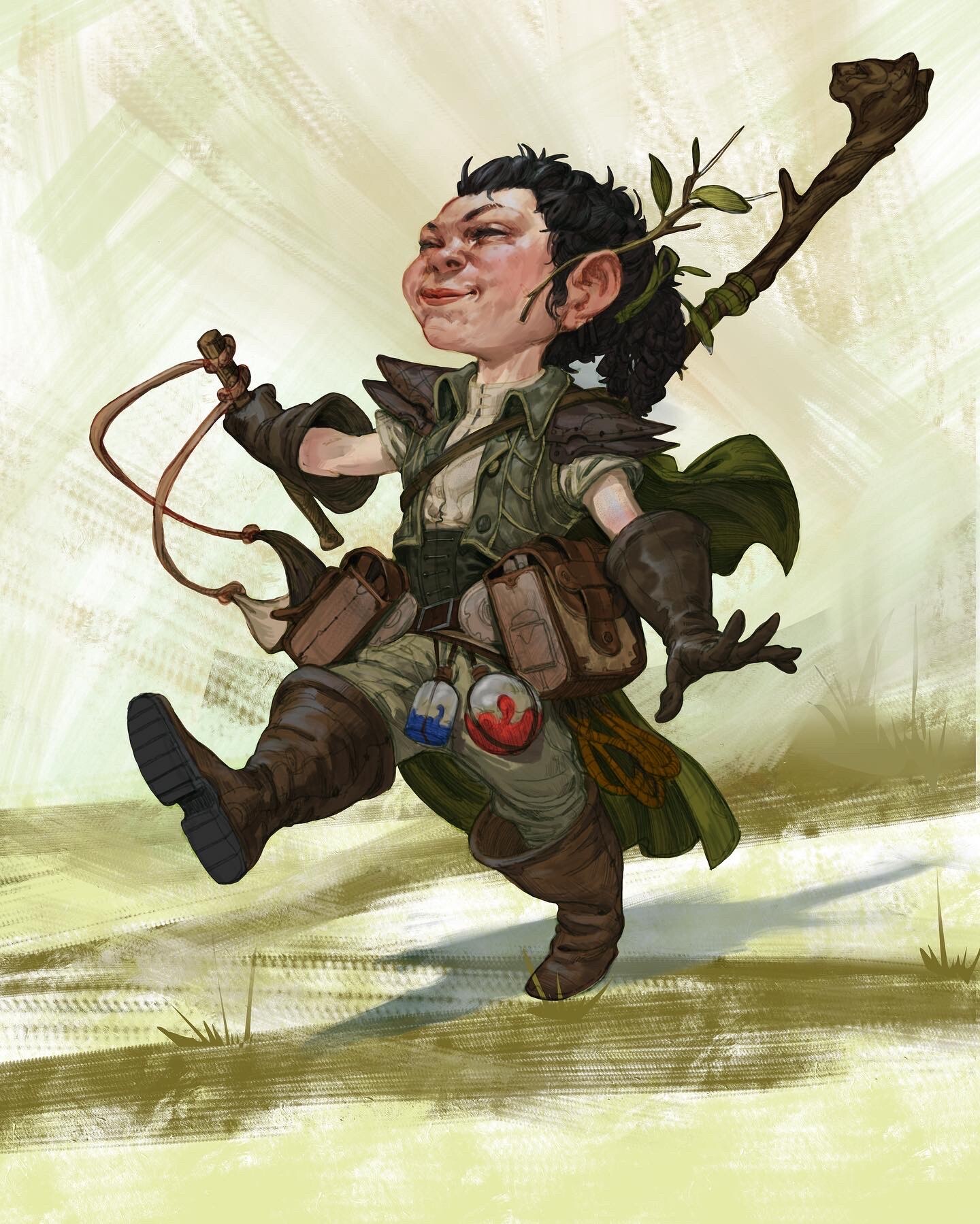
Self-Taught
Your deep understanding of the low magics allows you to add them to your spellbook at a discount. Starting at 2nd level, the time you must spend to copy any spell of a level equal to half your proficiency bonus or lower into your spellbook is halved, and the cost of the materials and inks is reduced by 50 gold.
On the Fly
Your skill with basic magic is second to none, allowing you to spontaneously cast low-level spells that you haven't prepared. Beginning at 6th level, you can use your action to cast any spell of 2nd-level or lower from your spellbook, even if you don't have the spell prepared, expending the appropriate spell slot. The spell must have a casting time of one action.
You can cast a spell in this way a number of times equal to your Intelligence modifier (minimum of once), and you regain all expended uses when you finish a long rest.
As you gain levels in this class, you can cast more powerful spells with this feature: 3rd-level spells at 10th level, 4th-level spells at 14th level, and finally 5th-level spells at 18th level.
Hardy Magic
Learning your magic out in the wild instead of the controlled environment of a formal school has made you hardier than most wizards. Starting at 10th level, when you are forced to make a Constitution saving throw to maintain concentration on a spell, you can use a reaction to grant yourself a bonus to the roll equal to your Intelligence modifier (minimum of +1).
You can use this reaction after you roll, but before you determine whether you succeed or fail.
Arcane Conservation
Your understanding of arcane fundamentals allows you to recycle the energy of failed spells. Beginning at 14th level, when you cast a wizard spell of 4th-level or lower and the spell fails, you regain one expended spell slot. The spell slot regained must be a lower level than the spell slot used to cast the failed spell. This feature applies to all spells of 4th-level or lower, even if they are cast with a higher level spell slot.
When you reach 18th level in this class, this ability affects any wizard spells of 5th-level and lower.
What is a Failed Spell?
Your Arcane Conservation feature allows you to regain a spell slot when one of your spells fails. For the purposes of this ability, a failed spell is a spell that imposes no effects and deals no damage to the environment, creatures, or objects when cast. If a creature uses a Legendary Resistance to avoid a spell's effect, it does not count as a failed spell.
Order of Scribes
Magic of the book—that’s what many folk call wizardry. The name is apt, given how much time wizards spend poring over tomes and penning theories about the nature of magic. It’s rare to see wizards traveling without books and scrolls sprouting from their bags, and a wizard would go to great lengths to plumb an archive of ancient knowledge.
Among wizards, the Order of Scribes is the most bookish. It takes many forms in different worlds, but its primary mission is the same everywhere: recording magical discoveries so that wizardry can flourish. And while all wizards value spellbooks, a wizard in the Order of Scribes magically awakens their book, turning it into a trusted companion. All wizards study books, but a wizardly scribe talks to theirs!
Wizardly Quill
Starting at 2nd level as a bonus action, you can magically create a Tiny quill in your free hand. The magic quill has the following properties:
- The quill doesn’t require ink. When you write with it, it produces ink in a color of your choice on the writing surface.
- The time you must spend to copy a spell into your spellbook equals 2 minutes per spell level if you use the quill for the transcription.
- You can erase anything you write with the quill if you wave the feather over the text as a bonus action, provided the text is within 5 feet of you.
This quill disappears if you create another one or if you die.
Awakened Spellbook
Also at 2nd level using specially prepared inks and ancient incantations passed down by your wizardly order, you have awakened an arcane sentience within your spellbook.
While you are holding the book, it grants you the following benefits:
- You can use the book as a spellcasting focus for your wizard spells.
- When you cast a wizard spell with a spell slot, you can temporarily replace its damage type with a type that appears in another spell in your spellbook, which magically alters the spell’s formula for this casting only. The latter spell must be of the same level as the spell slot you expend.
- When you cast a wizard spell as a ritual, you can use the spell’s normal casting time, rather than adding 10 minutes to it. Once you use this benefit, you can’t do so again until you finish a long rest.
If necessary, you can replace the book over the course of a short rest by using your Wizardly Quill to write arcane sigils in a blank book or a magic spellbook to which you’re attuned. At the end of the rest, your spellbook’s consciousness is summoned into the new book, which the consciousness transforms into your spellbook, along with all its spells. If the previous book still existed somewhere, all the spells vanish from its pages.
Manifest Mind
When you reach 6th level you can conjure forth the mind of your Awakened Spellbook. As a bonus action while the book is on your person, you can cause the mind to manifest as a Tiny spectral object, hovering in an unoccupied space of your choice within 60 feet of you. The spectral mind is intangible and doesn’t occupy its space, and it sheds dim light in a 10-foot radius. It looks like a ghostly tome, a cascade of text, or a scholar from the past (your choice).
While manifested, the spectral mind can hear and see, and it has darkvision with a range of 60 feet. The mind can telepathically share with you what it sees and hears (no action required).
Whenever you cast a wizard spell on your turn, you can cast it as if you were in the spectral mind’s space, instead of your own, using its senses. You can do so a number of times per day equal to your proficiency bonus, and you regain all expended uses when you finish a long rest.
As a bonus action, you can cause the spectral mind to hover up to 30 feet to an unoccupied space that you or it can see. It can pass through creatures but not objects.
The spectral mind stops manifesting if it is ever more than 300 feet away from you, if someone casts dispel magic on it, if the Awakened Spellbook is destroyed, if you die, or if you dismiss the spectral mind as a bonus action.
Once you conjure the mind, you can’t do so again until you finish a long rest, unless you expend a spell slot of any level to conjure it again.
Master Scrivener
Starting at 10th level whenever you finish a long rest, you can create one magic scroll by touching your Wizardly Quill to a blank piece of paper or parchment and causing one spell from your Awakened Spellbook to be copied onto the scroll. The spellbook must be within 5 feet of you when you make the scroll.
The chosen spell must be of 1st or 2nd level and must have a casting time of 1 action. Once in the scroll, the spell’s power is enhanced, counting as one level higher than normal. You can cast the spell from the scroll by reading it as an action. The scroll is unintelligible to anyone else, and the spell vanishes from the scroll when you cast it or when you finish your next long rest.
You are also adept at crafting spell scrolls, you have expertise with scrollscriber's supplies and the gold and time you must spend to make such a scroll are halved if you use your Wizardly Quill.
One with the Word
At 14th level your connection to your Awakened Spellbook has become so profound that your soul has become entwined with it. While the book is on your person, you have advantage on all Intelligence (Arcana) checks, as the spellbook helps you remember magical lore.
Moreover, if you take damage while your spellbook’s mind is manifested, you can prevent all of that damage to you by using your reaction to dismiss the spectral mind, using its magic to save yourself. Then roll 3d6. The spellbook temporarily loses spells of your choice that have a combined spell level equal to that roll or higher. For example, if the roll’s total is 9, spells vanish from the book that have a combined level of at least 9, which could mean one 9th-level spell, three 3rd-level spells, or some other combination. If there aren’t enough spells in the book to cover this cost, you drop to 0 hit points.
Until you finish 1d6 long rests, you are incapable of casting the lost spells, even if you find them on a scroll or in another spellbook. After you finish the required number of rests, the spells reappear in the spellbook.
Once you use this reaction, you can’t do so again until you finish a long rest.
Ritualist
Wizards spend their lives memorizing esoteric formulas that allow them to produce wondrous arcane effects. However, when produced spontaneously, spells are extremely taxing on the caster. To preserve their power, most wizards learn to cast ritual spells, spells that take longer to produce, but aren't as draining on a wizard's magical stamina. Some wizards, known as Ritualists, dedicate their lives to mastering the deliberate and reliable magic of ritual spellcasting.
Ritual Savant
Starting at 2nd level, the gold and time you must spend to copy a ritual spell into your spellbook is halved.
Arcane Anthology
You have learned to perform arcane rituals not normally known to wizards. At 2nd level, you add two 1st-level ritual spells of your choice from any spell list to your spellbook. In addition, you can copy ritual spells from any class's spell list into your spellbook, though you must otherwise follow the normal rules for copying these spells into your spellbook.
Any non-wizard spell you add to your spellbook with this feature counts as wizard spell for you, but you can only cast it as a ritual, unless you've learned it by some other means.
Accelerated Rituals
You can accelerate the ritual process for spells with which you are exceptionally familiar. Beginning at 6th level, you can cast the ritual version of any 1st-level spell from your spellbook without the additional 10 minute casting time.
You can accelerate a ritual spell in this way a number of times equal to your Intelligence modifier (minimum of once), and you regain all expended uses when you finish a long rest.
As you gain levels in this class, you learn to accelerate higher-level ritual spells: 2nd-level rituals at 10th level, 3rd-level rituals at 14th level, and 4th-level rituals at 18th level.
Formulaic Breakthrough
Your deep knowledge of ritual magic allows you to ritualize even non-ritual spells. Starting at 10th level, you can cast any 1st-level spell in your spellbook as a ritual so long as it doesn't deal damage or require a saving throw,.
As you gain levels in this class you learn to ritualize higher level spells that don't deal damage or require a saving throw; 2nd-level spells at 14th level, and 3rd-level spells at 18th level.
This feature can not be combined with the 6th level Accelerated Rituals feature.
Master Ritualist
You have reached an unparalleled understanding of ritualistic magic and its applications. Beginning at 14th level, you can concentrate on the effects of up to two ritual spells at once.
The total levels of the spells you concentrate on cannot exceed your Intelligence modifier (minimum of 1st-level), and when you are forced to make a Constitution saving throw to maintain concentration on your spells, you make one saving throw for both concentration effects.
In addition, whenever you cast the ritual version of a spell that has a duration longer than instantaneous, the duration of the spell's effect is doubled.
School of Abjuration
The School of Abjuration emphasizes magic that blocks, banishes, or protects. Detractors of this school say that its tradition is about denial, negation rather than positive assertion. You understand, however, that ending harmful effects, protecting the weak, and banishing evil influences is anything but a philosophical void. It is a proud and respected vocation.
Called abjurers, members of this school are sought when baleful spirits require exorcism, when important locations must be guarded against magical spying, and when portals to other planes of existence must be closed.
Abjuration Savant
Beginning when you select this school at 2nd level, the gold and time you must spend to copy an abjuration spell into your spellbook is halved.
Arcane Ward
Starting at 2nd level, you can weave magic around yourself for protection. When you cast an abjuration spell of 1st level or higher, you can simultaneously use a strand of the spell’s magic to create a magical ward on yourself that lasts until you finish a long rest. The ward has a hit point maximum equal to twice your wizard level + your Intelligence modifier. Whenever you take damage, the ward takes the damage instead. If this damage reduces the ward to 0 hit points, you take any remaining damage.
While the ward has 0 hit points, it can’t absorb damage, but its magic remains. Whenever you cast an abjuration spell of 1st level or higher, the ward regains a number of hit points equal to twice the level of the spell.
Once you create the ward, you can’t create it again until you finish a long rest.
Projected Ward
Starting at 6th level, when a creature that you can see within 30 feet of you takes damage, you can use your reaction to cause your Arcane Ward to absorb that damage. If this damage reduces the ward to 0 hit points, the warded creature takes any remaining damage.
Improved Abjuration
Beginning at 10th level, when you cast an abjuration spell that requires you to make an ability check as a part of casting that spell (as in counterspell and dispel magic), you add your proficiency bonus to that ability check.
Spell Resistance
Starting at 14th level, you have advantage on saving throws against spells.
Furthermore, you have resistance against the damage of spells.
School of Conjuration
As a conjurer, you favor spells that produce objects and creatures out of thin air. You can conjure billowing clouds of killing fog or summon creatures from elsewhere to fight on your behalf. As your mastery grows, you learn spells of transportation and can teleport yourself across vast distances, even to other planes of existence, in an instant.
Conjuration Savant
Beginning when you select this school at 2nd level, the gold and time you must spend to copy a conjuration spell into your spellbook is halved.
Minor Conjuration
Starting at 2nd level when you select this school, you can use your action to conjure up an inanimate object in your hand or on the ground in an unoccupied space that you can see within 10 feet of you. This object can be no larger than 3 feet on a side and weigh no more than 10 pounds, and its form must be that of a nonmagical object that you have seen. The object is visibly magical, radiating dim light out to 5 feet.
The object disappears after 1 hour, when you use this feature again, or if it takes or deals any damage.
Benign Transposition
Starting at 6th level, you can use your action to teleport up to 30 feet to an unoccupied space that you can see. Alternatively, you can choose a space within range that is occupied by a Small or Medium creature. If that creature is willing, you both teleport, swapping places.
Once you use this feature, you can’t use it again until you finish a long rest or you cast a conjuration spell of 1st level or higher.
Focused Conjuration
Beginning at 10th level, while you are concentrating on a conjuration spell, your concentration can’t be broken as a result of taking damage.
Durable Summons
Starting at 14th level, any creature that you summon or create with a conjuration spell has 30 temporary hit points.

School of Divination
The counsel of a diviner is sought by royalty and commoners alike, for all seek a clearer understanding of the past, present, and future. As a diviner, you strive to part the veils of space, time, and consciousness so that you can see clearly. You work to master spells of discernment, remote viewing, supernatural knowledge, and foresight.
Divination Savant
Beginning when you select this school at 2nd level, the gold and time you must spend to copy a divination spell into your spellbook is halved.
Portent
Starting at 2nd level when you choose this school, glimpses of the future begin to press in on your awareness. When you finish a long rest, roll two d20s and record the numbers rolled. You can replace any attack roll, saving throw, or ability check made by you or a creature that you can see with one of these foretelling rolls. You must choose to do so before the roll, and you can replace a roll in this way only once per turn.
Each foretelling roll can be used only once. When you finish a long rest, you lose any unused foretelling rolls.
Expert Divination
Beginning at 6th level, casting divination spells comes so easily to you that it expends only a fraction of your spellcasting efforts. When you cast a divination spell of 2nd level or higher using a spell slot, you regain one expended spell slot. The slot you regain must be of a level lower than the spell you cast and can’t be higher than 5th level.
The Third Eye
Starting at 10th level, you can use your action to increase your powers of perception. When you do so, choose one of the following benefits, which lasts until you are incapacitated or you take a short or long rest. You can’t use the feature again until you finish a rest.
Darkvision. You gain darkvision out to a range of 60 feet, as described in chapter 8, “Adventuring.”
Ethereal Sight. You can see into the Ethereal Plane within 60 feet of you.
Greater Comprehension. You can read any language.
See Invisibility. You can see invisible creatures and objects within 10 feet of you that are within line of sight.
Greater Portent
Starting at 14th level, the visions in your dreams intensify and paint a more accurate picture in your mind of what is to come. You roll three d20s for your Portent feature, rather than two.
School of Enchantment
As a member of the School of Enchantment, you have honed your ability to magically entrance and beguile other people and monsters. Some enchanters are peacemakers who bewitch the violent to lay down their arms and charm the cruel into showing mercy. Others are tyrants who magically bind the unwilling into their service. Most enchanters fall somewhere in between.
Enchantment Savant
Beginning when you select this school at 2nd level, the gold and time you must spend to copy an enchantment spell into your spellbook is halved.
Hypnotic Gaze
Starting at 2nd level when you choose this school, your soft words and enchanting gaze can magically enthrall another creature. As an action, choose one creature that you can see within 5 feet of you. If the target can see or hear you, it must succeed on a Wisdom saving throw against your wizard spell save DC or be charmed by you until the end of your next turn. The charmed creature’s speed drops to 0, and the creature is incapacitated and visibly dazed.
On subsequent turns, you can use your action to maintain this effect, extending its duration until the end of your next turn. However, the effect ends if you move more than 5 feet away from the creature, if the creature can neither see nor hear you, or if the creature takes damage.
Once the effect ends, or if the creature succeeds on its initial saving throw against this effect, you can’t use this feature on that creature again until you finish a long rest.
Instinctive Charm
Beginning at 6th level, when a creature you can see within 30 feet of you makes an attack roll against you, you can use your reaction to divert the attack, provided that another creature is within the attack’s range. The attacker must make a Wisdom saving throw against your wizard spell save DC. On a failed save, the attacker must target the creature that is closest to it, not including you or itself. If multiple creatures are closest, the attacker chooses which one to target. On a successful save, you can’t use this feature on the attacker again until you finish a long rest.
You must choose to use this feature before knowing whether the attack hits or misses. Creatures that can’t be charmed are immune to this effect.
Split Enchantment
Starting at 10th level, when you cast an enchantment spell of 1st level or higher that targets only one creature, you can have it target a second creature.
Alter Memories
At 14th level, you gain the ability to make a creature unaware of your magical influence on it. When you cast an enchantment spell to charm one or more creatures, you can alter one creature’s understanding so that it remains unaware of being charmed.
Additionally, once before the spell expires, you can use your action to try to make the chosen creature forget some of the time it spent charmed. The creature must succeed on an Intelligence saving throw against your wizard spell save DC or lose a number of hours of its memories equal to 1 + your Charisma modifier (minimum 1). You can make the creature forget less time, and the amount of time can’t exceed the duration of your enchantment spell.

School of Evocation
You focus your study on magic that creates powerful elemental effects such as bitter cold, searing flame, rolling thunder, crackling lightning, and burning acid. Some evokers find employment in military forces, serving as artillery to blast enemy armies from afar. Others use their spectacular power to protect the weak, while some seek their own gain as bandits, adventurers, or aspiring tyrants.
Evocation Savant
Beginning when you select this school at 2nd level, the gold and time you must spend to copy an evocation spell into your spellbook is halved.
Sculpt Spells
Beginning at 2nd level, you can create pockets of relative safety within the effects of your evocation spells. When you cast an evocation spell that affects other creatures that you can see, you can choose a number of them equal to 1 + the spell’s level. The chosen creatures automatically succeed on their saving throws against the spell, and they take no damage if they would normally take half damage on a successful save.
Potent Cantrip
Starting at 6th level, your damaging cantrips affect even creatures that avoid the brunt of the effect. When a creature succeeds on a saving throw against your cantrip, the creature takes half the cantrip’s damage (if any) but suffers no additional effect from the cantrip.
Empowered Evocation
Beginning at 10th level, you can add your Intelligence modifier to one damage roll of any wizard evocation spell you cast.
Overchannel
Starting at 14th level, you can increase the power of your simpler spells. When you cast a wizard spell of 1st through 5th level that deals damage, you can deal maximum damage with that spell.
The first time you do so, you suffer no adverse effect. If you use this feature again before you finish a long rest, you take 2d12 necrotic damage for each level of the spell, immediately after you cast it. Each time you use this feature again before finishing a long rest, the necrotic damage per spell level increases by 1d12. This damage ignores resistance and immunity.
School of Illusion
You focus your studies on magic that dazzles the senses, befuddles the mind, and tricks even the wisest folk. Your magic is subtle, but the illusions crafted by your keen mind make the impossible seem real. Some illusionists — including many gnome wizards — are benign tricksters who use their spells to entertain. Others are more sinister masters of deception, using their illusions to frighten and fool others for their personal gain.
Illusion Savant
Beginning when you select this school at 2nd level, the gold and time you must spend to copy an illusion spell into your spellbook is halved.
Improved Minor Illusion
When you choose this school at 2nd level, you learn the minor illusion cantrip. If you already know this cantrip, you learn a different wizard cantrip of your choice. The cantrip doesn’t count against your number of cantrips known.
When you cast minor illusion, you can create both a sound and an image with a single casting of the spell.
Malleable Illusions
Starting at 6th level, when you cast an illusion spell that has a duration of 1 minute or longer, you can use your action to change the nature of that illusion (using the spell’s normal parameters for the illusion), provided that you can see the illusion.
Illusory Self
Beginning at 10th level, you can create an illusory duplicate of yourself as an instant, almost instinctual reaction to danger. When a creature makes an attack roll against you, you can use your reaction to interpose the illusory duplicate between the attacker and yourself. The attack automatically misses you, then the illusion dissipates.
Once you use this feature, you can’t use it again until you finish a short or long rest.
Illusory Reality
By 14th level, you have learned the secret of weaving shadow magic into your illusions to give them a semi-reality. When you cast an illusion spell of 1st level or higher, you can choose one inanimate, nonmagical object that is part of the illusion and make that object real. You can do this on your turn as a bonus action while the spell is ongoing. The object remains real for 1 minute. For example, you can create an illusion of a bridge over a chasm and then make it real long enough for your allies to cross.
The object can’t deal damage or otherwise directly harm anyone.
School of Necromancy
The School of Necromancy explores the cosmic forces of life, death, and undeath. As you focus your studies in this tradition, you learn to manipulate the energy that animates all living things. As you progress, you learn to sap the life force from a creature as your magic destroys its body, transforming that vital energy into magical power you can manipulate.
Most people see necromancers as menacing, or even villainous, due to the close association with death. Not all necromancers are evil, but the forces they manipulate are considered taboo by many societies.
Necromancy Savant
Beginning when you select this school at 2nd level, the gold and time you must spend to copy a necromancy spell into your spellbook is halved.
Grim Harvest
At 2nd level, you gain the ability to reap life energy from creatures you kill with your spells. Once per turn when you kill one or more creatures with a spell of 1st level or higher, you regain hit points equal to twice the spell’s level, or three times its level if the spell belongs to the School of Necromancy. You don’t gain this benefit for killing constructs or undead.
Undead Thralls
At 6th level, you add the animate dead spell to your spellbook if it is not there already. If you already know this spell, you learn a different wizard spell of your choice thats 3rd level or lower. When you cast animate dead, you can target one additional corpse or pile of bones, creating another zombie or skeleton, as appropriate.
Whenever you create an undead using a necromancy spell, it has additional benefits:
- The creature’s hit point maximum is increased by an amount equal to your wizard level.
- The creature adds your proficiency bonus to its weapon damage rolls.
Injured to Undeath
Beginning at 10th level, you have resistance to necrotic damage, and your hit point maximum can’t be reduced. You have spent so much time dealing with undead and the forces that animate them that you have become inured to some of their worst effects.
Command Undead
Starting at 14th level, you can use magic to bring undead under your control, even those created by other wizards. As an action, you can choose one undead that you can see within 60 feet of you. That creature must make a Charisma saving throw against your wizard spell save DC. If it succeeds, you can’t use this feature on it again. If it fails, it becomes friendly to you and obeys your commands until you use this feature again.
Intelligent undead are harder to control in this way. If the target has an Intelligence of 8 or higher, it has advantage on the saving throw. If it fails the saving throw and has an Intelligence of 12 or higher, it can repeat the saving throw at the end of every hour until it succeeds and breaks free.
School of Transmutation
You are a student of spells that modify energy and matter. To you, the world is not a fixed thing, but eminently mutable, and you delight in being an agent of change. You wield the raw stuff of creation and learn to alter both physical forms and mental qualities. Your magic gives you the tools to become a smith on reality’s forge.
Some transmuters are tinkerers and pranksters, turning people into toads and transforming copper into silver for fun and occasional profit. Others pursue their magical studies with deadly seriousness, seeking the power of the gods to make and destroy worlds.
Transmutation Savant
Beginning when you select this school at 2nd level, the gold and time you must spend to copy a transmutation spell into your spellbook is halved.
Minor Alchemy
Starting at 2nd level when you select this school, you can temporarily alter the physical properties of one nonmagical object, changing it from one substance into another. You perform a special alchemical procedure on one object composed entirely of wood, stone (but not a gemstone), iron, copper, or silver, transforming it into a different one of those materials. For each 10 minutes you spend performing the procedure, you can transform up to 1 cubic foot of material. After 1 hour, or until you lose your concentration (as if you were concentrating on a spell), the material reverts to its original substance.
Transmuter's Stone
Starting at 6th level, you can spend 8 hours creating a transmuter’s stone that stores transmutation magic. You can benefit from the stone yourself or give it to another creature. A creature gains a benefit of your choice as long as the stone is in the creature’s possession. When you create the stone, choose the benefit from the following options:

- Darkvision out to a range of 60 feet
- An increase to speed of 10 feet while the creature is unencumbered
- Proficiency in Constitution saving throws
- Resistance to acid, cold, fire, lightning, or thunder damage (your choice whenever you choose this benefit)
Each time you cast a transmutation spell of 1st level or higher, you can change the effect of your stone if the stone is on your person.
If you create a new transmuter’s stone, the previous one ceases to function.
Shapechanger
At 10th level, you add the polymorph spell to your spellbook, if it is not there already. You can cast polymorph without expending a spell slot. When you do so, you can target only yourself and transform into a beast whose challenge rating is 1 or lower.
Once you cast polymorph in this way, you can’t do so again until you finish a short or long rest, though you can still cast it normally using an available spell slot.
Master Transmuter
Starting at 14th level, you can use your action to consume the reserve of transmutation magic stored within your transmuter’s stone in a single burst. When you do so, choose one of the following effects. Your transmuter’s stone is destroyed and can’t be remade until you finish a long rest.
Major Transformation. You can transmute one nonmagical object—no larger than a 5-foot cube—into another nonmagical object of similar size and mass and of equal or lesser value. You must spend 10 minutes handling the object to transform it.
Panacea. You remove all curses, diseases, and poisons affecting a creature that you touch with the transmuter’s stone. The creature also regains all its hit points.
Restore Life. You cast the raise dead spell on a creature you touch with the transmuter’s stone, without expending a spell slot or needing to have the spell in your spellbook.
Restore Youth. You touch the transmuter’s stone to a willing creature, and that creature’s apparent age is reduced by 3d10 years, to a minimum of 13 years. This effect doesn’t extend the creature’s lifespan.
War Magic
A variety of arcane colleges specialize in training wizards for war. The tradition of War Magic blends principles of evocation and abjuration, rather than specializing in either of those schools. It teaches techniques that empower a caster’s spells, while also providing methods for wizards to bolster their own defenses.
In great battles, a war mage often works with evokers, abjurers, and other types of wizards. Evokers, in particular, sometimes tease war mages for splitting their attention between offense and defense. A war mage’s typical response: “What good is being able to throw a mighty fireball if I die before I can cast it?”
Arcane Deflection
At 2nd level, you have learned to weave your magic to fortify yourself against harm. When you are hit by an attack or you fail a saving throw, you can use your reaction to gain a +2 bonus to your AC against that attack or a +4 bonus to that saving throw.
When you use this feature, you can’t cast spells other than cantrips until the end of your next turn.
Tactical Wit
Starting at 2nd level, your keen ability to assess tactical situations allows you to act quickly in battle. You can give yourself a bonus to your initiative rolls equal to your Intelligence modifier.
Power Surge
Starting at 6th level, you can store magical energy within yourself to later empower your damaging spells. In its stored form, this energy is called a power surge.
You can store a maximum number of power surges equal to your Intelligence modifier (minimum of one). Whenever you finish a long rest, your number of power surges resets to one. Whenever you successfully end a spell with dispel magic or counterspell, you gain one power surge, as you steal magic from the spell you foiled. If you end a short rest with no power surges, you gain one power surge.
Once per turn when you deal damage to a creature or object with a wizard spell, you can spend one power surge to deal extra force damage to that target. The extra damage equals half your wizard level.
Durable Magic
Beginning at 10th level, the magic you channel helps ward off harm. While you maintain concentration on a spell, you have a +2 bonus to AC and all saving throws.
Deflecting Shroud
At 14th level, your Arcane Deflection becomes infused with deadly magic. When you use your Arcane Deflection feature, you can cause magical energy to arc from you. Up to three creatures of your choice that you can see within 60 feet of you each take force damage equal to half your wizard level.
Artificer
Masters of unlocking magic in everyday objects, artificers are supreme inventors. They see magic as a complex system waiting to be decoded and controlled. Artificers use tools to channel arcane power, crafting magical objects.
To cast a spell, an artificer could use alchemist’s supplies to create a potent elixir, calligrapher’s supplies to inscribe a sigil of power on an ally’s armor, or tinker’s tools to craft a temporary charm. The magic of artificers is tied to their tools and their talents.
Arcane Science
In the world of Eberron, arcane magic has been harnessed as a form of science and deployed throughout society. Artificers reflect this development. Their knowledge of magical devices, and their ability to infuse mundane items with magic, allows Eberron’s most miraculous projects to continue.
During the Last War, artificers were marshaled on a massive scale. Many lives were saved because of the inventions of brave artificers, but countless lives were also lost because of the mass destruction unleashed by their creations.
Seekers of New Lore
Nothing excites an artificer quite like uncovering a new metal or discovering a source of elemental energy. In artificer circles, new inventions and strange discoveries create the most excitement. Artificers who wish to make their mark must innovate, creating something fresh, rather than iterating on familiar designs.
This drive for novelty pushes artificers to become adventurers. Eberron’s main travel routes and populated regions have long since been explored. Thus, artificers seek the frontiers of civilization in hopes of making the next great discovery in arcane research.
Creating an Artificer
When creating an artificer, think about your character’s relationship with the artisan who taught them their craft. Does the character have a rival? Talk to your DM about the role played by artificers in the campaign and the sort of organizations you might have ties to.
Quick Build
You can make an artificer quickly by following these suggestions. First, put your highest ability score in Intelligence, followed by Constitution or Dexterity. Second, choose the guild artisan background.
Class Features
As an artificer, you gain the following class features.
Ability Score Increase
At first level you can choose to increase your Constitution or Intelligence score by 1 to a maximum of 20.
Hit Points
Hit Dice: 1d8 per artificer level
Hit Points at 1st Level: 8 + your Constitution modifier + racial bonus
Hit Points at Higher Levels: 1d8 (or 4) + your Constitution modifier per artificer level after 1st
Proficiencies
Armor: Light armor, medium armor, shields
Weapons: Simple weapons, hand crossbows, heavy crossbows, firearms (if applicable)
Tools: Thieve's tools, tinker's tools, one type of artisan's tools of your choice
Saving Throws: Constitution, Intelligence
Skills: Choose two from Arcana, History, Investigation, Medicine, Nature, Perception, Sleight of Hand
Equipment
You start with the following equipment, in addition to the equipment granted by your background:
- any two simple weapons
- a light crossbow and 20 bolts
- (a) leather jerkin or (b) scalemail
- thieves' tools and a dungeoneer's pack
Magical Tinkering
At 1st level, you learn how to invest a spark of magic into mundane objects. To use this ability, you must have tinker's tools or other artisan's tools in hand. You then touch a Tiny nonmagical object as an action and give it one of the following magi al properties of your choice:
- the object sheds bright light in a 5-foot radius and dim light for an additional 5 feet.
- Whenever tapped by a creature, the object emits a recorded message that can be heard up to 10 feet away. You utter the message when you bestow this property on the object, adn the recording can be no more than 6 seconds long.
- The object continuously emits your choice of an odor or a nonverbal sound (wind, waves, chirping, or the like). The chosen phenomenon is perceivable up to 10 feet away.
- A static visual effect appears on one of the object's surfaces. This effect can be a picture, up to 25 words of text, lines and shapes, or a mixture of these elements, as you like.
The Artificer
| Level | Proficiency Bonus | Features | Infusions Known | Infused Items | Cantrips Known | 1st | 2nd | 3rd | 4th | 5th |
|---|---|---|---|---|---|---|---|---|---|---|
| 1st | +2 | Magical Tinkering, Spellcasting | — | — | 2 | 2 | — | — | — | — |
| 2nd | +2 | Infuse Item | 4 | 2 | 2 | 2 | — | — | — | — |
| 3rd | +2 | Artificer Specialist, The Right Cantrip for the Job | 4 | 2 | 2 | 3 | — | — | — | — |
| 4th | +2 | Ability Score Improvement | 4 | 2 | 2 | 3 | — | — | — | — |
| 5th | +3 | Arcane Armament, Artificer Specialist feature | 4 | 2 | 2 | 4 | 2 | — | — | — |
| 6th | +3 | Tool Expertise | 6 | 3 | 2 | 4 | 2 | — | — | — |
| 7th | +3 | Flash of Genius | 6 | 3 | 2 | 4 | 3 | — | — | — |
| 8th | +3 | Ability Score Improvement | 6 | 3 | 2 | 4 | 3 | — | — | — |
| 9th | +4 | Artificer Specialist feature | 6 | 3 | 2 | 4 | 3 | 2 | — | — |
| 10th | +4 | Magic Item Adept | 8 | 4 | 3 | 4 | 3 | 2 | — | — |
| 11th | +4 | Spell-Storing Item | 8 | 4 | 3 | 4 | 3 | 3 | — | — |
| 12th | +4 | Ability Score Improvement | 8 | 4 | 3 | 4 | 3 | 3 | — | — |
| 13th | +5 | — | 8 | 4 | 3 | 4 | 3 | 3 | 1 | — |
| 14th | +5 | Magic Item Savant | 10 | 5 | 4 | 4 | 3 | 3 | 1 | — |
| 15th | +5 | Artificer Specialist feature | 10 | 5 | 4 | 4 | 3 | 3 | 2 | — |
| 16th | +5 | Ability Score Improvement | 10 | 5 | 4 | 4 | 3 | 3 | 2 | — |
| 17th | +6 | — | 10 | 5 | 4 | 4 | 3 | 3 | 3 | 1 |
| 18th | +6 | Magic Item Master | 12 | 6 | 4 | 4 | 3 | 3 | 3 | 1 |
| 19th | +6 | Ability Score Improvement | 12 | 6 | 4 | 4 | 3 | 3 | 3 | 2 |
| 20th | +6 | Soul of Artifice | 12 | 6 | 4 | 4 | 3 | 3 | 3 | 2 |
The chosen property lasts indefinitely. As an action, you can touch the object and end the property early.
You can bestow magic on multiple objects, touching one object each time you use this feature, though a single object can only bear one property at a time. The maximum number of objects you can affect with this feature at one time is equal to your Intelligence modifier (minimum of one object). If you try to exceed your maximum, the oldest property immediately ends, and then the new property applies.
Spellcasting
You have studied the workings of magic and how to channel it through objects. As a result, you have gained the ability to cast spells. To observers, you don't appear to be casting spells in a conventional way: you look as if you're producing wonders using mundane items or outlandish inventions.
Tools Required
You produce your artificer spell effects through your tools. You must have a spellcasting focus -- specifically thieves' tools or some kind of artisan's tool -- in hand when you cast any spell with this Spellcasting feature. You must be proficient with the tool to use it in this way.
After you gain the Infuse Item feature at 2nd level, you can also use any item bearing one of your infusions as a spellcasting focus.
Cantrips (0-level Spells)
At 1st level, you know the mending cantrip and two cantrips of your choice from the artificer spell list below. At higher levels, you learn additional artificer cantrips of your choice, as shown in the Cantrips Known column of the Artificer table.
When you gain a level in this class, you can replace one of the artificer cantrips you know with another cantrip from the artificer spell list.
Preparing and Casting Spells
The Artificer table shows how many spell slots you have to cast your artificer spells. To cast one of your artificer spells of 1st level or higher, you must expend a slot of the spell's level or higher. You regain all expended spell slots when you finish a long rest.
You prepare the list of artificer spells that are available for you to cat. choosing from the artificer spell list. When you do so, choose a number of artificer spells equal to your Intelligence modifier + half your artificer level, rounded down (minimum of one spell). The spells must be of a level for which you have spell slots.
For example, if you are a 5-th level artificer, you have four 1st-level and two 2nd-level spell slots. With an Intelligence of 14, your list of prepared spells can include four spells of 1st or 2nd level, in any combination. If you you prepare the 1st-level spell cure wounds, you can cast it using a 1st-level or 2nd-level slot. Casting the spell doesn't remove it from your list of prepared spells.
You can change your list of prepared spells when you finish a long rest. Prepare a new list of artificer spells requires time spent in tinkering with your spellcasting focuses: at least 1 minute per spell level for each spell on your list.
Spellcasting Ability
Intelligence is your spellcasting ability for your artificer spells; your understanding of the theory behind magic allows you to wield these spells with superior skill. You use your Intelligence whenever an artificer spell refers to your spellcasting ability. In addition, you use your Intelligence modifier when setting the saving throw DC for an artificer spell you cast and when making an attack roll with one.
Spell Save DC
Spell attack modifier
Ritual Casting
You can cast an artificer spell as a ritual if that spell has the ritual tag and you have the spell prepared.
Infuse Item
At 2nd level, you gain the ability to imbue mundane items with certain magical infusions. The magic items you create with this feature are effectively prototypes of permanent items.
Infusions Known
When you gain this feature, pick three artificer infusions to learn, choosing from the "Artificer Infusions" section at the end of the class's description. You learn additional infusions of your choice when you reach certain levels in this class, as shown in the Infusions Known column of the Artificer table.
Whenever you gain a level in this class, you can replace one of the artificer infusions you learned with a new one.
Infusing an Item
Whenever you finish a long rest, you can touch a nonmagical object and imbue it with one of your artificer infusions, turning it into a magic item. An infusion works on only certain kinds of objects, as specified in the infusion's description. If the item requires attunement, you can attune yourself to it the instant you infuse the item, or you can forgo attunement so that someone else can attune to the item. If you decide to attune to the item later, you must do so using the normal process for attunement (see "Attunement" in the Dungeon Master's Guide, page 136).
Your infusion remains in an item indefinitely, but when you die, the infusion vanishes after a number of days have passed equal to your Intelligence modifier (minimum of 1 day). The infusion also vanishes if you give up your knowledge of the infusion for another one.
You can infuse more than one nonmagical object at the end of a long rest; the maximum number of objects appears in the Infused Items column of the Artificer table. You must touch each of the objects, and each of your infusions can be in only one object at a time. If you try to exceed your maximum number of infusions, the oldest infusion immediately ends, and then the new infusion applies.
Artificer Specialist
At 3rd level, you choose the type of specialist you are: Alchemist, Artillerist, or Battle Smith, each of which is detailed at the end of the class's description. Your choice grants you features at 3rd level and again at 6th, 9th, and 15th level.
The Right Cantrip for the Job
At 3rd level, you gain the ability to make sure you have the right magical tool for a job. Whenever you finish a short or long rest, you can replace one of the artificer cantrips you know with another cantrip from the artificer spell list.
Ability Score Improvement
When you reach 4th, and again at 8th, 12th, 16th, and 19th level, you can increase one ability score of your choice by 2, or you can increase two ability scores of your choice by 1. As normal, you can't increase an ability score above 20 using this feature.
Arcane Armament
Starting at 5th level, you can attack twice, rather than once, whenever you take the Attack action on your turn, but one of the attacks must be made with a magic weapon, the magic of which you use to propel the attack.
Tool Expertise
Starting at 6th level, your proficiency bonus is doubled for any ability check you make that uses your proficiency with a tool.

Flash of Genius
Starting at 7th level, you gain the ability to come up with solutions under pressure. When you or another creature you can see within 30 feet of you makes an ability check or a saving throw, you can use your reaction to add your Intelligence modifier to the roll.
You can use this feature a number of times equal to your Intelligence modifier (minimum of once). You regain all expended uses when you finish a long rest.
Magic Item Adapt
When you reach 10th level, you achieve a profound understanding of how to use magic items. You can attune to up to four magic items at once.
Spell-Storing Item
When you reach 11th level, you learn how to store a spell in an object for repeated use. Whenever you finish a long rest, you can touch one simple or martial weapon or an item that you can use as a spellcasting focus and store a spell in it, choosing one 1st- or 2nd-level spell from the artificer spell list that requires 1 action to cast (you don't need to have the spell prepared). With the object in hand, a creature can take an action to produce the spell's effect from it, using your spellcasting ability modifier.
The spell stays in the object until it has been used a number of times equal to twice your Intelligence modifier (minimum of twice) or until you use this feature again.
Magic Item Savant
At 14th level, your skill with magic items deepens more:
- You can attune to up to five magic items at once.
- You ignore all classes, race, spell, and level requirements on attuning to or using a magic item.
Magic Item Master
Starting at 18th level, you can attune to up to six magic items at once.
Soul of the Artifice
At 20th level, you develop a mystical connection to your magic items, which you can draw on for protection:
- You gain a +1 bonus to all saving throws per magic item you are currently attuned to.
- If you’re reduced to 0 hit points but not killed out-right, you can use your reaction to end one of your artificer infusions, causing you to drop to 1 hit point instead of 0.
Artificer Specialist
Alchemist
An Alchemist is an expert at combining reagents to produce mystical effects. Alchemists use their creations to give life and to leech it away. Alchemy is the oldest of artificer traditions, and its versatility has long been valued during times of war and peace.
Tools of the Trade
By the time you adopt this specialty at 3rd level, you're deeply familiar with employing its tools.
Proficiencies You gain proficiency with alchemist's supplies and herbalism tools. If you already have this proficiency, you gain proficiency with one other type of artisan’s tools of your choice. You also gain those tools for free-the result of tinkering you've done as you've prepared for this specialization.
Crafting If you craft a magic item using alchemist's supplies or herbalism tools, it takes you a quarter of the normal time, and it costs you half as much of the usual gold.
Alchemical Elixirs
Beginning at 3rd level, at the end of each long rest, you can use your alchemist's supplies produce a number of Elixers equal to your proficiency bonus in an empty flask you touch. At creation, you choose the Elixir's effect from the table below, some of which include your proficiency bonus (PB). The effect of an Elixir is triggered when someone drinks the Elixir. As a bonus action, a creature can drink the Elixir or as an action administer it to a creature within 5 feet. A creature can only be under the effects of one Elixir at a time, and drinking another immediately ends any other Elixir effects.
Any Elixir you create through this feature lasts until it is consumed, or until the end of your next long rest.
As an action on your turn, you can expend a spell slot of 1st-level or higher to create an Elixir in an empty flask you touch. You can use the Elixir as part of the same action.
Alchemical Elixirs
| Elixer | Effect |
|---|---|
| Alteration | The drinker is transformed as if by the alter self spell. They determine the effect of the spell, which lasts for 10 minutes. |
| Boldness | The drinker can add 1d4 to any attack rolls and saving throws they make for 1 minute. |
| Flight | The drinker gains a flying speed equal to 5 times your PB in feet for 10 minutes. |
| Healing | The drinker regains a number of hit points equal to PB(d4) + your Intelligence Modifier. |
| Resilience | The drinker gains a bonus to their Armor Class equal to half your PB for 10 minutes. |
| Swiftness | The drinker's speed increases by a number of feet equal to 5 times your PB for 1 hour. |

Alchemist Spells
You always have certain spells prepared after
you reach particular levels in this class, as shown in the Alchemist Spells table. These spells count as artificer spells for you, but they don’t count against the number of artificer spells you prepare.
Alchemist Spells
| Artificer Level | Spell |
|---|---|
| 3rd | purify food and drink, ray of sickness |
| 5th | Melf's acid arrow, web |
| 9th | create food and water, stinking cloud |
| 13th | blight, death ward |
| 17th | cloudkill, raise dead |
Alchemical Savant
Starting at 5th level, when you cast an artificer spell that deals acid, fire, necrotic, or poison damage, or restores hit points, you gain a bonus to the damage, or healing, roll equal to your Intelligence modifier (minimum of +1).
Restorative Reagents
Beginning at 9th level, whenever a creature drinks one of your Elixirs, they gain temporary hit points equal to 2d6 + your Intelligence modifier, in addition to the Elixir's effect.
Also, you can cast lesser restoration without expending a spell slot, even if you don't have it prepared, provided you use your alchemist's supplies as the spellcasting focus.
You can cast lesser restoration in this way a number of times equal to your Intelligence modifier (minimum of once), and you regain all expended uses when you finish a long rest.
Master Alchemist
You have become a master among Alchemist artificers. Upon reaching 15th level, you gain resistance to acid and poison damage, and immunity to the poisoned condition.
In addition, you can cast both greater restoration and heal without expending a spell slot, without preparing the spell, and without providing the material component, provided you use your alchemist’s supplies as the spellcasting focus.
You can cast each of these spells once with this feature, and you must finish a long rest before you can do so again.
Armorer
An artificer who specializes as an Armorer modifies armor to function almost like a second skin. The armor is enhanced to hone the artificer’s magic, unleash potent attacks, and generate a formidable defense. The artificer bonds with this armor, becoming one with it even as they experiment with it and refine its magical capabilities.
Tools of the Trade
By the time you adopt this specialty at 3rd level, you're deeply familiar with employing its tools.
Proficiencies. You gain proficiency with smith's tools. If you already have this proficiency, you gain proficiency with one other type of artisan’s tools of your choice. You also gain those tools for free-the result of tinkering you've done as you've prepared for this specialization.
Crafting. If you craft a magic item in the armor category, it takes you a quarter of the normal time, and it costs you half as much of the usual gold.
Armorer Spells
You always have certain spells prepared after you reach particular levels in this class, as shown in the Armorer Spells table. These spells count as artificer spells for you, but they don’t count against the number of artificer spells you prepare.
Armorer Spells
| Artificer Level | Spell |
|---|---|
| 3rd | magic missile, thunderwave |
| 5th | mirror image, shatter |
| 9th | hypnotic pattern, lightning bolt |
| 13th | fire shield, greater invisibility |
| 17th | passwall, wall of force |
Arcane Armor
Your metallurgical pursuits have led to you making armor a conduit for your magic. As an action, you can turn a suit of armor you are wearing into Arcane Armor, provided you have smith’s tools in hand.
You gain the following benefits while wearing this armor:
- If the armor normally has a Strength requirement, the arcane armor lacks this requirement for you.
- You can use the arcane armor as a spellcasting focus for your artificer spells.
- The armor attaches to you and can’t be removed against your will. It also expands to cover your entire body, although you can retract or deploy the helmet as a bonus action. The armor replaces any missing limbs, functioning identically to a limb it replaces.
- You can doff or don the armor as an action.
The armor continues to be Arcane Armor until you don another suit of armor or you die.
Armor Model
You can customize your Arcane Armor. When you do so, choose one of the following armor models: Guardian or Infiltrator. The model you choose gives you special benefits while you wear it.
Each model includes a special weapon. When you attack with that weapon, you can add your Intelligence modifier, instead of Strength or Dexterity, to the attack and damage rolls.
You can change the armor’s model whenever you finish a short or long rest, provided you have smith’s tools in hand.
Guardian. You design your armor to be in the front line of conflict. It has the following features:
-
Thunder Gauntlets. Each of the armor’s gauntlets counts as a simple melee weapon while you aren’t holding anything in it, and it deals 1d8 thunder damage on a hit. A creature hit by the gauntlet has disadvantage on attack rolls against targets other than you until the start of your next turn, as the armor magically emits a distracting pulse when the creature attacks someone else.
-
Defensive Field. As a bonus action, you can gain temporary hit points equal to your level in this class, replacing any temporary hit points you already have. You lose these temporary hit points if you doff the armor. You can use this bonus action a number of times equal to your proficiency bonus, and you regain all expended uses when you finish a long rest.
Infiltrator. You customize your armor for subtle undertakings. It has the following features:
-
Lightning Launcher. A gemlike node appears on one of your armored fists or on the chest (your choice). It counts as a simple ranged weapon, with a normal range of 90 feet and a long range of 300 feet, and it deals 1d6 lightning damage on a hit. Once on each of your turns when you hit a creature with it, you can deal an extra 1d6 lightning damage to that target.
-
Powered Steps. Your walking speed increases by 5 feet.
-
Dampening Field. You have advantage on Dexterity (Stealth) checks. If the armor normally imposes disadvantage on such checks, the advantage and disadvantage cancel each other, as normal.
Harpoon Reel
You devise a secondary attack method that launches a harpoon attached to a tightly coiled cord. This attack has a normal range of 30 feet and a maximum range of 60 feet, and it deals 1d6 piercing damage. This attack can target a surface, object, or creature.
A creature struck by this attack is impaled by the Harpoon unless it removes the Harpoon as an action, which causes it to take an additional 1d6 damage. While the Harpoon is stuck in the target, you are connected to the target by a 60 foot cord. Dragging the connected party via the attached cord causes the creature moving to move at half speed unless they are a size category larger.
While connected in this manner, you can use your bonus action to activate the Reel action, pulling yourself to the location if the target is Medium or larger. A Small or smaller creature is pulled back to you, ending the connection.
Alternatively, you can opt to disconnect the cord.
This attack cannot be used again until the Reel action is taken.
Connected... by a Rope.
Note that Harpooning a creature means that there is a rope connecting you to them. While you can use this to move them as per the ability, they can also use this to move you, particularly if they are substantially larger. Many Armorers were last seen saying "I got this" and then Harpooning a dragon. User discretion is advised
Armor Modifications
You learn how to use your artificer infusions to specially modify your Arcane Armor. That armor now counts as separate items for the purposes of your Infuse Items feature: armor (the chest piece), boots, helmet, and the armor’s special weapon. Each of those items can bear one of your infusions, and the infusions transfer over if you change your armor’s model with the Armor Model feature. In addition, the maximum number of items you can infuse at once increases by 2, but those extra items must be part of your Arcane Armor.
Perfected Armor
Your Arcane Armor gains additional benefits based on its model, as shown below.
Guardian. When a Huge or smaller creature you can see ends its turn within 30 feet of you, you can use your reaction to magically force it to make a Strength saving throw against your spell save DC. On a failed save, you pull the creature up to 25 feet directly to an unoccupied space. If you pull the target to a space within 5 feet of you, you can make a melee weapon attack against it as part of this reaction.
You can use this reaction a number of times equal to your proficiency bonus, and you regain all expended uses of it when you finish a long rest.
Infiltrator. Any creature that takes lightning damage from your Lightning Launcher glimmers with magical light until the start of your next turn. The glimmering creature sheds dim light in a 5-foot radius, and it has disadvantage on attack rolls against you, as the light jolts it if it attacks you. In addition, the next attack roll against it has advantage, and if that attack hits, the target takes an extra 1d6 lightning damage.
Archivist
For centuries chroniclers have sought the best way to store vast amounts of information. Where most are satisfied with scrolls, Archivists strove for something greater. They have learned to store libraries worth of information in a single object, awakening the first Artificial Minds. Working in tandem with these wondrous Minds, Archivists wield the potentially limitless power of these arcane intelligences.
Tools of the Trade
By the time you adopt this specialty at 3rd level, you're deeply familiar with employing its tools.
Proficiencies You gain proficiency with calligrapher's and scrollsciber's supplies and . If you already have this proficiency, you gain proficiency with one other type of artisan’s tools of your choice. You also gain those tools for free-the result of tinkering you've done as you've prepared for this specialization.
Crafting If you craft a magic scroll, it takes you a quarter of the normal time, and it costs you half as much of the usual gold.
Artificial Mind
Beginning at 3rd level, you learn to awaken Artificial Minds within objects. At the end of a long rest, you can touch a Tiny, non-magical object, and use your calligrapher's supplies to awaken an Artificial Mind within it. While the Artificial Mind is awakened within an object, it is considered a magic item that requires attunement, and it can be used as a spellcasting focus for your artificer spells. If you attempt to rouse a second Artificial Mind while you already have one from this feature, the first Artificial Mind ceases to exist. While attuned to your Artificial Mind, you gain the following abilities:
Information Overload. You can cause your Artificial Mind to overload the mind's of your foes by channeling information at them. As an action, you can force a creature that you can see within 30 feet to make an Intelligence saving throw. On a failed save, it takes 1d8 psychic damage and disadvantage on the next attack roll it makes before the start of your next turn.
The damage of Information Overload increases when you reach 5th level (2d8), 11th level (3d8), and 17th level (4d8).
Magical Telephony. You can communicate telepathically with any creature carrying one of your infused items within a 1-mile radius. The creature can respond telepathically.
Skill Proficiencies. You gain proficiency in two skills of your choice from the column on the Artificial Mind table. The material of the object determines the skills you choose from, as the object's nature affects the mind's knowledge.
| Material | Examples | Skill Proficiencies |
|---|---|---|
| Animal | parchment, leather, bone | Animal Handling, Insight, Perception, Survival |
| Mineral | gems, glass, metal, stone | Deception, Intimidation, Performance, Persuasion |
| Plant | paper, wood, vegetable | Arcana, History, Nature, Religion |

Archivist Spells
You always have certain spells prepared after you reach particular levels in this class, as shown in the Archivist Spells table. These spells count as artificer spells for you, but they don’t count against the number of artificer spells you prepare.
Arvhivist Spells
| Artificer Level | Spell |
|---|---|
| 3rd | comprehend languages, dissonant whispers |
| 5th | detect thoughts, mind spike |
| 9th | hypnotic pattern, tongues |
| 13th | locate creature, phantasmal killer |
| 17th | modify memory, synaptic static |
Acute Overload
Starting at 5th level, you can expend a spell slot to increase the psychic damage of Information Overload. The damage increases by 2d8 for a 1st-level spell slot, and an additional 1d8 for each spell level higher than 1st-level.
Also, when you deal psychic damage using your Artificial Mind as a spellcasting focus, you gain a bonus to the damage roll equal to your Intelligence modifier (minimum of +1).
Improved Consciousness
The cognitive abilities of your Artificial Mind are powerful enough to aid your spellcasting. Starting at 9th level, when you are forced to make a Constitution saving throw to maintain concentration on a spell, you gain a bonus to your roll equal to your Intelligence modifier (minimum of +1).
Master Archivist
You are a master of Archivist artifice. Starting at 15th level, you can an action on your to transform into pure information and teleport to an unoccupied space that you can see within 60 feet, or an unoccupied space within 5 feet of a creature or object bearing one of your artificer Infusions.

Artillerist
An Artillerist specializes in using magic to hurl energy, projectiles, and explosions on a battlefield. This destructive power is valued by armies in the wars on many different worlds. And when war passes, some members of this specialization seek to build a more peaceful world by using their powers to fight the resurgence of strife. The world-hopping gnome artificer Vi has been especially vocal about making things right: “It’s about time we fixed things instead of blowing them all to hell.”
Tools of the Trade
By the time you adopt this specialty at 3rd level, you're deeply familiar with employing its tools.
Proficiencies You gain proficiency with wood carver's tools. If you already have this proficiency, you gain proficiency with one other type of artisan’s tools of your choice. You also gain those tools for free-the result of tinkering you've done as you've prepared for this specialization.
Crafting If you craft a magic item using wood carver's tools, it takes you a quarter of the normal time, and it costs you half as much of the usual gold.
Artillerist Spells
You always have certain spells prepared after you reach particular levels in this class, as shown in the Artillerist Spells table. These spells count as artificer spells for you, but they don’t count against the number of artificer spells you prepare.
Artillerist Spells
| Artificer Level | Spell |
|---|---|
| 3rd | shield, thunderwave |
| 5th | scorching ray, shatter |
| 9th | fireball, wind wall |
| 13th | ice storm, wall of fire |
| 17th | cone of cold, wall of force |
Arcane Cannon
At 3rd level, you learn how to create a magical cannon. With your woodcarver's tools in hand, you can take an action to magically summon a Tiny or Small cannon in an unoccupied space on a horizontal surface within 5 feet of you. A tiny one can be held in one hand.
The turret is a magical object that occupies its space and that has crablike legs. It has an AC of 18 and a number of hit points equal to five times your artificer level. It is immune to poison damage, psychic damage, and all conditions. If it is forced to make an ability check or a saving throw, treat all its ability scores as 10 (+0). If the mending spell is cast on it, it regains 2d6 hit points. It disappears if it is reduced to 0 hit points or after 10 minutes. You can dismiss it early as an action.
When you summon the turret, you decide which type it is, choosing from the options on the Arcane Turrets table. On each of your turns, you can take a bonus action to cause the turret to activate if you are within 60 feet of it. As part of the same action, you can direct the turret to walk or climb up to 15 feet to an unoccupied space if it is Small or larger.
You can summon a turret once for free and must finish a long rest before doing so again. You can also summon the turret by expending a spell slot of 1st level or higher. If you summon a second turret, the first turret disappears.
Arcane Turrets
| Turret | Activation |
|---|---|
| Flamethrower | The turret exhales fire in an adjacent 15-foot cone that you designate. Each creature in that area must make a Dexterity saving throw against your spell save DC, taking 2d8 fire damage on a failed save or half as much damage on a successful one. The fire ignites any flammable objects in the area that aren't being worn or carried. |
| Force Ballista | Make a ranged spell attack, originating from the turret, at one creature or object within 120 feet of it. On a hit, the target takes 2d8 force damage, and if the target is a creature, it is pushed up to 5 feet away from the turret. |
| Defender | The turret emits a burst of positive energy that grants itself and each creature of your choice within 10 feet of it a number of temporary hit points equal to 1d8 + your Intelligence modifier (minimum of +1). |
Wand Prototype
At 5th, you know how to turn a wand, staff, or rod into an arcane wand, a conduit for your destructive spells. When you finish a long rest, you can use woodcarver's tools to carve special sigils into a wand, staff, or rod and thereby turn it into your arcane wand. The sigils disappear from the object if you later carve them on a different item. The sigils aotherwise last indefinitely.
You can use your arcane wand as a spellcasting focus for your artificer spells. When you cast an artificer spell through the wand, roll a d8, and you gain a bonus to one of the spell's damage rolls equal to the number rolled.
Explosive Turret
Starting at 9th level, every arcane turret you create is more destructive:
- The turret's damage rolls all increase by 1d8
- As an action, you can command the cannon to detonate if you are within 60 feet of it. Doing so destroys the cannon and forces each creature within 20 feet of it to make a Dexterity saving throw against your spell save DC, taking 3d8 force damage on a failed save or half as much damage on a successful one.
Fortified Position
Starting at 15th level, you're a master at conjuring a well-defended emplacement. You and your allies have half cover while within 10 feet of a turret you create with Arcane Turret, as a result of a shimmering field of magical protection that the turret emits.
You can also now summon a second turret for free and must finish a long rest before doing so again. If you summon the second turret while the first is still present, the first one doesn't disappear, and each turret can be of a different type (if you summon a third turret, the first turret vanishes). Moreover, you can use one bonus action to activate both turrets.
Battlesmith
Armies require protection, and someone has to put things back together if defenses fail. A combination of protector and medic, a Battle Smith is an expert at defending others and repairing both material and personnel. To aid in their work, Battle Smiths are usually accompanied by a steel defender, a protective companion of their own creation. Many soldiers tell stories of nearly dying before being saved by a Battle Smith and a steel defender.
In the world of Eberron, Battle Smiths played a key role in House Cannith’s work on battle constructs and the original warforged, and after the Last War, these artificers led efforts to aid those who were injured in the war’s horrific battles.
Tools of the Trade
By the time you adopt this specialty at 3rd level, you're deeply familiar with employing its tools.
Proficiencies You gain proficiency with leather worker's and smith's tools. If you already have this proficiency, you gain proficiency with one other type of artisan’s tools of your choice. You also gain those tools for free-the result of tinkering you've done as you've prepared for this specialization.
Crafting If you craft a magic item in the weapon category, it takes you a quarter of the normal time, and it costs you half as much of the usual gold.
Battlesmith Spells
You always have certain spells prepared after you reach particular levels in this class, as shown in the Battle Smith Spells table. These spells count as artificer spells for you, but they don’t count against the number of artificer spells you prepare.
Battlesmith Spells
| Artificer Level | Spell |
|---|---|
| 3rd | heroism, searing smite |
| 5th | branding smite, warding bond |
| 9th | aura of vitality, conjure barrage |
| 13th | aura of purity, fire shield |
| 17th | banishing smite, mass cure wounds |
Battle Ready
When you reach 3rd level, your combat training and your experiments with magic and have paid off in two ways:
- You gain proficiency with martial weapons.
- When you attack with a magic weapon you can use your Intelligence modifier, instead of Strength or Dexterity, for the attack and damage rolls.
Steel Defender
Your tinkering has borne you a faithful companion, a steel defender. It is friendly to you and your companions, and it obeys your commands. See this creature’s game statistics in the Steel Defender stat block, which uses your proficiency bonus (PB) in several places. You determine the creature’s appearance and whether it has two legs or four; your choice has no effect on its game statistics.
In combat, the defender shares your initiative count, but it takes its turn immediately after yours. It can move and use its reaction on its own, but the only action it takes on its turn is the Dodge action, unless you take a bonus action on your turn to command it to take another action. That action can be one in its stat block or some other action. If you are incapacitated, the defender can take any action of its choice, not just Dodge.
If the mending spell is cast on it, it regains 2d6 hit points. If it has died within the last hour, you can use your smith’s tools as an action to revive it, provided you are within 5 feet of it and you expend a spell slot of 1st level or higher. The steel defender returns to life after 1 minute with all its hit points restored.
At the end of a long rest, you can create a new steel defender if you have your smith’s tools with you. If you already have a steel defender from this feature, the first one immediately perishes. The defender also perishes if you die.
Steel Defender
Medium construct
- Armor Class 15 (natural armor)
- Hit Points 2 + your Intelligence modifier + five times your artificer level (the defender has a number of Hit Dice [d8s] equal to your artificer level)
- Speed 40ft.
STR DEX CON INT WIS CHA 14 (+2) 12 (+1) 14 (+2) 4 (-3) 10 (+0) 6 (-2)
- Saving Throws Dex +1 plus PB, Con +2 plus PB
- Skills Athletics +2 plus PB, Perception +0 plus PBx2
- Damage Immunities poison
- Condition Immunities charmed, exhaustion, poisoned
- Senses darkvision 60 ft., Passive perception 10 + (PB x 2)
- Languages understands the languages you speak
Vigilant. The iron defender can't be surprised.
Actions
Force-Empowered Rend. Melee Weapon Attack: your spell attack modifier to hit, reach 5 ft., one target you can see. Hit: 1d8 + PB force damage.
Repair (3/day). The magical mechanisms inside the defender restore 2d8 + PB hit points to itself or to one construct or object within 5 feet of it.
Reactions
Deflect Attack. The defender imposes disadvantage on the attack roll of one creature it can see that is within 5 feet of it, provided the attack roll is against a creature other than the defender.
Deployed Senses
At 5th level, you learn the find familiar spell and doesn't count as on of your spells known. When you cast the spell the familiar is a small mechanical creature and shares the stats of a creature you can summon normally with the spell.
Minor Upgrade
At 5th level, you improve the offensive capabilities of your Steel Defender. The damage of your Steel Defender's Rend becomes 1d10, and when you command it to take the Rend action it can make two Rend attacks instead of one. It can replace either Rend attack with a grapple or shove.
Arcane Jolt
At 9th level, you learn new ways to channel arcane energy through your weapon attacks and your iron defender.
First, your iron defender's bite attack is now considered magical for the purposes of bypassing resistances and immunities, thanks to enhancements you've made to the creature in your free time.
Second, when you or your iron defender hits a target with a magic weapon attack, you can channel magical energy through the strike to create one of the following effects:
- The Target takes an extra 2d4 force damage.
- Choose one creature or object you can see within 30 feet of the target. Healing energy flows into the chose recipient, restoring 2d4 hit points.
You can channel this magical energy a number of times equal to your Intelligence modifier (minimum of once), but you can do so no more than once on a turn. You regain all expended uses of this feature when you finish a long rest.
Improved Defender
At 15th level, your Arcane Jolt and iron defender become more powerful:
- The extra damage and the healing of your Arcane Jolt both increase to 4d4.
- Whenever your iron defender uses its Defensive Pounce, the Attacker takes force damage equal to 1d4 + your Intelligence modifier.
- Your Iron Defender has a +2 to AC.
Biomancer
While most artificers are content with mechanical innovation, some see biology, the science of living things, as an area rife with potential. Biomancers are those who use their talents to supplement their own anatomy and create life. Combining necromancy and transmutation magic, Biomancers see all living things as prototypes that can be magically evolved.
Tools of the Trade
By the time you adopt this specialty at 3rd level, you're deeply familiar with employing its tools.
Proficiencies You gain proficiency with alchemist's supplies and leatherworker's tools. If you already have this proficiency, you gain proficiency with one other type of artisan’s tools of your choice. You also gain those tools for free-the result of tinkering you've done as you've prepared for this specialization.
Crafting If you craft a magic item in the potion category, it takes you a quarter of the normal time, and it costs you half as much of the usual gold.
Biomancer Spells
You always have certain spells prepared after you reach particular levels in this class, as shown in the Biomancer Spells table. These spells count as artificer spells for you, but they don’t count against the number of artificer spells you prepare.
Biomancer Spells
| Artificer Level | Spell |
|---|---|
| 3rd | false life, find familiar |
| 5th | alter self, dragon's breath |
| 9th | haste, life transference |
| 13th | giant insect, polymorph |
| 17th | insect plague, reincarnate |
Aberrant Chimera
You can use your understanding of Biomancy magic to create an aberrant life form. Starting at 3rd level, whenever you cast find familiar, you instead create a Chimera, which functions as a normal familiar, but has the following changes:
- The material component is 1 pound of organic matter.
- It is a monstrosity (instead of a celestial, fey, or fiend).
- It has additional hit points equal to your artificer level.
- As an action, the Chimera can touch a creature and sacrifice any amount of its hit points, healing the target for the same amount by grafting its flesh to theirs.
As an action, the Chimera can merge with a creature it can touch, granting it temporary hit points equal to the Chimera's remaining hit points. While merged, the target gains one of the Chimeric Traits below. The creatures remain merged until you create another Chimera, or the temporary hit points are depleted, at which point the Chimera is destroyed.
Amphibious Physiology. While merged, the creature can breathe both air and water, and gains a 30 foot swim speed.

Resilient Hide. While merged and not wearing any armor or using a shield, the creature's Armor Class is equal to 10 + your Intelligence modifier + their Constitution modifier.
Vestigial Limb. While merged, the creature grows an additional limb which resembles their own limbs. It has a reach of 5 feet, and can lift a number of pounds equal to your Intelligence score. The limb can't use weapons or shields nor can it do anything that requires manual precision.
Augmented Flesh
The power your Chimera works best when merged with its master. Starting at 5th level, you gain the following benefits while you are merged with your Aberrant Chimera:
- Whenever you make an attack or damage roll, ability check, or saving throw that would normally use your Strength, you can use your Intelligence score instead.
- You gain a climbing speed equal to your movement speed, and you can climb difficult surfaces, including upside down on ceilings, without making an ability check.
- As a bonus action, you can expend a spell slot to grant yourself temporary hit points equal to five times the level of the spell slot + your Intelligence modifier. These temporary hit points are added to any temporary hit points you have from merging with your Aberrant Chimera.
Strange Evolution
You have enhanced your own physiology with strange magic. At 9th level, your movement speed increases by 10 feet, and you permanently gain one Chimeric Trait of your choice.
When you reach 15th level in this class, you gain a second permanent Chimeric Trait of your choice (for a total of two).
Master Biomancer
You have become a master amongst Biomancer artificers. Beginning at 15th level, when you target a creature with a Biomancer Spell, you can grant a single target (additional) temporary hit points equal to your artificer level.
In addition, when merged with your Chimera, you are resistant to bludgeoning, piercing, and slashing damage.
Caravaneer
Every adventuring party needs a safe place to rest. A Caravaneer is a master of hospitality who maintains and provides a smoking magical vehicle to act as a home away from home for any diligent traveler.
Tools of the Trade
By the time you adopt this specialty at 3rd level, you're deeply familiar with employing its tools.
Proficiencies You gain proficiency with mason's and woodcarver's tools. If you already have this proficiency, you gain proficiency with one other type of artisan’s tools of your choice. You also gain those tools for free-the result of tinkering you've done as you've prepared for this specialization.
Crafting If you craft an item in the vehicle category, it takes you a quarter of the normal time, and it costs you half as much of the usual gold.
Caravaneer Spells
You always have certain spells prepared after you reach particular levels in this class, as shown in the Caravaneer Spells table. These spells count as artificer spells for you, but they don’t count against the number of artificer spells you prepare.
Caravaneer Spells
| Artificer Level | Spell |
|---|---|
| 3rd | fog cloud, healing word |
| 5th | cordon of arrows, prayer of healing |
| 9th | clairvoyance, stinking cloud |
| 13th | guardian of faith, private sanctum |
| 17th | hallow, teleportation circle |
Arcane Caravan
By 3rd level, you have constructed a mobile home known as an arcane caravan. See its game statistics in the Arcane Caravan stat block along with your 9th and 15th level features. You determine the arcane caravan’s appearance and you can use an action to control it with a console inside.
Inside the arcane caravan is an extradimensional dwelling. It is warm and dry, regardless of conditions outside. You can create any floor plan you like with the space indicated in the stat block. The place is furnished and decorated as you choose, but it must include a fireplace that leads to the chimney outside, a console, and at least one door and window. Any equipment or furnishings conjured within the arcane caravan dissipate into smoke if removed from it. You can use an action with mason’s tools to transform the layout when no creatures are inside it except yourself.
Once per round, if fire damage is dealt to the fireplace, the arcane caravan regains 2d4+2 hit points. If its hit points are reduced to zero, all creatures and objects within the extradimensional dwelling are expelled through the chimney and fall prone into the nearest open spaces, taking 2d6 bludgeoning damage plus any excess damage the arcane caravan took. No creatures can enter or recall the arcane caravan until it is revived. You can spend 1 hour working
with mason’s tools and expend a spell slot of 1st level or higher to revive it with all of its hit points restored.
Using mason's tools, you can spend 8 hours to construct a new arcane caravan. If you already have an arcane caravan from this feature, the first one immediately perishes.
Additionally, you can spend extra time and funds to further furnish your caravan using the estate rules from Book of Rules. You have a number of rooms equal to your Artificer level, it takes one day to furnish a room, and a quarter of the gold as you only have to pay for extra materials. You cannot have features or landmarks.
Zone of Hospitality
At 5th level, you can generate zones which act as small magical sanctuaries for your allies. When a creature restores hit points within 5 feet of an object with a property from your Magical Tinkering feature, it gains temporary hit points equal to your Intelligence modifier plus double your proficiency bonus.
Optional Feature: Sentient Host
Some magical homes are inhabited by a sentient spiritual host. When you create a new arcane caravan, you can give it a sentient host using the Sentient Magic Item rules found in the Dungeon Master's Guide, modifying the terms when appropriate to suit a vehicle. They can exist as a tangible spirit kept within the extradimensional dwelling or as the arcane caravan itself.
| d12 | Creature Appearance |
|---|---|
| 1 | Abberation |
| 2 | Celestial |
| 3 | Construct |
| 4 | Dragon |
| 5 | Elemental |
| 6 | Fey |
| 7 | Fiend |
| 8 | Monstrosity |
| 9 | Ooze |
| 10 | Plant |
| 11 | Undead |
| 12 | Combine two |
| d6 | Manifestation |
|---|---|
| 1 | The arcane caravan itself |
| 2 | Within the dwelling's walls |
| 3 | Part of the console |
| 4 | The fireplace |
| 5 | A decoration |
| 6 | A floating entity |
| d6 | Power within caravan |
|---|---|
| 1 | None |
| 2 | Moves furniture and decorations at will |
| 3 | Writes on anything without the use of a pen |
| 4 | Locks or unlocks doors |
| 5 | Replicates one non-violent cantrip |
| 6 | Makes all your bacon burn |
| d6 | Origin |
|---|---|
| 1 | Former living being |
| 2 | Warlock patron |
| 3 | Artificial Intelligence |
| 4 | Extension of the Caravaneer's Soul |
| 5 | Awakened object |
| 6 | Proxy for a deity |
Arcane Caravan
Large or Huge Vehicle (3,000 or 9,000 lb.)
- Armor Class 15 (natural armor)
- Hit Points 2 + your Intelligence modifier + 6 times your artificer level
- Speed 25 ft. (increases to 50 ft. at 9th level)
STR DEX CON 18 (+4) 7 (-2) 20 (+5)
Traits
Chimney Focus. If a spell that affects an area is cast within 5 feet of the fireplace, such as burning hands or fog cloud, the caster can choose to have it originated or centered on the caravan's chimney, affecting the area outside. This effect does not damage the caravan itself.
Extradimensional Dwelling. The dwelling inside the caravan can be up to 10 cubes, each cube being 10 feet on each side. At 9th level, the maximum space increases to 100 cubes.
Recall Link. You can use an action to recall the caravan, making it travel to your location from up to 5 miles away. At 9th level, you can recall the caravan from anywhere on the same plane of existence.
Universal Mobility (9th level). You can spend 1 hour working with mason's tools to swap in a climbing or swimming speed on the caravan equal to its base speed. At 15th level, you can grant it a flying speed.
Console Actions
Activate/Deactivate Headlight. A piece of the caravan casts or snuffs a bright light in a 30-foot radius and dim light for an additional 30 feet.
Set Course. The controller chooses a destination it can see or has seen and a rough route. The caravan automatically follows the route to the destination.
Use Periscope (Bonus action). You can see outside as if you were in the caravan's space.
Wayfinding Teleport (15th level). The caravan teleports to a destination it has been on the same plane of existence in the past 7 days. Once this is used, it can't be used again until the next dawn.

Clockmaker
Clockmakers are artificers who have specialized in the measuring and controlling of time itself. The greatest dream of the clockmakers is to one day create an actual time machine and to go back in time, but so far this has never been possible.
Tools of the Trade
By the time you adopt this specialty at 3rd level, you're deeply familiar with employing its tools.
Proficiencies You gain proficiency with jewlers's and tinker's tools. If you already have this proficiency, you gain proficiency with one other type of artisan’s tools of your choice. You also gain those tools for free-the result of tinkering you've done as you've prepared for this specialization.
Crafting If you craft a magic item in the jewlery category, it takes you a quarter of the normal time, and it costs you half as much of the usual gold.
Clockmaker Spells
You always have certain spells prepared after you reach particular levels in this class, as shown in the Clockmaker Spells table. These spells count as artificer spells for you, but they don’t count against the number of artificer spells you prepare.
Clockmaker Spells
| Artificer Level | Spell |
|---|---|
| 3rd | fog cloud, zephyr's strike |
| 5th | alacrity, blur |
| 9th | haste, slow |
| 13th | hasten growth, freedom of movement |
| 17th | far step, sands of time |
Timepiece
Also at 3rd level, you learn how to make a device that allows you to manipulate time in small ways. Using your navigator's or tinkerer's tools, you can spend an hour creating a magical timepiece. You can do so as part of a long rest. You choose your device's shape and appearance, such as a wristwatch, pocket watch or an hourglass, but it can weigh no more than 10 pounds and can be held in one hand. Your timepiece has a number of charges equal to your proficiency bonus. It regains all expended charges whenever you finish a long rest. You can use your timepiece as a spellcasting focus.
The number of time charges your device has doesn't change when you create a new one or if your current device is destroyed: all remaining charges are always transferred to the newest device. Whenever you create a new timepiece, the last one you created turns to dust. As an action, you can touch your timepiece and expend a 1st level or higher spell slot to restore an expended time charge to it.
Rewind. Whenever you or a creature you can see within 15 feet of you fails an ability check or misses an attack roll while you are holding your timepiece, as a reaction you can expend a time charge to have that creature reroll the d20. It must use the higher roll. When you reach 9th level in this class, the range of this feature increases to 30 feet, and you can use it on saving throws as well.
Fastforward. While holding your timepiece, as a bonus action you can touch a creature and expend a time charge. If you do, the creature's movement speed increases by 10 feet and it adds 1d6 to initiative rolls it makes for the next 10 minutes or until you use this feature again. When you reach 9th level in this class, the creature's movement speed increases by an additional 10 feet for the duration.
Scheduled Strike
At 5th level, as a bonus action on your turn, you can choose a creature within 30 feet of you that can see and hear you, the next time the chosen creature takes the Attack action before the end of its next turn, it can make one additional attack as part of that action.
Stopwatch
At 9th level, your control of time can even let you slow down a single creature's time. You can use your timepiece in the following additional way:
Pause. As an action while holding your timepiece, you can expend two time charges to choose a creature within 60 feet of you that you can see and force it to make a Wisdom saving throw against your spell save DC. On a failure, the creature is incapacitated for 1 minute or until it takes damage. While incapacitated this way, the creature is completely unaware of anything that happens around it and is also unaware of the passing of time. Another creature can use their action to shake the incapacitated creature, ending all effects.
Lord of Time
At 15th level, you can stop time itself. You learn the Time Stop spell, and can cast it once without consuming a spell slot. It counts as an artificer spell for you.
Once you've cast this spell this way, you can't do so again until you finish a long rest.

Grenadier
Grenadiers are experts in the makings of traps, explosives and firearms. Always finding new and interesting ways to blow things up, these artificers tread the careful line between life and death in their pursuit of ingenuity and progress, as even the smallest misstep can spell disaster.
Tools of the Trade
By the time you adopt this specialty at 3rd level you're deeply familiar with employing its tools.
Proficiencies. You gain proficiency with tinker's tools and glassblower's tools. If you already have this proficiency, you gain proficiency with one other type of artisan's tools of your choice. You also gain those tools for free, the result of tinkering you've done as you've prepared for this specialization.
Crafting. If you craft an item using the tinker's tools or glassblower's tools, it takes you a quarter of the normal time, and it costs you half as much of the usual gold.
Grenadier Spells
Starting at 3rd level, you always have certain spells prepared after you reach particular levels in this class, as shown in the Grenadier Spells table. These spells count as artificer spells for you, but they don't count against the number of artificer spells you can prepare.
Grenadier Spells
| Artificer Level | Spell |
|---|---|
| 3rd | absorb elements, catapult |
| 5th | shatter, silence |
| 9th | erupting earth, glyph of warding |
| 13th | confusion, death ward |
| 17th | animate objects, immolation |
Explosive Tinkering
You have improved upon one of the artifice's most basic of capabilities; Magical Tinkering.
At 3rd level, when you bestow a Tiny object that is at least 2 inches to a side with a property from your Magical Tinkering feature, you can as part of the same action use your tinker's tools to also imbue a magical explosive effect to it as well, which triggers under one of the conditions listed below.
An object cannot benefit from this feature more than once at a time and loses this trait when it loses its magical tinkering effect or it explodes.
The object can be thrown 30 feet. When the object explodes, all creatures within 5 feet of it must make a Dexterity saving throw against your spell save DC, taking 2d6 bludgeoning damage on a failed save or half as much on a success. The object is then destroyed. This damage increases to 2d8 at 5th level, to 2d10 at 9th level and to 2d12 at 15th level.
In addition you may add on extra secondary effect to it, choosing from the Explosive Bonus Effects listed later, some of which alters the properties of the explosion. Some of these effects also have a level requirement you must meet in this class before you can bestow them upon the object.
Trigger Conditions
- Proximity: The first time a creature other than you touches or moves the object or it takes damage.
- Duration: The first time the duration of its Magical Tinkering effect or an internal mechanism has lapsed once.
- Countdown: When a preset timer runs out. This timer can have a duration up to a number of minutes equal to your Artificer level and you always know how much time remains.
- Detonator: Upon bestowing the object, you tie its magical trigger to another Tiny non-magical object that can fit in your hand which becomes magical for the sole purpose of acting as the imbued object's detonator.
A creature can use its action to activate the detonator while within 60 feet of the imbued object, which immediately triggers it. If a creature holds both the object and the detonator, they can throw the bestowed object as part of the same action. The detonator then becomes non-magical again.
Going Out with a Bang
After spending so much time with your explosions your heartbeat is no longer a dull pulse but an energetic boom.
Starting 5th level as a reaction when you hit 0 HP you can throw one of your objects imbued with Explosive Tinkering at half the distance before falling unconscious. Any creatures caught in this explosion have disadvantage on the saving throw.
In addition the extra strength of your heartbeat allows you to throw your bombs twice the range just as accurately.
Demolition Expert
At 9th level, the explosion created by your Explosive Tinkering deals force damage instead of bludgeoning and its blast radius increases to 10 feet. Objects and structures now also take double damage from the explosion, but only if it deals force damage.
You now also have advantage on all ability checks and saving throws when interacting with any kind of explosive, magical or otherwise.
Improved Explosive Tinkering
You have further improved upon your Explosive Tinkering, making your bombs far more potent.
Beginning when you hit 15th level, you now require only a bonus action to bestow an object with your Magical Tinkering feature. Also, each of your explosive bonus effects improve as noted under each effect.
Explosive Bonus Effects
The traits below describes the extra effects you can attach to an object benefiting from your Explosive Tinkering.
Some of the effects alter the saving throw required to resist its effect and some also changes its damage type.
Arcane Shockgrenade
Prerequisite: 9th level artificer
The explosion deals lightning damage instead of its normal damage and the saving throw changes to Constitution. A creature that fails its saving throw is also incapacitated until the end of your next turn.
A construct has disadvantage on this saving throw.
At 15th level A creature that fails its saving throw is also stunned until the end of your next turn.
Decoy Bomb
This bonus effect amplifies the effects of one of your Magical Tinkering's standard effects:
- Improved Visual Effect: The visual illusion you cause the object to emit can appear as a creature or object no larger than 10 feet to a side. The illusion is either static or can have a moving element to it (your choice), such as a creature waving or moving slightly, though it produces no sound.
- Improved Sensory Emission: The object's recorded message, non-verbal sound or scent can be heard of smelled up to 300 feet away and the recording can last for up to 1 minute.
At 15th level You can bestow both of these effects at once in a single object.
Exploding Drone
This bonus effect gives the object a movement speed of its own by attaching movable parts to it. When triggered, it walks up to 30 feet in the direction it is facing, exploding when it collides with something or after it has moved 30 feet.
As you level up, you can add different types of movement to it, though you can add only one of the following at a time;
- At 5th level The object can have a climbing speed equal to its walking speed, allowing it to scale obstacles without exploding.
- At 9th level The object can have a swimming speed equal to its walking speed.
- At 15th level The object can have a flying speed equal to its walking speed.
Flashbang
Prerequisite: 5th level artificer
The explosion deals no damage, but instead flashes a bright light in the blast radius. A creature in its area must succeed on a Constitution saving throw or become blinded until the start of your next turn.
The object then loses its Magical Tinkering effects and becomes a non-magical object again.
At 15th level You can choose to add a thundering boom to the flashbang that can be heard up to 300 feet away. If so, a creature that fails its saving throw also takes 2d12 thunder damage and is deafened for the same duration. It takes half the damage and is not deafened on a success.
Frag Grenade
The explosion deals piercing damage instead of its normal damage.
Additionally, it scatters magically created razor sharp caltrops on the ground in the blast radius which disappear at the start of your next turn. A creature moving through the area takes 1d4 piercing damage per 5 feet it moves through it, unless it moves at half speed.
At 15th level A creature moving through the area takes 1d6 piercing damage instead.
Gas Dispenser
Prerequisite: 5th level artificer
The damage changes to poison and the saving throw type to Constitution. Instead of exploding, the object emits poisonous gas in a area of double its normal blast radius that lats until the start of your next turn, which lightly obscures the area. A creature makes its save when it starts its turn in the cloud or enters it for the first time on a turn. The object then loses its Magical Tinkering effects and is left a non-magical object.
At 15th level You can swap out the poison gas of this grenade with sleeping gas instead. On a failed save, a creature takes no damage, but falls asleep and is unconscious until the start of your next turn.
Incendiary Mortar
Prerequisite: 5th level artificer
The explosion deals fire damage instead of its normal damage. A creature that fails its saving throw also takes half the damage at the end of its next turn unless it uses its action to put the flames out. The effect then ends
At 15th level When a creature fails its saving throw against this effect, it takes full damage at the end of its next turn instead of half unless put out.
Poison Dart Launcher
Prerequisite: 9th level artificer
When you choose this bonus effect, the object does not gain an exploding effect. Instead, each time it is triggered, it fires a poisonous dart at a random creature within 10 feet, ignoring you. A target must make a Dexterity saving throw or suffer 2d4 poison damage.
If the trigger condition is set to Duration or Countdown, it instead fires one dart immediately when triggered and again at the end of each of your turns.
A dart disappears immediately after it deals damage or misses its target. The object loses its Magical Tinkering effects and becomes a non-magical object again 1 minute after the first triggering.
At 15th level The poison damage increases to 2d6.
Sticky Bomb
Prerequisite: 5th level artificer
An object with this effect adheres to the first creature except you that touches it or object. A creature can use its action to attempt a Strength check contested by your spell save DC to remove it. On a success, it can use the same action to throw the object away. The abject then adheres to whatever it hits.
At 15th level A creature has disadvantage on the Strength check made to remove the object.
Vitrol Spitter
Prerequisite: 9th level artificer
The explosion deals acid damage instead of its normal damage and a creature that fails its saving throw takes a -2 penalty to its AC until the end of your next turn.
A creature can only have one instance of this penalty at a time.
At 15th level A creature that fails its saving throw has a -2 penalty to all of its saving throws as well until the end of your next turn.
Winter's Bomb
Prerequisite: 5th level artificer
The explosion deals cold damage instead of its normal damage and a creature that fails its saving throw is grappled until the end of their next turn as ice and frost hold them in check.
At 15th level A creature grappled by this effect is also restrained.
Artificer Infusions
Artificers have invented numerous magical infusions, extraordinary processes that rapidly create magic items. To many, artificers seem like wonderworkers, accomplishing in hours what others need weeks to complete.
The description of each of the following infusions details the type of item that can receive it, along with whether the resulting magic item requires attunement.
Some infusions specify a minimum artificer level. You can’t learn such an infusion until you are at least that level.
Unless an infusion’s description says otherwise, you can’t learn an infusion more than once.
Adjustable Tool Set
Item: A set of artisan's tools (requires attunement
The wielder is considered proficient with this magical set of tools, and as an action, they can transform this set of tools into another set of artisan's tools of their choice.
Arcane Implement
Item: A rod or wand
This tiny length of wood is infused with an artificer cantrip of your choice. As an action, a creature can produce the imbued cantrip, using your spellcasting modifier to cast the spell.
Arcane Propulsion Armor
Prerequisite: 17th-level battlesmith
Item: A suit of armor (requires attunement)
The wearer of this armor gains these benefits:
- The wearer's walking speed increases by 5 feet.
- The armor includes gauntlets, each of which is a magic melee weapon that can be wielded only when the hand is holding nothing. The wearer is proficient with the gauntlets, and each one deals 1d8 force damage on a hit and has the thrown property, with a normal range of 20 feet and a long range of 60 feet. When thrown, the gauntlet detaches and flies at the attack's target, then immediately returns to the wearer and reattaches.
- The armor can't be removed against the wearer's will.
- If the wearer is missing any limbs, the armor replaces those limbs — hands, arms, feet, legs, or similar appendages. The replacements function identically to the body parts they replace.
Armor of Magical Strength
Item: A suit of armor (requires attunement)
This armor has 6 charges. The wearer can expend the armor's charges in the following ways:
- When the wearer makes a Strength check or a Strength saving throw, it can expend 1 charge to add a bonus to the roll equal to its Intelligence modifier.
- If the creature would be knocked prone, it can use its reaction to expend 1 charge to avoid being knocked prone.
The armor regains 1d6 expended charges daily at dawn.
Boots of the Winding Path
Prerequisite: 6th-level artificer
Item: A pair of boots (requires attunement)
While wearing these boots, a creature can teleport up to 15 feet as a bonus action to an unoccupied space the creature can see. The creature must have occupied that space at some point during the current turn.
Chameleon Armor
Prerequisite: 10th-level artificer
Item: a suit of armor (requires attunement)
This armor has 4 charges. While wearing this magical armor the wearer can use an action to expend charges and cast one of the following spells, targeting only themselves: invisibility (2 charges) or greater invisibility (4 charges). This armor regains all expended charges daily at dawn.
Elemental Weapon
Prerequisite: 10th-level artificer
Item: a melee weapon(requires attunement)
You infuse a weapon with elemental energy. Upon infusion, choose a command word and one of the following damage types: acid, cold, fire, poison, or lightning. As a bonus action, the wielder can speak the command word and cause elemental energy to burst forth from the weapon until the command word is spoken again. On hit, the weapon deals an additional 1d4 of the elemental damage.
The additional damage becomes 1d6 at 14th level.
Elixer of Life
Prerequisite: 17th-level alchemist
Item: a healing potion
You can brew a special potion using your Philosopher's stone. Brewing this potion takes 8 hours and requires crushing a diamond worth at least 2,000 gold pieces. An Elixer of Life causes a creature that drinks it to cease to age for 4d4 years. A creature that drinks this Elixer gains a death ward effect that lasts until triggered.
A more potent elixer can be created, adding an addtional 1d4 years regained for each diamond spent.
Enhanced Arcane Focus
Item: A rod, staff, or wand (requires attunement)
While holding this item, a creature gains a +1 bonus to spell attack rolls. In addition, the creature ignores half cover when making a spell attack.
The bonus increases to +2 when you reach 10th level in this class.
Enhanced Defense
Item: A suit of armor or a shield
A creature gains a +1 bonus to Armor Class while wearing (armor) or wielding (shield) the infused item.
The bonus increases to +2 when you reach 10th level in this class.
Enhanced Runic Defense
Prerequisite: Proficiency with runesmith's tools
Item: A suit of armor or a shield with the runic tag
The maximum number of runestones that can be affixed to this suit of armor or shield is increased by 1. If this infusion ends, a number of affixed runestones exceeding one are immediately destroy (your choice).
Enhanced Runic Weapon
Prerequisite: Proficiency with runesmith's tools
Item: A simple or martial weapon with the runic tag
The maximum number of runestones that can be affixed to this weapon is increased by 1. if this infusion ends, a number of affixed runestones exceeding one are immediately destroyed (your choice).
Enhanced Weapon
Item: A simple or martial weapon
This magic weapon grants a +1 bonus to attack and damage rolls made with it.
The bonus increases to +2 when you reach 10th level in this class.
Helm of Awareness
Prerequisite: 10th-level artificer
Item: A helmet (requires attunement)
While wearing this helmet, a creature has advantage on initiative rolls. In addition, the wearer can't be surprised, provided it isn't incapacitated.
Helm of Mind Shielding
Prerequisite: 14th-level artificer
Item: A helm, hat, or diadem (requires attunement)
The wearer of this magic helm is resistant to psychic damage, immune to the charmed and frightened conditions, and any magic that allows another creature to read their thoughts or telepathically communicate with them.
Homunculus Servant
Item: A gem worth at least 100 gp
You learn intricate methods for magically creating a special homunculus that serves you. The item you infuse serves as the creature’s heart, around which the creature’s body instantly forms.
You determine the homunculus’s appearance. Some artificers prefer mechanical-looking birds, whereas some like winged vials or miniature, animate cauldrons.
The homunculus is friendly to you and your companions, and it obeys your commands. See this creature’s game statistics in the Homunculus Servant stat block which uses your proficiency bonus (PB) in several places.
In combat, the homunculus shares your initiative count, but it takes its turn immediately after yours. It can move and use its reaction on its own, but the only action it takes on its turn is the Dodge action, unless you take a bonus action on your turn to command it to take another action. If you are incapacitated, the homunculus can take any action of its choice, not just Dodge.
The homunculus regains 2d6 hit points if the mending spell is cast on it. If you or the homunculus dies, it vanishes, leaving its heart in its space.
Homunculus Servant
Tiny construct
- Armor Class 13 (natural armor)
- Hit Points 1 + your Intelligence modifier + you artificer level (the homunculus has a number of Hit Dice [d4s] equal to your artificer level)
- Speed 20ft., fly 30 ft.
STR DEX CON INT WIS CHA 4 (-3) 15 (+2) 12 (+1) 10 (+0) 10 (+0) 7 (-2)
- Saving Throws Dex +2 plus PB
- Skills Perception +0 plus PB x 2, Stealth +2 plus PB
- Damage Immunities poison
- Condition Immunities exhaustion, poisoned
- Senses darkvision 60 ft., Passive perception 10 + (PB x 2)
- Languages understands the languages you speak
Evasion. If the homunculus is subjected to an effect that allows it to make a Dexterity saving throw to take only half damage, it instead takes no damage if it succeeds on the saving throw, and only half damage if it fails. It can’t use this trait if it’s incapacitated.
Actions
Force Strike. Ranged Weapon Attack: + your spell attack modifier to hit, range 30 ft., one target you can see. Hit: 1d4 + PB force damage.
Reactions
Channel Magic. The homunculus delivers a spell you cast that has a range of touch. The homunculus must be within 120 feet of you.
Kinetic Transference Device
Prerequisite: 17th-level grenadier
You create a small metal tube with a trigger able to be wielded with two hands. This device allows you to create and store and additional five objects created with your Explosive Tinkering ability. You can fire this device as an attack to fling the explosive up to 120 feet away or 360 at long range. As an attack the target no longer makes a saving throw instead you target their AC with your spell attack modifier, gaining an additional +3 to hit.
You can reload up to your Intelligence modifier amount of explosives (maximum of 5) as an action.
Lightning Generator
Prerequisite: 17th-level artillerist
Item: A glass ball filled with iron shavings
You create a clear glass ball that can be held in one hand filled with dancing lightning. It creates a 30 foot radius where spell casters can cast lightning lure at-will. Additionally when a spell is cast dealing lightning damage your Intelligence modifier can be added to one roll of the damage dealt.
As a bonus action, you can attach it to an arcane turret and overload the generator causing the everyone within 30 feet to make a Dexterity saving throw taking 8d6 lightning damage on a failed save, or half as much damage on a successful one. Using it in this manner destroys the turrent and causes the infusion to become mundane, requiring it to be repaired on a short or long rest.
Philosopher's Stone
Prequisite: 17th-level alchemist
Item: a stone or gem worth 200 gold (requires attunement)
You create a Philosopher's Stone allowing you to recreate the wonders of alchemy. So long as you have a supply of non-gold metal, you can create up to five pounds of gold a day (250 gold pieces worth). Additionally, the Philosopher's Stone can be used in place of a Diamond costing 500gp or less as a spell's material component, and is not consumed when used in such a way, but loses its powers for 24 hours.
Radiant Weapon
Prerequisite: 6th-level artificer
Item: A simple or martial weapon (requires attunement)
This magic weapon grants a +1 bonus to attack and damage rolls made with it. While holding it, the wielder can take a bonus action to cause it to shed bright light in a 30-foot radius and dim light for an additional 30 feet. The wielder can extinguish the light as a bonus action.
The weapon has 4 charges. As a reaction immediately after being hit by an attack, the wielder can expend 1 charge and cause the attacker to be blinded until the end of the attacker’s next turn, unless the attacker succeeds on a Constitution saving throw against your spell save DC. The weapon regains 1d4 expended charges daily at dawn.
Repeating Shot
Item: A simple or martial weapon with the ammunition property (requires attunement)
This magic weapon grants a +1 bonus to attack and damage rolls made with it when it’s used to make a ranged attack, and it ignores the loading property if it has it.
If you load no ammunition in the weapon, it produces its own, automatically creating one piece of magic ammunition when you make a ranged attack with it. The ammunition created by the weapon vanishes the instant after it hits or misses a target.
Ring of the Elements
Prerequisite: 10th-level artificer
Item: A ring (requires attunement)
Upon infusing this magic ring you select one of the following damage types: acid, cold, fire, poison, lightning, or thunder.
When the wearer casts a spell that deals the damage type that you selected, they can activate this ring to deal maximum damage to one target of the spell instead of rolling.
Once this ring is activated it cannot be used again until the wearer completes a short or long rest.
Magical Rod
Prerequisite: 17th-level artillerist
Item: An arcane focus rod
You create a new rod that you can infuse with a spell of 5th level or higher that you know. This rod has two charges. You can expend the charge to cast the selected spell at its base level. The rod regains all charges at the end of a long or short rest.
Masterwork Homunculus
Prerequisite: 17th-level biomancer
Item: A diamond worth at least 1,000 gp and at least 1 cubic inch of flesh of the creature that is to be cloned, which the spell consumes, and a vessel worth at least 2,000 gp that has a sealable lid and is large enough to hold the creature being cloned, such as a huge urn, coffin, mud- filled cyst in the ground, or crystal container filled with salt water
You have discovered the secrets to the creation of life. You learn the clone spell. It counts as an artificer spell for you, but it doesn't count against your number of Spells Known. You can cast clone without expending a spell slot as long as you have the material components available.
If you replace this Infusion with another at any point during the incubation period, the spell immediately fails.
Mind Sharpener
Item: a suit of armor or robes
The infused item can send a jolt to the wearer to refocus their mind. The item has 4 charges. When the wearer fails a Constitution saving throw to maintain concentration on a spell, the wearer can use its reaction to expend 1 of the item's charges to succeed instead. The item regains 1d4 expended charges daily at dawn.
Replicate Magic Item
Using this infusion, you replicate a particular magic item. You can learn this infusion multiple times; each time you do so, choose a magic item that you can make with it, picking from the Replicable Items tables below. A table’s title tells you the level you must be in the class to choose an item from the table. Alternatively, you can choose the magic item from among the common magic items in the game, not including potions or scrolls.
In the tables, an item’s entry tells you whether the item requires attunement. See the item’s description in the Dungeon Master’s Guide for more information about it, including the type of object required for its making.
Replicable Items (2nd-Level Artificer)
| Magic Item | Attunement |
|---|---|
| Alchemy jug | No |
| Bag of Holding | No |
| Cap of water breathing | No |
| Goggles of night | No |
| Rope of climbing | No |
| Sending stones | No |
| Wand of magic detection | No |
| Wand of secrets | No |
Replicable Items (6th-Level Artificer)
| Magic Item | Attunement |
|---|---|
| Boots of elvenkind | No |
| Cloak of elvenkind | Yes |
| Cloak of the manta ray | No |
| Eyes of charming | Yes |
| Gloves of thievery | No |
| Lantern of revealing | No |
| Pipes of haunting | No |
| Ring of walter walking | No |
Replicable Items (10th-Level Artificer)
| Magifc Item | Attunement |
|---|---|
| Boots of striding and springing | Yes |
| Boots of the winterlands | Yes |
| Bracers of archery | Yes |
| Brooch of shielding | Yes |
| Cloak of protection | Yes |
| Eyes of the eagle | Yes |
| Gauntlets of ogre power | Yes |
| Gloves of missile snaring | Yes |
| Gloves of swimming and climbing | Yes |
| Hat of disguise | Yes |
| Headband of intellect | Yes |
| Helm of telepathy | Yes |
| Medallion of thoughts | Yes |
| Necklace of adaptation | Yes |
| Periapt of wound closure | Yes |
| Pipes of the sewers | Yes |
| Quiver of Ehlonna | No |
| Ring of jumping | Yes |
| Ring of mind shielding | Yes |
| Slippers of spider climbing | Yes |
| Winged boots | Yes |
Replicable Items (14th-Level Artificer)
| Magic Item | Attunement |
|---|---|
| Amulet of health | Yes |
| Belt of hill giant strength | Yes |
| Boots of levitation | Yes |
| Boots of speed | Yes |
| Bracers of defense | Yes |
| Cloak of the bat | Yes |
| Dimensional shackles | No |
| Gem of seeing | Yes |
| Horn of blasting | No |
| Ring of free action | Yes |
| Ring of protection | Yes |
| Ring of the ram | Yes |
Repulsion Shield
Prerequisite: 6th-level artificer
Item: A shield (requires attunement)
A creature gains a +1 bonus to Armor Class while wielding this shield.
The shield has 4 charges. While holding it, the wielder can use a reaction immediately after being hit by a melee attack to expend 1 of the shield’s charges and push the attacker up to 15 feet away. The shield regains 1d4 expended charges daily at dawn.
Resistant Armor
Prerequisite: 6th-level artificer
Item: A suit of armor (requires attunement)
While wearing this armor, a creature has resistance to one of the following damage types, which you choose when you infuse the item: acid, cold, fire, force, lightning, necrotic, poison, psychic, radiant, or thunder.
Returning Weapon
Item: A simple or martial weapon with the thrown property
This magic weapon grants a +1 bonus to attack and damage rolls made with it, and it returns to the wielder’s hand immediately after it is used to make a ranged attack.
Solar Cannon
Prerequisite: 17th-level armorer
You instal a solar cannon into a set of armor, allowing you to unleash devastating solar laser blasts. As an action, you can cast sunbeam without expending a spell slot. Once you use this ability, you can not use it again until you complete a long rest.
Additionally your Thunder Gauntlets or Lightning Launcher can deal radiant damage instead of its normal damage, as well as the damage for each increasing by 1 (to 2d8 or 2d6 appropriately)
Soldier's Draught
Prerequisite: 17th-level biomancer
Item: A greater healing potion
You boil down and infuse the healing potion with various enhancments for whoever consumes it. As an action a creature can drink this thick viscous liquid to gain the following benefits until it finishes a long rest:
- Their Strength, Dexterity, and Constitution scores increase by 2.
- They gain advantage on Death Saving throws.
- As a bonus action they can give themselves temporary hit points equal to their Constitution modifier.
Spell-Refueling Ring
Prerequisite: 6th-level artificer
Item: A ring (requires attunement)
While wearing this ring, the creature can recover one expended spell slot as an action. The recovered slot can be of 3rd level or lower. Once used, the ring can't be used again until the next dawn.
Thermoarcane Explosion Device
Prerequisite: 17th-level grenadier
Item: A glass or ceramic container 3 cubic feet worth at least 500 gp
You reinforce and enhance a large container to hold in stasis the explosive power of the falling stars. When you create this device choose a trigger condition as available with explosive tinkering. When triggered each creature in a 40-foot-radius sphere centered on the device must make a Dexterity saving throw. The sphere spreads around corners. A creature takes 20d6 fire damage and 20d6 bludgeoning damage on a failed save, or half as much damage on a successful one. The explosion damages objects in the area and ignites flammable objects that aren't being worn or carried.
After the device has been triggered it is destroyed and must be crafted again.
Titan Gauntlets
Prerequisite: 17th-level battlesmith
Item: A set of armored gauntlets (requires attunement)
You improve the grip strength and control of a set of gauntlets beyond the limits of flesh. Every weapon has the light property, you can wield a two-handed weapon in one-hand, and do not to be mounted to wield a lance in one hand.
Additionally you have advantage on Strength checks and a +3 to damage rolls with weapon attacks using Strength.
Blood Hunter
When the young man's blindfold
was removed he found himself in a dimly lit room surrounded by hooded figures. He stood in front of a small dais that held a vial of gleaming crimson liquid. Months of training had led him to this moment. If he survived drinking the vial, the Hunter's Bane, he would never be the same. Becoming more than human, he would finally have the power to avenge his family that lay dead all these years.
As the horde of demonic spawn lurched toward her, the aging half-elf ran her thin blade along her palm, coating it in her blood. In an instant, the blood ignited, wreathing her sword in a ghastly blue flame. She fell upon the horde as a blur of azure fire and cold steel. She would show no mercy to the hellspawn today.
In the light of the pale moon, an almost feral halfling got down on all fours to sniff the tracks before him. The scent of goblin was unmistakable, vile rags and rotten meats. With a bestial howl, the halfling grew in size and wiry gray fur burst forth from his arms and legs. As fast as the wind, the halfling werewolf began another hunt in the light of the full moon.
All of the strange and monstrous warriors described above are Blood Hunters, guardians who infect and inoculate their very blood with accursed power so they may hunt monsters.
Self-Sacificing Hunters
Blood Hunters have no formal hierarchy and their Orders are as varied as the curses they choose to bear, but they do hold one thing in common, the Hunter's Bane. Those who survive this ancient and deadly ritual are able to wield the signature sanguine magic that marks them as a Blood Hunter.
The makeup of this sinister ritual varies by Order and era, with each incorporating monstrous curses and magic which grant a Blood Hunter the unique abilities of their Order. This ritual permanently changes the subject, inoculating its blood with monstrous power at the expense of what makes them a normal mortal. Wherever monsters lurk, there also are Blood Hunters who have given up their chance at a mundane life so they may stalk and slay the vile creatures of darkness.
Ancient & Sinister Rites
Wherever creatures of darkness prowl, so do warriors who stand against them. Many Orders of Blood Hunters can trace their lineage back to ancient days. The blood magic they use is older than the divine magic of Clerics and is a legacy of dark times when mortals were left to fend for themselves. Though their blood magic is grim in nature and unsettling in practice, many Blood Hunters place a great deal of pride in the elder traditions, rituals, and rites of their Occult Order.
Creating a Blood Hunter
As you create a blood hunter, the most important aspects of your character are why you were driven to this lifestyle, and why do you seek to give up everything to wallow in the dark with the evils you hunt? Did you lose a loved one to a fiendish beast and now wish to prevent others from suffering the same fate? Do you seek a sense of purpose and security, and found this among the order that has taken you in? have you always carried a seed of darkness within you, and seek kin to watch over you and prevent you succumbing to it? Were you once a holy warrior who strayed from his faith and was cast out, but still seek to give yourself to the cause of protecting the innocent? Or are you a criminal with a dark past seeking to make amends, taking this life as a path of penance?
What is your relationship with the powers of hemocraft and the abilities it promises to grant you as you step closer to its mastery? Do you respect and feat the ancient power that surges through your veins, using them only when necessary? Do you relish in the strength it offers you, embracing your gifts and using them freely? Are you worried the superstitions are right, and this power will eventually turn you into one of the monsters you hunt? Or has your study instilled you with the confident control of mind over matter, certain you can bend these gifts to bring a brighter dawn?
While most blood hunters follow a path of good or neutrality in their pursuits, some have fallen to the dark, seductive side of hemocraft and use their abilities for selfish and evil purposes. These deviants are always thrown from the order, and often hunted along with the creatures they once trained to fell.
Class Features
As a blood hunter, you gain the following class features.
Ability Score Increase
At first level you can choose to increase your Constitution or Charisma score by 1.
Hit Points
Hit Dice: 1d12 per blood hunter level
Hit Points at 1st Level: 12 + your Constitution modifier + racial bonus
Hit Points at Higher Levels: 1d12 (or 6) + your Constitution modifier per blood hunter level after 1st
Proficiencies
Armor: Light armor, medium armor, shields
Weapons: Simple weapons, martial weapons
Tools: Alchemist's supplies
Saving Throws: Constitution, Charisma
Skills: Choose two from Athletics, Acrobatics, Arcana, History, Insight, Investigation, Nature, Religion, and Survival
Equipment
You start with the following equipment, in addition to the equipment granted to you by your background:
- (a) a martial weapon or (b) two simple weapons
- (a) a light crossbow and 20 bolts or (b) four javelins
- (a) leather armor or (b) scale mail armor
- alchemist's supplies and an explorer's pack
Quick Build
You can make a Blood Hunter quickly by following these suggestions. First, make either your Strength or Dexterity your highest ability score, followed by your Constitution. Second, choose the Haunted One background.
Hunter's Bane
You have survived the Hunter's Bane, a dark alchemical ritual that suffuses your blood with sinister magic, granting you an enhanced knowledge and awareness of evil. At 1st level, you gain proficiency in either Nature, Religion, or Survival.
Whenever you make an Intelligence (Nature), Intelligence (Religion), or Wisdom (Survival) check related to fey, fiends, or undead you treat a roll of 7 or lower on the d20 as an 8.
Blood Rites
At 1st level, you learn to draw upon the sinister power within your bloodstream to invoke the dark magic of Blood Rites:
Blood Rites Known
At 1st level, you learn two such Blood Rite, from the list at the end of the class. At certain levels you learn more Blood Rites, as indicated in the Rites Known column of the table above.
Once you invoke a Blood Rite you must finish a short or long rest before you can invoke that Blood Rite again. When you have no uses of a Blood Rite remaining, you can make a Vital Sacrifice (detailed below) to use that Rite again.
Blood Hunter
| Level | Proficiency Bonus | Features | Rite Die | Rites Known |
|---|---|---|---|---|
| 1st | +2 | Hunter's Bane, Blood Rites | d4 | 2 |
| 2nd | +2 | Crimson Offering, Fighting Style | d4 | 2 |
| 3rd | +2 | Occult Order | d4 | 2 |
| 4th | +2 | Ability Score Improvement | d4 | 2 |
| 5th | +3 | Extra Attack | d6 | 3 |
| 6th | +3 | Crimson Brand | d6 | 3 |
| 7th | +3 | Order Feature | d6 | 3 |
| 8th | +3 | Ability Score Improvement | d6 | 3 |
| 9th | +4 | Grim Psychometry | d6 | 4 |
| 10th | +4 | Dark Augmentation | d6 | 4 |
| 11th | +4 | Improved Crimson Offering, Vital Control | d8 | 4 |
| 12th | +4 | Ability Score Improvement | d8 | 4 |
| 13th | +5 | Order Feature | d8 | 5 |
| 14th | +5 | Crimson Anchor | d8 | 5 |
| 15th | +5 | Hardened Soul | d8 | 5 |
| 16th | +5 | Ability Score Improvement | d8 | 5 |
| 17th | +6 | — | d10 | 6 |
| 18th | +6 | Order Feature | d10 | 6 |
| 19th | +6 | Ability Score Improvement | d10 | 6 |
| 20th | +6 | Sanguine Mastery | d10 | 6 |
Blood Rites can only be used against creatures with blood. However, when you make a Vital Sacrifice to empower a Rite, you can target any creature, regardless if it has blood or not.
Rite Die
Some Blood Rites and other Blood Hunter features use your Rite Die, which starts as a d4. At certain Blood Hunter levels, this die grows, as indicated in the Rite Die column above.
Vital Sacrifice
Some Blood Rites and Blood Hunter features allow you to sacrifice your own life to fuel additional effects. When you make a Vital Sacrifice, you reduce both your maximum and current hit points by one roll of your Rite Die. This reduction to your hit points cannot be lessened in any way.
If you have temporary hit points, you can reduce these in place of reducing your current hit points. You always reduce your maximum hit points when making a Vital Sacrifice.
At the end of your next long rest, any reduction to your maximum hit points from this feature returns to normal.
Saving Throws
If a Blood Rite requires a creature to make a saving throw, your Rite saving throw DC is calculated as follows:
Rite save DC
Crimson Offering
Starting at 2nd level, you can infuse weapons with dark blood magic. As a bonus action, you can make a Vital Sacrifice to empower one melee weapon you are holding for 1 hour.
When you do so, choose either acid, cold, fire, lightning, or poison damage. When you hit a creature with an attack with the empowered weapon, the creature takes bonus damage of the type you selected equal to one roll of your Rite Die.
Fighting Style
Your skill in battle surpasses that of most warriors. At 2nd level, you gain a Fighting Style of your choice from the list below. You can't learn a Fighting Style more than once, even if another feature allows you to learn another Fighting Style.
When you gain a level in this class, you can replace your Fighting Style with another option from the list below.
Archery
You gain a +2 bonus to attack rolls you make with ranged weapons.
Dual Wielding
When you take the Attack action while two-weapon fighting, you can make a single additional attack with your off-hand weapon as part of your action instead of your bonus action, adding your ability modifier to the damage of this attack.
Dueling
When you are wielding a melee weapon in one hand and no other weapons, you gain +2 bonus to damage rolls with that weapon.
Featherweight Fighting
While you are wielding only light weapons and nothing else, your speed increases by 10 feet and you gain a +1 bonus to damage rolls with your light weapons, so long as you are not wearing medium or heavy armor, or wielding a shield.
Great Weapon Fighting
When you roll a 1 or 2 on a non-rite damage die for an attack you make with a melee weapon that you are wielding with two ahdns, you can reroll the die and must use the new roll. The weapon must have the two-handed or versatile property for you to gain this benefit.
Melee Marksman
Having a hostile creature within 5 feet of you doesn't impose disadvantage on your ranged weapon attacks, so long as you are attacking a creature within 5 feet.
When you make a ranged weapon attack against a creature within 5 feet, you can use your bonus action to make a melee attack against it with your ranged weapon. On hit, you deal bludgeoning damage equal to 1d4 + your Strength modifier.
Thrown Weapon Fighting
You can draw a weapon that has the thrown property as part of the attack you make with the weapon. Moreover, whenever you hit with a ranged weapon attack using a thrown weapon, you gain a +2 bonus to the damage roll of that attack.
Occult Order
At 3rd level, you choose the Occult Order that best represents your Blood Hunters training and style of blood magic: Order of Alchemists, Order of the Pale Moon, Order of Salt & Iron, Order of Undying Thirst, or Order of Witch Knights.
The Occult Order you choose grants you features at 3rd level and again when you reach 7th, 13th, and 18th levels.
Ability Score Improvement
When you reach 4th, and again at 8th, 12th, 16th, and 19th level, you can increase one ability score of your choice by 2, or you can increase two ability scores of your choice by 1. As normal, you can't increase an ability score above 20 using this feature.
Extra Attack
Beginning at 5th level, you can attack twice, instead of once, whenever you take the attack action.
Crimson Brand
You can sear your foes with blood magic. Starting at 6th level, when you damage a creature with Crimson Offering, you can Brand it with blood magic as part of your attack. While this Crimson Brand lasts, you gain the following benefits:
- You always know the exact direction of the creature, so long as you are both on the same plane of existence.
- When the creature damages you or a friendly creature that you can see within 5 feet of you, it takes damage of your Crimson Offering type equal to your Rite Die.
The Crimson Brand lasts until the creature is slain, or until you mark another creature with this feature. The effect of your Crimson brand can be dispelled by remove curse.
Once you use this feature you must complete a short or long rest before you can use it again. If you have no uses left you can make a Vital Sacrifice to use this feature again.
Grim Psychometry
Your familiarity with dark magic allows you to decipher the influence of similar effects. Starting at 9th level, you can use alchemist's supplies to cast identify as a ritual spell. Also, when you cast identify you also learn if the object is cursed.
You also learn to cast legend lore as a ritual, targeting one creature or object you touch, or your current location. The target can have a sinister, violent, or cursed history in place of being a target of legendary importance. When you cast it this way, you use alchemist's supplies and make a Vital Sacrifice to replace the normal material components of the spell.
Dark Augmentation
You can draw on the magic of your blood to enhance your physical abilities. Starting at 10th level, whenever you make an ability check or saving throw that uses Strength, Dexterity, or Constitution, you add a roll of your Rite Die to the result.
Improved Crimson Offering
You are a master of combining blood magic with martial skill. Starting at 11th level, when you use Crimson Offering, you can choose for the bonus damage to be necrotic, psychic, or thunder, along with the other damage type options.
Also, you can use Crimson Offering without making a Vital Sacrifice. Once you do so, you must finish a short or long rest before you can use it again without making a Vital Sacrifice.
Vital Control
Also at 11th level, you gain a greater measure of control over your blood magic. Whenever you make a Vital Sacrifice, you can roll your Rite Die twice and choose which result to use.
In addition, when you invoke a Blood Rite you know, you can choose to empower it without making a Vital Sacrifice. Once you do so, you must finish a long rest before you can empower any Blood Rite you know in this way again.

Crimson Anchor
Your blood is warded by powerful abjuration magic. Starting at 14th level, when you mark a creature with Crimson Brand, the damage it takes when it attacks you or a friendly creature within 5 feet of you increases to two rolls of your Rite Die.
Finally, if a creature marked by Crimson Brand attempts to teleport or leave the current plane with a spell or feature, it must succeed on a Wisdom saving throw against your Rite save DC or take damage of your Crimson Offering type equal to four rolls of your Rite Die and have its spell or feature fail.
Hardened Soul
Your experiences have hardened you against all but the most esoteric attacks. Beginning at 15th level, whenever you are forced to make an Intelligence, Wisdom, or Charisma saving throw you gain a bonus to your roll equal to your Rite Die.
Sanguine Mastery
You have gained unparalleled mastery over the dark power of blood magic, improving its potency while minimizing the sacrifices you must make. At 20th level, whenever you roll a Rite Die for one of your Blood Hunter abilities, you can roll the Rite Die twice and choose which result to use.
Also, whenever you make a Vital Sacrifice, you subtract your Constitution modifier (minimum of 1) from your Vital Sacrifice roll before you reduce your maximum and current hit points. This cannot reduce your Vital Sacrifice below 1.
Occult Orders
Choose the Order that best represents your Blood Hunter: Order of Alchemists, Order of the Pale Moon, Order of Salt & Iron, Order of Undying Thirst, or Order of Witch Knights.

Order of the Alchemists
Blood Hunters that join this Order make use of alchemy and dark transmutation magic to mutate their physical form. The sinister power in their blood triggers massive physiological changes thanks to experimental Mutagens. These mutants are often striving to evolve into an ultimate physical form.
Aberrant Alchemy
You have a deep knowledge of the sinister side of alchemy. At 3rd level whenever you make an ability check that uses alchemist's supplies you can treat a d20 roll of 7 or lower as an 8.
This dark alchemical knowledge allows you to inoculate yourself with Mutagens, which lay dormant in your blood until your draw upon their power to radically Mutate.
Passive Mutagens. You have inoculated your blood with three experimental Mutagens of your choice from the list of Mutagens at the end of this Occult Order's description. You do not gain the benefits of these Mutagens until you Mutate.
During a long rest, you can use alchemist's supplies and spend 1 hour to replacing of the Passive Mutagens in your bloodstream with another Mutagen of your choice.
You gain two additional Passive Mutagens of your choice when you reach 7th level, and again at 13th and 18th levels.
Mutate. As a bonus action, you can Mutate to gain the benefits of a number of your Passive Mutagens equal to your Constitution modifier (minimum of 1) for 10 minutes.
Once you Mutate you must complete a short or long rest before you can Mutate again. If you have no uses remaining, you can make a Vital Sacrifice to Mutate again.
Enduring Mutation
Starting at 7th level the potency of your sinister alchemical experiments has grown. At the end of each long rest, you choose one of your Passive Mutagens. You gain the benefits of that Mutagen, as if you were Mutated, until the end of your next long rest.
However, when you Mutate, this Enduring Mutagen counts as one of the Mutagens that you gain the benefits of.
Noxious Strike
At 13th level you can weaponize the strange toxins in your blood to afflict your enemies. Once per turn when you hit a creature with a melee attack, you can use a bonus action on that turn to force it to make a Constitution saving throw against your Rite save DC. On a failure, it is blinded and stunned for 1 minute.
The creature can repeat its saving throw at the end of each of its turns and each time it takes damage, ending the effects on a success. Any creature that succeeds on its saving throw against this ability is immune to this effect for 24 hours.
Rapid Mutation
At 18th level you have gained mastery over your body's mutability. While you are Mutated, you can use a bonus action to switch one of your active Mutagens for one of your Passive Mutagens.
Alchemists & Experimentation
The Mutagens included on the following page are the most common examples of Mutagens created by Blood Hunters of this Order. Talk to your DM about crafting custom Mutagens based on abilities from monsters that you have slain or studied!
Mutagens
Below are the Mutagens available to the Order of Alchemists. If a Mutagen has a Blood Hunter level prerequisite, you can learn it at the same time you meet that level prerequisite.
You only gain the benefits of your Passive Mutagens when you Mutate. Until then, they lie dormant in your bloodstream.
Aberrant Sight
You sprout eldritch eye stalks or manifest additional eyes. You gain darkvision out to a 60-foot radius. If you already have darkvision its range increases by 60 feet. Within this radius, you can also see through magical darkness.
Aquatic Adaptation
You sprout unnatural gills or your skin becomes permeable and amphibious. You gain a swimming speed equal to your walking speed, and you can breathe both air and water.
Deviant Glide
You grow bat-like skin flaps that you use to glide. When you fall at least 5 feet and are not incapacitated, you can subtract up to 100 feet from your fall when you calculate fall damage, and you can move horizontally 2 feet for every 1 foot you fall.
Elemental Resistance
Your experiments grant you an increased resistance to the elements. You gain resistance to either acid, cold, fire, poison, or lightning damage (your choice when you Mutate).
Enhanced Movement
our legs grow unnaturally thick or powerful. Your walking speed increases by a total number of feet equal to 5 times your Constitution modifier (minimum of 5 feet).
Oozing Form
Your body becomes slimy and pliable. As a bonus action, you can transform into (or revert from) an ooze-like state which allows you to squeeze through gaps as narrow as 1-inch, though you cannot attack.
Unnatural Physicality
Your muscles engorge with toxic chemicals. You gain a bonus to any Strength (Athletics) and Dexterity (Acrobatics) checks you make equal to one roll of your Rite Die.
Acidic Bile
Prerequisite: 7th level Blood Hunter
You can spew a corrosive acid forth from your mouth. You learn the acid splash cantrip, using Constitution as your spellcasting modifier. When you cast this cantrip you gain a bonus to the damage roll equal to your Constitution modifier (minimum of +1).
Corrosive Secretions
Prerequisite: 7th level Blood Hunter
Your wounds expel a corrosive acid. When you are hit by an attack and your attacker is within 30 feet, you can use your reaction to deal acid damage to the attacker equal to one roll of your Rite Die + your Constitution modifier.
Inoculated Vigor
Prerequisite: 7th level Blood Hunter
You gain immunity to acid and poison damage, and you have advantage on saving throws to resist the poisoned condition.
Toxic Vitality
Prerequisite: 7th level Blood Hunter
Your body mends itself as you fight. At the start of each of your turns while you are Mutated, you gain temporary hit points equal to your Constitution modifier (minimum of 1).
Viscous Grip
Prerequisite: 7th level Blood Hunter
Your hands and feet secrete a sticky substance. You gain a climbing speed equal to your walking speed, and you can climb difficult surfaces without making an ability check.
Grappling Appendages
Prerequisite: 13th level Blood Hunter
You grow two appendages alongside your arms that resemble tentacles. They are natural weapons, which deal bludgeoning damage equal to your Rite Die on hit. If you hit a creature with a melee attack, you can attempt to grapple it with these appendages as a bonus action. These appendages are not dexterous enough to use weapons or specialized tools.
Synthetic Carapace
Prerequisite: 13th level Blood Hunter
Your skin hardens resembling that of an terrible insectoid or reptilian creature. You gain a bonus to your Armor Class equal to half your Constitution modifier (rounded down).
Perverted Flight
Prerequisite: 13th level Blood Hunter
You sprout a pair of unnatural leathery or insectoid wings. You gain a flying speed equal to your walking speed.
Order of the Pale Moon
Lycanthropy is an ancient curse that changes those afflicted into mindless beasts with an unquenchable hunger for flesh. In order to combat these monsters, some Blood Hunters will purposefully contract this curse. These warriors willingly give their lives so that they may draw on this bestial power to rid the world of lycanthropes and other shapeshifting monsters.
Beast Form
When you choose this order at 3rd level you can control your lycanthropy, allowing you to shift your form. Choose a beast of CR 1 or lower, without a flying or swimming speed, to be the Beast Form of the animal that your lycanthropy is based upon. Common Beast Forms include boars, brown bears, dire wolves, tigers, and rats.
As an action, you can make a Vital Sacrifice to transform into your Beast Form. When you transform into your Beast Form, you follow all the rules of Wild Shape from the Druid class, as found in Chapter 3 of the Player's Handbook.
If you make a Vital Sacrifice in Beast Form, you reduce the maximum hit points of both the Beast Form and normal form, but only the current hit points of your Beast Form.
Your Beast Form transformation lasts for up to 1 hour. You revert to your normal form early if you are reduced to 0 hit points or you use a bonus action on your turn to do so.
Once you transform into your Beast Form you must finish a short or long rest before you can transform again.

Hybrid Form
Also at 3rd level as a bonus action you can transform into a Hybrid Form, a fusion between beast and humanoid. When you transform into your Hybrid Form, you gain the following benefits:
- Your walking speed increases by 10 feet.
- You gain temporary hit points equal to your level.
- Your hands and teeth become claws and fangs that count as simple weapons. They use your Strength modifier for attack and damage rolls, and on hit, they deal slashing damage equal to two rolls of your Rite Die.
Your Hybrid Form transformation lasts for 1 minute. You revert to your normal form early if you are reduced to 0 hit points or you use a bonus action on your turn to do so.
Once you transform into your Hybrid Form you must finish a short or long rest before you can transform again. If you have no uses left, you can make a Vital Sacrifice to transform into your Hybrid Form again.
Feral Senses
Your lycanthropy heightens your primal senses. At 3rd level when you make a Wisdom (Perception) or Wisdom (Survival) check that is based on your sense of hearing, sight, or smell, you gain a bonus to your roll equal to one roll of your Rite Die.
Lycan Warrior
At 7th level you are able to draw out more power from your curse. While you are in Beast or Hybrid Form you gain the benefits below:
- The weapon attacks of your Beast and Hybrid Forms count as magical for the sake of overcoming resistance and immunities to nonmagical attacks and damage.
- You gain resistance to bludgeoning, piercing, and slashing damage from nonmagical and non-silvered attacks.
- If you are holding a Crimson Offering weapon, you can transfer the effect to the weapons of your Form. The effect returns to your weapon at the end of your transformation
Feral Prowess
Beginning at 13th level your curse fuels your bloodlust and allows you to shrug off minor wounds. At the start of each of your turns while you are in Beast or Hybrid Form, you regain hit points equal to your Constitution modifier (minimum of 1), so long as you have at least 1 hit point and less than half your hit points.
Also, you have advantage on attack rolls against creatures marked by Crimson Brand while in Beast or Hybrid Form.
Transformation Mastery
At 18th level you have achieved total mastery over the lycanthropic curse that flows in your blood. You can transform into your Beast Form or your Hybrid Form at will, without needing to make a Vital Sacrifice to do so. Moreover, your Beast Form and Hybrid transformations last indefinitely.
Finally, you can take the Dash action as a bonus action on your turn, so long as you end this movement closer to a hostile creature you can see.

Order of Salt & Iron
Since the dawn of time, the ancient Order of Salt & Iron has trained exorcists that defend the living from the undead. Willing to sacrifice all that they are, these Blood Hunters stain their souls with spectral power. They then use the power of darkness to drive back the darkness itself, and work tirelessly to prevent the tide of undeath from overwhelming the living.
Spectral Nature
You have tainted your soul with ghastly power. When you choose this order at 3rd level you require half the amount of sleep, food, and drink for the average member of your race.
Also, you can use a bonus action to enter a temporary Spectral State, which lasts until the end of your current turn. While in this state, you are resistant to all bludgeoning, piercing, and slashing damage from non-magical attacks, and you can move through solid objects and creatures as if they were difficult terrain. If you end your turn inside a creature or object, you are instantly shunted to the nearest unoccupied space and take 1d10 force damage for every 5 feet you were forced to travel.
Once you use this feature you must complete a short or long rest before you can use it again. When you have no uses of this feature remaining, you can make a Vital Sacrifice as a bonus action to use it again.
As your reach certain levels in this class, the duration of this Spectral State increases: at 7th-level it lasts for 1 minute, at 13th-level for 1 hour, and at 18th level you remain in this Spectral State until you use a bonus action to end it.
Warrior of the Dawn
Also at 3rd level, your blood magic is especially potent when used against the undead. When you use Crimson Offering you can empower the weapon with the signature radiant magic of your Order, granting it the following additional benefits for the duration:
- The bonus damage of Crimson Offering is radiant.
- You gain resistance to necrotic damage.
- The weapon sheds bright light in a 20-foot radius, and dim light an additional 20 feet beyond that.
Curse Specialist
At 7th level your knowledge and experience with undead enhances the power of your blood magic. You can target any creature with your Blood Rites, even if they do not have blood in their veins.
In addition, at the end of each long rest you can choose one Blood Rite you know. You can invoke that Rite one additional time before you must make a Vital Sacrifice to use it again.
Warrior Exorcist
Beginning at 13th level you use the power of blood magic to drive out the influence of extraplanar creatures. As a bonus action on your turn, you can choose one willing creature within 30 feet that can hear you that is currently charmed, frightened, or being magically controlled, and instantly end one of the above effects on it.
If the creature that inflicted this condition on the target is also within 30 feet of you, it must succeed on a Wisdom saving throw against your Rite Save DC or it takes radiant damage equal to three rolls of your Rite Die.
Once you use this feature you must finish a short or long rest before you can use it again. When you have no uses left, you can make a Vital Sacrifice to use this feature again.
Sacrificial Offering
At 18th level you can sacrifice your own vitality to resist the grasp of death. When you would fall to 0 hit points but are not killed outright, you can choose to reduce your maximum hit points by one roll of your Rite Die, and fall to 1 hit point instead.
Spectral Mastery
Also at 18th level you walk between the land of the living and the dead. For every 10 years that pass, you age 1 year, and you no longer need to sleep, eat, or drink. You gain the benefits of a long rest when you spend 6 hours performing only light activity.
Moreover, when you are in your Spectral State, you gain a flying speed equal to your walking speed and can hover.
Order of Undying Thirst
Legends speak of an ancient vampire who came to regret the many atrocities he committed when driven by thirst. He gathered to himself a group of vampire hunters, and after they vowed to scour the curse of vampirism from the world, passed his curse to them and instructed them in the power of ancient blood magic. Known as the Order of Undying Thirst, these Blood Hunters work tirelessly to carry out their founding vow to destroy all vampires.
Blood Magic Specialist
Beginning at 3rd level your curse grants you increased control over your blood magic. You learn one additional Blood Rite, but it doesn't count against your total number of Blood Rites Known.
Also, when you roll a Rite Die for the purposes of a Blood Rite, you use a d6 instead of a d4. At certain levels, the Rite Die you roll for Blood Rites increases again: at 5th level (d8), 11th level (d10), and 17th level (d12).
Finally, when you use Crimson Offering, you can choose for the additional damage to be necrotic.
Vampiric Nature
Also at 3rd level the ancient disease of your Order has irreparably changed your physiology. Your teeth elongate into fangs which count as natural weapons for you. These fangs use your Strength modifier for attack and damage rolls, and on hit, they deal piercing damage equal to one roll of your Rite Die.
Essence Drain
At 7th level you can drain the very life-essence from your foes. When you hit a creature with a fang attack, you can restore a number of your maximum hit points equal to the piercing damage dealt.
Once you use this feature to restore maximum hit points must finish a short or long rest before you can use it again.
Sinister Resilience
Additionally at 7th level, your vampiric power waxes in the darkness and wanes in the light of the sun. When you deal necrotic damage to a creature with a Blood Rite or another Blood Hunter feature, you gain temporary hit points equal to the necrotic damage dealt.
While you have temporary hit points from this feature, you are resistant to necrotic, poison, and bludgeoning, piercing, and slashing damage from nonmagical and non-silvered attacks, and you are immune to the poisoned condition.
However, if you take radiant damage, all of your temporary hit points from this feature are immediately dispelled, and the radiant damage is then applied to your normal hit points.

Misty Escape
Beginning at 13th level, your sinister power allows you to evade your foes. When a creature you can see hits you with an attack, you can use your reaction to turn into a cloud of swirling mist. The triggering attack automatically misses, and you instantly reappear in an unoccupied space you can see within 30 feet.
Once you use this reaction you must finish a short or long rest before you can use it again. When you have no uses left, you can make a Vital Sacrifice to use this reaction again.
Crimson Lord
At 18th level you have mastered your ancient curse, and your abilities rival those of true vampire lords. You gain the following benefits:
- You gain a flying speed equal to your walking speed.
- When you damage a creature with a fang attack, it has disadvantage on its saving throws to resist the effects of your Blood Rites until the end of your next turn.
- For every 10 years that pass, your body only ages 1 year.
Order of Witch Knights
Blood Hunters who join the dark Order of Witch Knights are driven by an overwhelming desire to destroy the great evils of the world. Those especially dedicated, those willing to give up anything, are often approached by Eldritch Powers, beings of otherworldly might. These benefactors offer power in return for a fraction of the warrior's soul or unquestioning fealty.
Pact Magic
The bargain you have struck with your Patron has granted you the ability to cast spells, much like a Warlock does:
Cantrips. You learn two cantrips of your choice from the Witch Knight spell list. Upon reaching 13th level in this class you learn one additional Witch Knight cantrip of your choice.
Spell Slots. The Witch Knight Spellcasting table shows how many spell slots you have, and the level of those spell slots. All of your spell slots from this feature are the same level. To cast one of your Witch Knight spells of 1st-level or higher, you must expend a spell slot. You regain all of your expended spell slots when you finish a short or long rest.
Spells Known of 1st-Level and Higher. You learn two 1st-level spells of your choice from the Witch Knight spell list. The Spells Known column of the Witch Knight Spellcasting table shows when you learn more Witch Knight spells of 1st-level or higher. Spells you choose must be of a level no higher than the level in the table's Slot Level column for your level.
Whenever you gain a Blood Hunter level, you can choose one Witch Knight spell you know and replace it with another Witch Knight spell of a level for which you have spell slots.
Spellcasting Ability. Intelligence is your spellcasting ability for your Witch Knight spells. You use your Intelligence when a spell refers to your spellcasting ability, when setting the saving throw DC, and when making a spell attack roll.
Spell Save DC
Spell attack modifier
Witch Knight Spellcasting
| Blood HunterLevel | SpellsKnown | SpellsSlots | SlotLevel |
|---|---|---|---|
| 3rd | 2 | 1 | 1st |
| 4th | 2 | 2 | 1st |
| 5th | 3 | 2 | 1st |
| 6th | 3 | 2 | 1st |
| 7th | 4 | 2 | 2nd |
| 8th | 4 | 2 | 2nd |
| 9th | 5 | 2 | 2nd |
| 10th | 5 | 2 | 2nd |
| 11th | 5 | 2 | 2nd |
| 12th | 5 | 2 | 2nd |
| 13th | 6 | 2 | 3rd |
| 14th | 6 | 2 | 3rd |
| 15th | 6 | 2 | 3rd |
| 16th | 6 | 2 | 3rd |
| 17th | 7 | 2 | 3rd |
| 18th | 7 | 2 | 3rd |
| 19th | 7 | 2 | 4th |
| 20th | 7 | 2 | 4th |
Crimson Smite
Magic seeps into the blood you sacrifice to empower your weapons. Starting at 3rd level you can use any weapon empowered by Crimson Offering as a spellcasting focus for Witch Knight spells.
In addition, when you hit a target with a weapon attack empowered by Crimson Offering, you can expend one of your Pact Magic spell slots to deal bonus damage of your Crimson Offering damage type to the target. The bonus damage is two rolls of your Rite Die for a 1st-level spell slot, plus one more roll of your Rite Die for each spell level higher than 1st.
Sanguine Warrior
Beginning at 7th level you can seamlessly weave minor spells with weapon attacks. When you take the Attack action on your turn, you can cast a Witch Knight cantrip in place of one of your attacks.
Moreover, when you cast a Witch Knight spell while you are holding a weapon empowered by Crimson Offering, you can cause the spell to deal the damage type of your Crimson Offering in place of the normal damage of that spell.
Bewitched Strikes
At 13th level the Eldritch magic in your blood seeps into your weapons. When you hit a creature with a weapon attack, that creature has disadvantage on the next saving throw it makes against a Blood Rite or spell you cast before the end of your next turn.
Profane Sacrifice
Starting at 18th level you can offer the death of your foes to your Eldritch Power for enhanced abilities. When a creature dies within 30 feet of you, you can use a reaction to regain one expended Pact Magic spell slot, or gain temporary hit points equal to one roll of your Rite Die + your Intelligence modifier.
Once you use this feature you must finish a short or long rest before you can use it again.

Witch Knight Spell List
Here's the list of spells you consult when you learn a Witch Knight spell. It is organized by spell level, not character level.
Cantrips (0-Level)
blade ward
booming touch
chill touch
control flames
friends
frostbite
green-flame blade
infestation
lightning lure
mage hand
magic stone
mind sliver
minor illusion
poison spray
prestidigitation
resistance
shocking grasp
spare the dying
sword burst
thunderclap
toll the dead
true strike
1st-Level
absorb elements
armor of agathys
arms of hadar
burning hands
cause fear
charm person
compelled duel
detect evil & good
expeditious retreat
false life
hellish rebuke
hex
illusory script
inflict wounds
protection fr. good & evil
searing smite
shield
thunderous smite
unseen servant
witch bolt
2nd-Level
branding smite
cloud of daggers
crown of madness
darkness
earthbind
enthrall
hold person
invisibility
mind spike
mirror image
misty step
ray of enfeeblement
scorching ray
shadow blade
shatter
spider climb
suggestion
3rd-Level
blinding smite
counterspell
dispel magic
enemies abound
fear
hunger of hadar
hypnotic pattern
intellect fortress
magic circle
major image
remove curse
spirit shroud
vampiric touch
4th-Level
banishment
blight
charm monster
dimension door
elemental bane
hallucinatory terrain
phantasmal killer
staggering smite
shadow of moil
sickening radiance
Blood Rites
Below are the Blood Rites available to a Blood Hunter. If a Rite has a prerequisite Blood Hunter level you can learn it at the same time you meet its prerequisite.
Whenever you learn a new Blood Rite you can choose one Blood Rite you know and replace it with another Blood Rite of your choice for which you meet the prerequisites.
Rite of Agony
As a bonus action, you can invoke this Rite to force a creature that you can see within 30 feet to make a Constitution saving throw. On a failed save, until the end of your next turn it has disadvantage on Strength and Dexterity ability checks and saving throws and takes necrotic damage equal to one roll of your Rite Die each time it makes a weapon attack.
When you invoke this Rite you can make a Vital Sacrifice to empower it. If you do so, the effects last for 1 minute. The creature can repeat the saving throw at the end of each of its turns, ending the effect on a success.
Rite of Anxiety
As a bonus action, you can invoke this Rite and curse one creature you can see within 30 feet, making it susceptible to outside influence. For the next minute, creatures of your choice that attempt to influence it with a Charisma check gain a bonus to their rolls equal to one roll of your Rite Die.
When you invoke this Rite you can make a Vital Sacrifice to empower it. If you do so, the creature has disadvantage on the next Intelligence, Wisdom, or Charisma saving throw it is forced to make before the end of your next turn.
Rite of Binding
As a bonus action, you can invoke this Rite and force a Large or smaller creature that you can see within 30 feet to make a Strength saving throw. On a failed save, its speed is reduced to 0 and it can't use reactions until the end of your next turn.
When you invoke this Rite you can make a Vital Sacrifice to empower it. If you do so, you can target a creature of any size, and the effects of this Rite last for 1 minute. The target can repeat this saving throw at the end of each of its turns, ending the effects of this Rite on a success.
Rite of Confusion
As a bonus action, you can invoke this Rite and curse one creature you can see within 30 feet that is concentrating. It must subtract a roll of your Rite Die from every Constitution saving throw it makes before the start of your next turn.
When you invoke this Rite you can make a Vital Sacrifice to empower it. If you do so, the target must subtract one roll of your Rite Die from every Constitution saving throw that it makes to maintain its concentration on its current spell.
Rite of Blindness
When a creature you can see within 30 feet makes an attack roll, you can use your reaction to invoke this Rite. The target must subtract one roll of your Rite Die from its attack roll. You can invoke this Rite after the creature rolls, but before you know if its attack hits or misses its target.
When you invoke this Rite you can make a Vital Sacrifice to empower it. If you do, it must subtract one roll of your Rite Die from all attack rolls before the start of your next turn.
Rite of Revelation
As a bonus action, you can invoke this Rite and choose one creature you can see within 30 feet. You immediately learn of one damage resistance, immunity, or vulnerability that creature has. If it has none of the traits above, the DM must instead reveal one of the creature's abilities of their choice.
When you invoke this Rite you can make a Vital Sacrifice to empower it. If you do, you can choose one immunity the creature has and turn it into resistance, or one resistance the creature has and dispel it. This effect lasts for
Rite of Siphoning
As an action, you can invoke this Rite and force one creature you touch to make a Charisma saving throw. On a failure, it takes necrotic damage equal to two rolls of your Rite Die, and you gain temporary hit points equal to the necrotic damage taken by the creature.
When you invoke this Rite you can make a Vital Sacrifice to empower it. If you do so, the creature takes the maximum possible necrotic damage.
Rite of Corrosion
Prerequisite: 5th level Blood Hunter
As a bonus action on your turn, you can invoke this Rite and force one creature that you can see within 30 feet to make a Constitution saving throw. On a failed save, it is poisoned for 1 minute. The creature can repeat this saving throw at the end of each of its turns, ending the effect on a success.
When you invoke this Rite you can make a Vital Sacrifice to empower it. If you do so, the creature remains poisoned until it succeeds on its saving throw, and each time it fails it takes necrotic damage equal to two rolls of your Rite Die.
Rite of Exposure
Prerequisite: 5th level Blood Hunter
As a bonus action on your turn, you can invoke this Rite and curse one creature you can see within 30 feet. Until the end of your next turn, any damage that creature takes ignores any damage resistances that creature may have.
When you invoke this Rite you can make a Vital Sacrifice to empower it. When you do so, any damage that creature takes until the end of your next turn also treats any damage immunities it may have as damage resistances.
Rite of Marking
Prerequisite: 5th level Blood Hunter
As a bonus action, you can invoke this Rite and mark a target you can see within 30 feet. Until the end of your next turn, you have advantage on all attack rolls against that target.
When you invoke this Rite you can make a Vital Sacrifice to empower it. When you do so, any weapon attacks you make against that target score a critical hit on a roll of 19 or 20 on the d20 until the end of your next turn.
Rite of the Puppet
Prerequisite: 5th level Blood Hunter
When a creature you can see within 30 feet is reduced to 0 hit points, you can use your reaction to invoke this Rite and have the creature stand up and make a single weapon attack against a creature of your choice within its reach.
When you invoke this Rite you can make a Vital Sacrifice to empower it. When you do so, the creature can move up to its full walking speed before it makes its attack, and the creature gains a bonus to both its weapon attack roll and its damage roll equal to one roll of your Rite Die.
Rite of Fear
Prerequisite: 9th level Blood Hunter
As a bonus action, you can invoke this Rite and force one creature that can see or hear you within 30 feet to make a Wisdom saving throw. On a failed save, it is frightened of you for 1 minute. While frightened in this way, the creature must take the Dash action and move away from you by the safest available route on each of its turns, unless there is nowhere to move. If it ends its turn in a location where it doesn't have line of sight to you, it can repeat its saving throw, ending the effects of this Rite on a success.
When you invoke this Rite you can make a Vital Sacrifice to empower it. If you do so, a creature that fails its saving throw is stunned for the duration of this Rite, so long as it has line of sight to you. If it takes any damage, it can repeat its saving throw, ending the effect on a success.

Rite of the Senseless
Prerequisite: 9th level Blood Hunter
As a bonus action, you can invoke this Rite and force one creature you can see within 30 feet to make a Constitution saving throw. On a failed save, it is blinded, deafened, and cannot speak or make any sounds for 1 minute. At the end of each of its turns, the target can repeat this saving throw, ending the effect and regaining its senses on a success.
When you invoke this Rite you can make a Vital Sacrifice to empower it. If you do so, in addition to the normal effects, the creature cannot move while under the effects of this Rite.
Rite of Decay
Prerequisite: 13th level Blood Hunter
As an action, you can invoke this Rite and force a creature you can see within 30 feet to make a Constitution saving throw as you corrupt the blood in its veins. On a failed save, it takes necrotic damage equal to four rolls of your Rite Die, its speed is halved, and it cannot take reactions.
As an action on its turn, the creature can repeat its saving throw. On a success, the effects of this Rite end. On a failed save, the creature takes additional damage equal to two rolls of your Rite Die and it suffers one level of exhaustion.
When you invoke this Rite you can make a Vital Sacrifice to empower it. If you do so, this Rite ignores resistance to necrotic damage and treats immunity to necrotic damage as resistance. Finally, a creature killed by the necrotic damage from this Rite is turning into a pile of fine flesh-colored dust.
Rite of Nightmares
Prerequisite: 13th level Blood Hunter
As an action, you can invoke this Rite and force a creature you can see within 30 feet to make a Wisdom saving throw as you infect its mind with nightmarish phantasms. On a failed save, the creature takes psychic damage equal to two rolls of your Rite Die and is frightened of you for 1 minute. At the end of each of the creature's turns before this Rite ends, it must succeed on a Wisdom saving throw or take psychic damage equal to four rolls of your Rite Die. On a successful save, the nightmarish effects of this Rite end.
When you invoke this Rite you can make a Vital Sacrifice to empower it. If you do so, the creature is incapacitated and has a speed of 0 for the duration of the effects of this Rite.
Rite of Exsanguination
Prerequisite: 17th level Blood Hunter
As an action, you can invoke this most powerful and ancient Rite to force one creature you can see within 30 feet to make a Constitution saving throw as you attempt to drain its body of all blood. It takes necrotic damage equal to twelve rolls of your Rite Die on a failed save, and half as much on a success. A creature that you have dealt damage to since the start of your previous turn that is not at its maximum hit points has disadvantage on its Constitution saving throw.
When you invoke this Rite you can make a Vital Sacrifice to empower it. If you do so, this Rite ignores resistance to necrotic damage and treats immunity to necrotic damage as resistance. Finally, a creature killed by the necrotic damage from this Rite is turning into a pile of fine flesh-colored dust.
Once you invoke this Rite you must finish a short or long rest before you can invoke it again. You cannot make a Vital Sacrifice to circumvent this restriction.

Psion
A large orc is flung across the
room, smashing through
tables and chairs before hitting
the wall with a thunderous
crash, collapsing dazed. A
human, her eyes still glowing
with unearthly power, tosses a
few extra coins on the bar. "Sorry for the
mess. If he wakes up, tell him to try picking
on someone his own size next time".
The prisoner's expression turns from
defiant to puzzled as the interrogator asks no
questions, merely stares at them silently. His
puzzled expression turns worried as he finds
himself, unbidden, recalling where he stashed
the loot. "Under the stables behind the Rusty
Hook Inn" the interrogator finally speaks,
as the thief's expression becomes terrified.
"Ain't you... cold or somethin'?" the dwarf
asks the elf as they trudge through the snow,
eying her simple robe and bare feet. "I just
think 'warm'" the elf replies with a distracted
air. The dwarf snorts, a puff of chilled air.
Typical elf nonsense. Except... they haven't
frozen to death yet. "Say... could you think some
'warm' this way?" the dwarf asks hopefully.
To the dwarfs surprise, the chill of the snow
fades away completely "that's downright
creepy... hey don't stop now! Was jus' sayin'
it was creepy."
Psions are those who have tapped into a
special otherworldly force, with the ability to
actualize the power of their mind to accomplish
impossible feats. Reading minds, lifting vast
weights, and transcending physical limitations,
they tend to inspire awe and terror in equal measure.
The exact nature of what is Psionic power might be a question answered in your setting, or it might not be. Most view Psionic power as coming from within, though other answers exist - anything from the leaking power of the Far Realm, to an alternate way to express magic, to an actualization of an individuals will upon the world.
Powerful Minds
Since a psion's weapon is their mind, they are always a careless thought away from harming those around them. For a psion, the line between thinking and doing can be very thin, forcing them to keep their thoughts and emotions in check, lest their powers run amok. This leads to many of them developing odd behaviors or mannerisms to help them control their state of mind, frequently seeming quite eccentric to an outside observer.
Consider how your psion keeps their powers in check, and how much their power bleeds into their everyday life. How reading minds may effect their body language or habits. Do they add wood to the campfire from the comfort of their bedroll, or do they restrain themselves from using their power for trivial matters lest they slip up?

Creating a Psion
When creating a Psion, consider your character's background. How did you become a Psion? Were you born with latent powers? Or did something happen to you granting your powers? Or did you intentionally train yourself through rigorous mental exercise to leverage them? Consider how developing a rare and mysterious power would have affected your interactions with people.
Consider what your purpose is with your newfound powers, or how you plan to use your powers. Do you intend to be taken for a Wizard casting magic, or are you freely open about being of a... different nature?
Quick Build
You can make a Psion quickly by following these suggestions. First, make Intelligence your highest ability score, followed by Dexterity or Constitution. Second, choose the Acolyte, Far Traveler or Hermit background.
Psion
| Level | Proficiency Bonus |
Psi Points | Psi Limit | Features | Psionic Talents |
|---|---|---|---|---|---|
| 1st | +2 | 1 | 1 | Psionic Archetype, Psionics | -- |
| 2nd | +2 | 2 | 1 | Psionic Talents | 2 |
| 3rd | +2 | 3 | 2 | Secondary Discipline, Psionic Archetype Feature | 2 |
| 4th | +2 | 4 | 2 | Ability Score Improvement | 2 |
| 5th | +3 | 5 | 3 | Psionic Mastery | 3 |
| 6th | +3 | 6 | 3 | Psionic Archetype Feature | 3 |
| 7th | +3 | 7 | 4 | ─ | 4 |
| 8th | +3 | 8 | 4 | Ability Score Improvement | 4 |
| 9th | +4 | 9 | 5 | ─ | 5 |
| 10th | +4 | 10 | 5 | Psionic Archetype Feature | 5 |
| 11th | +4 | 11 | 6 | Innate Psionic Ability (6th level) | 5 |
| 12th | +4 | 12 | 6 | Ability Score Improvement | 6 |
| 13th | +5 | 13 | 7 | Innate Psionic Ability (7th level) | 6 |
| 14th | +5 | 14 | 7 | Psionic Archetype Feature | 6 |
| 15th | +5 | 15 | 8 | Innate Psionic Ability (8th level) | 7 |
| 16th | +5 | 16 | 8 | Ability Score Improvement | 7 |
| 17th | +6 | 17 | 9 | Innate Psionic Ability (9th level) | 7 |
| 18th | +6 | 18 | 9 | Third Discipline | 8 |
| 19th | +6 | 19 | 10 | Ability Score Improvement | 8 |
| 20th | +6 | 20 | 10 | Ascension | 8 |
Class Features
Ability Score Increase
At first level you can choose to increase your Intelligence or Wisdom score by 1.
Hit Points
- Hit Dice: 1d6 per Psion level
- Hit Points at 1st Level: 6 + your Constitution modifier + your racial bonus
- Hit Points at Higher Levels: 1d6 (or 3) + your Constitution modifier per psion level after 1st
Proficiencies
- Armor: Light armor.
- Weapons: Simple weapons.
- Saving Throws: Intelligence, Wisdom
- Skills: Choose two from Deception, History, Insight, Intimidation, Investigation, Medicine, Perception, or Religion.
Equipment
You start with the following equipment, in addition to the equipment granted by your background:
- (a) a quarterstaff, (b) a dagger
- a gambeson
- (a) a scholar's pack or (b) an explorer's pack
Psionic Archetype
At 1st level, you pick the archetype of Psion you embody, choosing from Awakened Mind, Consuming Mind, Elemental Mind, Shaper's Mind, Transcended Mind, Unleashed Mind, or Wandering Mind, each of which are are detailed at the end of the class description. Your choice grants you features at 1st level, and again at 3rd, 6th, 10th, and 14th level.
Psionics
Psionic Disciplines
You are granted access to a psionic discipline (such as Telepathy or Telekinesis) by your chosen archetype. A psionic discipline comes with a passive feature that expands your character's capabilities and an active psionic power that can be modified and empowered with Psi Points. Additionally you can use your discipline in more detailed applications to recreate the effect of certain spells, listed at the end of the discipline description. At 3rd level you can select a second discipline, and 18th level you can select a 3rd discipline.
Psionic powers are suppressed by anti-magic field and can be dispelled with dispel magic, but are only affected by counterspell if recreating the effect of a spell. Any check required to dispel magic, counterspell or identify a spell being cast with Psionics is made at disadvantage unless the caster also has the Psionics feature. The spell detect magic will detect the usage of psionics, but not their nature - it will show up as a mysterious untyped power, even if being used to generate the effect of a spell.
When recreating a spell through a Psionic effect (using a Psionic discipline to cast the spell) the spell has no Material or Verbal components, but using any psionic ability requires Somatic components and causes the Psion to vibrantly glow with the otherworldly psionic energies they are controlling.
Psi Points
Starting at 1st level, you gain access to Psi Points used to fuel psionic discipline powers and effects. You have a number of Psi Points equal to your Psion level, and regain all spent points after completing a short or long rest. You can spend a number of Psi Points equal to half your Psion level (rounded up) at a time (for example, at level 5, you can spend 3 psi points on psionic power or cast a spell with a cost of 3 psi points).
Psionic Ability
Psionic powers, psionic talents, and spells gained through this class use your Psionic ability.
Psionic Ability save DC = 8 + your proficiency bonus +
Psionic Ability attack modifier = your proficiency bonus +
Psionic Talents
Starting at 2nd level, you gain access to a Psionic Talent allowing you to further specialize. Pick two talents from the list of Psionic talents presented at the end of the class description. You can pick a new Psionic talent at 5th, 7th, 9th, 12th, 15th, and 18th level. When you level up, you can replace a Psionic talent you have previously selected with a different option.
Second Discipline
When you reach 3rd level, you can select a second Psionic Discipline from the list of Psionic Disciplines. You cannot select a Discipline you already know. You gain all features of a Psionic Discipline when selecting it.
Ability Score Improvement
When you reach 4th level, and again at 8th, 12th, 16th, and 19th level, you can increase one ability score of your choice by 2, or you can increase two ability scores of your choice by 1. As normal, you can't increase an ability score above 20 using this feature.
Psionic Mastery
When you reach 5th level, you gain mastery of your psionic powers. At the start of your turn you get 1 free Psi Point. This can be spent to empower Psionic Disciplines, but not to recreate spells or fuel Psionic Talents. If you have any unspent free Psi Points left at the end of your turn, then they are lost.
At 11th level, this is increased to 2 free Psi points, and at 17th level, this is increased to 3. Points can be split between different abilities.
Innate Psionics
At 11th level, you gain the ability to exert great feats of psionic power. Choose one 6th-level spell from the Psion spell list as an innate ability. You can use this innate ability to cast this spell once. You must finish a long rest before you can do so again. At higher level, you gain more innate abilities of your choice that can be used in this way: one 7th level spell at 13th level, one 8th level spell at 15th level, and one 9th-level spell at 17th level. You regain all uses of your Innate Psionics when you finish a long rest.
Innate Psionics are well beyond the normal scope of your powers and are not restricted by what disciplines you have. Unlike psionic disciplines, they require any component the spell requires.
Third Discipline
When you reach 18th level, you can select a third Psionic Discipline from the list of Psionic Disciplines. You cannot select a Discipline you already know. You gain all features of a Psionic Discipline when selecting it.
Ascension
Starting at 20th level, if you die you can choose to become an incorporeal entity on the ethereal plane at the spot you died in the material plane at the start of your next turn. This entity has the physical ability scores (Strength, Dexterity, Constitution) and abilities of a Ghost, but has your mental ability scores (Intelligence, Wisdom, Charisma) and your Psion class abilities.
When you take this from your current and maximum hit points becomes that of the ghost while you are in the form, if you have less than 10 psi points when you would assume this form, you have 10 psi points. While in this form you cannot rest to regain spent abilities. If you exhaust all Psi Points or the ghost is destroyed, you die as a normal creature would.
Psionic Archetypes
Awakened Mind
An Awakened Mind is a Psion who had their psionic power awakened within them by an encounter, event, or circumstance. Perhaps their powers were latent or perhaps their destiny had been that of a normal creature until powers were suddenly thrust on them. Perhaps they brushed the Far Realm in a vivid dream, perhaps they wandered the Feywild and came back warped, perhaps they merely glimpsed the eyes of a creature that did not belong walking down the street.
An awakening is often somewhat traumatic. Psions are not well understood and the first power they manifest - telepathy - is one of the most feared and shunned abilities.
An Awakened can be either empathetic or cruel, good or evil. Knowing what is on the minds of others affects people in different ways, driving some away from society as they see its true face, while others feel drawn to help the problems only they can see.
Opened Mind
At 1st level when you select this Archetype, your mind awakens the ability to directly connect to the minds of other creatures, granting the psionic discipline of Telepathy.
Mental Awareness
Additionally starting at 1st level, you can use Intelligence instead of Wisdom when making an Insight check against a creature with an Intelligence ability score of 6 or higher.
Further, if you have telepathically communicated with a willing creature, you know their general location (direction and rough estimate of distance) for the next hour as long as you are on the same plane as them.
Mind Reader
Starting at 3rd level, when you use Telepathic intrusion, you can force the target to make an Intelligence saving throw instead of a Wisdom saving throw against the power (deciding when you use the ability).
When a creature fails a saving throw against your Telepathic Intrusion, you gain a d4. Until the end of your next turn, if you make an attack roll against the creature or the creature makes a saving throw against a Psionic power other than Telepathic Intrusion against you, you can add or subtract the d4 from the roll (deciding to roll before you roll the attack or use the power).
Empowered Psionics
Starting at 6th level, when you deal damage with a Psionic Discipline power you can add your Intelligence modifier to the damage dealt.

All Seeing Eye
Starting at 10th level, you can see a creature by its mind. You gain a mindsight of 60 feet, allowing you to see creatures with an intelligence of 6 or higher within range as if by blindsight. A creature you are unaware of can still be hidden from you, but you can use your Intelligence modifier instead of your Wisdom modifier with making Perception checks to detect creatures.
Full Awakening
Starting at 14th level, you can briefly fully awaken your expanded mind to true comprehension. At the start of your turn, you can expend 2 Psi Points to gain advantage on all saving throws and attack rolls until the start of your next turn.

Consuming Mind
A dangerous branch of psionics that are born from the ability to sap energy from other creatures, tearing from them their thoughts, their mind, and ultimately their vitality for your own consumption. A feared branch of power, it is often believed to be one of the roots of psionic power as it is a branch of power found in many of the most ancient and terrible practitioners of psionics, such as mindflayers and aboleths.
It has been refined by those that seek greater power either from ambition or desperation, and unlocks a terrible but effective path. One example of mortal creatures walking this path is the houses of dark elves, who developed their dark powers from their study of feral vampiric brain eating monsters.
Psionic Predator
At 1st level when you select this archetype, you gain the ability to consume the psionic power of others. You gain the psionic discipline of Consumption.
Dark Lurker
Additionally at 1st level, your powers grant you intuition that allows you to better adapt and survive as a mind hunter. You gain proficiency in Stealth and Deception.
When you use psionic abilities, you can make an Intelligence (Deception) check contested by a target's Wisdom (Insight) to conceal your use of psionic powers, suppressing their usual visible indicators. If you spend psi points on the ability, you must subtract the psi points spent from your Intelligence (Deception) roll result (concealing greater uses of psionics being more difficult).
Ravenous Powers
Starting at 3rd level, you gain the psionic talent Mind Devourer; this talent ignores the normal level restriction, and does not count against your Psionic Talents known, but cannot be switched out on leveling up.
Additionally, you can gain the benefit of this talent from a range of 30 feet when the creature is killed by one of your Psionic powers.
Consumption & Telepathy
As with all Psion subclasses, the 2nd psionic discipline can be selected from any of the available options, but the combination of Consumption and Telepathy is the default selection. Your features do not rely on this combination, but it opens some interesting possibilities in the Talents, and will best represent some of the sources of inspiration for the subclass.
Empowered Psionics
Starting at 6th level, when you deal damage with a Psionic Discipline power you can add your Intelligence modifier to the damage dealt.
Mind Vampire
Starting at 10th level, you can trigger Mind Devourer anytime you deal psychic damage to a target within 30 feet, regardless if it kills the target or not.
Further, you can have additional psi points (over your normal limit) equal to your half your Intelligence modifier (rounded down) when gaining psi points from Mind Devourer, but any additional psi points are lost when you complete a short or long rest.
Limitations
Even when used with Mind Vampire, Mind Devourer still requires a reaction to use, meaning that it can still effectively trigger once per round. All normal restrictions of Mind Devourer still apply (such as a minimum Intelligence ability score of the target).
Shattered Husks
Starting at 14th level, your Mind Leech ability always gains the Shredding modifier, and it does not cost a psi point to add the modifier.
Further, you can use additional power to leave their mind further vulnerable. You can spend additional psi points on the Shredding modifier to further reduce their next Wisdom, Intelligence or Charisma saving throw (up to 2 additional points to reduce it by a total of 3d4). Once this is effect has been applied to a creature, you cannot spend additional psi points on the Shredding modifier against the creature until 1 hour has passed.
Elemental Mind
An Elemental Mind is a Psion that can manifest and control elements as an extension of their will.
Elemental Power
At 1st level when you select this archtype, you gain a deep intrinsic tie to elemental power, granting you the ability to manipulate it. You gain the psionic discipline of Psychokinetics.
Primordial Aspect
Additional at 1st level, as an action or when you deal fire, cold, lightning or force damage (no action required), you take on an aspect of that element until the end of your next turn or you take a new primordial aspect.
- Cold: You gain an icy shell, reducing any nonmagical bludgeoning, piercing or slashing damage taken by your proficiency bonus.
- Fire: You gain a firey aura, once per turn, a creature within 5 feet that hits you with a melee attack takes fire damage equal to your proficiency bonus.
- Lightning: You flicker with lightning. Your walking speed is increased by 5 feet for the duration.
You can additionally spend 1 psi point to gain resistance to the element to the start of your next turn. If you are a specialized in an element, you you can do this without spending a psi point for the element you are specialized in.
Aspect Appearance
The appearance of the aspect manifesting itself may vary, perhaps your hair becomes fire and radiates heat, or your skin takes on an icy sheen, but whatever the nature and consequences of the aspect is apparent to observers.
Living Power
Starting at 3rd power, your powers become a living extension of your mind, weaving an extension of your will into reality, allowing you to manipulate your powers in more advanced ways. When you use a power or alternate effect of psychkinetics, you can apply one of the following modifiers:
Shaped Power
When you use a power or spell that makes a ranged spell attack, you can convert it to a melee spell attack (such as forming it a weapon shape), and when you would make an attack that would make a melee spell attack, you can instead form into a shape and hurl it at a target within 15 feet making a ranged spell attack.
Controlled Power
When you use a spell or power that targets an area, you can select a number of creatures equal to the psi points spent in the area of effect for the spell or power to be ignored. The power passes harmless around these creatures and they automatically suceeed on their saving throw against the effect, and they take no damage if they would normally take half damage on a successful save against the effect.
Raging Power
When you use a spell or power, you can let it rage out of control. When you roll damage for the power or spell, you can reroll 1 + the number of psi points spent on the power or spell dice. You can must use the new roll.
Empowered Psionics
Starting at 6th level, when you deal damage with a Psionic Discipline power you can add your Intelligence modifier to the damage dealt.
Full Manifestation
Starting at 10th level, when you enter a primordial aspect, you can expend 1 psi point to fully manifest that element, replacing the primordial aspect with the following effect. If you are specialized in that element, it does not require a psi point to fully manifest the power.
- Cold: Your movement speed becomes zero until the end of your next turn, but you have resistance to all damage types beside fire and force.
- Fire: Fire fills a 10 foot radius around you. When the creature enters the area for the first time on a turn or starts its turn there, it takes fire damage equal to 1d4 + your proficiency bonus.
- Lightning: You can use your movement speed to teleport a distance equal to your movement speed for the duration.
If you are not in a primordial aspect, you can fully manifest a power as bonus action for 2 psi points (or 1 psi point if are specialized in that power).
Elemental Form
Starting at 14th level, you can expend 5 psi points to cast shapechange to assume elemental forms. When you cast shapechange in this way it has nor verbal or material components, but you can only assume the form of a Water Elemental, Fire Elemental, or Air Elemental. If you are specialized in an element, the cost is reduced to 3 psi points, but you can only assume the form associated with your specialization (Water Elemental for cold, Fire Elemental for fire, or Air Elemental for lightning). A Water Elemental assumed with this form does not have the Freeze property.
Once you cast shapeshift this way, you cannot do so until you complete a short or long rest.
Shaper's Mind
A Shaper is a Psion that specializes in the materialization of their imagination, projecting it out into the world. No mere conjurers borrowing the powers of other planes, a Shaper manifests things from nothing but their own mind.
A Shaper's mind is a tool of nearly unrivaled power possessing both boundless creativity and inexorable will, but if that will is overrun, the world would do well to fear a Shaper's nightmares.
Creator's Mind
At 1st level when you select this Archetype, you gain the ability to will the contents of your mind into the world, granting you the psionic discipline Projection.
Boundless Imagination
Additionally at 1st level, when you conjure your Astral Construct, you can apply one of the following powers to it:
- Devastating Weapons. You imagine more deadly armaments - from a greatsword to vicious fangs - causing your Astral Construct to grow more deadly. The Astral Construct's damage becomes 1d12
- Psionic Conduit. You can use your Psionic powers, spells, talents through your Astral Construct, as if you were in its space.
- Vivid Existence. Your Astral Construct fully materializes and automatically uses Solidify at the start of your turn without requiring a command to do so.
You can change which benefit you grant it for the duration of the effect as a bonus action.
Astral Metastability
Starting at 3rd level, when you use your Psionic powers to create an Astral Construct, it does not require concentration to maintain, and lasts until dismissed, but you cannot summon another one while you have one summoned.
Empowered Construct
Starting at 6th level, when you deal damage with an Astral Constructed or a weapon created by Project Item, you can add your Intelligence modifier to the damage dealt.
Astral Guardian
Starting at 10th level, when you would take damage while you have an Astral Construct within 30 feet of you, you can use your reaction to conjure it to you (sharing your space) and expend 1 psi point to Solidify it, transposing it between you and the source of damage. It takes the damage instead of you. If the attack deals more damage than it has hit points (from Solidify), you take the remainder of the damage.
Imaginary Army
Starting at 14th level, you can allow your mind to run wild, letting an astral army spring forth into reality. When you use Replicate, one additional Astral Construct is created and can be controlled with the same action (commands still only affect one Astral Construct of your choice). This additional construct lasts until the start of your next turn and cannot be sustained.
Once you create an additional duplicate, you cannot do so again until you complete a short or long rest.
Transcended Mind
A Transcended Psion is most often one that has found their path to psionic powers through a mental epiphany, realizing the place of their mind within the multiverse and how it ties to everything else, seeing the keys and levers to the world laid out before them in their mind's eye.
Most often achieved either intentionally or accidentally through meditation and ritual, this can sometimes even be a passed on technique to reliably transcend the strictly material concerns, and explore the more cognitive realm and powers within.
Transcended Psions tend to have the best grasp on their powers in control and principle, having come to understand the greater cosmos, but lack the reckless abandon some other Psions may have. Unfortunately less transcendent minds frequently cannot understand the greater truths they have learned and may view a Transcended Psion as a bit... peculiar.
Enlightened
At 1st level when you select this archetype, you gain the ability to empower your body with the power of your mind, granting you the psionic discipline of Enhancement.
State of Mind
Additionally at 1st level, you can ignore the effects of extreme heat or cold, hold your breath twice as long as normal, and can go twice as long without eating or sleeping before suffering exhaustion.
Balance of Power
Starting at 3rd level, when you use a psionic ability (power or spell) to restore hit points or grant temporary hit points, you can add the hit points granted to a stored pool. The maximum value of the pool is your psion level, and any points beyond the maximum are lost. The next time you make a damage roll, you can expend the pool to add damage equal to the stored value to one target affected by the damage roll. This stored damage is lost if not spent within 1 minute.
Perfected Enhancement
Starting at 6th level, when you grant temporary hit points with a psionic power you can add your proficiency bonus to the temporary hit points gained by one creature.
Mental Control
Starting at 10th level, when you have to make a Constitution saving throw to avoid losing concentration on an effect from a psionic discipline, you can add your Intelligence modifier to the saving throw.
Mind Over Matter
Starting at 14th level, when you roll a Strength, Dexterity, or Constitution saving throw, you can expend 2 Psi Points to roll an Intelligence saving throw instead.
Additionally, when you roll a Death Saving throw, you can expend 4 Psi Points to roll a 20.
Unleashed Mind
An Unleashed Mind's power is most often an innate force they struggle to understand or control, a reflection of their state of mind and mood projected onto the world around them, often to devastating results. The life of an Unleashed Psion is frequently their journey to control their unruly powers... or one of embracing the destructive powers they grant fully.
What the wellspring of their innate power is varies - they could be a psionic race, born under the influence of distant twisted powers, warped by fey blood, or a herald of something more sinister brushing against the material world. Sometimes their power will show itself in simple applications, but most often their power becomes known and feared when their temper flares.
Unshackled Power
At 1st level when you select this archetype, you gain the ability to unleash your mind to physically interact with the world around you, granting you the psionic discipline Telekinesis.
Overwhelming Power
Additionally at 1st level, you gain the ability to cast thaumaturgy with your psionic powers. When you cast in this way, you have an additional options:
- You cause up to 10 pounds of loose objects within 10 feet of you to start floating for 1 minute.
- You can force all targets within 5 feet to make a Strength saving throw, or be pushed by 5 feet away from you.
Rampaging Power
Starting at 3rd level, you gain a d4 rampage die. Once per turn during your turn when making a damage roll, you can add this rampage die to the damage roll. If you dealt damage during your last turn, your rampage die becomes a d6, increasing with each subsequent turn you deal damage by one step, up to a d12; if you did not deal damage during your last turn or become incapacitated, it becomes a d4 once more. If you maintain a continuous d12 rampage die for more than one minute, you gain a level of exhaustion.
Empowered Psionics
Starting at 6th level, when you deal damage with a Psionic Discipline power you can add your Intelligence modifier to the damage dealt.
Uncontrollable Mind
Starting at 10th level, the strength of your rampaging mind is such that others' attempts to control it are futile. You gain immunity to charm, fear, and effects that would control your mind while your rampage die is a d8 or more.
Unstoppable Rampage
Starting at 14th level, when an attack reduces you to zero hit points, you can roll your rampage die. If your roll + your Constitution modifier is higher than the excess damage you took, you are instead reduced to one hit point. You can expend 2 psi points to roll an additional rampage die, adding it to the result.

Wandering Mind
A Wandering Mind is among the more mysterious incarnates of psions, these are individuals that just aren't quite rooted in the same reality everyone else is... they find it more pliable and slippery, and prone to jumping right through it on occasion.
How they get their powers varies. Some were born in the ethereal plane or went through a portal too young. Sometimes it is just that their mind just works along an axis most people cannot understand. No matter its source, they manifest a truly unique ability to treat certain aspects of the metaphysical with a certain mundanity, and are prone to treating their powers as absolutely natural things as one might use an arm or a leg.
Spatial Manipulation
At 1st level when you select this archetype, you mind grows a greater perspective on the nature of space and dimensions, allowing you to manipulate it and your relation to it, granting you the psionic discipline of Transposition.
Additionally, you're connected to your transdimensional powers are such that you can slide through the spaces you see in dimensions as another might slip through a tight space, without conscious thought or effort. You can use your Dexterity ability score in place of your Intelligence ability score calculating the DC or attack roll modifier of Transpositional powers, alternate effects, or talents that require the Transpositional discipline.
Nomad's Gear
Additionally at 1st level, you gain proficiency with martial weapons and medium armor.
Cunning Strikes
Starting at 3rd level, you gain the Rift Strike talent. If you already have the Rift Strike talent. It does not count against your Psionic Talents known, but cannot be switched out on leveling up.

Curious Mind
Starting at 3rd level, your wandering mind adapts to new situations constantly. At the end of a long rest select two skills you do not have proficiency in, until the end of your next long rest, you can add half your proficiency modifier (rounded down) to ability checks for those skills.
Phase Dancer
Starting at 6th level, once per turn, you automatically gain one illusory duplicate as per the blurring modifier when you use your Phase Rift power. Additionally, your first attack roll before the end of your turn after using Phase Rift gains advantage.
Flickering Presence
Starting at 10th level, your unspent Psionic Mastery points are not lost until the start of your next turn, but can only be used to cast flicker.
Additionally, when you roll for the effect of flicker or blink you can expend 1 psi point to reroll the result. You can select which of the two results you would like to use.
Planeswalker
Starting at 14th level, your understanding of how to traverse space expands to a previously incomprehensible scale. You gain the ability to cast planeshift and teleport. You can cast one of these spells per day once without expending a spell slot or use of innate psionics. Once you do this, you must complete a long rest before you can use them again, or use your 7th level or Higher use of Innate Psionics instead of the spell selected for that level to cast these spells again before completing a long rest. If you already have one of these spells selected for your 7th level Innate Psionic power, you can select a new 7th level spell from the Psion list for that slot.
Winding Paths
Additionally at 14th level, your phase rift no longer has to go in a straight line, though it can only pass through a creature's space once.
Talent: Rift Strike P. 190
Prerequisite: Transposition Discipline
When you use your Phase Rift power as an action, you can make a single weapon attack as a bonus action.
Psionic Disciplines
Consumption Discipline
Your psychic powers are that of a predator, and your prey is the minds of others. Their thoughts, their feelings, their vital psionic energies are your food.
Adaptive Hunter
After using your Mind Leech on a target, you can gain one skill, tool or language proficiency that creature has until the end of your next long rest. If you use this ability again, you lose the last proficiency or language to acquire the new one.
Mind Leech
Psionic Power
- Casting Time: 1 Action
- Range: 30 feet
- Components: S
- Duration: Instantaneous
You assault the mind of a target you can see within range, rending and devouring its psionic energy. The target must succeed a Charisma saving throw or take 1d6 psychic damage. If the target is frightened, charmed, stunned, restrained, grappled, or paralyzed, the psychic damage becomes 1d12 instead. On a failed save, you gain a psionic charge of consumed power until the end of your next turn. You can expend this charge when you deal damage, to deal additional damage equal to your Intelligence modifier, or consume this charge at the end of your turn to gain temporary hit points equal to your Intelligence modifier. You can spend only charge at a time.
You can target the corpse of a recently perished creature with this power, as long as the target has died within the last minute and not been previously leached by this power.
Rending (1+ psi points): The target takes an additional die of damage (1d6 or 1d12 as applicable if they under the effect of a listed condition) per psi point spent.
Shredding (1 psi points): You leave the targets mind and soul shredded, reducing their next saving throw before the end of your next turn by 1d4.
Nourishing (1 psi points): On a failed saving throw, you gain an additional psionic charge.
Devouring (2 psi points): The range of Mind Leech becomes a radius of 5 feet, centered on you.
Stunning (3 psi points): On a failed saving throw, the target becomes stunned until the start of your next turn. If the power effects multiple targets, select one target for this effect.
Thieving (1 psi point): On a failed saving throw, you can draw from the target's mind a 5th level or lower spell it can cast (from a Spellcasting or Psionics feature). You must be aware that it can cast that spell; the target retains the ability to cast the spell, but you gain the ability to cast the spell using your Psionics feature by spending psi points equal to the level of the spell (restricted by your psi point limit; you cannot use psionic mastery to cast this spell).
You can know one spell in this manner at a time, and retain the ability to cast the spell for 1 minute or until cast. If the spell is one that restores hit points, you reduce your own hit points by the amount healed by the spell.
Alternate Effects
Additionally, when you learn the Consumption psionic discipline you can use your Psionics feature to cast the following spells as per the rules defined in the feature:
| Point Cost | Alternate Effects |
|---|---|
| 1 | inflict wounds |
| 2 | psychic drain |
| 3 | vampiric touch |
| 4 | blight |
| 5 | devouring darkness |
If a spell can be cast at a higher level, you can spend additional psi points to cast it at a level equal to the psi points spent.
Consumption Talents
Consuming Link
You can target a creature that is charmed or frightened by you with Mind Leech as long as they are within 120 feet. You do not need to be able to see the target when targeting them in this way and the target has disadvantage on the saving throw against Mind Leech.
Skill Thief
You can gain an additional number of skill, tool, or language proficiencies from Adaptive Hunter equal to half your proficiency bonus (rounded down) before losing the previously gained proficiency. If you would gain an additional proficiency from it beyond that, the first one you gained is lost.
Consumed Strength
You can use your Intelligence modifier in place of Strength for Athletics check while you have a psionic charge from Mind Leech. Additionally, targets you are grappling have disadvantage on the saving throw against your Mind Leech power.
Unlife Wielder
While you have a psionic charge, you can invest into a corpse, bringing it to a state of unlife, becoming a zombie or skeleton. It acts on its own initiative immediately after your turn. It's unlife fades at the end of your next turn unless you expend a psionic charge or psi point on your next turn (no action required) to continue its animation for an additional round. You can spend psionic mastery points on this.
Enhancement Discipline
Enhancement is the ability to interact with a creature's nature and abilities with your Psionic power.
Enhancing Skill
You can focus your psionics to enhance your abilities. Whenever you make a skill check using Strength or Dexterity, you can add 1d4 to the result.
Enhancing Surge
Psionic Power
- Casting Time: 1 Action
- Range: 60 feet
- Components: S
- Duration: 1 Round
You empower the body of a target creature you can see with your Psionics. The target gains 1d6 temporary hit points and the next time the target deals damage, it deals 1d6 additional damage to one application of that damage roll. Any remaining temporary hit points from this power fade when you use it again.
You can spend Psi Points up to your per use limit to add the following modifiers to Enhancing Surge (you can add multiple modifiers). The points must be spent when choosing the target of the power.
Savage (1+ psi points): The target's next weapon attack deals an additional +1d6 damage for each point spent.
Fortifying (1+ psi point): The target gains an additional 1d6 temporary hit points for each point spent.
Swift (2 psi points): The target gains an additional action. That action can be used only to take the Attack (one weapon attack only), Dash, Disengage, Hide, or use an Object action.
Resilient (3 psi points): The target gains resistance to all damage until the start of your next turn.
Alternate Effects
Additionally, when you learn the Enhancement psionic discipline you can use your Psionics feature to cast the following spells as per the rules defined in the feature:
| Point Cost | Alternate Effects |
|---|---|
| 1 | heroism, longstrider, unlocked potential |
| 2 | alter self, enlarge/reduce, lesser restoration |
| 3 | haste, protection from energy |
| 4 | freedom of movement, stone skin |
| 5 | greater restoration |
If a spell can be cast at a higher level, you can spend additional psi points to cast it at a level equal to the psi points spent.
Enhancement Talents
The following talents can be selected if you have the Enhancement Discipline:
Body Control (Prerequisite: 5th-level Psion)
You can cast alter self at will, without expending a spell slot or psi points. Additionally, when you cast enlarge/reduce on yourself, you may expend 1 psi points instead of 2.
Enhanced Regrowth
You gain the cure wounds spell, and can cast it as a 1st-level spell by expending 1 psi point. You can cast it at a higher level by spending an additional psi point for each level above first. When you cast cure wounds on a creature, you can use Enhancing Surge on that creature as a bonus action.
Metamorphosis (Prerequisite: Body Control)
The mutate and polymorph spells are added to your Enhancement Alternate Effects list. Unless you know it from another source, you can only target yourself when casting polymorph.
Physical Surge
When you use Enhancing Surge targeting yourself, you can choose to make your Strength or Dexterity ability score equal to your Intelligence ability score until the start of your next turn.
Surging Power
When you target only yourself wit Enhancing Surge, you can use the power as a bonus action instead of an action, but the damage and temporary hit points the base power grants are reduced to 1d4 when using the power this way.
Transcendent Life (Prerequisite: 9th-level Psion)
The mass cure wounds and reincarnate spells are added to your Enhancement Alternate Effects list. Reincarnate requires its normal material components when cast this way.
Nullification Discipline
Nullification is the ability to interfere with the supernatural effects of the world, reverting reality back to its original state.
Disruptive Touch
When you gain this feature, you can control the aura of interference, wreathing yourself in the disruptive power that asserts reality. You can end minor magical or psionic effects (such as the result of cantrips or zero point psionic powers) by touching them, and have resistance to illusions or magical damage from things you touch (gaining advantage on the saving throw against them, if applicable).
If you are grappling or otherwise touching a spellcasting or psionic creature, at the start of your turn you can expend 1 or more psi to interfere with their abilities until the start of your next turn. In order to cast a spell or use a Psionic power, they must succeed a Saving Throw of their spell casting or psionic ability score against your Psionics DC unless casting a spell with a higher level or using a power with more psi points than the psi points spent on this feature.
Denial
Psionic Power
- Casting Time: 1 Action
- Range: 30 feet
- Components: S
- Duration: Instantaneous
You release a burst of raw psionic nullification at a creature you can see within range. The creature must make a Charisma saving throw. On failure, you can apply 1d4 force damage as its existence is disrupted.
If the target is a aberration, celestial, construct, elemental, fey, fiend, undead, or a creature with the ability to cast spells or use psionic powers it takes an additional 1d4 force damage, and becomes disoriented; until the end of its next turn, it rolls a d4 and subtracts the number rolled from all its attack rolls and ability checks, as well as its Constitution saving throws to maintain concentration. A creature can chose to fail the saving throw.
You can spend Psi Points up to your per use limit to add the following prefixes to Denial modifying it's functionality (you can add multiple prefixes). The points must be spent when choosing the target of the power.
Aura of (3 psi points): Instead of targeting a creature, it becomes an effect around you with a radius of 20 feet until the start of your next turn; any creature of your choice that enters or starts its turn in the area of effect must save against the power.
Existential (1+ psi points): You deal an additional 1d4 initial and bonus (if applicable) force damage to the target creature on a failed save.
Firm (2 psi points): The target creature has disadvantage on the saving throw against this ability.
Lingering (1+ psi points): You can apply the effect of Disruptive Touch to an affected creature.
Supernatural (1+ psi points): A supernatural effect of or on the creature is ended; if the effect is a magical or psionic power, it is only ended if the psi points spent on this modifier equals or exceeds the spell level or psi points spent on the effect.
If the property is an innate property of a creature (either of the target creature, or effecting the target this power), it is only ended if the psi points exceed the CR (or class levels) of the target creature, and they return at the end of that creatures next turn. The supernatural effect cannot be its existence, unless it has less than 10 hit points and it would otherwise qualify.
Alternate Effects
Additionally, when you learn the Nullification psionic discipline you can use your Psionics feature to cast the following spells as per the rules defined in the feature:
| Point Cost | Alternate Effects |
|---|---|
| 1 | protection from evil and good |
| 2 | nullify effect |
| 3 | counterspell, dispel magic, remove curse |
| 4 | banishment |
| 5 | dispel evil and good |
If a spell can be cast at a higher level, you can spend additional psi points to cast it at a level equal to the psi points spent.
Nullification Talents
Iron Templar
You gain proficiency with medium armor and shields. If you already have proficiency with medium armor, you gain proficiency with heavy armor. You can perform somatic components for psionic powers with a hand carrying a weapon.
Additionally, when you hit a creature with an melee weapon attack or with a spell attack with the range of touch, you can use your Denial power as a bonus action targeting that creature.
Magical Anathema
You gain resistance to damage dealt by spells or magical effects. The effect of all magical healing effects (including healing potions) on you is halved.
Magical Resistance (Prerequisite: 9th-level Psion) You have advantage on saving throws against spells and other magical effects.
Deadspot (Prerquisite: 15th-level Psion)
You gain the ability to expend 8 psi points to cast antimagic field. Once you cast it this way, you cannot cast it again until you complete a long rest.
Precognition Discipline
Precognition is the ability to see what lies ahead, piercing the veil of the future. Seeing things that most people cannot a Psion with Precognitive abilites can, to a limited extent, know the future; such a future is known by tracing it's roots from the present, and grows more mysterious and cloudy as such roots grow distance.
Such a future can be changed by the actions of the present, particularly by knowledge of said future and action to prevent or change it. This is the function most often leveraged by Precognitive Psions, peering into the future to steer around courses they seek to prevent or steer toward a possible outcome they seek.
Prescience
Your eyes wander to events before they happen. You can add your proficiency to perception and initiative rolls; if you already are able to add your proficiency to perception, you can add twice your proficiency.
If you concentrate on your keeping an eye on the future (as if concentrating on a spell), you can use your Intelligence modifier when making Perception (instead of Wisdom) or Initiative (instead of Dexterity) ability checks, and make Intelligence saving throws in place of Dexterity saving throws.
Seeing
Psionic Power
- Casting Time: 1 Action
- Range: Self
- Components: S
- Duration: Instantaneous
You concentrate and peer into the stream of future possibilities, gaining insight into what will happen next; you can select one of the following:
You can grant advantage to yourself or to a creature that can see or hear you on their next attack roll before the start of your next turn; if an attack that gained advantage from this feature hits, it deals an additional 1d6 damage.
You can grant disadvantage on the next attack roll against yourself or a creature that can see or hear you before the start of your next turn; if an attack despite the disadvantage, the damaged creature rolls 1d6 and subtracts that from the damage dealt.
You can spend Psi Points up to your per use limit to add the following modifiers to Seeing (you can add multiple modifiers).
Withheld (0 psi point):* Rather than granting advantage or disadvantage on the next attack, you can grant advantage or disavantage as a reaction to an attack being made until the start of your next turn.
Piercing (1+ psi points): You see through the target's defenses when granting advantage, increasing the damage of the attack benefiting from advantage by +1d8 if it hits.
Omniscient (1 psi points): The beneficiary of your Seeing is under the effect of bless and guidance until start of your next turn.
Thwarting (2 psi point): The beneficiary of your Seeing has advantage on the next Saving Throw they make before the start of your next turn.
Positioning (1+ psi points): The beneficiary of your Seeing can immediately move 5 feet per psi point without provoking opportunity attacks.
Alternate Effects
Additionally, when you learn the Precognition psionic discipline you can use your Psionics feature to cast the following spells as per the rules defined in the feature:
| Point Cost | Alternate Effects |
|---|---|
| 1 | detect good and evil, future insight |
| 2 | augury†, glimpse the future |
| 3 | clairvoyance |
| 4 | death ward†, divination |
| 5 | scrying |
If a spell can be cast at a higher level, you can spend additional psi points to cast it at a level equal to the psi points spent.
†augury has the same effect, but does not consult a specific entity when cast in this way.
†death ward has the same effect, but gives a forewarning to a creature allowing them to avoid death when cast in this way.
Precognition Talents
One Step Ahead
When you are subjected to a saving throw, can expend 1 psi point and glimpse into the feature. You know what the effect you saving against is if it is a Spell or Psionic effect as if you passed an Intelligence (Arcana) or Intelligence (Psionics) check against it. Additionally, can add your Intelligence modifier to your saving throw against it regardless of it's nature.
Glimpsed Future
When you use Seeing with yourself as the beneficiary, you can use it as a bonus action. When you use Seeing as a bonus action in this way, it does grant additional damage to the attack, or reduce damage taken when hit.
Precognitive Dreams (Prerequisite: 11th-level Psion)
When you finish a long rest, your dreams have prepared you for the day to come. Upon waking, you issue reassuring words and advice to your companions to help them survive the day, giving them temporary hit points equal to your Intelligence modifier. During the next 24 hours, you cannot be surprised.
Projection Discipline
Projection is the ability to project what is in your mind to the outside world with your Psionic power.
Project Item
As an action, you can use your powers to project an inanimate object you imagine into your hands. It cannot be larger than 3 feet on any side or weigh more than 10 pounds, and is clearly ethereal in nature. The item behaves as a solid object. Weapons created with this feature deal force damage.
Projected items fade after 1 minute, and you can have no more than 3 projected items at a time.
Astral Construct
Psionic Power
- Casting Time: 1 Action
- Range: 60 feet
- Components: S
- Duration: Concentration, Up to 1 minute
You project an ethereal creation from your mind at a space you can see within range, taking the shape of a Medium or smaller creature, weapon, or other object. This creation is clearly ethereal in nature. When you create it, and on subsequent turns using your action to mentally control it, you can move it up to 30 feet in any direction and attack, so long as it doesn't move beyond the range of the power. To attack with it, make a melee spell attack. On a hit, the target takes 1d8 force damage. If the Astral Construct moves out of range of the spell, it fades away into nothing ending the spell.
While the Astral Construct is active, you can spend psi points up to your per use limit to issue commands that effect and empower your construct. Commands require no action, but you can't exceed your psi point limit in total commands issued, and each command can only be issued once per turn.
Strike (2 psi point): The construct makes an attack (even if it has already attacked).
Relocate (1 psi point): The construct disappears and reappears anywhere within 60 feet of you.
Solidify (1 psi point): Your construct becomes solid, blocking its space until the start of your next turn. You can only use this command if it is in an occupied space. It has an armor class of 16 and hit points equal to your Intelligence modifier + your Psion level. The construct becomes ethereal again if it drops to zero hit points.
Grab (1 psi point): Can only be used while your construct is Solidified. A target creature within 5 feet of your construct that is no more than one size larger than the construct must make a Strength saving throw or become restrained by the construct. At the end the creatures turns it can repeat the saving throw. The condition ends if the construct becomes ethereal again, or becomes more than one size smaller than the target.
Grow (1 psi point): Your construct increases by one size, and its number of damage dice increases by one. It returns to its normal size at the start of your next turn. It can only gain one additional die (for example, up to 2d8).
Replicate (3 psi points): You use Relocate, but the original does not disappear. Until the end of your turn, you have another construct and control both with the same action (commands only affect one of your choice). Pick one construct to fade at the start of your next turn or use Sustain.
Sustain (1+ psi point): At the start of your turn, you can sustain the effect of a Solidify, Grow or Replicate command an additional round. This costs 1 psi point for each effect sustained. Sustaining solidify refreshes the construct's hit points to its maximum.
Alternate Effects
Additionally, when you learn the Projection psionic discipline you can use your Psionics feature to cast the following spells as per the rules defined in the feature:
| Points Cost | Alternate Effects |
|---|---|
| 1 | tenser's floating disk, unseen servant |
| 2 | mirror image |
| 3 | phantom steed |
| 4 | arcane eye |
| 5 | creation |
If a spell can be cast at a higher level, you can spend additional psi points to cast it at a level equal to the psi points spent.

Projection Talents
The following talents can be selected if you have the Projection discipline:
Animated Projections (Prerequisit: 10th-level Psion)
You learn to project a swarm of ethereal objects. As an action you can expend 5 psi points to cast animate objects. When cast in this way, the spell creates new ethereal objects rather than animating existing ones.
Astral Swap
As a bonus action, you can expend 1 psi point to swap places with your Astral Construct
Life Link
When a solidified construct takes damage, you can choose to take that damage instead of the construct (no action required). You have resistance to the damage taken.
Matter Made Real (Prerequisite: 9th-level Psion)
You gain the ability to solidify some of your projections into real objects. You can cast fabricate and wall of stone by expending psi points equal to the spell level.
Projected Weaponry
When you project a weapon with your Project Item feature, it gains the following benefits:
- You can project it as a bonus action and you can project up to 3 weapons or pieces of ammunition at the same time.
- You are proficient with any projected weapon.
- It is no longer restricted to a maximum of 3 feet when it takes the form of a weapon (for a Medium-sized creature).
- You can use your Intelligence modifier in place of your Strength or Dexterity modifier for attack and damage rolls with it.
- If it has the thrown property, its throwing range is doubled. If it doesn't have the thrown property, it gains the thrown (10/30) property.
- You can apply the Astral Construct modifiers Grow and Sustain to projected weaponry. Grow adds 1d8 to the weapon's damage dice. You can expend Psionic Mastery on these modifiers
Matter Made Real (Prerequisite: 9th level Psion)
You gain the ability to solidify some of your projections into real objects, you can cast fabricate and wall of stone expending psi points equal to the spell level.
Unlimited Imagination (Prerequisite: Shaper's Mind)
When you manifest a construct, you can select two options from Boundless Imagination.
Psychokinetics Discipline
Psychokinetics is the mental art of spontaneously creating and controlling energy; sapping energy to freeze or spontaneously creating bursts of fire or arcs of lightning. Dangerous and destructive, it provides devastating power.
Energy Manipulation
When you gain this feature, you can manipulate energy in minor ways at will. As an action you can cause a light that casts 30 feet of bright light and 30 feet of dim light, cause things you touch to catch fire as if touched by a match, cause small arcs of electricity, freeze or thaw up to 5-foot cube of water. Any ongoing effect you create lasts 1 minute. You can have up your Intelligence modifier simultaneous effects, after which another ends the oldest ongoing effect.
Elemental Blast
Psionic Power
- Casting Time: 1 Action
- Range: 30 feet
- Components: S
- Duration: 1 Round
You can use your mind to create a burst of elemental power, blasting a target you can see within range. Make a ranged spell attack against the target. On a hit, the target takes 1d8 cold, fire, force or lightning damage.
For each die of cold damage dealt, the creature's movement speed is reduced by 5 feet until the end of their next turn, for each die of fire damage dealt by the original attack, the creature takes 1d4 fire damage at the start of its next turn, and for each die of lightning damage dealt, an arc of lightning strikes another creature of your choice within 20 feet, dealing 1d4 lightning damage (damage from these effects do not add additional bonuses, such as Empowered Psionics).
You can spend Psi Points up to your per use limit to add the following modifiers to (you can add multiple modifiers). The points must be spent when choosing the target of the power.
Amplifed (1+ psi points): The target takes an extra 1d8 cold, fire, force or lightning damage.
Lasting (1 psi point): Your Elemental Blast leaves a 5 foot radius sphere of devastating behind where it strikes until the start of your next turn. Creatures that enter this zone for the first time or end their turn in it must make a Constitution saving throw or suffer the secondary effects (slow, burn, arc) of the blast as if they had been hit by it.
Massive (1-3 psi points): You unleash a massive blast; rather than making an attack roll, all creatures within a 15 foot cone must make a Dexterity Saving throw. On failure, they take the effect as if hit by the Elemental Blast. The size of the cone is doubled for each point up to 3 spent (2 points for 30 foot, 3 points for 60 foot).
Overcharged (0 psi point): You take 1d4 force damage and do not add your Proficiency modifier from the attack or Spell Save DC for your Elemental Blast, but increase the damage it deals by twice your Proficiency modifier.
Alternate Effects
Additionally, when you learn the Psychokinetics psionic discipline you can use your Psionics feature to cast the following spells as per the rules defined in the feature:
| Point Cost | Alternate Effects |
|---|---|
| 1 | burning hands, witch bolt |
| 2 | flaming sphere, scorching ray |
| 3 | aether lance, fireball |
| 4 | jumping jolt, wall of fire |
| 5 | aether storm, cone of cold |
If a spell can be cast at a higher level, you can spend additional psi points to cast it at a level equal to the psi points spent.
Specializations
When you take this Discipline, you may (but do not have to) select a specialization from the following list. You may only select a specialization at the time of gaining the Discipline, and cannot change or remove a Specialization once selected.
Cryokinetic
You can only deal Cold damage with Elemental Blast. When is hit by an attack of your Elemental Blast or fails a saving throw against this power, it becomes frozen until the end of its next turn, giving it disadvantage on its next attack roll or dexterity saving throw, and reducing it's speed by an additional 5 feet (to a total of 10 feet).
If the attack roll is a critical hit or the target fails their saving throw by 5 or more, the target becomes restrained while frozen.
The following list of spells replace your Alternat Effects list:
| Point Cost | Alternate Effects |
|---|---|
| 1 | arctic breath, entomb |
| 2 | cold snap |
| 3 | flash freeze, sleet storm |
| 4 | ice storm, ice spike |
| 5 | cone of cold |
Electrokinetic
You can only deal Lightning damage with Elemental Blast, but the size of the damage dice of Lightning damage (both the initial damage and arc damage ) is increased by one step (to a d10 initial damage and d10 additional damage per point spent on Amplified, and 1d6 arc damage to a nearby target per die of initial damage).
The following list of spells replace your Alternat Effects list:
| Point Cost | Alternate Effects |
|---|---|
| 1 | thunder punch, witch bolt |
| 2 | crackle, lightning charged |
| 3 | electrocute, lightning bolt |
| 4 | jumping jolt, storm sphere |
| 5 | sky burst |
Pyrokinetic
You can only deal Fire damage with Elemental Blast, but the size of the damage dice of fire damage (both the initial damage and burn damage) is increased by one step (to a d10 initial damage and d10 additional damage per point spend on Amplified, and 1d6 burn damage at the start of their turn per die of initial damage).
The following list of spells replace your Alternat Effects list:
| Point Cost | Alternate Effects |
|---|---|
| 1 | burning hands, hellish rebuke |
| 2 | flaming sphere, scorching ray |
| 3 | fireball, fice cyclone |
| 4 | fire shield, wall of fire |
| 5 | flame strike, immolation |
Psychokinesis Talents
Elemental Aegis
As an action, you surround yourself with a swirling shield shield of fire, ice, or lightning. You gain temporary hit points equal to your Psion level + your Intelligence modifier. Creatures that strike you while you have these temporary hitpoints take 1d4 damage of the shield type chosen.
Once you use this talent, you cannot use it again until you complete a short or long rest.
Elemental Emotions
The powers you wield effect your state of mind, empowering you based on how you wield them. When you deal elemental damage, you gain the related mental property until the start of your next turn.
| Element | Effect |
|---|---|
| Cold | You can add 1d4 to Wisdom saving throws. |
| Fire | You can add 1d4 to Constitution Saving throws. |
| Lightning | You can add 1d4 to Dexterity Saving throws. |
If you are specialized in an element, you can instead add 1d6 to the related saving throw.
Elemental Shield (Prerequisite: 9th-level Psion)
You gain the ability to cast fire shield without expending psi points; if you have a specialization, it's damage type matches your specialization. Once you cast it this way, you cannot cast it again until you complete a long rest, or you must spend 4 Psi Points to cast it again early.
Manifested Emotions (Prerequsite: Elemental Emotions)
You can manifest your emotions into elemental powers that take shape in the material realm. While you are in an elemental emotion, you can expend 2 psi points to manifest that emotion as a bonus action into the world; this takes the form of a mephit (ice mephit for cold, magma mephit for fire, and dust mephit for lightning).
As your emotion, given form, it acts immediately after your initiative at your directive. It lasts for up to 1 minute after which it naturally fades away or until destroyed. You cannot manifest more than one emotion at at time, and if it is destroyed, you take 2d6 psychic damage from the backlash.
This manifestation is not a sentient creature of its own, and simple a manifestation of your emotion.
Emotional Actions
There is no mechanical limitations on the actions of the manifested emotion, but it is recommended you consider the emotion of which it is manifest when determining it's actions. Magma mephits will act rashly and aggressively, dust mephits will be restless and easily distracted, and ice memphits will be cold and calculating.
Telekinesis Discipline
Telekinesis is the ability to interact with physical objects and energy with your psionic powers.
Telekinetic Hands
When you gain this feature, you can manipulate small objects within 30 feet with your mind as if using your hand to interact with it. You can use this power to manipulate an object, open an unlocked door or container, stow or retrieve an item from an open container, or pour the contents out of a vial. You cannot Attack, activate magical items, or carry more than 10 pounds in this manner. You can move an item you are controlling in this way up to 30 feet during your turn.
You can spend 1 or more psi point to increase how much you can lift by 100 pounds per psi point spent for 1 turn.
Telekinetic Force
Psionic Power
- Casting Time: 1 Action
- Range: 60 feet
- Components: S
- Duration: Instantaneous
You smash a target creature you can see or object with your mental power. The target must succeed on a Strength saving throw, or take 1d10 bludgeoning damage and be shoved 5 feet in a direction of your choosing or be knocked prone.
You can spend Psi Points up to your per use limit to add the following modifiers to Telekinetic Force (you can add multiple modifiers). The points must be spent when choosing the target of the power.
Hammering (1+ psi points): The target takes +1d10 bludgeoning damage for each point spent.
Hurling (1-3 psi points): The target is shoved +10 feet in a direction of your choosing for each point spent.
Crushing (2 psi points): The target is restrained until the end of its next turn if it fails its saving throw.
Zone of (1-3 psi points): You can target all creatures in a 5 foot radius of a point within range. The radius doubles for each point spent (5 feet, 10 feet, 20 feet).
Alternate Effects
Additionally, when you learn the Telekinesis psionic discipline you can use your Psionic feature to cast the following spells as per the rules defined in the feature:
| Points Cost | Alternate Effects |
|---|---|
| 1 | catapult, jump, thunderwave |
| 2 | fling, levitate, shatter |
| 3 | fly, vortex blast |
| 4 | orbital stones, otiluke's resilient sphere |
| 5 | telekinesis, wall of force, shockwave |
If a spell can be cast at a higher level, you can spend additional psi points to cast it at a level equal to the psi points spent.
Telekinesis Talents
The following talents can be selected if you have the Telekinesis Discipline:
Kinetic Slam
When you use the Telekinetic Force power, you can unleash it as a blast of kinetic power. You can use your power as a ranged spell attack (applying damage and effects on hit). You can only select the Hammering modifier when you use it in this way.
Telekinetic Movement
You can expend a psi point to gain 10 additional feet of movement and the effect of spiderclimb, feather fall, or levitate until the start of your next turn. At the start of your next turn you can expend a psi point to maintain the effect before it would end.
Telekinetic Weapons
You gain the Telekinetic Weapon psionic power as part of your Telekinetic Discipline (in addition to your other psionic powers), giving you the ability to fling weapons as per the power.
Telekinetic Barrier
You focus your telekinetic power spreading it thin to create a large barrier. As an action you can expend 2 psi points to create a wall of weak telekinetic force 15 feet high and up to 40 feet long, or as a 15 radius around you. This barrier is visible as small objects hover and float within it. If you create it around yourself, it moves when you move. Ranged attacks that pass through this barrier are made with disadvantage as their trajectory is deflected. You can maintain this barrier by concentrating, as if concentrating on a spell, for up to 1 minute after creating it.
Precise Power (Prerequisite: 9th-level Psion; Incompatable with Unchecked Power)
The spell animate objects is added to your Alternate Effect list for Telekinesis.
Additionally, as a reaction to a ranged weapon attack you can see being made against a target within 60 feet of you, you can expend 1 psi point to add or subtract 2d4 to or from that attack roll. You can do this after the attack is rolled, but before you know the outcome of the roll.
Unchecked Power (Prerequisite: 9th-level Psion; incompatible with Precise Power)
The spell fissure is added to your Alternate Effect list for Telekinesis.
Additionally, as a reaction to a melee attack being made against you, you can expend 1 psi point to shove the creature away. The creature must make a Strength saving throw, or be knocked 10 feet backwards. If this puts the attack out of reach, it automatically misses.
Mental Might (Prerequisite: 10th-level Psion)
You learn to focus your mental grip. You can make an Intelligence (Athletics) check when you make an Athletics check. Additionally, when you initiate a grapple in this method, you can attempt to grapple a creature within 30 feet. Maintaining a grapple like this requires Concentration, as if concentrating on a spell, and the grapple ends if concentration is lost.
Telepathy Discipline
Telepathy is the ability to interact with the minds of other creatures using your psionic abilities.
Telepathic Communication
When you gain this feature, you can communicate telepathically with any creature you can see within 30 feet of you. You don't need to share a language with the creature for it to understand your telepathic utterances, but the creature must be able to understand at least one language.
Telepathic Intrusion
Psionic Power
- Casting Time: 1 Action
- Range: 60 feet
- Components: S
- Duration: Instantaneous
You assault the mind of a creature you can see directly. The target must succeed on a Wisdom saving throw, or take 1d8 psychic damage. If the target fails the saving throw, it has disadvantage on attacks made against you until the start of your next turn. You can choose to deal no damage to the creature when it fails its saving throw.
You can spend Psi Points up to your per use limit to add the following modifiers to Telepathic Intrusion (you can add multiple modifiers). The points must be spent when choosing the target of the power.
Rending (1+ psi points): The target takes +1d8 psychic damage for each additional point spent.
Terrifying (1 psi point): The target is frightened of you until the end of your next turn if it fails its saving throw.
Meddling (2 psi points): You make one creature invisible to target creature or cause the creature to see something that is not there with the effect of minor illusion until the start of your next turn if it fails its saving throw.
Overwhelming (3 psi points): The target is stunned until the end of its next turn if it fails its saving throw.
Alternate Effects
Additionally, when you learn the Telepathy psionic discipline you can use your Psionics feature to cast the following spells as per the rules defined in the feature:
| Point Cost | Alternate Effects |
|---|---|
| 1 | compelled query, command, frighten |
| 2 | detect thoughts, suggestion |
| 3 | delve mind, fear |
| 4 | dominate beast, compulsion, confusion |
| 5 | dominate person, modify memory, telepathic bond |
If a spell can be cast at a higher level, you can spend additional psi points to cast it at a level equal to the psi points spent


Telepathic Talents
The following talents can be selected if you have the Telepathy discipline:
Empathy
You can psionically link yourself to other creatures. As a reaction to a creature you can see within 120 taking damage you can grant them resistance to the damage taken, but take Pyschic damage equal to the damage they take (after resistance). The damage you take cannot cannot be reduced in any way.
If the damage would inflict any further negative status effect on the target, you can choose for that effect to affect you instead.
If you have a telepathic bond with the creature taking damage, the range is unlimited and you do not need to be able to see them.
Mental Image
You gain the ability to use your Telepathy to project images into the minds of creatures with perfect clarity, interposing it over their reality. The spells silent image, major image, hallucinatory terrain and seeming are added to your Telepathic Discipline alternate effects list costing psi points equal to their spell level.
Mental Influence
You specialize in the subtle touch, picking stray thoughts and soothing concerns without overtly inruding upon a mind. You gain expertise in the Persuasion skill, though you are reduced to normal proficiency against creatures that are immune to mental influence or charm (such as a creature under the effect of mind blank).
Reflected Agony
When a creature within 120 feet that you can see deals damage to you you can use your reaction spend 1 or more psi points (up to your psi limit) to share the pain you experienced back at them, dealing 1d10 psychic damage per point spent. The damage this deals cannot exceed the damage taken from the attack.
Tactical Opening (Prerequisite: 5th-leve Psion)
You can communicate the opening a creature to your allies. When a creature fails a saving throw against your Telepathic Intrusion, you can take the Help action targeting that creature as a bonus action, helping another creature that you can telepathically communicate with. When you take the Help action in this way, the range of it becomes 30 feet.
Telepathic Link
Your telepathic communication gains an unlimited range as long as you have communicated with the creature within the last day, and the target willingly maintains the link. However, it takes an action to focus to communicate over distance if you cannot see the target (or for the target to communicate with you if they cannot see you). You can maintain a link with a number of people equal to your Intelligence modifier in this way.
Transposition Discipline
Transposition is the ability to modify the properties of space and manipulate dimensional boundaries with your psionic powers.
Flicker Step
On your turn, you can replace your movement by teleporting 5 feet in any direction to a space you can see. You can pass through creatures but cannot pass through objects, buildings, or terrain more than 4 inches thick. This distance increases by 5 feet at 5th level (to 10 feet), at 11th level (to 15 feet), and becomes equal to your movement speed at 17th level. This replaces all movement for your turn when used.
Phase Rift
Psionic Power
- Casting Time: 1 Action
- Range: 10 feet
- Components: S
- Duration: 1 Round
You step through space traveling up to 10 feet in a straight line leaving a spatial tear behind. You can pass through creatures but cannot pass through objects, buildings or terrain more than 4 inches thick. Any creature in the path of this tear must make a Dexterity saving throw or take 1d8 force damage.
You can spend Psi Points up to your per use limit to add the following modifiers to Phase Rift (you can add multiple modifiers). The points must be spent when choosing the target of the power.
Disruptive (1+ psi point): Each target that fails their saving throw takes an additional 1d8 force damage for each point spent.
Blurring (1-3 psi points): You gain an illusory duplicate, as per the mirror image spell. You gain 1 duplicate per psi point spent (up to a maximum of 3). One remaining image fades at the start of each of your turns.
Long (1-3 psi points): You can travel an additional 10 feet for each point spent.
Echoing (2 psi points): You immediately Phase Rift again with the same action.
Etheral (2 psi point): You can pass through solid objects, buildings, and terrain as long as you end your Phase Rift in a space you can occupy. If your Phase Rift would end inside a space you cannot occupy, the power fails.
Alternate Effects
Additionally, when you learn the Transposition psionic discipline you can use your Psionics feature to cast the following spells as per the rules defined in the feature:
| Point Cost | Alternate Effects |
|---|---|
| 1 | expeditious retreat, flicker |
| 2 | misty step, blur, pass without a trace |
| 3 | blink, nondetection, turbulent warp |
| 4 | banish, dimension cutter, dimension door |
| 5 | flickering strikes, spatial manipulation |
If a spell can be cast at a higher level, you can spend a additional psi points to cast it at a level equal to the psi points spent.

Transposition Talents
The following talents can be selected if you have the Transposition Discipline:
Rift Strike
When you use your Phase Rift power as an action, you can make a single weapon attack as a bonus action.
Phase Shot (Prerequisite: Rift Strike)
When you use your Phase Rift power, you can instead empower a piece of ammunition you touch, granting it the following special properties:
- It can be fired through all cover, including total cover that is less than 4 inches thick.
- It deals 1d8 additional force damage.
Additionally, applying Phase Rift modifiers grant special effects on this attack:
- Distruptive: The attack deals an additional 1d8 force damage on hit.
- Blurring: You can roll an additional attack roll per psi point spent, selecting the highest roll.
- Long: The effective range of the attack is increased by 10 feet per point spent.
- Echoing: A second projective is created on firing, using a separate attack roll.
- Ethereal: The attack can travel through up to 10 feet of cover.
Phase Slash (Prerequisite: Rift Strike, 11th-level Psion)
You can expend 1 psi point to make a single weapon attack against any target you pass through with Phase Rift as part of the same action. You can make this attack against a target once per turn. You can spend Psionic Mastery points on this talent.
Phase Shroud
After using Phase Rift, you gain temporary hit points equal to your Proficiency bonus + the psi points spent on the power.
Flickering Escape (Prerequisite: 11th-level Psion)
Whenever you roll a d4 for flicker, you can teleport 5 feet after the attack resolves.
Lingering Rifts
When you use Phase Rift you can choose to leave a 5 foot wide tear in reality behind, forming a line between your starting location and ending location until the start of your next turn. Any creature that enters this area for the first time or ends their turn in it must make a saving throw against the effect of Phase Rift as if they'd been hit by it.
Psionic Talents
Astral Arms
You can expend 1 psi point to create psionic constructions serving as additional appendages. These arms last for 10 minute. You determine the arms appearance, and they vanish early if you are incapaciated or die. While you have these arms, you gain the following benefits:
They serve as as a natural weapon you can make unarmed attacks with, using your Intelligence in place of your strength for attack and damage rolls. They deal 1d6 force damage on hit.
You can use your Intelligence modifier in place of your Strength modifier when making Strength checks and Strength saving throws.
You can expend 1 psi point to make a single unarmed strike with this arms as a bonus action. You can use psionic mastery on this.
Aura Sight
As an action, you can spend 1 psi point to psionically see the aura of a creature of your choice within 30 feet. When you see the creature's aura in this way, you can determine if there are any spells or magical effects affecting the creature, and you learn their schools of magic, if any. You can also determine if the creature is under the influence of psionics. A shapeshifter or creature that is transformed or disguised by magic or nonmagic means must make a Charisma (Deception) check against your Psionics save DC. On a failure, you can perceive their original form in their aura.
Awaken Mind (Prerequisite: 9th-level Psion)
You can cast awaken once without expending a spell slot or psi points. You can't do so again until you finish a long rest.
Beam of Annihilation (Prerequisite: 11th-level Psion, Elemental Mind subclass)
You gain the ability to cast a beam of annihilation for 6 psi points. If you have specialization of Psychokinesis, you can only select the related elemental damage type, but the beam's damage ignores resistance to that damage type any creatures caught in the beam might have.
Controlled Power
You gain the ability to suppress the glow and somatic component of a Psionic Power. You can expend 2 psi points to use a power without a visual sign or somatic component. Each time you do this, the cost of doing so doubles until you complete a short or long rest.
Divided Mind (Prerequisite: 9th-level Psion)
You learn the divide self spell, and can cast it by expending 5 psi points. When you gain access to the Innate Psionics feature, you may expend a use of Innate Psionics to cast divide self at the level of the use of Innate Psionics expended. For example, if you choose the teleport spell for your Innate Psionics feature at 13th level, you could expend a casting of teleport to instead cast divide self as a 7th level spell, and cannot cast teleport or divide self as a 7th level spell in this way until you complete a long rest.
You do not require the material components of the spell when you cast it by expending psi points or a use of Innate Psionics.
Dreamwalker (Prerequisite: 9th-level Psion)
You gain the ability cast dream. You can cast the spell without expending a spell slot, but once casted cannot cast it again until you complete a long rest.


Elemental Penetration (Prerequisite: Elemental Mind subclass)
When you use a psionic power or spell that deals elemental damage, you can expend 1 psi point to make the power ignore resistance to that elemental damage damage type.
If you have a specialization of Psychokinentics, if the target has immunity to the damage type chosen, this instead turns immunity into resistance for that power.
You can spend psi points granted by Psionic Mastery on this ability.
Empowered Strike (Prerequisite: Psychokinesis or Telekinetics Discipline)
Once per turn, as part of making a weapon attack as part of the attack action, you can empower a melee weapon you are holding with psionic power. When you hit a creature with a weapon, you can apply Elemental Blast or Telekinetic Force modifiers (you can only select a power you know) to the attack (you can use Psionic Mastery on this). This does not deal the base damage of the power, but any added damage causes the additional effects of the power damage effects to occur.
When applying a modifier that would make it target an area of effect, only the target takes the weapon damage, but other creatures in the radius become a target of the attack as if using the power normally.
Life Wielder (Prerequisite: Enhancement or Consumption Discipline)
You learn the spell invest life. You can spend psionic mastery points to cast this spell.
Mind Devourer (Prerequisite: 5th-level Psion)
You gain the ability to cast psychic drain for 2 psi points. Additionally, whenever a creature within 10 feet of you that had an Intelligence score of 6 or higher dies, you can expend your reaction to draw in its psionic power, regaining 1d4 hit points and 1 expended psi point.
Mind Reader
As an action, you can touch a willing creature to see through its eyes and hear what it hears for the next hour, gaining the benefits of any Special Senses that the creature has.
During this time, you are deaf and blind with regard to your own Senses. You can end this effect at any time. While this is active, the creature has advantage on Intelligence, Wisdom, and Charisma saving throws.
Perfect Focus (Prerequisite: 10th-level Psion)
You can enter a state of extreme focus. Your concentration is no longer interrupted by using a second ability that requires concentration, but your movement speed is reduced to zero while concentrating on more than one effect; you have a -5 penalty to any concentration check. If you move or fail a concentration check, one of your concentration affects ends. If you fail the concentration check by 5 or more, you lose concentration on both effects.
Potent Psionics
When a target passes the saving throw against a damaging Psionic Power (granted by a Psionic Discipline), they still take half the damage, but suffer no other effects.
Projected Nightmare (Prerequisite: Shapers Mind Subclass)
You gain an additional option for Boundless Imagination to apply to your Astral Construct: Horrifying Nightmare: Creatures that start their turn within 5 feet of your Astral Construct must make a Wisdom saving throw against your Psionics DC or become frightened of your Astral Construct until the start of their next turn.
Once they have saved against this, they are immune to the effect for the next 24 hours or until you summon a new Astral Construct.
Psi Crystal
You gain the ability to impart part of your mind into crystal. You can expend 2 psi points to cast the find familiar spell but your familiar takes on the statics of a psi crystal (below) and the material component required is a crystal worth 10 gp instead of the normal material components. The Psi Crystal gains your mental stats. You can use Psionic Disciplines with a range greater than Self through your Psi Crystal is if you were standing in its location. If the psi crystal is destroyed, you gain its memories as your own. While you have a Psi Crystal active, as a bonus action, you can deactivate it to regain 2 expended psi points.
When you summon a Psi crystal, you can store a fragment of your personality, that you can then release by shattering the crystal. Select one of the following when summoning a psi crystal.
Courage. When you make a saving throw against the Frightened condition, you can use your reaction to shatter the crystal to gain advantage on the save.
Cowardice. When your Psi Crystal is within 30 of you and a creature comes within 5 feet of you, you can use your reaction to shatter the crystal releasing that emotion and immediately move your movement speed away from the creature without taking an attack of opportunity.
Cruelty. When your Psi Crystal is within 30 feet of a creature that takes damage, you can use your reaction to shatter the crystal releasing that emotion and causing the creature to take additional damage equal to your Psion level.
Sympathy. When your Psi crystal is within 30 feet of you and another creature, if that creature takes damage, you can use your reaction to shatter the crystal releasing that emotion and granting the creature resistance to that damage and take an equal amount of damage to the damage it takes.
Psi Crystal
Tiny construct, unaligned
- Armor Class 20
- Hit Points 2 (1d4)
- Speed fly(hover) 20 ft.
STR DEX CON INT WIS CHA 1 (-5) 10 (0) 10 (0) 10 (+0) 10 (+0) 10 (+0)
- Skills Perception +4
- Damage Vulnerabilities bludgeoning
- Damage Resistances piercing, slashing.
- Condition Immunities blinded, charmed, deafened, frightened, paralyzed, petrified, poisoned, stunned
- Senses blindsight 60 ft. (blind beyond this radius), passive Perception 14
- Languages understands the languages of its creator but can't speak
Psionic Defenses
You gain a way to defend yourself using your psionic powers. While you are not wearing any armor or carrying a shield, your Armor Class equals 13 + your Intelligence modifier.
Psionic Weapon
As a bonus action, you can expend 1 psi point to imbue a weapon you are holding with psionic energy. For 1 minute, once per turn when you deal damage with that weapon, you can deal an additional 1d6 psychic damage.
At higher levels you can expend additional psi points to further enhance the Psionic weapon; 2 points to enhance it 2d6 at 5th level, 3 points to enhance it to 3d6 at 11th level, and 4 points to enhance it to 4d6 at 17th level.

Schism (Prerequisite: 5th level Psion)
You can spend 1 psi point to temporarily divide your mind to do two things at once until the end of your turn. While dividing your mind, if you use your action on a psionic power or spell granted by a psionic discipline, you can use your bonus action to use a psionic power. The two powers share your per use psi point limit between them.
Tantrum (Prerequisite: Unleashed Mind subclass)
Your anger boils just beneath the surface. When you roll initiative, you can instantly increase your rampage die by one step (from a d4 to a d6, for example). Additionally, if you take damage while your rampage die is a d6 or lower, your rampage die increases by one step.
Special Psionic Powers
Telekinetic Weapons
Psionic Power
- Casting Time: 1 Action
- Range: 30 feet
- Components: S
- Duration: Instantaneous
You telekinetically fling a weapon at a creature or object. Choose a weapon within 15 feet that isn't being worn or carried, or chose a weapon under your control. Make a ranged spell attack. On hit the target takes damage equal to the weapon's damage dice. The range of the attack decreases to 15 feet if the weapon has the heavy or special property, and increases to 60 feet if the weapon has the light property.
You can use Psionic Mastery points on this power, and this power counts as a Discipline Power of the Telekinetics Discipline (for example, for the purpose of Empowered Psionics).
You can spend psi points up to your per use limit to add the following modifiers to Telekinetic Weapons (you can add multiple modifiers). The points must be spent when choosing the target of the power.
Multiple (1+ psi points): For each additional psi point spent, you can fling an additional weapon, makining a separate attack and damage roll for each weapon flung.
Whirling (2+ psi points): You can replace one throwing of a weaopn with casting cloud of daggers. It is cast at a level equal to the psi points spent.
Warlord
Two vast armies stand across the field of death, fear gripping the heart of every soldier. From their ranks, the banner is carried forth - a shining beacon without fear. Before they even know it, their feet pound across the ground, their fear left behind as they follow their symbol of hope to victory.
Collapsing to the ground, a man succumbs to wounds, exhaustion, terror, and the overwhelming clash of steel all around. Death closes in, but before it can claim him, a hand appears, pulling him to his feet. "On your feet, solider".
The line was about to be overwhelmed, the inevitable break would come, for the soldiers could hold no more. Until, among their ranks, they noticed their liege, unwilling to turn aside. Unwilling to step back from danger, and the men realized that retreat was no longer an option, and not a step backwards was taken. A new strength was found behind every blow and they fought as no man has ever fought before.
Everywhere the enemy probed, they met only a wall of spears and a rain of arrows. Every flanking maneuver flanked, every bluff called and every gambit a failure. The foes could do naught but curse the luck that had turned against them. But there was a man that made that luck with one brilliant tactical decision after another, and his men knew that as long as he was by their side, luck would always abandon their foes.
A Warlord is a force multiplier for their companions. Some of them may be fearsome combatants, while others may never lift a weapon, but in either case their presence on the battlefield will drive their companions to new heights, guiding them through what would surely have been their doom safely.
How this is brought about can vary, from inciting crazed zeal to tempering an overeager charge, from turning a rout into an unbreakable last stand to pulling their companions out of the line of danger in the nick of time. The sole commonality is that a Warlord alone is but a man, while a Warlord with their companions is a legend.
Purpose and Drive
A common element to those that walk the path of a Warlord is a purpose. One which gives them a larger-than-life presence and allows them to be a guiding hand to all those around them. Some Warlords may not seek any particular cause, and merely seek victory - either as a tribute to a god they worship or simply to meet a personal achievement. More often, though, a Warlord is driven by a higher purpose - a loyalty to their country or their men, a drive to protect the innocent or to crush the weak.
It is an important consideration to a Warlord in understanding why they fight, as it will inform how they fight. Do they try to keep their companions and followers out of danger? Or do they simply press for the strategy that is most likely to win?
Power of Presence
Most warlords have no magical powers, but the presence on their battlefield allows people to exceed what they might have thought of as their own limits.
Just as a dragon's frightful presence may not be explicitly magic but instills a supernatural dread in mortal adventurers, a Warlord's presence is more than just simple common sense and a head for strategy, it's the power of conviction, the perfection of tactics, or the will to win incarnated in Adventurer form.
Creating a Warlord
When creating a Warlord you should always start with answering the question: what sort of Presence does this person bring to battlefield? Are they are a charismatic inspiration to their allies that drives them to fight on? Are they a wise veteran who acts as a force multiplier for their companions, offering pointers and grit? Or are they a scheming manipulator who sees one step ahead of any move their foes can make, always making sure their allies are in the right spot?
Any of these paths and many more are all possible through the Warlord, but what sort of Presence you select at level one will guide what attribute is most impactful for you in exerting your influence and driving your companions to greater heights.
Quick Build
You can make an warlord quickly by following these suggestions. For a Chieftain or Paragon select Strength as your highest attribute followed by Charisma. For a Commander select Strength as your highest attribute followed by Wisdom.
For a Noble select Charisma as your highest attribute followed by Constitution, and for a Tactician select Intelligence followed by Constitution.
Warlord
| Level | Proficiency Bonus |
Leadership Die |
Leadership Dice |
Features |
|---|---|---|---|---|
| 1st | +2 | -- | -- | Warlord Specialization, Battlefield Presence |
| 2nd | +2 | d4 | 2 | Leadership Dice |
| 3rd | +2 | d4 | 3 | Warlord Specialization Feature, Warlord's Expertise |
| 4th | +2 | d4 | 4 | Ability Score Improvement |
| 5th | +3 | d6 | 5 | Extra Attack |
| 6th | +3 | d6 | 6 | Prepare for Battle, Leadership Dice Limit Increase (2) |
| 7th | +3 | d6 | 7 | Warlord Specialization Feature |
| 8th | +3 | d6 | 8 | Ability Score Improvement |
| 9th | +4 | d6 | 9 | Press the Attack |
| 10th | +4 | d6 | 10 | Ability Score Improvement |
| 11th | +4 | d8 | 11 | Warlord Specialization Feature |
| 12th | +4 | d8 | 12 | Ability Score Improvement |
| 13th | +5 | d8 | 13 | Warlord's Intuition |
| 14th | +5 | d8 | 14 | Shift the Field |
| 15th | +5 | d8 | 15 | Warlord Specialization Feature |
| 16th | +5 | d8 | 16 | Ability Score Improvement |
| 17th | +6 | d10 | 17 | Unbreakable Will |
| 18th | +6 | d10 | 18 | Warlord Specialization Feature |
| 19th | +6 | d10 | 19 | Ability Score Improvement |
| 20th | +6 | d10 | 20 | Tireless Leader |
Class Features
As a Warlord, you gain the following class features
Ability Score Increase
At first level you can choose to increase your Wisdom or Charisma score by 1.
Hit Points
- Hit Dice: 1d8 per Warlord level
- Hit Points at 1st Level: 8 + your Constitution modifier
- Hit Points at Higher Levels: 1d8 (or 4) + your Constitution modifier per warlord level after 1st
Proficiencies
- Armor: light armor, medium armor.
- Weapons: simple weapons.
- Saving Throws: Wisdom, Charisma
- Skills: Choose two from Athletics, Deception, History, Insight, Investigation, Medicine, Performance, Persuasion, or Intimidation.
Equipment
You start with the following equipment, in addition to the equipment granted by your background:
- (a) a simple melee weapon, or (b) a martial weapon (if proficient).
- (a) a light crossbow and 20 bolts, or (b) a shield (if proficient).
- (a) gambeson, or (b) scale mail, or (c) chain mail (if proficient).
- (a) a scholar's pack or (b) an explorer's pack
Warlord Specialization
At 1st level, you pick the archetype of Warlord you embody, choosing from Chieftain, Commander, Noble, Paragon or Tactician, each of which are are detailed at the end of the class description. Your choice grants you features at 1st level, and again at 3rd, 7th, 11th, 15th, and 18th level.
Battlefield Presence
Starting at 1st level, when you take the Attack action, in place of making an attack, you can use your Battlefield Presence to grant a friendly creature that can see or hear you an additional attack the next time they take the Attack action during their turn.
Any additional attacks granted that are unused at the start of your next turn are lost. An friendly creature can only gain one additional attack from this feature.
Leadership Dice
Starting at 2nd level, you have access to Leadership Dice. These represent your ability to focus your battlefield presence to powerful results. Your Warlord level determines the number and size of the dice, as shown on the Leadership Dice column of the Warlord table. You can spend these to fuel various features.
You start knowing three such features: Rallying Mark, Overwhelm, and Helpful Word. When you get this feature, you can spend one Leadership Die per turn. Starting at 6th level, you can spend two Leadership Dice per turn. The number you can expend increases at 11th level (to three dice), and again at 17th level (to four dice).
A Leadership Die is expended when you use it. You regain all of your expended Leadership Dice when you finish a short or long rest.
Rallying Mark
As a bonus action, you can expend a number of Leadership Dice (up to your per turn limit) to rally your allies to attack a hostile creature within 60 feet of you.
The next time damage is rolled against that target by an allied creature before the start of your next turn, they can add the Leadership Dice to the damage roll, and the attacking creature regains hit points equal to amount rolled on the Leadership Dice.
Overwhelming Mark
As a bonus action, you can expend a number of Leadership Dice (up to your per turn limit) to create openings against a hostile creature within 60 feet of you.
The next time that creature is hit by an attack by an allied creature before the start of your next turn, the opening is exploited, and the creature is staggered until the end of its next turn. A staggered creature's movement speed is halved, it cannot take reactions, and it has disadvantage on Constitution saves to maintain concentration; if you spend two or more Leadership Dice, it also has disadvantage on Dexterity saving throws while staggered, and if you spend three or more Leadership Dice it also makes one fewer attacks when using its action to take the attack or multiattack action (minimum one) while staggered.
Each time the staggered creature takes damage (including the staggering hit), up to a number of times equal to the Leadership Dice spent, it takes additional damage equal to a Leadership Die.
Helpful Word
You can spend a Leadership Die to take the Help action as a bonus action on your turn. When you use the Help action to aid an ally in attacking a creature, the target of that attack can be within 30 feet of you, rather than within 5 feet of you, if the target can see or hear you
Warlord's Expertise
Starting at 3rd level, you gain proficiency in one of the following skills: Persuasion, Intimidation, Insight or Investigation. If you are already proficient in the skill you select, your proficiency bonus is doubled for any ability check you make that uses that skill.
Ability Score Improvement
When you reach 4th level, and again at 8th, 10th, 12th, 16th, and 19th level, you can increase one ability score of your choice by 2, or you can increase two ability scores of your choice by 1. As normal, you can't increase an ability score above 20 using this feature.
Extra Attack
Beginning at 5th level, you can attack twice, instead of once, whenever you take the Attack action on your turn. You can use Battlefield Presence in place of either or both attacks.
Prepare for Battle
Starting at 6th level, you can spend a minute preparing up to five allies for combat. You can expend a number of Leadership Dice up to your per turn limit, rolling them and causing your allies to gain temporary hit points equal to the number rolled. Allies that have benefited from this ability can expend a number of hit dice equal to the number of Leadership Dice you expended, using them as they would during a short rest. Any temporary hit points gained from this last until you complete a short or long rest.
Press the Attack
Starting at 9th level, you can use your reaction to further exploit opportunities:
- When a creature gains hit points from Rallying Mark, you can expend a Leadership die to cause another creature within 30 feet to regain the same number of hit points.
- When a staggered creature is hit, you can expend a leadership die to force it to make a Constitution saving throw with a DC equal to half the damage taken or become stunned while staggered.
- When a creature benefits from your Help action, you can use your reaction to expend a Leadership Die and add it to their attack roll.
Warlord's Intuition
Starting at 13th level, before rolling an ability check you are proficient in, you can exercise this ability, choosing for the result of the roll to be equal to your Warlord level rather than rolling. Once you do this, you cannot do this until you complete a long rest.
Shift the Field
Starting at 14th level, you gain the ability to relocate friendly creatures. As an action, you can expend a Leadership Die to move up to 5 friendly creatures that can see or hear you up to half their movement without provoking attacks of opportunity.
Unbreakable Will
Starting at 17th level, the Warlord cannot be frightened or charmed, and gains immunity to these conditions.
Tireless Leader
Starting at 20th level, you can roll d4s and use them instead of expending Leadership Dice for Rallying Mark, Overwhelming Mark, Helpful Word, or Prepare for Battle.
Warlord's Presences
Warlords may invoke a variety of different types of Presence on the battlefield. You can choose which kind of Presence best suits your Warlord from the following.
Chieftain's Presence
A chieftain is Warlord that rules by the sheer force of their personality, marked by their booming voice and fearless attitude, it is easy to believe that your band is infallible while your chieftain stands.
They can be lawful or chaotic, good or evil, with such things depending on how they got to where they are in life. An orc that cut their way to top may be chaotic, believing that strength needs room to rise to the top unfettered by rules, while someone that inherited their authority may have a more lawful bent.
A Warlord with the Presence of a Chieftain need not literally rule anything, but is an exemplar of someone that has or could walk that path through their force of personality and the boisterous inspiration they give those around them.
Chieftain's Proficiency
Starting at 1st level when you take this Presence, you gain proficiency in shields, martial weapons, and the Intimidation skill.
Wolfpack Movement
Starting at 1st level, the first time you move after you roll initiative, you can bring a number of willing creatures equal to your Charisma modifier (minimum 1) within 20 feet of you with you. These creatures move the same distance and direction that you move but cannot move farther than their speed would allow. Creature can stop this movement at any point along the path.
Creatures cannot move more than their movement speed in following you.
Warcry
Starting at 3rd level, as an action or in place of an attack as part of the Attack action, you can expend a number of Leadership Dice (up to your per turn limit) to inspire your allies with a mighty Warcry. You and friendly creatures within 20 feet of you gain temporary hit points equal to the Leadership Dice roll + your Charisma modifier (minimum 1).
This can effect a number of creatures up to your Charisma modifier (minimum 1).
Savage Momentum
Additionally at 3rd level, whenever you spend a Leadership Die, you gain advantage on the next attack roll you make before the end of your turn.
Reckless Assault
Starting at 7th level, when a creature with temporary hitpoints from one of your abilities deals damage with a weapon attack, they can expend those temporary hitpoints to add damage equal to half the temporary hit points sacrificed to their damage roll.
Wolfpack Tactics
Starting at 11th level, you excel at taking down prey in coordination with your allies. The first creature you hit that has taken damage from one of your allies since the end of your last turn suffers an additional 1d12 damage.
If an attack you grant with Battlefield Presence is used to attack a creature you dealt damage to during your turn, that attack deals an additional 1d4 damage.
Booming Shout
Starting at 15th level, when you unleash your Warcry you can attempt to frighten enemies. Any number of creatures within range of your Warcry must make a Wisdom saving throw (DC of 8 + Charisma modifier + your proficiency bonus) or become frightened of you until the end of their turn. Once you have used Booming Shout, you cannot use it in this way again until you complete a short or long rest.
Additionally, the range of your Rallying Mark, Overwhelming Mark, Helpful Word, and Warcry is doubled.
Bloody Victory
Starting at 18th level, when you or an ally reduce a hostile creature that has dealt damage to you to 0 hit points, you can unleash a Warcry as a reaction. When you unleash your Warcry in this way, you do not expend any Leadership Dice and you use a d12 in place of your Leadership Die.
You can use this reaction a number of times equal to your Charisma modifier, regaining all uses on a long rest.
Commander's Presence
A Commander on the field can be many things - a trusted Sergeant, a weary Veteran, or merely a man with an uncommon degree of common sense and a particularly keen eye for how to win a fight.
While not as flashy as some of the other Presences on the Battlefield, that just means they are less likely to get themselves skewered. A keen word there and helping hand here, their influence is subtle but effective, inexorably shifting the tides of battle in their favor.
A Commander can come from any background, but is usually someone that has acquired their Wisdom the hard way, having seen a bit of what life and battlefields have to offer.
Martial Proficiency
Starting at 1st level when you take this Presence, you gain proficiency in heavy armor, shields, and martial weapons.
Form Up!
Starting at 1st level, when you roll initiative and are not surprised, any number of friendly creatures within 30 feet of you can move up to a number of feet equal to five times your Wisdom modifier (minimum 5 feet).
Keen Pointer
Starting at 3rd level, you can take the Helpful Word bonus action without expending a Leadership Die if you are within 5 feet of the creature you are taking the Help action against.
When you do so, you can expend a Leadership Die to apply Rallying Mark to the creature you are targeting with this Help action.
On Your Feet
Starting at 7th level, you can use a bonus action and expend one Leadership Die restore in an ally the will to fight. Choose a friendly creature within 5 feet of you. That creature regains hit points equal to your Leadership die.
When you use this feature to restore hit points to a creature at 0 hit points, you can add your Wisdom modifier to the amount of hit points restored. If the creature is prone, it can choose to stand immediately.
Martial Advantage
Starting at 11th level, you've learned to leverage fighting alongside an ally. Once per turn, you can deal an extra 2d6 damage to a creature you hit with a weapon attack if that creature is within 5 feet of an ally that isn't incapacitated.
Bulwark
Starting at 15th level, when you and any number of friendly creatures within 30 feet of you make a Saving Throw against the same effect, your allies gain Advantage on their Saving Throw if you succeed on the Saving Throw.
No One Left Behind
Starting at 18th level, you can move up to your speed to get within 5 feet of a creature while using your On Your Feet feature. During this movement you gain resistance to all damage and the target regains an additional 1d8 hit points for each attack of opportunity that hits you during this movement.
Noble's Presence
A Warlord with a Noble Presence is not inherently one that was born a Noble, though many are. A Noble Presence Warlord is one that serves to drive their retainers and companions onto greater heights through sheer charisma, a shining beacon of what they are fighting for standing beside them.
Since time immemorial men have fought twice as hard on a battlefield when their leader takes the field to stand among them, driven to heights that would seem impossible in order to protect their liege - while an adventurer of this path may or may not be their liege, their charisma invokes the same fervor in their companions and retainers.
An adventurer on this path is not inherently of noble background, though many often are. A noble reared on the laws of the land is usually lawful, but extraordinary circumstances may have brought about a rebellious streak in one that now seeks to overthrow unfit rulers (or rulers that aren't them, anyway).
Destined Leader
Starting at 1st level when you take this Presence you gain proficiency in the Persuasion skill. Additionally, you gain an additional Leadership Die at 3rd level, 9th level, and 15th level.
Call to Arms
Starting at 1st level, when you roll initiative you can call out to friendly creatures within 60 feet of you, providing them with a surge of inspiration, they can add your Charisma modifier to their first attack roll made before the end of their turn.
Strike Them Down!
Starting at 3rd level, whenever a creature is hit while under the effect of your Rallying Mark or Overwhelming Mark, they take additional damage equal to your Charisma modifier. Whenever you use Helpful Word, the friendly creature you helped gains temporary hit points equal to your Charisma modifier.
Additionally, a creature with a CR of less than half your Warlord level (or with fewer class levels than you have Warlord levels if the creature does not have a CR) can choose to use your proficiency bonus + Charisma Modifier for their attack roll modifier on any Attack granted by Battlefield Presence.
Divine Right
Starting at 7th level, you can add your Charisma (maximum 2) to your AC so long as you not wearing heavy armor or using a shield.
Commanding Voice
Additionally at 7th level, you can an expend Leadership Dice to cast command. The level of the spell is equal to the Leadership Dice spent.
The spell Save DC for these spells is 8 + your Proficiency modifier + your Charisma Modifier.
Imperative Strike
Starting at 11th level, when you use your Battlefield Presence, the target creature can use their reaction to make the additional weapon attack granted immediately.
Redoubled Efforts
Additionally at 11th level, attacks made by friendly creatures within 20 feet of you or that you have granted an attack with battlefield presence since start of your last turn deal an additional 1d4 damage.
Chosen Companions
Starting at 15th level, you can use Leadership Dice to cast bless or heroism without providing material components. The level of the spell is equal to the Leadership Dice spent.
Grand Decree
Starting at 18th level, you can use this ability to cast command without expending a spell slot or Leadership Dice. When you do so, the spell affects all creatures of your choice within range that could be affected by the spell.
Once you cast command using this ability, you cannot cast it using this ability again until you complete a long rest.
Packleader's Presence
While Warlords may specialize in the control of battles, an Packleader is a Warlord that aims to win a fight before it becomes a battle. Through scouting, preparing, and stacking the odds, they don't fight fair, they fight to win, and seek to only fight when they've already won.
Their control of the battlefield doesn't merely extend to those that fight on it, but to twisting the battlefield itself to suit their needs, stymying and stupefying their foes while concealing and sheltering their allies with the terrain itself.
While good and evil rarely play directly into a Packleader's perspective (they can be either or Neutral just as easily), they tend be Chaotic, viewing the so called "rules of engagement" and other traditions of civilization to be convenient weaknesses they can exploit rather than any sort of guideline they might actually follow.
Tools of the Wild
Starting at 1st level when you take this Presence, you gain proficiency in martial weapons, Survival, and your choice of Herbalism Kit or Poisoner's Kit.
Concealed Approach
Starting at 1st level, if you have at least a minute to prepare, you can add your Wisdom modifier to a Dexterity (Stealth) check for you and up five friendly creatures.
You and friendly creatures within 30 feet of you that roll for initiative while hidden can add your Wisdom modifier to the initiative result.
Nature's Gift
Starting at 3rd level, your connection to the wild battlefields you've mastered offers you some measure of control of them. You learn the spell mold earth, and can pick one additional cantrip from the Druid list that you know.
Additionally, as an action, you can expend a Leadership Die to cast fog cloud or snare as a first level spells, and can pick one additional 1st level spell from the Druid spell list to cast this way.
The spell Save DC for these spells is 8 + your Proficiency modifier + your Wisdom Modifier.
A Pack Leader's Pack
Many Packleaders opt to pick animal friendship or speak with animals in order to establish animal allies to expand their pack, but just as many don't feel the need to be required to have an animal companion.
Shroud of Nature
Starting at 7th level, you and your allies can fade away behind natural shrouds. Whenever you cast a spell the results in you or an friendly creature becoming obscured (such as being within the radius of a fog cloud or behind earth moved by mold earth), the obscured creature can use their reaction to take the Hide Action with advantage.
Fleeting Strikers
Starting at 11th level, if you are not in the same spot you were at the end of your last turn, the first attack you make during your turn deals an additional 1d10 damage.
Additionally, a creature that you grant an Attack with Battlefield Presence can take the Dash action instead of making the attack you granted.
Ghosts of the Wild
Starting at 15th level, you can spend 2 Leadership Dice to cast pass without a trace without providing material components. While under the effect of pass without a trace, you can expend a Leadership Die to take the Hide action at the end of your turn without expending an action.
If you use Battlefield Presence to grant an attack to a creature, you can expend one Leadership Die to shroud by shadows or natural phenomena, granting them advantage on the first attack they make before the start of your next turn. If they are under the effect of pass without a trace, you can do this without expending a Leadership Die.
Warlord of the Wilds
Starting at 18th level, you can pick five additional spells from the Druid spell list of 4th level or lower. You can cast these spells using Leadership Dice equal to the level of the spell. You can change the list of spells you have selected when you complete a long rest.
The spell Save DC for these spells is 8 + your Proficiency modifier + your Wisdom Modifier.
Any time you use Leadership Dice to cast a spell, you can take the Attack action (one weapon attack only) as a bonus action.
Paragon's Presence
Legends tell of warriors that fight at the front of a legion, of the valor they display and the inspiration it gives their comrades. A Paragon before their army is a dauntless foe, and an army behind their Paragon is an unstoppable legion.
A Paragon is not inherently good or evil. An evil legion can be lead by a bold and charismatic Warlord just as effectively as the forces of good.
As they tend to be those that inspire an organized force, more often than not they will be lawful, but what that personal code of laws entails can vary quite widely.
Martial Proficiency
Starting at 1st level when you take this Presence, you gain proficiency in heavy armor, shields, and martial weapons.
Lead the Charge
Starting at 1st level, you can give yourself a bonus to your initiative rolls equal to your Charisma modifier. Additionally, when you roll initiative you gain temporary hit points equal to twice your Charisma modifier (minimum 2).
Fighting Style
Starting at 3rd level, you adopt a particular style of fighting as your specialty. Choose one of the following options. You can’t take a Fighting Style option more than once, even if you later get to choose again.
- Defense: While you are wearing armor, you gain a +1 bonus to AC.
- Dual Wielding When you take the Attack action while two-weapon fighting, you can make a single additional attack with your off-hand weapon as part of your action instead of your bonus action, adding your ability modifier to the damage of this attack.
- Dueling: When you are wielding a melee weapon in one hand and no other weapons, you gain a +2 bonus to damage rolls with that weapon.
- Great Weapon Fighting: When you roll a 1 or 2 on a damage die for an attack you make with a melee weapon that you are wielding with two hands, you can reroll the die and must use the new roll, even if the new roll is a 1 or a 2. The weapon must have the two-handed or versatile property for you to gain this benefit.
Heroic Strike
Additionally at 3rd level, when you take the Attack action, once per turn you can expend a Leadership Dice (up to your per turn limit) to apply Rallying Mark or Overwhelming Mark as part of a melee weapon attack.
Whenever you expend Leadership Dice as part of making an attack, you can add the expended Leadership Dice to the damage roll of the attack.
Stand Defiant
Starting at 7th level, when you are reduced to zero hit points, you instantly regain a number of hit points equal to your Charisma modifier (minimum 1). Additionally, you can expend a number of Leadership Dice equal to the number of friendly creatures within 60 feet of you. You regain additional hit points equal to the amount of dice expended this way.
Once you use this feature, you cannot use it again until you complete a short or long rest.
Inspired Warrior
Starting at 11th level, once per turn, when one of your allies within 30 feet takes or deals damage, you gain d4 dice, adding it to a pool of dice. You can have a maximum number of d4 dice in this pool equal to your Charisma modifier (minimum 1).
Until the end of your next turn, when you deal damage you can expend any number of dice from this pool dealing additional damage equal to the number of expended dice.
Dauntless Resolve
Starting at 15th level, when you fail a Saving Throw, you can choose to succeed instead. Once you do this, you cannot do this again until you complete a long rest.
Invincible Legion
Starting at 18th level, your allies will never fall so long as their symbol of hope remains. When an friendly creature within 60 feet of you is reduced to 0 hit points, but not killed outright, they can drop to 1 hit point instead so long as they can see or hear you.
Once an friendly creature benefits from this effect, they cannot benefit from it again until they complete a long rest.
Tactician's Presence
A Tactician may very well tell you they would just as soon not be close enough to the battle to be considered a combatant, preferring to win their fights before it ever gets to that stage, but one would be a fool to underestimate how dangerous they are once on the battlefield.
While they might have laid their plans in advance, their sharp minds can quickly pick apart how their foes try to fight against them and effortlessly pierce the crude tactics that would be used against them and their allies.
What tends to mark a Tactician is a keen mind and a willingness to plan ahead... in great detail. Adventurers with a tactician among them are near impossible to pin down, as they will always find a way to turn the tables.
Tactician's Cunning
When you take this Presence at 1st level, you gain proficiency in the History and Investigation skills. Additionally, if you can take a minute or more making a skill check, you can treat a d20 roll of 4 or lower as a 5.
Battle Preparation
Starting at 1st level, you can give yourself a bonus to your initiative rolls equal to your Intelligence modifier. Additionally, you can exchange your total on this roll with a willing friendly creature within 60 feet.
Tactical Insight
Starting at 3rd level, you can tactically assess a creature's options. As a bonus action, make an Intelligence (Investigation) check contested by a Charisma (Deception) check against any creature you can see within 60 feet.
On a success, you can see through their tactics, granting one of the following effects:
- Determine Attack: You can cause them to have disadvantage on their next attack against a creature that can see or hear you.
- Predict Movement: You deduce where they are planning to move on their next turn, their movement speed is reduced by 10 feet as they scramble to adapt.
- Outwit Response: You can find a find their openings, negating their ability to use their reaction until the end of their next turn.
- Expose Weakness: You can use Helpful Word to grant advantage against that target as part of the bonus action without expending a Leadership Die.
Inscrutable Mind
Starting at 7th level, you gain proficiency in Intelligence Saving Throws.
Additionally, as a reaction when being forced to make a Wisdom, Intelligence, or Charisma Saving Throw, you can expend a Leadership Die and add the die result to the saving throw.
Tactical Strike
Starting at 11th level, when you succeed on a Tactical Insight check against a creature, the next attack you or an friendly creature makes against it before the start of your next turn deals an additional 2d6 damage.
Control the Field
Starting at 15th level, when you take the Shift the Field action, it gains the following properties:
- Deceptive Movement: You can attempt to move creatures that are not allies up to 5 feet (or half their movement speed, whichever is less). The creature must make an Intelligence Saving Throw with a DC of 8 + your Proficiency Modifier + your Intelligence modifier, or feel compelled to move to the new position immediately.
- Flanking Maneuvers: If two allies you move are on opposite sides of an creatures after the movement you grant, the first one to attack that enemy has advantage on their first attack if they attack before the creature moves.
- Coordinated Transitions: Allies can move through each other's spaces during the movement you grant without it being difficult terrain.
Unstoppable Schemes
Starting at 18th level, standing in your way becomes a pointless endeavor. When you move your allies with Shift the Field, they can move through spaces occupied by hostile creatures so long as they do not end their movement in an occupied space.
Multilayered Tactics
Additionally at 18th level, when you succeed on a Tactical Insight check against a creature, you can choose two of the listed effects.
Feats
A feat represents a talent or an area of expertise that gives a character special capabilities. It embodies training, experience, and abilities beyond what a class provides.
At certain levels, your class gives you the Ability Score Improvement feature. Using the optional feats rule, you can forgo taking that feature to take a feat of your choice instead. You can take each feat only once, unless the feat’s description says otherwise.
You must meet any prerequisite specified in a feat to take that feat. If you ever lose a feat’s prerequisite, you can’t use that feat until you regain the prerequisite. For example, the Grappler feat requires you to have a Strength of 13 or higher. If your Strength is reduced below 13 somehow — perhaps by a withering curse — you can’t benefit from the Grappler feat until your Strength is restored.
Actor
Skilled at mimicry and dramatics, you gain the following benefits:
- Increase your Charisma score by 1, to a maximum of 20.
- You have advantage on Charisma (Deception) and Charisma (Performance) checks when trying to pass yourself off as a different person.
- You can mimic the speech of another person or the sounds made by other creatures. You must have heard the person speaking, or heard the creature make the sound, for at least 1 minute. A successful Wisdom (Insight) check contested by your Charisma (Deception) check allows a listener to determine that the effect is faked.
Alert
Always on the lookout for danger, you gain the following benefits:
- When you roll Initiative, you can add your Proficiency Bonus to the roll.
- Immediately after you roll Initiative, you can swap your initative with the Initiative of one willing ally in the same combat. You can't make this swap if you or the ally is Incapacitated
- You have advantage on saving throws made to avoid or resist traps.
- You have resistance to the damage dealt by traps.
Athlete
Prerequisite: 4th level and proficiency in Athletics
You can accomplish mythical feats of athletic prowess.
- Increase your Strength, Dexterity, or Constitution by 1, to a maximum of 20.
- Athletic Movement. Gain your choice of a climbing speed or swimming speed equal to your movement speed.
Athletic Feat
Active Ability (Special)
You can perform an outrageous athletic feat. You can do any of the following during your turn:
- Jump a distance equal to your movement speed.
- Lift twice your normal lifting capacity until the end of your turn.
- Move at normal speed while carrying or dragging another creature until the end of your turn.
- Make a free Strength or Dexterity saving throw or ability check against an ongoing effect or spell effecting you that would normally take an action or only occur at the end of your turn
- Take the dash action as a bonus action.
Once you use this feature, you cannot use it again until you complete a short or long rest. You can use the feature again before completing a rest by taking a level of exhaustion.
Body Guard
Prerequisite: 4th level and fighting style that uses your reaction to defend an allied creature
Your reflexes and techniques safeguard your allies.
- Increase Strength, Dexterity, or Constitution by 1, to a maximum of 20.
- Leaping Saves. When you use a reaction on a Fighting Style to defend an allied creature, you can swap positions with that ally after the attack completes as long as your movement speed isn't zero.
Heroic Intervention
Active Ability (Reaction)
As a reaction, when an allied creature within range of your movement speed would take damage, you can move to them and into their space. If the damage came from an attack, you become the target of the attack.
They move to an unoccupied space of their choice within 5 feet, or the closest unoccupied space if there are no unoccupied spaces within 5 feet (potentially moving them out of an area of effect, but moving yourself into it).
You and the target creature have resistance to all damage until the start of your next turn.
Once you use this feature, you cannot use it again until you complete a short or long rest.
Breaker
Prerequisite: 4th level
You master the breaking of any creature within your grasp.
- Increase your Strength or Constitution by 1, to a maximum of 20.
- Punishing Blows. You have advantage on attack rolls against a creature you are grappling.
Merciless Break
Active Ability (Attack)
When you take the Attack action on your turn, you can replace one of your attacks with inflicting a debilitating injury on a creature you are grappling.
The creature takes 2d6 + your Strength modifier bludgeoning damage and suffers an injury for 1 minute. The number of d6 increases by one when your proficiency bonus increases (with the total number of d6 equaling your proficiency bonus). While suffering from this injury, the creature subtracts d6 from attacks and ability checks, and must pass a DC 10 Constitution saving throw to successfully cast a spell.
The target creature makes a Constitution saving throw at the end of each of their turns, ending the effect of the injury on a success. A creature can spend their action treating their injury to automatically pass the saving throw.
Once you use this feature, you cannot use it again until you complete a short or long rest.
Brute
Prerequisite: 4th level and proficiency in Intimidation
Your attacks leave your enemies devastated and cowering in fear.
- Increase your Strength or Constitution by 1, to a maximum of 20.
- Brutal Effort. When you roll damage for a melee weapon attack, you can reroll the weapon's damage dice and use either total.
Brutal Threat
Active Ability (Attack)
When you take the Attack action on your turn, in place of taking an attack, you can summon your killing intent to issue a dire threat to a creature that can see or hear you within 60 feet. The target must make a Wisdom saving throw.
On failure, they become frightened for 1 minute. If it fails by 5 or more, it becomes frozen in terror, suffering the paralyzed condition while it is frightened. A frightened creature can repeat its saving throw at the end of each of its turns, ending the effect on success (if it fails by less than 5 it can end the paralyze effect, but cannot become paralyzed after the initial save).
If you kill a target while it is frightened in this way, you can repeat this action as a reaction targeting another creature within 30 feet that can see or hear you bypassing the usual usage restriction of the feature.
Once you use this feature, you cannot use it again until you complete a short or long rest.
Charger
Prerequisite: 4th level
You master the reckless rush of smashing into the enemy line.
- Increase your Strength or Constitution by 1, to a maximum of 20.
- Heavy Momentum. After moving at least 20 feet in a direction, your next melee weapon attack deals an additional 1d8 damage.
Wild Charge
Active Ability (Attack)
When you take the Attack action on your turn, you can replace one of your attacks with making a charge. You or a mount you are controlling can move up to 30 feet in a straight line, flinging your enemies out of your path.
This movement does not provoke attacks of opportunity. Large or smaller creatures in your path must make a Strength saving throw, or be knocked out of your way and prone. If a creature has no where they can move, they are knocked prone but not moved, and you pass over them. A creature takes 2d6 + your Strength modifier bludgeoning damage on a failed save. The number of d6 increases by one when your proficiency bonus increases (with the total number of d6 equaling your proficiency bonus). Your charge ends early if a creature passes their save. Creatures with a CR equal to less than half of your character level automatically fail their save.
Once you use this feature, you cannot use it again until you complete a short or long rest.
Chef
Time spent mastering the culinary arts has paid off, granting you the following benefits:
- Increase your Constitution or Wisdom score by 1, to a maximum of 20.
- You gain expertise with cook's utensils if you don't already have it.
- As part of a short rest, you can cook special food, provided you have ingredients and cook’s utensils on hand. You can prepare enough of this food for a number of creatures equal to 4 + your proficiency bonus. At the end of the short rest, any creature who eats the food and spends one or more Hit Dice to regain hit points regains an extra 1d8 hit points.
- With one hour of work or when you finish a long rest, you can cook a number of treats equal to your proficiency bonus. These special treats last 8 hours after being made. A creature can use a bonus action to eat one of those treats to gain temporary hit points equal to your proficiency bonus.
Combat Exemplar
Prerequisite: 4 levels in Fighter
Your prowess and speed on the field of battle is something of stories. When you use your Action Surge feature and take the Attack Action you can let go of your weapon to draw another weapon on your person to make an extra Attack. You can do this for every weapon you have equipped, dropping or leaving the weapon in your target for each additional attack.
Crossbow Expert
Thanks to extensive practice with the crossbow, you gain the following benefits:
- You ignore the loading property of crossbows with which you are proficient.
- Being within 5 feet of a hostile creature doesn't impose disadvantage on your ranged attack rolls when you are using a crossbow you are proficient with for the attack.
Crusher
You are practiced in the art of crushing your enemies, granting you the following benefits:
- Increase your Strength or Dexterity by 1, to a maximum of 20.
- Once per turn, when you hit a creature with an attack that deals bludgeoning damage, you can move it 5 feet to an unoccupied space, provided the target is no more than one size larger than you.
- When you score a critical hit that deals bludgeoning damage to a creature, attack rolls against that creature are made with advantage until the start of your next turn
Destroyer
Prerequisite: 4th level
You bring ruin to the battlefield, cleaving through hordes.
- Increase your Strength or Constitution by 1, to a maximum of 20.
- Cleaving Blows. When you reduce a creature to 0 hit points with an attack, you can apply any overflow damage (damage dealt by the attack over what was required to bring the target to zero) to another creature within 5 feet of the target, if the attack roll would also hit that target.
Whirlwind Slash
Active Ability (Attack)
When you take the Attack action on your turn, you can replace one of your attacks with spinning your weapon in a massive arc with great force. All creatures of your choice within 5 feet of you must make a Dexterity saving throw. On failure, they take 2d6 + your Strength modifier damage, or half as much on a successful save. The number of d6 increases by one when your proficiency bonus increases (with the total number of d6 equaling your proficiency bonus)
Once you use this feature, you cannot use it again until you complete a short or long rest.
Defensive Duelist
Prerequisite: Dexterity 13 or higher.
When you are wielding a finesse weapon with which you are proficient and another creature hits you with a melee attack, you can use your reaction to add your proficiency bonus to your AC for that attack, potentially causing the attack to miss you.
Dual Wielder
You master fighting with two weapons, gaining the following benefits:
- You gain a +1 bonus to AC while you are wielding a separate melee weapon in each hand.
- You can use two-weapon fighting even when the one-handed melee weapons you are wielding aren't light.
- You can draw or stow two one-handed weapons when you would normally be able to draw or stow only one.
Durable
Prerequisite: 4th level
You possess an implausible resilience and are capable of amazing feats of endurance. You gain the following the following benefits:
- Increase your Strength or Constitution modifier by 1, to a maximum of 20.
- Rapid Recovery. When you roll a Hit Die to regain hit points, the minimum number of hit points you regain from the roll equals twice your Constitution modifier (minimum of 2).
Unyielding Endurance
Active Ability (Reactuib)
As a reaction to taking damage, you can brace yourself to weather the blow and any additional blows. Until the start of your next turn, you can reduce all damage taken (including from the damage that triggered this reaction) by your Proficiency bonus and gain advantage on Strength and Constitution saving throws. Additionally for the duration, if an attack would reduce you to 0, you can make a Constitution saving throw with a DC to the amount of damage taken. On success, you are reduced to 1 instead. If you are not incapacitated at the start of your next turn after using this feature, you can expend a number of hit dice up to your Proficiency bonus, rolling them as normal.
Once you use this feature you cannot use it again until you complete a short or long rest.
Eldritch Adept
Prerequisite: Spellcasting or Pact Magic Feature
Studying occult lore, you have unlocked eldritch power within yourself: you learn one Eldritch Invocation option of your choice from the warlock class. If the invocation has a prerequisite, you can choose that invocation only if you’re a warlock and only if you meet the prerequisite.
Whenever you gain a level, you can replace the invocation with another one from the warlock class.
Elemental Adept
Prerequisite: The ability to cast at least one spell
When you gain this feat, choose one of the following damage types: acid, cold, fire, lightning, or thunder.
- Spells you cast ignore resistance to damage of the chosen type. In addition, when you roll damage for a spell you cast that deals damage of that type, you can treat any 1 on a damage die as a 2.
- You can select this feat multiple times. Each time you do so, you must choose a different damage type.
Exorcist
Prerequisite: 4 levels in Cleric
Your zealous prayers are an anathema not just to undead, but all the forces of the lower planes, granting you the following benefits:
- Your Channel Divinity: Turn Undead feature affects fiends in the same manner it affects undead.
- Once per turn, when you deal damage to an undead or fiend using a weapon attack or cleric spell, you can deal to them an additional 1d8 radiant damage. This damage increases to 2d8 when you reach level 14.
Expert Arcanist
Prerequisite: 4 levels in Wizard
Many creatures use magic, but only a select few understand it. You are one of those few, granting you the following benefits:
- You gain proficiency in Arcana. If you were already proficient, you gain expertise with that skill, which means your proficiency bonus is doubled for any ability check you make with it.
- When you are targeted by a spell in your spellbook, you gain a bonus equal to your Intelligence modifier to your AC for the attack, or to your saving throws made against the spell. Each spell in your spellbook can only aid you in this way once per long rest.
- You can cast a wizard cantrip you know with a casting time of 1 action as a bonus action. You can use this feature a number of times equal to your proficiency bonus, and you regain all expended uses when you finish a long rest.
Fearsome Berserker
Prerequisite: 4 levels in Barbarian
The sight of your unleashed fury is enoough to terrify even the most stalwart hearts, granting you the following benefits.
- Increase your Strength or Constitution score by 1, to a maximum of 20.
- You gain proficiency in Intimidation. Additionally you can add your extra rage damage to any ability check using Intimidation.
- When you enter a rage, creatures of your choice within 30 feet that can see or hear you must succeed on a Wisdom saving throw (DC equals 8 + your proficiency bonus + your Strength modifier) or become frightened of you until the end of your next turn.
Fey Touched
Your exposure to the Feywild’s magic has changed you, granting you the following benefits:
- Increase your Intelligence, Wisdom, or Charisma score by 1, to a maximum of 20.
- You learn the misty step spell and one 1st-level spell of your choice. The 1st-level spell must be from the divination or enchantment school of magic. You can cast each of these spells without expending a spell slot. Once you cast either of these spells in this way, you can’t cast that spell in this way again until you finish a long rest. You can also cast these spells using spell slots you have of the appropriate level. The spells’ spellcasting ability is the ability increased by this feat.
Fighting Initiate
Prerequisite: Proficiency with a martial weapon
Your martial training has helped you develop a particular style of fighting. As a result, you learn one Fighting Style option of your choice from the fighter class. If you already have a style, the one you choose must be different.
Whenever you reach a level that grants the Ability Score Improvement feature, you can replace this feat’s fighting style with another one from the fighter class that you don’t have.
Gall
Prerequisite: Wisdom 8 or lower
Overflowing with misplaced self-assurance, you gain the following benefits:
- Increase your Charisma score by 1, to a maximum of 20.
- You gain proficiency in three types of gaming sets of your choice.
- When you roll initiative, you can choose a number between 2 and 19 as your lucky number. Once per combat when you make an attack roll and the roll on the d20 equals your lucky number, you can cash it in, turning the roll into a critical hit. Add your Charisma modifier to the damage of this attack. If initiative ends and your lucky number did not appear, you take psychic damage equal to twice your level, and you cannot choose that number again until you finish long rest.
Gambler
Your itch for high stakes games gives you the following benefits:
- Increase your Intelligence or Charisma score by 1, to a maximum of 20.
- You have advantage on saving throws against being frightened, and on Charisma (Indimidation) checks to interact with creatures that are at least two sizes larger than you.
Ghost
Prerequisite: Charisma 8 or lower
Through lack of presence, you are skilled at hiding away from the idle eye. You gain the following benefits:
- Creatures engaged in conversation have disadvantage on Wisdom (Perception) checks to notice you.
- You have advantage on Dexterity (Stealth) checks when you remain still.
- When you roll initiative, you can immediately take the Hide action for free. You regain the ability to do so after a short rest.
Grappler
Prerequisite: 4th level
You master grappling and leverage to pin and fling your foes.
- Increase your Strength or Constitution by 1, to a maximum of 20.
- Quick Grabs. When you take the Attack action on your turn, you can make one unarmed strike or attempt to grapple as a bonus action.
Martial Toss
Active Ability (Attack)
When you take the Attack action on your turn, you can replace one of your attacks with attempting to hurl a creature your size or smaller. The target must make a Strength saving throw. An object or creature you are grappling automatically fails. If you successfully lift them, you can throw them 20 feet. The range is increased by 10 feet for each size smaller than you the target is.
The creature's movement ends early if it collides with another creature or obstacle. The thrown creature and anything it collides with takes 2d6 + your Strength modifier, and the thrown target falls prone. The number of d6 increases by one when your proficiency bonus increases (with the total number of d6 equaling your proficiency bonus).
A creature can choose to fail their save against this ability. You can throw a willing creature more carefully, dealing no damage to them unless they collide with something during their flight.
Once you use this feature to successfully throw a creature or object, you cannot use it again until you complete a short or long rest.
Great Weapon Master
You've learned to put the weight of a weapon to your advantage, letting its momentum empower your strikes. You gain the following benefits:
- On your turn, when you score a critical hit with a melee weapon or reduce a creature to 0 hit points with one, you can make one melee weapon attack as a bonus action.
- Before you make a melee attack with a heavy weapon that you are proficient with as part of the Attack action, you can choose to take a penalty to the attack roll equal to your proficiency modifier. If the attack hits, you add twice your proficiency modifier to the attack's damage.
Healer
You are an able physician, allowing you to mend wounds quickly and get your allies back in the fight. You gain the following benefits:
- When you use a healer's kit to stabilize a dying creature, that creature also regains 1 hit point.
- As an action, you can spend one use of a healer's kit to tend to a creature and restore 1d6 + 4 hit points to it, plus additional hit points equal to the creature's maximum number of Hit Dice. The creature can't regain hit points from this feat again until it finishes a short or long rest.
- You learn two additional procedures to use with your healer's kit.
Heartspeaker
Prerequisite: 4 levels in Bard
Your inspiration touches the hearts of your allies, helping them find courage and hold true to who they are. You gain the following benefits:
- When a creature inspired by your Bardic Inspiration feature is forced to make a saving throw against being charmed, frightened, or stunned, they can expend their dice to automatically succeed on the save. They must choose to do this before the save is rolled.
- When you give a creature bardic inspiration, you can roll a die equal to your bardic inspiration and give the target temporary hit points equal to the number rolled.
Heavily Armored
Prerequisite: Proficiency with medium armor
You have trained to master the use of heavy armor, gaining the following benefits:
- Increase your Strength score by 1, to a maximum of 20.
- You gain proficiency with heavy armor.
Heavy Armor Master
Prerequisite: Proficiency with heavy armor
You can use your armor to deflect strikes that would kill others. You gain the following benefits:
- Increase your Strength score by 1, to a maximum of 20.
- While you are wearing heavy armor, bludgeoning, piercing, and slashing damage that you take from nonmagical weapons is reduced by 3.
Inner Power
Prerequisite: At least 1 psi or ki point
Your body is powered by the inner powers that course through it. Your maximum psi or ki points (if you have both, your choice of which) increases by your Proficiency Bonus. At the end of your turn after expending one or more psi or ki points during your turn (not counting temporary or free points, such as those from Psionic Mastery), you heal for a number of hit points equal to the psi or ki points spent.
Inquisitor
Prerequisite: 4 levels in Paladin
You have sharpened your supernatural senses to better root out the false and unrighteous. As an action, you can expend a use of your Divine Sense to mark a creature you can see within 30 feet as your accused. The creature must succeed on a Charisma saving throw against your Paladin spell save DC, or become marked for 1 hour. If a creature's saving throw is successful or the effect ends for it, the creature is immune to the effect for the next 24 hours.
When you mark a creature as your accused, you immediately learn if they are a celestial, fiend, or undead. If you hear your accused speak, you know whether or not they are lying, and you always know their location while they are within 1 mile of you. Your can only have one accused at a time, and if you use this feature again, the effect ends on your previous accused.
Inspiring Leader
Prerequisite: Charisma 13 or higher
You can spend 10 minutes inspiring your companions, shoring up their resolve to fight. When you do so, choose up to six friendly creatures (which can include yourself) within 30 feet of you who can see or hear you and who can understand you. Each creature can gain temporary hit points equal to your level + your Charisma modifier. A creature can't gain temporary hit points from this feat again until it has finished a short or long rest.
Keen Mind
Prerequisite: Intelligence 13 or higher
You have a mind that can track time, direction, and detail with uncanny precision. You gain the following benefits.
- Increase your Intelligence score by 1, to a maximum of 20.
- You always know which way is north.
- You always know the number of hours left before the next sunrise or sunset.
- You can accurately recall anything you have seen or heard within the past month.
Lightly Armored
You have trained to master the use of light armor, gaining the following benefits:
- Increase your Strength or Dexterity score by 1, to a maximum of 20.
- You gain proficiency with light armor.
Like Water
Prerequisite: 4 levels in Monk
You can sense the flow of ki in the universe, drawing it from your foes, and the world around you. You gain the following benefits:
- As an action, you can perform a combat meditation to regain ki points equal to your proficiency bonus. Once you have used this ability, you cannot use it again until you finish a short or long rest.
- Once per combat when you use your Flurry of Blows feature you can make additional attacks after the first two, each additional attack given by this feat lowers your martial arts die by one for Flurry of Blows, ending after it becomes 1d4.
Linguist
You have studied languages and codes, gaining the following benefits:
- Increase your Intelligence score by 1, to a maximum of 20.
- You learn three languages of your choice.
- You can ably create written ciphers. Others can't decipher a code you create unless you teach them, they succeed on an Intelligence check (DC equal to your Intelligence score + your proficiency bonus), or they use magic to decipher it.
- The time investment and cost to learn a new language is reduced by half.
- When listening to a spoken language you don't understand for an hour or more, you can pick up the basic gist of what is being said.
Lucky
You have inexplicable luck that seems to kick in at just the right moment.
- You have 3 luck points. Whenever you make an attack roll, an ability check, or a saving throw, you can spend one luck point to roll an additional d20. You can choose to spend one of your luck points after you roll the die, but before the outcome is determined. You choose which of the d20s is used for the attack roll, ability check, or saving throw.
- You can also spend one luck point when an attack roll is made against you. Roll a d20, and then choose whether the attack uses the attacker's roll or yours. If more than one creature spends a luck point to influence the outcome of a roll, the points cancel each other out; no additional dice are rolled.
- You regain your expended luck points when you finish a long rest.
Mage Slayer
You have practiced techniques useful in melee combat against spellcasters, gaining the following benefits:
- When a creature within 5 feet of you casts a spell, you can use your reaction to make a melee weapon attack against that creature.
- When you damage a creature that is concentrating on a spell, that creature has disadvantage on the saving throw it makes to maintain its concentration.
- You have advantage on saving throws against spells cast by creatures within 5 feet of you.
Magic Initiate
Choose a class: bard, cleric, druid, sorcerer, warlock, or wizard. You learn two cantrips of your choice from that class's spell list.
- In addition, choose one 1st-level spell from that same list. You learn that spell and can cast it at its lowest level. Once you cast it, you must finish a long rest before you can cast it again using this feat.
- Your spellcasting ability for these spells depends on the class you chose: Charisma for bard or sorcerer; Wisdom for cleric or druid; or Intelligence for warlock or wizard.
Martial Adept
You have martial training that allows you to perform special combat maneuvers. You gain the following benefits:
- Increase your Strength, Dexterity, or Constitution by 1, to a maximum of 20.
- You learn two maneuvers of your choice from among those available to the Battle Master archetype in the fighter class. If a maneuver you use requires your target to make a saving throw to resist the maneuver's effects, the saving throw DC equals 8 + your proficiency bonus + your Strength or Dexterity modifier (your choice).
- You gain one superiority die, which is a d6 (this die is added to any superiority dice you have from another source). This die is used to fuel your maneuvers. A superiority die is expended when you use it. You regain your expended superiority dice when you finish a short or long rest.
You can select this feat multiple times. Each time you do so, you must choose different maneuvers.
Medium Armor Master
Prerequisite: Proficiency with medium armor
You have practiced moving in medium armor to gain the following benefits:
- Increase your Dexterity by 1, to a maximum of 20.
- Wearing medium armor doesn't impose disadvantage on your Dexterity (Stealth) checks.
- When you wear medium armor, you can add 3, rather than 2, to your AC if you have a Dexterity of 16 or higher.
Metamagic Adept
Prerequisite: Spellcasting of Pact Magic feature
- You learn two Metamagic options of your choice from the sorcerer class. You can use only one Metamagic option on a spell when you cast it, unless the option says otherwise. Whenever you reach a level that grants the Ability Score Improvement feature, you can replace one of your Metamagic options with another one from the sorcerer class.
- You gain 2 sorcery points to spend on Metamagic (these points are added to any sorcery points you have from another source but can be used only on Metamagic). You regain all spent sorcery points when you finish a long rest.
Mobile
You are exceptionally speedy and agile. You gain the following benefits:
- Your speed increases by 10 feet.
- When you use the Dash action, difficult terrain doesn't cost you extra movement on that turn.
- When you make a melee attack against a creature, you don't provoke opportunity attacks from that creature for the rest of the turn, whether you hit or not.
Moderately Armored
Prerequisite: Proficiency with light armor
You have trained to master the use of medium armor and shields, gaining the following benefits:
- Increase your Strength or Dexterity score by 1, to a maximum of 20.
- You gain proficiency with medium armor and shields.
Mounted Combatant
You are a dangerous foe to face while mounted. While you are mounted and aren't incapacitated, you gain the following benefits:
- You have advantage on melee attack rolls against any unmounted creature that is smaller than your mount.
- You can force an attack targeted at your mount to target you instead.
- If your mount is subjected to an effect that allows it to make a Dexterity saving throw to take only half damage, it instead takes no damage if it succeeds on the saving throw, and only half damage if it fails.
Observant
Quick to notice details of your environment, you gain the following benefits:
- Increase your Intelligence or Wisdom score by 1, to a maximum of 20.
- If you can see a creature's mouth while it is speaking a language you understand, you can interpret what it's saying by reading its lips.
- You have a +5 bonus to your passive Wisdom (Perception) and passive Intelligence (Investigation) scores.
- You have advantage on Wisdom (Perception) and Intelligence (Investigation) checks made to detect the presence of secret doors.
Patron Missionary
Prerequisite: 4 levels in Warlock
You have been granted the authority to make minor pacts on behalf of your patron. As an action, you can bestow a willing creature within 5 feet with a spark of your patron's power. The creature learns one invocation of your choice from the invocations you know. The creature can learn an invocation only if they meet the prerequisites. The creature also learns one 1st level warlock spell of your choice that you know. The creature can cast this spell once at first level, without expending a spell slot, using your spell attack modifier and spell save DC. The maximum level of the spell, and the level it can be cast, increases to 2nd at 7th level, 3rd at 11th level, 4th at 15th level, and 5th at 18th level. The creature retains these benefits until your next long rest, at which point they are lost. Once you have used this feature, you cannot use it again until you finish a long rest.
Peerless Tracker
Prerequisite: 4 levels in Ranger
Your sens of smell is heightened to a supernatural degree, granting you the following benefits:
- Increase you Wisdom by 1, to a maximum of 20.
- You gain proficiency in Perception. If you were already proficient, you gain expertise with that skill, which means your proficiency bonus is doubled for any ability check you make with it.
- As an action, you can pick up the scent of a creature you can smell within 30 feet of you. Alternatively, you can pick up the scent of a creature while holding an item that creature has worn or carried in the last 24 hours. You remain focused on this scent for up to 24 hours, or until you pick up another creature's scent, you learn whether they have more or less hp than you and if they are a shapechanger. While you have a creature's scent, if they are within 10 miles of you, you always know how far away they are from you and in what direction they lie.
- A creature can spend an hour attempting to mask their scent by bathing, covering themselves in scents or other such means. When this happens, the creature makes a Wisdom (Survival) check against your passive Perception, causing you to lose their scent on a success.
Piercer
You have achieved a penetrating precision in combat, granting you the following benefits:
- Increase your Strength or Dexterity by 1, to a maximum of 20.
- Once per turn, when you hit a creature with an attack that deals piercing damage against a creature, you can reroll one of the attack’s damage dice, and you must use the new roll.
- When you score a critical hit that deals piercing damage to a creature, you can roll one additional damage die when determining the extra piercing damage the target takes.
Poisoner
Prerequisite: Proficiency with the poisoner's kit
You can prepare and deliver deadly poisons, gaining the following benefits:
- When you make a damage roll, you ignore resistance to poison damage.
- You can coat a weapon in poison as a bonus action, instead of an action.
- You gain expertise with the poisoner’s kit if you don’t already have it. With one hour of work using a poisoner’s kit and expending 50 gp worth of materials, you can create a number of doses of potent poison equal to your proficiency bonus. Once applied to a weapon or piece of ammunition, the poison retains its potency for 1 minute or until you hit with the weapon or ammunition. When a creature takes damage from the coated weapon or ammunition, that creature must succeed on a DC 14 Constitution saving throw or take 2d8 poison damage and become poisoned until the end of your next turn.
Polearm Master
You can keep your enemies at bay with reach weapons. You gain the following benefits:
- When you take the Attack action and attack with only a glaive, halberd, quarterstaff, or spear, you can use a bonus action to make a melee attack with the opposite end of the weapon. This attack uses the same ability modifier as the primary attack. The weapon’s damage die for this attack is a d4, and it deals bludgeoning damage.
- While you are wielding a glaive, halberd, pike, quarterstaff, or spear, other creatures provoke an opportunity attack from you when they enter your reach. You must be using a reach weapon for the attack and cannot substitute it using any ability that replaces your opportunity attack (such as casting a spell with the Warcaster feat).
Psionic Adept
You develop a minor grasp of psionic power, either uncovering an innate potential within yourself, through contact with a psionic source, or through training. You gain one of the psionic disciplines of the Psion class, gaining the attached psionic feature and psionic power, but you do not gain use of any associated spells when gain a Discipline from this feat. You gain 1 psi point that you can use to empower the Discipline. You regain use of this Psi Point when you complete a short or long rest.
Psionic Mind
Prerequisite: The ability to use at least one Psionic Discipline
You tap deeper into your psionic potential drawing out a new talent. You can select a psionic talent from the Psion class psionic talent list. You cannot select a talent you already know, or one that requires a level restriction, even if you are already of that level.
Psionic Synthesis
Prerequisite: 4th-level Psion, 2 or more psionic disciplines known
You gain the ability to meld your Psionic abilities together to produce potent new effects. When you select this feat, you can select on fusion talent for free. You can only select fusion talents when you have all the Disciplines in their prerequisite.
Fusion Talents
Here are some ideas for fusion talents that are available.
Astral Rift (Prerequisite: Psionic Synthesis, Transposition Discipline, Projection Discipline, Astral Swap Talent)
As a bonus action, you can Phasse Rift to Where your Astral Construct is, this movement counts as a Phase Rift, and you can apply modifiers to it as normal. Your Astral Construct is moved to where you started this movement along the Phase Rift; during the movement you can command your Astral Construct to attack a creature it passes with its action.
Elemental Phasing (Prerequisite: Psionic Synthesis, Psychokinetics Discipline, Transposition Discipline)
As you step between planes, you can tap into the Elemental Planes, bringing their power into the material with you. You can uses Psychokinetic modifiers on Phase Rift (excluding Massive).
Additionally, whenever you deal damage to an area with a Psychokinetics ability that would include yourself, you can phase yourself out of reality to take no damage from the effect.
Kinetic Mastery (Prerequisite: Psionic Synthesis, Psychokinetics Discipline, Telekinesis Discipline)
Your ability to manipulate energy becomes a single blended prowess, freely swapping between manipulating force and energy. You can apply Telekinetic Force modifiers to Kinetic Blast and Elemental Blast modifiers to Telekinetic Force (though to do no gain any benefits from a Specialization while doing so).
Parasitic Nightmare (Prerequisite: Psionic Synthesis, Consumption Discipline, Telepathy Discipline) You gain the ability to add Telepathic Intrusion modifiers to Mind Leech.
Additionally, when you deal psychic damage to a creature that is frightened of you, you can render yourself invisible to that creature until the start of your next turn; you can immediately (no action required) roll an Intelligence (Stealth) check affecting only creatures you are invisible from as a result of this talent.
If you are hidden from a creature that is frightened of you, when it moves, you can use your reaction to teleport to an unoccupied space within 5 feet of that creature 9at the completion of their movement.
Phantom Blade Barrage (Prerequisite: Psionic Synthesis, Projected Weaponry, Telekinetic Weapons)
You can create a weapon with Projected Weapon as part of making an attack with it using Telekinetic Weapons, allowing you to project as many weapons in this manner as you make attacks (no additional action required). When you use weapons created by Projected Weaponry as the projectiles for your Telekinetic Weapons, the range you can fling the weapons is doubled.
Additionally, if you expend 6 psi points on the Whirling modifier of Telekinetic Weapons, you can cast blade barrier instead of cloud of daggers, generating a much larger number of ethereal blades as part of the casting.
Physical Telekinesis (Prerequisite: Psionic Synthesis, Enhancement Discipline, Telekinesis Discipline)
When you use an Enhancing Surge to empower a creature, you can expend a psi point to augment it with your Telekinesis to further assist them, optionally granting one of the following benefits:
- You can move the creature 10 feet (this movement doesn't provoke opportunity attacks).
- You can telekinetically deflect the first weapon attack against them before the start of your next turn, giving that attack disadvantage.
- You can telekinetically boost their next Strength (Athletics) check or weapon attack before the start of your next turn, granting that check or attack advantage.
Additionally, while under the effect of Enhancing Surge, the amount you can lift, drag, or carry is doubled with assistance of your telekinesis, and you can apply Telekinetic Force modifiers to your weapon attacks.
Reality Warper (Prerequisite: Psionic Synthesis, Matter Made Real, Mental Image)
You can bring the illusions you make people see to life. When you are concentrating on an illusion spell, as a bonus action you can expend psi points during your turn to bring aspects of the illusion into reality. For each psi points spent you can bring a 5-foot-cube section of the illusion into reality until the start of your next turn, and it can have the following effects:
- If the effect would do damage, each 5-foot cube can damage one target. That target must pass a Dexterity saving throw, or take damage equal to a number of d8 dice equal to the level of the spell.
- If the effect would stop a creature, they can't move through it. If the effect would restrain a creature, that creature must pass a Dexterity saving throw or become restrained until the start of your next turn.
Each 5-foot cube can affect only one creature that is either within it or adjacent to it. The GM may allow other effects at their discretion.
The Void (Prerequisite: Psionic Synthesis, Consumptions Discipline, Nullification Discipline)
You devour all supernatural effects near you. Whenever a creature (including yourself) within 5 feet of you takes damage from a magical source, you can expend 1 or more psi points to use your reaction to reduce the damage taken by 1d8 per psi point spent. You can divide this amount between multiple creatures within range, if they take damage at the same time.
Additionally, whenever you successfully cast counterspell, dispel magic, or remove curse, you regain hit points equal to the level of the spell stopped or ended.
Resilient
Choose one ability score. You gain the following benefits:
- Increase the chosen ability score by 1, to a maximum of 20.
- You gain proficiency in saving throws using the chosen ability.
Resourceful
You’ve always hated leaving anything to waste and have always made sure you get the most out of any situation.
- You gain proficiency in the harvesting kit and the herbalism kit.
- You ignore any penalties for harvesting a creature that died a particularly violent death. Both appraising and harvesting a creature take half the time than it normally would.
Ritual Caster
Prerequisite: Intelligence or Wisdom of 13 or higher
You have learned a number of spells that you can cast as rituals. These spells are written in a ritual book, which you must have in hand while casting one of them.
- When you choose this feat, you acquire a ritual book holding two 1st-level spells of your choice. Choose one of the following classes: bard, cleric, druid, sorcerer, warlock, or wizard. You must choose your spells from that class's spell list, and the spells you choose must have the ritual tag. The class you choose also determines your spellcasting ability for these spells: Charisma for bard, sorcerer, or warlock; Wisdom for cleric or druid; or Intelligence for wizard.
- If you come across a spell in written form, such as a magical spell scroll or a wizard's spellbook, you might be able to add it to your ritual book. The spell must be on the spell list for the class you chose, the spell's level can be no higher than half your level (rounded up), and it must have the ritual tag. The process of copying the spell into your ritual book takes 2 hours per level of the spell, and costs 50 gp per level. The cost represents material components you expend as you experiment with the spell to master it, as well as the fine inks you need to record it.
Ruffian
Prerequisite: 4th level
You have turned kicking people that are down into an art form. You gain the following benefits:
- Increase your Strength, Dexterity, or Constitution by 1, to a maximum of 20.
- Painful Critical. When you score a critical hit with a melee weapon attack against a creature, it must make a Constitution saving throw or become incapacitated until the start of your next turn. This does not affect undead, constructs, or other creatures that can feel no pain.
Dirty Strike
Active Ability (Special)
When you make a melee weapon attack, you can follow up with a dirty trick (a knee to the gut, handful of sand to eyes, etc). The creature must make a Constitution saving throw. On failure, they become your choice of blinded or dazed (your choice) for 1 minute. A dazed creature moves at half speed, it can use either an action or a bonus action, but not both, and regardless of the creature's abilities, it can't make more than one attack during its turn.
The target can repeat its saving throw at the end of each of their turns. A creature can spend their action treating their condition to automatically pass the saving throw. Once you use this against a target once, they are ready for subsequent attempts and automatically pass saving throws against it.
Once you use this feature to successfully blind or daze a creature, you cannot use it again until you complete a short or long rest.
Runesmithing Adept
Prerequisite: Artisan of the Runesmith's Guild
You have excelled in your study of runesmithing and are regarded as a prodigy by your peers, gaining the following benefits:
- Increase your Dexterity or Intelligence score by 1, to a maximum of 20.
- Your proficiency bonus is doubled for any ability check you make with runesmith’s tools.
- Over the course of a short rest, you can attempt to remove a runestone affixed to a piece of equipment without destroying it. At the end of the short rest, make a check with your runesmith’s tools, where the DC is equal to the DC to create the runestone. On a success, the runestone is recovered
Self-Destruct Sequence
Prerequisite: 4 levels in Artificer
When the situation is dire, you invoke the secret layers of destructive magic you weave into your infusions. As an action, you can end one artificer infusion of your choice on an infused item you are holding, wearing, or carrying and throw the item up to 60 feet releasing the energies in a deadly blast. Each creature in a 15-foot-radius sphere must succeed on a Constitution saving throw against your Artificer spell save DC. On a failed save, they take force damage equal to three times your level, plus your intelligence modifier, or half as much on a successful save.
Sentinel
You have mastered techniques to take advantage of every drop in any enemy's guard, gaining the following benefits:
- When you hit a creature that is no more than one size larger than you with an opportunity attack, the creature's speed becomes 0 for the rest of the turn.
- Creatures provoke opportunity attacks from you even if they take the Disengage action before leaving your reach.
- When a creature within 5 feet of you makes an attack against a target other than you (and that target doesn't have this feat), you can use your reaction to make a melee weapon attack against the attacking creature.
Shadow Touched
Your exposure to the Shadowfell’s magic has changed you, granting you the following benefits:
- Increase your Intelligence, Wisdom, or Charisma score by 1, to a maximum of 20.
- You learn the invisibility spell and one 1st-level spell of your choice. The 1st-level spell must be from the illusion or necromancy school of magic. You can cast each of these spells without expending a spell slot. Once you cast either of these spells in this way, you can’t cast that spell in this way again until you finish a long rest. You can also cast these spells using spell slots you have of the appropriate level. The spells’ spellcasting ability is the ability increased by this feat.
Sharpshooter
You have mastered ranged weapons and can make shots that others find impossible. You gain the following benefits:
- Attacking at long range doesn't impose disadvantage on your ranged weapon attack rolls.
- Your ranged weapon attacks ignore half cover and three-quarters cover.
- Before you make an attack with a ranged weapon that you are proficient with as part of the Attack action, you can choose to take a penalty to the attack roll equal to your proficiency modifier and forego the benefits of the Archery fighting style for the attack. If the attack hits, you add twice your proficiency modifier to the attack's damage.
Shield Master
You use shields not just for protection but also for offense. You gain the following benefits while you are wielding a shield:
- You can use a bonus action to try and shove a creature within 5 feet of you with your shield immediately before or after you take your action. If you do, the only action you can take on that turn is the Attack action.
- If you aren't incapacitated, you can add your shield's AC bonus to any Dexterity saving throw you make against a spell or other harmful effect that targets only you.
- If you are subjected to an effect that allows you to make a Dexterity saving throw to take only half damage, you can use your reaction to take no damage if you succeed on the saving throw, interposing your shield between yourself and the source of the effect.
Skill Expert
You have honed your proficiency with particular skills, granting you the following benefits:
- Increase one ability score of your choice by 1, to a maximum of 20.
- You gain proficiency in one skill of your choice.
- Choose one skill in which you have proficiency. You gain expertise with that skill, which means your proficiency bonus is doubled for any ability check you make with it. The skill you choose must be one that isn’t already benefiting from a feature, such as Expertise, that doubles your proficiency bonus.
Skilled
- You gain proficiency in any combination of three skills or tools of your choice.
- Choose one skill or tool in which you are proficient. Whenever you make an ability check with that skill or tool and your proficiency bonus is not doubled, roll a d4 and add the number rolled to the check's total.
Skulker
Prerequisite: proficiency in the stealth skill
You are expert at slinking through shadows. You gain the following benefits:
- You can try to hide when you are lightly obscured from the creature from which you are hiding.
- When you are hidden from a creature and miss it with a ranged weapon attack, making the attack doesn't reveal your position.
- Dim light doesn't impose disadvantage on your Wisdom (Perception) checks relying on sight.
Slasher
You’ve learned where to cut to have the greatest results, granting you the following benefits:
- Increase your Strength or Dexterity by 1, to a maximum of 20.
- Once per turn when you hit a creature with an attack that deals slashing damage, you can reduce the speed of the target by 10 feet until the start of your next turn.
- When you score a critical hit that deals slashing damage to a creature, you grievously wound it. Until the start of your next turn, the target has disadvantage on all attack rolls.
Spell Breaker
Prerequisite: 4 levels in Sorcerer
Suffused with arcane power, you can pluck spells from the air with your bare hands, granting you the following benefits.
- You have advantage on saving throws against spells and other magical effects.
- When you succeed on a saving throw against a spell or other magical effect, you can use your reaction to rip residual magic away from the magic. You take force damage equal to your proficiency bonus, and you regain 1 sorcery point per level of spell cast. You can use this feature a number of times equal to your charisma modifier, and you regain all expended uses when you finish a long rest.
Spell Driver
Prerequisite: Character level 8 or higher
Through intense focus, training, and dedication, you've harnessed the techniques of rapid spellcasting. You are no longer limited to only one non-cantrip spell per turn. However, should you cast two or more spells in a single turn, only one of them can be of 3rd level or higher.
Spell Sniper
Prerequisite: The ability to cast at least one spell
You have learned techniques to enhance your attacks with certain kinds of spells, gaining the following benefits:
- When you cast a spell that requires you to make an attack roll, the spell's range is doubled.
- Being within 5 feet of a hostile creature doesn't impose disadvantage on your ranged spell attack rolls.
- Your ranged spell attacks ignore half cover and three-quarters cover.
- You learn one cantrip that requires an attack roll. Choose the cantrip from the bard, cleric, druid, sorcerer, warlock, or wizard spell list. Your spellcasting ability for this cantrip depends on the spell list you chose from: Charisma for bard or sorcerer; Wisdom for cleric or druid; or Intelligence for warlock or wizard.
Striker
Prerequisite: 4th level
You move like the wind, striking faster than your foes can see.
- Increase your Strength, Dexterity or Constitution modifier by 1, to a maximum of 20.
- Slip Through. If you attack and hit a creature with a melee weapon attack, you can pass through it space treating it as difficult terrain.
Slashing Dash
Active Ability (Attack)
When you take the attack action on your turn, you can replace one of your attacks with a rapid burst of movement, moving up to 30 feet along any surface in a straight line.
You can move on vertical or horizontal surfaces with this movement, can pass through creatures, and do not provoke attacks of opportunity, but cannot pass through objects or terrain. If you are carrying a weapon you are proficient with when you take this action, each time you pass through a creature, it must make a Dexterity saving throw. A creature takes 2d6 + your Strength or Dexterity modifier (your choice) damage of your weapon type on a failed save, or half as much on a successful save. . The number of d6 increases by one when your proficiency bonus increases (with the total number of d6 equaling your proficiency bonus).
Once you use this feature you cannot use it again until you complete a short or long rest.
Tavern Brawler
Accustomed to fighting using whatever weapons happen to be at hand, you gain the following benefits:
- Increase your Strength or Constitution by 1, to a maximum of 20.
- You are proficient with improvised weapons.
- Your unarmed strike uses a d4 for damage.
- When you hit a creature with an unarmed strike or an improvised weapon on your turn, you can use a bonus action to attempt to grapple the target.
Tough
- Your hit point maximum increases by an amount equal to twice your level when you gain this feat. Whenever you gain a level thereafter, your hit point maximum increases by an additional 2 hit points.
- You have advantage on checks and saving throws made to resist Exhaustion.
Tracker
You have spent time hunting creatures and honed your skills, gaining the following benefits:
- Increase your Wisdom score by 1, to a maximum of 20.
- You learn the hunter’s mark spell. You can cast it once without expending a spellslot, and you must finish a long rest before you can cast it in this way again. You can also cast the spell using any spell slots you have. Wisdom is your spellcasting ability for this spell.
- You have advantage on Wisdom (Survival) checks to track creatures.
Unerring
Prerequisite: 4 levels in Rogue
You're the best at what you do, drawing on a inner wellspring of focus to ensure you always succeed when it counts. When you fail a skill check with a skill you are proficient in, you can choose to remove a number of d6s of your choice from your Sneak Attack dice pool. For each d6 removed, you can add 1d6+1 to the number of the failed skill check, potentially turning it into a success. You regain 1 removed die when you finish a short rest, and all removed dice when you finish a long rest.
War Caster
Prerequisite: The ability to cast at least one spell
You have practiced casting spells in the midst of combat, learning techniques that grant you the following benefits:
- You have advantage on Constitution saving throws that you make to maintain your concentration on a spell when you take damage.
- You can perform the somatic components of spells even when you have weapons or a shield in one or both hands.
- When a hostile creature's movement provokes an opportunity attack from you, you can use your reaction to cast a spell at the creature, rather than making an opportunity attack. The spell must have a casting time of 1 action and must target only that creature.
War Psion
Prerequisite: The ability to use at least one Psionic Discipline
You have mastered utilizing psionics in the midst of combat, learning techniques that grant you the following benefits:
- You have advantage on Constitution saving throws that you make to maintain your concentration on a psionic ability when you take damage.
- You can perform the somatic components of psionic abilities even when you have weapons or a shield in one or both hands.
- When a hostile creature's movement provokes an opportunity attack from you, you can use your reaction to use a psionic discipline power or spell targeting the creature, rather than making an opportunity attack. The spell must have a casting time of 1 action and must target only that creature.
Weapon Thrower
Prerequisite: 4th level
You excel at hurling objects, with a remarkably lack of concern for aerodynamics.
- Increase your Strength or Constitution by 1, to a maximum of 20.
- Reckless Aerodynamics. All melee weapons gain the thrown 20/60 property for you.
Thunderbolt Throw
Active Ability (Attack)
When you take the Attack action on your turn, you can replace one of your attacks with hurling a small or smaller object (including weapons for medium sized creatures) at a target. Make an attack treating the object as a simple melee weapon with the thrown 60/180 property unless it already has a longer thrown range. On hit, the creature takes 2d6 + your Strength modifier bludgeoning damage (replaced by the weapons damage type when throwing a weapon) and must make a Constitution saving throw or be knocked prone and stunned until the start of its next turn. If it fails the save by 5 or more, it also becomes stunned until the end of your next turn. The number of d6 increases by one when your proficiency bonus increases (with the total number of d6 equaling your proficiency bonus).
Once you use this feature, you cannot use it again until you complete a short or long rest.
Wildheart
Prerequisite: 4 levels in Druid
Your connection to the natural world has deepened, granting you the following benefits:
- Your Wisdom score increases by 1, to a maximum of 20.
- You can comprehend and verbally communicate with beasts and plants while in your Wild Shape
- At the end of a long rest, you gain the effect of a Sanctuary spell that lasts until the start of your next long rest (the spell can end early as normal). The spell uses your Druid spell save DC. The spell only effects beasts and plants, and only ends when you make an attack or cast a harmful spell that effects a creature with the beast or plant type.
Weapon Feats
Flail Mastery
Prerequisite: Proficiency with flails
The flail is a tricky weapon to use, but you have spent countless hours mastering it. You gain the following benefits.
- You gain a +1 bonus to attack rolls you make with a flail.
- As a bonus action on your turn, you can prepare yourself to extend your flail to sweep over targets’ shields. Until the end of this turn, your attack rolls with a flail gain a +2 bonus against any target using a shield.
- When you hit with an opportunity attack using a flail, the target must succeed on a Strength saving throw (DC 8 + your proficiency bonus + your Strength modifier) or be knocked prone.
Maul Mastery
Prerequisite: Proficiency with mauls
You've mastered how to apply the heavy weight of the maul to devastating effect. You gain the following benefits:
- You gain a +1 bonus to attack rolls you make with the maul.
- Whenever you have advantage on a melee attack roll you make with the weapon and hit, you can knock the target prone if the lower of the two d20 rolls would also hit the target.
- Whenever you have disadvantage on a melee attack roll you make with the weapon, the target takes bludgeoning damage equal to your Strength modifier (minimum of 0) if the attack misses but the higher of the two d20 rolls would have hit.
Morningstar Mastery
Prerequisite: Proficiency with morningstars
Though the spear is a simple weapon to learn it rewards you for the time you have taken to master it. You gain the following benefits:
Shortbow Mastery
Prerequisite: Proficiency with shortbow
A simple bow with a quick draw you've learned how to draw it even quicker. You gain the following benefits:
- You have mastered the quickdraw, when you take the Attack action with a shortbow you can make an additional attack as a bonus action.
- When you see a target move within range you can use your reaction to make an opportunity attack with the shortbow against them.
Spear Mastery
Prerequisite: Proficiency with spears
Though the spear is a simple weapon to learn it rewards you for the time you have taken to master it. You gain the following benefits:
- When you use a spear, it's damage die changes from a d6 to a d8, and from a d8 to a d10 when wielded with two hands. (This benefit has no effect if another feature has already improved the weapon's die.)
- You can set your spear to receive a charge. As a bonus action, choose a creature you can see that is at least 20 feet away from you. If that creature moves within your spear's reach on its next turn, you can make a melee attack against it with your spear as a reaction. If the attack hits, the target takes an extra 1d8 piercing damage, or an extra 1d10 piercing damage if you wield the spear with two hands. You can't use this ability if the creature used the Disengage action before moving.
- As a bonus action on your turn, you can increase your reach with a spear by 5 feet for the rest of your turn.
War Pick Mastery
Prerequisite: Proficiency with war picks
You've learned to maximize the devastating damage of the war pick. You gain the following benefits:
- You gain a +1 bonus to attack rolls you make with a war pick.
- When you score a critical hit the damage die becomes a d10 for both the damage and extra die.
- As a bonus action immediately when you hit an opponent with an attack, the target must succeed on Strength saving throw (DC * + your proficiency bonus + your Strength modifier) or be grappled, and their speed can not be increased.
Whip Mastery
Prerequisite: Proficiency with whips
Your battle experience with the whip has let you control the flow of battle. You gain the following benefits:
- You gain a +1 bonus to attack rolls you make with a whip.
- When you use a whip, the damage dice changes from 1d4 to a 1d6, and the reach is extended by an additional 5 feet.
- As a bonus action immediately after you take the Attack action, choose a creature no more than one size larger than you that you hit with a whip. Make a Strength (Athletics) or Dexterity (Acrobatics) check contested by that creature's Strength (Athletics) or Dexterity (Acrobatics) check (both choose individually). If you succeed, that creature is knocked prone.
Racial Feats
This section introduces a collection of special feats that allow you to explore your character’s race further. A racial feat represents either a deepening connection to your race’s culture or a physical transformation that brings you closer to an aspect of your race’s lineage.
| Race | Feat |
|---|---|
| Aasimar | Angelic Wings |
| Aasimar | Spirit of the Heavens |
| Dragonborn | Dragon Fear |
| Dragonborn | Dragon Hide |
| Dragonborn | Intensified Dragon's Breath |
| Dwarf | Dwarven Fortitude |
| Dwarf | Squat Nimbleness |
| Elf | Elven Accuracy |
| Elf (drow) | Drow High Magic |
| Elf (high) | Fey Teleportation |
| Elf (wood) | Wood Elf Magic |
| Genasi (air) | Child of Clouds |
| Genasi (air) | Weathersense |
| Genasi (air) | Zephyr Dash |
| Genasi (earth) | Artisan's Eye |
| Genasi (earth) | Landslide |
| Genasi (fire) | Brass Ingenuity |
| Genasi (fire) | Flame Rush |
| Genasi (fire) | Heated Soul |
| Genasi (water) | Eternal Purity |
| Genasi (water) | Stormsurge |
| Genasi (water) | Water Weird's Gift |
| Goliath | Berserker's Fury |
| Goliath | Deadweight Toss |
| Gnome | Fade Away |
| Gnome | Squat Nimbleness |
| Half-dwarf | Dwarven Fortitude |
| Half-dwarf | Prodigy |
| Half-dwarf | Squat Nimbleness |
| Half-elf | Elven Accuracy |
| Half-elf | Prodigy |
| Half-orc | Orcish Fury |
| Half-orc | Prodigy |
| Halfling | Bountiful Luck |
| Halfling | Second Chance |
| Halfling | Squat Nimbleness |
| Human | Prodigy |
| Leonin | Feline Grace |
| Minotaur | Berserker's Fury |
| Minotaur | Gore or Glory |
| Tabaxi | Feline Grace |
| Tiefling | Flames Phlegethos |
| Tiefling | Infernal Constitution |
Angelic Wings
Prerequisite: 12th-level Aasimar or higher
You gain the ability to manifest a pair of angelic wings, which grant you a flight speed of 50 feet. Your armor must accommodate these wings, and cloth will be ripped if not properly made to account for their growth.
Artisan's Eye
Prerequisite: Genasi (earth)
The treasure seekers of the dao echo in your heritage, allowing you an innate knack for identifying precious items. You have advantage on any check made to determine the quality, rarity, or legitimacy of precious gems or metals, or objects made with them. You also can cast the detect magic spell once per long rest without expending a spell slot, but it only detects magic items and objects, not spells.
Berserker's Fury
Prerequisite: Goliath, Minotaur
Your people's rage and wild fighting style has left its mark on you. As an action, you can enter a fury while in combat. This state lasts for 1 minute, and confers the following benefits:
- When you make a melee weapon attack using Strength, you add +2 to the damage dealt.
- As a reaction to taking bludgeoning, piercing, or slashing damage, you can reduce that damage by half. You may only do this three times, and then your fury ends.
- Your speed increases by 10 feet if you aren't wearing heavy armor.
This fury lasts 1 minute. You may not cast spells while in a fury. You may use this ability once per long rest.
Bountiful Luck
Prerequisite: Halfling
Your people have extraordinary luck, which you have learned to mystically lend to your companions when you see them falter. You’re not sure how you do it; you just wish it, and it happens. Surely a sign of fortune’s favor!
When an ally you can see within 30 feet of you rolls a 1 on the d20 for an attack roll, an ability check, or a saving throw, you can use your reaction to let the ally reroll the die. The ally must use the new roll.
When you use this ability, you can’t use your Lucky racial trait before the end of your next turn.
Brass Ingenuity
Prerequisite: Genasi (fire)
Elemental fire lends you skill in the pursuit of crafts. You learn the mending cantrip, though you may only use it to repair metal objects via your internal heat. Your resistance to heat allows you greater skill utilizing fire, you may add your Consitution modifier to any check you make with smithing tools or alchemist's tools.
Child of Clouds
Prerequisite: 12th-level Genasi (air) or higher
You embody the elemental nature of your heritage, and have domain over the skies. You gain the following benefits.
- Increase your Dexterity by 1, to a maximum of 20.
- You have a flying speed of 30 feet if you are not wearing medium or heavy armor or exceeding your carrying capacity.
- Your Mingle with the Wind racial feature now allows you to cast gust of wind or levitate.
Deadweight Toss
Prerequisite: Goliath
Years of wrestling with your kin in your youth have taught you a few tricks when it comes to grappling. You gain the following beneifts:
- Increase your Strength by 1, to a maximum of 20.
- Your range with thrown weapons without the Finesse property increases by +10/+20.
- When grappling a target at least once size smaller than you, as an action you can throw them up to 15 feet, knocking them prone when they land.
Dragon Fear
Prerequisite: Dragonborn
When angered, you can radiate menace. You gain the following benefits:
- Increase your Strength, Constitution, or Charisma score by 1, to a maximum of 20.
- Instead of exhaling destructive energy, you can expend a use of your Breath Weapon trait to roar, forcing each creature of your choice within 30 feet of you to make a Wisdom saving throw (DC 8 + your proficiency bonus + your Charisma modifier). A target automatically succeeds on the save if it can’t hear or see you. On a failed save, a target becomes frightened of you for 1 minute. If the frightened target takes any damage, it can repeat the saving throw, ending the effect on itself on a success.
Dragon Hide
Prerequisite: Dragonborn
You manifest scales and claws reminiscent of your draconic ancestors. You gain the following benefits:
- Increase your Strength, Constitution, or Charisma score by 1, to a maximum of 20.
- Your scales harden. While you aren’t wearing armor, you can calculate your AC as 13 + your Dexterity modifier. You can use a shield and still gain this benefit.
- You grow retractable claws from the tips of your fingers. Extending or retracting the claws requires no action. The claws are natural weapons, which you can use to make unarmed strikes. If you hit with them, you deal slashing damage equal to 1d4 + your Strength modifier, instead of the normal bludgeoning damage for an unarmed strike.
Drow High Magic
Prerequisite: Elf (drow)
You learn more of the magic typical of dark elves. You learn the detect magic spell and can cast it at will, without expending a spell slot. You also learn levitate and dispel magic, each of which you can cast once without expending a spell slot. You regain the ability to cast those two spells in this way when you finish a long rest. Charisma is your spellcasting ability for all three spells.
Dwarven Fortitude
Prerequisite: Dwarf, Half-dwarf
You have the blood of dwarf heroes flowing through your veins. You gain the following benefits:
- Increase your Constitution score by 1, to a maximum of 20.
- Whenever you take the Dodge action in combat, you can spend one Hit Die to heal yourself. Roll the die, add your Constitution modifier, and regain a number of hit points equal to the total (minimum of 1).
Elven Accuracy
Prerequisite: Elf, Half-elf
The accuracy of elves is legendary, especially that of elf archers and spellcasters. You have uncanny aim with attacks that rely on precision rather than brute force. You gain the following benefits:
- Increase your Dexterity, Intelligence, Wisdom, or Charisma score by 1, to a maximum of 20.
- Whenever you have advantage on an attack roll using Dexterity, Intelligence, Wisdom, or Charisma, you can reroll one of the dice once.
Eternal Purity
Prerequisite: Genasi (water)
The purity of the elemental plane of water flows through your veins, protecting you against poison. You are now immune to the poisoned condition, and have resistance to poison damage. You can drink any manner of water, so long as it is of an appropriate temperature - this includes sea water, thin mud, and other such liquids - and you still gain the benefits of drinking normal water.
Fade Away
Prerequisite: Gnome
Your people are clever, with a knack for illusion magic. You have learned a magical trick for fading away when you suffer harm. You gain the following benefits:
- Increase your Dexterity or Intelligence score by 1, to a maximum of 20.
- Immediately after you take damage, you can use a reaction to magically become invisible until the end of your next turn or until you attack, deal damage, or force someone to make a saving throw. Once you use this ability, you can’t do so again until you finish a short or long rest.
Feline Grace
Prerequisite: Tabaxi or Leonin
You have been sharpening your claws and living life on the edge. You may have lost a few of your nine lives by now, but that has only made your remaining ones much harder to take. You gain the following benefits:
- Your Cat's Claws are now considered melee weapons and you may use your choice of your Strength or Dexterity modifier for the attack and damage rolls. The damage die of your Cat's Claws increases to 1d6. When you take the Attack action and attack with your Cat's Claws, you can use your bonus action to make one additional attack with them. You can add your ability modifier to the damage of this attack.
- Your speed increases by 5 feet and your ignore difficult terrain from non-magical effects.
Fey Teleportation
Prerequisite: Elf (high)
Your study of high elven lore has unlocked fey power that few other elves possess, except your eladrin cousins. Drawing on your fey ancestry, you can momentarily stride through the Feywild to shorten your path from one place to another. You gain the following benefits:
- Increase your Intelligence or Charisma score by 1, to a maximum of 20.
- You learn to speak, read, and write Sylvan.
- You learn the misty step spell and can cast it once without expending a spell slot. You can cast this spell again if you use a spell slot of the appropriate level. You regain the ability to cast it in this way when you finish a short or long rest. Intelligence is your spellcasting ability for this spell.
Flame Rush
Prerequisite: Genasi (fire)
Your body is infused with elemental fire, barely constrained by your mortal nature. You gain the following benefits:
- Whenever you take the Disengage action on your turn, you can choose to turn to flame for the duration of your movement. During this movement, you can pass through another creature's space and deal fire damage to them equal to your proficiency bonus. You may only deal this damage to a creature once per turn, and you may not end your movement in an occupied space.
- As an action, you can make a special unarmed attack with a free hand. This attack deals 1d10 fire damage on a hit.
Flames of Phlegethos
Prerequisite: Tiefling
You learn to call on hellfire to serve your commands. You gain the following benefits:
- Increase your Intelligence or Charisma score by 1, to a maximum of 20.
- When you roll fire damage for a spell you cast, you can reroll any roll of 1 on the fire damage dice, but you must use the new roll, even if it is another 1.
- Whenever you cast a spell that deals fire damage, you can cause flames to wreathe you until the end of your next turn. The flames don’t harm you or your possessions, and they shed bright light out to 30 feet and dim light for an additional 30 feet. While the flames are present, any creature within 5 feet of you that hits you with a melee attack takes 1d4 fire damage.
Gore or Glory
Prerequisite: Minotaur
You've sharpened and cared for your horns to make them into deadly lacerating weapons. You gain the following benefits:
- When making an attack with your horns, you score a critical hit on a roll of 19 or 20.
- On a critical hit with your horns, the target must make a Constitution save at the end of each of its following turns, with a DC equal to 10 + your Strength modifier. On a failure, the creature takes necrotic damage equal to your proficiency bonus. The condition ends after three success or 1 minute.
Heated Soul
Prerequisite: Genasi (fire)
When wielding metal weapons, your internal heat allows your attacks to deal additional damage. As a bonus action, you may flare your internal heat. Any metal weapons you wield deal additional fire damage equal to your proficiency modifier to hit. Additionally, anyone trying to wield one of your weapons within 1 minute of you releasing it while under the effects of this ability suffers fire damage equal to your proficiency modifier each turn.
This effect lasts for 1 minute, or until you lose concentration.
Infernal Constitution
Prerequisite: Tiefling
Fiendish blood runs strong in you, unlocking a resilience akin to that possessed by some fiends. You gain the following benefits:
- Increase your Constitution score by 1, to a maximum of 20.
- You have resistance to cold damage and poison damage.
- You have advantage on saving throws against being poisoned.
Intensified Dragon's Breath
Prerequisite: Dragonborn
Your inner draconic power swells, amplifying the capabilities of your breath weapon. You have a number of uses of your Breath Weapon equal to your proficiency bonus. When you use your Breath Weapon, you can expend an additional use to add one of the following benefits. You may add multiple benefits simultaneously, but you can only increase the area once.
- The damage of your Breath Weapon increases by 2d6.
- The DC of your Breath Weapon's saving throw increases by 1.
- The area of effect of your Breath Weapon increases: Breath Weapons with a size of 5 by 30 feet increases to 5 by 60 feet and Breath Weapons with a size of 15-foot cone increases to a 20-foot cone.
You regain one expended use when you finish a short rest and all expended uses when you finish a long rest.
Landslide
Prerequisite: Genasi (earth)
Your body is composed of elemental earth, barely constrained by your mortal nature. You gain the following benefits.
- Whenever you take the Dash action on your turn, you can choose to turn to cascading earth for the duration of your movement, you can pass through another creature's space and deal bludgeoning damage to them equal to your proficiency bonus. You may only deal this damage to a creature once per turn, and you may not end your movement in an occupied space.
- As an action, you can make a special unarmed attack with a free hand. This attack deals 1d10 bludgeoning or piercing damage on a hit.
Prodigy
Prerequisite: Half-dwarf, Half-elf, Half-orc, or Human
You have a knack for learning new things. You gain the following benefits:
- You gain one skill proficiency of your choice, one tool proficiency of your choice, and fluency in one language of your choice.
- Choose one skill in which you have proficiency. You gain expertise with that skill, which means your proficiency bonus is doubled for any ability check you make with it. The skill you choose must be one that isn’t already benefiting from a feature, such as Expertise, that doubles your proficiency bonus.
Second Chance
Prerequisite: Halfling
Fortune favors you when someone tries to strike you. You gain the following benefits:
- Increase your Dexterity, Constitution, or Charisma score by 1, to a maximum of 20.
- When a creature you can see hits you with an attack roll, you can use your reaction to force that creature to reroll. Once you use this ability, you can’t use it again until you roll initiative at the start of combat or until you finish a short or long rest.
Spirit of the Heavens
Prerequisite: Aasimar
Your Charisma or Constitution score increases by 1, to a maximum of 20.
Your connection to the celestial energies intensifies. You learn a cantrip and are able to cast a spell determined by your subrace. Once you cast this spell, you can't do so again until you finish a long rest or use a spell slot of 2nd level or higher. Charisma is your spellcasting ability for these spells
- Fallen. You learn the toll the dead cantrip and can cast the blindness/deafness spell.
- Scourge. You learn the word of radiance cantrip and can cast the branding smite spell.
- Protector. You learn the dancing lights cantrip and can cast the zone of truth spell.
Stormsurge
Prerequisite: Genasi (water)
Your body is composed of elemental water, barely kept together by your mortal nature. You gain the following benefits:
- You ignore difficult terrain caused by water, mud, snow, or any other liquid besides lava.
- While swimming, you may take the Dash or Disengage actions a bonus actions on your turn.
- Whenever you take the Disengage action on your turn, you can choose to dissolve into water for the duration of your movement. During this movement, you can pass through another creature's space or gaps as small as 1 inch, though you can't willingly end your movement there.
Squat Nimbleness
Prerequisite: Dwarf, Half-dwarf, or a Small race
You are uncommonly nimble for your race. You gain the following benefits:
- Increase your Strength or Dexterity score by 1, to a maximum of 20.
- Increase your walking speed by 5 feet
- You gain proficiency in the Acrobatics or Athletics skill (your choice).
- You have advantage on any Strength (Athletics) or Dexterity (Acrobatics) check you make to escape from being grappled.
Svirfneblin Magic
Prerequisite: Gnome (deep gnome)
You have inherited the innate spellcasting ability of your ancestors. This ability allows you to cast nondetection on yourself at will, without needing a material component. You can also cast each of the following spells once with this ability: blindness/deafness, blur, and disguise self. You regain the ability to cast these spells when you finish a long rest.
Intelligence is your spellcasting ability for these spells, and you cast them at their lowest possible levels.
Water Weird's Gift
Prerequisite: Genasi (water)
Your form takes to water especially well, allowing you to meld in almost seamlessly with the liquid. Whenever you are submerged in water, you have +10 to any Stealth check you make. Additionally, you can meld into any puddle of water that is at least one inch thick and a number of feet across equal to half your height. While you are melded with water, you cannot take any actions save to exit the water, or move along inside of it.
Weathersense
Prerequisite: Genasi (air)
The ever-changing patterns of weather seem simple to you, due to your deep connection to the skies. Over the course of 1 minute, you can meditate to find out the following information about your local region:
- Current temperature and approximate wind speed.
- Weather for the next 24 hours.
- General trend of the season (drier, wetter, warmer, colder)
- Whether or not any outside force has acted on the weather in the past 24 hours.
Wood Elf Magic
Prerequisite: Elf (wood)
You learn the magic of the primeval woods, which are revered and protected by your people. You learn one druid cantrip of your choice. You also learn the longstrider and pass without trace spells, each of which you can cast once without expending a spell slot. You regain the ability to cast these two spells in this way when you finish a long rest. Wisdom is your spellcasting ability for all three spells.
Zephyr Dash
Prerequisite: Genasi (air)
Your body is made of tempests of air, barely held together by your mortal nature. You gain the following benefits:
- You ignore difficult terrain caused by adverse weather effects, such as strong winds or driving rain.
- Whenever you take the Disengage action on your turn, you can choose to dissipate into gas for the duration of your movement. During this movement, you can pass through another creature's space or gaps as small as 1 inch, though you can't willingly end your movement there.
- As an action, you can make a special unarmed attack with a free hand. This attack deals 1d10 slashing damage on a hit, and has a range of 10 feet.