




Warlord
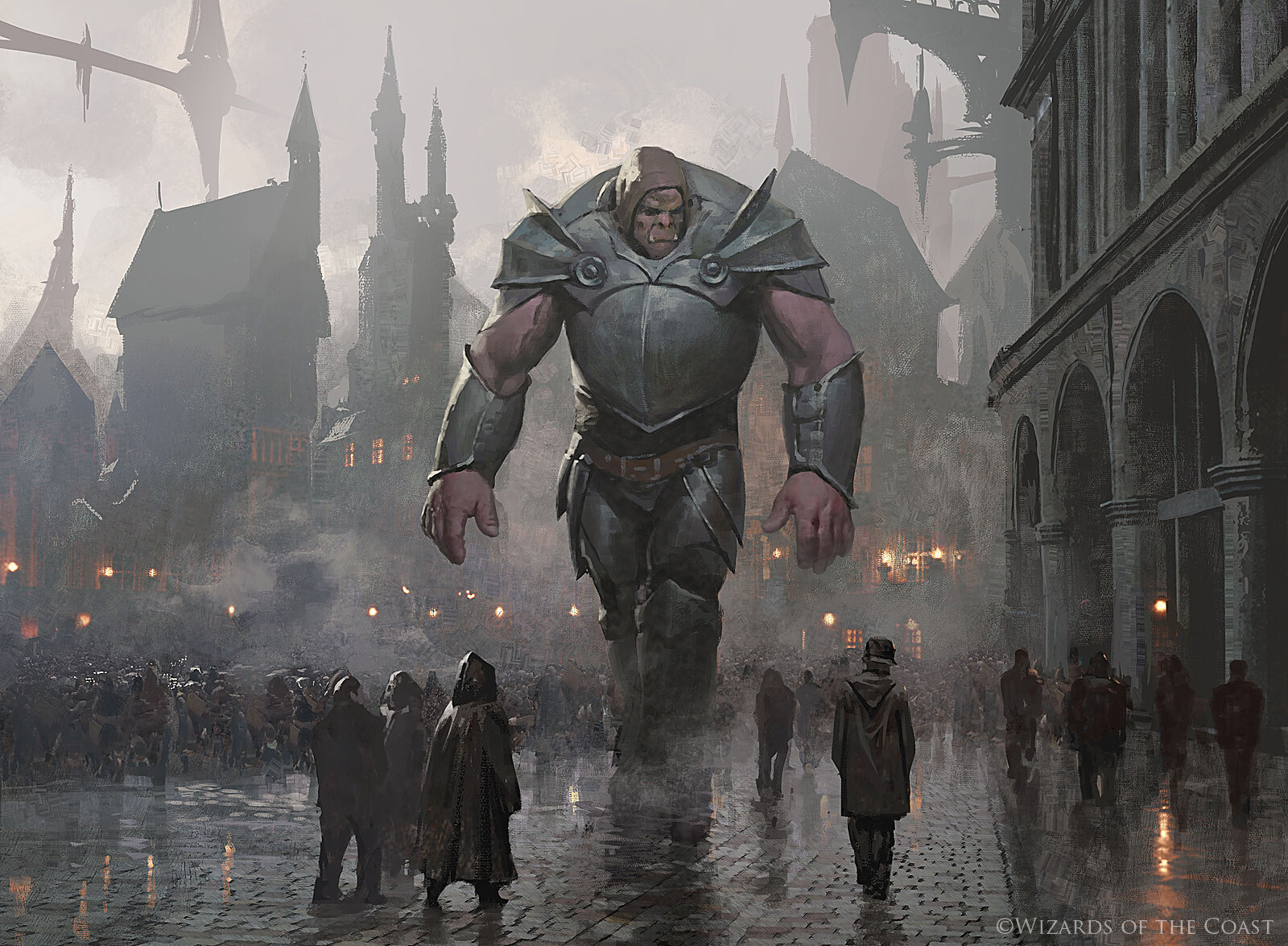
A bulky human tribesman sits in front of a bonfire, looking into the flames with absent gaze. He remembered people of his tribe - his people - that have died during a brutal war which has ended before it even started. His comrades, family, loved ones... Everyone gone in less than an hour. And all because of his decision.
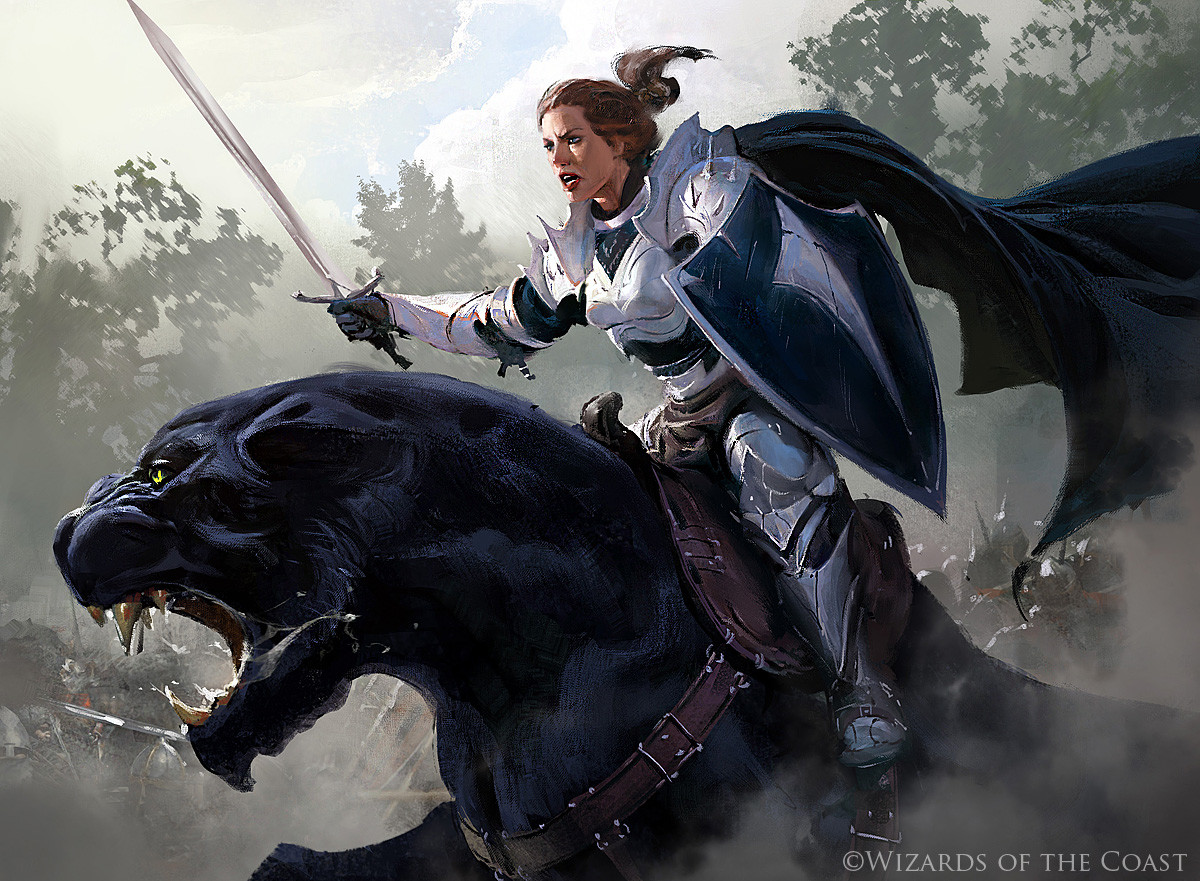
A young knight shouts at his squire, who - with almost primal fear in his eyes - was putting up a large tent in the middle of a clearing. He was trying his best, but the knight just shook his head, disconsolate. If only he took one of the good servants during his getaway... Well, this one will have to do, he thought to himself. Maybe with a little patience and guidance this boy will be of any use...
A slender elf in traveler's clothes looked at both tribesman and knight and sighed to himself. These two were at each others throats for the last three weeks, so it's just a matter of time until they start fighting once again. Oh, how he missed the Academy and his students... Atleast in their skirmishes he could've found any logic...
A middle-aged woman took off her crown and looked at it with clear despise. She knew that she was hated for killing the old king, who was apparently oh-so-good and loved, where - in fact - he casted out his own brother just to get the kingdom for himself. She knew that her court wanted her gone, that even her advisor was plotting against her... But she didn't care. She had one really powerful ally by her side, one that has never failed her before. His name? Fear. And it's about time that he paid a little visit in her enemies hearts.
These warlords, as different as they might be, are natural born leaders who stand on the battlefield side by side with their allies. Their skill lets them shift the tide of any battle - no matter how large or insignificant, no matter if it requires sword and shield or just a sharp tongue.
Some of them prefer to be a comrade that fights right beside his companions, where others prefer to stay out of the trouble, in a place where they can look for opportunities for an attack. All of them share a common trait, though - they know how to lead others to victory.
Born to Lead
Warlords are accomplished and competent battle leaders. They stand on the front line issuing commands and bolstering their allies while leading the battle with weapon in hand. They can be found everywhere, not only in the courtrooms or the barracks. A gifted teacher, mayor or even a simple peasant could become a warlord that would eventually shake even the greatest of nations. After all, revolutions usually start on the muddy streets with only one person that decided that they've had enough of lawlessness and dishonesty.
Quick Build
First, make Strength or Dexterity your highest ability score, depending on whether you want to focus on melee weapons or on archery (or finesse weapons) . Your next-highest score should be Charisma or Intelligence, depending on a warleader type you plan to adopt. Second, choose the noble background.
Class features
As a warlord, you gain following class features.
Hit Points
- Hit Dice: 1d10 per warlord level
- Hit Points at 1st Level: 10 + your Constitution modifier
- Hit Points at Higher Levels: 1d10 (or 6) + your Constitution modifier per warlord level after 1st
Proficiencies
- Armor: Light armor, medium armor, shields
- Weapons: Simple weapons, martial weapons
- Tools: Cartographer's tools
- Saving Throws: Constitution, Charisma
- Skills: Choose two skills from Athletics, Deception, History, Insight, Intimidation, Investigation, Persuasion and Perception
- Equipment: You start with the following equipment, in addition to the equipment granted by your background:
- • (a) two martial weapons or (b) a martial weapon and a shield
- • (a) scale mail, (b) leather armor or (c) chain mail (if proficient)
- • (a) a light crossbow and 20 bolts or (b) five javelins
- • (a) a dungeoneer’s pack or (b) an explorer’s pack
Leader's Instinct
You are always ready for anything. When you and any creature of your choice that can see or hear you rolls initiative, you each gain a bonus to AC equal to either your Intelligence or Charisma modifier (minimum of +1) that lasts until start of your first turn of the combat.
Moreover, after rolling initiative, you can decide to forgo your initiative count and replace it with a count of one of your allies. This count can't be higher than your initial score, and you always go after the creature you tied your score with.
The Warlord
| Level | Proficiency Bonus | Features |
|---|---|---|
| 1st | +2 | Leader's Instinct, Inspiring Word |
| 2nd | +2 | Fighting Style, Battlefield Presence |
| 3rd | +2 | Warleader Type |
| 4th | +2 | Ability Score Improvement |
| 5th | +3 | Extra Attack |
| 6th | +3 | Ability Score Improvement |
| 7th | +3 | Keen Eye, Warleader Type feature |
| 8th | +3 | Ability Score Improvement |
| 9th | +4 | Combat Leader |
| 10th | +4 | Warleader Type feature |
| 11th | +4 | Improved Battlefield Presence |
| 12th | +4 | Ability Score Improvement |
| 13th | +5 | Warleader Type feature |
| 14th | +5 | Ability Score Improvement |
| 15th | +5 | Demon of the Battlefield |
| 16th | +5 | Ability Score Improvement |
| 17th | +6 | Presence of a Leader |
| 18th | +6 | Warleader Type feature |
| 19th | +6 | Ability Score Improvement |
| 20th | +6 | True Warlord |
Inspiring Word
A shout of encouragement is enough to strengthen the determination of one of your companions. As an action, choose a friendly creature who can hear you. That creature gains a number of temporary hit points equal to twice your Warlord level + your Charisma modifier (minimum of 1) . Additionally, it can immediately use its reaction to make one melee weapon attack against a creature of your choice that you can see.
You can use this feature a number of times equal to 1 + half your Warlord level. When you finish a long rest, you regain all expended uses.
Fighting Style
At 2nd level, you adopt a style of fighting as your specialty. Choose one of the following options. You can’t take a Fighting Style option more than once, even if you later get to choose again.
Blind Fighting
You have blindsight with a range of 10 feet. Within that range, you can effectively see anything that isn't behind total cover, even if you're blinded or in darkness. Moreover, you can see an invisible creature within that range, unless the creature successfully hides from you.
Defense
While you are wearing armor, you gain a +1 bonus to AC.
Dueling
When you are wielding a melee weapon in one hand and no other weapons, you gain a +2 bonus to damage rolls with that weapon.
Great Weapon Fighting
When you roll a 1 or 2 on a damage die for an attack you make with a melee weapon that you are wielding with two hands, you can reroll the die and must use the new roll, even if the new roll is a 1 or a 2. The weapon must have the two-handed or versatile property for you to gain this benefit.
Interception
When a creature you can see hits a target, other than you, within 5 feet of you with an attack, you can use your reaction to reduce the damage the target takes by 1d10 + your proficiency bonus (to a minimum of 0 damage) . You must be wielding a shield or a simple or martial weapon to use this reaction.
Unarmed Fighting
Your unarmed strikes can deal bludgeoning damage equal to 1d6 + your Strength modifier on a hit. If you aren't wielding any weapons or a shield when you make the attack roll, the d6 becomes a d8.
At the start of each of your turns, you can deal 1d4 bludgeoning damage to one creature grappled by you.
Battlefield Presence
Also at 2nd level, when you take the Attack action, you can forgo one of your attacks and use a bonus action to direct one of your companions to strike. When you do so, choose a friendly creature who can see or hear you. That creature can immediately use its reaction to make one weapon attack, adding bonus to the attack's damage roll equal to 1d4 + your Intelligence modifier (minimum of +1) .
You can use this feature a number of times equal to 1 + half your Warlord level. When you finish a short or long rest, you regain all expended uses.
Warleader Type
Starting at 3rd level, you decide what type of leader you strive to become. Choose Chieftain, Tactician, Arcane Commander, Taskmaster, Runic Vanguard, Revenant, Shadow Commander or White Raven, all detailed at the end of the class description. The type you choose grants you features at 3rd level and again at 7th, 10th, 13th and 18th.
Ability Score Improvement
When you reach 4th level, and again at 6th, 8th, 12th, 14th, 16th, and 19th level, you can increase one ability score of your choice by 2, or you can increase two ability scores of your choice by 1. As normal, you can’t increase an ability score above 20 using this feature.
Extra Attack
Beginning at 5th level, you can attack twice, instead of once, whenever you take the Attack action on your turn.
Keen Eye
Starting at 7th level, if you spend at least 1 minute observing or interacting with another creature outside combat, you can learn certain information about its capabilities compared to your own. The DM tells you if the creature is your equal, superior, or inferior in regard to three of the following characteristics of your choice:
- • Strength score
- • Dexterity score
- • Constitution score
- • Intelligence score
- • Wisdom score
- • Charisma score
- • Armor Class
- • Current hit points
- • Total class levels (if any)
Combat Leader
Starting at 9th level, when you and any creature of your choice that can see or hear you rolls initiative, you each gain a bonus to initiative equal to your Charisma modifier (minimum of +1) .
Improved Battlefield Presence
By 11th level, you gain full control over the course of the battle. When you use Battlefield Presence, you can forgo two of your attacks instead of one and use a bonus action to direct two of your companions to strike.
Moreover, your tactical approach to every fight has made you a formidable opponent. Whenever you hit a creature with a weapon attack, the creature takes an extra damage equal to 1d4 + your Intelligence modifier (minimum of +1) .
Demon of the Battlefield
Beginning at 15th level, you can use Battlefield Presence an unlimited amount of times.
Presence of a Leader
Starting at 17th level, your allies will never fall so long as their symbol of hope remains. When an allied creature is reduced to 0 hit points, but not killed outright, it can drop to 1 hit point instead so long as it can see or hear you. Once an allied creature benefits from this effect, they cannot benefit from it again until they complete a long rest.
True Warlord
At 20th level, you become a leader you were always meant to be. You can increase two ability scores of your choice by 4. Your maximum for those scores is now 24.
Warleader Type
Not all warlords are the same. Some of them might lead only small tribes, where others can rule entire nations. Warleader type you choose reflects which type of warlord you are.
Chieftain
Blood right? Yeah, right. Maybe in your "civilization" they look at that as something to be proud of. Here? You either prove yourself to be a good leader or you'll get challenged for power by anyone who thinks he'll do better job than you. Hell, you could be the best chieftain in the history of your tribe and you'd still be fighting every day, just to remind everyone who's boss. So take your blood right, my noble friend, and either shove it or draw that laughable sword of yours, cause I won't be ordered around by someone who clearly doesn't know what he's doing.
Unarmored Defense
Starting when you choose this warleader type at 3rd level, while you are not wearing any armor, your Armor Class equals 10 + your Dexterity modifier + your Constitution modifier. You can use a shield and still gain this benefit.
Prey Drive
Also at 3rd level, at the start of your first turn of the combat, you can mark one enemy that you can see as prey. You, as well as a number of willing creatures who can see or hear you equal to your Charisma modifier have their walking speed increased by 20 feet until the end of your next turn, but they can move only in the direction of the prey.
If the target drops to 0 hit points before this effect ends, you can use a bonus action on a subsequent turn of yours to mark a new creature.
Wolf Pack Tactics
From 7th level, you, as well as creatures under the effect of Prey Drive gain following bonus based on which of their ability score is higher - Strength or Dexterity.
Strength. Immediately after a creature hits with a melee weapon attack using Strength, it can try to shove the target as a bonus action or as part of the reaction used by your Battlefield Presence.
Dexterity. When a creature moves, it adds its Dexterity modifier to its AC until it stops moving.
Follow the Alpha
Beginning at 10th level, when you hit a creature with a weapon attack, you can maneuver one of your comrades closer to the enemy. Choose a friendly creature who can see or hear you. That creature can move up to half its walking speed, but it can move only in the direction of your target.
You can use this feature a number of times equal to your Charisma modifier (a minimum of once) . When you finish a long rest, you regain all expended uses.
Wolf Pack Formation
At 13th level, creatures under the effect of Prey Drive gain advantage on attack rolls if at least one of their allies is within 5 feet of them and the ally isn't incapacitated.
Thrill of the Hunt
Starting at 18th level, you gain 10 temporary hit points for each creature that accepted the benefit of Prey Drive at the start of your first turn of the combat.

Tactician
Are you fully aware of who are you talking to, my savage "friend"? My father used to be a tactician for the crown! He lead the armies of thousands, helped his king establish peace with the surrounding nations and took care of numerous other things far more important than being a part of disputes revolving around goats, pigs or dirty bearded man with anger issues. I have learned everything from that man, which make me a natural choice to lead. But, if I have to prove it... Squire! Fetch me my sword and polish the armor! Someone needs a lesson of true leadership.
Bonus Proficiency
When you choose this warleader type at 3rd level, you gain proficiency in one of the following skills of your choice: History, Insight, or Investigation. Alternatively, you learn one language of your choice.
War Game
Starting at 3rd level, when you roll initiative, you can quickly maneuver your allies into more advantageous positions. Choose a number of willing creatures who can hear you equal to your Intelligence modifier (minimum of one) . These creatures can move up to half their speed without provoking opportunity attacks.
Superior Tactics
Also beginning at 3rd level, you can use the Help action as a bonus action. Additionally, when you use the Help action to aid an ally in attacking a creature, the target of that attack can be within 30 feet of you, rather than 5 feet of you, if you can see or hear that target.
Tactical Retreat
Starting at 7th level, you can use an action to safely relocate your troops. Choose a number of friendly creatures equal to your Intelligence modifier (minimum of one) who can hear you. These creatures can use their reaction to move up to half their speed without provoking opportunity attacks.
Pawns on the Board
At 10th level, when a friendly creature that you can see takes damage from an enemy, you can use your reaction to direct one of your other companions to retaliate. Choose a friendly creature who can hear you. That creature can use its reaction to make one weapon attack against an enemy of your choice that you can see.
You can use this feature a number of times equal to your Intelligence modifier (a minimum of once) . When you finish a long rest, you regain all expended uses.
Coordinated Movement
Beginning at 13th level, all allied creatures who can hear you during combat can move through each other's spaces without it being difficult terrain.
Food for Ravens
At 18th level, when a friendly creature that you can see is reduced to 0 hit points by an enemy, an ally that you've directed using Pawns on the Board feature can make one melee or ranged attack instead of a weapon attack. For the purpose of granting additional class bonuses (f.e. Rogue's Sneak Attack) , this attack is considered a part of that creature's turn.
Moreover, if a friendly creature reduced to 0 hit points can benefit from Presence of a Leader feature, you can decide to sacrifice it instead of saving it. If you sacrifice that creature, it counts as if it benefited from the effect of Presence of a Leader, and the ally directed with Pawns on the Board feature can make its attack with advantage. If that attack hits, treat it as a critical hit regardless of the roll.

Arcane Commander
Can you two just cut it out?! Arguments are one thing, but I won't let you shed each others' blood. Remember who the real enemy is... And for gods sake, Leif, don't give me that look every time I mention her. We all lost something precious because of her rule - you lost your tribe, Kaihan lost his family and I... Well, I lost everything, too. My home, my life's work, all my students... They were just children, too, you know? Little kids that dreamed about becoming mages themselves, who looked up to me as if I knew every secret of the universe. Now they're gone, reduced to mere dust. So stop acting like you're the sole victim of her tyranny, pack your things and let's go. I'll lead the way.
| Warlord Level | Cantrips Known | Spells Known | 1st | 2nd | 3rd | 4th |
|---|---|---|---|---|---|---|
| 3rd | 2 | 3 | 2 | — | — | — |
| 4th | 2 | 4 | 3 | — | — | — |
| 5th | 2 | 4 | 3 | — | — | — |
| 6th | 2 | 4 | 3 | — | — | — |
| 7th | 2 | 5 | 4 | 2 | — | — |
| 8th | 2 | 6 | 4 | 2 | — | — |
| 9th | 2 | 6 | 4 | 2 | — | — |
| 10th | 3 | 7 | 4 | 3 | — | — |
| 11th | 3 | 8 | 4 | 3 | — | — |
| 12th | 3 | 8 | 4 | 3 | — | — |
| 13th | 3 | 9 | 4 | 3 | 2 | — |
| 14th | 3 | 10 | 4 | 3 | 2 | — |
| 15th | 3 | 10 | 4 | 3 | 2 | — |
| 16th | 3 | 11 | 4 | 3 | 3 | — |
| 17th | 3 | 11 | 4 | 3 | 3 | — |
| 18th | 3 | 11 | 4 | 3 | 3 | — |
| 19th | 3 | 12 | 4 | 3 | 3 | 1 |
| 20th | 3 | 13 | 4 | 3 | 3 | 1 |
Spellcasting
When you choose this warleader type at 3rd level, you augment your tactical prowess with the ability to cast spells.
Cantrips
You learn two cantrips of your choice from the wizard spell list. You learn an additional wizard cantrip of your choice at 10th level.
Spell Slots
The Arcane Commander Spellcasting table shows how many spell slots you have to cast your spells of 1st level and higher. To cast one of these spells, you must expend a slot of the spell's level or higher. You regain all expended spell slots when you finish a long rest.
For example, if you know the 1st-level spell Jump and have a 1st-level and a 2nd-level spell slot available, you can cast Jump using either slot.
Spells Known of 1st Level and Higher
You know three 1st-level wizard spell of your choice, one from any school of magic, and two chosen from the transmutation and evocation spells on the wizard spell list.
The Spells Known column of the Arcane Commander Spellcasting table shows when you learn more wizard spells of 1st level or higher. Each of these spells must be an transmutation or evocation spell of your choice, and must be of a level for which you have spell slots. For instance, when you reach 7th level in this class, you can learn one new spell of 1st or 2nd level.
The spells you learn at 8th, 14th, and 20th level can come from any school of magic.
Whenever you gain a level in this class, you can replace one of the wizard spells you know with another spell of your choice from the wizard spell list. The new spell must be of a level for which you have spell slots, and it must be an transmutation or evocation spell, unless you're replacing the spell you gained at 3rd, 8th, 14th, or 20th level from any school of magic.
Spellcasting Ability
Intelligence is your spellcasting ability for your wizard spells, since you learn your spells through study and memorization. You use your Intelligence whenever a spell refers to your spellcasting ability. In addition, you use your Intelligence modifier when setting the saving throw DC for a wizard spell you cast and when making an attack roll with one.

Spell save DC = 8 + your proficiency bonus + your Intelligence modifier
Spell attack modifier = your proficiency bonus + your Intelligence modifier
Magical Stimulation
Starting at 3rd level, when you roll initiative, you can slightly stimulate the agility of your allies. Choose a number of willing creatures that you can see equal to your Intelligence modifier (minimum of one) . These creatures have their speed increases by 5 feet until the end of a combat.
Arcane Assault
By 7th level, you acquire knowledge necessary to lead full-on magical assault.
When you use Inspiring Word, targeted creature can use its reaction to cast one of its cantrips in place of a melee weapon attack. The cantrip must have a casting time of 1 action and must target only one hostile creature.
Additionally, when you take the Attack action and forgo one of the attacks in order to use Battlefield Presence, you can cast one of your cantrips in place of the second attack.
Crackling Shield
Starting at 10th level, you can weave lightning magic around your allies for protection. As an action, you can expend one spell slot in order to shield creatures under the effect of Magical Stimulation. These creatures gain a number of temporary hit points equal to five times the spell slot’s level.
Hurl the Spark
At 13th level, when you energize your allies at the beginning of a fight, you also put a small lightning glyph onto their weapons.
Creatures under the effect of Magical Stimulation can decide to awaken the glyph whenever they add your Intelligence modifier to the attack’s damage:
Jolt. When a creature rolls damage against its target, it can replace the damage type with lightning damage. This damage ignores resistance to lightning damage.
Spark. When a creature hits its target with a weapon attack, it can cause small spark to leap from the target to a different creature of its choice that it can see within 5 feet of it. The second creature takes lightning damage equal to 1d4 + your Intelligence modifier (minimum of +1) .
Improved Arcane Assault
At 18th level, your knowledge of the arcane lets you utilize powerful magic on the battlefield.
When you use Inspiring Word, targeted creature can use its reaction to cast one of its spells in place of a melee weapon attack. The spell must have a casting time of 1 action and must target only one hostile creature.
Additionally, when you take the Attack action and forgo one of the attacks in order to use Battlefield Presence, you can cast one of your spells in place of the second attack.

Taskmaster
Can you explain to me, why haven't I received the heads of these so-called "heroes" on a silver platter yet? How hard can it be to capture them? No, don't answer, I won't listen to your babbling anyway. Guard! Hurl that man into the jail, deepest and dampiest part of it, if you will. You! Yes, you, with a bear emblem embroidered on his jacket. You are my new advisor, congratulations. Do a better job than your predecessor, or you'll end up in a similar manner. Oh, don't be scared! Chin up! First task will be easy! Assemble a party of nastiest, most crooked man you will be able to find and send them to me. After that, inform the council that I'll be away from the Capital for a few weeks. If they ask why, just tell them that I have to take care of three small problems running around the outskirts. They'll know what I meant.
Bonus Proficiency
When you choose this warleader type at 3rd level, you learn one language of your choice. You also become proficient in Intimidation skill. If you already have this skill proficiency, you gain proficiency with one other Warlord skill of your choice.
Additionally, your proficiency bonus is doubled for any Charisma (Intimidation) check you make.
Behest
Starting at 3rd level, you can use your bonus action to order a friendly creature who can see or hear you to move. That creature can move up to a number of feet equal to five times your Charisma modifier, but no more than its maximum speed.
Pure Desperation
By 7th level, you know how to make a creature so desperately afraid of your anger, that it would be willing to throw aside all concern for its well-being just to please you.
When a creature uses Inspiring Word to make one melee weapon attack with its reaction, it can use one of its Hit Dice to attack recklessly. Doing so gives that creature advantage on this attack, but attack rolls against it have advantage until start of its next turn. If that attack hits, the creature can roll its Hit Dice twice and add the value rolled to the attack's damage roll.
Variant: Noble
Intimidation is... a risky mechanic, to say the least - both for the player, and for the entire table. If you don't like the flavor of Taskmaster or think it might be an unhealthy choice, you can use variant of this subclass: Noble.
To change this subclass into its variant version, simply swap any Charisma (Intimidation) checks and bonuses to Charisma (Persuasion) instead.
Only One to Fear
At 10th level, you know how to gently remind your allies who should they fear. When you use Inspiring Word on a frightened creature, the effect immediately ends.
Moreover, when you use Inspiring Word on a possessed creature, make a Charisma (Intimidation) check contested by the target's Wisdom (Insight) check. If you succeed, the possession ends.
Intimidating Word
At 13th level, you've learned to inspire people mostly through fear. When you use Inspiring Word on a creature, it can spend one of its Hit Dice to gain an additional temporary hit points equal to its Constitution modifier + your Charisma (Intimidation) score.
Submission
At 18th level, as a bonus action, you can politely ask your allies to do a better job at hitting your enemies. Choose a number of willing creatures who can see or hear you equal to your Charisma modifier (minimum of one) . For 1 minute, the chosen creatures can attack recklessly. Doing so gives the creature advantage on attack rolls during its turn, but attack rolls against it have advantage until their next turn.
Once you use this feature, you can't use it again until you finish a long rest.


Runic Vanguard
Why exactly would I want to go with, you, "my queen"? To protect you from danger? I say you're perfectly capable of taking care of any danger yourself, given you were able to kill my oldest friend in order to take the kingdom from his dead, cold hands. If not for your royal blood and the crown you're - to my annoyance - rightfully wearing, we wouldn't be even talking right now. And no, I don't care who you are and what good or bad you did for the people - my loyalty is not to you, but to the kingdom itself. So, if you don't want the legendary "Protector of the Land" to become a first bullet point on the list of your problems - take your merry band of thugs and close the door behind you. It's windy today, and you're making a draft.
Restriction: Medium Character
A small creature wouldn’t be able to provide enough cover for their allies during the battle.
Bonus Proficiency
When you adopt this warleader type at 3rd level, you gain proficiency with smith’s tools, and you learn to speak, read, and write Giant.
Tower Shield
Starting at 3rd level, whenever you finish a long rest, you can touch a shield of your choice and inscribe it with powerful, ancient runes. After that, you can proceed to turn that shield into a Tower Shield, provided you have smith's tools in hand, 6lbs. of iron and at least one additional hour of downtime.
After the change, Tower Shield acquire „Two-handed” and „Heavy” weapon properties for anyone but you. When you use it, runes inscribed upon the surface of a shield move partially onto your arm, giving you enough strength to use the Tower Shield with one hand.
Tower Shield has its own set of properties:
- When you shove a creature with your shield, the target takes bludgeoning damage equal to 1d4 + your Strength modifier if your check succeed.
- Tower Shield provides half cover to you and three-quarters cover to any creature positioned behind you, but only against ranged attacks or an effects that allow to make a Dexterity saving throw.
The damage die of your shove increases when you reach certain levels in this class, increasing to 1d6 at 7th level, 1d8 at 13th level and 1d10 at 18th level.
You can have one Tower Shield at the time. If you attempt to create another, runes inscribed upon the old one disappear, and the shield becomes unwieldy and - for the most part - unusable. When you die, the shield continues to be Tower Shield for another 24 hours, after which it becomes unusable.


Shield Bash
Also starting at 7th level, when one of your companions hits a creature within 5 feet of you with a melee weapon attack, you can use your reaction to shove that creature with a shield.
In addition, Tower Shield now counts as magical for the purpose of overcoming resistance and immunity to nonmagical attacks and damage.
Iron Colossus
By 10th level, the runes from your shield have permanently etched themselves onto your skin, and their magic have changed your appearance. When you gain this feature, roll 3d4. You grow a number of inches in height equal to the roll, and your weight increases by 8 (2d6) pounds per gained inch.
Additionally, as a bonus action, you can expand the runic tattoo onto your whole body and armor, imbuing yourself with the might of the giants. For 1 minute, you gain the following benefits:
- If you are smaller than Large, you become Large, along with anything you are wearing. If you lack the room to become Large, your size doesn't change.
- You have advantage on Strength checks and Strength saving throws.
- Once on each of your turns, one of your attacks with a weapon, shield or an unarmed strike can deal an extra 1d8 damage to a target on a hit.
You can use this feature a number of times equal to your Constitution modifier, and you regain all expended uses of it when you finish a long rest.
Earthshatter
At 13th level, while you're enlarged by the power of your runes, you can use your action to forcefully slam your shield into the ground, causing a large shockwave able to shatter even sturdiest of enemy formations. Each creature in a 30-foot cone in front of you must make a Dexterity saving throw (DC equal to 8 + your proficiency bonus + your Strength modifier) . On a failure, a creature takes 5d12 bludgeoning damage and is knocked prone. On a success, a creature takes half as much damage and isn’t knocked prone.
Once you use this feature, you can’t use it again until you finish a long rest.
Iron Giant
At 18th level, you learn how to further empower your rune-powered transformation. As a result, the extra damage you deal with the Iron Colossus feature increases to 1d10. Moreover, when you use that feature, your size can increase to Huge, and while you are that size, your reach increases by 5 feet.
Aspect of Lost Ostoria (Optional)
20th-level Warlord feature, which replaces True Warlord
The runes engraved on your body have transformed you into a completely different being. When you gain this feature at 20th level, roll 3d4. You grow a number of inches in height equal to the roll, up to a maximum of 10ft., and your weight increases by 8 (2d6) pounds per gained inch. At your option, you also gain a minor physical attributes that are reminiscent of a giant of your choice. In addition, you change in the following way:
- Your Strength and Constitution scores increase by 4. Your maximum for those scores is now 24.
- Your creature type permanently changes from Humanoid to Giant.
6lbs. of iron?
Iron is one of Trade Goods available in the game and it costs 1 sp for 1lb. of material. You can also utilize the materials salvaged from the enemies (metal armor, metal weapons) to make a Tower Shield. At your DM's discretion, you can also completely skip the material part, explaining the change in a similar manner to Artificer Armorer's Arcane Armor.



Revenant
The queen? Yeah, we don't like her either. Right, Ziggy? Oh, sorry, sorry! It's okay, put your weapons down, boys... It's just Ziggy. He's a ghost, yes, but he's a good lad! He was killed in the war during the takeover, but he came back to me a few days after he died. You know, typical vengeance on the evil queen stuff: "We need to take her down, Claudio, she's bad and I died because of her, goddammit..!" Right, Ziggy? Yeah, I've told you already where you can shove that ghostly middle finger of yours. Now, where was I..? Ah, the queen! If you need any help in taking her down, boys - count us in. Ziggy and the others like him can't wait to meet and greet her in the afterlife, and I really don't want them to wait anymore.
Ghost Legionnaire
Your bond with one of your fallen comrades have surpassed death itself. When you choose this warleader type at 3rd level, you gain a faithful companion, a ghost legionnaire. It's friendly to you and your companions, and it obeys your commands. See its game statistics in the Ghost Legionnaire stat block, which uses your proficiency bonus (PB) in several places. You determine the creature's appearance and if it communicates directly, or if it's a silent ally that appears whenever needed. If you choose silent option, the legionnaire gains Message cantrip, which it can cast at your will, without expending material components.
When you roll initiative, choose a weapon: Spear and Shield, Longsword or Shortbow. The creature equips a spectral version of that weapon and uses it in a fight. On your turn, you can command the legionnaire to use its action to swap its weapon to a different one (no action required by you).
In combat, the legionnaire shares your initiative count, but it takes its turn immediately after yours. It can move and use its reaction on its own, but the only action it takes on its turn is the Dodge action, unless you use a bonus action on your turn to command it to take another action. If you are incapacitated, the legionnaire can take any action of its choice, not just Dodge.
If you use Inspiring Word on it, it either gains temporary hit points or restores its hit points (your choice) . If the legionnaire has died during the fight, you can summon him back at the end of a short or long rest. The legionnaire also vanishes if you die.
Spirit March
Also at 3rd level, when you use Battlefield Presence on the legionnaire, it can move up to 15 feet in the direction of your choice before making its attack.
Incorporeal Tactics
At 7th level, the legionnaire can move through other creatures and objects as if they were difficult terrain, as shown in the Ghost Legionnaire stat block.
In addition, the legionnaire’s attacks now count as magical for the purpose of overcoming resistance and immunity to nonmagical attacks and damage.

Ghost Legionnaire
Small or medium undead
- Armor Class 14 + your proficiency bonus (or 16 + your proficiency bonus [Spear/Shield Only])
- Hit Points 2 + your Charisma modifier + five times your Warlord level
- Speed 30 ft.
STR DEX CON INT WIS CHA 14 (+2) 14 (+2) 14 (+2) 11 (+0) 10 (+0) 11 (+0)
- Saving Throws: Str +2 plus PB, Con +2 plus PB
- Skills: Stealth +2 plus PB x 2, Perception +0 plus PB
- Damage Immunities: necrotic, poison
- Condition Immunities: exhaustion, grappled, poisoned
- Senses: darkvision 60 ft., passive Perception 10 + (PB)
- Languages: understands the languages you speak
- Proficiency Bonus (PB): equals your bonus
Magical Vitality. The legionnaire restores all of its hit points at the end of short or long rest.
Incorporeal Movement (7th level). The legionnaire can move through other creatures and objects as if they were difficult terrain. It takes 5 (1d10) force damage if it ends its turn inside an object.
Actions
Spear (Spear/Shield Only). Melee Weapon Attack: your Charisma modifier + PB to hit, reach 5 ft., one target you can see. Hit: 1d6 + PB piercing damage.
Longsword (Longsword Only). Melee Weapon Attack: your Charisma modifier + PB to hit, reach 5 ft., one target you can see. Hit: 1d10 + PB slashing damage.
Shortbow (Shortbow Only). Ranged Weapon Attack: your Charisma modifier + PB to hit, reach 80/320 ft., one target you can see. Hit: 1d6 + PB piercing damage.
Reactions
Deflect Attack (Spear/Shield Only). The legionnaire imposes disadvantage on the attack roll of one creature it can see that is within 5 feet of it, provided the attack roll is against a creature other than the legionnaire. It must be wielding a shield to use this reaction.
Army of Two
At 10th level, you and your spectral comrade became a real army of two. You gain following benefits:
- When you hit a creature with a weapon attack, you create an opening for your companion. The next attack roll against the target by the legionnaire has advantage if the attack is made before the end of your turn.
- When you use Battlefield Presence on the legionnaire, you can also command it to take the Attack action on its turn.
Possession
At 13th level, your spectral companion's influence on the living world becomes strong enough for it to attempt to possess a humanoid creature.
As an action, the legionnaire can force one humanoid within 5 ft. of him to make a Charisma saving throw (DC equal to 8 + your proficiency bonus + your Charisma modifier) . On a failed save, that creature is possessed by the legionnaire; the ghost then disappears, and the target is incapacitated and loses control of its body. The legionnaire now controls the body but doesn't deprive the target of awareness. The ghost can't be targeted by any attack, spell, or other effect, except ones that turn undead, and it retains its alignment, Intelligence, Wisdom and Charisma. It otherwise uses the possessed target's statistics, but doesn't gain access to the target's knowledge, class features, or proficiencies other than those with weapons and armor.
While possessing a humanoid, the legionnaire can take any action of its choice, not just Dodge. It has access to its spectral weapons, which can be swapped in the same manner as regular weapons. It also retains its Deflect Attack and Magical Vitality features.
The possession lasts until the body drops to 0 hit points, the legionnaire ends it as an action, or the ghost is turned or forced out by an effect like the dispel evil and good spell. When the possession ends, the legionnaire reappears in an unoccupied space within 5 ft. of the body. The target is immune to the ghost's Possession for 1d4 days after the possession ends.
A humanoid whose challenge rating is equal to or greater than your warlord level can't be possessed by the legionnaire.
Once you command the legionnaire to use this feature, it must finish a long rest before it can use it again.
Stolen Life
From 18th level, humanoid possessed by the legionnaire must roll a death saving throw at the start of each of the legionnaire's turns. On a third failure, the creature's soul is repelled from the body, and the creature dies. After that, the legionnaire can't be turned while in the body or be forced out from it by any magical means, short of a Wish spell. It can also freely enter and leave the body as an action.
If the creature has three successful saves, its soul can't be repelled from the body, even if the ghost possesses it again.
Shadow Marshal
You must be truly desperate to come to me, Cassandra. Let me guess - Protector of the Land has shown you the door and you're out of options? Don't act surprised, my queen. My shadows lurk everywhere, so it's only natural I know these things. Hey, you've appointed me a kingdom's tactician because of these talents, not because you respect my planning skills. Either way... It seems you've finally decided to take the matter of those ragtags into your own hands, huh? Stupid, but respectable. As your tactician I would advise against such actions, but as myself... Let's just say I'm bored of sitting in the castle all day. A small hunt will be an interesting way of breaking the routine.
Shade Sight
When you choose this warleader type at 3rd level, you gain darkvision out to a range of 60 feet. If you already have darkvision from your race, its range increases by 30 feet.
Living Shadow
At 3rd level, the darkness that lies within you stains your shadow, changing it into a foul beast that feeds on vitality of living creatures. It's completely passive towards you, your allies or enemies, and it remains hidden within the shadows until you use Battlefield Presence to command it to attack. When you do so, choose a creature that you can see within 15 feet of you. The shadow immediately lunges towards that creature and makes one melee weapon attack in the same manner as if you would make this attack. On a hit, the attack deals an extra damage equal to 1d4 + your Intelligence modifier (minimum of +1) .
Shadow Dash
Also at 3rd level, you can use your reaction to teleport to an unoccupied space you can see within 5 feet of the target your shadow hit or missed with its attack.
You can use this feature a number of times equal to your Charisma modifier (minimum of once) . You regain all expended uses when you finish a long rest.
Death Mark
Starting at 7th level, when you teleport to a creature using Shadow Dash feature, you can make one melee weapon attack as part of the same reaction.
Dark Creature
Starting at 10th level, your connection to the Plane of Shadows deepens. You gain following benefits:
- You can attempt to hide even when you are only lightly obscured by dim light.
- Creatures that rely on darkvision have disadvantage on Wisdom (Perception) checks when they try to spot you in the dim light or darkness.
Extra Attack
At 11th level, your shadow grows stronger and hungrier. You can use Improved Battlefield Presence to command your shadow to attack creature of your choice twice instead of once. You can also direct it to strike two different creatures that you can see within 15 feet of you.
Underworld Gambit
At 13th level, as an action, you can wrap shadows around your weapon and then vanish into the darkness. In the form of a shade, you dash from one enemy to another, striking up to five creatures you can see within 30 feet of you. Make a melee weapon attack against each target. On a hit, the attack deals an extra 3d6 psychic damage to the target.
You can then teleport to an unoccupied space you can see within 5 feet of one of the targets you hit or missed.
Once you use this feature, you can’t use it again until you finish a long rest.
Master of Shadows
From 18th level, when you roll initiative and have no uses of your Shadow Dash feature left, you regain one use of that feature.
No Light Within (Optional)
20th-level Warlord feature, which replaces True Warlord
The darkness within you have extinguished all traces of light that your shadow has not yet devoured. When you gain this feature at 20th level, you either become a creature of pure gloom - a shade, a living shadow - or you gain minor physical attributes of a creature that originates from Shadowfell. You also change in the following way:
- You can increase two ability scores of your choice by 4. Your maximum for those scores is now 24.
- Your creature type permanently changes from Humanoid to Monstrosity.

White Raven
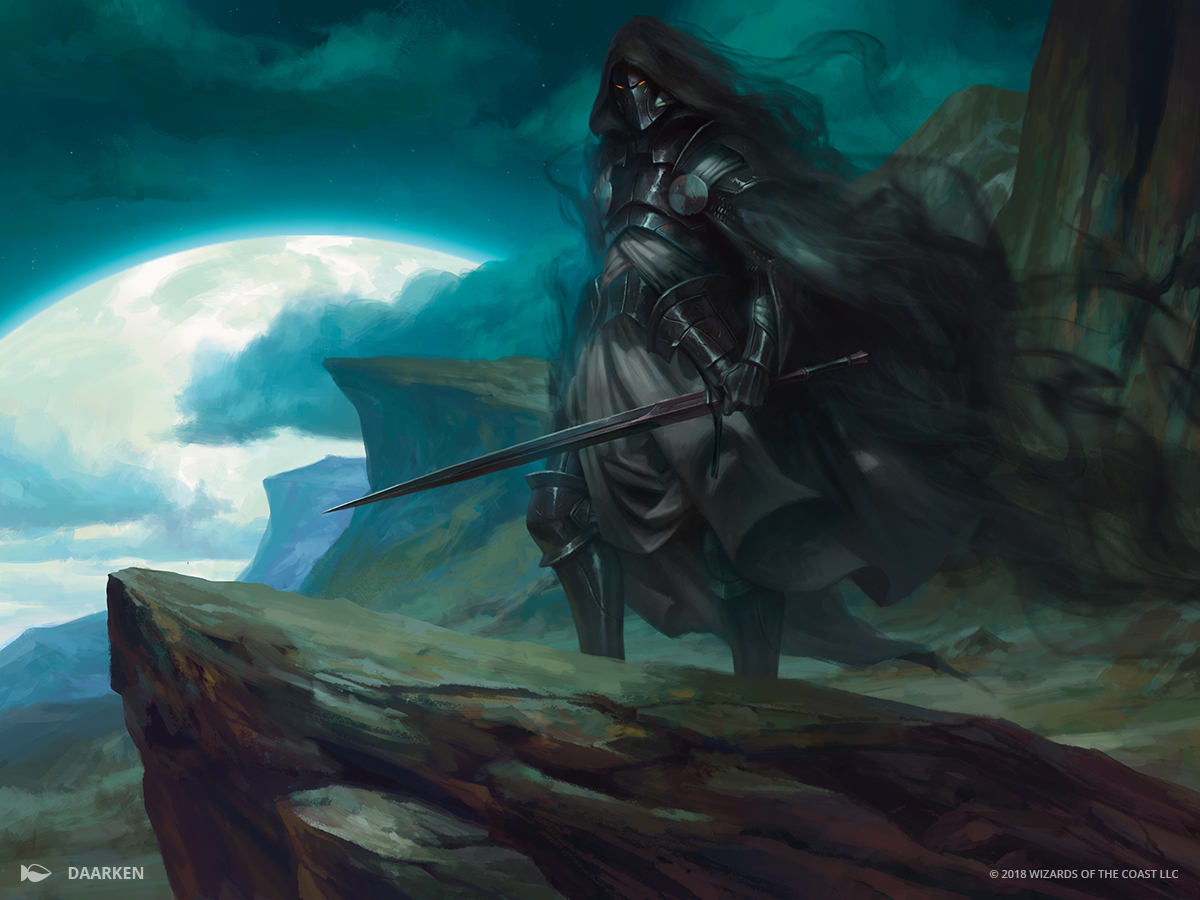
Okay, correct me if I'm wrong, Kaihan - your father is... Well, was... Legendary Maximilian Descue, also known as the White Raven? Why didn't you say so?! Seeing how Leif and Roland treated you I thought he was some small, insignificant fry of a tactician, but... White Raven? I'll be damned. Was he really as good as everyone says? Rumor has it that once he has learned soldier's name, he never forgot it... And that he took his time to personally write all the letters sent to the families of the fallen. Is it true, Kaihan? Was he that devoted to his troops, or are those just some made up... Kaihan, are you crying?
Bonus Proficiency
When you choose this warleader type at 3rd level, you gain proficiency in one of the following skills of your choice: Intimidation, Insight, or Persuasion. Alternatively, you learn one language of your choice.
Seize the Initiative
At 3rd level, after rolling initiative, you can command one of your allies to press the advantage. Choose a friendly creature that can hear you. That creature can replace its initiative count with your current score. After that, the creature shares your initiative count, and it takes its turn immediately after yours.
You can decide to use Seize the Initiative before or after Leader’s Instinct feature.
Inspiring Assault
Also starting at 3rd level, when you take the Attack action on your turn, you can use the Help action as a bonus action. Additionally, when you use the Help action to aid an ally in attacking a creature, the target of that attack can be within 30 feet of you, rather than 5 feet of you, if you can see or hear that target.
Order Forged from Chaos
At 7th level, you can use an action to lead your allies out of a disadvantageous position. Choose a number of creatures equal to your Charisma modifier (minimum of one) who can hear you. These creatures can use their reaction to move up to half their speed, ignoring the effects of difficult terrain.
White Raven Tactics
At 10th level, as a bonus action, you can direct one of your comrades who can hear you to shift formation. That creature can replace its initiative count with your current score. After that, the creature shares your initiative count, and it takes its turn immediately after yours.
If the creature has already acted in the current round, it can act once again on its new initiative count.
You can use this feature a number of times equal to your Charisma modifier (a minimum of once) . When you finish a long rest, you regain all expended uses.
Bolstering Voice
From 13th level, your clarion voice strengthens the will of your comrades. If a creature can hear you during combat, it has advantage on saving throws against being frightened.
White Raven’s Hammer
At 18th level, when you hit a creature with a weapon attack, you can use this feature to greatly empower the strike in order to disrupt creature’s senses. You add the extra 5d10 to the attack's damage roll, and the target must make a Constitution saving throw (DC equal to 8 + your proficiency bonus + your Strength or Dexterity modifier) . On a failed save, the target can’t act on its next turn, as if it was surprised.
If this attack reduces the target to 50 hit points of fewer, that target instantly fails its Constitution saving throw.
Once you use this feature, you must finish a long rest before you can use it again.
Clarion Call
Also starting at 18th level, if you reduce the creature to 0 hit points using White Raven’s Hammer, you can use a bonus action to shout a battle cry that inspires your allies to renew their efforts. Choose a number of creatures equal to your Charisma modifier (minimum of one) who can hear you. These creatures can immediately use their reaction to make one weapon attack against an enemy of your choice that you can see. You choose the order in which your allies’ attacks resolve.
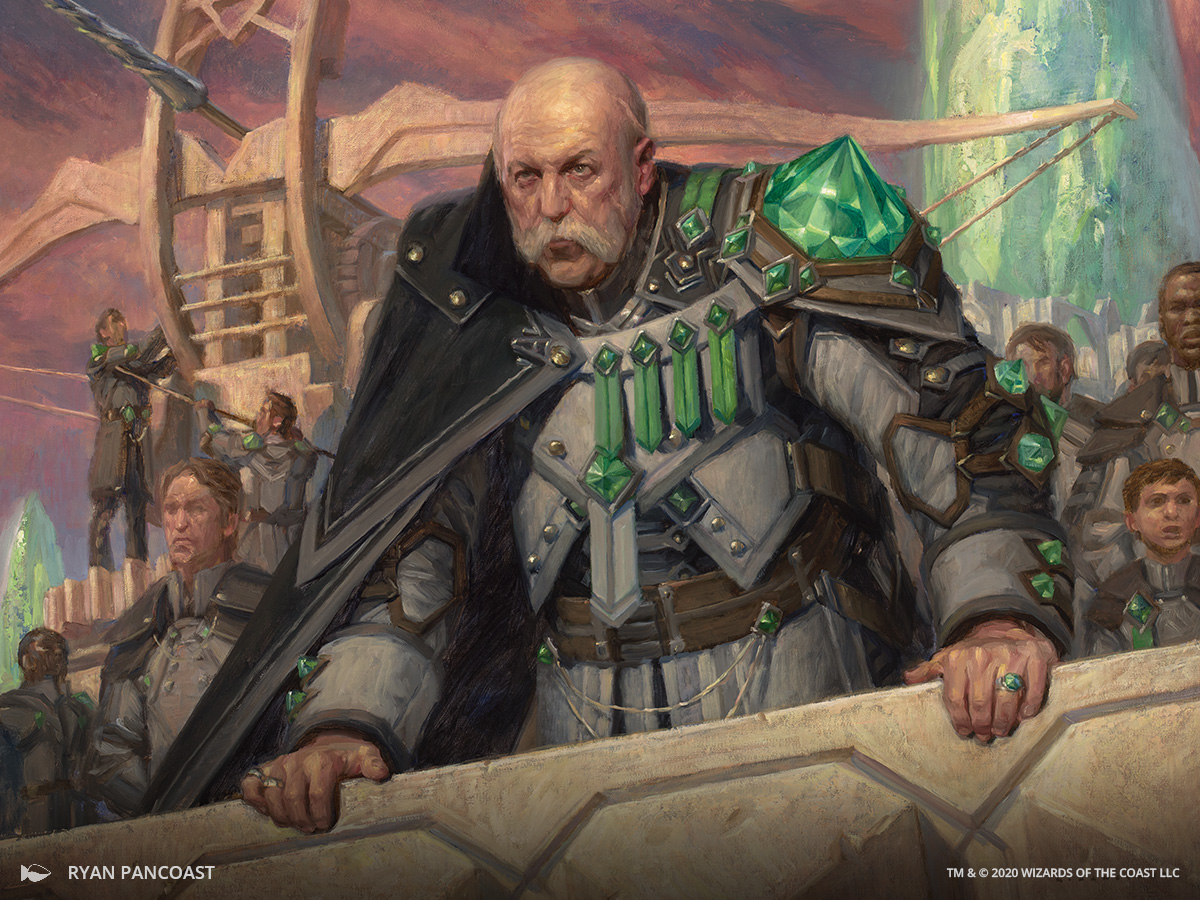
Controller
How is it possible that a high elf with psionic powers leads a band of thugs and thieves? It's rather simple question, my queen, and you can ask it directly instead of thinking it as loud as you do. Yes, I can read minds. Yes, I'm insolent and you probably should cut my head off for that, but you won't do it as long as you need my assistance. So, can we go back to the question at hand, now? The reason for this is actually quite simple. I use my powers differently than those idiots back home, so they casted me out as an "immoral abomination". Immoral abomination! Only because I have enough rational thought to see that moving boxes and jumping higher is not the best use of a psionic power that can literally shatter someone's mind. No matter. It's in the past. Now I lead these boys... Why? No particular reason. It just pays better than sticking your neck out in the dungeon.
Psionic Power
At 3rd level, you harbor a wellspring of psionic energy within yourself. This energy is represented by your Psionic Energy dice, which are each a d6. You have a number of these dice equal to twice your proficiency bonus, and they fuel various psionic powers you have, which are detailed below.
Some of your powers expend the Psionic Energy die they use, as specified in a power's description, and you can't use a power if it requires you to use a die when your dice are all expended. You regain all your expended Psionic Energy dice when you finish a long rest. In addition, as a bonus action, you can regain one expended Psionic Energy die, but you can't do so again until you finish a short or long rest.
When you reach certain levels in this class, the size of your Psionic Energy dice increases: at 5th level (d8), 11th level (d10), and 17th level (d12).
The powers below use your Psionic Energy dice. Some of those powers require your target to make a saving throw to resist the power's effects. The saving throw DC is calculated as follows:
Power save DC = 8 + your proficiency bonus + your Intelligence modifier
Telepathic Manipulation. When you take the Attack action on your turn, you can forgo one of your attacks and try to access a creature's mind. Choose one humanoid that you can see within 60 feet of you. That target must make a Wisdom saving throw. On a failed save, the creature has disadvantage on saving throws against your other Psionic abilities and it can’t take a reaction by itself for 1 minute, or until you lose your concentration (as if you were concentrating on a spell) . While the effect is active, you have a telepathic link with the target as long as the two of you are on the same plane of existence, and you can use Battlefield Presence on it as if it was one of your companions.
As an action, the creature can block your influence until the start of its next turn. If it chooses to perform this action, it can also repeat Wisdom saving throw against your save DC. On a success, the effect ends.
Once you take this action, you can't do so again until you finish a long rest, unless you expend a Psionic Energy die to take it again.
Mental Assault. As a bonus action, you can expend one Psionic Energy die to unleash a psychic attack on one creature you can see within 60 feet of you. The target must make an Intelligence saving throw or take psychic damage equal to Psionic Energy dice roll + your Intelligence modifier.
Telepathic Link. As an action, you can establish telepathic communication between yourself and your troops. Choose one or more willing creatures you can see, up to a number of creatures equal to your Intelligence modifier, and then roll one Psionic Energy die. For a number of hours equal to the number rolled, the chosen creatures can speak telepathically with you, and you can speak telepathically with them. To send or receive a message (no action required) , you and the other creature must be within 1 mile of each other. A creature can't use this telepathy if it can't speak any languages, and a creature can end the telepathic connection at any time (no action required) . You and the creature don't need to speak a common language to understand each other.
The first time you use this power after each long rest, you don't expend the Psionic Energy die. All other times you use the power, you expend the die.
Telepathic Adept
At 7th level, your telepathic powers grow stronger, granting you additional abilities detailed below.
Telepathic Command. You can cast the Command spell once, requiring no components, and your spellcasting ability for the spell is Intelligence.
Once you cast this spell, you can't do so again until you finish a long rest, unless you expend a Psionic Energy die to cast it again.
Thought Control. When a creature fails its Wisdom saving throw against your Telepathic Manipulation, it also is charmed by you for the duration. The charmed creature's attitude toward you doesn't change, but you can manipulate how it perceives your person, making you appear more trustworthy or intimidating.
Fortress of the Mind
By 10th level, you've learned to resist any attempts to penetrate your mind. You gain proficiency in Wisdom saving throws. Moreover, whenever you make a Wisdom saving throw and fail, you can expend a Psionic Energy die to reroll it and take the second result.
Lingering Power
At 13th level, when you expend the Psionic Energy die to use an ability that forces the target to make a saving throw, you can roll that Psionic Energy die and add the number rolled to your saving throw DC.
Telepathic Master
By 18th level, your psionic powers have grown enough for you to take full control of the creature. You can cast the Dominate Person spell once, requiring no components, and your spellcasting ability for the spell is Intelligence. When you take total and precise control of your target, you can also make one attack with a weapon as a bonus action.
Once you cast the spell with this feature, you can't do so again until you finish a long rest, unless you expend a Psionic Energy die to cast it again.

Mentor
So, your father was also your mentor? Well, I can't think of a better role model than him, Kaihan. Uh... I think you're done listening about him, looking at you. You're even gloomier than Ziggy! Let's change the topic, shall we? Maybe I'll tell you about our mentor, then. Our mentor, Jairoth's his name, was... an eccentric man. He was an elder of the village that everyone respected, but no one really understood. Can't say I blame them - some of the wisdom he shared with us was really questionable, and during the training he made us do rather illogical things. I mean, how does picking flowers and feeding squirrels help us master sword fighting? Now, after all these years I can see that in his madness there was a method. Most of these "weird things" helped two reckless boys become patient men who can wait for an opportunity instead of rushing head first into every situation. I wish I could thank him for that... Maybe someday. Now I still have to make the old man proud.
Bonus Proficiency
When you select this warleader type at 3rd level, you gain proficiency with one type of artisan's tools of your choice.
Showing the Ropes
You know that one life is not enough to reveal all the secrets of the universe - especially life of an adventurer, which can end at any given moment. That's why at 3rd level you shift your focus towards passing the torch to a younger generation.
At the end of a long rest, you can choose a willing humanoid who can hear and understand you. That humanoid is considered your apprentice until you die, it dies, or until you choose another willing humanoid at the end of your next long rest.
When you have an apprentice, you gain following benefits:
- You can use the Help action on your apprentice as a bonus action. Additionally, when you use the Help action to aid your apprentice in attacking a creature, the target of this attack can be within your apprentice's range, rather than 5 feet of you, if you stand within 5 feet of your student who can hear you.
- When you use the Help action to aid your apprentice in attacking a creature, it can add your Charisma modifier to the attack's damage roll.
Moreover, if your apprentice's class level is equal to or lower than half your Warlord level, your support and patience grants it inspiration and a number of temporary hit points equal to your Warlord level + your proficiency bonus + your Charisma modifier at the end of a short or long rest.
Inspiration?
The inspiration mechanics are detailed in the Player's Handbook (p.125)
If your DM uses inspiration as a reward, you can freely separate DM's and Mentor's inspiration as two different mechanics.
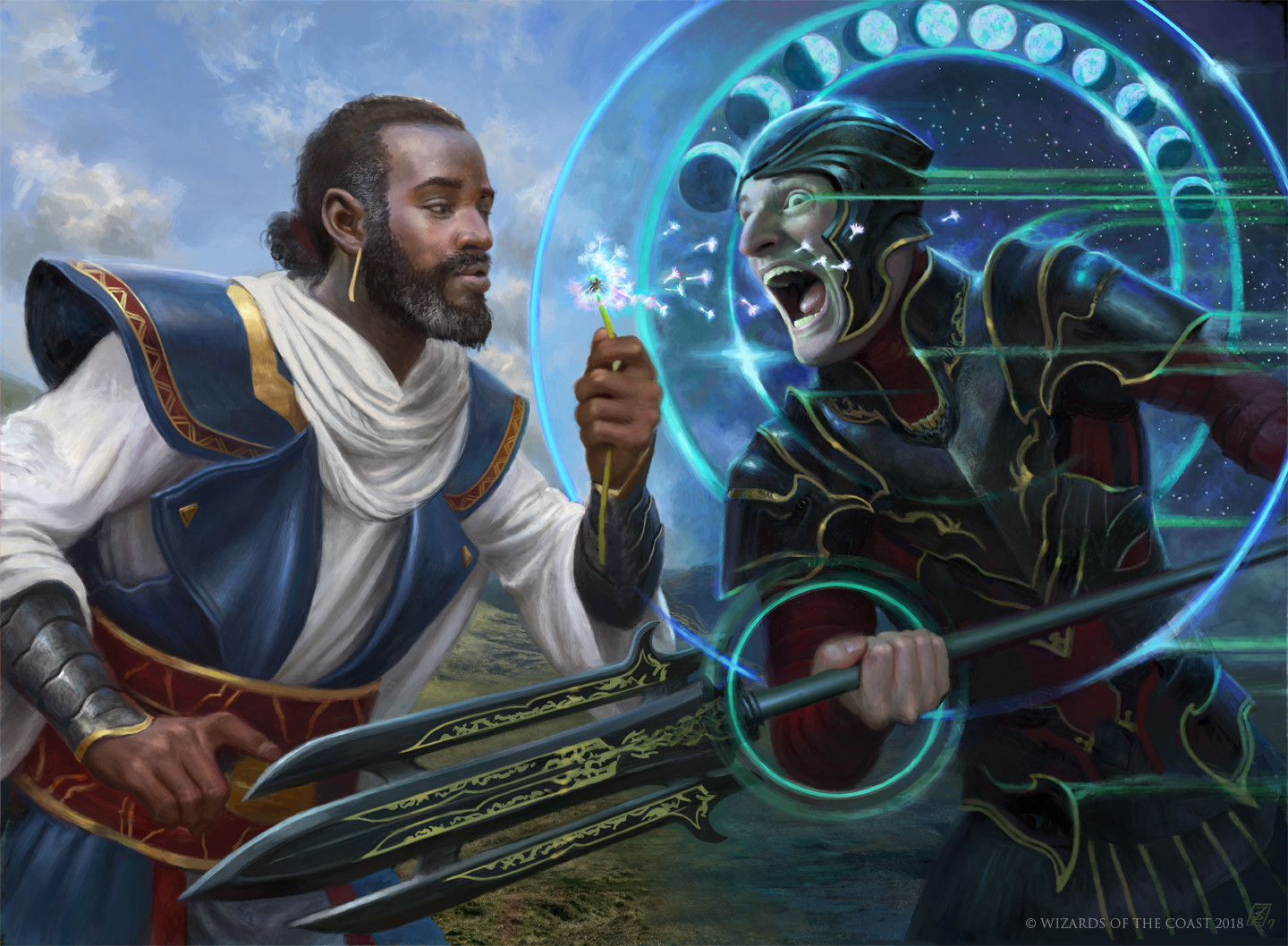

Adjust Your Stance!
Starting at 7th level, when your apprentice rolls 1 on the d20 for an attack roll, it can reroll the die and must use the new roll.
Proud Teacher
Also at 7th level, you receive inspiration whenever your apprentice rolls 20 on the d20 for an attack roll.
Master's Encouragement
Beginning at 10th level, when your apprentice that you can see hits a creature with an attack, you can use your reaction to give it a small gesture of approval. If your student can see or hear you, it gains a number of temporary hit points equal to your Warlord level + your proficiency bonus + your Charisma modifier.
Alternatively, when your apprentice misses a creature with an attack, you can use your reaction to encourage it to try a little harder. If your student can see or hear you, it receives inspiration from you.
You can use this feature a number of times equal to your Charisma modifier (a minimum of once) . When you finish a long rest, you regain all expended uses.
Accomplished Storyteller
At 13th level, you can cast the Legend Lore spell without expending a spell slot, as long as at least one person listens to your story.
Last Stand
At 18th level, devotion to your apprentice lets you ignore even deadliest of wounds.
When you are reduced to 0 hit points, but not killed outright, you can refuse to drop unconscious and keep on fighting while having 0 hit points instead as long as you can see or hear your apprentice. You still must make death saving throws - however, if you would die due to failing three of these throws, you don’t die until your apprentice is safe or until you are killed by the additional damage that exceeds your hit point maximum.
Variant: Heroic Death
When you save your apprentice using Last Stand feature, but die in the process, roll a d20. If you roll 1, you die heroically, and you can't be brought back by any form of resurrection spell, as your soul is not willing to come back after you've fulfilled your purpose in life. You can choose to fail that roll.


The Warlord
By zaelos_3
This is unofficial Fan Content permitted under the Fan Content Policy. Not approved/endorsed by Wizards. Portions of the material used here are property of Wizards of the Coast. ©Wizards of the Coast LLC.
Cover: Wesley Burt - Oath of Gideon
Page 1: Copyright: ©Wizards of the Coast LLC.
Page 1 (City): Grzegorz Rutkowski - Watchful Giant
Page 2: Grzegorz Rutkowski - Aryel Knight
Page 4: Wesley Burt - Surrak, the Hunt Caller
Page 5: Cynthia Sheppard - Ampryn Tactician
Page 6: Ben Wootten - White Raven
Page 7: Grzegorz Rutkowski - Urza, Lord High Artificer
Page 8: Kieran Yanner - Queen Marchesa
Page 9: Kekai Kotaki - Livio, Oathsworn Sentinel
Page 10: Aaron Miller - Giant Soldier
Page 11: Ryan Yee - Forbidding Spirit
Page 13: Mike "Daarken" Lim - Ihsan's Shade
Page 14: Ryan Pancoast - General Kudro
Page 15: Magali Villeneuve - Maddening Cacophony
Page 16: Tyler Jacobson - Threads of Disloyalty
Page 17: Zach Stella - Temporal Machinations
Page 18: Scott Murphy - Inspiring Veteran
Page 19: Mike "Daarken" Lim - Gideon, Martial Paragon
Page Textures: /u/flamableconcrete
Created Using: GM Binder