

Almea's Guide to Vouri
Introduction
This book is intended is made to be read as if the powerful wizard, Almea Vysoren, had written it, making it an exclusive in-world portrayal that can only be read within the inner sanctum of Libraries of the Occult Soul located at Trostenwald. Almea's own musings appear at the start of most sections in the book, which can be discerned by its font, coloring and tone, as shown below:



Thou shall be respectful to each tome in this library and treat it with utmost care. In fact, treat them as if your life depended on it. Because it does.
As you might have already guessed. Almea can be quite arrogant, cynincal, and opinionated. Almea can sometimes sell a subjective opinion on a master as an indisputable fact.
However, her haughty tone is probably well-deserved. She is the Keeper of Tomes at the Library of the Occult Soul, the highest title of anyone can hope to achieve at that prestigious monastery of knowledge in Trostenwald. There she is assisted with various researchers and monks of the Occult Soul while sending her most beloved raven familiar, Sirius, to fly amongst the lands of Vouri.
About This Book
This book is intended to aid stoytelling and worldbuilding to create characters that are immersed into the Lands of Vouri. Not all of the Character Options present in the book are original. Some of them were taken from other sources, adapated and changed.
All of the Character Options present in this book haven't been playtested yet and I am very much hoping to see players try out my homebrew!
Please tell me your opinions on the Character Options present in the book whether good, bad or anything to help me balance and know what to do next time.

Table of Contents
Martial Characters
Barbarian, fighter, rogue and monk: these are the classes with fresh options here. Not surprisingly, some of these are peculiarly well suited to the Vourian races in Chapter 2. Bloodthirsty bersekers, dragon-skinned warriors, arcane monks, muscle brute ruffians and duplicating rogues are just a few of the exciting options available to martial and rogue-type adventurers in Midgard.
| Class | Subclass | Description |
|---|---|---|
| Barbarian | Path of the Berseker, Revised | Thrill in the chaos of battle, heedless of your own health or well-being |
| Barbarian | Path of the Totem Warrior | Accept the dragon's spiritual guidance and be filled with a dragon's wrath |
| Monk | Way of the Sacred Inks | Become a sacred monk capable of activating your Seal as divine magic courses through you. |
| Monk | Way of the Occult Soul | Awaken the arcane magic that lies dormant in your body and soul by through meditation and years of research. |
| Rogue | Hundred Faced Archetype | You adhere to an ancient art, through which you can split your body and mind into several selves. |
| Rogue | Ruffian Archetype | Steal and act as the muscle while facing the enemy head on. |


Barbarian Subclass
Path of the Berserker, Revised
For some barbarians, rage is a means to an end— that end being violence. The Path of the Berserker is a path of untrammeled fury, slick with blood. As you enter the berserker’s rage, you thrill in the chaos of battle, heedless of your own health or well-being. At your option, you can pick from or roll on the Berserker Quotes table to create one of your character's more memorable quotes.
Berserker Quotes
| d6 | Quotes |
|---|---|
| 1 | "RAAAAAAARGHHHHH!" |
| 2 | "DEATH, DEAATH, DEAAAAAATH!" |
| 3 | "Don't make me angry... you won't like me when I'm angry." |
| 4 | "BLOOD FOR THE BLOOD GOD! SKULLS FOR THE SKULL THRONE!" |
| 5 | "WAAAAAAAAAAGH!" |
| 6 | "STRIP THE FLESH! SALT THE WOUND!" |
Path of the Berseker Features
| Barbarian Level | Feature |
|---|---|
| 3rd | Frenzy |
| 6th | Mindless Rage |
| 10th | Intimidating Presence |
| 14th | Gory Retribution |
Frenzy
Starting when you choose this path at 3rd level, you can enter a frenzy as a bonus action whilst you are raging. If you do so, for the duration of your rage you can make a single melee weapon attack as a bonus action on each of your turns. You can make this attack as part of the same bonus action used to enter a frenzy, and you can enter a frenzy as part of the same bonus action used to enter a rage.
If you enter a frenzy during your rage, you must a DC 10 Constitution saving throw when your rage ends. If you fail, you suffer one level of exhaustion (as described in appendix A). Each time you use this feature after the first, the DC increases by 3. When you finish a long rest, the DC resets to 10.
Mindless Rage
Beginning at 6th level, you ignore all effects of any levels of exhaustion you have whilst you are raging.
Additionally, you can’t be charmed or frightened while raging. If you are charmed or frightened when you enter your rage, the effect is suspended for the duration of the rage.
Intimidating Presence
Beginning at 10th level, you can use your action to frighten someone with your menacing presence. When you do so, choose one creature that you can see within 30 feet of you. If the creature can see or hear you, it must succeed on a Wisdom saving throw (DC equal to 8 + your proficiency bonus + your Charisma modifier) or be frightened of you until the end of your next turn. On subsequent turns, you can use your action to extend the duration of this effect on the frightened creature until the end of your next turn. This effect ends if the creature ends its turn out of line of sight or more than 60 feet away from you.
If the creature succeeds on its saving throw, you can’t use this feature on that creature again for 24 hours.
Gory Retribution
Starting at 14th level, when you take damage from a creature that is within 5 feet of you, you can use your reaction to make a melee weapon attack against that creature.
Additionally, your rage damage is doubled against that creature until the end of your next turn.


I've once met one before. He was so angry he screamed through the whole day.
Even in his sleep, he screamed about tearing flesh from their skulls...couldn't sleep the whole night.

Barbarian Subclass
Path of the Totem Warrior
The Path of the Totem Warrior is a spiritual journey, as the barbarian accepts a spirit animal as guide, protector, and inspiration. In battle, your totem spirit fills you with supernatural might, adding magical fuel to your barbaric rage.
Most barbarian tribes consider a totem animal to be kin to a particular clan. In such cases, it is unusual for an individual to have more than one totem animal spirit, though exceptions exist.
Dragon Totem Quirks
| d6 | Quirk |
|---|---|
| 1 | You keep your treasure in your bedroll. |
| 2 | You have dragon like horns that never go away after your first rage. |
| 3 | You occasionally refer to mortals as morsels. |
| 4 | You prefer your food having been treated by your element of choice. |
| 5 | Your burps can be a little bit... elemental. |
| 6 | You occasionally feel the need to practice your roaring. |
Spirit Seeker
This feature remains unchanged from what is contained in the Player's Handbook
Totem Spirit
At 3rd level, when you adopt this path, you choose a totem spirit and gain its feature. You must make or acquire a physical totem object- an amulet or similar adornment — that incorporates fur or feathers, claws, teeth, or bones of the totem animal. At your option, you also gain minor physical attributes that are reminiscent of your totem spirit. For example, if you have a bear totem spirit, you might be unusually hairy and thickskinned, or if your totem is the eagle, your eyes turn bright yellow.
Dragon. Choose a totem dragon from the Monster Manual (blue, black, green, red, white, brass, bronze, copper, silver, gold). When raging, your body becomes covered in the scales of your totem dragon granting you a +2 to AC and you gain resistance to the primary damage type of the respective totem's breath weapon.
Aspect of the Beast
At 6th level, you gain a magical benefit based on the totem animal of your choice.
Dragon. A dragon's senses go above and beyond those of your average creature. You gain blindsight to a range of 30 feet. In addition you gain advantage on Wisdom (Perception) checks.
Spirit Walker
At 10th level, if you have taken a dragon totem feature, when you can cast the commune with nature spell with this feature, you can also seek out dragons.
Totemic Attunment
At 14th level, you gain a magical benefit based on a totem animal of your choice.
Dragon. When raging a portion of the dragon's legendary resistance extends to you. While raging, you have advantage on all saving throws.
As my good black-feathered friend told me from the biting coldness of the north are a tribe of barbarians that could turn their skin into a white dragon's scales. Yes Sirius, it was both astounding and horrifying.

Monk Subclass
Way of the Sacred Inks
Initiates of the Sacred Inks spend years practicing celestial calligraphy. Once they are ready, the monks mark their bodies with increasingly complex celestial tattoos called Seals, granting them access to divine power. As the monk's spiritual connection to the divine grows, so does the beauty of their celestial tattoos.
Monks of this Monastic Tradition usually travel the world, supporting those who treasure beauty and kindling hope within those who have lost it. These Celestial warriors also do not hesitate to use their divine power to smite any who stand against them or their ideals.
Way of the Sacred Ink Features
| Monk Level | Feature |
|---|---|
| 3rd | Celestial Artist, Divine Conduit |
| 9th | Heavenly Protection |
| 13th | Light of the Heavens |
| 17th | Celestial Aspect |
Celestial Artist
When you adopt this Monastic Tradition at 3rd level, you master the techniques necessary to become a monk of the Sacred Inks. You learn to speak, read, and write Celestial. Though most monks will refuse to speak Celestial out loud out of reverence for the divine.
You also gain proficiency with calligrapher's supplies, and you can add double your proficiency bonus to any ability check you make that uses your calligrapher's supplies.
Fighter
Variant Fighting Options
The following options can be used when the appropriate class features require a choice, or using the Martial Versatility option from the Tasha’s Cauldron of Everything.
Brace (Battle Master Maneuver). When you use your Second Wind feature, you can expend up to two superiority dice, adding the superiority dice to the number of hit points regained.
Eagle Scout (Battle Master Maneuver). When you make an Intelligence (Nature), a Wisdom (Perception), or a Wisdom (Survival) check, you can expend one superiority die and add it to the ability check.
Fencer (Fighting Style). When you roll a 1 or 2 on a damage dice for an attack you make with a light melee weapon, you fan reroll the die and must use the new roll, even if the new roll is a 1 or 2.
Recoup (Battle Master Maneuver). When you miss a creature with a weapon attack, you can use your reaction and expend one superiority die to immediately make another weapon attack against the creature. If you hit, you add the superiority die to the attack’s damage roll.
Relentless (Fighting Style). When you score a critical hit with a weapon or reduce a creature to 0 hit points with one, you move 10 feet without using any of your speed.
Scholarship (Battle Master Maneuver). When you make an Intelligence (Arcana) or an Intelligence (Religion) check, you can expend one superiority die and add the superiority die to the ability check.
Throw Down (Battle Master Maneuver). Immediately after you hit a creature with a melee attack on your turn, you can expend one superiority die and then try to shove the target as a bonus action. Add the superiority die to your Strength (Athletics) check. If you win the contest, you both knock the target prone and push it 5 feet away from you.
Versatile Fighting (Fighting Style). You can increase the size of one weapon die (for example from a d8 to a d10) for a weapon you are wielding (up to a d12). This stacks with the increase granted by the Versatile property.
Third Party Subclasses:
More Fighter subclasses that are related to the setting could be found in other Third Party Books such as:
Fighter: Gunslinger and Echo Knight: The Gunslinger Subclass is made by Matt Mercer as a 3rd Party Content and the Echo Knight is present in Explorer's Guide To Wildemount.
Divine Conduit
Your Celestial tattoos allow you to channel the radiant power of the upper planes through your hands. Starting at 3rd level, you can align yourself with an aspect of the upper planes. At the end of a short or long rest, choose one of the following abilities, which lasts until the end of your next rest.
Divine Shield. You can channel the power of your sacred tattoos to shield you. You gain a bonus to your Armor Class equal to half your proficiency bonus (rounded down).
In addition, you can expend 1 ki point as a bonus action to grant yourself temporary hit points equal to your monk level.
Healing Touch. The power of your sacred tattoos can heal. When a spell or other feature restores your hit points, you regain additional hit points equal to your Wisdom modifier.
As an action on your turn, you can spend 2 ki points and touch a willing creature, restoring their hit points by an amount equal to 1d8 + your Wisdom modifier.
Radiant Strike. You can channel the power of your sacred tattoos to smite your enemies. When you hit a creature with an unarmed strike, you can expend ki points to deal extra radiant damage to the target. You deal 1d6 for each ki point you expend, to a maximum of 6d6 additional radiant damage.
Heavenly Protection
Upon reaching 6th level, your connection to the divine, and the complexity of your celestial tattoos has grown, allowing you to protect yourself from death. You can cast death ward, targeting only yourself, without expending a spell slot.
Once you cast death ward in this way you must finish a long rest before you can cast it in this way again.
Light of the Heavens
Your sacred tattoos can provide a glimpse of the divine. Starting at 11th level, you can cause your celestial tattoos to emit the light of the upper planes. As a bonus action, you can emit bright sunlight in a 10-foot radius. While this feature is active, you add your Wisdom modifier (minimum of 1) to any temporary hit points you grant, hit points you restore, or damage you deal using your Divine Conduit features.
This feature lasts for 1 minute unless you end it as a bonus action or fall unconscious. Once you use this feature you must finish a short or long rest before you can use it again.
Celestial Aspect
You have become a master of the Sacred Ink, and the divine art that covers your body is a direct reflection of otherworldly beauty. Starting at 17th level, you can use an action to briefly assume a celestial form. For the next minute you gain the following benefits:
Your celestial tattoos manifest angelic wings. You gain a flying speed equal to your movement speed. When you hit a creature with an unarmed strike you can choose to deal radiant in place of bludgeoning damage. Your attacks deal an additional 1d6 radiant damage on hit. You gain access to all three abilities from your Divine Conduit feature for the duration.
Once you use this feature you must finish a long rest before you can use it again, unless you expend 6 ki points to use it.
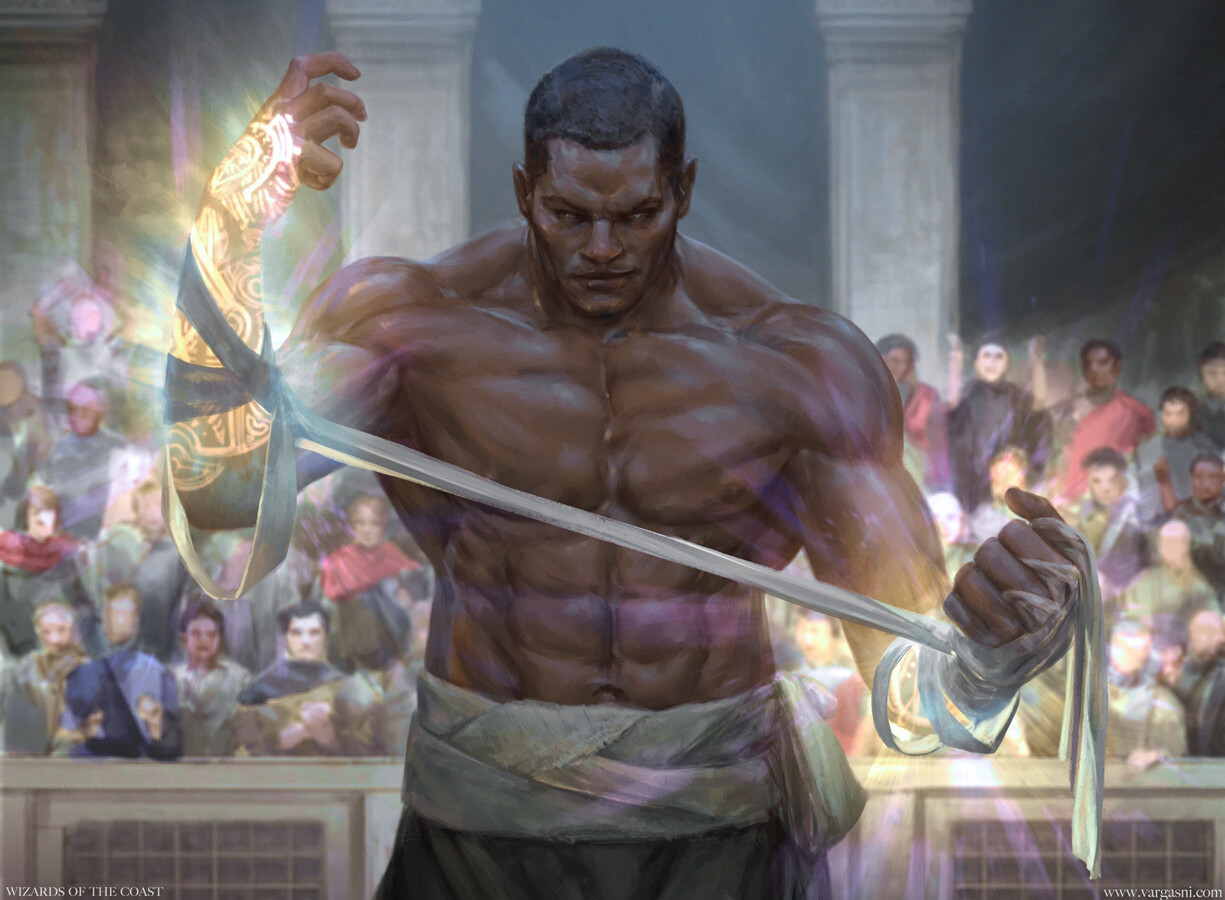
I've visited House Sigillus before to see how painful these tattoos were from these tattoo monks.
They were. But at least you gain divine magic AND
an awesome tattoo from a divine monk.

Monk Subclass
Way of the Occult Soul
Through countless hours of meditation, these monks are able to awaken the arcane magic that lies dormant in their body and soul using the years of research they have collected in the archives of the Occult Soul standing as some of the most well-respected and most heavily guarded repositories of tomes, history, arcana and information across the world.
These monks blend martial arts and spellcasting to a devastating effect. Through countless hours of meditation, these monks are able to awaken the arcane magic that lies dormant in their body and soul by the methods taught to them of the years of research they have collected over the decades. These monks blend martial arts and spellcasting to a devastating effect.
Way of the Occult Soul Features
| Monk Level | Feature |
|---|---|
| 3rd | Spellcasting, Foreseen Fighting |
| 6th | Arcane Forging |
| 11th | Flowing Defense |
| 17th | Master of Mind and Spirit |
Spellcasting
Starting when you choose this tradition at 3rd level, you start to waken the arcane magic lying dormant in your body and soul allowing you to shape a portion of your Ki into spells. See chapter 10 for the general rules of spellcasting and chapter 11 for the wizard spell list.
Cantrips. You learn three cantrips: true strike and two cantrips of your choice from the wizard spell list. You learn an additional wizard cantrip of your choice at 10th level.
Spell Slots. The Way of the Occult Soul Spellcasting table shows how many spell slots you have to cast your spells of 1st level and higher. To cast one of these spells, you must expend a slot of the spell's level or higher. You regain all expended spell slots when you finish a long rest.
For example, if you know the 1st-level spell feather fall and have a 1st-level and a 2nd-level spell slot available, you can cast feather fall using either slot.
Spells Known of 1st-Level and Higher. You know three 1st-level wizard spells of your choice, two of which you must choose from the divination and transmutation spells on the wizard spell list.
The Spells Known column of the Way of the Occult Soul Spellcasting table shows when you learn more wizard spells of 1st-level or higher. Each of these spells must be a divination or transmutation spell of your choice, and must be of a level for which you have spell slots. For instance, when you reach 7th level in this class, you can learn one new spell of 1st or 2nd level.
The spells you learn at 8th, 14th, and 20th level can come from any school of magic.
Whenever you gain a level in this class, you can replace one of the wizard spells you known with another spell of your choice from the wizard spell list. The new spell must be of a level for which you have spell slots, and it must be a divination or transmutation spell, unless you're replacing the spell you gained at 3rd, 8th, 14th, or 20th level.
Spellcasting Ability. Wisdom is your spellcasting ability for your wizard spells, since you learned your spells through deep meditation on the arcane magic that lies within. You use your Wisdom whenever a spell refers to your spellcasting ability. In addition, you use your Wisdom modifier when setting the saving throw DC for a wizard spell you can cast and when making an attack roll with one.
Spell save DC = 8 + your proficiency bonus +
your Wisdom modifier
Spell attack bonus = your proficiency bonus +
your Wisdom modifier
Way of the Occult Soul Spellcasting
| Level | Cantrips Known | Spells Known | 1st | 2nd | 3rd | 4th | 5th | 6th | 7th | 8th | 9th |
|---|---|---|---|---|---|---|---|---|---|---|---|
| 3rd | 3 | 3 | 2 | — | — | — | — | — | — | — | — |
| 4th | 3 | 4 | 3 | — | — | — | — | — | — | — | — |
| 7th | 3 | 5 | 4 | 2 | — | — | — | — | — | — | — |
| 8th | 3 | 6 | 4 | 2 | — | — | — | — | — | — | — |
| 10th | 4 | 7 | 4 | 3 | — | — | — | — | — | — | — |
| 11th | 4 | 8 | 4 | 3 | — | — | — | — | — | — | — |
| 13th | 4 | 9 | 4 | 3 | 2 | — | — | — | — | — | — |
| 14th | 4 | 10 | 4 | 3 | 2 | — | — | — | — | — | — |
| 16th | 4 | 11 | 4 | 3 | 3 | — | — | — | — | — | — |
| 19th | 4 | 12 | 4 | 3 | 3 | 1 | — | — | — | — | — |
| 20th | 4 | 13 | 4 | 3 | 3 | 1 | — | — | — | — | — |
Foreseen Fighting
Starting at third level, when you cast true strike, you can do so as a bonus action and without needing to maintain concentration.
Arcane Forging
At 6th level, you learn a ritual that transforms one monk weapon of your choice into an arcane catalyst. You perform the ritual over the course of 1 hour, which can be done during a short rest. The weapon must be within your reach throughout the ritual, at the conclusion of which you touch the weapon and transform it.
As part of this transformation, the weapon's damage type becomes force, and you can use your arcane catalyst as a spellcasting focus for your Way of the Occult Soul spells.
Flowing Defense
Beginning at 11th level, you learn to control the flow of magic directed toward you. You can use your reaction to deflect or catch the spell when you are hit by a ranged spell attack. If the spell has multiple ranged spell attacks, you can only deflect or catch one of them. When you do so, the damage you take from the attack is reduced by 1d10 + your Wisdom modifier + your monk level.
If you reduce the damage to 0, you can seize control of the spell if you have at least one hand free. If you seize control of the spell in this way, you can spend 1 ki point per level of the spell seized (minimum of 1) to make a ranged spell attack with the spell, as part of the same reaction. The spell counts as a Way of the Occult Soul spell for the attack.
Master of Mind and Spirit
At 17th level, you've awakened the Arcane magic within your body and soul granting you the power to freely shape the form of your ki into spells. You can use your ki points to gain additional spell slots.
Creating Spell Slots. You can transform unexpended ki points into one spell slot as a bonus action on your turn. The Creating Spell Slots table table shows the cost of creating a spell slot of a given level. The created spell slots vanish at the end of a short or long rest.
Creating Spellslots
| Spell Slot Level | Ki Point Cost |
|---|---|
| 1st | 2 |
| 2nd | 3 |
| 3rd | 5 |
| 4th | 6 |

The Libraries of the Occult Soul are currently supervised by yours truly, holding the collected tomes of history and arcane since the Knowing Maiden was upon us.
These monks are aspiring researchers of the arcane that aid me in seeking more knowledge of arcana.
Rogue Subclass
Hundred Faced Roguish Archetype
You adhere to an ancient art, through which you can split your body and mind into several selves. While your other selves are fragile due to being a fragment formed from you, they're able to scout ahead and assassinate your enemies. A Hundred Faced can turn a fair fight into a fatal ambush.
Hundred Faced Features
| Ranger Level | Feature |
|---|---|
| 3rd | Mind of a Hundred, Body of a Hundred |
| 9th | Soul of a Hundred |
| 13th | Inheritance of One |
| 17th | Legacy of All |
Mind of a Hundred
Starting at 3rd level, every talent in the world can be found within your mind. You gain proficiency in one tool of your choice. Whenever you finish a short or long rest, you can replace that tool proficiency with another tool proficiency. At 9th level, your proficiency bonus is doubled for any ability check you make that uses the chosen proficiency.
Body of a Hundred
Starting at 3rd level, you can split yourself into several. As an action, you can create a duplicate of yourself that lasts for 1 hour. It uses all of your statistics, except that it has a hit point maximum of 1, no temporary hit points, no ongoing effects such as spells, and 0 uses of any feature regained on a short or long rest. When the duration ends or it dies, it vanishes.
The duplicate obeys your commands. It takes its turn on your initiative, though it doesn't take an action unless you command it to, and it doesn't take bonus actions or reactions. On your turn, you can verbally command the duplicate where to move (no action required by you). You can use your action to verbally command it to take the Attack, Dash, Disengage, Dodge, Help, Hide, or Use an Object action.
The duplicate is equipped with a copy of any armor you wear and any weapon or shield you wield when you create it, except that they have 0 charges and 0 uses of any property regained at a time of day. The copied equipment can't be thrown, disarmed, or dropped, and the duplicate can't use equipment except copied equipment and given ammunition.
The duplicate can't take any rests. If you are incapacitated or absent, it can't act. If a creature provokes an opportunity attack from it, you can use your reaction to have it make one.
You can create a duplicate a number of times equal to your Wisdom modifier (a minimum of once). You regain any expended uses when you finish a long rest.
Soul of a Hundred
At 9th level, you manifest your will through your other selves, regardless of distance. You can communicate telepathically with your duplicate and perceive through your duplicate’s senses as long as you are on the same plane of existence.
Additionally, while perceiving through your duplicate’s senses, you can speak through your duplicate in your own voice, and you can command it to act even if you're absent.
Inheritance of One
At 13th level, your other selves have surpassed you in their own way, they can be called your peers. When you create a duplicate, it has a hit point maximum equal to your rogue level and gains one of the following features of your choice.
Acceleration. The duplicate has doubled walking speed.
Aviation. The duplicate has a flying speed of 30 feet. Duration. The duplicate lasts for 8 hours instead of 1 hour.
Expansion. The duplicate is Large and has advantage on Strength checks and Strength saving throws.
Explosion. If the duplicate is within 120 feet of you, you can use your action to reduce it to 0 hit points and explode, each creature within 10 feet of it takes 4d6 fire damage. Salvation. If the duplicate is within 120 feet of you, you can use your action to reduce it to 0 hit points and gain temporary hit points equal to the amount lost.
Suppression. The duplicate is invisible until it attacks or until its concentration ends.
Teleportation. If the duplicate is within 120 feet of you, you can use your action to reduce it to 0 hit points and teleport to where it was. Once a duplicate gains a feature, you can't create a duplicate with that feature until that duplicate vanishes.
Legacy of All
At 17th level, you have ceased to differentiate yourself from yourself, all of you are you. You regain all your expended uses of Body of a Hundred when you finish a short or long rest.
Additionally, when you create a duplicate, you can replace the tool proficiency that it gained from Mind of a Hundred with another tool proficiency.
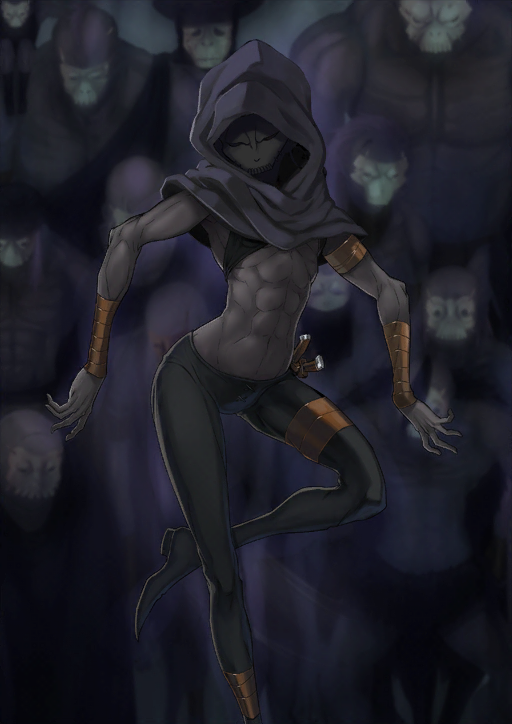
RESTRICTED
For more information, please visit the Restricted Sections of the Libraries of the Occult Soul

Rogue Subclass
Ruffian Roguish Archetype
Not all rogues rely on stealth and deception to overcome their foes. Some, often called Ruffians, prefer to face their enemies directly, and look to defeat their foes with devastating blows and intimidating combat techniques. Often employed as hired muscle for thieves' guilds, criminal syndicates, and other organizations that don't shy away from force, Ruffians can be found in almost any village, city, or town where crime exists.
Ruffian Features
| Rogue Level | Feature |
|---|---|
| 3rd | Enforcer, Shake Down |
| 9th | Imposing Glance, Nerves of Steel |
| 13th | Dodge and Counter |
| 17th | Critical Strike |
Enforcer
You have adopted tricks not often employed by rogues. Starting at 3rd level, you gain the following features:
- You can use your Sneak Attack with any weapon in which you are proficient, including unarmed strikes, so long as it does not have the heavy or two-handed properties.
- You can use your Cunning Action to make a grapple attack or an unarmed strike as a bonus action on your turn.
- You don't need advantage on your attack roll to use your Sneak Attack if you are targeting a creature that is currently grappled or restrained by you.
Shake Down
Your work requires certain skills, skills that you have become particularly reliable in employing. Starting at 3rd level, when you make a Charisma (Intimidation) check, or a Strength (Athletics) check to grapple, maintain a grapple, or shove a creature, you treat a roll of 7 or lower on the d20 as an 8.
Imposing Glance
You can strike fear into the hearts of the weak willed. Starting at 9th level, you can use a bonus action to make a Charisma (Intimidation) check against a target within 30 feet of you, contested by the target's Wisdom (Insight) check. If you succeed, the target is frightened of you until the start of your next turn, and you have advantage on the first attack roll you make against that target before the start of your next turn.
You can use this feature a number of times equal to your Charisma modifier (minimum of once), and you regain all expended uses when you finish a short or long rest.
Nerves of Steel
Fear is a weapon to be used against cowards and the weak willed, and you are not so easily intimidated. Beginning at 9th level, you are immune to the frightened condition.
Dodge and Counter
You can twist the force of your enemies' blows against them. Starting at 13th level, when a Large or smaller creature within your reach misses you with a melee attack, you can use your reaction to force them to make a Dexterity saving throw. The save DC is equal to 8 + your proficiency bonus + your Strength or Dexterity modifier (your choice).
On a failed save, you choose weather the creature is knocked prone or grappled by you. You must have at least one free hand in order to grapple a creature with this feature.
Ruthless Strike
You can draw upon a creature's fear of you to strike with ruthless efficiency. Beginning at 17th level, when you hit a creature that is frightened of you with a weapon attack, you can choose to treat the attack as an automatic critical hit.
You can use this feature a number of times equal to your Charisma modifier (minimum of once), and you regain all expended uses when you finish a short or long rest.
These thugs are the ones most likely to sneak into your house, smash your things and then wake you up by breaking your legs.
Primal Characters
Through passed on teachings and interacting with the environment and practice of wisdom is it learned. Primal Magic is executed by saying chants and rituals to cast druidic spells. Rangers and Druids may contact spirits around them to be able to manifess stronger nature magic.
Some contact nature spirits of left behind magic still present in the world. While some druids and rangers learn to draw their power from the Primal Magic present in their surroundings and environment. Such is the reason why most of these classes avoid cities as most things there are man-made and Primal magic is lacking.
| Class | Subclass | Description |
|---|---|---|
| Druid | Circle of Spiritlords | Draw power from spirits residing within the natural environment |
| Druid | Circle of the Land | Become a sage safeguarding the ancient knowledge and rites of new terrains such as the Savannah, Deadlands, Jungles, Deep Sea and more |
| Altered | Ranger | Become the Ultimate Hunter with this Alternate Version of the Ranger Class |
| Ranger | Nightstalker Archetype | Use shadow magic and create shadowy familiars to accompany you in battle |

Druid Subclass
Circle of the Spiritlords
Ages ago, nature priests with a greater connection to the spirit realm believed the world itself to be formed from a group of elemental and primordial spirits, each specifically charged to harness one of the major elements of creation. This band of tribal druids developed a set of ritual practices that allowed them to summon these spirits, whose essence now resides in every rock, tree, and breath of air, controlling the ebb and flow of nature not only in their homeland, but in all lands beyond. This order of priests were known as spiritlords.
Spiritlords begin their journey with the rites handed down by those before them, specifically, the ritual to create a special mask from an ironwood tree. This mask allows the spiritlord to play host to the spirit-elementals roaming this world.
As the spiritlord grows in power and gains a heightened level of attunement to the spirit world, their mask transforms along with them, being altered with new carvings, ritual paints, and brands that symbolize the bond between the druid and the spirits they carry within.
Circle of the Spirits Features
| Druid Level | Feature |
|---|---|
| 2nd | Spirit Bond |
| 6th | Empowered Conduit |
| 10th | Vigilant Spirits |
| 14th | Honored Host |
Spirit Bond
When you choose this circle at 2nd level, you choose one spirit-element to bond with your mask from the Spirit Bond table below and you learn the cantrip associated with your spirit-element’s feyling conduit, which counts as a druid cantrip for you, and doesn’t count against your number of cantrips known. You can select one additional spirit-element at 6th level and again at 10th level.
Additionally, you can cast the find familiar spell, which bears features similar to your chosen spirit-element (glowing skin, fiery eyes, a thorny tail, etc.). Once you cast find familiar using this feature, you can't cast it again until you finish a long rest.
You can only have one mask at a time and once this bond is formed, you can’t change the spirit-element within your mask. If the mask is lost or destroyed, creating a new mask for your spirit-element takes 8 hours of uninterrupted time, which you can accomplish during a long rest.
Spirit Bond
| Spirit Type | Feyling Conduit | Empowered Conduit | Damage Type |
|---|---|---|---|
| Earth | Mold Earth | Magic Stone | Poison |
| Fire | Control Flame | Create Bonfire | Fire |
| Water | Shape Water | Frostbite | Cold |
| Wind | Gust | Thunderclap | Lightning |
| Light | Dancing Lights | Sacred Flame | Radiant |
| Shadow | Minor Illusion | Chill Touch | Necrotic |
Empowered Conduit
At 6th level, your mask channels the destructive powers of your spirit element. You gain the cantrip in the Empowered Conduit column on the Spirit Bond table.
Further, when your connection with the spirit realm strengthens enough to host an additional spirit-element, you can switch between them with an action. When you do, you gain the benefits of the mask's current bond and your familiar can take on a similar appearance. No matter how many spirits inhabit your mask, you can only ever call on the aid of one at a time.
Vigilant Spirits
Starting at 10th level, you add your Wisdom modifier to the damage you deal with any druid cantrip and, each time you switch to a different spirit-element within your mask, you gain resistance to that damage type.
Honored Host
At 14th level, you have become a beacon for the spirits who wish to affect the world through you. You gain access to all of the spirit-elements listed on the Spirit Bond table, and can switch between them with a bonus action, and your spells ignore resistance and immunity to that damage type.

Feylings are curious manifestations of the remnant magic from the environment or sometimes dead people that live in the Feywild.
Even so, these nature spirits are way cuter in-person. No, I'm not talking about you Sirius.
Druid Subclass
Circle of the Land
New Circle of the Land new spell lists opens up more playstyle options for the full caster Druid. Therefore, the aim is to give each spell list at least one interesting non-Druid spell at each Circle Spells level. The new spell sets are also aimed to cover regions or land types that are not represented in the existing list.
Canyon/Badlands
| Druid Level | Circle Spells |
|---|---|
| 3rd | Dust Devil, Earthbind |
| 5th | Erupting Earth, Wall of Sand |
| 7th | Fabricate, Wall of Fire |
| 9th | Dawn, Far Step |
Deadlands
| Druid Level | Circle Spells |
|---|---|
| 3rd | Locate Animals or Plants, Silence |
| 5th | Life Transference, Revivify |
| 7th | Blight, Death Ward |
| 9th | Insect Plague, Negative Energy Flood |
Deep Sea
| Druid Level | Circle Spells |
|---|---|
| 3rd | Alter Self, Darkvision |
| 5th | Slow, Water Breathing |
| 7th | Evard’s Black Tentacles, Watery Sphere |
| 9th | Maelstrom, Rary’s Telepathic Bond |
Jungle
| Druid Level | Circle Spells |
|---|---|
| 3rd | Pass Without Trace, Rope Trick |
| 5th | Nondetection, Speak with Plants |
| 7th | Grasping Vine, Mordenkainen’s Private Sanctum |
| 9th | Tree Stride, Far Step |
Savannah
| Druid Level | Circle Spells |
|---|---|
| 3rd | Animal Messenger, Dust Devil |
| 5th | Conjure Animals, Nondetection |
| 7th | Fire Shield, Polymorph |
| 9th | Awaken, Dawn |
Sky
| Druid Level | Circle Spells |
|---|---|
| 3rd | Gust of Wind, Levitate |
| 5th | Gaseous Form Fly, Thunderstep |
| 7th | Locate Creature, Storm Sphere |
| 9th | Cloudkill, Control Winds |
The Alternate Ranger
Rough and wild looking, a grizzled man silently moves through the forest. He'd been tracking the band of orcish raiders that had crossed into the farmland he protected. Clutching a shortsword in each hand, he leapt out from the cover of the forest, preying on the orcs when they topped to rest. In a flash, he became a whirl of steel.
After tumbling away from a blast of freezing air, the thin female elf found her feet and drew her bow, and let loose another arrow at the white dragon. She shrugged off the wave of fear that emanated from the beast, and released her final arrow. With a piercing roar the terrible monster plummeted to the ground and laid motionless.
Holding his hand high, a young dwarf whistled, and the hawk circling high above returned to the side of its master. The dwarf whispered instructions and pointed to the owlbear they'd been tracking. In a blur, the dwarf and hawk moved as one, and before the owlbear could react to the assault, it lay dead at the feet of the warrior.
Far from the bustle of cities and villages, past the hedges that shelter the most distant farms from the terrors of the wild, amid the densely packed trees of trackless forests and across empty plains, rangers keep their unending, and often thankless, watch.
Deadly Hunters
Warriors of the wilderness, rangers specialize in tracking and hunting the monsters that threaten the edges of civilization; groups of raiders, rampaging beasts, terrible giants, and deadly dragons. They track their quarry as a predator does, moving stealthily through the wilds and hiding themselves in brush and rubble. Rangers focus on mastering devastating techniques and styles of combat. They often focus these abilities on one creature, aiming to slay their foe before they have a chance to retaliate.
Rangers learn to draw upon the power of the natural world to produce minor spells that enhance their tracking and hunting skills and provide aid and respite to their allies.
Wild Adventurers
Though a ranger might make a living as a hunter, a guide, or a tracker, their true calling is to defend the outskirts of civilization from the ravages of the wild. In some places, rangers gather in secretive orders or join forces with druidic circles. Many rangers, though, are independent almost to a fault, knowing that, when a dragon or a band of orcs attacks, they may be the first, and possibly last, line of defense.
Their fierce dedication makes rangers well suited to adventuring. Accustomed to life far from the comforts of a dry bed and a hot bath, they make excellent guides for adventuring parties that have no experience in the wild.
Creating a Ranger
Consider the nature of your training. Did you train with a mentor, wandering the wilds together, or did you forge a magical connection to nature in your own way? No matter their background, most rangers choose to adventure to impart their knowledge of the wilds on to the next generation, securing the safety of civilization for years to come.
Optional Rule: Multiclassing
If your group uses the optional rule on multiclassing in the Player's Handbook, here's what you need to know if you choose the ranger as one of your classes.
Ability Score Minimum. As a multiclass character, you must have at least a 13 in both Dexterity (or Strength) and Wisdom to take a level in this class, or to take a level in another class if you are already a ranger.
Proficiencies Gained. If ranger isn't your initial class, you gain proficiency in light and medium armor, shields, simple and martial weapons, and one skill from the ranger class list.
Quick Build
You can make a ranger quickly by using the following suggestions. If you wish to focus on ranged attacks or hunting, make Dexterity your highest ability score, followed by Wisdom. Second, choose the Outlander background.
If you wish to focus more on skirmishing or fighting your foes head-on (like with dual-wielding), make Strength your highest ability score, followed by Constitution. Second, choose the Mercenary background.

The Alternate Ranger
| Level | Proficiency Bonus | Features | 1st | 2nd | 3rd | 4th | 5th | Knacks Known |
|---|---|---|---|---|---|---|---|---|
| 1st | +2 | Survivalist Knacks, Wilderness Expert | — | — | — | — | — | 2 |
| 2nd | +2 | Favored Foe, Fighting Style, Spellcasting | 2 | — | — | — | — | 2 |
| 3rd | +2 | Ranger Archetype | 3 | — | — | — | — | 3 |
| 4th | +2 | Ability Score Improvement | 3 | — | — | — | — | 3 |
| 5th | +3 | Extra Attack | 4 | 2 | — | — | — | 3 |
| 6th | +3 | Favored Foe Improvement | 4 | 2 | — | — | — | 4 |
| 7th | +3 | Ranger Archetype Feature | 4 | 3 | — | — | — | 4 |
| 8th | +3 | Ability Score Improvement | 4 | 3 | — | — | — | 4 |
| 9th | +4 | — | 4 | 3 | 2 | — | — | 5 |
| 10th | +4 | Wilderness Expert | 4 | 3 | 2 | — | — | 5 |
| 11th | +4 | Ranger Archetype Feature | 4 | 3 | 3 | — | — | 6 |
| 12th | +4 | Ability Score Improvement | 4 | 3 | 3 | — | — | 6 |
| 13th | +4 | ─ | 4 | 3 | 3 | 1 | — | 6 |
| 14th | +5 | Favored Foe Improvement | 4 | 3 | 3 | 1 | — | 7 |
| 15th | +5 | Ranger Archetype Feature | 4 | 3 | 3 | 2 | — | 7 |
| 16th | +5 | Ability Score Improvement | 4 | 3 | 3 | 2 | — | 8 |
| 17th | +6 | ─ | 4 | 3 | 3 | 3 | 1 | 8 |
| 18th | +6 | Favored Foe Improvement, Feral Senses | 4 | 3 | 3 | 3 | 1 | 9 |
| 19th | +6 | Ability Score Improvement | 4 | 3 | 3 | 3 | 2 | 9 |
| 20th | +6 | Foe Slayer | 4 | 3 | 3 | 3 | 2 | 10 |
Class Features
Hit Points
Hit Dice: 1d10 per ranger level
Hit Points at 1st Level: 10 + your Constitution modifier.
Hit Points at Higher Levels: 11d10 (or 6) + your Constitution modifier per ranger level after 1st.
Hit Points
Proficiencies
Armor: Light armor, medium armor, shields
Weapons: Simple weapons, martial weapons
Tools: None
Saving Throws: Strength, Dexterity
Skills: Choose three from Animal Handling, Athletics, History, Insight, Investigation, Medicine, Nature, Perception, Stealth, and Survival.
Equipment
You start with the following equipment, in addition to the equipment granted by your background:
- (a) chain shirt and a shield or (b) leather armor
- (a) two shortswords or (b) two simple melee weapons
- (a) a longbow and 20 arrows or (b) a martial weapon
- (a) a dungeoneer's pack or (b) an explorer's pack
Survivalist Knacks
During your time in the wild you have gathered bits of primal knowledge, known as Survivalist Knacks. These Knacks bolster your exploration, hunting, and tracking skills.
At 1st level, you learn two Knacks of your choice from the list at the end of this class description. As you gain levels in this class, you learn additional Knacks, as shown in the Knacks Known column of the Ranger table. Each time you gain a level in this class, you can choose one of the Knacks you know and replace it with another Knack of your choice.
Rangers could easily be seen in a lot of different places. These hunters are very deadly, some even hunt down evil mages and monsters called the Irondahlia in the Empire.
Wilderness Expert
Your skill as an explorer and survivor are unsurpassed. At 1st level, choose one of the skill proficiencies you gained from the ranger class skill list. Your proficiency bonus is doubled for any ability check you make that uses this proficiency. You also learn to speak, read, and write one additional language of your choice. Most rangers choose to learn a language that is spoken by the enemies they specialize in hunting.
When you reach 10th level in this class, you select another skill you are proficient in from the ranger class skill list to gain the benefits of this feature, and you learn to speak, read, and write one additional language of your choice.
Favored Foe
Your bond with nature allows you to place a mystical mark on a creature, designating them as your favored foe. Beginning at 2nd level, when you hit a creature with a weapon attack, you can expend a spell slot to mark the creature as your favored foe. Each time you hit your favored foe with a weapon attack (including the attack used to mark it as a favored foe) you deal additional damage of the attack's damage type.
The extra damage you deal on hit to your favored foe is dependent on the level of the spell slot you expend to mark the target, as indicated in the table below.
The creature remains your favored foe for one hour, or until it is dead. If you mark another creature as your favored foe, the effect immediately ends for the previous creature.
When you reach certain levels in this class, the duration of this ability increases. It becomes 8 hours at 6th level, 24 hours at 14th level, and finally at 18th level, its duration lasts until you mark another creature or the target dies.
| Spellslot | Damage | Spellslot | Damage |
|---|---|---|---|
| 1st level | 1d6 | 3rd level | 1d10 |
| 2nd level | 1d8 | 4th level | 1d12 |
Alternate Ranger & Hunter's Mark
Favored Foe is designed to replace the ranger's reliance on hunter's mark, and the spell has been removed from the Alternate Ranger's spell list.
Fighting Style
At 2nd level, you gain a Fighting Style from the options below. You cannot take the same Fighting Style more than once.
Archery
You are a master marksman, striking from afar. You gain a +2 bonus to attack rolls you make with ranged weapons.
Blind Fighting
You can fight even when you can't see. You have blindsight with a range of 10 feet. Within that range, you can see anything that isn't behind total cover, even if you're blinded or in darkness. You can see invisible creatures within that range, unless the creature successfully hides from you.
Defense
Your training focused on defending yourself. While you are wearing armor, you gain a +1 bonus to your Armor Class.
Druidic Warrior
Your connection to the spirits of nature is stronger than most other rangers. You learn two cantrips of your choice from the druid spell list. They count as ranger spells for you, and Wisdom is your spellcasting ability for them.
When you gain a level in this class, you can replace one of these cantrips with another cantrip from the druid spell list.
Dueling
You have mastered the art of fighting with a single weapon. When you are wielding a melee weapon in one hand and no other weapons, you gain a +2 bonus to weapon damage rolls.
Mariner
You have trained to fight on, around, and in the water. As long as you are not wearing medium or heavy armor or using a shield, you have a swimming speed equal to your movement speed, and you gain a +1 bonus to your Armor Class.
Thrown Weapon Fighting
You can draw a weapon that has the thrown property as part of the attack you make with the weapon.
In addition, when you hit with a ranged attack using a thrown weapon, you gain a +2 bonus to the damage roll.
Two Weapon Fighting
When engaging in two-weapon fighting, you make your additional attack with your off hand weapon as part of your Attack action, adding your ability modifier to the damage.
Unarmed Fighting
Your unarmed strikes can deal bludgeoning damage equal to 1d6 + your Strength modifier. If you aren't wielding a weapon or shield when you make the attack, the d6 becomes a d8.
In addition, at the start of each of your turns, you can deal 1d4 bludgeoning damage to one creature grappled by you.
Versatile Fighting
You can increase the size of one wapon die (for example from a d8 to a d10) for a weapon you are wielding (up to a d12). This stacks with the increase granted by the Versatile property.
Spellcasting
By the time you reach 2nd level, you have learned to draw upon the magical essence present in nature to cast spells, much as a druid or shaman does. See chapter 11 of the Player's Handbook for the general rules of spellcasting, and the end of this class description for the ranger spell list.
Preparing and Casting Spells
The Ranger table shows how many spell slots you have to cast your spells. To cast one of your ranger spells of 1st-level or higher, you must expend a slot of the spell's level or higher. You regain all spell slots when you finish a long rest.
You prepare the list of ranger spells that are available for you to cast, choosing from the ranger spell list. When you do so, choose a number of ranger spells equal to your Wisdom modifier + half your ranger level, rounded down. The spells must be of a level for which you have spell slots.
For example, if you are a 5th-level ranger, you have four 1st-level and two 2nd-level spell slots. With a Wisdom of 14, your list of prepared spells can include four spells of 1st or 2nd-level, in any combination. If you prepare the 1st-level spell cure wounds, you can cast it using a 1st-level or a 2nd-level slot. Casting the spell doesn't remove it from your list of prepared spells. You can change your list of prepared spells when you finish a long rest.
Spellcasting Ability
Wisdom is your spellcasting ability for your ranger spells, since your magic draws on your intimate relationship with nature. You use your Wisdom whenever a spell refers to your spellcasting ability. In addition, you use your Wisdom modifier when setting the saving throw DC for a ranger spell you cast and when making an attack roll with one.
Spell save DC = 8 + your proficiency bonus + your Wisdom modifier
Spell attack modifier = your proficiency bonus + your Wisdom modifier
Spellcasting Focus
You can use a druidic focus as a spellcasting focus for your ranger spells. See chapter 5, of the Player’s Handbook for a list of things that count as druidic foci.
Ritual Casting
Your knowledge of the natural world allows you to draw out its magic. You can cast a ranger spell as a ritual if that spell has the ritual tag and you have the spell prepared.
Ranger Archetype
At 3rd level, you choose your ranger archetype from the following: Beast Master, Hunter, Spellbreaker, and Wrangler each of which is detailed at the end of the class description.
The official archetypes (Gloom Stalker, Horizon Walker, Monster Slayer, Fey Wanderer, and Swarmkeeper) all work as published with the Alternate Ranger class presented here.
Your ranger archetype grants you features at 3rd level, and again at 7th, 11th, and 15th level.
Ability Score Improvement
When you reach 4th level, and again at 8th, 12th, 16th, and 19th level, you can increase one ability score of your choice by 2, or you can increase two ability scores of your choice by 1. As normal, you can't increase an ability score above 20 using this feature.
Extra Attack
Beginning at 5th level, you can attack twice, instead of once, whenever you take the Attack action on your turn.
Feral Senses
Your enhanced senses allow you to strike with perfect accuracy. Starting at 18th level, your attack rolls against creatures within 30 feet cannot be made at disadvantage.
Foe Slayer
You have become an unparalleled hunter of your enemies. At 20th level, when you hit a creature marked as your favored foe with a weapon attack you gain a bonus to the damage roll equal to your Wisdom modifier (minimum of 1).
Survivalist Knacks
Below are the Knacks available to a ranger. If a Knack has a prerequisite, like your ranger level or another Knack, you can learn it at the same time that you meet the prerequisites.
Alpine Adept
Prerequisite: 6th level ranger You are amazingly surefooted. You gain a 30 foot climbing speed, and you can use your reaction to reduce any falling damage you take by an amount equal to your ranger level.
If you already have a climbing speed from another feature, your climbing speed increases by 10 feet.
Aquatic Adept
Prerequisite: 6th level ranger You have learned to move through the water like the swiftest creatures of the sea. You gain a 30 foot swimming speed, and you can hold your breath for up to 1 hour while underwater.
If you already have a swimming speed from another feature, your swimming speed increases by 10 feet.
Explorer I
You have spent your life learning the ways of the wilderness. You have advantage on Wisdom (Survival) checks to navigate the wilderness, forage for food and water, identify plants and animals, and avoid getting lost.
Explorer II
Prerequisite: 6th level ranger, Explorer I At the end of each long rest, you can attune to your present environment. Examples include, but are not limited to: arctic, coast, desert, forest, grassland, mountain, or swamp. While in your attuned environment you gain the following benefits:
You have advantage on Intelligence and Wisdom checks related to the native plants, animals, or ecosystem. You find twice as much food when foraging or hunting. You cannot be surprised unless you are incapacitated. You gain a bonus to your initiative rolls equal to your Wisdom modifier (minimum of 1). Herbalist I You have a deep knowledge of plants and their healing properties. You have advantage on Intelligence (Nature) checks to identify the medicinal properties of plants, and Wisdom (Medicine) checks made to stabilize creatures.
Herbalist II
Prerequisite: 3rd level ranger, Herbalist I You have learned to use the fruits of the earth to create healing poultices. You gain proficiency with the herbalism kit.
At the end of a long rest, you can use a herbalism kit and local plants to create one potion of healing. This potion retains its potency for a number of days equal to your proficiency bonus, after which it spoils and becomes inert.
Herbalist III
Prerequisite: 6th level ranger, Herbalist I, II You can use your knowledge of local plant life to soothe your allies. If you, and up to five creatures who you touch, spend at least one Hit Die to regain hit points at the end of the short rest, each of those creatures regains an extra 1d8 hit points.
Natural Regeneration
Prerequisite: 14th level ranger You can draw on the surrounding environment to replenish your mystical power. At the end of a short rest, you can choose to recover expended spell slots of a combined level equal to or less than your Wisdom modifier (minimum of 1).
Once you use this feature you must complete a long rest before you can use it again.
Slayer I
Prerequisite: 3rd level ranger Once you have a quarry in your sights it is rare that they escape. You have advantage on any Wisdom (Perception) and Wisdom (Survival) checks to track your favored foe.
Slayer II
Prerequisite: 6th level ranger, Slayer I Your tracking abilities have become supernaturally accurate. You always know the exact direction of your favored foe while you are on the same plane of existence.
Slayer III
Prerequisite: 14th level ranger, Slayer I, II Once per turn, when you hit your favored foe with a weapon attack, you can force it to make a Constitution saving throw in addition to the normal damage of the attack. On a failed save, it is blinded, deafened, frightened, poisoned, or restrained (your choice) until the start of your next turn.
Stalker I
You are a master at covering your tracks. While moving at a normal pace you, and up to five other creatures you are traveling with, produce no tracks or scent, and you cannot be tracked by mundane means unless you wish to be.
Stalker II
Prerequisite: 3rd level ranger, Stalker I You have learned to hunt your prey while remaining unseen. You can take the Hide action as a bonus action on your turn.
Stalker III
Prerequisite: 9th level ranger, Stalker I, II You can conceal yourself from even the most advanced magic. You are always under the effects of the nondetection spell, and you cannot be tracked divination magic or other magical means unless you wish to be.
Stalker IV
Prerequisite: 14th level ranger, Stalker I, II, III You can ward yourself with nature magic to briefly disappear from sight. When you take the Hide action on your turn, you, along with anything you are wearing, carrying, or have equipped, becomes invisible until the start of your next turn.
This invisibility ends early if you attack or cast a spell.
Strider I
There are few natural obstacles that you cannot overcome, or guide others through safely. You ignore the effects of difficult terrain imposed by natural environments, such as forest undergrowth, snow drifts, swamp, or marshlands.
Also, you, and up to five other creatures you are traveling with, do not have your travel slowed by difficult terrain.
Strider II
Prerequisite: 3rd level ranger, Strider I Once in your sights, you pursue your quarries relentlessly. You can take the Dash action as a bonus action on your turn.
Strider III
Prerequisite: 6th level ranger, Strider I, II You can surmount almost any obstacle that would block your path. Your base movement speed increases by 10 feet, and you ignore the effects of difficult terrain imposed by spells, magical phenomena, and any other magical effects.
Strider IV
Prerequisite: 14th level ranger, Strider I, II, III You move through the world unhindered by even the most powerful magic and restraints. You are always under the effects of the freedom of movement spell while conscious.
Survivor I
Prerequisite: 6th level ranger Your time in the wilds has hardened your body, and you can brace yourself to absorb incoming blows. As a bonus action on your turn, you can grant yourself temporary hit points equal to your Constitution modifier (minimum of 1).
Survivor II
Prerequisite: 9th level ranger, Survivor I You have trained your body to recover more rapidly than most. When you expend Hit Dice to regain hit points at the end of a short rest, you gain a bonus to each Hit Die roll equal to your Wisdom modifier (minimum of 1).
Survivor III
Prerequisite: 14th level ranger, Survivor I, II You persevere even in the face of death. When you make a death saving throw you gain a bonus to the roll equal to your Wisdom modifier (minimum of 1). If this increases the total to 20 or higher, you gain the benefits of rolling a 20 on the d20.
Trapper
You are a master of laying unseen traps. You learn the snare spell, and it becomes a ritual spell for you. You always have it prepared, but it doesn't count against the total number of spells you can prepare each day. You can have a number of active snares equal to your proficiency bonus. Setting an additional snare causes the oldest snare to disappear.
Wild Insights I
You have a natural way with the wild animals of the world. You can communicate simple ideas to beasts using sounds and gestures, and you have advantage on any Wisdom (Animal Handling) checks you make that target animals or beasts that are already friendly towards you.
Wild Insights II
Prerequisite: 3rd level ranger, Wild Insight I Your familiarity with the natural world has allowed you to bond you with a minor spirit of nature. You learn the find familiar spell. It counts as a ranger spell for you and you always have it prepared, but it doesn't count against the total number of spells you prepare each day. When you cast this spell your familiar is a fey creature.
Ranger Subclass
Beast Master
Rangers who develop intense bonds of trust with the wild have been known to attract the attention of guardian nature spirits known as primal beasts. These shapeshifting defenders of the wilderness join forces with rangers that they perceive as worthy. Primal beasts fight side by side with their partner, taking the best shape to face the challenges at hand.
Primal Companion
At 3rd level, you gain a primal beast companion with marks that indicate its mystical origin. It is friendly to you and obeys your commands. You choose the form it takes, selecting one of the stat blocks below: Beast of the Cave, Beast of the Land, Beast of the Sea, or Beast of the Sky. The stat block uses your proficiency bonus (PB) in several places.
In combat, your primal beast acts during your turn. It can move and use its reaction on its own, but the only action it takes is the Dodge action, unless you used your bonus action to command it to take an action from its stat block, or another action. . You can also sacrifice one of your attacks when you take the Attack action to command your primal beast to take the Attack action. If you are incapacitated, your primal beast takes any action it chooses.
If your primal beast has died within the last hour, you can touch it and expend a spell slot of 1st-level or higher. After 1 minute, it returns to life with all its hit points restored.
When you finish a long rest, you can cause your primal beast to take on a new form, choosing a new stat block and appearance. Your primal beast vanishes if you die.
Beast Master Magic
You gain certain spells at the ranger levels noted in the Beast Master Spells table. They count as ranger spells for you, you always have them prepared, but they don't count against the total number of spells you can prepare each day.
| Beast Master | Spells |
|---|---|
| 3rd | beast bond, speak with animals |
| 5th | beast sense, warding bond |
| 9th | haste, protection from energy |
| 13th | death ward, freedom of movement |
| 17th | awaken, commune with nature |

Exceptional Training
The bond between you and your primal beast has grown. Starting at 7th level, both you and your primal beast can use your reaction to grant the other advantage on any saving a they are forced to make, so long as you can see each other.
Also, your primal beast's attacks count as magical for the sake of overcoming resistances to non-magical attacks.
Bestial Fury
Your presence inspires primal fury within your companion. Beginning at 11th level, when you command your primal beast to take the Attack action, it can make two attacks with its natural weapons as part of the same action.
Primal Bond
The connection between primal beast and ranger has reached its apex. Starting at 15th level, when you cast a spell targeting yourself, you can choose to grant your primal beast the effects of the spell, without expending an additional spell slot, as long as they are within 30 feet of you.
In addition, your primal beast can change its form at the end of a short or long rest.
Beastmaster Ranger Quirks
The following are some optional quirks for a player of this Conclave to choose from - these can be either preexisting, signaling their fated path toward this Conclave, or appear after they've acquired their Companion.
| d6 | Quirk |
|---|---|
| 1 | You hold conversations with animals... without necessarily casting speak with animals first. |
| 2 | You value animal life as considerably more important than humanoid life. Particularly fluffy animal life. |
| 3 | When you cast speak with animals, you speak animal in a serious of barks, growls, and sniffs. |
| 4 | You have little value for silverware or table manners. |
| 5 | You are convinced your animal companion would never do anything wrong. |
| 6 | You refer to any vaguely animal like monster or beast as "cute". |
Animal Companion Quirks
| d6 | Quirk |
|---|---|
| 1 | It thinks it is a small sized creature. It is not a small sized creature. |
| 2 | It will climb mountains and fight dragons for ear scritches. |
| 3 | Any food is clearly food for it. |
| 4 | There is a problem, you were not paying attention to it. It solves that problem. |
| 5 | It has a tendency to fetch things. Many things. Surely you wanted this thing. |
| 6 | Sunlight makes it sleepy. |
Beast of the Land
medium beast, neutral
- Armor Class 13 + PB (natural armor)
- Hit Points 5 + five times your ranger level (the beast has a number of hit dice [d8s]
- Speed 40 ft., climb 40 ft.
STR DEX CON INT WIS CHA 14 (+2) 14 (+2) 15 (+2) 8 (-1) 14 (+2) 11 (+0)
- Senses. darkvision 120 ft., passive Perception 12
- Languages. understands the languages you speak
- Charge If the beast moves at least 20 feet toward a target and then hits it with a maul attack on the same turn, the target takes an extra 1d8 slashing damage. If the target is a Large or smaller creature, it must succeed on a Strength saving throw against your spell save DC or be knocked prone.
- Primal Bond You can add your PB to any ability check or saving throw that the beast makes.
Actions
Maul Melee Weapon Attack: your spell attack modifier to hit, reach 5 ft., one target. Hit: 1d8 +2 +PB piercing or slashing damage (your choice).
I'm pretty good with animals, I think I'd be able to become a Beastmaster and have Sirius as my companion. What do you think?
*squaks
Well not with that attitude!
Beast of the Sea
medium beast, neutral
- Armor Class 13 + PB (natural armor)
- Hit Points 5 + five times your ranger level (the beast has a number of hit dice [d8s]
- Speed 40 ft., climb 40 ft.
STR DEX CON INT WIS CHA 14 (+2) 14 (+2) 15 (+2) 8 (-1) 14 (+2) 11 (+0)
- Senses darkvision 60 ft., passive Perception 12
- Languages understands the languages you speak
- Amphibious The beast can breathe in air and water.
- Binding Strike When the beast hits a Large or smaller creature with its Pseudopod, it can choose to grapple the target (escape DC equal to your spell save DC). Until this grapple ends, the beast can’t use its Pseudopod attack on another target.
- Primal Bond You can add your PB to any ability check or saving throw that the beast makes.
Actions
Pseudopod Melee Weapon Attack: your spell attack modifier to hit, reach 5 ft., one target. Hit: 1d6 +2 +PB piercing or bludgeoning damage (your choice).
Beast of the Sky
medium beast, neutral
- Armor Class 13 + PB (natural armor)
- Hit Points 4 + five times your ranger level (the beast has a number of hit dice [d6s]
- Speed 10 ft., fly 60 ft.
STR DEX CON INT WIS CHA 6 (-2) 16 (+3) 13 (+1) 8 (-1) 14 (+2) 11 (+0)
- Senses darkvision 60 ft., passive Perception 12
- Languages understands the languages you speak
- Flyby The beast doesn't provoke opportunity attacks when it flies out of an enemies reach.
- Primal Bond You can add your PB to any ability check or saving throw that the beast makes.
Actions
Shred Melee Weapon Attack: your spellcasting modifier to hit, reach 5 ft., one target. Hit: 1d4 +3 +PB piercing or slashing damage (your choice).
Ranger Subclass
Nightstalker Archetype
The Nightstalker archetype emulates a unique form of shadow magic, used to create shadowy familiars to accompany you in battle. By walking this path, you learn to use your shadow familiar like an extension of yourself, using them like a weapon as you stalk through the dim forests and vast plains of the world, searching for your prey. Your choice of familiar defines your style of fighting, with each familiar playing a different role on the hunt
Nightstalker Features
| Ranger Level | Feature |
|---|---|
| 3rd | Shadow Familiar, Nightstalker Magic |
| 7th | Shadowy Transposition |
| 11th | Dark Sentinel |
| 15th | Midnight Bulwark |
Shadow Familiar
At 3rd level, you gain the ability to summon a creature of shadow to serve you. As a bonus action on your turn, you can conjure or dismiss your shadow familiar, which takes the form of a spectral creature that cannot be targeted or damaged. You choose the form you can create when you select this subclass.
When you conjure your shadow familiar, it appears in an unoccupied space within 30 feet of you. As long as it is conjured, you can forgo one or more of your attacks when you use the Attack action to have your shadow familiar make attacks of its own, which use your Ranger spell attack modifier for their attack rolls, have a reach of 5 feet, and trigger any spells or features that would trigger from your own weapon attacks (such as Hunter’s Mark).
The familiar makes one melee weapon attack for each attack you forgo. While within 120 ft of your familiar, you can command it to move (no action required). The speeds and attacks of the three forms are listed below.
Cat. This form has a walking speed of 30 feet. On a hit, its attack deals 1d4 + your Wisdom modifier slashing damage, and causes the next attack made against the target by a creature other than you or the cat before the end of your next turn to be made at advantage.
Raven. This form has a flying speed of 90 feet, and a walking speed of 10 feet. On a hit, its attack deals 1d10 + your Wisdom modifier piercing damage.
Wolf. This form has a walking speed of 40 feet. On a hit, its attack deals 1d6 + your Wisdom modifier piercing damage, and causes its target to have disadvantage on the next attack roll it makes before the end of its next turn.
Nightstalker Magic
Also at 3rd level, you learn an additional spell when you reach certain levels in this class, based on the form you chose above, as shown in the Nightstalker Spells table. The spell counts as a ranger spell for you, but doesn’t count against your spells known.
Nightstalker Spells
| Ranger Level | Cat Spells | Cat Spells | Cat Spells |
|---|---|---|---|
| 3rd | feather fall | thunderwave | cause fear |
| 5th | invisibility | gust of wind | darkness |
| 9th | haste | call lightning | fear |
| 13th | greater invisibility | storm sphere | sickening radiance |
| 17th | seeming | control winds | contagion |
Shadowy Transposition
Starting at 7th level, whenever you cast a ranger spell of 1st level or higher, you can choose to swap locations with your familiar immediately before or after casting the spell.
Dark Sentinel
At 11th level, whenever a creature leaves the reach of your shadow familiar, you can use your reaction to have it make an attack against that creature. The disengage action and other effects that prevent opportunity attacks prevent this reaction.
Midnight Bulwark
Beginning at 15th level, whenever a creature within reach of your shadow familiar makes an attack against you, you can use your reaction to have the familiar make an attack against that creature.
Additionally, whenever you command your familiar to make an attack using your reaction and the attack hits, the target’s speed is reduced to 0 until the end of the target’s current turn.

Should you meet one, be sure to take note of the shadow's form as the shape of the familiar will tell you about the Nightstalker's favored tactics.
Divine Characters
Clerics and Paladins act as conduits of Divine Magic that directly comes from the Divine Beings. Divine Magic is most often given to Clerics and Paladins that have "Seals". The Seals act as a connections from the Divine Beings. Seals are given by sacred orders of a god or by the god itself. It marks someone as a conduit for the Divine Being's power which can be expressed by using a Holy Symbol.
These Seals often change their shape when the creature becomes more powerful making their connection with their deity stronger.
House Sigillus mostly accommodates different Clerics and Paladins, deciding if they are worthy to join the Sacred Order to engrave a Seal to your body part. Most of them work as healers in times of need.
| Class | Subclass | Description |
|---|---|---|
| Cleric | Travel Domain | Bring speed and aid to your traveling companions. |
| Cleric | Knowledge Domain, Revised | Study esoteric lore and ancient tomes to unveil secrets with the new Knowledge Domain. |
| Cleric | Nature Domain, Revised | Protect nature's inhabitants and guide it onto its natural path with the new Nature Domain. |
| Paladin | Oath of the Thunderstorm | Become an inquisitive who swore a vow to serve the church devoting their lives to rooting out enemies of their faith |
| Paladin | Oath of the Sea | Serve the high seas and stand against tyranny |

Cleric Subclass
Travel Domain
The world is wide and the roads are dangerous. To help guide and guard the mortals who travel. The deities of travel - including Raei, Sehanine, Hermes, Zephyros, The Traveler, and Tefnar - teach the proper ways of journeying across the world They are mostly benevolent and often chaotic. Many serve their fellow gods as messengers or guides.
Most wish mortals to travel so as to discover, learn, and live a full life, but some are more ambivalent, representing the mysteries, angers, and secrets waiting on the horizon. When they aren't exploring new places or acting as messengers for important matters between the churches of other gods, clerics of this domain usually wander.
Travel Domain Features
| Druid Level | Feature |
|---|---|
| 1st | Bonus Proficiency, Blessed Steps |
| 2nd | Channel Divinity: Safe Passage |
| 6th | Messenger of the Gods |
| 8th | Potent Spellcasting |
| 17th | Radical Freedom |
Travel Domain Spells
| Cleric Level | Spells |
|---|---|
| 1st | Comprehend Languages, Longstrider |
| 3rd | Locate Object, Misty Step |
| 5th | Fly, Haste |
| 7th | Freedom of Movement, Locate Creature |
| 9th | Far Step (XCE), Soar (new) |
Bonus Proficiency
When you choose this domain at 1st level, you learn the message cantrip, which is a cleric cantrip for you and doesn't count against the number of cantrips you can know as a cleric. You also gain proficiency with one of the following tools of your choice: navigator's tools, land vehicles, or water vehicles.
Blessed Steps
Also at 1st level, your journey is blessed by holy purpose. You can use a bonus action on your turn to disengage, dash, or attempt to escape from a grapple.
You can also use a bonus action to touch another willing creature and lend it your blessing. At the start of its next turn, it can either dash, disengage, or attempt to escape from a grapple without using an action.
You can use this feature a number of times equal to your Wisdom modifier (a minimum of once} You regain all expended uses when you finish a long rest.
Channel Divinity: Safe Passage
Starting at 2nd level, you can use your Channel Divinity to secure magical safe passage. As an action, you present your holy symboL and you teleport one willing creature that you can see within 30 feet of you up to 60 feet to an unoccupied space that you can see.
Until the end of your next turn, attack rolls are made against it with disadvantage, and it has resistance to bludgeoning, piercing, and slashing damage dealt by nonmagical weapons. If the target makes an attack, casts a spell that affects an enemy, or deals damage to another creature, the effect ends immediately.
Messenger of the Gods
At 6th level, the spirit of travel fills you and carries you further. You are always under the effects of a Longstrider spell and you have advantage on all ability checks and saving throws made to escape from a grapple.
In addition, at the end of each of your turns, if you are at least 30 feet away from where you were at the start of the turn, you gain a + 1 bonus to AC and Dexterity saving throws until the end of your next turn.
Potent Spellcasting
Starting at 8th leveL you add your Wisdom modifier to the damage you deal with any cleric cantrip.
Radical Freedom
At 17th level you have advantage on saving throws against being charmed, and your speed increases by 10 feet.
Also, you are always under the effects of a freedom of movement spell You can temporarily suppress this effect to cast freedom of movement without expending a spell slot or requiring components, unless the effect is already suppressed You can use a bonus action to end the spell early. The effect remains suppressed until the spell ends.
In all of my travels, I seem to always bump into one. This might be because there's a lot of Travel deities.
Cleric Subclass
Knowledge Domain
A rework of the Knowledge Domain Cleric.
Knowledge Domain Spells
| Cleric Level | Spells |
|---|---|
| 1st | Comprehend Languages, Identify |
| 3rd | Augury, Detect Thoughts |
| 5th | Clairvoyance, Nondetection |
| 7th | Arcane Eye, Confusion |
| 9th | Legend Lore, Scrying |
Blessings of Knowledge
At 1st level, you learn two languages of your choice and become proficient in your choice of two of the following skills: Arcana, History, Nature, or Religion.
Illuminated Intuition
Starting at 1st level, whenever you make an Intelligence check, you gain a bonus to the check equal to your Wisdom modifier (minimum of +1). In addition, you can add half your proficiency bonus, rounded down, to any ability check you make that doesn't already include your proficiency bonus.
Channel Divinity: Knowledge of the Ages
Starting at 2nd level, you can use your Channel Divinity to tap into a divine well of knowledge.
As an action, choose one language, skill or tool that you do not have proficiency with. You gain proficiency with the chosen language, skill or tool until you finish a short or long rest.
Channel Divinity: Gift of Insight
At 6th level, you can use your Channel Divinity to grant flashes of divine insight to yourself and your allies.
As a bonus action on your turn, you can choose yourself or a creature you can see within 30 feet of you to receive divine guidance. The chosen creature has advantage on all attack rolls, saving throws and ability checks they make until the start of your next turn.
Potent Spellcasting
Starting at 8th level, you can add your Wisdom modifier to the damage you deal with any cleric cantrip.
Eyes of the Seeker
Starting at 17th level, your holy gaze cannot be deceived. You gain truesight with a range of 30 feet.
Third Party Subclasses:
More Cleric subclasses that are related to the setting could be found in other Third Party Books such as:
Cleric Ambition Domain: present in the Plane Shift - Amonkhet
Cleric Subclass
Nature Domain
A rework of the Nature Domain Clerics.
Nature Domain Spells
| Cleric Level | Spells |
|---|---|
| 1st | Animal Friendship, Goodberry |
| 3rd | Animal Messenger, Healing Spirit |
| 5th | Conjure Animals, Plant Growth |
| 7th | Blight, Dominate Beast |
| 9th | Conjure Elemental, Insect Plague |
Bonus Proficiencies
When you choose this domain at 1st level, you gain proficiency with martial weapons and the Animal Handling and Nature skills.
Acolyte of Nature
Also at 1st level, you learn the druidcraft cantrip and one other cantrip of your choice from the druid spell list. For you, these cantrips count as cleric cantrips.
Channel Divinity: Gifts of Nature
Starting at 2nd level, you can use your Channel Divinity to prepare your companions for the dangers of the wilds.
As an action, you bless yourself and up to five creatures you can see within 30 feet of you with a boon from your god. Choose one of the following adaptations:
-
The creature gains a swimming speed equal to its walking speed and can breathe underwater.
-
The creature's walking speed increases by 10 feet and it ignores difficult terrain.
-
The creature is immune to poison and disease.
-
The creature gains darkvision with a range of 60 feet and has advantage on Wisdom (Perception) checks. If the creature already has darkvision from its race, its range increases by 30 feet.
The chosen creatures gain this adaptation for 1 hour.
Dampen Elements
Starting at 6th level, when you or a creature within 30 feet of you takes acid, cold, fire, lightning, or thunder damage, you can use your reaction to grant resistance to the creature against that instance of the damage.
Divine Strike
At 8th level, you gain the ability to infuse your weapon strikes with divine energy. Once on each of your turns when you hit a creature with a weapon attack, you can cause the attack to deal an extra 1d8 cold, fire, or lightning damage (your choice) to the target. When you reach 14th level, the extra damage increases to 2d8.
Nature's Embrace
At 17th level, you master the lessons of nature. When you finish a short or long rest, you can choose one of the adaptations provided by Gifts of Nature. You gain this adaptation until you finish a short or long rest.
In addition, when you use Gifts of Nature you can choose two adaptations instead of one.
Paladin Subclass
Oath of the Thunderstorm
The Oath of the Thunderstorm links it's paladins to the ideas of strength, protection, and the chaos of the weather. Also known as stormbringers, these paladins fight to protect the weak and those at the mercy of stronger forces. In addition, they also trust in the balance between order and chaos in the weather, using its strength and accepting the chaos it brings. Rarely are these paladins lawful, trusting more in the order of nature than the order of governments or civilizations. Their armor changes from paladin to paladin, with each adorning their armor with things from the far away places they have visited.
Tenets of the Storm
The chaotic nature of the Storm makes some question the necessity or legitimacy of these tenets, but nevertheless these are the words that have been passed down for countless generations by warriors who have lived and died by them.
Gale. It is not your place to remain in one area for long. There are many battles to be won on the next horizon.
Thunder. Be the voice for the voiceless. Speak for the downtrodden and the oppressed. Be the fury to those who would subjugate the innocent.
Lightning. Life is short and fleeting. When in doubt, know that now is the time to leave your mark on the world.
Downpour. Be a cleansing and restorative force, ensure that the world you live in today will be a better place tomorrow, and all days to come.
Oath of the Thunderstorm Features
| Paladin Level | Feature |
|---|---|
| 3rd | Oath Spells, Channel Divinity: Summon the Storm, Thunderous Armament |
| 7th | Aura of the Storm |
| 15th | Roaring Storms |
| 20th | Avatar of the Stormlord |
Oath Spells
You gain oath spells at the paladin levels listed.
Oath of the Storm Spells
| Paladin Level | Spells |
|---|---|
| 3rd | fog cloud, thunderwave |
| 5th | gust of wind, misty step |
| 9th | call lightning, wind wall |
| 13th | ice storm, control water |
| 17th | cone of cold, conjure elemental |
Channel Divinity
When you take this oath at 3rd level, you gain the following two Channel Divinity options.
Eye of the Storm. You present your holy symbol as an action. In the next minute, the area in a 2 mile radius centered on you when you cast this Channel Divinity becomes covered by a violent storm. All creatures directly under that storm are considered lightly obscured. The storm vanishes after 1d4 hours.
Thunderous Armament. As an action, you present your holy symbol. One melee weapon of your choice becomes infused with with the energy of the storm for 1 minute. Your hits deal an additional amount of damage equal to your Charisma modifier and once per turn when you hit a creature that is Large or smaller with the infused weapon, you can choose to push the creature back 10 feet.
Aura of the Storm
Starting at 7th level, you gain an aura in a 10 ft. radius around you unleashing the fury of the storm.
- The attack rolls of ranged weapon attack have disadvantage if they pass in or out of the wind.
- Unprotected flames, torch-sized or smaller, are extinguished.
- It hedges out vapor, gas, and fog that can be dispersed by strong wind.
At 18th level, the radius of this aura extends to 30 feet.

Have you seen paladins that hate the law and likes even more chaos?
My raven doesn't like them.
He once got struck by one of them when he was squaking to a child.
Roaring Thunderstorm
Starting at 15th level, as a reaction to an enemy attacking an ally within your Aura of the Storm. You can teleport in a flash exchanging positions between you and your ally, making you the new target. The attacker takes Thunder damage equal to 2d6 + your Charisma modifier, as you appear in a thunderous explosion.
Avatar of the Tempest
At 20th level, as an action, you can mantle the powers of a tempest deity. For 1 minute, your body crackles with thunder and lightning, and your eyes glow blue, revealing the raging storm within. You gain the following benefits:
- You are immune to lightning and thunder damage
- You gain a Flying speed of 60 feet.
- As a bonus action, you can teleport up to 30 ft. in a flash of lightning, all creatures within a 10 ft. radius of the point you reappear in must succeed on a Dexterity Saving Throw or take 1d8 Lightning damage, or half as much on a success. You are immune to lightning and thunder damage.
Paladin Subclass
Oath of the Sea
The Oath of the Sea calls to sea-faring warriors, swashbuckling sailors, and journeying guardians who seek the thrill of an endless horizon. Driven to seek the adventure and mystery across and beneath every endless oceanic expanse, paladins who swear this oath stand against those who would deny the liberties afforded to likeminded travelers, rooting out the tyrannical and corrupt that claim any shore. Such guardians believe in the natural beauty of the sea, often making offerings and prayers to entities or deities like the Wild Mother or River Lord that influence safe passage, while often feeling called to hunt those monstrosities that seek to terrorize and spoil the waters with wanton violence and ill intent.
Tenets of the Sea
No Greater Life than a Life Lived Free.* One should be free to chart their own path without oppression. Those who would exert their power to dominate others shall be smote.
Trust the Skies. The guidance of a strong breeze. The rumbling warnings of a coming storm. Nature is a source of portent and council that should be heeded.
Adapt like the Water. The waters of the ocean can shift around any obstacle or become an impassable one. They can carve around and reveal the secrets of the past or swallow the truth and hide it forever. To embrace this fluidity is to be ready for any challenge.
Explore the Uncharted. The world is filled with much mystery. Through the pursuit of these enigmatic ends, one can both uncover those who hide their dark deeds in shadow to be judged, and find the path to becoming something great.
Oath of the Thunderstorm Features
| Paladin Level | Feature |
|---|---|
| 3rd | Oath Spells, Channel Divinity: Summon the Storm, Thunderous Armament |
| 7th | Aura of the Storm |
| 15th | Roaring Storms |
| 20th | Avatar of the Stormlord |
Oath Spells
You gain oath spells at the paladin levels listed.
Oath of the Storm Spells
| Paladin Level | Spells |
|---|---|
| 3rd | Create or Destroy Water, Fog Cloud |
| 5th | Augury, Misty Step |
| 9th | Tidal Wave, Wall of Water |
| 13th | Control Water, Watery Sphere |
| 17th | Commune with Nature, Maelstrom |
Channel Divinity
When you take this oath at 3rd level, you gain the following two Channel Divinity options.
Pacify the Waters You can use your Channel Divinity to calm the creatures of the sea. As an action, you force creatures with a swim speed within 30 feet, up to a number equal to your Charisma modifier (minimum 1), to make a Wisdom saving throw. On a failure, the affected creatures are charmed by you for the next minute or until you or your companions do anything harmful to them.
Alternatively, when you use this feature, you can attempt to pacify the sea itself. As an action, roll a d20. The Channel Divinity succeeds when the result of the die roll is equal to your level or lower. On a success, the sea within a 1 mile radius of you becomes calm and placid for the next hour. For the duration, no storms can enter the radius unless they are of a magical nature.
Tidal Strike As an action, you imbue your weapon with the raw power of the sea. For 1 minute, your strikes deal additional cold damage equal to your Charisma modifier (with a minimum bonus of +1). Your weapon also these sea water, leaving small puddles in its wake. If your weapon is not already magical, it becomes magical for the duration.
You can end this effect on your turn as part of any other action. If you are no longer holding or carrying this weapon or if you fall unconscious, this effect ends.
The seas are nothing but DEATH and DESPAIR. Luckily, we had a sea paladin on board. Made the whole trip like a smooth cruise during a storm while a dragon turtle attacked us.
Aura of the Sea Mist
Starting at 7th level, you have learned to move unhindered in water and the mists of the sea are yours to command. You gain a swimming speed equal to your walking speed. In addition, you wreathe an aura of thick cloud of fog around yourself out to 10 feet. While in the aura, you and creatures of your choice are veiled by a the mist, making you more difficult to hit as you move. Attacks of Opportunity made against you or your allies while inside the aura are made at disadvantage.
At 18th level, the range of this aura increases to 30 feet.
Armor of the Deep
Beginning at 15th level, you’ve learned to use the waters themselves to protect and aid you, coverung yourself in a thin slippery layer of water. When you finish a long rest, and at the start of each of your turns, you gain temporary hit points equal to your Charisma modifier. While you have these hit points, you gain the following benefits
- Your armor class increases by 1
- Your speed increases by 10 feet
- You gain the effects of the water breathing spell
You can only gain these hit points while you are not incapacitated.
Oceanic Form
At 20th level, you become a conduit for the untamed power of the ocean. Water swirls and chirns at your feet, your eyes glow with a deep teal light, and the sky around you darkens with thunderclouds. As an action, you gain the following abilities for 1 minute.
- Watersprout. Water surges forth from underneath you. You gain a flying speed equal to your walking speed and can hover as the currents stretch to keep you aloft.
- Undertow. Enemies near you find it nearly impossible to escape your crushing pressure. A hostile creature that attempts to move for the first time on a turn while it is within 30 feet of you must make a Strength saving throw. On a failure, its speed becomes 0 and it takes 2d10 bludgeoning damage as its body strains against the pressure. On a success, it takes half damage and its speed is halved.
- Green Flash. If you are reduced to 0 hit points while in this form, you can choose to instead drop to 1 hit point. When you do so, a bright green flash emanates from your body. Each creature within 30 feet of you must make a Constitution saving throw or become blinded until the end of its next next. If a creature doesn’t have eyes or can see by other means, such as with blindsight or tremorsense, it automatically succeeds on its saving throw.
Playing a Sea Paladin on Land
A sea paladin might feel cut off from their deity or domain and may exhibit signs of anxiety, nervous ticks, or irritated behavior. And as a player, you might feel like you’ve been cut off from the very thing that makes your character unique.
However that is very much not the case. Sea paladins’ expanded spell list can be used in any body of water, or barring that, create their own water with their spells.
Water is everywhere. It is in the plants that surround you and the very air you breathe. When you use your abilities, come up with cool ways to draw forth water, even when it seems like it isn’t there.
There are many unique ways to use your features, even if you find yourself completely landlocked. The limits are only your imagination.

Arcane Characters
The ability to cast spells from Arcane Magic is through years of studying and practicing. This may be from magical schools and colleges or taught by someone or even self-taught.
It is accessed by tapping into the innate Arcane Magic that is present in our body. Most people have the magic in their bloodlines still unawakened but through practice it can be used. Arcane Magic can only be passed to another person through their bloodlines Some acquire Arcane Magic through pacts with powerful beings while some use ancient magic items to gain access to arcane magic.
Mages of magical lineage tend to have more potent Arcane Magic in their bloodlines like the different mage houses of the Cerberus Assembly, an organization in-charge of mages within the Empire checking a mage's permit in order to practice it
Because there are very few mages that have awakened magical bloodlines. The mage houses of the Cerberus Assembly are very weary of taking in people as it is very dangerous. The Irondahlia are notorious for hunting evil mages and collecting magic items for the Empire.
| Class | Subclass | Description |
|---|---|---|
| Bard | College of Requiem | Enthrall the souls around you and guide them to their final act |
| Altered | Sorcerer | Manifest your innate magic through your potent bloodline with the Altered version of the Sorcerer |
| Sorcerer | Phoenix Spark | Invoke the eternal flames of the legendary phoenix within |
| Warlock | Pact of the Skin | Gain a new appearance through your Patron resembling them |
| Wizard | Hedge Magic | Masters of cantrips and low level spells |

The Bard
Bards are spellcasters that weave Arcane Magic through song, speach and music. They are very similar to wizards but they use magic in a more practical way instead of how wizards require knowledge to study magic.
Most people do not do not come from the lineage of magical users who have developed magic as their bloodlines lack the capability to use Arcane Magic.
Bards can be able to use Arcane Magic by:
-
Acquiring a Magic Item. Arcane Magic can be extracted from a magical items to be able to cast magic. These magic item may have varying potency or power depending on how much magic was initially given to the item. Most magic items used by Bards are musical instruments.
-
Another way is by Attending a Bardic College as there, they are taught on how to use their innate magic from their bloodlines to be able to compose Arcane Magic but bards born of non-magical lineages most often have a hard time casting.
-
Coming from a bloodline of family that ISN'T part of the Cerberus Assembly, awakening of Arcane Magic that has laid dormant from decades may have happened in your family and this is a common way of being a bard, unlocking your dormant magic through practice. The Golden Grin (or Grinners) especially advocate this and made bardic colleges to discover Arcane Magic in people to make more bards.
-
Coming from one of the mage houses in the Cerberus Assembly. Most magic-users came from one of the houses in the Order. They are typically very powerful magic users.
Arcane Magic
Arcane Magic is present only to people who've awakened it in their bloodlines. This is why sorcerers are the most common spellcasters in Vouri although their numbers are still limited.
Awakening the Arcane Magic lying dormant in ones body coming from a non-magical bloodline is still possible but it is very rare such is why people seeking magic tend to take other alternatives.
Countercharm (buffed)
At 6th level, you gain the ability to use musical notes or words of power to disrupt mind-influencing effects. As a reaction, you can start a performance that lasts until the end of your next turn. During that time, you and any friendly creatures within 30 feet of you that are frightened or charmed lose the condition temporarily.
A creature must be able to hear you to gain this benefit. The performance ends early if you are incapacitated or silenced or if you voluntarily end it (no action required).
When the performance ends, the condition that was suppressed will go back to the creature that had been inflicted by it.
College of Requiem Quirks
The following are some optional quirks for a player of this College
| d6 | Quirk |
|---|---|
| 1 | The living are unworthy, you perform for them only begrudgingly. |
| 2 | You insist on sending off any who die, friend or foe. |
| 3 | You hum mournful dirges. Particularly when people annoy you. |
| 4 | You perform best at night. Preferably with a full moon. While sitting on a gravestone. |
| 5 | Lesser souls often swirl about your feet, awaiting your next performance. |
| 6 | You are frequently mistaken for undead. |

Bard Subclass
College of Requiems
Bards of the College of Requiem are not peddlers of entertainment to the living, but those that play to a far more more challenging audiance - the dead. Laying them rest or inciting them a last act of retribution, these bard's weave a Performance that enthralls the souls of the departed.
Some such souls are filled with compassion and can grant succor to the living, while others are filled with wrath existing only to violent rebuke those that have not yet joined their lifeless ranks; this college's members weave and ply those spirits to act, tormenting their foes and bringing salvation to their allies.
College of Requiems Features
| Bard Level | Feature |
|---|---|
| 3rd | Requiem's Call, Death's Lullaby |
| 6th | Dance of Souls |
| 14th | The Final Verse |
Requiem's Call
When you join the College of Requiems at 3rd level, you can expend a use of Bardic Inspiration as a bonus action to draw a soul of the departed to your side until the end of your next turn. You can have a number of souls by your side equal to half your Charisma modifier (rounded up).
The souls by accompying you from this feature grant you several benefits:
- When you roll damage for Psychic or Necrotic damage, you can add a d4 for each soul by your side to the damage dealt for one target.
- You gain 1 temporary hit point at the start of your turn for each soul accompying you.
- The souls form an aura with a radius of 5 feet for each soul following you. As a reaction to a creature entering or starting their turn in this radius, you can cast bane on that creature without expending a spell slot. This effect does not require concentration to maintain, but this effect ends if the creature ends their turn outside of the radius.
While you have at least one soul by your side, you can make a Charisma (Performance) check as a bonus action to maintain the presence of the souls until the end of your next turn. The DC is 10 + the number of souls at your side. As part of this action, you can expend a use of Bardic Inspiration to draw a new soul to you side.
Death's Lullaby
Additionally at 3rd level, you learn the spell gentle repose and can cast it without expending a spell slot.
Dance of Souls
At 6th level, you gain additional service from the souls that gather to your call. While you have at least soul by your side from Requiem's Call, you can cast healing spirit or spirit guardians as Bard spells. When cast this way, you deal necrotic damage with spirit guardians regardless of your alignment.
Additionally, while you have at least two souls by your side from Requiem's Call you gain advantage on Concentration saving throws to maintain healing spirit or spirit guardians.
The Final Verse
At 14th level, the requiem you wield is eventually conducts to shuffle from this mortal coil, and it's final verse takes a toll upon those that would hear its true nature. The third time expend a use of Bardic Inspiration on Requiem's Call or you pass a check to maintain souls with it on consecutive turns, you can complete the final verse as an action.
A number of creatures of your choice (up to your Charisma modifier) within 60 feet must make a Charisma Saving throw. On failure, they take 4d6 + your Bard level psychic and become frightened of you until the end of their turn. Undead creatures make this save with disdavantage, and do not benefit from any resistance immunity to psychic damage from this effect.
All souls currently following you depart after you deal damage, but if this damage kills any target, their soul's are added to your Requiem's Call.
Once you use this ability, you cannot use it again until you complete a short or long rest.
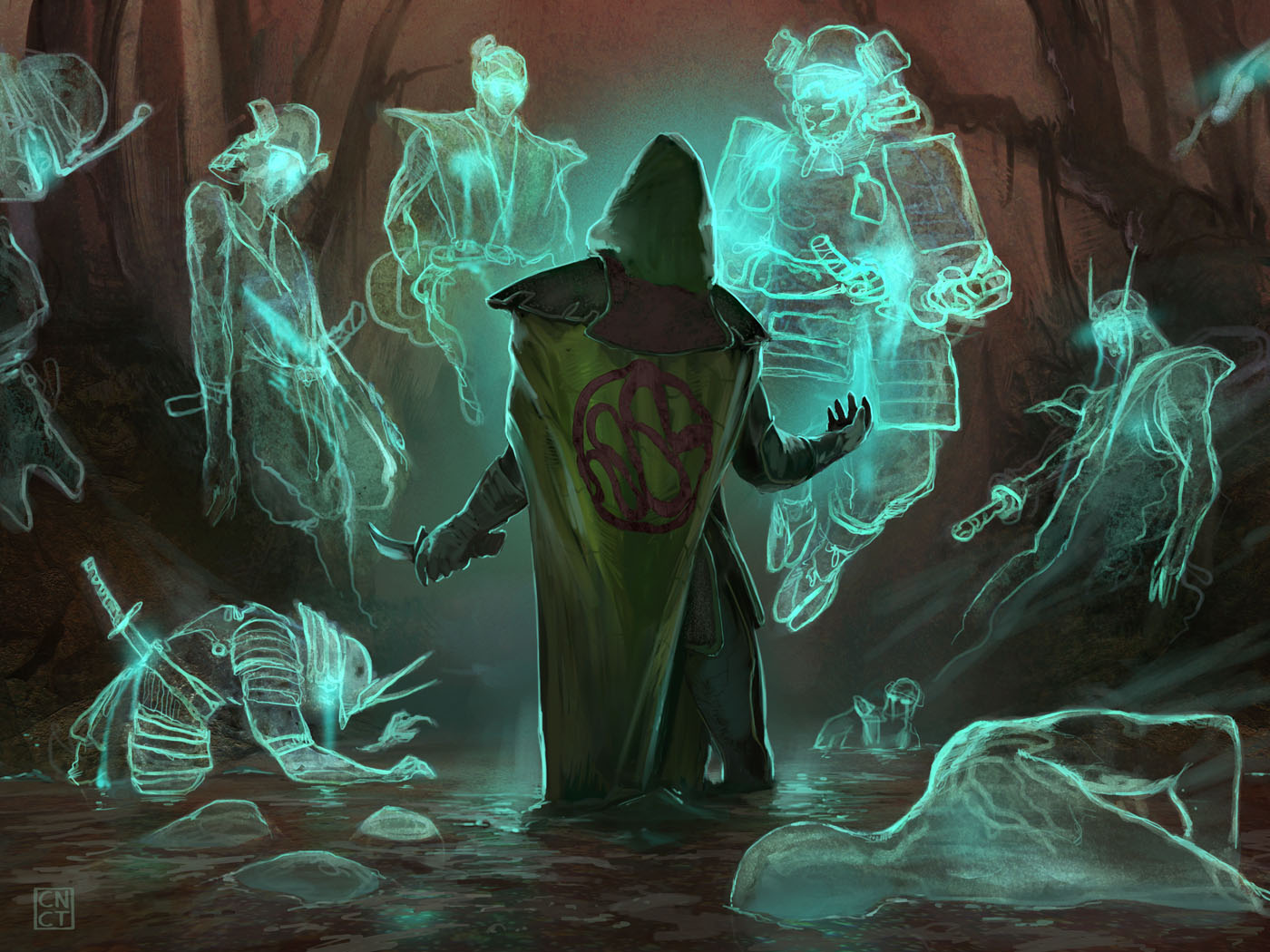
Most bards perform in taverns while others perform to crowds or nobles. These ones are performers to a harder to please audiences - the dead.
Hopefully, they get payed well too.
The Alternate Sorcerer
Golden eyes flashing, a human stretches out her hand and unleashes the dragonfire that burns in her veins. As an inferno rages around her foes, leathery wings spread from her back and she takes to the air.
Long hair whipped by a conjured wind, a half-elf spreads his arms wide and throws his head back. Lifting him momentarily off the ground, a wave of magic surges up in him, through him, and out from him in a mighty blast of lightning.
Crouching behind a stalagmite, a halfling points a finger at a charging troglodyte. A blast of fire springs from her finger to strike the creature. She ducks back behind the rock formation with a grin, unaware that her wild magic has turned her skin bright blue.
Sorcerers carry a magical birthright conferred upon them by an exotic bloodline, some otherworldly influence, or exposure to unknown cosmic forces. One can't study sorcery as one learns a language, any more than one can learn to live a legendary life. No one chooses sorcery; the power chooses the sorcerer.
Innate Arcane Power
Magic is an integral part of the life of any sorcerer, suffusing their body, mind, and soul. For some, this power is inherited from a bloodline that carries the magic of a powerful being. Others manifest their power randomly, having it burst forth in unexpected ways. Sorcerers are on of the most powerful magic-users in Vouri as they've acquired Arcane Magic directly from their blood as they've become prominent figures in politics in the Empire with the Cerberus Assembly.
Magic Made Manifest
Whether born with a spark of innate arcane potential within them, or gifted their inner spark of magic by a powerful entity, sorcerers at their core are walking incarnations of magical potential. Sorcerers are a rare occurrence amongst mortals, and their innate power often leads to them being the center of attention. However, this power does have its downsides, and when not used, it finds ways to spill out into the world.
Arcane Crests often appear to newborn babies coming from magical lineage of the Cerberus Assembly marking magic as the gift of the gods a long time ago to mortals.

The Altered Sorcerer
| Level | Proficiency Bonus |
Sorcery Points |
Features | Cantrips Known |
Spells Known |
1st | 2nd | 3rd | 4th | 5th | 6th | 7th | 8th | 9th |
|---|---|---|---|---|---|---|---|---|---|---|---|---|---|---|
| 1st | +2 | — | Spellcasting, Sorcerous Origin | 4 | 2 | 2 | — | — | — | — | — | — | — | — |
| 2nd | +2 | 2 | Font of Magic | 4 | 3 | 3 | — | — | — | — | — | — | — | — |
| 3rd | +2 | 3 | Metamagic | 4 | 4 | 4 | 2 | — | — | — | — | — | — | — |
| 4th | +2 | 4 | Ability Score Improvement | 5 | 5 | 4 | 3 | — | — | — | — | — | — | — |
| 5th | +3 | 5 | — | 5 | 6 | 4 | 3 | 2 | — | — | — | — | — | — |
| 6th | +3 | 6 | Sorcerous Origin feature, Metamagic | 5 | 7 | 4 | 3 | 3 | — | — | — | — | — | — |
| 7th | +3 | 7 | — | 5 | 8 | 4 | 3 | 3 | 1 | — | — | — | — | — |
| 8th | +3 | 8 | Ability Score Improvement | 5 | 9 | 4 | 3 | 3 | 2 | — | — | — | — | — |
| 9th | +4 | 9 | — | 5 | 10 | 4 | 3 | 3 | 3 | 1 | — | — | — | — |
| 10th | +4 | 10 | Metamagic | 6 | 11 | 4 | 3 | 3 | 3 | 2 | — | — | — | — |
| 11th | +4 | 11 | — | 6 | 12 | 4 | 3 | 3 | 3 | 2 | 1 | — | — | — |
| 12th | +4 | 12 | Ability Score Improvement | 6 | 12 | 4 | 3 | 3 | 3 | 2 | 1 | — | — | — |
| 13th | +5 | 13 | — | 6 | 13 | 4 | 3 | 3 | 3 | 2 | 1 | 1 | — | — |
| 14th | +5 | 14 | Sorcerous Origin feature, Metamagic | 6 | 13 | 4 | 3 | 3 | 3 | 2 | 1 | 1 | — | — |
| 15th | +5 | 15 | — | 6 | 14 | 4 | 3 | 3 | 3 | 2 | 1 | 1 | 1 | — |
| 16th | +5 | 16 | Ability Score Improvement | 6 | 14 | 4 | 3 | 3 | 3 | 2 | 1 | 1 | 1 | — |
| 17th | +6 | 17 | — | 6 | 15 | 4 | 3 | 3 | 3 | 2 | 1 | 1 | 1 | 1 |
| 18th | +6 | 18 | Sorcerous Origin feature | 6 | 15 | 4 | 3 | 3 | 3 | 3 | 1 | 1 | 1 | 1 |
| 19th | +6 | 19 | Ability Score Improvement | 6 | 15 | 4 | 3 | 3 | 3 | 3 | 2 | 1 | 1 | 1 |
| 20th | +6 | 20 | Sorcerous Restoration | 6 | 15 | 4 | 3 | 3 | 3 | 3 | 2 | 2 | 1 | 1 |
Creating a Sorcerer
The most important question to consider when creating your sorcerer is the origin of your power. As a starting character, you'll choose an origin that ties to an array of varied species - but the exact source of your power is up to you to decide. Is it a family curse, passed down to you from distant ancestors? Or did some extraordinary event leave you blessed with innate magic but perhaps scarred as well?
How do you feel about the power coursing through you? Do you embrace it and master it, or revel in its unpredictable nature? Did you seek it out, or did it find you? Did you have the option to refuse it, and do you wish you had? Perhaps you feel like you've been given this power for a lofty purpose, or you might decide that the power gives you the right to do what you want, to take what you want from others. Maybe your power links you to a powerful individual in the world—the fey creature that blessed you at birth, the dragon who put a drop of its blood into your veins, the lich who created you as an experiment, or the deity who chose you to carry this.
Or maybe you were part of the noble families of sorcerers in the Cerberus Assembly, each one caring for their very powerful bloodlines spanning from generations to generations.
Optional Rule: Multiclassing
If your group uses the optional rule on multiclassing in the Player's Handbook, here's what you need to know if you choose the ranger as one of your classes.
Ability Score Minimum. As a multiclass character, you must have at least a 13 in Charisma to take a level in this class, or to take a level in another class if you are already a ranger.
Proficiencies Gained. If sorcerer is not your initial class, you gain no proficiencies of any kind when you take your first level as a sorcerer.
Quick Build
You can make a sorcerer quickly by using these suggestions. First, make Charisma your highest ability score followed by Constitution. Second, choose the hermit background. Third, choose the firebolt, light, prestidigitation, and shocking grasp cantrips, along with the spells shield and magic missile.
The sorcerers of the Cerberus Assembly have the highest degree of Arcane Magic in the Western Imlardis.
If only those rich bastards have their egos and greed in check.
NO IM NOT BIASED, SIRIUS!
Class Features
As a sorcerer, you gain the following class features.
Hit Points
Hit Dice: 1d6 per sorcerer level
Hit Points at 1st Level: 6 + your Constitution modifier
Hit Points at Higher Levels: 1d6 (or 4) + your Constitution modifier per sorcerer level after 1st.
Proficiencies
Armor: None
Weapons: Daggers, darts, slings, quarterstaffs, light crossbows
Tools: None
Saving Throws: Constitution, Charisma
Skills: Choose two from Arcana, Deception, Insight, Intimidation, Persuasion, and Religion
Equipment
You start with the following equipment, in addition to the equipment granted by your background:
- (a) a light crossbow and 20 bolts or (b) any simple weapon
- (a) a dungeoneer's pack or (b) an explorer's pack
- Two daggers
Spellcasting
An event in your past, or in the life of a parent or ancestor, left an indelible mark on you, infusing you with arcane magic. This font of magic, whatever its origin, fuels your spells. See chapter 10 for the general rules of spellcasting and chapter 11 for the sorcerer spell list.
Cantrips
At 1st level, you know four cantrips of your choice from the sorcerer spell list. You learn additional sorcerer cantrips of your choice at higher levels, as shown in the Cantrips Known column of the Sorcerer table.
Spell Slots
The Sorcerer table shows how many spell slots you have to cast your spells of 1st level and higher. To cast one of these sorcerer spells, you must expend a slot of the spell's level or higher. You regain all expended spell slots when you finish a long rest.
For example, if you know the 1st-level spell burning hands and have a 1st-level and a 2nd-level spell slot available, you can cast burning hands using either spell slot.
Spells Known of 1st Level and Higher
You know two 1st-level spells of your choice from the sorcerer spell list.
The Spells Known column of the Sorcerer table shows when you learn more sorcerer spells of your choice. Each of these spells must be of a level for which you have spell slots. For instance, when you reach 3rd level in this class, you can learn one new spell of 1st or 2nd level.
Additionally, when you gain a level in this class, you can choose one of the sorcerer spells you know and replace it with another spell from the sorcerer spell list, which also must be of a level for which you have spell slots.
Spellcasting Ability
Charimsa is your spellcasting ability for your sorcerer spells, since the power of your magic relies on your ability to project your will into the world. You use your Charisma whenever a spell refers to your spellcasting ability. In addition, you use your Charisma modifier when setting the saving throw DC for a sorcerer spell you cast and when making an attack roll with one.
Spell Save DC = 8 + your proficiency bonus + your Charisma modifier
Spell attack modifier = your proficiency bonus + your Charisma modifier
Spellcasting Focus
Your body itself is a spellcasting focus. You must have at least one free hand to cast spells that require somatic or material components, and you must provide material components that are consumed by the spell or have a required gold cost.
Sorcerous Origin
At 1st level, you choose one of Sorcerous Origins for your power. Alternate Rules for the Draconic Bloodline, Wild Magic, Divine Soul, Shadow Magic, Aberrant Mind, and Clockwork Soul, are also included at the end of this class description.
Your Sorcerous Origin grants you features at 1st level, and again when you reach 6th, 14th, and 18th level in this class.
Origin Spells
Each Sorcerous Origin has a list of Origin Spells that you learn at the sorcerer levels noted in your Origin's description. These spells count as sorcerer spells for you, but they don't count against your total number of Spells Known.
Font of Magic
At 2nd level, you tap into a deep wellspring of magic within yourself. This wellspring is represented by sorcery points, which allow you to create a variety of magical effects.
Sorcery Points
You have 2 sorcery points, and you gain more as you reach higher levels, as shown in the Sorcery Points column of the Sorcerer table. You can never have more sorcery points than shown on the table for your level. You regain all spent sorcery points when you finish a long rest.
Flexible Casting
You can use your sorcery points to gain additional spell slots, or sacrifice spell slots to gain additional sorcery points. You learn other ways to use your sorcery points as you reach higher levels.
Creating Spell Slots. You can transform unexpended sorcery points into one spell slot as a bonus action on your turn. The Creating Spell Slots table shows the cost of creating a spell slot of a given level. You can create spell slots no higher in level than 5th.
Any spell slot you create with this feature vanishes when you finish a long rest.
Creating Spell Slots
| Spell Slot Level | Sorcery Point Cost |
|---|---|
| 1st | 2 |
| 2nd | 3 |
| 3rd | 5 |
| 4th | 6 |
| 5th | 7 |
Converting a Spell Slot to Sorcery Points. As a bonus action on your turn, you can expend one spell slot and gain a number of sorcery points equal to the slot's level.
Metamagic
At 3rd level, you gain the ability to twist your spells to suit your needs. You gain two of the following Metamagic options of your choice. You gain two more at 6th, 10th, and 14th level.
You can use only one Metamagic option on a spell when you cast it, unless otherwise noted.
Augmented Spell
When you cast a spell that forced a creature to make a saving throw to resist its effects, you can spend 4 sorcery points to change the first saving throw required for one target of the spell. If the original save is a physical attribute, such as Strength, Constitution, or Dexterity, you must choose one from the group. Similarly, if the original save is a mental attribute, such as Intelligence, Wisdom, or Charisma, it must remain one.
Careful Spell
When you cast a spell that forces other creatures to make a saving throw, you can protect some of those creatures from the spell's full force. To do so, you spend 1 sorcery point and choose a number of those creatures up to your Charisma modifier (minimum of one creature). A chosen creature automatically succeeds on its saving throw against the spell.
Distant Spell
When you cast a spell that has a range of 5 feet or greater, you can spend 1 sorcery point to double the range of the spell.
When you cast a spell that has a range of touch, you can spend 1 sorcery point to make the range of the spell 30 feet.
Empowered Spell
When you roll damage for a spell, you can spend 1 sorcery point to reroll a number of the damage die up to your Charisma modifier (minimum of 1). You must use the new rolls.
You can use Empowered Spell even if you have already used a different metamagic option during the casting of the spell.
Extended Spell
When you cast a spell that has a duration of 1 minute or longer, you can spend 1 sorcery point to double its duration, to a maximum duration of 24 hours.
Heightened Spell
When you cast a spell that forces a creature to make a saving throw to resist its effects, you can spend 3 sorcery points to give one target of the spell disadvantage on its first saving throw made against the spell.
Quickened Spell
When you cast a spell that has a casting time of 1 action, you can spend 2 sorcery points to change the casting time to 1 bonus action for this casting.
Subtle Spell
When you cast a spell, you can spend 1 sorcery point to cast it without any somatic or verbal components.
Twinned Spell
When you cast a spell that targets only one creature and doesn't have a range of self, you can spend a number of sorcery points equal to the spell's level to target a second creature in range with the same spell (1 sorcery point if the spell is a cantrip).
To be eligible, a spell must be incapable of targeting more than one creature at the spell's current level. For example, magic missle and scorching ray aren't eligible, but ray of frost and chromatic orb are.
Ability Score Improvement
When you reach 4th level, and again at 8th, 12th, 16th, and 19th level, you can increase one ability score of your choice by 2, or you can increase two ability scores of your choice by 1. As normal, you can't increase an ability score above 20 using this feature.
Sorcerous Mastery
At 20th level you've unlocked the apex of your potential, granting you unprecedented control over your bloodline maximizing your spells.
Every metamagic option you know with a sorcery point cost greater than 1 has has its cost reduced by 1. In addition, any metamagic option you know that originally cost 1 sorcery point can now be used at will without expending any, though you can still only use one at a time unless specified otherwise.
Sorcerer Subclass
Draconic Bloodline
Your innate magic comes from draconic magic that was mingled with your blood or that of your ancestors. Most often, sorcerers with this origin trace their descent back to a mighty sorcerer of ancient times who made a bargain with a dragon or who might even have claimed a dragon parent. Some of these bloodlines are well established in the world, but most are obscure. Any given sorcerer could be the first of a new bloodline, as a result of a pact or some other exceptional circumstance.
Draconic Spells
Starting at 1st level, you learn additional spells when you reach certain levels in this class, as shown on the Draconic Spells table. Each of these spells counts as a sorcerer spell for you, but it doesn't count against the number of sorcerer spells you know.
Whenever you gain a sorcerer level, you can replace one spell you gained from this feature with another spell of the same level. The new spell must be an evocation or an abjuration spell from the sorcerer, warlock, or wizard spell list.
| Level | Spell |
|---|---|
| 1st | Absorb Elements, Cause Fear |
| 3th | Dragon's Breath, See Invisibility |
| 5th | Fear, Fly |
| 7th | Elemental Bane, Freedom of Movement |
| 9th | Control Winds, Legend Lore |
Dragon's Fury
Starting at level 6, any spells that casted using sorcery points will have the ability to change the damage type into one of the other listed types: (acid, cold, fire, lightning, poison, thunder)
Divine Soul
Divine Magic
Starting at 1st level, you learn additional spells when you reach certain levels in this class, as shown on the Divine Spells table. Each of these spells counts as a sorcerer spell for you, but it doesn't count against the number of sorcerer spells you know.
Whenever you gain a sorcerer level, you can replace one spell you gained from this feature with another spell of the same level. The new spell must be on the cleric spell list.
| Level | Spell |
|---|---|
| 1st | Detect Evil and Good, Divine Favor |
| 3th | Aid, Lesser Restoration |
| 5th | Beacon of Hope, Revivify |
| 7th | Divination, Guardian of Faith |
| 9th | Dispel Evil and Good, Greater Restoration |
Dues Ex Machina
When you cast a spell using your sorcery points that forces other creatures to make a saving throw, you can protect some of those creatures from the spell's future force. You can choose a number of those creatures up to your Charisma modifier (minimum of one creature). A chosen creature automatically succeeds on its saving throw against that spell.
Shadow Magic
Shadow Magic Spells
Starting at 1st level, you learn additional spells when you reach certain levels in this class, as shown on the Shadow Magic Spells table. Each of these spells counts as a sorcerer spell for you, but it doesn't count against the number of sorcerer spells you know.
Whenever you gain a sorcerer level, you can replace one spell you gained from this feature with another spell of the same level. The new spell must be an illusion or a necromancy spell from the sorcerer, warlock, or wizard spell list.
| Level | Spell |
|---|---|
| 1st | False Life, Inflict Wounds |
| 3th | Pass Without Trace, Silence |
| 5th | Feign Death, Hunger of Hadar |
| 7th | Shadow of Moil, Death Ward |
| 9th | Negative Energy Flood, Seeming |
Shadowfell's Touch
Starting at level 6, when you Cast a Spell that has a range of 5 feet or greater using your sorcery points, you can double the range of the spell.
When you Cast a Spell that has a range of touch using your sorcery points, you can make the range of the spell 30 feet.
Storm Magic
Storm Magic Spells
Starting at 1st level, you learn additional spells when you reach certain levels in this class, as shown on the Storm Magic Spells table. Each of these spells counts as a sorcerer spell for you, but it doesn't count against the number of sorcerer spells you know.
Whenever you gain a sorcerer level, you can replace one spell you gained from this feature with another spell of the same level. The new spell must be a conjuration or an evocation spell from the sorcerer, warlock, or wizard spell list.
| Level | Spell |
|---|---|
| 1st | Create or Destroy Water, Thunderwave |
| 3th | Gust of Wind, Levitate |
| 5th | Lightning Bolt, Tidal Wave |
| 7th | Storm's Sphere, Watery Sphere |
| 9th | Control Winds, Maelstorm |
Roaring Storm
Starting at level 6, when you roll damage for a spell you casted using your sorcery points, you can reroll a number of the damage dice up to your Charisma modifier (minimum of one). You must use the new rolls.
Wild Magic
Wild Magic Spells
Starting at 1st level, you learn additional spells when you reach certain levels in this class, as shown on the Wild Magic Spells table. Each of these spells counts as a sorcerer spell for you, but it doesn't count against the number of sorcerer spells you know.
Whenever you gain a sorcerer level, you can replace one spell you gained from this feature with another spell of the same level. The new spell must be an enchantment or a transmutation spell from the sorcerer, warlock, or wizard spell list.
| Level | Spell |
|---|---|
| 1st | Chaos Bolt, Color Spray |
| 3th | Enlarge/Reduce, Mirror Image |
| 5th | Enemies Abound, Hypnotic Pattern |
| 7th | Confusion, Polymorph |
| 9th | Animate Objects, Mislead |
Hasted Havoc
Starting at level 6, when you Cast a Spell using your sorcery points that has a Casting Time of 1 action, you can spend 2 sorcery points to change the Casting Time to 1 Bonus Action for this casting.
Sorcerer Subclass
Phoenix Spark
Your power draws from the immortal flame that fuels the legendary phoenix. You or your ancestors perhaps rendered a phoenix a great service, or you were born in its presence. Whatever the cause, a shard of the phoenix's power dwells within you.
That power is a mixed blessing. Like the mythical creature, you can invoke fiery energy and gain the ability to cheat death itself. This power comes at a cost. The fire within you seethes, demanding to be unleashed. You sometimes find yourself absentmindedly feeding fires. You can't bear to allow a fire to sputter out. You feel most comfortable while holding a lit torch or sitting in front of a campfire.
Phoenix Magic
Phoenix Spells
Starting at 1st level, you learn additional spells when you reach certain levels in this class, as shown on the Phoenix Spells table. Each of these spells counts as a sorcerer spell for you, but it doesn't count against the number of sorcerer spells you know.
Whenever you gain a sorcerer level, you can replace one spell you gained from this feature with another spell of the same level. The new spell must deal only fire or radiant damage, from any class's spell list.
| Sorcerer Level | Spell |
|---|---|
| 1st | burning hands |
| 3rd | flaming sphere |
| 5th | fireball |
| 7th | fire shield |
| 9th | immolation |
The Spark
When you choose this Origin at 1st level, the spark within you ignites and begins to burn more brightly when you use your magic. When you cast a spell of 1st level or higher that deals fire or radiant damage, the spark awakes and begins to blaze.
Upon casting the spell, you regain hit points equal to the level of the spell slot expended, and regain that many hit points minus one at the start of your next turn, repeating until it would restore zero hit points and the flame returns to its dormant state. If you are reduced to zero hit points, the spark immediately goes dormant.
If you cast a spell that sets the spark ablaze while it is already ablaze, you regain hit points equal to the level of the spell and you can reset the hit points it restores to the level of the spell you cast if it is higher than the level the spark currently would restore at the start of your next.
Ignition
Additionally at 1st level, you learn the cantrip burn. This is a sorcerer spell for you.
Be careful around sorcerers of House Iresor, you'll see them give you heat on a cold winter. The next day, they've accidentally burned the whole village.
Flames Ablaze
Starting at 6th level, the spark within you is strengthen, and you draw more deeply from its power. While the spark within you is burning, you gain the following benefits:
- When you cast a spell that deals fire or radiant damage, you can add your Charisma modifier to one damage roll of that spell.
- Any time you would suffer gain the poisoned condition or suffer from a disease, you can instead take 5 fire damage end the effect instantly.
- As a reaction to taking fire or radiant damage, you can use your reaction to gain resistance to that instance of damage, and increase the level of your spark by one.
Phoenix Unleashed
Starting at 14th level, when you ignite the spark within or while it is burning you can unleash it complete by expending two sorcerer. Flames consumes your physical body leaving you as a winged shape of fire until the start of your next turn. You gain the effect of investiture of flame with following additional benefits:
- You have a flying speed of 30 feet and can hover.
- The amount of hit points you regain from your Spark feature is doubled, and it does not go dormant when you reduced to zero.
This does not require concentration, but ends at the start of your next turn unless you extend the duration of the form for another round by expending an additional two sorcery points. When you return to your normal form, you gain one level of exhaustion.
In Flames Reborn
Starting at 18th level, as an action, you can take the form of a Pheonix (MTF, p199) for a number of rounds equal to your Charisma modifier. Your game statistics, including mental ability scores, are replaced by the statistics of the Pheonix. You retain your Alignment and personality.
When the duration ends or you are reduced to zero hit points, the Fiery Death and Rebirth feature is triggered, leaving behind your normal form instead of an egg.
Once you use this feature, you cannot use it again until you complete a long rest.
Phoenix Soul Quirks
| d6 | Quirk |
|---|---|
| 1 | You absentmindedly ignite small fires that quickly sputter out. |
| 2 | You cackle like a fiend when you unleash your fire spells. |
| 3 | You admire fire, even if it burns your friends. |
| 4 | You are covered in burns that mark the first time your power manifested. |
| 5 | You like your food charred. |
| 6 | You are brave to the point of recklessness. |
The Warlock
Warlocks are seekers of the knowledge that lies in the fabric of the other Planes. They make pacts with otherwordly beings and unlock Eldritch Magic through their contract with them.
Eldritch Magic is very similar to Divine Magic but it does not need to have a Seal as the contract is already bounded to the warlock's soul but often not easily manipulated like Arcane or Divine Magic.


Pact Boon Option
When you gain the Pact Boon feature at 3rd level, you can choose the following additional option.
Pact of the Skin
Your patron gives you a new body. You decide the appearance of your new body, including its race, age, and sex. If your race changes, you replace your original racial traits with the traits of your new race (see chapter 2 of the Player's Handbook for race options). If you have missing body parts, you can restore them. None of your other game statistics change.
Your new body gives you a base AC of 17 (your Dexterity modifier doesn't affect this number). If the armour you wear would leave you with a lower AC, you can determine your AC using this feature. You can still gain this benefit while using a shield. In addition, when you spend a Hit Die to heal during a short rest, you can use the maximum value for each die.
Your Pact Boon
Your new body's appearance may reflect the nature of your patron. The following provides inspiration for a warlock with the Pact of the Skin.
The Archfey. Your appearance might change to reflect a certain season, like summer or winter. You might become inhumanly beautiful, or alternatively, wither until you seem an old, wizened hag.
The Fiend. Your skin might turn red or leathery, and you might grow horns or a tail. Your teeth may sharpen, and your body might become unnaturally warm (or cold) to the touch.
The Great Old One. You might lose colour in your eyes, hair, or blood, or seem faintly translucent. You might be more comfortable submerged in water, or never seem to blink or shut your eyes.
Eldritch Invocations
At 2nd level, a warlock gains the Eldritch Invocations feature. Here are new options for warlocks with the Pact of the Skin feature, in addition to the options in the Player's Handbook.
If an eldritch invocation has a prerequisite, you must meet it to learn the invocation. You can learn the invocation at the same time that you meet its prerequisite. A level prerequisite refers to your level in this class.
Eldritch body
Prerequisite: Pact of the Skin
You can use a bonus action to grow a natural weapon from part of your body, which you are proficient with and can use to make melee weapon attacks. It lasts until you use a bonus action to dismiss it, or until you use this feature again.
Each time you create a natural weapon, you determine its appearance, such as claws or a pair of horns, and whether it deals bludgeoning, piercing, or slashing damage. On a hit, it deals damage equal to 1d10 + your Strength modifier, and you can push the target up to 10 feet away from you.
When you cast a spell that requires a melee weapon, such as green-flame blade, you can use a weapon you create using this feature in place of the weapon required by the spell.
Your patron giving you another face might be a sign that they don't like your face as much
Unstopping Heart
Prerequisite: 7th level, Pact of the Skin
You can cast death ward once on yourself without expending a spell slot. You can't do so again until you finish a long rest.
Eternal Flesh
Prerequisite: 12th level, Pact of the Skin
You no longer age and can't be aged magically, and you are immune to disease and poison. In addition, when you spend a Hit Die to heal during a short rest, you can cause any missing body parts you have—such as eyes or hands—to grow back.
Unearthly Flight
Prerequisite: 15th level, Pact of the Skin
You can use a bonus action to sprout a large pair of wings from your back, gaining a flying speed equal to your current speed. You can shed your wings using another bonus action.
You can't sprout wings while wearing armour that doesn't accomodate them, and clothing not made to accommodate your wings might be destroyed when you manifest them.
Blade Vault
Prerequisite: Pact of the Blade
You can perform the ritual to transform a new magic weapon into your pact weapon without breaking your connection with your current pact weapon. You can store a number of magical weapons in your pact weapon's extradimensional space equal to your Charisma modifier (minimum of two).
Each time you create your pact weapon, you decide which weapon appears. When you do, you can end your attunement to any of your other pact weapons and immediately attune to the weapon you summoned (if it requires attunement).
Pact's Shadow
Prerequisite: Pact of the Blade
Entangling Blast
Prerequisite: 5th level, Eldritch blast cantrip
When you hit a creature with eldritch blast, the creature must succeed on a strength saving throw against your spell save dc or be grappled by chains, vines, tentacles, bones, or shadows until the end of its next turn. A huge or larger creature makes the saving throw with advantage.
Mount of the Rein Master
Prerequisite: 5th level, Pact of the Chain feature
You can cast find steed once without expending a spell slot. Instead of summoning a spirit, you must target the familiar you gained from casting find familiar, transforming it into a steed described in the find steed spell. The creature uses the stat blocm of the chosen steed, and it has features of both find familiar and find steed for 8 hours, before reverting back to being just your familiar. After casting find steed this way, you can't do so again until you finish a long rest.
Malleable Companion
Prerequisites: 15th level, Pact of the Chain feature
You can cast the Polymorph spell targeting your familiar once without expending a spell slot or material components. When you do so, you can use your level for determining the challenge rating of the beast your familiar can transform into.
Once you use this invocation, you can't do so again until you have finished a long rest.
Tales of the Crimson Tome
Prerequisite: Pact of the Tome feature
Living Map
Prerequisite: 9th level, Pact of the Tome feature
A new page appears in your Book of Shadows. You can spend one hour drawing a map on this page of an area that is a 40-foot square or smaller. You must have seen the entirety of the area within the past 24 hours to draw a map.
Once you have drawn a map, you can see the names of creatures who occupy the area, as well as any changes that occur to the environment. A creature's name appears on the map and corresponds to wherever the creature is in the area. The name moves as they move.
A creature protected from divination magic does not appear on the map. The map remains in your Book of Shadows for 30 days, until you begin to draw another map, or you erase it as an action.
Shadow Veil
Prerequisite: 5th level
Voice in the Void
Prerequisite: 7th level
You can cast silence once using a warlock spell slot. You can’t do so again until you finish a long rest. While you are inside the area of a silence spell that was cast by you or an allied creature, you can speak and use verbal spell components normally and can be heard by other creatures in the spell’s area of effect.
Lolth's Grasp
Prerequisite: 7th level
You can cast Spider Climb on yourself at will, without expending a spell slot or material components.
Shadow Aegis
Prerequisite: Pact of the Talisman
You can use your reaction to cast shield on a creature you can see that is holding your talisman without expending a spell slot. Once you use this feature you can't do so again until you finish a short or long rest.
Dark Seal
Prerequisites: Pact of the Talisman feature, 5th level
You may use your talisman as a glyph, casting the glyph of warding spell at your warlock spell slot level, however the casting time is reduced to 10 minutes. The seal will end if it is triggered, if you remove your talisman or if it is used to cast another spell before it is triggered. You may use this ability once per long rest.
Flesh Puppet
Prerequisites: Pact of the Talisman feature, 5th level
You can place your talisman on the remains of a medium or smaller humanoid as an action, and cause it to rise again as if under the effect of the animate dead spell. If the talisman is separated from the undead creature's possession or is used to cast another spell, the effect will end and the creature will immediately drop dead. Once you use this feature, you can't use it again until you finish a long rest
Pact of the Talisman
Your talisman may take many different forms depending on your chosen patron; here are some inspirations for your talisman's appearance:
The Archfey. Your talisman may appear as an inscribed stone, a petrified leaf, or a ring with the insignia of your patron's court.
The Fiend. A talisman from a Fiend may be an unholy symbol, a large fang or blood painted stone.
The Great Old One. Your talisman could take many different forms: perhaps a scrap of paper torn from a tome of secrets; a twitching eyeball pendant; or a small flickering lantern.
The Wizard
Wizards cast their spells by acquired knowledge and experience instead of raw Arcane Magic from their bloodlines.
Most wizards do not do not come from the lineage of magical users who have developed magic as their bloodlines lack the capability to use Arcane Magic.
Wizards can be able to use Arcane Magic by:
- Acquiring a Magic Item. Arcane Magic can be extracted from a magical items to be able to cast magic. These magic item may have varying potency or power depending on how much magic was initially given to the item.
Most magic items used by wizards are arcane focuses and spellbooks. Zemnian Magic Items are staple sources of magic used by people from the Zemni Fields long ago.
-
Another way is by attending a magic school as they are taught the different schools of magic and how to awaken Arcane Magic that lies dormant by studying and making runes, rituals and spellbooks BUT wizards are regarded as hardworkers for their mastery in Arcane Magic because most of them come from non-magical lineage.
-
There are also mages known as Hedge Wizards who've learned Arcane Magic on their own, not going to a magic school at all. Some of them self-taught and others are taught by other mages.

Wizard Subclass
Hedge Magic
While almost all wizards study in formal schools under the tutelage of a wise master, some wizards reject traditional arcane schooling and strike out into the world to learn by doing. These rare few who hone their craft out in the wilds are referred to as Hedge Wizards. Though their methods are frowned upon by formal wizarding schools, any archmage worthy of his station will reluctantly recognize that Hedge Wizards are the true masters of the low magics.
Regardless of their background, all Hedge Wizards reject the traditional methods of wizardry. When creating your Hedge Wizard consider how your spellcasting and spellbook may differ from a wizard who attended a formal school.
Hedge Magic Features
| Bard Level | Feature |
|---|---|
| 3rd | Requiem's Call, Death's Lullaby |
| 6th | Dance of Souls |
| 14th | The Final Verse |
Cantrip Savant
Beginning when you select this school at 2nd level, you have devoted yourself to the diligent study of fundamental magics.
You learn three cantrips of your choice from any class's spell list (each can come from different lists). Each time you would learn a new wizard spell from gaining a level in this class, you can instead learn two cantrips in this way.
Cantrips learned in this way count as wizard cantrips for you.
Foundational Magic
At 2nd level, your heightened study of cantrip magic is shown by the ease with which it is maintained and dismissed.
You can simultaneously concentrate on a cantrip and one other spell.
Further, you can dismiss any number of your cantrips or cantrip effects as a bonus action.
Arcane Expansion
At 6th level, well-practised cantrips benefit from your considerable expertise, honed to the verge of perfection.
Whenever you cast a cantrip, you can choose one of the following benefits to apply to it:
- If the cantrip has a range other than self, you can double its range. If its range is touch, it becomes 10 feet.
- If the cantrip has a duration of at least 1 minute, you can choose to either double its duration to a maximum duration of 24 hours, or increase its duration to 1 hour.
- The cantrip's targets have disadvantage on saving throws made against it, and you have advantage on the first attack roll made with it until the start of your next turn.
- If the cantrip's effects would end when you cast it again, they instead end when you cast it again while you already have two or more instances of that cantrip active.
- The cantrip doesn't need any verbal, somatic or material components.
Swift Cantrip
At 10th level, casting basic magic becomes second nature to you, no more trying than a terse word or wave of a hand.
When you cast a cantrip that has a casting time of 1 action, you can cast it with 1 bonus action instead. If you do, you can still cast non-cantrip spells with your action during the current turn.
Any spell cast in this way, or attack made while casting that spell or as part of that spell's effects, deals half damage and can't grant you resistance to damage.
Master of Fundaments
At 14th level, your perfected mastery over the fundamentals of wizardry extends even to 'proper' magic.
You can cast any 1st level wizard spell you have prepared at its lowest level without expending spell slots. If you do, that spell counts as a cantrip for the purpose of this subclass's features. Each such spell can only be cast in this way once between rests.
Further, when casting a cantrip, you can now choose up to two of Practice Made Perfect's effects to apply to it instead of one.
Third Party Subclasses:
More Wizard subclasses that are related to the setting could be found in other Third Party Books such as:
Wizard Arcane Traditions: Graviturgy Magic and Chronomancy Magic which is present in Explorer's Guide To Wildemount.

As wizards not coming from a noble family are uncommon, needing a fortune to attend to a magic school with the difficulty of casting magic from non-magical backgrounds.
Some wizards resort to ancient magic items to siphon magic while some became hedge wizards who practice low magics. Being a wizard is very expensive, take it from me.
Conclusion
Thank you for reading Almea's Guide to Vouri. I hope it helped you on your adventures and inquiry. Please return the book to the specified shelf in the Library of the Occult Soul or face the consequence. Thank You!
-Almea Vysoren
Manuscript Version 2.3.