ecto8io's Limit Break
Exalted, the game from which this homebrew originates, is a game of epic heroes, in every sense of the word. Epic in scope, epic in victory, and epic in their failures. Think on legendary heroes like Gilgamesh, Quetzalcoatl, Achilles, Beowulf, Heracles, Cú Chulainn, Samson, Sun Wukong, the Knights of the Round Table, and many others. Any who know the legends of these figures knows that they are no paragons of virtue, even if many of their acts are heroic; after all, Homer begged the muses to help him channel not Achilles' virtue, but his rage, the rage against the Trojan War that had him sulk in his tent as his allies fell to pieces and the rage of a broken heart that let him slaughter the Trojan armies to retrieve his love Patroclus's body from the battlefield.
The characters of Dungeons and Dragons are not on par with the potency of such heroes, but their passions and ambitions are much the same. No being, whether god or mortal, is perfect, and in the high-stress life that adventurers live, there is only so much bend before the break.
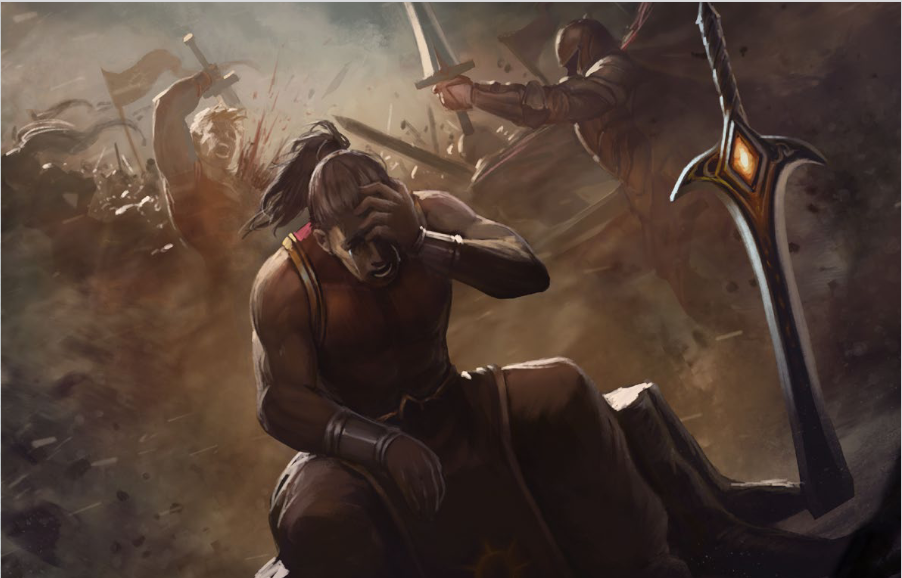
The exalted adventurer Malau breaks down in tears on the battlefield, succumbing to the Flawed Virtue of All-Consuming Grief. His foes ignore him and press against his weaker allies, knowing that should he be roused from his grief, he would turn about and cut them down in rage.
Limit
Limit is a measure of your stress, self-doubt, and rising mental instability. As you gain points of Limit, the thoughts you keep buried far beneath start to bubble up and become harder and harder to ignore. This sentiment may be invisible to others, but you know in your heart that something is wrong. When you reach 10 Limit, you can no longer contain your urges and enter into a Limit Break.
Gaining Limit
You can gain limit in the following ways:
- Once per encounter, if you act in a way that opposes your ideals and bonds, you must roll 2d20, which no effect can influence. You gain a point of Limit equal to the number of d20s that roll a 7 or higher.
- You have a Limit Trigger you select at character creation, which is a special situation in which you gain Limit. Whenever the Limit Trigger is met, you must roll 3d20 for Limit, which no effect can influence. If you roll a 5 or higher on these dice, you gain a point of Limit, potentially netting you 3 Limit.
A Limit Trigger can be triggered more than once in an encounter, but it should not occur because of the exact same situation. For example, if your Limit Trigger is when you are insulted and belittled or frustrated by someone else, a jester who continues to harass and insult you over the course of an encounter will not continue to build your Limit, but if the king joins in on the fun and harasses you, as well, that serves as another source that may build your Limit.
Limit Triggers
During character creation, you create a Limit Trigger for yourself, which is a particular situation your character finds themself emotionally vulnerable in.
Below is a non-exhaustive list of potential Limit Triggers, meant to illustrate possibilities as opposed to creating boxes. If you create a Limit Trigger of your own (subject to DM approval), it must be a situation that your character finds stressful, traumatic, or frustrating, and must be one that is likely to happen several times over the course of a campaign. A litmus test for a Limit Trigger is that you could conceivably see somebody who's currently mentally unstable having an emotional outburst (i.e. Limit Break) as a result of experiencing this situation.
- You're insulted, belittled, or deliberately frustrated by someone else.
- You tell a lie, deliberately deceive, or break a sworn oath.
- You see innocents suffering, and are unable or unwilling to help them.
- You are hindered or defeated by the self-indulgence and intemperance of others around you.
- You suffer a setback or defeat for reasons that are your own fault.
- You have the opportunity to advance your self-interest by harming innocents or ignoring suffering.
- Your emotions lead you to act in a way that you end up regretting.
- You are denied one of your favorite pleasures or vices either by circumstance, someone else, or your own actions.
- You destroy, abandon, or sacrifice something valuable to you.
- You discover a significant obstacle in the way of one of your goals when success seemed almost certain.
- You offer advice and wisdom, but are not heeded by those whom you advise.
- The immorality or transgressions of others hinders you.
- You drive away someone whom you care about.
- An adversary exploits your mercy and compassion.
- You must endure deprivation, poverty, or extreme physical hardship because of an adversary or to achieve one of your goals.
- Someone whom you wish would pay attention to you rejects, humiliates, or ignores you.
Don't Play the System If You'll Play the System
An enterprising magic-user can see that, using their magic, they can temporarily force a creature to act against its bonds and ideals, which can cause player characters to gain Limit. Metagaming players might ask to have spells cast upon them that they choose to fail so they can act in a way that accrues Limit, allowing them to reach Limit 10 and have a Limit Break at a more convenient time. This player would forget that the DM has fiat as to when a character at Limit 10 has their Limit Break, and that such attempts to skirt the edges of rules are cancerous to play. If you are playing with the Limit system and wish to act in such a way, you should ask the question as to why you are playing with this system in the first place.
Limit Break and Flawed Virtue
When you accumulate 10 Limit, you will enter a Limit Break state, which is the ultimate spilling-over of your stress and self-doubt and instability. This manifestation is insidious; your Limit Break will not necessarily manifest immediately, and will tend to erupt only when your resulting actions have the potential to cause significant turmoil and suffering, as chosen by the DM. For example, if you reach 10 Limit while your party is trudging through a desert alone, it's not likely that you will reach a state of Limit Break until you reach a village of people whose imperfect natures mean that somebody is going to do something insulting to you eventually.
Limit Break manifests in a form known as a Flawed Virtue. Flawed Virtues are described as such because they are perversions of what could otherwise be considered virtuous. The Flawed Virtue your character expresses in Limit Break is never fixed - every time you undergo Limit Break, you are likely to express a different Flawed Virtue. Every Flawed Virtue has the following features:
- A Flawed Virtue forces you to act out in a sort of behavior that is harmful to those around you or yourself, which is treated as your defining Ideal for the duration of the Limit Break.
- You cannot be convinced by mundane or magical means to stop performing your Limit Break; only a wish spell can stop this process, and using wish to do so immediately gives you 5 Limit.
- Limit Break is ultimately a cathartic experience, resetting your Limit level back to 0.
- A Flawed Virtue always has a duration of either the entire session or over the course of an encounter. If a Limit Break occurs during the end of a session, a DM may choose to have the Limit Break spill over into the next session. In addition, every Flawed Virtue has a condition which can end it prematurely.
Examples of Flawed Virtues are presented below.
All-Consuming Grief
Your introspection turns to utter grief. Regret and sorrow overwhelm you, and all you can do is mourn your losses and brood upon the injustice that has affected you. You will go off on your own to grieve, if possible; if not, you will ignore your surroundings and focus inward on your pain. You will not stir from your grief for anything, not even your allies' pleas.
- Duration: Encounter. All-Consuming Grief can end prematurely if you are attacked or you witness someone whom you care about deeply get reduced to 0 hit points.
Avaricious Craving
All of the fetters on your limitations fall away. You designate something you value, crave, or wish to amass - currency, liquor, jewels, burnt offerings, drugs, artwork, etc. You seek out as much of this you can get, and no matter how much you gain, you must always seek more. If someone attempts to part you with your hoard, you will forcefully defend it, with violence if necessary.
- Duration: Session. Avaricious Craving can end prematurely if you harm someone whom you care about deeply..
Bellowing Tyrannical Proclamation
Your pride swells to heights unforeseen. Everyone around you must acknowledge your authority or superiority. Those who don't, or who fail to make their inferiority explicit, must be convinced otherwise. This can take many forms - challenging this contender to a duel, verbally berating someone, loudly proclaiming oneself among all others, or flaunting power and wealth.
- Duration: Session. Bellowing Tyrannical Proclamation can end prematurely if you suffer a significant defeat or setback as a result of trying to prove your superiority.
Berserk Anger
Your combative spirit turns to murderous rage. You rampage, attacking and killing anything you see. Your killing spree starts with your enemies, but if the innocent and uninvolved bystanders are still around, you will turn your rage against them. You can spare from your rampage anyone with whom you have a positive tie, but if they try to stop you, this protection vanishes.
- Duration: Encounter. Berserk Anger can end prematurely if you run out of valid victims to kill, or if you reduce someone whom you care about deeply to 0 hit points.
Chains of Honor
Your reflection on your past misdeeds turns to absolute corrective behavior. You take on an unbreakable code of honor. You will not lie, not even by omission or half-truth, nor will you break any promise or sworn oath you have made. If you have deceived anyone in the past, you will find them, tell them the truth, and do whatever you can to atone. You will also seek out those to whom you have broken oaths and take on whatever labors are needed to correct this failure.
- Duration: Session. Chains of Honor can end prematurely if someone whose oath you have broken or whom you've harmed through deception forgives you.
Melodrama and You
Limit Break is a system that brings people to act in melodramatic and unreasonable ways, even ways that may agonize the party. Limit Break demands that the player express the extremes of human emotion, and will have to do so in front of people they presumably care about. This is, on some level, going to be awkward if the members of the table are not comfortable with it. The players at a table that incorporates the rules of Limit Break must become comfortable seeing each other expressing deep emotional states that they may not see otherwise unless they are close friends, or they should choose to play without the system.
Compassionate Martyrdom
Your compassion turns to martyrdom. You cannot see the suffering of others without intervening. Whenever you see someone suffering who is innocent, you must intervene to help them in as dramatic a way as possible. If you see a person being harmed, you must intercede, either to take those blows for them, or kill that person's aggressor. If someone suffers from poverty, sickness, or bigotry, you must find a dramatic method of solving this problem, working without cease to do so.
- Duration: Session. Compassionate Martyrdom can end prematurely if you see that the actions you have taken cause the people whom you are trying to protect to fear or reject you, or if you lose a combat encounter that you started because of your Limit Break.
Contempt of the Virtuous
Your moral code turns to unfaltering self-righteousness. You will strive to correct the failings of everyone around you. If you see another person engaging in any form of immodest behavior, indulgence, or dishonesty, you will strive to correct it and lecture them on their moral failings. If your instruction is mocked or rejected, you may even turn to force.
- Duration: Session. Contempt of the Virtuous can end prematurely if you are forced to question the righteousness of your own actions, either because you are confronted with the unintended consequences of what you do, or because another character persuades you.
Crushing Doubt
Your consideration of your allies' opinions turns to debilitating self-doubt. You will need the assistance of your allies for every task, no matter how simple it is, and pass on any duties and responsibilities to those whom you believe are more capable than you. If you're separated from your allies, you must try to return to them or find other companions, and will flee from any potential danger or obligation you encounter along the way.
- Duration: Session. Crushing Doubt can end prematurely if you are forced to face a significant danger and succeed, or if you perform the lion's share of the work in saving an ally from significant danger.
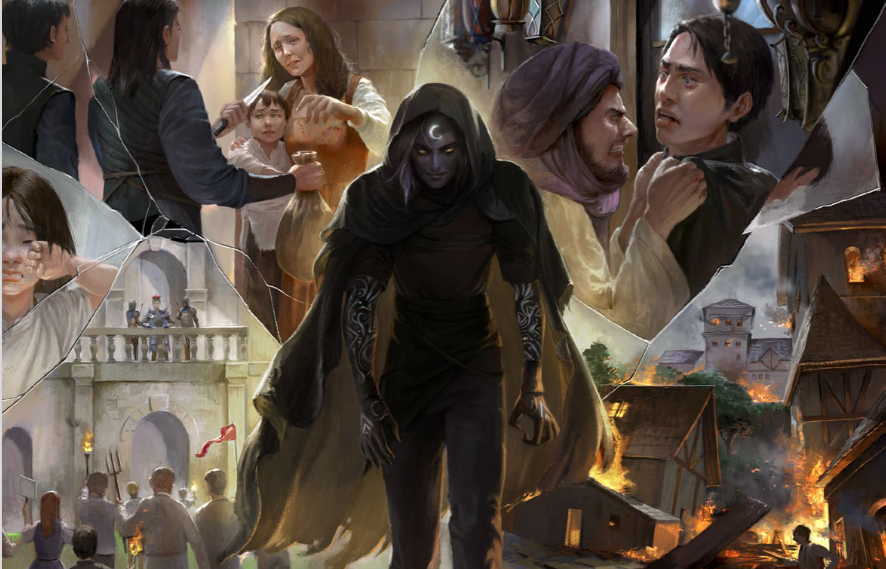
Deliberate Cruelty
Your calculating exactness turns to cold cruelty. You no longer recognize others as worthy of respect or life. If you can benefit from it, you'll harm others without a second thought. You will refuse any gentler form of interaction with others to get what you want, resorting immediately to torture, terrorism, and mutilation.
- Duration: Session. Deliberate Cruelty can end prematurely if your cruelty causes harm to someone whom you care about deeply.
Heart of Flint
Your steady emotions turn to an icy heart. You harden yourself against emotion, becoming distant and apathetic to all others and having no empathy or feeling to yourself or to others. You are treated as if you have absolutely no care for anybody or anything, making decisions purely based on what you believe is most efficient, and given that you have no emotional perspective on the world, your choices will surely not be the most efficient ones. Your flint heart gives you a -4 penalty on all Charisma-based rolls.
- Duration: Session. Heart of Flint can end prematurely if your apathy allows someone whom you care about deeply to come into severe danger.
Laughing Devil Spirit
Everybody must be humbled, and you must be the one to humble all others. You interfere in the lives of anyone whom you view as prideful and do everything you can to sow discord, create problems, and incite chaos. If you have multiple victims from which you can choose, you will choose to ones with the most power and privilege, granting them the greatest safety and stability. It's always more cathartic to humble wealthy merchants, mighty warriors, and powerful sorcerers are much more satisfying than impoverished peasants.
- Duration: Session. Laughing Devil Spirit can end prematurely if you inadvertently creature a significant obstacle to yours or your party's goals.
Rampaging Avarice
Your ambition to get what you want turns to rampant greed. You no longer will allow anything to get between you and want you want. If you have an opportunity to indulge in a favorite pleasure or vice, you'll take it by force, even if it would be trivial to obtain it without force. While you can restrain yourself from murder and sexual assault, you will not hesitate to destroy property or harm others to get what you want.
- Duration: Session. Rampaging Avarice can end prematurely if you harm an innocent to get what you want - but only once you've finished enjoying yourself, first.
The Sinner-Devouring Maw sees a world of iniquity and can't help but grin as they imagine the destruction of evil.
Sinner-Devouring Maw
Your adherence to morals turns you into their monstrous arbiter. If you witness someone engaging in any activity you deem immoral based on your ideals or on the customs of a culture with which you have a positive tie, you must punish them. The punishment's severity must be commensurate with the crime, and must happen as soon as possible, before the Limit Break ends.
- Duration: Session. Sinner-Devouring Maw can end early if someone you seek to punish convinces you that your own actions have violated your own morals.
Terror-Spreading Cruelty
You seek to make yourself famous, but it's much easier to be known as a monster than a hero. You pursue all of your goals in the manner that is most likely to terrorize as many people as possible, to the point that it's hard for anyone to call you a hero even as you save their lives. If you fight off a gang of child traffickers to protect an orphanage, you will mutilate the gang's corpses and round up any retreating foe to crucify with spilled intestines as a warning to anyone else. If you want to court someone's favor, you'll brutalize anyone else who is seeking their favor and render yourself the only viable option.
- Duration: Session. Terror-Spreading Cruelty can end early if an enemy who seeks to defeat you because of the terror you've spread confronts you.
Vainglorious Siren Promenade
Your need to be seen turns to a desperation for living divinity. You crave the adulation and worship that you are owed by right. Everyone who sees you must adore, love, or obsess over you. Any who don't must be won over by whatever means you can employ - whether it's artistry, lavish gifts, seduction, demagoguery, destroying false idols, working miracles, or healing the sick.
- Duration: Session. Vainglorious Siren Promenade can end early if your attempts to win over an adversary gives that enemy an advantage over you or your allies.
Recovering Limit
When you successfully complete a great objective that is personally important to them, such as finding a long-lost friend or defeating a great enemy or winning the love of someone important to them, they may lose a point of Limit at the DM's discretion.
There should never be a way to recover more than one point of Limit at once, and any way of recovering Limit should come at great personal time and cost, such as undergoing a month of therapy; Limit is meant to be staved off and fought against, but never overcome, as it is endemic to the condition of a life of stress and struggle. There's a reason why adventurers either retire and live quiet lives away from their former glamor, or die violent deaths.
Storytelling Limit Breaks
The purpose of Limit Breaks is to add drama and conflict to the life of player characters that replicates how epic poetry and sword & sorcery depict their characters. Limit Break in this system describes how Hercules could kill his family in a rage or how Achilles could sulk in his tent even as his allies begged him to assist them on the field of battle. When the DM chooses a Flawed Virtue for a character in Limit break to express, it must not be done to serve as a punishment for taking actions that raise their Limit, nor to make players hate the characters they've made. It should always serve as a moment that makes a story of flawed heroes. Err on the side of making a more enjoyable story at all times.
When someone reaches 10 Limit, you should either choose a Limit Break that will immediately produce dramatic results, or delay Limit Break until it will. A hero entering Crushing Doubt as they are about to have the final confrontation in the archlich Vecna's phylactery-world will have a much more thoughtful moment than one who undergoes it when they make an uneventful trek through the Astral Sea to Vecna's location. As well, certain characters are much more likely to experience certain forms of Flawed Virtue than others; if a fast-talking rogue experiences Chains of Honor or a self-denying monk experiences Rampaging Avarice, there is a moment to be had as to why someone would act so contrary to their normal personality, but it might also negate why the player chose their character archetype in the first place. When choosing a Flawed Virtue to express, you should not make a player feel as though the character in front of them is alien; if you're uncertain, ask the player what Flawed Virtue their character would undergo.
Divinity and Limit Breaks
If humanoids, of such small power and potency, can be so ambitious and fall so hard, gods and other beings of great divinity have so much higher to fall. Beings of challenge level 20 and higher, whenever they satisfy the conditions for receiving limit, must roll twice as many dice as beings below challenge rating 20. In addition, these beings have three Limit Triggers compared to other beings.
Gods, demon lords, dukes of Hell, and Great Old Ones do not know that Limit exists as a concept, much less so the small mortals, but they do know that there are certain actions they take that cause them to go mad, as if there are laws built into the universe that rise above their divinity, and keep them in their proper place in the multiverse. These beings, known collectively as Titans, have additional situations in which they may gain Limit:
- If a Titan should manifest itself via an avatar on a plane outside of its home plane, it must roll 5d20. If the creature rolls a 5 or higher on a die, it gains a point of Limit per die.
- If a Titan should manifest itself bodily on a plane outside of its home plane with no avatar intermediary, it gains 7 points of Limit automatically. This replenishes for every full 24 hours it remains outside of its home plane.
- If a Titan should act in a way that entirely contradicts its domain (such as Demogorgon allowing a child to survive its presence or Bahamut collaborating with Tiamat), it must roll 10d20. If the Titan rolls a 5 or higher on a die, it gains a point of Limit per die.
The Limit Breaks of Titans are much, much more catastrophic than those of mortals, given that they have so much power by which they can cause chaos. Because of this, Titans will often act through intermediaries, as the insanity with which they act when they confront problems directly renders them a massive target for every other Titan to criticize or put down like a wild animal. A Titan that would act out is one that is confident enough in its position that it could overcome its Limit and accomplish its objective, even at the cost of its oncoming insanity.
Source
Images
- Page 1: Exalted 3rd Edition Handbook, Page 135
- Page 4: Exalted Lunars: Fangs at the Gate, Page 226
Idea
Credit goes to Exalted, by White Wolf Publishing, for the idea of Limit Break. My contribution is translating this system into D&D 5e.