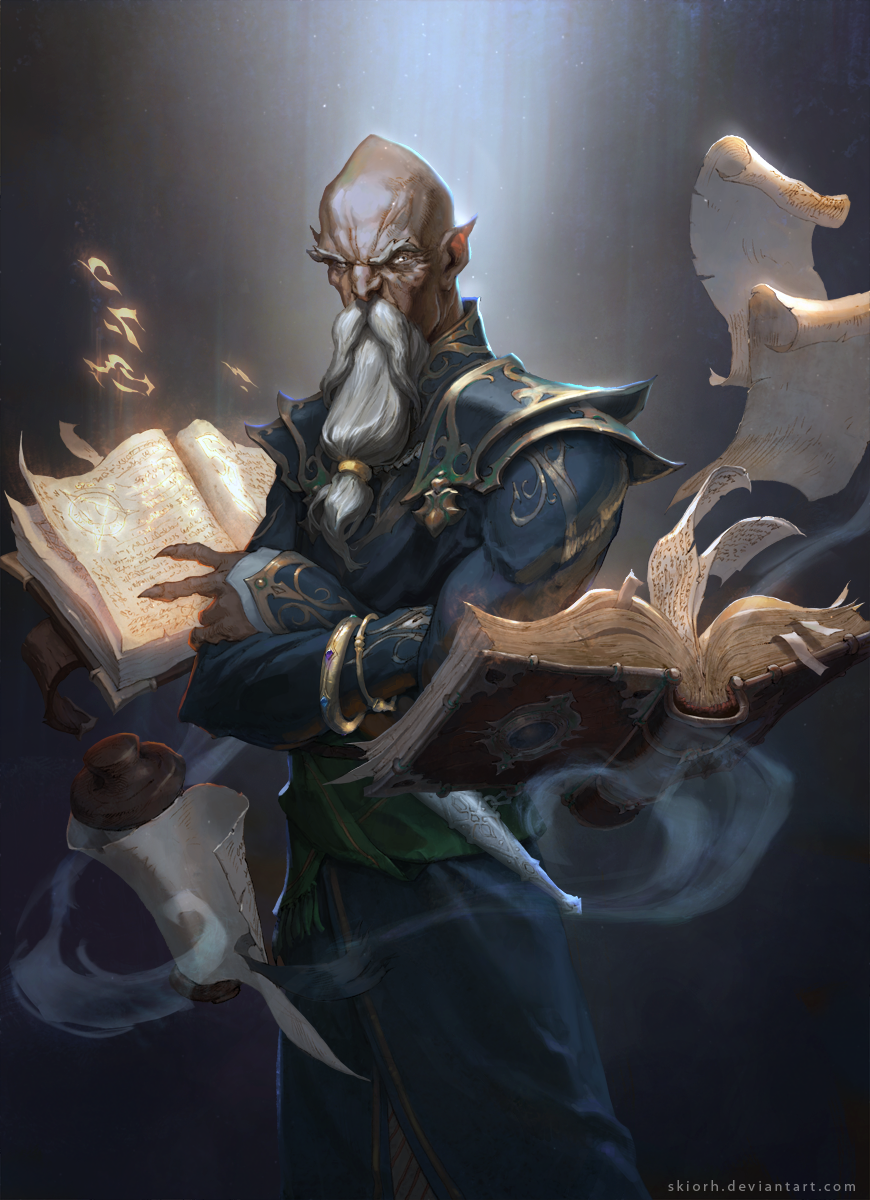
Compendium Vol.I
Index
Ankheg - Pg.3
Ankheg Broodmaster - Pg.4
Ankheg Brute - Pg.5
Pale Dragons - Pg.6
Pale Dragon Statblocks - Pg.7
The Pale Lizardfolk - Pg.8
Beserker - Pg.9
Elite Warrior - Pg.10
Scout - Pg.11
Trapper - Pg.12
Warrior - Pg.13
Ankheg Hives
Below the ground, deep down in the retches of the earth, a creature of hard mandibles and spiky exoskeleton burrows through the crumbly soil. The creature pierces through a stone wall into a large cavern, where a hundred others beginning to burrow new tunnels, creating large underground highway system.
Inside the cavern are large spotted eggs sacs, dangling from tall spires and ledges, they give off a faint glow. Further in is the broodmaster's chamber, a delicately dug out burrow where attractive and fertile mates await, heavily guarded by the largest and strongest of the colony.
Somewhere else a large miscolored Ankheg wades through the rest, the workers rub their antennae along the creatures shell, signaling fealty to the creature. It makes it's way throughout the hive, working it's way through the cavern as it checks the boundaries of the colony.
Ankheg Colony
Until recently it had been assumed these creatures were mostly solitary in their lives until mating. Through courageous action and trifling by great heroes, we have discovered the existence of great Ankheg hives, each with their own social aspects. These hives had vast interwoven networks of tunnels, an amazing feat for such creatures.
While seeing one of these colonies is rare, and rarer telling of it, what we have found are examples of new complex behavior unseen in the nomadic surface variants. These colony dwelling creatures tend to stick to more rocky and mountainous terrain to settle in, sometimes appearing even deep below the earth in the Underdark. This choice of terrain gives plenty of sturdy rock for the Ankheg to carve out for cavern chambers.
Infested. Often in the larger colonies, a group of subterranean Mite like insects known as cave mites begin to infest some of the hive. These creatures can carry diseases and quickly worsen the spread of any foul diseases other Ankheg have caught. Though often enough they are harmless to the colony and act more as a minor nuisance.
Natural Hierarchy. While surface colonies are usually ran by a matriarchal societies, a queen ruling above all, these ankheg hives are structured definitively under a patriarch where a male, referred to as the broodmaster reigns.
Broodmaster
The broodmaster is much larger than the typical Ankheg, it has larger and stronger mandibles to which it grapples it's prey. Along with these it has an enlarged acid sac in which it dispenses one of it's deadliest features, a spray of volatile acid. These creatures are known to wonder their territory, acting as almost another form of guard against intruder.
Cavern Makers
These creatures are able to naturally create long and complex tunnel systems, any creature not acquainted with these tunnels are usually at a large disadvantage. Quickly smaller creatures or predators tracking through the tunnels become lost, acting as deterrant for any creature trying to put up a chase. Often, after enough time, the tunnels begin to bleed together and new caverns and nests are created, thus expanding a hive's network.

Research Entry
We've reached something quite disturbing on our path through the hive tunnels. A chamber with a burrowed entrance much to large to be from a normal member of the species. Further study is needed.
s

Ankheg Broodmaster
Huge monstrosity, unaligned
- Armor Class 15 (natural armor)
- Hit Points 126 (12d12 + 48)
- Speed 30 ft., burrow 20 ft.
STR DEX CON INT WIS CHA 21 (+5) 12 (+1) 18 (+4) 2 (-4) 14 (+2) 6 (-2)
- Saving Throws Str +8, Con +7
- Damage Resistances acid; bludgeoning, piercing, and slashing from nonmagical attacks
- Senses darkvision 60 ft., tremorsense 60 ft., passive Perception 12
- Languages —
- Challenge 7 (2,900 XP)
Brute. A melee weapon deals one extra die of its damage when the Ankheg hits with it (included in the attack).
Grappler. The Ankheg has advantage on attack rolls against any creature grappled by it.
Legendary Resistance (2/day). If the Ankheg fails a saving throw, it can choose to succeed instead.
Sure-Footed. The Ankheg has advantage on Strength and Dexterity saving throws made against effects that would knock it prone.
Trampling Charge. If the Ankheg moves at least 10ft ft. straight toward a target and then hits it with a Bite attack on the same turn, the target takes an extra 13 (3d8) slashing damage. If the target is a creature, it must succeed on a DC Strength saving throw or be knocked prone. If the target is prone, the Ankheg can make another Bite attack against it as a bonus action.
Actions
Multiattack. The Ankheg makes two attacks.
Bite. Melee Weapon Attack: +7 to hit, reach 5 ft., one target. Hit: 15 (3d6 + 5) slashing damage plus 7 (2d6) acid damage. If the target is a Large or smaller creature, it is grappled (escape DC 17). Until this grapple ends, the Ankheg can bite only the grappled creature and has advantage on attack rolls to do so.
Acid Spray (Recharge 5-6). The Ankheg spits acid in a line that is 30 ft. long and 5 ft. wide, provided that it has no creature grappled. Each creature in that line must make a DC 16 Dexterity saving throw, taking 17 (5d6) acid damage on a failed save, or half as much damage on a successful one.
Ankheg Brute
Large monstrosity, unaligned
- Armor Class 15 (natural armor), 12 while prone
- Hit Points 60 (8d10 + 16)
- Speed 30 ft., burrow 10 ft.
STR DEX CON INT WIS CHA 18 (+4) 11 (+0) 14 (+2) 1 (-5) 13 (+1) 6 (-2)
- Saving Throws Str +6
- Senses darkvision 60 ft., tremorsense 60 ft., passive Perception 11
- Languages —
- Challenge 3 (700 XP)
Brute. A melee weapon deals one extra die of its damage when the Ankheg hits with it (included in the attack).
Sure-Footed. The Ankheg has advantage on Strength and Dexterity saving throws made against effects that would knock it prone.
Actions
Bite. Melee Weapon Attack: +6 to hit, reach 5 ft., one target. Hit: 10 (2d6 + 4) slashing damage plus 3 (1d6) acid damage. If the target is a Large or smaller creature, it is grappled (escape DC 15). Until this grapple ends, the Ankheg can bite only the grappled creature and has advantage on attack rolls to do so.
Acid Spray (Recharge 5-6). The Ankheg spits acid in a line that is 30 ft. long and 5 ft. wide, provided that it has no creature grappled. Each creature in that line must make a DC 14 Dexterity saving throw, taking 10 (3d6) acid damage on a failed save, or half as much damage on a successful one.
Broodmaster's Guard
These variants of the standard Ankheg are quite fascinating, atypically larger than the normal variants they are host to a stronger shell and take more of a beating to be dealt with. It is often these creatures will be found near the inner workings of the hive, protecting nursery's or a particular practice seen often, protecting the chambers of the Broodmaster.
If a Broodmaster is alone in a fight, they will often let out a high pithed screech used to gather the attention of nearby hive mates. These Ankheg have a particular sense for this sound, they will usually begin to flock from tunnels and chambers, doing their best to reach wherever it's source comes from.
Rarity. These variations of the standard Ankheg are quite rare, only appearing in roughly every 100 born. It's often only a small group are ever in a colony at a particular time.
Cave Mite
Tiny beast, unaligned
- Armor Class 12
- Hit Points 1
- Speed 5 ft., fly 30 ft.
STR DEX CON INT WIS CHA 2 (-4) 15 (+2) 9 (-1) 1 (-5) 4 (-3) 4 (-3)
- Senses darkvision 20 ft., passive Perception 7
- Languages —
- Challenge 0 (10 XP)
Flyby. The Mite doesn't provoke opportunity attacks when it flies out of an enemy's reach.
Actions
Blood Drain. Melee Weapon Attack: +4 to hit, reach 5 ft., one creature. Hit: 1 piercing damage, and the Mite attaches to the target. While attached, the Mite doesn't attack. Instead, at the start of each of the Mite's turns, the target loses 4 (1d4 + 2) hit points due to blood loss.
The Mite can detach itself by spending 5 feet of its movement. It does so after it drains 10 hit points of blood from the target or the target dies. A creature, including the target, can use its action to detach the Mite.
Research Entry
These tiny insects have proved nothing but a nuisance, we have resorted to covering ourselves in oils and muds to keep them from our skin. Already I'm afraid, they've taken one of the lives of our trusted guards..
Pestering Insects
These larger insects are quite a nuisance for any adventuring party, often they attach themselves under the armor or clothing, proving quite difficult to remove. The creatures seem to weaken the average person rather quickly, without proper dealings they can become quite the hazard for any unprepared party.
Diseased. Sometimes these small creatures can be host to deadly and worrisome disease, their blood sucking gifts making them a perfect carrier from creature to creature. It is best to get rid of them as fast as possible, as not to catch any wild illnesses that may affect you or your companions along their travels.
Pale Dragons
Deep beneath the surfaces, residing in large caverns and burrows are murky scaled wingless creatures resembling that of a dragon. These creatures have all the ferocity and tenacity of their above ground brethren, but none of the intelligence. Instead these creatures are much more like a beast, cunning in it's own ways but without much intelligent thought.
These beast like dragons breath a necrotic petrifying breath upon it's prey, eating them once turned into stone statues of their former self. Often these creatures will have a myriad of petrified creatures as trophy's of it's battles, and as a way to stockpile food.
These draconian variants are rare, never being seen above ground they're existence was thought to be mere stories until further documentation within previous years. While the origin of these creatures is a mystery, they are never found without some reptillian race in service.
Unknown Origins
Once chalked up to legend, the origins of this race is of much discussion in the monster hunting community. It has remained a mystery since the first documented sightings of these creatures and does so to this day. It is yet undocumented as to what means these creatures reproduce, only furthering the mystery.
Fraudulent Impersonator. While there are many theories and ideas floating around on their particular place among the dragon lineage, a popular hypothesis has amerged, gaining traction as of late. Is it possible these creatures are in fact not even draconic in origin? There are some who believe these creatures are actually the depiction of a lesser reptillian god, if there are any truth to these claims is unknown. However, the idea deserves further inquiry nonetheless.
Legendary Status. While these creatures may lack any of the astute intelligence, or charming charisma of your well documented draconians, they are still extremely dangerous. Some would say doubly so due to their erratic beast like behaviour.
Reptilian Devotion
Similar to other dragons these creatures tend to attract the lesser draconian and reptilian races alike, often having full tribes or orders worship them. So far in fact, the only documented sightings of these creatures have been within these tribal societies, a point that may give some merit to the earlier ideas of this creatures nature.
Tribal Worship. Often tribes will offer up sacrifices, treasures, and services to these beasts. For unknown reasons these creatures are non-hostile to these races, so much so it is undocumented to see any infighting between the species. Why these creatures naturally co-exist is another one of the great mysteries to be solved.
Uniform Rule. The presence of these beings has been believed to be a major cause in the lack of tribal infighting or war. It seems to most reptilians these creatures are sacred, they would much more so worship the creature than conquer it. This interesting dynamic may be the cause to tribal congregation and eventual annexation between once competing or enemy tribes.
Cave dwellers
These draconian creatures spend most of their natural life lurking in deep caves, usually never leaving their territory once settled, even defending until death. They have developed natural qualities to accommodate for this, greater levels of sight in dark conditions followed with a strong natural climbing ability.
Born to Climb. These creatures are avid natural climbers. In the time documenting these creatures they have been recorded climbing great heights across sheer surfaces, even able to crawl upon ceiling terrain.
Research Entry
These creatures are fascinating to behold, between their natural ability to scale up and down sheer surfaces, and the unique method in which they prey upon other creatures is something to behold.

Adult Pale dragon
Huge dragon (pseudodragon), neutral evil
- Armor Class 17 (natural armor)
- Hit Points 225 (18d12 + 108)
- Speed 40 ft., climb 75 ft., swim 40 ft.
STR DEX CON INT WIS CHA 20 (+5) 14 (+2) 22 (+6) 6 (-2) 12 (+1) 6 (-2)
- Saving Throws Dex +6, Con +10, Wis +5, Cha +2
- Skills Perception +9, Stealth +10
- Damage Immunities necrotic
- Condition Immunities petrified
- Senses blindsight 30 ft., darkvision 120 ft., tremorsense 30 ft., passive Perception 19
- Languages Draconic
- Challenge 11 (7,200 XP)
Amphibious. The dragon can breathe air and water.
Legendary Resistance (2/day). If the Dragon fails a saving throw, it can choose to succeed instead.
Sturdy Landing. The Pale Dragon is immune to damage from falling.
Actions
Drop. If the Pale Dragon falls at least 20 feet as part of it's turn before attacking, it can then use this action to land on its feet in a space that contains one or more other creatures. Each of those creatures must succeed on a DC 17 Strength or Dexterity saving throw (target's choice) or be knocked prone and take 23 (4d8 + 5) bludgeoning damage plus 27 (4d10 + 5) slashing damage. On a successful save, the creature takes only half the damage, isn't knocked prone, and is pushed 5 feet out of the Dragon's space into an unoccupied space of the creature's choice. If no unoccupied space is within range, the creature instead falls prone in the Dragon's space.
Multiattack. The dragon makes three attacks: one with its bite and two with its claws.
Bite. Melee Weapon Attack: +9 to hit, reach 10 ft., one target. Hit: 16 (2d10 + 5) piercing damage plus 5 (1d8) necrotic damage.
Claw. Melee Weapon Attack: +9 to hit, reach 5 ft., one target. Hit: 14 (2d8 + 5) slashing damage.
Petrifying Breath (Recharge 5-6). The Dragon exhales petrifying gas in a 20ft circle within 15ft of itself. Each creature in that area must succeed on a DC 14 Constitution saving throw. On a failed save, a target begins to turn to stone and is Restrained. The Restrained target must repeat the saving throw at the end of its next turn. On a success, the Effect ends and the target takes 33 (6d10) necrotic damage. On a failure, the target is Petrified until freed by the Greater Restoration spell or other magic.
Young Pale dragon
Large dragon (pseudodragon), neutral evil
- Armor Class 17 (natural armor)
- Hit Points 114 (12d10 + 48)
- Speed 40 ft., climb 75 ft., swim 40 ft.
STR DEX CON INT WIS CHA 17 (+3) 14 (+2) 19 (+4) 6 (-2) 12 (+1) 6 (-2)
- Saving Throws Dex +5, Con +7, Wis +4, Cha +1
- Skills Perception +7, Stealth +8
- Damage Immunities necrotic
- Condition Immunities petrified
- Senses blindsight 30 ft., darkvision 120 ft., tremorsense 30 ft., passive Perception 17
- Languages Draconic
- Challenge 6 (2,300 XP)
Amphibious. The dragon can breathe air and water.
Sturdy Landing. The Pale Dragon is immune to damage from falling.
Actions
Drop. If the Pale Dragon falls at least 20 feet as part of it's turn before attacking, it can then use this action to land on its feet in a space that contains one or more other creatures. Each of those creatures must succeed on a DC 15 Strength or Dexterity saving throw (target's choice) or be knocked prone and take 16 (3d8 + 3) bludgeoning damage plus 19 (3d10 + 3) slashing damage. On a successful save, the creature takes only half the damage, isn't knocked prone, and is pushed 5 feet out of the Dragon's space into an unoccupied space of the creature's choice. If no unoccupied space is within range, the creature instead falls prone in the Dragon's space.
Multiattack. The dragon makes three attacks: one with its bite and two with its claws.
Bite. Melee Weapon Attack: +6 to hit, reach 10 ft., one target. Hit: 14 (2d10 + 3) piercing damage plus 4 (1d6) necrotic damage.
Claw. Melee Weapon Attack: +6 to hit, reach 5 ft., one target. Hit: 12 (2d8 + 3) slashing damage.
Petrifying Breath (Recharge 5-6). The Dragon exhales petrifying gas in a 20ft circle within 15ft of itself. Each creature in that area must succeed on a DC 14 Constitution saving throw. On a failed save, a target begins to turn to stone and is Restrained. The Restrained target must repeat the saving throw at the end of its next turn. On a success, the Effect ends and the target takes 22 (5d8) necrotic damage. On a failure, the target is Petrified until freed by the Greater Restoration spell or other magic.
The Pale Lizardfolk
A group of lizard folk with pale sickly beige green scales, their eyes are a deep shade of green or beige to reflect their skin color. They stand freakishly tall at an avg height of 8ft. This particular group has a nasty sensitivity to light sources, often doing their best to extinguish an enemy's lights from afar before approaching. They are considerably hostile to any unknown intruders.
They live under a self-made hierarchy of competition based on the competitive killing of their natural enemies, Ankhegs. This competition is a way to deem the strongest and most intelligent among them, making these Lizardfolk all the more savvy and ruthless. Above their hierarchy is their "Queen," a creature of similar appearance to that of a dragon, only sickly, brutish, and without wings. In addition to it's oversized claws, able to pierce through stone and metal, it breathes a petrifying breath that turns the weaker of creatures to stone. These Lizardfolk seem to worship the creature like a deity
Origins of The Pale race
In tales of old, and legends spread by caravan merchants of the Underdark, it is said a group, beloved by a goddess of Architecture, Peace, and Knowledge, were transformed by a trickster god of Evil and Destruction. After the death of their goddess by his hands, they were transmogrified into scaly, pale, reptilian beasts. An ironic reflection of the people's past demeanor.
While this legend is unknown if it holds any merit, what is known tells that these creatures are accustomed to dark moldy climates as of those of deep mountain caves, or the familiar caverns and tunnels of the Underdark. Meaning these creatures most likely originated from similar conditions as well.
Hierarchy
Unlike a traditional hierarchy, the separation of power is not determined by the ones wealth. Instead by the physical capability of the individual. In order for any member to progress through the hierarchy, dangerous trials must be passed. Often times members of these tribes will go through great physical endurance and suffer much during these trials in order to advance up the social hierarchy .
While not every member is suited to the trials, each member of the tribe is expected to do great things, they all hold their purpose for guaranteeing the success and growth of the tribe. Each member is expected to play a vital role in any action the tribe makes, from a young age it is made clear that every member is a tool for future success.
Lizardfolk Race Variant
Since not all Lizardfolk hail from the surface above, your DM may allow you to pick this variation of the Lizardfolk race.
These options replace the Ability Score Increase, and the Hunter's Lore racial traits.
Ability Score Increase. Your Constitution score increases by 2, and your Strength score increases by 1.
Darkvision. Thanks to your natural underground environment, you have superior vision in dark and dim conditions. You can see in dim light within 60 feet of you as if it were bright light, and in darkness as if it were dim light. You can’t discern color in darkness, only shades of gray.
Fortified Constitution. You have resistance to poison damage.
Sunlight Sensitivity. While in sunlight, the Lizardfolk has disadvantage on Attack Rolls, as well as on Wisdom (Perception) checks that rely on sight.
Warrior Code
The Salamanders adhere to a strong Warrior Code, a set of rules each member is expected to follow without fail. These rules help guide and shape the growth of the Salamander into the ideal warriors. These codes act as the ideals of the tribe, each member acting out those ideals unanimously.
Along with being idealistic guidelines, these codes act as a form of law. Any conflicts amongst members can be resolved by following these codes. These laws are practiced by all tribes, as if they all came from a single source.
| d6 | Warrior Codes |
|---|---|
| 1 | To serve with honor |
| 2 | To die a warriors death |
| 3 | To keep in peak physical condition |
| 4 | To settle conflict by might, not squabble |
| 5 | To accomplish great success |
| 6 | To obtain renown through force |
Pale Lizardfolk, Beserker
Medium humanoid (lizardfolk), neutral
- Armor Class 15 (natural armor, shield)
- Hit Points 37 (5d8 + 15)
- Speed 30 ft., swim 30 ft.
STR DEX CON INT WIS CHA 16 (+3) 14 (+2) 17 (+3) 10 (+0) 12 (+1) 6 (-2)
- Saving Throws Str +5, Dex +4
- Skills Athletics +7, Perception +5, Survival +5
- Damage Resistances poison; bludgeoning, piercing, and slashing from nonmagical attacks
- Senses darkvision 60 ft., passive Perception 15
- Languages Draconic
- Challenge 1 (200 XP)
Hold Breath. The lizardfolk can hold its breath for 15 minutes.
Sunlight Sensitivity. While in sunlight, the Lizardfolk has disadvantage on attack rolls, as well as on Wisdom (Perception) checks that rely on sight.
Rampage. When the Lizardfolk reduces a creature to 0 hit points with a melee attack on its turn, the Lizardfolk can take a bonus action to move up to half its speed and make a melee attack.
Reckless. At the start of its turn, the Lizardfolk can gain advantage on all melee weapon attack rolls it makes during that turn, but attack rolls against it have advantage until the start of its next turn.
Relentless (Recharges after a Short or Long Rest). If the Lizardfolk takes damage that would reduce it to 0 hit points, it is reduced to 1 hit point instead.
Actions
Multiattack. The lizardfolk makes two melee attacks.
Bite. Melee Weapon Attack: +5 to hit, reach 5 ft., one target. Hit: 8 (1d8 + 3) piercing damage.
Battleaxe. Melee Weapon Attack: +5 to hit, reach 5 ft., one target. Hit: 8 (1d8 + 3) slashing damage, or 9 (1d10 + 3) slashing damage if used with two hands.
Beserker

Tribal Status
The status of Beserker, given only to the most dangerous of their kind. With strict limitations, only those of full maturity and peak physical condition are considered. To claim this title, tribal warriors will send themselves into dangerous territories for three days and nights, then only returning once with worthy trophy.
Protectors of the tribe. These tribe members with their unnerving keenness are naturally good guards for nursery's, entrances, or sacred chambers. Often they will stand post over important areas or chambers of their domain.
Another option these tribe members may choose, is to roam nearby areas, attempting to stomp out any possible threats.
Research Entry
These creatures, they stand unflinching, unblinking. Just to look at them only raises disdain. I doubt one of our most capable guards would put up much of a match.
Perhaps an illusion, or some other form of trickery could get the creature away from it's eternal guard. A distraction may be the best possible action as of now.
Elite Guard

Tribal Leaders
The Elite Guard serve as captains of a tribe, serving as the strongest among them they lead small packs and warbands against outside threats or enemies. They command parties of other lizardfolk to do specific tasks, such as hunting, invading, or claiming land. The other Lizardfolk follow command, whether from fear or respect is unknown, making infighting a rare sight.
Heroic Renown. The Elite Guard are depicted as heroes among their people, and very much so they are treated the same. Small banquets and other small events are held int their honor, the presence of an Elite Guard boosts the morale of any tribal party.
Duty Bound. These creatures are filled with an extreme sense of duty for the tribe, serving with the best of their will in any effort to improve the tribes wellbeing. It is extremely rare to find one of these creatures shirking off duties, or being irresponsible.
Pale Lizardfolk, Elite Guard
Medium humanoid (lizardfolk), neutral
- Armor Class 18 (natural armor, shield)
- Hit Points 45 (6d8 + 18)
- Speed 30 ft., swim 30 ft.
STR DEX CON INT WIS CHA 17 (+3) 15 (+2) 16 (+3) 12 (+1) 12 (+1) 6 (-2)
- Saving Throws Str +5, Con +5
- Skills Athletics +7, Perception +5, Survival +5
- Damage Resistances poison
- Senses darkvision 60 ft., passive Perception 15
- Languages Draconic
- Challenge 2 (450 XP)
Martial Advantage. Once per turn, the Lizardfolk can deal an extra 7 (2d6) damage to a creature it hits with a weapon attack if that creature is within 5 ft. of an ally of the Lizardfolk that isn't incapacitated.
Hold Breath. The lizardfolk can hold its breath for 15 minutes.
Sunlight Sensitivity. While in sunlight, the Lizardfolk has disadvantage on attack rolls, as well as on Wisdom (Perception) checks that rely on sight.
Charge. If the Lizardfolk moves at least 5ft ft. straight toward a target and then hits it with a melee attack on the same turn, the target takes an extra 9 (2d8) piercing damage. If the target is a creature, it must succeed on a DC 13 Strength saving throw or be knocked prone.
Actions
Leadership (Recharges after a Short or Long Rest). For 1 minute, the Lizardfolk can utter a special command or warning whenever a nonhostile creature that it can see within 30 ft. of it makes an attack roll or a saving throw. The creature can add a d4 to its roll provided it can hear and understand the Lizardfolk. A creature can benefit from only one Leadership die at a time. This effect ends if the Lizardfolk is incapacitated.
Multiattack. The lizardfolk makes two melee attacks, each one with a different weapon.
Bite. Melee Weapon Attack: +5 to hit, reach 5 ft., one target. Hit: 7 (1d6 + 3) piercing damage.
Tekpi. Melee Weapon Attack: +5 to hit, reach 5ft ft. or range 20/60 ft., one target. Hit: 8 (1d8 + 3) piercing damage.
Spiked Shield. Melee Weapon Attack: +5 to hit, reach 5 ft., one target. Hit: 7 (1d6 + 3) piercing damage.
Pale Lizardfolk, Scout
Medium humanoid (lizardfolk), neutral
- Armor Class 14 (natural armor)
- Hit Points 16 (3d8 + 3)
- Speed 30 ft., swim 30 ft.
STR DEX CON INT WIS CHA 11 (+0) 15 (+2) 13 (+1) 10 (+0) 13 (+1) 6 (-2)
- Saving Throws Dex +4, Con +3
- Skills Perception +5, Stealth +6, Survival +5
- Damage Resistances poison
- Senses darkvision 60 ft., passive Perception 15
- Languages Draconic
- Challenge 1/2 (100 XP)
Hold Breath. The lizardfolk can hold its breath for 15 minutes.
Sunlight Sensitivity. While in sunlight, the Lizardfolk has disadvantage on attack rolls, as well as on Wisdom (Perception) checks that rely on sight.
Naturally Stealthy. The Lizardfolk can attempt to hide even when it is obscured only by a creature that is at least one size larger than itself.
Nimble Escape. The Lizardfolk can take the Disengage or Hide action as a bonus action on each of its turns.
Actions
Bite. Melee Weapon Attack: +4 to hit, reach 5 ft., one target. Hit: 6 (1d6 + 2) piercing damage.
Dagger. Melee or Ranged Weapon Attack: +4 to hit, reach 5 ft. or range 20/60 ft., one target. Hit: 5 (1d4 + 2) piercing damage.
Ranged Attack. The Lizardfolk makes a ranged attack using their sling.
Sling. Ranged Weapon Attack: +4 to hit, range 30/120 ft., one target. Hit: 5 (1d4 + 2) bludgeoning damage.
Research Entry
..I swear these creatures are following us, just for a few fleeting moments I catch a glimpse, but I see them nonetheless. The others call me "paranoid" and "mad." How foolish they are. They lurk just out of sight, on high rockfaces and behind large stones, but I can tell they're there, watching, waiting...
Scout

Information Gatherers
These members of the tribe travel in small packs on long expeditions throughout surrounding territories and beyond, never traveling alone. They return after short journeys, relaying information to the heads of the tribe, important information they learned along their way. Sometimes the information they gather is critical for the survival of the tribe, with such a delicate task they are upheld highly within the tribe.
Stalkers. These creatures are known to creep on their prey slowly, often following the other creatures for hours, assessing their patterns, waiting until they tire. These creatures are deadly in their own habitat, able to outmaneuver small combat parties and quickly take out any stragglers.

Trapper
Hunter/Gatherers
While not serving as mainhand warriors of the tribe, these members hold a valuable place among the hunting grounds and battlefields alike. With keen senses and great stealth, these creatures are fond of setting up complex and intricate ambush scenarios. These creatures use an amazing mix of natural ability and trained skill to perfect theur game.
These members of the tribe are often sent out in hunting parties or along with warbands to set up ambushes upon any nearby enemy or prey. They make great tacticians, able to plan out thoroughly each action they wish to take.
Frightful Ambush. These creatures have an uncanny knack for stealth, able to hide and keep track of any target. Surveying them closely and you find their stone shaped scales help to blend them in with their natural environment.
Trained Hunters. Unlike other tribe members, they are not imposed to the ways of the warrior code, instead using it as a guidline than hard law. They train for many months before leaving on expeditions or hunts, using the codes as a way to prepare themselves for any misguidance.
Pale Lizardfolk, Trapper
Medium humanoid (lizardfolk), neutral
- Armor Class 15 (natural armor)
- Hit Points 19 (3d8 + 6)
- Speed 30 ft., swim 30 ft.
STR DEX CON INT WIS CHA 12 (+1) 14 (+2) 14 (+2) 10 (+0) 16 (+3) 6 (-2)
- Saving Throws Dex +4, Con +4
- Skills Nature +2, Perception +7, Survival +7
- Damage Resistances poison
- Senses darkvision 60 ft., passive Perception 17
- Languages Draconic
- Challenge 1/2 (100 XP)
Ambusher. The Lizardfolk has advantage on attack rolls against any creature it has surprised.
Hold Breath. The lizardfolk can hold its breath for 15 minutes.
Light Sensitivity. While in direct light, the Lizardfolk has disadvantage on attack rolls, as well as on Wisdom (Perception) checks that rely on sight.
Stone Camouflage. The Lizardfolk has advantage on Dexterity (Stealth) checks made to hide in rocky terrain.
Surprise Attack. If the Lizardfolk surprises a creature and hits it with an attack during the first round of combat, the target takes an extra 7 (2d6) damage from the attack.
Actions
Bite. Melee Weapon Attack: +5 to hit, reach 5 ft., one target. Hit: 7 (1d6 + 3) piercing damage.
Shortsword. Melee Weapon Attack: +4 to hit, reach 5 ft., one target. Hit: 6 (1d6 + 2) piercing damage.
Ranged Attack. The Lizardfolk makes a ranged attack using their shortbow.
Shortbow. Ranged Weapon Attack: +4 to hit, range 80/320 ft., one target. Hit: 6 (1d6 + 2) piercing damage.
Variation: Stirge Tamer
These unique Trappers use Stirge from nearby caves as hunting beasts. These variants of the Trapper start with 1d4 Stirge companions which they can command as a bonus action.
Pale Lizardfolk, Warrior
Medium humanoid (lizardfolk), neutral
- Armor Class 13 (natural armor)
- Hit Points 30 (4d8 + 12)
- Speed 30 ft., swim 30 ft.
STR DEX CON INT WIS CHA 15 (+2) 12 (+1) 16 (+3) 11 (+0) 12 (+1) 6 (-2)
- Saving Throws Str +4, Con +5
- Skills Athletics +4, Perception +5, Survival +5
- Damage Resistances poison
- Senses darkvision 60 ft., passive Perception 15
- Languages Draconic
- Challenge 1/2 (100 XP)
Hold Breath. The lizardfolk can hold its breath for 15 minutes.
Sunlight Sensitivity. While in sunlight, the Lizardfolk has disadvantage on attack rolls, as well as on Wisdom (Perception) checks that rely on sight.
Actions
Multiattack. The makes two makes two attacks
Bite. Melee Weapon Attack: +4 to hit, reach 5 ft., one target. Hit: 6 (1d6 + 2) piercing damage.
Spear. Melee or Ranged Weapon Attack: +4 to hit, reach 5 ft. or range 20/60 ft., one target. Hit: 6 (1d6 + 2) piercing damage, or 7 (1d8 + 2) piercing damage if used with two hands to make a melee attack.
Spiked Shield. Melee Weapon Attack: +4 to hit, reach 5 ft., one target. Hit: 6 (1d6 + 3) piercing damage.
War Paint
These creatures ceremoniously paint themselves with bat guano or Ankheg blood in strange runic symbols. These are some of those symbols;
| d8 | War Paint |
|---|---|
| 1 | A sharpe curve with a small dot between each end |
| 2 | A claw mark surrounded in spirals |
| 3 | Three lines with a dot between each. |
| 4 | An upward arrow with the line going through it. |
| 5 | An outline of their frame. |
| 6 | Your face masked in a color of your choosing. |
Warrior

Natural Soldier
Looking upon these members reminds one of watching ant hills when younger, they follow orders in the most direct of ways like working drones. This is the ordinary goal of most tribe members, a majority stop once reaching this advancement, leaving an overwhelming population of warriors. This large of numbers means they can send them out in large or small warbands to advance and keep the enemy on track.
Great Physical Condition. These creatures display a healthy body, keeping themselves in peak condition throughout their life. A group of these powerful warriors are able to overcome great obstacles. These creatures are able to lift ludicrous amounts of heavy weight, putting most trained men to shame.
Thank You for Reading!
I'm glad whoever is readng this and has obtained a copy can use my work in whatever way they wish, may great games be upon you from DM to DM!
Practice
Safe
Homebrewing
People love to flex their creative muscles while composing new homebrew content. More often than not, the inspiration for you homebrew comes from another source. Sometimes significantly. Other times just as a spark.
What is important for the community is that you share your sources of inspiration. This back cover can serve as an easy to find, easy to read place for you to do just that.
So go ahead, remove this chunk of copy and tell everyone who inspired you.
Cover Art: Skiorh
When you're ready to share with the community, don't forget to mark your document as public so people can find it in the GM Binder Search
More Credits
Maybe you have so many people to give credit to that you need a bit more space. Well, you can use this column to do exactly that!