Credits
Homebrewer
- Written by /u/GoliathBarbarian
Illustrations
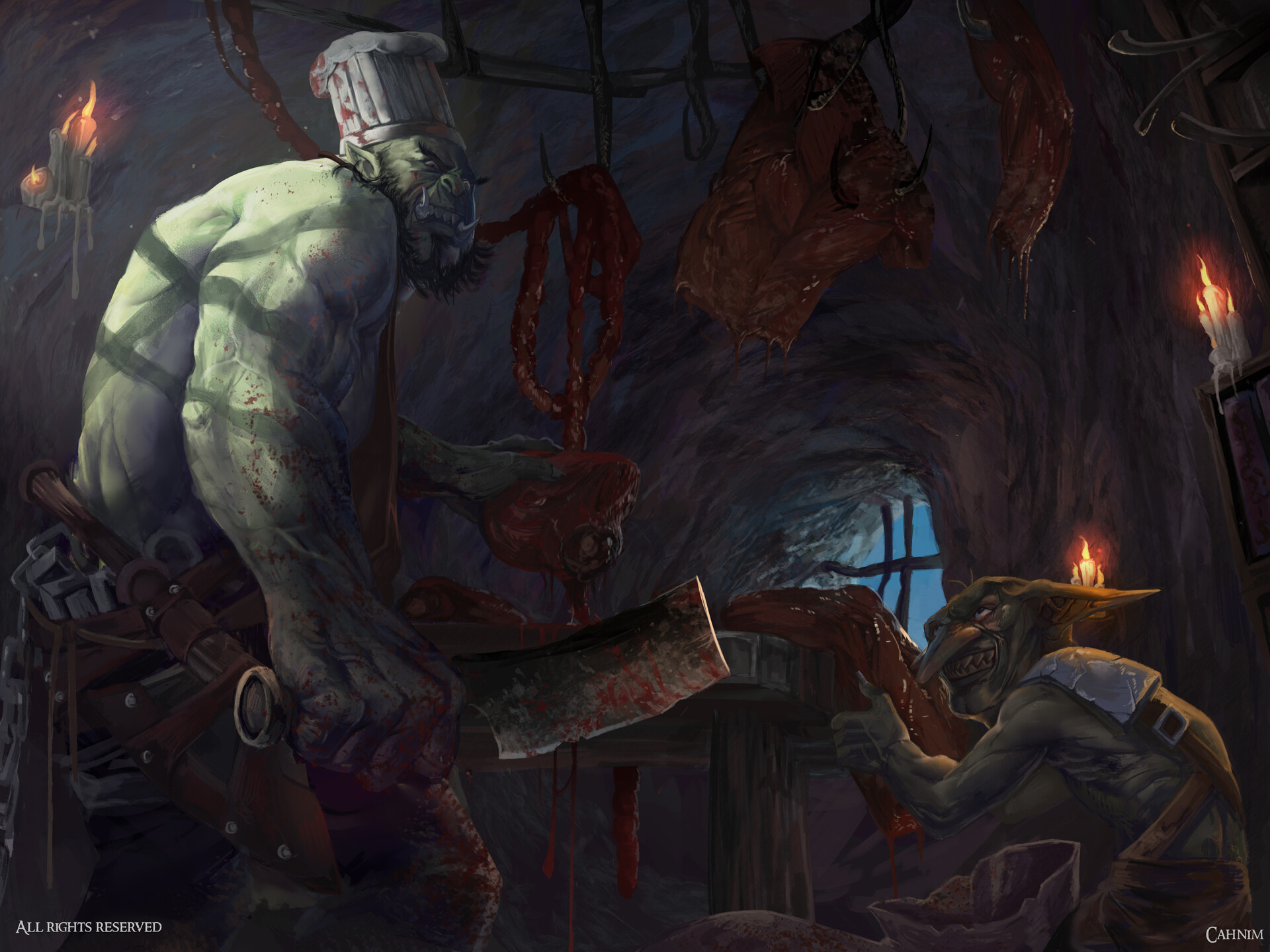
- Orc Chef by Charan
- Bor Breakfist by Grace Liu
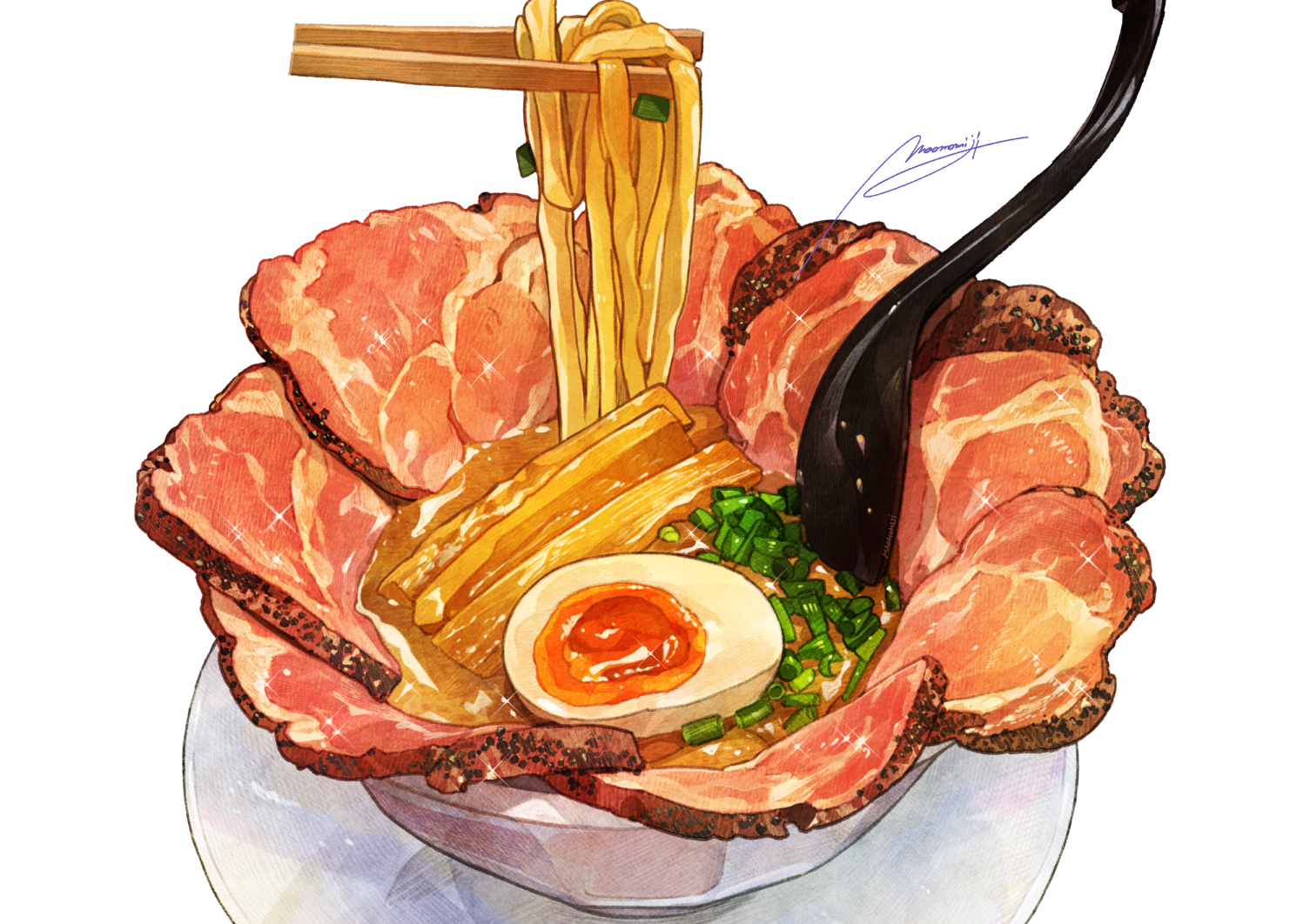
- Foodie Artwork by もみじ真魚
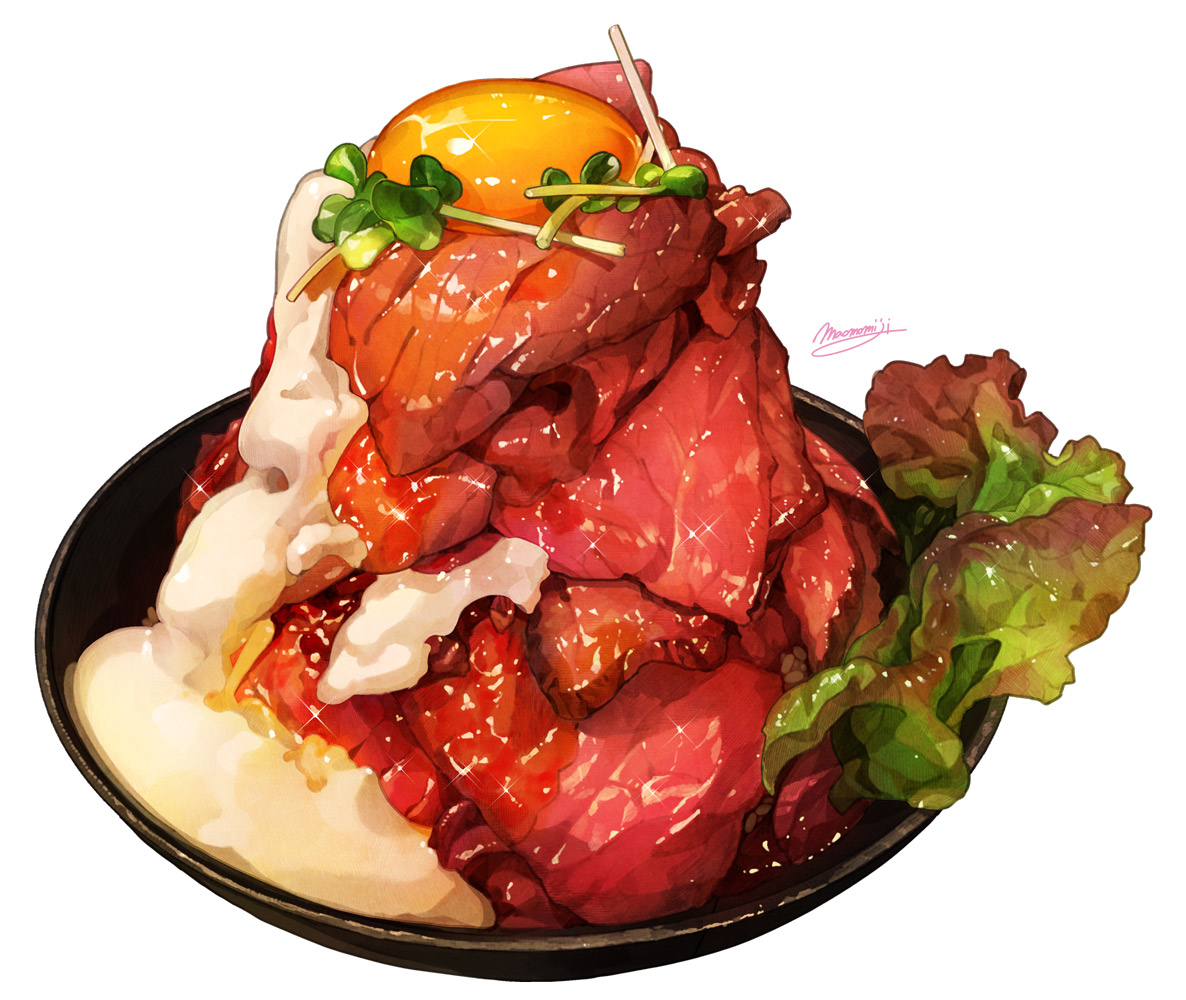
- #肉の日 by もみじ真魚
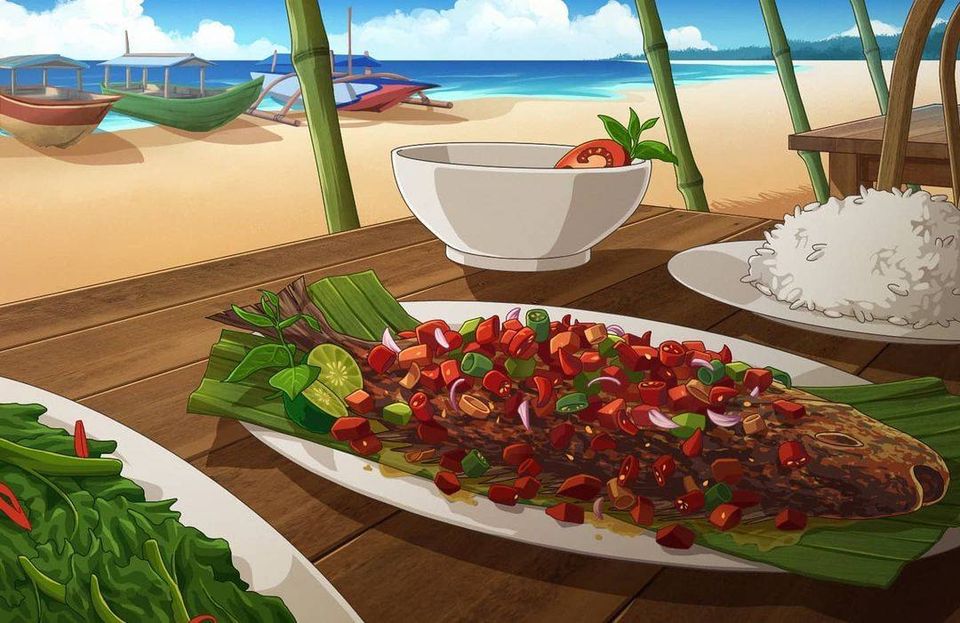
- Indonesian Food by Alfeus Christie
- Food Art by StudioLG
- 「どっさりハムのホットサンド」絵。 by もみじ真魚
- 「飯テロ!」 by もみじ真魚
Table of Contents
-
1Hunger Rules
- 1Appetite
- 1Meals
- 2Optional: Hunger Condition
-
- 2Feat: Adipose Shield
- 2Optional: Malnourishment
- 3Optional: Epicurean Cooking
- 4Optional: Stocks and Supplies
- 5Optional: Exotic Ingredients
Preface
The aim of this brew is to make food a central aspect of the game without reducing it to fantasy calorie counting. If I am successful, you will want to roleplay eating with these rules in place.
All the information you need is on the next page: everything else is optional. If you just want to figure out everyone's diets, and you assume everyone eats three square meals a day, the next page is all you need.
Hunger and malnourishment can come in if the table has a survivalist bent. The cooking and supplies sections are for the party's resident chef to shine, and the group might count on them to track everyone's hunger and supply levels too. Finally, exotic ingredients give the Dungeon Master a reason to set the party off on foodie questlines with foodie rewards, with some worldbuilding potential as well. The optional rules try to add more substance to meals other than just eating them.
This is the Barbarian's cookbook. It is not vegan. But, you can use these rules to make vegan dishes too.
on the cover
The cover shows an orc butcher grimacing at a mischievous goblin. Credit to Charan, the artist.


Hunger Rules
These are rules meant to make tracking food fun instead of tedious. They give the Dungeon Master the means to make menus, describe food, and structure meals for their players. It also creates diversity in the party's dietary needs, which can be a vehicle for roleplay.
Appetite
Your appetite represents how much food you need to eat to satisfy your hunger in a single sitting, and it's determined by your muscularity, mass, size, and environment.
Appetite = your Strength score + your Constitution score
The Appetite Modifiers table shows the circumstances that affect your appetite. If one of the factors applies to you, your appetite is updated accordingly.
Appetite Modifiers
| Factor | Appetite Multiplier |
|---|---|
| Size: small | ½ |
| Size: medium | 1 |
| Size: large | 4 |
| Weather: extreme cold | 2 |
| Condition: poisoned, or afflicted with a disease |
-1 |
| Condition: exhaustion | ⁹⁄8 per exhaustion level |
A negative appetite is impossible to fill regardless of its mag-nitude, thus you cannot eat to address your hunger until your appetite is back to normal.
If several factors apply, they multiply together. A young red dragon in extreme cold, for example, has an appetite of 352.
Meals
There are three mealtimes in a day: breakfast, lunch, and din-ner. Snacks between meals count toward the next meal. Each time you eat, roll the food's diet dice, which represent the degree that food can satiate hunger.
Nutritious, hearty dishes use small dice. Fatty, fast-cooking dishes loaded with salt use large dice. The amount of dice in-reases with the quantity of the food. Food too small to affect your hunger (e.g., a single grape), has no diet dice.
The Sample Menu table shows example dishes grouped in meals and their diet dice. These meals are calibrated for a human commoner and must be adjusted for other creatures.
Optional: Hunger Condition
Hunger is a special condition that indicates how starved a creature is. Every creature has some level of hunger, and it fluctuates naturally over time. The Hunger Effects table shows the levels of this condition and their effects.
Hunger Effects
| Level | Effect |
|---|---|
| Bursting | When you eat, make a Constitution saving throw or be poisoned for 1 hour. The DC is 5 + the total of the diet dice |
| Sated | — |
| Peckish | — |
| Hungry | Subtract 1d4 from your attack rolls and ability checks |
| Wolfish | Subtract 1d4 from your attack rolls and ability checks |
| Famished | Subtract 1d6 from your attack rolls and ability checks. At dawn, make a Constitution saving throw (DC = 20 - your Strength modifier) or your Constitution decreases by 2. If this reduces your maximum hitpoints or Constitution to zero, your Strength decreases by 1d4+1 instead. If this reduces your Strength to zero, you die |
Hunger Progression
At the start of each mealtime, your hunger increases by one. By the end of the mealtime, roll the diet dice and find which range the total of the roll fits from the Diet Dice Result table. Apply the effect corresponding to that result. If you did not eat, your diet dice total is 0.
Diet Dice Result
| Range | Effect |
|---|---|
| Less than half your appetite | Increase your hunger by one (max: famished) |
| At least half but not equal to your appetite |
— |
| At least equal but not twice your appetite, and you're not bursting or famished |
You're sated |
| At least equal but not three- halves your appetite, and you are famished |
You're hungry |
| At least three-halves but less than twice your appetite, and you are famished |
You're sated |
| Twice your appetite or more | You're bursting |
Recovering from Famishment
Famishment reduces your ability scores as your body eats it-self to survive. Each day you eat three square meals, you gain 1 point of Strength and Constitution reduced by famishment.
To eat three square meals means you eat during all three mealtimes for that day and are sated at the end of each meal.
Feat: Adipose Shield
When you take damage other than psychic, you can use your reaction to absorb the blow with your body fat. Increase your hunger level by any amount up to famished. For each level of hunger you gain, reduce the damage you take by 1d8 + your Con mod. Also, if you eat while bursting, you automatically pass the saving throw against being poisoned.
Optional: Malnourishment
Spending too many days hungry takes a toll on your health, even if you were never famished. You become malnourished if, for five consecutive days, dawn comes and you are hungry or worse; or if you are hungry or worse when dawn comes for 10 out of 15 contiguous days.
Malnourished
- You gain three levels of exhaustion
- Your exhaustion can't be removed by non-magical means
- If you eat until bursting, make a Constitution saving throw or gain an exhaustion level (DC = 20 - your Strength mod)
This condition ends if you eat three square meals a day for 5 days in a row.




Utility of Cooking
With UA, XGtE & TCoE, a character proficient with Cook's Utensils can cook healing food over a short rest. Feats like Chef and Gourmand can grant more healing, temp HP, and protection against diseases. These boons ensure that you can use your Cook's Utensils in any situation.
If you fail to make a meal of high complexity, fall back on your other boons. You can always try an ea-sier check, or try a hard one again tomorrow!
Optional: Epicurean Cooking
Gourmet meals can grant boons. A meal's complexity, a mea-sure of how delicate and innovative the flavor of a dish is, is derived from two factors: taste and mouthfeel.
Taste and Mouthfeel
| Taste |
|---|
| Sweet |
| Sour |
| Salty |
| Savory |
| Spicy |
| Bitter |
| Astringent |
Mouthfeel
| Dry | Greasy |
| Wet | Hard |
| Rough | Crunchy |
| Smooth | Gummy |
| Heavy | Hot |
| Light | Cold |
| Warm | Chilled |
The Taste & Mouthfeel table lists all tastes and some possible mouthfeels. These two factors determine the dish complexity.
Taste Factor
= Number of tastes minus 2Mouthfeel Factor
= Half the number of opposite pairs (e.g., dry-wet, hard-soft, etc.)Dish Complexity
= Taste Factor + Mouthfeel FactorThe simplest dish is bland and tasteless. A very complex dish, however, can have and any number of tastes and mouthfeels, even opposite ones, as a dish can have discrete components—e.g., milk and oats can be wet from milk but dry from oats.
Cooking and Food Boons
The most complex dish in a meal determines the boons you gain. The Meal Boons table lists these effects.
Meal Boons
| Complexity | Boon |
|---|---|
| 0 or less | — |
| 1 and above |
Make a DC 15 Constitution saving throw, adding the meal's complexity to your roll. On a success, remove one level of exhaustion. |
| 5 and above |
Once for the next 24 hours, you can add a bonus to an attack roll or saving throw, possibly changing the result. The bonus is the meal's complexity minus 3. |
Most food, like a healthy salad or hearty venison, has no com-plexity, and while tasty, they don't gift boons. Food of any com-plexity is epicurean and is usually made by a trained chef.
Make a Wisdom or Constitution check with Cooks Utensils (DC = 10 + 5 for each point of complexity). On a success, you can prepare a number of servings up to 4 + your proficiency bonus, which spoil after 8 hours. If you fail by 5 or more, the dish is visibly inedible. Else, failure renders the dish bland.
You can cook a meal with a maximum complexity of 2 at the end of a short or long rest, granted you have access to Cooks Utensils and enough food.
If you have access to a fully stocked kitchen, then you can also either cook a meal with a maximum complexity of 5 at the end of a long rest, or a meal of any complexity after half a day of downtime.
In any case, you can gain a meal boon only once over a 24 hour period.
Optional: Stocks and Supplies
This section provides a method for loosely tracking inventory, and is intended for groups during long overland travels, naval campaigns, zombie apocalypses, or other survivalist games.
Total Ingredients
Cooks must have enough ingredients at hand to create their dishes, but the total ingredients—the amount of raw food in a recipe—they need depends on the size of servings and num-ber of dishes they cook. The total ingredients you need is the total of the diet dice of all the dishes you're making.
For example, if you plan to cook three servings of bacon with 3d8 diet dice per serving, and two servings of french toast of 1d10 diet dice per serving, then roll 9d8 + 2d10. This result is the total ingredients you need to make those dishes.
Provisions
The amount of provisions a container currently holds is rep-resented by a provision die. When you pull from a container, roll its provision die. On a roll of 1, the provision die size dec-rements (d12 → d10, d10 → d8, d8 → d6, d6 → d4, d4 → d2, d2 → d1, d1 → empty).
The total ingredients you draw is 5 times the sum of your rolls on the provision die. For example, if you roll a 5, 4, and 2 on a d6 pouch, then you have enough food to cook any meal whose total ingredients is 55 or less.
The Supplies and Containers table shows the expected to-tal ingredients that containers of different sizes may have.
Supplies and Containers
| Provision Die Size |
Average Total Ingredients |
Sample Containers |
|---|---|---|
| d1 | 5 | flask, vial |
| d2 | 15 | bottle |
| d4 | 65 | waterskin |
| d6 | 170 | pot, jug |
| d8 | 370 | pouch |
| d10 | 625 | bucket |
| d12 | 1015 | backpack |
If a container is bigger than a backpack, it can have multiple dice. A barrel can have 2d12 + 1d4 provisions, for example. If so, a roll of 1 on any of the dice decrements only that die.
Restocking
An empty or partially-filled container can be restocked in the market with raw food of average quality. You can spend silver equal to the die's highest face to replenish it—i.e., it costs 4 sp to raise a d4 to a d6, 8 sp to raise a d8 to a d10, and so on.
You can also forage. Each character can make a Survival check per 24 mile hex per day in the wilderness (DC is 10 for abundant resources, 15 for limited, and 20 for scarce). On a success, increment a number of provision die equal to your Wisdom mod, which you can distribute among your available containers. If a character is traveling, they can't forage if they are moving any faster than 2 miles in a given hour.
Perishable Goods
Perishable food has a shelf life die, which can be a d4 to a d12. For each container with perishables, roll the smallest shelf life die it holds at dawn. On a 1, all the food in that container spoils.
Optional: Exotic Ingredients
Some meals are rare because their ingredients are difficult to procure. Dragon flesh, beholder eyestalks, and unicorn tears—acquiring any one of these could be the subject of an adven-ture all by itself.
A dish with exotic ingredients is not just any regular dish—it's a consumable magic item. Thus, cooking it obeys the craf-ting rules for magic items and is a downtime activity.
This process requires five things: a recipe, proficiency in Cook's Utensils, time to craft, a gold budget for the materials, and the exotic ingredients themselves.
The Exotic Meals Components table lists the details for a meal of each rarity.
Exotic Meals Components
| Rarity | Min CR | Gold Cost | Workweeks |
|---|---|---|---|
| Common | 1 | 25 | 0.5 |
| Uncommon | 4 | 100 | 1 |
| Rare | 9 | 1,000 | 5 |
| Very Rare | 13 | 10,000 | 12.5 |
| Legendary | 19 | 50,000 | 25 |
The Min CR column shows the minimum CR of the creature needed to make a dish of that rarity. The listed gold covers all expenses over the weeks (the Workweeks column) when the dish is made. A workweek is a set of 5 consecutive working days of 8 working hours per day.
The exotic ingredient can take a long time to prepare—an ice spider queen's eggs might require 24 hours of boiling, a kelpie may need to be fermented for twice as long as regular plants, and a green guard drake's tough flesh could be poiso-nous unless marinated in vinegar for two days.
More powerful meals generally have more dishes. Rare and very rare meals are effectively banquets, and legendary meals are essentially citywide feasts.
A magical dish does not rot, but it loses its magic if it is not consumed within a year and a day of its completion.
PacMini
Tiny construct, unaligned
- Armor Class 7
- Hit Points 5 (1d4+3)
- Speed 10 ft., fly 60 ft. (hover)
STR DEX CON INT WIS CHA 10 (+0) 5 (-3) 16 (+3) 7 (-3) 14 (+2) 1 (-5)
- Senses passive Perception 12
- Languages Common
- Challenge 0 (0 XP)
Actions
Stash. The PacMini eats a single dish, storing it in a tiny demiplane. The time it spends there doesn't count against the time limit for food spoilage or for magical dishes losing their magic.
Fetch. The PacMini retrieves the dish from its demi-plane, which appears in its own space.
Umberowl Sandwich
Dish, common
This sandwich of toasted bread, fried owlbear eggs, bacon, lettuce, tomato, and cured umberhulk meat melts in your mouth. For the next hour, you have advantage when you make a Charisma saving throw against the umberhulk's Confusing Gaze, and you have advantage on Wisdom (Perception) checks that rely on sight.

Cold Griffon Ramen
Dish, common
These noodles are served in a cold broth with braised hippo-griff meat, bean sprouts, spring onions, bamboo strips, and boiled ice spider eggs. For the next hour, you automatically succeed on Constitution saving throws against extreme cold, and you gain a fly speed of 10 ft. Once you fly a total distance of 10 ft, you lose this fly speed.