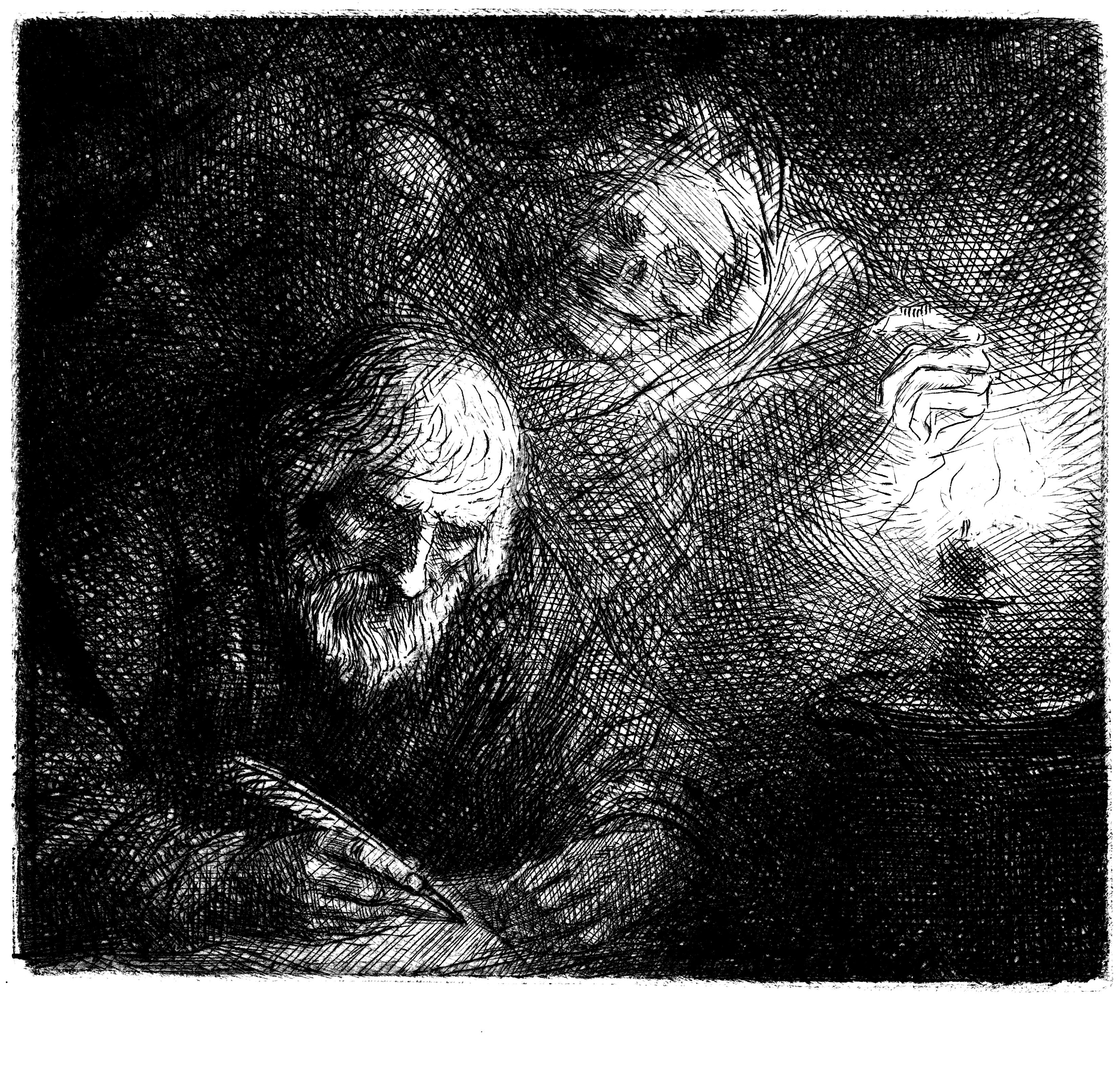
Philosopher
An elf looks up to the stars, wondering what creatures live upon them. A halfling studies the berries she is harvesting, taking note of the intricate patterns the seeds make. A human, surrounded by potions, carefully mixes the concoctions, fascinated by their potentials as he documents the results.
Whether shut away in an ancient library, or diving deep underground to search for lost magical artifacts, a philosopher lives their life always wanting to understand the world around them just a little better.
Eternal Study
Philosophers seek knowledge in all walks of life. While a ranger may use the tracks of a bear to hunt it down, a philosopher will study the tracks to learn of the interesting way the beast walked over the ground. A dragon is as every bit fascinating as it is terrifying. To a philosopher, the world is filled with marvels and mysteries, and they cannot sit back and let riddles be unanswered.
For Knowledge’s Sake
There is no secret in the multiverse that truly lacks an explanation. Instead, the explanation simply hasn’t been found yet. A philosopher believes that the quest for knowledge is a noble cause simply in of itself. For a righteous philosopher, knowledge will help lessen suffering among those that are hurt. For an evil philosopher, knowledge is a gateway to boosting one’s own power and authority. But for all philosophers, knowledge is their greatest tool.
Creating a Philosopher
When making a Philosopher, think of why the philosopher loves research so much. Simply being an intelligent individual may not be enough: a philosopher lives and dies by documenting knowledge, and gives everything they have to the pursuit of information.
Maybe your original home was destroyed by a plague of unknown origin, and you’ve set out to make sure nothing like that ever happens again. Or perhaps you were accepted into a prestigious college at a young age, and have had the need to understand forced into your mind.
Whatever the reason, a philosopher will eternally pursue knowledge where it can be found, going so far as to delve into deep and dangerous dungeons.
Quick Build
You can make a Philosopher quickly by following these suggestions. Intelligence or Wisdom should be your highest ability score, followed by Dexterity. Your skill proficiencies should be based on Intelligence or Wisdom, such as Investigation or Medicine.
The Philosopher
| Level | Proficiency Bonus | Features | Philosopher Dice |
|---|---|---|---|
| 1st | +2 | Philosopher Dice, Scholar | d4 |
| 2nd | +2 | Method of Loci, Master Plan | d4 |
| 3rd | +2 | Specialization | d4 |
| 4th | +2 | Ability Score Improvement | d4 |
| 5th | +3 | Intimidating Mind, Unlimited Method of Loci | d6 |
| 6th | +3 | Specialization feature | d6 |
| 7th | +3 | Moment of Genius (1/Rest | d6 |
| 8th | +3 | Ability Score Improvement | d6 |
| 9th | +4 | Brilliant Mind (1/Rest) | d8 |
| 10th | +4 | Ability Score Improvement, Quick Thinking | d8 |
| 11th | +4 | Specialization feature, Tough Mind | d8 |
| 12th | +4 | Ability Score Improvement | d8 |
| 13th | +5 | Brilliant Mind (2/Rest) | d10 |
| 14th | +5 | Iron Will | d10 |
| 15th | +5 | Moment of Genius (2/Rest) | d10 |
| 16th | +5 | Ability Score Improvement | d10 |
| 17th | +6 | Specialization feature | d12 |
| 18th | +6 | Brilliant Mind (Unlimited) | d12 |
| 19th | +6 | Ability Score Improvement | d12 |
| 20th | +6 | Philosophical Epiphany | d12 |
Class Features
As a Philosopher, you gain the following class features.
Hit Points
- Hit Dice: 1d8 per philosopher level.
- Hit Points at 1st Level: 8 + your Constitution modifier.
- Hit Points at Higher Levels: 1d8 (or 5) + your Constitution modifier per philosopher level after 1st.
Proficiencies
- Armor: Light armor
- Weapons: Daggers, darts, slings, quarterstaffs, light crossbows
- Tools: One tool of your choice
- Saving Throws: Intelligence, Wisdom
- Skills: Choose four from Animal Handling, Arcana, Deception, History, Insight, Investigation, Medicine, Nature, Perception, Persuasion, and Religion
Equipment
You start with the following equipment, in addition to the equipment granted by your background:
- (a) a light crossbow and 20 bolts, or (b) a quarterstaff.
- (a) a scholar’s pack, or (b) a diplomat’s pack.
- Leather armor, a dagger, and any non-vehicle tool worth 50 gp or less.
Alternativley, you can forgo this starting equipment, as well as the items offered by your background, and instead start with 4d4 x 10 gp to buy your equipment.
Philosopher Dice
You have learned how to delve into your own mind far better than others. You have a pool of expendable Philosopher Dice. Whenever you fail an Intelligence, Wisdom, or Charisma saving throw or whenever you fail an Intelligence, Wisdom, or Charisma ability check, you can expend one to add a d4 to the roll, potentially making the roll a success.
You can only ever use a single Philosopher Die at a time. Meaning, you can only add a single Philosopher Die to a roll, and if a feature were to require the use of a Philosopher Die, you can only expend one Philosopher Die on that feature. If a feature requires you to roll a Philosopher Die and you have none left, then you cannot use that feature until you are able to roll a Philosopher Die.
You can not use, roll, or expend Philosopher Dice in any way if you are incapacitated.
You have a number of Philosopher Dice equal to your Intelligence or Wisdom modifier + 1/3 your Philosopher level, rounded down (minimum of 1 die). You regain all expended Philosopher Dice upon finishing a long rest.
At level 5 all of your Philosopher Dice increase to a d6, then to a d8 at Level 9, a d10 at Level 13, and a d12 at Level 17.
Scholar
You gain one of the following benefits, which represents your style of information gathering:
Book Learner. You can read and write twice as fast as you previously could. In addition, you have advantage on ability checks made to gather information from books and other written documents.
Logical Deduction. You can always accurately remember anything you've seen or heard in the last two weeks, unless your mind has been magically altered. In addition, you have advantage on ability checks made to piece together information and connect ideas.
Socratic Style. If you hear a language that you do not speak, you can always recognize what language it is. In addition, you have advantage on ability checks made to convince non-hostile creatures to tell you information.
Method of Loci
At 2nd level, you gain the ability to focus deep into your mind, and calm your thinking patterns. You can regain all expended Philosopher Dice upon finishing a short rest.
Once you have used this feature, you cannot use it again until you finish a long rest.
Upon reaching 5th level, you can use this feature upon finishing any short rest, instead of only one short rest per long rest.
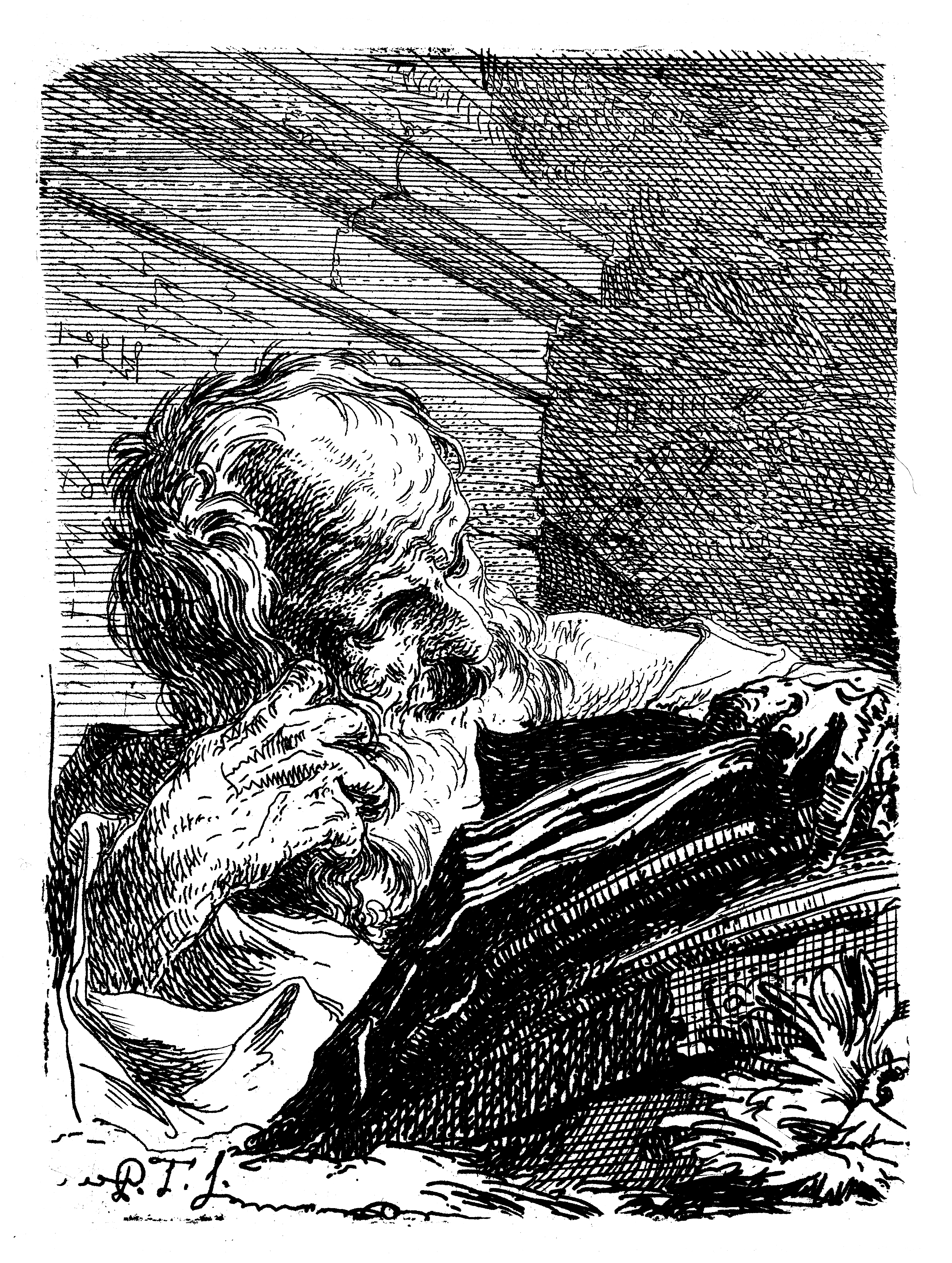
A Philosopher, created by Paul Troger
Master Plan
Also at Level 2, you have learned of the weaknesses of various foes, and can exploit these weaknesses for a tactical advantage. Whenever you finish a long rest, choose a number of the following Plan effects equal to your Proficiency Bonus. These chosen Plan effects are known to you until you finish a long rest, at which time you can change or keep your selection.
When you hit a creature with an attack, you can apply a known Plan effect to the hit creature. Once you have applied a Plan effect, you cannot use this feature again until the start of your next turn.
Plan effects have requirements to learning them. Certain Plan effects, such as Befuddled or Flatfooted can be selected after gaining this feature. Others Plan effects can only be selected after gaining enough levels in this class, such as Bloodied, which can only be selected if you're at least a Level 5 Philosopher. Other Plan effects can only be selected if you have enough levels in a specialization.
Thinking About Your Plans
When applying your Plan effects, describe what sort of trap or scheme your character had placed.
As an example, when applying Flatfooted to an enemy, perhaps you had shot the foe in such a way that you guided it to step into a crack in the floor, which it tripped on. Or when applying Befuddled, perhaps you announce what action the opponent was about to do, catching it by surprise to such a degree that it couldn’t use its reaction.
The end result of the Plan effect will make more sense in game when accompanied with a description of how your character manipulated the enemy into falling into your plans.
Level 2
The following Plan effects are available when you gain this feature at 2nd Level:
Befuddled. The target cannot take reactions until the start of your next turn.
Dazzled. The target is pushed or pulled up to 5 feet in any direction of your choice.
Distraught. The target has disadvantage on the next ability check it makes until the start of your turn.
Flatfooted. The target’s movement speed is reduced by half until the start of your next turn.
Shocked. The target has disadvantage on the next saving throw it makes until the start of your next turn.
Unfocused. The target has disadvantage on the next attack roll it makes until the start of your next turn.
Weak. The target instantly stops grappling any other creature, and has disadvantage on ability checks to grapple or avoid grapples until the start of your next turn.
Level 5
The following Plan effects are available upon reaching Level 5:
Bloodied. The target cannot regain hit points until the start of your next turn.
Woozy. The target can, on its next turn, take an action or a bonus action, but not both.
Level 9
The following Plan effects are available upon reaching Level 9:
Dizzied. All attack rolls against the creature have advantage until the start of your next turn.
Nervous. The next ability check, attack roll, or saving throw the target makes has disadvantage, until the start of your next turn.
Sickened. The target cannot land critical hits until the start of your next turn.
Level 13
The following Plan effects are available upon reaching Level 13:
Enraged. The target has disadvantage on all attack rolls, besides against you, until the start of your next turn.
Scathed. Critical hits against the target are landed on rolls of 19-20 until the start of your next turn.
Level 17
The following Plan effects are available upon reaching Level 17:
Discombobulated. Until the start of your next turn, each Legendary Action the target makes costs 1 additional Legendary Action, to a maximum of the total number of Legendary Actions it has.
Off-Guard. The target is vulnerable to the next instance of damage it takes before the start of your next turn.
Specialization
At 3rd level, you choose a specialization that focuses your studies: Philosopher of Experimentation, Philosopher of War, Philosopher of Medicine, or Philosopher of Magic, all detailed at the end of the class description. Your specialization grants you features at 3rd, 6th, 11th, and 17th level.
Ability Score Improvement
When you reach 4th level, and again at 8th, 10th, 12th, 16th, and 19th, you can increase one ability score of your choice by 2, or you can increase two ability scores of your choice by 1. As normal, you can’t increase an ability score above 20 using this feature.
Intimidating Mind
At 5th Level, you have started to see patterns throughout fights, and have learned to exploit weaknesses better. You gain the following benefits:
- Whenever you hit a creature with an attack, you can expend and roll a Philosopher Die, and raise the damage dealt by an amount equal to the result of the roll + your Intelligence or Wisdom modifier.
- When you apply a Plan effect to a creature, you can expend a Philosopher Die to also apply the same Plan effect to another creature within 5 feet of the initial target. Only the initial target takes any of the attack's damage.
Moment of Genius
At Level 7, when you make ability check, saving throw, or attack roll which you are proficient in, you can choose to make the roll with expertise, meaning that you can add double your Proficiency Bonus to the result of the roll. You can choose to use this feature after the initial roll has been made, but before the result is known.
This feature has no effect if the roll already could add double your Proficiency Bonus.
Once you have used this feature, you cannot use it again until you finish a short or long rest. Upon reaching Level 15, you can use this feature twice, and regain all uses upon finishing a short or long rest.
Brilliant Mind
Starting at 9th Level, your mental faculties have become greater and greater. When rolling a Philosopher Die, you may reattempt the roll. You must use the second result. Once you have used this feature, you cannot do so again until you finish a short or long rest.
Starting and 13th Level, you can use this feature twice, and regain all uses of it upon finishing a short or long rest. At Level 18, you can use it every time you roll a Philosopher Die.
Quick Thinking
At Level 10, your quick mental reactions can help others around you. If you are not surprised when initiative is rolled, you can expend and roll a Philosopher Die, and add the result of the roll to a single willing companion’s initiative check, if they are within 120 feet of you, and can hear or see you. That creature is no longer surprised, if it once was.
Tough Mind
At 11th level, you gain proficiency in Charisma saving throws. If you already have proficiency in Charisma saving throws, you instead gain proficiency in any single saving throw of your choice.
Iron Will
At Level 14, your mind has become hardened in all walks of life. You can add a Philosopher Die to the result of any saving throw or ability check you fail, and not only Intelligence, Wisdom, or Charisma ones.
Philosophical Epiphany
At Level 20, your Intelligence and Wisdom scores increase by 4. Your maximum for these scores are now 24.
Book-Room at Dr. Wister's, created by
Joseph Pennell
Specializations
Different Philosophers focus their studies into different fields. The specialization you choose represents your field of study.
Philosopher of Experimentation
You are not satisfied with simply learning truths already proven long ago. Instead, you have focused your studies into delving into the unknown, and learning odd concepts never imagined by others.
Philosopher of Experimentation Features
| Philosopher Level |
Feature |
|---|---|
| 3rd | Flow State, Calculating Warrior |
| 6th | Shared Knowledge, Skill Expertise |
| 11th | New Horizons, Brilliant Combatant |
| 17th | Defensive Flow, Unlimited Shared Knowledge |
Flow State
At Level 3, you can enter into a state of collected thoughts. As a bonus action, you can enter into a Flow State. This state lasts for ten minutes, or until you fall unconcious.
While in this Flow State, you gain the following benefits:
- You have advantage on Intelligence and Wisdom checks and saving throws.
- You gain temporary proficiency in any one skill or tool of your choice, which lasts until the end of the Flow State.
- You gain a number temporary Philosopher Dice equal to your Proficiency Bonus. These Philosopher Dice don't count against your maximum, and the dice size is the same size as your normal Philosopher Dice. If you have not used these Philosopher Dice by the end of your Flow State, they are wasted.
You can enter into this state a number of times equal to your Proficiency Bonus, and regain all uses upon finishing a long rest.
Calculating Warrior
Also at 3rd Level, your mind has begun to quickly mind patterns in the heat of battle. You gain the following benefits:
- When you miss with a weapon attack roll, you can expend and roll a Philosopher Die, and add the result of the roll to the attack, potentially making the attack hit.
- When you are hit by an attack, you can use your reaction to expend and roll a Philosopher Die, raising your AC against that attack by the amount rolled, potentially making the attack miss.
Skill Expertise
Also at 6th Level, you gain expertise in two skill proficiencies of your choice. This means that you can add twice your Proficiency Bonus to any ability check made using those two skills.
New Horizons
Upon reaching 11th Level, you have mastered the ability to come up with radical new ideas. Upon finishing a long rest, you can choose to lose proficiency in any one skill, tool, or saving throw of your choice, and then gain proficiency in any different skill, tool, or saving throw of your choice.
If the proficiency you are losing had expertise, meaning you could add double your Proficiency Bonus to the result of rolls made with it, the new proficiency now has expertise instead.
The new proficiency must be of the same type that you are losing. So, if you are losing a skill proficiency you can only gain a skill, if you are losing a tool proficiency you can only gain a tool, and if you are losing a saving throw proficiency you can only gain a saving throw.
Brilliant Combatant
Also at 11th Level, your Intimidating Mind feature improves. If you expend a Philosopher Die to apply a Plan effect to a second creature, you can now instead apply the same Plan effect to up to two additional creatures, as long as they are within 30 feet of the initial target.
Defensive Flow
At 17th Level, you gain the following additional benefits when entering a Flow State, which last until the end of the Flow State:
- You gain temporary proficiency in any one saving throw of your choice, which lasts until the end of the Flow State.
- At the start of your turn, you gain a number of temporary hit points equal to your Intelligence or Wisdom modifier (minimum of 1). These temporary hit points vanish when the Flow State ends.
Philosopher of War
You have focused your studies towards understanding the battlefield. While you yourself may not physically be the most powerful member of an army, your keen understanding of how battles are fought and won make you a valuable member of any band of warriors.
Philosopher of War Features
| Philosopher Level |
Feature |
|---|---|
| 3rd | Aura of Leadership (10 ft.), Commanding Presence, Bonus Proficiencies |
| 6th | Tactical Plan, Supreme Confidence, Aura of Leadership (20 ft.) |
| 11th | Brilliant Leader, Aura of Leadership (30 ft.) |
| 17th | Defensive Formation, Aura of Leadership (60 ft.) |
Aura of Leadership
At Level 3, your studies into the fields of war and combat have begun to pay off. As a bonus action, you can enter into a state of leadership. When you enter into this state, choose one of two options: attack rolls or AC.
For the next minute, or until you become unconcious, friendly creatures who are within 10 feet of you receive a bonus to attack rolls or AC (whichever you choose upon entering the state) equal to half your Intelligence or Wisdom modifier, rounded down (minimum of 1).
At 6th level, this range increases to 20 feet. At 11th level, this range increases to 30 feet. And at 17th level, this range increases to 60 feet.
You can enter into this state a number of times equal to your Proficiency Bonus, and regain all uses upon finishing a long rest.
Commanding Presence
At 3rd Level, you have mastered the art of commanding your troops. When a friendly creature other than yourself within 60 feet of you who can hear or see you hits with an attack, you can use your reaction to expend and roll a Philosopher Die, raising the damage of the attack by the amount rolled + your Intelligence or Wisdom modifier.
Bonus Proficiencies
At Level 3, you gain proficiency in all simple and martial weapons, as well as in Medium armor and shields.
Tactical Plan
At Level 6, your tactical training has allowed you to better weaken your foes. You can now choose from an expanded selection of Plan effects, which includes the following options:
Delirious. The target can, on its next turn, take one fewer melee or ranged attack than it normally could (minimum of 1 attack).
Perplexed. The target’s AC suffers a penalty equal to half your Intelligence or Wisdom modifier, rounded down (minimum penalty of 1) until the start of your next turn.
Supreme Confidence
Also at 6th Level, choose either the Persuasion or Intimidation skill. You gain proficiency in the chosen skill. If you already have proficiency in this skill, then you gain expertise in it, meaning you can add twice your Proficiency Bonus to any ability check made with this skill.
Brilliant Leader
At Level 11, you have learned how to make your companions fight better than before. As a bonus action, you can speak out a commanding phrase, and give temporary hit points to a number of friendly creatures equal to your Intelligence or Wisdom modifier (minimum of 1) within 60 feet of you. The amount of temporary hit points equals your Philosopher level.
You can use this feature once, and regain use of it upon finishing a short or long rest.
Defensive Formation
At Level 17, you have mastered getting the best out of your troops. When a companion within 30 feet of you who can hear or see you is hit with an attack, you can use your reaction to make the attack miss, even if the attack was a critical hit.
Once you use this feature, you cannot use it again until you finish a short or long rest.
Bust of a Bearded Warrior, created by
Johann Heinrich Schönfeld
Philosopher of Medicine
You have focused your research into the fields of medicine. Taking a different route than magical healers, you have mastered the art of healing through science and understanding, rather than through manipulating the arcane.
Philosopher of Medicine Features
| Philosopher Level |
Feature |
|---|---|
| 3rd | Medical Proficiency, Healing Touch, Tend Wounds |
| 6th | Skilled Surgeon, Improved Healing Touch |
| 11th | Miracle Worker, Life Saver |
| 17th | Medical Mastery |
Medical Proficiency
At Level 3, your studies in the medical field have shown their results. You gain proficiency in the Medicine skill. If you already have proficiency in this skill, then you instead gain expertise in it, meaning you can add twice your Proficiency Bonus to any ability check made with this skill.
Healing Touch
Also at Level 3, after training in the art of medicine, you have learned to heal others through physical aid. As an action, you can expend a use of a Healer's Kit to expend and roll a Philosopher Die, healing a creature you touch for the amount rolled + your Intelligence or Wisdom modifier (minimum of 1 hit point).
Creatures healed this way gain advantage on Death saving throws they make for the next 10 minutes.
This feature has no effect on either Constructs or Undead.
Upon reaching Level 6, this action can be performed using a bonus action.
Tend Wounds
Also still at 3rd Level, you have learned how to aid your allies and tend to their wounds during a short rest. If a creature you tend to expends Hit Dice during this short rest, they can roll any of the expended Hit Dice twice, using the higher result.
You can tend to yourself during this short rest, and tending creatures does not interrupt your short rest.
Skilled Surgeon
At Level 6, as an action you can expend a use of a Healer's Kit to remove all poisons and diseases from a creature you touch. You can do this a number of this equal to your Proficiency Bonus, and regain all uses upon finishing a long rest.
In addition, creatures healed by you or stabilized by you receive advantage on saving throws against poisons and diseases for the next 10 minutes.
Miracle Worker
At Level 11, by spending 1 minute with a creature that has been dead for less than 10 minutes, and by expending medical supplies worth at least 150 gp, you can bring life back to it. If the creature’s soul is both willing and at liberty to rejoin the body, the creature returns to life with 1 hit point. In addition, it is healed of all nonmagical poisons and diseases. This feature cannot be used to return an Undead creature to life, and does not work on Constructs.
This act closes all mortal wounds, but it doesn’t restore missing body parts. If the creature is lacking body parts or organs integral for its survival - its head, for instance - the feature automatically fails.
Coming back from the dead is an ordeal. The target takes a -3 penalty to all attack rolls, saving throws, and ability checks it makes. Every time the target finishes a long rest, the penalty is reduced by 1 until it disappears.
Once you have used this feature, you cannot do so again until you finish a long rest.
Life Saver
Also at 11th level, any creature that falls to 0 hit points who has in the last minute been stabilized by you or been healed by you receives the ability to instead drop to 1 hit point.
A creature who was killed outright cannot do this, and neither can Constructs nor Undead. A creature who drops to 1 hit point from this feature cannot do so again until they finish a long rest.
Medical Mastery
At Level 17, your speed and understanding of healing knows no equal. As an action you can expend a use of a Healer's Kit to restore a number of hit points to a friendly creature you touch equal to 10 times your Philosopher level. This feature has no effect on Constructs or Undead.
A creature healed by this feature also can have one of the following effects applied to it: Remove any reduction to its maximum hit points, remove all poisons and diseases from it, or remove 1 level of exhaustion from it.
Once you have used this feature, you cannot use it again until you finish a long rest.
Philosopher of Magic
You have focused your studies toward the understanding of magic. Less interested in harnessing the raw power of magic, you have narrowed your studies to learn the history of magic, how it works, and how to manipulate it.
Philosopher of Magic Features
| Philosopher Level |
Feature |
|---|---|
| 3rd | Scholarly Magic, Counteract Magic, Arcane Proficiency |
| 6th | Magical Plan |
| 11th | Scholarly Magic (3rd cantrip), Magical Resistance |
| 17th | Arcane Assistance |
Scholarly Magic
When you reach 3rd Level, you gain the ability to cast spells through your studies. You learn two cantrips, listed below. As you gain levels in this class, you learn certain spells, and can cast them by expending Philosopher Dice, explained below.
Cantrips. You learn two of the following cantrips of your choice: firebolt, guidance, message, minor illusion, prestidigitation, ray of frost, or resistance. At 11th level, you learn another cantrip from this list.
Spells. You learn the spells comprehend languages, cure wounds, detect magic, and identify. You can cast each of these spells at their lowest level by expending a number of Philosopher Dice, as shown in the Philosopher of Magic Spells below. At levels 6, 11, and 17, you learn additional spells, also shown in the Philosopher of Magic Spells table, which you also can cast by expending Philosopher Dice.
Spells cast using this feature still require components as usual. So, if a spell listed requires material components with a gold cost or material components consumed during casting, those components are still required as always.
Any spells learned through this feature you can also cast using spell slots, if you have any spell slots.
Spellcasting Ability. Intelligence or Wisdom is your spellcasting ability for spells learned through this feature (you choose which when gaining this feature). You use your Intelligence or Wisdom whenever a spell refers to your spellcasting ability. In addition, you use your Intelligence or Wisdom modifier when setting a saving throw DC for a spell you cast and when making an attack roll with one.
Spell save DC = 8 + your Proficiency Bonus + your Intelligence or Wisdom modifier
Spell attack modifier = your Proficiency Bonus + your Intelligence or Wisdom modifier
Philosopher of Magic Spells
| Philosopher Level | Spell Learned | Dice Needed |
|---|---|---|
| 3rd | comprehend languages | 1 |
| 3rd | cure wounds | 2 |
| 3rd | detect magic | 1 |
| 3rd | identify | 2 |
| 6th | detect thoughts | 3 |
| 6th | enhance ability | 2 |
| 6th | lesser restoration | 2 |
| 6th | sending | 3 |
| 11th | counterspell | 3 |
| 11th | dispel magic | 3 |
| 11th | divination | 4 |
| 11th | tongues | 3 |
| 17th | greater restoration | 5 |
| 17th | mass cure wounds | 6 |
| 17th | modify memory | 5 |
| 17th | scrying | 5 |
Counteract Magic
Also at Level 3, your you've learned how to counteract magical attacks. When a creature within 60 feet of you who you can see is hit with a spell attack, you can use your reaction to expend and roll a Philosopher Die, raising the attack target's AC by the result, potentially making the attack miss.
Arcane Proficiency
Also still at 3rd Level, you gain proficiency in the Arcana skill. If you already have proficiency in this skill, then you gain expertise in it, meaning you can add twice your Proficiency Bonus to any ability check made with this skill.
Magical Plan
At Level 6, your magical understanding has allowed you to better weaken your foes. You can now choose from an expanded selection of Plan effects, which includes the following options:
Disrupted. The next time the target casts a spell before the start of your next turn which forces a saving throw, all the targets of the spell have advantage on the saving throw.
Weakened. The target has disadvantage on saving throws to continue concentration until the start of your next turn, including any potential saving throw it made to continue concentration as a result of being hit by you for this Plan.
Magical Resistance
At Level 11, after training with the use of magic, you have learned of ways to fight against it. You can spend a minute applying magical wards to a willing creature you touch. When that creature makes a saving throw which they are not proficient in, they can add half their proficiency modifier, rounded down, to the saving throw.
This effect lasts until you use this feature again, or until you die.
Arcane Assistance
At Level 17, you have mastered helping others in their spellcasting. By spending 10 minutes magically assisting another creature, which can be done during a short rest, the creature regains up to a number of levels of spell slots equal to your Intelligence or Wisdom modifier, divided how they choose. A creature cannot regain a spell slot of level greater than 5th from this feature.
As an example, if you had an Intelligence or Wisdom modifier of +7, the assisted creature could regain one level 5 and one level 2 spell slot, or four level 1 spells slots and one level 3 spell slot, as both add up to 7 levels of spell slots. They could not, however, regain a single level 7 spell slot, as a spell slot higher than 5th level cannot be regained from his feature.
Once you have used this feature, you cannot use it again until you finish a long rest.
Optional Rules
Multiclassing
Refer to this section if you are using the optional multiclassing rules in your group, and wish to take a level in the Philosopher class.
Ability Score Minimum. You must have at least an Intelligence score of 13 or a Wisdom score of 13 to take level in this class.
Proficiencies Gained. When you gain your first level in philosopher, if it isn't your initial class, you gain the following proficiencies:
- Light armor.
- One skill from the Philosopher’s skill list.
- One tool of your choice.
Legal Information
This work includes material taken from the System Reference Document 5.1 (“SRD 5.1”) by Wizards of the Coast LLC and available at https://dnd.wizards.com/resources/systems-reference-document. The SRD 5.1 is licensed under the Creative Commons Attribution 4.0 International License available at https://creativecommons.org/licenses/by/4.0/legalcode.
Death and the Philosopher, created by Alphonse Legros