Common
| Idiom | Meaning |
|---|---|
| Can’t see the bottom of an empty mug | Drunk |
| Like pissin’ in a wicker basket | Impossible/Useless |
| Kenku see-Kenku do | One who imitates without understanding |
| By the Sun/Void! | Interjection of extremely happy/disgusted surprise, respectively |
| Grab the dwarf by the beard | Start a fight for no good reason |
| Tin-cuppa | A bar too rowdy to use glassware |
| Crusties | Undead |
| Rusties | Warforged |
| Not here to drink dragon wine | Here to drink cheap, low quality liquor |
| Could wilt the ears off an elf | Very strong liquor |
| Growing scales on his ass | Acting uncharacteristically strong or brave |
| Got the charm of a succubus/incubus | Charming or overtly sexy female/male |
| Crown | Slang for a gold coin |
| Too many crowns and not enough headroom | More money than sense |
| Wear his crown on his seat shiner | An idiotic authority figure |
| Melt some metal | Splurge or spend extravagantly |
| Dusting coffers | Very poor, in debt |
| Good news for the doctor is bad news for the Undertaker | A matter of perspective |
| You ought to/Hold your sword by the hilt | Keep it simple, stupid. |
| You’ll never know the length of a vein until you mine it | You never know until you try |
| At night, be the shadows | When in Rome |
| You could sharpen an axe on his head | When someone is really stubborn |
| If you don’t have a dog, hunt with a cat | Make the best of your situation |
| Leave your temple in the village | Don’t exaggerate |
| Don’t praise the day before the evening | Don’t take things for granted too early on |
| Even squirrels can fall from trees | Sometimes even experts are wrong |
| Don’t jump ditches the long way | Don’t do things the hard way |
| Don’t start the house with the roof | You need to do things in the right order |
| They have more wool than a lamb | Someone is RICH |
| Never request more than one song from a bard | Don’t push your luck |
| Flies can't enter a closed mouth | Stop talking |
| The splinter is part of the branch | Like father, like son |


Dwarvish
| Idiom | Meaning |
|---|---|
| Fire in my beard! | Interjection of surprise or horror |
| By Hamrongeid's hammer! | Interjection of surprise (Hamrongeid is Dwarven for the Smith god) |
| Swinging true | Something that ‘sounds right’ |
| Clay-headed / mud-headed | Pejorative for ignorant, naive, or stupid |
| Sharp as a fresh pick | Clever or efficient |
| Like twice drank ale | Something that tastes terrible; the implication is that one drank ale, then pissed, then drank it again |
| Like folding stone | Something impossible |
| Like sorting gold from gophers | Something trivial/easy |
| Like a two-ton Auroch | Big and/or strong |
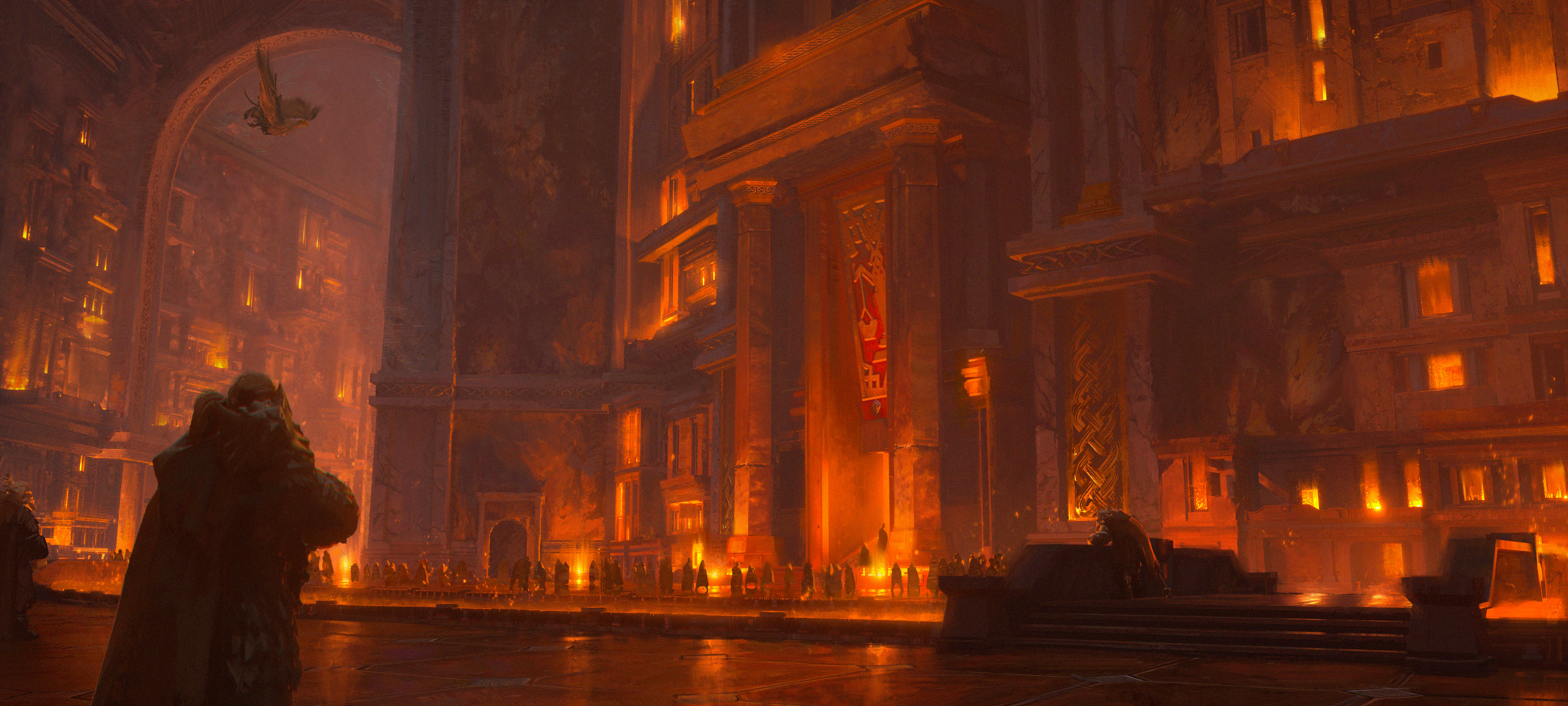
| So long as Aevilog burns bright | Forever (Aevilog is an eternal flame that powers all dwarven forges) |
| Even a wet stone is dry on the inside | Encouragement to withstand hardship |
| You can mine the biggest mountains | Nothing is impossible |
| A bit of heat coaxes the steel | One can encourage or motivate using threats |
| Even a dull/goblin axe can kill | Make do with what you have, don’t underestimate threats |
| Mixing honey in my mead | Acting obsequiously, or trying to use excessive flattery |
| Serving mud in a mead hall | Making an egregious or stupid mistake/being dishonest |
| No hammer’s too big to hit | Anything can be overcome, no such thing as overkill |
| Landslides don’t ask directions | Be direct/no planning around disaster |
| Pissing steam/ Mad enough to piss steam | Very angry |
| Going up the tall side of the mountain | Doing things the hard way |
Elvish
| Idiom | Meaning |
|---|---|
| Hunter’s Blood! | Vulgar Interjection of shock, surprise, indignation (Hunter is a deity sacred to most Elves) |
| On wilted ears | Hard of hearing, naive |
| Giving the dragon’s share | being stingy, telling half-truths |
| Poor Rooting | Pejorative for extremely low-born, either half elves or human (in Elven |
| When Illydri returns (to the light)! | Quite vulgar or taboo interjection, meaning never (Illydri were a despotic elven dynasty, banished and became drow) |
| Sacred Soul! | An interjection of praise and pleasant surprise (reference to Sublime Weave the coalescence of elven ancestral memory) |
| Ni Linn | Neutral term for non-elven races (typically other humanoids) (lit. ‘not us’) |
| Weaving Lilies | Selling an elaborate yet obvious fiction, being obsequious |
| Earn the envy of the songbirds | Beautiful |
| Visiting Giants | Daydreaming, concocting fantasies |
| Judging a tree by its bark | Making specious assumptions |
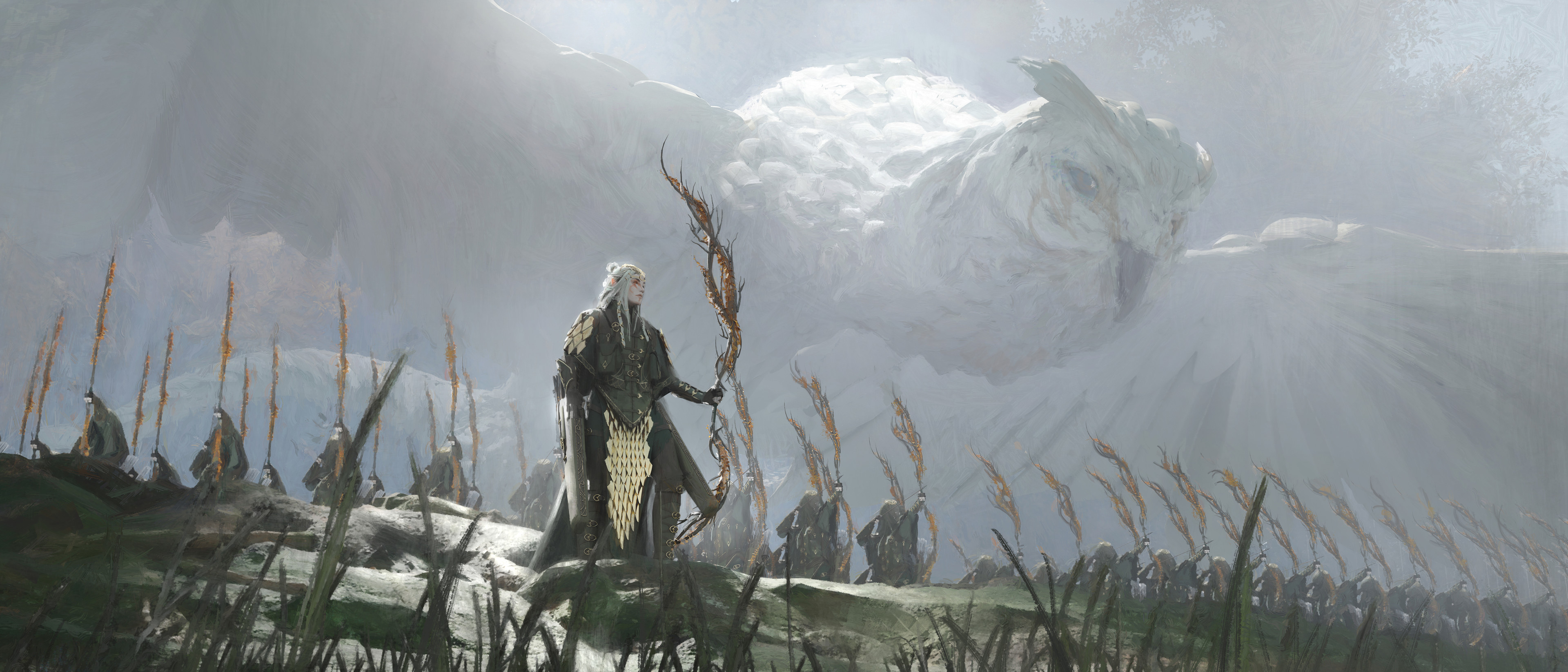
| An eagle by day, An owl by night | Use the right tools for the right occasion, act according to your strengths |
| A sleeping forest may have many eyes | Watch for unseen threats or eavesdroppers |
| Arrows in the wind | Subject to the whims of fate |
| May you outlast your sword! | A caution for the overconfident |
| By blade or by bow | Finding a solution no matter the problem |
| Fullest he that spares the hare | Mindfulness and compassion is better than self-indulgence |
| A whisper in the wind | Something going against great odds |
| Tongues like fangs | Using language that’s curt, insulting, or hostile |
| Hoofs but no horses | Something notable in its absence |
| More than one belly for an arrow | Don’t underestimate a foe (the side of a bow with the string is a ‘belly’) |
| Firing Dry | An attempt ending in embarrassing failure (no arrow released when firing a bow) |
| Stringing a bow after the hunt | Too late, should have planned ahead |
| Fletch-marked | Having a reputation for being bellicose or aggressive (implication that they’ve fired too many arrows and their bow is worn) |
Gnomish
| Idiom | Meaning |
|---|---|
| Quit Braiding my ears! | Quit teasing me |
| Shiny | Something amazing that you like/ want |
| Building a burrow from the inside | Do tasks in the right order |
| Conjured Mead won't drink the same | Do things properly/thoroughly |
| Hair on all sides | A generally unpleasant situation |
| Get your eyes stuck on X | Become obsessed or stare at something |
| Gold for the tinsmith | Something so fancy, you wouldn't know what to do with it |
| Thinking in knots | Confused |
| Silence is a good friend (in dangerous times) | Being stealthy is a preferred stratagem |
| Longer than a gnome wedding | A very lengthy affair |
| Go sell it to the Lyres | Tell your unbelievable story to a bard and not me |
Dragonborn
| Idiom | Meaning |
|---|---|
| A Long winter makes a sweet wine | Endure hardship for later rewards |
| Done X more than you've got scales | Said by someone with a lot of experience |
| Look before you sneeze | Be cautious and courteous of others nearby |
| Tasting your own smoke | Being haughty and self-indulgent |
| A single bad grape won't spoil the wine | Look out for your neighbors, look on the bright side |
| Have scales of many colors | Be very open-minded and experienced |
| Don't let your breath burn your tongue | Don't act cocky |
| Tasting food in a story | Fantasizing about something you lack |
| You can't breathe two elements | Don't set expectations too high, focus on one task |
| A Dragon won't remember being an egg | You'll grow out of something |
| One wing fighting the other | When two parties cannot cooperate and make life harder for themselves |
| Dragons inviting a sheep to dinner | Taking advantage of someone |
| Like Egg, Like Scale | It’s hard to change oneself |
| Have claws harder than one’s scales | One who can’t take criticism |
| Frost breath won't uncook a chicken | What's done is done |
Orc
| Idiom | Meaning |
|---|---|
| Cowardice is no excuse to go on living | Don’t be a coward, It’s better to fail than to never try |
| An elf in the crosshairs | An obvious solution |
| Draw blades, draw blood | Only draw a weapon you intend to use |
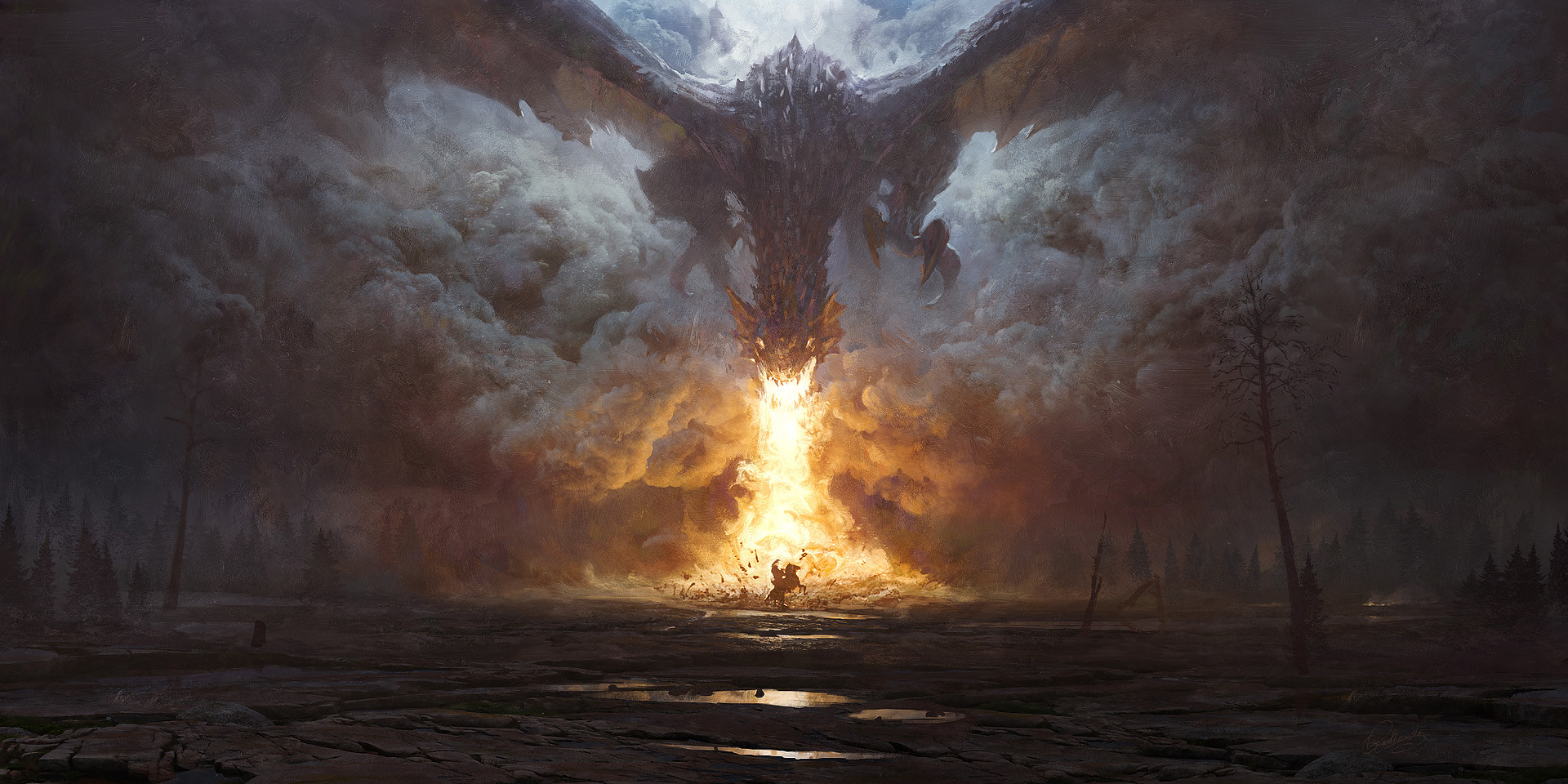
| Even a dragon knows to look down | Be as humble as is practical |
| Fighting a dragon from the mouth down | Taking a position of strategic disadvantage |
| There’s more than enough blood to spill | Not caring about spilling a bit of blood as a means to an end, even though one may risk personal harm they feel confident in their success |
| Death is too late for X | I’s time for that person to die |
| Eating with the Nalashaddin | Engaging in unsavory or violent work |
| Fangs aren’t for speaking poems | There’s no point in mincing words |
| Axes aren’t for planting | Use the right tools for the job, what you can’t grow, steal |
| At least we can still bleed | An optimistic look at surviving a failure |
| Take off your own armor | Survive long enough to doff your armor, don’t let yourself become loot |
| Living on black broth | Subsisting on the bare minimum |
| Invaders fear only the poor | There’s no negotiating with somebody who has less than you |
| Wanting for dust in the desert | Never satisfied or living in extreme hardship |
| Borders grow a sword at a time | Progress occurs in small strides |
| It’s not a grave that contains my memory | Glorious deeds live on in stories, a life without these is not worth remembering anyway |
| A thousand swords makes one army | An army should fight as cohesively as possible |
| As easy as being surrounded | There are many possible solutions |
Halfling
| Idiom | Meaning |
|---|---|
| As the hawk flies | In a straight direction, ignoring terrain |
| Having turnips in your ears | Deaf or dumb |
| Knee high to a ram | Small or young |
| Fewer years than feathers | Having confidence in spite of inexperience, due to youth |
| Locking horns with a ram | Stubbornly sticking to an idea or path |
| Picking flowers in the briar patch | Seeing good in a bad situation or wasting time |
| Pitching a tent in the rain | Doing something too late or in inappropriate conditions |
| Living with one’s lips between the ‘skin and the pipe | Living a life of hedonistic luxury |
| Not a foot too big to rest by our fire! | Hospitality to other races |
| Footpatch | Hair on top of the feet, annoying |
| Getting briars/fleas in one’s footpatches | Getting anxious, restless or having wanderlust |
| Down to the fescue | Running low on resources (fescue is a grass that makes grazing animals sick) |
| Goblin in a goatskin | Being dishonest about your intentions |
| One sausage short of a farrow | Not having enough of something, usually because if wastefulness or impulsiveness |
| Making/sleeping in a grass bed | Getting kicked out of the family tent for shameful behavior |
| Trading skins | Moving to a new tribe because their totem matches your values better |
| Having skin that doesn’t fit | Not fitting in with the rest of the tribe, lacking core values |
