Phaelithas: Fading Light
Great machines take to the skies, beating their massive canvas wings in harmony with the bronze contraptions hidden away. However, their pilots must take care, for they share these skies with Great Wyrms
A knight, lordly in status, rests among the calm riverbanks, watching his people go about their work in contemplative peace, a peace hard won by friends no longer here to see it.
Wrapped tightly in linen bonds and paltry scraps of fur, hundreds of echoing boot steps sound out the song of sorrow as Ishkin refugees begin the long march to a new, foreign home.
High Magic. For all intents and purposes, the world is alight with the spark of the arcane. Mages of high prestige brandish spells within their repertoire that carry the weight of decades of study. Druids, and henceforth the communities they guide, retain their closeness to nature and embody the solemn gentleness of the wind and the ferocity of the storms. Magical items of legendary rarity and the most common of magical objects exist, merely waiting for those keen enough to see.
Steampunk. This setting is primarily defined by the steampunk aesthetic of technology and design. Machines of bronze cog and pipework, ships of gently flowing canvas sails, a populace garbed in Victorian-era clothing like corset dresses, bloomers, and tailcoats, all with the steam-powered technology that hallmarked the Industrial revolution, yet romanticized and exaggerated in every way. As the world furthers its own Age of Enlightenment these such technologies only become more prevalent. However, it should be recognized that this is still a medieval world and as such not all places have been touched by these new technologies.
Great Reformation. For the longest time, Phaelithas has been divided and split up between various factions, harboring religious, political, or dynastic origins, that have time and time again clashed against each other. Now, exhausted, expended, and millions of dead men wiser, such factions seek open discussion and diplomacy with an open hand, not the blistering fires of perpetual violence dealt with a closed fist.
Dangerous and Wild. No one can deny the difficulty of beating back soldiers on all fronts, but now the very aspects of the world seek to tear apart communities in a flurry of bad luck and misguided ideals. Bandits, emboldened by the sudden lack of royal blades, seek out villages for plunder and tithe. Monsters, once thought mythical, encroach back into the world as if they had owned it all the while. Truly, there is danger for all to see, yet there is plenty of coin, clout, and opportunity to be found as well.
A Dying Light. The Sun itself, the forefront of all life and living splendor of the gods, seems to be dying within the confines of its cradle in the sky. Its a subtle event, yet the shorter summers have not gone unnoticed, nor have the cataclysmic winters of the north slipped by. No matter how much hope the new peace brings, the haunting thought of a world submerged into an eternal night is enough to drag others into fatalism.
The World is Ancient. Kingdoms have been built upon the graves of countless predecessors, some powerful and others not so, and the cities of the world, cosmopolitan and densely populated, reflect traditions and cultural values that go deeper than stone.
Designed by JunkyGuy (Art is not mine)
- Discord: junkyguy


Chapter One: History
Phaelithas, the name for which this setting is coined, is named after an ancient, truly eldritch, primordial being who is believed to have shaped the Material Plane out of its own body, sickened by the eons of loneliness and emptiness. Sacrificing its consciousness for the sake of continuity and change in what was an ever dark and melancholy cosmos.
The Outer Planes were first formed from its own emancipated emotions and the deepest, most profound thoughts within its own mind, both vile and virtuous. The Elemental Planes were what was left of its own body, leftover parts that Phaelithas saw too extreme to harbor true life.
The Feywild and the Shadowfell are said to not have been the being's own creations, but rather perversions of them that had materialized in the cosmos' attempts to stabilize itself, as if the two planes were counterweights helping the cosmos to keep balance.
The Mortal Realm
From thenceforth, cultures, kingdoms, empires, and all manner of life had sprung forth from the newly made realms. It is believed that of the fiends and celestials -both driven by Phealithas' loneliness and sought to form their own communities and kingdoms- were driven solely by the morals that which they stood for and were manifested from. Good and evil, law and chaos.
The Humans, Elves, Dwarves, and all other manner of races of the Material Plane were not descendants of the ancient being but rather an indirect, if not intentional, creation of Phaelithas (meaning the natural world, not the primordial). They had no uniform identity but a diverse spectrum of cultures and traditions. This colorful world would come at a cost to the many people who inhabited it, for the fires of conflict and war would be a common sight to see staining the otherwise beautiful world of Phaelithas.
Kings and queens, emperors and empresses, lords and ladies, and all manner of sovereigns and rulers would come and go like the tide on a rocky coast, but eventually those lapping waves will break the very same rocks they crash upon.
Dominance Wars
In the year 1487 AF, the nation and cultures of the world had drawn visible borders that had not changed for centuries, even in the face of constant dynastic and monarchical changes and instability. These cultural, religious, and ideological differences would cause both sides to butt heads far too often, allowing the prospect of an all encompassing war to culminate forthwith.
The Dominance Wars are called so for the fact that most sovereigns who entered the war, be they small and obscure or large and reputable, did so with the idea that they would become dominant ruler of all the sun shone upon. Albeit a lofty ideal, no one shirked from being called into war for all had something to gain; be it land, wealth, reputation, honor, or to sate one's bloodlust and desire.
These wars, plural as in there were many armistices made and dozens of "false peaces" that caused notable breaks in the war, would encapsulate 34 years and consume the lives of millions, 17 million to be exact. These golden empires, Vuoolden, Ishki, Harka, Beirtudont, Gonnheim, Altori, Ovanna, and many more obscure dynasties and factions, would cast countless souls to the fires of war and ultimately end up winning nothing of what they had set out for, both exhausting and expending themselves. What they had learned, however, was that desperation and need made for great motivation, and from the fires of war boiled forth the idea of Steamtech, a new technology that would revolutionize the new age of peace that all empires would call forth.
Age of Steam
The Age of Enlightenment, The Age of Steam, The Great Respite, the new peace that all empires ushered forth would carry many names, the aforementioned being the most popular. In this age, the nations of the world would experiment with radical ideology, economic and political philosophy, new scientific methods, religious and educational reform, and the new idea of Steamtech that had flown forth from the fires of war. Steamtech originally was inspired by new weapons of war, like muskets or siege constructs, but would eventually come to define the new world as a domestic wonder. Floating ships and cities, heated homes and baths, comforts not so different from our own world, yet all the more magical and mythical.

Raiding the Fortress Monastery, Aestraza, brought Beirtudont great riches and plunder, but came with great shame onto its royal bloodline and the loss of all religious loyalties.
Purpose and Belonging
New technologies would come forth from The Steam Age, one of the most notable being the printing press. With scientific, educational, and other sorts of printed materials being made at such a rapid pace, peoples far and wide can now have access to learning befitting that of nobility just decades prior. With this, its also reasonable to assume that literacy, understanding, and common sense have become highly valued, although if people actually manage to use this to a useful extent in everyday life is a matter not exactly discussed.
With trade now accelerating at a rapid pace, comforts, luxuries, and all manner of exotic goods can now reach those who otherwise would never have had the money to afford such things nor the proximity to even reach them. The lower classes could afford textbooks to pull themselves out from poverty with, the middle classes now had assortments of foodstuffs to experiment with, and the upper classes found luxury and meaning in theological and philosophical debate befitting that of their education and standing. Unprecedented wealth would flow into cities and, despite leaving the lower classes and exurbs mostly untouched, the poor and haggard too felt the slightest amount of weight gaining within their purses.
What more would come from the age would be unknown as it simply hasn't been too long since the new age began. However, as more cultures and peoples of different walks of life interacted with each other the world became all the more richer for it.
Culture, Education, and Ideology
With more colorful and vibrant cultures and traditions combining, the arts and other practical outlets such as warfare and language would see unparalleled inspiration drawn from all manner of origins. Ishkin porcelain would find its way into foreign cities, armies would find themselves adopting Harkan tactics, religious orders would come to see the benefits of Altori doctrines and dogmas, and other cultural marvels began to bleed into different nation's traditions and practicalities.
Latent Horror
War is still war, no matter if you are taking a life from the barrel of a musket or up close with a blade within your grasp, and many people still are shaken from a 34 year war. Veterans and civilians exposed to its horrors tend to plunge themselves deep into the new luxuries and artistic pathways available to them in order to grapple what had happened to them, their loved ones, or their home. This, while it may seem like improvement, can be incredibly psychologically damaging if it goes out of control.
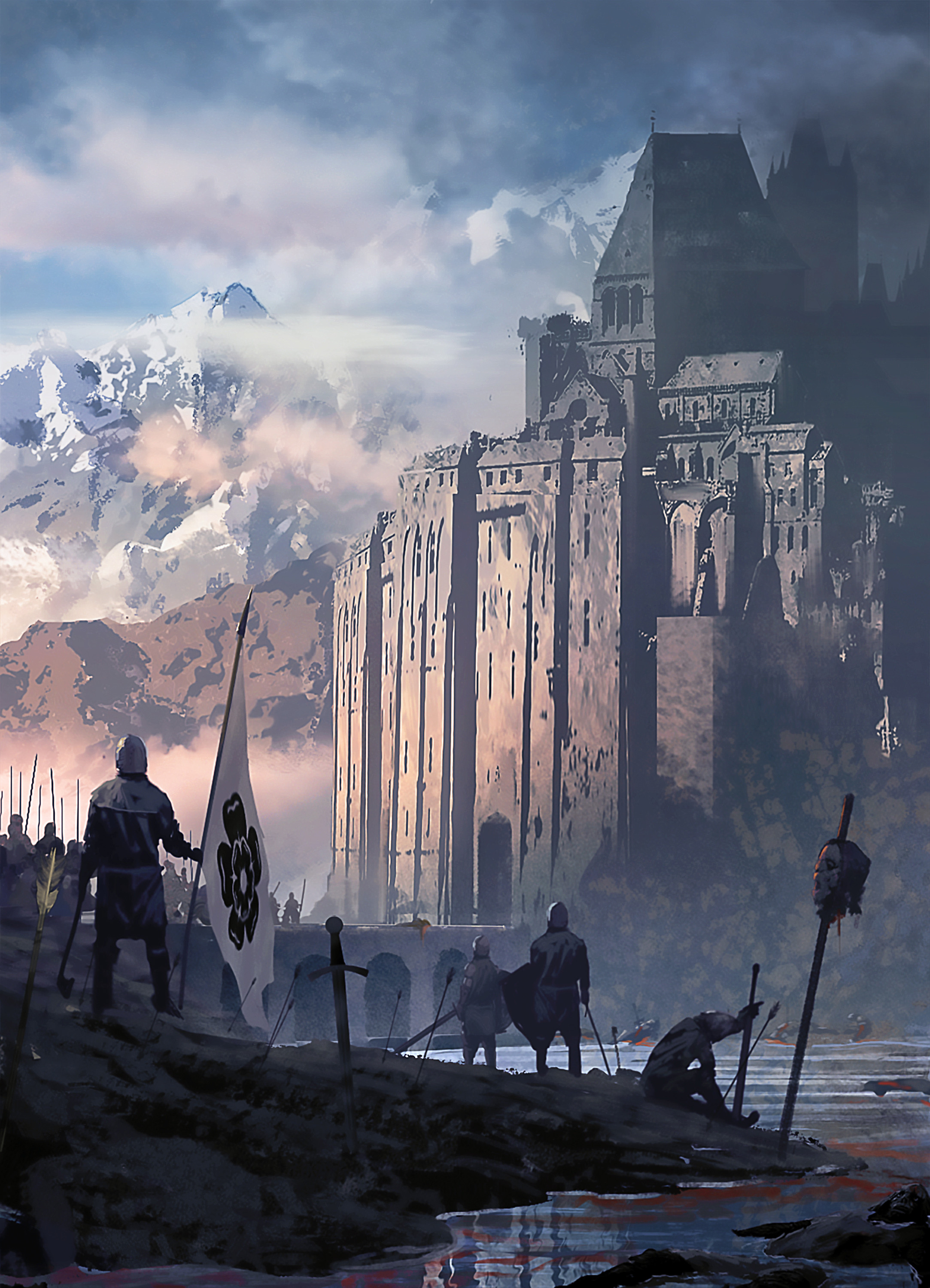

The Fading Light
Within the bright blue sky lies the lantern from which all warmth and life springs forth, the sun. For as long as mortals have treaded upon the Material Plane, the sun has carried divine and practical connotations.
As for divine connotations, for many people, especially those who find their origins within tribal communities who are forced to endure nature's wraths and graces, the sun is a divine and benevolent (or in the case of desert communities, wrathful) entity which brings forth light for all life to grow within, warmth for all to clothe themselves in, and serves as a spark of hope in the sky. Either assuming the position of a deity as some god or goddess, an icon of worship similar to how many druids revere natural landscapes, or a powerful celestial figure that watches over all but never intervenes.
However, despite the deeply devout religions that exist there are still those who would shift towards Deism and rationality, or straight up atheism, and take to the idea that the sun is merely another creation of the cosmos. A creation that offers a form of time management, being the center point of many heliocentric calenders, and a necessity for a bountiful harvest, given that in times of great darkness, such as dust storms or rainy months, crops do not take well.
Whatever side people took, it did not matter when it was revealed to them, at the very end of the 34 year war, that the sun had been slowly dying. A subtle revelation, one that had slipped by due to the destruction and deaths of many stargazers and astronomers who would keep track of certain events. However slow it may be, the sting of an encroaching night has plagued northern cultures with long and grueling winters, and antagonized everyone else with shorter harvests.
The Encroaching Night
The Encroaching Night, The Lightless Months, or the The Eternal Nightfall are all terms that have sprung up ever since The Great Revelation, that being the understanding that the sun is slowly dying, and refer to a time in which the sun will fully die out in the sky and all of Phaelithas will be brought to its knees. Different factions, be they religions, idealistic groups, cults, and other isolated peoples, all have differing ideas on what exactly that means. Some speak of an all encompassing apocalypse, others speak of an end times in which the earth will cleanse itself of all sin and be reborn, some simply say that this is merely a natural event and is nothing to stir fear over, and there are even those that straight up deny it or call it a hoax and say its a rampant conspiracy woven by powerful spellcasters in high positions.
As these groups bicker, it remains that the fading sun has caused various cataclysmic events in the north. Ishki, otherwise known as The Bejeweled Empire, has been thrust upon it a winter which encompasses nearly the whole year. As this winter brings famine, plague, and an endless fight against the bitter cold, the empire has barely survived; so horrible is its state, some would agree that it has simply capitulated completely.
Gonnheim, The Land of Bears, faces something similar too. However, being much less populated and having endured the cold for their entire lives, they've seemed to hold a grasp onto their lands. However, in the face of disaster many Gonnheimers have become much more barbaric.
What is most important, however, is that with the fading sun has come the awakening of ancient monsters of immense power and cunning.
With the fading of the sun, abandoned buildings seem to have housed impossibly ancient creautres. Here, Harkan knights realize far too late what has become of their ancestral domain.

Royal Recall
All would not seem so bad if there was blades to protect the common people with, blades anchored by ferocious zeal and duty driven hands. Unfortunately, in the face of great financial cost, latent trauma from war, and the binding obligations of peace treaties, most, if not all, standing armies have been taken down, their numbers slashed, and their training has become loosely regulated.
Due to this, those that feel as though they have been disenfranchised by the sudden lack of protection, the sudden shift from an agrarian lifestyle to an industrial one, or merely those despairing at the sudden fading light, have contemplated banditry and a myriad of other criminal lifestyles. Those that follow through with such urges either become trapped in something far worse that what they had planned or seriously injured and traumatized.
While the dangers presented by this rise in banditry should not simply be brushed away, given that with less soldiers patrolling roads they only have all the more freedom to do their dirty work. It should be noted that monsters and dangerous creatures often go unimpeded when hunting, more often than not for people rather than wild animals.
Religious Change
With all manner of cultures intermingling, this time in peace rather than in war, religion has certainly changed to the point of being almost unrecognizable to a perceiver looking at it from before the Dominance Wars.
Gods do exist, yes; being formed from the emotional extremes of mortal kind, the symbolic expressions of aspects of the mortal life, or massive shifts of ideology that come to take root in the minds of many. However, given the metaphysical nature of the gods, and as sentient and thinking beings, they are prone to change. Especially if this change is actively being encouraged by nearly every single mortal on the Material Plane.
Deities of war and murder become those of karmic vengeance and revolution, since modern literature seems to idolize people who would endanger themselves for justice or much less morally centered societal change. The goddess of nature has birthed forth 4 daughters representing the seasons. The god of labor, craft, and architecture has been twisted into one of slavery, obedience, and a purporter of greed and overambition, due to the many abuses people face in the current industrialized world and how they now see labor differently.
The Old Church, known as the Ortho Divine, has not backed down at all in the mission of reuniting itself. Though it is not a unified effort, given that religions of moral good would not work willingly with those of moral evil, however their ideals overlap. They wish to restore the natural and original identity of their gods in the eyes of the wider world from the New Church, the Unortho Divine. As of a direct result of this, sometimes godly identities can be misconstrued to the point where even they, the entities themselves, seem to be plagued with contradictory interests and personalities.
Factional Breakdown
Kingdoms, empires, nations, and all took upon themselves different means to aid their efforts in the war, however what was common to all was the integrating of mercenary factions and orders into their ranks as official members of said nation's military. This came with great benefits to such orders, such as direct and reliable supply chains keeping them equipped with suitable gear, authority within the domains they protect, land grants should they achieve great feats, higher status within the various social hierarchies (should the nation they align with have any notable ones), and other faction specific deals as well. What did come as a major detriment, however, was the loss of autonomy.
When aligning oneself to great authority, be it a monarch or deity, and beset on all sides by orders and factions willing to prove their loyalty to said authority for more benefits, betraying your masters isn't within your best self interest.
That being said, when the wars ended these orders and factions became much more of a detriment to the nations of the world rather than a benefit. The sheer number of soldiers a nation harbored had created a bureaucratic "swamp", becoming a logistical nightmare to maintain. In addition, this action was reinstating archaic values of a caste system, with these factions acting like an unofficial warrior caste. So, one by one they were casted away and their deals that had lasted for more than three decades had been voided.
The problem entailed was that it was done much too quickly. Perhaps if the authorities of the world had done it much more slowly, it would cause these various factions to bicker amongst each other. However, many united in the face of this betrayal and became independent warlords, immensely powerful in their own right. While they may no longer have the same equipment, training, and manpower they once had, the sheer number of them is enough to make up for that.
To show an example, in Ishki, by the Jade Empress' decree, all factions, daimyos, and orders under her control were to be released from service. Yet, when winter came, bringing famine and plague, the Jade Empress was forced into hiding as her royal armies were slaughtered by a much more powerful, and motivated, enemy force. Her entire empire became property to marauders.
A Wild Danger
Weirdly enough, though as mundane as it may seem to be, even nature itself has taken to a new identity. Predators have become an ever more increasing threat, becoming more resilient and even showing signs of subtle intelligence and cunning when it comes to harassing large groups. Hunting now has proven to be a sport for the strong only, a master skill in its own right. Even most prey show signs of defiance in the face of stronger hunters and predators. To some, this is ignorable. However, hamlets and villages without much protection beyond militias and wooden walls find this threat more dire than any dragon or warlord knocking on their front door. The wilds too, have taken to becoming more wily and innavigable.

Chapter Two: The Three Blights
As the world makes plans to leave their warring ways behind them for the time being, and revel in a new age of innovation and romanticism, the flaws of the old era remain still, clinging onto relevance in the new age like festering parasites. These flaws, or the most notable among them, are known as The Three Blights. They cling to the world with sharpened claws like a fearful and rabid animal, causing egregious amounts of damage and harm in its wake. Yet each are akin to a festering parasite or disease, nearly impossible to root out completely.
The Hunger
"In its embrace We no longer feel pain nor anger, the bitterness of life fades away before Our eyes as a million hearts beat as one alongside each other. This ever pervading sense of serenity is not merely a feeling, but it is who We are now. To stay hungry for all time, only growing content when all hearts beat with us, is Our purpose."
-Leopold "The Brave" Lithon, on his final individual thoughts before being assimilated into the Hunger
The Hunger is a dark, parasitic, impossibly ravenous, and twisted form of nature that has taken root in places all over the world. Its influence is commonly pictured in the idea that it rarely takes to a truly original form, always corrupting and twisting that which its roots, vines, seedlings, or spores can infect.
Thriving even in the harshest and nutrient starved of climates and rarely giving back the already egregious amount it takes, it takes deep rooting in hidden groves and all manner of landscapes, with the help of flying pods of spores and seedlings, so that it may afford itself the privacy needed to grow strong and reinforce its roots.
Eternal and Unwilling
The Hunger, The First Blight, has the power to exercise an immense control over those infected with the Ravenous Plague, a name given to those infected by the Hunger, with a worrying amount efficiency and speed. This hive mind of sorts is tactical, strategic, and highly intelligent. Each victory gained against it is another tactic to be learned, thoroughly understood, and countered in every way possible. Most see it as a losing fight, where every victory is another letter in the treatise of surrender, others see it as something that can be persuaded and negotiated with, treated like a sovereign country itself.
The infectious plague is nearly always received unwillingly, only the most insane of cultists would imbibe the parasite willingly (simultaneously being the most powerful of the Hunger's subjects). Those that are not yet fully overtaken by the parasite find themselves looking desperately to pathways that they would have never considered under normal circumstances in order to cure themselves. Only until the pestilence takes the victim do they find an unnatural calm.
Festering Always
Though it is believed for the parasite to have its origins within Vuoolden, some manner of its viral existence has spread to nearly every region of the world. From the secret oases of Ovanna to the icy wastes of the Gonnheimer tundras, nothing but direct intervention from the powerful and cunning will stop its encroachment. Thankfully, there are plenty of people either brave or insane enough to take it on.
The Mechhive
"Back and forth the pendulum sings, counting the time nobody sees. Step by step to liberal swings, shadows creep to a whisper of rage. Cloaked and cold the manifests watch, waiting as the pendulum swings. Smile and laugh at excessive kings, nothing can hide while the clock sings. Grin by grin the animals crawl, growing close to a desperate sprawl. Inch by inch they laughingly stall, starting to count, they fall by tens."
The Mechhive is a collective, just as The Hunger is. However, whereas The Hunger is a flesh-like horror The Mechhive is an unending hoard of ever-twisting gears, enduring pipelines, and spiked joints taking the form of constructed abominations filled with devilish spirit. A newer blight, but built upon the foundations of the planar machine of war that is eons old known as the Blood War.
Devilish Origin
Engineers, artificers, and other clockwork inventors that were either coerced into fiendish cult activity, pushed into desperation by abusive factory managers, or those simply trying to skip the learning curve of becoming an inventor sought to make deals in order to meet their ends.
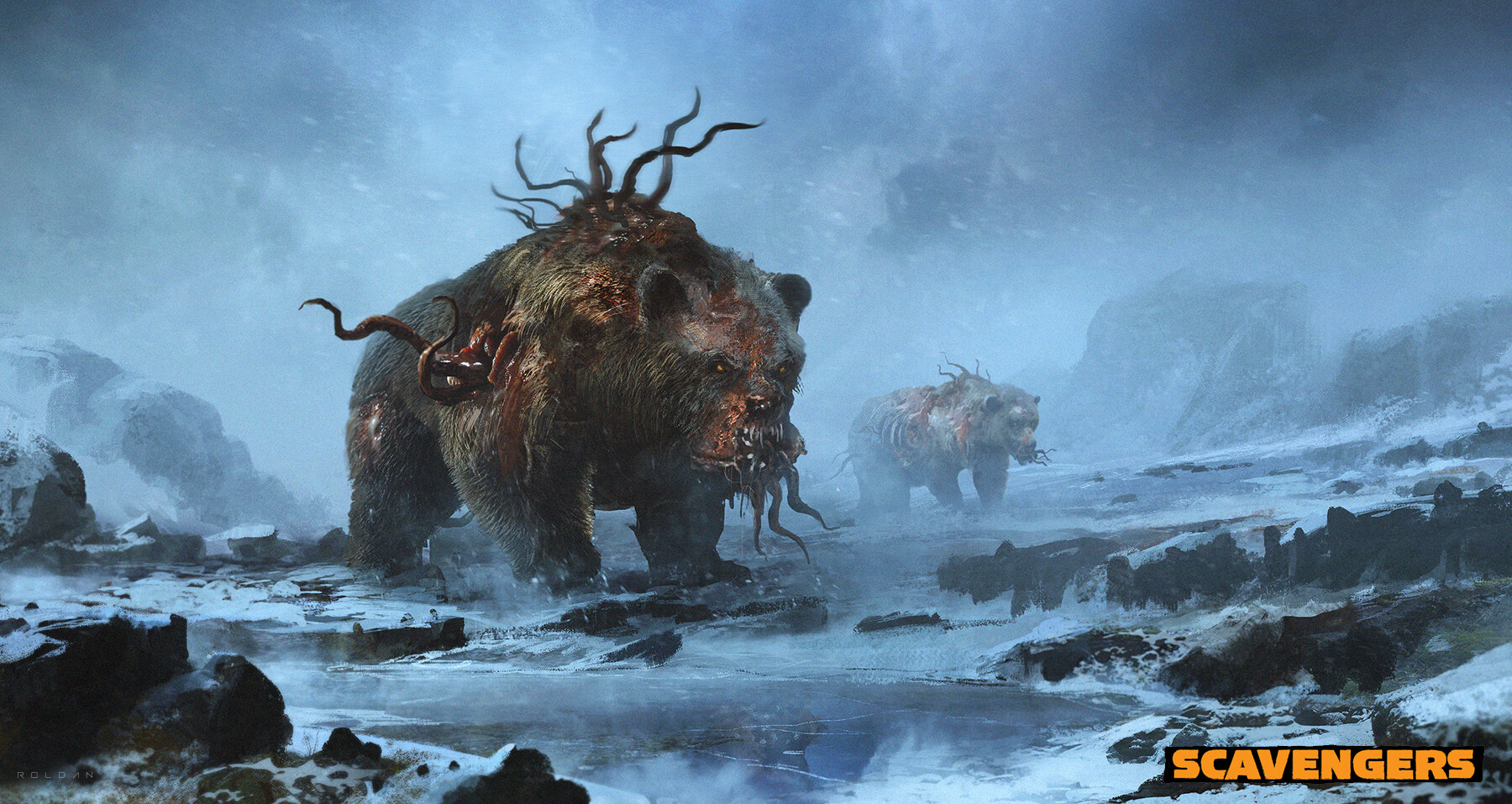
Seen here, The Hunger find easy prey in isolated cadavers. These bears, once corpses, now serve as pawns in the Great Feast.

Mostly, nearly always as a matter-of-fact, they found patronage in the archdevils of the Nine Hells. In return for greater intelligence, they would fill these machines with the spirit of devils stuck on the mortal plane. These machines came together to form the Mechhive, having to occasionally send their best to the Nine Hells as a tax to fight in the endless Blood War.
Succession Crisis
The machines, originally built to be a bastion of fiend-kind in the mortal realms and serve as powerful war machines in their endless warring, openly seek to separate from their former masters, who also know of this. The Mechhive seeks a new ideal, which culminates in the idea of a perfect form; their whole existence proves that the body can be changed and shifted closer to perfection, after all. Whether this form is mechanical or organic in origin, the new form always is meant to have a (nearly) mortal soul that is unfettered and unchained by their fiendish masters.
Most would find their judgment of this faction in that fact, but those that look closer understand that this new perfect form will only be realized through painful and violent experimentation on already sentient soul-bearing creatures. Not only that, but once free from their masters, in no way have they ever mentioned that they intend to seek "redemption" or to walk on a morally good path. Free from their masters, they would need not answer to a higher authority to curb their blood lust.
An example of the many forms denizens of The Mechhive could take, brandishing fiendish creativity.


Subterranean Horrors
The Mechhive, just like all of the blights, is a threat that pervades all regions of the world. They dwell underground, the most expendable of them chewing through rock and stone, converting everything possible into resources for the colony and ensuring there is enough open space to build and dwell. This is when a Mechhive colony is most vulnerable and susceptible to attack. When enough land underground has been carved out and turned into a defensible structure, hellish factories and forgeries are constructed by the colony's most intelligent and cunning minds.
When all is said and done, next on their list is a rather uncharacteristic priority for a subterranean faction. Airships of dubious design are crafted within the colony. These vehicles are then meant to enact cruel violence upon the colony's enemies and rivals, with the intent to also capture victims for the Mechhive's experiments. Hidden holes in the earth, designed with the purpose to allow the ships to fly in and out of the colony, serve as a Mechhive lair's most vulnerable position.
The Hollow
"Beware the angels which beget no light. Their sickening radiance is accustomed to a lightless world, tearing your very essence apart at its seams. Even to hide away avails little safety, for their mere presence sheds away years upon years of your lifespan. They are hollow of heart, hollow of body, and hollow of soul; beware The Hollow!"
-Excerpt from The Denizens of the Beyond, written by Sir Bertrand Elloiz
The third and final Blight, The Hollow, are a deceptively beautiful calamity upon the world. Not inherently evil in the manner that their mind's are twisted, for their minds are incomprehensibly different from that of mortal ones, bearing alien emotion. To the rest of the world, The Hollow seem almost psychotic and emotionless, their namesake having been coined for such aspects. The Hollow are a precursor to drastic extinctions and harbingers of a great cleansing purity. This purity is their reason for being a Blight upon the world. Whereas mortal kind sees purity as the epitome of all things good and orderly, The Hollow's idea of purity clings to the idea that all sentient life is evil in the long run, where all bad actions outweigh the good significantly, and so it must be cleansed entirely. A world unfettered by evolutionary pressure, merely kept in a constant state of being and continuity, is their ideal state of existence.
A Sickening Energy
The Hollow are deceitful in presentation, not only are they simply beautiful and alluring to all in their natural aesthetic and grace, but a glowing energy emanates from their form as if they were made of it. Though this looks to be light, and does act in a nearly similar way, no warm comfort comes from within. Only an invisible suffering -that seeks to tear apart all around it- is given unto those that seek it out, and those that dwell within its near painless fires for too long find their bodies to be falling apart as cancerous growths begin to devour it.
An Unworthy Arbiter
To The Hollow, they do not raid, plunder, or pillage in their goal of purification, nor is there any torture in what they do to their enemies. To them, they are merely exorcising an, otherwise damaged, cycle of life that parasites festered on for too long. Despite this apparent lack of human empathy, they have a detached understanding of mortal emotion in which they know of its existence and, when applying themselves, could learn of its tics and habitual movements like how an astronomer can calculate the movement of the stars or how a farmer instinctively understands the rythm of the seasons.
In this understanding, the oldest and most powerful among them see themselves as the rightful judges of mortal kind's fate, and their verdict is almost always a death sentence.
Sinners of Sulfur
"Those that allow The Blight to live shares in its crime of existence."
-Litany of the Purified
The Sinners of Sulfur, colloquially called the Anger Cult, is a faction of hyper religious mercenaries thrown into shame and dishonor after their participation in a raid within the most sacred monastery in Phaelithas, Aestraza. Led down that path due to their leader, an oathbreaker in secret, who misguided their blind faith. They are named the Sinners of Sulfur for their intense use of muskets and gunpowder.
In repentance for their actions and blindness, they seek to combat a threat so vile and evil that even their own anger could not draw them to horrid crimes, they wish to eternally combat against The Three Blights.
Driven by Zeal
Most of those that find themselves amongst the Anger Cult, mainly because they were born within it, are taught from a young age to embrace the fires of ferocity and anger, using it to forge their young naiveté into an iron will.
By then, they have openly remarked that its actually harder to fall off the path than to stay onto it, being so ingrained into their nature and instincts. This zeal makes them hard to socialize and negotiate with, with the very same iron will forming an iron shell around their mind and heart. Only the most dramatic of consequences will sway them off their path.
A Longing Denied
Many souls who had participated in the Abhorrent Sin, the name given to their raiding of Aestraza, still remain alive to this day, though old and made cynical through the sands of time. However, in the deepest hearts of those very same veterans, they long for a day in which the sun will shine upon their order and redemption will finally find them, or better yet they find it. They wish for reprise above all else, but repress this desire deep within themselves
With this Hollow Herald's shining of her "light", the rain begins to burn and water boils.


Chapter Three: Nations of the World
Every hero has a home. Be it an obscure tribe in the most hidden reaches of the forests or as part of a noble family in the mountain cities of Altori, no one simply "pops" into existence. The origins of a person reflect many aspects of their personality, ideals, and physical appearance and as such should not be ignored when making a character or analyzing one.
Where Do I Belong?
Usually, players already have character concepts that they've made in advance and want to apply. However, they may be hesitant to show them off because they might not be able attach important aspects of their backstory to the world they are about to be ushered into. This, combined with any anxiety that may show itself when showing off a piece of their own attempt at writing, can cause players to drop a developed and fondly-thought-of character in favor of one that fits the world. Before making any decisions such as the aforementioned, discuss with your DM if they can make exceptions or point out places in which your character would most likely be born or what area would fit them best. There will usually always be small, yet still applicable, exceptions to the written lore that can be worked with.
For example, a wizard PC might not enjoy the aesthetic of a mountainous life yet really enjoy the lore around Altori and its scholarly approach to problems. However, hamlets and villages still do exist within the lower altitude valleys between the mountains of Altori.
A fighter PC might love the hardiness and passion for battle the Gonnheimers share, yet have issues with the Nordic and Slavic inspirations involved. However, the desert sultanate of Ovanna has employed Gonnheimer mercenaries on more than one occasion and plenty have adapted and even embraced Ovanni culture, which resembles a mix of Middle Eastern cultures. Reminiscent of the Varangian Guard in the Byzantine Empire.
Do I Have To Pick One?
While the lore was not exactly made to be ignored, given that a player will be dealing with the various nations on the regular, there is no need to go directly for the nations themselves. Characters can be born and live within independent monasteries, temples, abbeys, war camps, tribes, and any other independent civilization. Speak with your DM on the circumstances of your origins regardless of whether or not you choose to be born within the defined nations or any independent one.
The city of Engveir, the capital city of Beirtudont, holds its most esteemed and important aspect. Parliament.


Vuoolden, The Verdant Ascendancy
The Green Kingdom, The Verdant Ascendancy, these names all line up well with Vuoolden's identity. A massive farming nation that has retained its closeness with nature even centuries after leaving behind its tribal lifestyle. The name itself is a tribute to its long standing druidic culture, meaning "Wooden" or "Oaken" in Sylvan.
Land of Plenty....
So diverse are the landscapes under its domain, and so large is the terrain it holds, that all manner of foodstuffs and cultivated crops can be found within its verdant landscapes. Amber fields of wheat, barely, and corn grown within the seemingly endless plains of Vitrumal, exotic fruits of sweet and delectable flesh picked from the coastlines looking out to a sapphire blue sea filled to the brim with fish, rare plants of coffee and cocoa nestled within the jungles of Jangovar. Vuoolden is a place of ceaseless bounty, and Mother Nature herself seems willing to lend her gentle hand to the war weary nation in its time of great strife.
...of Danger
However, these massive territory holds come at a great cost. Not only is it to be assumed that the very nation that depends upon nature's stability would suffer the most when it suddenly becomes much more dangerous, but the task of managing the sheer amount of land Vuoolden has has bemused administrators for as long as the nation existed. The size of the land also does not allow the military, weakened as it is, to respond to threats as quickly as they like.
Druidic Administration
Oddly enough, this civilization often employs the use of druidic powers and grants them unto governors or nobles of hamlets and settlements. These druids are trained in the way of calming the wilds around them to the best of their ability and to ensure a bountiful harvest, amongst their other responsibilities of governing a settlement.
Though this often comes as an insult to "Puritan" druids, who say that this has exposed the pure and untamed natural path of druids to hedonism and all the other sins that come with being part of higher society. The difference between these puritan druids and those who align themselves with civilization is the line they draw on what is natural. A puritan druid, otherwise coined as "Vuooldski" or "Woodskins", sees the natural world an inescapable cycle that pushes back violently should it be fought against and henceforth often see large scale civilization as a means to an apocalyptic end. Whereas the "Chuldomnad" or "Stone-Leaves" see all what mortal kind to be capable of, that being war or scientific endeavor, to be a natural and inevitable aspect of sentient and sapient life. They tend to be a much more amiable group than the Woodskins, given that the Woodskins regularly attack innocent people.
Slow Participant
In terms of Vuoolden's advancements in the current age, given that they are mostly a farming nation, its safe to say they are slower to pick up on new fascinations on the technological scale. While it is true that Vuoolden has no qualms about acquiring metal from wherever they may find it and there is sure to be small scale factories scattered about, such facilities are powered by water wheels and windmills and not coal power or intense magical energy. They often have to acquire farming equipment, thats more advanced than that of simple hand tools, from much more industrious nations.
However, when it comes to enlightened ideas and philosophies, many poetic and intellectual souls take inspiration from the natural beauty of these lands and apply such beauty to scenery of the afterlife, the ideal utopia, or a land of life's peaceful end. The idea of democracies and republics have come from these lands and, due to the want of a much more representative system left in the wake of the Dominance Wars, have culminated in the form of the Council of Greendawn, a council of elected leaders who represent Vuoolden's people in various aspects such as warfare, agriculture, trade, artistry, and more.
The coastal settlements of Avenna'mon are abundant with larger than life coral-like structures that provide beauty and structure to the many races who live here.

Regions and Domains
The Nation of Vuoolden, as stated previously, carries massive amounts of land. Multiple different biomes and landscapes reside under this verdant nation's jurisdiction. Below are their summaries.
Vitrumal
Long plains of whipping wind ripple throughout an emerald sea of tall grasses, surrounded on nearly all sides of its borders by large forests of strong oaken trees to the east, tall and ancient redwoods to the west, and spear tipped pines to the north. The settlements here are largely farming societies rather than developed cities and large villages, given that the flat plains allow for easy manipulation of the earth, however the capital of Vuoolden, Corustia, was built here upon the borders of the great oak forest, Ackuusta, nevertheless.
Avenna'mon
The salty spray of the sea, the intense winds of the translucent sapphire waters, the massive multicolored pillars of coral, and the creaking and laughing rudders of ships; to the people of this coastal region these are all but constants. Those that live here do so with the understanding that they will have to live under thatch roofs and houses built upon the very docks themselves all the while braving both floods and beasts from the sea. However, not only is such a life filled with the adoration of the sea and its beauties, but it can be surprisingly lucrative with the rare creatures that live in the area providing exquisite ingredients to the alchemical and arcane arts. Amongst some of these undeveloped settlements or trading cities and towns that any nation would envy.
In the redwood forest of Neitomal, societies of respected warriors reside in tenuous peace, waiting vigilantly at the forest's borders in case the horrors within seek to threaten the wider world.
Neitomal
An ancient redwood forest outliving the dawn of mortal empires, and even that of some immortal ones, stands tirelessly and tall. Though life here is of a size that inspires all but the most profound awe in those that look upon it, the horrors that dwell within are not to be underestimated. The immensely large trees here provide cover for monsters of inordinately large size from afar, preventing any focused effort for this primarily agrarian nation to purge the forest of them. Knights and prominent warriors of great deeds sometimes are granted land grants by powerful nobility of Vuoolden. These warriors bring with them their own settlers, be they serfs or free people, and form quiet societies on the border of the region. Though it may sound like one's life is always in peril here, statistically its a low chance for such horrors to assault one's town. Yet, there is always that chance...
Baiglun
This delicate and artful birch forest is the most culturally sacred and revered region of Vuoolden. The druids who live here and speak to the forest hear it not as individual trees, but one massive hive mind. Most societies that live here have been untouched by the technological developments of the Steam Age, and primarily make up cloisters of druids, both Vuooldski and Chuldomnad.
Ackuusta
Meaning "Accumulated Land" in Sylvan, these oaken forests home the most developed and urbanized settlements that Vuoolden has to offer. The forest is bountiful in fruits of all kinds, the strong oaks form the foundation for strong and sturdy homes, and the fertile grounds provide all that is necessary for a safe and plentiful harvest, all on the condition it is treated kindly and fairly.


Jangovar
"Ancient" oftentimes brings with it connotations of elegance just as it does literal age, so it would be better fit to call the thick, hostile, and utterly brutal jungle of Jangovar primal instead. Archaeologists date the jungle's age to go beyond even the lives of various deities and anthropologists date the remains of truly arcane societies within its heart, with many agreeing that it most likely once had spanned most of the entire region of Vuoolden, covering most other land in peat bogs in ancient times (ironically giving this nature orientated nation a massive supply of coal and fossil fuels). Despite these difficult obstacles, the people of Jangovar, mainly consisting of elves, humans, dragonborn, and firbolgs, retain their civil nature and carve out an impressively comfortable life.
Mighty warriors are known to come from these parts, emboldened by the dangers of the wild and strengthened by nature's unpredictable tests and trials. Just as much as they are poets are they architects as well, lining aqueducts both aboveground and below to deliver fresh water to their cities of paved stone with cultural icons and designs carved carefully into nearly every brick.
History
Vuoolden is one of the oldest countries on the continent, at least in terms of mortal settlement, being second to Ishki and Ishki only. Being entrapped within the beauty of nature, many of the tribes that lived here didn't see it as a hurdle to be conquered nor an aspect to be enslaved like many other nations, rather a stalwart ally to harmonize with. However, just because they saw to harmonize with the land around them did not grant them an easy life, if anything it nearly killed them. Ancient Vuoolden was much more akin to a "Dark Forest", where reaching out to potential allies could attract forth creatures of unnatural origin. Be it they hail from the Unseelie Courts who have come to sow chaos in the name of malice rather than mischief, dark creatures of a malign, twisted, and parasitic form of nature aptly named "The Hunger", or simple ravenous beasts many times the size of the mightiest firbolg, Vuoolden seemed as though it would never become the nation it is today. Not if it weren't for The Crimson Hunt.
The Crimson Hunt
Otherwise known as the The War for the Glade, this was no war for it was never formally declared as such. Tribes, sick of the constant fear, tribute, and corruption of their moral and cultural values at the hands of deceitful fey, braved the unknown and began to call out to each other, each warrior and tribe emboldened by the exponentially increasing call for aid and alliance. No quarter would be given, and unity would be found in the suffering shared by other tribes, clans, and families. Finding no merit, honor, or rationale in simply lining up in shield walls common in modern warfare, these cunning warriors took to the shadows and used violent guerilla tactics to befuddle their enemy and cause them great terror to savor their fear. For the first time ever the prey would bare its claws.
It is called The Crimson Hunt due to the massive bloodshed and slaughter that the newly united chiefdoms would bring upon their enemies. Later on, the name would evoke just as much shame and regret as it does pride and romanticism. Many Vuoolden people do not care for the Unseelie that were caught up in the fires of the Hunt, but the many species they drove to extinction to make their lands safe for their children bring feelings of deeply rooted shame. Many Stone-Leaf druids would remark on Vuoolden's harmony with nature as a form of penance for the many peaceful creatures caught in the crossfire or to seek forgiveness for the perceived crime of their ancestors giving into carnal wrath.
Astu'umm, The Breaker King
"Aye! All foreigners would be welcome amongst the groves and fields of our own! Blood and bone make for great fertilizer."
The people of Vuoolden soon would make its ascent from lesser chiefdoms that quarreled amongst each other bitterly, yet fortunately rarely, to an organized agrarian nation with established cities and diplomatic ties to the nations around them. However, such times were still far away now and the broken lands of Vuoolden needed someone to lead its peoples, dazed and confused as the red cleared away from their eyes and the bloodlust soon turned to regret and remorse.
One half-orc among them, named Astu'umm (meaning "Blood-Broken" in Sylvan), who was a great warrior of unparalleled skill and incredibly wise in the matters of natural law would rise to the position of king. However, as time marched onwards he would prove to become rapturous in his attempts to defend his land from perceived threats. He would kill his blood-brothers and use their bodies as undead bodyguards when they attempted to seek out non-aggression pacts with Vuoolden's neighbors (hence the name "Blood-Broken") and sought to instill draconian laws in order to keep his people in line with his dogmas and doctrines.
He would soon be overthrown, legend saying it was the first Vuooldski circle of druids who would seal him within his own treasure hoard. Only a deep green glow emanating outwards from his tomb would signify his existence, before it too would fade away come morning, almost looking like a grotesque dawn in a way. Soon after, with a distaste for kings deeply rooted within them, the very same druid circle would go on to make the Council of Greendawn. Such a council would go on to collectively lead Vuoolden for the next 250 years.
Present Day
Vuoolden, a nation once so prosperous and far ahead, seems to almost begin to fall behind as other countries move on to industrialization, consumerism, radical political change, and experimentation with Steamtech. However, Vuoolden stands as a country that has proven time and time again that it genuinely tries its best to care for its people and those who immigrate over as well. A stable home, if a little stagnant.
Ishki, The Bejeweled Empire
A nation of grace and beauty and an unparalleled military power back in its day, being the first to invent the most base form of firearms and actually implement them in genuine warfare. Today, its hallmarked by hollow pride and lost dignity as the trappings of a once prosperous nation with a hopeful future became a victim to its own military might and nationalistic pride.
Broken and Abandoned
Horrid winters struck the northern most countries the worst, with the dying sun not allowing much relief from it either. Ishki was slowly but surely being starved in the final years of the Decimation Wars, a conflict that was already depleting precious resources at an expedient rate.
Soldiers mutinied, civilians rioted in the streets, devoted warriors forgot their oaths, and opportunists began to prowl the broken remnants of an empire, collecting the scraps for themselves with the understanding that the throne was ripe for the taking. Not much of an organized nation anymore, its safe to say it was near its capitulation.
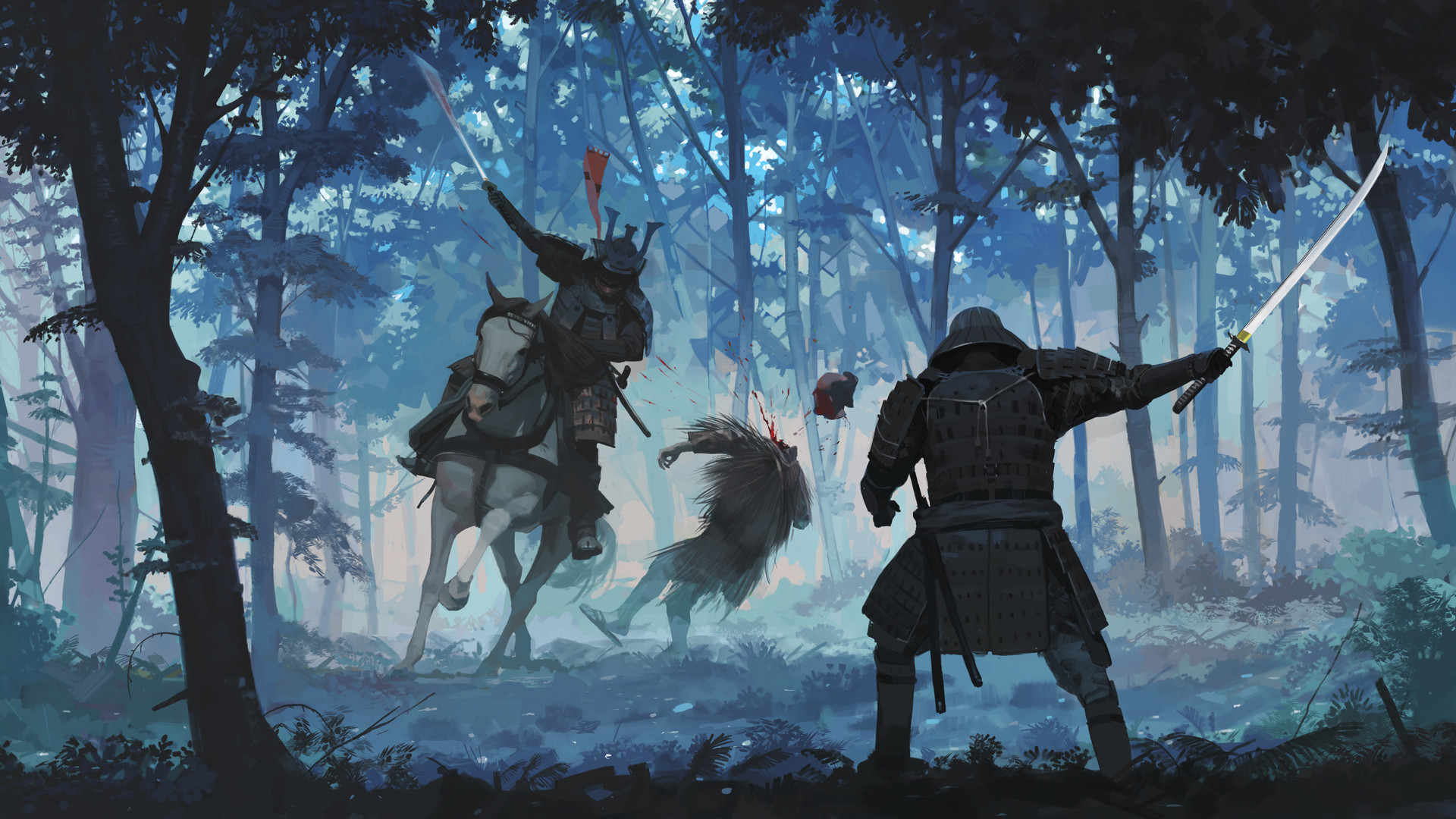
A Sword Saint of the missing Jade Empress seeks safety for his beleaguered people on the harsh and unforgiving road. Some warriors; most ordinary people.
Grace and Dignity
Even though the empire has been shattered in The Age of Enlightenment, the culture itself remains propped up by pride, patriotism (though now unfounded as it may be), and age old romanticism. Values of grace and dignity \recur throughout the culture's entire existence. Warriors must carry an aura of elegance, inspiring awe and courage wherever their walk, leaders and rulers must reign with generosity and an unflappable charisma, and everyone must aspire to be utterly respectful to others and the world around them.
Every single Ishkin individual might not live up to these expectations, either becoming aloof or much too casual, however these societal influences and pressures still remain true to even the most lowliest of servants. No one is exempt from expectations.
Patron of the Arts
Porcelain pottery of elegant form, poetry of profound meaning, delicacies of immense savor, and all other manner of artistry assume their existence within the creative individuals of Ishki (those sponsored by sovereigns, that is). Though it has never reached to the same extent as it has done in recent years, art and romanticism has always been a crux in Ishki culture. Warriors must understand elegance of both blade and pen, government officials must understand wisdom and dignity, and all citizens have some dabbling within artistry and creative touch.
The world receives their arts with mixed feelings. Since their art and media is attached to their culture and traded outwards for the world to enjoy, sovereigns who rule by nationalistic fervor and being the heads of their culture are worried that others would enjoy the art's sentimental values too much and abandon their own culture and loyalty to it. However, the very same sovereigns and many more bid and rub shoulders for the highest quality of these crafts to show off to esteemed guests. With the horrid state of Ishki at the time, it is an unfortunate fact that these arts are rarely traded anymore. However, some adventurous types do find themselves being sponsored by courts in order to produce these ever rare luxuries. Not only that, but the greatest among these objects bring with them magical enchantments, which makes even more nobility feel entitled to such luxury.
Scattered and Anxious
With the near capitulation of their country, the utter death they saw, the warfare they experience, and the sight of seeing their reputed noble families and honorable dynasties tear each other apart to claim the Bejeweled Empress' throne, it is of no wonder that many sought to leave their home for greener pastures. This, combined with the fact that many Ishkin believe an eternal winter will consume their lands, feeds into an inner and deeply rooted anxiety that sways many refugees to fatalism and cynicism, not taking to heart any aspirations or tales of mortal kind's ability to unite in times of strife.


The loss of home, safety, structure, stability, and purpose is bound to have drastic, long lasting effects on an individual let alone an entire culture and nation. As many Ishkin lay scattered about in Phaelithas, an opportunistic itch begins to fester in the hearts of those willing to and capable of taking advantage of their sorrows. Warlords turning them to a life of mercenary work for the legions, thieves' guilds take them into their flock to curry pity from the compassionate and charitable, and cults open their doors to those of lost heart and soul.
Toil and Waver
"You'll never understand our plight, outsider. It is nothing to be ashamed of, but rather a fact I thank every day. I barely spoke your language when I first set foot in your lands, now I fight tooth and nail just to see my children survive, let alone save my own hide. I would suffer a thousand deaths before I would see you suffer the same."
-An exiled Sword Saint's promise to an anonymous noble.
Despite how the people of Ishki clamor and despair for their fallen culture and ruined lands, that very same pressure and feverish anxiety can create heroes. Royal guard still loyal to the Empress roam the southern lands in search for something, someone, or some plan to help free them from their plight. A safe home to reunite all Iskhin peoples and rebuild, a magical power to restore the sun to its rightful power in the sky, an army to take back their worn torn country; The loyal Sword Saints of the Empress are devoted to their people beyond all else, even debating the fact that they would save a single innocent serf's soul over any sovereign or even the Emperor or Empress. The work will be hard and possibly never be done fully in their lifetime, condemned to a lifetime of toil, but there are those motivated to the task that haven't been consumed by it yet.
History
A rich history of multiple dynasties spanning its entire realm, warring and allying, uniting in times of strife and breaking apart to form their own destinies. Warriors and legends of mythical might dance across the lines between the creation and death of entire clans, nations, and dynasties both just and tyrannical. Cunning and charismatic underdogs come to rise to the glory of Emperor, while tragic tales of virtuous sovereigns falling to heresy and corruption serve as reminders for each individual's fallibility.
This, while heavily romanticized and studied by sovereigns, warlords, and scholars all over the world for the lessons they can teach, can be heavily confusing at a glance.
Blessings of Splendor
Ishki, in renowned legends, was known as a chaotic region with little stability and order. The roads were pilfered by bandits on the daily, warlords tore the country apart for petty grievances, there was no centralized government to its name, and little to pass on the authority of higher powers onto the mortal planes. It most certainly looked as if though it was the modern day.
Yet, the nature of chaos is that all is ever changing, good to evil and evil to good, and in that ever changing state even chaos can turn to law. A young woman born of lowborn stock with the sorcerous powers of the very gods within her blood, sent down onto the plane to end the constant ear piercing clamoring of the innocent begging for an end to their plight. She was imbued with a sense of dignity and the whispering guidance of angels in her soul, acting as paragons of virtue to her perilous quest.
A Gentle and Guiding Love
Though it can be assumed that bloodshed would be inevitable on her path, she chose the pacifist's journey instead. Her charisma won the loyalty and blood oaths of the warlords, binding their swords to righteous cause under a code reminiscent of the chivalric code (although, they were far from cooperative with each other.) With new authority in a government, she created an environment where the law bent to suit the needs of the individual rather than the other way around and granted amnesty to the bandits who would no longer need to resort to such criminal acts in such a system. She would consolidate the warlords with each other, using her charismatic fervor and no small amount of questing and promises, into one government built upon a council whose decisions would be tempered by an absolutist sovereign called the Emperor.
This woman, Amaya Izumo, would stand as the first Empress and sovereign of the first united and centralized government of Ishki. However, as the many stories go she was assassinated in the dark of night, taken down by a shinobi belonging to an anonymous lord who had most likely been profiteering off the wars.
Divine Mandate
With her death, the warlords who were still at great odds with each other knew that their positions of power were in danger should they fall back to civil war. Not to mention that the populace endorsed her position of Empress entirely, the warlords knew anyone outing themselves as her killer, either assuming they could forcefully take control after or because they wanted to throw the nation back into chaos, would find themselves being torn apart in the following peasant uprising that would happen. Damage control was their highest priority.
Some warlords would suggest to fabricate an heir, despite the past Empress not having any living children or siblings. To choose a child amongst the populace and espouse them of having "divine consent" of sorts to rule, whether true or not, could make it seem like it was the will of the gods that Amaya had to fall. There were complaints about trying to find a new magical sovereign.
Such warlords had confessed to feeling as though they had been magically charmed into such loyalties, not understanding if they were trusted confidants of the past Empress or merely tools to help the people. Be they violent conquerors or stoic and calculating bureaucrats, they still saw the Empress as a trusted confidant and the idea they had been charmed was haunting. Nevertheless, they had a nation to rule and so the tradition of having a "divinely" mandated heir was made.
Dynasties and Domains
Ishki is ruled by various dynasties, descendants of the original warlords the first Empress had put into office. Each dynasty's head comes together to form a council of sorts, where they serve as advisors and vassals to an Emperor with absolute power. Though today, the old Empress is missing and the dynasties now war for her throne and power, bolstered by old mercenary forces that gained power during the Decimation Wars.
Tennoi
"Family without Envy"
Ruling over a now frozen myre, the beleaguered ruler of this rarely fruitful land constantly toils in his attempts to pull some manner of livelihood from it. His terrain does provide immense defense from sieges, as any machines of war quickly sink and freeze in the slick mud that constantly freezes and thaws. This dynasty is mostly known for its guerilla warfare and unconventional stealth tactics, using such tactics to plunder other's riches.
Konyo
"By Virtue of Vanity, We are Guided"
Stationed within the middle of the largest and once most populated city in all of the nation, the broken walls and buildings serve as an ugly reminder of a past prosperity and glory this dynasty can never reach again. Its people manage to barely forage enough food to survive on the carcasses of the newly awakening monsters within the city's most abandoned slums, however rumors of cannibalistic tendencies never seem to die down from outsiders.
Ghonhan
"Together as One, Forever and Always"
Hidden within the mountainous parts of Ishki, this dynasty's ruler sees enemies in every corner and shadow. Its people summarily pick up on this paranoia and teeter on the edge of anarchy, as they all seek to tear out these perceived enemies from within. Its warriors are experts in ranged warfare, seeking to always isolate individual combatants and kill them one by one in cold blood.
Takai
"When others Around us Grow, so too will We"
Stationed near the border of Ishki, where life is relatively better than anywhere else in the nation and crops can actually reliably grow, its ruler lords over its relative surplus with greedy hands. Never investing more than he needs to, he ignores the cries of outside citizens begging for food and shelter. Only giving up such surplus when exorbitant gains are to be made.
Heiji
"Ingenuity is our Strength"
Burdened with the barely defensible lowlands, bearing forests and grassy plains easily set aflame in the driest parts of the years, its people use tools and weapons of a bygone era that they no longer understand. A lowly warrior is burdened with a near broken spear and salvaged padded fur, only having mere days of training to use such weapons, while the most "elite" of their kind are given effective weaponry that they no longer know how to replicate should they lose them. Its ruler encourages its people to give into a primal savagery of sorts to bolster their courage and strength against better equipped skirmishers.
Altori, The Enlightened Heights
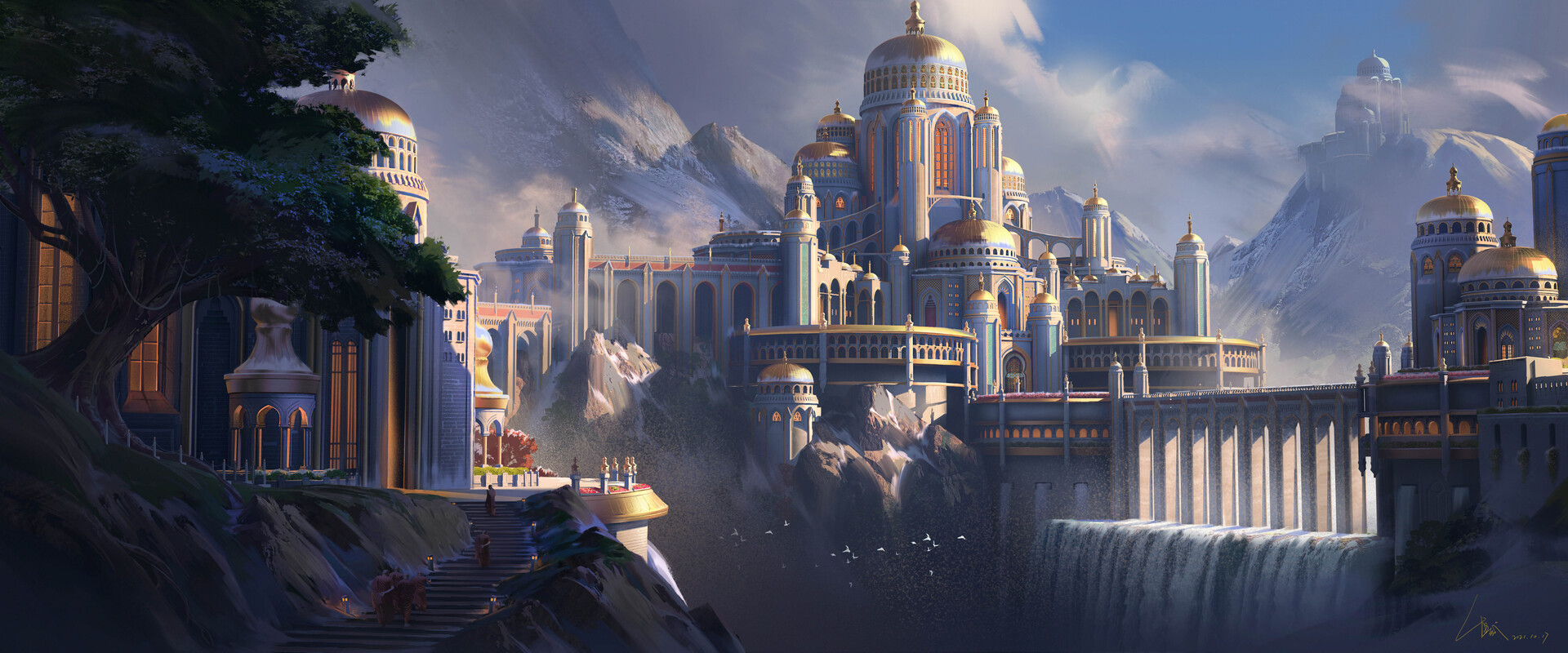
A land where intellectual pursuit is encouraged excessively, to the point where those that cannot keep up are placed lower upon an imaginary caste system. Dominated mostly by mountainous heights, the fresh cool airs combined with such inspiring heights make for the perfect lands for study and contemplative measures. Here, most individuals can come to know a new level of wealth and luxury rarely seen in other lands, sometimes even so to the point where souls with great potential flounder their futures in their attempts to grasp at more wealth.
Untold Wealth
Primarily, Altori makes their money off of pulling immense resources from the mountains, their farms within the mountainous valleys, and their extensive trade deals with the rest of the world. Not only that, but with its people so inclined towards intellectual pursuits and magical expertise, they can employ and sell advanced forms of magical artifice and masterwork feats of engineering for the world to use and depend upon.
Past Decadency
Their wealth was so great that it had initially suffered greatly due to its own decadency in the Decimation Wars. Lords and ladies never wished to use their immense wealth to muster armies of either magical or martial might until their enemies plundered their valley settlements and nearly broke into their cities in the mountains. The more competent of them had snapped out of their delusion and managed to reign the nation's efforts back onto matters of national defense and offensive campaigns to retake their lands.
Mastery of Artifice
Beirtudont may dominate sheer output of resources on the industrial scale and Gonnheim may have immense adaptability on their side, but Altori is the undisputed master when it comes to feats of engineering, astronomy, magical expertise, and understanding the intricate art of artifice. Understanding the ability to produce golem-like constructs even before the Steam Age, Altori creates only the most quality of Steamtech and exports it for the world to use (deciding their own price, as they own the monopoly.)
Moreover, due to their immense knowledge of combining both the arcane with feats of engineering, Altori is known as the home for most warforged and clockwork constructs in the world. There are exceptions to this of course, but this is the general rule to where many constructed races are birthed from.
This mastery of artifice can come to show itself in different ways, elaborate weapons, vehicles designed to explore the deep waters, floating airships and cities, and much more.
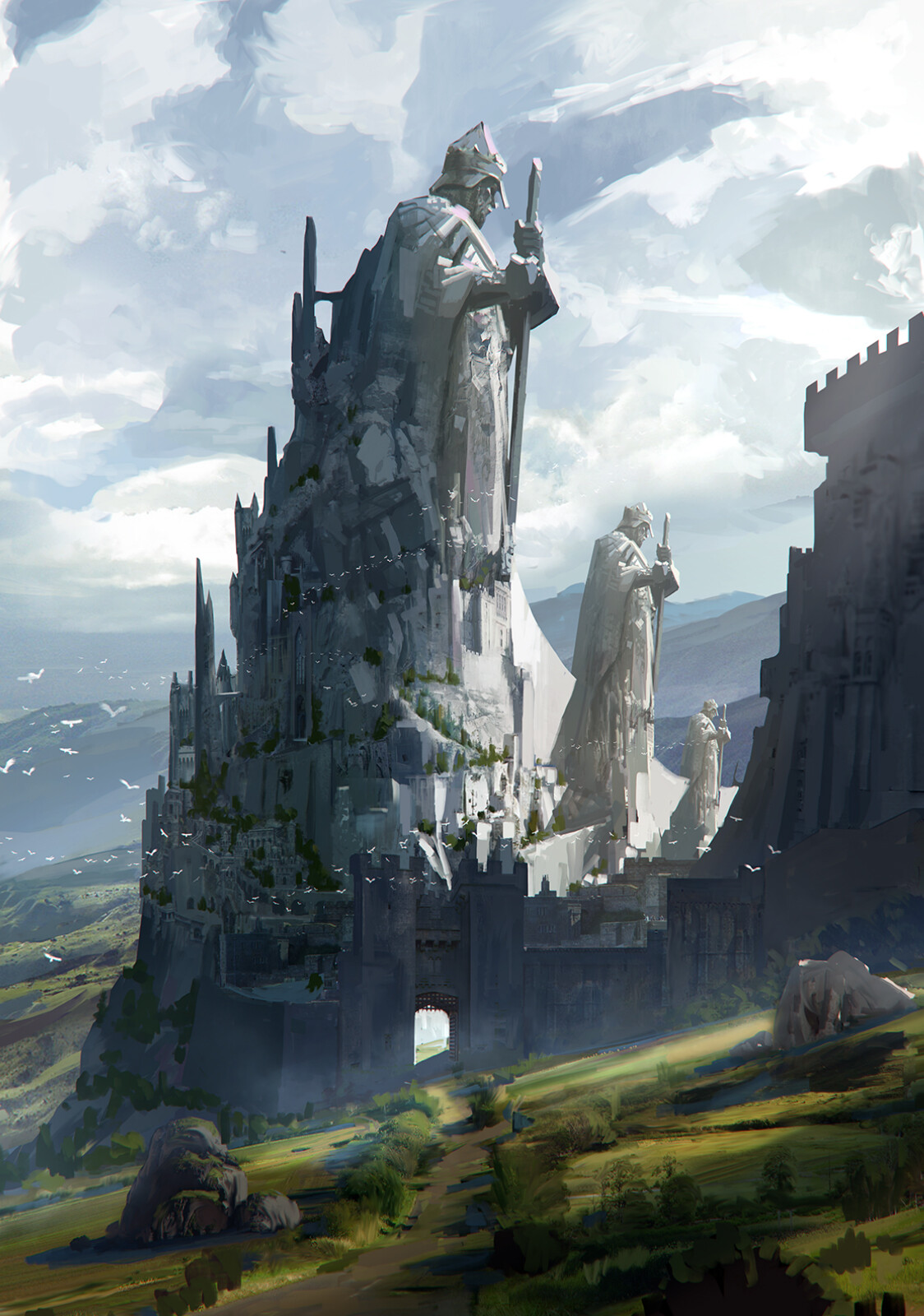

The "Monument of Kings" houses the remains of thousands of monarchs who have passed on, their immense wealth guarded by elite guards.
Gilded Heights
Grand cities and centres built into the mountains themselves, reinforced by age old dwarven construction and tempered by elven magical prowess. The "Gilded Heights" is a colloquial term given to the lands of the mountains and the settlements built within them. It also refers to the few floating cities and wizard towers that hover those very cities like their own moons. It is said in hushed tones of awe and jealousy that its streets are paved in gold, its pointed rooftops of prestigious academies and museums are topped with pure diamonds, and the air itself carries soothing melodies of enchanting muse.
Though entirely unneeded for the elite, due to having various teleportation circles scattered throughout these city centers and the airships that commonly find dockage on those city's rims, massive spanning bridges are built between various mountain ranges that interconnect each city's buildings and districts. Giving this sense of unearthly awe to those that approach its grandeur, as if a deity itself had ordained its entire church to the dedication of this nation's architectural glory.
Closely tended-to gardens hang off of these bridges and the columns that hold them up, themselves built upon magically floating islands suspended in mid air. Vines of grape and fig and ivy of verdant disposition are cunningly placed around various supports of buildings, be they simple houses or the Queen's castle at Khyon, to enshroud those that walk beneath them in the belief that they had walked into the domain of gods.
Its denizens, who experience wealth that few other entire foreign noble families will ever know as a collective, are enwrapped within a life of luxury and hedonism. Its highest echelons and circles spend their lives in comfort, studying from various subjects of intellectual or arcane pursuit as they please. Though their society pushes them to excel in this factor, in any other deed there is nothing to be expected of them. This can cause various potent souls to fall to hedonism and decadency. Those beneath them, such as servants (both voluntary and involuntary) still manage to gain their means, but they live here for the sole reason of serving the aforementioned elite. Tending to the gardens, cooking their meals, taking care of children, and more.
Lowland Valleys
Whereas the Gilded Heights and the "Highborns" understand a life of little tribulation and arduous labor (with their servants being the exception), those born within the valleys and winding rivers that carve pathways through the seemingly impenetrable stone live lives of labor and hardship. Terraced farming techniques allow for bountiful outputs of produce in such limited space, buildings and homes are built between the most flat parts of said valleys and follow rivers like a guiding structure, and large forests swing to the melody of the winds which race in between the mountains as they seek freedom from their stone prison.
Though the people here don't explicitly lead lives in which they constantly fight for survival, they often have to struggle against the elite to hold onto what they have been availed by their lieges, which also happen to be of those the very same elite class. Having to shear down farms of grain bearing crop because a noble family has contracted out that land to grow cash crops en masse, or how oftentimes some more impoverished farmers are encouraged to use dangerous farming "machinery" that are a legitimate risk to both their life and limb, are just one of the myriad injustices put upon the "Lowborn".
Having considerably less time to themselves when compared to the Highborn of Altori, the Lowborn's lives includes participations within jobs such as woodworking, forestry, farming, construction, guard work, shepherding, and more. A artistic trade is highly sought after here, for learning a skill could allow you to elevate your status and set yourself for life. Living within homes of wood and stone, all buildings are interconnected together in a cozy and well planned city layout that tries its bests to retain as much fertile land as possible while allowing for as much population growth as possible.
Visitors to these areas can oftentimes preoccupy themselves with the rowdy taverns in the areas, always embroiled within song and dance in the darker hours of the day. Shops and stores see off hundreds of customers per week as their magical trinkets, though a little less effective than Highborn make, fish in adventurers with their low prices.
Beirtudont, The Sovereign Flame
Stacks of blackened smoke rise from untold thousands of rooftops, begetting both the comfort of an hearth's fire and a factory's furnace. Soot trails the grounds upon where weapons, armor, and all manner of commodities are made en masse, where men and women alike toil for but a meager sum of money to make do with. Through this bleak outlook of life comes the reward of innovation, societal progress, and a population size that no other nation has experienced beforehand; All bathed in blood from tenfold of the souls who marched to their deaths in the Decimation Wars. Beirtudont is the icon of an ever marching empire, and the embodiment of all the goods and evils that the new Age of Enlightenment has brought.
Innovation and Ambition
No nation can stand to say that they have undergone such a drastic change from before the Decimation Wars to after like The Sovereign Flame had. With such widespread death abroad, though cold and grim as it is to say, the serfs of the old era were able to make demands and negotiate better payment with their lieges and nobles, since their labor was in high demand. Serfs became citizens and, where life was merely one of subsistence, soon over time men and women would have the chance to pursue their dreams and raise children at the same time.
With more money to spend, and more room given to the common folk to expand their horizons with, people would begin to move into different specializations. Engineering, agricultural development, literature, theology (despite Beirtudont's disconnection to religion), arcane lore, and much more.
Old Scars and Shame
During the Decimation Wars, Beirtudont had shown its imperialistic and expansionist tendencies to the world numerous times, most of those times they did so unapologetically. Through this, their attempts at positive diplomatic relations with the rest of the nations of the world has suffered for it, curbing their mainly mercantile economic processes. Though, 10 years after the wars, the rest of the world seems to be quickly realizing the potential for growth and economic prosperity with Beirtudont as their trading partner, however it is nowhere as near good as it could be for both parties. Many nations (with Vuoolden specifically feeling latent resentment) still remember the sounds of Beirca musket fire and the reverberations of Beirca boot steps upon sovereign soils.
With these tendencies to place the value of economic growth over the lives of foreign peoples, it is of no surprise (though it did shock and disgust the world) when Beirca armies had assaulted the most sacred and holy place upon Phaelithas, Aestraza. Plundering its great hoards of relics and tribute for immense riches, but it was never easy either. First and foremost, Aestraza is a fortress monastery, undisputedly the biggest and most well armed in the world as a matter-of-fact. The siege had lasted 4 years, with the Berica always having the advantage on their side. Yet the Aestrazine warrior monks, acolytes, clerics, and paladins were able to use their divine magics to hold out for a long time, and even when the Berica armies had plundered it they still managed to flush them out once the raiders had won what they came for. Once all was said and done, the churches of the world and all other independent religious factions had already twice over condemned Beirtudont for its actions and excommunicated its royal bloodlines. Meaning, in modern times, there is no organized church within Beirtudont.

Despotic Labor
With the new forthcoming of factories, either powered by simple waterwheels or elaborate steam powered systems, Beirtudont has a level of creation and consumption that no other nation has yet to copy as efficiently. Altori produces quality over quantity, Vuoolden has little in the way of manufacturing, Gonnheim had just begun to master Steamtech, Ishki is too broken to compete, and Harka has many more laws valuing human life over production rates than Beirtudont has.
Those that live within the inner cities of Beirtudont often work within large factories, producing a myriad of items that are sold out to wherever they will fetch the highest price. The factories themselves are dangerous environments to work within, grinding machines can tear at the extremities of even vigilant laborers, boiling steam can scald the flesh of engineers, and even the factory overseers find the danger of falling into the machinery to be a constant in their work (though less so than normal laborers).
The Graveyard Vagrants, as depicted below, are a hyper violent cult of killers and murderers, mostly made up of manipulated folks who have been encouraged into fatalism and belligerence by the cult's more serious and zealous higher-ups.
Broken Compasses
Like all nations, there will always be people in which all they desire is to feed their families, themselves, and provide for their loved ones as best they can. However, whenever such a path is unavailable for the majority, or certain circumstances deny it for some notable individuals, those very same people can come to feel the strings of ambition dancing within their hearts. Oftentimes racing against an imagined timer in order to collect as much resources to keep themselves and any loved ones safe, yet its this very race that can come to make them compete against others trying to do the very same thing.
This fight for survival can tend to grip onto the hearts and morals of various peoples, making a once understandable conflict turn into one of greed and unchecked ambition. The very same can happen merely as a result of circumstance, such as being born into a wealthy family who got there off of the hard work of others. To this day, more and more people seem to turn to this lifestyle, guided there by an unjust society.
Industrious and Ingenious
Though perhaps Beirtudont lacks the pure intellectual prowess as Altori does and the creativity and adaptability of Gonnheim, the many hands at Beirtudont's use and the fact that many people seek to specialize has given this nation a reliable and steady path into the study of Steamtech and engineering. The new and more mass producible commodities of the new era, such as firearms, armor, martial weapons, textiles, literature, creates for a society of diverse minds and an ever burning conflagration of differing ideas and ideals that all come to culmination in the groups and factions that form themselves within Beirtudont.
Its this type of thinking, straying away from conventional thinking, that forced the current king to allow for his monarchy to develop into one of a constitutional monarchy. With the signing of the "Enernum Toxita" (Meaning "Constitution of Voices", in Berica), a parliamentary system known as the "House of Voices" was formed and brandished the authority to nullify and veto any of the king's edicts that were deemed abuses of power. Further democratic thought would come to flow forth as intellectuals specifically studying such prospects of the humanities became more and more invested within their works. Traditional "royalists" (those wanting to bring back absolutist power) and other groups opposed to the ideas spewing forth like wildfire, either preexisting or just having formed in the new era themselves, seek to drown out any threats to their existence.
Ever hard working and able to create something from figuratively nothing, these groups often prove to be impossible to dig out. Just as democratic thought and ideas of social reform may never die, just will cults of personality, abusive ideology, and machiavellian forms of thought will refuse to give in either.

Harka, Realm of Knights
A mortally wounded knight stands victorious in the gilded sunshine, no qualities to humanize him but the emotion in his cries of joy and jubilation. He stands alone, the sole survivor of a brutal and bloody battle which consumed his comrades and brothers-in-arms, and contemplates upon his country. So torn and burned by the fires of war, both literal and symbolic, with shells of buildings left smoldering in the smoking wreckage. That did not matter to him even as he succumbed to his wounds, he took solace in the fact that those who he saved. Those spared by the atrocities of the Decimation Wars, would be able to rebuild their land back even better.
Torn Apart...
The Decimation Wars were especially brutal and unforgiving to the Harkan people. Gonnheimer raiders pillaged their lands and, in the worst situations, sold their captives into slavery. Ovanni armies conquered valuable territories of fertile soil, using the lands to feed their overabundance of soldiers, and decimated all settlements near their border. Berica royal families instated puppet sovereigns into conquered territories, making sure the people were more loyal to a foreign king. Harka had been partitioned on and off again, with little room to breathe, and was on the brink of death.
When a land couldn't be conquered it was made sure no one else could use it either, since most enemy armies were already accustomed to "scorched earth" tactics. Villages were burned to their foundations, statues of Harkan heroes were torn down, and powerful monsters were harassed and antagonized into attacking at Harkan supply lines. It seemed that the land most idolizing of righteous warfare and honorable combat were the victims of brutal and dirty conflicts, they were outside of their element and losing their faith in the once very important chivalric code.
...and Pieced back Together
With their backs against the wall, one individual saw the destruction before him and steeled his heart. Overburdened by the horrors of what he had seen, a new king, once seen as unfit to rule and too naive to lead, chose to turn his mind to virtue rather than malice. He accepted pain, and strength had flowed forth in abundance, using it and his passionate aura to rally his people and push back enemy armies.
King Diederick "The Lion" Heidemann is a relatively new king, having been born 5 years into the Decimation Wars and taking the throne at the worryingly young age of 16 due to his mother dying from wounds sustained in battle. He was berated and often waylaid by his courtiers and advisors, seeing him as too meek and shy to fight back against them, and his friends within the royal courts were taken away by their parents, more nobility that did not approve of the new king and his short reign. This stress did not throw him into despair however, rather he took it in stride and allowed it to forge him into a new man.
Accompanied by his blacksmith, his only confidant at the time, he would forge a great maul upon which he would break the backs of his traitorous and scheming advisors.
A New King, a New Country
Taking back his power, he would steer the country back into their sacred traditional values all the while accepting beneficial changes and open-mindedness. Where the chivalric code had only accepted humans to be knights, he allowed for all peoples to enter into the profession and to walk along the path. Allowing for reforms within his court, so people would no longer be afraid to speak their mind in his presence, he would regain the trust of his courtiers (whom he had previously scared half to death). Anyone could now educate themselves on the manner of warfare and try to enlist themselves within The Lion's ranks, no longer could nobility depend on nepotism to gain entry into a profession they had no business being in.
Suddenly, Diederick now had new soldiers who truly believed in their cause once again, now bolstered by a changed, yet entirely similar, chivalric code they would turn the tide of war and expunge the enemy from their rightful lands.
With the end of the Dominance Wars, The Harkan people had won back their lands at a direly heavy cost. A now 39 year old Lion, admittedly worn out and wholly exhausted by his years spent in combat, now excitedly seeks to explore the intricacies of ruling a nation in times of peace.

Living Treasons and Flaws
Though the picture of the Harkan king may be one of a greatness and benevolence, he is not without flaws. To speak of it plainly, it was not the smartest of decisions to slaughter his advisors wholesale, giving his enemies insights into his wrath and unkempt anger, which had shown the world a hand empowered by vengeance. It is of no surprise, he is king after all. The laws of the land is his word. To go against him is to question the justice he wishes to bring into his nation. Alongside that introduces another flaw, that being shortsightedness. Though he understands investment of power and resources for a grander, yet delayed, pay back, he can rarely see such opportunities.
Not only that, but the descendants of his advisors remain. Though destitute and thrown into obscurity they remain, it is told that they seek for revenge. How they would go about it is unknown, but it refuses to remain subtle and quiet. The acts of sabotage rarely go unnoticed to the king and his people for long, showing themselves in well timed bandit attacks upon royal envoys, necromancers being tipped off to crypts which house the dead of House Heidemann, and even so far as inviting the extraplanar to attack sacred lands within the Harkan Kingdom.
Canals and Merchants
To always ensure the lands remain united and so that information may be traded at a rapid pace, in order to make sure that no enemies may ever sneak up upon it again, intricate canal systems have been built and are currently still are being dug between cities and large towns. Boats, both military and mercantile, navigate these man made bodies of water as they patrol their lands and trade resources, luxuries, and wealth at a speed no other culture could outpace.
Out of the way villages and noble lands that are untouched by the canal systems are not only missing out on such opportunities in this growth of wealth, but actually suffer for it because of the erratic rise and fall of prices for goods that they do not have the context needed to predict their current prices.
Louvonden, a massive trading metropolis within Harka, stands to be the best example of the unique Harkan architecture.
Rivalries and Vendettas
"It would be easier to foster eternal peace between angels and devils than for a Harkan and Ovanni to make friends on common cause, let alone refrain themselves from breaking out into fisticuffs."
-King Diederick "The Lion" Heidemann
Ovanna and Harka have had a longstanding hatred of each other for untold centuries, their rivalries lasting even before the Decimation Wars. Now today, as the world prepares for economic prosperity for those who can reach it, both nations don't merely wish to rise themselves but also to leave their archenemy in the dust.
A Harkan and an Ovanni would not reprimand each other for merely being part of their culture, as a matter-of-fact many Ovanni live in Harka and consider themselves citizens of it and vice versa. Rather, both nations see mortal kind's purpose in the world differently. Most Harkans see the most important matters in life as worldly, seeing everything to be dealt with in the here and now. Most Ovanni see the most important matters as spiritual ones, where answers and solutions may not always be dealt with in this life. Both nations see the other as an open insult to their long standing purposes.

Ovanna, The Unyielding Sands
Winds whipping up the searing hot sands of a nation-wide desert betray the vibrant civilization that calls these hostile lands home. Ovanna is a spiritual land, its people motivated to better themselves for the world beyond their own; to feel the bliss of a healthy and happy soul alongside the trodden path to unbridled faith. Its cities are built upon delicately carved sandstone inlaid with gold and silver as a testament to the glory of the gods and their will to thrive despite the desert's attempts to swallow them whole.
From Nothing to Everything
Ovanna is a land blasted by the sun, with its borders being separated from the realms beyond through mountainous blockades that also block most monsoon rains from coming into their lands. Rivers following along the path down from the mountains provide arable lands, with the flooding seasons bringing fertile black silt to the surface, and oases built upon ancient wellsprings of underground water providing delicacies in the form of the fruits which grow only there. The mountains in and around the region provide immense minerals and resources to those who would go through the trouble of mining them, and the snow in the highest of mountains can serve as a source of water when all else is scarce.
It was proven, there was potential in these lands, but only for those capable to grasp for it. The ancient forefathers and mothers of the Ovanni people were mere nomadic tribesmen, herding dromedaries and even goats in rare occasions to patches of greenery and grass for them to feed upon. They were not extraordinary men and women as the tales tell them to be, but they did have one trick up their sleeve, their compassion for their community.
Even within Ovanna there are multiple offshoot cultures to the main Ovanni cultural background, all of which find unity through the trading of both goods and healthy philosophical debate.
They were humble so that the tribe never became overconfident, they were selfless when it came to raising their children, and they chose to make friends and allies with each other and the tribes around them. Pushed not only by altruistic means, but the belief that they would be alone in the afterlife should they not be kind in their mortal lives. To simply put it, an Ovanni's hell is defined by their loneliness, just as their heaven is defined by both their blood and found family.
Over time, together, the peoples of Ovanni would share secrets of technologies, magics, ideas, and concepts that would help them thrive and take advantage of their realm to get to where they are in modern times.
People of Splendor
Though whether or not an Ovanni is a zealot is a perception that must be made for each individual person. With that said, its still clear that the people of Ovanna are deeply religious. They see their existence as part of the gods' plan to help bring a sense of peace and purpose to this confused and weary world. They always have followed the path of the gods and, as long as Ovanna lives, they always will.
Though a new acolyte would not be sent away, it is not within an Ovanni's teachings and ideals to spread their faith, unless an individual were so deeply devoted to one singular deity or goal (such as a cleric or a paladin). Rather, they must be patient and kind with the world and its flaws, to sow the seeds of peace and grant it time to grow, all the while protecting the fields upon which the seeds are sewn. To love the world for its flaws, rather in spite of them, is a prospect that many Ovanni must come to terms with and embrace. Should the wider world want to come to the faith then they would embrace such an action, but should the world find its own way to bring peace then they too would accept that with just as much jubilance and joy.
However, people are fallible and just as much as the Ovanni wish to be patient it is of no wonder how Harka constantly drives them to their wit's end. A relatively impatient nation in Ovanna's eyes, Harka unwittingly upturns the fragile soil upon which Ovanna had sewn the seeds of peace due to their brash decisions and their tendency to act on pride and impulse. On the other hand, Harka admonishes Ovanna's inability to take the actions needed in the here and now to solve problems that will only get worse over time. After all, sometimes the farmer must cut a few crops to save the whole field.
The Celestial Circle
Though the will of the gods is undeniable, every citizen has their own rights to freedom so they may express themselves properly, unfettered by tyrannical rule. As such, Ovanna is ruled by a council of archpriests and priestesses of varying gods (mainly good and neutral) that deal with the delegation of work and the management of law and order in civilization. This court is democratic, the people within having been voted in by their individual churches on basis of merit. However, it is an unfortunate truth that oftentimes the clergy, being privy to religious relics and riches, can unjustly influence the process; doing so with the protection of their church in mind
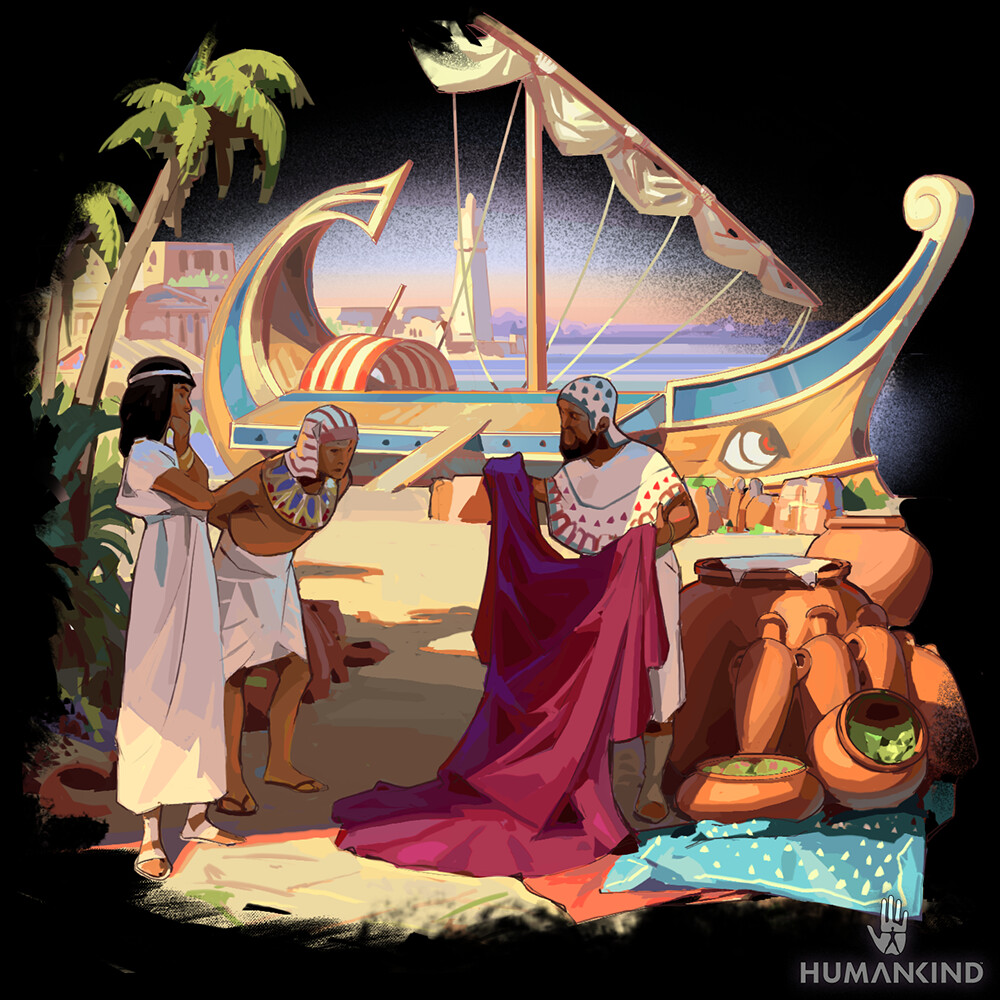

Culture of the Arts
It would be incorrect to say that the only motivator for the construction of grand buildings comes from the Ovanni's desire to please the gods with their work. An Ovanni shares many dreams with their family, passing each whispered hope and aspiration onto their children and grandchildren, and the one main desire for many is the want to see their featureless desert home be filled with statues, cities, aqueducts, bridges, temples, colosseums, and all other manner of constructions made of artful form and carved with pride and love so that their works and contributions would never be forgotten to the sands of time.
With this, they can be seen enacting in a healthy rivalry with Altori. To create the most impressive of structures no matter the cost, as long as said structure will increase the prestige of their own artistic talents. If there was anything an Ovanni would openly be proud of, it would be the artistic expertise prevalent within their culture.
The Great Shame
Even Ovanna had fallen into the Dominance Wars, sending out men and women to die in the fierce fields of battle. At first, they had done so purely out of self defense. Then, 14 years into the war, Harka had made its best attempts to breach the mountainous walls of the realm, and succeeded in doing so. Harkan knights and soldiers, though some had tried to stick to the chivalric code, had let loose their anger and unleashed their staunchest inhibitions upon their hated rivals, losing themselves in blood lust.
The Ovanni capital, Kor'sallon, is a city crafted by the hands of love and bolstered by pride for one's community. Should the "Gem in the Desert" ever come under assault, there is no true Ovanni who would leave it undefended.
Not only that, but multiple other nations such as Ishki and Beirtudont threatened to break through their now loosely manned defenses. Despair had taken hold of the people of Ovanna, and The Great Panic had begun. Enemy raiders had plundered villages, bringing valuable religious relics with them for the gold and jewelery embedded within and knocking down holy structures and burning whatever could be burnt as they went. In addition, this would also be the time in which Aestraza, the world's most sacred and holiest monastery which held many holy warriors aligned with Ovanna, was sieged by Beirtudont. This meant that no support from outside religious cultures would be given to Ovanna in its time of need; the nation which valued friendship was left alone to die.
During this time, an archpriestess of war named Najaat el-Ahmadi would take up the mantle of Master General. Taking control of the armies of Ovanna, the world would name it The Red Tide for their terror striking uniforms and the blood soaked ground they left behind. It was only natural that she would behold the position, having lived her life in preparation to defend the nation. The world would come to know of her as "The Demon of the Sands" for her use of very effective fear tactics that aided in shattering armies twice the size of her own. However, she also proved to be sadistic with her enemies as well. She tortured prisoners of war, breaking their morale. She would deny soldiers sleep, haunting them with images of dead ancestors who were begging them to end their suffering, and utterly slash their combat effectiveness. Later on, when her enemies were at her mercy and she had pushed most hostile forces out of Ovanna, she would enact a gruesome campaign against those very cultures, using the people's fear of another invasion to excuse her actions. Her Red Tide would enact acts of conquest around the entire world, before being stopped at the climax of the war. Though she is deposed, her violent acts are a source of great shame for modern Ovanni.

Gonnheim, The Frozen Slopes
As the summer sun, though weakened as it may be, busies itself with melting away the blanket of thick snow and ice, a landscape of rolling green hills and mossy forest floors is revealed for all to see, signaling the time to fight for its belligerent peoples. Within this cold cradle dwells a strong warrior culture, enacting ferocious battles against each other and its neighbors in the name of personal glory, treasure, or mere safety from others of their kind. Gonnheim is a cold land, mostly comprised of thick pine forests, flat and near barren tundras, and bleak frozen swamps, yet even here people have found their own way to thrive.
Ancient Origins of Rage
Once, in incredibly old and ancient times, this land had belonged to Vuoolden, yet strong clans of raiders had come from smaller offshore islands to take it for themselves. They were not mighty warriors full of pride nor skill, but rather hordes of starving and fearful slaves to a tyrannical frost giant, named Hodinsvurn, and his white dragon mount, named Tyrannøye.
They had captured the lands from its unprepared and under equipped defenders, with most of the original slaves remaining. This was not what Hodinsvurn intended, for he could not control such a large amount of slaves, who were all now experienced combatants. He had to perform a culling quickly, before any under his rule had gotten wise to the situation at hand. Fortunately, it was far too late, ideas of rebellion were already brewing before the lands of Gonnheim had conquered.
Men and women, no longer as separated clans but as a united peoples, overthrew their giant masters and had slain Hodinsvurn with the very same executioner's axe he had planned to use on them, pushing him onto it so that it would split his spine in half. Tyrannøye had managed to escape however, legend saying he had left to the highest of the wintery mountains to recoup his losses. Perhaps the reason why Hodinsvurn was killed so easily was because Tyrannøye left him to die without a proper escape.
From then there on, the leaders of the various clans had appointed one notable champion, High Jarl Ovundsmund, to rule over Hodinsvurn's lands, if only to mock the dead tyrant's failure at leading and to act as a mediator should disputes between the other clans start to become disruptive to the whole of Gonnheim. This was a necessary factor, for ferocity was ingrained in the people who had lived in these lands and could barely be contained for the years to come. The clans and chiefdoms of Gonnheim would fall back on their old ways, warring against each other as if they had not clamored for freedom side by side just years ago. The old legends of unity and prosperity would be widely forgotten under a sheen of thick crimson. Yet, when the mist clears, warriors laugh and boast about their origins together again. Then, when they eventually pass on and the young take over, the cycle of belligerence continues anew.
Strength and Courage
To be a Gonnheimer is to live a life fighting against the forces of nature and man combined. Every child from birth must learn what burns best in times of fuel shortage, what animal best provides both edible meat and furs, and how to survive a raid from an opposing clan or an entire lord's army should such conflicts occur. The Gonheimers are a culture of war and hardship, perceiving the two constants of life as both pain and death, with a little happiness in between to make it worth it.
An individual must steel themselves if they wish to survive here, with even the lowest of peasants having a basic understanding on how to swing a sword or axe. Many thrive in this lifestyle, a product of their culture, seeking a warrior's death in battle as their ideal entrance into the afterlife.
The back and forth of such a tumultuous lifestyle pushes each individual to be the hardiest version of themselves possible, brushing off disasters and enduring tragedies with a grace usually unbecoming of the brutish perception that outside cultures usually have of them. Just as much as it can fortify them against the horrors of the world there are detriments involved into being pushed too hard and too far, men and women growing callous and cold, warriors experiencing the worst cases of trauma after retirement, and children having to prioritize safety over happiness.
A veteran surveys his hunting grounds alongside his corvid companion, a massive boon in Gonnheim culture.
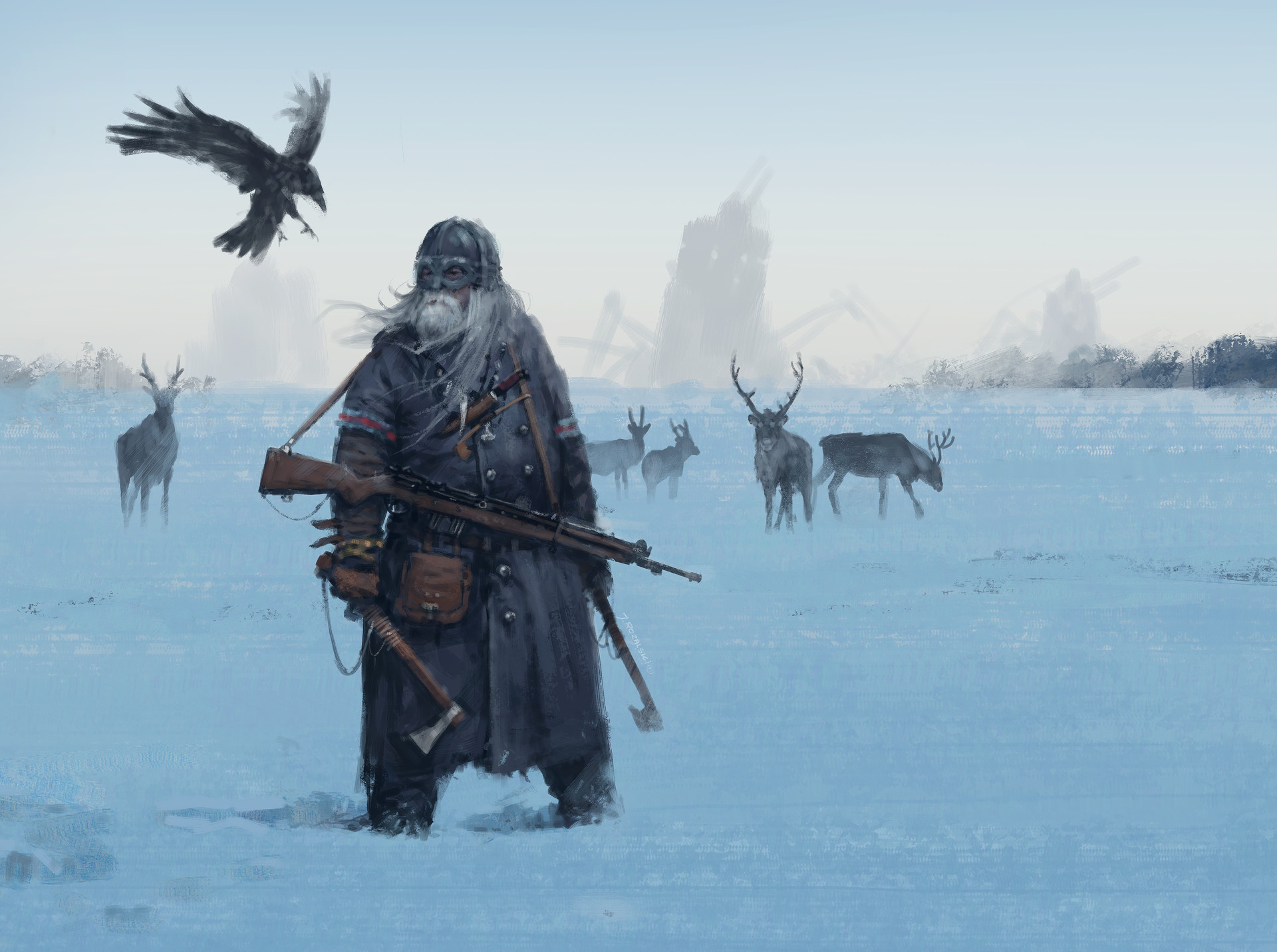
Adaptability
If the Steam Age and the Dominance Wars has proven anything to the world, it's that Gonnheim is an adaptive force of nature similar to the very forces they push back against on the daily. Where even Vuoolden had muskets and cannons to use during the beginning of the wars, the scattered and warring clans of Gonnheim had shieldmen wielding spears and axes, some even forgoing their armor due to their affiliation with rapturous cults.
However, as Beirtudont poured money into invasions helmed by mercenary companies, and Vuoolden sought to reclaim the land its ancestors had lost through conquest, Gonnheim would push them back each and every time in grueling wars of attrition. Having the grit and endurance necessary to sacrifice themselves for both clan and country. Each battle snapping the warring clans out of their stupor, each victory causing the clans to unite back together like in ancient times to defeat a common foe. Experienced runecarvers, able to channel the magic of giants in arcane carvings, and master blacksmiths were able to take the weapons and Steamtech off of the bodies of the dead and reverse engineer it for their own purposes, in some cases improving on the designs.
Each tactic devised by a brilliant general on the enemy side would be one stolen and improved upon by another Gonnheim jarl, even in times of peace Gonnheim would look to its neighbors ingenuity in order to devise working policies and improvements to their lands. Though, this does mean such a culture does not inspire much independent creativity.
Experimental Weaponry
Though Altori has heavily improved the design's safety, and only Beirtudont has the economic power to manufacture them reliably, Gonnheim was the first nation to develop the world's first working carbine. An expensive firearm much like the common musket, capable of firing off multiple shots before exhausting its ammo supply.
Land of Pagan Faith
The religions and faiths of Gonnheim are entirely alien to the world around them, its only closest counterpart are the druidic faiths and followings within the most secluded of Vuoolden's lands. Following some of the traditional gods, officially recognized by all the world, they also carry some of their own that aren't typically understood, nor are they at all similar to the sentient entities with diverse personalities that the world knows of. Some are depicted as terrifying serpentine creatures dwelling within the deepest oceans and lakes of the world, others as generous yet temperamental creatures of the hidden wilds.
There is no end to the myriad of forms these religions take form as, oftentimes however they are symbolic of the qualities and experiences most prevalent in Gonnheim at the time. This meaning that, with the most violent war in current history being only 10 years passed, many openly public cults are zealous factions and organizations hellbent on expunging the weak in favor of the strong.
The Warmth
The Warmth could be described as another religious following, but it has its roots in purely cultural foundations rather than that of the divine or some outsider extraplanar creature. The Warmth is the concept that, within all living beings, there dwells a fire within their soul. This fire nurtures and kindles the warmth of life, just as it literally keeps the body warm and invulnerable to the horrors of the wild world. It is the embodiment of all the good aspects of Gonnheim society, and the bleak light of happiness and satisfaction one can gain from "nurturing" this fire.
To most Gonnheimers, if not all, to nurture and kindle this fire into a blazing flame is just as important to them as acquiring food for the coming winter. That, in spite of the dimming sun, the collective warmth and fiery souls would be enough to forever melt the icy grip of winter in the north. Some extraordinary peoples believe in this aspect so fiercely that they can even conjure pyromantic-like powers; barbarians summoning a fiery storm, shamans conjuring the sun, and even sorcerers wielding the literal incarnation of The Warmth within their soul.

Sentinels of International Defense
With the nations having given their all, their armies exhausted and their people holding up said armies injured and tired, a lasting peace would be in their best interest. That having been said the worldly powers had all come together merely one year after their wars' end to form an institution of diplomacy and ambassadorship, with the exception of Ishki being seen as too separated and capitulated to play a part in the making of an organization of peace (even Gonnheim has a seat of representation for that matter).
Said organization, which would come to be known as the Sentinels of International Defense, was created with the intent of fostering an international environment in which the peoples of said nations will come together as equals and allies, rather than as enemies and threats. Having a vested interest in the mutual understanding of the realm's various cultures and traditions to understand their issues and problems. This can include understandable tasks such as easing tensions between villages living on the borders of two different nations, or something so dire as hunting monsters which would threaten to displace peoples and further the already present dysphoria within the common folk.
The Sentinels, or the S.I.D. as a well known acronym, has plenty of various specialized branches with skilled workers filling them able to use an extensive amount of resources given to them from the various governments that make up the institution's making. Such branches include the Silver Branch, the Worker's Branch, the Pentinent Branch, the Black Branch, and the Magistrate Branch. All of these branches answer to the authority of the Ivory Archons, which are a council of representatives chosen by their nations, whether it be through democratic vote or chosen by their monarchs.
The Silver Branch
The Silver Branch are the brains of the operation, meaning they run the bureaucracy of the S.I.D. They help maintain and facilitate the flow of information and news to the S.I.D. in order to always remain in top form and expediency when gathering information. In addition, sometimes a problem or issue out in the wider world requires further insight into the delicate and intricate details of a specific area's culture and traditions to help solve their problems, and as such Silver Branch members are meant to study such topics as "loremasters." Not only that, but they also form the institution's diplomacy efforts.
Silver Branch members are often unfortunately in an imaginary caste of their own, being treated as highly skilled and educated individuals whose work is valued slightly higher than the other branches. Many individuals within the Silver Branch hail from Altori and Beirtudont, most likely as nobles looking to increase their prestige or highly educated scholars looking to challenge themselves.
The Worker's Branch
Colloquially known as the "Blue Branch", the members of this part of the S.I.D. are mainly laborers and hard workers who do the heavy lifting for the institution. The maintaining of airships and Steamtech, the safekeeping and issuing of weapons and armor for the private guards, or just keeping their buildings in good shape are some of their responsibilities.
Mainly those that fill this branch are engineers from Beirtudont, laborers from Vuoolden, and servants from Altori looking for freedom and purpose beyond servitude.
The Pentinent Branch
Sometimes incarcerated peoples are given the chance to serve a purpose in order to ease their punishments or straight up leave their chains as free individuals. Whenever an individual has served, at minimum, one year in prison (or less if they are so valuable) they can be given the chance to work for the S.I.D. in order to come out of their incarceration with a redeemed reputation gained and a new lease on life.
This branch mainly aids the other branches as servants or extra hands, which can provide valuable education for them. Such as serving the Silver Branch as an apprentice scholar and being educated by a scholar from Altori, or being able to understand the trade of engineering from a Blue Branch member; all the while being paid a small pension so they can afford life on the outside once they are done with their service. Once they are done with their sentence, they have the option to work under a branch they had previously taken an apprenticeship under should they so desire as a stable source of income.
The Black Branch
Feared amongst the other branches, not due to any malevolence or malefic intent but for their secrecy and expertise in the investigative and roguish arts. An inquisition of sorts for the S.I.D., which ensures it stays on track of its original goal as directed by the Ivory Archons. They also act as espionage units against enemies of the states or detectors of seditious acts against the S.I.D. from the inside. Oftentimes the Pentinent Branch offers their insight and experience into the criminal world to aid this branch.
This branch has no uniform amount of peoples hired into it. Their selection process is scrutinous, yet unbiased, and involves plenty of cunning individuals.
The Magistrate Branch
This branch serves to get their hands dirty and are the field agents of the whole operation. Whenever tensions need easing they send a party of individuals to scope out the issue so the Silver Branch can come in and do their honey tongued work, or whenever a monster begins to hunt the outskirts of a settlement a squad of Magistrates are sent to deal with the creature.
The Magistrate Branch is made up of individuals from all the other branches which show great potential in their skills, and as such are grouped up into parties that the S.I.D. deems would synergize well.
The Magistrate Code
Should a player, or party for that matter, find themselves within the employ of the S.I.D., they will find themselves having to navigate the inflexible code of conduct that is The Magistrate Code. Individuals found breaking the code are sent to be tried by the S.I.D. at their headquarters in Beirtudont, and, should they be found guilty, are punished severely. However, given the rarity of members within the Magistrate Branch, such punishments don't always include a banishment from the institution, but very much can if the offense is so vile.
Past Sins
The first Magistrates to ever exist, a group of 6 individuals taken from each different nation, were the ones that would force the S.I.D. to make a code, not out of goodwill but rather an accident which had involved the losses of many civilian lives. This accident occurred due to complacency of procedure and abuse of power leading to continuous lapses in judgment. Due to the continued damage this group had caused out of malice, they are known to the S.I.D. as the Archtraitors, and as such have a bounty of unimaginable size upon their collective heads.
The Code
- Knowledge of culture, folklore, and tradition must be preserved at all cost. Destroying, tampering with, manipulating, and doctoring such information will be met with an undetermined amount of time in prison.
- Any intentional attempt to create, whether indirectly or directly, an environment which allows for the harm of a large amount of civilians for the sake of profit or continued employment will be met with 10 years in prison or execution depending on the situation at hand. Such examples can include the provoking of powerful monsters, blackmailing and bribing of government officials, or the creation of organizations and institutions which conflict with The Magistrate Code.
- Harming prisoners and captured enemies in anyway that is unproductive or could be deemed as torture will be met with 10 years in prison and banishment from the institution. Additionally, the selling of the aforementioned groups into slavery, indentured servitude, or pacts with the extraplanar, whether done through coercion or third party influences, will be met with an additional 8 years in prison.
- Casting spells, throwing projectiles, or firing upon low threat retreating humanoids with intent to kill will be met with 10 years in prison and banishment from the institution.
It is to be remembered that all of the aforementioned rules stated were made in remembrance of the vile crimes that first Magistrates had committed unto the peoples of Phaelithas. Those that break the code find themselves being hunted by elite soldiers known as the Promised Souls, sworn to hunt the impure of spirit and the dishonest of heart.
Closely allied and on friendly terms with the S.I.D., a mercenary faction known as the Promised Souls, holy warriors who are known to hunt down oathbreakers with impunity, often offer their skills to the S.I.D.
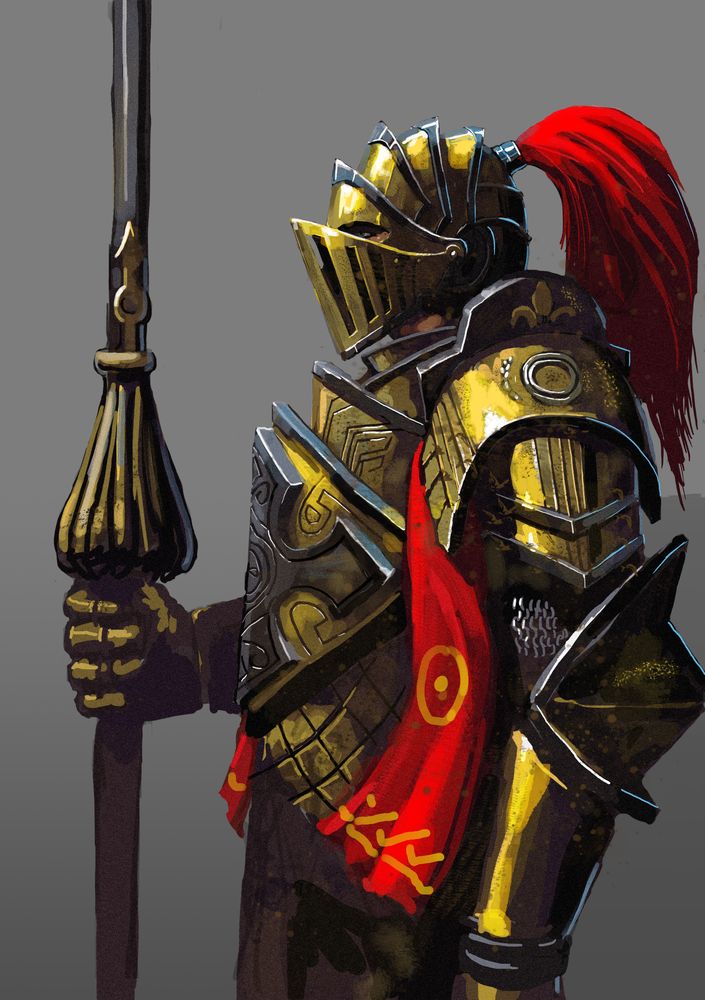
Chapter Four: The Divine
The gods, entities of jealous worship and aspects of the very fibers of the world and mortal mind, have always been a constant influence in the world. Either in its direct creation, with holy wars between the gods quite literally moving mountains and redirecting rivers, or in the geopolitical stage, with different sovereign nations both rising and falling and making allies and enemies due to religious alignment. In the world and around it, there are officially recognized gods, entities of worship that are ordained and organized into various religious sects and factions that all form the Church of the Eternum. However, as of recent that very church as faced a massive schism which has divided it in half.
The Ortho Divine
The Ortho Divine, the widely recognized name for the Old Church, used to be the original, and only, church of Phaelithas. Never simply just a branch or variation of faith, the Ortho Divine was the church. Nowadays, the Ortho Divine is seen as the traditional path of faith, where its perceptions of the gods are more reverent and understanding of the sheer power gap between a simple mortal priest and a deity. Seeing the gods as undeniable aspects of the world which must be respected like an authoritative figure, they treat their own authoritative power as the end of all hierarchies.
Their viewpoint of the gods as highly respected if not flat out feared entities that are the end all be all of sentient entities, and far above that of mere mortals in terms of worth, adds to their unwillingness to ascribe their gods to having the fickle minds of mortals, prone to change and able to fluctuate from one ideal to the next. To them, the gods are not people in the traditional sense, they are of a mind far above that to a state where no living being would be able to comprehend. They are unchanging and uncompromising, unforgiving to oath breakers and willing to punish the sinful with impunity. If the gods are not prone to change, and cling to their unshakable ideals, then the religious sects that idolize them do the same.
The Unortho Divine
The Unortho Divine, the widely recognized name for the New Church, is the breakoff sect of the original, the Ortho Divine. While not recognized by the worldly powers until after the wars, the first monasteries and temples that moved to this new way of thinking did so during the Dominance Wars. Whereas the Ortho Church sees the gods as beings not prone to change or fallibility, the Unortho Divine has a much more "human" outlook upon them. In their stories and myths, they can be depicted as purely evil entities who should be fought at every quarter, but whose domains are necessary for survival in the end. However, much more often they are seen as flawed beings, much like the mortals they reign over, who must work through their shortcomings to become better versions of themselves, to the betterment or detriment of all mortal kind.
Not only is this perception the polar opposite of the Ortho Divine, the Unortho Divine sees many gods in a different light and manner than the Old Church does. Given the amount of chaos and change the world has gone through, and the world's moral values change with the coming prosperity, they are of the mind that the gods, too, have changed.
For example, the God of War and Bloodshed, Avus, is now thought up of as a repenting, tired, and self loathing man whose mind is deeply entrenched and tormented within the trauma of millions of worthless and inglorious deaths of his servants, once close friends and confidants. Whereas the Old Church sees him as the unchanging constant of war, representing the inevitable conflicts that will come with any civilization, having little personality beyond what could be ascribed to as useful traits in times of war.
Another example would be the Goddess of Change and Trickery. The New Church now sees her as a benevolent trickster that aids traders and merchants in their endeavors and grants boons to those that practice civil disobedience against unfair laws and full on dissent against evil regimes. Whereas the Old Church sees her as a faceless embodiment of change and a fickle architect of fate that simply shifts the winds of destiny for the sake of it. Showing much less personality than that of the Unortho Divine, but creating much more of a powerful aura that demands respect of her ideals and adherence to her chaotic codes.
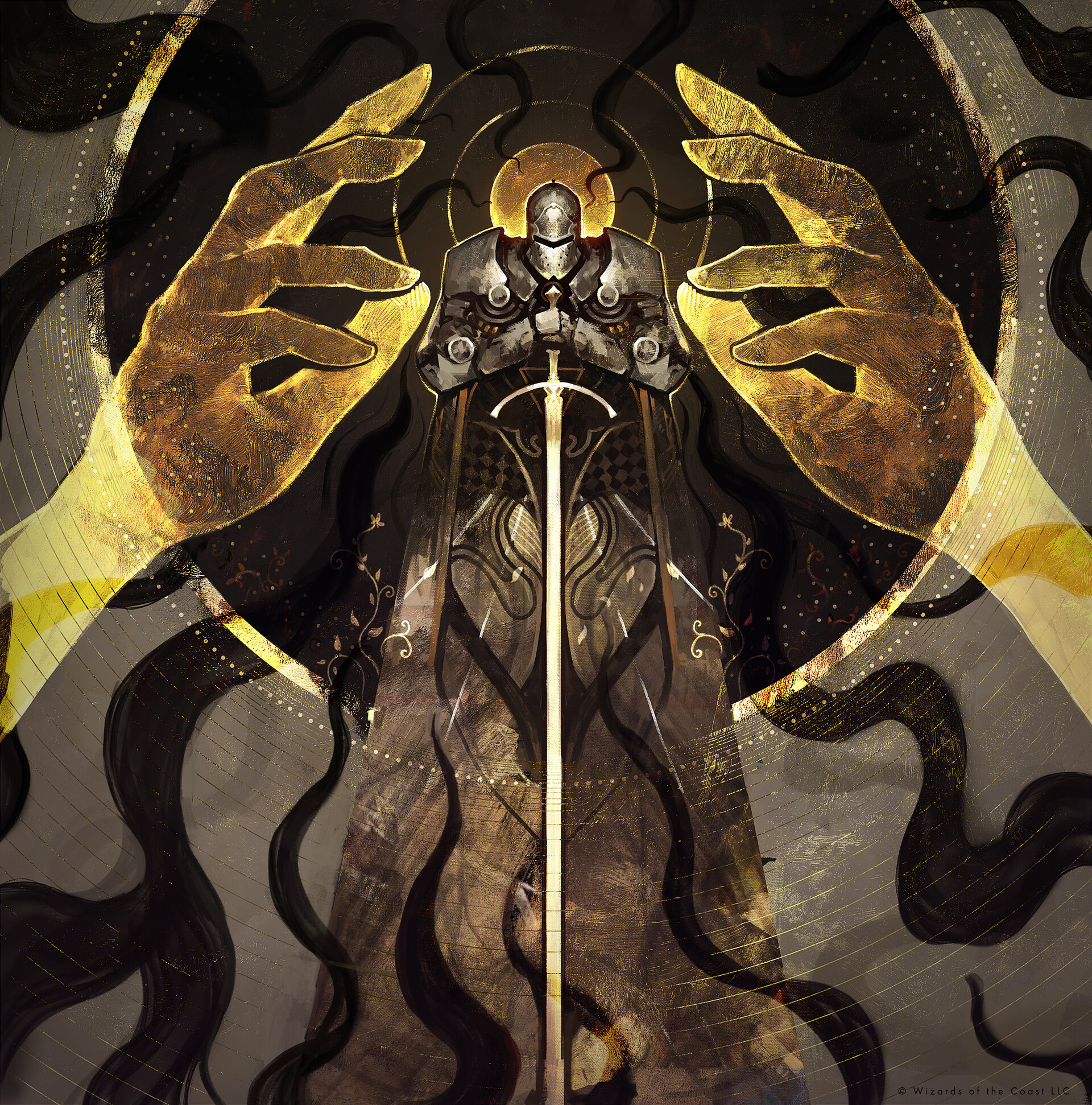
The Ortho Divine (The Old Church)
| Name | Title | Domain | Alignment | Symbol |
|---|---|---|---|---|
| Avus, God of War, Bloodshed, and Wrath | The Sundering Sword | War, Tempest | LE | Two crossed blades pointing up, with a spear in between them |
| Catharia, Goddess of Change and Fate | Architect of Fate | Trickery, Knowledge | CN | A dancing woman with a flowing gown of fire |
| Iquita, Goddess of Tranquility and Health | The Balance | Life, Peace | NG | Two outstretched palms holding a white rose |
| Yaelin, Goddess of Life, Death, and Rebirth | The Soulless | Life, Death, Grave | N | A robed man kneeling besides an overgrown gravestone |
| Glimmer, Goddess of the Sun | World's Flame | Light, Order | LN | A golden sun with 8 far reaching rays of light exuding out from it |
| Shimmer, Goddess of the Moon | Whispered Light | Light, Trickery | CN | A crescent moon |
| Acathune, God of the Harvest and Agriculture | Field-Father | Life, Light | N | A field of amber wheat |
| Tormidon, God of Labor, Tradespeople, and Reform | Mason Lord | Forge | LG | An anvil held up by dozens of disembodied arms |
| Malug, God of Pestilence, Plague, and Disease | Kingfeller | Death | LE | A kneeling king wearing opulent robes, gasping his final breath |
| Corssandri, Goddess of Disaster and Sin | The Red Wind | Tickery, Death | CE | A dagger dripping with blood |
| Imatum, God of Magic and Guardian of the Weave | Weavekeeper | Arcana | N | An outstretched palm holding unrestrained wisps of magic |
| Khyn, Goddess of Knowledge | Soul of the Machine | Knowledge | N | An open book set aflame, yet undamaged |
| Aesveldra, Goddess of Nature and the Earth | Earth Mother | Nature | CN | An overgrown crook-staff |
The Unortho Divine (The New Church)
| Name | Title | Domain | Alignment | Symbol |
|---|---|---|---|---|
| Avus, God of Justice and Order | The Sundered Soul | War, Light, Order | LN | Two crossed blades pointing down, with a broken spear in between them |
| Catharia, Goddess of Trickery, Luck, Trade, and Freedom | Lady of Life's Dance | Trickery, Peace | CG | A dancing woman with outstretched arms holding flowers |
| Iquita, Goddess of Healing, Medicine, and Doctors | Malady's Cure | Life | NG | Two outstretched palms holding a white rose |
| Yaelin, Goddess of Death, and Rebirth | The Soulless | Grave, Death | N | A robed man kneeling besides an overgrown gravestone |
| Glimmer, Goddess of the Sun, Love, and Ambition | Lady Flame | Light, Order, Life | LG | A golden sun held in front of a woman's chest, as if she was embracing it |
| Shimmer, Goddess of the Moon, Loss, and Reprise | Mirror Mother | Light, Trickery, Twilight | CG | A crescent moon with a crying woman sitting upon it |
| Acathune, God of the Harvest, Agriculture, Hearth, and Home | The Amber Heart | Life, Peace | NG | A mug of beer and a crown of woven grain |
| Tormidon, God of Labor, Meritocracy, and Factories | Smoke Sire | Forge | LE | A bruised and cut hand wearily holding up a hammer |
| Malug God of Pestilence, Famine, and Drought | Rot Father | Death | CE | A heavily emaciated man meditating with an empty bowl in his lap |
| Corssandri, Goddess of Debauchery, Falsehood, and Greed | Dishonorable Duchess | Tickery, Death | CE | A disembodied hand holding a blood-red ruby |
| Imatum, God of Magic and Guardian of the Weave | The Timeless | Arcana | LN | A book being flipped through by a skeletal hand |
| Khyn, Goddess of Knowledge, Curiosity, and Tinkerers | Tinkerer Queen | Knowledge | CN | Three gears that connect nearly seamlessly |
| Winne, Ingvi, Sumai, and Aumo, Goddesses of the Seasons | Seasonal Maidens | Nature, Trickery | NG | A singular oak tree, with four corners dedicated to each different season |
Avus
Avus's worldly perception, without a doubt, has gone through some of the most dramatic changes out of all of the rest of his divine ilk.
Ortho Divine
"War and peace, offense and defense, killing and healing. The cycle of conflict turns evermore, and I am its steward."
Seen as an unstoppable tide of the inevitable conflicts to come, Avus was an embodiment of wrath felt at the loss of a battle brother and the incarnation of anger felt at the very climax of battle. The ever present understanding that you, no matter how great or loved you may be, will be swept by the tide of conflict and bloodshed as if you were a mere flea is the personification of his power and domain, one of constant embattlement and the outcry of anger at an unjust world. Avus is feared entirely for this, and granted tribute by outsiders as a way to delay the inevitable overflow of the anger that boils within him.
His own loyal following within this religious sect sees themselves as bringers of much needed and well deserved violent change, both overthrowing tyrannical nobles and compassionate ones alike by sweeping ordinary peoples off of their feet and into the fray on the basis of their anger alone. They hone their skills, desiring the title of master tactician and champion at his right side, though such a position is only available to the few. He was at his strongest and most emotional during the forefront of the Dominance Wars.
Unortho Divine
“Imagine all the people…what a senseless waste of sapient life. Your battle is over, be at peace."
The followers of Avus within the New Church are unsurprisingly few in number, making up the exhausted and traumatized veterans of the old wars. Much like his following, who cling to him as if it is all they know, Avus is depicted as a deeply sorrowful, traumatized, and depressed relic of a belligerent age, having been broken by the height of his anger during the forefront of the bloodiest war yet. Avus' flames of anger and exhilaration in combat have died down to its last embers, much like his following's zeal, and his blade, once quenched in the blood of untold millions, now rests broken and shattered at his throne's base. The comrades and friends whom have proven to not only be useful worshipers but also trusted confidants died and suffered at his will, only furthering The Sundered Soul's lamenting despair.
Uttering what little energy available to him, Avus and his following muster the scattered remains of their anger and rage at the unjust and cold world they had created in the wildfire of their ambitions. Once an embodiment of rage and chaos, Avus now stands as tool for order and justice in a world that has long since needed it, or at least he is seen that way by the New Church. His most notable following in the Unortho Divine are mostly older veterans of the old war, having shared in the same horrors of war, though younger people every day are drawn to Avus' path.
Catharia
Catharia shifts between the Old Church and the New Church as a faceless entity of change and author of the fates to a flamboyant, cheerful, and mischievous goddess bursting with personality.
Ortho Divine
"You, like I, are just another dancing candlelight in the ever blazing inferno of life, all it takes is one day for continuity to crumble and shatter, one day for you to redeem and relapse. Let me write your story."
Where in older times, most people who languished under the constant labor of subsistence living, where the difference between feast and famine was one raid or a blight upon one's crops, were vulnerable and suspect to unknowable changes to their lives. As such, Catharia was seen as a reflection of that unstoppable feeling of change, where the collective and cumulative actions of untold millions of creatures controlled the tide of prosperity, ruin, and pseudo-stability. As such, her followers within the Old Church are those who wish to understand these large changes and to educate themselves so they may lead their communities through tumultuous times. Due to this, the Catharites are perhaps more tolerant than not when it comes to the schism between the Old and New Church, however they have their limit of acceptance when it comes to perceived heresies.
In the highest mountains of the world, within the twisting and turning mountain caves of Altori, Catharia spins her twine and weaves the fates of all living creatures, intertwining the cloths of prosperity and ruin, success and failure, and love and loss as she sees fit to make the best story for all living beings.
Unortho Divine
"Twist and turn, dance with me and all life on the high of freedom! Be bold! Be brave! Fortune awaits all who chance the path!"
When the world became known, as time spun onwards, and the lines between safe and dangerous became known to the mortal folk of the realms, it was easier to breathe, to explore, to dance without fear of the unknown. Men and women could be bold when braving danger, knowing their chances and confident in their skills but also thirsting to explore further into the unknown. As the world got older, people began to clamor to control their own fates and destinies, raging against inevitable conflicts and finding that they had not been so inevitable in the first place. The New Church now perceive this goddess of putting down her cloth and twine in favor of cheerful song and dance, jubilant in her "retirement".
As such, Catharites of the New Church no longer see their idolized goddess as an entity of the inevitable, but an embodiment of the boldness needed to cause change, rather than resist it. They wish for freedom in all things, so as to control their destinies through hardship and change, but realize they may never be truly free. They seek freedom not to gain it, but to enjoy the dance on the journey to it.
Iquita
Iquita's domains and reason for being are set in controversy, not sure whether the goddess of health aids in the healing processes of the world or acts as the entity which controls all bodily processes in the world. Oftentimes though, she is regarded as the former.
Ortho Divine
"Breathe, once in and once out. Your body is both your temple and mine, your sanctuary and mine. Treat it as you would me."
The breath of life, the rising and falling of one's chest, is said to be the divine spirit of Iquita filling the bodies of all. Calm and collected is The Balance, who keeps the world from the edge of destruction and ravaging plague. Espousing pacifism to her ilk, rising to anger only in the face of embroiled wrath and unkempt and unchecked pride and anger, it is unsurprising to know that she is a hated rival of Avus and his regime in the Old Church.
Her following are comprised of monks, seeking to calm their hearts, minds, and souls that have been fettered by anger, grief, anxiety, and dread. Men and women both young and old train to be monks among the calm grasses of the countryside and awe-inspiring heights of the mountains in which her temples and monasteries find themselves founded within. Here, the wisest and most tranquil among them offer counsel to those desiring it, offering either advice or spiritual comfort in times of personal turmoil. On the road, Iquita's clerics seek to foster tranquility and peace wherever they walk, applying the soothing balm of peace, making her Unortho worship famous within Ovanna.
Unortho Divine
"From its first breath to its last exhale, life is precious and sacred and so is the consciousness that comes with it. Lets do our best to cherish it, you and I."
Whereas the Old Church perceives this goddess to be ever present in her influence in tines of peace and calmness, where the world falls into silent bliss, the New Church sees her influence and presence in the healing and binding of wounds, the bubbling of the cauldron preparing sacred tonics, and the inner workings of the body itself. The New Church reveres Iquita as a patron of doctors, those who aspire to keep the body alive and well for as long as possible, however no longer do they see her as a keeper of peace. Many Iquitians, due to the necessity of their calling, have answered the call to war and remain on battlefields to preserve the lives of their comrades, earning the pure ire of their pacifist Old Church counterparts.
The goddess herself is seen as a studious woman of unparalleled skill in the medicinal arts. Not only as such, even if she has dropped tranquility as her domain, she still sees the merit in tranquil environments, where the doctor can work to soothe the mind. As of this, though they might have been heated rivals at one point, she does not leave Avus to suffer in his trauamatised state, and many stories have been written about the duo's progress.
Yaelin
Yaelin is one of the few gods who has seen little change from the Old Church to the New Church, not even a change of alignment nor titles has been granted unto the harbinger of mortality.
Ortho Divine
"Black implies white, life begets death, these are the constants that we face in life. Where you may die today, tomorrow a new soul is ushered forth."
No individual inherently knows their fate when at death's door. Some scholarly individuals may understand intrinsically when their time is about to come, some may even be able to make good guesses about how they will go out, but no individual can attest to truly understanding where they will go and how they may be judged. No one soul does, but Yaelin has no soul. Truly, if no living soul was to know their fate then the one entity rumored to be without a soul, henceforth to be free from all coils, would know.
To the Old Church, she is a being even more eldritch than all of the other Ortho Divine deities, nearly incomprehensible beyond the surface but nonetheless beneficial for the world. She is the guide of all souls whom have passed on to the unknown and beyond, the divine entity of which no hand can be raised against in pure confidence that they shall win. Be it beast or man, she judges accordingly and without bias to the pleadings of mercy uttered by those whom the passed soul has left behind. However, she is no tyrant of heaven nor is she a dark lady of hell, for every soul she takes she guides the wisps and trappings of a new one to a newborn husk. The dead of today will signal the newborn of tomorrow, again and again.
Her followers mimic this cosmic dance of life, death, and then rebirth. No longer adhering themselves to traditional morality, they seek out their respective part in their great play, be they bringers of tragic death, aides to the still living, or vanguards of the new to come.
Unortho Divine
"..."
There is little even a massive schism can do the change the perception of a deity of death. However, plenty of experiences in the world have served to add onto it. With the massive death tolls of the Dominance Wars, and the complete and utter population boom of the Age of Enlightenment, the goddess of death has grown weary and numb to the constant back of forth. The zeal and purpose of life is lost to her, and the loss and meaning of a coming death is forgotten to her.
The New Church teaches something that even the Old Church can find themselves to accept, that the coming of ages and the repetition of the mortal cycle of life and death have worn and torn this deity to her final fibers.
For her following in the New Church, her acolytes no longer play out their part in their great "plays." No more do they mimic life's beauty and death's toll with eerie yet elegant theatrics, they simply drone onwards to their demise while ensuring others do as well. In this task, they must not fail.
Glimmer
Glimmer, the splendor of the gods, and her domain are under intense pressure and crises of faith ever since The Great Revelation. As such, they suffered the quickest and most damaging schism when the New Church had formed and split away from the Old Church.
Ortho Divine
"Exlated on high, that which keeps the heart beating. Sacred is thee who carefully whispers my name from thy lips, blessed are those who rebuke the lightless."
Where Iquita fills all with the breath of life and Yaelin allows such processes to continue in the first place, Glimmer, goddess of the sun, is the one who provides what is necessary to keep it living and breathing until its final days. Seen not just as an embodiment of the sun, but the actual, tangible, literal sun itself, Glimmer stands for the continuation of all that which the light touches and has touched. Those born rightfully under it forever keep within them a shard of herself. A lowly man kidnapped into the Underdark by the duergar, chained and broken by the darkness and gloom, still brings with him the shard of Glimmer's light. That is what drives most Solites, the inner shard of light within them and the desire to see it shine bright and to its fullest potential.
The highest of virtues within the Church of Glimmer is the pursuit of honesty, for the light is meant to dissolve and expunge all that which clouds itself in a dark veil of lies. Being an orderly figure who instills discipline and organization amongst her following, its surprising how quickly it all fell to chaos. Perhaps it was because those whom had decided to walk the path had given up much of themselves to try and become something greater and higher, which made their fall from grace that much harder.
Unortho Divine
"Now that you have finally stumbled upon the light, take a moment of reprieve and look up and down yourself. Look upon the wounds you have collected stumbling in the darkness, seeing this, do you truly wish to return?"
At the height of the dysphoria and confusion caused by the Dominance Wars, Solites which would eventually begin to form the New Church had perceived their disciplined sects and culture built upon order and absolute, unshakable law as a mistake. For, while order was never truly bad, never was it meant to shackle them and deny them free will; for how would their souls shine should they never express themselves?
Pleading with their goddess for forgiveness of their perceived sins and mistakes, they set about to temper their discipline with emotion and love. As such their goddess, now an entity of pure love and compassionate goodwill, would have no issue reciprocating that. Where the Old Church sees kindling the light of Glimmer as a journey of honesty and exploring one's limits, the New Church quite literally sees it as a journey of bonding between them and their goddess, a test of the acolyte's love for the goddess of the sun.
Shimmer
For each and every action, there is an equal and opposite reaction. With the calling of the sun goddess, and the order with which she brings to all under her glow, there is another entity which espouses a friendly chaos under the dark of night in order to defend it.
Ortho Divine
"When the light of life sears your eyes, the noise of the day grinding into your ears, and the heat of the sun scorches your flesh only then will you come to appreciate the frigid cold and silence of the dark night."
The light isn’t always a bright, radiant sun. Sometimes clarity that light brings only comes after the storm, where all seems quieter. Shimmer is a much quieter goddess in her influence, having few longstanding rules and rarely inspiring zeal within her ilk, especially in the face of her sister's all encompassing light. She embodies the only lantern in the cold, quiet of the night; the moon. Seen as a younger sister to the sun goddess, Glimmer, Shimmer tends to be seen as a smaller, near insignificant and much less popular sect of the domains of light and oftentimes ridiculed for her meekness, but whether many like it or not her domain encompasses the light just as much as her sister does. That ridicule doesn't affect her in either way, being an extremely independent goddess whose ambitions rarely lie in gaining power and popularity for herself, her power is one she gives out on her own wish.
Where the light shines, so too does the moon reflect it back upon the world within the confines of night. A fickle aspect that means she chooses when she shows the world her divinity, given the moon's proprietary to shift in and out of view to the world. Her faith reflects this, with her virtues being that of quiet recluse and respite, where one may seek shelter from the wear and tear of the day, and the boundlessness that comes with the night. While she is no goddess of freedom, she does embody the freedom from obligations some can feel that nightfall provides.
Unortho Divine
"When darkness comes, remember you are resilient. Shine or darken as you may, for your light is yours to kindle."
Keeping many of the aspects as her older perceptions, the new church's Shimmer is seen as a guardian of the dark rather than an aspect of it. She stands against the horrors of the world that hide in the silence of midnight, and the mental ones which hide in the shadows of loss and grief in one's heart. A stoic, yet graceful, humanoid form with one silver crescent scimitar glowing in the pitch blackness of night is all that is depicted of her by the New Church. Where the Old Church would fear and hold her in awe, her influence is much more intimate and personal to the New Lunans. She is a friend, a mentor, and a guardian in both times of need and plenty, one who always manages to check in on her people, and in turn they do so too. Given the two sect's similarities, New Solites and New Lunans see each other like sisters, just as their deities do.
Acathune
Gods of trickery and chance, of order and justice, and all manner of exotic aspects of mortal life are truly powerful and their worship can be sought after by many, but few religious sects can see themselves become as popular as that of the worship of Acathune, God of the Harvest; for Acathune guards the fuel of life for all. Grain.
Ortho Divine
An eldritch and nearly emotionless being who sows the seeds of prosperity and ruin into the fields of all, and subsequently the civilizations that control them, on unknowable whims and ambitions. He is not purely evil for he doles out favor to those who sacrifice accordingly, and the sacrifices are never so excruciating to where the worth of the favor is questioned. The burning of incense, a seat at the table reserved for him, an offering of wealth or an item of value, or, in dire straights, an animal sacrifice can be among some of the more superficial prices to pay for his favor.
Like most, if not all, deities of the Old Church, Acathune is more eldritch and ancient than mortal kind could ever conceive and is seen with the sort of reverence that is similar to that of a child to a father or an apprentice to a master, with the idea that they may very well never reach the pinnacle of understanding that they have reached. Acathune, or at least the worship of him, ramps this up a notch by ascribing himself with the title of father of all the mortal races, the entity who taught all peoples the secrets of cultivating the land and henceforth fathered all civilization.
Unortho Divine
"Have I been too silent? Have I abandoned ye yeomen and urchins alike? Look to the yonder horizon, see my oaths of commitment to your prosperity carved into the surface of the sun and forever shall I be by your side."
Turning a figurative 180, while the New Church does see their god as a father of sorts they do not connect such a parental role with ideas of the unknowable and distant emotional aspects of an eldritch being. The Amber Heart is a being formed around wise and fatherly kindness and compassion, who ushers out his clergy to the world to promote peace and healing just as he sends his paladins and warriors to protect the livelihoods of the most vulnerable.
Men and women of all ages flock to this new faith, finding great comfort in the knowledge of a being that devotes itself to the protection of their children and home, their efforts and toils, and their health and happiness. Those torn form their fathers at such young ages often find a special comfort flowing forth from the newly reformed merciful Acathune.
It is said that such a drastic turn from eldritch being of unknowable emotion to a caring fatherly figure was formed from the large dysphoria of young men and women whom had lost fathers to the Dominance Wars. Throwing out their despair and anguish to the world, the empty and emotionless shell of Acathune was filled with pity and sorrow.
Tormidon
Once a being of solidarity amongst the skilled of tool and hand, his image is thrown into dismay and questionable morality as the meaning of hard works turns from arduous yet satisfying to utterly backbreaking since the dawn of factories and the rise of abusive landlords and factory overseers.
Ortho Divine
"Society was built upon the backs of those who use both hand and tool. The farmers, the crafters, the architects, and even the most humble of servants stands far above the richest swine."
Back before the Steam Era and the Enlightenment Era, the world was more reminiscent of a backwards feudal land with all manner of kings and queens holding absolute power over serfs and peasants. Minor territorial wars were fought on the daily, with levies and conscripts fighting alongside a sovereign's royal army, in order to secure some nearly meaningless ambition and endeavor. In this age, Tormidon represented the few who would strive to make a better world for themselves and their children. Trades and craftsmanship were highly sought after skills, endeavors which could pull oneself out of serfdom and poverty and allow them to enter a near nonexistent middle class.
Tormidon's clergy in the Old Church have a purpose beyond expanding their horizons. They would build cities which would house thousands of souls, forge great weapons and tools that would fall into the hands of the noble and crooked alike, sculpt such grand art that the very same statues and portraits they had made would cry at their own beauty should they gaze upon themselves. Overall, Old Tormites seek excellence and enlightenment in beads of sweat just as an oracle does so through their crystal orb.
Unortho Divine
"Work shall set you free, yet is freedom truly the fruit of your labor or the benevolent generosity of a greater power?"
Simply enough, Tormidon is a manifestation of the abuses and evils that can be found in the working conditions and sheer despair individuals find themselves enduring in many cities and regions ever since the Steam Era and the rapid industrialization. His worship is endorsed by factory owners and overseers who would put the acquisition of profits over the individual lives and conditions of their workers under them, using the existence of an entity which espouses enlightenment through hard labor as a form of protection against social reforms.
New Tormites are commonly found among social circles and classes which benefit and prosper off of the hard work of others. However, even these groups are quite "tame" when compared to the slavers who stalk the outlands of most civilized nations, finding great power and profit in the their trafficking of illegal goods and desperate souls. The evils of the new Tormidon is often seen as the excuse to purge the New Church and all its evils by the Old Curch.
Malug
From both the New Church and the Old Church, Malug has brought great toil with him. His fanatical clergy, who look to him as a jolly mentor of sorts, usually see this suffering as a test of strength, and strive to come out of sickness stronger and more durable then they ever were.
Ortho Divine
"Mankind's stoicism in the face of suffering is founded upon the very existence of rot and decay. The wish to stay and remain in spite of a near infinitely powerful force of nature exist only because of my will."
Malug is an abominable god of an equally as abominable domain. He is the force of nature which strikes without mercy, care, restraint, and unknowing of the threads of fate and destiny. Where simple sickness can take hold of a beloved hero and leave his body dead and decaying in the middle of nowhere. Where a king, high and mighty in prestige is struck down in the middle of his tenure by the horrible Ghoulish Rot. Malug cares not who his diseases go to, as long as they prove a sufficient lesson in humility and test of strength. His affairs and plans are orderly and follow distinct patterns and plans, with only the smallest of deviations, just like how disease follow a nearly linear path of symptoms up until the climactic end.
His clergy, though voluntarily ravaged by disease, see pestilence as a blessing and medicine as depravity and inhumane. To spread blessings, and to desecrate the doctors and healers of the modern world, is their duty. However, given the sheer difficult climb it is to become part of Malug's clergy, many die trying to become part of it and the Kingfeller's true and reliable apostles are relatively fewer in number.
Unortho Divine
"A body has been left unravaged by disease, a stomach untouched by hunger, and a soul unfettered by loss. The scar of our wisdom evades this one. Enlighten them to my will.
Multitudes more active than the Old Church, the New Church's perception of Malug stems from what its acolytes had seen in the Dominance Wars. They believed the famine, the man-made droughts, and all manner of humanly suffering was the height of Malug's will and power. He had a grand plan for the Material Plane, yet the peace of the Enlightened Era had casted it into darkness and failure. This clergy seeks to replicate what they had seen, like artists taking inspiration from a master's canvas.
New Malugan faith incorporates a wider scope of suffering than the Old Church is willing to experiment with, and as such can prove to be flexible in the face of adversity. An Old Malugan can have their work of years burned away at the arrival of a cleric, but a New Malugan would laugh at such a feeble mortal's intervention. However with this flexibility comes the loss of sheer "damage." The Old Church can conjure diseases of such potency that they threaten to consume entire cities and regions, but the New Church couldn't conjure such.
Corssandri
The shimmering lady of deceit and disaster has always had a close relationship with the Church of Catharia, and it could be theorized that the only reason the faith had went along with the schism was to adapt and create another sect able to leech off the New Cathrians just as they had been doing with those of the old faith.
Ortho Divine
"Dance amongst the inferno of life all you wish, but who do you think had ignited the flame of chaos and unknowable destruction in the first place. You dance only to dodge and evade my will, to the music of my laughter."
Catharia is an expression of what one must come to terms with, yet even the most resolute souls can still despair in the twist and turns of life once coming face to face with unpredictable and uncontrollable disasters or, even worse, the consequences of one's sins and mistakes. That despair is embodied by Corssandri, the echoing goddess to Catharia's domains. Change is never inherently good nor bad, but many would agree that few times does it present itself as an immediately good and pleasant force. Change brings with it momentary instability, and it is in those cracks of fate that Corssandri exacts her will. Every thread Catharia sows, it is Corssandri who adds another, more malevolent, outcome. She echoes Catharia's will in an almost predatory and parasitical way, using the despair she causes to draw her victims towards her faith
Her clergy, or most of them one way or another, were all victims of her plotting. Should a soul lose themselves in the twist in turns of life, Corssandri reaches out her hand to them and offers to be the balm to their suffering. The Old Church, in particular, is more fond of ascribing Corssandri to be the desperate measures that individuals down on their luck turn to, rather than so much as a literal individual temptings others off of their path.
Unortho Divine
"Imaginary lines, laws, and taboos be damned! One must throw away traditional morality to achieve the perfection they desire."
A whispered temptation in the night, promising happiness, prosperity, and success to those that follow the incantations. Where the New Church sees Catharia as an entity of freedom and the boldness to take one's future for themselves, the new Corssandri is seen as the vices and flaws that distract one from their path. Distractions of debauchery keeping one from true love, the trappings of greed keeping one from genuine satisfaction, and falsehoods blinding one from the truth of their own flaws and those of others.
Whereas the Old Church's view of Corssandri see her as risk that always belays the chance for change, ever present and inseparable from fate's existence, the New Church see her as an actively intruding force that continue to acts as the antithesis to Catharia's will, even after the schism.
Imatum
The ever present forces of magic are often an undervalued thing, with so much of modern society being fueled by it. Even accomplished wizards often disrespect magic itself by espousing to be masters of it, yet their diligent study would mean nothing if it wasn't for Imatum constantly restoring and defending the weave from constant abuse.
Ortho Divine
"To step outside one's limits as if to causally saunter through nature, to defy natural law on one's whims, even to the smallest extent, is the scope of my existence. The wonder of the unnatural world, with all of its dangers and mercies, is what I encompass."
The source of all magic in the world, and even beyond, stems from the Weave. The Weave is an invisible and all pervading metaphysical aspect of the world, which spellcasters and natural phenomena alike pluck the strings of in order to cast their magic. The greater the spell, the greater reverberations left in the Weave. The strings often get frayed or break with these reverberations. Imatum is the force which repairs the Weave and keeps it functional, and guards it from abusive forces which would use it for selfish and personal gains.
His clergy seek out forces that would rip the Weave asunder for their own selfish gains, whether that be in the face of overly powerful and volatile spells or when a villain has a use for a broken and nonfunctional Weave, otherwise known as a Magic Dead Zone. In their quest, should they uncover lost knowledge of the archaic variety or discover secrets of the arcana, their vocation is to share said knowledge with their god.
Unortho Divine
"Abjuration, to make your paper thin walls useful. Enchantment, for when violence isn't enough of a violation. Illusion, for when people only like your mask. Magic is part of life, it's what allows the mortal person to live in a world bigger than they will ever be."
P.O.W.s, are often the first to detest magic, given how an entire battalion would fall against a singular mage who could cast fireball. This, and combined with the fact that many veterans of war have deep scarring memories of feeling helpless in the face of magical might, has gartered the outlook that most mages carry an arrogance of a kind. After all, to a mortal that could whisk away the lives of dozens at the flick of the wrist and the whisper of an incantation, humility is a mere joke.
The New Church's perception of Imatum has changed, not for the reason that the clergy saw their god as any different, but the wider world had seen the god in a new light. Imatum carries an air of arrogance and less care for ethics in the pursuit of magical knowledge. It is for that reason why the New Church of Imatum has been reinforced, many mages and clerics find his loosened restrictions to be advantageous to their ambitions; that, or they believe the defense of the Weave requires the faith to be more flexible.
Khyn
The world has plunged itself into a near absolute focus on the pursuit of knowledge, both lost to the ages and yet to be thought up of. However, as of late, with the church having split into two different extremes, the main driving force of scientific breakthrough in the world is facing some major obstacles.
Ortho Divine
"Ancient schematics, dead languages, tomes of forgotten lore, all of them indicate a past of scientific enlightenment. Yet, all we can do is copy it...its disgraceful"
The early faith of Khyn was an inscrutable and closed off one to outsiders, where even the elite and high echelons of society rarely found themselves among those of this inquisitive faith. Before The Age of Enlightenment developments in technology and philosophical thought were heralded by the lucky few who had been groomed and educated towards the task since birth and, despite their excessive training towards this goal, they mainly had stuck to the divining of ancient texts and the analyzing of forgotten studies to bring back forth knowledge from other ages and empires. Rarely were people actively encouraged to think towards an original line of thought towards an unheard of goal.
Moreover, all of this knowledge was hoarded and kept hidden and secure within the confines of their equally as hidden monasteries in the mountains and deserts. This, combined with the fact that education was rarely sought after before The Age of Steam, made it so most of the world was locked in a primitive and early medieval state for so long (reminiscent of later Dark Ages in real life).
Khyn herself was an enigmatic and unknown entity. More seen as an invisible hand guiding the quills of the deserving few. She, who reigns over the mechanical plane of Mechanus.
Unortho Divine
"Each scratch of pen unto paper is a notch made in history, however small. Share it, for history was writ by the hands of many."
Khyn, while still remaining as a shadowy figure, has lost her enigmatic ambitions to the New Church, a reflection to how as of late the world has gripped more and more onto rational thought and scientific knowledge. The New Church is active in the development of new technologies, ways of thought, realms of science, and the creation of historical documents; it makes sense seeing that the majority of New Khynites are made up out of those left resentful by the Old Khynite Church's unambitious ways.
It is a New Khynite's duty to teach those willing to learn of any topic so as to instill the spark and desire to learn more, and as such each acolyte must be amicably trained in a wide amount of subjects. Knowledge is to be shared with all, and henceforth when the wider masses of the world understand and their knowledge grows so too does the power and reach of Khyn herself. It is her name that is whispered commonly in almost all social circles, for she has influenced all of the world's current achievements.
Aesveldra
"Let it be known, I am mortal. When the land bakes under Glimmer's undying light, know then that I am mortal. When the world's plants both wither and freeze, know then that I am mortal. When the oceans boil over and the mortal realms burn with it, know then that I am mortal. I am the living and beating heart of nature, destined to one day cease and wither. Even then, defiler, for the combined might of all the mortal realms in this world and the unending assault from the gods themselves they would do little to dent my health. Only time will claim my soul. Only entropy can sing the song of my end."
-The introductory excerpt from the Green Grimoire
It is known and understood, the existence of Aesveldra. Eldritch is she, yet how would the world not feel her presence in all that lives and her absence in all that does not?
Not timeless, yet still incomprehensibly ancient, she outlives the existence of almost all other deities, with the exceptions of Yaelin and Glimmer (for even nature has seniority over the moon, if just for a few slim moments). All Aesvite scripture agrees that there will be an end to Aesveldra's rebellion against entropy and that the Material Plane, if not all of the Inner and Outer Planes, will decay and die one day. Only after then will deviations occur within different sects, cloisters, or personal beliefs of the faith. Some are of the belief that the Material Plane must die and be born anew for Aesveldra to reincarnate and usher in a new world while others remain at the complete opposite end of the spectrum, that this world will be the only one for all time.
Most of the denominations of this old faith do not bicker over their differences in their ideals, finding unity in the shared culture surrounding their faith and the teachings that embody their goddess's will. The goddesses followers remain in league with druids, yet not all druids follow the nature goddess. Clerics, as opposed to druids, take much more active and, should the situation call for it, aggressive action against the enemies of their faith. To them, every blade of grass is worth fighting tooth and claw for, but they do not deny that they themselves are a part of nature as well and worthy of the life given to them.
Aesveldra herself knows no bounds of physical form, and applies herself to few norms that mortals would have in mind when depicting an entity of nature. Those that seek to communicate with her find themselves speaking to venerated animals, meditating within utterly isolated and lonely pockets of wilderness, and making sacrifices that pertain towards self denial. The most pious even conduct rituals in which they allow nature to claim them (such as allowing the sea to drown them, or letting a wildfire consume them) only for the supernatural will of Aesveldra to bring them back from the brink, a ritual to remind them of their vulnerability.
Few may find her influence in the cities of the modern age, even Vuoolden citizens may have to leave the confines of their homes to find her faithful few. Her own dwell within the isolated and wild parts of the world.
The Seasonal Maidens
When the religious world came to a great split, The Earth Mother came to the conclusion that her church would suffer no differently to the sudden fragility and vulnerability of mortal spirituality. Acting quickly and actively, she gave life to 4 daughters, each one representing each of the 4 seasons. Their vocation would be to shepherd the new and young of her faith, before they would need to decide if they were going to swear themselves to the protection of the natural world. This way, those that differed in ideals and personal beliefs so much so that even their faith's teachings of unity and cooperation would shatter, they would find an outlet in the Seasonal Maidens.
Winne (Winter)
Calm, collected, and coldly analytical, this pragmatic demigoddess represents the cold grip of winter, both its soothing healing and its heartless claim to all careless and unprepared lives. Winne herself needs no cunning, for her calm and steady mind is enough to ensure her continued existence.
Understanding the simple yet ever present dangers she represents is not enough, yet thankfully the fearful qualities end there. Cold breezes to soothe the winded, flowing water to chill festering burns, and quiet recluse to the anxious are the gifts she provides to mortal kind. They are the proof that, hidden within her frozen heart, she still cares deeply for all of mortal kind. Her tenets are ones that provide comfort and quietness of mind to those deeply traumatized by life, never again to be the same.
She is often depicted as a pale skinned huntress, with one arrow in particular within her bottomless quiver, sticking straight up as opposed to downwards, dripping with near frozen blood; a reminder of the lives she has taken, and the purpose of her vocation. To test all through winter.
Tenets of the Frost Stalker:
- Healing of trauma
- Survival of the fittest
- Preparedness above comfort
- Steadiness of body, patience of mind, discipline of spirit
- Ruthlessness is necessary, yet abstain from cruelty
Ingvi (Spring)
A comforting sun in constant combat with winter's stubborn and chilled winds heralds the coming of spring; an energetic time in which the world itself awakens from a long, sorrowful slumber. Where limbs are stretched and plans are both drawn up and begun in the face of a new eventful year. Ingvi, the Dawn Sprig, embodies all of the energy and utter anticipation that spring brings with it, the return of a once lost energy and enthusiasm combined with new hopes and dreams being summoned into existence.
She encourages mortals to allow their hopes and dreams to endure through the darkest of nights and brightest of days. She, herself, is an embodiment
of better days to come, both manifested by chance of fates and mortal effort. Her clergy is mostly made up of flamboyant performers, peaceful druids, and troupes of industrious buskers and merrymen.
She is oft depicted as a woman dressed in simple light gowns and cloths which twist and turn into a whirlwind of light reminiscent of gleaming gems and precious jewels. In her hands lay no weapons, yet the magics she conjures maintains her position as a powerful druidic entity.
Tenets of the Dawn Sprig
- Have hope in the darkest of days
- Make merry and be mirthful
- Let down your walls, it is better to love as much as you can
- Inspire others to compassionate action
- Never forget to play and be fond of mischief
Sumai (Summer)
The blistering sun takes its cue and enters into the world with a roaring vengeance and spite towards winter's old reign. Summer enters the world with a rage unsuited for such a pleasant season, the hopes of spring have been applied and now the world takes to strength of will, body, and mind in order to fulfill their ambitions.
Summer is a time of great bounty and opportunity, however such great claims to reward only come to those willing to take them. Summer brings just as much energy and sheer passion just as it does fury and aggressive confrontation, and Sumai embodies those traits perfectly.
She is described to be a muscled woman carrying a broad great axe designed to carry a sun like motif to it. Her clothing is made of loose cloths and leathers, more often orange and red than not, with gold trim upon the outside of its make. She is a fiery and ruthless mistress, unrelenting in her ambitions and forever undaunted when seeking vengeance for grudges past.
Tenets of the Ever Wreath
- Explore all routes, and do so with passion
- Direct confrontation begets growth and experience
- Violence is an option
- Know your enemies and your obstacles
- Never forget the pains you've endured, nor their sources
Aumo (Autumn)
Amidst the boisterous laughter, the yelling, and the warming sun of summer comes a chilled wind with a single dying leaf upon its path. Written in the decay is a warning of cold times ahead, and the call for preparation heeds all living souls. Autumn will come to the world embodying a warning call for the dangers of winter, like a motherly call home that formulates itself into a song of a heavenly voice.
The song of Aumo snaps all living souls to attention, and oftentimes people find that they have forgotten how to survive together. In the plans drawn up in spring, and the ambitions acted out in the summer, it is common for many souls to forget that without
those close to them and those of their own community their dreams would nary come to fruition. Aumo, and Autumn by extension, inspires goodwill and encourages mortal kind to solve issues and problems within their own communities before winter freezes their grief permanently. She is a compassionate mistress and rarely is ever brought to aggression or violence; yet should there ever be a blackened heart who would vehemently stand in her way, the bite of her thorned whips will be enough to rend the weed from the world.
Aumo is described to be a woman wearing simple and ever changing clothing she has sown herself, with little room or care for elegant iconography or regal make. Legends tell tale that, whoever should beseech and lay claim to any cloth woven by the Lady of the Leaf, many would find mystical powers sown into the thread as well.
Tenets of the Lady of the Leaf
- Take care and plan for failure
- When others around you grow, so too do you
- Your community is your safety net, make sure its fibers are strong
- Your people need you, no matter where you go promise you will make it back to your folks
- Diplomacy will always be an option, and one of mortal kind's strongest tools
The call of Dirt and Dust brings even the most chaotic of fey folk to bind themselves to lawful codes and oaths.

Chapter Five: Character Creation
The first steps to making an impact on Phealithas is making a character and attaching it to the world, otherwise they might carry alien motivation which the narrative of the world would be unable to satisfy to the player's wants. This chapter acts as a guide that would aid in creating a character that would best fit in the world or carry themes and motivations familiar to the world.
It should be noted that this chapter, out of all of them, can be ignored at the player's discretion. Any lists and tables provided, as well as any guidance, can be selectively picked or done so at random.
Race
Provided below is a list of certain nations and the races which inhabit them, as well as some insight into the culture surrounding their existence there. Any homebrew race is italicized.
Harka
Predominately, Harka is made up of humans, dwarves, and a moderate amount of dragonborn communities forming the bulk of their population. Mainly living in settled and urbanized cities and towns closer to the capital, with humans and dwarves going further beyond the country. Duskkin and dawnkin can also come to form within the more successful social circles, have their own settlements, or appear as nomadic adventurers.
Populations of hobgoblins, bugbears, and goliath have their own settlements usually reserved for their own kind, although are barely uncommon to see within mixed settlements either as travelers or citizens.
Some elves also make up some of the upper crust of Harka, having specific and select bloodlines with incredibly notable dynastic names that travel far back to the beginnings of the nation, it should be noted that this does not exclude them from filling in within the middle and lower class.
However, Harka, as of the rise of King Heidemann, has become an incredibly egalitarian society. Meaning that, while these roles are the typical norm, the mold can easily be broken and you may find races from all over within the Realm of Knights.
Beirtudont
Halflings, humans, and gnomes share the place of majority in Beirtudont, with few other races taking to the population or having communities large enough to be counted by any census or manifest.
However, due to the staggering amount of industry and take to the new Steamtech, dwarven populations have had a sudden surge within the last 20-30 years. During the war, many dwarves served as combat engineers, entrenchers, or just general soldiers on the front lines. As of such they have been found to grow quite fond of the home they've so stubbornly defended. Likewise, the people of Beirtudont have accepted them as fellows ever since.
Typically the upper crust holds few other races than humans and a certain dynasty of elves, of which enjoy a life of luxury within their embassy in the Beirca capital city, Engveir. However, sometimes elemental energies seep into the bloodlines of some nobility, producing genasi of varying kinds. This is perhaps due to the influence of incredibly powerful gemstones that are used to power only the most complicated and demanding of energy grids, mostly found in mansions or castles (hence, why only its mainly the nobility experiencing this).
Gonheim
Gonheimers are made up of races that feature enduring or adaptable qualities. Humans fit that criteria, being a common race in the world, however they find their numbers being challenged by orcs, half-orcs, and mountain dwarves. Most of the latter mentioned races make good living as hunters, warriors for hire, or employed in the quite lucrative and heavily respected trade of monster hunting.
Wood Elves also find the wild, ancient, and unfettered nature of Gonheim to be preferable to heavily urbanized settlements, where they would otherwise find themselves being waylaid and dazed by the speed of life. Oftentimes, clusters of them, oft devoted to an entity of nature, can be found at random within the forests.
Deeper in the mountains, dragonborn (typically those of the ice and lightning variety), kobolds, duskkin, and goliaths find harsh living suitable only to their kind, which can withstand the relentless snowfall. A Möllsturm's (Gonheimer for "Mountainborn") hardiness is appreciated all over Gonheim, especially now that the mountains have only become ever more hard to live in.
Altori
It should be noted that Altorian society is very closed off and inclined to stick to the status quo, as it has done so since written history can remember. Meaning that individuals born of different social classes and circles often stay within them, whether they wish to remain it its confines or not.
Humans, halflings, and gnomes find themselves to be very common within Lowborn society, mainly part of its vast agricultural system. Small communities of elves, dwarves, and sparse families of firbolgs find themselves as artisans and merchants, mainly within the middle class. Warforged designed for labor and security roam the streets as well, maintaining order and gaining either the awe or ire of the people.
Goblinoid tribes dwell within the more deeper forests, complex cave systems, and broken down slums of the Lowborn settlements. Sometimes goblins can be accepted into Lowborn society, albeit only through a show of great labor and restraint; yet given that goblin culture essentially revolves around "finders keepers" when deciding property rights, they can be seen as quite a nuisance on a larger scale.
On the other hand, Highborn culture revolves around dynastic renown and financial power. Most monstrous or ostracized races of the world, such as goblinoids, orcs, goliaths, tabaxi, and tieflings find no acceptance here for them, given that perceptions of them come with ignorance and bad omen. Such perceptions do
not allow dynasties to grow strong. Longer lived races or those inclined to adaptation, primarily elves, half-elves, and humans, find better purchase here. There is little room for settling here like a normal family would when moving into a new town, country, or neighborhood. Instead, to be born here or to come to live here, one must be part of an already established noble bloodline and family.
Oddly enough, kenku play a part in some of the ostracized races here but still live in surprisingly large communities within the pipeworks of Highborn cities, being an invisible ear to much of the gossip around and about. It can be assumed that much of the nobility tolerate their existence so they may hire them as personal spies or pay them for info on rivals.
Aaracockra on the other hand serve as couriers for the messenger guild and find themselves to prefer the mountains as a lands suitable for their HQ, their work allows them to find acceptance within the otherwise closed off Highborn society.
Ovanna
Much like Harka, in a way, most Ovanni care more so for the content of an individuals character than they do for their background, origin, or race. While humans and dragonborn (typically of the fire variety) still live here, the environment, both the social and physical, attracts more rarer and outcasted races as well.
As for the literal and physical environment of Ovanna. Tabaxi simply enjoy the heat of the desert sands or the calm tranquility of oases, but are tied into Ovanna as well with having a massive cultural significance to their longstanding existence within Ovanna. Deep gnomes develop underground habitats within larger settlements to avoid both the heat and the sun, inviting dwarves, goblins, and kobolds to share in their home with them. Lizardfolk, typically brandishing black scales that camouflage with the silt of the rivers, carve out meager existences within small clusters that flourish during the flooding season. These lizardfolk, called Ebonscales, seem to be able to communicate with other races better than their green-scaled cousins. However, they still refuse to live within large communities simply because they find new people annoying.
As per the social and cultural environment, with Ovanna's culture putting emphasis and strain on the acceptance of peace and redemption, many otherwise feared races find sanctity within the Unyielding Sands. This allows drow, duergar, and tieflings to find a home, should nowhere else grant them such a kindness.
Ishki
Ishki has seen a great decline in its population as of late, and without a doubt many people that once originated here have made the choice or even been forced to become refugees and migrate to other nations. As of such, this list could be used as reference for your character even if you are no longer in your place of birth.
Ishki bore great importance unto a warrior culture which has remained unchanged within Ishkin tradition ever since its creation. As such, many individuals which bare great strength and grace, tempered by mental and emotional clarity, have found homes here.
It can also be assumed that many races whose culture encourages martial spirit find purchase here. Hobgoblins, those of orcish blood, and certain communities of half-elves can be found among the warrior classes. However, with the cataclysmic disaster and the capitulation of the country, utter chaos has diminished those age old social constructs and traditions and nothing that remains resembles anything like its original form.
The absurdness and chaotic nature of Ishki and its nearly demolished traditional values create for a rather veritable sandbox for a player to create a rather versatile story.
Vuoolden
A nation with heavy inclination towards druidic and fey influence, as well as having a manner of mediocrity that allows for calm and tranquil living among a rather active and rowdy world. One would be surprised by the sheer diversity it carries.
Humans, halflings, hill dwarves, and wood elves mostly form the backbone of Vuoolden society. Mainly finding livings as farmers, woodworkers, hunters, or finding their path as one of the druidic and eldritch arts. Fey creatures, who would otherwise be feared, seen as a nuisance, or even hunted, find themselves accepted and even invited into settlements and homes (on the basis they abide by their laws and remain polite, of course).
Satyrs travel the lands in need of great revelry, fulling submersing themselves in the hedonistic pleasures of varied experiences. The many great bounties of nature provides to all, and they are perhaps its greatest connoisseurs. Beside them, dryads make occasional visits to weary homes and hovels that have treated their forests kindly, providing healing powers or the occasional warning of bad weather ahead. Faeries, pixies, and sprites still remain particularly elusive creatures but always seem to make grand entrances upon days of festivities, particularly fond of pyrotechnics and light shows. Firbolgs find the veil between the Feywild and the Material Plane thin here, and as such can find themselves as nomads, exiled or otherwise, within Vuoolden settlements. Even centaurs, rare and nearly extinct due to certain atrocities done unto them during the war, hide in plain sight within Vitrumal.
In Avenna'mon, tritons and water genasi can be found intermingling with the commonfolk, trading trinkets and items of the deep in return for surface luxuries. Some have even made homes there, preferring the coast to their underwater kingdoms for whatever personal reasons had struck them. Certain tabaxi also enjoy quite relaxing lives here as well, drawn in by the promise of curious trinkets, warm sands and sun, and banquets of fish.
The jungles of Jangovar host its own myriad of creatures too. Dragonborn (typically of the acid and poison variety) find suitable lives here as warriors and architects, while wood elves join them as hunters. Goblins find the dark and dank jungle perfect grounds for their homes and tribes, and are either separated as either kindly and diplomatic or violently belligerent with little in between. Deeper within the forests grung form cloisters of their own in which they live secluded lives, practicing the art of poison making and herbalism.
Tribes of common lizardfolk are always on the lookout for them, caring greatly for the loot they can gather from raiding their cloisters or trying to avoid being pierced by their darts. The lizardfolk among these jungles are famous for their incredibly unique carvings of bone and jade, which they eagerly trade for food or metal tools and weaponry with those who do not attack them on sight.
Danger lurks deeper in, beyond mere squabbling beasts and tribes. Where deceit and poison are virtue, and faith only finds foundation in greed and want. The yuan-ti of Jangovar are an ever present threat, and one of the greatest fears, hatreds, and prevailing thoughts of guardsmen and warriors alike.
Background
One's background is imperative to understanding a character's motivations, take some time to think of what they came from and how that affected them. The Player's Handbook, Xanathar's Guide to Everything, and Tasha's Cauldron of Everything provide useful information on various backgrounds, so as to draw inspiration from.
The tables below only provide motivations of certain backgrounds, and can be rolled at random or simply used as inspiration.
Acolyte
| d8 | Motivation |
|---|---|
| 1 | Your family tore itself apart when the church did so too. To bring back your family, you must first heal the church too. |
| 2 | You were betrayed by former members of your faith, and now see corruption in your sect everywhere you look. |
| 3 | Some tragic event shook your faith, and your religious community abandoned you. Now you seek to replace it with something else or somehow find it again. |
| 4 | You were tempted by some manner of vice, now you journey to seek redemption or to conquer your wants |
| 5 | You freed some captives that holy warriors brought in, believing them to be victims of zealotry. However, they continued to hurt more people and you feel the urge to make things right. |
| 6 | You had a calling for more in life, either given to you by your deity or urged on by your community. You seek to find out what specifically your destiny is. |
| 7 | An important relic was stolen from the reliquary, one your community could not live without, and so you were sent or volunteered to find it. |
| 8 | You made a deal with a fiend during a time of great turmoil and the price came to be too much to pay, and now you must find a way to get out of that deal and remain in your deity's good graces. |
Criminal
| d8 | Motivation |
|---|---|
| 1 | You were training to be a soldier in a time of low manpower, however you deserted before basic training and are now a wanted criminal |
| 2 | You were a spy for your nation during the war, however after bonding with an enemy you turned your back on your nation. |
| 3 | You were invited to take part in a heist due to your certain skill set, however it went wrong quickly. Your partners now walk in chains while you remain free, and the guilt is heavy. |
| 4 | You were an assassin trained only to kill, utilized during the war. However, after some time, you longed to take your life back and ran away. |
| 5 | Born with sticky fingers, you sought after priceless trinkets your whole. Now you hear word of a grand treasure thats in desperate need of stealing, but you need a team. |
| 6 | While waylaying a carriage, stray shots had killed an innocent mother and child inside. You now seek redemption on the old road. |
| 7 | You used your family's business as a front for your own illegal deals. After being found out, they lay in ruins and stuck in poverty. You seek to regain what you lost. |
| 8 | You are a wanted war criminal, however that is just the excuse being given to capture you. Instead, you actually have important information that any powerful person would crave. |
Charlatan
| d8 | Motivation |
|---|---|
| 1 | You were/are a snake oil salesman, however someone you love was blamed for your actions and they were arrested in your place. You seek to prove their innocence and win back their trust. |
| 2 | You played a part in selling low quality weapons in the war, and now live with the guilt of hundreds of soldiers dying due to their gear breaking. You now seek out others who did the same and scam them out of their own ill gotten gains. |
| 3 | You were scammed by someone in your past, and lost quite a bit of your wealth as well as a sentimental item. Now you seek out that person to turn the tables on them and win it all back. |
| 4 | You designed a false identity in order to infiltrate a noble circle, but instead made genuine friends with them instead. Now you struggle to maintain the balance between your two lives, and desire riches to help fund this charade. |
| 5 | Having scammed a powerful person out of an important and dangerous possession, you remain on the run in order to keep it out of the wrong hands |
| 6 | You outsmarted an extraplanar entity when making a deal for power, and now it constantly tries to kill you and sends obstacles your way. |
| 7 | Multiple false identities of yours have been called for obligational duties, and now you must find out a way to deal with them all at once. |
| 8 | A con of yours hurt a lot of innocent people, so now you travel and find riches in order to mend the damage you've done |
Entertainer
| d8 | Loot |
|---|---|
| 1 | After a long run of burn out, you seek the inspiration for your greatest work yet |
| 2 | You are on the run from a disgruntled community who did not like the topic of your last, and perhaps controversial, piece. |
| 3 | Your prized instrument/tool is actually property of a powerful entity or person who wants it back just to let it collect dust. Its owner is angry at you for the theft, whether intentional or not, and has forced you on the run. |
| 4 | Your old troupe abandoned you and stole your wealth, now you work towards sabotaging their works in retribution. |
| 5 | You visited wounded soldiers during the war in order to bolster their spirits, now you work towards fostering peace so no one has to endure the suffering you witnessed. |
| 6 | The deeds of a hero you made works about were defamed and demonized by a previously unknown foul act. Now you seek evidence in order to defend your inspiration and your own reputation. |
| 7 | A hated rival of yours won the chance to show off their works at a prestigious gathering, and holds it above your head whenever they can. You seek to topple their works or rise above them with your own greatness. |
| 8 | You had everything swept out from under you by a jealous peer or apprentice, now you wish to retake back what you lost or seek justice for this crime |
Folk Hero
| d8 | Motivation |
|---|---|
| 1 | During the war, your village was destroyed by an infamous warlord that escaped justice. Now you seek retribution for those you couldn't save. |
| 2 | A monster which attacked your home now roams the world at large. After seeing the destruction it can cause, you've made it your goal to stop it. |
| 3 | You saved innocent people from an abusive landlord, however it seems as though they were part of something much larger and stubborn. Now you must find this corruption and root it out, lest it hurts the people you love. |
| 4 | Your heroism took a turn and instead turned to infamy, as you were framed for misdeeds and crimes. You search the world for a new home or evidence to prove your innocence. |
| 5 | You let the fame from your deeds get to your head and allowed many innocent people to get hurt. You now search for those responsible and seek to better your own mind. |
| 6 | Your old squad died during the war, now you travel the world helping people as that was what they wished to do the most when the war ended. |
| 7 | Your body was left scarred and deformed when you saved a town from one of the Three Blights. Now you travel the world in order to exterminate these monsters. |
| 8 | Someone you loved was outed as war criminal, now you distract yourself as you roam the world putting these hidden criminals to justice before the world forgets or forgives their atrocities. |
Guild Artisan
| d8 | Motivation |
|---|---|
| 1 | A item of grand importance was lost during the war and never recovered. You were sent out to find it and prevent it from falling into the wrong hands. |
| 2 | The war demanded artisans and smiths to devote their work to weaponry and gear, and your work suffered for it. Now you travel the world looking for inspiration to reignite your creativity. |
| 3 | A large business or corporation had strong-armed you out of your way of life. You fully intend to get them back for it. |
| 4 | The rise of Steamtech intrigued you, but you couldn't seek out traditional education. So you started to travel the world in search of knowledge of this artifice. |
| 5 | You designed a brilliantly effective weapon for use during the war, but it fell into the wrong hands who never intended to use it for the war. Burdened by conscious, you seek out these criminals. |
| 6 | The union or guild you belong to urged you to travel the world and make connections, allies, and seek resources for them. |
| 7 | You are sick of small town business and dealings and long for something much more quicker paced and exciting. |
| 8 | One of your most notable and intriguing creations had harmed innocents. Even then, you still can't shake the urge to restart your work on it. |
Hermit
| d8 | Motivation |
|---|---|
| 1 | You secluded yourself from the world, believing something about you to be too dangerous, yet the state of the world has peaked your curiosity and you fell for the temptation |
| 2 | You were once a mighty warrior but left to live a peaceful life, however some dissidents had harassed you to join the war effort. With your home long destroyed, you seek some way to piece your life back together. |
| 3 | You had questions about some subject that was too heavy to share with anyone else, so you sought answers in solitude. At last you've reached an answer, but the urgency around it pushed you to rejoin the world. |
| 4 | You hid away from the war and deserted your battalion, only for the world to more or less forget you. Now you return fully believing the war still goes on. |
| 5 | You were entrapped within the beauty of some supernatural entity, but your proximity to it drew you insane as you fled into the wilderness. Now, with your mind reconquered, you return back to civilization confused and uninformed. |
| 6 | You fled into the wilderness with someone you loved dearly, but later on they were taken from you in some manner by ex-military turned bandits. You've now`1wdv v sworn yourself to rid the world of these evils. |
| 7 | Your time in isolation was spent studying and conversing with a powerful entity. With its wisdom, you were able to absorb ideals you believe would bring world peace and order, something you intend to do. |
| 8 | You had a massive bounty on your head as child, and fled into hiding. Now much braver, you face the world intending to do away with any assassins or hunters in your way. |
Noble
| d8 | Motivation |
|---|---|
| 1 | A family member was rewarded for their military service, but left it to you when they died shortly after. The terms of their will were you were to follow in their footsteps before you were to earn their inheritance. |
| 2 | You were part of a noble house that couldn't pay taxes or levies for the war effort, and in return your family was disinherited. You seek vengeance for this. |
| 3 | The people under your house's control rose up in populist revolt, but failed. Your family went on with their lives, but you saw the aftermath and devastation firsthand and resented them for it. |
| 4 | You have an arranged marriage with a bitter and scorned lover, so now you desperately explore the world in an attempt to hide away from that fate. |
| 5 | The war left your family destitute and barely able to secure their noble status. Being the eldest child, you attempt to save your birthright. |
| 6 | You were adopted into your family, yet your parents promised you their inheritance. Your other family was not so pleased with this and had you sent away to die on the road. |
| 7 | The traditions and code of conduct for your family's bloodline dictates that, come adulthood, you must do some great deed before being accepted as part of the bloodline. |
| 8 | Your family is hiding some closely kept secret that threatens your noble status. You must either divine it, or suffer dynastic abandonment |
Outlander
| d8 | Motivation |
|---|---|
| 1 | While on a hunt, you killed an important member of your country's military in an accident. Now you are on the run. |
| 2 | You took to the world for its beauty and treated it like your own home, yet with the sun seemingly dimming in the sky you seek answers to solve this global issue. |
| 3 | You were a scout for your country's military and lived in the wilderness during your military tenure. During that, you were the witness to many criminal dealings between officers and generals, who are all hunting you down to keep you quiet. |
| 4 | Your tribe was destroyed by monsters that awoke when the sun started to dim. Now, hunting those very monsters is all you know anymore. |
| 5 | Your tribe raided towns and villages weakened by the war, but one raid's particularly traumatizing events has sworn you to a life of penitence and a search for redemption. |
| 6 | A hunter from your hamlet took down a great beast, and the village feasted upon it in celebration. However, it turned out to be a powerful entity which came back for vengeance. |
| 7 | You were born into a superstitious tribe under a red moon and as such you were abandoned early on. Now you travel for the meaning of this moon. |
| 8 | Your tribe was massacred by soldiers pillaging for food and extra rations. As a sole survivor, you now carry a vendetta against them. |
Sage
| d8 | Motivation |
|---|---|
| 1 | You are determined to divine the origins of The Three Blights, after having had a dangerous and close up confrontation with one of them. |
| 2 | You are studying fiendish presence on the Material Plane. However, your works often almost get you killed and you constantly need protection. |
| 3 | You are studying why many monsters have awoken since The Great Revelation, but to do that you need cadavers and up front experience with them that you normally can't get without a group of fighters or bodyguards. |
| 4 | A rival researcher has made it their life's goal to upend and disprove all of your works. Now you are determined to make a discovery so large the entire scientific community could never hope to disprove you ever again. |
| 5 | You read into some occult knowledge meant only for your senior peers. Now you pursue answers towards the meaning of this secrecy without ruining your reputation. |
| 6 | You desire a great achievement to get accepted into a prestigious school. |
| 7 | Your school had sent you out into the world on a research assignment on the field, but you went too far and found a much more interesting subject. Leaving your school behind, you hinge your entire career on this mysterious trail. |
| 8 | You intend to unearth an ancient civilization mentioned in scripture, but first you need to find it |
Sailor
| d8 | Motivation |
|---|---|
| 1 | Sold to a ship crew by your parents, you broke free and intend to find them for closure. |
| 2 | You were part of your country's navy, until your ship broke off the fleet and turned to piracy. You now hunt down your old crew mates for what they made you do, while remaining elusive at all times. |
| 3 | Your ship was captured by pirates and you were exiled to a deserted island. Now having made your way back due to sheer luck, their destruction is all you can think about. |
| 4 | You were lost at sea, trapped in a perpetual storm, until you screamed out to the ether for help. Something listened, and it desires a return on that favor. |
| 5 | You smuggled magical beasts on your ship, and seeing the money you could get for them you quickly changed job titles from a sailor to an adventurer. |
| 6 | You were run out of business when evil forces had overtaken your main trade route and killed your crew. Now you're out for revenge. |
| 7 | You piloted an airship for some time before a dragon took the ship and threw you off. You want everything back, and you're going to do it violently. |
| 8 | Your captain made your crew into a privateering ship without any knowledge of naval tactics of military processes, leading your friends to doom while they escaped to safety. You plan to hunt him down. |
Soldier
| d8 | Motivation |
|---|---|
| 1 | On a basic drill, you and your battalion ran into a terrifying monster which nearly killed you. Though it saved you from participating in the war, you now use your freedom to hunt them down all the same. |
| 2 | After the war, your remaining friends turned to banditry. However, you couldn't stop protecting people. |
| 3 | You joined your country's forces on a whim, yet hold nightmares of what you saw to this day. You roam the world searching for ways to forget |
| 4 | You deserted your army for reasons of you own, and now try to eek out a life on the road without being caught and tried. |
| 5 | You are the victim and sole survivor of an experimental weapon being used on the field, you now search for its creator to bring them to justice. |
| 6 | You dodged conscription by applying for your village's militia, yet when the war came to your home you retreated. You search for forgiveness for your cowardice. |
| 7 | You saw a mighty warrior at work and devoted your life to the same path, but you never got your chance to actually go to the front lines. Now you try to replace that lost feeling by adventuring. |
| 8 | When off at the front lines, you heard word of your home being burned down and destroyed to prevent the enemy resources. You deserted and now fight against your nation as a traitor. |
Urchin
| d8 | Motivation |
|---|---|
| 1 | You grew up on the streets, scraping by with a job at a factory, and made even by stealing materials and selling them to a competitor. You were caught, and now have a massive debt to pay off. |
| 2 | An orphanage that you sponsored was burned down and all of its inhabitants mysteriously vanished. You brave the world to find them. |
| 3 | The reason you slept on the streets is the same reason why nobility use gold to line their clothing. You are a self appointed liberator of oppressed peoples and seek to spread these ideals. |
| 4 | You robbed a person of great importance, and they appear to be very competent at sending people at you. You are constantly on the run and forced into desperate measures. |
| 5 | You were forced onto the streets in the first place because evil forces destroyed your livelihood. Now you swear your duty to destroy them. |
| 6 | Your constant search for gold and sustenance drove you to betray a loved one. Now you roam the world to try and make up for this. |
| 7 | You rose out of poverty after making a deal with an unknown entity. You can feel that soon will be the time to reimburse them in whatever they ask. |
| 8 | A gang had adopted you into their group when you were younger. However, a noble's private army had flushed them out and ruined them. You swore revenge against that person ever since. |
Class and Subclass
Every character has a class to which they call their own, a set of skills that define their role in the party and can denote their general position in the world. The versatility in narrative, theme, motif, and personality one can ascribe to a single class is only limited by an endless imagination, however there is little to be done that the skeleton of each class lays down some absolutes. Different classes, and subclasses more specifically, affect the world when taking their more traditional shape and form; such as a paladin being a holy warrior of a church, changing and affecting the world by enacting their own will or the that of their deity's. The below excerpts list how some classes might appear in the world of Phaelithas.
Barbarian
Warriors of a primal sort, even if they have come to embrace modernity in their own way. Relying on the most base of emotions to fuel their martial prowess, a barbarian shields their body and mind in a rage fueled by their deepest desires, ambitions, and ideals. Some do so to protect their loved ones with their all, others do so to earn their place at the top, while most do so because the cruel whims of Phaelithas can offer them only this path; forcing these warriors to rely on primal instinct in a realm filled with conflict and danger for a mere chance at life.
Whether this beats them down and plagues their mind or they shake it off and approach it with a grim sense of humor, struggling has made these people strong, and in Phaelithas there is plenty to struggle for. A barbarian could be a Gonheimer veteran who is burdened by feelings of betrayal and abandonment when the war ended and most warriors were laid off, struggling to find purpose in a world that has yet to let up on them. Another example could be a tribal warrior deep within the jungles of Jangovar, marred by an Aztecan theme, who explores to see the world and find hidden wisdom that the jungle has otherwise shrouded from their sight. Even more in depth is the choice of a subclass, where a Path of the Storm Herald could be a young tribesman pitting themselves against foes too dangerous for them in order to kindle their inner Warmth.
A barbarian's path can be either infamous or heroic, yet their path is soaked with blood, sweat, and hidden tears all the same. The world, which has started to cling to ideas and ideals of enlightenment and order, would rather fear and judge them for their wanton violence and aggressiveness than risk their necks trying to see where they align themselves, unless they are proven otherwise.
Bard
On the surface, they might be singers, dancers, actors, poets, and all other manner of entertainers or participants of the arts, however they are no mere minstrels or troubadours. Their magics are built upon a foundation of study. The subject here being little else but raw experience, both their own and that of others in history. The work of a bard echoes the magics of creation and continuation. They don't merely sing or perform with recollection of old tales of grand events, but their very words shudder with the pure emotion and raw power present at that time of their muse.
A bards strength is their versatility, this is known and said my many (It is even mentioned directly within the Players Handbook). Though their expertise could lead them to be a master in anything they set their mind on, their strength is found mainly on the idea that they lack in no worldly skill. The magics of experience, and the world weariness of their own travels, has given them an eye for much and led them to become a jack of all trades. A bard in Phaelithas could be an diplomat who had seen the destruction of the war before their time, using their magics and quick mind to soothe tempers wherever they find them. Alternatively, a bard could be a master of schemes; using the chaos, latent anger, and war weariness of the world towards their own selfish or selfless ends. Furthermore, a bard of the College of Valor could be an ex-soldier who has yet to let the fires of conflict extinguish within their heart, seeing mistrust and still open wounds wherever they walk and using such pain to inspire their songs of endurance and bravery in the face of despair.
A bard's calling is one they come to answer whether they know of it or not, seeing more in the world's happenings and goings on than what simply meets the eye. Jovial or even tactless at times, yet cunning and calculating when, and only when, at their best. People can choose to see a bard either as a source of entertainment, story, or an outlet of wisdom forged from the mistakes, triumphs, and stories of others before them.
Cleric
First and foremost, clerics, and other religious characters for that matter, have much to do with the current state of this setting. With the setting of Phaelithas echoing the real world's Great Reformation during the times of the Renaissance, and understanding the geopolitical influence religion has in real life, a cleric brings with them ties of great responsibility, influence, and reaction. Not a mere priest and far from their beginnings as simple acolytes, a cleric is an agent of a deity. A connection, almost like a direct wire or funnel, from their deity and into the Material Plane in which they can enact their will. When a cleric speaks at their most earnest, they do so through the voice of a god; when the people cry out to the gods for help, they act with their clerics as their hands.
Clerics channel their magic through obvious means, being alloted their powers from the gods themselves. Whether they worship a pantheon, a collection of specific gods, the church as a whole, or one singular deity, they are given strength by a higher power. Not by their magics alone is their strength coalesced, but rather the faith cultivated in a cleric's mind, heart and soul is what they need to pull them through any obstacle and barrier. A cleric could be a once greatly famed healer who was shown great indignity and shame when the church split apart and is now searching for answers as to how to mend the religious world. Some clerics couldn't care less for the schism that split their church apart. An example of that type of cleric could be one devoted wholly to the recovering of an ancient temple swallowed by the sands of Ovanna that would do well to put their god at the forefront of the world, and them at the highest measure of their favor.
Going even further in depth, a War Domain cleric could be seeking redemption for crimes committed during the Red Tide all the while keeping secret from Ovanni authorities.
A cleric's call to faith is not a time to be brushed over and treated with dismissal, even if some clerics might not even remember the details of their own origins or even show it a manner of apathy. The world outside the religious realm sees clerics with a manner of awe that would almost seem like they were laying eyes upon a god itself, and in some measure that is true, all the while the many that are quite experienced with the gods and their agendas would see it as nothing but a return to mediocrity. Even then, there is always the idea of what god, entity, or ideal they worship to be considered, for many would disdain the thought of becoming another entity's plaything; this thought holds true especially after the war.
Druid
Wielding the power of nature, it would not be surprising to see a druid in constant combat and conflict with the current state of the world. The burning of coal marking the great feats of a seemingly unstoppable industrialization, the rapidly urbanizing towns and villages taking over the land, and the atrocious exploitation of nature's bounty are but a mere few and overgeneralized anxieties and concerns a druid holds for the future of the untamed world. Even then, there are still druids who work alongside civilization, being primarily localized within Vuoolden.
A druid gains their power from nature not through any flimsy conviction or motivation to defend it, when the wilderness suffers so too does a druid. Their connection to the earth is so strong and sacred, that it can rival a paladin's oath or a cleric's faith when it comes to their devotion. As such, their ambitions may be simple and straightforward, but the method of how they pursue these ambitions are versatile. An example could be a druid from the frozen reaches of Ishki, churning up and composting the corpses of fallen soldiers in a desperate attempt to bring back the nature that once flourished. Another one could be a Stone-Leaf druid from Vuoolden, attempting to convince the world of a more sustainable method of powering Steamtech. With a subclass in mind, perhaps a Circle of Wildfire druid would search the realms and beyond for a way to rekindle the warmth and fire of the sun.
A druid could be seen with more or less of the same fear and awe as one would see a barbarian. Harboring a deep hatred for most sentient kind, some druids have dedicated their time to the utter downfall of all unified and modern civilization in an attempt to stop all encroachment onto the wild and natural world. Blood sacrifices, sacrificial rituals, and clandestine cannibalistic cults form the common themes that druids are portrayed as in some media and literature. Plainly enough, as savages. Conversely, in more prosperous places druids can come to be seen as bubbly, positive, and bright souls, or perhaps calm, collected, and wise. Seen as kind protectors of life in general, with no bias towards civilization and nature.
Fighter
Fighter is a very versatile and broad term. While a member of the village militia or town guard is nowhere close to being a fighter, it still is arguably one of the most common classes out there. With a devastating and multi-generational war only 10 years behind, many veterans remain and with them their skills too remain. The world is possibly filled with able combatants, but few of these people are genuine fighters. A fighter is personified by being proficient in almost every weapon they handle, able to wear all manner of armor, and fill any role needed provided their physical skills meet the challenge; to be a fighter is to achieve outright versatility. Moreover, in a world where firearms are beginning to become much more common, where monsters 5 times the size of a normal human are beginning to awaken, and where powerful forces can sling spells that could disintegrate a man in seconds a fighter is a combatant with unending and unyielding grit. An otherwise normal, if somewhat extraordinary, individual with the mindset capable of remaining alert and powerful in the face of overwhelming odds.
This isn't to say a fighter is helpless. A fighter can have years of experience behind them, having honed their skills during countless trials which only proved their martial superiority over almost every single opponent they have faced so far. A fighter can be an ex-mercenary living it out as a bandit in a serious gang, having gained a leading role only through sheer grit and determination. Another example could be a soldier who trained for the war, gaining training from many masters, only for the war to have ended before the first sight of action could have been tasted. A Samurai fighter, on the other hand, could be a forlorn Sword Saint of the missing Jade Empress, searching the world for even the slightest chance of finding and reinstalling their missing monarch.
A fighter's path is never an easy one. It is fraught with the constant need for strategy and tact, to be cunning and always one step ahead of the competition, which is more often than not equipped with magic to do that same job for them. A fighter's story may not always be one of an underdog (with many in Phaelithas being quite the opposite), powerful people in Phaelithas might still underestimate them. Quickly, however, do they learn that, in a world filled with magic and mythical might, a simple combatant with relatively mundane means is something to take with a quality of fear and seriousness. After all, they've managed to survive each and every battle they've been in in spite of the mundane means they wield.
Monk
The lifestyle of the monk, in addition to the exclusive nature of most of their cloisters, makes it so that very few people actually make it through the process and training to emulate them. The discipline of patience, meditating for often hours or even days at a time, could break any person. Even surprisingly harder is it to form the iron will needed to take to the dietary structure of a monk, which can often comprise of little more than black bread, milk, and whatever they grow within their monasteries. Because of this day-in and day-out discipline, monks tend to shift towards a very lawful alignment and world view.
Often so orderly and disciplined that, by comparison to even the most stubborn of individuals, they could be described as uncompromising and zealous.
Using a Way of Shadow monk as a recurring example, an instance of a monk following this traditional build could be a Tennoi spy in Ishki, trained since childhood, who still remembers the days where they didn't have to spill the blood of comrades and allies. This inclination towards order and lawful alignment does not mean that a monk isn't versatile when it comes to the forms it can take. Any character design or niche that carries with it discipline (or a notable lack thereof) and an inclination towards hand to hand combat could be a monk. Using that knowledge and breaking out of the traditional mold of a monk, a Way of Shadow monk could be a Black Branch secret agent from the S.I.D. carrying an almost noir theme of a cynical detective from the late 1900s.
A monk is almost always seen with a manner of neutrality, indifference, or curiosity in the world. A monk without any notable features or designs that would give their origin away -such as a lack of prayer beads, tattoos of certain monasteries, or traditional clothing and armor- would be indiscernible from a normal person, given the lack of weapons and any other notable tools. However, once their origin and career has been exposed, an everyday person might just react with curiosity or maintain neutrality. There is no stigma around being a monk, plenty of people witness hand to hand combat such as pugilism and rowdy bar fights very commonly anyways. What the world would most react to from a monk would be their stoicism and wisdom, if they carry any. Evil and emotion, when faced with dignity and clarity of mind, often react explosively and loudly. Sooner or later, that everyday neutrality may just give way to great conflict and turmoil.
Paladin
A holy warrior bent to a code of the most sacrosanct and inviolable variety, a paladin knows only duty, purpose, and obligation. Whether this oath is bound to a deity and its service or is formed from the sheer raw belief and emulation of a certain value or ideal, the matter remains that a paladin treads a path in which they must never fall nor shy away from. This utter devotion and determination for a lifelong mission is something that few people could emulate. Imbued with the divine host of their power, which they draw from their oath and the weight it holds in the Weave, a true paladin is an incredibly rare sight to behold, even rarer still is one that hasn't come close to breaking their oath at least once in their life. Mortal minds are erroneous after all.
Many factions, nations, and organizations would give much in order to have such devotion on their side, any paladins rarely find themselves out of work should they ever desire purpose beyond their calling. A paladin could be a disciple of Acathune, making a great pilgrimage from Vuoolden to ensure the safety and prosperity of towns and villages left otherwise unprotected from disaster. Another could be a servant on the New Tomridon, a slave driver who has profited from the war and Steam Age. With a subclass, a paladin of the Oath of the Crown could be a loyal servant of King Diederick Heidemann who had witnessed the worst of the Dominance Wars.
This is not to say paladins are regarded as destined heroes whenever they come into existence or show themselves. Their presence is an omen in the most subjective of terms, wherever they walk something worse is at their beck and call. Most people would look at a paladin with a mixture of awe, fear, and harrowing forethought. With the rise of literature and the quickening spread of information, few haven't heard of the tales of ancient heroes and paladins that brought with them times of great instability and action. Some might even have the audacity and boldness to chase them off as such, or work against them due to some personal ideal. Those saved by them, however, understand the weight of their vocation, having personally witnessed their works; becoming empathetic to their journey.
Ranger
Rangers tie with fighters for the most common class to be seen in Phaelithas. Maps have been drawn and redrawn year after year, but the wilds still remain elusive and trepidatious, keeping to the danger of the unknown. Even with this, people still brave these tumultuous lands and can even come to call them home. They are adventurers the moment they became rangers, exploring the most dangerous sections of the world and honing their skills as deadly hunters. The spells they gain are somewhat druidic in nature, but a ranger rarely devotes themselves as wholly to the defense of nature as a druid does. Their vocation is to tread the outlands, keeping watch of the countless dangers that the wilderness would bring.
Considering the great need for them, many people devote their lives to this line of work and, subsequently, all take over various niches in which they hone their specific set of skills and specializations. A ranger could be a scout from the Dominance Wars, trained in the tracking and elimination of high value targets. Another could be a Vuoolden ranger on the border of Neitomal's forests, watching for those that lurk within. When bringing a subclass into the equation, a Hunter ranger could be a monster hunter living off of the parts scavenged from great beasts and monsters that threaten towns and villages lacking in protection.
A ranger walks the untrodden trail, a journey in which they need to embrace the unknown and unexpected. Forests burn and regrow, desert sands shift and sway, and taigas and tundras hide themselves under blankets of snow. No matter how many have walked the same path before, there is always something new coming up. The same can be said for how people treat rangers. There is a respect for their trade, both in the manner of them being stoic and strong outdoors-folk and their aptitude for keeping civilized folk safe from the many beasts that wander the road and wilderness. However, that respect can only last for so long against something so unpredictable and ruthless as a ranger, and so people's opinions of them may begin as respectful but can quickly devolve into contempt for their perceived savage ways, only to return back to reluctant respect at a random whim. After all, in an age of industrialization and a nearly worldwide scramble for order and civilization in an enlightened age, what sane individual abandons that in return for the status quo of subsistence living?
Rogue
Rogues are commonly misunderstood classes, almost always mistaken for a shady and crime-ridden avenue towards a sneaky and stealth orientated character. While it may be true that stealth is quite central to a rogue, that certainly isn't the mold. A rogue is a class orientated around skill and precision, the ability to "get a job done right" and doing it yourself -as opposed to needing a whole party to fill in for some of your weaknesses. What is common with most rogues is that they've built their entire lives off of their skills, and as such can come depend upon them as if they were their only lifeline.
A rogue fits in almost every space in society, and yet no one wants a person capable of such treacherous skill and capability. A rogue could be a spy posing as a nobleman or courtier, gaining information from foreign monarchs or rival houses for their own lord and lady, perhaps as a result of thin trust between the modern nations. Another route would be to embrace the general sentiment of a rogue as some manner of criminal who has navigated the intricate dangers of a thieves' guild or a cloister of criminals.
Typically cunning, conniving, and always fleet of foot, rogues are hard to spot when they don't want to be. That being said, if one is recognized for being a shifty or particularly skilled individual, others may keep their distance, tighten their purses, and speak with whispered lips. However, among the judgment and fear, some may spot an opportunity -more so of the financial kind- in a roguish character. Typically, these people are as dangerous and skilled, if not even more so, than the rogues they hire.
Sorcerer
This excerpt is shorter than most, and for good reason. A sorcerer's path is often personal. With their magics and powers coming from an inner source and pool of arcana, this means that few other preexisting tropes, narratives, and connotations of sorcerers exist to take inspiration from. This source of arcana is as varied as it is a good way to attach one's character to the lore of the world.
A sorcerer could be descended from the Jade Empress and her bloodline of (theoretical) sorcerers, with either their parents unaware of this or having hidden this fact for their safety. Another example could be a Divine Soul sorcerer that was blessed personally by the gods, who was taken in by priests who believed the child to be the one who would mend their church. One more could be a reflavored Draconic Bloodline sorcerer (of the fire variety) channeling the inner power of the Warmth in order to thaw their icy and unforgiving land.
A sorcerer is often a plainclothes caster, meaning that they seem indistinguishable from a normal person until they show their true colors. As of such, they would be treated with the same neutrality as an everyday person would, unless the source of their power is especially evident.
Warlock
Its hard to clock down exactly how one can make a deal with the extraplanar creatures whom generally dish out power to those willing to work for it or sacrifice something for it. It surely can't be as easy as talking out loud and offering yourself to the multiverse? Perhaps its only a product of luck, with the patron and apprentice being in proximity to each other when either is in need of each other. Conversely, there are direct links to the other planes and even entire societies that are built upon making deals with mortals in return for their souls or greatly needed service towards a cause. The meeting between warlock and patron is just as important, if not even more so, than the terms and conditions of the pact made on that fateful day. Having said that, warlocks aren't your typical cultist or heretical worshiper. They are the leader of influential cult, the voluntary sacrifice for a once in a lifetime ritual, or the unfortunate victim calling out to dark forces in desperation.
A warlock is their own person of course, but they are only as varied as the patrons that seek them out (or have been sought out). Mad devotion, bordering on insanity and obsession, can come to take over any warlock's unprepared or weak willed mind, taking over their personality and replacing it with duty driven sentiment. A warlock could have pushed past the Inner and Outer planes, only to reach a place of unknowable madness, and make a pact with creature who would never even acknowledge its own existence. Perhaps an angel seeks out a mortal behind its god's back, taking advantage of the schism in the church in order to seek out the means to become a god themselves. A warlock of the The Undying could be contacted by a court of dead warriors and soldiers, bitter by their defeat in the Decimation wars, wanting revenge for their humiliation.
If there is any class which is met with any immediate suspicion, it is a warlock. Their very existence is an affront to the veil that keeps the planes apart from each other and prevents incursions from the Inner and Outer planes. They invite the extraplanar to come make the Material Plane its playground, threatening to upturn the lives of all people in the area or perhaps even the world. Thankfully, a warlock's saving grace is that they are similar to sorcerers in that the source of their power is mostly hidden. However, dealing with the dark arts leave traces, scars, and stains upon one's mind, body, and soul that those experienced in the occult would be able to recognize.
Wizard
A world of endless magical potential is sure to attract many intrigued souls to discover its secrets. Capable of changing reality with a flick of their fingers and a whisper of their voice, those willing to apply themselves to the great task of divining the Weave are rewarded greatly with power beyond their wildest dreams. With the surge of literature and the ease of accessing it, the study of the arcane has never been more widespread and honed. So respected is the art these days, that entire economies and national GDPs depend upon the flow of magical power throughout their cities.
A wizard in this day and age theoretically has plenty of opportunity to grow and prosper within Phaelithas. For one, their services are demand ever more often, which only serves as a source of income and a chance to improve upon one's skills, and books are much more cheaper and more widespread due to the ability to print them out easily, alongside any spell equations within. Moreover, education organizations have better systems to successfully teach their students and apply their spells to efficient use before and after graduation. However, most wizards face financial struggles and financial debt, unless they come from aristocracy or other means of wealth in the first place. Regulations for ethics on magical learning and experimentation exist only in the case of war and not peacetime, and even those can be overridden through the use of emergency powers.
A wizard in Phaelithas could be a necromancer prowling ancient battlefields in search of the manpower necessary to break into a vault of important artifacts, hellbent on procuring more and more power in a world which encourages this raucousness. Furthermore, one could also be a reject from every academy they've applied to, forced to learn magics on their own through dangerous and isolated experimentation and practice. With a subclass, a School of Conjuration wizard could be searching for the ultimate spell that would save the world, come the sun's prophesied death.
Scholarly and typically proper and well kempt, a wizard is treated amiably in society. Their trade is romanticized by many, even though most people still fear impulsive and irresponsible use of magic, through literature and media. Young apprentice wizards are met with smiles and pats on the back, told their futures are bright and full of opportunity, while those experienced of their kind are given ample respect and awe.
Artificer
Artificers are the blood of the world, keeping the body and mind of the world alive through industrious effort. Not every inventor is an artificer, but every artificer is an inventor. In this Age of Invention, their services are regarded highly and jealously hoarded by all who can afford them. They gain their powers through the whimsical magic of Steamtech and other more mechanical interpretations of magic, using the right tool for the job in order to create feats of engineering similar to total magic.
An artificer could be a Court Technician, keeping the castle's inner workings up to shape, who had witnessed sabotage from within the court on accident and was casted out for such. Another example could simply be a shameful and sorrowful artificer, whose weapons costed the lives of thousands during the war. Bringing subclass into the mix could be a bitter Alchemist artificer, who was a field medic that couldn't save everyone during his tenure.
It perhaps does not need to be stated anymore that artificers are seen with the same awe and respect as a child would look towards a simple magician with. There is almost always an air of theatrics and unknown towards their inventions and works, even if that was never the intention, so many people are actually ignorant the goings on of an artificer's works.
Chapter Six: Homebrew
Dawnkin
Molded by Glimmer, goddess of the sun, to help combat the (then only two) Blights in ancient times. Forever and always. Rigid folk which are inclined to act as a collective whole rather than singular individuals. They are somewhat weakened and show signs of depression when they stray far away from community and family. After all, a thousand candles shine brighter than one and so too do the hearts of the Dawnkin. They needn't always be around family and friends in the literal sense. As long as they have people to go back to on the open road then life, to the dawnkin, is worth living. Even a small adventuring party or caravan can fill a dawnkin with a sense of belonging and purpose. It is when they lose loved ones, are ostracized from their communities due to great crimes, or abused by said loved ones does the flame of life begin to flicker. Dawnkin have been shown to even die of literal heartbreak should they live long enough alone.
Their culture and societies fall in the line of lawful good, where the law must bend to suit the individual, not the other way around. Despite their godly origins, they are not all theistic, some even resent the gods due to their perception that they were made only as weapons rather than people, but their culture does show some gratitude towards Glimmer and Shimmer.
Dawnkin Traits
Though Dawnkins strive to be powerful together, they do seem to carry some unique traits as individuals. Your Dawnkin has these traits.
Ability Score Increase. Your Wisdom score increases by 2, and your Charisma score increases by 1.
Age. Dawnkin mature at around 25 years of age, but can live up to be around 200 years of age.
Alignment. The powerful inherent inclination to be part of a collective and strive to be an upstanding and well meaning part in that collective tends to shift the dawnkin towards law and good. Those that break away and fall to evil, albeit a rare affair, can make for despicable villains.
Size. Dawnkin reach around human height, if not a little shorter, with the tallest of their kind reaching just to about 6 feet and averaging about 160 pounds. Your size is medium.
Speed. Your base walking speed is 30 feet.
Living Light. As a bonus action, you can choose to emit bright light our for 10 feet and dim light for an extra 10 feet outwards from you in all directions for an amount of rounds equal to your Charisma modifier to a minimum of one. This light can pierce through magical darkness and it does count as sunlight for the effects such as Sunlight Sensitivity.
Of Splendor. You have resistance to radiant damage
Languages. You can speak, read, and write Common and Celestial.
Duskkin
The antithesis to the dawnkin, but also their equal. Individualists by heart, although never truly lone wolves, the duskkin like to become powerful on their own merit. Whereas the dawnkin were the bulwark of the forces made to fight against The Blights, essentially seen as paragons of virtue and heroism, the duskkin were made to help combat The Blights alongside the dawnkin as their squires. Though Shimmer, goddess of the moon and creator deity of the duskkin, did not want her creations to be treated as such, she saw the threat of the blights as too great to try and deviate from any plans too greatly; especially if they had the backing of her trusted sister.
The duskkin have been known to show resentment the intent of their creation, but heed their creator deity as she teaches them to be their own people. Their resentment can be felt when a duskkin interacts and speaks with a dawnkin, nothing to where its full on violent conflict but a hidden anger and jealously can swell up within even the most calm of duskkin. Since, symbolically, the sun reflects off of moon, and the moon's light and allure are a product of the sun's work, they are seen as the "sidekicks" of the Dawnkin's stories. Whereas a dawnkin is collected and orderly, a duskkin is boisterous and emotional, carrying powerful voices and demeanors that show off their immense force of personality.
Duskkin Traits
Duskkin often seek to make themselves the best version of what they can be, and they are keen to show off their unique skills. Your Duskkin has these traits.
Ability Score Increase. Your Strength score increases by 2, your Dexterity score increases by 1.
Age. Duskkin mature at around 25 years of age, but can live up to be around 200 years of age.
Alignment. Its more of a cultural inclination to seek one's own glory, rather than an inherent racial quality, egged on by the Dawnkin's arrogance and inclination to steal their rightful glory. Henceforth, its a common personal choice to be a chaotic force of good for Duskkin.
Size. Duskkin reach around human height, if not a little taller and bulkier, with the tallest of their kind reaching to about 7 feet and averaging about 220 pounds. Your size is medium.
Speed. Your base walking speed is 30 feet.
Darkvision. You can see in dim light within 60ft of you as if it were bright light, and in darkness as if it were dim light. You can't discern color in darkness, only shades of gray.
Lightless Pursuit. When obscured by total darkness, you gain an extra d4 bonus to add to all Dexterity (Stealth) checks to remain hidden and out of sight.
Forceful Will. You have advantage on saving throws against being banished, charmed, or possessed.
Subclasses
Here are listed homebrew subclasses which can be used within the confines of the setting. Oftentimes, such subclasses have a profound and inherent link with the world itself rather than being generalized, caution is to be taken if one wishes to use the subclasses provided in a different setting.
Oath of Freedom
"Want to watch me run to Altori?....Want to see me do it again?"
The Oath of Freedom ironically binds a paladin to the ideals and aspects of raw, undiluted, and often chaotic personal freedoms. An embodiment of liberty on the domestic front and a blur of steel and radiant light on the battlefield, many who swear such an oath take it upon themselves to uphold the freedoms of all and retake them for the oppressed. Commonly, such paladins are forces for good even if their personal morals do not align as such. They espouse the freedom of soaring through the air as an attribute of divine grace, incorporating avian styles and designs within their idols, armor, weapons, and fighting styles.
Tenets of Freedom
Given the chaotic nature of unbound freedom, the wording of such oaths are often entirely esoteric in nature and can be hard to pin down exactly what they mean, however here is the general confines of it.
Liberty. Mortal kind, from its ushering into the world, has been endowed undeniable rights to freedom and unfettered expression of self, however such freedoms cannot, must not, and should not prevent others from enjoying these inalienable rights themselves.
Egality. No mortal can come to express themselves should their culture, community, or ideology bind them. Wherever you walk, open the doors to freedom for others.
Breaker of Chains. Slavery is a cruel, unjust, and horribly savage aspect of many mortal empires, where the souls of the oppressed often live lives of unknowable toil. You must end this wherever you meet it.
Virtue of Expression. No soul is wise without the backdrop of experience to light the corners of their ambition, explore this world deeply, cherish your freedoms, and foster the hope that will burn out all tyranny.
Oath Spells
| Paladin Level | Spells |
|---|---|
| 3rd | Expeditious Retreat, Jump |
| 5th | Spider Climb, Gust of Wind |
| 9th | Haste, Fly |
| 13th | Freedom of Movement, Dimension Door |
| 17th | Passwall, Far Step |
Channel Divinity
When you take this Oath at 3rd level, you gain the following two Channel Divinity Options.
Unchained Speed. As a bonus action, you can use your Channel Divinity to imbue yourself with unfettered speed and agility. For the next minute, you can use your bonus action to take the dash action. This movement does not provoke attacks of opportunity nor does difficult terrain hinder your movement in any way.
Abjure the Tyrant. As an action, your present your holy symbol and speak words of pure profound defiance in the face of oppression and tyranny and each fiend, fey, aberration, and undead within 30ft of you that can hear you must make a Wisdom saving throw. On a failed save, the creature is turned for 1 minute or until it takes damage.
A creature turned in this way must spend its entire movement moving as far away from you as possible and cannot willingly move closer to you. It also cannot take reactions. For their action, it can use only the dash action or try to escape from an effect that keeps it from moving.
Aura of Sovereignty
Starting at 7th, you emit an aura that fills you and your companions near you with agility and an unbridled sense of independence. You and friendly creatures within 10 feet of you have advantage on saving throws against being Grappled, Restrained, Stunned, or Paralyzed. Additionally, enemies have disadvantage on opportunity attacks while within this aura.
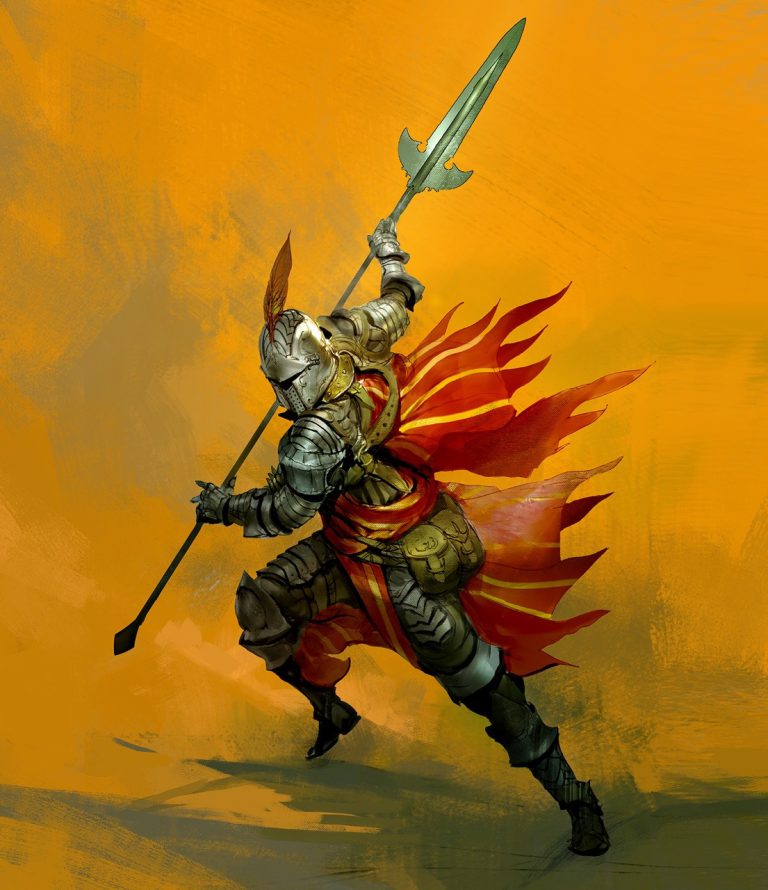
Wings of Freedom
Beginning at 15th level, as a bonus action you can sprout wings from your back (which the player can describe in detail, should they wish) that grant you a flying speed equal to your walking speed. You can retract these wings as a bonus action.
Champion of the People
At 20th level, as an action you can emanate an aura of blissful winds. For 1 minute, you are immune to being Grappled, Stunned, Paralyzed, Restrained, and having your movement slowed in any way.
Whenever a creature makes an attack against you while within your aura, they must make a Wisdom saving throw. On a failure, they must direct their attack to another creature of your choosing within their melee range or not at all. If a creature succeeds on their saving throw, they are immune to the effect for the next minute.
Oath of the Caldera
"How twisted are the vines of an untended vineyard. Just like the humble gardener, we too must shear off that which is twisted and baseless."
The Oath of the Caldera was designed to embody the demanding and downright abusive tenets of the holy order known as the Sinners of Sulfur. Every strike is made in anger; anger cultivated and grown in the face of of an unjust and unhappy life.
Few often survive long enough to bind themselves to this oath. The trials to truly being accepted into the order as an officially recognized paladin are fraught with danger meant to weed out the weak in will and body. Traditionally, most of their gear, such as weapons, armor, and holy symbols, are infused with the most holy of substances, sulfur. In recent times, many paladins of this oath were led by a grandmaster turned oathbreaker, who led them astray into purposeless violence. For this reason, many lead redemptive paths that will require of them to travel the lands to purge all manner of impurities.
Tenets of the Caldera
The Tenets of the Caldera are forged from century old traditions, running deeper than the first blood spilt into the earth. They prepare an acolyte spiritually, physically, and mentally for the path ahead of them and the burden they must uphold.
Sins of the Father. Those who take on this oath understand that they carry with them a great sin that permeates their blood, and that a life of endless toil and determination will be the only redemption they may find.
Pain is Virtue. Those beholden to great sins must repent through equally as great pain in order to cleanse the darkness in one's soul. Deviate not from suffering.
Anger is Power. Frustration and rage, should they properly be focused and applied, are tools of utmost importance in gathering the energy needed to bear the heavy burden of the sinner's path.
Martyrdom. Struggle through hell so others can strive in a heaven of your own making. Face the worst that this world has to offer and cleanse it. The impure are guilty of only one crime, that of their own existence.
Oath Spells
| Paladin Level | Spells |
|---|---|
| 3rd | Inflict Wounds, Searing Smite |
| 5th | Branding Smite, Heat Metal |
| 9th | Fireball, Haste |
| 13th | Blight, Staggering Smite |
| 17th | Flame Strike, Cloudkill (Sulfuric Gas) |
Channel Divinity
When you take this Oath at 3rd level, you gain the following two Channel Divinity Options.
Channel the Flame. You can use your Channel Divinity to focus one aspect of holy flame in particular, either its searing heat or its radiant cleansing. As a bonus action, for 10 minutes you may choose to convert any fire damage you may deal into radiant damage and any radiant damage you deal into fire damage for the purposes of bypassing resistances.
Cleanse the Impure. As an action you can use your Channel Divinity to cause a burst of holy fire, forcing all creatures within 30ft of you to make a Dexterity saving throw. A target that fails takes fire or radiant damage (your choice) equal to 5 times your Charisma modifier (minimum of 1) or half as much on a success. Undead, fiends, and aberrations have disadvantage on the saving throw.

Aura of Zeal
Starting at 7th level, you and friendly creatures within 10ft of you cannot be frightened while you are conscious. In addition, any undead, fiends, and aberrations ignite into flames when inside your aura. A creature ignited in this way takes radiant or fire damage (your choice) equal to half your proficiency bonus at the start of their turns and cannot extinguish themselves unless outside of your aura.
A creature cannot be ignited while you are charmed by it. You can also willingly choose to not ignite a creature if it would otherwise be.
When you reach 18th level in this class, the aura affects creatures within 30 feet of you.
Spirit of Pain
At 15th level, the essence of violence and pain come under your control. Whenever a creature has taken fire or radiant damage before the end of your next turn, your attacks against them can score a critical hit on a 19 or a 20.
Child of the Caldera
At 20th level, you've finally become one with the Holy Caldera and the essence of fire itself. You can use your action to gain the benefits below.
-
You have immunity to radiant and fire damage.
-
You have advantage on Constitution saving throws, as do allies within 30ft of you
- When any hostile creature enters your Aura of Zeal for the first time since activating this feature, they immediately take 20 fire or radiant damage.
Once you use this feature, you can't use it again until you've finished a long rest.
Ironclad
"We ain't living by no code, but to turn suffering into strength is purpose enough."
The Ironclads were a mercenary company who fought only for coin and ego, who became popular during the Dominance Wars. Traditionally, they donned themselves head to toe in heavy duty plate armor, and were known for being steadfast and incredibly stubborn in the face of overwhelming odds. Even with the company having gone into hiding and seemingly disbanded in recent years, their training regimen and technique remains.
Sturdy
Starting at 3rd level, your training regimen demands exemplary stamina and fortitude. You gain an additional 2 hit points for every fighter level you gain with this sublcass. This includes whenever you choose this subclass at 3rd level.
Honed Technique
When you choose this archetype at 3rd level, you gain the following features.
Thick Skin. Whenever you take damage, you may use your reaction to expend a hit die and reduce the damage by the total amount rolled + your Constitution modifier.
Spiteful Resistance. Whenever you suffer a critical hit, you may use your reaction to spend 2 hit dice and turn it into a normal attack. Any effects that would apply on a critical hit are canceled. In addition, you may make one attack against the creature who made the attack if they are within range.
Burdened Strike. Whenever hitting with an attack, you can choose to also expend one of your hit die and add the amount rolled to the damage dealt while also taking damage equal to the amount rolled.
In addition, you also gain proficiency with heavy armor if you didn't already have it.
Unrelenting Comeback
Starting at 7th level, whenever you are knocked down to 0 hit points, and not outright killed, you may use your reaction to remain at 1 hit point instead. Whenever you use this feature you can spend as many hit dice as you wish, provided you have them, and gain temporary hit points equal to the amount rolled.
You can use this feature as many times as equal to half your Constitution modifier (rounded down). Once you expend all uses of this feature, you must finish a long rest before using it again.
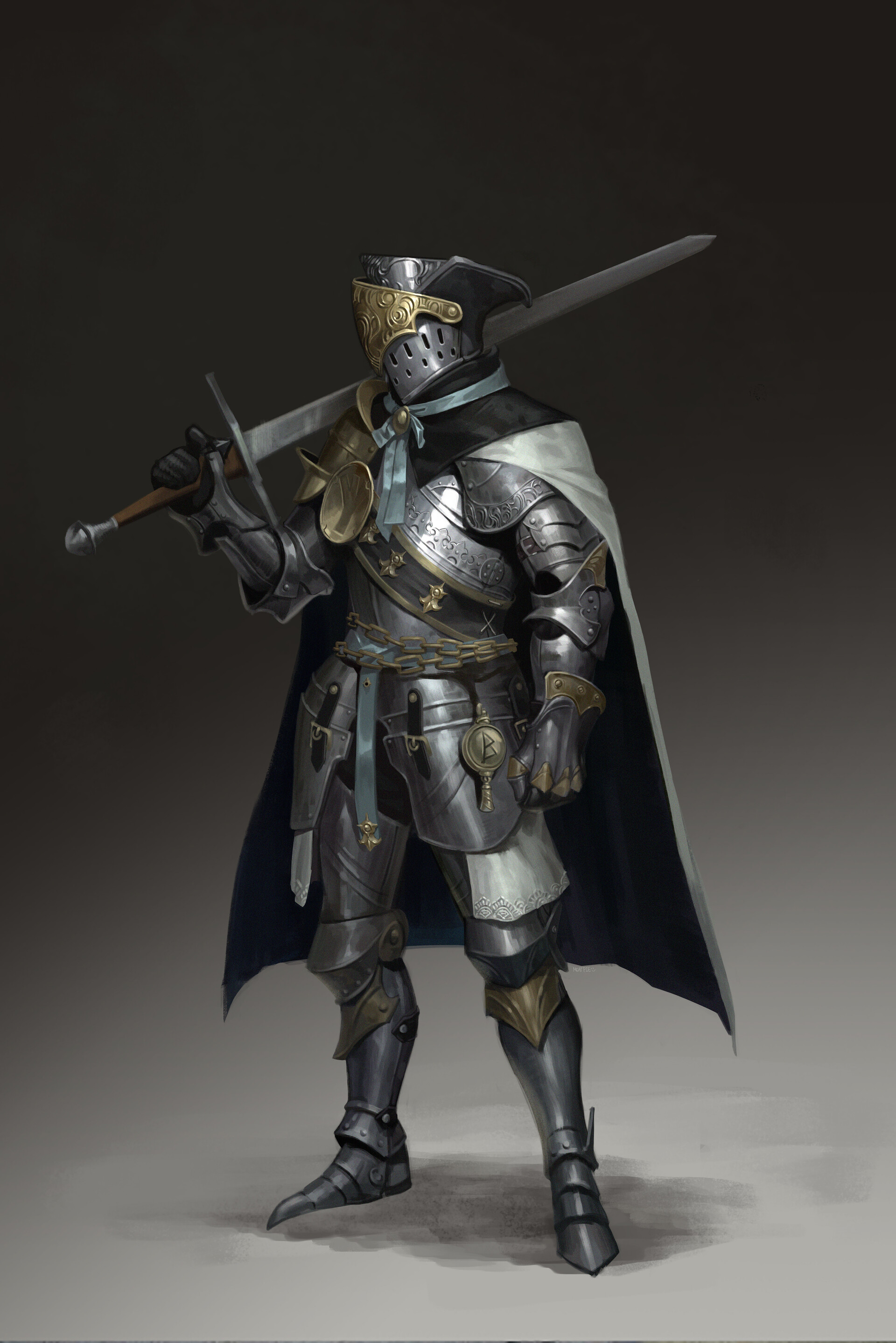
Enhanced Vitality
At 15th level, your hit dice turn into d12s and you gain an additional 20 hit points. In addition, you regain all hit dice back on a long rest instead of half.
Sufferer's Strength
At 18th level, whenever you suffer a critical hit you can choose to add half of the damage taken from that attack on your next attack whenever you hit. If you choose not to, the extra damage is wasted.
Hedge Knight
"Loyalty has gotten fine men and woman killed in the name of lesser kings. To be disloyal is to live."
Hedge knights are knights without masters, having casted off their bonds and given up on their chivalric code and noble title in favor of a scoundrel's life. Dirty fighting, reckless close combat, and brutal wrestling make up a hedge knight's battle style, engineered to give them every advantage possible at the cost of grace and fairness.
Rough Living
At 3rd level, your harsh lifestyle has taught you how to survive in the worst of environments and push yourself to endure illness.
You gain proficiency in the Survival (Wisdom) skill. In addition, you gain advantage on any saves meant to resist disease and ingested poisons.
Dirty Fighter
Starting at 3rd level, you begin to ruthlessly exploit any and all weakness in order to survive. Whenever you make an attack against a creature that a friendly creature has made a melee attack on within the last round you may do so at advantage.
Bloody Brawl
Starting at 7th level, immediately after you use the Attack action during your turn you may use your bonus action to make unarmed attacks equal to however many attacks you successfully hit during your turn, to a maximum of 3 attacks. This feature cannot be used while holding weapons with the Two-Handed or Heavy traits.
In addition, you gain proficiency with improvised weapons if you don't already have it.
Making Do
At 10th level, you are able to pack a punch with any weapon, so long as its designed to be one.
To you, any weapon that you are proficient with that deals damage equal to 1d4 or 1d6 now deals 1d8 damage of the same type it originally had. A weapon used in this way no longer has the Light or Finesse properties if they had them, as you are using the weapon outside its intended purposes. You can choose to forgo this feature whenever you want and use the weapon as normal.
In addition, anytime you roll a 1 for damage with a weapon that deals damage equal to 1d8 or 1d12 your 1 is replaced with a 2. This feature doesn't get rid of your ability to reroll the die if a feature you have allows you to do so.
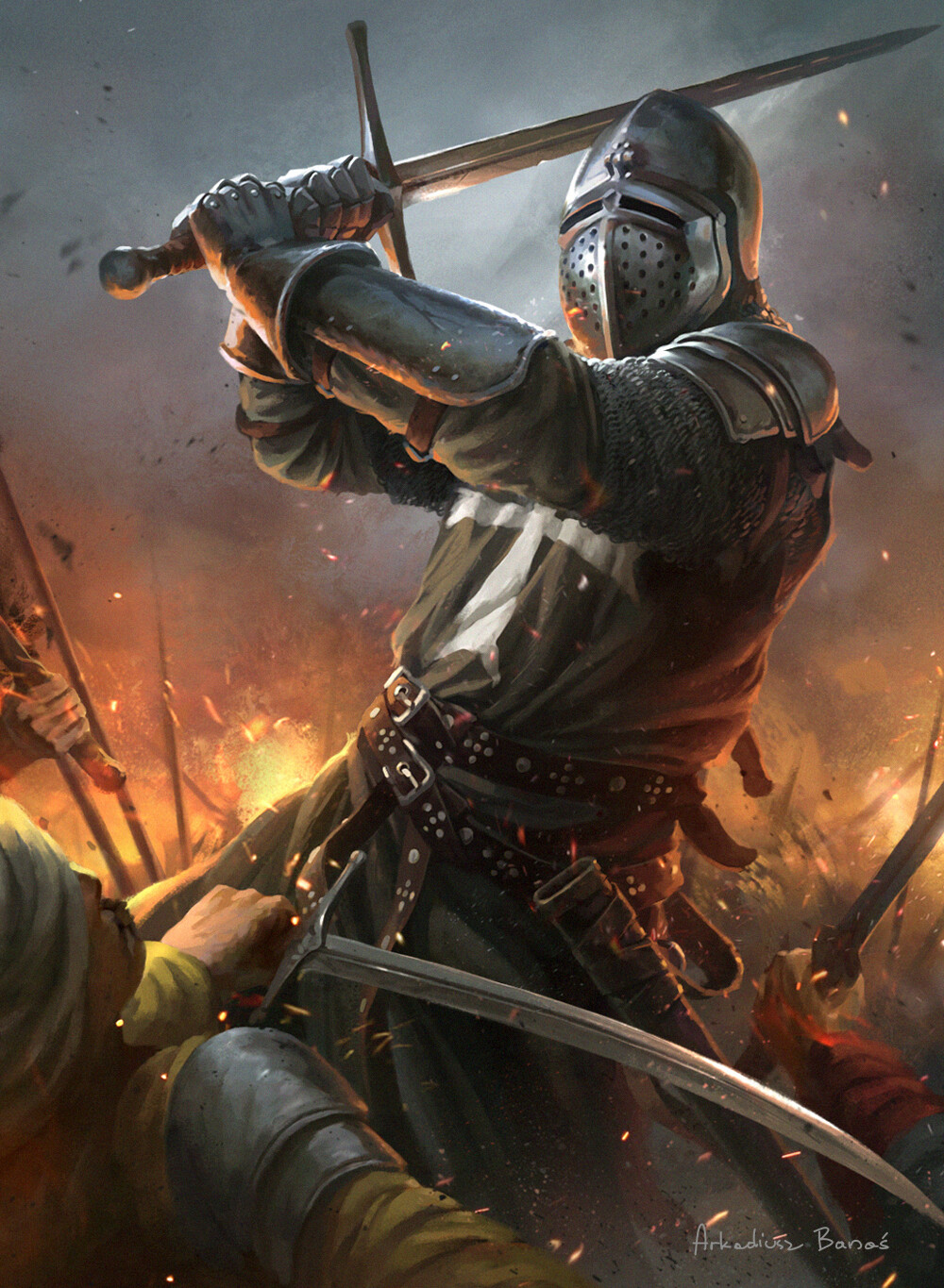


Devastating Blows
At 15th level, whenever you score a critical hit you can roll one of the damage dice one additional time and add it to the extra damage of the critical hit.
If you score a critical hit with an unarmed strike, and you do not use dice to deal the damage, you can add you Strength modifier to the damage twice for that blow.
Weary Knight
At 18th level, your survival on the harshest of paths has made you invulnerable to some attacks and resistant to most.
Whenever you take damage equal to or less than your Constitution modifier, you instead take no damage at all. In addition, whenever you use your Second Wind feature, you also become resistant to all damage except psychic and force for as many turns equal to half your Constitution modifier rounded up. This benefit lasts as long as you are conscious.
Rationalizing "Making Do"
If you are having trouble understanding how a light hammer could ever deal 1d8 damage, or a dagger the same, you could visualize it as your character aiming for chinks in armor or hitting the target while it is down or vulnerable on the ground for a moment instead of just saying "you hit harder now" as the feature initially suggests.
Siege Archer
"Enough with this ranger nonsense, you'll still stay put or die!"
As opposed to the typical fleet-footed hawk-eyed adventurer one might think of when faced with an archer, siege archers typically keep their feet rooted to the ground and stand up straight, moving only when absolutely necessary. They are at their best when allowed time to place their shots carefully, piercing through armor and breaking through bone with every loose of the bowstring.
Weight of the Draw
When you choose this archetype at 3rd level, you learn to use your strength and the weight of the bowstring to supplement your archery skills. When using a shortbow or a longbow, you can use your Strength instead of Dexterity when calculating your to hit and damage modifiers.
Steady Stance
At 3rd level, you may use your bonus action to take an archer's stance, assuming you haven't moved more than half your total movement in that turn. Until you either end this stance as a free action, are knocked unconscious, die, or forced to move through some effect you gain the following effects:
- Your movement speed is halved.
- Attacks with ranged weapons no longer impose disadvantage when done so from their long range
- Attacks with ranged weapons have an additional +2 bonus to hit when done so from their short range.
- Once per turn when you successfully hit a creature, the creature takes additional damage equal to your Strength or Dexterity modifier.
Hold Breath
Starting at 7th level, while the effects of the Steady Stance feature are active you can choose to forgo all movement for that turn in order to gain advantage on the next attack you make in that same turn. If you had already moved in that turn, this feature cannot be used.
Improved Stance
At 10th level, you can enter your archer's stance even after expending all of your movement in that turn. In addition, while benefiting from your Steady Stance feature you have advantage on saves against all effects that would force you to move.
Pack a Punch
At 15th level, when successfully hitting with a ranged weapon, you deal additional damage equal to the difference between your total roll to hit and your target's AC. If the DM would rather calculate this on his own, rather than give away the creature's AC, they may choose to do so.
Safe Distance
At 18th level, you no longer provoke attacks of opportunity when benefiting from your Steady Stance feature.
Path of the Rust Taken
"Your flesh will be overcome, your guts will surrender unto it, your blood will rot and turn, yet you must never let it take your mind."
Barbarians of this path are not followers of some primal code or adherents to rage alone, but more or less victims trying to make the best of an awful situation. These individuals race against time as their bodies slowly succumb to a terminal illness known widely as the "Rusting Rot." Making do with what time they have left, they turn their suffering and pain into raw strength. Ironically gaining momentary bouts of superhuman strength from their symptoms, which does not come without its own painful ends.
Of Aged Iron
Starting when you first choose this path at level 3, your flesh has already begun to transmute into a rusted and tough shell and your blood clots and hardens quickly. While raging, you are able to subtract damage from attacks made against you to an amount equal to your proficiency modifier.
Tight Lock
At 3rd level, as your joints lock and become like an iron grip your true hold on your weapons and stance becomes undeniable. You have advantage on all checks and saves against being disarmed, made prone, or move against your will.
Blood into Steel
At 6th level, your inner body begins to painfully turn into rusted iron, giving you the painful strength of iron in your bones and muscles. You gain the following benefits:
- You gain advantage on saves against poison and effects meant to petrify you.
- You gain resistance to poison damage
- Mechanically, you are not able to be targeted by Heat Metal or similar spells and effects unless you are actively carrying metal gear on your person
Weaponized Weakness
At 10th level, you have discerned how to extend the magic of your illness onto the metal gear you use. While you’re raging, your melee weapon attacks with metal weapons deal extra poison damage equal to 1d6 + half your barbarian level.
Sturdy Shell
Beginning at 14th level, your body has become deformed by injury and wrought mostly into metal and rust, bearing you invulnerability at the expense of comfort and fine mobility. While raging, when you suffer a critical hit you can use your reaction to turn that into a normal hit.
The Rusting Rot
Usually enchanted gear is made to never rust, yet when haphazardly enchanted or made improperly usually they succumb to the elements either way. Only then is it the breeding ground for this disease. Scavengers, smiths, or engineers who cut themselves upon these weapons oftentimes come to be afflicted with the Rusting Rot.
Symptoms of those afflicted range from having aching joints which lose range of motion and flexibility as the disease progresses to outright having their skin partly transmute into rusted iron. What organic skin is left becomes dried, itchy, and painful, and the person's internal organs begin to slowly rot. Another interesting aspect of the disease is its ability to slowly shift metal gear and attire that the afflicted wears on their person as weeks pass by. Warriors afflicted with the disease have been known to become entombed in their rusted armor.
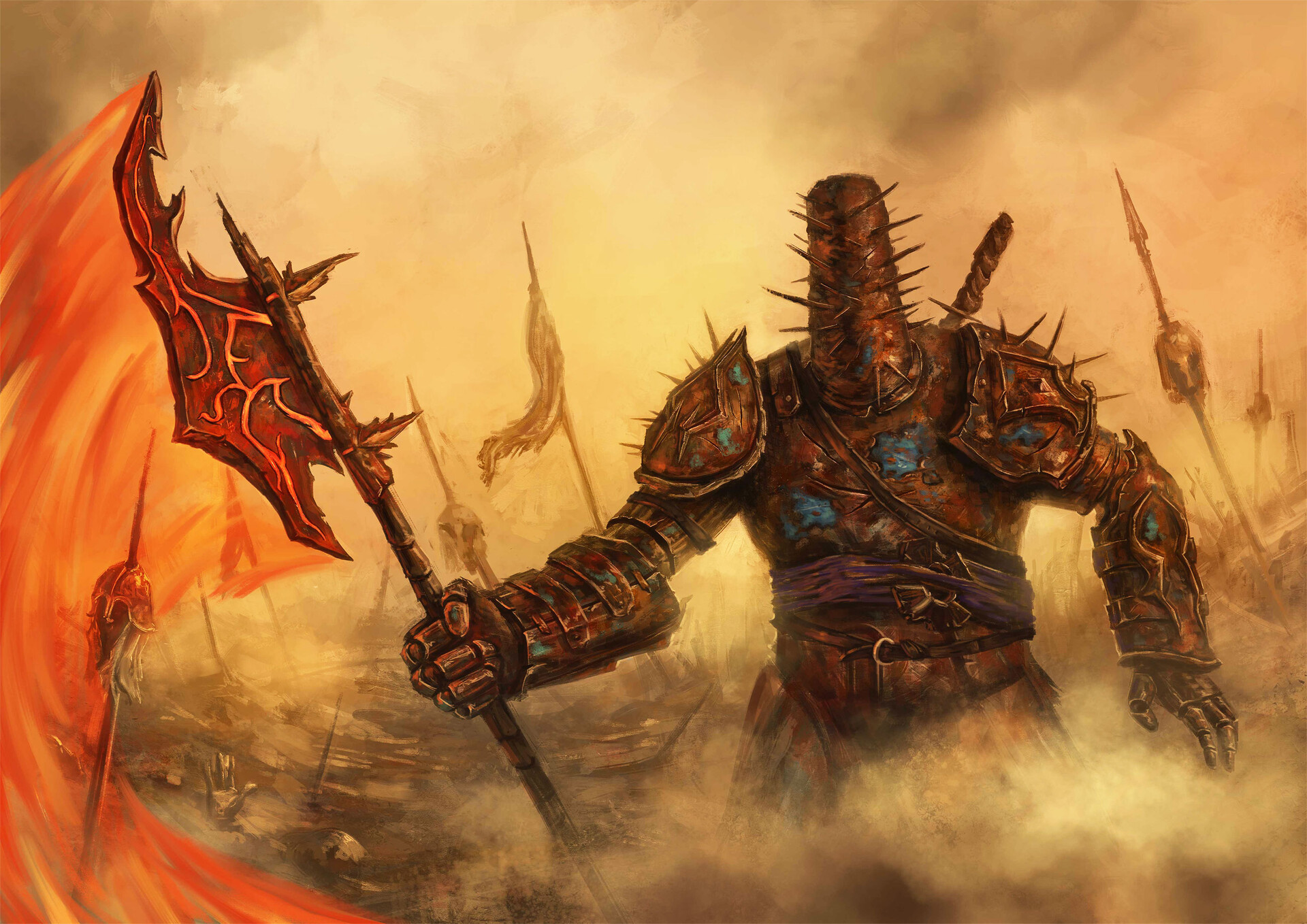
Path of the Red Tide
"Enough battles. Give me a war within myself that will either kill me or SET. ME. FREE!"
The Red Tide and its warlord, Najaat el-Ahmadi, plagued the world of Phaelithas with its madness and war-driven violence in a not so distant past. Many of the members of the Red Tide itself still remain; remaining as imprisoned war criminals, brigands, regretful old souls, and warriors without remorse.
Barbarians of this path are almost always the old remnants of the Red Tide, having intensive training and extensive experience in their bloody trade and borne from the ideals of "survival of the fittest". Whether they had sought out to join the Red Tide out of foolish or criminal intent matters little, as this path has molded them into a dreadful conquerer left without direction in a new age of peace.
Red Rage
Starting when you choose this path at 3rd level, the essence of war empowers your rage. Whenever you rage, you exude an aura of dreadful fear that extends to 15 feet in every direction around you. Whenever you deal damage to a creature within your aura, or is frightened of you, you deal extra psychic damage equal to half your barbarian level (rounded down).
Additionally, creatures of your choice that are within your aura have disadvantage on all saving throws meant to resist fear. Whenever a creature becomes frightened in your aura due to an outside source, they also become frightened of you while you are raging.
Bloody Charge
At 6th level, distance is no barrier between you and your bloody work. While raging, if you use the dash action (using your full action) you can make a single melee attack against a creature as part of it.

Soul Domain
"What does a god know what it means to be mortal? Our sight is limited, and we thrive for it. We walk the path, see the sights, endure the hardships; the gods already see the end without taking a single step. In their infinite wisdom, they cannot grow."
The Soul Domain embodies the driving force of all mortal beings and the life force which animates and forms the consciousnesses of all living beings. The immortal soul. Being a mortal concept, the Soul Domain contains no deities, it is a path where mortals are graced only be glimmers of light to guide their way.
Clerics of the Soul Domain strive to understand all pathways available to the immortal soul. Mostly believing in some form of reincarnation or reinstitution of the soul after death, those of this path see life and the lives lived as endless tests to evolve the soul and see how it changes in each lifetime. For a person to take themselves upon this domain means to attempt to end the cycle of reincarnation, seeing their immortal soul worthy of eternal rest.
Soul Domain Spells
| Cleric Level | Spells |
|---|---|
| 1st | Bless, Protection from Good and Evil |
| 3rd | Enhance Ability, Darkness (Can be a cloud of opaque light or darkness) |
| 5th | Spirit Guardian, Life Transference |
| 7th | Compulsion, Guardian of Faith |
| 9th | Hallow, Awaken |
Bonus Cantrip
When you choose this domain at 1st level, you gain the guidance cantrip if you don't already know it. The cantrip doesn't count against the number of cleric cantrips you know.
Glimmer of Radiance
Also at 1st level, your immortal soul acts as a shepherd to the faltering. Whenever you use a spell of 1st level or higher to restore hit points on a creature, they also gain an extra 1d6 to add to any ability check, saving throw, or attack roll they make within the next 10 minutes.
A creature may only have one die at a time and you can only give out as many dice equal to your proficiency modifier.
Channel Divinity: Cure Soul
At 2nd level, you can use your channel divinity to cleanse impurities in any soul.
As an action, you present your holy symbol and all creatures of your choice currently under the Paralyzed, Stunned, Frightened, Poisoned, or Charmed conditions are freed from them.
If a creature that is targeted does not have any of these conditions and also has an extra die from the Glimmer of Radiance feature, they instead heal the amount rolled from that die without expending its use, even if they are unconscious.
Inescapable Incandescence
At 6th level, your soul revels in its own light and spirituality, abjuring yourself to darkness and bolstering your radiance.
- You gain resistance to necrotic damage
- Radiant damage you deal ignores resistance to radiant damage
Potent Spellcasting
Starting at 8th level, you add your Wisdom modifier to the damage you deal with any cleric cantrip.
An Undying Soul
At 17th level, your immortal soul shines with the light of a thousand lives lived. You gain the following benefits:
- You gain immunity to necrotic damage
- You gain advantage on all saving throws against spells and effects that give the Paralyzed, Stunned, Frightened, Poisoned, or Charmed conditions.


Circle of the Bleeding Stem
Blighted Souls
This continued content of Subclasses are ones carrying themes of The Three Blights, and as such deserve their own separate subsection. All information about The Three Blights is found in Chapter Two: The Three Blights which is located on pg 6.
Oath of the Hollow
"I do..."
The Hollow rarely act in the preservation of themselves, eagerly sacrificing themselves for their own ideals of cleansing and purification of the unclean (which, to them, is all mortal kind). This also applies to whom they 'love', whom they would give the world to preserve. Exotic and practically unheard of is it that a creature from The Hollow comes to love a mortal in the same way it loves its own, let alone romantically. Yet there are exceptions. These exceptions are usually an exile among their own kind, one that has been touched by energies that have warped their mind, or an even stranger case of mutual love between a mortal and an aberration.
A paladin who binds themselves to the Oath of the Hollow has also binded themselves to their own marital oaths, for it is true that those who have taken to this oath have come to love and bond with a creature from The Hollow; enough to call them their partner and spouse. Acting as a divine host in absence of a deity or traditional oath, this oath would be meaningless and hollow if it weren't for the genuine mutual love binding the paladin to the host and vice versa.
Tenets of the Hollow
Despite its alien origins, the host and paladin act as one and understand each other's soul; this means that the tenets of their oaths to each other are clear and concise. All of them are commitments to strengthening the bond between host and paladin.
Philia. A deep romantic bond for one's host is all well and good enough, but true lasting love must be between two companions of great friendship and interest in each other.
Ludus. Enriching the soul of one enriches the soul of their partner equally. This world, and the worlds beyond, is full of experiences yet to be rediscovered or repeated anew with one's host. A playful soul remains youthful until death.
Pragma. Even the greatest of fires flicker out, but the ashes remain to prove of its continued existence elsewhere. The same is as with love of all kinds, where passion will fade yet the bond remains stronger than ever. Remember to always keep your host by your side, even in the darkest of days.
Eros. A love to get lost in is a love that is fiery and passionate as it is dangerous and self destructive. You must know how far is too far. Let even your most darkest desires be curbed by the mere thought of your partner.
Agape. One only gets what they otherwise put into the world. The love from your partner is conjured only from what you allow yourself to feel.
Oath Spells
| Paladin Level | Spells |
|---|---|
| 3rd | Arms of Hadar, Sanctuary |
| 5th | Calm Emotions, Silence |
| 9th | Blink, Spirit Guardians |
| 13th | Black Tentacles, Sickening Radiance (XGE) |
| 17th | Contact Other Plane, Telekinesis |
Channel Divinity
When you take this Oath at 3rd level, you gain the following two Channel Divinity Options.
Lover's Bond As an action, you can present your symbol and extend your host's will to all creatures that you choose within 30ft. They must make a Wisdom saving throw or be frightened or charmed by you (your choice) for 1 minute or until it takes damage.
Eldritch Confession. As an action, you profess your truly alien and eldritch love for all to hear and cause their senses to overload and temporarily shutdown. Each creature of your choice within 30ft, that can hear you, must make an Intelligence saving throw or become restrained and stunned until the end of your next turn.
Aura of Union
Starting at 7th, you and friendly creatures within 10ft gain temporary hit points equal to 2 times however many friendly creatures are in your aura at the start of each of your turns while you are conscious.
Eldritch Spirit
Starting at 15th level, your soul begins to interfuse with the energies of your host's form which then lash out as soon as your mortal shell begins to break. You deal psychic damage equal to 1d6 + your charisma modifier to the nearest hostile creature within 15ft if you end your turn in combat with fewer than half of your hit points remaining and you aren't incapacitated.
Hollow Angel
At 20th level, you and your host become as one, unified in both marriage and soul. Your soul is forever changed, and so is theirs.
As an action, you can present this unity in its fullest and transform into a hybrid creature. Your physical appearance might take on some features synonymous towards other creatures of the Hollow, such as bearing multiple glowing eyes, runes carved into your flesh that carry text in both Celestial and Deep Speech, small nonfunctional wings sprouting from irregular places, or blackened eyes which drip with an ebony ichor. You gain the following benefits.
- You gain a flying speed equal to 30ft
- You have immunity to psychic damage, the charm condition, and the frightened condition.
- For 1 minute, bright light shines from you in a 25ft radius. This light casts no shadow and ends abruptly at the end of its range. This light can penetrate most barriers, but can't penetrate a thin sheet of lead.
- All creatures who start their turns within this light take 20 necrotic damage and can't regain hit points until outside the area.
The Seraphim
"Imagine, for a moment, an ant comes to ascertain humanity. It suffers love and endures hatred, feels happiness and comes to know sadness. Then all at once, these once unknowable feelings come to fade, never again to be replicated or reached. How far do you think that ant would go, how mad it would be driven to feel those alien whims once more?"
Those who consign themselves to pacts with creatures from the Hollow are more victims than opportunists or clever schemers. They are those who have come into intimate contact with The Hollow, either having been a possessed host for a time, being exposed to their foul energies, or being chosen by an especially powerful one as a puppet.
They have been graced by Hollow emotion, an alien feeling mortals cannot replicate, and crave for more. As such, they practice and attune themselves to the esoteric arts and mutative anatomy of The Hollow. Such study brings them ever closer to their patrons and masters, powerful Hollow monarchs known as The Seraphim.
Expanded Spell List
The Seraphim lets you choose from an expanded list of spells when you learn a warlock spell. The following spells don't count towards your total warlock spells known.
| Spell Level | Spells |
|---|---|
| 1st | Inflict Wounds, Bane |
| 2nd | Blindness/Deafness, Alter Self |
| 3rd | Animate Dead, Slow |
| 4th | Polymorph, Stoneskin |
| 5th | Awaken, Contagion |
Bonus Cantrips
At 1st level, you learn the word of radiance and the chill touch cantrips if you don't already have them.
Hex of Hollows
At 1st level, you can grasp at the wisps of the mutative power of The Hollow, which you can use to curse your enemies. As a bonus action, you can target a creature within 30 feet of you. The target is cursed for 1 minute. The curse ends early if the target dies, you die, or you are incapacitated. Until the curse ends, you gain the following benefits:
- You gain a bonus to damage rolls against the cursed target. The bonus equals your proficiency modifier
- You know of the cursed creature's exact location as long as you are on the same plane of existence
- Whenever the cursed creature regains hit points, you also regain half the amount they healed
Additionally, when you curse a creature you can also choose one ability. Until the curse ends, both you and the target have disadvantage on all saving throws made with the chosen ability.
You can't use this feature again until you finished a short or long rest. Until then, you can also expend a spell slot to use it once more.
Exalting Power
At 6th level, the corrupting influence of your occult patron can abscond away with your enemy's energy, replacing it with lethargy.
Whenever a creature cursed by your Hex of Hollows feature casts a spell, you can use a reaction to force them to make a Constitution saving throw. If they fail, that spell and spell slot is wasted and you instead regain a pact slot. Once a creature fails this saving throw, you cannot use this feature again until you finish a short rest.
A New Church
At 10th level, you become a beacon of your patron's ambitions and purifying influence in the Material World.


Whenever you kill a creature that is cursed by your Hex of Hollows feature within 60 feet of you, you can use your reaction to purify its sinful soul and recreate it into a Purified Shell that is controlled by you, choosing one of three forms (which are found below). This process leaves behind the corpse as a hollow shell with paper thin skin.
When the Purified Shell is created, it appears in the same space as the creature it was recreated from. Any additional creatures summoned by means of the Cleansing Fervor ability are not under your control, and act independently of your wishes.
Purified Serf
Medium Aberration, Lawful Evil
- Armor Class 14 (natural armor)
- Hit Points 32 (5d8 + 10)
- Speed 30 ft.
STR DEX CON INT WIS CHA 15 (+2) 13 (+1) 14 (+2) 3 (-4) 3 (-4) 1 (-5)
- Damage Resistances cold, fire, acid, thunder, lightning, poison, psychic, and slashing, bludgeoning, and piercing from nonmagical attacks
- Condition Immunities charmed, stunned, exhaustion, poisoned
- Senses passive Perception 6
- Languages Can understand celestial and deep speech but cannot speak
Cleansing Fervor. Whenever the purified serf slays a creature, they can use their reaction to recreate the slain creature's body into a Purified Serf, Purified Layman, or Purified Acolyte (its choice).
Actions
Multiattack. The purified serf makes two slam attacks
Slam. Melee Weapon Attack: +4 to hit, reach 5 ft., one target. Hit: 9 (2d6 + 2) bludgeoning damage.
Hollow Radiance (Recharge 8). As an action, the purified serf can break open its outer shell and unleash powerful radiation in a 15ft cone. All creatures in that range must make a DC 12 Constitution saving throw or take 4d4 radiant damage or half as much on a successful save.
Purified Layman
Medium Aberration, Lawful Evil
- Armor Class 12
- Hit Points 26 (4d8 + 8)
- Speed 30 ft.
STR DEX CON INT WIS CHA 13 (+1) 14 (+2) 14 (+2) 13 (+1) 12 (+1) 11 (+0)
- Damage Resistances poison, psychic
- Condition Immunities charmed, stunned, exhaustion, poisoned
- Senses passive Perception 11
- Languages Can understand celestial and deep speech but cannot speak
Cleansing Fervor. Whenever the purified layman slays a creature, they can use their reaction to recreate the slain creature's body into a Purified Serf, Purified Layman, or Purified Acolyte (its choice).
Forced Balance. The purified layman cannot be forced to or willingly roll at disadvantage or advantage by any magical or mundane effect. In addition, if the purified layman deals damage to any creature, other than itself, that is below half its maximum hit points, it instead heals the target for the amount of damage rolled, unless they are unconscious.
Actions
Quarterstaff. Melee Weapon Attack: +3 to hit, reach 5 ft., one target. Hit: 4 (1d6 + 1) bludgeoning damage, or 5 (1d8 + 1) bludgeoning damage if used with two hands to make a melee attack.
Reactions
Incite Balance. Whenever a creature makes an attack roll, saving throw, or ability check at advantage or disadvantage within 30ft, the purified layman can use its reaction to force the creature to roll as normal.
Purified Acolyte
Medium Aberration, Lawful Evil
- Armor Class 9
- Hit Points 12 (8d8 – 24)
- Speed 30 ft. (hover)
STR DEX CON INT WIS CHA 1 (-5) 3 (-4) 4 (-3) 17 (+3) 15 (+2) 16 (+3)
- Saving Throws Cha +5, Int +5, Wis +4
- Damage Resistances poison, psychic
- Condition Immunities charmed, stunned, exhaustion, poisoned
- Senses darkvision 30ft., passive Perception 12
- Languages Can understand celestial and deep speech but cannot speak
Cleansing Fervor. Whenever the purified acolyte slays a creature, they can use their reaction to recreate the slain creature's body into a Purified Serf, Purified Layman, or Purified Acolyte (its choice).
Spellcasting. The purified acolyte is a 5th-level spellcaster. The purified acolyte's spellcasting ability is Charisma (spell save DC 13, +5 to hit with spell attacks). The purified acolyte has the following cleric spells prepared:
Cantrip (at will): guidance, toll the dead, word of radiance, resistance
1st level (4 slots): bless, bane, cure wounds, protection from evil and good
2nd level (3 slots): hold person, spiritual weapon
3rd level (2 slots): bestow curse, animate dead
Actions
Hollow Radiance. Ranged Weapon Attack: +5 to hit, range 90/120 ft., one target. Hit: 5 (2d8 + 3) radiant damage.
Whenever you next take a long rest after using this feature, all Purified Shells summoned in this way disappear in a flash of starlight as your patron collects them for its own uses. Additionally, any additional creatures summoned by the Purified Shells under your control disappear in a similar way for the same reason.
You can only control one Purified Shell at a time, and you must take a long rest before using this feature again.
Throne Regent
At 14th level, you have begun the final steps towards ascending to a Hollow-like state. Using an action, you can transform into alien form and gain the following benefits for a minute:
- You no longer suffer the detrimental effect to your saving throws when cursing a creature with your Hex of Hollows feature
- Your creature type changes to an aberration
In addition, you can pick one additional Eldritch Invocation option when you reach this level.
Circle of the World's Disease
"The difference between parasitism and mutualism lays not in the consent of each creature, but whether or not a practical benefit is found from both parties. When faced with this Blight, we can choose to be victims or partners."
The Hunger is a dark and parasitical side of nature, but a part of nature nonetheless; its mysterious and malicious origins notwithstanding. Though many druids of both dark and light natures may both be mutually appalled by its existence, there are some souls who see opportunity in the chaos that the First Blight leaves in its wake. These druids come to form a clandestine organization known to outsiders as the Circle of the World's Disease.
A druid from within this circle can either be an insane opportunist who has abandoned most of their traditional teachings or a grim scholar dealing with a necessary evil for the betterment of their ideal world; that ideal world being one without the First Blight.
Grim Roots
When you pick this circle at 2nd level, you can use your bonus action to expend a use of your Wild Shape feature and ingrain yourself into the ground with writhing roots for 10 minutes. These roots grow outwards from you for 20 feet, creatures you choose use 15 feet of movement for every 5 feet they move. While in this state, you gain the following effects:
- You cannot willingly move outside the circle of roots, but can move anywhere inside it. Being teleported or forced to move outside of this circle causes this feature to end and the roots to wilt and wither away.
- At the start of every round, while conscious you gain temporary hit points equal to your Wisdom modifier + half your Druid level.
- Creatures who treat the circle of roots as difficult terrain take slashing damage equal to your proficiency modifier upon entering and leaving the circle.
Acolyte of the Parasite
At 2nd level, whenever you deal damage to a creature that isn't a construct, you can use your reaction and deal extra damage equal to one of the target's hit dice and heal another creature of your choice, including yourself, within 60 feet of you for the amount of extra damage dealt.
You can use this feature as many times equal to your Wisdom modifier. A long rest restores all expended uses of this feature.
The Ravenous Plagues
At 6th level, the First Blight's influence has gifted you control over a selection of diseases that it has engineered specifically to your needs. At the end of every long rest, you can choose two of the following features:
Lockjoint. Using a bonus action, you can target a creature and their joints and torso to swell excessively. A creature under this effect moves at half their original speed and has disadvantage on Constitution saving throws meant to maintain concentration on a spell for the next minute. This effect lasts as long as you maintain concentration, as if you were maintaining concentration on a spell.
Bloatpox. Using an action, you can force a creature to make a Constitution saving throw or grow painful pus filled cysts which burst and deal 1d8 extra acid damage to whenever the affected creature next takes slashing, piercing, or bludgeoning damage for the next minute. On a success, the target becomes immune to this feature for the next 24 hours.
Cordyceps' Mimic. Whenever a creature within 20 feet of you targets you with an attack, you may use your reaction to infect them with spores and force them to attack another creature (that isn't itself) of your choice.
Gut-wyrms. Using an action, you can infect a creature with tiny wyrms for the next minute or until the creature next receives magical healing. For the duration of the effect, the target cannot eat or drink. If the creature dies while infected, the wyrms burst forth from the body and devour it entirely, leaving nothing behind but its gear.
Bursting Jitters. Whenever a creature dies within 30ft of you, you can use your reaction to cause its body to momentarily shake and swell until it explodes in a spray of acidic bile and bone shards. Each creature within 10ft of the corpse must make a Dexterity saving throw and take 2d4 acid damage and 2d4 piercing damage or half as much on a success.
You can use this feature as many times equal to your proficiency modifier. Also, a creature that is immune to disease is similarly immune to all of these features.
In addition, you also gain resistance to poison damage and become immune to disease.
Spreading Pestilence
Starting at 10th level, whenever you expend a use of your Wild Shape feature the circle of roots that grows around you reaches to 30 feet instead of 20 feet. Also, whenever a creature makes an attack roll while within your circle of roots, you can use your reaction in order to impose disadvantage on that roll.
In addition, whenever you would have contracted a disease you can choose to store it and use an action to touch a creature and transfer any one stored disease to them. You may store up to as many different diseases equal to your Constitution modifier in this way. When transferring a disease in this way, you must take a long rest before doing it again.
One Which Hungers
At 14th level, your body has come to form a symbiotic relationship with the scourge influence within you. Once per long rest, using an action or spending an entire minute uninterrupted, you can choose to consume the corpse of a Medium or smaller creature that has died within the last 10 minutes. If you use this feature using an action, you regain hit points equal to 3 of the creature's hit dice. If you use this feature over an entire minute, you instead restore hp equal to half that creature's total hit points. Whenever you consume a corpse in this way, you no longer require sustenance for the next 1d4 days.
In addition, you regain double the amount of hit points when consuming magical foodstuffs such as potions of healing or a morsel provided by the goodberry spell.
Scourge Hand
"Every rose has its thorns, which is all fine and dandy. The Hunger, on the other hand, is packing an entire armies worth of ordinance. Remember that, next time you call it just 'another plant."
Rangers of this conclave walk the most of lines, as they spend their entire careers navigating the ever shifting and utterly dangerous Hunger-ridden lands. Blazing paths through its mired terrain and chasing off the predatory denizens from within, all in the name of protecting the innocents who have had their homes consumed or entrapped within the First Blight's influence.

Many would deem them insane, wielding the scourge power of the Hunger and jumping machete first into near certain death. Many would be correct in that assessment.