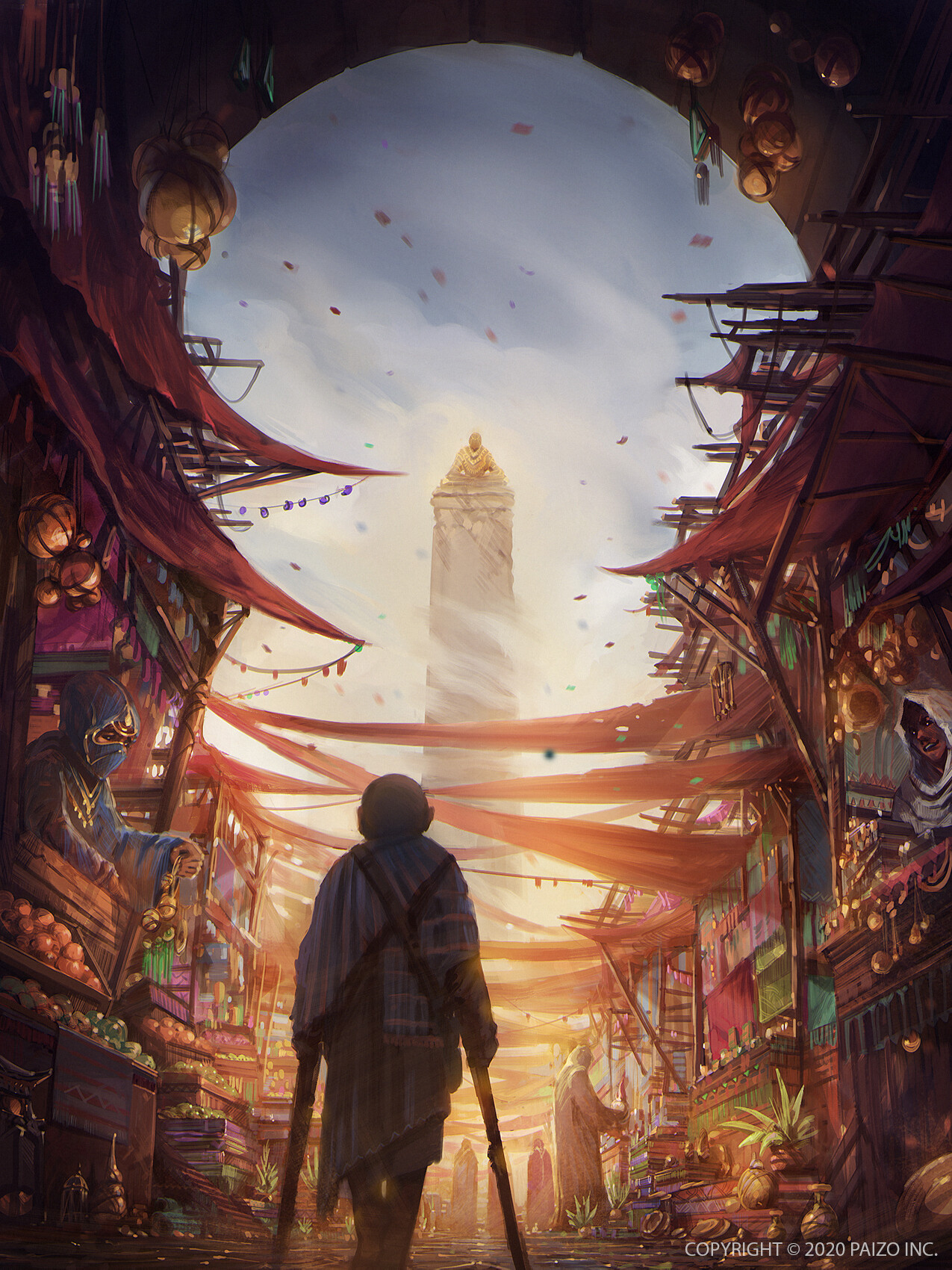
The Merchant


Merchant Cohorts
The shuffling of metallic feet on cold stone came to an abrupt stop. A messenger entered the bedroom wearing the checkered red and gold of the liege lord's bannermen. "My lord-- we've taken Glimmerman hostage. His men have been subdued."
A toothy grin adorned the liege lord's face. "Brilliant work-- where's the oaf now?"
"Right here, lord." Four men walked with a more... rotund individual between them. The man called Glimmerman stood ashamed in his gaudy silks, his second chin sagging as his eyes stared downward. "The Swine of Hosthall stands before you," said the messenger, bowing slightly as he did so.
The liege lord stood tall, his mouth twitching with excitement. "Guard," he said, projecting his voice to the men by the door. "Could one of you be so kind as to visit the kitchens? Tonight we will all feast-- at the expense of our new friend here."
One of the guards nodded to his lord and walked away briskly. After a few moments, Glimmerman said, "The Swine of Hosthall? I'd dock your pay for that, but I think I actually like that one." His voice carried a hint of enthusiasm, his face no longer as dour as it had been seconds before.
The liege lord stopped pacing and swiveled to face the men. "Beg pardon?"
"Look closer," said Glimmerman, "and you'll see my companions wear your colors-- but they're on my payroll." Glimmerman pointed to the door. "One guard and one lord against the six of us. I like those odds."
art by Lap Pun Cheung
cover art by Jorge Jacinto
What is a Cohort? (*2.0)
A creature cohort is a monster straight from the pages of Dungeons and Dragons Fifth Edition that has been redesigned for use as its own race and associated class. A cohort race and class (like the Angel race and Angelic Protector class) are typically designed to be taken together. Note that the merchant sidekick is designed for use with any lineage, and does not come with its own cohort race.
A cohort can be used for multiple purposes: as a sidekick (friendly NPC), a recurring villain/rival, or as a player character. You create a cohort much like making a character, following the same rules in the Player's Handbook.
However, cohorts are designed to be built differently depending on how they are used. If a cohort is being used as an NPC sidekick, then the cohort does not get a background at 1st level, nor do they choose a subclass as they advance in their class. Cohorts as sidekicks instead rely on the base class alone for their abilities- which leads to a more streamlined, simpler experience (at a power level a little lower than that of a full-fledged player character).
(Note that, at the time of this writing, there are multiple existing cohorts--namely Metallic Dragons, the Mind Flayer, and the Lich--that are not yet balanced around 'subclasses for characters only'. Updated versions of these cohorts are planned for the near future)

New Class: The Merchant
Class Features
As a merchant, you gain the following class features.
Hit Points
- Hit Dice: 1d8 per merchant level
- Hit Points at 1st Level: 8 + your Constitution modifier
- Hit Points at Higher Levels: 1d8 (or 5) plus your Constitution modifier per merchant level after 1st.
Proficiencies
- Armor: Light armor
- Weapons: All simple weapons
- Tools: One set of artisan's tools of your choice
- Saving Throws: Wisdom, Charisma
- Skills: Choose three from Arcana, Animal Handling, Deception, History, Insight, Investigation, Medicine, Performance, Perception, Persuasion and Survival
Equipment
You start with the following equipment, in addition to any equipment granted by your background:
- (a) a handaxe or (b) two daggers
- (a) a shortbow and a quiver of 20 arrows or (b) any simple weapon
- (a) a diplomat's pack or (b) an explorer's pack
- One set of artisan's tools of your choice
- Leather armor and 25 gold
Budget
You have access to resources above and beyond most other folk. These additional resources are represented by a number of budget points. Budget points can stand in for many possible items-- such as old coins, or other baubles and trinkets that might have superficial value. Budget points cannot be directly converted into gold or other currencies, instead representing available inventory and/or collectible items that might instead be bartered for goods and services (or used for class abilities).
When you spend a budget point, it is unavailable until you complete a long rest, at the end of which you allocate more resources from storage so that they are now ready on short notice.
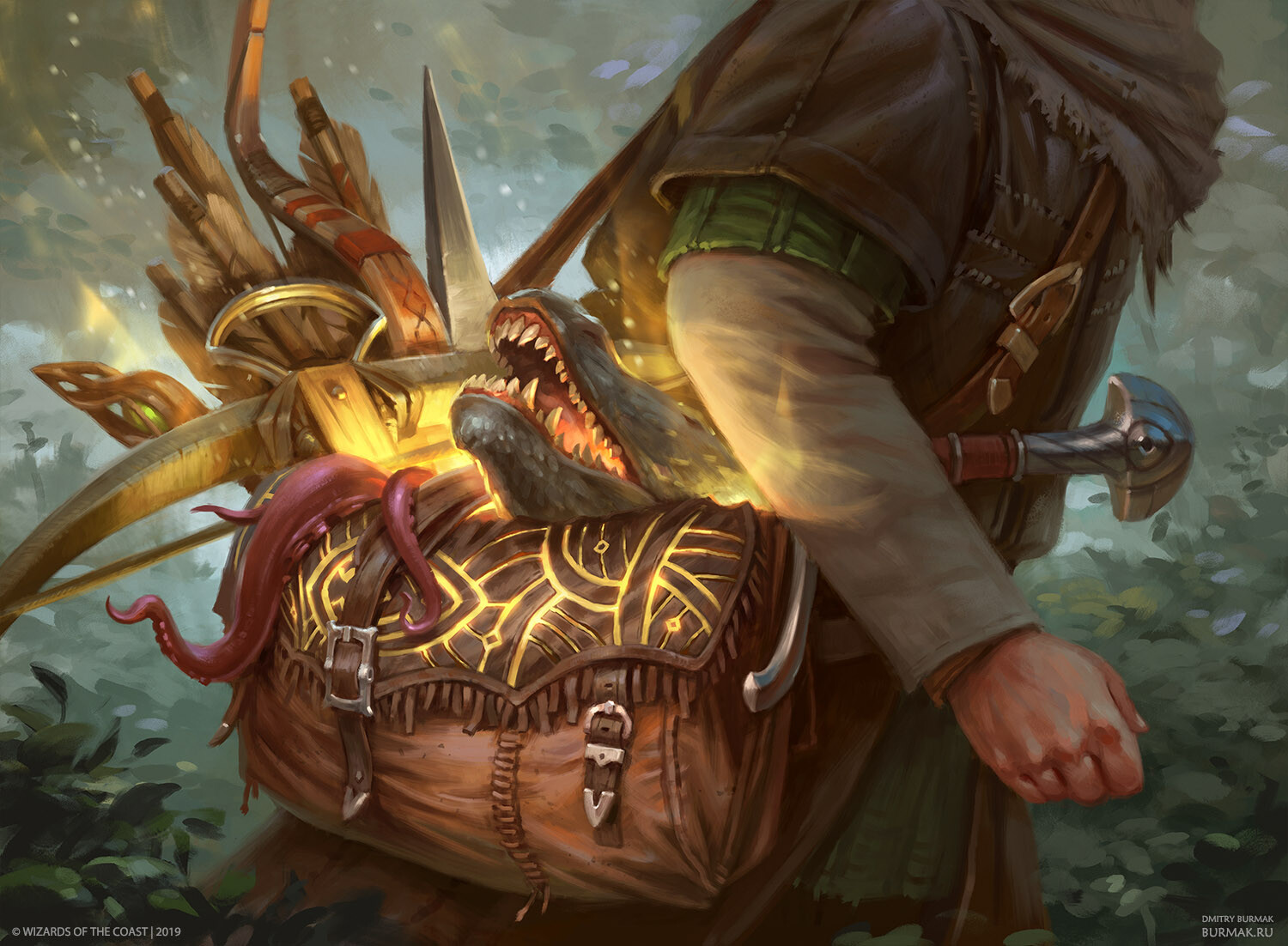
At 1st level, you may spend budget points to recover much needed, if not valuable items. As an action, you may spend 1 budget point and retrieve a single, nonmagical item or tool of 50 gp value or less. The item can emerge from your pocket, beneath your cloak, or from a haversack, perhaps, or come from your portable vault (see below). The item lasts until you complete a long rest, after which time the item breaks or is lost if it was not already recovered.
Items retrieved from anywhere other than your portable vault must weigh 20 lbs or less.
Note that items retrieved with budget points are typically mundane back stock not considered attractive for selling purposes.
Mercantilism
As a merchant, you find good deals easier to come by than most. Whenever you and your companions purchase items or goods from another creature, the gold cost is reduced by 10%, rounded down.
In addition, you find that others of your profession are more likely to share information with you. You have advantage on persuasion ability checks to gather information, rumors or other useful tidbits from merchants, innkeeps and other business-minded folk.
The Merchant
| Level | Proficiency Bonus | Features | Budget Points |
|---|---|---|---|
| 1st | +2 | Budget, Mercantilism, Wager | 2 |
| 2nd | +2 | Keen Eye, Opportunist | 3 |
| 3rd | +2 | Portable Vault, Specialty | 4 |
| 4th | +2 | Ability Score Improvement | 4 |
| 5th | +3 | Betting Man, Leverage | 5 |
| 6th | +3 | Specialty Feature | 6 |
| 7th | +3 | Expanded Wares | 7 |
| 8th | +3 | Ability Score Improvement | 8 |
| 9th | +4 | Guile | 8 |
| 10th | +4 | Expert Opportunist | 9 |
| 11th | +4 | Specialty Feature | 10 |
| 12th | +4 | Ability Score Improvement | 10 |
| 13th | +5 | Auctioneering | 11 |
| 14th | +5 | Master of Inventory | 12 |
| 15th | +5 | Specialty Feature | 12 |
| 16th | +5 | Ability Score Improvement | 12 |
| 17th | +6 | Personal Collection | 13 |
| 18th | +6 | Into the Vault You Go | 13 |
| 19th | +6 | Ability Score Improvement | 13 |
| 20th | +6 | Realmwide Fame | 13 |
.

art by Dmitry Burmak
Copyright Wizards of the Coast
Wager
As a bonus action during your turn, you place a bet on a creature that you can see within 60 feet. When you use this ability, choose one of the following options:
Yay. The chosen creature gets advantage on the next attack roll or ability check that they make within the next minute. If the creature succeeds on that roll, you regain 1 expended budget point.
Nay. The chosen creature gets disadvantage on the next attack roll or ability check that they make within the next minute. If the creature fails on that roll, you regain 1 expended budget point.
You can use this feature a number of times equal to your Charisma modifier (a minimum of once). You regain any expended uses when you finish a long rest.
Keen Eye
At 2nd level, you have advantage on perception and investigation ability checks when examining inanimate objects, so long as you get a close look at them (DM's discretion). A tiny object might need to be viewed from a foot away to examine closely, while a human-sized statue could be observed from further away. This ability only works on objects that are Huge-sized or smaller, such as equipment, statues, pieces of furniture or other manufactured objects, and does not work on terrain or other natural phenomena.
In addition, you may examine a magical item and determine its magical properties. This functions like the identify spell, except that you do not require any costly components, and you may only cast the spell as a ritual in this way (as though you had the ritual casting ability).
Opportunist
If there is one skill that separates merchants from the rest of the pack, it's their ability to recognize opportunities as they come. Some merchants slip into the fray to protect their friends or bolster their allies. Others just savor the chance to make themselves look good.
Starting at 2nd level, whenever an ally within 30 feet fails on an attack roll, ability check or saving throw, you may use a reaction to move up to 30 feet to a space adjacent to that ally (or the closest available space). You roll an attack roll, ability check or saving throw of the same kind as your ally (against the same armor class, or DC as appropriate), adding your modifiers as normal. Your ally substitutes your roll for theirs (so that they succeed or fail based on your roll). The result of their original roll is ignored.
You may use this ability twice, and you recover any expended use upon completion of a long rest.
Portable Vault
You have an oversized haversack, a pack animal, a personal cart (or wagon), or a specialized bag of holding that you use to store much of your inventory on the road.
Starting at 3rd level, you can retrieve items from your vault that would be too large or cumbersome to have on your person at all times. Whenever you are within 5 feet of your portable vault, you can spend 2 budget points as an action to retrieve a non-magical, inanimate object with a gp value of 300 or less. If you choose to spend 10 minutes searching instead--or conduct your search during a short rest--this ability only costs 1 budget point. Items retrieved from your vault may weigh up to 100 pounds and must fit within a 5-by-5 foot square.
You may only search for one item at a time in this way, and may not search for multiple items during a single 10 minute search.
In all other ways, the items retrieved are treated as though summoned by the Budget ability. You will have the ability to expand your stock as you increase your merchant level.
If your portable vault is lost, stolen or destroyed, you may spend one minute to send a message to your colleagues and/or merchant's guild to send a replacement (the message is typically sent via a messenger raven or a unique sending stone made for this purpose). At the end of your next long rest, a replacement vault is delivered to you with its own back stock within (other items contained in the old vault must be retrieved on your own).
Specialty
Merchants arrive at their craft along a number of different paths. Some inherit a long-standing legacy, while others aspire to create their own.
If your cohort is being created as a player character (or if it is meant to have an equivalent power level) then at 3rd level, you choose your subclass-- the Gambit Mage, the Monger, or the Walking Legacy. Specialty options are detailed at the end of this class description.
Your Portable Vault
Merchants can store their inventory in a number of ways. Some methods might be more convenient for those on the road, but other options have more storage space. There are three types of storage available: lightweight, pack animal, and cart/wagon.
When you reach 3rd level, choose one of the following options to use as your Portable Vault:
Lightweight. This bag of holding or haversack is magical and functions like a bag of holding per the Dungeon Master's Guide. The item has enough room for your back stock (as represented by the budget and portable vault abilities) with about 8 cubic feet, or 100 pounds of space to spare.
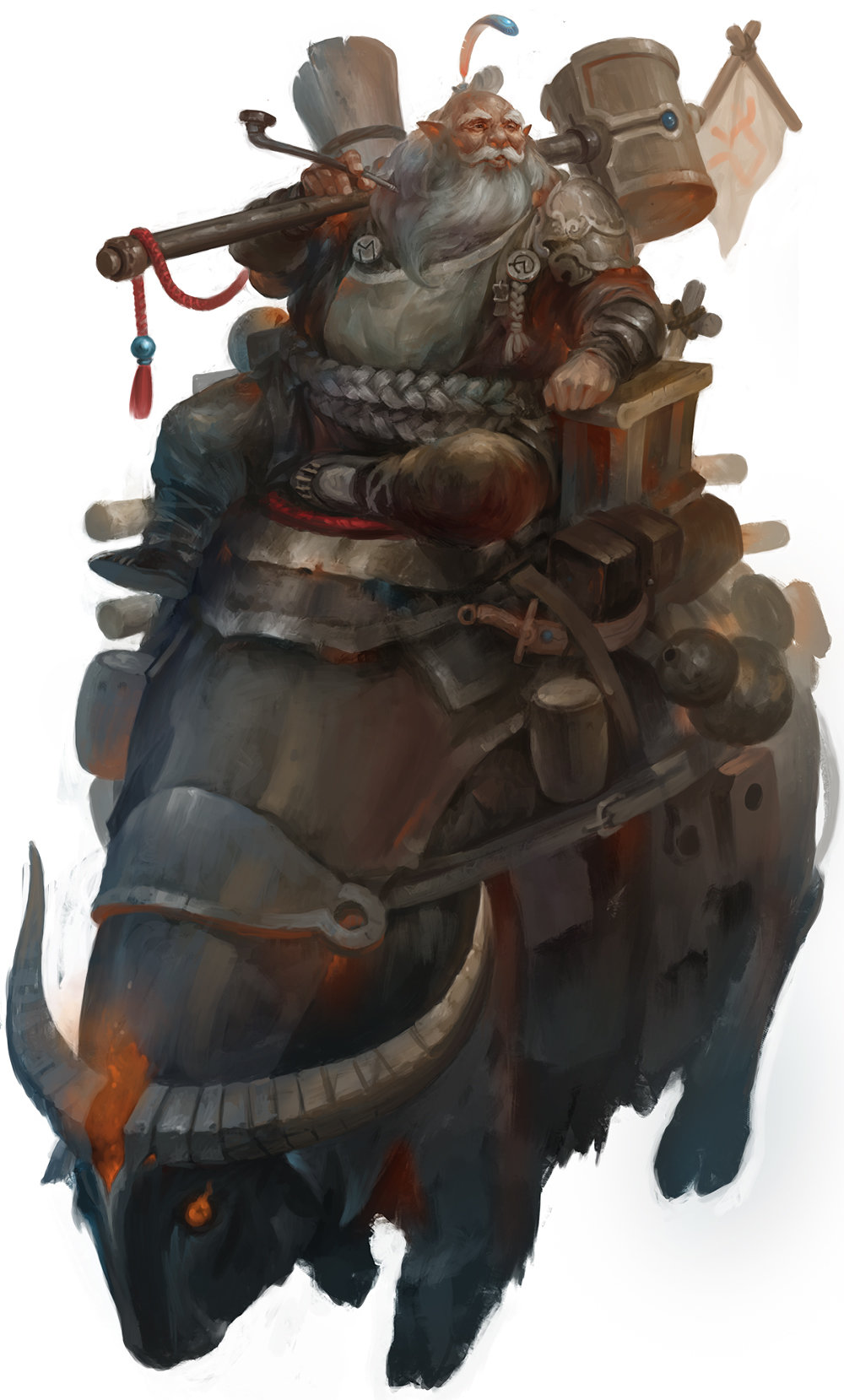
Pack Animal. You may choose the appearance of your pack animal, which uses the stat block of a draft horse (page 321 of the Monster Manual.) The animal can carry your back stock plus an additional 200 pounds of weight, in addition the rider. Whether or not an item will fit on the animal is subject to the DM's approval.
Cart/Wagon. You have a cart (taking up a 5-by-5 foot space) or a wagon (taking up a 10-by-10 foot space). A cart can be pulled by a medium-sized humanoid or mount, and can carry your back stock plus an additional 350 pounds of weight, with 25 cubic feet of spare storage. A wagon comes with two mules, both of whom are needed to pull it. The wagon can carry your back stock plus an additional 500 pounds of weight, or 40 cubic feet of spare storage. If your wagon isn't overflowing, it can fit two medium-sized creatures inside of it comfortably.
Ability Score Improvement
When you reach 4th level, and again at 8th, 12th, 16th, and 19th level, you can increase one ability score of your choice by 2, or you can increase two ability scores of your choice by 1. As normal, you can't increase an ability score above 20 using this feature.
Betting Man
At 5th level, you learn to spot opportunities that others would easily miss. When you use your wager ability, the options available are enhanced in the following ways:
Yay. If the chosen creature succeeds on their next attack roll or ability check made within the next minute, they gain a number of temporary hit points equal to 2d4 + your Charisma modifier.
.
Nay. If the chosen creature fails on their next attack roll or ability check made within the next minute, they must make a Constitution saving throw against a DC of 8 + your proficiency bonus + your Charisma modifier or take psychic damage equal to 2d4 + your Charisma modifier.
Leverage
As one who is well-versed in the value of things, you find yourself able to gauge the "price" of people too. Starting at 5th level, as an action during your turn, you may spend 2 budget points to try and tempt a creature within 60 feet that can see you. You might offer them an item of value, titillating information, or even a scrap of food (in the case of beasts or monsters). The creature must make a Wisdom saving throw against your betting man DC or become charmed by you for 1 hour or until you or your companions do anything harmful to it.
If the charmed creature understands at least one language that you know, you can also give them a single, one or two sentence command during the duration of this ability. This command functions like the suggestion spell, except its duration ends when the creature is no longer charmed.
The charmed creature regards you as a friendly acquaintance. When the effect ends, the creature knows it was charmed by you. How the creature reacts to this is up to the DM's discretion-- but if you did not cause the creature any serious harm or discomfort, they may be not be inclined to bother you.
Expanded Wares
As you experience more of the world's offerings... you gather more baubles for your collection along the way.
At 7th level, you may spend budget points to retrieve more rare and powerful items from your person as well as from your portable vault. The list of expanded wares items are sorted by merchant level on page 17 (at the end of this class description). You must meet the level requirement for any item retrieved in this way.
You do not gain the ability to cast spells from scrolls that you retrieve.
Retrieving an item in this way takes an action. As usual for your portable vault, if you choose to instead spend 10 minutes searching (or the duration of a short rest) you may reduce the number of budget points spent by 1 for a summoned item.
In addition, at the end of a long rest, you may now spend budget points to allow continued use of retrieved items. Treat any such items as though retrieved through a 10 minute search (for example, as an action, you might summon adamantine half-plate for an ally for 3 budget points. At the end of your next long rest, you only need to spend 2 budget points to keep the adamantine half-plate for your friend.) If the item was already retrieved through a 10 minute search, you cannot reduce the budget point cost further in this way.
Guile
As an experienced merchant, you learn to better identify when others try and take advantage of you. To keep your business (and yourself) healthy, you have learned to stay one step ahead of your rivals.
Starting at 9th level, whenever you fail an Intelligence, Wisdom, or Charisma saving throw, you may reroll the saving throw. You must use the new roll, and you can't use this feature again until you finish a long rest.
Expert Opportunist
At 10th level, whenever you use your Opportunist ability, you can now choose to swap positions with your ally after you move to a space adjacent to them. If you do so, you then reroll the triggering attack roll, ability check or saving throw as normal. If you choose to do this, though, you suffer the effects of success or failure in your ally's place (their failed roll is ignored). You might hit the targeted enemy instead of your ally, using one of your equipped weapons. Or if you fail a triggering saving throw, for example, you would suffer the effects of failure instead of your ally (as if you had been the intended target of the spell or ability that triggered the saving throw).
Auctioneering
At this point in your career, you can speak so... efficiently... that others can barely begin to keep up. At 13th level, as an action during your turn, you can begin to speak so loudly and quickly that it proves disruptive to those not used to it. Any creature that can hear you, and starts its turn within 60 feet of you or enters within 60 feet of you for the first time in a turn must make a Wisdom saving throw. Creatures who fail their saves have disadvantage on Concentration checks, Perception ability checks to see or hear creatures besides yourself, and on Intelligence, Wisdom, and Charisma saving throws as long as they stay in the affected area. Long-time allies are unaffected by this ability, as are creatures who spend 10 minutes (or the duration of a short rest) listening to you practice this ability out of combat. Creatures in the affected radius are keenly aware that you are the source of their discomfort.
In addition, allies are able to understand your speech if you choose to allow it. Other creatures cannot make out what, to them, sounds like surprisingly articulate gibberish.
You must use your action each turn maintaining this ability, and its maximum duration is 1 minute. You may use this ability once, and recover any expended use upon completion of a long rest.
Master of Inventory
You know what the people want, and are skilled at spotting opportunities well before they materialize. Starting at 14th level, when using an action to retrieve an item from yourself or from your personal vault, you always gain a budget point discount as though spending a full 10 minutes searching for the item.
art by Lee Kent


art by Imario Susilo
Personal Collection
You have gathered a collection of fine items that even a red dragon would find impressive. At 17th level, you can spend an action during your turn to pull forth a rare magic item of your choosing. The item is, ostensibly, one of the centerpieces of your collection, and as such comes magically warded against theft. Another creature can only hold or use the item if you hand it over to them willingly-- by grabbing hold of the item in any other circumstance, the item teleports back into your personal vault completely unharmed. This teleportation also occurs if the item is ever more than 300 feet away from you (unless it is already in your personal vault) or if you use a reaction to teleport it there yourself.
The item is visibly and powerfully warded in ways that would, most likely, scare off those who would otherwise wish to purchase it.
This ability does not expend budget points. You may only summon an item in this way once, and recover any expended use upon completion of a long rest (at the end of which, the item teleports back into your personal vault and becomes unavailable unless summoned again).
Into the Vault You Go
At 18th level, as an action during your turn, you may target a creature within 60 feet with your vault's anti-theft system. This functions exactly like the maze spell, except the creature goes into a demiplane within your personal vault. The demiplane appears to be an endless warehouse, its shelves stacked high with dusty boxes.
You may use this ability once, and recover any expended use upon completion of a long rest.
.
Realmwide Fame
Over the years, an adventurer might become a household name or a living legend. As a merchant, though, you stand apart from the others in at least one way-- you're too valuable to kill. Even those who do not understand your monetary value could be persuaded to see you not as an enemy, but as a bystander.
At 20th level, if you take damage while at half of your maximum hit points or fewer, you may use a reaction to choose a number of creatures up to your Charisma modifier (minimum of one) within 60 feet of you that you can see. You may roll a persuasion or deception ability check (your choice), opposed by the creatures' insight checks. Any creatures that fail this check begin to think of you as a non-threat and will not attack you directly. They also make any perception checks against you with disadvantage. If an affected creature has an intelligence score of 4 or more, they become charmed as well, and will actively avoid causing you any harm (by avoiding including you in the area of effect for harmful spells, for example). Intelligent creatures may even try to curry your favor (DM's discretion).
This effect lasts 10 minutes, or until you do anything directly harmful to any of the affected creatures. Your companions may continue to attack or harm the creatures as normal, however. Once the duration ends, the affected creatures are not aware that they were charmed by you or the subject of such an ability-- their behavior will return to whatever their base disposition was towards you (such as indifferent or friendly) unless your actions during the ability's duration would have provoked them otherwise (in which case, they return to being hostile).
You may use this ability once, and recover any expended use upon completion of a long rest.
Specialties
At 3rd level, some of the world's more talented merchants take on a specialty to distinguish themselves. You choose one of the specialties available: the Gambit Mage, the Monger or the Walking Legacy.
Gambit Mage
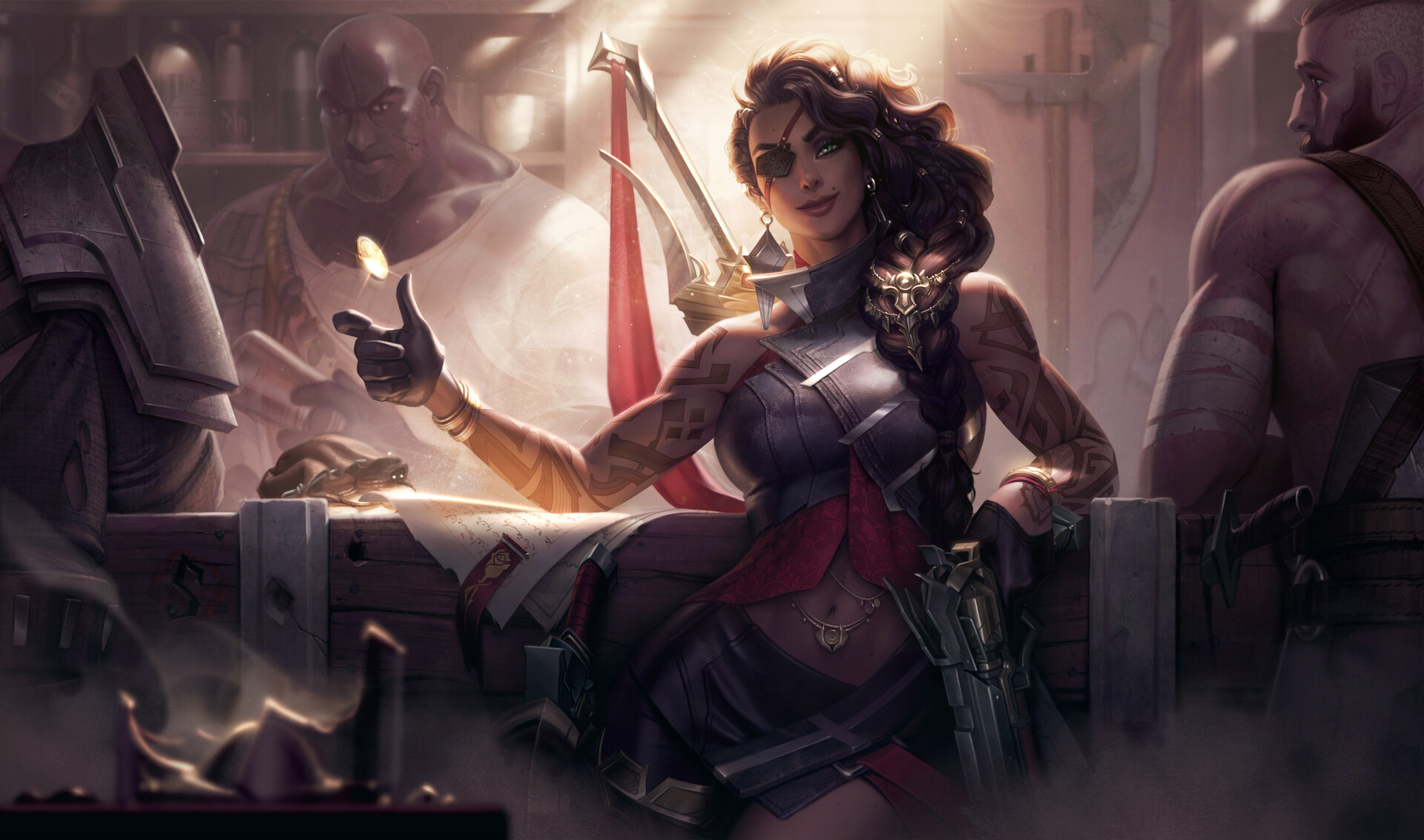
Selling wares can be an art form for those in the business. Some merchants take this approach more literally, though, choosing to use showmanship and personal skill to promote their wares (or to test their luck). These merchants are often known for their grand performances, drawing a crowd as they pelt targets with hand crossbows and throwing daggers, or by casting flashy spells to catch the eye of those wandering past their ornate shops.
Dramatic Flair
You learn to weave your attacks such that they possess an ebb and flow of their own-- elevating your combat style into a performance art. Your style might be grandiose and loud, or more subtle and slick to observe. Starting at 3rd level, when you attack with a light or finesse weapon, you can use your Charisma modifier, instead of your Strength or Dexterity modifier, for the attack and damage rolls.
In addition, you gain proficiency with hand crossbows, scimitars, short swords and whips.
Spellcasting
When you reach 3rd level, you gain the ability to cast spells.
Cantrips. You learn three cantrips: prestidigitation and two other cantrips of your choice from the wizard spell list. You learn another wizard cantrip of your choice at 10th level.
Spell Slots. The Gambit Mage Spellcasting table shows how many spell slots you have to cast your spells of 1st level and higher. To cast one of these spells, you must expend a slot of the spell's level or higher. You regain all expended spell slots when you finish a long rest.
For example, if you know the 1st-level spell color spray and have a 1st-level and a 2nd-level spell slot available, you can cast color spray using either slot.
Spells Known of 1st-Level and Higher. You know three 1st level spells of your choice, two of which you must choose from the illusion and transmutation spells on the wizard spell list.
The Spells Known column of the Gambit Mage Spellcasting table shows when you learn more wizard spells of 1st level or higher. Each of these spells must be an illusion or transmutation spell of your choice, and must be of a level for which you have spell slots. For instance, when you reach 7th level in this class, you can learn one new spell of 1st or 2nd level.
The spells you learn at 8th, 14th, and 20th level can come from any school of magic.
Whenever you gain a level in this class, you can replace one of the wizard spells you know with another spell of your choice from the wizard spell list. The new spell must be of a level for which you have spell slots, and it must be an illusion or transmutation spell, unless you’re replacing the spell you gained at 8th, 14th, or 20th level.
Spellcasting Ability. Charisma is your spellcasting ability for your wizard spells, since you learn, practice and perform more basic spells from the approach of a choreographed, artistic performer (like a theater actor, or as a showman) rather than learning advanced magicks through strictly academic study. You use your Charisma whenever a spell refers to your spellcasting ability. In addition, you use your Charisma modifier when setting the saving throw DC for a wizard spell you cast and when making an attack roll with one.
Spell Save DC
Spell attack modifier
Gambit Mage Spellcasting
| Merchant Level | Cantrips Known | Spells Known | Spell Slots 1st |
2nd | 3rd | 4th |
|---|---|---|---|---|---|---|
| 3rd | 3 | 3 | 2 | — | — | — |
| 4th | 3 | 4 | 3 | — | — | — |
| 5th | 3 | 4 | 3 | — | — | — |
| 6th | 3 | 4 | 3 | — | — | — |
| 7th | 3 | 5 | 4 | 2 | — | — |
| 8th | 3 | 6 | 4 | 2 | — | — |
| 9th | 3 | 6 | 4 | 2 | — | — |
| 10th | 4 | 7 | 4 | 3 | — | — |
| 11th | 4 | 8 | 4 | 3 | — | — |
| 12th | 4 | 8 | 4 | 3 | — | — |
| 13th | 4 | 9 | 4 | 3 | 2 | — |
| 14th | 4 | 10 | 4 | 3 | 2 | — |
| 15th | 4 | 10 | 4 | 3 | 2 | — |
| 16th | 4 | 11 | 4 | 3 | 3 | — |
| 17th | 4 | 11 | 4 | 3 | 3 | — |
| 18th | 4 | 11 | 4 | 3 | 3 | — |
| 19th | 4 | 12 | 4 | 3 | 3 | 1 |
| 20th | 4 | 13 | 4 | 3 | 3 | 1 |

High Roller
At 3rd level, you become proficient in the Performance skill as well as one gaming set of your choice. If you are already proficient in the Performance skill, you may instead choose another skill from the merchant class proficiencies list. You may use a gaming set as an arcane focus for your spells so long as you are proficient in its use. Note that you do not have to hold the entire set in your hand for this benefit-- a single playing card, die, or chess piece is sufficient.
Stacked Odds
Your keen eyes allow you to spot opportunities not just at the gambling table, but amongst the chaos of battle. Some debate whether or not a "hot streak" is truly possible, though your allies might use you as proof that one's luck can change the course of a fight.
Starting at 6th level, whenever you cast a cantrip, cast a spell, or make a weapon attack, you gain one stack of fortune. If you hit an enemy with a weapon attack, you deal an extra 1d4 damage per stack of fortune that you possess. If you miss with a weapon attack, you lose all stacks of fortune.
You may have up to four stacks of fortune at any one time (for a maximum of 4d4 extra damage per hit). As long as you keep hitting, you maintain any stacks of fortune that you have amassed.
If you are incapacitated, or if you go for 1 minute without attacking an enemy, then you immediately lose all stacks of fortune.
Deft Footing
At 6th level, when a creature that you can see hits you with a weapon attack, you can use your reaction to roll a d6. You add the number rolled to your AC for that attack, potentially causing the attack to miss you.
Jackpot
At 11th level, when you hit a creature with a weapon attack, you can expend all of your stacks of fortune to deal even more damage to that creature. This is in addition to the weapon's damage as well as the existing bonus damage from the stacked odds ability.
The additional damage is equal to 1d8 per stack of expended fortune. If the creature is Large-sized or smaller, the creature must also make a Constitution saving throw against your spellcasting save DC or be knocked prone. If you expended at least three stacks of fortune to use this ability, the creature makes this save with disadvantage.
You may use this ability twice, and recover any expended use upon completion of a long rest.
Visceral Magic
Starting at 11th level, you have advantage on concentration checks to maintain a spell when taking damage.
.
art by Jessica Oyhenart
Copyright Riot Games
Go Big or Go Home
At 15th level, whenever a creature rolls a saving throw against a cantrip or spell you cast, they have a penalty to their roll equal to your current stacks of fortune (three stacks of fortune would give a -3 penalty, for example).
In addition, you ignore disadvantage on your attack rolls. Note that if you gain advantage and disadvantage on the same attack roll, the effects still cancel each other out as normal.
Monger
Most adventurers develop their skills with self-sufficiency in mind, becoming stronger on a personal level to further the ends of their allies. Mongers, on the other hand, become stronger by surrounding themselves with those willing (or otherwise inclined) to serve them. Mongers can be wealthy merchants with a retinue of guards (or thugs), for example, or they can be mercenary captains with noteworthy allies by their side. In either case, rarely does a monger act alone-- and that, plus their knack for leading (or manipulating) others, are their greatest strengths.
Companion
At 3rd level, you bring a companion along with you who protects you from harm (and may perform some errands for you on the side as well). Choose its stat block--Nimblewright, Mercenary, or Pack Beast--which uses your proficiency bonus (PB) in several places. You also determine the appearance of your companion, choosing one appropriate for the stat block.

art by Lap Pun Cheung
In combat, the companion acts during your turn. It can move and use its reaction on its own, but the only action it takes is the Dodge action, unless you take a bonus action on your turn to command it to take another action. That action can be one in its stat block or some other action. You can also sacrifice one of your attacks when you take the Attack action to command the companion to take the Attack action. If you are incapacitated, the companion can take any action of its choice, not just Dodge.
If your companion is reduced to 0 hit points, it becomes incapacitated and remains stable until it is healed or until you complete a long rest. While incapacitated, you can use your action to touch it and spend 1 budget point to retrieve a dose of powerful smelling salts (or a restorative solution for a nimblewright). Upon use, the companion is resuscitated after 1 minute with all its hit points restored.
If your companion is outright killed (due to an effect that specifies this, or from falling into a pit of lava, et cetera), you may call in a favor during your next long rest. At the end of that long rest, a new companion of the type of your choice arrives, ready and willing to assist you.
Delegate
You know how to direct others to help fight off thieves and the like. Starting at 3rd level, as an action during your turn, you may choose an ally within 30 feet of you that you can see. That ally is subject to the effects of the bless spell until the end of their next turn (unless they are aleady affected by a bless spell, in which case the duration of that spell is unaffected). In addition, that ally may immediately make a free attack with their currently equipped weapon.
.
Summon Debtors
As your clientele grows, you also find creative ways to collect on debt. Some debtors might sign short-term contracts with you to perform menial tasks, for example, or may agree to return a favor that you later specify. As an alternative, you might call upon your working staff or a crew of mercenaries to assist you.
At 3rd level, you can call out for assistance. On the road, you might send out a messenger raven or magically reach out using a sending stone. In a populated area, you might simply yell. This does not require an action, however, your assistance does not arrive for another 1d10 minutes. You can specify what kind of assistance you need from the options below:
.
Servants. You summon a number of servants equal to 1d4 + your Charisma modifier. They each use the statistics of a Commoner (on page 345 of the Monster Manual).
Muscle. You summon 2 warriors to help you in combat. They each use the statistics of a Thug (page 350 of the Monster Manual). Note that thugs summoned in this way are typically of any neutral alignment.
Servants will help you to perform basic non-combat related tasks, such as carrying items and objects, cleaning, cooking, or entertaining and serving others. They will not engage in combat willingly, and if a fight breaks out within line of sight, they will flee. The servants will fight only if cornered. Servants stay with you for up to 4 hours.


Debtors summoned as muscle will assist in combat, or with guard duty and surveillance. Muscle will not relinquish their equipped items, nor will they perform obviously suicidal tasks. When muscle are reduced to 0 hit points but not killed outright, they are considered incapacitated but stable. Muscle recover with 1 hit point one minute later, and leave by whatever means are available. Muscle debtors stay with you for up to 1 hour.
Creatures summoned in this way are allies to you and your companions. In combat, debtors share your initiative count, but they take their turns immediately after you and your companion. They obey your verbal commands (no action required by you). If you don't issue any, they take the Dodge action and use their move actions to avoid danger.
You may use this ability once per point of proficiency bonus, and recover any expended use upon completion of a long rest. You may only benefit from a particular summon ("servants" or "muscle") once at any given time (but may have one of each type of summon active at the same time).
Debt Monger
At 6th level, you learn that accumulating debt is not as bad as it could be. Sometimes, you might even prefer a favor rather than payment in coin. You may bring a few debtors with you as you travel, or you provide a few of your choice clients with advance notice that their help may be needed.
When you use your summon debtors ability, your help arrives in 1d10 rounds rather than minutes. You can also summon more debtors at a time:
.
Servants. You now summon a number of servants equal to 2d4 + your Charisma modifier.
In addition, servant debtors may prepare a grand meal that functions as a casting of the create food and water spell (except this food tastes fairly good in comparison). You may only use this ability once per long rest.
Muscle. You now summon an experienced warrior (who uses the statistics of a Veteran) or three Thugs.
Dress Down
You've become particularly skilled at keeping people in their place-- especially if that place is somewhere beneath you. Starting at 6th level, you may use an action during your turn to berate, chastise or otherwise throw off a specific creature within 60 feet. That creature must make a Wisdom saving throw against your betting man DC or make all attack rolls and ability checks with disadvantage. The target may make a new saving throw at the end of each of their turns, ending the effect on a success.
This ability lasts for 1 minute or until you lose your concentration (as if you were concentrating on a spell). You must also continue to yell at the creature for the duration (this requires no action)-- so the ability ends if the creature is no longer able to hear you (due to being in the radius of a silence spell, for example).
You can use this feature a number of times equal to your Charisma modifier (a minimum of once). You regain any expended uses when you finish a long rest.
Beck and Call
You have become a master of contracts, with your favorite (or most debt-ridden) clientele prepared to answer your summons at a moment's notice. This roster of reliable sorts might be seen as impressive already, but you have gone a step further still. The contracts you sign with these clients are now magical scrolls of a kind-- by calling upon them, you can teleport your assistance to you at the moment you need it.
Starting at 11th level, when you use your summon debtors ability, your help arrives immediately in unoccupied spaces that you can see within 90 feet. You also summon more debtors at a time:
.
Servants. You now summon a number of servants equal to 3d4 + twice your Charisma modifier. In addition, servant debtors may prepare a grand meal that in all ways functions as a casting of the heroes' feast spell, including the costly component (which you must pay in gold at the time of the casting). You may only use this ability once per long rest.
Muscle. You now summon one Gladiator, three Veterans, or a number of Thugs equal to 2 + your Charisma modifier.
In addition, your companion and muscle debtors are treated as though they have magical weapons for the purpose of overcoming resistance and immunity to nonmagical attacks and damage.
Master of Ledgers
At 15th level, debtors you summon arrive with a number of temporary hit points equal to twice your Charisma modifier.
You and your companion also gain a +2 bonus to armor class as long as both of you are within 30 feet of one another and neither of you is incapacitated.
art by Piotr Uzdowski
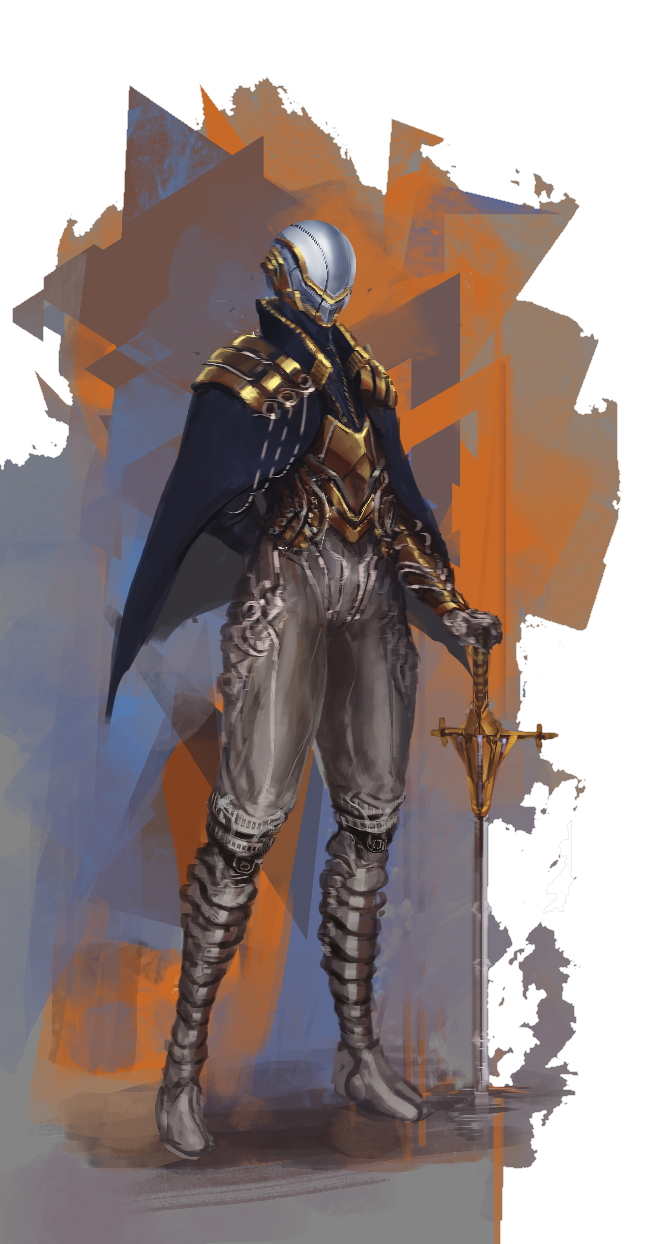
.
Nimblewright
Medium construct
- Armor Class 15 (natural armor)
- Hit Points 5 + five times your merchant level
- Speed 40 ft
STR DEX CON INT WIS CHA 12 (+1) 14 (+2) 14 (+2) 8 (-1) 10 (+0) 6 (-2)
- Saving Throws Dex +2 plus PB
- Skills Acrobatics +2 plus PB, Perception +0 plus PB x2
- Damage Immunities Poison
- Condition Immunities exhaustion, frightened, petrified, poisoned
- Senses Darkvision 60 ft., passive Perception 10 + (PB x 2)
- Languages Speaks Common; understands the languages you speak
- Challenge --
- Proficiency Bonus (PB) equals your bonus
Sure-footed. The nimblewright has advantage on Strength and Dexterity saving throws made against effects that would knock it prone.
Actions
Rapier Thrust. Melee Weapon Attack: (your Charisma modifier plus your proficiency bonus) to hit, reach 5 ft., one target you can see. Hit: 1d8 + PB piercing damage
Throwing Dagger. Ranged Weapon Attack: (your Charisma modifier plus your proficiency bonus) to hit, range 20/60 ft., one target you can see. Hit: 1d4 + PB piercing damage
Field Operative (1/day). The nimblewright casts the alter self spell. It does not require any components to cast the spell in this way.
Reaction
Parry. The nimblewright adds your proficiency bonus to its AC against one melee attack that would hit it. To do so, the nimblewright must see the attacker and be wielding a melee weapon.
art by Ishutani

Mercenary
Medium humanoid
- Armor Class 15 (chain shirt)
- Hit Points 2 + your Charisma modifier + five times your merchant level
- Speed 30 ft
STR DEX CON INT WIS CHA 14 (+2) 14 (+2) 12 (+1) 10 (+0) 10 (+0) 8 (-1)
- Saving Throws Dex +2 plus PB, Wis +0 plus PB
- Skills Athletics +2 plus PB, Perception +0 plus PB x2
- Senses Passive Perception 10 + (PB x 2)
- Languages Speaks Common; understands the languages you speak
- Challenge --
- Proficiency Bonus (PB) equals your bonus
Loyalty. The mercenary has advantage on saving throws against effects that would charm or frighten it as long as you are within line of sight.
Actions
Long Sword. Melee Weapon Attack: (your Charisma modifier plus your proficiency bonus) to hit, reach 5 ft., one target you can see. Hit: 1d8 + PB slashing damage
Light Crossbow. Ranged Weapon Attack: (your Charisma modifier plus your proficiency bonus) to hit, range 80/320 ft., one target you can see. Hit: 1d8 + PB piercing damage
Hamstring (2/day). The mercenary makes an attack using one of its equipped weapons. If the attack hits, the enemy is also restrained until the end of its next turn.
Reaction
Takedown. If an enemy within 60 feet of the mercenary is critically hit, the mercenary may use its reaction to gain a free attack against that creature, using one of the attack methods above.
art by Mauro Alocci


Pack Beast
Large beast
- Armor Class 15 (natural armor)
- Hit Points 2 + your Charisma modifier + five times your merchant level
- Speed 30 ft
STR DEX CON INT WIS CHA 14 (+2) 10 (+0) 14 (+2) 4 (-3) 12 (+1) 6 (-2)
- Saving Throws Con +2 plus PB, Wis +1 plus PB
- Skills Athletics +2 plus PB, Perception +0 plus PB x2
- Senses Darkvision 60 ft., passive Perception 10 + (PB x 2)
- Languages Understands the languages you speak
- Challenge --
- Proficiency Bonus (PB) equals your bonus
Maneuverable. The pack beast can fit through spaces as though it were a Medium creature without squeezing.
Hardy. Any critical hit against the pack beast becomes a normal hit. This does not reduce damage taken while using the Carry ability (below).
Actions
Bite. Melee Weapon Attack: (your Charisma modifier plus your proficiency bonus) to hit, reach 5 ft., one target you can see. Hit: 1d8 + PB piercing damage
War Bellow (3/day). The pack beast calls out, riling up an ally and itself to prepare for combat. The pack beast and one ally within 30 feet that can hear it both gain temporary hit points equal to two times your Charisma modifier.
Reaction
Beast of Burden. If an ally within 5 feet of the pack beast is hit with an attack, the beast may intervene and take half of the damage from the attack, rounded down. The ally takes the remainder of the damage as normal.
If the ally is willing, the beast may also pull them onto its back as a part of this reaction. This movement does not provoke attacks of opportunity.art by Tim Mcburnie
.
Walking Legacy
Magical trinkets and wares might separate the pronounced merchants of the world from those who aspire to be them. More important for some, though, might be the history behind each fantastic sword, shield, and wizard's robe that finds its way into one's shop. By learning the secrets of an item's magic, some merchants take up the mantle of once-forgotten warriors, mages and knaves of ages past... and in doing so, they carve a path for themselves to be remembered.
Bonded Items
By 3rd level, you have assembled a small cache of magical items that are uniquely keyed to you. Whether you enchanted them yourself, or instead found the secret to unlocking their powers, only you fully benefit from using these items; in anyone else's hands, the bonded items would seem inert magically and might only be mildly interesting. What others overlook is the legacy contained within.
Once you reach 3rd level, and at the end of each long rest, you bond to a single item from the below list, gaining all of the associated powers for the chosen item until you next complete a long rest. The item must be equipped to gain its benefits.
You cannot have a bonded item removed from you unless you are willing or incapacitated.
If a bonded item is lost, stolen or destroyed, you can spend 1 hour drawing upon the latent magic of a similar item retrieved from your portable vault. This ritual can be performed during a short or long rest, and it causes the previous item to become completely inert.
Warlord's Helm. This helmet comes from a society forgotten to history. It's aesthetic is simple, brutal, and unmistakably rugged. While you wear the warlord's helm, you gain the following abilities:
- Your maximum hit points increase by 1 point per character level (you immediately heal to this new maximum when you bond to the warlord's helm at the end of a long rest).
- When you bond to this item, you may choose a simple or martial weapon on your person, as well as a single suit of medium armor and/or a shield. You become proficient with the chosen items as long as the warlord's helm is equipped.
- When you take bludgeoning, piercing or slashing damage, you may use a reaction to reduce the damage taken by a number equal to your proficiency bonus.
- When you use the wager ability on another creature, you gain advantage on the next weapon attack you make before the end of your next turn.
Skeleton Key. Despite its name, the Skeleton Key is a unique pair of gloves with an array of small keys dangling from the wrists. The keys make no noise while you move, a quirk of the gloves' magic. While you wear these gloves, you gain the following abilities:
- You gain proficiency in one ability check of your choice, as well as proficiency in thieves' tools
- You gain proficiency in hand crossbows, rapiers and shortswords
- Choose one type of ability check. Your proficiency bonus is doubled when using the ability check you chose, as well as when you use thieves' tools
- Once per turn, you deal an extra 1d6 damage to one creature you hit with an attack roll, but only if the enemy is within 30 feet of you, and if an ally is within 5 feet of the target. The attack must be made with a finesse or ranged weapon.
- You may disengage as a bonus action, instead of as an action
Arcanist's Robes. This is a set of long-sleeved, flowing robes with the faint smell of burnt candlewicks about them. No one seems to know the name of the wizard who previously owned them. While you are bonded to these robes, you gain the following abilities:
- You gain the ability to cast spells as a wizard, with some noteworthy differences. Intelligence is your spellcasting ability for this purpose. See bonded spellcasting below for more information.
- You learn two wizard cantrips, or or regain access to the cantrips you chose the last time you bonded with this item. You may then replace one or both of the cantrips learned in this way.
- You gain proficiency with the Arcana skill
Prayer Beads. These beads are worn as a necklace (taking up your amulet slot), and though each bead is about two inches in diameter, they feel surprisingly light on your shoulders. The wisdom they carry may go back generations, but you are the one choosing their path forward. While you are bonded to this necklace, you gain the following abilities:
- You gain the ability to cast spells as a cleric, with some noteworthy differences. Wisdom is your spellcasting ability for this purpose. See bonded spellcasting below for more information.
- You learn two cleric cantrips, or regain access to the cantrips you chose the last time you bonded with this item. You may then replace one or both of the cantrips learned in this way.
- You gain proficiency with the Religion skill
Bonded Spellcasting
While bonded to the Arcanist's Robes or the Prayer Beads, you gain the ability to cast spells (as either a Wizard or Cleric, respectively). Bonded spellcasting rules work as stated below.
Overview. Bonding to the Arcanist's Robes allows you access to the Wizard spell list, and you use your Intelligence modifier as your spellcasting ability for these spells (including setting save DCs and making attack rolls with those spells). On the other hand, bonding to the Prayer Beads gives you access to the Cleric spell list, and you use your Wisdom modifier as the spellcasting ability for those spells (again, including for DCs and attack rolls). Your "chosen class" is the Wizard when you bond to the Arcanist's Robe, and the Cleric when you bond to the Prayer Beads, as referenced below.
Spell Save DC
Spell attack modifier
Preparing and Casting Spells. The Bonded Spell Slots table shows how many spell slots you have to cast your spells of 1st level and higher. To cast one of these spells, you must expend a slot of the spell's level or higher. You regain all expended spell slots when you finish a long rest.
You prepare the list of wizard or cleric spells for you to cast, choosing from your chosen class' spell list. When you do so, choose a number of wizard or cleric spells equal to your Intelligence modifier (for a Wizard) or your Wisdom modifier (for a Cleric) + half your merchant level, rounded down (minimum of one spell). The spells must be of a level for which you have spell slots.
You can change your list of prepared spells when you finish a long rest. Preparing a new list of bonded spells requires time spent concentrating on the magical bond between you and your bonded item: at least 1 minute per spell level for each spell on your list.

Bonded Spell Slots
| Level | 1st | 2nd | 3rd | 4th | 5th |
|---|---|---|---|---|---|
| 3rd | 3 | — | — | — | — |
| 4th | 3 | — | — | — | — |
| 5th | 4 | 2 | — | — | — |
| 6th | 4 | 2 | — | — | — |
| 7th | 4 | 3 | — | — | — |
| 8th | 4 | 3 | — | — | — |
| 9th | 4 | 3 | 2 | — | — |
| 10th | 4 | 3 | 2 | — | — |
| 11th | 4 | 3 | 3 | — | — |
| 12th | 4 | 3 | 3 | — | — |
| 13th | 4 | 3 | 3 | 1 | — |
| 14th | 4 | 3 | 3 | 1 | — |
| 15th | 4 | 3 | 3 | 2 | — |
| 16th | 4 | 3 | 3 | 2 | — |
| 17th | 4 | 3 | 3 | 3 | 1 |
| 18th | 4 | 3 | 3 | 3 | 1 |
| 19th | 4 | 3 | 3 | 3 | 2 |
| 20th | 4 | 3 | 3 | 3 | 2 |
In addition, you gain the Ritual Casting ability (as a Wizard or Cleric) so long as you are bonded to either the Arcanist's Robes or the Prayer Beads.
Living Gift
Starting at 3rd level, you gain a +2 bonus to the ability score of your choice as long as you are bonded with an item. Each time you complete a long rest, you may change which ability score gets this bonus. As usual, you cannot exceed 20 in an ability score in this way.
Expanded Potential
At 6th level, when you bond to the following items you draw forth more of their innermost power, gaining new abilities (or more powerful versions of existing abilities):
Warlord's Helm. You can attack twice, instead of once, whenever you take the Attack action on your turn. You also learn one of the fighting styles available to a 1st level fighter.
Skeleton Key. When you deal the extra damage granted by these gloves, the damage is increased by 2d6 (for a total of 3d6 extra damage once per round).
Arcanist's Robes. Once per short rest, you can recover one expended spell slot of 1st or 2nd level.
Prayer Beads. Once per short rest, you can recover one expended spell slot of 1st or 2nd level.
.
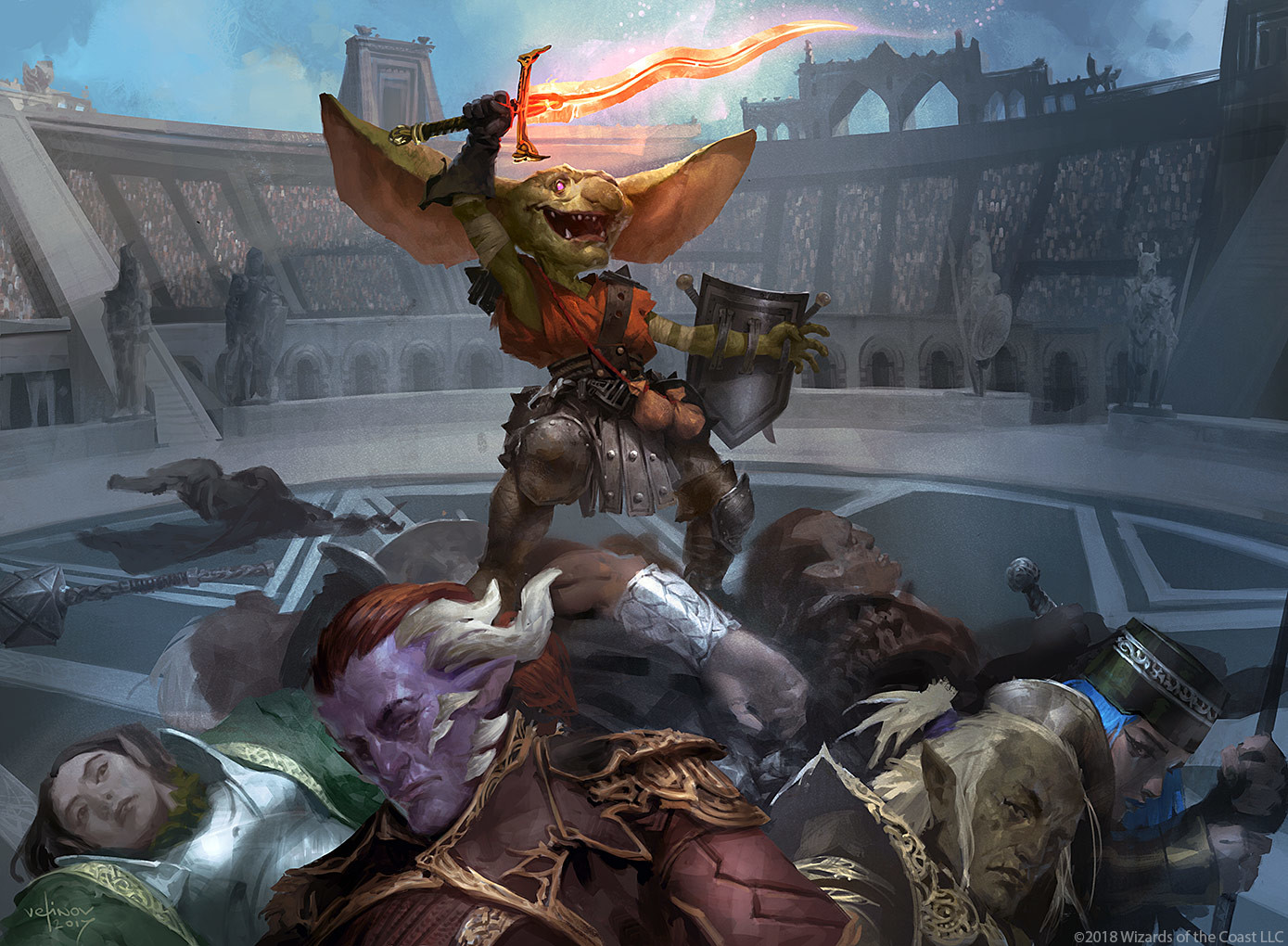
art by Svetlin Velinov
Walker of Countless Paths
When reaching 6th level and whenever you complete a long rest, you may choose one of the following abilities to make your own, which you gain access to until the next time you complete a long rest:
- The barbarian's rage ability (as a 1st level barbarian)
- The druid's wild shape ability (as a 2nd level druid)
- The fighter's action surge ability (as a 2nd level fighter)
- The paladin's lay on hands ability (as a 3rd level paladin, with a pool of 15 hit points)
You may use the chosen ability once (except for the lay on hands ability, where you may use the ability as long as you have healing left in its pool). Once you use the chosen ability, you may not do so again until you complete a long rest (at which time you choose a new ability, or may choose the same one again).
Living Legacy
At 11th level, your living gift ability grants a +4 bonus to the ability score of your choice instead of +2. You may instead give a +2 bonus to two different ability scores if you so choose. As usual, you cannot exceed 20 in any ability score in this way.
To New Heights
At 11th level, when you bond to the following items you draw forth a great deal of their might, gaining new abilities (or more powerful versions of existing abilities):
Warlord's Helm. As an action, you summon forth a simple or martial weapon of your choice. You are considered proficient with this weapon. The weapon gains one of the following magical properties of your choice if it is one of the prerequisite weapon types, per the Dungeon Master's Guide: dragon slayer, flame tongue, frost brand, giant slayer, javelin of lightning, or sun blade. The weapon disappears after 1 hour. Once you summon a weapon in this way, you may not do so again until you complete a long rest.
Skeleton Key. Whenever you make an ability check that lets you add your proficiency bonus, you can treat a d20 roll of 9 or lower as a 10. You may use this ability once, and recover any expended use upon completion of a short or long rest.
Arcanist's Robes. Whenever a creature succeeds on a saving throw against one of your spells, you may force one creature to reroll their saving throw. They must use the result of the new roll. You may use this ability once, and recover any expended use upon completion of a short or long rest.
Prayer Beads. Whenever you or an ally within 30 feet is reduced to 0 hit points or less, you may use a reaction to instead have that creature drop to 1 hit point. You may use this ability once, and may not do so again until you complete a long rest.
Champion of the Pathways
At 15th level, you may bond to two items at the end of each long rest instead of one.
If you choose both the Arcanist's Robes and Prayer Beads items, you retain the same number of spell slots as though you had only chosen one such item. However, you may prepare the full number of wizard spells available to you and, separately, prepare the full number of cleric spells alloted to you as normal. You then share your pool of spell slots and may cast both wizard and cleric spells from those spell slots, as though you were a multiclassed spellcaster. You still use your Intelligence as your spellcasting ability for Wizard spells, and your Wisdom as your spellcasting ability for Cleric spells.
Expanded Wares Item List
As you level, your merchant accumulates more unique, rare and magical items amongst their back stock. Tou can eventually retrieve the below items (from your person, or if they are too heavy or large, from your personal vault) with your budget points. The below tables show the specific items you can retrieve starting at 7th level and beyond, for the sake of having all such items in one place. You must meet the level requirement for any item you retrieve in this way.
Note: If you spend part of a short rest searching for an item that requires attunement, an ally can attune to that item as part of the same short rest.
Retrievable Items (7th-Level Merchant)
| Item | Budget Cost | Attunement |
|---|---|---|
| Non-magical, steel weapon or armor | 2 | No |
| Simple or martial adamantine or silver weapon | 2 | No |
| a common magic item | 2 | Sometimes |
| sending stones | 2 | No |
| one uncommon potion | 3 | No |
| 1st or 2nd level spell scroll, any class | 3 | No |
| +1 magical steel weapon | 3 | No |
| 10 +1 arrows or bolts | 3 | No |
| +1 steel armor, or non-magical adamantine or mithral armor | 3 | No |
Retrievable Items (11th-Level Merchant)
| Item | Budget Cost | Attunement |
|---|---|---|
| Boots of striding and springing | 2 | Yes |
| Gloves of swimming and climbing | 2 | Yes |
| Dust of disappearance | 2 | No |
| Dust of sneezing and choking | 2 | No |
| Boots of the winterland | 3 | Yes |
| Cloak of protection | 3 | Yes |
| Gauntlets of ogre power | 3 | Yes |
| Headband of intellect | 3 | Yes |
Retrievable Items (15th-Level Merchant)
| Item | Budget Cost | Attunement |
|---|---|---|
| Elemental gem | 2 | No |
| Elixir of health | 2 | No |
| Glamoured studded leather | 2 | No |
| Potion of gaseous form | 2 | No |
| Potion of heroism | 2 | No |
| Potion of invulnerability | 3 | No |
| Amulet of health | 3 | Yes |
| Bracers of defense | 3 | Yes |
Merchant Cohorts- Miscellany
Challenge Rating for Merchants
The following challenge ratings are based on the Monster Statistics by Challenge Rating table on page 274 of the Dungeon Master's Guide. The below numbers were calculated without accounting for equipped magic items.
As a point of reference: The average level 20 player character may have a CR around 12-14 depending on the character's build and magic items, and can become higher still when using an optimized build and powerful items.
| Cohort Level | Recommended CR |
|---|---|
| 1 | 1/8 |
| 2 | 1/4 |
| 3 | 1/2 |
| 4 | 1 |
| 5 | 2 |
| 6 | 2 |
| 7 | 3 |
| 8 | 3 |
| 9 | 3 |
| 10 | 4 |
| 11 | 5 |
| 12 | 5 |
| 13 | 6 |
| 14 | 6 |
| 15 | 7 |
| 16 | 7 |
| 17 | 8 |
| 18 | 8 |
| 19 | 9 |
| 20 | 9 |
Roleplaying as a Merchant
Merchants who join adventuring groups are seen as the exception rather than the norm. There are many merchants who travel--even those who do so regularly--but they typically bring adventurers as hired hands or as mercenaries, rather than as personal allies.
Merchants might find the idea of adventure exciting, but the risks involved may seem less than worth it. However, some shopkeeps would have their reasons for wanting to tag along. A merchant might be a retired adventurer themselves, and wish to take up the mantle again. Or they may be reluctant to trust others with their work, and insist on coming along to make sure all business is handled as expected.
Some merchants are more comfortable managing others, having underlings do the dirty work while the boss counts their coin. Other shopkeeps feel that wealth must be earned themselves, and take pride in carrying their burdens on their own shoulders. Take note, though, that a merchant down on their luck may be forced to work off their debts regardless of preference.
One question also worth considering is whether or not your merchant has a store in a physical location somewhere in the world. Did they close up the doors behind them, or are there staff members and/or family running the place in their absence?
Opportunities Await
Merchants are not defined as narrowly as many other cohorts might be, given that shopkeeps practice a common trade rather than share a given heritage. That said, those who practice the buying and selling of goods do tend to pick up certain skills, and may be more likely to hold specific world views.
Being exposed to good customers and bad, such as faithful debtors (who pay off their debts) alongside deadbeats, can color a person's perspective over time. A merchant may be generally trusting-- but quick to note those who do not uphold their end of a bargain, and may penalize those individuals in the future. In the same vein, some merchants follow the letter of any agreement they sign, practicing an orderly and even honorable trade.
Other merchants, though, may become skeptical or even jaded towards those they deal with (likely after being ripped off a few times too many). Such merchants might have a more neutral or even fully self-serving view of other people, having all their relationships become like transactions themselves. These merchants might offer favors or assistance when needed, but they always record the debts that others owe them... and never fail to collect with interest.
Merchants as PCs
Starting with the release of angel cohorts (July 2021), the process of converting cohorts from sidekicks to player characters has been simplified. Here are the differences between a cohort sidekick and cohort player character (or ally/rival of similar strength):
-
Cohorts that are built as sidekicks do not get a character background. Only cohorts used as player characters choose a background normally.
-
Cohort sidekicks typically do not choose a subclass (starting with the angel cohort). Only player characters or other cohorts of a similar power level get the abilities and benefits of a subclass.


.
Credits
Cover Art by Jorge Jacinto (https://www.artstation.com/jjcanvas) Page 2 Art by Lap Pun Cheung (https://www.artstation.com/lappuncheung) Page 4 Art by Dmitry Burmak (https://www.artstation.com/burmak) Page 6 Art by Lee Kent (https://www.artstation.com/leekent) Page 7 Art by Imario Susilo (https://www.artstation.com/imario) Page 9 Art by Jessica Oyhenart (https://www.artstation.com/jessibean) Page 10 Art by Lap Pun Cheung (https://www.artstation.com/lappuncheung) Page 11 Art by Piotr Uzdowski (https://www.artstation.com/uzdowski) Page 12 Art by Ishutani (https://www.deviantart.com/ishutani) Page 13 Art by Mauro Alocci (https://www.artstation.com/bastonxd) Page 14 Art by Tim Mcburnie (https://www.artstation.com/tim-mcburnie) Page 16 Art by Svetlin Velinov (https://www.artstation.com/velinov) Page 19 Art by Alexander Nanitchkov (https://www.artstation.com/artofinca) Back Cover Art by Sandara Tang (https://www.artstation.com/sandara) Watercolor stains by Jared Ondricek (https://watercolors.giantsoup.com/xgte/xgtebottom-left/index.html)


May Your
Sidekick
Dream Big
Creature Cohorts were created by me, Mister_Thr33, and were inspired by Tasha's Cauldron of Everything as well as the 3rd Edition supplement Savage Species
'Creature Cohorts' is unofficial Fan Content permitted under the Fan Content Policy. Not approved/endorsed by Wizards. Portions of the materials used are property of Wizards of the Coast. ©Wizards of the Coast LLC.
Special thanks to the r/unearthedarcana and r/dndhomebrew subreddits for their input and inspiration, and to r/ImaginaryMerchants for their selection of fantastic merchant art
No mercenaries were left behind in the making of this document
Thank you all for your support!