Table of Contents
-
3Chapter 1: Step by Step Process
-
4Chapter 2: Aid for the DM
-
6Chapter 3: Races
- 6Aarakockra
- 7Aasimar
- 8Bugbear
- 9Centaur
- 10Changeling
- 11Dhampir
- 12Dragonborn
- 13Dwarf
- 14Elf
- 15Fairy
- 16Firbolg
- 17Genasi
- 18Gith
- 19Gnome
- 20Goblin
- 21Goliath
- 22Grung
- 23Halfling
- 24Harengon
- 25Hexblood
- 26Hobgoblin
- 27Human
- 28Kalashtar
- 29Kenku
- 30Kobold
- 31Leonin
- 32Lizardfolk
- 33Locathah
- 34Loxodon
- 35Minotaur
- 36Orc
- 37Reborn
- 38Satyr
- 39Shifter
- 40Simic Hybrid
- 41Tabaxi
- 42Tiefling
- 43Tortle
- 44Triton
- 45Vedalken
- 46Warforged
- 47Yuan-Ti
- 48Racial Feats
Chapter 1: Character Creation Step by Step
Step 1: Stats
Stats are decided in the normal ways, using Point Buy, Standard Array, rolling or any other method your DM allows. Once your stats are decided you can alter them in 1 of the following ways:
- +2 to 1 stat and +1 to another
- +1 to 3 different stats.
Step 2: Race
Your race defines your biological traits. Chapter 3 contains a list of races available. You gain all traits listed by your race. Your DM may offer additional races or disallow some of the races listed.
Halfraces (Only on DM aproval)
As every trait has a numerical value attached to it, a halfrace can easily be created by taking traits from both races that add up to a power rating of 8. Halfraces are considered to be a member of both races (e.g. a human-elf halfrace can be found with the locate person spell when looking for a human or an elf). If one or both of the races have subraces, you can only take traits from 1 of these subraces for each of them. Lastly some traits have Improvement at the end of their name, these are improvement traits. Improvement traits improve an already existing trait of said race, being split up to make creating half-races easier. You can only take an Improvement trait if you also take the base trait.
Step 3: Level 1 Class
Classes are as normal for 5e.
Step 4: Culture
Your character is also part of a culture, which shaped them in some way. Unlike your race, your character does have some choice in how they are molded. You gain 10 + Int modifier culture points which you can spend to get cultural traits from the culture your character is from. You cannot take the same cultural trait multiple times unless otherwise noted. Your DM will tell you what cultures are available. Appendix A contains the cultures I use in my game as example cultures.
Using these culture points you can gain traits listed with your culture or you can become proficient in any skill, tool, language, weapon or armor. Your culture will prefer some of these, listed in the preference section of the culture, making them easier to learn. The costs are as follows:
| Trait | Cost if Preferred | Cost Otherwise |
|---|---|---|
| Skill | 2 | 4 |
| Skill Expertise (if already proficient) | 3 | 5 |
| Tool | 1 | 2 |
| Tool Expertise (if already proficient) | 2 | 4 |
| Language | 0 | 1 |
| 3 Simple Weapons | 1 | 2 |
| 2 Martial/Simple Weapons | 1 | 2 |
| Armor | 2 | 5 |
Armor Proficiencies
Armor proficiencies need to be acquired in order (Light→Medium→Heavy). When you gain proficiency with Medium armor you also gain proficiency with Shields.
Step 5: Background
Lastly your background is your characters personal story. From this you gain 50 gp to be spend on equipment as you wish. You also gain traits that equal to a power rating of 2 (meaning as strong as a single proficiency, cantrip or advantage on a rare check/saving throw). Work together with your DM to determine your background traits.
Variant: Quick Background
For one shots or other short campaigns the normal method for backgrounds may not be worth the effort. Instead you can take traits from a race or culture that add up to 2 points.
Step 6: Higher Levels
Leveling is as normal for 5e.
Chapter 2: Aid for the DM
Races
The races of chapter 3 can easily be dragged and dropped into your world though you are of course welcome to tinker with them. For a guideline to power scores use Detect Greater Balance created by thoroughlysketchy.
Adapting my races to better fit your setting
The races listed in this document are based on the races in my setting and might differ from the same races in your setting. Kobolds in your world may not be dragons or the gith being telekinetic and telepathic just doesn't work with how gith function in your world. In this case remove or change the traits that do not work and add the ones you wish. Do make sure that the race still has a total power score of 8.
Adapting a race to this system
If you have a race designed for normal 5e and you wish to adapt it to this system I advice doing it in the following steps:
1. Separate biological from cultural
Go through the entire race and take out any trait that is cultural, aka learned. If you have difficulty distinguishing the 2, try to imagine what a member of this race would be capable of if they grew up in a foster home at the other end of your world. Anything that both this member and a normal member of said race can do would be a biological trait. You can add the cultural traits to a culture later.
2. Determine power scores
Go trait per trait and determine what the power score of said trait would be. Try to see each trait in a vacuum, if this is not possible, make it an improvement trait of the ability it requires. Then score the base trait in a vacuum and both together in a vacuum. The improvement trait then has a power score equal to that of both minus that of the base trait.
3. Balance
This is the time where you add, remove or change traits such that the race has a total power score of 8.
- For adding I suggest getting inspiration from other races that are like the one you are trying to add. If such doesn't exist in 5e have a look at previous editions or other gaming systems.
- For removing try to remove the traits that define your race the least. If you still have to take out quite a few traits that you consider to be race defining, think about making a new racial feat that has these traits.
4. Making improvements
If any traits can be split up, either in 2 separate traits or 1 base trait and an improvement trait, do so. This gives your players more options when they are making half races with this race. If this race cannot have a half race, ignore this step.
Cultures
While races can easily be dragged and dropped into different games, cultures are a lot more difficult as this goes against my reasoning for introducing them in the first place. Your players characters having a culture is supposed to make them feel more like they are a part of your world. As such I highly recommend to create your own using the cultures I use, listed in Appendix A, as examples.
Creating a new Culture
Sadly there is no perfectly mathematical way to create cultures but these are the steps I used.
1. Worldbuild
Without first going into any mechanics, who are these people? Are they militaristic, religious, mercantile? What do they value? Do they have any special items, magics or rituals? Write yourself a small prompt that you can expand into the fluff text later.
2. Fill in the preferences
If you have a good idea what your culture is like, start by filling in its preferences. I personally use a 25 point point buy system to keep it balanced-ish.
| Preferred Trait | Point Cost |
|---|---|
| Skill | 2 |
| Tool | 1 |
| Common | 3 |
| Language | 2 |
| Simple Weapon | 1/3 |
| Martial Weapon | 1/2 |
| Armor | 3 |
For weapons, make sure to never offer daggers, darts, slings or quarterstaves as these are available for all classes.
3. Add traits
Next you should think about what traits this culture should have, feel free to steal traits from other cultures. Another good place is looking at the races that make up the majority of this culture and look what cultural traits they have in various editions of DnD and other systems.
If this culture favors certain classes it is appealing to add features of that class as cultural features. This is a trap as it makes it in fact less appealing to play that class in that culture. Instead give features that invoke the feeling of that class without giving outright class features (magic songs for bards, alchemical potions for artificers etc...). You can have class features that are options though like fighting styles, metamagic and eldritch invocations.
Lastly you need to figure out the power score of each of these traits. They use the same scale as races, namely Detect Greater Balance. Use this scale as a guideline, not as hard rules. Heat adaptation, giving you advantage on saves against exhaustion from heat, will be worth more if your campaign is situated in the desert than in the frozen tundra.
Rules of Thumb for cultures
Here are some more rules of thumb to aid you for your cultures.
- Have about 3-5 cultures, you can add more later but this is enough to give your players plenty of choice at first. Alternatively ask your players where they are from and only build the mechanical portion of the cultures your player's characters are from, allowing you to involve your players in the creation process.
- Keep each culture limited to 1 page, half for fluff and half for mechanics.
- Adjust the size of your cultures to the size of your world. For example, my cultures span the entire world so most cultures are the size of a country. If the campaign for example would have been limited to a single country, the cultures might be the size of a province. This can go all the way down to a campaign consisting of a single city where the cultures are organizations in this city.
Variant: Cultures as Backgrounds
For short campaigns or for dms that find the added effort of the cultures not worth the added grounding of the player characters, you can also have your cultures function more like an expanded version of 5e backgrounds. Appendix B contains the backgrounds in the Player's Handbook written out in this way.
Alternatively you can allow players to choose one cultural culture and one background culture, keeping only the preferences of their background culture. This allows for way more character expression at character creation but does come at the cost of added complexity.
Chapter 3: Races
Aarakocra
From below, aarakocra look like large birds and thus are sometimes called birdfolk. Only when they roost on a branch or walk across the ground is their Humanoid nature clear. Standing upright, aarakocra are typically about 5 feet tall, and they have long, narrow legs that taper to sharp talons. Feathers cover their bodies—usually red, orange, yellow, brown, or gray. Their heads are also avian, often resembling those of parrots or eagles.
Aarakocra Traits
Type. You are a Humanoid.
Age. Aarakocra reach maturity by age 3. They usually don't live longer than 30 years.
Speed. Your base walking speed is 30 ft.
Size. Aarakocra are about 5 feet tall. They have thin, lightweight bodies. Your size is Medium.
Soaring Wings (Glide). (3) You have large wings that allow you to glide. When you fall and aren't incapacitated or restrained, you can subtract up to 100 feet from the fall when calculating falling damage, and you can move up to 2 feet horizontally for every 1 foot you descend. You must glide for at least 20 feet (descending 10 feet) during your turn in order to stay aloft.
Soaring Wings Improvement. (1) As an action you can flap your powerful wings to generate lift, ascending up to 20 feet. You do not need to move the 20 feet to stay aloft this turn.
Talons. (2) Your legs end in talons that you can use to make unarmed strikes. When you hit with them, the strike deals 1d6+Str slashing damage, instead of the bludgeoning damage normal for an unarmed strike.
Dive Attack (Talons Improvement). (2) When you dive at least 20 feet straight at an enemy and then hit them with a Talons attack you deal an extra 2d6 damage and if the target is 1 size larger than you or smaller, it must succeed on a strength save (DC 8+Prof+Str) or be knocked prone.

Aasimar
Aasimar are humanoids that are possessed or used to be possessed by a celestial spirit. This celestial changes the body slowly overtime, making them look more and more like the celestials true form. This means that there is a large variety in looks for aasimar, going from almost indistinguishable from a normal member of their ancestral race, to being so close to the celestials true form that the original race is unrecognizable.
Aasimar Features
Type. (-1) You are a Celestial Humanoid.
Age. Aasimar live about 50% longer than their ancestral race.
Speed. Your base walking speed is 30 ft.
Size. Aasimar tend to be slightly larger than their ancestral race. Your size is Medium.
Ancestral Legacy. Your bloodline has a non-aasimar ancestral race. You are considered a halfrace of aasimar and your ancestral race.
Light Bearer. (1) You can manifest a halo. As an action you create a circular light above your head that sheds bright light in a 20-foot radius and dim light for an additional 20 feet. This halo lasts until you dispel it (no action needed) or you go unconscious.
Celestial Resistance. (2) You have resistance to radiant damage.
Healing Hands. (2) As an action, you can touch a creature and cause it to regain a number of hit points equal to your level. Once you use this trait, you can't use it again until you finish a long rest.
Heavenly Radiance. (4) You can use your bonus action to unleash the divine energy within yourself, you choose one of the following ways it transforms you. Each transformation lasts for 1 minute or until you end it as a bonus action. Once you transform, you can't use this trait again until you finish a long rest.
- Radiant Soul. Your eyes start to glimmer and two luminous, incorporeal wings sprout from your back. You have a flying speed of 30 feet.
- Radiant Consumption. A searing light radiates from you, pouring out of your eyes and mouth, threatening to char you. You shed bright light in a 10-foot radius and dim light for an additional 10 feet, and at the end of each of your turns, each other creature within 10 feet of you takes radiant damage equal to your level divided by 2, rounded up.
- Haunting Shroud. Your eyes turn into pools of darkness and two skeletal, ghostly, flightless wings sprout from your back. A creature that starts its turn within 10 feet of you must succeed on a Wisdom saving throw (DC 8+Prof+Cha) or become frightened of you until the start of its next turn. On a success the creature is immune to your Haunting Shroud for the next 24 hours.
Bugbear
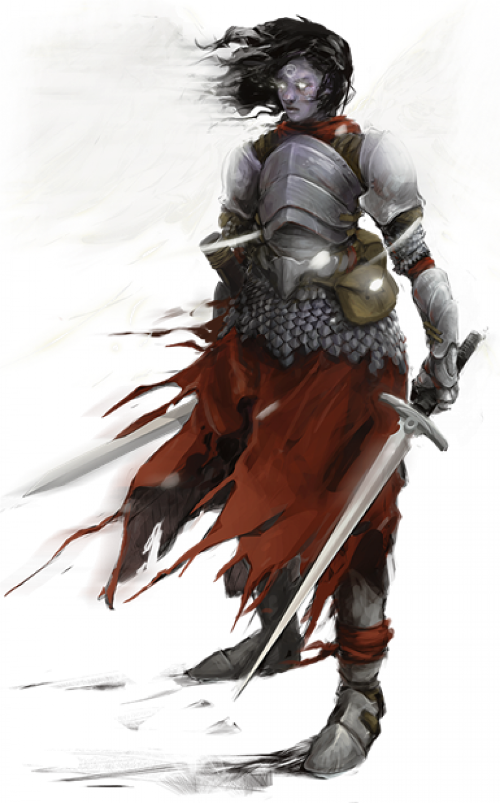
Bugbears are the largest of the goblinkin, being about a head taller than hobgoblins and dwarfing the normal goblins. bugbears only slightly resemble their other kin, their fur giving them a more feral look. Though what will most likely grab the attention is their elongated arms, coming all the way to their knees when they stand upright. Though they have longer claws than most humanoids, they lack the sharpness to be used as weapons.
Bugbear Features
Type. You are a Humanoid (Goblinoid).
Age. Bugbears reach adulthood at age 16 and live up to 80 years.
Speed. Your base walking speed is 30 ft.
Size. Bugbears are between 6 and 8 feet tall. Your size is Medium.
Low-Light Vision. (2) You can see in dim light within 60 feet of you as if it were bright light.
Long-Limbed. (6) When you make a melee attack on your turn, your reach for it is 5 feet greater than normal.
Centaur
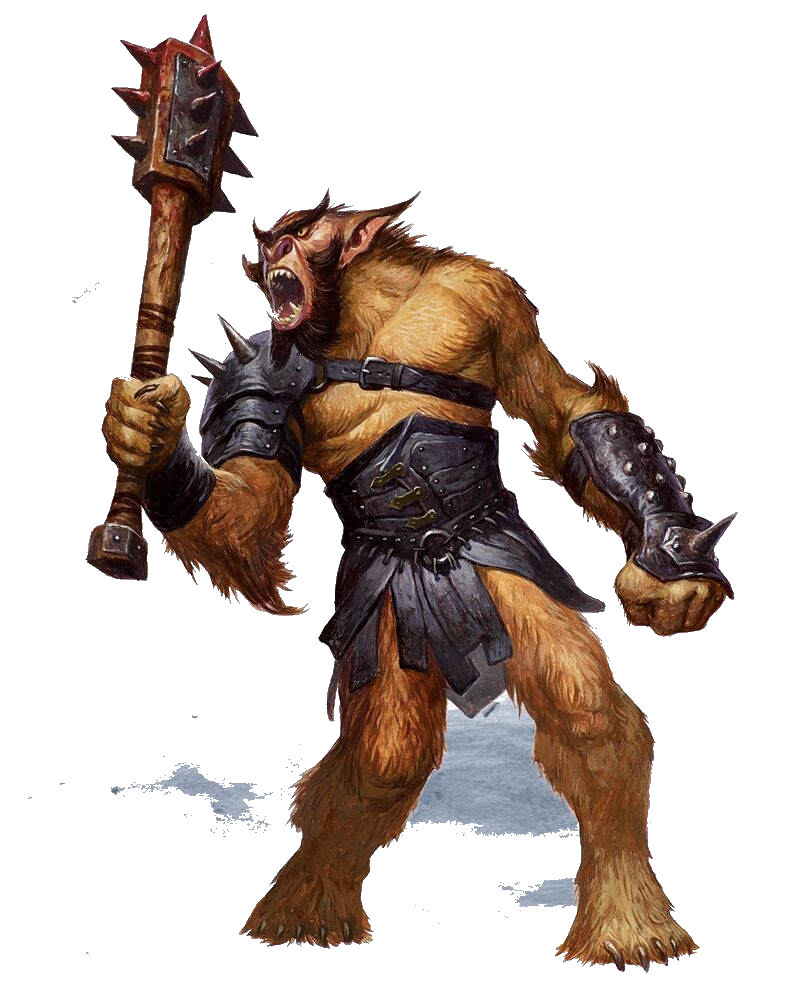
Centaurs look life half horse and half man. To be more specific a humanoid head and torso placed on the torso of a horse.
Centaur Features
Type. (-1) You are a Fey Humanoid.
Age. Centaurs mature and age at about the same rate as humans.
Speed. (6) Your base walking speed is 40 ft.
Size. (-1) Centaurs stand between 6 and 7 feet tall, with their equine bodies reaching about 4 feet at the withers. Your size is Large.
Equine Build. (-1) Any climb that requires hands and feet is especially difficult for you because of your equine legs. When you make such a climb, each foot of movement costs you 4 extra feet, instead of the normal 1 extra foot.
Hooves. (2) Your hooves are natural melee weapons, which you can use to make unarmed strikes. If you hit with them, you deal bludgeoning damage equal to 1d6+Str, instead of the bludgeoning damage normal for an unarmed strike.
Trample. (3) When you take the dash action you may run through an amount of spaces occupied by a creature smaller than you up to your proficiency bonus. Each creature whose space you enter this way must succeed on a strength saving throw (DC 8+Prof+Str) or be knocked prone and they cannot make attacks of opportunity against you this turn.
Changeling
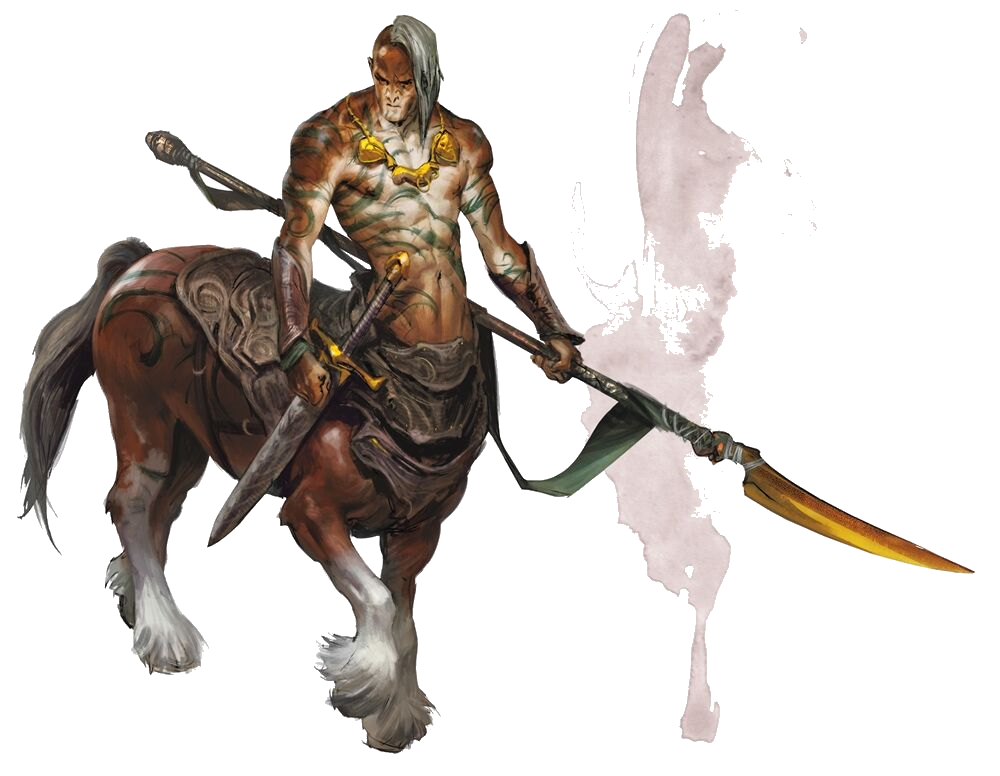
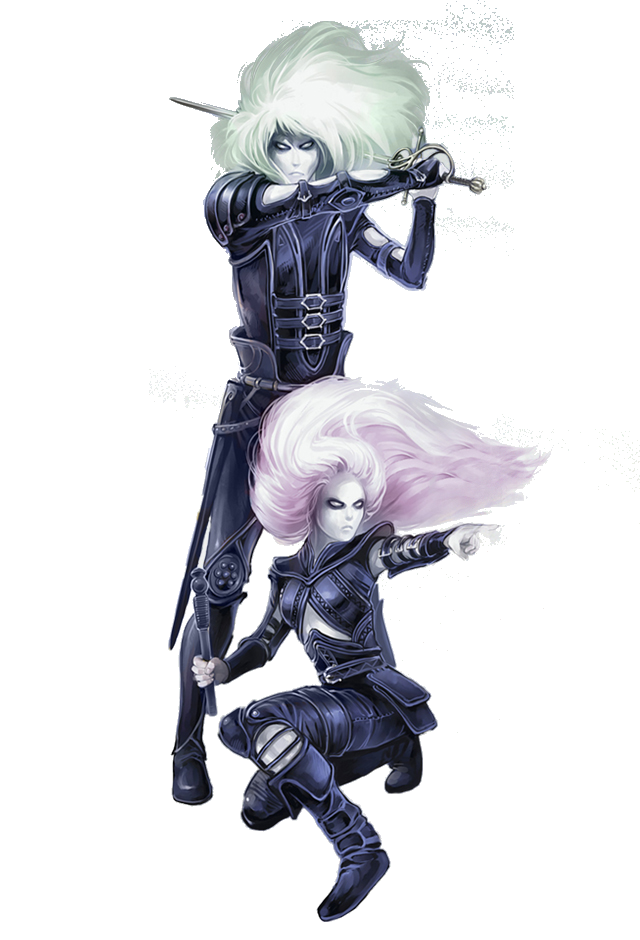
While changelings can look like anyone, they do have a true form that lacks detail or distinguishing features. Their skin tone is always pale, either white or light gray, and they tend to have slender bodies with limbs slightly longer in proportion to other humanoids. They have large colorless eyes circled by thick black rings. Their hair color is most commonly a light shade of silver followed by platinum and blonde. In rarer cases, their hair can be pale shades of green, pink, and blue.
Changeling Features
Type. You are a Humanoid.
Age. Changelings mature and age at about the same rate as humans.
Speed. Your base walking speed is 30 ft.
Size. Changelings are build like humans, but slightly leaner. Your size is Medium.
Shapechanger. (2) As an action, you can change your appearance and your voice. You determine the specifics of the changes, including your coloration, hair length, and sex. You can also adjust your height and weight, but not so much that your size changes. You can make yourself appear as a member of another race, though none of your game statistics change. You can't duplicate the appearance of a creature you've never seen, and you must adopt a form that has the same basic arrangement of limbs that you have. Your clothing and equipment aren't changed by this trait. You stay in the new form until you use an action to revert to your true form or until you die.
Once you've used this trait you can't do so again until you finish a long rest.
Shapechanger Improvement. (3) Shapechanger recharges after a short or long rest.
Second Shapechanger Improvement. (3) You can use Shapechanger at will.
Dhampir
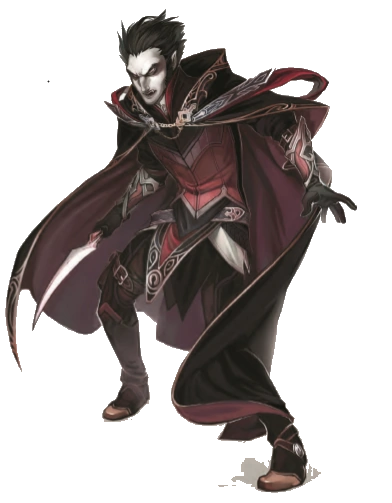
Dhampirs are humanoids who inherited some of a vampires tainted blood. Either one of their parents was a vampire, their mother was bitten while pregnant or they got corrupted in some other way. They tend to be thin and willowy, with pointed canines and red eyes. They experience the same bloodthirst vampires do, but a milder version meaning that not all dhampirs carry out the practice of drinking blood.
Dhampir Features
Type. You are a Humanoid.
Age. Dhampir's grow up as fast as their ancestral race but easily live 5 times as long.
Speed. Your base walking speed is 30 ft.
Size. Dhampir's are as tall as their ancestral race. Your size is Medium.
Ancestral Legacy. Your bloodline has a non-vampire ancestral race. You are considered a halfrace of dhampir and your ancestral race.
Low-Light Vision. (2) You can see in dim light within 60 feet of you as if it were bright light.
Darkvision (Low-Light Vision Improvement). (2) You can see in darkness within 60 feet of you as if it were dim light. You can't discern color in darkness, only shades of gray.
Climbing Speed. (2) You have a climbing speed of 30 ft.
Spider Climb (Climbing Speed Improvement). (2) You can move up, down, and across vertical surfaces and upside down along ceilings, while leaving your hands free.
Dragonborn
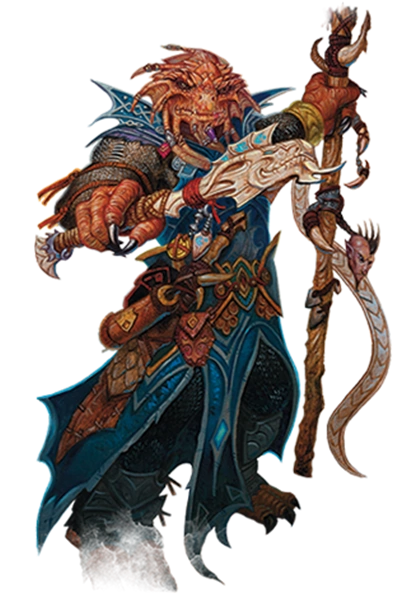
Dragonborn look like the mix of a human and the mythical dragons, each color of dragonborn sharing features with their color of dragon. They have 3 claws and a rear claw on their feet and 3 claws with a thumb on their hands. Their eyes are usually red or gold in color.
Dragonborn Features
Type. (-1) You are a Dragon Humanoid.
Age. Dragonborn grow up quickly, reaching adulthood at 15 and living for up to 80 years.
Speed. Your base walking speed is 30 ft.
Size. Dragonborn are slightly larger than humans and have more bulk, standing between 5,5 and 7 feet. Your size is Medium.
Draconic Ancestry. You have a dragon ancestor, granting you a special magical affinity. Choose one kind of dragon from the Draconic Ancestry table. This determines the damage type for your other traits, as shown in the table.
Draconic Resistance. (2) You have resistance to the damage type associated with your Draconic Ancestry.
Breath Weapon. (3) When you take the Attack action on your turn, you can replace one of your attacks with an exhalation of magical energy in a 30-foot line that is 5 feet wide or a 15 foot cone. Each creature in that area must make a Dexterity saving throw (DC 8+Prof+Con). On a failed save, the creature takes 2d10 damage of the type associated with your Draconic Ancestry. On a successful save, it takes half as much damage. This damage increases by 1d10 when you reach 5th level (3d10), 11th level (4d10), and 17th level (5d10). Once you use this trait, you can't do so again until you finish a long rest.
Breath Weapon Improvement. (4) Your Breath Weapon recharges on a short or long rest.
Draconic Ancestry
| Dragon Color | Dragon Type | Damage Type |
|---|---|---|
| Black | Chromatic | Acid |
| Blue | Chromatic | Lightning |
| Green | Chromatic | Poison |
| Red | Chromatic | Fire |
| White | Chromatic | Cold |
| Amethyst | Gem | Force |
| Crystal | Gem | Radiant |
| Emerald | Gem | Psychic |
| Sapphire | Gem | Thunder |
| Topaz | Gem | Necrotic |
| Brass | Metallic | Fire |
| Bronze | Metallic | Lightning |
| Copper | Metallic | Acid |
| Gold | Metallic | Fire |
| Silver | Metallic | Cold |
Dwarf
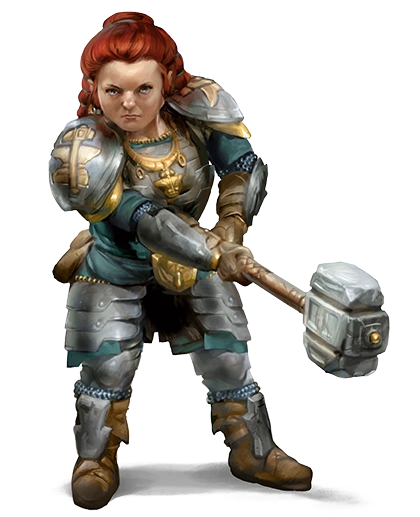
Dwarfs are small bulky humanoids. They are not born like other humanoids but crafted out of stone, with a gem as a heart. Like humans, dwarves have a wide variety of skin, eye, and hair colors.
Dwarf Features
Type. You are a Humanoid.
Age. Dwarves reach adulthood at 18 and live for about 350 years.
Speed. (-2) Your base walking speed is 25 ft.
Size. Dwarves are a stout race, standing between 4 and 5 feet tall. Your size is Medium.
Low-Light Vision. (2) You can see in dim light within 60 feet of you as if it were bright light.
Dwarven Resilience. (2) You have advantage on saving throws against poison.
Sturdy. (2) You have advantage on checks and saving throws against being pushed back or knocked prone.
Subrace. Choose a subrace. A dwarves subrace depends on where the stone used to create them originates from. Hill dwarves are made from the weathered rock of the surface while duergar come from the magic infused stones in the deep caves.
Duergar
Light Sensitivity. (-2) You have disadvantage on Wisdom (Perception) checks that rely on sight when trying to perceive something in an area of bright light.
Darkvision (Low-Light Vision Improvement). (2) You can see in darkness within 60 feet of you as if it were dim light. You can't discern color in darkness, only shades of gray.
Enlarge. (4) You can use an action to call on the magic stone that created you to magically increase your size for 1 minute or until you end it as a bonus action. During this time you gain the following benefits:
- You are Large.
- You have advantage on Strength checks and saves.
- Your weapon attacks deal 1d4 extra damage.
Once you've transformed you can't do so again until you finish a long rest.
Hill Dwarf
Dwarven Toughness. (4) Your hit point maximum increases by 1, and it increases by 1 every time you gain a level.
Elf
Elves are slender humanoids with pointed ears. There are no natural subraces of elves but certain trees that the elves call ancestor trees can change them.
Elf Traits
Type. You are a Humanoid.
Age. An elf reaches adulthood at 18, chooses it's ancestor tree at 100 and lives for up to 750 years.
Speed. Your base walking speed is 30 ft.
Size. Elves range from under 5 to over 6 feet tall. Your size is Medium.
Trance. (1) Elves don't need to sleep. Instead, they meditate deeply, remaining semiconscious, for 4 hours a day.
Trance Improvement. (1) Magic can't put you to sleep.
Child of Cyndelius. (2) You have advantage on saving throws against being charmed.
Low-Light Vision. (2) You can see in dim light within 60 feet of you as if it were bright light.
Subrace. Choose a subrace, an elven subrace depends around what ancestor tree they performed their coming of age ritual, or Shadar Kai if they have not performed it.
Alu (Sea)
Superior Deepsight (Low-Light Vision Improvement). (1) You can see in dim light within 120 feet of you as if it were bright light, and in darkness as if it were dim light, but only underwater. You can't discern color in darkness, only shades of gray.
Child of the Sea. (1) You can breathe air and water.
Alura (Wood)
Fleet of Foot. (2) Your base walking speed increases by 5 to a maximum of 35.
Nevae (Dark)
Darkvision (Low-Light Vision Improvement). (2) You can see in darkness within 60 feet of you as if it were dim light. You can't discern color in darkness, only shades of gray.
Light Sensitivity. (-2) You have disadvantage on Wisdom (Perception) checks that rely on sight when trying to perceive something in an area of bright light.
Cloud of Darkness. (2) As a bonus action you can create a 5 foot radius sphere of darkness from a point you can see within 60 feet that lasts until the end of your next turn. Once you've done so you can't use this trait again until you finish a long rest.
Ora (Eladrin)
Seasonal Beings. (2) After each long rest you may align yourself to a season, you add your proficiency bonus to a skill depending on what season you are aligned with:
- Autumn: Persuasion
- Spring: Performance
- Summer: Intimidation
- Winter: Stealth
Shadar Kai
Meld in Shadow. (2) You may take the Hide action even when you are not obscured as long as you are in dim light or darkness and remain motionless. You cannot do this while the creatures you are trying to hide from are observing you.
Uanna (High)
Arcane Sense. (2) The Uanna elves are naturally in tune with magic. As an action you can determine if an object or creature you touch is magical and/or affected by any spells and you learn its school of magic, if any.
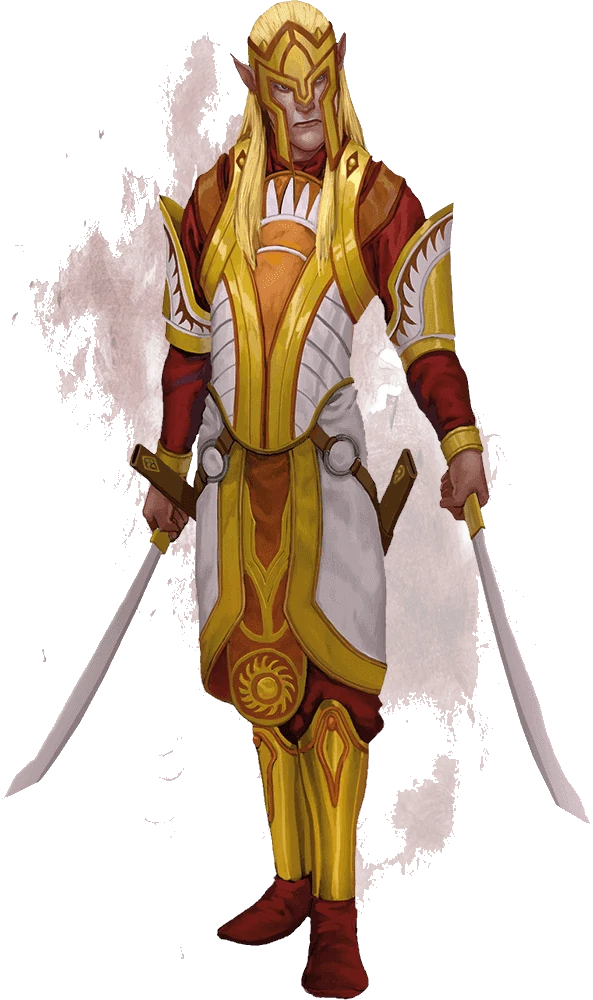
Fairy
Fairies are a wee folk, but not nearly as much so as their pixie and sprite friends. Infused with the magic of the Feywild, most fairies look like Small elves with insectile wings.
Fairy Traits
Type. (-1) You are a Fey Humanoid.
Age. Fairies slowly reach maturity at 40 years old and commonly exceed 800 years of age.
Speed. Your base walking speed is 30 ft.
Size. Fairies are some of the smallest sentient races, standing 2 to 3 feet tall. Your size is Small.
Fairy Flight. (3) Your wings are to small to carry your weight, but they can make you fall slower. As long as you're not incapacitated or restrained you can harmlessly fall down at 60 feet per turn.
Fairy Flight Improvement. (4) As long as your size is Tiny or smaller you have a flying speed equal to your movement speed and can hover.
Fairy Magic. (2) As an action you can call on your innate magic to decrease your size for 1 minute or until you end it as a bonus action. During this time you gain the following effects:
- Your size is Tiny.
- You have disadvantage on strength checks and saves.
- Your weapon attacks deal 1d4 less damage.
Once you've transformed you can't do so again until you finish a long rest.

Firbolg
Firbolg are giant kin with blueish skin and hairy ears. They tend to have deep and smooth voices and great beards.
Firbolg Traits
Type. (-1) You are a Fey Humanoid (Giant).
Age. As other fey, firbolgs have a long lifespan. Growing to be an adult at 30 and living up to 500.
Speed. Your base walking speed is 30 ft.
Size. (-1) As a giant you are larger than most, standing between 7 and 9 feet tall. Your size is Large.
Low-Light Vision. (2) You can see in dim light within 60 feet of you as if it were bright light.
Hidden Step. (3) As a bonus action, you can magically turn invisible until the start of your next turn or until you attack, make a damage roll, or force someone to make a saving throw. Once you use this trait, you can't use it again until you finish a long rest.
Hidden Step Improvement. (3) Hidden step recharges on a short or long rest.
Dimmunition. (2) As an action you may have yourself seem up to 3 feet shorter than you are. A creature can make an Intelligence (Investigation) check (DC 8+Prof+Wis) to see through the illusion. The illusion lasts until you go unconscious or end it (no action needed).
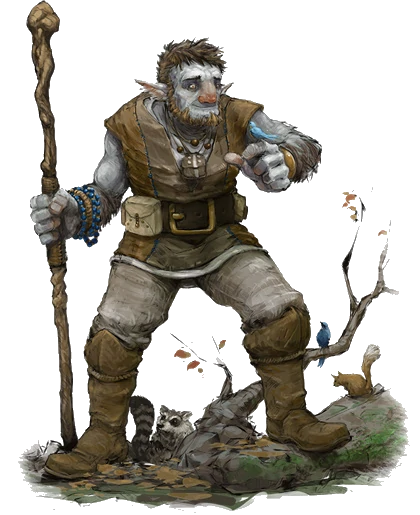
Genasi
Genasi are humanoids that are possessed or used to be possessed by an elemental spirit. This elemental changes the body slowly overtime, making them look more and more like the elementals true form. This means that there is a very large variety in looks for a genasi depending on what kind of elemental possessed them and how far along the transformation they are.
Genasi Traits
Type. (-1) You are an Elemental Humanoid.
Age. Genasi live as long as their ancestral race.
Speed. Your base walking speed is 30 ft.
Size. Genasi are as tall as their ancestral race. Your size is Medium.
Ancestral Legacy. Your bloodline has a non-genasi ancestral race. You are considered a halfrace of genasi and your ancestral race.
Subrace. Choose a subrace. A genasi's subrace depends on the type of elemental that possessed them.
Air
Unending Breath. (1) You do not need to breath.
Stormbreaker. (3) You have resistance against lightning damage.
Windwalker. (3) As a bonus action you can give yourself a flying speed of 30 feet this turn. If you are in the air at the end of your turn, you fall.
Control Air. (2) As an action you create a harmless sensory effect using air or you can call forth a burst of air to push back a creature or an object that weighs less than 5 pounds that you can see within 60 feet and isn't being worn or carried. The creature must succeed on a strength saving throw (DC 8+Prof+Con) or be knocked back 5 feet in a direction of your choosing. An object always fails this save and is knocked back 10 feet instead.
Earth
Earth Walk. (1) You can move across difficult terrain made of earth or stone without expending extra movement.
Control Earth. (2) As an action you can excavate or shape a 5 foot cube of loose earth that you can see within 60 feet or cause it to become difficult terrain, or normal terrain if it already was difficult terrain.
Sturdy. (2) You have advantage on saving throws and checks against being pushed back or knocked prone.
Murmurs of Earth. (4) At the start of your turn you may half your speed. If you do you gain tremorsense for 30 feet until the start of your next turn.
Fire
Fire Resistance. (3) You have resistance to fire damage.
Control Fire. (2) As an action you can make a flame appear anywhere on your body that sheds bright light for 10 feet and dim light for 10 more. Or you can light or snuff out a candle, torch, campfire or other easily flammable object that fits in a 5 foot cube by touching it.
Shimmering Heat. (4) When you take the dodge action you can increase the temperature around you, causing heat shimmer. While you are dodging, every creature that attacks you with a melee weapon takes fire damage equal to your proficiency bonus.
Water
Deepsight. (1) You can see in dim light within 60 feet of you as if it were bright light, and in darkness as if it were dim light, but only underwater. You can't discern color in darkness, only shades of gray.
Acid Resistance. (3) You have resistance to acid damage.
Amphibious. (1) You can breathe air and water.
Swim. (2) You have a swimming speed of 30 feet.
Control Water. (2) As an action you can move a 5 foot cube of water 5 feet or bend it into a shape or you can freeze it or thaw it if it is already frozen.
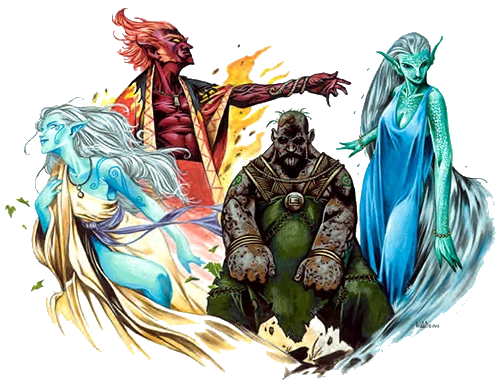
Gith
Githyanki are tall and slender Humanoid with rough, leathery yellow skin and bright black eyes that are sunken deep in their orbits. They have long and angular skulls, with small and highly placed flat noses, and ears that are pointed and serrated in the back side.
Gith Traits
Type. You are a Humanoid.
Age. Gith mature and age at about the same rate as humans.
Speed. Your base walking speed is 30 ft.
Size. Gith are slightly large than humans, standing between 4'11" and 7'. Your size is medium.
Telekinetic. (2) As an action you can target an object that you can see within 30 feet that weighs less than 20 lbs and take a mental hold of it until the start of your next turn. At the start of your next turn you can use your action to extend the hold for another round. As part of the same action to take or maintain your hold, you can interact with the object or move it up to 30 feet. When you lose your hold on the object, it falls.
Telekinetic Leap (Telekinetic Improvement). (1) As an action you can use your telekinetic abilties to fling yourself or an ally you can see within 30 feet. You can move the target for 30 feet, this movement does not have to be along the ground. Once you've done so you can't use this trait again until you finish a long rest.
Telekinetic Leap Improvement. (1) Telekinetic Leap recharges after a short or long rest.
Telepathic. (4) You can speak telepathically to any creature you can see, provided the creature is within 60 feet of you. You need to share a language with the creature for it to understand your telepathic utterances.
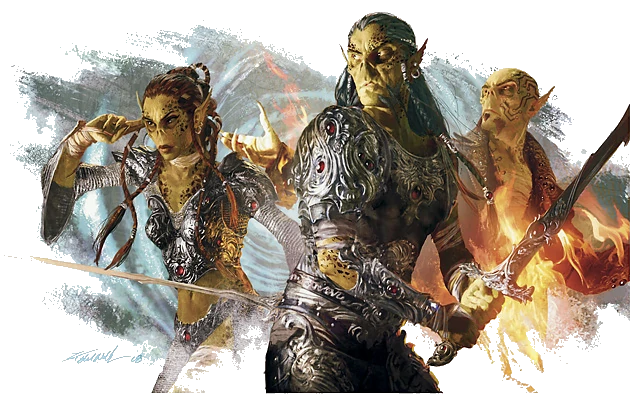
Gnome
Gnome look like a combination of dwarf and elf, being small in stature with pointed ears and high cheekbones. The skin of gnomes ran in hue from reddish tans to earthy browns or even shades of gray. Similarly, gnomish hair varied wildly in color from blond and brown to more exotic colors like white, orange, or even green.
Gnome Traits
Type. You are a Humanoid.
Age. Gnomes live longer than most, becoming an adult at 40 and living up to 500 years.
Speed. (-2) Your base walking speed is 25 ft.
Size. Gnomes are a small race, even dwarfed by dwarves, standing between 2'11" and 3'7". Your size is Small.
Low-Light Vision. (2) You can see in dim light within 60 feet of you as if it were bright light.
Gnome Cunning. (2) You have advantage on all Intelligence saving throws against spells.
Gnome Cunning. (4) You have advantage on all Wisdom saving throws against spells.
Gnome Cunning. (2) You have advantage on all Charisma saving throws against spells.
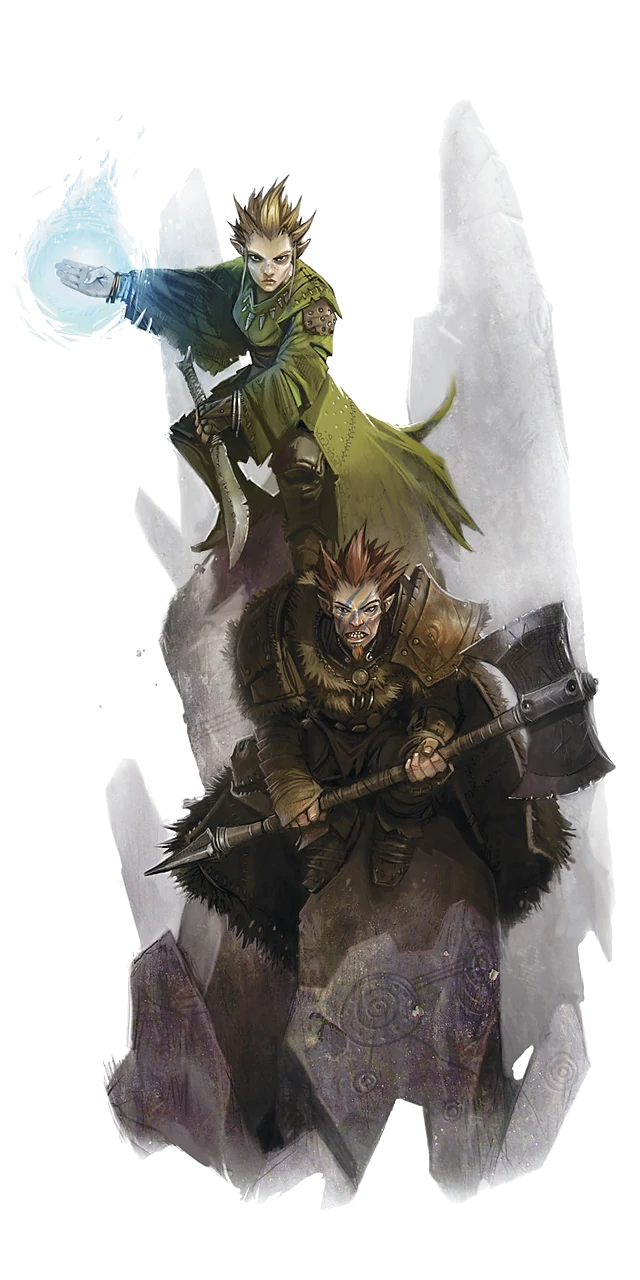
Goblin
Goblins have flat faces, sloped back forehead, broad noses, pointed ears, and small, sharp fangs. Their eyes vary in color from red to yellow. Their skin color ranges from yellow through any shade of orange to a deep red, though they also come in shades of green.
Goblin Traits
Type. You are a Humanoid (Goblinoid)
Age. Goblins are some of the shortest living races, reaching adulthood at 8 and almost never making it past 60.
Speed. Your base walking speed is 30 ft.
Size. Goblins are between 3 and 4 feet tall. Your size is Small.
Low-Light Vision. (2) You can see in dim light within 60 feet of you as if it were bright light.
Slippery. (4) When you take the Disengage action it lasts until the start of your next turn. In addition when an enemy ends its turn within 5 feet of you during this time, you may move 5 feet away from them.
Fury of the Small. (1) When you damage a creature with an attack or a spell and the creature's size is larger than yours, you can cause the attack or spell to deal extra damage to the creature. The extra damage equals your level. Once you use this trait, you can't use it again until you finish a long rest.
Fury of the Small Improvement. (1) Fury of the Small recharges after a short or long rest.
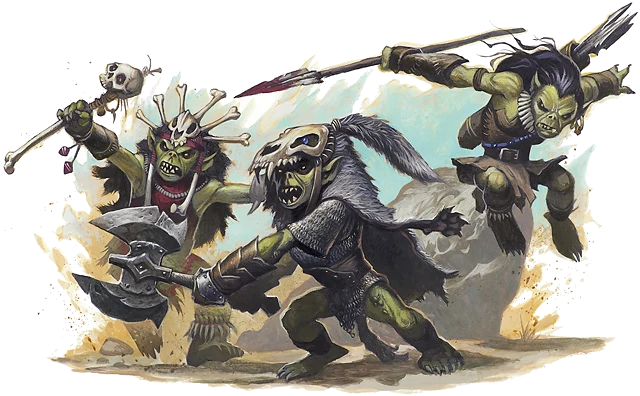
Goliath
Goliath are big humanoids with most likely giant ancestry. Goliaths have noticeably bony or prominent supraorbital ridges above their eyes. Goliath eyes are often a bright blue or green and sometimes glow a little.
Goliath Traits
Type. You are a Humanoid.
Age. Goliath mature and age at about the same rate as humans.
Speed. Your base walking speed is 30 ft.
Size. Goliaths are massive, standing between 6 and 8 feet. Your size is Medium.
Powerful Build. (1) You count as one size larger when determining your carrying capacity and the weight you can push, drag, or lift.
Stone's Endurance. (3) You can focus yourself to occasionally shrug off injury. When you take damage, you can use your reaction to roll a d12. Add your Constitution modifier to the number rolled, and reduce the damage by that total. After you use this trait, you can't use it again until you finish a long rest.
Stone's Endurance Improvement. (4) Stone's Endurance recharges after a short or long rest.
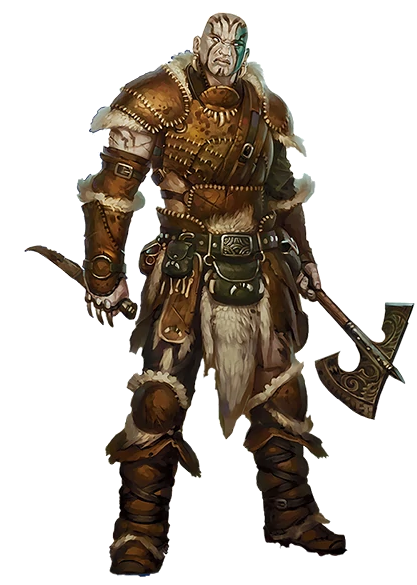
Grung
Grungs are frog-like folk found in rain forests and tropical jungles. About three months after hatching, a grung tadpole takes on the shape of an adult, and after another six months, the grung reaches maturity.
Born in a wide range of colors, grungs most often appear in shades of green, blue, purple, red, orange, and gold. All grungs secrete a substance that is harmless to them but poisonous to other creatures.
Grung Traits
Type. You are a Humanoid.
Age. Grungs mature to adulthood in a single year, but have been known to live up to 50 years.
Speed. (-2) Your base walking speed is 25 ft.
Size. Grungs stand between 2,5 and 3,5 feet tall. Your size is Small.
Amphibious. (1) You can breathe air and water.
Poison Resistance. (3) You have resistance to poison damage.
Poison Resistance. (2) You have advantage on saves against poison.
Poisonous Skin. (4) Any creature that grapples you or otherwise comes into direct contact with your skin must succeed on a Constitution saving throw (DC 8+Prof+Con) or become poisoned for 1 minute. A poisoned creature no longer in direct contact with you can repeat the saving throw at the end of each of its turns, ending the effect on itself on a success.
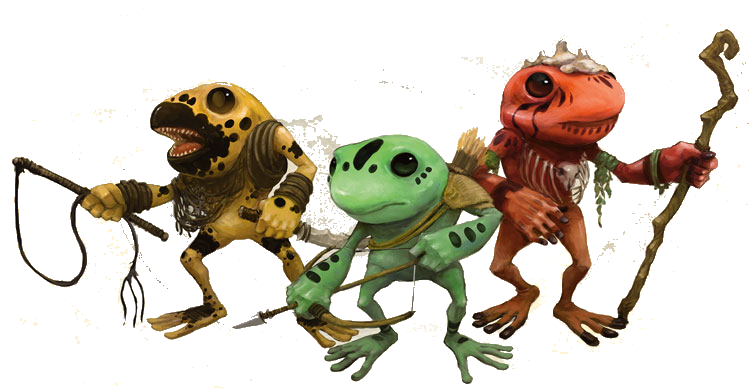
Halfling
In many ways, halflings resemble small humans and usually have the same proportions as the typical human adult. Most halflings have dark hair and eyes, regardless of their skin complexion which, although commonly ruddy in hue have a similar range to humans.
Hallfing Traits
Type. You are a Humanoid.
Age. A halfling reaches adulthood at the age of 20 and generally lives into the middle of their second century.
Speed. (-2) Your base walking speed is 25 ft.
Size. Halflings are between 2,5 and 3,5 feet tall. Your size is Small.
Halfling Nimbleness. (2) You can move through the space of any creature that is of a size larger than yours.
Halfling Nimbleness. (3) Attacks of Opportunity against you have disadvantage.
Naturally Stealthy. (5) You can attempt to hide even when you are obscured only by a creature that is at least one size larger than you and you have advantage on the stealth check when there are 3 or more of such creatures within 5 feet of you.
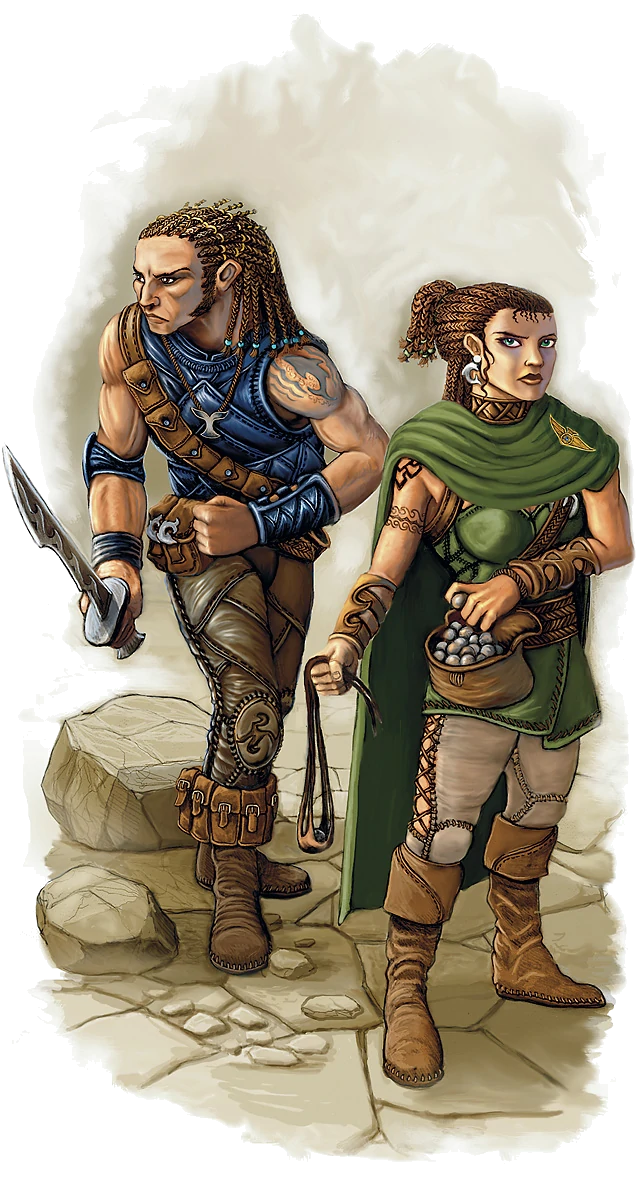
Harengon
Harengons are bipedal, with the characteristic long feet of the rabbits they resemble and fur in a variety of colors. They share the keen senses and powerful legs of leporine creatures and are full of energy, like a wound-up spring.
Harengon Traits
Type. (-1) You are a Fey Humanoid.
Age. Harengon mature and age at about the same rate as humans.
Speed. Your base walking speed is 30 ft.
Size. Harengon come in a large variaty of size going from 2 to 7 feet. Your size is Small or Medium.
Always Prepared. (2) You may add your proficiency bonus to initiative checks.
Lucky Footwork. (2) When you fail a Dexterity saving throw, you can use your reaction to roll a d4 and add it to the save, potentially turning the failure into a success. You can't use this reaction if you're prone or your speed is 0.
Rabbit Hop. (2) As a bonus action, you can jump a number of feet equal to five times your proficiency bonus, without provoking opportunity attacks. You can use this trait only if your speed is greater than 0. Once you use this trait, you can't do so again until you finish a long rest.
Rabbit Hop Improvement. (3) Rabbit Hop recharges after a short or long rest.
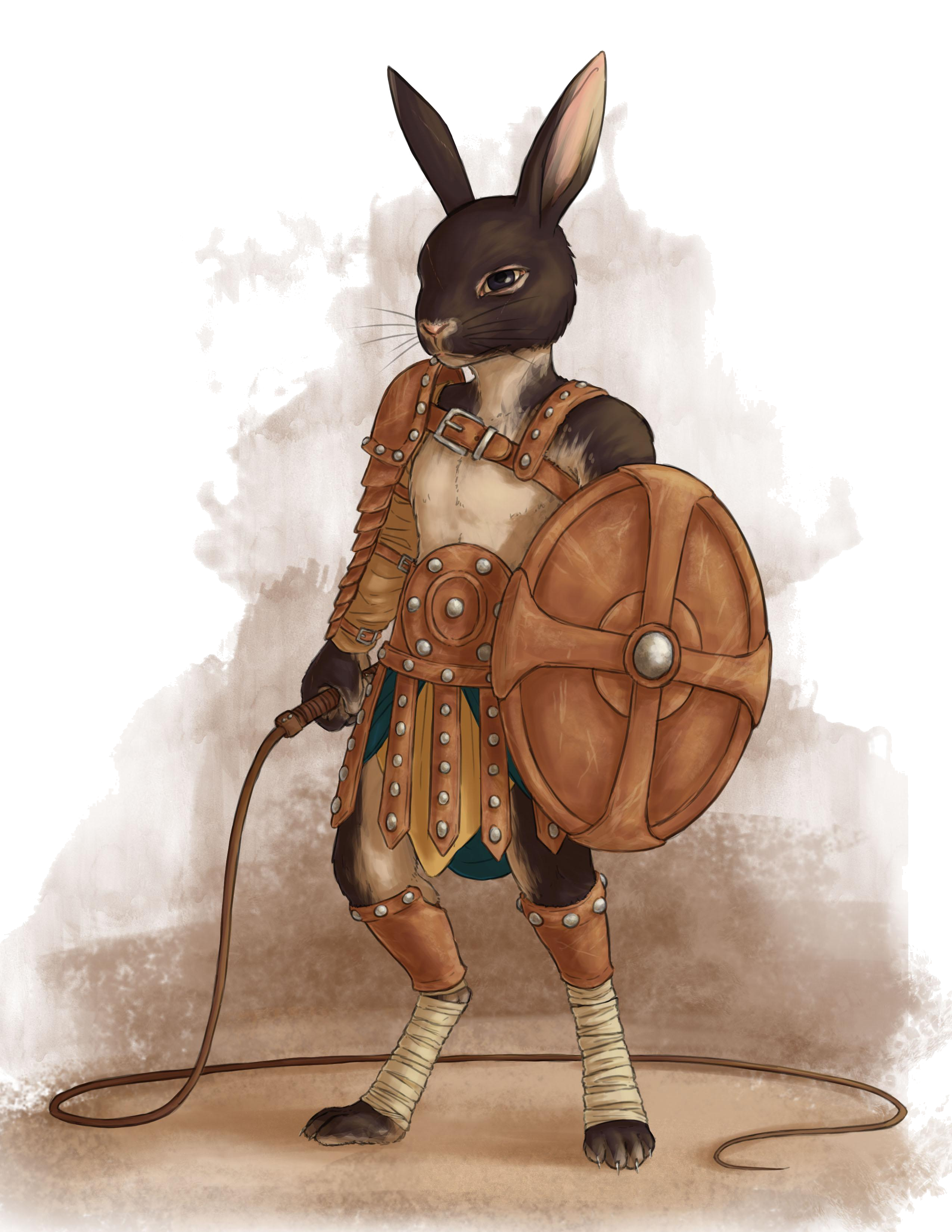
Hexblood
Hexbloods are humanoids that made a deal with hags, changing them.
Hexblood Traits
Type. (-1) You are a Fey Humanoid.
Age. Hexbloods live as long as their ancestral race.
Speed. Your base walking speed is 30 ft.
Size. Hexbloods are as tall as their ancestral race. Your size is Medium.
Ancestral Legacy. Your bloodline has a non-hexblood ancestral race. You are considered a halfrace of hexblood and your ancestral race.
Eerie Token. As a bonus action, you can harmlessly remove a lock of your hair, one of your nails, or one of your teeth. This token is imbued with magic until you finish a long rest. Once you create a token using this feature, you can't do so again until you finish a long rest, at which point your missing part regrows.
Eerie Token Improvement. (2) While the token is imbued with magic, as an action, you can send a telepathic message to the creature holding or carrying the token, as long as you are within 10 miles of it. The message can contain up to twenty-five words.
Eerie Token Improvement. (2) If you are within 10 miles of the token and the token is imbued with magic, you can enter a trance as an action. The trance lasts for 1 minute, but it ends early if you dismiss it (no action required) or are incapacitated. During this trance, you can see and hear from the token as if you were located where it is. While you are using your senses at the token's location, you are blinded and deafened in regard to your own surroundings. When the trance ends, the token is harmlessly destroyed.
Hex Curse. (2) Your promises of ill fortune are more potent than others. As a bonus action you may curse a creature within 60 feet that can hear you for 1 hour. Choose Attacks, Checks or Saving throws, the creature removes 1d4 from any roll it makes of the chosen kind. Once you've done so you can't use this trait again until you finish a long rest.
Hex Curse Improvement. (3) Hex Curse recharges after a short or long rest.
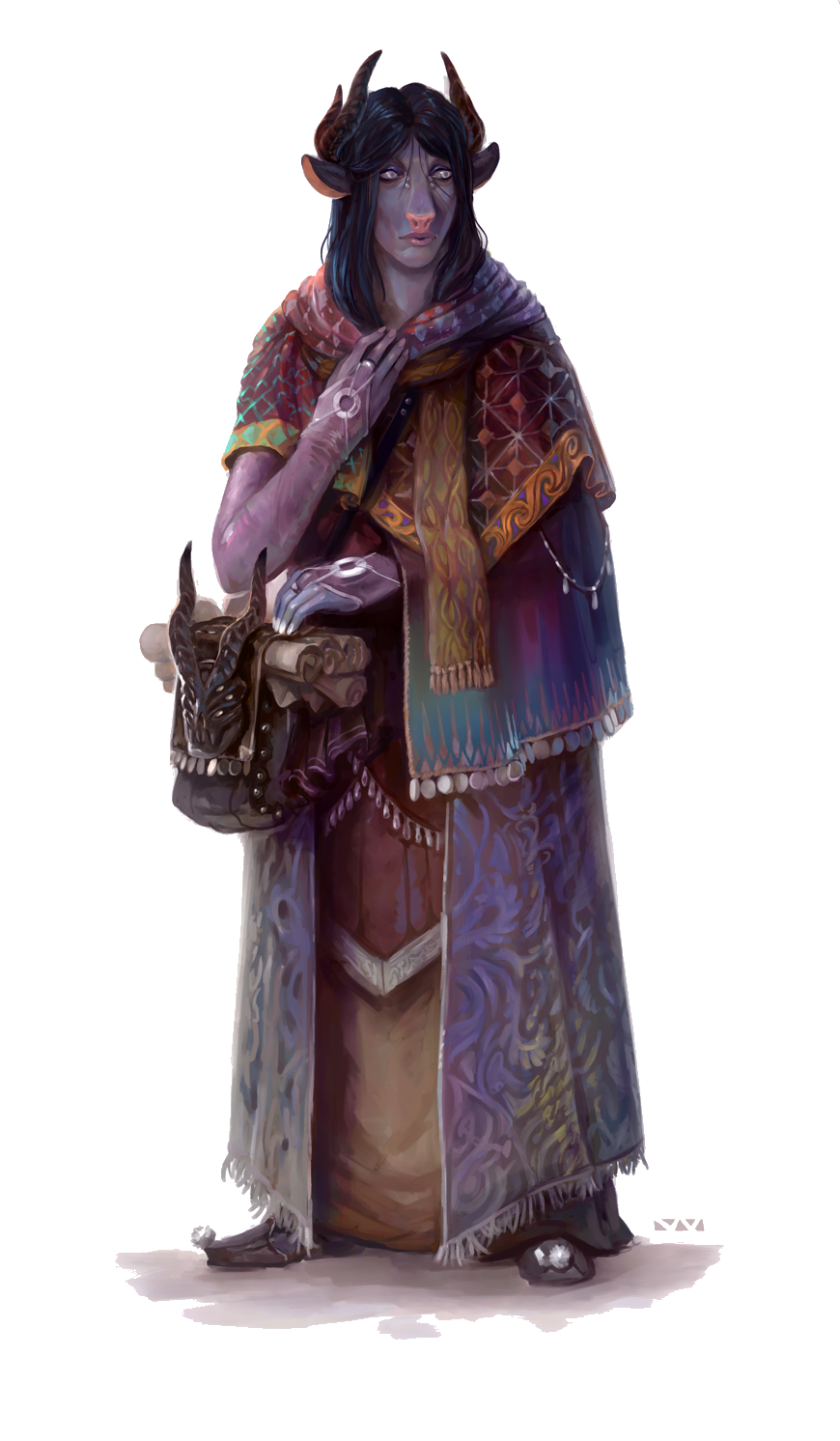
Hobgoblin
Hobgoblins have dark orange or red-orange skin, and hair ranging from dark red-brown to dark gray. Yellow or dark brown eyes peer out beneath their beetling brows, and their wide mouths sport sharp and yellowed teeth.
Hobgoblin traits
Type. You are a Humanoid (Goblinoid).
Age. Hobgoblin mature and age at about the same rate as humans.
Speed. Your base walking speed is 30 ft.
Size. Hobgoblins are as tall as humans, being between 5 to just over 6 feet tall.
Low-Light Vision. (2) You can see in dim light within 60 feet of you as if it were bright light.
Hobgoblin Resilience. (4) Whenever you are under an effect that allows you to make a saving throw at the end of your turn to end it, you can make that saving throw at the start of your turn instead.
Always Prepared. (2) You can add your proficiency bonus to your initiative checks.
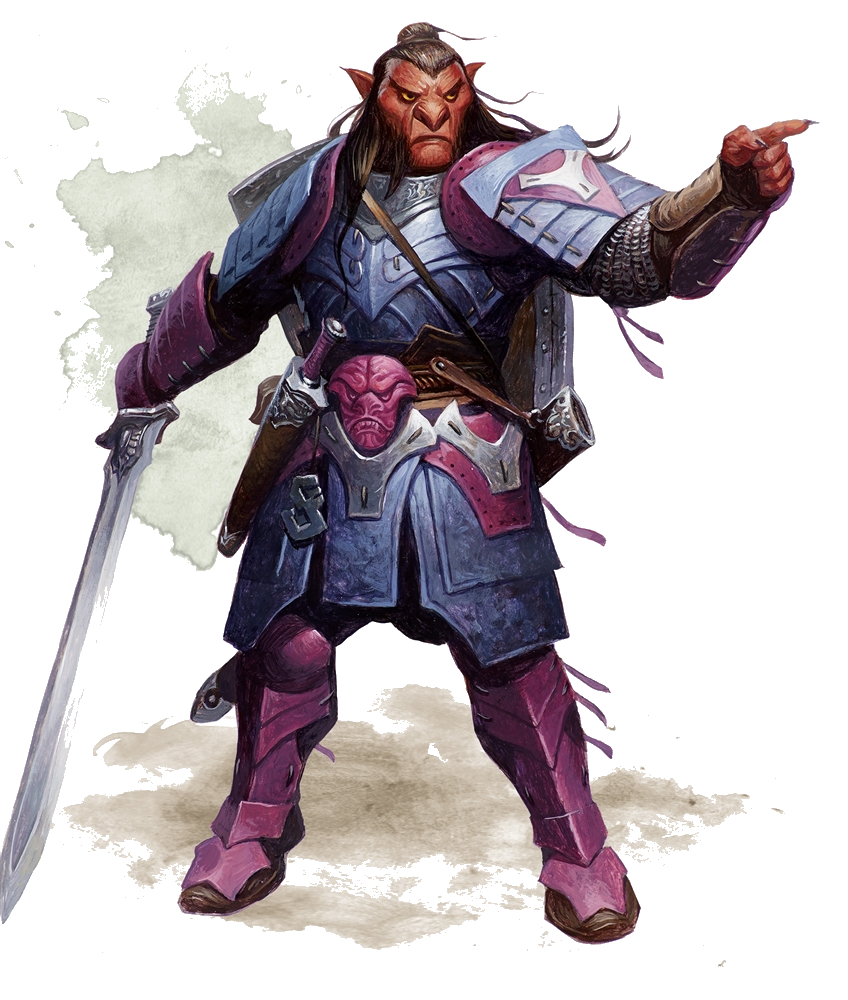
Human
If you wonder what a human looks like, look in the mirror.
Human Traits
Type. You are a Humanoid.
Age. Humans become an adult at 18 and live for up to a century.
Speed. Your base walking speed is 30 ft.
Size. Humans are between 5 and just over 6 feet tall. Your size is Medium.
Cultural Adaptation. (5) Choose a culture other than your own. You gain 5 culture points for it. (see Chapter 1: Character Creation→Step 4: Culture)
Cultural Adaptation Improvement. (3) Choose a third culture. You gain 3 culture points for it.
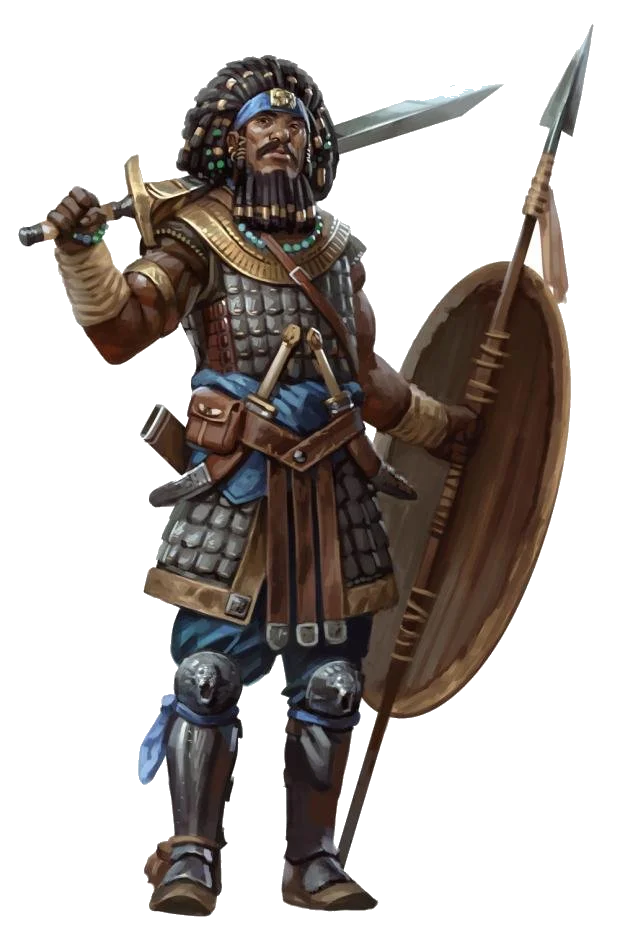
Kalashtar
Kalashtar are possessed by a spirit. Though instead of taking over and transforming the body, it chooses to cohabit the body with the humanoid. In general Kalashtar are indistinguishable from their ancestral species. Small changes can occur like a strange eye or hair color and small behavior changes.
Kalashtar Traits
Type. You are a Humanoid.
Age. Kalashtar live as long as their ancestral race.
Speed. Your base walking speed is 30 ft.
Size. Kalashtar are as tall as their ancestral race. Your size is Medium
Ancestral Legacy. Your bloodline has a non-kalashtar ancestral race. You are considered a halfrace of kalashtar and your ancestral race.
Dual Mind. (2) You have resistance to Psychic damage.
Telepathic. (4) You can speak telepathically to any creature you can see, provided the creature is within 60 feet of you. You need to share a language with the creature for it to understand your telepathic utterances.
Telepathic Improvement. (2) As an action you can establish a bond with a creature you can see within 60 feet of you. While the bond persists you no longer need to see the creature to speak telepathically to it but it still must be within 60 feet, it can speak telepathically with you and you must make concentration checks as if you were concentrating on a spell. The bond lasts until you go unconscious, lose your concentration or choose to end it (no action required).
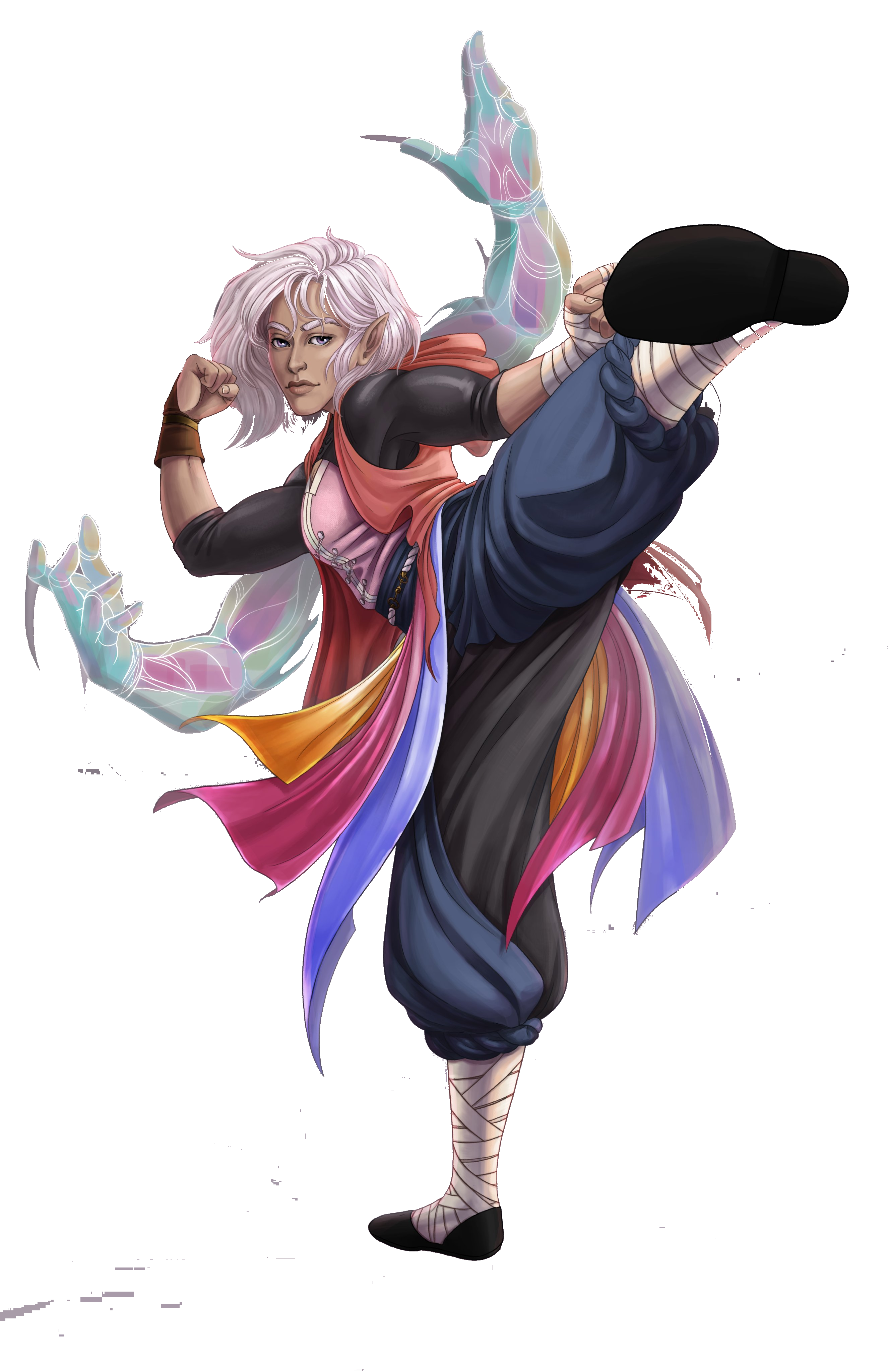
Kenku
Kenku have no wings or capacity for flight. Instead, they have arms in place of wings and bird-like talons for hands and feet. Head and torso are covered with soft feathers, a dark russet-brown color, while their scrawny limbs are bare and scaled like a bird's. They most resemble ravens
Kenku
Type. You are a Humanoid
Age. Kenku live fast, being an adult at 12 and never making it past 60.
Speed. Your base walking speed is 30 ft.
Size. Kenku are slightly smaller than humans, going from 4,5 to 6 feet in size.
Expert Forgery. (1) You can duplicate other creatures' handwriting and craftwork. You have advantage on all checks made to produce duplicates of existing objects.
Mimicry. (2) You can mimic sounds you have heard, including voices. A creature that hears the sounds can tell they are imitations with a successful Wisdom (Insight) check opposed by your Charisma (Deception) check.
Flock Tactics. (4) When you use the Help action you add 1d6 to the helped roll.
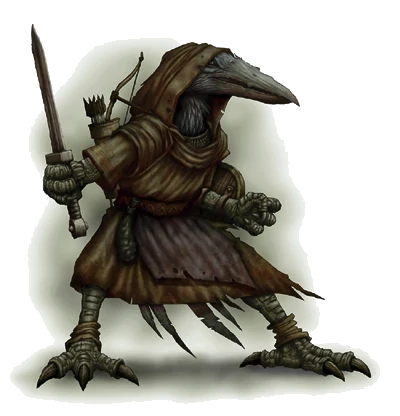
Kobold
A kobold is a Dragonoid Humanoid with scaled skin between reddish brown and black in color and burnt orange to red eyes. Their legs are sinewy and digitigrade. They have long, clawed fingers and a jaw like a crocodile. Small white or tan horns protrude from their head, and they have rat-like tails.
Kobold Traits
Type. (-1) You are a Dragon Humanoid
Age. Kobolds grow up fast, being adult at 6 but can live a long life, living up to 120 years.
Speed. You have a base walking speed of 30 ft.
Size. Kobolds are between 2 and 3 feet. Your size is Small.
Low-Light Vision. (2) You can see in dim light within 60 feet of you as if it were bright light.
Bite. (2) Your teeth are natural weapons, which you can use to make unarmed strikes. If you hit with them, you can deal piercing damage equal to 1d6+Str, instead of the bludgeoning damage normal for an unarmed strike.
Lesser Draconic Heritage (Bite Improvement). (2) Choose a chromatic or metallic draconic heritage (see Dragonborn). When you hit with a bite attack, you can deal 1d6 extra damage of your draconic heritage type. This damage increases by 1d6 when you reach 5th level (2d6), 11th level (3d6), and 17th level (4d6). Once you use this trait, you can't do so again until you finish a long rest.
Lesser Draconic Heritage Improvement. (3) Lesser Draconic Heritage recharges after a short or long rest.
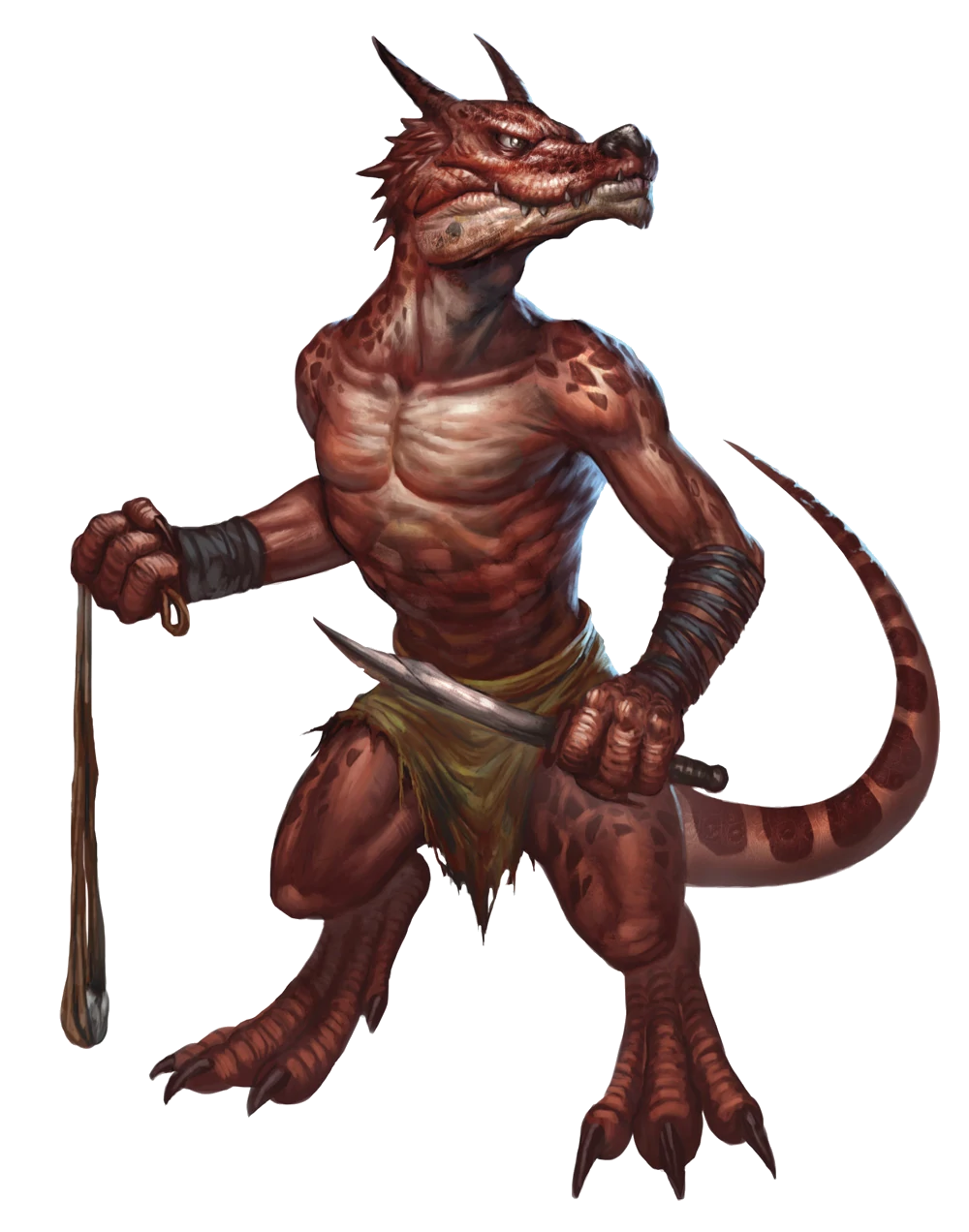
Leonin
Tawny fur covers leonin bodies, and some grow thick manes ranging in shades from gold to black. While their hands prove as nimble as those of other humanoids, leonin have retractable feline claws, which they can extend instantly. This, along with their ability to produce bone-shaking roars, gives most leonin an air that readily shifts between regal and fearsome.
Leonin Traits
Type. (-1) You are a Fey Humanoid.
Age. Leonin mature and age at about the same rate as humans.
Speed. (2) Your base walking speed is 35 ft.
Size. Leonin are larger than humans, being between 6 and 7 feet. Your size is Medium.
Low-Light Vision. (2) You can see in dim light within 60 feet of you as if it were bright light.
Daunting Roar. (2) As a bonus action, you can let out an especially menacing roar. Creatures of your choice within 10 feet of you that can hear you must succeed on a Wisdom saving throw (DC 8+Prof+Con) or become frightened of you until the end of your next turn. Once you use this trait, you can't use it again until you finish a long rest.
Daunting Roar Improvement. (3) Daunting Roar recharges after a long or short rest.
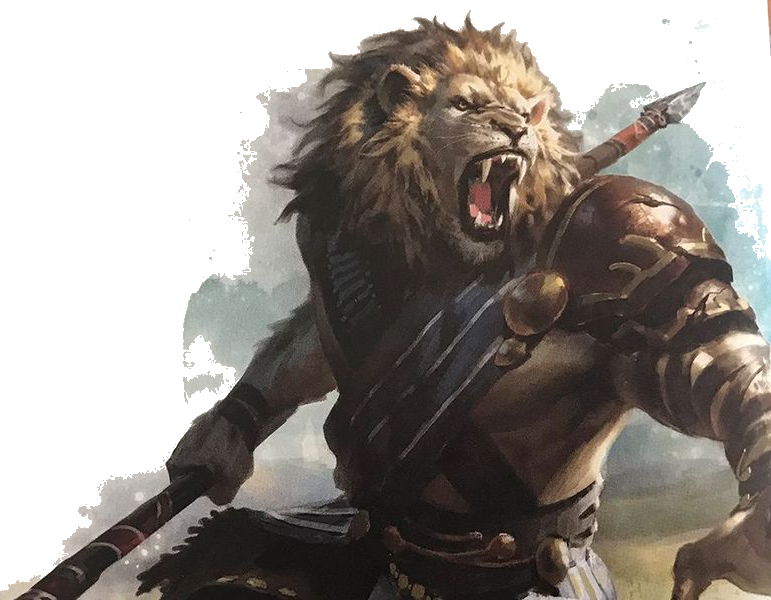
Lizardfolk
Lizardfolk are semi-aquatic reptilian humanoids. Their skin is covered in scales and varies in color from dark green through to shades of brown and gray. Lizardfolk have non-prehensile muscular tails that grow to three or four feet in length, and these are used for balance. They also have sharp claws and teeth.
Lizardfolk Traits.
Type. You are a Humanoid
Age. Lizardfolk mature at 14 and live up to 60 years.
Speed. Your base walking speed is 30 ft.
Size. Lizardfolk are a few inches taller than humans. Your size is Medium.
Swimming Speed. (2) You have a swimming speed of 30 feet.
Bite. (2) Your fanged maw is a natural weapon, which you can use to make unarmed strikes. If you hit with it, you deal piercing damage equal to 1d6+Str, instead of the bludgeoning damage normal for an unarmed strike.
Hold Breath. (1) You can hold your breath for up to 15 minutes at a time.
Natural Armor. (2) You have tough, scaly skin. When you aren't wearing armor, your AC is 13 + your Dexterity modifier. You can use your natural armor to determine your AC if the armor you wear would leave you with a lower AC. A shield's benefits apply as normal while you use your natural armor.
Flexible Tail. (1) Your tail is not just for show, you can use it to perform simple object interactions like pulling levers or opening doors. It cannot perform any action that requires dexterity or fingers and it cannot hold objects.
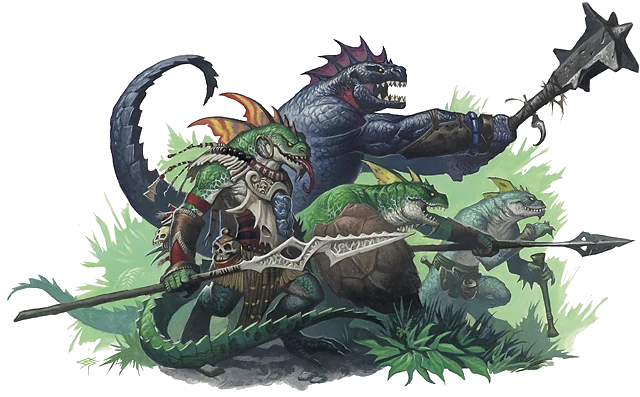
Locathah
Locathah are a fish-like humanoid race. they have fine scales covering their bodies that range from olive green to ochre in color although their stomach scales instead range from sea green to pale yellow. They have fish-like heads with large eyes, either all-black or all-white (which is viewed as a good omen), toothless mouths and small fins where ears would normally be. Instead of hair, they have a dorsal fin and flukes.
Locathah Traits
Type. You are a Humanoid.
Age. Locathah mature to adulthood by the age of 10 but have been known to live up to 80 years.
Speed. Your base walking speed is 30 ft.
Size. Locathah stand between 5 and 6 feet tall. Your size is Medium.
Swimming Speed. (2) You have a swimming speed of 30 ft.
Amphibious. (1) You can breath air and water.
Wet Skin. (-5) You need to be submerged at least once every 4 hours to avoid suffocating.
Leviathan Will. (2) You have advantage on saves against charmed.
Leviathan Will. (2) You have advantage on saves against frightened.
Leviathan Will. (2) You have advantage on saves against paralyzed.
Leviathan Will. (2) You have advantage on saves against poisoned.
Leviathan Will. (2) You have advantage on saves against stunned.

Loxodon
Loxodons tower above most other humanoids, standing over 7 feet tall. They have the heads—trunks, tusks, ears, and faces—of elephants, and hulking bipedal bodies covered by thick, leathery skin. Each of their hands has four thick digits, and their feet are the flat-bottomed, oval-shaped feet of elephants. Like that of an elephant, a loxodon's trunk is a useful appendage. In addition to providing a keen sense of smell, the trunk can be used to lift and carry even heavy objects. The trunk can be used to carry both food and liquid to the mouth and can even act as a snorkel.
Loxodon Traits
Type. You are a Humanoid.
Age. Loxodon are an adult at 18 and live up to 450 years.
Speed. Your base walking speed is 30 ft.
Size. (-1) Loxodon are large creatures, standing between 6,5 and 8 feet tall. Your size is Large.
Natural Armor. (2) You have thick, leathery skin. When you aren't wearing armor, your AC is 12 + your Constitution modifier. You can use your natural armor to determine your AC if the armor you wear would leave you with a lower AC. A shield's benefits apply as normal while you use your natural armor.
Trunk. (2) You can grasp things with your trunk, and you can use it as a snorkel. It has a reach of 5 feet, and it can lift a number of pounds equal to five times your Strength score. You can use it to do the following simple tasks: lift, drop, hold, push, or pull an object or a creature; open or close a door or a container; grapple someone; or make an unarmed strike. Your DM might allow other simple tasks to be added to that list of options. Your trunk can't wield weapons or shields or do anything that requires manual precision, such as using tools or magic items or performing the somatic components of a spell.
Keen Smell. (3) Thanks to your sensitive trunk, you have advantage on Wisdom (Perception), Wisdom (Survival), and Intelligence (Investigation) checks that involve smell.
Earth Shake. (1) As an action you can stomp the ground, making it shake. Each creature within 10 feet of you must succeed on a Dexterity saving throw (DC 8+Prof+Con) or be knocked prone. Once you done so you can't do so again until you finish a long rest.
Earth Shake Improvement. (1) Earth Shake recharges after a long or short rest.
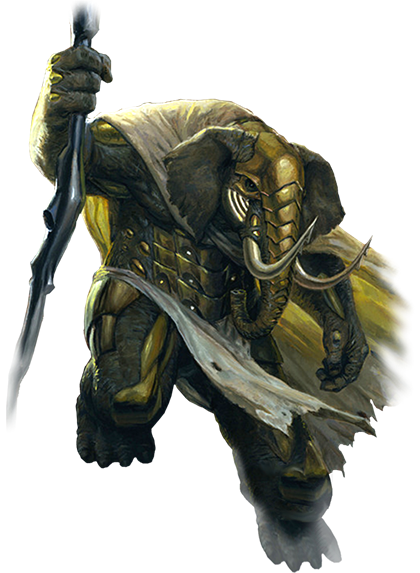
Minotaur
Minotaurs are large, muscular humanoids. They have the head of a bull and the body of a human. Their fur and hair typically ranges from brown to black.
Minotaur Traits
Type. (-1) You are a Monstrous Humanoid.
Age. Minotaurs become an adult at 17 and live up to 150 years.
Speed. Your base movement speed is 30 ft.
Size. (-1) Minotaurs are larger than humans, standing between 5,5 and 7 feet. Your size is Large.
Horns. (2) Your horns are natural melee weapons, which you can use to make unarmed strikes. If you hit with them, you deal piercing damage equal to 1d6+Str, instead of the bludgeoning damage normal for an unarmed strike.
Hammering Horns. (4) Immediately after you hit a creature within 5 feet of you that is your size or smaller with a melee attack on your turn, you can use a bonus action to attempt to shove that target with your horns. Unless it succeeds on a Strength saving throw (DC 8+Prof+Str) you push it up to 10 feet away from you.
Charge. (4) If you move at least 20 feet straight toward a target and then hit it with a melee attack on the same turn, that melee attack deals an extra 2d6 damage.
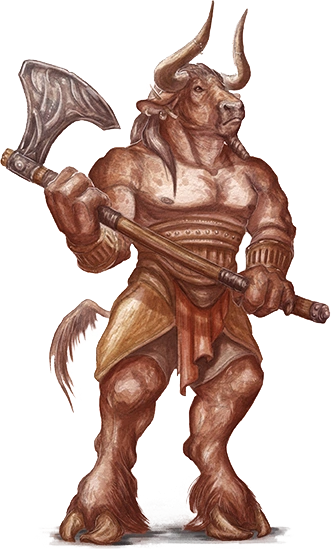
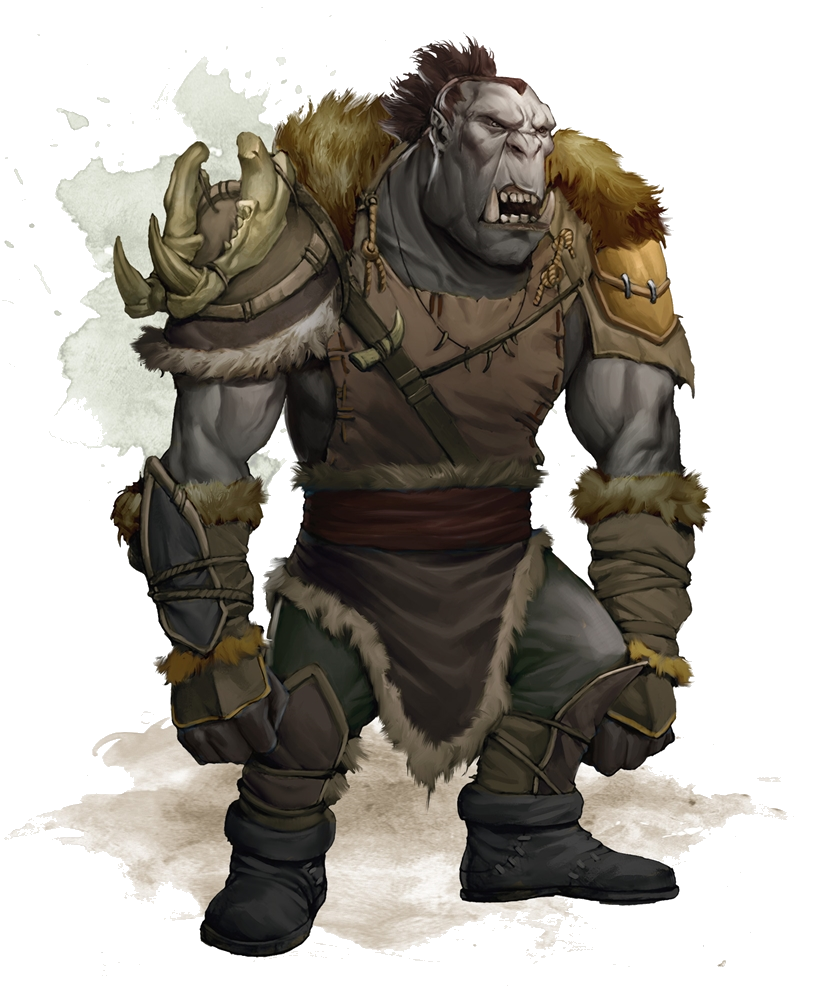
Orc
Orcs of all kinds usually have grayish skin, coarse hair, stooped postures, low foreheads, large muscular bodies, and porcine faces that featured lower canines that resembled boar tusks. Many also have wolf-like ears that are pointed on the ends, similar to elves. Orcs are roughly the same size as Human, though usually robust and muscular.
Orc Traits
Type. You are a Humanoid.
Age. Orcs are tought to live short lives, most not seeing the second half of their first century.
Speed. Your base walking speed is 30 ft.
Size. Orcs are slightly larger than humans, standing between 5,5 and 6,5 feet. Your size is medium.
Low-Light Vision. (2) You can see in dim light within 60 feet of you as if it were bright light.
Powerful Build. (1) You count as one size larger when determining your carrying capacity and the weight you can push, drag, or lift.
Relentless Endurance. (5) When you are reduced to 0 hit points but not killed outright, you can drop to 1 hit point instead. You can't use this feature again until you finish a long rest.
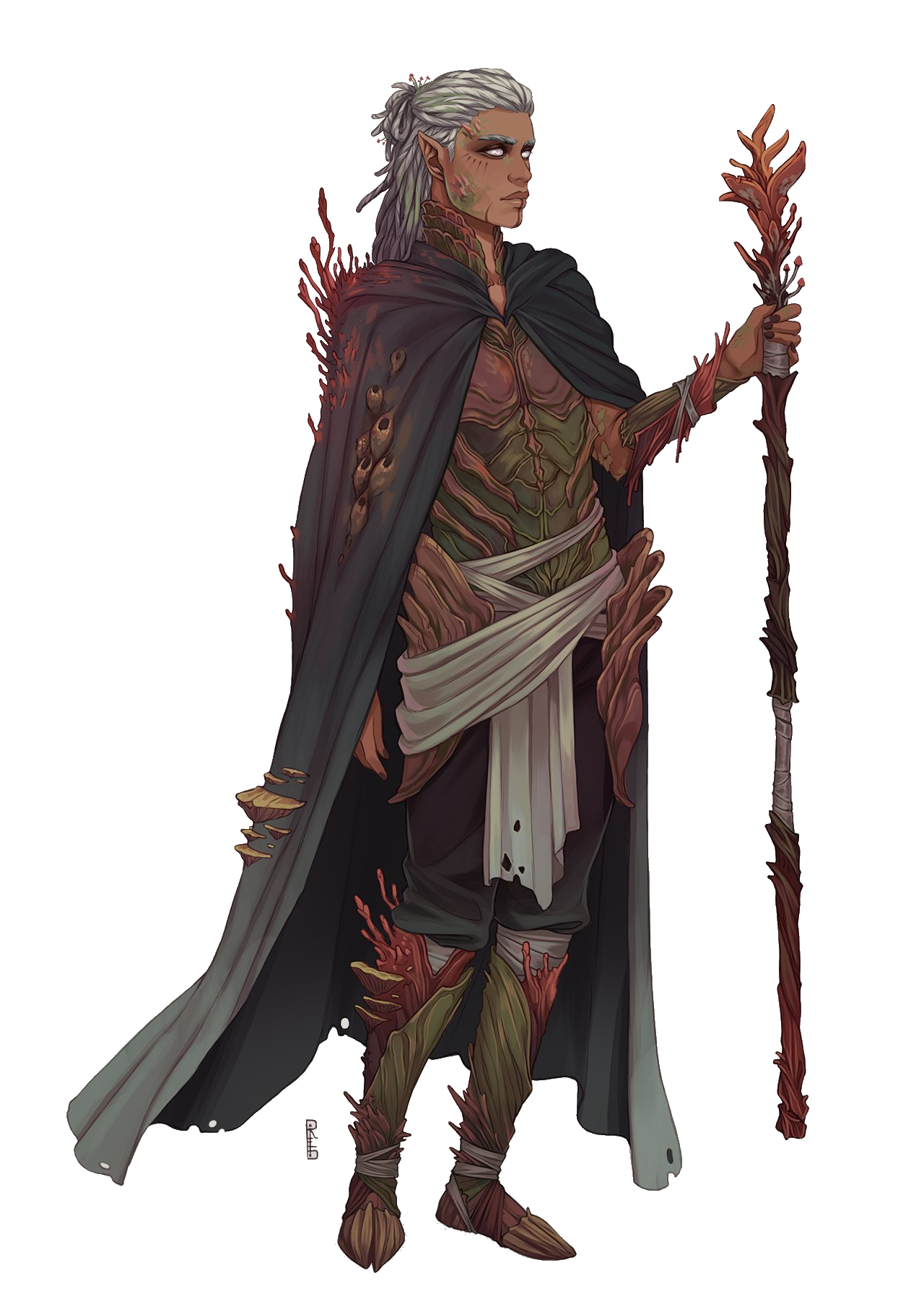
Reborn
Death isn't always the end. The reborn exemplify this, being individuals who have died yet, somehow, still live. Some reborn exhibit the scars of fatal ends, their ashen flesh or bloodless veins making it clear that they've been touched by death. Other reborn are marvels of magic or science, being stitched together from disparate beings or bearing mysterious minds in manufactured bodies.
Reborn Traits
Type. You are a Humanoid.
Age. Reborn do not age.
Speed. Your base walking speed is 30 ft.
Size. Reborn are the same size as their born race. Your size is Medium.
Ancestral Legacy. No one is born Reborn. You are considered a half-race of Reborn and your born race.
Thick Blood. (2) You have advantage on saving throws against poison.
Restless Death. (1) You don't need to sleep. You can finish a long rest in 4 hours if you spend those hours in an inactive, motionless state, during which you retain consciousness.
Restless Death Improvement. (1) Magic can't put you to sleep.
Undead Nature. (1) You don't need to eat or drink.
Undead Nature. (1) You don't need to breath.
Already Dead. (2) You have advantage on death saving throws.
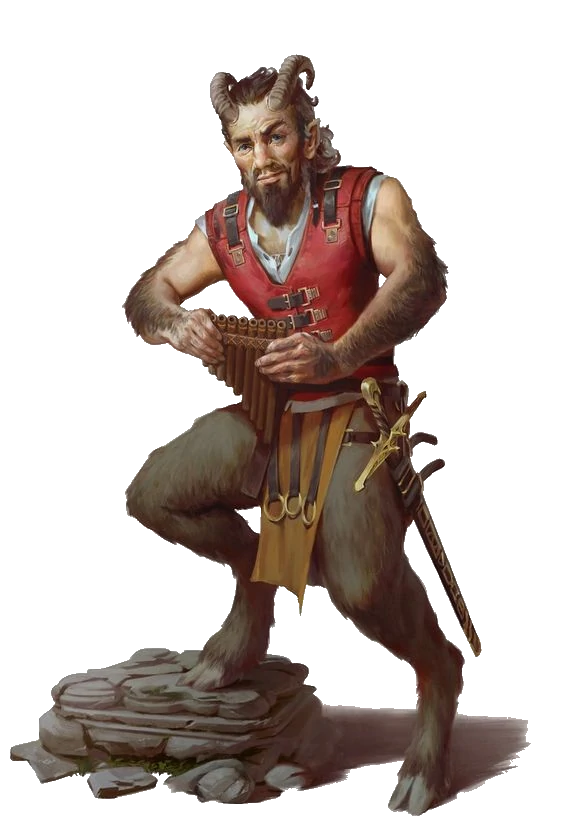
Satyr
Generally, they look similar to humans, with a range of builds and features. But their goatlike horns, pointed ears, and furred lower bodies sharply distinguish them. Satyrs' solid horns connect to their heads at the base of their skulls, while their legs end in sturdy hooves. Thick fur covers their bodies from the waist down, shorter at the waist and longer below the knees. Short, soft hair grows down their neck and spine, along their shoulders, and on their forearms.
Satyr Traits
Type. (-1) You are a Fey Humanoid.
Age. Satyrs are an adult at 18 and live up to a century.
Speed. (2) Your base walking speed is 35 ft.
Size. Satyr's are as large as humans, being between 4,5 and 6 feet Your size is Medium.
Lure of enchantment. (3) As a bonus action you may sing a tune, attempting to charm a creature within 30 feet of you that can hear you. It must succeed on a wisdom saving throw (DC 8+Prof+Cha), on a fail it is subjected to 1 of the following effects (your choice):
- You move the creature up to 15 feet, but not in a way that would provoke attacks of opportunity or into hazardous terrain.
- The creature falls asleep for 1 minute or until it takes damage or another creatures uses an action to shake them awake.
- The creature is frightened of a creature or object of your choice for 1 minute, it can retry the save at the end of each of its turns.
Once you use this trait, you can't do so again until you finish a long rest.
Lure of Enchantment Improvement. (4) Lure of Enchantment recharges after a long or short rest.
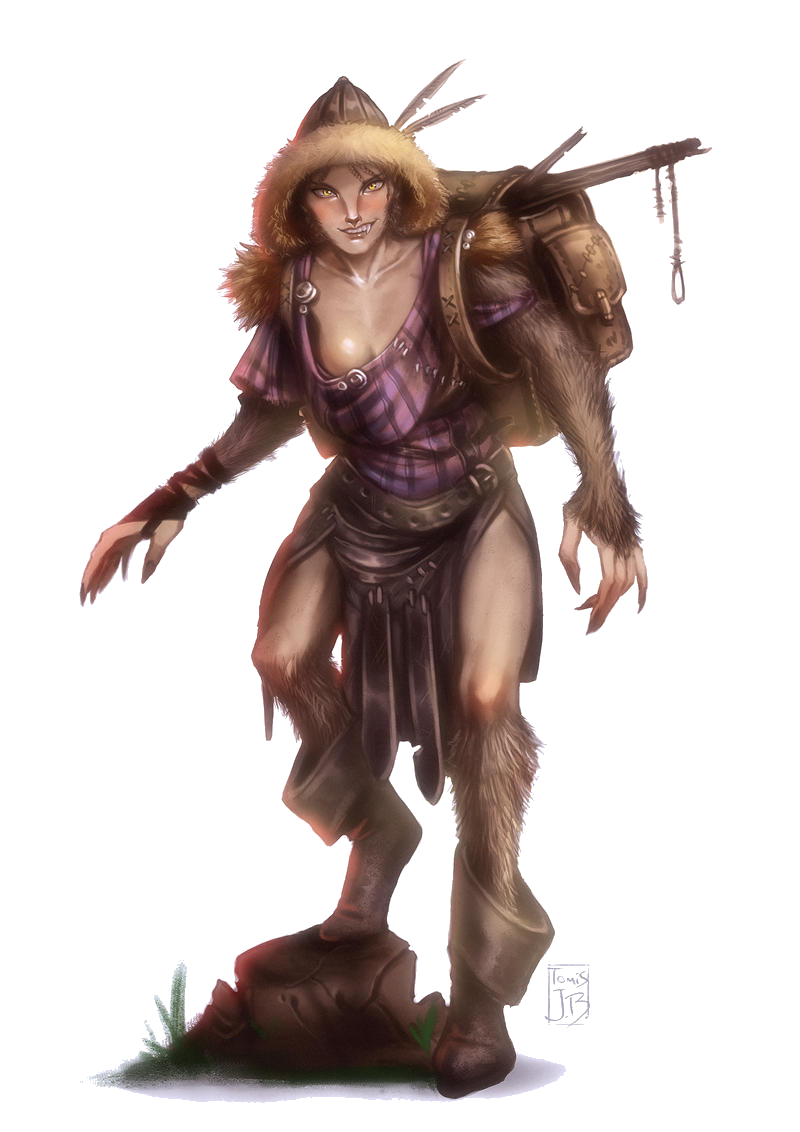
Shifter
Shifters are similar to humans in height and build but are typically more lithe and flexible. Their facial features have a bestial cast, often with large eyes, flat noses, and pointed ears; most shifters also have prominent canine teeth. They grow fur-like hair on nearly every part of their bodies.
Shifter Traits
Type. (-1) You are a Fey Humanoid.
Age. Shifters are an adult at 10 and live up to 70 years.
Speed. Your base walking speed is 30 ft.
Size. Shifters are slightly smaller than humans, being between 4,5 to just under 6 feet. Your size is Medium.
Shifting. (2) As a bonus action, you can assume a more bestial appearance. This transformation lasts for 1 minute, until you die, or until you revert to your normal appearance as a bonus action. When you shift, you gain temporary hit points equal to half your level, rounded up, plus your Constitution modifier (minimum of 1 temporary hit point). You also gain additional benefits that depend on your shifter subrace, described below. Once you shift, you can't do so again until you finish a long rest.
Shifting Improvement. (5) Shifting recharges after a short or long rest. If you don't have a shifter subrace this trait has a powerscore of 3.
Beasthide
Shifting Feature. (2) While shifted, you have a +1 bonus to your Armor Class.
Longtooth
Shifting Feature. (2) While shifted, you can use your elongated fangs to make an unarmed strike as a bonus action. If you hit with your fangs, you can deal piercing damage equal to 1d6+Str, instead of the bludgeoning damage normal for an unarmed strike.
Swiftstride
Shifting Feature. (2) While shifted, your walking speed increases by 10 feet.
Wildhunt
Shifting Feature. (2) While shifted no creature within 30 feet of you can make an attack roll with advantage against you, unless you're incapacitated.
Simic Hybrid
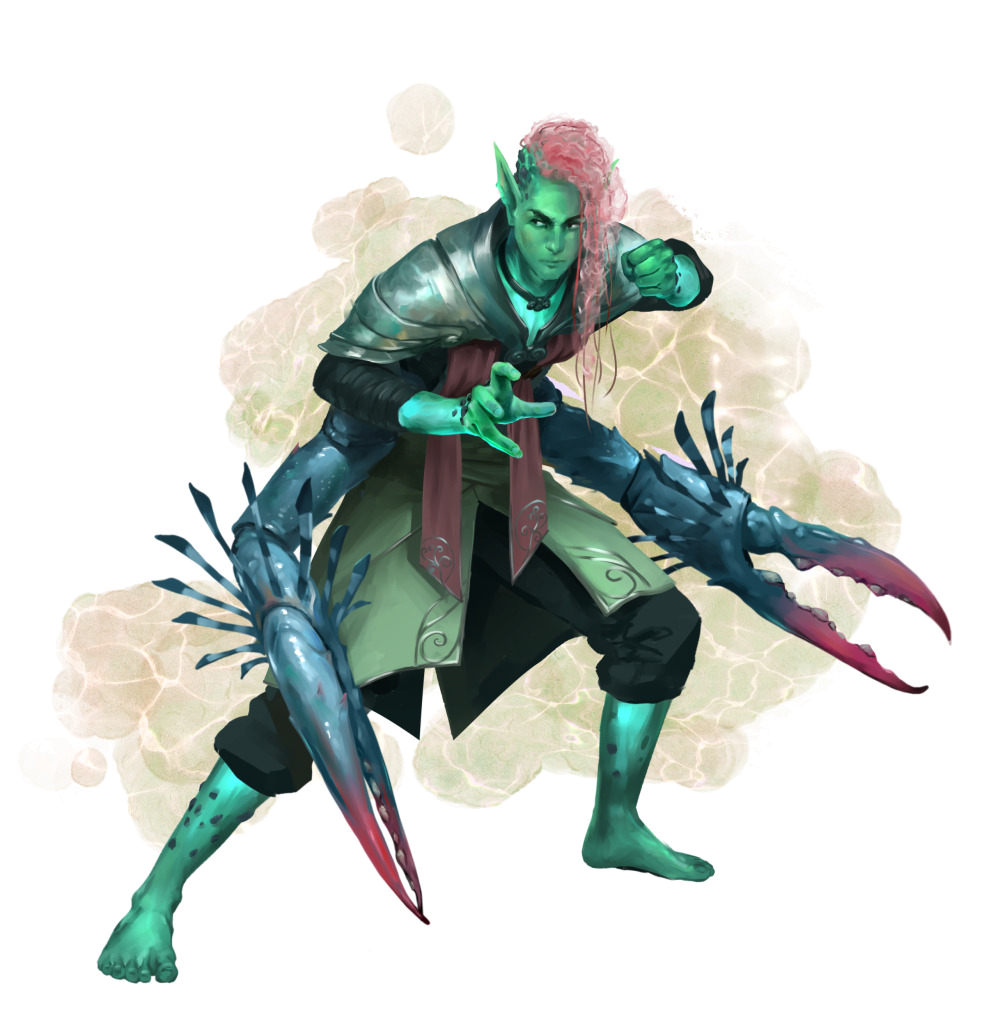
A hybrid's biological enhancements can change its appearance drastically, though most hybrids retain their basic physical form. All are augmented with characteristics of animals, mostly aquatic, reptilian, or amphibian creatures. These include crab claws, squid tentacles, wings or fins like those of manta rays, translucent or camouflaged skin, or shark-like maws filled with sharp teeth.
Simic Hybrid Traits
Type. (-1) You are a Monstrous Humanoid.
Age. Simic hybrids age slightly faster than their ancestral race.
Speed. Your base walking speed is 30 ft.
Size. Simic hybrids are as large as their ancestral race. Your size is Medium.
Ancestral Legacy. Your bloodline has a non-simic hybrid ancestral race. You are considered a halfrace of simic hybrid and your ancestral race.
Animal Enchancement. (3) Your body has been altered to incorporate certain animal characteristics. Choose one of the following options:
-
Glide. You have ray-like fins that you can use as wings to slow your fall or allow you to glide. When you fall and aren't incapacitated or restrained, you can subtract up to 100 feet from the fall when calculating falling damage, and you can move up to 2 feet horizontally for every 1 foot you descend. You must glide for at least 20 feet (descending 10 feet) during your turn to stay aloft.
-
Nimble Climber. You have a climbing speed equal to your walking speed.
-
Underwater Adaptation. You can breathe air and water, and you have a swimming speed equal to your walking speed.
Animal Enhancement Improvement. (6) Choose one of the options you didn't take for Animal Enhancement (if you do this trait has a power score of 3), or one of the following options:
-
Grappling Appendage. You have two special appendages growing alongside your arms. Choose whether they're both claws or tentacles. As an action, you can use one of them to try to grapple a creature. Each one is also a natural weapon, which you can use to make an unarmed strike. If you hit with it, the target takes bludgeoning damage equal to 1d6+Str, instead of the bludgeoning damage normal for an unarmed strike. Immediately after hitting, you can try to grapple the target as a bonus action. These appendages can't precisely manipulate anything and can't wield weapons, magic items, or other specialized equipment.
-
Carapace. Your skin in places is covered by a thick shell. You gain a +1 bonus to AC when you're not wearing heavy armor.
-
Acid Spit. When you take the Attack action on your turn, you can replace one of your attacks with a spray of acid from glands in your mouth, targeting one creature or object you can see within 30 feet of you. The target takes 2d10 acid damage unless it succeeds on a Dexterity saving throw (DC 8+Prof+Con). This damage increases by 1d10 when you reach 5th level (3d10), 11th level (4d10) and 17th level (5d10). Once you use this trait you can't do so again until you finish a short or long rest.
Tabaxi
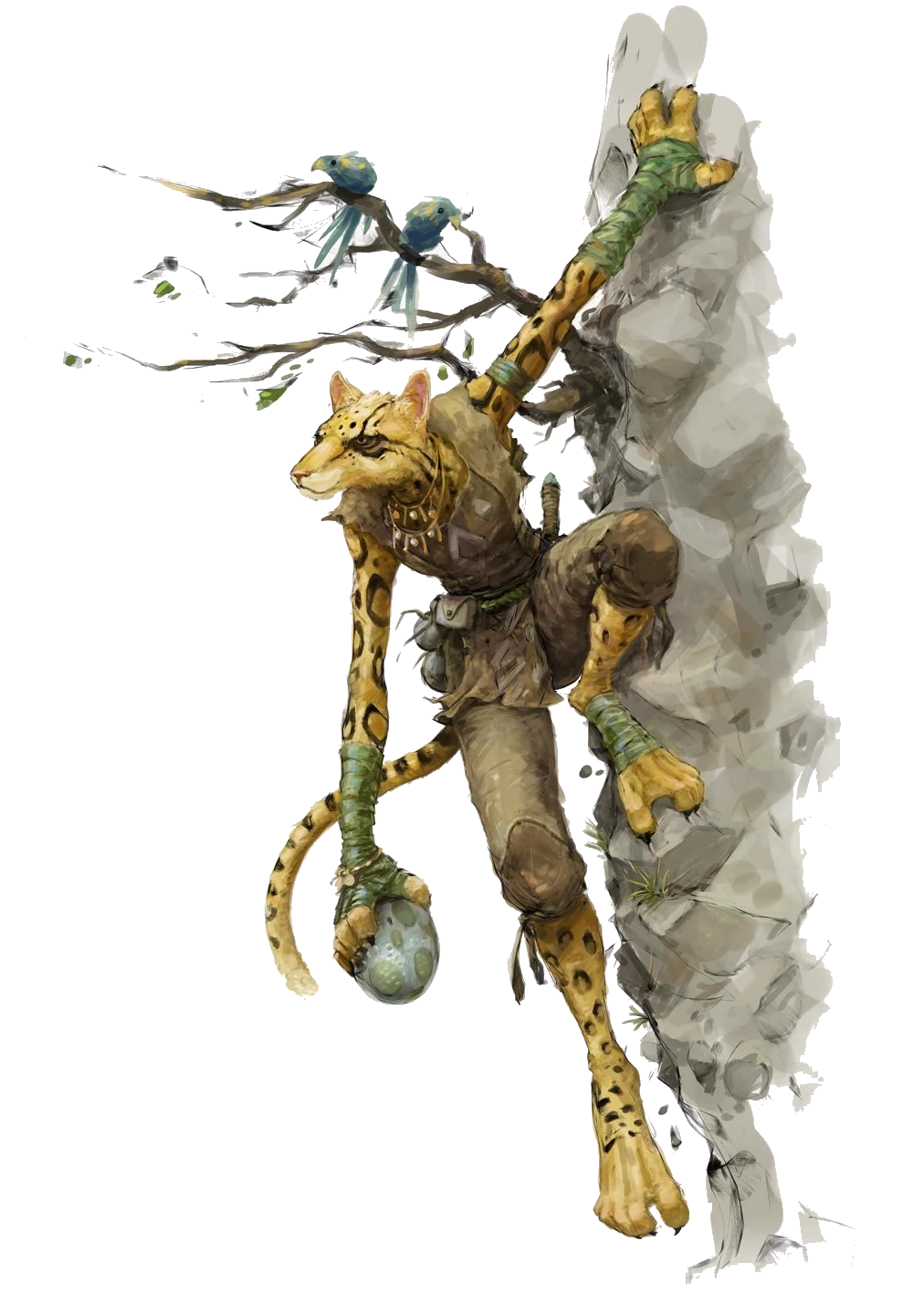
Tabaxi's bodies are slender and covered in spotted or striped fur. Like most felines, Tabaxi have long tails and retractable claws. Tabaxi fur color ranges from light yellow to brownish red. Tabaxi eyes are slit-pupilled and usually green or yellow.
Tabaxi Traits
Type. You are a Humanoid.
Age. Tabaxi are an adult at 18 and live for about a century.
Speed. Your base walking speed is 30 ft.
Size. Tabaxi are slightly larger than humans, standing from just below 5 to 6,5 feet. Your size is Medium.
Feline Agility. (5) Your reflexes and agility allow you to move with a burst of speed. When you move on your turn in combat, you can double your speed until the end of the turn. Once you use this trait, you can't use it again until you move 0 feet on one of your turns.
Cat's Claws. (1) your claws are natural weapons, which you can use to make unarmed strikes. If you hit with them, you deal slashing damage equal to 1d6 + your Strength modifier, instead of the bludgeoning damage normal for an unarmed strike.
Climbing Speed. (2) You have a climbing speed of 30 ft.
Tiefling
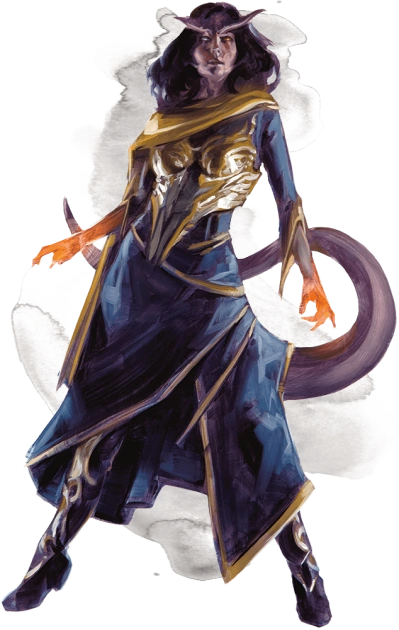
Tiefling are Humanoids that are possessed or used to be possessed by an fiendish spirit. This fiend changes the body slowly overtime, making them look more and more like the fiends true form. This means that there is a very large variety in looks for a tiefling depending on what kind of fiend possessed them and how far along the transformation they are.
Tiefling Traits
Type. (-1) You are a Fiendish Humanoid.
Age. Tieflings age as fast as their ancestral race.
Speed. Your base walking speed is 30 ft.
Size. Tieflings are as large as their ancestral race. Your size is Medium.
Ancestral Legacy. Your bloodline has a non-tiefling ancestral race. You are considered a halfrace of tiefling and your ancestral race.
Fiendish Tongue. (1) You may have your voice boom 3 times as loud and/or talk with 2 voices at once.
Hellish Resistance. (3) You have resistance to fire damage.
Infernal Wrath. (2) As a reaction when you are damaged by a creature you can call on your infernal occupier for revenge. The creature must succeed on a Dexterity saving throw (DC 8+Prof+Cha) or take 2d10 fire damage, half on a success.
Once you used this trait you can't do so again until you finish a long rest.
Infernal Wrath Improvement. (3) Infernal Wrath recharges after a short or long rest.
Tortle
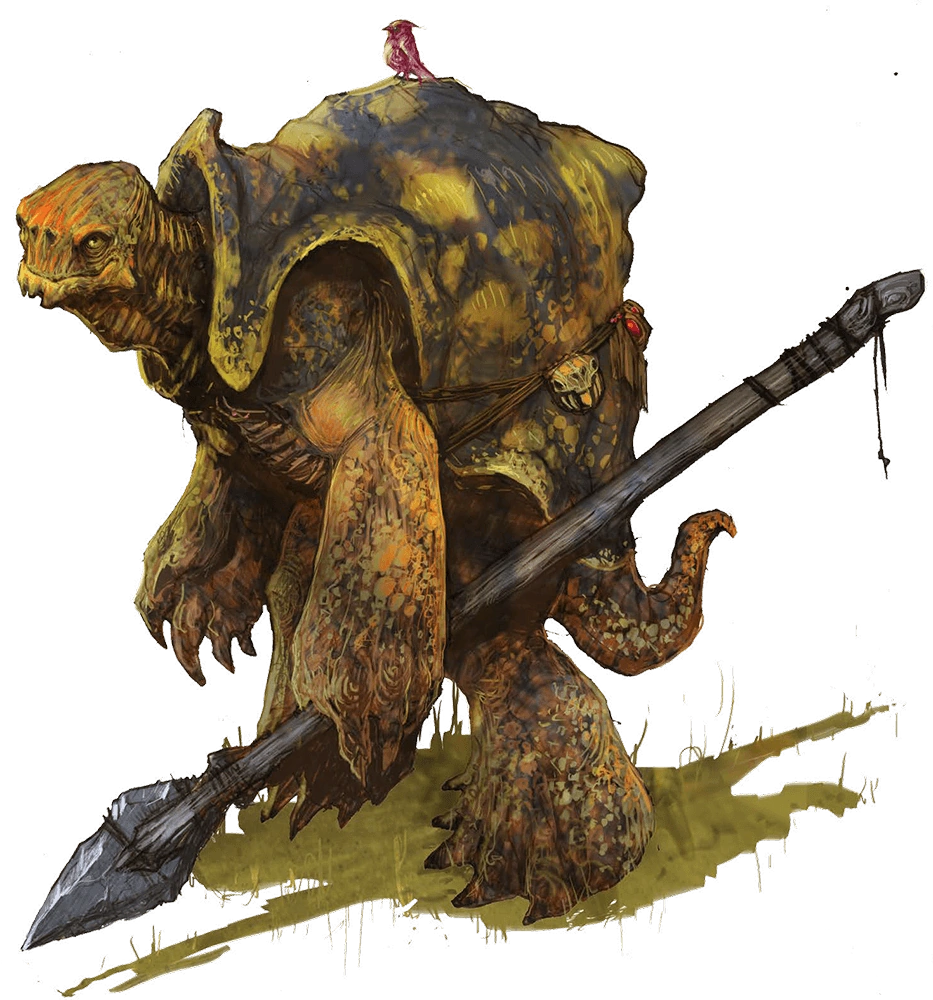
Tortles are reptilian-looking humanoids with large shells on their backs that are capable of containing their entire bodies. They have leathery skins that varies between olive-green to blue-green hues. The dorsal portion of their shells is usually darker than their skins, while the ventral portion is lighter, usually with yellowish tones.
Tortle Traits
Type. Your are a Humanoid.
Age. Tortles are a short lived race, becoming an adult at 15 and not seeing the second half of a century.
Speed. Your base walking speed is 30 ft.
Size. Tortles are about as large as humans, standing between 5 and 6,5 feet. Your size is Medium.
Shell Amor. (2) Due to your shell and the shape of your body, you are ill-suited to wearing armor. Your shell provides ample protection, however; it gives you a base AC of 14 (your Dexterity modifier doesn't affect this number). You gain no benefit from wearing armor, but if you are using a shield, you can apply the shield's bonus as normal.
Shell Armor Improvement. (3) The AC of Shell Armor is increased to 16.
Second Shell Armor Improvement. (3) The AC of Shell Armor is increased to 17.
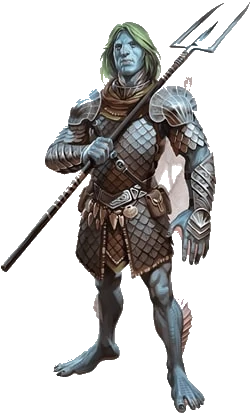
Triton
Tritons are a Humanoid race, notable in their many underwater adaptations that render them visually distinct from other humanoid races. Their skin is most commonly a deep-blue, but has also been known to appear as pearl, light green, or in rare cases, other mutant colors. Their hands and feet are webbed, and they have minor dorsal fins that run from their mid-calf and end at their ankles. They are notably shorter than humans, averaging around five feet tall.
Triton Traits
Type. You are a Humanoid.
Age. Triton are already an adult at 15 and live up to 2 centuries.
Speed. Your base walking speed is 30 ft.
Size. Tritons stand between 4,5 and 6 feet.
Superior Deepsight. (2) You can see in dim light within 120 feet of you as if it were bright light, and in darkness as if it were dim light, but only underwater. You can't discern color in darkness, only shades of gray.
Swimming Speed. (2) You have a swimming speed of 30 feet.
Amphibious. (1) You can breathe air and water.
Guardians of the Depths. (3) Adapted to even the most extreme ocean depths, you have resistance to cold damage.
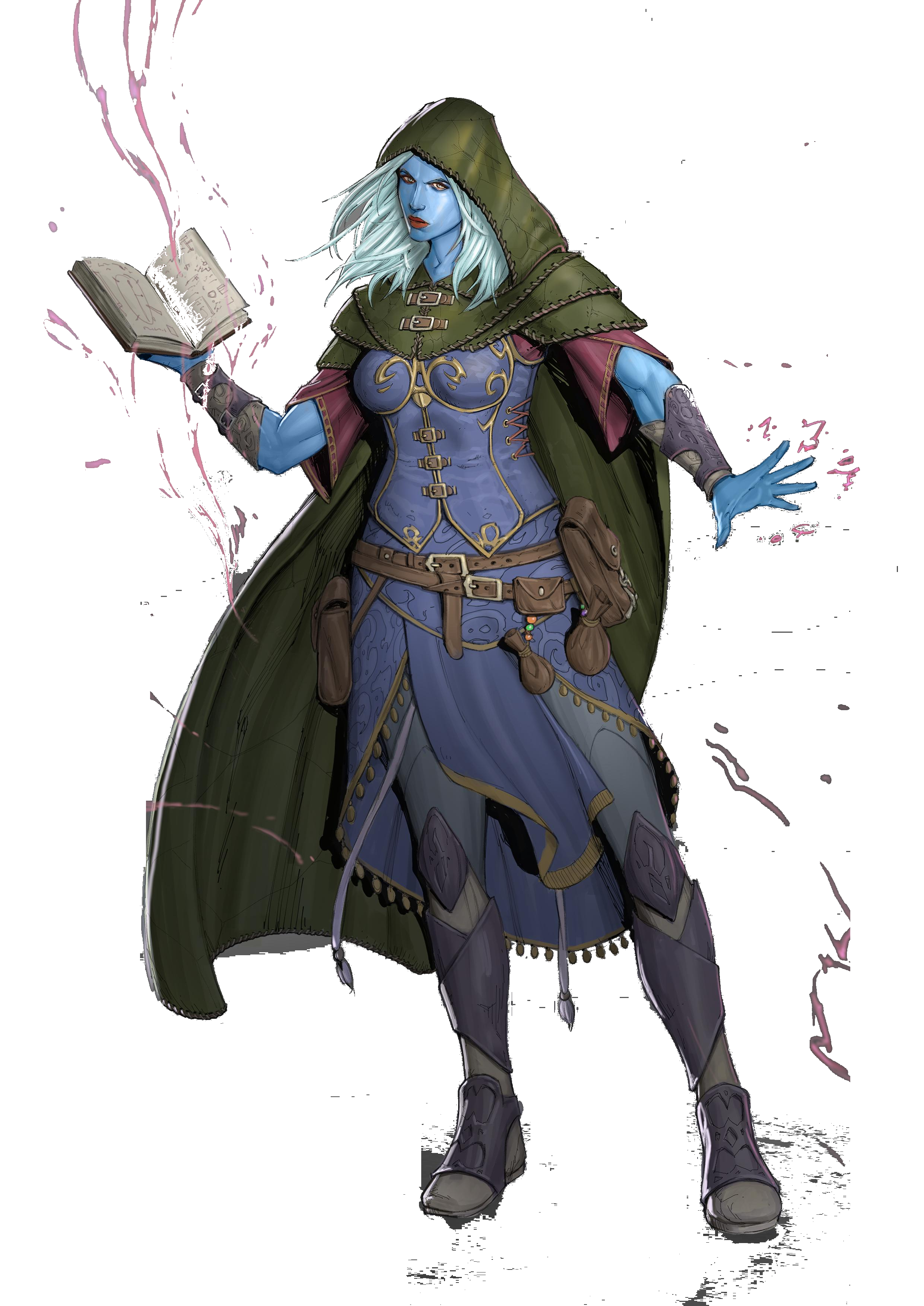
Vedalken
Vedalken are tall and slender, standing almost a head taller than humans on average but weighing about the same. Their hairless skin comes in a range of shades of blue. Their eyes are darker shades of blue or violet. They lack external ears, their noses are broad and flat.
Vedalken Traits
Type. You are a Humanoid.
Age. Vedalken age slowly, being an adult at 40 and living for 5 centuries.
Speed. Your base walking speed is 30 ft.
Size. Vedalken stand between 5,5 and 7 feet. Your size is Medium.
Mental Preperations. (3) When you hold an action you may choose to also hold your bonus action. When the held action is triggered, you choose if the bonus action or action occurs first.
Eureka. (2) You have moments of genius. When you make an ability check that uses a skill you are proficient in, you can roll a d6 immediately after seeing the number on the d20 and add the number on the d6 to the check. Once you use this feature, you can't do so again until you finish a long rest.
Eureka Improvement. (3) Eureka recharges after a short or long rest.
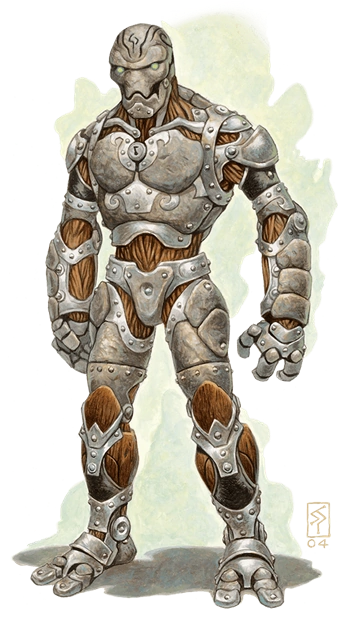
Warforged
Warforged are a rare race of humanoid constructs created through powerful rituals. Warforged are made up of bulky (albeit resilient) metallic or stone bodies with wooden interiors. Extremely powerful and durable, warforged are able fighters. Unlike most constructs, warforged are fully self-aware and maintained mental faculties on par with other humanoid races.
Warforged Traits
Type. (-2) You are a Construct Humanoid.
Age. Warforged don't age.
Speed. Your base walking speed is 30 ft.
Size. Warforged heights vary wildly depending on their purpose. Your size is Small or Medium.
Living Construct. (1) You can be affected by healing spells that normally can't affect constructs.
Constructed Resilience. (2) You have advantage on saving throws against being poisoned.
Constructed Resilience Improvement. (1) You are immune to disease.
Veins of Wood. (3) You have resistance to poison damage.
Machine Metabolism. (1) You don't need to eat or drink.
Endless Breath. (1) You don't need to breath.
Sentry's Rest. (1) You don't need to sleep, when you take a long rest, you must spend at least six hours in an inactive, motionless state, rather than sleeping. In this state, you appear inert, but it doesn't render you unconscious, and you can see and hear as normal.
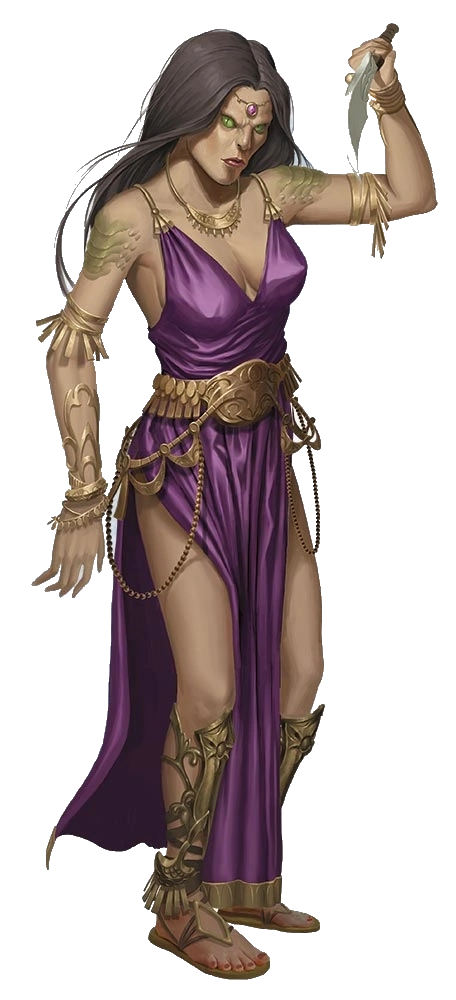
Yuan-Ti
Yuan-ti were originally humans who transformed themselves into serpent folk through ancient rituals. Most yuan-ti are corrupted into monsters by those rites, but some yuan-ti instead became a new people who mix characteristics of humans and snakes.
Yuan-Ti Traits
Type. (-1) You are a Monstrous Humanoid.
Age. Purebloods mature at the same rate as humans and have lifespans similar in length to theirs.
Speed. Your base walking speed is 30 ft.
Size. Purebloods match humans in average size and weight. Your size is Medium.
Low-Light Vision. (2) You can see in dim light within 60 feet of you as if it were bright light.
Poison Resistance. (3) You have resistance against Poison damage.
Poison Resilience. (2) You have advantage on saving throws against poisons.
Venom Spray. (2) As an action you can spray venom out of your mouth against a creature within 10 feet. The creature must succeed on a Constitution Saving throw (DC 8+Prof+Cha) or take 1d12 poison damage, This damage increases by 1d12 when you reach 5th level (2d12), 11th level (3d12), and 17th level (4d12).
Racial Feats
Due to the lowered powerlevel of races compared to standard DnD 5e, some options got a large part of their traits removed. If these were typifying biological traits a feat was created.
Blessed Ancestry (Chromatic)
Prerequisite: Chromatic Dragonborn
Your chromatic ancestry flows harder in you then most, you gain the following benefits:
- Your strength or charisma is increased by 1.
- As an action, you can channel your draconic energy to protect yourself. For 1 minute, you become immune to the damage type associated with your Chromatic Ancestry. Once you use this trait, you can't do so again until you finish a long rest.
Blessed Ancestry (Gem)
Prerequisite: Gem Dragonborn
Your gem ancestry flows harder in you then most, you gain the following benefits:
- You can send telepathic messages to any creature you can see within 30 feet of you. You don't need to share a language with the creature for it to understand these messages, but it must be able to understand at least one language to comprehend them.
- You can use a bonus action to manifest spectral wings on your body. These wings last for 1 minute. For the duration, you gain a flying speed equal to your walking speed and can hover. Once you use this trait, you can't do so again until you finish a long rest.
Blessed Ancestry (Metallic)
Prerequisite: Metallic Dragonborn
Your chromatic ancestry flows harder in you then most, you gain the following benefits:
- Your strength or charisma is increased by 1.
- You gain a second breath weapon. When you take the Attack action on your turn, you can replace one of your attacks with an exhalation in a 15-foot cone. Whenever you use this trait, choose one:
- Enervating Breath. Each creature in the cone must succeed on a Constitution saving throw (Con) or become incapacitated until the start of your next turn.
- Repulsion Breath. Each creature in the cone must succeed on a Strength saving throw (Con) or be pushed 20 feet away from you and be knocked prone.
Once you use this trait, you can't do so again until you finish a long rest.
Vampiric Bite
Prerequisite: Dhampir
Your fanged bite is a natural weapon, which counts as a simple melee weapon with which you are proficient. You add your Constitution modifier, instead of your Strength modifier, to the attack and damage rolls when you attack with this bite. It deals 1d6 piercing damage on a hit. While you are missing half or more of your hit points, you have advantage on attack rolls you make with this bite.
Additionally when you hit a creature a that isn't a Construct or an Undead, you can empower yourself in one of the following ways of your choice:
- You regain hit points equal to the piercing damage dealt by the bite.
- You gain a bonus to the next ability check or attack roll you make; the bonus equals the piercing damage dealt by the bite
Once you've empowered yourself this way, you can't do so again until you finish a short or long rest.
Step of Changing Seasons
Prerequisite: Eladrin
As a bonus action you can magically teleport up to 30 feet.
An additional effect occurs depending on what season the Eladrin is currently alligned with:
- Autumn. Immediately after you teleport, up to two creatures of your choice that you can see within 10 feet of you must succeed on a Wisdom saving throw or be charmed by you for 1 minute, or until you or your companions deal any damage to it.
- Winter. one creature of your choice that you can see within 5 feet of you before you teleport must succeed on a Wisdom saving throw or be frightened of you until the end of your next turn.
- Spring. You can touch one willing creature within 5 feet of you. That creature then teleports instead of you, appearing in an unoccupied space of your choice that you can see within 30 feet of you.
- Summer. Immediately after you teleport, each creature of your choice that you can see within 5 feet of you takes fire damage equal to your Charisma modifier (minimum of 1 damage).
When you use this feature you can't do so again until you finish a short or long rest.
Appendix A: Example Cultures
Burrows
Majority Races: Halfling
The rural community of the burrows is one of simple people and simple pleasures.
Community reliant
The burrows tend to be self reliant, because relying on others outside of the community might cause problems later. This means most are farmers, and there are only tanners, woodcarvers etc... if there are people locally able to produce the base materials.
A Cavalcade of Gods
To the people in the burrows, every village, every family and every landmark has their own gods. Asking for aid and giving praise to dozens, and telling many stories about the relations between all of them. After identifying over 30.000 mentioned deities, empire archivist have given up on cataloging all of them.
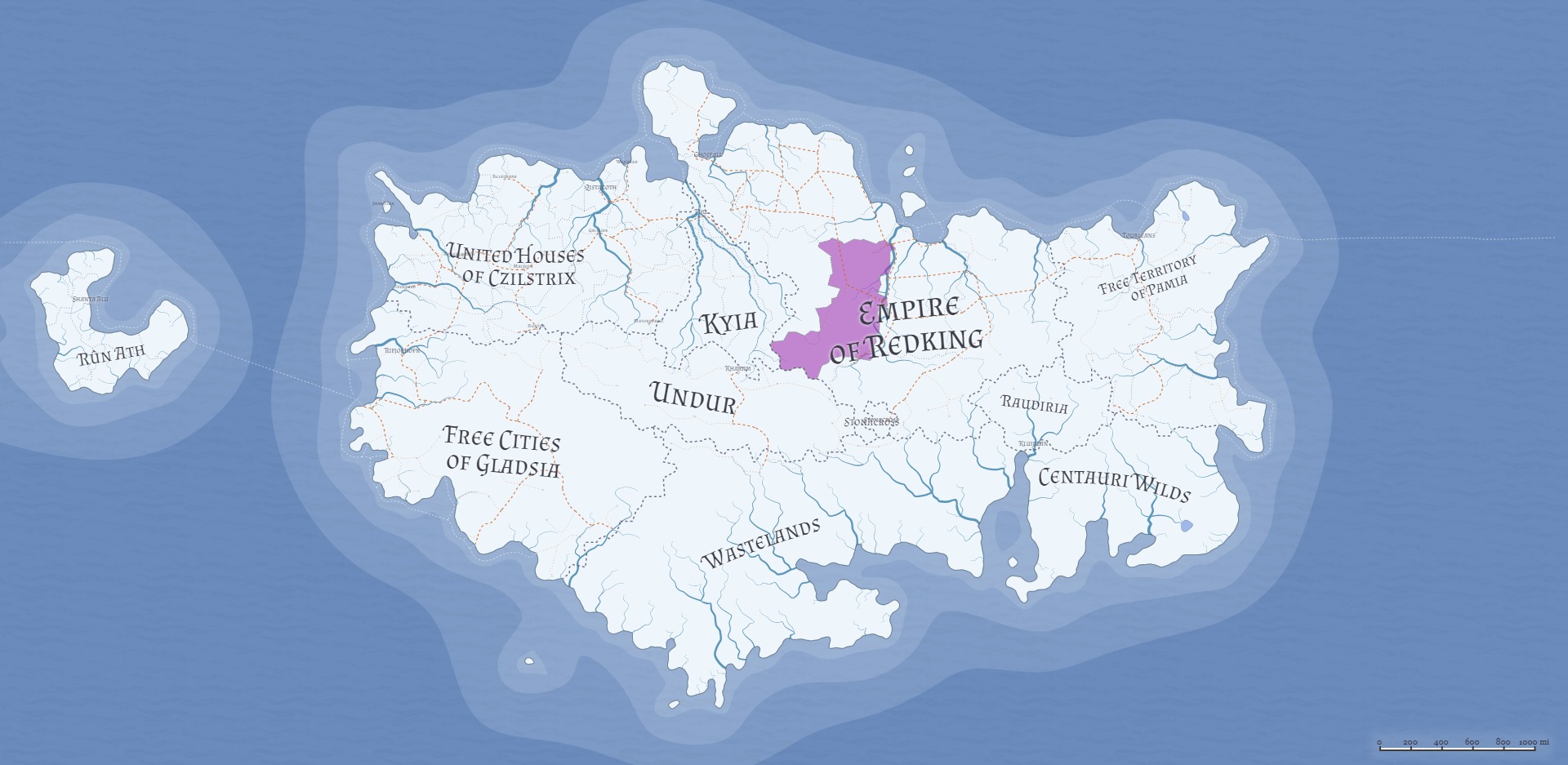
Burrows Cultural Traits
Preferences
Preferred Skills: Animal Handling, Nature, Persuasion, Religion, Stealth
Preferred Tools: Carpenter's Tools, Cook's Utensils, Herbalism Kit, Musical Instrument, Potter's Tools, Woodcarver Tools
Preferred Languages: Common, Halfling, Human
Preferred Simple Weapons: Sickle, Light Hammer, Handaxe, Spear
Preferred Martial Weapons: Hand Crossbow
Preferred Armor: None
Traits
Brave. (2) You have advantage on saving throws against being frightened.
Easily Dismissed. (2) Other folk don't tend to take much notice of people from the burrows. When you are in a highly trafficed area you may take the Hide action. On a success you aren't hidden but other creatures simply don’t take particular notice of you, even though they can see you. This trait does not work on observers who have already seen you perform obtrusive or notable actions.
Looking out for the Community. (2) The small communities of the burrows take care of each other. You have advantage on wisdom (Insight) checks to determine if a friend of you is charmed, frightened or hiding wounds, be they physical or mental.
Sling Mastery. (3) The burrows favor the sling as a weapon, though most simply use their belt and any ammunition they can find. You can load any item that weighs 2 lbs or less into the sling. When you hit with such makeshift ammunition you deal the normal sling damage along with any extra effects from the flung item (like setting the target on fire with alchemist fire).
Lucky Charm. (4) You have a lucky charm that gives luck to anyone you give it to. When you give this lucky charm to another creature they become lucky for 24 hours or until they give it to someone else. While a creature is lucky, if they roll a 1 on an attack roll, ability check, or saving throw, they can reroll the die and must use the new roll.
Centauri
Majority Race: Centaur, Leonin, Loxodon, Minotaur
The Centauri tribes are a nomadic and proud people. Tread carefully, and with respect, and you will likely encounter few issues within Centuari lands.
The Power of Names
Names are an incredibly sacred concept to the Centauri tribes. To give another a name is to claim dominance over them, and to accept is to accept subservience. Centauri names are in the form of "name" given by "giver" (e.g. Pelos given by Eudotis). A rare few Centauri who desire freedom above all else give themselves names, though to do so is to shun the clan. Others, who leave their clan involuntarily, may change their name to reflect the reason of their absence, along with the clan or individual who forced them out, in the form "clan/person reason" (e.g. Thunderhooves Warmonger).
The Gods
The Gods of the Centauri are beings of eternal knowledge and wisdom, trying to change their opinion with prayer or offerings is a fools errand. Instead simply do and you will know when they favor you. The gods of the Centauri are aptly nameless, as to attempt to name a god is to attempt to place yourself above them, a crime worthy of death in Centauri culture.
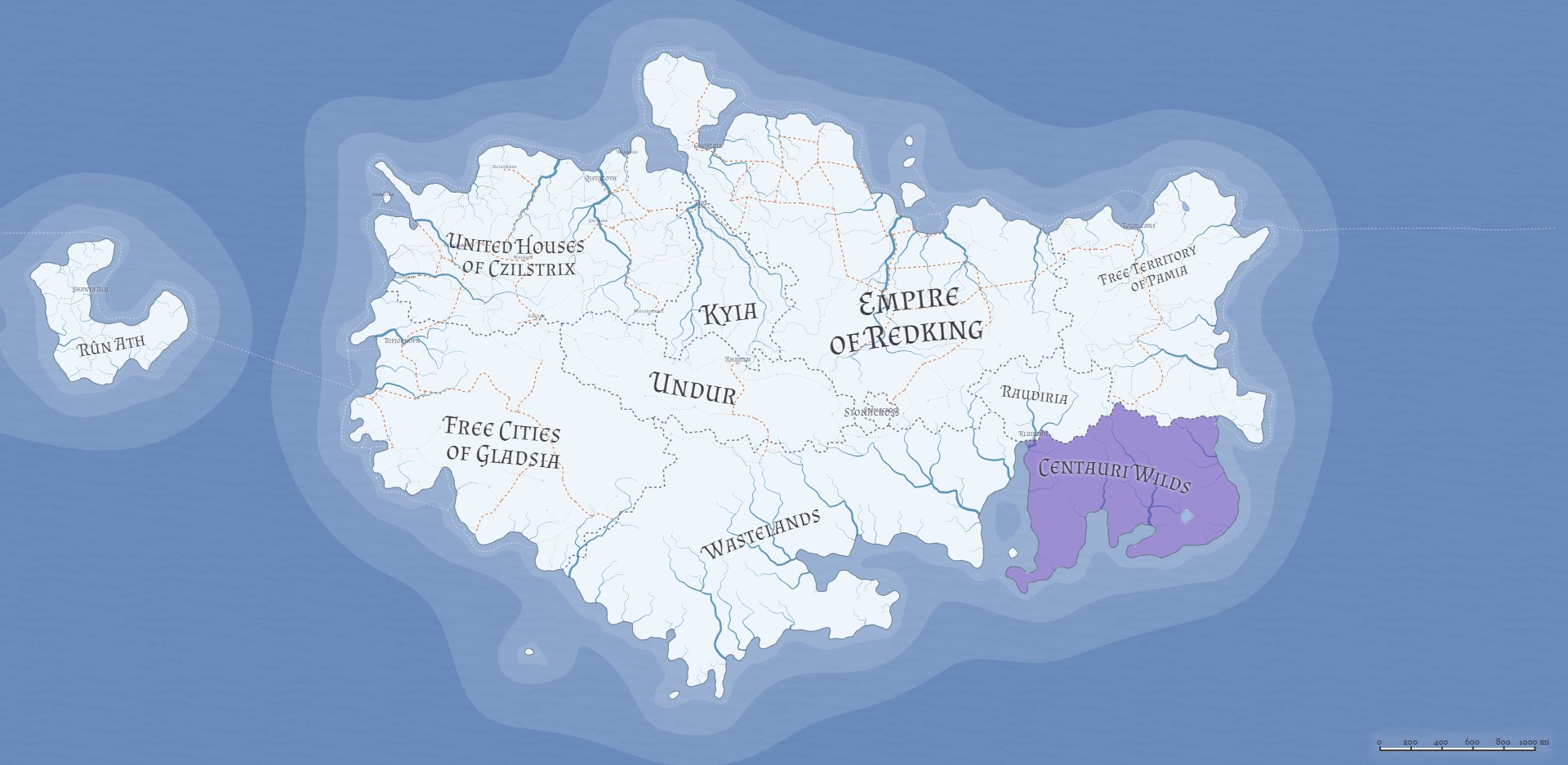
Centauri Cultural Traits
Preferences
Preferred Skills: Athletics, Animal Handling, Intimidation, Medicine, Perception, Survival
Preferred Tools: Herbalism Kit, Leatherworker's tools, Potter's tools, Woodcarver tools
Preferred Language: Sylvan
Preferred Simple Weapons: Spear, Javelin, Greatclub, Shortbow
Preferred Martial Weapons: Greatsword, Glaive, Lance
Preferred Armor: Light
Traits
Living of the Land. (2) You know how to take care of yourself. While traveling you can acquire food and water for an amount of people up to your proficiency bonus, if enough edible plants, wildlife and water is available in the area you are traveling through.
Savage Attacks. (2) When you score a critical hit with a melee weapon attack, you can roll one of the weapon's damage dice one additional time and add it to the extra damage of the critical hit.
Favored by the Gods. (3) When an attack misses you or you succeed on a saving throw, you may see that as a sign of the Gods favor, reinvigorating you for the fight. As a reaction you regain an amount of hitpoints equal to your level. Once you do so, you can't do so again until you finish a long rest.
Favored by the Gods Improvement. (4) Favored by the Gods recharges after a long or short rest.
Aggressive. (4) As a bonus action, you can move up to your movement speed toward a hostile creature you can see or hear. You must end this move closer to the enemy than you started.
Saving Face. (2) Centauri are a proud people that do not want to show weakness If you miss with an attack roll or fail an ability check or a saving throw, you can gain a bonus to the roll equal to the number of allies you can see within 30 feet of you (maximum bonus of +5). Once you use this trait, you can't use it again until you finish a long rest.
Saving Face Improvement. (3) Saving face recharges after a long or short rest.
Githyanki
Majority Race: Gith
Sandstorms in the distance are seen by most as a grave thing, and not because of the sand. The githyanki are the scourge of the gladsian desert. Collected into tribes, they form fleets of sand ships, staying always right in front of a sandstorm where the wind is strongest and the fastest speeds can be achieved. In the heaviest of sandstorms their sand ships are known to fly.
Living in the Now
Githyanki do not tend to care much about tomorrow or yesterday. All that matters is today, if you're hungry, go raid a village. Need water, move to an oasis. What once was can never be again and what might be may never be, so just enjoy today fully and worry about tomorrow when tomorrow becomes today.
Loose Connections
Githyanki have no solid social structures. While they tend to gather in fleets, no ship leads the others. Any ship can leave the fleet at any moment and any person can swap ship at anytime. This freedom also applies to their familial bonds, partners, siblings and parents can be changed on the daily depending on how the githyanki feel that day.
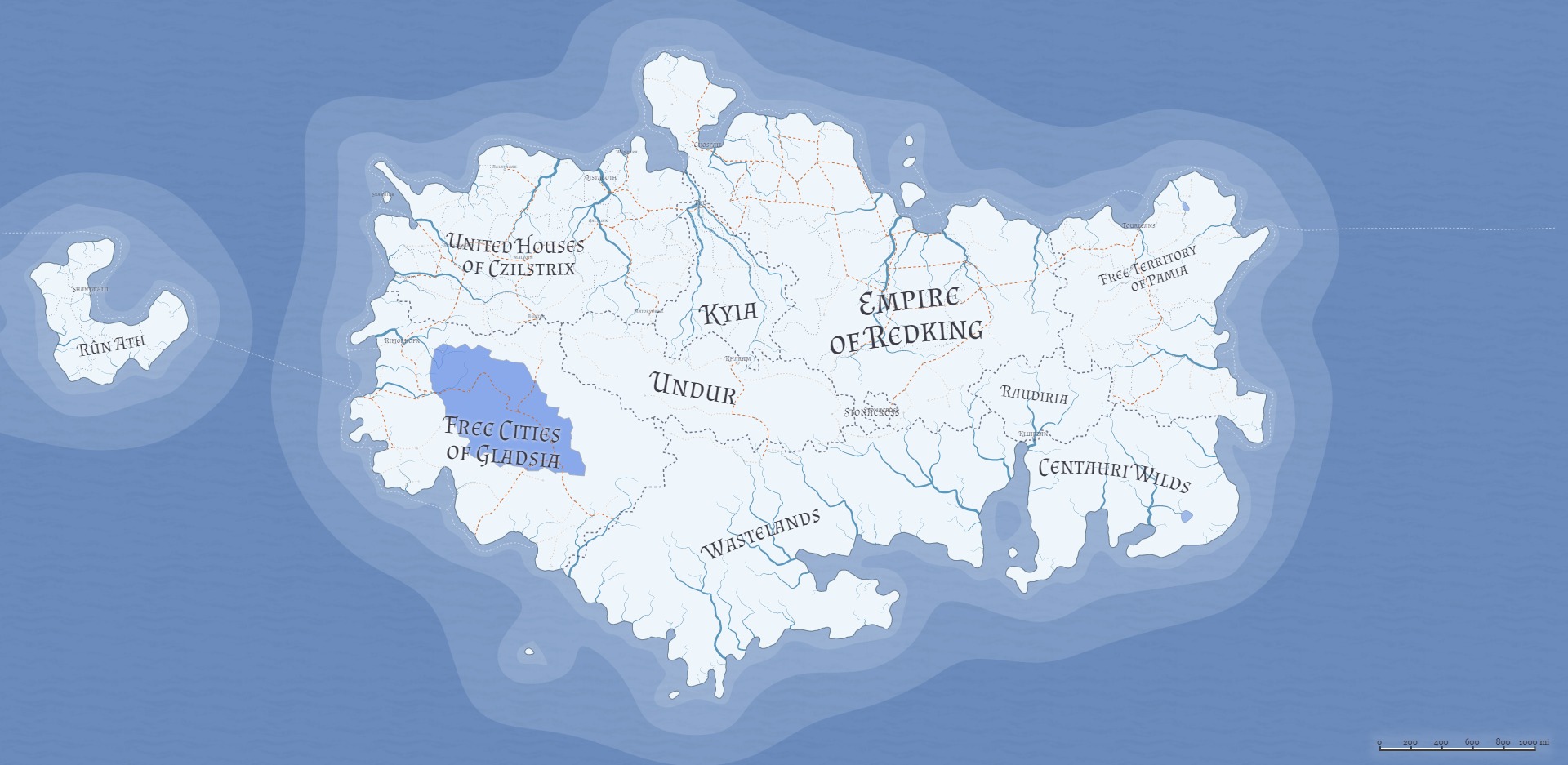
Githyanki Cultural Traits
Preferences
Preferred Skills: Athletics, Acrobatics, Investigation, Intimidation, Perception, Survival
Preferred Tools: Carpenter's Tools, Navigator Tools, Land Vehicles
Preferred Language: Common, Gith
Preferred Simple Weapons: light crossbow
Preferred Martial Weapons: shortsword, longsword, greatsword
Preferred Armor: Light
Traits
Desert Adaptation. (1) You spend most of your life in the hot desert, giving you some extra resistance against the sundering heat. You have advantage on saving throws against exhaustion from heat.
Gith Sign Language. (1) You have learned the sign language of the gith. This sign language consists of exagerated arm waving, which while not exactly stealthy does allow for long range silent communication over the Gladsian dunes.
Need for Speed. (3) The exhilaration of going fast makes you less susceptible to mind altering effects. You have advantage on saves against the charmed or frightened condition if you moved 30 or more feet in your last turn.
Telekinetic. (2) You have learned how to move an object with your mind. As an action you can target an object that you can see within 30 feet that weighs less than 20 lbs and take a mental hold of it. At the start of your next turn you can use your action to maintain the hold for another turn or release it. As part of the same action to take or maintain your hold, you can move the object 30 feet.
Telekinetic Improvement. (3) You can take hold of an object that weighs less than 100 lbs but if you do so you can only move it 20 feet and you must make concentration checks as if you were concentrating on a spell. When you lose concentration, you lose your hold and the object falls.
Second Telekinetic Improvement. (3) You can take hold of an object that weighs less than 1000 lbs but if you do so you can only move it 10 feet, you must make concentration checks as if you were concentrating on a spell and your movement speed becomes 0 for as long as you are concentrating this way. When you lose concentration, you lose your hold and the object falls.
Githzerai
Majority Race: Gith
Towards a Better Tomorrow
The current fate of the Githzerai is a poor one, stuck in a harsh desert, their reputation ruined by the Githyanki. That doesn't stop them from moving on. The turmoils of today are nothing compared to the glories of tomorrow. They've spend generations replanting a desert and have actually made a few small oasis this way.
For the Next Generation
Githzerai tend to take on large projects, requiring lifetimes to complete, knowing they will most likely never see the end result or receive any benefits from it. But their children or the children of their children may, and that's enough.
Githzerai Cultural Traits
Preferences
Preferred Skills: Arcana, History, Investigation, Insight, Medicine, Nature, Persuasion
Preferred Tools: Calligrapher's Tools, Cobbler's tools, Glassblower's tools, Painter's Supplies, Potter's Tools, Musical Instrument
Preferred Language: Gith
Preferred Simple Weapons: Spear, Shortbow
Preferred Martial Weapons: Whip, Shortsword, Morningstar, Maul
Preferred Armor: None
Traits
Desert Adaptation. (1) You spend most of your life in the hot desert, giving you some extra resistance against the sundering heat. You have advantage on saving throws against exhaustion from heat.
Gith Sign Language. (1) You have learned the sign language of the gith. This sign language consists of exagerated arm waving, which while not exactly stealthy does allow for long range silent communication over the Gladsian dunes.
Inner Calm. (2) You have spend years meditating, finding inner peace. When you are under an effect that charms or frightens you that allows you to make a save at the end of your turn, you may make a save against that effect at the start of your turn as well. If you do your movement speed is 0 until the start of your next turn.
Telepathic. (4) You can speak telepathically to any creature you can see, provided the creature is within 60 feet of you. You need to share a language with the creature for it to understand your telepathic utterances.
Telepathic Improvement. (2) As an action you can establish a bond with a creature you can see within 60 feet of you. While the bond persists you no longer need to see the creature to speak telepathically to it but it still must be within 60 feet, it can speak telepathically with you and you must make concentration checks as if you were concentrating on a spell. The bond lasts until you lose concentration, create another bond or end it (no action required).
Second Telepathic Improvement. (3) When you establish a bond, you can do so with a number of creatures up to your proficiency bonus. When a creature speaks telepathically to you, all other creatures in the bond that are within 60 feet of you hear it as well.
Gladsia
Majority Race: Vedalken
A relic of the past.
The Gladsian culture is an ancient one, or at least that's what the gladsians believe. Surrounded by ancient relics they keep pointing at as proof of a glorious past, one lost so long ago, no one can put a date on it.
Tech beyond understanding
The gladsians use many of these ancient relics in their daily life, machines that provide heating, light etc.. While many know how to operate these machines, none now how they actually function. This means any machinery is important, on the edge of being holy. When one breaks... it is lost forever so be careful with all you have.
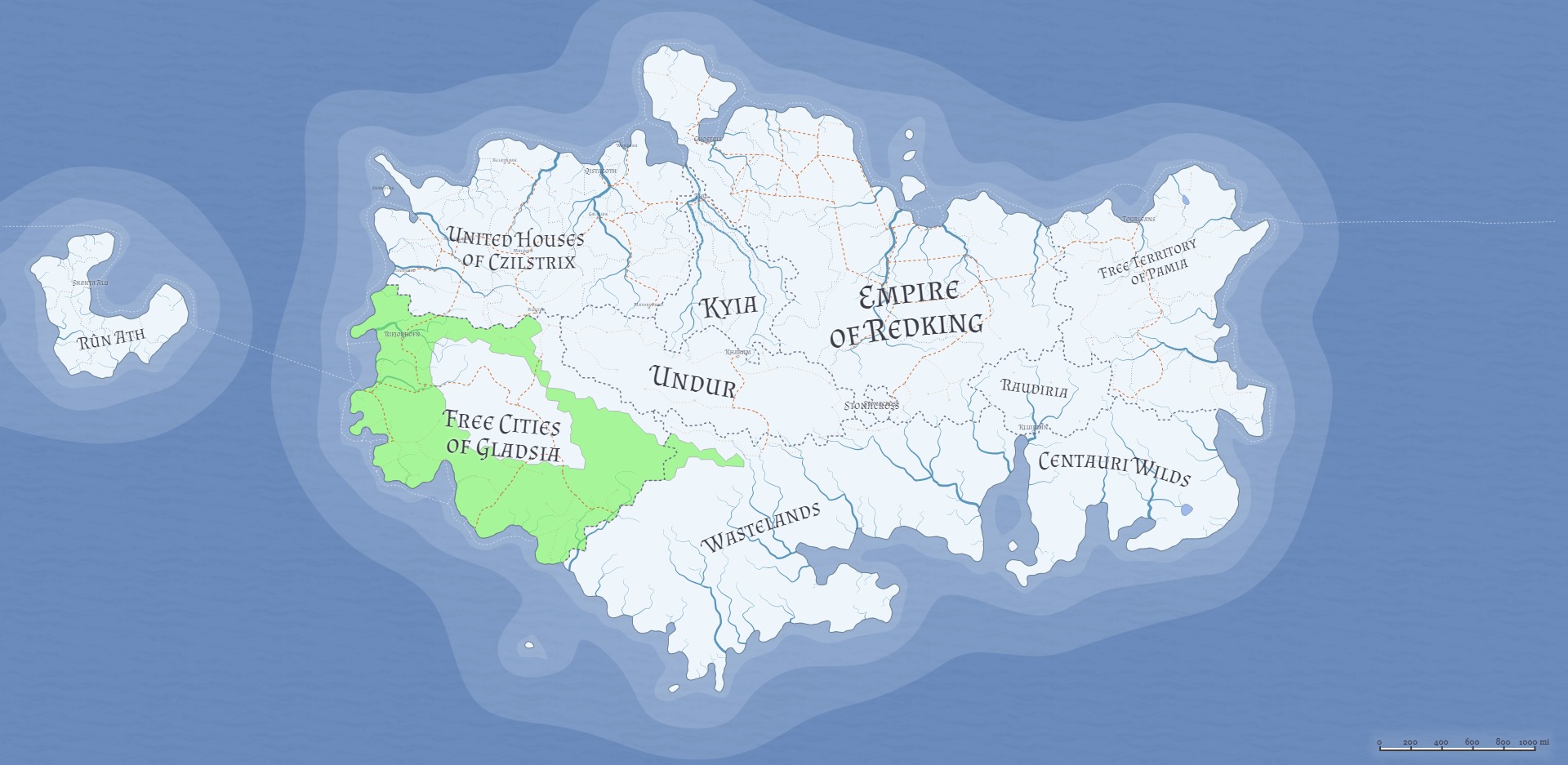
Gladsia Cultural Traits
Preferences
Preferred Skills: Arcana, History, Investigation, Performance, Survival
Preferred Tools: Alchemist's Supplies, Cartographer's Tools, Musical instrument, Tinker's Tools, Thieves' Tools
Preferred Language: Common, Gladsian
Preferred Simple Weapons: Spear, Light Crossbow
Preferred Martial Weapons: Pike, Heavy Crossbow
Preferred Armor:
Traits
Desert Adaptation. (1) You spend most of your life in the hot desert, giving you some extra resistance against the sundering heat. You have advantage on saving throws against exhaustion from heat.
Schooling. (2) You went to one of the many goverment elementary schools. You add 1d4 to any intelligence check to recall information.
Schooling Improvement. (2) You've had higher education, when you make an intelligence check to recall information, you add 1d6 instead.
Gladsian Tech. (2) You have gained access to ancient gladsian tech from a dig site. You do know what it does, but not how.
- Shape Catcher As an action you activate this device, aiming it at a 15 cube within 60 feet of you. It can record for up to 1 minute before ejecting a 2 inch wide hexagonal pad and it cannot record any more until a new pad is inserted. The pad can be attached to surfaces and can be triggered by a timing mechanism or a command word of your choosing. When triggered it displays the recorded scene. A creature can take an action to make an investigation check (DC 13) to see through the illusion. If the pad is destroyed, a new one appears in the Shape Catcher after a long rest.
- Steel cloth This 50 foot long, 1 foot wide piece of fabric has a metal box with a button at the end. When the button is pressed, the fabric becomes as hard as steel. Pressing the button again makes it as soft as cloth again. Steel cloth can support up to 300 pounds and requires an athletics check (DC 20) to bend in its hardened state.
- Cantrip You have a device of a look of your choosing. Choose a cantrip from the Artificer spell list. You can cast that cantrip using this device, using Inteligence as your spellcasting modifier.
Human Realms
Majority Race: Human
Equality for All
The Human Realms value equality highly and are more than happy to spread this value, by force if needed. They tend to see themselves as a glorious savior, bringing their enlightened values to the less advanced masses with science, magic and the well-oiled Redking Empire military.
Scientia Verberat Ignorantiam
Or science trumps ignorance. The many religions all have their own stories, most of which are plainly impossible, which are used to control the population and instill inequality. Czilstrix uses it to impose a caste system, Raudiria for a matriarchy. The Human Realms believe that the progression of science and better schooling will do away with such silly ideas. While religion isn't banned anywhere, it is openly mocked.
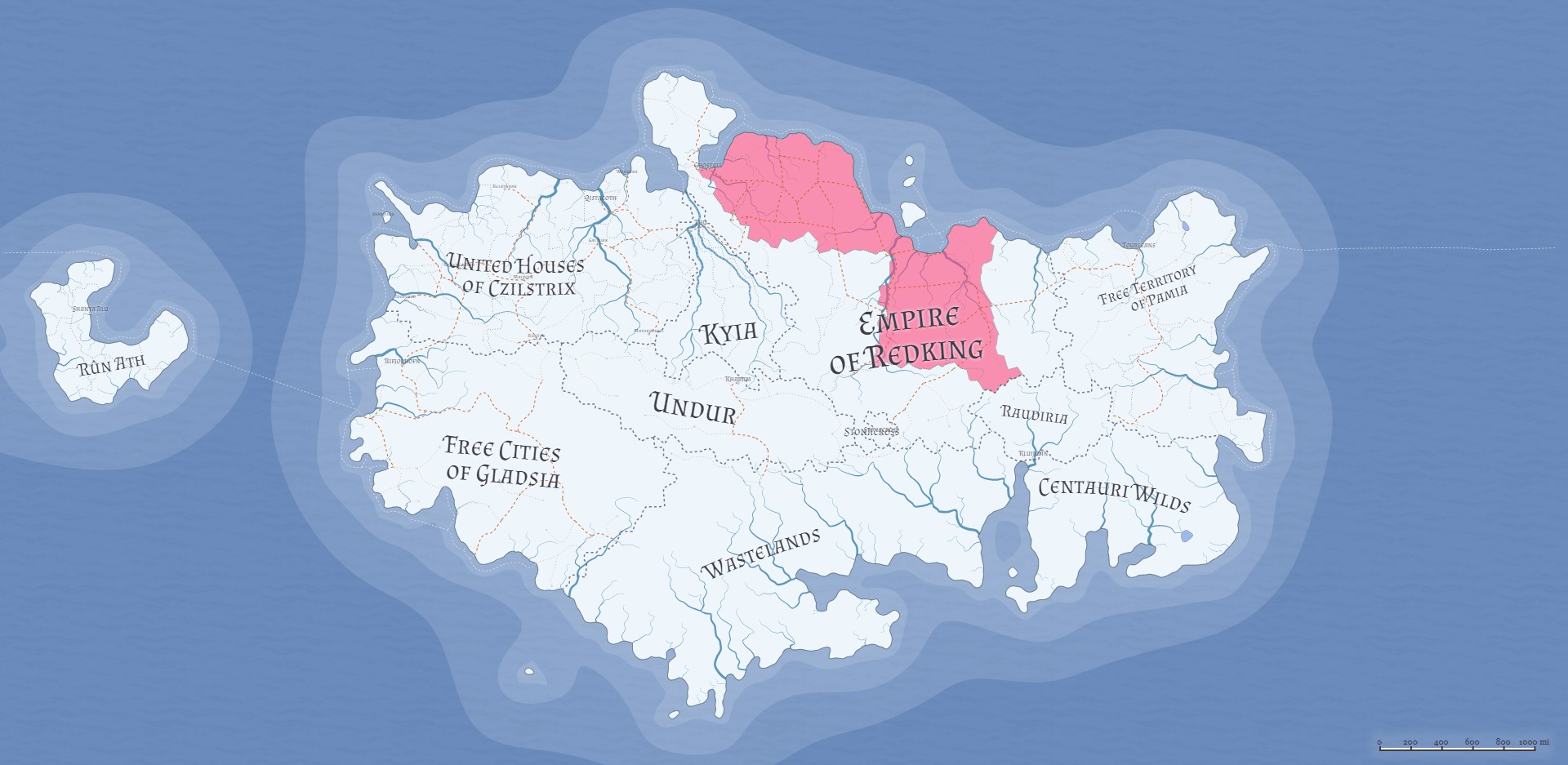
Human Realms Cultural Traits
Preferences
Preferred skills: Sleight of Hand, Arcana, History, Investigation, Persuasion
Preferred Tools: Alchemist Supplies, Navigator Tools, Cartographer tools, Land Vehicles, Sea Vehicles
Preferred Language: Common, Human
Preferred Simple weapons: Javelin, Spear, Shortbow
Preferred Martial Weapons: Shortsword, Longsword
Preferred Armor: Medium
Traits
Arcane Teachings. (2) You learned the basics of magic. You learn a cantrip from the wizard spell list. Intelligence is your spellcasting ability for it.
You can take this trait more than once, choosing a different cantrip every time.
Schooling. (2) You went to one of the many goverment elementary schools. You add 1d4 to any intelligence check to recall information.
Schooling Improvement. (2) You've had higher education, when you make an intelligence check to recall information, you add 1d6 instead.
Alchemical Formulae. (3) You have learned 1 alchemical formula. You start with 1 use and can make more using alchemist supplies over the course of a day of downtime and 25 gp of materials.
- Polycervis: The liquid in this vial constantly changes color and taste. A creature that uses it's action to drink this liquid transforms into an animal with CR 1/2 or less (your choice when you brew this), retaining their mental stats and ability to speak. The transformation lasts for 1 hour, the consumer goes unconcious or they end it early as a bonus action.
- Pulvis Ferreus: This silvery powder hardens on contact with skin, making it look like a diamond. As an action you can throw this dust on a creature within 5 feet of you. Until the dust is washed off, it's AC cannot be lower than 16.
- Ampulla Fulgur: This clouded bottle sparks with electricity inside it. You can make a ranged weapon attack with this bottle to throw it at a creature within 20 feet of you. On a hit it takes 3d6 lightning damage and they cannot take reactions until the start of their next turn.
You can take this trait more than once, choosing a different formula every time.
Appendix B: Cultures as Backgrounds
Acolyte
You have spent your life in the service of a temple to a specific god or pantheon of gods. You act as an intermediary between the realm of the holy and the mortal world, performing sacred rites and offering sacrifices in order to conduct worshipers into the presence of the divine. You are not necessarily a cleric—performing sacred rites is not the same thing as channeling divine power.
Were you a lesser functionary in a temple, raised from childhood to assist the priests in the sacred rites? Or were you a high priest who suddenly experienced a call to serve your god in a different way? Perhaps you were the leader of a small cult outside of any established temple structure, or even an occult group that served a fiendish master that you now deny.
Acolytes are shaped by their experience in temples or other religious communities. Their study of the history and tenets of their faith and their relationships to temples, shrines, or hierarchies affect their mannerisms and ideals. Their flaws might be some hidden hypocrisy or heretical idea, or an ideal or bond taken to an extreme.
Acolyte Traits
Preferences
Preferred skills: History, Insight, Medicine, Performance, Persuasion, Religion
Preferred Tools: Brewer's Supplies, Calligrapher's tools, Musical Instrument, Painter's supplies
Preferred Language: Common + 1
Preferred Simple weapons: Mace, Sickle, Light Crossbow
Preferred Martial Weapons:
Preferred Armor:
Traits
Holy Preference. Choose 1 tool or weapon related to your religious order, it counts as a preferred tool or weapon for you.
Divine Teachings. (2) You have spend time studying divine magic. You learn a cantrip from the cleric or druid spell list. Wisdom is your spellcasting modifier for it.
You can take this trait multiple times, choosing a different cantrip every time.
Fervour. (2) Your religion has rules that you hold sacred, making you able to keep them even when you are not in control. Work out this rule with your DM, you cannot be compelled to break it, even when under magical influence. When you break this rule willingly, you lose this trait.
You can take this trait multiple times, choosing a different rule every time.
Ceremonies. (2) You know how to conduct 1 ceremony from the list below. A ceremony takes 30 minutes to conduct, can be part of a short rest and the effects last until your next long rest. Once you have completed a ceremony you can't conduct that ceremony again until you finish a long rest.
- Ceremony of Warding. A number of creatures up to your proficiency bonus present at at the ceremony gain xd4 temporary hit points, with x being your proficiency bonus.
- Ceremony of the Righteous Weapon. You conduct this ceremony on 1 weapon or spellcasting focus. When a creature deals damage with that weapon or deals damage with a spell using that spellcasting focus, that creature may have 1 creature taking damage from that attack or spell take xd4 radiant damage, with x being your proficiency bonus. Once they've done so the effect on the weapon or spellcasting focus ends.
You can take this trait multiple times, choosing a different ceremony each time.
Ceremonies Improvement. (3) You can conduct 1 of your ceremonies once per short rest.
You can take this trait multiple times, choosing a different ceremony each time.
Charlatan
You have always had a way with people. You know what makes them tick, you can tease out their hearts' desires after a few minutes of conversation, and with a few leading questions you can read like they were children's books. It's a useful talent, and one that you're perfectly willing to use for your advantage.
You know what people want and you deliver, or rather, you promise to deliver. Common sense should steer people away from things that sound too good to be true, but common sense seems to be in short supply when you're around. The bottle of pink-colored liquid will surely cure that unseemly rash, this ointment–nothing more than a bit of fat with a sprinkle of silver dust–can restore youth and vigor, and there's a bridge in the city that just happens to be for sale. These marvels sound implausible, but you can make them sound like the real deal.
Charlatans are colorful characters who conceal their true selves behind the masks they construct. They reflect what people want to see, what they want to believe, and how they see the world. But their true selves are sometimes plagued by an uneasy conscience, an old enemy, or deep-seated trust issues.
Charlatan Traits
Preferences
Preferred skills: Acrobatics, Deception, Insight, Investigation, Performance, Sleight of Hand
Preferred Tools: Disguise Kit, Forgery Kit
Preferred Language: Common + 1
Preferred Simple weapons:
Preferred Martial Weapons:
Preferred Armor: Light
Traits
Tools of the trade. You use a specific tool for your schemes. Choose 1 tool, it counts as a preferred tool for you.
Pocket Space. (2) Your sleeves are lined with pockets allowing you to quickly pocket a stolen coin or pull out an extra card. Each of these pockets can hold up to 1 pound of items that you can pull out or stow as a free action on your turns. These pockets cannot be found unless a creature searches you or sees you use them.
Pocket Space Improvement. (1) You have more of these hidden pockets on your body, allowing you to hide up to 10 lbs in them. They are not as convenient as your sleeve pockets and follow the normal rules for pulling out and stowing items.
Snake-oil Salesman. (2) You have gotten so good at making people believe in what you are selling them that it has a placebo affect. As an action you can hand 1 creature 1 dose of colored water and make them believe it is genuine. Once you've done so you can't do so again until you finish a long rest. When a creature drinks this potion as an action within 24 hours after you gave it to them, for 1 minute they gain temporary hit points equal to your proficiency bonus at the start of each of their turns and they have advantage on saves against being frightened. It has no effect on creatures that know the potion is fake.
Snake-oil Salesman Improvement. (3) Snake-oil Salesman recharges after a long or short rest.
Iterative Forgeries. (2) You know that getting it right the first time is a rarity. You may spend double the time and materials to make a forgery as you make smaller test forgeries beforehand. If you do so you may add your proficiency bonus an additional time to the check.
Disguised in Looks and Deeds. (2) You have access to skills you really shouldn't when you are disguised. When you make a disguise, choose a number of skills and tools equal to your proficiency bonus. While you are wearing that disguise and make a skill check using one of those skills or tools you may substitute that skill or tool with your proficiency in Disguise Kits. Once you've done so you can't do so again until you finish a long rest.
Disguised in Looks and Deeds Improvement. (3) Disguised in Looks and Deeds recharges after a long or short rest.
Criminal
You are an experienced criminal with a history of breaking the law. You have spent a lot of time among other criminals and still have contacts within the criminal underworld. You're far closer than most people to the world of murder, theft, and violence that pervades the underbelly of civilization, and you have survived up to this point by flouting the rules and regulations of society.
Criminals might seem like villains on the surface, and many of them are villainous to the core. But some have an abundance of endearing, if not redeeming, characteristics. There might be honor among thieves, but criminals rarely show any respect for law or authority.
Variant Criminal (Spy)
Although your capabilities are not much different from those of a burglar or smuggler, you learned and practiced them in a very different context: as an espionage agent. You might have been an officially sanctioned agent of the crown, or perhaps you sold the secrets you uncovered to the highest bidder.
Criminal Traits
Preferences
Preferred skills: Athletics, Acrobatics, Deception, History, Intimidation, Stealth
Preferred Tools: Poisoner's kit, Thieves' Tools
Preferred Language: Common
Preferred Simple weapons: Club, Greatclub, Light Crossbow
Preferred Martial Weapons: Heavy Crossbow, Hand Crossbow
Preferred Armor: Light, Medium
Traits
Pressure Lockpicking. (3) When all else fails you can always just brute force it. When you make a skill check to pick a lock or disarm a trap and fail, you can add your proficiency bonus to the check. If you do so and succeed, the lock or trap is destroyed instead. Success or fail, your thieves' tools are destroyed in the process and the noise can easily be heard up to 30 feet away.
Robbery Intimidation. (4) You know how to use your momentum to instill fear. On your first turn of combat, after you successfully hit, grapple or shove a creature that hasn't acted yet or it fails a saving throw you forced it to make, you may, as a bonus action, force that creature to make a Wisdom saving throw (DC 8+Prof+Cha). On a failure it is frightened of you for 1 minute or until it sees you or your allies damage or cast a spell on it or one of its allies. It may retry the save at the end of each of its turns and it is incapacitated while frightened this way.
Easily Dismissed. (2) You know how to blend in and seem like you belong. When you are in a highly trafficed area you may take the Hide action. On a success you aren't hidden but other creatures simply don’t take particular notice of you, even though they can see you. This trait does not work on observers who have already seen you perform obtrusive or notable actions.
Underground Connections. (3) Your knowledge of the filthy underbelly of society makes you able to find it anywhere you go. You can establish contact with the local organized crime using a day of downtime. Using this contact you may be able to sell stolen and acquire illegal goods, get work and find save houses to lay low for a while, depending on your reputation.
Entertainer
You thrive in front of an audience. You know how to entrance them, entertain them, and even inspire them. Your poetics can stir the hearts of those who hear you, awakening grief or joy, laughter or anger. Your music raises their spirits or captures their sorrow. Your dance steps captivate, your humor cuts to the quick. Whatever techniques you use, your art is your life.
Successful entertainers have to be able to capture and hold an audience's attention, so they tend to have flamboyant or forceful personalities. They're inclined toward the romantic and often cling to high-minded ideals about the practice of art and the appreciation of beauty.
Variant Entertainer (Gladiator)
A gladiator is as much an entertainer as any minstrel or circus performer, trained to make the arts of combat into a spectacle the crowd can enjoy. This kind of flashy combat is your entertainer routine, though you might also have some skills as a tumbler or actor. Using your By Popular Demand feature, you can find a place to perform in any place that features combat for entertainment–perhaps a gladiatorial arena or secret pit fighting club. You can replace the musical instrument in your equipment package with an inexpensive but unusual weapon, such as a trident or net.
Entertainer Traits
Preferences
Preferred skills: Animal Handling, Acrobatics, Performance, Sleight of Hand
Preferred Tools: Cobbler's tools, Disguise kit, leatherworker's tools, Weaver's tools, Musical Instrument, Painter's supplies, Woodcarver's tools
Preferred Language: Common + 1
Preferred Simple weapons:
Preferred Martial Weapons: Rapier, Net
Preferred Armor: Light
Traits
Disguised in Looks and Deeds. (2) You have access to skills you really shouldn't when you are disguised. When you make a disguise, choose a number of skills and tools equal to your proficiency bonus. While you are wearing that disguise and make a skill check using one of those skills or tools you may substitute that skill or tool with your proficiency in Disguise Kits. Once you've done so you can't do so again until you finish a long rest.
Disguised in Looks and Deeds Improvement. (3) Disguised in Looks and Deeds recharges after a long or short rest.
You're next! (2) You can end an opponent with a flourish, intimidating people around you. When you reduce a creatures hp to 0 you may choose 1 creature within 30 feet of you that can see you. They must succeed on a Wisdom saving throw (DC 8+Prof+Cha) or be frightened of you until the end of your next turn.
Silver Tongue (3) A smile and a few nice word and they're putty in your hands. After talking with a creature for 1 minute you may make a persuasion check. On a success the creature sees you as 1 level higher then it normally would (Hostile→Neutral→Friendly) for 24 hours and may offer aid and information it otherwise wouldn't. You can use this trait again within 24 hours to refresh the duration. When the duration ends or you fail the persuasion check, the creature realises you are attempting to take advantage of it.
Climbing Speed (2) You have a climbing speed of 30 feet.
Climbing Speed Improvement (1) You can keep 1 hand free during climbing without any downside.
Flexible (1) You are flexible, being able to twist in almost inhuman ways to fit in small spaces. You count as 1 size smaller when determining if you can fit through passages, and whether you have to squeeze to do so.
Folk Hero
You come from a humble social rank, but you are destined for so much more. Already the people of your home village regard you as their champion, and your destiny calls you to stand against the tyrants and monsters that threaten the common folk everywhere.
You previously pursued a simple profession among the peasantry, perhaps as a farmer, miner, servant, shepherd, woodcutter, or gravedigger. But something happened that set you on a different path and marked you for greater things.
A folk hero is one of the common people, for better or for worse. Most folk heroes look on their humble origins as a virtue, not a shortcoming, and their home communities remain very important to them.
Folk Hero Traits
Preferences
Preferred skills: Animal Handling, Athletics, Medicine, Perception, Persuasion, Survival
Preferred Tools: Carpenter's supplies, Cobbler's tools, Cook's utensils, Land Vehicles, Mason's tools, Potter's tools, Smith's tools, Weaver's tools
Preferred Language: Common
Preferred Simple weapons: Handaxe, Sickle, Shortbow
Preferred Martial Weapons:
Preferred Armor:
Traits
Dependable. (4) When your friends need you, you are there for them. As a bonus action you may choose a creature within arms reach. That creature may retry a saving throw that they can normally make at the end of their turn to end a spell or other effect on them.
Famous. (2) Your name carries weight. During a conversation you may make a Charisma (persuasion) check to persuade someone you are who you say you are. On a success the creature sees you as 1 level higher then it normally would (Hostile→Neutral→Friendly) and may offer aid and information it otherwise wouldn't. The creature may become hostile if it realises you are only attempting to take advantage of it.
Bravery. (2) Just like before you are able to remain cool in the face of danger. You have advantage on saving throws against being frightened.
Champion of the Downtrodden. (3) Seeing your friends in danger pushes you past your limits, ignoring wounds you sustained so far. As a reaction when you see an ally getting hit or failing a saving throw, you can regain an amount of hitpoints equal to your level. Once you do so, you can't do so again until you finish a long rest.
Champion of the Downtrodden Improvement. (4) Champion of the Downtrodden recharges after a long or short rest.
Guild Artisan
You are a member of an artisan's guild, skilled in a particular field and closely associated with other artisans. You are a well-established part of the mercantile world, freed by talent and wealth from the constraints of a feudal social order. You learned your skills as an apprentice to a master artisan, under the sponsorship of your guild, until you became a master in your own right.
Guild artisans are among the most ordinary people in the world—until they set down their tools and take up an adventuring career. They understand the value of hard work and the importance of community, but they're vulnerable to sins of greed and covetousness.
Variant Guild Artisan (Guild Merchant)
Instead of an artisans' guild, you might belong to a guild of traders, caravan masters, or shopkeepers. You don't craft items yourself but earn a living by buying and selling the works of others (or the raw materials artisans need to practice their craft). Your guild might be a large merchant consortium (or family) with interests across the region. Perhaps you transported goods from one place to another, by ship, wagon, or caravan, or bought them from traveling traders and sold them in your own little shop. In some ways, the traveling merchant's life lends itself to adventure far more than the life of an artisan.
Guild Artisan Traits
Preferences
Preferred skills: History, Insight, Persuasion
Preferred Tools:
Preferred Language: Common + 2
Preferred Simple weapons: Handaxe, Light hammer, Mace
Preferred Martial Weapons: Shortsword
Preferred Armor:
Traits
Guild Practice. You are skilled in a particular field. Choose 1 skill and 2 tools related to your field, they count as preferred skills or tools for you.
Guild Member. (1) You are an official full member of your guild, any city with a guild hall will offer you food and board, along with a workplace to practice your trade. Most Guilds will ask for you to fill their coffers, either with a monthly membership fee or mandatory working hours.
Guild Member Improvement. (3) You are not just any member of the guild, having crawled your way further up the ladder than most. You are able to set up meetings with other prominent members of the guild and with other people of high standing as a representative of your guild. The guild will also fund your funeral if needed and legal fees should you be accused of a crime. As a representative you are expected to not take any actions to lower your reputation, and by doing so the guilds. A representative with a low reputation might find their guild quickly distancing themselves.
Trade networked. (2) Your guild has connections everywhere, given you access to goods you normally wouldn't. You can ask your guild for rare but not illegal goods and purchase them without a large mark-up.
Practical Spellcasting. (2) You use magic to aid in your trade. You learn a cantrip that does not deal damage. Your spellcasting ability is the same as the class you took it from.
Practical Spellcasting. (2) You learn a level 1 spell that does not deal damage. Once you cast it, you can't do so again until you finish a long rest.
Practical Spellcasting Improvement. (3) Practical Spellcasting recharges after a long or short rest.
Hermit
You lived in seclusion–either in a sheltered community such as a monastery, or entirely alone–for a formative part of your life. In your time apart from the clamor of society, you found quiet, solitude, and perhaps some of the answers you were looking for.
Some hermits are well suited to a life of seclusion, whereas others chafe against it and long for company. Whether they embrace solitude or long to escape it, the solitary life shapes their attitudes and ideals. A few are driven slightly mad by their years apart from society.
Hermit Traits
Preferences
Preferred skills: Animal Handling, Arcana, Medicine, Nature, Perception, Religion, Survival
Preferred Tools: Alchemist Supplies, Brewer's supplies, Cook's utensils, Herbalism Kit, Poisoners Kit, Tinker's tools
Preferred Language: Common + 1
Preferred Simple weapons:
Preferred Martial Weapons:
Preferred Armor:
Traits
Dubious Knowledge. (2) You have spend years studying and are a well of knowledge, though not all your information came from reputed sources. When you fail an Intelligence check to recall information, you instead recall 1 true and 1 false bit of knowledge. You do not know which is which.
Divine Teachings. (2) You have spend time studying divine magic. You learn a cantrip from the cleric or druid spell list. Wisdom is your spellcasting modifier for it.
You can take this trait multiple times, choosing a different cantrip every time.
Battlefield Medicine. (4) As an action you can quickly patch up an ally, applying some salve or stitching up a wound. An ally within 5 feet of you can spend a hit die. That ally cannot gain the benefits of Battlefield Medicine again until it finishes a long rest.
Herbalist. (2) You know one of the following recipes. You start with 1 dose and can make more using a day of downtime and 15 gp of materials using a Herbalism Kit. You can have an amount of doses equal to your proficiency bonus.
- Eye Opener: As an action you drop a droplet in each eye of yourself or a willing creature within 5 feet, expanding the pupils. For 1 hour, the creature gains darkvision out to 60 feet, or has it increased by 30 feet if it already has darkvision. Additionally it becomes sensitive to light, giving it disadvantage on Wisdom (Perception) checks to see in brightly lit areas.
- Numbing Paste: As an action you can cover a 5 foot square of floor, walls or ceiling in a sticky amber paste. The paste then sticks to the first creature that moves through this area or touches the paste. If it touches naked skin, the creature must succeed on a Constitution Saving throw (DC 11+Prof) at the start of each of its turns or have that limb non-functional until the start of its next turn. Paste remains numbing for 1 hour after being out of its container. Alternatively you can apply the paste on another creature by hitting it with an unarmed strike covered with the paste (make sure to wear gloves).
Noble
You understand wealth, power, and privilege. You carry a noble title, and your family owns land, collects taxes, and wields significant political influence. You might be a pampered aristocrat unfamiliar with work or discomfort, a former merchant just elevated to the nobility, or a disinherited scoundrel with a disproportionate sense of entitlement. Or you could be an honest, hard-working landowner who cares deeply about the people who live and work on your land, keenly aware of your responsibility to them.
Nobles are born and raised to a very different lifestyle than most people ever experience, and their personalities reflect that upbringing. A noble title comes with a plethora of bonds—responsibilities to family, to other nobles (including the sovereign), to the people entrusted to the family's care, or even to the title itself. But this responsibility is often a good way to undermine a noble.
Noble Traits
Preferences
Preferred skills: Deception, History, Insight, Performance, Persuasion
Preferred Tools: Musical Instrument
Preferred Language: Common + 2
Preferred Simple weapons:
Preferred Martial Weapons: Longsword, Lance
Preferred Armor: Medium, Heavy
Traits
Famous. (2) Your name carries weight. During a conversation you may make a Charisma (persuasion) check to persuade someone you are who you say you are. On a success the creature sees you as 1 level higher then it normally would (Hostile→Neutral→Friendly) and may offer aid and information it otherwise wouldn't. The creature may become hostile if it realises you are only attempting to take advantage of it.
Retainer. (2) You have a retainer, a squire or some other kind of servant. They will aid you in mundane tasks, but they do not fight for you, will not follow you into obviously dangerous areas (such as dungeons), and will leave if they are frequently endangered or abused.
You can take this trait multiple times, gaining an extra retainer every time you do so.
Schooling. (2) You went to school. When you make an intelligence check to recall information, you add 1d4 to the roll.
Navigating the Web. (2) The web of political intrigue is not unfamiliar to you. Using a day of downtime you can navigate an organisation you have access to, be it political, corporate or illegal, walking amongst and talking with its members. You learn its ruling structure, who's in charge, how they maintain their rule (loved or feared) and how heavy their opposition is.
Outlander
You grew up in the wilds, far from civilization and the comforts of town and technology. You've witnessed the migration of herds larger than forests, survived weather more extreme than any city-dweller could comprehend, and enjoyed the solitude of being the only thinking creature for miles in any direction. The wilds are in your blood, whether you were a nomad, an explorer, a recluse, a hunter-gatherer, or even a marauder. Even in places where you don't know the specific features of the terrain, you know the ways of the wild.
Often considered rude and uncouth among civilized folk, outlanders have little respect for the niceties of life in the cities. The ties of tribe, clan, family, and the natural world of which they are a part are the most important bonds to most outlanders.
Outlander Traits
Preferences
Preferred skills: Animal Handling, Athletics, Medicine, Nature, Perception, Survival
Preferred Tools: Cobbler's tools, Musical Instrument, Woodcarver's Tools
Preferred Language: Common + 1
Preferred Simple weapons:
Preferred Martial Weapons:
Preferred Armor: Medium
Traits
Climbing Speed. (2) You have a climbing speed of 30 ft.
Living of the Land. (2) You know how to take care of yourself. While traveling you can acquire food and water for an amount of people up to your proficiency bonus, if enough edible plants, wildlife and water is available in the area you are traveling through.
Animal Totems. (2) You have a wood carving of an animal, lending you its power. If you lose the totem you can fashion a new one over 1 day of downtime using Woodcarver's Tools and 5 gp of materials.
- Python: The python lies in wait, then strikes fast. Your movement speed is increased by 10 during your first turn of combat.
- Fox: The tricksy fox knows when it's being fooled. You have advantage on checks and saves against illusions.
- Mule: The stuborn mule only moves when it wishes to. Whenever you are moved you can choose to be moved 5 feet less (to a minimum of 5 feet).
You can take this trait multiple time, choosing a different totem every time.
Cunning Artisan. (2) As part of a short rest, you can harvest bone and hide from a slain beast, construct, dragon, monstrosity, or plant creature of size small or larger to create one of the following items: a shield, a club, a javelin, or 1d4 darts or blowgun needles. To use this trait, you need a blade, such as a dagger, or appropriate artisan's tools, such as leatherworker's tools.
Mask of the Wild. (2) You can attempt to hide even when you are only lightly obscured by foliage, heavy rain, falling snow, mist, and other natural phenomena.
Savage Attacks. (2) When you score a critical hit with a melee weapon attack, you can roll one of the weapon's damage dice one additional time and add it to the extra damage of the critical hit.
Sage
You spent years learning the lore of the multiverse. You scoured manuscripts, studied scrolls, and listened to the greatest experts on the subjects that interest you. Your efforts have made you a master in your fields of study.
Sages are defined by their extensive studies, and their characteristics reflect this life of study. Devoted to scholarly pursuits, a sage values knowledge highly—sometimes in its own right, sometimes as a means toward other ideals.
Sage Traits
Preferences
Preferred skills: Arcana, History, Investigation, Nature, Religion
Preferred Tools: Calligrapher' supplies, Cartographer's supplies, Painter's supplies
Preferred Language: Common + 2
Preferred Simple weapons:
Preferred Martial Weapons:
Preferred Armor:
Traits
Arcane Teachings. (2) You have learned the basics of the arcane. You learn an artificer or wizard cantrip, intelligence is your spellcasting ability for it.
Schooling. (2) You had basic schooling, you may add 1d4 to any intelligence check to recall information.
Schooling Improvement. (2) You add 1d6 instead.
Researcher. (2) You have done extensive research in a particular subject. Decide this subject with your DM. You have advantage on intelligence checks to recall information about the subject.
Researcher Improvement. (3) Your studies went further then just books, giving you some practical abilities as well. You have advantage on ability checks using a stat of your choice when they are related to your subject. In case of doubt the DM decides.
You can take this improvement multiple times, choosing a different stat every time.
Patron. (3) Your studies have attracted a patron, a person or organisation that is willing to donate money and resources to fund your further research. While in a settled area you may contact your patron to request resources and explain why you would need them. Depending on where your patron is at the time and where the resources are located it might take a while for you to receive them. In exchange a patron may demand services for you and may stop their patronage if they feel their money is being wasted or you refuse these services to often.
Bookworm. (2) When you attempt to learn or recall a piece of lore, if you do not know that information, you often know where and from whom you can obtain it. Usually, this information comes from a library, scriptorium, university, or a sage or other learned person or creature. Your DM might rule that the knowledge you seek is secreted away in an almost inaccessible place, or that it simply cannot be found. Unearthing the deepest secrets of the multiverse can require an adventure or even a whole campaign.
Sailor
You sailed on a seagoing vessel for years. In that time, you faced down mighty storms, monsters of the deep, and those who wanted to sink your craft to the bottomless depths. Your first love is the distant line of the horizon, but the time has come to try your hand at something new.
Sailors can be a rough lot, but the responsibilities of life on a ship make them generally reliable as well. Life aboard a ship shapes their outlook and forms their most important attachments.
Variant Sailor (Pirate)
You spent your youth under the sway of a dread pirate, a ruthless cutthroat who taught you how to survive in a world of sharks and savages. You've indulged in larceny on the high seas and sent more than one deserving soul to a briny grave. Fear and bloodshed are no strangers to you, and you've garnered a somewhat unsavory reputation in many a port town.
Sailor Traits
Preferences
Preferred skills: Athletics, Acrobatics, History, Perception, Sleight of Hand
Preferred Tools: Carpenter's tools, Musical instrument, Navigator's tools, Water Vehicles
Preferred Language: Common + 1
Preferred Simple weapons: Light Hammer, Sickle(Hook hand), Club
Preferred Martial Weapons:
Preferred Armor: Light
Traits
Climbing Speed. (2) You have a climbing speed of 30 feet.
Swimming Speed. (2) You have a swimming speed of 30 feet.
Swimming Speed Improvement. (3) You can use melee weapons that deal slashing or bludgeoning damage underwater without disadvantage.
Navigator. (2) Your years of sailing has given you insight in travelling using only the stars and sun as your guide. You have knowledge on constellations and other celestial bodies. Additionally you can chart a course and follow a straight line using only the sun and stars.
Sea Legs. (2) You're used to the floor under you constantly shifting, you have advantage on acrobatic checks to maintain balance.
Ship's Passage. (1) When you need to, you can secure free passage on a sailing ship for yourself and your adventuring companions. You might sail on the ship you served on, or another ship you have good relations with (perhaps one captained by a former crewmate). Because you're calling in a favor, you can't be certain of a schedule or route that will meet your every need. Your Dungeon Master will determine how long it takes to get where you need to go. In return for your free passage, you and your companions are expected to assist the crew during the voyage.
Knotwork. (1) You have spend years tying knots, you have advantage on sleight of hand checks to tie knots.
Soldier
War has been your life for as long as you care to remember. You trained as a youth, studied the use of weapons and armor, learned basic survival techniques, including how to stay alive on the battlefield. You might have been part of a standing national army or a mercenary company, or perhaps a member of a local militia who rose to prominence during a recent war.
The horrors of war combined with the rigid discipline of military service leave their mark on all soldiers, shaping their ideals, creating strong bonds, and often leaving them scarred and vulnerable to fear, shame, and hatred.
Soldier Traits
Preferences
Preferred skills: Athletics, Intimidation, Medicine, Perception
Preferred Tools: Land Vehicles
Preferred Language: Common
Preferred Simple weapons:
Preferred Martial Weapons: Pike, Heavy Crossbow
Preferred Armor: Medium, Heavy
Traits
Special Forces. You were part of a specialized unit, having a different purpose than most common infantry. Choose 1 skill, tool or weapon, it is considered a preferred skill, tool or weapon for you.
Soldier's Pension. (2) You have done your service and the state still supports you when needed. When in a city of the nation that you were a soldier of, you can live a poor lifestyle for free.
Rallying Cry. (5) When you roll initiative you may shout a rallying cry, getting your companions ready for combat. Choose a number of friendly creatures up to your proficiency bonus that can hear you. Each chosen creature gains a number of temporary hitpoints equal to their level. These temporary hitpoints last for 1 minute and after you used this ability you can't do so again until you finish a long rest.
Light Sleeper. (2) To much has happened for you to be able to sleep deeply. If you are asleep, except by magical means, you always wake up from a loud noise or someone touching you.
War Magic. (2) You learned the basics of magic to kill. You know 1 cantrip that deals damage. Your spellcasting ability is the same as the class whose spelllist you took it from.
Battlefield Medicine. (4) As an action you can quickly patch up an ally, applying some salve or stitching up a wound. An ally within 5 feet of you can spend a hit die. That ally cannot gain the benefits of Battlefield Medicine again until it finishes a long rest.
Urchin
You grew up on the streets alone, orphaned, and poor. You had no one to watch over you or to provide for you, so you learned to provide for yourself. You fought fiercely over food and kept a constant watch out for other desperate souls who might steal from you. You slept on rooftops and in alleyways, exposed to the elements, and endured sickness without the advantage of medicine or a place to recuperate. You've survived despite all odds, and did so through cunning, strength, speed, or some combination of each.
Urchins are shaped by lives of desperate poverty, for good and for ill. They tend to be driven either by a commitment to the people with whom they shared life on the street or by a burning desire to find a better life—and maybe get some payback on all the rich people who treated them badly.
Urchin Traits
Preferences
Preferred skills: Acrobatics, Deception, Insight, Persuasion, Sleight of Hand, Stealth, Survival
Preferred Tools: Disguise kit, Thieves' tools
Preferred Language: Common
Preferred Simple weapons: Club, Javelin, Greatclub
Preferred Martial Weapons:
Preferred Armor: Light
Traits
Easily Dismissed. (2) You know how to blend in and seem like you belong. When you are in a highly trafficed area you may take the Hide action. On a success you aren't hidden but other creatures simply don’t take particular notice of you, even though they can see you. This trait does not work on observers who have already seen you perform obtrusive or notable actions.
Pressure Lockpicking. (3) When all else fails you can always just brute force it. When you make a skill check to pick a lock or disarm a trap and fail, you can add your proficiency bonus to the check. If you do so and succeed, the lock or trap is destroyed instead. Success or fail, your thieves' tools are destroyed in the process and the noise can easily be heard up to 30 feet away.
Sad Eyes. (2) Your years of begging have learned you how to look as vulnerable as possible. You have advantage on persuasion checks when asking for minor favors from strangers, like a small amount of coin, food or a safe activity that takes less than a minute to perform.
City Secrets. (1) You know the secret patterns and flow to cities and can find passages through the urban sprawl that others would miss. When you are not in combat, you (and companions you lead) can travel between any two locations in the city twice as fast as your speed would normally allow.
Appendix C: Cultural Trait Compendium
Adding Improvements
All abilities listed here will only list the 1/long rest variant. If you wish to be allowed to make more use of an ability you can use the following formula:
1/short rest: (2xbase)+1
ability mod/long rest: (3xbase)-1
prof/long rest: 3xbase
Aggressive (4)
As a bonus action, you can move up to your movement speed toward a hostile creature you can see or hear. You must end this move closer to the enemy than you started.
Alchemical Formulae (3)
You have learned 1 alchemical formula. You start with 1 dose and can make more using alchemist supplies over the course of a day of downtime and 25 gp of materials and can have a max number of doses equal to your proficiency bonus.
- Polycervis: The liquid in this vial constantly changes color and taste. A creature that uses it's action to drink this liquid transforms into an animal with CR 1/2 or less (your choice when you brew this), retaining their mental stats and ability to speak. The transformation lasts for 1 hour, the consumer goes unconcious or they end it early as a bonus action.
- Pulvis Ferreus: This silvery powder hardens on contact with skin, making it look like a diamond. As an action you can throw this dust on a creature within 5 feet of you. Until the dust is washed off, it's AC cannot be lower than 16.
- Ampulla Fulgur: This clouded bottle sparks with electricity inside it. You can make a ranged weapon attack with this bottle to throw it at a creature within 20 feet of you. On a hit it takes 3d6 lightning damage and they cannot take reactions until the start of their next turn.
You can take this trait more than once, choosing a different formula every time.
Animal Totems (2)
You have a wood carving of an animal, lending you its power. If you lose the totem you can fashion a new one over 1 day of downtime using Woodcarver's Tools and 5 gp of materials.
- Python: The python lies in wait, then strikes fast. Your movement speed is increased by 10 during your first turn of combat.
- Fox: The tricksy fox knows when it's being fooled. You have advantage on checks and saves against illusions.
- Mule: The stuborn mule only moves when it wishes to. Whenever you are moved you can choose to be moved 5 feet less (to a minimum of 5 feet).
You can take this trait multiple time, choosing a different totem every time.
Arcane Songs (2)
You know 1 song listed below and can start singing it as an action. While singing these songs you must make concentration checks as if you were concentrating on a spell and you must sing them at full volume, making you unable to talk or provide the verbal components of spells. When you start singing you can designate a number of creatures within 60 feet of you that can hear you as listeners up to your proficiency bonus. The song lasts for up to 10 minutes and ends early if you stop singing or drop concentration. Once you've sung a song this way you can't do so again until you finish a long rest. Choose one of the following:
- Song of Concentration: A song keeps people concentrated on their task. Listeners can add 1d4 to any skill check they make.
- Song of Travels: A relentless rhythm moves the legs. Listeners have their movement speed increased by 10.
- Song of Hidden Meanings: The lyrics of this song hide a secret message, disguised by magic. Listeners are the only one that can understand the secret message if the song is sung in a language they understand and can send their own hidden messages back to you.
You can take this trait multiple time, choosing a different song every time.
Armor training (1)
Your speed is not reduced by wearing armor.
Battlefield Medicine (4)
As an action you can quickly patch up an ally, applying some salve or stitching up a wound. An ally within 5 feet of you can spend a hit die. That ally cannot gain the benefits of Battlefield Medicine again until it finishes a long rest.
Biological Enhancement (3)
You have undergone some biological enhancements, giving you some abilities your race normally doesn't have without visibly changing you. Choose one:
- Chromatophores: You can alter the color of your skin and can blend into your environment. You gain advantage on Stealth checks made to hide as long as you are not moving. If you are wearing no armor and are not encumbered, you may attempt to hide even if you have no cover or concealment. You can't use this ability to hide from a creature that is directly observing you.
- Echolocation: As an bonus action during your turn, you can make a loud clicking noise with your tongue and gain blindsight out to 30 feet. This effect ends once you move, use an action or reaction, or your turn ends. You do not gain this benefit if you are deafened, and you cannot use this action if you are incapable of speaking.
- Enhanced immunity: You have advantage on saving throws against poison and diseases.
You can take this trait more than once, choosing a different enhancement every time.
Bookworm (2)
When you attempt to learn or recall a piece of lore, if you do not know that information, you often know where and from whom you can obtain it. Usually, this information comes from a library, scriptorium, university, or a sage or other learned person or creature. Your DM might rule that the knowledge you seek is secreted away in an almost inaccessible place, or that it simply cannot be found. Unearthing the deepest secrets of the multiverse can require an adventure or even a whole campaign.
Brave (2)
You have advantage on saving throws against being frightened.
Brewer (2)
You have learned one brewing recepy. You start with 1 dose an can make more using Brewer's Supplies over the course of a day of downtime and 25 gp of materials and you can have a max number of doses equal to your proficiency bonus. A creature can drink a dose as an action.
- Insom's Ale: This hot black liquid has a bitter aftertaste, removing any drowsiness. The consumer does not require sleep for the next 24 hours and is immune to the effects of exhaustion (exhaustion is not removed and they can still gain further levels of exhaustion).
- Good Berry Gin: A sweet yellowish brew that is way more filling that its size would suggest. The consumer regains xd4 hit points, with x being your proficiency bonus and gains enough nutrients for a full day.
- Liquid Courage: A pils that instills a creature with bravery...or is it stupidity? The consumer gains xd4+x temporary hit points, with x being your proficiency bonus. While they have these hitpoints, they have advantage on saving throws against being frightened.
You can take this trait multiple time, choosing a different drink every time.
Cantrip (2)
You learn a cantrip, your spellcasting is the same as the class who's spell list you took it from.
Ceremonies (2)
You know how to conduct 1 ceremony from the list below. A ceremony takes 30 minutes to conduct, can be part of a short rest and the effects last until your next long rest. Once you have completed a ceremony you can't conduct that ceremony again until you finish a long rest.
- Ceremony of Warding: A number of creatures up to your proficiency bonus present at at the ceremony gain xd4 temporary hit points, with x being your proficiency bonus.
- Ceremony of the Righteous Weapon: You conduct this ceremony on 1 weapon or spellcasting focus. When a creature deals damage with that weapon or deals damage with a spell using that spellcasting focus, that creature may have 1 creature taking damage from that attack or spell take xd4 radiant damage, with x being your proficiency bonus. Once they've done so the effect on the weapon or spellcasting focus ends.
You can take this trait multiple times, choosing a different ceremony each time.
Champion of the Downtrodden (3)
Seeing your friends in danger pushes you past your limits, ignoring wounds you sustained so far. As a reaction when you see an ally getting hit or failing a saving throw, you can regain an amount of hitpoints equal to your level. Once you do so, you can't do so again until you finish a long rest.
Charge (4)
If you move at least 20 feet straight toward a target and then hit it with a melee attack on the same turn, that melee attack deals an extra 2d6 damage.
Charm Resistance (2)
You have advantage on saves against being charmed.
City Secrets (1)
You know the secret patterns and flow to cities and can find passages through the urban sprawl that others would miss. When you are not in combat, you (and companions you lead) can travel between any two locations in the city twice as fast as your speed would normally allow.
Climbing Speed (2)
You have a climbing speed of 30 feet.
Cold Adaptation (1)
You have advantage on saving throws against exhaustion from severe cold.
Cunning Artisan (2)
As part of a short rest, you can harvest bone and hide from a slain beast, construct, dragon, monstrosity, or plant creature of size small or larger to create one of the following items: a shield, a club, a javelin, or 1d4 darts or blowgun needles. To use this trait, you need a blade, such as a dagger, or appropriate artisan's tools, such as leatherworker's tools.
Dependable (4)
When your friends need you, you are there for them. As a bonus action you may choose a creature within arms reach. That creature may retry a saving throw that they can normally make at the end of their turn to end a spell or other effect on them.
Desert Adaptation (1)
You spend most of your life in the hot desert, giving you some extra resistance against the sundering heat. You have advantage on saving throws against exhaustion from heat.
Disguised in Looks and Deeds (2)
You have access to skills you really shouldn't when you are disguised. When you make a disguise, choose a number of skills and tools equal to your proficiency bonus. While you are wearing that disguise and make a skill check using one of those skills or tools you may substitute that skill or tool with your proficiency in Disguise Kits. Once you've done so you can't do so again until you finish a long rest.
Doll maker (3)
Using a lock of hair or nails of a creature you can fashion a doll of that creature over a long rest. Once per day you may insert 1 needle into the doll. Choose a stat, the creature subtracts 1d4 from all checks and saves using that stat. When you insert a second needle the penalty is increased to 1d6 and with 3 needles to 1d8. You can have as many dolls as you wish but can only have 3 needles spread over all of them.
Dubious Knowledge (2)
You have spend years studying and are a well of knowledge, though not all your information came from reputed sources. When you fail an Intelligence check to recall information, you instead recall 1 true and 1 false bit of knowledge. You do not know which is which.
Easily Dismissed (2)
When you are in a highly trafficed area you may take the Hide action. On a success you aren't hidden but other creatures simply don't take particular notice of you, even though they can see you. This trait does not work on observers who have already seen you perform obtrusive or notable actions.
Emissary of the Sea (1)
Aquatic beasts have an extraordinary affinity with your people. You can communicate simple ideas with beasts that can breathe water. They can understand the meaning of your words, though you have no special ability to understand them in return.
Famous (2)
Your name carries weight. During a conversation you may make a Charisma (persuasion) check to persuade someone you are who you say you are. On a success the creature sees you as 1 level higher then it normally would (Hostile→Neutral→Friendly) and may offer aid and information it otherwise wouldn't. The creature may become hostile if it realises you are only attempting to take advantage of it.
Favored by the Gods (3)
When an attack misses you or you succeed on a saving throw, you may see that as a sign of the Gods favor, reinvigorating you for the fight. As a reaction you regain an amount of hit points equal to your level. Once you do so, you can't do so again until you finish a long rest.
Fervour (2)
Your religion has rules that you hold sacred, making you able to keep them even when you are not in control. Work out this rule with your DM, you cannot be compelled to break it, even when under magical influence. When you break this rule willingly, you lose this trait.
You can take this trait multiple times, choosing a different rule every time.
Flexible (1)
You are flexible, being able to twist in almost inhuman ways to fit in small spaces. You count as 1 size smaller when determining if you can fit through passages, and whether you have to squeeze to do so.
Grovel, Cower, and Beg (6)
As an action on your turn, you can cower pathetically to distract nearby foes. Until the end of your next turn, your allies gain advantage on attack rolls against enemies within 10 feet of you that you can see. Once you use this trait, you can't use it again until you finish a short or long rest.
Guild Member (1)
You are an official full member of your guild, any city with a guild hall will offer you food and board, along with a workplace to practice your trade. Most Guilds will ask for you to fill their coffers, either with a monthly membership fee or mandatory working hours.
Guild Member Improvement (3)
You are not just any member of the guild, having crawled your way further up the ladder than most. You are able to set up meetings with other prominent members of the guild and with other people of high standing as a representative of your guild. The guild will also fund your funeral if needed and legal fees should you be accused of a crime. As a representative you are expected to not take any actions to lower your reputation, and by doing so the guilds. A representative with a low reputation might find their guild quickly distancing themselves.
Gunman (5)
You gain proficiency with firearms. Additionally you start with a flintlock pistol or a musket and ammunition and gunpowder for 20 shots.
Herbalist (2)
You know one of the following recipes. You start with 1 dose and can make more using a day of downtime and 15 gp of materials using a Herbalism Kit. You can have an amount of doses equal to your proficiency bonus.
- Eye Opener: As an action you drop a droplet in each eye of yourself or a willing creature within 5 feet, expanding the pupils. For 1 hour, the creature gains darkvision out to 60 feet, or has it increased by 30 feet if it already has darkvision. Additionally it becomes sensitive to light, giving it disadvantage on Wisdom (Perception) checks to see in brightly lit areas.
- Numbing Paste: As an action you can cover a 5 foot square of floor, walls or ceiling in a sticky amber paste. The paste then sticks to the first creature that moves through this area or touches the paste. If it touches naked skin, the creature must succeed on a Constitution Saving throw (DC 11+Prof) at the start of each of its turns or have that limb non-functional until the start of its next turn. Paste remains numbing for 1 hour after being out of its container. Alternatively you can apply the paste on another creature by hitting it with an unarmed strike covered with the paste (make sure to wear gloves).
You can take this trait multiple time, choosing a different recipy every time.
Inner Calm (2)
You have spend years meditating, finding inner peace. When you are under an effect that charms or frightens you that allows you to make a save at the end of your turn, you may make a save against that effect at the start of your turn as well. If you do your movement speed is 0 until the start of your next turn.
Iterative Forgeries (2)
You know that getting it right the first time is a rarity. You may spend double the time and materials to make a forgery as you make smaller test forgeries beforehand. If you do so you may add your proficiency bonus an additional time to the check.
Knotwork (1)
You have spend years tying knots, you have advantage on sleight of hand checks to tie knots.
Living of the Land (2)
While traveling you can acquire food and water for an amount of people up to your proficiency bonus, if enough edible plants, wildlife and water is available in the area you are traveling through.
Looking out for the Community (2)
You have advantage on wisdom (Insight) checks to determine if a friend of you is charmed, frightened or hiding wounds, be they physical or mental.
Low-Light Vision (2)
You can see in dim light within 60 feet of you as if it were bright light.
Dark Vision (Low-Light Vision Improvement) (2)
You can see in darkness within 60 feet of you as if it were dim light. You can't discern color in darkness, only shades of gray.
Light Sleeper. (2)
To much has happened for you to be able to sleep deeply. If you are asleep, except by magical means, you always wake up from a loud noise or someone touching you.
Lucky Charm (4)
You have a lucky charm that gives luck to anyone you give it to. When you give this lucky charm to another creature they become lucky for 24 hours or until they give it to someone else. While a creature is lucky, if they roll a 1 on an attack roll, ability check, or saving throw, they can reroll the die and must use the new roll.
Lv 1 Spell (2)
You can cast a level 1 spell. Your spellcasting ability is the same as the class who's spell list you took it from. You must finish a long rest before you can do so again.
Lv 2 Spell (4)
You can cast a level 2 spell. Your spellcasting ability is the same as the class who's spell list you took it from. You must finish a long rest before you can do so again.
Magic Jewelry (3)
The jewelry can look however you please but must contain 1 dominant gem. Choose 1 of the following:
- Ruby: The ruby is said to enhance luck. When you roll a 1 on any dice, you may spend a hit die to reroll the die but most use the new roll. If the die was part of an Attack roll, save or skill check, you add the hit die to the result.
- Sapphire: The calm blue of a sapphire keeps those that see it tranquil. As an action you may spend a hit die and have 1 creature that can see the sapphire within 10 feet of you reroll their save against any effects that has them frightened or charmed, adding the hit die to the result.
- Emerald: Emeralds promote growth and healing. When an effect would heal you, you may spend a hit die and add its number plus your constitution modifier to the healing you receive.
You can take this trait multiple time, choosing a different gem every time. You choose if the gems are part of the same jewelry or not.
Mask of the Wild (2)
You can attempt to hide even when you are only lightly obscured by foliage, heavy rain, falling snow, mist, and other natural phenomena.
Need for Speed (3)
The exhilaration of going fast makes you less susceptible to mind altering effects. You have advantage on saves against the charmed or frightened condition if you moved 30 or more feet in your last turn.
Patron (3)
Your studies have attracted a patron, a person or organisation that is willing to donate money and resources to fund your further research. While in a settled area you may contact your patron to request resources and explain why you would need them. Depending on where your patron is at the time and where the resources are located it might take a while for you to receive them. In exchange a patron may demand services for you and may stop their patronage if they feel their money is being wasted or you refuse these services to often.
Pocket Space (2)
Your sleeves are lined with pockets allowing you to quickly pocket a stolen coin or pull out an extra card. Each of these pockets can hold up to 1 pound of items that you can pull out or stow as a free action on your turns. These pockets cannot be found unless a creature searches you or sees you use them.
Pocket Space Improvement (1)
You have more of these hidden pockets on your body, allowing you to hide up to 10 lbs in them. They are not as convenient as your sleeve pockets and follow the normal rules for pulling out and stowing items.
Pressure Lockpicking (3)
When all else fails you can always just brute force it. When you make a skill check to pick a lock or disarm a trap and fail, you can add your proficiency bonus to the check. If you do so and succeed, the lock or trap is destroyed instead. Success or fail, your thieves' tools are destroyed in the process and the noise can easily be heard up to 30 feet away.
Rallying Cry (5)
When you roll initiative you may shout a rallying cry, getting your companions ready for combat. Choose a number of friendly creatures up to your proficiency bonus that can hear you. Each chosen creature gains a number of temporary hitpoints equal to their level. These temporary hitpoints last for 1 minute and after you used this ability you can't do so again until you finish a long rest.
Researcher (2)
You have done extensive research in a particular subject. Decide this subject with your DM. You have advantage on intelligence checks to recall information about the subject.
Researcher Improvement (3)
Your studies went further then just books, giving you some practical abilities as well. You have advantage on ability checks using a stat of your choice when they are related to your subject. In case of doubt the DM decides.
You can take this improvement multiple times, choosing a different stat every time.
Retainer (2)
You have a retainer, a squire or some other kind of servant. They will aid you in mundane tasks, but they do not fight for you, will not follow you into obviously dangerous areas (such as dungeons), and will leave if they are frequently endangered or abused.
You can take this trait multiple times, gaining an extra retainer every time you do so.
Robbery Intimidation (4)
You know how to use your momentum to instill fear. On your first turn of combat, after you successfully hit, grapple or shove a creature that hasn't acted yet or it fails a saving throw you forced it to make, you may, as a bonus action, force that creature to make a Wisdom saving throw (DC 8+Prof+Cha). On a failure it is frightened of you for 1 minute or until it sees you or your allies damage or cast a spell on it or one of its allies. It may retry the save at the end of each of its turns and it is incapacitated while frightened this way.
Sad Eyes (2)
Your years of begging have learned you how to look as vulnerable as possible. You have advantage on persuasion checks when asking for minor favors from strangers, like a small amount of coin, food or a safe activity that takes less than a minute to perform.
Savage Attacks (2)
When you score a critical hit with a melee weapon attack, you can roll one of the weapon's damage dice one additional time and add it to the extra damage of the critical hit.
Saving Face (2)
If you miss with an attack roll or fail an ability check or a saving throw, you can gain a bonus to the roll equal to the number of allies you can see within 30 feet of you (maximum bonus of +5). Once you use this trait, you can't use it again until you finish a long rest.
Schooling (2)
You had some basic schooling. You add 1d4 to any intelligence check to recall information.
Schooling Improvement (2)
You've had higher education, when you make an intelligence check to recall information, you add 1d6 instead.
Sea Legs (2)
You're used to the floor under you constantly shifting, you have advantage on acrobatic checks to maintain balance.
Shaman Rituals (4)
You have learned the basics of the shamanistic art. You learn 1 level 1 spell that does not deal damage or heal. You can cast it as a ritual even if it normally isn't a ritual but you can only cast it as a ritual. Your spellcasting ability for this spell is the same as the class whose spell list you took the spell from.
You can take this trait multiple time, choosing a different spell every time.
Ship's Passage (1)
When you need to, you can secure free passage on a sailing ship for yourself and your adventuring companions. You might sail on the ship you served on, or another ship you have good relations with (perhaps one captained by a former crewmate). Because you're calling in a favor, you can't be certain of a schedule or route that will meet your every need. Your Dungeon Master will determine how long it takes to get where you need to go. In return for your free passage, you and your companions are expected to assist the crew during the voyage.
Silver Tongue (3)
A smile and a few nice word and they're putty in your hands. After talking with a creature for 1 minute you may make a persuasion check. On a success the creature sees you as 1 level higher then it normally would (Hostile→Neutral→Friendly) for 24 hours and may offer aid and information it otherwise wouldn't. You can use this trait again within 24 hours to refresh the duration. When the duration ends or you fail the persuasion check, the creature realises you are attempting to take advantage of it.
Sling Mastery (3)
You can load any item that weighs 2 lbs or less into the sling. When you hit with such makeshift ammunition you deal the normal sling damage along with any extra effects from the flung item (like setting the target on fire with alchemist fire).
Snake-oil Salesman (2)
You have gotten so good at making people believe in what you are selling them that it has a placebo affect. As an action you can hand 1 creature 1 dose of colored water and make them believe it is genuine. Once you've done so you can't do so again until you finish a long rest. When a creature drinks this potion as an action within 24 hours after you gave it to them, for 1 minute they gain temporary hit points equal to your proficiency bonus at the start of each of their turns and they have advantage on saves against being frightened. It has no effect on creatures that know the potion is fake.
Soldier's Pension (2)
You have done your service and the state still supports you when needed. When in a city of the nation that you were a soldier of, you can live a poor lifestyle for free.
Speech of Beast and Leaf (2)
You have the ability to communicate in a limited manner with beasts and plants. They can understand the meaning of your words, though you have no special ability to understand them in return. You have advantage on all Charisma checks you make to influence them.
Swimming Speed (2)
You have a swimming speed of 30 feet.
Telekinetic (2)
You have learned how to move an object with your mind. As an action you can target an object that you can see within 30 feet that weighs less than 20 lbs and take a mental hold of it. At the start of your next turn you can use your action to maintain the hold for another turn or release it. As part of the same action to take or maintain your hold, you can move the object 30 feet.
Telekinetic Improvement (3)
You can take hold of an object that weighs less than 100 lbs but if you do so you can only move it 20 feet and you must make concentration checks as if you were concentrating on a spell. When you lose concentration, you lose your hold and the object falls.
Second Telekinetic Improvement (3)
You can take hold of an object that weighs less than 1000 lbs but if you do so you can only move it 10 feet, you must make concentration checks as if you were concentrating on a spell and your movement speed becomes 0 for as long as you are concentrating this way. When you lose concentration, you lose your hold and the object falls.
Telepathic (4)
You can speak telepathically to any creature you can see, provided the creature is within 60 feet of you. You need to share a language with the creature for it to understand your telepathic utterances.
Telepathic Improvement (2)
As an action you can establish a bond with a creature you can see within 60 feet of you. While the bond persists you no longer need to see the creature to speak telepathically to it but it still must be within 60 feet, it can speak telepathically with you and you must make concentration checks as if you were concentrating on a spell. The bond lasts until you lose concentration, create another bond or end it (no action required).
Second Telepathic Improvement (3)
When you establish a bond, you can do so with a number of creatures up to your proficiency bonus. When a creature speaks telepathically to you, all other creatures in the bond that are within 60 feet of you hear it as well.
Trade networked (2)
Your guild has connections everywhere, given you access to goods you normally wouldn't. You can ask your guild for rare but not illegal goods and purchase them without a large mark-up.
Underground Connections (3)
Your knowledge of the filthy underbelly of society makes you able to find it anywhere you go. You can establish contact with the local organized crime using a day of downtime. Using this contact you may be able to sell stolen and acquire illegal goods, get work and find save houses to lay low for a while, depending on your reputation.
You're next! (2)
You can end an opponent with a flourish, intimidating people around you. When you reduce a creatures hp to 0 you may choose 1 creature within 30 feet of you that can see you. They must succeed on a Wisdom saving throw (DC 8+Prof+Cha) or be frightened of you until the end of your next turn.
Appendix D: Changelog
Version 0.8
Review Version
Version 1.0
General
- Fixed Typos
- Rewording flavor of various abilities.
- Added Cultural Trait Compendium
- Split Skill and Tool expertise.
Races
- Size Large 2→-1
- 1d6 natural weapons 2→1, +1 if no free hand is required.
- Split various abilities to make creating half-races easier.
New Races
- Aarakockra
- Fairy
Centaur
- Walking Speed 35→40
Firbolg
- Hidden Step 2→3
- New Ability: Diminution
Kenku
- Type Fey Humanoid→Humanoid
- Flock Tactics 5→4
Kobold
- Bite 1d4→1d6
Lizardfolk
- New Ability: Flexible Tail
Loxodon
- Type Fey Humanoid→Humanoid
- Natural Armor 1→2
- Trunk 3→2
- Keen Smell 2→3
- New Ability: Earth Shake
Minotaur
- Type Fey Humanoid→Monstrous Humanoid
- New Ability: Charge
Shifter
- Removed low-light vision
- Shifting Improvement 3→5, costing only 3 when you do not take a subrace
- Removed the extra hp for the beasthide, reaction movement for swiftstride and advantage on wisdom checks for wildhunt.
Simic Hybrid
- Manta Glide renamed to Glide and cannot be used when restrained and a minimum distance of 20 feet per round must be traveled to remain gliding.
Tabaxi
- Climbing speed 20→30
Vedalken
- Renamed Knowledge from a Past Life to Eureka to flavor it more to vedalken lore.
Yuan-Ti Pureblood
- renamed to Yuan-Ti
Cultures
- Removed cultures to keep document length down and encourage making your own cultures along with the culture trait compendium.
- Added fluff text to cultures.
- Saving Face split into Saving Face and Saving Face Improvement.
Version 1.1
General
- Fixed Typos
- Added Cultures as Backgrounds Variant Rule and Appendix
Races
New Races
- Grung
- Locathah
Cultures
- Language 1→2 for creating cultures: as languages are free if preferred, making them stronger than the -1 cost would imply.
- Common 1→3 for creating cultures to make the cultures that do not offer common have a little benefit attached to it.
Appendix E: Art Sources
Following are the sources of all the art used.
Image denotes where the image is in this book.
Source is where the image can be found.
Link links to the image. If the original is in a hardcover book linking to it directly is not possible and a link of the image at a different location is used.
Copyright is the person/organisation that holds the copyright to the image.
| Image | Source | Link | Copyright |
|---|---|---|---|
| Front Page | Storm King's Thunder p239-240 | dnd.wizards.com | Wizards of the Coast |
| Aarakockra | 5E Monster Manual p12 | DnD Beyond | Wizards of the Coast |
| Aasimar | Volo's Guide to Monsters p106 | Forgotten Realms Wiki | Wizards of the Coast |
| Bugbear | 5E Monster Manual p33 | DnD Beyond | Wizards of the Coast |
| Centaur | 5E Monster Manual p38 | DnD Beyond | Wizards of the Coast |
| Changeling | 4E Eberron's Player's Guide p28 | Dungeons & Dungeons 4e Wiki | Wizards of the Coast |
| Dhampir | 4E Monster Vault p280 | Forgotten Realms Wiki | Wizards of the Coast |
| Dragonborn | Player's Handbook p32 | DnD Beyond | Wizards of the Coast |
| Dwarf | Player's Handbook p18 | DnD Beyond | Wizards of the Coast |
| Elf | Sword Coast Adventurer's Guide p107 | Forgotten Realms Wiki | Wizards of the Coast |
| Fairy | The Wild Beyond the Witchlight p12 | DnD Beyond | Wizards of the Coast |
| Firbolg | Volo's Guide to Monsters p107 | Forgotten Realms Wiki | Wizards of the Coast |
| Genasi | Monster Compendium: Monsters of Faerûn p72 | Forgotten Realms Wiki | Wizards of the Coast |
| Gith | 4E Monster Manual p129 | Forgotten Realms Wiki | Wizards of the Coast |
| Gnome | 4E Monster Manual 2 p129 | Forgotten Realms Wiki | Wizards of the Coast |
| Goblin | 4E Monster Manual p139 | Forgotten Realms Wiki | Wizards of the Coast |
| Goliath | Volo's Guide to Monsters p108 | DnD Beyond | Wizards of the Coast |
| Grung | Volo's Guide to Monsters p157 | Forgotten Realms Wiki | Wizards of the Coast |
| Halfling | 4E Monster Manual p152 | Forgetten Realms Wiki | Wizards of the Coast |
| Harengon | Reddit Post | u/midwintermist | |
| Hexblood | Twitter Post | @stevewoodgames | |
| Hobgoblin | 5E Monster manual p186 | DnD Beyond | Wizards of the Coast |
| Human | Player's Handbook p70 | DnD Beyond | Wizards of the Coast |
| Kalashtar | Twitter Post | @cniskala | |
| Kenku | 4E Monster Manual III | Forgotten Realms Wiki | Wizards of the Coast |
| Kobold | 5E Monster Manual | DnD Beyond | Wizards of the Coast |
| Leonin | Mythic Odysseys in Theros p20 | CBR | Wizards of the Coast |
| Lizardfolk | 4E Monster Manual p179 | Forgotten Realms Wiki | Wizards of the Coast |
| Loxodon | Magic: The Gathering | Gatherer | Wizards of the Coast |
| Locathah | Ghosts of Saltmarch p242 | Forgotten Realms Wiki | Wizards of the Coast |
| Minotaur | 5E Monster Manual p223 | DnD Beyond | Wizards of the Coast |
| Image | Source | Link | Copyright |
|---|---|---|---|
| Orc | 5E Monster Manual p246 | DnD Beyond | Wizards of the Coast |
| Reborn | Twitter Post | @Tallinier | |
| Satyr | 5E Monster Manual p267 | DnD Beyond | Wizards of the Coast |
| Shifter | Deviantart | Deviantart Page | TomisJB |
| Simic Hybrid | Tumblr | Tumblr Post | WingBuffet |
| Tabaxi | Volo's Guide to Monsters p113 | Forgotten Realms Wiki | Wizards of the Coast |
| Tiefling | Player's Handbook p42 | DnD Beyond | Wizards of the Coast |
| Tortle | The Tortle Package p3 | Forgotten Realms Wiki | Wizards of the Coast |
| Triton | Volo's Guide to Monsters p115 | Forgotten Realms Wiki | Wizards of the Coast |
| Vedalken | Reddit Post | u/jobydorr | |
| Warforged | 3.5E Eberron Campaign Setting p21 | Forgotten Realms Wiki | Wizards of the Coast |
| Yuan-Ti | Volo's Guide to Monsters p120 | Forgotten Realms Wiki | Wizards of the Coast |
The maps in the example cultures are my own creations using azgaar.