Table of Contents
1. Welcome to Calienthe
Nations and Regions
Redania
Temeria
Nilfgaard
Skellige
2. Timeline
Calendar
Date System
Key Events
B.D
P.D
Current Day
3. Regions and Technology
Redania
Overview
Temeria
Overview
Nilfgaard
Overview
Skellige
Overview
Society
Medicine
Technology
Additional Pages
Zireael, Card Game of Calienthe
WELCOME to CALIENTHE
Two armies clash on a fog-shrouded battlefield, heralded by the sound of trumpets and drums on one side, and by an eerie, chirping whistle like countless thousands of wailing crickets on the other. A raven, its ebon feathers spattered with blood, alights on one of the fallen corpses and gently raps its beak on the soldier's helmet. The raven looks up, curious, and flies into the slry. A land embroiled in war expands beneath it, and yet, within the shroud of conflict, the raven sees twinkling pockets of light. The raven sees souls that shine bright with courage, kindness, and determination. It sees souls lustrous with greed, fear, and anger. And most of all, it sees souls radiating with a desire to discover their place in the world. The raven sees Calienthe.
Nations and Regions
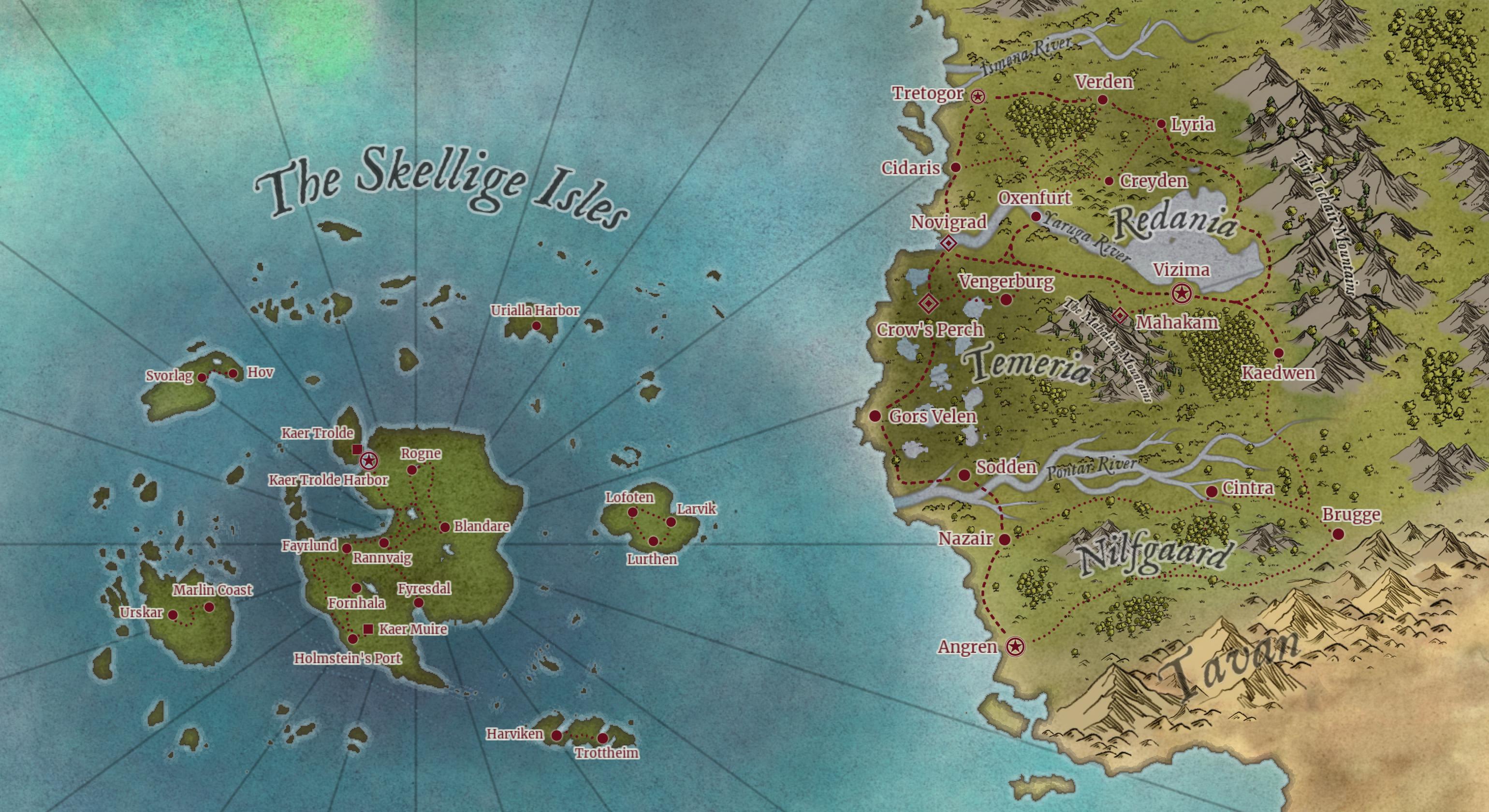
Calienthe is a region divided by wars and disputes, and the Three Kingdoms are the heralds for it. Detailed in Chapter 2, here is a quick overview of each of them.
Redania
Redania is the northmost region of Calienthe, named after an ancient duke by the name of Roeden. The largest city of Redania is the Free City of Novigrad, a hub of culture and trade. Its brother city Oxenfurt lies just east along the great Pontar river, featuring Calienthe's largest university and arts center. As for their capital, the heavily defended city of Tretogor lies northeast of the two cities along the Pontar. Redania is currently ruled by king Radovid the Fourth, but is truly controlled from the shadows by the Church of the Eternal Fire. Their anti-mage campaigns are expanding every day, and Novigrad is their primary target.
Temeria
Sandwiched between the Pontar and Yaruga river, Temeria is no longer a kingdom but rather a territory. Completely occupied by Nilfgaard, their capital of Vizima is now the invader's base of operations. A small group of their military remains active in a hidden base, consolidating strength and preparing for a counter-attack. However, with all their armies decimated and only one general remaining, it seems unlikely for the blue colours of Temeria to fly again.
Nilfgaard
Known for their fearsome military, Nilfgaard is located just south of the Yaruga river. They are campaigning for total domination of Calienthe, and will stop at nothing to achieve this. Their soldiers are well-trained and merciless, and towns they pass by are often left as charred husks with bodies hanging from trees. Despite this, Nilfgaard provides the greatest amount of freedom and peace for their citizens. No one is forced to enlist, and all are free to walk their streets, so long as they do not protest.
Skellige
An archipelago off the coast of the mainland, Skellige is the legendary series of islands famous for the unrivaled corsairs and swift longships that sail many seas. Its people are united under the King of the Skellige Isles, who's elected by the jarls of the seven major clans during traditional moots. In practice, however, the kings are from the same clan or at least related.

TIMELINE
Each week is tendays, and are often referred to as Tendays. Each day is simply referred to as Firstday, Secondday and so on.
B.D and P.D stand for Before Divergence and Post Divergence, and the current year is 384 P.D.
3700-3240 bd
Dwarves arrive on the Prime Material Plane from the Plane of Earth
Elves arrive on the Prime Material Plane from the Feywild
1230-500 bd
Humans arrive on the Prime Material Plane from an unknown location
The first written language is developed, based on Dwarven and Elven runes
0
The Elven God Aelirenn is killed by human magic
Elves wage war
Almost all Elven structures are destroyed
Human magic is greatly restricted by an elven ritual
Elves move back to the Feywild
Dwarves largely migrate underground
10 pd
The Human-Elven war ends
Church of the Eternal Flame is established
The Lodge of Sorceressess is established
12 pd
Redania is Established with Vizimir as king
Temeria is Established with Foltest as king
Nilfgaard is Established by Morvran Voorhis
Novigrad and Oxenfurt are built above Elven ruins
334 pd
Introduction of a new 24-letter alphabet
Radovid I becomes king of Redania after a coup
336 pd
Radovid II is born
341 pd
Emhyr Var Emreis is born
359 pd
Radovid I dies of illness
Radovid II becomes king of Redania
Redanian Witch Hunts start
363 pd
Radovid III is born
Radovid VI is born (brothers)
Cynthia var Emreis is born in Skellige
365 pd
Emhyr Var Emreis becomes Nilfgaardian Emperor
Emphyr Var Emreis wages war on Temeria
377 pd
Radovid II dies of "illness"
Radovid III becomes king of Redania
378 pd
Nilfgaard begins pursuing Cynthia
381 pd
Radovid III is assassinated
Radovid VI takes control
The church secretly takes control of Redania
The Lodge of Sorceressess is abolished
382 pd
Nilfgaard takes control of Vizima
Temeria becomes occupied
The Big Four gangs of Novigrad are established
Astral Hunt begins pursuing Cynthia
384 pd
Current Day
REGIONS
QUEENS, KINGS, EMPERORS, NOBLES . . . BENEATH the rhetoric, it's all the same. They say they fight to protect your families. They say they fight to enforce your beliefs, your honor. Fight for a better tomorrow. Fight for virtue, for prosperity. Bottom line, it's all about fighting, and it's you that dies fighting for their cause.
Unknown soldier,
Collected Tales of the Nilfgaardian Invasion
From the ashes of a land devastated by war, humans still push on. Survivors and armies claim land across the continent, forging allies and enemies as they push for territory and influence. Calienthe is shaped by the ideals and interests of its factions, from powerful governments to covert societies. This war-torn continent is a fertile but harsh landscape for any on a quest for greatness.
Redania
Redania has been the name for all north of the Pontar river for 5 generations now, founded by Vizimir the wise and now under the control of Radovid the Fourth. Imperial rule is maintained through their powerful military, religious faith and the support of the Church of the Eternal Flame. Though these institutions nominally exist to ensure the safety of the populace from foreign threats, terrible dangers that wander the wilds, and lingering evils that seep from the scars of the Calamity, they also allow the empire to maintain strict social order within its territories.
Redanian society follows a rigid caste system, in which the rich stay rich and the poor stay poor. Those with the most religious faith and martial talents tend to find themselves at the top of the social ladder, with rampaging homelessness and poverty at the bottom. Despite this, distrust brews between the Church and many of Redania's aristocrats. Many of those at the top are secretly able to to perform magical feats, often explaining how they achieved such social status. Considering how the church has been running witch hunts for almost 25 years, they each search for the perfect moment to remove each other from the picture.
The Church of the Eternal Fire was established by an unknown group after the Divergence war, but has steadily grown in following and political power to the point where it is functionally a state religion for Redania. They are practically law in Novigrad, and the city serves as the religion's de facto capital. The church is led by an elected Hierarch, who's chosen by the Electoral College, with the seat currently being occupied by Cyrus Engelkind Hemmelfart. While they lack a formal military, the Order of the Flaming Rose and witch hunters defended the Eternal Fire and upheld its laws, while the temple guards patrolled and protected the Grand Picket in Novigrad. They believe that the Eternal Fire cleanses all, meaning any can be purged of sin by merely praying. However, this generosity does not extend to mages and sorcerers, for they are seen as the ultimate evil and those that may one day extinguish the fire.
The two southern cities of Redania are praised for being "free," but they are often far from that. On the shore of the West Pontar lies the city of Novigrad, built atop the ruins of an elven city. The monarchy and church will do anything possible to stop citizens from finding out about the winding elven tunnels connecting the city, for they would surely sow distrust among the citizens.
Additionally, despite Novigrad being the trade capital of Calienthe, their economy and society is truly controlled from the shadows. The Big Four gangs of Novigrad each host illegal activities and trade, and often have more social influence than the monarchy. The four bosses include Sigi Reuven, Cleaver (Carlo Varese), Whoreson Jr. (Cyprian Wiley) and the King of Beggars (Francis Bedlam).
Eastward along the Pontar River lies the city of Oxenfurt, hosting the largest university and arts museum in Calienthe. It is a bustling and bawdy haven for students, artists, scholars, and freethinkers. Here the young reign supreme (in spirit, if not always in fact), with a mug of something strong in hand as they blaze new trails in fashion and thought, confident that the rest of the world will soon follow. While they are Redanian territory, the Church of the Eternal Fire has not yet seeked to extend their influence to this city. Much like Novigrad, Oxenfurt is built atop elven ruins, perfect for any who need to make their way through the city discreetly.
The Radovids have ruled over Redania since 34 pr, 50 years ago. While they do not slack off, they also don't exert much influence over their territory either. The most they demand is a steady inflow of new soldiers, most of which come willingly. With the Church of the Eternal Flame being so influential, they are practically a shadow government that controls Redania. Radovid the Fourth is the current king, a cunning and intelligent bastard with a deep hatred for mages but incredible military genius.
Temeria
Before the Nilfgaardian invasion, Temeria was the wealthiest realms in Calienthe. Temerian economy was based on cultivating the production of various goods, trade, and extracting valuable mineral resources, from the mountains of Mahakam, the range that lies east of Vizima. The Temerian oren is one of the most used currencies in Calienthe. Temeria also remains a land with highly developed agriculture, animal husbandry, and food industry. As Mahakam is officially part of the kingdom, Temeria has considerable interests in the extraction of precious metals and the production of high-quality weapons.
When Nilfgaard began their invasions, Temeria managed to come out on top, expanding their empire beyond the Yaruga river and almost to Nilfgaard's capital of Angren. However, this victory was also their folly, for their resources became stretched too thin to properly provide to all cities and towns in their massive empire.
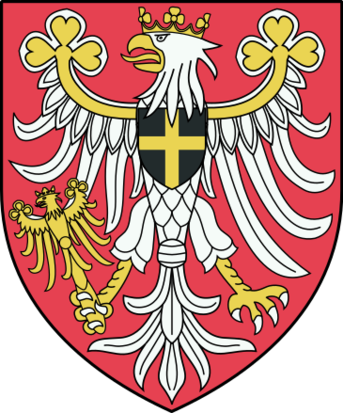
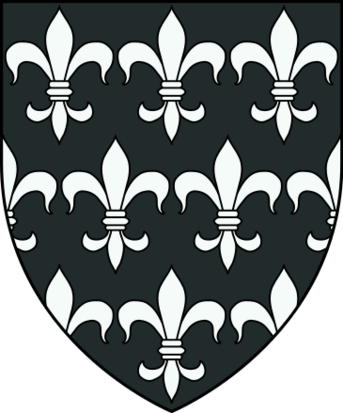
Ever since the Nilfgaardian invasion, Temeria has become a thing of the past. Almost all villages in Velen and greater Temeria have accepted Nilfgaardian rule, and while many citizens are upset, they aren't persecuted and thus tend to stay silent. It has become forbidden to display the Temerian colours and coat of arms, and their army has been completely slaughtered on the battlefield. Soldiers that wished to join the Nilfgaardian army were allowed to, but most chose to be executed instead. A small rebellion still exists in the Mahakam mountains, led by the Temerian army's last general, Vernon Roche. He is extremely determined to see Temeria restored to its former glory, but he wishes to shed the least amount of Temerian blood in doing so.
The west of Temeria is an area known as Velen, a harsh region dominated by swamp and forest. Small villages make their homes here, and most get by day-to-day with the bare minimum. Many are abandoned due to bandit attacks, and many undead lurk the inhospitable areas. When Nilfgaard invaded, many villages donned makeshift armour and equipped scrappy weapons to fight back in a display of honour. Almost all of them were completely wiped out as a result, and many trees around Velen host decorations in the form of hanging bodies. Travelers in Velen will often find charred frames of what were once villages, infested with the zombies and skeletons of those that were slain.
The inhabitants of Velen are considered very polite and religious, but do not fully accept representatives of the so-called Elder Races, such as elves and dwarves. In general, Velen's residents have a tendency for xenophobia, despite nonhumans living in their society. The most popular and most widespread religion in the kingdom is the worship of the goddess Chauntea, though churches of the gods Lliira and Malar also have their followers. On Higharvesttide, children burn figurines of Shar, to represent her defeated battle with Selune.
Previously ruling Velen was a cruel warlord known as Vserad, who demanded much of it's citizens. He drove many farmers to poverty and starved entire villages to feed himself, which resulted in a very poor response to the Nilfgaardian invasion. He immediately fled when the invading army reached him, and his town of Crow's Perch was taken over by another warlord. The new ruler is somewhat diplomatic with Nilfgaard, but isn't in a place of power to be considered a noble.
Moreover, while Velen's people are highly religious, one faith stands above all - the Ladies of the Wood. Three ancient goddessess watch over the swamps of Velen, and each year at the Autumn Equinox, they provide the villagers with two blessings. Almost all of the villagers gather at the highest mountain in Velen where they choose three of their smartest children to ascend to the top. After a short period of time, no longer than two hours, the children return with a few magical seeds. When planted, these seeds always sprout and grow into magical trees that last a year, providing highly nutritious fruit at a very fast rate during their short lifespans. This is a blessing for the dwellers of the swamp, as they would likely perish without it. Along with this, the children have a much deeper understanding of the world and general knowledge. There, most of them move to Oxenfurt or Novigrad to seek further education. The ladies themselves are highly secretive, only showing themselves to the children that ascend the mountain each year. In paintings and murals, they are often depicted as three naked women holding apples, giving one to a villager.

Nilfgaard
The Nilfgaardian Empire is the most powerful empire in the history of the known world. It is located in the southern part of the Continent and boasts both a thriving economy and a strong, well-trained army with talented commanders. It has expanded mostly through the conquest of foreign countries, which were then turned into provinces of the Empire. The Empire's inhabitants believe that "real" Nilfgaardians are only those born in the heart of the Empire, and not those born in the conquered provinces.
The provinces are ruled by either stewards or kings (in cases in which a king willingly surrenders, he retains his throne but is subject to the Emperor or just a vassal). The empire has expanded throughout the years, conquering new lands and going as far to the north as the Pontar River, in the current day.
In Redania and Skellige, the Empire is portrayed as an overarching antagonist, with many free people of Redania expressing hatred towards it with passion.
While the Empire's population comprises several different cultures and nations, the authorities are keen on slow "Nilfgaardization" of minorities, that is replacing local values and customs with those of "proper Nilfgaardian." Internal migration within imperial borders are encouraged: Villages in Nilfgaardian land are established within troubled provinces, while non-Nilfgaardian peasants loyal to the Empire are encouraged to settle in newly-conquered realms through attractive offerts; rebellious regions are cleansed through enslavement or ethnic cleansing of groups deemed "problematic".
On the other hand, the Nilfgaardian Empire in general is considered a safer home than most of Calienthe for many nonhuman races. Save for groups like Wood Elves, nonhumans living in the Empire consider imperial system harsh, but livable.
As for their geography, Nilfgaard consists primarily of forests and rolling hills. Their many rivers and fertile land means many small villages spread all across their territory, and some grow large enough to become cities. For conquered cities and towns, the compliant monarchs that used to hold the territory tend to become integrated into the Nilfgaardian empire, required to pay a tithe in produce and maybe soldiers in exchange for peace and protection. This also means that most cities and villages in Nilfgaard that were once independent now lack a proper military and rather rely on Nilfgaard's crownguard (local military) to take care of combat, additionally resulting in less resources, should they attempt to revolt.
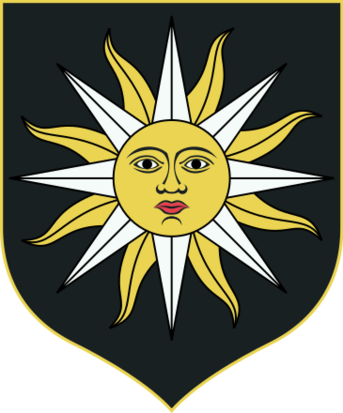
The religion of Nilfgaard is mainly worship of Lathandar, the god of the sun, birth and renewal. Their yellow sun on a black background coat of arms reflects this, although it is theorised that the coat came before Lathander's worship. Furthermore, much like the other original founders of the three great kingdoms, Morvran Voorhis was born before the Divergence War and thus had a much easier experience using magic. He attained immortality by siphoning the souls of the elves he killed on the battlefield, and he is seen as a religious figure in many Nilfgaardian cities.
Nilfgaard greatly prides itself on its military, and their soldiers are often referred to as the "Black Ones" for their dark black-and-yellow design. With a significantly larger population compared to Temeria and Redania, they have the most opportunities to enlist people and sift for leading talent. Characters such as Assire var Anahid and Menno Coehoorn have conquered cities with armies several times smaller than their enemies, by utilising extremely complex military tactics and magic.
As for their soldiers, they are known to be ruthless when conquering new land. Unless the rulers of the land submit immediately, they will torch the entire village to the ground just to prove a point. Armies they meet on the battlefield, whether they are peasants fighting in the name of Temeria or the Redanian army are shown no respite. If they surrender, the Nilfgaardian army gives them a chance to join their ranks or be executed immediately.


Skellige
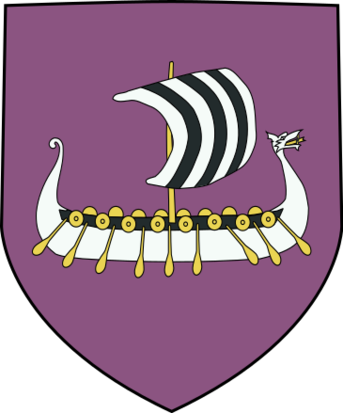
Skellige, commonly referred to as the Skellige Isles or the Isles of Skellige, is an archipelago of six islands. Shaped and marred by howling winds, freezing temperatures and wild waves, the mountainous terrain of the isles is host to a variety of vicious wildlife and flora. Once inhabited by the giants, many remnants of their civilisation can still be witnessed here. The group of six islands is situated in the Great Sea, off the coast of Temeria and southwest of Redania. From the mainland, it is famous for the unrivaled corsairs and swift longships that sail many seas.
Even though the isle's relationship with the mainland isn't inherently hostile, it isn't friendly either. Raids on the shores of the mainland occur commonly, especially on the wealthier Nilfgaardian coast cities. This often results in many casualties on both sides, and most Skelligans say that it isn't done out of necessity, but rather tradition.
The Skelligan people are united under the king of the Skellige Isles, who is elected by the Jarls. The Jarls are the heads of the seven great clans, and this event takes place the day after the funeral of the previous king. In practice, however, the new king tends to come from the same clan as the previous king.
The crown hall is located within a castle known as Kaer Morhen (Care More-hen) atop a mountain overlooking their largest town, and was built pre-divergence ago by the Storm Giants as a gift for humankind. Since then, the giants have either gone extinct or migrated to another plane of existence - none can be sure where they have disappeared to, but it is incredibly rare to spot a giant wandering in Calienthe.
As for the layout of the islands, the center and largest island goes by the name of Ard Skellig. The next largest is An Skellig, and the other four smaller ones are called Faroe, Hindersfjall, Spikeroog and Undvik. There is a mysterious sixth island called the Isle of Mists that was said to exist when giants roamed the land, but it is likely just folklore.
While the kings and Jarls look over their people, the wild nature and untamed cliffs are tended to by the Druid Enclave. Headed by Druid Ermon, they make sure the ecosystem remains in balance and eliminate unwanted intruders. Two great monuments, Freya's Garden and Yggdrasil the world tree are the druid's most protected regions, and they have groups of up to 5 druids dedicated to watching over them at all hours. For a world in which less than 1% of the human population is capable of using magic, these groups of druids are incredibly impressive.
Freya's Garden is located on the southwest end of Ard Skellig, and is a regular garden to the untrained eye. However, what makes it so special is not the plants but rather its location. The soil is ripe with magical energy, and anyone that can use magic will find their abilities greatly boosted while in the garden. However, excessive use of necromancy can cause the plants to begin to die, so access into the garden is highly restricted.
Yggdrasil the world tree is not inherently important, and the location does not live up to its name. The world tree is merely the largest tree in Skellige, on the east end of Ard Skellig. The druids have their base of operations in a short series of caves underneath the tree, where they brew potions, create spell scrolls and nurture the roots of the tree. This is also where Ermion spends most of his time, and keeps most of his druidic relics.
While Skellige seems like a hostile and unforgiving environment, the powers of the gods make life there easier. In the earlier days of Skelligan civilisation, during the Divergence War, the elves cast the Gith un Gûl ritual in an ancient temple beneath Ard Skellig. This was the ritual that caused humans on Calienthe to be greatly restricted from using magic, with most mages losing their power. The effective mage population dropped to less than one percent, and those that were still able to cast magic were no longer as strong as they used to be. However, there was an unintended side effect, in that a massive hole to the Astral Plane was ripped open above the Skellige isles. While this didn't cause much direct damage as it was patched up fairly quickly, the fixing process wasn't flawless and the gods touched the isles with divine magic. This meant that prayers the Skelligans made were often much more successful, and thus the gods took a special interest to it. This was both good and bad, as many malicious gods spread monsters and disease across the towns - but at the same time, the good-aligned gods count answer blessings with more efficiency.
Religion thus became widespread, and Akadi quickly took notice. Impersonating the goddess of wind and air, she granted the Skelligans the ability to sail the seas with ease and became one of their most worshipped. When she was exposed for not being the real goddess of air and just a minor goddess impersonating her, the Skelligans didn't really care - she still answered their prayers, which was all they cared about. The gods are less involved in the affairs of Skellige nowadays, but they still show their power every once in a while.
Other Notable Groups
Lodge of Sorceressess
The Lodge of Sorceressess was a covert group of magic-wielding females that looked over Calienthe, often acting as advisors for kings and politicians. Taught by the eldest of them in an ancient fortress known as Aretuza from around -100BD to 10BD , they became proficient in different fields of magic and used it to extend their lifespans into the hundreds. The lodge itself was founded after the Divergence war, in order to keep humanity from causing a catastrophic event such as the accidental murder of a god again.
While they each have different political perspectives, while together they work neutrally for the greater interest of humankind. Each of the ten members of the Lodge represent a different school of magic - the traditional eight, Chronurgy and Graviturgy. The Lodge was briefly noticed by the Church of the Eternal Fire in Redania after they attempted to trick King Radovid the Third into stopping the Witch Hunts, as an unfortunate coincidence meant that he was assassinated on the same day. Because of this, the sorceressess abolished the Lodge and moved on to new chapters of their individual lives. Nowadays, the members are either in hiding, dead or no longer in Calienthe.
As for their school and fortress of Aretuza, it is cloaked with magic and changes locations often. With new students being few and far between due to the witch hunts, only a few of the original ten members remain there, caring for it's facilities.
Mind Flayers
Mind flayers, also known as illithids, are sadistic aberrations feared by sentient creatures on many worlds across the multiverse due to their powerful psionic abilities. From their twisted lairs in the Astral Plane, these alien entities sought to expand their dominion over all other lifeforms, controlling their minds to use them as obedient thralls. They consumed their victims' very personality by extracting and devouring their brains while they were still alive. Stronger mortals that come into their possession, such as sorcerers and knights, often have their consciousness extracted by an Elder Brain and their bodies turned into a battery to power their Nautiloid ships.
While each Mind Flayer is independent, they are also linked up in a massive hive-mind like system, psychically communing with each other through an Elder Brain. In exceedingly rare cases, a Mind Flayer can stray far enough from an Elder Brain to break out of its influence, and become just like any other mortal (but with tentacles on their face, and psionic properties).
Only thought of as myths in most regions, the average person is either unaware of their existence or use stories of them to scare children. However, soldiers and nobility may beg to differ, as recent sightings of an elusive group known as the Astral Hunt have begain to sow suspicion.
Notable Mind Flayers
- Encepthalith, The Mindwitness
- Adrenalt, Supreme Legendary Commander
- Slazessk, Psionic Conduit
- Thaglar, Defect and Scribe for Nilfgaard


A Brief History of Zireael
The two figures sit at opposite ends of a table, eyes locked. They are both emotionless, as each one reaches down. The man in black and yellow tosses an object out of his bag, and after it arcs in the air, he catches it in two fingers. It's a black paper box, adorned with the crest of Nilfgaard. The man in blue is simpler, and pulls out his box. It's blue, adorned in silver fleurs-de-lys. As they each set their boxes onto the table, the room falls silent. This is Zireael.
Zireael has its roots in Elven culture, the name meaning Swallow in Elven. It was created as a diplomatic but strategic game to settle disputes millennia ago, but has evolved past that. It is now the most common game played in Calienthe, and anyone can experience it, whether they are peasant farmers or the emperor of Nilfgaard.
The available decks represent the regions of Calienthe, and it isn't uncommon for people to play the deck of the enemy. Each one offers a unique playstyle, and people tend to play whichever region suits their personality best. There is no one which is stronger than the other, although some experienced players may beg to differ.
The six available decks are Monsters, Redania, Temeria, Nilfgaard, Skellige and Elves. The monsters deck was only added a century ago, and many players are upset that there are modern changes to such an ancient game. Either way, it is ruled as an official region and must be played that way.
Zireael is often played as a gambling game, with a wager of anywhere between 5cp to 5gp. On average, a person will be open to wager up to 5sp. Wagering over 5gp is strictly outlawed by the mainland in a rare agreement. The Skellige Isles are much more lenient.
How to Play Zireael
Each game consists of three rounds. In order to win the game, you must win two of the three rounds. If there is a draw (i.e each player has one win and they tie on the last), the match goes to who won the first round.
To win a round, you must both make an intelligence check (20 sided dice, plus your intelligence). Whoever rolls highest will win the round.
Of the six decks, each can have a +2 or -2 modifier on the intelligence check depending on the matchup. Each deck has two good, one neutral and two bad matchups. In a mirror matchup (both players are playing the same deck), it is considered a neutral matchup.
Proficiency in Cards will allow you to add your proficiency modifier to this game. If you are not proficient in cards, you become proficient after owning all the decks.
Each player starts with one deck of their choice. Additional decks after that point cost 15gp each.
Many players across Calienthe hold rare, unique cards. For every three rare cards held, the player gains an accumulating +1 bonus to their intelligence check.