


The Mage
An elf in a rune-covered breastplate draws her sword, fire dancing at her outstretched fingertips as a horde of goblins races for the slender human wizard behind her, arcane energies flowing from his form as he recites an incantation. The goblins charge forward, only to be met by the roaring fireball the elf flung into their midst.
The half-orc hefts his halberd before bringing it down on the head of the cult fanatic, the weapon flaring with a burst of arcane force. He shouts a challenge to all those behind the fanatic, raising his blood-stained halberd to deal with those who would misuse the arcane.
A goliath in half-plate, readying his axe and bracing his shield, stands before a building surrounded by a shimmering ward, charged to defend it. With a shout, he swings his axe down, a bolt of lightning launching forth into the seething masses hammering at the ward.
Whatever their calling, mages are protectors of the arcane, both the knowledge and those who practice it. To facilitate this mission, they train in the arts martial and magic, blending them together.
Rough & Tumble
Unlike wizards, who learn their magicks primarily in the classrooms and lofty halls of academia, mages learn through living and doing. This often, though not always, leads them to learn the ways of the sword and how to fight in armor, the better to protect themselves from those who would do them or their charges harm.
As a result, they tend to be hearty folk who focus on simpler magicks that can defeat their foes, frequently operating under the belief that an offense is the best defense.
Creating a Mage
When creating a mage, the most important thing to consider is what your calling is. Do you desire to protect the common man from those who would misuse arcane knowledge?
Do you desire to further your studies in both the arcane and the mundane? Or do you desire only to fully blend your current skills?
Multiclassing and the Mage
If your group uses the optional multiclassing rule, here is what you need to know if you choose to take your first level in the mage class.
Ability Score Minimum. As a multiclass character, you must have at least a 13 Strength (or Dexterity) and Intelligence to take a level in this class, or to take a level in another class if you are a mage.
Proficiencies Gained. If mage isn't your initial class, you gain proficiency in light and medium armor, and simple and martial weapons.
Spell Slots. Add half your levels (rounded down) in the mage class to the appropriate levels from other classes to determine available spell slots.
The Mage
| Level | Proficiency Bonus |
Features | 1st | 2nd | 3rd | 4th | 5th |
|---|---|---|---|---|---|---|---|
| 1st | +2 | Arcane Kenning, Scroll Scribe | — | — | — | — | — |
| 2nd | +2 | Fighting Style, Spellcasting | 2 | — | — | — | — |
| 3rd | +2 | Arcane Discipline, Arcryst Creation | 3 | — | — | — | — |
| 4th | +2 | Ability Score Improvement | 3 | — | — | — | — |
| 5th | +3 | Extra Attack | 4 | 2 | — | — | — |
| 6th | +3 | Arcane Surge | 4 | 2 | — | — | — |
| 7th | +3 | Arcane Discipline feature | 4 | 3 | — | — | — |
| 8th | +3 | Ability Score Improvement | 4 | 3 | — | — | — |
| 9th | +4 | — | 4 | 3 | 2 | — | — |
| 10th | +4 | Arcane Discipline feature | 4 | 3 | 2 | — | — |
| 11th | +4 | Resilient Casting | 4 | 3 | 3 | — | — |
| 12th | +4 | Ability Score Improvement | 4 | 3 | 3 | — | — |
| 13th | +5 | — | 4 | 3 | 3 | 1 | — |
| 14th | +5 | Arcane Discipline feature | 4 | 3 | 3 | 1 | — |
| 15th | +5 | Esoteric Lore | 4 | 3 | 3 | 2 | — |
| 16th | +5 | Ability Score Improvement | 4 | 3 | 3 | 2 | — |
| 17th | +6 | — | 4 | 3 | 3 | 3 | 1 |
| 18th | +6 | Arcane Discipline feature | 4 | 3 | 3 | 3 | 1 |
| 19th | +6 | Ability Score Improvement | 4 | 3 | 3 | 3 | 2 |
| 20th | +6 | Master of the Arcane | 4 | 3 | 3 | 3 | 2 |
—Spell Slots per Spell Level—
Class Features
Hit Points
- Hit Dice: 1d10 per mage level
- Hit Points at 1st Level: 10 + your Constitution modifier
- Hit Points at Higher Levels: 1d10 (or 6) + your Constitution modifier per mage level after 1st
Proficiencies
- Armor: Light Armor, Medium Armor
- Weapons: Simple Weapons, Martial Weapons
- Tools: One type of Artisan's tools of your choice
- Saving Throws: Constitution, Intelligence
- Skills: Choose three from Arcana, Athletics, History, Investigation, Perception, Persuasion Stealth, and Survival
Equipment
You start with the following equipment, in addition to the equipment granted by your background:
- (a) a martial melee weapon or (b) two simple weapons
- (a) a component pouch or (b) an arcane focus
- (a) an explorer's pack or (b) a scholar's pack
- Leather armor and two daggers
Arcane Kenning
1st-level mage feature
The presence of arcane magic registers on your senses like a faint pressure. As an action, you can open your awareness to detect such forces. Until the end of your next turn, you know the location of any magical presence within 60 feet of you that is not behind total cover. You know the school used of any magic you sense, but not the exact spell used.
You can use this feature a number of times equal to 1 + your Intelligence modifier. When you finish a long rest, you regain all expended uses.
Scroll Scribe
1st-level mage feature
Your unconventional approach to the arcane extends to the usage of spell scrolls. The gold and time you must spend to scribe a spell scroll is halved.
At 15th level, your experience with scrolls expands to the point you can use a spell scroll with a spell from any class's spell list.
Additionally, provided you have the original spell scroll or a copy of the spell, you can create spell scrolls with spells from any class's spell list.
Fighting Style
2nd-level mage feature
You adopt a particular style of fighting as your specialty. Choose one of the following options. You can't take the same Fighting Style option more than once, even if you get to choose again.
- Arcane Warrior. You learn two cantrips of your choice from the wizard spell list. They count as mage spells for you, and Intelligence is your spellcasting ability for them. Whenever you gain a level in this class, you can replace one of these cantrips with another cantrip from the wizard spell list.
- Defense. While you are not grappled, incapacitated, or restrained, you gain a +1 bonus to AC.
- Dual Wielding. When you engage in two-weapon fighting, you add your ability modifier to the damage roll of the extra attack and you can draw or stow two one-handed weapons when you would normally be able to draw or stow only one.
- Dueling. When you are wielding a single melee weapon and no other weapons, you gain a +2 bonus to damage rolls with that weapon.
- Reach Weapons. When you are wielding a weapon with the reach property, you gain a +1 bonus to damage rolls made with that weapon and the area within your reach counts as difficult terrain.
Spellcasting
2nd-level mage feature
You have learned to draw on arcane forces through careful study to cast spells, much as a wizard does.
Preparing and Casting Spells
The Mage table shows how many spell slots you have to cast your mage spells. To cast one of your mage spells of 1st level or higher, you must expend a slot of the spell's level or higher. You regain all expended spell slots when you finish a long rest.
You prepare the list of mage spells that are available for you to cast, choosing from the mage spell list. When you do so, choose a number of mage spells equal to your Intelligence modifier + half your mage level, rounded down (minimum of one spell). The spells must be of a level for which you have spell slots.
For example, if you are a 5th-level mage, you have four 1st-level and two 2nd-level spell slots. With an Intelligence of 14, your list of prepared spells can include four spells of 1st or 2nd-level, in any combination. If you prepare the 1st-level spell magic missile, you can cast it using a 1st-level or a 2nd-level slot. Casting the spell doesn't remove it from your list of prepared spells.
You can change your list of prepared spells when you finish a long rest. Preparing a new list of mage spells requires time spent studying your spells, be they in a proper spellbook, a small, handwritten grimoire, or even a loose collection of notes: at least 1 minute per spell level for each spell on your list.
Spellcasting Ability
Intelligence is your spellcasting ability for your mage spells, since you learn your mage spells through dedicated study and memorization. You use your Intelligence whenever a spell refers to your spellcasting ability. In addition, you use your Intelligence modifier when setting the saving throw DC for a mage spell you cast and when making an attack roll with one.
Spell save DC = 8 + your proficiency bonus + your Intelligence modifier
Spell attack modifier = your proficiency bonus + your Intelligence modifier
Spellcasting Focus
You can use an arcane focus as a spellcasting focus for your mage spells.


Arcane Discipline
3rd-, 7th-, 10th-, 14th-, and 18th-level mage feature
You choose an arcane discipline to dedicate your studies towards, which are detailed at the end of the class description and which grant you features at the specified levels.
Discipline Spells
Each discipline has a list of associated spells. You gain access to these spells at the levels specified in the discipline description. Once you gain access to a discipline spell, you always have it prepared. Discipline spells don't count against the number of spells you can prepare each day.
If you gain a discipline spell that doesn't appear on the mage spell list, the spell is nonetheless a mage spell for you.
Arcyrst Creation
3rd-level mage feature
Your touch upon the weave, so different from other casters, has allowed you to harness its energy and store it in a form known as arcrysts. You can expend a spell slot of 1st-level or higher to create an arcryst of that level to fuel the following magical effect:
- Rejuvenation. You can use an action to crush an arcryst to enhance your vitality and regain hit points. The hit points regained equal 1d10 for a 1st-level arcryst, plus 1d10 for each level above 1st, to a maximum of 5d10.
Your discipline grants you an additional effect as you advance in levels, as noted in the discipline description.
You can only have a number of arcrysts equal to your Intelligence modifier.
Ability Score Improvement
4th-, 8th-, 12th-, 16th-, and 19th-level mage feature
You can increase one ability score of you choice by 2, or
you can increase two ability scores of your choice by 1.
As normal, you can't increase an ability score above 20 using this feature.
Extra Attack
5th-level mage feature
You can attack twice, instead of once, whenever you
take the Attack action on your turn.
Arcane Surge
6th-level mage feature
Your magic has begun fusing itself with your mundane combat. When you use your action to cast a spell, you can move up to half your speed to an unoccupied space you can see and make one weapon attack as a bonus action. This movement doesn't provoke opportunity attacks and can be made before or after the bonus action attack.
At 14th level, you can teleport up to your speed to an unoccupied space you can see.
Resilient Casting
11th-level mage feature
Your rough and tumble lifestyle has given you an unshakable will. When you are forced to make a Constitution saving throw to maintain concentration on a spell, you can add your Intelligence modifier to the roll.
Esoteric Lore
15th-level mage feature
Your skill with scrolls has expanded your mind to unprecedented levels. While you have a spell scroll on your person, you can prepare the spell contained on the scroll as if it were a mage spell. If it doesn't appear on the mage spell list, it is nonetheless a mage spell for you.
Master of the Arcane
20th-level mage feature
You have achieved peerless mastery over the forces of the arcane. Your Constitution and Intelligence scores increase by 2. Your maximum for those scores is now 22.
Additionally, choose one 1st-level spell from the mage spell list. You can cast that spell at its lowest level without expending a spell slot a number of times equal to your Intelligence modifier and you regain all expended uses when you finish a long rest.




Armiger Discipline
Those who follow the Armiger Discipline are those who have chosen to take a more martial approach to their magics than other mages, fully mixing the two in an effortless blend.
Armiger Discipline Spells
| Mage Level | Spells |
|---|---|
| 3rd | feather fall, zephyr strike |
| 5th | mirror image, shadow blade |
| 9th | bronze mistral bladeSS, thunder step |
| 13th | freedom of movement, soul of moonlightSS |
| 17th | far step, steel wind strikeSS |
Might and Magic
3rd-level Armiger Discipline feature
You have trained in the art of mixing combat both arcane and mundane, granting you the ability to cast spells in even the must dire situation. You gain proficiency with shields and do not have disadvantage when casting spells within 5 feet of a hostile creature.
Evasion
7th-level Armiger Discipline feature
Arcane energy enhances your reflexes and lets you dodge out of the way of certain area effects, such as a blue dragon's lightning breath or a fireball spell. When you are subjected to an effect that allows you to make a Dexterity saving throw to take only half damage, you instead take no damage if you succeed on the saving throw, and only half damage if you fail.
Arcryst Quill
10th-level Armiger Discipline feature
You have learned to use weapons and arcrysts in accord. While holding a weapon that you are proficient with, you can use a bonus action to embed an arcryst into its form to create an arcryst quill. You can use an arcryst quill as an arcane focus and to perform the somatic components of spells.
Additionally, when you create an arcryst quill, you can choose a damage type. When you use your Arcane Surge feature, weapon attacks you make with an arcryst quill deal an additional 1d4 damage of the chosen type for a 1st-level arcryst, plus 1d4 for each arcryst level above 1st.
Rift Walker
14th-level Armiger Discipline feature
Your spells have begun to rip tears in the fabric of reality, allowing you to traverse short distances without moving across the intervening space. When you use your Arcane Surge feature, you can teleport to an unoccupied point within that spell's range before or after the bonus action attack.
Arcane Retaliation
18th-level Armiger Discipline feature
Your body, down to your very bones, has been flooded with arcane energies. When you take damage from a creature you can see, you can use your reaction to cast a spell with a casting time of 1 action at that creature. As part of the same reaction, you can use your Arcane Surge and Rift Walker features.

Justicar Discipline
Those who follow the Justicar Discipline are those who have seen some of the worst abuses of the arcane the world has to offer and have vowed to put an end to it. Some, however, are a little too zealous, leading to Justicars often being called "hanging judges".
Justicar Discipline Spells
| Mage Level | Spells |
|---|---|
| 3rd | compelled duel, hex |
| 5th | hold person, mind spike |
| 9th | dispel magic, remove curse |
| 13th | aura of purity, faithful hound |
| 17th | circle of power, wall of force |
Arcane Smite
3rd-level Justicar Discipline feature
You have taken up the calling of a wandering judge and executioner. When you hit a creature with a weapon attack, you can expend one spell slot to deal additional force damage to the target, in addition to the weapon's damage.
The extra damage is 2d4 for a 1st-level spell slot, plus 2d4 for each slot level higher than 1st, to a maximum of 8d4. The damage increases by 2d4 if the target has a spellcasting ability, to a maximum of 10d4.
Aura of the Arcanum
7th-level Justicar Discipline feature
Magical energy lies so heavily upon you that it forms an arcane barrier. You and friendly creatures within 10 feet of you have resistance to damage from spells.
At 18th level, the range of this aura increases to 30 feet.
Arcryst Rupture
10th-level Justicar Discipline feature
You have learned to craft your arcrysts in such a way that they are exceedingly volatile. You or someone else can use their action to throw an arcryst towards a point they can see within 60 feet, where it shatters, violently releasing the stored arcane energy.
Each creature within 5 feet of the chosen point must succeed on a Dexterity saving throw or take 1d4 force damage for a 1st-level arcryst, plus 1d4 and 5 feet for each arcryst level above 1st.
Until the start of the next turn of the creature that used an arcryst, spells cannot be cast within range of the chosen point.
Occultic Rebuke
14th-level Justicar Discipline feature
Your Aura of the Arcanum feature begins to punish those who strike at you. Whenever a creature hits you with an attack or a spell, that creature takes force damage equal to your Intelligence modifier (minimum of 1) if you're not incapacitated.
Arcane Mantle
18th-level Justicar Discipline feature
You can momentarily imbue yourself with raw arcane power, transforming into a champion of the arcane. As an action, you can surround yourself with a swirling cloak of magic energy. For 1 minute, you gain the following benefits:
- You gain a flying speed equal to your walking speed and begin to hover just above the ground.
- You can cast your mage spells without verbal, somatic, or material components, provided they do not have a gold cost.
- When you cast a spell of 2nd-level or higher and use your Arcane Surge feature to make a weapon attack as a bonus action, the attack deals additional force damage as though you had used your Arcane Smite feature and expended a spell slot of one level lower.
After you use this feature, you can't use it again until you finish a long rest.


Magister Discipline
Those who follow the Magister Discipline are those who have chosen to expand their study of the arcane beyond that of other mages; though they don't begin to approach the full might of true wizards, they have their own tricks to improve their prowess.
Magister Discipline Spells
| Mage Level | Spells |
|---|---|
| 3rd | burning hands, Tasha's caustic brew |
| 5th | flaming sphere, moonbeam |
| 9th | absolute zeroSS, lightning bolt |
| 13th | storm sphere, vitriolic sphere |
| 17th | animate objects, synaptic static |
Fundamental Mastery
3rd-level Magister Discipline feature
You have taken your studies further than other mages, mastering the basics of spellcasting. You learn two cantrips of your choice from the wizard spell list.
You learn another cantrip of your choice at 10th level and again at 14th level.
Careful Caster
7th-level Magister Discipline feature
Your time spent casting spells in the field has allowed you to create pockets of safety within the effects of your spells. When you cast a spell that affects creatures you can see, you can choose a number of them equal to 1 + your Intelligence modifier (minimum of one).
The chosen creatures automatically succeed on their saving throws against the spell, and they take no damage if they would normally take half damage on a successful save.
Arcryst Improvisation
10th-level Magister Discipline feature
You have learned to use your arcrysts in a manner far more flexible than other mages. As an action, you can crush an arcryst in order to cast a 1st-level spell that you did not have prepared.
At 14th level, this feature can be used to cast a spell of 2nd-level or lower, and at 18th level, it can be used to cast a spell of 3rd-level or lower.
Transposing Spell
14th-level Magister Discipline feature
Your unorthodox training in the arcane arts allows you to modify your spells, altering their shape and substance to suit your needs. Each time you cast a spell, you can choose to apply one of the following effects to it:
- Converge. If the spell requires an affected creature(s) to make a saving throw, you can change it to require a melee spell attack roll or a ranged spell attack roll instead. Make a single attack roll against all targeted creatures. If you change the spell into a melee spell attack, you can only make the attack roll against creatures within your reach.
- Diverge. If the spell requires you to make an attack roll against one or more creatures, you can change it to require a saving throw instead. The saving throw is your choice of Dexterity, Constitution, or Wisdom. If the spell targets a single creature, you can target an additional number of creatures equal to your proficiency bonus.
Additionally, if the spell deals acid, cold, fire, force, lightning, necrotic, poison, psychic, radiant, or thunder damage, you can change the damage type to another of those types.
You can use this feature a number of times equal to twice your Intelligence modifier (minimum of once) and regain all expended uses when you finish a long rest.
Waste Not, Want Not
18th-level Magister Discipline feature
Your time learning the arcane arts and manipulating the essence of the weave have blessed you with the good fortune of no spell being wasted. When you cast a spell and it misses its target or fails, you regain one expended spell slot. The slot must be of a level lower than the spell slot used to cast the initial spell.



Scrivener Discipline
Those who follow the Scrivener Discipline abstain from what they view as the hectic, and often messy, art of spellcasting themselves. Instead, they prefer to focus on, in their eyes, the neat and elegant approach that is spell scrolls.
Scrivener Discipline Spells
| Mage Level | Spells |
|---|---|
| 3rd | chromatic orb, mage armor |
| 5th | enhance ability, mercurial weaponXUA |
| 9th | crusader's mantle, minute meteors |
| 13th | aura of life, secret chest |
| 17th | arcane hand, magic missile barrageSW |
Ink Stained
3rd-level Scrivener Discipline feature
You gain proficiency with calligrapher's supplies and your proficiency bonus is doubled for any checks you make that uses this proficiency.
In addition, you gain the ability to transcribe a special type of spell scroll known as an Arcane Talisman, the appearance of which is up to you. An Arcane Talisman functions like a spell scroll, but can be used by any class, even if it does not have a spellcasting feature.
A creature in possession of an Arcane Talisman can use it to cast the spell stored within. If the spell requires an attack roll or saving throw, it uses your spell attack modifier and save DC. If the spell requires concentration, the creature that used the Talisman concentrates on the spell.
You can use an action to dispel an Arcane Talisman, causing it to crumble to dust.
Arcane Mulligan
7th-level Scrivener Discipline feature
Your familiarity with your Arcane Talismans is such that you can reabsorb the energy stored within. You can use a bonus action to dispel an Arcane Talisman and regain spell slots equal to the level of the spell stored within.
For example, if you dispel an Arcane Talisman of 3rd-level, you can regain a 3rd-level spell slot, a 2nd-level spell and a 1st-level spell slot, or three 1st-level spell slots.
Arcryst Empowerment
10th-level Scrivener Discipline feature
You have learned to imbue your Arcane Talismans with the arcrysts you create. When you craft an Arcane Talisman, you can choose to fuse an arcryst into the Talisman, increasing the level of the stored spell by the level of the arcryst.
Runic Cipher
14th-level Scrivener Discipline feature
You have developed a mystic cipher that can bestow spells on others. While a creature with the spellcasting or Pact Magic feature is in possession of an Arcane Talisman, it can expend a spell slot to cast the spell stored within using its own spellcasting ability.
When cast in this way, the spell counts as being from their spell list and the Arcane Talisman is not consumed.
Ink Heart
18th-level Scrivener Discipline feature
Your mastery of scrivening has etched ink into your very soul. When you cast a spell through an Arcane Talisman with a casting time of 1 action, you can cast it with 1 bonus action instead.
Once you have used this feature a number of times equal to your Intelligence modifier (minimum of once), you can't use it again until you finish a long rest.


Spellslinger Discipline
Those who follow the Spellslinger Discipline are those who studied the unique elven method of archery that channels magic through their bows and have adapted it to work with a wide variety of ranged weapons.
Spellslinger Discipline Spells
| Mage Level | Spells |
|---|---|
| 3rd | ensnaring strike, hail of thorns |
| 5th | acid arrow, cordon of arrows |
| 9th | conjure barrage, lightning arrow |
| 13th | elemental bane, freedom of movement |
| 17th | conjure volley, swift quiver |
Arcane Shot
3rd-level Spellslinger Discipline feature
You can channel your magic to your shots. You know two Arcane Shot options of your choice, from the Arcane Shot Options below. You gain an additional Arcane Shot option of your choice when you reach certain levels in this class: 7th, 10th, 14th, and 18th level.
When you finish a short or long rest, you can replace one of the Arcane Shots you know with another.
When you make a ranged weapon attack as part of the Attack action, you can expend a spell slot of 1st-level or higher to apply one of your Arcane Shot options to that attack. You decide to use the option when the attack hits, unless the option does not involve an attack roll.
Spellslinger's Touch
3rd-level Spellslinger Discipline feature
The magical energy you channel dances about your fingertips, giving you a magical touch. You learn the mending and prestidigitation cantrips.
Arcane Skirmisher
7th-level Spellslinger Discipline feature
You begin to weave your Arcane Shots into your flesh, giving you greater mobility. Immediately after you make an attack with your Arcane Shot applied, you can use use your Arcane Surge feature as though you had cast a spell.
Additionally, when a hostile creature ends its turn within 5 feet of you, you can use your reaction to move up to half your walking speed. This movement doesn't provoke opportunity attacks.
Arcryst Transience
10th-level Spellslinger Discipline feature
Utilizing the arcrysts you create, you can imbue faint traces of swiftly fading magic into your thrown weapons and ammunition. As a bonus action, you can crush an arcryst and infuse a thrown weapon or a case of ammunition with the stored power.
For 1 minute, the thrown weapon or ammunition becomes magical. While it is magical, it gains a +1 bonus to attack and damage rolls for a 1st-level arcryst, a +2 bonus for a 3rd-level arcryst, and a +3 bonus for a 5th-level arcryst.
If you imbue a thrown weapon with this feature, it returns to your hand immediately after it is used to make a ranged attack.
Transposition of Thunder
14th-level Spellslinger Discipline feature
The energies you weave while teleporting have begun to create deafening peals of thunder when you move. When you use your Arcane Surge or Arcane Skirmisher features, a thunderous boom sounds, which can be heard up to 100 feet away and directs all eyes towards its origin.
The next time you use one of your Arcane Shots, you have advantage on the attack roll and creatures have disadvantage on saving throws made to resist its effects.
Twinned Shot
18th-level Spellslinger Discipline feature
You have mastered your magical shots to such a degree that you can split them in twain without losing its potency.
When you use an Arcane Shot that, you can choose a second target that you can see within range that's within 30 feet of the first target. You can use the same Arcane shot against that target as a bonus action without expending a spell slot.
Once you have used this feature a number of times equal to your Intelligence modifier (minimum of once), you can't use it again until you finish a long rest.


Arcane Shot Options
When an Arcane Shot options refer to damage, the damage increases with the spell slot you expended for using the Arcane Shot option. The damage equals 2d6 for a 1st-level spell slot, plus 1d6 per each slot level above 1st, to a maximum of 5d6.
Some Arcane Shot options require the target to make a saving throw. The save DC for your Arcane Shot options equals your artificer spell save DC.
- Banishing Shot. When you hit a creature with the attack, the target takes force damage and must succeed on a Charisma saving throw or be banished. While banished in this way, the target's speed is 0, and it is incapacitated. At the end of its next turn, the target reappears in the space it vacated or in the nearest unoccupied space if that space is occupied.
- Blinding Shot. When you hit a creature with the attack, the target takes radiant damage, and it must succeed on a Constitution saving throw or be blinded for 1 minute. The creature can uses its action on each of its turns to repeat the saving throw, ending the effect on a success.
- Bursting Shot. When you hit a creature with the attack, the target takes the attack's normal damage, and the shot detonates in a 10-foot radius sphere of fiery power centered on the target. The target and all other creatures within 10 feet of it take fire damage. The fire spread around the corners, igniting inflammable objects in the sphere that are not being worn or carried.
- Concussive Shot. When you hit a creature with the attack, the target takes psychic damage, and it must succeed on a Wisdom saving throw or fall unconscious for 1 minute or until it takes damage. Another creature can use an action to awaken the unconscious creature.
- Freezing Shot. When you hit a creature with the attack, the target takes cold damage, and it must make a Constitution saving throw. On a failed save, the target becomes restrained until the end of your next turn. On a successful save, its speed is halved until the end of your next turn.
- Grasping Shot. When you hit a creature with the attack, the target takes poison damage, its speed is reduced by 10 feet, and it takes slashing damage the first time on each turn it moves 1 foot or more without teleporting. The target or any creature that can reach it can use its action to remove the brambles with a successful Strength (Athletics) check against your spell save DC. Otherwise, the brambles last for 1 minute or until you use this option again.
- Piercing Shot. Immediately after you fire the shot, it becomes ethereal, forming a 5-foot wide line that extends out from you to the target, passing harmlessly through objects and ignoring cover. Each creature in the line other than you must make a Dexterity saving throw. A creature takes magical piercing damage on a failed save, or half as much damage on a successful one.
- Repulsive Shot. When you hit a creature with the attack, the target takes thunder damage, and it must succeed on a Strength saving throw or be pushed up to 15 feet away from you and, if it is Large or smaller, where it falls prone.
- Staggering Shot. When you hit a creature with the attack, the target takes psychic damage, and it must make a Wisdom saving throw. On a failed save, it has disadvantage on attack rolls and ability checks, and can't take reactions, until the end of its next turn.
- Thunderous Shot. Immediately after you fire the shot, it transforms into a bolt of lightning, forming a 5-foot wide line that extends out from you to the target. Each creature in the line excluding you and the target must make a Dexterity saving throw. A creature takes lightning damage on a failed save, or half as much damage on a successful save. When you hit a creature with the attack, the target takes extra lightning damage, in addition to the attack's normal damage.
- Venomous Shot. When you hit a creature with the attack, the target takes poison damage, and it must succeed on a Constitution saving throw or becomes poisoned for 1 minute. If the target is already poisoned, the target takes an extra 1d6 poison damage, and the creature gains a level of exhaustion on a failed save.
- Withering Shot. When you hit a creature with the attack, the target takes necrotic damage, and it must make a Constitution saving throw. On a failed save, the target's hit point maximum is decreased for 1 hour by an amount equal to half the necrotic damage it took from the attack.


Trespasser Discipline
Those who follow the Trespasser Discipline are those who have deviated from the usual expectations of a mage and use their magic to aid them in infiltrating libraries of the arcane and make off with their closely guarded knowledge.
Trespasser Discipline Spells
| Mage Level | Spells |
|---|---|
| 3rd | alarm, disguise self |
| 5th | darkvision, invisibility |
| 9th | gaseous form, hypnotic pattern |
| 13th | arcane eye, dimension door |
| 17th | legend lore, passwall |
Mage Hand Legerdemain
3rd-level Trespasser Discipline feature
Your pilfering of magical secrets has allowed you to learn the mage hand cantrip, as well as ways to modify it; you can make the spectral hand invisible and use it to perform the following tasks with it:
- You can stow one object the hand is holding in a container worn or carried by another creature.
- You can retrieve an object in a container worn or carried by another creature.
- You can use theives' tools to pick locks and disarm traps at range.
You can perform one of these tasks without being noticed by a creature if you succeed on a Dexterity (Sleight of Hand) check contested by the creature's Wisdom (Perception) check.
In addition, you can use a bonus action on each of your turns to control the hand.
Now You Don't
7th-level Trespasser Discipline feature
Your ability at infiltrating places allows you to go unseen even when all eyes are on you. You learn the pass without trace spell. It counts as a mage spell for you and Intelligence is your spellcasting ability with it. You can cast it once without expending a spell slot and cannot do so again until you finish a long rest.
Additionally, when you use your Arcane Surge feature, you can forgo the bonus attack to instead become invisible. This invisibility lasts until the end of your next turn or until you attack or cast a spell.
Arcryst Fist
10th-level Trespasser Discipline feature
You have learned to use arcrysts to amplify the capabilities of your mage hand spell, allowing it to momentarily become corporeal. When you cast mage hand, you can crush an arcryst as part of the casting to empower it.
While it is amplified, it can carry an additional 5lbs for a 1st-level arcryst, plus an additional 5lbs for each arcryst level above 1st. You can also use it to make a melee spell attack against a creature in range, dealing 1d4 force damage on a hit for a 1st-level arcryst, plus 1d4 for each arcryst level above 1st.
Smoke and Mirrors
14th-level Trespasser Discipline feature
Your mastery of misdirection allows you to use your mage hand as a ghostly assistant through which you can channel your spells. When you cast a spell with a range of touch or self, you can cast it from your mage hand's space instead of your own.
If you are hidden or invisible when you cast a spell with this feature, doing so does not reveal your location or cause you to become visible.
Artifact Swiper
18th-level Trespasser Discipline feature
Due to your extensive experience with finding and stealing magical artifacts, You have advantage on Sleight of Hand checks made to steal or pickpocket a magical item, spell scroll, potion, or other magical object, and can do so as a bonus action granted by your Arcane Surge instead of attacking. Additionally, whenever you successfully steal a magical item, you can use your reaction to instantly end the owner’s attunement to the object (if any) and instantly attune yourself to the object (if required).
When you attune to an object in this way, you instantly know how to use the object or artifact, although if it is an object that requires Awakening, it is attuned Dormant to you. If you already have three objects attuned to you, you can designate one to un-attune to once succeeding with this ability. You do not reveal curses in objects by attuning in this way.



Wandcarver Discipline
Those who follow the Wandcarver Discipline are those who have eschewed the finer arts of spellcasting in favor of crafting specialized wands capable of siphoning and storing spells, as well as firing simplistic blasts of raw, arcane energy.
Wandcarver Discipline Spells
| Mage Level | Spells |
|---|---|
| 3rd | catapult, magic missile |
| 5th | knock, scorching ray |
| 9th | counterspell, revivify |
| 13th | death ward, greater invisibility |
| 17th | destructive wave, hold monster |
Tools of the Trade
3rd-level Wandcarver Discipline feature
When you choose this discipline at 3rd level, you gain proficiency with jeweler's tools and woodcarver's tools, if you didn't already have it.
Wandsmith
3rd-level Wandcarver Discipline feature
You learn how to craft a specialized wand that can better act as an open conduit for arcane energies. Over the course of a long rest, you can use your woodcarver's tools and at least 10 sp worth of wooden materials to craft a wand, which counts as light activity for you. It is a Tiny object, though you determine its appearance, and you can use it as a spellcasting focus for your mage spells.
When complete, the wand counts as a simple ranged weapon that you are proficient with. It has the light property, a range of 90 feet, deals 1d8 force damage on a hit, and uses your Intelligence modifier, instead of Strength or Dexterity, for the attack and damage rolls.
You can only craft a number of wands equal to your Intelligence modifier + your proficiency bonus. If you attempt to craft a wand beyond that number, you must choose another wand you have crafted; the chosen wand crumbles into ash and is destroyed.
Spell Siphon
7th-level Wandcarver Discipline feature
You have learned how to siphon off the magical energies in spells and store them in your wands. You can perform a special ritual to expose a wand you crafted to the forces generated by the spell in an attempt to copy it.
You do this by holding the wand against the source of the spell, be it a a spell scroll, a wizard's grimoire, or a creature casting the spell directly into the wand. The spell doesn't have have to be on the mage spell list, but it must be of a level you can cast.
If the source is a spell scroll, you must make an Intelligence check as though you were trying to cast the spell from the scroll. On a success, the spell is siphoned into the wand and the scroll crumbles to dust.
If the source is a spellbook, you must make a DC 15 Intelligence (Arcana) check to see if you can siphon it. On a success, the spell is copied into the wand. The spellbook's owner retains the ability to cast the spell as normal.
If the source is another creature, it must expend a spell slot to cast the spell and it must touch the wand for the duration of its casting. The level of the spell slot used determines the level of the spell imbued into the wand.
Wands imbued in this way are empowered with a number of charges, determined by the spell's level, as shown in the Wand Charges table below. While you are holding a wand with a siphoned spell, you can expend 1 of the wand's charges to cast the spell at its lowest level.
You can expend additional charges to cast the spell at a higher level. A wand with a siphoned spell regains all expended charges each day at dawn. If you expend the last charge, roll a d20. On a 1, the wand crumbles to ash and is destroyed.


Wand Charges
| Spell Level | Charges |
|---|---|
| 1st | 5 |
| 2nd | 4 |
| 3rd | 3 |
| 4th | 2 |
| 5th | 1 |
Arcryst Extension
10th-level Wandcarver Discpline feature
You have learned how to affix an arcryst to your wands, transforming them into an extension of your will. When you craft a wand, you can use a set of jeweler's tools to embed an arcryst in it, conferring upon you a number of benefits:
- You can add your Intelligence modifier to initiative rolls.
- You can stow a wand, then draw another as part of a single object interaction on your turn.
- When a hostile creature ends its turn within 5 feet of you, you can use your reaction to move up to half your speed. Movement made in this way doesn't provoke opportunity attacks.
- When you make an attack roll with a wand and miss,
you can use a bonus action to reroll the attack roll against a different target within 60 feet of the first.
Overcharge
14th-level Wandcarver Discipline feature
When you expend charges to cast a siphoned spell, you can cast it as a spell of one level higher than the number of expended charges. For instance, if you expend 2 charges to cast a 1st-level spell as a 2nd-level spell, you would instead cast it as a 3rd-level spell.
Arcane Feedback
18th-level Wandcarver Discipline feature
You've mastered the arcane forces you channel through your wands, providing you with no small level of protection from those energies. You have resistance to damage from spells as long as you are holding a wand you created.
Additionally, when you cast a spell using one of your wands as a focus, the energy coursing through it blooms out into a ward that gives you and your allies within 10 feet of you half cover until the start of your next turn.
While this ward persists, if you drop to 0 hit points, but aren't killed outright, you instead drop to 1 hit point as the ward leeches into your body, suffusing it with arcane vitality.


Warder Discipline
Those who follow the Warder Discipline are those who have taken the decision to protect others to the extreme, becoming a wall of flesh between them and the ravenous fangs of the world that would tear them asunder.
Warder Discipline Spells
| Mage Level | Spells |
|---|---|
| 3rd | absorb elements, bless |
| 5th | aid, warding bond |
| 9th | beacon of hope, counterspell |
| 13th | death ward, private sanctum |
| 17th | circle of power, raise dead |
Shield Bearer
3rd-level Warder Discipline feature
You prefer to protect others from harm rather than dishing it out yourself. You gain proficiency with heavy armor and shields.
Additionally, while you're wielding a shield, you can use it to protect others. On your turn, you can mark a number of creatures equal to half your proficiency bonus, rounded down, that you can see as your ward. As long as your ward is within 5 feet of you, it can add your shield's AC bonus to its armor class.
At 7th level, your ward can benefit from this feature as long as it is within 10 feet of you.
Gathered Hatred
7th-level Warder Discipline feature
Your will to divert harm away from your ward is unbreakable. As an action on your turn, you can imbue your words with magic before unleashing a roar of condemnation at those who would do those under your aegis harm.
Each creature of your choice that can see or hear you within 30 feet must succeed on a Charisma saving throw or fall under your sway for 1 minute.
Any effected creature who targets a creature other than you with an attack or a harmful spell must first make a Charisma saving throw. On a failed save, the creature must choose a new target or lose the attack or spell.
You can use this feature a number of times equal to your proficiency bonus and must finish a long rest before you can use it again.
Arcryst Bubble
10th-level Warder Discipline feature
The dedication to the defense of others you have demonstrated has shaped how you utilize your arcrysts. As an action on your turn, or as a reaction, you can throw an arcryst at a point you can see within 30 feet of you, where it shatters and instantaneously forms a protective, spherical bubble with a 5 foot radius that lasts until the start of your next turn.
While the bubble persists, creatures inside it have total cover from ranged attacks and spell effects that originate outside the bubble and creatures outside the bubble have total cover from ranged attacks and spell effects that originate inside the bubble.
If a creature in the bubble attempts to cast a spell targeting a creature outside the bubble, it must make an Intelligence saving throw. On a failed save, the spell is cast as normal, but the target is instead the creature who cast it. On a successful one, the creature must first use its movement until it is at least 10 feet away from the bubble.
Castle of Stone
14th-level Warder Discipline feature
You have begun to personify the immovable, nigh-impenetrable bastion that shields all. As an action on your turn, you can transform yourself into a steadfast wall, gaining the following benefits for 1 minute:
- Your movement speed is halved.
- You have resistance to all damage.
- Creatures have disadvantage on saving throws made to resist your Gathered Hatred feature.
Once you use this feature, you can't use it again until you finish a short or long rest.
The Bulwark Abides
18th-level Warder Discipline feature
The unbreakable force of your will defies all that would come between you and your wards, even death. While your Castle of Stone feature is active, having 0 hit points doesn't knock you unconscious. You must still make death saving throws, and you suffer the normal effects of taking damage while at 0 hit points.
However, if you would die due to failing death saving throws, you don't die until your transformation ends, and you die then only if you still have 0 hit points.

Mage Spell List
1st Level
- absorb elements
- alarm
- arcane arrow SS
- arctic breath KT
- barrier RJ
- burning hands
- catapult
- chaos bolt
- command
- comprehend languages
- detect magic
- disguise self
- entomb KT
- expeditious retreat
- faerie fire
- feather fall
- grease
- hideous laughter
- ice knife
- identify
- jump
- lightning tendril KT
- longstrider
- mage armor
- magic missile
- shield
- sleep
- thunder punch KT
2nd Level
- alter self
- arcane lock
- blindness/deafness
- blur
- cold snap KT
- continual flame
- crackle KT
- darkness
- darkvision
- detect thoughts
- dragon's breath
- enhance ability
- enlarge/reduce
- hold person
- invisibility
- locate object
- magic weapon
- mercurial weapon XUA
- mirror image
- misty step
- seeking orb KT
- scorching ray
- shadow blade
- silence
- star dust KT
- suggestion
3rd Level
- absolute zero SS
- aether lance KT
- bestow curse
- blink
- catnap
- clairvoyance
- counterspell
- dispel magic
- elemental weapon
- erode KT
- fear
- fireball
- fly
- lightning bolt
- major image
- minute meteors
- nondetection
- thunder pulse KT
- thunder step
- wind wall
4th Level
- arcane eye
- banishment
- black tentacles
- dimension door
- echoing lance KT
- fire shield
- force lance KT
- freedom of movement
- greater invisibility
- ice spike KT
- jumping jolt KT
- orbital stones KT
- phantasmal killer
- private sanctum
- polymorph
- sickening radiance
- soul of moonlight SS
- stoneskin
- vitriolic sphere
5th Level
- acid rain KT
- aether storm KT
- animate objects
- arcane hand
- conjure elemental
- dawn
- dominate person
- dream
- enervation
- far step
- immolation SW
- magic missile barrage SW
- negative energy flood
- passwall
- skill empowerment
- sky burst KT
- teleportation circle
- wall of light
Source of Homebrew Spells
- KT = Kibbles' Generic Spells by KibblesTasty
- RJ = u/Rain-Junkie's Arcanist Patron
- SS = Created by myself
- SW = u/SwEcky's Omega Warlock
- XUA = u/Xyrlian-UA's Force Spells
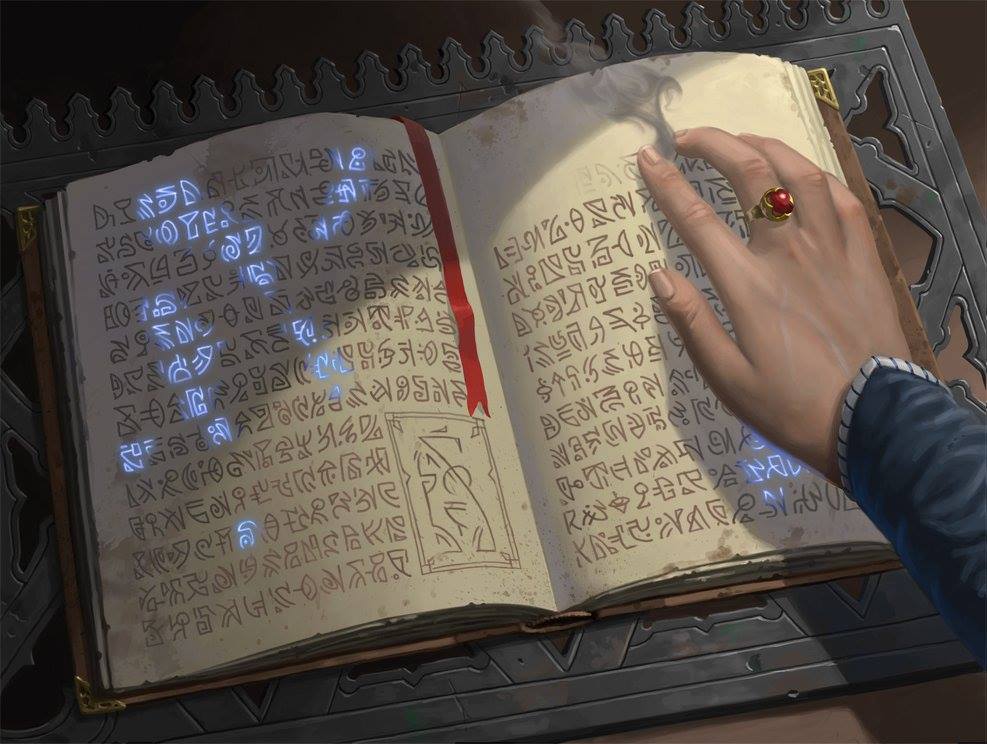

Homebrew & Revised Spell Descriptions
Arcane Arrow
1st-level evocation
- Casting Time: 1 action
- Range: 90 feet
- Components: V, S, M (a bronze arrowhead)
- Duration: Concentration, up to 1 minute
You create a glowing arrow of magical force. Make a ranged spell attack against a creature you can see within range. On a hit, the target takes 2d8 force damage.
Until the spell ends, you can use your action to repeat the ranged spell attack against the same creature or another one on each of your turns.
At Higher Levels. When you cast this spell using a spell slot of 2nd-level or higher, the damage increases by 1d8 for each slot level above 1st.
Absolute Zero
3rd-level evocation
- Casting Time: 1 action
- Range: 90 feet
- Components: V, S, M (a crystalized snowflake)
- Duration: Instantaneous
You rapidly deplete the air from a point you choose within range, which begins to emanate a faint, silver glow as all the moisture instantly freezes. Each creature within a 20-foot radius, 40-foot high cylinder centered on that point must make a Constitution saving throw. A creature takes 8d6 cold damage on a failed save, or half as much on a successful one.
The cold spreads around corners and it extinguishes all nonmagical flames in the area. A creature killed by this spell becomes a frozen statue until it thaws.
At Higher Levels. When you cast this spell using a spell slot of 4th-level or higher, the damage increases by 1d6 for each slot level above 3rd.
Bronze Mistral Blade
3rd-level transmutation
- Casting Time: 1 action
- Range: 60 feet
- Components: S, M (a melee weapon worth at least 10 cp)
- Duration: Instantaneous
You flourish the weapon used in the casting before vanishing to strike like a raging gale. Choose up to two creatures you can see within range. Make a melee weapon attack against each target.
You can direct the attacks at the same target or at different ones. Make a separate attack roll for each one. On a hit, a target suffers the attack's normal effects, as well an additional 2d4 force damage.
You then teleport to an unoccupied space you can see within 5 feet of one of the targets you hit or missed.
At Higher Levels. When you cast this spell using a spell slot of 4th-level or higher, you can make an additional attack for each slot level above 3rd.
Soul of Moonlight
4th-level conjuration
- Casting Time: 1 action
- Range: Self
- Components: S, M (a black dragon's scale)
- Duration: Concentration, up to 10 minutes
You summon an ethereal sword of glimmering moonlight. When you cast the spell and as an action on your subsequent turns, you can make a melee spell attack against a creature you can see within 5 feet of you. On a hit, the target takes 4d10 force damage.
Additionally, you can use your action to unleash a wave of force and cause it to take one of the following shapes. Each other creature in the effected area must succeed on a Dexterity saving throw or take 4d10 force damage.
- Cone. You slash the sword in a broad arc, discharging a surge of power in a 30-foot cone.
- Cylinder. You plant the sword in the ground at your feet, venting radiance in a 10-foot-radius, 20-foot-high cylinder centered on yourself.
- Line. You thrust the sword forward, releasing energy in a 5-foot-wide, 60-foot-long line.
At Higher Levels. When you cast this spell using a spell slot of 5th-level or higher, the damage increases by 1d10 for each slot level above 4th.
Steel Wind Strike
5th-level transmutation
- Casting Time: 1 action
- Range: 60 feet
- Components: S, M (a melee weapon worth at least 10 cp)
- Duration: Instantaneous
You flourish the weapon used in the casting and then vanish to strike like the wind. Choose up to five creatures you can see within range. Make a melee weapon attack against each target. On a hit, a target suffers the attack's normal effects, as well as an additional 5d10 force damage.
You then teleport to an unoccupied space you can see within 5 feet of one of the targets you hit or missed.
The Mage
Long missing in vanilla 5e is an arcane half-caster that is more of a spellsword, or gish, class than what we eventually got with the Artificer (which I'm personally not a fan of the execution of).
Just about everyone's tried their hand at making one and this one's mine; it's certainly no better than some and, hopefully, no worse than others.
Either way, it was created to suit my tastes and I like how it came out, so that's what matters most to me.
Credits
- The Resilient Casting, Arcryst Improvisation, and Waste Not, Want Not features were inspired by features from the Hedge Magic Arcane Tradition by u/LaserLlama.
- The Justicar Discipline's Arcane Mantle feature was inspired by the Magical Champion feature from this Oath of Arcana Sacred Oath.
- The Spellslinger Discipline was largely inspired by Weirdo Whoever's Arcane Archer Conclave from their Assorted Ranger Conclaves.
- The Trespasser Discipline's Arcryst Fist and Smoke and Mirrors features were inspired by Dirty Magic Fighting and Mage Hand Mastery, respectively, from OsmosisJonesis' Arcane Trickster 2.0; the Artifact Swiper feature was created by u/PaganGoldfish as part of their Ruins Explorer Rogue subclass.
Covers: The Nimble Spellsword by Manuel Castañón