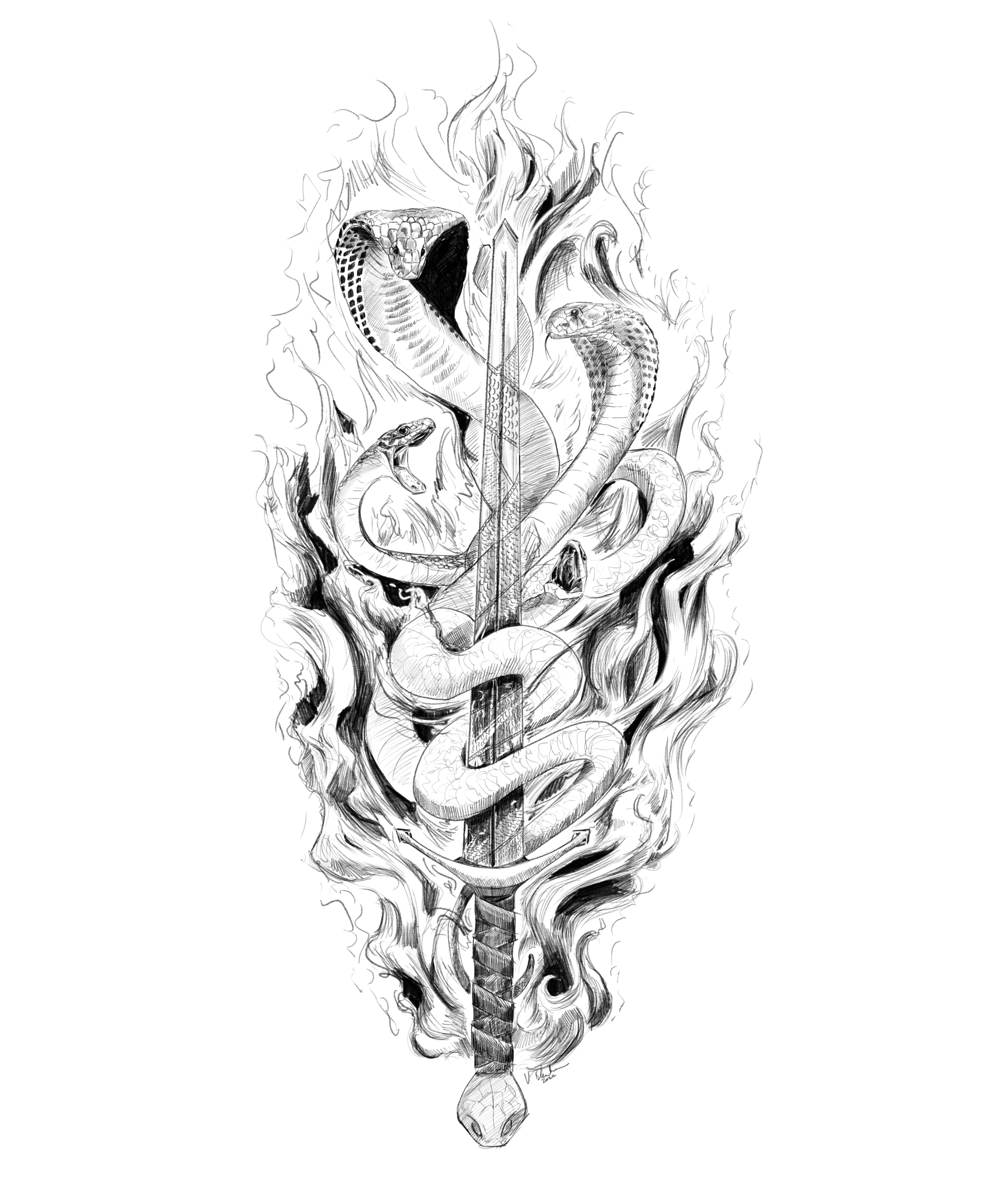
Sword of the Serpent
A legendary sword that I first heard about in a tavern during my early days. I have long since forgotten what town that might have been, but I'm determined to find this sword.
15 Hammer, 1472
I’ve found enough evidence and heard enough tales to believe it to be true. The Sword of the Serpent is real. Legend has it that it was touched by the Zehir, the deity worshiped by the yuan-ti. While it might be easy for naive scholars to say, “Oh yeah, of course the Sword of the Serpent was made by a god of the snake people,” my research so far appears to have confirmed this. Let me begin this chapter by recording some of the conversations I’ve had and noting the evidence I have found.
A retired adventurer named Aedyn shared a tale of entering a yuan-ti temple to prevent a human sacrifice. While this story didn’t directly provide any evidence of the sword's existence, it gave me some idea of what to expect inside these temples - plenty of vicious yuan-ti zealots who still practice an ancient religion and are willing to viciously kill anyone they may come across.
An old elven scholar I met in Silverymoon did not know much about the yuan-ti and had never heard of the sword, but he suggested I visit an old friend of his in Neverwinter. Apparently this friend of his took quite an interest in the yuan-ti history and considered himself something of an expert. I do plan on visiting Neverwinter soon to speak with him.
And just the other night, while I was having a few ales at the local tavern, I overheard a fellow telling another patron about some abandoned temple he had visited that had paintings of snake people on the walls. I interjected myself into the conversation, and the fellow was willing to lead me and my team there later this week, for a few gold of course. Still, the price will be worth it if it gets me any closer to finding the sword.
18 Hammer, 1472
The fellow from the tavern led us to the temple. It was quite off the beaten path, quite hard to find without knowing exactly where to look. Which meant it was indeed abandoned. Usually these old buildings don’t stay empty for long, as the local wildlife or humanoids take up residence, but this one was quite empty, aside from a few spiders and bats.
Once inside, the paintings and carvings on the wall were a sight to see! Sure enough, they did depict the “snake people” the fellow had mentioned in the bar. I studied them carefully, and they mostly told stories of conquest and human sacrifice. And then, on the main wall of what was likely a room dedicated to worship, there it was - a large yuan-ti with the head of a snake and four arms of a man holding a sword with snakes wrapped around it. Fire sprayed from the sword as the snakes entwined around the hilt and blade. I made a sketch of it here in my journal, as this is the first time I had ever actually seen it depicted anywhere. I paid the fellow double what he asked for, and we felt confident we were heading down the right path towards discovering the sword.
9 Alturiak, 1472
We made our way to Neverwinter where I arranged a meeting with the scholar recommended by the gentleman I spoke with in Silverymoon. He spoke a bit about the yuan-ti gods and a connection to the Towers of Night in the Astral Sea. I sure hope that’s not where this trail leads. I’m not one for plane hopping. I prefer to stay in this plane, thanks for the offer. He also said there is a volume in Candlekeep that he’s reviewed in the past. This book contains a very detailed history of the yuan-ti. He doesn’t recall any specific mention of the sword, but it’s been years since he’s read it. Perhaps we will go and check this book. Of course that means I’ll have to hand over a rare tome for admittance into the library, but such is the price sometimes.
12 Mirtul, 1472
Obtaining entrance into Candlekeep always pains me a bit, since I have to give up a valuable rare book just to get in. This time I parted with The Planar Wars, a book that surprisingly isn’t more popular considering the drama and heroics involved in that story. Hopefully I can obtain another copy some day. But I digress.
The librarians pointed me towards the works focusing on the yuan-ti. After sifting through useless common information and ridiculous stereotypes, I found a book with what appeared to be useful information. It talked about three central temples that were the pillar of their ancient civilization, and even mentioned that Zehir was believed to visit all three of them on a predictable calendar. Unfortunately the book did not give specific locations of these temples, though it did say they were all located deep within a jungle. I guess we can figure out which jungles are out there and search them all, right? But I’m fairly certain, if it’s to be found, one of these three temples holds the sword.
The second notable volume was an account of an adventurer who went into a yuan-ti temple. This one talked a bit about how they often use secret doors and traps to protect their most valuable possessions. They might even use a fake vault to make would-be looters believe they’ve found the main treasure room while the real treasure is hidden deeper within.
One thing that stuck out to me was an emphasis on murals that might be found within the temple. The references were a bit vague and scattered, but apparently the number of snake appendages different yuan-ti forms possess can mean something in terms of deciphering puzzles or codes or something along those lines. This bears further consideration.
4 Flamerule, 1472
We packed up an expedition and visited the jungles of Chult. It was unpleasant to say the least. We were stung by stirges, accosted by bullywugs, and almost swallowed whole by an undead dinosaur! Nevertheless, we managed to find the yuan-ti temple. Unfortunately, it was stripped completely clean by looters. There was no sign of the sword ever having been there. And if it ever was, well, it was long gone. One temple down, two to go.
14 Ches, 1473
Our next destination was the Scarlet Jungle. I was lucky enough to find some books that pinpointed the location of the temple there. Unfortunately, the books were decades old and did not account for the expansion of the civilized world. The temple had been completely demolished and dismantled years ago to make room for a newly established town. The town was fairly ordinary, and nobody there knew anything about the temple’s history, the yuan-ti, or the sword. If the sword was ever here, nobody knows anything about it. Only one temple left to check. Hopefully the third time's a charm.
25 Uktar, 1475
So we’ve eliminated two of the temples, and now we just need to decide where to head next. Unfortunately, it seems the clues have been exhausted. I’m not sure where to head next. But how many jungles can there be in the world, right? By process of elimination, there can’t be very many left. And once we get there, how many ancient temples can there be? I feel like we’re getting closer, but it’s going to take a bit more investigation and a lot more determination to see this through to the end. But yes, I feel like the Sword of the Serpent is within my grasp. It will be mine. Oh yes, it will be mine.
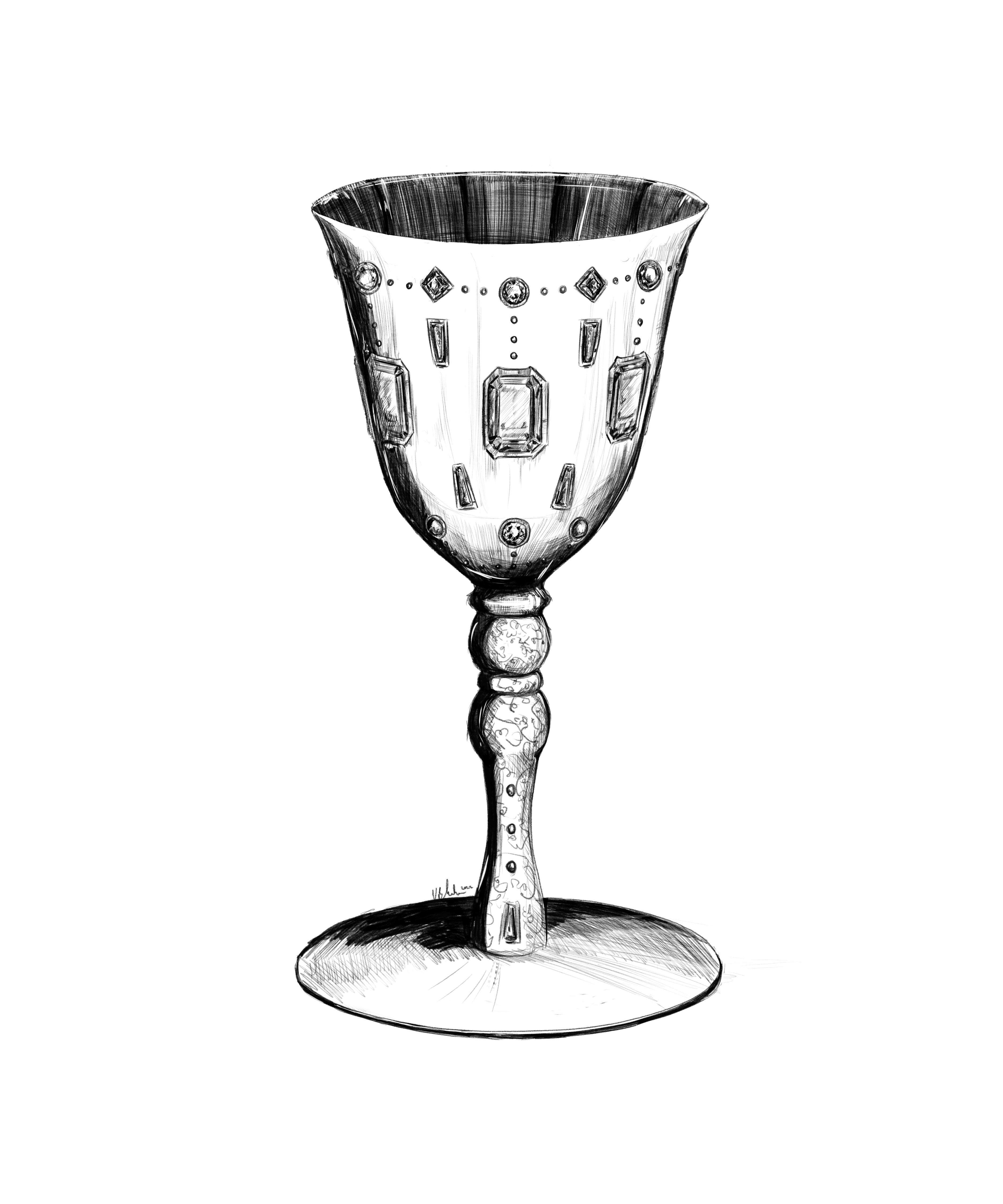
Chalice of Many Stones
A cup with decorated with precious stones that contain legendary powers, or so they say...
12 Alturiak, 1476
I was drinking at a tavern (as I’ve been known to do) when I overheard a middle-aged man talking about some financial hardship that had befallen his family. He lamented, “If I could only find that blasted chalice my family had hidden so many years ago, all my money troubles would be over!” I couldn’t help but ask more about this chalice he mentioned. He was taken aback by my sudden interest. I explained that I was a world renowned explorer and acquirer of lost artifacts. He still wasn’t convinced to share any information. After I presented him with my extensive list of credentials (and maybe a pint or three), he began to tell the story.
Apparently his ancestors had been in possession of a valuable - and perhaps magical - chalice many generations ago. But alas, nobody knew where it was hidden now. I explained that this was just the sort of challenge I was interested in, and if he would provide me with everything he knew and I managed to recover the chalice, he would be compensated for his time. He agreed to have his great aunt, who knew more of the tale, to meet me at this very same tavern tomorrow night. We shook on it, and enjoyed several more pints.
13 Alturiak, 1476
I arrived early, not wanting to miss my meeting. The man from the night before walked in with an eldery woman and sat down at my table. He introduced her as his great aunt who knew a thing or two about the stories of the chalice. She didn’t have much to go on, but it was a start. There was a song that had been passed down for generations in the family. She didn’t have the best singing voice, but perhaps the lyrics contain a clue. I insisted on an encore, mainly so I could make sure I wrote it all down properly:
Where the cold wind blow
And the clouds pour snow
That’s where my grandfather lies
He lived to be old
Buried with the chalice of gold
In the year 1175
She described what it looked like and I sketched it. When I showed it to her, she nodded and was overcome with emotion. I think I got it right. I asked if she had a name for the ancestor, but she said it had been forgotten as subsequent generations had taken different surnames. She did say it was believed it was a somewhat common human last name, since previous attempts to locate him were thwarted by just how many possibilities there were.
17 Kythorn, 1476
The mention of snow in the old song has us heading north, but the north is a large place. Icewind Dale seems like a good place to start! We’ve stocked up in Luskan and will make our way through Ten-Towns. First stop: Good Mead. The small town lives up to its name, as Mead Hall served some tasty beverages! The locals pointed us to a cemetery on the outskirts of town. This is where we first encountered a new system of indicating years. Thankfully it also had the years written in common, but at some point we should probably figure out how this system works. I’ve sketched the markings here. Sadly, none of the numbers matched the year we’re looking for.
4 Flamerule, 1476
Going from town to town looking for cemeteries for some unknown grave is a bit tedious, but nobody ever said artifact hunting would be all fame and glory without some hard work. We stopped by Easthaven and Caer-Dineval. No luck. The oldest grave in either place was 1225, a good 50 years after the one we’re looking for. Perhaps learning when each town was founded would help eliminate certain locations. But I don’t think I’m finding a history book in these frigid towns and Candlekeep’s library is quite out of the way at this point. We’ll carry on.
21 Eleasis , 1476
No luck in Caer-Konig either. While we try to find the right cemetery and crypt based on year, something has continued to bother me - we don’t know the name we’re looking for. All we have to go on is “somewhat common human name,” which isn’t a lot. Still, maybe it’s worth ruling some out completely, or finding some census documents, or doing something to try and figure out what “common” means. Of course, what was common two hundred years ago might not still be common today.
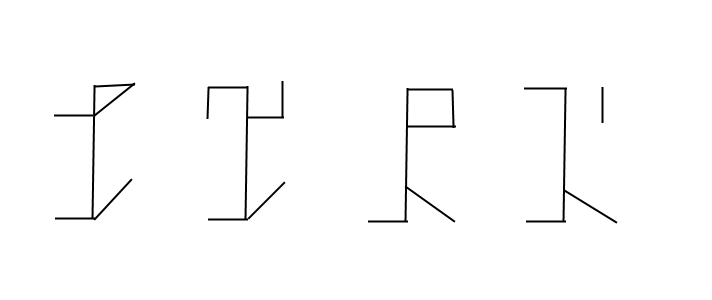
1409 1416
Fatal Mantis Glaive
14 Hammer, 1468
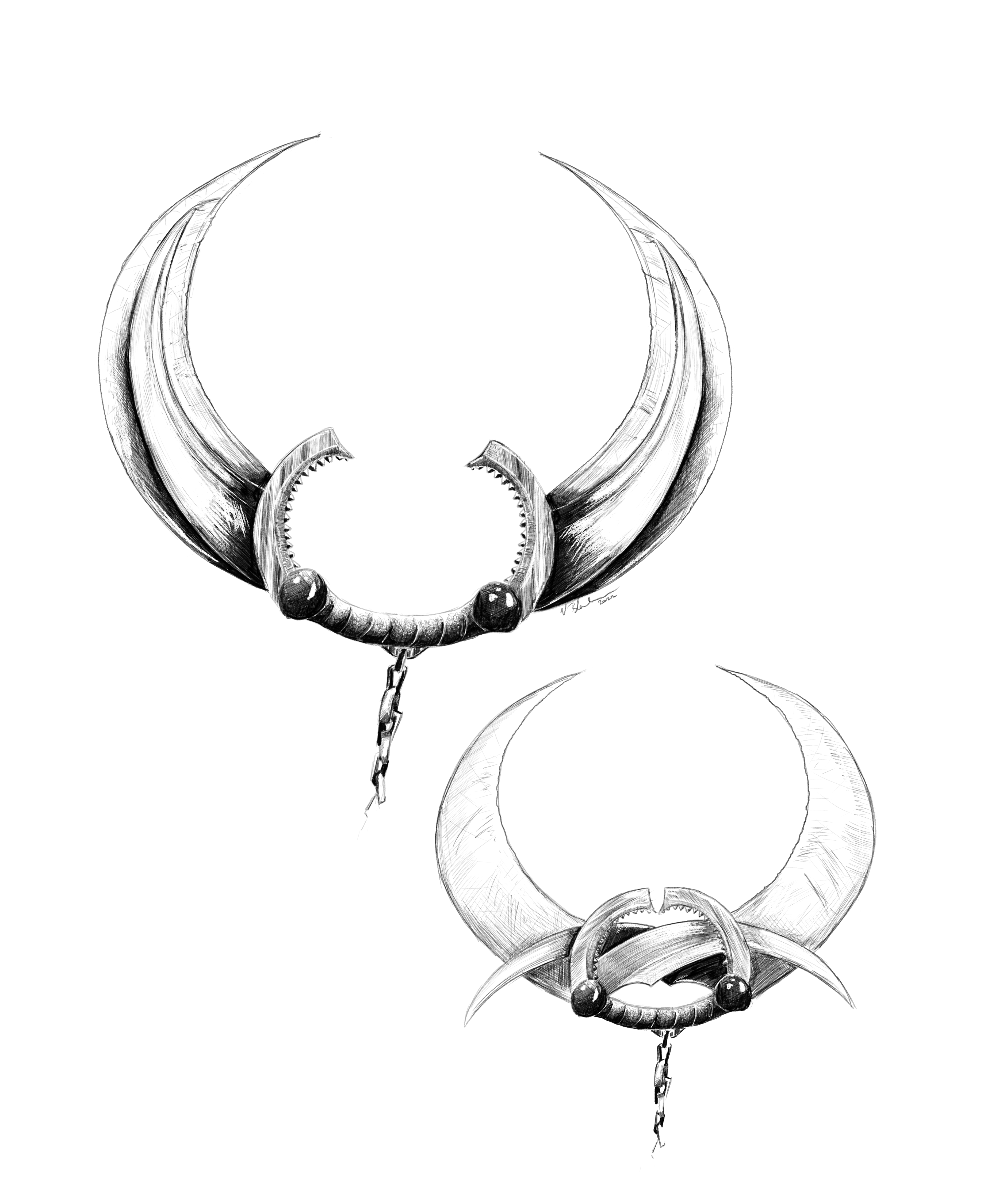
I learned during my travels to Shou Lung about the existence of an ancient superweapon that is now lost to history. A thousand years ago, according to local legend, a brutal warlord almost conquered the world by using a secret device that could chop off people’s heads by the thousands. After a year of research, I came across a partially burned note; just a few words were legible: “and surveying the dead … Fatal Flying Guillotine chopped off their …. head.” I also salvaged bits of a burned painting in the archives of the Royal Art Gallery depicting a young woman wielding a bladed weapon attached to a chain. The blades appeared to be circled around an unlucky fellow’s neck! I attempted a crude drawing of the device in this journal.
2 Kythorn, 1475
Convinced I had stumbled upon the origin of this fabled super weapon, I delved further. I found unmistakable evidence that three heroes smuggled out pieces of the last remaining weapon and hid them in three monasteries scattered around the world. I finally tracked one of the pieces to the very steps of a remote monastery named the Small Forest Temple.
12 Eleasis 1476
Sadly, all of my attempts to enter the Small Forest Temple and speak with the Grand Abbot have so far been rebuffed. I waited outside the temple gates for three days and nights. Monks came and went through the main gate, but none of them – not one – would talk to me. They wouldn’t even look at me as they scurried past their business!
20 Eleasis, 1476
I noticed that each morning at dawn a group of acolytes head to town with several empty carts, and return each evening with the carts loaded with food and supplies.Maybe I could sneak in on a cart?
25 Eleasis, 1476
I passed several “help wanted” signs throughout town. I spoke to the foreman and learned that the monastery needs some significant repair work on its walls. Scaffolding goes up over the construction site in a few weeks. If nothing else works, I can perhaps sneak in as one of the hired help?
1 Eleint, 1476
One time, as I sat unnoticed on the temple’s steps, I witnessed a group of monks carrying what appeared to be a wounded young soldier into the Temple. At least the monks care for the sick and wounded, even if they don’t have time for me! Hmm.. maybe I could fake an illness?
15 Eleint, 1476
I tried to sneak over the temple walls one night, but the monks were waiting for me. They must have been anticipating that move on my part, or else have amazing security.
I finally reached my limit and attempted to break into the temple gate by force. I fancy myself a good fighter, but the monks handed me the beating of my life. I was lucky they are pacifists or I’m sure they could have easily killed me.
Killdragon
27 Uktar, 1463
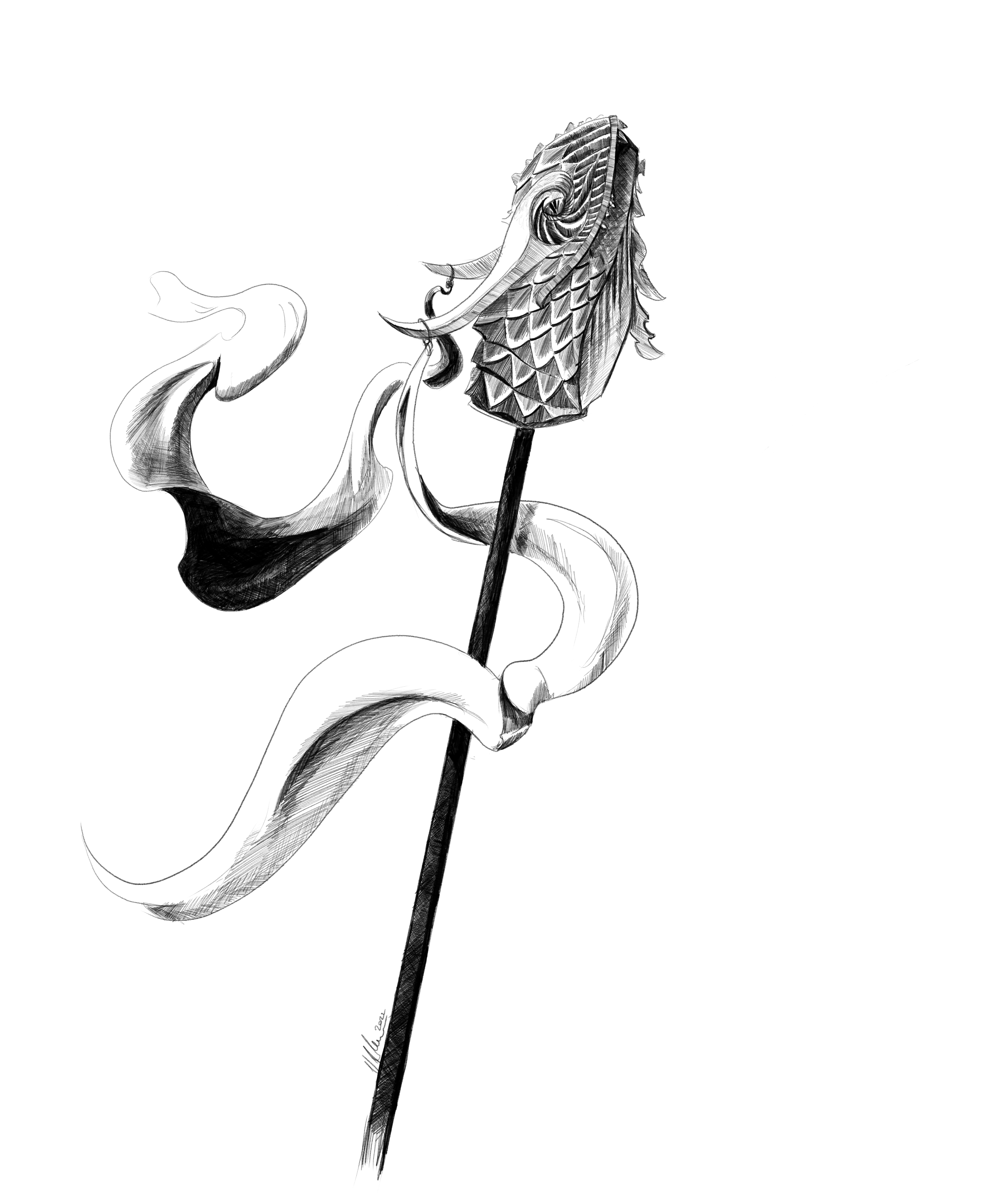
During my recent travels to the regions between Cormyr and Turmish, I started hearing ridiculous stories about an amazing weapon used in a crusade that I once thought was merely a legend. Sometimes the weapon is described as a spear; sometimes it is a lance that shoots beams of light. It is probably nothing more than blustering by drunkards seeking to impress (or trick) a traveling relic hunter.
1 Nightal, 1475
For years now, I have been hearing the same stories of this lance over and over, each time with enough similarities to make me think there is something more to this. Always in the same region between Corymyr and Turmish.
6 Alturiak, 1475
I now believe the stories are true, and there is a lance of incredible power that once led victorious armies. I think the lance is in Anchot. But before I travel to that ruined place, I first need to do some research at the Library of Candlekeep.
30 Ches, 1475
After about a month of trying, I was able to enter Candlekeep by parting with one of my most valuable and rare books. It was worth it to get a chance to search for clues about the lance.
27 Flamerul, 1477
The lance is real, and its name is Killdragon! It grants its wielder’s allies some type of mystical power! It is indeed being held somewhere in Anchot, possibly in one of three locations. The key to everything was learning about Pyotr, the hermit who first found the lance during the Crusade. Here is everything I have been able to piece together so far:
-
Chapel of Light’s Power. There is still a working chapel, devoted to some nearly-forgotten god, on the grounds of the once-great Cathedral of Anchot. This is where Pyotr first recovered the lance and saved his army from besiegement. Pyotr proved incredibly recalcitrant during the siege and was obstinately disobedient, resisting all attempts by the leaders of the Crusade to control his seemingly wild urge to find the lance. Pyotr refused to budge until the very end. This is the first place I am giong to search.
-
Hermit’s mausoleum. The next most-logical location is the resting place of Pyotr himself, inside the city’s mausoleum. In life, Pyotr was said to be quite garrulous. He would talk to anyone about anything, often to excess.
-
City catacombs. I have learned a great deal not only about Pyotr, but about Anchot itself. It is an incredibly ancient city. As happens, sometimes cities are destroyed and rebuilt. Each time Anchot was rebuilt, it was built directly over the layers of the previous city, creating a system of ancient catacombs underneath the city. Pyotr spent some time in these catacombs during the siege, preaching to women and children to lift their spirits. Pyotr himself was incredibly sanguine during the siege. He was positive in the face of adversity, and confidently and calmly faced any problem, no matter how daunting.
Well! Now that I have spent a small fortune to research Candlekeep’s archives, I feel I am ready to narrow my search for this mysterious lance. I will set out immediately. But first a stop to a tavern or two!
The Ring Of Kings
21 Nightal, 1479
This one has been getting on my nerves. There seems to be two stories on exactly what it is. One story says it was a physical ring worn by King Bimba Sim over 500 years ago. The other says it’s the lost resting place of the same king. It seems that anybody who knew the truth is long dead. I want to find the true story, and hopefully the ring.
7 Alturiak, 1481
I did find out that King Bimba Sim ruled over a small kingdom in what is now Secomber on the Sword Coast. I traveled there expecting to find ruins, instead I found a thriving town. Unfortunately, I couldn’t find any hints or clues about the old king. The town historian Kifiara, wasn’t very friendly towards me and very short on answering any questions I had. At the time, I felt like the town was a dead end. Now thinking back at it, I’m sure Kifiara knows more than she was letting on.
3 Ches, 1486
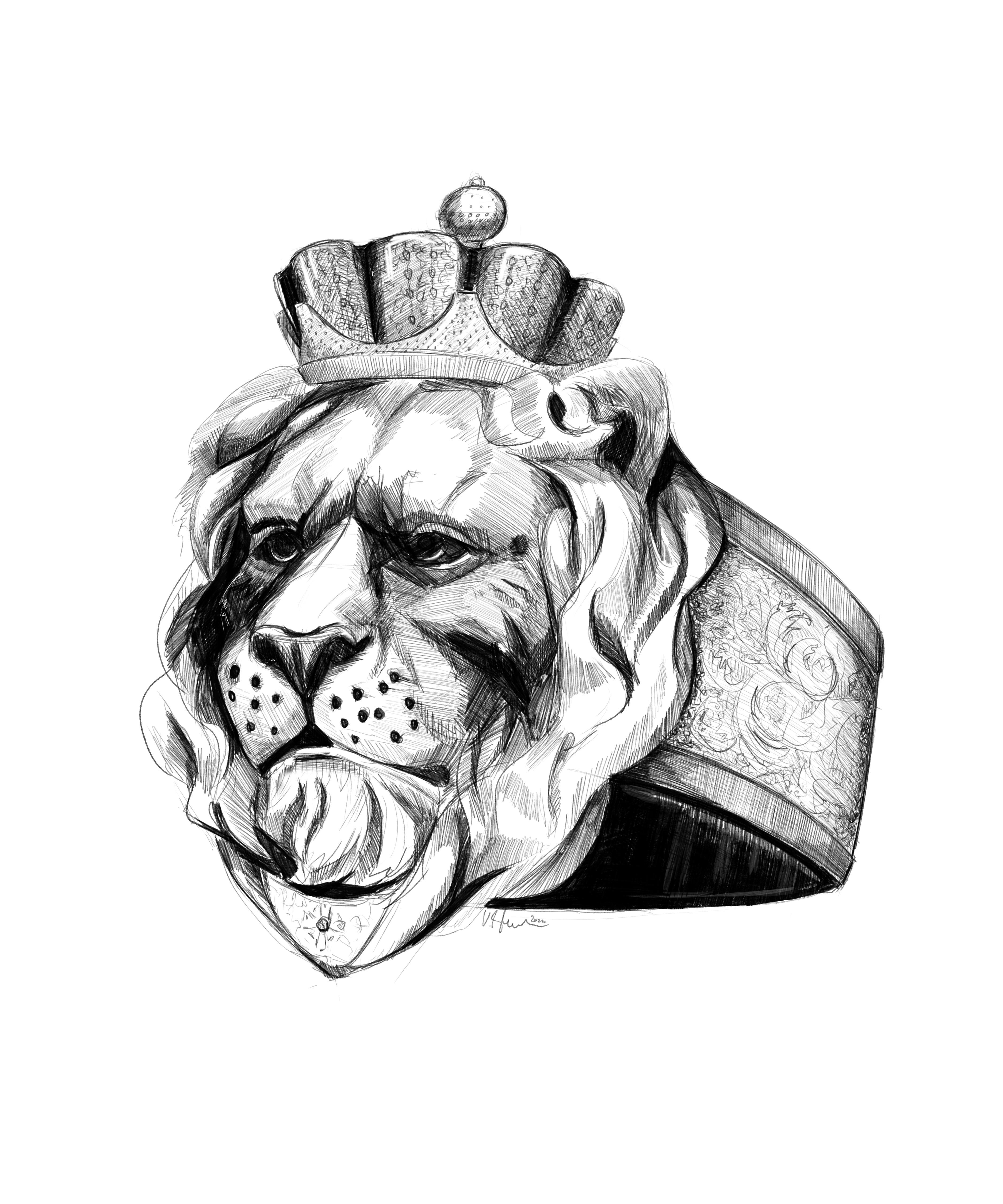
Several years after I visited Secomber, I stumbled upon a dusty book at a rundown book shop in Waterdeep. The book was entitled The Kings and Kingdoms of The Sword Coast, A History. Wouldn’t you know it, there was a page for Sim’s Kingdom. The page had been authored by Kifiara, the town's historian. It had only one word on it: “Lion”
Return to Owner
If this journal is lost and found by someone other than its owner, Sir Canard, please return it to the Cloak and Stagger tavern in Baldur’s Gate. The owner of the tavern, Kromac, will pay a handsome reward for the journal’s safe return and will ensure its return to Sir Canard. Thank you in advance for your honesty and integrity - it shall be rewarded.