
Spellblades
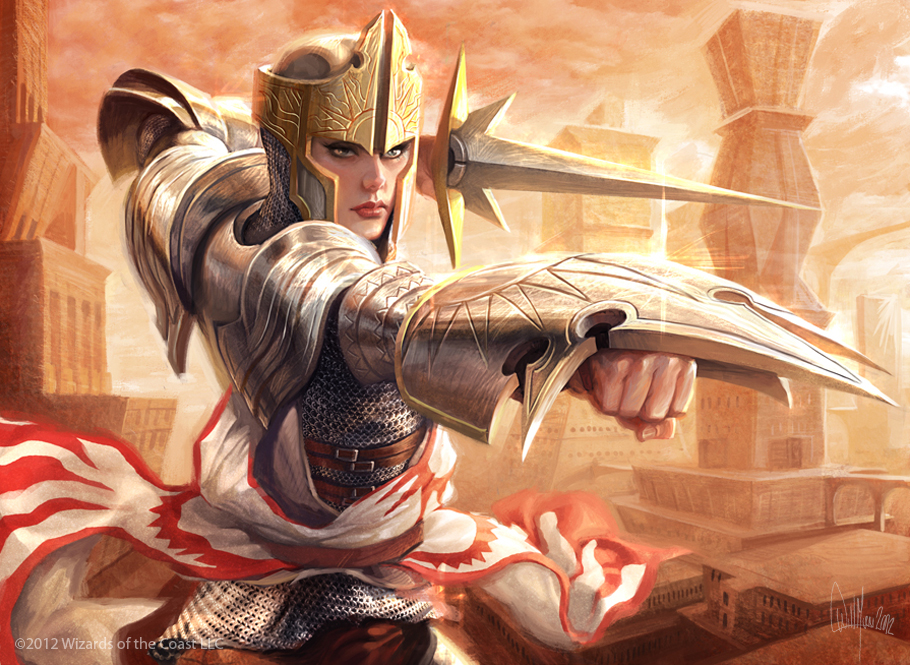
Spellblades are highly trained warriors who combine martial discipline with arcane study. Unlike their divine and primal counterparts, the paladin and ranger respectively, the spellblade acquire their magical abilities from intense magical training. In many societies, spellblades often receive their training alongside many mages at wizard schools and academies.
Although most spellblades rarely ever reach the fully spellcasting potential of a dedicated mage, they are tremendously powerful opponents whose versatility allows them to be prepared for any threat that faces them.
Encountering Spellblades
Because of their skillset, spellblade have little difficulty putting their talents to good use. In many cases, when a spellblade completes their training, they are often inducted into an order of spellblades. Due to their ever expansive nature of many arcane disciplines, spellblade orders often are quite diverse in their abilities, ranging from those who use blood magic, graviturgy, elemental magics, and much more.
These orders typically alongside their respective governments acting as an elite force for military operations. In some regions, some of these organizations are a less restricted in their services, acting more as a mercenary organization selling their skills to those with enough coin.
Spellblade Tactics
Because of their arcane and martial prowess, spellblades can prove to be a challenging opponent.
Arcane Focus
Since spellblades are at their strongest while focusing on magical effects, their first objective is to cast a concentration spell to bolster their attacks or defenses, as well as trigger various effects depending on their training. Thanks to their rigorous training, most spellblades are more than capable of maintaining focus on their spell effects when taking damage.
Defense Casting
However, because of their limited spellcasting capabilities, spellblades tend to be quite conservative on their spellcasting, primarily using their arcane reserves to protect themselves by creating a field of magic to protect them from harm, which is also known as a spell shield.
Cantrip Mastery
Despite, their defense tactics regarding spells, their formidable arcane fighting styles allow them to maximize the effectiveness of cantrips by pairing them with their weapon strikes. This can prove to be quite lethal, since their weapons are uniquely crafted to weaken their opponent's arcane defenses, leaving them vulnerable to incoming spells.
Adventurer Tactics
When encountering a spellblade, one's primary tactic is to disrupt their focus on spell abilities. Since most spellblades can endure a lot of punishment, tactics that will stun or disorient the spellblade can prove to be quite useful to weaken their defenses.
Spellblade Types
Spellblades are typically categorized according to the level of training that they possess.
Spellblade Novice
Spellblade novices are individuals who have just begun to master combining both arcane and martial arts. In general, most spellblade novices already possess a degree of talent in magical and martial combat. However, combining both skills requires special discipline that can take a while to fully master
In general, most spellblade can be found training alongside apprentice mages or knight's in-training to learn the basics of their abilities. More advanced spellblade novices may be tasked with minor assignments or missions, often accompanied by other novices.
Spellblade Veteran
Veterans have fully mastered both their arcane and martial capabilities. In many cases, veterans can be found commanding small garrisons or soldiers and less experienced spellblades. Unlike novices, spellblade veterans are incredibly dangerous opponents, as they have learned to harness their innate magical much more efficiently by infusing it into their weapons.
Spellblade Champions
Spellblade champions represent the pinnacle of combined mastery between magic and martial combat. Spellblade champions can often be found serving as generals and commanders of entire legions. Others have founded arcane schools or academies to training future mages and spellblades.
Due to their legendary abilities, these champions also serve as the first line of defense against threats that are beyond the capabilities of standard military personnel, such as the arrival of a dragon or archfiend.
Spellblade Disciplines
Depending on their arcane discipline, spellblades can possess a variety of special abilities.
Arcane Defender
Arcane defenders have learned to utilize their spellcasting abilities solely for the purpose of defense to become an impervious bastion on the battlefield. Thanks to their specialized training, arcane defenders possess several counters for both martial and magical opponents.
While focusing on a spell effect, arcane defenders are able to generate a magical shield that dampens the impact of most conventional weapons. They have also learned to maximize the effectiveness of their magical abilities by using their ability to dispel magical effects to recharge their own arcane reserves.
Blood Knight
Blood knights have blended their martial skill with the art of hemomancy. Because of this combination, the blood knight becomes much more powerful as it inflicts harm on its opponent. Their mastery of hemomancy allows them to weaken injured foes while rejuvenating their own life force by siphoning blood from their opponents.
Deathblade
A deathblade is one who combines various fighting styles with the school of necromancy. The primary premise behind the deathblade's fighting style is using the soul of its enemies to fuel its own abilities. Because of their ability to use the souls of the dead to recharge their arcane capabilities, deathblades tend to be a lot more aggressive in comparison to other spellblades. Despite this somewhat reckless strategy, deathblades are incredibly hard to kill due to their ability to use their magical focus to tether their soul to the plane of the living and even bring them back from the brink of death.
Druidic Knight
Druidic knights are a special type of spellblade that have combined arcane study with the primal connections associated with druidic magic. Because of this dichotomy, druidic knights are incredibly powerful warriors due to their surprising durability granted to them by their ability to use the latent magic around them to regenerate their wounds.
Elemental Warden
Whereas most spellblades utilize disciplines of a particular school of magic, elemental wardens strive for versatility by mastering magical elements such as fire, ice, lightning, water, and the wind. Although many spellblades learn their elemental talents by careful study and discipline, it is not uncommon that many elemental wardens associate themselves with druidic orders, as understanding the balance between the elements is key to fully controlling such magic.
Gravity Knight
Gravity knights are a rare, but extremely power discipline that combine the schools of transmutation and evocation to control gravity itself. Thanks to their mastery of magic, they are able to amplify their arcane potential to project gravitational energy into their weapon strikes as well as their own bodies.
Mage Hunter
Mage hunters have learned to utilize their martial and magical talents to specifically counter opposing spellcasters. Although their training has equipped them with a number of spells to shut down spellcasters, their special fighting styles allow them to disrupt their enemies focus and even steal the magical abilities of their foes.
Magus
Magi are a special discipline of spellblades that emphasize the magical aspect of their training over the martial component. In comparison to their peers, magi are much more explosive combatants, as they are able to unleash barrages of spells upon their opponent. Because of this focus, magi are often used as siege breakers, who weaken enemy defenses long enough for the main force to break through.
Phantom Knight
Despite their name, phantom knights combine the school of illusion as a part of their fighting style. Phantom knights are known for their ability to conjure an illusory duplicate of themselves, from which they are able to fight alongside. In general, phantom knights rely on confusion, misdirection, and confusion in combat. Whenever their enemy attempt to inflict harm to them, phantom knights swap locations with their duplicate to completely evade harm.
Shadow Knight
Thanks to their mastery of shadow magic, shadow knights are often valued as spies and assassins. While focusing on spell effects, shadow knights are able to generate a cloud of magical darkness that obscures their opponents vision, leaving their opponent vulnerable to a surprise attack.
Psionic Knight
Psionic knights differ a bit from traditional spellblades. Whereas the source of power from most spellblades comes from arcane study, psionic knight have mastered the arts of telepathy to control psychic energy. Unlike other psionics, these spellblades primarily manifest their psychic energy to create psionic barriers to protect their allies from harm.
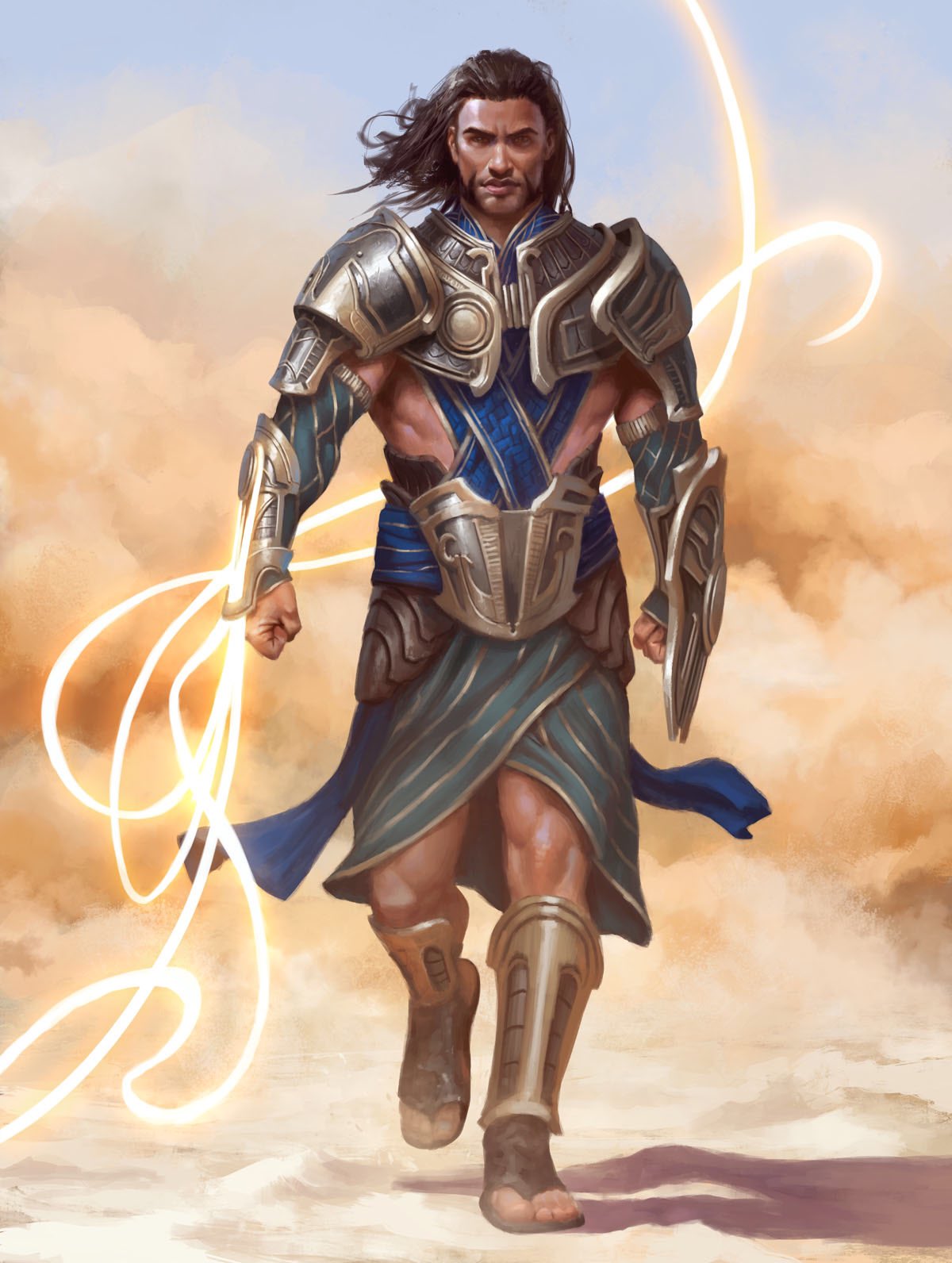

Rift Knight
Rift Knights utilize the school of conjuration to create localized rifts and portals to quickly maneuver the battlefield. They have the unique ability to phase through solid objects, almost like wraiths. They even have the unique ability to temporarily banish enemies to a pocket demiplane.
Sunblade
At first glance, sunblades are often confused to be paladins due to their mastery of light magic. However, unlike paladins, sunblades do not gain their radiant abilities from the divines. Instead, sunblades have learned to use their magic to bend light to their will, reflecting it back at their enemies. Despite not having divine magics, their mastery of light still gives them a considerable advantage against many undead.
Titan Knight
Titan knights exhibit a special fighting style developed by the mighty giants. The premise of their abilities revolve around altering one's physical size, strength, and proportions to give them an advantage against smaller opponents.
Time Knight
Time knights have learned to use both transmutation and divination magic to bend time around them. Their mastery of magic to allow them to temporarily jump forward in time to gain an edge against their opponent. They even have the ability to rewind time to even regenerate wounds that it may have taken as well.
Witch Knight
Witch knights acquired their special name due to their specialty in crafting magical curses. These warrior use hexes and curses not only to debilitate their enemies, but also use their baneful effect to protect the witch knight from harm. Although this art is believed to have been originated from the creature in the service of hags, this fighting style has evolved to take one unique identities of its own as well.


Spellblade Novice
Medium Humanoid, varies
- Armor Class 16 (Breastplate)
- Hit Points 45 (6d8+18)
- Speed 30ft.
STR DEX CON INT WIS CHA 16 (+3) 14 (+2) 16 (+3) 16 (+3) 14 (+2) 14 (+2)
- Skills Athletics +5, Arcana +5, Perception +4
- Senses passive Perception 14
- Languages Common and two languages of choice
- Proficiency Bonus +2
- Challenge 3 (700 xp)
Arcane Strike When the spellblade hits a creature with a weapon attack, that creature suffers disadvantage on saving throws against the spellblade's spell effects until the end of the spellblade's next turn.
Battle Casting The spellblade has advantage on saving throws made to maintain concentration on a spell effect
Spell Strike When the spellblade takes the Attack action while concentrating on a spell effect, the spellblade can make one additional weapon attack as part of its action.
War Caster When the spellblade makes an opportunity attack, the spellblade can cast a spell instead. The spell can only target only one creature.
Spellcasting
The spellblade is an 6th-level spellcaster. Its spellcasting ability is Intelligence (spell save DC 13, +5 to hit with spell attacks). The spellblade has the following spells prepared:
- Cantrips Booming Blade, Green flame-Blade, Firebolt, Sword Burst
- 1st Level Spells (3 slots) Magic Missile, Shield, Shield of Faith
- 2nd Level Spells (2 slots) Flame Blade, Magic Weapon, Shadow Blade, Spiritual Weapon
Actions
Multiattack. The spellblade can make one spell attack and one weapon attack on its turn.
Spell Sword. Melee Weapon Attack: +5 to hit, 5ft., one target. Hit 8 (1d8 +3) slashing damage.
Spell Bow. Ranged Weapon Attack: +4 to hit, 150/600ft., one target. Hit 7 (1d8 +2) piercing damage.
Bonus Actions
Bound Weapon The spellblade can use its bonus action to summon or dismiss their spell sword or spell bow
Reactions
Spell Shield When the spellblade takes damage, it can use its reaction to expend a spell slot, reducing the damage taken by 5 for each spell slot level expended.
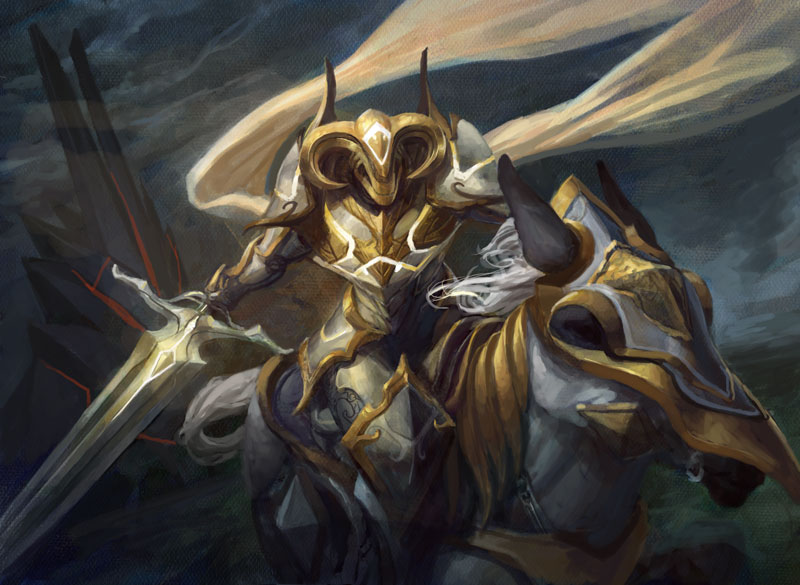
Spellblade Veteran
Medium Humanoid, varies
- Armor Class 16 (Breastplate)
- Hit Points 102 (12d8+48)
- Speed 30ft.
STR DEX CON INT WIS CHA 18 (+4) 14 (+2) 18 (+4) 18 (+4) 14 (+2) 14 (+2)
- Skills Athletics +7, Arcana +7, Perception +6
- Senses passive Perception 15
- Languages Common and two languages of choice
- Proficiency Bonus +3
- Challenge 8 (3900 xp)
Arcane Strike When the spellblade hits a creature with a weapon attack, that creature suffers disadvantage on saving throws against the spellblade's spell effects until the end of the spellblade's next turn.
Battle Casting The spellblade has advantage on saving throws made to maintain concentration on a spell effect
Magical Attacks The spellblade's attacks count as magical for the purpose of overcoming resistance
Magic Resistance The spellblade has advantage on saving throws against spells and magical effects.
Spell Strike When the spellblade takes the Attack action while concentrating on a spell effect, the spellblade can make one additional weapon attack as part of its action.
War Caster When the spellblade makes an opportunity attack, the spellblade can cast a spell instead. The spell can only target only one creature.
Actions
Spellcasting
The spellblade is an 12th-level spellcaster. Its spellcasting ability is Intelligence (spell save DC 15, +7 to hit with spell attacks). The spellblade has the following spells prepared:
- Cantrips Booming Blade, Green flame-Blade, Firebolt, Sword Burst
- 1st Level Spells(4 slots) Magic Missile, Shield, Shield of Faith
- 2nd Level Spells(3 slots) Flame Blade, Magic Weapon, Shadow Blade, Spiritual Weapon
- 3rd Level Spells(2 slots) Counterspell, Conjure Barrage, Dispel Magic, Elemental Weapon, Haste
Actions
Multiattack. The spellblade can make one spell attack and one weapon attack on its turn.
Spell Sword. Melee Weapon Attack: +7 to hit, 5ft., one target. Hit 8 (1d8 +4) slashing damage + 5(1d8) force damage.
Spell Bow. Ranged Weapon Attack: +5 to hit, 150/600ft., one target. Hit 7 (1d8 +2) piercing damage + 5(1d8) force damage.
Bonus Actions
Bound Weapon The spellblade can use its bonus action to summon or dismiss their spell sword or spell bow
Reactions
Spell Shield When the spellblade takes damage, it can use its reaction to expend a spell slot, reducing the damage taken by 5 for each spell slot level expended.
Spellblade Champion
Medium Humanoid, varies
- Armor Class 18 (Breastplate)
- Hit Points 190 (208+100)
- Speed 30ft.
STR DEX CON INT WIS CHA 20 (+5) 16 (+3) 20 (+5) 20 (+5) 16 (+3) 16 (+3)
- Skills Athletics +10, Arcana +10, Perception +8
- Senses passive Perception 18
- Languages Common and two languages of choice
- Proficiency Bonus +5
- Challenge 15 (13000 xp)
Arcane Strike When the spellblade hits a creature with a weapon attack, that creature suffers disadvantage on saving throws against the spellblade's spell effects until the end of the spellblade's next turn.
Battle Casting The spellblade has advantage on saving throws made to maintain concentration on a spell effect
Legendary Resistance(3/day) If the spellblade fails a saving throw, it can choose to succeed. Upon using this feature, the spellblade can cast a spell.
Magical Attacks The spellblade's attacks count as magical for the purpose of overcoming resistance
Magic Resistance The spellblade has advantage on saving throws against spells and magical effects.
Spell Strike When the spellblade takes the Attack action while concentrating on a spell effect, the spellblade can make one additional weapon attack as part of its action.
War Caster When the spellblade makes an opportunity attack, the spellblade can cast a spell instead. The spell can only target only one creature.
Actions
Spellcasting
The spellblade is an 20th-level spellcaster. Its spellcasting ability is Intelligence (spell save DC 18, +10 to hit with spell attacks). The spellblade has the following spells prepared:
- Cantrips Booming Blade, Green flame-Blade, Firebolt, Sword Burst
- 1st Level Spells(4 slots) Magic Missile, Shield, Shield of Faith
- 2nd Level Spells (3 slots) Flame Blade, Magic Weapon, Shadow Blade, Spiritual Weapon
- 3rd Level Spells(3 slots) Counterspell, Conjure Barrage, Dispel Magic, Elemental Weapon, Haste
- 4th Level Spell (3 slots) Stoneskin
- 5th Level Spells(2 slots) Conjure Volley, Swift Quiver, Steel Wind Strike
Actions
Multiattack. The spellblade can make one spell attack and two weapon attacks on its turn.
Spell Sword. Melee Weapon Attack: +10 to hit, 5ft., one target. Hit 10 (1d8 +5) slashing damage + 5(1d8) force damage.
Spell Bow. Ranged Weapon Attack: +8 to hit, 150/600ft., one target. Hit 8 (1d8 +3) piercing damage + 5(1d8) force damage.
Bonus Actions
Bound Weapon The spellblade can use its bonus action to summon or dismiss their spell sword or spell bow
Reactions
Spell Shield When the spellblade takes damage, it can use its reaction to expend a spell slot, reducing the damage taken by 5 for each spell slot level expended.
Legendary Actions
The spellblade can take 3 legendary actions, choosing from the options below. Only one legendary action option can be used at a time and only at the end of another creature's turn. The spellblade regains spent legendary actions at the start of its turn
Movement (1 action) The spellblade can move up to half its movement speed to move up to half its movement speed to a spot that it can see in range without provoking attacks of opportunity.
Summon Blade (1 action) The spellblade can summon or dismiss the spell sword or spell bow.
Cast a Spell (2 actions) The spellblade can cast a spell of 5th level or lower.
Resilience (3 actions) The spellblade can end a spell effect or status condition on itself as an action

Arcane Defender
Focused Aegis While concentrating on a spell effect, the arcane defender can grant itself 10 temporary hitpoints at the start of each of its turns.
Spell Counter When the Arcane Defender uses Counterspell or Dispel Magic, it can make that ability check with advantage.
Spell Reinforcement When a creature uses Counterspell or Dispel Magic on its spell effects, arcane defender can add its proficiency modifier to its DC.
Spell Recharge When the arcane defender successfully uses Counterspell or Dispel Magic on a spell effect, it can regain a number of spell slots equal to the level of the spell that was dispelled.
Reactions
Impervious Shield When the Arcane Defender uses its Spell Shield, it lasts until the start of its next turn or until its pool of damage absorbed is expended. For the duration of this effect, the arcane defender has resistance to all damage (including the triggering damage.)
Blood Knight
- Damage Resistance Necrotic
- Challenge Rating Increases by 1
Blood Magic Creatures below half their hitpoint maximum have disadvantage on saving throws against the blood knight's spell effects
Deathly Weapon The blood knight deals its choice deals necrotic damage on its Spell Sword, and Spell Bow attacks instead of force.
Vampiric Blade Whenever the blood knight hits a creature with a weapon attack, the blood knight regains a number of hitpoints equal to half the damage dealt
Spellcasting
- Cantrips Toll the Dead
- 1st Level Spells False Life, Inflict Wounds
- 2nd Level Spells Blindness/Deafness
- 3rd Level Spells Vampiric Touch
- 4th Level Spells Blight
- 5th Level Spells Enervation
Reactions
Blood Shield When the deathblade uses it spell shield, the target must make a Constitution saving throw or take necrotic damage equal to the amount of damage absorbed. Upon using this feature, the blood knight regains a number of hitpoints equal to the necrotic damage dealt.

Deathblade
- Damage Resistance Necrotic
- Challenge Rating Increases by 1
Arcane Soul Tether When the deathblade is reduced to 0 hitpoints, the deathblade can expend a spell slot to regain hitpoints. The deathblade regains a number of hitpoints equal to 10 times the level of the spell slot expended.
Deathly Weapon The deathblade deals its choice deals necrotic damage on its Spell Sword, and Spell Bow attacks instead of force.
Ghastly Blade Whenever the deathblade hits a creature with a weapon attack, the target cannot regain hitpoints until the start of its next turn.
Soul Magic If the deathblade reduces a creature to 0 hitpoints using a spell of 1st level or higher, that deathblade does not expend that spell slot
Spellcasting
- Cantrips Toll the Dead
- 1st Level Spells False Life, Inflict Wounds
- 2nd Level Spells Blindness/Deafness
- 3rd Level Spells Animate Dead
- 4th Level Spells Blight
- 5th Level Spells Antilife Shell, Negative Energy Flood
Reactions
Soul Harvest When the deathblade reduces a creature to 0 hitpoints, the deathblade regains a number of hitpoints equal to 10 times the level of the spell.
Druidic Knight
- Challenge Rating Increases by 1
- Languages Druidic
Druidic Weapons The druidic knight's melee weapon attacks have its reach increases by 5ft.
Druidic Stride The druidic knight can travel through difficult terrain from non-magical effects without expending additional movement or having to make an ability check.
Natural Recovery While concentrating on a spell effect, the druidic warrior regains a number of hitpoints at the start of each of its turns equal to 10 times its proficiency bonus (rounded down) The druidic warrior has the following additional spells known:
Spellcasting
- Cantrips Druidcraft, Shillelagh
- 1st Level Spells Cure Wounds, Entangle, Find Familiar, Hail of Thorns
- 2nd Level Spells Barkskin, Summon Beast
- 3rd Level Spells Mass Healing Word, Plant Growth
- 4th Level Spells Grasping Vine, Guardian of Nature, Polymorph
- 5th Level Spells Commune with Nature, Mass Cure Wounds, Wrath of Nature
Elemental Warden
- Damage Resistance Acid, Cold, Fire, Lightning, Thunder
- Languages Elemental
- Challenge Rating Increases by 1
Elemental Weapon The elemental warden deals its choice of acid, cold, fire, lightning, or thunder damage on its Spell Sword, and Spell Bow attacks instead of force
Elemental Armor While concentrating on a spell effect, whenever a creature grapples or hits the elemental warden with a melee attack while within 5ft. of the elemental warden, the attack takes 5(1d8) acid, cold, fire, lightning, or thunder damage (your choice).
Elemental Shield While concentrating on a spell effect, elemental warden gains immunity to its choice of acid, cold, fire, or thunder damage. The druidic warrior has the following additional spells known:
Spellcasting
- Cantrips Acid Splash, Lightning Lure, Produce Flame, Ray of Frost
- 1st Level Spells Burning Hands, Tasha's Caustic Brew, Thunderwave, Witch Bolt
- 2nd Level Spells Binding Frost
- 3rd Level Spells Fireball, Lightning Bolt, Tidal Wave
- 4th Level Spells Wall of Fire, Vitriolic Sphere
- 5th Level Spells Cone of Cold, Maelstrom
Reactions
Elemental Shield When the elemental warden uses its spell shield, the attacker must succeed a Dexterity saving throw. On a failed saving throw, the target takes acid, cold, fire, lightning, or thunder damage equal to a number of d8s for each spell slot level above 1st.
Gravity Knight
- Damage Resistance Force
- Challenge Rating increases by 1
Center of Gravity The gravity knight has advantage on saving throws against effects that would forcibly move the gravity knight against its will or knock it prone.
Event Horizon While concentrating on a spell effect, creatures that start its turn within 10ft. of the gravity knight has its movement speed reduced by 10ft. until the start of its next turn.
Gravitational Strike Once on each of its turns, whenever the gravity knight hits a creature with a weapon attack, the gravity knight can move the target 10ft. in a direction of its choice.
Powerful Build The gravity knight counts as one size larger. However, its physical size does not change.
Spellcasting
The gravity knight has the following additional spells known:
- Cantrips Mage Hand
- 1st Level Spells Earth Tremor, Feather Fall, Jump, Longstrider, Magnify Gravity
- 2nd Level Spells Darkness, Hold Person, Levitate
- 3rd Level Spells Slow
- 4th Level Spells Gravity Sinkhole
- 5th Level Spells Hold Monster, Telekinesis
Reaction
Gravitation Repulsion When the gravity knight uses its spell shield, the attacker must succeed a Strength saving throw against the gravity knight's spell save DC. On a failed saving throw, the target is restrained until the end of its next turn.

Mage Hunter
- Challenge Rating increases by 1
Arcane Evasion When the mage hunter succeeds a saving throw against a spell effect that deals damage, the mage hunter takes no damage instead.
Spellbreak Creatures that take damage from the mage hunter's attacks and spell effects have disadvantage on spells and saving throws.
Spell Counter When the Arcane Defender uses Counterspell or Dispel Magic, it can make that ability check with advantage.
Spell Thief When the arcane defender successfully uses Counterspell or Dispel Magic on a spell effect. The mage hunter also can learn the spell that was cast.
The mage hunter retains knowledge for up to 24 hours or until it uses this spell. When it casts this spell, it does not expend a spell slot. However, the mage hunter can only cast a spell in this manner if it is of a level that the mage hunter can naturally cast.
Spellcasting
The mage hunter has the following additional spells known:
- 1st Level Spells Protection from Evil and Good
- 2nd Level Spells Darkness, Hold Person, Silence
- 5th Level Spells Circle of Power, Dispel Evil and Good, Hold Monster, Wall of Force
Reactions
Mana Eater Shield When the mage hunter uses its Spell Shield against a spell effect and fully reduces the damage to 0, using its Spell Shield does not expend a spell slot as the residual magic absorb recharges the mage hunter's casting abilities.
Magus
- Challenge Rating increases by 1
Battle Focus The magus cannot lose concentration on spell effects due to taking damage
Empowered Spell The magus can add a bonus to its spell damage rolls equal to its Intelligence modifier + the level of the spell (minimum of 0).
Heightened Spell When the magus deal damage with its spell effects, it can ignore resistance
Spell Crafter When the magus casts an area of effect spell, it can choose to cause creatures of its choice within range automatically succeed its saving throw and taking no damage from the effect
Spellcasting
The magus has the following additional spells known:
- Cantrips Eldritch Blast
- 1st Level Spells Burning Hands
- 2nd Level Spells Scorching Ray
- 3rd Level Spells Fireball, Lightning Bolt, Protection from Energy
- 4th Level Spells Web of Fire, Wall of Fir
- 5th Level Spells Bigby’s Hand, Cone of Cold, Wall of Force
Reaction
Arcane Reversal When the magus uses its Spell Shield, it can deal additional damage on its next damage before the end of its next turn. This additional is equal to the amount of damage absorbed by its Spell Shield feature.
Phantom Knight
- Challenge Rating increases by 1
Arcane Echo Creatures within 5ft. of the Phantom Echo have disadvantage on saving throws against the Phantom Knight's spells
Echo Strike While the Phantom Knight makes an attack against a creature within 5ft. of its Phantom Echo, that Phantom Knight has advantage on attack rolls against that creature.
Echo Shield While the Phantom Knight is within 5ft. of its Phantom Echo, attacks against the Phantom Knight have disadvantage.
Spellcasting
The phantom knight has the following additional spells known:
- Cantrips Mage Hand, Minor Illusion
- 1st Level Spells Silent Image
- 2nd Level Spells Blur, Mirror Image, Misty Step
- 3rd Level Spells Major Image
- 4th Level Dimension Door
- 5th Level Spells Mislead
Bonus Actions
Phantom Echo (recharge 5-6) As a bonus action, the Phantom Knight can conjure an illusory echo in an unoccupied spot within 30ft. The echo occupies its space, is immune to all damage and conditions, and lasts for one minute or until dismissed. While the echo is active, the Phantom Knight can make an attack or cast a spell through its space, including attacks of opportunity.
On each of its turns, the Phantom Knight can use its bonus action to move the echo 30ft. in a direction of its choice.
Reaction
Transportation When the Phantom Knight takes damage, it can use its reaction to teleport and swap places with its Phantom Echo, causing the echo to take damage instead. Upon using this feature, the Phantom Echo immediately ends.
Shadow Knight
- Challenge Rating increases by 1
Gloom Sight The shadow knight's vision is not obscured by magical darkness.
Gloom Shroud While concentrating on a spell effect, the shadow knight gives off magical darkness in a 10ft. radius and dim light an additional 10ft.
Spellcasting
The shadow knight has the following additional spells known:
- 1st Level Spells Fog Cloud
- 2nd Level Spells Darkness, Invisibility
- 3rd Level Spells Hunger of Hadar
- 4th Level Spells Greater Invisibility, Shadow of Moil
- 5th Level Spells Mislead
Bonus Actions
Shadow Stealth While in dim light or darkness, the shadow knight can use its bonus action to Hide.
Reactions
Shadow Shield When the shadow knight uses its spell shield, it gains resistance to all damage until the start of its next turn.
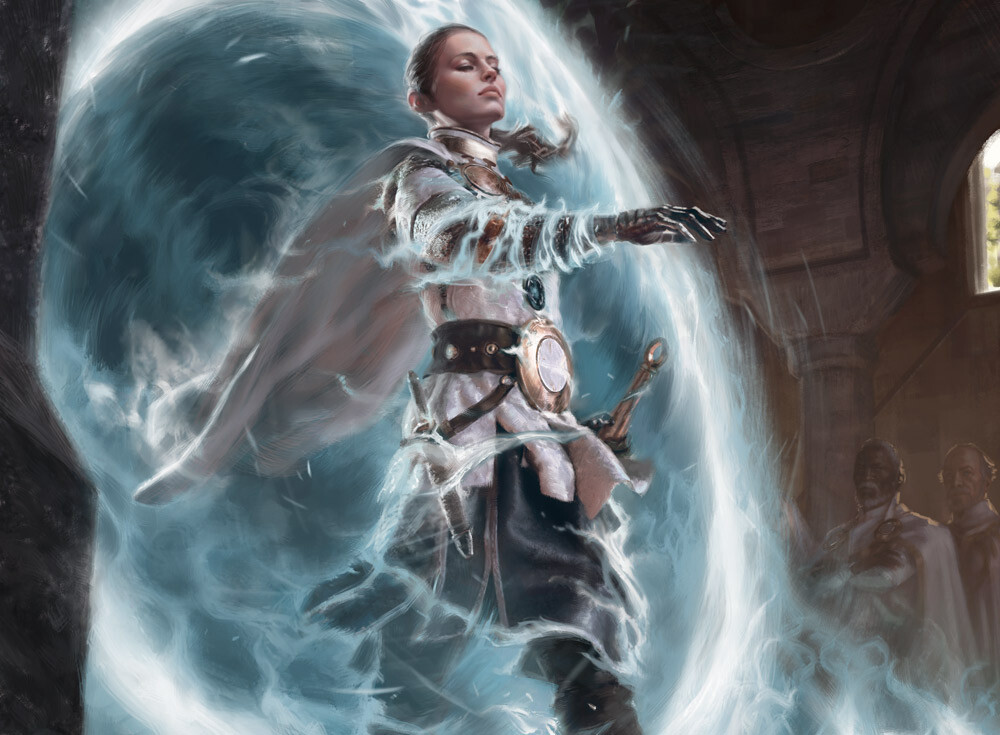
Psionic Knight
- Damage Resistances Psychic
- Languages Telepathy 60ft.
- Challenge Rating Increases by 1
Disrupting Strike When the psionic knight hits a creature with a weapon attck, the target must succeed a Wisdom saving throw equal to the psionic knight's spell save or suffer disadvantage on attacks against all creatures other than the psionic knight until the end of its next turn
Psychic Weapon The psionic knight deals its choice deals psychic damage on its Spell Sword, and Spell Bow attacks instead of force.
Psychic Ward While concentrating on a spell effect, the Psionic Knight is immune to psychic damage as well as being charmed or frightened.
Spellcasting
The shadow knight has the following additional spells known:
- Cantrips Friends, Mind Sliver
- 1st Level Spells Charm Person
- 2nd Level Spells Suggestion, Mind Spike
- 3rd Level Spells Hypnotic Pattern, Pulse Wave
- 4th Level Spells Phantasmal Killer
- 5th Level Spells Bigby’s Hand, Synaptic Static, Telekinesis
Bonus Actions
Stun Burst One creature within 30ft. of the Psionic Knight must succeed a Wisdom saving throw equal to its spell DC. On a failed saving throw, that creature is stunned until the end of its next turn.
Reactions
Psionic Bulwark When a creature of the psionic knight's choice within 30ft. of it takes damage, the psionic knight can use its Spell Shield as a reaction to reduce the damage dealt to that creature.
Rift Knight
- Challenge Rating increases by 1
Planar Awareness When rift knight can determine the planar origin of a creature it can see within 120ft.
Planar Blink While the rift knight is concentrating on a spell effect, the rift knight can spend any amount of its movement speed to teleport by the amount of movement speed spent.
Spellcasting
The rift knight has the following additional spells known:
- Cantrips Eldritch Blast
- 2nd Level Spells Blur
- 3rd Level Spells Blink, Slow
- 4th Level Spells Banishment, Dimension Door
- 5th Level Spells Banishing Smite, Passwall, Teleportation Circle, Temporal Shunt
Bonus Actions
Phase Shift The rift knight can 30ft. to a spot that it can see within range. While moving in this manner, the rift can move through a space occupied by a creature or object. If the rift knight ends its turn in an occupied space, the rift knight is shunted to the nearest unoccupied space taking 6 (1d10) force damage for every 5ft. it is shunted
Reactions
Banishing Shield When the rift knight uses its Spell Shield, the target must succeed a Charisma saving throw equal to the rift knight's spell DC. On a failed saving throw, that creature is banished to a harmless demiplane until the end of its next turn.

Sunblade
- Challenge Rating increases by 1
- Damage Resistances Radiant
Luminous Magic While concentrating on a spell effect, the sunblade gives off bright light in a 30ft. radius and dim light an additional 30ft. This light is considered sunlight.
Reflection When the sunblade takes radiant damage from an effect that targets only the sunblade, it can roll a d6. Upon rolling a 5 or 6, the sunblade is unaffected and can redirect the effect back at the attacker instead.
Sun Strike The sunblade deals radiant damage on its Spell Sword, and Spell Bow attacks instead of force damage.
Spellcasting
The sunblade has the following additional spells known:
- Cantrips Dancing Lights, Light, Sacred Flame
- 1st Level Spells Color Spray, Faerie Fire, Guiding Bolt
- 3rd Level Spells Daylight
- 4th Level Spells Sickening
- 5th Level Spells Flame Strike, Wall of Light
Reactions
Sun Shield When the sunblade takes damage, creatures within 10ft. of the sunblade that can see it must succeed a Constitution saving throw equal to its spell save DC. On a failed saving throw, the targets are blinded until the end of its next turn.
Titan Knight
- Challenge Rating increases by 1
Giant's Growth While concentrating on a spell effect, the titan knight increases by one side. While enlarged in this manner, the titan knight deals an additional 5(1d8) damage on melee weapon attacks against creatures at most one size smaller than the Titan Knight.
Powerful Build The titan knight counts as one size larger. However, its physical size does not change.
Siege Monster The titan knight deals double damage to buildings and objects
Titan's Empowerment The titan knight has advantage on Strength ability checks and saving throws against creatures that are one size smaller than the titan knight and their effects.
Spellcasting
The titan knight has the following additional spells known:
- 1st Level Spells Earth Tremor, False Life, Thunderwave
- 2nd Level Enlarge/Reduce, Enhance Ability
- 4th Level Stoneskin
- 5th Level Spells Bigby's Hand
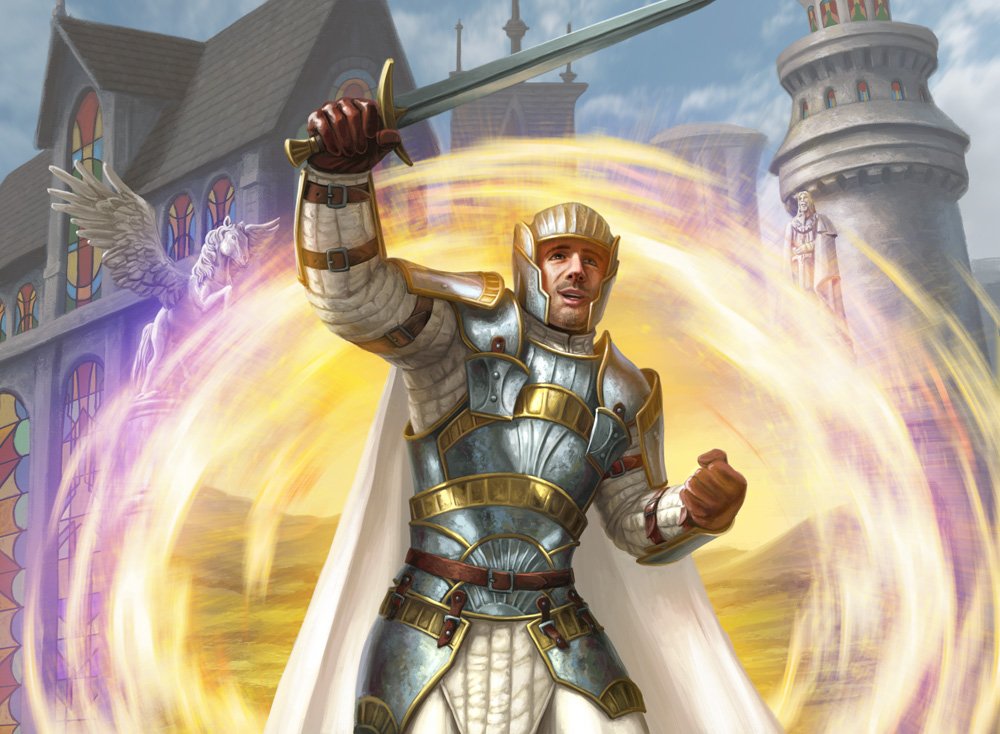
Time Knight
- Challenge Rating increases by 1
Temporal Advantage The time knight has advantage on initiative checks
Time Shift (Recharge 5-6) At the start of its turn, the Time Knight can take two turns on that round. The time knight can take this additional turn on its current initiative count -10 (minimum of 1).
Reactive The time knight can take a reaction at the end of each of its turns
Spellcasting
The time knight has the following additional spells known:
Spellcasting
- Cantrips Guidance
- 1st Level Spells Temporal Alacrity
- 2nd Level Spells Blur, Misty Step
- 3rd Level Spells Blink, Slow
- 4th Level Spells Banishment
- 5th Level Spells Temporal Shunt
Reaction
Rewind Time When the time knight uses its spell shield, it can reverse time to heal any wounds it sustains. Upon using this feature, the time knight regains a number of hitpoints equal 5 times the level of the spell slot expended.
Temporal Correction When the spell blade fails on an attack roll, ability check, or saving throw, it can choose to reroll taking the new result instead.
Witch Knight
- Challenge Rating increases by 1
Endless Hex The Witch Knight can double the duration of Bless, Bane, Hunter's Mark, Hex, and Bestow Curse (up to a maximum of 24 hours).
Hex Ward While concentrating on a spell effect, the witch knight can surround itself in protective hexes. Whenever the witch knight takes damage, the attacker must roll a d6. Upon rolling a 6, the witch knight takes no damage
Twinned Curse If the witch knight targets a creature with Hunter's Mark, Hex, or Bestow Curse, it can target one additional creature.
Spellcasting
The witch knight has the following additional spells known:
- Cantrips Guidance
- 1st Level Spells Bane, Bless, Hunter's Mark, Hex
- 3rd Level Spells Bestow Curse, Glyph of Warding, Remove Curse
- 5th Level Spells Circle of Power
Bonus Actions
Relentless Hex If the witch knight reduces a creature to 0 hitpoints that is under the effects of Hunter's Mark, Hex or Bestow Curse, the witch knight can move the spell to another creature within range
Reaction
Hex Shield When the witch knight uses its Spell Shield, the attacker must succeed a Charisma saving throw equal to the witch knight’s spell save DC. On a failed saving throw, the attacker suffers disadvantage on attack rolls, ability checks, and saving throws until the end of its next turn.
A special Thanks to my Patrons
Mythic Patrons
Marcella V., Mercyque, Chandlor D., Marshmellow Owlbear, Jake C., The Emcredible , Terra Nova, Kandros Vashtet, Shrike, Camden, DJ Stribj, Tom L., Daniel C.
Legendary Patrons
Daniel M., Eddie, Sir Prize, Steven K., Adiin_JKC, Kate, James
Epic Patrons
Brad E., Jordan B, Flamerules3, Vincent, Alex D, Aaron S., Captain Blackwood. Jacob S. , Razi R., Damien T., Tallon M., Peter R., Douglas B., John B., Nathan S., Joseph L., Cyptossarian, Caleb A., Andrew W., Glenn S., Andrew C., Justin R., Ilheath, Particle Man, Dharmatrails, Thomas P.

Art Credits
Cover Art: Paul Scott Canavan
Spellblade 1: Daarken
Spellblade Novice: Ben Maier
Spellblade Veteran: Peter Mohrbacher
Blood Knight: Peter Mohrbacher
Druidic Knight: Eric Deschamps
Magehunter: Chippy
Rift Knight: Yongjae Choi
Sunblade: Ben Maier
Time Knight: Dan Scott
Patron Art: William Murai
Watercolor Stains: Jared Ondricek
If you are interested in staying up to date on my upcoming content, be sure to follow me on GMBinder, my Discord server, or on my Instagram to receive regular updates on future compendiums. If you wish to view my previous works or support me, be sure to check out my Patreon and Ko Fi where you can download these compendiums for free!