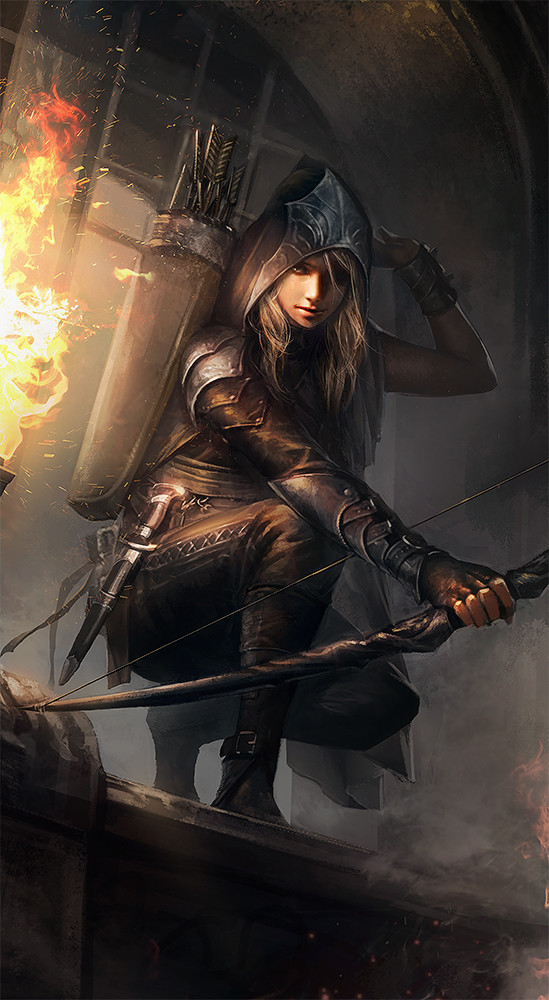
Classic Power Fantasy Subclasses
Welcome to a collection of three homebrew subclasses that fulfill some classic power fantasies that are missing from the official rulebooks. This includes the Barbarian Path of the Pugilist—a barbarian who revels in the chaos of unarmed combat, the Bard College of Song—virtuoso bards who uses their music to sway the battlefield, and the Rogue Sniper—a devastating attacker specializing in shooting decisive shots from afar.
Barbarian
At 3rd level, a Barbarian gains the Primal Path feature, choosing a path that shapes the nature of their rage.
Path of the Pugilist
Those who follow the Path of the Pugilist revel in the chaos of unarmed combat, using their hardened fists to barrel through all obstacles that lay before them.
Hand-to-Hand Combat
When you choose this path at 3rd level, your fists become your primary weapon. You gain the following benefits:
- Your unarmed strike uses a d6 for damage.
- While you are not wielding simple or martial weapons or a shield, you can use your bonus action to make an unarmed strike.
- Creatures you hit with an unarmed strike cannot gain advantage on attacks against you through your Reckless Attack feature.
Grappling Expertise
Also at 3rd level, your skill in hand-to-hand combat gives you an edge when grappling your foes. You gain the following benefits:
- You gain proficiency in the Athletics skill. If you are already proficient in it, you gain proficiency in one of the following skills of your choice: Animal Handling, Intimidation, Nature, Perception, or Survival.
- Your proficiency bonus is doubled whenever you make a Strength (Athletics) check to grapple a creature.
- You count as one size larger when determining the creatures you can grapple.
Primal Fists
Starting at 6th level, you fuel your strikes with primal power. Your unarmed strikes gain a bonus to attack and damage rolls equal to half your proficiency bonus rounded down and count as magical for the purpose of overcoming resistance and immunity to non-magical attacks and damage.
Mighty Blow
At 10th level, once on your turn when you hit a creature with an unarmed strike while you are raging, you can choose to follow through, slamming the target with mighty force.
The target takes an additional 2d6 bludgeoning damage and must make a Strength Saving Throw (DC equal to 8 + your Strength modifier + your proficiency bonus) or suffer one of the following effects (your choice):
- The target is knocked prone.
- The target is pushed up to 15 feet away from you.
- The target is dazed and cannot take reactions until the end of your next turn.
You can use this feature a number of times equal to your proficiency bonus, and you regain all expended uses when you finish a long rest.
Thick of the Fight
At 14th level, your mastery of hand-to-hand combat allows you to wade into the thick of combat without fear.
While you are raging, you can use a bonus action to mark each creature within 10 feet of you, gaining 5 temporary hit points for each mark up to a maximum of 10 times your proficiency modifier until your rage ends.
In addition, if you take the Attack action to only make unarmed strikes against marked creatures, you can make an additional unarmed strike against a marked creature as a part of the same Attack action.
You can use this feature only once each time you rage.


Bard
At 3rd level, a Bard gains the Bardic College feature, delving into the advanced techniques of a bard college of their choice.
College of Song
Bards of the College of Song are masters of their instrument, using the power of their virtuosic playing to sway the battlefield and weave their magic.
Signature Instrument
When you join the College of Song at 3rd level, you choose your signature instrument, gaining the following benefits:
- Your proficiency bonus is doubled for any ability check you make using your signature instrument.
- When you make any ability checks to play your signature instrument, treat a roll of 7 or lower on the d20 as an 8.
- When you use your Song of Rest feature using your signature instrument, you roll two dice instead of one to determine the extra hit points a creature regains.
Song of Inspiration
Also at 3rd level, you learn to weave inspiring magic into your music to empower your allies in combat.
You can expend one use of your Bardic Inspiration to start a Song of Inspiration. As an action, you cast the Bless spell using your signature instrument and without expending a spell slot, choosing a number of targets equal to the roll on your Bardic Inspiration die (minimum 3). The creatures you choose as a part of the spell can only benefit from the spell if they can hear you.
When you use your bonus action to grant a creature Bardic Inspiration while your Song of Inspiration is active, you can change the targets of the Bless spell if the new targets are within range. The Song of Inspiration ends when the spell ends.
Versatile Melody
Starting at 6th level, when you start a Song of Inspiration, you can choose one of the following types of melodies instead of casting the Bless spell, choosing a number of targets that are within 30 feet equal to the roll on your Bardic Inspiration die (minimum 3):
- Song of Speed. The targets gain 10 extra feet of movement while this song is active.
- Song of Soothing. The targets have advantage on saving throws against being frightened while this song is active.
- Song of Valor. While this song is active, whenever the targets make an attack roll, they can roll a d4 and add the result to the roll.
- Song of Dispelling. While this song is active, whenever the targets make a saving throw against a magical effect, they can roll a d4 and add the result to the roll.
- Song of Protection. The targets each gain 1d4 temporary hit points while this song is active.
- Song of Defense. When a target is hit with an attack while this song is active, they can use their reaction to add a d4 to their AC for that attack, potentially causing the attack to miss.
- Song of Power. While this song is active, once on each of the target's turns when they hit a creature with a weapon attack, they can cause the attack to deal an extra 1d4 force damage to the target.
- Song of Dissonance. The targets must make a Charisma Saving Throw. Whenever a target that fails this saving throw makes an attack roll while this song is active, the target must roll a d4 and subtract the result from the attack roll.
When you start a Song of Inspiration in this way, it only ends after 1 minute, when you drop your instrument, or when you choose to end it during your turn as a free action. In addition, when you grant a creature Bardic Inspiration while your Song of Inspiration is active, you can choose a new melody in addition to new targets if they are within range as a part of the same bonus action.
Symphony of Melodies
At 14th level, you learn to weave multiple songs into a symphony of melodies. When you start a Song of Inspiration, you can choose to start a Symphony instead, allowing you to choose three different melodies from your Versatile Melody feature instead of just one. You can choose different creatures as targets for each melody you choose.
Once you use this feature, you can't use this feature again until you take a long rest.
Note: Concentration
While a Song of Inspiration using the Bless spell requires concentration, a Song of Inspiration using the Versatile Melody feature does not.

Rogue
At 3rd level, a Rogue gains the Roguish Archetype feature, choosing an archetype to emulate in the exercise of their rogue abilities.
Sniper
You focus your training on being a devastating force from afar. Those who adhere to this archetype are experts in finding tactically advantageous areas to shoot decisive shots from unseen corners of the battlefield.
Sniper's Nest
When you choose this archetype at 3rd level, you learn to identify areas where you can gain a tactical advantage.
As a bonus action, you can mark two 5-foot square areas within 30 feet of you as Sniper's Nests. While inside the marked areas, you gain a bonus to AC and attack rolls equal to half your proficiency modifier rounded down, and you can use your Sneak Attack against a target you hit with a ranged weapon attack even if you don't have advantage on the attack roll, but not if you have disadvantage on it. The mark remains for 1 minute. A hostile creature can remove your tactical advantage by removing a mark if it enters a marked area while you are not occupying it, or uses their action within 30 feet of a marked area to make an Wisdom (Insight) check against a DC equal to 8 + your Intelligence modifier + your proficiency bonus, removing the mark on a success.
You can't use this feature again if you have an active Sniper's Nest.
Keen Eyes
Upon choosing this archetype at 3rd level, you develop a quick and sharp eye.
Whenever you make a Wisdom (Perception) check to see faraway objects, treat a roll of 7 or lower on the d20 as an 8.
In addition, you can use your Cunning Action feature to take the Search action.
Cover Expertise
Starting from 9th level, you are able to utilize and attack from areas of cover with expertise. You gain the following benefits:
- You gain the benefits of three-quarters cover when behind half cover, and total cover when behind three-quarters cover.
- While you benefit from cover, you can expend the rest of your movement to gain advantage on a Dexterity (Stealth) check you make during the same turn.
- When you are hidden from a creature and miss it with a ranged weapon attack, making the attack doesn't reveal your position.
Battlefield Tactics
At 13th level, you gain the ability to survey the entire battlefield and identify all possible areas of tactical supremacy and high traffic.
When you use your Sniper's Nest feature, you can mark five 5-foot square areas within 100 feet of you instead of just two. In addition, when a hostile creature removes a mark by entering a marked area, you can use your reaction to make an attack with a ranged weapon against that creature.
\
Art Credits
Art (Page 1): Nesskain: Doodle - Lord Redwood
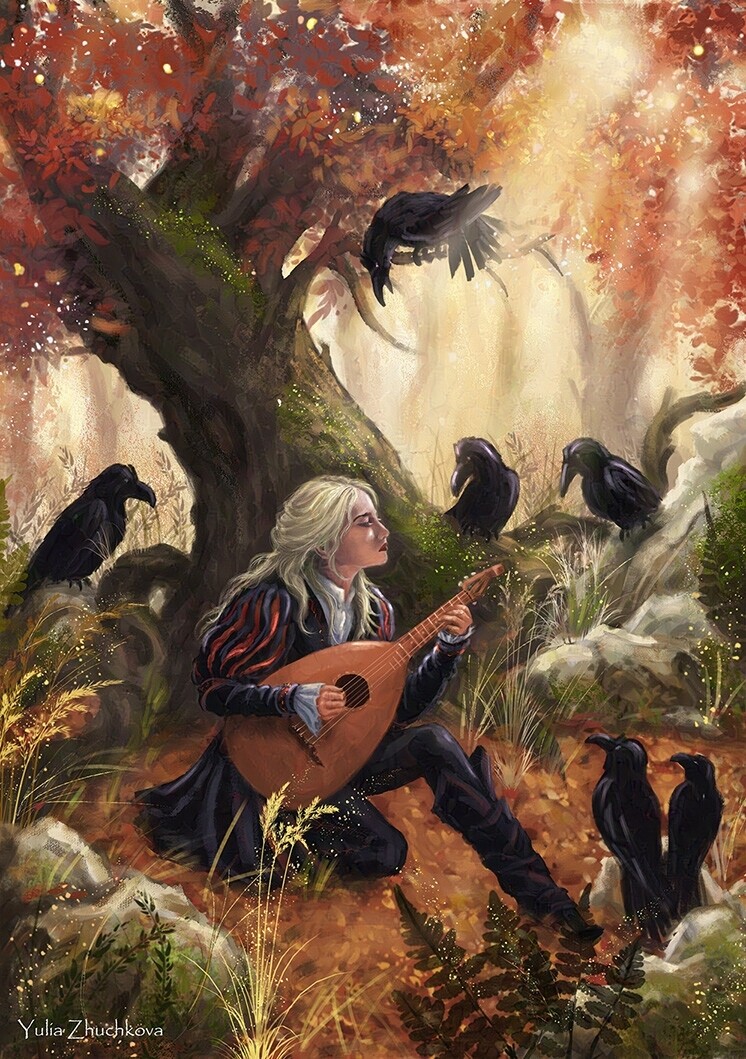
Art (Page 2): Yulia Zhuchkova: The Bard
Art (Page 3): JuYoung Ha: MABINOGI DUEL_Hunter Rijet
Hemorrhage Shot
Starting at 17th level, creatures that take damage from a ranged weapon attack that benefits from your Sneak Attack take additional damage at the beginning of their next turn equal to half the number of Sneak Attack dice for your level.