
Call of the Netherdeep: Session Zero
Zero is the number of this session, and the number of this session is zero. This is my runsheet. I have printed it to give you something to read when we get together. My plan is to walk us through the content and pause for discussion where needed.
Introductions
Hello, we're here to play the recently published D&D adventure Critical Role: Call of the Netherdeep.
- Introduce yourself
- What tabletop role-playing games have you played before?
- How do you know others at the table?
- Why did you say yes when I asked you to play?
Game Logistics
Schedule
📅
Quorum
I propose if we have less than four players, we cancel our session.
If someone can't make it but we're still at quourm, an undefeated warforged butler emerges from a transdimentional interplanar handwavey portal and takes the PC away until their player returns.
Venue
🏡
Kids
🧒
Swearing
Fuck yeah. But if it gets too much, I am open to feedback.
Food
🥙
Drink
🍺
Character sheets
I would like a copy of your character sheet before the first session. This is so I can build encounters that are balanced and fun. I won't need a copy of the full sheet again, but as you level up I will check-in on what features you take.
Discord
This is the main method of comms for the game. If, like me, you happen to be on multiple Discord servers, you might find it useful to "mute" an entire server and only keep your notifications enabled for the low-volume servers with curated settings. There are three text-chat channels:
- Announce. Scheduling or things that everyone should see and be able to find the latest message. I recommend you turn on notifications for this channel. I will be respectful with notifications.
- Lore. Background and details about the world.
- Chat. Everything else
Safety and consent
I circulated the RPG Consent Checklist to you all. Thanks for considering and sharing your settings.
[ list o' yellows TBC ]
[ list o' reds TBC ]
Consent can change, so if you find a session is causing distress you can call it out and we can address. If needed, we can lean on the "X". You can say the letter, or write it down and point to it. That's a signal to me and others that we need to take a break and reset.
There's a section below where I talk about some confronting themes in the adventure.
Character Portraits
I make physical tokens for characters and monsters. This means I need a picture of your character. You can search for a suitable image that sparks your imagination. Another option is to use the model builder at HeroForge.com to create your character then take a screenshot. Once we had a player who drew their own character which we made into a token.


This is not Critical Role
Even though we are playing a Critical Role adventure, I want to stress that I am not Matthew Mercer and you are not professional actors. Our game won't be the same as what we see in Critical Role. I'm okay with that, I hope you are too.
That being said, I do want to lean into playing these characters and give you the space to do the same.
What makes this game fun?
Everyone has a different mix of ingredients that make for a fun game. What are yours?
Acting
Players who enjoy acting like getting into character and speaking in their characters' voices. Roleplayers at heart, they enjoy social interactions with NPCs, monsters, and their fellow party members.
Exploring
Players who desire exploration want to experience the wonders that a fantasy world has to offer. They want to know what's around the next corner or hill. They also like to find hidden clues and treasure.
Instigating
Players who like to instigate action are eager to make things happen, even if that means taking perilous risks. They would rather rush headlong into danger and face the consequences than face boredom.
Fighting
Players who enjoy fantasy combat like kicking the tar out of villains and monsters. They look for any excuse to start a fight, favoring bold action over careful deliberation.
Optimizing
Players who enjoy optimizing their characters' capabilities like to fine-tune their characters for peak combat performance by gaining levels, new features, and magic items.
Problem Solving
Players who want to solve problems like to scrutinize NPC motivations, untangle a villain's machinations, solve puzzles, and come up with plans.
Shopping
Players who want to try on all the things, make deliberate choices about acquisitions, and work on nesting in their mind-palace.
Storytelling
Players who love storytelling want to contribute to a narrative. They like it when their characters are heavily invested in an unfolding story, and they enjoy encounters that are tied to and expand an overarching plot.
And the rest
Players might enjoy more things than I can list here ...

House Rules
Spellcasting components matter
If you're a spellcaster, we use the rules as written in the Players Handbook for spellcasting.
That means you need to have the right components: material, verbal, or somatic (gestures). This might mean you can't cast a spell if your hands are full or bound. It also might stop your spellcasting if you can't speak. For material components, you can use a spellcasting focus or material pouch to replace any named material component ... unless it has a specific gp value, or if the spell consumes the material. All these rules are in the Players Handbook and I will nerd out about the details until you get bored.
Extra Source Material
Usually I am more than happy to include content from published books. If you have something to include I just ask we have a chance to talk about it beforehand to check for balance and fit.
Rapid Quaffing
This house rule lets characters grab and drink a potion as a bonus action, enabling them to heal or buff up in combat without sacrificing their primary attacks or spellcasting to do so. (This applies to enemies and NPCs as well as player characters!)
Using this house rule, you can use a bonus action to drink a healing potion. It still requires an action to administer a healing potion to another creature. This only applies to potions of healing and their variants (potion of greater healing, etc.). You can consume a potion that restores hit points as a bonus action, but all other potions still require you to use your action.
HP rolling
If you roll 1 for hit-points when gaining a level, you can reroll and must use the new roll. You can choose, before you roll, to instead take the average HP.
Resurrection Rules: Fading Spirits
I borrowed this rule from the Tal'dorei Campaign Setting Reborn book. It will be familiar to those who watch Critical Role.
If magic is used to bring a character back from the dead (except for the revivify spell; see below), everyone present becomes part of a resurrection ritual. Up to three characters present for the ritual—typically members of the deceased's adventuring party—can contribute to the ritual by attempting to call their ally's spirit back. This could involve delivering a stirring speech, playing a song from their shared childhood, goading a rival back with a display of sword skills, confessing undying love for them, or anything else that the players or the DM consider emotionally stirring.
Participating in the Ritual. Each of the participating characters makes an ability check. A player can tell the DM what kind of check they want to make, but ultimately the DM decides what check is appropriate based on the character's contribution to the ritual. The baseline DC of this check is 15, but the DM can raise or lower the DC (typically anywhere between 10 and 20) if the contribution seems particularly appropriate or particularly insincere.
For example, praying to a fallen paladin's god for mercy might require a participant to make a DC 10 Intelligence (Religion) check, whereas shouting at a dead friend's corpse to get back up and stop lazing around might require a DC 20 Charisma (Intimidation) check. If the contribution is roleplayed in a particularly touching way, the DM can grant advantage on the check—even if the check's DC remains high.
Resurrection Check. After all the characters' contributions are completed, the GM rolls a single, final resurrection check with no modifier. The base DC of this check is 10, but it is modified in three ways:
- The DC is increased by 1 for every time the character has returned to life before, as the soul's connection to this world is slowly eroded by repeatedly dying and returning.
- The DC is reduced by 3 for each successful contribution from the other participants in this ritual.
- The DC is increased by 1 for each failed contribution to the ritual.
If the resurrection check is successful, the character's soul is returned to their body (if the soul is willing, as usual). If the check fails, the soul does not return—and the character is permanently unable to be raised from the dead.
True Miracles. If a character is brought back from the dead by the true resurrection or the wish spell, or by a god, they instantly return to life without the need for a resurrection ritual. Additionally, if a character has been permanently lost due to a failed resurrection ritual, the GM can allow a casting of true resurrection or wish to begin a last-chance resurrection ritual—one that can't be repeated if failed.
Revivify. If a spell with a casting time of 1 action is used to restore life to a creature (including the revivify spell), no one but the caster can participate in the resurrection ritual. The caster makes a quick resurrection check by rolling a d20 and adding their spellcasting ability modifier, against a DC equal to 10 + 1 for every time the character has returned to life before. On a failure, the character's soul is not lost, but the resurrection fails and increases the DC of any future resurrection checks by 1. Further attempts to bring the character back to life must involve a spell with a casting time longer than 1 action (including raise dead or resurrection).
Milestone levelling
I'll let you know when you level up. It's connected to specific milestones in the story.
Ability scores
Roll some dice
You generate your character's six ability scores randomly. Roll four 6-sided dice and record the total of the highest three dice on a piece of scratch paper. Do this five more times, so that you have six numbers. Assign the scores to each ability score as you see fit. If you don't like the result, you can use the point-buy method instead.
Point-buy
You have 27 points to spend on your ability scores. The cost of each score is shown on the Ability Score Point Cost table. For example, a score of 14 costs 7 points. Using this method, 15 is the highest ability score you can end up with, before applying racial increases. You can't have a score lower than 8.
| Ability Score | Point Cost |
|---|---|
| 8 | 0 |
| 9 | 1 |
| 10 | 2 |
| 11 | 3 |
| Ability Score | Point Cost |
|---|---|
| 12 | 4 |
| 13 | 5 |
| 14 | 7 |
| 15 | 9 |
This method of determining ability scores enables you to create a set of three high numbers and three low ones (15, 15, 15, 8, 8, 8), a set of numbers that are above average and nearly equal (13, 13, 13, 12, 12, 12), or any set of numbers between those extremes.
The adventure
Our own version of Exandria
By all appearances, I'm a huge Critter. I've watched most of Critical Role and own multiple pieces of merch. I have four hardcover books and I'm running a published adventure set in Exandria.
My world knowledge and recollection of plot points is not exhaustive. Far from it. Often when listening to the show I'll be doing other things. There are gaps in my knowledge about the world or NPCs. I am always impressed by people who have instant and deep recollection about a fantasy world; I am not that person. I try hard to make sure I've got the important bits.
I'll fill in my own blanks as we go. This might create a difference between the canonical Critical Role world and our game. That's okay. When we start this game we are creating a new clone of Exandria. There will be some unknown mutations that we might discover together.
More World Resources
Here's a primer on the world. It's short and worth watching. Exandria: An Intimate History
Adventure Outline
- An epic story connected to the history of Exandria
- Tales of glory, corruption, torment, and redemption
- Confront an ancient underwater entity
- Choose your alliegances with multiple factions that are working towards opposing goals
- Meet varied NPCs to learn from and compete with
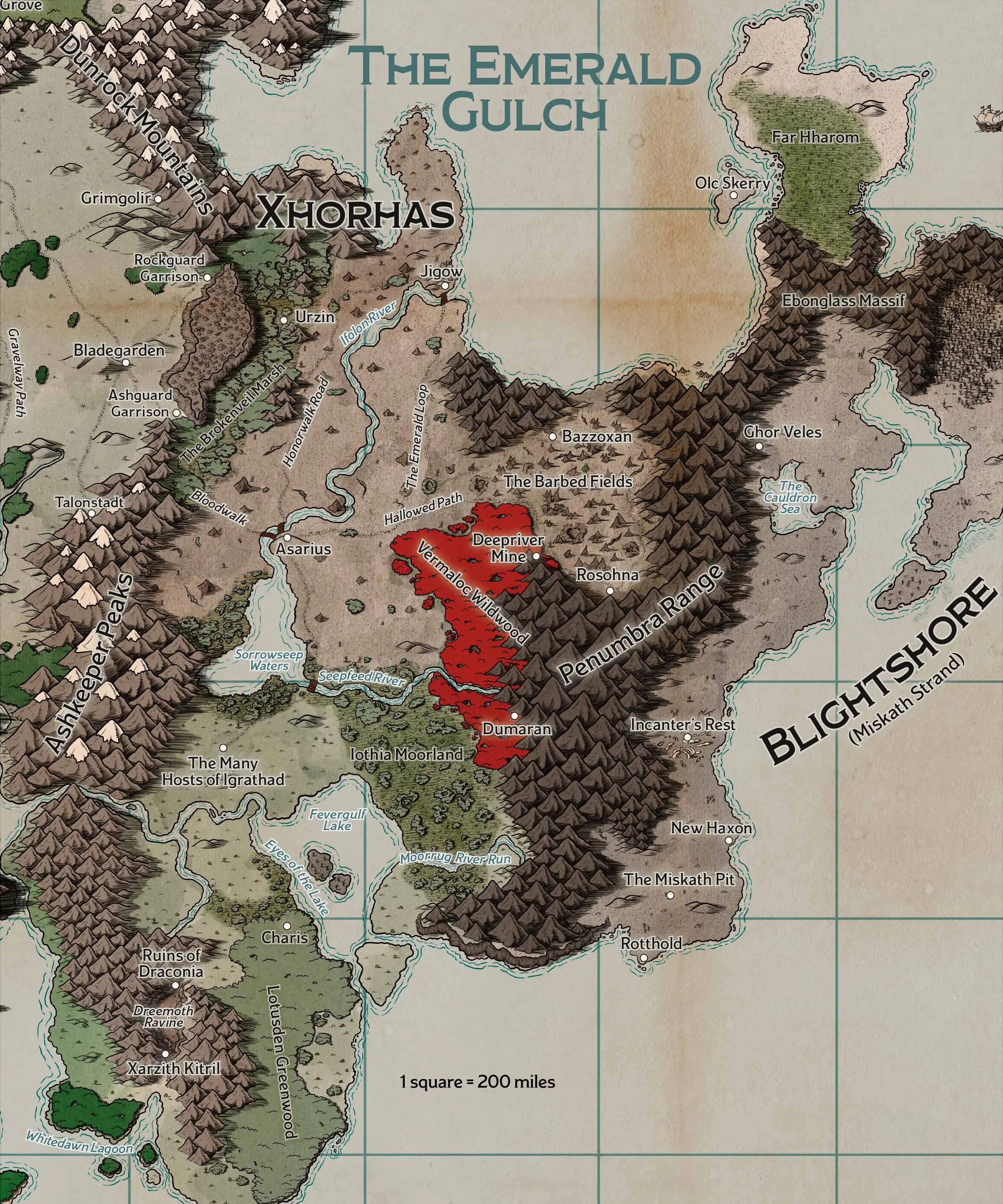
- Start with exploring the wastes of Xhorhas before travelling further afar
Content warnings
This adventure does have some NPC emotional distress and imprisonment.
Where do we start?
This adventure begins in Xhorhas, where most humans are nomads; most elves are drow who live aboveground; dwarves and halflings are rare; and goblinoids, orcs, lizardfolk, kobolds, and other creatures sometimes seen as "monstrous" elsewhere are more populous than gnomes and dragonborn. Whether the characters are natives of Xhorhas or outsiders, they are aware of what's said in the "What the Characters Know" section below.
We start at 3rd level with the adventuring party already assembled. Depending on how we go at Session Zero, we might have a one-or-two player session to establish mechanics or work on some backstory & connection.
The last battle of the adventure happens at 11th level. It will take a fair number of sessions over many months to complete.
What the Characters Know
Your characters already know a number of things about the world.
Kryn Dynasty. The Kryn Dynasty is the dominant nation in Xhorhas. It was founded by a drow queen named Leylas Kryn, who fled the Underdark and the tyrannical rule of Lolth the Spider Queen along with her disciples. The Bright Queen still rules the dynasty centuries later, and its cities contain more than just drow. Orcs, goblinoids, tieflings, humans, and many others call the cities of the dynasty their home. Countless more denizens of the dynasty are nomads who roam the wastes in clans, hunting mastodons and other Xhorhasian megafauna.
The Luxon. The official deity of the Kryn Dynasty, whose symbol appears on the nation's heraldry, is the Luxon. This mysterious divine entity of light and rebirth has granted its faithful several esoteric secrets, the greatest of which is consecution—the act of preparing one's soul for rebirth. Through consecution, some people within the Kryn Dynasty have lived many lifetimes, often in bodies different from the ones they were first born in. In the sequence of consecution, a drow might become a goblin, then be reborn as a bugbear, then an orc, and so on—all the while gaining greater knowledge about the world through their experiences. This process has no mechanical benefit, but you can make consecution and rebirth an interesting part of your characters' back stories.
If a follower of the Luxon who has undergone the ritual of consecution dies within 100 miles of a Luxon beacon, their soul is ensnared by it and reincarnated within the body of a random Humanoid newborn within 100 miles of the beacon.
The War of Ash and Light. After a tumultuous eight months, the war between the Dwendalian Empire and the Kryn Dynasty has ended. The stolen Luxon beacons have been returned and both armies cautiously stood down. Tensions remain, but the mood across Xhorhas has lifted and most have a sense of relief that things did not escalate any further.
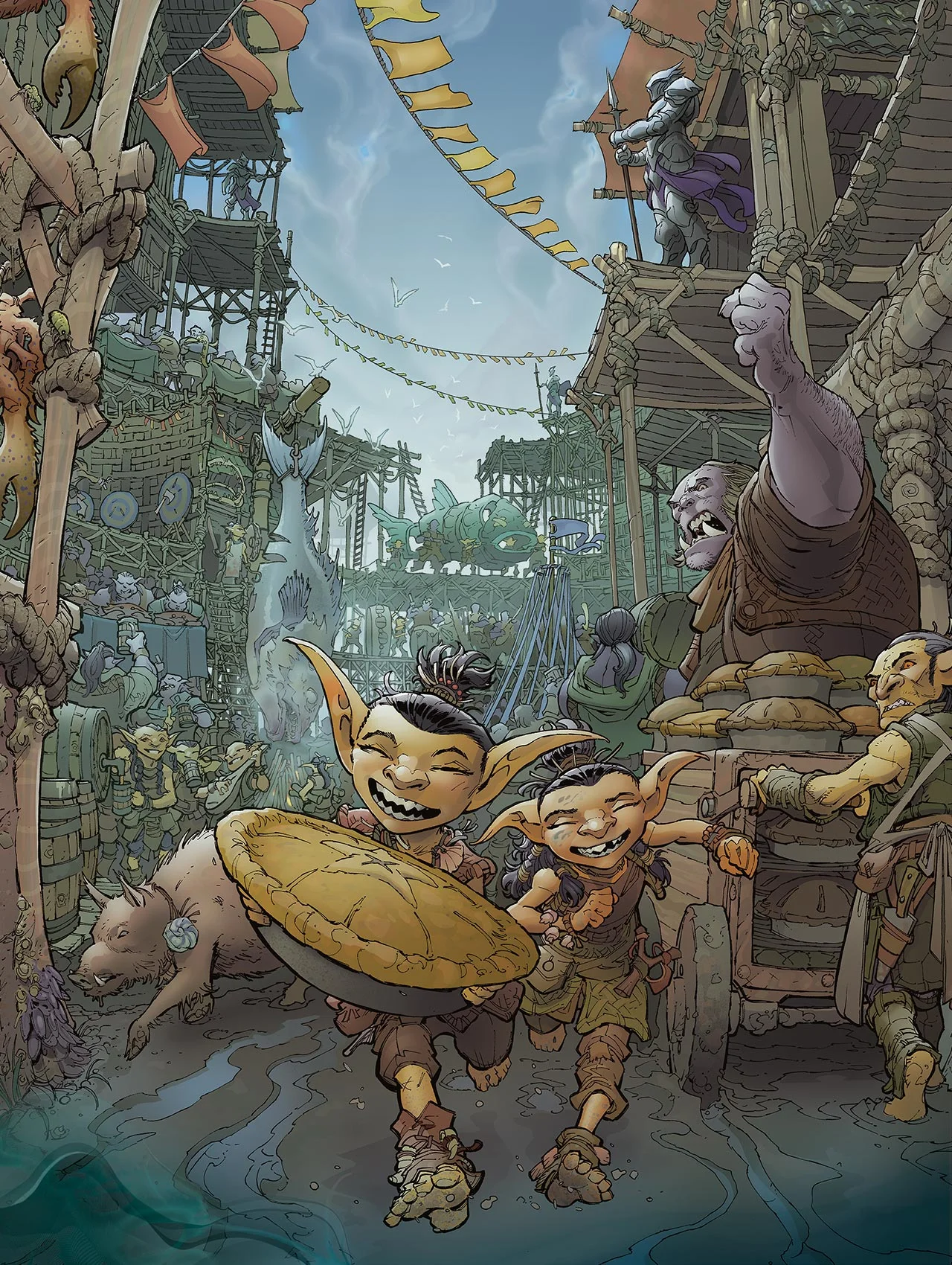
Jigow. This coastal settlement is actually a string of villages that are home to a collection of folk from all over Xhorhas. Goblin and orc clans founded Jigow, which explains why the settlement is governed by two elders—a goblin and an orc. The Aurora Watch (the military arm of the Kryn Dynasty) maintains a presence here, under the command of a drow called Taskhand Durth Mirimm.
Jigow was built from the sweat of its founders' brows, the strength of their muscles, and the music of their voices. In Jigow, any chance to show off one's physical, social, or intellectual prowess is a welcome one, and there's no opportunity better than the annual Festival of Merit. On this day, friendly and not-so-friendly contests between residents are settled. Every public space is filled with festival games, food stalls, or other amenities for the merrymakers, and plenty of shops and private residences have flung their doors wide to join in the revelry.

Eastern Wynandir
Stretching across the lands of Eastern Wynandir is a valley that still bears the lingering scars of the final battles of the Calamity. Fields of broken earth and muddy paths weave around muggy swamps and corrupted forests, home to creatures twisted by the echoing shadows of the Betrayer Gods who once ruled this region. Fierce storms rule the sky as hungry predators stalk the open, desolate plains.
All manner of beastfolk, goblinkin, and nomadic outlanders claim the marshes and badlands of this region, honing their survival skills and warring ways against the elements and each other. Meanwhile, the dark elves of Rosohna have emerged as the core of civilization in Xhorhas, reaching out to the wayward tribes and offering them enlightenment if they join the Kryn Dynasty.
Creating characters
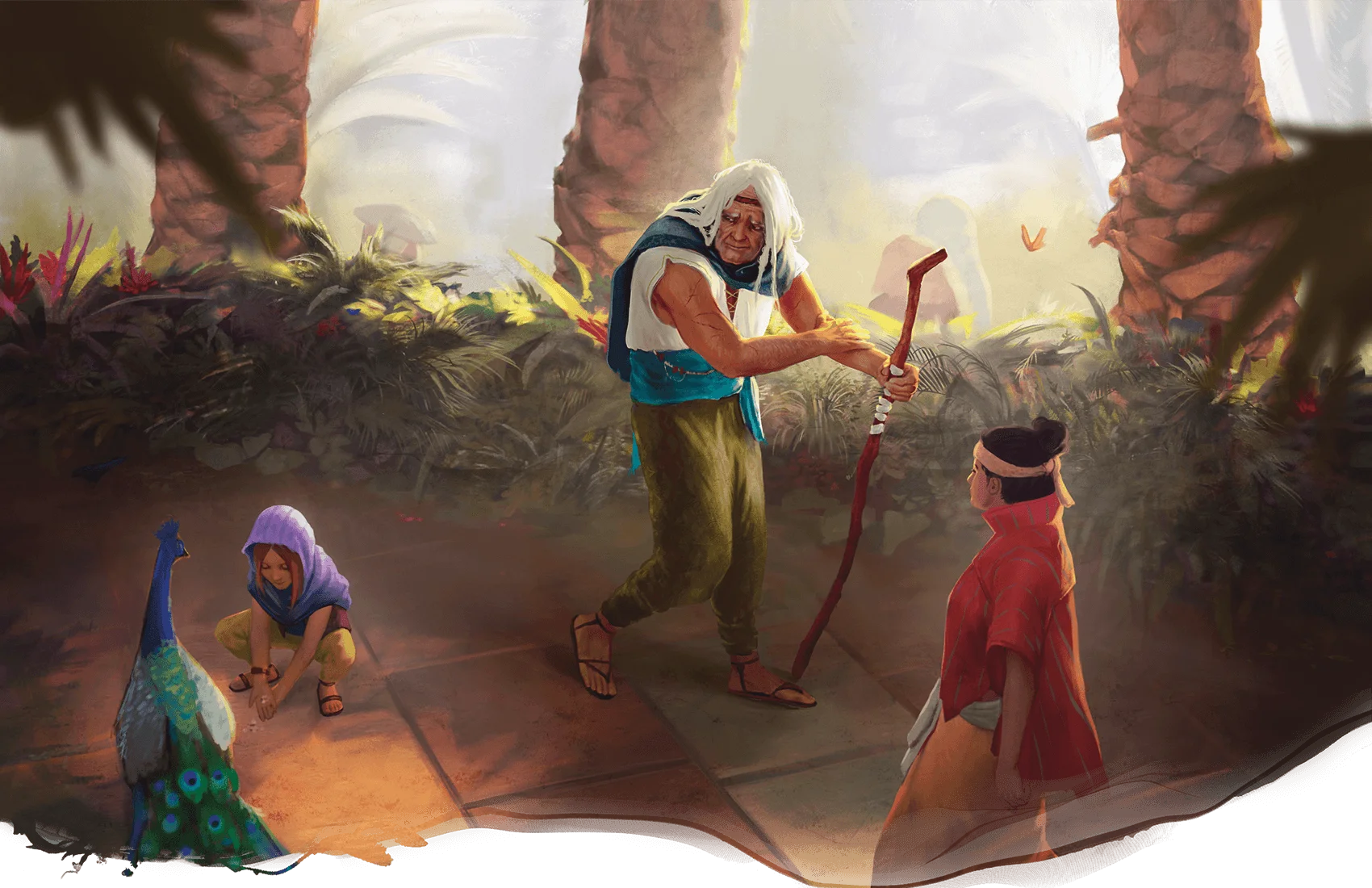
Let's use the Heroic Chronicle to assemble things. I have the hardcopy available for the session. You are welcome to roll or choose items that spark your imagination.
All the character races presented in the Player's Handbook are well suited for this adventure as well as the race and subclass options presented in Explorer's Guide to Wildemount.
Additional race options appear in Monsters of the Multiverse, with bugbear, duergar, goblin, hobgoblin, kobold, lizardfolk, minotaur, and orc being appropriate choices for players who want their characters to come from cultures or societies with roots in Xhorhas.
Character Back Stories
The beginning of this adventure assumes the characters are familiar with each other. Are you using Jigow as a rest stop on the way elsewhere, are you residents of Jigow, or some combination of the two?
These questions are meant to stir ideas, they aren't homework. Use them however you feel is best.
Individual questions
- What's one small heroic deed you've already accomplished?
- Do you give your trust easily, or do people have to earn your trust?
- Do you have any enemies?
- What's one thing you want more than anything else? How will being an adventurer help you achieve it?
- How old are you?
- What would somebody see at first glance (i.e. height, weight, skin color, eye color, hair color, physique, race, and visible equipment)?
- What additional attributes would be noticed upon meeting (i.e. Speech, mannerisms)?
- Where were you born? Where were you raised? By who?
- Do you have any other family or friends?
- What is your moral code?
- Does you have goals?
- Are you religious?
- What are your personal beliefs?
- Does you have any personality quirks (i.e. anti-social, arrogant, optimistic, paranoid)?
- Why do you character adventure?
- Do you have any distinguishing marks (birth-marks, scars, deformities)?
- What do you fear?
- Did you grow up poor, middle-class, or upper-class and wealthy?
- Why did you become the class you are? Family tradition? Just fell into it?
- Who taught you your class's skills?
Group questions
- Why is the group together?
- What is your common goal?
- Do you have a leader?
- Been together long enough to have a name?

Character Options
The world of Exandria, and our starting location of Xhorhas, has a wide variety of ancestries.
Aasimar
The light of the gods still shines upon Exandria, even from behind the Divine Gate. Aasimar are the purest expression of that divine light as it burns within every mortal soul, for the souls of those blessed with an angelic ancestor blaze brighter than any other. Even rarer than the tieflings with whom they share a commonality of ancestry, aasimar are mortal, and yet are understood to be destined for a grander cosmic purpose than others around them. In every culture across the continent of Wildemount, the birth of an aasimar is seen as a blessing and a portent.
Aasimar who can bear the burden of their destiny become champions of noble causes, and encourage others to walk always in the light. More often than not, however, an aasimar saddled with a vague destiny and the grand aspirations of their clan ultimately falls from grace, their inner light succumbing to shadow.
Those in the Kryn Dynasty who study dunamancy see aasimar as brimming with near-limitless potential. As such, aasimar are often sought out from birth to be trained as dunamancers and echo knights. The tribesfolk who wander Xhorhas see the birth of an aasimar as a message from the gods, and their shamans ascribe meaning to that birth by the conditions of the world. An aasimar born during a raging storm might be a word of warning from Kord the Storm Lord, whereas an aasimar whose mother gave birth in a field of flowers could be a vow of protection from Melora the Wild Mother.
Dragonborn
Wildemount was the cradle from which all dragonborn civilization grew. The city-state of Draconia rose in the Dreemoth Ravine along the southern edge of the continent, when foreign dragonkin fleeing the gods' wrath during the Calamity forged an alliance with native dragonborn already dwelling there. The colonizing dragonborn, who called themselves draconbloods, worked with the native dragonborn, called ravenites, to build a society that could withstand the wandering monsters of Xhorhas. However, Draconia swiftly descended into corruption and bigotry, and the draconblood ruling class betrayed and enslaved their ravenite kin.
Twenty years ago, Draconia was destroyed by the ire of the mighty Chroma Conclave, and the city-state's ruins were occupied by an ancient white dragon named Vorugal. The chaos of the attack upended draconblood civilization, and the ravenite slaves rose up and drove their former masters from the Dreemoth Ravine. Now masters of their own fate, the ravenite dragonborn have rebuilt their home within the ravine and have begun to spread out across the world.
Countless draconbloods fled into the wastes of Xhorhas in search of asylum, and some even dared approach the intimidating walls of Rosohna. The dark elves of the Kryn Dynasty were eager to welcome these formerly isolated people into their ranks—though their reasons for doing so were less than altruistic. More dragonborn living within range of the Luxon's beacons deepens the well of experiences that drow engaged in anamnesis can draw from, bringing their people closer to true enlightenment. The dark elves have no interest in the rift between the draconbloods and the ravenites, and treat both peoples as equals.
Dwarves
Dwarves' long memories give them uncommon insight into the world of the past. However, this connection to the past can make their societies resistant to change, even when change is desperately needed.
Dwarves are few and far between in Xhorhas, and those few who remain are known as duergar, or "deep dwarves." Though some duergar have joined with the Kryn Dynasty and dwell on the surface, most live in the ancient tunnels of the Underdark and harbor a deep-seated enmity for the drow.
Duergar insurgents, striking Kryn settlements or seeking hidden paths toward the surface from perhaps a dozen small outposts in the Underdark, are trying to carve out their own underground dominion. Kryn forces have been successful in holding onto their underground territories so far, but many generals fear that the war in the west is drawing more and more soldiers from their fortifications in the Underdark. If duergar aggression is left unchecked, territory might inevitably have to be ceded to the insurgents.
Elves
When Exandria trembled at the gods' footfalls, the ancient elves of the north pleaded with the Arch Heart to save them from the world's ending. Corellon did not respond, for it is said that their divine ears still rang with pain after their duel to the death with Gruumsh, the Ruiner. Desperate and panicked, the greatest mages of the elves performed a ritual powerful enough to encase their entire civilization in ice, in hopes of protecting it from the wrath of the warring gods while the elves escaped into the Feywild.
It is said that the ashes of the Calamity still blew upon the breeze when, centuries later, the barriers of ice melted and the elves of Wildemount emerged from the Feywild once more. On their return to the world, they found that their ritual had not held fast. The Calamity had wiped almost all traces of elven civilization from Exandria. With only the ruined husks of their mighty cities still standing, the elves began to rebuild.
Even though the human-majority civilizations of the Dwendalian Empire and the Clovis Concord view elves as reclusive relics of the ancient past, most elves view themselves as newcomers to the world, for their return to Wildemount is only a generation or two removed from the present day. The notable exception are the dark elves of Xhorhas, who have lived in Eastern Wynandir since time immemorial. Still, it is only in the past few centuries that they have abandoned the labyrinthine caverns of the Underdark and emerged to live on the surface.
The largest elf-majority civilization in Wildemount is the Kryn Dynasty of Xhorhas, which is made up primarily of dark elves. The drow of Xhorhas are respectful toward people of all races—including other elves—as they believe that their holy cycle of rebirth allows them to be reborn into non-drow bodies. The empathy to be gained by experiencing life in another body is crucial to their religion and their culture.
Elves who live outside the Luxon's cycle of rebirth are viewed with pity, for they have not yet seen the true path. Elves who dwell within the Dwendalian Empire are a notable exception, their imperial allegiance earning them only the cold bite of a blade.
Firbolgs
Firbolgs are a forest-dwelling race native to the Greying Wildlands, particularly the mysterious Savalirwood. Their bodies are covered with thick fur ranging from tones of earthen brown and ruddy red to cool grays and blues, and even to wild hues of pink and green. Their bodies are bovine or camelid in appearance, with floppy, pointed ears and broad, pink noses, but they are bipedal and have hands that can manipulate weapons and objects.
Most firbolgs live in extended family units, and it is unusual to find one living alone. However, they are introverted to the point where they seldom engage with other firbolgs outside the family unit, and firbolgs rarely form their own cities, villages, or even large tribes. Despite this, many firbolgs enjoy visiting other nations' settlements for a short time for trade, sightseeing, and to visit friends.
Firbolgs who travel southeast from the Greying Wildlands and cross the Dunrock Mountains might find themselves wandering the wastes of Xhorhas. The territorial monsters that prowl the wastes show no pity to unprepared wanderers, and most firbolg families know better than to undertake such a dangerous journey.
With northern Xhorhas firmly under the control of the Kryn Dynasty, the dark elves have saved a number of firbolg travelers from monsters over the years. Enough of those have remained in the wastes for small firbolg communities to develop in Rosohna and other major Kryn cities.
Genasi
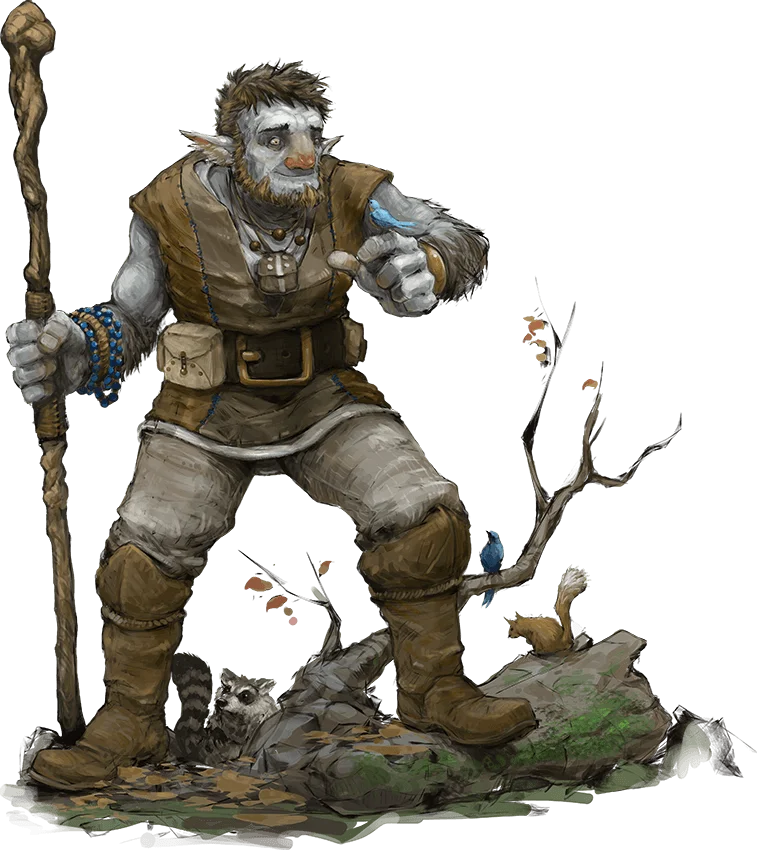
Genasi are exceedingly rare on Exandria, as befits their unique origins. Most live among the elementally attuned Ashari tribes of Tal'Dorei or on the Elemental Planes. However, there are no major rifts to the Elemental Planes in Wildemount, and thus no Ashari to safeguard them. The few genasi who dwell on this continent are often created as the result of a powerful elemental influence at the moment of their birth. A baby born within the eye of a hurricane might become an air genasi, while a fire genasi might be born in the midst of a raging forest fire.
Some genasi are more attuned to their native element than others. A genasi with a powerful connection to elemental fire might have their head covered by crackling flames rather than hair. A genasi with a connection to elemental water might have blue-tinged skin and appear to sweat profusely at all times.
Powerful storms wrack the flat plains of Xhorhas, and many who live beyond the walls of the Kryn Dynasty's cities pray to Kord the Storm Lord to win blessings and protection from his wrath. Air, fire, and water genasi are often born under Kord's auspices, and many become shamans serving the folk of Xhorhas. Few earth genasi roam the wastes, though some are said to dwell within the Vermaloc Wildwood.
The Kryn know little about the genasi and are eager to rectify that. Their scouts have orders to bring back any genasi they encounter to Rosohna.
Gnomes
Gnomes are not native to Wildemount, and are relatively uncommon even in an age of swift boats from Marquet and flying airships from Tal'Dorei. They hail from the distant continent of Issylra and were largely content to remain there after the Calamity. In lands inhabited by people taller and stronger than them, gnomes often resort to living exclusively among other gnomes for their own security. This attitude has kept the gnomes of Wildemount safe for generations, but it has also instilled many gnomish societies with a pernicious strain of xenophobia.
Most Xhorhasians' only contact with gnomes is a brief glimpse of a deep gnome scurrying about the Underdark carrying armfuls of gems. The deep gnomes have little interest in surface politics, and even try to stay neutral in the underground war between the Kryn Dynasty and the duergar rebels. For the most part, the deep gnomes and their settlements are small enough to remain unnoticed by larger folk.
Goblinkin

The civilized people of the world consider goblins to be nothing more than monsters—and in many ways, they're right. Goblins and their cousins, the hobgoblins and bugbears, were first created by Bane, the Strife Emperor, as foot soldiers for his unholy army. Eons ago, when the flames of the Calamity burned across Exandria, the Betrayer Gods gathered in the realm that would eventually become Xhorhas. There, they found a people known as the dranassar. An ancestor race to the goblinoids, the dranassar were tall and beautiful, strong of body and mind, and fleet of foot. Their hair was thick and black, and their skin gleamed like gold. Most of the dranassar willingly served the divine beings that descended upon their land, but a few fought back against the Betrayer Gods' rule.
Bane, a cruel tyrant even among the Betrayer Gods, smote the rebellious dranassar and twisted them into the goblinkin. When the armies of the Betrayer Gods wanted for skirmishers, Bane twisted the dranassar into goblins. When he was in need of loyal soldiers, he made them into hobgoblins. And when brute force was required, he sculpted them into bugbears. As the war of gods and mortals raged on, Bane corrupted even those dranassar who remained loyal to him.
The Betrayer Gods are long since defeated, but the goblinkin survived—leaderless, lost, and fallen into chaos. It is said that the voice of Bane still whispers into the minds of the goblinkin, goading them to commit senseless acts of cruelty against all they see.
Few goblins can steel their will against Bane's foul whispers, but those who do live peaceful lives free of the god's influence. Likewise, people who are transfigured into goblins or reborn as goblins do not hear the voice of Bane, and are free from his curse of strife.
Goblins, hobgoblins, and bugbears are a common sight in Xhorhas, especially around Rosohna—for it was here that Bane first created the goblinkin from the noble dranassar. The people of the Kryn Dynasty have made efforts to forge close ties with the goblinkin who have made their home in the region, and have even managed to subvert the curse of strife by the power of the Luxon. Any creature reborn into a goblinkin body is born without the curse, and any natural-born goblin born within one hundred miles of a Luxon beacon is likewise shielded from Bane's seed of corruption.
Goliaths
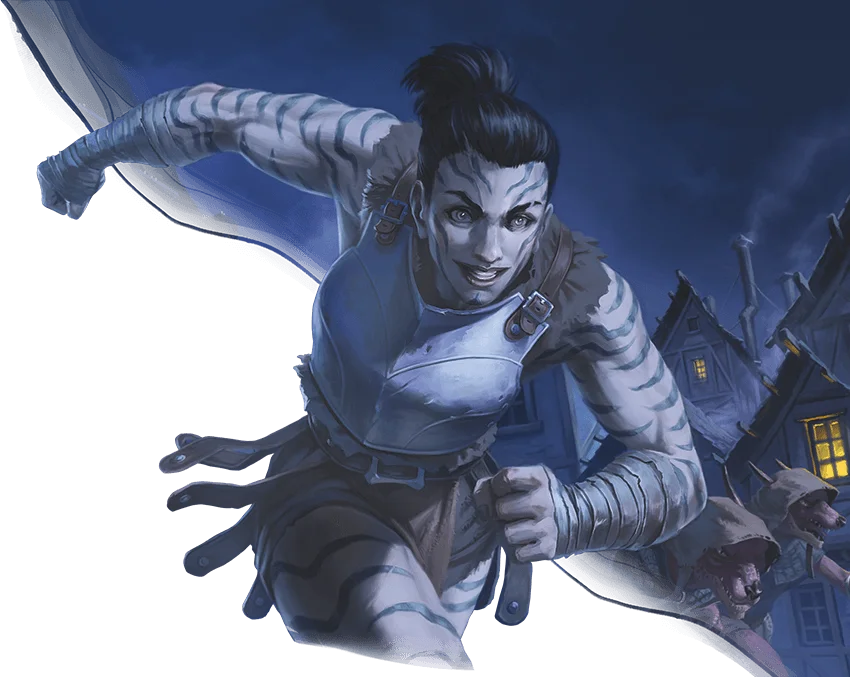
The goliaths of Exandria are a mighty people with stone giant blood running in their veins. Most stand well over seven feet tall and are blessed with a naturally powerful physique. Like their stone giant progenitors, goliaths are a rare sight in Wildemount. Most live on isolated peaks in the Cyrios Mountains, the Penumbra Range, and on the isolated land of Eiselcross. Those few goliaths who are exiled from their herds and wander into more densely peopled lands are uniformly greeted with fear and confusion.
Goliaths have a compulsion to compete and keep score, counting their deeds and tallying their accomplishments to compare to others. Goliaths love to win, but they see defeat as a prod to improve their skills. Above all else, they are driven to outdo their past efforts. Few goliaths reach old age, as most die attempting to surpass their past achievements.
Among goliaths, any adult who can't or won't contribute to the herd is expelled. A lone goliath has little chance of survival, especially an older or weaker one. Goliaths have little pity for adults who can't take care of themselves, though a sick or injured individual is treated, as a result of the goliath concept of fair play.
Half-Elves
Half-elves occupy all lands where humans and elves gather. In ancient times, the appearance of half-elves was a cause for alarm in elven society, for prejudiced elves saw the union between elves and humans as a symptom of impurity in their blood and culture. Such attitudes have cooled across the continent in recent centuries, and most elven societies now feature a diverse array of people—notably the pluralistic union of dwarves and elves in the city-state of Uthodurn and the diverse peoples of the Kryn Dynasty.
Half-elves of all different ancestries dwell within the lands of the Kryn, with most having one dark elf parent. The idea of elves forming relationships and even having children with people of other humanoid races has long since been accepted throughout Kryn lands—so much so that it seems somewhat unnatural when people outside the culture express surprise at half-elves with small, minotaur-like horns, or with the tufted ears and yellow eyes of a bugbear.
Halflings
Few Xhorhasians have ever seen a halfling except for the occasional halfling soldier in Dwendalian armor. Because of this, most Kryn citizens view halflings as icons of the empire and are quick to distrust them. Only the Lotusden halflings, a reclusive and insular clan native to the Lotusden Greenwood, call Xhorhas home.
Humans
Humans are rare in Xhorhas, and those found within that land typically belong to wandering clans or are soldiers of the Dwendalian Empire. Aside from such soldiers, humans are not viewed with inherent suspicion by most Xhorhasians, but the war between the Kryn Dynasty and the Dwendalian Empire has made Xhorhas an even more dangerous land for all human travelers. Dark elves and monsters that might treat a wandering human with caution elsewhere are likely to attack on sight in Xhorhas, because they know that an imperial human will do the same to them.
Kenku
In ancient times, kenku were black-winged angels—ambassadors who served the Raven Queen as her emissaries of death. Their voices were once heard across entire planes, calling the dead to the Raven Queen's embrace. The kenku likewise served as her loyal warriors in the Calamity, and even saved her from a near-fatal encounter with the Betrayer God known as Tharizdun.
Though the kenku saved the Raven Queen from oblivion, all of her black-winged emissaries were consumed by Tharizdun's infinite void. For long years, the kenku were thought to have been annihilated, and it was only when Tharizdun was defeated and chained by the god Ioun near the Calamity's end that they were freed.
When the gods sealed themselves behind the Divine Gate, the Raven Queen realized what her emissaries had sacrificed to save her. Though the kenku survived oblivion, they returned as mortals, stripped of all the divine gifts their god had bestowed on them: their voices, their wings, and all memories of their past existence. Bearing Tharizdun's curse of oblivion, the kenku were reduced to squat beings that could speak only by mimicking the words of others.
Kenku exist across Wildemount in small numbers. Considered by most to be monsters, they keep to themselves as a result, always longing for something they can neither ask for nor explain. Something in a kenku's mind stirs when it looks to the sky and see birds flying freely—an ancient longing, and a memory trapped within oblivion.
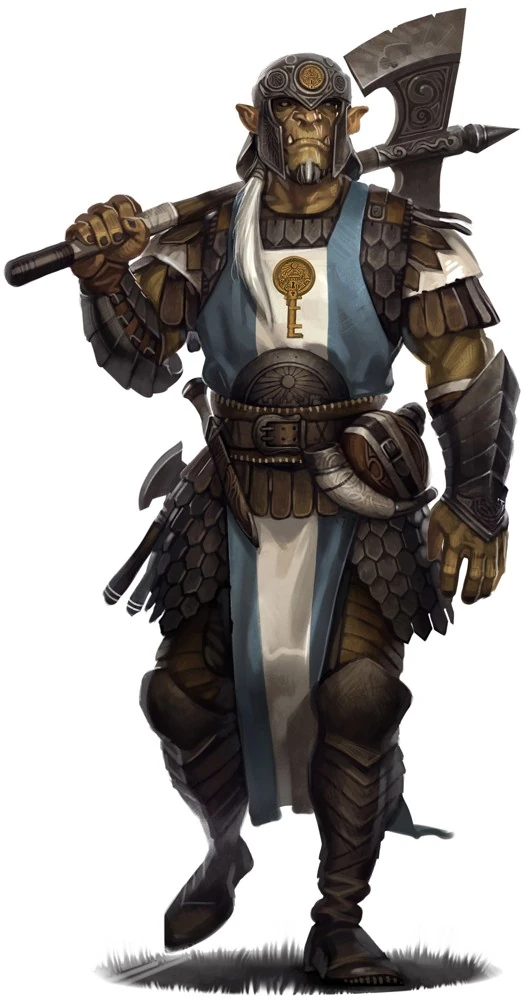
Orcs and Half-Orcs
The first half-orcs in Wildemount were born of a union between human warriors and orc traitors in the final days of the Calamity. Orcs are one of Exandria's youngest races, and are said to have been born from elves seared by the blood of Gruumsh, the Ruiner, when Corellon pierced the orc god's eye on the field of battle. For long years, orcs were feared as mindless abominations, drawn to slaughter like moths to flame.
Stories tell of how the blood of the Ruiner flows in the veins of all orcs, driving them to commit acts of terrible violence and anger. Orcs call this fury hgar'Gruum, or the curse of ruin, and use it to refer to everything from battle rage to a bad temper. Half-orcs are said to have inherited the blood of the Ruiner, and to carry the same bloodlust and fury that orcs do.
Orcs and half-orcs do feel a certain pull toward violence and anger. But the simple truth is that there is no curse of ruin. No supernatural power drives orcs to kill. Rather, they are simply victims of the same selfish, violent impulses that corrupt all mortal beings.
The orcs of Xhorhas are a predominantly nomadic people, living in mixed clans of orcs, humans, and bugbears. They wander the wastes, taming the indigenous beasts and trading with Kryn settlements. The relationship between the orcs and the Kryn is relatively peaceful, though many nomadic orcs are angered when Kryn souls are reborn in orc bodies. These orcs nonetheless readily accept Kryn into their roving clans, seeing it as a point of pride that a city dweller has been drawn to a more exciting life in the chaos of the wastes.
Most half-orcs in Xhorhas have human or drow blood. In the culture of the Xhorhasian nomads, the union of orcs and goblinkin is strictly taboo, for the clans' elders fear the uncontrolled madness of a soul afflicted by both Gruumsh's curse of ruin and Bane's curse of strife.
Tabaxi
The catlike tabaxi are an agile, witty, and playful folk who have long lived among the indigenous Ki'Nau people of the Menagerie Coast and in the cold northern forests of the Greying Wildlands. Said to have been born from the dreams of Melora within the jungles of Wildemount's more temperate regions, they are natural hunters with keen senses and predatory instincts. The tabaxi of Exandria are also well known for their social guile. Many are taken with a love of wordplay and debate, often engaging travelers in philosophical conversations meant to challenge the intellect and to subtly gauge the disposition of strangers.
Tabaxi can be found in small numbers throughout Wildemount and are generally well thought of. Some make up small clans in the wilderness beyond the boundaries of Wildemount's major societies. Others are content to stand out among the other folk of those larger nations. Deft at crafts, hunting, and commercial enterprises, many tabaxi find themselves drawn toward an entrepreneurial existence, while some fall naturally into the more dangerous pursuits of an adventurer's lifestyle.
Politics hold a conversational curiosity for some, but only a few tabaxi are driven enough to ascend to positions of political power, most commonly along the Menagerie Coast. Even so, most catfolk are happier away from the limelight, slyly convincing others to visibly take the risks for them.
Tortles
For centuries, the people of Xhorhas and the Dwendalian Empire believed tortles to be a hoax concocted by Concordian hucksters. In truth, tortles are an ancient and long-lived people who dwell within the jungles and along the beaches of the Menagerie Coast. Most tortles who journey far from the coast begin to feel pangs of homesickness, which can develop into a depression.
Tortles are almost unheard of beyond the sunny shores of the Menagerie Coast.
Tieflings
Centuries have passed since the tieflings first faced persecution for their fiendish heritage in the Age of Arcanum. Although a certain mystique still surrounds their kind, most people in Wildemount grew up alongside tieflings, and the tides of war have brought tiefling soldiers, merchants, and entertainers into even the most rural and isolated regions of the continent. For the most part, only overzealously devout paladins and folk raised on the dark tales of an ancient age might actively wish harm on tieflings.
Exandrian tieflings have a wide array of skin tones, all of them vibrant and colorful. The most common hue is a deep crimson, but shades of purple, blue, green, and even yellow and pink have been seen throughout the world. It's not known what causes these variations, as even tiefling parents with the same skin tone can have children of wildly different colors.
Some legends talk of how the first tieflings were born in Ghor Dranas. Asmodeus, Lord of the Nine Hells, is said to have tempted a number of that city's original inhabitants into tying their bloodlines to his own infernal power in exchange for magical knowledge. Though the truth of the tale is impossible to confirm, Rosohna maintains a significant tiefling population, and tieflings are a common sight in Kryn society.

Hollow One
The eastern coast of Xhorhas, known to the Kryn as Blightshore, is a land scarred by evil magic. Among the creations of that foul place are the Hollow Ones, beings whose souls have left for the afterlife, yet whose bodies still retain a fragment of their former selves.
The magic that sustains Hollow Ones is a mystery. Most Hollow Ones are reborn after dying in Blightshore, suggesting that the spell-scarred nature of the land brought them back for an unknown purpose. Yet some beings find that, days after they died, they awaken, clutching to life, with only a terrible emptiness inside to remind them of their death.
In Blightshore, Hollow Ones are seen as a people like any other. They seem strange, but the adventurous and hardy folk of Blightshore are used to making allies with strange creatures. Elsewhere, Hollow Ones are indistinguishable from living creatures, save for the faint stench of necromancy that lingers about them.
The transition from life to becoming a Hollow One affects different people to different degrees. Some let their anger and regret consume them. Others use their second chance to become a brighter force in the world. However, all Hollow Ones are marked by their new existence: feelings of unease, dread or sadness cling to them like tattered rags of their past life.